EP2207155A2 - System und Verfahren für eine Notfallberichterstattung - Google Patents
System und Verfahren für eine Notfallberichterstattung Download PDFInfo
- Publication number
- EP2207155A2 EP2207155A2 EP09179874A EP09179874A EP2207155A2 EP 2207155 A2 EP2207155 A2 EP 2207155A2 EP 09179874 A EP09179874 A EP 09179874A EP 09179874 A EP09179874 A EP 09179874A EP 2207155 A2 EP2207155 A2 EP 2207155A2
- Authority
- EP
- European Patent Office
- Prior art keywords
- communication channel
- source
- channel
- parameter
- determining
- Prior art date
- Legal status (The legal status is an assumption and is not a legal conclusion. Google has not performed a legal analysis and makes no representation as to the accuracy of the status listed.)
- Granted
Links
Images


Classifications
-
- H—ELECTRICITY
- H04—ELECTRIC COMMUNICATION TECHNIQUE
- H04M—TELEPHONIC COMMUNICATION
- H04M11/00—Telephonic communication systems specially adapted for combination with other electrical systems
- H04M11/04—Telephonic communication systems specially adapted for combination with other electrical systems with alarm systems, e.g. fire, police or burglar alarm systems
-
- G—PHYSICS
- G08—SIGNALLING
- G08B—SIGNALLING SYSTEMS, e.g. PERSONAL CALLING SYSTEMS; ORDER TELEGRAPHS; ALARM SYSTEMS
- G08B25/00—Alarm systems in which the location of the alarm condition is signalled to a central station, e.g. fire or police telegraphic systems
- G08B25/004—Alarm propagated along alternative communication path or using alternative communication medium according to a hierarchy of available ways to communicate, e.g. if Wi-Fi® not available use GSM
-
- G—PHYSICS
- G08—SIGNALLING
- G08B—SIGNALLING SYSTEMS, e.g. PERSONAL CALLING SYSTEMS; ORDER TELEGRAPHS; ALARM SYSTEMS
- G08B25/00—Alarm systems in which the location of the alarm condition is signalled to a central station, e.g. fire or police telegraphic systems
- G08B25/01—Alarm systems in which the location of the alarm condition is signalled to a central station, e.g. fire or police telegraphic systems characterised by the transmission medium
- G08B25/016—Personal emergency signalling and security systems
-
- H—ELECTRICITY
- H04—ELECTRIC COMMUNICATION TECHNIQUE
- H04M—TELEPHONIC COMMUNICATION
- H04M1/00—Substation equipment, e.g. for use by subscribers
- H04M1/72—Mobile telephones; Cordless telephones, i.e. devices for establishing wireless links to base stations without route selection
- H04M1/724—User interfaces specially adapted for cordless or mobile telephones
- H04M1/72403—User interfaces specially adapted for cordless or mobile telephones with means for local support of applications that increase the functionality
- H04M1/72418—User interfaces specially adapted for cordless or mobile telephones with means for local support of applications that increase the functionality for supporting emergency services
-
- H—ELECTRICITY
- H04—ELECTRIC COMMUNICATION TECHNIQUE
- H04W—WIRELESS COMMUNICATION NETWORKS
- H04W4/00—Services specially adapted for wireless communication networks; Facilities therefor
- H04W4/90—Services for handling of emergency or hazardous situations, e.g. earthquake and tsunami warning systems [ETWS]
-
- H—ELECTRICITY
- H04—ELECTRIC COMMUNICATION TECHNIQUE
- H04W—WIRELESS COMMUNICATION NETWORKS
- H04W76/00—Connection management
- H04W76/50—Connection management for emergency connections
Definitions
- the field of the invention relates to emergency reporting systems and providing backup communication channels in such systems.
- Various types of emergencies or other types of occasions that require some type of assistance may occur when operating a motor vehicle.
- the vehicle may be involved in an accident, the vehicle may run out of gas, a mechanical breakdown may occur, or the driver may become lost or otherwise disoriented to mention just a few examples.
- an emergency communication system is integrated with the car.
- a sensor detects that the car has become involved in an accident or is otherwise in need of assistance, then the system automatically contacts a call center. Once the call center has been contacted, personnel at the call center can request emergency assistance and dispatch this assistance to the vehicle.
- the emergency system may utilize a particular communication technology, which may become unusable at the location where the assistance is needed. In these situations, the emergency system is unable to communicate with the call center and the emergency assistance is never sent. This causes user inconvenience at a minimum and can also risk the life and/or safety of the user in many circumstances.
- FIG. 1 comprises a block diagram of an emergency assistance system according to various embodiments of the present invention
- FIG. 2 comprises a call flow diagram of the operation of an emergency assistance system according to various embodiments of the present invention.
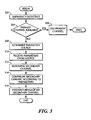
- FIG. 3 comprises a flow chart of the operation of an emergency assistance system according to various embodiments of the present invention.
- the first communication channel is configured to preferentially transmit emergency messages to the communication network, for instance, over the communication network to the emergency call center.
- a second communication channel and at least one configuration parameter that is used to configure the second communication channel are determined.
- the second communication channel is configured with the determined parameter and the secondary communication channel is coupled to the same (or a different) communication network.
- An emergency message is then transmitted over the configured second communication channel over the same or different communication network, for example, to an emergency call center. Once the message is received at the emergency call center, appropriate assistance may be sent to a user that has sent the message.
- a receiver is configured to receive the parameter from a source.
- the source may include a number of different sources that are themselves different types of communication channels.
- the source may be a television communication channel, a radio communication channel, or a cellular communication channel. Other examples of sources are possible.
- the second communication channel may be selected from amongst a plurality of second communication channels according to predetermined criteria.
- the predetermined criteria utilize an automatic selection process while in other approaches the predetermined criteria utilize a dynamic selection process.
- the identity of the second channel may be stored in a memory location and automatically retrieved when needed.
- different input conditions e.g., signal strength, location
- the second communication channel may be determined by automatically determining a source of the parameters. An attempt may be made to obtain the parameters from the source and when the parameters can not be obtained from the source, a second source may be determined from amongst a plurality of possible second sources. For example, if a first radio channel is first used to obtain the parameters, but the first radio channel is unavailable (e.g., due to interference), a second radio channel may be used to obtain the parameters. The order of selection may be specified in a list that is stored in any appropriate data structure in any appropriate memory device.
- approaches for obtaining emergency assistance for example, for a user operating a vehicle are provided. These approaches allow emergency assistance to be obtained regardless of the communication environment of the vehicle.
- the approaches described herein are self-configurable and automatically configure a transmitter to an appropriate communicate channel to use in order to obtain emergency assistance.
- these approaches are easy to use and increase the ability of the user to obtain emergency assistance regardless of the communication environment.
- the approaches described herein are described with respect to vehicles and, more specifically, to users obtaining assistance from these vehicles (e.g., cars, trucks, and the like). However, it will be appreciated that these approaches are also applicable for other environments besides vehicles such as aircraft, ships, homes, businesses, or any other location where a user could need or potentially need assistance. In addition, although the examples described herein are described with respect to obtaining emergency assistance, it will be appreciated that these approaches are applicable to obtaining any type of assistance such as instructions or the like (e.g., operating instructions for a vehicle or appliance), when an emergency does not exist.
- instructions or the like e.g., operating instructions for a vehicle or appliance
- a safety apparatus 102 includes a communication interface 104, a controller 114, and a database 116.
- the communication interface 104 includes a transmitter 106 and a receiver 108.
- the communication interface 104 is coupled to the controller 114 via program lines 110 and lines 112.
- the transmitter 106 is any type of transmitting communication device.
- the transmitter 106 is configurable to transmit messages or signals over one or more communication channels according to different transmission parameters.
- the transmitter 106 may be configurable to transmit over a variety of cellular phone communication channels at different frequencies.
- the receiver 108 is any type of communication device that can receive various types of communication signals.
- the receiver 108 is configurable to receive communications over one or more communication channels according to different parameters.
- the receiver 108 may be configurable to receive communications over a variety of cellular phone communication channels at different frequencies.
- the transmitter 106 and receiver 108 operate using different types of communication channels.
- the receiver 108 may receive communications over a television communication channel while the transmitter 106 transmits communications via a cellular communication channel.
- the transmitter 106 and the receiver 108 operate using the same type of communication channels, but according to different parameters. For instance, the receiver 108 receives communications over a first cellular communication channel at a first frequency while the transmitter 106 transmits communications over a second cellular communication channel according to a second frequency.
- the transmitter 106 and receiver 108 may operate over the same type of communication channel and/or according to the same parameters (e.g., at the same frequency).
- the database 116 is coupled to the controller 114.
- the database 116 may be any type of memory device.
- the database 116 may be a random access memory (RAM), read only memory (ROM) just to name a few examples.
- a user interface 124 is coupled to the controller 114 of the safety apparatus 102.
- the user interface 124 includes a panic button 126, a microphone 128, and a keypad 130. Any combination of these elements may be used on the interface 124 and other examples of input devices are possible.
- the user interface 124 includes any combination of computer hardware and/or software to accept inputs from these elements and communicate with the controller 114.
- the panic button 126 allows a user to indicate an emergency in one action (e.g., one push of the button). By pushing this button, the user desires to summon assistance immediately.
- the microphone 128 allows a user to enter voice commands. For example, the user can summon assistance when their hands are occupied when operating the vehicle by using the microphone 128.
- the keypad 130 allows the user to enter textual information. For example, the user can type a message on the keypad 130 (e.g., requesting assistance and/or including other types of information) that is to be sent to an emergency assistance center.
- a Global Positioning Satellite (GPS) system component provides a location determination signal 122 to the controller 114.
- the location determination signal 122 indicates information that represents the position of the safety device 102 and/or the vehicle or other element where the safety apparatus 102 is located.
- other types of components may supply location information to the controller 114.
- a wheel pulse generation device may provide information indicative of vehicle location, movement, and/or vehicle direction.
- An existing safety system 132 is coupled to the controller 114 via a connection status line 118.
- the connection status line 118 indicates whether the existing safety system is presently connected to an external safety center 136 via a primary communication channel 134.
- This safety system may be a commercially available OnStar system, to give one example.
- the external safety center 136 may be a manual, automated, or combination of a manual or an automated center that responds to emergency messages received. For example, when received personnel at the external safety center 136 may dispatch emergency personnel to the location of the vehicle where the existing safety system 132 (and the user) is located.
- the communication interface 104 communicates with the external safety center 136 via a secondary communication channel 138.
- the secondary communication channel 138 is utilized when the primary communication channel 134 is unavailable.
- the communication interface 104 communicates with an external parameter source 142 via a channel 140 to receive parameters.
- the parameters so received may be used to allow the communication interface 104 to configure the secondary communication channel 138 and communicate with the external safety center 136.
- the primary communication channel 134 is configured to preferentially transmit emergency messages to the existing safety center 136.
- a secondary communication channel 138 and at least one configuration parameter to configure the secondary communication channel 138 are determined.
- the secondary communication channel 138 is configured with the determined parameters.
- An emergency message is transmitted over the now-configured secondary communication channel 138.
- the receiver 108 is configured to receive the parameters from the external parameter source 142.
- the external parameter source 142 may be a communication channel, communication device, or combination of communication channels and communication devices.
- the external parameter source 142 may be a television communication channel, a radio communication channel, or a cellular communication channel. Other examples of external parameter sources are possible.
- the secondary communication channel 138 may be selected from amongst a plurality of secondary channels according to predetermined criteria.
- predetermined criteria are chosen from an automatic selection process while in other approaches the predetermined criteria are selected from a dynamic selection process.
- the secondary communication channel 138 may be determined by automatically determining a source of the parameters.
- the parameters may be obtained from the source and when the parameters can not be obtained from the source, a second source is determined and chosen from amongst a plurality of potential second sources.
- a safety apparatus may be positioned at a vehicle or some other location (e.g., a ship, aircraft, or at a home).
- the safety apparatus communicates with an external safety center via a primary communication channel and, under some circumstances, via a secondary communication channel and utilizes a transmitter and receiver to perform these functions.
- an activation signal or message is sent from an existing safety system to a safety apparatus.
- the activation signal may, for example, indicate that the existing safety system is not connected to an external safety center via a primary communication channel.
- the activation signal indicates that the safety system on a vehicle has been deployed. Other examples of activation signals are possible.
- the safety apparatus determines a source from which it will attempt to obtain parameters.
- a look up table in memory may be used to indicate that the parameters are to be received from a source via a radio frequency (RF) channel having a particular frequency.
- the look up table may indicate that a television channel may be the communication channel from which the parameters are supplied and the receiver may be configured to receive these parameters via the television channel.
- the safety apparatus is configured to receive the parameters from the external parameter source. For example, if an RF channel of a particular frequency is to be used to receive the parameters, then a receiver at the safety apparatus may be configured to receive the parameters at that particular frequency. In another example, if a television channel is used to obtain the parameters, then the receiver is configured to receive the parameters via the television channel.
- the parameters are sent from the external parameter source to the safety apparatus via the communication channel that was configured at step 206.
- the configuration parameters may be received according to a RF channel at the receiver according to a particular frequency. Some examples of these parameters include frequency, power, modulation type, data encoding, and data rate. Other parameters may also be obtained.
- the safety apparatus determines the identity of a second communication channel to make the emergency communication or transmit the emergency message.
- the second communication channel may be the same channel or a different channel than the channel from which the parameters have been obtained.
- the second communication channel is configured according to the received parameters to send the message to the external safety sensors. More specifically, a transmitter is configured from which the messages are to be sent. For example, if the parameters obtained include frequency and modulation scheme, then the transmitter can be configured to transmit according to these parameters.
- a message is sent via the second communication channel from the transmitter of the safety apparatus to the external safety center.
- the external safety center and/or personnel at the external safety center
- the external safety center can perform several actions when the message is received. For example, receipt of the message can trigger an alert to personnel at the safety center and the personnel can initiate aid or assistance to be sent to the location of the safety apparatus.
- automatic actions can be taken, for example, police or other emergency authorities can be automatically informed of the receipt of the message from the vehicle and aid can be sent to the location of the safety apparatus. Other examples are possible.
- a safety apparatus may be positioned at a vehicle or other locations (e.g., a ship, aircraft, or at home).
- the safety apparatus communicates with an external safety center via a primary communication channel and, under some circumstances, via a secondary communication channel.
- an emergency (or other situation indicating a user may require assistance) is detected at the vehicle.
- an airbag may be deployed or a sensor may otherwise indicate that a vehicle has been involved in a crash.
- a user may press the panic button of the vehicle, send an emergency voice message, or enter text to send in an emergency message via a keypad.
- Other examples of emergency detection approaches and indications are possible.
- step 304 it is determined if a primary communication channel is available. If the answer is affirmative, at step 306, the primary communication channel is used to make the communication with the external safety center (or some other entity).
- a source from which to receive parameters that are to be used to configure a secondary communication channel is determined. For example, a memory within a safety apparatus may be read to indicate the source to be used from which to receive the parameters. In still another example, an ordered list of sources (from which to obtain parameters) may be maintained and the source selected from the list. In some examples, if the first choice on the list is unavailable, then the second choice may be selected and so forth. Once the source is identified, the receiver at the apparatus may be properly configured (e.g., to receive the selected type of source according to the correct frequency).
- the parameters are received from the source.
- the parameters may indicate frequency, modulation scheme, data encoding, data rate, to name a few possibilities.
- a secondary communication channel is determined.
- the parameters received from the source at step 310 may also indicate the identity of the secondary communication channel.
- the identity of the secondary communication channel may be encoded in memory at the safety apparatus and obtained automatically.
- an ordered list of secondary communication channels may be maintained and the secondary communication channel selected from the list. For instance, if the first choice on the list is unavailable (after configuring the transmitter and attempting to transmit a message), then the second choice may be selected and so forth.
- the secondary communication channel is configured according to the received parameters.
- a transmitter may be set to transmit according to a particular frequency range, power level, or other characteristic or combinations or characteristics.
- a message is transmitted via the configured secondary communication channel.
- the message may be an emergency message indicating that the user at the safety apparatus needs assistance.
- the message is received at an external safety center and may be acted on either automatically at the external safety center and/or manually by personnel at the external safety center.
- approaches for obtaining emergency assistance for example, from a vehicle are provided. These approaches allow emergency assistance to be obtained regardless of the communication environment of the vehicle.
- the approaches described herein are self-configurable and act to automatically configure a transmitter to an appropriate communicate channel to use to obtain emergency assistance.
- these approaches are easy to use and increase the ability of the user to obtain emergency assistance regardless of the communication environment and regardless of the primary communication channel to an external safety center becoming disabled.
- a method comprising: determining whether a first channel is communicatively coupled to a communication network, the first communication channel configured to preferentially transmit emergency messages to the communication network; when the first communication channel is not communicatively coupled to the communication network, determining a second communication channel and at least one configuration parameter to configure the second communication channel; configuring the second communication channel with the determined at least one parameter; transmitting an emergency message over the configured second communication channel.
- determining a second communication channel and at least one configuration parameter comprises configuring a receiver to receive the at least one parameter from a source.
- determining a second communication channel and at least one configuration parameter comprises selecting the second communication channel from amongst a plurality of second channels according to a predetermined criteria.
- determining the second channel and the at least one parameter comprises: automatically determining a source of the at least one parameter; attempting to obtain the at least one parameter from the source; when the parameter is not be obtained from the source, determining a second source from amongst a plurality of second sources.
- a method comprising: determining whether a safety system has been deployed; when the safety system has been deployed determining a set of configuration parameters to configure a communication channel for transmissions from amongst a plurality of sets of configuration parameters; configuring a channel according to the selected set of configuration parameters; transmitting an emergency signal via the configured channel.
- determining the set of configuration parameters includes selecting a source from which to receive the set of configuration parameters and receiving the set of configuration parameters from the source.
- selecting a source to receive the configuration parameters comprises selecting a source from a dynamic list.
- selecting a source to receive the configuration parameters comprises choosing a predetermined source.
- determining the set of configuration parameters comprises selecting a set of configuration parameters from a plurality of sets, wherein each set corresponds to a different channel from amongst a plurality of channels.
- determining parameters comprises selecting an identity of a channel based upon a pre-determined choice.
- An apparatus comprising: an interface for receiving an indication of whether a primary communication channel exists with an emergency response system; a receiver configured to receive at least one configuration parameter associated with a secondary communication channel; a transmitter configured to send emergency messages via the secondary communication channel; a controller coupled to the transmitter and receiver, the controller being configured to determine when the primary communication channel does not exist with the emergency response system, and when the primary communication channel does not exist, receive the at least one configuration channel from the receiver and configure the secondary communication channel according to the at least one parameter.
- the apparatus of embodiment 14 further comprising a database, the database coupled to the controller, the database including an identity of the secondary communication channel.
- controller is further configured to adjust the receiver to receive the at least one parameter from a predetermined source.
- the predetermined source is selected from a group comprising a television communication channel, a radio communication channel, and a cellular communication channel.
- the at least one parameter is selected from a group comprising a frequency, a modulation scheme, a data encoding, a data rate, and a signal strength.
- the primary communication channel is selected from a group comprising a radio communication channel, a television communication channel, a wired communication channel, a satellite communication channel, a cellular communication channel, or a radio beacon communication channel.
Landscapes
- Engineering & Computer Science (AREA)
- Business, Economics & Management (AREA)
- Emergency Management (AREA)
- Physics & Mathematics (AREA)
- General Physics & Mathematics (AREA)
- Computer Security & Cryptography (AREA)
- Signal Processing (AREA)
- Computer Networks & Wireless Communication (AREA)
- Alarm Systems (AREA)
- Mobile Radio Communication Systems (AREA)
- Telephonic Communication Services (AREA)
Applications Claiming Priority (1)
| Application Number | Priority Date | Filing Date | Title |
|---|---|---|---|
| US12/338,126 US9154636B2 (en) | 2008-12-18 | 2008-12-18 | System and method for emergency reporting |
Publications (3)
| Publication Number | Publication Date |
|---|---|
| EP2207155A2 true EP2207155A2 (de) | 2010-07-14 |
| EP2207155A3 EP2207155A3 (de) | 2010-11-17 |
| EP2207155B1 EP2207155B1 (de) | 2016-03-16 |
Family
ID=42224117
Family Applications (1)
| Application Number | Title | Priority Date | Filing Date |
|---|---|---|---|
| EP09179874.4A Active EP2207155B1 (de) | 2008-12-18 | 2009-12-18 | System und Verfahren für eine Notfallberichterstattung |
Country Status (3)
| Country | Link |
|---|---|
| US (1) | US9154636B2 (de) |
| EP (1) | EP2207155B1 (de) |
| CN (1) | CN101754153A (de) |
Cited By (1)
| Publication number | Priority date | Publication date | Assignee | Title |
|---|---|---|---|---|
| EP3419267A4 (de) * | 2016-04-19 | 2019-03-06 | Mazda Motor Corporation | Notfallbenachrichtigungsvorrichtung und notfallbenachrichtigungssystem |
Families Citing this family (8)
| Publication number | Priority date | Publication date | Assignee | Title |
|---|---|---|---|---|
| KR101765852B1 (ko) * | 2010-09-01 | 2017-08-08 | 마벨 월드 트레이드 리미티드 | 다중-채널 무선 통신을 위한 공존 지원 |
| CN102932674B (zh) * | 2011-08-12 | 2016-05-11 | 国家广播电影电视总局广播科学研究院 | 基于数字电视网络的紧急广播消息适配插入系统 |
| US9641609B2 (en) * | 2012-02-28 | 2017-05-02 | Google Inc. | Integrated messaging |
| WO2014078930A1 (en) * | 2012-11-21 | 2014-05-30 | Blackberry Limited | Contact prioritized communication for voice commands |
| US9479371B2 (en) * | 2014-07-22 | 2016-10-25 | Nxp B.V. | Scheduling messages using mixed modulation settings |
| CN108551402B (zh) * | 2018-04-09 | 2021-06-18 | 网易宝有限公司 | 信息发送方法及其系统、介质和计算设备 |
| EP3811204A4 (de) * | 2018-06-25 | 2022-06-08 | Tusimple, Inc. | Sicherheitsarchitektur für ein echtzeitfernfahrzeugüberwachungssystem |
| US10419916B1 (en) * | 2018-10-04 | 2019-09-17 | Ford Global Technologies, Llc | Method and apparatus for multi-network simultaneous emergency calling |
Citations (1)
| Publication number | Priority date | Publication date | Assignee | Title |
|---|---|---|---|---|
| US20060095199A1 (en) | 2004-11-03 | 2006-05-04 | Lagassey Paul J | Modular intelligent transportation system |
Family Cites Families (20)
| Publication number | Priority date | Publication date | Assignee | Title |
|---|---|---|---|---|
| US5465388A (en) * | 1993-02-19 | 1995-11-07 | Zicker; Robert G. | Emergency cellular radiotelephone and method therefor |
| US5661724A (en) | 1995-12-18 | 1997-08-26 | Ericsson Inc. | Satellite diversity scheme |
| US7092695B1 (en) * | 1998-03-19 | 2006-08-15 | Securealert, Inc. | Emergency phone with alternate number calling capability |
| JP3048137B2 (ja) | 1998-04-13 | 2000-06-05 | 日本電気株式会社 | デュアルバンド携帯電話機及び移動電話システム切替方法 |
| AU2001249287A1 (en) * | 2000-03-21 | 2001-10-03 | Charles M. Leedom Jr. | A tiered wireless, multi-modal access system and method |
| SE519649C2 (sv) * | 2000-12-15 | 2003-03-25 | Multicom Security Ab | Övervakning av mobila enheter |
| US7031713B2 (en) * | 2001-10-04 | 2006-04-18 | General Motors Corporation | Method of reducing blocking for cellular phones |
| FR2844953B1 (fr) | 2002-09-24 | 2005-02-04 | Sagem | Procede de reception de signaux de parametres de reseau par un telephone mobile fonctionnant en mode dual |
| US7295537B2 (en) * | 2003-02-24 | 2007-11-13 | Autocell Laboratories, Inc. | Method for self-adjusting power at a wireless station to reduce inter-channel interference |
| US8005070B2 (en) * | 2003-03-12 | 2011-08-23 | Lon Communication Mgmt. Llc | Extension of a local area phone system to a wide area network with handoff features |
| DE60335867D1 (de) | 2003-07-10 | 2011-03-10 | Alcatel Lucent | Reduktion von Bandbreite und Energieverbrauch in einem multimode Mobilfunkendgerät durch selektives Überwachen mehrerer Funkschnittstellen |
| US20060099993A1 (en) * | 2004-11-05 | 2006-05-11 | Nokia Corporation | Multiple antenna portable hand-held electronic device |
| CA2605170A1 (en) | 2005-04-18 | 2006-10-26 | Sensormatic Electronics Corporation | A channel selection method for improved wireless communication |
| TW201123824A (en) * | 2006-05-12 | 2011-07-01 | Interdigital Tech Corp | Method and apparatus for supporting an emergency call in a wireless metropolitan area network |
| US7573380B2 (en) * | 2006-06-30 | 2009-08-11 | Motorola, Inc. | Method and system for requesting help by user of communication device |
| US8515547B2 (en) * | 2007-08-31 | 2013-08-20 | Cardiac Pacemakers, Inc. | Wireless patient communicator for use in a life critical network |
| US8078162B2 (en) * | 2007-10-10 | 2011-12-13 | Battelle Energy Alliance, Llc | Airborne wireless communication systems, airborne communication methods, and communication methods |
| US20090143078A1 (en) * | 2007-11-30 | 2009-06-04 | Palm, Inc. | Techniques to manage a radio based on location information |
| CN101896953B (zh) * | 2007-12-11 | 2014-07-02 | 大陆-特韦斯贸易合伙股份公司及两合公司 | 经由移动通信的车辆的车辆相关数据传输 |
| US8068808B2 (en) * | 2008-04-16 | 2011-11-29 | Rivada Networks Llc | Method and system for providing a deployable emergency call service for wireless handsets |
-
2008
- 2008-12-18 US US12/338,126 patent/US9154636B2/en active Active
-
2009
- 2009-12-18 CN CN200910254095A patent/CN101754153A/zh active Pending
- 2009-12-18 EP EP09179874.4A patent/EP2207155B1/de active Active
Patent Citations (1)
| Publication number | Priority date | Publication date | Assignee | Title |
|---|---|---|---|---|
| US20060095199A1 (en) | 2004-11-03 | 2006-05-04 | Lagassey Paul J | Modular intelligent transportation system |
Cited By (1)
| Publication number | Priority date | Publication date | Assignee | Title |
|---|---|---|---|---|
| EP3419267A4 (de) * | 2016-04-19 | 2019-03-06 | Mazda Motor Corporation | Notfallbenachrichtigungsvorrichtung und notfallbenachrichtigungssystem |
Also Published As
| Publication number | Publication date |
|---|---|
| US20100159868A1 (en) | 2010-06-24 |
| CN101754153A (zh) | 2010-06-23 |
| EP2207155B1 (de) | 2016-03-16 |
| US9154636B2 (en) | 2015-10-06 |
| EP2207155A3 (de) | 2010-11-17 |
Similar Documents
| Publication | Publication Date | Title |
|---|---|---|
| EP2207155B1 (de) | System und Verfahren für eine Notfallberichterstattung | |
| CN1762173B (zh) | 使用无线设备传送紧急信息的方法和装置 | |
| US8319615B2 (en) | Apparatus and method for detecting jamming of communications | |
| US8626152B2 (en) | Flexible telematics system and method for providing telematics to a vehicle | |
| US7904053B2 (en) | Method and apparatus for communicating emergency information using wireless devices | |
| EP0744727B1 (de) | Übertragungsverfahren und -vorrichtung für Fahrzeuge | |
| JP5016363B2 (ja) | 緊急事態要員に通知する、車両の緊急事態の警告を生成するための装置、および関連する方法 | |
| EP1638055A2 (de) | Überwachungs- und Sicherheitssystem sowie entsprechendes Verfahren | |
| US8611847B2 (en) | Apparatus and method for detecting communication interference | |
| WO2011084591A2 (en) | Apparatus and method for compromised vehicle tracking | |
| WO2011084617A1 (en) | Method and apparatuses for tracking stolen vehicles | |
| JP2001222783A (ja) | 緊急通報装置 | |
| JP2001357480A (ja) | 緊急通報装置 | |
| CN111010689A (zh) | 用于多网络同时紧急呼叫的方法和设备 | |
| EP3116277B1 (de) | Kommunikationsvorrichtung, überlastungssteuerungsvorrichtung und speichermedium | |
| JP3663974B2 (ja) | 車載電話機の診断装置 | |
| JP2008172839A (ja) | 無線通信システムおよび無線通信方法 | |
| JP2913324B2 (ja) | 無線中継システム | |
| EP1712100A1 (de) | Erweiterung der reichweite eines in der hand tragbaren funkgeräts | |
| JP2012084075A (ja) | 移動局運行管理システム | |
| JP2000242879A (ja) | 緊急通報システム端末機器および緊急通報システム | |
| JP2008015678A (ja) | 車載緊急通報装置及び緊急通報システム | |
| JP2002165004A (ja) | 無線通信端末装置およびこれを用いたシステム | |
| JP2000067348A (ja) | 携帯電話機及び携帯電話機による緊急通報システム |
Legal Events
| Date | Code | Title | Description |
|---|---|---|---|
| PUAI | Public reference made under article 153(3) epc to a published international application that has entered the european phase |
Free format text: ORIGINAL CODE: 0009012 |
|
| AK | Designated contracting states |
Kind code of ref document: A2 Designated state(s): AT BE BG CH CY CZ DE DK EE ES FI FR GB GR HR HU IE IS IT LI LT LU LV MC MK MT NL NO PL PT RO SE SI SK SM TR |
|
| AX | Request for extension of the european patent |
Extension state: AL BA RS |
|
| PUAL | Search report despatched |
Free format text: ORIGINAL CODE: 0009013 |
|
| AK | Designated contracting states |
Kind code of ref document: A3 Designated state(s): AT BE BG CH CY CZ DE DK EE ES FI FR GB GR HR HU IE IS IT LI LT LU LV MC MK MT NL NO PL PT RO SE SI SK SM TR |
|
| AX | Request for extension of the european patent |
Extension state: AL BA RS |
|
| RIC1 | Information provided on ipc code assigned before grant |
Ipc: G08B 25/00 20060101AFI20100607BHEP Ipc: G08B 25/01 20060101ALI20101014BHEP |
|
| RAP1 | Party data changed (applicant data changed or rights of an application transferred) |
Owner name: CONTINENTAL AUTOMOTIVE SYSTEMS, INC. |
|
| 17P | Request for examination filed |
Effective date: 20110511 |
|
| GRAP | Despatch of communication of intention to grant a patent |
Free format text: ORIGINAL CODE: EPIDOSNIGR1 |
|
| RIC1 | Information provided on ipc code assigned before grant |
Ipc: H04W 4/22 20090101ALI20151006BHEP Ipc: G08B 25/00 20060101AFI20151006BHEP Ipc: H04M 1/725 20060101ALI20151006BHEP Ipc: H04M 11/04 20060101ALI20151006BHEP Ipc: G08B 25/01 20060101ALI20151006BHEP Ipc: H04W 76/00 20090101ALI20151006BHEP |
|
| INTG | Intention to grant announced |
Effective date: 20151105 |
|
| GRAS | Grant fee paid |
Free format text: ORIGINAL CODE: EPIDOSNIGR3 |
|
| GRAA | (expected) grant |
Free format text: ORIGINAL CODE: 0009210 |
|
| AK | Designated contracting states |
Kind code of ref document: B1 Designated state(s): AT BE BG CH CY CZ DE DK EE ES FI FR GB GR HR HU IE IS IT LI LT LU LV MC MK MT NL NO PL PT RO SE SI SK SM TR |
|
| REG | Reference to a national code |
Ref country code: GB Ref legal event code: FG4D |
|
| REG | Reference to a national code |
Ref country code: CH Ref legal event code: EP |
|
| REG | Reference to a national code |
Ref country code: IE Ref legal event code: FG4D |
|
| REG | Reference to a national code |
Ref country code: AT Ref legal event code: REF Ref document number: 781810 Country of ref document: AT Kind code of ref document: T Effective date: 20160415 |
|
| REG | Reference to a national code |
Ref country code: DE Ref legal event code: R096 Ref document number: 602009036788 Country of ref document: DE |
|
| REG | Reference to a national code |
Ref country code: NL Ref legal event code: MP Effective date: 20160316 |
|
| REG | Reference to a national code |
Ref country code: LT Ref legal event code: MG4D |
|
| PG25 | Lapsed in a contracting state [announced via postgrant information from national office to epo] |
Ref country code: GR Free format text: LAPSE BECAUSE OF FAILURE TO SUBMIT A TRANSLATION OF THE DESCRIPTION OR TO PAY THE FEE WITHIN THE PRESCRIBED TIME-LIMIT Effective date: 20160617 Ref country code: HR Free format text: LAPSE BECAUSE OF FAILURE TO SUBMIT A TRANSLATION OF THE DESCRIPTION OR TO PAY THE FEE WITHIN THE PRESCRIBED TIME-LIMIT Effective date: 20160316 Ref country code: FI Free format text: LAPSE BECAUSE OF FAILURE TO SUBMIT A TRANSLATION OF THE DESCRIPTION OR TO PAY THE FEE WITHIN THE PRESCRIBED TIME-LIMIT Effective date: 20160316 Ref country code: NO Free format text: LAPSE BECAUSE OF FAILURE TO SUBMIT A TRANSLATION OF THE DESCRIPTION OR TO PAY THE FEE WITHIN THE PRESCRIBED TIME-LIMIT Effective date: 20160616 |
|
| REG | Reference to a national code |
Ref country code: AT Ref legal event code: MK05 Ref document number: 781810 Country of ref document: AT Kind code of ref document: T Effective date: 20160316 |
|
| PG25 | Lapsed in a contracting state [announced via postgrant information from national office to epo] |
Ref country code: LT Free format text: LAPSE BECAUSE OF FAILURE TO SUBMIT A TRANSLATION OF THE DESCRIPTION OR TO PAY THE FEE WITHIN THE PRESCRIBED TIME-LIMIT Effective date: 20160316 Ref country code: NL Free format text: LAPSE BECAUSE OF FAILURE TO SUBMIT A TRANSLATION OF THE DESCRIPTION OR TO PAY THE FEE WITHIN THE PRESCRIBED TIME-LIMIT Effective date: 20160316 Ref country code: LV Free format text: LAPSE BECAUSE OF FAILURE TO SUBMIT A TRANSLATION OF THE DESCRIPTION OR TO PAY THE FEE WITHIN THE PRESCRIBED TIME-LIMIT Effective date: 20160316 Ref country code: SE Free format text: LAPSE BECAUSE OF FAILURE TO SUBMIT A TRANSLATION OF THE DESCRIPTION OR TO PAY THE FEE WITHIN THE PRESCRIBED TIME-LIMIT Effective date: 20160316 |
|
| PG25 | Lapsed in a contracting state [announced via postgrant information from national office to epo] |
Ref country code: IS Free format text: LAPSE BECAUSE OF FAILURE TO SUBMIT A TRANSLATION OF THE DESCRIPTION OR TO PAY THE FEE WITHIN THE PRESCRIBED TIME-LIMIT Effective date: 20160716 Ref country code: PL Free format text: LAPSE BECAUSE OF FAILURE TO SUBMIT A TRANSLATION OF THE DESCRIPTION OR TO PAY THE FEE WITHIN THE PRESCRIBED TIME-LIMIT Effective date: 20160316 Ref country code: EE Free format text: LAPSE BECAUSE OF FAILURE TO SUBMIT A TRANSLATION OF THE DESCRIPTION OR TO PAY THE FEE WITHIN THE PRESCRIBED TIME-LIMIT Effective date: 20160316 |
|
| PG25 | Lapsed in a contracting state [announced via postgrant information from national office to epo] |
Ref country code: CZ Free format text: LAPSE BECAUSE OF FAILURE TO SUBMIT A TRANSLATION OF THE DESCRIPTION OR TO PAY THE FEE WITHIN THE PRESCRIBED TIME-LIMIT Effective date: 20160316 Ref country code: SM Free format text: LAPSE BECAUSE OF FAILURE TO SUBMIT A TRANSLATION OF THE DESCRIPTION OR TO PAY THE FEE WITHIN THE PRESCRIBED TIME-LIMIT Effective date: 20160316 Ref country code: SK Free format text: LAPSE BECAUSE OF FAILURE TO SUBMIT A TRANSLATION OF THE DESCRIPTION OR TO PAY THE FEE WITHIN THE PRESCRIBED TIME-LIMIT Effective date: 20160316 Ref country code: PT Free format text: LAPSE BECAUSE OF FAILURE TO SUBMIT A TRANSLATION OF THE DESCRIPTION OR TO PAY THE FEE WITHIN THE PRESCRIBED TIME-LIMIT Effective date: 20160718 Ref country code: ES Free format text: LAPSE BECAUSE OF FAILURE TO SUBMIT A TRANSLATION OF THE DESCRIPTION OR TO PAY THE FEE WITHIN THE PRESCRIBED TIME-LIMIT Effective date: 20160316 Ref country code: AT Free format text: LAPSE BECAUSE OF FAILURE TO SUBMIT A TRANSLATION OF THE DESCRIPTION OR TO PAY THE FEE WITHIN THE PRESCRIBED TIME-LIMIT Effective date: 20160316 Ref country code: RO Free format text: LAPSE BECAUSE OF FAILURE TO SUBMIT A TRANSLATION OF THE DESCRIPTION OR TO PAY THE FEE WITHIN THE PRESCRIBED TIME-LIMIT Effective date: 20160316 |
|
| REG | Reference to a national code |
Ref country code: DE Ref legal event code: R097 Ref document number: 602009036788 Country of ref document: DE |
|
| PG25 | Lapsed in a contracting state [announced via postgrant information from national office to epo] |
Ref country code: IT Free format text: LAPSE BECAUSE OF FAILURE TO SUBMIT A TRANSLATION OF THE DESCRIPTION OR TO PAY THE FEE WITHIN THE PRESCRIBED TIME-LIMIT Effective date: 20160316 Ref country code: BE Free format text: LAPSE BECAUSE OF FAILURE TO SUBMIT A TRANSLATION OF THE DESCRIPTION OR TO PAY THE FEE WITHIN THE PRESCRIBED TIME-LIMIT Effective date: 20160316 |
|
| PLBE | No opposition filed within time limit |
Free format text: ORIGINAL CODE: 0009261 |
|
| STAA | Information on the status of an ep patent application or granted ep patent |
Free format text: STATUS: NO OPPOSITION FILED WITHIN TIME LIMIT |
|
| PG25 | Lapsed in a contracting state [announced via postgrant information from national office to epo] |
Ref country code: DK Free format text: LAPSE BECAUSE OF FAILURE TO SUBMIT A TRANSLATION OF THE DESCRIPTION OR TO PAY THE FEE WITHIN THE PRESCRIBED TIME-LIMIT Effective date: 20160316 |
|
| 26N | No opposition filed |
Effective date: 20161219 |
|
| PG25 | Lapsed in a contracting state [announced via postgrant information from national office to epo] |
Ref country code: BG Free format text: LAPSE BECAUSE OF FAILURE TO SUBMIT A TRANSLATION OF THE DESCRIPTION OR TO PAY THE FEE WITHIN THE PRESCRIBED TIME-LIMIT Effective date: 20160616 |
|
| PG25 | Lapsed in a contracting state [announced via postgrant information from national office to epo] |
Ref country code: SI Free format text: LAPSE BECAUSE OF FAILURE TO SUBMIT A TRANSLATION OF THE DESCRIPTION OR TO PAY THE FEE WITHIN THE PRESCRIBED TIME-LIMIT Effective date: 20160316 |
|
| REG | Reference to a national code |
Ref country code: CH Ref legal event code: PL |
|
| GBPC | Gb: european patent ceased through non-payment of renewal fee |
Effective date: 20161218 |
|
| PG25 | Lapsed in a contracting state [announced via postgrant information from national office to epo] |
Ref country code: MC Free format text: LAPSE BECAUSE OF FAILURE TO SUBMIT A TRANSLATION OF THE DESCRIPTION OR TO PAY THE FEE WITHIN THE PRESCRIBED TIME-LIMIT Effective date: 20160316 |
|
| REG | Reference to a national code |
Ref country code: FR Ref legal event code: ST Effective date: 20170831 |
|
| REG | Reference to a national code |
Ref country code: IE Ref legal event code: MM4A |
|
| PG25 | Lapsed in a contracting state [announced via postgrant information from national office to epo] |
Ref country code: CH Free format text: LAPSE BECAUSE OF NON-PAYMENT OF DUE FEES Effective date: 20161231 Ref country code: LI Free format text: LAPSE BECAUSE OF NON-PAYMENT OF DUE FEES Effective date: 20161231 Ref country code: FR Free format text: LAPSE BECAUSE OF NON-PAYMENT OF DUE FEES Effective date: 20170102 Ref country code: LU Free format text: LAPSE BECAUSE OF NON-PAYMENT OF DUE FEES Effective date: 20161218 |
|
| PG25 | Lapsed in a contracting state [announced via postgrant information from national office to epo] |
Ref country code: GB Free format text: LAPSE BECAUSE OF NON-PAYMENT OF DUE FEES Effective date: 20161218 Ref country code: IE Free format text: LAPSE BECAUSE OF NON-PAYMENT OF DUE FEES Effective date: 20161218 |
|
| PG25 | Lapsed in a contracting state [announced via postgrant information from national office to epo] |
Ref country code: CY Free format text: LAPSE BECAUSE OF FAILURE TO SUBMIT A TRANSLATION OF THE DESCRIPTION OR TO PAY THE FEE WITHIN THE PRESCRIBED TIME-LIMIT Effective date: 20160316 Ref country code: HU Free format text: LAPSE BECAUSE OF FAILURE TO SUBMIT A TRANSLATION OF THE DESCRIPTION OR TO PAY THE FEE WITHIN THE PRESCRIBED TIME-LIMIT; INVALID AB INITIO Effective date: 20091218 |
|
| PG25 | Lapsed in a contracting state [announced via postgrant information from national office to epo] |
Ref country code: TR Free format text: LAPSE BECAUSE OF FAILURE TO SUBMIT A TRANSLATION OF THE DESCRIPTION OR TO PAY THE FEE WITHIN THE PRESCRIBED TIME-LIMIT Effective date: 20160316 Ref country code: MK Free format text: LAPSE BECAUSE OF FAILURE TO SUBMIT A TRANSLATION OF THE DESCRIPTION OR TO PAY THE FEE WITHIN THE PRESCRIBED TIME-LIMIT Effective date: 20160316 |
|
| PG25 | Lapsed in a contracting state [announced via postgrant information from national office to epo] |
Ref country code: MT Free format text: LAPSE BECAUSE OF NON-PAYMENT OF DUE FEES Effective date: 20161218 |
|
| REG | Reference to a national code |
Ref country code: DE Ref legal event code: R082 Ref document number: 602009036788 Country of ref document: DE Representative=s name: MICHELSEN, MARKUS, DIPL.-PHYS. DR. PHIL. NAT., DE |
|
| PGFP | Annual fee paid to national office [announced via postgrant information from national office to epo] |
Ref country code: DE Payment date: 20251231 Year of fee payment: 17 |