EP2208708B1 - Procédé de production d'un composé de titanate alcalin - Google Patents
Procédé de production d'un composé de titanate alcalin Download PDFInfo
- Publication number
- EP2208708B1 EP2208708B1 EP08840215.1A EP08840215A EP2208708B1 EP 2208708 B1 EP2208708 B1 EP 2208708B1 EP 08840215 A EP08840215 A EP 08840215A EP 2208708 B1 EP2208708 B1 EP 2208708B1
- Authority
- EP
- European Patent Office
- Prior art keywords
- alkali metal
- titanate
- compound
- titanium
- sintering
- Prior art date
- Legal status (The legal status is an assumption and is not a legal conclusion. Google has not performed a legal analysis and makes no representation as to the accuracy of the status listed.)
- Active
Links
Images
Classifications
-
- C—CHEMISTRY; METALLURGY
- C01—INORGANIC CHEMISTRY
- C01G—COMPOUNDS CONTAINING METALS NOT COVERED BY SUBCLASSES C01D OR C01F
- C01G23/00—Compounds of titanium
- C01G23/003—Titanates
- C01G23/005—Alkali titanates
-
- C—CHEMISTRY; METALLURGY
- C01—INORGANIC CHEMISTRY
- C01P—INDEXING SCHEME RELATING TO STRUCTURAL AND PHYSICAL ASPECTS OF SOLID INORGANIC COMPOUNDS
- C01P2002/00—Crystal-structural characteristics
- C01P2002/70—Crystal-structural characteristics defined by measured X-ray, neutron or electron diffraction data
- C01P2002/72—Crystal-structural characteristics defined by measured X-ray, neutron or electron diffraction data by d-values or two theta-values, e.g. as X-ray diagram
-
- C—CHEMISTRY; METALLURGY
- C01—INORGANIC CHEMISTRY
- C01P—INDEXING SCHEME RELATING TO STRUCTURAL AND PHYSICAL ASPECTS OF SOLID INORGANIC COMPOUNDS
- C01P2004/00—Particle morphology
- C01P2004/10—Particle morphology extending in one dimension, e.g. needle-like
-
- C—CHEMISTRY; METALLURGY
- C01—INORGANIC CHEMISTRY
- C01P—INDEXING SCHEME RELATING TO STRUCTURAL AND PHYSICAL ASPECTS OF SOLID INORGANIC COMPOUNDS
- C01P2004/00—Particle morphology
- C01P2004/10—Particle morphology extending in one dimension, e.g. needle-like
- C01P2004/12—Particle morphology extending in one dimension, e.g. needle-like with a cylindrical shape
-
- C—CHEMISTRY; METALLURGY
- C01—INORGANIC CHEMISTRY
- C01P—INDEXING SCHEME RELATING TO STRUCTURAL AND PHYSICAL ASPECTS OF SOLID INORGANIC COMPOUNDS
- C01P2004/00—Particle morphology
- C01P2004/60—Particles characterised by their size
- C01P2004/61—Micrometer sized, i.e. from 1-100 micrometer
Definitions
- the present invention relates to a method of manufacturing a single-phase alkali metal titanate.
- Alkali metal titanate includes lithium titanate, sodium titanate, and potassium titanate as useful material.
- the lithium titanate is used for electrode material (Li 4 Ti 5 O 12 ) of secondary battery, the sodium titanate is used for ark-stabilizer ( JP 2001-294424 A ), reinforcing agent for friction modifier or resin ( JP H08-049119 ), and the potassium titanate is used for reinforcing agent for friction modifier or resin.
- the alkali metal titanate is manufactured with a wet process or a solid phase method.
- the solid phase method has an advantage about cost.
- a titanium compound and an alkali metal compound are mixed together and the mixture is heat treated to obtain the alkali metal titanate.
- the solid phase method produces the alkali metal titanate containing a variety of ratios of alkali metal/titanium and causes difficulty to obtain the single-phase alkali metal titanate due to evaporation loss of the alkali metal during the heat treatment. It is difficult to control shape of the alkali metal titanate required for application and safety thereof.
- a melt process for controlling the shape of the single-phase alkali metal titanate is disclosed in JP H09-87929 A.
- the melt process includes the steps of melting a mixture of powders of TiO 2 and K 2 O and cooling the molten mixture to obtain a block of fibers of potassium dititanate, converting the block of fibers into fibers of a hydrated potassium titanate, which contains 15-20 percent of K, with a primary de-potassium treatment, pre-drying the hydrated fibers at 100-400 degrees C, eluting the potassium by at most 13.6 percent of K with a secondary de potassium treatment, and heat treating the eluted material at 900-1300 degrees C to change a crystal structure.
- This method adjusts an amount of liquid and intensity of stirring in the primary and the secondary de-potassium treatment to obtain the fibers a diameter of about 20-50 ⁇ m and a length of 100-400 ⁇ m.
- Control of the elution of potassium in the secondary de-potassium treatment provides polycrystalline fibers with the single-phase potassium hexa-titanate ( JP H09-87929 A ).
- This method includes the additional de-potassium treatment causing the process complicated.
- JP2001-253712 A discloses other method.
- the method includes the steps of acid-treating potassium magnesium titanate or potassium lithium titanate, seeking the resultant plate shaped titanic acid into a solution of potassium hydroxide, intercalating the potassium ion, and sintering the intercalated material.
- the method provides the plate shaped potassium tetra-titanate or potassium hexa-titanate having an average major axis of 1-100 microns and an average aspect ratio of 3-500. This method requires the intercalation treatment of potassium ion, resulting in the complicated process.
- JP H10-316428 A discloses another method of manufacturing potassium titanate whisker with sintering of titanium dioxide and potassium oxide.
- the potassium titanate whisker includes alkali metal halide and metal oxide.
- the sintering temperature is set a range of temperature lower than the conventional temperature (about 1100 degrees C).
- This method provides a single-phase fine whisker having a small average length and diameter (JP H10-316428).
- this method uses halide as the raw material and requires a protection of corrosion to the furnace.
- US 2001/0031401 A1 describes a two-step solid-state process for the production of lithium titanate comprising pre-sintering a precursor mixture in the temperature range 670-800°C and sintering the obtained product in the temperature 800-900°C.
- Patent Documents
- An object of the present invention is to provide a method of easily manufacturing an alkali metal titanate particle with a solid phase method, the alkali metal titanate particle having a single-phase and a controlled shape without de-potassium treatment or intercalate treatment.
- a method of manufacturing a single-phase alkali metal titanate comprising at least a first step of mixing a titanium compound and an alkali metal compound to prepare a first mixture and sintering the first mixture; and a second step including (i) adding the alkali metal compound to the sintered body which is formed at the first step, to prepare a second mixture and (ii) sintering the second mixture to form a single-phase alkali metal titanate, wherein an amount of the alkali metal compound to be added in the second step is adjusted in response to a composition ratio of the alkali metal titanate and a compound other than the alkali metal titanate contained in the sintered body; and wherein a sintering temperature of the first step is higher than a sintering temperature of the second step, wherein the mixing ratio of the titanium compound and the alkali metal compound at the first step is 0.5-10 moles of titanium atoms of the alkali metal compound, and
- an amount of the alkali metal compound to be added at the second step is adjusted in response to a composition ratio (by weight or mole) of the desired alkali metal titanate to other compound such as titanium oxide titanium dioxide) formed at the first step in order to obtain a single-phase alkali metal titanate with sintering at the second step.
- the method includes a first procedure for determining a relation between a composition ratio of the alkali metal titanate to the titanium oxide and a peak intensity ratio of the strongest interference line of X-ray diffraction of the alkali metal titanate to the titanium oxide; a second procedure for determining the peak intensity ratio of the strongest interference lines of X-ray diffraction of the alkali metal titanate to the titanium oxide formed at the first step; a third procedure for determining the composition ratio of the alkali metal titanate to the titanium oxide formed at the first step by applying the intensity ratio determined at the second procedure to the relation determined at the first procedure, wherein the amount of the alkali metal titanate to be added at the second step is adjusted with the composition ratio determined at the third procedure in order to convert the residual titanium oxide after the first step to the desired alkali metal titanate.
- the present invention including two steps provides the method of easily manufacturing the single-phase alkali metal titanate with high temperature sinter
- the sintering temperature of the first step is 1000-1300 degrees C and the sintering temperature of the second step is 800-1000 degrees C.
- the first step improves formation of the alkali metal titanate and provides the desired shape and size thereof.
- the second step keeps the shape of the alkali metal titanate formed at the first step and controls evaporation loss of the alkali metal.
- the second step causes a reaction between the residual titanium compound at the first step and the alkali metal titanate added at the second step to form the alkali metal titanate having the desired composition.
- the formed potassium titanate has a rod, a columnar, a cylindrical, a rectangular and/or a plate shape. The size thereof increases as the sintering temperature at the first step increases.
- the method includes at least a first step of mixing a titanium compound and an alkali metal compound to prepare a first mixture and sintering the first mixture; and a second step of adding the alkali metal compound to the sintered body, which is formed at the first step, to prepare a second mixture, dispersing the second mixture in a solvent to form a slurry, spray-drying the slurry to form a powder, and sintering the powder.
- the first step forms the alkali metal titanate particles having the desired shape.
- the second step forms the particles each having a hollow body shape configured with the alkali metal titanate while keeping the shape of the particles at the first step.
- the alkali metal compound is added similar to the above embodiment.
- the sintering at the second step then forms the hollow body particles configured with the alkali metal titanate particles having the desired composition.
- the hollow body powder is useful for the friction material and increases wear resistance.
- the present invention provides a method of manufacturing an alkali metal titanate.
- the method includes at least a first step of mixing a titanium compound and an alkali metal compound to prepare a first mixture and sintering the mixture, and a second step of adding the alkali metal compound the sintered body, which is formed at the first step, to prepare a second mixture and sintering the second mixture.
- the titanium compound utilized in the present invention is, for example, titanium dioxide, titanium suboxide, orthotitanic acid or its salts, metatitanic acid or its salts, titanium hydroxide, and peroxotitanic acid or its salts.
- a single material or a combination of at least two materials is utilized.
- the titanium dioxide is most preferable among them.
- the titanium dioxide has a good mixing and reaction with the alkali metal compound and is cheap.
- the alkali metal compound utilized is, for example, alkali metal carbonate, hydroxide, and oxalate. They melt at the sintering reaction.
- the carbonate or hydroxide is particularly preferable. These alkali metal compounds melt or decompose, and easily react at the sintering reaction with the titanium compound. They only generate carbon dioxide gas or water after decomposition without producing residual impurities in the product.
- potassium titanate When the potassium titanate is manufactured, potassium compound such as potassium oxide, potassium carbonate, potassium hydroxide, and potassium oxalate is utilized, preferably potassium carbonate. A single or combination thereof is utilized.
- sodium titanate sodium compound such as sodium carbonate, sodium hydroxide, and sodium oxalate is utilized, preferably sodium carbonate.
- lithium titanate lithium compound such as lithium carbonate and lithium hydroxide is utilized, preferably lithium carbonate.
- the manufacturing of the potassium titanate is achieved with sintering reaction of the mixture of the titanium compound such as titanium oxide and the potassium compound such as potassium carbonate.
- the mixing method is a conventional mixing means, a V-type blender, and a mechanical grinding means such as hammer mill, pin-mill, beads-mill and ball mill.
- a vibration rod mill having a rod is preferable.
- the vibration rod mill grinds and mixes relatively large size powders of the titanium compound and the alkali metal compound between the rods, and does not excessively grind fine powders such as the ball mill.
- the titanium oxide has a hydroxyl group on the surface thereof, which has a strong adhesion. The excessive grinding causes the specific surface area larger and the ground titanium oxide sticks on the mixing container.
- the vibration rod mill thus provides a uniform mixing compared to the other mixing methods.
- the resultant mixture is uniformly sintered and the sintering provides the desired composition of the alkali metal titanate.
- the mixing ratio of the titanium compound and the alkali metal compound in the first step of the present invention is 0.5-10 moles, preferably 1-8 moles, of titanium atoms of the titanium raw material, and 1-3 moles, preferably 1.5-2.5 moles, of alkali metal atoms of the alkali metal compound, when the alkali metal compound is sintered to form 1 mole of the alkali metal titanate (M 2 O ⁇ nTiO 2 , where M is alkali metal).
- titanium atoms of the titanium raw material is 3.5-4.5 moles, more preferably 3.8-4.2 moles, most preferably 4.0 moles and potassium atoms of the potassium compound is 1.8-2.2 moles, more preferably 1.9-2.1 moles, most preferably 2 moles.
- titanium atoms of the titanium raw material is 5.5-6.6 moles, more preferably 5.8-6.2 moles and potassium atoms of the potassium compound is 1.8-2.2 moles, more preferably 1.9-2.1 moles, most preferably 2 moles.
- Titanium metal powder or titanium hydride powder may be added to the mixture of the titanium compound and the alkali metal compound. Since the titanium metal powder or titanium hydride powder is oxidized into the titanium dioxide, it is thus necessary to adjust the mixing ratio by considering these powders as the titanium source.
- the titanium metal powder or the titanium hydride powder may be added to the mixture of the titanium compound and the alkali metal compound if necessary. In this case, 0.01-0.2 moles, more preferably 0.03-0.1 moles of titanium atom is added with respect to 1 mole of titanium atom of the titanium compound.
- the titanium metal powder or the titanium hydride powder burns at the same time in the reaction container during sintering and prevents temperature distribution inside the reaction container and assists the homogenous reaction.
- the mixture of the titanium compound and the alkali metal compound prepared above are then sintered.
- the reaction container for sintering is preferably made from ceramic material such as conventional alumina.
- the container may have a cylindrical, a columnar, a square, and plate shape. It is preferable to interpose a sheet material to be carbonized at least between the ceramic reaction container and the mixture when the mixture is filled into the reaction container. This sheet prevents loss and penetration of the alkali metal compound into the ceramic reaction container when the alkali metal compound of the mixture melts at sintering.
- the sheet is paper, natural fiber, bark or thermosetting resin. They are carbonized during sintering and finally burn out without generating soft or fluent material at sintering.
- the paper coated with vinyl chloride is excluded, since the vinyl chloride is softened and hardly carbonized.
- the paper utilized includes non-bleached kraft paper, bleached kraft paper, one side glossy bleached wrapping paper, fiberboard, newsprint, fine paper, medium quality paper, recycled paper, paper books, cast-coated paper, art paper, PPC and other information paper and the like.
- the natural fiber utilized includes cotton, hemp, silk, and the like.
- the thermosetting resin utilized includes phenolic resin, epoxy resin, melamine resin and the like.
- the sheet material may have a sheet, a woven fabric, a non-woven fabric or a bag shape.
- the sintering temperature of the first step of the present invention varies with kind and crystalline form of the alkali metal titanate.
- the potassium titanate is obtained at the sintering temperature of 800-1300 degrees C, preferably 1000-1300 degrees C.
- the lithium titanate (Li 4 Ti 5 O 12 ) having a spinel crystal structure is obtained at the sintering temperature of 800-1000 degrees C, preferably 850-950 degrees C.
- the Li 2 TiO 3 is obtained at the sintering temperature of 950-1450 degrees C, preferably 950-1200 degrees C.
- the sodium hexa-titanate is obtained at the sintering temperature of 400-900 degrees C, preferably 500-800 degrees C.
- the period of time of sintering is 1-10 hours, preferably 2-5 hours.
- the resultant potassium titanate has a rod, a columnar, a cylindrical, a rectangular, a granular and/or a plate shape.
- the shape can be controlled with adjustment of parameters of the first step such as the sintering temperature, a cooling rate of the temperature.
- the higher sintering temperature provides a larger size of the potassium titanate.
- the temperature lower than 800 degrees C does not provide enough reaction.
- the sintering temperature higher than 1300 degrees C requires a furnace sustainable at the temperature, resulting in high cost, and makes the control of the shape difficult due to close to the melting point of the potassium titanate. It is preferable that the sintering temperature is not more than 1300 degrees C.
- the heating-up rate to the sintering temperature is 0.5-20 degrees C/min, preferably 1-10 degrees C/min. After sintering, the sintered body is cooled down to room temperature.
- the cooling-down rate is 0.5-10 degrees C/min to 300 degrees C, preferably 1-5 degrees C/min with relatively slow rate. Selection of the sintering temperature, the heating-up rate and the cooling-down rate assists grain growth of the sintered potassium titanate.
- the resultant sintered body containing the alkali metal titanate and the titanium compound is mechanically ground or pulverized if necessary.
- the grinding or pulverization thereof is achieved with the conventional method, such as hammer mill, pin mill, beads mill, or ball mill.
- the ground or pulverized potassium titanate may be classified or sorted.
- the resultant composition contains an atomic ratio of alkali atoms to titanium atoms (M/Ti: M is alkali metal) smaller than the ratio of the raw material prior to the sintering. This is caused by loss of evaporation of the alkali metal M from the alkali metal compound of the raw material at the sintering of the first step.
- the sintered body prepared with the first step has the composition containing the desired alkali metal titanate and a debris of titanium oxide, or the composition further containing a slightly different composition of the alkali metal titanate besides above the components.
- the composition of the sintered body is analyzed with a composition analysis, such as X-ray diffraction.
- the present invention includes a second step of adding and mixing an alkali metal compound to the mixture prepared at the first step, and again sintering the mixture (the second step).
- the alkali metal compound to be added may be same as the alkali metal compound utilized at the first step.
- the mixing means of the second step may be same as that of the first step.
- the resultant mixture may be spray-granulated or stir-granulated.
- the amount of the alkali metal compound to be added at the second step is determined with a powder X-ray diffraction.'
- the sintered body prepared at the first step is analyzed with the powder X-ray diffraction, the sintered body contains the desired phase of the alkali metal titanate and other impurity phase. It is explained below that the impurity phase is titanium oxide (rutile type).
- the single-phase powder of an alkali metal titanate (M 2 O ⁇ nTiO 2 , M: alakli metal) and the single-phase powder of titanium oxide (rutile type) are mixed with several different compositions.
- the mixtures are then measured with the powder X-ray diffraction.
- the interference line intensity can be obtained with height of the interference line or the area thereof.
- the relation may also be plotted (a first procedure).
- the each value of the intensity ratios determined with the second procedure is referred to the relation obtained with the first procedure to deduce the composition ratio of the titanium oxide to the alkali metal titanate of the sintered body prepared at the first step (a third procedure).
- the amount of addition of the alkali metal compound to be mixed at the second step is adjusted.
- the amount of the residual titanium oxide obtained at the sintering of the first step is actually determined from the composition ratio of the third procedure.
- the amount of the alkali metal compound to change the residual titanium oxide into the alkali metal titanate (M 2 O ⁇ nTiO 2 ) is calculated so that the ratio of the residual titanium to the alkali metal is n/2 in molar ratio.
- the amount of the alkali metal compound is determined with the same method described above. In this case, the procedures are same as the method described above.
- the single-phase powder of the desired alkali metal titanate and the single-phase powder of the impurity phase alkali metal titanate are mixed together to have different composition ratios.
- the mixtures are each measured with the X-ray diffraction.
- the intensity ratio of the strongest interference lines is obtained from the respective measured X-ray diffraction charts.
- the relation between the composition ratio and the intensity ratio is obtained (the first procedure).
- the sintered bodies prepared in the first step are measured with the X-ray diffraction.
- the each value of the intensity ratios determined with the second procedure is referred to the relation obtained with the first procedure to deduce the composition ratio of the impurity phase alkali metal titanate to the desired alkali metal titanate prepared at the first step (the third procedure). From comparison of the composition ratio of the sintered body with that of the mixture of the first procedure, the amount of addition of the alkali metal compound to be mixed at the second step is adjusted.
- the amount of the residual impurity phase alkali metal titanate (M 2 O ⁇ mTiO 2 ) obtained at the sintering of the first step is determined from the mixing ratio determined at the third procedure.
- the amount of the alkali metal compound necessary to change the impurity phase alkali metal titanate into the desired alkali metal titanate (M 2 O ⁇ nTiO 2 ) is calculated so that the molar ratio of Ti/M is to be 2:n, since the molar ratio of Ti/M of the impurity phase alkali metal titanate is 2:m.
- the strongest interference lines of the desired alkali metal titanate and the impurity phase are overlapped, the strongest interference lines not overlapping one another are used.
- the first procedure and the second procedure may be reversed in order.
- the amount of the alkali metal compound is determined with the method described above with respect to the respective impurity phases.
- the impurity phases are the titanium oxide and the undesired alkali metal titanate, the amount of the alkali metal compound (A) can be calculated from the X-ray diffraction chart of the desired alkali metal titanate and the titanium oxide with the method described above.
- the amount of the alkali metal compound (B) can be calculated from the X-ray diffraction chart of the desired alkali metal titanate and the impurity phase alkali metal titanate.
- the total amount (A+B) of the alkali metal compound is the amount to be added at the second step.
- the sintering temperature at the second step is at least 800 degrees C when the alkali metal compound is the potassium compound.
- the temperature below 800 degrees C does not cause the reaction between the potassium titanate and the titanium compound.
- the sintering temperature of the second step is preferably at most 1000 degrees C in order to keep the grain shape obtained at the first step.
- the sintering can be achieved in atmosphere or oxidizing atmosphere.
- the sintering temperature of the second step is lower than that of the first step to avoid evaporation loss of the alkali metal. This sintering assures the high purity alkali metal titanate while keeping the powder shape obtained at the first step.
- the container was cooled down to room temperature with a period of 13 hours and the sintered body S was then pulverized with a pulverizer (the first step).
- the ground sintered body had mainly a rod, a columnar or a cylindrical shape.
- the average minor axis thereof was about 3 ⁇ m and the average length was about 6 ⁇ m.
- the average minor axis and the average length were determined with image analysis of scanning electron microscopy of about,200 particles.
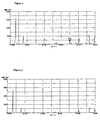
- FIG. 1 shows the X-ray diffraction chart of the sintered body S.
- the diffraction chart showed that the sintered body contained the potassium hexa-titanate crystalline phase and the rutile type titanium oxide phase.
- the relation between the mixing ratio of the titanium oxide to the potassium hexa-titanate and the intensity ratio (Ir/Im, where Ir is the strongest interference line peak height of the titanium oxide, and Im is the strongest interference line peak height of the potassium hexa-titanate in the X-ray chart) was determined with the following manner.
- Potassium hexa-titanate (single-phase) powder and the single crystal titanium oxide powder (100% rutile) were first prepared.
- the peak height (Ir) of the strongest interference line (plane index: 110) of the rutile type crystal titanium oxide and the peak height (Im) of the strongest interference line (plane index: 200) of the potassium hexa-titanate powder were determined from the X-ray diffraction chart, and the respective intensity ratios (Ir/Im) were obtained.
- the composition ratio (percent by weight of single crystal titanium oxide powder/potassium hexa-titanate powder) and the intensity ratio (Ir/Im) was plotted and obtained the following relation (Equation 1) with a least square means method.
- Intensity Ratio 0.0051 ⁇ [composition ratio](%)+0.0003
- the powder X-ray diffraction measurement was made with the following condition.
- the intensity ratio (Ir/Im) of the sintered body S prepared at the first step was determined from the X-ray diffraction chart of FIG. 1 .
- Ir is the peak height of the strongest interference line (plane index: 110) of the rutile type crystalline titanium oxide and Im is the peak height of the strongest interference line (plane index: 200) of the potassium hexa-titanate.
- the obtained intensity ratio was applied to Equation 1 to estimate the composition ratio between the titanium oxide and the potassium hexa-titanate. It was found that the weight ratio of the titanium oxide to the sintered body was 7.5 %.
- the resultant mixture was then sintered at 900 degrees C for 2 hours.
- the sintered body was cooled down to room temperature (the second step) and analyzed with the powder X-ray diffraction.
- FIG. 2 shows the X-ray diffraction chart.
- the diffraction chart of FIG. 2 apparently shows that the sintered body is the single-phase potassium hexa-titanate.
- the potassium hexa-titanate had a rod, a columnar, or a cylindrical shape, which shape was the same as that of the sintered body prepared in the first step.
- the addition of the suitable amount of the alkali metal compound at the second step can achieve obtaining the desired single-phase potassium titanate at the sintering (the second step).
- the adjustment of the sintering temperature at the first step can control the shape and size of the potassium titanate particles.
- the slurry was spray-dried with a disk type dryer.
- the condition of the spray-drying was 10,000 rpm of an atomizer at a temperature of 250 degrees C.
- the spray-dried powder was heat treated at 900 degrees C for 2 hours in the electrical furnace (the second step).
- the resultant powder was the potassium titanate having the hollow body powder having the rod, the columnar, or the cylindrical shape and the size prepared at the first step.
- the size (outer diameter) of the hollow body particles was 50 to 100 ⁇ m.
- the powder obtained at the second step analyzed with the X-ray diffraction was the single-phase potassium hexa-titanate.
- the fracture strength of the hollow body powders was measured with a digital hardness meter (KHT-40N Type: Product of Fujiwara Scientific Co., Ltd.) and the measured value was 7.8 kg/cm 2 .
- the comparative example was the same as that of Example 2 except without addition of 0.216 kg of the potassium carbonate.
- the X-ray diffraction showed that the hollow body particles had the crystalline phase of the potassium hexa-titanate and the rutile type titanium oxide.
- the obtained hollow body particles had a size (outer diameter) of 50 to 100 ⁇ m and the fracture strength of 3.8 kg/cm 2 .
- the potassium titanate with the hollow body powder of the present invention has high strength, so that the particles thereof are not separated (dispersed) one another when they are mixed with other materials.
- the hollow body powder formed with the potassium titanate particles of the present invention is thus suitable for friction material since they have high porosity.
Landscapes
- Chemical & Material Sciences (AREA)
- Organic Chemistry (AREA)
- Life Sciences & Earth Sciences (AREA)
- Environmental & Geological Engineering (AREA)
- General Life Sciences & Earth Sciences (AREA)
- Geology (AREA)
- Inorganic Chemistry (AREA)
- Inorganic Compounds Of Heavy Metals (AREA)
- Compositions Of Oxide Ceramics (AREA)
Claims (6)
- Procédé de fabrication d'un titanate de métal alcalin à une seule phase, le procédé comprenant au moins :une première étape de mélange d'un composé du titane et d'un composé de métal alcalin pour préparer un premier mélange et de frittage du premier mélange ; etune seconde étape comprenant (i) ajouter le composé de métal alcalin au corps fritté qui est formé à la première étape, pour préparer un second mélange et (ii) fritter le second mélange pour former un titanate de métal alcalin à une seule phase, une quantité du composé de métal alcalin à ajouter dans la seconde étape étant ajustée en réponse à un rapport de composition du titanate de métal alcalin et d'un composé autre que le titanate de métal alcalin contenu dans le corps fritté ; etdans lequel une température de frittage de la première étape est supérieure à une température de frittage de la seconde étape, dans lequel le rapport de mélange du composé du titane et du composé de métal alcalin à la première étape est de 0,5-10 moles d'atomes de titane de la matière de départ de titane et 1-3 moles d'atomes de métal alcalin du composé de métal alcalin étant entendu que le composé de métal alcalin est fritté pour former 1 mole du titanate de métal alcalin, où la température de frittage de la première étape varie avec la sorte et la forme cristalline du titanate de métal alcalin, et dans lequel une période de temps du frittage de la première étape est 1-10 heures.
- Procédé selon la revendication 1, le procédé comprenant en outre les étapes de dispersion du second mélange dans un solvant pour former une bouillie, de séchage par pulvérisation de la bouillie pour former une poudre, et de frittage de la poudre.
- Procédé selon l'une quelconque des revendications précédentes, dans lequel, lorsque le corps fritté formé à la première étape contient le titanate de métal alcalin et un oxyde de titane, le procédé comprend en outre :(a) déterminer une relation entre un rapport de composition du titanate de métal alcalin à l'oxyde de titane et un rapport d'intensité du pic d'interférence le plus fort de diffraction des rayons X du titanate de métal alcalin à l'oxyde de titane ;(b) déterminer le rapport d'intensité du pic d'interférence le plus fort de diffraction des rayons X du titanate de métal alcalin à l'oxyde de titane formé à la première étape ;(c) déterminer le rapport de composition du titanate de métal alcalin à l'oxyde de titane formé à la première étape par application du rapport d'intensité déterminé à l'étape (b) à la relation déterminée à l'étape (a) ; et(d) déterminer une quantité d'oxyde de titane résiduel contenu dans le corps fritté sur la base du rapport de composition déterminé à l'étape (c), calculer une quantité du composé de métal alcalin requise pour changer l'oxyde de titane résiduel en le titanate de métal alcalin, et ajuster une quantité du composé de métal alcalin à ajouter à la seconde étape sur la base de la quantité calculée du composé de métal alcalin.
- Procédé selon l'une quelconque des revendications précédentes, dans lequel le composé du titane est l'oxyde de titane et le composé de métal alcalin est un composé du potassium.
- Procédé selon la revendication 4, dans lequel la température de frittage de la première étape est 1000-1300 degrés C et la température de frittage de la seconde étape est 800-1000 degrés C.
- Procédé selon l'une quelconque des revendications 4 à 5, dans lequel le titanate de métal alcalin est l'hexatitanate de potassium ayant une forme de tige, une forme columnaire, une forme cylindrique, une forme rectangulaire et/ou une forme de plaque.
Applications Claiming Priority (2)
| Application Number | Priority Date | Filing Date | Title |
|---|---|---|---|
| JP2007267543 | 2007-10-15 | ||
| PCT/JP2008/068922 WO2009051249A1 (fr) | 2007-10-15 | 2008-10-14 | Procédé de production d'un composé de titanate alcalin |
Publications (3)
| Publication Number | Publication Date |
|---|---|
| EP2208708A1 EP2208708A1 (fr) | 2010-07-21 |
| EP2208708A4 EP2208708A4 (fr) | 2013-08-07 |
| EP2208708B1 true EP2208708B1 (fr) | 2016-08-31 |
Family
ID=40567510
Family Applications (1)
| Application Number | Title | Priority Date | Filing Date |
|---|---|---|---|
| EP08840215.1A Active EP2208708B1 (fr) | 2007-10-15 | 2008-10-14 | Procédé de production d'un composé de titanate alcalin |
Country Status (6)
| Country | Link |
|---|---|
| US (1) | US8178072B2 (fr) |
| EP (1) | EP2208708B1 (fr) |
| JP (1) | JP5222853B2 (fr) |
| KR (1) | KR101136602B1 (fr) |
| CN (1) | CN101827787B (fr) |
| WO (1) | WO2009051249A1 (fr) |
Families Citing this family (5)
| Publication number | Priority date | Publication date | Assignee | Title |
|---|---|---|---|---|
| KR101284648B1 (ko) * | 2010-06-04 | 2013-07-10 | 동해케미칼공업주식회사 | 2단계 하소방식을 이용한 티탄산 휘스커 제조방법 및 이에 의하여 제조된 봉상 및 편상 입자상의 혼합상 티탄산 휘스커 |
| KR102158893B1 (ko) | 2013-03-18 | 2020-09-22 | 도호 티타늄 가부시키가이샤 | 티탄산 칼륨의 제조 방법 |
| EP3138815B1 (fr) * | 2014-04-28 | 2020-09-16 | Toho Titanium Co., Ltd. | Procédé de production de titanate de potassium |
| CN109225193B (zh) * | 2018-09-21 | 2021-03-30 | 陕西师范大学 | 一种半导体光催化材料Na0.23TiO2的制备方法 |
| CN109972205A (zh) * | 2019-03-27 | 2019-07-05 | 唐山晶须复合材料制造有限公司 | 一种引发剂法合成偏钛酸钾片晶的方法 |
Family Cites Families (25)
| Publication number | Priority date | Publication date | Assignee | Title |
|---|---|---|---|---|
| JPS6413943A (en) | 1987-07-08 | 1989-01-18 | Kureha Chemical Ind Co Ltd | Smoking of food |
| JPS6431642A (en) | 1987-07-28 | 1989-02-01 | Canon Kk | Ink jet recording head |
| JPH0283300A (ja) | 1988-09-21 | 1990-03-23 | Toho Titanium Co Ltd | チタン酸カリウムウィスカーの熱処理方法 |
| JP2747916B2 (ja) | 1988-12-16 | 1998-05-06 | 東邦チタニウム株式会社 | チタン酸カリウム長繊維およびこれを用いるチタニア繊維の製造方法 |
| JP2977854B2 (ja) | 1990-03-29 | 1999-11-15 | 日本ウィスカー株式会社 | 六チタン酸カリウム繊維の製造方法 |
| JPH04136220A (ja) | 1990-09-28 | 1992-05-11 | Nippon Uisukaa Kk | 高耐候性複合材料用チタン酸カリウム繊維 |
| US5407754A (en) * | 1991-06-20 | 1995-04-18 | Titan Kogyo Kabushiki Kaisha | Potassium hexatitanate fibers for use as reinforcement |
| JPH06225679A (ja) | 1993-02-08 | 1994-08-16 | Niyuudelta Kogyo Kk | 自動巻取機 |
| JP3028398B2 (ja) | 1994-08-02 | 2000-04-04 | 株式会社クボタ | チタン酸ナトリウム繊維の製造方法 |
| JPH08209455A (ja) | 1995-02-03 | 1996-08-13 | Nippon Uisukaa Kk | チタン酸カリウム繊維およびその製造方法 |
| JPH0987929A (ja) | 1995-09-26 | 1997-03-31 | Kubota Corp | 高緻密質チタン化合物多結晶繊維の製造方法 |
| US6268307B1 (en) * | 1995-10-20 | 2001-07-31 | Alliedsignal Inc. | Titania bound sodium titanate ion exchanger |
| JP3028207B2 (ja) | 1996-11-11 | 2000-04-04 | 大塚化学株式会社 | 粒状6チタン酸カリウムの製造方法 |
| CN1185418A (zh) * | 1996-12-20 | 1998-06-24 | 中国科学院上海原子核研究所 | 钛酸钾纤维制造工艺 |
| JP3240272B2 (ja) * | 1997-05-14 | 2001-12-17 | 大塚化学株式会社 | 微細ウィスカー及びその製造法 |
| US6645673B2 (en) * | 1999-02-16 | 2003-11-11 | Toho Titanium Co., Ltd. | Process for producing lithium titanate and lithium ion battery and negative electrode therein |
| JP2000103619A (ja) | 1999-10-21 | 2000-04-11 | Otsuka Chem Co Ltd | 粒状6チタン酸カリウム |
| JP4435929B2 (ja) | 2000-03-14 | 2010-03-24 | 大塚化学株式会社 | 板状6チタン酸カリウム並びにその製造方法及び摩擦材 |
| JP2001294424A (ja) | 2000-04-07 | 2001-10-23 | Nippon Steel Weld Prod & Eng Co Ltd | チタン酸ナトリウムの製造方法 |
| WO2002020396A2 (fr) * | 2000-09-05 | 2002-03-14 | Altair Nanomaterials Inc. | Procede de preparation d'oxydes metalliques et de composes d'oxydes metalliques melanges |
| CA2454324C (fr) * | 2001-07-20 | 2012-01-03 | Altair Nanomaterials Inc. | Procede destine a fabriquer du titanate de lithium |
| ATE495137T1 (de) * | 2001-10-29 | 2011-01-15 | Otsuka Chemical Co Ltd | Lithiumkaliumtitanat vom lepidocrocit-typ, herstellungsverfahren dafür und reibungsmaterial |
| CN101016649A (zh) * | 2006-12-28 | 2007-08-15 | 广州市新力金属有限公司 | 柱状六钛酸钾晶体及其合成方法 |
| EP2130798B1 (fr) * | 2007-04-04 | 2018-05-16 | Otsuka Chemical Co., Ltd. | Titanate de potassium, son procédé de fabrication, matériaux de friction et compositions de résine |
| JP4852022B2 (ja) | 2007-11-19 | 2012-01-11 | 東邦チタニウム株式会社 | 複合酸化物の製造方法 |
-
2008
- 2008-10-14 JP JP2009538183A patent/JP5222853B2/ja active Active
- 2008-10-14 KR KR1020107008949A patent/KR101136602B1/ko active Active
- 2008-10-14 US US12/681,975 patent/US8178072B2/en active Active
- 2008-10-14 EP EP08840215.1A patent/EP2208708B1/fr active Active
- 2008-10-14 WO PCT/JP2008/068922 patent/WO2009051249A1/fr not_active Ceased
- 2008-10-14 CN CN2008801117068A patent/CN101827787B/zh active Active
Also Published As
| Publication number | Publication date |
|---|---|
| WO2009051249A1 (fr) | 2009-04-23 |
| EP2208708A1 (fr) | 2010-07-21 |
| KR101136602B1 (ko) | 2012-04-18 |
| CN101827787A (zh) | 2010-09-08 |
| JP5222853B2 (ja) | 2013-06-26 |
| CN101827787B (zh) | 2013-06-05 |
| KR20100058661A (ko) | 2010-06-03 |
| EP2208708A4 (fr) | 2013-08-07 |
| JPWO2009051249A1 (ja) | 2011-03-03 |
| US8178072B2 (en) | 2012-05-15 |
| US20100209333A1 (en) | 2010-08-19 |
Similar Documents
| Publication | Publication Date | Title |
|---|---|---|
| Koc et al. | Carbothermal synthesis of titanium carbide using ultrafine titania powders | |
| EP2208708B1 (fr) | Procédé de production d'un composé de titanate alcalin | |
| WO2012029697A1 (fr) | Poudre particulaire de titanate de lithium et son procédé de production, poudre particulaire de titanate de lithium contenant mg et son procédé de production, poudre particulaire de matériau actif d'électrode négative pour batterie rechargeable à électrolyte non aqueux, et batterie rechargeable à électrolyte non aqueux | |
| KR20150127110A (ko) | 티탄산 칼륨의 제조 방법 | |
| KR102354608B1 (ko) | 티탄산칼륨의 제조 방법 | |
| CA2779106A1 (fr) | Procedes de fabrication de poudres de diborure de titane | |
| KR20000070755A (ko) | 카보니트라이드 분말, 이의 제조 방법 및 용도 | |
| US10156277B2 (en) | Alkali-metal titanate and friction material | |
| de Andrade et al. | Synthesis and characterization of barium titanate by solid-state reaction | |
| JP2010030812A (ja) | チタン酸アルカリ複合粒子の製造方法 | |
| JP7389436B2 (ja) | ガーネット型複合金属酸化物及びその製造方法、並びに二次電池用固体電解質材料 | |
| CN1204043C (zh) | 高熔点金属的细粉陶瓷复合物的合成方法 | |
| EP4539063A1 (fr) | Matériau d'électrolyte solide et son procédé de production | |
| KR101893144B1 (ko) | 티탄산칼륨을 포함하는 마찰재 및 용융법을 이용한 이의 제조방법 | |
| JP2003146658A (ja) | 複合酸化物の製造方法 | |
| JP3102789B1 (ja) | 板状8チタン酸カリウム及びその製造方法 | |
| JP2015209361A (ja) | チタン酸カリウムの製造方法 | |
| JP2747916B2 (ja) | チタン酸カリウム長繊維およびこれを用いるチタニア繊維の製造方法 | |
| TWI882198B (zh) | 氧化鋯粒子及氧化鋯粒子的製造方法 | |
| EP4538233A1 (fr) | Matériau d'électrolyte solide et procédé de production de celui-ci | |
| US11973184B2 (en) | Garnet-type composite metal oxide and method for producing same | |
| US20240002250A1 (en) | Tantalum oxide particle and method for producing tantalum oxide particle | |
| US20240243301A1 (en) | Nickel oxide particles and method for producing the same | |
| Duddukuri et al. | Synthesis of Nano‐Size TiB2 Powders using Carbon Coated Precursors | |
| CN121698346A (zh) | 硫酸法钛白中间产物制备碳化钛粉末的方法 |
Legal Events
| Date | Code | Title | Description |
|---|---|---|---|
| PUAI | Public reference made under article 153(3) epc to a published international application that has entered the european phase |
Free format text: ORIGINAL CODE: 0009012 |
|
| 17P | Request for examination filed |
Effective date: 20100426 |
|
| AK | Designated contracting states |
Kind code of ref document: A1 Designated state(s): AT BE BG CH CY CZ DE DK EE ES FI FR GB GR HR HU IE IS IT LI LT LU LV MC MT NL NO PL PT RO SE SI SK TR |
|
| AX | Request for extension of the european patent |
Extension state: AL BA MK RS |
|
| DAX | Request for extension of the european patent (deleted) | ||
| A4 | Supplementary search report drawn up and despatched |
Effective date: 20130705 |
|
| RIC1 | Information provided on ipc code assigned before grant |
Ipc: C01G 23/00 20060101AFI20130701BHEP |
|
| GRAP | Despatch of communication of intention to grant a patent |
Free format text: ORIGINAL CODE: EPIDOSNIGR1 |
|
| INTG | Intention to grant announced |
Effective date: 20160317 |
|
| GRAS | Grant fee paid |
Free format text: ORIGINAL CODE: EPIDOSNIGR3 |
|
| GRAA | (expected) grant |
Free format text: ORIGINAL CODE: 0009210 |
|
| AK | Designated contracting states |
Kind code of ref document: B1 Designated state(s): AT BE BG CH CY CZ DE DK EE ES FI FR GB GR HR HU IE IS IT LI LT LU LV MC MT NL NO PL PT RO SE SI SK TR |
|
| REG | Reference to a national code |
Ref country code: CH Ref legal event code: EP Ref country code: GB Ref legal event code: FG4D |
|
| REG | Reference to a national code |
Ref country code: IE Ref legal event code: FG4D |
|
| REG | Reference to a national code |
Ref country code: DE Ref legal event code: R096 Ref document number: 602008046045 Country of ref document: DE |
|
| REG | Reference to a national code |
Ref country code: AT Ref legal event code: REF Ref document number: 824823 Country of ref document: AT Kind code of ref document: T Effective date: 20161015 |
|
| REG | Reference to a national code |
Ref country code: LT Ref legal event code: MG4D |
|
| REG | Reference to a national code |
Ref country code: NL Ref legal event code: MP Effective date: 20160831 |
|
| REG | Reference to a national code |
Ref country code: AT Ref legal event code: MK05 Ref document number: 824823 Country of ref document: AT Kind code of ref document: T Effective date: 20160831 |
|
| PG25 | Lapsed in a contracting state [announced via postgrant information from national office to epo] |
Ref country code: NO Free format text: LAPSE BECAUSE OF FAILURE TO SUBMIT A TRANSLATION OF THE DESCRIPTION OR TO PAY THE FEE WITHIN THE PRESCRIBED TIME-LIMIT Effective date: 20161130 Ref country code: LT Free format text: LAPSE BECAUSE OF FAILURE TO SUBMIT A TRANSLATION OF THE DESCRIPTION OR TO PAY THE FEE WITHIN THE PRESCRIBED TIME-LIMIT Effective date: 20160831 Ref country code: FI Free format text: LAPSE BECAUSE OF FAILURE TO SUBMIT A TRANSLATION OF THE DESCRIPTION OR TO PAY THE FEE WITHIN THE PRESCRIBED TIME-LIMIT Effective date: 20160831 Ref country code: HR Free format text: LAPSE BECAUSE OF FAILURE TO SUBMIT A TRANSLATION OF THE DESCRIPTION OR TO PAY THE FEE WITHIN THE PRESCRIBED TIME-LIMIT Effective date: 20160831 |
|
| PG25 | Lapsed in a contracting state [announced via postgrant information from national office to epo] |
Ref country code: BE Free format text: LAPSE BECAUSE OF NON-PAYMENT OF DUE FEES Effective date: 20161031 Ref country code: ES Free format text: LAPSE BECAUSE OF FAILURE TO SUBMIT A TRANSLATION OF THE DESCRIPTION OR TO PAY THE FEE WITHIN THE PRESCRIBED TIME-LIMIT Effective date: 20160831 Ref country code: NL Free format text: LAPSE BECAUSE OF FAILURE TO SUBMIT A TRANSLATION OF THE DESCRIPTION OR TO PAY THE FEE WITHIN THE PRESCRIBED TIME-LIMIT Effective date: 20160831 Ref country code: AT Free format text: LAPSE BECAUSE OF FAILURE TO SUBMIT A TRANSLATION OF THE DESCRIPTION OR TO PAY THE FEE WITHIN THE PRESCRIBED TIME-LIMIT Effective date: 20160831 Ref country code: GR Free format text: LAPSE BECAUSE OF FAILURE TO SUBMIT A TRANSLATION OF THE DESCRIPTION OR TO PAY THE FEE WITHIN THE PRESCRIBED TIME-LIMIT Effective date: 20161201 Ref country code: LV Free format text: LAPSE BECAUSE OF FAILURE TO SUBMIT A TRANSLATION OF THE DESCRIPTION OR TO PAY THE FEE WITHIN THE PRESCRIBED TIME-LIMIT Effective date: 20160831 Ref country code: SE Free format text: LAPSE BECAUSE OF FAILURE TO SUBMIT A TRANSLATION OF THE DESCRIPTION OR TO PAY THE FEE WITHIN THE PRESCRIBED TIME-LIMIT Effective date: 20160831 |
|
| PG25 | Lapsed in a contracting state [announced via postgrant information from national office to epo] |
Ref country code: RO Free format text: LAPSE BECAUSE OF FAILURE TO SUBMIT A TRANSLATION OF THE DESCRIPTION OR TO PAY THE FEE WITHIN THE PRESCRIBED TIME-LIMIT Effective date: 20160831 Ref country code: EE Free format text: LAPSE BECAUSE OF FAILURE TO SUBMIT A TRANSLATION OF THE DESCRIPTION OR TO PAY THE FEE WITHIN THE PRESCRIBED TIME-LIMIT Effective date: 20160831 |
|
| PG25 | Lapsed in a contracting state [announced via postgrant information from national office to epo] |
Ref country code: PT Free format text: LAPSE BECAUSE OF FAILURE TO SUBMIT A TRANSLATION OF THE DESCRIPTION OR TO PAY THE FEE WITHIN THE PRESCRIBED TIME-LIMIT Effective date: 20170102 Ref country code: BG Free format text: LAPSE BECAUSE OF FAILURE TO SUBMIT A TRANSLATION OF THE DESCRIPTION OR TO PAY THE FEE WITHIN THE PRESCRIBED TIME-LIMIT Effective date: 20161130 Ref country code: SK Free format text: LAPSE BECAUSE OF FAILURE TO SUBMIT A TRANSLATION OF THE DESCRIPTION OR TO PAY THE FEE WITHIN THE PRESCRIBED TIME-LIMIT Effective date: 20160831 Ref country code: DK Free format text: LAPSE BECAUSE OF FAILURE TO SUBMIT A TRANSLATION OF THE DESCRIPTION OR TO PAY THE FEE WITHIN THE PRESCRIBED TIME-LIMIT Effective date: 20160831 Ref country code: CZ Free format text: LAPSE BECAUSE OF FAILURE TO SUBMIT A TRANSLATION OF THE DESCRIPTION OR TO PAY THE FEE WITHIN THE PRESCRIBED TIME-LIMIT Effective date: 20160831 Ref country code: BE Free format text: LAPSE BECAUSE OF FAILURE TO SUBMIT A TRANSLATION OF THE DESCRIPTION OR TO PAY THE FEE WITHIN THE PRESCRIBED TIME-LIMIT Effective date: 20160831 Ref country code: PL Free format text: LAPSE BECAUSE OF FAILURE TO SUBMIT A TRANSLATION OF THE DESCRIPTION OR TO PAY THE FEE WITHIN THE PRESCRIBED TIME-LIMIT Effective date: 20160831 |
|
| REG | Reference to a national code |
Ref country code: CH Ref legal event code: PL |
|
| REG | Reference to a national code |
Ref country code: DE Ref legal event code: R097 Ref document number: 602008046045 Country of ref document: DE |
|
| PLBE | No opposition filed within time limit |
Free format text: ORIGINAL CODE: 0009261 |
|
| STAA | Information on the status of an ep patent application or granted ep patent |
Free format text: STATUS: NO OPPOSITION FILED WITHIN TIME LIMIT |
|
| GBPC | Gb: european patent ceased through non-payment of renewal fee |
Effective date: 20161130 |
|
| REG | Reference to a national code |
Ref country code: IE Ref legal event code: MM4A |
|
| REG | Reference to a national code |
Ref country code: FR Ref legal event code: ST Effective date: 20170630 |
|
| PG25 | Lapsed in a contracting state [announced via postgrant information from national office to epo] |
Ref country code: LI Free format text: LAPSE BECAUSE OF NON-PAYMENT OF DUE FEES Effective date: 20161031 Ref country code: FR Free format text: LAPSE BECAUSE OF NON-PAYMENT OF DUE FEES Effective date: 20161102 Ref country code: CH Free format text: LAPSE BECAUSE OF NON-PAYMENT OF DUE FEES Effective date: 20161031 |
|
| 26N | No opposition filed |
Effective date: 20170601 |
|
| PG25 | Lapsed in a contracting state [announced via postgrant information from national office to epo] |
Ref country code: LU Free format text: LAPSE BECAUSE OF NON-PAYMENT OF DUE FEES Effective date: 20161014 Ref country code: SI Free format text: LAPSE BECAUSE OF FAILURE TO SUBMIT A TRANSLATION OF THE DESCRIPTION OR TO PAY THE FEE WITHIN THE PRESCRIBED TIME-LIMIT Effective date: 20160831 |
|
| PG25 | Lapsed in a contracting state [announced via postgrant information from national office to epo] |
Ref country code: IE Free format text: LAPSE BECAUSE OF NON-PAYMENT OF DUE FEES Effective date: 20161014 Ref country code: GB Free format text: LAPSE BECAUSE OF NON-PAYMENT OF DUE FEES Effective date: 20161130 |
|
| PG25 | Lapsed in a contracting state [announced via postgrant information from national office to epo] |
Ref country code: HU Free format text: LAPSE BECAUSE OF FAILURE TO SUBMIT A TRANSLATION OF THE DESCRIPTION OR TO PAY THE FEE WITHIN THE PRESCRIBED TIME-LIMIT; INVALID AB INITIO Effective date: 20081014 Ref country code: CY Free format text: LAPSE BECAUSE OF FAILURE TO SUBMIT A TRANSLATION OF THE DESCRIPTION OR TO PAY THE FEE WITHIN THE PRESCRIBED TIME-LIMIT Effective date: 20160831 |
|
| PG25 | Lapsed in a contracting state [announced via postgrant information from national office to epo] |
Ref country code: TR Free format text: LAPSE BECAUSE OF FAILURE TO SUBMIT A TRANSLATION OF THE DESCRIPTION OR TO PAY THE FEE WITHIN THE PRESCRIBED TIME-LIMIT Effective date: 20160831 Ref country code: MC Free format text: LAPSE BECAUSE OF FAILURE TO SUBMIT A TRANSLATION OF THE DESCRIPTION OR TO PAY THE FEE WITHIN THE PRESCRIBED TIME-LIMIT Effective date: 20160831 Ref country code: IS Free format text: LAPSE BECAUSE OF FAILURE TO SUBMIT A TRANSLATION OF THE DESCRIPTION OR TO PAY THE FEE WITHIN THE PRESCRIBED TIME-LIMIT Effective date: 20160831 Ref country code: MT Free format text: LAPSE BECAUSE OF NON-PAYMENT OF DUE FEES Effective date: 20161031 |
|
| PGFP | Annual fee paid to national office [announced via postgrant information from national office to epo] |
Ref country code: DE Payment date: 20251021 Year of fee payment: 18 |
|
| PGFP | Annual fee paid to national office [announced via postgrant information from national office to epo] |
Ref country code: IT Payment date: 20251024 Year of fee payment: 18 |