EP2209329A1 - Verfahren und Vorrichtung zur Verwaltung von Parametern eines mobilen Endgerätes - Google Patents
Verfahren und Vorrichtung zur Verwaltung von Parametern eines mobilen Endgerätes Download PDFInfo
- Publication number
- EP2209329A1 EP2209329A1 EP09150613A EP09150613A EP2209329A1 EP 2209329 A1 EP2209329 A1 EP 2209329A1 EP 09150613 A EP09150613 A EP 09150613A EP 09150613 A EP09150613 A EP 09150613A EP 2209329 A1 EP2209329 A1 EP 2209329A1
- Authority
- EP
- European Patent Office
- Prior art keywords
- parameters
- mobile device
- volatile memory
- identification module
- subscriber identification
- Prior art date
- Legal status (The legal status is an assumption and is not a legal conclusion. Google has not performed a legal analysis and makes no representation as to the accuracy of the status listed.)
- Granted
Links
Images

Classifications
-
- H—ELECTRICITY
- H04—ELECTRIC COMMUNICATION TECHNIQUE
- H04W—WIRELESS COMMUNICATION NETWORKS
- H04W8/00—Network data management
- H04W8/18—Processing of user or subscriber data, e.g. subscribed services, user preferences or user profiles; Transfer of user or subscriber data
- H04W8/20—Transfer of user or subscriber data
- H04W8/205—Transfer to or from user equipment or user record carrier
-
- H—ELECTRICITY
- H04—ELECTRIC COMMUNICATION TECHNIQUE
- H04L—TRANSMISSION OF DIGITAL INFORMATION, e.g. TELEGRAPHIC COMMUNICATION
- H04L63/00—Network architectures or network communication protocols for network security
- H04L63/08—Network architectures or network communication protocols for network security for authentication of entities
- H04L63/0853—Network architectures or network communication protocols for network security for authentication of entities using an additional device, e.g. smartcard, SIM or a different communication terminal
-
- H—ELECTRICITY
- H04—ELECTRIC COMMUNICATION TECHNIQUE
- H04W—WIRELESS COMMUNICATION NETWORKS
- H04W12/00—Security arrangements; Authentication; Protecting privacy or anonymity
- H04W12/08—Access security
Definitions
- the present invention relates to a method and an apparatus for parameter handling.
- NAS non-access stratum
- UE user equipment
- CN core network
- security context which consists of several parameters like keys or counters which protect the signaling which involves the non-access stratum.
- These security context parameters are in prior art mobile systems negotiated between the mobile device and the core network when switching on (booting) the user equipment (the mobile device).
- the security context since establishing such a parameter set as a security context takes time when switching on the mobile device, it was decided by the standardization body that that such a security context should be stored in a non-volatile memory on the side of the mobile phone. More concretely, 3GPP TS 33.401 defines the use of a NAS security context (NSC) file for being stored in a persistent storage on the UMTS subscriber identification module (USIM).
- NSC NAS security context
- the NSC should be stored in the non-volatile an non-removable memory of the ME. Using the stored security context it becomes unnecessary to re-negotiate the security context when switching on the mobile phone.
- the storage of the security context in a non-volatile memory gives rise to certain problems. This is because for modern devices as recent as the ones in conformity with the security specification of release 8 of the 3GPP standard it is mandatory that the security context parameters are stored in the universal subscriber identification module (USIM) if there is a specific file for that purpose provided in the USIM. If no such file is provided in the USIM (for previous generation USIMs), the security context parameters should be stored in the non-volatile memory of the mobile phone (the mobile equipment ME).
- USIM universal subscriber identification module
- test run where the mechanisms and algorithms which involve the non-access stratum and their corresponding parameters are to be tested. All operations which involve a NAS access have to undergo a test run.
- the necessary operations and consequently the necessary time for testing of a mobile phone before shipping are just doubled if the security context can potentially be stored in two different locations, once in the mobile phone itself and once in the USIM, This is because for performing a test the mobile phone has to evaluate the correct functioning of both possible cases, the one where the NSC is stored in the USIM and the one where the NSC is stored in the non-volatile memory of the ME.
- a method method of handling a set of parameters which is used in the communication between a mobile device and the network to which the mobile device is connected wherein said mobile device comprises a non-removable non-volatile memory and further a removable non-volatile memory, said removable non-volatile memory being a subscriber identification module which either is configured to store said set of parameters in a prescribed location or is not configured to store said set of parameters in a prescribed location, said method comprising:
- This embodiment gives two possible use cases of the principles of the present invention.
- This also takes into account the possibility of a power failure before correct saving of the updated parameters into the non-volatile memory. In this case the newly generated parameters can then be used.
- a mobile device configured to handle a set of parameters which is used in the communication between a mobile device and the network to which the mobile device is connected, wherein said mobile device comprises a non-removable non-volatile memory and further a removable non-volatile memory, said removable non-volatile memory being a subscriber identification module which either is configured to store said set of parameters in a prescribed location or is not configured to store said set of parameters in a prescribed location, said mobile device comprising:
- a computer program comprising computer program code which when being executed on a computer enables said computer to perform a method in accordance with one of the embodiments of the invention.
- the parameters may be e.g. security context parameters or mobility management parameters
- the relevant actions to store the security context to the non-volatile memory is performed only during the shutdown phase, in other words when switching off the mobile device.
- the updating and usage of the security context during operation of the mobile device is carried out while the security context is stored in the volatile memory of the mobile device.
- the security context has been loaded to the volatile memory it can be used and updated regularly in accordance with the NAS operations performed during the usage of the mobile phone, and when switching off the mobile phone the security context is again stored to the non-volatile memory from which it has been loaded during the boot-phase.
- BS approach Boot-phase-shutdown-phase approach
- the extra complexity occurs only during boot phase and shutdown phase of the UE.
- the UE checks whether the USIM is configured to store the NAS security context. This can be done by checking if the file or directory for storing the NAS security context exists in the USIM, and if the result is yes, then the contents of the directory or the file is moved to the volatile memory of the UE. Otherwise, the UE checks for existence of this data in its non-volatile memory, and copies it into volatile memory accordingly if it has been found in the non-volatile memory. In other words, it is checked whether the USIM is configured to store the NSC in a prescribed location, and if yes, the NSC is copied to the volatile memory of the UE. If no, it is checked whether the prescribed location (file or directory) is present in the non-volatile memory of the UE, and if yes, the content is copied to the volatile memory of the UE.
- the UE checks if the file or directory for storing the NSC exists in the USIM or in the UE and, if it exists in the USIM, it copies the NSC contents from the volatile memory into the USIM, otherwise, the contents are saved to the non-volatile memory of the UE.
- the BS approach requires more testing than another approach which would e.g. just ignore the USIM file for the security context as described before.
- the USIM is inserted into a standards compliant terminal, it would try to reuse the old parameters, which would the be rejected by the network.
- the ignoring of the USIM file would lead to some security problems. For example, assume that a new standard-conformant USIM is used in a standard conformant terminal. Then the USIM is moved to a non-standard-conformant terminal which does not write NSC updates to the USIM but only to the non-volatile memory of the terminal. If then during operation the NSC is updated (e.g. by advancing the NAS counter which is a parameter of the NSC), the USIM contains outdated security parameters. If the USIM is then moved back to a standard-compliant terminal it contains old counters, and therefore a replay attack would be possible.
- the BS-approach enhances security and will also allow the benefits of faster network access after plastic roaming (insertion of USIM into a different mobile device or exchange of a USIM of a mobile device with a different one).
- the BS approach according to the described embodiment therefore also ensures that there is never any outdated context on the USIM,
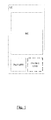
- Fig. 1 illustrates the configuration of a user equipment (UE) which consists of a mobile equipment (ME) such as a mobile phone and a universal identification subscriber module (USIM).
- UE user equipment
- ME mobile equipment
- USIM universal identification subscriber module
- the USIM may be either one according to the new standard 3GPP TS 33.401 Release 8 (including the NSC file) as indicated by the solid box, or pre-Release 8 (not containing NSC file) as indicated by the dashed box in Fig. 1 .
- the user equipment UE according to one embodiment is configured to operate in accordance with the flowchart shown in Fig. 2 which will now be explained in the following.
- the approach according to an embodiment of the invention illustrated in Fig. 2 may be summarized as follows. During power on cycle there is detected the presence of an NSC file and relevant data is moved to the volatile memory of the UE.
- FIG. 2 Such an embodiment is illustrated in somewhat more detail in Fig. 2 .
- a file for the NAS security context NSC in the USIM After switching on power there is checked whether there exists a file for the NAS security context NSC in the USIM. If this is the case the file is copied to the volatile memory of the UE. Then the contents of the NSC file in the UE non-volatile memory are deleted and in a second step also the contents of the NSC file in the USIM are deleted. With these two steps it can be ensured that there is no security context stored anymore in the UE's non-volatile memory or in the USIM. This is because the NSC stored therein could become outdated when the NSC which has been copied into the volatile memory becomes updated during NAS operations which are performed during the usage of the UE. Therefore it is preferable to delete the NSC content in the UE non-volatile memory and in the USIM after the NSC has been copied to the volatile memory of the ME.
- Another possibility to avoid the usage of outdated security context without deleting the NSC in the UE non-volatile memory and in the USIM could be to mark the security context therein as invalid by setting a flag or indicator which has a corresponding meaning. In one embodiment this may be achieved by setting the parameter eKSI to the value 111 which has the effect that the security context stored in the UE non-volatile memory or in the USIM will be regarded as invalid.
- the NSC file stored in the volatile memory can be used for all operations and updates involving the NAS security context NSC. This continues until the UE will be switched off, an operation which will be explained later in connection with Fig. 3 .
- a valid security context has to be generated.
- This security context can then be e.g. directly written into the non-volatile memory of the UE and used for updates.
- the UE When the UE is to be shut down it may be saved into the empty file in the UE's non-volatile memory, as will be explained in connection with Fig. 3 .
- the approach during the shutdown phase may be summarized as follows,
- the UE saves the NAS security context into the non volatile memory (either in the USIM or in the UE, if this file doesn't exist in the USIM).
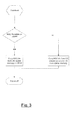
- this may be performed as illustrated in Fig. 3 which will now be explained.
- the shutdown command e.g. due to pressing the off switch of the UE
- the NSC of the volatile memory of the UE is copied into the corresponding location at the USIM. If the check result is negative this means that the USIM is an old one which has no file or directory for storing the NSC.
- the NSC file of the volatile memory of the UE is copied into the non-volatile memory of the UE to the location where the NSC should be stored.
- the updated security context is then again stored onto either the USIM (if the USIM is configured to store the NSC) or onto the non-volatile memory of the UE, as required by the standard.
- the NSC was only stored in the volatile memory of the UE and any updates of the NSC or operations involving the NSC have been performed by accessing only the volatile memory of the UE.
- the parameter set which is stored either in the USIM or the non-volatile memory may not only be the NAS security context, it may be any security context or set of security relevant parameters which are used to secure the communication between a mobile device and its network to which it is connected.
- his may relate to sets of one or more keys or one or more counters used to maintain security.
- this principle may also be used to handle mobility management parameters.
- the invention may be applied to mobility management parameters.
- EMM enhanced mobility management
Landscapes
- Engineering & Computer Science (AREA)
- Computer Security & Cryptography (AREA)
- Computer Networks & Wireless Communication (AREA)
- Signal Processing (AREA)
- Databases & Information Systems (AREA)
- Computer Hardware Design (AREA)
- Computing Systems (AREA)
- General Engineering & Computer Science (AREA)
- Telephone Function (AREA)
- Mobile Radio Communication Systems (AREA)
Priority Applications (2)
| Application Number | Priority Date | Filing Date | Title |
|---|---|---|---|
| EP09150613A EP2209329B1 (de) | 2009-01-15 | 2009-01-15 | Verfahren und Vorrichtung zur Verwaltung von Parametern eines mobilen Endgerätes |
| JP2010006778A JP4796190B2 (ja) | 2009-01-15 | 2010-01-15 | パラメータを取り扱う方法および装置 |
Applications Claiming Priority (1)
| Application Number | Priority Date | Filing Date | Title |
|---|---|---|---|
| EP09150613A EP2209329B1 (de) | 2009-01-15 | 2009-01-15 | Verfahren und Vorrichtung zur Verwaltung von Parametern eines mobilen Endgerätes |
Publications (2)
| Publication Number | Publication Date |
|---|---|
| EP2209329A1 true EP2209329A1 (de) | 2010-07-21 |
| EP2209329B1 EP2209329B1 (de) | 2012-03-14 |
Family
ID=40707757
Family Applications (1)
| Application Number | Title | Priority Date | Filing Date |
|---|---|---|---|
| EP09150613A Ceased EP2209329B1 (de) | 2009-01-15 | 2009-01-15 | Verfahren und Vorrichtung zur Verwaltung von Parametern eines mobilen Endgerätes |
Country Status (2)
| Country | Link |
|---|---|
| EP (1) | EP2209329B1 (de) |
| JP (1) | JP4796190B2 (de) |
Cited By (2)
| Publication number | Priority date | Publication date | Assignee | Title |
|---|---|---|---|---|
| EP2445179A1 (de) * | 2010-10-19 | 2012-04-25 | Morpho Cards GmbH | Chipkarte für eine mobile Telekommunikationsvorrichtung |
| WO2025002794A1 (en) * | 2023-06-29 | 2025-01-02 | Thales Dis France Sas | Removable secure element having impersonation protection |
Citations (2)
| Publication number | Priority date | Publication date | Assignee | Title |
|---|---|---|---|---|
| EP1104975A2 (de) * | 1999-11-26 | 2001-06-06 | Hyundai Electronics Industries Co., Ltd. | Verfahren zur Zellselektion von einem asynchronen Mobilstation in einem asynchronen Mobilkommunikationssystem |
| GB2379134A (en) * | 2001-08-22 | 2003-02-26 | Ubinetics Ltd | Storage of base/transmitter station information |
Family Cites Families (4)
| Publication number | Priority date | Publication date | Assignee | Title |
|---|---|---|---|---|
| GB0428084D0 (en) * | 2004-12-22 | 2005-01-26 | Nokia Corp | Method for producing authentication information |
| JP2007201775A (ja) * | 2006-01-26 | 2007-08-09 | Dainippon Printing Co Ltd | Uimカード |
| JP4388100B2 (ja) * | 2007-05-31 | 2009-12-24 | 株式会社東芝 | 携帯電話機 |
| JP4392035B2 (ja) * | 2007-06-20 | 2009-12-24 | ソフトバンクモバイル株式会社 | 移動体通信端末 |
-
2009
- 2009-01-15 EP EP09150613A patent/EP2209329B1/de not_active Ceased
-
2010
- 2010-01-15 JP JP2010006778A patent/JP4796190B2/ja not_active Expired - Fee Related
Patent Citations (2)
| Publication number | Priority date | Publication date | Assignee | Title |
|---|---|---|---|---|
| EP1104975A2 (de) * | 1999-11-26 | 2001-06-06 | Hyundai Electronics Industries Co., Ltd. | Verfahren zur Zellselektion von einem asynchronen Mobilstation in einem asynchronen Mobilkommunikationssystem |
| GB2379134A (en) * | 2001-08-22 | 2003-02-26 | Ubinetics Ltd | Storage of base/transmitter station information |
Non-Patent Citations (1)
| Title |
|---|
| "3rd Generation Partnership Project; Technical Specification Group Services and System Aspects; 3GPP System Architecture Evolution (SAE): Security Architecture; (Release 8)", 3GPP TS 33.401 V8.2.1, SOPHIA-ANTIPOLIS, FR, no. version 8.2.1, 1 December 2008 (2008-12-01), Sophia Antipolis, pages 1 - 58, XP007908831 * |
Cited By (3)
| Publication number | Priority date | Publication date | Assignee | Title |
|---|---|---|---|---|
| EP2445179A1 (de) * | 2010-10-19 | 2012-04-25 | Morpho Cards GmbH | Chipkarte für eine mobile Telekommunikationsvorrichtung |
| WO2012052355A1 (en) | 2010-10-19 | 2012-04-26 | Morpho Cards Gmbh | Chip card for a mobile telecommunication device |
| WO2025002794A1 (en) * | 2023-06-29 | 2025-01-02 | Thales Dis France Sas | Removable secure element having impersonation protection |
Also Published As
| Publication number | Publication date |
|---|---|
| JP2010166566A (ja) | 2010-07-29 |
| EP2209329B1 (de) | 2012-03-14 |
| JP4796190B2 (ja) | 2011-10-19 |
Similar Documents
| Publication | Publication Date | Title |
|---|---|---|
| US10936719B2 (en) | Preserving trust data during operating system updates of a secure element of an electronic device | |
| EP4120066B1 (de) | Ersetzen von ausführbaren ladedateien in sicheren elementen | |
| US20240256671A1 (en) | Update of an operating system in a security element | |
| EP3286682B1 (de) | Verfahren zur verwaltung von applikationen in einem sicheren element wenn das betriebsystem aktualisiert wird | |
| US20180357059A1 (en) | Method for managing a package in a secure element | |
| EP2209329A1 (de) | Verfahren und Vorrichtung zur Verwaltung von Parametern eines mobilen Endgerätes | |
| CN103309696B (zh) | 一种Java卡扩展库更新方法、装置和Java卡 | |
| CN1316845C (zh) | 移动用户设备的编码方法 | |
| CN104641347B (zh) | 函数调用方法、装置和终端设备 | |
| US20240292206A1 (en) | Method for managing a notification procedure between an integrated circuit card operating in a communication device and a provisioning system, corresponding system and integrated circuit card | |
| CN115967939A (zh) | 一种数据存储卡及数据存储方法 | |
| CN108990046B (zh) | 移动网络的连接方法 | |
| EP4145271B1 (de) | Verfahren und endgerät zur aktualisierung einer umgewandelten applet-datei und java-kartenvorrichtung | |
| CN115981694A (zh) | 终端设备的ota升级方法及装置、可读存储介质、终端设备 | |
| CN103309758A (zh) | 一种卡应用下载的方法、系统和装置 | |
| JP4388100B2 (ja) | 携帯電話機 | |
| US20250251968A1 (en) | Application data transfer method | |
| CN112905218A (zh) | 一种固件升级方法、装置及设备 | |
| JP5708228B2 (ja) | Icカード及びicカードのリフレッシュ方法 | |
| EP4390735A1 (de) | Aktualisierungsmittel mit linearem speicher | |
| CN111225372B (zh) | 一种防脱网方法、用户设备和具有存储功能的装置 | |
| CN120111487A (zh) | 一种sim卡防止误擦写方法、设备及存储介质 | |
| CN118555563A (zh) | 用于管理通知过程的方法、对应的系统以及集成电路卡 | |
| WO2026012745A1 (en) | Factory reset applet | |
| CN121934867A (zh) | 固件更新方法及数字信号处理器 |
Legal Events
| Date | Code | Title | Description |
|---|---|---|---|
| PUAI | Public reference made under article 153(3) epc to a published international application that has entered the european phase |
Free format text: ORIGINAL CODE: 0009012 |
|
| 17P | Request for examination filed |
Effective date: 20100114 |
|
| AK | Designated contracting states |
Kind code of ref document: A1 Designated state(s): AT BE BG CH CY CZ DE DK EE ES FI FR GB GR HR HU IE IS IT LI LT LU LV MC MK MT NL NO PL PT RO SE SI SK TR |
|
| AX | Request for extension of the european patent |
Extension state: AL BA RS |
|
| AKX | Designation fees paid |
Designated state(s): DE GB |
|
| GRAP | Despatch of communication of intention to grant a patent |
Free format text: ORIGINAL CODE: EPIDOSNIGR1 |
|
| RIC1 | Information provided on ipc code assigned before grant |
Ipc: H04L 29/06 20060101ALI20110721BHEP Ipc: H04W 12/08 20090101ALI20110721BHEP Ipc: H04W 8/20 20090101AFI20110721BHEP |
|
| GRAS | Grant fee paid |
Free format text: ORIGINAL CODE: EPIDOSNIGR3 |
|
| GRAA | (expected) grant |
Free format text: ORIGINAL CODE: 0009210 |
|
| AK | Designated contracting states |
Kind code of ref document: B1 Designated state(s): DE GB |
|
| REG | Reference to a national code |
Ref country code: GB Ref legal event code: FG4D |
|
| REG | Reference to a national code |
Ref country code: DE Ref legal event code: R096 Ref document number: 602009005839 Country of ref document: DE Effective date: 20120510 |
|
| PLBE | No opposition filed within time limit |
Free format text: ORIGINAL CODE: 0009261 |
|
| STAA | Information on the status of an ep patent application or granted ep patent |
Free format text: STATUS: NO OPPOSITION FILED WITHIN TIME LIMIT |
|
| 26N | No opposition filed |
Effective date: 20121217 |
|
| REG | Reference to a national code |
Ref country code: DE Ref legal event code: R097 Ref document number: 602009005839 Country of ref document: DE Effective date: 20121217 |
|
| PGFP | Annual fee paid to national office [announced via postgrant information from national office to epo] |
Ref country code: DE Payment date: 20140108 Year of fee payment: 6 |
|
| PGFP | Annual fee paid to national office [announced via postgrant information from national office to epo] |
Ref country code: GB Payment date: 20140115 Year of fee payment: 6 |
|
| REG | Reference to a national code |
Ref country code: DE Ref legal event code: R119 Ref document number: 602009005839 Country of ref document: DE |
|
| GBPC | Gb: european patent ceased through non-payment of renewal fee |
Effective date: 20150115 |
|
| PG25 | Lapsed in a contracting state [announced via postgrant information from national office to epo] |
Ref country code: GB Free format text: LAPSE BECAUSE OF NON-PAYMENT OF DUE FEES Effective date: 20150115 Ref country code: DE Free format text: LAPSE BECAUSE OF NON-PAYMENT OF DUE FEES Effective date: 20150801 |