EP2210620A2 - Composition chirurgicale bioabsorbable - Google Patents
Composition chirurgicale bioabsorbable Download PDFInfo
- Publication number
- EP2210620A2 EP2210620A2 EP10160547A EP10160547A EP2210620A2 EP 2210620 A2 EP2210620 A2 EP 2210620A2 EP 10160547 A EP10160547 A EP 10160547A EP 10160547 A EP10160547 A EP 10160547A EP 2210620 A2 EP2210620 A2 EP 2210620A2
- Authority
- EP
- European Patent Office
- Prior art keywords
- compound
- diisocyanate
- group derived
- tissue
- macromers
- Prior art date
- Legal status (The legal status is an assumption and is not a legal conclusion. Google has not performed a legal analysis and makes no representation as to the accuracy of the status listed.)
- Withdrawn
Links
Images
Classifications
-
- C—CHEMISTRY; METALLURGY
- C08—ORGANIC MACROMOLECULAR COMPOUNDS; THEIR PREPARATION OR CHEMICAL WORKING-UP; COMPOSITIONS BASED THEREON
- C08G—MACROMOLECULAR COMPOUNDS OBTAINED OTHERWISE THAN BY REACTIONS ONLY INVOLVING UNSATURATED CARBON-TO-CARBON BONDS
- C08G18/00—Polymeric products of isocyanates or isothiocyanates
- C08G18/06—Polymeric products of isocyanates or isothiocyanates with compounds having active hydrogen
- C08G18/28—Polymeric products of isocyanates or isothiocyanates with compounds having active hydrogen characterised by the compounds used containing active hydrogen
- C08G18/40—High-molecular-weight compounds
- C08G18/42—Polycondensates having carboxylic or carbonic ester groups in the main chain
- C08G18/4244—Polycondensates having carboxylic or carbonic ester groups in the main chain containing oxygen in the form of ether groups
- C08G18/4247—Polycondensates having carboxylic or carbonic ester groups in the main chain containing oxygen in the form of ether groups derived from polyols containing at least one ether group and polycarboxylic acids
- C08G18/4252—Polycondensates having carboxylic or carbonic ester groups in the main chain containing oxygen in the form of ether groups derived from polyols containing at least one ether group and polycarboxylic acids derived from polyols containing polyether groups and polycarboxylic acids
-
- A—HUMAN NECESSITIES
- A61—MEDICAL OR VETERINARY SCIENCE; HYGIENE
- A61L—METHODS OR APPARATUS FOR STERILISING MATERIALS OR OBJECTS IN GENERAL; DISINFECTION, STERILISATION OR DEODORISATION OF AIR; CHEMICAL ASPECTS OF BANDAGES, DRESSINGS, ABSORBENT PADS OR SURGICAL ARTICLES; MATERIALS FOR BANDAGES, DRESSINGS, ABSORBENT PADS OR SURGICAL ARTICLES
- A61L24/00—Surgical adhesives or cements; Adhesives for colostomy devices
- A61L24/001—Use of materials characterised by their function or physical properties
- A61L24/0042—Materials resorbable by the body
-
- A—HUMAN NECESSITIES
- A61—MEDICAL OR VETERINARY SCIENCE; HYGIENE
- A61L—METHODS OR APPARATUS FOR STERILISING MATERIALS OR OBJECTS IN GENERAL; DISINFECTION, STERILISATION OR DEODORISATION OF AIR; CHEMICAL ASPECTS OF BANDAGES, DRESSINGS, ABSORBENT PADS OR SURGICAL ARTICLES; MATERIALS FOR BANDAGES, DRESSINGS, ABSORBENT PADS OR SURGICAL ARTICLES
- A61L24/00—Surgical adhesives or cements; Adhesives for colostomy devices
- A61L24/04—Surgical adhesives or cements; Adhesives for colostomy devices containing macromolecular materials
- A61L24/046—Surgical adhesives or cements; Adhesives for colostomy devices containing macromolecular materials obtained otherwise than by reactions only involving carbon-to-carbon unsaturated bonds
-
- C—CHEMISTRY; METALLURGY
- C08—ORGANIC MACROMOLECULAR COMPOUNDS; THEIR PREPARATION OR CHEMICAL WORKING-UP; COMPOSITIONS BASED THEREON
- C08G—MACROMOLECULAR COMPOUNDS OBTAINED OTHERWISE THAN BY REACTIONS ONLY INVOLVING UNSATURATED CARBON-TO-CARBON BONDS
- C08G18/00—Polymeric products of isocyanates or isothiocyanates
- C08G18/06—Polymeric products of isocyanates or isothiocyanates with compounds having active hydrogen
- C08G18/08—Processes
- C08G18/10—Prepolymer processes involving reaction of isocyanates or isothiocyanates with compounds having active hydrogen in a first reaction step
- C08G18/12—Prepolymer processes involving reaction of isocyanates or isothiocyanates with compounds having active hydrogen in a first reaction step using two or more compounds having active hydrogen in the first polymerisation step
-
- C—CHEMISTRY; METALLURGY
- C08—ORGANIC MACROMOLECULAR COMPOUNDS; THEIR PREPARATION OR CHEMICAL WORKING-UP; COMPOSITIONS BASED THEREON
- C08G—MACROMOLECULAR COMPOUNDS OBTAINED OTHERWISE THAN BY REACTIONS ONLY INVOLVING UNSATURATED CARBON-TO-CARBON BONDS
- C08G63/00—Macromolecular compounds obtained by reactions forming a carboxylic ester link in the main chain of the macromolecule
- C08G63/66—Polyesters containing oxygen in the form of ether groups
- C08G63/668—Polyesters containing oxygen in the form of ether groups derived from polycarboxylic acids and polyhydroxy compounds
- C08G63/672—Dicarboxylic acids and dihydroxy compounds
-
- C—CHEMISTRY; METALLURGY
- C08—ORGANIC MACROMOLECULAR COMPOUNDS; THEIR PREPARATION OR CHEMICAL WORKING-UP; COMPOSITIONS BASED THEREON
- C08G—MACROMOLECULAR COMPOUNDS OBTAINED OTHERWISE THAN BY REACTIONS ONLY INVOLVING UNSATURATED CARBON-TO-CARBON BONDS
- C08G63/00—Macromolecular compounds obtained by reactions forming a carboxylic ester link in the main chain of the macromolecule
- C08G63/68—Polyesters containing atoms other than carbon, hydrogen and oxygen
- C08G63/685—Polyesters containing atoms other than carbon, hydrogen and oxygen containing nitrogen
- C08G63/6854—Polyesters containing atoms other than carbon, hydrogen and oxygen containing nitrogen derived from polycarboxylic acids and polyhydroxy compounds
- C08G63/6856—Dicarboxylic acids and dihydroxy compounds
-
- C—CHEMISTRY; METALLURGY
- C08—ORGANIC MACROMOLECULAR COMPOUNDS; THEIR PREPARATION OR CHEMICAL WORKING-UP; COMPOSITIONS BASED THEREON
- C08G—MACROMOLECULAR COMPOUNDS OBTAINED OTHERWISE THAN BY REACTIONS ONLY INVOLVING UNSATURATED CARBON-TO-CARBON BONDS
- C08G63/00—Macromolecular compounds obtained by reactions forming a carboxylic ester link in the main chain of the macromolecule
- C08G63/91—Polymers modified by chemical after-treatment
- C08G63/914—Polymers modified by chemical after-treatment derived from polycarboxylic acids and polyhydroxy compounds
- C08G63/916—Dicarboxylic acids and dihydroxy compounds
-
- C—CHEMISTRY; METALLURGY
- C09—DYES; PAINTS; POLISHES; NATURAL RESINS; ADHESIVES; COMPOSITIONS NOT OTHERWISE PROVIDED FOR; APPLICATIONS OF MATERIALS NOT OTHERWISE PROVIDED FOR
- C09J—ADHESIVES; NON-MECHANICAL ASPECTS OF ADHESIVE PROCESSES IN GENERAL; ADHESIVE PROCESSES NOT PROVIDED FOR ELSEWHERE; USE OF MATERIALS AS ADHESIVES
- C09J175/00—Adhesives based on polyureas or polyurethanes; Adhesives based on derivatives of such polymers
- C09J175/04—Polyurethanes
- C09J175/06—Polyurethanes from polyesters
-
- C—CHEMISTRY; METALLURGY
- C08—ORGANIC MACROMOLECULAR COMPOUNDS; THEIR PREPARATION OR CHEMICAL WORKING-UP; COMPOSITIONS BASED THEREON
- C08G—MACROMOLECULAR COMPOUNDS OBTAINED OTHERWISE THAN BY REACTIONS ONLY INVOLVING UNSATURATED CARBON-TO-CARBON BONDS
- C08G2190/00—Compositions for sealing or packing joints
-
- C—CHEMISTRY; METALLURGY
- C08—ORGANIC MACROMOLECULAR COMPOUNDS; THEIR PREPARATION OR CHEMICAL WORKING-UP; COMPOSITIONS BASED THEREON
- C08G—MACROMOLECULAR COMPOUNDS OBTAINED OTHERWISE THAN BY REACTIONS ONLY INVOLVING UNSATURATED CARBON-TO-CARBON BONDS
- C08G2230/00—Compositions for preparing biodegradable polymers
Definitions
- the present disclosure relates to compounds suitable for use in forming bioabsorbable compositions which, in turn, are capable of being used as surgical adhesives or sealants.
- tissue adhesives or tissue sealants are currently available.
- One type of adhesive that is currently available is a cyanoacrylate adhesive.
- cyanoacrylate adhesives can have a high flexural modulus which can limit their usefulness.
- Another type of tissue sealant that is currently available utilizes components derived from bovine and/or human sources. For example, fibrin sealants are available. However, as with any natural material, variability in the material can be observed.
- the present disclosure provides compounds of the formula: HO-(R-A) n -R-OH wherein A is a group derived from an aliphatic diacid; R can be the same or different at each occurrence and is a group derived from a dihydroxy compound having a molecular weight less than 1,000; and n is 2 to 10. Such compounds are not solids, but rather are flowable.
- the present disclosure also provides compounds of the formula: OCN-X-HNCOO-(R-A) n -R OOCNH-X-NCO wherein X is an aliphatic or aromatic group; A is a group derived from an aliphatic diacid; R can be the same or different at each occurrence and is a group derived from a dihydroxy compound; and n is 1 to 10.
- the present disclosure also provides compounds of the formula: Z-(OOCNH-X-NHCOO-(R-A) n R-OOCNH-X-NCO) m wherein Z is a group derived from a multifunctional compound; X is an aliphatic or aromatic group; A is a group derived from an aliphatic diacid; R can be the same or different at each occurrence and is a group derived from a dihydroxy compound; n is 1 to 10; and m is 2 to 6.
- compositions containing the aforementioned compounds are also described herein.
- the compounds and compositions are useful, for example, as an adhesive or sealant, and can be applied to tissue or used to sea! an opening in tissue to prevent leakage of air or bodily fluid or used to close a wound or used to secure a medical device or prothesis to tissue.
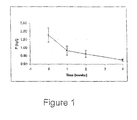
- FIG. 1 is a graph depicting the strength loss profile of an adhesive of the present disclosure from administration (day 0) through week 4 post-administration.
- the present disclosure relates to compounds suitable for forming a bioabsorbable composition which may be used as a tissue adhesive or sealant.
- compositions of the present disclosure contain a component that includes an aliphatic diacid linking two dihydroxy compounds (sometimes referred to herein as an "aliphatic polyester macromer"). Up to ten repeats of the aliphatic polyester macromer may be present.
- the present compounds are not solid at the temperatures encountered in use, but rather are flowable. Flowable materials have a measurable viscosity. For example, the present compounds may have a viscosity of about 1,000 to about 300,000 centipoise ("Cp") at temperatures of about 0°C to about 40°C.
- Suitable aliphatic diacids which may be utilized in forming the compounds include, for example, aliphatic diacids having from about 2 to about 8 carbon atoms suitable diacids include, but are not limited to sebacic acid, azelaic acid, suberic acid, pimelic acid, adipic acid, glutaric acid, succinic acid, malonic acid, oxalic acid and combinations thereof.
- Suitable dihydroxy compounds which may be utilized include, for example, polyols including polyalkylene oxides, polyvinyl alcohols, and the like.
- the dihydroxy compounds can be a polyalkylene oxide such as polyethylene oxide (“PEO”), polypropylene oxide (“PPO”), block or random copolymers of polyethylene oxide (PEO) and polypropylene oxide (PPO).
- a polyethylene glycol may be utilized as the dihydroxy compound. It may be desirable to utilize a PEG with a molecular weight ranging from about 200 to about 1000, typically from about 400 to about 900. Suitable PEGs are commercially available from a veracity of sources under the designations PEG 200, PEG 400, PEG 600 and PEG 900.
- the aliphatic polyester macromer may be formed by combining adipoyl chloride with a PEG such as PEG 600 and pyridine in a suitable solvent, such as tetrahydrofuran (THF).
- a suitable solvent such as tetrahydrofuran (THF).
- the solution may be held at a suitable temperature, from about -70° C to about 25° C, for a period of time ranging from about 4 hours to about 18 hours, after which the reaction mixture is filtered to remove the precipitated pyridine hydrochloride by-product and the resulting aliphatic polyester macromer, here a PEG/adipate compound, may be precipitated from the solution by the addition of ether or petroleum ether, and collected by suitable means which can include filtration.
- suitable means which can include filtration.
- the resulting aliphatic polyester macromer is of the following formula: HO-(R-A) n -R-OH wherein A is a group derived from an aliphatic diacid; R can be the same or different at each occurrence and is a group derived from a dihydroxy compound; and n is 1 to 10.
- the A group can be derived from adipic acid and R can be derived from a polyethylene glycol having a molecular weight of less then 1,000.
- the molecular weight and viscosity of these compounds will depend on a number of factors such as the particular diacid used, the particular dihydroxy compound used and the number of repeat units present. Generally, the viscosity of these compounds may be from about 300 to about 10,000 Cp at 25 °C and a shear rate of 20.25 s -1 .
- These compounds are useful for a number of applications. For example, they may be used to produce compounds capable of cross-linking to form a gel matrix that serves as an excellent tissue adhesive or sealant.
- Suitable reactive end groups include amine reactive end groups, for example, isocyanate groups, isothiocyanates, diimidazoles, imidoesters, hydroxysuccinimide esters, and aldehydes. Of particular interest are the isocyanate groups. Methods for endcapping the aliphatic polyester macromer to provide a reactive end group are within the purview of those skilled in the art.
- the aliphatic polyester macromer may be reacted with an aliphatic or aromatic diisocyanate to produce a diisocyanate-functional compound.
- Suitable isocyanates for endcapping the aliphatic polyester macromer include aromatic, aliphatic and alicyclic isocyanates.
- Examples includes, but are not limited to, aromatic diisocyanates such as 2,4-toluene diisocyanate, 2,6-toluene diisocyanate, 2,2'-diphenylmethane diisocyanate, 2,4'-diphenylmethane diisocyanate, 4,4'-diphenylmethane diisocyanate, diphenyldimethylmethane diisocyanate, dibenzyl diisocyanate, naphthylene diisocyanate, phenylene diisocyanate, xylylene diisocyanate, 4,4'-oxybis(phenylisocyanate) or tetramethylxylylene diisocyanate; aliphatic diisocyanates such as tetramethylene diisocyanate, hexamethylene diisocyanate, dimethyl diisocyanate, lysine diisocyanate, 2-methylpentane-1,5-diisocyanate,
- the aliphatic polyester macromer may be combined with a suitable diisocyanate, such as toluene diisocyanate, and heated to a suitable temperature ranging from about 55° C to about 75° C, typically about 65° C.
- a suitable diisocyanate such as toluene diisocyanate
- the resulting diisocyanate-functional compound may then be purified by hot extraction with petroleum ether.
- the diisocyanate-functional compounds of the present disclosure may be of the following formula: OCN-X-HNCOO-(R-A) n -R-OOCNH-X-NCO wherein X is an aliphatic or aromatic group; A is a group derived from an aliphatic diacid; R can be the same or different at each occurrence and is a group derived from a dihydroxy compound; and n is 1 to 10.
- X may derived from toluene, hexamethylene, tetramethylene, lysine, ethylated lysine isophorone, xylene, diphenylmethane, diphenyldimethylmethane, dibenzyl diisocyanate, oxybis(phenylisocyanate), tetramethylxylylene or optionally mixtures thereof or combinations thereof.
- the NCO content of the diisocyanate-functional compound can vary from about 3% to about 6%, typically from about 3.5% to about 5%.
- the viscosity of these diisocyanate-functional compounds will depend on a number of factors such as the particular diisocyanate used, the particular diacid used, the particular dihydroxy compound used and the number of repeat units present. Generally, the viscosity of these compounds may be from about 1,500 to about 50,000 Cp.
- aliphatic polyester macromer of the above-mentioned formula wherein n is 3 can be prepared and combined with aliphatic polyester macromer of the above-mentioned formula wherein n is 5 that had been separately prepared.
- the mixture of aliphatic polyester macromers can then be endcapped to provide a reactive group in a single reaction.
- the resulting product will be a mixture of diisocyanate-functional compounds of the formula shown above.
- the functionalized polyester macromer may be further reacted with a multifunctional compound which acts as a branching agent.
- Suitable branching agents include, for example, polyfunctional acids, anhydrides, alcohols, and mixtures thereof.
- the multifunctional compound may be a polyol having 3 to 6 hydroxyl groups, a polycarboxylic acid having 3 to 6 carboxyl groups or a hydroxy acid having a total of 3 to 6 hydroxyl and carboxyl groups.
- multifunctional compounds which may be utilized include triols derived by condensing alkylene oxides having 2 to 3 carbons, such as ethylene oxide and propylene oxide, with polyol initiators. Such multifunctional compounds typically have higher molecular weights ranging from about 400 to about 3000.
- polycarboxylic acids that may be used as the multifunctional compound include hemimellitic acid, trimellitic acid, trimesic acid, pyromellitic acid, benzene tetracarboxylic acid, benzophenone tetracarboxylic acid, 1,1,2,2-ethanetetracarboxylic acid, 1,1,2-ethanetricarboxylic acid, 1,3,5-pentanetricarboxylic acid, and 1,2,3,4-cyclopentanetetra-carboxylic acid.
- hydroxy acids suitable as the multifunctional compound include malic acid, citric acid, tartaric acid, 3-hydroxyglutaric acid, mucic acid, trihydroxyglutaric acid, and 4-(beta-hydroxyethyl)phthalic acid. Such hydroxy acids contain a combination of 3 or more hydroxyl and carboxyl groups.
- the multifunctional compound may include at least one bioabsorbable group to alter the degradation profile of the resulting branched, functionalized compound.
- Bioabsorbable groups which may be combined with the multifunctional compound include, for example groups derived from glycolide, glycolic acid, lactide, lactic acid, caprolactone, dioxanone, trimethylene carbonate, and combinations thereof.
- the multifunctional compound may include trimethylol propane in combination with dioxanone and glycolide.
- the bioabsorbable groups may be present in an amount ranging from about 50 percent to about 95 percent of the combined weight of the multifunctional compound and bioabsorbable groups, typically from about 7 percent to about 90 percent of the combined weight of the multifunctional compound and bioabsorbable groups.
- the multifunctional compound can have a weight average molecular weight ranging from about 50 to about 5000, typically from about 100 to about 3000, and typically possesses a functionality ranging from about 2 to about 6.
- the multifunctional compound optionally may be combined with a diisocyanate-functional compound in the presence of a catalyst such as stannous octoate at a temperature ranging from about 50° C to about 80° C, typically from about 60° C to about 70° C for a period of time ranging from about 24 to about 96 hours, typically from about 48 to about 72 hours.
- a catalyst such as stannous octoate
- the resulting branched, functionalized compound may thus be of the following formula; Z-(OCN-X-HNCOO-(R-A) n -R-OOCNH-X-NCO) m wherein Z is a group derived from a multifunctional compound which optionally contains bioabsorbable groups; X is an aliphatic or aromatic group; A is a group derived from an aliphatic diacid; R can be the same or different at each occurrence and is a group derived from a dihydroxy compound; n is 1 to 10; and m is 2 to 6.
- the viscosity of these branched diisocyanate-functional compounds will depend on a number of factors such as the particular branching agent used, the particular diisocyanate used, the particular diacid used, the particular dihydroxy compound used and the number of repeat units present. Generally, the viscosity of these compounds may be from about 3,000 to about 300,000 Cp at 25 °C and 9.98 s -1 shear rate, in some embodiments about 15,000 to about 100,000 Cp at 25 °C and 9.98 s -1 shear rate and in yet other embodiments, about 30,000 to about 70,000 Cp at 25 °C and 9.98 s -1 shear rate.
- a mixture of compounds having various degrees of functionality will result from reacting the diisocyanate-functional compound with the multifunctional compound.
- a single diisocyanate-functional compound may react with the multifunctional compound to provide a compound with a single isocyanate functionality; or two diisocyanate-functional compounds may react with a single multifunctional compound to provide a compound with a two isocyanate functionalities; or three diisocyanate-functional compound may react with a single multifunctional compound to provide a compound with a three isocyanate functionalities; or two multifunctional compound may react with a single diisocyanate-functional compound to provide a compound with no isocyanate functionalities.
- Those skilled in the art will envision other possible reaction products that may form.
- diisocyanate-functional compound can be reacted with a multifunctional compound in a single reaction.
- aliphatic polyester macromer of the above-mentioned formula wherein n is 3 can be prepared and combined with aliphatic polyester macromer of the above-mentioned formula wherein n is 5 that had been separately prepared.
- the mixture of aliphatic polyester macromers can then be endcapped to provide a reactive group in a single reaction.
- the resulting mixture of diisocyanate-functional compounds can then be reacted with a multifunctional compound.
- aliphatic polyester macromer of the above-mentioned formula wherein n is 3 can be prepared and endcapped and an aliphatic polyester macromer of the above-mentioned formula wherein n is 5 can be separately prepared and endcapped.
- the two diisocyanate-functional compounds can then be mixed.
- the resulting mixture of diisocyanate-functional compounds can then be reacted with a multifunctional compound in a single reaction.
- the functionalized compounds and branched, functionalized compounds described hereinabove cross-link to form a gel matrix that serves as an excellent tissue adhesive or sealant.
- the cross-linking reaction is conducted at temperatures ranging from about 20°C to about 40° C for a period of time ranging from about fifteen seconds to about 20 minutes or more typically 1 to 10 minutes.
- compositions can be used alone or can be formulated into compositions.
- concentrations of the components utilized to form the compositions will vary depending upon a number of factors, including the types and molecular weights of the particular components used and the desired end use application of the biocompatible composition, e.g., an adhesive or sealant.
- the composition may contain from about 0.5% to about 100 % of the previously described functionalized polyester macromer.
- the composition may contain from about 0.5 to about 10 % of the branching agent by weight.
- solutions or emulsions may be formulated that includes a solvent in addition to the compounds.
- suitable solvents include, for example, polar solvents such as water, ethanol, triethylene glycol, glymes (such as diglyme, triglyme, tetraglyme, and the like), polyethylene glycols, methoxy-polyethylene glycols, dimethylformamide, dimethylacetamide, gamma-butyrolactone, N-methylpyrollidone, ketones such as methyl ethyl ketone, cyclohexanone, diethylene glycol monoethyl ether acetate, diethylene glycol monobutyl ether acetate, diethylene glycol monomethyl ether, diethylene glycol monoethyl ether, diethylene glycol monobutyl ether, diethylene glycol monoisobutyl ether, diisobutyl ket
- solvents such as tetrahydrofuran, ethyl acetate, isopropyl acetate, butyl acetate, isopropanol, butanol, acetone, mixtures thereof, and the like, may be utilized.
- the amounts of solvent used will depend on a number of factors including the particular reactive compound employed and the intended end use of the composition. Generally, the solvent will be from about 1 to about 50 weight percent of the entire composition.
- the use of one or more solvents can produce an emulsion having a viscosity of from about 100 to about 1500 Cp. Such emulsions can advantageously be sprayed using any suitable spraying device.
- the solvent is advantageously mixed with the compounds immediately prior to use to avoid undesired pre-gelling.
- compositions in accordance with this disclosure may optionally include one or more catalysts.
- a catalyst can decrease the cure time of the compositions of the present disclosure.
- Catalysts which may be utilized include Lewis acids, tertiary amine catalysts, quaternary amine catalysts, and the like.
- Suitable tertiary amine catalysts which may be added include, but are not limited to, triethylenediamine, N-methylmorpholine, pentamethyl diethylenetriamine, dimethylcyclohexylamine, tetramethylethylenediamine, 1-methyl-4-dimethylaminoethyl-piperazine, 3-methoxy-N-dimethyl-propylamine, N-ethylmorpholine, diethylethanolamine, N-cocomorpholine, N,N-dimethyl-N',N'-dimethylisopropyl-propylene diamine, N,N-diethyl-3-diethyl aminopropylamine and dimethyl-benzyl amine.
- Suitable quaternary amine catalysts include, for example, lower alkyl ammonium halides and their derivatives such as hydroxy, chlorhydrin and epoxy substituted lower alkyl trimethylammonium halides such as substituted propyltrimethylammonium chlorides.
- Quaternary amines which may be utilized include dihydroxypropyltrimethylammonium chloride, chlorohydroxypropyltrimethylammonium chloride, and epoxypropyltrimethylammonium chloride.
- Specific examples of the above compounds include 3-chloro-2-hydroxypropyl trimethyl ammonium chloride, 2,3-epoxypropyl trimethyl ammonium chloride, 3-chloro-2-hydroxypropyl trimethyl ammonium chloride, and 2,3-dihydroxypropyltrimethyl ammonium chloride.
- catalysts for use in the cross-linking reaction includes 1,4-diazobicyclo [2.2.2] octane, stannous octoate, and the like.
- the amount of catalyst employed can range from about 0.5 grams to about 50 grams per kilogram of the compound being cross-linked. In one embodiment, the amount of catalyst ranges from about 0.5 grams to about 10 grams per kilogram of the compound being cross-linked.
- Water may also be added to the composition to decrease cure time. When added, water should be introduced at or near the time of use of the composition to avoid unwanted or pre-mature crosslinking. Generally, the amount of water may be from about 1 to about 50 weight percent based on the entire composition.
- bioabsorbable compositions of the present disclosure may also be added to the bioabsorbable compositions of the present disclosure, including but not limited to surfactants antimicrobial agents, colorants, preservatives, imaging agents e.g., iodine or barium sulfate, or fluorine, or medicinal agents.
- the present compositions may optionally contain one or more bioactive agents.
- bioactive agent as used herein, is used in its broadest sense and includes any substance or mixture of substances that have clinical use. Consequently, bioactive agents may or may not have pharmacological activity per se, e.g., a dye.
- a bioactive agent could be any agent which provides a therapeutic or prophylactic effect, a compound that affects or participates in tissue growth, cell growth, cell differentiation, a compound that may be able to invoke a biological action such as an immune response, or could play any other role in one or more biological processes.
- bioactive agents examples include antimicrobials, analgesics, antipyretics, anesthetics, antiepileptics, antihistamines, anti-inflammatories, cardiovascular drugs, diagnostic agents, sympathomimetics, cholinomimetics, antimuscarinics, antispasmodics, hormones, growth factors, muscle relaxants, adrenergic neuron blockers, antineoplastics, immunogenic agents, immunosuppressants, gastrointestinal drugs, diuretics, steroids, lipids, lipopolysaccharides, polysaccharides, and enzymes. It is also intended that combinations of bioactive agents may be used.
- Suitable antimicrobial agents which may be included as a bioactive agent in the present compositions include triclosan, also known as 2,4,4'-trichloro-2'-hydroxydiphenyl ether, chlorhexidine and its salts, including chlorhexidine acetate, chlorhexidine gluconate, chlorhexidine hydrochloride, and chlorhexidine sulfate, silver and its salts, including silver acetate, silver benzoate, silver carbonate, silver citrate, silver iodate, silver iodide, silver lactate, silver laurate, silver nitrate, silver oxide, silver palmitate, silver protein, and silver sulfadiazine, polymyxin, tetracycline, aminoglycosides, such as tobramycin and gentamicin, rifampicin, bacitracin, neomycin, chloramphenicol, miconazole, quinolones such as oxolinic acid, norfloxacin, na
- bioactive agents which may be included as a bioactive agent in the present compositions include: local anesthetics; non-steroidal antifertility agents; parasympathomimetic agents; psychotherapeutic agents; tranquilizers; decongestants; sedative hypnotics; steroids; sulfonamides; sympathomimetic agents; vaccines; vitamins; antimalarials; anti-migraine agents; anti-parkinson agents such as L-dopa; anti-spasmodics; anticholinergic agents (e.g.
- oxybutynin antitussives
- bronchodilators cardiovascular agents such as coronary vasodilators and nitroglycerin
- alkaloids analgesics
- narcotics such as codeine, dihydrocodeinone, meperidine, morphine and the like
- non-narcotics such as salicylates, aspirin, acetaminophen, d-propoxyphene and the like
- opioid receptor antagonists such as naltrexone and naloxone
- anti-cancer agents anti-convulsants; anti-emetics
- antihistamines anti-inflammatory agents such as hormonal agents, hydrocortisone, prednisolone, prednisone, non-hormonal agents, allopurinol, indomethacin, phenylbutazone and the like
- prostaglandins and cytotoxic drugs estrogens; antibacterials; antibiotics; anti-fungals; anti-virals; anticoagulants;
- bioactive agents include viruses and cells, peptides, polypeptides and proteins, analogs, muteins, and active fragments thereof, such as immunoglobulins, antibodies, cytokines (e.g.
- lymphokines monokines, chemokines
- blood clotting factors hemopoietic factors, interleukins (IL-2, IL-3, IL-4, IL-6), interferons ( ⁇ -IFN, ( ⁇ -IFN and ⁇ -IFN), erythropoietin, nucleases, tumor necrosis factor, colony stimulating factors (e.g., GCSF, GM-CSF, MCSF), insulin, anti-tumor agents and tumor suppressors, blood proteins, gonadotropins (e.g., FSH, LH, CG, etc.), hormones and hormone analogs (e.g., growth hormone), vaccines (e.g., tumoral, bacterial and viral antigens); somatostatin; antigens; blood coagulation factors; growth factors (e.g., nerve growth factor, insulin-like growth factor); protein inhibitors, protein antagonists, and protein agonists; nucleic acids, such as antisense molecules, DNA and RNA; oligon
- Naturally occurring polymers including proteins such as collagen and derivatives of various naturally occurring polysaccharides such as glycosaminoglycans, can optionally be incorporated into the compositions the bioactive agent of the present disclosure.
- a single bioactive agent may be utilized to form the present compositions or, in alternate embodiments, any combination of bioactive agents may be utilized to form the present compositions.
- the present compositions cross-link to form a gel matrix that serves as an excellent tissue adhesive or sealant.
- the cross-linking reaction is conducted at temperatures ranging from about 20°C to about 40° C for a period of time ranging from about fifteen seconds to about 20 minutes or more typically 30 seconds to 10 minutes.
- the exact reaction conditions for achieving cross-linking of the compositions of the present disclosure depend upon a variety of factors, including the functionality of the compound, the degree of endcapping, the degree of functionalization, the presence of a catalyst, the particular solvent, if any, present and the like.
- the cross-linked compositions can be used in a medical/surgical capacity in place of, or in combination with, sutures, staples, clamps and the like.
- the present compositions can be used to seal or adhere delicate tissue together, such as lung tissue, in place of conventional tools that may cause mechanical stress.
- the present compositions can also be used to seal air and/or fluid leaks in tissue as well as to prevent post-surgical adhesions and to fill voids and/or defects in tissue.
- the amounts of the compounds of the present disclosure can be adjusted to promote the initial retention of the drug or polymer in the bioabsorbable composition and its subsequent release. Methods and means for making such adjustments will be readily apparent to those skilled in the art.
- compositions of the present disclosure can be used for a number of different human and animal medical applications including, but not limited to, wound closure (including surgical incisions and other wounds).
- Adhesives may be used to bind tissue together either as a replacement of, or as a supplement to, sutures, staples, tapes and/or bandages.
- Use of the present compositions can eliminate or substantially reduce the number of sutures normally required during current practices, and eliminate the subsequent need for removal of staples and certain types of sutures.
- the compositions described herein can thus be particularly suitable for use with delicate tissues where sutures, clamps or other conventional tissue closure mechanisms may cause further tissue damage.
- compositions of the present disclosure can thus be applied to the wound and allowed to set, thereby closing the wound.
- tissue may include, but is not limited to, skin, bone, neuron, axon, cartilage, blood vessel, cornea, muscle, fascia, brain, prostate, breast, endometrium, lung, pancreas, small intestine, blood, liver, testes, ovaries, cervix, colon, stomach, esophagus, spleen, lymph node, bone marrow, kidney, peripheral blood, embryonic and/or ascite tissue.
- compositions described herein can also be used as sealants.
- a compound of the present disclosure can be used in surgery to form a bioabsorbable composition to prevent or inhibit bleeding or fluid leakage both during and after a surgical procedure. It can also be applied to prevent air leaks associated with pulmonary surgery.
- Compounds herein may be applied directly to the desired area in at least an amount sufficient to seal off any defect in the tissue and seal off any fluid or air movement.
- the compositions may also be used to prevent or control blood or other fluid leaks at suture or staple lines.
- the present compositions also can be used to attach skin grafts and position tissue flaps during reconstructive surgery. Alternatively, the present compositions can be used to close tissue flaps in periodontal surgery.
- compositions of the present disclosure can be done by any conventional means. These include dripping, brushing, or other direct manipulation of the compositions on the tissue surface, or spraying of the compositions onto the surface. In open surgery, application by hand, forceps or the like is contemplated. In endoscopic surgery, the compositions can be delivered through the cannula of a trocar, and spread at the site by any device known in the art.
- composition of the present disclosure is to be utilized as a void filler or sealant to fill a defect in an animal's body, it may be advantageous to more precisely control the conditions and extent of cross-linking. For example, it may be desirable to partially cross-link the composition prior to use to fill a void in animal tissue. In such a case composition of the present disclosure can be applied to the void or defect and allowed to set, thereby filling the void or defect.
- the present disclosure is directed to a method for using compounds of the present disclosure to adhere a medical device to tissue.
- the medical device includes an implant.
- Other medical devices include, but are not limited to, pacemakers, stents, shunts and the like.
- a composition of the present disclosure can be applied to the device, to the tissue surface or to both. The device and tissue surface are then brought into contact with the present composition therebetween. Once the composition crosslinks and sets, the device and tissue surface are effectively adhered to each other.
- compositions can also be used to prevent post surgical adhesions.
- a composition of the present disclosure is applied and cured to form a layer on surfaces of internal tissues in order to prevent the formation of adhesions at a surgical site during the healing process.
- the resulting bioabsorbable composition has a number of advantageous properties.
- the bioabsorbable compositions of the present disclosure are safe, possess enhanced adherence to tissue, are biodegradable, have enhanced hemostatic potential, have low cost, and are easy to prepare and use.
- the strength and elasticity of the bioabsorbable composition can be controlled, as can the gelation time.
- the compounds herein rapidly form a compliant gel matrix as the bioabsorbable composition, which insures stationary positioning of tissue edges or implanted medical devices in the desired location and lowers overall required surgical/application time.
- the resulting bioabsorbable composition exhibits little or no swelling upon gel matrix formation, and therefore retains the positional integrity of the aligned tissue edges and/or location of a medical device.
- the bioabsorbable composition forms strong cohesive bonds. It exhibits excellent mechanical performance and strength, while retaining the necessary pliability to adhere living tissue. This strength and pliability allows a degree of movement of tissue without shifting the surgical tissue edge.
- the flask with the AdCl in THF was chilled in ice for five minutes before the PEG/pyridine/THF solution was added dropwise with stirring set at 500 rpm.
- the addition of the PEG/pyridine/THF solution proceeded at a rate of 90 drops/minute, with the addition being complete after about 2 hours.
- Mixing was allowed to continue overnight for about 16 to about 20 hours.
- the soluble fraction was measured in situ by infrared spectroscopy using a ReactIRTM 4000 Spectrometer (Mettler-Toledo AutoChem, Columbia, MD); the ReactIR probe was inserted into one of the necks of the two neck flask; the background utilized was air.
- the spectrometer scan that was obtained confirmed the presence of PEG/AdCl at a ratio of 3:2.
- the resulting material was gravity filtered through filter paper (Scheicher & Schuell #1573, 1 ⁇ 2) to remove the pyridine hydrochloride salt byproduct.
- the salt by-product was washed with a small amount of THF at room temperature then filtered again.
- the filtrate was concentrated on a ROTAVAPOR ® rotary evaporator (BÜCHI Labortechnik AG, Flawil, Switzerland). Approximately 3 ⁇ 4 of the THF was removed, after which the resulting material was precipitated in 800 ml of anhydrous ethyl ether (Reagent Grade, ACS, 99.0 %, VWR International, ) stirred at 400 rpm. The mixture was stirred for thirty minutes. The stirring was stopped and the mixture allowed to separate afterwhich the supernatant was and the precipitate transferred to a jar.
- the product, PEG/adipate at a 3:2 ratio, sometimes referred to herein as dPEG was vacuum dried overnight.
- Isocyanate endcapping of PEG adipate A dry 500 ml three neck flask was outfitted with a mechanical stir assembly and dry condenser. The apparatus were setup in a dry room at 2 % relative humidity. 57.0 grams of the PEG/adipate produced above in Example 1 was transferred to the flask. 39 grams of toluene diisocyanate (TDI) (technical grade 80%, Sigma Aldrich, St. Louis, MO) was added to the flask and the resulting mixture was stirred at 110 rpm and heated to 65° C while under static nitrogen over night (for 16 to 20 hrours).
- TDI toluene diisocyanate
- Viscosity was calculated using a Brookfield DV III cone and plate viscosmeter and Rheocalc V2.5 software from Brookfield Engineering Labs, Middleboro, MA. NCO content was determined by titration on a TitroLine Alpha Autotitrator manufactured by Schott Adjust GmbH, Mainz, Germany using a modification of ASTM D 2572-91. The average NCO content of the material pre-extraction was about 17.9%; the average NCO content of the material post-extraction was about 4.2%. The presence of the NCO endcapped PEG/adipate was confirmed by FTIR and NMR.
- a degradable branching agent was prepared. To a clean and dry 250 ml three neck flask outfitted with a mechanical stir assembly was added 0.011 grams of stannous octoate (Brand Nu Labs, Meriden CT), 8.0 grams of trimethylol propane (TMP) (97 % Sigma Aldrich, St. Louis, MO), and 30.66 grams of p-dioxanone (US Surgical, Norwalk, CT). The mixture was mixed at 50 rpm and placed under static nitrogen overnight. The next morning the reaction mixture was a liquid at 24° C. The reaction mixture was heated to approximately 110° C for approximately 6 hours, after which 7.0 grams of glycolide (US Surgical, Norwalk, CT) was added and temperature was gradually increased to 160 ° C. After one hour at 160° C, the temperature was reduced to 125° C for approximately one hour and 15 minutes, after which time the reaction mixture was transferred to a jar and left overnight (about 15 hours).
- stannous octoate Brand Nu Labs, Mer
- reaction mixture 40 grams was then added to a 200 ml single neck flask which, in turn, was heated to 75° C under vacuum for 24 hours and stirred a rate of 250 rpm. About 26 hours later, the reaction mixture was transferred to a 200 ml single neck flask, and refluxed in ethyl ether while stirring at 200 rpm for 20 minutes. The supernatant was decanted and the refluxing procedure repeated two times to remove residual stannous octoate. The resulting material, a TMP/dioxanone/glycolide branching agent, was transferred to a jar and allowed to dry.
- the NCO endcapped PEG/adipate of Example 2 was combined with the branching agent of Example 3. 16.59 grams of the NCO endcapped PEG/adipate of Example 2, having an NCO content of 4.2% and a molecular weight of about 3900, was added to a 250 ml three neck flask with a mechanical stir assembly. 0.857 grams of the TMP/dioxanone/glycolide branching agent produced in Example 3 was added to the flask, which was heated to 65° C while stirring at 50 rpm under static nitrogen.. The reaction was allowed to proceed for about 65 hours, at which point the material was transferred to a beaker. The beaker was vacuum dried for one hour then the material was tested for its isocyanate content by titration and found to have an NCO content of about 2.6%.
- Adhesives utilizing NCO-terminated PEG/adipate prepared according to the procedures set forth above in Example 2 and TMP/dioxanone/glycolide branching agents prepared according to the procedures set forth above in Example 3 were obtained following the procedures described above in Example 4. Additional adhesives were prepared using TMP as a branching agent instead of the branching agents of Example 3.
- the adhesives that were prepared and their components are summarized below in Table 1. The viscosity was obtained as per the procedures set forth in Example 2 above and NCO content was determined as per the procedures set forth in Example 4 above.
- TMP trimethylolpropane (Aldrich Lot# 10628CA)
- dTMP TMP and dioxanone and glycolide. 0.15 grams Bis(hydroxymethyl) propionic acid (BmhP) was added during the branching step in the preparation of Adhesive A.
- Staples, adhesives produced above in Example 5, and combinations thereof were subjected to a burst test.
- the burst test utilized a 25 mm end-to-end anastomosis device (from U.S. Surgical, Norwalk, CT) and a test sample of fresh canine colon to test the ability of the adhesives of Example 5 to supplement or replace staples inserted with the end-to-end anastomosis device.
- the procedure for the burst test was as follows.
- the anastomotic site of interest was first isolated and a sample was excised. Sufficient tissue was maintained proximal and distal of the staple line (approximately 4 cm each side) to allow the sample to be properly fixtured in a hemostatic clamp.
- a hypodermic needle was inserted from a syringe pump equipped with a pressure transducer in line into the distal end of the sample and positioned in the clamp with the needle oriented towards the handle of the clamp so that the staple line was centered.
- the sample was then placed in a triangular test tank, and a sodium fluorescein fluid line was attached to the hypodermic needle. Sodium fluorescein solution was injected into the sample at a rate of 5 cc/min until failure was observed and peak pressure was noted.
- the anastomosis was performed as per Steichen, et al., ("Mechanical Sutures in Operations on the Small & Large Intestine & Rectum,” Woodbury, CT: Ciné-Med, Inc. (2004):72-76 ), using a 25 mm PPCEEA stapler.
- the burst pressure test was performed as described above.
- the anastomosis was performed as per Steichen et al. using a 25mm PPCEEA stapler, except that after docking the anvil, but before firing the staples, a bead of Adhesive C ( ⁇ 0.2 mL) was applied to the tissue on the instrument side approximately between the two rows of staples. After firing, the instrument was removed and the adhesive was allowed to cure for five minutes before performing the burst test.
- Compromised Anastomosis Three staples were removed from a 25 mm PPCEEA stapler, two adjacent to the edge of the material, and a third adjacent thereto but closer to the center of the material.
- the anastomosis was performed as per Steichen et al. using the 25mm PPCEEA stapler, making sure the compromised portion of the anastomosis was on the anti-mesenteric side of the bowel.
- Adhesive E was utilized instead of Adhesive C.
- the purpose of this example was to mimic hernia repair using a polypropylene mesh with an adhesive. Approximately 0.1 ml of adhesive was placed onto a 16 mm diameter circular piece of mesh with a suture loop through it. The mesh was then placed onto the peritoneum and immediately treated with one drop of saline. After several minutes, the mesh was pulled away from the tissue and the tensile force required to remove the mesh was measured using a Model BG10 premium series force gauge manufactured by Mark-10, Copiague, NY and then recorded. The adhesives utilized, the cure time, pull force (in grams), and observations regarding these tests are set forth below in Table 2.
- An end-to-side anastomosis was created on the abdominal aorta using an expanded PTFE tubular graft.
- the graft was sewn on using a 6 pass, interrupted suture.
- 0.2 mL of Adhesive E was applied through a 16 gauge cannula as a bead around the anastomosis. The adhesive was flushed with saline and let cure for 6 minutes before unclamping the aorta and checking for leaks.
- FIG. 1 is a graph depicting the strength loss profile of the adhesive from administration (day 0) through week 4 post-administration, If strength loss continued along the same trend observed through week 4 (see Fugure 1), total loss in strength could be expected after about 5.24 weeks post-administration.
- the cytotoxicities of Adhesive A and Adhesive F were tested. 1.5 mL of each adhesive was injected directly into a 20 mL MEM solution (Modified Eagle Medium, from Invitrogen Corporation). The cytotoxicity was tested following ISO 10993-5 guidelines. Briefly, the results of the tests are provided on a 5 scale ranking system in which a score of 0, 1, 2, 3, or 4 is obtained. A score of 0 indicates no toxic reaction was observed and a score of 4 indicates a strong toxic reaction was observed. A score of 0, 1, or 2, is considered a non-toxic score, a score of 3 is considered weakly to moderately toxic, and a score of 4 is considered strongly toxic. Scores of 0, 1, or 2 are considered passing scores, that is, the samples do not produce a cytotoxic response.
- Adhesive F had a cytotoxicity grade 2
- Adhesive A in combination with BmhP had a cytotoxicity grade 0.
- Adhesives C, D, and E were each subjected to a lap shear test. Briefly, room temperature porcine stomach tissue was cut into 15 X 45 mm pieces using a punch. The tissue was rinsed with saline and blotted to remove excess moisture. 0.1 mL of adhesive was then applied to the end of one of the tissue pieces. The adhesive was spread around to cover an area 15X15 mm at the end of the tissue piece. Another tissue piece was placed on top of the area covered by the adhesive. A 20 gram weight was placed on top of the adhered area for 30 seconds. The weight was removed and the adhesive was allowed to cure for 4.5 minutes more, for a total of 5 minutes cure time. Three separate tissue constructs were prepared, one for each Adhesive C, D and E.
- Adhesive C demonstrated a lap shear of 1100 grams
- Adhesive D demonstrated a lap shear of 1262 grams
- Adhesive E demonstrated a lap shear of 1322 grams.
- the diisocyanate functionalized aliphatic polyester macromer can be used to prepare polyurethanes and used for applications other than adhesives or sealants.
- the branched diisocyanate functionalized aliphatic polyester macromer can be cross-linked and molded into solid articles useful in a variety of applications, including but not limited to solid, biodegradable implants. Therefore the above description should not be construed as limiting, but merely as exemplifications of preferred embodiments. Those skilled in the art will envision other modifications within the scope and spirit of the claims appended hereto.
Landscapes
- Chemical & Material Sciences (AREA)
- Health & Medical Sciences (AREA)
- Chemical Kinetics & Catalysis (AREA)
- Organic Chemistry (AREA)
- Medicinal Chemistry (AREA)
- Polymers & Plastics (AREA)
- General Health & Medical Sciences (AREA)
- Epidemiology (AREA)
- Life Sciences & Earth Sciences (AREA)
- Animal Behavior & Ethology (AREA)
- Surgery (AREA)
- Public Health (AREA)
- Veterinary Medicine (AREA)
- General Chemical & Material Sciences (AREA)
- Engineering & Computer Science (AREA)
- Materials Engineering (AREA)
- Materials For Medical Uses (AREA)
- Adhesives Or Adhesive Processes (AREA)
- Organic Low-Molecular-Weight Compounds And Preparation Thereof (AREA)
- Sealing Material Composition (AREA)
- Polyesters Or Polycarbonates (AREA)
Applications Claiming Priority (2)
| Application Number | Priority Date | Filing Date | Title |
|---|---|---|---|
| US11/123,690 US8044234B2 (en) | 2005-05-05 | 2005-05-05 | Bioabsorbable surgical composition |
| EP06009170A EP1719530A3 (fr) | 2005-05-05 | 2006-05-03 | Composition chirurgicale bioabsorbable |
Related Parent Applications (1)
| Application Number | Title | Priority Date | Filing Date |
|---|---|---|---|
| EP06009170.9 Division | 2006-05-03 |
Publications (2)
| Publication Number | Publication Date |
|---|---|
| EP2210620A2 true EP2210620A2 (fr) | 2010-07-28 |
| EP2210620A3 EP2210620A3 (fr) | 2012-05-30 |
Family
ID=36678311
Family Applications (3)
| Application Number | Title | Priority Date | Filing Date |
|---|---|---|---|
| EP10160547A Withdrawn EP2210620A3 (fr) | 2005-05-05 | 2006-05-03 | Composition chirurgicale bioabsorbable |
| EP10176558A Withdrawn EP2289565A3 (fr) | 2005-05-05 | 2006-05-03 | Composition chirurgicale bioabsorbable |
| EP06009170A Ceased EP1719530A3 (fr) | 2005-05-05 | 2006-05-03 | Composition chirurgicale bioabsorbable |
Family Applications After (2)
| Application Number | Title | Priority Date | Filing Date |
|---|---|---|---|
| EP10176558A Withdrawn EP2289565A3 (fr) | 2005-05-05 | 2006-05-03 | Composition chirurgicale bioabsorbable |
| EP06009170A Ceased EP1719530A3 (fr) | 2005-05-05 | 2006-05-03 | Composition chirurgicale bioabsorbable |
Country Status (5)
| Country | Link |
|---|---|
| US (3) | US8044234B2 (fr) |
| EP (3) | EP2210620A3 (fr) |
| JP (1) | JP5285215B2 (fr) |
| AU (1) | AU2006201642B2 (fr) |
| CA (1) | CA2543998A1 (fr) |
Families Citing this family (34)
| Publication number | Priority date | Publication date | Assignee | Title |
|---|---|---|---|---|
| JP2008530305A (ja) | 2005-02-09 | 2008-08-07 | タイコ ヘルスケア グループ エルピー | 合成封止剤 |
| US20100012703A1 (en) | 2005-05-05 | 2010-01-21 | Allison Calabrese | Surgical Gasket |
| US8044234B2 (en) | 2005-05-05 | 2011-10-25 | Tyco Healthcare Group Lp | Bioabsorbable surgical composition |
| US20100100124A1 (en) * | 2005-05-05 | 2010-04-22 | Tyco Healthcare Group Lp | Bioabsorbable surgical composition |
| US20100016888A1 (en) | 2005-05-05 | 2010-01-21 | Allison Calabrese | Surgical Gasket |
| US20090177226A1 (en) * | 2005-05-05 | 2009-07-09 | Jon Reinprecht | Bioabsorbable Surgical Compositions |
| WO2007067625A2 (fr) * | 2005-12-06 | 2007-06-14 | Tyco Healthcare Group Lp | Composition chirurgicale bioabsorbable |
| CA2629932C (fr) * | 2005-12-08 | 2014-07-08 | Tyco Healthcare Group Lp | Compositions pulverisables a viscosite reduite |
| US8748558B2 (en) | 2007-04-24 | 2014-06-10 | Covidien Lp | Biodegradable macromers |
| MX2009011785A (es) * | 2007-05-02 | 2010-03-04 | Tyrx Pharma Inc | Polimeros de dihidroxibenzoato y usos de los mismos. |
| US7858835B2 (en) | 2007-06-27 | 2010-12-28 | Tyco Healthcare Group Lp | Foam control for synthetic adhesive/sealant |
| US8182647B2 (en) * | 2007-07-23 | 2012-05-22 | Cohera Medical, Inc. | Hydrophilic biodegradable adhesives |
| DE102007038125A1 (de) | 2007-08-03 | 2009-02-05 | Aesculap Ag | Kombination zum Verkleben von biologischen Geweben |
| US20090127195A1 (en) * | 2007-11-20 | 2009-05-21 | Allison Foss Calabrese | Purification of isocyanate functional polymers |
| EP2083025A1 (fr) * | 2008-01-24 | 2009-07-29 | Bayer MaterialScience AG | Colle médicale pour la chirurgie |
| EP2095832A1 (fr) | 2008-02-28 | 2009-09-02 | Bayer MaterialScience AG | Barrières d'adhésion postopératoires |
| EP2098254A1 (fr) | 2008-03-06 | 2009-09-09 | Bayer MaterialScience AG | Colles médicales pour la chirurgie dotées de liaisons bioactives |
| US8263704B2 (en) * | 2008-04-23 | 2012-09-11 | Tyco Healthcare Group Lp | Bioabsorbable surgical composition |
| EP2145634A1 (fr) | 2008-07-17 | 2010-01-20 | Bayer MaterialScience AG | Colles médicales destinées à arrêter des saignements graves et à étanchéifier des fuites |
| US9271706B2 (en) | 2008-08-12 | 2016-03-01 | Covidien Lp | Medical device for wound closure and method of use |
| CN102245219A (zh) * | 2008-12-12 | 2011-11-16 | 拜尔材料科学股份公司 | 用于外科手术的医用粘合剂 |
| US8349987B2 (en) | 2009-02-19 | 2013-01-08 | Covidien Lp | Adhesive formulations |
| US9205241B2 (en) | 2011-07-12 | 2015-12-08 | Warsaw Orthopedic, Inc. | Medical devices and methods comprising an adhesive material |
| US9132194B2 (en) | 2011-07-12 | 2015-09-15 | Warsaw Orthopedic, Inc. | Medical devices and methods comprising an adhesive sheet containing a drug depot |
| EP2612846A1 (fr) | 2012-01-09 | 2013-07-10 | Bayer MaterialScience AG | Esters d'acides bêta-aminés et leur utilisation |
| US8735504B2 (en) | 2012-05-02 | 2014-05-27 | Warsaw Orthopedic, Inc. | Methods for preparing polymers having low residual monomer content |
| US10016454B2 (en) | 2012-12-04 | 2018-07-10 | Cohera Medical, Inc. | Silane-containing moisture-curable tissue sealant |
| JP2018507013A (ja) | 2015-02-02 | 2018-03-15 | コロプラスト アクティーゼルスカブ | オストミー器具 |
| WO2016162038A1 (fr) | 2015-04-10 | 2016-10-13 | Coloplast A/S | Dispositif de stomie |
| WO2019050479A1 (fr) | 2017-09-06 | 2019-03-14 | Nanyang Technological University | Revêtements et bioadhésifs de réticulation hygroscopique |
| JP7390361B2 (ja) | 2019-03-28 | 2023-12-01 | テルモ株式会社 | 癒合促進デバイス |
| CN110393820B (zh) * | 2019-09-18 | 2019-12-27 | 上海简逸生物科技有限公司 | 一种医用可吸收或代谢止血材料的制备方法 |
| CN114773562B (zh) * | 2022-04-27 | 2023-07-25 | 广东粤港澳大湾区黄埔材料研究院 | 生物功能型单组分医用胶粘剂及其制备方法、应用 |
| CN118489716B (zh) * | 2024-07-18 | 2024-11-08 | 浙江衡美健康科技股份有限公司 | 具有增加饱腹感的减重代餐饼干及其制备方法和应用 |
Family Cites Families (106)
| Publication number | Priority date | Publication date | Assignee | Title |
|---|---|---|---|---|
| US516720A (en) * | 1894-03-20 | Philipp goldmann | ||
| US3079350A (en) * | 1957-09-23 | 1963-02-26 | Witco Chemical Corp | Polyurethane foams and polyesters for preparation thereof |
| GB985144A (en) | 1962-03-27 | 1965-03-03 | Ici Ltd | Process for purification of isocyanate group-containing compounds |
| US3791892A (en) * | 1966-01-24 | 1974-02-12 | Us Navy | Castable polyurethane composite propellants |
| DE2032297A1 (de) * | 1970-06-23 | 1971-12-30 | Schering Ag | Verfahren zum Verkleben von weichgemachten, chlorhaltigen Polymerisaten |
| US4061662A (en) * | 1975-08-28 | 1977-12-06 | W. R. Grace & Co. | Removal of unreacted tolylene diisocyanate from urethane prepolymers |
| US4057535A (en) * | 1976-04-14 | 1977-11-08 | Tatyana Esperovna Lipatova | Adhesive for gluing together soft body tissues |
| US4169175A (en) * | 1976-06-14 | 1979-09-25 | W. R. Grace & Co. | Removal of unreacted tolylene diisocyanate from urethane prepolymers |
| SE417975B (sv) * | 1977-09-20 | 1981-04-27 | Gambro Dialysatoren | Forfarande for katalytisk utherdning av polyuretanformmassor i vilket man sasom fysiologiskt fordragbar herdningskatalysator anvender sorbinsyra eller kanelsyra |
| US4323491A (en) * | 1980-04-24 | 1982-04-06 | Veselovsky Roman A | Polyurethane adhesive composition |
| AU558611B2 (en) * | 1981-02-03 | 1987-02-05 | Bayer Aktiengesellschaft | Polyurethane gel |
| US4425472A (en) * | 1981-06-22 | 1984-01-10 | Lord Corporation | Radiation-curable compositions |
| US4419476A (en) | 1981-10-09 | 1983-12-06 | E. I. Du Pont De Nemours & Co. | Ternary adhesive systems |
| US4451627A (en) * | 1982-09-07 | 1984-05-29 | The Dow Chemical Company | Addition polymerizable urethane-based anaerobic adhesives made from tin (II) organoesters |
| US4477604A (en) * | 1982-09-20 | 1984-10-16 | Oechsle Iii Sixtus J | Polyurethane compositions and their use as luting agents |
| DE3329392A1 (de) * | 1983-08-13 | 1985-02-28 | Bayer Ag, 5090 Leverkusen | Thermisch verformbares konstruktionsmaterial, verfahren zu dessen herstellung und dessen verwendung |
| JPS6147775A (ja) * | 1984-08-14 | 1986-03-08 | Dainippon Ink & Chem Inc | 複合ラミネ−トフイルム用接着剤組成物 |
| US4740534A (en) * | 1985-08-30 | 1988-04-26 | Sanyo Chemical Industries, Ltd. | Surgical adhesive |
| JPH0739457B2 (ja) * | 1986-05-14 | 1995-05-01 | タキロン株式会社 | 両親媒性セグメントポリウレタン |
| US5169720A (en) * | 1986-11-18 | 1992-12-08 | W. R. Grace & Co.-Conn. | Protein non-adsorptive polyurea-urethane polymer coated devices |
| US4829099A (en) * | 1987-07-17 | 1989-05-09 | Bioresearch, Inc. | Metabolically acceptable polyisocyanate adhesives |
| AU608857B2 (en) | 1987-07-31 | 1991-04-18 | Mitsubishi Rayon Company Limited | Dental adhesive composition |
| JPH01113478A (ja) * | 1987-07-31 | 1989-05-02 | Mitsubishi Rayon Co Ltd | 歯科用接着剤組成物 |
| US4804691A (en) * | 1987-08-28 | 1989-02-14 | Richards Medical Company | Method for making a biodegradable adhesive for soft living tissue |
| US4883837A (en) * | 1988-06-24 | 1989-11-28 | The Dow Chemical Company | Compatible blends of polyolefins with thermoplastic polyurethanes |
| US5001166A (en) * | 1989-01-25 | 1991-03-19 | Robson Mafoti | Novel polyetherester based prepolymers and elastomers made therefrom |
| US4994208A (en) * | 1989-04-18 | 1991-02-19 | Ppg Industries, Inc. | Photochromic polymeric article |
| US5487897A (en) * | 1989-07-24 | 1996-01-30 | Atrix Laboratories, Inc. | Biodegradable implant precursor |
| US5574104A (en) * | 1990-01-05 | 1996-11-12 | The B. F. Goodrich Company | Chain extended low molecular weight polyoxiranes and electrostatic dissipating blend compositions based thereon |
| US5166300A (en) * | 1990-07-20 | 1992-11-24 | Lord Corporation | Non-yellowing polyurethane adhesives |
| JPH04150866A (ja) | 1990-10-15 | 1992-05-25 | Nisshinbo Ind Inc | 外科用接着剤 |
| JP2928892B2 (ja) | 1990-11-27 | 1999-08-03 | 三洋化成工業株式会社 | 外科用接着剤 |
| JPH0745558B2 (ja) * | 1991-04-05 | 1995-05-17 | 三洋化成工業株式会社 | 熱可塑性ポリウレタン樹脂の製法 |
| US5175228A (en) * | 1991-12-09 | 1992-12-29 | Gencorp Inc. | Two-component primerless urethane-isocyanurate adhesive compositions having high temperature resistance |
| CA2083741A1 (fr) * | 1992-01-24 | 1993-07-25 | James Anthony Braatz | Membranes non absorbantes a base de proteines pour pansements |
| DE4315173A1 (de) * | 1992-12-23 | 1994-06-30 | Bayer Ag | Reine, insbesondere katalysatorfreie Polyurethane |
| US5346981A (en) * | 1993-01-13 | 1994-09-13 | Miles Inc. | Radiopaque polyurethanes |
| JP3137790B2 (ja) | 1993-03-17 | 2001-02-26 | 帝人株式会社 | ポリエステルの製造法 |
| GB9306887D0 (en) * | 1993-04-01 | 1993-05-26 | Graham Neil B | Random block copolymers |
| AU1999995A (en) * | 1994-04-08 | 1995-11-10 | Atrix Laboratories, Inc. | An adjunctive polymer system for use with medical device |
| US6339130B1 (en) * | 1994-07-22 | 2002-01-15 | United States Surgical Corporation | Bioabsorbable branched polymers containing units derived from dioxanone and medical/surgical devices manufactured therefrom |
| DE69530928T2 (de) * | 1994-08-22 | 2003-12-24 | Zeon Corp., Tokio | Gegenstand aus polyurethane in einer tubularen ballon form |
| US5618850A (en) * | 1995-03-09 | 1997-04-08 | Focal, Inc. | Hydroxy-acid cosmetics |
| US5780573A (en) * | 1995-06-13 | 1998-07-14 | Kuraray Co., Ltd. | Thermoplastic polyurethanes and molded articles comprising them |
| US6566406B1 (en) * | 1998-12-04 | 2003-05-20 | Incept, Llc | Biocompatible crosslinked polymers |
| US5990237A (en) * | 1997-05-21 | 1999-11-23 | Shearwater Polymers, Inc. | Poly(ethylene glycol) aldehyde hydrates and related polymers and applications in modifying amines |
| US5900473A (en) * | 1997-06-16 | 1999-05-04 | H.B. Fuller Licensing & Financing, Inc. | Radiation curable pressure sensitive adhesives |
| US6162241A (en) * | 1997-08-06 | 2000-12-19 | Focal, Inc. | Hemostatic tissue sealants |
| US6043313A (en) * | 1997-09-04 | 2000-03-28 | Eastman Chemical Company | Thermoplastic polyurethane additives for improved polymer matrix composites and methods of making and using therefor |
| US5869566A (en) * | 1997-09-24 | 1999-02-09 | Ppg Industries, Inc. | Rapid drying, isocyanate cured coating composition with improved adhesion |
| US6154089A (en) * | 1997-12-05 | 2000-11-28 | Texas Instruments Incorporated | Fast bus driver with reduced standby power consumption |
| DE69928511T2 (de) * | 1998-03-31 | 2006-08-10 | Sekisui Chemical Co., Ltd. | Polyesterurethan-elastomere und verfahren zu deren herstellung |
| JP4132244B2 (ja) * | 1998-07-06 | 2008-08-13 | 株式会社クラレ | 熱可塑性ポリウレタンからなるポリウレタン弾性繊維およびその製造方法 |
| US6297349B1 (en) * | 1998-08-25 | 2001-10-02 | Union Carbide Chemicals & Plastics Technology Corporation | Condensation copolymers having supressed crystallinity |
| EP1146917A1 (fr) | 1999-01-22 | 2001-10-24 | St. Jude Medical, Inc. | Adhesifs medicaux |
| US6376742B1 (en) * | 1999-02-17 | 2002-04-23 | Richard J. Zdrahala | In vivo tissue engineering with biodegradable polymers |
| KR100698559B1 (ko) | 1999-06-11 | 2007-03-21 | 넥타르 테라퓨틱스 에이엘, 코포레이션 | 키토산 및 폴리(에틸렌 글리콜) 또는 관련 폴리머로부터유래되는 하이드로겔 |
| ATE434010T1 (de) * | 1999-08-27 | 2009-07-15 | Angiodevice Internat Gmbh | Interpenetrierende polymernetzwerke zur verwendung als hochfeste medizinische dichtungsmasse |
| KR100421246B1 (ko) * | 1999-09-10 | 2004-03-04 | 미쯔이카가쿠 가부시기가이샤 | 분해성을 가지는 폴리우레탄수지 |
| US6565969B1 (en) * | 1999-10-21 | 2003-05-20 | 3M Innovative Properties Company | Adhesive article |
| DE19961941A1 (de) * | 1999-12-22 | 2001-07-05 | Henkel Kgaa | Polyurethan-Zusammensetzungen auf der Basis von Polyether-Copolymeren |
| US6395112B1 (en) * | 2000-02-04 | 2002-05-28 | The United States Of America As Represented By The Secretary Of The Navy | Hydrolyzable polymers for explosive and propellant binders |
| EP1272231A1 (fr) * | 2000-04-06 | 2003-01-08 | University Technology Corporation | Compositions et methodes visant a favoriser la cicatrisation |
| US6576702B2 (en) * | 2000-07-20 | 2003-06-10 | Noveon Ip Holdings Corp. | Plasticized waterborne polyurethane dispersions and manufacturing process |
| US6605666B1 (en) * | 2000-07-27 | 2003-08-12 | 3M Innovative Properties Company | Polyurethane film-forming dispersions in alcohol-water system |
| JP2002060341A (ja) | 2000-08-21 | 2002-02-26 | Terumo Corp | 止血剤 |
| JP2004523275A (ja) | 2000-12-22 | 2004-08-05 | アバンテク バスキュラー コーポレーション | 治療能力のある薬剤の送達 |
| GB0100760D0 (en) * | 2001-01-11 | 2001-02-21 | Biocompatibles Ltd | Drug delivery from stents |
| EP2462939A3 (fr) | 2001-07-31 | 2012-08-15 | Tyco Healthcare Group LP | Composés et compositions adhésives bioabsorbables |
| US20040068078A1 (en) * | 2001-12-12 | 2004-04-08 | Milbocker Michael T. | In situ polymerizing medical compositions |
| US20050131192A1 (en) * | 2001-12-18 | 2005-06-16 | Takehisa Matsuda | Polymer and process for producing polymer |
| DE10163857A1 (de) * | 2001-12-22 | 2003-07-10 | Henkel Kgaa | Reaktive Polyurethane mit einem geringen Gehalt an monomeren Diisocyanaten |
| US6756416B2 (en) * | 2002-02-12 | 2004-06-29 | Foamex L.P. | Hydrophilic ester polyurethane foams |
| US6824703B2 (en) * | 2002-03-08 | 2004-11-30 | Bayer Materialscience Llc | Polyurethane elastomers having improved physical properties and a process for the production thereof |
| US6897281B2 (en) * | 2002-04-05 | 2005-05-24 | Noveon Ip Holdings Corp. | Breathable polyurethanes, blends, and articles |
| US7271826B2 (en) * | 2002-07-03 | 2007-09-18 | Lufthansa Technik Ag | Communications installation for aircraft |
| US6972315B2 (en) * | 2002-07-19 | 2005-12-06 | Gross Richard A | Enzyme-catalyzed polycondensations |
| DE10309368A1 (de) | 2002-08-06 | 2004-02-26 | Aventis Behring Gmbh Intellectual Property/Legal | Pharmazeutische Zubereitung mit RNA als Cofaktor der Hämostase |
| CN1166715C (zh) * | 2002-08-23 | 2004-09-15 | 清华大学 | 一种可生物降解聚氨酯弹性体的合成 |
| WO2004039323A2 (fr) | 2002-10-28 | 2004-05-13 | Tyco Healthcare Group Lp | Compositions durcissant rapidement |
| JP4809605B2 (ja) | 2002-10-28 | 2011-11-09 | タイコ ヘルスケア グループ エルピー | 生体吸収性接着剤化合物 |
| CA2504147C (fr) | 2002-10-31 | 2012-08-14 | Dow Global Technologies Inc. | Dispersion polyurethanne et articles prepares a partir de cette dispersion |
| US20040198944A1 (en) * | 2003-03-04 | 2004-10-07 | Meltzer Donald A. | Thermoplastic polyurethanes |
| IL155866A0 (en) * | 2003-05-12 | 2003-12-23 | Yissum Res Dev Co | Responsive polymeric system |
| US20040242831A1 (en) * | 2003-05-30 | 2004-12-02 | Dong Tian | Enzyme catalyzed polyesters and polyol polymers |
| US7632294B2 (en) * | 2003-09-29 | 2009-12-15 | Promethean Surgical Devices, Llc | Devices and methods for spine repair |
| US7163920B2 (en) | 2003-09-30 | 2007-01-16 | Ethicon, Inc. | Peptide with osteogenic activity |
| US7514503B2 (en) * | 2003-10-08 | 2009-04-07 | Asahi Kasei Chemicals Corporation | Molded article produced from aliphatic polyester resin composition |
| US20050158356A1 (en) | 2003-11-20 | 2005-07-21 | Angiotech International Ag | Implantable sensors and implantable pumps and anti-scarring agents |
| WO2005055958A2 (fr) * | 2003-12-09 | 2005-06-23 | Promethean Surgical Devices Llc | Adhesif chirurgical ameliore et applications de celui-ci |
| US8309112B2 (en) * | 2003-12-24 | 2012-11-13 | Advanced Cardiovascular Systems, Inc. | Coatings for implantable medical devices comprising hydrophilic substances and methods for fabricating the same |
| AU2005233643A1 (en) | 2004-04-15 | 2005-10-27 | The University Of Utah Research Foundation | Biodegradable and biocompatible PEG-based poly(ester-urethanes) |
| US20050266086A1 (en) * | 2004-06-01 | 2005-12-01 | Sawhney Amarpreet S | Intrauterine applications of materials formed in situ |
| CA2574933C (fr) | 2004-07-26 | 2015-05-19 | Synthes (U.S.A.) | Materiaux de polyurethane biocompatibles et biodegradables a rapport hydrophobie/hydrophilie controle |
| US9492400B2 (en) | 2004-11-04 | 2016-11-15 | Massachusetts Institute Of Technology | Coated controlled release polymer particles as efficient oral delivery vehicles for biopharmaceuticals |
| EP1846009A2 (fr) | 2005-02-11 | 2007-10-24 | NOLabs AB | Dispositif d'application de medicaments ameliore, procede de fabrication de celui-ci et procede de traitement |
| CN101137700B (zh) | 2005-03-09 | 2012-07-18 | 东丽株式会社 | 微粒及医药组合物 |
| EP2298318A1 (fr) | 2005-04-04 | 2011-03-23 | Sinexus, Inc. | Dispositifs et procédés de traitement des affections sinus paranasaux |
| EP1873177B1 (fr) * | 2005-04-22 | 2010-10-20 | Asahi Glass Company, Limited | Prepolymere urethane a extremites isocyanate, son procede de fabrication, et adhesif comprenant le prepolymere urethane |
| US8044234B2 (en) | 2005-05-05 | 2011-10-25 | Tyco Healthcare Group Lp | Bioabsorbable surgical composition |
| JP2008542327A (ja) | 2005-06-01 | 2008-11-27 | ノーラブズ エービー | 一酸化窒素が関与する、処置および予備処置装置、ならびにその製造方法 |
| ITMO20050139A1 (it) | 2005-06-03 | 2006-12-04 | Tartarica Treviso S R L | Materie plastiche biodegradabili. |
| WO2007067625A2 (fr) * | 2005-12-06 | 2007-06-14 | Tyco Healthcare Group Lp | Composition chirurgicale bioabsorbable |
| WO2007067623A2 (fr) | 2005-12-06 | 2007-06-14 | Tyco Healthcare Group Lp | Adhesifs et agents de scellement tissulaires biocompatibles |
| GB0620685D0 (en) | 2006-10-18 | 2006-11-29 | Controlled Therapeutics Sct | Bioresorbable polymers |
| US8349354B2 (en) * | 2009-09-22 | 2013-01-08 | Ethicon, Inc. | Composite layered hemostasis device |
-
2005
- 2005-05-05 US US11/123,690 patent/US8044234B2/en not_active Expired - Fee Related
-
2006
- 2006-04-19 CA CA002543998A patent/CA2543998A1/fr not_active Abandoned
- 2006-04-20 AU AU2006201642A patent/AU2006201642B2/en not_active Ceased
- 2006-04-27 JP JP2006124422A patent/JP5285215B2/ja not_active Expired - Fee Related
- 2006-05-03 EP EP10160547A patent/EP2210620A3/fr not_active Withdrawn
- 2006-05-03 EP EP10176558A patent/EP2289565A3/fr not_active Withdrawn
- 2006-05-03 EP EP06009170A patent/EP1719530A3/fr not_active Ceased
-
2009
- 2009-08-20 US US12/544,457 patent/US20100048946A1/en not_active Abandoned
- 2009-08-20 US US12/544,469 patent/US20090312572A1/en not_active Abandoned
Non-Patent Citations (1)
| Title |
|---|
| None |
Also Published As
| Publication number | Publication date |
|---|---|
| EP1719530A3 (fr) | 2006-12-13 |
| CA2543998A1 (fr) | 2006-11-05 |
| AU2006201642A1 (en) | 2006-11-23 |
| AU2006201642B2 (en) | 2012-01-19 |
| EP1719530A2 (fr) | 2006-11-08 |
| US8044234B2 (en) | 2011-10-25 |
| JP2006312740A (ja) | 2006-11-16 |
| US20100048946A1 (en) | 2010-02-25 |
| EP2210620A3 (fr) | 2012-05-30 |
| EP2289565A2 (fr) | 2011-03-02 |
| US20060253094A1 (en) | 2006-11-09 |
| EP2289565A3 (fr) | 2012-05-02 |
| JP5285215B2 (ja) | 2013-09-11 |
| US20090312572A1 (en) | 2009-12-17 |
Similar Documents
| Publication | Publication Date | Title |
|---|---|---|
| US8044234B2 (en) | Bioabsorbable surgical composition | |
| EP2206524A2 (fr) | Compositions chirurgicales bioabsorbables | |
| EP2314323A2 (fr) | Composition chirurgicale bioabsorbable | |
| AU2008243205B2 (en) | Speeding cure rate of bioadhesives | |
| US8288477B2 (en) | Bioabsorbable compounds and compositions containing them | |
| EP2144576B1 (fr) | Macromères biodégradables | |
| AU2012202139B2 (en) | Bioabsorbable surgical composition | |
| US20090127195A1 (en) | Purification of isocyanate functional polymers | |
| CA2643889A1 (fr) | Purification des polymeres a groupe fonctionnel isocyanate |
Legal Events
| Date | Code | Title | Description |
|---|---|---|---|
| PUAI | Public reference made under article 153(3) epc to a published international application that has entered the european phase |
Free format text: ORIGINAL CODE: 0009012 |
|
| AC | Divisional application: reference to earlier application |
Ref document number: 1719530 Country of ref document: EP Kind code of ref document: P |
|
| AK | Designated contracting states |
Kind code of ref document: A2 Designated state(s): DE ES FR GB IE IT |
|
| RIN1 | Information on inventor provided before grant (corrected) |
Inventor name: BELCHEVA, NADYA Inventor name: SKALLA, WALTER Inventor name: HADBA, AHMAD R. |
|
| PUAL | Search report despatched |
Free format text: ORIGINAL CODE: 0009013 |
|
| RIC1 | Information provided on ipc code assigned before grant |
Ipc: C08G 18/10 20060101ALI20120323BHEP Ipc: C08G 63/91 20060101ALI20120323BHEP Ipc: A61L 24/00 20060101ALI20120323BHEP Ipc: C08G 63/685 20060101ALI20120323BHEP Ipc: C08G 18/76 20060101ALI20120323BHEP Ipc: C08G 63/672 20060101ALI20120323BHEP Ipc: C08G 18/66 20060101ALI20120323BHEP Ipc: C09J 175/06 20060101ALI20120323BHEP Ipc: C08G 18/48 20060101ALI20120323BHEP Ipc: A61L 24/04 20060101AFI20120323BHEP Ipc: A61L 17/10 20060101ALI20120323BHEP Ipc: C08G 18/12 20060101ALI20120323BHEP Ipc: C08G 18/42 20060101ALI20120323BHEP Ipc: C08G 18/00 20060101ALI20120323BHEP |
|
| AK | Designated contracting states |
Kind code of ref document: A3 Designated state(s): DE ES FR GB IE IT |
|
| RIC1 | Information provided on ipc code assigned before grant |
Ipc: C08G 63/685 20060101ALI20120424BHEP Ipc: C08G 63/91 20060101ALI20120424BHEP Ipc: A61L 24/04 20060101AFI20120424BHEP Ipc: C08G 18/00 20060101ALI20120424BHEP Ipc: C08G 18/10 20060101ALI20120424BHEP Ipc: C08G 63/672 20060101ALI20120424BHEP Ipc: C08G 18/76 20060101ALI20120424BHEP Ipc: C08G 18/48 20060101ALI20120424BHEP Ipc: A61L 17/10 20060101ALI20120424BHEP Ipc: A61L 24/00 20060101ALI20120424BHEP Ipc: C09J 175/06 20060101ALI20120424BHEP Ipc: C08G 18/66 20060101ALI20120424BHEP Ipc: C08G 18/12 20060101ALI20120424BHEP Ipc: C08G 18/42 20060101ALI20120424BHEP |
|
| RAP1 | Party data changed (applicant data changed or rights of an application transferred) |
Owner name: COVIDIEN LP |
|
| 17P | Request for examination filed |
Effective date: 20121128 |
|
| 17Q | First examination report despatched |
Effective date: 20130607 |
|
| RIC1 | Information provided on ipc code assigned before grant |
Ipc: C08G 18/12 20060101ALI20160607BHEP Ipc: A61L 24/04 20060101AFI20160607BHEP Ipc: C09J 175/06 20060101ALI20160607BHEP Ipc: C08G 63/672 20060101ALI20160607BHEP Ipc: C08G 18/42 20060101ALI20160607BHEP Ipc: C08G 63/91 20060101ALI20160607BHEP Ipc: A61L 24/00 20060101ALI20160607BHEP Ipc: C08G 63/685 20060101ALI20160607BHEP |
|
| STAA | Information on the status of an ep patent application or granted ep patent |
Free format text: STATUS: THE APPLICATION IS DEEMED TO BE WITHDRAWN |
|
| 18D | Application deemed to be withdrawn |
Effective date: 20161201 |