EP2214501B1 - Procédés de fabrication de lait sec non gras pour la fabrication du fromage - Google Patents
Procédés de fabrication de lait sec non gras pour la fabrication du fromage Download PDFInfo
- Publication number
- EP2214501B1 EP2214501B1 EP08846654.5A EP08846654A EP2214501B1 EP 2214501 B1 EP2214501 B1 EP 2214501B1 EP 08846654 A EP08846654 A EP 08846654A EP 2214501 B1 EP2214501 B1 EP 2214501B1
- Authority
- EP
- European Patent Office
- Prior art keywords
- milk
- cheese
- powder
- treated
- milk powder
- Prior art date
- Legal status (The legal status is an assumption and is not a legal conclusion. Google has not performed a legal analysis and makes no representation as to the accuracy of the status listed.)
- Active
Links
Images


Classifications
-
- A—HUMAN NECESSITIES
- A23—FOODS OR FOODSTUFFS; TREATMENT THEREOF, NOT COVERED BY OTHER CLASSES
- A23C—DAIRY PRODUCTS, e.g. MILK, BUTTER OR CHEESE; MILK OR CHEESE SUBSTITUTES; PREPARATION THEREOF
- A23C9/00—Milk preparations; Milk powder or milk powder preparations
- A23C9/18—Milk in dried and compressed or semi-solid form
-
- A—HUMAN NECESSITIES
- A23—FOODS OR FOODSTUFFS; TREATMENT THEREOF, NOT COVERED BY OTHER CLASSES
- A23C—DAIRY PRODUCTS, e.g. MILK, BUTTER OR CHEESE; MILK OR CHEESE SUBSTITUTES; PREPARATION THEREOF
- A23C19/00—Cheese; Cheese preparations; Making thereof
- A23C19/06—Treating cheese curd after whey separation; Products obtained thereby
-
- A—HUMAN NECESSITIES
- A23—FOODS OR FOODSTUFFS; TREATMENT THEREOF, NOT COVERED BY OTHER CLASSES
- A23C—DAIRY PRODUCTS, e.g. MILK, BUTTER OR CHEESE; MILK OR CHEESE SUBSTITUTES; PREPARATION THEREOF
- A23C1/00—Concentration, evaporation or drying
- A23C1/04—Concentration, evaporation or drying by spraying into a gas stream
-
- A—HUMAN NECESSITIES
- A23—FOODS OR FOODSTUFFS; TREATMENT THEREOF, NOT COVERED BY OTHER CLASSES
- A23C—DAIRY PRODUCTS, e.g. MILK, BUTTER OR CHEESE; MILK OR CHEESE SUBSTITUTES; PREPARATION THEREOF
- A23C19/00—Cheese; Cheese preparations; Making thereof
-
- A—HUMAN NECESSITIES
- A23—FOODS OR FOODSTUFFS; TREATMENT THEREOF, NOT COVERED BY OTHER CLASSES
- A23C—DAIRY PRODUCTS, e.g. MILK, BUTTER OR CHEESE; MILK OR CHEESE SUBSTITUTES; PREPARATION THEREOF
- A23C19/00—Cheese; Cheese preparations; Making thereof
- A23C19/02—Making cheese curd
- A23C19/05—Treating milk before coagulation; Separating whey from curd
-
- A—HUMAN NECESSITIES
- A23—FOODS OR FOODSTUFFS; TREATMENT THEREOF, NOT COVERED BY OTHER CLASSES
- A23C—DAIRY PRODUCTS, e.g. MILK, BUTTER OR CHEESE; MILK OR CHEESE SUBSTITUTES; PREPARATION THEREOF
- A23C19/00—Cheese; Cheese preparations; Making thereof
- A23C19/06—Treating cheese curd after whey separation; Products obtained thereby
- A23C19/068—Particular types of cheese
- A23C19/0684—Soft uncured Italian cheeses, e.g. Mozarella, Ricotta, Pasta filata cheese; Other similar stretched cheeses
-
- A—HUMAN NECESSITIES
- A23—FOODS OR FOODSTUFFS; TREATMENT THEREOF, NOT COVERED BY OTHER CLASSES
- A23C—DAIRY PRODUCTS, e.g. MILK, BUTTER OR CHEESE; MILK OR CHEESE SUBSTITUTES; PREPARATION THEREOF
- A23C9/00—Milk preparations; Milk powder or milk powder preparations
- A23C9/12—Fermented milk preparations; Treatment using microorganisms or enzymes
- A23C9/1203—Addition of, or treatment with, enzymes or microorganisms other than lactobacteriaceae
- A23C9/1209—Proteolytic or milk coagulating enzymes, e.g. trypsine
-
- A—HUMAN NECESSITIES
- A23—FOODS OR FOODSTUFFS; TREATMENT THEREOF, NOT COVERED BY OTHER CLASSES
- A23C—DAIRY PRODUCTS, e.g. MILK, BUTTER OR CHEESE; MILK OR CHEESE SUBSTITUTES; PREPARATION THEREOF
- A23C9/00—Milk preparations; Milk powder or milk powder preparations
- A23C9/12—Fermented milk preparations; Treatment using microorganisms or enzymes
- A23C9/1203—Addition of, or treatment with, enzymes or microorganisms other than lactobacteriaceae
- A23C9/1213—Oxidation or reduction enzymes, e.g. peroxidase, catalase, dehydrogenase
-
- A—HUMAN NECESSITIES
- A23—FOODS OR FOODSTUFFS; TREATMENT THEREOF, NOT COVERED BY OTHER CLASSES
- A23C—DAIRY PRODUCTS, e.g. MILK, BUTTER OR CHEESE; MILK OR CHEESE SUBSTITUTES; PREPARATION THEREOF
- A23C9/00—Milk preparations; Milk powder or milk powder preparations
- A23C9/12—Fermented milk preparations; Treatment using microorganisms or enzymes
- A23C9/13—Fermented milk preparations; Treatment using microorganisms or enzymes using additives
- A23C9/1322—Inorganic compounds; Minerals, including organic salts thereof, oligo-elements; Amino-acids, peptides, protein-hydrolysates or derivatives; Nucleic acids or derivatives; Yeast extract or autolysate; Vitamins; Antibiotics; Bacteriocins
-
- A—HUMAN NECESSITIES
- A23—FOODS OR FOODSTUFFS; TREATMENT THEREOF, NOT COVERED BY OTHER CLASSES
- A23C—DAIRY PRODUCTS, e.g. MILK, BUTTER OR CHEESE; MILK OR CHEESE SUBSTITUTES; PREPARATION THEREOF
- A23C9/00—Milk preparations; Milk powder or milk powder preparations
- A23C9/16—Agglomerating or granulating milk powder; Making instant milk powder; Products obtained thereby
-
- A—HUMAN NECESSITIES
- A23—FOODS OR FOODSTUFFS; TREATMENT THEREOF, NOT COVERED BY OTHER CLASSES
- A23C—DAIRY PRODUCTS, e.g. MILK, BUTTER OR CHEESE; MILK OR CHEESE SUBSTITUTES; PREPARATION THEREOF
- A23C2250/00—Particular aspects related to cheese
- A23C2250/15—Shredded non-dried cheese
Definitions
- mozzarella cheese Traditional methods of making mozzarella cheese typically start with pasteurizing cow's or buffalo's milk, adding cheese cultures, acidifying the milk to convert it into cheese milk, coagulating the cheese milk to obtain a coagulum, cutting the coagulum to obtain curds and whey, and separating the liquid whey from the solid cheese curd.
- the cheese curd is then heated, kneaded and stretched until it becomes a fibrous mass of heated, cheese.
- This fibrous mass of cheese may then be formed or extruded into a shape and cooled into a more rigid solid.
- the solid cheese can then be further processed depending on how the cheese will be used. For example if the cheese is being spread on pizza, the fibrous mass of heated cheese may be shaped into ribbons or blocks and cooled in brine.
- the cooled, hardened cheese may then be chopped into square or rectangular slabs that are supplied to dicing equipment, which cuts each slab into shredded cheese for pizza.
- the process outlined above is commonly called the “pasta filata process.” Variations of the process may be used to make a variety of cheeses, such as mozzarella variety cheeses (which include traditional mozzarella cheeses), provolone cheeses, scamorze cheeses, pasta filata cheeses, and cheeses used on pizza (i.e., pizza cheeses), among other types and classes of cheeses.
- mozzarella variety cheeses which include traditional mozzarella cheeses
- provolone cheeses which include traditional mozzarella cheeses
- scamorze cheeses i.e., pizza cheeses
- pizza i.e., pizza cheeses
- the quantity of cheese obtained from milk may be increased by adding non-fat dry milk (NFDM) to the fluid milk before coagulation occurs.
- NFDM non-fat dry milk
- the milk proteins in the NFDM lack some of the structural and textural qualities of milk proteins in the cheese curd that have been altered by the enzymatic action of rennet.
- the NFDM proteins do not impart any significant stiffness or structure to the final cheese product, making it more difficult to cut and shred.
- WO2006/066332 discloses a method for preparing a dairy protein concentrate, isolate or micellar casein, said method including the steps of: (a) preparing a pasteurised liquid skim milk, whole milk, milk protein concentrate or reconstituted milk feedstock; (b) subjecting the feedstock prepared above to membrane filtration to obtain a retentate having a protein content of between 50% and 95% by weight on a dry matter basis; (c) reacting said retentate with a proteolytic enzyme to modify the protein, for example to cleave the glycomacropeptide (GMP) from kappa-casein.
- GMP glycomacropeptide
- US2005/271789 discloses methods for preparing cheese blends of analog cheese and soft or firm/semi-hard, ripened or unripended, cheese.
- the methods generally involve combining a slurry that contains the basic ingredients for an analog cheese and optionally one or more other ingredients with a mass of heated soft or firm/semi-hard cheese. Slurries that are used in the methods and cheeses produced by the methods are also provided.
- US 5,554,397 discloses a method of producing cheese-type food from powdered milk as a starting material, prepared by ultrafiltrating milk, adjusting the ultrafiltrated milk to pH 5.0-5.8 and by spray-drying it, which is then heated and melted with an addition of emulsifying salts.
- US2006/008555 discloses a method of making an aldobionate product.
- a method of making a powdered dairy composition comprising: adding a sequestrant for calcium and rennet to skim milk to make treated milk, and removing water from the treated milk to form a milk powder.
- the method of the first aspect further comprises, obtaining said skim milk by separating a fluid milk composition into the skim milk and cream.
- the powdered dairy composition is a concentrated skim milk powder.
- the powdered dairy composition is a low-fat milk powder, formed from recombining dairy fats from the cream with the milk powder.
- the powdered dairy composition is a whole milk powder, formed from recombining dairy fats from the cream with the milk powder.
- the sequestrant is selected from the group consisting of phosphates, pyrophosphates, diphosphates, triphosphates, polyphosphates, carbonates, aldobionic acids, and citrates; or wherein the sequestrant comprises disodium diphosphate, trisodium diphosphate, tetrasodium diphosphate, dipotassium diphosphate, tetrapotassium diphosphate dimagnesium diphosphate, pentasodium triphosphate, pentapotassium triphosphate, sodium polyphosphate, potassium polyphosphate, ammonium polyphosphate, potassium tripolyphosphate, disodium phosphate, dipotassium phosphate, citric acid, lactobionic acid, phosphoric acid, tetrasodium pyrophosphate, sodium metaphosphate, sodium hexametaphosphate, tripotassium phosphate, trisodium citrate, trisodium phosphate, tripotassium citrate, disodium diphosphate,
- the homogeneous cheese mass is formed into a cheese product that is harder, more elastic, and more cohesive than if the same amount of untreated non-fat dry milk powder was added to the homogeneous cheese mass; and optionally wherein the cheese product is shredded or diced; and optionally, wherein the cheese product comprises pizza cheese.
- the milk powder is made part of a slurry that is added to a cheese precursor to form an admixture; and optionally wherein the admixture is formed into a cheese product; and optionally wherein the admixture is formed into a cheese product that is harder, more elastic, and more cohesive than if the same amount of untreated non-fat dry milk powder was added to the admixture.
- the method of the first aspect further comprises, the step of adding a buffer compound to the skim milk to give the skim milk a pH of 5.5 or more; and adding oxidoreductase enzymes to the milk composition.
- the method further comprises adding oxygen to the skim milk; or wherein the method further comprises adding a catalase enzyme to the milk composition; or wherein the oxidoreductase enzyme is selected from the group consisting of hexose oxidase, glucose oxidase, galactose oxidase, pyranose oxidase, cellobiose oxidase, carbohydrate oxidase, and lactose oxidase; or optionally wherein the buffer comprises calcium hydroxide, calcium carbonate, ammonium carbonate, aqueous ammonia, sodium carbonate, potassium hydroxide, magnesium carbonate, magnesium hydroxide, ammonium hydroxide, or sodium hydroxide; or wherein the sequestrant is selected from the group consisting of phosphates, pyrophosphates, lactobionic acid, diphosphates, triphosphates, polyphosphates, carbonates, aldobionic acids, and citrates; or wherein
- the method of the first aspect further comprises, the steps of forming a cheese curd into a homogeneous cheese mass, mixing the powdered dairy composition into the homogeneous cheese mass, forming the homogeneous cheese mass into a shape, and cooling the homogeneous cheese mass and forming the cheese product.
- the dairy powder composition comprises a non-fat dry milk powder.
- the step of removing water from the treated milk further comprises: concentrating the treated milk by filtration, wherein the filtration separates an aqueous permeate from a protein concentrate retentate of treated milk, and spray drying the protein concentrate retentate into a non-fat dry milk powder.
- a method of making a cheese product comprising: providing a slurry; mixing a dairy powder into the slurry; combining the slurry with a cheese precursor to form an admixture; and processing the admixture to form the cheese product, wherein the dairy powder is made by: adding a sequestrant and rennet directly to skim milk to make treated milk, and removing water from the treated milk to form a milk powder.
- the method may include the steps of adding a buffer, and an oxidoreductase enzyme, to the skim milk.
- NFDM non-fat dry milk
- one or more milk proteins in the composition e.g., casein
- clotting enzymes such as chymosin, the main clotting enzyme in calf rennet.
- Two types of protein are observed in milk: (1) the globular whey proteins, which are soluble in the whey phase; and (2) caseins, which are phosphoproteins that exist as a stable colloidal suspension.
- the caseins include four distinct gene products designated ⁇ s1 -, ⁇ s2 -, ⁇ -, and ⁇ -caseins.
- ⁇ -casein Collectively they can account for about 80% of the milk proteins, and are found in the approximate concentration ratio of 4:1:4:1 ⁇ s1 -casein to ⁇ s2 -casein to ⁇ -casein to ⁇ -casein.
- a distinguishing feature of ⁇ -casein is that it is glycosylated and almost completely lacks phosphoseryl residues along its sequence.
- ⁇ -casein can also remain soluble at Ca 2+ ion concentrations as high as about 15mM and prevents calcium ion induced precipitation reactions of the other casein types, producing instead a colloidal suspension.
- the other casein molecules e.g ., ⁇ s1 -, ⁇ s2 , ⁇ - caseins
- Cheese making steps utilize the calcium sensitive destabilizing mechanisms built into the colloidal system by, for example, using the natural clotting enzyme chymosin.
- Chymosin hydrolyzes ⁇ -casein at the Phe 105 -Met 106 bond allowing the exposed, calcium sensitive colloidal cores ( ⁇ s1 -, ⁇ s2 -, ⁇ -, caseins) to start aggregating once an adequate amount of the ⁇ -casein has been hydrolyzed. Aggregation leads to larger and larger clusters until ultimately the arrangement achieves a solid-like gel structure.
- ⁇ -casein can be about 60-80% (even up to about 90%) hydrolyzed before significant aggregation and gel formation may occur.
- Environmental factors influencing the rate and extent of chymosin induced aggregation and gelation include temperature, and calcium ion (Ca 2+ ) concentration, among other factors.
- the calcium ion concentration in the milk may be controlled by calcium sequestrants. Milk in which sequestrants have bound the ionic calcium may then be treated with chymosin and/or other coagulants. The activity of chymosin progresses unimpeded as it proceeds to hydrolyze the Phe 105 -Met 106 bond. However, even with the hydrolysis of substantially all the ⁇ -casein and exposure of the calcium sensitive ⁇ s1 -, ⁇ s2 -, ⁇ -casein colloidal cores, aggregation does not occur to any appreciable extent. A gel structure is not formed. Moreover, this "anti-coagulation" procedure may be easily reversed, allowing a controlled and almost instantaneous coagulation to occur.
- the environmental conditions may permit the proteins to coagulate.
- the treated NFDM is introduced to an acidic environment with sufficiently low pH, the sequestrant bound calcium ions may be released from the sequestrant. The freed calcium may then facilitate the coagulation of the treated proteins.
- the treated NFDM may be introduced to an environment that already has a calcium ion concentration high enough to supply the calcium needed for coagulation, or alternatively calcium ions may be added so as to induce coagulation.
- the treated NFDM When the treated NFDM coagulates in the presence of free calcium ions, it imparts texture and structural characteristics to the cheese. For example, the coagulated NFDM increases the stiffness of the cooled cheese to make it easier to dice, cut and/or shred. Because the time consuming step of altering the protein structure with rennet has already occurred, the calcium initiated coagulation of the treated NFDM occurs rapidly. This allows a treated NFDM powder or slurry to be added at any stage of a pasta filata process, including additions before, during, and following the heating, kneading and stretching steps.
- the method 100 includes providing whole milk 102, which includes a mixture of native milk fats, proteins (e.g., casein) and carbohydrates (e.g., reducing sugars).
- the fats may then be separated from the whole milk into low (or no) fat skim milk 104 and cream 106 that is concentrated with milk fats.
- the cream 106 may be further processed into cream products 108 such as sweet cream, butter, plastic cream, and anhydrous milk fat.
- a portion of the cream 106 may also be used to provide the fat in the low- fat milk powder 118 and whole milk powder 120.
- the skim milk 104 may be processed into condensed skim milk 109 using conventional techniques. Before the skim milk 104 is converted into the condensed skim milk 109, a sequestrant 112 is added that binds to the free calcium ions in the milk products. The sequestrant 112 is added to the skim milk 104 directly.
- the sequestrant 112 may include one or more compounds such as disodium diphosphate, trisodium diphosphate, tetrasodium diphosphate, dipotassium diphosphate, tetrapotassium diphosphste, dimagnesium diphosphate, pentasodium triphosphate, pentapotassium triphosphate, sodium polyphosphate, potassium polyphosphate, ammonium polyphosphate, potassium tripolyphosphate, disodium phosphate, dipotassium phosphate, citric acid, lactobionic acid, phosphoric acid, tetrasodium pyrophosphate, sodium metaphosphate, sodium hexametaphosphate, tripotassium phosphate, trisodium citrate, trisodium phosphate, tripotassium citrate, disodium pyrophosphate, disodium ethyleneaminetetraacetate, sodium gluconate, sodium lactobionate, and/or sodium potassium tripolyphosphate, among other sequestrants
- Rennet 114 is also added to the pasteurized skim milk 110. Embodiments include adding the rennet 114 before the sequestrant 112, simultaneously with the sequestrant 112, or after the sequestrant 112 has been added.
- the rennet 114 used may be any commercially available rennet for cheesemaking, such as rennet derived from animal sources (e.g., veal rennet) and non-animal sources (e.g., rennet derived from Aspergillus niger ).
- the rennet 114 When the rennet 114 is added to the skim milk whose free calcium ion concentration has been reduced by sequestrant 112 it is still able to enzymatically alter the native milk proteins.
- chymosin enzymes in the rennet can still catalyze the conversion of ⁇ -casein proteins in the skim milk to curd protein precursors (e.g., paracasein micelles).
- curd protein precursors e.g., paracasein micelles
- the skim milk 110 may be stirred to homogenize the concentration of sequestrant 112 and rennet 114 through the volume of the treated milk.
- the degree of stirring and mechanical agitation of the treated milk may be set below a level where curd coagulation is prevented by mechanical means. It may also be set to a level that maintains the rennet catalyzed protein products (e.g., whey proteins and curd precursors) as a homogenous mixture.
- embodiments of the invention include stirring the treated milk mixture to a degree that maintains the homogeneity of the altered milk proteins, and does not result in the separation of the whey proteins from the curd precursor proteins.
- whey depleted rennet casein which does not use sequestants, and typically uses a high level of continuous agitation to separate curds from the whey protein and prevent the curd from forming a single coagulum.
- the water is removed to form treated NFDM 116.
- the water removal may be accomplished in a single evaporation step, or may involve a plurality of steps that include concentrating the skim milk by (for example) filtration to separate an aqueous permeate from a protein concentrate retentate, and spray drying the protein concentrate retentate to form a treated NFDM protein concentrate powder.
- the powder may then be used in cheesemaking processes.
- the powder may also be used as a low-fat milk powder 118 that can be reconstituted back into milk. It may also be combined with dairy fats from, for example, the cream initially separated from the whole milk 102 to make a whole milk powder 120.
- FIG. 2 shows a flowchart of steps in a method 200 for making a NFDM product with decreased levels of reducing sugars.
- the method 200 starts with separating whole milk 202 into skim milk 204 and cream 206.
- the cream 206 may be sold as a stand alone product or used to make cream products 208, such as sweet cream.
- a portion of the cream 106 may also be used to provide the fat in the low-fat milk powder 220 and whole milk powder 222.
- the skim milk 204 may be heated to make pasteurized skim milk 210, which may be processed into condensed skim milk 209 and/or milk protein concentrates 211 using conventional techniques. Either before or after the skim milk 204 is converted into the condensed skim milk 209 or the milk protein concentrates 211, the products may be treated with a buffer compound 212, oxygen 214, and enzymes 216 to lower the concentration of reducing sugars in the milk. Alternatively, the buffer compound 212, oxygen 214, and enzymes 216 may be added to the skim milk 204 directly.
- the enzymes 216 are oxidoreductase enzymes (e.g., hexose oxidase, glucose oxidase, galactose oxidase, pyranose oxidase, and lactose oxidase, catalase, etc.) that enzymatically convert reducing sugars present in the milk (e.g., glucose, galactose, lactose, and other saccharides having an unsubstituted anomeric center) into aldobionate products (e.g., non-reducing sugars and other lactobionate compounds, etc.).
- reducing sugars present in the milk e.g., glucose, galactose, lactose, and other saccharides having an unsubstituted anomeric center
- aldobionate products e.g., non-reducing sugars and other lactobionate compounds, etc.
- the catalytic activity of the oxidoreductase enzymes may be increased by mixing oxygen 214 and/or adjusting the pH of the milk product with a buffer compound 212 (e.g., calcium hydroxide, calcium carbonate, ammonium carbonate, sodium carbonate, potassium hydroxide, magnesium carbonate, magnesium hydroxide, ammonium hydroxide, sodium hydroxide, aqueous ammonia, etc .).
- a buffer compound 212 e.g., calcium hydroxide, calcium carbonate, ammonium carbonate, sodium carbonate, potassium hydroxide, magnesium carbonate, magnesium hydroxide, ammonium hydroxide, sodium hydroxide, aqueous ammonia, etc .
- the oxygen may be supplied by pumping compressed air and/or pure oxygen into the milk, and/or by the catalytic reaction of an oxygen precursor (e.g., hydrogen peroxide) with a catalase enzyme.
- an oxygen precursor e.g., hydrogen peroxide
- the milk may be made into a non-fat dry milk product 218.
- the NFDM 218 may be formed by removing the water from the aqueous skim milk solution. The water removal may be accomplished in a single evaporation step, or may involve a plurality of steps that include concentrating the skim milk by (for example) filtration to separate an aqueous permeate from a protein concentrate retentate, and spray drying the protein concentrate retentate to form the NFDM 218 into a powder. The powder may then be used in cheesemaking processes.
- the powder with the reduced amount of reducing sugars may also be used as a low-fat milk powder 220 that can be reconstituted back into milk with the addition of water. It may also be combined with dairy fats from, for example, the cream 206 initially separated from the whole milk 202 to make a whole milk powder 222.
- the methods described above for making rennet treated NFDM and NFDM with decreased amounts of reducing sugars may be combined into a method 300 shown in Fig. 3 for making a rennet treated NFDM with decreased amounts of reducing sugars.
- the method 300 may start with separating whole milk 302 into skim milk 304 and cream 306.
- the cream 306 may be further processed into cream products 308 such as sweet cream.
- a portion of the cream 106 may also be used to provide the fat in the low- fat milk powder 324 and whole milk powder 326.
- the skim milk 304 may be heated to make pasteurized skim milk 310, which may be processed into condensed skim milk 309 using conventional techniques.
- the products may be treated with compounds to decrease the concentration of reducing sugars in the milk (e.g., buffer compound 312, oxygen 314, and enzymes 316) and are treated with compounds which alter the structure of the native milk proteins sequestrant 318 and rennet 320). These compounds may be added all at once, or in a sequential order. Compounds are added directly to the skim milk 304.
- the treated milk may be made into a treated non-fat dry milk product 322.
- the treated NFDM 322 may be formed by removing the water from the aqueous treated milk solution. Water removal may be accomplished in a single evaporation step, or may involve a plurality of steps that include concentrating the treated skim milk by (for example) filtration to separate an aqueous permeate from a protein concentrate retentate, and spray drying the protein concentrate retentate to form the NFDM 322 into a powder that may be used in cheesemaking processes.
- the treated NFDM powder may be used as a low-fat milk powder 324 that can be reconstituted back into milk with the addition of water. It may also be combined with dairy fats from, for example, the cream initially separated from the whole milk 302 to make a whole milk powder 326.
- Fig. 4 shows a simplified flowchart illustrating steps in a method 400 of adding treated NFDM powder at various stages of pasta filata processes.
- the method 400 may include the steps of pasteurizing milk 402 and acidifying the pasteurized milk 404. Rennet may be added to the acidified milk to convert the native milk proteins into whey and curds that form a mass of coagulated curd 406.
- the coagulated curd and whey protein may then be separated 408 by, for example, cutting curds and draining the liquid whey protein from the curd mass.
- examples of method 400 may include adding a powder that includes treated NFDM 418 to the curd.
- the treated NFDM may include rennet treated milk proteins, including whey proteins (e.g., P-lactoglobulin, a-lactalbumin, serum albumin, immunoglobulins, etc.), and curd proteins that have not fully coagulated.
- the treated NFDM may or may not include reducing sugars such as glucose, galactose, lactose, etc.
- the curds (which may also include treated NFDM powder) may be heated, kneaded and stretched into a fibrous cheese mass 410.
- a powder including the treated NFDM may be added 418 during the stage, and/or after the heating, kneading and stretching step 410 and before the cheese mass is shaped 412 into, for example, a ribbon. Additional details on how dry powder ingredients may be added to cheese during a pasta filata cheese making process are described in co-assigned U.S. Pat. No. 5,902,625 to Barz et al , titled "PROCESS OF MAKING A SOFT OR SEMI-SOFT FIBROUS CHEESE".
- the conditions are such that calcium ion concentrations are high enough to cause the renneted milk proteins to coagulate.
- the calcium ions are supplied (at least in part) by the release of bound calcium from sequestrants in the treated NFDM powder.
- the calcium ions are released from these sequestrants when the pH drops to a sufficiently low level for the sequestrant used ( e.g., about 5.0 to about 6.4).
- the calcium ions are supplied by adding a source of these ions to the curds or cheese with the treated NFDM powder (e.g., by adding calcium chloride, calcium carbonate, calcium phosphate; organic calcium salts like calcium citrate, calcium lactate, calcium lactate gluconate, calcium gluconate, calcium lactobionate, etc., either as solid powders or aqueous solutions, to the curds and/or cheese mass).
- a source of these ions e.g., by adding calcium chloride, calcium carbonate, calcium phosphate; organic calcium salts like calcium citrate, calcium lactate, calcium lactate gluconate, calcium gluconate, calcium lactobionate, etc., either as solid powders or aqueous solutions, to the curds and/or cheese mass.
- a drop of about 33% or more of the original calcium ion concentration is believed to completely inhibit the coagulation of renneted milk proteins.
- renneted milk proteins As the renneted milk proteins coagulate, they impart additional structure to the curd or fibrous cheese mass. This structure can increase the firmness, elasticity, and cohesiveness of the cheese formed by shaping the cheese mass 412 and cooling the shaped cheese 414.
- a cheese mass containing the coagulated proteins may be shaped 412 into a cheese ribbon having a width of about 6 inches to about 36 inches, and a thickness of about 0.25 inches to about 3 inches.
- the soft ribbon may be conveyed through a cooling system such as brine that cools 414 and stiffens the cheese. As the cooled ribbon emerges from the cooling system, it may be cut 416 into rectangular cheese palates (e.g., about 12 inches to 24 inches long).
- the palates may then be stacked and transported to systems that shred, cut, dice, etc., the cheese into smaller sizes (e.g., shredded cheese for pizza).
- shred, cut, dice, etc. the cheese into smaller sizes (e.g., shredded cheese for pizza).
- the coagulation of the treated NFDM imparts additional structure and firmness that makes the cheese easer to form into a diced and/or shredded final cheese product.
- the treated NFDM may also be added in a slurry to the curd or fibrous cheese mass.
- Fig. 5 shows a simplified flowchart illustrating steps of a method 500 for adding a slurry containing treated NFDM at various stages of pasta filata processes.
- method 500 may include the steps of pasteurizing milk 502, acidifying the milk 504 and adding rennet and other ingredients to coagulate a portion of the milk proteins into curds and whey 506.
- the solid curds are separated from the whey 508, and the curds may be heated, kneaded and stretched into a fibrous cheese mass 510.
- a liquid slurry that includes treated NFDM may be added 520 to the curds and/or fibrous cheese mass.
- the slurry containing the treated NFDM may be added to the curds before they enter step 510.
- the slurry may be poured and/or sprayed onto the curds, and may be mixed into the curds before they are heated, kneaded and stretched.
- Slurry may be added at some point as the curds are heated, kneaded and stretched into a fibrous cheese mass.
- Slurry may also be added to the fibrous cheese mass before it is shaped 512 into a shaped cheese mass.
- the slurry may be added to the curds and/or fibrous cheese mass at a plurality of these points in the cheese making process.
- the slurry may be prepared by providing NFDM powder 118 to one or more additional ingredients in a liquid (e.g., an aqueous solution).
- additional ingredients may include, for example, one or more of untreated nonfat dry milk, milk protein (e.g., additional whey proteins), acidity regulators, acids, anticaking agents, anti-foaming agents, coloring agents, emulsifiers, enzymes and/or enzyme preparations, flavoring agents, firming agents, food proteins, gelling agents, preservatives, sequestrants, stabilizers, starches, thickeners, oils, fats, cheese powders, salts (e.g., calcium salts), nutritional supplements, neutraceuticals, carbohydrates, vitamins, minerals, and other generally recognized as safe (GRAS) food ingredients, among other ingredients.
- GRAS generally recognized as safe
- the additional ingredients may include ingredients that initiate the coagulation of the treated NFDM (e.g., calcium salts, acids that lower the pH to a point where sequestrant bound calcium is released, etc. ). Additional details about preparing a slurry may be found in co-assigned U.S. Pat App No. 11/121,537 , titled “CHEESE AND METHODS OF MAKING SUCH CHEESE”; U.S. Pat App No. 11/122,283 , titled “BLENDED CHEESES AND METHOD FOR MAKING SUCH CHEESES”; and U.S. Pat App No.
- the cheese may be shaped 512, cooled 514 and cut 516 into a final cheese product.
- the cheese mass containing the coagulated proteins may be shaped 512 into a soft cheese ribbon, block, or string cheese that is conveyed through a cooling system such as a brine belt that cools 414 and stiffens the cheese.
- a cooling system such as a brine belt that cools 414 and stiffens the cheese.
- the cooled ribbon emerges from the cooling system, it may be cut 516 into cheese palates and transported to systems that shred, cut, dice, etc., the cheese into smaller sizes (e.g., shredded cheese for pizza).
- the coagulation of the treated NFDM imparts additional structure and firmness that makes the cheese easer to form into a diced and/or shredded final cheese product.
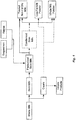
- Fig. 6 shows a flowchart of process steps carried out in an experimental process for making treated NFDM according to embodiments of the invention.
- the experimental process produced a 35% (w/w) reconstituted non-fat dry milk (NFDM) solution (50 lbs) by combining 18.19 lbs of Grade A low heat NFDM powder having 96.2% in dry matter and 33.4% in protein (obtained from Dairy America, Fresno, CA) with 31.81 lbs of water at 125°F, using a mechanical mixer with controlled mixing speed.
- NFDM non-fat dry milk
- the combined solution was cooled to 45 °F and 0.067 lbs of sodium phosphate was added over a 10 minute mixing period.
- a microbial rennet CHY-MAXTM Ultra, 0.0525lbs
Landscapes
- Life Sciences & Earth Sciences (AREA)
- Chemical & Material Sciences (AREA)
- Engineering & Computer Science (AREA)
- Food Science & Technology (AREA)
- Polymers & Plastics (AREA)
- Microbiology (AREA)
- Health & Medical Sciences (AREA)
- Biochemistry (AREA)
- Molecular Biology (AREA)
- Nutrition Science (AREA)
- Proteomics, Peptides & Aminoacids (AREA)
- Dairy Products (AREA)
Claims (16)
- Méthode de préparation d'une composition laitière en poudre, la méthode comprenant :l'addition d'un séquestrant pour le calcium et de présure directement dans du lait écrémé afin de préparer du lait traité ; etl'élimination de l'eau à partir du lait traité afin de former une poudre de lait.
- Méthode selon la revendication 1, comprenant en outre l'obtention dudit lait écrémé par la séparation d'une composition de lait fluide en lait écrémé et en crème.
- Méthode selon la revendication 2, dans laquelle la composition laitière en poudre est une poudre de lait écrémé concentrée.
- Méthode selon la revendication 2, dans laquelle la composition laitière en poudre est une poudre de lait pauvre en matières grasses, formée par la recombinaison de matières grasses laitières issues de la crème avec la poudre de lait.
- Méthode selon la revendication 2, dans laquelle la composition laitière en poudre est une poudre de lait entier, formée par la recombinaison de matières grasses laitières issues de la crème avec la poudre de lait.
- Méthode selon la revendication 1, dans laquelle le séquestrant est choisi dans le groupe constitué par les phosphates, les pyrophosphates, les diphosphates, les triphosphates, les polyphosphates, les carbonates, les acides aldobioniques, et les citrates ; ou où le séquestrant comprend du diphosphate de disodium, du diphosphate de trisodium, du diphosphate de tétrasodium, du diphosphate de dipotassium, du diphosphate de tétrapotassium, du diphosphate de dimagnésium, du triphosphate de pentasodium, du triphosphate de pentapotassium, du polyphosphate de sodium, du polyphosphate de potassium, du polyphosphate d'ammonium, du tripolyphosphate de potassium, du phosphate de disodium, du phosphate de dipotassium, de l'acide citrique, de l'acide lactobionique, de l'acide phosphorique, du pyrophosphate de tétrasodium, du métaphosphate de sodium, de l'hexamétaphosphate de sodium, du phosphate de tripotassium, du citrate de trisodium, du phosphate de trisodium, du citrate de tripotassium, du pyrophosphate de disodium, de l'éthylèneaminetétraacétate de disodium, du gluconate de sodium, du lactobionate de sodium, de l'acide gluconique, ou du tripolyphosphate de sodium et de potassium ; ou où le séquestrant comprend de l'hexamétaphosphate de sodium, du tripolyphosphate de potassium, ou du pyrophosphate de tétrasodium ; ou où l'élimination de l'eau à partir du lait traité afin de former la poudre de lait comprend :la concentration de la matière sèche du lait à partir du lait traiter afin de former un concentré de lait ;le séchage par pulvérisation du concentré de lait afin de former la poudre de lait ;ou où la poudre de lait est mélangée dans une masse de fromage homogène.
- Méthode selon la revendication 6, dans laquelle la masse de fromage homogène est façonnée en un produit de fromage qui est plus dur, plus élastique, et plus cohésif que dans le cas où la même quantité de poudre de lait sèche sans matières grasses et non traitée est ajoutée à la masse de fromage homogène ; et éventuellement où le produit de fromage est râpé ou en cubes ; et éventuellement, où le produit de fromage comprend du fromage pour pizza.
- Méthode selon la revendication 1, dans laquelle la poudre de lait est introduite en tant que partie d'une suspension qui est ajoutée à un précurseur de fromage afin de former un co-mélange ; et éventuellement où le co-mélange est façonné en un produit de fromage ; et éventuellement où le co-mélange est façonné en un produit de fromage qui est plus dur, plus élastique, et plus cohésif que dans le cas où la même quantité de poudre de lait sèche sans matières grasses et non traitée est ajoutée au co-mélange.
- Méthode selon la revendication 1, dans laquelle la composition laitière en poudre est en outre préparée par :l'addition d'un composé tampon au lait écrémé afin de conférer au lait écrémé un pH de 5,5 ou plus ; etl'addition d'enzymes de type oxydoréductase au lait écrémé.
- Méthode selon la revendication 9, où la méthode comprend en outre l'addition d'oxygène au lait écrémé ; ou où la méthode comprend en outre l'addition d'une enzyme de type catalase à la composition de lait ; ou où l'enzyme de type oxydoréductase est choisie dans le groupe constitué par l'hexose oxydase, la glucose oxydase, la galactose oxydase, la pyranose oxydase, la cellobiose oxydase, la glucide oxydase, et la lactose oxydase ; ou éventuellement où le tampon comprend de l'hydroxyde de calcium, du carbonate de calcium, du carbonate d'ammonium, de l'ammoniaque, du carbonate de sodium, de l'hydroxyde de potassium, du carbonate de magnésium, de l'hydroxyde de magnésium, de l'hydroxyde d'ammonium, ou de l'hydroxyde de sodium ; ou où le séquestrant est choisi dans le groupe constitué par les phosphates, les pyrophosphates, l'acide lactobionique, les diphosphates, les triphosphates, les polyphosphates, les carbonates, les acides aldobioniques, et les citrates ; ou où l'élimination de l'eau à partir du lait traité afin de former la poudre de lait comprend :
la concentration de la matière sèche du lait à partir du lait traité afin de former un concentré de lait ; le séchage par pulvérisation du concentré de lait afin de former la poudre de lait. - Méthode selon la revendication 1, où la méthode comprend en outre :la transformation d'un caillé fromager en une masse de fromage homogène ;le mélange de la composition laitière en poudre dans la masse de fromage homogène ;le façonnage de la masse de fromage homogène en une forme ; etle refroidissement de la masse de fromage homogène et la formation d'un produit de fromage.
- Méthode selon la revendication 11, dans laquelle la composition laitière de poudre comprend une poudre de lait sèche et sans matières grasses.
- Méthode selon la revendication 1, où la méthode comprend en outre :la fourniture d'un fromage ;le mélange de la composition laitière en poudre avec le fromage afin de préparer un fromage mélangé ;le façonnage du fromage mélangé et de la poudre laitière en une masse de fromage homogène ;le façonnage de la masse de fromage homogène en une forme ; etle refroidissement de la masse homogène et la formation d'un produit de fromage.
- Méthode selon la revendication 1, dans laquelle l'étape d'élimination de l'eau à partir du lait traité comprend en outre :
la concentration du lait traité par filtration, où la filtration sépare un perméat aqueux d'un rétentat concentré de protéines de lait traité, et le séchage par pulvérisation du rétentat concentré de protéines en une poudre de lait sèche et sans matières grasses. - Méthode de préparation d'un produit de fromage, comprenant :la fourniture d'une suspension ;le mélange d'une poudre laitière dans la suspension ;la combinaison de la suspension avec un précurseur de fromage afin de former un co-mélange ; etla transformation du co-mélange afin de former le produit de fromage ;où la poudre laitière est préparée par :l'addition d'un séquestrant et de présure directement dans du lait écrémé afin de préparer du lait traité ; etl'élimination de l'eau à partir du lait traité afin de former une poudre de lait.
- Méthode selon la revendication 15, où la méthode comprend en outre :
l'addition d'un tampon et d'une enzyme de type oxydoréductase au lait écrémé.
Applications Claiming Priority (2)
| Application Number | Priority Date | Filing Date | Title |
|---|---|---|---|
| US11/936,624 US10667538B2 (en) | 2007-11-07 | 2007-11-07 | Non-fat dry milk production processes for cheesemaking |
| PCT/US2008/078757 WO2009061571A1 (fr) | 2007-11-07 | 2008-10-03 | Procédés de fabrication de lait sec non gras pour la fabrication du fromage |
Publications (3)
| Publication Number | Publication Date |
|---|---|
| EP2214501A1 EP2214501A1 (fr) | 2010-08-11 |
| EP2214501A4 EP2214501A4 (fr) | 2011-08-03 |
| EP2214501B1 true EP2214501B1 (fr) | 2019-04-10 |
Family
ID=40588311
Family Applications (1)
| Application Number | Title | Priority Date | Filing Date |
|---|---|---|---|
| EP08846654.5A Active EP2214501B1 (fr) | 2007-11-07 | 2008-10-03 | Procédés de fabrication de lait sec non gras pour la fabrication du fromage |
Country Status (11)
| Country | Link |
|---|---|
| US (1) | US10667538B2 (fr) |
| EP (1) | EP2214501B1 (fr) |
| JP (2) | JP5512530B2 (fr) |
| KR (2) | KR20180063368A (fr) |
| CN (2) | CN101902919A (fr) |
| AR (1) | AR068939A1 (fr) |
| AU (1) | AU2008325000C1 (fr) |
| CA (1) | CA2704935C (fr) |
| MX (1) | MX2010005103A (fr) |
| NZ (3) | NZ585272A (fr) |
| WO (1) | WO2009061571A1 (fr) |
Families Citing this family (18)
| Publication number | Priority date | Publication date | Assignee | Title |
|---|---|---|---|---|
| US10667538B2 (en) * | 2007-11-07 | 2020-06-02 | Leprino Foods Company | Non-fat dry milk production processes for cheesemaking |
| AU2011201497B2 (en) | 2010-04-02 | 2015-09-17 | Kraft Foods Group Brands Llc | Cheese with improved organoleptic and melting properties |
| BR112015016651A2 (pt) | 2013-01-11 | 2017-07-11 | Impossible Foods Inc | réplica de queijo não láctea compreendendo um coacervado |
| JP6759103B2 (ja) | 2014-03-31 | 2020-09-23 | インポッシブル フーズ インコーポレイテッド | ひき肉レプリカ |
| CN104255933B (zh) * | 2014-09-28 | 2017-08-29 | 中国农业大学 | 一种干酪及其制备方法 |
| CN104450806B (zh) * | 2014-11-27 | 2018-01-16 | 江南大学 | 一种酶法制备葡萄糖酸钠的方法 |
| CN104996583A (zh) * | 2015-08-11 | 2015-10-28 | 安庆市绿谷食品有限公司 | 一种用于制作奶酪的无脂干奶生产方法 |
| EP3462894A4 (fr) * | 2016-05-23 | 2020-07-29 | The State of Israel, Ministry of Agriculture & Rural Development, Kimron Veterinary Institute | Ion magnésium utilisé en tant qu'agent antibactérien |
| US12490752B2 (en) | 2016-07-29 | 2025-12-09 | Leprino Foods Company | Methods and systems of making cheese forms |
| CN106070605A (zh) * | 2016-08-02 | 2016-11-09 | 山东省农业科学院农业质量标准与检测技术研究所 | 一种牛乳蛋白制品及其制备方法 |
| AU2018379134A1 (en) * | 2017-12-05 | 2020-06-11 | Chr. Hansen A/S | Use of cellobiose oxidase for reduction of reduction of Maillard reaction |
| JP6417060B1 (ja) * | 2018-02-20 | 2018-10-31 | サンエイ糖化株式会社 | 糖カルボン酸の製造方法 |
| WO2019163853A1 (fr) | 2018-02-20 | 2019-08-29 | サンエイ糖化株式会社 | Méthode de production d'acide carboxylique de sucre |
| AU2019273666A1 (en) * | 2018-05-24 | 2020-11-19 | Chr. Hansen A/S | Use of hexose oxidase and/or cellobiose oxidase for reduction of Maillard reaction |
| IT201900000539A1 (it) * | 2019-01-14 | 2020-07-14 | Klimedia S R L | Prodotto lattiero-caseario |
| FR3097408B1 (fr) * | 2019-06-24 | 2022-06-17 | Inst Nat De La Rech Agronomique Inra | Poudre fromageable, procédés pour la fabrication de cette poudre fromageable et d’une denrée alimentaire fromagère à partir de cette dernière |
| US11832629B2 (en) * | 2019-10-11 | 2023-12-05 | Leprino Foods Company | Tandem evaporation-drying methods and systems for making powdered milk-derived products |
| CN114945702A (zh) | 2019-12-02 | 2022-08-26 | 公益财团法人福冈县产业·科学技术振兴财团 | 蒸镀装置、升华纯化装置、有机电子器件的生产方法及升华纯化方法 |
Family Cites Families (35)
| Publication number | Priority date | Publication date | Assignee | Title |
|---|---|---|---|---|
| US2851363A (en) * | 1955-03-04 | 1958-09-09 | Swift & Co | Manufacture of cheese curd |
| FR2239208B1 (fr) * | 1973-07-31 | 1977-10-07 | Nestle Sa | |
| US4169160A (en) * | 1975-02-13 | 1979-09-25 | Borden, Inc. | Dried soft curd cheese |
| US4066791A (en) * | 1976-08-04 | 1978-01-03 | Diamond Shamrock Corporation | Cheese manufacture with acidified powdered milk |
| US4202907A (en) | 1977-03-10 | 1980-05-13 | Poarch Arthur E | Sausage products having improved physical properties and method of producing the same |
| US4621058A (en) * | 1983-04-11 | 1986-11-04 | Mid-America Dairymen, Inc. | Method of preparing cheese starter media |
| JPS62240A (ja) * | 1985-03-26 | 1987-01-06 | Shokuhin Sangyo Maku Riyou Gijutsu Kenkyu Kumiai | 限外濾過濃縮乳からカルシウム凝固チ−ズを製造する方法 |
| FR2591431B1 (fr) * | 1985-12-17 | 1990-10-05 | Roquette Freres | Procede de fabrication de fromages a partir de poudre de lait, par empresurage a froid |
| JPH0712276B2 (ja) * | 1987-01-30 | 1995-02-15 | 雪印乳業株式会社 | 脱カルシウム脱脂乳およびその製造法 |
| US5165945A (en) * | 1987-07-23 | 1992-11-24 | Schreiber Foods, Inc. | Cheese and process and system for making it |
| JPH074169B2 (ja) | 1988-02-18 | 1995-01-25 | 雪印乳業株式会社 | 水可溶性乳タンパク質の製造方法 |
| JP2908834B2 (ja) * | 1989-10-25 | 1999-06-21 | 雪印乳業株式会社 | 粉乳を原料とするチーズ様食品及び熟成型チーズの製造方法 |
| US6285048B1 (en) * | 1991-12-13 | 2001-09-04 | Symetrix Corporation | Barium strontium titanate integrated circuit capacitors and process for making the same |
| US5902625A (en) | 1992-02-14 | 1999-05-11 | Leprino Foods Company | Process of making a soft or semi-soft fibrous cheese |
| WO1993020704A1 (fr) * | 1992-04-10 | 1993-10-28 | Ørum Sogns Udviklingsmejeri | Procede de preparation de fromage |
| US6183802B1 (en) * | 1999-05-27 | 2001-02-06 | General Mills, Inc. | Dairy products and method of preparation |
| NZ501676A (en) * | 1999-12-09 | 2002-12-20 | New Zealand Dairy Board | Calcium-depleted milk protein products and use in cheese manufacture to reduce nugget-formation |
| NZ520994A (en) | 2002-08-26 | 2004-09-24 | New Zealand Dairy Board | Food ingredient, product and process |
| US7026004B2 (en) * | 2002-10-04 | 2006-04-11 | Kraft Foods Holdings, Inc. | Non-gelling milk concentrates |
| US7279192B2 (en) * | 2003-04-22 | 2007-10-09 | Kraft Foods Holdings, Inc. | Shelf-stable shredded cheese |
| NZ527159A (en) | 2003-07-24 | 2005-10-28 | Fonterra Co Operative Group | Dairy product and process |
| NZ527436A (en) * | 2003-08-07 | 2005-08-26 | Fonterra Co Operative Group | Dairy product and process for producing a milk protein concentrate high in whey protein and enhancing cheese yields |
| US7585537B2 (en) | 2004-05-03 | 2009-09-08 | Leprino Foods Company | Cheese and methods of making such cheese |
| AR048727A1 (es) | 2004-05-03 | 2006-05-17 | Leprino Foods Co | Quesos mezclados y metodos para preparar tales quesos |
| US7579033B2 (en) | 2004-05-03 | 2009-08-25 | Leprino Foods Company | Methods for making soft or firm/semi-hard ripened and unripened cheese and cheeses prepared by such methods |
| AU2005240120C1 (en) | 2004-05-03 | 2012-12-20 | Leprino Foods Company | Cheese and methods of making such cheese |
| US20060008555A1 (en) * | 2004-07-07 | 2006-01-12 | Leprino Foods | Food ingredients and food products treated with an oxidoreductase and methods for preparing such food ingredients and food products |
| CN101005852A (zh) * | 2004-07-07 | 2007-07-25 | 利品乐食品公司 | 用氧化还原酶处理的食物配料和食品以及制备该食物配料和食品的方法 |
| US20060057248A1 (en) * | 2004-09-10 | 2006-03-16 | Kraft Foods Holdings, Inc. | Wheyless process for the production of string cheese |
| WO2006066332A1 (fr) | 2004-12-23 | 2006-06-29 | Murray Goulburn Co-Operative Co Limited | Procede de fabrication d'une poudre de lait modifiee appropriee en tant que succedane ou substitut de la caseine-presure |
| WO2007027926A1 (fr) | 2005-08-30 | 2007-03-08 | Cornell Research Foundation, Inc. | Procedes simples de fabrication de la mozzarella |
| US10667538B2 (en) | 2007-11-07 | 2020-06-02 | Leprino Foods Company | Non-fat dry milk production processes for cheesemaking |
| WO2020230417A1 (fr) | 2019-05-14 | 2020-11-19 | パナソニックIpマネジメント株式会社 | Système hydrogène |
| US11506417B2 (en) | 2020-12-31 | 2022-11-22 | Trane International Inc. | Dampers placed on the half face of the inlet and the outlet of side-by-side airflow energy recovery sections used as recirculation path |
| US12153705B2 (en) | 2021-03-30 | 2024-11-26 | Adobe Inc. | Platform for unsupervised machine learning training on unseeable user generated assets |
-
2007
- 2007-11-07 US US11/936,624 patent/US10667538B2/en active Active
-
2008
- 2008-10-03 CA CA2704935A patent/CA2704935C/fr active Active
- 2008-10-03 AU AU2008325000A patent/AU2008325000C1/en active Active
- 2008-10-03 CN CN2008801200277A patent/CN101902919A/zh active Pending
- 2008-10-03 EP EP08846654.5A patent/EP2214501B1/fr active Active
- 2008-10-03 NZ NZ585272A patent/NZ585272A/xx unknown
- 2008-10-03 KR KR1020187015511A patent/KR20180063368A/ko not_active Ceased
- 2008-10-03 CN CN201710458204.3A patent/CN107232312A/zh active Pending
- 2008-10-03 KR KR1020107012534A patent/KR101919480B1/ko active Active
- 2008-10-03 WO PCT/US2008/078757 patent/WO2009061571A1/fr not_active Ceased
- 2008-10-03 NZ NZ721716A patent/NZ721716A/en unknown
- 2008-10-03 MX MX2010005103A patent/MX2010005103A/es active IP Right Grant
- 2008-10-03 NZ NZ609792A patent/NZ609792A/en active IP Right Revival
- 2008-10-03 JP JP2010533137A patent/JP5512530B2/ja active Active
- 2008-10-20 AR ARP080104575A patent/AR068939A1/es active IP Right Grant
-
2013
- 2013-11-14 JP JP2013236026A patent/JP2014027957A/ja active Pending
Non-Patent Citations (1)
| Title |
|---|
| None * |
Also Published As
| Publication number | Publication date |
|---|---|
| AU2008325000C1 (en) | 2015-07-09 |
| MX2010005103A (es) | 2010-05-27 |
| CN107232312A (zh) | 2017-10-10 |
| WO2009061571A1 (fr) | 2009-05-14 |
| AU2008325000A1 (en) | 2009-05-14 |
| NZ585272A (en) | 2013-05-31 |
| US10667538B2 (en) | 2020-06-02 |
| KR101919480B1 (ko) | 2018-11-16 |
| KR20100096144A (ko) | 2010-09-01 |
| KR20180063368A (ko) | 2018-06-11 |
| EP2214501A1 (fr) | 2010-08-11 |
| EP2214501A4 (fr) | 2011-08-03 |
| CA2704935C (fr) | 2017-08-01 |
| CN101902919A (zh) | 2010-12-01 |
| NZ721716A (en) | 2017-06-30 |
| AR068939A1 (es) | 2009-12-16 |
| JP2014027957A (ja) | 2014-02-13 |
| CA2704935A1 (fr) | 2009-05-14 |
| JP5512530B2 (ja) | 2014-06-04 |
| NZ609792A (en) | 2014-10-31 |
| JP2011502511A (ja) | 2011-01-27 |
| AU2008325000B2 (en) | 2013-07-25 |
| US20090117228A1 (en) | 2009-05-07 |
Similar Documents
| Publication | Publication Date | Title |
|---|---|---|
| EP2214501B1 (fr) | Procédés de fabrication de lait sec non gras pour la fabrication du fromage | |
| AU751042B2 (en) | Method for producing cheese and cheese products | |
| JP5054176B2 (ja) | 濃縮乳タンパク質成分及びそれからプロセスチーズを調製するための方法 | |
| US20030054068A1 (en) | Modified milk protein concentrates and their use in making gels and dairy products | |
| EP2437614B1 (fr) | Fromage fondu fortifié au calcium sans sels émulsifiants, et son procédé de préparation | |
| CA2459846A1 (fr) | Procede de fabrication de fromages et autres produits laitiers | |
| US4066791A (en) | Cheese manufacture with acidified powdered milk | |
| AU566837B2 (en) | A process for making portioned cheese | |
| JP2003134997A (ja) | チーズカードの製造方法 | |
| AU2016204500B2 (en) | Non-fat dry milk production processes for cheesemaking | |
| AU2013224693B2 (en) | Non-fat dry milk production processes for cheesemaking | |
| BEEBY et al. | Milk Technology | |
| IE56072B1 (en) | A process for making portioned cheese | |
| MXPA01004551A (en) | Method for producing cheese and cheese products | |
| NZ209748A (en) | Making portioned cheese; filled into packages before coagulation |
Legal Events
| Date | Code | Title | Description |
|---|---|---|---|
| PUAI | Public reference made under article 153(3) epc to a published international application that has entered the european phase |
Free format text: ORIGINAL CODE: 0009012 |
|
| 17P | Request for examination filed |
Effective date: 20100505 |
|
| AK | Designated contracting states |
Kind code of ref document: A1 Designated state(s): AT BE BG CH CY CZ DE DK EE ES FI FR GB GR HR HU IE IS IT LI LT LU LV MC MT NL NO PL PT RO SE SI SK TR |
|
| AX | Request for extension of the european patent |
Extension state: AL BA MK RS |
|
| RIN1 | Information on inventor provided before grant (corrected) |
Inventor name: MERRILL, RICHARD, K. |
|
| DAX | Request for extension of the european patent (deleted) | ||
| REG | Reference to a national code |
Ref country code: HK Ref legal event code: DE Ref document number: 1147038 Country of ref document: HK |
|
| A4 | Supplementary search report drawn up and despatched |
Effective date: 20110706 |
|
| RIC1 | Information provided on ipc code assigned before grant |
Ipc: A23C 9/18 20060101AFI20110630BHEP Ipc: A23C 19/00 20060101ALI20110630BHEP |
|
| 17Q | First examination report despatched |
Effective date: 20120320 |
|
| STAA | Information on the status of an ep patent application or granted ep patent |
Free format text: STATUS: EXAMINATION IS IN PROGRESS |
|
| REG | Reference to a national code |
Ref country code: HK Ref legal event code: WD Ref document number: 1147038 Country of ref document: HK |
|
| GRAP | Despatch of communication of intention to grant a patent |
Free format text: ORIGINAL CODE: EPIDOSNIGR1 |
|
| STAA | Information on the status of an ep patent application or granted ep patent |
Free format text: STATUS: GRANT OF PATENT IS INTENDED |
|
| INTG | Intention to grant announced |
Effective date: 20180926 |
|
| GRAS | Grant fee paid |
Free format text: ORIGINAL CODE: EPIDOSNIGR3 |
|
| GRAJ | Information related to disapproval of communication of intention to grant by the applicant or resumption of examination proceedings by the epo deleted |
Free format text: ORIGINAL CODE: EPIDOSDIGR1 |
|
| GRAL | Information related to payment of fee for publishing/printing deleted |
Free format text: ORIGINAL CODE: EPIDOSDIGR3 |
|
| STAA | Information on the status of an ep patent application or granted ep patent |
Free format text: STATUS: EXAMINATION IS IN PROGRESS |
|
| GRAR | Information related to intention to grant a patent recorded |
Free format text: ORIGINAL CODE: EPIDOSNIGR71 |
|
| STAA | Information on the status of an ep patent application or granted ep patent |
Free format text: STATUS: GRANT OF PATENT IS INTENDED |
|
| GRAA | (expected) grant |
Free format text: ORIGINAL CODE: 0009210 |
|
| STAA | Information on the status of an ep patent application or granted ep patent |
Free format text: STATUS: THE PATENT HAS BEEN GRANTED |
|
| INTC | Intention to grant announced (deleted) | ||
| AK | Designated contracting states |
Kind code of ref document: B1 Designated state(s): AT BE BG CH CY CZ DE DK EE ES FI FR GB GR HR HU IE IS IT LI LT LU LV MC MT NL NO PL PT RO SE SI SK TR |
|
| INTG | Intention to grant announced |
Effective date: 20190305 |
|
| REG | Reference to a national code |
Ref country code: GB Ref legal event code: FG4D |
|
| REG | Reference to a national code |
Ref country code: CH Ref legal event code: EP Ref country code: AT Ref legal event code: REF Ref document number: 1117439 Country of ref document: AT Kind code of ref document: T Effective date: 20190415 |
|
| REG | Reference to a national code |
Ref country code: IE Ref legal event code: FG4D |
|
| REG | Reference to a national code |
Ref country code: DE Ref legal event code: R096 Ref document number: 602008059708 Country of ref document: DE |
|
| REG | Reference to a national code |
Ref country code: NL Ref legal event code: MP Effective date: 20190410 |
|
| REG | Reference to a national code |
Ref country code: LT Ref legal event code: MG4D |
|
| REG | Reference to a national code |
Ref country code: AT Ref legal event code: MK05 Ref document number: 1117439 Country of ref document: AT Kind code of ref document: T Effective date: 20190410 |
|
| PG25 | Lapsed in a contracting state [announced via postgrant information from national office to epo] |
Ref country code: NL Free format text: LAPSE BECAUSE OF FAILURE TO SUBMIT A TRANSLATION OF THE DESCRIPTION OR TO PAY THE FEE WITHIN THE PRESCRIBED TIME-LIMIT Effective date: 20190410 |
|
| PG25 | Lapsed in a contracting state [announced via postgrant information from national office to epo] |
Ref country code: HR Free format text: LAPSE BECAUSE OF FAILURE TO SUBMIT A TRANSLATION OF THE DESCRIPTION OR TO PAY THE FEE WITHIN THE PRESCRIBED TIME-LIMIT Effective date: 20190410 Ref country code: LT Free format text: LAPSE BECAUSE OF FAILURE TO SUBMIT A TRANSLATION OF THE DESCRIPTION OR TO PAY THE FEE WITHIN THE PRESCRIBED TIME-LIMIT Effective date: 20190410 Ref country code: NO Free format text: LAPSE BECAUSE OF FAILURE TO SUBMIT A TRANSLATION OF THE DESCRIPTION OR TO PAY THE FEE WITHIN THE PRESCRIBED TIME-LIMIT Effective date: 20190710 Ref country code: FI Free format text: LAPSE BECAUSE OF FAILURE TO SUBMIT A TRANSLATION OF THE DESCRIPTION OR TO PAY THE FEE WITHIN THE PRESCRIBED TIME-LIMIT Effective date: 20190410 Ref country code: PT Free format text: LAPSE BECAUSE OF FAILURE TO SUBMIT A TRANSLATION OF THE DESCRIPTION OR TO PAY THE FEE WITHIN THE PRESCRIBED TIME-LIMIT Effective date: 20190910 Ref country code: SE Free format text: LAPSE BECAUSE OF FAILURE TO SUBMIT A TRANSLATION OF THE DESCRIPTION OR TO PAY THE FEE WITHIN THE PRESCRIBED TIME-LIMIT Effective date: 20190410 Ref country code: ES Free format text: LAPSE BECAUSE OF FAILURE TO SUBMIT A TRANSLATION OF THE DESCRIPTION OR TO PAY THE FEE WITHIN THE PRESCRIBED TIME-LIMIT Effective date: 20190410 |
|
| PG25 | Lapsed in a contracting state [announced via postgrant information from national office to epo] |
Ref country code: GR Free format text: LAPSE BECAUSE OF FAILURE TO SUBMIT A TRANSLATION OF THE DESCRIPTION OR TO PAY THE FEE WITHIN THE PRESCRIBED TIME-LIMIT Effective date: 20190711 Ref country code: BG Free format text: LAPSE BECAUSE OF FAILURE TO SUBMIT A TRANSLATION OF THE DESCRIPTION OR TO PAY THE FEE WITHIN THE PRESCRIBED TIME-LIMIT Effective date: 20190710 Ref country code: LV Free format text: LAPSE BECAUSE OF FAILURE TO SUBMIT A TRANSLATION OF THE DESCRIPTION OR TO PAY THE FEE WITHIN THE PRESCRIBED TIME-LIMIT Effective date: 20190410 Ref country code: PL Free format text: LAPSE BECAUSE OF FAILURE TO SUBMIT A TRANSLATION OF THE DESCRIPTION OR TO PAY THE FEE WITHIN THE PRESCRIBED TIME-LIMIT Effective date: 20190410 |
|
| PG25 | Lapsed in a contracting state [announced via postgrant information from national office to epo] |
Ref country code: IS Free format text: LAPSE BECAUSE OF FAILURE TO SUBMIT A TRANSLATION OF THE DESCRIPTION OR TO PAY THE FEE WITHIN THE PRESCRIBED TIME-LIMIT Effective date: 20190810 Ref country code: AT Free format text: LAPSE BECAUSE OF FAILURE TO SUBMIT A TRANSLATION OF THE DESCRIPTION OR TO PAY THE FEE WITHIN THE PRESCRIBED TIME-LIMIT Effective date: 20190410 |
|
| REG | Reference to a national code |
Ref country code: DE Ref legal event code: R097 Ref document number: 602008059708 Country of ref document: DE |
|
| PG25 | Lapsed in a contracting state [announced via postgrant information from national office to epo] |
Ref country code: EE Free format text: LAPSE BECAUSE OF FAILURE TO SUBMIT A TRANSLATION OF THE DESCRIPTION OR TO PAY THE FEE WITHIN THE PRESCRIBED TIME-LIMIT Effective date: 20190410 Ref country code: SK Free format text: LAPSE BECAUSE OF FAILURE TO SUBMIT A TRANSLATION OF THE DESCRIPTION OR TO PAY THE FEE WITHIN THE PRESCRIBED TIME-LIMIT Effective date: 20190410 Ref country code: DK Free format text: LAPSE BECAUSE OF FAILURE TO SUBMIT A TRANSLATION OF THE DESCRIPTION OR TO PAY THE FEE WITHIN THE PRESCRIBED TIME-LIMIT Effective date: 20190410 Ref country code: RO Free format text: LAPSE BECAUSE OF FAILURE TO SUBMIT A TRANSLATION OF THE DESCRIPTION OR TO PAY THE FEE WITHIN THE PRESCRIBED TIME-LIMIT Effective date: 20190410 Ref country code: CZ Free format text: LAPSE BECAUSE OF FAILURE TO SUBMIT A TRANSLATION OF THE DESCRIPTION OR TO PAY THE FEE WITHIN THE PRESCRIBED TIME-LIMIT Effective date: 20190410 |
|
| PLBE | No opposition filed within time limit |
Free format text: ORIGINAL CODE: 0009261 |
|
| STAA | Information on the status of an ep patent application or granted ep patent |
Free format text: STATUS: NO OPPOSITION FILED WITHIN TIME LIMIT |
|
| PG25 | Lapsed in a contracting state [announced via postgrant information from national office to epo] |
Ref country code: IT Free format text: LAPSE BECAUSE OF FAILURE TO SUBMIT A TRANSLATION OF THE DESCRIPTION OR TO PAY THE FEE WITHIN THE PRESCRIBED TIME-LIMIT Effective date: 20190410 |
|
| 26N | No opposition filed |
Effective date: 20200113 |
|
| PG25 | Lapsed in a contracting state [announced via postgrant information from national office to epo] |
Ref country code: TR Free format text: LAPSE BECAUSE OF FAILURE TO SUBMIT A TRANSLATION OF THE DESCRIPTION OR TO PAY THE FEE WITHIN THE PRESCRIBED TIME-LIMIT Effective date: 20190410 |
|
| REG | Reference to a national code |
Ref country code: DE Ref legal event code: R119 Ref document number: 602008059708 Country of ref document: DE |
|
| PG25 | Lapsed in a contracting state [announced via postgrant information from national office to epo] |
Ref country code: SI Free format text: LAPSE BECAUSE OF FAILURE TO SUBMIT A TRANSLATION OF THE DESCRIPTION OR TO PAY THE FEE WITHIN THE PRESCRIBED TIME-LIMIT Effective date: 20190410 Ref country code: MC Free format text: LAPSE BECAUSE OF FAILURE TO SUBMIT A TRANSLATION OF THE DESCRIPTION OR TO PAY THE FEE WITHIN THE PRESCRIBED TIME-LIMIT Effective date: 20190410 |
|
| REG | Reference to a national code |
Ref country code: CH Ref legal event code: PL |
|
| PG25 | Lapsed in a contracting state [announced via postgrant information from national office to epo] |
Ref country code: DE Free format text: LAPSE BECAUSE OF NON-PAYMENT OF DUE FEES Effective date: 20200501 Ref country code: LU Free format text: LAPSE BECAUSE OF NON-PAYMENT OF DUE FEES Effective date: 20191003 Ref country code: CH Free format text: LAPSE BECAUSE OF NON-PAYMENT OF DUE FEES Effective date: 20191031 Ref country code: LI Free format text: LAPSE BECAUSE OF NON-PAYMENT OF DUE FEES Effective date: 20191031 |
|
| REG | Reference to a national code |
Ref country code: BE Ref legal event code: MM Effective date: 20191031 |
|
| PG25 | Lapsed in a contracting state [announced via postgrant information from national office to epo] |
Ref country code: BE Free format text: LAPSE BECAUSE OF NON-PAYMENT OF DUE FEES Effective date: 20191031 |
|
| GBPC | Gb: european patent ceased through non-payment of renewal fee |
Effective date: 20191003 |
|
| PG25 | Lapsed in a contracting state [announced via postgrant information from national office to epo] |
Ref country code: GB Free format text: LAPSE BECAUSE OF NON-PAYMENT OF DUE FEES Effective date: 20191003 Ref country code: FR Free format text: LAPSE BECAUSE OF NON-PAYMENT OF DUE FEES Effective date: 20191031 |
|
| PG25 | Lapsed in a contracting state [announced via postgrant information from national office to epo] |
Ref country code: CY Free format text: LAPSE BECAUSE OF FAILURE TO SUBMIT A TRANSLATION OF THE DESCRIPTION OR TO PAY THE FEE WITHIN THE PRESCRIBED TIME-LIMIT Effective date: 20190410 |
|
| PG25 | Lapsed in a contracting state [announced via postgrant information from national office to epo] |
Ref country code: HU Free format text: LAPSE BECAUSE OF FAILURE TO SUBMIT A TRANSLATION OF THE DESCRIPTION OR TO PAY THE FEE WITHIN THE PRESCRIBED TIME-LIMIT; INVALID AB INITIO Effective date: 20081003 Ref country code: MT Free format text: LAPSE BECAUSE OF FAILURE TO SUBMIT A TRANSLATION OF THE DESCRIPTION OR TO PAY THE FEE WITHIN THE PRESCRIBED TIME-LIMIT Effective date: 20190410 |
|
| PGFP | Annual fee paid to national office [announced via postgrant information from national office to epo] |
Ref country code: IE Payment date: 20250909 Year of fee payment: 18 |