EP2222660B1 - 3-heterocyclylsubstituierte indolderivate und verfahren zu deren anwendung - Google Patents
3-heterocyclylsubstituierte indolderivate und verfahren zu deren anwendung Download PDFInfo
- Publication number
- EP2222660B1 EP2222660B1 EP08848587.5A EP08848587A EP2222660B1 EP 2222660 B1 EP2222660 B1 EP 2222660B1 EP 08848587 A EP08848587 A EP 08848587A EP 2222660 B1 EP2222660 B1 EP 2222660B1
- Authority
- EP
- European Patent Office
- Prior art keywords
- alkyl
- compound
- cycloalkyl
- heterocycloalkyl
- haloalkyl
- Prior art date
- Legal status (The legal status is an assumption and is not a legal conclusion. Google has not performed a legal analysis and makes no representation as to the accuracy of the status listed.)
- Active
Links
- 0 CC1IC(*)[C@](*)C(C(C)=C(*)N2**O)C2=C1* Chemical compound CC1IC(*)[C@](*)C(C(C)=C(*)N2**O)C2=C1* 0.000 description 46
- ZFBKBHICMOOIQW-UHFFFAOYSA-N CN(C(c1c[s]cc1N1)=O)C1=O Chemical compound CN(C(c1c[s]cc1N1)=O)C1=O ZFBKBHICMOOIQW-UHFFFAOYSA-N 0.000 description 4
- LKBXFZMPEOSZQK-UHFFFAOYSA-N CN(C(c([s]cc1)c1N1)=O)C1=O Chemical compound CN(C(c([s]cc1)c1N1)=O)C1=O LKBXFZMPEOSZQK-UHFFFAOYSA-N 0.000 description 3
- MZUQQIMLMBWONQ-UHFFFAOYSA-N CC(C)N(C(c1c(N2)nc[nH]1)=O)C2=O Chemical compound CC(C)N(C(c1c(N2)nc[nH]1)=O)C2=O MZUQQIMLMBWONQ-UHFFFAOYSA-N 0.000 description 2
- LFGZKCYBINPOTA-UHFFFAOYSA-N CN(C(c(cccc1)c1N1)=O)C1=O Chemical compound CN(C(c(cccc1)c1N1)=O)C1=O LFGZKCYBINPOTA-UHFFFAOYSA-N 0.000 description 2
- FTNCRYUPISSRDG-XKZIYDEJSA-N Bc(cc1)ccc1-c1c[s]c(C)c1C(C/C(/C(C1C2)C(C(O)=O)N(Cc3ccccc3)C1=CC=C2Cl)=C/C=O)=O Chemical compound Bc(cc1)ccc1-c1c[s]c(C)c1C(C/C(/C(C1C2)C(C(O)=O)N(Cc3ccccc3)C1=CC=C2Cl)=C/C=O)=O FTNCRYUPISSRDG-XKZIYDEJSA-N 0.000 description 1
- FKPTZRXADFTHRE-UHFFFAOYSA-N C(CC1NC1)C1CC1 Chemical compound C(CC1NC1)C1CC1 FKPTZRXADFTHRE-UHFFFAOYSA-N 0.000 description 1
- JIXJCTKPBZXCOL-LPHOHHAKSA-N CC(C(/C=C\C)NC(N1c(c2c3)c(C)[n](C[C@H]4CNCC4)c2ccc3Cl)=O)C1=O Chemical compound CC(C(/C=C\C)NC(N1c(c2c3)c(C)[n](C[C@H]4CNCC4)c2ccc3Cl)=O)C1=O JIXJCTKPBZXCOL-LPHOHHAKSA-N 0.000 description 1
- LPAVYBNWVMHTHV-UHFFFAOYSA-N CC(N(C(c1c(N2)nc[nH]1)=O)C2=O)=N Chemical compound CC(N(C(c1c(N2)nc[nH]1)=O)C2=O)=N LPAVYBNWVMHTHV-UHFFFAOYSA-N 0.000 description 1
- IWTXKMHYXFBCRH-UHFFFAOYSA-N CC(c1c[nH]cc1C)=N Chemical compound CC(c1c[nH]cc1C)=N IWTXKMHYXFBCRH-UHFFFAOYSA-N 0.000 description 1
- YODDHGXTAMHZHI-UHFFFAOYSA-N CCc(cc(cccc1)c1n1)c1Cl Chemical compound CCc(cc(cccc1)c1n1)c1Cl YODDHGXTAMHZHI-UHFFFAOYSA-N 0.000 description 1
- GKSBZTCQJCQVCV-UHFFFAOYSA-N CN(C(c(cncc1)c1N1)=O)C1=O Chemical compound CN(C(c(cncc1)c1N1)=O)C1=O GKSBZTCQJCQVCV-UHFFFAOYSA-N 0.000 description 1
- VFHVNMQWTYQXQL-UHFFFAOYSA-N COC(c([n](Cc1cccc(O)c1)c1ccc(C=C)cc11)c1N(C(Cc1ccccc11)=O)C1=[U])=O Chemical compound COC(c([n](Cc1cccc(O)c1)c1ccc(C=C)cc11)c1N(C(Cc1ccccc11)=O)C1=[U])=O VFHVNMQWTYQXQL-UHFFFAOYSA-N 0.000 description 1
- DCAXYTCSYMEPMJ-UHFFFAOYSA-N COC1C2C(CC=C)=CC=CC12 Chemical compound COC1C2C(CC=C)=CC=CC12 DCAXYTCSYMEPMJ-UHFFFAOYSA-N 0.000 description 1
- NWUFMXXTBVRQOG-UHFFFAOYSA-N NC1C=C(C[n](c(c2c3)ccc3Cl)c(C(O)=O)c2N(C(c2c(N3)nc[nH]2)=O)C3=O)C=CC1 Chemical compound NC1C=C(C[n](c(c2c3)ccc3Cl)c(C(O)=O)c2N(C(c2c(N3)nc[nH]2)=O)C3=O)C=CC1 NWUFMXXTBVRQOG-UHFFFAOYSA-N 0.000 description 1
Classifications
-
- C—CHEMISTRY; METALLURGY
- C07—ORGANIC CHEMISTRY
- C07D—HETEROCYCLIC COMPOUNDS
- C07D403/00—Heterocyclic compounds containing two or more hetero rings, having nitrogen atoms as the only ring hetero atoms, not provided for by group C07D401/00
- C07D403/02—Heterocyclic compounds containing two or more hetero rings, having nitrogen atoms as the only ring hetero atoms, not provided for by group C07D401/00 containing two hetero rings
- C07D403/04—Heterocyclic compounds containing two or more hetero rings, having nitrogen atoms as the only ring hetero atoms, not provided for by group C07D401/00 containing two hetero rings directly linked by a ring-member-to-ring-member bond
-
- A—HUMAN NECESSITIES
- A61—MEDICAL OR VETERINARY SCIENCE; HYGIENE
- A61P—SPECIFIC THERAPEUTIC ACTIVITY OF CHEMICAL COMPOUNDS OR MEDICINAL PREPARATIONS
- A61P31/00—Antiinfectives, i.e. antibiotics, antiseptics, chemotherapeutics
- A61P31/12—Antivirals
-
- A—HUMAN NECESSITIES
- A61—MEDICAL OR VETERINARY SCIENCE; HYGIENE
- A61P—SPECIFIC THERAPEUTIC ACTIVITY OF CHEMICAL COMPOUNDS OR MEDICINAL PREPARATIONS
- A61P31/00—Antiinfectives, i.e. antibiotics, antiseptics, chemotherapeutics
- A61P31/12—Antivirals
- A61P31/14—Antivirals for RNA viruses
-
- A—HUMAN NECESSITIES
- A61—MEDICAL OR VETERINARY SCIENCE; HYGIENE
- A61P—SPECIFIC THERAPEUTIC ACTIVITY OF CHEMICAL COMPOUNDS OR MEDICINAL PREPARATIONS
- A61P31/00—Antiinfectives, i.e. antibiotics, antiseptics, chemotherapeutics
- A61P31/12—Antivirals
- A61P31/20—Antivirals for DNA viruses
-
- C—CHEMISTRY; METALLURGY
- C07—ORGANIC CHEMISTRY
- C07D—HETEROCYCLIC COMPOUNDS
- C07D401/00—Heterocyclic compounds containing two or more hetero rings, having nitrogen atoms as the only ring hetero atoms, at least one ring being a six-membered ring with only one nitrogen atom
- C07D401/02—Heterocyclic compounds containing two or more hetero rings, having nitrogen atoms as the only ring hetero atoms, at least one ring being a six-membered ring with only one nitrogen atom containing two hetero rings
- C07D401/04—Heterocyclic compounds containing two or more hetero rings, having nitrogen atoms as the only ring hetero atoms, at least one ring being a six-membered ring with only one nitrogen atom containing two hetero rings directly linked by a ring-member-to-ring-member bond
-
- C—CHEMISTRY; METALLURGY
- C07—ORGANIC CHEMISTRY
- C07D—HETEROCYCLIC COMPOUNDS
- C07D403/00—Heterocyclic compounds containing two or more hetero rings, having nitrogen atoms as the only ring hetero atoms, not provided for by group C07D401/00
- C07D403/14—Heterocyclic compounds containing two or more hetero rings, having nitrogen atoms as the only ring hetero atoms, not provided for by group C07D401/00 containing three or more hetero rings
-
- C—CHEMISTRY; METALLURGY
- C07—ORGANIC CHEMISTRY
- C07D—HETEROCYCLIC COMPOUNDS
- C07D487/00—Heterocyclic compounds containing nitrogen atoms as the only ring hetero atoms in the condensed system, not provided for by groups C07D451/00 - C07D477/00
- C07D487/02—Heterocyclic compounds containing nitrogen atoms as the only ring hetero atoms in the condensed system, not provided for by groups C07D451/00 - C07D477/00 in which the condensed system contains two hetero rings
- C07D487/04—Ortho-condensed systems
-
- C—CHEMISTRY; METALLURGY
- C07—ORGANIC CHEMISTRY
- C07D—HETEROCYCLIC COMPOUNDS
- C07D495/00—Heterocyclic compounds containing in the condensed system at least one hetero ring having sulfur atoms as the only ring hetero atoms
- C07D495/02—Heterocyclic compounds containing in the condensed system at least one hetero ring having sulfur atoms as the only ring hetero atoms in which the condensed system contains two hetero rings
- C07D495/04—Ortho-condensed systems
Definitions
- the present invention relates to 3-Heterocyclic Substituted Indole Derivatives, compositions comprising at least one 3-Heterocyclic Substituted Indole Derivative, and discloses methods of using the 3-Heterocyclic Substituted Indole Derivatives for treating or preventing a viral infection or a virus-related disorder in a patient.
- HCV is a (+)-sense single-stranded RNA virus that has been implicated as the major causative agent in non-A, non-B hepatitis (NANBH).
- NANBH is distinguishes from other types of viral-induced liver disease, such as hepatitis A virus (HAV), hepatitis B virus (HCV), hepatitis delta virus (HCV), as well as from other forms of liver disease such as alcoholism and primary biliary cirrhosis.
- Hepatitis C virus is a member of the hepacivirus genus in the family Flaviviridae. It is the major causative agent of non-A, non-B viral hepatitis and is the major cause of transfusion-associated hepatitis and accounts for a significant proportion of hepatitis cases worldwide.
- acute HCV infection is often asymptomatic, nearly 80% of cases resolve to chronic hepatitis.
- About 60% of patients develop liver disease with various clinical outcomes ranging from an asymptomatic carrier state to chronic active hepatitis and liver cirrhosis (occurring in about 20% of patients), which is strongly associated with the development of hepatocellular carcinoma (occurring in about 1-5% of patients).
- the World Health Organization estimates that 170 million people are chronically infected with HCV, with an estimated 4 million living in the United States.
- HCV has been implicated in cirrhosis of the liver and in induction of hepatocellular carcinoma.
- the prognosis for patients suffering from HCV infection remains poor as HCV infection is more difficult to treat than other forms of hepatitis.
- Current data indicates a four-year survival rate below 50% for patients suffering from cirrhosis and a five-year survival rate below 30% for patients diagnosed with localized respectable hepatocellular carcinoma.
- Patients diagnosed with localized unresectable hepatocellular carcinoma fare even worse, having a five-year survival rate less than 1%.
- HCV is an enveloped RNA virus containing a single-stranded positive-sense RNA genome approximately 9.5 kb in length.
- the RNA genome contains a 5'-nontranslated region (5' NTR) of 341 nucleotides, a large open reading frame (ORF) encoding a single polypeptide of 3,010 to 3,040 amino acids, and a 3'-nontranslated region (3'-NTR) of variable length of about 230 nucleotides.
- 5' NTR 5'-nontranslated region
- ORF open reading frame
- 3'-NTR 3'-nontranslated region
- the 5' NTR contains an internal ribosome entry site (IRES) which plays a pivotal role in the initiation of translation of the viral polyprotein.
- IRS internal ribosome entry site
- a single long open reading frame encodes a polyprotein, which is co- or post-translationally processed into structural (core, E1, E2 and p7) and nonstructural (NS2, NS3, NS4A, NS4B, NS5A, and NS5B) viral proteins by either cellular or viral proteinases.
- the 3'NTR consists of three distinct regions: a variable region of about 38 nucleotides following the stop codon of the polyprotein, a polyuridine tract of variable length with interspersed substitutions of cytidines, and 98 nucleotides (nt) at the very 3' end which are highly conserved among various HCV isolates.
- the 3'-NTR is thought to play an important role in viral RNA synthesis.
- the order of the genes within the genome is: NH 2 -C-E1-E2-p7-NS2-NS3-NS4A-NS4B-NS5A-NS5B-COOH.
- the HCV polyprotein is first cleaved by a host signal peptidase generating the structural proteins C/E1, E1/E2, E2/p7, and p7/NS2.
- the NS2-3 proteinase which is a metalloprotease, then cleaves at the NS2/NS3 junction.
- NS3/4A proteinase complex (NS3 being a serine protease and NS4A acting as a cofactor of the NS3 protease), is then responsible for processing all the remaining cleavage junctions.
- RNA helicase and NTPase activities have also been identified in the NS3 protein.
- One-third of the NS3 protein functions as a protease, and the remaining two-thirds of the molecule acts as the helicase/ATPase that is thought to be involved in HCV replication.
- NS5A may be phosphorylated and acts as a putative cofactor of NS5B.
- NS5B The fourth viral enzyme, NS5B, is a membrane-associated RNA-dependent RNA polymerase (RdRp) and a key component responsible for replication of the viral RNA genome.
- RdRp membrane-associated RNA-dependent RNA polymerase
- NS5B contains the "GDD" sequence motif, which is highly conserved among all RdRps characterized to date.
- RNA-dependent RNA polymerase RNA-dependent RNA polymerase
- NS5B Using recombinant baculoviruses to express NS5B in insect cells and a synthetic nonviral RNA as a substrate, two enzymatic activities have been identified as being associated with it: a primer-dependent RdRp and a terminal transferase (TNTase) activity. It was subsequently confirmed and further characterized through the use of the HCV RNA genome as a substrate. Other studies have shown that NS5B with a C-terminal 21 amino-acid truncation expressed in Escherichia coli is also active for in vitro RNA synthesis.
- NS5B has been shown to catalyze RNA synthesis via a de novo initiation mechanism, which has been postulated to be the mode of viral replication in vivo. Templates with single-stranded 3' termini, especially those containing a 3'-terminal cytidylate moiety, have been found to direct de novo synthesis efficiently. There has also been evidence for NS5B to utilize di- or tri-nucleotides as short primers to initiate replication.
- HCV replication inhibitors that are useful for the treatment and prevention of HCV related disorders.
- New approaches currently under investigation include the development of prophylactic and therapeutic vaccines, the identification of interferons with improved pharmacokinetic characteristics, and the discovery of agents designed to inhibit the function of three major viral proteins: protease, helicase and polymerase.
- the HCV RNA genome itself, particularly the IRES element is being actively exploited as an antiviral target using antisense molecules and catalytic ribozymes.
- Particular therapies for HCV infection include ⁇ -interferon monotherapy and combination therapy comprising ⁇ -interferon and ribavirin. These therapies have been shown to be effective in some patients with chronic HCV infection.
- the use of antisense oligonucleotides for treatment of HCV infection has also been proposed as has the use of free bile acids, such as ursodeoxycholic acid and chenodeoxycholic acid, and conjugated bile acids, such as tauroursodeoxycholic acid.
- Phosphonoformic acid esters have also been proposed as potentially for the treatment of various viral infections including HCV.
- Vaccine development has been hampered by the high degree of viral strain heterogeneity and immune evasion and the lack of protection against reinfection, even with the same inoculum.
- NS5B the RNA-dependent RNA polymerase
- VP32947 (3-[((2-dipropylamino)ethyl)thio]-5H-1,2,4-triazino[5,6-b]indole) is a potent inhibitor of pestivirus replication and most likely inhibits the NS5B enzyme since resistant strains are mutated in this gene.
- Inhibition of RdRp activity by (-) ⁇ -L-2',3'-dideoxy-3'-thiacytidine 5'-triphosphate (3TC; lamivudine triphosphate) and phosphonoacetic acid also has been observed.
- AU-B2-2002 313 (Boehringer Ingelheim (Canada) Ltd.) discloses distinct heterobicyclic derivatives as HCV polymerase inhibitors.
- the present invention provides compounds of formula (I): and pharmaceutically acceptable salts, solvates and esters thereof. wherein:
- the present invention provides compounds of formula (II): and pharmaceutically acceptable salts, solvates, esters and prodrugs thereof, wherein:
- the compounds of formulas (I) and (II) (herein referred to collectively as the "3-Heterocyclic Substituted Indole Derivatives") and pharmaceutically acceptable salts, solvates and esters thereof can be useful for treating or preventing a viral infection or a virus-related disorder in a patient.
- the present invention further provides pharmaceutical compositions comprising an effective amount of at least one 3-Heterocyclic Substituted Indole Derivative or a pharmaceutically acceptable salt, solvate or ester thereof, and a pharmaceutically acceptable carrier.
- the compositions can be useful for treating or preventing a viral infection or a virus-related disorder in a patient.
- the present invention provides 3-Heterocyclic Substituted Indole Derivatives, pharmaceutical compositions comprising at least one 3-Heterocyclic Substituted Indole Derivative, and describes methods of using the 3-Hoterocyclic Substituted Indole Derivatives for treating or preventing a viral infection or a virus-related disorder in a patient.
- alkyl refers to an aliphatic hydrocarbon group, wherein one of the aliphatic hydrocarbon group's hydrogen atoms is replaced with a single bond.
- An alkyl group can be straight or branched and can contain from about 1 to about 20 carbon atoms. In one embodiment, an alkyl group contains from about 1 to about 12 carbon atoms. In another embodiment, an alkyl group contains from about to about 6 carbon atoms.
- Non-limiting examples of alkyl groups include methyl, ethyl, n-propyl, isopropyl, n-butyl, see-butyl, isobutyl, tert-butyl, n-pentyl, neopentyl, isopentyl, n-hexyl, isohexyl and neohexyl.
- An alkyl group may be unsubstituted or optionally substituted by one or more substituents which may be the same or different, each substituent being independently selected from the group consisting of halo, alkenyl, alkynyl, -O-aryl, aryl, heteroaryl, cycloalkyl, cycloallceryl, cyano, hydroxy,-O-alkyl, -O-haloalkyl, -alkylene-O-alkyl, alkylthio, -NH 2 , -NH(alkyl), -N(alkyl) 2 , -NH-aryl,-NH-heteroaryl, -NHC(O)-alkyl, -NHC(O)NH-alkyl, -NHSO 2 -alkyl, -NHSO 2 -aryl, -NHSO 2 -heteroaryl, -NH(eycloalkyl), -OC(O)-alkyl,
- alkylene refers to an alkyl group, as defined above, wherein one of the alkyl group's hydrogen atoms is replaced with a bond.
- alkylene include, but are not limited to, -CH 2 -, -CH 2 CH 2 -, -CH 2 CH 3 CH 2 -, CH 2 CH 2 CH 2 CH 2 -,-CH(CH 3 )CH 2 CH 2 -, -CH 2 CH(CH 3 )CH 2 - and -CH 2 CH 2 CH(CH 3 )-.
- an alkylene group is a straight chain alkylene group.
- an alkylene group is a branched alkylene group.
- alkenyl refers to an aliphatic hydrocarbon group having at least one carbon-carbon double bond, wherein one of the aliphatic hydrocarbon groups's hydrogen atoms is replaced with a single bond.
- An alkenyl group can be straight or branched and can contain from about 2 to about 1 carbon atoms. In one embodiment, an alkenyl group contains from about 2 to about 10 carbon atoms. In another embodiment, an alkenyl group contains from about 2 to about 6 carbon atoms.
- Non-limiting examples of illustrative alkenyl groups include ethenyl, propenyl, n-butenyl, 3-methylbut-2-enyl, n-pentenyl, octenyl and decenyl.
- An alkenyl group may be unsubstituted or optionally substituted by one or more substituents which may be the same or different, each substituents being independently selected from the group consisting or halo, alkyl, alkynyl, -O-aryl, aryl, cycloalkyl, cycloalkenyl, cyano, hydroxy, -O-alkyl, -O-haloalkyl, -alkylene-O-alkyl, alkylthio, -NH 2 , -NH(alkyl),-N(alkyl) 2 , -NH-aryl, -NH-heteroaryl, -NHC(O)-alkyl, -NHC(O)NH-alkyl, -NHSO 2 -alkyl, - NHSO 2 -aryl, -NHSO 2 -heteroaryl, -NH(cycloalkyl), -OC(O)-alkyl -OC(
- alkynyl refers to an aliphatic hydrocarbon group having at least one carbon-carbon triple bond, wherein one of the aliphatic hydrocarbon group's hydrogen atoms is replaced with a single bond.
- An alkynyl group can be straight or branched and can contain from about 2 to about 15 carbon atoms. In one embodiment, an alkynyl group contains from about 2 to about 10 carbon atoms. In another embodiment, an alkynyl group contains from about 2 to about 6 carbon atoms.
- Non-limiting examples of illustrative alkynyl groups include ethynyl, propynyl, 2-butynyl and 3-methylbutynyl,
- An alkynyl group may be unsubstituted or optionally substituted by one or more substituents which may be the same or different, each substituent being independently selected from the group consisting of halo, alkyl, alkenyl, -O-aryl, aryl, cycloalkyl, cycloalkenyl, cyano, hydroxy, -O-alkyl, -alkylene-O-alkyl, -O-haloalkyl, -alkylthio, -NH 2 , -NH(alkyl), -N(alkyl) 2 , -NH-aryl, -NH-heteroaryl,-NHC(O)-alkyl, -NHC(O)NH-alkyl, -NHSO 2 -alky
- an alkynyl group is unsubstituted. In another embodiment, an alkynyl group is a straight chain alkynyl group. In another embodiment, an alkynyl group is a branched alkynyl group.
- Aryl means an aromatic monocyclic or multicyclic ring system having from about 6 to about 14 ring carbon atoms. In one embodiment, an aryl group has from about 6 to about 10 ring carbon atoms. An aryl group can be optionally substituted with one or more "ring system substituents," which may be the same or different, and are as defined herein below. Non-limiting examples of illustrative aryl groups include phenyl and naphthyl. In one embodiment, an aryl group is unsubstituted. In another embodiment, an aryl group is a phenyl group.
- arylene refers to an aryl group, as defined above herein, wherein a hydrogen atom connected to one of the aryl group's ring carbon atoms is replaced with a bond.
- cycloalkyl refers to a non-aromatic mono- or multicycle ring system having from about 3 to about 10 ring carbon atoms. In one embodiment, a cycloalkyl has from about 5 to about 10 ring carbon atoms. In another embodiment, a cycloalkyl has from about 5 to about 7 ring carbon atoms.
- Non-limiting examples of illustrative monocyclic cycloalkyls include cyclopropyl, cyclopentyl, cyclohexyl, cycloheptyl and the like.
- Non-limiting examples of illustrative multicyclic cycloalkyls include 1-decalinyl, norbornyl, adamantyl and the like.
- a cycloalkyl group can be optionally substituted with one or more "ring system substituents" which may be the same or different, and are as defined herein below.
- a cycloalkyl group is unsubstituted.
- cycloalkylene refers to a cycloalkyl group, as defined above herein, wherein a hydrogen atom connected to one of the cycloalkyl group's ring carbon atoms, is replaced with a bond.
- cycloalkenyl refers to a non-aromatic mono- or multicyclic ring system comprising from about 3 to about 10 ring carbon atoms and containing at least one endocyclic double bond. In one embodiment, a cycloalkenyl contains from about 5 to about 10 ring carbon atoms. In another embodiment, a cycloalkenyl contains 5 or 6 ring carbon atoms.
- Non-limiting examples of illustrative monocyclic cycloalkenyls include cyclopentenyl, cyclohexenyl, cyclohepta-1,3-dienyl, and the like.
- a cycloalkenyl group can be optionally substituted with one or more "ring system substituents" which may be the same or different, and are as defined herein below. In one embodiment, a cycloalkenyl group is unsubstituted.
- halo means -F, -Cl, -Br or -I. In one embodiment, halo refers to -Cl or -F.
- haloalkyl refers to an alkyl group as defined above, wherein one or more of the alkyl group's hydrogen atoms has been replaced with a halogen.
- a haloalkyl group has from 1 to 6 carbon atoms.
- a haloalkyl group is substituted with from 1 to 3 F atoms.
- Non-limiting examples of illustrative haloalkyl groups include -CH 2 F, -CHF 2 , -CF 3 , -CH 2 Cl and -CCl 3 .
- hydroxyalkyl refers to an alkyl group as defined above, wherein one or more of the alkyl group's hydrogen atoms has been replaced with an -OH group.
- a hydroxyalkyl group has from 1 to 6 carbon atoms.
- Non-limiting examples of illustrative hydroxyalkyl groups include hydroxymethyl, 2-hydroxyethyl, 3-hydroxypropyl, 4-hydroxybutyl and -CH(OH)CH 2 CH 3 .
- heteroaryl refers to an aromatic monocyclic or multicyclic ring system comprising about 5 to about 14 ring atoms, wherein from 1 to 4 of the ring atoms is independently O, N or S and the remaining ring atoms are carbon atoms.
- a heteroaryl group has 5 to 10 ring atoms.
- a heteroaryl, group is monocyclic and has 5 or 6 ring atoms.
- a heteroaryl group is monocyclic and has 5 or 6 ring atoms and at least one nitrogen ring atom.
- a heteroaryl group can be optionally substituted by one or more "ring system substituents" which may be the same or different, and are as defined herein below.
- a heteroaryl group is joined via a ring carbon atom and any nitrogen atom of a heteroaryl can be optionally oxidized to the corresponding N-oxide.
- the term "heteroaryl” also encompasses a heteroaryl group, as defined above, which has been fused to a benzene ring.
- Non-limiting examples of illustrative heteroaryls include pyridyl, pyrazinyl, furanyl, thienyl, pyrimidinyl, isoxazolyl, isothiazolyl, oxazolyl, thiazolyl, pyrazolyl, furazanyl, pyrrolyl, pyrazolyl, triazolyl, 1,2,4-thiadiazolyl, pyrazinyl, pyridazinyl, quinoxalinyl, phthalazinyl, oxindolyl, imidazo[1,2-a]pyridinyl, imidazo[2,1-b]thiazolyl, benzofurazanyl, indolyl, azaindolyl, benzimidazolyl, benzothienyl, quinolinyl, imidazolyl, thienopyridyl, quinazolinyl, thienopyrimidyl,
- heteroaryl'' also refers to partially saturated heteroaryl moieties such as, for example, tetrahydroisoquinolyl, tetrahydroquinolyl and the like.
- a heteroaryl group is a 6-membered heteroaryl group.
- a heteroaryl group is a 5-membered heteroaryl group.
- heteroarytene refers to a heteroaryl group, as defined above herein, wherein a hydrogen atom connected to one of the heteroaryl group's ring carbon atoms is replaced with a bond.
- heterocycloalkyl refers to a non-aromatic saturated monocyclic or multicyclic ring system comprising 3 to about 10 ring atoms, wherein from 1 to 4 of the ring atoms are independently O, S or N and the remainder of the ring atoms are carbon atoms.
- a heterocycloalkyl group has from about 5 to about 10 ring atoms.
- a heteroeycloalkyl group has 5 or 6 ring atoms. There are no adjacent oxygen and/or sulfur atoms present in the ring system.
- Any -NH group in a heterocycloalkyl ring may exist protected such as, for example, as an -N(Boc), -N(CBz), -N(Tos) group and the like; such protected heterocycloalkyl groups are considered part of this invention.
- a heterocylcoalkyl group can be optionally substituted by one or more "ring system substituents" which may be the same or different, and are as defined herein below.
- the nitrogen or sulfur atom of the beterocyclyl can be optionally oxidized to the corresponding N-oxide, S-oxide or S,S-dioxide.
- Non-limiting examples of illustrative monocyclic heterocycloalkyl rings include, piperidyl, pynolidinyl, piperazinyl, morpholinyl, thiomorpholinyl, thiazolidinyl, 1.4-dioxanyl, tetrahydrofuranyl, tetrahydrothiophenyl, lactam, lactone, and the like.
- a ring carbon atom of a heterocycloalkyl group may be functionalized as a carbonyl group.
- An illustrative example of such a heterocycloalkyl group is is pyrrolidonyl:
- a heterocycloalkyl group is a 6-membered heterocycloalkyl group.
- a heterocycloalkyl group is a 5-membered heterocycloalkyl group.
- heterocycloalkylene refers to a heterocycloalkylene group, as defined above herein, wherein a hydrogen atom connected to one of the heterocycloalkylene group's ring carbon atoms is replaced with a bond.
- heterocycloalkenyl refers to a heterocycloalkyl group, as defined above, wherein the heterocycloalkyl group contains from 3 to 10 ring atoms, and at least one endocyclic carbon-carbon or carbon-nitrogen double bond.
- a heterocycloalkenyl group has from 5 to 10 ring atoms.
- a heterocycloalkenyl group is monocyclic and has 5 or 6 ring atoms.
- a heterocycloalkenyl group can optionally substituted by one or more ring system substituents, wherein "ring system substituent" is as defined above.
- heterocycloalkenyl can be optionally oxidized to the corresponding N-oxide, S-oxide or S,S-dioxide.
- illustrative heterocycloalkenyl groups include 1,2,3,4- tetrahydropyridinyl, 1,2-dihydropyridinyl, 1,4-dihydrapyridinyl, 1,2,3,6-tetrahydropyridinyl, 1,4,5,6-tetrahydropyrimidinyl, 2-pyrrolinyl, 3-pyrralinyl, 2-imidazolinyl, 2-pyrazolinyl, dihydroimidazolyl, dihydrooxazolyl, dihydrooxadiazolyl, dihydrothiazolyl, 3,4-dihydro-2H-pyranyl, dihydrofuranyl, fluorodihydrofuranyl, 7-oxabicyclo[2.2.1]heptenyl, dihydro
- a ring carbon atom of a heterocyclenyl group may be functionalized as a carbonyl group.
- An illustrative example of such a heterocyclenyl group is:
- a heterocycloalkenyl group is a 6-membered heterocycloalkenyl group.
- a heterocycloalkenyl group is a 5-membered heterocycloalkenyl group.
- Ring system substituents refers to a substituent group attached to an aromatic or non-aromatic ring system which, for example, replaces an available hydrogen on the ring system.
- Ring system substituents may be the same or different, each being independently selected from the group consisting of alkyl, alkenyl, alkynyl, aryl, heteroaryl, aralkyl, alkylaryl, heteroaralkyl, heteroarylalkenyl, heteroarylalkynyl, alkylheteroaryl, hydroxy, hydroxyalkyl, haloalkyl, -O-alkyl, -O-haloalkyl, -alkylene-O-alkyl, -O-aryl, aralkoxy, acyl, halo, nitro, cyano, carboxy, alkoxycarbonyl, aryloxycarbonyl, aralkoxycarbonyl, alkylsulfonyl, arylsul
- Ring system substituent may also mean a single moiety which simultaneously replaces two available hydrogens on the same carbon atom (such as to to form a carbonyl group) or replaces two available hydrogen atome on two adjacent carbon atoms (one H on each carbon) on a ring system.
- substituted means that one or more hydrogens on the designated atom is replaced with a selection from the indicated group, provided that the designated atom's normal valency under the existing circumstances is not exceeded, and that the substitution results in a stable compound. Combinations of substituents and/or variables are permissible only if such combinations result in stable compounds.
- stable compound' or “stable structure” is meant a compound that is sufficiently robust to survive isolation to a useful degree of purity from a reaction mixture, and formulation into an efficacious therapeutic agent.
- purified in purified from or “in isolated and purified form” as used herein, for a compound refers to the physical state or said compound after being isolated from a synthetic process (e.g. from a reaction mixture), or natural source or combination thereof.
- purified in purified form or “in isolated and purified form” for a compound refers to the physical state of said compound after being obtained from a purification process or processes described herein or well known to the skilled artisan (e.g., chromatography, recrystallization and the like), in sufficient purity to be characterizable by standard analytical techniques described herein or well known to the skilled artisan.
- protecting groups When a functional group in a compound is termed "protected", this means that the group is in modified form to preclude undesired side reactions at the protected site when the compound is subjected to a reaction. Suitable protecting groups will be recognized by those with ordinary skill in the art as well as by reference to standard textbooks such as, for example, T. W. Greene et al, Protective Groups in organic Synthesis (1991), Wiley, New York .
- variable e.g., aryl, heterocycle, R 11 , etc.
- its definition on each occurrence is independent of its definition at every other occurrence, unless otherwise noted.
- One or more compounds of the invention may exist in unsolvated as well as solvated forms with pharmaceutically acceptable solvents such as water, ethanol, and the like, and it is intended that the invention embrace both solvates and unsolvated forms.
- “Solvate” means a physical association of a compound of this invention with one or more solvent molecules. This physical association involves varying degrees of ionic and covalent bonding, including hydrogen bounding. In certain instances the solvate will be capable of isolation, for example when one or more solvent molecules are incorporated in the crystal lattice of the crystalline solid. "Solvate” encompasses both solution-phase and isolatable solvate. Non-limiting examples of illustrative solvates include ethanolates, methanolates, and the like.
- “Hydrate” is a solvate wherein the solvent molecule is H 2 O.
- One or more compounds of the invention may optionally be converted to a solvate.
- Preparation of solvates is generally known.
- M. Caira et al, J. Pharmaceutical Sci., 93(3), 601-611 (2004 ) describe the preparations of the solvates of the antifungal fluconazole in ethyl acetate as well as from water.
- Similar preparations of solvates, hemisolvate, hydrates and the like are described by E. C. van Tonder et al, AAPS PharmSciTech., 5(I), article 12 (2004 ); and A. L. Bingham et al, Chem. Commun., 603-604 (2001 ).
- a typical, non-limiting, process involves dissolving the inventive compound in desired amounts of the desired solvent (organic or water or mixtures thereof) at a higher than ambient temperature, and cooling the solution at a rate sufficient to form crystals which are then isolated by standard methods.
- Analytical techniques such as, for example I. R. spectroscopy, show the presence of the solvent (or water) in the crystals as a solvate (or hydrate).
- an effective amount or “therapeutically effective amount” is meant to describe an amount of compound or a composition of the present invention that is effective to treat or prevent a viral infection or a virus-related disorder.
- Metabolic conjugates such as glucuronides and sulfates which can undergo reversible conversion to the 3-Heterocyclic Substituted Indole Derivatives are contemplated in the present invention.
- the 3-Heterocyclic Substituted Indole Derivatives may form salts, and all such salts are contemplated within the scope of this invention.
- Reference to a 3-Heterocyelic Substituted Indole Derivative herein is understood to include reference to salts thereof, unless otherwise indicated.
- the term "salt(s)", as employed herein, denotes acidic salts formed with inorganic and/or organic acids, as well as basic salts formed with inorganic and/or organic bases.
- Salts of the compounds of the Formula I may be formed, for example, by reacting a 3-Heterocyclie Substituted Indole Derivative with an amount of acid or base, such as an equivalent amount, in a medium such as one in which the salt precipitates or in an aqueous medium followed by lyophilization.
- Exemplary acid addition salts include acetates, ascorbates, benzoates, benzenesulfonates, bisulfiates, borates, butyrates, citrates, camphorates, camphorsulfonates, fumarates, hydrochlorides, hydrobromides, hydroiodides, lactates, maleates, methanesulfonates, naphthalenesulfonates, nitrates, oxalates, phosphates, propionates, salicylates, succinates, sulfates, tartarates, thiocyanates, toluenesulfonates (also known as tosylates,) and the like.
- Exemplary basic salts include ammonium salts, alkali metal salts such as sodium, lithium, and potassium salts, alkaline earth metal salts such as calcium and magnesium salts, salts with organic bases (for example, organic amines) such as dicyclohexylamines, t-butyl amines, choline, and salts with amino acids such as arginine, lysine and the like.
- Basic nitrogen-containing groups may be quartemized with agents such as lower alkyl halides (e.g. methyl, ethyl, and butyl chlorides, bromides and iodides), dialkyl sulfates (e.g.
- dimethyl, diethyl, and dibutyl sulfates dimethyl, diethyl, and dibutyl sulfates
- long chain halides e.g. decyl, lauryl, and stearyl chlorides, bromides and iodides
- aralkyl halides e.g. benzyl and phenethyl bromides
- othcrs e.g. benzyl and phenethyl bromides
- esters of the present compounds include the following groups,: (1) carboxylic acid esters obtained by esterification of the hydroxy groups, in which the non-carbonyl moiety of the carboxylic acid portion of the ester grouping is selected from straight or branched chain alkyl (for example, acetyl, n-propyl, t-butyl, or n-butyl), alkoxyalkyl (for example, methoxymethyl), aralkyl (for example, benzyl), aryloxyalkyl (for example, phenoxymethyl), aryl (for example, phenyl, optionally substituted with, for example, halogen, C 1-4 alkyl, or C 1 - 4 alkoxy or amino); (2) sulfonate esters, such as alkyl- or aralkylsulfonyl (for example, methanesulfonyl); (3) amino acid esters (for example, L-valyl or L-isoleucyl);
- the 3-Heterocyclic Substituted Indole Derivatives may contain asymmetric or chiral centers, and, therefore, exist in different stereoisomeric forms, It is intended that all stereoisomeric forms of the 3-Heterocyclic Substituted Indole Derivatives as well as mixtures thereof, including racemic mixtures, form part of the present invention.
- the present invention embraces all geometric and positional isomers. For example, if a 3-Heterocyclic Substituted Indole Derivative incorporates a double bond or a fused ring, both the cis- and trans-forms, as well as mixtures, are embraced within the scope of the invention.
- Diastereomeric mixtures can be separated into their individual diastereomers on the basis of their physical chemical differences by methods well known to those skilled in the art, such as, for example, by chromatography and/or factional crystallization.
- Enantiomers can be separated by converting the enantiomeric mixture into a diastereomeric mixture by reaction with an appropriate optically active compound (e.g., chiral auxiliary such as a chiral alcohol or Mosher's acid chloride), separating the diastereomers and converting (e.g., hydrolyzing) the individual diastereomers to the corresponding pure enantiomers.
- an appropriate optically active compound e.g., chiral auxiliary such as a chiral alcohol or Mosher's acid chloride
- 3-Heterocyclic Substituted Indole Derivatives may be atropisomers (e.g., substituted biaryls) and are considered as part of this invention. Enantiomers can also be separated by use of chiral HPLC column.
- the straight line as a bond generally indicates a mixture of, or either of, the possible isomers, non-limiting example(s) include, containing (R)- and (S)- stereochemistry.
- the possible isomers include, containing (R)- and (S)- stereochemistry.
- a dashed line (-----) represents an optional bond.
- Lines drawn into the ring systems such as, for example: indicate that the indicated line (bond) may be attached to any of the substitutable ring atoms, non limiting examples include carbone, nitrogen and sulfur ring atoms.
- All stereoisomers (for example, geometric isomers, optical isomers and the like) of the present compounds including those of the salts, solvates, hydrates, esters and prodrugs of the compounds as well as the salts, solvates and esters of the prodrugs), such as those which may exist due to asymmetric carbons on various substituents, including enantiomeric forms (which may exist even in the absence of asymmetric carbons), rotameric forms, atropisomers, and diastereomeric forms, are contemplated within the scope of this invention, as are positional isomers (such as, for example, 4-pyridyl and 3-pyridyl).
- Individual stereoisomers of the compounds of the invention may, for example, be substantially free of other isomers, or may be admixed, for example, as racemates or with all other, or other selected, stereoisomers.
- the chiral centers of the present invention can have the S or R configuration as defined by the IUPAC 1974 Recommendations.
- the use of the therms "salt”, “solvate”, “ester; ⁇ , "prodrug” and the like, is intended to equally apply to the salt, solvate, ester and prodrug of enantiomers, stereoisomers, rotamers, positional isomers, racemates or prodrugs of the inventive compounds.
- the present invention also embraces isotopically-labelled compounds of the present invention which are identical to those recited herein, but for the fact that one or more atoms are replaced by an atom having an atomic mass or mass number different from the atomic mass or mass number usually found in nature. Such compounds are useful as therapeutic, diagnostic or research reagents.
- isotopes that can be incorporated into compounds of the invention include isotopes of hydrogen, carbon, nitrogen, oxygen, phosphorus, fluorine and chlorine, such as 2 H, 3 H, 13 C, 14 C, 15 N, 18 O, 17 O, 31 P, 35 S, 18 F, and 36 Cl, respectively.
- Certain isotopically-labelled 3-Heterocyclic Substituted Indole Derivatives are useful in compound and/or substrate tissue distribution assays. Tritiated (i.e., 3 H) and carbon-14 (i.e., 14 C) isotopes are particularly preferred for their ease of preparation and detectability. Further, substitution with heavier isotopes such as deuterium (i.e., 2 H) may afford certain therapeutic advantages resulting from greater metabolic stability (e.g., increased in vivo half-life or reduced dosage requirement) and hence may be preferred in some circumstances.
- Isotopically labelled 3-Heterocyclic Substituted Indole Derivatives can generally be prepared by following procedures analogous to those disclosed in the Schemes and/or in the Examples herein bellow, by substituting an appropriate isotopically labelled reagent for a non-isotopically labels reagent.
- SNAP racemic-2,2'-bis(diphenylphosphino)-1,1'-binaphthyl
- CSA camphorsulfonic acid
- DBPD 2-(Di-t-butylphosphino)biphenyl
- DBU 1,8-diazabicyclo[5.4.0]undec- 7-ene
- DBN 1,5-diazabicyclo[4.3.0]non-5-ene
- DCC dicyclohexylcarbodiimide
- DCM dichloromethane
- Dibal-H diisobutylaluminum hydride
- DMF dimethylformamide
- EDCI 1-(3-dimethylaminopropyl)-3- ethylcarbodiimide
- HATU is N-(diethylamino)-1H-1,2,3-triazolo[4,5-b]pyridine-1-ylmethylene
- the present invention provides 3-Heterocyclic Substituted Indole Derivatives having the formula: and pharmaceutically acceptable salts, solvates, and esters thereof, wherein R 1 , R 2 , R 3 , R 4 , R 5 , R 6 , R 7 and R 10 are defined above for the compounds of formula (I).
- R 1 is bond
- R 1 is -[C(R 12 ) 2 ] r -.
- R 1 is -[C(R 12 ) 2 ] r -O-[C(R 12 ) 2 ] q -,
- R 1 is -[C(R 12 ) 2 ] r -N(R 9 )-[C(R 12 ) 2 ] q -.
- R 1 is -[C(R 12 )] q -C ⁇ C-[C(R 12 ) 2 ] q -.
- R 1 is -[C(R 12 ) 2 ] q -SO 2 -[C(R 12 ) 2 ] q -.
- R 1 is -CH 2 -.
- R 10 is H and R 1 is other than a bond.
- R 10 is aryl
- R 10 is cycloalkyl
- R 10 is cycloalkenyl
- R 10 is heterocycloalkenyl.
- R 10 is heteroaryl
- R 10 is heterocycloalkyl.
- R 10 is phenyl
- R 10 is phenyl, which is substituted with from 1-3 groups independently selected from: alkyl, -O-alkyl, halo, -O-haloalkyl, -OH, -NH 2 , -NH(alkyl), - N(alkyl) 2 , -NO 2 , -CN, -NHC(O)-alkyl, -O-alkylone-heterocycloalkyl -C(O)O-alkyl and -O-haloalkyl.
- R 10 is pyridyl
- R 10 is furanyl
- R 10 is thiophenyl.
- R 10 is thiophenyl
- R 10 is thiazolyl
- R 10 is quinolinyl
- R 10 is
- -R 10 is: wherein R represents up to 2 optional and additional phenyl substituents, each independently selected from alkyl, -O-alkyl, halo, -O-haloalkyl, -OH, -NH 2 , -NH(alkyl), -N(alkyl) 2 , -NO 2 , - CN, -NHC(O)-alkyl, -O-alkylene-heterocycloalkyl -C(O)O-alkyl and -O-haloalkyl.
- -R 10 is: wherein R 13 is H, F, Br or Cl; R 14 represents up to 4 optional and additional substituents, each independently selected from alkyl, cycloalkyl, CF 3 , -CN, halo, -O-alkyl, -O-haloalkyl,-NHSO 2 -alkyl, -NO 2 , -C(O)NH 2 , -C(O)NH-alkyl, -C(O)OH, hydroxy, -NH 2 , -SO 2 alkyl, -SO 2 NHalkyl, - S-alkyl, -CH 2 NH 2 , -CH 2 OH, -SO 2 NH 2 , -NHC(O)-alkyl, -C(O)O-alkyl, -C(O)-heterocycloalkyl and heteroaryl; and represents a pyridyl group, wherein the ring nitrogen atom can be at
- -R 10 is:
- R 10 is H, alkyl, alkenyl, aryl, cycloalkyl, -CN, aryl, cycloalkyl or heteroaryl.
- R 10 is aryl, cycloalkyl or heteroaryl, any of which can be optionally and substituted with up to 3 groups, each independently selected from -NH 2 , alkyl, alkenyl, halo, -NO 2 or -C(O)O-alkyl.
- R 10 is phenyl, cycloprapyl, furanyl, pyridyl or thiophenyl, any of which can be optionally and independently substituted with up to 3 groups selected from alkyl, -O-alkyl, halo, -O-haloalkyl, -OH, -NH 2 , -NH(alkyl), -N(alkyl) 2 , -NO 2 , -CN, -NHC(O)-alkyl, -O-alkylene-heterocycloalkyl -C(O)O-alkyl and -O-haloalkyl,
- -R 1 -R 10 is alkyl
- R 1 is -CH 2 - and R 10 is H, alkyl, alkenyl, aryl, cycloalkyl, -CN, aryl, cycloalkyl, or heteroaryl.
- R 1 is -CH 2 - and R 10 is aryl, cycloalkyl or heteroaryl, any of which can be optionally and substituted with up to 3 groups, each independently selected from alkyl, -O-alkyl, halo, -O-haloalkyl, -OH, -NH 2 , -NH(alkyl), -N(alkyl) 2 , -NO 2 , -CN, -NHC(O)-alkyl, -O-alkylene-heterocycloalkyl -C(O)O-alkyl and -O-haloalkyl.
- R 1 is -CH 2 - and R 10 is phenyl, cyclopropyl, furanyl, pyridyl, isoxazolyl or thiophenyl, any of which can be optionally and independently, substituted with up to 3 groups selected from alkyl, -O-alkyl, halo, -O-haloalkyl, -OH, -NH 2 , -NH(alkyl), - N(alkyl) 2 , -NO 2 , -CN, -NHC(O)-alkyl, -O-alkylene-heterocycloalkyl -C(O)O-alkyl and -O-haloalky.
- R 1 is -CH 2 - and -R 10 is: wherein R 13 is H, F, Br or Cl; R 14 represents up to 4 optional and additional substituents, each independently selected from alkyl, cycloalkyl, CF 3 , -CN, halo, -O-alkyl, -O-haloalkyl,-NHSO 2 -alkyl, -NO 2 , -C(O)NH 2 , -C(O)NH-alkyl, -C(O)OH, hydroxy, -NH 2 , -SO 2 alkyl, -SO 2 NHalkyl, - S-alkyl, -CH 2 NH 2 , -CH 2 OH, -SO 2 NH 2 , -NHC(O)-alkyl, -C(O)O-alkyl, -C(O)-heterocycloalkyl and heteroaryl; and represents a pyridyl group, wherein R 13
- R 1 - R 10 is benzyl
- -R 1 -R 10 is benzyl, wherein the phenyl moiety of the benzyl group is substituted with from 1-4 groups independently selected from: alkyl, -O-alkyl, halo, - O-haloalkyl, -OH, -NH 2 , -NH(alkyl), -N(alkyl) 2 , -NO 2 , -CN, -NHC(O)-alkyl, -O-alkylene-heterocycloalkyl -C(O)O-alkyl and -O-haloalkyl,
- -R 1 -R 10 is wherein R represents up to 2 optional and additional phenyl substituents, each independently selected from alkyl, -O-alkyl, halo, -O-haloalkyl, -OH, -NH 2 , -NH(alkyl), -N(alkyl) 2 , -NO 2 , - CN, -NHC(O)-alkyl, -O-alkylene-heterocycloalkyl-C(O)O-alkyl and -O-haloalkyl.
- -R 1 -R 10 is
- -R 1 -R 10 is alkyl
- -R 1 -R 10 is benzyl, wherein the phenyl moiety of the benzyl group is substituted with 1 or 2 fluorine atoms.
- -R 1 -R 10 is benzyl, wherein the phenyl moiety of the benzyl group is substituted with 1 or 2 methyl groups.
- -R 1 -R 10 is benzyl, wherein the phenyl moiety of the benzyl group is substituted with one fluorine atom and one methyl group.
- R 1 -R 10 is haloalkyl
- -R 1 -R 10 is -CH 2 -cycloalkyl.
- -R 1 -R 10 is -CH 2 -heteroaryl.
- -R 1 -R 10 is:
- R 3 is [C(R 12 ) 2 ]-C(O)N(R 9 )SO 2 R 11 .
- R 2 is -[C(R 12 ) 2 ] q -C(O)N(R 9 )SOR 11 .
- R 2 is -[C(R 12 ) 2 ] q -C(O)N(R 9 )SO 2 N(R 11 ) 2 .
- R 2 is -C(O)N(R 9 )SO 2 R 11 .
- R 2 is -C(O)NHSO 2 R 11 .
- R 2 is -C(O)NHSO 2 R 11 and R 11 is -alkylene-alkyl.
- R 2 is -C(O)NHSO 2 R 11 and R 11 is -alkylene-aryl.
- R 2 is -C(O)NHSO 2 R 11 and R 11 is -alkylene-cycloalkyl.
- R 2 is -C(O)NHSO 2 R 11 and R 11 is -alkylene-heterocycloalkyl.
- R 2 is -C(O)NHSO 2 R 11 and R 11 is -alkylene-heteroaryl.
- R 2 is -C(O)NHSO 2 R 11 and R 11 is -alkylene-haloalkyl.
- R 2 is -C(O)NHSO 2 R 11 and R 11 is -alkylene-hydroxyalkyl.
- R 2 is -C(O)NHSO 2 R 11 and R 11 is alkyl.
- R 2 is -C(O)NHSO 2 R 11 and R 11 is aryl.
- R 2 is -C(O)NHSO 2 R 11 and R 11 is cycloalkyl.
- R 2 is -C(O)NHSO 2 R 11 and R 11 is heterocycloalkyl.
- R 2 is -C(O)NHSO 2 R 11 and R 11 is heteroaryl.
- R 2 is -C(O)NHSO 2 R 11 and R 11 is haloalkyl.
- R 2 is -C(O)NHSO 2 R 11 and R 11 is hydroxyalkyl.
- R 2 is -C(O)NHSO 2 R 11 and R 11 is -alkylene-phenyl.
- R 2 is -C(O)NHSO 2 R 11 and R 11 is benzyl.
- R 2 is -C(O)NHSO 2 R 11 and R 11 is naphthyl.
- R 2 is -C(O)NHSO 2 R 11 and R 11 is methyl, ethyl, -CH 2 CH 2 NH 2 , - CH 2 CH 2 N(CH 3 ) 2 , -CH 2 CH 2 -CH 2 CH 2 NH 2 , CH 2 CH 2 CH 2 N(CH 3 ) 2 , phenyl or cyclopropyl.
- R 2 is -C(O)NHSO 2 R 11 and R 11 is -NH 2 or -N(CH 3 ) 2 .
- R 2 is -C(O)NHSO 2 CH 3 .
- R 2 is -C(O)NHSO 2 CH 2 CH 3 .
- R 2 is -C(O)NHSO 2 R 11 and R 11 is phenyl.
- R 2 is -C(O)NHSO 2 R 11 and R 11 is phenyl, which is optionally substituted with up to 3 groups independently selected from: alkyl, F, Cl, methyl, - NH 2 , -NO 2 , methoxy, -SO 2 NH 2 , -COOH, -(alkylene) s -C(O)O-alkyl, hydroxy, -NHSO 2 -alkyl, - (alkylene) s -SO 2 -alkyl, -CF 3 , -CN, thiazolyl, -C(O)NH-alkyl, -NHSO 2 -phenyl, -NHSO 2 -cyclopropyl, -NHSO 2 -alkyl, -(alkylene) s -NHC(O)-alkyl, pyrazolyl or -OCH 2 C(O)NH 2 ,
- R 2 is -C(O)NHSO2R 11 and R 11 is cyclopropyl, cyclobutyl, cyclopentyl or cyclohexyl,
- R 2 is:
- R 2 is:
- R 2 is:
- R 3 is
- R 3 is
- R 3 is
- R 3 is
- R 3 is
- R 3 is
- R 3 is and both R 30 groups, together with the carbon atoms to which they are attached, join to form an aryl or heteroaryl group.
- R 3 is and each R 30 group is independently selected from H and alkyl.
- R 3 is:
- R 3 is:
- R 3 is:
- R 3 is:
- R 3 is:
- R 4 is H.
- R 4 is H or F.
- R 4 is F.
- R 5 is H.
- R 6 is H.
- R 6 is H or F.
- R 6 is F.
- R 5 is H.
- R 5 is other than H.
- R 5 is alkyl
- R 5 is halo or haloalkyl.
- R 5 is halo
- R 5 is haloalkyl
- R 5 is methyl
- R 5 is ethyl
- R 5 is Cl, Br or CF 3 .
- R 6 is H.
- R 6 is H or F.
- R 6 is other than H.
- R 6 is alkyl
- R 6 is halo
- R 6 is methyl
- R 6 is F.
- R 7 is H.
- R 4 and R 7 are each H.
- R 4 , R 6 and R 7 are each H.
- R 4 , R 5 , R 6 and R 7 are each H.
- R 4 , R 6 and R 7 are each H and R 5 is other than H.
- R 4 , R 6 and R 7 are each H and R 5 is haloalkyl.
- R 4 , R 6 and R 7 are each H and R 5 is halo.
- R 4 , R 6 and R 7 are each H and R 5 is Cl.
- R 4 , R 6 and R 7 are each H and R 5 is Br.
- R 4 , R 6 and R 7 are each H and R 5 is CF 3 .
- R 2 is -C(O)NHSO 2 R 11 and R 3 is
- R 2 is -C(O)NHSO 2 R 11
- R 11 is alkyl
- R 3 is
- R 2 is -C(O)NHSO 2 CH 3
- R 3 is
- R 2 is -C(O)NHSO 2 R 11 ;
- R 11 is phenyl, which is optionally substituted with up to 3 groups independently selected from: alkyl, F, Cl, methyl, -NH 2 , -NO 2 , methoxy, -SO 2 NH 2 , -COOH, -(alkylene) s -C(O)O-alkyl, hydroxy, -NHSO 2 -alkyl, -(alkylene) s -SO 2 -alkyl, -CF 3 , -CN, thiazolyl, -C(O)NH-alkyl, -NHSO 2 -phenyl, -NHSO 2 -cyclopropyl,-NHSO 2 -alkyl, -(alkylene) s -NHC(O)-alkyl, pyrazolyl or -OCH 2 C(O)NH 2 ; and R 3 is
- R 1 -R 10 is R 2 is -C(O)NHSO 2 R 11 ; and R 3 is
- R 1 -R 10 is R 2 is -C(O)NHSO 2 R 11 ; R 11 is alkyl; and R 3 is
- R 1 -R 10 is R 2 is -C(O)NHSO 2 CH 3 ; and R 3 is
- R 1 -R 10 is R 2 is -C(O)NHSO 2 R 11 , R 11 is phenyl, which is optionally substituted with up to 3 groups independently selected from: alkyl, F, Cl, methyl, -NH 2 , -NO 2 , methoxy, -SO 2 NH 2 , -COOH,-(alkylene) s -C(O)O-alkyl, hydroxy, -NHSO 2 -alkyl, -(alkylene) s -SO 2 -alkyl, -CF 3 , -CN, thiazolyl, -C(O)NH-alkyl, -NHSO 2 -phenyl, -NHSO 2 -cyclopropyl, -NHSO 2 -alkyl, -(alkylene) s -NHC(O)-alkyl, pyrazolyl or -OCH 2 C(O)NH 2 ; and R 3 is
- R 1 -R 10 is R 2 is -C(O)NHSO 2 R 11 ; and R 3 is
- R 1 -R 10 is R 2 is -C(O)NHSO 2 R 11 ; R 11 is alkyl; and R 3 is
- R 1 -R 10 is R 2 is -C(O)NHSO 2 CH 3 ; and R 3 is
- R 1 -R 10 is R 2 is -C(O)NHSO 2 R 11 , R 11 is phenyl, which is optionally substituted with up to 3 groups independently selected from: alkyl, F, Cl, methyl, -NH 2 , -NO 2 , methoxy, -SO 2 NH 2 , -COOH, - (alkylene) s -C(O)O-alkyl, hydroxy, -NHSO 2 -alkyl, -(alkylene) s -SO 2 -alkyl, -CF 3 , -CN, thiazolyl, -C(O)NH-alkyl, -NHSO 2 -phenyl, -NHSO 2 -cyclopropyl, -NHSO 2 -alkyl, -(alkylene) s -NHC(O)-alkyl, pyrazolyl or -OCH 2 C(O)NH 2 ; and R 3 is
- R 1 -R 10 is -CH 2 -heteroaryl or alkyl; R 2 is -C(O)NHSO 2 R 11 ; and R 3 is
- R 1 -R 10 is -CH 2 -heteroaryl or alkyl;
- R 2 is -C(O)NHSO 2 R 11 ;
- R 11 is alkyl; and
- R 3 is
- R 1 -R 10 is -CH 2 -heteroaryl or alkyl;
- R 2 is -C(O)NHSO 2 CH 3 ; and
- R 3 is
- R 1 -R 10 is -CH 2 -heteroaryl or alkyl;
- R 2 is -C(O)NHSO 2 R 11 ,
- R 11 is phenyl, which is optionally substituted with up to 3 groups independently selected from: alkyl, F, Cl, methyl, -NH 2 , -NO 2 , methoxy, -SO 2 NH 2 , -COOH, -(alkylene) s -C(O)O-alkyl, hydroxy, -NHSO 2 -alkyl, -(alkylene) s -SO 2 -alkyl, -CF 3 , -CN, thiazolyl, -C(O)NH-alkyl, - NHSO 2 -phenyl, -NHSO 2 -cyclopropyl, -NHSO 2 -alkyl, -(alkylene) s -NHC(O)-alkyl, pyrazolyl or -OC
- R 1 -R 10 is is benzyl, wherein the phenyl moiety of the benzyl group is optionally substituted with from 1-4 groups independently selected from: alkyl, -O-alkyl, halo, -O-haloalkyl, -OH, -NH 2 , -NH(alkyl), -N(alkyl) 2 , -NO 2 , -CN, -NHC(O)-alkyl, -O-alkylene-heterocycloalkyl -C(O)O-alkyl and -O-haloalkyl; R 2 is -C(O)NHSO 2 R 11 ; and R 3 is
- R 1 -R 10 is benzyl, wherein the phenyl moiety of the benzyl group is optionally substituted with from 1-4 groups independently selected from: alkyl, -O-alkyl, halo, -O-haloalkyl, -OH, -NH 2 , -NH(alkyl), -N(alkyl) 2 , -NO 2 , -CN, -NHC(O)-alkyl, -O-alkylene-heterocycloalkyl -C(O)O-alkyl and -O-haloalkyl; R 2 is -C(O)NHSO 2 -alkyl; and R 3 is
- R 1 -R 10 is is benzyl, wherein the phenyl moiety of the benzyl group is optionally substituted with from 1-4 groups independently selected from: alkyl, -O-alkyl, halo, -O-haloalkyl, -OH, -NH 2 , -NH(alkyl), -N(alkyl) 2 , -NO 2 , -CN, -NHC(O)-alkyl, -O-alkylene-heterocycloalkyl -C(O)O-alkyl and -O-haloalkyl;
- R 2 is -C(O)NHSO 2 R 11
- R 11 is phenyl, which is optionally substituted with up to 3 groups independently selected from: alkyl, F, Cl, methyl, -NH 2 , -NO 2 , methoxy, -SO 2 NH 2 , -COOH, -(alkylene) s -C(
- R 1 -R 10 is R 2 is -C(O)NHSO 2 R 11 , R 11 is phenyl, which is optionally substituted with up to 3 groups independently selected from: alkyl, F, Cl, methyl, -NH 2 , -NO 2 , methoxy, -SO 2 NH 2 , -COOH, - (alkylene) s -C(O)O-alkyl, hydroxy, -NHSO 2 -alkyl, -(alkylene) s -SO 2 -alkyl, -CF 3 , -CN, thiazolyl, -C(O)NH-alkyl, -NHSO 2 -phenyl, -NHSO 2 -cyclopropyl, -NHSO 2 -alkyl, -(alkylene) s -NHC(O)-alkyl, pyrazolyl or -OCH 2 C(O)NH 2 ; R 3 is R 4 ,
- R 1 -R 10 is R 2 is -C(O)NHSO 2 R 11 , R 11 is phenyl, which is optionally substituted with up to 3 groups independently selected from: alkyl, F, Cl, methyl, -NH 2 , -NO 2 , methoxy, -SO 2 NH 2 , -COOH, - (alkylene) s -C(O)O-alkyl, hydroxy, -NHSO 2 -alkyl, -(alkylene) s -SO 2 -alkyl, -CF 3 , -CN, thiazolyl, -C(O)NH-alkyl, -NHSO 2 -phenyl, -NHSO 2 -cyclopropyl, -NHSO 2 -alkyl, -(alkylene) s -NHCO(O)-alkyl, pyrazolyl or -OCH 2 C(O)NH 2 ; R 3 is R 4 ,
- R 1 -R 10 is -CH 2 -heteroaryl or alkyl;
- R 2 is -C(O)NHSO 2 R 11 ;
- R 3 is R 4 , R 6 and R 7 are each H; and
- R 5 is halo or haloalkyl.
- R 1 -R 10 is -CH 2 -heteroaryl or alkyl;
- R 2 is -C(O)NHSO 2 R 11 ;
- R 11 is alkyl;
- R 3 is R 4 , R 6 and R 7 are each H; and
- R 5 is halo or haloalkyl.
- R 1 -R 10 is -CH 2 -heteroaryl or -CH 2 -cycloalkyl;
- R 2 is - C(O)NHSO 2 CH 3 ;
- R 3 is R 4 , R 6 and R 7 are each H; and
- R 5 is halo or haloalkyl.
- R 1 -R 10 is -CH 2 -heteroaryl or alkyl;
- R 2 is -C(O)NHSO 2 R 11 ,
- R 11 is phenyl, which is optionally substituted with up to 3 groups independently selected from: alkyl, F, Cl, methyl, -NH 2 , -NO 2 , methoxy, -SO 2 NH 2 , -COOH, -(alkylene) s -C(O)O-alkyl, hydroxy, -NHSO 2 -alkyl, -(alkylene) s -SO 2 -alkyl, -CF 3 , -CN, thiazolyl, -C(O)NH-alkyl, - NHSO 2 -phenyl, -NHSO 2 -cyclopropyl, -NHSO 2 -alkyl, -(alkylene) s -NHC(O)-alkyl, pyrazolyl or -OC
- R 1 -R 10 is is benzyl, wherein the phenyl moiety of the benzyl group is optionally substituted with from 1-4 groups independently selected from: alkyl, -O-alkyl, halo, -O-haloalkyl, -OH, -NH 2 , -NH(alkyl), -N(alkyl) 2 , -NO 2 , -CN, -NHC(O)-alkyl, -O-alkylene-heterocycloalkyl -C(O)O-alkyl and -O-haloalkyl;
- R 2 is -C(O)NHSO 2 R 11 ;
- R 3 is R 4 , R 6 and R 7 are each H; and
- R 5 is halo or haloalkyl.
- R 1 -R 10 is benzyl, wherein the phenyl moiety of the benzyl group is optionally substitute with from 1-4 groups independently selected from: alkyl, -O-alkyl, halo, -O-haloalkyl, -OH, -NH 2 , -NH(alkyl), -N(alkyl) 2 -, -NO 2 , -CN, -NHC(O)-alkyl, -O-alkylene-heterocycloalkyl-C(O)O-alkyl and -O-haloalkyl; R 2 is -C(O)NHSO 2 -alkyl; R 3 is R 4 , R 6 and R 7 are each H; and R 5 is halo or haloalkyl.
- R 1 -R 10 is is benzyl, wherein the phenyl moiety of the benzyl group is optionally substituted with from 1-4 groups independently selected from: alkyl, -O-alkyl, halo, -O-haloalkyl, -OH, -NH 2 , -NH(alkyl), -N(alkyl) 2 , -NO 2 , -CN, -NHC(O)-alkyl, -O-alkylene-heterocycloalkyl -C(O)O-alkyl and -O-haloalkyl;
- R 2 is -C(O)NHSO 2 R 11
- R 11 is phenyl, which is optionally substituted with up to 3 groups independently selected from: alkyl, F, Cl, methyl, -NH 2 , -NO 2 , methoxy, -SO 2 NH 2 , -COOH, -(alkylene) s -C(
- the compounds of formula (I) have the formula (Ia): wherein:
- R 1 , R 2 , R 3 , R 4 , R 5 , R 6 , R 7 and R 10 are selected independently of each other.
- a compound of formula (I) is in purified form.
- the present invention also provides 3-Heterocyclic Substituted Indole Derivatives having the formula: and pharmaceutically acceptable salts, solvates and esters thereof, wherein R 1 , R 2 , R 3 , R 4 , R 5 , R 6 , R 7 and R 10 are defined above for the compounds of formula (II).
- R 1 bond In one embodiment, R 1 bond.
- R 1 is -[C(R 12 ) 2 ] r -.
- R 1 is -[C(R 12 ) 2 ] r -O-[C(R 12 ) 2 ] q -.
- R 1 is -[C(R 12 ) 2 ] r -N(R 9 )-[C(R 12 ) 2 ] q -.
- R 1 is -[C(R 12 ) 2 ] q -C ⁇ C-[C(R 12 ) 2 ] q -.
- R 1 is -[C(R 12 ) 2 ] q -SO 2 -[C(R 12 ) 2 ] q -.
- R 1 is -CH 2 -.
- R 10 is H and R 1 is other than a bond.
- R 10 is aryl
- R 10 is cycloalkyl
- R 10 is cycloalkenyl
- R 10 is hetemcycloalkenyl.
- R 10 is heteroaryl
- R 10 is heterocycloalkyl
- R 10 is phenyl
- R 10 is phenyl, which is substituted with from 1-3 groups independently selected from: alkyl, -O-alkyl, halo, -O-haloalkyl, -OH, -NH 2 , -NH(alkyl), - N(alkyl) 2 , -NO 2 , -CN, -NHC(O)-alkyl, -O-alkylene-heterocycloalkyl -C(O)O-alkyl and -O-haloalkyl.
- R 10 is pyridyl
- R 10 is furanyl
- R 10 is thiophenyl.
- R 10 is thiophenyl
- R 10 is thiazolyl
- R 10 is quinolinyl
- R 10 is
- -R 10 is: wherein R represents up to 2 optional and additional phenyl substituents, each independently selected from alkyl, -O-alkyl, halo, -O-haloalkyl, -OH, -NH 2 , -NH(alkyl), -N(alkyl) 2 , -NO 2 ,-CN, -NHC(O)-alkyl, -O-alkylene-heterocycloalkyl -C(O)O-alkyl and -O-haloalkyl.
- -R 10 is: wherein R 13 is H, F, Br or Cl; R 14 represents up to 4 optional and additional substituents, each independently selected from alkyl, cycloalkyl, CF 3 , -CN, halo, -O-alkyl, -O-haloalkyl,-NHSO 2 -alkyl, -NO 2 , -C(O)NH 2 , -C(O)NH-alkyl, -C(O)OH, hydroxy, -NH 2 , -SO 2 alkyl, -SO 2 NHalkyl,-S-alkyl, -CH 2 NH 2 , -CH 2 OH, -SO 2 NH 2 , -NHC(O)-alkyl, -C(O)O-alkyl, -C(O)-heterocycloalkyl and heteroaryl; and represents a pyridyl group, wherein the ring nitrogen atom can be at any
- -R 10 is:
- R 10 is H, alkyl, alkenyl, aryl, cycloalkyl, -CN, aryl, cycloalkyl or heteroaryl.
- R 10 is aryl, cycloalkyl or heteroaryl, any of which can be optionally and substituted with up to 3 groups, each independently selected from -NH 2 , alkyl, alkenyl, halo, -NO 2 or -C(O)O-alkyl.
- R 10 is phenyl, cyclopropyl, furanyl, pyridyl or thiophenyl, any of which can be optionally and independently substituted with up to 3 groups selected from alkyl, -O-alkyl, halo, -O-haloalkyl, -OH, -NH 2 , -NH(alkyl), -N(alkyl) 2 , -NO 2 , -CN. -NHC(O)-alkyl, -O-alkylene-heterocycloalkyl -C(O)O-alkyl and -O-haloalkyl.
- -R 1 -R 10 is alkyl
- R 1 is -CH 2 - and R 10 is H, alkyl, alkenyl, aryl, cycloalkyl, -CN, aryl, cycloalkyl or heteroaryl.
- R 1 is -CH 2 - and R 10 is aryl, cycloalkyl or heteroaryl, any of which can be optionally and substituted with up to 3 groups, each independently selected from alkyl, -O-alkyl, halo, -O-haloalkyl, -OH, -NH 2 , -NH(alkyl), -N(alkyl) 2 , -NO 2 , -CN, -NHC(O)-alkyl, -O-alkylene-heterocycloalkyl -C(O)O-alkyl and -O-haloalkyl.
- R 1 is -CH 2 - and R 10 is phenyl, cyclopropyl, furanyl, pyridyl, isoxazolyl or thiophenyl, any of which can be optionally and independently substituted with up to 3 groups selected from alkyl, -O-alkyl, halo, -O-haloalkyl, -OH, -NH 2 , -NH(alkyl), - N(alkyl) 2 , -NO 2 , -CN, -NHC(O)-alkyl, -O-alkylene-heterocycloalkyl -C(O)O-alkyl and -O-haloalkyl.
- R 1 is -CH 2 - and -R 10 is: wherein R 13 is H, F, Br or Cl; R 14 represents up to 4 optional and additional substituents, each independently selected from alkyl, cycloalkyl, CF 3 , -CN, halo, -O-alkyl, -O-haloalkyl,-NHSO 2 -alkyl, -NO 2 , -C(O)NH 2 , -C(O)NH-alkyl, -C(O)OH, hydroxy, -NH 3 , -SO 2 alkyl, -SO 2 NHalkyl, - S-alkyl, -CH 2 NH 2 , -CH 2 OH, -SO 2 NH 2 , -NHC(O)-alkyl, -C(O)O-alkyl, -C(O)-heterocycloalkyl and heteroaryl; and represents a pyridyl group, wherein R 13
- -R 1 -R 10 is benzyl
- -R 1 -R 10 is benzyl, wherein the phenyl moiety of the benzyl group is substituted with from 1-4 groups independently selected from: alkyl, -O-alkyl, halo, - O-haloalkyl, -OH, -NH 2 , -NH(alkyl), -N(alkyl) 2 , -NO 2 , -CN, -NHC(O)-alkyl, -O-alkylene-heterocycloalkyl -C(O)O-alkyl and -O-haloalkyl.
- -R 1 -R 10 is wherein R represents up to 2 optional and additional phenyl substituents, each independently selected from alkyl, -O-alkyl, halo, -O-haloalkyl, -OH, -NH 2 , -NH(alkyl), -N(alkyl) 2 , -NO 2 ,-CN, -NHC(O)-alkyl, -O-alkylene-heterocycloalkyl-C(O)O-alkyl and -O-haloalkyl.
- R 1 -R 10 is
- -R 1 -R 10 is alkyl
- -R 1 -R 10 is benzyl, wherein the phenyl moiety of the benzyl group is substituted with 1 or 2 fluorine atoms.
- -R 1 -R 10 is benzyl, wherein the phenyl moiety of the benzyl group is substituted with 1 or 2 methyl groups.
- -R 1 -R 10 is benzyl, wherein the phenyl moiety of the benzyl group is substituted with one fluorine atom and one methyl group.
- -R 1 -R 10 is haloalkyl.
- -R 1 -R 10 is -CH 2 -cycloalkyl.
- -R 1 -R 10 is -CH 2 -heteroaryl.
- -R 1 -R 10 is:
- R 2 is -C(O)R 9 .
- R 2 is -C(O)OR 9 .
- R 2 is -C(O)N(R 9 ) 2 .
- R 2 is -[C(R 12 ) 2 ] r -C(O)OR 9 .
- R 2 is -[C(R 12 ) 2 ] r -C(O)N(R 9 ) 2 .
- R 2 is -alkyl
- R 2 is -[C(R 12 ) 2 ] q -aryl.
- R 2 is -[C(R 12 ) 2 ] q -cycloalkyl.
- R 2 is -[C(R 12 ) 2 ] q -cycloalkenyl.
- R 2 is -[C(R 12 ) 2 ] q -heterocycloalkyl.
- R 2 is -[C(R 12 ) 2 ] q -heteroaryl.
- R 2 is -[C(R 12 ) 2 ] q -heterocycloalkenyl.
- R 2 is-C(O)OR 9 or -C(O)N(R 9 ) 2 .
- R 2 is -C(O)OH.
- R 2 is -C(O)NH 2 .
- R 2 is -C(O)R 9 , -C(O)OR 9 , -C(O)OCH 2 OR 9 , -C(O)N(R 9 ) 2 , -[C(R 12 ) 2 ] q -C(O)OR 9 , -[CR 12 ) 2 ] q -C(O)N(R 9 ) 2 or -[C(R 12 ) 2 ] q -heteroaryl wherein a heteroaryl group can be optionally substituted with up to 4 substituents, which are the same or different, and are selected from alkyl, alkenyl, alkenyl, aryl, -[C(R 12 ) 2 ] q -cycloalkyl, -[C(R 12 ) 2 ] q -cycloalkenyl, -[C(R 12 ) 2 ] q -heterocyclcoalkyl, -[C(R 12
- R 3 is
- R 3 is
- R 3 is
- R 3 is
- R 3 is
- R 3 is
- R 3 is and both R 30 groups, together with the carbon atoms to which they are attached, join to form an aryl or heteroaryl group.
- R 3 is and each R 30 group is independently selected from H and alkyl.
- R 3 is:
- R 3 is:
- R 3 is:
- R 3 is:
- R 3 is:
- R 4 is H.
- R 4 is H or F.
- R 4 is F.
- R 5 is H.
- R 6 is H.
- R 6 is H or F.
- R 6 is F.
- R 5 is H.
- R 5 is other than H.
- R 5 is alkyl
- R 5 is halo or haloalkyl.
- R 5 is halo
- R 5 is haloalkyl
- R 5 is methyl
- R 5 is ethyl
- R 5 is Cl, Br or CF 3 .
- R 6 is H.
- R 6 is H or F.
- R 6 is other than H.
- R 6 is alkyl
- R 6 is halo
- R 6 is methyl
- R 6 is F.
- R 7 is H.
- R 4 and R 7 are each H.
- R 4 , R 6 and R 7 are each H.
- R 4 , R 5 , R 6 and R 7 are each H.
- R 4 , R 6 and R 7 are each H and R 5 is other than H.
- R 4 , R 6 and R 7 are each H and R 5 is haloalkyl.
- R 4 , R 6 and R 7 are each H and R 5 is halo.
- R 4 , R 6 and R 7 are each H and R 5 is Cl.
- R 4 , R 6 and R 7 are each H and R 5 is Br.
- R 4 , R 6 and R 7 are each H and R 5 is CF 3 .
- R 2 is -C(O)OR 9 and R 3 is
- R 2 is -C(O)OH and R 3 is
- R 2 is -C(O)N(R 9 ) 2 and R 3 is
- R 2 is -C(O)NH 2 and R 3 is
- R 1 -R 10 is R 2 is -C(O)OR 9 ; and R 3 is
- R 1 -R 10 is R 2 is -C(O)OH; and R 3 is
- R 1 -R 10 is R 2 is -C(O)N(R 9 ) 3 ; and R 3 is
- R 1 -R 10 is R 2 is -C(O)R 9 ; and R 3 is
- R 1 -R 10 is R 2 is -C(O)OH; and R 3 is
- R 1 -R 10 is R 2 is -C(O)N(R 9 ) 2 ; and R 3 is
- R 1 -R 10 is R 2 is -C(O)NH 2 ; and R 3 is
- R 1 -R 10 is -CH 2 -heteroaryl or alkyl; R 2 is -C(CO)OR 9 ; and R 3 is
- R 1 -R 10 is -CH 2 -heteroaryl or alkyl
- R 2 is -C(O)OH
- R 3 is
- R 1 -R 10 is -CH 2 -heteroaryl or alkyl; R 2 is -C(O)N(R 9 ) 2 ; and R 3 is
- R 1 -R 10 is -CH 2 -heteroaryl or alkyl; R 2 is -C(O)NH 2 ; and R 3 is
- R 1 -R 10 is is benzyl, wherein the phenyl moiety of the benzyl group is optionally substituted with from 1-4 groups independently selected from: alkyl, -O-alkyl, halo, -O-haloalkyl, -OH, -NH 2 , -NH(alkyl), -N(alkyl) 2 , -NO 2 , -CN, -NHC(O)-alkyl, -O-alkylene-heterocycloalkyl -C(O)O-alkyl, and -O-haloalkyl;
- R 2 is -C(O)OR 9 ; and R 3 is
- R 1 -R 10 is benzyl, wherein the phenyl moiety of the benzyl group is optionally substituted with from 1-4 groups independently selected from: alkyl, -O-alkyl, halo, -O-haloalkyl, -OH, -NH 2 , -NH(alkyl), -N(alkyl) 2 , -NO 2 , -CN, -NHC(O)-alkyl, -O-alkylene-heterocycloalkyl -C(O)O-alkyl and -O-haloalkyl; R 2 is -C(O)OH; and R 3 is
- R 1 -R 10 is is benzyl, wherein the phenyl moiety of the benzyl group is optionally substituted with from 1-4 groups independently selected from: alkyl, -0-alkyl, halo, -O-haloalkyl, -OH, -NH 2 , -NH(alkyl), -N(alkyl) 2 , -NO 2 , -CN, -NHC(O)-alkyl, -O-alkylene-heterocycloalkyl -C(O)O-alkyl and -O-haloalkyl; R 2 is -C(O)N(R 9 ) 2 ; and R 3 is
- R 1 -R 10 is is benzyl, wherein the phenyl moiety of the benzyl group is optionally substituted with from 1-4 groups independently selected from: alkyl, -O-alkyl, halo, -O-haloalkyl, -OH, -NH 2 , -NH(alkyl), -N(alkyl) 2 , -NO 2 , -CN, -NHC(O)-alkyl, -O-alkylene-heterocycloalkyl -C(O)O-alkyl and -O-haloalkyl; R 2 is -C(O)NH 2 ; and R 3 is
- R 1 -R 10 is R 2 is-C(O)OH or -C(O)NH 2 ; R 3 is and R 4 , R 6 and R 7 are each H; and R 5 is halo or haloalkyl.
- R 1 -R 10 is R 2 is -C(O)OH or -C(O)NH 2 ; R 3 is and R 4 , R 5 and R 7 are each H; and R 5 is halo or haloalkyl.
- R 1 -R 10 is -CH 2 -heteroaryl or alkyl;
- R 2 is -C(O)OH or-C(O)NH 2 ;
- R 3 is and R 4 , R 6 and R 7 are each H; and
- R 5 is halo or haloalkyl.
- R 1 -R 10 is is benzyl, wherein the phenyl moiety of the benzyl group is optionally substituted with from 1-4 groups independently selected from: alkyl, -O-alkyl, halo, -O-haloalkyl, -OH, -NH 2 , -NH(alkyl), -N(alkyl) 2 , -NO 2 , -CN, -NHC(O)-alkyl, -O-alkylene-heterocycloalkyl-C(O)O-alkyl and -O-haloalkyl;
- R 2 is -C(O)OH or -C(O)NH 2 ;
- R 3 is and R 4 , R 6 and R 7 are each H; and
- R 5 is halo or haloalkyl.
- the compounds of formula (II) have the formula (IIa): wherein:
- R 1 , R 2 , R 3 , R 4 , R 5 , R 6 , R 7 and R 10 are selected independently of each other.
- a compound of formula (II) is in purified form.
- Scheme 1 sets forth a method for making compounds of formula A-4, which are useful intermediates for making the 3-Heterocyclic Substituted Indole Derivatives. wherein R 4 , R 5 , R 6 and R 7 are defined above for the compounds of formulas (I) and (II) and R is ethyl.
- a n aniline compound of formula A-1 can be converted to an indole compound of formula A-4 using the method outlined in Scheme 3, which is described in Nazare et al., Angew. Chem., 116:4626-4629 (2004 ).
- the compounds of formula A-4 can be obtained from the compounds of formula A-1 using various indole syntheses that are well-known to those skilled in the art of organic synthesis, such as the Fischer indole synthesis.
- Scheme 2 shows methods useful for making compounds of formulas B-4 and B-6, which are useful intermediates for making the 3-Heterocyclic Substituted Indole Derivatives. wherein R 4 , R 5 , R 6 and R 7 are defined above for the compounds of formulas (I) and (II) and R is ethyl.
- a substituted aniline of formula B-1, wherein R 7 is H can be di-brominated using bromine to provide the compounds of formula B-2.
- Selective de-bromination using tin(II) chloride provides the corresponding monobromo compounds of formula B-3, which can then undergo palladium-catalyzed cyclization in the presence of pyruvate to provide the compounds of formula B-4 , wherein R 7 is H.
- a compound of formula B-1 , wherein R 7 is other than H. can be monobrominated using bromine to provide the compounds of formula B-5 .
- a compound of formula B-5 can then undergo palladium-catalyzed cyclization in the presence of pyruvate to provde the compounds of formula B-6 , wherein R 7 is other than H.
- Scheme 3 shows methods useful for making compounds of formula C-5 , which are useful intermediates for making the 3-Heterocyciic Substituted Indole Derivatives.
- R 1 , R 4 , R 5 , R 6 and R 7 are defined above for the compounds of formulas (I) and (II);
- A is alkylene, cycloalkylene, heterocycloalklene, arylene or heteroarylene;
- R' is-C(O)O-alkyl.
- 3-Amino indole compounds of formula C-1 can be converted into compounds of formula C-2 using triphosgene in the presence of a base, such as triethylamine.
- the compounds of formula C-2 can then be reacted with a compound of formula C-3 to provide the urea compounds of formula C-4 .
- the compounds of formula C-4 can be converted into compounds of formula C-5 via a base-catalyzed ring closure using as base such such as potassium tert -butoxide.
- Scheme 4 shows methods useful for making compounds of formula C-5 , which are useful intermediates for making the 3-Heterocyclic Substituted Indole Derivatives.
- R 1 , R 4 , R 5 , R 6 and R 7 are defined above for the compounds of formulas (I) and (II) and R' is -C(O)O-alkyl.
- Compounds of either formula A-4 , B-4 , or B-6 can be converted into compounds of Formula D-1 by treatment with sodium nitrite (NaNO 2 ).
- Compounds of formula D-1 can be converted into compounds of formula D-2 by treatment with sodium hydrosulfite (Na 2 S 2 O 4 ).
- Scheme 5 shows methods useful for making compounds of formula E-5 , which are useful intermediates for making the 3-Heterocyclic Substituted Indole Derivatives. wherein R 1 , R 4 , R 5 , R 6 and R 7 are defined above for the compounds of formulas (I) and (II).
- Fluorophenyl compounds of formula E-1 can be reacted with an amine of formula E-2 in the presence of a base, such as diisopropylethylamine, to provide the aminophenyl compounds of formula E-3 .
- the compounds of formula E-3 can then be reacted with tert- butyl bromoacetate ( E-4 ) in the presence of a base, such as potassium tert -butoxide, to provide the 2-carboethoxy indole compounds of formula E-5 .
- Scheme 6 shows methods useful for making compounds of formula F-4 , which correspond to the 3-Heterocyclic Substituted Indole Derivatives of formula (I), wherein R 2 is-C(O)N(R 9 )S(O) 2 -R 11 .
- R 1 , R 4 , R 5 , R 6 , R 7 and R 11 are defined above for the compounds of formula (I), and
- A is alkylene, cycloalkylene, heterocycloalklene, arylene or heteroarylene.
- the compounds of formula F-1 can be treated with trifluoroacetic acid to provide the compounds of formula F-2 .
- Compounds of formula F-2 can then be reacted with a compound of formula F-3 in the presence of a base, such as 1,8-diazabicyclo[5.4.0]undec-7-ene (DBU), to provide the compounds of formula F-4 .
- a base such as 1,8-diazabicyclo[5.4.0]undec-7-ene (DBU)
- Scheme 7 shows a method useful for making compounds of formula J , which correspond to the compounds of formula (II), wherein R 2 is an amide.
- R 1 , R 3 , R 4 , R 5 , R 6 , R 7 , R 9 and R 10 are defined above for the compounds of formulas (I) and (II).
- a 2-carboxy indole compound of formula G can be coupled with an amine of formula NH(R 9 ) 2 in the presence of carbonyldiimidazole (CDI) and 1,8-diazabicyclo[5.4.0]undec-7-ene (DBU) to provide the compounds of formula J , which correspond to the Compounds of Formula (I) wherein R 2 is -C(O)N(R 9 ) 2 .
- Scheme 8 shows a method useful for making the Compounds of Formula (I), wherein R 2 is: wherein R 1 , R 3 , R 4 , R 5 , R 6 , R 7 , R 10 and R 20 are defined above for the compounds of formulas (I) and (II).
- a 2-carboxy indole compound of formula G can be reacted with a compound of formula 8A to provide the compounds of formula K , which correspond to the 3-Heterocyclic Substituted Indole Derivatives wherein R 2 is:
- 3-Heterocyclic Substituted Indole Derivatives may require the need for the protection of certain functional groups (i.e ., derivatization for the purpose of chemical compatibility with a particular reaction condition).
- Suitable protecting groups for the various functional groups of the 3-Heterocyclic Substituted Indole Derivatives and methods for their installation and removal may be found in Greene et al., Protective Groups in Organic Synthesis, Wiley-Interscience, New York, (1999 ).
- the synthesis of the 3-Heterocyclic Substituted Indole Derivatives may require the construction of an amide bond.
- Methods include but are not limited to the use of a reactive carboxy derivative (e.g. acid halide, or ester at elevated temperatures) or the use of an acid with a coupling reagent (e.g. DECI, DCC) with an amine at 0 °C to 100 °C.
- a reactive carboxy derivative e.g. acid halide, or ester at elevated temperatures
- a coupling reagent e.g. DECI, DCC
- Suitable solvents for the reaction are halogenated hydrocarbons, ethereal solvents, dimethyl formamide and the like.
- the reaction can be conducted under pressure or in a sealed vessel.
- the starting materials and the intermediates prepared using the methods set forth in Schemes 1-8 may be isolated and purified if desired using conventional techniques, including but not limited to filtration, distillation, crystallization, chromatography and the like. Such materials can be characterized using conventional means, including physical constants and spectral data.
- Compound 8 was prepared using the method described in Example 1 and using 5-chloro-2-fluorobenzonitrile and benzylamine in Step A (and methyl anthranilate in Step D.
- Compound 129 was prepared using the method described in Example 1 and using 5-chloro-2-fluorobenzonitrile and benzylamine in Step A and methyl 2-amino-5-chlorobenzoate in Step D.
- Compound 130 was prepared using the method described in Example 1 and using 5-chloro-2-fluorobenzonitrile and benzylamine in Step A and methyl 2-amino-4-chlorobenzoate in Step D.
- Compound 13 was prepared using the method described in Example 1 and using 5-chloro-2-fluorobenzonitrile and benzylamine in Step A and 3-aminothiophene-2-carboxylic acid methyl ester in Step D.
- Compound 131 was prepared using the method described in Example 1 and using 5-chloro-2-fluorobenzonitrile and benzylamine in Step A and 2-amino-4-methylthiophene-3-carboxylic acid methyl ester in Step D.
- Compound 12 was prepared using the method described in Example 1 and using 5-chloro-2-fluorobenzonitrile and benzylamine in Step A and 4-aminothiophene-3-carboxylic acid methyl ester in Step D.
- Compound 132 was prepared using the method described in Example 1 and using 5-chloro-2-fluorobenzonitrile and benzylamine in Step A and 2-aminothiophene-3-carboxylic acid methyl ester in Step D.
- Compound 133 was prepared using the method described in Example 1 and using 5-chloro-2-fluorobenzonitrile and benzylamine in Step A and 3-amino-4-methylthiophene-2-carboxylic acid methyl ester in Step D.
- Compound 134 was prepared using the method described in Example 1 and using 5-chloro-2-fluorobenzonitrile and benzylamine in Step A and methyl 2-amino-5-bromobenzoate in Step D.
- Compound 135 was prepared using the method described in Example 1 and using 5-chloro-2-fluorobenzonitrile and benzylamine in Step A and dimethyl aminoterephthalate in Step D.
- Compound 136 was prepared using the method described in Example 1 and using 5-chloro-2-fluorobenzonitrile and benzylamine in Step A and methyl 2-amino-4,5-dimethoxybenzoate in Step D.
- Compound 137 was prepared using the method described in Example 1 and using 5-chloro-2-fluorobenzonitrile and benzylamine in Step A and 2-amino-4,5,6,7-tetrahydrobenzo[b]thiophene-3-carboxylic acid methyl ester in Step D.
- Compound 51 was prepared using the method described in Example 1 and using 5-chloro-2-fluorobenzonitrile and benzylamine in Step A and 5-amino-1-methyl-1 H -pyrazole-4-carboxylic acid ethyl ester in Step D.
- Compound 138 was prepared using the method described in Example 1 and using 5-chloro-2-fluorobenzonitrile and benzylamine in Step A and 3-aminopyrazine-2-carboxylic acid methyl ester in Step D.
- Compound 139 was prepared using the method described in Example 1 and using 5-chloro-2-fluorobenzonitrile and benzylamine in Step A and 2-amino-5-methylthiophene-3-carboxylic acid methyl ester in Step D.
- Compound 140 was prepared using the method described in Example 1 and using 5-chloro-2-fluorobenzonitrile and benzylamine in Step A and 2-amino-5,6-dihydro-4 H- cyclopenta[b]thiophene-3-carboxylic acid methyl ester in Step D.
- Compound 141 was prepared using the method described in Example 1 and using 5-chloro-2-fluorobenzonitrile and benzylamine in Step A and 2-amino-4,5-dimethylthiophene-3-carboxylic acid methyl ester in Step D.
- Compound 142 was prepared using the method described in Example 1 and using 5-chloro-2-fluorobenzonitrile and benzylamine in Step A and 2-amino-4-(4-bromophenyl)thiophene-3-carboxylic acid methyl ester in Step D.
- Compound 143 was prepared using the method described in Example 1 and using 5-chloro-2-fluorobenzonitrile and benzylamine in Step A and 2-amino-4-furan-2-yl-thiophene-3-carboxylic acid methyl ester in Step D.
- Compound 144 was prepared using the method described in Example 1 and using 5-chloro-2-fluorobenzonitrile and benzylamine in Step A and 2-amino-5-methyl-4-phenylthiophene-3-carboxylic acid methyl ester in Step D.
- Compound 145 was prepared using the method described in Example 1 and using 5-chloro-2-fluorobenzonitrile and methylamine in Step A and 3-amino-thiophene-2-carboxylic acid methyl ester in Step D.
- Compound 146 was prepared using the method described in Example 1 and using 5-chloro-2-fluorobenzonitrile and methylamine in Step A and 5-amino-3-(4-methoxybenzyl)-3 H- imidazole-4-carboxylic acid methyl ester in Step D.
- Compound 147 was prepared from compound 138 using the method described in Example 3, wherein 2,2,-trifluoroethylamine was used.
- Compound 148 was prepared using the method described in Example 1 and using 5-chloro-2-fluorobenzonitrile and methylamine in Step A and 4-aminothiophene-2,3-dicarboxylic acid dimethyl ester in Step D.
- Compound 149 was prepared using the method described in Example 1 and using 5-chloro-2-fluorobenzonitrile and methylamine in Step A and 3-amino-pyridine-2-carboxylic acid methyl ester in Step D.
- Compound 150 was prepared using the method described in Example 1 and using 5-chloro-2-fluorobenzonitrile and methylamine in Step A and 3-aminoisonicotinic acid methyl ester in Step D.
- Compound 151 was prepared using the method described in Example 1 and using 5-chloro-2-fluorobenzonitrile and methylamine in Step A and 4-aminonicotinic acid methyl ester in Step D.
- Compound 152 was prepared using the method described in Example 1 and using 5-chloro-2-fluorobenzonitrile and methylamine in Step A and methyl 3-aminocrotonate in Step D.
- Compound 153 was prepared using the method described in Example 1 and using 5-chloro-2-fluorobenzonitrile and methylamine in Step A and dimethyl aminomethylenemalonate in Step D.
- Compound 154 was prepared using the method described in Example 1 and using 5-chloro-2-fluorobenzonitrile and methylamine in Step A and ethyl 3-amino-3-ethoxyacrylate in Step D.
- Compound 155 was prepared using the method described in Example 1 and using 5-chloro-2-fluorobenzonitrile and methylamine in Step A and 2-aminocyclohex-1-enecarboxylic acid methyl ester in Step D.
- Compound 74 was prepared from compound 138 using the method described in Example 2, wherein 4-cyanobenzenesulfonamide was used.
- Compound 156 was prepared from compound 138 using the method described in Example 2, wherein 2-trifluoromethylbenzenesulfonamide was used.
- Compound 157 was prepared from compound 138 using the method described in Example 2, wherein 4-methoxybenzenesulfonamide was used.
- Compound 158 was prepared from compound 138 using the method described in Example 2, wherein 2,4-dimethoxybenzenesulfonamide was used.
- Compound 159 was prepared from compound 138 using the method described in Example 2, wherein naphthalene-2-sulfonamide was used.
- Compound 160 was prepared from compound 138 using the method described in Example 2, wherein 4-methoxy-3-methoxycarbonylbenzenesulfonamide was used.
- Compound 161 was prepared from compound 138 using the method described in Example 2, wherein 6-ethoxybenzothiazole-2-sulfonamide was used.
- Compound 162 was prepared from compound 138 using the method described in Example 2, wherein 2-methoxycarbonylbenzenesulfonamide was used.
- Compound 163 was prepared from compound 138 using the method described in Example 2, wherein 4-trifluoromethoxybenzenesulfonamide was used.
- Compound 164 was prepared from compound 138 using the method described in Example 2, wherein 4-methylbenzenesulfonamide was used.
- Compound 165 was prepared from compound 138 using the method described in Example 2, wherein 2-methylbenzenesulfonamide was used.
- Compound 166 was prepared from compound 138 using the method described in Example 2, wherein 4-chlorobenzenesulfonamide was used.
- Compound 167 was prepared from compound 138 using the method described in Example 2, wherein 2-fluorobenzenesulfonamide was used.
- Compound 168 was prepared from compound 138 using the method described in Example 2, wherein 3-trifluoromethylbenzenesulfonamide was used.
- Compound 169 was prepared from compound 138 using the method described in Example 2, wherein 3-bromomethylbenzenesulfonamide was used.
- Compound 170 was prepared from compound 138 using the method described in Example 2, wherein 2,5-dichlorothiophene-3-sulfonamide was used.
- Compound 171 was prepared from compound 138 using the method described in Example 2, wherein 4-fluorobenzenesulfonamide was used.
- Compound 172 was prepared from compound 138 using the method described in Example 2, wherein 3,5-difluorobenzenesulfonamide was used.
- Compound 173 was prepared from compound 138 using the method described in Example 2, wherein 2-chlorobenzenesulfonamide was used.
- Compound 174 was prepared from compound 138 using the method described in Example 2, wherein 3,4-difluorobenzenesulfonamide was used.
- Compound 175 was prepared from compound 138 using the method described in Example 2, wherein 3,5-dichlorobenzenesulfonamide was used.
- Compound 176 was prepared from compound 138 using the method described in Example 2, wherein 5-chloro-2-fluorobenzenesulfonamide was used.
- Compound 177 was prepared from compound 138 using the method described in Example 2, wherein 2-bromo-4-trifluoromethylbenzenesulfonamide was used.
- Compound 178 was prepared from compound 138 using the method described in Example 2, wherein 4-bromo-2-chlorobenzenesulfonamide was used.
- Compound 179 was prepared from compound 138 using the method described in Example 2, wherein 2-bromo-5-trifluoromethylbenzenesulfonamide was used.
- Compound 180 was prepared from compound 138 using the method described in Example 2, wherein 4-fluoro-2-methylbenzenesulfonamide was used.
- Compound 181 was prepared from compound 138 using the method described in Example 2, wherein 4-bromo-3-fluorobenzenesulfonamide was used.
- Compound 182 was prepared from compound 138 using the method described in Example 2, wherein 4-bromo-3-trifluoromethylbenzenesulfonamide was used.
- Compound 183 was prepared from compound 138 using the method described in Example 2, wherein 4-bromo-2-tluorobenzonesulfonamide was used.
- Compound 184 was prepared from compound 138 using the method described in Example 2, wherein 5-bromothiophene-2-sultonamide was used.
- Compound 185 was prepared from compound 138 using the method described in Example 2, wherein 5-chlorothiophene-2-sulfonamide was used.
- Compound 186 was prepared from compound 138 using the method described in Example 2, wherein 4.5-dichlorothiophene-2-sulfonamide was used.
- Compound 188 was prepared from compound 138 using the method described in Example 2, wherein 4-trifluoromethylbenzenesulfonamide was used.
- Compound 189 was prepared from compound 138 using the method described in Example 2, wherein 2-bromobenzenesulfonamide was used.
- Compound 190 was prepared from compound 138 using the method described in Example 2, wherein 3-fluorobenzenesulfonamide was used.
- Compound 191 was prepared from compound 138 using the method described in Example 2, wherein 2,6-difluorobenzenesulfonamide was used.
- Compound 192 was prepared from compound 138 using the method described in Example 2, wherein 2,5-difluorobenzenesulfonamide was used.
- Compound 47 was prepared using the method described in Example 5, wherein 2-fluoro-5-trifluoromethylbenzonitrile was used in Step A, 4-aminothiophene-3-carboxylic acid methyl ester was used in Step D, and 3-cyanobenzyl bromide was used in Step G.
- Compound 41 was prepared using the method described in Example 5, wherein 2-fluoro-5-trifluoromethylbenzonitrile was used in Step A, 4-aminothiophene-3-carboxyclic acid methyl ester was used in Step D, and 2-fluorobenzyl bromide was used in Step G.
- Compound 57 was prepared using the method described in Example 5, wherein 2-fluoro-5-trifluoromethylbenzonitrile was used in Step A, 4-aminothiophene-3-carboxylic acid methyl ester was used in Step D, and 2-fluoro-3-methylbenzyl bromide was used in Step G.
- Compound 81 was prepared using the method described in Example 5, wherein 2-fluoro-5-trifluoromethylbenzonitrile was used in Step A, 4-aminothiophene-3-carboxylic acid methyl ester was used in Step D, and 3-chloro-2-fluorobenzyl bromide was used in Step G.
- Compound 193 was prepared using the method described in Example 5, wherein 2-fluoro-5-trifluoromethylbenzonitrile was used in Step A, 4-aminothiophene-3-carboxylic acid methyl ester was used in Step D, and 3-fluorobenzyl bromide was used in Step G.
- Compound 68 was prepared using the method described in Example 5, wherein 2-fluoro-5-trifluoromethylbenzonitrile was used in Step A, 4-aminothiophene-3-carboxylic acid methyl ester was used in Step D, and 3,5-difluorobenzyl bromide was used in Step G.
- Compound 194 was prepared using the method described in Example 5, wherein 2-fluoro-5-trifluoromethylbenzonitrile was used in Step A, 4-aminothiophene-3-carboxylic acid methyl ester was used in Step D, and 5-methoxycarbonyl-furan-2-yl-methyl bromide was used in Step G.
- Compound 48 was prepared using the method described in Example 5, wherein 2-fluoro-5-trifluoromethylbenzonitrile was used in Step A, 4-aminothiophene-3-carboxylic acid methyl ester was used in Step D, and 2-cyanobenzyl bromide was used in Step G.
- Compound 43 was prepared using the method described in Example 5, wherein 2-fluoro-5-trifluoromethylbenzonitrile was used in Step A. 4-aminothiophene-3-carboxyclic acid methyl ester was used in Step D, and 2,5-difluorobenzyl bromide was used in Step G.
- Compound 75 was prepared using the method described in Example 5, wherein 2-fluoro-5-trifluoromethylbenzonitrile was used in Step A, 4-aminothiophene-3-carboxylic acid methyl ester was used in Step D, and 5-chloro-2-fluorobenzyl bromide was used in Step G.
- Compound 195 was prepared using the method described in Example 5, wherein 2-fluoro-5-trifluoromethylbenzonitrile was used in Step A, 4-aminothiophene-3-carboxylic acid methyl, ester was used in Step D, and 3,5-dimethylisoxazol-4-yl-methyl bromide was used in Step G.
- Compound 196 was prepared using the method described in Example 5, wherein 2-fluoro-5-trifluoromethylbenzonitrile was used in Step A, 4-aminothiophene-3-carboxylic acid methyl ester was used in Step D, and 5-ethoxycarbonyl-furan-2-yl-methyl bromide was used in Step G.
- Compound 196 was prepared using the method described in Example 5, wherein 2-fluoro-5-trifluoromethylbenzonitrile was used in Step A, 4-aminothiophene-3-carboxylic acid methyl ester was used in Step D, and 2-chlorobenzyl bromide was used in Step G.
- Compound 96 was prepared using the method described in Example 5, wherein 2-fluoro-5-trifluoromethylbenzonitrile was used in Step A, 4-aminothiophene-3-carboxylic acid methyl ester was used in Step D, and 4-bromobenzyl bromide was used in Step G.
- Compound 34 was prepared using the method described in Example 5, wherein 2-fluoro-5-trifluoromethylbenzonitrile was used in Step A, 4-aminothiophene-3-carboxylic acid methyl ester was used in Step D, and 2-methylbenzyl bromide was used in Step G.
- Compound 51 was prepared using the method described in Example 5, wherein 2-fluoro-5-trifluromethylbenzonitrile was used in Step A, 4-aminothiophene-3-carboxylic acid methyl ester was used in Step D, and 3,4-dimethylbenzyl bromide was used in Step G.
- Compound 93 was prepared using the method described in Example 5, wherein 2-fluoro-5-trifluoromethylbenzonitrile was used in Step A, 4-aminothiophene-3-carboxylic acid methyl ester was used in Step D, and 2-trifiuoromethylbenzyl bromide was used in Step G.
- Compound 197 was prepared using the method described in Example 5, wherein 2-fluoro-5-trifluoromethylbenzonitrile was used in Step A, 4-aminothiophene-3-carboxylic acid methyl ester was used in Step D, and 4-cyanobenzyl bromide was used in Step G.
- Compound 198 was prepared using the method described in Example 5, wherein 2-fluoro-5-trifluoromethylbenzonitrile was used in Step A, 4-aminothiophene-3-carboxylic acid methyl ester was used in Step D, and 2,6-difluorobenzyl bromide was used in Step G.
- Compound 67 was prepared using the method described in Example 5, wherein 2-fluoro-5-trifluoromethylbenzonitrile was used in Step A, 4-aminothiophene-3-carboxylic acid methyl ester was used in Step D, and 2,3-difluorobenzyl bromide was used in Step G.
- Compound 77 was prepared using the method described in Example 5, wherein 2-fluoro-5-trifluoromethylbenzonitrile was used in Step A, 4-aminothlophene-3-carboxylic acid methyl ester was used in Step D, and 4-chloro-2-fluorobenzyl bromide was used in Step G.
- Compound 77 was prepared using the method described in Example 5, wherein 2-fluoro-5-trifluoromethylbenzonitrile was used in Step A, 4-aminothiophene-3-carboxylic acid methyl ester was used in Step D, and 4-chlorobenzyl bromide was used in Step G.
- Compound 33 was prepared using the method described in Example 5, wherein 2-fluoro-5-trifluoromethylbenzonitrile was used in Step A, 4-aminothiophene-3-carboxylic acid methyl ester was used in Step D, and 4-methylbenzyl bromide was used in Step G.
- Compound 199 was prepared using the method described in Example 5, wherein 2-fluoro-5-trifluoromethylbenzonitrile was used in Step A, 4-aminothiophene-3-carboxylic acid methyl ester was used in Step D, and 4-trifluoromethylbenzyl bromide was used in Step G.
- Compound 200 was prepared using the method described in Example 5, wherein 2-fluoro-5-trifluoromethylbenzonitrile was used in Step A, 4-aminothiophene-3-carboxylic acid methyl ester was used in Step D, and 4-fluorobenzyl bromide was used in Step G.
- Compound 201 was prepared using the method described in Example 5, wherein 2-fluoro-5-trifluoromethylbenzonitrile was used in Step A, 4-aminothiophene-3-carboxylic acid methyl ester was used in Step D, and 4,3-chlorobenzyl bromide was used in Step G.
- Compound 202 was prepared using the method described in Example 5, wherein 2-fluoro-5-trifluoromethylbenzonitrile was used in Step A, 4-aminothiophene-3-carboxylic acid methyl ester was used in Step D, and 2-bromobenzyl bromide was used in Step G.
- Compound 35 was prepared using the method described in Example 5, wherein 2-fluoro-5-trifluoromethylbenzonitrile was used in Step A, 4-aminothiophene-3-carboxylic acid methyl ester was used in Step D, and 3-methylbenzyl bromide was used in Step G.
- Compound 203 was prepared using the method described in Example 5, wherein 2-fluoro-5-trifluoromethylbenzonitrile was used in Step A, 4-aminothiophene-3-carboxylic acid methyl ester was used in Step D, and 3-tritluoromethylbenzyl bromide was used in Step G.
- Compound 52 was prepared using the method described in Example 5, wherein 2-fluoro-5-trifluoromethylbenzonitrile was used in Step A, 4-aminothiophene-3-carboxylic acid methyl ester was used in Step D, and 2,4-dimethylbenzyl bromide was used in Step G.
- Compound 26 was prepared using the method described in Example 5, wherein 2-fluoro-5-trifluoromethylbenzonitrile was used in Step A, 4-aminothiophene-3-carboxylic acid ester was used Step D, and pyridin-2-yl-methyl bromide was used in Step G.
- Compound 27 was prepared using the method described in Example 5, wherein 2-fluoro-5-trifluoromethylbenzonitrile was used in Step A, 4-aminothiophene-3-carboxylic acid methyl ester was used in Step D, and pyridin-3-yl-methyl bromide was used in Step G.
- Compound 76 was prepared using the method described in Example 5, wherein 2-fluoro-5-trifluoromethylbenzonitrile was used in Step A, 4-aminothiophene-3-carboxylic acid methyl ester was used in Step D, and 2-chloro-6-fluorobenzyl bromide was used in Step G.
- Compound 204 was prepared using the method described in Example 5, wherein 2-fluoro-5-trifluoromethylbenzonitrile was used in Step A, 4-aminothiophene-3-carboxylic acid methyl ester was used in Step D, and 3,4-difluorobenzyl bromide was used in Step G.
- Compound 78 was prepared using the method described in Example 5, wherein 2-fluoro-5-trifluoromethylbenzonitrile was used in Step A, 4-aminothiophene-3-carboxylic acid methyl ester was used in Step D, and 2-chloro-5-fluorobenzyl bromide was used in Step G.
- Compound 206 was prepared using the method described in Example 5, wherein 2-fluoro-5-trifluoromethylbenzonitrile was used in Step A, 4-aminothiophene-3-carboxylic acid methyl ester was used in Step D, and [1,2,4]oxadiazol-3-yl-methyl bromide was used in Step G.
- Compound 207 was prepared using the method described in Example 5, wherein 2-fluoro-5-trifluoromethylbenzonitrile was used in Step A, 4-aminothiophene-3-carboxylic acid methyl ester was used in Step D, and 5-methylisoxazol-3-yl-methyl bromide was used in Step G.
- Compound 208 was prepared using the method described in Example 5, wherein 2-fluoro-5-trifluoromethylbenzonitrile was used in Step A, 4-aminothiophene-3-carboxyilic acid methyl ester was used in Step D, and 5-chlorothiophen-2-yl-methyl bromide was used in Step G.
- Compound 58 was prepared using the method described in Example 5, wherein 2-fluoro-5-trifluoromethylbenzonitrile was used in Step A, 4-aminothiophene-3-carboxylic acid methyl ester was used in Step D, and 5-fluoro-2-methylbenzyl bromide was used in Step G.
- Compound 59 was prepared using the method described in Example 5, wherein 2-fluoro-5-trifluoromethylbenzonitrile was used in Step A, 4-aminothiophene-3-carboxylic acid methyl ester was used in Step D, and 3-fluoro-4-methylbenzyl bromide was used in Step G.
- Compound 95 was prepared using the method described in Example 5, wherein 2-fluoro-5-trifluoromethylbenzonitrile was used in Step A, 4-aminothiophene-3-carboxylic acid methyl ester was used in Step D, and 3-bromobenzyl bromide was used in Step G.
- Compound 79 was prepared using the method described in Example 5, wherein 2-fluoro-5-trifluoromethylbenzonitrile was used in Step A, 4-aminothiophene-3-carboxylic acid methyl ester was used in Step D, and 3-chloro-5-fluorobenzyl bromide was used in Step G.
- Compound 55 was prepared using the method described in Example 5, wherein 2-fluoro-5-trifluoromethylbenzonitrile was used in Step A, 4-aminothiophene-3-carboxylic acid methyl ester was used in Step D, and 2-methoxybenzyl chloride was used in the presence of sodium iodide in Step G.
- Compound 80 was prepared using the method described in Example 5, wherein 2-fluoro-5-trifluoromethylbenzonitrile was used in Step A, 4-aminothiophene-3-carboxylic acid methyl ester was used in Step D, and 2-chloro-4-fluorobenzyl bromide was used in Step G.
- Compound 209 was prepared using the method described in Example 5, wherein 2-fluoro-5-trifluoromethylbenzonitrile was used in Step A, 4-aminothiophene-3-carboxylic acid methyl ester was used in Step D, and 4-fluoro-3-methylbenzyl bromide was used in Step G.
- Compound 210 was prepared using the method described in Example 5, wherein 2-fluoro-5-trifluoromethylbenzonitrile was used in Step A, 4-aminothiophene-3-carboxyclic acid methyl ester was used in Step D, and 2,5-diniethylbenzyl bromide was used in Step G.
- Compound 211 was prepared using the method described in Example 5, wherein 2-fluoro-5-trifluoromethylbenzonitrile was used in Step A, 4-aminothiophene-3-carboxylic acid methyl ester was used in Step D, and 2,6-dimethylbenzyl bromide was used in Step G.
- Compound 211 was prepared using the method described in Example 5, wherein 2-fluoro-5-trifluoromethylbenzonitrile was used in Step A, 4-aminothiophene-3-carboxylic acid methyl ester was used in Step D, and 2-chlorothiazol-5-yl-methyl bromide was used in Step G.
- Compound 66 was prepared using the method described in Example 5, wherein 2-fluoro-5-trifluoromethylbenzonitrile was used in Step A, 4-aminothiophene-3-carboxylic acid methyl ester was used in Step D, and 2,4-difluorobenzyl bromide was used in Step G.
- Compound 212 was prepared using the method described in Example 5, wherein 2-fluoro-5-trifluoromethylbenzonitrile was used in Step A, 4-aminothiophene-3-carboxylic acid methyl ester was used in Step D, and 4-methoxybenzyl bromide was used in Step G.
- Compound 5 was prepared using the method described in Example 5, wherein 2-fluoro-5-trifluoromethylbenzonitrile was used in Step A. 4-aminothiophene-3-carboxylic acid methyl ester was used in Step D, and ethyl bromide was used in Step G.
- Compound 7 was prepared using the method described in Example 5, wherein 2-fluoro-5-trifluoromethylbenzonitrile was used in Step A, 4-aminothiophene-3-carboxylic acid methyl ester was used in Step D, and allyl bromide was used in Step G.
- Compound 213 was prepared using the method described in Example 5, wherein 2-fluoro-5-trifluoromethylbenzonitrile was used in Step A. 4-aminothiophene-3-carboxylic acid methyl ester was used in Step D, and 3-methoxycarbonylbenzyl bromide was used in Step G.
- Compound 44 was prepared using the method described in Example 5, wherein 2-fluoro-5-trifluoromethylbenzonitrile was used in Step A, 4-aminothiophene-3-carboxylic acid methyl ester was used in Step D. and 2-methylthiazol-4-yl-methyl bromide was used in Step G.
- Compound 22 was prepared using the method described in Example 5, wherein 2-fluoro-5-trifluoromethylbenzonitrile was used in Step A, 4-aminothiophene-3-carboxylic acid methyl ester was used in Step D, and ethyl bromoacetate was used in Step G.
- Compound 6 was prepared using the method described in Example 5, wherein 2-fluoro-5-trifluoromethylbenzonitrile was used in Step A, 4-aminothiophene-3-carboxylic acid methyl ester was used in Step D, and bromoacetonitrile was used in Step G.
- Compound 3 was prepared using the method described in Example 5, wherein 2-fluoro-5-trifluoromethylbenzonitrile was used in Step A, 4-aminothiophene-3-carboxylic acid methyl ester was used in Step D, and methyl iodide was used in Step G.
- Compound 65 was prepared using the method described in Example 5, wherein 2-fluoro-5-trifluoromethylbenzonitrile was used in Step A, 4-aminothiophene-3-carboxylic acid methyl ester was used in Step D, and 2,5-difluorobenzyl bromide was used in Step G.
Landscapes
- Organic Chemistry (AREA)
- Chemical & Material Sciences (AREA)
- Health & Medical Sciences (AREA)
- Life Sciences & Earth Sciences (AREA)
- Virology (AREA)
- Pharmacology & Pharmacy (AREA)
- General Health & Medical Sciences (AREA)
- Oncology (AREA)
- Chemical Kinetics & Catalysis (AREA)
- General Chemical & Material Sciences (AREA)
- Medicinal Chemistry (AREA)
- Nuclear Medicine, Radiotherapy & Molecular Imaging (AREA)
- Veterinary Medicine (AREA)
- Animal Behavior & Ethology (AREA)
- Communicable Diseases (AREA)
- Public Health (AREA)
- Molecular Biology (AREA)
- Engineering & Computer Science (AREA)
- Biotechnology (AREA)
- Pharmaceuticals Containing Other Organic And Inorganic Compounds (AREA)
- Nitrogen Condensed Heterocyclic Rings (AREA)
- Plural Heterocyclic Compounds (AREA)
- Heterocyclic Carbon Compounds Containing A Hetero Ring Having Oxygen Or Sulfur (AREA)
- Medicines That Contain Protein Lipid Enzymes And Other Medicines (AREA)
Claims (17)
- Eine Verbindung der Formel:
 R1 eine Bindung, -[C(R12)2]r-, -[C(R12)2]r-O-[C(R12)2]q-, -[C(R12)2]r-N(R9)-[C(R12)2]q-, -[C(R12)2]q-CH=CH-[C(R12)2]q-, -[C(R12)2]q-C≡C-[C(R12)2]q- oder -[C(R12)2]q-SO2[C(R12)2]q ist,R2 -[C(R12)2]q-C(O)N(R9)SOR11, -[C(R12)2]q-C(O)N(R9)SO2R11 -[C(R12)2]q-C(O)N(R9)SO2N(R11)2,
 R3 ist:
 R4, R5, R6 und R7 jeweils unabhängig H, Alkyl, Alkenyl, Alkinyl, Aryl, -[C(R12)2]q-Cycloalkyl, -[C(R12)2]q-Cycloalkenyl, -[C(R12)2]q-Heterocycloalkyl, -[C(R12)2]q-Heterocycloalkenyl, -[C(R12)2]q-Heteroaryl, -[C(R12)2]q-Halogenalkyl, -[C(R12)2]q-Hydroxyalkyl, Halogen, Hydroxy, -OR9, -CN, -[C(R12)2]q-C(O)R8, -[C(R12)2]q-C(O)OR9, -[C(R12)2]q-C(O)N(R9)2, -[C(R12)2]q-OR9, -[C(R12)2]q-N(R9)2, -[C(R12)2]q-NHC(O)R8, -[C(R12)2]q-NR8C(O)N(R9)2, -[C(R12)2]q-NHSO2R11, -[C(R12)2]q-S(O)R11 -[C(R12)2]q-SO2N(R9)2 oder -SO2N(R9)C(O)N(R9)2 sind,jedes Auftreten von R8 unabhängig H, Alkyl, Alkenyl, Alkinyl, -[C(R12)2]q-Aryl, -[C(R12)2]q-Cycloalkyl, -[C(R12)2]q-Cycloalkenyl, -[C(R12)2]q-Heterocycloalkyl, -[C(R12)2]q-Heterocycloalkenyl, -[C(R12)2]q-Heteroaryl, Halogenalkyl oder Hydroxyalkyl ist,jedes Auftreten von R9 unabhängig H, Alkyl, Alkenyl, Alkinyl, -[C(R12)2]q-Aryl, -[C(R12)2]q-Cycloalkyl, -[C(R12)2]q-Cycloalkenyl, -[C(R12)2]q-Heterocycloalkyl, -[C(R12)2]q-Heterocycloalkenyl, -[C(R12)2]q-Heteroaryl, Halogenalkyl oder Hydroxyalkyl ist,R10 H, Cycloalkyl, Cycloalkenyl, Heterocycloalkyl, Heterocycloalkenyl, Aryl oder Heteroaryl ist, wobei eine Cycloalkyl-, Cycloalkenyl-, Heterocycloalkyl-, Heterocycloalkenyl-, Aryl-oder Heteroarylgruppe gegebenenfalls substituiert sein kann mit bis zu 4 Substituenten, die jeweils unabhängig ausgewählt sind aus H, Alkyl, Alkenyl, Alkinyl, Aryl, -[C(R12)2]q-Cycloalkyl, -O-C(R12)2]q-Cycloalkyl, -[C(R12)2]q-Cycloalkenyl, -[C(R12)2]q-Heterocycloalkyl, -[C(R12)2]q-Heterocycloalkenyl, -[C(R12)2]q-Heteroaryl, -[C(R12)2]q-Halogenalkyl, -[C(R12)2]q-Hydroxyalkyl, Halogen, Hydroxy, -NO2, -OR9, -CN, -[C(R12)2]q-C(O)R8, -[C(R12)2]q-C(O)OR9, -[C(R12)2]q-C(O)N(R9)2 -[C(R12)2]q-OR9, -[C(R12)2]q-N(R9)2, -[C(R12)2]q-NHC(O)R8, -[C(R12)2]q-NR8C(O)N(R9)2, -[C(R12)2]q-NHSO2R11, -[C(R12)2]q-S(O)pR11, -[C(R12)2]q-SO2N(R9)2 und -SO2N(R9)C(O)N(R9)2, so dass, wenn R1 eine Bindung ist, R10 nicht H ist,jedes Auftreten von R11 unabhängig Alkyl, Aryl, Cycloalkyl, Cycloalkenyl, Heterocycloalkyl, Heterocycloalkenyl, Heteroaryl, Halogenalkyl, Hydroxy oder Hydroxyalkyl ist, wobei eine Cycloalkyl-, Cycloalkenyl-, Heterocycloalkyl-, Heterocycloalkenyl-, Aryl- oder Heteroarylgruppe gegebenenfalls substituiert sein kann mit bis zu 4 Substituenten, die jeweils unabhängig ausgewählt sind aus H, Alkyl, Alkenyl, Alkinyl, Aryl, -[C(R12)2]q-Cycloalkyl, -[C(R12)2]q-Cycloalkenyl, -[C(R12)2]q-Heterocycloalkyl, -[C(R12)2]q-Heterocycloalkenyl, -[C(R12)2]q-Heteroaryl, -[C(R12)2]q-Halogenalkyl, -[C(R12)2]q-Hydroxyalkyl, Halogen, Hydroxy, -OR9, -CN, -[C(R12)2]q-C(O)R8, -[C(R12)2]q-C(O)OR9, -[C(R12)2]q-C(O)N(R9)2, -[C(R12)2]q-OR9, -[C(R12)2]q-N(R9)2 -[C(R12)2]q-NHC(O)R8, -[C(R12)2]q-NR8C(O)N(R9)2, -[C(R12)2]q-NHSO2-Alkyl, -[C(R12)2]q-NHSO2-Cycloalkyl, -[C(R12)2]q-NHSO2Aryl, -[C(R12)2]q-SO2N(R9)2 und -SO2N(R9)C(O)N(R9)2,jedes Auftreten von R12 unabhängig H, Halogen, -N(R9)2, -OR9, Alkyl, Cycloalkyl, Cycloalkenyl, Heterocycloalkyl oder Heterocycloalkenyl ist, wobei eine Cycloalkyl-, Cycloalkenyl-, Heterocycloalkyl- oder Heterocycloalkenylgruppe gegebenenfalls substituiert sein kann mit bis zu 4 Substituenten, die jeweils unabhängig ausgewählt sind aus Alkyl, Halogen, Halogenalkyl, Hydroxyalkyl, Hydroxy, -CN, -C(O)Alkyl, -C(O)O-Alkyl, -C(O)NH-Alkyl, -C(O)N(Alkyl)2, -O-Alkyl, -NH2, -NH(Alkyl), -N(Alkyl)2, -NHC(O)Alkyl, -NHSO2-Alkyl, -SO2-Alkyl oder -SO2NH-Alkyl, oder zwei R12-Gruppen zusammen mit den Kohlenstoffatomen, an die sie gebunden sind, verbunden sind unter Bildung einer Cycloalkyl-, Heterocycloalkyl- oder C=O-Gruppe,jedes Auftreten von R20 unabhängig Alkyl, Aryl, Cycloalkyl, Heterocycloalkyl oder Heteroaryl ist, oder beide R20-Gruppen und die Kohlenstoffatome, an die sie gebunden sind, verbunden sind unter Bildung einer Cycloalkyl-, Cycloheteroalkyl-, Aryl- oder Heteroarylgruppe, wobei eine Cycloalkyl-, Cycloheteroalkyl-, Aryl- oder Heteroarylgruppe gegebenenfalls substituiert sein kann mit bis zu 4 Gruppen, die unabhängig ausgewählt sind aus Alkyl, Alkenyl, Alkinyl, Halogen, Hydroxy, -OR9, -[C(R12)2]q-Cycloalkyl, -[C(R12)2]q-Cycloalkenyl, -[C(R12)2]q-Heterocycloalkyl, -[C(R12)2]q-Heterocycloalkenyl, -[C(R12)2]q-Halogenalkyl, -[C(R12)2]q-Hydroxyalkyl, -[C(R12)2]q-C(O)R8, -[C(R12)2]q-C(O)OR9, -[C(R12)2]q-C(O)N(R9)2, -[C(R12)2]q-OR9, -[C(R12)2]q-N(R9)2, -[C(R12)2]q-NHC(O)R8, -[C(R12)2]q-NR8C(O)N(R9), -[C(R12)2]q-NHSO2R11 -[C(R12)2]q-S(O)pR11, -[C(R12)2]q-SO2N(R9)2 und -SO2N(R9)C(O)N(R9)2,jedes Auftreten von R30 unabhängig H, Alkyl, Alkenyl, Alkinyl, Aryl, -[C(R12)2]q-Cycloalkyl, -[C(R12)2]q-Cycloalkenyl, -[C(R12)2]q-Heterocycloalkyl, -[C(R12)2]q-Heterocycloalkenyl, -[C(R12)2]q-Heteroaryl, -[C(R12)2]q-Halogenalkyl, -[C(R12)2]q-Hydroxyalkyl, Halogen, Hydroxy, -OR9, -CN, -[C(R12)2]q-C(O)R8, -[C(R12)2]q-C(O)OR9, -[C(R12)2]q-C(O)N(R9)2, -[C(R12)2]q-OR9, -[C(R12)2]q-N(R9)2, -[C(R12)2]q-NHC(O)R8, -[C(R12)2]q-NR8C(O)N(R9)2, -[C(R12)2]q-NHSO2R11 -[C(R12)2]q-S(O)pR11, -[C(R12)2]q-SO2N(R9)2 oder -SO2N(R9)C(O)N(R9)2 ist, oder zwei benachbarte R30-Gruppen zusammen mit den Kohlenstoffatomen, an die sie gebunden sind, verbunden sind unter Bildung einer Cycloalkyl-, Heterocycloalkyl-, Aryl- oder Heteroarylgruppe,jedes Auftreten von p unabhängig 0, 1 oder 2 ist,jedes Auftreten von q unabhängig eine ganze Zahl im Bereich von 0 bis 4 ist undjedes Auftreten von r unabhängig eine ganze Zahl im Bereich von 1 bis 4 ist.
 - Eine Verbindung der Formel:
 R1 eine Bindung, -[C(R12)2]r-, -[C(R12)2]r-O-[C(R12)2]q-, -[C(R12)2]r-N(R9)-[C(R12)2]q-, -[C(R12)2]q-CH=CH-[C(R12)2]q-, -[C(R12)2]q-C≡C-[C(R12)2]q- oder -[C(R12)2]q-SO2-[C(R12)2]q- ist,R2 -C(O)R9, -C(O)OR9, -C(O)OCH2OR9, -C(O)N(R9)2, -[C(R12)2]q-C(O)OR9, -[C(R12)2]q-C(O)N(R9)2, -[C(R12)2]q-C(O)N(R9)C=N(R9)2, -Alkyl, -[C(R12)2]q-Aryl, -[C(R12)2]q-Cycloalkyl, -[C(R12)2]q-Cycloalkenyl, -[C(R12)2]q-Heterocycloalkyl, -[C(R12)2]q-Heteroaryl oder -[C(R12)2]q-Heterocycloalkenyl ist, wobei eine Aryl-, Cycloalkyl-, Cycloalkenyl-, Heterocycloalkyl-, Heterocycloalkenyl- oder Heteroarylgruppe gegebenenfalls substituiert sein kann mit bis zu 4 Substituenten, die jeweils unabhängig ausgewählt sind aus Alkyl, Alkenyl, Alkinyl, Aryl, -[C(R12)2]q-Cycloalkyl, -[C(R12)2]q-Cycloalkenyl, -[C(R12)2]q-Heterocycloalkyl, -[C(R12)2]q-Heterocycloalkenyl, -[C(R12)2]q-Heteroaryl, -[C(R12)2]q-Halogenalkyl, -[C(R12)2]q-Hydroxyalkyl, Halogen, Hydroxy, -OR9, -CN, -[C(R12)2]q-C(O)R8, -[C(R12)2]q-C(O)OR9, -[C(R12)2]q-C(O)N(R9)2, -[C(R12)2]q-OR9, -[C(R12)2]q-N(R9)2, -[C(R12)2]q-NHC(O)R8, -[C(R12)2]q-NR8C(O)N(R9)2, -[C(R12)2]q-NHSO2R11, -[C(R12)2]q-S(O)pR11 -[C(R12)2]q-SO2N(R9)2 und -SO2N(R9)C(O)N(R9)2,R3 ist:
 R4, R5, R6 und R7 jeweils unabhängig H, Alkyl, Alkenyl, Alkinyl, Aryl, -[C(R12)2]q-Cycloalkyl, -[C(R12)2]q-Cycloalkenyl, -[C(R12)2]q-Heterocycloalkyl, -[C(R12)2]q-Heterocycloalkenyl, -[C(R12)2]q-Heteroaryl, -[C(R12)2]q-Halogenalkyl, -[C(R12)2]q-Hydroxyalkyl, Halogen, Hydroxy, -OR9, -CN, -[C(R12)2]q-C(O)R8, -[C(R12)2]q-C(O)OR9, -[C(R12)2]q-C(O)N(R9)2, -[C(R12)2]q-OR9, -[C(R12)2]q-N(R9)2, -[C(R12)2]q-NHC(O)R8, -[C(R12)2]q-NR8C(O)N(R9)2 -[C(R12)2]q-NHSO2R11 -[C(R12)2]q-S(O)pR11, -[C(R12)2]q-SO2N(R9)2 oder -SO2N(R9)C(O)N(R9)2 sind,jedes Auftreten von R8 unabhängig H, Alkyl, Alkenyl, Alkinyl, -[C(R12)2]q-Aryl, -[C(R12)2]q-Cycloalkyl, -[C(R12)2]q-Cycloalkenyl, -[C(R12)2]q-Heterocycloalkyl, -[C(R12)2]q-Heterocycloalkenyl, -[C(R12)2]q-Heteroaryl, Halogenalkyl oder Hydroxyalkyl ist,jedes Auftreten von R9 unabhängig H, Alkyl, Alkenyl, Alkinyl, -[C(R12)2]q-Aryl, -[C(R12)2]q-Cycloalkyl, -[C(R12)2]q-Cycloalkenyl, -[C(R12)2]q-Heterocycloalkyl, -[C(R12)2]q-Heterocycloalkenyl, -[C(R12)2]q-Heteroaryl, Halogenalkyl oder Hydroxyalkyl ist,R10 H, Cycloalkyl, Cycloalkenyl, Heterocycloalkyl, Heterocycloalkenyl, Aryl oder Heteroaryl ist, wobei eine Cycloalkyl-, Cycloalkenyl-, Heterocycloalkyl-, Heterocycloalkenyl-, Aryl-oder Heteroarylgruppe gegebenenfalls substituiert sein kann mit bis zu 4 Substituenten, die jeweils unabhängig ausgewählt sind aus H, Alkyl, Alkenyl, Alkinyl, Aryl, -[C(R12)2]q-Cycloalkyl, -[C(R12)2]q-Cycloalkenyl, -[C(R12)2]q-Heterocycloalkyl, -[C(R12)2]q-Heterocycloalkenyl, -[C(R12)2]q-Heteroaryl, -[C(R12)2]q-Halogenalkyl, -[C(R12)2]q-Hydroxyalkyl, Halogen, Hydroxy, -OR9, -CN, -[C(R12)2]q-C(O)R8, -[C(R12)2]q-C(O)OR9, -[C(R12)2]q-C(O)N(R9)2, -[C(R12)2]q-OR9, -[C(R12)2]q-N(R9)2, -[C(R12)2]q-NHC(O)R8, -[C(R12)2]q-NR8C(O)N(R9)2, -[C(R12)2]q-NHSO2R11, -[C(R12)2]q-S(O)pR11, -[C(R12)2]q-SO2N(R9)2 und -SO2N(R9)C(O)N(R9)2, so dass, wenn R1 eine Bindung ist, R10 nicht H ist,jedes Auftreten von R11 unabhängig Alkyl, Aryl, Cycloalkyl, Cycloalkenyl, Heterocycloalkyl, Heterocycloalkenyl, Heteroaryl, Halogenalkyl, Hydroxy oder Hydroxyalkyl ist, wobei eine Cycloalkyl-, Cycloalkenyl-, Heterocycloalkyl-, Heterocycloalkenyl-, Aryl- oder Heteroarylgruppe gegebenenfalls substituiert sein kann mit bis zu 4 Substituenten, die jeweils unabhängig ausgewählt sind aus H, Alkyl, Alkenyl, Alkinyl, Aryl, -[C(R12)2]q-Cycloalkyl, -[C(R12)2]q-Cycloalkenyl, -[C(R12)2]q-Heterocycloalkyl, -[C(R12)2]q-Heterocycloalkenyl, -[C(R12)2]q-Heteroaryl, -[C(R12)2]q-Halogenalkyl, -[C(R12)2]q-Hydroxyalkyl, Halogen, Hydroxy, -OR9, -CN, -[C(R12)2]q-C(O)R8 -[C(R12)2]q-C(O)OR9, -[C(R12)2]q-C(O)N(R9)2, -[C(R12)2]q-OR9, -[C(R12)2]q-N(R9)2, -[C(R12)2]q-NHC(O)R8, -[C(R12)2]q-NR8C(O)N(R9)2, -[C(R12)2]q-NHSO2Alkyl, -[C(R12)2]q-NHSO2-Cycloalkyl, -[C(R12)2]q-NHSO2Aryl, -[C(R12)2]q-SO2N(R9)2 und -SO2N(R9)C(O)N(R9)2,jedes Auftreten von R12 unabhängig H, Halogen, -N(R9)2, -OR9, Alkyl, Cycloalkyl, Cycloalkenyl, Heterocycloalkyl oder Heterocycloalkenyl ist, wobei eine Cycloalkyl-, Cycloalkenyl-, Heterocycloalkyl- oder Heterocycloalkenylgruppe gegebenenfalls substituiert sein kann mit bis zu 4 Substituenten, die jeweils unabhängig ausgewählt sind aus Alkyl, Halogen, Halogenalkyl, Hydroxyalkyl, Hydroxy, -CN, -C(O)Alkyl, -C(O)O-Alkyl, -C(O)NH-Alkyl, -C(O)N(Alkyl)2, -O-Alkyl, -NH2, -NH(Alkyl), -N(Alkyl)2, -NHC(O)Alkyl, -NHSO2-Alkyl, -SO2-Alkyl oder -SO2NH-Alkyl, oder zwei R12-Gruppen zusammen mit den Kohlenstoffatomen, an die sie gebunden sind, verbunden sind unter Bildung einer Cycloalkyl-, Heterocycloalkyl- oder C=O-Gruppe,jedes Auftreten von R30 unabhängig H, Alkyl, Alkenyl, Alkinyl, Aryl, -[C(R12)2]q-Cycloalkyl, -[C(R12)2]q-Cycloalkenyl, -[C(R12)2]q-Heterocycloalkyl, -[C(R12)2]q-Heterocycloalkenyl, -[C(R12)2]q-Heteroaryl, -[C(R12)2]q-Halogenalkyl, -[C(R12)2]q-Hydroxyalkyl, Halogen, Hydroxy, -OR9, -CN, -[C(R12)2]q-C(O)R8, -[C(R12)2]q-C(O)OR9, -[C(R12)2]q-C(O)N(R9)2, -[C(R12)2]q-OR9, -[C(R12)2]q-N(R9)2, -[C(R12)2]q-NHC(O)R8, -[C(R12)2]q-NR8C(O)N(R9), -[C(R12)2]q-NHSO2R11 -[C(R12)2]q-S(O)pR11, -[C(R12)2]q-SO2N(R9)2 oder -SO2N(R9)C(O)N(R9)2 ist, oder zwei benachbarte R30-Gruppen zusammen mit den Kohlenstoffatomen, an die sie gebunden sind, verbunden sind unter Bildung einer Cycloalkyl-, Heterocycloalkyl-, Aryl- oder Heteroarylgruppe,jedes Auftreten von p unabhängig 0, 1 oder 2 ist,jedes Auftreten von q unabhängig eine ganze Zahl im Bereich von 0 bis 4 ist undjedes Auftreten von r unabhängig eine ganze Zahl im Bereich von 1 bis 4 ist.
 - Eine Verbindung gemäß Anspruch 1, dadurch gekennzeichnet, dass R2 -C(O)NHSO2R11 ist und R11 Alkyl, Aryl, Cycloalkyl, Halogenalkyl, Heteroaryl, Heterocycloalkyl oder Hydroxyalkyl ist.
- Eine Verbindung gemäß Anspruch 2, dadurch gekennzeichnet, dass R2 -C(O)OR9 oder -C(O)N(R9)2 ist.
- Eine Verbindung gemäß Anspruch 1 oder 2, dadurch gekennzeichnet, dass R3 ist:
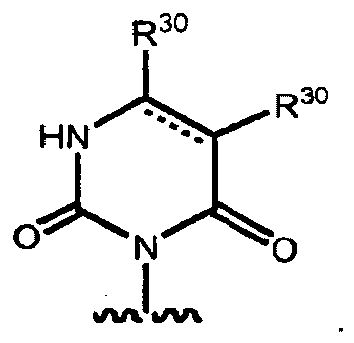
- Eine Verbindung gemäß Anspruch 1 oder 2, dadurch gekennzeichnet, dass R1 -CH2- ist und R10 ist:


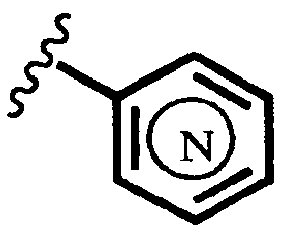
- Eine Verbindung gemäß Anspruch 1 oder 2, dadurch gekennzeichnet, dass R4, R6 und R7 jeweils H sind und R5 H, Halogen oder Halogenalkyl ist.
- Eine Verbindung gemäß Anspruch 1 der Formel:
 R1 -CH2- ist,R2 -C(O)NHSO2R11 ist,R3 ist:
 R4, R6 und R7 jeweils H sind,R5 H, Alkyl, -O-Alkyl, Halogen oder Halogenalkyl ist,R10 H, Aryl, Cycloalkyl oder Heteroaryl ist, wobei eine Cycloalkyl-, Aryl- oder Heteroarylgruppe gegebenenfalls substituiert sein kann mit einem oder mehreren Substituenten, die jeweils unabhängig ausgewählt sind aus Alkyl, -O-Alkyl, Halogen, -O-Halogenalkyl, -OH, -NH2, -NH(Alkyl), -N(Alkyl)2, -NO2, -CN, -NHC(O)-Alkyl, -O-Alkylenheterocycloalkyl-C(O)O-alkyl und -O-Halogenalkyl,R11 Alkyl, Aryl oder Cycloalkyl ist undjedes Auftreten von R12 H, Alkyl oder Halogen ist, oder zwei geminale R12 -Gruppen zusammen mit dem gemeinsamen Kohlenstoffatom, an das sie gebunden sind, verbunden sind unter Bildung einer 3- bis 6-gliedrigen Cycloalkylgruppe.
 - Eine Verbindung gemäß Anspruch 8, dadurch gekennzeichnet, dass R10 Phenyl ist, das gegebenenfalls substituiert sein kann mit einem oder mehreren Substituenten, die jeweils unabhängig ausgewählt sind aus Alkyl, -O-Alkyl, Halogen, -O-Halogenalkyl, -OH, -NH2, -NH(Alkyl), -N(Alkyl)2, -NO2, -CN, -NHC(O)-Alkyl, -O-Alkylenheterocycloalkyl-C(O)O-alkyl und -O-Halogenalkyl; R5 Cl, Br oder CF3 ist; und R11 Methyl, Ethyl, -CH2CH2NH2, -CH2CH2N(CH3)2, -CH2CH2CH2NH2, -CH2CH2CH2N(CH3)2, Phenyl oder Cyclopropyl ist.
- Eine Verbindung gemäß Anspruch 2 der Formel:
 R1 -CH2- ist,R2 -C(O)OH oder -C(O)NH2 ist,R3 ist:
 R4, R6 und R7 jeweils H sind,R5 H, Halogen oder Halogenalkyl ist,R10 H, Aryl, Cycloalkyl oder Heteroaryl ist, wobei eine Cycloalkyl-, Aryl- oder Heteroarylgruppe gegebenenfalls substituiert sein kann mit einem oder mehreren Substituenten, die jeweils unabhängig ausgewählt sind aus Alkyl, -O-Alkyl, Halogen, -O-Halogenalkyl, -OH, -NH2, -NH(Alkyl), -N(Alkyl)2, -NO2, -CN, -NHC(O)-Alkyl, -O-Alkylenheterocycloalkyl-C(O)O-alkyl und -O-Halogenalkyl, undr eine ganze Zahl im Bereich von 1 bis 4 ist.
 - Eine Verbindung gemäß Anspruch 10, dadurch gekennzeichnet, dass R2 -C(O)OH- ist; R10 Phenyl, ist, das gegebenenfalls substituiert sein kann mit einem oder mehreren Substituenten, die jeweils unabhängig ausgewählt sind aus Alkyl, -O-Alkyl, Halogen, -O-Halogenalkyl, -OH, -NH2, -NH(Alkyl), -N(Alkyl)2, -NO2, -CN, -NHC(O)-Alkyl, -O-Alkylenheterocycloalkyl-C(O)O-alkyl und -O-Halogenalkyl; und R5 Cl, Br, Methyl, Ethyl, -OCH3 oder CF3 ist.
- Eine Verbindung der Struktur 1-285 wie in der obigen Beschreibung nummeriert, oder ein pharmazeutisch annehmbares Salz, ein pharmazeutisch annehmbares Solvat oder ein pharmazeutisch annehmbarer Ester davon.
- Eine Zusammensetzung, die wenigstens eine Verbindung gemäß einem der Ansprüche 1-12 oder ein pharmazeutisch annehmbares Salz, ein pharmazeutisch annehmbares Solvat oder einen pharmazeutisch annehmbaren Ester davon und wenigstens einen pharmazeutisch annehmbaren Träger umfasst.
- Eine Verbindung gemäß einem der Ansprüche 1-12 oder ein pharmazeutisch annehmbares Salz, ein pharmazeutisch annehmbares Solvat oder ein pharmazeutisch annehmbarer Ester davon zur Verwendung bei der Behandlung einer Virusinfektion.
- Eine Kombination aus einer Verbindung gemäß einem der Ansprüche 1-12 oder einem pharmazeutisch annehmbaren Salz, Solvat oder Ester davon und wenigstens einem zusätzlichen antiviralen Mittel, wobei das zusätzliche Mittel ausgewählt ist aus einem HCV-Polymerase-Inhibitor, einem Interferon, einem Virusreplikationsinhibitor, einem Antisense-Mittel, einem therapeutischen Impfstoff, einem Virusproteaseinhibitor, einem Virionproduktionsinhibitor, einer Antikörpertherapie (monoklonal oder polyklonal) und einem Mittel, das zur Behandlung einer RNA-abhängigen polymerasebezogenen Störung geeignet ist.
- Verwendung einer Verbindung gemäß einem der Ansprüche 1-12 oder eines pharmazeutisch annehmbaren Salzes, Solvats oder Esters davon zur Herstellung eines Medikaments zur Behandlung einer Virusinfektion.
- Eine Verbindung gemäß einem der Ansprüche 1-12 oder ein pharmazeutisch annehmbares Salz, ein pharmazeutisch annehmbares Solvat oder ein pharmazeutisch annehmbarer Ester davon zur Verwendung bei einem Behandlungsverfahren durch Therapie.
Applications Claiming Priority (2)
| Application Number | Priority Date | Filing Date | Title |
|---|---|---|---|
| US98852807P | 2007-11-16 | 2007-11-16 | |
| PCT/US2008/083351 WO2009064848A1 (en) | 2007-11-16 | 2008-11-13 | 3-heterocyclic substituted indole derivatives and methods of use thereof |
Publications (2)
| Publication Number | Publication Date |
|---|---|
| EP2222660A1 EP2222660A1 (de) | 2010-09-01 |
| EP2222660B1 true EP2222660B1 (de) | 2014-03-26 |
Family
ID=40344906
Family Applications (1)
| Application Number | Title | Priority Date | Filing Date |
|---|---|---|---|
| EP08848587.5A Active EP2222660B1 (de) | 2007-11-16 | 2008-11-13 | 3-heterocyclylsubstituierte indolderivate und verfahren zu deren anwendung |
Country Status (7)
| Country | Link |
|---|---|
| US (1) | US8765757B2 (de) |
| EP (1) | EP2222660B1 (de) |
| JP (1) | JP5249344B2 (de) |
| CN (1) | CN102099351A (de) |
| CA (1) | CA2705586A1 (de) |
| MX (1) | MX2010005356A (de) |
| WO (1) | WO2009064848A1 (de) |
Families Citing this family (54)
| Publication number | Priority date | Publication date | Assignee | Title |
|---|---|---|---|---|
| US20110104109A1 (en) * | 2005-07-13 | 2011-05-05 | Frank Bennett | Tetracyclic indole derivatives and their use for treating or preventing viral infections |
| JP5211068B2 (ja) | 2006-12-22 | 2013-06-12 | メルク・シャープ・アンド・ドーム・コーポレーション | Hcvおよび関連するウイルス疾患の治療または予防のための4,5−環インドール誘導体 |
| AU2007339382B2 (en) | 2006-12-22 | 2013-05-02 | Merck Sharp & Dohme Llc | 4,5-ring annulated indole derivatives for treating or preventing of HCV and related viral infections |
| EP2081922B1 (de) | 2006-12-22 | 2012-02-01 | Schering Corporation | 5,6-Ring-annelierte Indolderivate und ihre Verwendung |
| TW200924780A (en) * | 2007-08-29 | 2009-06-16 | Schering Corp | 2-carboxy substituted indole derivatives and methods of use thereof |
| ATE541845T1 (de) * | 2007-08-29 | 2012-02-15 | Schering Corp | 2,3-substituierte azaindolderivate zur behandlung von virusinfektionen |
| CA2705587A1 (en) * | 2007-11-16 | 2009-05-22 | Schering Corporation | 3-aminosulfonyl substituted indole derivatives and methods of use thereof |
| MX2010005356A (es) | 2007-11-16 | 2010-05-27 | Schering Corp | Derivados de indol 3-heterociclico sustituidos y metodos de uso de los mismos. |
| AR072088A1 (es) * | 2008-06-13 | 2010-08-04 | Schering Corp | Derivados de indol triciclicos y sus metodos de uso |
| PE20110409A1 (es) | 2008-07-23 | 2011-06-22 | Hoffmann La Roche | Compuestos heterociclicos antiviricos |
| CN102164909A (zh) | 2008-09-26 | 2011-08-24 | 弗·哈夫曼-拉罗切有限公司 | 用于治疗hcv的吡啶或吡嗪衍生物 |
| KR20120011880A (ko) | 2009-04-25 | 2012-02-08 | 에프. 호프만-라 로슈 아게 | 헤테로사이클릭 항바이러스성 화합물 |
| TWI428332B (zh) | 2009-06-09 | 2014-03-01 | Hoffmann La Roche | 雜環抗病毒化合物 |
| BRPI1011744A2 (pt) | 2009-06-24 | 2016-03-22 | Hoffmann La Roche | composto antiviral heterocíclico. |
| AU2010297290A1 (en) | 2009-09-21 | 2012-03-15 | F. Hoffmann-La Roche Ag | Heterocyclic antiviral compounds |
| EP2619215B1 (de) | 2010-09-22 | 2018-09-05 | Alios Biopharma, Inc. | Azido-nukleoside und nukleotidanaloga |
| KR102431436B1 (ko) | 2014-08-29 | 2022-08-10 | 테스 파마 에스.알.엘. | α-아미노-β-카복시뮤콘산 세미알데히드 데카복실라제의 억제제 |
| MA41051B1 (fr) * | 2014-10-06 | 2020-11-30 | Vertex Pharma | Modulateurs du régulateur de conductance transmembranaire de la mucoviscidose |
| US10442788B2 (en) | 2015-04-01 | 2019-10-15 | Enanta Pharmaceuticals, Inc. | Hepatitis B antiviral agents |
| US10738035B2 (en) | 2015-05-13 | 2020-08-11 | Enanta Pharmaceuticals, Inc. | Hepatitis B antiviral agents |
| TN2017000508A1 (en) | 2015-06-26 | 2019-04-12 | Takeda Pharmaceuticals Co | 2,3-dihydro-4h-1,3-benzoxazin-4-one derivatives as modulators of cholinergic muscarinic m1 receptor |
| US10179131B2 (en) | 2015-07-13 | 2019-01-15 | Enanta Pharmaceuticals, Inc. | Hepatitis B antiviral agents |
| US10301255B2 (en) | 2015-07-22 | 2019-05-28 | Enanta Pharmaceuticals, Inc. | Hepatitis B antiviral agents |
| EP3366679B1 (de) | 2015-10-20 | 2021-03-24 | Takeda Pharmaceutical Company Limited | Heterocyclische verbindung |
| WO2017136403A1 (en) | 2016-02-02 | 2017-08-10 | Enanta Pharmaceuticals, Inc. | Hepatitis b antiviral agents |
| JP6904970B2 (ja) | 2016-03-07 | 2021-07-21 | エナンタ ファーマシューティカルズ インコーポレイテッド | B型肝炎抗ウイルス剤 |
| CA3019380A1 (en) | 2016-03-31 | 2017-10-05 | Vertex Pharmaceuticals Incorporated | Modulators of cystic fibrosis transmembrane conductance regulator |
| CN109843296A (zh) | 2016-06-10 | 2019-06-04 | 英安塔制药有限公司 | 乙型肝炎抗病毒药剂 |
| CN109803962B (zh) | 2016-09-30 | 2022-04-29 | 弗特克斯药品有限公司 | 囊性纤维化跨膜传导调控蛋白的调节剂、以及药物组合物 |
| MD3551622T2 (ro) | 2016-12-09 | 2021-03-31 | Vertex Pharma | Modulator al regulatorului conductanței transmembranare în fibroză chistică, compoziții farmaceutice, metode de tratament și procedeu pentru fabricarea modulatorului |
| US11253509B2 (en) | 2017-06-08 | 2022-02-22 | Vertex Pharmaceuticals Incorporated | Methods of treatment for cystic fibrosis |
| MA49631A (fr) | 2017-07-17 | 2020-05-27 | Vertex Pharma | Méthodes de traitement de la fibrose kystique |
| JP7121794B2 (ja) | 2017-08-02 | 2022-08-18 | バーテックス ファーマシューティカルズ インコーポレイテッド | ピロリジン化合物を調製するためのプロセス |
| US10952978B2 (en) | 2017-08-28 | 2021-03-23 | Enanta Pharmaceuticals, Inc. | Hepatitis B antiviral agents |
| US10988454B2 (en) * | 2017-09-14 | 2021-04-27 | Abbvie Overseas S.À.R.L. | Modulators of the cystic fibrosis transmembrane conductance regulator protein and methods of use |
| WO2019079760A1 (en) | 2017-10-19 | 2019-04-25 | Vertex Pharmaceuticals Incorporated | CRYSTALLINE FORMS AND COMPOSITIONS OF CFTR MODULATORS |
| TW201936192A (zh) | 2017-12-06 | 2019-09-16 | 美商因那塔製藥公司 | B 型肝炎抗病毒試劑 |
| TW201927789A (zh) | 2017-12-06 | 2019-07-16 | 美商因那塔製藥公司 | B型肝炎抗病毒試劑 |
| EP3720849A2 (de) | 2017-12-08 | 2020-10-14 | Vertex Pharmaceuticals Incorporated | Verfahren zur herstellung von cftr-regulatoren |
| US11058678B2 (en) | 2018-01-22 | 2021-07-13 | Enanta Pharmaceuticals, Inc. | Substituted heterocycles as antiviral agents |
| TWI810243B (zh) | 2018-02-05 | 2023-08-01 | 美商維泰克斯製藥公司 | 用於治療囊腫纖化症之醫藥組合物 |
| WO2019191166A1 (en) | 2018-03-29 | 2019-10-03 | Enanta Pharmaceuticals, Inc. | Hepatitis b antiviral agents |
| EP3774825A1 (de) | 2018-04-13 | 2021-02-17 | Vertex Pharmaceuticals Incorporated | Modulatoren des transmembranleitfähigkeitsreglers von zystischer fibrose, pharmazeutische zusammensetzungen, behandlungsverfahren und verfahren zur herstellung des modulators |
| TWI748194B (zh) | 2018-06-28 | 2021-12-01 | 德商菲尼克斯 Fxr有限責任公司 | 含有雙環核心部分之新穎lxr調節劑 |
| UY38383A (es) | 2018-09-21 | 2020-04-30 | Enanta Pharm Inc | Heterociclos funcionalizados como agentes antivirales |
| US11198693B2 (en) | 2018-11-21 | 2021-12-14 | Enanta Pharmaceuticals, Inc. | Functionalized heterocycles as antiviral agents |
| US12194023B2 (en) | 2018-11-29 | 2025-01-14 | The Research Foundation For The State University Of New York | Compositions and methods for modular control of bioorthogonal ligation |
| WO2020247444A1 (en) | 2019-06-03 | 2020-12-10 | Enanta Pharmaceuticals, Inc, | Hepatitis b antiviral agents |
| CN112028815A (zh) * | 2019-06-03 | 2020-12-04 | 中国药科大学 | 吲哚类衍生物及其医药用途 |
| WO2020247561A1 (en) | 2019-06-04 | 2020-12-10 | Enanta Pharmaceuticals, Inc, | Hepatitis b antiviral agents |
| WO2020247575A1 (en) | 2019-06-04 | 2020-12-10 | Enanta Pharmaceuticals, Inc. | Hepatitis b antiviral agents |
| US11738019B2 (en) | 2019-07-11 | 2023-08-29 | Enanta Pharmaceuticals, Inc. | Substituted heterocycles as antiviral agents |
| US11236108B2 (en) | 2019-09-17 | 2022-02-01 | Enanta Pharmaceuticals, Inc. | Functionalized heterocycles as antiviral agents |
| WO2021188414A1 (en) | 2020-03-16 | 2021-09-23 | Enanta Pharmaceuticals, Inc. | Functionalized heterocyclic compounds as antiviral agents |
Family Cites Families (56)
| Publication number | Priority date | Publication date | Assignee | Title |
|---|---|---|---|---|
| DE648639C (de) | 1935-05-19 | 1937-08-05 | I G Farbenindustrie Akt Ges | Verfahren zur Darstellung von Dipyrrolen |
| US3632805A (en) | 1967-12-08 | 1972-01-04 | Sumitomo Chemical Co | Process for producing 1-aminoalkyl-benzodiazepine derivatives |
| AU575854B2 (en) | 1983-10-04 | 1988-08-11 | Shionogi & Co., Ltd. | 7beta-(carboxyalkenamido) cephalosporins |
| US5017380A (en) | 1986-07-02 | 1991-05-21 | Shionogi & Co., Ltd. | Gelatin hard capsule containing crystalline hydrate of oral cephalosporin |
| NZ220764A (en) | 1986-07-02 | 1989-09-27 | Shionogi & Co | Crystalline form of 7beta((z)-2-(2-aminothiazol-4-yl)-4- carboxybut-2-enoylamino)-3-cephem-4-carboxylic acid and pharmaceutical compositions |
| CA2038925A1 (en) | 1990-03-26 | 1991-09-27 | Takashi Sohda | Indole derivatives, their production and use |
| JPH04149429A (ja) | 1990-10-12 | 1992-05-22 | Fuji Photo Film Co Ltd | ハロゲン化銀カラー反転写真感光材料およびそれを用いた画像形成方法 |
| IT1278077B1 (it) | 1995-05-25 | 1997-11-17 | Angeletti P Ist Richerche Bio | Metodologia per riprodurre in vitro le attivita' di rna polimerasi rna-dipendente e di nucleotidiltransferasi terminale codificate dal |
| US5922757A (en) | 1996-09-30 | 1999-07-13 | The Regents Of The University Of California | Treatment and prevention of hepatic disorders |
| AP1019A (en) | 1996-10-18 | 2001-10-16 | Vertex Pharma | Inhibitors of serinre proteases, particularly hepatitis C virus NS3 protease. |
| GB9623908D0 (en) | 1996-11-18 | 1997-01-08 | Hoffmann La Roche | Amino acid derivatives |
| EP1012180B1 (de) | 1997-08-11 | 2004-12-01 | Boehringer Ingelheim (Canada) Ltd. | Peptidanaloga mit inhibitorischer wirkung auf hepatitis c |
| FR2768146B1 (fr) | 1997-09-05 | 2000-05-05 | Oreal | Nouveaux composes de la famille des indole-carboxyliques et leur utilisation |
| ES2317900T3 (es) | 2000-04-05 | 2009-05-01 | Schering Corporation | Inhibidores de serina proteasa ns3 macrociclicos del virus de la hepatitis c que comprenden fragmentos n-ciclicas p2. |
| AU2001253621A1 (en) | 2000-04-19 | 2001-11-07 | Schering Corporation | Macrocyclic NS3-serine protease inhibitors of hepatitis C virus comprising alkyl and aryl alanine P2 moieties |
| SK742003A3 (en) | 2000-07-21 | 2003-06-03 | Schering Corp | Novel peptides as NS3-serine protease inhibitors of hepatitis C virus |
| AR029851A1 (es) | 2000-07-21 | 2003-07-16 | Dendreon Corp | Nuevos peptidos como inhibidores de ns3-serina proteasa del virus de hepatitis c |
| AR034127A1 (es) | 2000-07-21 | 2004-02-04 | Schering Corp | Imidazolidinonas como inhibidores de ns3-serina proteasa del virus de hepatitis c, composicion farmaceutica, un metodo para su preparacion, y el uso de las mismas para la manufactura de un medicamento |
| CN1498224A (zh) | 2000-07-21 | 2004-05-19 | ���鹫˾ | 用作丙型肝炎病毒ns3-丝氨酸蛋白酶抑制剂的新型肽 |
| PL366068A1 (en) | 2000-10-10 | 2005-01-24 | Smithkline Beecham Corporation | Substituted indoles, pharmaceutical compositions containing such indoles and their use as ppar-gamma binding agents |
| AU3659102A (en) | 2000-12-12 | 2002-06-24 | Schering Corp | Diaryl peptides as ns3-serine protease inhibitors of hepatits c virus |
| WO2002050030A2 (en) | 2000-12-18 | 2002-06-27 | Eli Lilly And Company | Cycloalkylfused [g]-indole compounds as spla2-inhibitors in the treatment of inflammatory diseases |
| US7626026B2 (en) | 2001-02-22 | 2009-12-01 | University Of Bradford | Pyrrolo-indole and pyrrolo-quinoline derivatives as prodrugs for tumour treatment |
| EP2335700A1 (de) | 2001-07-25 | 2011-06-22 | Boehringer Ingelheim (Canada) Ltd. | Hepatitis C Virus Polymerase Inhibitoren mit heterobicylischer Struktur |
| WO2004035571A1 (en) | 2002-10-15 | 2004-04-29 | Rigel Pharmaceuticals, Inc. | Substituted indoles and their use as hcv inhibitors |
| US20050075331A1 (en) | 2003-10-06 | 2005-04-07 | Pratt John K. | Anti-infective agents |
| GB0307891D0 (en) * | 2003-04-04 | 2003-05-14 | Angeletti P Ist Richerche Bio | Chemical compounds,compositions and uses |
| CN1832939B (zh) | 2003-05-30 | 2010-04-28 | 杰明X医药品加拿大公司 | 用于治疗癌症或病毒病的三杂环化合物、组合物和方法 |
| GB0323845D0 (en) | 2003-10-10 | 2003-11-12 | Angeletti P Ist Richerche Bio | Chemical compounds,compositions and uses |
| PE20050925A1 (es) | 2003-11-10 | 2005-11-29 | Schering Corp | Anticuerpo recombinante humanizado anti-interleuquina 10 |
| CN103102389A (zh) | 2004-02-27 | 2013-05-15 | 默沙东公司 | 作为丙型肝炎病毒ns3丝氨酸蛋白酶抑制剂的硫化合物 |
| JP2007526320A (ja) | 2004-03-01 | 2007-09-13 | バイロファーマ・インコーポレイテッド | ピラノインドール誘導体およびc型肝炎ウイルス感染症または疾患の治療のためのその使用 |
| US20050249702A1 (en) | 2004-05-06 | 2005-11-10 | Schering Corporation | (1R,2S,5S)-N-[(1S)-3-amino-1-(cyclobutylmethyl)-2,3-dioxopropyl]-3-[(2S)-2-[[[(1,1-dimethylethyl)amino]carbonyl]amino]-3,3-dimethyl-1-oxobutyl]-6,6-dimethyl-3-azabicyclo[3.1.0]hexane-2-carboxamide as inhibitor of hepatitis C virus NS3/NS4a serine protease |
| EP1604988A1 (de) | 2004-05-18 | 2005-12-14 | Sanofi-Aventis Deutschland GmbH | Pyridazinonderivate, Methoden, um selbige herzustellen, und ihre Verwendung als Pharmazeutika |
| WO2007084413A2 (en) | 2004-07-14 | 2007-07-26 | Ptc Therapeutics, Inc. | Methods for treating hepatitis c |
| US7153848B2 (en) | 2004-08-09 | 2006-12-26 | Bristol-Myers Squibb Company | Inhibitors of HCV replication |
| MX2007003371A (es) | 2004-09-23 | 2007-05-07 | Wyeth Corp | Derivados de carbazol y ciclopentaindol para tratar infeccion con virus de hepatitis c. |
| DE102004047272A1 (de) | 2004-09-24 | 2006-04-06 | Schering Ag | Inhibitoren der löslichen Adenylatzyklase |
| JP4149429B2 (ja) | 2004-10-26 | 2008-09-10 | 本田技研工業株式会社 | 車両の走行安全装置 |
| EP1807403A2 (de) | 2004-10-26 | 2007-07-18 | Istituto di Richerche di Biologia Molecolare P. Angeletti S.p.A. | Tetracyclische indolderivate als antivirale mittel |
| ZA200705872B (en) | 2005-01-14 | 2008-09-25 | Genelabs Tecnologies Inc | Indole derivatives for treating viral infections |
| US20110104109A1 (en) | 2005-07-13 | 2011-05-05 | Frank Bennett | Tetracyclic indole derivatives and their use for treating or preventing viral infections |
| GB0518390D0 (en) | 2005-09-09 | 2005-10-19 | Angeletti P Ist Richerche Bio | Therapeutic compounds |
| US7482360B2 (en) | 2005-09-23 | 2009-01-27 | Schering Corporation | Fused tetracyclic mGluR1 antagonists as therapeutic agents |
| JP2009523732A (ja) | 2006-01-13 | 2009-06-25 | ピーティーシー セラピューティクス,インコーポレーテッド | C型肝炎の治療方法 |
| EP1981524A2 (de) | 2006-02-09 | 2008-10-22 | Schering Corporation | Kombinationen aus hcv-protease-hemmer(n) und hcv-polymerase-hemmer(n) sowie damit zusammenhängende behandlungsverfahren |
| EP2081922B1 (de) | 2006-12-22 | 2012-02-01 | Schering Corporation | 5,6-Ring-annelierte Indolderivate und ihre Verwendung |
| AU2007339382B2 (en) | 2006-12-22 | 2013-05-02 | Merck Sharp & Dohme Llc | 4,5-ring annulated indole derivatives for treating or preventing of HCV and related viral infections |
| JP5211068B2 (ja) | 2006-12-22 | 2013-06-12 | メルク・シャープ・アンド・ドーム・コーポレーション | Hcvおよび関連するウイルス疾患の治療または予防のための4,5−環インドール誘導体 |
| CN101687789A (zh) * | 2007-02-12 | 2010-03-31 | 因特蒙公司 | C型肝炎病毒复制的新颖抑制剂 |
| WO2009032116A1 (en) | 2007-08-29 | 2009-03-12 | Schering Corporation | 2, 3-substituted indole derivatives for treating viral infections |
| TW200924780A (en) | 2007-08-29 | 2009-06-16 | Schering Corp | 2-carboxy substituted indole derivatives and methods of use thereof |
| ATE541845T1 (de) | 2007-08-29 | 2012-02-15 | Schering Corp | 2,3-substituierte azaindolderivate zur behandlung von virusinfektionen |
| MY162760A (en) * | 2007-09-17 | 2017-07-14 | Abbvie Bahamas Ltd | Anti-infective agents and uses thereof |
| CA2705587A1 (en) | 2007-11-16 | 2009-05-22 | Schering Corporation | 3-aminosulfonyl substituted indole derivatives and methods of use thereof |
| MX2010005356A (es) | 2007-11-16 | 2010-05-27 | Schering Corp | Derivados de indol 3-heterociclico sustituidos y metodos de uso de los mismos. |
-
2008
- 2008-11-13 MX MX2010005356A patent/MX2010005356A/es not_active Application Discontinuation
- 2008-11-13 JP JP2010534158A patent/JP5249344B2/ja not_active Expired - Fee Related
- 2008-11-13 EP EP08848587.5A patent/EP2222660B1/de active Active
- 2008-11-13 CA CA2705586A patent/CA2705586A1/en not_active Abandoned
- 2008-11-13 US US12/743,016 patent/US8765757B2/en active Active
- 2008-11-13 CN CN2008801249688A patent/CN102099351A/zh active Pending
- 2008-11-13 WO PCT/US2008/083351 patent/WO2009064848A1/en not_active Ceased
Also Published As
| Publication number | Publication date |
|---|---|
| CN102099351A (zh) | 2011-06-15 |
| WO2009064848A1 (en) | 2009-05-22 |
| CA2705586A1 (en) | 2009-05-22 |
| MX2010005356A (es) | 2010-05-27 |
| JP5249344B2 (ja) | 2013-07-31 |
| US20110165118A1 (en) | 2011-07-07 |
| JP2011503195A (ja) | 2011-01-27 |
| EP2222660A1 (de) | 2010-09-01 |
| US8765757B2 (en) | 2014-07-01 |
Similar Documents
| Publication | Publication Date | Title |
|---|---|---|
| EP2222660B1 (de) | 3-heterocyclylsubstituierte indolderivate und verfahren zu deren anwendung | |
| EP2064180B1 (de) | 4,5-ring-annulierte indol-derivate zur behandlung oder prävention von hcv und verwandten virusinfektionen | |
| EP2081922B1 (de) | 5,6-Ring-annelierte Indolderivate und ihre Verwendung | |
| EP2195317B1 (de) | 2,3-substituierte azaindolderivate zur behandlung von virusinfektionen | |
| US8546420B2 (en) | 4, 5-ring annulated indole derivatives for treating or preventing of HCV and related viral infections | |
| EP2408761B1 (de) | Substituierte indolderivate und verwendungsverfahren dafür | |
| EP2222672B1 (de) | 3-aminosulfonylsubstituierte indolderivate und verfahren zu deren anwendung | |
| US20110104109A1 (en) | Tetracyclic indole derivatives and their use for treating or preventing viral infections |
Legal Events
| Date | Code | Title | Description |
|---|---|---|---|
| PUAI | Public reference made under article 153(3) epc to a published international application that has entered the european phase |
Free format text: ORIGINAL CODE: 0009012 |
|
| 17P | Request for examination filed |
Effective date: 20100616 |
|
| AK | Designated contracting states |
Kind code of ref document: A1 Designated state(s): AT BE BG CH CY CZ DE DK EE ES FI FR GB GR HR HU IE IS IT LI LT LU LV MC MT NL NO PL PT RO SE SI SK TR |
|
| AX | Request for extension of the european patent |
Extension state: AL BA MK RS |
|
| 17Q | First examination report despatched |
Effective date: 20120427 |
|
| RAP1 | Party data changed (applicant data changed or rights of an application transferred) |
Owner name: MERCK SHARP & DOHME CORP. |
|
| GRAP | Despatch of communication of intention to grant a patent |
Free format text: ORIGINAL CODE: EPIDOSNIGR1 |
|
| INTG | Intention to grant announced |
Effective date: 20130620 |
|
| GRAP | Despatch of communication of intention to grant a patent |
Free format text: ORIGINAL CODE: EPIDOSNIGR1 |
|
| INTG | Intention to grant announced |
Effective date: 20131121 |
|
| GRAS | Grant fee paid |
Free format text: ORIGINAL CODE: EPIDOSNIGR3 |
|
| GRAA | (expected) grant |
Free format text: ORIGINAL CODE: 0009210 |
|
| AK | Designated contracting states |
Kind code of ref document: B1 Designated state(s): AT BE BG CH CY CZ DE DK EE ES FI FR GB GR HR HU IE IS IT LI LT LU LV MC MT NL NO PL PT RO SE SI SK TR |
|
| AX | Request for extension of the european patent |
Extension state: AL BA MK RS |
|
| REG | Reference to a national code |
Ref country code: GB Ref legal event code: FG4D |
|
| REG | Reference to a national code |
Ref country code: CH Ref legal event code: EP |
|
| REG | Reference to a national code |
Ref country code: AT Ref legal event code: REF Ref document number: 658925 Country of ref document: AT Kind code of ref document: T Effective date: 20140415 |
|
| REG | Reference to a national code |
Ref country code: IE Ref legal event code: FG4D |
|
| REG | Reference to a national code |
Ref country code: DE Ref legal event code: R096 Ref document number: 602008031168 Country of ref document: DE Effective date: 20140508 |
|
| PG25 | Lapsed in a contracting state [announced via postgrant information from national office to epo] |
Ref country code: LT Free format text: LAPSE BECAUSE OF FAILURE TO SUBMIT A TRANSLATION OF THE DESCRIPTION OR TO PAY THE FEE WITHIN THE PRESCRIBED TIME-LIMIT Effective date: 20140326 Ref country code: NO Free format text: LAPSE BECAUSE OF FAILURE TO SUBMIT A TRANSLATION OF THE DESCRIPTION OR TO PAY THE FEE WITHIN THE PRESCRIBED TIME-LIMIT Effective date: 20140626 |
|
| REG | Reference to a national code |
Ref country code: AT Ref legal event code: MK05 Ref document number: 658925 Country of ref document: AT Kind code of ref document: T Effective date: 20140326 |
|
| REG | Reference to a national code |
Ref country code: NL Ref legal event code: VDEP Effective date: 20140326 |
|
| REG | Reference to a national code |
Ref country code: LT Ref legal event code: MG4D |
|
| PG25 | Lapsed in a contracting state [announced via postgrant information from national office to epo] |
Ref country code: FI Free format text: LAPSE BECAUSE OF FAILURE TO SUBMIT A TRANSLATION OF THE DESCRIPTION OR TO PAY THE FEE WITHIN THE PRESCRIBED TIME-LIMIT Effective date: 20140326 Ref country code: SE Free format text: LAPSE BECAUSE OF FAILURE TO SUBMIT A TRANSLATION OF THE DESCRIPTION OR TO PAY THE FEE WITHIN THE PRESCRIBED TIME-LIMIT Effective date: 20140326 |
|
| PG25 | Lapsed in a contracting state [announced via postgrant information from national office to epo] |
Ref country code: HR Free format text: LAPSE BECAUSE OF FAILURE TO SUBMIT A TRANSLATION OF THE DESCRIPTION OR TO PAY THE FEE WITHIN THE PRESCRIBED TIME-LIMIT Effective date: 20140326 Ref country code: LV Free format text: LAPSE BECAUSE OF FAILURE TO SUBMIT A TRANSLATION OF THE DESCRIPTION OR TO PAY THE FEE WITHIN THE PRESCRIBED TIME-LIMIT Effective date: 20140326 |
|
| PG25 | Lapsed in a contracting state [announced via postgrant information from national office to epo] |
Ref country code: NL Free format text: LAPSE BECAUSE OF FAILURE TO SUBMIT A TRANSLATION OF THE DESCRIPTION OR TO PAY THE FEE WITHIN THE PRESCRIBED TIME-LIMIT Effective date: 20140326 Ref country code: BE Free format text: LAPSE BECAUSE OF FAILURE TO SUBMIT A TRANSLATION OF THE DESCRIPTION OR TO PAY THE FEE WITHIN THE PRESCRIBED TIME-LIMIT Effective date: 20140326 Ref country code: IS Free format text: LAPSE BECAUSE OF FAILURE TO SUBMIT A TRANSLATION OF THE DESCRIPTION OR TO PAY THE FEE WITHIN THE PRESCRIBED TIME-LIMIT Effective date: 20140726 Ref country code: BG Free format text: LAPSE BECAUSE OF FAILURE TO SUBMIT A TRANSLATION OF THE DESCRIPTION OR TO PAY THE FEE WITHIN THE PRESCRIBED TIME-LIMIT Effective date: 20140626 Ref country code: EE Free format text: LAPSE BECAUSE OF FAILURE TO SUBMIT A TRANSLATION OF THE DESCRIPTION OR TO PAY THE FEE WITHIN THE PRESCRIBED TIME-LIMIT Effective date: 20140326 Ref country code: CZ Free format text: LAPSE BECAUSE OF FAILURE TO SUBMIT A TRANSLATION OF THE DESCRIPTION OR TO PAY THE FEE WITHIN THE PRESCRIBED TIME-LIMIT Effective date: 20140326 Ref country code: CY Free format text: LAPSE BECAUSE OF FAILURE TO SUBMIT A TRANSLATION OF THE DESCRIPTION OR TO PAY THE FEE WITHIN THE PRESCRIBED TIME-LIMIT Effective date: 20140326 Ref country code: RO Free format text: LAPSE BECAUSE OF FAILURE TO SUBMIT A TRANSLATION OF THE DESCRIPTION OR TO PAY THE FEE WITHIN THE PRESCRIBED TIME-LIMIT Effective date: 20140326 |
|
| PG25 | Lapsed in a contracting state [announced via postgrant information from national office to epo] |
Ref country code: AT Free format text: LAPSE BECAUSE OF FAILURE TO SUBMIT A TRANSLATION OF THE DESCRIPTION OR TO PAY THE FEE WITHIN THE PRESCRIBED TIME-LIMIT Effective date: 20140326 Ref country code: PL Free format text: LAPSE BECAUSE OF FAILURE TO SUBMIT A TRANSLATION OF THE DESCRIPTION OR TO PAY THE FEE WITHIN THE PRESCRIBED TIME-LIMIT Effective date: 20140326 Ref country code: ES Free format text: LAPSE BECAUSE OF FAILURE TO SUBMIT A TRANSLATION OF THE DESCRIPTION OR TO PAY THE FEE WITHIN THE PRESCRIBED TIME-LIMIT Effective date: 20140326 Ref country code: SK Free format text: LAPSE BECAUSE OF FAILURE TO SUBMIT A TRANSLATION OF THE DESCRIPTION OR TO PAY THE FEE WITHIN THE PRESCRIBED TIME-LIMIT Effective date: 20140326 |
|
| PG25 | Lapsed in a contracting state [announced via postgrant information from national office to epo] |
Ref country code: PT Free format text: LAPSE BECAUSE OF FAILURE TO SUBMIT A TRANSLATION OF THE DESCRIPTION OR TO PAY THE FEE WITHIN THE PRESCRIBED TIME-LIMIT Effective date: 20140728 |
|
| REG | Reference to a national code |
Ref country code: DE Ref legal event code: R097 Ref document number: 602008031168 Country of ref document: DE |
|
| PG25 | Lapsed in a contracting state [announced via postgrant information from national office to epo] |
Ref country code: DK Free format text: LAPSE BECAUSE OF FAILURE TO SUBMIT A TRANSLATION OF THE DESCRIPTION OR TO PAY THE FEE WITHIN THE PRESCRIBED TIME-LIMIT Effective date: 20140326 |
|
| PLBE | No opposition filed within time limit |
Free format text: ORIGINAL CODE: 0009261 |
|
| STAA | Information on the status of an ep patent application or granted ep patent |
Free format text: STATUS: NO OPPOSITION FILED WITHIN TIME LIMIT |
|
| 26N | No opposition filed |
Effective date: 20150106 |
|
| PG25 | Lapsed in a contracting state [announced via postgrant information from national office to epo] |
Ref country code: IT Free format text: LAPSE BECAUSE OF FAILURE TO SUBMIT A TRANSLATION OF THE DESCRIPTION OR TO PAY THE FEE WITHIN THE PRESCRIBED TIME-LIMIT Effective date: 20140326 |
|
| REG | Reference to a national code |
Ref country code: DE Ref legal event code: R097 Ref document number: 602008031168 Country of ref document: DE Effective date: 20150106 |
|
| REG | Reference to a national code |
Ref country code: DE Ref legal event code: R119 Ref document number: 602008031168 Country of ref document: DE |
|
| PG25 | Lapsed in a contracting state [announced via postgrant information from national office to epo] |
Ref country code: LU Free format text: LAPSE BECAUSE OF FAILURE TO SUBMIT A TRANSLATION OF THE DESCRIPTION OR TO PAY THE FEE WITHIN THE PRESCRIBED TIME-LIMIT Effective date: 20141113 Ref country code: MC Free format text: LAPSE BECAUSE OF FAILURE TO SUBMIT A TRANSLATION OF THE DESCRIPTION OR TO PAY THE FEE WITHIN THE PRESCRIBED TIME-LIMIT Effective date: 20140326 |
|
| REG | Reference to a national code |
Ref country code: CH Ref legal event code: PL |
|
| GBPC | Gb: european patent ceased through non-payment of renewal fee |
Effective date: 20141113 |
|
| PG25 | Lapsed in a contracting state [announced via postgrant information from national office to epo] |
Ref country code: CH Free format text: LAPSE BECAUSE OF NON-PAYMENT OF DUE FEES Effective date: 20141130 Ref country code: SI Free format text: LAPSE BECAUSE OF FAILURE TO SUBMIT A TRANSLATION OF THE DESCRIPTION OR TO PAY THE FEE WITHIN THE PRESCRIBED TIME-LIMIT Effective date: 20140326 Ref country code: LI Free format text: LAPSE BECAUSE OF NON-PAYMENT OF DUE FEES Effective date: 20141130 |
|
| REG | Reference to a national code |
Ref country code: FR Ref legal event code: ST Effective date: 20150731 |
|
| PG25 | Lapsed in a contracting state [announced via postgrant information from national office to epo] |
Ref country code: DE Free format text: LAPSE BECAUSE OF NON-PAYMENT OF DUE FEES Effective date: 20150602 Ref country code: IE Free format text: LAPSE BECAUSE OF NON-PAYMENT OF DUE FEES Effective date: 20141113 Ref country code: GB Free format text: LAPSE BECAUSE OF NON-PAYMENT OF DUE FEES Effective date: 20141113 |
|
| PG25 | Lapsed in a contracting state [announced via postgrant information from national office to epo] |
Ref country code: FR Free format text: LAPSE BECAUSE OF NON-PAYMENT OF DUE FEES Effective date: 20141201 |
|
| PG25 | Lapsed in a contracting state [announced via postgrant information from national office to epo] |
Ref country code: GR Free format text: LAPSE BECAUSE OF FAILURE TO SUBMIT A TRANSLATION OF THE DESCRIPTION OR TO PAY THE FEE WITHIN THE PRESCRIBED TIME-LIMIT Effective date: 20140627 |
|
| PG25 | Lapsed in a contracting state [announced via postgrant information from national office to epo] |
Ref country code: HU Free format text: LAPSE BECAUSE OF FAILURE TO SUBMIT A TRANSLATION OF THE DESCRIPTION OR TO PAY THE FEE WITHIN THE PRESCRIBED TIME-LIMIT; INVALID AB INITIO Effective date: 20081113 Ref country code: TR Free format text: LAPSE BECAUSE OF FAILURE TO SUBMIT A TRANSLATION OF THE DESCRIPTION OR TO PAY THE FEE WITHIN THE PRESCRIBED TIME-LIMIT Effective date: 20140326 Ref country code: MT Free format text: LAPSE BECAUSE OF FAILURE TO SUBMIT A TRANSLATION OF THE DESCRIPTION OR TO PAY THE FEE WITHIN THE PRESCRIBED TIME-LIMIT Effective date: 20140326 |