EP2222860B1 - Procédé de modification d'une cellule de levure pour la production d'éthanol - Google Patents
Procédé de modification d'une cellule de levure pour la production d'éthanol Download PDFInfo
- Publication number
- EP2222860B1 EP2222860B1 EP08843807.2A EP08843807A EP2222860B1 EP 2222860 B1 EP2222860 B1 EP 2222860B1 EP 08843807 A EP08843807 A EP 08843807A EP 2222860 B1 EP2222860 B1 EP 2222860B1
- Authority
- EP
- European Patent Office
- Prior art keywords
- protein
- activity
- gene
- gpd1
- gpd2
- Prior art date
- Legal status (The legal status is an assumption and is not a legal conclusion. Google has not performed a legal analysis and makes no representation as to the accuracy of the status listed.)
- Active
Links
Images



Classifications
-
- C—CHEMISTRY; METALLURGY
- C12—BIOCHEMISTRY; BEER; SPIRITS; WINE; VINEGAR; MICROBIOLOGY; ENZYMOLOGY; MUTATION OR GENETIC ENGINEERING
- C12P—FERMENTATION OR ENZYME-USING PROCESSES TO SYNTHESISE A DESIRED CHEMICAL COMPOUND OR COMPOSITION OR TO SEPARATE OPTICAL ISOMERS FROM A RACEMIC MIXTURE
- C12P7/00—Preparation of oxygen-containing organic compounds
- C12P7/02—Preparation of oxygen-containing organic compounds containing a hydroxy group
- C12P7/04—Preparation of oxygen-containing organic compounds containing a hydroxy group acyclic
- C12P7/06—Ethanol, i.e. non-beverage
-
- C—CHEMISTRY; METALLURGY
- C12—BIOCHEMISTRY; BEER; SPIRITS; WINE; VINEGAR; MICROBIOLOGY; ENZYMOLOGY; MUTATION OR GENETIC ENGINEERING
- C12N—MICROORGANISMS OR ENZYMES; COMPOSITIONS THEREOF; PROPAGATING, PRESERVING, OR MAINTAINING MICROORGANISMS; MUTATION OR GENETIC ENGINEERING; CULTURE MEDIA
- C12N9/00—Enzymes; Proenzymes; Compositions thereof; Processes for preparing, activating, inhibiting, separating or purifying enzymes
- C12N9/0004—Oxidoreductases (1.)
- C12N9/0006—Oxidoreductases (1.) acting on CH-OH groups as donors (1.1)
-
- C—CHEMISTRY; METALLURGY
- C12—BIOCHEMISTRY; BEER; SPIRITS; WINE; VINEGAR; MICROBIOLOGY; ENZYMOLOGY; MUTATION OR GENETIC ENGINEERING
- C12Y—ENZYMES
- C12Y101/00—Oxidoreductases acting on the CH-OH group of donors (1.1)
- C12Y101/01—Oxidoreductases acting on the CH-OH group of donors (1.1) with NAD+ or NADP+ as acceptor (1.1.1)
- C12Y101/01008—Glycerol-3-phosphate dehydrogenase (NAD+) (1.1.1.8)
-
- C—CHEMISTRY; METALLURGY
- C12—BIOCHEMISTRY; BEER; SPIRITS; WINE; VINEGAR; MICROBIOLOGY; ENZYMOLOGY; MUTATION OR GENETIC ENGINEERING
- C12Y—ENZYMES
- C12Y101/00—Oxidoreductases acting on the CH-OH group of donors (1.1)
- C12Y101/05—Oxidoreductases acting on the CH-OH group of donors (1.1) with a quinone or similar compound as acceptor (1.1.5)
- C12Y101/05003—Glycerol-3-phosphate dehydrogenase (1.1.5.3)
-
- Y—GENERAL TAGGING OF NEW TECHNOLOGICAL DEVELOPMENTS; GENERAL TAGGING OF CROSS-SECTIONAL TECHNOLOGIES SPANNING OVER SEVERAL SECTIONS OF THE IPC; TECHNICAL SUBJECTS COVERED BY FORMER USPC CROSS-REFERENCE ART COLLECTIONS [XRACs] AND DIGESTS
- Y02—TECHNOLOGIES OR APPLICATIONS FOR MITIGATION OR ADAPTATION AGAINST CLIMATE CHANGE
- Y02E—REDUCTION OF GREENHOUSE GAS [GHG] EMISSIONS, RELATED TO ENERGY GENERATION, TRANSMISSION OR DISTRIBUTION
- Y02E50/00—Technologies for the production of fuel of non-fossil origin
- Y02E50/10—Biofuels, e.g. bio-diesel
Definitions
- the invention pertains to a method of modifying a yeast cell, for the production of ethanol, a modified yeast cell and a use thereof for producing ethanol.
- the invention furthermore pertains to a method for producing ethanol from biomass.
- Bio-ethanol is a promising alternative to fossil fuels.
- the increasing interest in renewable biofuels mainly results from the fact that world fossil fuels are limited.
- the European Commission has planned to progressively substitute 20 % of conventional fossil fuels by alternative fuels in the transport sector by 2020 (5.75 % by 2010).
- One technical pathway is to produce bio-ethanol via microbial fermentation from various domestic crops (biomass).
- Bio-ethanol production from sugar and starch containing biomass is common in Brazil and the United States.
- the yeast Saccharomyces (S.) cerevisiae has been traditionally used in this process.
- the yeast S. cerevisiae has outstanding properties for bio-ethanol production.
- its high tolerance to the conditions which occur during industrial ethanol production will hardly allow other microorganisms to displace yeast in this field.
- Glycerol is formed by S . cerevisiae as a by-product during glucose catabolism beside the main fermentation products: ethanol, carbon dioxide and biomass.
- the carbon flux towards glycerol is quite substantial and can amount up to 0.1 g glycerol per gram glucose (Alfenore et al., 2004; Aldiguier et al., 2004).
- Glycerol biosynthesis from the glycolytic intermediate dihydroxyacetone phosphate (DHAP) in S. cerevisiae is performed by two enzymatic steps catalyzed by the glycerol 3-phosphate dehydrogenase (GPDH) and the glycerol 3-phosphatase (GPP) (see also Fig. 1 ).
- GPDH glycerol 3-phosphate dehydrogenase
- GPP glycerol 3-phosphatase
- Each enzyme is encoded by two isogenes GPD1 / GPD2 and GPP1 / GPP2, respectively.
- Glycerol biosynthesis has essential roles in S. cerevisiae. One of the most important functions is maintaining cytosolic redox balance, especially under anaerobic conditions, and probably also under aerobic conditions when sugar concentration is high (Crabtree effect) (Ansell et al., 1997; Bakker et al., 2001; Rigoulet et al., 2004; Valadi et al., 2004).
- the glycerol biosynthetic pathway is also involved in the biosynthesis of glycerophospholipids and triacylglycerols which are formed from L-glycerol 3-phosphate (Kohlwein et al., 1996; Mullner and Daum, 2004).
- intracellular glycerol is involved in osmoadaptation (Hohmann, 2002), oxidative stress protection (Pahlman et al., 2001), and response to heat shock (Siderius et al., 2000).
- Responses to elevated temperatures and high osmolarity involve several signaling pathways including the protein kinase C pathway and the HOG pathway, which regulate intracellular levels of glycerol (Hohmann, 2002; Wojda et al., 2003).
- Lin H et al. have described the role of phospholipase C for the expression of Gpd 1 in Saccharomyces cerevisiae (Lin et al., 2002).
- the problem underlying the present invention therefore was to increase the conversion yield from fermentable biomass constituents into ethanol by yeast and, in effect, to increase the economic efficiency of bio-ethanol plants.
- One way to solve this goal is to reduce the production of the by-product glycerol.
- the inventors surprisingly found a strategy for modifying a wild type yeast cell that leads to an increased yield of ethanol from sugars, i.e. fermentable sugars present in hydrolysates of plant biomass, but at the same time does not have a negative influence on the growth rate of the yeast cells or the biomass yield.
- this is achieved by reducing (but not eliminating) the activity of the Gpd1 protein and/or the Gpd2 protein when compared to the activity of these proteins in a wild-type cell.
- the metabolic pathway modification has the additional advantage to lower the costs for products recovery and reduces waste volumes.
- reducing the activity is meant not to include the elimination of the activity of the protein.
- activity refers to the in vivo metabolic flux through the particular protein, which, according to the definition of the term “reducing the activity” is not meant to include the complete blockage of this metabolic flux.
- the crux of the invention lies in the reduction of the activity of the Gpd1 protein and/or the Gpd2 protein, but at the same time providing a minimum activity of Gpd1 protein and/or the Gpd2 protein in order to allow for the production of substances downstream of these enzymes (such as glycerol) that are necessary to maintain a normal growth rate.
- This result can be achieved in different ways: First, it is possible to reduce the activity of the Gpd1 protein and to eliminate the activity of the Gpd2 protein. Secondly, the activity of the Gpd1 protein can be eliminated and the activity of the Gpd2 protein can be reduced. Thirdly, the activity of both the Gpd1 protein and the Gpd2 protein can be reduced. Which of the three options leads to best results depending e.g. on the type of yeast strain used or the growth conditions can be determined by a person of skill in the art without undue burden.
- the yeast cells according to the invention are useful for any application in which the production of glycerol in the cell needs to be Minimized to a level that does not negatively influence the growth rate of the cell.
- the reduction of the activity of the Gpd1 protein and/or the Gpd2 protein is achieved as follows.
- the expression of the GPD1 gene and/or the GPD2 gene is reduced, which leads to a reduction of the protein in the cell.
- a promoter is weak when the transcription rate of the gene is reduced to at least 20 % or 15 %, preferably to at least 10 %, most preferably to at least 7 % or 5 % of the transcription rate of that gene expressed under the TEF1 wild type promoter (SEQ ID NO 11).
- Ways of measuring the strength of a promoter are known to a person of skill in the art, such as using a reporter gene like luciferase or green fluorescent protein (GFP), measuring the mRNA levels, e.g. using Northern blot or real-time reverse transcriptase PCR; on the protein level by Western blotting; or through measurements of the specific enzyme activity.
- the expression of the GPD1 gene and/or the GPD2 gene is reduced by at least 50 %, at least 60 %, or at least 70 % compared to its expression in a wild type cell under its wild type promoter. It is of particular advantage to reduce expression by at least 80 %, or at least 90 %, and it is most preferred to reduce the expression by at least 95 %, or at least 99 %, compared to the expression of the particular gene in a wild type yeast cell, i.e. a yeast cell with a native promoter.
- the weak promoter is a promoter according to SEQ ID NO 5 or 6.
- the promoter according to SEQ ID NO 5 leads to a transcription rate of 7 % and the promoter according to SEQ ID NO 6 leads to a transcription rate of 16 % of the transcription rate caused by the TEF1 wild type promoter (SEQ ID NO 11) (Nevoigt et al., 2006).
- amino acid sequences of the Gpd1 protein, the Gpd2 protein, the Gpp1 protein, and the Gpp2 protein from S. cerevisiae can be found as SEQ ID NO 26, 27, 28, and 29, respectively.
- yeast species a person of skill in the art can identify the respective amino acid sequence.
- the Gpp1 protein and/or the Gpp2 protein i.e. another key enzyme of the glycerol. pathway, is also reduced in its activity in addition to the activity reduction of the Gpd1 protein and/or the Gpd2 protein.
- the means that can be used for reducing the activity of the Gpd1 protein and/or the Gpd2 protein are equivalent to the means explained above and apply in an equivalent fashion also for the activity reduction of Gpp1 and/or Gpp2, as will be realized by a person of skill in the att.
- the GPP activity can be reduced by reducing the expression of the Gpp1 and/or the Gpp2 proteins, by providing an antisense molecule to the GPP1 (SEQ ID NO 3) and/or the GPP2 mRNA (SEQ ID NO 4), by providing an antagonist to the Opp1 and/ar the Gpp2 protein, by providing a mutated form of the Gpp1 protein and/or the Gpp2 protein or by providing a small inhibitory molecule such as fluoride, which has been described as an unspecific inhibitor of phosphatases, for inhibiting the Gpp1 protein and/or the Gpp2 protein.
- an antisense molecule to the GPP1 (SEQ ID NO 3) and/or the GPP2 mRNA (SEQ ID NO 4)
- an antagonist to the Opp1 and/ar the Gpp2 protein by providing a mutated form of the Gpp1 protein and/or the Gpp2 protein or by providing a small inhibitory molecule such as fluoride, which has been described as an unspecific inhibitor of
- the present invention can generally be used with any yeast strain, such as S. cerevisiae and closely related species (i.e. other species of the genus Saccharomyces ).
- Other Non- Sacharomyces yeast species especially those which show ethanolic fermentation and have the ability to ferment pentoses such as Pichia ( P .) stipitis. are also preferred.
- Other suitable strains are known to a person of skill in the art.
- the underlying problem is also solved by a modified yeast cell that is obtainable through a method as described above.
- the activity of the Gpd1p and/or Gpd2p protein is reduced in comparison to the activity of said proteins in a wild-type yeast cell, i.e. in a yeast cell with a normal protein activity (normal flux) and a normal growth rate, or, put differently, in comparison to a yeast cell in which the modifications present in the genetically modified yeast cell according to the invention that lead to the reduced activity of the Gpd1 and/or Gpd2 protein are not present.
- the underlying problem is also solved through the use of a genetically modified yeast cell as described above for producing ethanol from biomass.
- This can be achieved by providing a modified yeast cell as described above, providing biomass and growing the yeast cell in the presence of the biomass, as well as obtaining the ethanol.
- the yeast cells according to the invention can be used in any application in which high glycerol production in the cell is to be avoided, since the reduction of glycerol according to the method described here does not lead to smaller growth rates.
- biomass when used together with a method of producing ethanol, is meant to refer to plant and plant-derived materials, such as starch, sugar, cellulose, hemicellulose, in particular from sugar cane, sugar beet, corn, grain, etc.
- the production of glycerol can also be reduced by adapting the growth conditions of the yeast cell.
- the aeration conditions and the composition of the medium can have a large influence on glycerol production and therefore on ethanol production.
- YEPD medium (1 % yeast extract, 2 % peptone, 2 % glucose)
- yeast strains generated in this study originate from S . cerevisiae laboratory strain W303-1A (Table 1).
- the strain YA103 corresponding to a gpp1 ⁇ gap2 ⁇ double deletion strain has been published by Pahlman et al. (2001).
- the GPD2 gene was disrupted in the strain YA103 by the method described by (Guldener et al., 1996) using pUG72 (Gueldener et al., 2002) as a template and the primers P29 and P30 (Table 2). Disruption of GPD2 was checked by diagnostic PCR using the primer pair P33/P34 (Table 2). Selection of positive transformants was carried out on agar plates containing CSM-medium lacking uracil. The resulting strain has been referred as to EN-GGG (Table 1).
- the native chromosomal GPD1 promoter in the strain EN-GGG was replaced by the promoter replacement cassette amplified from genomic DNA of a yeast strain derived from laboratory yeast BY4741 bearing the mutated TEF promoter with the lowest activity (Nevoigt et al., 2006) in place of the native GPD1 promoter.
- the primers P9 (SEQ ID NO 7) and P10 (SEQ ID NO 8) were used for PCR amplification of the promoter replacement cassette (including the loxP-K.l.LEU2-loxP sequence as a selectable marker). PCR conditions were as previously published (Nevoigt et al., 2006). Two 100 ⁇ l PCR aliquots were combined, precipitated used for transformation as described by Güldener et al. (1996). Selection of positive transformants was carried out on agar plates containing CSM-medium lacking leucine.
- agcaccagatagagcaccaca SEQ ID NO 8 Diagnostic PCR to check the correct integration of the promoter replacement cassette: P11 (binds in K.l.LEU2 ) ggaccaccaacagcacctagt SEQ ID NO 9 P12 (binds downstream integration site in GPD1 coding sequence) gtaagcaactgttgtttcaga SEQ ID NO 10 Deletion of GPD2 using loxP-K.l.
- URA3-loxP as a selectable marker: P29 P30 cgatgtctagctcttcaatcatctccggtaggtcttccatgttttatttaggttctatcg SEQ ID NO 13 Diagnostic PCR to check the disruption of GPD2 : P33 ggtagattcaattctctttcc SEQ ID NO 14 P34 aggcaacaggaagatcagagg SEQ ID NO 15
- In vitro enzyme activities were, in general, determined during logarithmic growth, i.e. when cell density was about 1 during the batch fermentations.
- Yeast cells were broken by vortexing with glass beads (0.5 mm in diameter) for 15 min at 4 °C in accordance with a previously described method (Ciriacy, 1975).
- approximately 3 x 10 9 cells were harvested and homogenized in 3 ml triethanolamine buffer (Blomberg and Adler, 1989; Andre et al. , 1991) containing 0.2 mmol/l-phenylmethyl-sulphonylfluoride and 2 g glass beads. The homogenate was centrifuged in each case at 12 000 g and 4 °C for 15 min.
- the supernatant was used after desalting by passage through a Sephadex G-25 column. (Pharmacia PD-10, Pharmacia Fine Chemicals, Sweden). GPD was assayed in imidazole buffer at pH 7.0 in accordance to Gancedo et al. (1968). Protein concentration was measured by the Coomassie blue method (Bradford, 1976), using bovine serum albumin A 3350 (Sigma Chemical Co., St Louis, MO) as a standard (Nevoigt and Stahl, 1996).
- Deletion of the GPP1 gene can be accomplished by the long flanking homology PCR-targeting technique (Pahlman et al, 2001).
- a set of primers (TGTGTGAGTTCCTCTTTTCTT (SEQ ID NO 16) and TCAAAGGCATTGCGATGGTT (SEQ ID NO 17)) was used to amplify a 263 base pair (bp) long portion of genomic DNA from S. cerevisiae W303, upstream from the third codon in the GPP1 ORF.
- a second set (CGCTAAGGATGACTTGTTGA (SEQ ID NO 18) and CTCTAACTTCTCGTCGTACT (SEQ ID NO 19)) was used to amplify a 358 bp fragment from the ninth codon in the GPP1 ORF upstream the stop codon.
- the 59-end of the primers adjacent to the insertion site carried 25 nucleotide extensions homologous to the 59 and 39 regions of the his GMX6 or kan MX4 disruption cassette of plasmid pFA6a- his GMX6 and pFA6- kan MX4.
- the second set (GGACGATCTGTTGAAATGGT (SEQ ID NO 24) and CCTGTCCACTTTCAAGTTGCT (SEQ ID NO 25)) was used to amplify a 287-bp fragment from the seventh codon in the GPP2 ORF downstream the stop codon. Correct integration of the disruption modules into the GPP1 and GPP2 alleles was verified by PCR using appropriate primers.
- the inventors surprisingly found that cell fitness is maintained (in GPP wild-type) or restored (in cells with abolished GPP activity) if the activity of GPD, a key enzyme in the glycerol biosynthetic pathway is not completely abolished, but instead a minimal flux through the key enzyme required by the cell is maintained. This is in contrast to complete abolishment of GPD or GPP, as both proved to be detrimental for cell fitness.
- a S. cerevisiae laboratory strain was generated which carries deletions in the genes GPP1 , GPP2 and GPD2 and which has a very low expression of GPD1 due to the fact that the native GPD1 promoter in the yeast genome was replaced by a weak promoter.
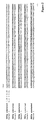
- This weak promoter (SEQ ID NO 5) was obtained from the TEF1 promoter mutant collection (TEFp mutant 2) created by Nevoigt et al. (2007) and is shown together with the TEF1 wild type promoter (SEQ ID NO 11) in Fig. 2 .
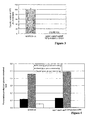
- This strain referred to as gpp1 ⁇ gyp2 ⁇ gpd2 ⁇ TEF1 pmut2 -GPD1 showed a GPD activity which was about 7 % that of the isogenic wild type ( Fig. 3 ).
- the gpp1 ⁇ gyp2 ⁇ gpd2 ⁇ TEF1 pmut 2-GPD1 and the corresponding wild type were used to ferment 2 % glucose in a complex medium (YEPD) under oxygen limiting conditions (see Methods above).
- the engineered strain showed a glycerol yield per gram glucose consumed which was only 14.5 % that of the wild type ( Fig. 4 ).
- the ethanol yield (gram ethanol per gram glucose consumed) was 6.7 % higher than the wild type yield ( Fig. 4 ).
- the final biomass yield (Fig. 4 ) was not influenced by the engineering of the glycerol pathway even though the conditions during the batch fermentation were quasi anaerobic (100 ml culture in 100 ml flasks closed with air-locks).
- the growth of both strains under aerobic and anaerobic conditions was also investigated using YEPD agar plates and there was virtually no difference ( Fig. 5 ).
- the growth in liquid YEPD medium under aerobic conditions was also shown to be the same ( Fig. 6 ). Both strains showed an average growth rate of 0.27 h -1 during exponential growth phase.
- bio-ethanol production including biofuels of the first generation
- substrate carbohydrates such as hydrolysates of starch, cellulose or hemicellulose
- glycerol production is strongly reduced. This is also important because glycerol participates to the fouling of the distillation units in bio-ethanol production process.
Landscapes
- Chemical & Material Sciences (AREA)
- Life Sciences & Earth Sciences (AREA)
- Organic Chemistry (AREA)
- Health & Medical Sciences (AREA)
- Zoology (AREA)
- Engineering & Computer Science (AREA)
- Wood Science & Technology (AREA)
- Genetics & Genomics (AREA)
- Bioinformatics & Cheminformatics (AREA)
- Microbiology (AREA)
- Biotechnology (AREA)
- Biochemistry (AREA)
- General Engineering & Computer Science (AREA)
- General Health & Medical Sciences (AREA)
- Biomedical Technology (AREA)
- Molecular Biology (AREA)
- Medicinal Chemistry (AREA)
- Chemical Kinetics & Catalysis (AREA)
- General Chemical & Material Sciences (AREA)
- Micro-Organisms Or Cultivation Processes Thereof (AREA)
- Preparation Of Compounds By Using Micro-Organisms (AREA)
Claims (11)
- Méthode de modification d'une cellule de levure pour produire de l'éthanol, caractérisée par une réduction de l'activité de la protéine de glycérol-3-phosphate déshydrogénase-1, Gpd1, et une réduction de l'activité de la protéine de glycérol-3-phosphate déshydrogénase-2, Gpd2,
par une réduction, mais pas une suppression, de l'activité de la protéine Gpd1 et une suppression de l'activité de la protéine Gpd2 ; ou
par une suppression de l'activité de la protéine Gpd1 et une réduction, mais pas une suppression, de l'activité de la protéine Gpd2 ; ou
par une réduction, mais pas une suppression, de l'activité de la protéine Gpd1 et de la protéine Gpd2,
où la réduction de l'activité de la protéine Gpd1 et/ou de la protéine Gpd2 est obtenue par une réduction de l'expression du gène GPD1 et/ou du gène GPD2,
caractérisée en ce que l'expression du gène GPD1 et/ou du gène GPD2 est réduite d'au moins 50% par rapport à l'expression dans une cellule de levure de type naturel. - Méthode selon la revendication 1, caractérisée en ce que le gène GPD1 et/ou le gène GPD2 est exprimé par un promoteur lié de manière fonctionnelle au gène GPD1 ou au gène GPD2, où le promoteur occasionne une transcription du promoteur TEF1 lié de manière fonctionnelle au gène GPD1 ou au gène GPD2 inférieure ou égale à 20%.
- Méthode selon la revendication 1 ou 2, caractérisée en ce que le promoteur est un promoteur selon SEQ ID NO 5 ou SEQ ID NO 6.
- Méthode selon la revendication 1 à 3, caractérisée par une réduction additionnelle de l'activité de la protéine glycérol-3-phosphatase-1, Gpp1, et/ou de la protéine glycérol-3-phosphatase-2, Gpp2,
et par la réduction de l'activité de la protéine Gpp1 et la suppression de l'activité de la protéine Gpp2, ou
par l'élimination de l'activité de la protéine Gpp1 et la réduction de l'activité de la protéine Gpp2,
ou
par la réduction de l'activité de la protéine Gpp1 et la réduction de l'activité de la protéine Gpp2, où la réduction de l'activité de la protéine Gpp1 et/ou de la protéine Gpp2 est obtenue par une réduction de l'expression de la protéine Gpp1 et/ou de la protéine Gpp2,
caractérisée en ce que l'expression du gène GPP1 et/ou du gène GPP2 est réduite d'au moins 50% par rapport à l'expression dans une cellule de levure de type naturel. - Méthode selon la revendication 4, caractérisée en ce que le gène GPP1 et/ou le gène GPP2 est exprimé par un promoteur lié de manière fonctionnelle au gène GPP1 ou au gène GPP2, où le promoteur occasionne une transcription du promoteur TEF1 lié de manière fonctionnelle au gène GPP1 ou au gène GPP2 inférieure ou égale à 20%.
- Méthode selon l'une des revendications 4 ou 5, caractérisée en ce que le promoteur est un promoteur selon SEQ ID NO 5 ou SEQ ID NO 6.
- Cellule de levure modifiée dans laquelle l'activité de la protéine Gpd1 et Gpd2 est réduite en comparaison avec une cellule de levure de type naturel,
où l'activité de la protéine Gpd1 est réduite mais pas supprimée et l'activité de la protéine Gpd2 est supprimée ; ou
l'activité de la protéine Gpd1 est supprimée et l'activité de la protéine Gpd2 est réduite mais pas supprimée ; ou
l'activité de la protéine Gpd1 et de la protéine Gpd2 est réduite mais pas supprimée,
où l'activité réduite est obtenue par une expression réduite du gène GPD1 et/ou du gène GPD2,
caractérisée en ce que l'expression du gène GPD1 et/ou du gène GPD2 est réduite d'au moins 50% par rapport à l'expression du gène de type naturel. - Cellule de levure modifiée selon la revendication 7, caractérisée en ce que le gène GPD1 et/ou le gène GPD2 est exprimé par une promoteur lié de manière fonctionnelle au gène GPD1 ou au gène GPD2, où le promoteur est faible par rapport au promoteur dans une cellule de levure de type naturel.
- Cellule de levure modifiée selon la revendication 7 ou 8, caractérisée en ce que le promoteur est un promoteur selon SEQ ID NO 5 ou SEQ ID NO 6.
- Utilisation d'une cellule de levure génétiquement modifiée selon l'une quelconque des revendications 7 à 9 pour produire de l'éthanol.
- Méthode de production d'éthanol comprenant les étapes suivantes :- mise à disposition d'une cellule de levure selon les revendications 7 à 9,- mise à disposition de biomasse,- culture de cellules de levure en présence de la biomasse dans des conditions permettant la production d'éthanol.
Priority Applications (1)
| Application Number | Priority Date | Filing Date | Title |
|---|---|---|---|
| EP08843807.2A EP2222860B8 (fr) | 2007-10-29 | 2008-10-29 | Procédé de modification d'une cellule de levure pour la production d'éthanol |
Applications Claiming Priority (3)
| Application Number | Priority Date | Filing Date | Title |
|---|---|---|---|
| EP07021129A EP2060632A1 (fr) | 2007-10-29 | 2007-10-29 | Procédé pour la modification d'une cellule de levure pour la production d'éthanol |
| EP08843807.2A EP2222860B8 (fr) | 2007-10-29 | 2008-10-29 | Procédé de modification d'une cellule de levure pour la production d'éthanol |
| PCT/IB2008/003672 WO2009056984A1 (fr) | 2007-10-29 | 2008-10-29 | Procédé de modification d'une cellule de levure pour la production d'éthanol |
Publications (3)
| Publication Number | Publication Date |
|---|---|
| EP2222860A1 EP2222860A1 (fr) | 2010-09-01 |
| EP2222860B1 true EP2222860B1 (fr) | 2014-05-07 |
| EP2222860B8 EP2222860B8 (fr) | 2015-09-02 |
Family
ID=39048775
Family Applications (2)
| Application Number | Title | Priority Date | Filing Date |
|---|---|---|---|
| EP07021129A Ceased EP2060632A1 (fr) | 2007-10-29 | 2007-10-29 | Procédé pour la modification d'une cellule de levure pour la production d'éthanol |
| EP08843807.2A Active EP2222860B8 (fr) | 2007-10-29 | 2008-10-29 | Procédé de modification d'une cellule de levure pour la production d'éthanol |
Family Applications Before (1)
| Application Number | Title | Priority Date | Filing Date |
|---|---|---|---|
| EP07021129A Ceased EP2060632A1 (fr) | 2007-10-29 | 2007-10-29 | Procédé pour la modification d'une cellule de levure pour la production d'éthanol |
Country Status (6)
| Country | Link |
|---|---|
| US (2) | US9175270B2 (fr) |
| EP (2) | EP2060632A1 (fr) |
| BR (1) | BRPI0817154B8 (fr) |
| CA (1) | CA2703856A1 (fr) |
| ES (1) | ES2521316T3 (fr) |
| WO (1) | WO2009056984A1 (fr) |
Families Citing this family (60)
| Publication number | Priority date | Publication date | Assignee | Title |
|---|---|---|---|---|
| US8945899B2 (en) | 2007-12-20 | 2015-02-03 | Butamax Advanced Biofuels Llc | Ketol-acid reductoisomerase using NADH |
| EP2134849B1 (fr) | 2007-04-18 | 2013-07-10 | Butamax (TM) Advanced Biofuels LLC | Production fermentative d'isobutanol utilisant des enzymes cétol-acide réductoisomérase hautement actives |
| EP2193202A2 (fr) | 2007-09-21 | 2010-06-09 | BASF Plant Science GmbH | Plantes à rendement amélioré |
| EP2060632A1 (fr) * | 2007-10-29 | 2009-05-20 | Technische Universität Berlin | Procédé pour la modification d'une cellule de levure pour la production d'éthanol |
| EP2277989A1 (fr) | 2009-07-24 | 2011-01-26 | Technische Universiteit Delft | Production d'éthanol dépourvu de glycérol par fermentation |
| WO2011132890A2 (fr) * | 2010-04-19 | 2011-10-27 | 고려대학교 산학협력단 | Transformé pour l'augmentation de la production de bioéthanol, et procédé de production d'éthanol par l'utilisation de ladite souche |
| US9605269B2 (en) * | 2010-05-05 | 2017-03-28 | Lallemand Hungary Liquidity Management Llc | Detoxification of biomass derived acetate via metabolic conversion to ethanol, acetone, isopropanol, or ethyl acetate |
| MX347976B (es) | 2011-03-24 | 2017-05-22 | Butamax(Tm) Advanced Biofuels Llc | Celulas huesped y metodos para producir isobutanol. |
| CN102329742B (zh) * | 2011-09-29 | 2014-06-11 | 浙江大学 | 一株适合浓醪发酵的酿酒酵母菌株及其应用 |
| NZ701099A (en) | 2012-05-11 | 2017-04-28 | Butamax Advanced Biofuels Llc | Ketol-acid reductoisomerase enzymes and methods of use |
| WO2014052670A1 (fr) | 2012-09-26 | 2014-04-03 | Butamax (Tm) Advanced Biofuels Llc | Polypeptides ayant une activité cétol-acide réducto-isomérase |
| US9441250B2 (en) | 2013-03-14 | 2016-09-13 | Butamax Advanced Biofuels Llc | Glycerol 3- phosphate dehydrogenase for butanol production |
| BR112016009416A2 (pt) | 2013-10-28 | 2017-10-03 | Danisco Us Inc | Levedura seca ativa geneticamente modificada de grande escala |
| EP3122876B1 (fr) | 2014-03-28 | 2020-11-25 | Danisco US Inc. | Voie de cellule hôte modifiée pour la production améliorée d'éthanol |
| BR112018002284A2 (pt) | 2015-08-05 | 2018-12-11 | Cargill Inc | método de fermentação para produzir um bioproduto, levedura crabtree negativa geneticamente engenheirada e método para reduzir a produção de glicerol por uma levedura engenheirada |
| CN109072201A (zh) | 2016-04-28 | 2018-12-21 | 丹尼斯科美国公司 | 酵母中的氧化还原平衡 |
| BR112019000046A2 (pt) * | 2016-07-01 | 2019-06-04 | Lallemand Hungary Liquidity Man Llc | alfa-amilases para combinação com glucoamilases para aumentar a sacarificação |
| WO2018089333A1 (fr) | 2016-11-09 | 2018-05-17 | Danisco Us Inc. | Levure à production d'alcool améliorée |
| CN110366594B (zh) | 2016-12-16 | 2023-12-15 | 丹尼斯科美国公司 | 双功能磷酸转酮酶-磷酸转乙酰酶融合多肽 |
| US20190382739A1 (en) | 2017-01-18 | 2019-12-19 | Danisco Us Inc. | Modified yeast cells that overexpress a dna polymerase subunit |
| US20200377559A1 (en) | 2017-03-24 | 2020-12-03 | Danisco Us Inc | Reduction of acetate and glycerol in modified yeast having an exogenous ethanol-producing pathway |
| DK3612626T3 (en) | 2017-04-17 | 2026-02-16 | Danisco Us Inc | Udvalgte acetyl-coa-syntaseenzymer til reduktion af acetatproduktion i gær |
| CN110741014B (zh) | 2017-06-06 | 2024-04-09 | 丹尼斯科美国公司 | 具有改善的醇生产的酵母 |
| JP6879111B2 (ja) * | 2017-08-02 | 2021-06-02 | トヨタ自動車株式会社 | 組換え酵母及びこれを用いたエタノールの製造方法 |
| UY37835A (es) | 2017-08-08 | 2019-03-29 | Danisco Us Inc | Producción incrementada de etanol por levaduras que albergan alelos del activador de transcripción constitutivo mal |
| BR112020004021A2 (pt) | 2017-08-29 | 2020-09-08 | Danisco Us Inc. | levedura modificada que compreende transportadores mediados por atp específicos para glicose |
| WO2019083879A1 (fr) | 2017-10-24 | 2019-05-02 | Danisco Us Inc | Levure avec production d'alcool améliorée |
| CN112041449B (zh) | 2018-03-06 | 2024-07-05 | 丹尼斯科美国公司 | 通过过表达pab1的酵母来降低乙酸生产 |
| US20210047660A1 (en) | 2018-03-06 | 2021-02-18 | Danisco Us Inc. | Compositions and methods for increasing ethanol production by yeast using gcy1 and dak1 |
| US12139704B2 (en) | 2018-03-06 | 2024-11-12 | Danisco Us Inc. | Yeast with improved alcohol production under high dissolved solids conditions |
| WO2019195382A1 (fr) | 2018-04-06 | 2019-10-10 | Danisco Us Inc | Production accrue d'alcool à partir de levure produisant une quantité accrue de protéine hac1 active |
| UY38179A (es) | 2018-04-12 | 2019-11-29 | Danisco Us Inc | Levadura que sobreexpresa proteína fosfatasas asociadas con la vía hog |
| KR102140596B1 (ko) | 2018-04-17 | 2020-08-04 | 에스케이이노베이션 주식회사 | 유기산 내성 효모 유래 신규 프로모터 및 이를 이용한 목적유전자의 발현방법 |
| WO2019226972A1 (fr) | 2018-05-25 | 2019-11-28 | Danisco Us Inc | Surexpression de fumarate réductase conduisant à une vitesse de fermentation accrue dans la levure |
| DK3802784T3 (da) * | 2018-05-30 | 2024-10-28 | Danisco Us Inc | Overekspression af transkriptionsaktivator/-repressor gis1 i gær til forøget ethanolproduktion |
| EP3830282A1 (fr) | 2018-07-27 | 2021-06-09 | Danisco US Inc. | Production accrue d'alcool à partir de levure produisant une quantité accrue de protéine crz1 active |
| WO2020068907A1 (fr) | 2018-09-28 | 2020-04-02 | Danisco Us Inc | Gènes sélectionnés de phosphotransacétylase pour une production accrue d'éthanol dans une levure modifiée |
| WO2020069063A1 (fr) | 2018-09-28 | 2020-04-02 | Danisco Us Inc | Surexpression de gds1 dans de la levure pour augmenter la production d'éthanol et réduire la production d'acétate |
| US20210395756A1 (en) | 2018-09-28 | 2021-12-23 | Danisco Us Inc | Over expression of ribonucleotide reductase inhibitor in yeast for increased ethanol production |
| KR102736070B1 (ko) | 2018-10-08 | 2024-12-02 | 에스케이이노베이션 주식회사 | 알코올 생성이 억제된 재조합 내산성 효모 및 이를 이용한 젖산의 제조방법 |
| EP3908681A1 (fr) | 2019-01-08 | 2021-11-17 | Danisco US Inc. | Levure hybride à production accrue d'éthanol |
| WO2020186224A1 (fr) | 2019-03-14 | 2020-09-17 | Danisco Us Inc | Surexpression du cytochrome b2 dans la levure pour une production accrue d'éthanol |
| WO2020186254A1 (fr) | 2019-03-14 | 2020-09-17 | Danisco Us Inc | Surexpression du transporteur fumarate-succinate dans la levure pour augmenter la production d'éthanol et réduire la production d'acétate |
| WO2020221795A1 (fr) * | 2019-04-30 | 2020-11-05 | Danmarks Tekniske Universitet | Procédé pour la production d'ergothionéine |
| AU2020307380A1 (en) | 2019-06-24 | 2022-01-27 | Danisco Us Inc | Disruption of Cdc42 effectors in yeast for increased alcohol and lysine production |
| AU2020301126A1 (en) | 2019-06-24 | 2022-01-27 | Danisco Us Inc | Modified yeast and method for increasing lysine content in fermentation co-products |
| WO2020263722A1 (fr) | 2019-06-28 | 2020-12-30 | Danisco Us Inc | Cellules de levure modifiées qui surexpriment des protéines endogènes sélectionnées |
| WO2021022140A1 (fr) | 2019-08-01 | 2021-02-04 | Danisco Us Inc | Surexpression de pho13 pour augmenter la production d'éthanol par la levure |
| WO2021022097A1 (fr) | 2019-08-01 | 2021-02-04 | Danisco Us Inc | Surexpression de l'adh5p pour augmenter la production d'éthanol par la levure |
| MX2022002310A (es) | 2019-08-29 | 2022-06-02 | Danisco Us Inc | Expresión de beta-glucosidasa en levadura para producción mejorada de etanol. |
| KR20210041903A (ko) | 2019-10-08 | 2021-04-16 | 에스케이이노베이션 주식회사 | 락테이트 대사 및 알코올 생성이 억제된 재조합 내산성 효모 및 이를 이용한 젖산의 제조방법 |
| EP4065718A1 (fr) | 2019-11-26 | 2022-10-05 | Danisco US Inc. | Réduction de la production d'acétate par une levure surexprimant des polypeptides mig |
| US20230116556A1 (en) | 2020-01-23 | 2023-04-13 | Danisco Us Inc. | Increased ethanol production by overexpression of jid1 in yeast |
| KR20210128742A (ko) * | 2020-04-17 | 2021-10-27 | 에스케이이노베이션 주식회사 | 글리세롤 생성이 억제된 재조합 내산성 효모 및 이를 이용한 젖산의 제조방법 |
| KR20210158676A (ko) | 2020-06-24 | 2021-12-31 | 에스케이이노베이션 주식회사 | 젖산 생산능이 증가된 재조합 내산성 효모 |
| EP4355881A1 (fr) | 2021-05-10 | 2024-04-24 | Danisco US Inc. | Production accrue d'éthanol par surexpression de kgd2 dans la levure |
| AU2022288057A1 (en) | 2021-06-07 | 2023-12-21 | Novozymes A/S | Engineered microorganism for improved ethanol fermentation |
| CN118159649A (zh) | 2021-10-26 | 2024-06-07 | 丹尼斯科美国公司 | 通过rsf2或tda9表达降低的酵母减少产生的乙酸 |
| CN120712342A (zh) | 2022-12-05 | 2025-09-26 | 丹尼斯科美国公司 | 酵母在高溶解固体中增加乙醇生产 |
| CN121039276A (zh) | 2023-03-27 | 2025-11-28 | 丹尼斯科美国公司 | 使用表达来自帽铁形嘉利翁氏菌的RuBisCo的酵母减少发酵甘油和乙酸 |
Family Cites Families (12)
| Publication number | Priority date | Publication date | Assignee | Title |
|---|---|---|---|---|
| US7018829B1 (en) * | 1998-07-10 | 2006-03-28 | Fluxome Sciences A/S | Metabolically engineered microbial cell with an altered metabolite production |
| GB0111275D0 (en) * | 2001-05-09 | 2001-06-27 | Secr Defence | Analytical method and kit |
| US7226735B2 (en) * | 2003-01-21 | 2007-06-05 | Wisconsin Alumni Research Foundation | Xylose-fermenting recombinant yeast strains |
| US7501275B2 (en) * | 2004-10-27 | 2009-03-10 | The United States Of America As Represented By The Secretary Of Agriculture | Yeast transformation system |
| US8110672B2 (en) * | 2005-04-27 | 2012-02-07 | Massachusetts Institute Of Technology | Promoter engineering and genetic control |
| CN101395282A (zh) * | 2006-01-03 | 2009-03-25 | 麻省理工学院 | 启动子改造与遗传控制 |
| WO2007106524A2 (fr) * | 2006-03-13 | 2007-09-20 | Cargill Inc. | Cellules de levure ayant une voie dissociée de phosphate de dihydroxyacetone au glycérol |
| US7741119B2 (en) * | 2006-09-28 | 2010-06-22 | E. I. Du Pont De Nemours And Company | Xylitol synthesis mutant of xylose-utilizing zymomonas for ethanol production |
| US8143023B2 (en) * | 2007-01-26 | 2012-03-27 | Novozymes A/S | Method for methanol independent induction from methanol inducible promoters in Pichia |
| US20100159546A1 (en) * | 2007-03-30 | 2010-06-24 | Aristos Aristidou | Metabolic engineering of yeasts for the production of 1-butanol |
| EP2060632A1 (fr) * | 2007-10-29 | 2009-05-20 | Technische Universität Berlin | Procédé pour la modification d'une cellule de levure pour la production d'éthanol |
| US20100291652A1 (en) * | 2008-08-06 | 2010-11-18 | Tianjin University | Yeast strains and methods of making and using such yeast strains |
-
2007
- 2007-10-29 EP EP07021129A patent/EP2060632A1/fr not_active Ceased
-
2008
- 2008-10-29 ES ES08843807.2T patent/ES2521316T3/es active Active
- 2008-10-29 WO PCT/IB2008/003672 patent/WO2009056984A1/fr not_active Ceased
- 2008-10-29 CA CA2703856A patent/CA2703856A1/fr not_active Abandoned
- 2008-10-29 EP EP08843807.2A patent/EP2222860B8/fr active Active
- 2008-10-29 US US12/740,295 patent/US9175270B2/en active Active
- 2008-10-29 BR BRPI0817154A patent/BRPI0817154B8/pt active IP Right Grant
-
2015
- 2015-09-16 US US14/856,308 patent/US20160153009A1/en not_active Abandoned
Also Published As
| Publication number | Publication date |
|---|---|
| EP2222860B8 (fr) | 2015-09-02 |
| US20160153009A1 (en) | 2016-06-02 |
| US9175270B2 (en) | 2015-11-03 |
| BRPI0817154B1 (pt) | 2018-11-27 |
| US20120295319A1 (en) | 2012-11-22 |
| EP2060632A1 (fr) | 2009-05-20 |
| CA2703856A1 (fr) | 2009-05-07 |
| BRPI0817154B8 (pt) | 2018-12-11 |
| EP2222860A1 (fr) | 2010-09-01 |
| ES2521316T3 (es) | 2014-11-12 |
| BRPI0817154A2 (pt) | 2014-10-07 |
| WO2009056984A1 (fr) | 2009-05-07 |
Similar Documents
| Publication | Publication Date | Title |
|---|---|---|
| EP2222860B1 (fr) | Procédé de modification d'une cellule de levure pour la production d'éthanol | |
| US11203741B2 (en) | Glycerol free ethanol production | |
| US9303253B2 (en) | Metabolic engineering of arabinose-fermenting yeast cells | |
| Wisselink et al. | Engineering of Saccharomyces cerevisiae for efficient anaerobic alcoholic fermentation of L-arabinose | |
| JP5321320B2 (ja) | 発酵能力が向上された酵母及びその利用 | |
| JP2011507532A (ja) | 高収率でイソブタノールを産生する酵母生物 | |
| WO2016188813A1 (fr) | Cellule de levure consommant de l'acétate | |
| US11692187B2 (en) | Xylose isomerases that confer efficient xylose fermentation capability to yeast | |
| US11136600B2 (en) | Eukaryotic cell with increased production of fermentation product | |
| CN101522886B (zh) | 发酵阿拉伯糖的真核细胞的代谢工程改造 | |
| US11414683B2 (en) | Acetic acid consuming strain | |
| KR101351989B1 (ko) | 2,3-부탄다이올 제조용 효모의 제조방법 | |
| CA3045740C (fr) | Production amelioree d'ethanol sans glycerol | |
| US20250320529A1 (en) | Recombinant yeast cell | |
| EP4370689A1 (fr) | Cellule de levure recombinante |
Legal Events
| Date | Code | Title | Description |
|---|---|---|---|
| PUAI | Public reference made under article 153(3) epc to a published international application that has entered the european phase |
Free format text: ORIGINAL CODE: 0009012 |
|
| 17P | Request for examination filed |
Effective date: 20100531 |
|
| AK | Designated contracting states |
Kind code of ref document: A1 Designated state(s): AT BE BG CH CY CZ DE DK EE ES FI FR GB GR HR HU IE IS IT LI LT LU LV MC MT NL NO PL PT RO SE SI SK TR |
|
| AX | Request for extension of the european patent |
Extension state: AL BA MK RS |
|
| RIN1 | Information on inventor provided before grant (corrected) |
Inventor name: HUBMANN, GEORG Inventor name: BIDEAUX, CARINE Inventor name: GUILLOUET, STEPHANE Inventor name: NEVOIGT, ELKE Inventor name: ALFENORE, SANDRINE |
|
| DAX | Request for extension of the european patent (deleted) | ||
| 17Q | First examination report despatched |
Effective date: 20111124 |
|
| RAP1 | Party data changed (applicant data changed or rights of an application transferred) |
Owner name: JACOBS UNIVERSITY BREMEN GMBH |
|
| REG | Reference to a national code |
Ref country code: DE Ref legal event code: R079 Ref document number: 602008032160 Country of ref document: DE Free format text: PREVIOUS MAIN CLASS: C12N0015820000 Ipc: C12N0009000000 |
|
| GRAP | Despatch of communication of intention to grant a patent |
Free format text: ORIGINAL CODE: EPIDOSNIGR1 |
|
| RIC1 | Information provided on ipc code assigned before grant |
Ipc: C12N 9/00 20060101AFI20131213BHEP |
|
| INTG | Intention to grant announced |
Effective date: 20140120 |
|
| GRAS | Grant fee paid |
Free format text: ORIGINAL CODE: EPIDOSNIGR3 |
|
| GRAA | (expected) grant |
Free format text: ORIGINAL CODE: 0009210 |
|
| AK | Designated contracting states |
Kind code of ref document: B1 Designated state(s): AT BE BG CH CY CZ DE DK EE ES FI FR GB GR HR HU IE IS IT LI LT LU LV MC MT NL NO PL PT RO SE SI SK TR |
|
| REG | Reference to a national code |
Ref country code: GB Ref legal event code: FG4D |
|
| REG | Reference to a national code |
Ref country code: AT Ref legal event code: REF Ref document number: 666730 Country of ref document: AT Kind code of ref document: T Effective date: 20140515 |
|
| REG | Reference to a national code |
Ref country code: IE Ref legal event code: FG4D |
|
| REG | Reference to a national code |
Ref country code: DE Ref legal event code: R096 Ref document number: 602008032160 Country of ref document: DE Effective date: 20140618 |
|
| REG | Reference to a national code |
Ref country code: AT Ref legal event code: MK05 Ref document number: 666730 Country of ref document: AT Kind code of ref document: T Effective date: 20140507 |
|
| REG | Reference to a national code |
Ref country code: NL Ref legal event code: RD1H Effective date: 20141002 Ref country code: NL Ref legal event code: VDEP Effective date: 20140507 |
|
| REG | Reference to a national code |
Ref country code: LT Ref legal event code: MG4D |
|
| PG25 | Lapsed in a contracting state [announced via postgrant information from national office to epo] |
Ref country code: LT Free format text: LAPSE BECAUSE OF FAILURE TO SUBMIT A TRANSLATION OF THE DESCRIPTION OR TO PAY THE FEE WITHIN THE PRESCRIBED TIME-LIMIT Effective date: 20140507 Ref country code: CY Free format text: LAPSE BECAUSE OF FAILURE TO SUBMIT A TRANSLATION OF THE DESCRIPTION OR TO PAY THE FEE WITHIN THE PRESCRIBED TIME-LIMIT Effective date: 20140507 Ref country code: FI Free format text: LAPSE BECAUSE OF FAILURE TO SUBMIT A TRANSLATION OF THE DESCRIPTION OR TO PAY THE FEE WITHIN THE PRESCRIBED TIME-LIMIT Effective date: 20140507 Ref country code: GR Free format text: LAPSE BECAUSE OF FAILURE TO SUBMIT A TRANSLATION OF THE DESCRIPTION OR TO PAY THE FEE WITHIN THE PRESCRIBED TIME-LIMIT Effective date: 20140808 Ref country code: IS Free format text: LAPSE BECAUSE OF FAILURE TO SUBMIT A TRANSLATION OF THE DESCRIPTION OR TO PAY THE FEE WITHIN THE PRESCRIBED TIME-LIMIT Effective date: 20140907 Ref country code: NO Free format text: LAPSE BECAUSE OF FAILURE TO SUBMIT A TRANSLATION OF THE DESCRIPTION OR TO PAY THE FEE WITHIN THE PRESCRIBED TIME-LIMIT Effective date: 20140807 |
|
| REG | Reference to a national code |
Ref country code: ES Ref legal event code: NE2A Effective date: 20141103 |
|
| REG | Reference to a national code |
Ref country code: ES Ref legal event code: FG2A Ref document number: 2521316 Country of ref document: ES Kind code of ref document: T3 Effective date: 20141112 |
|
| PG25 | Lapsed in a contracting state [announced via postgrant information from national office to epo] |
Ref country code: SE Free format text: LAPSE BECAUSE OF FAILURE TO SUBMIT A TRANSLATION OF THE DESCRIPTION OR TO PAY THE FEE WITHIN THE PRESCRIBED TIME-LIMIT Effective date: 20140507 Ref country code: AT Free format text: LAPSE BECAUSE OF FAILURE TO SUBMIT A TRANSLATION OF THE DESCRIPTION OR TO PAY THE FEE WITHIN THE PRESCRIBED TIME-LIMIT Effective date: 20140507 Ref country code: HR Free format text: LAPSE BECAUSE OF FAILURE TO SUBMIT A TRANSLATION OF THE DESCRIPTION OR TO PAY THE FEE WITHIN THE PRESCRIBED TIME-LIMIT Effective date: 20140507 Ref country code: LV Free format text: LAPSE BECAUSE OF FAILURE TO SUBMIT A TRANSLATION OF THE DESCRIPTION OR TO PAY THE FEE WITHIN THE PRESCRIBED TIME-LIMIT Effective date: 20140507 Ref country code: PL Free format text: LAPSE BECAUSE OF FAILURE TO SUBMIT A TRANSLATION OF THE DESCRIPTION OR TO PAY THE FEE WITHIN THE PRESCRIBED TIME-LIMIT Effective date: 20140507 Ref country code: ES Free format text: LAPSE BECAUSE OF FAILURE TO SUBMIT A TRANSLATION OF THE DESCRIPTION OR TO PAY THE FEE WITHIN THE PRESCRIBED TIME-LIMIT Effective date: 20140507 |
|
| PG25 | Lapsed in a contracting state [announced via postgrant information from national office to epo] |
Ref country code: PT Free format text: LAPSE BECAUSE OF FAILURE TO SUBMIT A TRANSLATION OF THE DESCRIPTION OR TO PAY THE FEE WITHIN THE PRESCRIBED TIME-LIMIT Effective date: 20140908 |
|
| PG25 | Lapsed in a contracting state [announced via postgrant information from national office to epo] |
Ref country code: EE Free format text: LAPSE BECAUSE OF FAILURE TO SUBMIT A TRANSLATION OF THE DESCRIPTION OR TO PAY THE FEE WITHIN THE PRESCRIBED TIME-LIMIT Effective date: 20140507 Ref country code: SK Free format text: LAPSE BECAUSE OF FAILURE TO SUBMIT A TRANSLATION OF THE DESCRIPTION OR TO PAY THE FEE WITHIN THE PRESCRIBED TIME-LIMIT Effective date: 20140507 Ref country code: BE Free format text: LAPSE BECAUSE OF FAILURE TO SUBMIT A TRANSLATION OF THE DESCRIPTION OR TO PAY THE FEE WITHIN THE PRESCRIBED TIME-LIMIT Effective date: 20140507 Ref country code: DK Free format text: LAPSE BECAUSE OF FAILURE TO SUBMIT A TRANSLATION OF THE DESCRIPTION OR TO PAY THE FEE WITHIN THE PRESCRIBED TIME-LIMIT Effective date: 20140507 Ref country code: CZ Free format text: LAPSE BECAUSE OF FAILURE TO SUBMIT A TRANSLATION OF THE DESCRIPTION OR TO PAY THE FEE WITHIN THE PRESCRIBED TIME-LIMIT Effective date: 20140507 Ref country code: RO Free format text: LAPSE BECAUSE OF FAILURE TO SUBMIT A TRANSLATION OF THE DESCRIPTION OR TO PAY THE FEE WITHIN THE PRESCRIBED TIME-LIMIT Effective date: 20140507 |
|
| PGRI | Patent reinstated in contracting state [announced from national office to epo] |
Ref country code: ES Effective date: 20141103 |
|
| REG | Reference to a national code |
Ref country code: DE Ref legal event code: R097 Ref document number: 602008032160 Country of ref document: DE |
|
| PG25 | Lapsed in a contracting state [announced via postgrant information from national office to epo] |
Ref country code: NL Free format text: LAPSE BECAUSE OF FAILURE TO SUBMIT A TRANSLATION OF THE DESCRIPTION OR TO PAY THE FEE WITHIN THE PRESCRIBED TIME-LIMIT Effective date: 20140507 |
|
| PLBE | No opposition filed within time limit |
Free format text: ORIGINAL CODE: 0009261 |
|
| STAA | Information on the status of an ep patent application or granted ep patent |
Free format text: STATUS: NO OPPOSITION FILED WITHIN TIME LIMIT |
|
| 26N | No opposition filed |
Effective date: 20150210 |
|
| PG25 | Lapsed in a contracting state [announced via postgrant information from national office to epo] |
Ref country code: IT Free format text: LAPSE BECAUSE OF FAILURE TO SUBMIT A TRANSLATION OF THE DESCRIPTION OR TO PAY THE FEE WITHIN THE PRESCRIBED TIME-LIMIT Effective date: 20140507 |
|
| REG | Reference to a national code |
Ref country code: DE Ref legal event code: R097 Ref document number: 602008032160 Country of ref document: DE Effective date: 20150210 |
|
| REG | Reference to a national code |
Ref country code: DE Ref legal event code: R082 Ref document number: 602008032160 Country of ref document: DE Representative=s name: WEIDNER STERN JESCHKE PATENTANWAELTE PARTNERSC, DE Ref country code: DE Ref legal event code: R081 Ref document number: 602008032160 Country of ref document: DE Owner name: DANISCO US INC., PALO ALTO, US Free format text: FORMER OWNER: JACOBS UNIVERSITY BREMEN GMBH, 28759 BREMEN, DE |
|
| PG25 | Lapsed in a contracting state [announced via postgrant information from national office to epo] |
Ref country code: LU Free format text: LAPSE BECAUSE OF FAILURE TO SUBMIT A TRANSLATION OF THE DESCRIPTION OR TO PAY THE FEE WITHIN THE PRESCRIBED TIME-LIMIT Effective date: 20141029 Ref country code: MC Free format text: LAPSE BECAUSE OF FAILURE TO SUBMIT A TRANSLATION OF THE DESCRIPTION OR TO PAY THE FEE WITHIN THE PRESCRIBED TIME-LIMIT Effective date: 20140507 |
|
| REG | Reference to a national code |
Ref country code: CH Ref legal event code: PL |
|
| REG | Reference to a national code |
Ref country code: DE Ref legal event code: R082 Ref document number: 602008032160 Country of ref document: DE Representative=s name: WEIDNER STERN JESCHKE PATENTANWAELTE PARTNERSC, DE Ref country code: DE Ref legal event code: R081 Ref document number: 602008032160 Country of ref document: DE Owner name: DANISCO US INC., PALO ALTO, US Free format text: FORMER OWNER: JACOBS UNIVERSITY BREMEN GGMBH, 28759 BREMEN, DE |
|
| REG | Reference to a national code |
Ref country code: GB Ref legal event code: 732E Free format text: REGISTERED BETWEEN 20150521 AND 20150527 |
|
| REG | Reference to a national code |
Ref country code: DE Ref legal event code: R081 Ref document number: 602008032160 Country of ref document: DE Owner name: DANISCO US INC., PALO ALTO, US Free format text: FORMER OWNER: JACOBS UNIVERSITY BREMEN GGMBH, 28759 BREMEN, DE Effective date: 20150608 Ref country code: DE Ref legal event code: R082 Ref document number: 602008032160 Country of ref document: DE Representative=s name: WEIDNER STERN JESCHKE PATENTANWAELTE PARTNERSC, DE Effective date: 20150608 Ref country code: DE Ref legal event code: R082 Ref document number: 602008032160 Country of ref document: DE Representative=s name: WEIDNER STERN JESCHKE PATENTANWAELTE PARTNERSC, DE Effective date: 20150528 Ref country code: DE Ref legal event code: R081 Ref document number: 602008032160 Country of ref document: DE Owner name: DANISCO US INC., PALO ALTO, US Free format text: FORMER OWNER: JACOBS UNIVERSITY BREMEN GMBH, 28759 BREMEN, DE Effective date: 20150528 |
|
| REG | Reference to a national code |
Ref country code: IE Ref legal event code: MM4A |
|
| PG25 | Lapsed in a contracting state [announced via postgrant information from national office to epo] |
Ref country code: LI Free format text: LAPSE BECAUSE OF NON-PAYMENT OF DUE FEES Effective date: 20141031 Ref country code: CH Free format text: LAPSE BECAUSE OF NON-PAYMENT OF DUE FEES Effective date: 20141031 Ref country code: SI Free format text: LAPSE BECAUSE OF FAILURE TO SUBMIT A TRANSLATION OF THE DESCRIPTION OR TO PAY THE FEE WITHIN THE PRESCRIBED TIME-LIMIT Effective date: 20140507 |
|
| REG | Reference to a national code |
Ref country code: FR Ref legal event code: TP Owner name: DANISCO US INC., US Effective date: 20150907 |
|
| PG25 | Lapsed in a contracting state [announced via postgrant information from national office to epo] |
Ref country code: IE Free format text: LAPSE BECAUSE OF NON-PAYMENT OF DUE FEES Effective date: 20141029 |
|
| PG25 | Lapsed in a contracting state [announced via postgrant information from national office to epo] |
Ref country code: BG Free format text: LAPSE BECAUSE OF FAILURE TO SUBMIT A TRANSLATION OF THE DESCRIPTION OR TO PAY THE FEE WITHIN THE PRESCRIBED TIME-LIMIT Effective date: 20140507 |
|
| PG25 | Lapsed in a contracting state [announced via postgrant information from national office to epo] |
Ref country code: MT Free format text: LAPSE BECAUSE OF FAILURE TO SUBMIT A TRANSLATION OF THE DESCRIPTION OR TO PAY THE FEE WITHIN THE PRESCRIBED TIME-LIMIT Effective date: 20140507 Ref country code: HU Free format text: LAPSE BECAUSE OF FAILURE TO SUBMIT A TRANSLATION OF THE DESCRIPTION OR TO PAY THE FEE WITHIN THE PRESCRIBED TIME-LIMIT; INVALID AB INITIO Effective date: 20081029 Ref country code: TR Free format text: LAPSE BECAUSE OF FAILURE TO SUBMIT A TRANSLATION OF THE DESCRIPTION OR TO PAY THE FEE WITHIN THE PRESCRIBED TIME-LIMIT Effective date: 20140507 |
|
| REG | Reference to a national code |
Ref country code: FR Ref legal event code: PLFP Year of fee payment: 9 |
|
| REG | Reference to a national code |
Ref country code: FR Ref legal event code: PLFP Year of fee payment: 10 |
|
| REG | Reference to a national code |
Ref country code: FR Ref legal event code: PLFP Year of fee payment: 11 |
|
| PGFP | Annual fee paid to national office [announced via postgrant information from national office to epo] |
Ref country code: GB Payment date: 20250904 Year of fee payment: 18 |
|
| PGFP | Annual fee paid to national office [announced via postgrant information from national office to epo] |
Ref country code: FR Payment date: 20250908 Year of fee payment: 18 |
|
| PGFP | Annual fee paid to national office [announced via postgrant information from national office to epo] |
Ref country code: DE Payment date: 20250902 Year of fee payment: 18 |
|
| PGFP | Annual fee paid to national office [announced via postgrant information from national office to epo] |
Ref country code: ES Payment date: 20251104 Year of fee payment: 18 |