EP2242848B1 - Clostridium sartagoformum pour la production de biogaz - Google Patents
Clostridium sartagoformum pour la production de biogaz Download PDFInfo
- Publication number
- EP2242848B1 EP2242848B1 EP08870064A EP08870064A EP2242848B1 EP 2242848 B1 EP2242848 B1 EP 2242848B1 EP 08870064 A EP08870064 A EP 08870064A EP 08870064 A EP08870064 A EP 08870064A EP 2242848 B1 EP2242848 B1 EP 2242848B1
- Authority
- EP
- European Patent Office
- Prior art keywords
- microorganisms
- microorganism
- clostridium sartagoformum
- culture
- fermentation
- Prior art date
- Legal status (The legal status is an assumption and is not a legal conclusion. Google has not performed a legal analysis and makes no representation as to the accuracy of the status listed.)
- Active
Links
Images

Classifications
-
- C—CHEMISTRY; METALLURGY
- C12—BIOCHEMISTRY; BEER; SPIRITS; WINE; VINEGAR; MICROBIOLOGY; ENZYMOLOGY; MUTATION OR GENETIC ENGINEERING
- C12P—FERMENTATION OR ENZYME-USING PROCESSES TO SYNTHESISE A DESIRED CHEMICAL COMPOUND OR COMPOSITION OR TO SEPARATE OPTICAL ISOMERS FROM A RACEMIC MIXTURE
- C12P5/00—Preparation of hydrocarbons or halogenated hydrocarbons
- C12P5/02—Preparation of hydrocarbons or halogenated hydrocarbons acyclic
- C12P5/023—Methane
-
- C—CHEMISTRY; METALLURGY
- C02—TREATMENT OF WATER, WASTE WATER, SEWAGE, OR SLUDGE
- C02F—TREATMENT OF WATER, WASTE WATER, SEWAGE, OR SLUDGE
- C02F11/00—Treatment of sludge; Devices therefor
- C02F11/02—Biological treatment
- C02F11/04—Anaerobic treatment; Production of methane by such processes
-
- C—CHEMISTRY; METALLURGY
- C12—BIOCHEMISTRY; BEER; SPIRITS; WINE; VINEGAR; MICROBIOLOGY; ENZYMOLOGY; MUTATION OR GENETIC ENGINEERING
- C12N—MICROORGANISMS OR ENZYMES; COMPOSITIONS THEREOF; PROPAGATING, PRESERVING, OR MAINTAINING MICROORGANISMS; MUTATION OR GENETIC ENGINEERING; CULTURE MEDIA
- C12N1/00—Microorganisms; Compositions thereof; Processes of propagating, maintaining or preserving microorganisms or compositions thereof; Processes of preparing or isolating a composition containing a microorganism; Culture media therefor
- C12N1/20—Bacteria; Culture media therefor
- C12N1/205—Bacterial isolates
-
- C—CHEMISTRY; METALLURGY
- C12—BIOCHEMISTRY; BEER; SPIRITS; WINE; VINEGAR; MICROBIOLOGY; ENZYMOLOGY; MUTATION OR GENETIC ENGINEERING
- C12R—INDEXING SCHEME ASSOCIATED WITH SUBCLASSES C12C - C12Q, RELATING TO MICROORGANISMS
- C12R2001/00—Microorganisms ; Processes using microorganisms
- C12R2001/01—Bacteria or Actinomycetales ; using bacteria or Actinomycetales
- C12R2001/145—Clostridium
-
- Y—GENERAL TAGGING OF NEW TECHNOLOGICAL DEVELOPMENTS; GENERAL TAGGING OF CROSS-SECTIONAL TECHNOLOGIES SPANNING OVER SEVERAL SECTIONS OF THE IPC; TECHNICAL SUBJECTS COVERED BY FORMER USPC CROSS-REFERENCE ART COLLECTIONS [XRACs] AND DIGESTS
- Y02—TECHNOLOGIES OR APPLICATIONS FOR MITIGATION OR ADAPTATION AGAINST CLIMATE CHANGE
- Y02E—REDUCTION OF GREENHOUSE GAS [GHG] EMISSIONS, RELATED TO ENERGY GENERATION, TRANSMISSION OR DISTRIBUTION
- Y02E50/00—Technologies for the production of fuel of non-fossil origin
- Y02E50/30—Fuel from waste, e.g. synthetic alcohol or diesel
Definitions
- the invention relates to a method for producing biogas from biomass using a microorganism of the species Clostridium sartagoformum.
- Biogas plants produce methane through a microbial decomposition process of organic substances.
- the biogas is produced in a multi-stage process of fermentation or digestion by the activity of anaerobic microorganisms, i. in the absence of air.
- the organic material used as fermentation substrate has a high molecular structure from a chemical point of view, which is degraded in the individual process steps of a biogas plant by metabolic activity of the microorganisms to low molecular weight building blocks.
- the populations of microorganisms which are active in the fermentation of the organic fermentation substrate have hitherto been insufficiently characterized.
- exoenzymes eg cellulases, amylases, proteases, lipases
- soluble fission products For example, fats are broken down into fatty acids, carbohydrates, such as polysaccharides, into oligo- and monosaccharides and proteins into oligopeptides or amino acids.
- exoenzymes eg cellulases, amylases, proteases, lipases
- fats are broken down into fatty acids, carbohydrates, such as polysaccharides, into oligo- and monosaccharides and proteins into oligopeptides or amino acids.
- the gaseous products formed besides consist predominantly of carbon dioxide.
- hydrolysis products eg mono-, disaccharides, di-, oligopeptides, amino acids, glycerol, long chain fatty acids
- short chain fatty or carboxylic acids such as butter -, propionic and acetic acid
- short-chain alcohols such as ethanol
- acetogenesis such as acetic acid but also other substrates such as methanol and formate are converted by methane-forming organisms in the obligate anaerobic methanogenesis to methane and CO 2 .
- the volume loading of a fermenter is the amount of substrate fed to the fermenter, expressed in kilograms of dry organic matter per cubic meter of fermenter volume and per day.
- the amount of biogas produced depends strongly on the volume load of the fermenter, with increasing space load an increasingly larger amount of biogas is generated.
- a high space load makes the process of biogas production increasingly economically viable, but on the other hand leads to an increasing destabilization of the biological processes of fermentation.
- WO 2006/056819 discloses a method for increasing the production of biogas from biomass, characterized in that the biomass is added to a thermophilic, acetogenic and hydrogen-producing microorganism, for example a microorganism of the genus Thermotoga, Thermococcus, Pyrococcus, Clostridium, Ruminococcus or Caldicellulosiruptor.
- WO 2007/052306 discloses a three-stage process for the production of biogas from biomass, in which in the first stage (hydrolysis) a microorganism, for example Bacillus subtilis or Clostridium propionicum, is added in order to accelerate the hydrolysis.
- a microorganism for example Bacillus subtilis or Clostridium propionicum
- WO 2006/119052 discloses a process for the production of hydrogen from biomass by anaerobic fermentation in which the biomass is added after sterilization, a bacterium of the genus Clostridium .
- the object of the invention is to provide a method for the production of biogas, which allows a comparison with the prior art increased space load of the fermentation reactor.
- the present invention provides a method for producing biogas from biomass in a fermentation reactor.
- the biomass is added to a microorganism of the species Clostridium sartagoformum .
- the addition of microorganisms of the species Clostridium sartagoformum to the fermentation substrate can increase both the volume load on the fermenter and significantly increase the amount of biogas formed.
- the addition of a microorganism of the species Clostridium sartagoformum causes an increase in the volume load of a fermenter by more than 50%, without any instability of the fermentation process would occur. Parallel to the increased volume of space, the amount of biogas produced is more than doubled.
- the specific yield of biogas increases, since significantly more of the organic dry matter is degraded than in the absence of addition of microorganisms of the species Clostridium sartagoformum.
- Fermentation for the purposes of the present invention includes both anaerobic and aerobic material conversions by the action of microorganisms that lead to the production of biogas. This explanation of the term “fermentation” is under the heading " Fermentation "in the Römpp Chemistry Lexicon in the 9th, extended edition, published by Georg Thieme Verlag on page 1306 , to which reference is hereby made in full.
- the specific yield of biogas produced is calculated from the amount of biogas produced divided by the amount of organic dry matter.
- the amount of biogas produced depends strongly on the amount of substrate supplied, ie on the amount of organic dry matter, which is given in kilograms of organic dry matter. If instabilities of the fermentation process occur, the specific gas yield decreases.
- inventive addition of microorganisms of the species Clostridium sartagoformum the space load can be increased even beyond the usual level, whereby a significantly increased amount of gas is generated. By the increased degradation, a significantly increased specific gas yield can be achieved with an improved substrate utilization.
- the term "type of microorganisms” is understood to mean the corresponding basic category of biological taxonomy. Types of microorganisms are identified and distinguished by their DNA sequences. In this case, not only microorganisms with a very specific DNA sequence but also, to a certain extent, their genetic variants fall under a certain species. It is known to those skilled in the art which strains of microorganisms fall under the term "species Clostridium sartagoformum” . The prior art discloses the isolation of microorganisms of the species Clostridium sartagoformum, for example, from faeces of babies ( Strong, PL; Lee, A .; J. Pediatr. 1982; 100 (3), pp. 362-365 ). Microorganisms of the species Clostridium sartagoformum are not known in connection with the production of biogas by fermentation of organic substrates.
- a microorganism of the species Clostridium sartagoformum is added in the form of a culture of microorganisms consisting predominantly of a microorganism of the species Clostridium sartagoformum .
- microorganisms of the species Clostridium sartagoformum could be detected only in the smallest traces of less than 10 -4 % of the total number of microorganisms present. Since the amount of microorganisms isolated from their natural occurrence is insufficient for the addition of the microorganisms, it is usually propagated in the form of a culture. In practice, it is found that the addition of the microorganisms to the fermentation substrate of a fermenter is most easily carried out directly in the form of a culture of microorganisms.
- Clostridium sartagoformum can be carried out in the form of a culture suspension, in the form of dry, freeze-dried or moist cell pellets or else in the form of spore suspensions, spore preparations or dry, freeze-dried or moist spore pellets.
- microorganisms of different types of microorganisms in mixed cultures are not a problem for the expert.
- fluorescence-labeled oligosensors specifically the proportion of microorganisms of the species Clostridium sartagoformum be identified in a mixture.
- microorganisms of the species Clostridium sartagoformum in the form of cultures of microorganisms are added to the fermentation substrate, the cultures of microorganisms consisting predominantly of microorganisms of the species Clostridium sartagoformum .
- the proportion of microorganisms of the species Clostridium sartagoformum in the culture can be stated as a percentage.
- Microorganisms of the species Clostridium sartagoformum are in a mixed culture then the predominantly present type of microorganisms, if they have the highest percentage of the different species of microorganisms present in the mixed culture.
- the microorganism Clostridium sartagoformum accounts for at least 1% of the total number of microorganisms present in the culture added to the fermentation substrate. According to further preferred embodiments, the microorganism Clostridium sartagoformum accounts for at least 10% of the total number of microorganisms present in the culture.
- a pure culture of a microorganism of the species Clostridium sartagoformum is added.
- the pure culture of a microorganism comprises the progeny of a single cell, which is isolated by a multi-step process from a mixture of different microorganisms. This multi-step mechanism begins with the separation of a single cell from a cell population and requires that the colony resulting from the cell through growth and cell division also remain separate from other single cells or colonies. By careful separation of a colony, resuspension in liquid and repeated spreading, pure cultures of microorganisms can be selectively obtained.
- the isolation of a pure culture can also be carried out in liquid nutrient media, provided that the desired organism outnumbered in the starting material.
- By serial dilution of the suspension in the nutrient solution it can finally be achieved that only one cell remains in the last dilution stage. This cell then forms the basis for a pure culture.
- This explanation of the term "pure culture” and possible methods for the production of this pure culture are under the keyword “pure culture” in the Work "General Microbiology” by Hans G. Schlegel in the 7th revised edition of 1992, published by Georg Thieme Verlag on page 205 listed, to which reference is hereby incorporated by reference.
- the pure culture obtained in this way is also characterized biochemically by specific metabolic processes and activities, as well as by special growth conditions. Due to the specific metabolic processes and activities, the addition of a pure culture of a fermentative microorganism contribute greatly to improved control of the complex biogas production process.
- a microorganism of the species Clostridium sartagoformum is added as a constituent of at least one immobilized culture of microorganisms. Since the amount of microorganisms isolated from their natural occurrence is insufficient for the addition of the microorganisms, it is usually propagated in the form of a culture. In practice, it has been found that the addition of the microorganisms to the fermentation substrate of a fermenter is most easily carried out in the form of an immobilized culture of microorganisms.
- microorganisms of the species Clostridium sartagoformum are contained in an amount that exceeds their natural occurrence.
- the Clostridium sartagoformum microorganism accounts for at least 1% of the total number of microorganisms present in the immobilized culture.
- the microorganism of the species Clostridium sartagoformum constitutes at least 10% of the total number of microorganisms present in the immobilized culture.
- At least one immobilized pure culture of a microorganism of the species Clostridium sartagoformum is added.
- Gel-forming polymers are preferably used. These have the advantage that bacteria can be taken up or stored within the gel structure. Preferably, those materials are used which dissolve slowly in water or are degraded, so that the release of the microorganism Clostridium sartagoformum takes place over a longer period of time.
- suitable polymers are polyaniline, polypyrrole, polyvinylpyrrolidone, polystyrene, polyvinyl chloride, polyvinyl alcohol, polyethylene, polypropylene, epoxy resins, polyethyleneimines, polysaccharides such as agarose, alginate or cellulose, ethylcellulose, methylcellulose, carboxymethylethylcellulose, cellulose acetates, alkali cellulose sulfate, copolymers of polystyrene and maleic anhydride , Copolymers of styrene and methyl methacrylate, polystyrenesulfonate, polyacrylates and polymethacrylates, polycarbonates, polyesters, silicones, cellulose phthalate, proteins such as gelatin, gum arabic, albumin or fibrinogen, mixtures of gelatin and water glass, gelatin and polyphosphate, gelatin and copolymers of maleic anhydride and methyl vinyl ether, Cellulose acetate butyrate
- Alginates as Immobilisate prove to be particularly advantageous because they do not have a negative influence on the activity of the microorganism Clostridium sartagoformum on the one hand and on the other hand they are slowly degraded by microorganisms. Due to the slow degradation of the alginate immobilizates, the trapped microorganisms of the species Clostridium sartagoformum are gradually released.
- the microorganisms are mixed with a polymer gel and then cured in a suitable hardener solution. For this they are first mixed with a gel solution and then dropped into a hardener solution of suitable height.
- a suitable hardener solution of suitable height.
- timely refers to the period of time which elapses between the addition of new substrate following the addition of the microorganisms. This period of time should be kept as short as possible, which is why the term "timely” also includes a parallel addition of the microorganism Clostridium sartagoformum and the new substrate.
- the said period may also extend to several hours to one or more days.
- the space load in the fermentation reactor can be continuously increased or kept approximately constant by continuous addition of new substrate, the fermentation at all room loads, preferably at a space load of ⁇ 0.5 kg of organic dry matter per m 3 and day [kg oTS / m 3 d ], more preferably at a volume load of ⁇ 4.0 kg oTS / m 3 d and particularly preferably at a volume load of ⁇ 8.0 kg oTS / m 3 d can be performed, which in comparison to the current state of the art of increasing the space load by more than twice as much.
- the space load in the fermentation reactor by continuous addition of Biomass continuously increased is increased.
- the production of biogas from biomass takes place at a volume loading of ⁇ 0.5 kg oTS / m 3 d, particularly preferably ⁇ 4.0 kg oTS / m 3 d and very particularly preferably ⁇ 8.0 kg oTS / m 3 d ,
- the fermentation substrate used can in particular also have a high proportion of solid constituents.
- a hydrolytically active fermentative microorganism of the species Clostridium sartagoformum By adding a hydrolytically active fermentative microorganism of the species Clostridium sartagoformum , these solid constituents are at least partially liquefied. Due to the liquefaction of the fermentation substrate due to the addition of the microorganism Clostridium sartagoformum , thickening of the fermentation material can be prevented and targeted counteracted. Another liquid entry into the fermentation substrate in the form of water or manure during fermentation can be avoided. Thus, there is another advantage in conserving the resource freshwater. Another advantage is the thus obtained obtaining the stirring and pumpability of the substrate. As a result, agitators and pumps are spared and significantly less energy is required for the stirring process.
- the production of biogas from biomass takes place with constant mixing of the fermentation substrate. Due to the constant mixing of the fermentation substrate, the cultures of Clostridium sartagoformum can be better distributed in the fermentation substrate. In addition, the biogas formed can be better removed from the fermentation process.
- the constant mixing of the fermentation substrate also leads to a uniform heat distribution in the fermentation reactor.
- Measurements of the temperature in the fermentation reactor which were carried out at periodic intervals, but also continuously, showed that the fermentation substrate is efficiently fermented in a temperature range of 20 ° C to 80 ° C, preferably at about 40 ° C to 50 ° C. These temperature ranges are therefore preferred.
- the last stage of the fermentation process namely the formation of methane by methanogenic microorganisms, particularly efficient at elevated temperatures.
- all embodiments of the present invention are not limited to single-stage processes for the production of biogas.
- the use of microorganisms of the species Clostridium sartagoformum can also be carried out in two or more stages .
- fermentation substrate and a microorganism of the species Clostridium sartagoformum are added continuously.
- the continuous operation of a fermentation reactor should result in a stable microbial biocenosis to a continuous production of biogas, the exposure of the substrate addition to the fermentation should be reduced as a result of a process disturbance.
- the execution of this fermentation process and the associated processes in a discontinuous operation is conceivable.
- the microorganism of the species Clostridium sartagoformum may be added to the fermentation substrate at regular intervals, for example.
- the addition of the microorganism of the species Clostridium sartagoformum at regular intervals leads to an increase in the armordzelliere and thus to an improved sequence of fermentative processes, such as hydrolysis with a simultaneous improved utilization of the fermentation substrate for fermentation.
- the microorganism of the species Clostridium sartagoformum is added to the fermentation substrate in an amount such that, after addition, the proportion of the microorganism of the species Closfridium sartagoformum is between 10 -4 % and 10% of the total number of microorganisms present in the fermentation substrate accounts.
- the proportion of the microorganism of the species Closfridium sartagoformum is between 10 -4 % and 10% of the total number of microorganisms present in the fermentation substrate accounts.
- an addition of very different amounts of microorganisms may be necessary to achieve the desired effect.
- the microorganism of the species Clostridium sartagoformum is added to the fermentation substrate in an amount such that, after addition, the proportion of the microorganism of the species Clostridium sartagoformum is between 10 -3 % and 1% of the total number of microorganisms present in the fermentation substrate.
- microorganisms of the species Clostridium sartagoformum can be done at any point in the fermentation process, in particular microorganisms of the species Clostridium sartagoformum can also be used for inoculation of fermentation substrates during initial commissioning or recommissioning of a fermenter.
- Such characteristic parameters are not only the amount of biogas produced and the methane content of the biogas produced but also, for example, the hydrogen content of the biogas produced, the pH of the fermentation substrate, the redox potential of the fermentation substrate, the carboxylic acid content of the fermentation substrate, the proportions of various carboxylic acids in the fermentation substrate, the hydrogen content of the fermentation substrate, the proportion of dry matter in the fermentation substrate, the proportion of the organic dry matter in the fermentation substrate, the viscosity of the fermentation substrate and the volume loading of the fermentation reactor.
- the present invention comprises the strain of the microorganism Clostridium sartagoformum SBG1, as deposited under No. DSM 19861.
- the microorganism Clostridium sartagoformum SBG1 was deposited in a pure culture at the German Collection of Microorganisms and Cell Cultures GmbH in Braunschweig according to the Budapest Treaty.
- the name is Clostridium sartagoformum SBG1 with the accession number DSM 19861.
- Bacteria of the species Clostridium sartagoformum can be isolated from the fermentation substrate of a fermenter with the aid of methods known to those skilled in the art.
- a suitable substrate is introduced from a fermenter into a selection medium, cultured for a long time and finally isolated individual colonies of microorganisms from the selection medium.
- microorganisms of the species Clostridium sartagoformum can be selected on the basis of 16S rRNA.
- Bacteria Clostridium sartagoformum SBG1 were isolated from the fermentation substrate of a post-fermenter. For this purpose, nitrogen and carbon dioxide were passed through a liquid selection medium, then Na 2 S was added to the selection medium and autoclaved (20 min. At 121 ° C). Then the one from the Subsequent fermenter obtained biomass introduced into the selection medium and cultured for at least one week at a temperature of at least 30 ° C. A sample obtained from the liquid selection medium was applied to a solid selection medium and subsequently the colonies of microorganisms grown on the solid selection medium were selected. After amplification of the obtained microbial DNA by PCR, a comparison with known DNA sequence could be performed.
- the 16S rRNA sequence SEQ ID NO: 1 comprises 948 nucleotides.
- an uncultivated bacterial clone aaa62b07 was identified with the gene sequence SEQ ID NO: 2.
- a comparison of the sequences reveals that there are a total of 9 exchanges of nucleotides or gaps.
- a match of 99.2% is calculated.
- the present invention also includes microorganisms having a nucleic acid having a nucleotide sequence containing a sequence region having greater than 99.2% sequence identity with the nucleotide sequence of SEQ ID NO: 1.
- microorganisms with a nucleic acid whose nucleotide sequence has at least one sequence region which, compared to the nucleotide sequence SEQ ID No. 1, has a nucleotide exchange only at one position. Also included are all microorganisms whose DNA sequence has at least one sequence region which, compared with the nucleotide sequence SEQ ID No. 1, has only one nucleotide exchange at two positions. In addition, all microorganisms are encompassed whose DNA sequence has at least one sequence region which, compared to the nucleotide sequence SEQ ID No. 1, has only one nucleotide exchange at three positions.
- all microorganisms whose DNA sequence has at least one sequence region which has nucleotide exchanges in four positions relative to the nucleotide sequence SEQ ID No. 1 are also included. Also included are all microorganisms whose DNA sequence has at least one sequence region which has nucleotide exchanges in five positions relative to the nucleotide sequence SEQ ID No. 1. In addition, all microorganisms are encompassed whose DNA sequence has at least one sequence region which has nucleotide exchanges in six positions relative to the nucleotide sequence SEQ ID No. 1.
- microorganisms whose DNA sequence has at least one sequence region which has nucleotide exchanges in seven positions in relation to the nucleotide sequence SEQ ID No. 1 are also included.
- the exchanges of the nucleotides can be present at any position of the DNA sequence.
- the exchanges can be present at arbitrarily far apart positions. If, for example, six nucleotides are exchanged in comparison to the nucleotide sequence SEQ ID No. 1, these six exchanged nucleotides may be adjacent to one another. In this case, a six nucleotide portion of the nucleotide sequence of SEQ ID NO: 1 would be altered. Likewise, however, the six exchanged nucleotides may each be, for example, 100 nucleotides apart. The exchanges can therefore be in any combination.
- the exchanges mentioned may also be in the form of gaps.
- all microorganisms with a nucleic acid whose nucleotide sequence has at least one sequence region in which, compared to the nucleotide sequence SEQ ID No. 1, only one nucleotide is missing at one position.
- all microorganisms are included whose DNA sequence has at least one sequence region in which, compared to the nucleotide sequence SEQ ID No. 1, nucleotides are missing only at three positions.
- all microorganisms whose DNA sequence has at least one sequence region in which the nucleotide sequence SEQ ID No. 1 lacks nucleotides at four positions are also included. Also included are all microorganisms whose DNA sequence has at least one sequence region in which nucleotides are missing at five positions in comparison to the nucleotide sequence SEQ ID No. 1. In addition, all microorganisms are encompassed whose DNA sequence has at least one sequence region in which nucleotides are absent from the nucleotide sequence SEQ ID No. 1 at six positions.
- the nucleotides may be missing at any position of the DNA sequence.
- the gaps may be present at arbitrarily far apart positions. For example, if there are six nucleotides missing from the nucleotide sequence of SEQ ID NO: 1, these six missing nucleotides in the nucleotide sequence SEQ ID NO: 1 may be adjacent to each other. In this case, a six nucleotide portion of the nucleotide sequence SEQ ID NO: 1 would be missing. Likewise, however, the six missing nucleotides in the nucleotide sequence SEQ ID NO. 1 may each be 100 nucleotides apart, for example. The gaps can therefore be present in any combination.
- the present invention also includes a culture of microorganisms suitable for use in a process for the fermentative production of biogas from biomass, wherein in the culture of microorganisms a microorganism Clostridium sartagoformum SBG1 is present as deposited under No. DSM 19861, wherein the microorganism at least 1% of the total number of microorganisms present in the culture.
- the present invention also encompasses a culture of microorganisms suitable for use in a process for the fermentative production of biogas from biomass, wherein in the culture of microorganisms a microorganism is present which has a nucleotide sequence containing a sequence region which is at least 99.2%. Sequence identity with the nucleotide sequence SEQ ID NO. 1, wherein the microorganism constitutes at least 1% of the total number of microorganisms present in the culture.
- the microorganism Clostridium sartagoformum accounts for at least 10%, more preferably at least 50%, of the total number of microorganisms present in the culture.
- a pure culture of microorganisms suitable for use in a process for the fermentative production of biogas from biomass which is a pure culture of the microorganism Clostridium sartagoformum SBG1 as he under the No. DSM 19861 or as characterized above with respect to its nucleotide sequence.
- it is an immobilized culture of microorganisms.
- the FIG. 1 shows measurement results of various characteristic parameters during a fermentation process in a test fermenter with a volume of 150 l under realistic plant conditions.
- the curve provided with the reference numeral 10 shows the time course of the volume load of the fermenter in kilograms of organic dry matter per cubic meter per day (kg oTS / m 3 d) and the curve indicated by the reference numeral 20, the time course of the entire generated biogas in standard liters (gas volume at 273.15 K and 1013 mbar) per day (NI / d).
- Reference numeral 30 denotes the time course of the 6-day moving average of the total biogas produced in [NI / d] and the time course of the theoretical gas production in [NI / d] is marked by the reference numeral 40.
- FIG. 1 It can be seen that in the course of the first 35 days a continuous and stable fermentation process takes place, which is characterized by an increase of the volume load to about 6.5 kg oTS / m 3 d and by a continuously increasing formation of biogas with the space load. From day 36, a deviation of the amount of biogas produced from the theoretical gas production can be observed. Due to an uncontrolled high acid concentration in the fermentation substrate, which in FIG. 2 is shown, the space load by holding the increase in the substrate supply from the day 38 is kept approximately constant. However, as the acid levels continue to remain uncontrollable, no substrate is added on day 67 and day 76 and substrate supply is fully suspended from day 78. It was found that a maximum volume load of 5.5 kg oTS / m s d could be achieved. At a higher space load due to the collapse of the fermentation process no stable operation is possible.
- FIG. 2 shows the time-dependent evolution of the concentrations of characteristic carboxylic acids during the already associated with FIG. 1 explained fermentation process. Shown are the time course of the pH (curve indicated at 60), the acetic acid equivalent for the determination of the volatile fatty acids (curve indicated at 70), the acetic acid concentration (at 80) and the propionic acid concentration (at 90). The acid concentrations are given in milligrams per liter of fermentation substrate (mg / l).
- the determination of volatile fatty acids as a sum parameter in the fermentation substrate was carried out by steam distillation of a fermentation substrate acidified with phosphoric acid. The distillate was then treated with sodium hydroxide against Titrated phenolphthalein. Alternatively, or to distinguish the individual carboxylic acids and a gas chromatographic determination is possible.
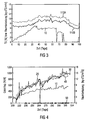
- FIG. 3 shows the dry matter content of the fermenter contents as a function of the volume load during the already associated with the Figures 1 and 2 explained fermentation process. Shown is the time course of the space load in [kg oTS / m 3 d] (curve designated by the reference numeral 10), the percentage dry matter content (curve designated by the reference numeral 110A) and the percentage of the organic dry substance (indicated by the reference numeral 110B curve ).
- the percentage of dry matter indicates the total mass of organic and inorganic substances such as sand.
- FIG. 3 can be seen that with the in FIG. 2 the increase in the acid concentration on day 36 as well as the percentage of dry matter content and the percentage of dry organic matter increase.
- organic dry matter 110B accumulates, which can no longer be sufficiently fermented. Only with the suspension of the substrate supply from day 78 to recover the biological processes, so that the organic dry matter again fermented, as can be seen from the decrease in the proportion of dry matter 110B.
- Clostridium sartagoformum SBG1 bacteria were successfully isolated from the fermentation substrate of a post-fermenter. The deposit of the organism was carried out in a pure culture at the German Collection of Microorganisms and Cell Cultures GmbH according to the Budapest Treaty (Clostridium sartagoformum SBG1 with the accession number DSM 19861).
- the microorganisms were isolated using a selection medium containing carboxymethylcellulose as the sole carbon source.
- Carboxymethylcellulose is very similar to the cellulose contained in fermentation substrates of biogas plants and also has an improved solubility in an aqueous medium by linking the hydroxyl groups with carboxymethyl groups (-CH 2 -COOH-).
- the medium used for the selection of Clostridium sartagoformum SBG1 was gassed with N 2 and CO 2 , so that the selection could be carried out under anaerobic conditions. Contained residual oxygen was subsequently reduced by means of 0.5 g / l Na 2 S.
- the selection medium was then inoculated with the supernatant of material from a post-fermenter. After one week of cultivation at 40 ° C, single rods were observed by microscopic analysis. Further selection of the liquid cultures was made by smearing on anaerobic carboxymethylcellulose plates. The cell material of the grown colonies was used to amplify the microbial DNA by the Colony PCR method according to a standard program. After the sequence analysis of the colonies, the phylogenetic comparison of the sequence data generated therefrom by means of BLAST program (basic local alignment search tool) of the database www.ncbi.nlm.nih.gov that the resulting sequence can be assigned to the organism Clostridium sartagoformum as the nearest relative ,
- Clostridium sartagoformum SBG1 showed that the addition to the highly viscous, viscous carboxymethylcellulose-containing selection medium leads to a successive liquefaction of the medium.
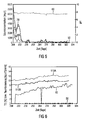
- the FIG. 4 shows measurement results of various characteristic parameters during a fermentation process in a pilot plant among those associated with the FIGS. 1 to 3 described plant conditions.
- the curve provided with the reference numeral 10 shows the time course of the volume load of the fermenter in kilograms of organic dry matter per cubic meter per day (kg oTS / m 3 d) and the curve indicated by the reference numeral 20, the time course of the entire generated biogas in standard liters (gas volume at 273.15 K and 1013 mbar) per day (NI / d).
- Reference numeral 30 denotes the time course of the 6-day moving average of the total biogas produced in [NI / d] and the time course of the theoretical gas production in [NI / d] is marked by the reference numeral 40.
- Clostridium sartagoformum added to the fermentation substrate.
- the times of addition of Clostridium sartagoformum SBG1 are indicated by triangles marked with reference numeral 50 on the X-axis.
- a pure culture of Clostridium sartagoformum was used.
- mixed cultures with a proportion of Clostridium sartagoformum can also be used.
- the first use of a pure culture of Clostridium sartagoformum SBG1 was on day 235.
- the fermenter was operated at a volume of about 4.5 kg of dry organic matter / m 3 and day.
- the cell mass from 1 liter of a preculture of Clostridium sartagoformum SBG1, which had been incubated for 5 days at a temperature of about 40 ° C was used.
- the cell count of this preculture had a cell density of about 2.0 ⁇ 10 8 cells / ml with a proportion of living cells of more than 90%.
- FIG. 5 shows the time-dependent evolution of the concentrations of characteristic carboxylic acids during the already associated with FIG. 4 described fermentation process. Shown is the time course of the pH (curve marked with the reference numeral 60), the acetic acid equivalent for the determination of the volatile fatty acids in [mg / l], marked with the reference numeral 70, the acetic acid concentration in [mg / l] (with the reference numeral 80 marked curve) and the propionic acid concentration in [mg / l] (indicated by the reference numeral 90 curve).
- FIG. 5 It can be seen that the pH remained constant during the fermentation process and was in the neutral to slightly alkaline medium between pH 7 and 8. Already at the beginning of the fermentation process, a drastic drop in the concentration of the acetic acid equivalent, the acetic acid concentration and the propionic acid concentration was evident. Overall, the fatty acid concentration remained permanently low and accumulation of longer-chain fatty acids could not be observed.
- FIG. 6 shows the dry matter content of the fermenter content and the room load during the already associated with the FIGS. 4 and 5 explained fermentation process. Shown is the time course of the space load in [kg oTS / m 3 d] (curve designated by the reference numeral 10), the percentage dry matter content (curve designated by the reference numeral 110A) and the percentage of the organic dry substance (indicated by the reference numeral 110B curve ).
- FIGS. 4 to 6 the positive effect of the addition of the hydrolytically active, fermentative microorganism Clostridium sartagoformum SBG1 on the hydrolysis of organic dry matter.
- the volume load of a fermenter can be increased from about 5.5 kg oTS / m 3 d to about 8.5 kg oTS / m 3 d under otherwise identical conditions, ie by more than 50%, without causing an instability even hint at the fermentation process.
- Parallel to the increased volume of space, the amount of biogas produced is more than doubled.
Landscapes
- Chemical & Material Sciences (AREA)
- Engineering & Computer Science (AREA)
- Life Sciences & Earth Sciences (AREA)
- Organic Chemistry (AREA)
- Health & Medical Sciences (AREA)
- Wood Science & Technology (AREA)
- Zoology (AREA)
- Biotechnology (AREA)
- Genetics & Genomics (AREA)
- Bioinformatics & Cheminformatics (AREA)
- General Health & Medical Sciences (AREA)
- Biochemistry (AREA)
- Microbiology (AREA)
- General Engineering & Computer Science (AREA)
- General Chemical & Material Sciences (AREA)
- Chemical Kinetics & Catalysis (AREA)
- Environmental & Geological Engineering (AREA)
- Molecular Biology (AREA)
- Hydrology & Water Resources (AREA)
- Oil, Petroleum & Natural Gas (AREA)
- Water Supply & Treatment (AREA)
- Medicinal Chemistry (AREA)
- Tropical Medicine & Parasitology (AREA)
- Virology (AREA)
- Biomedical Technology (AREA)
- Micro-Organisms Or Cultivation Processes Thereof (AREA)
- Preparation Of Compounds By Using Micro-Organisms (AREA)
- Processing Of Solid Wastes (AREA)
- Apparatus Associated With Microorganisms And Enzymes (AREA)
Claims (15)
- Procédé de production de biogaz à partir de biomasse dans un réacteur de fermentation, caractérisé en ce qu'un microorganisme de l'espèce Clostridium sartagoformum est ajouté à la biomasse sous la forme d'une culture de microorganismes, le microorganisme de l'espèce Clostridium sartagoformum constituant au moins 1% du nombre total des microorganismes présents dans la culture.
- Procédé selon la revendication 1, caractérisé en ce que le microorganisme de l'espèce Clostridium sartagoformum constitue au moins 10% du nombre total des microorganismes présents dans la culture de microorganismes.
- Procédé selon l'une des revendications précédentes, caractérisé en ce qu'un bouillon de culture du microorganisme de l'espèce Clostridium sartagoformum est utilisé.
- Procédé selon l'une des revendications précédentes, caractérisé en ce que le microorganisme de l'espèce Clostridium sartagoformum est ajouté à la biomasse en tant que constituant d'au moins une culture immobilisée de microorganismes.
- Procédé selon l'une des revendications précédentes, caractérisé en ce qu'au moment de l'ajout du microorganisme de l'espèce Clostridium sartagoformum, de la biomasse supplémentaire est ajoutée dans le réacteur de fermentation, l'occupation d'espace dans le réacteur de fermentation étant continuellement augmentée par l'ajout continuel de biomasse.
- Procédé selon l'une des revendications précédentes, caractérisé en ce que la production de biogaz à partir de la biomasse est effectuée avec une occupation d'espace supérieure ou égale à 0,5 kg d'oTS/m3d, de préférence supérieure ou égale à 4,0 kg d'oTS/m3d, de façon particulièrement préférée supérieure ou égale à 8,0 kg d'oTS/m3d.
- Procédé selon l'une des revendications précédentes, caractérisé en ce que le microorganisme de l'espèce Clostridium sartagoformum est ajouté au substrat de fermentation en une quantité telle qu'après ajout de la proportion de microorganisme de l'espèce Clostridium sartagoformum, il représente entre 10-4% et 10% du nombre total des microorganismes présents dans le substrat de fermentation.
- Procédé selon la revendication 7, caractérisé en ce que le microorganisme de l'espèce Clostridium sartagoformum est ajouté au substrat de fermentation en une quantité telle qu'après ajout de la proportion de microorganisme de l'espèce Clostridium sartagoformum, il représente entre 10-3% et 1% du nombre total des microorganismes présents dans le substrat de fermentation.
- Souche du microorganisme Clostridium sartagoformum SBG1, déposée auprès de la DSMZ sous le numéro 19861.
- Microorganisme ayant un acide nucléique présentant une séquence de nucléotides, caractérisé en ce que la séquence de nucléotides contient un domaine de séquence qui présente plus de 99,2% d'identité de séquence avec la séquence de nucléotides SEQ ID n°1.
- Culture de microorganismes appropriée pour une utilisation dans un procédé de production par fermentation de biogaz à partir de biomasse, caractérisée en ce qu'un microorganisme Clostridium sartagoformum selon la revendication 9 ou 10 est présent dans la culture de microorganismes, le microorganisme Clostridium sartagoformum constituant au moins 1% du nombre total des microorganismes présents dans la culture.
- Culture de microorganismes selon la revendication 11, caractérisée en ce que le microorganisme Clostridium sartagoformum constitue au moins 10% du nombre total des microorganismes présents dans la culture.
- Culture de microorganismes selon la revendication 12, caractérisée en ce que le microorganisme Clostridium sartagoformum constitue au moins 50% du nombre total des microorganismes présents dans la culture.
- Culture de microorganismes selon la revendication 13, caractérisée en ce qu'il s'agit d'un bouillon de culture du microorganisme Clostridium sartagoformum.
- Culture de microorganismes selon l'une au moins des revendications 11 à 14, caractérisée en ce qu'il s'agit d'une culture immobilisée de microorganismes.
Priority Applications (2)
| Application Number | Priority Date | Filing Date | Title |
|---|---|---|---|
| PL08870064T PL2242848T3 (pl) | 2008-01-10 | 2008-12-08 | Clostridium sartagoformum do wytwarzania biogazu |
| SI200830307T SI2242848T1 (sl) | 2008-01-10 | 2008-12-08 | Clostridium sartagoformum za generacijo bioplina |
Applications Claiming Priority (2)
| Application Number | Priority Date | Filing Date | Title |
|---|---|---|---|
| DE102008003805 | 2008-01-10 | ||
| PCT/DE2008/075014 WO2009086810A2 (fr) | 2008-01-10 | 2008-12-08 | Clostridium sartagoformum pour la production de biogaz |
Publications (2)
| Publication Number | Publication Date |
|---|---|
| EP2242848A2 EP2242848A2 (fr) | 2010-10-27 |
| EP2242848B1 true EP2242848B1 (fr) | 2011-04-13 |
Family
ID=40786029
Family Applications (1)
| Application Number | Title | Priority Date | Filing Date |
|---|---|---|---|
| EP08870064A Active EP2242848B1 (fr) | 2008-01-10 | 2008-12-08 | Clostridium sartagoformum pour la production de biogaz |
Country Status (13)
| Country | Link |
|---|---|
| US (1) | US20110207194A1 (fr) |
| EP (1) | EP2242848B1 (fr) |
| JP (1) | JP5469092B2 (fr) |
| CN (1) | CN101918568B (fr) |
| AT (1) | ATE505557T1 (fr) |
| AU (1) | AU2008346589B2 (fr) |
| CA (1) | CA2710645C (fr) |
| DE (2) | DE502008003233D1 (fr) |
| DK (1) | DK2242848T3 (fr) |
| HR (1) | HRP20110366T1 (fr) |
| PL (1) | PL2242848T3 (fr) |
| SI (1) | SI2242848T1 (fr) |
| WO (1) | WO2009086810A2 (fr) |
Families Citing this family (5)
| Publication number | Priority date | Publication date | Assignee | Title |
|---|---|---|---|---|
| DE102009003587A1 (de) * | 2009-03-07 | 2010-09-09 | Schmack Biogas Gmbh | Mikroorganismen zur Verflüssigung von Biomasse |
| DE102010043779A1 (de) | 2010-11-11 | 2012-05-16 | Hochschule Merseburg | Verfahren zur Prozessintensivierung einer Biogasanlage, insbesondere zur Erhöhung der Raumbelastung |
| EP3447142A1 (fr) * | 2017-08-25 | 2019-02-27 | Clayton Hall Farm Biogas Products Ltd. | Procédé amélioré d'hydrolyse de biomasse |
| DE102018002883A1 (de) | 2018-04-10 | 2019-10-10 | Christine Apelt | Verfahren zur batchweisen Nutzung von voll durchmischbaren Rührapparaten für die Methanfermentation |
| EP4484564A1 (fr) | 2023-06-27 | 2025-01-01 | OQ Chemicals GmbH | Procédé pour augmenter le rendement de biogaz de fermentations anaérobies et composition d'acides monocarboxyliques ramifiés à chaîne courte |
Family Cites Families (12)
| Publication number | Priority date | Publication date | Assignee | Title |
|---|---|---|---|---|
| JPS60122096A (ja) * | 1983-12-01 | 1985-06-29 | Matsushita Electric Ind Co Ltd | メタン醗酵法 |
| CA2258254A1 (fr) * | 1998-12-23 | 2000-06-23 | Andre Balu | Usine de traitement industriel des dechets domestiques et des boues organiques par le recyclage des produits valorisables et par la production acceleree de gaz biologique (le biogaz) et d'un amendement organique (le digestat) generes par la fermentation anaerobie mesophile des matieres organiques |
| JP4401187B2 (ja) * | 2004-02-16 | 2010-01-20 | サッポロビール株式会社 | バイオガスの製造方法 |
| JP2005270046A (ja) * | 2004-03-26 | 2005-10-06 | Mie Tlo Co Ltd | 水素産生用発酵装置および水素産生方法 |
| JP2006110495A (ja) * | 2004-10-15 | 2006-04-27 | Nishihara Environment Technology Inc | 水素醗酵装置 |
| HUP0402444A2 (en) * | 2004-11-26 | 2006-11-28 | Univ Szegedi | Process for enhancing the biogas production of thermophyl anaerobic fermenter |
| JP2006223962A (ja) * | 2005-02-16 | 2006-08-31 | Asahi Organic Chem Ind Co Ltd | 微生物による水素生産を伴う有機性廃棄物の処理方法 |
| JP2006255580A (ja) * | 2005-03-17 | 2006-09-28 | Mitsui Eng & Shipbuild Co Ltd | 発酵液のアンモニア濃度低減装置および方法 |
| WO2006119052A2 (fr) * | 2005-05-03 | 2006-11-09 | Anaerobe Systems | Production anaerobie d'hydrogene et d'autres produits chimiques |
| JP2006314920A (ja) * | 2005-05-12 | 2006-11-24 | Takuma Co Ltd | バイオマスからのエネルギー回収方法 |
| CN100500858C (zh) * | 2005-08-31 | 2009-06-17 | 云南师范大学 | 应用木聚糖酶提高沼气发酵产气率的方法 |
| WO2007052306A2 (fr) * | 2005-09-05 | 2007-05-10 | Gangotree Resource Developers Pvt. Ltd. | Processus de biomethanation a trois phase |
-
2008
- 2008-12-08 DE DE502008003233T patent/DE502008003233D1/de active Active
- 2008-12-08 CA CA2710645A patent/CA2710645C/fr not_active Expired - Fee Related
- 2008-12-08 US US12/735,374 patent/US20110207194A1/en not_active Abandoned
- 2008-12-08 AT AT08870064T patent/ATE505557T1/de active
- 2008-12-08 SI SI200830307T patent/SI2242848T1/sl unknown
- 2008-12-08 JP JP2010541688A patent/JP5469092B2/ja not_active Expired - Fee Related
- 2008-12-08 DE DE102008055490A patent/DE102008055490A1/de not_active Withdrawn
- 2008-12-08 HR HR20110366T patent/HRP20110366T1/hr unknown
- 2008-12-08 EP EP08870064A patent/EP2242848B1/fr active Active
- 2008-12-08 DK DK08870064.6T patent/DK2242848T3/da active
- 2008-12-08 WO PCT/DE2008/075014 patent/WO2009086810A2/fr not_active Ceased
- 2008-12-08 PL PL08870064T patent/PL2242848T3/pl unknown
- 2008-12-08 CN CN2008801241050A patent/CN101918568B/zh not_active Expired - Fee Related
- 2008-12-08 AU AU2008346589A patent/AU2008346589B2/en not_active Ceased
Also Published As
| Publication number | Publication date |
|---|---|
| ATE505557T1 (de) | 2011-04-15 |
| CA2710645C (fr) | 2014-10-28 |
| CN101918568A (zh) | 2010-12-15 |
| HRP20110366T1 (hr) | 2011-06-30 |
| PL2242848T3 (pl) | 2011-09-30 |
| WO2009086810A2 (fr) | 2009-07-16 |
| CN101918568B (zh) | 2013-06-05 |
| DK2242848T3 (da) | 2011-07-25 |
| JP5469092B2 (ja) | 2014-04-09 |
| SI2242848T1 (sl) | 2011-09-30 |
| DE502008003233D1 (de) | 2011-05-26 |
| US20110207194A1 (en) | 2011-08-25 |
| CA2710645A1 (fr) | 2009-07-16 |
| DE102008055490A1 (de) | 2009-07-23 |
| JP2011509086A (ja) | 2011-03-24 |
| AU2008346589A1 (en) | 2009-07-16 |
| EP2242848A2 (fr) | 2010-10-27 |
| WO2009086810A3 (fr) | 2009-10-15 |
| AU2008346589B2 (en) | 2011-06-16 |
Similar Documents
| Publication | Publication Date | Title |
|---|---|---|
| EP2352835B1 (fr) | Clostridium sporosphaeroides pour la production de biogaz à partir de la biomasse | |
| JP5916200B2 (ja) | リグノセルロース系バイオマスを分解するための組成物及び方法 | |
| EP1473279A1 (fr) | Appareil et procédé pour la digestion anaérobie de biomasse et la production de biogaz | |
| EP2242848B1 (fr) | Clostridium sartagoformum pour la production de biogaz | |
| EP2251414A1 (fr) | Bactérie métabolique haute performance | |
| WO2009076947A2 (fr) | Procédé de production de biogaz | |
| US4351905A (en) | Horizontal fermenter | |
| DE102009003780B4 (de) | Methanogene Mikroorganismen zur Erzeugung von Biogas | |
| WO2009086811A2 (fr) | Paenibacillus macerans pour la production de biogaz | |
| WO2009086812A2 (fr) | Clostridium sporosphaeroides pour la production de biogaz | |
| DE102010033442A1 (de) | Verfahren zur Aufkonzentration von Mikroorganismen in wässrigen Substraten | |
| WO2010072220A1 (fr) | Paenibacillus macerans pour traiter de la biomasse | |
| DE102005012367A1 (de) | Verfahren zur fermentativen Erzeugung von Bio-Wasserstoff und Bio-Methan aus biogenen Roh- und Reststoffen | |
| DE102011015611B4 (de) | Verfahren zur Erzeugung von Biogas aus organischen Substraten | |
| DE102009026114A1 (de) | Mikroorganismen zur Behandlung von Biomasse | |
| EP3017052B1 (fr) | Procédé d'initialisation du processus de fermentation dans des installations de production de biogaz | |
| AT526749B1 (de) | Gekoppelte Gasfermentation | |
| WO2010095975A2 (fr) | Procédé de régulation du rapport de solvants organiques pendant une biosynthèse | |
| WO2010102618A2 (fr) | Micro-organismes destinés à fluidifier la biomasse | |
| TAKEDA et al. | Bacterial Composition of floes and Aqueous Phase in a Methanogenic Digester | |
| EP4484564A1 (fr) | Procédé pour augmenter le rendement de biogaz de fermentations anaérobies et composition d'acides monocarboxyliques ramifiés à chaîne courte | |
| AT520996A1 (de) | Verfahren zum Mutieren von Cyanobakterien | |
| Gayh et al. | Optimising biological desulphurisation with the addition of humic substances | |
| Goma et al. | reduction of sludge production | |
| DD210553A3 (de) | Verfahren zur kontinuierlichen kultivierung von mikroorganismen |
Legal Events
| Date | Code | Title | Description |
|---|---|---|---|
| PUAI | Public reference made under article 153(3) epc to a published international application that has entered the european phase |
Free format text: ORIGINAL CODE: 0009012 |
|
| 17P | Request for examination filed |
Effective date: 20100810 |
|
| AK | Designated contracting states |
Kind code of ref document: A2 Designated state(s): AT BE BG CH CY CZ DE DK EE ES FI FR GB GR HR HU IE IS IT LI LT LU LV MC MT NL NO PL PT RO SE SI SK TR |
|
| RIN1 | Information on inventor provided before grant (corrected) |
Inventor name: VATER, DANIEL Inventor name: DUCHOW, VERA Inventor name: REUTER, MONIKA |
|
| RAP1 | Party data changed (applicant data changed or rights of an application transferred) |
Owner name: SCHMACK BIOGAS GMBH |
|
| GRAP | Despatch of communication of intention to grant a patent |
Free format text: ORIGINAL CODE: EPIDOSNIGR1 |
|
| RIC1 | Information provided on ipc code assigned before grant |
Ipc: C02F 11/04 20060101ALN20101124BHEP Ipc: C12P 5/02 20060101AFI20101124BHEP Ipc: C12R 1/145 20060101ALI20101124BHEP |
|
| RTI1 | Title (correction) |
Free format text: CLOSTRIDIUM SARTAGOFORMUM FOR THE GENERATION OF BIOGAS |
|
| DAX | Request for extension of the european patent (deleted) | ||
| GRAS | Grant fee paid |
Free format text: ORIGINAL CODE: EPIDOSNIGR3 |
|
| GRAA | (expected) grant |
Free format text: ORIGINAL CODE: 0009210 |
|
| AK | Designated contracting states |
Kind code of ref document: B1 Designated state(s): AT BE BG CH CY CZ DE DK EE ES FI FR GB GR HR HU IE IS IT LI LT LU LV MC MT NL NO PL PT RO SE SI SK TR |
|
| REG | Reference to a national code |
Ref country code: GB Ref legal event code: FG4D Free format text: NOT ENGLISH |
|
| REG | Reference to a national code |
Ref country code: CH Ref legal event code: EP |
|
| REG | Reference to a national code |
Ref country code: IE Ref legal event code: FG4D Free format text: LANGUAGE OF EP DOCUMENT: GERMAN |
|
| REG | Reference to a national code |
Ref country code: HR Ref legal event code: TUEP Ref document number: P20110366 Country of ref document: HR |
|
| REF | Corresponds to: |
Ref document number: 502008003233 Country of ref document: DE Date of ref document: 20110526 Kind code of ref document: P |
|
| REG | Reference to a national code |
Ref country code: DE Ref legal event code: R096 Ref document number: 502008003233 Country of ref document: DE Effective date: 20110526 |
|
| REG | Reference to a national code |
Ref country code: NL Ref legal event code: T3 |
|
| REG | Reference to a national code |
Ref country code: HR Ref legal event code: T1PR Ref document number: P20110366 Country of ref document: HR |
|
| REG | Reference to a national code |
Ref country code: DK Ref legal event code: T3 |
|
| REG | Reference to a national code |
Ref country code: PL Ref legal event code: T3 |
|
| PG25 | Lapsed in a contracting state [announced via postgrant information from national office to epo] |
Ref country code: NO Free format text: LAPSE BECAUSE OF FAILURE TO SUBMIT A TRANSLATION OF THE DESCRIPTION OR TO PAY THE FEE WITHIN THE PRESCRIBED TIME-LIMIT Effective date: 20110713 Ref country code: PT Free format text: LAPSE BECAUSE OF FAILURE TO SUBMIT A TRANSLATION OF THE DESCRIPTION OR TO PAY THE FEE WITHIN THE PRESCRIBED TIME-LIMIT Effective date: 20110816 Ref country code: SE Free format text: LAPSE BECAUSE OF FAILURE TO SUBMIT A TRANSLATION OF THE DESCRIPTION OR TO PAY THE FEE WITHIN THE PRESCRIBED TIME-LIMIT Effective date: 20110413 |
|
| PG25 | Lapsed in a contracting state [announced via postgrant information from national office to epo] |
Ref country code: CY Free format text: LAPSE BECAUSE OF FAILURE TO SUBMIT A TRANSLATION OF THE DESCRIPTION OR TO PAY THE FEE WITHIN THE PRESCRIBED TIME-LIMIT Effective date: 20110413 Ref country code: FI Free format text: LAPSE BECAUSE OF FAILURE TO SUBMIT A TRANSLATION OF THE DESCRIPTION OR TO PAY THE FEE WITHIN THE PRESCRIBED TIME-LIMIT Effective date: 20110413 Ref country code: GR Free format text: LAPSE BECAUSE OF FAILURE TO SUBMIT A TRANSLATION OF THE DESCRIPTION OR TO PAY THE FEE WITHIN THE PRESCRIBED TIME-LIMIT Effective date: 20110714 Ref country code: IS Free format text: LAPSE BECAUSE OF FAILURE TO SUBMIT A TRANSLATION OF THE DESCRIPTION OR TO PAY THE FEE WITHIN THE PRESCRIBED TIME-LIMIT Effective date: 20110813 Ref country code: ES Free format text: LAPSE BECAUSE OF FAILURE TO SUBMIT A TRANSLATION OF THE DESCRIPTION OR TO PAY THE FEE WITHIN THE PRESCRIBED TIME-LIMIT Effective date: 20110724 |
|
| PLBI | Opposition filed |
Free format text: ORIGINAL CODE: 0009260 |
|
| REG | Reference to a national code |
Ref country code: HU Ref legal event code: AG4A Ref document number: E011982 Country of ref document: HU |
|
| PG25 | Lapsed in a contracting state [announced via postgrant information from national office to epo] |
Ref country code: EE Free format text: LAPSE BECAUSE OF FAILURE TO SUBMIT A TRANSLATION OF THE DESCRIPTION OR TO PAY THE FEE WITHIN THE PRESCRIBED TIME-LIMIT Effective date: 20110413 |
|
| PLAX | Notice of opposition and request to file observation + time limit sent |
Free format text: ORIGINAL CODE: EPIDOSNOBS2 |
|
| 26 | Opposition filed |
Opponent name: ISF GMBH Effective date: 20120113 |
|
| PG25 | Lapsed in a contracting state [announced via postgrant information from national office to epo] |
Ref country code: SK Free format text: LAPSE BECAUSE OF FAILURE TO SUBMIT A TRANSLATION OF THE DESCRIPTION OR TO PAY THE FEE WITHIN THE PRESCRIBED TIME-LIMIT Effective date: 20110413 |
|
| REG | Reference to a national code |
Ref country code: DE Ref legal event code: R026 Ref document number: 502008003233 Country of ref document: DE Effective date: 20120113 |
|
| REG | Reference to a national code |
Ref country code: CH Ref legal event code: NV Representative=s name: MEYER & KOLLEGEN |
|
| PLBB | Reply of patent proprietor to notice(s) of opposition received |
Free format text: ORIGINAL CODE: EPIDOSNOBS3 |
|
| PG25 | Lapsed in a contracting state [announced via postgrant information from national office to epo] |
Ref country code: MC Free format text: LAPSE BECAUSE OF NON-PAYMENT OF DUE FEES Effective date: 20111231 |
|
| PG25 | Lapsed in a contracting state [announced via postgrant information from national office to epo] |
Ref country code: MT Free format text: LAPSE BECAUSE OF FAILURE TO SUBMIT A TRANSLATION OF THE DESCRIPTION OR TO PAY THE FEE WITHIN THE PRESCRIBED TIME-LIMIT Effective date: 20110413 |
|
| PG25 | Lapsed in a contracting state [announced via postgrant information from national office to epo] |
Ref country code: LU Free format text: LAPSE BECAUSE OF NON-PAYMENT OF DUE FEES Effective date: 20111208 |
|
| PG25 | Lapsed in a contracting state [announced via postgrant information from national office to epo] |
Ref country code: BG Free format text: LAPSE BECAUSE OF FAILURE TO SUBMIT A TRANSLATION OF THE DESCRIPTION OR TO PAY THE FEE WITHIN THE PRESCRIBED TIME-LIMIT Effective date: 20110713 |
|
| PG25 | Lapsed in a contracting state [announced via postgrant information from national office to epo] |
Ref country code: TR Free format text: LAPSE BECAUSE OF FAILURE TO SUBMIT A TRANSLATION OF THE DESCRIPTION OR TO PAY THE FEE WITHIN THE PRESCRIBED TIME-LIMIT Effective date: 20110413 |
|
| PLCK | Communication despatched that opposition was rejected |
Free format text: ORIGINAL CODE: EPIDOSNREJ1 |
|
| PLBN | Opposition rejected |
Free format text: ORIGINAL CODE: 0009273 |
|
| 27O | Opposition rejected |
Effective date: 20140321 |
|
| REG | Reference to a national code |
Ref country code: DE Ref legal event code: R100 Ref document number: 502008003233 Country of ref document: DE Effective date: 20140321 |
|
| PLAE | Information related to rejection of opposition modified |
Free format text: ORIGINAL CODE: 0009299REJO |
|
| STAA | Information on the status of an ep patent application or granted ep patent |
Free format text: STATUS: OPPOSITION REJECTED |
|
| R27O | Information related to the rejection of opposition modified: opposition rejected |
Effective date: 20131212 |
|
| REG | Reference to a national code |
Ref country code: FR Ref legal event code: PLFP Year of fee payment: 8 |
|
| REG | Reference to a national code |
Ref country code: FR Ref legal event code: PLFP Year of fee payment: 9 |
|
| REG | Reference to a national code |
Ref country code: FR Ref legal event code: PLFP Year of fee payment: 10 |
|
| REG | Reference to a national code |
Ref country code: HR Ref legal event code: ODRP Ref document number: P20110366 Country of ref document: HR Payment date: 20181128 Year of fee payment: 11 |
|
| PGFP | Annual fee paid to national office [announced via postgrant information from national office to epo] |
Ref country code: LT Payment date: 20181122 Year of fee payment: 11 Ref country code: CZ Payment date: 20181205 Year of fee payment: 11 Ref country code: PL Payment date: 20181126 Year of fee payment: 11 Ref country code: IE Payment date: 20181220 Year of fee payment: 11 Ref country code: DK Payment date: 20181221 Year of fee payment: 11 |
|
| REG | Reference to a national code |
Ref country code: HR Ref legal event code: PBON Ref document number: P20110366 Country of ref document: HR Effective date: 20191208 |
|
| REG | Reference to a national code |
Ref country code: DK Ref legal event code: EBP Effective date: 20191231 |
|
| PG25 | Lapsed in a contracting state [announced via postgrant information from national office to epo] |
Ref country code: CZ Free format text: LAPSE BECAUSE OF NON-PAYMENT OF DUE FEES Effective date: 20191208 |
|
| PG25 | Lapsed in a contracting state [announced via postgrant information from national office to epo] |
Ref country code: LV Free format text: LAPSE BECAUSE OF NON-PAYMENT OF DUE FEES Effective date: 20191208 Ref country code: SI Free format text: LAPSE BECAUSE OF NON-PAYMENT OF DUE FEES Effective date: 20191209 |
|
| REG | Reference to a national code |
Ref country code: LT Ref legal event code: MM4D Effective date: 20191208 |
|
| REG | Reference to a national code |
Ref country code: SI Ref legal event code: KO00 Effective date: 20200803 |
|
| PG25 | Lapsed in a contracting state [announced via postgrant information from national office to epo] |
Ref country code: IE Free format text: LAPSE BECAUSE OF NON-PAYMENT OF DUE FEES Effective date: 20191208 Ref country code: LT Free format text: LAPSE BECAUSE OF NON-PAYMENT OF DUE FEES Effective date: 20191208 |
|
| PG25 | Lapsed in a contracting state [announced via postgrant information from national office to epo] |
Ref country code: HR Free format text: LAPSE BECAUSE OF NON-PAYMENT OF DUE FEES Effective date: 20191208 Ref country code: HU Free format text: LAPSE BECAUSE OF NON-PAYMENT OF DUE FEES Effective date: 20191209 |
|
| PG25 | Lapsed in a contracting state [announced via postgrant information from national office to epo] |
Ref country code: DK Free format text: LAPSE BECAUSE OF NON-PAYMENT OF DUE FEES Effective date: 20191231 |
|
| REG | Reference to a national code |
Ref country code: DE Ref legal event code: R081 Ref document number: 502008003233 Country of ref document: DE Owner name: SCHMACK BIOGAS SERVICE GMBH, DE Free format text: FORMER OWNER: SCHMACK BIOGAS GMBH, 92421 SCHWANDORF, DE |
|
| REG | Reference to a national code |
Ref country code: GB Ref legal event code: 732E Free format text: REGISTERED BETWEEN 20211028 AND 20211103 |
|
| REG | Reference to a national code |
Ref country code: BE Ref legal event code: PD Owner name: SCHMACK BIOGAS SERVICE GMBH; DE Free format text: DETAILS ASSIGNMENT: CHANGE OF OWNER(S), ASSIGNMENT; FORMER OWNER NAME: SCHMACK BIOGAS GMBH Effective date: 20211130 |
|
| REG | Reference to a national code |
Ref country code: NL Ref legal event code: PD Owner name: SCHMACK BIOGAS SERVICE GMBH; DE Free format text: DETAILS ASSIGNMENT: CHANGE OF OWNER(S), ASSIGNMENT; FORMER OWNER NAME: SCHMACK BIOGAS GMBH Effective date: 20211215 |
|
| REG | Reference to a national code |
Ref country code: AT Ref legal event code: PC Ref document number: 505557 Country of ref document: AT Kind code of ref document: T Owner name: SCHMACK BIOGAS SERVICE GMBH, DE Effective date: 20220119 |
|
| PG25 | Lapsed in a contracting state [announced via postgrant information from national office to epo] |
Ref country code: PL Free format text: LAPSE BECAUSE OF NON-PAYMENT OF DUE FEES Effective date: 20191208 |
|
| PGFP | Annual fee paid to national office [announced via postgrant information from national office to epo] |
Ref country code: NL Payment date: 20241219 Year of fee payment: 17 Ref country code: BE Payment date: 20241219 Year of fee payment: 17 |
|
| PGFP | Annual fee paid to national office [announced via postgrant information from national office to epo] |
Ref country code: AT Payment date: 20241220 Year of fee payment: 17 |
|
| PGFP | Annual fee paid to national office [announced via postgrant information from national office to epo] |
Ref country code: CH Payment date: 20250101 Year of fee payment: 17 |
|
| PGFP | Annual fee paid to national office [announced via postgrant information from national office to epo] |
Ref country code: GB Payment date: 20251219 Year of fee payment: 18 |
|
| PGFP | Annual fee paid to national office [announced via postgrant information from national office to epo] |
Ref country code: IT Payment date: 20251223 Year of fee payment: 18 |
|
| PGFP | Annual fee paid to national office [announced via postgrant information from national office to epo] |
Ref country code: FR Payment date: 20251222 Year of fee payment: 18 |
|
| PGFP | Annual fee paid to national office [announced via postgrant information from national office to epo] |
Ref country code: DE Payment date: 20251230 Year of fee payment: 18 |