EP2243272B1 - Bereitstellung von fernzugriff auf segmente eines übertragenen programms - Google Patents
Bereitstellung von fernzugriff auf segmente eines übertragenen programms Download PDFInfo
- Publication number
- EP2243272B1 EP2243272B1 EP09709429A EP09709429A EP2243272B1 EP 2243272 B1 EP2243272 B1 EP 2243272B1 EP 09709429 A EP09709429 A EP 09709429A EP 09709429 A EP09709429 A EP 09709429A EP 2243272 B1 EP2243272 B1 EP 2243272B1
- Authority
- EP
- European Patent Office
- Prior art keywords
- program
- segment
- communication
- communication device
- server
- Prior art date
- Legal status (The legal status is an assumption and is not a legal conclusion. Google has not performed a legal analysis and makes no representation as to the accuracy of the status listed.)
- Active
Links
Images



Classifications
-
- H—ELECTRICITY
- H04—ELECTRIC COMMUNICATION TECHNIQUE
- H04N—PICTORIAL COMMUNICATION, e.g. TELEVISION
- H04N21/00—Selective content distribution, e.g. interactive television or video on demand [VOD]
- H04N21/20—Servers specifically adapted for the distribution of content, e.g. VOD servers; Operations thereof
- H04N21/27—Server based end-user applications
- H04N21/274—Storing end-user multimedia data in response to end-user request, e.g. network recorder
- H04N21/2747—Remote storage of video programmes received via the downstream path, e.g. from the server
-
- H—ELECTRICITY
- H04—ELECTRIC COMMUNICATION TECHNIQUE
- H04L—TRANSMISSION OF DIGITAL INFORMATION, e.g. TELEGRAPHIC COMMUNICATION
- H04L67/00—Network arrangements or protocols for supporting network services or applications
- H04L67/01—Protocols
- H04L67/06—Protocols specially adapted for file transfer, e.g. file transfer protocol [FTP]
-
- H—ELECTRICITY
- H04—ELECTRIC COMMUNICATION TECHNIQUE
- H04L—TRANSMISSION OF DIGITAL INFORMATION, e.g. TELEGRAPHIC COMMUNICATION
- H04L67/00—Network arrangements or protocols for supporting network services or applications
- H04L67/50—Network services
- H04L67/56—Provisioning of proxy services
-
- H—ELECTRICITY
- H04—ELECTRIC COMMUNICATION TECHNIQUE
- H04L—TRANSMISSION OF DIGITAL INFORMATION, e.g. TELEGRAPHIC COMMUNICATION
- H04L67/00—Network arrangements or protocols for supporting network services or applications
- H04L67/50—Network services
- H04L67/60—Scheduling or organising the servicing of application requests, e.g. requests for application data transmissions using the analysis and optimisation of the required network resources
-
- H—ELECTRICITY
- H04—ELECTRIC COMMUNICATION TECHNIQUE
- H04N—PICTORIAL COMMUNICATION, e.g. TELEVISION
- H04N21/00—Selective content distribution, e.g. interactive television or video on demand [VOD]
- H04N21/20—Servers specifically adapted for the distribution of content, e.g. VOD servers; Operations thereof
- H04N21/23—Processing of content or additional data; Elementary server operations; Server middleware
- H04N21/231—Content storage operation, e.g. caching movies for short term storage, replicating data over plural servers, prioritizing data for deletion
- H04N21/23113—Content storage operation, e.g. caching movies for short term storage, replicating data over plural servers, prioritizing data for deletion involving housekeeping operations for stored content, e.g. prioritizing content for deletion because of storage space restrictions
-
- H—ELECTRICITY
- H04—ELECTRIC COMMUNICATION TECHNIQUE
- H04N—PICTORIAL COMMUNICATION, e.g. TELEVISION
- H04N21/00—Selective content distribution, e.g. interactive television or video on demand [VOD]
- H04N21/20—Servers specifically adapted for the distribution of content, e.g. VOD servers; Operations thereof
- H04N21/23—Processing of content or additional data; Elementary server operations; Server middleware
- H04N21/234—Processing of video elementary streams, e.g. splicing of video streams or manipulating encoded video stream scene graphs
-
- H—ELECTRICITY
- H04—ELECTRIC COMMUNICATION TECHNIQUE
- H04N—PICTORIAL COMMUNICATION, e.g. TELEVISION
- H04N21/00—Selective content distribution, e.g. interactive television or video on demand [VOD]
- H04N21/20—Servers specifically adapted for the distribution of content, e.g. VOD servers; Operations thereof
- H04N21/25—Management operations performed by the server for facilitating the content distribution or administrating data related to end-users or client devices, e.g. end-user or client device authentication, learning user preferences for recommending movies
- H04N21/258—Client or end-user data management, e.g. managing client capabilities, user preferences or demographics, processing of multiple end-users preferences to derive collaborative data
- H04N21/25808—Management of client data
- H04N21/25816—Management of client data involving client authentication
-
- H—ELECTRICITY
- H04—ELECTRIC COMMUNICATION TECHNIQUE
- H04N—PICTORIAL COMMUNICATION, e.g. TELEVISION
- H04N21/00—Selective content distribution, e.g. interactive television or video on demand [VOD]
- H04N21/20—Servers specifically adapted for the distribution of content, e.g. VOD servers; Operations thereof
- H04N21/27—Server based end-user applications
- H04N21/274—Storing end-user multimedia data in response to end-user request, e.g. network recorder
- H04N21/2743—Video hosting of uploaded data from client
-
- H—ELECTRICITY
- H04—ELECTRIC COMMUNICATION TECHNIQUE
- H04N—PICTORIAL COMMUNICATION, e.g. TELEVISION
- H04N21/00—Selective content distribution, e.g. interactive television or video on demand [VOD]
- H04N21/40—Client devices specifically adapted for the reception of or interaction with content, e.g. set-top-box [STB]; Operations thereof
- H04N21/47—End-user applications
- H04N21/472—End-user interface for requesting content, additional data or services; End-user interface for interacting with content, e.g. for content reservation or setting reminders, for requesting event notification, for manipulating displayed content
- H04N21/47217—End-user interface for requesting content, additional data or services; End-user interface for interacting with content, e.g. for content reservation or setting reminders, for requesting event notification, for manipulating displayed content for controlling playback functions for recorded or on-demand content, e.g. using progress bars, mode or play-point indicators or bookmarks
-
- H—ELECTRICITY
- H04—ELECTRIC COMMUNICATION TECHNIQUE
- H04N—PICTORIAL COMMUNICATION, e.g. TELEVISION
- H04N21/00—Selective content distribution, e.g. interactive television or video on demand [VOD]
- H04N21/60—Network structure or processes for video distribution between server and client or between remote clients; Control signalling between clients, server and network components; Transmission of management data between server and client, e.g. sending from server to client commands for recording incoming content stream; Communication details between server and client
- H04N21/63—Control signaling related to video distribution between client, server and network components; Network processes for video distribution between server and clients or between remote clients, e.g. transmitting basic layer and enhancement layers over different transmission paths, setting up a peer-to-peer communication via Internet between remote STB's; Communication protocols; Addressing
- H04N21/643—Communication protocols
- H04N21/64322—IP
-
- H—ELECTRICITY
- H04—ELECTRIC COMMUNICATION TECHNIQUE
- H04N—PICTORIAL COMMUNICATION, e.g. TELEVISION
- H04N21/00—Selective content distribution, e.g. interactive television or video on demand [VOD]
- H04N21/60—Network structure or processes for video distribution between server and client or between remote clients; Control signalling between clients, server and network components; Transmission of management data between server and client, e.g. sending from server to client commands for recording incoming content stream; Communication details between server and client
- H04N21/65—Transmission of management data between client and server
- H04N21/658—Transmission by the client directed to the server
-
- H—ELECTRICITY
- H04—ELECTRIC COMMUNICATION TECHNIQUE
- H04N—PICTORIAL COMMUNICATION, e.g. TELEVISION
- H04N21/00—Selective content distribution, e.g. interactive television or video on demand [VOD]
- H04N21/60—Network structure or processes for video distribution between server and client or between remote clients; Control signalling between clients, server and network components; Transmission of management data between server and client, e.g. sending from server to client commands for recording incoming content stream; Communication details between server and client
- H04N21/65—Transmission of management data between client and server
- H04N21/658—Transmission by the client directed to the server
- H04N21/6587—Control parameters, e.g. trick play commands, viewpoint selection
-
- H—ELECTRICITY
- H04—ELECTRIC COMMUNICATION TECHNIQUE
- H04N—PICTORIAL COMMUNICATION, e.g. TELEVISION
- H04N21/00—Selective content distribution, e.g. interactive television or video on demand [VOD]
- H04N21/80—Generation or processing of content or additional data by content creator independently of the distribution process; Content per se
- H04N21/83—Generation or processing of protective or descriptive data associated with content; Content structuring
- H04N21/845—Structuring of content, e.g. decomposing content into time segments
- H04N21/8456—Structuring of content, e.g. decomposing content into time segments by decomposing the content in the time domain, e.g. in time segments
-
- H—ELECTRICITY
- H04—ELECTRIC COMMUNICATION TECHNIQUE
- H04L—TRANSMISSION OF DIGITAL INFORMATION, e.g. TELEGRAPHIC COMMUNICATION
- H04L67/00—Network arrangements or protocols for supporting network services or applications
- H04L67/50—Network services
- H04L67/56—Provisioning of proxy services
- H04L67/568—Storing data temporarily at an intermediate stage, e.g. caching
- H04L67/5681—Pre-fetching or pre-delivering data based on network characteristics
-
- H—ELECTRICITY
- H04—ELECTRIC COMMUNICATION TECHNIQUE
- H04L—TRANSMISSION OF DIGITAL INFORMATION, e.g. TELEGRAPHIC COMMUNICATION
- H04L67/00—Network arrangements or protocols for supporting network services or applications
- H04L67/50—Network services
- H04L67/56—Provisioning of proxy services
- H04L67/568—Storing data temporarily at an intermediate stage, e.g. caching
- H04L67/5682—Policies or rules for updating, deleting or replacing the stored data
Definitions
- DVR digital video recorder
- audio and video content may be transferred or uploaded to a content server, such as an Internet web server or similar communication device, by way of a communications network or connection between a device containing the recorded programming and the content server.
- a user may then view the uploaded content using any computer or other communication device coupled to the web server over the communications network by downloading or streaming the content from the server to the device. Transfer of the video and audio data both to and from the web server in such a fashion may consume a significant amount of bandwidth provided by the communications network being employed, depending on the image resolution and length of each segment being transferred.
- Fig. 1 is a block diagram of a system according to an embodiment of the invention that is configured to provide remote access to segments of a transmitted program.
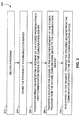
- Fig. 2 is a flow diagram of a method according to an embodiment of the invention for providing remote access to segments of a transmitted program.
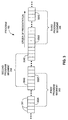
- Fig. 3 is a graphical representation of a program denoted in. Fig. 2 , shown with both overlapping and non-overlapping segments.
- Fig. 4 is a block diagram of a communication server of the system of Fig. 2 according to an embodiment of the invention.
- Fig. 5 is a block diagram of a communication device of the system of Fig. 2 according to an embodiment of the invention.
- Fig. 1 provides a block diagram of a system 100 for providing remote access to segments of one or more transmitted programs 150.
- a transmitted program may include a contiguous series of video frames, or consecutive samples of audio information, or both, that may be identifiable as a single transmitted presentation.
- a transmitted program may be a program delivered by any transmission method, such as broadcast, multicast, simulcast, closed circuit, pay-per-view, point-to-point, or other method.
- the program may be transmitted by way of any communication technology, such as by satellite, wire or optical cable, wireless, or other means.
- the program may also be transferred over any type of communication system, such as the Internet, a local area network, a private network, or a mobile communication system.
- the system 100 includes a communication server, 102, a first communication device 104, and a second communication device 106.
- Fig. 2 presents a flow diagram of a method 200 of operating the system 100 of Fig. 1 , although the method 200 may apply to other systems or devices not depicted in Fig. 1 .
- a transmitted program 150 is recorded (operation 202) and stored at the communication server 102 (operation 204).
- Information 152 specifying a segment 156 of the stored program 150 is transferred from the first communication device 104 to the communication server 102 (operation 206).
- a request 154 for access to the specified segment 156 of the stored program 150 is transferred from the second communication device 106 to the communication server 102 (operation 208).
- the program segment 156 is transferred from the communication server 102 to the second communication device 106 (operation 210). While Fig. 2 depicts a particular sequence for execution of the operations 202-210 shown therein, other orders of execution, including concurrent or overlapping execution, may also be possible while remaining within the scope of the invention.
- Fig. 3 provides a simplified graphical representation of the program 150 denoted in Fig. 1 .
- the program 150 is shown as a series of video frames 301 progressing in time from left to right, although other data organizations for the program 150, including a series of audio samples, may be employed in other implementations.
- the program, 150 may also be formatted according to any of a number of audio and video data formats, such as the digital video format standards promulgated by the Motion Pictures Expert Group (MPEG), such as MPEG-2 and MPEG-4, or the digital audio standard MPEG-1 Audio Layer 3 (MP3). Other embodiments may employ other audio and video data formats not specifically indicated herein.
- MPEG Motion Pictures Expert Group
- MP3 MPEG-1 Audio Layer 3
- a segment of the program 150 may be any contiguous portion of the program 150, possibly including the entire program 150.
- the example of Fig. 3 depicts three potential program segments 302, 304, 306, each of which include a number of contiguous frames 301 of the program 150.
- Each of the program segments 302, 304, 306 is demarcated by a starting point or frame 302S, 304S, 306S and an ending point or frame 302E, 304E, 306E, respectively.
- Fig. 3 depicts three potential program segments 302, 304, 306, each of which include a number of contiguous frames 301 of the program 150.
- Each of the program segments 302, 304, 306 is demarcated by a starting point or frame 302S, 304S, 306S and an ending point or frame 302E, 304E, 306E, respectively.
- the various segments 302, 304, 306 identified for a particular program 150 may overlap (as in the case of the first program segment 302 and the second program segment 304) or not overlap (such as with either the first program segment 302 or the second program segment 304 compared to the third program segment 306).
- two separately identified segments may signify the same segment of the program 150 by possessing the same starting and ending points. While Fig. 3 specifically illustrates three segments, any number of segments may be identified for the program 150.
- Fig. 4 depicts a communication server 402 that may be employed as the communication server 102 of Fig. 1 .
- the communication server 402 includes a processor 410, a memory 412, and a communication interface 414. In some examples, the communication server 402 may also include a recording unit 416.
- the communication server 402 also may include other components or units not shown in Fig. 4 or presented herein to simplify the following discussion. While Fig. 4 depicts specific connections between the various components within the communication server 402, other connection configurations that allow the ability to perform the various tasks described below are also possible while remaining within the scope of the invention.
- the communication server 402 may be a server for providing data on the Internet, such as a web server.
- the communication interface 414 may implement a Transmission Control Protocol/Internet Protocol (TCP/IP) interface for transferring messages and data between the communication server 402 and other devices coupled to the Internet.
- TCP/IP Transmission Control Protocol/Internet Protocol
- other communications protocols such as Asynchronous Transfer Mode (ATM) and various wireless communication protocols, may be employed in the alternative.
- ATM Asynchronous Transfer Mode
- wireless communication protocols may be employed in the alternative.
- the processor 410 may be any processor, collection of processors, or other control logic capable of performing the various operations described below.
- the processor 410 may include one or more microprocessors or microcontrollers configured to execute software instructions for controlling the communication interface 414, the memory 412, and the recording unit 416.
- the processor 410 may include various hardware components in lieu of, or in addition to, the software to facilitate the various operations described hereinafter.
- the memory 412 may be any memory capable of storing transmitted programs, or segments of the programs. Examples of the memory 412 may include volatile memory, such as static random access memory (SRAM) and dynamic random access memory (DRAM), and nonvolatile memory, such as flash memory, magnetic disk drive memory, and optical disk drive memory. Nonvolatile memory may also encompass both removable and non-removable storage media.
- the memory 412 may also be extended to include external data storage, such as storage available by way of a storage area network (SAN) not co-located with the communication server 402, thus providing a large, extendable storage capacity
- SAN storage area network
- the communication server 402 includes a recording unit 416 capable of receiving the transmitted program 150 from a content provider, such as a satellite, cable, or over-the-air broadcast programming provider.
- the recording unit 416 is configured to select one or more of several programming channels offered by the content provider in order to record one or more transmitted programs presented on the various channels.
- the recording unit 416 may receive the various channels of programming over a communication network connection, such as an IP connection.
- the recording unit 416 may include one or more tuners for receiving the programming channels via a satellite link, cable connection, or a terrestrial over-the-air antenna, and for selecting one or more of the channels for recording the transmitted programs 150.
- a device external to the communication server 402 may be responsible for recording the program 150 from the transmission source. In that case, the external device would then forward the transmitted program 150 to the communication server 402, either by way of the communication interface 414 or a separate communication interface not illustrated in Fig. 4 .
- the communication server 402 may operate as follows.
- the transmitted program 150 of interest is received at the communication server 402, at either the recording unit 416 or the communication interface 414.
- the processor 410 then causes the program 150 to be stored in the memory 412. Any number of programs 150 may be stored in the memory 412 at any one time, depending on the length and resolution of the programs 150, the storage capacity of the memory 412, and other factors.
- the processor 410 may select which program 150 to record and store in the memory 412 based on a number of considerations. For example, the processor 410 or some external device not shown in Fig. 4 may select a particular program 150 if an expected number of requests for segments of the program 150 exceeds a predetermined threshold. Other considerations may include the expected length or number of identified segments expected.
- the processor 410 may cause one or more of the programs 150 stored in the memory 412 to be deleted or offloaded from the memory 412.
- the decision to delete or offload a program 150 may be influenced by a number of factors, such as the amount of time the program 150 has resided in the memory 412, a predetermined hierarchy for one or more stored programs 150, and the number of other programs currently being loaded into the memory 412.
- the communication interface 414 may receive information 152 from a communication device identifying one or more segments of the program 150.
- the information 152 may include an identification of the program, a starting point of a segment within the program, and an ending point of the segment within the program, as discussed above.
- the information 152 may specify each of the starting and ending points by way of a frame number, a timestamp, or other form of pointer information.
- the communication server 402 may return an indication to the communication device sourcing the information 152 as to whether the transmitted program identified in the information is one of the programs 150 stored in the memory 412. If the program identified in the information 152 is not stored in the memory 412, a simple message may be returned from the communication server 402 to the device sourcing the information that the identified program is not present in the memory 412. Otherwise, the communication server 402 may return a positive indication that the requested program 150 is located in the memory 412, along with access information 153 indicating how the identified segment 156 of the stored program 150 may be accessed.
- the access information 153 may include, for example, a uniform resource locator (URL) of a web page providing access to the segment 156. Other examples may include any type of information uniquely identifying the specified segment 156.
- URL uniform resource locator
- the communication interface 414 may receive one or more requests 154 for access to the segment 156.
- the request 154 may include the access information 153 described above.
- the communication server 402 may provide a search menu or similar means by which a user may locate a particular segment of interest within the program 150.
- the processor 410 may then deliver the requested program segment 156 from the memory 412 over the communication interface 414 to the communication device requesting the segment 156.
- the communication interface 414 may stream the program segment 156 to the communication device, which the communication device may buffer in whole or in part before displaying the program segment 156 to a user.
- the communication interface 414 may download the entire program segment 156 as a data file over the communication interface 414.
- the communication server 402 may receive multiple sets of information 152 from a number of communication devices that identify various segments 156 of the same stored program 150. No restriction need be imposed on the number or extent of each segment 156 of the program 150 identified by each set of information 152. As mentioned in conjunction with Fig. 3 , each of the identified segments 156 may or may not overlap. Two or more segments 156 may be identical, as defined by their starting and ending points.
- the processor 410 causes each set of information 152 received over the communication interface 414 to be stored in the memory 412 along with the recorded program 150. Each resulting segment 156 may then be requested by any communication device configured to communicate with the communication server 402 over the communication interface 414.
- the communication interface 414 may receive sets of information 152 identifying segments 156 of the program 150 that, when taken collectively, do not involve the entire program 150.
- the processor 410 may cause those portions of the program 150 that are not included within an identified segment 156 to be deleted from the memory 412.
- the processor 410 may initiate such an operation when, for example, a predetermined period of time has elapsed since processor 410 stored the program 150 in the memory 412, or since the communication interface 414 received the last set of information 152 identifying a segment 156 of the program 150.
- the communication interface 414 may instead receive the actual segment 450 of the program from a communication device.
- the processor 410 may then transfer the received program segment 450 to the memory 412, thus making it accessible to other communication devices. More specifically, the communication interface 414 may receive a segment request (similar to the segment request 154 discussed above) for the received program segment 450.
- the processor 410 may then transfer the received segment 450 from the memory 410 over the communication interface 414 to the communication device that originated the request for the segment 450.
- Fig. 5 provides a block diagram of a communication device 504 that in one embodiment may operate as the communication device 106 of Fig. 1 responsible for identifying the segments 156 of the program 150 stored in the communication server 102.
- the communication device 504 includes a processor 510, a receiving unit 512, a communication interface 514, and a user interface 516.
- the communication device may also include one or more tuners 518 and an output port 520.
- the connections shown in Fig. 5 between the various components of the communication device 504 indicate only one potential embodiment.
- the communication device 504 may be a broadcast programming receiver, such as a set-top box adapted to receive satellite programming signals, cable programming signals, or terrestrial over-the-air programming signals.
- the processor 510 is configured to control the communication interface 514 and the receiving unit 512, as well as the tuner 518.
- Specific examples of the processor 510 may include any of the particular embodiments listed above in conjunction with the processor 410 of the communication server 402 described above.
- particular implementations of the communication interface 514 may include the types, such as an IP interface, described above regarding the communication interface 414 of the communication server 402.
- the receiving unit 512 is configured to receive one or more transmitted programs 150.
- the receiving unit 512 includes circuitry for decoding, descrambling, and/or demultiplexing the programs 150, if necessary.
- the receiving unit 12 may also provide the DVR functionality discussed above in one example.
- the receiving unit 512 may allow a user to record one or more programs 150 received from a source external to the communication device 504.
- the receiving unit 512 may include any data storage employed to store the programs 150.
- the tuner 518 is employed to select a programming channel from a number of programming channels supplied by a content provider.
- the tuner 518 of a satellite set-top box may receive a plurality of programming channels from one or more satellite signal transponders, from which the tuner 518 selects a single programming channel which provides a number of transmitted programs 150.
- the communication device 504 may include more than one tuner 518 so that more than one programming channel may be selected at a time.
- the tuner 518 may be configured to select a programming channel from a number of cable or terrestrial over-the-air programming channels.
- the receiving unit 512 may receive one or more programs 150 via the communication interface 514, as opposed to, or in addition to, the tuner 518.
- the receiving unit 512 may receive one or more streaming or downloaded programs from an external source over the Internet.
- the user interface 516 is configured to receive a first indication from a user of a starting point of a segment of the program 150 received by the receiving unit 512.
- the user interface 516 is also configured to receive a second indication from the user of the ending point of the segments.
- the user interface 516 is configured to receive signals from a remote control device 522. The signals are initiated by user interaction with the remote control device 522.
- the user reviews the program 150 received by the receiving unit 512, and uses the remote control device 522 to identify the starting and ending points of a segment of the program 150 during playback of the program 150.
- an output port 520 may display the program 150 to the user by way of a communicatively coupled output device 525, such as a television or video monitor, audio receiver, or the like.
- a communicatively coupled output device 525 such as a television or video monitor, audio receiver, or the like.
- the communication device 504 may incorporate the functionality of the output device 525.
- the processor 510 may then process the first and second indications to generate information 152 specifying the segment of interest in the program 130.
- the processor 510 may then transfer the generated information 152 over the communication interface 514.
- the communication server 102 may then receive this information 152 so that the communication server 102 may then satisfy requests for access to the segment specified by the information 152 by way of the same program 150 stored in the server 102.
- the information 152 may also include an identification of the program 150 including the identified segment. In accordance with this process, the user may specify multiple segments of the program 150, which may or may not overlap each other.
- the communication device 504 may be configured to receive access information 153 from the communication server 402 as shown earlier in Fig. 4 indicating how the communication device 504 or another communication device may access the specified segment 156 (shown in Fig. 4 ) from the communication server 402. In response, the communication device 504 may disseminate the access information 153, such as by way of the communication interface 514, to other communication devices, such as computers, portable communication devices, and other set-top boxes. In another implementation, the communication server 402 may make the access information 153 directly available to other communication devices by way of a menu, web page, or similar means.
- the communication server 102 receiving the information 152 for a particular program may or may not have stored the associated program.
- the communication device 504 may be configured to receive a reply to the information 152 indicating this fact.
- the processor 510 may transfer the actual program segment 450 (noted in Fig. 4 ) from the receiving unit 512 over the communication interface 514 to the communication server 402, which may then store the segment 450 and allow the communication device 504 or other communication devices to access the segment 450, as discussed above.
- a communication device need only send an indication of the starting and ending times of a desired segment of the program, thus eliminating a transfer of the actual segment from the communication device to the server.
- the communication bandwidth necessary between the communication server and several such communication devices may be greatly reduced.
- This reduced bandwidth may allow communication devices with less-than-broadband grade access to specify program segments for access, thus allowing greater "space-shitting" capability for viewing the segments.
- the reduced bandwidth requirements still apply even if the communication server receives its copy of the transmitted program over the same communication network through which the server receives the information regarding starting and ending times of the segment, as the server only needs to receive the program once.
- the storage requirements of the communication server are greatly reduced, as only a single copy of the transmitted program being segmented is stored as a result, regardless of the number of segments of the program are specified by the communication devices.
- the server storage requirements may be still further lessened if portions of the program that are not included in any specified segment are deleted or offloaded.
- Each particular implementation of the communication server may be tailored to fit the storage capacity and bandwidth limitations of the server. For example, decisions regarding which programs to store may depend upon an expected popularity of the program. With more program storage available, the server may be capable of lowering the popularity threshold a program must meet before being stored on the server. Further, segments for other programs not immediately stored on the server may still be transferred thereto by other communication devices.
- the server potentially providing a single source for the segments, the audio or video quality of the segments may be more tightly controlled. Further, less transcoding from one data format to another may be involved when the server acts as the lone provider of program segments.
Landscapes
- Engineering & Computer Science (AREA)
- Signal Processing (AREA)
- Multimedia (AREA)
- Computer Networks & Wireless Communication (AREA)
- Databases & Information Systems (AREA)
- Human Computer Interaction (AREA)
- Computer Security & Cryptography (AREA)
- Computer Graphics (AREA)
- Information Transfer Between Computers (AREA)
- Computer And Data Communications (AREA)
- Television Signal Processing For Recording (AREA)
- Two-Way Televisions, Distribution Of Moving Picture Or The Like (AREA)
Claims (15)
- Verfahren zum Bereitstellen von Fernzugriff auf Segmente eines übertragenen Programms, wobei das Verfahren umfasst:Aufzeichnen des Programms (150);Speichern des Programms an einem Kommunikationsserver (102, 402);Übertragen von erster Information (152), die ein erstes Segment (156) des gespeicherten Programms spezifiziert, von einer ersten Kommunikationseinrichtung (104) zu dem Kommunikationsserver (102, 402), charakterisiert durch die Schritte:Zurückgeben einer negativen Antwort, dass das spezifizierte Segment (156) nicht vorhanden ist, an die erste Kommunikationseinrichtung (104), oder Zurückgeben einer positiven Angabe, dass das spezifizierte Segment (156) gemeinsam mit Zugriffsinformationen (153) an dem Kommunikationsserver (102, 402) gespeichert ist, an die erste Kommunikationseinrichtung (104);Verteilen der Zugriffsinformation (153) an andere Kommunikationseinrichtungen (106);wobei das spezifizierte Segment (156) an dem Kommunikationsserver (102, 402) gespeichert ist, Übertragen einer ersten Anforderung (154) nach Zugriff auf das erste Segment (156) von einer zweiten Kommunikationseinrichtung (106) zu dem Kommunikationsserver, wobei die erste Anforderung (154) die Zugriffsinformation (153) enthält; undals Antwort auf die erste Anforderung (154) Übertragen des ersten Segments (165) von dem Kommunikationsserver (102, 402) an die zweite Kommunikationseinrichtung (106).
- Verfahren nach Anspruch 1, ferner umfassend:Übertragen von zweiter Information, die ein zweites Segment des gespeicherten Programms angibt von einer dritten Kommunikationseinrichtung, an den Kommunikationsserver (102, 402);Übertragen einer zweiten Anforderung nach Zugriff auf das zweite Segment von einer vierten Kommunikationseinrichtung zu dem Kommunikationsserver (102, 402); undals Antwort auf die zweite Anforderung, Übertragen des zweiten Segments von dem Kommunikationsserver an die vierte Kommunikationseinrichtung.
- Verfahren nach Anspruch 1, dadurch gekennzeichnet, dass die erste Anforderung (154) eine Identifizierung des ersten Segments (156) und eine Identifizierung der zweiten Kommunikationseinrichtung (106) umfasst.
- Verfahren nach Anspruch 1, ferner umfassend:Übertragen eines ersten Segments eines zweiten Programms von der ersten Kommunikationseinrichtung (102) zu dem Kommunikationsserver (102, 402);Speichern des ersten Segments des zweiten Programms an dem Kommunikationsserver (102, 402);Übertragen einer zweiten Anforderung nach Zugriff auf das erste Segment des zweiten Programms von der zweiten Kommunikationseinrichtung (106) zu dem Kommunikationsserver (102, 402); undals Antwort auf die zweite Anforderung, Übertragen des ersten Segments des zweiten Programms von dem Kommunikationsserver (102, 402) zu der zweiten Kommunikationseinrichtung (106).
- Kommunikationsserver (102, 402), umfassend:einen Speicher (412), der zum Speichern eines Programms (150) konfiguriert ist;eine Kommunikationsschnittstelle (414), die zum Empfangen erster Information (152), die ein erstes Segment (156) des gespeicherten Programms (150) identifiziert, und zum Empfangen einer ersten Anforderung (154) nach Zugriff auf das erste Segment des gespeicherten Programms konfiguriert ist; undeinen Prozessor (410), der zum Durchführen der Schritte des in Anspruch 1 definierten Verfahrens, die für den Server (102, 402) relevant sind, konfiguriert ist.
- Kommunikationsserver (102, 402) nach Anspruch 5, dadurch gekennzeichnet, dass:die Kommunikationsschnittstelle (414) konfiguriert ist, um zweite Information zu empfangen, die ein zweites Segment des gespeicherten Programms identifiziert, und eine zweite Anforderung nach Zugriff auf das zweite Segment des gespeicherten Programms zu empfangen; undder Prozessor (410) konfiguriert ist, die zweite Anforderung zu verarbeiten und als Antwort das zweite Segment des gespeicherten Programms aus dem Speicher über die Kommunikationsschnittstelle zu übertragen.
- Kommunikationsserver (102, 402) nach Anspruch 5, dadurch gekennzeichnet, dass der Prozessor (410) konfiguriert ist, das Programm in dem Speicher (412) anhand wenigstens einer voraussichtlichen Anzahl von Anforderungen nach Segmenten des Programms, einer voraussichtlichen Anzahl von Segmenten, die in dem Programm identifiziert sind, und einer voraussichtlichen Länge der Segmente, die in dem Programm identifiziert sind, zu speichern, und/oder wobei der Prozessor (410) konfiguriert ist, Abschnitte des gespeicherten Programms aus dem Speicher (412) zu löschen, nachdem ein Zeitraum verstrichen ist,
wobei die gelöschten Abschnitte des gespeicherten Programms nicht in jedem Segment enthalten sind, das in dem gespeicherten Programm identifiziert ist. - Kommunikationsserver (102, 402) nach Anspruch 5, dadurch gekennzeichnet, dass die erste Information (152) eine Identifizierung des gespeicherten Programms, einen Startpunkt des ersten Segments und einen Endpunkt des ersten Segments umfasst.
- Kommunikationsserver (102, 402) nach Anspruch 5, dadurch gekennzeichnet, dass:die erste Anforderung (154) eine Identifizierung des ersten Segments (156) und eine Identifizierung einer Kommunikationseinrichtung umfasst; undder Prozessor (410) konfiguriert ist, das erste Segment des gespeicherten Programms (150) aus dem Speicher (412) über die Kommunikationsschnittstelle (414) zu der Kommunikationseinrichtung zu übertragen.
- Kommunikationssystem, das einen Kommunikationsserver (102, 402) nach Anspruch 5 und eine Kommunikationseinrichtung (106, 504) umfasst, umfassend:eine Empfangseinheit (512), die zum Empfangen eines Programms (150) konfiguriert ist;eine Benutzerschnittstelle (516), die konfiguriert ist, um eine erste Angabe eines Startpunkts eines ersten Segments des Programms zu empfangen und eine zweite Angabe eines Endpunkts des ersten Segments des Programms zu empfangen;eine Kommunikationsschnittstelle (514); undeinen Prozessor (510), der konfiguriert ist, die erste Angabe und die zweite Angabe zu verarbeiten, um erste Information (152) zu erzeugen, die das erste Segment des Programms spezifiziert, und die erste Information über die Kommunikationsschnittstelle (514) zu übertragen.
- Kommunikationssystem nach Anspruch 10, ferner umfassend:eine Abstimmeinrichtung (518) zum Auswählen eines Programmiersignals aus einer Vielzahl von Programmiersignalen, die von einem Inhalteanbieter gesendet werden, wobei das ausgewählte Programmiersignal das Programm (150) umfasst.
- Kommunikationssystem nach Anspruch 10, dadurch gekennzeichnet, dass:die Benutzerschnittstelle (516) konfiguriert ist, eine dritte Angabe eines Startpunkts eines zweiten Segments des Programms und eine vierte Angabe eines Endpunkts des zweiten Segments des Programms zu empfangen; undder Prozessor (510) konfiguriert ist, die dritte Angabe und die vierte Angabe zu verarbeiten, um zweite Information zu erzeugen, die das zweite Segment des Programms spezifiziert, und die zweite Information über die Kommunikationsschnittstelle zu übertragen.
- Kommunikationssystem nach Anspruch 12, dadurch gekennzeichnet, dass das zweite Segment das erste Segment überlappt.
- Kommunikationssystem nach Anspruch 10, dadurch gekennzeichnet, dass der Prozessor (510) konfiguriert ist, eine Identifizierung des Programms in der ersten Information (152) aufzuweisen.
- Kommunikationssystem nach Anspruch 10, dadurch gekennzeichnet, dass:die Empfangseinheit (512) konfiguriert ist, eine zweites Programm zu empfangen;die Benutzerschnittstelle (516) konfiguriert ist, eine dritte Angabe eines Startpunkts eines Segments des zweiten Programms und eine dritte Angabe eines Endpunkts des Segments des zweiten Programms zu empfangen; undder Prozessor (510) konfiguriert ist, die dritte Angabe und die vierte Angabe zu verarbeiten, um das Segment des zweiten Programms zu lokalisieren und das Segment des zweiten Programms über die Kommunikationsschnittstelle zu übertragen.
Applications Claiming Priority (2)
| Application Number | Priority Date | Filing Date | Title |
|---|---|---|---|
| US12/025,579 US8117283B2 (en) | 2008-02-04 | 2008-02-04 | Providing remote access to segments of a transmitted program |
| PCT/US2009/032839 WO2009100004A1 (en) | 2008-02-04 | 2009-02-02 | Providing remote access to segments of a transmitted program |
Publications (2)
| Publication Number | Publication Date |
|---|---|
| EP2243272A1 EP2243272A1 (de) | 2010-10-27 |
| EP2243272B1 true EP2243272B1 (de) | 2012-01-04 |
Family
ID=40808510
Family Applications (1)
| Application Number | Title | Priority Date | Filing Date |
|---|---|---|---|
| EP09709429A Active EP2243272B1 (de) | 2008-02-04 | 2009-02-02 | Bereitstellung von fernzugriff auf segmente eines übertragenen programms |
Country Status (4)
| Country | Link |
|---|---|
| US (4) | US8117283B2 (de) |
| EP (1) | EP2243272B1 (de) |
| AT (1) | ATE540517T1 (de) |
| WO (1) | WO2009100004A1 (de) |
Families Citing this family (18)
| Publication number | Priority date | Publication date | Assignee | Title |
|---|---|---|---|---|
| US8280982B2 (en) | 2006-05-24 | 2012-10-02 | Time Warner Cable Inc. | Personal content server apparatus and methods |
| US9386327B2 (en) * | 2006-05-24 | 2016-07-05 | Time Warner Cable Enterprises Llc | Secondary content insertion apparatus and methods |
| US8024762B2 (en) | 2006-06-13 | 2011-09-20 | Time Warner Cable Inc. | Methods and apparatus for providing virtual content over a network |
| US8117283B2 (en) | 2008-02-04 | 2012-02-14 | Echostar Technologies L.L.C. | Providing remote access to segments of a transmitted program |
| US20100229206A1 (en) * | 2009-03-03 | 2010-09-09 | Viasat, Inc. | Space shifting over forward satellite communication channels |
| WO2011125051A1 (en) * | 2010-04-09 | 2011-10-13 | Canon Kabushiki Kaisha | Method for accessing a spatio-temporal part of a compressed video sequence |
| US20110264530A1 (en) | 2010-04-23 | 2011-10-27 | Bryan Santangelo | Apparatus and methods for dynamic secondary content and data insertion and delivery |
| US9129641B2 (en) * | 2010-10-15 | 2015-09-08 | Afterlive.tv Inc | Method and system for media selection and sharing |
| US9462302B2 (en) * | 2012-02-23 | 2016-10-04 | Mobitv, Inc. | Efficient delineation and distribution of media segments |
| US9379932B1 (en) * | 2013-03-07 | 2016-06-28 | Google Inc. | Personal video recorder with limited attached local storage |
| US20140282786A1 (en) | 2013-03-12 | 2014-09-18 | Time Warner Cable Enterprises Llc | Methods and apparatus for providing and uploading content to personalized network storage |
| US10659851B2 (en) * | 2014-06-30 | 2020-05-19 | Apple Inc. | Real-time digital assistant knowledge updates |
| US10586023B2 (en) | 2016-04-21 | 2020-03-10 | Time Warner Cable Enterprises Llc | Methods and apparatus for secondary content management and fraud prevention |
| CN109769131B (zh) * | 2017-11-09 | 2021-10-26 | 中国移动通信有限公司研究院 | 一种视频质量监测方法及机顶盒 |
| US10880585B1 (en) * | 2019-06-12 | 2020-12-29 | Amazon Technologies, Inc. | Split-and-stitch media content encoding |
| CN110290420A (zh) * | 2019-07-05 | 2019-09-27 | 山东云缦智能科技有限公司 | 一种基于帧特征实现电视剧片头/片尾自动识别的方法 |
| US11403849B2 (en) | 2019-09-25 | 2022-08-02 | Charter Communications Operating, Llc | Methods and apparatus for characterization of digital content |
| CN112235613B (zh) * | 2020-09-17 | 2023-03-21 | 百度在线网络技术(北京)有限公司 | 视频处理方法、装置、电子设备及存储介质 |
Family Cites Families (40)
| Publication number | Priority date | Publication date | Assignee | Title |
|---|---|---|---|---|
| JPH0981445A (ja) * | 1995-07-11 | 1997-03-28 | Matsushita Electric Ind Co Ltd | 情報管理装置 |
| US6931451B1 (en) * | 1996-10-03 | 2005-08-16 | Gotuit Media Corp. | Systems and methods for modifying broadcast programming |
| US8560951B1 (en) * | 1998-12-18 | 2013-10-15 | Thomson Licensing | System and method for real time video production and distribution |
| US6718372B1 (en) * | 2000-01-07 | 2004-04-06 | Emc Corporation | Methods and apparatus for providing access by a first computing system to data stored in a shared storage device managed by a second computing system |
| US6747706B1 (en) * | 2000-01-11 | 2004-06-08 | International Business Machines Corporation | Workflow process for managing digital broadcast program production |
| US7712123B2 (en) * | 2000-04-14 | 2010-05-04 | Nippon Telegraph And Telephone Corporation | Method, system, and apparatus for acquiring information concerning broadcast information |
| US7197758B1 (en) * | 2000-04-27 | 2007-03-27 | Microsoft Corporation | Method and apparatus for indexing video programs |
| US7349668B2 (en) * | 2000-05-31 | 2008-03-25 | Optinetix (Israel) Ltd. | Systems and methods for embedding commercial information into broadcast media |
| WO2002008948A2 (en) * | 2000-07-24 | 2002-01-31 | Vivcom, Inc. | System and method for indexing, searching, identifying, and editing portions of electronic multimedia files |
| US6799251B1 (en) * | 2000-08-29 | 2004-09-28 | Oracle International Corporation | Performance-based caching |
| US6407680B1 (en) * | 2000-12-22 | 2002-06-18 | Generic Media, Inc. | Distributed on-demand media transcoding system and method |
| KR100363030B1 (ko) * | 2001-03-27 | 2002-11-30 | 서영현 | 인터넷을 이용한 자료공유방법 및 그 시스템 |
| US20020174431A1 (en) | 2001-05-15 | 2002-11-21 | John Bowman | Method and system for receiving music related information via an internet connection |
| US20030097664A1 (en) * | 2001-11-21 | 2003-05-22 | James Meyers | Method and system for interactive movie scene television |
| US7320137B1 (en) * | 2001-12-06 | 2008-01-15 | Digeo, Inc. | Method and system for distributing personalized editions of media programs using bookmarks |
| JP2003281021A (ja) * | 2002-03-25 | 2003-10-03 | Alps System Integration Co Ltd | プロキシキャッシュ又はプロキシログによるurl情報共有システム |
| US20030186645A1 (en) * | 2002-04-02 | 2003-10-02 | Robert Mori | Method for marking a portion of a media broadcast for later use |
| WO2003085982A2 (en) * | 2002-04-04 | 2003-10-16 | Intellocity Usa, Inc. | Interactive television notification system |
| US20040230655A1 (en) * | 2003-05-16 | 2004-11-18 | Chia-Hsin Li | Method and system for media playback architecture |
| US7177872B2 (en) * | 2003-06-23 | 2007-02-13 | Sony Corporation | Interface for media publishing |
| CN100355237C (zh) | 2003-07-24 | 2007-12-12 | Lg电子株式会社 | 用于在移动电话中再现多媒体内容的系统和方法 |
| US20050177745A1 (en) * | 2004-02-11 | 2005-08-11 | Alio, Inc. | Distributed System and Methodology for Delivery of Media Content |
| US8782281B2 (en) * | 2004-03-23 | 2014-07-15 | Cisco Technology Inc. | Optimally adapting multimedia content for mobile subscriber device playback |
| US9998802B2 (en) * | 2004-06-07 | 2018-06-12 | Sling Media LLC | Systems and methods for creating variable length clips from a media stream |
| US8346605B2 (en) * | 2004-06-07 | 2013-01-01 | Sling Media, Inc. | Management of shared media content |
| US8601089B2 (en) | 2004-08-05 | 2013-12-03 | Mlb Advanced Media, L.P. | Media play of selected portions of an event |
| US8108599B2 (en) * | 2004-11-03 | 2012-01-31 | Spectra Logic Corporation | Erasure techniques for emulating streamed data format for non tape media |
| US20070078883A1 (en) * | 2005-09-30 | 2007-04-05 | Yahoo! Inc. | Using location tags to render tagged portions of media files |
| JP2007104577A (ja) * | 2005-10-07 | 2007-04-19 | Sony Corp | コンテンツ転送装置、コンテンツ転送方法及びコンテンツ転送プログラム |
| US20070178884A1 (en) * | 2005-12-07 | 2007-08-02 | General Instrument Corporation | Remote Provisioning of Privacy Settings in a Home Multimedia Network |
| US7818775B2 (en) * | 2005-12-21 | 2010-10-19 | At&T Intellectual Property I, L.P. | System and method for recording and time-shifting programming in a television distribution system with limited content retention |
| US8230098B2 (en) | 2006-05-10 | 2012-07-24 | At&T Intellectual Property Ii, L.P. | System and method for streaming media objects |
| US8761734B2 (en) * | 2006-05-25 | 2014-06-24 | Sony Corporation | Buffering streaming content |
| US7925781B1 (en) * | 2006-05-26 | 2011-04-12 | The Hong Kong University Of Science And Technology | Distributed storage to support user interactivity in peer-to-peer video streaming |
| EP2054816A4 (de) * | 2006-08-21 | 2013-06-26 | Sling Media Inc | Erfassung und gemeinsame nutzung von medieninhalten sowie verwaltung gemeinsam genutzter medieninhalte |
| WO2008042243A2 (en) * | 2006-09-29 | 2008-04-10 | Audible | Methods and apparatus for customized content delivery |
| EP1921852A1 (de) * | 2006-11-07 | 2008-05-14 | Microsoft Corporation | Verfahren und System zum Teilen von Fernsehvideofilmausschnitten |
| MX2009006048A (es) * | 2006-12-08 | 2009-08-18 | Xm Satellite Radio Inc | Sistema para insercion de informacion de cache localmente a flujo de difusion recibido para implementar servicios de suscripcion en hilera. |
| US20080313541A1 (en) * | 2007-06-14 | 2008-12-18 | Yahoo! Inc. | Method and system for personalized segmentation and indexing of media |
| US8117283B2 (en) | 2008-02-04 | 2012-02-14 | Echostar Technologies L.L.C. | Providing remote access to segments of a transmitted program |
-
2008
- 2008-02-04 US US12/025,579 patent/US8117283B2/en active Active
-
2009
- 2009-02-02 AT AT09709429T patent/ATE540517T1/de active
- 2009-02-02 EP EP09709429A patent/EP2243272B1/de active Active
- 2009-02-02 WO PCT/US2009/032839 patent/WO2009100004A1/en not_active Ceased
-
2012
- 2012-02-10 US US13/370,917 patent/US8892675B2/en active Active
-
2014
- 2014-11-14 US US14/542,110 patent/US9521446B2/en active Active
-
2016
- 2016-12-12 US US15/376,155 patent/US10097873B2/en active Active
Also Published As
| Publication number | Publication date |
|---|---|
| US9521446B2 (en) | 2016-12-13 |
| ATE540517T1 (de) | 2012-01-15 |
| EP2243272A1 (de) | 2010-10-27 |
| US20090198794A1 (en) | 2009-08-06 |
| US10097873B2 (en) | 2018-10-09 |
| WO2009100004A1 (en) | 2009-08-13 |
| US20120144437A1 (en) | 2012-06-07 |
| US20150074720A1 (en) | 2015-03-12 |
| US20170094340A1 (en) | 2017-03-30 |
| US8892675B2 (en) | 2014-11-18 |
| US8117283B2 (en) | 2012-02-14 |
Similar Documents
| Publication | Publication Date | Title |
|---|---|---|
| EP2243272B1 (de) | Bereitstellung von fernzugriff auf segmente eines übertragenen programms | |
| USRE49109E1 (en) | System and method for multiscreen network digital video recording using on-demand transcoding | |
| US20220159349A1 (en) | Methods and apparatus for presenting advertisements during playback of recorded television content | |
| US8015581B2 (en) | Resource data configuration for media content access systems and methods | |
| US10412451B2 (en) | Storing same channel overlapping recordings | |
| EP2269191B1 (de) | Verfahren und vorrichtung für den ersatz von audiodaten in einem aufgezeichneten audio-/videostream | |
| US10515235B2 (en) | Multimedia pipeline architecture | |
| US11570508B2 (en) | Replacement of recorded media content | |
| US9813777B1 (en) | Time shifting content for network DVR and trick play keys | |
| CN110214352B (zh) | 与存储介质的损耗程度相适配的记录方法 | |
| KR20190132979A (ko) | 방송 수신 장치 동작 방법 및 방송 수신 장치 | |
| EP2595403A1 (de) | Verfahren zum Bereitstellen von Videoinhalten an einen Benutzer | |
| KR102050831B1 (ko) | 방송 수신 장치 동작 방법 및 방송 수신 장치 |
Legal Events
| Date | Code | Title | Description |
|---|---|---|---|
| PUAI | Public reference made under article 153(3) epc to a published international application that has entered the european phase |
Free format text: ORIGINAL CODE: 0009012 |
|
| 17P | Request for examination filed |
Effective date: 20100831 |
|
| AK | Designated contracting states |
Kind code of ref document: A1 Designated state(s): AT BE BG CH CY CZ DE DK EE ES FI FR GB GR HR HU IE IS IT LI LT LU LV MC MK MT NL NO PL PT RO SE SI SK TR |
|
| AX | Request for extension of the european patent |
Extension state: AL BA RS |
|
| DAX | Request for extension of the european patent (deleted) | ||
| GRAP | Despatch of communication of intention to grant a patent |
Free format text: ORIGINAL CODE: EPIDOSNIGR1 |
|
| RIN1 | Information on inventor provided before grant (corrected) |
Inventor name: BEALS, WILLIAM MICHAEL |
|
| GRAS | Grant fee paid |
Free format text: ORIGINAL CODE: EPIDOSNIGR3 |
|
| GRAA | (expected) grant |
Free format text: ORIGINAL CODE: 0009210 |
|
| AK | Designated contracting states |
Kind code of ref document: B1 Designated state(s): AT BE BG CH CY CZ DE DK EE ES FI FR GB GR HR HU IE IS IT LI LT LU LV MC MK MT NL NO PL PT RO SE SI SK TR |
|
| REG | Reference to a national code |
Ref country code: GB Ref legal event code: FG4D |
|
| REG | Reference to a national code |
Ref country code: CH Ref legal event code: EP |
|
| REG | Reference to a national code |
Ref country code: AT Ref legal event code: REF Ref document number: 540517 Country of ref document: AT Kind code of ref document: T Effective date: 20120115 |
|
| REG | Reference to a national code |
Ref country code: IE Ref legal event code: FG4D |
|
| REG | Reference to a national code |
Ref country code: DE Ref legal event code: R096 Ref document number: 602009004533 Country of ref document: DE Effective date: 20120308 |
|
| REG | Reference to a national code |
Ref country code: NL Ref legal event code: T3 |
|
| PG25 | Lapsed in a contracting state [announced via postgrant information from national office to epo] |
Ref country code: SI Free format text: LAPSE BECAUSE OF FAILURE TO SUBMIT A TRANSLATION OF THE DESCRIPTION OR TO PAY THE FEE WITHIN THE PRESCRIBED TIME-LIMIT Effective date: 20120104 |
|
| LTIE | Lt: invalidation of european patent or patent extension |
Effective date: 20120104 |
|
| PG25 | Lapsed in a contracting state [announced via postgrant information from national office to epo] |
Ref country code: HR Free format text: LAPSE BECAUSE OF FAILURE TO SUBMIT A TRANSLATION OF THE DESCRIPTION OR TO PAY THE FEE WITHIN THE PRESCRIBED TIME-LIMIT Effective date: 20120104 Ref country code: BE Free format text: LAPSE BECAUSE OF FAILURE TO SUBMIT A TRANSLATION OF THE DESCRIPTION OR TO PAY THE FEE WITHIN THE PRESCRIBED TIME-LIMIT Effective date: 20120104 Ref country code: BG Free format text: LAPSE BECAUSE OF FAILURE TO SUBMIT A TRANSLATION OF THE DESCRIPTION OR TO PAY THE FEE WITHIN THE PRESCRIBED TIME-LIMIT Effective date: 20120404 Ref country code: IS Free format text: LAPSE BECAUSE OF FAILURE TO SUBMIT A TRANSLATION OF THE DESCRIPTION OR TO PAY THE FEE WITHIN THE PRESCRIBED TIME-LIMIT Effective date: 20120504 Ref country code: NO Free format text: LAPSE BECAUSE OF FAILURE TO SUBMIT A TRANSLATION OF THE DESCRIPTION OR TO PAY THE FEE WITHIN THE PRESCRIBED TIME-LIMIT Effective date: 20120404 Ref country code: LT Free format text: LAPSE BECAUSE OF FAILURE TO SUBMIT A TRANSLATION OF THE DESCRIPTION OR TO PAY THE FEE WITHIN THE PRESCRIBED TIME-LIMIT Effective date: 20120104 |
|
| PG25 | Lapsed in a contracting state [announced via postgrant information from national office to epo] |
Ref country code: GR Free format text: LAPSE BECAUSE OF FAILURE TO SUBMIT A TRANSLATION OF THE DESCRIPTION OR TO PAY THE FEE WITHIN THE PRESCRIBED TIME-LIMIT Effective date: 20120405 Ref country code: FI Free format text: LAPSE BECAUSE OF FAILURE TO SUBMIT A TRANSLATION OF THE DESCRIPTION OR TO PAY THE FEE WITHIN THE PRESCRIBED TIME-LIMIT Effective date: 20120104 Ref country code: LV Free format text: LAPSE BECAUSE OF FAILURE TO SUBMIT A TRANSLATION OF THE DESCRIPTION OR TO PAY THE FEE WITHIN THE PRESCRIBED TIME-LIMIT Effective date: 20120104 Ref country code: PT Free format text: LAPSE BECAUSE OF FAILURE TO SUBMIT A TRANSLATION OF THE DESCRIPTION OR TO PAY THE FEE WITHIN THE PRESCRIBED TIME-LIMIT Effective date: 20120504 Ref country code: PL Free format text: LAPSE BECAUSE OF FAILURE TO SUBMIT A TRANSLATION OF THE DESCRIPTION OR TO PAY THE FEE WITHIN THE PRESCRIBED TIME-LIMIT Effective date: 20120104 |
|
| REG | Reference to a national code |
Ref country code: AT Ref legal event code: MK05 Ref document number: 540517 Country of ref document: AT Kind code of ref document: T Effective date: 20120104 |
|
| PG25 | Lapsed in a contracting state [announced via postgrant information from national office to epo] |
Ref country code: MC Free format text: LAPSE BECAUSE OF NON-PAYMENT OF DUE FEES Effective date: 20120229 Ref country code: CY Free format text: LAPSE BECAUSE OF FAILURE TO SUBMIT A TRANSLATION OF THE DESCRIPTION OR TO PAY THE FEE WITHIN THE PRESCRIBED TIME-LIMIT Effective date: 20120104 |
|
| PG25 | Lapsed in a contracting state [announced via postgrant information from national office to epo] |
Ref country code: SE Free format text: LAPSE BECAUSE OF FAILURE TO SUBMIT A TRANSLATION OF THE DESCRIPTION OR TO PAY THE FEE WITHIN THE PRESCRIBED TIME-LIMIT Effective date: 20120104 Ref country code: CZ Free format text: LAPSE BECAUSE OF FAILURE TO SUBMIT A TRANSLATION OF THE DESCRIPTION OR TO PAY THE FEE WITHIN THE PRESCRIBED TIME-LIMIT Effective date: 20120104 Ref country code: EE Free format text: LAPSE BECAUSE OF FAILURE TO SUBMIT A TRANSLATION OF THE DESCRIPTION OR TO PAY THE FEE WITHIN THE PRESCRIBED TIME-LIMIT Effective date: 20120104 Ref country code: DK Free format text: LAPSE BECAUSE OF FAILURE TO SUBMIT A TRANSLATION OF THE DESCRIPTION OR TO PAY THE FEE WITHIN THE PRESCRIBED TIME-LIMIT Effective date: 20120104 Ref country code: RO Free format text: LAPSE BECAUSE OF FAILURE TO SUBMIT A TRANSLATION OF THE DESCRIPTION OR TO PAY THE FEE WITHIN THE PRESCRIBED TIME-LIMIT Effective date: 20120104 |
|
| PLBE | No opposition filed within time limit |
Free format text: ORIGINAL CODE: 0009261 |
|
| STAA | Information on the status of an ep patent application or granted ep patent |
Free format text: STATUS: NO OPPOSITION FILED WITHIN TIME LIMIT |
|
| REG | Reference to a national code |
Ref country code: IE Ref legal event code: MM4A |
|
| PG25 | Lapsed in a contracting state [announced via postgrant information from national office to epo] |
Ref country code: IT Free format text: LAPSE BECAUSE OF FAILURE TO SUBMIT A TRANSLATION OF THE DESCRIPTION OR TO PAY THE FEE WITHIN THE PRESCRIBED TIME-LIMIT Effective date: 20120104 Ref country code: SK Free format text: LAPSE BECAUSE OF FAILURE TO SUBMIT A TRANSLATION OF THE DESCRIPTION OR TO PAY THE FEE WITHIN THE PRESCRIBED TIME-LIMIT Effective date: 20120104 |
|
| 26N | No opposition filed |
Effective date: 20121005 |
|
| PG25 | Lapsed in a contracting state [announced via postgrant information from national office to epo] |
Ref country code: IE Free format text: LAPSE BECAUSE OF NON-PAYMENT OF DUE FEES Effective date: 20120202 Ref country code: AT Free format text: LAPSE BECAUSE OF FAILURE TO SUBMIT A TRANSLATION OF THE DESCRIPTION OR TO PAY THE FEE WITHIN THE PRESCRIBED TIME-LIMIT Effective date: 20120104 |
|
| REG | Reference to a national code |
Ref country code: DE Ref legal event code: R097 Ref document number: 602009004533 Country of ref document: DE Effective date: 20121005 |
|
| PG25 | Lapsed in a contracting state [announced via postgrant information from national office to epo] |
Ref country code: MK Free format text: LAPSE BECAUSE OF FAILURE TO SUBMIT A TRANSLATION OF THE DESCRIPTION OR TO PAY THE FEE WITHIN THE PRESCRIBED TIME-LIMIT Effective date: 20120104 |
|
| PG25 | Lapsed in a contracting state [announced via postgrant information from national office to epo] |
Ref country code: ES Free format text: LAPSE BECAUSE OF FAILURE TO SUBMIT A TRANSLATION OF THE DESCRIPTION OR TO PAY THE FEE WITHIN THE PRESCRIBED TIME-LIMIT Effective date: 20120415 |
|
| PG25 | Lapsed in a contracting state [announced via postgrant information from national office to epo] |
Ref country code: MT Free format text: LAPSE BECAUSE OF FAILURE TO SUBMIT A TRANSLATION OF THE DESCRIPTION OR TO PAY THE FEE WITHIN THE PRESCRIBED TIME-LIMIT Effective date: 20120104 |
|
| REG | Reference to a national code |
Ref country code: CH Ref legal event code: PL |
|
| PG25 | Lapsed in a contracting state [announced via postgrant information from national office to epo] |
Ref country code: CH Free format text: LAPSE BECAUSE OF NON-PAYMENT OF DUE FEES Effective date: 20130228 Ref country code: LI Free format text: LAPSE BECAUSE OF NON-PAYMENT OF DUE FEES Effective date: 20130228 |
|
| PG25 | Lapsed in a contracting state [announced via postgrant information from national office to epo] |
Ref country code: TR Free format text: LAPSE BECAUSE OF FAILURE TO SUBMIT A TRANSLATION OF THE DESCRIPTION OR TO PAY THE FEE WITHIN THE PRESCRIBED TIME-LIMIT Effective date: 20120104 |
|
| PG25 | Lapsed in a contracting state [announced via postgrant information from national office to epo] |
Ref country code: LU Free format text: LAPSE BECAUSE OF NON-PAYMENT OF DUE FEES Effective date: 20120202 |
|
| PG25 | Lapsed in a contracting state [announced via postgrant information from national office to epo] |
Ref country code: HU Free format text: LAPSE BECAUSE OF FAILURE TO SUBMIT A TRANSLATION OF THE DESCRIPTION OR TO PAY THE FEE WITHIN THE PRESCRIBED TIME-LIMIT Effective date: 20090202 |
|
| REG | Reference to a national code |
Ref country code: FR Ref legal event code: PLFP Year of fee payment: 8 |
|
| REG | Reference to a national code |
Ref country code: FR Ref legal event code: PLFP Year of fee payment: 9 |
|
| REG | Reference to a national code |
Ref country code: FR Ref legal event code: PLFP Year of fee payment: 10 |
|
| REG | Reference to a national code |
Ref country code: DE Ref legal event code: R082 Ref document number: 602009004533 Country of ref document: DE Representative=s name: HERNANDEZ, YORCK, DIPL.-ING., DE Ref country code: DE Ref legal event code: R081 Ref document number: 602009004533 Country of ref document: DE Owner name: DISH TECHNOLOGIES L.L.C., ENGLEWOOD, US Free format text: FORMER OWNER: ECHOSTAR TECHNOLOGIES L.L.C., ENGLEWOOD, COL., US |
|
| REG | Reference to a national code |
Ref country code: NL Ref legal event code: HC Owner name: DISH TECHNOLOGIES L.L.C.; US Free format text: DETAILS ASSIGNMENT: CHANGE OF OWNER(S), CHANGE OF OWNER(S) NAME; FORMER OWNER NAME: ECHOSTAR TECHNOLOGIES L.L.C. Effective date: 20190829 |
|
| REG | Reference to a national code |
Ref country code: DE Ref legal event code: R079 Ref document number: 602009004533 Country of ref document: DE Free format text: PREVIOUS MAIN CLASS: H04L0029060000 Ipc: H04L0065000000 |
|
| P01 | Opt-out of the competence of the unified patent court (upc) registered |
Effective date: 20230521 |
|
| PGFP | Annual fee paid to national office [announced via postgrant information from national office to epo] |
Ref country code: GB Payment date: 20251211 Year of fee payment: 18 |
|
| PGFP | Annual fee paid to national office [announced via postgrant information from national office to epo] |
Ref country code: NL Payment date: 20251215 Year of fee payment: 18 Ref country code: FR Payment date: 20251208 Year of fee payment: 18 |
|
| PGFP | Annual fee paid to national office [announced via postgrant information from national office to epo] |
Ref country code: DE Payment date: 20251210 Year of fee payment: 18 |