EP2244125B1 - Resistzusammensetzung - Google Patents
Resistzusammensetzung Download PDFInfo
- Publication number
- EP2244125B1 EP2244125B1 EP10006255.3A EP10006255A EP2244125B1 EP 2244125 B1 EP2244125 B1 EP 2244125B1 EP 10006255 A EP10006255 A EP 10006255A EP 2244125 B1 EP2244125 B1 EP 2244125B1
- Authority
- EP
- European Patent Office
- Prior art keywords
- group
- carbon atoms
- amine
- bis
- resist
- Prior art date
- Legal status (The legal status is an assumption and is not a legal conclusion. Google has not performed a legal analysis and makes no representation as to the accuracy of the status listed.)
- Active
Links
Classifications
-
- G—PHYSICS
- G03—PHOTOGRAPHY; CINEMATOGRAPHY; ANALOGOUS TECHNIQUES USING WAVES OTHER THAN OPTICAL WAVES; ELECTROGRAPHY; HOLOGRAPHY
- G03F—PHOTOMECHANICAL PRODUCTION OF TEXTURED OR PATTERNED SURFACES, e.g. FOR PRINTING, FOR PROCESSING OF SEMICONDUCTOR DEVICES; MATERIALS THEREFOR; ORIGINALS THEREFOR; APPARATUS SPECIALLY ADAPTED THEREFOR
- G03F7/00—Photomechanical, e.g. photolithographic, production of textured or patterned surfaces, e.g. printing surfaces; Materials therefor, e.g. comprising photoresists; Apparatus specially adapted therefor
- G03F7/004—Photosensitive materials
- G03F7/0045—Photosensitive materials with organic non-macromolecular light-sensitive compounds not otherwise provided for, e.g. dissolution inhibitors
-
- G—PHYSICS
- G03—PHOTOGRAPHY; CINEMATOGRAPHY; ANALOGOUS TECHNIQUES USING WAVES OTHER THAN OPTICAL WAVES; ELECTROGRAPHY; HOLOGRAPHY
- G03F—PHOTOMECHANICAL PRODUCTION OF TEXTURED OR PATTERNED SURFACES, e.g. FOR PRINTING, FOR PROCESSING OF SEMICONDUCTOR DEVICES; MATERIALS THEREFOR; ORIGINALS THEREFOR; APPARATUS SPECIALLY ADAPTED THEREFOR
- G03F7/00—Photomechanical, e.g. photolithographic, production of textured or patterned surfaces, e.g. printing surfaces; Materials therefor, e.g. comprising photoresists; Apparatus specially adapted therefor
- G03F7/004—Photosensitive materials
-
- G—PHYSICS
- G03—PHOTOGRAPHY; CINEMATOGRAPHY; ANALOGOUS TECHNIQUES USING WAVES OTHER THAN OPTICAL WAVES; ELECTROGRAPHY; HOLOGRAPHY
- G03F—PHOTOMECHANICAL PRODUCTION OF TEXTURED OR PATTERNED SURFACES, e.g. FOR PRINTING, FOR PROCESSING OF SEMICONDUCTOR DEVICES; MATERIALS THEREFOR; ORIGINALS THEREFOR; APPARATUS SPECIALLY ADAPTED THEREFOR
- G03F7/00—Photomechanical, e.g. photolithographic, production of textured or patterned surfaces, e.g. printing surfaces; Materials therefor, e.g. comprising photoresists; Apparatus specially adapted therefor
- G03F7/004—Photosensitive materials
- G03F7/0047—Photosensitive materials characterised by additives for obtaining a metallic or ceramic pattern, e.g. by firing
-
- G—PHYSICS
- G03—PHOTOGRAPHY; CINEMATOGRAPHY; ANALOGOUS TECHNIQUES USING WAVES OTHER THAN OPTICAL WAVES; ELECTROGRAPHY; HOLOGRAPHY
- G03F—PHOTOMECHANICAL PRODUCTION OF TEXTURED OR PATTERNED SURFACES, e.g. FOR PRINTING, FOR PROCESSING OF SEMICONDUCTOR DEVICES; MATERIALS THEREFOR; ORIGINALS THEREFOR; APPARATUS SPECIALLY ADAPTED THEREFOR
- G03F7/00—Photomechanical, e.g. photolithographic, production of textured or patterned surfaces, e.g. printing surfaces; Materials therefor, e.g. comprising photoresists; Apparatus specially adapted therefor
- G03F7/004—Photosensitive materials
- G03F7/038—Macromolecular compounds which are rendered insoluble or differentially wettable
- G03F7/0382—Macromolecular compounds which are rendered insoluble or differentially wettable the macromolecular compound being present in a chemically amplified negative photoresist composition
-
- G—PHYSICS
- G03—PHOTOGRAPHY; CINEMATOGRAPHY; ANALOGOUS TECHNIQUES USING WAVES OTHER THAN OPTICAL WAVES; ELECTROGRAPHY; HOLOGRAPHY
- G03F—PHOTOMECHANICAL PRODUCTION OF TEXTURED OR PATTERNED SURFACES, e.g. FOR PRINTING, FOR PROCESSING OF SEMICONDUCTOR DEVICES; MATERIALS THEREFOR; ORIGINALS THEREFOR; APPARATUS SPECIALLY ADAPTED THEREFOR
- G03F7/00—Photomechanical, e.g. photolithographic, production of textured or patterned surfaces, e.g. printing surfaces; Materials therefor, e.g. comprising photoresists; Apparatus specially adapted therefor
- G03F7/004—Photosensitive materials
- G03F7/039—Macromolecular compounds which are photodegradable, e.g. positive electron resists
-
- G—PHYSICS
- G03—PHOTOGRAPHY; CINEMATOGRAPHY; ANALOGOUS TECHNIQUES USING WAVES OTHER THAN OPTICAL WAVES; ELECTROGRAPHY; HOLOGRAPHY
- G03F—PHOTOMECHANICAL PRODUCTION OF TEXTURED OR PATTERNED SURFACES, e.g. FOR PRINTING, FOR PROCESSING OF SEMICONDUCTOR DEVICES; MATERIALS THEREFOR; ORIGINALS THEREFOR; APPARATUS SPECIALLY ADAPTED THEREFOR
- G03F7/00—Photomechanical, e.g. photolithographic, production of textured or patterned surfaces, e.g. printing surfaces; Materials therefor, e.g. comprising photoresists; Apparatus specially adapted therefor
- G03F7/004—Photosensitive materials
- G03F7/039—Macromolecular compounds which are photodegradable, e.g. positive electron resists
- G03F7/0392—Macromolecular compounds which are photodegradable, e.g. positive electron resists the macromolecular compound being present in a chemically amplified positive photoresist composition
-
- G—PHYSICS
- G03—PHOTOGRAPHY; CINEMATOGRAPHY; ANALOGOUS TECHNIQUES USING WAVES OTHER THAN OPTICAL WAVES; ELECTROGRAPHY; HOLOGRAPHY
- G03F—PHOTOMECHANICAL PRODUCTION OF TEXTURED OR PATTERNED SURFACES, e.g. FOR PRINTING, FOR PROCESSING OF SEMICONDUCTOR DEVICES; MATERIALS THEREFOR; ORIGINALS THEREFOR; APPARATUS SPECIALLY ADAPTED THEREFOR
- G03F7/00—Photomechanical, e.g. photolithographic, production of textured or patterned surfaces, e.g. printing surfaces; Materials therefor, e.g. comprising photoresists; Apparatus specially adapted therefor
- G03F7/004—Photosensitive materials
- G03F7/039—Macromolecular compounds which are photodegradable, e.g. positive electron resists
- G03F7/0392—Macromolecular compounds which are photodegradable, e.g. positive electron resists the macromolecular compound being present in a chemically amplified positive photoresist composition
- G03F7/0397—Macromolecular compounds which are photodegradable, e.g. positive electron resists the macromolecular compound being present in a chemically amplified positive photoresist composition the macromolecular compound having an alicyclic moiety in a side chain
-
- Y—GENERAL TAGGING OF NEW TECHNOLOGICAL DEVELOPMENTS; GENERAL TAGGING OF CROSS-SECTIONAL TECHNOLOGIES SPANNING OVER SEVERAL SECTIONS OF THE IPC; TECHNICAL SUBJECTS COVERED BY FORMER USPC CROSS-REFERENCE ART COLLECTIONS [XRACs] AND DIGESTS
- Y10—TECHNICAL SUBJECTS COVERED BY FORMER USPC
- Y10S—TECHNICAL SUBJECTS COVERED BY FORMER USPC CROSS-REFERENCE ART COLLECTIONS [XRACs] AND DIGESTS
- Y10S430/00—Radiation imagery chemistry: process, composition, or product thereof
- Y10S430/1053—Imaging affecting physical property or radiation sensitive material, or producing nonplanar or printing surface - process, composition, or product: radiation sensitive composition or product or process of making binder containing
- Y10S430/1055—Radiation sensitive composition or product or process of making
- Y10S430/114—Initiator containing
-
- Y—GENERAL TAGGING OF NEW TECHNOLOGICAL DEVELOPMENTS; GENERAL TAGGING OF CROSS-SECTIONAL TECHNOLOGIES SPANNING OVER SEVERAL SECTIONS OF THE IPC; TECHNICAL SUBJECTS COVERED BY FORMER USPC CROSS-REFERENCE ART COLLECTIONS [XRACs] AND DIGESTS
- Y10—TECHNICAL SUBJECTS COVERED BY FORMER USPC
- Y10S—TECHNICAL SUBJECTS COVERED BY FORMER USPC CROSS-REFERENCE ART COLLECTIONS [XRACs] AND DIGESTS
- Y10S430/00—Radiation imagery chemistry: process, composition, or product thereof
- Y10S430/1053—Imaging affecting physical property or radiation sensitive material, or producing nonplanar or printing surface - process, composition, or product: radiation sensitive composition or product or process of making binder containing
- Y10S430/1055—Radiation sensitive composition or product or process of making
- Y10S430/128—Radiation-activated cross-linking agent containing
Definitions
- the present invention relates to a chemically amplified positive resist composition to be used for precisely conducting microfabrication by ultraviolet rays, EUV, electron beam exposure at wavelengths of 300nm or shorter.
- PED Post Exposure Delay
- PEB post-exposure bake
- T-topped shapes of line patterns upon formation of positive patterns i.e., lead to patterns having thickened upper portions
- a problem which is a so-called footing phenomenon where patterns are thickened near a substrate, such as a substrate formed with metal like Al, or Cr, or a basic substrate, particularly a silicon nitride substrate or titanium nitride substrate.
- the T-topped phenomenon is considered to be due to a decreased solubility of a resist film surface, while the footing at a substrate surface is considered to be due to a decreased solubility of the resist near the substrate.
- the weak base is insufficient for control of deprotection reaction within a resist film, i.e., for control of diffusion of acids for causing a catalytic reaction, in case of adoption of acid labile groups having higher reactivities to be used for obtaining higher resolutions.
- Addition of weak base particularly results in progression of dark reaction in PED even at an non-exposed area, thereby causing a decrease of line dimension (slimming) and a film decrease at line surface in PED.
- DBU 1,8-diazabicyclo[5.4.0]-7-undecene
- DBN 1,5-diazabicyclo[4.3.0]-5-nonene
- proton sponge 1,8-bis(dimethylamino)naphthalene
- quaternary ammonium hydroxides such as tetramethylammonium hydroxide.
- US2001036591 discloses a radiation-sensitive composition
- a radiation-sensitive composition comprising (a1) a cationically or acid-catalytically polymerisable or crosslinkable compound or (a2) a compound that increases its solubility in a developer under the action of acid; and (b) at least one specific diaryliodonium salt (formula I).
- the present invention has been carried out in view of the above circumstances, and it is therefore an object of the present invention to provide a chemically amplified positive resist composition as defined in the claims.
- the present inventors have earnestly conducted investigations to narrowly carry out the present invention, by resultingly finding that: adoption of an amine compound as defined in the claims as a basic component, to be added into a resist composition, allows for formation of a resist film, which resist film is capable of remarkably improving perpendicularity of a line pattern even at a substrate-side boundary face of resist in addition to a higher resolution, and which resist film provides an excellent etching resistance for preserving a pattern profile.
- the present invention resides in a chemically amplified resist composition as defined in the claims.
- the nitrogen atom of the amine compound or optional additional amine and amine oxide compound having a carboxyl group and having no hydrogen atoms covalently bonded to a nitrogen atom as a basic center has three single bonds combined to different carbon atoms, respectively.
- the amine compound having a carboxyl group and having no hydrogen atoms covalently bonded to a nitrogen atom as a basic center according to the invention is an amine compound having a carboxyl group represented by the following general formula (1) :
- the optional additional amine oxide compound having a carboxyl group and having no hydrogen atoms covalently bonded to a nitrogen atom as a basic center may include an amine oxide compound having a carboxyl group represented by the following general formula (2) :
- the optional additional amine compound having a carboxyl group and having no hydrogen atoms covalently bonded to a nitrogen atom as a basic center may include an amine compound having carboxyl group represented by the following general formula (3) :
- the amine compound having a carboxyl group and having no hydrogen atoms covalently bonded to a nitrogen atom as a basic center according to the invention is an amine compound having a carboxyl group represented by the following general formula (1) :
- the chemically amplified resist composition of the present invention may further comprise one or more kinds of amine compounds each represented by the following general formula (4):
- the resist composition may further comprise one or more kinds of amine oxide compounds each represented by the following general formula (5) :
- the chemically amplified resist composition may further comprise one or more kinds of amine compounds or amine oxide compounds each represented by the following general formula (4) or general formula (5):
- the present invention provides a chemically amplified positive resist composition containing, as main components:
- the amine compound as defined in the claims and optional additional amine and amine oxide compound having a carboxyl group and having no hydrogen atoms covalently bonded to a nitrogen atom as a basic center, is extremely effective as a basic substance to be added into a positive resist composition.
- the nitrogen atom of the amine compound as defined in the claims or optional additional amine and amine oxide compound having a carboxyl group and having no hydrogen atoms covalently bonded to a nitrogen atom as a basic center, has three single bonds combined to different carbon atoms, respectively.
- the amine compound having a carboxyl group and having no hydrogen atoms covalently bonded to a nitrogen atom as a basic center according to the invention is an amine compound having a carboxyl group represented by the following general formula (1)
- the chemically amplified positive resist composition may further comprise one or more kinds of amine compounds or amine oxide compounds each represented by the following general formula (4) or general formula (5):
- a resist patterning process comprising, at least, a steps of:
- a patterning process comprising, at least, a steps of:
- the present invention is configured to blend the amine compound as defined in the claims and optional additional amine and amine oxide compound, having a carboxyl group and having no hydrogen atoms covalently bonded to a nitrogen atom as a basic center as a basic component , into the resist composition, so that the resist composition is allowed to provide remarkably improve perpendicularity of a line pattern even at a substrate-side boundary face of resist, in addition to a higher resolution, and provide an excellent etching resistance for preserving a pattern profile.
- a chemically amplified resist composition containing an amine compound and optional additional amine and amine oxide compound having a carboxyl group, which resist composition is desirable as a fine pattern forming, material for production of a VLSI and a photomask.
- the present inventors have earnestly conducted investigation of an unknown compound, which is to be blended into a resist composition to thereby provide an excellent pattern profile at a substrate-side boundary face of resist, in addition to a higher resolution.
- a chemically amplified photoresist composition which provides an excellent pattern profile even at a substrate-side boundary face of resist, in addition to a higher resolution.
- the present invention has been narrowly carried out in a manner that, although examples of such amine compound as defined in the claims or optional additional amine and amine oxide compound having a carboxyl group and having no hydrogen atoms covalently bonded to a nitrogen atom as a basic center, include compounds or oxide compounds of amines (so-called tertiary amines) having substituted three different carbon atoms, and compounds or oxide compounds of imines having substituted two different carbon atoms; it is found that the amine compounds as defined in the claims, or optional additional amine and amine oxide compounds having a carboxyl group and having no hydrogen atoms covalently bonded to a nitrogen atom as a basic center represented by the following general formulae (1) to (3), can be readily obtained at higher yields, and exhibit higher blending effects, respectively.
- the nitrogen-containing compounds to be blended in the resist composition of the present invention embrace the amine compounds as defined in the claims or optional additional amine and amine oxide compounds having at least having a carboxyl group and having no hydrogen atoms covalently bonded to a nitrogen atom as a basic center as represented by the following general formulae (1) to (3) as noted above, the present invention is not limited thereto, and it is also possible to blend, into the resist composition, typically used amine compounds having no carboxyl groups and oxidizedly obtained compounds thereof having amine oxide structures, in addition to the amine compound as defined in the claims.
- examples of an aryl group having 6 to 20 carbon atoms concretely include a phenyl group, naphthyl group, anthryl group, phenanthryl group, pyrenyl group, naphthacenyl group, and fluorenyl group; alkyl groups of the invention are defined in the claims; examples of an aralkyl group having 7 to 20 carbon atoms concretely include a benzyl group, phenethyl group, phenylpropyl group, naphthylmethyl group, naphthylethyl group, and anthracenylmethyl group; examples of a hydroxyalkyl group having 2 to 10 carbon atoms concretely include a hydroxymethyl group, hydroxyethyl group, and hydroxypropyl group; examples of an alkoxyalkyl group having 2 to 10 carbon atoms concretely include a methoxymethyl group, 2-methoxyethyl group, ethoxymethyl group, 2-ethoxyeth
- such examples include: p-diethylaminobenzoic acid, p-dipropylaminobenzoic acid, p-dibutylaminobenzoic acid, p-dibutylaminobenzoic acid, p-dipentylaminobenzoic acid, p-dihexylaminobenzoic acid, p-diethanolaminobenzoic acid, p-diisopropanolaminobenzoic acid, p-dimethanolaminobenzoic acid, 2-methyl-4-diethylaminobenzoic acid, 2-methoxy-4-diethylaminobenzoic acid, 3-diethylamino-2-naphthalene acid, and 2-(4-(dibutylamino)-2-hydroxybenzoyl)benzoic acid.
- the optional additional amine oxide compound having a carboxyl group and having no hydrogen atoms covalently bonded to a nitrogen atom as represented by the general formula (2) is obtained by oxidizing each of the amine compounds concretely enumerated above, without limited thereto.
- amine compound having a carboxyl group and having no hydrogen atoms covalently bonded to a nitrogen atom as a basic center of the present invention as represented by the general formula (3) (which are disclosed but not according to the invention if not used in combination with an amine defined in the claims) will be concretely enumerated below, without limited thereto.
- examples thereof include 1-piperidinepropionic acid, 1-piperidinebutyric acid, 1-piperidinemalic acid, 1-piperidinepyruvic acid, and 1-piperidinelactic acid.
- the optional additional amine oxide structure represented by the general formula (2) embraces existing or novel compounds, and such compounds having an amine oxide structure are to be produced by selecting optimum techniques corresponding to the structures of the compounds, respectively. Examples thereof include a technique to adopt an oxidation reaction using an oxidizing agent for a nitrogen-containing compound, and a technique to adopt an oxidation reaction of a nitrogen-containing compound in a diluted solution of hydrogen peroxide, without limited thereto. This will be explained in detail.
- this reaction is an oxidation reaction of amine adopting an oxidizing agent (m-chloroperbenzoic acid)
- this reaction can be conducted by another oxidizing agent in a usual manner of an oxidation reaction.
- mixed reaction products can be purified by usual manners such as distillation, chromatography, and recrystallization, (for details thereof, see Japanese Patent Application Laid-open (kokai) No 2008-102383 ).
- the photoresist including the added amine compound as defined in the claims and, optionally, additional amine and amine oxide compound having a carboxyl group of the present invention enables achievement of a higher resolution, and a pattern profile excellent in perpendicularity at a substrate-side boundary face of resist.
- volatilities, basic, acid capturing rates, and diffusion velocities in resist of the amine compounds or amine oxide compounds having a carboxyl group and having no hydrogen atoms covalently bonded to a nitrogen atom as a basic center of the present invention can be appropriately adjusted correspondingly to combinations of resist polymers and acid generators to be used, thereby resultingly enabling provision of an amine compound as defined in the claims and optional additional amine and amine oxide additive having a carboxyl group and having no hydrogen atoms covalently bonded to a nitrogen atom as a basic center, which can optimally adjust properties such as a pattern profile of a resist composition.
- amine compounds like primary amines having hydrogen atoms covalently bonded to a nitrogen atom as a basic center have no effects for overcoming a problem of footing profile or undercut, it is desirable to use tertiary amines to maximally exhibit the effect, which amines each have no hydrogen atoms covalently bonded to a nitrogen atom as a basic center.
- amine compounds such as 2-quinolinecarboxylic acid, and nicotinic acid having a nitrogen atom included in an aromatic ring have no hydrogen atoms covalently bonded to the nitrogen atom as a basic center, the compounds are weak base, so that the carboxyl group of each compound is not considered to be located at a substrate side. As such, it is impossible to prevent generated acids from being diffused into a substrate and thus inactivated.
- an organic solvent in the resist composition of the present invention are any organic solvents in which the base resin(s), the acid generator, and other additives, are soluble.
- the organic solvents include: ketones such as cyclohexanone and methyl-n-amylketone; alcohols such as 3-methoxybutanol, 3-methyl-3-methoxybutanol, 1-methoxy-2-propanol, and 1-ethoxy-2-propanol; ethers such as propylene glycol monomethyl ether, ethylene glycol monomethyl ether, propylene glycol monoethyl ether, ethylene glycol monoethyl ether, propylene glycol dimethyl ether, and diethylene glycol dimethyl ether; esters such as propylene glycol monomethyl ether acetate, propylene glycol monoethyl ether acetate, ethyl lactate, ethyl pyruvate, butyl acetate, methyl 3-methoxypropionat
- the usage amount of the organic solvent is preferably 200 to 5,000 parts, and particularly 400 to 3,600 parts relative to 100 parts of base resin.
- the chemically amplified resist composition is positive, and the chemically amplified positive material contains, in addition to the solvent,
- base polymer (base resin) As the component (A) used for the chemically amplified positive resist of the present invention, are:
- the base polymer can be used solely, or mixedly in two or more kinds.
- a positive resist it is typical to decrease a dissolution rate of an unexposed area, by substituting a hydroxyl group of phenol, carboxyl group, or fluorinated alkyl alcohol, with an acid labile group.
- the acid labile groups of the base polymer can be variously selected, the acid labile groups are preferably and exemplarily acetal groups having 2 to 30 carbon atoms, tertiary alkyl groups having 4 to 30 carbon atoms, particularly represented by the following formulae (P1) and (P2), respectively:
- R 11 and R 12 are each a hydrogen atom, or a linear, branched, or cyclic alkyl group having 1 to 20 carbon atoms, particularly 1 to 12 carbon atoms, which may contain a heteroatom such as oxygen, sulfur, nitrogen, or fluorine; and R 13 , R 14 , R 15 , and R 16 are each a linear, branched, or cyclic alkyl group, aryl group, or aralkyl group having 1 to 20 carbon atoms, particularly 1 to 12 carbon atoms, which may contain a heteroatom such as oxygen, sulfur, nitrogen, or fluorine.
- R 11 and R 12 , R 11 and R 13 , R 12 and R 13 , R 14 and R 15 , R 14 and R 16 , and R 15 and R 16 may be bonded to each other, to thereby form a ring having 3 to 20 carbon atoms, particularly 3 to 12 carbon atoms, together with the carbon atom and oxygen atom, if any, to which the applicable groups are bonded.
- Examples of the acetal group represented by the formula (P1) concretely include: a methoxymethyl group, ethoxymethyl group, propoxymethyl group, butoxymethyl group, isopropoxymethyl group, t-butoxymethyl group, 1-methoxyethyl group, 1-methoxypropyl group, 1-methoxybutyl group, 1-ethoxyethyl group, 1-ethoxypropyl group, 1-ethoxybutyl group, 1-propoxyethyl group, 1-propoxypropyl group, 1-propoxybutyl group, 1-cyclopentyloxyethyl group, 1-cyclohexyloxyethyl group, 2-methoxyisopropyl group, 2-ethoxyisopropyl group, 1-phenoxyethyl group, 1-benzyloxyethyl group, 1-phenoxypropyl group, 1-benzyloxypropyl group, 1-adamantyloxyethyl group, 1-adamantyloxypropyl group, 2-te
- Examples of the tertiary alkyl group represented by the formula (P2) concretely include: t-butyl group, t-pentyl group, 1-ethyl-1-methylpropyl group, 1,1-diethylpropyl group, 1,1,2-trimethylpropyl group, 1-adamantyl-1-methylethyl group, 1-methyl-1-(2-norbornyl)ethyl group, 1-methyl-1-(tetrahydrofuran-2-yl)ethyl group, 1-methyl-1-(7-oxanorbornane-2-yl)ethyl group, 1-methylcyclopentyl group, 1-ethylcyclopentyl group, 1-propylcyclopentyl group, 1-cyclopentylcyclopentyl group, 1-cyclohexylcyclopentyl group, 1-(2-tetrahydrofuryl)cyclopentyl group, 1-(7-oxanorbornane-2-yl)cyclopentyl
- part of the hydroxyl group of the base resin may be cross-linked in an intermolecular or intramolecular manner, by an acid labile group represented by the general formula (P3a) or (P3b):
- the base polymer preferably has a weight-average molecular weight of 2,000 to 100,000 as determined relative to polystyrene standards by gel permeation chromatography (GPC), and weight-average molecular weights less than 2,000 may lead to deteriorated film-forming ability and deteriorated resolution, while weight-average molecular weights exceeding 100,000 may lead to deteriorated resolution or lead to occurrence of extraneous substance upon formation of pattern.
- GPC gel permeation chromatography
- an acid generator i.e., a so-called photoacid generator
- a neutral substance configured to be decomposed by high energy radiation to thereby turn into an acidic substance.
- photoacid generators respectively, herein which generate acids by general high energy radiations without limited to light, and this is to distinguish them from a thermal acid generator to be used for thermosetting resins.
- Usable as components of photoacid generators are basically any compounds insofar as configured to generate acids by irradiation of high energy radiation.
- typically used photoacid generators include sulfonium salts, iodonium salts, sulfonyldiazomethanes, N-sulfonyloxydicarboxylmides, O-arylsulfonyloximes, and O-alkylsulfonyloximes. Although preferable ones are detailedly explained below, they may be used solely or mixedly in two or more kinds.
- Sulfonium salts are salts of sulfonium cations with sulfonates, bis(substituted alkylsulfonyl)imides, or tris(substituted alkylsulfonyl)methides;
- examples of sulfonium cations include: triphenylsulfonium, (4-tert-butoxyphenyl)diphenylsulfonium, bis(4-tert-butoxyphenyl)phenylsulfonium, tris(4-tert-butoxyphenyl)sulfonium, (3-tert-butoxyphenyl)diphenylsulfonium, bis(3-tert-butoxyphenyl)phenylsulfonium, tris(3-tert-butoxyphenyl)sulfonium, (3,4-di-tert-butoxyphenyl)diphenylsulfonium, bis(3,4-d
- Iodonium salts are salts of iodonium cations with sulfonates, bis(substituted alkylsulfonyl)imides, or tris(substituted alkylsulfonyl)methides;
- examples of iodonium cations include: aryliodonium cations including diphenyliodinium, bis(4-tert-butylphenyl)iodonium, 4-tert-butoxyphenylphenyliodonium, and 4-methoxyphenylphenyliodonium;
- examples of sulfonates include: trifluoromethanesulfonate, pentafluoroethanesulfonate, heptafluoropropanesulfonate, nonafluorobutanesulfonate, tridecafluorohexanesulfonate, perfluoro(4-ethylcyclohexane
- sulfonyldiazomethanes include bissulfonyl-diazomethanes and sulfonyl-carbonyldiazomethanes such as: bis(ethylsulfonyl)diazomethane, bis(1-methylpropylsulfonyl)diazomethane, bis(2-methylpropylsulfonyl)diazomethane, bis(1,1-dimethylethylsulfonyl)diazomethane, bis(cyclohexylsulfonyl)diazomethane, bis(perfluoroisopropylsulfonyl)diazomethane, bis(phenylsulfonyl)diazomethane, bis(4-methylphenylsulfonyl)diazomethane, bis(2,4-dimethylphenylsulfonyl)diazomethane,
- N-sulfonyloxydicarboxylmide type photoacid generators include compounds, which are combinations of:
- O-arylsulfonyloxime compounds or O-alkylsulfonyloxime compound (oxime sulfonate) type photoacid generators include: glyoxime derivative types; oxime sulfonate types each with a long conjugated system including intervening thiophene or cyclohexadiene; oxime sulfonate types having an electron withdrawing group such as trifluoromethyl group for increasing a stability of the compound; oxime sulfonate types using phenylacetonitrile or substituted acetonitrile derivatives; and bisoxime sulfonate types.
- Examples of glyoxime derivative type photoacid generators include: bis-O-(p-toluenesulfonyl)- ⁇ -dimethylglyoxime, bis-O-(p-toluenesulfonyl)- ⁇ -diphenylglyoxime, bis-O-(p-toluenesulfonyl)- ⁇ -dicyclohexylglyoxime, bis-O-(p-toluenesulfonyl)-2,3-pentanedionedioxime, bis-O-(n-butanesulfonyl)- ⁇ -dimethylglyoxime, bis-O-(n-butanesulfonyl)- ⁇ -diphenylglyoxime, bis-O-(n-butanesulfonyl)- ⁇ -dicyclohexylglyoxime, bis-O-(methanesulfonyl)- ⁇ -dimethylg
- oxime sulfonate type photoacid generators each with a long conjugated system including intervening thiophene or cyclohexadiene, include:
- oxime sulfonate type photoacid generators having an electron withdrawing group such as trifluoromethyl group for increasing a stability of the compound include:
- Examples of the photoacid generators noted just above further include oxime sulfonates represented by the following formula (Ox-1) :
- photoacid generators concretely include:
- oxime sulfonate types using phenylacetonitrile or substituted acetonitrile derivatives include:
- examples of the bisoxime sulfonate types include:
- examples to be obtained with desirable sensitivity and stability include sulfonium salts, bissulfonyl-diazomethanes, N-sulfonyloxyimides, and oxime-O-sulfonates.
- sulfonium salts include:
- bissulfonyl-diazbmethanes examples include:
- N-sulfonyloxyimides include:
- oxime-O-sulfonates examples include:
- the addition amount of the photoacid generator in the chemically amplified resist composition of the present invention is not particularly limited, the adding amount is to be 0.4 to 20 weight parts, preferably 0.8 to 15 weight parts relative to 100 weight parts of the base resin (i.e., the component (A)) in the resist composition.
- the base resin i.e., the component (A)
- the adding amount is to be 0.4 to 20 weight parts, preferably 0.8 to 15 weight parts relative to 100 weight parts of the base resin (i.e., the component (A)) in the resist composition.
- the resist composition when used to form a resist film for irradiation of radiation or irradiation of electron beam thereto, addition of a photoacid generator is not problematic in energy attenuation of irradiated radiation within a film though higher sensitivity is scarcely obtained then, so that the addition amount of the photoacid generator is made to be a higher concentration such as preferably about 2.0 to 20 weight parts, as compared to a situation of adoption of excimer laser light.
- the amine compound as defined in the claims and optional additional amine and amine oxide compound having a carboxyl group and having no hydrogen atoms covalently bonded to a nitrogen atom as a basic center as the basic component which is the component (C) to be blended in the chemically amplified resist composition of the present invention
- the basic component which is the component (C) to be blended in the chemically amplified resist composition of the present invention
- Examples of basic compounds having no carboxyl groups upon mixed usage include any known nitrogen-containing organic compounds having been conventionally used in resist compositions, particularly in chemically amplified resist compositions, and concretely include: primary, secondary, and tertiary aliphatic amines, mixed amines, aromatic amines, heterocyclic amines, nitrogen-containing compounds having sulfonyl group, nitrogen-containing compounds having hydroxyl group, nitrogen-containing compounds having hydroxyphenyl group, alcoholic nitrogen-containing compounds, amides, imides, and carbamates.
- examples of primary aliphatic amines include: ammonia, methylamine, ethylamine, n-propylamine, isopropylamine, n-butylamine, isobutylamine, sec-butylamine, tert-butylamine, pentylamine, tert-amylamine, cyclopentylamine, hexylamine, cyclohexylamine, heptylamine, octylamine, nonylamine, decylamine, dodecylamine, cetylamine, methylenediamine, ethylenediamine, and tetraethylenepentamine;
- examples of secondary aliphatic amines include dimethylamine, diethylamine, di-n-propylamine, diisopropylamine, di-n-butylamine, diisobutylamine, di-sec-butylamine, dipentylamine, dicyclopentylamine, dihe
- Examples of mixed amines include dimethylethylamine, methylethylpropylamine, benzylamine, phenethylamine, and benzyldimethylamine.
- aromatic amines and heterocyclic amines include aniline derivatives (e.g., aniline, N-methylaniline, N-ethylaniline, N-propylaniline, N,N-dimethylaniline, 2-methylaniline, 3-methylaniline, 4-methylaniline, ethylaniline, propylaniline, trimethylaniline, 2-nitroaniline, 3-nitroaniline, 4-nitroaniline, 2,4-dinitroaniline, 2,6-dinitroaniline, 3,5-dinitroaniline, and N,N-dimethyltoluidine), diphenyl(p-tolyl)amine, methyldiphenylamine, triphenylamine, phenylenediamine, naphthylamine, diaminonaphthalene, pyrrole derivative
- nitrogen-containing compounds having sulfonyl group examples include 3-pyridinesulfonic acid, pyridinium p-toluenesulfonate; examples of nitrogen-containing compounds having hydroxyl group, nitrogen-containing compounds having hydroxyphenyl group, and alcoholic nitrogen-containing compounds include: 2-hydroxypyridine, aminocresol, 2,4-quinolinediol, 3-indolemethanol hydrate, monoethanolamine, diethanolamine, triethanolamine, N-ethyldiethanolamine, N,N-diethylethanolamine, triisopropanolamine, 2,2'-iminodiethanol, 2-aminoethanol, 3-amino-1-propanol, 4-amino-1-butanol, 4-(2-hydroxyethyl)morpholine, 2-(2-hydroxyethyl)pyridine, 1-(2-hydroxyethyl)piperazine, 1-[2-(2-hydroxyethoxy)ethyl]piperazine, piperidine ethanol, 1-(2-hydroxy
- amides include formamide, N-methylformamide, N,N-dimethylformamide, acetamide, N-methylacetamide, N,N-dimethylacetamide, propionamide, benzamide, and 1-cyclohexylpyrrolidone.
- imides include phthalimide, succinimide, and maleimide.
- carbamates include N-tert-butoxycarbonyl-N,N-dicyclohexylamine, N-tert-butoxycarbonylbenzimidazole, and oxazolidinone.
- R 307 is a linear or branched alkylene group having 2 to 20 carbon atoms, and may include one or more of carbonyl group, ether group, ester group, and sulfide.
- Examples of compounds represented by the general formula (B)-2 include: 1-[2-(methoxymethoxy)ethyl]pyrrolidine, 1-[2-(methoxymethoxy)ethyl]piperidine, 4-[2-(methoxymethoxy)ethyl]morpholine, 1-[2-[(2-methoxyethoxy)methoxy]ethyl]pyrrolidine, 1-[2-[(2-methoxyethoxy)methoxy]ethyl]piperidine, 4-[2-[(2-methoxyethoxy)methoxy]ethyl]morpholine, 2-(1-pyrrolidinyl)ethyl acetate, 2-piperidinoethyl acetate, 2-morpholinoethyl acetate, 2-(1-pyrrolidinyl)ethyl formate, 2-piperidinoethyl propionate, 2-morpholinoethyl acetoxyacetate, 2-(1-pyrrolidinyl)e
- nitrogen containing organic compounds represented by the general formula (B)-3 through (B)-6 including a cyano group include 3-(diethylamino)propiononitrile, N,N-bis(2-hydroxyethyl)-3-aminopropiononitrile, N,N-bis(2-acetoxyethyl)-3-aminopropiononitrile, N,N-bis(2-formyloxyethyl)-3-aminopropiononitrile, N,N-bis(2-methoxyethyl)-3-aminopropiononitrile, N,N-bis[2-(methoxymethoxy)ethyl]-3-aminopropiononitrile, methyl N-(2-cyanoethyl)-N-(2-methoxyethyl)-3-aminopropionate, methyl N-(2-cyanoethyl)-N-(2-hydroxyethyl)-3-aminopropionate, methyl N-(2-acetyl
- amine oxide compounds which are oxides of the above described amine compounds, respectively.
- amine oxides as basic compounds is disclosed in Japanese Patent Application Laid-open (kokai) No. 2008-102383 .
- amine compounds represented by the following general formula (4) and amine oxide compounds, which are oxides thereof, can be desirably used combinedly with the above described amine compounds as defined in the claims having a carboxyl group and having no hydrogen atoms covalently bonded to a nitrogen atom as a basic center:
- the blending amount of the component (C) is preferably 0.01 to 2 parts (weight parts; and so forth), particularly 0.01 to 1 part relative to 100 parts of the base resin as the component (A). Excessively small amounts fail to exhibit blending effects, and excessively large amounts occasionally lead to excessively deteriorated sensitivities.
- the component (C) at a blending ratio (weight/weight) in a range of 100:0 to 20:80 between (i) the above described amine compounds as defined in the claims having a carboxyl group and having no hydrogen atoms covalently bonded to a nitrogen atom as a basic center, and (ii) the other amine compounds or amine oxide compounds.
- the amine compounds as defined in the claims having a carboxyl group and having no hydrogen atoms covalently bonded to a nitrogen atom as a basic center are to be preferably added in amounts of 40 weight% or more of the total basic compounds.
- a conventional surfactant (D) as an optional component in addition to the above enumerated components.
- D a conventional surfactant
- the optional component may be added in an ordinary amount within a range, which does not obstruct the effect of the present invention.
- surfactants include, without particular limitation, polyoxyethylene alkyl ethers such as polyoxyethylene lauryl ether, polyoxyethylene stearyl ether, polyoxyethylene cetyl ether, and polyoxyethylene olein ether; polyoxyethylene alkyl alyl ethers such as polyoxyethylene octyl phenol ether, and polyoxyethylene nonyl phenol ether; polyoxyethylene polyoxypropylene block copolymers; sorbitan fatty acid esters such as sorbitan monolaurate, sorbitan monopalmitate, and sorbitan monostearate; nonionic surfactants of polyoxyethylene sorbitan fatty acid ester, such as polyoxyethylene sorbitan monolaurate, polyoxyethylene sorbitan monopalmitate, polyoxyethylene sorbitan monostearate, polyoxyethylene sorbitan trioleate, and polyoxyethylene sorbitan tristearate; fluorinated surfactants such as F TOP EF301, EF303, flu
- surfactants are also preferably used, which are partially fluorinated oxetane ring-opening polymers having the following structure: wherein R, Rf, A, B, C, m, and n are applied to the formula (surf-1) only, irrespectively of the above descriptions unrelated to surfactants.
- R represents an aliphatic group having valence of 2 to 4 and having 2 to 5 carbon atoms, and concrete examples thereof include: 1,4-butylene, 1,2-propylene, 2,2-dimethyl-1,3-propylene, 1,5-pentylene as divalent ones; and those represented by the following formulae, as trivalent and tetravalent ones: wherein broken lines represent bonding hands, and the structures are partial ones derived from glycerol, trimethylolethane, trimethylolpropane, and pentaerythritol, respectively.
- Rf is a trifluoromethyl group or pentafluoroethyl group, and the trifluoromethyl group is preferable.
- m is an integer of 0 to 3
- n is an integer of 1 to 4
- the sum of n and m indicates a valence of R and is an integer of 2 to 4.
- A is 1
- B represents an integer of 2 to 25
- C represents an integer of 0 to 10.
- B represents an integer of 4 to 20
- C represents an integer of 0 to 1.
- constitutional units in the above structures do not define the order of them, and may be bonded in a block or random manner.
- the addition amount of the surfactant in the chemically amplified resist composition of the present invention is 2 parts or less, and preferably 1 part or less, relative to 100 parts of the base resin (A) in the resist composition.
- the formation of a resist film onto a processing substrate by using the resist composition of the present invention is carried out through a step of coating the resist composition onto the processing substrate, and a subsequent prebaking step, and these steps can be conducted by known methods, respectively, to form resist films having thicknesses of 10 to 2,000nm depending on purposes.
- the spin coating is most desirable in order to obtain a uniform film thickness in case of forming resist films having thicknesses of about 150nm, or thinner.
- the processing substrate is a semiconductor wafer
- coating conditions upon spin coating are required to be adjusted such as depending on the size of the wafer, a targeted film thickness, and composition of the resist composition.
- the resist composition is to be cast onto the wafer, followed by rotation thereof at a revolution speed of 4,000 to 5,000rpm for 40 seconds, thereby enabling obtainment of a resist film higher in uniformity.
- the usage amount of a solvent to be used upon preparation of the resist composition is 1,400 to 1,600 parts relative to 100 parts of the base resin.
- the resist film obtained in the above manner is subjected to prebaking, so as to remove an excessive solvent remaining in the film.
- the conditions of prebaking are typically 80 to 130°C for 1 to 10 minutes, more desirably at 90 to 110°C for 3 to 5 minutes, upon conduction on a hot plate.
- the processing substrate is a photomask blank
- coating conditions are also required to be adjusted such as depending on the size of the blank, a targeted film thickness, and composition of the resist composition.
- the resist composition is to be cast onto the blank, followed by rotation thereof at a revolution speed of 1,500 to 3,000rpm for 2 seconds and a subsequent rotation at 800rpm or less for 30 seconds, thereby enabling obtainment of a film higher in uniformity.
- the usage amount of a solvent to be used upon preparation of the resist composition is 2,000 to 2,700 parts relative to 100 parts of the base resin.
- the resist film obtained in the above manner is subjected to prebaking, so as to remove an excessive solvent remaining in the film.
- the conditions of prebaking are typically 80 to 130°C for 4 to 20 minutes, more desirably at 90 to 110°C for 8 to 12 minutes, upon conduction on a hot plate.
- pattern exposure is conducted for the above obtained resist film, for formation of an intended pattern.
- an exposure method in case of working a semiconductor there is held up a mask for forming the intended pattern above the resist film, followed by irradiation thereonto of high energy radiation such as deep ultraviolet rays, excimer laser, or X-rays, or irradiation of electron beam, at an exposure value of 1 to 100 ⁇ C/cm 2 , preferably 10 to 100 ⁇ C/cm 2 .
- high energy radiation such as deep ultraviolet rays, excimer laser, or X-rays, or irradiation of electron beam
- the high energy radiation to be used is typically an electron beam
- those high energy radiations are also usable, which include beams from the above-described and other light sources.
- PEB post-exposure bake
- TMAH tetramethylammonium hydroxide
- the resist composition of the present invention is most suitable for fine patterning by deep ultraviolet rays or excimer laser at 250 to 120nm, ultra-short ultraviolet, X-rays, and electron beams, among high energy radiations.
- a substrate to be processed of lithography, to which a resist patterning process is to be applied may be any substrates insofar as subjected to utilization of lithography based on photoresists, such as a semiconductor wafer, an intermediate substrate of semiconductor production, and a photomask substrate, and the effect of the present invention can be advantageously obtained in case of a substrate having a film of metal compound thereon formed by a method such as sputtering.
- the effect of the present invention is particularly useful in a photomask blank having an outermost surface carrying thereon a chromium compound film formed as a light-shielding film or etching mask film, because it is difficult to control a profile of a resist pattern near its boundary face on a chromium compound of a chromium compound film.
- chromium compounds as materials at outermost surfaces of substrates to which the present invention is desirably applied, include metal chromium, chromium oxide, chromium nitride, chromium carbide, chromium oxide nitride, chromium oxide carbide, chromium nitride carbide, and chromium oxide nitride carbide.
- Mw and Mn represent values determined relative to polystyrene standards, as measured by gel permeation chromatography (GPC).
- the following compounds are amine compounds (which are specified to be/to be not according to the invention if not used in combination with an amine defined in the claims) or amine oxide compounds (not according to the invention if not used in combination with an amine defined in the claims) having a carboxyl group and having no hydrogen atoms covalently bonded to a nitrogen atom as a basic center, and other inapplicable basic compounds (Quenchers), used in Examples and Comparative Examples, respectively.
- Resist compositions listed in Table 1 were dissolved in the listed solvents, respectively, and the obtained resist compositions were each filtered by a filter of 0.04 ⁇ m size made of nylon resin, followed by spin coating of each resist solution at a revolution speed of 2,500rpm onto a mask blank of 152mm square having an outermost surface made of chromium oxide nitride, into a coated thickness of 150nm. Next, each mask blank was baked for 10 minutes by a hot plate at 90°C. Measurement of a thickness of each obtained resist film was conducted by an optical measurement device NanoSpec (manufactured by Nanometrics Incorporated).
- the obtained resist patterns were evaluated in the following manner. Assuming that an exposure value for resolving top and bottom of a 200nm line-and-space pattern at a resolution of 1:1 was an optimum exposure value (sensitivity: Eop), a minimum line width of the line-and-space pattern found to be separated at this exposure value was defined to be a resolution of the applicable evaluated resist. Further, the profile of each resolved resist pattern was observed at a cross-section of the resist by a scanning electron microscope, particularly in terms of presence or absence of footing at a substrate-side boundary face of resist.
- sensitivity sensitivity
- Example 2 Shown in Table 2 are evaluation results of resolution, pattern cross-sectional profile, line edge roughness, and prebaking temperature dependency. Although footing was not overcome in case of p-aminobenzoic acid having a hydrogen atom covalently bonded to a nitrogen atom as a basic center (Comparative Example 1), 2-quinolinecarboxylic acid having a nitrogen atom included in an aromatic ring (Comparative Example 2), and an oxide of tris(2-(methoxymethoxy)ethyl) amine containing no carboxyl groups (Comparative Example 3), excellent pattern profiles without footing were obtained in Examples 1 through 6. Although Example 1 exhibited a larger prebaking temperature dependency, its resolution, cross-sectional profile, and line edge roughness were within allowable ranges, respectively.
- Resist compositions listed in Table 3 were prepared, which included the amine compound as defined in the claims having a carboxyl group and having no hydrogen atoms covalently bonded to a nitrogen atom as a basic center of the present invention, and the conventional amine compounds, and the patterning process was performed for them in the same manner as Examples 1 through 6 to conduct evaluation of resolutions and pattern profiles thereof. Results thereof are listed in Table 4. In all Examples, excellent resolutions, pattern profiles without footing, and excellent line edge roughness were obtained. [Table 3] Composition (weight part) Ex. 7 Ex. 8 Ex. 9 Ex. 10 Ex. 11 Ex. 12 Ex. 13 Ex. 14 Ex.
- Resist compositions listed in Table 5 were prepared, which included the amine compound as defined in the claims having a carboxyl group and having no hydrogen atoms covalently bonded to a nitrogen atom as a basic center of the present invention, and the patterning process was performed for them in the same manner as Examples 1 through 6 to conduct evaluation of resolutions and pattern profiles thereof. Results thereof are listed in Table 6. Excellent results were obtained here also, similarly to the above. [Table 5] Composition (weight part) Ex. 16 Ex. 17* Ex. 18* Ex. 19* Ex. 20 Ex. 21* Ex. 22 Ex. 23* Ex.
- Chemically amplified negative resist compositions listed in Table 7 were prepared (not according to the invention), which included the amine compound having a carboxyl group and having no hydrogen atoms covalently bonded to a nitrogen atom as a basic center, and the patterning process was then performed for them to conduct evaluation of resolutions and pattern profiles thereof.
- Resist compositions listed in Table 9 were prepared (not according to the invention), which included the amine compound having a carboxyl group and having no hydrogen atoms covalently bonded to a nitrogen atom as a basic center, and the conventional amine compounds, and the patterning process was performed for them in the same manner as Examples 25 through 30 to conduct evaluation of resolutions and pattern profiles thereof. As listed in Table 10, pattern profiles were obtained without undercut, together with excellent resolutions and line edge roughness, in all Examples. [Table 9] Composition (weight part) Ex. 31* Ex. 32* Ex. 33* Ex. 34* Ex. 35* Ex. 36* Ex. 37* Ex. 38* Ex.
- Resist compositions listed in Table 11 were prepared (not according to the invention), which included the amine compound having a carboxyl group and having no hydrogen atoms covalently bonded to a nitrogen atom as a basic center, and the patterning process was performed for them in the same manner as Examples 25 through 30 to conduct evaluation of resolutions and pattern profiles thereof. Results thereof are listed in Table 12. Excellent results were obtained here also, similarly to the above. [Table 11] Composition (weight part) Ex. 40* Ex. 41* Ex. 42* Ex. 43* Ex. 44* Ex. 45* Ex. 46* Ex. 47* Ex.
- Resist compositions listed in Table 13 were each prepared (not according to the invention) based on Example 26 in a manner to vary an amount of Quencher-2: p-diethylaminobenzoic acid, i.e., the amine compound having a carboxyl group and having no hydrogen atoms covalently bonded to a nitrogen atom as a basic center, and the patterning process was performed for them in the same manner as Examples 25 through 30 to conduct evaluation of resolutions, pattern profiles, edge roughness, and electron beam sensitivity thereof. Results thereof are listed in Table 14. [Table 13] Composition (weight part) Ex. 26* Ex. 49* Ex. 50* Ex.
- Resist compositions listed in Table 15 were prepared (not according to the invention), which included the amine compound having a carboxyl group and having no hydrogen atoms covalently bonded to a nitrogen atom as a basic center, and the patterning process was performed for them in the same manner as Examples 25 through 30 to conduct evaluation of resolutions and pattern profiles thereof. Results thereof are listed in Table 16. In all Examples, excellent pattern profiles were obtained, together with excellent resolutions and edge roughness. Further, Example 52 was obtained as a result of adopting an oxide of the amine used in Example 1, and the prebaking temperature dependency thereof (nm/°C) was improved. It was assumed that oxidation of the amine caused the oxide to be scarcely evaporated from the resist film.
- Resist compositions listed in Table 17 were prepared (not according to the invention), which included the amine compound having a carboxyl group and having no hydrogen atoms covalently bonded to a nitrogen atom as a basic center, and the patterning process was performed for them in the same manner as Examples 25 through 30 to conduct evaluation of resolutions and pattern profiles thereof.
- the used surfactant B (PF-636) had the following structure. Results thereof are listed in Table 18.
- the surfactant was 3-methyl-3-(2,2,2-trifluoroethoxymethyl)oxetane/tetrahydrofuran/2,2-dimethyl-1,3-propanediol copolymer (produced by Omnova Solutions Inc.). wherein
- Resist compositions listed in Table 19 were prepared (not according to the invention), which included the amine compound having a carboxyl group and having no hydrogen atoms covalently bonded to a nitrogen atom as a basic center, and the conventional amine compounds, and the patterning process was performed for them in the same manner as Examples 25 through 30 to conduct evaluation of resolutions and pattern profiles thereof. Results thereof are listed in Table 20. [Table 19] Composition (weight part) Ex. 64* Ex. 65* Ex. 66* Ex. 67* Ex. 68* Ex. 69* Ex. 70* Ex. 71* Ex.
Landscapes
- Physics & Mathematics (AREA)
- Spectroscopy & Molecular Physics (AREA)
- General Physics & Mathematics (AREA)
- Chemical & Material Sciences (AREA)
- Engineering & Computer Science (AREA)
- Ceramic Engineering (AREA)
- Materials For Photolithography (AREA)
- Exposure And Positioning Against Photoresist Photosensitive Materials (AREA)
- Addition Polymer Or Copolymer, Post-Treatments, Or Chemical Modifications (AREA)
Claims (3)
- Chemisch verstärkte Positiv-Resist-Zusammensetzung, umfassend als Hauptbestandteile:(A) ein in Alkali unlösliches oder schwer lösliches Basisharz mit einer Säurefunktionsgruppe, geschützt durch eine Säure-labile Gruppe, wobei das Harz in Alkali löslich gemacht wird, wenn die Säure-labile Gruppe eliminiert wird;(B) einen Säuregenerator; und(C) eine basische Komponente, wobei die basische Komponente (C) eine oder mehrere Arten einer Aminverbindung mit einer Carboxylgruppe, dargestellt durch die folgende allgemeine Formel (1) ist:
 wobei R1 und R2 jeweils eine Alkylgruppe sind, ausgewählt aus einer Ethylgruppe, Propylgruppe, Isopropylgruppe, Butylgruppe, Isobutylgruppe, t-Butylgruppe, Pentylgruppe, Hexylgruppe, Decylgruppe, Cyclopentylgruppe und Cyclohexylgruppe, einer Arylgruppe mit 6 bis 20 Kohlenstoffatomen, einer Aralkylgruppe mit 7 bis 20 Kohlenstoffatomen, einer Hydroxyalkylgruppe mit 2 bis 10 Kohlenstoffatomen, einer Alkoxyalkylgruppe mit 2 bis 10 Kohlenstoffatomen, einer Acyloxyalkylgruppe mit 2 bis 10 Kohlenstoffatomen oder einer Alkylthioalkylgruppe mit 1 bis 10 Kohlenstoffatomen;R1 und R2 können aneinander gebunden sein, um eine Ringstruktur zu bilden;R3 ist ein Wasserstoffatom, eine lineare, verzweigte oder cyclische Alkylgruppe mit 1 bis 20 Kohlenstoffatomen, eine Arylgruppe mit 6 bis 20 Kohlenstoffatomen, eine Aralkylgruppe mit 7 bis 20 Kohlenstoffatomen, eine Hydroxyalkylgruppe mit 2 bis 10 Kohlenstoffatomen, eine Alkoxyalkylgruppe mit 2 bis 10 Kohlenstoffatomen, eine Acyloxyalkylgruppe mit 2 bis 10 Kohlenstoffatomen, eine Alkylthioalkylgruppe mit 1 bis 10 Kohlenstoffatomen oder eine Halogengruppe; undR4 ist eine lineare, verzweigte oder cyclische Alkylengruppe mit 0 bis 20 Kohlenstoffatomen, oder eine Arylengruppe mit 6 bis 20 Kohlenstoffatomen.
 - Chemisch verstärkte Positiv-Resist-Zusammensetzung nach Anspruch 1, des Weiteren umfassend eine oder mehrere Art(en) an Aminverbindung(en), die jeweils durch die folgende allgemeine Formel (4) dargestellt ist/sind:
 wobei R7, R8 und R9 jeweils ein Wasserstoffatom, eine lineare, verzweigte oder cyclische Alkylgruppe mit 1 bis 20 Kohlenstoffatomen, eine Arylgruppe mit 6 bis 20 Kohlenstoffatomen, eine Aralkylgruppe mit 7 bis 20 Kohlenstoffatomen, eine Hydroxyalkylgruppe mit 2 bis 10 Kohlenstoffatomen, eine Alkoxyalkylgruppe mit 2 bis 10 Kohlenstoffatomen, eine Acyloxyalkylgruppe mit 2 bis 10 Kohlenstoffatomen oder eine Alkylthioalkylgruppe mit 1 bis 10 Kohlenstoffatomen sind; undzwei von R7, R8 und R9 verbunden sein können, um eine Ringstruktur oder einen aromatischen Ring zu bilden.
 - Chemisch verstärkte Positiv-Resist-Zusammensetzung nach Anspruch 1, des Weiteren umfassend eine oder mehrere Art(en) von Aminoxidverbindung(en), jeweils durch die folgende allgemeinen Formel (5) dargestellt:
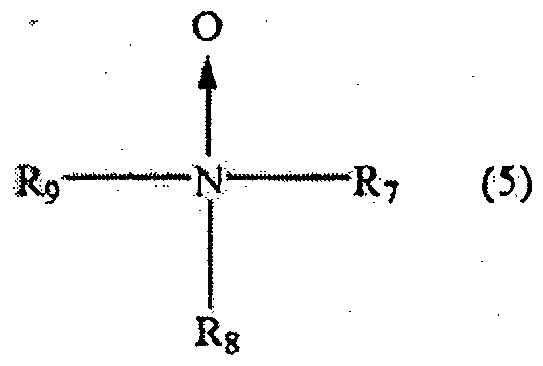 wobei R7, R8 und R9 jeweils ein Wasserstoffatom, eine lineare, verzweigte oder cyclische Alkylgruppe mit 1 bis 20 Kohlenstoffatomen, eine Arylgruppe mit 6 bis 20 Kohlenstoffatomen, eine Aralkylgruppe mit 7 bis 20 Kohlenstoffatomen, eine Hydroxyalkylgruppe mit 2 bis 10 Kohlenstoffatomen, eine Alkoxyalkylgruppe mit 2 bis 10 Kohlenstoffatomen, eine Acyloxyalkylgruppe mit 2 bis 10 Kohlenstoffatomen oder eine Alkylthioalkylgruppe mit 1 bis 10 Kohlenstoffatomen sind; undzwei von R7, R8 und R9 verbunden sein können, um eine Ringstruktur oder einen aromatischen Ring zu bilden.
Applications Claiming Priority (2)
| Application Number | Priority Date | Filing Date | Title |
|---|---|---|---|
| JP2008181509 | 2008-07-11 | ||
| EP09007469.1A EP2146245B1 (de) | 2008-07-11 | 2009-06-05 | Resistzusammensetzung und Strukturierungsverfahren |
Related Parent Applications (3)
| Application Number | Title | Priority Date | Filing Date |
|---|---|---|---|
| EP09007469.1A Division-Into EP2146245B1 (de) | 2008-07-11 | 2009-06-05 | Resistzusammensetzung und Strukturierungsverfahren |
| EP09007469.1A Division EP2146245B1 (de) | 2008-07-11 | 2009-06-05 | Resistzusammensetzung und Strukturierungsverfahren |
| EP09007469.1 Division | 2009-06-05 |
Publications (3)
| Publication Number | Publication Date |
|---|---|
| EP2244125A2 EP2244125A2 (de) | 2010-10-27 |
| EP2244125A3 EP2244125A3 (de) | 2010-11-10 |
| EP2244125B1 true EP2244125B1 (de) | 2014-10-08 |
Family
ID=41152133
Family Applications (5)
| Application Number | Title | Priority Date | Filing Date |
|---|---|---|---|
| EP10006254.6A Active EP2267533B1 (de) | 2008-07-11 | 2009-06-05 | Resistzusammensetzung |
| EP10006242.1A Active EP2244126B1 (de) | 2008-07-11 | 2009-06-05 | Strukturierungsverfahren |
| EP10006255.3A Active EP2244125B1 (de) | 2008-07-11 | 2009-06-05 | Resistzusammensetzung |
| EP09007469.1A Active EP2146245B1 (de) | 2008-07-11 | 2009-06-05 | Resistzusammensetzung und Strukturierungsverfahren |
| EP10006243.9A Active EP2244124B1 (de) | 2008-07-11 | 2009-06-05 | Strukturierungsverfahren |
Family Applications Before (2)
| Application Number | Title | Priority Date | Filing Date |
|---|---|---|---|
| EP10006254.6A Active EP2267533B1 (de) | 2008-07-11 | 2009-06-05 | Resistzusammensetzung |
| EP10006242.1A Active EP2244126B1 (de) | 2008-07-11 | 2009-06-05 | Strukturierungsverfahren |
Family Applications After (2)
| Application Number | Title | Priority Date | Filing Date |
|---|---|---|---|
| EP09007469.1A Active EP2146245B1 (de) | 2008-07-11 | 2009-06-05 | Resistzusammensetzung und Strukturierungsverfahren |
| EP10006243.9A Active EP2244124B1 (de) | 2008-07-11 | 2009-06-05 | Strukturierungsverfahren |
Country Status (6)
| Country | Link |
|---|---|
| US (3) | US8168367B2 (de) |
| EP (5) | EP2267533B1 (de) |
| KR (3) | KR101362547B1 (de) |
| CN (3) | CN102591152B (de) |
| SG (1) | SG158790A1 (de) |
| TW (3) | TWI430023B (de) |
Families Citing this family (34)
| Publication number | Priority date | Publication date | Assignee | Title |
|---|---|---|---|---|
| JP4784760B2 (ja) * | 2006-10-20 | 2011-10-05 | 信越化学工業株式会社 | レジスト材料及びパターン形成方法 |
| US8168367B2 (en) * | 2008-07-11 | 2012-05-01 | Shin-Etsu Chemical Co., Ltd. | Resist composition and patterning process |
| JP5290129B2 (ja) * | 2008-12-25 | 2013-09-18 | 信越化学工業株式会社 | 化学増幅ポジ型レジスト組成物及びレジストパターン形成方法 |
| JP5439030B2 (ja) * | 2009-05-18 | 2014-03-12 | 信越化学工業株式会社 | ネガ型レジスト組成物の検査方法及び調製方法 |
| JP4955732B2 (ja) * | 2009-05-29 | 2012-06-20 | 信越化学工業株式会社 | ネガ型レジスト組成物及びこれを用いたパターン形成方法 |
| JP4950252B2 (ja) * | 2009-07-01 | 2012-06-13 | 信越化学工業株式会社 | ポジ型レジスト組成物およびパターン形成方法 |
| JP5124535B2 (ja) * | 2009-07-03 | 2013-01-23 | 富士フイルム株式会社 | 感活性光線性又は感放射性樹脂組成物及びそれを用いたパターン形成方法 |
| JP5584573B2 (ja) * | 2009-12-01 | 2014-09-03 | 信越化学工業株式会社 | ネガ型レジスト組成物及びパターン形成方法 |
| JP5054089B2 (ja) * | 2009-12-10 | 2012-10-24 | 信越化学工業株式会社 | ネガ型レジスト組成物及びパターン形成方法 |
| JP5472072B2 (ja) * | 2010-01-13 | 2014-04-16 | 信越化学工業株式会社 | ネガ型レジスト組成物及びパターン形成方法 |
| JP5598350B2 (ja) | 2010-02-16 | 2014-10-01 | 信越化学工業株式会社 | 電子線用又はeuv用化学増幅ネガ型レジスト組成物及びパターン形成方法 |
| JP5598351B2 (ja) * | 2010-02-16 | 2014-10-01 | 信越化学工業株式会社 | 電子線用又はeuv用化学増幅ポジ型レジスト組成物及びパターン形成方法 |
| WO2012036250A1 (ja) * | 2010-09-17 | 2012-03-22 | Jsr株式会社 | 感放射線性樹脂組成物、重合体及びレジストパターン形成方法 |
| JP5365646B2 (ja) | 2011-01-31 | 2013-12-11 | 信越化学工業株式会社 | レジストパターン形成方法 |
| JP5527236B2 (ja) | 2011-01-31 | 2014-06-18 | 信越化学工業株式会社 | ポジ型化学増幅レジスト材料、パターン形成方法及び酸分解性ケトエステル化合物 |
| JP5365651B2 (ja) | 2011-02-28 | 2013-12-11 | 信越化学工業株式会社 | 化学増幅ネガ型レジスト組成物及びパターン形成方法 |
| JP5445488B2 (ja) | 2011-02-28 | 2014-03-19 | 信越化学工業株式会社 | 化学増幅ネガ型レジスト組成物及びパターン形成方法 |
| KR101704474B1 (ko) * | 2011-12-28 | 2017-02-09 | 금호석유화학 주식회사 | 레지스트용 첨가제 및 이를 포함하는 레지스트 조성물 |
| KR101633657B1 (ko) * | 2011-12-28 | 2016-06-28 | 금호석유화학 주식회사 | 레지스트용 첨가제 및 이를 포함하는 레지스트 조성물 |
| US9244348B2 (en) * | 2012-02-13 | 2016-01-26 | Shin-Etsu Chemical Co., Ltd. | Chemically amplified negative resist composition and pattern forming process |
| KR101482631B1 (ko) | 2012-11-20 | 2015-01-14 | 삼성디스플레이 주식회사 | 고분자, 상기 고분자를 포함한 레지스트 조성물 및 상기 레지스트 조성물을 이용한 레지스트 패턴 형성 방법 |
| JP6101540B2 (ja) | 2013-03-29 | 2017-03-22 | 富士フイルム株式会社 | 感活性光線性又は感放射線性樹脂組成物、レジスト膜、レジスト塗布マスクブランクス、フォトマスクの製造方法、及び、パターン形成方法、並びに、これらを用いた電子デバイスの製造方法 |
| JP6185874B2 (ja) * | 2013-05-02 | 2017-08-23 | 富士フイルム株式会社 | パターン形成方法、感活性光線性又は感放射線性樹脂組成物、レジスト膜、電子デバイスの製造方法、及び、電子デバイス |
| JP6046646B2 (ja) | 2014-01-10 | 2016-12-21 | 信越化学工業株式会社 | オニウム塩、化学増幅型ポジ型レジスト組成物、及びパターン形成方法 |
| US9599896B2 (en) * | 2014-03-14 | 2017-03-21 | Taiwan Semiconductor Manufacturing Company, Ltd. | Photoresist system and method |
| JP6206311B2 (ja) * | 2014-04-22 | 2017-10-04 | 信越化学工業株式会社 | 光酸発生剤、化学増幅型レジスト材料及びパターン形成方法 |
| JPWO2016035497A1 (ja) | 2014-09-02 | 2017-04-27 | 富士フイルム株式会社 | パターン形成方法、電子デバイスの製造方法及び電子デバイス |
| EP3081988B1 (de) | 2015-04-07 | 2017-08-16 | Shin-Etsu Chemical Co., Ltd. | Negative resistzusammensetzung und verfahren zur musterformung |
| JP6609193B2 (ja) | 2016-01-25 | 2019-11-20 | 信越化学工業株式会社 | 高分子化合物、ネガ型レジスト組成物、積層体、パターン形成方法、及び化合物 |
| JP6796534B2 (ja) * | 2017-03-31 | 2020-12-09 | 東京応化工業株式会社 | レジスト組成物及びレジストパターン形成方法 |
| JP6922849B2 (ja) | 2018-05-25 | 2021-08-18 | 信越化学工業株式会社 | 単量体、ポリマー、ネガ型レジスト組成物、フォトマスクブランク、及びレジストパターン形成方法 |
| JP7099250B2 (ja) | 2018-10-25 | 2022-07-12 | 信越化学工業株式会社 | オニウム塩、ネガ型レジスト組成物及びレジストパターン形成方法 |
| JP7108565B2 (ja) * | 2019-03-11 | 2022-07-28 | 信越化学工業株式会社 | 導電性高分子組成物、被覆品、及びパターン形成方法 |
| TW202128970A (zh) * | 2019-08-29 | 2021-08-01 | 日商富士軟片股份有限公司 | 感光化射線性或感放射線性樹脂組成物、感光化射線性或感放射線性膜、圖案形成方法及電子裝置之製造方法 |
Family Cites Families (32)
| Publication number | Priority date | Publication date | Assignee | Title |
|---|---|---|---|---|
| JPS57104141A (en) * | 1980-12-22 | 1982-06-29 | Dainippon Printing Co Ltd | Photomask and photomask substrate |
| JPH0561193A (ja) | 1991-08-30 | 1993-03-12 | Fuji Photo Film Co Ltd | ポジ型フオトレジスト組成物 |
| JP2989064B2 (ja) | 1991-12-16 | 1999-12-13 | 日本ゼオン株式会社 | 金属蒸着膜のパターン形成方法 |
| JP3010607B2 (ja) | 1992-02-25 | 2000-02-21 | ジェイエスアール株式会社 | 感放射線性樹脂組成物 |
| JP2976414B2 (ja) | 1992-04-10 | 1999-11-10 | ジェイエスアール株式会社 | 感放射線性樹脂組成物 |
| US5580695A (en) | 1992-02-25 | 1996-12-03 | Japan Synthetic Rubber Co., Ltd. | Chemically amplified resist |
| US5807977A (en) | 1992-07-10 | 1998-09-15 | Aerojet General Corporation | Polymers and prepolymers from mono-substituted fluorinated oxetane monomers |
| JP3317597B2 (ja) | 1994-10-18 | 2002-08-26 | 富士写真フイルム株式会社 | ポジ型感光性組成物 |
| TW526390B (en) | 1997-06-26 | 2003-04-01 | Shinetsu Chemical Co | Resist compositions |
| US6455223B1 (en) | 1999-03-26 | 2002-09-24 | Shin-Etsu Chemical Co., Ltd. | Resist compositions and patterning process |
| KR100401116B1 (ko) | 1999-06-03 | 2003-10-10 | 주식회사 하이닉스반도체 | 아민오염방지 물질 및 이를 이용한 미세패턴 형성방법 |
| US6887646B1 (en) | 1999-07-12 | 2005-05-03 | Mitsubishi Rayon Co., Ltd. | Chemical amplification resist composition |
| US6673511B1 (en) | 1999-10-29 | 2004-01-06 | Shin-Etsu Chemical Co., Ltd. | Resist composition |
| SG98433A1 (en) | 1999-12-21 | 2003-09-19 | Ciba Sc Holding Ag | Iodonium salts as latent acid donors |
| JP2002214769A (ja) | 2001-01-18 | 2002-07-31 | Fuji Photo Film Co Ltd | 感放射線性ポジ型レジスト組成物 |
| US20040012872A1 (en) | 2001-06-14 | 2004-01-22 | Fleming Patrick R | Multiphoton absorption method using patterned light |
| JP2002372783A (ja) | 2001-06-15 | 2002-12-26 | Fuji Photo Film Co Ltd | ネガ型レジスト組成物 |
| JP2003122011A (ja) | 2001-10-18 | 2003-04-25 | Fuji Photo Film Co Ltd | ポジ型感光性組成物 |
| DE10208448A1 (de) | 2002-02-27 | 2003-09-11 | Infineon Technologies Ag | Lithografieverfahren zur Verringerung des lateralen Chromstrukturverlustes bei der Fotomaskenherstellung unter Verwendung chemisch verstärkter Resists |
| US7147973B2 (en) | 2003-03-19 | 2006-12-12 | Micron Technology, Inc. | Method to recover the exposure sensitivity of chemically amplified resins from post coat delay effect |
| JP4092571B2 (ja) * | 2003-08-05 | 2008-05-28 | 信越化学工業株式会社 | レジスト材料及びパターン形成方法 |
| CN1914558A (zh) | 2004-02-11 | 2007-02-14 | 国际商业机器公司 | 混合碱用于提高铬或敏感基材上的图案化抗蚀剂分布的应用 |
| JP4557159B2 (ja) | 2004-04-15 | 2010-10-06 | 信越化学工業株式会社 | 化学増幅ポジ型レジスト材料及びこれを用いたパターン形成方法 |
| JP4152928B2 (ja) * | 2004-08-02 | 2008-09-17 | 株式会社シンク・ラボラトリー | ポジ型感光性組成物 |
| JP4396849B2 (ja) | 2005-01-21 | 2010-01-13 | 信越化学工業株式会社 | ネガ型レジスト材料及びパターン形成方法 |
| JP2007171520A (ja) | 2005-12-21 | 2007-07-05 | Hoya Corp | マスクブランク及びマスク |
| WO2007080726A1 (ja) * | 2006-01-11 | 2007-07-19 | Tokyo Ohka Kogyo Co., Ltd. | リソグラフィー用洗浄剤及びそれを用いたレジストパターン形成方法 |
| JP5201813B2 (ja) | 2006-09-15 | 2013-06-05 | Hoya株式会社 | マスクブランク及びマスクの製造方法 |
| JP4858714B2 (ja) | 2006-10-04 | 2012-01-18 | 信越化学工業株式会社 | 高分子化合物、レジスト材料、及びパターン形成方法 |
| JP4784760B2 (ja) | 2006-10-20 | 2011-10-05 | 信越化学工業株式会社 | レジスト材料及びパターン形成方法 |
| JP4359629B2 (ja) | 2007-05-02 | 2009-11-04 | 信越化学工業株式会社 | 化学増幅型レジスト組成物の製造方法 |
| US8168367B2 (en) | 2008-07-11 | 2012-05-01 | Shin-Etsu Chemical Co., Ltd. | Resist composition and patterning process |
-
2009
- 2009-06-03 US US12/457,192 patent/US8168367B2/en active Active
- 2009-06-05 EP EP10006254.6A patent/EP2267533B1/de active Active
- 2009-06-05 EP EP10006242.1A patent/EP2244126B1/de active Active
- 2009-06-05 EP EP10006255.3A patent/EP2244125B1/de active Active
- 2009-06-05 EP EP09007469.1A patent/EP2146245B1/de active Active
- 2009-06-05 EP EP10006243.9A patent/EP2244124B1/de active Active
- 2009-06-08 SG SG200903894-4A patent/SG158790A1/en unknown
- 2009-07-10 TW TW098123530A patent/TWI430023B/zh active
- 2009-07-10 KR KR1020090063008A patent/KR101362547B1/ko active Active
- 2009-07-10 CN CN201110442501.1A patent/CN102591152B/zh active Active
- 2009-07-10 CN CN200910140187.4A patent/CN101625524B/zh active Active
- 2009-07-10 TW TW100129007A patent/TWI467331B/zh active
- 2009-07-10 TW TW100129006A patent/TWI467330B/zh active
- 2009-07-10 CN CN201110442517.2A patent/CN102520581B/zh active Active
-
2011
- 2011-12-16 KR KR1020110136018A patent/KR101277435B1/ko active Active
- 2011-12-16 KR KR1020110136024A patent/KR101295406B1/ko active Active
-
2012
- 2012-03-22 US US13/427,653 patent/US8586282B2/en active Active
- 2012-03-22 US US13/427,621 patent/US8592133B2/en active Active
Also Published As
Similar Documents
| Publication | Publication Date | Title |
|---|---|---|
| EP2244125B1 (de) | Resistzusammensetzung | |
| JP4801190B2 (ja) | 化学増幅型レジスト組成物 | |
| US7527912B2 (en) | Photoacid generators, resist compositions, and patterning process | |
| US7928262B2 (en) | Sulfonate salts and derivatives, photoacid generators, resist compositions, and patterning process | |
| US7498126B2 (en) | Photoacid generators, chemically amplified resist compositions, and patterning process | |
| US6689530B2 (en) | Sulfonyldiazomethanes, photoacid generations, resist compositions, and patterning process | |
| US20070099112A1 (en) | Novel sulfonate salts and derivatives, photoacid generators, resist compositions, and patterning process | |
| JP5177432B2 (ja) | パターン形成方法 | |
| EP1505443B1 (de) | Resistpolymer, Resistzusammensetzung und Mustererzeugungsverfahren | |
| US7109311B2 (en) | Sulfonyldiazomethanes, photoacid generators, resist compositions, and patterning process | |
| US20040033440A1 (en) | Photoacid generators, chemically amplified positive resist compositions, and patterning process | |
| US20040166432A1 (en) | Novel sulfonyldiazomethanes, photoacid generators, resist compositions, and patterning process | |
| US7056640B2 (en) | Sulfonydiazomethanes, photoacid generators, resist compositions, and patterning process |
Legal Events
| Date | Code | Title | Description |
|---|---|---|---|
| PUAI | Public reference made under article 153(3) epc to a published international application that has entered the european phase |
Free format text: ORIGINAL CODE: 0009012 |
|
| PUAL | Search report despatched |
Free format text: ORIGINAL CODE: 0009013 |
|
| 17P | Request for examination filed |
Effective date: 20100616 |
|
| AC | Divisional application: reference to earlier application |
Ref document number: 2146245 Country of ref document: EP Kind code of ref document: P |
|
| AK | Designated contracting states |
Kind code of ref document: A2 Designated state(s): AT BE BG CH CY CZ DE DK EE ES FI FR GB GR HR HU IE IS IT LI LT LU LV MC MK MT NL NO PL PT RO SE SI SK TR |
|
| AX | Request for extension of the european patent |
Extension state: AL BA RS |
|
| AK | Designated contracting states |
Kind code of ref document: A3 Designated state(s): AT BE BG CH CY CZ DE DK EE ES FI FR GB GR HR HU IE IS IT LI LT LU LV MC MK MT NL NO PL PT RO SE SI SK TR |
|
| AX | Request for extension of the european patent |
Extension state: AL BA RS |
|
| 17Q | First examination report despatched |
Effective date: 20131121 |
|
| GRAP | Despatch of communication of intention to grant a patent |
Free format text: ORIGINAL CODE: EPIDOSNIGR1 |
|
| INTG | Intention to grant announced |
Effective date: 20140520 |
|
| GRAS | Grant fee paid |
Free format text: ORIGINAL CODE: EPIDOSNIGR3 |
|
| GRAA | (expected) grant |
Free format text: ORIGINAL CODE: 0009210 |
|
| AC | Divisional application: reference to earlier application |
Ref document number: 2146245 Country of ref document: EP Kind code of ref document: P |
|
| AK | Designated contracting states |
Kind code of ref document: B1 Designated state(s): AT BE BG CH CY CZ DE DK EE ES FI FR GB GR HR HU IE IS IT LI LT LU LV MC MK MT NL NO PL PT RO SE SI SK TR |
|
| REG | Reference to a national code |
Ref country code: GB Ref legal event code: FG4D |
|
| REG | Reference to a national code |
Ref country code: CH Ref legal event code: EP Ref country code: AT Ref legal event code: REF Ref document number: 690941 Country of ref document: AT Kind code of ref document: T Effective date: 20141015 |
|
| REG | Reference to a national code |
Ref country code: IE Ref legal event code: FG4D |
|
| REG | Reference to a national code |
Ref country code: NL Ref legal event code: T3 |
|
| REG | Reference to a national code |
Ref country code: DE Ref legal event code: R096 Ref document number: 602009027147 Country of ref document: DE Effective date: 20141120 |
|
| REG | Reference to a national code |
Ref country code: AT Ref legal event code: MK05 Ref document number: 690941 Country of ref document: AT Kind code of ref document: T Effective date: 20141008 |
|
| REG | Reference to a national code |
Ref country code: LT Ref legal event code: MG4D |
|
| PG25 | Lapsed in a contracting state [announced via postgrant information from national office to epo] |
Ref country code: FI Free format text: LAPSE BECAUSE OF FAILURE TO SUBMIT A TRANSLATION OF THE DESCRIPTION OR TO PAY THE FEE WITHIN THE PRESCRIBED TIME-LIMIT Effective date: 20141008 Ref country code: LT Free format text: LAPSE BECAUSE OF FAILURE TO SUBMIT A TRANSLATION OF THE DESCRIPTION OR TO PAY THE FEE WITHIN THE PRESCRIBED TIME-LIMIT Effective date: 20141008 Ref country code: ES Free format text: LAPSE BECAUSE OF FAILURE TO SUBMIT A TRANSLATION OF THE DESCRIPTION OR TO PAY THE FEE WITHIN THE PRESCRIBED TIME-LIMIT Effective date: 20141008 Ref country code: NO Free format text: LAPSE BECAUSE OF FAILURE TO SUBMIT A TRANSLATION OF THE DESCRIPTION OR TO PAY THE FEE WITHIN THE PRESCRIBED TIME-LIMIT Effective date: 20150108 Ref country code: PT Free format text: LAPSE BECAUSE OF FAILURE TO SUBMIT A TRANSLATION OF THE DESCRIPTION OR TO PAY THE FEE WITHIN THE PRESCRIBED TIME-LIMIT Effective date: 20150209 Ref country code: IS Free format text: LAPSE BECAUSE OF FAILURE TO SUBMIT A TRANSLATION OF THE DESCRIPTION OR TO PAY THE FEE WITHIN THE PRESCRIBED TIME-LIMIT Effective date: 20150208 |
|
| PG25 | Lapsed in a contracting state [announced via postgrant information from national office to epo] |
Ref country code: AT Free format text: LAPSE BECAUSE OF FAILURE TO SUBMIT A TRANSLATION OF THE DESCRIPTION OR TO PAY THE FEE WITHIN THE PRESCRIBED TIME-LIMIT Effective date: 20141008 Ref country code: PL Free format text: LAPSE BECAUSE OF FAILURE TO SUBMIT A TRANSLATION OF THE DESCRIPTION OR TO PAY THE FEE WITHIN THE PRESCRIBED TIME-LIMIT Effective date: 20141008 Ref country code: HR Free format text: LAPSE BECAUSE OF FAILURE TO SUBMIT A TRANSLATION OF THE DESCRIPTION OR TO PAY THE FEE WITHIN THE PRESCRIBED TIME-LIMIT Effective date: 20141008 Ref country code: LV Free format text: LAPSE BECAUSE OF FAILURE TO SUBMIT A TRANSLATION OF THE DESCRIPTION OR TO PAY THE FEE WITHIN THE PRESCRIBED TIME-LIMIT Effective date: 20141008 Ref country code: GR Free format text: LAPSE BECAUSE OF FAILURE TO SUBMIT A TRANSLATION OF THE DESCRIPTION OR TO PAY THE FEE WITHIN THE PRESCRIBED TIME-LIMIT Effective date: 20150109 Ref country code: CY Free format text: LAPSE BECAUSE OF FAILURE TO SUBMIT A TRANSLATION OF THE DESCRIPTION OR TO PAY THE FEE WITHIN THE PRESCRIBED TIME-LIMIT Effective date: 20141008 Ref country code: SE Free format text: LAPSE BECAUSE OF FAILURE TO SUBMIT A TRANSLATION OF THE DESCRIPTION OR TO PAY THE FEE WITHIN THE PRESCRIBED TIME-LIMIT Effective date: 20141008 |
|
| REG | Reference to a national code |
Ref country code: DE Ref legal event code: R097 Ref document number: 602009027147 Country of ref document: DE |
|
| PG25 | Lapsed in a contracting state [announced via postgrant information from national office to epo] |
Ref country code: DK Free format text: LAPSE BECAUSE OF FAILURE TO SUBMIT A TRANSLATION OF THE DESCRIPTION OR TO PAY THE FEE WITHIN THE PRESCRIBED TIME-LIMIT Effective date: 20141008 Ref country code: SK Free format text: LAPSE BECAUSE OF FAILURE TO SUBMIT A TRANSLATION OF THE DESCRIPTION OR TO PAY THE FEE WITHIN THE PRESCRIBED TIME-LIMIT Effective date: 20141008 Ref country code: EE Free format text: LAPSE BECAUSE OF FAILURE TO SUBMIT A TRANSLATION OF THE DESCRIPTION OR TO PAY THE FEE WITHIN THE PRESCRIBED TIME-LIMIT Effective date: 20141008 Ref country code: CZ Free format text: LAPSE BECAUSE OF FAILURE TO SUBMIT A TRANSLATION OF THE DESCRIPTION OR TO PAY THE FEE WITHIN THE PRESCRIBED TIME-LIMIT Effective date: 20141008 Ref country code: RO Free format text: LAPSE BECAUSE OF FAILURE TO SUBMIT A TRANSLATION OF THE DESCRIPTION OR TO PAY THE FEE WITHIN THE PRESCRIBED TIME-LIMIT Effective date: 20141008 |
|
| PLBE | No opposition filed within time limit |
Free format text: ORIGINAL CODE: 0009261 |
|
| STAA | Information on the status of an ep patent application or granted ep patent |
Free format text: STATUS: NO OPPOSITION FILED WITHIN TIME LIMIT |
|
| 26N | No opposition filed |
Effective date: 20150709 |
|
| PG25 | Lapsed in a contracting state [announced via postgrant information from national office to epo] |
Ref country code: MC Free format text: LAPSE BECAUSE OF FAILURE TO SUBMIT A TRANSLATION OF THE DESCRIPTION OR TO PAY THE FEE WITHIN THE PRESCRIBED TIME-LIMIT Effective date: 20141008 |
|
| REG | Reference to a national code |
Ref country code: CH Ref legal event code: PL |
|
| GBPC | Gb: european patent ceased through non-payment of renewal fee |
Effective date: 20150605 |
|
| PG25 | Lapsed in a contracting state [announced via postgrant information from national office to epo] |
Ref country code: LU Free format text: LAPSE BECAUSE OF FAILURE TO SUBMIT A TRANSLATION OF THE DESCRIPTION OR TO PAY THE FEE WITHIN THE PRESCRIBED TIME-LIMIT Effective date: 20150605 Ref country code: SI Free format text: LAPSE BECAUSE OF FAILURE TO SUBMIT A TRANSLATION OF THE DESCRIPTION OR TO PAY THE FEE WITHIN THE PRESCRIBED TIME-LIMIT Effective date: 20141008 |
|
| REG | Reference to a national code |
Ref country code: IE Ref legal event code: MM4A |
|
| PG25 | Lapsed in a contracting state [announced via postgrant information from national office to epo] |
Ref country code: LI Free format text: LAPSE BECAUSE OF NON-PAYMENT OF DUE FEES Effective date: 20150630 Ref country code: IE Free format text: LAPSE BECAUSE OF NON-PAYMENT OF DUE FEES Effective date: 20150605 Ref country code: CH Free format text: LAPSE BECAUSE OF NON-PAYMENT OF DUE FEES Effective date: 20150630 Ref country code: GB Free format text: LAPSE BECAUSE OF NON-PAYMENT OF DUE FEES Effective date: 20150605 |
|
| REG | Reference to a national code |
Ref country code: FR Ref legal event code: PLFP Year of fee payment: 8 |
|
| PG25 | Lapsed in a contracting state [announced via postgrant information from national office to epo] |
Ref country code: MT Free format text: LAPSE BECAUSE OF FAILURE TO SUBMIT A TRANSLATION OF THE DESCRIPTION OR TO PAY THE FEE WITHIN THE PRESCRIBED TIME-LIMIT Effective date: 20141008 |
|
| REG | Reference to a national code |
Ref country code: FR Ref legal event code: PLFP Year of fee payment: 9 |
|
| PG25 | Lapsed in a contracting state [announced via postgrant information from national office to epo] |
Ref country code: BG Free format text: LAPSE BECAUSE OF FAILURE TO SUBMIT A TRANSLATION OF THE DESCRIPTION OR TO PAY THE FEE WITHIN THE PRESCRIBED TIME-LIMIT Effective date: 20141008 Ref country code: HU Free format text: LAPSE BECAUSE OF FAILURE TO SUBMIT A TRANSLATION OF THE DESCRIPTION OR TO PAY THE FEE WITHIN THE PRESCRIBED TIME-LIMIT; INVALID AB INITIO Effective date: 20090605 |
|
| PG25 | Lapsed in a contracting state [announced via postgrant information from national office to epo] |
Ref country code: TR Free format text: LAPSE BECAUSE OF FAILURE TO SUBMIT A TRANSLATION OF THE DESCRIPTION OR TO PAY THE FEE WITHIN THE PRESCRIBED TIME-LIMIT Effective date: 20141008 |
|
| PG25 | Lapsed in a contracting state [announced via postgrant information from national office to epo] |
Ref country code: BE Free format text: LAPSE BECAUSE OF FAILURE TO SUBMIT A TRANSLATION OF THE DESCRIPTION OR TO PAY THE FEE WITHIN THE PRESCRIBED TIME-LIMIT Effective date: 20141008 |
|
| REG | Reference to a national code |
Ref country code: FR Ref legal event code: PLFP Year of fee payment: 10 |
|
| PG25 | Lapsed in a contracting state [announced via postgrant information from national office to epo] |
Ref country code: MK Free format text: LAPSE BECAUSE OF FAILURE TO SUBMIT A TRANSLATION OF THE DESCRIPTION OR TO PAY THE FEE WITHIN THE PRESCRIBED TIME-LIMIT Effective date: 20141008 |
|
| PGFP | Annual fee paid to national office [announced via postgrant information from national office to epo] |
Ref country code: NL Payment date: 20250516 Year of fee payment: 17 |
|
| PGFP | Annual fee paid to national office [announced via postgrant information from national office to epo] |
Ref country code: DE Payment date: 20250429 Year of fee payment: 17 |
|
| PGFP | Annual fee paid to national office [announced via postgrant information from national office to epo] |
Ref country code: IT Payment date: 20250522 Year of fee payment: 17 |
|
| PGFP | Annual fee paid to national office [announced via postgrant information from national office to epo] |
Ref country code: FR Payment date: 20250508 Year of fee payment: 17 |