EP2249546A1 - Partage de contenu média basé sur un serveur média dans un réseau de fournisseur - Google Patents
Partage de contenu média basé sur un serveur média dans un réseau de fournisseur Download PDFInfo
- Publication number
- EP2249546A1 EP2249546A1 EP10157939A EP10157939A EP2249546A1 EP 2249546 A1 EP2249546 A1 EP 2249546A1 EP 10157939 A EP10157939 A EP 10157939A EP 10157939 A EP10157939 A EP 10157939A EP 2249546 A1 EP2249546 A1 EP 2249546A1
- Authority
- EP
- European Patent Office
- Prior art keywords
- media
- multicast group
- content
- network
- media content
- Prior art date
- Legal status (The legal status is an assumption and is not a legal conclusion. Google has not performed a legal analysis and makes no representation as to the accuracy of the status listed.)
- Granted
Links
Images




Classifications
-
- H—ELECTRICITY
- H04—ELECTRIC COMMUNICATION TECHNIQUE
- H04L—TRANSMISSION OF DIGITAL INFORMATION, e.g. TELEGRAPHIC COMMUNICATION
- H04L67/00—Network arrangements or protocols for supporting network services or applications
- H04L67/01—Protocols
- H04L67/10—Protocols in which an application is distributed across nodes in the network
- H04L67/1097—Protocols in which an application is distributed across nodes in the network for distributed storage of data in networks, e.g. transport arrangements for network file system [NFS], storage area networks [SAN] or network attached storage [NAS]
-
- H—ELECTRICITY
- H04—ELECTRIC COMMUNICATION TECHNIQUE
- H04L—TRANSMISSION OF DIGITAL INFORMATION, e.g. TELEGRAPHIC COMMUNICATION
- H04L12/00—Data switching networks
- H04L12/02—Details
- H04L12/16—Arrangements for providing special services to substations
- H04L12/18—Arrangements for providing special services to substations for broadcast or conference, e.g. multicast
- H04L12/185—Arrangements for providing special services to substations for broadcast or conference, e.g. multicast with management of multicast group membership
-
- H—ELECTRICITY
- H04—ELECTRIC COMMUNICATION TECHNIQUE
- H04L—TRANSMISSION OF DIGITAL INFORMATION, e.g. TELEGRAPHIC COMMUNICATION
- H04L12/00—Data switching networks
- H04L12/28—Data switching networks characterised by path configuration, e.g. LAN [Local Area Networks] or WAN [Wide Area Networks]
- H04L12/2801—Broadband local area networks
-
- H—ELECTRICITY
- H04—ELECTRIC COMMUNICATION TECHNIQUE
- H04L—TRANSMISSION OF DIGITAL INFORMATION, e.g. TELEGRAPHIC COMMUNICATION
- H04L12/00—Data switching networks
- H04L12/28—Data switching networks characterised by path configuration, e.g. LAN [Local Area Networks] or WAN [Wide Area Networks]
- H04L12/2854—Wide area networks, e.g. public data networks
- H04L12/2856—Access arrangements, e.g. Internet access
- H04L12/2858—Access network architectures
- H04L12/2861—Point-to-multipoint connection from the data network to the subscribers
Definitions
- the media server may be located in a service provider's network and may implement protocols compliant with a Digital Living Network Alliance (DLNA).
- DLNA Digital Living Network Alliance
- Network media sources include a service provider's legacy video plant, the Internet, retail rental locations (physical DVDs), and the home network.
- a home network typically has consumer electronics (CE) devices such as set top boxes, DVD players, personal computers (PCs), game consoles, portable media devices, and mobile phones.
- CE consumer electronics
- Standards are evolving for content delivery, in which content portability may be achieved and made interoperable through the use of compatible devices and other video internetworking technologies.
- DLNA Digital Living Network Alliance
- DLNA Digital Living Network Alliance
- DLNA DLNA
- DLNA digital content
- PCs PCs
- mobile devices in and beyond the home.
- the organization seeks to deliver an interoperability framework and design guidelines that become open industry standards.
- Current guidelines expand the capabilities of the DLNA-defined network to include more device classes and functional capabilities, including printers, mobile devices, controllers, uploaders and downloaders.
- the guidelines also include specifications for digital rights management.
- DLNA media servers are co-resident to DLNA media players in the local network that is typically located on the customer's premises.
- Media content is often stored in the Internet and may not be protected by a high level of security.
- Media content from the Internet sources may be downloaded to a PC in order for the PC to provide the media content from a DLNA media server to other DLNA media players in the DLNA network.
- Personalized services e . g ., storage of the media content and the administration of DLNA media and server capability, are typically the responsibility of the customer in the local network.
- many customers do not have a technical background and may find this responsibility difficult and burdensome.
- playing this media content on other media players e.g. , televisions and portable media players (PMPs)
- PMPs portable media players
- media content is often copied to a physical storage device each time the media content is shared with a user in the DLNA network. This may increase the cost to the customer and may require supporting a variety of physical storage devices.
- a media server is hosted in a service provider's network so that media content can be stored from or rendered to a private network such as a Digital Living Network Alliance (DLNA) network.
- Media content may be stored directly by accessing the media server or by downloading the media content to the media server.
- DLNA Digital Living Network Alliance
- a server platform may further support a set of media servers, where each media server is connected to a corresponding DLNA network.
- a multicast group may be established among the set of media servers so that media content may be shared with members of the multicast group.
- a content list for one of the media servers may be sent to the other media servers of the multicast group so that a member of the multicast group can access listed media content.
- Media content may be aggregated with media content for the multicast group based on content characteristics, where the content characteristics are indicative of media content that can be shared with members of the multicast group.
- a content list of the aggregated media content may be generated so that a member may select media content from the content list.
- Embodiments can be partially or wholly implemented on a computer-readable medium, for example, by storing computer-executable instructions or modules, or by utilizing computer-readable data structures.
- Figure 1 illustrates a system with a media server that appears as a local media server in accordance with various aspects.
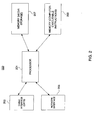
- Figure 2 shows an apparatus that supports a media server in accordance with various aspects.
- Figure 3 shows a system in a network with tunneling flow in accordance with various aspects.
- Figure 4 shows a system with a network server supporting a plurality of DLNA networks in accordance with aspects.
- Figure 5 shows a flow diagram that supports tunneling in accordance with aspects.
- FIG. 6 shows multicast media group management for media content sharing in accordance with various aspects.
- Figure 7 shows an example of associating users with different multicast groups in accordance with various aspects.
- Figure 8 shows a flow diagram that supports content messaging in accordance with various aspects.
- Figure 9 shows a flow diagram that supports content messaging in accordance with various aspects.
- Figure 1 shows a system 100 that supports a network such as a Digital Living Network Alliance (DLNA) network.
- DLNA Digital Living Network Alliance
- DLNA published its first set of Interoperability Guidelines in June 2004 and the first set of DLNA Certified products began appearing in the market soon thereafter.
- DLNA Interoperability Guidelines, version 1.5 was published in March 2006, and then expanded in October 2006. These guidelines enlarge the capabilities of a DLNA-defined network to include more home and mobile devices. They also include the specifications for link protection to allow secure transmission of copyright-protected commercial digital content. Products are certified by passing the DLNA Certification Program. However, embodiments are not limited to version 1.5 of the DLNA Interoperability Guidelines.
- DLNA media server 107 appears as a local media server in accordance with various aspects. While a DLNA media server is typically hosted at the customer (user) premises in accordance with traditional systems, DLNA media server 107 is hosted in the service provider network such as a cable network. Media server 107 may host all the personal media content for a user associated with the DLNA network, where media content may be uploaded directly from a device on the DLNA network by the user. Media server 107 may also connect to network media sources.
- a hardware entity typically supports a plurality of users in the service provider network, where each customer is associated with either a separate or virtual media server 107.
- Media server 107 may be referred to as a virtual media server because the media server appears to the devices on the user's physical LAN to be located in the user's private network, as will be discussed.
- Address mapping module 106 converts the physical address associated with media server 107 to a virtual address that is associated with a private network of the customer so that media server appears to be located within the private network (e.g. , a DLNA network). For example, as will be discussed, a tunnel may be established between physical addresses while one or more sessions may be established within the tunnel using the virtual addresses.
- a portion of the DLNA network is associated with the customer premises.
- the customer-based portion typically includes various DLNA devices, e.g. , computer (PC) 109 and media player 101, as well as a local router (not explicitly shown in Figure 1 but shown as router 307 in Figure 3 ) that routes messages between the DLNA devices.
- the local router may be where the tunnel between the physical device 106 and the local network 151 is terminated in the user's network
- media server 107 is discovered through discovery application 110, which is typically implemented in the local network.
- Content fulfillment from the provider network and content delivery may occur through an existing cable infrastructure (e.g. , cable modem termination system CMTS 105 and cable modem 103).
- CMTS 105 is equipment typically found in a cable company's head-end (not shown) or at a cable company hub-site.
- CMTS 105 typically provides high speed data services, e.g. , cable internet or Voice over IP (VoIP), to cable subscribers.
- VoIP Voice over IP
- a cable company often connects its head-end to the Internet via very high capacity data links to a network service provider.
- CMTS 105 enables communication with subscribers' cable modems.
- Different CMTSs are typically capable of serving different cable modem population sizes ranging from 4,000 cable modems to 150,000 or more, depending in part on the amount of traffic.
- a given head-end may be associated with a dozen or more CMTSs to service the cable modem population served by that head-end or hybrid fiber coax (HFC) hub.
- CMTS 105 typically functions as a router with Ethernet interfaces (connections) on one side and coax RF interfaces on the other side.
- the RF/coax interfaces may carry RF signals to and from cable modem 103.
- CMTS 105 typically supports high-speed data interfaces as well as RF interfaces. Consequently, traffic that is coming from the Internet (e.g. , from Internet media server 113) may be routed (or bridged) through an Ethernet interface, through CMTS 105, and then onto the RF interfaces to cable modem 103.
- media server 107 may store the personal media content of the user at personalized media store 111.
- the media content may be stored directly by the user by accessing server 107 securely or by downloading the media content from an external IP source (e.g. , a Fancast server, which can be accessed at www.fancast.com) to media server 107.
- an external IP source e.g. , a Fancast server, which can be accessed at www.fancast.com
- a service provider e.g. , Comcast.net
- Media server 107 provides media content for a private network that is separate from the media content for another private network.
- media content for media server 407 is separately stored from media content for media server 409, in which each media server is associated with different private networks. Consequently, media server 107 may be implemented as a disaggregated DLNA media server for supporting remote fulfillment, in which media content for a private network may be locally discovered.
- Discovery of media server 107 and announcing of content is typically implemented within the local network (e.g. , discovery application 110). This approach may reduce the number of router hops and reduce the round trip delay time during the discovery process.
- proper operation of DLNA-compatible devices may require that DLNA discovery messages be routed with a maximum of 3 router hops and a maximum of 7 msec round trip delay time.
- multicast messages typically are not routed from media server 107 to the local network through CMTS 105 and cable modem 103.
- local DMS application 110 publishes the URL of media server 107 as the URL for the media content.
- Some embodiments may utilize Universal Plug and Play (UPnP) to allow DLNA devices to connect seamlessly and to implement a DLNA network in the home (data sharing, communications, and entertainment) or in a corporate environment.
- UFP Universal Plug and Play
- Each DLNA device has a Dynamic Host Configuration Protocol (DHCP) client and searches for a DHCP server when the device is first connected to the network. If no DHCP server is available (the network is unmanaged), the DLNA device assigns itself an address. If during the DHCP transaction, a DLNA device obtains a domain name through a DNS server or via DNS forwarding, the DLNA device may use that name in subsequent network operations; otherwise, the device should use its IP address.
- DHCP Dynamic Host Configuration Protocol
- UPnP networking further supports a discovery process.
- the UPnP discovery protocol allows a DLNA device to advertise its services to control points on the network.
- the UPnP discovery protocol allows the control point to search for devices of interest on the network.
- the discovery utilizes discovery messaging that may contain a device's type, identifier, and a pointer to more detailed information.
- a media player (e.g. , DLNA media player 101) may use the media server's URL as the destination URL and may communicate with media server 107 for the media content.
- Media server 107 may provide connectivity to existing media store (e.g. , personalized Comcast.net web page) or implement a media store ( e.g. , personalized media store 111).
- messaging between devices in a DLNA network is typically routed through a local router.
- Media server 107 may connect to Internet media server 113 (e . g ., a Fancast server) using Internet Protocol for content rendering over IP connectivity to CMTS 105 to share media content with downstream media players (e.g. , player 101 and PC 109). With some embodiments, media server107 may make requests of Internet media server 113 using standard web interface requests (e.g. , appearing as a PC requesting content using SOAP/XML). Media server 107 then proxies the data for the player 101. Initially, media server 107 may request the catalog of content from Internet media server 113, and may present that over interface 106 using standard UPnP messages annunciating content.
- Internet media server 113 e . g ., a Fancast server
- Internet Protocol for content rendering over IP connectivity to CMTS 105 to share media content with downstream media players (e.g. , player 101 and PC 109).
- media server 107 may make requests of Internet media server 113 using standard web interface requests (e.g. , appearing as a
- Media server 107 may also support additional functionality, including session management for cable modem 103, transcoding media content to an appropriate format (e.g. , MPEG 2 or MPEG 4) as required by a DLNA media player, and digital rights management (DRM) for playing the content on a downstream player (e . g. , Digital Transmission Content Protection over Internet Protocol (DTCP-IP)).
- session management for cable modem 103
- transcoding media content to an appropriate format (e.g. , MPEG 2 or MPEG 4) as required by a DLNA media player
- DRM digital rights management
- DTCP-IP Digital Transmission Content Protection over Internet Protocol
- Media content downloading from Internet media server 113 may be supported by exporting an interface (e.g. , from Fancast to the DLNA media server 107).
- An exemplary embodiment incorporates a web service API with Simple Object Access Protocol (XML protocol) (SOAP/XML) format to connect to the DLNA media server 107 from Internet media server 113.
- DLNA media server 107 may query Internet media server 113 for the media content and cache media content with an expiry timer.
- alternative options implement Remote Method Invocation (RMI) using a Common Object Request Broker Architecture (CORBA) on the Fancast server 113, SQL queries from media server 107 to a database associated with Internet media server 113, or screen scraping of a website that is associated with Internet media server 113.
- RMI Remote Method Invocation
- CORBA Common Object Request Broker Architecture
- RTSP Real Time Streaming Protocol
- a communication channel (e.g., tunnel 321 as shown in Figure 3 ) can be uniquely established from local (home) network 151 to DLNA media server 107. From the customer (end user) perspective, only one media server connects to Internet media server 113. Caching and data transfer may be maintained to provide the same user experience as that of directly connecting to Internet media server 113 or to media store 111.
- System 100 may include a video on demand (VOD) server 115 to support an IP to VOD gateway application residing on a DLNA media server 107.
- VOD video on demand
- System 100 may be advantageous over traditional systems because additional DLNA media servers may not be needed at local network 151 (customer premises). For example, customers may buy devices with DLNA players built into them but may not have a DLNA server to access or content they wish to view in their home network. System 100 may a way for someone to have the service provider "do it for me" without having to purchase additional equipment or spend time building configuring. Personal media content is stored in the provider network media store, thus removing the need for a local storage in local network 151. Media content from Internet media server 113 and other personal media content may be directly downloaded to an IP-enabled DLNA media player because transcoding is performed by transcoder module 108 in the upstream network.
- transcoder module 108 may perform transcoding so that IP media content may be delivered as a video on demand (VOD) through a set top box (not shown).
- transcoder module 180 may perform transcoding so that a VOD media file (VOD asset) is delivered to an IP-compatible device.
- VOD video on demand
- Transcoder module 108 converts the format of a media file or streamed file format into an appropriate format so that a target device can properly play the converted media file based on characteristics of the target device (e.g., resolution and color display capability).
- Transcoder module 108 may convert video formats (i.e., MPEG-2 to MPEG-4, VHS to QuickTime, QuickTime to MPEG).
- transcoder module 108 may be used to fit HTML files and graphics files to the unique constraints of mobile devices and other Web-enabled products. Mobile devices often have smaller screen sizes, lower memory, and slower bandwidth rates.
- Transcoding may entail (changing file formats as previously discussed), transrating (lowering the screen resolution or frames per second to meet the capabilities of the player), and re-encrypting content.
- requests made of the VOD server 115 may be of a proprietary protocol, but the Media Server 107 may know how to interface with that server and start and stream control content.
- a media server may execute computer executable instructions from a computer-readable medium.
- Computer storage media may include volatile and nonvolatile, removable and non-removable media implemented in any method or technology for storage of information such as computer readable instructions, data structures, program modules or other data.
- Computer storage media include, but is not limited to, random access memory (RAM), read only memory (ROM), electronically erasable programmable read only memory (EEPROM), flash memory or other memory technology, CD-ROM, digital versatile disks (DVD) or other optical disk storage, magnetic cassettes, magnetic tape, magnetic disk storage or other magnetic storage devices, or any other medium that can be used to store the desired information and that can be accessed by a processor.
- FIG 2 shows apparatus 200 that supports a media server in accordance with aspects.
- apparatus 200 comprises a computer platform (e.g. , network server 401 as shown in Figure 4 ) that supports numerous media servers (e.g. , media server 107), where each media server is associated with a corresponding private network.
- a computer platform e.g. , network server 401 as shown in Figure 4
- media servers e.g. , media server 107
- Apparatus 200 interfaces to an external or internal network (shown including Internet media server 113 and VOD server 115 in Figure 1 ) via network interface 205 typically with the Internet Protocol and cable interface 203 that communicates with supported private networks through CMTS 105.
- an external or internal network shown including Internet media server 113 and VOD server 115 in Figure 1
- network interface 205 typically with the Internet Protocol and cable interface 203 that communicates with supported private networks through CMTS 105.
- Processor 201 provides functionalities associated with media server 107, as previously discussed, including transformation (e.g. , transcoding) of media content and conversion of physical addresses to virtual addresses so that a virtual address appears to be local within a private network.
- transformation e.g. , transcoding
- Processor 201 may execute computer executable instructions from a computer-readable medium, e.g. , memory 209.
- Computer storage media may include volatile and nonvolatile, removable and non-removable media implemented in any method or technology for storage of information such as computer readable instructions, data structures, program modules or other data.
- Apparatus 200 also includes memory 207 for storing media content. Even though personal media content may be stored in the service provider's network, the media content appears to be locally stored and discovered in the private network that is associated with the media server.
- FIG. 3 shows system 300 in a network with tunneling flow in accordance with various aspects.
- System 300 hosts personalized server (media server) 301 in a service provider network (comprising local network router 307, cable modem 305, and CMTS 303) and connects the network with the user's local network (comprising PC 309, PC 311, portable media player (PMP) 313, and game console 315) by making the server IP address appear to be in the local network.
- a service provider network comprising local network router 307, cable modem 305, and CMTS 303
- PC 309 comprising PC 309, PC 311, portable media player (PMP) 313, and game console 315
- PMP portable media player
- a communications channel may be established between media server 301 (which may be one of a plurality of media servers supported by apparatus 200) to a private network (e.g. , local network 151 as shown in Figure 1 ) through an Ethernet interface to CMTS 303. Consequently, CMTS 303 typically supports a coax RF connection to cable modem 305. With some embodiments, a L2TP communication tunnel may be established between media server 301 (or some sort of security endpoint in front of media server 301) and cable modem 305.
- Media server 301 may be hosted in the upstream network 317 and connects with the corresponding user's local network.
- cable modem 305 is typically at the customer premises and provides the public IP for the local network.
- the local network is typically a private network with private IP addresses, which are not routable outside of the network.
- IP enabled devices in the local network cannot communicate with any personalized servers (e.g. , server 301) in the network cloud.
- the private IP addresses of devices 309, 311, 313, and 315 are routable within the private network only and routed to external networks via the cable modem's public IP address and by performing network address translation.
- Personalized services e.g. , storage of the media, the DLNA Media server capability, and so forth
- Personalized services are typically available only through the public Internet, it may be difficult to offer services which require processing of multicast messages for a DLNA network.
- Traditional cable networks typically do not route the multicast messages originated from a private network.
- a network connection from local network devices to server 301 is supported so as to render various personalized services to the user.
- media server 301 appears to devices 309, 311, 313, and 315 to be in the local network by mapping physical addresses to virtual addresses.
- server 301 may be assigned a physical IP address (e.g. , 180.180.180.180) while the associated virtual address is within the virtual address space of the DLNA network.
- media server 301 may have a physical IP address of 180.180.180.180 while the corresponding virtual address is 150.150.150.150, which is within the virtual address space of the DLNA network.
- the virtual address of media server 301 may be within an address range associated with cable modem 305.
- the virtual addresses of devices 309, 311, 313, and 315 are 150.150.150.151, 150.150.150.152, 150.150.150.153, and 150.150.150.154, respectively.
- Devices 309, 311, 313, and 315 and server 301 can communicate with each other using the virtual addresses so that media server 301 appears to be local within the DLNA network.
- the translation of physical to virtual addresses can be performed by processor 201, in which tunnel 321 is established between media server 301 and either cable modem 305 or local network router 307, which corresponds to an endpoint in local network 151 (as shown in Figure 1 ).
- Embodiments can support different endpoints in a private network, including cable modem 305, local network router 307, or PC 309.
- a session may be established where media server 301 is associated with a virtual address that is within the address space of cable modem 305.
- tunnel 321 is established between an endpoint in the DLNA network (e.g. , local network router 307) and media server 301.
- Embodiments may establish a tunnel to different endpoints, including network PC 311 or cable modem 303, by using the physical addresses.
- Once tunnel 321 has been established, one or more sessions may be established within tunnel 321 using virtual addresses as will be further discussed.
- establishing the tunnel is performed by using the L2TP protocol.
- the virtual address of the media server 301 is requested of the local router 307 after the L2TP tunnel is established.
- FIG. 4 shows a system 400 with network server 401 supporting DLNA networks 403 and 405 in accordance with aspects.
- Network server 401 may be implemented as a server platform supporting numerous media servers (e.g. , media servers 407 and 409), where each media server corresponds to a private network (e.g. , a DLNA network).
- each DLNA network establishes a tunnel to the corresponding media server, where tunnel 419 corresponds to endpoint 411 and media server 409 and tunnel 421 corresponds to endpoint 413 and media server 407.
- one or more sessions may be established between a DLNA device and the corresponding media server using virtual addresses. For example, sessions 423 and 425 are established for devices 415 and 417, respectively, with media server 409.
- Embodiments may use different protocols in order to establish tunnel 419.
- L2TP Layer 2 Tunneling Protocol
- L2TP is a tunneling protocol used to support virtual private networks (VPNs) but does not provide encryption or confidentiality by itself.
- VPNs virtual private networks
- L2TP typically relies on an encryption protocol that it passes within tunnel 419 to provide privacy.
- L2TP acts like a data link layer 2 protocol (corresponding to the OSI model)
- L2TP is really a session layer 5 protocol.
- the entire L2TP packet, including payload and L2TP header, is sent within a UDP datagram.
- L2TP can support Point-to-Point Protocol (PPP) sessions (e.g. , sessions 423 and 425) within L2TP tunnel 419.
- PPP Point-to-Point Protocol
- IPsec can be used to secure L2TP packets by providing confidentiality, authentication, and integrity.
- the combination of these two protocols is generally known as L2TP/IPsec and is standardized in IETF RFC 3193.
- L2TP/IPsec is standardized in IETF RFC 3193.
- L2TP with IPSec may be used to make a VPN connection between a local network device (e.g. , device 415 or 417) and media server 409 that resides in media server 401.
- Media server 409 may be hosted in the regional network and may be routable from CMTS 303 (as shown in Figure 3 ).
- Media server 409 assists in routing regional traffic (e.g. , VOD or Fancast video) to the local network 403, thus providing a personalized network-based server to each household.
- L2TP tunnel The two endpoints of an L2TP tunnel (corresponding to 409 and 411) are called the LAC (L2TP Access Concentrator) and the LNS (L2TP Network Server).
- the LAC is the initiator of the tunnel, while the LNS is the server, which waits for new tunnels.
- the network traffic e.g. , sessions 423 and 425) between the peers is bidirectional.
- Either the LAC or LNS may initiate sessions 423 and 425.
- L2TP tunnel 419 may extend across an entire PPP session or only across one segment of a two-segment session.
- Media servers 407 and 409 support a personalized server part of the local network, but are hosted in the provider network cloud, thus providing personalized services to the user.
- the local network traffic may be routed to the upstream server.
- Network server 401 which is located in the service provider's network, can establish a connection for each private network through a tunnel.
- Network server 401 connects to multiple households, but appears as one virtual server (e.g. , media servers 407 and 409) for each of the private networks.
- Embodiments may also utilize a secure shell (SSH) tunneling protocol to establish tunnel 419.
- SSH tunnel is an encrypted tunnel created through an SSH protocol connection. SSH tunnels may be used to tunnel unencrypted traffic over a network through an encrypted channel.
- SSH client is configured to forward a specified local port to a port on the remote machine. Once the SSH tunnel has been established, the user can connect to the specified local port to access the network service.
- FIG. 5 shows a flow diagram 500 that supports tunneling in accordance with aspects.
- the physical address of media server 409 is determined so that tunnel 419 can be established between endpoint 411 (e.g. , cable modem 305, local network router 307, or PC 309 as shown in Figure 3 ) and media server 409 in step 505.
- endpoint 411 e.g. , cable modem 305, local network router 307, or PC 309 as shown in Figure 3
- tunnel 419 is established between arbitrary physical addresses, and then the virtual address is assigned from router 307 to media server 409 across the tunnel 419. In this way, it appears that media server 409 (from the perspective of the router and the player) is on the local network.
- step 503 the physical address of media server 409 is mapped to a virtual address so that the virtual address appears as a local address within DLNA network 403.
- the address mapping is performed by processor 201 (as shown in Figure 2 ), which may be located in network server 401.
- the mapping of local addresses is a function of L2TP, where all layer 2 traffic is carried across this link.
- the L2TP endpoint in the network may be common to all virtual sessions and may then assign a virtual server to the session.
- a tunnel is established in step 505 so that a session may be established to media server 409 from a DLNA device ( e.g. , 415 or 417). Consequently, media server 409 is treated as a local device within DLNA network 403 in step 507.
- FIG. 6 shows a system 600 that supports multicast media group management for media content sharing in accordance with various aspects.
- Network-based media servers 625, 627, 629, 631, 633, and 635 that are implemented on server platform (network server) 601 share personalized media content for a multicast group using a network-based media server.
- Each user (corresponding to a media server (user session)) is able to store personalized media content.
- the media content may be shared with other users by making each user's media available through a multicast group.
- users may subscribe to multiple media multicast groups. This approach consequently provides seamless content sharing across users through the network-based service.
- a multicast group address can be used by sources and receivers to send and receive content.
- Sources use the multicast group address as the destination address in data packets.
- Receivers use the group address to inform the network that they are interested in receiving packets sent to that group. For example, if some content is associated with group address 239.1.1.1, the source sends data packets destined to 239.1.1.1. Receivers for that content inform the network that they are interested in receiving data packets sent to the group address 239.1.1.1. The receiver consequently "joins" group address 239.1.1.1. With some embodiments, it is up to the media server 107 to join a multicast group and send it down "unicast" to each DLNA client.
- Virtual IP address ranges may absolutely overlap. For example it is possible that all virtual addresses may be in the 192.168.0.x range.
- System 600 connects DLNA networks 651 and 653 to an associated media server (625, 627, 629, 631, 633, or 635) through network 603, which comprises a service provider's infrastructure.
- DLNA network 651 comprises cable modem 611 and devices 619, 621, and 623 while DLNA network 653 comprises cable modem 605 and devices 613, 615, and 617.
- DLNA networks 651 and 653 may also include a local network router (not shown in Figure 6 ).
- media content is shared by copying the media content to various portable devices such as DVDs, SD cards, and so forth.
- media content may be stored in the Internet and may not be secure enough.
- playing media content on other media players e.g. , TVs and PMPs
- Traditional approaches may also require that transcoding of media content to other formats be performed in the local network.
- the media content typically needs to be copied to a physical storage device each time to share with each user. This may increase the cost to the user and may require supporting variety of physical storage devices.
- multicast group management function 637 shares personalized media stored in the provider's network with other users.
- Multicast group management function 637 may be performed by processor 201 as shown in Figure 2 .
- tunneling with a DLNA network e.g. , DLNA network 651 or 653 enables a media server to appear as part of the DLNA network and enables media content from each user to be annunciated in a multicast group, which can be subscribed to by the other user.
- a user may join to or leave from the multicast group, in which a user may dynamically subscribe or unsubscribe to other user's media.
- the media owner can further restrict the sharing privileges by creating restrictions on the user's media group or by rejecting the restrictions to the multicast group (media group).
- a web services layer may be supported where content can be shared. Sharing content with other users may involve creating virtual links inside the media server to share specific files or directories.
- a media server of another other user interested in the media group may join or subscribe to the multicast group. Subscribing to the multicast group may be transparent to the user (e.g. , the multicast group may be provisioned by the service provider) or may require explicit action by the user ( e.g. , through a DLNA device in response to multicast messaging advertising the multicast group).
- the subscribed user's media server may show media content that is shared by another user as aggregated media content to the user's media player in the downstream network.
- a user may join or leave the multicast group (media group).
- the media owner may restrict the media to specific users by creating restrictions on the media group or by rejecting the subscriptions to the media group.
- This mechanism performs in a consistent manner to Internet Group Management Protocol (IGMP) for managing multicast groups.
- IGMP is a communications protocol often used to manage the membership of Internet Protocol multicast groups and may be used by IP hosts and adjacent multicast routers to establish multicast group memberships.
- IGMP is specified by documents (e.g. , RFC 1112, RFC 2236, and RFC 3376) edited by the Internet Engineering Task Force (IETF).
- Figure 7 shows an example of associating users 707-713 with different multicast groups 701, 703, and 705 in accordance with various aspects.
- a user corresponding to a media server
- user 707 is member of multicast groups 701 and 705, where each multicast group may have different restrictions.
- multicast group 701 may include only family members while multicast group 705 may include friends. Consequently, user 707 may wish to share more personalized media (e.g. , personal pictures) with members of multicast group 701 than with multicast group 705.
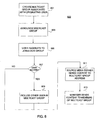
- FIG 8 shows a flow diagram 800 that supports sharing of media content using multicast groups in accordance with various aspects.
- a multicast group is created based on one of the users supported on network server 601 (as shown in Figure 6 ). Creation of the multicast group may be performed implicitly by a provisioning process or may be performed in an explicit manner, in which multicast messages are sent to selected DLNA networks so that users can discover available multicast groups and may request to join a multicast group.
- step 803 the multicast group is announced to different users so that a user can request to join the group in step 805.
- the user may explicitly discover and request membership in the multicast group by receiving messages from multicast group management function 637.
- multicast group management function 637 may directly manage multicast membership when all of the members are supported by media servers on network server 601 without direct participation by the users in the local networks.
- a user requests to join or leave the multicast group.
- Multicast group management function 637 may act on behalf of the users based on provisioning information. If the user is permitted to join the multicast group, as determined in step 807, the requesting user is added to the multicast group in step 809 so that a message for the multicast group is sent to the user (e.g. , the associated DLNA network if the user is explicitly involved) or to the associated media server (if multicast group management function 637 is handling multicasting on behalf of the user).
- one of the members may share media content by sending the media content to the multicast group address. Consequently, in step 813 multicast group management function 637 sends the shared media content to the media servers that are associated with the multicast group.
- a virtual address in a DLNA network may be converted into a multicast group address so that the multicast group appears to be local to the DLNA network by multicast group management function 637 based on provisioning of the multicast groups.
- FIG. 9 shows a flow diagram 900 that supports sharing of media content using multicast groups in accordance with various aspects.
- a multicast group is created (corresponding to steps 801, 803, 805, 807, and 809 as shown in Figure 8 ).
- Flow diagram 900 is based on flow diagram 800 and further aggregates (combines) content media content that can be shared among the members of the multicast group.
- multicast group management function 637 forms the aggregated media content with shared media content for the multicast group in step 903.
- Media content may be aggregated based on characteristics of media content. For example, members of a multicast group may not wish to share family pictures with the other members.
- a Web application may be supported that allows users to self-classify media and the permissions surrounding that media.
- multicast group management 937 may use pointers that address corresponding media content for a plurality of users.
- multicast group management function 637 sends the content list of aggregated media content to the members of the multicast group in step 905. Subsequently, a member can select available media content from multicast group management function 637. With some embodiments, content annunciation happens through the multicast address, while the request and access of actual content happens through the virtual IP address and not through the multicast addressing.
- sharing of content is accomplished through the use of one or more capabilities associated with the virtual machines in the network:
Landscapes
- Engineering & Computer Science (AREA)
- Computer Networks & Wireless Communication (AREA)
- Signal Processing (AREA)
- Data Exchanges In Wide-Area Networks (AREA)
Priority Applications (1)
| Application Number | Priority Date | Filing Date | Title |
|---|---|---|---|
| EP16165678.0A EP3062488B1 (fr) | 2009-05-04 | 2010-03-26 | Partage de contenu multimédia basé sur un serveur multimédia dans un réseau de fournisseur de services |
Applications Claiming Priority (1)
| Application Number | Priority Date | Filing Date | Title |
|---|---|---|---|
| US12/435,053 US8078665B2 (en) | 2009-05-04 | 2009-05-04 | Sharing media content based on a media server |
Related Child Applications (2)
| Application Number | Title | Priority Date | Filing Date |
|---|---|---|---|
| EP16165678.0A Division EP3062488B1 (fr) | 2009-05-04 | 2010-03-26 | Partage de contenu multimédia basé sur un serveur multimédia dans un réseau de fournisseur de services |
| EP16165678.0A Division-Into EP3062488B1 (fr) | 2009-05-04 | 2010-03-26 | Partage de contenu multimédia basé sur un serveur multimédia dans un réseau de fournisseur de services |
Publications (2)
| Publication Number | Publication Date |
|---|---|
| EP2249546A1 true EP2249546A1 (fr) | 2010-11-10 |
| EP2249546B1 EP2249546B1 (fr) | 2016-09-07 |
Family
ID=42357353
Family Applications (2)
| Application Number | Title | Priority Date | Filing Date |
|---|---|---|---|
| EP16165678.0A Active EP3062488B1 (fr) | 2009-05-04 | 2010-03-26 | Partage de contenu multimédia basé sur un serveur multimédia dans un réseau de fournisseur de services |
| EP10157939.9A Active EP2249546B1 (fr) | 2009-05-04 | 2010-03-26 | Partage de contenu média basé sur un serveur média dans un réseau de fournisseur |
Family Applications Before (1)
| Application Number | Title | Priority Date | Filing Date |
|---|---|---|---|
| EP16165678.0A Active EP3062488B1 (fr) | 2009-05-04 | 2010-03-26 | Partage de contenu multimédia basé sur un serveur multimédia dans un réseau de fournisseur de services |
Country Status (3)
| Country | Link |
|---|---|
| US (2) | US8078665B2 (fr) |
| EP (2) | EP3062488B1 (fr) |
| CA (1) | CA2697902C (fr) |
Families Citing this family (31)
| Publication number | Priority date | Publication date | Assignee | Title |
|---|---|---|---|---|
| US8555322B2 (en) * | 2009-01-23 | 2013-10-08 | Microsoft Corporation | Shared television sessions |
| US8938467B2 (en) * | 2009-03-25 | 2015-01-20 | Eloy Technology, Llc | System and method for intelligent storage of time shifted content |
| US20100281508A1 (en) | 2009-05-04 | 2010-11-04 | Comcast Cable Holdings, Llc | Internet Protocol (IP) to Video-on-Demand (VOD) Gateway |
| US8078665B2 (en) * | 2009-05-04 | 2011-12-13 | Comcast Cable Holdings, Llc | Sharing media content based on a media server |
| JP5567144B2 (ja) * | 2009-11-20 | 2014-08-06 | テレフオンアクチーボラゲット エル エム エリクソン(パブル) | メディアコンテンツ情報の提供 |
| US20110191246A1 (en) * | 2010-01-29 | 2011-08-04 | Brandstetter Jeffrey D | Systems and Methods Enabling Marketing and Distribution of Media Content by Content Creators and Content Providers |
| KR101094033B1 (ko) * | 2010-04-12 | 2011-12-19 | 중앙대학교 산학협력단 | 분산 네트워크를 이용한 노드 등록 및 유동 ip 검색 방법 및 장치 |
| US9244969B1 (en) | 2010-06-30 | 2016-01-26 | Emc Corporation | Virtual disk recovery |
| US9497257B1 (en) | 2010-06-30 | 2016-11-15 | EMC IP Holding Company LLC | File level referrals |
| US9239860B1 (en) * | 2010-06-30 | 2016-01-19 | Emc Corporation | Augmenting virtual directories |
| WO2012072105A1 (fr) * | 2010-11-30 | 2012-06-07 | Telefonaktiebolaget Lm Ericsson (Publ) | Enregistrement dans un réseau local |
| KR101844021B1 (ko) * | 2011-04-06 | 2018-03-30 | 삼성전자주식회사 | 메시지 전송 방법 및 장치와 컴퓨터로 읽을 수 있는 저장 매체 |
| US9847888B2 (en) | 2011-08-29 | 2017-12-19 | Google Technology Holdings LLC | Controlling content access and related actions on a DLNA network |
| KR101796975B1 (ko) | 2011-09-30 | 2017-11-14 | 삼성전자주식회사 | 디엘엔에이 네트워크를 공유하는 시스템 |
| US10733151B2 (en) * | 2011-10-27 | 2020-08-04 | Microsoft Technology Licensing, Llc | Techniques to share media files |
| US9547665B2 (en) | 2011-10-27 | 2017-01-17 | Microsoft Technology Licensing, Llc | Techniques to determine network storage for sharing media files |
| US9280545B2 (en) | 2011-11-09 | 2016-03-08 | Microsoft Technology Licensing, Llc | Generating and updating event-based playback experiences |
| US9143601B2 (en) * | 2011-11-09 | 2015-09-22 | Microsoft Technology Licensing, Llc | Event-based media grouping, playback, and sharing |
| JP6079121B2 (ja) * | 2012-10-11 | 2017-02-15 | 富士通株式会社 | 通信システム、管理装置、基地局、通信機器、及び通信路制御方法 |
| US9565475B2 (en) | 2012-10-11 | 2017-02-07 | Netflix, Inc. | System and method for managing playback of streaming digital content |
| US9727321B2 (en) | 2012-10-11 | 2017-08-08 | Netflix, Inc. | System and method for managing playback of streaming digital content |
| US20140136660A1 (en) * | 2012-11-12 | 2014-05-15 | Benu Networks, Inc. | Extending multicast/broadcast services to wide area networks |
| US20160081166A1 (en) | 2013-03-13 | 2016-03-17 | Inception Innovations, Inc. | Color-Changing Lighting Dynamic Control |
| KR102120862B1 (ko) * | 2013-08-08 | 2020-06-18 | 삼성전자주식회사 | 클라우드 환경에서 그룹핑된 적어도 하나의 클라이언트에게 컨텐츠 데이터를 전송하는 방법 및 장치 |
| FR3011414A1 (fr) * | 2013-10-01 | 2015-04-03 | Orange | Procede d'abonnement a des flux en provenance de clients multicast |
| WO2015089805A1 (fr) * | 2013-12-19 | 2015-06-25 | Thomson Licensing | Procédé et système de gestion de flux dans un réseau multimédia domestique comportant une passerelle domestique et une pluralité de dispositifs |
| US9614894B1 (en) * | 2014-02-05 | 2017-04-04 | Western Digital Technologies, Inc. | On-the-fly media-tagging, media-uploading and media navigating by tags |
| US10510222B2 (en) | 2015-04-29 | 2019-12-17 | Inception Innovations, Llc | Color-changing lighting dynamic control |
| US10635828B2 (en) | 2016-09-23 | 2020-04-28 | Microsoft Technology Licensing, Llc | Tokenized links with granular permissions |
| US9961155B1 (en) | 2016-12-01 | 2018-05-01 | Dropbox, Inc. | Sharing content via virtual spaces |
| US11822513B2 (en) | 2020-09-18 | 2023-11-21 | Dropbox, Inc. | Work spaces including links to content items in their native storage location |
Citations (3)
| Publication number | Priority date | Publication date | Assignee | Title |
|---|---|---|---|---|
| US20070115975A1 (en) * | 2003-06-26 | 2007-05-24 | Guangming Zhang | Method and system for controlling the multicast source |
| US20070217436A1 (en) * | 2006-03-16 | 2007-09-20 | Markley Jeffrey P | Methods and apparatus for centralized content and data delivery |
| EP2000917A1 (fr) | 2006-03-07 | 2008-12-10 | Sony Corporation | Dispositif de traitement d'informations, procédé de traitement d'informations et programme informatique |
Family Cites Families (34)
| Publication number | Priority date | Publication date | Assignee | Title |
|---|---|---|---|---|
| US6981045B1 (en) * | 1999-10-01 | 2005-12-27 | Vidiator Enterprises Inc. | System for redirecting requests for data to servers having sufficient processing power to transcast streams of data in a desired format |
| US6826612B1 (en) * | 1999-12-21 | 2004-11-30 | Alcatel Canada Inc. | Method and apparatus for an improved internet group management protocol |
| US20010042107A1 (en) * | 2000-01-06 | 2001-11-15 | Palm Stephen R. | Networked audio player transport protocol and architecture |
| US6857132B1 (en) * | 2000-01-14 | 2005-02-15 | Terayon Communication Systems, Inc. | Head end multiplexer to select and transmit video-on-demand and other requested programs and services |
| US20010027491A1 (en) * | 2000-03-27 | 2001-10-04 | Terretta Michael S. | Network communication system including metaswitch functionality |
| US7779097B2 (en) * | 2000-09-07 | 2010-08-17 | Sonic Solutions | Methods and systems for use in network management of content |
| US20020083006A1 (en) * | 2000-12-14 | 2002-06-27 | Intertainer, Inc. | Systems and methods for delivering media content |
| US20020116721A1 (en) * | 2001-02-16 | 2002-08-22 | Gemini Networks, Inc. | Method and system of expanding a customer base of a data services provider |
| US7225259B2 (en) * | 2001-02-21 | 2007-05-29 | Nokia Inc. | Service tunnel over a connectionless network |
| US20020144283A1 (en) * | 2001-03-30 | 2002-10-03 | Intertainer, Inc. | Content distribution system |
| US7068647B2 (en) * | 2001-04-03 | 2006-06-27 | Voxpath Networks, Inc. | System and method for routing IP packets |
| JP4382328B2 (ja) * | 2002-06-11 | 2009-12-09 | 株式会社日立製作所 | セキュアストレージシステム |
| US7822685B1 (en) * | 2003-04-09 | 2010-10-26 | Cisco Technology, Inc. | Method and system for digital rights management brokering and digital asset security transcoding |
| US7453852B2 (en) * | 2003-07-14 | 2008-11-18 | Lucent Technologies Inc. | Method and system for mobility across heterogeneous address spaces |
| US20060112192A1 (en) * | 2004-11-24 | 2006-05-25 | Motorola, Inc. | Method and apparatus to facilitate universal plug and play interaction between different local networks |
| US20060182103A1 (en) * | 2005-02-16 | 2006-08-17 | Phantom Technologies, Llc. | System and method for routing network messages |
| US20060259575A1 (en) * | 2005-05-11 | 2006-11-16 | Manish Upendran | User interface distribution systems and methods |
| US20070168458A1 (en) * | 2006-01-16 | 2007-07-19 | Nokia Corporation | Remote access to local network |
| JP2007272868A (ja) | 2006-03-07 | 2007-10-18 | Sony Corp | 情報処理装置、情報通信システム、および情報処理方法、並びにコンピュータ・プログラム |
| US20070211734A1 (en) * | 2006-03-10 | 2007-09-13 | Kuo-Long Yang | Digital living network alliance gateway having integrated website server for remote access and method thereof |
| KR100782503B1 (ko) * | 2006-04-07 | 2007-12-05 | 삼성전자주식회사 | Dlna 네트워크 상에서 방송 컨텐츠 전송방법 및 시스템 |
| KR100789425B1 (ko) * | 2006-04-10 | 2007-12-28 | 삼성전자주식회사 | 디.엘.엔.에이 네트워크를 이용한 컨텐츠 공유 방법 |
| TW200801513A (en) | 2006-06-29 | 2008-01-01 | Fermiscan Australia Pty Ltd | Improved process |
| CN101529908A (zh) * | 2006-10-25 | 2009-09-09 | 夏普株式会社 | 内容分发服务器、内容提供服务器、内容分发系统、内容分发方法、内容提供方法、终端装置、控制程序和计算机可读取的记录介质 |
| US20080212495A1 (en) | 2007-01-23 | 2008-09-04 | Nokia Corporation | Configuration mechanism in hosted remote access environments |
| JP2008236344A (ja) * | 2007-03-20 | 2008-10-02 | Hitachi Ltd | プロキシ装置、ネットワークシステムおよび通信方法 |
| US8087089B2 (en) * | 2007-08-08 | 2011-12-27 | Chih Hsiung Yen | System for a digital content distributing service and the method thereof |
| US7729366B2 (en) * | 2007-10-03 | 2010-06-01 | General Instrument Corporation | Method, apparatus and system for network mobility of a mobile communication device |
| US20090144338A1 (en) * | 2007-11-30 | 2009-06-04 | Yahoo! Inc. | Asynchronously replicated database system using dynamic mastership |
| US20090164550A1 (en) * | 2007-12-20 | 2009-06-25 | Nortel Networks Limited | Media monitoring |
| JP2009259111A (ja) * | 2008-04-18 | 2009-11-05 | Hitachi Ltd | ネットワーク装置、コンテンツ配信方法及びプログラム |
| US20090292738A1 (en) * | 2008-05-21 | 2009-11-26 | David Aaron Hurwitz | Conducting An Individualized, Virtually Moderated, Virtual Real Time Methodical Debate |
| US7921215B2 (en) * | 2009-01-12 | 2011-04-05 | Cisco Technology, Inc. | Method and apparatus for optimizing and prioritizing the creation of a large number of VPN tunnels |
| US8078665B2 (en) * | 2009-05-04 | 2011-12-13 | Comcast Cable Holdings, Llc | Sharing media content based on a media server |
-
2009
- 2009-05-04 US US12/435,053 patent/US8078665B2/en active Active
-
2010
- 2010-03-26 EP EP16165678.0A patent/EP3062488B1/fr active Active
- 2010-03-26 CA CA2697902A patent/CA2697902C/fr active Active
- 2010-03-26 EP EP10157939.9A patent/EP2249546B1/fr active Active
-
2011
- 2011-10-31 US US13/285,333 patent/US8438210B2/en active Active
Patent Citations (3)
| Publication number | Priority date | Publication date | Assignee | Title |
|---|---|---|---|---|
| US20070115975A1 (en) * | 2003-06-26 | 2007-05-24 | Guangming Zhang | Method and system for controlling the multicast source |
| EP2000917A1 (fr) | 2006-03-07 | 2008-12-10 | Sony Corporation | Dispositif de traitement d'informations, procédé de traitement d'informations et programme informatique |
| US20070217436A1 (en) * | 2006-03-16 | 2007-09-20 | Markley Jeffrey P | Methods and apparatus for centralized content and data delivery |
Non-Patent Citations (2)
| Title |
|---|
| CHIH-CHAO WEN ET AL.: "Centralized Control and Management Architecture Design for PIM-SM Based IP/MPLS Multicast Networks", GLOBAL TELECOMMUNICATIONS CONFERENCE, pages 443 - 447 |
| CHIH-CHAO WEN ET AL: "Centralized Control and Management Architecture Design for PIM-SM Based IP/MPLS Multicast Networks", GLOBAL TELECOMMUNICATIONS CONFERENCE, 2007. GLOBECOM '07. IEEE, IEEE, PISCATAWAY, NJ, USA LNKD- DOI:10.1109/GLOCOM.2007.427, 1 November 2007 (2007-11-01), pages 443 - 447, XP031196017, ISBN: 978-1-4244-1042-2 * |
Also Published As
| Publication number | Publication date |
|---|---|
| US20120047196A1 (en) | 2012-02-23 |
| US8078665B2 (en) | 2011-12-13 |
| EP3062488A1 (fr) | 2016-08-31 |
| CA2697902A1 (fr) | 2010-11-04 |
| EP3062488B1 (fr) | 2017-11-08 |
| CA2697902C (fr) | 2017-01-03 |
| EP2249546B1 (fr) | 2016-09-07 |
| US8438210B2 (en) | 2013-05-07 |
| US20100281093A1 (en) | 2010-11-04 |
Similar Documents
| Publication | Publication Date | Title |
|---|---|---|
| US12003819B2 (en) | Internet protocol (IP) to video-on-demand (VOD) gateway | |
| US8078665B2 (en) | Sharing media content based on a media server | |
| CA2697704C (fr) | Serveur multimedia numerique en reseau | |
| US20210377619A1 (en) | Controlling Networked Media Capture Devices | |
| CA2698911C (fr) | Serveur media personnalise au sein du reseau d'un fournisseur de services | |
| JP5568576B2 (ja) | 第2のローカルネットワーク内のサーバからローカルネットワーク内のレンダラへのメディア転送 | |
| CN101473597A (zh) | 远程访问通用即插即用装置的方法和系统 | |
| WO2018113693A1 (fr) | Procédé et système de gestion de communication de dispositif de réseau local, et dispositif de passerelle | |
| EP2550783B1 (fr) | Procédé et agencement permettant un accès multimédia |
Legal Events
| Date | Code | Title | Description |
|---|---|---|---|
| PUAI | Public reference made under article 153(3) epc to a published international application that has entered the european phase |
Free format text: ORIGINAL CODE: 0009012 |
|
| AK | Designated contracting states |
Kind code of ref document: A1 Designated state(s): AT BE BG CH CY CZ DE DK EE ES FI FR GB GR HR HU IE IS IT LI LT LU LV MC MK MT NL NO PL PT RO SE SI SK SM TR |
|
| AX | Request for extension of the european patent |
Extension state: AL BA ME RS |
|
| 17P | Request for examination filed |
Effective date: 20110510 |
|
| 17Q | First examination report despatched |
Effective date: 20110818 |
|
| RIC1 | Information provided on ipc code assigned before grant |
Ipc: H04L 29/08 20060101AFI20131024BHEP |
|
| GRAP | Despatch of communication of intention to grant a patent |
Free format text: ORIGINAL CODE: EPIDOSNIGR1 |
|
| INTG | Intention to grant announced |
Effective date: 20151021 |
|
| GRAP | Despatch of communication of intention to grant a patent |
Free format text: ORIGINAL CODE: EPIDOSNIGR1 |
|
| GRAJ | Information related to disapproval of communication of intention to grant by the applicant or resumption of examination proceedings by the epo deleted |
Free format text: ORIGINAL CODE: EPIDOSDIGR1 |
|
| INTG | Intention to grant announced |
Effective date: 20160411 |
|
| GRAP | Despatch of communication of intention to grant a patent |
Free format text: ORIGINAL CODE: EPIDOSNIGR1 |
|
| INTC | Intention to grant announced (deleted) | ||
| INTG | Intention to grant announced |
Effective date: 20160517 |
|
| GRAS | Grant fee paid |
Free format text: ORIGINAL CODE: EPIDOSNIGR3 |
|
| GRAA | (expected) grant |
Free format text: ORIGINAL CODE: 0009210 |
|
| AK | Designated contracting states |
Kind code of ref document: B1 Designated state(s): AT BE BG CH CY CZ DE DK EE ES FI FR GB GR HR HU IE IS IT LI LT LU LV MC MK MT NL NO PL PT RO SE SI SK SM TR |
|
| REG | Reference to a national code |
Ref country code: GB Ref legal event code: FG4D |
|
| REG | Reference to a national code |
Ref country code: CH Ref legal event code: EP |
|
| REG | Reference to a national code |
Ref country code: IE Ref legal event code: FG4D |
|
| REG | Reference to a national code |
Ref country code: AT Ref legal event code: REF Ref document number: 827736 Country of ref document: AT Kind code of ref document: T Effective date: 20161015 |
|
| REG | Reference to a national code |
Ref country code: DE Ref legal event code: R096 Ref document number: 602010036137 Country of ref document: DE |
|
| REG | Reference to a national code |
Ref country code: LT Ref legal event code: MG4D |
|
| REG | Reference to a national code |
Ref country code: NL Ref legal event code: MP Effective date: 20160907 |
|
| PG25 | Lapsed in a contracting state [announced via postgrant information from national office to epo] |
Ref country code: FI Free format text: LAPSE BECAUSE OF FAILURE TO SUBMIT A TRANSLATION OF THE DESCRIPTION OR TO PAY THE FEE WITHIN THE PRESCRIBED TIME-LIMIT Effective date: 20160907 Ref country code: HR Free format text: LAPSE BECAUSE OF FAILURE TO SUBMIT A TRANSLATION OF THE DESCRIPTION OR TO PAY THE FEE WITHIN THE PRESCRIBED TIME-LIMIT Effective date: 20160907 Ref country code: LT Free format text: LAPSE BECAUSE OF FAILURE TO SUBMIT A TRANSLATION OF THE DESCRIPTION OR TO PAY THE FEE WITHIN THE PRESCRIBED TIME-LIMIT Effective date: 20160907 Ref country code: NO Free format text: LAPSE BECAUSE OF FAILURE TO SUBMIT A TRANSLATION OF THE DESCRIPTION OR TO PAY THE FEE WITHIN THE PRESCRIBED TIME-LIMIT Effective date: 20161207 |
|
| REG | Reference to a national code |
Ref country code: AT Ref legal event code: MK05 Ref document number: 827736 Country of ref document: AT Kind code of ref document: T Effective date: 20160907 |
|
| PG25 | Lapsed in a contracting state [announced via postgrant information from national office to epo] |
Ref country code: ES Free format text: LAPSE BECAUSE OF FAILURE TO SUBMIT A TRANSLATION OF THE DESCRIPTION OR TO PAY THE FEE WITHIN THE PRESCRIBED TIME-LIMIT Effective date: 20160907 Ref country code: SE Free format text: LAPSE BECAUSE OF FAILURE TO SUBMIT A TRANSLATION OF THE DESCRIPTION OR TO PAY THE FEE WITHIN THE PRESCRIBED TIME-LIMIT Effective date: 20160907 Ref country code: LV Free format text: LAPSE BECAUSE OF FAILURE TO SUBMIT A TRANSLATION OF THE DESCRIPTION OR TO PAY THE FEE WITHIN THE PRESCRIBED TIME-LIMIT Effective date: 20160907 Ref country code: GR Free format text: LAPSE BECAUSE OF FAILURE TO SUBMIT A TRANSLATION OF THE DESCRIPTION OR TO PAY THE FEE WITHIN THE PRESCRIBED TIME-LIMIT Effective date: 20161208 Ref country code: NL Free format text: LAPSE BECAUSE OF FAILURE TO SUBMIT A TRANSLATION OF THE DESCRIPTION OR TO PAY THE FEE WITHIN THE PRESCRIBED TIME-LIMIT Effective date: 20160907 |
|
| REG | Reference to a national code |
Ref country code: FR Ref legal event code: PLFP Year of fee payment: 8 |
|
| PG25 | Lapsed in a contracting state [announced via postgrant information from national office to epo] |
Ref country code: RO Free format text: LAPSE BECAUSE OF FAILURE TO SUBMIT A TRANSLATION OF THE DESCRIPTION OR TO PAY THE FEE WITHIN THE PRESCRIBED TIME-LIMIT Effective date: 20160907 Ref country code: EE Free format text: LAPSE BECAUSE OF FAILURE TO SUBMIT A TRANSLATION OF THE DESCRIPTION OR TO PAY THE FEE WITHIN THE PRESCRIBED TIME-LIMIT Effective date: 20160907 |
|
| PG25 | Lapsed in a contracting state [announced via postgrant information from national office to epo] |
Ref country code: PT Free format text: LAPSE BECAUSE OF FAILURE TO SUBMIT A TRANSLATION OF THE DESCRIPTION OR TO PAY THE FEE WITHIN THE PRESCRIBED TIME-LIMIT Effective date: 20170109 Ref country code: CZ Free format text: LAPSE BECAUSE OF FAILURE TO SUBMIT A TRANSLATION OF THE DESCRIPTION OR TO PAY THE FEE WITHIN THE PRESCRIBED TIME-LIMIT Effective date: 20160907 Ref country code: SM Free format text: LAPSE BECAUSE OF FAILURE TO SUBMIT A TRANSLATION OF THE DESCRIPTION OR TO PAY THE FEE WITHIN THE PRESCRIBED TIME-LIMIT Effective date: 20160907 Ref country code: AT Free format text: LAPSE BECAUSE OF FAILURE TO SUBMIT A TRANSLATION OF THE DESCRIPTION OR TO PAY THE FEE WITHIN THE PRESCRIBED TIME-LIMIT Effective date: 20160907 Ref country code: BE Free format text: LAPSE BECAUSE OF FAILURE TO SUBMIT A TRANSLATION OF THE DESCRIPTION OR TO PAY THE FEE WITHIN THE PRESCRIBED TIME-LIMIT Effective date: 20160907 Ref country code: BG Free format text: LAPSE BECAUSE OF FAILURE TO SUBMIT A TRANSLATION OF THE DESCRIPTION OR TO PAY THE FEE WITHIN THE PRESCRIBED TIME-LIMIT Effective date: 20161207 Ref country code: PL Free format text: LAPSE BECAUSE OF FAILURE TO SUBMIT A TRANSLATION OF THE DESCRIPTION OR TO PAY THE FEE WITHIN THE PRESCRIBED TIME-LIMIT Effective date: 20160907 Ref country code: SK Free format text: LAPSE BECAUSE OF FAILURE TO SUBMIT A TRANSLATION OF THE DESCRIPTION OR TO PAY THE FEE WITHIN THE PRESCRIBED TIME-LIMIT Effective date: 20160907 Ref country code: IS Free format text: LAPSE BECAUSE OF FAILURE TO SUBMIT A TRANSLATION OF THE DESCRIPTION OR TO PAY THE FEE WITHIN THE PRESCRIBED TIME-LIMIT Effective date: 20170107 |
|
| REG | Reference to a national code |
Ref country code: DE Ref legal event code: R097 Ref document number: 602010036137 Country of ref document: DE |
|
| PG25 | Lapsed in a contracting state [announced via postgrant information from national office to epo] |
Ref country code: IT Free format text: LAPSE BECAUSE OF FAILURE TO SUBMIT A TRANSLATION OF THE DESCRIPTION OR TO PAY THE FEE WITHIN THE PRESCRIBED TIME-LIMIT Effective date: 20160907 |
|
| PLBE | No opposition filed within time limit |
Free format text: ORIGINAL CODE: 0009261 |
|
| STAA | Information on the status of an ep patent application or granted ep patent |
Free format text: STATUS: NO OPPOSITION FILED WITHIN TIME LIMIT |
|
| PG25 | Lapsed in a contracting state [announced via postgrant information from national office to epo] |
Ref country code: DK Free format text: LAPSE BECAUSE OF FAILURE TO SUBMIT A TRANSLATION OF THE DESCRIPTION OR TO PAY THE FEE WITHIN THE PRESCRIBED TIME-LIMIT Effective date: 20160907 |
|
| 26N | No opposition filed |
Effective date: 20170608 |
|
| PG25 | Lapsed in a contracting state [announced via postgrant information from national office to epo] |
Ref country code: SI Free format text: LAPSE BECAUSE OF FAILURE TO SUBMIT A TRANSLATION OF THE DESCRIPTION OR TO PAY THE FEE WITHIN THE PRESCRIBED TIME-LIMIT Effective date: 20160907 |
|
| REG | Reference to a national code |
Ref country code: CH Ref legal event code: PL |
|
| PG25 | Lapsed in a contracting state [announced via postgrant information from national office to epo] |
Ref country code: MC Free format text: LAPSE BECAUSE OF FAILURE TO SUBMIT A TRANSLATION OF THE DESCRIPTION OR TO PAY THE FEE WITHIN THE PRESCRIBED TIME-LIMIT Effective date: 20160907 |
|
| REG | Reference to a national code |
Ref country code: IE Ref legal event code: MM4A |
|
| PG25 | Lapsed in a contracting state [announced via postgrant information from national office to epo] |
Ref country code: LU Free format text: LAPSE BECAUSE OF NON-PAYMENT OF DUE FEES Effective date: 20170326 |
|
| PG25 | Lapsed in a contracting state [announced via postgrant information from national office to epo] |
Ref country code: CH Free format text: LAPSE BECAUSE OF NON-PAYMENT OF DUE FEES Effective date: 20170331 Ref country code: LI Free format text: LAPSE BECAUSE OF NON-PAYMENT OF DUE FEES Effective date: 20170331 Ref country code: IE Free format text: LAPSE BECAUSE OF NON-PAYMENT OF DUE FEES Effective date: 20170326 |
|
| REG | Reference to a national code |
Ref country code: FR Ref legal event code: PLFP Year of fee payment: 9 |
|
| PG25 | Lapsed in a contracting state [announced via postgrant information from national office to epo] |
Ref country code: MT Free format text: LAPSE BECAUSE OF NON-PAYMENT OF DUE FEES Effective date: 20170326 |
|
| PG25 | Lapsed in a contracting state [announced via postgrant information from national office to epo] |
Ref country code: HU Free format text: LAPSE BECAUSE OF FAILURE TO SUBMIT A TRANSLATION OF THE DESCRIPTION OR TO PAY THE FEE WITHIN THE PRESCRIBED TIME-LIMIT; INVALID AB INITIO Effective date: 20100326 |
|
| PG25 | Lapsed in a contracting state [announced via postgrant information from national office to epo] |
Ref country code: CY Free format text: LAPSE BECAUSE OF NON-PAYMENT OF DUE FEES Effective date: 20160907 |
|
| PG25 | Lapsed in a contracting state [announced via postgrant information from national office to epo] |
Ref country code: MK Free format text: LAPSE BECAUSE OF FAILURE TO SUBMIT A TRANSLATION OF THE DESCRIPTION OR TO PAY THE FEE WITHIN THE PRESCRIBED TIME-LIMIT Effective date: 20160907 |
|
| PG25 | Lapsed in a contracting state [announced via postgrant information from national office to epo] |
Ref country code: TR Free format text: LAPSE BECAUSE OF FAILURE TO SUBMIT A TRANSLATION OF THE DESCRIPTION OR TO PAY THE FEE WITHIN THE PRESCRIBED TIME-LIMIT Effective date: 20160907 |
|
| REG | Reference to a national code |
Ref country code: GB Ref legal event code: 732E Free format text: REGISTERED BETWEEN 20210128 AND 20210203 |
|
| REG | Reference to a national code |
Ref country code: DE Ref legal event code: R082 Ref document number: 602010036137 Country of ref document: DE Representative=s name: DENNEMEYER & ASSOCIATES RECHTSANWALTSGESELLSCH, DE Ref country code: DE Ref legal event code: R082 Ref document number: 602010036137 Country of ref document: DE Representative=s name: DENNEMEYER & ASSOCIATES S.A., DE Ref country code: DE Ref legal event code: R081 Ref document number: 602010036137 Country of ref document: DE Owner name: ADEIA MEDIA HOLDINGS LLC (N.D.GES. D. STAATES , US Free format text: FORMER OWNER: COMCAST CABLE COMMUNICATIONS, LLC, PHILADELPHIA, PA., US Ref country code: DE Ref legal event code: R082 Ref document number: 602010036137 Country of ref document: DE Representative=s name: STOLMAR & PARTNER PATENTANWAELTE PARTG MBB, DE Ref country code: DE Ref legal event code: R081 Ref document number: 602010036137 Country of ref document: DE Owner name: TIVO CORPORATION, SAN JOSE, US Free format text: FORMER OWNER: COMCAST CABLE COMMUNICATIONS, LLC, PHILADELPHIA, PA., US |
|
| REG | Reference to a national code |
Ref country code: DE Ref legal event code: R079 Ref document number: 602010036137 Country of ref document: DE Free format text: PREVIOUS MAIN CLASS: H04L0029080000 Ipc: H04L0065000000 |
|
| P01 | Opt-out of the competence of the unified patent court (upc) registered |
Effective date: 20230524 |
|
| P02 | Opt-out of the competence of the unified patent court (upc) changed |
Free format text: CASE NUMBER: APP_46334/2024 Effective date: 20240809 |
|
| REG | Reference to a national code |
Ref country code: DE Ref legal event code: R082 Ref document number: 602010036137 Country of ref document: DE Representative=s name: DENNEMEYER & ASSOCIATES RECHTSANWALTSGESELLSCH, DE Ref country code: DE Ref legal event code: R082 Ref document number: 602010036137 Country of ref document: DE Representative=s name: DENNEMEYER & ASSOCIATES S.A., DE Ref country code: DE Ref legal event code: R081 Ref document number: 602010036137 Country of ref document: DE Owner name: ADEIA MEDIA HOLDINGS LLC (N.D.GES. D. STAATES , US Free format text: FORMER OWNER: TIVO CORPORATION, SAN JOSE, CA, US |
|
| REG | Reference to a national code |
Ref country code: DE Ref legal event code: R082 Ref document number: 602010036137 Country of ref document: DE Representative=s name: DENNEMEYER & ASSOCIATES RECHTSANWALTSGESELLSCH, DE |
|
| PGFP | Annual fee paid to national office [announced via postgrant information from national office to epo] |
Ref country code: GB Payment date: 20260323 Year of fee payment: 17 |
|
| PGFP | Annual fee paid to national office [announced via postgrant information from national office to epo] |
Ref country code: DE Payment date: 20260320 Year of fee payment: 17 |
|
| PGFP | Annual fee paid to national office [announced via postgrant information from national office to epo] |
Ref country code: FR Payment date: 20260323 Year of fee payment: 17 |