EP2249596A1 - Système de communication mobile et dispositif de réseau - Google Patents
Système de communication mobile et dispositif de réseau Download PDFInfo
- Publication number
- EP2249596A1 EP2249596A1 EP09714768A EP09714768A EP2249596A1 EP 2249596 A1 EP2249596 A1 EP 2249596A1 EP 09714768 A EP09714768 A EP 09714768A EP 09714768 A EP09714768 A EP 09714768A EP 2249596 A1 EP2249596 A1 EP 2249596A1
- Authority
- EP
- European Patent Office
- Prior art keywords
- cell
- mobile station
- home
- radio link
- macro cell
- Prior art date
- Legal status (The legal status is an assumption and is not a legal conclusion. Google has not performed a legal analysis and makes no representation as to the accuracy of the status listed.)
- Withdrawn
Links
Images







Classifications
-
- H—ELECTRICITY
- H04—ELECTRIC COMMUNICATION TECHNIQUE
- H04W—WIRELESS COMMUNICATION NETWORKS
- H04W72/00—Local resource management
- H04W72/50—Allocation or scheduling criteria for wireless resources
- H04W72/56—Allocation or scheduling criteria for wireless resources based on priority criteria
- H04W72/563—Allocation or scheduling criteria for wireless resources based on priority criteria of the wireless resources
-
- H—ELECTRICITY
- H04—ELECTRIC COMMUNICATION TECHNIQUE
- H04W—WIRELESS COMMUNICATION NETWORKS
- H04W16/00—Network planning, e.g. coverage or traffic planning tools; Network deployment, e.g. resource partitioning or cells structures
- H04W16/14—Spectrum sharing arrangements between different networks
-
- H—ELECTRICITY
- H04—ELECTRIC COMMUNICATION TECHNIQUE
- H04W—WIRELESS COMMUNICATION NETWORKS
- H04W16/00—Network planning, e.g. coverage or traffic planning tools; Network deployment, e.g. resource partitioning or cells structures
- H04W16/24—Cell structures
- H04W16/32—Hierarchical cell structures
-
- H—ELECTRICITY
- H04—ELECTRIC COMMUNICATION TECHNIQUE
- H04W—WIRELESS COMMUNICATION NETWORKS
- H04W84/00—Network topologies
- H04W84/02—Hierarchically pre-organised networks, e.g. paging networks, cellular networks, WLAN [Wireless Local Area Network] or WLL [Wireless Local Loop]
- H04W84/04—Large scale networks; Deep hierarchical networks
- H04W84/042—Public Land Mobile systems, e.g. cellular systems
- H04W84/045—Public Land Mobile systems, e.g. cellular systems using private Base Stations, e.g. femto Base Stations, home Node B
Definitions
- a mobile communication system as shown in Fig. 1 has been known in which multiple macro cells #A, #B, #C, and #D using different frequencies are set in an area where a common scrambling code SC1 is set.
- a radio network controller RNC selects a macro cell with which the mobile station UE is to establish a radio link. This selection is made on the basis of a usage ratio, a cell type, an access list, a type of service that can be provided, and the like of each macro cell, and thus traffic is dispersed and frequencies are used efficiently.
- a radio network controller RNC is configured to determine macro cells #A, #B, #C, and #D set with the same scrambling code, as candidates for a macro cell with which the mobile station UE is to establish a radio link.
- the radio network controller RNC in a conventional mobile communication system is configured to determine the candidates for the macro cell with which the mobile station UE is to establish a radio link, without identifying the location of the mobile station UE in a macro cell.
- a mobile station UE #Y that is not allowed to access the home cell #a may establish a radio link with the macro cell #A.
- a radio wave of the home cell #a may act as an interference wave, and cause deterioration in the communication quality.
- the present invention is made in view of the above problem, and aims to provide a mobile communication system and a network device which make it possible to avoid influence of interference by a home cell #a when the home cell #a using a frequency f1 exists in a macro cell #A using the same frequency f1, and to improve efficiency in the use of frequencies.
- the first feature of the present invention relates to a mobile communication system comprising a first macro cell and a first home cell which use a first frequency.
- the first home cell is configured to cover a part of a coverage area of the first macro cell.
- a first candidate group is configured to include the first home cell, the first macro cell and at least one second macro cell using a frequency different from the first frequency.
- a second candidate group is configured not to include either the first home cell or the first macro cell, but to include the at least one second macro cell.
- a cell with which the mobile station is to establish a radio link is selected from the first candidate group, and upon receipt of a radio link establishment request from the mobile station via the first macro cell, a cell with which the mobile station is to establish a radio link is selected from the second candidate group.
- the second feature of the present invention relates to a network device comprising a first macro cell and a first home cell which use a first frequency.
- the first home cell is configured to cover a part of a coverage area of the first macro cell.
- a first candidate group is configured to include the first home cell, the first macro cell and at least one second macro cell using a frequency different from the first frequency.
- a second candidate group is configured not to include either the first home cell or the first macro cell, but to include the at least one second macro cell.
- a cell with which the mobile station is to establish a radio link is selected from the first candidate group, and upon receipt of a radio link establishment request from the mobile station via the first macro cell, a cell with which the mobile station is to establish a radio link is selected from the second candidate group.
- the fourth feature of the present invention relates to a network device comprising a first macro cell and a first home cell which use a first frequency.
- a first candidate group is configured to include the first home cell, the first macro cell and at least one second macro cell using a frequency different from the first frequency.
- a second candidate group is configured not to include either the first home cell or the first macro cell but to include the at least one second macro cell.
- Location information of the mobile station is measured upon receipt of a radio link establishment request from the mobile station, and a cell with which the mobile station is to establish a radio link is selected from one of the first candidate group and the second candidate group depending on the measured location information of the mobile station.
- a macro cell #A managed by the radio base station NodeB #A uses a frequency f1
- a macro cell #B managed by the radio base station NodeB #B uses a frequency f2
- a macro cell #C managed by the radio base station NodeB #C uses a frequency f3
- a macro cell #D managed by the radio base station NodeB #D uses a frequency f4.
- a home cell #a (first home cell) managed by the home radio base station Home-NodeB #a uses the frequency f1 (first frequency) which is the same frequency as the macro cell #A (first macro cell) uses.
- the home cell #a is configured to cover a part of the coverage area of the macro cell #A.
- a common scrambling code SC1 is set for the macro cells #A to #D.
- a scrambling code SC1a to be set for the home cell #a may be the same scrambling code as the scrambling code SC1 set for the macro cells #A to #D, or may be a different scrambling code.
- the radio network controller RNC functions as a network device including a radio link establishment request receiver 11, a subordination relationship manager 12, an access list manager 13, a location information acquisition unit 14, a cell selector 15 and a radio link establishment unit 16.
- the radio link establishment request receiver 11 is configured to receive a radio link establishment request transmitted from the mobile station UE.
- the radio link establishment request receiver 11 is configured to receive an "RRC Connection Request message," a "Cell Update massage,” a "Measurement Report message” and the like from the mobile station UE being in an IDLE state, a common channel state or the like.
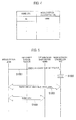
- the subordination relationship manager 12 is configured to manage each home cell in association with a macro cell that covers at least a part of the coverage area of the home cell.
- the subordination relationship manager 12 is configured to identify each cell (macro cell and home cell) by use of a cell ID or a scrambling code.
- the location information acquisition unit 14 is configured to acquire location information on the mobile station UE.
- the location information acquisition unit 14 may be configured to compute location information on the mobile station UE according to location information on the radio base station NodeB with which the mobile station UE establishes a radio link.
- the location information acquisition unit 14 may acquire an intermediate point among the pieces of location information on multiple radio base stations NodeB as location information on the mobile station UE.
- the mobile station UE #Y is allowed access to the home cell #a, and is in an idle state in the home cell #a.
- the cell selector 15 is configured to select a cell from a second candidate group, with which the mobile station UE #X is to establish a radio link.
- the mobile station UE #X may be allowed access to the home cell #a, or otherwise access to the home cell #a may be regulated. In addition, in this case, the mobile station UE #X is in an idle state in the macro cell #A.
- the first candidate group is configured to include the home cell #a, the macro cell #A and at least one second macro cell (macro cells #B, #C and #D in the example of Fig. 1 ) using a frequency different from the frequency f1.
- the cell selector 15 upon receipt of a radio link establishment request from the mobile station UE, the cell selector 15 is configured to select a cell from the aforementioned first or second candidate group, with which the mobile station UE is to establish a radio link. This selection is made according to location information on the mobile station UE, which is measured (acquired) by the location information acquisition unit 14.
- the cell selector 15 when receiving a radio link establishment request from the mobile station UE #Z via the macro cell #B and determining that the mobile station UE #Z is located in a coverage area of the home cell #a, the cell selector 15 is configured to refer to the access list manager 13 shown in Fig. 4 and thereby know that access by the mobile station UE #Z to the home cell #a is regulated. Then, the cell selector 15 refers to the subordination relationship manager 12 shown in Fig. 3 and selects a cell with which the mobile station UE #Z is to establish a radio link, from the second candidate group configured not to include either the home cell #a or the macro cell #A but to include the macro cells #B, #C and #D.
- the cell selector 15 when receiving a radio link establishment request from the mobile station UE #Y via the macro cell #A and determining that the mobile station UE #Y is located in a coverage area of the home cell #a, the cell selector 15 is configured to refer to the access list manager 13 shown in Fig. 4 and thereby know that the mobile station UE #Y is allowed access to the home cell #a. Then, the cell selector 15 selects a cell with which the mobile station UE #Y is to establish a radio link, from the first candidate group configured to include the home cell #a and the macro cells #A, #B, #C and #D.
- the radio link establishment unit 16 is configured to establish a radio link between a cell selected by the cell selector 15 and the mobile station UE.
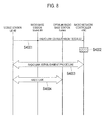
- step S1001 the mobile station UE #X being in an idle state in the macro cell #A transmits a radio link establishment request to the radio network controller RNC via the macro cell #A (the radio base station NodeB #A managing the macro cell #A).
- the radio network controller RNC receives the radio link establishment request from the mobile station UE #X via the macro cell #A (the radio base station NodeB #A managing the macro cell #A), and selects a cell with which the mobile station UE #X is to establish a radio link, from the second candidate group including the macro cells #B, #C and #D.
- the radio network controller RNC may receive the radio link establishment request from the mobile station UE #X via the macro cell #A, determine that the mobile station UE #X is not located in the coverage area of the home cell #a, and select a cell with which the mobile station UE #X is to establish a radio link, from the third candidate group configured to include the macro cells #A, #B, #C and #D.
- step S1003 the radio network controller RNC carries out a radio link establishment procedure between the cell (the radio base station NodeB managing the cell) selected in step S1002 and the mobile station UE #X.
- step S1004 the radio link is established between the cell (the radio base station NodeB managing the cell) selected in step S1002 and the mobile station UE #X.
- the radio network controller RNC receives the radio link establishment request from the mobile station UE #Y via the home cell #a (the home radio base station Home-NodeB #a managing the home cell #a), and selects a cell with which the mobile station UE #Y is to establish a radio link, from the first candidate group including the home cell #a and the macro cells #A, #B, #C and #D.
- step S3001 the mobile station UE #Y being in an idle state in the macro cell #A transmits a radio link establishment request to the radio network controller RNC via the macro cell #A (the radio base station NodeB #A managing the macro cell #A).
- step S3003 the radio network controller RNC carries out a radio link establishment procedure between the cell (the radio base station NodeB/Home-NodeB managing the cell) selected in step 53002 and the mobile station UE #Y.
- step S3004 the radio link is established between the cell (the radio base station NodeB/Home-NodeB managing the cell) selected in step S3002 and the mobile station UE #Y.
- step S4001 the mobile station UE #Z being in an idle state in the macro cell #B transmits a radio link establishment request to the radio network controller RNC via the macro cell #B (the radio base station NodeB #B managing the macro cell #B).
- the radio network controller RNC receives the radio link establishment request from the mobile station UE #Z via the macro cell #B (the radio base station Nodes #B managing the macro cell #B), determines that the mobile station UE #Z is located in the coverage area of the home cell #a, and know that access by the mobile station UE #Z to the home cell #a is regulated. Hence, the radio network controller RNC selects a cell with which the mobile station UE #Z is to establish a radio link, from the second candidate group configured to include the macro cells #B, #C and #D.
- step S4003 the radio network controller RNC carries out a radio link establishment procedure between the cell (the radio base station NodeB managing the cell) selected in step S4002 and the mobile station UE #Z.
- step S4004 the radio link is established between the cell (the radio base station NodeB managing the cell) selected in step S4002 and the mobile station UE #Z.
- the mobile stations UE #X and #Z that are not allowed access to the home cell #a can efficiently use frequencies outdoors or the like where the communication quality of the mobile stations UE is not influenced by an interference wave from the home cell #a.
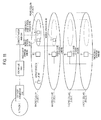
- the present invention is not limited to this mobile communication system, and is also applicable to an LTE (Long Term Evolution) type mobile communication system, for example as shown in Fig. 9 .
- LTE Long Term Evolution
- the above-mentioned function of the radio base station NodeB and that of the radio network controller RNC are installed in a radio base station eNB or an exchange MME.
- the exchange MME is configured to serve as the above network device.
- a subordination relationship manager 12 of the exchange MME is configured to identify each cell (macro cell and home cell) by use of a "Tracking Area ID.”
- radio base stations NodeB #A to NodeB #D and a home radio base station Home-NodeB #a are accommodated in the exchange MME.
- a cell selector 15 of the exchange MME may be configured to select a cell from a first candidate group, with which the mobile station UE #Y is to establish a radio link.
- the cell selector 15 of the exchange MME may be configured to select a cell from a second candidate group, with which the mobile station UE #X is to establish a radio link.
- the cell selector 15 of the exchange MME may be configured to select a cell from the aforementioned first or second candidate group, with which the mobile station UE #Y is to establish a radio link. This selection is made according to location information on the mobile station UE #Y, which is measured (acquired) by a location information acquisition unit 14 of the exchange MME.
- the cell selector 15 of the exchange MME may be configured to select a cell from the aforementioned first or second candidate group, with which the mobile station UE #Y is to establish a radio link. This selection is made according to location information on the mobile station UE #X, which is measured (acquired) by a location information acquisition unit 14 of the exchange MME.
- radio base stations NodeB #A to NodeB #D are accommodated in a radio network controller RNC, and a home radio base station Home-NodeB #a is accommodated in a concentrator HNB-GW.
- the system is configured so that at least one of the radio network controller RNC and the concentrator HNB-GW serves as the network device described above.
- a cell selector 15 of the concentrator HNB-GW may be configured to select a cell from a first candidate group, with which the mobile station UE #Y is to establish a radio link.
- a cell selector 15 of the radio network controller RNC may be configured to select a cell from a second candidate group, with which the mobile station UE #X is to establish a radio link.
- the cell selector 15 of the concentrator HNB-GW may be configured to select a cell from the aforementioned first or second candidate group, with which the mobile station UE #Y is to establish a radio link. This selection is made according to location information on the mobile station UE #Y, which is measured (acquired) by a location information acquisition unit 4 of the concentrator HNB-GW.
- the cell selector 15 of the radio network controller RNC may be configured to select a cell from the aforementioned first or second candidate group, with which the mobile station UE #Y is to establish a radio link. This selection is made according to location information on the mobile station UE #X, which is measured (acquired) by a location information acquisition unit 14 of the radio network controller RNC.
- the cell selector 15 of the concentrator HNB-GW or the cell selector 15 of the radio network controller RNC may be configured to select a cell from the first candidate group or the second candidate group, with which the mobile station UE is to establish a radio link.
- At least one of an exchange MSC/SGSN, the radio network controller RNC and the home radio base station Home-NodeB #a may be configured to notify the concentrator HNB-GW of various information on cells controlled thereunder through a predetermined interface.
- the mobile communication system according to Modified Example 3 is an LTE type mobile communication system in which radio base stations NodeB #A to NodeB #D are accommodated in an exchange MME, and a home radio base station Home-NodeB #a is accommodated in a concentrator HNB-GW.
- the system is configured so that both the exchange MME and the concentrator HNB-GW serve as the network device described above.
- a cell selector 15 of the concentrator HNB-GW may be configured to select a cell from a first candidate group, with which the mobile station UE #Y is to establish a radio link.
- a cell selector 15 of the exchange MME may be configured to select a cell from a second candidate group, with which the mobile station UE #X is to establish a radio link.
- the cell selector 15 of the concentrator HNB-GW may be configured to select a cell from the aforementioned first or second candidate group, with which the mobile station UE #Y is to establish a radio link. This selection is made according to location information on the mobile station UE #Y, which is measured (acquired) by a location information acquisition unit 14 of the concentrator HNB-GW.
- the cell selector 15 of the exchange MME may be configured to select a cell from the aforementioned first or second candidate group, with which the mobile station UE #Y is to establish a radio link. This selection is made according to location information on the mobile station UE #X, which is measured (acquired) by a location information acquisition unit 14 of the exchange MME.
- At least one of the exchange MME and the home radio base station Home-NodeB #a may be configured to notify the concentrator HNB-GW of various information on cells controlled thereunder through a predetermined interface.
- At least one of the concentrator HNB-GW and the radio base stations NodeB #A to NodeB #D may be configured to notify the exchange MME of various information on cells controlled thereunder through a predetermined interface.
- radio base stations NodeB #A to NodeB #D are accommodated in a radio network controller RNC, and a home radio base station Home-NodeB #a is accommodated in a gateway apparatus GW.
- the system is configured so that both the radio network controller RNC and the home radio base station Home-NodeB #a serves as the network device described above.
- a cell selector 15 of the home radio base station Home-NodeB #a may be configured to select a cell from a first candidate group, with which the mobile station UE #Y is to establish a radio link.
- the home radio base station Home-NodeB #a may previously store various information on cells other than those controlled thereunder, by plug and play or the like.
- the operation of the above-mentioned mobile station UE, radio base stations NodeB or eNB, home radio base station Home-NodeB, exchange MME or MSC/SGSN, radio network controller RNC, concentrator HNB-GW, and gateway apparatus GW_ may be implemented by means of hardware, a software module executed by a processor, or a combination of both.
- the storage medium is connected to the processor so that the processor can read and write information from and to the storage medium. Moreover, the storage medium may be integrated into the processor. Additionally, the storage medium and the processor may be provided in an ASIC.
- the ASIC may be provided in the mobile station UE, the radio base stations NodeB or eNB, the home radio base station Home-NodeB, the exchange MME or MSC/SGSN, the radio network controller RNC, the concentrator HNB-GW, and the gateway apparatus GW.
- the storage medium and the processor may be provided in the mobile station UE, the radio base stations NodeB or eNB, the home radio base station Home-NodeB, the exchange MME or MSC/SGSN, the radio network controller RNC, the concentrator HNB-GW, and the gateway apparatus GW as a discrete component.
- the present invention provides a mobile communication system and a network device which make it possible to avoid influence of interference by the home cell #a when the home cell a using the frequency f1 exists in the macro cell #A using the same frequency f1 and to improve efficiency in the use of frequencies.
Landscapes
- Engineering & Computer Science (AREA)
- Computer Networks & Wireless Communication (AREA)
- Signal Processing (AREA)
- Mobile Radio Communication Systems (AREA)
Applications Claiming Priority (2)
| Application Number | Priority Date | Filing Date | Title |
|---|---|---|---|
| JP2008050900 | 2008-02-29 | ||
| PCT/JP2009/053738 WO2009107802A1 (fr) | 2008-02-29 | 2009-02-27 | Système de communication mobile et dispositif de réseau |
Publications (2)
| Publication Number | Publication Date |
|---|---|
| EP2249596A1 true EP2249596A1 (fr) | 2010-11-10 |
| EP2249596A4 EP2249596A4 (fr) | 2014-04-30 |
Family
ID=41016187
Family Applications (1)
| Application Number | Title | Priority Date | Filing Date |
|---|---|---|---|
| EP09714768.0A Withdrawn EP2249596A4 (fr) | 2008-02-29 | 2009-02-27 | Système de communication mobile et dispositif de réseau |
Country Status (5)
| Country | Link |
|---|---|
| US (1) | US20110053608A1 (fr) |
| EP (1) | EP2249596A4 (fr) |
| JP (1) | JP5081971B2 (fr) |
| CN (1) | CN101960877B (fr) |
| WO (1) | WO2009107802A1 (fr) |
Families Citing this family (1)
| Publication number | Priority date | Publication date | Assignee | Title |
|---|---|---|---|---|
| EP2445286B1 (fr) * | 2009-06-15 | 2017-08-09 | Fujitsu Limited | Système de communication sans fil, dispositif de station de base, dispositif terminal et procédé de communication sans fil dans un système de communication sans fil |
Family Cites Families (13)
| Publication number | Priority date | Publication date | Assignee | Title |
|---|---|---|---|---|
| US5546443A (en) * | 1992-10-26 | 1996-08-13 | Ericsson Ge Mobile Communications, Inc. | Communication management technique for a radiotelephone system including microcells |
| SG69956A1 (en) * | 1994-10-04 | 2000-01-25 | Motorola Ltd | Method for handover in multicellular environment |
| US6205336B1 (en) * | 1998-08-14 | 2001-03-20 | Telefonaktiebolaget Lm Ericsson (Publ) | Method and system for improving network resource utilization in a cellular communication system |
| DE69840194D1 (de) * | 1998-09-15 | 2008-12-18 | Lucent Technologies Inc | Zellulares Funknetzwerk |
| US7082305B2 (en) * | 2002-11-22 | 2006-07-25 | Telefonaktiebolaget Lm Ericsson (Publ) | Method and apparatus for generating a neighbor cell list |
| US7277710B1 (en) * | 2003-03-18 | 2007-10-02 | Sprint Spectrum L.P. | Method for determining availability of a radio network |
| KR100957395B1 (ko) * | 2003-05-23 | 2010-05-11 | 삼성전자주식회사 | 레벨 교차율을 이용한 속도추정 장치 및 방법 |
| US7251491B2 (en) * | 2003-07-31 | 2007-07-31 | Qualcomm Incorporated | System of and method for using position, velocity, or direction of motion estimates to support handover decisions |
| JP4474384B2 (ja) * | 2006-05-24 | 2010-06-02 | ソフトバンクBb株式会社 | セルラ無線通信システム及びハンドオーバ処理方法 |
| CN101473683B (zh) * | 2006-06-21 | 2010-12-08 | Lg电子株式会社 | 累积相邻小区列表 |
| US8385293B2 (en) * | 2007-08-31 | 2013-02-26 | Samsung Electronics Co., Ltd. | Cell base station neighbor list self configuration |
| CN101123823A (zh) * | 2007-09-04 | 2008-02-13 | 华为技术有限公司 | 一种选择小区的方法、网络系统及相关设备 |
| US8843131B2 (en) * | 2009-05-28 | 2014-09-23 | Qualcomm Incorporated | Reducing frequent handoffs of a wireless communication device |
-
2009
- 2009-02-27 EP EP09714768.0A patent/EP2249596A4/fr not_active Withdrawn
- 2009-02-27 US US12/920,204 patent/US20110053608A1/en not_active Abandoned
- 2009-02-27 JP JP2010500783A patent/JP5081971B2/ja active Active
- 2009-02-27 CN CN200980107146.3A patent/CN101960877B/zh not_active Expired - Fee Related
- 2009-02-27 WO PCT/JP2009/053738 patent/WO2009107802A1/fr not_active Ceased
Also Published As
| Publication number | Publication date |
|---|---|
| WO2009107802A1 (fr) | 2009-09-03 |
| US20110053608A1 (en) | 2011-03-03 |
| CN101960877A (zh) | 2011-01-26 |
| JP5081971B2 (ja) | 2012-11-28 |
| CN101960877B (zh) | 2015-07-08 |
| EP2249596A4 (fr) | 2014-04-30 |
| JPWO2009107802A1 (ja) | 2011-07-07 |
Similar Documents
| Publication | Publication Date | Title |
|---|---|---|
| US8553599B2 (en) | Mobile communication system and network device | |
| EP2282581B1 (fr) | Procédé de communication mobile, station de base radio femtocellulaire | |
| KR101562518B1 (ko) | 통신 시스템 및 그의 펨토 기지국 연결 변경 방법 | |
| EP2416610B1 (fr) | Station de base et procédé de contrôle de la puissance de transmission | |
| US20110105109A1 (en) | Mobile station apparatus, base station apparatus, and mobile communication system | |
| WO2020150999A1 (fr) | Communications entre des cellules à couverture géographique différente | |
| US8744467B2 (en) | Mobile communication system, home radio base station, and operational frequency determination method | |
| US8526343B2 (en) | Operation frequency setting method, network device and radio base station | |
| US8472360B2 (en) | Mobile communication method and mobile station | |
| US20110053608A1 (en) | Mobile communication system and network device | |
| US8229429B2 (en) | Position registering method, radio control station, and exchange | |
| EP2282573A1 (fr) | Procédé de surveillance d'une station de base radio et dispositif de réseau | |
| KR101105351B1 (ko) | 셀룰러 시스템에서 인접 셀 간 셀 재 선택을 수행하는 방법 | |
| EP2280571A1 (fr) | Procédé de communication mobile et station de base radio | |
| US20130045768A1 (en) | Mobile communication system, network apparatus, and mobile communication method | |
| WO2011155488A1 (fr) | Système de communication mobile, dispositif de contrôle sans fil et procédé de communication mobile | |
| JP5480968B2 (ja) | 移動通信システム、基地局及び移動通信方法 | |
| JP4981158B2 (ja) | 移動通信システム、基地局及び移動通信方法 | |
| GB2498527A (en) | Selecting a carrier frequency and scrambling code pair for an Access Point |
Legal Events
| Date | Code | Title | Description |
|---|---|---|---|
| PUAI | Public reference made under article 153(3) epc to a published international application that has entered the european phase |
Free format text: ORIGINAL CODE: 0009012 |
|
| 17P | Request for examination filed |
Effective date: 20100914 |
|
| AK | Designated contracting states |
Kind code of ref document: A1 Designated state(s): AT BE BG CH CY CZ DE DK EE ES FI FR GB GR HR HU IE IS IT LI LT LU LV MC MK MT NL NO PL PT RO SE SI SK TR |
|
| AX | Request for extension of the european patent |
Extension state: AL BA RS |
|
| DAX | Request for extension of the european patent (deleted) | ||
| A4 | Supplementary search report drawn up and despatched |
Effective date: 20140401 |
|
| RIC1 | Information provided on ipc code assigned before grant |
Ipc: H04W 72/06 20090101AFI20140326BHEP Ipc: H04W 16/32 20090101ALN20140326BHEP Ipc: H04W 84/04 20090101ALN20140326BHEP |
|
| STAA | Information on the status of an ep patent application or granted ep patent |
Free format text: STATUS: THE APPLICATION HAS BEEN WITHDRAWN |
|
| 18W | Application withdrawn |
Effective date: 20151007 |