EP2250880A2 - Dispositif et procédé destinés à lutter contre les acariens attaquant les abeilles - Google Patents
Dispositif et procédé destinés à lutter contre les acariens attaquant les abeilles Download PDFInfo
- Publication number
- EP2250880A2 EP2250880A2 EP10450080A EP10450080A EP2250880A2 EP 2250880 A2 EP2250880 A2 EP 2250880A2 EP 10450080 A EP10450080 A EP 10450080A EP 10450080 A EP10450080 A EP 10450080A EP 2250880 A2 EP2250880 A2 EP 2250880A2
- Authority
- EP
- European Patent Office
- Prior art keywords
- brood
- temperature
- hot air
- cells
- air flow
- Prior art date
- Legal status (The legal status is an assumption and is not a legal conclusion. Google has not performed a legal analysis and makes no representation as to the accuracy of the status listed.)
- Granted
Links
Images


Classifications
-
- A—HUMAN NECESSITIES
- A01—AGRICULTURE; FORESTRY; ANIMAL HUSBANDRY; HUNTING; TRAPPING; FISHING
- A01K—ANIMAL HUSBANDRY; AVICULTURE; APICULTURE; PISCICULTURE; FISHING; REARING OR BREEDING ANIMALS, NOT OTHERWISE PROVIDED FOR; NEW BREEDS OF ANIMALS
- A01K51/00—Appliances for treating beehives or parts thereof, e.g. for cleaning or disinfecting
Definitions
- the present invention relates to a method for controlling mites which are harmful to the bee by the action of heat, wherein a vessel containing brood cells is supplied with a controllable stream of warm air.
- the present invention further relates to a device for controlling mites harmful to the bee by heat by supplying a stream of hot air into a container containing cells, wherein the device comprises a heat source and an air duct for generating the hot air flow and the device with a temperature control device for controlling the air temperature of the hot air flow with at least associated with a temperature measuring means.
- brood cells With increasing degree of infestation, multiple parasitisation of the brood cells occurs - two and more fertilized females penetrate the brood cells, which increases the proportion of severely damaged young bees (mutilated wings, crippled abdomen). In case of heavy infestation neglected brood care can lead to further breeding diseases. A few days later, the bee colony collapses. For beekeeping a healthy and undamaged bee brood is very important.
- beekeepers use a wide range of methods.
- the control measures have in particular a killing of the mites to the goal.
- Many of these methods are chemical in nature and have the disadvantage that problematic or persistent residues in honey, wax or pollen can accumulate. Therefore, these are only applicable after the last honey harvest or in the brut-free time. This in turn has the disadvantage that the bee population is weakened in the autumn / winter season.
- the dosage of the chemical compounds is often difficult.
- mites have also developed resistance to various chemical compounds, eg a long-lasting pesticide based on a synthetic pyrethroid. Incorrect dosage, eg of oxalic acid, may further affect the bees.
- the WO 92/14355 A method and apparatus for controlling Varroa mites found in brood combs containing brood frames with brooder brood cells.
- the device shown or the method shown have the disadvantage that an independent, closable container (oven) with high space consumption and weight is necessary in which the Brutwabenrähmchen be hung.
- the device is very expensive and can not be transported over longer distances. This is particularly disadvantageous when bee colonies have to be approached for treatment at different locations.
- the WO 92/14355 underlying process is relatively tedious.
- Another device for controlling mites in the bee brood is in the DE 38 30 802 A1 shown.
- the DE 36 43 872 A1 describes a device or method for controlling mites sitting on bees by means of a stream of hot air, wherein the mites fall off the bees and adhere to a sticky surface. However, this method only fights mites that are present to the bees.
- the DE 198 34 345 A discloses a method and apparatus for separating Varroa mites from bees in a bee box by means of air having a very low relative humidity. Another separation method for small bees such as mites and a corresponding device is in DE 103 40 308 A1 disclosed. However, the above-mentioned devices and methods are not suitable for controlling mites located in the brood cells.
- a device of the type mentioned which according to the invention comprises a humidifier for humidifying the hot air flow, and wherein the at least one temperature measuring means is adapted for measuring the Brutzellentemperatur, wherein a Brutzellentemperatur the corresponding signal is supplied to the temperature control device, which the Brutzellentemperatur regulates the air temperature of the hot air flow to a predetermined value.
- the mites located in the bee brood can be effectively combated and the reproductive cycle of the mites can be sustainably interrupted.
- the term "fighting" is to be understood in particular as permanent damage and killing of the mites.
- the acting warm air causes a temperature increase of the brood cells with the bee brood and consequently also an increase in temperature of the mites located in the bee brood.
- the latter are permanently damaged or killed by keeping the brood cell temperature between 39 and 42 ° C.
- the bee brood is not affected by the process.
- Essential here is a relative humidity of at least 70%.
- the killed mites fall off over a period of usually a maximum of 12 days and fall further, when the young bees hatch, out of the brood cells or they are discharged by the hive bees when cleaning the brood cells.
- mite control can be more targeted and controllable than with the known devices or methods.
- brooder cell containing container refers in particular to a frame.
- frame or "bee frame” is known to the skilled person.
- a frame is usually designed as a box-shaped habitation (made of wood or plastic) for bees.
- the frame with the brooding comb is hung in the frame.
- the brood comb which is to be understood as a honeycomb honeycomb structure made of wax, contains brood cells (essentially hexagonal honeycombs) with the bee brood.
- the container containing "brood cells” can be any other container in which brood combs or frames with brooding combs can be arranged for the purpose of carrying out the method according to the invention.
- the parasitic mites In case of a mite infestation, the parasitic mites invade the brood cells before they are capped and damage the larvae or young bees that develop in the brood cells.
- the mites that are harmful to the bee are, in particular, mites of the genus Varroa or Tropilaelaps.
- the method is particularly applied to bee-damaging mites found in brood-brooded brood cells containing bee brood. at Bee hatching can be both worker brood and drone brood.
- brood combs are treated.
- the adult bees on the brood combs are removed from them before heating the brood combs.
- the brood combs are removed from the hive and the bees thereon manually stripped off, repelled or turned away.
- the bee-free brood combs are then hung to combat the mite infestation in a container, especially in a frame for a hive. After heat treatment, the brood combs are returned to the hive.
- the temperature measuring means is brought into direct contact with the brood cell.
- the air temperature of the hot air flow is regulated and adjusted as a function of the measured brood cell temperature.
- the regulation takes place by means of the temperature control device.
- the temperature measuring means is adapted to measure the Brutzellentemperatur with a measurement accuracy of +/- 0.1 ° C. Temperature measuring means of this kind are known to the person skilled in the art.
- multiple redundant temperature sensing means may be used. The measurement is expediently carried out in or on at least one of the brood cells.
- the temperature measuring means projects into at least one of the brood cells. This has the advantage of a very accurate temperature detection. A few brood cells can be destroyed when the temperature measuring means is pierced through the cover.
- the temperature measuring means is expediently rod-shaped, wherein the tip projects into a brood cell. The tip is dimensioned so that it accurately detects the temperature in the brood cell.
- the temperature measuring means is arranged on an externally accessible, preferably capped, surface of a brood cell.
- the temperature measuring means is placed on the preferably capped surface of the brood cell, without penetrating into the interior of the brood cell.
- the temperature measuring means may be insulated from the ambient air.
- a Brutzellentemperatur of 39 to 41.3 and in particular a Brutzellentemperatur of 39 to 40.5 ° C is particularly gentle on the bee brood and at the same time the bee-damaging mites are effectively killed.
- the speed of heating the brood cells is not more than 0.1 ° C / minute.
- uniform warming of the brood cells is achieved and on the other hand the bee brood is spared by avoiding large temperature jumps.
- the heating of the brood cells extends over a period of at least 60 minutes.
- the brood cell temperature is maintained at a brood cell temperature of 32-33 ° C for at least 20 minutes.
- the temperature in the brood cells is usually 32-33 ° C in the hive.
- the ambient temperature outside the brood cells in the hive is slightly higher; usually at 35-36 ° C.
- the inventor was able to further determine in his experiments that the efficiency of combating mite infestation is particularly great when the relative humidity of the warm air flow is at least 75% and preferably 80% +/- 2%. In principle, it is favorable if the relative humidity at all times of the method is at least 70%.
- the moistening device can comprise an evaporation element made of an absorbent material, in particular a textile material with a large surface area, which was previously impregnated with water.
- the water in microbiological terms is flawless and can be, for example, drinking water or tap water from the public water supply or distilled water.
- the moistening device may comprise an aerosol-forming device, for example an ultrasonic atomizer or a pressure pump with spray nozzle.
- the moistening device comprises an ultrasonic atomizer.
- the disadvantage of a Ultraschallzerstäubers over the above-mentioned evaporation element are the higher cost.
- an ultrasonic atomizer has the Advantage of a controllability and adjustment of the relative humidity.
- the two above-mentioned variants of the humidifying device can be used alternatively or simultaneously.
- the apparatus may include humidity control means for controlling wetting by the wetting means, wherein the humidity control means comprises humidity measuring means for measuring the relative humidity of the hot air flow.
- the moisture measuring means is adapted to measure the relative humidity with a measurement accuracy of +/- 3%, preferably +/- 2%. Moisture measuring agents of this type are known to the person skilled in the art.
- heat sources known in the art such as radiant heaters, heating coils or heat radiating light sources, e.g. Bulbs, to be used.
- a halogen radiator has proven to be particularly advantageous as a heat source. With a halogen heater, the hot air temperature and thus the Brutzellentemperatur can be regulated much better and with high accuracy, as it cools quickly after switching off, while other heat sources such as radiant heat even after switching off for a longer period of time.
- Another advantage of a halogen spotlight is that it is very energy efficient and, in the absence of mains connection, as is the case with many beehive sites (e.g., forest), an energy storage, e.g. a car battery, in combination with a conventional voltage converter is sufficient.
- the air duct for positive guidance of the heated and humidified hot air is usually a fan or a fan.
- the volumetric flow of the fan or of the blower can be varied and adapted in one variant.
- the device is lightweight and portable, the individual components are arranged to save space and made of lightweight materials.
- the device is designed to fit into a standard bee-case without altering or damaging the bee-case.
- Common dimensions for bee hives are, for example, zander, broad honeycomb or unit size. This allows the user to use on-site usually existing bee boxes for the treatment of mites harmful to the bee and therefore spares the expensive purchase of their own treatment device (eg a warming cabinet) and the cumbersome transport of such a treatment device to the hives.
- the device has a component which can be suspended in the manner of a frame in a frame and which includes the heat source, the air duct and the humidifier. It is particularly expedient if the component is arranged under a brood-cells containing bee frame.
- the above-mentioned advantageous embodiment is arranged in a bee-tying tower.
- the beehive tower is composed of at least two superposed frames, said bee crate tower having at least one lower frame with a device according to the advantageous embodiment and at least one above this at least one lower frame arranged bee frame with brood cells of a bee colony, wherein between said frames at least one Air passage opening for the passage of the generated hot air flow is, and wherein the at least one temperature measuring means extends to the arranged in the bee frame Brutzelle.
- the temperature control device is in the embodiment and its sub-variant outside the frame or the Zargenturms and is connected to the component via a signal connection or a cable.
- the signal connections can be realized by direct connections or wirelessly. This has the advantage that the temperature control device is easily accessible, e.g. for manually inputting the temperature profile or, if the temperature regulating device has a display, for reading the temperature.
- the temperature control device may also have an additional function for regulating the relative humidity at the same time.
- the device is arranged in two superimposed lower frames.
- the beehive tower may be designed, for example four-storey, with four frames are stacked on top of each other, in the bottom two frames the component of the device in the manner of a frame and in the two upper frames previously freed from the bees (eg by stripping the bees) frames with the brood cells are hung.
- This four-tier arrangement up to ten mite infested honeycomb combs can be handled in one go.
- the device according to the invention is intended for controlling the mite infestation of the bee brood. However, this does not exclude that the device can also be used for other purposes, for example for queen breeding or honey processing (eg for the liquefaction of crystallized honey).
- Fig. 1A and 1B show a device 100 according to the invention.
- the device For generating a warm air flow, the device has a heat source 101, here a halogen radiator, and a fan 102 as an air guide.
- a fabric 104 soaked with water is stretched roof-shaped over the heat source 101 and the fan 102, wherein the fabric 104 has holes 105 for the passage of the hot air.
- the fabric 104 comprises a foam 109 and is placed over an upper support rod 107 and tensioned on two lower support rods 106 down.
- an ultrasonic atomizer 103 is arranged in the device 100 as an additional moistening device.
- the fabric 104 provides the basic moisture and the Ultraschallzerstäuber 103 provides for the controllable proportion of the relative humidity.
- the said device elements are arranged on a frame-like holder 108 and can be hung in this way in a common frame.
- the device 100 is associated with a control device 110 with two temperature sensors 111 and 112 and a humidity sensor 113, which in Fig. 1A and 1B are not shown.
- the actual value for the relative humidity is recorded via the humidity sensor 113. This in Fig. 1A and Fig. 1B not shown device elements are in Fig. 2 shown.
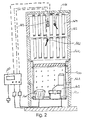
- the Fig. 2 shows a four-story beehive tower with a device 100 according to the invention, wherein also the applied temperature and humidity measuring means and a controller 110 connected via signal lines are shown.
- the device 100 essentially extends over two lower frames 120, 121 arranged one above the other, while in the two upper frames 122, 123 the frames 124 are hung with honeycombs containing the brood cells.
- the shown frames 120, 121, 122, 123 are common bee frames used in beekeeping and known to those skilled in the art.
- the temperature and humidity control device 110 is not inside the frames, but outside and is connected to the heat source 101 and the Ultraschallzerstäuber 103 via a regulated power supply (continuous connecting lines). From the control device 110, the temperature sensors 111, 112 extend over signal connections (dashed lines) to the brood cells in the frames 124. Further, the controller is connected to the humidity sensor 113 via a signal connection (dash-dot line), wherein the humidity sensor 113 the relative humidity of the ambient air between the frames 124 measures.
- the fan 102 is not controlled in the example shown and runs permanently.
- the signal connections can be realized by direct connections or wirelessly.
- the Fig. 3 11 shows a detailed view of one of the temperature sensors 111, 112, wherein the temperature sensor 111, 112 extends into a brood cell 114 and measures the temperature directly in the brood cell 114.
- the temperature sensor 111, 112 has a very accurate temperature measurement recording and is connected to a signal line to the control device. At least two temperature sensors are used to ensure the accuracy of the measurement and to avoid measuring errors.
- the control device 110 regulates the halogen radiator 101 via the temperature sensors 111, 112.
- An average value is formed as the actual value for the control from the measured values obtained from the temperature sensors 111, 112. This actual value is compared with the programmed temperature profile (setpoint) and then the halogen lamp is switched on or off.
- the hysteresis is chosen very small at 0.1 ° C.
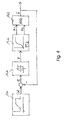
- the block diagram of the scheme is in the Fig. 4 shown.
- the first two components 130, 131 to the output y include the control device 110.
- the third component 132 includes the controlled system, which is acted upon by the manipulated variable y, and the device of Fig. 2 includes.
- the controlled system supplies the controlled variables x1 and x2 (measured values of the temperature sensors 111, 112), those in the last component 133 of a Be averaged. The mean value is then reported back and the control difference e is determined.
- the Fig. 5 shows a three-phase course of the Brutzellentemperatur while performing the method according to the invention.
- the mites infested with mites are taken out of the hive in the frames and the bees are shaken off or stripped off by hand.
- the bee-free brood combs are then in a Bee Zargenturm as in Fig. 2 shown hung.
- the heat treatment is divided into three phases: a preparation phase (a), a heating phase (b) and a treatment phase (c). All given temperature values are values measured in the brood cell.
- the preparation phase (a) lasts about 20 minutes to allow uniform heating of the brood cells as a defined initial state (32-33 ° C).
- the heating phase (b) begins by slow heating to a temperature band of at least 39 ° C and a maximum of 40.5 ° C.
- the heating phase (b) lasts about 60 minutes, the speed of heating the brood cells should not exceed 0.1 ° C / minute. Should only one of the temperature sensors 111, 112 measure a temperature of 40.5 degrees, the heat source 101 is switched off immediately.
- the device After the treatment phase (c), the device returns to the initial 32-33 ° C.
- This temperature range also represents the normal temperature in a brood cell.
- the brood of bees can also be taken immediately after the end of the treatment phase (c) and returned to the hive.
- the control monitors only a "forget” and thus the risk of hypothermia.
Landscapes
- Life Sciences & Earth Sciences (AREA)
- Environmental Sciences (AREA)
- Animal Husbandry (AREA)
- Biodiversity & Conservation Biology (AREA)
- Catching Or Destruction (AREA)
- Agricultural Chemicals And Associated Chemicals (AREA)
Priority Applications (1)
| Application Number | Priority Date | Filing Date | Title |
|---|---|---|---|
| SI201030481T SI2250880T1 (sl) | 2009-05-11 | 2010-05-10 | Naprava za nadzorovanje čebelam škodljivih pršic |
Applications Claiming Priority (1)
| Application Number | Priority Date | Filing Date | Title |
|---|---|---|---|
| AT7152009A AT507995B1 (de) | 2009-05-11 | 2009-05-11 | Vorrichtung und verfahren zum bekämpfen von bienenschädlichen milben |
Publications (3)
| Publication Number | Publication Date |
|---|---|
| EP2250880A2 true EP2250880A2 (fr) | 2010-11-17 |
| EP2250880A3 EP2250880A3 (fr) | 2011-05-18 |
| EP2250880B1 EP2250880B1 (fr) | 2013-10-09 |
Family
ID=42562895
Family Applications (1)
| Application Number | Title | Priority Date | Filing Date |
|---|---|---|---|
| EP20100450080 Active EP2250880B1 (fr) | 2009-05-11 | 2010-05-10 | Dispositif destiné à lutter contre les acariens attaquant les abeilles |
Country Status (3)
| Country | Link |
|---|---|
| EP (1) | EP2250880B1 (fr) |
| AT (1) | AT507995B1 (fr) |
| SI (1) | SI2250880T1 (fr) |
Cited By (3)
| Publication number | Priority date | Publication date | Assignee | Title |
|---|---|---|---|---|
| US9999204B2 (en) | 2015-01-09 | 2018-06-19 | Vatorex Ag | Device for combating the varroa mite in a bee brood |
| WO2018215806A1 (fr) * | 2017-05-25 | 2018-11-29 | Sablic Mate | Procédé de traitement thermique des ruches contre les acariens varroa |
| CN111226832A (zh) * | 2020-01-22 | 2020-06-05 | 正元合谷(北京)健康科技发展有限公司 | 一种智能蜂箱系统 |
Families Citing this family (2)
| Publication number | Priority date | Publication date | Assignee | Title |
|---|---|---|---|---|
| DE102013006265A1 (de) * | 2013-04-11 | 2014-10-16 | Richard Rossa | Vorrichtung und Verfahren zur Bekämpfung von Varroa-Milben im Bienenstock |
| DE202020005651U1 (de) | 2020-09-25 | 2021-12-15 | Norbert Strobach | Vorrichtung zur Behandlung von mit Bienenschädlichen Milben befallenen Bienen mittels UV-Licht |
Citations (5)
| Publication number | Priority date | Publication date | Assignee | Title |
|---|---|---|---|---|
| DE3643872A1 (de) | 1986-12-22 | 1988-06-30 | Guenther Josef Glueck | Verfahren und vorrichtung zur thermischen bekaempfung des milben-befalls von bienenvoelkern |
| DE3830802A1 (de) | 1988-09-09 | 1990-03-22 | Wilhelm Buschack | Brut- und behandlungseinrichtung fuer bienen |
| WO1992014355A1 (fr) | 1991-02-26 | 1992-09-03 | Devappa Dr.-Ing. R.-Zinsser & Ing. K. Prestl | Procede pour la lutte et l'extermination d'acariens varroa parasitaires dans le couvain des abeilles |
| DE19834345A1 (de) | 1998-07-30 | 2000-03-02 | Hermann Otto | Extratrockenluft-Varroabekämpfungsmaschine |
| DE10340308A1 (de) | 2003-09-02 | 2005-03-24 | Gerhard Penner | Trennverfahren und Vorrichtung für Bienen und Kleinlebewesen |
Family Cites Families (3)
| Publication number | Priority date | Publication date | Assignee | Title |
|---|---|---|---|---|
| DE9210779U1 (de) * | 1992-08-12 | 1992-11-12 | Dratt, Rainer | Imker-Mehrzweck-Wärmegerät |
| DE19831912A1 (de) * | 1998-07-16 | 2000-01-27 | Franz Koppitz | Apparat zur Bekämpfung der Varoa-Milbe bei Bienenvölkern, gekennzeichnet durch temperaturgeregelte Wärmebehandlung |
| BRPI0603782A (pt) * | 2006-09-11 | 2008-04-29 | Marcio Junqueira De Souza | dispositivo para higienização e aquecimento de colmeia de abelhas e processo para otimização da produção de produtos apìcolas orgánicos |
-
2009
- 2009-05-11 AT AT7152009A patent/AT507995B1/de active
-
2010
- 2010-05-10 SI SI201030481T patent/SI2250880T1/sl unknown
- 2010-05-10 EP EP20100450080 patent/EP2250880B1/fr active Active
Patent Citations (5)
| Publication number | Priority date | Publication date | Assignee | Title |
|---|---|---|---|---|
| DE3643872A1 (de) | 1986-12-22 | 1988-06-30 | Guenther Josef Glueck | Verfahren und vorrichtung zur thermischen bekaempfung des milben-befalls von bienenvoelkern |
| DE3830802A1 (de) | 1988-09-09 | 1990-03-22 | Wilhelm Buschack | Brut- und behandlungseinrichtung fuer bienen |
| WO1992014355A1 (fr) | 1991-02-26 | 1992-09-03 | Devappa Dr.-Ing. R.-Zinsser & Ing. K. Prestl | Procede pour la lutte et l'extermination d'acariens varroa parasitaires dans le couvain des abeilles |
| DE19834345A1 (de) | 1998-07-30 | 2000-03-02 | Hermann Otto | Extratrockenluft-Varroabekämpfungsmaschine |
| DE10340308A1 (de) | 2003-09-02 | 2005-03-24 | Gerhard Penner | Trennverfahren und Vorrichtung für Bienen und Kleinlebewesen |
Cited By (3)
| Publication number | Priority date | Publication date | Assignee | Title |
|---|---|---|---|---|
| US9999204B2 (en) | 2015-01-09 | 2018-06-19 | Vatorex Ag | Device for combating the varroa mite in a bee brood |
| WO2018215806A1 (fr) * | 2017-05-25 | 2018-11-29 | Sablic Mate | Procédé de traitement thermique des ruches contre les acariens varroa |
| CN111226832A (zh) * | 2020-01-22 | 2020-06-05 | 正元合谷(北京)健康科技发展有限公司 | 一种智能蜂箱系统 |
Also Published As
| Publication number | Publication date |
|---|---|
| AT507995B1 (de) | 2010-10-15 |
| EP2250880A3 (fr) | 2011-05-18 |
| SI2250880T1 (sl) | 2014-05-30 |
| AT507995A4 (de) | 2010-10-15 |
| EP2250880B1 (fr) | 2013-10-09 |
Similar Documents
| Publication | Publication Date | Title |
|---|---|---|
| EP3042559B1 (fr) | Dispositif destiné à lutter contre la varroase dans un couvain | |
| EP2789227B1 (fr) | Dispositif et procédé de lutte contre les varroas dans les ruches | |
| EP2915424B1 (fr) | Dispositif de traitement hyper-thermique des abeilles | |
| EP2250880B1 (fr) | Dispositif destiné à lutter contre les acariens attaquant les abeilles | |
| DE3308017C1 (de) | Verfahren und Vorrichtung zur Bekämpfung des Milben-Befalls von Bienenvölkern | |
| EP0129504A1 (fr) | Dispositif pour la capture d'insectes hyménoptères, en particulier d'abeilles, et pour le peuplement des boîtes de copulation pour abeilles | |
| US20120302132A1 (en) | Vented Top Bar Beehive System | |
| EP3072392B1 (fr) | Procédé de reduction de la varroase dans les ruches et ruches comprenant un dispositif de lutte contre la varroase | |
| DE3643872A1 (de) | Verfahren und vorrichtung zur thermischen bekaempfung des milben-befalls von bienenvoelkern | |
| DE10028573C2 (de) | Verfahren und Vorrichtung zur Bekämpfung von Schädlingen der Biene und des Bienenstockes | |
| DE19834345C2 (de) | Verfahren und Vorrichtung zur Trennung von Varroa-Milben von in einem Bienenkasten befindliche Bienen | |
| Harbo | Heating adult honey bees to remove Varroa jacobsoni | |
| DE102016106992B3 (de) | Vorrichtung und Verfahren zur Bekämpfung von Varroamilben in Bienenstöcken | |
| DE10204601A1 (de) | Neues Verfahren sowie die dazu gehörige Einrichtung zur Herstellung von Gelee-Royale (GR) | |
| DE202017000059U1 (de) | Vorrichtung zur Bekämpfung der Varroamilbe im Bienenstock | |
| Ingrao | Equipment and safety | |
| EP0259506A1 (fr) | Appareil pour traiter les maladies des abeilles | |
| DE102012022345A1 (de) | Bienwaben-Mittelwand | |
| DE202015001160U1 (de) | Vorrichtung zur Optimierung der Varroabekämpfung im Bienenstock | |
| DE102016119694B3 (de) | Verfahren und Vorrichtung zum Abtöten von Varroamilben | |
| DE10161677A1 (de) | Verfahren zur Bekämpfung von Schädlingen in Bienenvölkern | |
| DE102015015372B4 (de) | Vorrichtung zur Bedampfung von Futterheu mit gleichmäßiger Dampfverteilung | |
| RU2011341C1 (ru) | Способ борьбы с варроатозом пчел | |
| DE3830802A1 (de) | Brut- und behandlungseinrichtung fuer bienen | |
| DE20209602U1 (de) | Vorrichtung zur Dezimierung und Entfernung von Parasiten in Bienenstöcken |
Legal Events
| Date | Code | Title | Description |
|---|---|---|---|
| PUAI | Public reference made under article 153(3) epc to a published international application that has entered the european phase |
Free format text: ORIGINAL CODE: 0009012 |
|
| AK | Designated contracting states |
Kind code of ref document: A2 Designated state(s): AL AT BE BG CH CY CZ DE DK EE ES FI FR GB GR HR HU IE IS IT LI LT LU LV MC MK MT NL NO PL PT RO SE SI SK SM TR |
|
| AX | Request for extension of the european patent |
Extension state: BA ME RS |
|
| PUAL | Search report despatched |
Free format text: ORIGINAL CODE: 0009013 |
|
| AK | Designated contracting states |
Kind code of ref document: A3 Designated state(s): AL AT BE BG CH CY CZ DE DK EE ES FI FR GB GR HR HU IE IS IT LI LT LU LV MC MK MT NL NO PL PT RO SE SI SK SM TR |
|
| AX | Request for extension of the european patent |
Extension state: BA ME RS |
|
| 17P | Request for examination filed |
Effective date: 20111027 |
|
| 17Q | First examination report despatched |
Effective date: 20120613 |
|
| GRAP | Despatch of communication of intention to grant a patent |
Free format text: ORIGINAL CODE: EPIDOSNIGR1 |
|
| INTG | Intention to grant announced |
Effective date: 20130508 |
|
| GRAS | Grant fee paid |
Free format text: ORIGINAL CODE: EPIDOSNIGR3 |
|
| GRAA | (expected) grant |
Free format text: ORIGINAL CODE: 0009210 |
|
| AK | Designated contracting states |
Kind code of ref document: B1 Designated state(s): AL AT BE BG CH CY CZ DE DK EE ES FI FR GB GR HR HU IE IS IT LI LT LU LV MC MK MT NL NO PL PT RO SE SI SK SM TR |
|
| REG | Reference to a national code |
Ref country code: GB Ref legal event code: FG4D Free format text: NOT ENGLISH |
|
| REG | Reference to a national code |
Ref country code: AT Ref legal event code: REF Ref document number: 635163 Country of ref document: AT Kind code of ref document: T Effective date: 20131015 Ref country code: CH Ref legal event code: EP |
|
| REG | Reference to a national code |
Ref country code: IE Ref legal event code: FG4D Free format text: LANGUAGE OF EP DOCUMENT: GERMAN |
|
| REG | Reference to a national code |
Ref country code: DE Ref legal event code: R096 Ref document number: 502010005005 Country of ref document: DE Effective date: 20131205 |
|
| REG | Reference to a national code |
Ref country code: CH Ref legal event code: NV Representative=s name: STUMP UND PARTNER PATENTANWAELTE AG, CH |
|
| REG | Reference to a national code |
Ref country code: NL Ref legal event code: VDEP Effective date: 20131009 |
|
| REG | Reference to a national code |
Ref country code: LT Ref legal event code: MG4D |
|
| PG25 | Lapsed in a contracting state [announced via postgrant information from national office to epo] |
Ref country code: NO Free format text: LAPSE BECAUSE OF FAILURE TO SUBMIT A TRANSLATION OF THE DESCRIPTION OR TO PAY THE FEE WITHIN THE PRESCRIBED TIME-LIMIT Effective date: 20140109 Ref country code: IS Free format text: LAPSE BECAUSE OF FAILURE TO SUBMIT A TRANSLATION OF THE DESCRIPTION OR TO PAY THE FEE WITHIN THE PRESCRIBED TIME-LIMIT Effective date: 20140209 Ref country code: HR Free format text: LAPSE BECAUSE OF FAILURE TO SUBMIT A TRANSLATION OF THE DESCRIPTION OR TO PAY THE FEE WITHIN THE PRESCRIBED TIME-LIMIT Effective date: 20131009 Ref country code: NL Free format text: LAPSE BECAUSE OF FAILURE TO SUBMIT A TRANSLATION OF THE DESCRIPTION OR TO PAY THE FEE WITHIN THE PRESCRIBED TIME-LIMIT Effective date: 20131009 Ref country code: LT Free format text: LAPSE BECAUSE OF FAILURE TO SUBMIT A TRANSLATION OF THE DESCRIPTION OR TO PAY THE FEE WITHIN THE PRESCRIBED TIME-LIMIT Effective date: 20131009 Ref country code: SE Free format text: LAPSE BECAUSE OF FAILURE TO SUBMIT A TRANSLATION OF THE DESCRIPTION OR TO PAY THE FEE WITHIN THE PRESCRIBED TIME-LIMIT Effective date: 20131009 Ref country code: FI Free format text: LAPSE BECAUSE OF FAILURE TO SUBMIT A TRANSLATION OF THE DESCRIPTION OR TO PAY THE FEE WITHIN THE PRESCRIBED TIME-LIMIT Effective date: 20131009 |
|
| PG25 | Lapsed in a contracting state [announced via postgrant information from national office to epo] |
Ref country code: LV Free format text: LAPSE BECAUSE OF FAILURE TO SUBMIT A TRANSLATION OF THE DESCRIPTION OR TO PAY THE FEE WITHIN THE PRESCRIBED TIME-LIMIT Effective date: 20131009 Ref country code: PL Free format text: LAPSE BECAUSE OF FAILURE TO SUBMIT A TRANSLATION OF THE DESCRIPTION OR TO PAY THE FEE WITHIN THE PRESCRIBED TIME-LIMIT Effective date: 20131009 Ref country code: ES Free format text: LAPSE BECAUSE OF FAILURE TO SUBMIT A TRANSLATION OF THE DESCRIPTION OR TO PAY THE FEE WITHIN THE PRESCRIBED TIME-LIMIT Effective date: 20131009 Ref country code: CY Free format text: LAPSE BECAUSE OF FAILURE TO SUBMIT A TRANSLATION OF THE DESCRIPTION OR TO PAY THE FEE WITHIN THE PRESCRIBED TIME-LIMIT Effective date: 20131009 |
|
| PG25 | Lapsed in a contracting state [announced via postgrant information from national office to epo] |
Ref country code: PT Free format text: LAPSE BECAUSE OF FAILURE TO SUBMIT A TRANSLATION OF THE DESCRIPTION OR TO PAY THE FEE WITHIN THE PRESCRIBED TIME-LIMIT Effective date: 20140210 |
|
| REG | Reference to a national code |
Ref country code: DE Ref legal event code: R097 Ref document number: 502010005005 Country of ref document: DE |
|
| PG25 | Lapsed in a contracting state [announced via postgrant information from national office to epo] |
Ref country code: EE Free format text: LAPSE BECAUSE OF FAILURE TO SUBMIT A TRANSLATION OF THE DESCRIPTION OR TO PAY THE FEE WITHIN THE PRESCRIBED TIME-LIMIT Effective date: 20131009 |
|
| PLBE | No opposition filed within time limit |
Free format text: ORIGINAL CODE: 0009261 |
|
| STAA | Information on the status of an ep patent application or granted ep patent |
Free format text: STATUS: NO OPPOSITION FILED WITHIN TIME LIMIT |
|
| PG25 | Lapsed in a contracting state [announced via postgrant information from national office to epo] |
Ref country code: IT Free format text: LAPSE BECAUSE OF FAILURE TO SUBMIT A TRANSLATION OF THE DESCRIPTION OR TO PAY THE FEE WITHIN THE PRESCRIBED TIME-LIMIT Effective date: 20131009 Ref country code: CZ Free format text: LAPSE BECAUSE OF FAILURE TO SUBMIT A TRANSLATION OF THE DESCRIPTION OR TO PAY THE FEE WITHIN THE PRESCRIBED TIME-LIMIT Effective date: 20131009 Ref country code: RO Free format text: LAPSE BECAUSE OF FAILURE TO SUBMIT A TRANSLATION OF THE DESCRIPTION OR TO PAY THE FEE WITHIN THE PRESCRIBED TIME-LIMIT Effective date: 20131009 Ref country code: SK Free format text: LAPSE BECAUSE OF FAILURE TO SUBMIT A TRANSLATION OF THE DESCRIPTION OR TO PAY THE FEE WITHIN THE PRESCRIBED TIME-LIMIT Effective date: 20131009 |
|
| 26N | No opposition filed |
Effective date: 20140710 |
|
| PG25 | Lapsed in a contracting state [announced via postgrant information from national office to epo] |
Ref country code: DK Free format text: LAPSE BECAUSE OF FAILURE TO SUBMIT A TRANSLATION OF THE DESCRIPTION OR TO PAY THE FEE WITHIN THE PRESCRIBED TIME-LIMIT Effective date: 20131009 |
|
| REG | Reference to a national code |
Ref country code: DE Ref legal event code: R097 Ref document number: 502010005005 Country of ref document: DE Effective date: 20140710 |
|
| PG25 | Lapsed in a contracting state [announced via postgrant information from national office to epo] |
Ref country code: LU Free format text: LAPSE BECAUSE OF FAILURE TO SUBMIT A TRANSLATION OF THE DESCRIPTION OR TO PAY THE FEE WITHIN THE PRESCRIBED TIME-LIMIT Effective date: 20140510 |
|
| GBPC | Gb: european patent ceased through non-payment of renewal fee |
Effective date: 20140510 |
|
| PG25 | Lapsed in a contracting state [announced via postgrant information from national office to epo] |
Ref country code: MC Free format text: LAPSE BECAUSE OF FAILURE TO SUBMIT A TRANSLATION OF THE DESCRIPTION OR TO PAY THE FEE WITHIN THE PRESCRIBED TIME-LIMIT Effective date: 20131009 |
|
| REG | Reference to a national code |
Ref country code: IE Ref legal event code: MM4A |
|
| REG | Reference to a national code |
Ref country code: FR Ref legal event code: PLFP Year of fee payment: 6 |
|
| PG25 | Lapsed in a contracting state [announced via postgrant information from national office to epo] |
Ref country code: IE Free format text: LAPSE BECAUSE OF NON-PAYMENT OF DUE FEES Effective date: 20140510 |
|
| PG25 | Lapsed in a contracting state [announced via postgrant information from national office to epo] |
Ref country code: GB Free format text: LAPSE BECAUSE OF NON-PAYMENT OF DUE FEES Effective date: 20140510 |
|
| PG25 | Lapsed in a contracting state [announced via postgrant information from national office to epo] |
Ref country code: MT Free format text: LAPSE BECAUSE OF FAILURE TO SUBMIT A TRANSLATION OF THE DESCRIPTION OR TO PAY THE FEE WITHIN THE PRESCRIBED TIME-LIMIT Effective date: 20131009 |
|
| REG | Reference to a national code |
Ref country code: FR Ref legal event code: PLFP Year of fee payment: 7 |
|
| PG25 | Lapsed in a contracting state [announced via postgrant information from national office to epo] |
Ref country code: SM Free format text: LAPSE BECAUSE OF FAILURE TO SUBMIT A TRANSLATION OF THE DESCRIPTION OR TO PAY THE FEE WITHIN THE PRESCRIBED TIME-LIMIT Effective date: 20131009 |
|
| PG25 | Lapsed in a contracting state [announced via postgrant information from national office to epo] |
Ref country code: BG Free format text: LAPSE BECAUSE OF FAILURE TO SUBMIT A TRANSLATION OF THE DESCRIPTION OR TO PAY THE FEE WITHIN THE PRESCRIBED TIME-LIMIT Effective date: 20131009 Ref country code: GR Free format text: LAPSE BECAUSE OF FAILURE TO SUBMIT A TRANSLATION OF THE DESCRIPTION OR TO PAY THE FEE WITHIN THE PRESCRIBED TIME-LIMIT Effective date: 20140110 |
|
| REG | Reference to a national code |
Ref country code: AT Ref legal event code: MM01 Ref document number: 635163 Country of ref document: AT Kind code of ref document: T Effective date: 20150510 |
|
| PG25 | Lapsed in a contracting state [announced via postgrant information from national office to epo] |
Ref country code: TR Free format text: LAPSE BECAUSE OF FAILURE TO SUBMIT A TRANSLATION OF THE DESCRIPTION OR TO PAY THE FEE WITHIN THE PRESCRIBED TIME-LIMIT Effective date: 20131009 Ref country code: HU Free format text: LAPSE BECAUSE OF FAILURE TO SUBMIT A TRANSLATION OF THE DESCRIPTION OR TO PAY THE FEE WITHIN THE PRESCRIBED TIME-LIMIT; INVALID AB INITIO Effective date: 20100510 |
|
| PG25 | Lapsed in a contracting state [announced via postgrant information from national office to epo] |
Ref country code: AT Free format text: LAPSE BECAUSE OF NON-PAYMENT OF DUE FEES Effective date: 20150510 |
|
| REG | Reference to a national code |
Ref country code: FR Ref legal event code: PLFP Year of fee payment: 8 |
|
| REG | Reference to a national code |
Ref country code: FR Ref legal event code: PLFP Year of fee payment: 9 |
|
| PG25 | Lapsed in a contracting state [announced via postgrant information from national office to epo] |
Ref country code: MK Free format text: LAPSE BECAUSE OF FAILURE TO SUBMIT A TRANSLATION OF THE DESCRIPTION OR TO PAY THE FEE WITHIN THE PRESCRIBED TIME-LIMIT Effective date: 20131009 |
|
| PG25 | Lapsed in a contracting state [announced via postgrant information from national office to epo] |
Ref country code: AL Free format text: LAPSE BECAUSE OF FAILURE TO SUBMIT A TRANSLATION OF THE DESCRIPTION OR TO PAY THE FEE WITHIN THE PRESCRIBED TIME-LIMIT Effective date: 20131009 |
|
| P01 | Opt-out of the competence of the unified patent court (upc) registered |
Effective date: 20230510 |
|
| PGFP | Annual fee paid to national office [announced via postgrant information from national office to epo] |
Ref country code: DE Payment date: 20250528 Year of fee payment: 16 |
|
| PGFP | Annual fee paid to national office [announced via postgrant information from national office to epo] |
Ref country code: BE Payment date: 20250526 Year of fee payment: 16 |
|
| PGFP | Annual fee paid to national office [announced via postgrant information from national office to epo] |
Ref country code: FR Payment date: 20250526 Year of fee payment: 16 |
|
| PGFP | Annual fee paid to national office [announced via postgrant information from national office to epo] |
Ref country code: CH Payment date: 20250601 Year of fee payment: 16 |
|
| PGFP | Annual fee paid to national office [announced via postgrant information from national office to epo] |
Ref country code: SI Payment date: 20250429 Year of fee payment: 16 |