EP2264128A2 - Katalysatorstruktur und fischer-tropschsyntheseverfahren - Google Patents
Katalysatorstruktur und fischer-tropschsyntheseverfahren Download PDFInfo
- Publication number
- EP2264128A2 EP2264128A2 EP10012645A EP10012645A EP2264128A2 EP 2264128 A2 EP2264128 A2 EP 2264128A2 EP 10012645 A EP10012645 A EP 10012645A EP 10012645 A EP10012645 A EP 10012645A EP 2264128 A2 EP2264128 A2 EP 2264128A2
- Authority
- EP
- European Patent Office
- Prior art keywords
- catalyst
- reactor
- reaction chamber
- less
- fischer
- Prior art date
- Legal status (The legal status is an assumption and is not a legal conclusion. Google has not performed a legal analysis and makes no representation as to the accuracy of the status listed.)
- Granted
Links
Images
Classifications
-
- C—CHEMISTRY; METALLURGY
- C10—PETROLEUM, GAS OR COKE INDUSTRIES; TECHNICAL GASES CONTAINING CARBON MONOXIDE; FUELS; LUBRICANTS; PEAT
- C10G—CRACKING HYDROCARBON OILS; PRODUCTION OF LIQUID HYDROCARBON MIXTURES, e.g. BY DESTRUCTIVE HYDROGENATION, OLIGOMERISATION, POLYMERISATION; RECOVERY OF HYDROCARBON OILS FROM OIL-SHALE, OIL-SAND, OR GASES; REFINING MIXTURES MAINLY CONSISTING OF HYDROCARBONS; REFORMING OF NAPHTHA; MINERAL WAXES
- C10G2/00—Production of liquid hydrocarbon mixtures of undefined composition from oxides of carbon
- C10G2/30—Production of liquid hydrocarbon mixtures of undefined composition from oxides of carbon from carbon monoxide with hydrogen
- C10G2/32—Production of liquid hydrocarbon mixtures of undefined composition from oxides of carbon from carbon monoxide with hydrogen with the use of catalysts
- C10G2/33—Production of liquid hydrocarbon mixtures of undefined composition from oxides of carbon from carbon monoxide with hydrogen with the use of catalysts characterised by the catalyst used
- C10G2/331—Production of liquid hydrocarbon mixtures of undefined composition from oxides of carbon from carbon monoxide with hydrogen with the use of catalysts characterised by the catalyst used containing group VIII-metals
- C10G2/332—Production of liquid hydrocarbon mixtures of undefined composition from oxides of carbon from carbon monoxide with hydrogen with the use of catalysts characterised by the catalyst used containing group VIII-metals of the iron-group
-
- B—PERFORMING OPERATIONS; TRANSPORTING
- B01—PHYSICAL OR CHEMICAL PROCESSES OR APPARATUS IN GENERAL
- B01J—CHEMICAL OR PHYSICAL PROCESSES, e.g. CATALYSIS OR COLLOID CHEMISTRY; THEIR RELEVANT APPARATUS
- B01J12/00—Chemical processes in general for reacting gaseous media with gaseous media; Apparatus specially adapted therefor
- B01J12/007—Chemical processes in general for reacting gaseous media with gaseous media; Apparatus specially adapted therefor in the presence of catalytically active bodies, e.g. porous plates
-
- B—PERFORMING OPERATIONS; TRANSPORTING
- B01—PHYSICAL OR CHEMICAL PROCESSES OR APPARATUS IN GENERAL
- B01J—CHEMICAL OR PHYSICAL PROCESSES, e.g. CATALYSIS OR COLLOID CHEMISTRY; THEIR RELEVANT APPARATUS
- B01J19/00—Chemical, physical or physico-chemical processes in general; Their relevant apparatus
- B01J19/0093—Microreactors, e.g. miniaturised or microfabricated reactors
-
- B—PERFORMING OPERATIONS; TRANSPORTING
- B01—PHYSICAL OR CHEMICAL PROCESSES OR APPARATUS IN GENERAL
- B01J—CHEMICAL OR PHYSICAL PROCESSES, e.g. CATALYSIS OR COLLOID CHEMISTRY; THEIR RELEVANT APPARATUS
- B01J19/00—Chemical, physical or physico-chemical processes in general; Their relevant apparatus
- B01J19/24—Stationary reactors without moving elements inside
- B01J19/248—Reactors comprising multiple separated flow channels
-
- B—PERFORMING OPERATIONS; TRANSPORTING
- B01—PHYSICAL OR CHEMICAL PROCESSES OR APPARATUS IN GENERAL
- B01J—CHEMICAL OR PHYSICAL PROCESSES, e.g. CATALYSIS OR COLLOID CHEMISTRY; THEIR RELEVANT APPARATUS
- B01J19/00—Chemical, physical or physico-chemical processes in general; Their relevant apparatus
- B01J19/24—Stationary reactors without moving elements inside
- B01J19/248—Reactors comprising multiple separated flow channels
- B01J19/249—Plate-type reactors
-
- B—PERFORMING OPERATIONS; TRANSPORTING
- B01—PHYSICAL OR CHEMICAL PROCESSES OR APPARATUS IN GENERAL
- B01J—CHEMICAL OR PHYSICAL PROCESSES, e.g. CATALYSIS OR COLLOID CHEMISTRY; THEIR RELEVANT APPARATUS
- B01J19/00—Chemical, physical or physico-chemical processes in general; Their relevant apparatus
- B01J19/24—Stationary reactors without moving elements inside
- B01J19/248—Reactors comprising multiple separated flow channels
- B01J19/2495—Net-type reactors
-
- B—PERFORMING OPERATIONS; TRANSPORTING
- B01—PHYSICAL OR CHEMICAL PROCESSES OR APPARATUS IN GENERAL
- B01J—CHEMICAL OR PHYSICAL PROCESSES, e.g. CATALYSIS OR COLLOID CHEMISTRY; THEIR RELEVANT APPARATUS
- B01J23/00—Catalysts comprising metals or metal oxides or hydroxides, not provided for in group B01J21/00
- B01J23/38—Catalysts comprising metals or metal oxides or hydroxides, not provided for in group B01J21/00 of noble metals
- B01J23/40—Catalysts comprising metals or metal oxides or hydroxides, not provided for in group B01J21/00 of noble metals of the platinum group metals
- B01J23/46—Ruthenium, rhodium, osmium or iridium
- B01J23/462—Ruthenium
-
- B—PERFORMING OPERATIONS; TRANSPORTING
- B01—PHYSICAL OR CHEMICAL PROCESSES OR APPARATUS IN GENERAL
- B01J—CHEMICAL OR PHYSICAL PROCESSES, e.g. CATALYSIS OR COLLOID CHEMISTRY; THEIR RELEVANT APPARATUS
- B01J23/00—Catalysts comprising metals or metal oxides or hydroxides, not provided for in group B01J21/00
- B01J23/38—Catalysts comprising metals or metal oxides or hydroxides, not provided for in group B01J21/00 of noble metals
- B01J23/40—Catalysts comprising metals or metal oxides or hydroxides, not provided for in group B01J21/00 of noble metals of the platinum group metals
- B01J23/46—Ruthenium, rhodium, osmium or iridium
- B01J23/466—Osmium
-
- B—PERFORMING OPERATIONS; TRANSPORTING
- B01—PHYSICAL OR CHEMICAL PROCESSES OR APPARATUS IN GENERAL
- B01J—CHEMICAL OR PHYSICAL PROCESSES, e.g. CATALYSIS OR COLLOID CHEMISTRY; THEIR RELEVANT APPARATUS
- B01J23/00—Catalysts comprising metals or metal oxides or hydroxides, not provided for in group B01J21/00
- B01J23/70—Catalysts comprising metals or metal oxides or hydroxides, not provided for in group B01J21/00 of the iron group metals or copper
- B01J23/74—Iron group metals
- B01J23/745—Iron
-
- B—PERFORMING OPERATIONS; TRANSPORTING
- B01—PHYSICAL OR CHEMICAL PROCESSES OR APPARATUS IN GENERAL
- B01J—CHEMICAL OR PHYSICAL PROCESSES, e.g. CATALYSIS OR COLLOID CHEMISTRY; THEIR RELEVANT APPARATUS
- B01J23/00—Catalysts comprising metals or metal oxides or hydroxides, not provided for in group B01J21/00
- B01J23/70—Catalysts comprising metals or metal oxides or hydroxides, not provided for in group B01J21/00 of the iron group metals or copper
- B01J23/74—Iron group metals
- B01J23/75—Cobalt
-
- B—PERFORMING OPERATIONS; TRANSPORTING
- B01—PHYSICAL OR CHEMICAL PROCESSES OR APPARATUS IN GENERAL
- B01J—CHEMICAL OR PHYSICAL PROCESSES, e.g. CATALYSIS OR COLLOID CHEMISTRY; THEIR RELEVANT APPARATUS
- B01J23/00—Catalysts comprising metals or metal oxides or hydroxides, not provided for in group B01J21/00
- B01J23/70—Catalysts comprising metals or metal oxides or hydroxides, not provided for in group B01J21/00 of the iron group metals or copper
- B01J23/89—Catalysts comprising metals or metal oxides or hydroxides, not provided for in group B01J21/00 of the iron group metals or copper combined with noble metals
- B01J23/8913—Cobalt and noble metals
-
- B—PERFORMING OPERATIONS; TRANSPORTING
- B01—PHYSICAL OR CHEMICAL PROCESSES OR APPARATUS IN GENERAL
- B01J—CHEMICAL OR PHYSICAL PROCESSES, e.g. CATALYSIS OR COLLOID CHEMISTRY; THEIR RELEVANT APPARATUS
- B01J35/00—Catalysts, in general, characterised by their form or physical properties
- B01J35/19—Catalysts containing parts with different compositions
-
- B—PERFORMING OPERATIONS; TRANSPORTING
- B01—PHYSICAL OR CHEMICAL PROCESSES OR APPARATUS IN GENERAL
- B01J—CHEMICAL OR PHYSICAL PROCESSES, e.g. CATALYSIS OR COLLOID CHEMISTRY; THEIR RELEVANT APPARATUS
- B01J35/00—Catalysts, in general, characterised by their form or physical properties
- B01J35/50—Catalysts, in general, characterised by their form or physical properties characterised by their shape or configuration
- B01J35/56—Foraminous structures having flow-through passages or channels, e.g. grids or three-dimensional [3D] monoliths
-
- B—PERFORMING OPERATIONS; TRANSPORTING
- B01—PHYSICAL OR CHEMICAL PROCESSES OR APPARATUS IN GENERAL
- B01J—CHEMICAL OR PHYSICAL PROCESSES, e.g. CATALYSIS OR COLLOID CHEMISTRY; THEIR RELEVANT APPARATUS
- B01J35/00—Catalysts, in general, characterised by their form or physical properties
- B01J35/50—Catalysts, in general, characterised by their form or physical properties characterised by their shape or configuration
- B01J35/56—Foraminous structures having flow-through passages or channels, e.g. grids or three-dimensional [3D] monoliths
- B01J35/57—Honeycombs
-
- B—PERFORMING OPERATIONS; TRANSPORTING
- B01—PHYSICAL OR CHEMICAL PROCESSES OR APPARATUS IN GENERAL
- B01J—CHEMICAL OR PHYSICAL PROCESSES, e.g. CATALYSIS OR COLLOID CHEMISTRY; THEIR RELEVANT APPARATUS
- B01J35/00—Catalysts, in general, characterised by their form or physical properties
- B01J35/60—Catalysts, in general, characterised by their form or physical properties characterised by their surface properties or porosity
-
- B—PERFORMING OPERATIONS; TRANSPORTING
- B01—PHYSICAL OR CHEMICAL PROCESSES OR APPARATUS IN GENERAL
- B01J—CHEMICAL OR PHYSICAL PROCESSES, e.g. CATALYSIS OR COLLOID CHEMISTRY; THEIR RELEVANT APPARATUS
- B01J35/00—Catalysts, in general, characterised by their form or physical properties
- B01J35/60—Catalysts, in general, characterised by their form or physical properties characterised by their surface properties or porosity
- B01J35/64—Pore diameter
- B01J35/657—Pore diameter larger than 1000 nm
-
- B—PERFORMING OPERATIONS; TRANSPORTING
- B01—PHYSICAL OR CHEMICAL PROCESSES OR APPARATUS IN GENERAL
- B01J—CHEMICAL OR PHYSICAL PROCESSES, e.g. CATALYSIS OR COLLOID CHEMISTRY; THEIR RELEVANT APPARATUS
- B01J37/00—Processes, in general, for preparing catalysts; Processes, in general, for activation of catalysts
- B01J37/02—Impregnation, coating or precipitation
- B01J37/0215—Coating
- B01J37/0217—Pretreatment of the substrate before coating
-
- B—PERFORMING OPERATIONS; TRANSPORTING
- B01—PHYSICAL OR CHEMICAL PROCESSES OR APPARATUS IN GENERAL
- B01J—CHEMICAL OR PHYSICAL PROCESSES, e.g. CATALYSIS OR COLLOID CHEMISTRY; THEIR RELEVANT APPARATUS
- B01J37/00—Processes, in general, for preparing catalysts; Processes, in general, for activation of catalysts
- B01J37/02—Impregnation, coating or precipitation
- B01J37/0215—Coating
- B01J37/0221—Coating of particles
-
- B—PERFORMING OPERATIONS; TRANSPORTING
- B01—PHYSICAL OR CHEMICAL PROCESSES OR APPARATUS IN GENERAL
- B01J—CHEMICAL OR PHYSICAL PROCESSES, e.g. CATALYSIS OR COLLOID CHEMISTRY; THEIR RELEVANT APPARATUS
- B01J37/00—Processes, in general, for preparing catalysts; Processes, in general, for activation of catalysts
- B01J37/02—Impregnation, coating or precipitation
- B01J37/0215—Coating
- B01J37/0225—Coating of metal substrates
-
- B—PERFORMING OPERATIONS; TRANSPORTING
- B01—PHYSICAL OR CHEMICAL PROCESSES OR APPARATUS IN GENERAL
- B01J—CHEMICAL OR PHYSICAL PROCESSES, e.g. CATALYSIS OR COLLOID CHEMISTRY; THEIR RELEVANT APPARATUS
- B01J37/00—Processes, in general, for preparing catalysts; Processes, in general, for activation of catalysts
- B01J37/02—Impregnation, coating or precipitation
- B01J37/024—Multiple impregnation or coating
- B01J37/0244—Coatings comprising several layers
-
- B—PERFORMING OPERATIONS; TRANSPORTING
- B01—PHYSICAL OR CHEMICAL PROCESSES OR APPARATUS IN GENERAL
- B01J—CHEMICAL OR PHYSICAL PROCESSES, e.g. CATALYSIS OR COLLOID CHEMISTRY; THEIR RELEVANT APPARATUS
- B01J37/00—Processes, in general, for preparing catalysts; Processes, in general, for activation of catalysts
- B01J37/02—Impregnation, coating or precipitation
- B01J37/024—Multiple impregnation or coating
- B01J37/0248—Coatings comprising impregnated particles
-
- B—PERFORMING OPERATIONS; TRANSPORTING
- B01—PHYSICAL OR CHEMICAL PROCESSES OR APPARATUS IN GENERAL
- B01J—CHEMICAL OR PHYSICAL PROCESSES, e.g. CATALYSIS OR COLLOID CHEMISTRY; THEIR RELEVANT APPARATUS
- B01J8/00—Chemical or physical processes in general, conducted in the presence of fluids and solid particles; Apparatus for such processes
- B01J8/02—Chemical or physical processes in general, conducted in the presence of fluids and solid particles; Apparatus for such processes with stationary particles, e.g. in fixed beds
- B01J8/0285—Heating or cooling the reactor
-
- C—CHEMISTRY; METALLURGY
- C07—ORGANIC CHEMISTRY
- C07C—ACYCLIC OR CARBOCYCLIC COMPOUNDS
- C07C1/00—Preparation of hydrocarbons from one or more compounds, none of them being a hydrocarbon
- C07C1/02—Preparation of hydrocarbons from one or more compounds, none of them being a hydrocarbon from oxides of a carbon
- C07C1/04—Preparation of hydrocarbons from one or more compounds, none of them being a hydrocarbon from oxides of a carbon from carbon monoxide with hydrogen
- C07C1/0405—Apparatus
- C07C1/041—Reactors
-
- C—CHEMISTRY; METALLURGY
- C07—ORGANIC CHEMISTRY
- C07C—ACYCLIC OR CARBOCYCLIC COMPOUNDS
- C07C1/00—Preparation of hydrocarbons from one or more compounds, none of them being a hydrocarbon
- C07C1/02—Preparation of hydrocarbons from one or more compounds, none of them being a hydrocarbon from oxides of a carbon
- C07C1/04—Preparation of hydrocarbons from one or more compounds, none of them being a hydrocarbon from oxides of a carbon from carbon monoxide with hydrogen
- C07C1/0425—Catalysts; their physical properties
-
- C—CHEMISTRY; METALLURGY
- C07—ORGANIC CHEMISTRY
- C07C—ACYCLIC OR CARBOCYCLIC COMPOUNDS
- C07C1/00—Preparation of hydrocarbons from one or more compounds, none of them being a hydrocarbon
- C07C1/02—Preparation of hydrocarbons from one or more compounds, none of them being a hydrocarbon from oxides of a carbon
- C07C1/04—Preparation of hydrocarbons from one or more compounds, none of them being a hydrocarbon from oxides of a carbon from carbon monoxide with hydrogen
- C07C1/0455—Reaction conditions
-
- C—CHEMISTRY; METALLURGY
- C10—PETROLEUM, GAS OR COKE INDUSTRIES; TECHNICAL GASES CONTAINING CARBON MONOXIDE; FUELS; LUBRICANTS; PEAT
- C10G—CRACKING HYDROCARBON OILS; PRODUCTION OF LIQUID HYDROCARBON MIXTURES, e.g. BY DESTRUCTIVE HYDROGENATION, OLIGOMERISATION, POLYMERISATION; RECOVERY OF HYDROCARBON OILS FROM OIL-SHALE, OIL-SAND, OR GASES; REFINING MIXTURES MAINLY CONSISTING OF HYDROCARBONS; REFORMING OF NAPHTHA; MINERAL WAXES
- C10G2/00—Production of liquid hydrocarbon mixtures of undefined composition from oxides of carbon
- C10G2/30—Production of liquid hydrocarbon mixtures of undefined composition from oxides of carbon from carbon monoxide with hydrogen
- C10G2/32—Production of liquid hydrocarbon mixtures of undefined composition from oxides of carbon from carbon monoxide with hydrogen with the use of catalysts
-
- C—CHEMISTRY; METALLURGY
- C10—PETROLEUM, GAS OR COKE INDUSTRIES; TECHNICAL GASES CONTAINING CARBON MONOXIDE; FUELS; LUBRICANTS; PEAT
- C10G—CRACKING HYDROCARBON OILS; PRODUCTION OF LIQUID HYDROCARBON MIXTURES, e.g. BY DESTRUCTIVE HYDROGENATION, OLIGOMERISATION, POLYMERISATION; RECOVERY OF HYDROCARBON OILS FROM OIL-SHALE, OIL-SAND, OR GASES; REFINING MIXTURES MAINLY CONSISTING OF HYDROCARBONS; REFORMING OF NAPHTHA; MINERAL WAXES
- C10G2/00—Production of liquid hydrocarbon mixtures of undefined composition from oxides of carbon
- C10G2/30—Production of liquid hydrocarbon mixtures of undefined composition from oxides of carbon from carbon monoxide with hydrogen
- C10G2/32—Production of liquid hydrocarbon mixtures of undefined composition from oxides of carbon from carbon monoxide with hydrogen with the use of catalysts
- C10G2/33—Production of liquid hydrocarbon mixtures of undefined composition from oxides of carbon from carbon monoxide with hydrogen with the use of catalysts characterised by the catalyst used
-
- C—CHEMISTRY; METALLURGY
- C10—PETROLEUM, GAS OR COKE INDUSTRIES; TECHNICAL GASES CONTAINING CARBON MONOXIDE; FUELS; LUBRICANTS; PEAT
- C10G—CRACKING HYDROCARBON OILS; PRODUCTION OF LIQUID HYDROCARBON MIXTURES, e.g. BY DESTRUCTIVE HYDROGENATION, OLIGOMERISATION, POLYMERISATION; RECOVERY OF HYDROCARBON OILS FROM OIL-SHALE, OIL-SAND, OR GASES; REFINING MIXTURES MAINLY CONSISTING OF HYDROCARBONS; REFORMING OF NAPHTHA; MINERAL WAXES
- C10G2/00—Production of liquid hydrocarbon mixtures of undefined composition from oxides of carbon
- C10G2/30—Production of liquid hydrocarbon mixtures of undefined composition from oxides of carbon from carbon monoxide with hydrogen
- C10G2/32—Production of liquid hydrocarbon mixtures of undefined composition from oxides of carbon from carbon monoxide with hydrogen with the use of catalysts
- C10G2/34—Apparatus, reactors
-
- C—CHEMISTRY; METALLURGY
- C10—PETROLEUM, GAS OR COKE INDUSTRIES; TECHNICAL GASES CONTAINING CARBON MONOXIDE; FUELS; LUBRICANTS; PEAT
- C10G—CRACKING HYDROCARBON OILS; PRODUCTION OF LIQUID HYDROCARBON MIXTURES, e.g. BY DESTRUCTIVE HYDROGENATION, OLIGOMERISATION, POLYMERISATION; RECOVERY OF HYDROCARBON OILS FROM OIL-SHALE, OIL-SAND, OR GASES; REFINING MIXTURES MAINLY CONSISTING OF HYDROCARBONS; REFORMING OF NAPHTHA; MINERAL WAXES
- C10G2/00—Production of liquid hydrocarbon mixtures of undefined composition from oxides of carbon
- C10G2/30—Production of liquid hydrocarbon mixtures of undefined composition from oxides of carbon from carbon monoxide with hydrogen
- C10G2/32—Production of liquid hydrocarbon mixtures of undefined composition from oxides of carbon from carbon monoxide with hydrogen with the use of catalysts
- C10G2/34—Apparatus, reactors
- C10G2/341—Apparatus, reactors with stationary catalyst bed
-
- B—PERFORMING OPERATIONS; TRANSPORTING
- B01—PHYSICAL OR CHEMICAL PROCESSES OR APPARATUS IN GENERAL
- B01J—CHEMICAL OR PHYSICAL PROCESSES, e.g. CATALYSIS OR COLLOID CHEMISTRY; THEIR RELEVANT APPARATUS
- B01J2219/00—Chemical, physical or physico-chemical processes in general; Their relevant apparatus
- B01J2219/00781—Aspects relating to microreactors
- B01J2219/00783—Laminate assemblies, i.e. the reactor comprising a stack of plates
-
- B—PERFORMING OPERATIONS; TRANSPORTING
- B01—PHYSICAL OR CHEMICAL PROCESSES OR APPARATUS IN GENERAL
- B01J—CHEMICAL OR PHYSICAL PROCESSES, e.g. CATALYSIS OR COLLOID CHEMISTRY; THEIR RELEVANT APPARATUS
- B01J2219/00—Chemical, physical or physico-chemical processes in general; Their relevant apparatus
- B01J2219/00781—Aspects relating to microreactors
- B01J2219/00819—Materials of construction
- B01J2219/00822—Metal
-
- B—PERFORMING OPERATIONS; TRANSPORTING
- B01—PHYSICAL OR CHEMICAL PROCESSES OR APPARATUS IN GENERAL
- B01J—CHEMICAL OR PHYSICAL PROCESSES, e.g. CATALYSIS OR COLLOID CHEMISTRY; THEIR RELEVANT APPARATUS
- B01J2219/00—Chemical, physical or physico-chemical processes in general; Their relevant apparatus
- B01J2219/00781—Aspects relating to microreactors
- B01J2219/00819—Materials of construction
- B01J2219/00835—Comprising catalytically active material
-
- B—PERFORMING OPERATIONS; TRANSPORTING
- B01—PHYSICAL OR CHEMICAL PROCESSES OR APPARATUS IN GENERAL
- B01J—CHEMICAL OR PHYSICAL PROCESSES, e.g. CATALYSIS OR COLLOID CHEMISTRY; THEIR RELEVANT APPARATUS
- B01J2219/00—Chemical, physical or physico-chemical processes in general; Their relevant apparatus
- B01J2219/00781—Aspects relating to microreactors
- B01J2219/00819—Materials of construction
- B01J2219/00844—Comprising porous material
-
- B—PERFORMING OPERATIONS; TRANSPORTING
- B01—PHYSICAL OR CHEMICAL PROCESSES OR APPARATUS IN GENERAL
- B01J—CHEMICAL OR PHYSICAL PROCESSES, e.g. CATALYSIS OR COLLOID CHEMISTRY; THEIR RELEVANT APPARATUS
- B01J2219/00—Chemical, physical or physico-chemical processes in general; Their relevant apparatus
- B01J2219/00781—Aspects relating to microreactors
- B01J2219/00851—Additional features
- B01J2219/00858—Aspects relating to the size of the reactor
- B01J2219/0086—Dimensions of the flow channels
-
- B—PERFORMING OPERATIONS; TRANSPORTING
- B01—PHYSICAL OR CHEMICAL PROCESSES OR APPARATUS IN GENERAL
- B01J—CHEMICAL OR PHYSICAL PROCESSES, e.g. CATALYSIS OR COLLOID CHEMISTRY; THEIR RELEVANT APPARATUS
- B01J2219/00—Chemical, physical or physico-chemical processes in general; Their relevant apparatus
- B01J2219/00781—Aspects relating to microreactors
- B01J2219/00873—Heat exchange
-
- B—PERFORMING OPERATIONS; TRANSPORTING
- B01—PHYSICAL OR CHEMICAL PROCESSES OR APPARATUS IN GENERAL
- B01J—CHEMICAL OR PHYSICAL PROCESSES, e.g. CATALYSIS OR COLLOID CHEMISTRY; THEIR RELEVANT APPARATUS
- B01J2219/00—Chemical, physical or physico-chemical processes in general; Their relevant apparatus
- B01J2219/00781—Aspects relating to microreactors
- B01J2219/0095—Control aspects
- B01J2219/00984—Residence time
-
- B—PERFORMING OPERATIONS; TRANSPORTING
- B01—PHYSICAL OR CHEMICAL PROCESSES OR APPARATUS IN GENERAL
- B01J—CHEMICAL OR PHYSICAL PROCESSES, e.g. CATALYSIS OR COLLOID CHEMISTRY; THEIR RELEVANT APPARATUS
- B01J2219/00—Chemical, physical or physico-chemical processes in general; Their relevant apparatus
- B01J2219/24—Stationary reactors without moving elements inside
- B01J2219/2401—Reactors comprising multiple separate flow channels
- B01J2219/245—Plate-type reactors
- B01J2219/2451—Geometry of the reactor
- B01J2219/2453—Plates arranged in parallel
-
- B—PERFORMING OPERATIONS; TRANSPORTING
- B01—PHYSICAL OR CHEMICAL PROCESSES OR APPARATUS IN GENERAL
- B01J—CHEMICAL OR PHYSICAL PROCESSES, e.g. CATALYSIS OR COLLOID CHEMISTRY; THEIR RELEVANT APPARATUS
- B01J2219/00—Chemical, physical or physico-chemical processes in general; Their relevant apparatus
- B01J2219/24—Stationary reactors without moving elements inside
- B01J2219/2401—Reactors comprising multiple separate flow channels
- B01J2219/245—Plate-type reactors
- B01J2219/2451—Geometry of the reactor
- B01J2219/2456—Geometry of the plates
- B01J2219/2458—Flat plates, i.e. plates which are not corrugated or otherwise structured, e.g. plates with cylindrical shape
-
- B—PERFORMING OPERATIONS; TRANSPORTING
- B01—PHYSICAL OR CHEMICAL PROCESSES OR APPARATUS IN GENERAL
- B01J—CHEMICAL OR PHYSICAL PROCESSES, e.g. CATALYSIS OR COLLOID CHEMISTRY; THEIR RELEVANT APPARATUS
- B01J2219/00—Chemical, physical or physico-chemical processes in general; Their relevant apparatus
- B01J2219/24—Stationary reactors without moving elements inside
- B01J2219/2401—Reactors comprising multiple separate flow channels
- B01J2219/245—Plate-type reactors
- B01J2219/2461—Heat exchange aspects
- B01J2219/2462—Heat exchange aspects the reactants being in indirect heat exchange with a non reacting heat exchange medium
-
- B—PERFORMING OPERATIONS; TRANSPORTING
- B01—PHYSICAL OR CHEMICAL PROCESSES OR APPARATUS IN GENERAL
- B01J—CHEMICAL OR PHYSICAL PROCESSES, e.g. CATALYSIS OR COLLOID CHEMISTRY; THEIR RELEVANT APPARATUS
- B01J2219/00—Chemical, physical or physico-chemical processes in general; Their relevant apparatus
- B01J2219/32—Details relating to packing elements in the form of grids or built-up elements for forming a unit of module inside the apparatus for mass or heat transfer
- B01J2219/322—Basic shape of the elements
- B01J2219/32203—Sheets
- B01J2219/32237—Sheets comprising apertures or perforations
- B01J2219/32244—Essentially circular apertures
-
- B—PERFORMING OPERATIONS; TRANSPORTING
- B01—PHYSICAL OR CHEMICAL PROCESSES OR APPARATUS IN GENERAL
- B01J—CHEMICAL OR PHYSICAL PROCESSES, e.g. CATALYSIS OR COLLOID CHEMISTRY; THEIR RELEVANT APPARATUS
- B01J2219/00—Chemical, physical or physico-chemical processes in general; Their relevant apparatus
- B01J2219/32—Details relating to packing elements in the form of grids or built-up elements for forming a unit of module inside the apparatus for mass or heat transfer
- B01J2219/322—Basic shape of the elements
- B01J2219/32293—Cubes or cubic blocks
-
- B—PERFORMING OPERATIONS; TRANSPORTING
- B01—PHYSICAL OR CHEMICAL PROCESSES OR APPARATUS IN GENERAL
- B01J—CHEMICAL OR PHYSICAL PROCESSES, e.g. CATALYSIS OR COLLOID CHEMISTRY; THEIR RELEVANT APPARATUS
- B01J2219/00—Chemical, physical or physico-chemical processes in general; Their relevant apparatus
- B01J2219/32—Details relating to packing elements in the form of grids or built-up elements for forming a unit of module inside the apparatus for mass or heat transfer
- B01J2219/322—Basic shape of the elements
- B01J2219/32296—Honeycombs
-
- B—PERFORMING OPERATIONS; TRANSPORTING
- B01—PHYSICAL OR CHEMICAL PROCESSES OR APPARATUS IN GENERAL
- B01J—CHEMICAL OR PHYSICAL PROCESSES, e.g. CATALYSIS OR COLLOID CHEMISTRY; THEIR RELEVANT APPARATUS
- B01J2219/00—Chemical, physical or physico-chemical processes in general; Their relevant apparatus
- B01J2219/32—Details relating to packing elements in the form of grids or built-up elements for forming a unit of module inside the apparatus for mass or heat transfer
- B01J2219/324—Composition or microstructure of the elements
- B01J2219/32408—Metal
-
- B—PERFORMING OPERATIONS; TRANSPORTING
- B01—PHYSICAL OR CHEMICAL PROCESSES OR APPARATUS IN GENERAL
- B01J—CHEMICAL OR PHYSICAL PROCESSES, e.g. CATALYSIS OR COLLOID CHEMISTRY; THEIR RELEVANT APPARATUS
- B01J2219/00—Chemical, physical or physico-chemical processes in general; Their relevant apparatus
- B01J2219/32—Details relating to packing elements in the form of grids or built-up elements for forming a unit of module inside the apparatus for mass or heat transfer
- B01J2219/324—Composition or microstructure of the elements
- B01J2219/32466—Composition or microstructure of the elements comprising catalytically active material
-
- B—PERFORMING OPERATIONS; TRANSPORTING
- B01—PHYSICAL OR CHEMICAL PROCESSES OR APPARATUS IN GENERAL
- B01J—CHEMICAL OR PHYSICAL PROCESSES, e.g. CATALYSIS OR COLLOID CHEMISTRY; THEIR RELEVANT APPARATUS
- B01J2219/00—Chemical, physical or physico-chemical processes in general; Their relevant apparatus
- B01J2219/32—Details relating to packing elements in the form of grids or built-up elements for forming a unit of module inside the apparatus for mass or heat transfer
- B01J2219/324—Composition or microstructure of the elements
- B01J2219/32466—Composition or microstructure of the elements comprising catalytically active material
- B01J2219/32475—Composition or microstructure of the elements comprising catalytically active material involving heat exchange
-
- B—PERFORMING OPERATIONS; TRANSPORTING
- B01—PHYSICAL OR CHEMICAL PROCESSES OR APPARATUS IN GENERAL
- B01J—CHEMICAL OR PHYSICAL PROCESSES, e.g. CATALYSIS OR COLLOID CHEMISTRY; THEIR RELEVANT APPARATUS
- B01J37/00—Processes, in general, for preparing catalysts; Processes, in general, for activation of catalysts
- B01J37/02—Impregnation, coating or precipitation
- B01J37/0238—Impregnation, coating or precipitation via the gaseous phase-sublimation
-
- C—CHEMISTRY; METALLURGY
- C07—ORGANIC CHEMISTRY
- C07C—ACYCLIC OR CARBOCYCLIC COMPOUNDS
- C07C2523/00—Catalysts comprising metals or metal oxides or hydroxides, not provided for in group C07C2521/00
- C07C2523/38—Catalysts comprising metals or metal oxides or hydroxides, not provided for in group C07C2521/00 of noble metals
- C07C2523/40—Catalysts comprising metals or metal oxides or hydroxides, not provided for in group C07C2521/00 of noble metals of the platinum group metals
- C07C2523/46—Ruthenium, rhodium, osmium or iridium
-
- C—CHEMISTRY; METALLURGY
- C07—ORGANIC CHEMISTRY
- C07C—ACYCLIC OR CARBOCYCLIC COMPOUNDS
- C07C2523/00—Catalysts comprising metals or metal oxides or hydroxides, not provided for in group C07C2521/00
- C07C2523/70—Catalysts comprising metals or metal oxides or hydroxides, not provided for in group C07C2521/00 of the iron group metals or copper
- C07C2523/74—Iron group metals
- C07C2523/745—Iron
-
- C—CHEMISTRY; METALLURGY
- C07—ORGANIC CHEMISTRY
- C07C—ACYCLIC OR CARBOCYCLIC COMPOUNDS
- C07C2523/00—Catalysts comprising metals or metal oxides or hydroxides, not provided for in group C07C2521/00
- C07C2523/70—Catalysts comprising metals or metal oxides or hydroxides, not provided for in group C07C2521/00 of the iron group metals or copper
- C07C2523/74—Iron group metals
- C07C2523/75—Cobalt
Definitions
- the present invention is a catalyst structure and method of making, and a method of Fischer-Tropsch synthesis.
- Fischer-Tropsch synthesis is carbon monoxide hydrogenation that is usually performed on a product stream from another reaction including but not limited to steam reforming (product stream H 2 /CO -3), partial oxidation (product stream H 2 /CO -2), autothermal reforming (product stream H 2 /CO -2.5), CO 2 reforming (H 2 /CO -1) coal gassification (product stream H 2 /CO -1) and combinations thereof.
- Fischer-Tropsch synthesis has fast surface reaction kinetics.
- the overall reaction rate is severely limited by heat and mass transfer with conventional catalysts or catalyst structures.
- the limited heat transfer together with the fast surface reaction kinetics may result in hot spots in a catalyst bed. Hot spots favor methanation.
- fixed bed reactors with small internal diameters or slurry type and fluidized type reactors with small catalyst particles (>50 microns, ⁇ m) are used to mitigate the heat and mass transfer limitations.
- one of the important reasons that Fischer-Tropsch reactors are operated at lower conversions per pass is to minimize temperature excursion in the catalyst bed. Because of the necessary operational parameters to avoid methanation, conventional reactors are not improved even with more active Fischer-Tropsch synthesis catalysts.
- Table 1 Comparison of Contact Times Effects in Fischer-Tropsch Experimentation Rev (A) Catalyst Conditions Contact time Conversion CH 4 selectivity 1 Co/ZSM-5 240°C.
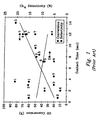
- Literature data (Table 1 and FIG. 1 ) were obtained at lower H 2 /CO ratio (2:1) and longer contact time (3 sec or longer) in a fixed bed type reactor.
- Low H 2 /CO especially 2-2.5
- long contact time low temperature
- higher pressure favor Fischer-Tropsch synthesis.
- Selectivity to CH 4 is significantly increased by increasing H 2 /CO ratio from 2 to 3.
- Increasing contact time also has a dramatic favorable effect on the catalyst performance.
- the present invention includes a catalyst structure and method of making the catalyst structure for Fischer-Tropsch synthesis that have a first porous structure with a first pore surface area and a first pore size of at least about 0.1 ⁇ m, preferably from about 10 ⁇ m to about 300 ⁇ m.
- a Fischer-Tropsch catalyst selected from the group consisting of cobalt, ruthenium, iron, nickel, rhenium, osmium and combinations thereof is placed upon the second pore surface area.
- the present invention also provides a method of making a Fischer-Tropsch catalyst having the steps of: providing a catalyst structure comprising a porous support with a first pore surface area and a first pore size of at least about 0.1 ⁇ m; optionally depositing a buffer layer on the porous support; depositing a porous interfacial layer with a second pore surface area and a second pore size less than said first pore size, upon the buffer layer (if present); and depositing a Fischer-Tropsch catalyst upon the second pore surface area.
- the present invention further includes a method of Fischer-Tropsch synthesis having the steps of:
- the present invention also includes various supported Fischer-Tropsh catalysts that are characterized by their properties.
- a catalyst is provided that, if exposed to a feed stream consisting of a 3 to 1 ratio of hydrogen gas to carbon monoxide, at 250°C and a residence time of 12.5 seconds, exhibits a selectivity to methane that is greater at 24 atmospheres (contact time of 1 second) than it is at 6 atmospheres pressure (contact time of 4 seconds), even though the conversion is higher at lower pressure.
- Catalytic activity is an intrinsic property of a catalyst.
- this property is defined by various testing conditions.
- a preferred catalyst has a Fischer-Tropsch catalytic metal supported on a porous support; where the catalyst possesses catalytic activity such that, if the catalyst is placed in a tube inside an isothermal furnace and exposed to a feed stream consisting of a 3 to 1 ratio of hydrogen gas to carbon monoxide, at 250°C, at 6 atm, at a contact time less than 5 seconds and the product stream is collected and cooled to room temperature, the selectivity to methane is less than 25%, and the carbon monoxide conversion is greater than 25%.
- a catalyst meets a claimed activity property requires only a test at the specified conditions.
- the invention also provides a method for hydrogenating carbon monoxide, in which a feed stream containing hydrogen and carbon monoxide is passed into a reaction chamber that contains a catalyst at a temperature of at least 200°C; the catalyst having a supported Fischer-Tropsch catalytic metal; and collecting a product stream.
- heat is transferred from the reaction chamber at a sufficient rate such that, under steady-state conditions, the feed stream has: a contact time of less than about 2 seconds; a production rate of at least 1 milliliter per minute of liquid product where the liquid product is measured at 20°C and 1 atm or at least 1 liter per minute of gaseous hydrocarbon product of molecules having at least 2 carbon atoms; a methane selectivity of less than 25%, and a carbon monoxide conversion greater than 25%.
- the hydrocarbons can be saturated, unsaturated or partially oxidized; and for use as fuels are preferably saturated hydrocarbons.
- the present invention further includes reactors that use any of the catalysts described herein.
- the invention also includes hydrocarbon fuels made by any of the methods described herein.
- the present invention further includes methods of hydrogenating carbon monoxide that use any of the catalysts described herein.
- Advantages that may be provided by the invention include (i) at residence/contact times shorter than the prior art, higher conversions are achieved with no increase to methane selectivity; and (ii) as residence/contact times increase, conversion increases and methane selectivity decreases.
- carbon monoxide can be hydrogenated at short contact time to produce liquid fuels at good conversion levels, low methane selectivities and good production rates.
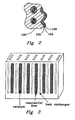
- a catalyst of the present invention is depicted in FIG. 1 having a porous support 100, a buffer layer 102. an interfacial layer 104, and, optionally, a catalyst layer 106. Any layer may be continuous or discontinuous as in the form of spots or dots, or in the form of a layer with gaps or holes.
- the porous support 100 may be a porous ceramic or a porous metal.
- Porous supports suitable for use in the present invention include carbides, nitrides, and composite materials.
- the porous support Prior to depositing the layers, the porous support preferably has a porosity of about 30% to about 99%, more preferably 60% to 98%, as measured by mercury porosimetry and an average pore size of from 1 ⁇ m to 1000um as measured by optical and scanning electron microscopy.
- Preferred forms of porous supports are foams, felts, wads and combinations thereof.
- Foam is a structure with continuous walls defining pores throughout the structure.
- Felt is a structure of fibers with interstitial spaces therebetween. Wad is a structure of tangled strands, like steel wool.
- porous supports may also include other porous media such as pellets and honeycombs, provided that they have the aforementioned porosity and pore size characteristics.
- the open cells of a metal foam preferably range from about 20 pores per inch (ppi) to about 3000 ppi and more preferably about 40 to about 600 ppi.
- PPI is defined as the largest number of pores per inch (in isotropic materials the direction of the measurement is irrelevant; however, in anisotropic materials, the measurement is done in the direction that maximizes pore number).
- ppi is measured by scanning electron microscopy. It has been discovered that a porous support provides several advantages in the present invention including low pressure drop, enhanced thermal conductivity over conventional ceramic pellet supports, and ease of loading/unloading in chemical reactors.
- the buffer layer 102 if present, has different composition and/or density than both the support and the interfacial layers, and preferably has a coefficient of thermal expansion that is intermediate to the thermal expansion coefficients of the porous support and the interfacial layer.
- the buffer layer is a metal oxide or metal carbide. Applicants discovered that vapor-deposited layers are superior because they exhibit better adhesion and resist flaking even after several thermal cycles.
- the buffer layer is Al 2 O 3 , TiO 2 , SiO 2 , and ZrO 2 or combinations thereof. More specifically, the Al 2 O 3 is ⁇ -Al 2 O 3 , ⁇ -Al 2 O 3 and combinations thereof. ⁇ -Al 2 O 3 is more preferred because of its excellent resistance to oxygen diffusion.
- the buffer layer may also be formed of two or more compositionally different sublayers.
- the porous support 100 is metal, for example a stainless steel foam
- a preferred embodiment has a buffer layer 102 formed of two compositionally different sub-layers (not shown).
- the first sublayer (in contact with the porous support 100) is preferably TiO 2 because it exhibits good adhesion to the porous metal support 100.
- the second sublayer is preferably ⁇ -Al 2 O 3 which is placed upon the TiO 2 .
- the ⁇ -Al 2 O 3 sublayer is a dense layer that provides excellent protection of the underlying metal surface. A less dense, high surface area alumina interfacial layer may then be deposited as support for a catalytically active layer.
- the porous support 100 has a thermal coefficient of expansion different from that of the interfacial layer 104. Accordingly, for high temperature catalysis (T > 150 °C) a buffer layer 102 can be used to transition between two coefficients of thermal expansion.
- the thermal expansion coefficient of the buffer layer can be tailored by controlling the composition to obtain an expansion coefficient that is compatible with the expansion coefficients of the porous support and interfacial layers.
- Another advantage of the buffer layer 102 is that it provides resistance against side reactions such as coking or cracking caused by a bare metal foam surface. For chemical reactions which do not require large surface area supports such as catalytic combustion, the buffer layer 102 stabilizes the catalyst metal due to strong metal to metal-oxide interaction.
- the buffer layer 102 provides stronger bonding to the high surface area interfacial layer 104.
- the buffer layer is free of openings and pin holes - this provides superior protection of the underlying support.
- the buffer layer is nonporous.
- the buffer layer has a thickness that is less than one half of the average pore size of the porous support.
- the buffer layer is between about 0.05 and about 10 ⁇ m thick, more preferably, less than 5 um thick: The buffer layer should exhibit thermal and chemical stability at elevated temperatures.
- adequate adhesion and chemical stability can be obtained without a buffer layer, so the buffer layer can be omitted, thus saving cost, providing extra volume and further enhancing heat transfer from the catalyst.
- the interfacial layer 104 can be comprised of nitrides, carbides, sulfides, halides, metal oxides, carbon and combinations thereof.
- the interfacial layer provides high surface area and/or provides a desirable catalyst-support interaction for supported catalysts.
- the interfacial layer can be comprised of any material that is conventionally used as a catalyst support.
- the interfacial layer is a metal oxide.
- metal oxides include, but are not limited, to ⁇ -Al 2 O 3 , SiO 2 , ZrO 2 , TiO 2 , tungsten oxide, magnesium oxide, vanadium oxide, chromium oxide, manganese oxide, iron oxide, nickel oxide, cobalt oxide, copper oxide, zinc oxide, molybdenum oxide, tin oxide, calcium oxide, aluminum oxide, lanthanum series oxide(s), zeolite(s) and combinations thereof.
- the interfacial layer 104 may serve as a catalytically active layer without any further catalytically active material deposited thereon. Usually, however, the interfacial layer 104 is used in combination with catalytically active layer 106.
- the interfacial layer may also be formed of two or more compositionally different sublayers.
- the interfacial layer has a thickness that is less than one half of the average pore size of the porous support.
- the interfacial layer thickness ranges from about 0.5 to about 100 ⁇ m, more preferably from about 1 to about 50 ⁇ m.
- the interfacial layer can be either crystalline or amorphous and preferably has a BET surface area of at least 1 m 2 /g.
- the catalytically active material 106 (when present) can be deposited on the interfacial layer 104. Alternatively, a catalytically active material can be simultaneously deposited with the interfacial layer.
- the catalytically active layer (when present) is typically intimately dispersed on the interfacial layer. That the catalytically active layer is "disposed on” or “deposited on” the interfacial layer includes the conventional understanding that microscopic catalytically active particles are dispersed: on the support layer (i.e., interfacial layer) surface, in crevices in the support layer, and in open pores in the support layer.
- the present invention employs a Fischer-Tropsch catalytic metal in the catalytically active layer.
- Catalytic metals in the present invention are preferably iron, cobalt, ruthenium, rhenium, osmium and combinations thereof.
- a promoter may be added. Promoters could include transition metals and metal oxides (except Au and Hg), lanthanide metals or metal oxides, and group IA elements (except H).
- a Fischer-Tropsch catalytic metal combined with a suitable support such as the porous support with interfacial layer described herein is termed a supported Fischer-Tropsch catalytic metal.
- the supported Fischer-Tropsch catalytic metal can be a Fischer-Tropsch catalytic metal supported on other supports such as a powder.
- the catalyst impregnation preferably forms a porous interfacial layer having a depth less than 50 ⁇ m, preferably less than 20 ⁇ m. Therefore, the diffusion path length is at least a factor of 5 shorter than for standard catalyst particles.
- the thinner impregnated catalyst structure also enhances heat transfer, due to a shorter heat transfer pathway, and leads to lower selectivity to CH 4 .
- the catalyst structure may be any geometric configuration.
- the catalyst is a porous structure such as a foam, felt, wad and combinations thereof.
- the catalyst (including the support and Fischer-Tropsch catalytic metal). preferably is sized to fit within a reaction chamber.
- the catalyst may be a single piece of porous contiguous material, or many pieces in physical contact.
- the catalyst is preferred to have contiguous material and contiguous porosity such that molecules can diffuse through the catalyst.
- the catalyst can be disposed in a reaction chamber such that gases will flow substantially through the catalyst (single or multiple pieces) rather than around it.
- the cross-sectional area of the catalyst occupies at least 80%, more preferably at least 95% of the cross-sectional area of the reaction chamber.
- the catalytically active metal is distributed on surfaces throughout catalyst such that reactants passing through the catalyst can react anywhere along the passage through the catalyst; this is a significant advantage over pellet-type catalysts that have a large volume of unused space or catalytically ineffectively used space in the pellet's interior.
- the porous catalyst is also superior over powders because packed powders may cause a severe pressure drop.
- the catalyst preferably has a surface area, as measured by BET, of greater than about 0.5 m 2 /g, more preferably greater than about 2.0 m 2 /g.
- the catalyst structure is not required to be attrition resistant as would be with the catalyst particles used in a fluidized bed reactor, greater porosity may be used, for example porosity greater than about 30%, thus, enhancing mass transfer in the catalyst structure.
- Catalysts of the present invention can also be characterized by the properties they exhibit. Factors that can be controlled to effect these properties include: selection of the porous support, buffer, interfacial, and catalytically active layers; gradation of thermal expansion coefficients, crystallinity, metal-support interactions, catalyst size, thermal conductivity of the support, porosity, thermal conductance from reaction chamber, deposition techniques and other factors as are apparent in view of the descriptions herein.
- Certain preferred embodiments of the catalysts of the present invention exhibit one or more of the following properties: adhesion - after 3 thermal cycles in air, the catalyst exhibits less than 2% (by area) of flaking as viewed by SEM (scanning electron microscope) analysis; oxidation resistance, conversion of carbon monoxide, contact times, methane selectivity, pressure drop and production rates.
- Oxidation resistance can be measured by thermal gravity analysis (TGA). After heating at 580°C in air for 2500 minutes, the catalyst increases in weight by less than 5%, more preferably less than 3%; still more preferably, after heating at 750°C in air for 1500 minutes, the catalyst increases in weight by less than 0.5%.
- TGA thermal gravity analysis
- Another aspect of the present invention is a catalyst and method utilizing the catalyst that provides lower methane selectivity at lower pressures. It was unexpectedly discovered that by using the porous catalyst structure of the present invention, reducing the pressure of the Fischer-Tropsch reaction resulted in increased yield, less selectivity toward methane. See Example 2.
- Enhanced heat transfer in the present invention enables short contact times, good conversion, and low methane selectivities.
- Various factors that can be used to enhance heat transfer include: use of a metal support, preferably a porous metal support such as a metal foam or wad, thin buffer (if present) and interfacial layers, a heat exchanger in thermal contact with the reaction chamber, microchannels in reaction chamber and/or heat exchanger, and a catalyst that has a thickness in the direction of heat transfer (e.g., the direction to the reaction chamber walls and substantially perpendicular to the direction of flow) of about 1.5 cm or less, more preferably about 1 to 10 mm, and still more preferably about 1 to 3 mm.
- the invention further provides apparatusses (i.e., reactors) and methods for hydrogenating carbon monoxide.
- the catalytic process is conducted in apparatus having microchannels.
- a microchannel has a characteristic dimension less than about 1 mm.
- the reaction chamber has walls defining at least one microchannel through which pass reactants into the reaction chamber.
- the reaction chamber walls separate the reaction chamber from at least one cooling chamber. Examples of suitable microchannel apparatus and various process related factors are described in U.S. Patents Nos. 5,611,214 , 5,811,062 , 5,534,328 , and U.S. Patent Applications Ser. Nos.
- the catalyst is a monolith - a single contiguous, yet porous, piece of catalyst or several contiguous pieces that are stacked together (not a bed of packed powder or pellets or a coating on the wall of a microchannel) that can easily be inserted and extracted from a reaction chamber.
- the piece or stack of catalyst pieces preferably have a width of 0.1 mm to about 2 cm, with a preferred thickness of less than about 1.5 cm, more preferably less than about 1.0 cm, and still more preferably, about 1 to about 3 mm.
- the inventive catalyst may provide numerous advantages to catalytic processes such as: chemical stability, stability to repeated thermal cycling, thermal stability, efficient loading and unloading of catalysts, high rates of heat transfer and mass transfer, and maintenance of desired catalytic activity.
- the metal surfaces within microchannel apparatus can be coated with either or both the buffer and the interfacial layers. This can be done using any of the processes described herein, preferably by vapor deposition. Preferred coating materials include titania and and 5-10% SiO 2 /Al 2 O 3 .
- the interior surfaces of the reaction chamber, heat exchanger and other surfaces of microchannel apparatus may be coated.
- the walls of a reaction chamber can be coated with an optional buffer layer, an interfacial layer, and a catalytically active material - typically the catalytically active material and the interfacial layer combine to form a supported catalyst. Coatings can also be applied to metal walls in tubes and pipes that form connections to or within microchannel apparatus.
- residence time less than 5 seconds can be achieved by: (a) providing a catalyst structure of a metal foam having a catalyst thereon; and (b) passing a feed stream having a mixture of hydrogen gas with carbon monoxide gas through the catalyst structure and heating the catalyst structure to at least 200 °C, thereby obtaining a product stream of at least 25% conversion of carbon monoxide, and at most 25% selectivity toward methane.
- the catalyst structure includes a buffer layer and an interfacial layer with a catalytically active metal disposed on the interfacial layer.
- the present invention provides processes for hydrogenating carbon monoxide.
- the ratio of hydrogen to carbon monoxide ranges from about 1:1 to about 6:1, preferably from about 2:1 to about 3.5:1.
- Hydrogenation is preferably conducted at temperatures above about 200°C, more preferably between about 200°C and about 300°C. and still more preferably between about 200°C and about 270°C.
- Certain embodiments of the present invention can be characterized in terms of residence or contact time. These terms have well-defined meanings in the art.
- Contact time is the total volume of the catalyst chambers divided by the total flowrate of inlet reactants assuming they are an ideal gas corrected to standard conditions (i.e., the volume of the catalyst chamber / F-total at STP where STP is 273K and 1 atm).
- the volume of the catalyst chambers includes the volume in immediate proximity and surrounding the catalyst zone. As an example, if one were to pack one quarter of the channels with powders, then the volume of the catalyst chamber would only include that region where gas can flow and where it can contact the catalyst, i.e. only one quarter of the total channel volume would be included in this calculation.
- Average residence time is the total volume of the catalyst chambers divided by the total flowrate of inlet reactants, corrected to the actual temperature and pressure of the reactants in the reactor (i.e., the volume of the catalyst chamber / F-total corrected to actual conditions).
- F-total at STP is the total volumetric flowrate of reactants (includes all reactants, and diluents if present).
- Inlet gases are typically metered with mass flow controllers set to standard conditions, i.e. the user presets the desired STP flowrate.
- F-total corrected to actual conditions F-total-STP x (Temperature in K)1273 x 1 atm/(P actual in atm): this value is used to calculate the residence time or the 'true time' within a reactor. Most practitioners prefer to use contact time, because it is a convenient method to keep the time variable fixed while stepping through 10 degree C increments in reaction temperature etc.
- the inventive method is preferably carried out in a reaction chamber in which the catalyst has a thickness of about 1.5 cm or less and is touching or in close proximity (within about 1 mm) of a reaction chamber wall, where the reaction chamber wall is in thermal contact with a heat exchanger. Heat transfer from the reaction chamber is preferably enhanced by addition of microchannels on at least one reaction chamber wall on the side of the reaction chamber wall opposite the catalyst structure.
- the catalyst preferably has contiguous and relatively large pores, such as in a foam, to avoid large pressure drops.
- the pore size of the large pores in the catalyst is between about 10 ⁇ m and about 300 ⁇ m.
- carbon monoxide hydrogenation is conducted at a contact time of less than 5 seconds, more preferably, less than about 2 seconds and still more preferably between about 0.1 and about 1 seconds. At these contact times, good CO conversion and low methane selectivity can be obtained.
- CO conversion is at least 25%, more preferably, at least 50%, and still more preferably, greater than about 80%.
- Methane selectivity is preferably less than 25%, more preferably less than about 20%, and still more preferably, between about 15% and 5%.
- these properties can be achieved with low pressure drops across the reaction chamber.
- the pressure drop through the reaction chamber is preferably less than about 15 psig, more preferably less than 10 psig, still more preferably less than about 5 psig, and yet more preferably less than about 1 psig.
- a method of making the inventive catalyst has the steps of selecting a porous support 100, optionally depositing a buffer layer 102 on the porous support 100 and depositing an interfacial layer 104 thereover.
- a catalyst layer 106 may be deposited onto the interfacial layer 104. or both the interfacial layer and the catalyst layer may be simultaneously deposited on the buffer layer 102.
- metal foam is etched prior to vapor depositing the buffer layer 102. Etching is preferably with an acid, for example HCl.
- Deposition of the buffer layer 102 is preferably by vapor deposition including but not limited to chemical vapor deposition, physical vapor deposition or combinations thereof. Surprisingly, it has been found that vapor deposition, which is typically conducted at high temperatures, results in polycrystalline or amorphous phases that provide good adhesion of the buffer layer to the surface of the porous support. The method is particularly advantageous for adhering a metal oxide buffer layer to a metal porous support.
- the buffer layer 102 may be obtained by solution coating.
- the solution coating has the steps of metal surface functionalization via exposing the metal surface to water vapor to form suface hydroxyls, followed by surface reaction and hydrolysis of alkoxides to obtain a coating of metal oxide. This solution coating may be preferred as a lower cost method of depositing the buffer layer 102.
- the interfacial layer 104 is preferably formed by vapor or solution deposition using precursors as are known for these techniques. Suitable precursors include organometallic compounds, halides, carbonyls, acetonates, acetates, metals, colloidal dispersions of metal oxides, nitrates, slurries, etc.
- a porous alumina interfacial layer can be wash-coated with PQ alumina (Nyacol Products, Ashland, MA) colloidal dispersion followed by drying in a vacuum oven overnight and calcining at 500°C for 2 hours.
- the catalytically active material can be deposited by any suitable method.
- catalytic metal precursors can be deposited on colloidal metal oxide particles and slurry coated on a porous support, then dried and reduced.
- the effect of residence time and reaction temperature on the catalytic conversion of CO with H 2 was examined in a constant flow reactor.
- This reactant feed was fed into a reaction chamber, which was maintained at a constant temperature inside an isothermal furnace.
- the interior of the catalyst chamber measures 35.6-mm (1.4-in) in length, 1.5-mm (0.060-in) in thickness and 8-mm (0.315-in) in width.
- the reaction products then exited the reaction chamber and were collected and analyzed for composition.
- the catalyst for this experiment was prepared as follows. First, acidic gamma-alumina support powder (Strem) was ground and sieved to between 70-and 100-mesh (150 to 220-micron), and calcined (stabilized) at 500°C for several hours. This powder was then impregnated with a solution containing cobalt nitrate hexahydrate and ruthenium trichloride hydrate (or ruthenium nitrosyl nitrate) precursors, present in desired concentrations as to produce a 15-wt% cobalt, 1-wt% ruthenium on alumina catalyst.
- the precursor solution was prepared in such a manner as to saturate the pore volume of the alumina support without over saturation of the alumina support.
- This powder was then dried in a vacuum oven at 100°C for at least 4-hours, followed by drying at 100°C for at least 12-hours.
- the powder was then calcined by heating at 350°C for at least 3-hours.
- a portion of the powder was then combined with distilled water in a water-to-catalyst weight ratio of at least 2.5 to produce a catalyst slurry.
- This catalyst slurry is then placed in a container with inert grinding media balls and placed on a rotating device for at least 24-hours. This slurry was then ready to coat a pre-treated metal foam monolith type support.
- the metal foam support monolith is typically 80-ppi (pores per inch) stainless steel (supplied by AstroMet, Cincinnati, Ohio), with characteristic macropores on the order of about 200- to 250- ⁇ m, and with a porosity of about 90% (by volume).
- the monolith pretreatment consists of cleaning successively in dichloromethane and acetone solvents in a water bath submersed in a sonication device to agitate the solvent within the monolith.
- the metal surface of the monolith may then be roughened by etching with acid. If this is desired, the monolith is submerged in 0.1-molar nitric acid, and placed in a sonication device. The monolith was then rinsed in distilled water and dried at about 100°C.
- the monolith was then coated with a layer of alumina using a chemical vapor deposition (CVD) technique.
- the CVD system has a horizontal, hot-wall reactor with three precursor sources. The CVD coatings are performed at a deposition temperature of 600°C and reactor pressure of 5-torr.
- Aluminum iso-propoxide was used as the aluminum precursor. This precursor is stored in a quartz container maintained at 100°C during deposition, which produces a vapor that is carried into the CVD reactor by a flow of nitrogen carrier gas for about 20-minutes. Air was then used to oxidize the aluminum precursor to alumina. Typical thickness of the alumina coatings is about 0.5- ⁇ m.
- This pretreated metal support foam monolith was then coated with the catalyst slurry by dip coating.
- the monolith was then dried in flowing air or nitrogen at room temperature white continuously rotating the monolith in such a way as to create a uniform coverage of the dried catalyst slurry layer.
- the monolith was then dried at 90°C for at least 1-hour, heated slowly to 120°C over the course of at least-hour, dried further at 120°C for at least 2-hours, and then heated to 350°C and calcined for at least 3-hours.
- 0.1-0.25 g of alumina supported Co-Ru powder catalyst was coated on the metal foam monolith with dimensions and characteristics aforementioned.
- the catalyst monolith or powder weighing approximately 0.5 grams was then placed inside the reaction chamber and activated (or reduced) prior to reaction by heating to about 350°C to 400°C and under flow of a hydrogencontaining stream of about 10- to 20-% (by mole or volume) hydrogen in an inert carrier gas (such as nitrogen or helium) at a flow rate of at least 20 cc/min (measured at 273K and 1-atm) for at least 2-hours.
- the catalyst was then allowed to cool to reaction temperatures, at least 200°C.
- the catalyst was then exposed to a feed gas comprised of H 2 and CO in a desired ratio of moles of H 2 per mole of CO.
- the feed gas flow rate is controllable to allow for precise generation of a desired contact time, usually about 1-second.
- the reaction products were then analyzed to evaluate the conversion of CO and the selectivity towards certain products, such as methane.
- the reaction was conducted at pressures up to 24-atmospheres (about 353-psia).
- Table E1-1 shows the results of these experiments.
- the powder form of the catalyst produced greater conversions at a given temperature than the monolithic form.
- the monolith catalyst produced less methane.
- methane formation is predominately affected by reactor temperature and feed composition, although it is also affected to a lesser extent by other parameters, such as contact time.
- the fact that the monolithic catalyst yields lower methane selectivity at a given temperature suggests that the monolith is better able to conduct heat away from the inner part of the reactor, and thus avoid higher local temperatures, which are often present in the inner sections of packed or powder beds.
- conversion is a strong function of both temperature and contact time, and conversion will increase with increasing temperature and/or time. Decreasing the contact time from 2-seconds to 1-sec at 275°C for the monolithic catalysts resulted in lower conversion and higher methane selectivity.
- the thickness of the catalyst layer in the monolith is much less than finest particle size used either in fixed bed reactors (>100 ⁇ m), or slurry type or fluidized type reactors (>50- ⁇ m). Therefore, the internal mass transfer diffusion pathway is shorter in the monolith catalyst.
- internal pores within the catalyst are normally filled with hydrocarbon products, and hydrogen has much higher diffusivities than that of CO. This could result in much higher H 2 /CO ratio inside a pellet or powder catalyst than that in the bulk feed, which favors methanation. Therefore, the thinner catalyst layer with the monolith catalyst will result in a relatively lower local H 2 concentration within the catalyst to minimize the selectivity to methane.
- Titanium isopropxide (Strem Chemical, Newburyport, MA) was vapor deposited at a temperature ranging from 250 to 800°C at a pressure of 0.1 to 100 torr. Titania coatings with excellent adhesion to the foam were obtained at a deposition temperature of 600°C and a reactor pressure of 3 torr.
Landscapes
- Chemical & Material Sciences (AREA)
- Organic Chemistry (AREA)
- Chemical Kinetics & Catalysis (AREA)
- Engineering & Computer Science (AREA)
- Oil, Petroleum & Natural Gas (AREA)
- Materials Engineering (AREA)
- General Chemical & Material Sciences (AREA)
- Catalysts (AREA)
- Organic Low-Molecular-Weight Compounds And Preparation Thereof (AREA)
- Low-Molecular Organic Synthesis Reactions Using Catalysts (AREA)
- Production Of Liquid Hydrocarbon Mixture For Refining Petroleum (AREA)
Applications Claiming Priority (4)
| Application Number | Priority Date | Filing Date | Title |
|---|---|---|---|
| US09/375,610 US6451864B1 (en) | 1999-08-17 | 1999-08-17 | Catalyst structure and method of Fischer-Tropsch synthesis |
| US09/492,254 US6558634B1 (en) | 1999-08-17 | 2000-01-27 | Catalyst structure and method of fischer-tropsch synthesis |
| EP00954094A EP1206508B1 (de) | 1999-08-17 | 2000-08-15 | Katalysatorstruktur und fischer-tropschsyntheseverfahren |
| EP05021595.3A EP1637219B1 (de) | 1999-08-17 | 2000-08-15 | Katalytische Struktur und Fischer-Tropschsyntheseverfahren. |
Related Parent Applications (5)
| Application Number | Title | Priority Date | Filing Date |
|---|---|---|---|
| EP05021595.3A Division-Into EP1637219B1 (de) | 1999-08-17 | 2000-08-15 | Katalytische Struktur und Fischer-Tropschsyntheseverfahren. |
| EP05021595.3A Division EP1637219B1 (de) | 1999-08-17 | 2000-08-15 | Katalytische Struktur und Fischer-Tropschsyntheseverfahren. |
| EP00954094.9 Division | 2000-08-15 | ||
| EP00954094A Division EP1206508B1 (de) | 1999-08-17 | 2000-08-15 | Katalysatorstruktur und fischer-tropschsyntheseverfahren |
| EP05021595.3 Division | 2005-10-04 |
Publications (3)
| Publication Number | Publication Date |
|---|---|
| EP2264128A2 true EP2264128A2 (de) | 2010-12-22 |
| EP2264128A3 EP2264128A3 (de) | 2011-04-27 |
| EP2264128B1 EP2264128B1 (de) | 2017-10-25 |
Family
ID=23481568
Family Applications (2)
| Application Number | Title | Priority Date | Filing Date |
|---|---|---|---|
| EP10012645.7A Expired - Lifetime EP2264128B1 (de) | 1999-08-17 | 2000-08-15 | Katalysatorstruktur und fischer-tropschsyntheseverfahren |
| EP05021595.3A Expired - Lifetime EP1637219B1 (de) | 1999-08-17 | 2000-08-15 | Katalytische Struktur und Fischer-Tropschsyntheseverfahren. |
Family Applications After (1)
| Application Number | Title | Priority Date | Filing Date |
|---|---|---|---|
| EP05021595.3A Expired - Lifetime EP1637219B1 (de) | 1999-08-17 | 2000-08-15 | Katalytische Struktur und Fischer-Tropschsyntheseverfahren. |
Country Status (6)
| Country | Link |
|---|---|
| US (6) | US6451864B1 (de) |
| EP (2) | EP2264128B1 (de) |
| JP (2) | JP4805501B2 (de) |
| KR (1) | KR100666394B1 (de) |
| NO (2) | NO20083130L (de) |
| ZA (1) | ZA200200853B (de) |
Families Citing this family (117)
| Publication number | Priority date | Publication date | Assignee | Title |
|---|---|---|---|---|
| US6440895B1 (en) | 1998-07-27 | 2002-08-27 | Battelle Memorial Institute | Catalyst, method of making, and reactions using the catalyst |
| AU6643600A (en) * | 1999-08-17 | 2001-03-13 | Battelle Memorial Institute | Catalyst structure and method of fischer-tropsch synthesis |
| US6607678B2 (en) * | 1999-08-17 | 2003-08-19 | Battelle Memorial Institute | Catalyst and method of steam reforming |
| US6451864B1 (en) * | 1999-08-17 | 2002-09-17 | Battelle Memorial Institute | Catalyst structure and method of Fischer-Tropsch synthesis |
| WO2001012312A2 (en) * | 1999-08-17 | 2001-02-22 | Battelle Memorial Institute | Chemical reactor and method for catalytic gas phase reactions |
| ATE311425T1 (de) * | 1999-08-17 | 2005-12-15 | Battelle Memorial Institute | Katalysatorstruktur und fischer- tropschsyntheseverfahren |
| US6488838B1 (en) * | 1999-08-17 | 2002-12-03 | Battelle Memorial Institute | Chemical reactor and method for gas phase reactant catalytic reactions |
| US7125540B1 (en) * | 2000-06-06 | 2006-10-24 | Battelle Memorial Institute | Microsystem process networks |
| KR100409017B1 (ko) * | 2000-06-23 | 2003-12-06 | 주식회사 엘지화학 | 다성분계 복합 분리막 및 그의 제조방법 |
| US20030162848A1 (en) * | 2000-07-25 | 2003-08-28 | Gimpel Frederik Willem Hendrik | Reactor comprising a packed bed of supported catalyst or supported catalyst precursor, and a use of the reactor |
| GB0116894D0 (en) * | 2001-07-11 | 2001-09-05 | Accentus Plc | Catalytic reactor |
| US7201883B2 (en) * | 2001-10-12 | 2007-04-10 | Compactgtl Plc | Catalytic reactor |
| GB0124999D0 (en) * | 2001-10-18 | 2001-12-05 | Accentus Plc | Catalytic reactor |
| GB0125035D0 (en) * | 2001-10-18 | 2001-12-12 | Accentus Plc | Catalytic reactor |
| GB0129054D0 (en) * | 2001-12-05 | 2002-01-23 | Accentus Plc | Catalytic reactor and process |
| GB2399516B (en) * | 2001-12-05 | 2005-03-16 | Gtl Microsystems Ag | Process and apparatus for steam-methane reforming |
| US20030166972A1 (en) * | 2002-02-20 | 2003-09-04 | Regents Of The University Of California Office Of Technology Licensing | Process for production of formaldehyde from dimethyl ether |
| US7700561B2 (en) * | 2002-02-22 | 2010-04-20 | Shire Llc | Abuse-resistant amphetamine prodrugs |
| US7402719B2 (en) * | 2002-06-13 | 2008-07-22 | Velocys | Catalytic oxidative dehydrogenation, and microchannel reactors for catalytic oxidative dehydrogenation |
| JP4221505B2 (ja) * | 2002-07-18 | 2009-02-12 | 独立行政法人産業技術総合研究所 | マイクロ反応装置の製造方法およびマイクロ反応装置 |
| US7232848B2 (en) * | 2002-09-09 | 2007-06-19 | Conocophillips Company | Gas agitated multiphase reactor with stationary catalyst solid phase |
| GB0314790D0 (en) * | 2003-06-25 | 2003-07-30 | Accentus Plc | Catalytic reactor and process |
| CN1729050A (zh) * | 2002-12-20 | 2006-02-01 | 本田技研工业株式会社 | 用于氢产生的含铂-钌催化剂配方 |
| JP3951127B2 (ja) * | 2003-02-28 | 2007-08-01 | 国立大学法人静岡大学 | ジメチルエーテル水蒸気改質触媒およびその製造方法 |
| US8580211B2 (en) * | 2003-05-16 | 2013-11-12 | Velocys, Inc. | Microchannel with internal fin support for catalyst or sorption medium |
| US20050203195A1 (en) * | 2003-08-05 | 2005-09-15 | Yong Wang | Tailored Fischer-Tropsch synthesis product distribution |
| US7067385B2 (en) * | 2003-09-04 | 2006-06-27 | Micron Technology, Inc. | Support for vertically oriented capacitors during the formation of a semiconductor device |
| US20070129240A1 (en) * | 2003-12-05 | 2007-06-07 | Jayalekshmy Ayyer | Novel catalyst useful for removal of hydrogen suiplhide from gas and its conversion to sulphur. A process for preparing such catalyst and a method for removing of hydrogen sulphide using said catalyst |
| WO2005056164A1 (en) * | 2003-12-05 | 2005-06-23 | Jayalekshmy Ayyer | A catalyst useful for h2s removal from gas stream preparation thereof and use thereof |
| US7084180B2 (en) * | 2004-01-28 | 2006-08-01 | Velocys, Inc. | Fischer-tropsch synthesis using microchannel technology and novel catalyst and microchannel reactor |
| US9023900B2 (en) | 2004-01-28 | 2015-05-05 | Velocys, Inc. | Fischer-Tropsch synthesis using microchannel technology and novel catalyst and microchannel reactor |
| US20050175519A1 (en) * | 2004-02-06 | 2005-08-11 | Rogers William A.Jr. | Microchannel compression reactor |
| US7520917B2 (en) * | 2004-02-18 | 2009-04-21 | Battelle Memorial Institute | Devices with extended area structures for mass transfer processing of fluids |
| US7874432B2 (en) | 2004-03-23 | 2011-01-25 | Velocys | Protected alloy surfaces in microchannel apparatus and catalysts, alumina supported catalysts, catalyst intermediates, and methods of forming catalysts and microchannel apparatus |
| US8062623B2 (en) | 2004-10-15 | 2011-11-22 | Velocys | Stable, catalyzed, high temperature combustion in microchannel, integrated combustion reactors |
| GB0408896D0 (en) * | 2004-04-20 | 2004-05-26 | Accentus Plc | Catalytic reactor |
| CA2562543C (en) * | 2004-04-27 | 2011-04-19 | Velocys, Inc. | Hydrogen peroxide production in microchannel reactors |
| US7304198B2 (en) | 2004-05-14 | 2007-12-04 | Battelle Memorial Institute | Staged alkylation in microchannels |
| US7541012B2 (en) * | 2004-07-07 | 2009-06-02 | The Hong Kong University Of Science And Technology | Catalytic material and method of production thereof |
| CN101023068B (zh) * | 2004-08-12 | 2013-02-13 | 万罗赛斯公司 | 使用微通道工艺技术将乙烯转化成环氧乙烷的方法 |
| US7973086B1 (en) | 2010-10-28 | 2011-07-05 | Chevron U.S.A. Inc. | Process of synthesis gas conversion to liquid hydrocarbon mixtures using alternating layers of synthesis gas conversion catalyst and hydrocracking catalyst |
| EP1804964A1 (de) * | 2004-10-01 | 2007-07-11 | Velocys Inc. | Mehrphasiges mischverfahren mit mikrokanalverarbeitungstechnologie |
| MY139252A (en) * | 2004-10-04 | 2009-09-30 | Shell Int Research | Catalyst structure |
| EP1817102A1 (de) * | 2004-11-12 | 2007-08-15 | Velocys, Inc. | Verfahren unter verwendung von mikrokanaltechnologie zur durchführung einer alkylierungs- oder acylierungsreaktion |
| CA2587546C (en) | 2004-11-16 | 2013-07-09 | Velocys Inc. | Multiphase reaction process using microchannel technology |
| US20060120213A1 (en) * | 2004-11-17 | 2006-06-08 | Tonkovich Anna L | Emulsion process using microchannel process technology |
| GB0501731D0 (en) * | 2005-01-31 | 2005-03-02 | Accentus Plc | Catalytic reactor |
| US7507274B2 (en) * | 2005-03-02 | 2009-03-24 | Velocys, Inc. | Separation process using microchannel technology |
| KR101318966B1 (ko) | 2005-03-16 | 2013-10-17 | 퓨얼코어 엘엘씨 | 합성 탄화수소 화합물 제조를 위한 시스템, 방법 및 조성물 |
| EP1890802A2 (de) * | 2005-05-25 | 2008-02-27 | Velocys, Inc. | Träger zur verwendung bei der mikrokanalverarbeitung |
| US20070004810A1 (en) * | 2005-06-30 | 2007-01-04 | Yong Wang | Novel catalyst and fischer-tropsch synthesis process using same |
| EP1904223A2 (de) * | 2005-07-08 | 2008-04-02 | Velocys Inc. | Verfahren für eine katalytische reaktion unter verwendung von mikrokanaltechnologie |
| JP2007044638A (ja) * | 2005-08-11 | 2007-02-22 | Gunma Prefecture | 炭化水素類の増炭触媒、同触媒の製法およびそれを用いた炭化水素類の製造方法 |
| US7459589B2 (en) * | 2005-12-22 | 2008-12-02 | Shell Oil Company | Process for the preparation of an alkylene glycol |
| US20070203352A1 (en) * | 2005-12-22 | 2007-08-30 | Bolk Jeroen W | Method Of Installing An Epoxidation Catalyst In A Reactor, A Method Of Preparing An Epoxidation Catalyst, An Epoxidation Catalyst, A Process For The Preparation Of An Olefin Oxide Or A Chemical Derivable From An Olefin Oxide, And A Reactor Suitable For Such A Process |
| US20070203348A1 (en) * | 2005-12-22 | 2007-08-30 | Bolk Jeroen W | Method Of Installing An Epoxidation Catalyst In A Reactor, A Method Of Preparing An Epoxidation Catalyst, An Epoxidation Catalyst, A Process For The Preparation Of An Olefin Oxide Or A Chemical Derivable From An Olefin Oxide, And A Reactor Suitable For Such A Process |
| US20070213545A1 (en) * | 2005-12-22 | 2007-09-13 | Bolk Jeroen W | Method Of Installing An Epoxidation Catalyst In A Reactor, A Method Of Preparing An Epoxidation Catalyst, An Epoxidation Catalyst, A Process For The Preparation Of An Olefin Oxide Or A Chemical Derivable From An Olefin Oxide, And A Reactor Suitable For Such A Process |
| US20070197808A1 (en) * | 2005-12-22 | 2007-08-23 | Bolk Jeroen W | Method Of Installing An Epoxidation Catalyst In A Reactor, A Method Of Preparing An Epoxidation Catalyst, An Epoxidation Catalyst, A Process For The Preparation Of An Olefin Oxide Or A Chemical Derivable From An Olefin Oxide, And A Reactor Suitable For Such A Process |
| US7704908B2 (en) * | 2005-12-22 | 2010-04-27 | Shell Oil Company | Method for reusing rhenium from a donor spent epoxidation catalyst |
| US20070203349A1 (en) * | 2005-12-22 | 2007-08-30 | Bolk Jeroen W | Method Of Installing An Epoxidation Catalyst In A Reactor, A Method Of Preparing An Epoxidation Catalyst, An Epoxidation Catalyst, A Process For The Preparation Of An Olefin Oxide Or A Chemical Derivable From An Olefin Oxide, And A Reactor Suitable For Such A Process |
| US20070154377A1 (en) * | 2005-12-22 | 2007-07-05 | Rekers Dominicus M | Process for the removal of combustible volatile contaminant materials from a process stream |
| US20070197801A1 (en) * | 2005-12-22 | 2007-08-23 | Bolk Jeroen W | Method of installing an epoxidation catalyst in a reactor, a method of preparing an epoxidation catalyst, an epoxidation catalyst, a process for the preparation of an olefin oxide or a chemical derivable from an olefin oxide, and a reactor suitables for such a process |
| US20070151451A1 (en) * | 2005-12-22 | 2007-07-05 | Rekers Dominicus M | Process for the cooling, concentration or purification of ethylene oxide |
| US20070203350A1 (en) * | 2005-12-22 | 2007-08-30 | Bolk Jeroen W | Method Of Installing An Epoxidation Catalyst In A Reactor, A Method Of Preparing An Epoxidation Catalyst, An Epoxidation Catalyst, A Process For The Preparation Of An Olefin Oxide Or A Chemical Derivable From An Olefin Oxide, And A Reactor Suitable For Such A Process |
| CN101384359A (zh) * | 2005-12-22 | 2009-03-11 | 国际壳牌研究有限公司 | 制备再生的环氧化催化剂的方法 |
| EP2397457A3 (de) * | 2006-03-23 | 2013-11-20 | Velocys Inc. | Verfahren zur Herstellung von Styrol mittels Mikrokanaltechnik |
| US8048383B2 (en) | 2006-04-20 | 2011-11-01 | Velocys, Inc. | Process for treating and/or forming a non-Newtonian fluid using microchannel process technology |
| AU2007243242B2 (en) * | 2006-04-27 | 2011-01-27 | University Of Wyoming Research Corporation | Process and catalyst for production of mixed alcohols from synthesis gas |
| US8969236B2 (en) | 2006-04-27 | 2015-03-03 | University Of Wyoming Research Corporation | Process and catalyst for production of mixed alcohols from synthesis gas |
| US20080154052A1 (en) * | 2006-12-20 | 2008-06-26 | Jeroen Willem Bolk | Method of installing an epoxidation catalyst in a reactor, a method of preparing an epoxidation catalyst, an epoxidation catalyst, a process for the preparation of an olefin oxide or a chemical derivable from an olefin oxide, and a reactor suitable for such a process |
| US20080154051A1 (en) * | 2006-12-20 | 2008-06-26 | Jeroen Willem Bolk | Method of installing an epoxidation catalyst in a reactor, a method of preparing an epoxidation catalyst, an epoxidation catalyst, a process for the preparation of an olefin oxide or a chemical derivable from an olefin oxide, and a reactor suitable for such a process |
| KR100893547B1 (ko) * | 2006-12-27 | 2009-04-17 | 한국에너지기술연구원 | 금속 구조체 촉매 및 그 제조방법 |
| CA2675816C (en) | 2007-01-19 | 2015-09-01 | Velocys, Inc. | Process and apparatus for converting natural gas to higher molecular weight hydrocarbons using microchannel process technology |
| US7923592B2 (en) | 2007-02-02 | 2011-04-12 | Velocys, Inc. | Process for making unsaturated hydrocarbons using microchannel process technology |
| US20080260631A1 (en) | 2007-04-18 | 2008-10-23 | H2Gen Innovations, Inc. | Hydrogen production process |
| GB0714529D0 (en) * | 2007-07-25 | 2007-09-05 | Oxford Catalysts | steam production |
| CN101815574A (zh) | 2007-10-02 | 2010-08-25 | 康帕克特Gtl有限公司 | 使用平行单元的气至液装置 |
| KR100906095B1 (ko) * | 2007-10-11 | 2009-07-06 | 한국에너지기술연구원 | 메탈 구조체를 촉매 골격으로 하는 코발트 촉매 및 그제조방법과 이를 촉매를 이용한 피셔-트롭쉬 반응에서의고선택적 왁스 액체 연료 제조 방법 |
| BRPI0705939A2 (pt) * | 2007-10-29 | 2009-06-23 | Petroleo Brasileiro Sa | processo para a produção de catalisadores hìbridos para a sìntese de fischer-tropsch e catalisador hìbrido produzido de acordo com o processo |
| US7964114B2 (en) * | 2007-12-17 | 2011-06-21 | Sud-Chemie Inc. | Iron-based water gas shift catalyst |
| KR100964475B1 (ko) | 2008-05-08 | 2010-06-16 | 한국에너지기술연구원 | 피셔-트롭쉬 액화공정용 합성가스 제조를 위한 촉매층 및그 제조방법, 이 촉매층을 이용한 개질장치 |
| KR100933062B1 (ko) * | 2008-06-20 | 2009-12-21 | 한국화학연구원 | 합성가스로부터 경질올레핀을 직접 생산하기 위한 촉매와이의 제조방법 |
| DE102008064282A1 (de) | 2008-12-20 | 2010-06-24 | Bayer Technology Services Gmbh | Vielstufig adiabates Verfahren zur Durchführung der Fischer-Tropsch-Synthese |
| US20100160464A1 (en) * | 2008-12-24 | 2010-06-24 | Chevron U.S.A. Inc. | Zeolite Supported Cobalt Hybrid Fischer-Tropsch Catalyst |
| US8216963B2 (en) * | 2008-12-29 | 2012-07-10 | Chevron U.S.A. Inc. | Preparation of cobalt-ruthenium fischer-tropsch catalysts |
| WO2010078371A2 (en) * | 2008-12-29 | 2010-07-08 | Chevron U.S.A. Inc. | Preparation of cobalt-containing acidic support-based fischer-tropsch catalysts |
| JP2010210118A (ja) * | 2009-03-09 | 2010-09-24 | Jamco Corp | 漏水防止用安全弁を備えた旅客機搭載用スチームオーブン |
| US8278363B2 (en) * | 2009-03-23 | 2012-10-02 | Thomas Charles Holcombe | Fischer-tropsch reactions using heat transfer tubes with a catalyst layer on the outside surfaces |
| SG10201402458SA (en) * | 2009-05-20 | 2014-07-30 | Basf Se | Monolith catalyst and use thereof |
| US20110201702A1 (en) * | 2009-08-14 | 2011-08-18 | Sumit Bali | Ultra small synthetic doped ferrihydrite with nanoflake morphology for synthesis of alternative fuels |
| US7943674B1 (en) | 2009-11-20 | 2011-05-17 | Chevron U.S.A. Inc. | Zeolite supported cobalt hybrid fischer-tropsch catalyst |
| US20110160315A1 (en) * | 2009-12-30 | 2011-06-30 | Chevron U.S.A. Inc. | Process of synthesis gas conversion to liquid hydrocarbon mixtures using synthesis gas conversion catalyst and hydroisomerization catalyst |
| KR101094077B1 (ko) | 2010-02-16 | 2011-12-15 | 한국에너지기술연구원 | 금속 폼 표면에 코발트 촉매 분말이 코팅된 코발트 금속 폼 촉매의 제조방법 및 그 코발트 금속 폼 촉매, 이 코발트 금속 폼 촉매를 이용한 열매체 순환 열교환형 반응기 및 이 열매체 순환 열교환형 반응기를 이용한 피셔-트롭쉬 합성 반응에 의한 액체 연료의 생산 방법 |
| CN101966461B (zh) * | 2010-09-20 | 2013-03-06 | 上海中科高等研究院 | 一种用于浆态床反应器的超细钴基催化剂及其制备与应用 |
| US8519011B2 (en) | 2010-10-28 | 2013-08-27 | Chevron U.S.A. Inc. | Process of synthesis gas conversion to liquid hydrocarbon mixtures using alternating layers of synthesis gas conversion catalyst, hydrocracking and hydroisomerization catalyst |
| US8093306B2 (en) * | 2010-12-22 | 2012-01-10 | Rentech, Inc. | Integrated biorefinery for production of liquid fuels |
| US8168686B2 (en) * | 2010-12-22 | 2012-05-01 | Rentech, Inc. | Integrated biorefinery for production of liquid fuels |
| US20120258855A1 (en) * | 2010-12-23 | 2012-10-11 | Shell Oil Company | Process for manufacturing a catalyst support and a catalyst |
| GB2554561B (en) * | 2011-02-07 | 2018-06-13 | Velocys Tech Limited | Catalysts |
| CN102179255A (zh) * | 2011-03-02 | 2011-09-14 | 浙江工业大学 | 一种负载型钴合金催化剂及其在费托合成中的应用 |
| US8987160B2 (en) | 2011-03-26 | 2015-03-24 | Honda Motor Co., Ltd. | Fischer-tropsch catalysts containing iron or cobalt selective towards higher hydrocarbons |
| US8367741B2 (en) | 2011-05-19 | 2013-02-05 | Rentech, Inc. | Biomass high efficiency hydrothermal reformer |
| US9127220B2 (en) | 2011-05-19 | 2015-09-08 | Res Usa, Llc | Biomass high efficiency hydrothermal reformer |
| GB2509255B (en) * | 2011-07-19 | 2018-07-04 | Velocys Inc | A cylindrical microchannel device |
| GB201214122D0 (en) | 2012-08-07 | 2012-09-19 | Oxford Catalysts Ltd | Treating of catalyst support |
| KR101373823B1 (ko) * | 2013-10-22 | 2014-03-11 | 한국에너지기술연구원 | 선택적 합성오일 생성을 위한 피셔-트롭쉬 반응용 금속 구조체 기반 코발트계 촉매 및 그 제조 방법, 이 금속 구조체 기반 코발트계 촉매를 이용한 선택적 합성 오일 제조 방법 |
| AU2015233471B2 (en) * | 2014-03-21 | 2018-03-15 | Shell Internationale Research Maatschappij B.V. | Catalyst |
| WO2016049326A1 (en) | 2014-09-24 | 2016-03-31 | Intellergy, Inc. | Compact and maintainable waste reformation apparatus |
| GB201505556D0 (en) | 2015-03-31 | 2015-05-13 | Johnson Matthey Plc | Catalysts |
| WO2016201218A2 (en) | 2015-06-12 | 2016-12-15 | Velocys, Inc. | Synthesis gas conversion process |
| CN105170153A (zh) * | 2015-09-02 | 2015-12-23 | 浙江工业大学 | 一种SiO2气凝胶负载型Co基催化剂及其应用 |
| CN108246242B (zh) * | 2016-12-28 | 2021-05-28 | 中国石油天然气股份有限公司 | 一种催化汽油临氢脱砷剂及其制备方法和应用 |
| US10543470B2 (en) * | 2017-04-28 | 2020-01-28 | Intramicron, Inc. | Reactors and methods for processes involving partial oxidation reactions |
| US10544371B2 (en) | 2018-05-11 | 2020-01-28 | Intramicron, Inc. | Channel reactors |
| KR20210025025A (ko) | 2018-06-06 | 2021-03-08 | 넥세리스 이노베이션 홀딩스 엘엘씨 | 실리콘 카바이드 함유 촉매 지지 재료, 이러한 지지 재료를 포함하는 촉매 및 상기 촉매를 사용하는 반응 방법 |
| CN113165995A (zh) * | 2018-12-03 | 2021-07-23 | 古河电气工业株式会社 | 含低级烯烃气体的制造装置及含低级烯烃气体的制造方法 |
| US11325070B1 (en) * | 2019-12-09 | 2022-05-10 | Precision Combustion, Inc. | Catalytic reactor |
Citations (4)
| Publication number | Priority date | Publication date | Assignee | Title |
|---|---|---|---|---|
| US5534328A (en) | 1993-12-02 | 1996-07-09 | E. I. Du Pont De Nemours And Company | Integrated chemical processing apparatus and processes for the preparation thereof |
| US5611214A (en) | 1994-07-29 | 1997-03-18 | Battelle Memorial Institute | Microcomponent sheet architecture |
| US5811062A (en) | 1994-07-29 | 1998-09-22 | Battelle Memorial Institute | Microcomponent chemical process sheet architecture |
| US12377998B2 (en) | 2022-08-02 | 2025-08-05 | Honda Motor Co., Ltd. | Power supply system of vertical take-off and landing aircraft |
Family Cites Families (75)
| Publication number | Priority date | Publication date | Assignee | Title |
|---|---|---|---|---|
| US3581489A (en) | 1968-12-17 | 1971-06-01 | Sun Oil Co | Apparatus for inductive heating nonconductive exhaust treatment catalyst |
| US3823743A (en) | 1970-11-06 | 1974-07-16 | Dunlap Holdings Ltd | Pressure reducing device |
| US3998758A (en) | 1973-02-21 | 1976-12-21 | Clyde Robert A | Supported catalyst |
| NL7607390A (nl) | 1975-07-09 | 1977-01-11 | Montedison Spa | Werkwijze voor de vervaardiging van metallische en/of metaalkeramische en/of keramische spons. |
| US4006102A (en) | 1975-08-25 | 1977-02-01 | Ford Motor Company | Stabilized rhenium catalyst |
| DE2546587C3 (de) * | 1975-10-17 | 1978-05-03 | Hoechst Ag, 6000 Frankfurt | Katalysator zur Reduktion von Kohlenmonoxid |
| US4196099A (en) | 1978-02-10 | 1980-04-01 | Matthey Bishop, Inc. | Catalyst comprising a metal substrate |
| CA1137962A (en) | 1980-05-20 | 1982-12-21 | Governing Council Of The University Of Toronto (The) | Heterogeneous catalyst and process for its manufacture |
| NL8200544A (nl) | 1982-02-12 | 1983-09-01 | Veg Gasinstituut Nv | Werkwijze voor de bereiding van methaan uit koolmonoxide bevattende gasmengsels met behulp van nikkel bevattende katalysatoren. |
| US4422961A (en) | 1982-03-01 | 1983-12-27 | Olin Corporation | Raney alloy methanation catalyst |
| US5023276A (en) | 1982-09-30 | 1991-06-11 | Engelhard Corporation | Preparation of normally liquid hydrocarbons and a synthesis gas to make the same, from a normally gaseous hydrocarbon feed |
| NL8204477A (nl) * | 1982-11-18 | 1984-06-18 | Bekaert Sa Nv | Katalysator, alsmede werkwijze ter vervaardiging van deze katalysator en haar toepassing. |
| JPS59222428A (ja) * | 1983-05-31 | 1984-12-14 | Kobe Steel Ltd | 高効率メタン化装置 |
| US4574459A (en) | 1983-12-23 | 1986-03-11 | Corning Glass Works | Extrusion die manufacture |
| DE3435319A1 (de) | 1984-09-26 | 1986-04-03 | Michael 4150 Krefeld Laumen | Katalytischer dampferzeuger |
| JPS61111140A (ja) | 1984-11-06 | 1986-05-29 | Toyota Central Res & Dev Lab Inc | 炭化水素合成用触媒 |
| DE3513726A1 (de) | 1985-04-17 | 1986-10-23 | Basf Ag, 6700 Ludwigshafen | Verfahren zur herstellung von katalysatoren fuer die abgasentgiftung |
| DE3526383C1 (de) | 1985-07-24 | 1986-12-11 | Didier-Werke Ag, 6200 Wiesbaden | Verfahren zur Erzeugung von Katalysatoren fuer die Reduktion von Stickoxiden aus Abgasen und chemische Luftreinigungsverfahren |
| US5227407A (en) | 1985-12-30 | 1993-07-13 | Exxon Research And Engineering Company | Water addition for increased CO/H2 hydrocarbon synthesis activity over catalysts comprising cobalt, ruthenium and mixtures thereof which may include a promoter metal |
| US4738948A (en) | 1986-07-02 | 1988-04-19 | Exxon Research And Engineering Company | Cobalt-ruthenium catalysts for Fischer-Tropsch synthesis and process for their preparation |
| US6319960B1 (en) * | 1986-10-03 | 2001-11-20 | Exxon Research & Engineering Company | Method for hydrocarbon synthesis reactions |
| US4743577A (en) | 1986-10-14 | 1988-05-10 | Amoco Corporation | Catalyst composition |
| US4829655A (en) | 1987-03-24 | 1989-05-16 | W. R. Grace & Co.-Conn. | Catalyst support and method for making same |
| US5545674A (en) | 1987-05-07 | 1996-08-13 | Exxon Research And Engineering Company | Surface supported cobalt catalysts, process utilizing these catalysts for the preparation of hydrocarbons from synthesis gas and process for the preparation of said catalysts |
| SE461018B (sv) * | 1987-07-06 | 1989-12-18 | Svenska Emmisionsteknik Ab | Katalysatorbaerare |
| DK156701C (da) | 1987-08-27 | 1990-01-29 | Haldor Topsoe As | Fremgangsmaade til gennemfoerelse af heterogene katalytiske kemiske reaktioner |
| US4833170A (en) * | 1988-02-05 | 1989-05-23 | Gtg, Inc. | Process and apparatus for the production of heavier hydrocarbons from gaseous light hydrocarbons |
| SE462143C (sv) | 1988-03-07 | 1996-02-19 | Heraeus Gmbh W C | Katalysator för bilavgasrening, förfarande för framställning därav samt användning därav |
| DE3810761A1 (de) | 1988-03-30 | 1989-10-12 | Didier Werke Ag | Verfahren zur herstellung von katalysatoren fuer die verminderung von stickoxiden und nach dem verfahren hergestellte katalysatoren |
| US5440872A (en) | 1988-11-18 | 1995-08-15 | Pfefferle; William C. | Catalytic method |
| US4992406A (en) * | 1988-11-23 | 1991-02-12 | Exxon Research And Engineering Company | Titania-supported catalysts and their preparation for use in Fischer-Tropsch synthesis |
| US4945116A (en) | 1988-12-29 | 1990-07-31 | Uop | Fischer-Tropsch synthesis process employing a moderated ruthenium catalyst |
| US5652193A (en) * | 1989-03-29 | 1997-07-29 | Exxon Research And Engineering Company | Method for hydrocarbon synthesis reactions |
| NL8902250A (nl) | 1989-09-08 | 1991-04-02 | Veg Gasinstituut Nv | Werkwijze voor het uitvoeren van een chemische reactie en daarbij te gebruiken reactor. |
| AU638741B2 (en) * | 1989-09-11 | 1993-07-08 | Broken Hill Proprietary Company Limited, The | Catalyst for conversion of synthesis gas into hydrocarbons |
| AU661877B2 (en) | 1990-04-03 | 1995-08-10 | Standard Oil Company, The | Endothermic reaction apparatus |
| WO1992014547A1 (en) | 1991-02-14 | 1992-09-03 | The Regents Of The University Of California | Immobilized free molecule aerosol catalytic reactor |
| US5270127A (en) | 1991-08-09 | 1993-12-14 | Ishikawajima-Harima Heavy Industries Co., Ltd. | Plate shift converter |
| US5303547A (en) | 1992-04-15 | 1994-04-19 | Amoco Corporation | Emissions control system and method |
| EP0574012B1 (de) | 1992-06-10 | 1998-12-30 | Shimadzu Corporation | Konstruktion einer katalytischen Auspuff-Gas-Reinigungs-Anlage |
| EP0673492A4 (de) | 1992-12-17 | 1997-12-29 | Thermatrix Inc | Verfahren und vorrichtung zur beherrschung von emissionen mit leichtflüchtigen organischen verbindungen. |
| US5461022A (en) | 1992-12-31 | 1995-10-24 | Sandia Corporation | Thin film hydrous metal oxide catalysts |
| US5766458A (en) | 1993-03-12 | 1998-06-16 | Micropyretics Heaters International, Inc. | Modulated and regenerative ceramic filter with insitu heating element |
| US5422331A (en) | 1994-02-25 | 1995-06-06 | Engelhard Corporation | Layered catalyst composition |
| NL1000146C2 (nl) | 1995-04-13 | 1996-10-15 | Gastec Nv | Werkwijze voor het uitvoeren van een chemische reactie. |
| FR2736650B1 (fr) | 1995-07-13 | 1997-09-05 | Inst Francais Du Petrole | Procede de conversion du gaz de synthese en phase liquide |
| NO313086B1 (no) * | 1995-08-04 | 2002-08-12 | Inst Francais Du Petrole | Fremgangsmåte for fremstilling av en katalysator, katalysator som kan oppnås derved, katalysatorblanding oppnådd derved samtfremgangsmåte for syntese av hydrokarboner |
| US5749870A (en) | 1996-08-23 | 1998-05-12 | Nebl, Inc. | Electrode for coagulation and resection |
| DE19636064A1 (de) | 1996-09-05 | 1998-03-12 | Basf Ag | Verfahren zur Hydrierung |
| GB2322633A (en) * | 1997-02-28 | 1998-09-02 | Norske Stats Oljeselskap | Fischer-Tropsch reactor |
| IT1292462B1 (it) * | 1997-07-03 | 1999-02-08 | Agip Petroli | Composizione catalitica utile nel processo di fischer-tropsch |
| US6160026A (en) * | 1997-09-24 | 2000-12-12 | Texaco Inc. | Process for optimizing hydrocarbon synthesis |
| US5935533A (en) * | 1997-10-28 | 1999-08-10 | Bp Amoco Corporation | Membrane reactor hollow tube module with ceramic/metal interfacial zone |
| US6127571A (en) * | 1997-11-11 | 2000-10-03 | Uop Llc | Controlled reactant injection with permeable plates |
| WO2000003601A1 (en) | 1998-07-14 | 2000-01-27 | Matsushita Electric Industrial Co., Ltd. | Automatic bread maker |
| US6479428B1 (en) | 1998-07-27 | 2002-11-12 | Battelle Memorial Institute | Long life hydrocarbon conversion catalyst and method of making |
| US6440895B1 (en) * | 1998-07-27 | 2002-08-27 | Battelle Memorial Institute | Catalyst, method of making, and reactions using the catalyst |
| US6616909B1 (en) * | 1998-07-27 | 2003-09-09 | Battelle Memorial Institute | Method and apparatus for obtaining enhanced production rate of thermal chemical reactions |
| US6180842B1 (en) * | 1998-08-21 | 2001-01-30 | Exxon Research And Engineering Company | Stability fischer-tropsch diesel fuel and a process for its production |
| US6168765B1 (en) | 1998-09-08 | 2001-01-02 | Uop Llc | Process and apparatus for interbed injection in plate reactor arrangement |
| US6159358A (en) * | 1998-09-08 | 2000-12-12 | Uop Llc | Process and apparatus using plate arrangement for reactant heating and preheating |
| US6228341B1 (en) | 1998-09-08 | 2001-05-08 | Uop Llc | Process using plate arrangement for exothermic reactions |
| US6274101B1 (en) | 1998-09-08 | 2001-08-14 | Uop Llc | Apparatus for in-situ reaction heating |
| US6265451B1 (en) * | 1999-09-21 | 2001-07-24 | Hydrocarbon Technologies, Inc. | Skeletal iron catalyst and its preparation for Fischer-Tropsch synthesis processes |
| AU2043400A (en) | 1998-12-07 | 2000-06-26 | Syntroleum Corporation | Structured fischer-tropsch catalyst system and method for its application |
| US6749814B1 (en) * | 1999-03-03 | 2004-06-15 | Symyx Technologies, Inc. | Chemical processing microsystems comprising parallel flow microreactors and methods for using same |
| US6451864B1 (en) * | 1999-08-17 | 2002-09-17 | Battelle Memorial Institute | Catalyst structure and method of Fischer-Tropsch synthesis |
| ATE311425T1 (de) * | 1999-08-17 | 2005-12-15 | Battelle Memorial Institute | Katalysatorstruktur und fischer- tropschsyntheseverfahren |
| US6488838B1 (en) * | 1999-08-17 | 2002-12-03 | Battelle Memorial Institute | Chemical reactor and method for gas phase reactant catalytic reactions |
| AU6643600A (en) * | 1999-08-17 | 2001-03-13 | Battelle Memorial Institute | Catalyst structure and method of fischer-tropsch synthesis |
| DK1248675T3 (da) | 2000-01-11 | 2005-09-19 | Accentus Plc | Katalytisk reaktor |
| CA2411854A1 (en) | 2000-06-13 | 2001-12-20 | Robert A. Oswald | Supported nickel-magnesium oxide catalysts and processes for the production of syngas |
| MXPA03000662A (es) * | 2000-07-25 | 2003-10-15 | Shell Int Research | Reactor que comprende un lecho compacto de catalizador soportado o precursor de catalizador soportado y uso del reactor. |
| AU2001283076A1 (en) | 2000-08-14 | 2002-02-25 | Chevron U.S.A. Inc. | Use of microchannel reactors in combinatorial chemistry |
| GB0124999D0 (en) | 2001-10-18 | 2001-12-05 | Accentus Plc | Catalytic reactor |
-
1999
- 1999-08-17 US US09/375,610 patent/US6451864B1/en not_active Expired - Lifetime
-
2000
- 2000-01-27 US US09/492,254 patent/US6558634B1/en not_active Expired - Lifetime
- 2000-01-27 US US09/492,245 patent/US6491880B1/en not_active Expired - Lifetime
- 2000-08-15 KR KR1020027002029A patent/KR100666394B1/ko not_active Expired - Fee Related
- 2000-08-15 EP EP10012645.7A patent/EP2264128B1/de not_active Expired - Lifetime
- 2000-08-15 EP EP05021595.3A patent/EP1637219B1/de not_active Expired - Lifetime
- 2000-08-15 JP JP2001517640A patent/JP4805501B2/ja not_active Expired - Fee Related
-
2002
- 2002-01-03 US US10/038,228 patent/US6660237B2/en not_active Expired - Lifetime
- 2002-01-30 ZA ZA200200853A patent/ZA200200853B/en unknown
-
2003
- 2003-09-19 US US10/666,430 patent/US7045486B2/en not_active Expired - Lifetime
-
2006
- 2006-02-27 US US11/364,595 patent/US7585899B2/en not_active Expired - Fee Related
-
2008
- 2008-07-14 NO NO20083130A patent/NO20083130L/no not_active Application Discontinuation
-
2009
- 2009-05-28 NO NO20092105A patent/NO331868B1/no not_active IP Right Cessation
-
2013
- 2013-12-02 JP JP2013249068A patent/JP5890380B2/ja not_active Expired - Fee Related
Patent Citations (4)
| Publication number | Priority date | Publication date | Assignee | Title |
|---|---|---|---|---|
| US5534328A (en) | 1993-12-02 | 1996-07-09 | E. I. Du Pont De Nemours And Company | Integrated chemical processing apparatus and processes for the preparation thereof |
| US5611214A (en) | 1994-07-29 | 1997-03-18 | Battelle Memorial Institute | Microcomponent sheet architecture |
| US5811062A (en) | 1994-07-29 | 1998-09-22 | Battelle Memorial Institute | Microcomponent chemical process sheet architecture |
| US12377998B2 (en) | 2022-08-02 | 2025-08-05 | Honda Motor Co., Ltd. | Power supply system of vertical take-off and landing aircraft |
Also Published As
| Publication number | Publication date |
|---|---|
| KR100666394B1 (ko) | 2007-01-09 |
| US6491880B1 (en) | 2002-12-10 |
| US6660237B2 (en) | 2003-12-09 |
| KR20020040777A (ko) | 2002-05-30 |
| EP1637219B1 (de) | 2017-11-29 |
| US20060148910A1 (en) | 2006-07-06 |
| EP2264128A3 (de) | 2011-04-27 |
| NO20092105L (no) | 2002-04-09 |
| US6558634B1 (en) | 2003-05-06 |
| EP2264128B1 (de) | 2017-10-25 |
| EP1637219A3 (de) | 2007-03-14 |
| JP5890380B2 (ja) | 2016-03-22 |
| JP2003507176A (ja) | 2003-02-25 |
| JP4805501B2 (ja) | 2011-11-02 |
| US20040063799A1 (en) | 2004-04-01 |
| EP1637219A2 (de) | 2006-03-22 |
| US7045486B2 (en) | 2006-05-16 |
| JP2014065916A (ja) | 2014-04-17 |
| US20020099103A1 (en) | 2002-07-25 |
| US6451864B1 (en) | 2002-09-17 |
| ZA200200853B (en) | 2003-04-30 |
| NO331868B1 (no) | 2012-04-23 |
| US7585899B2 (en) | 2009-09-08 |
| NO20083130L (no) | 2002-04-09 |
Similar Documents
| Publication | Publication Date | Title |
|---|---|---|
| EP2264128B1 (de) | Katalysatorstruktur und fischer-tropschsyntheseverfahren | |
| EP1206509B1 (de) | Katalysatorstruktur und fischer-tropschsyntheseverfahren | |
| CA2381156C (en) | Catalyst structure and method of fischer-tropsch synthesis | |
| US7045114B2 (en) | Method and apparatus for obtaining enhanced production rate of thermal chemical reactions | |
| CA2595702C (en) | Catalytic reactor |
Legal Events
| Date | Code | Title | Description |
|---|---|---|---|
| PUAI | Public reference made under article 153(3) epc to a published international application that has entered the european phase |
Free format text: ORIGINAL CODE: 0009012 |
|
| 17P | Request for examination filed |
Effective date: 20101013 |
|
| AC | Divisional application: reference to earlier application |
Ref document number: 1206508 Country of ref document: EP Kind code of ref document: P Ref document number: 1637219 Country of ref document: EP Kind code of ref document: P |
|
| AK | Designated contracting states |
Kind code of ref document: A2 Designated state(s): AT BE CH CY DE DK ES FI FR GB GR IE IT LI LU MC NL PT SE |
|
| AX | Request for extension of the european patent |
Extension state: AL LT LV MK RO SI |
|
| PUAL | Search report despatched |
Free format text: ORIGINAL CODE: 0009013 |
|
| AK | Designated contracting states |
Kind code of ref document: A3 Designated state(s): AT BE CH CY DE DK ES FI FR GB GR IE IT LI LU MC NL PT SE |
|
| AX | Request for extension of the european patent |
Extension state: AL LT LV MK RO SI |
|
| 17Q | First examination report despatched |
Effective date: 20120227 |
|
| GRAP | Despatch of communication of intention to grant a patent |
Free format text: ORIGINAL CODE: EPIDOSNIGR1 |
|
| INTG | Intention to grant announced |
Effective date: 20170327 |
|
| GRAS | Grant fee paid |
Free format text: ORIGINAL CODE: EPIDOSNIGR3 |
|
| GRAJ | Information related to disapproval of communication of intention to grant by the applicant or resumption of examination proceedings by the epo deleted |
Free format text: ORIGINAL CODE: EPIDOSDIGR1 |
|
| GRAL | Information related to payment of fee for publishing/printing deleted |
Free format text: ORIGINAL CODE: EPIDOSDIGR3 |
|
| TPAC | Observations filed by third parties |
Free format text: ORIGINAL CODE: EPIDOSNTIPA |
|
| GRAR | Information related to intention to grant a patent recorded |
Free format text: ORIGINAL CODE: EPIDOSNIGR71 |
|
| GRAA | (expected) grant |
Free format text: ORIGINAL CODE: 0009210 |
|
| INTC | Intention to grant announced (deleted) | ||
| INTG | Intention to grant announced |
Effective date: 20170912 |
|
| AC | Divisional application: reference to earlier application |
Ref document number: 1637219 Country of ref document: EP Kind code of ref document: P Ref document number: 1206508 Country of ref document: EP Kind code of ref document: P |
|
| AK | Designated contracting states |
Kind code of ref document: B1 Designated state(s): AT BE CH CY DE DK ES FI FR GB GR IE IT LI LU MC NL PT SE |
|
| REG | Reference to a national code |
Ref country code: GB Ref legal event code: FG4D |
|
| REG | Reference to a national code |
Ref country code: CH Ref legal event code: EP |
|
| REG | Reference to a national code |
Ref country code: AT Ref legal event code: REF Ref document number: 939930 Country of ref document: AT Kind code of ref document: T Effective date: 20171115 |
|
| REG | Reference to a national code |
Ref country code: NL Ref legal event code: FP Ref country code: IE Ref legal event code: FG4D |
|
| REG | Reference to a national code |
Ref country code: DE Ref legal event code: R096 Ref document number: 60049731 Country of ref document: DE |
|
| REG | Reference to a national code |
Ref country code: AT Ref legal event code: MK05 Ref document number: 939930 Country of ref document: AT Kind code of ref document: T Effective date: 20171025 |
|
| PG25 | Lapsed in a contracting state [announced via postgrant information from national office to epo] |
Ref country code: FI Free format text: LAPSE BECAUSE OF FAILURE TO SUBMIT A TRANSLATION OF THE DESCRIPTION OR TO PAY THE FEE WITHIN THE PRESCRIBED TIME-LIMIT Effective date: 20171025 Ref country code: SE Free format text: LAPSE BECAUSE OF FAILURE TO SUBMIT A TRANSLATION OF THE DESCRIPTION OR TO PAY THE FEE WITHIN THE PRESCRIBED TIME-LIMIT Effective date: 20171025 Ref country code: ES Free format text: LAPSE BECAUSE OF FAILURE TO SUBMIT A TRANSLATION OF THE DESCRIPTION OR TO PAY THE FEE WITHIN THE PRESCRIBED TIME-LIMIT Effective date: 20171025 |
|
| PG25 | Lapsed in a contracting state [announced via postgrant information from national office to epo] |
Ref country code: GR Free format text: LAPSE BECAUSE OF FAILURE TO SUBMIT A TRANSLATION OF THE DESCRIPTION OR TO PAY THE FEE WITHIN THE PRESCRIBED TIME-LIMIT Effective date: 20180126 Ref country code: AT Free format text: LAPSE BECAUSE OF FAILURE TO SUBMIT A TRANSLATION OF THE DESCRIPTION OR TO PAY THE FEE WITHIN THE PRESCRIBED TIME-LIMIT Effective date: 20171025 |
|
| REG | Reference to a national code |
Ref country code: DE Ref legal event code: R097 Ref document number: 60049731 Country of ref document: DE |
|
| PG25 | Lapsed in a contracting state [announced via postgrant information from national office to epo] |
Ref country code: DK Free format text: LAPSE BECAUSE OF FAILURE TO SUBMIT A TRANSLATION OF THE DESCRIPTION OR TO PAY THE FEE WITHIN THE PRESCRIBED TIME-LIMIT Effective date: 20171025 Ref country code: CY Free format text: LAPSE BECAUSE OF FAILURE TO SUBMIT A TRANSLATION OF THE DESCRIPTION OR TO PAY THE FEE WITHIN THE PRESCRIBED TIME-LIMIT Effective date: 20171025 |
|
| PLBE | No opposition filed within time limit |
Free format text: ORIGINAL CODE: 0009261 |
|
| STAA | Information on the status of an ep patent application or granted ep patent |
Free format text: STATUS: NO OPPOSITION FILED WITHIN TIME LIMIT |
|
| 26N | No opposition filed |
Effective date: 20180726 |
|
| REG | Reference to a national code |
Ref country code: DE Ref legal event code: R119 Ref document number: 60049731 Country of ref document: DE |
|
| PG25 | Lapsed in a contracting state [announced via postgrant information from national office to epo] |
Ref country code: MC Free format text: LAPSE BECAUSE OF FAILURE TO SUBMIT A TRANSLATION OF THE DESCRIPTION OR TO PAY THE FEE WITHIN THE PRESCRIBED TIME-LIMIT Effective date: 20171025 |
|
| REG | Reference to a national code |
Ref country code: CH Ref legal event code: PL |
|
| REG | Reference to a national code |
Ref country code: NL Ref legal event code: MM Effective date: 20180901 |
|
| GBPC | Gb: european patent ceased through non-payment of renewal fee |
Effective date: 20180815 |
|
| PG25 | Lapsed in a contracting state [announced via postgrant information from national office to epo] |
Ref country code: LI Free format text: LAPSE BECAUSE OF NON-PAYMENT OF DUE FEES Effective date: 20180831 Ref country code: LU Free format text: LAPSE BECAUSE OF NON-PAYMENT OF DUE FEES Effective date: 20180815 Ref country code: CH Free format text: LAPSE BECAUSE OF NON-PAYMENT OF DUE FEES Effective date: 20180831 |
|
| REG | Reference to a national code |
Ref country code: BE Ref legal event code: MM Effective date: 20180831 |
|
| REG | Reference to a national code |
Ref country code: IE Ref legal event code: MM4A |
|
| PG25 | Lapsed in a contracting state [announced via postgrant information from national office to epo] |
Ref country code: NL Free format text: LAPSE BECAUSE OF NON-PAYMENT OF DUE FEES Effective date: 20180901 |
|
| PG25 | Lapsed in a contracting state [announced via postgrant information from national office to epo] |
Ref country code: IT Free format text: LAPSE BECAUSE OF NON-PAYMENT OF DUE FEES Effective date: 20180815 Ref country code: DE Free format text: LAPSE BECAUSE OF NON-PAYMENT OF DUE FEES Effective date: 20190301 Ref country code: IE Free format text: LAPSE BECAUSE OF NON-PAYMENT OF DUE FEES Effective date: 20180815 |
|
| PG25 | Lapsed in a contracting state [announced via postgrant information from national office to epo] |
Ref country code: BE Free format text: LAPSE BECAUSE OF NON-PAYMENT OF DUE FEES Effective date: 20180831 Ref country code: FR Free format text: LAPSE BECAUSE OF NON-PAYMENT OF DUE FEES Effective date: 20180831 |
|
| PG25 | Lapsed in a contracting state [announced via postgrant information from national office to epo] |
Ref country code: GB Free format text: LAPSE BECAUSE OF NON-PAYMENT OF DUE FEES Effective date: 20180815 |
|
| PG25 | Lapsed in a contracting state [announced via postgrant information from national office to epo] |
Ref country code: PT Free format text: LAPSE BECAUSE OF FAILURE TO SUBMIT A TRANSLATION OF THE DESCRIPTION OR TO PAY THE FEE WITHIN THE PRESCRIBED TIME-LIMIT Effective date: 20171025 |