EP2273816B1 - Hinzufügen einer neuen Funkzelle zu einem drahtlosen Kommunikationsnetzwerk - Google Patents
Hinzufügen einer neuen Funkzelle zu einem drahtlosen Kommunikationsnetzwerk Download PDFInfo
- Publication number
- EP2273816B1 EP2273816B1 EP20090290494 EP09290494A EP2273816B1 EP 2273816 B1 EP2273816 B1 EP 2273816B1 EP 20090290494 EP20090290494 EP 20090290494 EP 09290494 A EP09290494 A EP 09290494A EP 2273816 B1 EP2273816 B1 EP 2273816B1
- Authority
- EP
- European Patent Office
- Prior art keywords
- physical cell
- base station
- cell identity
- communication network
- wireless communication
- Prior art date
- Legal status (The legal status is an assumption and is not a legal conclusion. Google has not performed a legal analysis and makes no representation as to the accuracy of the status listed.)
- Not-in-force
Links
- 238000004891 communication Methods 0.000 title claims description 45
- 238000000034 method Methods 0.000 claims description 30
- 238000004590 computer program Methods 0.000 claims description 2
- 230000015654 memory Effects 0.000 description 21
- 238000010586 diagram Methods 0.000 description 9
- 206010000210 abortion Diseases 0.000 description 3
- 230000007774 longterm Effects 0.000 description 3
- 230000005540 biological transmission Effects 0.000 description 2
- 238000013500 data storage Methods 0.000 description 2
- 230000001419 dependent effect Effects 0.000 description 1
- 230000003993 interaction Effects 0.000 description 1
- 238000010295 mobile communication Methods 0.000 description 1
Images
Classifications
-
- H—ELECTRICITY
- H04—ELECTRIC COMMUNICATION TECHNIQUE
- H04W—WIRELESS COMMUNICATION NETWORKS
- H04W24/00—Supervisory, monitoring or testing arrangements
- H04W24/02—Arrangements for optimising operational condition
-
- H—ELECTRICITY
- H04—ELECTRIC COMMUNICATION TECHNIQUE
- H04W—WIRELESS COMMUNICATION NETWORKS
- H04W8/00—Network data management
- H04W8/26—Network addressing or numbering for mobility support
Definitions
- the present invention relates to a method of adding a new radio cell to an existing wireless communication network, more precisely to a method of assigning a physical cell identity to the new radio cell.
- Each cell in a wireless communication network is assigned a physical cell identity. This physical cell identity is used to address the data being sent from a mobile device to the base station serving the cell. Conflicts of physical cell identities, e.g. two neighboring cells having the same physical cell identity, can lead to communication failures. In case that a new radio cell is included into an existing wireless communication network, it must be ensured that the physical cell identity of the new radio cell is unique in the vicinity of the new radio cell.
- the physical cell identity of the new radio cell is determined in a preceding planning phase.
- US 200910129291 A1 discloses an access point, which is configured based on acquired information.
- WO 2005/05917 A2 discloses a radio base station in a mobile communication network, which collects information about the network and exchanges data with a configuration device.
- the invention provides a method, a computer program product and an apparatus for determining the physical cell identity of a new radio cell autonomously as claimed in the independent claims. Embodiments of the invention are given in the dependent claims.
- the new radio cell learns about the physical cell identities of neighboring radio cells and the neighboring radio cells know the physical cell identity of the new radio cell. Therefore, the physical cell identity of the new radio cell is selected from a range of startup physical cell identities that comprises at least one physical cell identity, which is not assigned to the neighboring base stations.
- the new radio cells learns with this startup physical cell identity about the physical cell identity of the neighboring base stations and then selects autonomously without human interaction its permanent physical cell identity. Thus, a cost intensive and human resources consuming planning phase for determining the physical cell identity of the new radio cell is avoided.
- CGls Cell Global Identities
- PCIs Physical Cell Identities
- the physical cell identity for a first base station, being added to an existing wireless communication network having a set of base stations is assigned to a startup physical cell identity.
- the startup physical cell identity is selected from a range of physical cell identities comprising at least one physical cell identity.
- the range of which the startup physical cell identity is selected is known to every cell in the wireless communication network, so that no base station serving a cell of the existing wireless communication network is assigned to a physical cell identity of the range of the startup physical cell identities.
- the new radio cell with the startup physical cell identity does not use all radio resources.
- the base station of the new radio cell just transmits the radio signals as being in the unloaded condition, i.e. Synchronisation Channel (SCH), Reference Signals (RS) and Broadcast Channel (BCH).
- SCH Synchronisation Channel
- RS Reference Signals
- BCH Broadcast Channel
- the new radio cell shall not allow any UE to associate to it, neither by handover from another radio cell, nor by initial association attempts of any mobile devices.
- a plurality of handover requests is received by the base station serving the new radio cell from the base stations serving the neighboring cells of the wireless communication network.
- a handover is requested via a message containing the physical cell identity of the base station connected to the mobile device that shall be handed over.
- the base station of the new radio cell receives messages from a subset of base stations of the wireless communication network, each message comprising the physical cell identity of a base station of the wireless communication network.
- the base stations requesting a handover are the neighboring base stations.
- the base station of the new radio cell accepts emergency calls from mobile devices.
- a physical cell identity is selected by the first base station for itself. Because of the received physical cell identities in the handover request messages the base station knows the physical cell identities of its neighboring base stations. Hence, the base station chooses a physical cell identity for the new radio cell that is different from the physical cell identities of the neighboring cells.
- the base station of the new radio cells requests a neighbor relation table from the neighboring base stations and receives the neighbor relation table from the neighboring base stations.
- This is advantageous because via the neighbor relation table the physical cell identities of the neighboring base stations are received, and additionally the physical cell identities of the neighbors' neighbors are received. These physical cell identities are avoided when the permanent physical cell identity for the base station is chosen.
- Receiving the neighbor relation tables is advantageous because a temporary failure of a radio cell would result in that no handover requests are received by the first base station with the startup physical cell identity from the cell with the temporary failure.
- the neighbor relation tables By receiving the neighbor relation tables the cell with the startup physical cell identity also knows about the physical cell identity of the cell with the temporary failure.
- By receiving the neighbor relation tables it is also excluded that cells serving no mobile device are not noticed by the first base station with the startup physical cell identity.
- a timer is operated on the first base station that defines the time of receiving physical cell identities within messages from the subset of base stations of the wireless communication network during the phase when the first base station is assigned to the startup physical cell identity.
- the timer can be adjusted to a plurality of parameters, e.g. the time of day or the number of handover requests per time.
- This is advantageous because the first base station has to be operated in the startup phase with the startup physical cell identity long enough to receive at least one handover request from each neighboring base station. For example, in an urban environment more handovers are requested per time than in a rural environment.
- the handover requests also vary depending on the time of day, usually by night less handovers are requested than by day. Therefore, the timer is preferably longer in rural environments than in urban environments, and it is longer by night than by day. For example, in a rural environment by night the timer is set to 12 hours, in an urban environment during daytime the timer is set to 10 minutes.
- the radio parameters of the first base station with the startup physical cell identity are adjusted until a predefined number of handover requests is received.
- the radio power of the first base station with the startup physical cell identity is increased until a predefined number of handover requests is received.
- the number of handover requests increases when the radio power is increased because the cell of the first base station gets bigger by increasing the radio power.
- the radio parameters of the first base station with the startup physical cell identity are adjusted until a predefined number of neighboring radio cells is achieved.
- the radio parameters of the first base station with the startup physical cell identity are adjusted until a predefined number of neighboring radio cells is achieved.
- the communication between the first base station and the subset of base stations of the wireless communication network is done via an X2 or S1 interface, which are standard interfaces in 3GPP Long Term Evolution networks.
- a second base station of the set of mobile stations of the wireless communication network aborts the handover procedure of a mobile device when a handover request acknowledge message is received from the first base station with the startup physical cell identity.
- This is advantageous because a cell with a startup physical cell identity is not intended to acknowledge handover requests.
- a potential attacker of the wireless communication network could use a startup physical cell identity to communicate with mobile devices of the wireless communication network. By aborting handover procedures to cells with a startup physical cell identity this is impossible.
- the two newly added base stations are operated in a startup phase with a startup physical cell identity that can be different or the same. It can only be different when the startup physical cell identity is selected from a range of startup physical cell identities.
- the startup physical cell identities of the newly added base stations are different they behave according to embodiments of the invention and select physical cell identities at least of the neighboring base stations via handover request messages.
- the startup physical cell identities of the two newly added base stations is identical, it does not disturb the communication in the wireless communication network, because the base stations with the startup physical cell identity do not accept any handover requests.
- the base stations with the startup physical cell identity collect the physical cell identities of the neighboring base stations.
- the two base stations receive handover requests from even more neighboring base stations, so that the two base stations receive the physical cell identities of more base stations in the vicinity that are avoided when the permanent physical cell identity is chosen.
- program storage devices e.g., digital data storage media, which are machine or computer readable and encode machine-executable or computer-executable programs of instructions, wherein said instructions perform some or all of the steps of said above-described methods.
- the program storage devices may be, e.g., digital memories, magnetic storage media such as a magnetic disks and magnetic tapes, hard drives, or optically readable digital data storage media.
- the embodiments are also intended to cover computers programmed to perform said steps of the above-described methods.
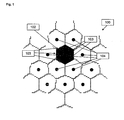
- Fig. 1 shows a schematic view of a part of a wireless communication network 100 with a first base station 102 having a startup physical cell identity.
- a plurality of mobile devices 103 is located in the transmission range of the first base station 102.
- the neighboring base stations 104 send handover request messages to the first base station 102 including the physical cell identities of their cells. Based on these physical cell identities the first base station 102 chooses a permanent physical cell identity and avoids a physical cell identity conflict by avoiding the physical cell identities received from the neighboring base stations 104.
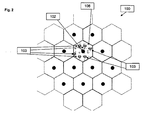
- Fig. 2 shows a schematic view of a part of a wireless communication network 100 comprising a first base station 102 with a permanent physical cell identity.
- the first base station 102 has chosen the permanent physical cell identity by avoiding the physical cell identities of the neighboring base stations.
- the first base station 102 serves now the wireless communication of mobile devices 103 in cell 106 in the communication network 100.
- the permanent physical cell identity was selected by avoiding the physical cell identities of the neighboring cells to avoid a physical cell identity conflict.
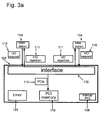
- Fig. 3a shows a block diagram of an embodiment of the invention comprising neighboring base stations 104 and the first base station 102.
- the first base station 102 is assigned to a startup physical cell identity 108 and comprises an interface 112, a physical cell identity memory 115 and a timer 124.
- the startup physical cell identity 108 is selected from a range of startup physical cell identities that are not allowed to be assigned as permanent physical cell identities.
- the physical cell identity memory 115 the physical cell identities 113 of neighboring base stations 104 are stored.
- the physical cell identities 113 of the neighboring base stations 104 are received from the neighboring base stations 104 via the handover requests 110.
- No handover request 110 is acknowledged when the first base station 102 is assigned to the startup physical cell identity 108. Therefore, handover rejection messages 111 are sent to each base station 104 sending a handover request 110.
- the timer 124 does not indicate that a predefined time has expired the physical cell identities 113 are received and stored in the physical cell identity memory 115.
- the first base station 102 is assigned to a startup physical cell identity 108.
- the first base station 102 receives handover requests 110 from a plurality of neighboring base stations 104 via an interface 112.
- Each handover request 110 comprises the physical cell identity of a neighboring base station 104.
- the received physical cell identities 113 are stored in a physical cell identity memory 115.
- each handover request 110 is rejected by sending a handover rejection message 111 to the base station 104, which has sent the handover request 110.
- the timer 124 ends the operation of the first base station 102 with the startup physical cell identity 108 after a predefined time.
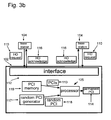
- Fig. 3b shows a block diagram of an embodiment of the invention comprising the first base station 102, which is assigned to a permanent physical cell identity 114, and neighboring base stations 104.
- the first base station 102 comprises an interface 112 adapted for communicating with neighboring base stations 104, a physical cell identity memory 115, a random physical cell identity generator 117, a processor 125.
- the first base station 102 receives via the interface 112 handover requests 110 from the neighboring base stations 104.
- the first base station 102 is assigned to a permanent physical cell identity 114, which is chosen from the processor 125.
- the determination of the processor 125 is based on the physical cell identities 113 of the neighboring base stations 104, stored in the physical cell identity memory 115, and a random physical cell identity 118, generated by the random physical cell identity generator 117. Because the first base station 102 is assigned to a permanent physical cell identity 114, the handover requests 110 are acknowledged by sending a handover acknowledge message 116 to the neighboring base stations 104.
- the processor 125 reads out the physical cell identity memory 115, in which the physical cell identities 113 of the neighboring base stations 104 are stored.
- the random physical cell identity generator 117 generates a random physical cell identity 118 and sends it to the processor 125.
- the processor 125 compares the generated random physical cell identity 118 with the physical cell identities 113 of the neighboring base stations 104 stored in the physical cell identity memory 115. If the random physical cell identity 118 is among the physical cell identities 113 of the neighboring base stations 104, a new random physical cell identity 118 is generated until the random physical cell identity 118 is not among the physical cell identities 113of the neighboring base stations 104. If the random physical cell identity 118 is not among the physical cell identities 113 of the neighboring base stations 104, the random physical cell identity 118 is assigned to the first base station 102 as the permanent physical cell identity 114.
- the first base station 102 When the first base station 102 is operated with the permanent physical cell identity 114, the first base station 102 receives handover requests 110 from neighboring base stations 104 via the interface 112. Because the first base station 102 is assigned to the permanent physical cell identity 114, the handover requests 110 are acknowledged by the first base station 102 by sending handover acknowledge messages 116 to the neighboring base stations 104. The handovers are executed and the first base station 102 operates with a permanent physical cell identity 114 in the wireless communication network.
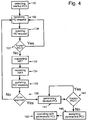
- Fig. 4 shows a flow diagram of an embodiment of the invention.
- a startup physical cell identity is selected 130.
- a handover request comprising the physical cell identity from a neighboring base station is received by the first base station 132.
- the handover request is rejected by the first base station in step 138.
- the first base station has received the physical cell identity of the neighboring base station with the handover request in step 132.
- This physical cell identity of the neighboring base station is compared in step 137 to the physical cell identities already stored in the physical cell identity memory. If the physical cell identity of the neighboring base station is already stored in the memory, the next handover request is received in step 132.
- a neighbour relation table is requested from the neighboring base station by the first base station in step 133.
- a neighbour relation table comprises the physical cell identities of the neighboring base stations of the respective base station.
- Step 134 comprises receiving the neighbour relation table from the neighboring base station.
- the first base station has received at least one physical cell identity of a neighboring base station, which is not yet stored in the physical cell identity memory. It can be that the neighbour relation table comprises additional physical cell identities of other neighboring base stations or even of neighbours" neighbours of the first base station.
- the at least one received physical cell identity is stored in the physical cell identity memory in step 135.
- a timer determines if a predefined time has expired. If the time has not expired, the next handover request is received in step 132.
- Step 143 comprises comparing the random physical cell identity to the physical cell identities stored in the physical cell identity memory. If the random physical cell identity is identical to a physical cell identity stored in the physical cell identity memory, a new random physical cell identity is generated by executing step 141 again..
- the random physical cell identity is not identical to a physical cell identity stored in the physical cell identity memory, it is assigned in step 140 to the first base station as the permanent physical cell identity. After step 140 the first base station is operated with the permanent physical cell identity in step 142.
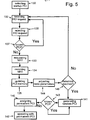
- Fig. 5 shows a flow diagram of an embodiment of the invention. The steps 130, 132, 138, 137, 133, 134 and 135 are performed in the same way as it was explained for fig. 4 .
- step 144 conprises adjusting the radio parameters of the base station in order to achieve a higher radio range of the base station.
- step 146 is performed, which comprises checking if a predefined number of handover requests is received or if a predefined number of neighboring radio cells is achieved. If one of the two conditions is fulfilled, steps 141, 143, 140 and 142 are performed in the same way as in fig. 4 .
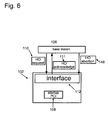
- Fig. 6 shows a block diagram of an embodiment of the invention comprising a second base station 126 and a first base station 102, which is assigned to a startup physical cell identity 108 and comprises an interface 112.
- the second base station 126 sends a handover request 110 to the first base station 102.
- the first base station 102 acknowledges the handover with a handover acknowledge message 111 before the second base station 126 aborts the handover procedure.
- the second base station send a handover request 110 to the first base station 102, which is assigned to a startup physical cell identity 108.
- the first base station 102 should reject the handover request 110, because according to embodiments of the invention the first base station 102 shall not accept any handover request 110 as long as the first base station 102 is assigned to the startup physical cell identity 108
- the second base station 126 receives a handover acknowledge message 111 from the first base station 102. Then, the second base station 126 aborts the handover procedure in order to prevent the use of the startup physical cell identity 108 to communicate with mobile devices of the wireless communication network, e.g. by a potential attacker of the wireless communication network.
Landscapes
- Engineering & Computer Science (AREA)
- Computer Networks & Wireless Communication (AREA)
- Signal Processing (AREA)
- Mobile Radio Communication Systems (AREA)
Claims (12)
- Verfahren zum Auswählen der Identität einer physikalischen Zelle für eine erste Basisstation (102), welche einem bestehenden drahtlosen Kommunikationsnetzwerk (100) mit einer Gruppe von Basisstationen hinzugefügt wird, wobei die erste Basisstation einer Start-up-Identität der physikalischen Zelle (108) zugeordnet wird, wobei das Verfahren umfasst:- Empfangen von Nachrichten (110) von einer Teilgruppe von Basisstationen des drahtlosen Kommunikationsnetzwerks an der ersten Basisstation, wobei eine jede der Nachrichten die Identität der physikalischen Zelle (118) einer Basisstation (104) des drahtlosen Kommunikationsnetzwerks enthält; und- Auswählen einer permanenten Identität der physikalischen Zelle (114) für die erste Basisstation, welche sich von den Identitäten der physikalischen Zellen der Teilgruppe von Basisstationen des drahtlosen Kommunikationsnetzwerks unterscheidet, durch die erste Basisstation unter Verwendung der mit den Nachrichten empfangenen Identitäten der physikalischen Zellen;wobei die Start-up-Identität der physikalischen Zelle aus einer Gruppe bestehend aus mindestens einer Identität der physikalischen Zelle gewählt (130) wird, und wobei die Start-up-Identitäten der physikalischen Zellen aus der Gruppe keiner Basisstation als permanente Identitäten der physikalischen Zellen zugeordnet sind.
- Verfahren nach einem der vorhergehenden Ansprüche, wobei die Identitäten der physikalischen Zellen der Teilgruppe von Basisstationen über eine Vielzahl von Handover-Anforderungen an die erste Basisstation gesendet werden.
- Verfahren nach einem beliebigen der vorstehenden Ansprüche, wobei die Identitäten der physikalischen Zellen der Teilgruppe von Basisstationen des drahtlosen Kommunikationsnetzwerks über mindestens eine Nachbarschaftsbeziehungstabelle (122) an die erste Basisstation gesendet werden.
- Verfahren nach einem beliebigen der vorstehenden Ansprüche, wobei das Verfahren weiterhin das Betreiben eines Zeitgebers (124) auf der Basisstation umfasst, um die Ankunftszeit von Identitäten von physikalischen Zellen innerhalb von Nachrichten von der Teilgruppe von Basisstationen des drahtlosen Kommunikationsnetzwerks zu definieren.
- Verfahren nach einem beliebigen der vorstehenden Ansprüche, wobei das Verfahren weiterhin das Abstimmen (144) der Funkparameter der ersten Basisstation mit der Start-up-Identität der physikalischen Zelle, bis eine vordefinierte Anzahl von Handover-Anforderungen empfangen wird, umfasst.
- Verfahren nach einem beliebigen der vorstehenden Ansprüche, wobei das Verfahren weiterhin das Abstimmen der Funkparameter der ersten Basisstation mit der Start-up-Identität der physikalischen Zelle, bis eine vordefinierte Anzahl von benachbarten Funkzellen erreicht wird, umfasst.
- Verfahren nach einem beliebigen der vorstehenden Ansprüche, wobei das Verfahren weiterhin das Zurückweisen von anfänglichen Assoziationsversuchen von einem mobilen Gerät durch die erste Basisstation mit der Start-up-Identität der physikalischen Zelle umfasst.
- Verfahren nach einem beliebigen der vorstehenden Ansprüche, wobei die Kommunikation der ersten Basisstation mit der Teilgruppe von Basisstationen über eine X2-Schnittstelle erfolgt.
- Verfahren nach einem beliebigen der vorstehenden Ansprüche, wobei die Kommunikation der ersten Basisstation mit der Teilgruppe von Basisstationen über eine S1-Schnittstelle erfolgt.
- Verfahren nach einem beliebigen der vorstehenden Ansprüche, weiterhin umfassend das Betreiben einer zweiten Basisstation (126) der Gruppe von mobilen Stationen des drahtlosen Kommunikationsnetzwerks, wobei das Verfahren das Abbrechen (128) einer Handover-Prozedur eines mobilen Gerätes umfasst, wenn eine Handover-Anforderungsbestätigungsnachricht von der ersten Basisstation mit einer Start-up-Identität der physikalischen Zellen empfangen wird.
- Computerprogramm-Produkt mit maschinenausführbaren Anweisungen zur Durchführung des Verfahrens gemäß einem beliebigen der vorstehenden Ansprüche auf einer Basisstation.
- Basisstationsvorrichtung, betreibbar für die Durchführung eines Verfahrens gemäß einem beliebigen der Ansprüche 1-10.
Priority Applications (1)
| Application Number | Priority Date | Filing Date | Title |
|---|---|---|---|
| EP20090290494 EP2273816B1 (de) | 2009-06-26 | 2009-06-26 | Hinzufügen einer neuen Funkzelle zu einem drahtlosen Kommunikationsnetzwerk |
Applications Claiming Priority (1)
| Application Number | Priority Date | Filing Date | Title |
|---|---|---|---|
| EP20090290494 EP2273816B1 (de) | 2009-06-26 | 2009-06-26 | Hinzufügen einer neuen Funkzelle zu einem drahtlosen Kommunikationsnetzwerk |
Publications (2)
| Publication Number | Publication Date |
|---|---|
| EP2273816A1 EP2273816A1 (de) | 2011-01-12 |
| EP2273816B1 true EP2273816B1 (de) | 2012-12-05 |
Family
ID=41234081
Family Applications (1)
| Application Number | Title | Priority Date | Filing Date |
|---|---|---|---|
| EP20090290494 Not-in-force EP2273816B1 (de) | 2009-06-26 | 2009-06-26 | Hinzufügen einer neuen Funkzelle zu einem drahtlosen Kommunikationsnetzwerk |
Country Status (1)
| Country | Link |
|---|---|
| EP (1) | EP2273816B1 (de) |
Families Citing this family (1)
| Publication number | Priority date | Publication date | Assignee | Title |
|---|---|---|---|---|
| US9332446B2 (en) | 2014-04-17 | 2016-05-03 | Qualcomm Incorporated | Self-configuration of a physical cell identity (PCI) at a cell |
Family Cites Families (4)
| Publication number | Priority date | Publication date | Assignee | Title |
|---|---|---|---|---|
| EP1661413A4 (de) * | 2003-08-06 | 2011-07-20 | Intel Corp | System und verfahren zum automatischen konfigurieren und integrieren einer funkbasisstation in ein existierendes drahtloses zellulares kommunikationsnetz mit voller bidirektionaler roaming- und weiterreichungs-fähigkeit |
| JP4458247B2 (ja) * | 2004-05-12 | 2010-04-28 | 日本電気株式会社 | 無線基地局装置設定システムおよび無線基地局装置設定方法 |
| US7848782B2 (en) * | 2005-02-02 | 2010-12-07 | Interdigital Technology Corporation | Method and apparatus for improving network resource planning in a wireless communication network |
| US9014155B2 (en) * | 2007-11-19 | 2015-04-21 | Rajarshi Gupta | Access point configuration schemes |
-
2009
- 2009-06-26 EP EP20090290494 patent/EP2273816B1/de not_active Not-in-force
Also Published As
| Publication number | Publication date |
|---|---|
| EP2273816A1 (de) | 2011-01-12 |
Similar Documents
| Publication | Publication Date | Title |
|---|---|---|
| US9148898B2 (en) | Method for detecting pci collisions | |
| EP2196059B1 (de) | Zugangskontrolle während der relokalisierung eines benutzergeräts in eine femto-basisstation | |
| JP5530519B2 (ja) | ランキングされた近隣セルリストの作成方法 | |
| EP2995131B1 (de) | Prioritäts-basierte zellenauswahl mit zell-spezifischen prioritäten | |
| EP2198647B1 (de) | Messungsmeldung für geschlossene teilnehmergruppen | |
| EP2605589B1 (de) | Verfahren zum Beheben von physikalischen Zellkennungs-Kollisionen (PCI Kollisionen) von pico-Basisstationen im Bereich einer Makro-Basisstation eines Mobilkommunikationssystems | |
| JP5062599B2 (ja) | 符号分割多元接続セルラー通信システム | |
| US11838772B2 (en) | Base station report | |
| CN101656941B (zh) | 更新邻区信息的方法、装置以及基站 | |
| US20140378137A1 (en) | Method and apparatus of communication | |
| WO2009001269A2 (en) | Apparatus, method and computer program product providing signaling between mobile terminal and network in presence of private cells/closed subscriber groups | |
| EP3979688B1 (de) | Verfahren und vorrichtung zur bestimmung der angrenzenden zwischenfrequenzfläche | |
| WO2016141752A1 (zh) | 小区选择的方法、anr配置方法、设备及计算机存储介质 | |
| US20100291929A1 (en) | Physical-layer cell identification in a communication system | |
| EP2083595A1 (de) | Verfahren, Vorrichtungen und System für die Selbstkonfiguration und -optimierung eines Netzwerks bei reduzierter Signalisierung | |
| US20250330901A1 (en) | Link Selection for an Idle or Inactive User Equipment | |
| CN112956226B (zh) | 在通信系统中隔离虚假基站 | |
| KR101487221B1 (ko) | 매크로 셀로부터 펨토셀로의 이동국의 핸드오버를 관리하기 위한 방법 및 장치 | |
| US9307461B2 (en) | Femtocell network | |
| JP4768807B2 (ja) | 無線通信方法及びシステム | |
| EP3513589B1 (de) | Identifizierung von benachbarten netzwerkknoten in einem drahtloskommunikationsnetzwerk | |
| CN115211171B (zh) | 通信方法、装置及系统 | |
| JP5695083B2 (ja) | Csgidを指示する方法、基地局タイプを指示する方法及びcsgid指示を取得する方法 | |
| EP2262316B1 (de) | Weiterreichungssteuerung | |
| EP2273816B1 (de) | Hinzufügen einer neuen Funkzelle zu einem drahtlosen Kommunikationsnetzwerk |
Legal Events
| Date | Code | Title | Description |
|---|---|---|---|
| PUAI | Public reference made under article 153(3) epc to a published international application that has entered the european phase |
Free format text: ORIGINAL CODE: 0009012 |
|
| 17P | Request for examination filed |
Effective date: 20100511 |
|
| AK | Designated contracting states |
Kind code of ref document: A1 Designated state(s): AT BE BG CH CY CZ DE DK EE ES FI FR GB GR HR HU IE IS IT LI LT LU LV MC MK MT NL NO PL PT RO SE SI SK TR |
|
| AX | Request for extension of the european patent |
Extension state: AL BA RS |
|
| RAP1 | Party data changed (applicant data changed or rights of an application transferred) |
Owner name: ALCATEL LUCENT |
|
| GRAP | Despatch of communication of intention to grant a patent |
Free format text: ORIGINAL CODE: EPIDOSNIGR1 |
|
| GRAS | Grant fee paid |
Free format text: ORIGINAL CODE: EPIDOSNIGR3 |
|
| GRAA | (expected) grant |
Free format text: ORIGINAL CODE: 0009210 |
|
| AK | Designated contracting states |
Kind code of ref document: B1 Designated state(s): AT BE BG CH CY CZ DE DK EE ES FI FR GB GR HR HU IE IS IT LI LT LU LV MC MK MT NL NO PL PT RO SE SI SK TR |
|
| REG | Reference to a national code |
Ref country code: GB Ref legal event code: FG4D |
|
| REG | Reference to a national code |
Ref country code: CH Ref legal event code: EP |
|
| REG | Reference to a national code |
Ref country code: AT Ref legal event code: REF Ref document number: 587856 Country of ref document: AT Kind code of ref document: T Effective date: 20121215 |
|
| REG | Reference to a national code |
Ref country code: IE Ref legal event code: FG4D |
|
| REG | Reference to a national code |
Ref country code: DE Ref legal event code: R096 Ref document number: 602009011687 Country of ref document: DE Effective date: 20130131 |
|
| REG | Reference to a national code |
Ref country code: AT Ref legal event code: MK05 Ref document number: 587856 Country of ref document: AT Kind code of ref document: T Effective date: 20121205 |
|
| PG25 | Lapsed in a contracting state [announced via postgrant information from national office to epo] |
Ref country code: NO Free format text: LAPSE BECAUSE OF FAILURE TO SUBMIT A TRANSLATION OF THE DESCRIPTION OR TO PAY THE FEE WITHIN THE PRESCRIBED TIME-LIMIT Effective date: 20130305 Ref country code: SE Free format text: LAPSE BECAUSE OF FAILURE TO SUBMIT A TRANSLATION OF THE DESCRIPTION OR TO PAY THE FEE WITHIN THE PRESCRIBED TIME-LIMIT Effective date: 20121205 Ref country code: ES Free format text: LAPSE BECAUSE OF FAILURE TO SUBMIT A TRANSLATION OF THE DESCRIPTION OR TO PAY THE FEE WITHIN THE PRESCRIBED TIME-LIMIT Effective date: 20130316 Ref country code: FI Free format text: LAPSE BECAUSE OF FAILURE TO SUBMIT A TRANSLATION OF THE DESCRIPTION OR TO PAY THE FEE WITHIN THE PRESCRIBED TIME-LIMIT Effective date: 20121205 Ref country code: LT Free format text: LAPSE BECAUSE OF FAILURE TO SUBMIT A TRANSLATION OF THE DESCRIPTION OR TO PAY THE FEE WITHIN THE PRESCRIBED TIME-LIMIT Effective date: 20121205 |
|
| REG | Reference to a national code |
Ref country code: NL Ref legal event code: VDEP Effective date: 20121205 |
|
| REG | Reference to a national code |
Ref country code: LT Ref legal event code: MG4D |
|
| PG25 | Lapsed in a contracting state [announced via postgrant information from national office to epo] |
Ref country code: LV Free format text: LAPSE BECAUSE OF FAILURE TO SUBMIT A TRANSLATION OF THE DESCRIPTION OR TO PAY THE FEE WITHIN THE PRESCRIBED TIME-LIMIT Effective date: 20121205 Ref country code: SI Free format text: LAPSE BECAUSE OF FAILURE TO SUBMIT A TRANSLATION OF THE DESCRIPTION OR TO PAY THE FEE WITHIN THE PRESCRIBED TIME-LIMIT Effective date: 20121205 Ref country code: PL Free format text: LAPSE BECAUSE OF FAILURE TO SUBMIT A TRANSLATION OF THE DESCRIPTION OR TO PAY THE FEE WITHIN THE PRESCRIBED TIME-LIMIT Effective date: 20121205 Ref country code: GR Free format text: LAPSE BECAUSE OF FAILURE TO SUBMIT A TRANSLATION OF THE DESCRIPTION OR TO PAY THE FEE WITHIN THE PRESCRIBED TIME-LIMIT Effective date: 20130306 |
|
| PG25 | Lapsed in a contracting state [announced via postgrant information from national office to epo] |
Ref country code: AT Free format text: LAPSE BECAUSE OF FAILURE TO SUBMIT A TRANSLATION OF THE DESCRIPTION OR TO PAY THE FEE WITHIN THE PRESCRIBED TIME-LIMIT Effective date: 20121205 |
|
| PG25 | Lapsed in a contracting state [announced via postgrant information from national office to epo] |
Ref country code: EE Free format text: LAPSE BECAUSE OF FAILURE TO SUBMIT A TRANSLATION OF THE DESCRIPTION OR TO PAY THE FEE WITHIN THE PRESCRIBED TIME-LIMIT Effective date: 20121205 Ref country code: IS Free format text: LAPSE BECAUSE OF FAILURE TO SUBMIT A TRANSLATION OF THE DESCRIPTION OR TO PAY THE FEE WITHIN THE PRESCRIBED TIME-LIMIT Effective date: 20130405 Ref country code: CZ Free format text: LAPSE BECAUSE OF FAILURE TO SUBMIT A TRANSLATION OF THE DESCRIPTION OR TO PAY THE FEE WITHIN THE PRESCRIBED TIME-LIMIT Effective date: 20121205 Ref country code: BG Free format text: LAPSE BECAUSE OF FAILURE TO SUBMIT A TRANSLATION OF THE DESCRIPTION OR TO PAY THE FEE WITHIN THE PRESCRIBED TIME-LIMIT Effective date: 20130305 Ref country code: BE Free format text: LAPSE BECAUSE OF FAILURE TO SUBMIT A TRANSLATION OF THE DESCRIPTION OR TO PAY THE FEE WITHIN THE PRESCRIBED TIME-LIMIT Effective date: 20121205 Ref country code: SK Free format text: LAPSE BECAUSE OF FAILURE TO SUBMIT A TRANSLATION OF THE DESCRIPTION OR TO PAY THE FEE WITHIN THE PRESCRIBED TIME-LIMIT Effective date: 20121205 |
|
| PG25 | Lapsed in a contracting state [announced via postgrant information from national office to epo] |
Ref country code: PT Free format text: LAPSE BECAUSE OF FAILURE TO SUBMIT A TRANSLATION OF THE DESCRIPTION OR TO PAY THE FEE WITHIN THE PRESCRIBED TIME-LIMIT Effective date: 20130405 Ref country code: NL Free format text: LAPSE BECAUSE OF FAILURE TO SUBMIT A TRANSLATION OF THE DESCRIPTION OR TO PAY THE FEE WITHIN THE PRESCRIBED TIME-LIMIT Effective date: 20121205 Ref country code: RO Free format text: LAPSE BECAUSE OF FAILURE TO SUBMIT A TRANSLATION OF THE DESCRIPTION OR TO PAY THE FEE WITHIN THE PRESCRIBED TIME-LIMIT Effective date: 20121205 |
|
| PLBE | No opposition filed within time limit |
Free format text: ORIGINAL CODE: 0009261 |
|
| STAA | Information on the status of an ep patent application or granted ep patent |
Free format text: STATUS: NO OPPOSITION FILED WITHIN TIME LIMIT |
|
| PG25 | Lapsed in a contracting state [announced via postgrant information from national office to epo] |
Ref country code: DK Free format text: LAPSE BECAUSE OF FAILURE TO SUBMIT A TRANSLATION OF THE DESCRIPTION OR TO PAY THE FEE WITHIN THE PRESCRIBED TIME-LIMIT Effective date: 20121205 |
|
| 26N | No opposition filed |
Effective date: 20130906 |
|
| REG | Reference to a national code |
Ref country code: FR Ref legal event code: GC Effective date: 20131018 |
|
| PG25 | Lapsed in a contracting state [announced via postgrant information from national office to epo] |
Ref country code: CY Free format text: LAPSE BECAUSE OF FAILURE TO SUBMIT A TRANSLATION OF THE DESCRIPTION OR TO PAY THE FEE WITHIN THE PRESCRIBED TIME-LIMIT Effective date: 20121205 |
|
| PG25 | Lapsed in a contracting state [announced via postgrant information from national office to epo] |
Ref country code: IT Free format text: LAPSE BECAUSE OF FAILURE TO SUBMIT A TRANSLATION OF THE DESCRIPTION OR TO PAY THE FEE WITHIN THE PRESCRIBED TIME-LIMIT Effective date: 20121205 |
|
| REG | Reference to a national code |
Ref country code: DE Ref legal event code: R097 Ref document number: 602009011687 Country of ref document: DE Effective date: 20130906 |
|
| PG25 | Lapsed in a contracting state [announced via postgrant information from national office to epo] |
Ref country code: MC Free format text: LAPSE BECAUSE OF FAILURE TO SUBMIT A TRANSLATION OF THE DESCRIPTION OR TO PAY THE FEE WITHIN THE PRESCRIBED TIME-LIMIT Effective date: 20121205 Ref country code: HR Free format text: LAPSE BECAUSE OF FAILURE TO SUBMIT A TRANSLATION OF THE DESCRIPTION OR TO PAY THE FEE WITHIN THE PRESCRIBED TIME-LIMIT Effective date: 20130731 |
|
| REG | Reference to a national code |
Ref country code: CH Ref legal event code: PL |
|
| REG | Reference to a national code |
Ref country code: IE Ref legal event code: MM4A |
|
| PG25 | Lapsed in a contracting state [announced via postgrant information from national office to epo] |
Ref country code: IE Free format text: LAPSE BECAUSE OF NON-PAYMENT OF DUE FEES Effective date: 20130626 Ref country code: CH Free format text: LAPSE BECAUSE OF NON-PAYMENT OF DUE FEES Effective date: 20130630 Ref country code: LI Free format text: LAPSE BECAUSE OF NON-PAYMENT OF DUE FEES Effective date: 20130630 |
|
| PG25 | Lapsed in a contracting state [announced via postgrant information from national office to epo] |
Ref country code: MT Free format text: LAPSE BECAUSE OF FAILURE TO SUBMIT A TRANSLATION OF THE DESCRIPTION OR TO PAY THE FEE WITHIN THE PRESCRIBED TIME-LIMIT Effective date: 20121205 |
|
| REG | Reference to a national code |
Ref country code: FR Ref legal event code: PLFP Year of fee payment: 7 |
|
| PG25 | Lapsed in a contracting state [announced via postgrant information from national office to epo] |
Ref country code: TR Free format text: LAPSE BECAUSE OF FAILURE TO SUBMIT A TRANSLATION OF THE DESCRIPTION OR TO PAY THE FEE WITHIN THE PRESCRIBED TIME-LIMIT Effective date: 20121205 |
|
| PG25 | Lapsed in a contracting state [announced via postgrant information from national office to epo] |
Ref country code: HU Free format text: LAPSE BECAUSE OF FAILURE TO SUBMIT A TRANSLATION OF THE DESCRIPTION OR TO PAY THE FEE WITHIN THE PRESCRIBED TIME-LIMIT; INVALID AB INITIO Effective date: 20090626 Ref country code: MK Free format text: LAPSE BECAUSE OF FAILURE TO SUBMIT A TRANSLATION OF THE DESCRIPTION OR TO PAY THE FEE WITHIN THE PRESCRIBED TIME-LIMIT Effective date: 20121205 Ref country code: LU Free format text: LAPSE BECAUSE OF NON-PAYMENT OF DUE FEES Effective date: 20130626 |
|
| REG | Reference to a national code |
Ref country code: FR Ref legal event code: PLFP Year of fee payment: 8 |
|
| REG | Reference to a national code |
Ref country code: FR Ref legal event code: PLFP Year of fee payment: 9 |
|
| PGFP | Annual fee paid to national office [announced via postgrant information from national office to epo] |
Ref country code: FR Payment date: 20170621 Year of fee payment: 9 Ref country code: DE Payment date: 20170621 Year of fee payment: 9 Ref country code: GB Payment date: 20170620 Year of fee payment: 9 |
|
| REG | Reference to a national code |
Ref country code: DE Ref legal event code: R119 Ref document number: 602009011687 Country of ref document: DE |
|
| GBPC | Gb: european patent ceased through non-payment of renewal fee |
Effective date: 20180626 |
|
| PG25 | Lapsed in a contracting state [announced via postgrant information from national office to epo] |
Ref country code: GB Free format text: LAPSE BECAUSE OF NON-PAYMENT OF DUE FEES Effective date: 20180626 Ref country code: FR Free format text: LAPSE BECAUSE OF NON-PAYMENT OF DUE FEES Effective date: 20180630 Ref country code: DE Free format text: LAPSE BECAUSE OF NON-PAYMENT OF DUE FEES Effective date: 20190101 |
|
| REG | Reference to a national code |
Ref country code: DE Ref legal event code: R082 Ref document number: 602009011687 Country of ref document: DE Representative=s name: BARKHOFF REIMANN VOSSIUS, DE Ref country code: DE Ref legal event code: R081 Ref document number: 602009011687 Country of ref document: DE Owner name: WSOU INVESTMENTS, LLC, LOS ANGELES, US Free format text: FORMER OWNER: ALCATEL LUCENT, PARIS, FR |
|
| REG | Reference to a national code |
Ref country code: GB Ref legal event code: 732E Free format text: REGISTERED BETWEEN 20201203 AND 20201209 |