EP2274416B1 - Kommensale bakterien als signalvermittler in einem säugerwirt - Google Patents
Kommensale bakterien als signalvermittler in einem säugerwirt Download PDFInfo
- Publication number
- EP2274416B1 EP2274416B1 EP09730686.4A EP09730686A EP2274416B1 EP 2274416 B1 EP2274416 B1 EP 2274416B1 EP 09730686 A EP09730686 A EP 09730686A EP 2274416 B1 EP2274416 B1 EP 2274416B1
- Authority
- EP
- European Patent Office
- Prior art keywords
- nissle
- cells
- signal
- insulin
- expression
- Prior art date
- Legal status (The legal status is an assumption and is not a legal conclusion. Google has not performed a legal analysis and makes no representation as to the accuracy of the status listed.)
- Active
Links
Images




Classifications
-
- C—CHEMISTRY; METALLURGY
- C12—BIOCHEMISTRY; BEER; SPIRITS; WINE; VINEGAR; MICROBIOLOGY; ENZYMOLOGY; MUTATION OR GENETIC ENGINEERING
- C12N—MICROORGANISMS OR ENZYMES; COMPOSITIONS THEREOF; PROPAGATING, PRESERVING, OR MAINTAINING MICROORGANISMS; MUTATION OR GENETIC ENGINEERING; CULTURE MEDIA
- C12N15/00—Mutation or genetic engineering; DNA or RNA concerning genetic engineering, vectors, e.g. plasmids, or their isolation, preparation or purification; Use of hosts therefor
- C12N15/09—Recombinant DNA-technology
- C12N15/63—Introduction of foreign genetic material using vectors; Vectors; Use of hosts therefor; Regulation of expression
- C12N15/74—Vectors or expression systems specially adapted for prokaryotic hosts other than E. coli, e.g. Lactobacillus, Micromonospora
-
- A—HUMAN NECESSITIES
- A23—FOODS OR FOODSTUFFS; TREATMENT THEREOF, NOT COVERED BY OTHER CLASSES
- A23K—FODDER
- A23K10/00—Animal feeding-stuffs
- A23K10/10—Animal feeding-stuffs obtained by microbiological or biochemical processes
- A23K10/16—Addition of microorganisms or extracts thereof, e.g. single-cell proteins, to feeding-stuff compositions
-
- A—HUMAN NECESSITIES
- A23—FOODS OR FOODSTUFFS; TREATMENT THEREOF, NOT COVERED BY OTHER CLASSES
- A23K—FODDER
- A23K10/00—Animal feeding-stuffs
- A23K10/10—Animal feeding-stuffs obtained by microbiological or biochemical processes
- A23K10/16—Addition of microorganisms or extracts thereof, e.g. single-cell proteins, to feeding-stuff compositions
- A23K10/18—Addition of microorganisms or extracts thereof, e.g. single-cell proteins, to feeding-stuff compositions of live microorganisms
-
- A—HUMAN NECESSITIES
- A23—FOODS OR FOODSTUFFS; TREATMENT THEREOF, NOT COVERED BY OTHER CLASSES
- A23K—FODDER
- A23K30/00—Processes specially adapted for preservation of materials in order to produce animal feeding-stuffs
- A23K30/10—Processes specially adapted for preservation of materials in order to produce animal feeding-stuffs of green fodder
- A23K30/15—Processes specially adapted for preservation of materials in order to produce animal feeding-stuffs of green fodder using chemicals or microorganisms for ensilaging
-
- A—HUMAN NECESSITIES
- A23—FOODS OR FOODSTUFFS; TREATMENT THEREOF, NOT COVERED BY OTHER CLASSES
- A23K—FODDER
- A23K30/00—Processes specially adapted for preservation of materials in order to produce animal feeding-stuffs
- A23K30/10—Processes specially adapted for preservation of materials in order to produce animal feeding-stuffs of green fodder
- A23K30/15—Processes specially adapted for preservation of materials in order to produce animal feeding-stuffs of green fodder using chemicals or microorganisms for ensilaging
- A23K30/18—Processes specially adapted for preservation of materials in order to produce animal feeding-stuffs of green fodder using chemicals or microorganisms for ensilaging using microorganisms or enzymes
-
- A—HUMAN NECESSITIES
- A61—MEDICAL OR VETERINARY SCIENCE; HYGIENE
- A61K—PREPARATIONS FOR MEDICAL, DENTAL OR TOILETRY PURPOSES
- A61K35/00—Medicinal preparations containing materials or reaction products thereof with undetermined constitution
- A61K35/66—Microorganisms or materials therefrom
- A61K35/74—Bacteria
-
- A—HUMAN NECESSITIES
- A61—MEDICAL OR VETERINARY SCIENCE; HYGIENE
- A61K—PREPARATIONS FOR MEDICAL, DENTAL OR TOILETRY PURPOSES
- A61K38/00—Medicinal preparations containing peptides
- A61K38/16—Peptides having more than 20 amino acids; Gastrins; Somatostatins; Melanotropins; Derivatives thereof
- A61K38/164—Peptides having more than 20 amino acids; Gastrins; Somatostatins; Melanotropins; Derivatives thereof from bacteria
-
- A—HUMAN NECESSITIES
- A61—MEDICAL OR VETERINARY SCIENCE; HYGIENE
- A61K—PREPARATIONS FOR MEDICAL, DENTAL OR TOILETRY PURPOSES
- A61K38/00—Medicinal preparations containing peptides
- A61K38/16—Peptides having more than 20 amino acids; Gastrins; Somatostatins; Melanotropins; Derivatives thereof
- A61K38/17—Peptides having more than 20 amino acids; Gastrins; Somatostatins; Melanotropins; Derivatives thereof from animals; from humans
- A61K38/22—Hormones
-
- A—HUMAN NECESSITIES
- A61—MEDICAL OR VETERINARY SCIENCE; HYGIENE
- A61K—PREPARATIONS FOR MEDICAL, DENTAL OR TOILETRY PURPOSES
- A61K38/00—Medicinal preparations containing peptides
- A61K38/16—Peptides having more than 20 amino acids; Gastrins; Somatostatins; Melanotropins; Derivatives thereof
- A61K38/17—Peptides having more than 20 amino acids; Gastrins; Somatostatins; Melanotropins; Derivatives thereof from animals; from humans
- A61K38/22—Hormones
- A61K38/26—Glucagons
-
- A—HUMAN NECESSITIES
- A61—MEDICAL OR VETERINARY SCIENCE; HYGIENE
- A61P—SPECIFIC THERAPEUTIC ACTIVITY OF CHEMICAL COMPOUNDS OR MEDICINAL PREPARATIONS
- A61P3/00—Drugs for disorders of the metabolism
- A61P3/08—Drugs for disorders of the metabolism for glucose homeostasis
- A61P3/10—Drugs for disorders of the metabolism for glucose homeostasis for hyperglycaemia, e.g. antidiabetics
-
- A—HUMAN NECESSITIES
- A61—MEDICAL OR VETERINARY SCIENCE; HYGIENE
- A61P—SPECIFIC THERAPEUTIC ACTIVITY OF CHEMICAL COMPOUNDS OR MEDICINAL PREPARATIONS
- A61P31/00—Antiinfectives, i.e. antibiotics, antiseptics, chemotherapeutics
- A61P31/04—Antibacterial agents
-
- A—HUMAN NECESSITIES
- A61—MEDICAL OR VETERINARY SCIENCE; HYGIENE
- A61P—SPECIFIC THERAPEUTIC ACTIVITY OF CHEMICAL COMPOUNDS OR MEDICINAL PREPARATIONS
- A61P31/00—Antiinfectives, i.e. antibiotics, antiseptics, chemotherapeutics
- A61P31/10—Antimycotics
-
- A—HUMAN NECESSITIES
- A61—MEDICAL OR VETERINARY SCIENCE; HYGIENE
- A61P—SPECIFIC THERAPEUTIC ACTIVITY OF CHEMICAL COMPOUNDS OR MEDICINAL PREPARATIONS
- A61P31/00—Antiinfectives, i.e. antibiotics, antiseptics, chemotherapeutics
- A61P31/12—Antivirals
-
- A—HUMAN NECESSITIES
- A61—MEDICAL OR VETERINARY SCIENCE; HYGIENE
- A61P—SPECIFIC THERAPEUTIC ACTIVITY OF CHEMICAL COMPOUNDS OR MEDICINAL PREPARATIONS
- A61P33/00—Antiparasitic agents
- A61P33/02—Antiprotozoals, e.g. for leishmaniasis, trichomoniasis, toxoplasmosis
-
- C—CHEMISTRY; METALLURGY
- C07—ORGANIC CHEMISTRY
- C07K—PEPTIDES
- C07K14/00—Peptides having more than 20 amino acids; Gastrins; Somatostatins; Melanotropins; Derivatives thereof
- C07K14/435—Peptides having more than 20 amino acids; Gastrins; Somatostatins; Melanotropins; Derivatives thereof from animals; from humans
- C07K14/46—Peptides having more than 20 amino acids; Gastrins; Somatostatins; Melanotropins; Derivatives thereof from animals; from humans from vertebrates
- C07K14/47—Peptides having more than 20 amino acids; Gastrins; Somatostatins; Melanotropins; Derivatives thereof from animals; from humans from vertebrates from mammals
-
- C—CHEMISTRY; METALLURGY
- C07—ORGANIC CHEMISTRY
- C07K—PEPTIDES
- C07K14/00—Peptides having more than 20 amino acids; Gastrins; Somatostatins; Melanotropins; Derivatives thereof
- C07K14/435—Peptides having more than 20 amino acids; Gastrins; Somatostatins; Melanotropins; Derivatives thereof from animals; from humans
- C07K14/46—Peptides having more than 20 amino acids; Gastrins; Somatostatins; Melanotropins; Derivatives thereof from animals; from humans from vertebrates
- C07K14/47—Peptides having more than 20 amino acids; Gastrins; Somatostatins; Melanotropins; Derivatives thereof from animals; from humans from vertebrates from mammals
- C07K14/4701—Peptides having more than 20 amino acids; Gastrins; Somatostatins; Melanotropins; Derivatives thereof from animals; from humans from vertebrates from mammals not used
- C07K14/4702—Regulators; Modulating activity
- C07K14/4705—Regulators; Modulating activity stimulating, promoting or activating activity
-
- C—CHEMISTRY; METALLURGY
- C07—ORGANIC CHEMISTRY
- C07K—PEPTIDES
- C07K14/00—Peptides having more than 20 amino acids; Gastrins; Somatostatins; Melanotropins; Derivatives thereof
- C07K14/435—Peptides having more than 20 amino acids; Gastrins; Somatostatins; Melanotropins; Derivatives thereof from animals; from humans
- C07K14/575—Hormones
-
- C—CHEMISTRY; METALLURGY
- C07—ORGANIC CHEMISTRY
- C07K—PEPTIDES
- C07K14/00—Peptides having more than 20 amino acids; Gastrins; Somatostatins; Melanotropins; Derivatives thereof
- C07K14/435—Peptides having more than 20 amino acids; Gastrins; Somatostatins; Melanotropins; Derivatives thereof from animals; from humans
- C07K14/575—Hormones
- C07K14/605—Glucagons
-
- A—HUMAN NECESSITIES
- A61—MEDICAL OR VETERINARY SCIENCE; HYGIENE
- A61K—PREPARATIONS FOR MEDICAL, DENTAL OR TOILETRY PURPOSES
- A61K35/00—Medicinal preparations containing materials or reaction products thereof with undetermined constitution
- A61K35/12—Materials from mammals; Compositions comprising non-specified tissues or cells; Compositions comprising non-embryonic stem cells; Genetically modified cells
-
- C—CHEMISTRY; METALLURGY
- C07—ORGANIC CHEMISTRY
- C07H—SUGARS; DERIVATIVES THEREOF; NUCLEOSIDES; NUCLEOTIDES; NUCLEIC ACIDS
- C07H21/00—Compounds containing two or more mononucleotide units having separate phosphate or polyphosphate groups linked by saccharide radicals of nucleoside groups, e.g. nucleic acids
- C07H21/04—Compounds containing two or more mononucleotide units having separate phosphate or polyphosphate groups linked by saccharide radicals of nucleoside groups, e.g. nucleic acids with deoxyribosyl as saccharide radical
-
- C—CHEMISTRY; METALLURGY
- C07—ORGANIC CHEMISTRY
- C07K—PEPTIDES
- C07K2319/00—Fusion polypeptide
- C07K2319/01—Fusion polypeptide containing a localisation/targetting motif
- C07K2319/02—Fusion polypeptide containing a localisation/targetting motif containing a signal sequence
-
- C—CHEMISTRY; METALLURGY
- C12—BIOCHEMISTRY; BEER; SPIRITS; WINE; VINEGAR; MICROBIOLOGY; ENZYMOLOGY; MUTATION OR GENETIC ENGINEERING
- C12N—MICROORGANISMS OR ENZYMES; COMPOSITIONS THEREOF; PROPAGATING, PRESERVING, OR MAINTAINING MICROORGANISMS; MUTATION OR GENETIC ENGINEERING; CULTURE MEDIA
- C12N15/00—Mutation or genetic engineering; DNA or RNA concerning genetic engineering, vectors, e.g. plasmids, or their isolation, preparation or purification; Use of hosts therefor
- C12N15/09—Recombinant DNA-technology
- C12N15/63—Introduction of foreign genetic material using vectors; Vectors; Use of hosts therefor; Regulation of expression
- C12N15/74—Vectors or expression systems specially adapted for prokaryotic hosts other than E. coli, e.g. Lactobacillus, Micromonospora
- C12N15/75—Vectors or expression systems specially adapted for prokaryotic hosts other than E. coli, e.g. Lactobacillus, Micromonospora for Bacillus
-
- C—CHEMISTRY; METALLURGY
- C12—BIOCHEMISTRY; BEER; SPIRITS; WINE; VINEGAR; MICROBIOLOGY; ENZYMOLOGY; MUTATION OR GENETIC ENGINEERING
- C12N—MICROORGANISMS OR ENZYMES; COMPOSITIONS THEREOF; PROPAGATING, PRESERVING, OR MAINTAINING MICROORGANISMS; MUTATION OR GENETIC ENGINEERING; CULTURE MEDIA
- C12N2510/00—Genetically modified cells
-
- Y—GENERAL TAGGING OF NEW TECHNOLOGICAL DEVELOPMENTS; GENERAL TAGGING OF CROSS-SECTIONAL TECHNOLOGIES SPANNING OVER SEVERAL SECTIONS OF THE IPC; TECHNICAL SUBJECTS COVERED BY FORMER USPC CROSS-REFERENCE ART COLLECTIONS [XRACs] AND DIGESTS
- Y02—TECHNOLOGIES OR APPLICATIONS FOR MITIGATION OR ADAPTATION AGAINST CLIMATE CHANGE
- Y02A—TECHNOLOGIES FOR ADAPTATION TO CLIMATE CHANGE
- Y02A50/00—TECHNOLOGIES FOR ADAPTATION TO CLIMATE CHANGE in human health protection, e.g. against extreme weather
- Y02A50/30—Against vector-borne diseases, e.g. mosquito-borne, fly-borne, tick-borne or waterborne diseases whose impact is exacerbated by climate change
Definitions
- the present invention relates genetically engineered bacteria having engineered signaling ability to stimulate or provide expression of desirable genes in a host organism.
- the invention also relates to commensal bacteria engineered to express signaling molecules that allow for communication with either the host's cells or with other bacteria either existing within or invading the host.
- the intestinal tract is home to at least 395 phylotypes of bacteria ( Eckburg PB, Bik EM, Bernstein CN, Purdom E, Dethlefsen L, Sargent M, Gill SR, Nelson KE, Relman DA. 2005. Diversity of the human intestinal microbial flora. Science 308(5728):1635-8 ). These commensal bacteria (probiotics) have co-evolved with their host to provide nutrients, protect against pathogens, and aid in intestinal development ( Holzapfel WH, Haberer P, Snel J, Schillinger U, Huis in't Veld JH. 1998. Overview of gut flora and probiotics. Int J Food Microbiol 41(2):85-101 ).
- V. cholerae uses quorum sensing to coordinate its infection of the human GI tract ( Miller MB, Skorupski K, Lenz DH, Taylor RK, Bassler BL. 2002. Parallel quorum sensing systems converge to regulate virulence in Vibrio cholerae. Cell 110(3):303-14 ).
- V. cholerae expresses virulence factors toxin-coregulated pilus (TCP) and cholera toxin (CT). TCP allows the invading V. cholerae to attach to the inside of the GI tract ( Taylor RK, Miller VL, Furlong DB, Mekalanos JJ. 1987.
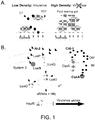
- FIG. 1 shows a schematic of V. cholerae ' s infection cycle and quorum sensing circuit.
- V. cholerae (VC, ovals) expresses virulence factors cholera toxin (CT, pentagons) and toxin co-regulated pilus (TCP, strands) which infect the host epithelial cells (epithelia, rectangles) and allow VC to attach to the epithelia, respectively.
- CT cholera toxin
- TCP toxin co-regulated pilus
- VC stop expressing virulence genes and can therefore detach and leave the host with the efflux of fluid.
- V. cholerae El Tor serotypes are largely responsible for outbreaks of cholera in the developing world.
- the infection cycle for some strains of V. cholerae is coordinated, at least in part, through quorum sensing. That is, the expression of virulence genes depends on the concentration of V. cholerae autoinducers c holera a uto i nducer 1 (CAI-1) and a uto i nducer 2 (AI-2). High concentrations of CAI-1 and AI-2 have been shown previously to inhibit virulence gene expression.
- the invention provides commensal bacteria that are engineered to express signaling molecules that allow for communication with either the host's cells or with other bacteria either existing within or invading the host.
- the invention provides a genetically engineered commensal bacterium containing a recombinant nucleic acid molecule that encodes a signal that comprises a mammalian insulin secretion-stimulating peptide selected from the group consisting of glucagon-like peptide 1 (GLP-1), and pancreatic and duodenal homeobox peptide (PDX-1) for use in a method of preventing and/or treating a disease.
- GLP-1 glucagon-like peptide 1
- PDX-1 pancreatic and duodenal homeobox peptide
- the secretion is controlled by an environmental stimulus.
- the signal stimulates or inhibits expression of the target nucleic acid.
- the environmental stimulus is secreted by a pathogen, or the presence of the environmental stimulus is indicative of the pathogen.
- the pathogen is an invading pathogen and the signal inhibits or disrupts the pathogenicity or virulence of the invading pathogen.
- the target nucleic acid controls pathogenesis or virulence of a pathogen. In another embodiment, the target nucleic acid encodes a virulence factor of an invading pathogen.
- the target nucleic acid is expressed by a mammal.
- the target nucleic acid encodes a mammalian factor.
- the mammalian factor can, for example, promote normal functioning of a physiological process in a mammalian subject or is effective in preventing onset, establishment, or spread of a non-infectious disease within the mammalian subject.
- the target nucleic acid encodes a disease-causal factor associated with onset of a mammalian non-infectious disease.
- the bacterium can be, for example, an enteric bacterium or a commensal bacterium.
- the commensal bacterium is a strain of an Escherichia coli bacterium.
- the strain of Escherichia coli is Escherichia coli Nissle 1917.
- the signal prevents, detects, ameliorates or treats a disease or disorder in a human or animal.
- the animal can be, for example, in the phylum Chordata, e.g., a mammal or human, or an insect, to name but a few.
- the signal stimulates expression of the target nucleic acid.
- the signal comprises a quorum signal.
- the invading pathogen is a protozoan, a pathogenic bacterium, a fungus or a virus.
- the invading pathogen is Vibrio cholerae.
- the signal comprises an antimicrobial peptide or molecule.
- the signal is expressed constitutively by the bacterium.
- the expression of the recombinant nucleic acid encoding the signal is under the control of an inducible promoter.
- the recombinant cell further comprises a recombinant nucleic acid encoding a recombinant response molecule, wherein the recombinant response molecule detects a molecule present in a host.
- the disease is diabetes.
- the signal can comprise Glp-1 or PDX-1; it is also disclosed that the signal can comprise GIP.
- the environmental stimulus can be glucose or a sugar that stimulates insulin release within a healthy human.
- the signal can comprise Vibrio cholerae cholera autoinducer 1 (CAI-1) quorum signal
- the recombinant nucleic acid encoding the signal can comprise a Vibrio cholerae cqsA gene encoding CAI-1
- the target nucleic acid can be Vibrio cholerae cholera toxin (CT)
- expression of CAI-1 can inhibit expression of CT by Vibrio cholerae.
- the signal can comprise Vibrio cholerae cholera autoinducer 2 (AI-2) quorum signal
- the recombinant nucleic acid encoding the signal can comprise a Vibrio cholerae luxS gene encoding AI-2
- the target nucleic acid can be Vibrio cholerae toxin-coregulated pilus (TCP)
- expression of AI-2 can inhibit expression of TCP by Vibrio cholerae.
- the signal comprises a mammalian insulin secretion-stimulating peptide, the signal regulates expression of insulin in mammalian insulin-secreting cells, and expression of the signal by the cell stimulates glucose-responsive insulin production in a host mammalian subject, e.g., a human.
- the recombinant cell can also comprise an recombinant nucleic acid encoding a recombinant response molecule, wherein the recombinant response molecule detects a molecule present in the host mammalian subject.
- the mammalian insulin secretion-stimulating peptide can be, e.g., glucagon-like peptide 1 (GLP-1) or pancreatic and duodenal homeobox gene 1 (PDX-1).
- the mammalian insulin-secreting cells can be intestinal epithelial cells.
- a method for regulating expression of a target nucleic acid in a host subject comprises providing an isolated recombinant cell of the invention (or a microorganism comprising or consisting of the cell of the invention) and administering the cell (or the microorganism comprising or consisting of the cell) to the host subject under conditions effective to allow the signal to be expressed in the host subject, thereby regulating signal-dependent expression of the target nucleic acid in the host subject.
- the signal prevents, detects, ameliorates or treats a disease or disorder in a human or animal or cell derived therefrom.
- the signal stimulates expression of the target nucleic acid.
- the signal comprises a quorum signal.
- the signal comprises an antimicrobial peptide or molecule.
- the target nucleic acid can encode a virulence factor of the invading pathogen.
- the invading pathogen can be, e.g., a protozoan, a pathogenic bacterium, a fungus or a virus.
- the invading pathogen can be Vibrio cholerae.
- the signal can comprise Vibrio cholerae cholera autoinducer 1 (CAI-1) quorum signal
- the recombinant nucleic acid encoding the signal can comprise a Vibrio cholerae cqsA gene encoding CAI-1
- the target nucleic acid can be Vibrio cholerae cholera toxin (CT)
- expression of CAI-1 can inhibit expression of CT by Vibrio cholerae.
- the signal can comprise Vibrio cholerae cholera autoinducer 2 (AI-2) quorum signal
- the recombinant nucleic acid encoding the signal can comprise a Vibrio cholerae luxS gene encoding AI-2
- the target nucleic acid can be Vibrio cholerae toxin-coregulated pilus (TCP)
- expression of AI-2 can inhibit expression of TCP by Vibrio cholerae.
- the signal comprises a mammalian insulin secretion-stimulating peptide, the signal regulates expression of insulin in mammalian insulin-secreting cells, and expression of the signal by the cell stimulates glucose-responsive insulin production in a host mammalian subject.
- the recombinant cell comprises a recombinant nucleic acid encoding a recombinant response molecule, wherein the recombinant response molecule detects a molecule present in the host mammalian subject, e.g., a human.
- the mammalian insulin-secreting cells are intestinal epithelial cells.
- the mammalian insulin secretion-stimulating peptide is glucagon-like peptide 1 (GLP-1) that stimulates glucose-responsive insulin production in a mammalian subject.
- GLP-1 glucagon-like peptide 1
- the mammalian insulin secretion-stimulating peptide is pancreatic and duodenal homeobox gene 1 (PDX-1) that stimulates constitutive insulin production in a mammalian subject.
- PDX-1 pancreatic and duodenal homeobox gene 1
- the mammalian insulin secretion-stimulating peptide is GIP peptide that stimulates glucose-responsive insulin production in a mammalian subject.
- a method for preventing or ameliorating an infectious or non-infectious disease in a mammalian subject comprises providing an isolated recombinant bacterium of the invention; and administering the bacterium to the mammalian subject under conditions effective to stimulates expression of the disease-preventing factor or inhibits expression of the causal factor of the disease, thereby preventing or ameliorating the disease.
- the non-infectious disease is an autoimmune disease, e.g., Type 1 diabetes.
- the signal comprises PDX-1, the disease-preventing factor is insulin, and PDX-1 stimulates constitutive production of insulin in the mammalian subject.
- the signal comprises Glp-I, the disease-preventing factor is insulin, and Glp-I stimulates glucose-responsive insulin in the mammalian subject.
- the signal can comprise GIP, the disease-preventing factor can be insulin, and GIP can stimulate glucose-responsive insulin in the mammalian subject.
- an effective material selected from the group consisting of a signal, a fragment thereof, a complex thereof, a derivative thereof, an analog thereof, an expressible nucleic acid coding for the effective material or a fragment or derivative thereof, wherein the signal regulates expression of a target nucleic acid; and a non-pathogenic microorganism comprising the nucleic acid and capable of expressing the signal, for the treatment of a disease or disorder of a human or animal subject.
- the signal inhibits or disrupts the pathogenicity or virulence of an invading pathogen. In another embodiment, the signal prevents, detects, ameliorates or treats the disease or disorder in a human or animal subject.
- the disease is an infectious disease or non-infectious disease.
- the treatment takes place by the administration of isolated and purified effective material in a pharmaceutical composition.
- the effective material is administered in a dose which is sufficient to heal the disease state or to prevent it, to stop the progression of the disease or to alleviate symptoms of the disease.
- the effective material is administered orally, rectally, parenterally, by injection, by infusion or by spray or inhaler to the subject.
- the non-pathogenic bacterium is capable of producing the effective material before, during or after administration to the human or animal subject and to release the produced effective material after administration to cells or tissues of the subject.
- the non-pathogenic bacterium is a commensal bacterium of humans or animals.
- the non-pathogenic bacterium belongs to the natural intestinal flora of humans or animals.
- the non-pathogenic bacterium is an aerobic or anaerobic gram-negative bacterium of the intestinal flora.
- the gram-negative bacterium belongs to the genus Escherichia, Pseudomonas, Bacteroides, Lactobacillus, Lactococcus, Bacillus, or Proteus.
- the gram-negative bacterium is Escherichia coli (Nissle 1917).
- non-pathogenic bacterium is an aerobic or anaerobic gram-positive or gram negative bacterium of the intestinal flora.
- the gram-positive bacterium belongs to the genus Bifidobacterium, Streptococcus, Staphylococcus, or Corynebacterium.
- nucleic acid coding for the signal or a fragment or derivative thereof is inserted into a vector.
- the vector is a plasmid, cosmid, bacteriophage or virus.
- the nucleic acid inserted into the vector is under the functional control of at least one regulating element that ensures the transcription of the nucleic acid in a translatable RNA or the translation of the RNA into a protein, before, during or after the administration.
- the at least one regulating element is a promoter, a ribosome binding site, a signal sequence or a 3'-transcription terminator.
- the promoter is an inducible promoter.
- the inducible promoter is induced by a signaling cascade comprising at least one element in response to an environmental stimulus or stimuli.
- the signal sequence is a bacterial or fungal signal sequence that effects the secretion of the protein out of the cytoplasm of the microorganism into the periplasmic space or into the environment of the microorganism.
- the non-pathogenic bacterium is contained in a pharmaceutical or food composition.
- the effective material is administered orally, rectally, parenterally, by injection, by infusion or by spray or inhaler to the subject.
- a pharmaceutical or food composition can comprise at least one cell of a non-pathogenic microorganism capable of producing the effective material and containing an expressible nucleic acid encoding a signal or a fragment or derivative thereof.
- the microorganism can be an anaerobic or aerobic, gram-negative or gram-positive, bacterium of the intestinal flora.
- the microorganism can be a commensal bacterium of humans or animals.
- the nucleic acid coding for the signal or a fragment or derivative thereof is inserted into an expression vector, and wherein the expression of the nucleic acid is under the control of at least one regulating element, so that the effective material is expressed before, during or after the administration of the pharmaceutical or food composition, and is released to cells or tissues of a human or animal host after the administration of the pharmaceutical or food composition.
- a method for producing a pharmaceutical or food composition comprises:
- Genetically engineered cells and microorganisms are disclosed for preventing or ameliorating (e.g., treating) diseases through genetically engineered signaling. Therapeutic methods for using the cells and microorganisms to prevent or ameliorate diseases are also disclosed.
- the genetically engineered cells (or microorganisms) can be engineered to express a signal of significance to invading microorganisms, to other commensal microorganisms or to the host. In all cases, the engineered commensal microorganism is engineered to emit and/or detect signals on behalf of the host.
- the genetically engineered microorganism can be used to provide quorum-dependent expression of a desirable gene in order to interrupt, prevent, and/or ameliorate a disease of mammals, including, but not limited to a disease of humans.
- Suitable diseases that can be interrupted, prevented and/or ameliorated using the recombinant cells or microorganisms of the invention can include, but are not limited to, parasitic diseases, infectious diseases, autoimmune diseases, and genetic disorders.
- infectious disease contemplates diseases that are caused by pathogens of mammals, including without limitation, pathogens such as bacteria, viruses, fungi, and protozoa.
- pathogens such as bacteria, viruses, fungi, and protozoa.
- a particular example of a bacterial disease of humans that can be interrupted, prevented and/or ameliorated by the engineered cells or microorganisms of the invention includes, but is not limited to, cholera (caused by the marine bacterium Vibrio cholerae). More particularly, the recombinant cell or microorganism of the invention can be engineered so that it affects or regulates quorum-dependent expression of virulence factors of Vibrio cholerae.
- Vibrio cholerae virulence factors that can be inhibited or interfered with by the recombinant cells or microorganisms of the present invention can include, but are not limited to, cholera toxin (CT) and the toxin-coregulated pilus (TCP).
- CT cholera toxin
- TCP toxin-coregulated pilus
- genes that can be inserted into a recombinant cell or microorganism of the present invention can include, but are not limited to, the Vibrio cholerae autoinducers known as cholera autoinducer 1 (CAI-1) (encoded by the cqsA gene) and/or autoinducer 2 (AI-2) (encoded by the luxS gene).
- CAI-1 cholera autoinducer 1
- AI-2 autoinducer 2
- a particular example of an autoimmune disease of humans that can be interrupted, prevented, and/or ameliorated by the engineered bacteria of the invention includes, but is not limited to, Type 1 diabetes. More particularly, with respect to Type 1 diabetes, recombinant bacteria of the invention (e.g., the commensal bacterium Escherichia coli Nissle 1917) can be engineered to stimulate the production of insulin and/or insulin transcripts in the human subject.
- recombinant bacteria of the invention e.g., the commensal bacterium Escherichia coli Nissle 1917
- Examples of gene products that can stimulate insulin production include, but are not limited to, mammalian PDX-1, GIP and Glp-1.
- PDX-1 has been shown to stimulate constitutive insulin production in epithelia.
- Glp-1 has been shown to stimulate glucose-responsive insulin production in epithelia.
- GIP has been shown to stimulate constitutive insulin production in pancreatic beta cells. Therefore, it is disclosed that a commensal bacterium such as Escherichia coli Nissle 1917 can be engineered to synthesize peptides of PDX-1, GIP and/or Glp-I: any one of these three peptides or any one of these three peptides in combination with one or all the other peptides.
- the present invention contemplates the development and use of microorganisms, e.g., commensal bacterial cell lines that, in one embodiment, can sense conditions in the host organism (e.g., a mammal, a human) and respond with an appropriate or desired therapeutic response or emit a specific signaling molecule on behalf of the host. Also, the microorganisms may not sense conditions in the host, but may respond with a desired therapeutic response constitutively. Particular examples of engineered commensal bacterial cell lines and their uses are described below for illustrative purposes, but are not meant to limit the scope of the present invention.
- the nucleic acid is a recombinant quorum nucleic acid.
- the recombinant bacterium further comprises a recombinant nucleic acid encoding a recombinant response molecule, wherein the recombinant response molecule detects a molecule present in a host.
- the signal is secreted by the bacterium and secretion by the bacterium is controlled by an environmental stimulus. In another embodiment, the signal stimulates or inhibits expression of the target nucleic acid.
- the environmental stimulus can be secreted by a pathogen, or the presence of the environmental stimulus can be indicative of the pathogen.
- the signal can comprise Glp-1, PDX-1 or GIP and the environmental stimulus can be glucose or a sugar that stimulates insulin release within a healthy human.
- the pathogen is an invading pathogen and the signal inhibits or disrupts the pathogenicity or virulence of the invading pathogen.
- the target nucleic acid controls pathogenesis or virulence of a pathogen. In another embodiment, the target nucleic acid encodes a virulence factor of an invading pathogen.
- the target nucleic acid is expressed by a mammal.
- the target nucleic acid encodes a mammalian factor.
- the mammalian factor can, for example, promote normal functioning of a physiological process in a mammalian subject or is effective in preventing onset, establishment, or spread of a non-infectious disease within the mammalian subject.
- the target nucleic acid encodes a disease-causal factor associated with onset of a mammalian non-infectious disease.
- a recombinant microorganism that comprises one or more recombinant cells that contain a recombinant quorum nucleic acid is also disclosed.
- the recombinant quorum nucleic acid is derived from a second organism that expresses a quorum signal (also known as a quorum-sensing signal).
- the quorum signal regulates quorum-dependent expression of a target nucleic acid.
- the recombinant cell When associated with a host organism (e.g., a commensal host), the recombinant cell (or microorganism comprising the cell), regulates quorum-dependent expression of a gene of interest in the host organism or in an exogenous (e.g., pathogenic) organism.
- a host organism e.g., a commensal host
- the recombinant cell or microorganism comprising the cell
- the recombinant microorganism (or recombinant cell derived therefrom) can be a bacterium, a virus, an archea, a yeast, a fungus or a mammalian cell.
- the recombinant microorganism can be non-pathogenic, e.g., a microorganism that belongs to the natural intestinal flora of humans or animals.
- the non-pathogenic microorganism is an aerobic or anaerobic gram-negative bacterium of the intestinal flora.
- the gram-negative bacterium belongs to the genus Escherichia, Pseudomonas, Bacteroides, Lactobacillus, Lactococcus, Bacillus, or Proteus.
- the gram-negative bacterium is Escherichia coli (Nissle 1917).
- non-pathogenic bacterium is an aerobic or anaerobic gram-positive or gram negative bacterium of the intestinal flora.
- the gram-positive bacterium belongs to the genus Bifidobacterium, Streptococcus, Staphylococcus, or Corynebacterium.
- the bacterium is an enteric bacterium (e.g. Escherichia coli, Lactobacillis) a commensal bacterium (e.g., a strain of Escherichia coli ) .
- the bacterium is Escherichia coli Nissle 1917.
- Bacterial strains can be readily obtained using standard methods known in the art. For example, a commensal bacterium such as Escherichia coli Nissle 1917 can be obtained from a commercial preparation of the probiotic MutaflorTM. Bacteria can be cultured using standard methods known in the art.
- an isolated recombinant bacterium containing a recombinant nucleic acid encoding a mammalian insulin secretion-stimulating peptide is provided.
- the recombinant bacterium can be derived from a microorganism such as an enteric or commensal bacterium of the gut.
- the mammalian insulin secretion-stimulating peptide regulates expression of insulin in target mammalian insulin-secreting cells. Expression of the mammalian insulin secretion-stimulating peptide by the recombinant bacterium stimulates glucose-responsive insulin production in a mammalian subject.
- the mammalian insulin secretion-stimulating peptide can be, e.g., glucagon-like peptide 1 (GLP-1), gastric inhibitory peptide (GIP) or pancreatic and duodenal homeobox gene 1 (PDX-1).
- the target mammalian insulin-secreting cells are intestinal epithelial cells.
- a recombinant commensal bacterium of the invention can be engineered to stimulate intestinal epithelia cells to secrete insulin in response to glucose.
- the bacterium can be engineered to secrete the insulinotropic GLP-1, GIP and/or PDX-1.
- a target nucleic acid can be expressed by an infectious or invading pathogen including, but not limited to, an infectious bacterium, a protozoan, a fungus or a virus.
- a recombinant commensal bacterium of the invention can be engineered to sense the target molecule, which can be, but is not limited to, a quorum signal, and to respond to the molecule by secreting an anti-pathogenic (e.g., antimicrobial, antifungal, etc.) peptide.
- the anti-pathogenic peptide could be broad band (e.g., affecting several bacterial species) or highly specific to one species of pathogen.
- infectious pathogens are known in the art.
- the infectious bacterium can be, for example E. coli, Pseudomonas or Staphylococcus.
- the fungus can be, for example Cryptococcus neoformans.
- the virus can be, for example Avian Influenza Virus (H5N1).
- the invading pathogen is Vibrio cholerae.
- the target nucleic acid (also referred to herein as an "exogenous" target nucleic acid) can encode a factor of the infectious pathogen, e.g., a virulence factor.
- the factor of the infectious pathogen is a toxin molecule.
- the target nucleic acid encodes a mammalian factor.
- the mammalian factor can, for example, promote normal functioning of a physiological process in the mammalian subject or be effective in preventing the onset, establishment, or spread of a non-infectious disease within the mammalian subject.
- the mammalian factor can be PDX-1, GLP-1 or GIP.
- a quorum-sensing signal regulates expression of a target nucleic acid.
- the quorum signal can stimulate or inhibit expression of the target nucleic acid.
- a method for regulating expression of a target nucleic acid in a host subject comprises providing an isolated recombinant cell of the invention (or a microorganism comprising or consisting of the cell of the invention) and administering the cell (or the microorganism comprising or consisting of the cell) to the host subject under conditions effective to allow the signal to be expressed in the host subject, thereby regulating signal-dependent expression of the target nucleic acid in the host subject.
- the signal prevents, detects, ameliorates or treats a disease or disorder in a human or animal or cell derived therefrom.
- the signal can be secreted, emitted, released or produced by the recombinant cell or microorganism of the invention. Such secretion, emission, release or production by the cell can be controlled by an environmental stimulus.
- the signal can control, e.g., stimulate or inhibit, expression of the target nucleic acid.
- the signal comprises an antimicrobial peptide or molecule. In another embodiment, the signal comprises an antimicrobial peptide or molecule.
- the signal comprises an antimicrobial peptide or molecule.
- the signal is expressed constitutively by the cell.
- the expression of the recombinant nucleic acid encoding the signal is under the control of an inducible promoter.
- the signal comprises a mammalian insulin secretion-stimulating peptide, the signal regulates expression of insulin in mammalian insulin-secreting cells, and expression of the signal by the cell stimulates glucose-responsive insulin production in a host mammalian subject, e.g., a human.
- the recombinant cell can also comprise an recombinant nucleic acid encoding a recombinant response molecule, wherein the recombinant response molecule detects a molecule present in the host mammalian subject.
- the mammalian insulin secretion-stimulating peptide can be, e.g., glucagon-like peptide 1 (GLP-1) or pancreatic and duodenal homeobox gene 1 (PDX-1).
- the mammalian insulin-secreting cells can be intestinal epithelial cells.
- the signal comprises a quorum signal.
- Quorum signals also known as quorum sensing signals
- quorum sensing signals are used by microorganisms for density-dependent cell to cell signaling (quorum sensing) to coordinate their growth and virulence.
- Such signals are well known in the art.
- quorum sensing Kaper JB, Sperandio V. 2005. Bacterial cell-to-cell signaling in the gastrointestinal tract. Infect Immun 73(6):3197-209 ).
- the quorum-sensing signal can be Vibrio cholerae cholera autoinducer 1 (CAI-1) or autoinducer 2 (AI-2).
- the quorum nucleic acid can comprise a Vibrio cholerae cqsA and/or the luxS genes encoding CAI-1 and AI-2, respectively.
- the target nucleic acids encode for Vibrio cholerae cholera toxin (CT) and the toxin co-regulated pilus (TCP) and expression of CAI-1 and AI-2 by the recombinant cells will inhibit expression of CT and TCP by Vibrio cholerae.
- a recombinant bacterium of the invention can be engineered to express a quorum-sensing signal under the control of a promoter (e.g., an inducible or constitutive promoter) using methods well known in the art.
- a promoter e.g., an inducible or constitutive promoter
- the cell or microorganism can be transformed, for example, with a plasmid harboring a quorum gene, to allow for high level expression of the quorum signal.
- Genes that encode quorum signals can be obtained using standard nucleic acid amplification methods known in the art, such as high fidelity PCR with primers suitable for the desired amplification.
- the amplified sequence can be inserted into a suitable vector using standard methods.
- Such vectors are well known in the art and commercially available (e.g., pUC19 vector (New England Biolabs)).
- the vector can be transformed into the cell or microorganism by any method known in the art, e.g., electroporation.
- Cloning can be carried out using standard techniques known in the art (e.g., Sambrook J, Russell DW. 2001. Molecular cloning: a laboratory manual. Cold Spring Harbor, N.Y.: Cold Spring Harbor Laboratory Press . 3 v. p).
- the recombinant cells or microorganisms of the invention are preferably tested in vitro, and then in vivo, for the desired therapeutic or prophylactic activity, prior to use in humans.
- in vitro assays can be used to determine whether administration of a specific recombinant cell or microorganism is indicated.
- Such assays can be, for example, an in vitro cell culture assay in which a patient tissue sample is grown in culture, and exposed to or otherwise administered a recombinant cell or microorganism, and the effect of such recombinant cell or microorganism upon the tissue sample is observed.
- a higher level of a desirable effect or a lower level of an undesirable effect indicates that the recombinant cell or microorganism is effective in treating the condition in the patient.
- recombinant cell or microorganism may be screened using cells of a tumor or malignant cell line.
- Many assays standard in the art can be used to assess levels of desirable or undesirable effects.
- a recombinant bacterium of the invention is screened for activity to modulate (e.g ., promote, inhibit or antagonize) target nucleic acid levels and/or activity.
- the levels of protein and mRNA encoded by the target nucleic acid and target nucleic acid activity can be determined by any method well known in the art.
- protein levels can be quantified by known immunodiagnostic methods such as western blotting immunoprecipitation using any antibody against the protein (for example, commercially available antibodies).
- mRNA can be quantified by methods that are well known and routine in the art, for example by northern analysis, RNase protection, the polymerase chain reaction in connection with the reverse transcription, etc.
- Target nucleic acid activity can also be assayed by any method known in the art.
- Compounds for use in therapy can be tested in suitable animal model systems prior to testing in humans, including but not limited to in rats, mice, chicken, cows, monkeys, rabbits, etc.
- co-cultures of human epithelia engineered commensal bacteria and pathogenic bacteria can be made.
- engineered commensal bacteria or either co-cultured first with human epithelia or engineered commensal bacteria are first cultured and then their secretions (cell free media, CFM) are co-cultured with human epithelia.
- CFM cell free media
- Assays can be performed to determine the activity of the quorum-sensing signal in the recombinant cell or organism either by immunostaining methods (e.g. ELISA), bioassays (e.g., luminescence), or other wet chemical methods (e.g., high performance liquid chromatography (HPLC)).
- bioassays can be used to test for CAI-1 and AI-2 of Vibrio cholerae.
- a strain of Vibrio that is mutant for the compound to be tested is engineered to be luminescent in the presence of that compound (either AI-2 or CAI-1).
- the level of luminescence of the test strain indicates the quantity of the target compound made by the Vibrio cholerae being tested.
- a method for regulating signal-dependent expression of a target nucleic acid in an organism comprises providing the recombinant cell of the invention and administering the cell to the organism under conditions effective to allow the signal to be expressed in the organism, thereby regulating signal-dependent expression of the target nucleic acid in the organism.
- the organism is a mammal. In another embodiment, the mammal is a human.
- the microorganism is a bacterium, such as an enteric bacterium or a commensal bacterium.
- the nucleic acid encodes a PDX-1 peptide that is effective in stimulating constitutive insulin production in a mammalian subject. In another embodiment, the nucleic acid encodes a Glp-1 peptide that is effective in stimulating glucose-responsive insulin production in a mammalian subject.
- a method for preventing or ameliorating an infectious or non-infectious disease in a mammalian subject comprises providing an isolated recombinant cell of the invention (or a microorganism comprising or consisting of the cell of the invention); and administering the cell (or a microorganism comprising or consisting of the cell) to the mammalian subject under conditions effective to stimulates expression of the disease-preventing factor or inhibits expression of the causal factor of the disease, thereby preventing or ameliorating the disease.
- the non-infectious disease is an autoimmune disease, e.g., Type 1 diabetes.
- the signal comprises PDX-1, the disease-preventing factor is insulin, and PDX-1 stimulates constitutive production of insulin in the mammalian subject.
- the signal comprises Glp-I, the disease-preventing factor is insulin, and Glp-I stimulates glucose-responsive insulin in the mammalian subject.
- the signal can comprise GIP, the disease-preventing factor is insulin, and GIP stimulates glucose-responsive insulin in the mammalian subject.
- a method for ameliorating or preventing an infectious disease in a mammalian subject can comprise providing a recombinant cell or microorganism comprising a recombinant cell of the invention (or a recombinant single-celled microorganism comprising the cell), wherein the signal inhibits expression of a virulence factor of an infectious pathogen.
- the recombinant cell (or a recombinant microorganism comprising the cell or a recombinant single-celled microorganism) can be administered to a mammalian subject under conditions effective to inhibit expression of the virulence factor in the mammalian subject.
- the infectious disease can be associated with a virulence factor of an infectious pathogen.
- administration of the recombinant cell or microorganism can prevent or ameliorate the infectious disease associated with the virulence factor of the infectious pathogen.
- the infectious pathogen is Vibrio cholerae and the infectious disease can be cholera.
- the signals can be Vibrio cholerae cholera autoinducer 1 (CAI-1) and/or autoinducer 2 (AI-2).
- the nucleic acid can comprises a Vibrio cholerae cqsA gene encoding CAI-1 and/or the luxS gene encoding AI-2.
- the target nucleic acids can be the Vibrio cholerae cholera toxin (CT) and/or the toxin co-regulated pilus (TCP), and expression of CAI-1 and/or AI-2 inhibits expression of CT and/or TCP by the infectious pathogen.
- CT Vibrio cholerae cholera toxin
- TCP toxin co-regulated pilus
- a method of preventing or ameliorating an infectious or non-infectious disease in a mammalian subject comprises providing a genetically engineered microorganism containing a recombinant nucleic acid that encodes a signaling protein or peptide, wherein the signaling protein or peptide stimulates expression of a disease-preventing factor or inhibits expression of a causal factor of the disease; and administering the microorganism to a mammalian subject under conditions effective to prevent or ameliorate the disease in the mammalian subject.
- the expression of the signaling protein can be triggered by a signal that exists within the environment that the engineered microorganism is deployed.
- the non-infectious disease can be, for example an autoimmune disease such as Type 1 diabetes or any other non-infectious disease whose presence or possible presence is reflected in the biochemistry of the environment in which engineered commensal bacteria can be deployed.
- an autoimmune disease such as Type 1 diabetes
- any other non-infectious disease whose presence or possible presence is reflected in the biochemistry of the environment in which engineered commensal bacteria can be deployed.
- the signal peptide comprises PDX-1
- the disease-preventing factor is insulin
- PDX-1 stimulates constitutive production of insulin in the mammalian subject.
- the triggering signal is glucose, which stimulates the expression and secretion of PDX-1 from the engineered microorganisms.
- the PDX-1 stimulates the secretion of insulin in the mammalian subject.
- the signaling protein is Glp-I
- the disease-preventing factor is insulin
- Glp-I stimulates glucose-responsive insulin in the mammalian subject.
- the triggering signal can be nitric oxide and indicates the presence of multiple sclerosis in the human host.
- the engineered microorganism senses higher levels of nitric oxide and responds by fluorescing or luminescing. This provides detection of the higher levels of nitric oxide and serves as an early detection method for multiple sclerosis.
- the fluorescence or luminescence of the engineered microorganisms can be detected in the stool or in the blood of the human host, depending on the molecule secreted by the engineered microorganism and/or where that organism was introduced to the host (e.g., blood, stomach, etc.).
- the signal inhibits or disrupts the pathogenicity or virulence of an invading pathogen. In another embodiment, the signal prevents, detects, ameliorates or treats the disease or disorder in a human or animal subject.
- the disease is an infectious disease or non-infectious disease.
- the treatment takes place by the administration of isolated and purified effective material in a pharmaceutical composition.
- the effective material is administered in a dose which is sufficient to heal the disease state or to prevent it, to stop the progression of the disease or to alleviate symptoms of the disease.
- the effective material is administered orally, rectally, parenterally, by injection, by infusion or by spray or inhaler to the subject.
- the non-pathogenic bacterium is capable of producing the effective material before, during or after administration to the human or animal subject and to release the produced effective material after administration to cells or tissues of the subject.
- the non-pathogenic bacterium is a commensal bacterium or fungus of humans or animals.
- the non-pathogenic bacterium belongs to the natural intestinal flora of humans or animals.
- the non-pathogenic bacterium is an aerobic or anaerobic gram-negative bacterium of the intestinal flora.
- the gram-negative bacterium belongs to the genus Escherichia, Pseudomonas, Bacteroides, Lactobacillus, Lactococcus, Bacillus, or Proteus.
- the gram-negative bacterium is Escherichia coli (Nissle 1917).
- non-pathogenic bacterium is an aerobic or anaerobic gram-positive or gram negative bacterium of the intestinal flora.
- the gram-positive bacterium belongs to the genus Bifidobacterium, Streptococcus, Staphylococcus, or Corynebacterium.
- nucleic acid coding for the signal or a fragment or derivative thereof is inserted into a vector.
- the vector is a plasmid, cosmid, bacteriophage or virus.
- the nucleic acid inserted into the vector is under the functional control of at least one regulating element that ensures the transcription of the nucleic acid in a translatable RNA or the translation of the RNA into a protein, before, during or after the administration.
- the at least one regulating element is a promoter, a ribosome binding site, a signal sequence or a 3'-transcription terminator.
- the promoter is an inducible promoter.
- the inducible promoter is induced by a signaling cascade comprising at least one element in response to an environmental stimulus or stimuli.
- the signal sequence is a bacterial or fungal signal sequence that effects the secretion of the protein out of the cytoplasm of the microorganism into the periplasmic space or into the environment of the microorganism.
- the non-pathogenic bacterium is contained in a pharmaceutical or food composition.
- the effective material is administered orally, rectally, parenterally, by injection, by infusion or by spray or inhaler to the subject.
- recombinant bacterium of the invention is substantially purified.
- the subject is preferably an animal, including but not limited to animals such as cows, pigs, horses, chickens, cats, dogs, etc., and is preferably a mammal, and most preferably human. In a specific embodiment, a non-human mammal is the subject.
- recombinant cells or microorganisms of the invention e.g., liquid suspensions, suspended in food, freeze-dried powders, tablets, capsules, encapsulation in liposomes, microparticles, microcapsules.
- Methods of introduction include intradermal, intramuscular, intraperitoneal, intravenous, subcutaneous, intranasal, epidural, and oral routes.
- the recombinant cells or microorganisms may be administered by any convenient route, for example by ingestion, and may be administered together with other biologically active agents. Administration can be systemic or local.
- compositions comprise a therapeutically effective amount of a recombinant cell or microorganism of the invention, and a pharmaceutically acceptable carrier.
- pharmaceutically acceptable means approved by a regulatory agency of the Federal or a state government or listed in the U.S. Pharmacopeia or other generally recognized pharmacopeia for use in animals, and more particularly in humans.
- carrier refers to a diluent, adjuvant, excipient, or vehicle with which the recombinant cell or microorganism is administered.
- the composition if desired, can also contain minor amounts of wetting or emulsifying agents, or pH buffering agents.
- compositions can take the form of solutions, suspensions, emulsion, tablets, pills, capsules, powders, sustained-release formulations and the like.
- suitable pharmaceutical carriers are described in "Remington's Pharmaceutical Sciences” by E.W. Martin.
- Such compositions will contain a therapeutically effective amount of the recombinant cell or microorganism, preferably in purified form, together with a suitable amount of carrier so as to provide the form for proper administration to the patient.
- the formulation should suit the mode of administration.
- composition is formulated in accordance with routine procedures as a pharmaceutical composition adapted for oral administration to human beings.
- the amount of the recombinant cell or microorganism which will be effective in the treatment of a particular disorder or condition will depend on the nature of the disorder or condition, and can be determined by standard clinical techniques.
- in vitro assays may optionally be employed to help identify optimal dosage ranges. Effective doses may be extrapolated from dose-response curves derived from in vitro or animal model test systems.
- Suppositories generally contain active ingredient in the range of 0.5% to 10% by weight; oral formulations preferably contain 10% to 95% active ingredient.
- the invention also discloses a pharmaceutical pack or kit comprising one or more containers filled with one or more of the ingredients of the pharmaceutical compositions of the invention.
- a pharmaceutical or food composition is disclosed.
- the composition can comprise at least one cell of a non-pathogenic microorganism capable of producing the effective material and containing an expressible nucleic acid encoding a signal or a fragment or derivative thereof.
- the microorganism is an anaerobic or aerobic, gram-negative or gram-positive, bacterium of the intestinal flora.
- the microorganism is a commensal bacterium of humans or animals.
- the nucleic acid coding for the signal or a fragment or derivative thereof is inserted into an expression vector, and wherein the expression of the nucleic acid is under the control of at least one regulating element, so that the effective material is expressed before, during or after the administration of the pharmaceutical or food composition, and is released to cells or tissues of a human or animal host after the administration of the pharmaceutical or food composition.
- a method for producing a pharmaceutical or food composition comprises:
- Example 1 Interrupting Vibrio cholerae infection of human epithelial cells with engineered commensal bacterial signaling
- V. cholerae El Tor serotypes are largely responsible for outbreaks of cholera in the developing world.
- the infection cycle for some strains of V . cholerae is coordinated, at least in part, through quorum sensing. That is, the expression of virulence genes depends on the concentration of V . cholerae autoinducers c holera a uto i nducer 1 (CAI-1) and a uto i nducer 2 (AI-2).
- High concentrations of CAI-1 and AI-2 have been shown previously to inhibit virulence gene expression. This example demonstrates that a commensal bacterium, E.
- Nissle 1917 can be engineered to express CAI-1 (Nissle expresses AI-2 natively) and effectively interrupt V. cholerae virulence.
- Nissle was engineered to express CAI-1 under control of the lac promoter, and demonstrated inhibition of V .
- cholerae expression of cholera toxin CT, as indicated by presence of the CT subunit B (CTB)
- CTCP CT subunit A
- TCP toxin co-regulated pilus
- TCPA relative transcript of TCP subunit A
- CAI-1 from V. harveyi stimulates the V. cholerae quorum circuit in an identical fashion as the CAI-1 from V. cholerae ( Henke JM, Bassler BL. 2004.
- the cqsA gene (which encodes for CAI-1) from V. cholera (VCA 0532) ( Miller MB, Skorupski K, Lenz DH, Taylor RK, Bassler BL. 2002.
- Parallel quorum sensing systems converge to regulate virulence in Vibrio cholerae.
- Cell 110(3):303-14 was obtained using high fidelity PCR (Stratagene) with primers: 5' CTG CAG (Pst I site)ATG AAC AAG CCT CAA CTT C 3' and 5' GGT ACC (KpnI site) TTA TTA ACG AAA ATA AAA ATC ACC GTA G 3' and inserted into the pUC19 vector (New England Biolabs).
- the new vector (pCAI-1) was transformed into E. coli Nissle 1917 (Nissle- cqsA ) by electroporation.
- E. coli Nissle 1917 were also transformed with pUC19 alone (making Nissle-vector). All cloning was carried out using standard techniques as described previously ( Sambrook J, Russell DW. 2001. Molecular cloning: a laboratory manual. Cold Spring Harbor, N.Y.: Cold Spring Harbor Laboratory Press. 3 v. p ).
- E. coli Nissle 1917 was obtained from a commercial preparation of the probiotic MutaflorTM.
- the Nissle 1917 strain was grown on Macconkey agar and confirmed with a series of PCR assays (the primers used were pMut 5/6, 7/8, 9/10 from Blum-Oehler G, Oswald S, Eiteljorge K, Sonnenborn U, Schulze J, Kruis W, hacker J. 2003. Development of strain-specific PCR reactions for the detection of the probiotic Escherichia coli strain Nissle 1917 in fecal samples. Res Microbiol 154(1):59-66 ).
- Nissle 1917 and all other E . coli strains were maintained in LB at 37°C, with shaking at 225 rpm.
- a streptomycin-resistant strain of V. cholerae El Tor C6706 (kind gift from Ronald Taylor, Dartmouth Medical School) was used.
- V. cholerae were maintained at 30°C without shaking in either LB or AKFD (15g/L peptone, 4 g/L yeast extract, 10 g/L sodium chloride, pH 7.4) media.
- V. harveyi strains BB120 (wild type) and BB170 ( ⁇ luxS ) were used as positive control and reporter strain for AI-2 assays, respectively.
- V. cholerae MM920 V. cholerae El Tor C6706 str ⁇ cqsA ⁇ luxQ pBB1 ( luxCDABE from V. harveyi ) was used as the reporter strain for CAI-1 and maintained in LB medium at 30°C with shaking at 225 rpm.
- Caco-2 epithelial cells (ATCC# CRL-2102) were maintained in Dulbecco's Modified Eagle Media (DMEM, Cellgro) plus 10% FBS (Cellgro) at 37°C in a humidified incubator supplemented with 5% CO 2 .
- Caco-2 cells were also grown in AKFD supplemented with 10% FBS at 37°C in a humidified incubator supplemented with 5% CO 2 for up to 7 days to determine viability in this medium. All co-culture experiments were performed in AKFD plus 10% FBS with Caco-2 cells in passages between 15 and 22.
- CFM preparation CFM from Nissle-vector and Nissle- cqsA were obtained as described below ("CFM preparation").
- Confluent monolayers of Caco-2 cells in 96-well plates were washed with AKFD once and covered with 200 ⁇ L 30% CFM in AKFD with 10% FBS.
- the supernatant was supplemented with Leupeptin (10 ng/ml), and kept briefly at 4°C prior to analysis for the B subunit of cholera toxin (CTB). Measurements were normalized by the OD 600 of the fluid as it was removed from the wells.
- Nissle strains V. cholerae and Caco-2 cells
- Caco-2 cells in 96-well plates were washed with AKFD once before adding 200 ⁇ L of AKFD plus 10% FBS to each well.
- cholerae was added to each well before incubation for another 3 h. Subsequently, the fluid was removed from the 96-well plates and centrifuged (12,000 x g, 10 min). The supernatant post centrifugation was normalized by OD 600 and supplemented with Leupeptin (10 ng/ml) (added to inhibit proteases), and kept briefly at 4°C prior to analysis for CTB as described in the "Liposomal CTB Measurements" section. On-cell CTB was analyzed as described in the "On Cell Measurements” section.
- DH5 ⁇ , Nissle, Nissle-vector, Nissle- cqsA were grown in AKFD with 50 ng/ml ampicillin at 37°C shaking at 225 rpm for 8 h.
- V. cholerae was grown in AKFD with 10 ⁇ g/ml streptomycin at 30°C at 225 rpm and V. harveyi BB120 (ATCC Accession No. BAA-1116) was grown in AB medium, at 225 rpm and 30°C, both for 8 h. After 8 h all bacteria were spun down and washed three times with the corresponding culture medium. All cultures were adjusted to the same OD 600 and inoculated into the same amount of culture medium.
- Nissle, Nissle-vector, Nissle- cqsA were grown overnight in AKFD at 37°C shaking at 200 rpm. 1 mM IPTG was added to Nissle-vector and Nissle- cqsA culture medium.
- V. cholerae was grown overnight at 30°C shaking at 200 rpm in AKFD and V . harveyi BB120 was grown at 30°C shaking at 200 rpm in AB medium.
- V. harveyi BB170 (ATCC Accession No. BAA-1117) was grown overnight in AB medium and diluted 1:3,000 in AB medium. Overnights of strains to be tested for AI-2 activty were centrifuged (4,000 x g) and 10 ⁇ L of their cell-free supernatant was added to 90 ⁇ L of diluted V. harveyi BB170 in a sterile 96-well plate and incubated at 30°C with shaking at 225 rpm. Luminescence from the reporter strain was measured in a microtiter plate reader (FLX800, BIO-TEK Instruments, Inc., Winooski, VT) every 0.5 h until the luminescence of the control increased.
- E. coli DH5 ⁇ an AI-2 mutant strain ( Surette MG, Miller MB, Bassler BL. 1999. Quorum sensing in Escherichia coli, Salmonella typhimurium, and Vibrio harveyi: a new family of genes responsible for autoinducer production. Proc Natl Acad Sci U S A 96(4):1639-44 ) that has no CAI-1 activity) and V . harveyi BB120 (which has both CAI-1 and AI-2 activity).
- V. cholera MM920 was grown to a high density overnight and diluted 1:10 in LB with 5 ⁇ g/ml tetracycline. Overnights of strains to be tested for CAI-1 activity were centrifuged (4,000 x g) and 30 ⁇ L of cell free supernatant was added to 70 ⁇ L of diluted V. cholera reporter MM920 (Diluted in LB) in a sterile 96-well plate and incubated at 30°C with shaking at 225 rpm. Luminescence was measured by microtiter plate reader (FLX800, BIO-TEK Instruments, Inc., Winooski, VT) every 0.5 h until the luminescence decreased. As controls we tested the strains E. coli DH5 ⁇ (an AI-2 mutant strain that has no CAI-1 activity) and V. harveyi BB120 (which has both CAI-1 and AI-2 activity).
- CFM from Nissle, Nissle-vector, Nissle- cqsA , and V. cholerae was prepared as described above ("CFM preparation").
- RNAqueousTM (Ambion, Houston, TX) as per manufacturer's instructions, which included DNAse treatment to remove any contaminating DNA.
- tcpA is the gene that encodes for the A subunit of TCP and the level of tcpA transcript was used as a relative indicator of the amount of TCPA protein expressed.
- RT-PCR was performed on each sample with 100 ng total RNA and SuperScriptTM IIT reverse transcriptase (Invitrogen, Carlsbad, CA) for first-strand synthesis according to the manufacturer's instructions.
- PCR reactions were performed using a MastermixTM kit (Promega, Madison, W1) and the following primers: tcpA forward: 5'-GGT TTG GTC AGC CTT GGT AA-3'9 [SEQ ID NO:1], reverse: 5'-TGT GAA TGG AGC AGT TCC TG-3' [SEQ ID NO:2]; 16s RNA forward: 5'-CAG CCA CAC TGG AAC TGA GA-3' [SEQ ID NO:3], reverse: 5'-GTT AGC CGG TGC TTC TTC TG-3'[SEQ ID NO:4].
- Liposomes incorporating GM1 ganglioside in the lipid bilayer and encapsulating sulforhodamine B (SRB) (liposomes) were used to detect and quantify cholera toxin subunit B (CTB, as an indicator of CT) in both culture supernatants and on the surface of Caco-2 epithelial cells.
- SRB sulforhodamine B
- CFM CFM was prepared as described above ("CFM preparation"). Detection of CTB in CFM was carried out as described previously ( Edwards KA, March JC. 2007. GM(1)-functionalized liposomes in a microtiter plate assay for cholera toxin in Vibrio cholerae culture samples. Anal Biochem 368(1):39-48 ). Briefly, CTB was detected using a microtiter sandwich assay. Reacti-bind® Neutravidin linked microtiter plates (Pierce Biotechnology, Inc., Rockford, IL) were washed with 3x200 ⁇ L wash buffer (composed of 0.05% (v/v) Tween-20, 0.01% bovine serum albumin (BSA)).
- BSA bovine serum albumin
- biotinylated anti-CTB antibody 10 ⁇ g/mL in wash buffer, United States Biological, Swampscott, MA
- wash buffer United States Biological, Swampscott, MA
- Unbound capture antibody was removed, the wells were tapped dry, and washed thoroughly with 3x200 ⁇ L wash buffer.
- Standards composed of purified CTB (EMD Bioscience) in AKFD, LB or supernatants from V. cholerae cultures grown in AKFD or LB were diluted 1:1 in a wash buffer and incubated (100 ⁇ L per sample per well) in the anti-CTB conjugated plates at room temperature in the dark without shaking for 2 h.
- the plates were washed twice with 200 ⁇ L wash buffer and once with 200 ⁇ L 1xHepes-saline-sucrose (HSS: 10 mM HEPES, 150 mM sodium chloride, 200 mM sucrose, pH 7.5) before applying 100 ⁇ L of liposomes diluted in HSS to a concentration of 0.2 mM phospholipid and incubating at room temperature in the dark without shaking for one h. Plates were then shaken for 10 min at 18 Hz in a fluorescence plate reader (FLX800, BIO-TEK Instruments, Inc., Winooski, VT). Unbound liposomes were removed from the plates using 3x200 ⁇ L HSS.
- HSS 1xHepes-saline-sucrose
- CTB bound to Caco-2 monolayers was visualized and quantified as described elsewhere ( Edwards and March, Anal Biochem. 2008 Sep 1;380(1):59-67 .). Briefly, standard curves were made by incubating Caco-2 cells with various dilutions of CTB in AKFD plus 10% FBS for 30 min at 37°C with 5% CO 2 without shaking. Cells were then washed with ice cold AKFD plus 10% FBS twice and with ice-cold HSS plus 10% FBS once before adding liposomes and incubating (4°C without CO 2 ) for 1 h. Excess liposomes were removed from the cells with 3x washes of HSS plus 10% FBS.
- Washed cells were viewed under a fluorescence microscope (Leica, Basal, Switzerland) and photographed or were lysed with 30 mM OG and read in a fluorescence microtiter plate reader (FLx800, Biotek Instruments).
- FLx800 fluorescence microtiter plate reader
- Caco-2 monolayers were visualized under 40x magnification using a standard fluorescence light microscope (Leica, Basel, Switzerland). Images were obtained using a monochrome camera (Retiga 4000R, Qimaging, Inc., Surrey, BC, Canada).
- Nissle was transformed with a plasmid harboring the V. cholerae quorum gene, cqsA (making the strain Nissle- cqsA ) to allow for high level expression of the V. cholerae quorum signal, CAI-1.
- cqsA making the strain Nissle- cqsA
- CAI-1 V. cholerae quorum signal
- FIG. 2 shows expression of autoinducers in engineered commensal bacteria.
- E. coli. Nissle 1917 (Nissle) was transformed with either an empty vector (Nissle-vector) or with a vector carrying cqsA (Nissle-cqsA). Cells were tested for their ability to express (A) AI-2 or (B) CAI-1.
- E. coli DH5 ⁇ (DH5a), V . cholerae (VC) and V. harveyi (BB120) were used as controls.
- DH5 ⁇ is mutant for AI-2 activity. Error bars represent one standard deviation of triplicate samples. The results indicated that Nissle had as much AI-2 activity as V. cholerae ( FIG. 2A ), and when transformed with pUC 19- cqsA exhibited along the same order of magnitude of CAI-1 activity as V. cholerae following stimulation with IPTG ( FIG. 2B ).
- V . cholerae was incubated with CFM from Nissle, Nissle-vector, Nissle- cqsA and LB medium only.
- Total RNA was extracted from the cultures after 3 to 5 h and assayed for tcpA transcript using RT-PCR and 100 ng of total RNA per sample ( FIG. 3A ).
- FIG. 3 shows interruption of V. cholerae virulence in culture media.
- E. coli Nissle 1917 (Nissle) was transformed with either an empty vector (Nissle-vector) or with a vector carrying cqsA (Nissle-cqsA).
- V. cholerae were grown in cell free medium (CFM) from each of these strains or in CFM from V. cholerae (VC) or in sterile media (Media only). Following incubation with the various CFMs, V. cholerae tcpA transcripts were analyzed using RT-PCR ( FIG. 3A ). tcpA transcripts were used as an indicator of the relative amount of TCPA protein expressed.
- Results are normalized by 16s RNA transcript amounts. CTB expression was monitored after incubation of V. cholerae with CFM from the strains indicated ( FIG. 3B ). As a positive control for both TCPA and CTB experiments, V. cholerae was incubated in fresh media without CFM. Error bars represent one standard deviation of triplicate samples. p values are from a student's T-test.
- CT CT's B subunit
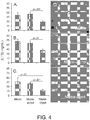
- FIG. 4 shows interruption of V. cholerae virulence in co-cultures.
- E. coli Nissle 1917 (Nissle) was transformed with either an empty vector (Nissle-vector) or with a vector carrying cqsA (Nissle-cqsA).
- Caco-2 epithelial cells were incubated with either CFM from various Nissle strains ( FIG. 4A ) or with the Nissle strains themselves ( FIGS. 4B-4D ) and with V. cholerae before assaying for CTB either in the supernatant ( FIG. 4A) and (FIG. 4B ) or attached to the Caco-2 cells ( FIG. 4C) and (FIG. 4D ).
- CTB amounts were estimated from controls of known amounts of CTB applied to Caco-2 cells. Error bars represent one standard deviation of triplicate samples. p values are from a student's T-test. Panel pictures in FIG. 4D are taken with an ordinary fluorescence microscope. Fluorescence indicates CTB bound to Caco-2 cells.
- FIG. 4A After V. cholerae were incubated with the Caco-2 cells for 3 h the amount of CT in the culture medium ( FIG. 4A ) was quantified. The amount of CT in the culture supernatant was clearly reduced in the presence of Nissle- cqsA over the controls. It was then tested whether co-cultures of Nissle strains with Caco-2 cells would yield similar outcomes. Nissle-vector and Nissle- cqsA strains were co-cultured with Caco-2 cells for 3 h before culturing with V. cholerae for 3 h. We measured again both CT in the culture medium ( FIG. 4B ) and adhered to Caco-2 cells ( FIG. 4C ).
- Nissle- cqsA if taken prophylactically, could limit V. cholerae colonization of a human GI tract. Considering the amounts of bacteria used (nearly a 1:1 ratio of commensal bacteria and V.
- commensal strains can be engineered to communicate with other invasive species or even with species already established in the GI tract. Aspects of metabolism may be altered in response to specific changes in GI tract biochemistry.
- commensal strains which are generally regarded as safe by the Food and Drug Administration
- commensal strains can be used safely for expressing exogenous genes.
- antibiotics can be used to eliminate them completely from the GI tract. This technology is therefore considered as safe as, or safer than, some already approved technologies for human use.
- Example 2 Secreting insulinotropic proteins from commensal bacteria: rewiring the gut to treat diabetes
- Example 1 demonstrated that E. coli Nissle 1917 (an over the counter probiotic strain, Nissle) can be engineered for the expression of a Vibrio cholerae quorum sensing signal, creating a potential prophylactic for cholera ( Duan, F., and J. C. March. 2008. Interrupting Vibrio cholerae infection of human epithelial cells with engineered commensal bacterial signaling. Biotechnol Bioeng. 101(1):128-134, DOI: 10.1002/bit.21897 ).
- the present example demonstrates that commensal bacteria can stimulate intestinal epithelia cells to secrete insulin in response to glucose.
- Commensal strain E. coli Nissle 1917 were engineered to secrete the insulinotropic proteins GLP-1 and PDX-1.
- GLP-1 glucagon-like peptide 1
- PDX-1 pancreatic and duodenal homeobox gene 1
- DPP-IV dipeptidylpeptidase IV
- Glucagon-like peptide-1-(7-36)amide is transformed to glucagon-like peptide-1-(9-36)amide by dipeptidyl peptidase IV in the capillaries supplying the L cells of the porcine intestine. Endocrinology 140:5356-63 ).
- GLP-1 activates insulin synthesis in pancreatic ⁇ cells by binding to the membrane receptor, GLP-1R, and has been suggested as a therapeutic for treating both type-1 ( Suzuki, A., H. Nakauchi, and H. Taniguchi. 2003.
- Glucagon-like peptide 1 (1-37) converts intestinal epithelial cells into insulin-producing cells.
- the transcriptional activator PDX-1 has been shown to stimulate insulin secretion in both ⁇ cells and intestinal epithelia ( Koizumi, M., R. Doi, K. Fujimoto, D. Ito, E. Toyoda, T. Mori, K. Kami, Y. Kawaguchi, G. K. Gittes, and M. Imamura. 2005.
- Pancreatic epithelial cells can be converted into insulin-producing cells by GLP-1 in conjunction with virus-mediated gene transfer of pdx-1.
- intestinal epithelia (mouse ileal loops) express insulin when transfected with pdx-1, although in that paper no data was presented on the addition of GLP-1 to these cells ( Koizumi, M., K. Nagai, A. Kida, K. Kami, D. Ito, K. Fujimoto, Y. Kawaguchi, and R. Doi. 2006. Forced expression of PDX-1 induces insulin production in intestinal epithelia. Surgery 140:273-280 ).
- Supplemental gut bacteria are widely available as "probiotics," and are generally regarded as safe (GRAS) by the Food and Drug Administration ( Ahmed, F. E. 2003. Genetically modified probiotics in foods. Trends in Biotechnology 21:491-497 ).
- Potential advantages of using commensal strains for in vivo recombinant gene expression include their compatibility with the host (particularly the host's immune system), their controllable persistence in the gut and their ability to be orally dosed.
- Commensal bacterial expression of various recombinant cytokines and antigens in animal models has been reported ( Daniel, C., A. Repa, C. Wild, A. Pollak, B. Pot, H. Schuneder, U. Wiedermann, and A. Mercenier. 2006.
- E-coli Nissle 1917 as a vehicle for intestinal expression of therapeutic molecules Construction of an E-coli a hemolysin based expression vector. International Journal of Medical Microbiology 294:198-198 ; Hazebrouck, S., L. Pothelune, V. Azevedo, G. Corthier, J.-M.Wal, P. Langella 2007. Efficient production and secretion of bovine ⁇ -lactoglobulin by Lactobacillus casei. Microb Cell Fact. 2007; 6: 12. doi: 10.1186/1475-2859-6-12 ).
- FIG. 5 provides a schematic of plasmids used in this study.
- pFD1 and pFD2 Two plasmids were made (pFD1 and pFD2).
- pFD1 encoded the entire P0/P1 region to drive the expression of enhanced green fluorescent protein (EGFP).
- pFD2 encoded only the P0 region of the promoter upstream from EGFP.
- plasmids pFD-PDX, pFD-GLP, and pFD-20 were constructed as described herein.
- FIG. 6 shows P0 and P0/P1 response to glucose.
- EGFP expression was used to measure the response of the P0 and/or P1 promoter to different media conditions.
- P0 P0 only;
- P0+P1 P0 plus P1 flanking region;
- DH5a lac operon control.
- glucose-responsive promoter region from E. coli DH5a was TA cloned into pGlow-GFP upstream and in-frame with GFP (results in FIG. 6 ).
- the two constructs consisted of the P0 promoter or the region spanning both the P0 and P1 promoters ( Ryu, S. & Garges, S. Promoter Switch in the Escherichia-Coli Pts Operon. Journal of Biological Chemistry 269, 4767-4772 (1994 )) in frame and upstream from the GFP start.
- the P0 region was cloned from the genomic DNA of E. coli DH5 ⁇ into pGLOW-GFP (Invitrogen, Carlsbad, CA) to make (pFD2).
- the P0/P1 region was cloned into pGLOW-GFP to make pFD1.
- the plasmid pFD-PDX was constructed as follows.
- the expression cassette 6XHis-Xpress-EK-PDX-I-CPP was obtained using two rounds of high fidelity PCR (Stratagene, La Jolla, CA).
- the full length FLIC was obtained from DH5 ⁇ via high fidelity PCR. These two fragments were cloned into pBluescript-KS to create 6XHis-Xpress-EK- PDX-1 -CPP- FLIC .
- the 6XHis-Xpress-EK- PDX -1-CPP- FLIC fragment was then cloned into pGLOW-P0- GFP to create a vector (pFD-PDX) that uses the P0 promoter of E. coli to drive the expression of 6XHis-Xpress-EK- PDX-1 -CPP- FLIC.
- the plasmid pFD-GLP was constructed as follows.
- the sequence 6XHis-Xpress-EK-GLP-1(1-37) was made synthetically (IDT. Coralville, IA). This fragment was inserted via high fidelity PCR into pBluescript-KS to make pBluescript-GLP. High fidelity PCR was used to clone the 5'UTR-FLIC20sequence from pKS104 into pBluescript-GLP to make pBluescipt-20-GLP.
- the resultant vector contained the sequence: 5'UTR-FLIC20-6XHis-Xpress-EK-GLP-1(1-37).
- E. coli Nissle 1917 was obtained from a commercial preparation of the probiotic MutaflorTM as described previously ( Duan, F., and J. C. March. 2008. Interrupting Vibrio cholerae infection of human epithelial cells with engineered commensal bacterial signaling. Biotechnol Bioeng. 101(1):128-134, DOI: 10.1002/bit.21897 ) Nissle 1917 and all other E. coli strains were maintained in LB at 37°C with shaking at 225 rpm.
- Nissle 1917 was grown in F-12K (Cellgro, Manassas, VA) supplemented with 0.4% Glycerol or 0.4% Glucose at 37°C, with shaking at 225 rpm or without shaking.
- Caco-2 epithelial cells (ATCC# CRL-2102, Manassas, VA) were maintained in Dulbecco's Modified Eagle Media (DMEM, Cellgro, Hemdon, VA) plus 10% FBS (Cellgro) at 37°C in a humidified incubator supplemented with 5% CO 2 .
- Caco-2 cells were also grown in F-12K supplemented with 10% FBS at 37°C in a humidified incubator supplemented with 5% CO-2. All co-culture experiments were performed in F-12K plus 10% FBS with Caco-2 cells in passages between 15 and 22.
- CFM preparation CFM from Nissle harboring pFD-20 (Nissle vector), pFD-PDX (Nissle-PDX-1) and pFD-GLP (Nissle-GLP-1) were obtained as described below ("CFM preparation").
- CFM preparation approximately 80% confluent monolayers of Caco-2 cells in 12-well plates were washed with fresh F-12K plus 10% FBS once and covered with 1 mL 50% CFM in F-12K with 10% FBS and incubated at 37°C with 5% CO 2 . 200 nM GLP-1 (1-37) (Bachem. King of Prussia, PA) was added for positive control wells.
- CFM cell-free culture medium
- RNA from Caco2 cells were extracted at the end of each experiment using RNAqueousTM (Ambion, Houston, TX) as per manufacturer's instructions, which included DNAse treatment to remove any contaminating DNA.
- RNAqueousTM Ambion, Houston, TX
- RT-PCR was performed on each sample with 500 ng total RNA and SuperScriptTM III reverse transcriptase (Invitrogen, Carlsbad, CA) for first-strand synthesis according to the manufacturer's instructions.
- Nissle-vector and Nissle- GLP-1 were grown in F-12K plus 0.4% Glycerol and Nissle- PDX-1 was grown in F-12K plus 0.4% Glucose or 0.4% Glycerol at 37°C shaking at 225 rpm for 24 h. After 24 h all bacteria were centrifuged. The supernatant was filtered (0.2 ⁇ m, PALL Life Sciences). The cell-free culture medium (CFM) was diluted to the same OD600 with F-12K, and 10 ng/ml leupeptin, PMSF and 5 ng/mL aprotinin was added to inhibit proteases.
- CFM cell-free culture medium
- Clarified supernant 14 ml was precipitated with 10% trichloroacetic acid (TCA, VWR) for 30 min on ice, and the pellet was washed twice in ice-cold ethanol/ether (1:1). The supernatant pellet was dried under vacuum, dissolved in 50 ⁇ l sample buffer (2% SDS, 50mM Tris, pH 6.8, 20%glycerol, 10% mercaptoethanol, bromophenol blue) and boiled for 5 min at 95 °C.
- TCA trichloroacetic acid
- the cell pellet was resuspended (From 14 ml culture) in room temperature BugBuster Master Mix by gentle vortexing, using 500 ⁇ l BugBuster Master Mix with protease inhibitors (10 ng/ml Leupeptin, 200 ⁇ MPMSF and 5 ng/mL aprotinin).
- the cell suspension was incubated on a shaking platform (VWR, Bristol, CT) at a slow setting for 10-20 min at room temperature.
- 125 ⁇ l 5X sample buffer was added to each sample before and boiling for 10 min at 95 °C.
- cell free supernatants obtained as described in "CFM-culture conditions" were assayed using standard ELISA procedures ( Sambrook, J. & Russell, D.W. Molecular cloning: a laboratory manual, Edn. 3rd., Cold Spring Harbor Laboratory Press, Cold Spring Harbor, N.Y.; 2001 ) with capture (E86802M at 5 ⁇ g/mL) and biotinylated detection (E86306B at 1 ⁇ g/mL) antibodies both from Biodesign (Saco, ME) in Nunc (Rochester, NY) Immobilizer AminoTM plates.
- streptavidin-conjugated horseradish peroxidase (1:5,000) was applied to the samples after the biotinylated detection antibody.
- Standards of human insulin (Sigma, St. Louis, MO) from 0 to 2 ng mL -1 were made in quintuplicate for each plate to insure accuracy. Each sample was measured in five separate wells to insure analytical precision.
- Gut 8, 618 to get a range of insulin in the blood (assumed to be 4.7 L) of 164 fmol L -1 to 164 pmol L -1 for Nissle survivability ranging from 10 6 to 10 9 cfu mL -1 , respectively.
- Postprandial serum insulin concentrations can be as high as 400 pmol L -1 for adult non-diabetics ( Basu, R. et al. 2006. Effects of age and sex on postprandial glucose metabolism: differences in glucose turnover, insulin secretion, insulin action, and hepatic insulin extraction. Diabetes 55, 2001-2014 ).
- Nissle was engineered to secrete either GLP-1 (amino acids 1 through 37) or the full length PDX-1 using th e fliC secretion tag ( Majander. K., L. Anton, J. Antikainen, H. Slang, M. Brummer, T. K. Korhonen, and B. Westerlund-Vdikstrom. 2005. Extracellular secretion of polypeptides using a modified Escherichia coli flagellar secretion apparatus. Nature Biotechnology 23:475-481 ).
- PDX-1 was secreted as a fusion with a cell penetrating peptide (CPP) ( Liang, J. F., and V. C. Yang. 2005. Insulin-cell penetrating peptide hybrids with improved intestinal absorption efficiency. Biochemical and Biophysical Research Communications 335:734-738 ) to facilitate rapid entry into the epithelia post-secretion.
- CPP cell penetrating peptide
- Nissle was engineered to secrete either GLP-1 under control of the fliC promoter or PDX-1-CPP under control of a glucose responsive element.
- Western blots for secreted proteins GLP-1 (top blot) and PDX-1-CPP (bottom blot) are shown.
- For cells expressing PDX-1-CPP a comparison was made between cells grown in media containing glucose (0.4%) or glycerol (0.4%). Cells expressing the empty plasmid (denoted as "20”) were used as a negative control.
- Caco-2 cells were cultured with cell free media (CFM) from overnight cultures of Nissle strains expressing either PDX-1-CPP, GLP-1, or a 20 amino acid sequence tag (samples denoted as "20") as a negative control.
- CFM cell free media
- the overnight cultures were grown in F-12K media (Mediatech, Manassas, VA) without glucose (with the exception of PDX-1 strains which required glucose to produce PDX-1).
- Caco-2 cells were incubated in fresh F-12K media (without glucose) and purchased GLP-1 (amino acids 1 through 37, samples denoted as "37") for the same 16 hours time period before being cultured with glucose (0.4%) or glycerol (0.4%) for 2 hours.
- FIG. 8 shows stimulation of insulin secretion in epithelial cells.
- Caco-2 epithelial cells were incubated with either cell-free media (CFM) from overnight cultures of E. coli Nissle 1917 expressing GLP-1 (G), PDX-1-CPP (P), both GLP-1 and PDX-1-CPP (GP), or a control plasmid ("20") or with synthesized GLP-1 (amino acids 1-37, "37”) for 6 hours before challenged with glucose or glycerol.
- a RT-PCR of Caco-2 cells incubated with CFM from the indicated cell line or protein and subsequent stimulation with either glucose (marked with a small "g") or glycerol.
- b. ELISA of insulin secretion from stimulated Caco-2 cells. Error bars represent 1 standard deviation of at least triplicate experiments. p values are from a Student's t-test (n 3).
Landscapes
- Health & Medical Sciences (AREA)
- Life Sciences & Earth Sciences (AREA)
- Chemical & Material Sciences (AREA)
- Organic Chemistry (AREA)
- Engineering & Computer Science (AREA)
- General Health & Medical Sciences (AREA)
- Zoology (AREA)
- Medicinal Chemistry (AREA)
- Microbiology (AREA)
- Proteomics, Peptides & Aminoacids (AREA)
- Gastroenterology & Hepatology (AREA)
- Veterinary Medicine (AREA)
- Molecular Biology (AREA)
- Pharmacology & Pharmacy (AREA)
- Public Health (AREA)
- Animal Behavior & Ethology (AREA)
- Biochemistry (AREA)
- Polymers & Plastics (AREA)
- Genetics & Genomics (AREA)
- Bioinformatics & Cheminformatics (AREA)
- Endocrinology (AREA)
- Biophysics (AREA)
- Epidemiology (AREA)
- Toxicology (AREA)
- General Chemical & Material Sciences (AREA)
- Chemical Kinetics & Catalysis (AREA)
- Immunology (AREA)
- Biotechnology (AREA)
- Biomedical Technology (AREA)
- Food Science & Technology (AREA)
- Animal Husbandry (AREA)
- Nuclear Medicine, Radiotherapy & Molecular Imaging (AREA)
- Physiology (AREA)
- Oncology (AREA)
- Diabetes (AREA)
- Communicable Diseases (AREA)
- Wood Science & Technology (AREA)
- General Engineering & Computer Science (AREA)
- Physics & Mathematics (AREA)
- Plant Pathology (AREA)
Claims (7)
- Ein genetisch verändertes kommensales Bakterium, welches ein rekombinantes Nukleinsäuremolekül enthält, das ein Signal kodiert, das ein die Freisetzung von Säugetier-Insulin stimulierendes Peptid umfasst, das aus einer Gruppe ausgewählt wird, die aus einem Glukagon-ähnlichen Peptid 1 (GLP-1) und einem pankreatischen und duodenalen Homöobox-Peptid (PDX-1) besteht, zur Nutzung in einem Verfahren zur Verhinderung und/ oder Behandlung einer Krankheit.
- Das genetisch veränderte kommensale Bakterium zur Nutzung in einem Verfahren zur Verhinderung und/ oder Behandlung einer Krankheit gemäß dem Anspruch 1, gekennzeichnet dadurch, dass das kommensale Bakterium ein Stamm von Escherichia coli ist.
- Das genetisch veränderte kommensale Bakterium zur Nutzung in einem Verfahren zur Verhinderung und/ oder Behandlung einer Krankheit gemäß dem Anspruch 2, gekennzeichnet dadurch, dass der Stamm von Escherichia coli Escherichia coli Nissle 1917 ist.
- Das genetisch veränderte kommensale Bakterium zur Nutzung in einem Verfahren zur Verhinderung und/ oder Behandlung einer Krankheit gemäß dem Anspruch 1, gekennzeichnet dadurch, dass das Signal das Glukagon-ähnliche Peptid 1 (GLP-1) umfasst.
- Das genetisch veränderte kommensale Bakterium zur Nutzung in einem Verfahren zur Verhinderung und/ oder Behandlung einer Krankheit gemäß dem Anspruch 1, gekennzeichnet dadurch, dass das Signal das pankreatische und duodenale Homöobox-Peptid (PDX-1) umfasst.
- Das genetisch veränderte kommensale Bakterium zur Nutzung in einem Verfahren zur Verhinderung und/ oder Behandlung einer Krankheit gemäß einem der Ansprüche 1 bis 5, gekennzeichnet dadurch, dass die Krankheit Diabetes Typ 1 ist.
- Das genetisch veränderte kommensale Bakterium zur Nutzung in einem Verfahren zur Verhinderung und/ oder Behandlung einer Krankheit gemäß einem der vorhergien Ansprüche, gekennzeichnet dadurch, dass das kommensale Bakterium zur Nutzung in einem Verfahren zur Verhinderung und/ oder Behandlung einer Krankheit an einer Versuchsperson.
Applications Claiming Priority (2)
| Application Number | Priority Date | Filing Date | Title |
|---|---|---|---|
| US4342608P | 2008-04-09 | 2008-04-09 | |
| PCT/US2009/039923 WO2009126719A2 (en) | 2008-04-09 | 2009-04-08 | Commensal bacteria as signal mediators within a mammalian host |
Publications (3)
| Publication Number | Publication Date |
|---|---|
| EP2274416A2 EP2274416A2 (de) | 2011-01-19 |
| EP2274416A4 EP2274416A4 (de) | 2011-06-15 |
| EP2274416B1 true EP2274416B1 (de) | 2017-01-18 |
Family
ID=41162574
Family Applications (1)
| Application Number | Title | Priority Date | Filing Date |
|---|---|---|---|
| EP09730686.4A Active EP2274416B1 (de) | 2008-04-09 | 2009-04-08 | Kommensale bakterien als signalvermittler in einem säugerwirt |
Country Status (8)
| Country | Link |
|---|---|
| US (2) | US8771668B2 (de) |
| EP (1) | EP2274416B1 (de) |
| CN (2) | CN105754918A (de) |
| AU (1) | AU2009233739B2 (de) |
| CA (1) | CA2758023A1 (de) |
| EA (1) | EA023069B1 (de) |
| TR (1) | TR201100184T1 (de) |
| WO (1) | WO2009126719A2 (de) |
Families Citing this family (13)
| Publication number | Priority date | Publication date | Assignee | Title |
|---|---|---|---|---|
| CN105754918A (zh) * | 2008-04-09 | 2016-07-13 | 康奈尔大学 | 在哺乳动物宿主内作为信号介质的共生菌 |
| US8361983B2 (en) | 2009-10-30 | 2013-01-29 | Gradalis, Inc. | Therapeutic RNA interference technology targeted to the PDX-1 oncogene in PDX-1 expressing neuroendocrine tumors |
| JP6033780B2 (ja) * | 2010-10-15 | 2016-11-30 | コーネル・ユニバーシティーCornell University | 内分泌障害、胃腸障害または自己免疫障害を処置するための組成物および方法 |
| EP2925346A1 (de) * | 2012-11-30 | 2015-10-07 | Universite d'Auvergne Clermont I | Verwendung von mikroorganismen zur verringerung der trimethylaminkonzentration in einer menschlichen körperhöhle, insbesondere zur behandlung von trimethylaminurie oder bakterieller vaginose und prävention von kardiovaskulären erkrankungen |
| US10047405B2 (en) | 2013-12-20 | 2018-08-14 | President And Fellows Of Harvard College | Engineered genetic enteric sensor bacteria and uses thereof |
| DE102015224445A1 (de) | 2014-12-18 | 2016-06-23 | Continental Teves Ag & Co. Ohg | Triggerbasierte Übersetzung von CAR2X Nachricht unterschiedlicher Standards |
| CN109180786B (zh) * | 2015-11-20 | 2021-06-18 | 深圳市南山区人民医院 | 用于预防和治疗肠致病大肠杆菌感染的肽段 |
| GB2545395A (en) * | 2015-11-27 | 2017-06-21 | The Inst Of Food Res | Engineered lactococcus lactis producing biologically active GLP-1 |
| US20180030403A1 (en) * | 2016-07-28 | 2018-02-01 | Bobban Subhadra | Devices, systems and methods for the production of humanized gut commensal microbiota |
| US12186329B2 (en) | 2018-08-23 | 2025-01-07 | President And Fellows Of Harvard College | Compositions and methods related to cholic acid 7-sulfate as a treatment for diabetes |
| EP3890745B1 (de) | 2018-12-04 | 2025-11-19 | President and Fellows of Harvard College | Synthetische derivate von cholsäure-7-sulfat und verwendungen davon |
| EP3965748A4 (de) | 2019-05-10 | 2023-02-01 | President and Fellows of Harvard College | Kleinmolekülige modulatoren des darmbakteriellen gallensäuremetabolismus |
| WO2025185695A1 (en) * | 2024-03-07 | 2025-09-12 | Fudan University | Systems and methods for identifying microbiomic treatment for hereditary and metabolic diseases |
Citations (1)
| Publication number | Priority date | Publication date | Assignee | Title |
|---|---|---|---|---|
| WO2012051431A2 (en) * | 2010-10-15 | 2012-04-19 | Cornell University | Compositions and methods for treating endocrine, gastrointestinal or autoimmune disorders |
Family Cites Families (11)
| Publication number | Priority date | Publication date | Assignee | Title |
|---|---|---|---|---|
| JPS6019733B2 (ja) * | 1977-06-10 | 1985-05-17 | 科研製薬株式会社 | 蛋白質性活性物質 |
| WO1997029180A1 (en) * | 1996-02-06 | 1997-08-14 | Eli Lilly And Company | Diabetes therapy |
| US8778899B2 (en) | 1999-06-01 | 2014-07-15 | Sarah Ferber | Methods of inducing regulated pancreatic hormone production in non-pancreatic islet tissues |
| US6528486B1 (en) | 1999-07-12 | 2003-03-04 | Zealand Pharma A/S | Peptide agonists of GLP-1 activity |
| CN100480374C (zh) * | 2001-09-28 | 2009-04-22 | 中国科学院上海生命科学研究院 | 制备重组人类胰高血糖素肽-1氨基酸7-37肽段的方法 |
| CU23229A1 (es) * | 2002-05-10 | 2007-09-26 | Ct Ingenieria Genetica Biotech | ANTAGONISTA QUIMéRICO ANTH1 |
| US7374930B2 (en) | 2002-05-21 | 2008-05-20 | Expression Genetics, Inc. | GLP-1 gene delivery for the treatment of type 2 diabetes |
| WO2005100544A2 (en) * | 2004-04-12 | 2005-10-27 | The Trustees Of Princeton University | SMALL RNAs AND BACTERIAL STRAINS INVOLVED IN QUORUM SENSING |
| BRPI0606992A2 (pt) * | 2005-02-11 | 2009-07-28 | Amylin Pharmaceuticals Inc | análogo e polipeptìdeos hìbridos de gip com propriedades selecionáveis |
| RU2008147398A (ru) | 2006-05-02 | 2010-06-10 | Актогеникс Н.В. (Be) | Доставка пептидов, связанных с ожирением, через кишечник посредством микроорганизмов |
| CN105754918A (zh) * | 2008-04-09 | 2016-07-13 | 康奈尔大学 | 在哺乳动物宿主内作为信号介质的共生菌 |
-
2009
- 2009-04-08 CN CN201610140039.2A patent/CN105754918A/zh active Pending
- 2009-04-08 EA EA201071175A patent/EA023069B1/ru not_active IP Right Cessation
- 2009-04-08 CN CN2009801127308A patent/CN101998987A/zh active Pending
- 2009-04-08 AU AU2009233739A patent/AU2009233739B2/en not_active Ceased
- 2009-04-08 US US12/937,176 patent/US8771668B2/en active Active
- 2009-04-08 TR TR2011/00184T patent/TR201100184T1/xx unknown
- 2009-04-08 WO PCT/US2009/039923 patent/WO2009126719A2/en not_active Ceased
- 2009-04-08 EP EP09730686.4A patent/EP2274416B1/de active Active
- 2009-04-08 CA CA2758023A patent/CA2758023A1/en not_active Abandoned
-
2014
- 2014-01-09 US US14/151,601 patent/US9334503B2/en active Active
Patent Citations (1)
| Publication number | Priority date | Publication date | Assignee | Title |
|---|---|---|---|---|
| WO2012051431A2 (en) * | 2010-10-15 | 2012-04-19 | Cornell University | Compositions and methods for treating endocrine, gastrointestinal or autoimmune disorders |
Non-Patent Citations (1)
| Title |
|---|
| YOUN ET AL: "Improved peroral delivery of glucagon-like peptide-1 by site-specific biotin modification: Design, preparation, and biological evaluation", EUROPEAN JOURNAL OF PHARMACEUTICS AND BIOPHARMACEUTICS, ELSEVIER SCIENCE PUBLISHERS B.V., AMSTERDAM, NL, vol. 68, no. 3, 1 March 2008 (2008-03-01), pages 667 - 675, XP022518683, ISSN: 0939-6411, DOI: 10.1016/J.EJPB.2007.07.009 * |
Also Published As
| Publication number | Publication date |
|---|---|
| US8771668B2 (en) | 2014-07-08 |
| WO2009126719A2 (en) | 2009-10-15 |
| AU2009233739B2 (en) | 2015-09-17 |
| CN105754918A (zh) | 2016-07-13 |
| EP2274416A2 (de) | 2011-01-19 |
| US20110280835A1 (en) | 2011-11-17 |
| EP2274416A4 (de) | 2011-06-15 |
| TR201100184T1 (tr) | 2011-04-21 |
| CN101998987A (zh) | 2011-03-30 |
| AU2009233739A1 (en) | 2009-10-15 |
| WO2009126719A3 (en) | 2010-02-18 |
| US9334503B2 (en) | 2016-05-10 |
| EA023069B1 (ru) | 2016-04-29 |
| US20140234256A1 (en) | 2014-08-21 |
| EA201071175A1 (ru) | 2011-06-30 |
| CA2758023A1 (en) | 2009-10-15 |
Similar Documents
| Publication | Publication Date | Title |
|---|---|---|
| US8771668B2 (en) | Commensal bacteria as signal mediators within a mammalian host | |
| Balcázar et al. | Changes in intestinal microbiota and humoral immune response following probiotic administration in brown trout (Salmo trutta) | |
| Jones | The influence of the gut microbiota on host physiology: in pursuit of mechanisms | |
| Martín et al. | Role of commensal and probiotic bacteria in human health: a focus on inflammatory bowel disease | |
| US11533915B2 (en) | Methods for making and using antimicrobial peptides | |
| KR102581171B1 (ko) | 대사장애를 치료하기 위한 아커만시아의 용도 | |
| Kheadr et al. | Study of the physicochemical and biological stability of pediocin PA‐1 in the upper gastrointestinal tract conditions using a dynamic in vitro model | |
| CA3127898A1 (en) | A genetically modified lactobacillus and uses thereof | |
| Ahmed et al. | Oral immunization with Lactococcus lactis-expressing EspB induces protective immune responses against Escherichia coli O157: H7 in a murine model of colonization | |
| EP2457576B1 (de) | Lactobacillus reuteri Stamm zur Verwendung der medizinischen und tiermedizinischen Prophylaxe und Behandlung von dem metabolischen Syndrom oder Infektionen | |
| KR20180133443A (ko) | 신규한 세균 종 | |
| CN103221420A (zh) | 用于递送治疗性肽的组合物和方法 | |
| AU2017319707B2 (en) | Genetically modified bacteria stably expressing IL-10 and insulin | |
| AU2018205999B2 (en) | Microbial lysozyme for use in the treatment of irritable bowel syndrome or inflammatory bowel disease | |
| Todorov et al. | Bacteriocin production and resistance to drugs are advantageous features for Lactobacillus acidophilus La-14, a potential probiotic strain | |
| Ju et al. | Construction and immune efficacy of recombinant Lactobacillus casei strains expressing Malt from Aeromonas veronii | |
| Zhang et al. | Construction and evaluation of recombinant Lactobacillus plantarum expressing Micropterus salmoides hepcidin | |
| AU2015271866A1 (en) | Commensal bacteria as signal mediators within a mammalian host | |
| Gupta et al. | Genetically engineered probiotics | |
| CN116103212A (zh) | 共表达glp-1和oxm的重组细菌 | |
| US20250108076A1 (en) | Methods for treatment of non-alcoholic fatty liver diseases (nafld) using advanced microbiome therapeutics | |
| CN118531037A (zh) | 一种重组表达载体、重组干酪乳杆菌及构建方法与应用 | |
| TW201715038A (zh) | 新穎的根特節桿菌(arthrobacter gandavensis strains)菌株 | |
| Caballero-Franco | Studies on the interaction between gastrointestinal bacteria and epithelial cells |
Legal Events
| Date | Code | Title | Description |
|---|---|---|---|
| PUAI | Public reference made under article 153(3) epc to a published international application that has entered the european phase |
Free format text: ORIGINAL CODE: 0009012 |
|
| 17P | Request for examination filed |
Effective date: 20101105 |
|
| AK | Designated contracting states |
Kind code of ref document: A2 Designated state(s): AT BE BG CH CY CZ DE DK EE ES FI FR GB GR HR HU IE IS IT LI LT LU LV MC MK MT NL NO PL PT RO SE SI SK TR |
|
| AX | Request for extension of the european patent |
Extension state: AL BA RS |
|
| RIN1 | Information on inventor provided before grant (corrected) |
Inventor name: DUAN, FAPING Inventor name: MARCH, JOHN, C. |
|
| A4 | Supplementary search report drawn up and despatched |
Effective date: 20110516 |
|
| DAX | Request for extension of the european patent (deleted) | ||
| 17Q | First examination report despatched |
Effective date: 20130319 |
|
| GRAP | Despatch of communication of intention to grant a patent |
Free format text: ORIGINAL CODE: EPIDOSNIGR1 |
|
| INTG | Intention to grant announced |
Effective date: 20160728 |
|
| GRAS | Grant fee paid |
Free format text: ORIGINAL CODE: EPIDOSNIGR3 |
|
| GRAA | (expected) grant |
Free format text: ORIGINAL CODE: 0009210 |
|
| AK | Designated contracting states |
Kind code of ref document: B1 Designated state(s): AT BE BG CH CY CZ DE DK EE ES FI FR GB GR HR HU IE IS IT LI LT LU LV MC MK MT NL NO PL PT RO SE SI SK TR |
|
| REG | Reference to a national code |
Ref country code: GB Ref legal event code: FG4D |
|
| REG | Reference to a national code |
Ref country code: CH Ref legal event code: EP |
|
| REG | Reference to a national code |
Ref country code: AT Ref legal event code: REF Ref document number: 862937 Country of ref document: AT Kind code of ref document: T Effective date: 20170215 |
|
| REG | Reference to a national code |
Ref country code: IE Ref legal event code: FG4D |
|
| REG | Reference to a national code |
Ref country code: DE Ref legal event code: R096 Ref document number: 602009043829 Country of ref document: DE |
|
| REG | Reference to a national code |
Ref country code: FR Ref legal event code: PLFP Year of fee payment: 9 |
|
| REG | Reference to a national code |
Ref country code: NL Ref legal event code: MP Effective date: 20170118 |
|
| REG | Reference to a national code |
Ref country code: LT Ref legal event code: MG4D |
|
| REG | Reference to a national code |
Ref country code: AT Ref legal event code: MK05 Ref document number: 862937 Country of ref document: AT Kind code of ref document: T Effective date: 20170118 |
|
| PG25 | Lapsed in a contracting state [announced via postgrant information from national office to epo] |
Ref country code: NL Free format text: LAPSE BECAUSE OF FAILURE TO SUBMIT A TRANSLATION OF THE DESCRIPTION OR TO PAY THE FEE WITHIN THE PRESCRIBED TIME-LIMIT Effective date: 20170118 |
|
| PG25 | Lapsed in a contracting state [announced via postgrant information from national office to epo] |
Ref country code: HR Free format text: LAPSE BECAUSE OF FAILURE TO SUBMIT A TRANSLATION OF THE DESCRIPTION OR TO PAY THE FEE WITHIN THE PRESCRIBED TIME-LIMIT Effective date: 20170118 Ref country code: NO Free format text: LAPSE BECAUSE OF FAILURE TO SUBMIT A TRANSLATION OF THE DESCRIPTION OR TO PAY THE FEE WITHIN THE PRESCRIBED TIME-LIMIT Effective date: 20170418 Ref country code: GR Free format text: LAPSE BECAUSE OF FAILURE TO SUBMIT A TRANSLATION OF THE DESCRIPTION OR TO PAY THE FEE WITHIN THE PRESCRIBED TIME-LIMIT Effective date: 20170419 Ref country code: FI Free format text: LAPSE BECAUSE OF FAILURE TO SUBMIT A TRANSLATION OF THE DESCRIPTION OR TO PAY THE FEE WITHIN THE PRESCRIBED TIME-LIMIT Effective date: 20170118 Ref country code: LT Free format text: LAPSE BECAUSE OF FAILURE TO SUBMIT A TRANSLATION OF THE DESCRIPTION OR TO PAY THE FEE WITHIN THE PRESCRIBED TIME-LIMIT Effective date: 20170118 Ref country code: IS Free format text: LAPSE BECAUSE OF FAILURE TO SUBMIT A TRANSLATION OF THE DESCRIPTION OR TO PAY THE FEE WITHIN THE PRESCRIBED TIME-LIMIT Effective date: 20170518 |
|
| PG25 | Lapsed in a contracting state [announced via postgrant information from national office to epo] |
Ref country code: LV Free format text: LAPSE BECAUSE OF FAILURE TO SUBMIT A TRANSLATION OF THE DESCRIPTION OR TO PAY THE FEE WITHIN THE PRESCRIBED TIME-LIMIT Effective date: 20170118 Ref country code: PT Free format text: LAPSE BECAUSE OF FAILURE TO SUBMIT A TRANSLATION OF THE DESCRIPTION OR TO PAY THE FEE WITHIN THE PRESCRIBED TIME-LIMIT Effective date: 20170518 Ref country code: AT Free format text: LAPSE BECAUSE OF FAILURE TO SUBMIT A TRANSLATION OF THE DESCRIPTION OR TO PAY THE FEE WITHIN THE PRESCRIBED TIME-LIMIT Effective date: 20170118 Ref country code: SE Free format text: LAPSE BECAUSE OF FAILURE TO SUBMIT A TRANSLATION OF THE DESCRIPTION OR TO PAY THE FEE WITHIN THE PRESCRIBED TIME-LIMIT Effective date: 20170118 Ref country code: PL Free format text: LAPSE BECAUSE OF FAILURE TO SUBMIT A TRANSLATION OF THE DESCRIPTION OR TO PAY THE FEE WITHIN THE PRESCRIBED TIME-LIMIT Effective date: 20170118 Ref country code: ES Free format text: LAPSE BECAUSE OF FAILURE TO SUBMIT A TRANSLATION OF THE DESCRIPTION OR TO PAY THE FEE WITHIN THE PRESCRIBED TIME-LIMIT Effective date: 20170118 Ref country code: BG Free format text: LAPSE BECAUSE OF FAILURE TO SUBMIT A TRANSLATION OF THE DESCRIPTION OR TO PAY THE FEE WITHIN THE PRESCRIBED TIME-LIMIT Effective date: 20170418 |
|
| REG | Reference to a national code |
Ref country code: DE Ref legal event code: R097 Ref document number: 602009043829 Country of ref document: DE |
|
| PG25 | Lapsed in a contracting state [announced via postgrant information from national office to epo] |
Ref country code: IT Free format text: LAPSE BECAUSE OF FAILURE TO SUBMIT A TRANSLATION OF THE DESCRIPTION OR TO PAY THE FEE WITHIN THE PRESCRIBED TIME-LIMIT Effective date: 20170118 Ref country code: RO Free format text: LAPSE BECAUSE OF FAILURE TO SUBMIT A TRANSLATION OF THE DESCRIPTION OR TO PAY THE FEE WITHIN THE PRESCRIBED TIME-LIMIT Effective date: 20170118 Ref country code: CZ Free format text: LAPSE BECAUSE OF FAILURE TO SUBMIT A TRANSLATION OF THE DESCRIPTION OR TO PAY THE FEE WITHIN THE PRESCRIBED TIME-LIMIT Effective date: 20170118 Ref country code: SK Free format text: LAPSE BECAUSE OF FAILURE TO SUBMIT A TRANSLATION OF THE DESCRIPTION OR TO PAY THE FEE WITHIN THE PRESCRIBED TIME-LIMIT Effective date: 20170118 Ref country code: EE Free format text: LAPSE BECAUSE OF FAILURE TO SUBMIT A TRANSLATION OF THE DESCRIPTION OR TO PAY THE FEE WITHIN THE PRESCRIBED TIME-LIMIT Effective date: 20170118 |
|
| PLBE | No opposition filed within time limit |
Free format text: ORIGINAL CODE: 0009261 |
|
| STAA | Information on the status of an ep patent application or granted ep patent |
Free format text: STATUS: NO OPPOSITION FILED WITHIN TIME LIMIT |
|
| PG25 | Lapsed in a contracting state [announced via postgrant information from national office to epo] |
Ref country code: DK Free format text: LAPSE BECAUSE OF FAILURE TO SUBMIT A TRANSLATION OF THE DESCRIPTION OR TO PAY THE FEE WITHIN THE PRESCRIBED TIME-LIMIT Effective date: 20170118 |
|
| REG | Reference to a national code |
Ref country code: CH Ref legal event code: PL |
|
| 26N | No opposition filed |
Effective date: 20171019 |
|
| REG | Reference to a national code |
Ref country code: IE Ref legal event code: MM4A |
|
| PG25 | Lapsed in a contracting state [announced via postgrant information from national office to epo] |
Ref country code: MC Free format text: LAPSE BECAUSE OF FAILURE TO SUBMIT A TRANSLATION OF THE DESCRIPTION OR TO PAY THE FEE WITHIN THE PRESCRIBED TIME-LIMIT Effective date: 20170118 |
|
| PG25 | Lapsed in a contracting state [announced via postgrant information from national office to epo] |
Ref country code: CH Free format text: LAPSE BECAUSE OF NON-PAYMENT OF DUE FEES Effective date: 20170430 Ref country code: LI Free format text: LAPSE BECAUSE OF NON-PAYMENT OF DUE FEES Effective date: 20170430 Ref country code: SI Free format text: LAPSE BECAUSE OF FAILURE TO SUBMIT A TRANSLATION OF THE DESCRIPTION OR TO PAY THE FEE WITHIN THE PRESCRIBED TIME-LIMIT Effective date: 20170118 Ref country code: LU Free format text: LAPSE BECAUSE OF NON-PAYMENT OF DUE FEES Effective date: 20170408 |
|
| REG | Reference to a national code |
Ref country code: BE Ref legal event code: MM Effective date: 20170430 |
|
| REG | Reference to a national code |
Ref country code: FR Ref legal event code: PLFP Year of fee payment: 10 |
|
| PG25 | Lapsed in a contracting state [announced via postgrant information from national office to epo] |
Ref country code: IE Free format text: LAPSE BECAUSE OF NON-PAYMENT OF DUE FEES Effective date: 20170408 |
|
| PG25 | Lapsed in a contracting state [announced via postgrant information from national office to epo] |
Ref country code: BE Free format text: LAPSE BECAUSE OF NON-PAYMENT OF DUE FEES Effective date: 20170430 |
|
| PG25 | Lapsed in a contracting state [announced via postgrant information from national office to epo] |
Ref country code: MT Free format text: LAPSE BECAUSE OF NON-PAYMENT OF DUE FEES Effective date: 20170408 |
|
| PG25 | Lapsed in a contracting state [announced via postgrant information from national office to epo] |
Ref country code: HU Free format text: LAPSE BECAUSE OF FAILURE TO SUBMIT A TRANSLATION OF THE DESCRIPTION OR TO PAY THE FEE WITHIN THE PRESCRIBED TIME-LIMIT; INVALID AB INITIO Effective date: 20090408 |
|
| PG25 | Lapsed in a contracting state [announced via postgrant information from national office to epo] |
Ref country code: CY Free format text: LAPSE BECAUSE OF NON-PAYMENT OF DUE FEES Effective date: 20170118 |
|
| PG25 | Lapsed in a contracting state [announced via postgrant information from national office to epo] |
Ref country code: MK Free format text: LAPSE BECAUSE OF FAILURE TO SUBMIT A TRANSLATION OF THE DESCRIPTION OR TO PAY THE FEE WITHIN THE PRESCRIBED TIME-LIMIT Effective date: 20170118 |
|
| PG25 | Lapsed in a contracting state [announced via postgrant information from national office to epo] |
Ref country code: TR Free format text: LAPSE BECAUSE OF FAILURE TO SUBMIT A TRANSLATION OF THE DESCRIPTION OR TO PAY THE FEE WITHIN THE PRESCRIBED TIME-LIMIT Effective date: 20170118 |
|
| P01 | Opt-out of the competence of the unified patent court (upc) registered |
Effective date: 20230530 |
|
| PGFP | Annual fee paid to national office [announced via postgrant information from national office to epo] |
Ref country code: DE Payment date: 20250429 Year of fee payment: 17 |
|
| PGFP | Annual fee paid to national office [announced via postgrant information from national office to epo] |
Ref country code: GB Payment date: 20250428 Year of fee payment: 17 |
|
| PGFP | Annual fee paid to national office [announced via postgrant information from national office to epo] |
Ref country code: FR Payment date: 20250425 Year of fee payment: 17 |