EP2276247A2 - Système fournisseur d'informations, dispositif fournisseur d'informations et procédé, et dispositif de traitement d'informations et procédé - Google Patents
Système fournisseur d'informations, dispositif fournisseur d'informations et procédé, et dispositif de traitement d'informations et procédé Download PDFInfo
- Publication number
- EP2276247A2 EP2276247A2 EP10174118A EP10174118A EP2276247A2 EP 2276247 A2 EP2276247 A2 EP 2276247A2 EP 10174118 A EP10174118 A EP 10174118A EP 10174118 A EP10174118 A EP 10174118A EP 2276247 A2 EP2276247 A2 EP 2276247A2
- Authority
- EP
- European Patent Office
- Prior art keywords
- information
- content
- watching
- listening
- data
- Prior art date
- Legal status (The legal status is an assumption and is not a legal conclusion. Google has not performed a legal analysis and makes no representation as to the accuracy of the status listed.)
- Ceased
Links
Images










Classifications
-
- H—ELECTRICITY
- H04—ELECTRIC COMMUNICATION TECHNIQUE
- H04N—PICTORIAL COMMUNICATION, e.g. TELEVISION
- H04N5/00—Details of television systems
- H04N5/76—Television signal recording
-
- H—ELECTRICITY
- H04—ELECTRIC COMMUNICATION TECHNIQUE
- H04N—PICTORIAL COMMUNICATION, e.g. TELEVISION
- H04N7/00—Television systems
- H04N7/08—Systems for the simultaneous or sequential transmission of more than one television signal, e.g. additional information signals, the signals occupying wholly or partially the same frequency band, e.g. by time division
-
- H—ELECTRICITY
- H04—ELECTRIC COMMUNICATION TECHNIQUE
- H04L—TRANSMISSION OF DIGITAL INFORMATION, e.g. TELEGRAPHIC COMMUNICATION
- H04L65/00—Network arrangements, protocols or services for supporting real-time applications in data packet communication
- H04L65/60—Network streaming of media packets
- H04L65/61—Network streaming of media packets for supporting one-way streaming services, e.g. Internet radio
- H04L65/611—Network streaming of media packets for supporting one-way streaming services, e.g. Internet radio for multicast or broadcast
-
- H—ELECTRICITY
- H04—ELECTRIC COMMUNICATION TECHNIQUE
- H04L—TRANSMISSION OF DIGITAL INFORMATION, e.g. TELEGRAPHIC COMMUNICATION
- H04L65/00—Network arrangements, protocols or services for supporting real-time applications in data packet communication
- H04L65/60—Network streaming of media packets
- H04L65/75—Media network packet handling
-
- H—ELECTRICITY
- H04—ELECTRIC COMMUNICATION TECHNIQUE
- H04L—TRANSMISSION OF DIGITAL INFORMATION, e.g. TELEGRAPHIC COMMUNICATION
- H04L67/00—Network arrangements or protocols for supporting network services or applications
- H04L67/50—Network services
- H04L67/56—Provisioning of proxy services
- H04L67/561—Adding application-functional data or data for application control, e.g. adding metadata
-
- H—ELECTRICITY
- H04—ELECTRIC COMMUNICATION TECHNIQUE
- H04N—PICTORIAL COMMUNICATION, e.g. TELEVISION
- H04N21/00—Selective content distribution, e.g. interactive television or video on demand [VOD]
- H04N21/20—Servers specifically adapted for the distribution of content, e.g. VOD servers; Operations thereof
- H04N21/25—Management operations performed by the server for facilitating the content distribution or administrating data related to end-users or client devices, e.g. end-user or client device authentication, learning user preferences for recommending movies
- H04N21/254—Management at additional data server, e.g. shopping server, rights management server
- H04N21/2543—Billing, e.g. for subscription services
- H04N21/2547—Third Party Billing, e.g. billing of advertiser
-
- H—ELECTRICITY
- H04—ELECTRIC COMMUNICATION TECHNIQUE
- H04N—PICTORIAL COMMUNICATION, e.g. TELEVISION
- H04N21/00—Selective content distribution, e.g. interactive television or video on demand [VOD]
- H04N21/20—Servers specifically adapted for the distribution of content, e.g. VOD servers; Operations thereof
- H04N21/25—Management operations performed by the server for facilitating the content distribution or administrating data related to end-users or client devices, e.g. end-user or client device authentication, learning user preferences for recommending movies
- H04N21/258—Client or end-user data management, e.g. managing client capabilities, user preferences or demographics, processing of multiple end-users preferences to derive collaborative data
- H04N21/25866—Management of end-user data
- H04N21/25883—Management of end-user data being end-user demographical data, e.g. age, family status or address
-
- H—ELECTRICITY
- H04—ELECTRIC COMMUNICATION TECHNIQUE
- H04N—PICTORIAL COMMUNICATION, e.g. TELEVISION
- H04N21/00—Selective content distribution, e.g. interactive television or video on demand [VOD]
- H04N21/20—Servers specifically adapted for the distribution of content, e.g. VOD servers; Operations thereof
- H04N21/25—Management operations performed by the server for facilitating the content distribution or administrating data related to end-users or client devices, e.g. end-user or client device authentication, learning user preferences for recommending movies
- H04N21/258—Client or end-user data management, e.g. managing client capabilities, user preferences or demographics, processing of multiple end-users preferences to derive collaborative data
- H04N21/25866—Management of end-user data
- H04N21/25891—Management of end-user data being end-user preferences
-
- H—ELECTRICITY
- H04—ELECTRIC COMMUNICATION TECHNIQUE
- H04N—PICTORIAL COMMUNICATION, e.g. TELEVISION
- H04N21/00—Selective content distribution, e.g. interactive television or video on demand [VOD]
- H04N21/20—Servers specifically adapted for the distribution of content, e.g. VOD servers; Operations thereof
- H04N21/25—Management operations performed by the server for facilitating the content distribution or administrating data related to end-users or client devices, e.g. end-user or client device authentication, learning user preferences for recommending movies
- H04N21/266—Channel or content management, e.g. generation and management of keys and entitlement messages in a conditional access system, merging a VOD unicast channel into a multicast channel
- H04N21/2668—Creating a channel for a dedicated end-user group, e.g. insertion of targeted commercials based on end-user profiles
-
- H—ELECTRICITY
- H04—ELECTRIC COMMUNICATION TECHNIQUE
- H04N—PICTORIAL COMMUNICATION, e.g. TELEVISION
- H04N21/00—Selective content distribution, e.g. interactive television or video on demand [VOD]
- H04N21/40—Client devices specifically adapted for the reception of or interaction with content, e.g. set-top-box [STB]; Operations thereof
- H04N21/43—Processing of content or additional data, e.g. demultiplexing additional data from a digital video stream; Elementary client operations, e.g. monitoring of home network or synchronising decoder's clock; Client middleware
- H04N21/442—Monitoring of processes or resources, e.g. detecting the failure of a recording device, monitoring the downstream bandwidth, the number of times a movie has been viewed, the storage space available from the internal hard disk
- H04N21/44213—Monitoring of end-user related data
- H04N21/44222—Analytics of user selections, e.g. selection of programmes or purchase activity
- H04N21/44224—Monitoring of user activity on external systems, e.g. Internet browsing
-
- H—ELECTRICITY
- H04—ELECTRIC COMMUNICATION TECHNIQUE
- H04N—PICTORIAL COMMUNICATION, e.g. TELEVISION
- H04N21/00—Selective content distribution, e.g. interactive television or video on demand [VOD]
- H04N21/40—Client devices specifically adapted for the reception of or interaction with content, e.g. set-top-box [STB]; Operations thereof
- H04N21/45—Management operations performed by the client for facilitating the reception of or the interaction with the content or administrating data related to the end-user or to the client device itself, e.g. learning user preferences for recommending movies, resolving scheduling conflicts
- H04N21/458—Scheduling content for creating a personalised stream, e.g. by combining a locally stored advertisement with an incoming stream; Updating operations, e.g. for OS modules ; time-related management operations
-
- H—ELECTRICITY
- H04—ELECTRIC COMMUNICATION TECHNIQUE
- H04N—PICTORIAL COMMUNICATION, e.g. TELEVISION
- H04N21/00—Selective content distribution, e.g. interactive television or video on demand [VOD]
- H04N21/60—Network structure or processes for video distribution between server and client or between remote clients; Control signalling between clients, server and network components; Transmission of management data between server and client, e.g. sending from server to client commands for recording incoming content stream; Communication details between server and client
- H04N21/65—Transmission of management data between client and server
- H04N21/654—Transmission by server directed to the client
- H04N21/6543—Transmission by server directed to the client for forcing some client operations, e.g. recording
-
- H—ELECTRICITY
- H04—ELECTRIC COMMUNICATION TECHNIQUE
- H04N—PICTORIAL COMMUNICATION, e.g. TELEVISION
- H04N21/00—Selective content distribution, e.g. interactive television or video on demand [VOD]
- H04N21/80—Generation or processing of content or additional data by content creator independently of the distribution process; Content per se
- H04N21/81—Monomedia components thereof
- H04N21/812—Monomedia components thereof involving advertisement data
-
- H—ELECTRICITY
- H04—ELECTRIC COMMUNICATION TECHNIQUE
- H04N—PICTORIAL COMMUNICATION, e.g. TELEVISION
- H04N21/00—Selective content distribution, e.g. interactive television or video on demand [VOD]
- H04N21/80—Generation or processing of content or additional data by content creator independently of the distribution process; Content per se
- H04N21/83—Generation or processing of protective or descriptive data associated with content; Content structuring
- H04N21/835—Generation of protective data, e.g. certificates
- H04N21/8352—Generation of protective data, e.g. certificates involving content or source identification data, e.g. Unique Material Identifier [UMID]
-
- H—ELECTRICITY
- H04—ELECTRIC COMMUNICATION TECHNIQUE
- H04N—PICTORIAL COMMUNICATION, e.g. TELEVISION
- H04N21/00—Selective content distribution, e.g. interactive television or video on demand [VOD]
- H04N21/80—Generation or processing of content or additional data by content creator independently of the distribution process; Content per se
- H04N21/83—Generation or processing of protective or descriptive data associated with content; Content structuring
- H04N21/845—Structuring of content, e.g. decomposing content into time segments
- H04N21/8455—Structuring of content, e.g. decomposing content into time segments involving pointers to the content, e.g. pointers to the I-frames of the video stream
-
- H—ELECTRICITY
- H04—ELECTRIC COMMUNICATION TECHNIQUE
- H04N—PICTORIAL COMMUNICATION, e.g. TELEVISION
- H04N21/00—Selective content distribution, e.g. interactive television or video on demand [VOD]
- H04N21/80—Generation or processing of content or additional data by content creator independently of the distribution process; Content per se
- H04N21/83—Generation or processing of protective or descriptive data associated with content; Content structuring
- H04N21/845—Structuring of content, e.g. decomposing content into time segments
- H04N21/8456—Structuring of content, e.g. decomposing content into time segments by decomposing the content in the time domain, e.g. in time segments
-
- H—ELECTRICITY
- H04—ELECTRIC COMMUNICATION TECHNIQUE
- H04N—PICTORIAL COMMUNICATION, e.g. TELEVISION
- H04N7/00—Television systems
- H04N7/16—Analogue secrecy systems; Analogue subscription systems
- H04N7/173—Analogue secrecy systems; Analogue subscription systems with two-way working, e.g. subscriber sending a programme selection signal
- H04N7/17309—Transmission or handling of upstream communications
-
- H—ELECTRICITY
- H04—ELECTRIC COMMUNICATION TECHNIQUE
- H04N—PICTORIAL COMMUNICATION, e.g. TELEVISION
- H04N7/00—Television systems
- H04N7/16—Analogue secrecy systems; Analogue subscription systems
- H04N7/173—Analogue secrecy systems; Analogue subscription systems with two-way working, e.g. subscriber sending a programme selection signal
- H04N7/17309—Transmission or handling of upstream communications
- H04N7/17318—Direct or substantially direct transmission and handling of requests
-
- H—ELECTRICITY
- H04—ELECTRIC COMMUNICATION TECHNIQUE
- H04H—BROADCAST COMMUNICATION
- H04H60/00—Arrangements for broadcast applications with a direct linking to broadcast information or broadcast space-time; Broadcast-related systems
- H04H60/35—Arrangements for identifying or recognising characteristics with a direct linkage to broadcast information or to broadcast space-time, e.g. for identifying broadcast stations or for identifying users
- H04H60/46—Arrangements for identifying or recognising characteristics with a direct linkage to broadcast information or to broadcast space-time, e.g. for identifying broadcast stations or for identifying users for recognising users' preferences
-
- H—ELECTRICITY
- H04—ELECTRIC COMMUNICATION TECHNIQUE
- H04H—BROADCAST COMMUNICATION
- H04H60/00—Arrangements for broadcast applications with a direct linking to broadcast information or broadcast space-time; Broadcast-related systems
- H04H60/68—Systems specially adapted for using specific information, e.g. geographical or meteorological information
- H04H60/73—Systems specially adapted for using specific information, e.g. geographical or meteorological information using meta-information
-
- H—ELECTRICITY
- H04—ELECTRIC COMMUNICATION TECHNIQUE
- H04H—BROADCAST COMMUNICATION
- H04H60/00—Arrangements for broadcast applications with a direct linking to broadcast information or broadcast space-time; Broadcast-related systems
- H04H60/76—Arrangements characterised by transmission systems other than for broadcast, e.g. the Internet
Definitions
- the present invention relates to an information supply system, information supply device and method, and information processing device and method, and particularly to an information supply system, information supply device and method and information processing device and method which enable secondary use of broadcast contents.
- broadcast contents contain commercial pictures (pictures of commercial films).
- pictures pictures of commercial films.
- the profits of sponsors which supply the broadcast contents on the assumption that viewers watch/listen to the commercial pictures may be lost.
- the present invention has been implemented in view of the foregoing situation, and has an object to enable secondary use of contents without losing the profits of sponsors.
- an information supply device generates reproduction data which define the reproduction sections of a content and the order thereof and contain prohibition information for prohibiting skip of predetermined information and distributes the reproduction data from the information supply device through a network to an information processing device; the information supply device reproduces pre-stored contents on the basis of the reproduction data; and in a case where skip of predetermined information is instructed by a user, the information processing device prohibits the skip of the predetermined position in spite of the instruction from the user when prohibition information is added or skips the predetermined information in response to the instruction from the user when no prohibition information is added.
- An information supply device for supplying reproduction data for defining reproduction sections of a content and the order thereof through a network to an information processing device is equipped with generating means for generating reproduction data based on the content, detection means for detecting whether the predetermined information is contained in the content or not, and adding means for adding the reproduction data with the prohibition information for prohibiting the skip of the predetermined information when the predetermined information is detected by the detection means.
- the predetermined information may be commercial information.
- a first information supply method, a program for a first recording medium and a first program according to the present invention are characterized by comprising: a generating step of generating reproduction data based on a content; a detection step for detecting whether predetermined information is contained in the content; and an addition step of adding the reproduction data with prohibition information for prohibiting skip of the predetermined information when the predetermined information is detected through the processing of the detection step.
- a first information processing device is characterized by comprising: reproducing means for reproducing a content on the basis of reproduction data; detecting means for detecting an instruction of skipping the content; judging means for judging whether prohibition information for prohibiting the skip of the content is added to the reproduction data when the skip instruction of the content is detected by the detection means; and control means for controlling the skip of the content on the basis of the judgment result of the judging means.
- the predetermined information may be commercial information.
- reception means for receiving the content
- storage means for storing the content received by the reception means.
- a first information processing method a program of a second recording medium and a second program are characterized by comprising: a reproduction step of reproducing a constant based on reproduction data; a detection step of detecting an instruction of skipping the content; a judging step of judging whether prohibition information for prohibiting the skip of the content is added to the reproduction data when the skip instruction of the content is detected through the processing of the detection step; and a control step of controlling the skip of the content on the basis of the judgment result of the processing of the judging step.
- an information supply device generates reproduction data which define reproduction sections of a content and the order thereof and contain extraction information for extracting predetermined information contained in the content, and distributes the reproduction data from the information supply device through a network to an information processing device; and the information processing device receives and stores the content, extracts the predetermined information from the content received on the basis of the extraction information of the reproduction data distributed, and records the predetermined information so that the predetermined information can be read out independently from the content.
- a second information processing device of the present invention is characterized by comprising: firsts reception means for receiving a content containing predetermined information; extracting means for extracting the predetermined information from the content received by the first reception means; and recording means for recording the predetermined information extracted by the extracting means so that the predetermined information can be read out independently from the content.
- selecting means for selecting one information from the predetermined information recorded in the recording means, and output means for outputting the predetermined information selected by the selecting means in connection with the output of the content.
- time counting means for performing time counting
- the output means may output the predetermined information in connection with the output of the content when a predetermined time is counted by the time counting means.
- the output means may replace the predetermined information contained in the content by the predetermined information selected by the selecting means, and output it.
- the output means may output the predetermined information at the head or end of the content.
- the selecting means may select one information from the predetermined information recorded by the recording means on the basis of the taste information achieved by the achieving means.
- second reception means for receiving from an information supply device through a network a selection signal which is used to select one information from the predetermined information recorded in the recording means and given every content or every user of information processing device, and the selecting means may select one information from the predetermined information recorded in the recording means on the basis of the selection signal received by the second reception means.
- achieving means for achieving section information corresponding to the sections of the content recorded in the recording means may be further equipped achieving means for achieving section information corresponding to the sections of the content recorded in the recording means, and transmitting means for transmitting the section information achieved by the achieving means through the network to the information supply device.
- the transmitting means may further transmit the operation information detected by the operation detecting means through the network to the information supply device.
- the transmitting means may further transmit the watching/listening completed section information detected by the watching/listening completed section information detecting means through the network to the information supply device.
- second reception means for receiving from the information supply device through the network reproduction data which define reproduction sections of a content and the order thereof and contain extraction information needed to extract predetermined information, and the extracting means may extract the predetermined information from the content received by the first reception means on the basis of the extraction information received by the second reception means.
- the recording means may record the predetermined information received by the first reception means on the basis of the recording request signal received by the second reception means.
- a second information processing method, a program for a third recording medium and a third program according to the present invention are characterized by comprising: a reception step of receiving a content containing predetermined information; an extracting step of extracting the predetermined information from the content received through the process of the reception step; and a recording step of recording the predetermined information extracted through the processing of the extracting step so that the predetermined information may be read out independently from the content.
- a first information supply device of the present invention is characterized by comprising: first generating means for generating reproduction data which define reproduction sections of a content and the order thereof and contain extraction information needed to extract predetermined information contained in the content; and first transmitting means for transmitting the reproduction data generated by the first generating means to an information processing device through a network.
- the predetermined information may be commercial information.
- second generating means for generating a recording request signal for requesting recording of the predetermined information contained in the content
- second transmitting means for transmitting the recording request signal generated by the second generating means through the network to the information processing device.
- second generating means for generating a selection signal to select one information from the predetermined information recorded in the information processing device, and second transmitting means for transmitting the selection signal generated by the second generating means through the network to the information processing device.
- reception means for receiving section information corresponding to the sections of the content recorded in the information processing device from the information processing device through the network
- first holding means for holding the predetermined information
- second holding means for holding information on the content
- search means for searching the predetermined information held in the information processing device on the basis of the predetermined information held in the first holding means, the information on the content held in the second holding means and the section information received by the reception means, and the second generating means may generate the selection signal on the basis of the search result of the search means.
- the search means may further search first-predetermined-information receptable time and broadcast channel on the basis of the information on the content held in the second holding means, and the first transmitting means may further transmit to the information processing device a request signal for requesting to receive and record the first predetermined information on the basis of the first-predetermined-information receptable time and broadcast channel searched by the search means.
- first achieving means for achieving from the information processing device through the network the watching/listening completed section information corresponding to a section in the content recorded in the information processing device, the section concerned being watched/listened to by a user
- specifying means for specifying watching/listening completed predetermined information on the basis of the watching/listening completed section information achieved by the first achieving means and the predetermined information held by the first holding means
- third holding means for holding as user information for each user the watching/listening completed section information achieved by the achieving means and the watching/listening completed predetermined information specified by the specifying means.
- calculating means for calculating at least one of the number of content viewers and the audience rate every predetermined information, every content or every section on the basis of the watching/listening completed section information achieved by the first achieving means and the watching/listening completed predetermined information specified by the specifying means, and fourth holding means for holding the number of viewers or audience rate calculated by the calculating means.
- the calculating means may further calculate charging information every predetermined information supplier on the basis of the information held in the fourth holding means.
- the fourth holding means may further hold use conditions for right holders of contents, and the calculating means may further calculate counter values for the contents of the right holders on the basis of the use conditions and the watching/listening completed section information.
- the calculating means may further calculate the counter values for the contents of the right holders on the basis of the viewer number or the audience rate.
- the first achieving means may further achieve the operation information corresponding to a user's operation on the watching/listening of a content from the information processing device through the network, and the specifying means may further specify the watching/listening completed predetermined information on the basis of the operation information achieved by the first achieving means.
- calculating means for calculating at least one of the number of content viewers and the audience rate every predetermined information, every content or every section on the basis the watching/listening completed section information achieved by the first achieving means and the watching/listening completed predetermined information specified by the specifying means, and fourth holding means for holding the viewer number or audience rate thus calculated by the calculating means.
- reception means for receiving from the information processing device through the network the watching/listening completed section information corresponding to watching/listening completed sections in the sections of the content recorded in the information processing device and the watching/listening completed predetermined information of the predetermined information, and holding means for holding the watching/listening completed section information and the watching/listening completed predetermined information as user information of each user.
- a first information supply method, a program for a fourth recording medium and a fourth program of the present invention are characterized by comprising: a generating step of generating reproduction data which define reproduction sections of a content and the order thereof and contain extraction information needed to extract predetermined information contained in the content; and a transmitting step of transmitting the reproduction data generated through the processing of the generating step to the information processing device through the network.
- the information supply device distributes the reproduction data containing the prohibition information for prohibiting the skip of the predetermined information to the information processing device.
- the information processing device prohibits the skip of the predetermined information irrespective of the user's instruction if the prohibition information is added.
- the prohibition information for prohibiting the skip of the predetermined information is added to the reproduction data.
- the skip of the content is controlled on the basis of the prohibition information of the reproduction data.
- the information supply device generates the reproduction data containing the extraction information for extracting the predetermined information contained in the content, and distributes the reproduction data to the information processing device.
- the information processing device extracts the predetermined information from the content received on the basis of the extraction information of the reproduction data, and stores the predetermined information so that the predetermined information can be read out independently from the content.
- the predetermined information is extracted from the content and recorded so as to be readable out independently from the content.
- the reproduction data containing the extraction information needed to extract the predetermined information contained in the content are generated, and transmitted to the information processing device.
- Fig. 1 shows the construction of an information supply system to which the present invention is applied.
- a broadcasting device 1 broadcasts broadcast contents to reception terminals 2-1 to 2-3 (hereinafter, when it is unnecessary to discriminate these reception terminals 2-1 to 2-3 from one another, these reception terminals are merely referred to as reception terminal 2) to make the reception terminals 2 receive the broadcast contents.
- a reception terminal 4 provided in a service server 3 also receives the broadcast contents broadcasted by the broadcasting device 1.
- the reception terminals 2-1 to 2-3 and a service server 3 are connected to the Internet 11.
- Fig. 2 shows the construction of the reception terminal 2.
- CPU Central Processing Unit
- ROM Read Only Memory
- RAM Random Access Memory
- CPU 21, ROM 22 and RAM 23 are mutually connected to one another through a bus 24.
- An input/output interface 25 is also connected to the bus 24.
- an input portion 26 comprising a keyboard, a mouse, etc., a display comprising CRT, LCD or the like, an output portion 27 comprising a speaker or the like, a receiving portion 28 for receiving broadcast contents broadcasted from the broadcasting device 1, a storage portion 29 comprising a hard disc or the like and a communication portion 30 comprising a modem, a terminal adapter or the like.
- the communication portion 30 carries out communications processing through a network containing the Internet 11.
- a drive 31 is also connected to the input/output interface 25 as occasion demands, and a magnetic disc 41, an optical disc 42, a magnetooptical disc 43, a semiconductor memory 44 or the like is loaded in the drive 31 at pleasure, and a computer program read out therefrom is installed into the storage portion 29 as occasion demands.
- Fig. 3 shows an example of the construction of the service server 3.
- the elements from CPU 121 to an output portion 127 correspond to the elements from CPU 21 to the output portion 27 of Fig. 2
- a storage portion 128 and a communication portion 129 correspond to the storage portion 29 and the communication portion 30 of Fig. 2
- a drive 130 and the elements from a magnetic disc 141 to a semiconductor 144 correspond to a drive 31 and the elements from the magnetic disc 41 to the semiconductor memory 44 of Fig. 2 .
- the elements from CPU 121 to the semiconductor memory 144 of the service server 3 in Fig. 3 execute the same function as the elements from CPU 21 to the semiconductor memory 44 corresponding to the title of the reception terminal 2 in Fig. 2 , and the repetitive description thereof is omitted.
- the broadcasting device 1 broadcasts broadcast contents, and the reception terminal 2 and the reception terminal 4 receive the broadcast contents.
- the reception terminal 2 supplies and stores the broadcast contents received by the reception portion 28 to and into the storage portion 29.
- the reception terminal 4 basically has the same construction as the reception terminal 2 shown in Fig. 2 , however, the broadcast contents received by the reception terminal 4 are supplied to the service server 3.
- the service server 3 supplies and stores the broadcast contents to and into the storage portion 128.
- the service server 3 generates the meta-data corresponding to the broadcast contents stored in the storage portion 128. That is, if it is instructed from the operator of the service server 3 to generate meta-data through the input portion 126, CPU 121 reads out the broadcast contents stored in the storage portion 128, and outputs them to a display portion of the output portion 127. Watching this display, the operator operates the input portion 126 to perform edition processing. CPU 121 generates the meta-data corresponding to the edition processing, and supplies and stores them to and into the storage portion 128.
- the meta-data are basically constructed by an index and a segment.
- the index defines a jump destination. After the jump is carried out, normal reproduction is carried out from the jump position.
- the segment is defined by the reproduction start position and the reproduction end position of a content.
- reproduction of a segment is instructed, the section between the reproduction start position and the reproduction end position is reproduced.
- a story is constructed by any one or more number of segments.
- the segments constituting the story are successively reproduced.
- the service server 3 may supply to the service server 3 meta-data which are generated by the broadcasting device 1 itself.
- the service server 3 distribute through the Internet 11 to the reception terminal 2 the meta-data generated by itself or by the broadcasting device 1 as described above.
- CPU 21 of the service server 3 transmits the meta-data stored in the storage portion 128 from the communication portion 129 to the reception terminal 2 through the Internet when a request is made from the reception terminal 2 or at a prescribed timing.
- CPU 21 of the reception terminal 2 supplies and stores the meta-data to and into the storage portion 29.
- CPU 21 When the user of the reception terminal 2 operates the input portion 26 to instruct reproduction of the broadcast content using the meta-data, CPU 21 reads out the meta-data stored in the storage portion 29, and reads out the broadcast content stored in the storage portion 29 on the basis of the meta-data to reproduce the broadcast content.
- the broadcast content thus reproduced is output to the output portion 27 and displayed.
- the broadcast content contains a commercial picture (pictures of a commercial film).
- the information supply system is equipped with various kinds of functions so that when a broadcast content is reproduced on the basis of meta-data (it is secondarily used), the commercial information contained in the broadcast content can be surely reproduced.
- a skip prohibition flag for commercial information is added to meta-data to prohibit the commercial information from being skipped.
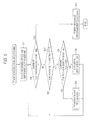
- the service server 3 executes the processing shown in the flowchart of Fig. 4 .
- step S11 when it is instructed to generate meta-data upon operator's operation of the input portion 126, CPU 121 starts the processing of generating the meta-data corresponding to a broadcast content stored in the storage portion 128 on the basis of the instruction.
- step S12 it is judged by the CPU 121 whether the current position (reproduction position or recording position) of the broadcast content reaches an finish time. If the current position does not reach the finish time, CPU 121 goes to step S13 to judge whether the current position is in a step prohibited section, specifically whether it is in a commercial picture (CM) section. If it is not in the skip prohibited section, the processing returns to step S12, and the processing of the step S12 and the subsequent steps thereto is repeated.
- CM commercial picture
- step S13 If it is judged in step S13 that the current position is in the skip prohibited section (it is judged that the current position is in the commercial picture section), CPU 121 goes to step S14 to execute the processing of setting the skip prohibited section to meta-data. Thereafter, the processing returns to step S12, and the processing of the step S12 and the subsequent steps thereto is repetitively carried out.
- a skip prohibited flag is set at the position corresponding to the commercial picture of the broadcast content of the meta-data.
- step S12 When it is judged in step S12 that the current position reaches the end position, CPU 121 goes to step S15 to finish the meta-data generation processing.
- the meta-data thus generated are distributed to the reception terminal 2.
- the reception terminal 2 executes the reproduction processing shown in the flowchart of Fig. 5 on the basis of the meta-data.
- step S31 when a user instructs to start reproduction of a broadcast content (a program to be recorded) by operating the input portion 26, in step S 31, CPU 21 of the reception terminal 2 reads out the broadcast content stored in the storage portion 29 and supplies it to the output portion 27 to display it. That is, the reproduction processing is started.
- step S32 CPU 21 judges whether the current position reaches the finish time. If the current position does not reach the finish time, the processing goes to step S33, and upon user's operation of the input portion 26, CPU 21 judges whether a frontward skip is instructed or not. If it is judged that the frontward skip is not instructed, the processing returns to step S32 and the processing of the step S32 and the subsequent steps is repetitively carried out.
- step S33 If it is judged in step S33 that the frontward skip is instructed, CPU 21 goes to step S34 to judge on the basis of the meta-data whether the current position (reproduction position) is in a skip prohibited section. If the current position is not in the skip prohibited section, the processing goes to step S35 to execute the frontward skip processing.
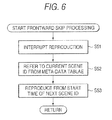
- Fig. 6 shows the details of the frontward skip processing.
- CPU 21 interrupts the reproduction under progress because the frontward skip is instructed.
- CPU 21 reads out the scene ID of the current position (a scene being currently reproduced) from the meta-data.
- step S53 CPU 21 achieves from the meta-data the next scene ID of the scene ID achieved in step S52 (the scene ID of a timely front scene), and starts the reproduction from the start time of the scene ID.
- the reproduction point is jumped to the position defined by an (N+1)-th index, and the reproduction is resumed from that position.
- step S35 After the processing of the step S35, the processing returns to step S32, and the processing of the step S32 and the subsequent steps thereto is repetitively carried out.
- step S34 If it is judged in step S34 that the current position is in the skip prohibited section, CPU 21 goes to step S36 to execute the processing of invalidating the skip operation. That is, in this case, even when the user operates the input portion 26 to instruct the frontward skip, CPU 21 does not execute the corresponding processing. In other words, the skip operation is neglected.
- step S32 Thereafter, the processing returns to step S32, and the processing of the step S32 and the subsequent steps thereto is repetitively carried out.
- step S32 If it is judged in step S32 whether the current position (reproduction position) reaches the finish time, CPU 21 goes to step S37 to finish the reproduction processing of the broadcast content (the program to be recorded).
- the skip prohibited flag is set to the meta-data, so that the commercial information is prevented from being skipped and the probability that the commercial information is watched/listened to can be enhanced.
- Fig. 7 shows the processing of a second embodiment.
- the service server 3 has a customer data base (DB) 301 and a meta-data data base 302. These data bases are generated in the storage portion 128.
- DB customer data base
- the meta-data are held in the meta-data data base 302.
- the customer data base 301 are held taste information and user information such as the age, occupation, sexuality, etc. of the user of the reception terminal 2.
- the user information and the taste information are transmitted from the communication portion 30 of the reception terminal 2 through the Internet 11 to the service server 3.
- CPU 121 of the service server 3 supplies and stores these information to and into the customer data base 301 constituting the storage portion 128.
- the reception terminal 2 has a program information data base 201, a CM data base 202, a customer data base 203 and a meta-data data base 204 in the storage portion 29.
- the program information data base 201 are stored the broadcast content received from the reception portion 28, and program information such as the broadcast channel, broadcast station, title, broadcast time, etc. of the broadcast content.
- the user's taste information generated on the basis of a program watched/listened to by the user of the reception terminal 2 is stored in the customer data base 203.
- the taste information may be determined on the basis of a predetermined function into which many parameters such as the watching/listening times of specific programs, the watching/listening times of all the programs, etc. are substituted.
- Meta-data transmitted from the communication portion 129 of the service server 3 through the Internet 11 are supplied and stored through the communication portion 30 of the reception terminal 2 to and into the meta-data data base 204.
- CM data base 202 Commercial information extracted from a broadcast content is registered in the CM data base 202.
- the registration processing is carried out on the basis of meta-data registered in the meta-data data base 204. Therefore, it is necessary to generate the meta-data in the service server 3 in advance and then distribute it to the reception terminal 2.
- CPU 121 of the service server 3 starts the meta-data generating processing in step S71. At this time, CPU 121 reproduces a content stored in the storage portion 128, and outputs it to the output portion 127 to display it.
- step S72 CPU 121 judges whether the position at which the content is being reproduced at present (current position) reaches the finish time, and if the current position does not reach the finish time, the processing goes to step S73 to judge whether the broadcast content is in a section representing CM.
- This judgment may be performed on the basis of an operator's input from the input portion 126, or if a CM-inserted section is beforehand known on the basis of a reproduction position (time) for example, it could be judged whether the current position reaches the position (time) concerned.
- step S76 If it is judged that the current position is in the CM representing section, CPU 121 goes to step S76 to execute the processing of giving a CM mark to the meta-data corresponding to the section concerned. Thereafter, the processing returns to step S72.
- step S73 If it is judged in step S73 that the current position is not in the CM representing section, CPU 121 goes to step S74 to judge whether CM insertion is instructed through the input portion 126 by the operator. If the CM inserting instruction is made, CPU 121 goes to step S75 to execute the processing of giving a CM insertion mark to the meta-data. Thereafter, the processing returns to step S72. If it is also judged in step S74 that the CM insertion is not instructed, the processing returns to step S72.
- the CM insertion mark is added to, for example, the head or last of the content, or to any position of some midpoint of the content.
- step S72 The above processing is repetitively executed, and if it is judged in step S72 that the current position reaches the finish time, CPU 121 goes to step S77 to finish the meta-data generating processing.
- the meta-data generated are registered in the meta-data data base 302.
- the meta-data registered are read out therefrom and transmitted from the communication portion 129 through the Internet 11 to the reception terminal 2.
- CPU 21 of the reception terminal 2 Upon reception of the meta-data through the communication portion 30, CPU 21 of the reception terminal 2 registers the data into the meta-data data base 204 constituting the storage portion 29.
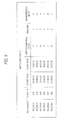
- Fig. 9 shows an example of the meta-data thus generated and registered.
- the meta-data are illustrated as a meta-data table in Fig. 9 .
- the program ID represents ID for identifying a broadcast content (program), and the scene ID represents ID for identifying the corresponding scene in plural scenes contained in the broadcast content.
- the start time and the finish time represent the start time and finish time of a scene identified by a scene ID, respectively.
- the CM mark is a mark given in the processing of the step S76 of Fig. 8
- the CM insertion mark is a mark given in the processing of the step S75 of Fig. 8 .
- CM insertion mark is added to the scene in which the scene ID of a program ID "10426011" is equal to "002", the start time is equal to "19:08:00" and the finish time is equal to "19:14:00". Accordingly, when this scene is reproduced, CM is inserted.
- CM mark is inserted in the scene in which the scene ID of a program ID "10426011" is equal to "003", the start time is equal to "19:14:00" and the finish time is equal to "19:15:00". Accordingly, when CM is replaced and inserted in this scene as described later.
- the skip prohibiting flag described with reference to Figs. 4 and 5 is set in the scene having the program ID of "10426011" and the scene ID of "003" and the scene having the program ID of "10426025” and the scene ID of "002".
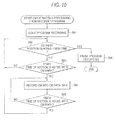
- the CM extracting processing shown in the flowchart of Fig. 10 is executed.
- CPU 21 of the reception terminal 2 controls the reception portion 28 in step S91 to start the reception (or recording) processing.
- the reception portion 28 receives the broadcast content from the broadcasting device 1 and executes the processing of registering it into the program information data base 201 constituting the storage portion 29.
- step S92 CPU 21 judges whether the current position of the content reaches the finish time. If the current position does not reach the finish time, CPU 21 goes to step S93 to judge whether the current position reaches the start time in the section to which the CM mark is given. If it is judged that the current position does not reach the start time of the section to which the CM mark is given, CPU 21 returns to the step S92 to repetitively execute the processing of the step S92 and the subsequent steps thereto.
- step S93 If it is judged in step S93 that the current position reaches the start time of the section having the CM mark, CPU 21 goes to step S94 to supply and register the currently-received content (CM) to and in the CM information data base 201.
- CM currently-received content
- CPU 21 goes to step S95 to judge whether the current position reaches the finish time of the section to which the CM mark is given. If the current position does not reach the finish time, CPU 21 returns to the step S94 to continue the processing of recording CM.
- step S95 If it is judged in step S95 that the current position reaches the finish time of the section to which the CM mark is given, the registration processing on the CM data base 202 is finished, and CPU 21 returns to the step S92 to repetitively execute the processing of the step S92 and the subsequent steps thereto.
- step S92 If it is judged in step S92 that the current position reaches the finish time of the content (program), CPU 21 goes to step S96 to finish the recording processing of the content (program).
- CM contained in the content received (recorded) by the reception terminal 2 is registered independently of the content in the CM data base 202.
- CM contained in the scene in which the scene ID of the program ID "10426011" is equal to "003" and CM contained in the scene in which the scene ID of the program ID "10426025” is equal to "002" are registered in the CM data base 202.
- CM is registered in the data base different from that for the program (content).
- the CM data base 202 may be substantially integrated into the program information data base 201 by managing the position of CM so that only CM can be simply and quickly read out from the program information data base 201.
- the content reception processing is carried out in connection with the CM data base generation processing as described above, the user's taste based on the reception processing is identified, and the user's taste (customer taste information) is registered in the customer data base 203.
- the taste may be generated on the basis of information such as the genre of contents, the features of scenes contained in the contents, etc.
- the meta-data corresponding to the program (content) which is instructed to be reproduced are read out from the meta-data data base 204, and the CM replacement insertion processing is executed on the basis of the meta-data as shown in Fig. 11 .
- the user's taste is achieved on the basis of the program information reproduced from the program information data base 201, and it is supplied to and registered in the customer data base 203.
- the user's taste information which has been registered in the customer data base 203 until that time is used for the CM selection processing in the scene replacement insertion processing.
- CPU 21 of the reception terminal 2 When reproduction of a content (program) is instructed through the input portion 26 by the user, CPU 21 of the reception terminal 2 reads out the content indicated by the user from the contents registered in the program information data base 201 and outputs it to the output portion 27 in step S111, thereby starting the recorded program reproducing processing.
- CPU 21 reads out the meta-data corresponding to the reproduction-instructed program from the meta-data data base 204, and executes the reproduction processing corresponding to the meta-data.
- step S112 CPU 21 judges on the basis of the meta-data thus read out whether a CM insertion request is made.
- the CM insertion request is inserted in the processing of the step S75 of Fig. 8 described above.
- CPU 21 goes to step S113 to execute the CM insertion processing. That is, CPU 21 reads out CM indicated by the meta-data from CMs registered in the CM data base 202, and outputs the CM to the output portion 27 to display it.
- CM is inserted into the head of the content (before the reproduction of the content is substantially started) as described above. If it is judged in step S112 that CM insertion is not requested, the processing of the step S113 is skipped.
- step S114 CPU 21 judges whether the reproduction position (current position) of the content reaches the finish time. If the current position does not reach the finish position, CPU 21 goes to step S115 to judge it again whether CM insertion is requested or not. If the CM insertion is requested, CPU 21 goes to step S116 to read out CM from the CM data base 202 and outputs the CM to the output portion 27 to display it.
- CM is displayed at that position.
- step S115 If it is judged in step S115 that no CM insertion is requested, the processing of the step S116 is skipped.
- step S117 CPU 21 then judges whether the current position reaches the CM start time (the time corresponding to the position at which a CM mark is given). If the current position does not reach the CM start time, CPU 21 returns to the step S114 to repetitively execute the processing of the step S114 and the subsequent steps thereto.
- step S117 If it is judged in step S117 that the current position reaches the CM start time, CPU 21 goes to step S118 to judge whether a CM replacement request is made. As not shown, the CM replacement request is also added to the meta-data as occasion demands. Accordingly, CPU 21 executes this judgment on the basis of the meta-data.
- CPU 21 If no CM replacement request is made, CPU 21 returns to the step S114 to repetitively execute the processing of the step S114 and the subsequent steps thereto. On the other hand, if the CM replacement request is made, CPU 21 goes from step S118 to step S119 to execute the CM replacement processing. The details of the CM replacement processing are shown in Fig. 13 .
- CM replacement processing When the CM replacement processing is executed, reproduction of CMs of a program (content) which is being currently reproduced is interrupted in step S141, and CM selection processing is executed in step S142 by CPU 21.
- CM selection processing The details of the CM selection processing are shown in the flowchart of Fig. 14 .
- step S161 CPU 21 achieves a list of CM information from the CM data base 202. Furthermore, in step S162 CPU 21 achieves the taste information of the user from the customer data base 203. In step S163, CPU 21 selects and achieves from the list of the CM information achieved through the processing of the step S161 CMs which are matched with the user's taste achieved through the processing of the step S162.
- CPU 21 goes to step S143 to read out the selected CMs from the CM data base 202 and output them to the output portion 27 to display them, whereby the CMs matched with the user's taste are reproduced in place of the CMs contained in the broadcast content.
- step S144 CPU 21 judges whether the current position reaches the CM finish time. If it does not reach the CM finish time, CPU 21 returns to the step S142 to repetitively execute the processing of the step S142 and the subsequent steps thereto.
- step S144 If it is judged in step S144 that the current position reaches the CM finish time, the CM replacement processing is finished and CPU 21 returns to the step S114 of Fig. 12 to repetitively execute the processing of the step S114 and the subsequent steps thereto.
- step S120 CPU 21 judges on the basis of the read-out meta-data whether a CM insertion request is made. This CM insertion request is inserted through the processing of the step S75 of Fig. 8 described above.
- CPU 21 goes to step S121 to execute the CM insertion processing. That is, CPU 21 reads out the CMs indicated by the meta-data from the CMs registered in the CM data base 202, and outputs the CMs to the output portion 27 to display them.
- the CMs are inserted at the last of the content (after the reproduction of the content is substantially finished). If it is judged in step S120 that no CM insertion request is made, the processing of the step S121 is skipped.
- step S112 the reproduction processing of the content (program) is finished.
- the CMs indicated on the basis of the meta-data are replaced by the CMs which are originally inserted in the broadcast content, and reproduced.
- CMs contained in a broadcast content are extracted and then registered in the CM data base 202.
- plural CMs are continuously broadcasted from the broadcasting device 1 by using a part or the whole of a broadcast channel, and received at the reception terminal 2 to register them into the CM data base 202.
- Fig. 15 shows the construction in this case.
- a CM data base 311 is prepared in the service server 3, and CM information is registered in the CM data base 311 in advance.
- CPU 121 of the service server 3 generates CM recording instructing information on the basis of customer information registered in the customer data base 301 and CM information registered in the CM data base 311, and transmits these information as meta-data from the communication portion 129 through the Internet 11 to the reception terminal 2.
- CPU 21 of the reception terminal 2 Upon receiving the meta-data through the communication portion 30, CPU 21 of the reception terminal 2 registers the meta-data into the meta-data data base 204.
- Fig. 16 shows an example of CM recording instructing information contained in the meta-data distributed from the service server 3 as described above.
- CM for which the channel is set to "10” the start date and hour is to "22:15:10 on 23rd of June, 2001” and the finish date and hour is set to "22:15:45 on 23rd of June, 2001” is indicated as a recording target.
- CM for which the start date and hour of the same channel is set to "22:30:30 of 23rd of June, 2001” and the finish date of the same channel is set to "22:31:00 of 23rd of June, 2001” is also indicated as a recording target.
- CPU 21 of the reception terminal 2 controls the reception portion 28 on the basis of the meta-data to make the reception portion 28 receive the channel when the broadcast time of CM specified in the CM recording instructing information comes, and registers the CM data thus received into the CM data base 202.
- the CM data base 202 is automatically generated.
- Fig. 17 shows the processing when the CM recording instructing information as described above is generated in the service server 3.
- CPU 121 starts the processing of generating the CM recording instructing information
- step S182 CPU 121 achieves the taste information of the user from the customer data base 203.
- step S183 CPU 121 achieves a list of CM information from the CM data base 202.
- step S184 CPU 121 selects CMs matched with the user's taste achieved through the processing of the step S182 from the list of the CM information achieved through the processing of the step S183, and generates CM recording instructing information as shown in Fig. 16 .
- the CM recording instructing information thus generated is transmitted as meta-data from the communication portion 129 through the Internet 11 to the reception terminal 2 in step S185.
- step S201 the reception terminal 2 receives the meta-data.
- the meta-data thus received are registered in the meta-data data base 200.
- step S202 CPU 21 of the reception terminal 2 judges in step S202 whether the broadcast time for CMs specified by the CM recording instructing information comes on the basis of the meta-data.
- the processing of the step S202 is repeated until it judged that it is the broadcast time for the CMs specified by the CM recording instructing information in step S202. That is, the standby state is kept, and CPU 21 goes to step S203 when it is judged that it is the broadcast time for the CMs specified by the CM recording instructing information.
- step S203 CPU 21 controls the reception portion 28 to receive the channel, and registers the data of the CMs thus received into the CM data base 202. As described above, the CM data registered in the CM data base 202 of the reception terminal 2 are renewed.
- CMs corresponding to the user's taste are selected on the basis of the user's taste information. Furthermore, CMs may be selected every program. Fig. 19 shows the processing in this case.
- the user's taste information registered in the customer's taste data base 203 is transmitted from the communication portion 30 through the Internet 11 to the service server 3.
- CPU 121 of the service server 3 When receiving the taste information through the communication portion 129, CPU 121 of the service server 3 supplies and registers the taste information to and in the customer data base 301.
- the service server 3 is equipped with a program information data base 321, and various kinds of information concerning contents (programs) broadcasted from the broadcasting device 1 are registered in the program information data base 321.
- CPU 121 generates CM selection instructing information on the basis of both the user's taste information registered in the customer data base 301 and the program information registered in the program information data base 321. That is, in this example, it is determined every content (program) which CM should be selected for the user concerned on the basis of both the content and the user's taste.
- CPU 121 of the service server 3 achieves the meta-data corresponding to the target program (content) from the meta-data data base 302, adds the meta-data with the CM selection instructing information and transmits the data from the communication portion 129 through the Internee 11 to the reception terminal 2.
- CPU 21 When receiving the meta-data through the communication portion 30 at the reception terminal 2, CPU 21 supplies and registers the meta-data thus received to and in the meta-data data base 204.
- CPU 21 executes the processing as shown in the flowchart of Fig. 12 .
- CMs which are matched with the user's taste and the program are selected (step S162 of Fig. 14 ) and the replacement insertion processing is executed in the CM selection processing of the step S142 in the processing of Fig. 13 which constitutes the CM replacement processing in step S119.
- CMs can be shown every user and every content (program).
- advertisement effect of CMs can be more enhanced.
- Fig. 20 shows the processing of generating the CM selection instructing information as described above in the service server 3.
- CPU 121 of the service server 3 supplies and registers the taste information thus received to and into the customer data base 301 in step S221.
- step S222 when the CM selection instructing information is generated, CPU 121 achieves the user's taste information registered in the customer data base 301. Furthermore, in step S223, CPU 121 achieves from the program information data base 321 the various kinds of information concerning the contents (programs) broadcasted by the broadcasting device 1.
- CPU 121 in step S224, generates the CM selection instructing information on the basis of both the user's taste information achieved from the customer data base 301 and the program information achieved from the program information data base 321. That is, in this example, it is determined on the basis of both the content concerned and the user's taste every content (program) which CM should be selected for the user.
- step S225 CPU 121 of the service server 3 achieves the meta-data corresponding to the target program (content) from the meta-data data base 302 on the basis of the CM selection instructing information thus generated. Thereafter, in step S226, the meta-data thus achieved are added with the CM selection instructing information, and then transmitted from the communication portion 129 through the Internet 11 to the reception terminal 2.
- reception terminal 2 which receives the meta-data and the CM selection instructing information as described above will be described.
- the description on the details of the operation is omitted because it is substantially the same as the operation described with reference to the flowcharts shown in Figs. 12 and 13 , and only the differences will be described.
- CPU 21 When receiving the meta-data through the communication portion 30 at the reception terminal 2, CPU 21 supplies and registers the meta-data to and into the meta-data data base 204.
- CPU 21 executes the processing as shown in the flowchart of Fig. 12 .
- CM selection processing of the step S142 in the processing of Fig. 13 which constitutes the CM replacement processing in step S119
- CPU 21 selects CMs which are matched with the user's taste and the program (step S162 of Fig. 14 ), and executes the replacement insertion processing.
- CMs which are not registered in the CM data base 202 of the reception terminal 2. Therefore, by checking the CMs registered in the CM data base 202 and selecting prescribed CMs from the actually-registered CMs, it is possible to make the users surely watch/listen to the CMs.
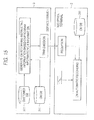
- Fig. 21 shows an example in this case.
- the content is registered in the program information data base 201.
- CPU 21 achieves the section information contained in the content registered in the program information data base 201.
- This section information contains information representing the section of each scene of the content.
- the section information contains information on a broadcast channel and a broadcast time, for example. Accordingly, on the basis of the section information, it can be identified what content is registered in the program information data base 201.
- the registration of the content in the program information data base 201 means that the CM portion contained in the content is separated from the content and registered in the CM data base 202 in the manner as described above. Accordingly,
- the registration of the prescribed section information in the section information data base 211 means that the CM corresponding to the section is registered in the CM data base 202.
- the section information registered in the section information data base 211 is transmitted from the communication portion 30 through the Internet 11 to the service server 3 together with customer information registered in the customer data base 203.
- CPU 121 of the service server 3 When receiving the section information and the customer information through the communication portion 129, CPU 121 of the service server 3 registers them into the customer data base 301.
- the information representing which section contents are received and registered by each user is registered in the customer data base 301.
- the taste information of each user is also registered in the customer data base 301.
- CPU 121 of the service server 3 searches and selects, on the basis of section information, CMs which are matched with the user's taste and registered in the CM data base 202 by the user. As described above, a predetermined one of the CMs which are matched with the taste of each user and actually registered in the CM data base 220 is selected, and indicated as CM selection instructing information.
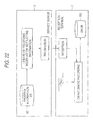
- CM data base 202 As a result of the judgement based on the user's taste, when any CM matched with the user is not registered in the CM data base 202, another CM may be selected. However, for example, it is also possible to create recording instructing information for instructing to record CM judged as being most suitable for the user into the reception terminal 2 of a user, and transmitting the recording instructing information to the reception terminal 2 so that the reception terminal 2 receives and records the CM concerned and further registers it into the CM data base 202 as shown in Fig. 22 .
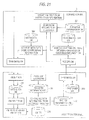
- Fig. 23 shows the processing of creating the CM selection instructing information as described above in the service server 3.
- CPU 121 of the service server 3 receives through the communication portion 129 the section information which is read out from the section information data base 211 of the reception terminal 2 and transmitted.
- CPU 121 receives through the communication portion 129 the user's taste information which is read out from the customer data base 203 of the reception terminal 2 and transmitted. These information is registered in the customer data base 301.
- step S243 on the basis of the section information received in step S241, CPU 121 searches CMs recorded by the user from the program information registered in the program information data base 321.
- step S244 as a search result of the step S243, CPU 121 judges whether there is any CM to be watched/listened to by the user (judges whether there is any CM which is matched with the taste of the user). If there is no CM, the CPU 121 goes to step S245 to search CM information registered in the program information data base 321, and search a more suitable CM on the basis of the taste of the user. In step S246, CPU 121 achieves the CM information achieved through the search of the step S245 from the program information data base 321. In step S247, CPU 121 creates recording-reservation instructing information for making the user receive and record the CM information achieved in step S246, and transmits it from the communication portion 129 through the Internet 11 to the reception terminal 2.
- the recording-reserving instructing information contains information for indicating a broadcast station (broadcast channel) and information for indicating a broadcast time (reception time).
- CPU 21 of the reception terminal 2 When receiving the recording-reserving instructing information through the communication portion 30, CPU 21 of the reception terminal 2 temporarily stores it into the meta-data data base 204. CPU 21 controls the reception portion 28 on the basis of the recording-reserving instructing information to receive the CM when the broadcast time of the CM concerned comes.
- the CM received by the reception portion 28 is supplied and registered to and into the CM data base 202.
- the service server 3 can actually register the CM which is most matched with the user's taste when the CM is not registered by the user.
- step S244 If it is judged in step S244 that there is not searched any CM which is desired to be watched by the user, the processing from the step S245 to the step S247 is skipped. In this case, a prescribed CM is selected from the CMs registered in the CM data base 202.
- CPU 121 of the service server 3 goes to step S248 to create the CM selection instructing information for selecting the CM searched, and transmits the CM selection instructing information to the reception terminal 2 in step S249.
- This CM selection instructing information is registered in the meta-data data base 204 of the reception terminal 2.
- CPU 21 of the reception terminal 2 reads out the CM indicated on the basis of the CM selection instructing information from the CM data base 202, and executes the replacement and insertion processing.
- the service server 3 can perform statistical processing such as the audience rate, the number of viewers, etc. for contents by achieving various kinds of information from the reception terminal 2. Therefore, for example, CMs which each user actually watches/listens to can be registered as shown in Fig. 24 .
- CPU 21 of the reception terminal 2 detects the section information of the content on the basis of the information registered in the program information data base 201.
- the section information contains a broadcast channel and date-and-hour information.
- the section information is temporarily registered in the customer data base 203.
- CPU 21 reads out watching/listening completed program section information registered in the customer data base 203 at a prescribed timing, and transmits it from the communication portion 30 through the Internet 11 to the service server 3.
- CPU 121 of the service server 3 supplies and registers to and into the customer data base 301.
- CPU 121 refers to the CM information registered in the program information data base 321 to specify CMs (watching/listening completed CMs) watched/listened by each user on the basis of the watching/listening completed section information of each user transmitted from the reception terminal 2.
- the watching/listening completed CMs thus specified are registered in the customer data base 301 every user.
- step S261 CPU 121 of the service server 3 achieves the watching/listening completed program section information from the reception terminal 2 through the communication portion 129.
- the watching/listening completed program section information thus achieved is supplied and registered to and into the customer data base 301.
- step S262 CPU 121 refers to the CM information registered in the program information data base 321 to specify CMs watched/listened by each user (watching/listening completed CMs) from the watching/listening completed section information of each user transmitted from the reception terminal 2.
- step S263 the watching/listening completed CMs thus specified are registered in the customer data base 301 every user.
- the watching/listening completed CMs are specified on the basis of the section information.
- CPU 21 of the reception terminal 2 temporarily stores the operation information of the input portion 26 in the storage portion 29. At a prescribed timing, CPU 21 transmits the operation information from the communication portion 30 through the Internet 11 to the service server 3.
- CPU 121 of the service server 3 registers the operation information from the reception terminal 2 into the customer data base 301, and also refers to the program information registered in the program information data base 321 on the basis of the operation information to specify which CM is watched/listened to by the user. For example, it can be assumed that the user watches/listens to a broadcasted content at the timing at which the operation is detected.
- the watching/listening completed CMs are specified in the service server 3. However, they may be specified at the reception terminal 2.
- CPU 21 of the reception terminal 2 achieves the section information of the content.
- CPU 21 registers the section information as watching/listening completed section information into the customer data base 203.
- CM information is extracted and registered into the CM data base 202 of the reception terminal 2.
- the CM information contains such information as recorded on the basis of recording-reservation instructing information from the service server 3.
- CPU 21 specifies the watched/listened CMs on the basis of the watching/listening completed section information registered in the customer data base 203 and the program information of the program information data base 201.
- CPU 21 registers the used CMs thus specified into the customer data base 203, and also transmits the watching/listening completed section information from the communication portion 30 through the Internet 11 at a prescribed timing.
- CPU 121 of the service server 3 registers into the customer data base 301 the watching/listening completed CM information and watching/listening completed program information of each user which are transmitted from each reception terminal 2.
- CPU 121 of the service server 3 carries out the aggregative processing on the watched/listened CMs which are registered every user in the customer data base 301, thereby calculating the number of viewers and the audience rate every CM as shown in Fig. 26 , for example. Furthermore, CPU 121 carries out the aggregative processing on the watching/listening completed program section information of each user registered in the customer data base 301 to calculate the number of viewers and the audience rate every program or every program section.
- the aggregation result thus calculated is registered in the watching/listening data base 331.
- the watching/listening data base 331 may be integrated with the customer data base 301. However, if they are separately provided, the number of viewers and the audience rate every CM, every program and every program section are managed separately from the personal information of each user, so that the privacy of each user can be protected.
- CPU 121 executes the charging corresponding to the number of viewers every CM to the advertiser of the CM. Therefore, in the CM data base 311 are registered information on the advertiser of each CM (sponsor information), the bank account thereof (billing address), etc.
- CPU 121 calculates a unit price of CM exposure per viewer/listener, determines the money to be charged on the basis of the unit price, transmits a bill for the charging money to an intercorporate accounting system server 401 to request the account settlement.
- step S281 CPU 121 of the service server 3 carries out the aggregative processing on the watched/listened CMs of each user which are registered in the customer data base 301, thereby calculating the number of viewers and the audience rate every CM. Furthermore, CPU 121 carries out the aggregative processing on the watching/listening completed program section information of each user which are registered in the customer data base 301, thereby calculating the number of viewers and the audience rate every program or every program section.
- the aggregation result thus calculated is registered in the watching/listening data base 331 in step S282.
- step S283 CPU 121 calculates the CM exposure unit price per viewer, and the amount of money to be charged is determined on the basis of the unit price. Then, in step S284, CPU 121 transmits the payment of the amount of money thus determined to the intercorporate accounting system server 401 to request the account settlement.
- the charging processing will be further described.
- the number of viewers and the audience rate every program or every program section, which are registered in the watching/listening data base 331, represent the actual performance of the program watching/listening service system (information supply system) of the present invention to enhance the audience rate of each program when original CM contained in a program is directly reproduced without performing the CM replacement insertion processing when the program is broadcasted. Therefore, the conditions under which the counter values for enhancement in audience rate is charged to the broadcaster managing the broadcasting device 1 or program suppliers may be registered in the program information data base 321 in advance to carry out the charging processing on the broadcaster and the program suppliers on the basis of these conditions.
- the number of viewers and the audience rate every program or every program section represent the actual performance of use of programs in the program watching/listening service system (information supply system) of the present invention when the CM replacement insertion processing is carried out.
- the counter values for use of programs are set every broadcaster or every program proprietor in advance, and the conditions (program use conditions) are registered in the program information data base 321 in advance.
- CPU 121 calculates the counter value for the program use on the basis of the use conditions, and carries out the payment processing on the broadcaster or the program proprietors.
- the trend of viewers can be grasped on the basis of the number of viewers or the audience rate every program or CM accumulated in the watching/listening data base 331 or they can be used as data for marketing such as broadcast program planning, CM production planning, advertisement strategy, etc.
- the program By replacing an original CM inserted at the broadcast time of a program with another CM, the program can be used as an advertisement medium for advertisers other than the advertiser of the original CM, and the advertisement income can be increased.
- CM supply based on the advertisement strategies of advertisers can be performed.
- the taste information of a user is extracted and held from the watching/listening record of the user, and CMs to be replaced/inserted are selected on the basis of the taste of the user at the reception terminal 2 or service server 3 to thereby enable CMs to be supplied in conformity with the taste of the user. Accordingly, the probability that the CMs are skipped by the user can be reduced, and it is unnecessary to prohibit the skip operation. Further, each user can watch/listen to CMs which the user himself/herself likes.
- the advertisement rate or the program use fees can be determined on the basis of the actual performance of watching/listening.
- the advertisement rate or the program use fees are determined on the basis of the future watching/listening prediction calculated on the basis of past audience rates, more reliable data to set the charges can be supplied.
- the action of recording a content without watching/listening and then reproducing the content thus recorded has not contributed to the audience rate.
- the action of recording and then reproducing a program may contribute to the audience rate of the program.
- the series of processing described above can be executed by hardware, however, may be executed by software.
- a program constituting the software is installed from a network or recording medium into a computer mounted in a dedicated hardware, a computer such as a general personal computer which can execute various functions by installing various kinds of programs therein, or the like.
- the recording medium is constructed by not only a program-recorded package medium comprising a magnetic disk 41, 141 (containing floppy disk), an optical disk 42, 142 (containing CD-ROM (Compact Disk-Read Only Memory), DVD (Digital Versatile Disk)), a magnetooptical disk 43, 143 (containing MD (Mini-Disk)) or a semiconductor memory 44, 144, which is distributed separately from the device itself to supply the program to users, but also by a program-recorded ROM 22, 122 or hard disk contained in a storage portion 29, 128, which is supplied to the users in a state where it is installed in the device itself in advance.
- a program-recorded package medium comprising a magnetic disk 41, 141 (containing floppy disk), an optical disk 42, 142 (containing CD-ROM (Compact Disk-Read Only Memory), DVD (Digital Versatile Disk)), a magnetooptical disk 43, 143 (containing MD (Mini-Disk)) or a semiconductor memory 44
- the step of describing the program to be recorded in a recording medium contains the processing which is executed time-sequentially along the recording order, but it may also contain the processing which is not time-sequentially executed, but executed in parallel or individually.
- the system represents the whole device comprising plural devices.
- the reproduction data containing prohibiting information for prohibiting skip of prescribed information are distributed from the information supply device to the information processing device so that the skip of the prescribed information is controlled on the basis of the prohibition information in the information processing device. Therefore, there can be implemented a system which can enhance the watching/listening efficiency of the prescribed information.
- the recording medium and the program of the present invention the prohibiting information for prohibiting skip of prescribed information is added to reproduction data, so that the information processing device can be made to surely watch/listen to the prescribed information.
- the recording medium and the program of the present invention the skip of the prescribed information is controlled on the basis of the prohibiting information contained in the reproduction data. Therefore, users can be made to surely watch/listen to prescribed information.
- reproduction data containing extraction information for extracting prescribed information containing a content are generated in the information supply device, and distributed to the information processing device.
- the reproduction data are recorded so that the prescribed information can be extracted from the content on the basis of the extraction information and read out independently of the content. Therefore, the prescribed information can be surely recorded in the information processing device.
- the recording medium and the program of the present invention the prescribed information extracted from a content can be recorded so as to be read out independently of the content. Therefore, the prescribed information can be surely reproduced in connection with reproduction of the content.
- reproduction data containing extraction information needed to extract prescribed information contained in a content are generated and transmitted to the information processing device, so that the prescribed information can be surely recorded in the information processing device.
Landscapes
- Engineering & Computer Science (AREA)
- Multimedia (AREA)
- Signal Processing (AREA)
- Databases & Information Systems (AREA)
- Social Psychology (AREA)
- Computer Networks & Wireless Communication (AREA)
- Health & Medical Sciences (AREA)
- General Health & Medical Sciences (AREA)
- Computer Graphics (AREA)
- Marketing (AREA)
- Computer Security & Cryptography (AREA)
- Business, Economics & Management (AREA)
- Library & Information Science (AREA)
- Two-Way Televisions, Distribution Of Moving Picture Or The Like (AREA)
- Television Signal Processing For Recording (AREA)
- Management, Administration, Business Operations System, And Electronic Commerce (AREA)
Applications Claiming Priority (2)
| Application Number | Priority Date | Filing Date | Title |
|---|---|---|---|
| JP2001198283 | 2001-06-29 | ||
| EP02736179A EP1401202A4 (fr) | 2001-06-29 | 2002-06-27 | Systeme de fourniture d'informations, dispositif et procede de fourniture d'informations, dispositif et procede de traitement d'informations |
Related Parent Applications (2)
| Application Number | Title | Priority Date | Filing Date |
|---|---|---|---|
| EP02736179A Division EP1401202A4 (fr) | 2001-06-29 | 2002-06-27 | Systeme de fourniture d'informations, dispositif et procede de fourniture d'informations, dispositif et procede de traitement d'informations |
| EP02736179.9 Division | 2002-06-27 |
Publications (2)
| Publication Number | Publication Date |
|---|---|
| EP2276247A2 true EP2276247A2 (fr) | 2011-01-19 |
| EP2276247A3 EP2276247A3 (fr) | 2014-04-09 |
Family
ID=19035754
Family Applications (2)
| Application Number | Title | Priority Date | Filing Date |
|---|---|---|---|
| EP02736179A Ceased EP1401202A4 (fr) | 2001-06-29 | 2002-06-27 | Systeme de fourniture d'informations, dispositif et procede de fourniture d'informations, dispositif et procede de traitement d'informations |
| EP10174118.9A Ceased EP2276247A3 (fr) | 2001-06-29 | 2002-06-27 | Système fournisseur d'informations, dispositif fournisseur d'informations et procédé, et dispositif de traitement d'informations et procédé |
Family Applications Before (1)
| Application Number | Title | Priority Date | Filing Date |
|---|---|---|---|
| EP02736179A Ceased EP1401202A4 (fr) | 2001-06-29 | 2002-06-27 | Systeme de fourniture d'informations, dispositif et procede de fourniture d'informations, dispositif et procede de traitement d'informations |
Country Status (5)
| Country | Link |
|---|---|
| US (2) | US20040015984A1 (fr) |
| EP (2) | EP1401202A4 (fr) |
| KR (1) | KR100965650B1 (fr) |
| CN (1) | CN1199453C (fr) |
| WO (1) | WO2003003736A1 (fr) |
Families Citing this family (35)
| Publication number | Priority date | Publication date | Assignee | Title |
|---|---|---|---|---|
| CA2349914C (fr) * | 2000-06-09 | 2013-07-30 | Invidi Technologies Corp. | Methode de livraison de messages publicitaires |
| US20030192060A1 (en) * | 2001-01-30 | 2003-10-09 | Levy Kenneth L. | Digital watermarking and television services |
| US7730509B2 (en) | 2001-06-08 | 2010-06-01 | Invidi Technologies Corporation | Asset delivery reporting in a broadcast network |
| JP3932476B2 (ja) * | 2001-06-28 | 2007-06-20 | ソニー株式会社 | 情報提供システム、情報処理装置および方法、記録媒体、並びにプログラム |
| RU2299523C2 (ru) * | 2003-02-12 | 2007-05-20 | ВИДЕО НЕТВОРКС АйПи ХОЛДИНГС ЛИМИТЕД | Система и способ идентификации и вставки рекламы в вещательные программы |
| GB0303176D0 (en) * | 2003-02-12 | 2003-03-19 | Video Networks Ltd | A system for capture and selective playback of broadcast programmes |
| JPWO2005018233A1 (ja) * | 2003-08-18 | 2007-10-04 | ソフトバンク株式会社 | コンテンツ配信システム、コンテンツ配信方法、コンテンツ配信サーバ、コンテンツ再生装置、コンテンツ配信プログラム及びコンテンツ再生プログラム |
| EP2180478B1 (fr) * | 2003-10-10 | 2019-03-13 | Sharp Kabushiki Kaisha | Appareil de reproduction, procédé de reproduction, support d'enregistrement de contenu, programme de contrôle et support d'enregistrement lisible sur ordinateur |
| US7730012B2 (en) * | 2004-06-25 | 2010-06-01 | Apple Inc. | Methods and systems for managing data |
| US8464064B2 (en) | 2004-12-13 | 2013-06-11 | Electronics And Telecommunications Research Institute | System and method for evaluating and certifying video pat software |
| PT1842369T (pt) | 2005-01-12 | 2020-06-18 | Invidi Tech Corp | Modelo de impressão direcionado para entrega de ativos de rede de difusão |
| CN101138243B (zh) * | 2005-03-10 | 2011-07-27 | 韩国电子通信研究院 | 数字内容提供系统中的pod标识方法 |
| JP4830419B2 (ja) * | 2005-09-20 | 2011-12-07 | 富士ゼロックス株式会社 | 動画像視聴システム、動画像視聴装置、その制御方法、及びプログラム |
| US7698236B2 (en) * | 2006-05-02 | 2010-04-13 | Invidi Technologies Corporation | Fuzzy logic based viewer identification for targeted asset delivery system |
| US20130254787A1 (en) | 2006-05-02 | 2013-09-26 | Invidi Technologies Corporation | Method and apparatus to perform real-time audience estimation and commercial selection suitable for targeted advertising |
| JP4857895B2 (ja) * | 2006-05-10 | 2012-01-18 | ソニー株式会社 | 情報処理装置、および情報処理方法、並びにコンピュータ・プログラム |
| CA2654869C (fr) | 2006-06-12 | 2016-08-30 | Invidi Technologies Corporation | Systeme et procede pour inserer des contenus multimedias d'apres une recherche par mot-cle |
| EP2039151A1 (fr) * | 2006-07-06 | 2009-03-25 | Thomson Licensing | Procédé et système pour une commande de suppression d'un mode spécial de reproduction |
| KR101396364B1 (ko) * | 2007-01-24 | 2014-05-19 | 삼성전자주식회사 | 컨텐츠를 저장한 정보저장매체, 재생 방법 및 장치 |
| US7849477B2 (en) | 2007-01-30 | 2010-12-07 | Invidi Technologies Corporation | Asset targeting system for limited resource environments |
| WO2009140691A2 (fr) | 2008-05-16 | 2009-11-19 | Invidi Technologies Corporation | Demande d’informations liée à un contenu de réseau de diffusion |
| CA2733193C (fr) | 2008-08-05 | 2016-11-01 | Invidi Technologies Corporation | Insertion nationale de publicite ciblee |
| WO2010017379A2 (fr) | 2008-08-06 | 2010-02-11 | Invidi Technologies Corporation | Appariement de données d’un tiers pour publicité ciblée |
| US8806516B2 (en) * | 2008-08-19 | 2014-08-12 | Porto Technology, Llc | Method and system for constructing and presenting a consumption profile for a media item |
| US8966001B2 (en) * | 2008-09-02 | 2015-02-24 | Qualcomm Incorporated | Deployment and distribution model for improved content delivery system |
| US9178632B2 (en) * | 2008-09-02 | 2015-11-03 | Qualcomm Incorporated | Methods and apparatus for an enhanced media content rating system |
| CN102215454A (zh) * | 2010-04-01 | 2011-10-12 | 华为技术有限公司 | 内容发布方法和装置及系统 |
| US20130212621A1 (en) * | 2010-11-18 | 2013-08-15 | Mark T. Corl | Broadcast-enabled media hub |
| US8699855B2 (en) * | 2010-12-23 | 2014-04-15 | Echostar Technologies L.L.C. | User-selected interstitial media content recording |
| US20130139194A1 (en) * | 2011-11-30 | 2013-05-30 | Sling Media, Inc. | Systems and methods to determine expected viewership of future television broadcasts using recording timer data |
| ES2683382T3 (es) * | 2012-03-13 | 2018-09-26 | Tivo Solutions Inc. | Sistema de reproducción automática de anuncios publicitarios |
| US9936264B1 (en) * | 2014-09-15 | 2018-04-03 | Google Llc | Method of restricting offline video playback to include advertisements |
| WO2017046925A1 (fr) * | 2015-09-17 | 2017-03-23 | ガンホー・オンライン・エンターテイメント株式会社 | Dispositif de serveur, programme et procédé |
| US10585215B2 (en) | 2017-06-29 | 2020-03-10 | Cymer, Llc | Reducing optical damage on an optical element |
| CA3052736A1 (fr) * | 2018-08-22 | 2020-02-22 | Intraway R&D S.A. | Systeme et procede permettant a un operateur direct d`etablir une communication avec un boitier decodeur |
Citations (1)
| Publication number | Priority date | Publication date | Assignee | Title |
|---|---|---|---|---|
| JP2000237671A (ja) | 1999-02-24 | 2000-09-05 | Ibiden Co Ltd | 縦型ワニス塗布装置 |
Family Cites Families (27)
| Publication number | Priority date | Publication date | Assignee | Title |
|---|---|---|---|---|
| JP3318898B2 (ja) * | 1991-12-25 | 2002-08-26 | ソニー株式会社 | 記録媒体の再生装置 |
| US5892900A (en) * | 1996-08-30 | 1999-04-06 | Intertrust Technologies Corp. | Systems and methods for secure transaction management and electronic rights protection |
| JP3561094B2 (ja) * | 1996-08-30 | 2004-09-02 | 株式会社東芝 | 情報再生装置 |
| US5732216A (en) * | 1996-10-02 | 1998-03-24 | Internet Angles, Inc. | Audio message exchange system |
| US6199076B1 (en) * | 1996-10-02 | 2001-03-06 | James Logan | Audio program player including a dynamic program selection controller |
| US20020120925A1 (en) * | 2000-03-28 | 2002-08-29 | Logan James D. | Audio and video program recording, editing and playback systems using metadata |
| US5986692A (en) * | 1996-10-03 | 1999-11-16 | Logan; James D. | Systems and methods for computer enhanced broadcast monitoring |
| IL125141A0 (en) * | 1998-06-29 | 1999-01-26 | Nds Ltd | Advanced television system |
| US6029045A (en) * | 1997-12-09 | 2000-02-22 | Cogent Technology, Inc. | System and method for inserting local content into programming content |
| US6141010A (en) * | 1998-07-17 | 2000-10-31 | B. E. Technology, Llc | Computer interface method and apparatus with targeted advertising |
| US6434195B1 (en) * | 1998-11-20 | 2002-08-13 | General Instrument Corporaiton | Splicing of video data in progressively refreshed video streams |
| US8290351B2 (en) * | 2001-04-03 | 2012-10-16 | Prime Research Alliance E., Inc. | Alternative advertising in prerecorded media |
| KR100747420B1 (ko) * | 1999-03-11 | 2007-08-09 | 소니 가부시끼 가이샤 | 정보 수신 장치 및 정보 수신 방법 |
| JP4298045B2 (ja) * | 1999-03-24 | 2009-07-15 | パナソニック株式会社 | 放送送信装置及び受信装置 |
| JP2000308038A (ja) * | 1999-04-19 | 2000-11-02 | Matsushita Electric Ind Co Ltd | 蓄積型放送システムと放送送信装置及び放送受信装置 |
| JP4239325B2 (ja) * | 1999-11-01 | 2009-03-18 | パナソニック株式会社 | 放送データ蓄積再生方法及び装置 |
| US6549718B1 (en) * | 1999-12-22 | 2003-04-15 | Spotware Technologies, Inc. | Systems, methods, and software for using markers on channel signals to control electronic program guides and recording devices |
| US6826540B1 (en) * | 1999-12-29 | 2004-11-30 | Virtual Personalities, Inc. | Virtual human interface for conducting surveys |
| JP2001230996A (ja) * | 2000-02-15 | 2001-08-24 | Matsushita Electric Ind Co Ltd | 広告データ供給方法と広告データ再生装置及びそのシステム |
| JP2000270290A (ja) * | 2000-06-06 | 2000-09-29 | Kids City:Kk | 放送記録方法、装置、及び記録媒体 |
| JP3794257B2 (ja) * | 2000-09-27 | 2006-07-05 | 日本ビクター株式会社 | 映像信号再生装置 |
| US20060282319A1 (en) * | 2000-10-12 | 2006-12-14 | Maggio Frank S | Method and system for substituting media content |
| AU2002239297A1 (en) * | 2000-11-16 | 2002-06-03 | Mydtv, Inc. | System and methods for determining the desirability of video programming events |
| US7774817B2 (en) * | 2001-01-31 | 2010-08-10 | Microsoft Corporation | Meta data enhanced television programming |
| JP2002325226A (ja) * | 2001-02-23 | 2002-11-08 | Sony Corp | 情報再生装置およびその方法 |
| US20020191950A1 (en) * | 2001-06-15 | 2002-12-19 | Xiaoling Wang | Apparatus and a method for preventing commercial skipping |
| US20030001977A1 (en) * | 2001-06-28 | 2003-01-02 | Xiaoling Wang | Apparatus and a method for preventing automated detection of television commercials |
-
2002
- 2002-06-27 CN CNB028025113A patent/CN1199453C/zh not_active Expired - Fee Related
- 2002-06-27 US US10/362,634 patent/US20040015984A1/en not_active Abandoned
- 2002-06-27 WO PCT/JP2002/006463 patent/WO2003003736A1/fr not_active Ceased
- 2002-06-27 EP EP02736179A patent/EP1401202A4/fr not_active Ceased
- 2002-06-27 EP EP10174118.9A patent/EP2276247A3/fr not_active Ceased
- 2002-06-27 KR KR1020037002738A patent/KR100965650B1/ko not_active Expired - Fee Related
-
2017
- 2017-02-17 US US15/435,456 patent/US20170163704A1/en not_active Abandoned
Patent Citations (1)
| Publication number | Priority date | Publication date | Assignee | Title |
|---|---|---|---|---|
| JP2000237671A (ja) | 1999-02-24 | 2000-09-05 | Ibiden Co Ltd | 縦型ワニス塗布装置 |
Also Published As
| Publication number | Publication date |
|---|---|
| KR20040014942A (ko) | 2004-02-18 |
| WO2003003736A1 (fr) | 2003-01-09 |
| EP2276247A3 (fr) | 2014-04-09 |
| CN1465187A (zh) | 2003-12-31 |
| EP1401202A1 (fr) | 2004-03-24 |
| US20170163704A1 (en) | 2017-06-08 |
| US20040015984A1 (en) | 2004-01-22 |
| EP1401202A4 (fr) | 2007-03-21 |
| KR100965650B1 (ko) | 2010-06-23 |
| CN1199453C (zh) | 2005-04-27 |
Similar Documents
| Publication | Publication Date | Title |
|---|---|---|
| EP2276247A2 (fr) | Système fournisseur d'informations, dispositif fournisseur d'informations et procédé, et dispositif de traitement d'informations et procédé | |
| US11463768B2 (en) | Adaptive digital media content presentation and control platform | |
| US7490136B2 (en) | Digital contents distributing system and distributing method | |
| US8707353B2 (en) | Image content and advertisement data providing method, system, and apparatus | |
| JP5254090B2 (ja) | コンテンツ配信装置、コンテンツ配信方法、視聴者端末およびコンテンツ再生方法 | |
| US7814022B2 (en) | Enhanced media method and apparatus for use in digital distribution system | |
| US20080155616A1 (en) | Broadcast program and advertising distribution system | |
| JP4329310B2 (ja) | 情報処理装置および方法、情報提供装置および方法、記録媒体、並びにプログラム | |
| US20110238495A1 (en) | Keyword-advertisement method using meta-information related to digital contents and system thereof | |
| US20060282389A1 (en) | Payment method and apparatus for use in digital distribution system | |
| US7333949B2 (en) | Apparatus and a method for outputting control information | |
| WO2010126801A2 (fr) | Appréciation implicite de publicités | |
| GB2387462A (en) | A system for providing media programmes and advertising content to consumers | |
| KR101103042B1 (ko) | 멀티미디어 컨텐츠 광고 제작 장치 및 멀티미디어 광고 시스템 | |
| US7340527B2 (en) | Content distribution system that distributes line of stream data generated by splicing plurality of pieces of stream data | |
| KR102423636B1 (ko) | 콘텐츠의 저작권 관리 방법 | |
| JP2003158721A5 (fr) | ||
| US7062467B2 (en) | Information distributing method and system | |
| US20040030990A1 (en) | Audio distributing system involving synthesis and audio distributing system involving charging | |
| JP2002183587A (ja) | コンテンツ再生装置およびコンテンツ販売システム | |
| US20050160459A1 (en) | Advertisement managing method and broadcasting apparatus | |
| KR20150116970A (ko) | 콘텐츠 재생 장치를 이용한 사용자 특성 기반의 광고 제공 장치 및 방법 | |
| KR101113431B1 (ko) | 다운로드 앤 플레이 방식을 이용한 매장 음악 방송 시스템 및 그 제어 방법 | |
| JP2003179897A (ja) | 見出情報生成装置、コンテンツ提示装置、コンテンツ提示システム | |
| CN115423548A (zh) | 资源推荐方法、装置、电子设备及存储介质 |
Legal Events
| Date | Code | Title | Description |
|---|---|---|---|
| PUAI | Public reference made under article 153(3) epc to a published international application that has entered the european phase |
Free format text: ORIGINAL CODE: 0009012 |
|
| 17P | Request for examination filed |
Effective date: 20100920 |
|
| AC | Divisional application: reference to earlier application |
Ref document number: 1401202 Country of ref document: EP Kind code of ref document: P |
|
| AK | Designated contracting states |
Kind code of ref document: A2 Designated state(s): DE FR GB |
|
| PUAL | Search report despatched |
Free format text: ORIGINAL CODE: 0009013 |
|
| AK | Designated contracting states |
Kind code of ref document: A3 Designated state(s): DE FR GB |
|
| RIC1 | Information provided on ipc code assigned before grant |
Ipc: H04N 21/8352 20110101ALI20140228BHEP Ipc: H04H 60/76 20080101ALI20140228BHEP Ipc: H04N 1/00 20060101ALI20140228BHEP Ipc: H04N 21/2668 20110101ALI20140228BHEP Ipc: H04N 21/442 20110101ALI20140228BHEP Ipc: H04N 5/76 20060101ALI20140228BHEP Ipc: H04N 21/845 20110101ALI20140228BHEP Ipc: H04N 21/258 20110101ALI20140228BHEP Ipc: H04N 21/458 20110101ALI20140228BHEP Ipc: H04N 7/173 20110101ALI20140228BHEP Ipc: H04N 21/6543 20110101ALI20140228BHEP Ipc: H04N 21/2547 20110101AFI20140228BHEP Ipc: H04H 60/73 20080101ALI20140228BHEP Ipc: H04N 7/08 20060101ALI20140228BHEP Ipc: H04H 60/46 20080101ALI20140228BHEP Ipc: H04B 1/16 20060101ALI20140228BHEP Ipc: H04N 21/81 20110101ALI20140228BHEP |
|
| 17Q | First examination report despatched |
Effective date: 20161114 |
|
| RAP1 | Party data changed (applicant data changed or rights of an application transferred) |
Owner name: SATURN LICENSING LLC |
|
| STAA | Information on the status of an ep patent application or granted ep patent |
Free format text: STATUS: THE APPLICATION HAS BEEN REFUSED |
|
| 18R | Application refused |
Effective date: 20200112 |