EP2284271A2 - Mutierte Luziferase - Google Patents
Mutierte Luziferase Download PDFInfo
- Publication number
- EP2284271A2 EP2284271A2 EP10178711A EP10178711A EP2284271A2 EP 2284271 A2 EP2284271 A2 EP 2284271A2 EP 10178711 A EP10178711 A EP 10178711A EP 10178711 A EP10178711 A EP 10178711A EP 2284271 A2 EP2284271 A2 EP 2284271A2
- Authority
- EP
- European Patent Office
- Prior art keywords
- luciferase
- amino acid
- luciola
- photinus pyralis
- residue
- Prior art date
- Legal status (The legal status is an assumption and is not a legal conclusion. Google has not performed a legal analysis and makes no representation as to the accuracy of the status listed.)
- Granted
Links
- 108060001084 Luciferase Proteins 0.000 title claims abstract description 187
- 239000005089 Luciferase Substances 0.000 title claims abstract description 136
- 125000000539 amino acid group Chemical group 0.000 claims abstract description 111
- 150000001413 amino acids Chemical class 0.000 claims abstract description 93
- 102000004190 Enzymes Human genes 0.000 claims abstract description 85
- 108090000790 Enzymes Proteins 0.000 claims abstract description 85
- 101000622060 Photinus pyralis Luciferin 4-monooxygenase Proteins 0.000 claims abstract description 83
- 230000000694 effects Effects 0.000 claims abstract description 44
- 102000007056 Recombinant Fusion Proteins Human genes 0.000 claims abstract description 20
- 108010008281 Recombinant Fusion Proteins Proteins 0.000 claims abstract description 20
- OUYCCCASQSFEME-UHFFFAOYSA-N tyrosine Natural products OC(=O)C(N)CC1=CC=C(O)C=C1 OUYCCCASQSFEME-UHFFFAOYSA-N 0.000 claims abstract description 11
- 235000001014 amino acid Nutrition 0.000 claims description 101
- 108090000623 proteins and genes Proteins 0.000 claims description 63
- 241000254060 Aquatica lateralis Species 0.000 claims description 62
- 241000254054 Luciola cruciata Species 0.000 claims description 62
- 241001124207 Luciola mingrelica Species 0.000 claims description 60
- 235000018102 proteins Nutrition 0.000 claims description 42
- 102000004169 proteins and genes Human genes 0.000 claims description 42
- 241000254064 Photinus pyralis Species 0.000 claims description 37
- KZSNJWFQEVHDMF-UHFFFAOYSA-N Valine Natural products CC(C)C(N)C(O)=O KZSNJWFQEVHDMF-UHFFFAOYSA-N 0.000 claims description 19
- 235000014393 valine Nutrition 0.000 claims description 19
- 239000004474 valine Substances 0.000 claims description 19
- KZSNJWFQEVHDMF-BYPYZUCNSA-N L-valine Chemical compound CC(C)[C@H](N)C(O)=O KZSNJWFQEVHDMF-BYPYZUCNSA-N 0.000 claims description 18
- COLNVLDHVKWLRT-QMMMGPOBSA-N L-phenylalanine Chemical compound OC(=O)[C@@H](N)CC1=CC=CC=C1 COLNVLDHVKWLRT-QMMMGPOBSA-N 0.000 claims description 17
- COLNVLDHVKWLRT-UHFFFAOYSA-N phenylalanine Natural products OC(=O)C(N)CC1=CC=CC=C1 COLNVLDHVKWLRT-UHFFFAOYSA-N 0.000 claims description 15
- 235000008729 phenylalanine Nutrition 0.000 claims description 15
- CKLJMWTZIZZHCS-REOHCLBHSA-N L-aspartic acid Chemical compound OC(=O)[C@@H](N)CC(O)=O CKLJMWTZIZZHCS-REOHCLBHSA-N 0.000 claims description 12
- QIVBCDIJIAJPQS-VIFPVBQESA-N L-tryptophane Chemical compound C1=CC=C2C(C[C@H](N)C(O)=O)=CNC2=C1 QIVBCDIJIAJPQS-VIFPVBQESA-N 0.000 claims description 12
- QIVBCDIJIAJPQS-UHFFFAOYSA-N Tryptophan Natural products C1=CC=C2C(CC(N)C(O)=O)=CNC2=C1 QIVBCDIJIAJPQS-UHFFFAOYSA-N 0.000 claims description 12
- WHUUTDBJXJRKMK-VKHMYHEASA-N L-glutamic acid Chemical compound OC(=O)[C@@H](N)CCC(O)=O WHUUTDBJXJRKMK-VKHMYHEASA-N 0.000 claims description 11
- 235000003704 aspartic acid Nutrition 0.000 claims description 11
- OQFSQFPPLPISGP-UHFFFAOYSA-N beta-carboxyaspartic acid Natural products OC(=O)C(N)C(C(O)=O)C(O)=O OQFSQFPPLPISGP-UHFFFAOYSA-N 0.000 claims description 11
- 241000131894 Lampyris noctiluca Species 0.000 claims description 10
- 241000254058 Photinus Species 0.000 claims description 10
- 235000002374 tyrosine Nutrition 0.000 claims description 10
- 241001530202 Hotaria Species 0.000 claims description 8
- 241001427618 Pyrophorus plagiophthalamus Species 0.000 claims description 8
- WHUUTDBJXJRKMK-UHFFFAOYSA-N Glutamic acid Natural products OC(=O)C(N)CCC(O)=O WHUUTDBJXJRKMK-UHFFFAOYSA-N 0.000 claims description 6
- 241001530199 Pyrocoelia Species 0.000 claims description 6
- 235000013922 glutamic acid Nutrition 0.000 claims description 6
- 239000004220 glutamic acid Substances 0.000 claims description 6
- 125000001493 tyrosinyl group Chemical group [H]OC1=C([H])C([H])=C(C([H])=C1[H])C([H])([H])C([H])(N([H])[H])C(*)=O 0.000 claims description 4
- RGJOEKWQDUBAIZ-IBOSZNHHSA-N CoASH Chemical compound O[C@@H]1[C@H](OP(O)(O)=O)[C@@H](COP(O)(=O)OP(O)(=O)OCC(C)(C)[C@@H](O)C(=O)NCCC(=O)NCCS)O[C@H]1N1C2=NC=NC(N)=C2N=C1 RGJOEKWQDUBAIZ-IBOSZNHHSA-N 0.000 abstract description 35
- RGJOEKWQDUBAIZ-UHFFFAOYSA-N coenzime A Natural products OC1C(OP(O)(O)=O)C(COP(O)(=O)OP(O)(=O)OCC(C)(C)C(O)C(=O)NCCC(=O)NCCS)OC1N1C2=NC=NC(N)=C2N=C1 RGJOEKWQDUBAIZ-UHFFFAOYSA-N 0.000 abstract description 34
- 239000005516 coenzyme A Substances 0.000 abstract description 34
- 229940093530 coenzyme a Drugs 0.000 abstract description 34
- KDTSHFARGAKYJN-UHFFFAOYSA-N dephosphocoenzyme A Natural products OC1C(O)C(COP(O)(=O)OP(O)(=O)OCC(C)(C)C(O)C(=O)NCCC(=O)NCCS)OC1N1C2=NC=NC(N)=C2N=C1 KDTSHFARGAKYJN-UHFFFAOYSA-N 0.000 abstract description 34
- 238000003556 assay Methods 0.000 abstract description 32
- OUYCCCASQSFEME-QMMMGPOBSA-N L-tyrosine Chemical compound OC(=O)[C@@H](N)CC1=CC=C(O)C=C1 OUYCCCASQSFEME-QMMMGPOBSA-N 0.000 abstract description 7
- 230000002378 acidificating effect Effects 0.000 abstract description 7
- 229940024606 amino acid Drugs 0.000 description 96
- 229940088598 enzyme Drugs 0.000 description 81
- 210000004027 cell Anatomy 0.000 description 49
- 230000035772 mutation Effects 0.000 description 38
- DHMQDGOQFOQNFH-UHFFFAOYSA-N Glycine Chemical compound NCC(O)=O DHMQDGOQFOQNFH-UHFFFAOYSA-N 0.000 description 33
- 241000588724 Escherichia coli Species 0.000 description 27
- 238000001228 spectrum Methods 0.000 description 22
- 238000001727 in vivo Methods 0.000 description 19
- 238000006243 chemical reaction Methods 0.000 description 18
- QNAYBMKLOCPYGJ-REOHCLBHSA-N L-alanine Chemical compound C[C@H](N)C(O)=O QNAYBMKLOCPYGJ-REOHCLBHSA-N 0.000 description 17
- ROHFNLRQFUQHCH-YFKPBYRVSA-N L-leucine Chemical compound CC(C)C[C@H](N)C(O)=O ROHFNLRQFUQHCH-YFKPBYRVSA-N 0.000 description 17
- 235000004279 alanine Nutrition 0.000 description 17
- IGXWBGJHJZYPQS-SSDOTTSWSA-N D-Luciferin Chemical compound OC(=O)[C@H]1CSC(C=2SC3=CC=C(O)C=C3N=2)=N1 IGXWBGJHJZYPQS-SSDOTTSWSA-N 0.000 description 16
- ROHFNLRQFUQHCH-UHFFFAOYSA-N Leucine Natural products CC(C)CC(N)C(O)=O ROHFNLRQFUQHCH-UHFFFAOYSA-N 0.000 description 16
- 235000005772 leucine Nutrition 0.000 description 16
- 238000006467 substitution reaction Methods 0.000 description 16
- 239000004471 Glycine Substances 0.000 description 15
- AGPKZVBTJJNPAG-WHFBIAKZSA-N L-isoleucine Chemical compound CC[C@H](C)[C@H](N)C(O)=O AGPKZVBTJJNPAG-WHFBIAKZSA-N 0.000 description 14
- AYFVYJQAPQTCCC-UHFFFAOYSA-N Threonine Natural products CC(O)C(N)C(O)=O AYFVYJQAPQTCCC-UHFFFAOYSA-N 0.000 description 14
- 239000004473 Threonine Substances 0.000 description 14
- 239000013612 plasmid Substances 0.000 description 14
- 235000008521 threonine Nutrition 0.000 description 14
- 241000254056 Luciola Species 0.000 description 12
- AGPKZVBTJJNPAG-UHFFFAOYSA-N isoleucine Natural products CCC(C)C(N)C(O)=O AGPKZVBTJJNPAG-UHFFFAOYSA-N 0.000 description 12
- 229960000310 isoleucine Drugs 0.000 description 12
- 235000014705 isoleucine Nutrition 0.000 description 12
- 108020004707 nucleic acids Proteins 0.000 description 12
- 102000039446 nucleic acids Human genes 0.000 description 12
- 150000007523 nucleic acids Chemical class 0.000 description 12
- 230000003595 spectral effect Effects 0.000 description 12
- 125000003275 alpha amino acid group Chemical group 0.000 description 11
- 239000000284 extract Substances 0.000 description 11
- 239000002609 medium Substances 0.000 description 11
- 108091034117 Oligonucleotide Proteins 0.000 description 10
- MTCFGRXMJLQNBG-UHFFFAOYSA-N Serine Natural products OCC(N)C(O)=O MTCFGRXMJLQNBG-UHFFFAOYSA-N 0.000 description 10
- 239000003153 chemical reaction reagent Substances 0.000 description 10
- 230000002209 hydrophobic effect Effects 0.000 description 10
- 235000004400 serine Nutrition 0.000 description 10
- 108020004705 Codon Proteins 0.000 description 9
- BJGNCJDXODQBOB-UHFFFAOYSA-N Fivefly Luciferin Natural products OC(=O)C1CSC(C=2SC3=CC(O)=CC=C3N=2)=N1 BJGNCJDXODQBOB-UHFFFAOYSA-N 0.000 description 9
- ONIBWKKTOPOVIA-BYPYZUCNSA-N L-Proline Chemical compound OC(=O)[C@@H]1CCCN1 ONIBWKKTOPOVIA-BYPYZUCNSA-N 0.000 description 9
- ONIBWKKTOPOVIA-UHFFFAOYSA-N Proline Natural products OC(=O)C1CCCN1 ONIBWKKTOPOVIA-UHFFFAOYSA-N 0.000 description 9
- 238000000295 emission spectrum Methods 0.000 description 9
- 238000000034 method Methods 0.000 description 9
- 235000013930 proline Nutrition 0.000 description 9
- 239000000243 solution Substances 0.000 description 9
- DCXYFEDJOCDNAF-UHFFFAOYSA-N Asparagine Natural products OC(=O)C(N)CC(N)=O DCXYFEDJOCDNAF-UHFFFAOYSA-N 0.000 description 8
- CYCGRDQQIOGCKX-UHFFFAOYSA-N Dehydro-luciferin Natural products OC(=O)C1=CSC(C=2SC3=CC(O)=CC=C3N=2)=N1 CYCGRDQQIOGCKX-UHFFFAOYSA-N 0.000 description 8
- DDWFXDSYGUXRAY-UHFFFAOYSA-N Luciferin Natural products CCc1c(C)c(CC2NC(=O)C(=C2C=C)C)[nH]c1Cc3[nH]c4C(=C5/NC(CC(=O)O)C(C)C5CC(=O)O)CC(=O)c4c3C DDWFXDSYGUXRAY-UHFFFAOYSA-N 0.000 description 8
- 241000360551 Phrixothrix Species 0.000 description 8
- JLCPHMBAVCMARE-UHFFFAOYSA-N [3-[[3-[[3-[[3-[[3-[[3-[[3-[[3-[[3-[[3-[[3-[[5-(2-amino-6-oxo-1H-purin-9-yl)-3-[[3-[[3-[[3-[[3-[[3-[[5-(2-amino-6-oxo-1H-purin-9-yl)-3-[[5-(2-amino-6-oxo-1H-purin-9-yl)-3-hydroxyoxolan-2-yl]methoxy-hydroxyphosphoryl]oxyoxolan-2-yl]methoxy-hydroxyphosphoryl]oxy-5-(5-methyl-2,4-dioxopyrimidin-1-yl)oxolan-2-yl]methoxy-hydroxyphosphoryl]oxy-5-(6-aminopurin-9-yl)oxolan-2-yl]methoxy-hydroxyphosphoryl]oxy-5-(6-aminopurin-9-yl)oxolan-2-yl]methoxy-hydroxyphosphoryl]oxy-5-(6-aminopurin-9-yl)oxolan-2-yl]methoxy-hydroxyphosphoryl]oxy-5-(6-aminopurin-9-yl)oxolan-2-yl]methoxy-hydroxyphosphoryl]oxyoxolan-2-yl]methoxy-hydroxyphosphoryl]oxy-5-(5-methyl-2,4-dioxopyrimidin-1-yl)oxolan-2-yl]methoxy-hydroxyphosphoryl]oxy-5-(4-amino-2-oxopyrimidin-1-yl)oxolan-2-yl]methoxy-hydroxyphosphoryl]oxy-5-(5-methyl-2,4-dioxopyrimidin-1-yl)oxolan-2-yl]methoxy-hydroxyphosphoryl]oxy-5-(5-methyl-2,4-dioxopyrimidin-1-yl)oxolan-2-yl]methoxy-hydroxyphosphoryl]oxy-5-(6-aminopurin-9-yl)oxolan-2-yl]methoxy-hydroxyphosphoryl]oxy-5-(6-aminopurin-9-yl)oxolan-2-yl]methoxy-hydroxyphosphoryl]oxy-5-(4-amino-2-oxopyrimidin-1-yl)oxolan-2-yl]methoxy-hydroxyphosphoryl]oxy-5-(4-amino-2-oxopyrimidin-1-yl)oxolan-2-yl]methoxy-hydroxyphosphoryl]oxy-5-(4-amino-2-oxopyrimidin-1-yl)oxolan-2-yl]methoxy-hydroxyphosphoryl]oxy-5-(6-aminopurin-9-yl)oxolan-2-yl]methoxy-hydroxyphosphoryl]oxy-5-(4-amino-2-oxopyrimidin-1-yl)oxolan-2-yl]methyl [5-(6-aminopurin-9-yl)-2-(hydroxymethyl)oxolan-3-yl] hydrogen phosphate Polymers Cc1cn(C2CC(OP(O)(=O)OCC3OC(CC3OP(O)(=O)OCC3OC(CC3O)n3cnc4c3nc(N)[nH]c4=O)n3cnc4c3nc(N)[nH]c4=O)C(COP(O)(=O)OC3CC(OC3COP(O)(=O)OC3CC(OC3COP(O)(=O)OC3CC(OC3COP(O)(=O)OC3CC(OC3COP(O)(=O)OC3CC(OC3COP(O)(=O)OC3CC(OC3COP(O)(=O)OC3CC(OC3COP(O)(=O)OC3CC(OC3COP(O)(=O)OC3CC(OC3COP(O)(=O)OC3CC(OC3COP(O)(=O)OC3CC(OC3COP(O)(=O)OC3CC(OC3COP(O)(=O)OC3CC(OC3COP(O)(=O)OC3CC(OC3COP(O)(=O)OC3CC(OC3COP(O)(=O)OC3CC(OC3COP(O)(=O)OC3CC(OC3CO)n3cnc4c(N)ncnc34)n3ccc(N)nc3=O)n3cnc4c(N)ncnc34)n3ccc(N)nc3=O)n3ccc(N)nc3=O)n3ccc(N)nc3=O)n3cnc4c(N)ncnc34)n3cnc4c(N)ncnc34)n3cc(C)c(=O)[nH]c3=O)n3cc(C)c(=O)[nH]c3=O)n3ccc(N)nc3=O)n3cc(C)c(=O)[nH]c3=O)n3cnc4c3nc(N)[nH]c4=O)n3cnc4c(N)ncnc34)n3cnc4c(N)ncnc34)n3cnc4c(N)ncnc34)n3cnc4c(N)ncnc34)O2)c(=O)[nH]c1=O JLCPHMBAVCMARE-UHFFFAOYSA-N 0.000 description 8
- 235000009582 asparagine Nutrition 0.000 description 8
- 229960001230 asparagine Drugs 0.000 description 8
- 239000000872 buffer Substances 0.000 description 8
- 108020004414 DNA Proteins 0.000 description 7
- 241001619348 Idris Species 0.000 description 7
- DCXYFEDJOCDNAF-REOHCLBHSA-N L-asparagine Chemical compound OC(=O)[C@@H](N)CC(N)=O DCXYFEDJOCDNAF-REOHCLBHSA-N 0.000 description 7
- FFEARJCKVFRZRR-BYPYZUCNSA-N L-methionine Chemical compound CSCC[C@H](N)C(O)=O FFEARJCKVFRZRR-BYPYZUCNSA-N 0.000 description 7
- 108700005078 Synthetic Genes Proteins 0.000 description 7
- 230000008859 change Effects 0.000 description 7
- 239000000287 crude extract Substances 0.000 description 7
- VHJLVAABSRFDPM-QWWZWVQMSA-N dithiothreitol Chemical compound SC[C@@H](O)[C@H](O)CS VHJLVAABSRFDPM-QWWZWVQMSA-N 0.000 description 7
- 229930182817 methionine Natural products 0.000 description 7
- 235000006109 methionine Nutrition 0.000 description 7
- 239000000047 product Substances 0.000 description 7
- 238000002741 site-directed mutagenesis Methods 0.000 description 7
- 239000013598 vector Substances 0.000 description 7
- MTCFGRXMJLQNBG-REOHCLBHSA-N (2S)-2-Amino-3-hydroxypropansäure Chemical compound OC[C@H](N)C(O)=O MTCFGRXMJLQNBG-REOHCLBHSA-N 0.000 description 6
- ZKHQWZAMYRWXGA-KQYNXXCUSA-N Adenosine triphosphate Chemical compound C1=NC=2C(N)=NC=NC=2N1[C@@H]1O[C@H](COP(O)(=O)OP(O)(=O)OP(O)(O)=O)[C@@H](O)[C@H]1O ZKHQWZAMYRWXGA-KQYNXXCUSA-N 0.000 description 6
- AYFVYJQAPQTCCC-GBXIJSLDSA-N L-threonine Chemical compound C[C@@H](O)[C@H](N)C(O)=O AYFVYJQAPQTCCC-GBXIJSLDSA-N 0.000 description 6
- 229960000723 ampicillin Drugs 0.000 description 6
- AVKUERGKIZMTKX-NJBDSQKTSA-N ampicillin Chemical compound C1([C@@H](N)C(=O)N[C@H]2[C@H]3SC([C@@H](N3C2=O)C(O)=O)(C)C)=CC=CC=C1 AVKUERGKIZMTKX-NJBDSQKTSA-N 0.000 description 6
- 239000001427 calcium tartrate Substances 0.000 description 6
- 238000009826 distribution Methods 0.000 description 6
- 229910052731 fluorine Inorganic materials 0.000 description 6
- 230000014509 gene expression Effects 0.000 description 6
- 230000001965 increasing effect Effects 0.000 description 6
- 229910052740 iodine Inorganic materials 0.000 description 6
- 238000003670 luciferase enzyme activity assay Methods 0.000 description 6
- 238000004020 luminiscence type Methods 0.000 description 6
- XLYOFNOQVPJJNP-UHFFFAOYSA-N water Chemical compound O XLYOFNOQVPJJNP-UHFFFAOYSA-N 0.000 description 6
- 241000196324 Embryophyta Species 0.000 description 5
- 108090000331 Firefly luciferases Proteins 0.000 description 5
- WQZGKKKJIJFFOK-GASJEMHNSA-N Glucose Natural products OC[C@H]1OC(O)[C@H](O)[C@@H](O)[C@@H]1O WQZGKKKJIJFFOK-GASJEMHNSA-N 0.000 description 5
- 229910052799 carbon Inorganic materials 0.000 description 5
- 238000012219 cassette mutagenesis Methods 0.000 description 5
- XUJNEKJLAYXESH-UHFFFAOYSA-N cysteine Natural products SCC(N)C(O)=O XUJNEKJLAYXESH-UHFFFAOYSA-N 0.000 description 5
- 235000018417 cysteine Nutrition 0.000 description 5
- 239000008103 glucose Substances 0.000 description 5
- 229930195712 glutamate Natural products 0.000 description 5
- 238000000338 in vitro Methods 0.000 description 5
- 239000001509 sodium citrate Substances 0.000 description 5
- 239000004475 Arginine Substances 0.000 description 4
- OKTJSMMVPCPJKN-UHFFFAOYSA-N Carbon Chemical compound [C] OKTJSMMVPCPJKN-UHFFFAOYSA-N 0.000 description 4
- XUJNEKJLAYXESH-REOHCLBHSA-N L-Cysteine Chemical compound SC[C@H](N)C(O)=O XUJNEKJLAYXESH-REOHCLBHSA-N 0.000 description 4
- ZDXPYRJPNDTMRX-VKHMYHEASA-N L-glutamine Chemical compound OC(=O)[C@@H](N)CCC(N)=O ZDXPYRJPNDTMRX-VKHMYHEASA-N 0.000 description 4
- KDXKERNSBIXSRK-UHFFFAOYSA-N Lysine Natural products NCCCCC(N)C(O)=O KDXKERNSBIXSRK-UHFFFAOYSA-N 0.000 description 4
- 239000004472 Lysine Substances 0.000 description 4
- CSNNHWWHGAXBCP-UHFFFAOYSA-L Magnesium sulfate Chemical compound [Mg+2].[O-][S+2]([O-])([O-])[O-] CSNNHWWHGAXBCP-UHFFFAOYSA-L 0.000 description 4
- FAPWRFPIFSIZLT-UHFFFAOYSA-M Sodium chloride Chemical compound [Na+].[Cl-] FAPWRFPIFSIZLT-UHFFFAOYSA-M 0.000 description 4
- 239000002253 acid Substances 0.000 description 4
- BFNBIHQBYMNNAN-UHFFFAOYSA-N ammonium sulfate Chemical compound N.N.OS(O)(=O)=O BFNBIHQBYMNNAN-UHFFFAOYSA-N 0.000 description 4
- 238000004458 analytical method Methods 0.000 description 4
- ODKSFYDXXFIFQN-UHFFFAOYSA-N arginine Natural products OC(=O)C(N)CCCNC(N)=N ODKSFYDXXFIFQN-UHFFFAOYSA-N 0.000 description 4
- 238000005415 bioluminescence Methods 0.000 description 4
- 230000029918 bioluminescence Effects 0.000 description 4
- 238000012512 characterization method Methods 0.000 description 4
- ZDXPYRJPNDTMRX-UHFFFAOYSA-N glutamine Natural products OC(=O)C(N)CCC(N)=O ZDXPYRJPNDTMRX-UHFFFAOYSA-N 0.000 description 4
- 235000004554 glutamine Nutrition 0.000 description 4
- 238000005462 in vivo assay Methods 0.000 description 4
- 238000011534 incubation Methods 0.000 description 4
- 238000004519 manufacturing process Methods 0.000 description 4
- 239000002773 nucleotide Substances 0.000 description 4
- 125000003729 nucleotide group Chemical group 0.000 description 4
- 238000012216 screening Methods 0.000 description 4
- NLJMYIDDQXHKNR-UHFFFAOYSA-K sodium citrate Chemical compound O.O.[Na+].[Na+].[Na+].[O-]C(=O)CC(O)(CC([O-])=O)C([O-])=O NLJMYIDDQXHKNR-UHFFFAOYSA-K 0.000 description 4
- 241000894007 species Species 0.000 description 4
- 241000254173 Coleoptera Species 0.000 description 3
- PEDCQBHIVMGVHV-UHFFFAOYSA-N Glycerine Chemical compound OCC(O)CO PEDCQBHIVMGVHV-UHFFFAOYSA-N 0.000 description 3
- 241000238631 Hexapoda Species 0.000 description 3
- 241000254158 Lampyridae Species 0.000 description 3
- 241001465754 Metazoa Species 0.000 description 3
- 108020004511 Recombinant DNA Proteins 0.000 description 3
- VMHLLURERBWHNL-UHFFFAOYSA-M Sodium acetate Chemical compound [Na+].CC([O-])=O VMHLLURERBWHNL-UHFFFAOYSA-M 0.000 description 3
- 230000015572 biosynthetic process Effects 0.000 description 3
- 239000003795 chemical substances by application Substances 0.000 description 3
- 230000009089 cytolysis Effects 0.000 description 3
- 238000010790 dilution Methods 0.000 description 3
- 239000012895 dilution Substances 0.000 description 3
- 238000004520 electroporation Methods 0.000 description 3
- 238000005516 engineering process Methods 0.000 description 3
- 210000003527 eukaryotic cell Anatomy 0.000 description 3
- 230000004907 flux Effects 0.000 description 3
- 230000004927 fusion Effects 0.000 description 3
- HNDVDQJCIGZPNO-UHFFFAOYSA-N histidine Natural products OC(=O)C(N)CC1=CN=CN1 HNDVDQJCIGZPNO-UHFFFAOYSA-N 0.000 description 3
- 238000000099 in vitro assay Methods 0.000 description 3
- -1 lysine or arginine Chemical class 0.000 description 3
- 239000000203 mixture Substances 0.000 description 3
- 239000008188 pellet Substances 0.000 description 3
- 239000013615 primer Substances 0.000 description 3
- 230000037432 silent mutation Effects 0.000 description 3
- 239000001632 sodium acetate Substances 0.000 description 3
- 235000017281 sodium acetate Nutrition 0.000 description 3
- CFBILACNYSPRPM-UHFFFAOYSA-N 2-amino-2-(hydroxymethyl)propane-1,3-diol;2-[[1,3-dihydroxy-2-(hydroxymethyl)propan-2-yl]amino]acetic acid Chemical compound OCC(N)(CO)CO.OCC(CO)(CO)NCC(O)=O CFBILACNYSPRPM-UHFFFAOYSA-N 0.000 description 2
- QKNYBSVHEMOAJP-UHFFFAOYSA-N 2-amino-2-(hydroxymethyl)propane-1,3-diol;hydron;chloride Chemical compound Cl.OCC(N)(CO)CO QKNYBSVHEMOAJP-UHFFFAOYSA-N 0.000 description 2
- MCSXGCZMEPXKIW-UHFFFAOYSA-N 3-hydroxy-4-[(4-methyl-2-nitrophenyl)diazenyl]-N-(3-nitrophenyl)naphthalene-2-carboxamide Chemical compound Cc1ccc(N=Nc2c(O)c(cc3ccccc23)C(=O)Nc2cccc(c2)[N+]([O-])=O)c(c1)[N+]([O-])=O MCSXGCZMEPXKIW-UHFFFAOYSA-N 0.000 description 2
- QTBSBXVTEAMEQO-UHFFFAOYSA-M Acetate Chemical compound CC([O-])=O QTBSBXVTEAMEQO-UHFFFAOYSA-M 0.000 description 2
- 108091026890 Coding region Proteins 0.000 description 2
- 239000003155 DNA primer Substances 0.000 description 2
- 238000001712 DNA sequencing Methods 0.000 description 2
- KCXVZYZYPLLWCC-UHFFFAOYSA-N EDTA Chemical compound OC(=O)CN(CC(O)=O)CCN(CC(O)=O)CC(O)=O KCXVZYZYPLLWCC-UHFFFAOYSA-N 0.000 description 2
- 241001198387 Escherichia coli BL21(DE3) Species 0.000 description 2
- ODKSFYDXXFIFQN-BYPYZUCNSA-P L-argininium(2+) Chemical compound NC(=[NH2+])NCCC[C@H]([NH3+])C(O)=O ODKSFYDXXFIFQN-BYPYZUCNSA-P 0.000 description 2
- 239000006142 Luria-Bertani Agar Substances 0.000 description 2
- 239000004677 Nylon Substances 0.000 description 2
- 241000360552 Phengodidae Species 0.000 description 2
- 150000007513 acids Chemical class 0.000 description 2
- 239000000654 additive Substances 0.000 description 2
- 230000000996 additive effect Effects 0.000 description 2
- 229910052921 ammonium sulfate Inorganic materials 0.000 description 2
- 239000001166 ammonium sulphate Substances 0.000 description 2
- 235000011130 ammonium sulphate Nutrition 0.000 description 2
- 210000004102 animal cell Anatomy 0.000 description 2
- 239000012131 assay buffer Substances 0.000 description 2
- 230000000712 assembly Effects 0.000 description 2
- 238000000429 assembly Methods 0.000 description 2
- 239000008280 blood Substances 0.000 description 2
- 210000004369 blood Anatomy 0.000 description 2
- 238000004364 calculation method Methods 0.000 description 2
- 238000004113 cell culture Methods 0.000 description 2
- 239000001913 cellulose Substances 0.000 description 2
- 229920002678 cellulose Polymers 0.000 description 2
- 238000005119 centrifugation Methods 0.000 description 2
- 239000007979 citrate buffer Substances 0.000 description 2
- 239000002299 complementary DNA Substances 0.000 description 2
- 150000001875 compounds Chemical class 0.000 description 2
- 238000010276 construction Methods 0.000 description 2
- 238000013461 design Methods 0.000 description 2
- 206010012601 diabetes mellitus Diseases 0.000 description 2
- 238000003745 diagnosis Methods 0.000 description 2
- 235000014113 dietary fatty acids Nutrition 0.000 description 2
- 229930195729 fatty acid Natural products 0.000 description 2
- 239000000194 fatty acid Substances 0.000 description 2
- 150000004665 fatty acids Chemical class 0.000 description 2
- 102000037865 fusion proteins Human genes 0.000 description 2
- 108020001507 fusion proteins Proteins 0.000 description 2
- 238000010438 heat treatment Methods 0.000 description 2
- 238000012750 in vivo screening Methods 0.000 description 2
- 230000002779 inactivation Effects 0.000 description 2
- BPHPUYQFMNQIOC-NXRLNHOXSA-N isopropyl beta-D-thiogalactopyranoside Chemical compound CC(C)S[C@@H]1O[C@H](CO)[C@H](O)[C@H](O)[C@H]1O BPHPUYQFMNQIOC-NXRLNHOXSA-N 0.000 description 2
- 229910052943 magnesium sulfate Inorganic materials 0.000 description 2
- 239000012528 membrane Substances 0.000 description 2
- 235000020938 metabolic status Nutrition 0.000 description 2
- 125000001360 methionine group Chemical group N[C@@H](CCSC)C(=O)* 0.000 description 2
- 244000005700 microbiome Species 0.000 description 2
- 238000002703 mutagenesis Methods 0.000 description 2
- 231100000350 mutagenesis Toxicity 0.000 description 2
- 229910052757 nitrogen Inorganic materials 0.000 description 2
- 229920001778 nylon Polymers 0.000 description 2
- 239000004033 plastic Substances 0.000 description 2
- 229920003023 plastic Polymers 0.000 description 2
- 229910052700 potassium Inorganic materials 0.000 description 2
- 239000008057 potassium phosphate buffer Substances 0.000 description 2
- 108090000765 processed proteins & peptides Proteins 0.000 description 2
- 210000001236 prokaryotic cell Anatomy 0.000 description 2
- 238000000751 protein extraction Methods 0.000 description 2
- 239000012460 protein solution Substances 0.000 description 2
- 230000009467 reduction Effects 0.000 description 2
- 238000011160 research Methods 0.000 description 2
- 239000007320 rich medium Substances 0.000 description 2
- 238000012163 sequencing technique Methods 0.000 description 2
- 239000011780 sodium chloride Substances 0.000 description 2
- 238000010183 spectrum analysis Methods 0.000 description 2
- 239000006228 supernatant Substances 0.000 description 2
- 238000003786 synthesis reaction Methods 0.000 description 2
- 238000012360 testing method Methods 0.000 description 2
- 125000000341 threoninyl group Chemical group [H]OC([H])(C([H])([H])[H])C([H])(N([H])[H])C(*)=O 0.000 description 2
- 230000036962 time dependent Effects 0.000 description 2
- 230000009261 transgenic effect Effects 0.000 description 2
- OMDQUFIYNPYJFM-XKDAHURESA-N (2r,3r,4s,5r,6s)-2-(hydroxymethyl)-6-[[(2r,3s,4r,5s,6r)-4,5,6-trihydroxy-3-[(2s,3s,4s,5s,6r)-3,4,5-trihydroxy-6-(hydroxymethyl)oxan-2-yl]oxyoxan-2-yl]methoxy]oxane-3,4,5-triol Chemical compound O[C@@H]1[C@@H](O)[C@@H](O)[C@@H](CO)O[C@@H]1OC[C@@H]1[C@@H](O[C@H]2[C@H]([C@@H](O)[C@H](O)[C@@H](CO)O2)O)[C@H](O)[C@H](O)[C@H](O)O1 OMDQUFIYNPYJFM-XKDAHURESA-N 0.000 description 1
- LUEWUZLMQUOBSB-FSKGGBMCSA-N (2s,3s,4s,5s,6r)-2-[(2r,3s,4r,5r,6s)-6-[(2r,3s,4r,5s,6s)-4,5-dihydroxy-2-(hydroxymethyl)-6-[(2r,4r,5s,6r)-4,5,6-trihydroxy-2-(hydroxymethyl)oxan-3-yl]oxyoxan-3-yl]oxy-4,5-dihydroxy-2-(hydroxymethyl)oxan-3-yl]oxy-6-(hydroxymethyl)oxane-3,4,5-triol Chemical compound O[C@H]1[C@@H](O)[C@H](O)[C@@H](CO)O[C@H]1O[C@@H]1[C@@H](CO)O[C@@H](O[C@@H]2[C@H](O[C@@H](OC3[C@H](O[C@@H](O)[C@@H](O)[C@H]3O)CO)[C@@H](O)[C@H]2O)CO)[C@H](O)[C@H]1O LUEWUZLMQUOBSB-FSKGGBMCSA-N 0.000 description 1
- XMTQQYYKAHVGBJ-UHFFFAOYSA-N 3-(3,4-DICHLOROPHENYL)-1,1-DIMETHYLUREA Chemical compound CN(C)C(=O)NC1=CC=C(Cl)C(Cl)=C1 XMTQQYYKAHVGBJ-UHFFFAOYSA-N 0.000 description 1
- 108010077805 Bacterial Proteins Proteins 0.000 description 1
- 101100402795 Caenorhabditis elegans mtl-1 gene Proteins 0.000 description 1
- 208000005623 Carcinogenesis Diseases 0.000 description 1
- 108700010070 Codon Usage Proteins 0.000 description 1
- MYMOFIZGZYHOMD-UHFFFAOYSA-N Dioxygen Chemical compound O=O MYMOFIZGZYHOMD-UHFFFAOYSA-N 0.000 description 1
- 108090000204 Dipeptidase 1 Proteins 0.000 description 1
- 102100031780 Endonuclease Human genes 0.000 description 1
- 108010042407 Endonucleases Proteins 0.000 description 1
- 241001522878 Escherichia coli B Species 0.000 description 1
- 230000005526 G1 to G0 transition Effects 0.000 description 1
- 229920000926 Galactomannan Polymers 0.000 description 1
- 229920002581 Glucomannan Polymers 0.000 description 1
- ODKSFYDXXFIFQN-BYPYZUCNSA-N L-arginine Chemical compound OC(=O)[C@@H](N)CCCN=C(N)N ODKSFYDXXFIFQN-BYPYZUCNSA-N 0.000 description 1
- HNDVDQJCIGZPNO-YFKPBYRVSA-N L-histidine Chemical compound OC(=O)[C@@H](N)CC1=CN=CN1 HNDVDQJCIGZPNO-YFKPBYRVSA-N 0.000 description 1
- KDXKERNSBIXSRK-YFKPBYRVSA-N L-lysine Chemical compound NCCCC[C@H](N)C(O)=O KDXKERNSBIXSRK-YFKPBYRVSA-N 0.000 description 1
- 125000000174 L-prolyl group Chemical group [H]N1C([H])([H])C([H])([H])C([H])([H])[C@@]1([H])C(*)=O 0.000 description 1
- 101000622057 Luciola mingrelica Luciferin 4-monooxygenase Proteins 0.000 description 1
- JLVVSXFLKOJNIY-UHFFFAOYSA-N Magnesium ion Chemical compound [Mg+2] JLVVSXFLKOJNIY-UHFFFAOYSA-N 0.000 description 1
- 101100467491 Methanopyrus kandleri (strain AV19 / DSM 6324 / JCM 9639 / NBRC 100938) rad50 gene Proteins 0.000 description 1
- 102000016943 Muramidase Human genes 0.000 description 1
- 108010014251 Muramidase Proteins 0.000 description 1
- 108010021466 Mutant Proteins Proteins 0.000 description 1
- 102000008300 Mutant Proteins Human genes 0.000 description 1
- 108010062010 N-Acetylmuramoyl-L-alanine Amidase Proteins 0.000 description 1
- 108091005804 Peptidases Proteins 0.000 description 1
- 102000035195 Peptidases Human genes 0.000 description 1
- 241000235379 Piromyces Species 0.000 description 1
- 239000004365 Protease Substances 0.000 description 1
- 229940124158 Protease/peptidase inhibitor Drugs 0.000 description 1
- 241001655322 Streptomycetales Species 0.000 description 1
- 229920004890 Triton X-100 Polymers 0.000 description 1
- 239000013504 Triton X-100 Substances 0.000 description 1
- 230000005856 abnormality Effects 0.000 description 1
- 238000001261 affinity purification Methods 0.000 description 1
- 125000003295 alanine group Chemical group N[C@@H](C)C(=O)* 0.000 description 1
- 230000004075 alteration Effects 0.000 description 1
- 239000012491 analyte Substances 0.000 description 1
- 239000003242 anti bacterial agent Substances 0.000 description 1
- 229940088710 antibiotic agent Drugs 0.000 description 1
- 238000013459 approach Methods 0.000 description 1
- 125000000637 arginyl group Chemical group N[C@@H](CCCNC(N)=N)C(=O)* 0.000 description 1
- 125000003118 aryl group Chemical group 0.000 description 1
- 125000000613 asparagine group Chemical group N[C@@H](CC(N)=O)C(=O)* 0.000 description 1
- 229940009098 aspartate Drugs 0.000 description 1
- 238000003149 assay kit Methods 0.000 description 1
- WQZGKKKJIJFFOK-VFUOTHLCSA-N beta-D-glucose Chemical compound OC[C@H]1O[C@@H](O)[C@H](O)[C@@H](O)[C@@H]1O WQZGKKKJIJFFOK-VFUOTHLCSA-N 0.000 description 1
- 102000006635 beta-lactamase Human genes 0.000 description 1
- 239000006227 byproduct Substances 0.000 description 1
- 210000004899 c-terminal region Anatomy 0.000 description 1
- 230000036952 cancer formation Effects 0.000 description 1
- 150000001720 carbohydrates Chemical class 0.000 description 1
- 235000014633 carbohydrates Nutrition 0.000 description 1
- 231100000504 carcinogenesis Toxicity 0.000 description 1
- 239000006143 cell culture medium Substances 0.000 description 1
- 239000013592 cell lysate Substances 0.000 description 1
- 230000001413 cellular effect Effects 0.000 description 1
- 239000003086 colorant Substances 0.000 description 1
- 230000000295 complement effect Effects 0.000 description 1
- 230000001010 compromised effect Effects 0.000 description 1
- 239000013078 crystal Substances 0.000 description 1
- 238000012258 culturing Methods 0.000 description 1
- 230000001186 cumulative effect Effects 0.000 description 1
- 238000012217 deletion Methods 0.000 description 1
- 230000037430 deletion Effects 0.000 description 1
- 238000001514 detection method Methods 0.000 description 1
- 238000010586 diagram Methods 0.000 description 1
- 229910001882 dioxygen Inorganic materials 0.000 description 1
- 201000010099 disease Diseases 0.000 description 1
- 208000037265 diseases, disorders, signs and symptoms Diseases 0.000 description 1
- 239000012153 distilled water Substances 0.000 description 1
- 239000003623 enhancer Substances 0.000 description 1
- 230000001747 exhibiting effect Effects 0.000 description 1
- 238000002474 experimental method Methods 0.000 description 1
- 239000013604 expression vector Substances 0.000 description 1
- 238000005194 fractionation Methods 0.000 description 1
- 230000002538 fungal effect Effects 0.000 description 1
- 230000002068 genetic effect Effects 0.000 description 1
- 229940046240 glucomannan Drugs 0.000 description 1
- 150000004676 glycans Chemical class 0.000 description 1
- 125000003630 glycyl group Chemical group [H]N([H])C([H])([H])C(*)=O 0.000 description 1
- 239000001963 growth medium Substances 0.000 description 1
- 238000003306 harvesting Methods 0.000 description 1
- 125000000487 histidyl group Chemical group [H]N([H])C(C(=O)O*)C([H])([H])C1=C([H])N([H])C([H])=N1 0.000 description 1
- 101150023479 hsdS gene Proteins 0.000 description 1
- 235000003642 hunger Nutrition 0.000 description 1
- 238000009396 hybridization Methods 0.000 description 1
- 229910052739 hydrogen Inorganic materials 0.000 description 1
- 125000001165 hydrophobic group Chemical group 0.000 description 1
- 238000010348 incorporation Methods 0.000 description 1
- 230000001939 inductive effect Effects 0.000 description 1
- 238000011835 investigation Methods 0.000 description 1
- 125000000741 isoleucyl group Chemical group [H]N([H])C(C(C([H])([H])[H])C([H])([H])C([H])([H])[H])C(=O)O* 0.000 description 1
- 125000001909 leucine group Chemical group [H]N(*)C(C(*)=O)C([H])([H])C(C([H])([H])[H])C([H])([H])[H] 0.000 description 1
- 239000006166 lysate Substances 0.000 description 1
- 125000003588 lysine group Chemical group [H]N([H])C([H])([H])C([H])([H])C([H])([H])C([H])([H])C([H])(N([H])[H])C(*)=O 0.000 description 1
- 229960000274 lysozyme Drugs 0.000 description 1
- 239000004325 lysozyme Substances 0.000 description 1
- 235000010335 lysozyme Nutrition 0.000 description 1
- 230000002101 lytic effect Effects 0.000 description 1
- 235000019341 magnesium sulphate Nutrition 0.000 description 1
- 239000000463 material Substances 0.000 description 1
- 208000030159 metabolic disease Diseases 0.000 description 1
- 239000002207 metabolite Substances 0.000 description 1
- 235000013336 milk Nutrition 0.000 description 1
- 239000008267 milk Substances 0.000 description 1
- 210000004080 milk Anatomy 0.000 description 1
- 238000012986 modification Methods 0.000 description 1
- 230000004048 modification Effects 0.000 description 1
- 238000010369 molecular cloning Methods 0.000 description 1
- 238000000302 molecular modelling Methods 0.000 description 1
- 238000012544 monitoring process Methods 0.000 description 1
- 101150093139 ompT gene Proteins 0.000 description 1
- 230000003647 oxidation Effects 0.000 description 1
- 238000007254 oxidation reaction Methods 0.000 description 1
- 239000000137 peptide hydrolase inhibitor Substances 0.000 description 1
- 210000002824 peroxisome Anatomy 0.000 description 1
- 239000007793 ph indicator Substances 0.000 description 1
- 229910052698 phosphorus Inorganic materials 0.000 description 1
- 239000000049 pigment Substances 0.000 description 1
- 229920001184 polypeptide Polymers 0.000 description 1
- 229920001282 polysaccharide Polymers 0.000 description 1
- 239000005017 polysaccharide Substances 0.000 description 1
- UMBKGTQQGYPQBE-OGFXRTJISA-M potassium 2-[(4S)-4-carboxy-4,5-dihydro-1,3-thiazol-2-yl]-1,3-benzothiazol-6-olate Chemical compound [K+].OC(=O)[C@H]1CSC(=N1)c1nc2ccc([O-])cc2s1 UMBKGTQQGYPQBE-OGFXRTJISA-M 0.000 description 1
- 238000001556 precipitation Methods 0.000 description 1
- 238000002360 preparation method Methods 0.000 description 1
- 125000002924 primary amino group Chemical group [H]N([H])* 0.000 description 1
- 229930010796 primary metabolite Natural products 0.000 description 1
- 230000008569 process Effects 0.000 description 1
- 102000004196 processed proteins & peptides Human genes 0.000 description 1
- 230000000644 propagated effect Effects 0.000 description 1
- 238000000746 purification Methods 0.000 description 1
- 238000006862 quantum yield reaction Methods 0.000 description 1
- 238000002708 random mutagenesis Methods 0.000 description 1
- 101150021083 recB gene Proteins 0.000 description 1
- 101150056906 recJ gene Proteins 0.000 description 1
- 108010038196 saccharide-binding proteins Proteins 0.000 description 1
- 101150047315 sbcC gene Proteins 0.000 description 1
- 230000011664 signaling Effects 0.000 description 1
- 230000037351 starvation Effects 0.000 description 1
- 239000000126 substance Substances 0.000 description 1
- 239000000758 substrate Substances 0.000 description 1
- 229910052717 sulfur Inorganic materials 0.000 description 1
- 239000000725 suspension Substances 0.000 description 1
- 230000008685 targeting Effects 0.000 description 1
- JLEXUIVKURIPFI-UHFFFAOYSA-N tris phosphate Chemical compound OP(O)(O)=O.OCC(N)(CO)CO JLEXUIVKURIPFI-UHFFFAOYSA-N 0.000 description 1
- HRXKRNGNAMMEHJ-UHFFFAOYSA-K trisodium citrate Chemical compound [Na+].[Na+].[Na+].[O-]C(=O)CC(O)(CC([O-])=O)C([O-])=O HRXKRNGNAMMEHJ-UHFFFAOYSA-K 0.000 description 1
- 229940038773 trisodium citrate Drugs 0.000 description 1
- 101150115617 umuC gene Proteins 0.000 description 1
- 101150003576 uvrC gene Proteins 0.000 description 1
- 125000002987 valine group Chemical group [H]N([H])C([H])(C(*)=O)C([H])(C([H])([H])[H])C([H])([H])[H] 0.000 description 1
Images











Classifications
-
- C—CHEMISTRY; METALLURGY
- C12—BIOCHEMISTRY; BEER; SPIRITS; WINE; VINEGAR; MICROBIOLOGY; ENZYMOLOGY; MUTATION OR GENETIC ENGINEERING
- C12N—MICROORGANISMS OR ENZYMES; COMPOSITIONS THEREOF; PROPAGATING, PRESERVING, OR MAINTAINING MICROORGANISMS; MUTATION OR GENETIC ENGINEERING; CULTURE MEDIA
- C12N9/00—Enzymes; Proenzymes; Compositions thereof; Processes for preparing, activating, inhibiting, separating or purifying enzymes
- C12N9/0004—Oxidoreductases (1.)
- C12N9/0069—Oxidoreductases (1.) acting on single donors with incorporation of molecular oxygen, i.e. oxygenases (1.13)
-
- C—CHEMISTRY; METALLURGY
- C12—BIOCHEMISTRY; BEER; SPIRITS; WINE; VINEGAR; MICROBIOLOGY; ENZYMOLOGY; MUTATION OR GENETIC ENGINEERING
- C12Y—ENZYMES
- C12Y113/00—Oxidoreductases acting on single donors with incorporation of molecular oxygen (oxygenases) (1.13)
- C12Y113/12—Oxidoreductases acting on single donors with incorporation of molecular oxygen (oxygenases) (1.13) with incorporation of one atom of oxygen (internal monooxygenases or internal mixed function oxidases)(1.13.12)
- C12Y113/12007—Photinus-luciferin 4-monooxygenase (ATP-hydrolysing) (1.13.12.7), i.e. firefly-luciferase
-
- G—PHYSICS
- G01—MEASURING; TESTING
- G01N—INVESTIGATING OR ANALYSING MATERIALS BY DETERMINING THEIR CHEMICAL OR PHYSICAL PROPERTIES
- G01N2333/00—Assays involving biological materials from specific organisms or of a specific nature
- G01N2333/90—Enzymes; Proenzymes
- G01N2333/902—Oxidoreductases (1.)
- G01N2333/90241—Oxidoreductases (1.) acting on single donors with incorporation of molecular oxygen, i.e. oxygenases (1.13)
Definitions
- the present invention relates to a novel protein, in particular mutant luciferase enzymes which show distinctive properties as compared to corresponding wild type enzyme, to DNA encoding these proteins, to the use of these enzyme in assays and to test kits containing them.
- Firefly luciferase catalyses the oxidation of luciferin in the presence of ATP, Mg 2+ and molecular oxygen with the resultant production of light. This reaction has a quantum yield of about 0.88.
- the light emitting property has led to its use in a wide variety of luminometric assays where ATP levels are being measured. Examples of such assays include those which are based upon the described in EP-B-680515 and WO 96/02665 but many others are used routinely in laboratories.
- Luciferase is obtainable directly from the bodies of insects, in particular beetles such as fireflies or glow-worms.
- Particular species from which luciferases have been obtained include the Japanese GENJI or KEIKE fireflies, Luciola cruciata and Luciola lateralis, the East European firefly Luciola mingrelica, the North American firefly Photinus pyralis and the glow-worm Lampyris noctiluca.
- the colour of the light emitted by these enzymes when used in assays in the laboratory are broadly similar. It would be helpful if the wavelength could be altered, either to be more easily read by the specific detector, or for use in systems where multiple reporters are required, for example to monitor different events within the same sample.
- One way of distinguishing reporter molecules is to utilise luciferase molecules which emit light at distinct wavelengths. This may be achieved by using reporter molecules comprising luciferases derived from different species of beetle or glow-worm.
- An alternative strategy however is to produce mutant luciferases using recombinant DNA technology, so as to produce a variation in the wavelength of the signal. Examples of such mutants are provided in WO 95/18853 .
- the heat stability of wild and recombinant type luciferases is such that they lose activity quite rapidly when exposed to temperatures in excess of about 30°C, particularly over 35°C. This instability causes problems when the enzyme is used or stored at high ambient temperature, or if the assay is effected under high temperature reaction conditions, for example in order to increase reaction rate.
- Mutant luciferases having increased thermostability are known from EP-A-524448 and WO/95/25798 .
- the first of these describes a mutant luciferase having a mutation at position 217 in the Japanese firefly luciferase, in particular by replacing a threonine residue with an isoleucine residue.
- mutant luciferases having over 60% similarity to luciferase from Photinus pyralis, Luciola mingrelica, Luciola cruciata or Luciola lateralis but in which the amino acid residue corresponding to residue 354 of Photinus pyralis or 356 of the Luciola species is mutated such that it is other than glutamate, and in particular is other than glutamate, aspartate, proline or glycine.
- proteins which have luciferase activity and at least 60% similarity to wild-type luciferase such as those from Photinus pyralis, Luciola mingrelica, Luciola cruciata or Luciola lateralis enzyme, but which include mutations at various positions in the protein, including amongst others, (a) the amino acid residue corresponding to residue 214 in Photinus pyralis luciferase and to residue 216 of Luciola mingrelica, Luciola cruciata or Luciola lateralis luciferase; or
- the applicants have found that by mutating (or introducing) an amino acid at a different position within the luciferase protein, large shifts in the wavelength of the emitted light may be achieved and/or the enzyme has improved thermostability. Furthermore, the proton flux of emitted light may be improved, making the enzyme better suited to in vivo assays where glow kinetics are precluded or in vitro assays where CoA or other 'glow kinetic inducing' compounds are not present.
- the present invention provides a recombinant protein having luciferase activity and at least 60% similarity to a wild-type luciferase wherein in the sequence of the enzyme, the amino acid residue corresponding to residue 357 in Photinus pyralis luciferase is mutated as compared to the corresponding wild-type luciferase, such that the luciferase enzyme is able to emit light at a different wavelength as compared to the corresponding wild-type luciferase and/or has enhanced thermostability as compared to the corresponding wild-type luciferase.
- Wild-type luciferase sequences which can form the basis of the recombinant forms of the invention include Photinus pyralis, Luciola mingrelica, Luciola cruciata or Luciola lateralis, Hotaria paroula, Pyrophorus plagiophthalamus Lampyris noctiluca, Pyrocoelia nayako, Photinus pennsylvanica or Phrixothrix (railroad-worms - see Biochem. 38 (1999) 8271-8279 ).
- Bioluminescent enzymes from species that can use the substrate D-luciferin (4,5-dihydro-2-[6-hydroxy-2-benzothiazolyl]-4-thiazole carboxylic acid) to produce light emission may form the basis of the mutant enzymes of the invention.
- Particular wild-type luciferase sequences which can form the basis of the recombinant forms of the invention include Photinus pyralis, Luciola mingrelica, Luciola cruciata or Luciola lateralis, Hotaria paroula, Pyrophorus plagiophthalmus Lampyris noctiluca, Pyrocoelia nayako and Photinus pennsylvanica.
- the luciferases are enzymes obtainable from Photinus pyralis, Luciola mingrelica, Luciola cruciata or Luciola lateralis enzyme.
- Luciola mingrelica, Luciola cruciata or Luciola lateralis enzymes the appropriate amino acid residue is at position 359 in the sequence.
- amino acid residue corresponding to residue 357 in Photinus pyralis luciferase most wild-type sequences have an acid residue (aspartic acid or glutamic acid) at this position.
- the exception to this is some forms of the luciferase of Photinus pennsylvanica in which the corresponding residue (355) is the non-polar residue, valine or some forms of Phrixothrix luciferase where the corresponding position is V354 in Pv GR or in Ph RE , where it is L354 leucine.
- the amino acid used as a substitute amino acid at this position is other than aspartic acid, glutamic acid, valine or leucine.
- an acidic amino acid residue is replaced with a non-acidic residue, including basic amino acids such as lysine or arginine, non-polar amino acids such as leucine, valine or isoleucine, uncharged polar amino acids such as tyrosine, asparagine, glutamine, phenylalanine, serine, tryptophan or threonine.
- a non-acidic residue including basic amino acids such as lysine or arginine, non-polar amino acids such as leucine, valine or isoleucine, uncharged polar amino acids such as tyrosine, asparagine, glutamine, phenylalanine, serine, tryptophan or threonine.
- it may be replaced with an uncharged polar amino acid such as tyrosine, asparagine, serine or threonine.
- Particularly preferred amino acid residues for substitution at this position are tyrosine, phenylalanine or trypto
- wild-type sequences include non-acidic amino acid residues at this position, they are suitably mutated into different non-acidic residues.
- D357Y mutant Photinus pyralis luciferase emits light at a wavelength of some 612nm as compared to the wild-type enzyme which emits light at a wavelength of 562nm.
- a wavelength shift of 50nm has considerable potential for use in assay applications as a shift of this magnitude can be readily defined spectrally.
- Different coloured luciferases could be employed as reporter molecules in gene expression studies, enabling the simultaneous monitoring of more than one gene, for example as described in WO 95/18853 . Multiple analyte testing could also be performed with luciferase as labels.
- red in colour is particularly useful in assay methodology.
- a red mutant could be useful when analysing a solution for ATP which contained pigments or other compounds which may absorb shorter wavelengths of light.
- a red coloured solution would not absorb red light.
- red coloured solutions which are frequently the subject of such analysis include blood samples or a solution of eukaryotic cell culture medium which may contain a red coloured pH indicator.
- a photomultiplier tube used in photocathode spectral analysis can be set to detect either one or both peaks generated in a single sample. In other words, it is possible to distinguish between photon flux from a red and green emitter in the same sample.
- an assay for determining the presence in a sample of CoA comprises adding to a sample suspected of containing CoA, luciferase as described above together with other reagents which are required to bring about a luciferase/luciferin reaction, measuring the wavelength of light emitted from the sample and relating this to the presence or absence of CoA.
- Such an assay may be useful in the detection of the state of growth or activity of cells, for example microorganisms or eukaryotic cells.
- the concentration of C O A in E. coli cells is relatively high, and varies considerably with metabolic status.
- the mutant enzymes of the invention can be used to monitor the metabolic status of an organism, particularly the in vivo concentration of the C O A, since the wavelength of the emission varies depending upon the C O A concentration.
- Such assays may be particularly useful in situations where C O A is an important primary metabolite in the production of antibiotics (e.g. in streptomycetes).
- Cellular CoA concentrations are also an important indicator of fatty acid biosynthesis and vary with the starvation status of the cell. A number of metabolic disorders such as carcinogenesis and diabetes, show abnormalities in the fatty acid metabolites and consequently unusual CoA levels.
- Assays of the invention may be used in the diagnosis of such conditions.
- the CoA levels from within a cell sample, such as a blood sample, from a patient may be determined by measuring the wavelength of light emitted from a luciferase of the invention, used in the assay. This result may be compared with that obtained from a sample of healthy cells to determine whether the wavelength has changed and thus that a modified CoA level is present. This may be indicative of a disease state in the patient.
- Cells are suitably lysed prior to assay using a known lytic agent.
- the bridging residues may be flexible enough to disengage when the enzyme is in solution to provide a larger pocket ( ⁇ 12 ⁇ deep and ⁇ 8 ⁇ wide) which allows CoA binding. This is consistent with the energy calculations.
- the proteins may contain further mutations in the sequence provided the luciferase activity of the protein is not unduly compromised.
- the mutations suitably enhance the properties of the enzyme or better suit it for the intended purpose in some way. This may mean that they result in enhanced thermostability and/or colour shift properties, and/or the K m for ATP of the enzymes. Examples of mutations which give rise to colour shifts are described in WO95/18853 . Mutations which affect K m values are described for example in WO 96/22376 and International Patent Application No. PCT/GB98/01026 .
- mutant luciferases of the invention may include other specific mutations which enhance thermostability as compared to wild-type luciferase.
- proteins of the invention are mutated wild-type luciferases where more than one amino acid, for example up to 100 amino acid residues, preferably no more than 40 amino acids, and more preferably up to 30 amino acids, are different to the amino acid at the corresponding position in the appropriate wild-type enzyme.
- the protein of the invention comprises luciferase of Photinus pyralis, wherein, in addition to the mutation at the 357 position as described above, at least one of;
- the protein of the invention comprises protein the luciferase sequence of Luciola mingrelica, Luciola cruciata or Luciola lateralis enzyme, and wherein, in addition to the mutation at position 359 as described above, at least one of
- thermostability The particular substituted amino acids in any case which give rise to enhanced thermostability can be determined by routine methods as illustrated hereinafter. In each case, different substitutions may result in enhanced thermostability. Substitution may be effected by site-directed mutagenesis of DNA encoding native or suitable mutant proteins as would be understood by the skilled person. The invention in this case is associated with the identification of the positions which are associated with thermostability.
- hydrophilic amino acid residues may, in some cases be preferably substituted with hydrophobic amino acid residues and vice versa.
- acidic amino acid residues may be substituted with basic residues.
- the protein may comprise a protein having luciferase activity and at least 60% similarity to luciferase from Photinus pyralis, Luciola mingrelica, Luciola cruciata or Luciola lateralis enzyme wherein in the sequence of the enzyme, at least one of;
- the polar amino acid threonine is suitably replaced with a non polar amino acid such as alanine, glycine, valine, leucine, isoleucine, proline, phenylalanine, methionine, tryptophan or cysteine.
- a particularly preferred substitution for the threonine residue corresponding to residue 214 in Photinus pyralis is alanine.
- a more preferred substitution is cysteine.
- different polar residues such as asparagine at this position may also enhance the thermostability of the corresponding enzyme having threonine at this position.
- luciferase enzymes include glycine (Luciola mingrelica, Hotaria paroula), asparagine ( Pyrophorus plagiophthalamus, GR, YG, YE and OR, Luciola cruciata, Luciola lateralis, Lampyris noctiluca, Pyrocelia nayako Photinus pennsylvanica LY, KW, J19 ) and serine ( Phrixothix ) . These may advantageously be substituted with non-polar or different non-polar side chains such as alanine and cysteine.
- the nonpolar amino acid isoleucine is suitably replaced with a different non polar amino acid such as alanine, glycine, valine, lecine, proline, phenylalanine, methionine, tryptophan or cysteine.
- alanine glycine
- valine valine
- lecine proline
- phenylalanine methionine
- tryptophan cysteine.
- Other amino acids appearing at this position in wild type sequences include serine and asparagine.
- these polar residues are substituted by non-polar residues such as those outlined above.
- a particularly preferred substitution for the residue corresponding to residue 232 in Photinus pyralis luciferase and to residue 234 of Luciola mingrelica, Luciola cruciata or Luciola lateralis luciferase at group is alanine.
- the non-polar amino acid phenylalanine is suitably replaced with a different non polar amino acid, such as alanine, leucine, glycine, valine, isoleucine, proline, methionine, tryptophan or cysteine.
- a particularly preferred substitution for the phenylalanine residue corresponding to residue 214 in Photinus pyralis luciferase is leucine.
- amino acid residue corresponding to amino acid 14 of the Photinus pyralis luciferase or to amino acid 16 in Luciola luciferase (13 in Phrixothrix luciferase) is also possible.
- This amino acid residue (which is usually phenylalanine, but may also be leucine, serine, arginine or in some instances tyrosine) is suitably changed to a different amino acid, in particular to a different nonpolar amino acid such as alanine, valine, leucine, isoleucine, proline, methionine or tryptophan, preferably alanine.
- Mutation at the amino acid residue corresponding to amino acid 35 of the Photinus pyralis luciferase or to amino acid residue 37 in Luciola mingrelica luciferase (38 in other Luciola spp.) may also be effective.
- This amino acid varies amongst wild type enzymes, which may include leucine ( Photinus pyralis but also lysine, histidine, glycine, alanine, glutamine and aspartic acid at this position.
- the amino residue at this position is substituted with a non-polar amino acid residue or a different non-polar amino acid such as alanine, valine, phenylalanine, isoleucine, proline, methionine or tryptophan.
- a preferred amino acid at this position is alanine, where this is different to the wild-type enzyme.
- Mutations at the amino acid corresponding to position 14 of the Photinus pyralis sequence and/or mutation at the amino acid residue corresponding to amino acid 35 of the Photinus pyralis luciferase are preferably not the only mutation in the enzyme. They are suitably accompanied by others of the mutations defined above, in particular those at positions corresponding to positions 214, 395 or 232 of Photinus pyralis luciferase.
- Changes of the amino acid residue corresponding to residue 105 in Photinus pyralis luciferase and to residue 106 of Luciola mingrelica, Luciola cruciata or Luciola lateralis luciferase, (102 in Phrixothrix ) may also affect the thermostability of the protein.
- the amino acid at this position is a non-polar amino acid alanine or glycine, or serine in Phrixothrix. These are suitably changed for different non-polar amino acids.
- the non-polar amino acid alanine is suitably replaced with a different non polar amino acid, such as phenylalanine, leucine, glycine, valine, isoleucine, proline, methionine or tryptophan.
- a particularly preferred substitution for the alanine residue corresponding to residue 105 in Photinus pyralis luciferase is valine.
- Changes of the amino acid residue corresponding to residue 234 in Photinus pyralis luciferase and to residue 236 of Luciola mingrelica, Luciola cruciata or Luciola lateralis luciferase (231 in Phrixothrix ) may also affect the thermostability of the protein.
- the amino acid at this position is aspartic acid or glycine and in some cases, glutamine or threonine. These are suitably changed for non-polar or different non-polar amino acids as appropriate.
- the amino acid residue is aspartic acid is suitably replaced with a non polar amino acid, such as alanine, leucine, glycine, valine, isoleucine, proline, methionine or tryptophan.
- a particularly preferred substitution for the phenylalanine residue corresponding to residue 234 in Photinus pyralis luciferase is glycine.
- a non-polar amino acid residue such as glycine is present at this position (for example in Luciola luciferase)
- this may be substituted with a different non-polar amino acid.
- the amino acid at this position is an uncharged polar amino acid serine or threonine or glycine. These are suitably changed for different uncharged polar amino acids.
- the serine may be replaced with asparagine, glutamine, threonine or tyrosine, and in particular threonine.
- the amino acid residue at this position varies amongst the known luciferase proteins, being histidine in Photinus pyralis, Pyrocelia nayako, Lampyris noctiluca and some forms of Photinus pennsylanvanica luciferase, threonine in Luciola mingrelica, Hotaria paroula and Phrixothix (where it is amino acid 307) luciferase, valine in Luciola cruciata and Luciola lateralis, and asparagine in some Pyrophorus plagiophthalamus luciferase.
- the amino acid at this position is hydrophilic amino acid which may be changed for a different amino acid residue which increases thermostability of the enzyme.
- a particularly preferred substitution for the histidine residue corresponding to residue 310 in Photinus pyralis luciferase is arginine.
- the protein also has the amino acid at position corresponding to amino acid 354 of the Photinus pyralis luciferase (356 in Luciola luciferase) changed from glutamate, in particular to an amino acid other than glycine, proline or aspartic acid.
- the amino acid at this position is tryptophan, valine, leucine, isoleucine are asparagine, but most preferably is lysine or arginine.
- This mutation is described in WO 95/25798 . It has been found that hydrophobic residues at this position enhance the wavelength shift of the enzyme, Furthermore, the presence of a large hydrophobic (V or I), polar (N) or positively charged (K or R) amino acid at position 354 enhances thermostability.
- the protein also has the amino acid at the position corresponding to amino acid 217 in Luciola luciferase (215 in Photinus pyralis ) changed to a hydrophobic amino acid in particular to isoleucine, leucine or valine as described in EP-A-052448 .
- Proteins of the invention include both wild-type and recombinant luciferase enzymes. They have at least 60% similarity to wild sequences such as those of Photinus pyralis, Luciole mangrelica, Luciola cruciata or Luciola lateralis enzyme in the sense that at least 60% of the amino acids present in the wild-type enzymes are present in the proteins of the invention. Such proteins can have a greater degree of similarity, in particular at least 70%, more preferably at least 80% and most preferably at least 90% to the wild-type enzymes listed above. Similar proteins are of this type include allelic variants, proteins from other insect species as well as recombinantly produced enzymes.
- low stringency conditions can be defined as 3 x SCC at about ambient temperature to about 65°C, and high stringency conditions as 0.1 x SSC at about 65°C.
- SSC is the name of a buffer of 0.15M NaCl, 0.015M trisodium citrate. 3 x SSC is three times as strong as SSC and so on.
- the similarity of a particular sequence to the sequences of the invention may be assessed using the multiple alignment method described by Lipman and Pearson, ( Lipman, D.J, & Pearson, W.R. (1985) Rapid and Sensitive Protein Similarity Searches, Science, vol 227, pp1435-1441 ).
- the sequences for which similarity is to be assessed should be used as the "test sequence” which means that the base sequence for the comparison, such as the sequence of Photinus pyralis or any of the other sequences as recorded in Ye et al., supra., should be entered first into the algorithm.
- proteins of the invention are wild-type luciferase sequence with one or more of the mutations as outlined above.
- the invention further provides nucleic acids which encode the luciferases as described above.
- the nucleic acids are based upon wild-type sequences which are well known in the art. Suitable mutation to effect the desired mutation in the amino acid sequence would be readily apparent, based upon a knowledge of the genetic code.
- the nucleic acid is a synthetic gene.
- the synthetic gene is engineered to remove codons rarely found in highly expressed genes from common expression hosts such as E. coli and, at the same time, avoid the introduction of codons rarely found in genes coding for beetle luciferases. This approach ensures that the new gene has a codon utilisation that is optimal for both E. coli and insect expression systems.
- the codons for the amino acids arg, leu, ile, gly and pro were changed to CGT or CGC (arg), CTG, CTT or CTC (leu), ATC or ATT (ile), GGT or GGC (gly), and CCG CCA or CCT (pro), thus eliminating rare codons.
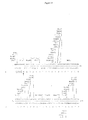
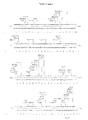
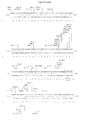
- the synthetic gene illustrated below (SEQ ID NO 1) and in Figure 14 this resulted in a total of 139 silent mutations creating 62 new non-rare codons (11% of the total).
- the first 8 nucleotides shown in Figure 14 form part of the ribosome binding site and thus do not code.
- the coding sequence begins with the methionine residue indicated by an up arrow. This coding sequence and closely similar sequences, for example sequences which have at least 90% similarity or preferably at least 95% similarity form a preferred aspect of the invention.
- Another useful feature which may be employed when producing a synthetic assembly is the incorporation of new unique restriction sites. These sites make mutagenesis, in particular combinatorial cassette mutagenesis, of the gene simpler and more efficient. In particular, it may be desirable to create unique restriction sites within the cDNA coding for subdomain B in the enzyme. Additionally creation of a unique restriction site at the extreme 3' end of the gene to allow simple fusions and/or removal of the peroxisome targeting sequence may be advantageous.
- thermostabilising amino acid changes T214C, E354K and D357F were engineered to introduce the thermostabilising amino acid changes T214C, E354K and D357F into the polypeptide.
- the nucleic acids of the invention are suitably incorporated into an expression vector such as a plasmid under the control of control elements such as promoters, enhancers, terminators etc.
- a host cell for example a prokaryotic or eukaryotic cell such as a plant or animal cell, but in particular a prokaryotic cell such as E. coli so that the cell expresses the desired luciferase enzyme.
- Culture of the thus transformed cells using conditions which are well known in the art will result in the production of the luciferase enzyme which can then be separated from the culture medium.
- the cells are plant or animal cells, plants or animals may be propagated from said cells.
- the protein may then be extracted from the plants, or in the case of transgenic animals, the proteins may be recovered from milk.
- Vectors, transformed cells, transgenic plants and animals and methods of producing enzyme by culturing these cells all form further aspects of the invention.
- the Photinus pyralis D357Y mutant luciferase was created by random mutagenesis as described hereinafter. It was found that the D357Y single point mutation produces a large colour shift in the wavelength of light emitted and also has greater thermostability than wild type luciferase. Further investigations have revealed that a range of substitutions at this position give rise to good thermostability and/or to large colour shifts.
- mutant enzymes of Photinus pyralis which fall within the scope of the invention include the following:
- the mutations for the creation of the above mutants were introduced to the luciferase gene on plasmid pET23 by site-directed mutagenesis, (PCR) or combinatorial cassette mutagenesis.
- PCR site-directed mutagenesis
- the oligonucleotides added to the PCR reaction in order to effect the relevant mutations are given below.
- Luciferase proteins of the invention will advantageously be employed in any bioluminescent assay which utilises the luciferase/luciferin reaction as a signalling means. There are many such assays known in the literature. The proteins may therefore be included in kits prepared with a view to performing such assays, optionally with luciferin and any other reagents required to perform the particular assay.
- Two libraries of firefly ( Photinus pyralis ) luciferase created used error-prone PCR [ M. Fromant et al., Anal. Biochem. (1995) 224, 347-353 ], were prepared.
- One library comprised of error-prone PCR products of the full length luc gene, cloned into the T7 expression system pET23a, (Novagen Inc., Madison, WI, U.S.A.).
- a second library consisted of the error-prone PCR products of a short section of the luc gene, covering amino acids 199-352, cloned in the vector pBSK(+), (Stratagene, La Jolla, CA, U.S.A.).
- the pET23a library was expressed in E. coli strain BL21(DE3), ( E. coli B F dcm ompT hsdS (r B - m B - ) gal ⁇ (DE3)).
- the pBSK(+) library was expressed in HB101 E. coli cells, ( supE44 araI4 galK2 lacY1 ⁇ ( gpt-proA ) 62 rpsL20 ( Str r ) xyl-5 mtl-1 recA13 ⁇ ( mrcC-mrr ) HsdS - ( r - m - ) .
- pET23a and pBSK(+) both carry the gene for ⁇ -lactamase and confer ampicillin resistance to E. coli cells harbouring the plasmid.
- An E. coli strain was transformed with the prepared library by electroporation, using a BIORAD E. coli Pulser, and grown overnight at 37°C on LB agar, containing ampicillin at a concentration of 50 ⁇ g/ml.
- the cells were transferred to nylon membranes, (Osmonics, Minnetonka, Minnesota, U.S.A.), and sprayed with luciferin solution (500 ⁇ M D-luciferin, potassium salt, in 100mM sodium citrate buffer, pH 5.0).
- the colonies were viewed using an AlphaImager TM 1200 Documentation and Analysis System (Flowgen, Lichfield, Staffordshire, UK). This integrated the bioluminescence emitted over a specified period of time to produce an image of the light emitted by the colonies. The brightness of luminescence was taken as an indication of the thermostability of luciferase.
- thermostability Colonies were selected on the basis of brightness of light emitted and were isolated for further characterisation. In some screens, the E. coli colonies were incubated at 42°C for 2 hours prior to screening so that the thermostable mutants could be selected. Colonies isolated from the primary screen were patched onto nylon membranes and also grown overnight in LB medium containing ampicillin. The patches were sprayed with luciferin solution and viewed in the AlphaImager TM . This secondary screen helped to positively identify clones for in vitro analysis of luciferase activity. E. coli clones expressing possible thermostable enzymes were assayed in vitro for luciferase activity and thermostability.
- the luciferase reaction was initiated by the addition of 10 ⁇ l crude cell extract to 100 ⁇ l Promega Luciferase Assay Cocktail (1 in 2 dilution). The resultant bioluminescence was measured using a Biotrace M3 luminometer.
- Crude cell extracts were prepared as described in the Promega technical bulletin no. 101. Aliquots of E. coli overnight cultures were lysed in cell culture lysis reagent, (25mM Tris-phosphate pH7.8, 2mM dithiothreitol (DTT), 2mM 1,2-diaminocyclohexame-N,N,N',N'-tetraacetic acid, 10% glycerol, 1% Triton X-100, 1.25 mg/ml hen lysozyme) for 10 minutes at room temperature. Crude lysate were then stored on ice prior to assay.
- DTT dithiothreitol
- Triton X-100 1.25 mg/ml hen lysozyme
- T 1/2 is the time taken for the enzyme to lose 50% of its original activity after incubation at a given temperature. T 1/2 values, (time for activity to reduce to 50% of original activity), were determined in crude extracts at 37°C from log graphs of % remaining activity versus time (not shown).
- Plasmid DNA was prepared using the QIAGEN QIAprep Spin Miniprep Kit, (QIAGEN Ltd, Crawley, W.shire, UK), following the protocol for using a microcentrifuge (QIAprep Miniprep Handbook 04/98).
- D357Y is a particularly thermostable mutant, being the most thermostable luciferase, with a single amino acid change.
- site-directed mutagenesis was performed using the Stratagene QuikChange TM Site-Directed Mutagenesis Kit, (Stratagene, La Jolla, CA, U.S.A.).
- the plasmid pPW601a J54, (PJW, MoD Report, 3/96) was used in all site-directed mutagenesis. All products of the mutagenesis reactions were transformed into E.
- Oligonucleotide primers were synthesized by Sigma-Genosys Ltd., Cambridge, UK and were designed using an intelligent doping system [ A.R Arkin et al., Bio-technology, (1992)10, 297-300 , W,. Huang et al., Anal. Biochem. 218, 454-457 ] were used to design degenerate oligonucleotide primers to produce groups of possible mutations rather than using individual primers for each amino acid substitution
- N is the number of colonies to be screened
- n is the number of possible codons at the target position
- the mutants obtained from site-directed mutagenesis were assayed for luciferase activity and characterised in time-dependent thermoinactivation studies.
- Mutants identified as desirable in this way were grown in 400ml LB medium, containing ampicillin, to A 260 ⁇ 0.5. Luciferase expression was then induced by addition of isopropyl ⁇ -thiogalactoside (IPTG) to a final concentration of 1mM. The cells were then incubated at 30°C, with shaking, for 3 hours prior to harvesting by centrifugation. The resultant cell pellet was resuspended in 10ml B-PER TM Protein Extraction Reagent, (Pierce Chemical Company, Rochford, U.S.A.), 1mM DTT to produce a crude extract, following the B-PER TM protocol for Maxi-Scale Bacterial Protein Extraction.
- the supernatant of the crude extract was subjected to fractionation with ammonium sulphate.
- the fraction that precipitated between 30% and 55% saturation contained luciferase activity.
- This material was resuspended in 0.5ml Tris HCl pH8.0, 1mM DTT and used for thermoinactivation and spectral studies.
- thermoinactivation buffer 50mM potassium phosphate buffer pH7.8 containing 10% saturated ammonium sulphate, 1mM dithiothreitol and 0.2% BSA.
- the in vivo luminescence of the mutants was assessed by eye in a dark room.
- the D357 mutants displayed a variety of colours in their luminescence spectra.
- D357Y, F and I showed significant shifts to longer wavelengths of emitted light.
- Recombinant wild type (r-wt) enzyme was used for comparison of ⁇ max of in vivo light emission of some of the 357 mutants.
- D357Y, F and I display considerable shifts in their wavelength maxima.
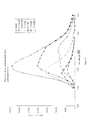
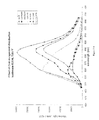
- D357Y was partially purified by ammonium sulphate precipitation, as described in the Example 1. This partially purified D357Y enzyme (5 ⁇ l) was mixed with 150 ⁇ l Promega Luciferase Assay Reagent. Another aliquot was mixed with an equivalent assay buffer in which CoA is absent, (25mM Tris Tricine pH7.8, 5.0mM MgSO 4 0.1mM EDTA, 2mM DTT, 470 ⁇ M D-luciferin, 530 ⁇ M ATP). The emission spectra of the two reactions were measured and are shown in Figures 9 and 10 .
- the spectra display a marked difference in bioluminescent emission in the absence and presence of CoA, with dramatic shift in ⁇ max .
- the effect of CoA on the kinetics of the luciferase reaction can also be seen by in the difference in RLU scales. (RLU - Relative Light Units).
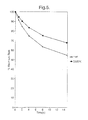
- the double mutant displayed a marked increase in thermostability in comparison to the single mutants E3541 and D357Y individually, (see Figure 3 ).
- Thermoinactivation studies of partially purified double mutant confirmed the increased thermostability of the mutant, giving a t 1/2 value of '7.7 min when inactivated at 45°C.
- the double mutant displays a much deeper red colour of luminescence than the individual mutants of E3541 and D357Y, displaying additivity of colour of luminescence.
- Emission spectra measured in vivo give a ⁇ max of 611nm. However, the spectrum has a greater contribution of luminescence from the red region of wavelengths, leading to its deeper red appearance when visualised by eye.
- Emission spectra in crude extracts displayed a definite change in spectral shape and a wavelength shift of 44nm, relative to rWT, (see Figure 4 ) .
- the in vivo emission spectrum of the double mutant shows both a sharpening of the bandwidth for the peak wavelength of emitted light (613nm) and a decrease in the contribution from wavelengths of light in the region 540-560nm.
- the in vivo bioluminescence of E. coli cells expressing the mutant D357K was observed to be vary bright relative to the other mutants at this position.
- the flash kinetics of this enzyme was analysed using a luminometer, which could measure the rate of photon emission over time. Aliquots of E. coli cell free extracts containing recombinant wild type enzyme or the mutant D357 were added to a luciferase assay cocktail, which did not contain any reagents that would promote glow kinetics e.g. coenzymeA.
- the rate of decay of photon emission was measured over time (15s) for both enzymes was observed to be significantly slower for the mutant D357K ( Figure 4 ) .
- the mutant enzyme has reaction kinetics, which are inhibited to a lesser degree, over at least the first 15 seconds of the reaction, than the recombinant wild type enzyme.
- Two new unique restriction sites were introduced into the luc gene, in the plasmid pPW601a/J54, using two pairs of synthetic oligonucleotides (see below).
- a total of six silent mutations introduced a SpeI and a KpnI restriction site, 63 base pairs apart, within the gene. Plasmid containing these new sites was called pPW601aJ54SpeI/KpnI.
- the presence and proximity of these restriction sites makes it possible to use combinatorial cassette mutagenesis to explore the effects of random substitutions at amino acid positions 354 and 357 in the primary sequence of firefly luciferase.
- a pair of synthetic oligonucleotides was synthesised which when annealed created a double stranded cassette which could be ligated directly into Plasmid pPW601aJ54SpeI/KpnI digested at the new restriction sites.
- the cassette was designed to introduce all possible combinations of the 20 naturally occurring amino acids at positions 354 and 357 in the primary sequence.
- each of the loop library oligonucleotides was mixed in a buffer containing 50mM Tris-HCl pH 7.4, 25mM NaCl, and heated to 100°C for 3min. This solution was then cooled slowly in a heating block to ⁇ 50°C to anneal the complimentary sequences. The annealed oligonucleotides were then ligated into plasmid pPW601aJ54SpeI/KpnI, which had been digested with SpeI and KpnI. Aliquots of the ligation reaction were then used to transform E. coli Hub101 cells using electroporation.
- Plasmid DATA was prepared from the 25 clones selected by in vivo screening and sequenced using gene specific sequencing primers. Mutations resulting in amino acid changes at positions 354 and 357 in the primary sequence were identified. One mutant, also contained an additional mutation resulting in an amino acid substitution at position I351 (Table 5).
- mutant luciferases were selected from the in vivo assays for thermostability. The majority of these luciferases also show large changes in the in vivo spectrum of emitted light with many showing greater contributions from longer wavelengths of light (>580nm). A number of spectra also showed a significant narrowing of bandwidth around a single peak of 610-614nm.
- E354 and D357 with a hydrophobic and an aromatic amino acid respectively e.g. E354V, D357Y results in the largest change in the in vivo spectrum which shows a single peak, of narrow bandwidth, around 612nm.
- Cell free extracts of the selected clones were prepared by lysis and the thermostability of the luciferase from each extract was determined in a thermal inactivation experiment. 50 ⁇ l of each extract was placed in an eppendorf tube and incubated in a waterbath heated to 45°C for 4, 9 and 16 minutes. At the appropriate timepoint the aliquot was removed and the remaining luciferase activity measured. Table 6 shows the percent remaining activity versus time for all mutant enzymes as well as recombinant wild type. Table 6 Enzyme No.
- thermostable luciferases were those with an aromatic amino acid at position 357 (Y, F. our W) and a large hydrophobic (V or I), polar (N) or positively charged (K or R) amino acid at position 354.
- a 50ml culture of cells was grown to mid log phase on LB medium and then harvested by centrifugation.
- the cell pellet was resuspended in 1ml of sterile distilled water and a 100ul aliquot of this suspension was then used to inoculate 5ml of fresh LB, M9 minimal medium + 2mM sodium acetate or M9 minimal medium + 2mM glucose in a 25ml Sterilin tube.
- the cultures were allowed to continue growing, at 37°C with shaking, and after 90 minutes (D357Y) or 120 minutes (enzyme 7) a 200 ⁇ l aliquot of cells was removed centrifuged and resuspended in 150ul of 100mM sodium citrate buffer pH 5.0 containing 0.5mM D-luciferin.
- Recombinant wild type Photinus pyralis enzyme and the mutant luciferases D357Y and E354I + D357Y were purified to homogeneity in order to analyse the effect of the cofactor coenzyme A on the spectrum of the bioluminescent reaction. All three luciferases were purified as fusions to a 143 amino acid carbohydrate binding module (CBM) from the anaerobic fungus Piromyces equii. This CBM has been shown to bind selectively to acid swollen cellulose and the soluble carbohydrates galactomannan and glucomannan, forming the basis for a simple single step affinity purification scheme.
- CBM carbohydrate binding module
- Luciferases fused to the CBM can be bound to cellulose in crude cell free extracts, washed, and then eluted selectively using soluble polysaccharides. Fusion proteins purified this way were used in assays to measure the wavelengths of emitted light in reactions containing different amounts of coenzyme A.
- Enzyme (5 ⁇ l) was added to 100 ⁇ l of assay reagent, 25mM Tris-Tricine pH 7.8, 5.0mM MgSO4, 0.1mM EDTA, 530 ⁇ M ATP and 470 ⁇ M D-luciferin, containing different amounts of coenzyme A.
- Figures 9-11 show the effect of increasing concentrations of coenzyme A on the spectrum of light emitted by the purified luciferases D357 and E354I + D357Y.
- a synthetic luc gene was designed and assembled from oligonucleotide pairs using the synthesis strategy outlined above.
- the gene sequence was engineered to create a luciferase with the amino acids 214C, 354K and 357F.
- oligonucleotides Twenty-nine pairs of overlapping synthetic oligonucleotides were synthesised by Sigma-Genosys Ltd, purified by PAGE and ligated in three assemblies of approximately 550bp (IDRIS 1,2 & 3, Figure 13 ). Each assembly was then ligated separately into the vector pBSK(+) and the resulting constructs were used to transform E. coli XL1-Blue cells. Plasmid DNA was prepared from clones containing the assembled inserts and sequenced to confirm the fidelity of the ORFs. The presence of n-1 oligonucleotides (by-products of the oligosynthesis) in the assemblies complicated the build process.
- DNA sequencing identified a single correct assembly of IDRIS 2 and the PCR was used to correct one assembly of IDRIS 3 which contained a single base pair deletion at the 5' end of the construct. Assembly of the complete ORF was achieved by ligating a mixture of plasmids containing IDRIS 1 with IDRIS 2 and 3.
- the ligated DNA was then used to transform E. coli XL1-Blue cells and clones expressing active enzyme were selected using an in vivo assay. Several clones were selected and sequenced to confirm the presence and fidelity of the synthetic luc gene having the sequence shown in Figure 14 .
- the complete ORF was called IDRIS (FA).
- the synthetic gene was assembled into the vector pBSK(+) between the BamH I and Sal I sites in the polylinker. In this position the gene is not in frame with the alpha peptide and is a significant distance from the lac promoter. However, enough luciferase is produced to enable preliminary characterisation of the enzyme. Crude cell free extracts of E. coli XLl-Blue cells expressing IDRIS (FA) were prepared, from overnight cultures, using the Promega lysis method.
- thermostability of the enzyme in the extract was then tested at 50°C over 20 minutes and compared with the thermostable mutant E354I+D357Y.
- the new codon optimised triple mutant was significantly more thermostable than the mutant E354I+D357Y ( Figure 15 ).
Landscapes
- Chemical & Material Sciences (AREA)
- Life Sciences & Earth Sciences (AREA)
- Health & Medical Sciences (AREA)
- Organic Chemistry (AREA)
- Wood Science & Technology (AREA)
- Bioinformatics & Cheminformatics (AREA)
- Genetics & Genomics (AREA)
- Engineering & Computer Science (AREA)
- Zoology (AREA)
- General Engineering & Computer Science (AREA)
- General Health & Medical Sciences (AREA)
- Biochemistry (AREA)
- Molecular Biology (AREA)
- Medicinal Chemistry (AREA)
- Biomedical Technology (AREA)
- Biotechnology (AREA)
- Microbiology (AREA)
- Enzymes And Modification Thereof (AREA)
- Micro-Organisms Or Cultivation Processes Thereof (AREA)
- Measuring Or Testing Involving Enzymes Or Micro-Organisms (AREA)
- Investigating Or Analysing Biological Materials (AREA)
- Investigating Or Analysing Materials By The Use Of Chemical Reactions (AREA)
Applications Claiming Priority (3)
| Application Number | Priority Date | Filing Date | Title |
|---|---|---|---|
| GBGB9925161.3A GB9925161D0 (en) | 1999-10-26 | 1999-10-26 | Novel enzyme |
| EP00971589A EP1224294B1 (de) | 1999-10-26 | 2000-10-26 | Mutantenluciferase |
| EP07017621.9A EP1935980B1 (de) | 1999-10-26 | 2000-10-26 | Luziferasemutante |
Related Parent Applications (4)
| Application Number | Title | Priority Date | Filing Date |
|---|---|---|---|
| EP07017621.9A Division EP1935980B1 (de) | 1999-10-26 | 2000-10-26 | Luziferasemutante |
| EP00971589.7 Division | 2000-10-26 | ||
| EP00971589A Division EP1224294B1 (de) | 1999-10-26 | 2000-10-26 | Mutantenluciferase |
| EP07017621.9 Division | 2007-09-08 |
Publications (3)
| Publication Number | Publication Date |
|---|---|
| EP2284271A2 true EP2284271A2 (de) | 2011-02-16 |
| EP2284271A3 EP2284271A3 (de) | 2012-03-07 |
| EP2284271B1 EP2284271B1 (de) | 2013-09-11 |
Family
ID=10863292
Family Applications (2)
| Application Number | Title | Priority Date | Filing Date |
|---|---|---|---|
| EP10178711.7A Expired - Lifetime EP2284271B1 (de) | 1999-10-26 | 2000-10-26 | Mutierte Luziferase |
| EP07017621.9A Expired - Lifetime EP1935980B1 (de) | 1999-10-26 | 2000-10-26 | Luziferasemutante |
Family Applications After (1)
| Application Number | Title | Priority Date | Filing Date |
|---|---|---|---|
| EP07017621.9A Expired - Lifetime EP1935980B1 (de) | 1999-10-26 | 2000-10-26 | Luziferasemutante |
Country Status (5)
| Country | Link |
|---|---|
| US (2) | US8669087B1 (de) |
| EP (2) | EP2284271B1 (de) |
| JP (1) | JP2011083289A (de) |
| GB (2) | GB9925161D0 (de) |
| ZA (1) | ZA200203170B (de) |
Cited By (5)
| Publication number | Priority date | Publication date | Assignee | Title |
|---|---|---|---|---|
| CN102191213A (zh) * | 2011-04-14 | 2011-09-21 | 中国科学院武汉病毒研究所 | 一种萤火虫荧光素酶的编码基因及制备方法和应用 |
| US8809529B2 (en) | 2010-11-02 | 2014-08-19 | Promega Corporation | Imidazo[1,2-α]pyrazine derivatives |
| US9487520B2 (en) | 2010-11-02 | 2016-11-08 | Promega Corporation | Coelenterazine derivatives and methods of using same |
| US9790537B2 (en) | 2014-01-29 | 2017-10-17 | Promega Corporation | Quinone-masked probes as labeling reagents for cell uptake measurements |
| US9927430B2 (en) | 2014-01-29 | 2018-03-27 | Promega Corporation | Pro-substrates for live cell applications |
Families Citing this family (5)
| Publication number | Priority date | Publication date | Assignee | Title |
|---|---|---|---|---|
| US6602677B1 (en) | 1997-09-19 | 2003-08-05 | Promega Corporation | Thermostable luciferases and methods of production |
| JP6412718B2 (ja) * | 2014-05-27 | 2018-10-24 | オリンパス株式会社 | プロモーターアッセイ |
| US9732373B2 (en) | 2014-09-11 | 2017-08-15 | Promega Corporation | Luciferase sequences utilizing infrared-emitting substrates to produce enhanced luminescence |
| JP6493316B2 (ja) | 2016-06-21 | 2019-04-03 | 東亜ディーケーケー株式会社 | 変異型甲虫ルシフェラーゼ、遺伝子、組換えベクター、形質転換体、及び変異型甲虫ルシフェラーゼの製造方法 |
| WO2019081620A1 (en) * | 2017-10-25 | 2019-05-02 | Roche Diagnostics Gmbh | IMPROVED MODIFIED / MUTANT BACTERIAL LUCIFERASES |
Citations (7)
| Publication number | Priority date | Publication date | Assignee | Title |
|---|---|---|---|---|
| EP0052448A1 (de) | 1980-11-12 | 1982-05-26 | Mita Industrial Co. Ltd. | Photoempfindliche Trommel für ein elektrostatisches Kopiergerät |
| EP0524448A1 (de) | 1991-06-27 | 1993-01-27 | Kikkoman Corporation | Thermostabile Luciferase des Leuchtkäfers, Gen der thermostabilen Luciferase des Leuchtkäfers, rekombinante DNS, und Verfahren zur Herstellung der thermostabilen Luciferase des Leuchtkäfers |
| WO1995018853A1 (en) | 1994-01-03 | 1995-07-13 | Promega Corporation | Mutant luciferases |
| WO1995025798A1 (en) | 1994-03-23 | 1995-09-28 | The Secretary Of State Of Defence In Her Britannic Majesty's Government Of The United Kingdom Of Great Britain And Northern Ireland | Luciferases |
| WO1996002665A1 (en) | 1994-07-13 | 1996-02-01 | The Secretary Of State For Defence In Her Britannic Majesty's Government Of The United Kingdom Of Great Britain And Northern Ireland | Microbiological test method and reagents |
| WO1996022376A1 (en) | 1995-01-20 | 1996-07-25 | The Secretary Of State For Defence | Mutant luciferases |
| EP0680515B1 (de) | 1993-01-21 | 1998-08-26 | The Secretary of State for Defence in Her Britannic Majesty's Government of the United Kingdom of Great Britain and | Mikrobiologisches testverfahren und reagenzien |
Family Cites Families (23)
| Publication number | Priority date | Publication date | Assignee | Title |
|---|---|---|---|---|
| US5583024A (en) | 1985-12-02 | 1996-12-10 | The Regents Of The University Of California | Recombinant expression of Coleoptera luciferase |
| JPH088864B2 (ja) | 1988-04-12 | 1996-01-31 | キッコーマン株式会社 | ルシフェラーゼ |
| US5049358A (en) | 1988-09-30 | 1991-09-17 | Miles Inc. | Composition and test device for assaying for proteins |
| US5196524A (en) | 1989-01-06 | 1993-03-23 | Eli Lilly And Company | Fusion reporter gene for bacterial luciferase |
| US5219737A (en) | 1990-03-27 | 1993-06-15 | Kikkoman Corporation | Mutant luciferase of a firefly, mutant luciferase genes, recombinant dnas containing the genes and a method of producing mutant luciferase |
| US5480789A (en) | 1991-04-01 | 1996-01-02 | Florigene Europe B.V. | Genetically transformed rose plants and methods for their production |
| JP3048466B2 (ja) | 1991-06-27 | 2000-06-05 | キッコーマン株式会社 | 耐熱性ホタルルシフェラーゼ、耐熱性ホタルルシフェラーゼ遺伝子、新規な組み換え体dna、及び耐熱性ホタルルシフェラーゼの製造法 |
| US6387675B1 (en) | 1994-01-03 | 2002-05-14 | Promega Corporation | Mutant luciferases |
| US5605793A (en) | 1994-02-17 | 1997-02-25 | Affymax Technologies N.V. | Methods for in vitro recombination |
| GB2301592B (en) | 1994-03-23 | 1998-06-17 | Secr Defence | Luciferases |
| US5670356A (en) | 1994-12-12 | 1997-09-23 | Promega Corporation | Modified luciferase |
| US5716851A (en) | 1996-01-16 | 1998-02-10 | Bayer Corporation | Glass/cellulose as protein reagent |
| JPH09294600A (ja) | 1996-04-26 | 1997-11-18 | Kikkoman Corp | 複数のプロモーター活性の測定法 |
| JP2001504325A (ja) | 1996-09-27 | 2001-04-03 | マキシジェン,インコーポレイテッド | 回帰的配列シャフリングおよび選択による遺伝子治療の最適化のための方法 |
| GB9707486D0 (en) | 1997-04-11 | 1997-05-28 | Secr Defence | Enzyme assays |
| US6074859A (en) | 1997-07-08 | 2000-06-13 | Kikkoman Corporation | Mutant-type bioluminescent protein, and process for producing the mutant-type bioluminescent protein |
| US6602677B1 (en) | 1997-09-19 | 2003-08-05 | Promega Corporation | Thermostable luciferases and methods of production |
| CA2301828A1 (en) * | 1997-09-19 | 1999-03-25 | Promega Corporation | Thermostable luciferases and methods of production |
| GB9823468D0 (en) | 1998-10-28 | 1998-12-23 | Secr Defence | Novel enzyme |
| NZ518413A (en) * | 1999-10-26 | 2004-11-26 | Secr Defence | Novel enzyme |
| US7083911B2 (en) | 2001-02-16 | 2006-08-01 | Promega Corporation | Method for detection of ATP |
| US7183092B2 (en) * | 2003-10-03 | 2007-02-27 | Board Of Control Of Michigan Technological University | Modified luciferase |
| JP5244942B2 (ja) | 2011-04-25 | 2013-07-24 | 株式会社グレイプ | 筋交い取付構造 |
-
1999
- 1999-10-26 GB GBGB9925161.3A patent/GB9925161D0/en not_active Ceased
-
2000
- 2000-07-10 GB GBGB0016744.5A patent/GB0016744D0/en not_active Ceased
- 2000-10-26 EP EP10178711.7A patent/EP2284271B1/de not_active Expired - Lifetime
- 2000-10-26 EP EP07017621.9A patent/EP1935980B1/de not_active Expired - Lifetime
- 2000-10-26 US US10/111,723 patent/US8669087B1/en not_active Expired - Fee Related
-
2002
- 2002-04-22 ZA ZA200203170A patent/ZA200203170B/xx unknown
-
2011
- 2011-01-05 JP JP2011000791A patent/JP2011083289A/ja not_active Withdrawn
-
2014
- 2014-02-14 US US14/180,505 patent/US20140186918A1/en not_active Abandoned
Patent Citations (7)
| Publication number | Priority date | Publication date | Assignee | Title |
|---|---|---|---|---|
| EP0052448A1 (de) | 1980-11-12 | 1982-05-26 | Mita Industrial Co. Ltd. | Photoempfindliche Trommel für ein elektrostatisches Kopiergerät |
| EP0524448A1 (de) | 1991-06-27 | 1993-01-27 | Kikkoman Corporation | Thermostabile Luciferase des Leuchtkäfers, Gen der thermostabilen Luciferase des Leuchtkäfers, rekombinante DNS, und Verfahren zur Herstellung der thermostabilen Luciferase des Leuchtkäfers |
| EP0680515B1 (de) | 1993-01-21 | 1998-08-26 | The Secretary of State for Defence in Her Britannic Majesty's Government of the United Kingdom of Great Britain and | Mikrobiologisches testverfahren und reagenzien |
| WO1995018853A1 (en) | 1994-01-03 | 1995-07-13 | Promega Corporation | Mutant luciferases |
| WO1995025798A1 (en) | 1994-03-23 | 1995-09-28 | The Secretary Of State Of Defence In Her Britannic Majesty's Government Of The United Kingdom Of Great Britain And Northern Ireland | Luciferases |
| WO1996002665A1 (en) | 1994-07-13 | 1996-02-01 | The Secretary Of State For Defence In Her Britannic Majesty's Government Of The United Kingdom Of Great Britain And Northern Ireland | Microbiological test method and reagents |
| WO1996022376A1 (en) | 1995-01-20 | 1996-07-25 | The Secretary Of State For Defence | Mutant luciferases |
Non-Patent Citations (11)
| Title |
|---|
| A.R ARKIN ET AL., BIO-TECHNOLOGY, vol. 10, 1992, pages 297 - 300 |
| BIOCHEM., vol. 38, 1999, pages 8271 - 8279 |
| DEVEREUX ET AL., NUCLEIC ACID RESEARCH, vol. 12, 1984, pages 387 - 395 |
| E. CONTI ET AL., STRUCTURE, vol. 4, 1996, pages 287 - 298 |
| F. SANGER ET AL., PROC. NATL. ACAD. SCI. U.S.A., vol. 74, 1977, pages 5463 - 5467 |
| L. YE ET AL., BIOCHIM. BIOPHYS ACTA, vol. 1339, 1997, pages 39 - 52 |
| LIPMAN, D.J.; PEARSON, W.R.: "Rapid and Sensitive Protein Similarity Searches", SCIENCE, vol. 227, 1985, pages 1435 - 1441 |
| M. FROMANT ET AL., ANAL. BIOCHEM., vol. 224, 1995, pages 347 - 353 |
| S. CLIMIE ET AL., J. BIOL. CHEM., vol. 265, 1990, pages 18776 - 18779 |
| SAMBROOK ET AL.: "Molecular Cloning", 1989, COLD SPRING HARBOR LABORATORY PRESS |
| W,. HUANG ET AL., ANAL. BIOCHEM., vol. 218, pages 454 - 457 |
Cited By (14)
| Publication number | Priority date | Publication date | Assignee | Title |
|---|---|---|---|---|
| US9840730B2 (en) | 2010-11-02 | 2017-12-12 | Promega Corporation | Oplophorus-derived luciferases, novel coelenterazine substrates, and methods of use |
| US12215375B2 (en) | 2010-11-02 | 2025-02-04 | Promega Corporation | Oplophorus-derived luciferases, novel coelenterazine substrates, and methods of use |
| US8809529B2 (en) | 2010-11-02 | 2014-08-19 | Promega Corporation | Imidazo[1,2-α]pyrazine derivatives |
| US9139836B2 (en) | 2010-11-02 | 2015-09-22 | Promega Corporation | Imidazo[1,2-a]pyrazine derivatives |
| US9487520B2 (en) | 2010-11-02 | 2016-11-08 | Promega Corporation | Coelenterazine derivatives and methods of using same |
| US12435354B2 (en) | 2010-11-02 | 2025-10-07 | Promega Corporation | Oplophorus-derived luciferases, novel coelenterazine substrates, and methods of use |
| US9938564B2 (en) | 2010-11-02 | 2018-04-10 | Promega Corporation | Substituted imidazo[1,2-a]pyrazines for use in bioluminogenic methods |
| US11661623B2 (en) | 2010-11-02 | 2023-05-30 | Promega Corporation | Oplophorus-derived luciferases, novel coelenterazine substrates, and methods of use |
| US10774364B2 (en) | 2010-11-02 | 2020-09-15 | Promega Corporation | Oplophorus-derived luciferases, novel coelenterazine substrates, and methods of use |
| US9951373B2 (en) | 2010-11-02 | 2018-04-24 | Promega Corporation | Oplophorus-derived luciferases, novel coelenterazine substrates, and methods of use |
| CN102191213B (zh) * | 2011-04-14 | 2012-10-03 | 中国科学院武汉病毒研究所 | 一种萤火虫荧光素酶的编码基因及制备方法和应用 |
| CN102191213A (zh) * | 2011-04-14 | 2011-09-21 | 中国科学院武汉病毒研究所 | 一种萤火虫荧光素酶的编码基因及制备方法和应用 |
| US9927430B2 (en) | 2014-01-29 | 2018-03-27 | Promega Corporation | Pro-substrates for live cell applications |
| US9790537B2 (en) | 2014-01-29 | 2017-10-17 | Promega Corporation | Quinone-masked probes as labeling reagents for cell uptake measurements |
Also Published As
| Publication number | Publication date |
|---|---|
| GB0016744D0 (en) | 2000-08-30 |
| GB9925161D0 (en) | 1999-12-22 |
| HK1055443A1 (zh) | 2004-01-09 |
| US20140186918A1 (en) | 2014-07-03 |
| JP2011083289A (ja) | 2011-04-28 |
| EP2284271A3 (de) | 2012-03-07 |
| EP2284271B1 (de) | 2013-09-11 |
| US8669087B1 (en) | 2014-03-11 |
| EP1935980B1 (de) | 2013-07-17 |
| EP1935980A1 (de) | 2008-06-25 |
| ZA200203170B (en) | 2003-09-23 |
Similar Documents
| Publication | Publication Date | Title |
|---|---|---|
| EP1224294B1 (de) | Mutantenluciferase | |
| US20140186918A1 (en) | Luciferase mutant | |
| White et al. | Improved thermostability of the North American firefly luciferase: saturation mutagenesis at position 354 | |
| EP0751996B1 (de) | Luziferasen | |
| CA2283287C (en) | Enzyme assays | |
| KR20030051865A (ko) | 단리된 루시퍼라제 및 그의 용도 | |
| Nazari et al. | Step-wise addition of disulfide bridge in firefly luciferase controls color shift through a flexible loop: a thermodynamic perspective | |
| JP2008289475A (ja) | 最大発光波長がシフトした変異型ルシフェラーゼ | |
| US10988741B2 (en) | Mutated genes for the catalytic protein of Oplophorus luciferase and use thereof | |
| EP1924702A2 (de) | Ph-tolerante luciferase | |
| US20150152395A1 (en) | Chimeric luciferases | |
| TWI239353B (en) | Thermostable luciferase mutant enzymes, nucleic acids encoding them and the use thereof | |
| HK1055443B (zh) | 新型酶 | |
| Halliwell | Protein engineering utilising single amino acid deletions within Photinus pyralis firefly luciferase | |
| US10519428B2 (en) | Mutated genes for the catalytic protein of oplophorus luciferase and use thereof | |
| MXPA96004194A (en) | Lucifera | |
| Davis | Improved Red-emitting Firefly Luciferase Mutant for Biotechnical Applications |
Legal Events
| Date | Code | Title | Description |
|---|---|---|---|
| PUAI | Public reference made under article 153(3) epc to a published international application that has entered the european phase |
Free format text: ORIGINAL CODE: 0009012 |
|
| 17P | Request for examination filed |
Effective date: 20100923 |
|
| AC | Divisional application: reference to earlier application |
Ref document number: 1935980 Country of ref document: EP Kind code of ref document: P Ref document number: 1224294 Country of ref document: EP Kind code of ref document: P |
|
| AK | Designated contracting states |
Kind code of ref document: A2 Designated state(s): AT BE CH CY DE DK ES FI FR GB GR IE IT LI LU MC NL PT SE |
|
| PUAL | Search report despatched |
Free format text: ORIGINAL CODE: 0009013 |
|
| AK | Designated contracting states |
Kind code of ref document: A3 Designated state(s): AT BE CH CY DE DK ES FI FR GB GR IE IT LI LU MC NL PT SE |
|
| RIC1 | Information provided on ipc code assigned before grant |
Ipc: C12N 15/53 20060101AFI20120201BHEP Ipc: C12N 9/02 20060101ALI20120201BHEP Ipc: C12Q 1/66 20060101ALI20120201BHEP |
|
| 17Q | First examination report despatched |
Effective date: 20120927 |
|
| GRAP | Despatch of communication of intention to grant a patent |
Free format text: ORIGINAL CODE: EPIDOSNIGR1 |
|
| INTG | Intention to grant announced |
Effective date: 20130408 |
|
| GRAS | Grant fee paid |
Free format text: ORIGINAL CODE: EPIDOSNIGR3 |
|
| GRAA | (expected) grant |
Free format text: ORIGINAL CODE: 0009210 |
|
| AC | Divisional application: reference to earlier application |
Ref document number: 1935980 Country of ref document: EP Kind code of ref document: P Ref document number: 1224294 Country of ref document: EP Kind code of ref document: P |
|
| AK | Designated contracting states |
Kind code of ref document: B1 Designated state(s): AT BE CH CY DE DK ES FI FR GB GR IE IT LI LU MC NL PT SE |
|
| REG | Reference to a national code |
Ref country code: GB Ref legal event code: FG4D |
|
| REG | Reference to a national code |
Ref country code: CH Ref legal event code: EP |
|
| REG | Reference to a national code |
Ref country code: AT Ref legal event code: REF Ref document number: 631657 Country of ref document: AT Kind code of ref document: T Effective date: 20130915 |
|
| REG | Reference to a national code |
Ref country code: IE Ref legal event code: FG4D |
|
| REG | Reference to a national code |
Ref country code: DE Ref legal event code: R096 Ref document number: 60048252 Country of ref document: DE Effective date: 20131107 |
|
| PG25 | Lapsed in a contracting state [announced via postgrant information from national office to epo] |
Ref country code: CY Free format text: LAPSE BECAUSE OF FAILURE TO SUBMIT A TRANSLATION OF THE DESCRIPTION OR TO PAY THE FEE WITHIN THE PRESCRIBED TIME-LIMIT Effective date: 20130918 Ref country code: SE Free format text: LAPSE BECAUSE OF FAILURE TO SUBMIT A TRANSLATION OF THE DESCRIPTION OR TO PAY THE FEE WITHIN THE PRESCRIBED TIME-LIMIT Effective date: 20130911 |
|
| REG | Reference to a national code |
Ref country code: NL Ref legal event code: VDEP Effective date: 20130911 |
|
| REG | Reference to a national code |
Ref country code: AT Ref legal event code: MK05 Ref document number: 631657 Country of ref document: AT Kind code of ref document: T Effective date: 20130911 |
|
| PG25 | Lapsed in a contracting state [announced via postgrant information from national office to epo] |
Ref country code: FI Free format text: LAPSE BECAUSE OF FAILURE TO SUBMIT A TRANSLATION OF THE DESCRIPTION OR TO PAY THE FEE WITHIN THE PRESCRIBED TIME-LIMIT Effective date: 20130911 Ref country code: GR Free format text: LAPSE BECAUSE OF FAILURE TO SUBMIT A TRANSLATION OF THE DESCRIPTION OR TO PAY THE FEE WITHIN THE PRESCRIBED TIME-LIMIT Effective date: 20131212 |
|
| PG25 | Lapsed in a contracting state [announced via postgrant information from national office to epo] |
Ref country code: BE Free format text: LAPSE BECAUSE OF FAILURE TO SUBMIT A TRANSLATION OF THE DESCRIPTION OR TO PAY THE FEE WITHIN THE PRESCRIBED TIME-LIMIT Effective date: 20130911 Ref country code: CY Free format text: LAPSE BECAUSE OF FAILURE TO SUBMIT A TRANSLATION OF THE DESCRIPTION OR TO PAY THE FEE WITHIN THE PRESCRIBED TIME-LIMIT Effective date: 20130911 |
|
| PG25 | Lapsed in a contracting state [announced via postgrant information from national office to epo] |
Ref country code: NL Free format text: LAPSE BECAUSE OF FAILURE TO SUBMIT A TRANSLATION OF THE DESCRIPTION OR TO PAY THE FEE WITHIN THE PRESCRIBED TIME-LIMIT Effective date: 20130911 |
|
| PG25 | Lapsed in a contracting state [announced via postgrant information from national office to epo] |
Ref country code: ES Free format text: LAPSE BECAUSE OF FAILURE TO SUBMIT A TRANSLATION OF THE DESCRIPTION OR TO PAY THE FEE WITHIN THE PRESCRIBED TIME-LIMIT Effective date: 20130911 Ref country code: AT Free format text: LAPSE BECAUSE OF FAILURE TO SUBMIT A TRANSLATION OF THE DESCRIPTION OR TO PAY THE FEE WITHIN THE PRESCRIBED TIME-LIMIT Effective date: 20130911 |
|
| REG | Reference to a national code |
Ref country code: CH Ref legal event code: PL |
|
| REG | Reference to a national code |
Ref country code: DE Ref legal event code: R097 Ref document number: 60048252 Country of ref document: DE |
|
| PG25 | Lapsed in a contracting state [announced via postgrant information from national office to epo] |
Ref country code: PT Free format text: LAPSE BECAUSE OF FAILURE TO SUBMIT A TRANSLATION OF THE DESCRIPTION OR TO PAY THE FEE WITHIN THE PRESCRIBED TIME-LIMIT Effective date: 20140113 Ref country code: MC Free format text: LAPSE BECAUSE OF FAILURE TO SUBMIT A TRANSLATION OF THE DESCRIPTION OR TO PAY THE FEE WITHIN THE PRESCRIBED TIME-LIMIT Effective date: 20130911 |
|
| PLBE | No opposition filed within time limit |
Free format text: ORIGINAL CODE: 0009261 |
|
| STAA | Information on the status of an ep patent application or granted ep patent |
Free format text: STATUS: NO OPPOSITION FILED WITHIN TIME LIMIT |
|
| REG | Reference to a national code |
Ref country code: IE Ref legal event code: MM4A |
|
| PG25 | Lapsed in a contracting state [announced via postgrant information from national office to epo] |
Ref country code: CH Free format text: LAPSE BECAUSE OF NON-PAYMENT OF DUE FEES Effective date: 20131031 Ref country code: LI Free format text: LAPSE BECAUSE OF NON-PAYMENT OF DUE FEES Effective date: 20131031 |
|
| 26N | No opposition filed |
Effective date: 20140612 |
|
| PG25 | Lapsed in a contracting state [announced via postgrant information from national office to epo] |
Ref country code: IT Free format text: LAPSE BECAUSE OF FAILURE TO SUBMIT A TRANSLATION OF THE DESCRIPTION OR TO PAY THE FEE WITHIN THE PRESCRIBED TIME-LIMIT Effective date: 20130911 |
|
| REG | Reference to a national code |
Ref country code: DE Ref legal event code: R097 Ref document number: 60048252 Country of ref document: DE Effective date: 20140612 |
|
| PG25 | Lapsed in a contracting state [announced via postgrant information from national office to epo] |
Ref country code: DK Free format text: LAPSE BECAUSE OF FAILURE TO SUBMIT A TRANSLATION OF THE DESCRIPTION OR TO PAY THE FEE WITHIN THE PRESCRIBED TIME-LIMIT Effective date: 20130911 |
|
| PG25 | Lapsed in a contracting state [announced via postgrant information from national office to epo] |
Ref country code: IE Free format text: LAPSE BECAUSE OF NON-PAYMENT OF DUE FEES Effective date: 20131026 |
|
| PG25 | Lapsed in a contracting state [announced via postgrant information from national office to epo] |
Ref country code: LU Free format text: LAPSE BECAUSE OF NON-PAYMENT OF DUE FEES Effective date: 20131026 |
|
| REG | Reference to a national code |
Ref country code: FR Ref legal event code: PLFP Year of fee payment: 16 |
|
| REG | Reference to a national code |
Ref country code: FR Ref legal event code: PLFP Year of fee payment: 17 |
|
| REG | Reference to a national code |
Ref country code: FR Ref legal event code: PLFP Year of fee payment: 18 |
|
| REG | Reference to a national code |
Ref country code: FR Ref legal event code: PLFP Year of fee payment: 19 |
|
| PGFP | Annual fee paid to national office [announced via postgrant information from national office to epo] |
Ref country code: DE Payment date: 20191029 Year of fee payment: 20 |
|
| PGFP | Annual fee paid to national office [announced via postgrant information from national office to epo] |
Ref country code: FR Payment date: 20191025 Year of fee payment: 20 |
|
| PGFP | Annual fee paid to national office [announced via postgrant information from national office to epo] |
Ref country code: GB Payment date: 20191028 Year of fee payment: 20 |
|
| REG | Reference to a national code |
Ref country code: DE Ref legal event code: R071 Ref document number: 60048252 Country of ref document: DE |
|
| REG | Reference to a national code |
Ref country code: GB Ref legal event code: PE20 Expiry date: 20201025 |
|
| PG25 | Lapsed in a contracting state [announced via postgrant information from national office to epo] |
Ref country code: GB Free format text: LAPSE BECAUSE OF EXPIRATION OF PROTECTION Effective date: 20201025 |