EP2285809B1 - 1,4-diaryl-pyrimidopyridazin-2,5-diones et leur utilisation - Google Patents
1,4-diaryl-pyrimidopyridazin-2,5-diones et leur utilisation Download PDFInfo
- Publication number
- EP2285809B1 EP2285809B1 EP09741818A EP09741818A EP2285809B1 EP 2285809 B1 EP2285809 B1 EP 2285809B1 EP 09741818 A EP09741818 A EP 09741818A EP 09741818 A EP09741818 A EP 09741818A EP 2285809 B1 EP2285809 B1 EP 2285809B1
- Authority
- EP
- European Patent Office
- Prior art keywords
- alkyl
- formula
- phenyl
- substituted
- group
- Prior art date
- Legal status (The legal status is an assumption and is not a legal conclusion. Google has not performed a legal analysis and makes no representation as to the accuracy of the status listed.)
- Active
Links
- RWAWYKHIHOCVIY-UHFFFAOYSA-N CCOC(C(C(c(c(C(F)(F)F)c1)ccc1C#N)N1)=C(C)N(c2cc(C(F)(F)F)ccc2)C1=O)=O Chemical compound CCOC(C(C(c(c(C(F)(F)F)c1)ccc1C#N)N1)=C(C)N(c2cc(C(F)(F)F)ccc2)C1=O)=O RWAWYKHIHOCVIY-UHFFFAOYSA-N 0.000 description 1
- VFWNPUPPJOCRCL-UHFFFAOYSA-N CCOC(C(C(c(c(S(C)(=O)=O)c1)ccc1C#N)N1)=C(C)N(c2cc(C(F)(F)F)ccc2)C1=O)=O Chemical compound CCOC(C(C(c(c(S(C)(=O)=O)c1)ccc1C#N)N1)=C(C)N(c2cc(C(F)(F)F)ccc2)C1=O)=O VFWNPUPPJOCRCL-UHFFFAOYSA-N 0.000 description 1
- BKJOWIMBZBSEQE-OAQYLSRUSA-N CCOC(C([C@@H](c(cc1)ccc1C#N)N1CC(N)=O)=C(C)N(c2cc(C(F)(F)F)ccc2)C1=O)=O Chemical compound CCOC(C([C@@H](c(cc1)ccc1C#N)N1CC(N)=O)=C(C)N(c2cc(C(F)(F)F)ccc2)C1=O)=O BKJOWIMBZBSEQE-OAQYLSRUSA-N 0.000 description 1
- SQKLAVRTFWIBGN-UHFFFAOYSA-N CN(CC(N1c2cc(C(F)(F)F)ccc2)=C2C(c(c(S(C)(=O)=O)c3)ccc3C#N)NC1=O)NC2=O Chemical compound CN(CC(N1c2cc(C(F)(F)F)ccc2)=C2C(c(c(S(C)(=O)=O)c3)ccc3C#N)NC1=O)NC2=O SQKLAVRTFWIBGN-UHFFFAOYSA-N 0.000 description 1
- LIFVKWFVQALBLW-HSZRJFAPSA-N CN(CCO)C(CN([C@H](c(cc1)ccc1C#N)C(C(NN(C)C1)=O)=C1N1c2cc(C(F)(F)F)ccc2)C1=O)=O Chemical compound CN(CCO)C(CN([C@H](c(cc1)ccc1C#N)C(C(NN(C)C1)=O)=C1N1c2cc(C(F)(F)F)ccc2)C1=O)=O LIFVKWFVQALBLW-HSZRJFAPSA-N 0.000 description 1
- 0 COC(CC(N=C)=O)=* Chemical compound COC(CC(N=C)=O)=* 0.000 description 1
- HEYDFPZIZTYIML-UHFFFAOYSA-N Cc(c(S(C)(=O)=O)c1)ccc1C#N Chemical compound Cc(c(S(C)(=O)=O)c1)ccc1C#N HEYDFPZIZTYIML-UHFFFAOYSA-N 0.000 description 1
- PZJBJICBUJRZED-XMMPIXPASA-N N#Cc1ccc([C@H](C(C(NN(Cc(cccc2)c2F)C2)=O)=C2N2c3cccc(C(F)(F)F)c3)NC2=O)cc1 Chemical compound N#Cc1ccc([C@H](C(C(NN(Cc(cccc2)c2F)C2)=O)=C2N2c3cccc(C(F)(F)F)c3)NC2=O)cc1 PZJBJICBUJRZED-XMMPIXPASA-N 0.000 description 1
- DTQVDTLACAAQTR-UHFFFAOYSA-N OC(C(F)(F)F)=O Chemical compound OC(C(F)(F)F)=O DTQVDTLACAAQTR-UHFFFAOYSA-N 0.000 description 1
Classifications
-
- C—CHEMISTRY; METALLURGY
- C07—ORGANIC CHEMISTRY
- C07D—HETEROCYCLIC COMPOUNDS
- C07D487/00—Heterocyclic compounds containing nitrogen atoms as the only ring hetero atoms in the condensed system, not provided for by groups C07D451/00 - C07D477/00
- C07D487/02—Heterocyclic compounds containing nitrogen atoms as the only ring hetero atoms in the condensed system, not provided for by groups C07D451/00 - C07D477/00 in which the condensed system contains two hetero rings
- C07D487/04—Ortho-condensed systems
-
- A—HUMAN NECESSITIES
- A61—MEDICAL OR VETERINARY SCIENCE; HYGIENE
- A61P—SPECIFIC THERAPEUTIC ACTIVITY OF CHEMICAL COMPOUNDS OR MEDICINAL PREPARATIONS
- A61P1/00—Drugs for disorders of the alimentary tract or the digestive system
-
- A—HUMAN NECESSITIES
- A61—MEDICAL OR VETERINARY SCIENCE; HYGIENE
- A61P—SPECIFIC THERAPEUTIC ACTIVITY OF CHEMICAL COMPOUNDS OR MEDICINAL PREPARATIONS
- A61P11/00—Drugs for disorders of the respiratory system
-
- A—HUMAN NECESSITIES
- A61—MEDICAL OR VETERINARY SCIENCE; HYGIENE
- A61P—SPECIFIC THERAPEUTIC ACTIVITY OF CHEMICAL COMPOUNDS OR MEDICINAL PREPARATIONS
- A61P11/00—Drugs for disorders of the respiratory system
- A61P11/06—Antiasthmatics
-
- A—HUMAN NECESSITIES
- A61—MEDICAL OR VETERINARY SCIENCE; HYGIENE
- A61P—SPECIFIC THERAPEUTIC ACTIVITY OF CHEMICAL COMPOUNDS OR MEDICINAL PREPARATIONS
- A61P13/00—Drugs for disorders of the urinary system
-
- A—HUMAN NECESSITIES
- A61—MEDICAL OR VETERINARY SCIENCE; HYGIENE
- A61P—SPECIFIC THERAPEUTIC ACTIVITY OF CHEMICAL COMPOUNDS OR MEDICINAL PREPARATIONS
- A61P17/00—Drugs for dermatological disorders
-
- A—HUMAN NECESSITIES
- A61—MEDICAL OR VETERINARY SCIENCE; HYGIENE
- A61P—SPECIFIC THERAPEUTIC ACTIVITY OF CHEMICAL COMPOUNDS OR MEDICINAL PREPARATIONS
- A61P19/00—Drugs for skeletal disorders
-
- A—HUMAN NECESSITIES
- A61—MEDICAL OR VETERINARY SCIENCE; HYGIENE
- A61P—SPECIFIC THERAPEUTIC ACTIVITY OF CHEMICAL COMPOUNDS OR MEDICINAL PREPARATIONS
- A61P25/00—Drugs for disorders of the nervous system
-
- A—HUMAN NECESSITIES
- A61—MEDICAL OR VETERINARY SCIENCE; HYGIENE
- A61P—SPECIFIC THERAPEUTIC ACTIVITY OF CHEMICAL COMPOUNDS OR MEDICINAL PREPARATIONS
- A61P27/00—Drugs for disorders of the senses
-
- A—HUMAN NECESSITIES
- A61—MEDICAL OR VETERINARY SCIENCE; HYGIENE
- A61P—SPECIFIC THERAPEUTIC ACTIVITY OF CHEMICAL COMPOUNDS OR MEDICINAL PREPARATIONS
- A61P3/00—Drugs for disorders of the metabolism
-
- A—HUMAN NECESSITIES
- A61—MEDICAL OR VETERINARY SCIENCE; HYGIENE
- A61P—SPECIFIC THERAPEUTIC ACTIVITY OF CHEMICAL COMPOUNDS OR MEDICINAL PREPARATIONS
- A61P31/00—Antiinfectives, i.e. antibiotics, antiseptics, chemotherapeutics
- A61P31/12—Antivirals
-
- A—HUMAN NECESSITIES
- A61—MEDICAL OR VETERINARY SCIENCE; HYGIENE
- A61P—SPECIFIC THERAPEUTIC ACTIVITY OF CHEMICAL COMPOUNDS OR MEDICINAL PREPARATIONS
- A61P35/00—Antineoplastic agents
-
- A—HUMAN NECESSITIES
- A61—MEDICAL OR VETERINARY SCIENCE; HYGIENE
- A61P—SPECIFIC THERAPEUTIC ACTIVITY OF CHEMICAL COMPOUNDS OR MEDICINAL PREPARATIONS
- A61P37/00—Drugs for immunological or allergic disorders
-
- A—HUMAN NECESSITIES
- A61—MEDICAL OR VETERINARY SCIENCE; HYGIENE
- A61P—SPECIFIC THERAPEUTIC ACTIVITY OF CHEMICAL COMPOUNDS OR MEDICINAL PREPARATIONS
- A61P9/00—Drugs for disorders of the cardiovascular system
-
- A—HUMAN NECESSITIES
- A61—MEDICAL OR VETERINARY SCIENCE; HYGIENE
- A61P—SPECIFIC THERAPEUTIC ACTIVITY OF CHEMICAL COMPOUNDS OR MEDICINAL PREPARATIONS
- A61P9/00—Drugs for disorders of the cardiovascular system
- A61P9/10—Drugs for disorders of the cardiovascular system for treating ischaemic or atherosclerotic diseases, e.g. antianginal drugs, coronary vasodilators, drugs for myocardial infarction, retinopathy, cerebrovascula insufficiency, renal arteriosclerosis
-
- A—HUMAN NECESSITIES
- A61—MEDICAL OR VETERINARY SCIENCE; HYGIENE
- A61P—SPECIFIC THERAPEUTIC ACTIVITY OF CHEMICAL COMPOUNDS OR MEDICINAL PREPARATIONS
- A61P9/00—Drugs for disorders of the cardiovascular system
- A61P9/12—Antihypertensives
Definitions
- the present application relates to novel 1,4-diaryl-pyrimido [4,5-d] pyridazine-2,5-dione derivatives, processes for their preparation, their use alone or in combinations for the treatment and / or prevention of diseases and their Use for the preparation of medicaments for the treatment and / or prevention of diseases, in particular for the treatment and / or prevention of diseases of the lung and the cardiovascular system.
- Human leukocyte elastase (HLE, EC 3.4.21.37), also called human neutrophil elastase (HNE, hNE), belongs to the family of serine proteases. The proteolytic enzyme is found in the azurophilic granules of polymorphonuclear leukocytes ( polymorphonuclear leukocytes, PMN leukocytes ). Intracellular elastase plays an important role in the defense against pathogens by breaking down foreign particles taken up via phagocytosis. Activated neutrophils release the HNE from the granules into the extracellular space (extracellular HNE), leaving some of the released HNE on the outside of the neutrophil cell membrane (membrane-bound HNE).
- extracellular HNE extracellular space
- the highly active enzyme is able to break down a variety of connective tissue proteins, such as the proteins elastin, collagen and fibronectin.
- Elastin is found in high concentrations in all tissue types that show high elasticity, eg in the lungs and in arteries.
- pathological processes eg tissue injury
- HNE plays a role in tissue remodeling .
- HNE is an important modulator in inflammatory processes. For example, HNE induces increased gene expression of interleukin-8 (IL-8).
- IL-8 interleukin-8
- HNE plays an important role in many diseases, injuries and pathological changes whose genesis and / or progression is associated with inflammatory events and / or proliferative and hypertrophic tissue and vascular remodeling. These may be, in particular, diseases and / or damage to the lung or the cardiovascular system, or these may be sepsis, cancers or other inflammatory diseases.
- COPD chronic obstructive pulmonary disease
- ARDS acute respiratory distress syndrome
- cystic fibrosis cystic fibrosis , CF; lung emphysema
- acute lung injury English also called cystic fibrosis
- pulmonary emphysema English acute lung injury, ALI).
- Diseases and injuries of the cardiovascular system in which the HNE is involved are, for example, tissue changes in heart failure and reperfusion damage after myocardial infarction (AMI), cardiogenic shock, acute coronary syndrome ( acute coronary syndrome, ACS) and aneurysms.
- AMI myocardial infarction
- cardiogenic shock acute coronary syndrome
- acute coronary syndrome acute coronary syndrome
- ACS acute coronary syndrome
- aneurysms aneurysms.
- Conditions associated with sepsis are, for example, a systemic inflammatory reaction which severe sepsis, septic shock and multiple organ failure (engl multi-organ failure, MOF (engl systemic inflammatory response syndrome, SIRS.). Multi-organ dysfunction, MODS . disseminated intravascular coagulation) and the intravascular coagulation (English, DIC).
- tissue degradation and remodeling in cancer processes are the invasion of cancer cells into the healthy tissue (metastasis) and the reformation of supplying blood vessels (neo-angiogenesis).
- rheumatoid diseases for example rheumatoid arthritis, inflammatory bowel disease ( IBD), Crohn's disease ( CD), ulcerative colitis ( ulcerative colitis) , UC) and arteriosclerosis.
- IBD inflammatory bowel disease
- CD Crohn's disease
- ulcerative colitis ulcerative colitis
- UC arteriosclerosis
- elastase-mediated pathological processes underlie a shifted balance between free elastase and the body's elastase inhibitor protein (mainly alpha-1-antitrypsin, AAT) [ Neutrophils and protease / antiprotease imbalance, Stockley, Am. J. Respir. Crit. Care Med. 160, 49-52 (1999 )].
- AAT alpha-1-antitrypsin
- AAT alpha-1-antitrypsin
- AAT alpha-1-antitrypsin
- the membrane-bound elastase of the activated PMN cells is largely protected from inhibition by AAT.
- AAT the membrane-bound elastase of the activated PMN cells
- the free elastase which is located in a difficult-to-access microcompartment between the neutrophilic cell and the adjacent tissue cell (eg endothelial cell).
- strongly oxidizing conditions prevail in the environment of activated leukocytes (English: oxidative burst ), whereby AAT is oxidized and loses several orders of magnitude in the inhibitory effect.
- new elastase-inhibiting agents should have a low molecular weight in order to be able to reach and inhibit also the membrane-bound HNE and the HNE (see above) in the protected microcompartment.
- a good stability of the substances in vivo is necessary (low in vivo clearance).
- these compounds should be stable under oxidative conditions so as not to lose their inhibitory potency in disease.
- Pulmonary arterial hypertension is a progressive lung disease that, if untreated, leads to an average death within 2.8 years of diagnosis. An increasing constriction of the pulmonary circulation leads to an increase in the burden on the right heart, which can lead to right heart failure.
- pulmonary arterial mean pressure mPAP
- mPAP pulmonary arterial mean pressure
- the pathophysiology of pulmonary arterial hypertension is characterized by vasoconstriction and remodeling of the pulmonary vessels.
- chronic PAH neomuscularization of primarily non-muscularized pulmonary vessels occurs, and the vascular musculature of the already muscularized vessels increases in size.
- Standard therapies on the market e.g., prostacyclin analogs, endothelin receptor antagonists, phosphodiesterase inhibitors
- These are primarily hemodynamic therapy principles that affect vascular tone but have no direct impact on the pathogenic remodeling processes.
- the applicability of these drugs by the z.T. restricted serious side effects and / or complex application forms.
- the period over which the clinical situation of patients can be improved or stabilized under a specific monotherapy is limited (for example due to tolerance development).
- therapy escalation and thus a combination therapy in which several drugs have to be given at the same time.
- New combination therapies are one of the most promising future treatment options for the treatment of pulmonary arterial hypertension.
- the exploration of new pharmacological mechanisms for the treatment of PAH is of particular interest ( Ghofrani et al., Herz 2005, 30, 296-302 ; EB Rosenzweig, Expert Opinion. Emerging Drugs 2006, 11, 609-619 ; T. Ito et al., Curr. Med. Chem. 2007, 14, 719-733 ).
- such treatment options that directly intervene in the remodeling process could be the basis of a more causal treatment and thus bring a great advantage for the patients.
- New therapies should be combinable with the known ones. To minimize the risk of interfering drug interactions in such combination therapy, these new agents should not or only to a limited extent inhibit metabolising P450 CYP enzymes.
- tissue remodeling to be observed is induced in the course of the disease process of pulmonary arterial hypertension by an elastase-mediated release of connective tissue growth factors, eg the basic fibroblast growth factor ( bFGF) [ Rabinovitch, Am. J. Physiol. 277, L5-L12 (1999 )].
- connective tissue growth factors eg the basic fibroblast growth factor (bFGF) [ Rabinovitch, Am. J. Physiol. 277, L5-L12 (1999 )].
- bFGF basic fibroblast growth factor
- pulmonary arterial hypertension covers certain forms of pulmonary hypertension, such as those established by the World Health Organization (WHO) ( Clinical Classification of Pulmonary Hypertension, Venice 2003 ; G. Simonneau et al., J. Am. Coll. Cardiol. 2004, 43, 5S-12S ).
- WHO World Health Organization
- pulmonary arterial hypertension includes idiopathic pulmonary arterial hypertension (IPAH, also referred to as primary pulmonary hypertension, PPH), familial pulmonary arterial hypertension (FPAH), persistent pulmonary hypertension of the newborn and associated pulmonary arterial Hypertension (APAH), which is associated with collagenosis, congenital systemic pulmonary shunt veins, portal hypertension, HIV infection, the use of certain drugs and medications (eg from appetite suppressants), with diseases with significant venous / capillary involvement such as pulmonary veno-occlusive Disease and pulmonary capillary hemangiomatosis, or with other diseases such as thyroid disease, glycogen storage diseases, Gaucher's disease, hereditary telangiectasia, hemoglobinopathies, myeloproliferative disorders and splenectomy.
- IPH idiopathic pulmonary arterial hypertension
- PPH primary pulmonary hypertension
- FPAH familial pulmonary arterial hypertension
- APAH persistent pulmonary hypertension of the newborn and associated pulmonary arterial Hypertension
- pulmonary hypertension examples include, for example, pulmonary hypertension associated with left ventricular disease, e.g. in ventricular or valvular diseases, pulmonary hypertension associated with respiratory and / or pulmonary diseases, e.g. in chronic obstructive pulmonary disease, interstitial lung disease or pulmonary fibrosis, pulmonary hypertension due to chronic thrombotic and / or embolic diseases, e.g. thromboembolic obstruction of pulmonary arteries, as well as pulmonary hypertension due to inflammatory disease processes or specific causes (e.g., schistosomiasis, sarcoidosis, and tumors).
- pulmonary hypertension associated with left ventricular disease e.g. in ventricular or valvular diseases
- pulmonary hypertension associated with respiratory and / or pulmonary diseases e.g. in chronic obstructive pulmonary disease, interstitial lung disease or pulmonary fibrosis
- pulmonary hypertension due to chronic thrombotic and / or embolic diseases e.
- COPD chronic obstructive pulmonary disease
- COPD chronic obstructive pulmonary disease
- the first symptoms of the disease usually appear from the fourth to fifth decade of life. In the following years, the shortness of breath is often aggravated and it manifests cough, associated with an extensive and sometimes purulent sputum and a stenosis breathing to a dyspnea.
- COPD is primarily a disease of smokers: smoking is responsible for 90% of all COPD cases and 80-90% of all COPD deaths. COPD is a major medical problem and is the sixth most common cause of death worldwide. About 4-6% of over 45's are affected.
- Alpha-1-antitrypsin is a small endogenous protein and, as mentioned above, is the most important endogenous elastase inhibitor.
- AATD Alpha-1-antitrypsin
- the protease / antiprotease balance is shifted.
- the effective radius and the duration of action of the HNE are correspondingly increased by a factor of 2.5 and 6.5 in AATD patients [ TG Liou and EJ Campbell, Biochemistry 1995, 16171-16177 ].
- AATD patients are at an increased risk of developing emphysema or COPD, and in many AATD patients, lung transplantation is indicated.
- a bronchiectasis is an abnormal dilation of the bronchial tree.
- Two forms can be distinguished: saccular, localized bronchiectasis and generalized, cylindrical bronchiectasis.
- Bronchiectasis can occur in an innate form, but are usually acquired and found especially in smokers. The expansion makes emptying the bronchial secretion more difficult, and the retained bronchial secretions favor infections. Bronchiectasis is also often found in congenital mucosal disorders such as cystic fibrosis with abnormal viscosity of bronchial secretions and in the syndrome of ciliary dyskinesia.
- bronchiectasis In this syndrome (Kartagener syndrome), the ciliary architecture and function and thus the secretion drainage are disturbed.
- Other causes of bronchiectasis may be obstruction proximal to ectasia, e.g. through tumors or foreign bodies. The cause is also recurring and persistent infections that weaken the bronchial walls. Furthermore, there are bronchiectasis, which can not be clearly associated with infection or exogenous noxae (idiopathic bronchiectasis).
- Bronchiectasis is characterized by immigration of neutrophils into the lung tissue. Patients show a strong imbalance between neutrophil activity and protective inhibitor proteins, resulting in damage to lung tissue by the neutrophil-secreted proteases (mainly HNE) [ Schaaf et al., Respiration 67, 52-59 (2000 )].
- HNE neutrophil-secreted proteases
- Bronchiolitis obliterans is an inflammation in the bronchioli with epithelial destruction and formation of a fibrin-rich exudate in the bronchioles and the adjacent alveoli.
- connective tissue puddles originate from the bronchioles in the Extend alveoli.
- the disease is characterized by an increased number of neutrophils in the respiratory tract and an imbalance between the free elastase and the endogenous elastase inhibitor protein [ Elssner et al., Transpl. Infect. Dis. 3, 168-176 (2001 )].
- the causes discussed are previous infections as well as medications.
- the disease may also occur as part of a graft rejection reaction.
- ALI and ARDS are defined by an acute causative disorder, bilateral radiologically visible infiltrates, a PaO 2 / FiO 2 index of ⁇ 300 mmHg (ALI) and ⁇ 200, respectively mmHg (ARDS), a pulmonary capillary occlusion pressure of ⁇ 18 mmHg or missing clinical evidence of left atrial hypertension.
- Pulmonary-specific predisposing factors include aspiration of gastric contents, pneumonia, smoke poisoning, pulmonary contusion, and near-drowning. Gastric aspiration and pneumonia in particular are often seen as the initial disease for ALI / ARDS pulmonary origin. Indirect events are mainly polytrauma, sepsis, multiple blood transfusions, acute pancreatitis and burns. The incidence is 17.9 cases for ALI and 13.5 cases for ARDS per 100 000 inhabitants and year [ Luhr et al., Am. J. Respir. Crit. Care Med. 159, 1849-1861 (1999 )].
- a central role in the development of these diseases is the massive inflammatory changes in the lungs, which are triggered by a widespread system of mediators.
- An important role in the development of lung damage also plays the neutrophil granulocytes, the number of which increases constantly with the duration of the inflammatory process [ Chollet-Martin et al., Am. J. Respir. Crit. Care Med. 154, 594-601 (1996 )].
- the effect of the mediators causes damage to the alveolar capillary membranes, resulting in a permeability increase of the alveolar capillary barrier.
- protein-rich fluid can penetrate into the alveoli and also into the interstitium; it forms a pulmonary low-pressure edema.
- ALI / ARDS Characteristic of ALI / ARDS is that it is a non-cardiogenic induced edema.
- the edema fluid mainly contains fibrin, erythrocytes, leukocytes, hyaline membranes and other proteins.
- the protein-rich exudate together with the products of activated neutrophils leads to a dysfunction of the surfactant.
- the inflammatory processes lead to the damage and loss of type II pneumocytes that form surfactant, resulting in a decrease in surfactant production.
- Due to the surfactant deficiency the surface tension in the alveoli increases; Collapse alveoli, atelectases are formed. Continuing perfusion thus results in a ventilation-perfusion disorder, which results in an increase in the pulmonary right-left shunt.
- elastase inhibitors e.g., Sivelestat or Elafin, supra
- an elastase inhibitor is approved in Japan and South Korea (Sivelestat, Elaspol ® ).
- the reversible but reactive compound has only a relatively weak activity against the HNE (K i 200 nM) and also acts against the elastase of the pancreas (IC 50 5.6 ⁇ M).
- the drug is administered intravenously, oral administration is not possible.
- Elafin and structural analogues are also being studied as therapeutically useful elastase inhibitors.
- Elafin is an endogenous small protein that inhibits both elastase and proteinase 3. Due to the proteinogenic nature, however, oral administration of Elafin is not possible.
- the object of the present invention is to provide novel substances which act as low molecular weight, non-reactive and selective inhibitors of human neutrophil elastase (HNE) and, as such, for the treatment and / or prevention, in particular of diseases of the lung and the cardiovascular system -Systems are suitable.
- HNE human neutrophil elastase
- WO 2004/024700 WO 2004/024701 .
- WO 2005/082863 WO 2005/082864 and WO 2008/003412
- HNE inhibitors for the treatment of chronic obstructive pulmonary disease, acute coronary syndrome, myocardial infarction and heart failure.
- Di- and multimers of such compounds for the treatment of respiratory diseases are described in WO 2006/082412 .
- WO 2006/136857 WO 2007/042815 and WO 2008/030158 claimed.
- Compounds according to the invention are the compounds of the formula (I) and their salts, solvates and solvates of the salts comprising the compounds of the formulas listed below and their salts, solvates and solvates of the salts and those of the formula (I) encompassed by formula (I), hereinafter referred to as exemplary compounds and their salts, solvates and solvates of the salts, as far as the compounds of formula (I), the compounds mentioned below are not already salts, solvates and solvates of the salts.
- the compounds of the invention may exist in stereoisomeric forms (enantiomers, diastereomers).
- the invention therefore includes the enantiomers and diastereomers as well as their respective mixtures. From such mixtures of enantiomers and / or diastereomers, the stereoisomerically uniform components can be isolated in a known manner.
- the present invention encompasses all tautomeric forms.
- Salts used in the context of the present invention are physiologically acceptable salts of the compounds according to the invention. Also included are salts which are themselves unsuitable for pharmaceutical applications but can be used, for example, for the isolation or purification of the compounds of the invention.
- Physiologically acceptable salts of the compounds of the invention include acid addition salts of mineral acids, carboxylic acids and sulfonic acids, e.g. Salts of hydrochloric, hydrobromic, sulfuric, phosphoric, methanesulfonic, ethanesulfonic, toluenesulfonic, benzenesulfonic, naphthalenedisulfonic, acetic, trifluoroacetic, propionic, lactic, tartaric, malic, citric, fumaric, maleic and benzoic acids.
- Salts of hydrochloric, hydrobromic, sulfuric, phosphoric, methanesulfonic, ethanesulfonic, toluenesulfonic, benzenesulfonic, naphthalenedisulfonic acetic, trifluoroacetic, propionic, lactic, tartaric, malic, citric, fumaric, maleic and benzoic acids.
- Physiologically acceptable salts of the compounds according to the invention also include salts of customary bases, such as, by way of example and by way of preference, alkali metal salts (for example sodium and potassium salts), alkaline earth salts (for example calcium and magnesium salts) and ammonium salts derived from ammonia or organic amines having 1 to 16 carbon atoms, such as, by way of example and by way of illustration, ethylamine, diethylamine, triethylamine, ethyldiisopropylamine, monoethanolamine, diethanolamine, triethanolamine, dicyclohexylamine, dimethylaminoethanol, procaine, dibenzylamine, N- methylmorpholine, arginine, lysine, ethylenediamine and N- methylpiperidine.
- customary bases such as, by way of example and by way of preference, alkali metal salts (for example sodium and potassium salts), alkaline earth salts (for example calcium and magnesium
- Solvates in the context of the invention are those forms of the compounds according to the invention which form a complex in the solid or liquid state by coordination with solvent molecules. Hydrates are a special form of solvates that coordinate with water. As solvates, hydrates are preferred in the context of the present invention.
- the present invention also includes prodrugs of the inventive compounds.
- prodrugs includes compounds which may themselves be biologically active or inactive, but which are converted during their residence time in the body into compounds of the invention (for example metabolically or hydrolytically).
- a 4- to 7-membered heterocycle is in the context of the invention for a monocyclic, saturated heterocycle having a total of 4 to 7 ring atoms containing one or two ring heteroatoms from the series N, O, S, SO and / or SO 2 and is linked via a ring carbon atom or optionally a ring nitrogen atom.
- Preference is given to a 4- to 6-membered heterocycle having one or two ring heteroatoms from the series N, O and / or S, more preferably a 5- or 6-membered heterocycle having one or two ring heteroatoms from the series N and / or O.
- Examples which may be mentioned are: azetidinyl, oxetanyl, pyrrolidinyl, pyrazolidinyl, tetrahydrofuranyl, thiolanyl, piperidinyl, piperazinyl, tetrahydropyranyl, tetrahydrothiopyranyl, morpholinyl, thiomorpholinyl, hexahydroazepinyl and hexahydro-1,4-diazepinyl.
- a pyrrolidino, piperidino or morpholino radical is a pyrrolidine, piperidine or morpholine ring linked via the respective ring nitrogen atom.
- 5- or 6-membered heteroaryl is in the context of the invention an aromatic heterocycle (heteroaromatic) with a total of 5 or 6 ring atoms containing one or two ring heteroatoms from the series N, O and / or S and via a ring carbon atom or optionally a ring nitrogen atom is linked.
- aromatic heterocycle heterocycle
- Examples include: furyl, pyrrolyl, thienyl, pyrazolyl, Imidazolyl, oxazolyl, thiazolyl, isoxazolyl, isothiazolyl, pyridyl, pyrimidinyl, pyridazinyl and pyrazinyl. Thienyl, pyridyl, pyrimidinyl, pyridazinyl and pyrazinyl are preferred.
- Halogen in the context of the invention includes fluorine, chlorine, bromine and iodine. Preference is given to chlorine, fluorine or bromine, more preferably fluorine or chlorine.
- An oxo substituent in the context of the invention is an oxygen atom which is bonded via a double bond to a carbon atom.
- radicals are substituted in the compounds according to the invention, the radicals can, unless otherwise specified, be monosubstituted or polysubstituted. In the context of the present invention, the meaning is independent of each other for all radicals which occur repeatedly. Substitution with one or two identical or different substituents is preferred. Very particular preference is given to the substitution with a substituent.
- 1,4-diaryl-pyrimido [4,5-d] pyridazine-2,5-diones of the formula (I) according to the invention can be present in various tautomeric forms (see Scheme 1 below); all tautomeric forms are expressly encompassed by the present invention.
- Suitable solvents for process step (II) + (III) + (IV) ⁇ (VA) are customary organic solvents which do not change under the reaction conditions. These include, for example, ethers, such as diethyl ether, diisopropyl ether, methyl tert -butyl ether, 1,2-dimethoxyethane, dioxane or tetrahydrofuran, alcohols, such as methanol, ethanol, n- propanol, isopropanol, n -butanol or tert -butanol, hydrocarbons, such as pentane , Hexane, cyclohexane, benzene, toluene or xylene, halogenated hydrocarbons such as dichloromethane, 1,2-dichloroethane, trichloromethane or chlorobenzene, or other solvents such as ethyl acetate, acetonitrile, di
- Suitable acids for process step (II) + (III) + (IV) ⁇ (VA) are customary inorganic or organic acids or acid anhydrides. These include preferably carboxylic acids such as acetic acid or trifluoroacetic acid, sulfonic acids such as methanesulfonic acid, trifluoromethanesulfonic acid or p-toluenesulfonic acid, hydrochloric acid, sulfuric acid, phosphoric acid, phosphonic acids or phosphoric or phosphonic anhydrides or esters such as polyphosphoric acid, triethyl phosphate, ethyl polyphosphate, phosphorus pentoxide or Propanphosphonklad. Phosphoric acid triethyl ester in combination with phosphorus pentoxide is preferred used. The acid is generally used in an amount of 0.25 mol to 100 mol, based on 1 mol of the compound (III).
- the process step (II) + (III) + (IV) ⁇ (V-A) is generally carried out in a temperature range of + 20 ° C to + 150 ° C, preferably at + 50 ° C to + 100 ° C.
- the reaction can be carried out at normal, elevated or reduced pressure (for example from 0.5 to 5 bar). Generally, one works at normal pressure.
- the bromination in process step (VA) ⁇ (VI-A) or (VB) ⁇ (VI-B) is preferably carried out using elemental bromine in a conventional inert solvent such as chloroform at a temperature of -20 ° C to + 40 ° C performed.
- the dihydropyridazinone formation in process step (VI-A) + (VII) ⁇ (IA) or (VI-B) + (VII) ⁇ (IB) is preferably carried out in an ether such as tetrahydrofuran, 1,2-dimethoxyethane or dioxane inert solvent at a temperature of + 20 ° C to + 120 ° C.
- an ether such as tetrahydrofuran, 1,2-dimethoxyethane or dioxane inert solvent
- the hydrazine derivative of the formula (VII) can also be used in the form of a salt, for example as hydrochloride; in this case, the reaction is carried out in the presence of a tertiary amine base such as triethylamine, N- methylmorpholine, N- methylpiperidine or N, N- diisopropylethylamine, or a carbonate base such as sodium, potassium or cesium carbonate or polymer bound Carbonate, performed.
- a tertiary amine base such as triethylamine, N- methylmorpholine, N- methylpiperidine or N, N- diisopropylethylamine
- a carbonate base such as sodium, potassium or cesium carbonate or polymer bound Carbonate
- Suitable solvents for process step (VA) + (VIII) ⁇ (VB) are customary organic solvents which do not change under the reaction conditions. These include, for example, ethers, such as diethyl ether, diisopropyl ether, methyl tert -butyl ether, 1,2-dimethoxyethane, dioxane or tetrahydrofuran, hydrocarbons, such as pentane, hexane, cyclohexane, benzene, toluene or xylene, halogenated hydrocarbons, such as dichloromethane, 1,2-dichloroethane, Trichloromethane or chlorobenzene, or other solvents such as ethyl acetate, acetone, methyl ethyl ketone, methyl tert -butyl ketone, acetonitrile, dimethyl sulfoxide, N, N- dimethylformamide, N, N'-
- Suitable bases for process step (VA) + (VIII) ⁇ (VB) are customary inorganic or organic bases. These include in particular alkali metal or alkaline earth metal carbonates such as lithium, sodium, potassium, calcium or cesium carbonate, alkali metal alcoholates such as sodium or potassium tert -butoxide, alkali metal hydrides such as sodium or potassium hydride, amides such as lithium or potassium.
- alkali metal or alkaline earth metal carbonates such as lithium, sodium, potassium, calcium or cesium carbonate
- alkali metal alcoholates such as sodium or potassium tert -butoxide
- alkali metal hydrides such as sodium or potassium hydride
- amides such as lithium or potassium.
- organic amines such as triethylamine, N- methylmorpholine, N- methylpiperidine, N, N -diisopropylethylamine, 1,5-diazabicyclo [4.3.0] non-5-ene (DBN), 1,8-diazabicyclo [5.4.0] undec-7-ene (DBU), pyridine or 4- N, N- dimethylaminopyridine, or phosphazene bases (so-called "Schwesinger bases”) such as P1- t-Bu, P2-t-Bu or P4-t-Bu.
- the base is generally used in an amount of from 0.1 mol to 10 mol, preferably from 1 mol to 3 mol, based on 1 mol of the compound (VA).
- the process step (V-A) + (VIII) ⁇ (V-B) is generally carried out in a temperature range from -20 ° C to + 100 ° C, preferably at 0 ° C to + 80 ° C.
- the reaction can be carried out at normal, elevated or reduced pressure (for example from 0.5 to 5 bar). Generally, one works at normal pressure.
- transformations are carried out by conventional methods known to those skilled in the art and include, for example, reactions such as nucleophilic or electrophilic substitution reactions, transition metal-mediated coupling reactions (eg Suzuki or Heck reaction), oxidation, reduction, hydrogenation, alkylation, acylation, amination, hydroxylation, etherification , Esterification, ester cleavage and hydrolysis, formation of nitriles, carbonamides, sulfonamides, carbamates and ureas, and the introduction and removal of temporary protective groups [cf. also the following Reaction Schemes 2-4 and the embodiments].
- reactions such as nucleophilic or electrophilic substitution reactions, transition metal-mediated coupling reactions (eg Suzuki or Heck reaction), oxidation, reduction, hydrogenation, alkylation, acylation, amination, hydroxylation, etherification , Esterification, ester cleavage and hydrolysis, formation of nitriles, carbonamides, sulfonamides, carbamates and ureas,
- a separation of the compounds according to the invention into the corresponding enantiomers and / or diastereomers may be carried out, as appropriate, at the stage of the compounds (IA) or (IB) or else at the stage of the compounds (VA) or (VB) the latter are then further reacted in separated form in accordance with the method steps described above.
- Such a separation of the stereoisomers can be carried out by customary methods known to those skilled in the art; Preferably, chromatographic methods, in particular HPLC chromatography on a chiral phase, are used.
- the compounds according to the invention have valuable pharmacological properties and can be used for the prevention and treatment of diseases in humans and animals.
- the compounds of the invention are potent low molecular weight, non-reactive and selective inhibitors of human neutrophil elastase.
- the compounds according to the invention have advantageous pharmacokinetic properties, such as, for example, good bioavailability and / or half-life after oral administration or only low binding to plasma proteins.
- the compounds according to the invention are therefore particularly suitable for the treatment and / or prevention of diseases and pathological processes, in particular those in which neutrophilic elastase (HNE) is involved in the course of an inflammatory event and / or a tissue or vascular remodeling.
- HNE neutrophilic elastase
- these include in particular diseases such as pulmonary arterial hypertension (PAH) and other forms of pulmonary hypertension (PH), chronic obstructive pulmonary disease (COPD), acute respiratory tract syndrome (ARDS), acute lung injury (ALI), alpha -1-antitrypsin deficiency (AATD), pulmonary fibrosis, pulmonary emphysema (eg, cigarette smoke induced emphysema), cystic fibrosis (CF), acute coronary syndrome (ACS), myocarditis, and other autoimmune heart diseases (pericarditis, endocarditis, valvolitis, aortitis, Cardiomyopathies), myocardial infarction, cardiogenic shock, heart failure, aneurysms, sepsis (SIRS), multiple organ failure (MODS, MOF), arteriosclerosis, inflammatory kidney disease, chronic enteritis (IBD, CD, UC), pancreatitis, peritonitis, rheumatoid
- PAH pulmonary arterial
- the compounds of the present invention may further be used for the treatment and / or prevention of asthmatic diseases of varying degrees of severity with intermittent or persistent history (refractive asthma, bronchial asthma, allergic asthma, intrinsic asthma, extrinsic asthma, medication or dust-induced asthma)
- bronchitis chronic bronchitis, infectious bronchitis, eosinophilic bronchitis
- bronchiolitis obliterans bronchiectasis
- pneumonia farmer's lung and related diseases
- cough and colds chronic inflammatory cough, iatrogenic cough
- nasal mucosal inflammation including medicinal rhinitis, vasomotor rhinitis and season-dependent , allergic rhinitis, eg hay fever
- the compounds according to the invention can also be used for the treatment and / or prevention of micro- and macrovascular damage (vasculitis), reperfusion damage, arterial and venous thrombosis, diabetic and non-diabetic nephropathy, glomerulonephritis, glomerulosclerosis, nephrotic syndrome hypertensive nephrosclerosis, microalbuminuria, acute and chronic renal insufficiency, acute and chronic renal failure, cystitis, urethritis, prostatitis, epidymitis, oophoritis, salpingitis, vulvovaginitis, erectile dysfunction, Hunner's ulcer, Peyronie's disease, arterial hypertension, shock, atrial and ventricular arrhythmias, transient and ischemic attacks, myocardial insufficiency, stroke, endothelial dysfunction, peripheral and cardiac vascular diseases, peripheral circulatory disorders, edema formation such as pulmonary edema, th,
- the compounds of the invention are particularly useful for the treatment and / or prevention of pulmonary arterial hypertension (PAH) and other forms of pulmonary hypertension (PH), chronic obstructive pulmonary disease (COPD), acute lung injury (ALI), acute respiratory syndrome (ARDS ), Bronchiectasis, bronchiolitis obliterans, pulmonary emphysema, alpha-1-antitrypsin deficiency (AATD), cystic fibrosis (CF), sepsis and systemic inflammatory response syndrome (SIRS), multiple organ failure (MOF, MODS), inflammatory bowel disease (IBD , Crohn's disease, colitis), chronic bronchitis, asthma, rhinitis, rheumatoid arthritis, inflammatory skin and eye diseases, arteriosclerosis and cancers.
- PAH pulmonary arterial hypertension
- COPD chronic obstructive pulmonary disease
- ALI acute lung injury
- ARDS acute respiratory syndrome
- Bronchiectasis
- Another object of the present invention is the use of the compounds of the invention for the treatment and / or prevention of diseases, in particular the aforementioned diseases.
- Another object of the present invention is the use of the compounds of the invention for the manufacture of a medicament for the treatment and / or prevention of diseases, in particular the aforementioned diseases.
- Another object of the present invention is the use of the compounds of the invention in a method for the treatment and / or prevention of diseases, in particular the aforementioned diseases.
- Another object of the present invention is a method for the treatment and / or prevention of diseases, in particular the aforementioned diseases, using an effective amount of at least one of the compounds of the invention.
- the compounds according to the invention are used in combination with a kinase inhibitor, such as by way of example and preferably bortezomib, canertinib, erlotinib, gefitinib, imatinib, lapatinib, lestaurtinib, lonafamib, pegaptinib, pelitinib, semaxanib, sorafenib, sunitinib, tandutinib, Tipifamib, vatalanib, fasudil, lonidamine, leflunomide, BMS-3354825 or Y-27632.
- a kinase inhibitor such as by way of example and preferably bortezomib, canertinib, erlotinib, gefitinib, imatinib, lapatinib, lestaurtinib, lonafamib, pegaptinib
- the compounds according to the invention are used in combination with a serotonin receptor antagonist, such as by way of example and preferably PRX-08066.
- Antithrombotic agents are preferably understood as meaning compounds from the group of platelet aggregation inhibitors, anticoagulants or profibrinolytic substances.
- the compounds according to the invention are administered in combination with a platelet aggregation inhibitor, such as, by way of example and by way of preference, aspirin, clopidogrel, ticlopidine or dipyridamole.
- a platelet aggregation inhibitor such as, by way of example and by way of preference, aspirin, clopidogrel, ticlopidine or dipyridamole.
- the compounds according to the invention are administered in combination with a thrombin inhibitor, such as, by way of example and by way of preference, ximelagatran, melagatran, bivalirudin or Clexane.
- a thrombin inhibitor such as, by way of example and by way of preference, ximelagatran, melagatran, bivalirudin or Clexane.
- the compounds according to the invention are administered in combination with a GPIIb / IIIa antagonist, such as, by way of example and by way of preference, tirofiban or abciximab.
- a GPIIb / IIIa antagonist such as, by way of example and by way of preference, tirofiban or abciximab.
- the compounds according to the invention are used in combination with a factor Xa inhibitor, such as by way of example and preferably rivaroxaban, DU-176b, fidexaban, razaxaban, fondaparinux, idraparinux, PMD-3112, YM-150, KFA-1982, EMD No. 503982, MCM-17, MLN-1021, DX 9065a, DPC 906, JTV 803, SSR-126512 or SSR-128428.
- a factor Xa inhibitor such as by way of example and preferably rivaroxaban, DU-176b, fidexaban, razaxaban, fondaparinux, idraparinux, PMD-3112, YM-150, KFA-1982, EMD No. 503982, MCM-17, MLN-1021, DX 9065a, DPC 906, JTV 803, SSR-126512 or SSR-128428.
- the compounds according to the invention are administered in combination with heparin or a low molecular weight (LMW) heparin derivative.
- LMW low molecular weight
- the compounds according to the invention are administered in combination with a vitamin K antagonist, such as by way of example and preferably coumarin.
- antihypertensive agents are preferably compounds from the group of calcium antagonists, angiotensin AII antagonists, ACE inhibitors, endothelin antagonists, renin inhibitors, alpha-receptor blockers, beta-receptor blockers, mineralocorticoid receptor antagonists , Rho kinase inhibitors and diuretics understood.
- the compounds according to the invention are administered in combination with a calcium antagonist, such as, by way of example and by way of preference, nifedipine, amlodipine, verapamil or diltiazem.
- a calcium antagonist such as, by way of example and by way of preference, nifedipine, amlodipine, verapamil or diltiazem.
- the compounds according to the invention are administered in combination with an alpha-1-receptor blocker, such as by way of example and preferably prazosin.
- the compounds according to the invention are used in combination with a beta-receptor blocker, such as by way of example and preferably propranolol, atenolol, timolol, pindolol, alprenolol, oxprenolol, penbutolol, bupranolol, metipranolol, nadolol, mepindolol, carazalol, sotalol, Metoprolol, betaxolol, celiprolol, bisoprolol, carteolol, esmolol, labetalol, carvedilol, adaprolol, landiolol, nebivolol, epanolol or bucindolol.
- a beta-receptor blocker such as by way of example and preferably propranolol, atenolol, timolol
- the compounds according to the invention are administered in combination with an angiotensin AII antagonist, such as by way of example and preferably losartan, candesartan, valsartan, telmisartan or embursatan.
- an angiotensin AII antagonist such as by way of example and preferably losartan, candesartan, valsartan, telmisartan or embursatan.
- the compounds according to the invention are administered in combination with an ACE inhibitor, such as by way of example and preferably enalapril, captopril, lisinopril, ramipril, delapril, fosinopril, quinopril, perindopril or trandopril.
- an ACE inhibitor such as by way of example and preferably enalapril, captopril, lisinopril, ramipril, delapril, fosinopril, quinopril, perindopril or trandopril.
- the compounds according to the invention are administered in combination with an endothelin antagonist such as, by way of example and by way of preference, bosentan, darusentan, ambrisentan or sitaxsentan.
- an endothelin antagonist such as, by way of example and by way of preference, bosentan, darusentan, ambrisentan or sitaxsentan.
- the compounds of the invention are administered in combination with a renin inhibitor, such as by way of example and preferably aliskiren, SPP-600 or SPP-800.
- a renin inhibitor such as by way of example and preferably aliskiren, SPP-600 or SPP-800.
- the compounds according to the invention are administered in combination with a mineralocorticoid receptor antagonist, such as by way of example and preferably spironolactone or eplerenone.
- a mineralocorticoid receptor antagonist such as by way of example and preferably spironolactone or eplerenone.
- the compounds according to the invention are used in combination with a rho-kinase inhibitor such as, for example and preferably, Fasudil, Y-27632, SLx-2119, BF-66851, BF-66852, BF-66853, KI-23095, SB-772077, GSK-269962A or BA-1049.
- a rho-kinase inhibitor such as, for example and preferably, Fasudil, Y-27632, SLx-2119, BF-66851, BF-66852, BF-66853, KI-23095, SB-772077, GSK-269962A or BA-1049.
- the compounds according to the invention are administered in combination with a diuretic, such as by way of example and preferably furosemide.
- lipid metabolizing agents are preferably compounds from the group of CETP inhibitors, thyroid receptor agonists, cholesterol synthesis inhibitors such as HMG-CoA reductase or squalene synthesis inhibitors, the ACAT inhibitors, MTP inhibitors, PPAR-alpha, PPAR gamma and / or PPAR delta agonists, cholesterol absorption inhibitors, polymeric bile acid adsorbers, bile acid reabsorption inhibitors, lipase inhibitors and the lipoprotein (a) antagonists understood.
- CETP inhibitors such as HMG-CoA reductase or squalene synthesis inhibitors
- ACAT inhibitors such as HMG-CoA reductase or squalene synthesis inhibitors
- MTP inhibitors MTP inhibitors
- PPAR-alpha PPAR-alpha
- PPAR gamma and / or PPAR delta agonists cholesterol absorption inhibitors
- polymeric bile acid adsorbers
- the compounds according to the invention are administered in combination with a CETP inhibitor, such as by way of example and preferably torcetrapib (CP-529 414), JJT-705 or CETP vaccine (Avant).
- a CETP inhibitor such as by way of example and preferably torcetrapib (CP-529 414), JJT-705 or CETP vaccine (Avant).
- the compounds of the invention are administered in combination with a thyroid receptor agonist such as, by way of example and by way of preference, D-thyroxine, 3,5,3'-triiodothyronine (T3), CGS 23425 or axitirome (CGS 26214).
- a thyroid receptor agonist such as, by way of example and by way of preference, D-thyroxine, 3,5,3'-triiodothyronine (T3), CGS 23425 or axitirome (CGS 26214).
- the compounds according to the invention are administered in combination with an HMG-CoA reductase inhibitor from the class of statins such as, for example and preferably, lovastatin, simvastatin, pravastatin, fluvastatin, atorvastatin, rosuvastatin, cerivastatin or pitavastatin.
- statins such as, for example and preferably, lovastatin, simvastatin, pravastatin, fluvastatin, atorvastatin, rosuvastatin, cerivastatin or pitavastatin.
- the compounds according to the invention are administered in combination with a squalene synthesis inhibitor, such as by way of example and preferably BMS-188494 or TAK-475.
- a squalene synthesis inhibitor such as by way of example and preferably BMS-188494 or TAK-475.
- the compounds according to the invention are administered in combination with an ACAT inhibitor, such as by way of example and preferably avasimibe, melinamide, pactimibe, eflucimibe or SMP-797.
- an ACAT inhibitor such as by way of example and preferably avasimibe, melinamide, pactimibe, eflucimibe or SMP-797.
- the compounds according to the invention are administered in combination with an MTP inhibitor such as, for example and preferably, implitapide, BMS-201038, R-103757 or JTT-130.
- an MTP inhibitor such as, for example and preferably, implitapide, BMS-201038, R-103757 or JTT-130.
- the compounds of the invention are administered in combination with a PPAR-gamma agonist such as, by way of example and by way of preference, pioglitazone or rosiglitazone.
- a PPAR-gamma agonist such as, by way of example and by way of preference, pioglitazone or rosiglitazone.
- the compounds according to the invention are administered in combination with a PPAR delta agonist, such as by way of example and preferably GW 501516 or BAY 68-5042.
- the compounds according to the invention are administered in combination with a cholesterol absorption inhibitor, such as by way of example and preferably ezetimibe, tiqueside or pamaqueside.
- a cholesterol absorption inhibitor such as by way of example and preferably ezetimibe, tiqueside or pamaqueside.
- the compounds according to the invention are administered in combination with a lipase inhibitor, such as, for example and preferably, orlistat.
- a lipase inhibitor such as, for example and preferably, orlistat.
- the compounds of the invention are administered in combination with a polymeric bile acid adsorbent such as, by way of example and by way of preference, cholestyramine, colestipol, colesolvam, cholesta gel or colestimide.
- a polymeric bile acid adsorbent such as, by way of example and by way of preference, cholestyramine, colestipol, colesolvam, cholesta gel or colestimide.
- ASBT IBAT
- AZD-7806 S-8921
- AK-105 AK-105
- BARI-1741 AK-105
- SC-435 SC-635.
- the compounds of the invention are administered in combination with a lipoprotein (a) antagonist such as, by way of example and by way of preference, gemcabene calcium (CI-1027) or nicotinic acid.
- a lipoprotein (a) antagonist such as, by way of example and by way of preference, gemcabene calcium (CI-1027) or nicotinic acid.
- compositions containing at least one compound of the invention usually together with one or more inert, non-toxic, pharmaceutically suitable excipients, and their use for the purposes mentioned above.
- the compounds according to the invention can act systemically and / or locally.
- they may be applied in a suitable manner, such as, for example, orally, parenterally, pulmonarily, nasally, sublingually, lingually, buccally, rectally, dermally, transdermally, conjunctivally, otically or as an implant or stent.
- the compounds according to the invention can be administered in suitable administration forms.
- the compounds of the invention rapidly and / or modified donating application forms containing the compounds of the invention in crystalline and / or amorphized and / or dissolved form, such.
- Tablets uncoated or coated tablets, for example with enteric or delayed-release or insoluble coatings which control the release of the compound of the invention
- Parenteral administration may be by circumvention of an absorption step (e.g., intravenous, intraarterial, intracardiac, intraspinal, or intralumbar) or by absorption (e.g., inhalation, intramuscular, subcutaneous, intracutaneous, percutaneous, or intraperitoneal).
- absorption step e.g., intravenous, intraarterial, intracardiac, intraspinal, or intralumbar
- absorption e.g., inhalation, intramuscular, subcutaneous, intracutaneous, percutaneous, or intraperitoneal.
- parenteral administration are suitable as application forms u.a. Injection and infusion preparations in the form of solutions, suspensions, emulsions, lyophilisates or sterile powders.
- Inhalation medicaments including powder inhalers, nebulizers, aerosols
- nasal drops solutions or sprays
- lingual, sublingual or buccal tablets films / wafers or capsules
- suppositories ear or ophthalmic preparations
- vaginal capsules aqueous suspensions (lotions, shake mixtures)
- lipophilic suspensions ointments
- creams transdermal therapeutic systems (eg plasters)
- transdermal therapeutic systems eg plasters
- milk pastes, foams, powdered powders, implants or stents.
- the compounds according to the invention can be converted into the stated administration forms. This can be done in a conventional manner by mixing with inert, non-toxic, pharmaceutically suitable excipients.
- excipients e.g., microcrystalline cellulose, lactose, mannitol
- solvents e.g, liquid polyethylene glycols
- emulsifiers and dispersing or wetting agents e.g., sodium dodecyl sulfate, polyoxysorbitanoleate
- binders e.g., polyvinylpyrrolidone
- synthetic and natural polymers e.g., albumin.
- Stabilizers eg antioxidants such as Ascorbic acid
- dyes eg, inorganic pigments such as iron oxides
- the dosage is about 0.01 to 100 mg / kg, preferably about 0.01 to 20 mg / kg and most preferably 0.1 to 10 mg / kg of body weight.
- Device type MS Micromass ZQ
- Device type HPLC Waters Alliance 2795; Column: Phenomenex Synergi 2 ⁇ Hydro-RP Mercury 20 mm x 4 mm; Eluent A: 1 l of water + 0.5 ml of 50% formic acid, eluent B: 1 l of acetonitrile + 0.5 ml of 50% formic acid; Gradient: 0.0 min 90% A ⁇ 2.5 min 30% A ⁇ 3.0 min 5% A ⁇ 4.5 min 5% A; Flow: 0.0 min 1 ml / min ⁇ 2.5 min / 3.0 min / 4.5 min 2 ml / min; Oven: 50 ° C; UV detection: 210 nm.
- Device type MS Micromass ZQ
- Device type HPLC HP 1100 Series
- UV DAD Column: Phenomenex Gemini 3 ⁇ 30mm x 3.0mm
- Eluent A 1 l of water + 0.5 ml of 50% formic acid
- eluent B 1 l of acetonitrile + 0.5 ml of 50% formic acid
- Oven 50 ° C
- UV detection 210 nm.
- Device Type MS Waters ZQ
- Device type HPLC Waters Alliance 2795
- Column Phenomenex Onyx Monolithic C18, 100 mm x 3 mm
- Eluent A 1 l of water + 0.5 ml of 50% formic acid
- eluent B 1 l of acetonitrile + 0.5 ml of 50% formic acid
- Gradient 0.0 min 90% A ⁇ 2 min 65% A ⁇ 4.5 min 5% A ⁇ 6 min 5% A
- Flow 2 ml / min
- Oven 40 ° C
- UV detection 210 nm.
- Device type MS Micromass ZQ
- Device type HPLC Waters Alliance 2795; Column: Merck Chromolith SpeedROD RP-18e 100 mm x 4.6 mm; Eluent A: water + 500 ⁇ l of 50% formic acid / liter; Eluent B: acetonitrile + 500 ⁇ l 50% formic acid / liter; Gradient: 0.0 min 10% B ⁇ 7.0 min 95% B ⁇ 9.0 min 95% B; Flow: 0.0 min 1.0 ml / min ⁇ 7.0 min 2.0 ml / min ⁇ 9.0 min 2.0 ml / min; Oven: 35 ° C; UV detection: 210 nm.
- Device type MS Micromass ZQ
- Device type HPLC Waters Alliance 2795; Column: Phenomenex Synergi 2.5 ⁇ MAX-RP 100A Mercury 20mm x 4mm; Eluent A: 1 l of water + 0.5 ml of 50% formic acid, eluent B: 1 l of acetonitrile + 0.5 ml of 50% formic acid; Gradient: 0.0 min 90% A ⁇ 0.1 min 90% A ⁇ 3.0 min 5% A ⁇ 4.0 min 5% A ⁇ 4.01 min 90% A; Flow: 2 ml / min; Oven: 50 ° C; UV detection: 210 nm.
- Instrument Micromass GCT, GC 6890; Column: Restek RTX-35, 15 m ⁇ 200 ⁇ m ⁇ 0.33 ⁇ m; constant flow with helium: 0.88 ml / min; Oven: 70 ° C; Inlet: 250 ° C; Gradient: 70 ° C, 30 ° C / min ⁇ 310 ° C (hold for 3 min).
- 3-Chloroperbenzoic acid (2501 g, 10144.4 mmol) was dissolved in 27.2 liters of dichloromethane, cooled to 10 ° C and treated portionwise with 4-methyl-3- (methylsulfanyl) benzonitrile (552 g, 3381.5 mmol, Example 1A). After complete addition, the mixture was stirred at RT for 5 h. The precipitated 3-chlorobenzoic acid was filtered off with suction and the solid washed with dichloromethane (3 liters). The combined filtrates were stirred with 1 N sodium hydroxide solution (15 liters), the mixture filtered and the organic phase separated.
- Example 18A The compound described in Example 18A (3.00 g, 5.62 mmol) was dissolved in chloroform (50 ml) and bromine (987 mg, 6.18 mmol) was added at 0 ° C. The ice bath was removed and the reaction stirred for one hour. The mixture was then washed with 10% sodium thiosulfate solution, the organic phase separated and this dried over sodium sulfate. After filtration, the solution was concentrated on a rotary evaporator and the residue was stirred with diethyl ether. The solid was filtered off with suction and dried in vacuo. This gave 2.97 g (90% of theory) of the target compound.
- Example 2 ( rac ) -4- ⁇ 7-methyl-2,5-dioxo-1- [3- (trifluoromethyl) phenyl] -1,2,3,4,5,6,7,8-octahydropyrimido [4,5- d] pyridazin-4-yl ⁇ -3- (methylsulfonyl) benzonitrile (Example 2, 55 mg) was separated into the enantiomers by HPLC chromatography on a chiral phase [Sample preparation: sample dissolved in THF / ethyl acetate 1:10 (22 ml) ; Injection volume: 11 ml; Column: chiral silica gel phase based on the selector poly (N-methacryloyl-L-leucine-d-menthylamide), 450 mm x 30 mm; Eluent: ethyl acetate; Flow: 50 ml / min; Temperature: 25 ° C; UV detection:
- Example 4 - ⁇ ( rac ) -7-methyl-2,5-dioxo-1- [3- (trifluoromethyl) phenyl] -1,2,3,4,5,6,7,8-octahydropyrimido [4,5- d] pyridazin-4-yl ⁇ -3- (trifluoromethyl) benzonitrile (Example 4, 180 mg) was separated into the enantiomers by HPLC chromatography on a chiral phase [column: Daicel Chiralpak IA, 5 ⁇ m, 250 mm ⁇ 20 mm; Sample preparation: sample dissolved in methanol / MTBE 1: 1 (20 ml); Injection volume: 1 ml; Eluent: MTBE / methanol 95: 5; Flow: 15 ml / min; Temperature: 30 ° C; UV detection: 220 nm].
- Example 6A 300 mg (0.59mmol) of ethyl (4 R) -6- (bromomethyl) -4- (4-cyanophenyl) -2-oxo-1- [3- (trifluoromethyl) phenyl] -1,2,3,4- Tetrahydropyrimidine-5-carboxylate (Example 6A) was dissolved in 5 ml of dioxane. There were added 456 mg (2.95 mmol) of ethyl hydrazinoacetate hydrochloride previously dissolved in methanol and added via a StratoSphere cartridge (PL-HCO 3 MP SPE, Polymere Laboratories). The reaction was then stirred at reflux overnight.
- PL-HCO 3 MP SPE Polymere Laboratories
- the potency of the compounds of the invention is determined in an in vitro inhibition test.
- the HNE-mediated amidolytic cleavage of a suitable peptide substrate in this case leads to a fluorescence light increase.
- the signal intensity of the fluorescent light is directly proportional to the enzyme activity.
- the effective concentration of a test compound in which half of the enzyme is inhibited (50% signal intensity of the fluorescent light) is given as an IC 50 value.
- a total of 50 ⁇ l assay buffer (0.1 M HEPES pH 7.4, 0.5 M NaCl, 0.1% w / v BSA, 1% v / v DMSO), enzyme (80 pM HNE, Serva , Heidelberg) and substrate (20 ⁇ M MeOSuc-Ala-Ala-Pro-Val-AMC, Fa Bechern, Weil am Rhein) in the presence and absence of the test substance for two hours at 37 ° C incubated.
- the fluorescent light intensity of the test mixtures is measured (ex. 380 nm, em. 460 nm).
- the IC 50 values are determined by plotting the fluorescent light intensity versus the drug concentration.
- IC 50 values for the compounds according to the invention are given in the following Table A: ⁇ u> Table A: ⁇ / u> Inhibition of human neutrophil elastase (HNE) Exemplary embodiment no. IC 50 [nM] 1 28 2 3 4 10 8th 32 9 23 17 16 23 4 27 11 31 28
- Rat monocrotaline-induced pulmonary hypertension is a widely used animal model of pulmonary arterial hypertension.
- the pyrrolizidine alkaloid monocrotaline is metabolized to the toxic monocrotaline pyrrole after subcutaneous injection in the liver and leads to endothelial damage in the pulmonary circulation within a few days, followed by remodeling of the small pulmonary arteries (medial hypertrophy, de novo muscle degeneration).
- a single subcutaneous injection is sufficient to induce severe pulmonary hypertension in rats within 4 weeks [ Cowan et al., Nature Med. 6, 698-702 (2000 )].
- the model uses male Sprague-Dawley rats. On day 0 the animals receive a subcutaneous injection of 60 mg / kg monocrotaline. The treatment of the animals begins at the earliest 14 days after the monocrotalin injection and extends over a period of at least 14 days. At the end of the study hemodynamic examinations of the animals as well as a determination of arterial and central venous oxygen saturation are carried out. For hemodynamic measurement, the rats are initially anesthetized with pentobarbital (60 mg / kg).
- the animals are then tracheotomized and artificially ventilated (frequency: 60 breaths / min; ratio inspiration to expiration: 50:50; positive end expiratory pressure: 1 cm H 2 O; 10 ml / kg body weight; FIO 2 : 0.5).
- the anesthesia is maintained by isoflurane inhalation anesthesia.
- Systemic blood pressure is determined in the left carotid artery using a Millar microtip catheter.
- a polyethylene catheter is advanced via the right jugular vein into the right ventricle to determine right ventricular pressure.
- Cardiac output is determined by thermodilution.
- the heart is removed and the ratio of right to left ventricles, including the septum, is determined.
- plasma samples for the determination of biomarkers (for example, proBNP) and plasma substance levels are obtained.
- Elastase-induced lung failure in mice, rats or hamsters is a widely used animal model for acute lung injury (also: acute lung injury, acute respiratory distress syndrome) [ Tremblay et al., Chest 121, 582-588 (2002 ); Kuraki et al., Am. J. Resp. Crit. Care Med. 166, 596-500 (2002 )].
- the animals are treated 1 hour before orotracheal instillation of human neutrophil elastase (HNE). 2 hours after the orotracheal HNE instillation, a bronchoalveolar lavage is performed and the hemoglobin content and the differential cell image in the lavage are determined.
- HNE human neutrophil elastase
- Elastase-induced pulmonary emphysema in mouse, rat or hamster is a widely used animal model for pulmonary emphysema Sawada et al., Exp. Lung Res. 33, 277-288 (2007 )].
- the animals receive orotracheal instillation of porcine pancreatic elastase.
- the treatment of the animals begins on the day of the instillation of the porcine pancreatic elastase and extends over a period of 3 weeks.
- lung compliance is determined and alveolar morphometry performed.
- the substance to be examined is administered to animals (eg mouse, rat, dog) intravenously as a solution, the oral administration is carried out as a solution or suspension via a gavage. After substance administration, the animals are bled at fixed times. This is heparinized, then plasma is recovered therefrom by centrifugation. The substance is analytically quantified in the plasma via LC / MS-MS. From the plasma concentration-time profiles determined in this way, the pharmacokinetic parameters such as AUC (area under the concentration-time curve), C max (maximum plasma concentration), T 1/2 (half-life) and CL (clearance) are determined by means of a validated pharmacokinetic calculation program calculated.
- animals eg mouse, rat, dog
- AUC area under the concentration-time curve
- C max maximum plasma concentration
- T 1/2 half-life
- CL clearance
- the protein binding of test substances in plasma of different species is determined by the ultrafiltration method.
- the substance is usually pipetted from an acetonitrile stock solution into the plasma at a final concentration of 1000 ng / ml, the final concentration of acetonitrile not exceeding 1%.
- the plasma is filtered through a cellulose membrane (eg Centrifree Micropartition Device, Amicon-Millipore, Witten) to separate the protein and the substance bound to the protein.
- the concentration of the unbound substance in the filtrate is determined.
- the non-specific binding of the substance (without plasma) to the filtration unit is determined in an analogous manner. This non-specific binding to the filter unit, which should not exceed 20%, is taken into account in the calculation of protein binding of the substance.
- the compounds according to the invention can be converted into pharmaceutical preparations as follows:
- the mixture of compound of the invention, lactose and starch is granulated with a 5% solution (m / m) of the PVP in water.
- the granules are mixed after drying with the magnesium stearate for 5 minutes.
- This mixture is compressed with a conventional tablet press (for the tablet format see above).
- a pressing force of 15 kN is used as a guideline for the compression.
- a single dose of 100 mg of the compound of the invention corresponds to 10 ml of oral suspension.
- the rhodigel is suspended in ethanol, the compound according to the invention is added to the suspension. While stirring, the addition of water. Until the completion of the swelling of Rhodigels is stirred for about 6 h.
- the compound of the invention is suspended in the mixture of polyethylene glycol and polysorbate with stirring. The stirring is continued until complete dissolution of the compound according to the invention.
- the compound of the invention is dissolved at a concentration below saturation solubility in a physiologically acceptable solvent (e.g., isotonic saline, 5% glucose solution, and / or 30% PEG 400 solution).
- a physiologically acceptable solvent e.g., isotonic saline, 5% glucose solution, and / or 30% PEG 400 solution.
- the solution is sterile filtered and filled into sterile and pyrogen-free injection containers.
Landscapes
- Health & Medical Sciences (AREA)
- Chemical & Material Sciences (AREA)
- Organic Chemistry (AREA)
- Life Sciences & Earth Sciences (AREA)
- Veterinary Medicine (AREA)
- Pharmacology & Pharmacy (AREA)
- Chemical Kinetics & Catalysis (AREA)
- General Chemical & Material Sciences (AREA)
- Medicinal Chemistry (AREA)
- Nuclear Medicine, Radiotherapy & Molecular Imaging (AREA)
- Public Health (AREA)
- General Health & Medical Sciences (AREA)
- Animal Behavior & Ethology (AREA)
- Bioinformatics & Cheminformatics (AREA)
- Engineering & Computer Science (AREA)
- Heart & Thoracic Surgery (AREA)
- Cardiology (AREA)
- Pulmonology (AREA)
- Urology & Nephrology (AREA)
- Oncology (AREA)
- Biomedical Technology (AREA)
- Communicable Diseases (AREA)
- Vascular Medicine (AREA)
- Diabetes (AREA)
- Hematology (AREA)
- Obesity (AREA)
- Immunology (AREA)
- Neurology (AREA)
- Neurosurgery (AREA)
- Physical Education & Sports Medicine (AREA)
- Virology (AREA)
- Dermatology (AREA)
- Pharmaceuticals Containing Other Organic And Inorganic Compounds (AREA)
- Nitrogen Condensed Heterocyclic Rings (AREA)
- Medicines That Contain Protein Lipid Enzymes And Other Medicines (AREA)
Claims (12)
- Composé de formule (I)
 A représente CH ou N,R1 représente hydrogène, halogène, cyano, nitro, (C1-C6)-alkyle, difluorométhyle, trifluorométhyle, (C1-C6) -alcoxy, difluorométhoxy, trifluorométhoxy, amino, mono-(C1-C6)-alkylamino ou di- (C1-C6)-alkylamino ou représente un groupe de formule -NH-C(=O)-R6, -NH-C(=O)-NHR6, -NH-SO2-R7 ou -S(O)n-R8, dans laquelleR6 signifie hydrogène ou (C1-C6)-alkyle,R7 signifie (C1-C6)-alkyle,R8 signifie (C1-C6)-alkyle, qui peut être substitué par hydroxy, (C1-C4)-alcoxy, amino, mono-(C1-C4)-alkylamino ou di-(C1-C4)-alkylamino, hydroxycarbonyle, aminocarbonyle, (C3-C6)-cycloalkyle ou phényle ; ou signifie (C2-C6) -alcényle, (C3-C6)-cycloalkyle ou phényle,
les groupes (C3-C6)-cycloalkyle mentionnés pouvant être jusqu'à disubstitués, de manière identique ou différente, par (C1-C4)-alkyle, hydroxy et (C1-C4)-alcoxy et
les groupes phényle mentionnés pouvant être jusqu'à disubstitués, de manière identique ou différente, par fluor, chlore, cyano, (C1-C4)-alkyle, difluorométhyle, trifluorométhyle, (C1-C4)-alcoxy, difluorométhoxy et trifluorométhoxy, etn vaut le nombre 0, 1 ou 2,R2 représente hydrogène, (C1-C6)-alkyle ou (C2-C6)-alcényle, qui peuvent être jusqu'à trisubstitués par fluor ; ou représente phényle, pyridyle ou pyrimidinyle,
phényle, pyridyle et pyrimidinyle pouvant à leur tour être jusqu'à disubstitués, de manière identique ou différente, par fluor, chlore, cyano, (C1-C4)-alkyle, trifluorométhyle, (C1-C4)-alcoxy et trifluorométhoxy, ouR2 représente un groupe de formule -C(=O)-O-R9, -L1-C(=O)-O-R10, -L2-C(=O)-NR11R12, -L2-SO2-NR11-R12, -L2-C(=O)-NR13-NR11R12 ou -L2-SO2-R14, oùL1 signifie (C1-C6)-alcanediyle,L2 signifie une liaison ou (C1-C6)-alcanediyle,R9 signifie (C1-C6) -alkyle,R10 signifie hydrogène ou (C1-C6) -alkyle,R11 et R12 sont identiques ou différents et représentent, indépendamment l'un de l'autre, hydrogène, (C1-C6)-alkyle, (C3-C6)-cycloalkyle ou hétérocyclyle de 4 ou 6 chaînons, (C1-C6)-alkyle, (C3-C6)-cycloalkyle et hétérocyclyle de 4 à 6 chaînons pouvant à leur tour être jusqu'à disubstitués, de manière identique ou différente, par fluor, Hydroxy, (C1-C4)-alcoxy, oxo, amino, mono-(C1-C4)-alkylamino ou di-(C1-C4)-alkylamino, hydroxycarbonyle, (C1-C4)-alcoxycarbonyle et aminocarbonyle et, dans (C1-C6)-alkyle, un groupe CH2 pouvant être remplacé par un atome O pour autant qu'on obtienne un composé chimiquement stable, ouR11 et R12 forment ensemble avec l'atome d'azote auquel ils sont liés, un hétérocycle de 4 à 6 chaînons, qui peut contenir un autre hétéroatome de cycle de la série N, O, S, SO ou SO2 et qui peut être jusqu'à disubstitué, de manière identique ou différente, par (C1-C4)-alkyle, hydroxy, (C1-C4)-alcoxy, oxo, amino, mono-(C1-C4)-alkylamino et di-(C1-C4)-alkylamino,
(C1-C4)-alkyle pouvant à son tour être substitué par hydroxy ou (C2-C4)-alcoxy,R13 signifie hydrogène ou (C1-C4)-alkyle, etR14 signifie (C1-C6) -alkyle, (C3-C6) -cycloalkyle, phényle ou hétéroaryle de 5 ou 6 chaînons, (C1-C6) -alkyle pouvant être substitué par fluor, chlore, hydroxy, (C1-C4)-alcoxy, mono-(C1-C4) -alkylamino ou di- (C1-C4) -alkylamino et phényle et hétéroaryle de 5 ou 6 chaînons pouvant à leur tour être jusqu'à disubstitués, de manière identique ou différente, par fluor, chlore, cyano, (C1-C4)-alkyle, trifluorométhyle, (C1-C4)-alcoxy et trifluorométhoxy,R3 représente (C1-C6)-alkyle ou (C2-C6)-alcényle, qui peuvent à chaque fois être substitués par hydroxy, (C1-C4)-alcoxy, amino, mono-(C1-C4)-alkylamino ou di-(C1-C4)-alkylamino, hydroxycarbonyle, (C1-C4)-alcoxycarbonyle, aminocarbonyle ou mono-(C1-C4)-alkylaminocarbonyle ou di-(C1-C4)-alkylaminocarbonyle, ou
représente un groupe de formule -L3-R15, oùL3 signifie une liaison ou (C1-C4)-alcanediyle etR15 signifie (C3-C7)-cycloalkyle, hétérocyclyle de 4 à 7 chaînons, phényle ou hétéroaryle de 5 ou 6 chaînons,
(C3-C7) -cycloalkyle et hétérocyclyle de 4 à 7 chaînons pouvant à leur tour être jusqu'à disubstitués, de manière identique ou différente, par (C1-C4) -alkyle, oxo, hydroxy et (C1-C4) -alcoxy et
phényle et hétéroaryle de 5 ou 6 chaînons pouvant à leur tour être jusqu'à disubstitués, de manière identique ou différente, par fluor, chlore, cyano, (C1-C4)-alkyle, trifluorométhyle, (C1-C4)-alcoxy, trifluorométhoxy et amino,R4 représente nitro ou trifluorométhyle etR5 représente hydrogène, fluor ou chlore,ainsi que ses sels, solvates et les solvates des sels. - Composé de formule (I) selon la revendication 1, dans laquelleA représente CH,R1 représente hydrogène, fluor, chlore, cyano, nitro, (C1-C4)-alkyle, difluorométhyle, trifluorométhyle, (C1-C4)-alcoxy, difluorométhoxy, trifluorométhoxy, amino, mono- (C1-C4) -alkylamino ou di-(C1-C4)-alkylamino ou
représente un groupe de formule -NH-C(=O)-R6, -NH-SO2-R7 ou -SO2-R8, dans laquelle R6 et R7 signifient à chaque fois (C1-C4)-alkyle etR8 signifie (C1-C4)-alkyle, qui peut être substitué par hydroxy, (C1-C4)-alcoxy, hydroxycarbonyle, aminocarbonyle, (C3-C6)-cycloalkyle ou phényle ; ou signifie (C3-C6)-cycloalkyle ou phényle,
les groupes phényle mentionnés pouvant être jusqu'à disubstitués, de manière identique ou différente, par fluor, chlore, cyano, méthyle, trifluorométhyle, méthoxy et trifluorométhoxy,R2 signifie hydrogène, (C1-C4)-alkyle ou (C2-C4)-alcényle ou
représente un groupe de formule -L1-C (=O) -O-R10, -L2-C(=O)-NR11R12 et -L2-SO2-R14, oùL1 signifie méthylène ou éthane-1,2-diyle,L2 signifie une liaison, méthylène, éthane-1,1-diyle ou éthane-1,2-diyle,R10 signifie hydrogène ou (C1-C4) -alkyle,R11 signifie hydrogène ou (C1-C4)-alkyle, qui peut être substitué par hydroxy ou (C1-C4)-alcoxy,R12 signifie hydrogène, (C1-C6)-alkyle ou (C3-C6)-cycloalkyle,
(C1-C6)-alkyle pouvant à son tour être jusqu'à disubstitué, de manière identique ou différente, par hydroxy, (C1-C4)-alcoxy, hydroxycaxbonyle, (C1-C4)-alcoxycarbonyle et aminocarbonyle et, dans (C1-C6)-alkyle, un groupe CH2 pouvant être remplacé par un atome O pour autant qu'on obtienne un composé chimiquement stable, ouR11 R12 et ensemble avec l'atome d'azote auquel ils sont liés, forment un hétérocycle de 5 ou 6 chaînons, qui peut contenir un autre hétéroatome de cycle de la série N, 0 ou S et qui peut être substitué par (C1-C4)-alkyle, hydroxy, (C1-C4)-alcoxy ou oxo,
(C1-C4)-alkyle pouvant à son tour être substitué par hydroxy ou (C3-C4)-alcoxy, etR14 signifie (C1-C4)-alkyle, (C3-C6)-cycloalkyle ou phényle,
phényle pouvant être jusqu'à disubstitué, de manière identique ou différente, par fluor, chlore, cyano, méthyle, trifluorométhyle, méthoxy et trifluorométhoxy,R3 représente (C1-C4)-alkyle, qui peut être substitué par hydroxy, (C1-C4)-alcoxy, hydroxycarbonyle, (C1-C4)-alcoxycarbonyle, aminocarbonyle, mono-(C1-C4)-alkylaminocarbonyle ou di-(C1-C4)-alkylaminocarbonyle ou hétéroaryle de 5 ou 6 chaînons ; représente (C2-C4)-alcényle ou représente un groupe de formule -L3-R15, oùL3 signifie une liaison ou (C1-C4)-alcanediyle etR15 signifie (C3-C7)-cycloalkyle, hétérocyclyle de 4 à 6 chaînons ou phényle,
hétérocyclyle de 4 à 6 chaînons pouvant à son tour être substitué par oxo et phényle pouvant à son tour être jusqu'à disubstitué, de manière identique ou différente, par fluor, chlore, cyano, méthyle, trifluorométhyle, méthoxy et trifluorométhoxy,R4 représente trifluorométhyle etR5 représente hydrogène ou fluor,ainsi que ses sels, solvates et les solvates des sels. - Composé de formule (I) selon la revendication 1 ou 2, dans laquelleA représente CH,R1 représente hydrogène, fluor, chlore, nitro, méthyle, difluorométhyle, trifluorométhyle, méthoxy, trifluorométhoxy ou un groupe de formule -SO2-R8, dans laquelleR8 signifie (C1-C4)-alkyle, qui peut être substitué par hydroxy, méthoxy ou éthoxy,R2 représente hydrogène, (C1-C4)-alkyle ou un groupe de formule -CH2-C(=O)-O-R10 ou -CH2-C(=O)-NR11R12, dans laquelleR10 signifie (C1-C4) -alkyle;R11 signifie hydrogène ou méthyle,R12 signifie hydrogène ou (C1-C4)-alkyle, qui peut être substitué par hydroxy, méthoxy ou éthoxy, ouR11 et R12 forment ensemble, avec l'atome d'azote auquel ils sont liés, un cycle pyrrolidino, pipéridino ou morpholino,R3 représente (C1-C4)-alkyle, qui peut être substitué par hydroxy, pyrrolidino, pipéridino, morpholino ou pyridyle ; représente allyle ou un groupe de formule -L3-R15, dans laquelleL3 signifie une liaison, méthylène ou éthane-1,2-diyle etR15 signifie (C3-C7) -cycloalkyle ou phényle, phényle pouvant à son tour être jusqu'à disubstitué, de manière identique ou différente, par fluor, chlore, cyano, méthyle ou trifluorométhyle,R4 représente trifluorométhyle etR5 représente hydrogène,ainsi que ses sels, solvates et les solvates des sels.
- Composé de formule (I) selon la revendication 1, 2 ou 3, dans laquelleA représente CH,R1 représente hydrogène, trifluorométhyle ou méthylsulfonyle,R2 représente hydrogène ou un groupe de formule -CH2-C(=O) -NR11R12, dans laquelleR11 et R12 signifient, indépendamment l'un de l'autre hydrogène ou méthyle, ouR11 et R12 forment ensemble avec l'atome d'azote auquel ils sont liés un cycle pyrrolidino,R3 représente méthyle, éthyle, 2-hydroxyéthyle ou 2-(morpholin-4-yl)éthyle,R4 représente trifluorométhyle etR5 représente hydrogène,ainsi que ses sels, solvates et les solvates des sels.
- Procédé pour la préparation de composés de formule (I) tels que définis dans les revendications 1 à 4, caractérisé en ce qu'on condense d'abord un composé de formule (II)
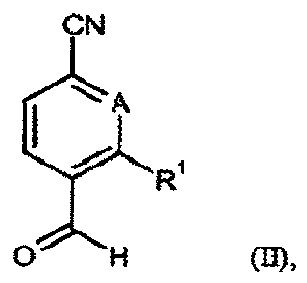
en présence d'un acide ou d'un anhydride d'acide dans une réaction dans un pot à 3 composants ou séquentiellement avec un ester de l'acide acétoacétique de formule (III)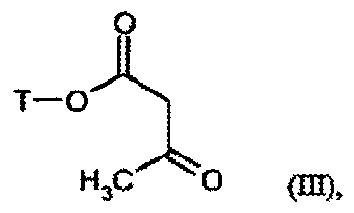 T représente méthyle ou éthyle,et d'un dérivé de phénylurée de formule (IV)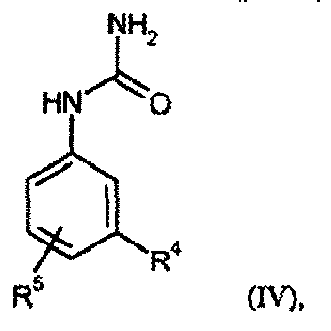
 [A] dans le cas où R2 dans la formule (I) représente hydrogène, on le brome dans un solvant inerte en un composé de formule (VI-A)
R3-NH-NH2 (VII),
dans laquelle R3 présente la signification indiquée dans les revendications 1 à 4,
en formant un cycle hexagonal, en un composé de formule (I-A) [B] dans le cas où R2 dans la formule (I) est différent d'hydrogène, on le fait d'abord réagir avec un composé de formule (VIII)
R2A-X (VIII),
dans laquelleR2A présente la signification de R2 indiquée dans les revendications 1 à 4, mais ne représente pas hydrogène, etX représente un groupe partant tel que par exemple halogène, mésylate, tosylate ou triflate,en présence d'une base en un composé de formule (V-B)
puis on le brome dans un solvant inerte en un composé de formule (VI-B)
puis on le transforme avec un dérivé d'hydrazine de formule (VII)
R3-NH-NH2 (VII),
dans laquelle R3 présente la signification indiquée dans les revendications 1 à 4, en cyclisant en un composé de formule (I-B)
et on sépare le cas échéant les composés de formule (I-A) ou, selon le cas, (I-B) ainsi obtenus selon des procédés connus par l'homme du métier en leurs énantiomères et/ou diastéréo-isomères et/ou on les transforme avec (i) des solvants et/ou (ii) des bases ou acides correspondants en leurs solvates, sels et/ou solvates des sels. - Composé, tel que défini dans l'une quelconque des revendications 1 à 4, destiné au traitement et/ou à la prévention de maladies.
- Composé, tel que défini dans l'une quelconque des revendications 1 à 4, destiné à une utilisation dans un procédé pour le traitement et/ou la prévention de l'hypertonie artérielle pulmonaire (HAP) et d'autres formes de l'hypertonie pulmonaire (HP), des maladies pulmonaires obstructives chroniques (MPOC), du syndrome respiratoire aigu (ALI - acute lung injury), du syndrome de détresse respiratoire aiguë (ARDS), de l'emphysème pulmonaire, de la déficience en alpha-1-antitrypsine (AATD) et de la fibrose kystique (CF).
- Utilisation d'un composé, tel que défini dans l'une quelconque des revendications 1 à 4, pour la préparation d'un médicament destiné au traitement et/ou à la prévention de l'hypertonie artérielle pulmonaire (HAP) et d'autres formes de l'hypertonie pulmonaire (HP), des maladies pulmonaires obstructives chroniques (MPOC), du syndrome respiratoire aigu (ALI - acute lung injury), du syndrome de détresse respiratoire aiguë (ARDS), de l'emphysème pulmonaire, de la déficience en alpha-1-antitrypsine (AATD) et de la fibrose kystique (CF) .
- Médicament contenant un composé, tel que défini dans l'une quelconque des revendications 1 à 4, en combinaison avec un ou plusieurs adjuvants inertes, non toxiques, pharmaceutiquement appropriés.
- Médicament contenant un composé tel que défini dans l'une quelconque des revendications 1 à 4 en combinaison avec une ou plusieurs autres substances actives choisies dans le groupe constitué par les inhibiteurs de kinase, les stimulateurs et les activateurs de la guanylate cyclase soluble, les analogues de prostacycline, les antagonistes du récepteur de l'endothéline, les inhibiteurs de la phosphodiestérase, les agonistes du récepteur bêta-adrénergique, les inhibiteurs des métalloprotéases de matrice, les antagonistes du récepteur de la sérotonine, les anticholinergiques et les glucocorticoïdes.
- Médicament selon la revendication 9 ou 10 destiné au traitement et/ou à la prévention de l'hypertonie artérielle pulmonaire (HAP) et d'autres formes de l'hypertonie pulmonaire (HP), des maladies pulmonaires obstructives chroniques (MPOC), du syndrome respiratoire aigu (ALI acute lung injury), du syndrome de détresse respiratoire aiguë (ARDS), de l'emphysème pulmonaire, de la déficience en alpha-1-antitrypsine (AATD) et de la fibrose kystique (CF).
- Composé ou médicament destiné à être utilisé dans un procédé pour le traitement et/ou la prévention de l'hypertonie artérielle pulmonaire (HAP) et d'autres formes de l'hypertonie pulmonaire (HP), des maladies pulmonaires obstructives chroniques (MPOC), du syndrome respiratoire aigu (ALI - acute lung injury), du syndrome de détresse respiratoire aiguë (ARDS), de l'emphysème pulmonaire, de la déficience en alpha-1-antitrypsine (AATD) et de la fibrose kystique (CF) chez les hommes et les animaux, en utilisant une quantité active d'au moins un composé, tel que défini dans l'une quelconque des revendications 1 à 4, ou d'un médicament tel que défini dans l'une quelconque des revendications 9 à 11.
Applications Claiming Priority (2)
| Application Number | Priority Date | Filing Date | Title |
|---|---|---|---|
| DE102008022521A DE102008022521A1 (de) | 2008-05-07 | 2008-05-07 | 1,4-Diaryl-pyrimidopyridazin-2,5-dione und ihre Verwendung |
| PCT/EP2009/003006 WO2009135599A1 (fr) | 2008-05-07 | 2009-04-24 | 1,4-diaryl-pyrimidopyridazin-2,5-diones et leur utilisation |
Publications (2)
| Publication Number | Publication Date |
|---|---|
| EP2285809A1 EP2285809A1 (fr) | 2011-02-23 |
| EP2285809B1 true EP2285809B1 (fr) | 2013-03-27 |
Family
ID=40872417
Family Applications (1)
| Application Number | Title | Priority Date | Filing Date |
|---|---|---|---|
| EP09741818A Active EP2285809B1 (fr) | 2008-05-07 | 2009-04-24 | 1,4-diaryl-pyrimidopyridazin-2,5-diones et leur utilisation |
Country Status (7)
| Country | Link |
|---|---|
| US (1) | US8580800B2 (fr) |
| EP (1) | EP2285809B1 (fr) |
| JP (1) | JP5498484B2 (fr) |
| CA (1) | CA2723559C (fr) |
| DE (1) | DE102008022521A1 (fr) |
| ES (1) | ES2405766T3 (fr) |
| WO (1) | WO2009135599A1 (fr) |
Families Citing this family (21)
| Publication number | Priority date | Publication date | Assignee | Title |
|---|---|---|---|---|
| RS52270B (sr) * | 2007-12-20 | 2012-10-31 | Bayer Pharma Aktiengesellschaft | 4-(4-cijano-2-tioaril)-dihidropirimidinon i njegova primena |
| GB201004179D0 (en) * | 2010-03-12 | 2010-04-28 | Pulmagen Therapeutics Inflamma | Enzyme inhibitors |
| GB201004178D0 (en) * | 2010-03-12 | 2010-04-28 | Pulmagen Therapeutics Inflamma | Enzyme inhibitors |
| US20140221335A1 (en) | 2013-02-06 | 2014-08-07 | Boehringer Ingelheim International Gmbh | Substituted bicyclic dihydropyrimidinones and their use as inhibitors of neutrophil elastase activity |
| US9115093B2 (en) * | 2013-03-04 | 2015-08-25 | Boehringer Ingelheim International Gmbh | Substituted bicyclic dihydropyrimidinones and their use as inhibitors of neutrophil elastase activity |
| US9763911B2 (en) | 2013-12-12 | 2017-09-19 | Mayo Foundation For Medical Education And Research | Prostacyclin compositions for regulation of fracture repair and bone formation |
| USRE47493E1 (en) | 2014-02-20 | 2019-07-09 | Boehringer Ingelheim International Gmbh | Substituted bicyclic dihydropyrimidinones and their use as inhibitors of neutrophil elastase activity |
| WO2015150350A1 (fr) | 2014-04-03 | 2015-10-08 | Bayer Pharma Aktiengesellschaft | Acides cyclopentanecarboxyliques à disubstitution 2,5 pour traiter des maladies des voies respiratoires |
| CN106458938A (zh) | 2014-04-03 | 2017-02-22 | 拜耳制药股份公司 | 手性2,5‑二取代的环戊烷甲酸衍生物及其用途 |
| WO2015150363A1 (fr) | 2014-04-03 | 2015-10-08 | Bayer Pharma Aktiengesellschaft | Acides cyclopentanecarboxyliques à disubstitution 2,5 et leur utilisation |
| US9440930B2 (en) * | 2014-07-31 | 2016-09-13 | Boehringer Ingelheim International Gmbh | Substituted bicyclic dihydropyrimidinones and their use as inhibitors of neutrophil elastase activity |
| US9458113B2 (en) * | 2014-07-31 | 2016-10-04 | Boehringer Ingelheim International Gmbh | Substituted bicyclic dihydropyrimidinones and their use as inhibitors of neutrophil elastase activity |
| US9290457B2 (en) | 2014-07-31 | 2016-03-22 | Boehringer Ingelheim International Gmbh | Substituted dihydropyrimidinones and their use as inhibitors of neutrophil elastase activity |
| US9475779B2 (en) * | 2014-07-31 | 2016-10-25 | Boehringer Ingelheim International Gmbh | Substituted bicyclic dihydropyrimidinones and their use as inhibitors of neutrophil elastase activity |
| US9657015B2 (en) | 2014-07-31 | 2017-05-23 | Boehringer Ingelheim International Gmbh | Substituted bicyclic dihydropyrimidinones and their use as inhibitors of neutrophil elastase activity |
| AU2016232270B2 (en) | 2015-03-18 | 2020-09-03 | Ph Pharma Co., Ltd. | Method for producing (4S)-4-[4-cyano-2-(methylsulfonyl)phenyl]-3,6-dimethyl-2-oxo-1-[3-(trifluoromethyl)phenyl]-1,2,3,4-tetrahydro pyrimidine-5-carbonitrile |
| UY38696A (es) | 2019-05-14 | 2020-11-30 | Vertex Pharma | Moduladores de alfa-1 antitripsina |
| WO2021203014A1 (fr) | 2020-04-03 | 2021-10-07 | Vertex Pharmaceuticals Incorporated | Dérivés de pyrano [4,3-b] indole en tant que modulateurs d'alpha-1-antitrypsine pour traiter une déficience en alpha-1-antitrypsine (aatd) |
| EP4126863A1 (fr) | 2020-04-03 | 2023-02-08 | Vertex Pharmaceuticals Incorporated | Dérivés de 1h-pyrazolo [4,3-g] isoquinoléine et de 1h-pyrazolo [4,3-g] quinoléine en tant que modulateurs d'alpha-1-antitrypsine pour traiter une déficience en alpha-1-antitrypsine (aatd) |
| WO2021252951A1 (fr) | 2020-06-12 | 2021-12-16 | Vanderbilt University | Méthodes de traitement de troubles de motilité gastro-intestinale |
| CN111978179A (zh) * | 2020-08-27 | 2020-11-24 | 青岛科技大学 | 一种6-羟基己酸酯的合成方法 |
Family Cites Families (23)
| Publication number | Priority date | Publication date | Assignee | Title |
|---|---|---|---|---|
| DE19706648A1 (de) | 1997-02-20 | 1998-08-27 | Bayer Ag | Verfahren zur Herstellung von aromatischen Nitrilen |
| DE19834044A1 (de) | 1998-07-29 | 2000-02-03 | Bayer Ag | Neue substituierte Pyrazolderivate |
| DE19834047A1 (de) | 1998-07-29 | 2000-02-03 | Bayer Ag | Substituierte Pyrazolderivate |
| DE19943635A1 (de) | 1999-09-13 | 2001-03-15 | Bayer Ag | Neuartige Aminodicarbonsäurederivate mit pharmazeutischen Eigenschaften |
| DE19943639A1 (de) | 1999-09-13 | 2001-03-15 | Bayer Ag | Dicarbonsäurederivate mit neuartigen pharmazeutischen Eigenschaften |
| DE19943636A1 (de) | 1999-09-13 | 2001-03-15 | Bayer Ag | Neuartige Dicarbonsäurederivate mit pharmazeutischen Eigenschaften |
| DE19943634A1 (de) | 1999-09-13 | 2001-04-12 | Bayer Ag | Neuartige Dicarbonsäurederivate mit pharmazeutischen Eigenschaften |
| AR031176A1 (es) | 2000-11-22 | 2003-09-10 | Bayer Ag | Nuevos derivados de pirazolpiridina sustituidos con piridina |
| DE10110750A1 (de) | 2001-03-07 | 2002-09-12 | Bayer Ag | Neuartige Aminodicarbonsäurederivate mit pharmazeutischen Eigenschaften |
| DE10110749A1 (de) | 2001-03-07 | 2002-09-12 | Bayer Ag | Substituierte Aminodicarbonsäurederivate |
| DE10220570A1 (de) | 2002-05-08 | 2003-11-20 | Bayer Ag | Carbamat-substituierte Pyrazolopyridine |
| WO2004024701A1 (fr) | 2002-09-10 | 2004-03-25 | Bayer Healthcare Ag | Derives heterocycliques |
| PL375647A1 (en) | 2002-09-10 | 2005-12-12 | Bayer Healthcare Ag | Pyrimidinone derivatives as therapeutic agents against acute and chronic inflammatory, ischaemic and remodelling processes |
| GB2392910A (en) * | 2002-09-10 | 2004-03-17 | Bayer Ag | 2-Oxopyrimidine derivatives and their use as human leukocyte elastase inhibitors |
| US7166603B2 (en) | 2003-07-23 | 2007-01-23 | Bristol-Myers Squibb Co. | Dihydropyrimidone inhibitors of calcium channel function |
| WO2005082864A1 (fr) | 2004-02-26 | 2005-09-09 | Bayer Healthcare Ag | 1,4-diaryl-dihydropyrimidin-2-ones et leur utilisation en tant qu'inhibiteurs de l'elastase du neutrophile humaine |
| ES2428503T3 (es) | 2004-02-26 | 2013-11-08 | Bayer Intellectual Property Gmbh | 1,4-Diaril-dihidropirimidin-2-onas y su uso como inhibidores de elastasa de neutrófilos humanos |
| GB0502258D0 (en) | 2005-02-03 | 2005-03-09 | Argenta Discovery Ltd | Compounds and their use |
| GB0512940D0 (en) | 2005-06-24 | 2005-08-03 | Argenta Discovery Ltd | Compounds and their use |
| GB0520743D0 (en) | 2005-10-12 | 2005-11-23 | Argenta Discovery Ltd | Compounds and their use |
| NZ572250A (en) | 2006-05-04 | 2011-10-28 | Pulmagen Therapeutics Inflammation Ltd | Tetrahydropyrrolopyrimidinediones and their use as human neutrophil elastase inhibitors |
| DE102006031314A1 (de) | 2006-07-01 | 2008-01-03 | Bayer Healthcare Aktiengesellschaft | Verwendung von 1,4-Diaryl-dihydropyrimidin-2-on-Derivaten zur Behandlung der pulmonalen arteriellen Hyptertonie |
| EP2064184A1 (fr) | 2006-09-04 | 2009-06-03 | AstraZeneca AB | Composés hétérocycliques multimériques utilisés comme inhibiteurs de l'élastase neutrophile |
-
2008
- 2008-05-07 DE DE102008022521A patent/DE102008022521A1/de not_active Withdrawn
-
2009
- 2009-04-24 CA CA2723559A patent/CA2723559C/fr active Active
- 2009-04-24 JP JP2011507813A patent/JP5498484B2/ja not_active Expired - Fee Related
- 2009-04-24 US US12/991,346 patent/US8580800B2/en not_active Expired - Fee Related
- 2009-04-24 WO PCT/EP2009/003006 patent/WO2009135599A1/fr not_active Ceased
- 2009-04-24 EP EP09741818A patent/EP2285809B1/fr active Active
- 2009-04-24 ES ES09741818T patent/ES2405766T3/es active Active
Also Published As
| Publication number | Publication date |
|---|---|
| CA2723559A1 (fr) | 2009-11-12 |
| EP2285809A1 (fr) | 2011-02-23 |
| ES2405766T3 (es) | 2013-06-03 |
| WO2009135599A1 (fr) | 2009-11-12 |
| JP2011519880A (ja) | 2011-07-14 |
| US20110118221A1 (en) | 2011-05-19 |
| DE102008022521A1 (de) | 2009-11-12 |
| US8580800B2 (en) | 2013-11-12 |
| JP5498484B2 (ja) | 2014-05-21 |
| CA2723559C (fr) | 2017-03-28 |
Similar Documents
| Publication | Publication Date | Title |
|---|---|---|
| EP2234985B1 (fr) | 4-(4-cyano-2-thioaryle)-dihydropyrimidinone et son utilisation | |
| WO2009135599A1 (fr) | 1,4-diaryl-pyrimidopyridazin-2,5-diones et leur utilisation | |
| EP2385945B1 (fr) | Dérivés de triazolo- et tétrazolopyrimidine en tant qu'inhibiteurs de l'élastase neutrophile humaine (hne) pour le traitement de la maladie pulmonaire obstructive chronique (copd) | |
| EP2417112B1 (fr) | Diaryldihydropyrimidinones à substitution sulfonamide et sulfoximine et leur utilisation | |
| DE102007061766A1 (de) | 4-(4-Cyano-2-thioaryl)-dihydropyrimidinone und ihre Verwendung | |
| WO2008003412A1 (fr) | Utilisation de dérivés de 1,4-diaryl-dihydropyrimidin-2-one pour le traitement de l'hypertension artérielle pulmonaire | |
| EP3055313B1 (fr) | Thienouracil carboxamide cycliques et son utilisation | |
| EP3126358A1 (fr) | Acides cyclopentanecarboxyliques à disubstitution 2,5 pour traiter des maladies des voies respiratoires | |
| EP2513108B1 (fr) | NOUVEAUX DERIVES D' (HETEROCYCLE-PIPERIDINE CONDENSEE)-(PIPERAZINYL)-1-ALCANONE OU D' (HETEROCYCLE-PYRROLIDINE CONDENSEE)-(PIPERAZINYL)-1-ALCANONE ET LEUR UTILISATION COMME INHIBITEURS DE p75 | |
| WO2015150364A1 (fr) | Acides benzotriazinonebutyriques substitués et leur utilisation | |
| EP3126339A1 (fr) | Acides cyclopentanecarboxyliques à disubstitution 2,5 et leur utilisation | |
| EP3707141B1 (fr) | 2,4-dihydro-3h-1,2,4-triazol-3-ones substituées et leur utilisation | |
| DE102008052013A1 (de) | 4-(4-Cyano-2-thioaryl)-dihydropyrimidinone und ihre Verwendung | |
| DE102010030187A1 (de) | 4-Cyan-2-sulfonylphenyl)pyrazolyl-substituierte Pyridinone und Pyrazinone und ihre Verwendung |
Legal Events
| Date | Code | Title | Description |
|---|---|---|---|
| PUAI | Public reference made under article 153(3) epc to a published international application that has entered the european phase |
Free format text: ORIGINAL CODE: 0009012 |
|
| 17P | Request for examination filed |
Effective date: 20101207 |
|
| AK | Designated contracting states |
Kind code of ref document: A1 Designated state(s): AT BE BG CH CY CZ DE DK EE ES FI FR GB GR HR HU IE IS IT LI LT LU LV MC MK MT NL NO PL PT RO SE SI SK TR |
|
| AX | Request for extension of the european patent |
Extension state: AL BA RS |
|
| DAX | Request for extension of the european patent (deleted) | ||
| RAP1 | Party data changed (applicant data changed or rights of an application transferred) |
Owner name: BAYER PHARMA AKTIENGESELLSCHAFT |
|
| RAP1 | Party data changed (applicant data changed or rights of an application transferred) |
Owner name: BAYER INTELLECTUAL PROPERTY GMBH |
|
| GRAP | Despatch of communication of intention to grant a patent |
Free format text: ORIGINAL CODE: EPIDOSNIGR1 |
|
| GRAS | Grant fee paid |
Free format text: ORIGINAL CODE: EPIDOSNIGR3 |
|
| GRAA | (expected) grant |
Free format text: ORIGINAL CODE: 0009210 |
|
| AK | Designated contracting states |
Kind code of ref document: B1 Designated state(s): AT BE BG CH CY CZ DE DK EE ES FI FR GB GR HR HU IE IS IT LI LT LU LV MC MK MT NL NO PL PT RO SE SI SK TR |
|
| REG | Reference to a national code |
Ref country code: GB Ref legal event code: FG4D Free format text: NOT ENGLISH |
|
| REG | Reference to a national code |
Ref country code: CH Ref legal event code: EP |
|
| REG | Reference to a national code |
Ref country code: AT Ref legal event code: REF Ref document number: 603342 Country of ref document: AT Kind code of ref document: T Effective date: 20130415 |
|
| REG | Reference to a national code |
Ref country code: IE Ref legal event code: FG4D Free format text: LANGUAGE OF EP DOCUMENT: GERMAN |
|
| REG | Reference to a national code |
Ref country code: DE Ref legal event code: R096 Ref document number: 502009006641 Country of ref document: DE Effective date: 20130523 |
|
| REG | Reference to a national code |
Ref country code: ES Ref legal event code: FG2A Ref document number: 2405766 Country of ref document: ES Kind code of ref document: T3 Effective date: 20130603 |
|
| PG25 | Lapsed in a contracting state [announced via postgrant information from national office to epo] |
Ref country code: LT Free format text: LAPSE BECAUSE OF FAILURE TO SUBMIT A TRANSLATION OF THE DESCRIPTION OR TO PAY THE FEE WITHIN THE PRESCRIBED TIME-LIMIT Effective date: 20130327 Ref country code: NO Free format text: LAPSE BECAUSE OF FAILURE TO SUBMIT A TRANSLATION OF THE DESCRIPTION OR TO PAY THE FEE WITHIN THE PRESCRIBED TIME-LIMIT Effective date: 20130627 Ref country code: BG Free format text: LAPSE BECAUSE OF FAILURE TO SUBMIT A TRANSLATION OF THE DESCRIPTION OR TO PAY THE FEE WITHIN THE PRESCRIBED TIME-LIMIT Effective date: 20130627 Ref country code: SE Free format text: LAPSE BECAUSE OF FAILURE TO SUBMIT A TRANSLATION OF THE DESCRIPTION OR TO PAY THE FEE WITHIN THE PRESCRIBED TIME-LIMIT Effective date: 20130327 |
|
| REG | Reference to a national code |
Ref country code: LT Ref legal event code: MG4D |
|
| PG25 | Lapsed in a contracting state [announced via postgrant information from national office to epo] |
Ref country code: LV Free format text: LAPSE BECAUSE OF FAILURE TO SUBMIT A TRANSLATION OF THE DESCRIPTION OR TO PAY THE FEE WITHIN THE PRESCRIBED TIME-LIMIT Effective date: 20130327 Ref country code: GR Free format text: LAPSE BECAUSE OF FAILURE TO SUBMIT A TRANSLATION OF THE DESCRIPTION OR TO PAY THE FEE WITHIN THE PRESCRIBED TIME-LIMIT Effective date: 20130628 Ref country code: FI Free format text: LAPSE BECAUSE OF FAILURE TO SUBMIT A TRANSLATION OF THE DESCRIPTION OR TO PAY THE FEE WITHIN THE PRESCRIBED TIME-LIMIT Effective date: 20130327 Ref country code: SI Free format text: LAPSE BECAUSE OF FAILURE TO SUBMIT A TRANSLATION OF THE DESCRIPTION OR TO PAY THE FEE WITHIN THE PRESCRIBED TIME-LIMIT Effective date: 20130327 |
|
| REG | Reference to a national code |
Ref country code: NL Ref legal event code: VDEP Effective date: 20130327 |
|
| PG25 | Lapsed in a contracting state [announced via postgrant information from national office to epo] |
Ref country code: HR Free format text: LAPSE BECAUSE OF FAILURE TO SUBMIT A TRANSLATION OF THE DESCRIPTION OR TO PAY THE FEE WITHIN THE PRESCRIBED TIME-LIMIT Effective date: 20130327 |
|
| BERE | Be: lapsed |
Owner name: BAYER INTELLECTUAL PROPERTY G.M.B.H. Effective date: 20130430 |
|
| PG25 | Lapsed in a contracting state [announced via postgrant information from national office to epo] |
Ref country code: SK Free format text: LAPSE BECAUSE OF FAILURE TO SUBMIT A TRANSLATION OF THE DESCRIPTION OR TO PAY THE FEE WITHIN THE PRESCRIBED TIME-LIMIT Effective date: 20130327 Ref country code: RO Free format text: LAPSE BECAUSE OF FAILURE TO SUBMIT A TRANSLATION OF THE DESCRIPTION OR TO PAY THE FEE WITHIN THE PRESCRIBED TIME-LIMIT Effective date: 20130327 Ref country code: CZ Free format text: LAPSE BECAUSE OF FAILURE TO SUBMIT A TRANSLATION OF THE DESCRIPTION OR TO PAY THE FEE WITHIN THE PRESCRIBED TIME-LIMIT Effective date: 20130327 Ref country code: EE Free format text: LAPSE BECAUSE OF FAILURE TO SUBMIT A TRANSLATION OF THE DESCRIPTION OR TO PAY THE FEE WITHIN THE PRESCRIBED TIME-LIMIT Effective date: 20130327 Ref country code: PT Free format text: LAPSE BECAUSE OF FAILURE TO SUBMIT A TRANSLATION OF THE DESCRIPTION OR TO PAY THE FEE WITHIN THE PRESCRIBED TIME-LIMIT Effective date: 20130729 Ref country code: IS Free format text: LAPSE BECAUSE OF FAILURE TO SUBMIT A TRANSLATION OF THE DESCRIPTION OR TO PAY THE FEE WITHIN THE PRESCRIBED TIME-LIMIT Effective date: 20130727 Ref country code: NL Free format text: LAPSE BECAUSE OF FAILURE TO SUBMIT A TRANSLATION OF THE DESCRIPTION OR TO PAY THE FEE WITHIN THE PRESCRIBED TIME-LIMIT Effective date: 20130327 |
|
| PG25 | Lapsed in a contracting state [announced via postgrant information from national office to epo] |
Ref country code: PL Free format text: LAPSE BECAUSE OF FAILURE TO SUBMIT A TRANSLATION OF THE DESCRIPTION OR TO PAY THE FEE WITHIN THE PRESCRIBED TIME-LIMIT Effective date: 20130327 Ref country code: CY Free format text: LAPSE BECAUSE OF FAILURE TO SUBMIT A TRANSLATION OF THE DESCRIPTION OR TO PAY THE FEE WITHIN THE PRESCRIBED TIME-LIMIT Effective date: 20130327 |
|
| REG | Reference to a national code |
Ref country code: CH Ref legal event code: PL |
|
| PG25 | Lapsed in a contracting state [announced via postgrant information from national office to epo] |
Ref country code: MC Free format text: LAPSE BECAUSE OF FAILURE TO SUBMIT A TRANSLATION OF THE DESCRIPTION OR TO PAY THE FEE WITHIN THE PRESCRIBED TIME-LIMIT Effective date: 20130327 |
|
| PG25 | Lapsed in a contracting state [announced via postgrant information from national office to epo] |
Ref country code: LI Free format text: LAPSE BECAUSE OF NON-PAYMENT OF DUE FEES Effective date: 20130430 Ref country code: CH Free format text: LAPSE BECAUSE OF NON-PAYMENT OF DUE FEES Effective date: 20130430 Ref country code: BE Free format text: LAPSE BECAUSE OF NON-PAYMENT OF DUE FEES Effective date: 20130430 Ref country code: DK Free format text: LAPSE BECAUSE OF FAILURE TO SUBMIT A TRANSLATION OF THE DESCRIPTION OR TO PAY THE FEE WITHIN THE PRESCRIBED TIME-LIMIT Effective date: 20130327 |
|
| PLBE | No opposition filed within time limit |
Free format text: ORIGINAL CODE: 0009261 |
|
| STAA | Information on the status of an ep patent application or granted ep patent |
Free format text: STATUS: NO OPPOSITION FILED WITHIN TIME LIMIT |
|
| 26N | No opposition filed |
Effective date: 20140103 |
|
| REG | Reference to a national code |
Ref country code: DE Ref legal event code: R097 Ref document number: 502009006641 Country of ref document: DE Effective date: 20140103 |
|
| PG25 | Lapsed in a contracting state [announced via postgrant information from national office to epo] |
Ref country code: IE Free format text: LAPSE BECAUSE OF NON-PAYMENT OF DUE FEES Effective date: 20130424 |
|
| PG25 | Lapsed in a contracting state [announced via postgrant information from national office to epo] |
Ref country code: MT Free format text: LAPSE BECAUSE OF FAILURE TO SUBMIT A TRANSLATION OF THE DESCRIPTION OR TO PAY THE FEE WITHIN THE PRESCRIBED TIME-LIMIT Effective date: 20130327 |
|
| REG | Reference to a national code |
Ref country code: AT Ref legal event code: MM01 Ref document number: 603342 Country of ref document: AT Kind code of ref document: T Effective date: 20140424 |
|
| PG25 | Lapsed in a contracting state [announced via postgrant information from national office to epo] |
Ref country code: TR Free format text: LAPSE BECAUSE OF FAILURE TO SUBMIT A TRANSLATION OF THE DESCRIPTION OR TO PAY THE FEE WITHIN THE PRESCRIBED TIME-LIMIT Effective date: 20130327 |
|
| PG25 | Lapsed in a contracting state [announced via postgrant information from national office to epo] |
Ref country code: MK Free format text: LAPSE BECAUSE OF FAILURE TO SUBMIT A TRANSLATION OF THE DESCRIPTION OR TO PAY THE FEE WITHIN THE PRESCRIBED TIME-LIMIT Effective date: 20130327 Ref country code: LU Free format text: LAPSE BECAUSE OF NON-PAYMENT OF DUE FEES Effective date: 20130424 Ref country code: HU Free format text: LAPSE BECAUSE OF FAILURE TO SUBMIT A TRANSLATION OF THE DESCRIPTION OR TO PAY THE FEE WITHIN THE PRESCRIBED TIME-LIMIT; INVALID AB INITIO Effective date: 20090424 |
|
| PG25 | Lapsed in a contracting state [announced via postgrant information from national office to epo] |
Ref country code: AT Free format text: LAPSE BECAUSE OF NON-PAYMENT OF DUE FEES Effective date: 20140424 |
|
| REG | Reference to a national code |
Ref country code: FR Ref legal event code: PLFP Year of fee payment: 8 |
|
| REG | Reference to a national code |
Ref country code: FR Ref legal event code: PLFP Year of fee payment: 9 |
|
| REG | Reference to a national code |
Ref country code: FR Ref legal event code: PLFP Year of fee payment: 10 |
|
| REG | Reference to a national code |
Ref country code: DE Ref legal event code: R081 Ref document number: 502009006641 Country of ref document: DE Owner name: PH PHARMA CO., LTD., KR Free format text: FORMER OWNER: BAYER INTELLECTUAL PROPERTY GMBH, 40789 MONHEIM, DE |
|
| REG | Reference to a national code |
Ref country code: GB Ref legal event code: 732E Free format text: REGISTERED BETWEEN 20190704 AND 20190710 |
|
| REG | Reference to a national code |
Ref country code: ES Ref legal event code: PC2A Owner name: PH PHARMA CO., LTD. Effective date: 20190729 |
|
| P01 | Opt-out of the competence of the unified patent court (upc) registered |
Effective date: 20230705 |
|
| PGFP | Annual fee paid to national office [announced via postgrant information from national office to epo] |
Ref country code: DE Payment date: 20241028 Year of fee payment: 16 |
|
| PGFP | Annual fee paid to national office [announced via postgrant information from national office to epo] |
Ref country code: GB Payment date: 20241028 Year of fee payment: 16 |
|
| PGFP | Annual fee paid to national office [announced via postgrant information from national office to epo] |
Ref country code: FR Payment date: 20241028 Year of fee payment: 16 |
|
| PGFP | Annual fee paid to national office [announced via postgrant information from national office to epo] |
Ref country code: IT Payment date: 20241028 Year of fee payment: 16 |
|
| PGFP | Annual fee paid to national office [announced via postgrant information from national office to epo] |
Ref country code: ES Payment date: 20250127 Year of fee payment: 16 |
|
| REG | Reference to a national code |
Ref country code: DE Ref legal event code: R119 Ref document number: 502009006641 Country of ref document: DE |
|
| GBPC | Gb: european patent ceased through non-payment of renewal fee |
Effective date: 20250424 |
|
| PG25 | Lapsed in a contracting state [announced via postgrant information from national office to epo] |
Ref country code: DE Free format text: LAPSE BECAUSE OF NON-PAYMENT OF DUE FEES Effective date: 20251104 |
|
| PG25 | Lapsed in a contracting state [announced via postgrant information from national office to epo] |
Ref country code: GB Free format text: LAPSE BECAUSE OF NON-PAYMENT OF DUE FEES Effective date: 20250424 |
|
| PG25 | Lapsed in a contracting state [announced via postgrant information from national office to epo] |
Ref country code: FR Free format text: LAPSE BECAUSE OF NON-PAYMENT OF DUE FEES Effective date: 20250430 |
|
| PG25 | Lapsed in a contracting state [announced via postgrant information from national office to epo] |
Ref country code: IT Free format text: LAPSE BECAUSE OF NON-PAYMENT OF DUE FEES Effective date: 20250424 |