EP2287720A2 - Procédé et système de création automatique de règles et politiques d'environnement d'impression - Google Patents
Procédé et système de création automatique de règles et politiques d'environnement d'impression Download PDFInfo
- Publication number
- EP2287720A2 EP2287720A2 EP10171600A EP10171600A EP2287720A2 EP 2287720 A2 EP2287720 A2 EP 2287720A2 EP 10171600 A EP10171600 A EP 10171600A EP 10171600 A EP10171600 A EP 10171600A EP 2287720 A2 EP2287720 A2 EP 2287720A2
- Authority
- EP
- European Patent Office
- Prior art keywords
- data
- printing
- policies
- rules
- Prior art date
- Legal status (The legal status is an assumption and is not a legal conclusion. Google has not performed a legal analysis and makes no representation as to the accuracy of the status listed.)
- Ceased
Links
Images


Classifications
-
- G—PHYSICS
- G06—COMPUTING OR CALCULATING; COUNTING
- G06F—ELECTRIC DIGITAL DATA PROCESSING
- G06F3/00—Input arrangements for transferring data to be processed into a form capable of being handled by the computer; Output arrangements for transferring data from processing unit to output unit, e.g. interface arrangements
- G06F3/12—Digital output to print unit, e.g. line printer, chain printer
- G06F3/1201—Dedicated interfaces to print systems
- G06F3/1202—Dedicated interfaces to print systems specifically adapted to achieve a particular effect
- G06F3/1203—Improving or facilitating administration, e.g. print management
- G06F3/1204—Improving or facilitating administration, e.g. print management resulting in reduced user or operator actions, e.g. presetting, automatic actions, using hardware token storing data
-
- G—PHYSICS
- G06—COMPUTING OR CALCULATING; COUNTING
- G06F—ELECTRIC DIGITAL DATA PROCESSING
- G06F3/00—Input arrangements for transferring data to be processed into a form capable of being handled by the computer; Output arrangements for transferring data from processing unit to output unit, e.g. interface arrangements
- G06F3/12—Digital output to print unit, e.g. line printer, chain printer
- G06F3/1201—Dedicated interfaces to print systems
- G06F3/1202—Dedicated interfaces to print systems specifically adapted to achieve a particular effect
- G06F3/1218—Reducing or saving of used resources, e.g. avoiding waste of consumables or improving usage of hardware resources
-
- G—PHYSICS
- G06—COMPUTING OR CALCULATING; COUNTING
- G06F—ELECTRIC DIGITAL DATA PROCESSING
- G06F3/00—Input arrangements for transferring data to be processed into a form capable of being handled by the computer; Output arrangements for transferring data from processing unit to output unit, e.g. interface arrangements
- G06F3/12—Digital output to print unit, e.g. line printer, chain printer
- G06F3/1201—Dedicated interfaces to print systems
- G06F3/1223—Dedicated interfaces to print systems specifically adapted to use a particular technique
- G06F3/1237—Print job management
- G06F3/1239—Restricting the usage of resources, e.g. usage or user levels, credit limit, consumables, special fonts
-
- G—PHYSICS
- G06—COMPUTING OR CALCULATING; COUNTING
- G06F—ELECTRIC DIGITAL DATA PROCESSING
- G06F3/00—Input arrangements for transferring data to be processed into a form capable of being handled by the computer; Output arrangements for transferring data from processing unit to output unit, e.g. interface arrangements
- G06F3/12—Digital output to print unit, e.g. line printer, chain printer
- G06F3/1201—Dedicated interfaces to print systems
- G06F3/1223—Dedicated interfaces to print systems specifically adapted to use a particular technique
- G06F3/1237—Print job management
- G06F3/1273—Print job history, e.g. logging, accounting, tracking
-
- G—PHYSICS
- G06—COMPUTING OR CALCULATING; COUNTING
- G06Q—INFORMATION AND COMMUNICATION TECHNOLOGY [ICT] SPECIALLY ADAPTED FOR ADMINISTRATIVE, COMMERCIAL, FINANCIAL, MANAGERIAL OR SUPERVISORY PURPOSES; SYSTEMS OR METHODS SPECIALLY ADAPTED FOR ADMINISTRATIVE, COMMERCIAL, FINANCIAL, MANAGERIAL OR SUPERVISORY PURPOSES, NOT OTHERWISE PROVIDED FOR
- G06Q10/00—Administration; Management
Definitions
- the present disclosure relates to print management systems and paper-reducing technologies, and more particularly, to a method and system for automatically creating print governance rules and policies.
- copiers may be used as multi-function devices (MFDs) not only for performing traditional photocopying, but also for printing documents generated by computers connected to the network.
- MFDs multi-function devices
- copiers are connected to a computer network, it becomes possible to collect status and usage information from the computers remotely via a network server or other network terminal.
- Another advantageous aspect of having networked copiers or MFDs is the ability to monitor and account for the usage of such MFDs.
- an MFD operates as a plurality of different imaging devices, including, but not limited to, a printer, copier, fax machine, and/or scanner.
- the basic office copier has evolved into what can be referred to as a MFD.
- a machine with the basic outward appearance of a traditional copier can perform at least the additional functions of printing documents submitted in digital form over a network, sending and receiving messages via facsimile, recording hard-copy original images in digital form and sending the resulting data over a network, such as in electronic mail and/or recording hard-copy original images in digital form on a compact disc or equivalent medium.
- MFDs In the area of digital printing and copying, there has been a growth in demand for MFDs.
- MFD devices may assume the form of an arrangement in which a single print engine (e.g., xerographic or thermal ink jet print engine) is coupled with a plurality of different image input devices (or "services"), with such devices being adapted to produce image related information for use by the printer or transmitted over a network.
- the image related information in one example, could have its origin in video facsimile signals, microfilm, data processing information, light scanning platens for full size documents, aperture cards, and microfiche.
- MFDs provide a broader range of functionality than traditional single-function devices, such as dedicated printers, copiers, and scanners.
- the present disclosure is intended to overcome the drawbacks of other methods and systems by providing for an effective print/scan/copy/fax job tracking/monitoring/controlling/ system and method by automatically generating governance rules and/or policies related to the plurality of users and the plurality of MFDs within a network of MFDs.
- the present disclosure provides a system for accommodating a plurality of printing systems arranged as an enterprise printing system including a memory for storing printer usage information related to a plurality of tasks performed with respect to the enterprise printing system and a processing module including a tangible processor; said tangible processor (1) analyzing the printer usage information and (2) responsive to said analyzing, automatically generating, at selected time intervals, at least one print governance rule, said at least one print governance rule being used to reduce printing costs for at least one of the plurality of printing systems in the enterprise printing system.
- the present disclosure also provides a method for accommodating a plurality of printing systems arranged as an enterprise printing system including storing in a memory printer usage information related to a plurality of tasks performed with respect to the enterprise printing system; processing the printer usage information via a processing module including a tangible processor; analyzing the printer usage information and responsive to said analyzing, automatically generating, at selected time intervals, at least one print governance rule, said at least one print governance rule being used to reduce printing costs for at least one of a plurality of printing systems arranged as an enterprise system.
- the present disclosure also provides a system for accommodating a plurality of printing systems arranged as an enterprise printing system, including a computing device; a computer-readable storage medium in communication with the computing device, the computer-readable storage medium comprising one or more programming instructions for: storing in a memory printer usage information related to a plurality of tasks performed with respect to the enterprise printing system; processing the printer usage information via a processing module including a tangible processor; analyzing the printer usage information; and responsive to said analyzing, automatically generating, at selected time intervals, at least one print governance rule, said at least one print governance rule being used to reduce printing costs for at least one of a plurality of printing systems arranged as an enterprise system.
- the present disclosure also provides a computer-readable medium which stores programmable instructions configured for being executed by at least one processor for performing the methods described herein according to the present disclosure.
- the computer-readable medium can include flash memory, CD-ROM, a hard drive, etc.
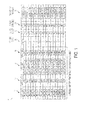
- FIG. 1 is a table including user-based print job tracking data used as a source for the automatic creation of rules and/or policies, in accordance with the present disclosure
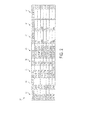
- FIG. 2 is a table including printer asset meter and cost data used as a source for the automatic creation of rules and/or policies, in accordance with the present disclosure
- FIG. 3 is a schematic diagram of a print policy and/or rule creation process, in accordance with the present disclosure
- FIGs. 4A and 4B are screenshots of print policies and/or rules when incorporated into an output management solution, in accordance with the present disclosure.
- FIG. 5 is a flowchart illustrating a print policy and/or rule creation process, in accordance with the present disclosure.
- the present disclosure proposes automating the creation or generation of print policies and/or rules by leveraging information that is already available at an account, such as print job tracking data and asset (print device) information.
- Data sources may be leveraged to analyze print behavior. Such data sources may include: (i) a user-based job tracking data source and (ii) a print device meter and asset data source. Additionally, print governance rules may be automatically created or generated based upon print behavior or usage where rules are grouped into print policies and where each printer is assigned at least one print policy.
- the present disclosure further proposes a method of automatically establishing an initial set of print policies and/or rules when deploying an enterprise output management solution.
- the method harvests existing printer usage information (typically gathered during an assessment phase) and printer running cost data to determine the current state of user behavior(s).
- the method then instantiates rules to encourage a reduction in printing costs. These rules require users to confirm costly practices or require job programming changes to reduce costs (e.g., duplex printing, monochrome printing).
- the initial values chosen for the rules are designed to be improvements over the current processes.
- the present disclosure further provides a computer network and related methods which generate MFD usage information that may be analyzed to determine a more efficient allocation of MFD resources and, consequently, promotes more responsible use and a better understanding of printing costs related to the plurality of MFDs.
- Print assessments can uncover many costs associated with printing and output and they reveal how customers are using their office equipment. The goal is to tailor an entity's printing and output solution to its specific needs. By performing a print/output assessment, an entity (such as a company or organization) may be able to reduce the amount of output devices on the network, leading to greater efficiency and service levels throughout the entity.
- the exemplary embodiments of the present disclosure present a package that is distributed to clients by authorized dealers and facilitates entity-wide assessment, management, and control of copier and printing costs as well as cost optimization.
- the printing system of the present disclosure measures/monitors/tracks and generates an analysis of the customer's device fleet (such as MFDs) performance by using built-in reporting, tracking, analyzing, and updating modules.
- the resulting data enables the creation of service strategies and billing models tailored to an entity's goals.
- the copier and printer cost evaluation can be measured by using various criteria such as user, department, project, and client or machine number. All print jobs can be classified by volume and user and it is also possible to correctly differentiate between color and black and white jobs, paper formats, and paper types. As a result, this is a dynamic printing system because it is updated selectively, dynamically, and automatically in accordance with input received from the users.
- print is overloaded to mean sending the document to the printer through any one of a multitude of ways.
- the term “printer” can refer to any device that accepts text and graphic output from any type of computing device and transfers the information to any printable medium.
- a “printer” can refer to any type of xerographic, solid ink, liquid ink, cut sheet or web-based device used to print onto a wide array of printable media.
- the term “printer” as used herein encompasses any apparatus, such as a digital copier, bookmaking machine, facsimile machine, multi-function machine, etc. which performs a print outputting function for any purpose.
- MFDs disclosed herein include both those that are “connected” and those that are “unconnected.”
- An “unconnected” MFD does not have access to a network (e.g., the Internet).
- a “connected” MFD is normally connected via an Ethernet card or the like to a network.
- the MFD may be an unconnected MFD that is in operative communication with a wireless device, the wireless device being able to access a network.
- a connection between the multifunctional device and the wireless device is made through a two-way communication channel located on the multifunctional device.
- MFD can refer to any machine that connects to either a computing device and/or network and performs one or more of the following functions: print, scan, copy, and/or fax. Digital copiers, fax machines, printers, and scanner combinations are all examples of MFDs.
- MFD can further refer to any hardware that combines several functions in one unit. For instance, an MFD can be a standalone printer or any type of standalone machine/device/apparatus/component.
- an MFD can be one or more personal computers (PCs), a standalone printer, a standalone scanner, a mobile phone, an MP3 player, audio electronics, video electronics, GPS systems, televisions, recording and/or reproducing media (such as CDs, DVDs, camcorders, cameras, etc.) or any other type of consumer or non-consumer analog and/or digital electronics.
- PCs personal computers
- MP3 player audio electronics
- video electronics GPS systems
- televisions recording and/or reproducing media
- recording and/or reproducing media such as CDs, DVDs, camcorders, cameras, etc.
- consumer and/or non-consumer electronics can apply in any type of entertainment, communications, home, and/or office capacity.
- the term "MFDs" can refer to any type of electronics suitable for use with a circuit board and intended to be used by a plurality of individuals for a variety of purposes.
- Storage can refer to data storage.
- Data storage can refer to any article or material (e.g., a hard disk) from which information is capable of being reproduced, with or without the aid of any other article or device.
- Data storage can refer to the holding of data in an electromagnetic form for access by a computer processor.
- Primary storage is data in random access memory (RAM) and other "built-in” devices. Secondary storage is data on hard disk, tapes, and other external devices.
- Data storage can also refer to the permanent holding place for digital data, until purposely erased.
- Storage implies a repository that retains its content without power.
- “Storage” mostly means magnetic disks, magnetic tapes and optical discs (CD, DVD, etc.).
- Storage may also refer to non-volatile memory chips such as flash, Read-Only memory (ROM) and/or Electrically Erasable Programmable Read-Only Memory (EEPROM).
- print job is not limited to a particular electronic format, such as a bitmap, but can include any suitable format including PDF, word processor formats, rich text (RTF), etc., as will be appreciated by those skilled in the art.
- task refers to a print, scan, copy, and/or fax job or any type of function that may be performed by an MFD.
- task may also refer to an execution path through address space, such as a set of program instructions that are loaded in a data storage means.
- task may also refer to a basic unit of programming that an operating system controls and depending on how the operating system defines a task in its design, this unit of programming may be an entire program or each successive invocation of a program.
- output governance rules refers to a principle or condition that governs an output task related to a plurality of MFDs.
- module may refer to a self-contained component (unit or item) that is used in combination with other components and/or a separate and distinct unit of hardware or software that may be used as a component in a system, such as a printing system including a plurality of MFDs.
- module may also refer to a self-contained assembly of electronic components and circuitry, such as a stage in a computer that is installed as a unit.
- rule may refer to a principle and/or condition where one or more MFDs are caused to perform one or more requested tasks according to a preset /predetermined default mode as a result of the principles and/or conditions when the task is requested.
- the term “rule” may also refer to a prescribed guide for action for the plurality of MFDs.
- Examples of rules may include, but are not limited to: allow only certain users to print in color, allow only certain users to print black and white, allow only certain users to make more than a preset amount of copies per printer, allow only certain users to scan or fax or copy, allow only certain users to print graphics, allow most users to print text, allow only certain users to print information from the Internet, allow only certain users to print single sided, allow only certain users to print unlimited information, allow a set amount of print jobs from a terminal to one MFD or to a plurality of MFDs, allow for switching of MFDs when a quota has been reached, allow for denial of access to any of the MFDs, allow for counting the number of pages printed from each terminal to any permissible MFD, etc.
- analyze may refer to determining the elements or essential features or functions or processes of a plurality of MFDs and/or to subject the plurality of MFDs to computational processing.
- the term “analyze” may further refer to tracking data and/or collecting data and/or manipulating data and/or examining data and/or updating data on a real-time basis in an automatic manner and/or a selective manner and/or manual manner.
- behavior may refer to any type of responses or actions received from one or more users interacting with one or more MFDs and/or any type of pattern of actions.
- behavior may also refer to any type of process of gathering/collecting information about an individual's behavior when interacting with one or more MFDs.
- FIG. 1 there is presented a table including user-based print job tracking data used as a source for the automatic creation of rules and/or policies, in accordance with the present disclosure.
- the table 10 includes a plurality of columns.
- the columns may include data related, but not limited to, the following categories: asset number 12, manufacturer 14, model name 16, serial number 18, page count 20, color 22, duplex 24, and job completion time 26.
- the automatically generated results may be stored separately in a local or remote database for further processing.
- This may be a unique database designed solely for storing and analyzing such automatically generated data (e.g., rules and/or policies).
- that history may be evaluated in the future for determining which rule/policy generated needs to be modified in order to achieve the best desired results for each MFD.
- the rule changes that took place for each MFD may be stored and later compared against each other (for the same MFD) and ranked in order of best achieved results. The highest ranked rules for one MFD may be used in changing the rules/policies of other MFDs.
- the present disclosure enables efficient gathering of data related to the plurality of users and/or the plurality of MFDs by aiding a system administrator (or a plurality of users) in determining the amount spent on each MFD by each user or the amount spent by one user on a plurality of MFDs.
- the plurality of users are empowered and educated to better understand alternative strategies when printing to a plurality of MFDs.
- the plurality of rules and the plurality of policies automatically generated by a processing module may be sent directly to the plurality of users.
- the plurality of users may be (i) notified of compliance or non-compliance with respect to the plurality of rules and the plurality of policies and (ii) notified of usage behavior modification strategies when non-compliance is determined.
- FIG. 2 there is presented a table including printer asset meter and cost data used as a source for the automatic creation of rules and/or policies, in accordance with the present disclosure.
- the table 30 includes a plurality of columns.
- the columns may include data related, but not limited to, the following categories: serial number 32, manufacturer 34, model name 36, color 38, meter name 40, start meter read 42, end meter read 44, and cost per impression 46.
- the rules and/or policies may be modified and/or updated by an authorized user or by a plurality of authorized users at any desirable time for any of the plurality of MFDs.
- an authorized user may modify all the rules or a portion of the rules for only one MFD or for a group of MFDs or for all MFDs.
- certain MFDs may have different rules than other MFDs based on their usage, geographical location, and/or user access requirements even though such MFDs may be located in a single location or be part of the same group of MFDs.
- FIG. 3 there is presented a schematic diagram of a print policy and/or rule creation process, in accordance with the present disclosure.
- the policies and rules process 50 includes a first source 52 and a second source 54.
- the automatic rule creation process 56 is generated from the first source 52 and the second source 54 in order to output rules and policies 56.
- the first source 52 may be a user-based print job tracking data source and the second source 54 may be a print device meter information source.
- data sources 52, 54 may be read.
- color volume may be analyzed across all the color print devices.
- the most expensive color devices e.g., those with a cost per color impression of greater than 75% or more of the total population
- duplex (2-sided) printing behavior may be analyzed across all print devices. In other words, if less than 50% of print jobs greater than 2 pages utilize duplex, then all print devices are marked as candidates for a duplex print rule
- non-business hours printing is analyzed across all print devices.
- any print devices with non-business hours print behavior are marked as a candidate for a non-business hours print rule, (d) web page and email printing.
- web page and email printing are marked as candidates for a duplex print rule.
- print control rules are created. Such rules may include, but are not limited to: confirm color print, confirm/reject non-duplex, confirm/reject email and web, and reject non-business hours.
- print control policies are created.
- Each policy may include a group of rules. For example, one or more print rules may be combined into a single print policy and rules may be grouped based upon print device commonality.
- policies to print devices are assigned.
- print policies are assigned to the MFD devices.
- FIG. 4A and 4B there is presented screenshots of print policies and rules when incorporated into an output management solution, in accordance with the present disclosure.
- screenshot 60 illustrates print policy plans 62 automatically generated by manipulating the first source 52 and the second source 54.
- screenshot 70 illustrates rules 72 automatically created by manipulating the first source 52 and the second source 54.
- the output governance rules are configured in the output management software for the governance of at least printing, copying, faxing, and scanning in the enterprise. These rules are often associated with an MFD or groups of MFDs. They can be configured to control printing at the user level (groups of users in departments). In large-scale deployments, configuration and management of these rules can be a very complex task. However, the exemplary embodiments allow for ease of data flow and efficient operation through the use of rules and/or policies designed and generated specifically for users and MFDs.
- One example of a rule could be the conversion of specific internal reports from a one-sided format and print device to a double-sided format and print device. This reduces paper costs by 50%.
- Software code could offer a number of optimization routines in which a project manager determines which ones are relevant for his/her entity. Theoretically, the software code could offer the option to define the maximum print and/or copier budget in a given month for each or a selected user.
- each MFD may be operated in accordance with a particular set of rules.
- the MFD may be disabled for that user.
- someone is trying to make too many copies on a low volume MFD he/she is told to move to a higher-volume MFD.
- Another rule may be if it is a weekend, then color copying is disabled from one or more or all MFDs.
- MFDs may be organized into logical groups of various levels. Users of one group may be restricted from using MFDs in a different group depending on use permissions or access rights, for example. Each user is assigned a set of access levels. For instance, a member of the executive group may have access to any of the company MFDs worldwide, and an administrative group member may only have access to local MFDs, and a member of the apprentice group may only have permission to do black and white copying.
- rules and/or policies may be formed that apply to specific groups of MFDs, and each MFD or group of MFDs may have a different set of rules and/or policies depending on a variety of factors, such as level of authority within an entity.
- the managed print services provider may take the following actions. For instance, users may be added to policy/rule if needed. The system may have to check with the customer on the user's role within a department. Also, print devices may be checked for being in-scope. If they are in-scope, then their contract and entitlement may be reviewed either manually or automatically. Furthermore, print devices (such as MFDs) may be added to policy/rule if needed. The managed print services provider ensures that gap checking is occurring daily or hourly or in real-time so that gaps like these can be identified and corrected immediately by a system administrator.
- any software that governs printing in an enterprise environment by using print policies and/or rules can leverage this aspect of the present disclosure (i.e., automatic print governance creation/generation and alerting).
- one or more visual or audio alerts may be created.
- the one or more alerts may be a notification to the administrator(s) or the plurality of users of the activity related to the policy, or specifically any rule in the policy.
- the administrator(s) or the plurality of users of the output management software may select the policies or rules within the policies for which they'd like to enable alerts.
- FIG. 5 there is presented a flowchart illustrating a print policy and/or rule creation process, in accordance with the present disclosure.
- the flowchart 80 includes the following steps.
- step 82 printer usage information related to a plurality of tasks performed with respect to the enterprise printing system is stored in a memory.
- the printer usage information is processed via a processing module including a tangible processor.
- step 86 the printer usage information is analyzed.
- step 88 responsive to said analyzing, at selected time intervals, at least one print governance rule is automatically generated, said at least one print governance rule being used to reduce printing costs for at least one of a plurality of printing systems arranged as an enterprise system. The process then ends.
- the benefits of the present disclosure may include: (i) saving time and automating initial set-up of print policies and/or rules, (ii) promised cost savings can be achieved sooner, (iii) administrators do not have to sort through potentially thousands of print job entries to identify print activity, and (iv) optimum configuration is achieved in shorter amounts of time due to fewer iterations.
- the present disclosure proposes an alternative method that takes advantage of governance rules automatically generated based on data tracking/monitoring/collecting capabilities.
- the approaches described above provide any service provider with several approaches for tracking data and automatically generating governance rules and/or policies.
- the concept of applying and generating governance rules and/or policies to data received from a plurality of MFDs is a general concept in that it can be used for any type of applications contemplated by one skilled in the art.
- any service provider could provide/control/own/sell the MFDs.
- service providers could use any type of printer and/or MFD and/or electronic device to achieve the desired results of the present disclosure.
- the printing system makes it easier for information technology (IT) groups and/or service providers to manage the printing environment for their clients.
- IT information technology
- a service provider can be any entity that develops, offers, controls, manages, owns, alters and/or sells software and/or hardware products.
- a service provider can be any entity that performs one or more tasks on one or more pre-existing MFDs, which may or may not be controlled or owned by the service provider.
- the entity can offer a service with an existing software package and/or with any type of existing Internet-based service through the Internet.
- a service provider need not own or provide the MFDs.
- the MFDs may be owned or provided by any third party not related or associated with the service provider.
- the entity can offer any type of service and/or product to optimize pre-existing, pre-owned MFDs by referring potential customers to an Internet website or a store that may or may not be associated with printing-related services and/or products.
- entity can refer to anything that may exist as a discrete and/or distinct unit that owns, operates, manages, and/or controls one or more of a plurality of machines (such as MFDs).
- entity may include the term "company.”
- the present disclosure also includes as an additional embodiment a computer-readable medium which stores programmable instructions configured for being executed by at least one processor for performing the methods described herein according to the present disclosure.
- the computer-readable medium can include flash memory, CD-ROM, a hard drive, etc.
Landscapes
- Engineering & Computer Science (AREA)
- Theoretical Computer Science (AREA)
- Physics & Mathematics (AREA)
- General Physics & Mathematics (AREA)
- Human Computer Interaction (AREA)
- General Engineering & Computer Science (AREA)
- Business, Economics & Management (AREA)
- Entrepreneurship & Innovation (AREA)
- Economics (AREA)
- Human Resources & Organizations (AREA)
- Marketing (AREA)
- Operations Research (AREA)
- Quality & Reliability (AREA)
- Strategic Management (AREA)
- Tourism & Hospitality (AREA)
- General Business, Economics & Management (AREA)
- Accessory Devices And Overall Control Thereof (AREA)
Applications Claiming Priority (1)
| Application Number | Priority Date | Filing Date | Title |
|---|---|---|---|
| US12/540,941 US8625130B2 (en) | 2009-08-13 | 2009-08-13 | Method and system for automatically creating print governance rules and policies |
Publications (2)
| Publication Number | Publication Date |
|---|---|
| EP2287720A2 true EP2287720A2 (fr) | 2011-02-23 |
| EP2287720A3 EP2287720A3 (fr) | 2012-04-04 |
Family
ID=42799819
Family Applications (1)
| Application Number | Title | Priority Date | Filing Date |
|---|---|---|---|
| EP10171600A Ceased EP2287720A3 (fr) | 2009-08-13 | 2010-08-02 | Procédé et système de création automatique de règles et politiques d'environnement d'impression |
Country Status (2)
| Country | Link |
|---|---|
| US (1) | US8625130B2 (fr) |
| EP (1) | EP2287720A3 (fr) |
Families Citing this family (8)
| Publication number | Priority date | Publication date | Assignee | Title |
|---|---|---|---|---|
| US8559036B1 (en) | 2010-03-26 | 2013-10-15 | Open Invention Networks, Llc | Systems and methods for managing the execution of print jobs |
| US8860984B2 (en) * | 2011-02-28 | 2014-10-14 | Ricoh Company, Ltd | Workflow generation in a print shop environment |
| US8922811B2 (en) | 2011-05-03 | 2014-12-30 | Xerox Corporation | Method, system and processor-readable medium for automatically selecting a job tracking source |
| US8619304B2 (en) * | 2011-08-04 | 2013-12-31 | Xerox Corporation | Method and system for automatically recommending rules based on desired print criteria |
| US8982369B2 (en) | 2012-09-25 | 2015-03-17 | Xerox Corporation | Methods, systems and processor-readable media for automatically detecting device movement in a managed service environment |
| US8879103B2 (en) * | 2013-03-04 | 2014-11-04 | Xerox Corporation | System and method for highlighting barriers to reducing paper usage |
| US9216591B1 (en) | 2014-12-23 | 2015-12-22 | Xerox Corporation | Method and system for mutual augmentation of a motivational printing awareness platform and recommendation-enabled printing drivers |
| US12255779B2 (en) * | 2022-09-14 | 2025-03-18 | Xerox Corporation | Method and apparatus to configure a multi-function device |
Family Cites Families (14)
| Publication number | Priority date | Publication date | Assignee | Title |
|---|---|---|---|---|
| US7818285B1 (en) * | 2000-01-10 | 2010-10-19 | Fedex Office And Print Services, Inc. | System and method of using a sales management system to generate printed products |
| US6903840B1 (en) * | 2000-10-24 | 2005-06-07 | Xerox Corporation | Advanced administration functions for copiers and printers on a network |
| US20020073003A1 (en) * | 2000-12-13 | 2002-06-13 | Mark Levine | Disbursement tracking system |
| US20020087492A1 (en) * | 2000-12-27 | 2002-07-04 | Pitney Bowes Incorporated | Method and system for postage meter accounting utilizing a web browser in a postal or shipping system |
| WO2002061542A2 (fr) * | 2001-01-31 | 2002-08-08 | Pharos Systems International, Inc. | Reseau informatique et procedes associes de production d'informations relatives a l'utilisation d'imprimantes |
| US7882029B2 (en) * | 2001-10-16 | 2011-02-01 | Hewlett-Packard Development Company, L.P. | Centralized billing credit system utilizing a predetermined unit of usage |
| ES2315486T3 (es) * | 2002-03-06 | 2009-04-01 | Pharos Systems International, Inc. | Sistema de procesamiento de documentos que incluye interfaz compatible con multiples dispositivos y metodos relacionados. |
| US20080037064A1 (en) * | 2006-08-08 | 2008-02-14 | Xerox Corporation | Method and system for establishing customer service level requirements for web based production print jobs |
| US8015053B2 (en) * | 2007-03-20 | 2011-09-06 | Xerox Corporation | Processor, system and method for accommodating high priority print jobs |
| US20080273224A1 (en) * | 2007-05-01 | 2008-11-06 | Preo Software Inc. | System and method of print management |
| AU2008272894B2 (en) * | 2007-07-02 | 2012-06-14 | Pharos Systems International, Inc. | Print management system and related methods |
| CN101452374B (zh) * | 2007-12-07 | 2011-10-12 | 国际商业机器公司 | 分析打印机使用情况的方法和装置 |
| US8019695B2 (en) * | 2008-04-18 | 2011-09-13 | Xerox Corporation | Customized system and method of billing for printing service costs by examining the contents of printed pages |
| US20100312598A1 (en) * | 2009-06-04 | 2010-12-09 | Canon Europa N.V. | Cost savings in a print queue control system |
-
2009
- 2009-08-13 US US12/540,941 patent/US8625130B2/en not_active Expired - Fee Related
-
2010
- 2010-08-02 EP EP10171600A patent/EP2287720A3/fr not_active Ceased
Non-Patent Citations (1)
| Title |
|---|
| None |
Also Published As
| Publication number | Publication date |
|---|---|
| EP2287720A3 (fr) | 2012-04-04 |
| US8625130B2 (en) | 2014-01-07 |
| US20110037996A1 (en) | 2011-02-17 |
Similar Documents
| Publication | Publication Date | Title |
|---|---|---|
| US8625130B2 (en) | Method and system for automatically creating print governance rules and policies | |
| US8411303B2 (en) | Method and system for tracking data based on governance rules and policies | |
| US8205797B2 (en) | Method and system for transmitting proof of payment for “pay-as-you-go” multi-function devices | |
| US20070273915A1 (en) | Information processing apparatus, control method thereof, and program thereof | |
| US8327362B2 (en) | Workflow information generation unit configured to construct a workflow with a plurality of processes and determine its allowability, a method of constructing the same, and an image processing apparatus configured to execute the same | |
| US8867084B2 (en) | Management system for managing an image forming apparatus, control method thereof, print system, and non-transitory computer-readable medium | |
| US8767237B2 (en) | Printing authentication system, printing device, device management apparatus and non-transitory computer readable recording medium | |
| US8281312B2 (en) | System and method providing for resource exclusivity guarantees in a network of multifunctional devices with preemptive scheduling capabilities | |
| US8477343B2 (en) | Method and system for print queue management | |
| US20100274599A1 (en) | Method and system for monitoring usage policy by manipulating usage governance logs | |
| JP2008090812A (ja) | シンクライアントのレンダリングのために詳細なジョブアカウントをするためのシステムおよび方法 | |
| US20080112010A1 (en) | Apparatus, system, method, and program for managing printing operations | |
| CN113271389A (zh) | 多功能外围设备管理系统及方法 | |
| US20100103445A1 (en) | System and method for processing a document workflow | |
| US8437027B2 (en) | System and method for tracking the bypass of a print governance policy | |
| JP5982862B2 (ja) | プリントショップアーキテクチャにおけるケーパビリティプレゼンテーションのプロトコルオーバーライド | |
| US20080144099A1 (en) | Image forming restriction control system, image forming restriction control method, and recording medium storing computer program for controlling restriction of image forming | |
| JP6222289B2 (ja) | デバイスを管理するシステム、装置及び方法 | |
| US9922296B2 (en) | Distribution apparatus, distribution method, and recording medium | |
| US20200267282A1 (en) | Methods and system for managing confidential documents over a plurality of devices | |
| US20080184251A1 (en) | System and method for document processing quota management | |
| CN101431595B (zh) | 用于按照使用模式保护文档处理设备安全的方法和系统 | |
| US8922811B2 (en) | Method, system and processor-readable medium for automatically selecting a job tracking source | |
| US20250036460A1 (en) | Scheduler for a processing device incorporating external factors | |
| US12450195B2 (en) | Methods and system for managing actions within an electronic data file |
Legal Events
| Date | Code | Title | Description |
|---|---|---|---|
| PUAI | Public reference made under article 153(3) epc to a published international application that has entered the european phase |
Free format text: ORIGINAL CODE: 0009012 |
|
| AK | Designated contracting states |
Kind code of ref document: A2 Designated state(s): AL AT BE BG CH CY CZ DE DK EE ES FI FR GB GR HR HU IE IS IT LI LT LU LV MC MK MT NL NO PL PT RO SE SI SK SM TR |
|
| AX | Request for extension of the european patent |
Extension state: BA ME RS |
|
| PUAL | Search report despatched |
Free format text: ORIGINAL CODE: 0009013 |
|
| AK | Designated contracting states |
Kind code of ref document: A3 Designated state(s): AL AT BE BG CH CY CZ DE DK EE ES FI FR GB GR HR HU IE IS IT LI LT LU LV MC MK MT NL NO PL PT RO SE SI SK SM TR |
|
| AX | Request for extension of the european patent |
Extension state: BA ME RS |
|
| RIC1 | Information provided on ipc code assigned before grant |
Ipc: G06Q 10/00 20120101ALI20120224BHEP Ipc: G06F 3/12 20060101AFI20120224BHEP |
|
| 17P | Request for examination filed |
Effective date: 20121004 |
|
| 17Q | First examination report despatched |
Effective date: 20140304 |
|
| STAA | Information on the status of an ep patent application or granted ep patent |
Free format text: STATUS: THE APPLICATION HAS BEEN REFUSED |
|
| 18R | Application refused |
Effective date: 20150714 |