EP2291175B1 - Administrable compositions - Google Patents
Administrable compositions Download PDFInfo
- Publication number
- EP2291175B1 EP2291175B1 EP09745312.0A EP09745312A EP2291175B1 EP 2291175 B1 EP2291175 B1 EP 2291175B1 EP 09745312 A EP09745312 A EP 09745312A EP 2291175 B1 EP2291175 B1 EP 2291175B1
- Authority
- EP
- European Patent Office
- Prior art keywords
- particulate material
- acid
- steric
- composition
- polymeric segment
- Prior art date
- Legal status (The legal status is an assumption and is not a legal conclusion. Google has not performed a legal analysis and makes no representation as to the accuracy of the status listed.)
- Active
Links
Images
Classifications
-
- A—HUMAN NECESSITIES
- A61—MEDICAL OR VETERINARY SCIENCE; HYGIENE
- A61K—PREPARATIONS FOR MEDICAL, DENTAL OR TOILETRY PURPOSES
- A61K9/00—Medicinal preparations characterised by special physical form
- A61K9/0002—Galenical forms characterised by the drug release technique; Application systems commanded by energy
- A61K9/0009—Galenical forms characterised by the drug release technique; Application systems commanded by energy involving or responsive to electricity, magnetism or acoustic waves; Galenical aspects of sonophoresis, iontophoresis, electroporation or electroosmosis
-
- A—HUMAN NECESSITIES
- A61—MEDICAL OR VETERINARY SCIENCE; HYGIENE
- A61K—PREPARATIONS FOR MEDICAL, DENTAL OR TOILETRY PURPOSES
- A61K41/00—Medicinal preparations obtained by treating materials with wave energy or particle radiation ; Therapies using these preparations
- A61K41/0052—Thermotherapy; Hyperthermia; Magnetic induction; Induction heating therapy
-
- A—HUMAN NECESSITIES
- A61—MEDICAL OR VETERINARY SCIENCE; HYGIENE
- A61K—PREPARATIONS FOR MEDICAL, DENTAL OR TOILETRY PURPOSES
- A61K49/00—Preparations for testing in vivo
- A61K49/04—X-ray contrast preparations
- A61K49/0404—X-ray contrast preparations containing barium sulfate
-
- A—HUMAN NECESSITIES
- A61—MEDICAL OR VETERINARY SCIENCE; HYGIENE
- A61K—PREPARATIONS FOR MEDICAL, DENTAL OR TOILETRY PURPOSES
- A61K49/00—Preparations for testing in vivo
- A61K49/04—X-ray contrast preparations
- A61K49/0409—Physical forms of mixtures of two different X-ray contrast-enhancing agents, containing at least one X-ray contrast-enhancing agent which is not a halogenated organic compound
- A61K49/0414—Particles, beads, capsules or spheres
- A61K49/0419—Microparticles, microbeads, microcapsules, microspheres, i.e. having a size or diameter higher or equal to 1 micrometer
-
- A—HUMAN NECESSITIES
- A61—MEDICAL OR VETERINARY SCIENCE; HYGIENE
- A61K—PREPARATIONS FOR MEDICAL, DENTAL OR TOILETRY PURPOSES
- A61K51/00—Preparations containing radioactive substances for use in therapy or testing in vivo
- A61K51/12—Preparations containing radioactive substances for use in therapy or testing in vivo characterised by a special physical form, e.g. emulsion, microcapsules, liposomes, characterized by a special physical form, e.g. emulsions, dispersions, microcapsules
- A61K51/1241—Preparations containing radioactive substances for use in therapy or testing in vivo characterised by a special physical form, e.g. emulsion, microcapsules, liposomes, characterized by a special physical form, e.g. emulsions, dispersions, microcapsules particles, powders, lyophilizates, adsorbates, e.g. polymers or resins for adsorption or ion-exchange resins
- A61K51/1244—Preparations containing radioactive substances for use in therapy or testing in vivo characterised by a special physical form, e.g. emulsion, microcapsules, liposomes, characterized by a special physical form, e.g. emulsions, dispersions, microcapsules particles, powders, lyophilizates, adsorbates, e.g. polymers or resins for adsorption or ion-exchange resins microparticles or nanoparticles, e.g. polymeric nanoparticles
-
- A—HUMAN NECESSITIES
- A61—MEDICAL OR VETERINARY SCIENCE; HYGIENE
- A61K—PREPARATIONS FOR MEDICAL, DENTAL OR TOILETRY PURPOSES
- A61K9/00—Medicinal preparations characterised by special physical form
- A61K9/0012—Galenical forms characterised by the site of application
- A61K9/0019—Injectable compositions; Intramuscular, intravenous, arterial, subcutaneous administration; Compositions to be administered through the skin in an invasive manner
-
- A—HUMAN NECESSITIES
- A61—MEDICAL OR VETERINARY SCIENCE; HYGIENE
- A61K—PREPARATIONS FOR MEDICAL, DENTAL OR TOILETRY PURPOSES
- A61K9/00—Medicinal preparations characterised by special physical form
- A61K9/14—Particulate form, e.g. powders, Processes for size reducing of pure drugs or the resulting products, Pure drug nanoparticles
- A61K9/16—Agglomerates; Granulates; Microbeadlets ; Microspheres; Pellets; Solid products obtained by spray drying, spray freeze drying, spray congealing,(multiple) emulsion solvent evaporation or extraction
- A61K9/1605—Excipients; Inactive ingredients
- A61K9/1611—Inorganic compounds
-
- A—HUMAN NECESSITIES
- A61—MEDICAL OR VETERINARY SCIENCE; HYGIENE
- A61K—PREPARATIONS FOR MEDICAL, DENTAL OR TOILETRY PURPOSES
- A61K9/00—Medicinal preparations characterised by special physical form
- A61K9/14—Particulate form, e.g. powders, Processes for size reducing of pure drugs or the resulting products, Pure drug nanoparticles
- A61K9/16—Agglomerates; Granulates; Microbeadlets ; Microspheres; Pellets; Solid products obtained by spray drying, spray freeze drying, spray congealing,(multiple) emulsion solvent evaporation or extraction
- A61K9/1605—Excipients; Inactive ingredients
- A61K9/1629—Organic macromolecular compounds
- A61K9/1635—Organic macromolecular compounds obtained by reactions only involving carbon-to-carbon unsaturated bonds, e.g. polyvinyl pyrrolidone, poly(meth)acrylates
-
- A—HUMAN NECESSITIES
- A61—MEDICAL OR VETERINARY SCIENCE; HYGIENE
- A61P—SPECIFIC THERAPEUTIC ACTIVITY OF CHEMICAL COMPOUNDS OR MEDICINAL PREPARATIONS
- A61P35/00—Antineoplastic agents
-
- A—HUMAN NECESSITIES
- A61—MEDICAL OR VETERINARY SCIENCE; HYGIENE
- A61P—SPECIFIC THERAPEUTIC ACTIVITY OF CHEMICAL COMPOUNDS OR MEDICINAL PREPARATIONS
- A61P43/00—Drugs for specific purposes, not provided for in groups A61P1/00-A61P41/00
Definitions
- the present invention relates to compositions suitable for administration to a subject, and in particular to an administrable composition comprising particulate material dispersed throughout a liquid carrier.
- the compositions in accordance with the invention are particularly suited for use as an administrable composition in imaging technology, and it will therefore be convenient to describe the invention with an emphasis toward this application. However, it is to be understood that the compositions may be used in various other medicinal or diagnostic applications.
- compositions comprising particulate material dispersed throughout a liquid carrier suitable for administration to a subject (e.g. animal or human) have long been used in the field of medicine.
- a subject e.g. animal or human
- certain pharmaceutical agents may be provided in the form of an administrable composition in which the agent is dispersed or suspended throughout a liquid carrier.
- Contrast agents for imaging techniques are also typically provided in the form of an administrable composition in which the agent is dispersed or suspended throughout a liquid carrier.
- the dispersion remains stable (i.e. that the particulate material remains dispersed throughout the carrier liquid) at the very least up until the composition is to be administered.
- a poorly formulated pharmaceutical dispersion might allow the pharmaceutical agent to settle out from the liquid carrier as sediment, thereby reducing the therapeutic concentration of the agent in the dispersion. This of course could result in under-dosing or over-dosing a patient, which may seriously compromise the patient's treatment.
- the importance of the particulate material remaining in a dispersed state might also extend to after the composition has been administered to a subject. For example, it is particularly important that parenterally administered contrast agents remain in a dispersed state in vivo. In particular, flocculation of the contrast agent in vivo can be life-threatening to the subject.
- Stabilisers are commonly employed to help maintain the particulate material in a dispersed state.
- the stabilisers typically function by (a) interacting with both the particulate material and the surrounding liquid environment (i.e. the liquid carrier of the composition or the liquid carrier in vivo ) , and (b) presenting electrostatic and/or steric repulsion forces that help maintain the particulate material in a dispersed state.
- a variety of such stabilisers of both natural and synthetic origin are known.
- liquid carriers presented to the particulate material in vivo can also have a relatively high ionic strength.
- a given liquid environment may have on a stabilisers ability to maintain the particulate material in a dispersed state
- concentration of the particulate material per se in the liquid environment can also impact on this ability.
- those skilled in the art will appreciate that there is typically an equilibrium set up between the interaction of conventional stabilisers with the particulate material and the surrounding liquid environment.
- the equilibrium may shift in favour of the stabiliser spending more time associated with the liquid environment, thereby presenting greater opportunity for the particulate material to flocculate or simply fall out of dispersion.
- Such concentration effects can apply to the composition per se prior to its administration and/or to the composition once it has been administered.
- Those skilled in the art will appreciate that the dilution effect of administering a composition to a subject can be particularly problematic with regard to maintaining particulate material in a stabilised state in vivo for any practical length of time.
- the present invention therefore provides a composition suitable for administration to a subject, the composition comprising pharmacologically acceptable particulate material dispersed throughout a pharmacologically acceptable liquid carrier, the particulate material having a largest dimension that is less than 0.5 microns and being maintained in the dispersed state by a steric stabiliser, wherein the steric stabiliser is a polymeric material comprising a steric stabilising polymeric segment and an anchoring polymeric segment, one or both of which are derived from one or more ethylenically unsaturated monomers that have been polymerised by a living polymerisation technique, wherein the steric stabilising polymeric segment is different from the anchoring polymeric segment, and wherein the anchoring polymeric segment has an affinity toward the surface of the particulate material and secures the stabiliser to the particulate material.
- the steric stabiliser is a polymeric material comprising a steric stabilising polymeric segment and an anchoring polymeric segment, one or both of which are derived from one
- compositions in accordance with the invention have advantageously been found to exhibit particularly stable dispersions of particulate material at both high and low concentrations throughout a diverse array of liquid carriers, including those having a high ionic strength.
- Compositions in accordance with the invention can also advantageously be prepared using a variety of particulate materials having an organic and/or inorganic composition.
- compositions in accordance with the invention can also advantageously deliver the particulate material to the subject in a form that also enables the particulate material to be maintained in a dispersed state in vivo.
- the present invention therefore enables particulate material to be dispersed throughout an in vivo liquid carrier, the particulate material being maintained in the dispersed state by a steric stabiliser, wherein the steric stabiliser is a polymeric material comprising a steric stabilising polymeric segment and an anchoring polymeric segment, one or both of which are derived from one or more ethylenically unsaturated monomers that have been polymerised by living polymerisation technique, wherein the steric stabilising polymeric segment is different from the anchoring polymeric segment, and wherein the anchoring polymeric segment has an affinity toward the surface of the particulate material and secures the stabiliser to the particulate material.
- the steric stabiliser is a polymeric material comprising a steric stabilising polymeric segment and an anchoring polymeric segment, one or both of which are derived from one or more ethylenically unsaturated monomers that have been polymerised by living polymerisation technique, wherein the steric stabilising polymeric segment
- the steric stabiliser used in accordance with the invention forms a strong association with the particulate material and provides for a particularly stable dispersion of the particulate material throughout a liquid carrier.
- the strong association between the particulate material and the steric stabiliser is believed to result from the polymeric nature of the anchoring segment of the stabiliser which provides multiple sites for binding interactions between the segment and the particulate material.
- the steric stabilising polymeric segment of the stabiliser is believed to enable the particulate material to be maintained in a dispersed state throughout a diverse array of liquid carriers by providing steric repulsive forces.
- each polymeric segment can advantageously be tailored to, in the case of the steric stabilising segment, maximise steric stabilisation in a given liquid carrier, and, in the case of the anchoring segment, maximise securing the steric stabiliser to a given particulate material.
- At least one of the steric stabilising and anchoring polymeric segments are derived from one or more ethylenically unsaturated monomers that have been polymerised by a living polymerisation technique. Employing at least one such segment is believed to enhance the stabilising properties of the steric stabiliser.
- compositions in accordance with the invention can advantageously be applied in a variety of medicinal, therapeutic and diagnostic applications.
- the particulate material is a pharmaceutically active agent (e.g. a drug)
- the compositions may be used to treat a disease or condition in a subject.
- the particulate material is a diagnostic agent (e.g. a contrast agent or radioactive isotope)
- the compositions in accordance with the invention may be used in diagnostic applications such as diagnostic imaging.
- the particulate material is a therapeutic agent (e.g. magnetic particles or radioactive isotope)
- the compositions in accordance with the invention may be used in therapeutic applications such as hyperthermia or radiation therapy.
- the present invention therefore also provides a pharmaceutical composition suitable for administration to a subject, the composition comprising a pharmaceutical agent in the form of particulate material dispersed throughout a pharmacologically acceptable liquid carrier, the particulate material having a largest dimension that is less than 0.5 microns and being maintained in the dispersed state by a steric stabiliser, wherein the steric stabiliser is a polymeric material comprising a steric stabilising polymeric segment and an anchoring polymeric segment, one or both of which are derived from one or more ethylenically unsaturated monomers that have been polymerised by a living polymerisation technique, wherein the steric stabilising polymeric segment is different from the anchoring polymeric segment, and wherein the anchoring polymeric segment has an affinity toward the surface of the particulate material and secures the stabiliser to the particulate material.
- the steric stabiliser is a polymeric material comprising a steric stabilising polymeric segment and an anchoring polymeric segment, one or both of which are
- the present invention further provides a diagnostic composition suitable for administration to a subject, the composition comprising a diagnostic agent in the form of particulate material dispersed throughout a pharmacologically acceptable liquid carrier, the particulate material having a largest dimension that is less than 0.5 microns and being maintained in the dispersed state by a steric stabiliser, wherein the steric stabiliser is a polymeric material comprising a steric stabilising polymeric segment and an anchoring polymeric segment, one or both of which are derived from one or more ethylenically unsaturated monomers that have been polymerised by a living polymerisation technique, wherein the steric stabilising polymeric segment is different from the anchoring polymeric segment, and wherein the anchoring polymeric segment has an affinity toward the surface of the particulate material and secures the stabiliser to the particulate material.
- the steric stabiliser is a polymeric material comprising a steric stabilising polymeric segment and an anchoring polymeric segment, one or both of which are
- compositions in accordance with the invention are used to facilitate obtaining an image of a region of interest of a subject.
- the present invention therefore also provides a method of obtaining a diagnostic image of a region of interest of a subject, said method comprising administering to the subject a composition in accordance with the invention, and using a diagnostic imaging technique to obtain the image of the region of interest, wherein the particulate material of the composition is a diagnostic agent.
- the particulate material is in particular in the form of or comprises a diagnostic agent, such as a contrast agent or radioactive isotope.
- compositions in accordance with the invention comprising dispersed diagnostic agent are expected to be particularly useful when employed in the field of ultrasound, X-ray, Computed Tomography (CT), Single Photon Emission Computed Tomography (SPECT), Positron Emission Tomography (PET) and Magnetic Resonance Imaging (MRI) techniques.
- CT Computed Tomography
- SPECT Single Photon Emission Computed Tomography
- PET Positron Emission Tomography
- MRI Magnetic Resonance Imaging
- the invention also provides a composition in accordance with the invention for use in a diagnostic method comprising obtaining a diagnostic image of a region of interest of a subject.
- Medicinal applications for the administerable compositions of the invention are not only intended to embrace therapeutic treatments using pharmaceutical agents, but also therapeutic treatments using magnetic or radioactive particulate materials (e.g. for hyperthermia or radiation therapy).
- the present invention therefore also provides a therapeutic composition suitable for administration to a subject, the composition comprising a therapeutic agent in the form of particulate material dispersed throughout a pharmacologically acceptable liquid carrier, the particulate material having a largest dimension that is less than 0.5 microns and being maintained in the dispersed state by a steric stabiliser, wherein the steric stabiliser is a polymeric material comprising a steric stabilising polymeric segment and an anchoring polymeric segment, one or both of which are derived from one or more ethylenically unsaturated monomers that have been polymerised by a living polymerisation technique, wherein the steric stabilising polymeric segment is different from the anchoring polymeric segment, and wherein the anchoring polymeric segment has an affinity toward the surface of the particulate material and secures the stabiliser to the particulate material.
- the present invention provides:
- compositions in accordance with the invention are suitable for administration to a subject.
- subject is meant either an animal or human subject.
- animal is meant primates, livestock animals (including cows, horses, sheep, pigs and goats), companion animals (including dogs, cats, rabbits and guinea pigs), and captive wild animals (including those commonly found in a zoo environment).
- Laboratory animals such as rabbits, mice, rats, guinea pigs and hamsters are also contemplated as they may provide a convenient test system.
- the subject is a human subject.
- compositions are presented such that the particulate material can be transferred to the subject.
- mode of administration There is no particular limitation on the mode of administration, but this will generally be by way of oral, parenteral (including subcutaneous, intradermal, intramuscular, intravenous, intrathecal, and intraspinal), inhalation (including nebulisation), topical, rectal and vaginal modes.
- compositions in accordance with the invention comprise pharmacologically acceptable particulate material dispersed throughout a pharmacologically acceptable liquid carrier.
- pharmaceutically acceptable is meant that the particulate material, liquid carrier, or other constituent of the composition (e.g. the steric stabiliser) is suitable for administration to a subject in their own right. In other words, administration of the particulate material, liquid carrier or other constituent of the composition to a subject will not result in unacceptable toxicity, including allergenic responses and disease states.
- a liquid carrier By the particulate material being "dispersed throughout" a liquid carrier is meant that the particulate material presents as a dispersed phase throughout the liquid carrier which itself, relative to the particulate material, presents as a continuous liquid medium or phase.
- the composition might be described as comprising a suspension or dispersion of the particulate material throughout the liquid carrier.
- liquid in the context of the liquid carrier is intended to mean a vehicle in which the particulate material is dispersed throughout and which is in a liquid state at least at the temperature of intended use of the compositions in accordance with the invention.
- a liquid carrier will be considered to be in a "liquid” state if, in the absence of a stabiliser, particulate material dispersed throughout the carrier can flocculate or settle out from the carrier to form a sediment. In other words, if the particulate material can move relatively freely in the vehicle, then it is considered “liquid”.
- the liquid carrier used in compositions of the invention may be made up of one or more different liquids.
- Suitable pharmacologically acceptable liquid carriers are described in Martin, Remington's Pharmaceutical Sciences, 18th Ed., Mack Publishing Co., Easton, PA, (1990 ), and include, but are not limited to, liquids that may be sterilised such as water and oils, including those of petroleum, animal, vegetable, mineral or synthetic origin, such as peanut oil, soya bean oil, mineral oil, sesame oil, and the like.
- Other liquid carriers include methylene glycol, propylene glycol, polyethylene glycol, polypropylene glycol, ethanol, isopropyl alcohol, benzyl alcohol.
- Water or soluble saline solutions and aqueous dextrose and glycerol solutions are preferably employed as liquid carriers, particularly for injectable solutions.
- compositions of the invention may comprise one or more pharmacologically acceptable additives known to those in the art.
- the liquid carrier may comprise one or more additives such as wetting agents, de-foaming agents, surfactants, buffers, electrolytes, preservatives, colourings, flavourings, and sweeteners.
- an additive included in the composition may be a pharmaceutical adjuvant in that the additive may improve the efficacy or potency of the agent.
- liquid carrier and any additive therein will in part depend upon the intended application of the composition. Those skilled in the art will be able to select a suitable liquid carrier and additive (if present) for the intended application of the composition.
- the particulate material described herein may be administered in, as appropriate, a treatment, inhibitory, or diagnostic effective amount.
- a treatment, inhibitory, or diagnostic effective amount is intended to include an amount which, when administered according to the desired dosing regimen, achieves a desired therapeutic or diagnostic effect, including one or more of: alleviating the symptoms of, preventing or delaying the onset of, inhibiting or slowing the progression of, diagnosing, or halting or reversing altogether the onset or progression of a particular condition being treated and/or assessed.
- Suitable dosage amounts and dosing regimens to achieve this can be determined by the attending physician and may depend on the particular condition being treated or diagnosed, the severity of the condition as well the general age, health and weight of the subject.
- Dosing may occur at intervals of minutes, hours, days, weeks, months or years or continuously over any one of these periods.
- Suitable dosages of the particulate material per se may lie within the range of about 0.1 ng per kg of body weight to 1 g per kg of body weight per dosage.
- the dosage may be in the range of 1 ⁇ g to 1 g per kg of body weight per dosage, such as is in the range of 1 mg to 1 g per kg of body weight per dosage.
- the dosage may be in the range of 1 mg to 500 mg per kg of body weight per dosage.
- the dosage may be in the range of 1 mg to 250 mg per kg of body weight per dosage.
- the dosage may be in the range of 1 mg to 100 mg per kg of body weight per dosage, such as up to 50 mg per body weight per dosage.
- compositions in accordance with the invention may be administered in a single dose or a series of doses.
- compositions in accordance with the invention are suitable for parenteral administration, they will generally be in the form of an aqueous or non-aqueous isotonic sterile injection solution that may contain one or more of an anti-oxidant, buffer, bactericide or solute which renders the composition isotonic with the blood of the intended subject.
- Such compositions may be presented in unit-dose or multi-dose sealed containers, for example, ampoules and vials.
- compositions in accordance with the invention may be diluted in vivo.
- dilution can occur when the composition is administered orally or parenterally.
- the liquid carrier of the composition may become so dilute in vivo that the surrounding liquid environment throughout which the particulate material is dispersed becomes more representative of an in vivo liquid (i.e. a biological liquid/fluid within the subject) than the original liquid carrier.
- particulate material from the composition might more aptly be described as being dispersed throughout gastric fluid rather than the original liquid carrier of the composition.
- the particulate material from the composition might more aptly be described as being dispersed throughout blood rather than the original liquid carrier of the composition.
- an in vivo liquid carrier i.e. a biological liquid/fluid within the subject.
- matters described herein relating to the liquid carrier of the composition will also generally apply to an in vivo liquid carrier.
- particulate material is intended to embrace any material having utility in medicinal/diagnostic applications that is capable of being dispersed throughout the liquid carrier and that presents a surface to which the stabiliser may be secured. Provided that it can be dispersed throughout the carrier liquid, the particulate material may take any shape. The size of a given particulate material will generally be dictated by the intended application of the composition.
- compositions in accordance with the invention have been found to be particularly effective at forming a stable dispersion of sub-micron particles of less than 0.5 microns, for example less than 0.25 microns, less than 0.1 microns, less than 0.01 microns, and even less than 0.005 microns.
- the particulate material is therefore intended to embrace colloidal material.
- the particulate material will be sufficiently insoluble in the liquid carrier so as to enable the composition to have effective application.
- the particulate material may be substantially insoluble in the liquid carrier prior to administration, but exhibit at least a degree of solubility post administration, for example a degree of solubility in an in vivo liquid carrier. In this way, a pharmaceutically active particulate material may be released in vivo upon being administered to a subject.
- the particulate material may be in the form of primary particles, or in the form or an aggregation of primary particles.
- size of the particulate material is intended to denote an average size of the particles based on the largest dimension of a given particle.
- Particulate material having a size of about 1 micron or more is to be determined by light microscopy, whereas particulate material having a size of less than about 1 micron is to be determined by Transmission Electron Microscopy (TEM).
- TEM Transmission Electron Microscopy
- the particulate material is in the form of an aggregation of primary particles
- reference to the size of such material is intended to be a reference to the largest dimension of the aggregate not the primary particles that form the aggregate.
- the particulate material will typically at least have an outer surface that is solid at temperatures typically experienced by the composition when used in its intended application. Taking into account temperatures that may be experienced by the compositions during use and storage prior to use in their intended application, at least the outer surface of the particulate material will generally be in a solid state up to at least about 40°C, preferably about 50°C.
- the particulate material may of course, and in some embodiments does, have such a solid state composition throughout (i.e. is solid particulate material).
- the particulate material may have an organic composition or an inorganic composition or a combination thereof.
- the particulate material may be selected from or comprise a pharmaceutically active compound (e.g. a drug), a metal, a metal alloy, a metal salt, a metal complex, a metal oxide, a radioactive isotope and/or combinations thereof.
- Suitable particulate materials may comprise gold, silver and salts, complexes or oxides thereof, calcium carbonate, barium sulphate, iron oxide, chromium oxide, cobalt oxide, manganese oxide, iron oxyhydroxide, chromium oxyhydroxide, cobalt oxyhydroxide, manganese oxyhydroxide, chromium dioxide, other transition metal oxides, radioactive isotopes selected from Auger-electron emitters, alpha emitters and beta emitters, and combinations thereof.
- Auger-electron emitters include 51 Cr, 67 Ga, 71 Ge, 75 Se, 77 Br, 80m Br, 99m Tc, 103 Pd, 103m Rh, 111 In, 113m In, 115m In, 117m Sn, 119 Sb, 123 I, 125 I, 131 Cs, 161 Ho, 165 Er, 193m Pt, 195m Pt, 201 T1 and 203 Pb.
- alpha emitters examples include 211 At and 213 Bi.
- beta emitters examples include: low-energy ⁇ emitters such as 191 Os, 35 S, 33 P, 45 Ca, 199 Au, 169 Er, 67 Cu, 47 Sc, 177 Lu, 161 Tb,and 105 Rh; medium-energy ⁇ emitters such as 131 I, 153 Sm, 77 As, 143 Pr, 198 Au, 159 Gd, 109 Pd, 186 Re, 111 Ag, and 149 Pm; and high-energy ⁇ emitters such as 165 Dy, 89 Sr, 32 P, 166 Ho, 188 Re, 114m In, 142 Pr, 90 Y, and 76 As.
- low-energy ⁇ emitters such as 191 Os, 35 S, 33 P, 45 Ca, 199 Au, 169 Er, 67 Cu, 47 Sc, 177 Lu, 161 Tb,and 105 Rh
- medium-energy ⁇ emitters such as 131 I, 153 Sm, 77 As, 143 Pr, 198 Au, 159 Gd, 109 Pd
- radioactive isotopes examples include 32 P, 153m S, 90 Y, 125 I, 192 Ir, 103 Pd, 111 In, 166 Ho and 213 Bi.
- radioactive isotopes examples include 99m Tc, 67 Ga, 64 Cu, 89 Zr and 18 F.
- the radionuclide(s) may be used as the particulate material per se or may be combined with one or more other suitable particulate materials.
- the particulate material may comprise one or more radioactive isotopes.
- 67 Ga may be used in a form where it is combined with iron oxide particulate material.
- the particulate material is magnetic.
- the magnetic particulate material will generally exhibit ferromagnetic, ferrimagnetic or superparamagnetic properties.
- the specific size of the magnetic particulate material used will generally be dictated by the intended application of the compositions. For some applications, it may be desirable for the magnetic particulate material to be of a size of less than about 100 nm, or less than about 50 nm.
- maghemite magnetite
- magnetic material that is superparamagnetic (i.e. nano-superparamagnetic particles).
- superparamagnetic is intended to mean magnetic particles that do not have the following properties; (i) coercivity, (ii) remanence, or (iii) a hysteresis loop when the rate of change of an applied magnetic field is quasi static.
- the magnetic material is preferably selected from ferrites of general formula MO.Fe 2 O 3 where M is a bivalent metal such as Fe, Co, Ni, Mn, Be, Mg, Ca, Ba, Sr, Cu, Zn, Pt or mixtures thereof, or magnetoplumbite type oxides of the general formula MO.6Fe 2 O 3 where M is a large bivalent ion, metallic iron, cobalt or nickel. Additionally, they could be particles of pure Fe, Ni, Cr or Co or oxides of these. Alternatively they could be mixtures of any of these.
- the magnetic particulate material is or comprises iron oxide such as magnetite (Fe 3 O 4 ) or maghemite ( ⁇ -Fe 2 O 3 ) with a particle size preferably less than 50 nm, for example between 1 and 40 nm.
- iron oxide such as magnetite (Fe 3 O 4 ) or maghemite ( ⁇ -Fe 2 O 3 ) with a particle size preferably less than 50 nm, for example between 1 and 40 nm.
- Particulate material used in accordance with the invention may conveniently be prepared using techniques known in the art.
- the particulate material is maintained in the dispersed state by a steric stabiliser.
- a steric stabiliser By being “maintained” in this context is meant that in the absence of the steric stabiliser the particulate material would otherwise flocculate or settle out from the liquid carrier as sediment.
- the steric stabiliser functions to retain the particulate material in the dispersed state.
- an administerable composition in accordance with the invention is considered to provide a stable dispersion of the particulate material throughout the liquid carrier.
- a “stable" dispersion is considered to be one in which the dispersed particulate material does not aggregate to an undesirable extent over the expected shelf life of the composition.
- a stable dispersion might be considered as one in which the dispersed particulate material does not increase in size through aggregation by more than 20%, preferably 10%, more preferably 5%, most preferably 1%, as measured by dynamic light scattering, over about 12 months, or over about two weeks when the dispersion is diluted in a solution having high ionic strength, for example a 0.15 M NaCl solution.
- a steric stabiliser functions to maintain the particulate material in the dispersed state.
- a steric stabiliser is meant that stabilisation of the particulate material throughout the liquid carrier occurs as a result of steric repulsion forces. Having said this, the steric stabiliser may present electrostatic repulsion forces that also assist with stabilisation of the particulate material.
- electrostatic forces will provide little if any stabilising function in liquid carriers having a relatively high ionic strength.
- the steric stabilising function of the stabiliser used in accordance with the invention therefore plays an important role in enabling the particulate material to be maintained in a dispersed state throughout the liquid carrier.
- the steric stabiliser used in accordance with the invention has a polymeric composition.
- the molecular weight of the steric stabiliser may be dictated in part on the mode by which compositions in accordance with the invention are to be administered to a subject.
- the steric stabiliser may, for example, have a number average molecular weight of up to about 50,000.
- the number average molecular weight of the steric stabiliser is less than about 30,000, or less than about 20,000, or less than about 10,000, or even less than about 5,000.
- the number average molecular weight of the steric stabiliser may also range from about 1,000 to about 3,000.
- Steric stabilisers used in accordance with the invention having a relatively low number average molecular weight (e.g. less than about 5,000, preferably in the range of from about 1,000 to about 3,000) have been found to be effective at stabilising particulate material, particularly sub-micron particulate material (i.e. where the largest dimension of the particulate material is less than 1 micron).
- a relatively low number average molecular weight e.g. less than about 5,000, preferably in the range of from about 1,000 to about 3,000
- particulate material particularly sub-micron particulate material (i.e. where the largest dimension of the particulate material is less than 1 micron).
- Steric stabilisers used in accordance with the invention have been found to exhibit highly efficient stabilising properties in that stabilisation of the particulate material can be achieved at both low and high concentrations of the particulate material in the liquid carrier.
- the steric stabilisers have also been found to give rise to stable dispersions of the particulate material throughout liquid carriers having a high ionic strength (such as 0.15 M NaCl solution, and even as high as in a saturated NaCl solution at room temperature) and over a wide pH range.
- the administered particulate material e.g. a contrast agent
- a small stabilising corona i.e. the volume occupied around the particulate material by the stabiliser.
- compositions in accordance with the invention taken in vivo Upon being administered to a subject, components of the composition in accordance with the invention taken in vivo will ultimately be metabolised and/or be excreted by the subject.
- reducing its number average molecular weight can also advantageously facilitate this process.
- the amount of steric stabiliser used relative to the particulate material will vary depending on the nature of the particulate material, particularly its size. For example, 1g of 5nm particulate material will require more stabiliser than 1 g of 1micron particulate material due to its increased surface area. Those skilled in the art will be able to determine the required amount of stabiliser for a given particulate material.
- At least one of the steric stabilising and anchoring polymeric segments that make up the steric stabiliser are derived from one or more ethylenically unsaturated monomers that have been polymerised by a living polymerisation technique. Further detail regarding suitable living polymerisation techniques is discussed below. Where only one of the segments is derived in this manner, the other segment may be derived by any other conventional polymerisation technique known by those skilled in the art.
- steric stabilising polymeric segment is meant a segment or region of the steric stabiliser that is polymeric (i.e. formed by the polymerisation of at least one type of monomer) and that provides for the steric stabilising function of the steric stabiliser.
- polymeric segment A the steric stabilising polymeric segment
- the steric stabilising polymeric segment functions to stabilise the particulate material throughout the liquid carrier by providing steric repulsion forces.
- the steric stabilising segment comprises polymerised monomer residues.
- the segment will comprise polymerised monomer residues that give rise to the required steric stabilising properties.
- the polymerised monomer residues that make up the steric stabilising polymeric segment may be the same or different.
- the steric stabilising polymeric segment may be substituted with a moiety (e.g. an optional substituent as herein defined), or contain a polymerised monomer residue, that gives rise to electrostatic stabilising properties.
- the steric stabilising polymeric segment will be soluble in at least the liquid carrier of the composition. Determining the solubility of a given steric stabilising polymeric segment in a given liquid carrier can readily be determined by simply preparing the polymeric segment in isolation and conducting a suitable solubility test in the chosen liquid carrier.
- the steric stabiliser as a whole may or may not be soluble in the given carrier liquid, but will nonetheless present a steric stabilising polymeric segment that is.
- suitable polymeric materials include, but are not limited to, polyacrylamide, polyethylene oxide, polyhydroxyethylacrylate, poly N-isopropylacrylamide, polydimethylaminoethylmethacrylate, polyvinyl pyrrolidone and copolymers thereof.
- suitable monomers that may be used to form the stabilising polymeric segment include, but are not limited to, acrylamide, ethylene oxide, hydroxyethylacrylate, N-isopropylacrylamide, dimethylaminoethylmethacrylate, vinyl pyrrolidone and combinations thereof.
- steric stabilising polymeric segment used as part of the steric stabiliser will of course depend upon the nature of the liquid carrier. For example, if an aqueous liquid carrier is used, the steric stabilising polymeric segment should be soluble in the aqueous media. Those skilled in the art will be able to select an appropriate steric stabilising polymeric segment for the chosen liquid carrier.
- the steric stabilisers used in accordance with the invention can advantageously be tailor designed to suit a particular liquid carrier and thereby maximise the steric stabilising properties of the steric stabiliser.
- a polymerisation technique may be used to prepare the steric stabilising segment.
- Living polymerisation techniques have been found particularly useful in preparing the steric stabilising polymeric segment.
- living polymerisation is a form of addition polymerisation whereby chain growth propagates with essentially no chain transfer and essentially no termination that give rise to dead polymer chains.
- a “dead polymer chain” is meant one that can not undergo further addition of monomers.
- a living polymerization typically all polymer chains are initiated at the start of the polymerization with minimal new chains being initiated in latter stages of the polymerization. After this initiation process, all the polymer chains in effect grow at the same rate.
- Characteristics and properties of a living polymerization generally include (i) the molecular weight of the polymer increases with conversion, (ii) there is a narrow distribution of polymer chain lengths (i.e. they are of similar molecular weight), and (iii) additional monomers can be added to the polymer chain to create block co-polymer structures.
- living polymerisation enables excellent control over molecular weight, polymer chain architecture and polydispersity of the resulting polymer that can not be achieved with non-living polymerization methods.
- Suitable living polymerisation techniques may be selected from ionic polymerisation and controlled radical polymerisation (CRP).
- CRP controlled radical polymerisation
- examples of CRP include, but are not limited to, iniferter polymerisation, stable free radical mediated polymerisation (SFRP), atom transfer radical polymerisation (ATRP), and reversible addition fragmentation chain transfer (RAFT) polymerisation.
- Living ionic polymerisation is a form of addition polymerisation whereby the kinetic-chain carriers are ions or ion pairs.
- the polymerisation proceeds via anionic or cationic kinetic-chain carriers.
- the propagating species will either carry a negative or positive charge, and as such there will also be an associated counter cation or counter anion, respectively.
- the polymerisation may be conducted using a moiety represented as I - M + , where I represents an organo-anion (e.g.
- the living polymerisation technique may be a CRP technique.
- Iniferter polymerisation is a well known form of CRP, and is generally understood to proceed by a mechanism illustrated below in Scheme 1.
- the iniferter AB dissociates chemically, thermally or photochemically to produce a reactive radical species A and generally a relatively stable radical species B (for symmetrical iniferters the radical species B will be the same as the radical species A) (step a).
- the radical species A can initiate polymerisation of monomer M (in step b) and may be deactivated by coupling with radical species B (in step c). Transfer to the iniferter (in step d) and/or transfer to dormant polymer (in step e) followed by termination (in step f) characterise iniferter chemistry.
- Suitable moieties for conducting iniferter polymerisation are well known to those skilled in the art, and include, but are not limited to, dithiocarbonate, disulphide, and thiuram disulphide moieties.
- SFRP is a well known form of CRP, and is generally understood to proceed by a mechanism illustrated below in Scheme 2.
- SFRP moiety CD dissociates to produce an active radical species C and a stable radical species D.
- the active radical species C reacts with monomer M, which resulting propagating chain may recombine with the stable radical species D.
- SFRP moieties do not provide for a transfer step.
- Suitable moieties for conducting SFRP are well known to those skilled in the art, and include, but are not limited to, moieties capable of generating phenoxy and nitroxy radicals. Where the moiety generates a nitroxy radical, the polymerisation technique is more commonly known as nitroxide mediated polymerisation (NMP).
- NMP nitroxide mediated polymerisation
- SFRP moieties capable of generating phenoxy radicals include those comprising a phenoxy group substituted in the 2 and 6 positions by bulky groups such as tert-alkyl (e.g. t-butyl), phenyl or dimethylbenzyl, and optionally substituted at the 4 position by an alkyl, alkyloxy, aryl, or aryloxy group or by a heteroatom containing group (e.g. S, N or O) such dimethylamino or diphenylamino group.
- tert-alkyl e.g. t-butyl
- phenyl or dimethylbenzyl optionally substituted at the 4 position by an alkyl, alkyloxy, aryl, or aryloxy group or by a heteroatom containing group (e.g. S, N or O) such dimethylamino or diphenylamino group.
- a heteroatom containing group e.g. S, N or O
- SFRP moieties capable of generating nitroxy radicals include those comprising the substituent R 1 R 2 N-O-, where R 1 and R 2 are tertiary alkyl groups, or where R 1 and R 2 together with the N atom form a cyclic structure, preferably having tertiary branching at the positions ⁇ to the N atom.
- nitroxy substituents include 2,2,5,5-tetraalkylpyrrolidinoxyl, as well as those in which the 5-membered hetrocycle ring is fused to an alicyclic or aromatic ring, hindered aliphatic dialkylaminoxyl and iminoxyl substituents.
- a common nitroxy substituent employed in SFRP is 2,2,6,6-tetramethyl-1-piperidinyloxy.
- ATRP is a well known form of CRP, and generally employs a transition metal catalyst to reversibly deactivate a propagating radical by transfer of a transferable atom or group such as a halogen atom to the propagating polymer chain, thereby reducing the oxidation state of the metal catalyst as illustrated below in Scheme 3.
- a transferable group or atom (X, e.g. halide, hydroxyl, C 1 -C 6 -alkoxy, cyano, cyanato, thiocyanato or azido) is transferred from the organic compound (E) (e.g. optionally substituted alkyl, optionally substituted aryl, optionally substituted alkylaryl, or the polymer chain) to a transition metal catalyst (M t , e.g.
- RAFT polymerisation is well known in the art and is believed to operate through the mechanism outlined below in Scheme 4.
- RAFT polymerisation is believed to proceed through initial reaction sequence (a) that involves reaction of a RAFT moiety (1) with a propagating radical.
- the labile intermediate radical species (2) that is formed fragments to form a temporarily deactivated dormant polymer species (3) together a radical (R) derived from the RAFT moiety.
- This radical can then promote polymerisation of monomer (M), thereby reinitiating polymerisation.
- the propagating polymer chain can then react with the dormant polymer species (3) to promote the reaction sequence (b) that is similar to reaction sequence (a).
- a labile intermediate radical (4) is formed and subsequently fragments to form again a dormant polymer species together with a radical which is capable of further chain growth.
- RAFT moieties generally comprise a thiocarbonylthio group (which is a divalent moiety represented by: -C(S)S-) and include xanthates, dithioesters, dithiocarbonates, dithiocarbanates and trithiocarbonates.
- the steric stabilising polymeric segment may be formed by the polymerisation of one type of monomer or a combination of two or more different monomers. Accordingly, the steric stabilising polymeric segment may be a homopolymeric segment or a copolymeric segment.
- the stabilising polymeric segment forms only part of the steric stabiliser, rather than defining the steric stabilising polymeric segment in terms of its number average molecular weight, it can instead be useful to make reference to the number of polymerised monomeric units that collectively form the segment.
- the steric stabiliser has a relatively low number average molecular weight. In that case, it is preferable that the steric stabilising polymeric segment has less than about 50, more preferably less than about 40, most preferably from about 10 to about 30 polymerised monomer residue units that make up the overall segment.
- anchoring polymeric segment a segment or region of the steric stabiliser that is polymeric and that has an affinity toward the surface of the particulate material and functions to secure the steric stabiliser to the particulate material.
- anchoring polymeric segment may hereinafter be referred to as polymeric segment "B”.
- the anchoring segment comprises polymerised monomer residues.
- the segment will comprise polymerised monomer residues that give rise to the required binding affinity toward the particulate material.
- the polymerised monomer residues that make up the anchoring polymeric segment may be the same or different.
- the ability of the anchoring segment to present multiple sites for binding interactions with the particulate material at least in part gives rise to the excellent stabilising properties provided by the steric stabiliser.
- the anchoring segment will have at least two polymerised monomer residues that each provides a site for binding with the particulate material, preferably at least three, more preferably at least five, still more preferably at least seven, most preferably at least ten of such polymerised monomer residues. Not all of the polymerised monomer residues that make up the anchoring segment are necessarily required to give rise to a binding interaction with the particulate material, but it is generally preferred that the majority if not all of the polymerised monomer residues that make up the anchoring segment do give rise to a binding interaction with the particulate material.
- the anchoring segment may therefore be described as having multiple sites that collectively secure the stabiliser to the particulate material.
- the anchoring polymeric segment can also be substituted with a moiety (e.g. an optional substituent as herein defined) that may or may not give rise to a binding interaction with the particulate material.
- a moiety e.g. an optional substituent as herein defined
- the anchoring polymeric segment will have a binding affinity toward the particulate material.
- the specific mode by which the anchoring segments binds to the particulate material is not particularly important, for example it might be by way of electrostatic forces, hydrogen bonding, ionic charge, Van der Waals forces, or any combination thereof.
- a particular advantage provided by the anchoring polymeric segment is that it can provide multiple sites for binding interactions with the particulate material. Thus, even where a given binding site only provides a relatively weak interaction with the particulate material, the presence of multiples of such sites within the segment enables it as a whole to bind securely with the particulate material.
- the specific anchoring polymeric segment required will generally be dictated by the nature of the particulate material to which it is to bind.
- suitable binding interactions will occur when the segment and the particulate material have similar hydrophilic or hydrophobic character.
- the particulate material has a relatively hydrophilic surface (e.g. its surface can be wetted with an aqueous solution)
- good binding should be attained using an anchoring polymeric segment that has hydrophilic character (e.g. in its isolated form the segment would be soluble in an aqueous medium).
- the particulate material is of a type that can form a charge on its surface.
- the segment may be desirable for the segment to comprise polymerised residues of monomers that can also form a charge (e.g. residues of an ionisable monomer) so as to promote ionic binding between the segment and the particulate material. Promoting the formation of such charged species might be facilitated by adjusting the pH of the liquid carrier in which the stabiliser and particulate material reside.
- ionisable monomer that the monomer comprises a functional group which can be ionised in solution to form a cationic or anionic group.
- Such functional groups will generally be capable of being ionised under acidic or basic conditions through loss or acceptance of a proton.
- the functional groups are acid groups or basic groups (i.e. groups that can donate or accept a H atom, respectively).
- a carboxylic acid functional group may form a carboxylate anion under basic conditions
- an amine functional group may form a quaternary ammonium cation under acidic conditions.
- the functional groups may also be capable of being ionised through an ion exchange process.
- Suitable ionisable monomers having acid groups include, but are not limited to, methacrylic acid, acrylic acid, itaconic acid, p-styrene carboxylic acids, p-styrene sulfonic acids, vinyl sulfonic acid, vinyl phosphonic acid, monoacryloxyethyl phosphate, 2-(methacryloyloxy) ethyl phosphate, ethacrylic acid, alpha-chloroacrylic acid, crotonic acid, fumaric acid, citraconic acid, mesaconic acid, and maleic acid.
- Suitable ionisable monomers which have basic groups include, but are not limited to, 2-(dimethyl amino) ethyl and propyl acrylates and methacrylates, and the corresponding 3-(diethylamino) ethyl and propyl acrylates and methacrylates.
- the steric stabilisers used in accordance with the invention can advantageously be tailor designed to suit a particular particulate material and thereby maximise the anchoring properties of the steric stabiliser.
- the anchoring polymeric segment comprise carboxylic acid, phosphinate, phosphonate and/or phosphate functional groups.
- the particulate material to which anchoring segment binds comprises iron (e.g. magnetic iron oxide particulate material)
- Such segments will generally be formed using monomers that comprise the phosphorous functional groups.
- suitable polymeric materials include, but are not limited to, polyacrylic acid, polymethacrylic acid, polystyrene, polyitaconic acid, poly-p-styrene carboxylic acids, poly-p-styrene sulfonic acids, polyvinyl sulfonic acid, polyvinyl phosphonic acid, poly monoacryloxyethyl phosphate, poly-2-(methylacryloyloxy) ethyl phosphate, polyethacrylic acid, poly-alpha-chloroacrylic acid, polycrotonic acid, polyfumaric acid, polycitraconic acid, polymesaconic acid, polymaleic acid, poly-2-(dimethyl amino) ethyl and propyl acrylates and methacrylates, the corresponding poly-3-(diethyla
- suitable monomers that may be used to form the anchoring polymeric segment include, but are not limited to, acrylic acid, methacrylic acid, itaconic acid, p-styrene carboxylic acids, p-styrene sulfonic acids, vinyl sulfonic acid, vinyl phosphonic acid, monoacryloxyethyl phosphate, 2-(methylacryloyloxy) ethyl phosphate, ethacrylic acid, alpha-chloroacrylic acid, crotonic acid, fumaric acid, citraconic acid, mesaconic acid, maleic acid, 2-(dimethyl amino) ethyl and propyl acrylates and methacrylates, the corresponding 3-(diethylamino) ethyl and propyl acrylates and methacrylates, styrene, hydrophobic acrylate and methacrylate monomers, dimethylaminoethylmethacrylate, and combinations thereof.
- At least one of the steric stabilising and anchoring polymeric segments are derived from one or more ethylenically unsaturated monomers that have been polymerised by a living polymerisation technique. Where only one of the segments is derived in this manner, it will preferably be the anchoring segment.
- the anchoring polymeric segment may be formed by the polymerisation of one type of monomer or a combination of two or more different monomers. Accordingly, the anchoring polymeric segment may be a homopolymeric segment or a copolymeric segment.
- the anchoring polymeric segment forms only part of the steric stabiliser, rather than defining the anchoring polymeric segment in terms of its number average molecular weight, it can instead be useful to make reference to the number of polymerised monomeric units that collectively form the segment.
- the steric stabiliser has a relatively low number average molecular weight.
- the anchoring polymeric segment has less than about 50, more preferably less than about 40, still more preferably less than about 30, even more preferably from about 5 to about 25, most preferably from about 5 to about 15 polymerised monomer residue units that make up the overall segment.
- the steric stabilising and anchoring polymeric segment or the monomers that may be used to prepare them, it may be desirable to consider the properties of the respective polymeric segments in the context of the intended application of the composition.
- one or both polymeric segment may be selected such that they are biodegradable and/or biocompatible.
- the stabiliser functions as herein described there is no particular limitation on how the stabilising polymeric segment and the anchoring polymeric segment are to be spatially arranged.
- the steric stabilising polymeric segment and the anchoring polymeric segment may be coupled to each other by any suitable means to form the steric stabiliser used in accordance with invention.
- the steric stabiliser may be described as or comprising the structure A-C-B, where A represents the steric stabilising polymeric segment, B represents the anchoring polymeric segment and C represents a coupling moiety.
- the steric stabilising polymeric segment and the anchoring polymeric segment may be directly coupled to each other via a covalent bond and therefore the stabiliser can be simplistically described as or comprising an A-B block copolymer. In that case, A represents the steric stabilising polymeric segment and B represents the anchoring polymeric segment.
- each of A and B can independently be a homopolymer or a copolymer (e.g. random, block, tapered, etc.).
- the stabiliser may comprise more than one steric stabilising polymeric segment (A) and more than one anchoring polymeric segment (B).
- the stabiliser may be described as or comprising an A-B-A block copolymer.
- each A represents the steric stabilising polymeric segment, which may be the same or different
- B represents the anchoring polymeric segment.
- the stabiliser might also be described as or comprising a B-A-B block copolymer, where each B represents the anchoring polymeric segment, which may be the same or different, and A represents the steric stabilising polymeric segment that is of sufficient chain length such that it forms a "loop" that extends into the liquid carrier and performs its stabilising role.
- the stabiliser may also have more complex structures such as star and comb polymer structures.
- the anchoring polymeric segment B might represent the main polymer backbone of such structures, with multiple steric stabilising polymeric segments A being attached thereto.
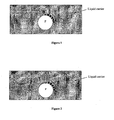
- a steric stabiliser used in accordance with the invention in the form of an A-B block copolymer structure
- particulate material in the liquid carrier might be illustrated in the not to scale simplified schematic shown in Figure 1 .
- the steric stabiliser represented by an A-B block copolymer exhibits an affinity toward the surface of the particulate material (P) through the anchoring polymeric segment (B).
- the anchoring polymeric segment (B) therefore secures the steric stabiliser to the particulate material.
- the anchoring polymeric segment (B) provides multiple sites for binding interactions between the segment and the particulate material.
- the steric stabilising polymeric segment (A) which is different to segment (B), is soluble in the liquid carrier and functions to maintain the particulate material dispersed throughout the liquid carrier. It will be appreciated that in practice the surface of the particulate material will have many steric stabilisers secured thereto, and that these have been omitted from the illustration in Figure 1 for clarity.
- Figure 2 A similar illustration to that in Figure 1 is shown in Figure 2 where the steric stabiliser used in accordance with the invention is in the form of an A-B-A block copolymer.
- At least one of the steric stabilising and anchoring polymeric segments are derived from one or more ethylenically unsaturated monomers that have been polymerised by a living polymerisation technique such as ionic polymerisation, iniferter polymerisation, SFRP, ATRP, and RAFT polymerisation. Of these living polymerisation techniques, RAFT polymerisation is preferred.
- RAFT polymerisation is a well known radical polymerisation technique that enables polymers to be prepared having a well defined molecular architecture and a low poly dispersity.
- RAFT polymerisation is conducted using a RAFT moiety or agent, and polymers formed under the control of the RAFT agent (i.e. polymerised via a RAFT mechanism to form polymer) may be conveniently referred to as a "RAFT polymer” or a "RAFT derived polymer”.
- the steric stabiliser is a RAFT derived polymer.
- RAFT agents are commonly depicted as having the general structure Z-C(S)-S-R, and that upon formation a RAFT derived polymer will comprise the reaction residue of the RAFT agent.
- a steric stabiliser used in accordance with the invention might therefore have a structure depicted by general formula (I): where X represents alone or in conjunction with R 1 or Z the polymeric structure of the steric stabiliser (e.g.
- R 1 and Z are groups derived from the RAFT agent used in preparing the steric stabiliser and are independently selected such that it can function as a RAFT agent in the polymerisation of the monomers that give rise to X.
- R 1 or Z functions as part of the steric stabiliser, it will generally function as the steric stabilising polymeric segment, in which case X will represent the anchoring polymeric segment.
- R 1 or Z will present steric stabilising properties as herein described, and X will be an anchoring polymeric segment as herein described that has been formed by RAFT polymerisation.
- R 1 will typically be an organic group that functions as a free radical leaving group under the polymerisation conditions employed and yet, as a free radical leaving group, retains the ability to reinitiate polymerisation.
- R 1 groups include alkyl, alkylaryl, alkoxyaryl, alkoxyheteroaryl, and a polymer chain, each of which is optionally substituted with one or more hydrophilic groups.
- R 1 groups can include C 1 -C 6 alkyl, C 1 -C 6 alkoxy aryl or heteroaryl, and a polymer chain selected from polyalkylene oxide polymers such as water soluble polyethylene glycol or polypropylene glycol, and alkyl end capped derivatives thereof, each of which is optionally substituted with one or more hydrophilic groups selected from -CO 2 H, -CO 2 RN, -SO 3 H, -OSO 3 H, -SORN, -SO 2 RN, -OP(OH) 2 , -P(OH) 2 ,-PO(OH) 2 , -OH, -ORN, -(OCH 2 -CHR) w -OH, -CONH 2 , CONHR', CONR'R", -NR'R",-N + R'R"R"', where R is selected from C 1 -C 6 alkyl, w is 1 to 10, R', R" and R"' are independently selected from
- R 1 groups include, but are not limited to, -CH(CH 3 )CO 2 H, -CH(CO 2 H)CH 2 CO 2 H, -C(CH 3 ) 2 CO 2 H, -CH(CH 3 )CO 2 (CH 2 CH 2 O) n H and - CH(CH 3 )CO 2 (CH 2 CH 2 O) n CH 3 , where n is ranges from about 5 to about 50, or from about 10 to about 25.
- Preferred optional substituents for R 2 and Z groups include epoxy, hydroxy, alkoxy, acyl, acyloxy, carboxy (and salts), sulfonic acid (and salts), alkoxy- or aryloxy- carbonyl, isocyanato, cyano, silyl, halo, and dialkylamino.
- hydrophilic group is -N+R'R"R"' there will be an associated counter anion.
- R 1 may also be an organic group optionally substituted with one or more hydrophobic groups.
- Z is preferably an organic group optionally substituted with one or more hydrophilic groups.
- aryl and “heteroaryl” refer to any substituent which includes or consists of one or more aromatic or heteroaromatic ring respectively, and which is attached via a ring atom.
- the rings may be mono or polycyclic ring systems, although mono or bicyclic 5 or 6 membered rings are preferred.
- suitable rings include but are not limited to benzene, biphenyl, terphenyl, quaterphenyl, naphthalene, tetrahydronaphthalene, 1-benzylnaphthalene, anthracene, dihydroanthracene, benzanthracene, dibenzanthracene, phenanthracene, perylene, pyridine, 4-phenylpyridine, 3-phenylpyridine, thiophene, benzothiophene, naphthothiophene, thianthrene, furan, benzofuran, pyrene, isobenzofuran, chromene, xanthene, phenoxathiin, pyrrole, imidazole, pyrazole, pyrazine, pyrimidine, pyridazine, indole, indolizine, isoindole, purine, quinoline, isoquinoline, phthala
- optionally substituted means that a group may or may not be further substituted with one or more groups selected from, but not limited to, alkyl, alkenyl, alkynyl, aryl, halo, haloalkyl, haloalkenyl, haloalkynyl, haloaryl, hydroxy, alkoxy, alkenyloxy, aryloxy, benzyloxy, haloalkoxy, haloalkenyloxy, acetyleno, carboximidyl, haloaryloxy, isocyano, cyano, formyl, carboxyl, nitro, nitroalkyl, nitroalkenyl, nitroalkynyl, nitroaryl, alkylamino, dialkylamino, alkenylamino, alkynylamino, arylamino, diarylamino, benzylamino, imino, alkylimine, alkenylimine, alkenylim
- alkyl used either alone or in compound words such as “alkenyloxyalkyl”, “alkylthio”, “alkylamino” and “dialkylamino” denotes straight chain, branched or cyclic alkyl, preferably C 1-20 alkyl or cycloalkyl.
- straight chain and branched alkyl examples include methyl, ethyl, propyl, isopropyl, butyl, isobutyl, sec-butyl, tert-butyl, amyl, isoamyl, sec-amyl, 1,2-dimethylpropyl, 1,1-dimethyl-propyl, hexyl, 4-methylpentyl, 1-methylpentyl, 2-methylpentyl, 3-methylpentyl, 1,1-dimethylbutyl, 2,2-dimethylbutyl, 3,3-dimethylbutyl, 1,2-dimethylbutyl, 1,3-dimethylbutyl, 1,2,2,-trimethylpropyl, 1,1,2-trimethylpropyl, heptyl, 5-methoxyhexyl, 1-methylhexyl, 2,2-dimethylpentyl, 3,3-dimethylpentyl, 4,4-dimethylpentyl, 1,2-dimethylpentyl
- cyclic alkyl examples include mono- or polycyclic alkyl groups such as cyclopropyl, cyclobutyl, cyclopentyl, cyclohexyl, cycloheptyl, cyclooctyl, cyclononyl, cyclodecyl and the like.
- salt denotes a species in ionised form, and includes both acid addition and base addition salts.
- suitable salts are those that do not interfere with the RAFT chemistry.
- counter anion denotes a species capable of providing a negative charge to balance the charge of the corresponding cation.
- examples of counter anions include, Cl - , I - , Br - , F - , NO 3 - , CN - and PO 3 - .
- alkoxy denotes straight chain or branched alkoxy, preferably C 1-20 alkoxy. Examples of alkoxy include methoxy, ethoxy, n-propoxy, isopropoxy and the different butoxy isomers.
- alkenyl denotes groups formed from straight chain, branched or cyclic alkenes including ethylenically mono-, di- or poly-unsaturated alkyl or cycloalkyl groups as previously defined, preferably C 2-20 alkenyl.
- alkenyl examples include vinyl, allyl, 1-methylvinyl, butenyl, iso-butenyl, 3-methyl-2-butenyl, 1-pentenyl, cyclopentenyl, 1-methyl-cyclopentenyl, 1-hexenyl, 3-hexenyl, cyclohexenyl, 1-heptenyl, 3-heptenyl, 1-octenyl, cyclooctenyl, 1-nonenyl, 2-nonenyl, 3-nonenyl, 1-decenyl, 3-decenyl, 1,3-butadienyl, 1-4,pentadienyl, 1,3-cyclopentadienyl, 1,3-hexadienyl, 1,4-hexadienyl, 1,3-cyclohexadienyl, 1,4-cyclohexadienyl, 1,3-cycloheptadienyl, 1,3,5-cycloheptatrien
- alkynyl denotes groups formed from straight chain, branched or cyclic alkyne including those structurally similar to the alkyl and cycloalkyl groups as previously defined, preferably C 2-20 alkynyl.
- alkynyl include ethynyl, 2-propynyl and 2- or 3-butynyl.
- acyl either alone or in compound words such as “acyloxy”, “acylthio", “acylamino” or “diacylamino” denotes carbamoyl, aliphatic acyl group and acyl group containing an aromatic ring, which is referred to as aromatic acyl or a heterocyclic ring which is referred to as heterocyclic acyl, preferably C 1-20 acyl.
- acyl examples include carbamoyl; straight chain or branched alkanoyl such as formyl, acetyl, propanoyl, butanoyl, 2-methylpropanoyl, pentanoyl, 2,2-dimethylpropanoyl, hexanoyl, heptanoyl, octanoyl, nonanoyl, decanoyl, undecanoyl, dodecanoyl, tridecanoyl, tetradecanoyl, pentadecanoyl, hexadecanoyl, heptadecanoyl, octadecanoyl, nonadecanoyl and icosanoyl; alkoxycarbonyl such as methoxycarbonyl, ethoxycarbonyl, t-butoxycarbonyl, t-pentyloxycarbonyl and heptyloxycarbonyl; cycloalkyl
- phenylacetyl phenylpropanoyl, phenylbutanoyl, phenylisobutylyl, phenylpentanoyl and phenylhexanoyl
- naphthylalkanoyl e.g. naphthylacetyl, naphthylpropanoyl and naphthylbutanoyl
- aralkenoyl such as phenylalkenoyl (e.g.
- phenylpropenoyl, phenylbutenoyl, phenylmethacryloyl, phenylpentenoyl and phenylhexenoyl and naphthylalkenoyl e.g. naphthylpropenoyl, naphthylbutenoyl and naphthylpentenoyl
- aralkoxycarbonyl such as phenylalkoxycarbonyl
- benzyloxycarbonyl aryloxycarbonyl such as phenoxycarbonyl and napthyloxycarbonyl; aryloxyalkanoyl such as phenoxyacetyl and phenoxypropionyl; arylcarbamoyl such as phenylcarbamoyl; arylthiocarbamoyl such as phenylthiocarbamoyl; arylglyoxyloyl such as phenylglyoxyloyl and naphthylglyoxyloyl; arylsulfonyl such as phenylsulfonyl and napthylsulfonyl; heterocycliccarbonyl; heterocyclicalkanoyl such as thienylacetyl, thienylpropanoyl, thienylbutanoyl, thienylpentanoyl, thienylhexanoyl, thiazolylace
- heterocyclic As used herein, the terms “heterocyclic”, “heterocyclyl” and “heterocycle” used on their own or as part of a term such as “heterocyclicalkenoyl", heterocycloxy” or “haloheterocyclyl” refer to aromatic, pseudo-aromatic and non-aromatic rings or ring systems which contain one or more heteroatoms selected from N, S, and O and which may be optionally substituted. Preferably the rings or ring systems have 3 to 20 carbon atoms. The rings or ring systems may be selected from those described above in relation to the definition of "heteroaryl".
- Preferred steric stabilisers of formula (I) include, but are not limited to, the following general formulae (II) to (X): , structures (II) to (IX) wherein one or both -CO 2 H group(s) in each structure is replaced by -CH(CH 3 )CO 2 (CH 2 CH 2 O) n H or -CH(CH 3 )CO 2 (CH 2 CH 2 O) n CH 3 , structures (II), (III), (VI) and (X) wherein R 3 is replaced by -CH(CH 3 )CO 2 (CH 2 CH 2 O) n H or-CH(CH 3 )CO 2 (CH 2 CH 2 O) n CH 3 , structures (VII) and (VIII) wherein PhCH 2 - is replaced by -CH(CH 3 )CO 2 (CH 2 CH 2 O) n H or -CH(CH 3 )CO 2 (CH 2 CH 2 O) n CH 3 , and structures (IV) and (V) wherein the 5-member
- Z-C(S)-S- and R 1 - moieties of general formula (I) are not particularly important with respect to providing the steric stabiliser used in accordance with the invention with its advantageous properties
- one or both of these moieties (or part thereof) may be removed or modified using techniques known in the art.
- There are numerous techniques known to remove or modify the Z-C(S)-S- moiety or part thereof from RAFT derived polymers e.g. the removal of the sulphur containing groups).
- the RAFT derived polymer may be reacted with benzoyl peroxide.
- Preparing a steric stabiliser by RAFT polymerisation may involve polymerising under the control of a RAFT agent (i) one or more type of ethylenically unsaturated monomer to provide for at least one steric stabilising polymeric segment (A), and (ii) one or more type of different monomers to provide for at least one anchoring polymeric segment (B) (i.e. where A and B collectively form X in structure (I)).
- a RAFT agent i) one or more type of ethylenically unsaturated monomer to provide for at least one steric stabilising polymeric segment (A), and (ii) one or more type of different monomers to provide for at least one anchoring polymeric segment (B) (i.e. where A and B collectively form X in structure (I)).
- a steric stabiliser prepared by RAFT polymerisation may involve polymerising under the control of a RAFT agent (i) one or more type of ethylenically unsaturated monomer to provide for at least one steric stabilising polymeric segment (A), or (ii) one or more type of different monomers to provide for at least one anchoring polymeric segment (B) (i.e. where only one of A and B form X in structure (I) and R 1 in effect represents the other).
- RAFT agent i
- one or more type of ethylenically unsaturated monomer to provide for at least one steric stabilising polymeric segment (A)
- B anchoring polymeric segment
- Techniques, conditions and reagents known by those skilled in the art of RAFT polymerisation may be conveniently used to prepare such stabilisers precursors.
- Suitable RAFT agents for preparing the steric stabiliser include, but are not limited to, those of general formula (IA): where R 1 and Z are as previously defined.
- Preferred RAFT agents for preparing the steric stabilisers include, but are not limited to, those represented by the following general formulas (XI) to (IXX): , structures (XI) to (XVIII) wherein one or both -CO 2 H group(s) in each structure is replaced by -CH(CH 3 )CO 2 (CH 2 CH 2 O) n H or -CH(CH 3 )CO 2 (CH 2 CH 2 O) n CH 3 , structures (XI), (XII), (XV) and (IXX) wherein R 3 is replaced by -CH(CH 3 )CO 2 (CH 2 CH 2 O) n H or - CH(CH 3 )CO 2 (CH 2 CH 2 O) n CH 3 , structures (XVI) and (XVII) wherein PhCH 2 - is replaced by -CH(CH 3 )CO 2 (CH 2 CH 2 O) n H or -CH(CH 3 )CO 2 (CH 2 CH 2 O) n CH 3
- each segment can be formed sequentially by the polymerisation of appropriate monomers.
- a preformed polymer may be employed as one of the segments and the other segment may be grafted thereto by the polymerisation of appropriate monomers.
- suitable monomers that may be used in general are those which can be polymerised by a free radical process. Suitable monomers should also be capable of being polymerised with other monomers.
- the factors which determine copolymerisability of various monomers are well documented in the art. For example, see: Greenlee, R.Z., in Polymer Handbook 3rd Edition (Brandup, J., and Immergut. E.H. Eds) Wiley: New York, 1989 p II/53 .
- Such monomers including those mentioned above, may be selected from those with the general formula (XX):
- monomers of general formula (XX) include, but are not limited to, maleic anhydride, N-alkylmaleimide, N-arylmaleimide, dialkyl fumarate and cyclopolymerisable monomers, acrylate and methacrylate esters, acrylic and methacrylic acid, styrene, acrylamide, methacrylamide, and methacrylonitrile, mixtures of these monomers, and mixtures of these monomers with other monomers.
- an anchoring polymeric segment so as to have a binding affinity for a given particulate material, it can be convenient to consider the hydrophilic/hydrophobic character of the particulate material and anchoring segment.
- ethylenically unsaturated monomers that might be considered by a person skilled in the art to give rise to hydrophilic character of the segment include, but are not limited to, acrylic acid, methacrylic acid, vinyl phosphonic acid, monoacryloxyethyl phosphate, 2-(methacryloyloxy) ethyl phosphate, hydroxyethyl methacrylate, hydroxypropyl methacrylate, acrylamide and methacrylamide, hydroxyethyl acrylate, N-methylacrylamide, dimethylaminoethyl methacrylate or vinyl pyrrolidone.
- Examples of ethylenically unsaturated monomers that might be considered by a person skilled in the art to give rise to hydrophobic character of the segment include, but are not limited to, vinyl acetate, methyl methacrylate, methyl acrylate, styrene; alpha-methylstyrene, butyl acrylate, butyl methacrylate, amyl methacrylate, hexyl methacrylate, lauryl methacrylate, stearyl methacrylate, ethylhexyl methacrylate, crotyl methacrylate, cinnamyl methacrylate, oleyl methacrylate, ricinoleyl methacrylate, vinyl butyrate, vinyl tert-butyrate, vinyl stearate or vinyl laurate.
- the polymerisation may require initiation from a source of free radicals.
- the source of initiating radicals can be provided by any suitable method of generating free radicals, such as the thermally induced homolytic scission of suitable compound(s) (thermal initiators such as peroxides, peroxyesters, or azo compounds), the spontaneous generation from monomers (e.g. styrene), redox initiating systems, photochemical initiating systems or high energy radiation such as electron beam, X- or gamma-radiation.
- the initiating system is chosen such that under the reaction conditions there is no substantial adverse interaction between the initiator or the initiating radicals and other reagents present.
- Thermal initiators are chosen to have an appropriate half life at the temperature of polymerisation. These initiators can include one or more of the following compounds:
- Photochemical initiator systems are chosen to have the requisite solubility in the reaction medium and have an appropriate quantum yield for radical production under the conditions of the polymerisation.
- Examples include benzoin derivatives, benzophenone, acyl phosphine oxides, and photo-redox systems.
- Redox initiator systems are chosen to have the requisite solubility in the reaction medium and have an appropriate rate of radical production under the conditions of the polymerisation; these initiating systems can include, but are not limited to, combinations of the following oxidants and reductants:
- Suitable initiators which have an appreciable solubility in a hydrophilic reaction medium such as water include, but are not limited to, 4,4-azobis(cyanovaleric acid), 2,2'-azobis ⁇ 2-methyl-N-[1,1-bis(hydroxymethyl)-2-hydroxyethyl]propionamide ⁇ , 2,2'-azobis[2-methyl-N-(2-hydroxyethyl)propionamide], 2,2'-azobis(N,N'-dimethyleneisobutyramidine), 2,2'-azobis(N,N'-dimethyleneisobutyramidine) dihydrochloride, 2,2'-azobis(2-amidinopropane) dihydrochloride, 2,2'-azobis ⁇ 2-methyl-N-[1,1-bis(hydroxymethyl)-2-ethyl]propionamide ⁇ , 2,2'-azobis[2-methyl-N-(2-hydroxyethyl)propionamide], 2,2'-azobis(isobutyramide) dihydrate, and derivatives thereof.
- Suitable initiators which have an appreciable solubility in a hydrophobic reaction medium may vary depending on the polarity of the reaction medium, but typically would include oil soluble initiators such as azo compounds exemplified by the well known material 2,2'-azobisisobutyronitrile.
- oil soluble initiators such as azo compounds exemplified by the well known material 2,2'-azobisisobutyronitrile.
- Other readily available initiators are acyl peroxides such as acetyl and benzoyl peroxide as well as alkyl peroxides such as cumyl and t-butyl peroxides. Hydroperoxides such as t-butyl and cumyl hydroperoxides may also be used.
- compositions in accordance with the invention may be used to facilitate obtaining an image of a region of interest of a subject.
- region of interest is meant the entire subject or a particular area or portion of the subject.
- a region of interest of a subject will generally be an internal region of the subject.
- diagnostic imaging an imaging technique that may be used to identify or determine the presence of a disease or other condition in a subject.
- Suitable diagnostic imaging techniques include, but are not limited to, ultrasound, X-ray, Computed Tomography (CT), Single Photon Emission Computed Tomography (SPECT), Positron Emission Tomography (PET) and Magnetic Resonance Imaging (MRI) techniques.
- compositions in accordance with the invention When used in diagnostic imaging, the compositions in accordance with the invention will typically comprise as the particulate material a diagnostic agent.
- diagnostic agent any agent which may be used in connection with obtaining a diagnostic image of a selected region of a subject for the purpose of determining the presence or otherwise of a disease or other condition in a subject.
- Suitable diagnostic agents include, but are not limited to, contrast agents and radioactive isotopes.
- compositions in accordance with the invention comprising as the particulate material a diagnostic agent may be conveniently referred to as a "diagnostic composition”.
- a preferred diagnostic composition in accordance with the invention comprises a contrast agent or radioactive isotope in the form of, or as part of, the particulate material.
- Preferred contrast agents include, but are not limited to, metal oxides, more preferably paramagnetic or superparamagnetic metal oxides. In a particularly preferred embodiment, the metal oxide is iron oxide.
- radioactive isotopes that may be used as, or as part of, a diagnostic agent include 99m Tc, 67 Ga, 64 Cu, 89 Zr and 18 F.
- the liquid carrier is preferably an aqueous liquid carrier
- the steric stabilising polymeric segment of the steric stabiliser preferably comprises a polymeric segment selected from polyacrylamide, polyethylene oxide, polyhydroxyethylacrylate, poly N-isopropylacrylamide, polydimethylaminoethylmethacrylate, polyvinyl pyrrolidone and copolymers thereof
- the anchoring polymeric segment of the steric stabiliser preferably comprises a polymeric segment selected from polyacrylic acid, polymethacrylic acid, polydimethylaminoethylmethacrylate and copolymers thereof.
- diagnostic compositions in accordance with the invention comprising a contrast agent or radioactive isotope as, or as part of, the particulate material are expected to give rise to a prolonged systemic half-life of the contrast agent.
- the particulate material will be maintained in a dispersed state throughout the in vivo liquid carrier by the steric stabiliser and be less prone to deleterious dilution and liquid environment effects as hereinbefore described.
- composition in accordance with the invention in the manufacture of a formulation for obtaining a diagnostic image, wherein the particulate material of the composition is a diagnostic agent.
- compositions of the invention can advantageously be used in therapeutic treatments such as hyperthermia therapy.
- Hyperthermia therapy has been proposed as a treatment of diseased tissue. There is evidence to suggest that hyperthermia is effective in treating diseases, including cancerous growths. The therapeutic benefit of hyperthermia therapy is believed to be mediated through two principle mechanisms. Firstly, hyperthermia therapy has a direct tumouricidal effect on tissue by raising temperatures to greater than about 41 or 42°C resulting in irreversible damage to cancer cells. Secondly, hyperthermia is known to sensitise cancer cells to the effects of radiation therapy and to certain chemotherapeutic drugs.
- hyperthermia therapy is not prone to any cumulative toxicity effects.
- compositions in accordance with the invention may be used for radiation therapy (also referred herein to as radiotherapy).
- the compositions are generally administered in such a way as to cause the particulate material to concentrate in a target site.
- the composition may be administered via intratumoral, peritumoral, or intravascular, intravenous, intraperitoneal, subcutaneous, intrahecal injection or superficial applications.
- the compositions are preferably administered via the arterial or venous blood supply.
- compositions in accordance with the invention may be used to provide hyperthermia or radiation therapy on a target site of interest in a subject.
- a target site of interest in a subject is intended to mean a region of the subject that is considered to warrant hyperthermia or radiation therapy.
- the target site will generally be diseased tissue, such as cancerous tissue.
- a magnetic field of clinically acceptable frequency and strength that causes the magnetic particles to radiate heat at the target site.
- a magnetic field of a "clinically acceptable frequency and strength” is meant a magnetic field that will not result in unacceptable or undesirable physicological response in the subject being treated, be it from the magnetic field per se or its effect on the magnetic particles to radiate heat.
- the magnetic field employed will be an alternating or AC magnetic field.
- composition in accordance with the invention in the manufacture of a formulation for performing hyperthermia therapy, wherein the particulate material of the composition is magnetic.
- composition in accordance with the invention in the manufacture of a formulation for performing radiation therapy, wherein the particulate material of the composition comprises one or more radioactive isotopes.
- the particulate material may also have bound to its surface, and/or the steric stabiliser may comprise as a substituent, one or more ligands to target delivery of the particulate material within a subject.
- a "ligand" in this context is meant a molecule that binds to or interacts with a target molecule or cell of the subject.
- the ligand can be a small molecule, hormone, growth factor, steroid, protein, antibody, antibody fragment, peptide or polypeptide, or mimetic thereof.
- the ligand may be a molecule that can bind to a receptor expressed on the surface of a target cell or, conversely, to a molecule expressed on the surface of a target cell.
- the specific chemical composition of the ligand will be primarily selected based on the.disease state or condition to be diagnosed or treated.
- Targets to which the ligand can be selected to bind with include a wide variety of molecules including for example, cell signalling molecules, antibodies and antibody fragments, proteins and cell surface receptors.
- particulate material such as magnetic particles can not only target cells but also be endocytosed by the cells.
- endocytosed magnetic particles can be used in effective and efficient hyperthermic treatments.
- compositions in accordance with the invention comprising such ligands may be particularly useful in diagnostic or therapeutic applications.
- Example 1 Steric Stabilization of Iron Oxide nanoparticles in aqueous dispersion using poly(acrylic acid) 10 -block-poly(acrylamide) 20 macro RAFT agent.
- Magnetite nanoparticles were produced following the method of Massart (Preparation of aqueous magnetic liquids in alkaline and acidic media. IEEE Transactions on Magnetics, 1981. MAG-17(2): p. 1247-1248 ).
- 80 ml of 1M FeCl 3 .6H 2 O in 2M HCl and 40 ml of 1M FeCl 2 .4H 2 O in 2M HCl were mixed in a 2 Litre beaker and the mixture diluted to 1.2 Litre with MQ-water.
- 250 ml of NH 4 OH (28% (w/w)) was then quickly added to the beaker and the mixture vigorously stirred for 30 minutes.
- acrylic acid (2.27 g, 31 mmol) and 4,4'-azobis(4-cyanovaleric acid) (0.05 g, 0.17 mmol) were added to the flask.
- the mixture was deoxygenated and heating was continued at 80°C for a further 3 hours.
- the copolymer solution had 21.8% solids. It was then diluted with MQ water to 0.7 wt% and the pH of the diluted copolymer solution was adjusted to 5 using 0.1M NaOH.
- Nanoparticle dispersion prepared in part (a) (40 g) was diluted to 200g with MQ water to yield 1 wt% dispersion of the nanoparticles. The pH of this nanoparticle dispersion was then raised to 5 using 0.1 M sodium hydroxide. Macro-RAFT copolymer solution from Example 1, part (b) (100 g) was then added. The mixture was vigorously stirred for 2 hours at room temperature. The nanoparticle dispersion was then dialysed to remove salts, residual solvents, unwanted low molecular weight reaction side products and unbound polymer. Bigger particles in the dispersion were removed by ultracentrifugation.
- the purified nanoparticle dispersion was then distilled to increase the solids loading in the aqueous ferrofluid dispersion to about 70 wt%.
- the resulting aqueous ferrofluid was found to be stable in a 60% ammonium nitrate solution.
- Example 2 Steric Stabilization of Iron Oxide nanoparticles in aqueous dispersion using poly(acrylic acid) 10 -block-poly(NIPAM) 20 macro RAFT agent.
- acrylic acid (1.67 g, 23 mmol) and 4,4'-azobis(4-cyanovaleric acid) (0.03 g, 0.11 mmol) were added to the flask.
- the mixture was deoxygenated and heating was continued at 80°C for a further 3 hours.
- the copolymer solution had 32% solids. It was then diluted with MQ water to 0.52 wt%. The pH of the diluted copolymer solution was adjusted to 5 using 0.1 M NaOH.
- Nanoparticle dispersion prepared in example 1 part (a) (40 g) was diluted to 200g with MQ water to yield a 1 wt% dispersion of the nanoparticles and the pH of adjusted to 5 using 0.1 M sodium hydroxide solution.
- Macro-RAFT copolymer solution from part (a) (100 g) was then added. The mixture was vigorously stirred for 2 hours at room temperature. At this pH the copolymer is partially neutralized while the nanoparticles are sufficiently above their point of zero charge to also be stable.
- the nanoparticle dispersion was then dialysed to remove salts, residual solvents, unwanted low molecular weight reaction side products and unbound polymer. Bigger particles in the dispersion were removed by ultracentrifugation.
- the purified nanoparticle dispersion was then distilled to increase the solid loading in the aqueous ferrofluid dispersion to about 70 wt%. The resulting aqueous ferrofluid was found to be stable in 1 M sodium chloride
- Example 3 Steric Stabilization of Iron Oxide nanoparticles in aqueous dispersion using a poly(acrylic acid) 10 -block-poly(ethylene oxide) 17 macro RAFT agent.
- MethoxyPEG (Mn ⁇ 798) was warmed and stirred to liquefy and homogenize it, and 19.95 g (25.0 mmol) was then weighed into a 250 mL 3-necked round bottom flask, and then allowed to solidify.
- 2- ⁇ [(butylsulfanyl)carbonothioyl]sulfanyl ⁇ propanoic acid (6.96 g, 29.3 mmol) and 4-dimethylaminopyridine (360 mg, 2.9 mmol) were added to the flask, a magnetic stirbar was introduced, and the flask was purged with nitrogen. Dry dichloromethane (75 mL) was added and the mixture was stirred until the solids had all dissolved.
- the crude product was dissolve in dichloromethane (75 mL) and stirred with solid oxalic acid (4 g) for 1 h, then diluted with hexane (70 mL) and allowed to settle, producing a flocculent white precipitate.
- the mixture was filtered and evaporated, and the crude oil was dissolved in 2:1 hexane-dichloromethane (150 mL) and passed through a plug of alumina (40 g). Elution with further 2:1 hexane-dichloromethane was continued until the eluate was colourless.
- the combined eluates were dried with sodium sulfate, filtered, and evaporated to give a clear pale orange oil, 24.69 g, 97%.
- a solution of macro-RAFT from example 3 part(a) (2.0 g, 1.9 mmol), acrylic acid (1.41 g, 19 mmol), 4,4'-azobis(4-cyanovaleric acid) (0.03 g, 0.11 mmol) in dioxane (7.5 g) and water (3.75 g) was prepared in a 100 mL round bottom flask. This was stirred magnetically and sparged with nitrogen for 15 minutes. The flask was then heated at 80 °C for 2 hrs. The resulting copolymer solution had 23.7% solids. The solution was then diluted to 0.29 wt% with MQ water. The pH of the diluted copolymer solution was adjusted to 5 with 0.1 M NaOH.
- Nanoparticle dispersion prepared in example 1 part (a) (5 wt %, 40 g) was diluted to 200g with MQ water to yield 1 wt% dispersion of the nanoparticles and the pH adjusted to 5 using 0.1M sodium hydroxide solution.
- Macro-RAFT copolymer solution from example 3 part (b) (0.29 wt%, 100 g) was then added. The mixture was vigorously stirred for 2 hours at room temperature. At this pH the copolymer is partially neutralized while the nanoparticles are sufficiently above their point of zero charge to also be stable. The resulting dispersion was then dialysed to remove salts, residual solvents, unwanted low molecular weight reaction side products and unbound polymer.
- Example 4 Steric Stabilization of Iron Oxide nanoparticles in aqueous dispersion using poly(monoacryloxyethyl phosphate) 10 -block-poly(ethylene oxide) 17 macro RAFT agent and based on the poly(ethylene oxide) RAFT agent prepared in Example 3, part (a).
- a solution of macro RAFT (1.0 g, 0.9 mmol) from example 3 part(a), monoacryloxyethyl phosphate (1.92 g, 9.8 mmol), 4,4'-azobis(4-cyanovaleric acid) (0.018 g, 0.06 mmol) in dioxane (15 g) and water (7.5 g) was prepared in a 100 mL round bottom flask. This was stirred magnetically and sparged with nitrogen for 15 minutes. The flask was then heated at 80 °C for 2 hrs. The copolymer solution had 11.5% solids. It is then diluted with MQ water to 1.2 wt%. The pH of the diluted copolymer solution was adjusted to 5 with 0.1M NaOH.
- Example 4 40 g of the nanoparticle dispersion (5 wt %) prepared in Example 1, part (a) was diluted with MQ water to 200g to yield 1 wt% dispersion of the nanoparticles. The pH of this prepared nanoparticle dispersion was then raised to 5. A 100 g 1.2 wt% solution of the Macro-RAFT copolymer, also at pH 5, from example 4 part (a) was then added to a 1 wt % dispersion of iron oxide maintained at the same pH. The mixture was vigorously stirred for 2 hours at room temperature. At this pH the copolymer is partially neutralized while the nanoparticles are sufficiently above their point of zero charge to also be stable.
- Phosphate ions from the poly(monoacryloxyethyl phosphate) block of the copolymer chemically adsorbed onto the particle surface yielding a stable sterically stabilized dispersion of nanoparticles in water.
- the dispersion was then dialysed to remove salts, residual solvents, unwanted low molecular weight reaction side products and unbound polymer. Bigger particles in the dispersion were removed by ultracentrifugation.
- the purified nanoparticle dispersion was then distilled to increase the solids loading in the aqueous ferrofluid dispersion to about 70 wt%.
- the resulting aqueous ferrofluid was found to be stable in phosphate buffered saline (PBS) solution.
- PBS phosphate buffered saline
- Example 5 Targeting iron oxide nanoparticles of Example 1-Part(c) to ovarian cancer cells in vitro
- Example 5-Part (b) The magnetic nanoparticles of Example 5-Part (b) (3.3ml) were adjusted to pH 8.0 using sodium hydroxide solution. 0.044ml of FITC solution (7.3mg/ml of water) was then added. The sample was mixed rapidly without magnetic stirring, and incubated in the dark overnight. The product was dialysed against Milli Q water until free unbound FITC could no longer be detected.
- Part (d) Conjugation of fluorescein isothiocyanate (FITC) and folate ester of Part (a) to iron oxide nanoparticles of Example 5-Part (b)
- Example 5-Part (b) (3.3ml) were adjusted to pH 8.0 using sodium hydroxide solution. 0.044ml of FITC solution (7.3mg/ml of water) and folate ester solution of Part (a) (86mg) was then added. The sample was mixed rapidly without magnetic stirring, and incubated in the dark overnight. The product was dialysed against Milli Q water until free unbound FITC could no longer be detected.
- A2780 cells were maintained as monolayers in Dulbecco's modified Eagle's medium (DMEM), supplemented with 5% foetal calf serum, 2 mM glutamine, and 100 ⁇ g/ml penicillin/streptomycin, in a humidified 37°C incubator with 5% CO 2 . Cells were seeded onto 22mm glass cover slips in 6 well flasks at a density of ⁇ 2x10 5 cells per well.
- DMEM Dulbecco's modified Eagle's medium
- the monolayers were washed three times with phosphate buffered saline (PBS, pH 7.4), then cultured in folate-free RPMI medium (Invitrogen) supplemented with 5% foetal calf serum, 2 mM glutamine, and 100 ⁇ g/ml penicillin/streptomycin. After a further 18-24 hours, the cells were washed with the PBS three times, then incubated with 1 ml solution of the nanoparticles in folate free RPMI solution (1ml of the nanoparticles of Part (c) or (d) in 2.5 ml of RPMI solution) in a humidified 37°C incubator with 5% CO 2 for 2 hours.
- PBS phosphate buffered saline
- folate-free RPMI medium Invitrogen
- the cells were then washed 3 times with PBS, and fixed using a fresh solution of 4% paraformaldehyde in PBS for 10 minutes at room temperature.
- the cells were stained using syto-blue solution in PBS (concentration at ⁇ 100nM).
- the fixed cells were studied using a confocal microscopy. It was observed that substantial amounts of green fluorescence was visible inside cells treated with FITC+folate conjugated nanoparticles of Part (d), and almost none in cells treated with FITC conjugated nanoparticles of Part (c). It showed that the nanoparticles with folate as a targeting agent were endocytosed by the ovarian cancer cells A2780s.
- Example 6 Intravenous injection and biodistribution of magnetic nanoparticles in a white New Zealand rabbit by radio imaging
- Magnetite nanoparticles were produced following the method of Massart (Preparation of aqueous magnetic liquids in alkaline and acidic media. IEEE Transactions on Magnetics, 1981. MAG-17(2): p. 1247-1248 ).
- 4 ml of 0.1M FeCl 3 .6H 2 O in 2M HCl 4 ml of 0.1 M FeCl 2 .4H 2 O in 2M HCl and 200 Mbq of radioactive Ga 67 were mixed in a 40 ml scintillation vial and the mixture diluted to 12 ml with Mili-Q-water.
- Phosphate ions from the poly(monoacryloxyethyl phosphate) block of the copolymer chemically adsorbed onto the particle surface yielding a stable sterically stabilized dispersion of nanoparticles in water.
- the dispersion was then dialysed to remove salts, residual solvents, unwanted low molecular weight reaction side products and unbound polymer. Bigger particles in the dispersion were removed by ultracentrifugation.
- the purified nanoparticle dispersion was then distilled to increase the solids loading in the aqueous ferrofluid dispersion to about 0.5 wt%.
- the resulting aqueous ferrofluid was found to be stable in phosphate buffered saline (PBS) solution.
- PBS phosphate buffered saline
- Example 6 Part (b) (3 ml) with the radioactivity of 1.5 milli Curies were injected into the ear vein of a 3.9 Kg New Zealand white rabbit.
- the nanoparticle dispersion was filtered through the 220 nm filter prior to injection.
- the distribution of the nanoparticles in different parts of the body was monitored with the clinical y camera.
- Various parts of the body such as liver, spleen, bone marrow and also small portions of the lungs and skull were successfully imaged.
- Nanoparticles circulated for about 45 minutes in the body before they were taken up by parts of reticuloendothelial system. No toxicity was detected as the rabbit resumed its normal activities at the end of the experiment.
- Example 7 Toxicity studies of sterically stabilized iron oxide nanoparticle disperions in rats.
- Example 4-Part (b) The magnetic nanoparticles of Example 4-Part (b) were used in a toxicity test at the intended imaging dose rate and five times the intended imaging dose rate, as described below:
- the acute toxicity of magnetic nanoparticles imaging agent was investigated in young adult Sprague-Dawley rats. Groups of three male and three female rats were administered a single dose of either 0.9% sterile saline vehicle control or the magnetic nanoparticles test article at a dose of 2.5 or 12.5 mg/kg. These dose levels were designed as a low dose equivalent to the intended dose rate for imaging studies and a high dose corresponding to approximately five times the intended clinical dose. The doses were administered by bolus intravenous injection into the lateral tail vein at a dose rate of 5 mL/kg. The rats were monitored for clinical signs of toxicity for the four hours immediately following dose administration and daily thereafter for a seven day observation period. Body weight measurements were also made prior to dosing and daily throughout the observation period. On study day eight the rats were weighed prior to euthanasia by carbon dioxide asphyxia. A gross necropsy was then performed which included measurement of the weights of critical organs.
- test article treatment was not associated with clinical signs of toxicity. Incidental findings of toxicity not related to test article treatment included mild piloerection in all groups on Study Day 1 following dosing. Test article treatment was also not associated with any effects on body weight. There were no gross pathology findings or changes in organ weights associated with test article treatment.
- Example 8 Steric Stabilization of Barium Sulphate in aqueous dispersion using poly(acrylic acid) 7 -co-poly(styrene sulphonate) 3 -block- poly(acrylamide) 20 macro-RAFT macro-RAFT agent.
- acrylic acid (1.68 g, 23.3 mmol), 4-styrene sulphonic acid (1.37 g, 6.6 mmol) and 4,4'-azobis(4-cyanovaleric acid) (0.05 g, 0.17 mmol) were added to the flask.
- the mixture was deoxygenated and heating was continued at 80°C for a further 3 hours.
- the copolymer solution had 31 % solids. It was then diluted with MQ water to 0.4 wt% and the pH of the diluted copolymer solution was adjusted to 2.2 using 0.1 M HCl.
Landscapes
- Health & Medical Sciences (AREA)
- Chemical & Material Sciences (AREA)
- Life Sciences & Earth Sciences (AREA)
- Animal Behavior & Ethology (AREA)
- General Health & Medical Sciences (AREA)
- Public Health (AREA)
- Veterinary Medicine (AREA)
- Epidemiology (AREA)
- Medicinal Chemistry (AREA)
- Pharmacology & Pharmacy (AREA)
- Engineering & Computer Science (AREA)
- Bioinformatics & Cheminformatics (AREA)
- Inorganic Chemistry (AREA)
- Chemical Kinetics & Catalysis (AREA)
- General Chemical & Material Sciences (AREA)
- Nuclear Medicine, Radiotherapy & Molecular Imaging (AREA)
- Organic Chemistry (AREA)
- Dermatology (AREA)
- Nanotechnology (AREA)
- Dispersion Chemistry (AREA)
- Physics & Mathematics (AREA)
- Optics & Photonics (AREA)
- Medicinal Preparation (AREA)
- Medicines Containing Antibodies Or Antigens For Use As Internal Diagnostic Agents (AREA)
- Medicines That Contain Protein Lipid Enzymes And Other Medicines (AREA)
Applications Claiming Priority (3)
| Application Number | Priority Date | Filing Date | Title |
|---|---|---|---|
| AU2008902427A AU2008902427A0 (en) | 2008-05-16 | Administrable dispersions | |
| AU2008904892A AU2008904892A0 (en) | 2008-09-19 | Further administrable dispersions | |
| PCT/AU2009/000620 WO2009137890A1 (en) | 2008-05-16 | 2009-05-15 | Administrable compositions |
Publications (3)
| Publication Number | Publication Date |
|---|---|
| EP2291175A1 EP2291175A1 (en) | 2011-03-09 |
| EP2291175A4 EP2291175A4 (en) | 2013-04-03 |
| EP2291175B1 true EP2291175B1 (en) | 2014-07-23 |
Family
ID=41318295
Family Applications (1)
| Application Number | Title | Priority Date | Filing Date |
|---|---|---|---|
| EP09745312.0A Active EP2291175B1 (en) | 2008-05-16 | 2009-05-15 | Administrable compositions |
Country Status (13)
| Country | Link |
|---|---|
| US (1) | US8709486B2 (pt) |
| EP (1) | EP2291175B1 (pt) |
| JP (1) | JP5663472B2 (pt) |
| KR (1) | KR101638201B1 (pt) |
| CN (1) | CN102099010B (pt) |
| AU (1) | AU2009246066B2 (pt) |
| CA (1) | CA2724004C (pt) |
| DK (1) | DK2291175T3 (pt) |
| ES (1) | ES2519476T3 (pt) |
| IL (1) | IL209243A (pt) |
| NZ (1) | NZ589287A (pt) |
| PT (1) | PT2291175E (pt) |
| WO (1) | WO2009137890A1 (pt) |
Families Citing this family (5)
| Publication number | Priority date | Publication date | Assignee | Title |
|---|---|---|---|---|
| KR20140022904A (ko) * | 2011-04-20 | 2014-02-25 | 유니버시티 오브 시드니 | 치료방법 및 그에 사용가능한 제제 |
| BE1026147B1 (nl) * | 2018-03-29 | 2019-10-28 | Farm@Nutrition Besloten Vennootschap Met Beperkte Aansprakelijkheid | Samenstelling voor een voedingsadditief voor dieren en werkwijze om het additief toe te dienen. |
| CN114786734B (zh) * | 2019-11-21 | 2024-07-05 | 费罗诺娃私人有限公司 | 磁性示踪剂组合物 |
| JP2022039522A (ja) * | 2020-08-28 | 2022-03-10 | 学校法人城西大学 | 製剤 |
| US12599683B2 (en) * | 2021-05-19 | 2026-04-14 | Ferronova Pty Ltd | Mapping nanoparticles |
Family Cites Families (12)
| Publication number | Priority date | Publication date | Assignee | Title |
|---|---|---|---|---|
| US3736262A (en) * | 1969-01-28 | 1973-05-29 | O Pirtle | Colloidal composition useful as vehicle for diagnostic radioisotopes |
| US4772407A (en) * | 1987-12-02 | 1988-09-20 | Lord Corporation | Electrorheological fluids |
| DE4117782C2 (de) * | 1991-05-28 | 1997-07-17 | Diagnostikforschung Inst | Nanokristalline magnetische Eisenoxid-Partikel, Verfahren zu ihrer Herstellung sowie diagnostische und/oder therapeutische Mittel |
| FR2824563B1 (fr) * | 2001-05-10 | 2004-12-03 | Bio Merieux | Particules composites, conjugues derives, procede de preparation et applications |
| US7094810B2 (en) * | 2001-06-08 | 2006-08-22 | Labopharm, Inc. | pH-sensitive block copolymers for pharmaceutical compositions |
| US6939564B2 (en) * | 2001-06-08 | 2005-09-06 | Labopharm, Inc. | Water-soluble stabilized self-assembled polyelectrolytes |
| CA2517204A1 (en) | 2003-03-13 | 2004-09-23 | Eugenia Kumacheva | Method of producing hybrid polymer-inorganic materials |
| WO2005065267A2 (en) * | 2003-12-24 | 2005-07-21 | Massachusetts Institute Of Technology | Magnetophoretic cell clarification |
| JP2006328309A (ja) * | 2005-05-30 | 2006-12-07 | Canon Inc | 磁性ポリマー粒子及びその製造方法 |
| US20070264199A1 (en) * | 2005-09-26 | 2007-11-15 | Labhasetwar Vinod D | Magnetic nanoparticle composition and methods for using the same |
| KR100819377B1 (ko) | 2006-02-24 | 2008-04-04 | (주)에이티젠 | 양친매성 화합물을 이용한 자성 나노복합체 및 이를포함하는 조영제 |
| BRPI0709848B1 (pt) | 2006-04-03 | 2018-03-27 | The University Of Sydney | Métodos para polimerizar monômero para formar polímero na superfície de material particulado sólido, para preparar uma dispersão de material particulado sólido encapsulado em polímero em um líquido hidrofílico, para preparar um polímero e para preparar uma tinta, carga, adesivo, toner, tinta líquida, base de revestimento, selante, produto de diagnóstico ou produto terapêutico, tinta, carga, adesivo, toner, tinta líquida, base de revestimento, selante, produto diagnóstico ou produto terapêutico, material particulado sólido encapsulado em polímero, composição, e, dispersão líquida |
-
2009
- 2009-05-15 CN CN200980128285.4A patent/CN102099010B/zh active Active
- 2009-05-15 NZ NZ589287A patent/NZ589287A/en unknown
- 2009-05-15 US US12/993,056 patent/US8709486B2/en active Active
- 2009-05-15 JP JP2011508773A patent/JP5663472B2/ja active Active
- 2009-05-15 ES ES09745312.0T patent/ES2519476T3/es active Active
- 2009-05-15 AU AU2009246066A patent/AU2009246066B2/en active Active
- 2009-05-15 CA CA2724004A patent/CA2724004C/en active Active
- 2009-05-15 DK DK09745312.0T patent/DK2291175T3/da active
- 2009-05-15 KR KR1020107028330A patent/KR101638201B1/ko active Active
- 2009-05-15 WO PCT/AU2009/000620 patent/WO2009137890A1/en not_active Ceased
- 2009-05-15 EP EP09745312.0A patent/EP2291175B1/en active Active
- 2009-05-15 PT PT97453120T patent/PT2291175E/pt unknown
-
2010
- 2010-11-10 IL IL209243A patent/IL209243A/en active IP Right Grant
Also Published As
| Publication number | Publication date |
|---|---|
| WO2009137890A1 (en) | 2009-11-19 |
| AU2009246066A1 (en) | 2009-11-19 |
| KR20110025759A (ko) | 2011-03-11 |
| EP2291175A4 (en) | 2013-04-03 |
| PT2291175E (pt) | 2014-11-04 |
| US20110129417A1 (en) | 2011-06-02 |
| CA2724004C (en) | 2016-08-23 |
| US8709486B2 (en) | 2014-04-29 |
| DK2291175T3 (da) | 2014-11-03 |
| CA2724004A1 (en) | 2009-11-19 |
| JP2011520816A (ja) | 2011-07-21 |
| IL209243A (en) | 2015-11-30 |
| EP2291175A1 (en) | 2011-03-09 |
| HK1152877A1 (en) | 2012-03-16 |
| CN102099010A (zh) | 2011-06-15 |
| KR101638201B1 (ko) | 2016-07-08 |
| JP5663472B2 (ja) | 2015-02-04 |
| IL209243A0 (en) | 2011-01-31 |
| ES2519476T3 (es) | 2014-11-07 |
| CN102099010B (zh) | 2016-09-14 |
| NZ589287A (en) | 2012-06-29 |
| AU2009246066B2 (en) | 2014-03-06 |
Similar Documents
| Publication | Publication Date | Title |
|---|---|---|
| AU2009246065B2 (en) | Polymer microgel beads | |
| AU2009246064B2 (en) | Polymer microgel beads and preparative method thereof | |
| EP2291175B1 (en) | Administrable compositions | |
| HK1152877B (en) | Administrable compositions | |
| HK1152961B (en) | Polymer microgel beads and preparative method thereof | |
| HK1151811B (en) | Polymer microgel beads |
Legal Events
| Date | Code | Title | Description |
|---|---|---|---|
| PUAI | Public reference made under article 153(3) epc to a published international application that has entered the european phase |
Free format text: ORIGINAL CODE: 0009012 |
|
| 17P | Request for examination filed |
Effective date: 20101213 |
|
| AK | Designated contracting states |
Kind code of ref document: A1 Designated state(s): AT BE BG CH CY CZ DE DK EE ES FI FR GB GR HR HU IE IS IT LI LT LU LV MC MK MT NL NO PL PT RO SE SI SK TR |
|
| AX | Request for extension of the european patent |
Extension state: AL BA RS |
|
| RIN1 | Information on inventor provided before grant (corrected) |
Inventor name: WARR, GREGORY GOODMAN Inventor name: WANG, YANJUN Inventor name: PHAM, THI THUY BINH Inventor name: HAWKETT, BRIAN STANLEY Inventor name: JAIN, NIRMESH |
|
| DAX | Request for extension of the european patent (deleted) | ||
| REG | Reference to a national code |
Ref country code: HK Ref legal event code: DE Ref document number: 1152877 Country of ref document: HK |
|
| A4 | Supplementary search report drawn up and despatched |
Effective date: 20130304 |
|
| RIC1 | Information provided on ipc code assigned before grant |
Ipc: A61K 9/10 20060101AFI20130226BHEP |
|
| GRAP | Despatch of communication of intention to grant a patent |
Free format text: ORIGINAL CODE: EPIDOSNIGR1 |
|
| INTG | Intention to grant announced |
Effective date: 20140211 |
|
| GRAS | Grant fee paid |
Free format text: ORIGINAL CODE: EPIDOSNIGR3 |
|
| GRAA | (expected) grant |
Free format text: ORIGINAL CODE: 0009210 |
|
| AK | Designated contracting states |
Kind code of ref document: B1 Designated state(s): AT BE BG CH CY CZ DE DK EE ES FI FR GB GR HR HU IE IS IT LI LT LU LV MC MK MT NL NO PL PT RO SE SI SK TR |
|
| REG | Reference to a national code |
Ref country code: GB Ref legal event code: FG4D |
|
| REG | Reference to a national code |
Ref country code: CH Ref legal event code: EP |
|
| REG | Reference to a national code |
Ref country code: IE Ref legal event code: FG4D |
|
| REG | Reference to a national code |
Ref country code: AT Ref legal event code: REF Ref document number: 678438 Country of ref document: AT Kind code of ref document: T Effective date: 20140815 |
|
| REG | Reference to a national code |
Ref country code: DE Ref legal event code: R096 Ref document number: 602009025506 Country of ref document: DE Effective date: 20140904 |
|
| REG | Reference to a national code |
Ref country code: DK Ref legal event code: T3 Effective date: 20141030 |
|
| REG | Reference to a national code |
Ref country code: PT Ref legal event code: SC4A Free format text: AVAILABILITY OF NATIONAL TRANSLATION Effective date: 20141023 |
|
| REG | Reference to a national code |
Ref country code: ES Ref legal event code: FG2A Ref document number: 2519476 Country of ref document: ES Kind code of ref document: T3 Effective date: 20141107 |
|
| REG | Reference to a national code |
Ref country code: NL Ref legal event code: T3 |
|
| REG | Reference to a national code |
Ref country code: HK Ref legal event code: GR Ref document number: 1152877 Country of ref document: HK |
|
| REG | Reference to a national code |
Ref country code: LT Ref legal event code: MG4D |
|
| PG25 | Lapsed in a contracting state [announced via postgrant information from national office to epo] |
Ref country code: LT Free format text: LAPSE BECAUSE OF FAILURE TO SUBMIT A TRANSLATION OF THE DESCRIPTION OR TO PAY THE FEE WITHIN THE PRESCRIBED TIME-LIMIT Effective date: 20140723 Ref country code: GR Free format text: LAPSE BECAUSE OF FAILURE TO SUBMIT A TRANSLATION OF THE DESCRIPTION OR TO PAY THE FEE WITHIN THE PRESCRIBED TIME-LIMIT Effective date: 20141024 Ref country code: SE Free format text: LAPSE BECAUSE OF FAILURE TO SUBMIT A TRANSLATION OF THE DESCRIPTION OR TO PAY THE FEE WITHIN THE PRESCRIBED TIME-LIMIT Effective date: 20140723 Ref country code: NO Free format text: LAPSE BECAUSE OF FAILURE TO SUBMIT A TRANSLATION OF THE DESCRIPTION OR TO PAY THE FEE WITHIN THE PRESCRIBED TIME-LIMIT Effective date: 20141023 Ref country code: BG Free format text: LAPSE BECAUSE OF FAILURE TO SUBMIT A TRANSLATION OF THE DESCRIPTION OR TO PAY THE FEE WITHIN THE PRESCRIBED TIME-LIMIT Effective date: 20141023 |
|
| PG25 | Lapsed in a contracting state [announced via postgrant information from national office to epo] |
Ref country code: CY Free format text: LAPSE BECAUSE OF FAILURE TO SUBMIT A TRANSLATION OF THE DESCRIPTION OR TO PAY THE FEE WITHIN THE PRESCRIBED TIME-LIMIT Effective date: 20140723 Ref country code: PL Free format text: LAPSE BECAUSE OF FAILURE TO SUBMIT A TRANSLATION OF THE DESCRIPTION OR TO PAY THE FEE WITHIN THE PRESCRIBED TIME-LIMIT Effective date: 20140723 Ref country code: IS Free format text: LAPSE BECAUSE OF FAILURE TO SUBMIT A TRANSLATION OF THE DESCRIPTION OR TO PAY THE FEE WITHIN THE PRESCRIBED TIME-LIMIT Effective date: 20141123 Ref country code: HR Free format text: LAPSE BECAUSE OF FAILURE TO SUBMIT A TRANSLATION OF THE DESCRIPTION OR TO PAY THE FEE WITHIN THE PRESCRIBED TIME-LIMIT Effective date: 20140723 Ref country code: LV Free format text: LAPSE BECAUSE OF FAILURE TO SUBMIT A TRANSLATION OF THE DESCRIPTION OR TO PAY THE FEE WITHIN THE PRESCRIBED TIME-LIMIT Effective date: 20140723 |
|
| REG | Reference to a national code |
Ref country code: DE Ref legal event code: R097 Ref document number: 602009025506 Country of ref document: DE |
|
| PG25 | Lapsed in a contracting state [announced via postgrant information from national office to epo] |
Ref country code: RO Free format text: LAPSE BECAUSE OF FAILURE TO SUBMIT A TRANSLATION OF THE DESCRIPTION OR TO PAY THE FEE WITHIN THE PRESCRIBED TIME-LIMIT Effective date: 20140723 Ref country code: SK Free format text: LAPSE BECAUSE OF FAILURE TO SUBMIT A TRANSLATION OF THE DESCRIPTION OR TO PAY THE FEE WITHIN THE PRESCRIBED TIME-LIMIT Effective date: 20140723 Ref country code: CZ Free format text: LAPSE BECAUSE OF FAILURE TO SUBMIT A TRANSLATION OF THE DESCRIPTION OR TO PAY THE FEE WITHIN THE PRESCRIBED TIME-LIMIT Effective date: 20140723 Ref country code: EE Free format text: LAPSE BECAUSE OF FAILURE TO SUBMIT A TRANSLATION OF THE DESCRIPTION OR TO PAY THE FEE WITHIN THE PRESCRIBED TIME-LIMIT Effective date: 20140723 |
|
| REG | Reference to a national code |
Ref country code: FR Ref legal event code: PLFP Year of fee payment: 7 |
|
| PLBE | No opposition filed within time limit |
Free format text: ORIGINAL CODE: 0009261 |
|
| STAA | Information on the status of an ep patent application or granted ep patent |
Free format text: STATUS: NO OPPOSITION FILED WITHIN TIME LIMIT |
|
| 26N | No opposition filed |
Effective date: 20150424 |
|
| PG25 | Lapsed in a contracting state [announced via postgrant information from national office to epo] |
Ref country code: SI Free format text: LAPSE BECAUSE OF FAILURE TO SUBMIT A TRANSLATION OF THE DESCRIPTION OR TO PAY THE FEE WITHIN THE PRESCRIBED TIME-LIMIT Effective date: 20140723 |
|
| PG25 | Lapsed in a contracting state [announced via postgrant information from national office to epo] |
Ref country code: MC Free format text: LAPSE BECAUSE OF FAILURE TO SUBMIT A TRANSLATION OF THE DESCRIPTION OR TO PAY THE FEE WITHIN THE PRESCRIBED TIME-LIMIT Effective date: 20140723 Ref country code: LU Free format text: LAPSE BECAUSE OF FAILURE TO SUBMIT A TRANSLATION OF THE DESCRIPTION OR TO PAY THE FEE WITHIN THE PRESCRIBED TIME-LIMIT Effective date: 20150515 |
|
| REG | Reference to a national code |
Ref country code: FR Ref legal event code: PLFP Year of fee payment: 8 |
|
| PG25 | Lapsed in a contracting state [announced via postgrant information from national office to epo] |
Ref country code: MT Free format text: LAPSE BECAUSE OF FAILURE TO SUBMIT A TRANSLATION OF THE DESCRIPTION OR TO PAY THE FEE WITHIN THE PRESCRIBED TIME-LIMIT Effective date: 20140723 |
|
| REG | Reference to a national code |
Ref country code: FR Ref legal event code: PLFP Year of fee payment: 9 |
|
| PG25 | Lapsed in a contracting state [announced via postgrant information from national office to epo] |
Ref country code: HU Free format text: LAPSE BECAUSE OF FAILURE TO SUBMIT A TRANSLATION OF THE DESCRIPTION OR TO PAY THE FEE WITHIN THE PRESCRIBED TIME-LIMIT; INVALID AB INITIO Effective date: 20090515 |
|
| PGFP | Annual fee paid to national office [announced via postgrant information from national office to epo] |
Ref country code: NL Payment date: 20170519 Year of fee payment: 9 |
|
| PGFP | Annual fee paid to national office [announced via postgrant information from national office to epo] |
Ref country code: MC Payment date: 20170809 Year of fee payment: 12 Ref country code: CH Payment date: 20170519 Year of fee payment: 9 Ref country code: IE Payment date: 20170519 Year of fee payment: 9 |
|
| PGFP | Annual fee paid to national office [announced via postgrant information from national office to epo] |
Ref country code: IT Payment date: 20170526 Year of fee payment: 9 Ref country code: PT Payment date: 20170515 Year of fee payment: 9 Ref country code: ES Payment date: 20170628 Year of fee payment: 9 Ref country code: BE Payment date: 20170519 Year of fee payment: 9 Ref country code: FI Payment date: 20170511 Year of fee payment: 9 Ref country code: AT Payment date: 20170522 Year of fee payment: 9 |
|
| PGFP | Annual fee paid to national office [announced via postgrant information from national office to epo] |
Ref country code: TR Payment date: 20170428 Year of fee payment: 9 |
|
| REG | Reference to a national code |
Ref country code: FR Ref legal event code: PLFP Year of fee payment: 10 |
|
| PG25 | Lapsed in a contracting state [announced via postgrant information from national office to epo] |
Ref country code: MK Free format text: LAPSE BECAUSE OF FAILURE TO SUBMIT A TRANSLATION OF THE DESCRIPTION OR TO PAY THE FEE WITHIN THE PRESCRIBED TIME-LIMIT Effective date: 20140723 |
|
| REG | Reference to a national code |
Ref country code: CH Ref legal event code: PL |
|
| REG | Reference to a national code |
Ref country code: DK Ref legal event code: EBP Effective date: 20180531 Ref country code: NL Ref legal event code: MM Effective date: 20180601 |
|
| REG | Reference to a national code |
Ref country code: AT Ref legal event code: MM01 Ref document number: 678438 Country of ref document: AT Kind code of ref document: T Effective date: 20180515 |
|
| REG | Reference to a national code |
Ref country code: BE Ref legal event code: FP Effective date: 20141022 Ref country code: BE Ref legal event code: MM Effective date: 20180531 |
|
| PG25 | Lapsed in a contracting state [announced via postgrant information from national office to epo] |
Ref country code: FI Free format text: LAPSE BECAUSE OF NON-PAYMENT OF DUE FEES Effective date: 20180515 Ref country code: AT Free format text: LAPSE BECAUSE OF NON-PAYMENT OF DUE FEES Effective date: 20180515 Ref country code: PT Free format text: LAPSE BECAUSE OF NON-PAYMENT OF DUE FEES Effective date: 20181115 |
|
| REG | Reference to a national code |
Ref country code: IE Ref legal event code: MM4A |
|
| PG25 | Lapsed in a contracting state [announced via postgrant information from national office to epo] |
Ref country code: CH Free format text: LAPSE BECAUSE OF NON-PAYMENT OF DUE FEES Effective date: 20180531 Ref country code: LI Free format text: LAPSE BECAUSE OF NON-PAYMENT OF DUE FEES Effective date: 20180531 |
|
| PG25 | Lapsed in a contracting state [announced via postgrant information from national office to epo] |
Ref country code: IT Free format text: LAPSE BECAUSE OF NON-PAYMENT OF DUE FEES Effective date: 20180515 Ref country code: IE Free format text: LAPSE BECAUSE OF NON-PAYMENT OF DUE FEES Effective date: 20180515 Ref country code: NL Free format text: LAPSE BECAUSE OF NON-PAYMENT OF DUE FEES Effective date: 20180601 |
|
| PG25 | Lapsed in a contracting state [announced via postgrant information from national office to epo] |
Ref country code: BE Free format text: LAPSE BECAUSE OF NON-PAYMENT OF DUE FEES Effective date: 20180531 Ref country code: DK Free format text: LAPSE BECAUSE OF NON-PAYMENT OF DUE FEES Effective date: 20180531 |
|
| REG | Reference to a national code |
Ref country code: ES Ref legal event code: FD2A Effective date: 20190913 |
|
| PG25 | Lapsed in a contracting state [announced via postgrant information from national office to epo] |
Ref country code: ES Free format text: LAPSE BECAUSE OF NON-PAYMENT OF DUE FEES Effective date: 20180516 |
|
| PG25 | Lapsed in a contracting state [announced via postgrant information from national office to epo] |
Ref country code: TR Free format text: LAPSE BECAUSE OF NON-PAYMENT OF DUE FEES Effective date: 20180515 |
|
| P01 | Opt-out of the competence of the unified patent court (upc) registered |
Effective date: 20230606 |
|
| REG | Reference to a national code |
Ref country code: DE Ref legal event code: R081 Ref document number: 602009025506 Country of ref document: DE Owner name: FERRONOVA PTY LTD, AU Free format text: FORMER OWNER: THE UNIVERSITY OF SYDNEY, SYDNEY, NEUSUEDWALES/NEW SOUTH WALES, AU |
|
| REG | Reference to a national code |
Ref country code: GB Ref legal event code: 732E Free format text: REGISTERED BETWEEN 20230921 AND 20230927 |
|
| PGFP | Annual fee paid to national office [announced via postgrant information from national office to epo] |
Ref country code: DE Payment date: 20250521 Year of fee payment: 17 |
|
| PGFP | Annual fee paid to national office [announced via postgrant information from national office to epo] |
Ref country code: GB Payment date: 20250521 Year of fee payment: 17 |
|
| PGFP | Annual fee paid to national office [announced via postgrant information from national office to epo] |
Ref country code: FR Payment date: 20250528 Year of fee payment: 17 |