EP2292637A2 - Procédé d'extraction de protéines - Google Patents
Procédé d'extraction de protéines Download PDFInfo
- Publication number
- EP2292637A2 EP2292637A2 EP10180725A EP10180725A EP2292637A2 EP 2292637 A2 EP2292637 A2 EP 2292637A2 EP 10180725 A EP10180725 A EP 10180725A EP 10180725 A EP10180725 A EP 10180725A EP 2292637 A2 EP2292637 A2 EP 2292637A2
- Authority
- EP
- European Patent Office
- Prior art keywords
- solution
- protein
- cells
- solubility enhancer
- added
- Prior art date
- Legal status (The legal status is an assumption and is not a legal conclusion. Google has not performed a legal analysis and makes no representation as to the accuracy of the status listed.)
- Granted
Links
Images




Classifications
-
- C—CHEMISTRY; METALLURGY
- C07—ORGANIC CHEMISTRY
- C07K—PEPTIDES
- C07K1/00—General methods for the preparation of peptides, i.e. processes for the organic chemical preparation of peptides or proteins of any length
- C07K1/14—Extraction; Separation; Purification
- C07K1/145—Extraction; Separation; Purification by extraction or solubilisation
-
- C—CHEMISTRY; METALLURGY
- C07—ORGANIC CHEMISTRY
- C07K—PEPTIDES
- C07K1/00—General methods for the preparation of peptides, i.e. processes for the organic chemical preparation of peptides or proteins of any length
- C07K1/14—Extraction; Separation; Purification
- C07K1/36—Extraction; Separation; Purification by a combination of two or more processes of different types
-
- C—CHEMISTRY; METALLURGY
- C07—ORGANIC CHEMISTRY
- C07K—PEPTIDES
- C07K14/00—Peptides having more than 20 amino acids; Gastrins; Somatostatins; Melanotropins; Derivatives thereof
- C07K14/195—Peptides having more than 20 amino acids; Gastrins; Somatostatins; Melanotropins; Derivatives thereof from bacteria
- C07K14/24—Peptides having more than 20 amino acids; Gastrins; Somatostatins; Melanotropins; Derivatives thereof from bacteria from Enterobacteriaceae (F), e.g. Citrobacter, Serratia, Proteus, Providencia, Morganella, Yersinia
- C07K14/245—Escherichia (G)
-
- C—CHEMISTRY; METALLURGY
- C07—ORGANIC CHEMISTRY
- C07K—PEPTIDES
- C07K16/00—Immunoglobulins [IG], e.g. monoclonal or polyclonal antibodies
- C07K16/18—Immunoglobulins [IG], e.g. monoclonal or polyclonal antibodies against material from animals or humans
- C07K16/22—Immunoglobulins [IG], e.g. monoclonal or polyclonal antibodies against material from animals or humans against growth factors ; against growth regulators
-
- C—CHEMISTRY; METALLURGY
- C07—ORGANIC CHEMISTRY
- C07K—PEPTIDES
- C07K16/00—Immunoglobulins [IG], e.g. monoclonal or polyclonal antibodies
- C07K16/40—Immunoglobulins [IG], e.g. monoclonal or polyclonal antibodies against enzymes
Definitions
- Biotechnological processes for producing pharmaceutical or diagnostic protein products generally employ extraction and purification steps to obtain products of interest from a variety of sources.
- Sources of the proteins may include bacteria, yeast, and mammalian cell culture fluids, and extracts of naturally occurring tissues, for example.
- the extraction and purification steps are numerous and entail various techniques.
- the type of product to be produced, its intended use, and other factors influence what steps are most appropriate, what extent of purification is beneficial, and how the purification can be accomplished.
- Standard protein purification protocols generally begin with disruption of cells and a clarification step to remove cell and/or tissue debris from the target protein.
- One common way of clarifying a solution is by centrifugation. Efficiency of a centrifugation step depends on particle size, density difference between particles and surrounding liquid, viscosity of the feedstock, and the like. For solutions obtained from small cells, such as E. coli, the small particle size and high viscosity reduce the feed capacity during centrifugation and may interfere with the clarification process. Thus, it is often recommended to combine a centrifugation step with microfiltration. Although microfiltration can alleviate some of the problems that are encountered, fouling of the microfiltration membranes can be a further problem.
- Each additional step in a protein purification process affects both the cost of the purification and the overall yield. Accordingly, manufacturers seek to obtain a desired product purity in the most economical fashion. One way to lessen the production cost is to reduce the number of steps in a purification process. Alternatively, the steps in existing processes can be modified or enhanced to reduce protein loss at each step.
- EBC expanded bed chromatography
- the invention provides a process for extracting protein from E . coli cells that includes lowering the pH of a solution containing either whole or disrupted E. coli cells expressing a heterologous target protein, to form an acidic solution and separating cellular debris from released protein to obtain a protein product enriched in the heterologous target protein.
- the invention also provides a process for extracting protein from E . coli cells that includes lowering the pH of a solution containing whole E. coli cells expressing a heterologous target protein to form an acidic solution, disrupting the cells to release protein into the acidic solution, and separating cellular debris from released protein to obtain a protein product enriched in the heterologous target protein.
- the invention also provides a method as above that further includes addition of at least one solubility enhancer to either a solution of whole or disrupted E . coli cells expressing a heterologous target protein.
- the invention also provides a method for decreasing biomass-biomass interactions, biomass-resin interactions, or a combination thereof of a solution of disrupted E. coli cells that includes lowering the pH of a solution containing whole E. coli cells expressing a heterologous target protein to form an acidic solution, and disrupting the cells to release protein in the acid solution, wherein the biomass-biomass interactions, biomass-resin interactions, or a combination thereof of the disrupted cell solution is reduced as compared with a non-acidic solution of cells that is lowered in pH after cell disruption.
- the invention further provides a method for altering a flocculent in a solution of disrupted E . coli cells that includes lowering the pH of a solution containing whole E . coli cells expressing a heterologous target protein to form an acid solution, and disrupting the cells to release protein into the acidic solution, wherein moisture content of a flocculent in the released protein solution is greater when cells are disrupted in an acidic solution as compared with a non-acidic solution of cells that is lowered in pH after cell disruption.
- the invention also provides a method for decreasing viscosity of a solution of disrupted E. coli cells that includes lowering the pH of a solution containing whole E . coli cells expressing a heterologous target protein to form an acidic solution, and disrupting the cells to release protein in the acid solution, wherein the viscosity of the disrupted cell solution is reduced as compared with a non-acidic solution of cells that is lowered in pH after cell disruption.
- the term “about” applies to all numeric values, whether or not explicitly indicated.
- the term “about” generally refers to a range of numbers that one would consider equivalent to the recited value (i.e., having the same function or result). In many instances, the term “about” may include numbers that are rounded to the nearest significant figure.
- heterologous target protein refers to a recombinant protein that is not normally expressed by the host cell, tissue, or species.
- heterologous proteins include but are not limited to Apo2L/Trail, Fab VEGF, and Anti-Tissue Factor antibody, produced in E . coli. It is generally understood that a process for extracting a heterologous target protein will result in a protein product that is enriched in the heterologous target protein, but may also contain other components. Examples of such other components include, but are not limited to, proteins normally expressed by the host cell or tissue, cellular debris, and cell broth for example.
- biomass refers at least to cellular debris.
- Biomass-biomass interactions generally refer to the interactions between cellular debris that can lead to flocculation.
- Biomass-resin interactions generally refer to the interactions between cellular debris and the resin of the EBC column that can cause the cellular debris to attach to the column and may eventually contribute to fouling of the column.
- the phrase “disrupting the cells” refers to any process that releases the contents of the cell to the solution containing the cell.
- methods of “disrupting the cells” include but are not limited to homogenization, lysozyme, sonication, freeze-thaw, French Press, and other chemical, mechanical, or physical cell disruption methods.
- the process step of "disrupting the cells” may be accomplished with one or more steps, for example, multiple steps using a 4 pass homogenization.
- the step of "separating the cellular debris from the released protein” can be accomplished by a variety of known techniques. Examples of such techniques include, but are not limited to, centrifugation, microfiltration, packed bed chromatography (“PBC”), expanded bed chromatography (“EBC”), or other types of column chromatography, for example.
- PBC packed bed chromatography
- EBC expanded bed chromatography
- the step of "separating the cellular debris from the released protein” does not require a complete separation of all cellular debris.
- Centrifugation can be utilized to separate the cellular debris from the released protein. Any centrifugation process can be used. Specific parameters of the centrifugation would depend, at least in part, on factors such as the nature of the heterologous target protein (amino acid sequence and charge, for example), and the nature of the host cell or tissue expressing the heterologous target protein.
- a centrifugation process that can be used is a continuous disk stack centrifuge.
- EBC can be utilized to separate the cellular debris from released protein.
- EBC is a single pass operation in which desired proteins are purified from crude, particulate containing solution without the need for clarification, initial purification, or concentration.
- EBC can be utilized with prior clarification, purification, or concentration steps, such as centrifugation, microfiltration, or the like.
- EBC utilizes an adsorbent bed that is suspended in an equilibrium caused by the balance between particle sedimentation velocity and upward liquid flow velocity.
- the adsorbent expands in the bed and creates a distance between the adsorbent particles (this distance corresponds to the void volume as that term is used in chromatography techniques), that allows for relatively unhindered passage of cells, cell debris, and other particulates that may be present in the solution.
- a process of the invention includes a step of lowering the pH of a solution containing whole E . coli cells expressing a heterologous target protein to form an acidic solution.
- whole E . coli cells refers to E . coli cells that have not been disrupted.
- acidic means having a pH that is less than 7.0.
- non-acidic means having a pH that is 7.0 or greater.
- the pH of the whole cell solution is preferably lowered to a pH that is about 4.0 - 5.0, more preferably to about 4.0 - 4.5.
- the pH may be lowered to no more than 4.0, and may even be lowered to about 2.0, depending on the nature of the heterologous target protein, for example.
- Lowering the pH of the solution is generally accomplished by adding an acid. Any acid can be used. Preferred are those acids that have a buffering capacity at the lowered pH, for example, citric acid, acetic acid, and the like. In general, the acid will be added at a concentration of about 50 to 100 mM, but higher or lower concentrations can also be used.
- lowering the pH of the whole cell solution to form an acidic solution before the cells are disrupted provides specific process and product advantages. For example, viscosity, flocculation, flow rates, processing systems, and processing times can be improved when the pH is lowered prior to disrupting the cells. The yield and quality of the heterologous target protein can also be improved when the pH is lowered prior to disrupting the cells.
- the benefits of lowering the pH increase as the pH is decreased from 7.
- Lowering the pH before cell disruption may also serve to increase the purity of the protein product containing the heterologous protein. It is thought, but not relied upon, that lowering the pH of the whole cell solution serves to enhance the purity of the protein product by removing cell debris and whole cell contaminants from the solution after the cells have been disrupted.
- the pH is lowered to an acidic pH
- the purity of the heterologous target protein product generally increases.
- the purity of the target protein shows a more substantial increase in relation to the drop from pH 6 to 5 for example.
- the process of the invention optionally and preferably, includes addition of at least one solubility enhancer to either the whole cell solution, or the acidic whole cell solution, or the disrupted cell solution.
- the at least one solubility enhancer is added to the whole cell solution prior to or contemporaneously with the lowering of the pH, more preferably prior.
- the solubility enhancer is added in an amount that is effective to enhance the solubility of the heterologous target protein, and can depend, at least in part, on the nature of the heterologous target protein and the homogenate or the whole cell solution. Generally, increased amounts of solubility enhancer will increase the solubility of the heterologous target protein.
- Solubility enhancers are preferably molecules that include a divalent cation, such as magnesium (Mg +2 ), calcium (Ca +2 ), and the like.
- Preferred solubility enhancers for use in a process of the invention include, but are not limited to magnesium sulfate (MgSO 4 ), magnesium chloride (MgCl 2 ), calcium sulfate (CaSO 4 ), and calcium chloride (CaC1 2 ).
- solubility enhancers are generally added in aqueous form, in an amount that results in a final concentration of from about 10 mM to about 150 mM, preferably from about 30 mM to about 120 mM.
- PEI Polyethyleneimine
- solubility enhancer in a process of the invention.
- the PEI is added to the solution in an aqueous form and in an amount that results in a final concentration of about 0.1% to about 0.5% vol/vol of a 50% wt/vol solution, preferably about 0.2% to about 0.3%.
- At least one solubility enhancer can be used alone, or in combination, and can be added to the process at any step, but are preferably added prior to cell disruption.
- the invention also provides methods of decreasing the biomass-biomass interactions, biomass-resin interactions, or a combination thereof in a solution of disrupted E . coli cells that includes lowering the pH of the solution containing whole E. coli cells expressing a heterologous target protein to form an acidic solution, and disrupting the cells to release protein, wherein the biomass-biomass interactions, biomass-resin interactions, or a combination thereof of the disrupted cell solution is reduced as compared with a non-acidic solution of cells that is lowered in pH after cell disruption.
- the level of the biomass-biomass interactions, biomass-resin interactions, or a combination thereof of a solution can also be monitored based on its effects on the process that the solution is undergoing, such as EBC, PBC, centrifugation, or microfiltration for example. These effects include but are not limited to aggregation of cell debris (also referred to as formation of homogenate or biomass or flocculation), flow rate through a column, fouling of a frit, fouling of the continuous disk-stack centrifuge, backpressure on an EBC column, or column inlet screen fouling, and the like.
- the invention also provides a method for decreasing viscosity of a solution of disrupted E. coli cells that includes lowering the pH of a solution containing whole E . coli cells expressing a heterologous target protein to form an acidic solution, and disrupting the cells to release protein in the acid solution, wherein the viscosity of the disrupted cell solution is reduced as compared with a non-acidic solution of cells that is lowered in pH after cell disruption.
- the viscosity may be measured by any method known to those of ordinary skill in the art, having read this specification.
- Examples of devices for measuring viscosity include, but are not limited to the Engler, Saybolt, and Redwood viscometers. All of the exemplary viscometers indicate the viscosity by the rate of flow of the test liquid through an orifice of standard diameter or the flow rate of a metal ball though a column of the liquid.
- Other types of viscometers utilize the speed of a rotating spindle or vane immersed in the test liquid.
- Other exemplary types of viscometers include Brookfield and Krebs-Stormer devices.
- the invention also provides methods of altering a flocculent in a solution of disrupted E . coli cells that includes lowering the pH of a solution containing whole E. coli cells expressing heterologous target protein to form an acidic solution, and disrupting the cells to release protein, wherein moisture content of a flocculent in the released protein solution is greater when cells are disrupted in an acidic solution as compared with a non-acidic solution of cells that is lowered in pH after cell disruption.
- altering the flocculent includes changes that increase moisture content, lessen tendency for flocculant aggregation, and the like.
- Another method of monitoring flocculent in a homogenate is to monitor fouling of a continuous disk-stack centrifuge. In one embodiment, this can be measured by measuring turbidity. Turbidity can be measured in NTU (National Turbidity Units).
- E. coli cells containing a transgene expressing anti-VEGF antibody fragment (Rhufab V2, Chen et. al., 1999 J. Mol. Biol. 293: 865-881 ) were pre-conditioned before homogenization by lowering the pH of the cell solution to pH 4.0 via addition of 60 mM citric acid.
- a solubility enhancer, MgSO 4 was also added to the cell solution, to a concentration of approximately 120 mM.
- the cells were disrupted by a 4 pass homogenization with a Model HC-8000/3A homogenizer (Microfluidics Corp., Newton, MA) at 8000 psig, 2-8 ° C.
- Control cells were similarly disrupted by a 4 pass homogenization, but with post-homogenization conditioning at pH 4.0 and without added MgSO 4 . Acid was added to the homogenized cells, to pH 4.0 as well as MgSO 4 (120 mM) and 2 volumes of water. The resulting material was centrifuged to pellet insoluble material. The control supernatant was applied to the EBC inlet screen, described above.
- the results shown in Figures 1 and 2 and in the table below, demonstrate that the pre-conditioning of E. coli cells at pH 4.0 and in the presence of MgSO 4 reduced biomass-biomass interaction.
- Figure 2 demonstrates that the flocculated material found in the post-conditioning control is absent from the screen of the pre-conditioned sample.
- a pBR322-based plasmid vector was used to express a transgene expressing Fab VEGF ( Chen et al., 1999, J Mol. Bio., 293: 865-881 ) in E. coli cells (strain: 60E4, genotype: W3110 DfhuA DphoA DhtrA DompT Dptr ilvG2096 DrhaR DfucP).
- the vector had a rop deletion to produce a higher copy number, and used the phoA promoter for transcription.
- Each gene contained a heat stable enterotoxin II signal sequence prior to the antibody gene for export to the periplasm. Both tetracycline and ampicillin resistances were intact on the plasmid.
- the fermentations were done on a 10L scale with a fixed level of phosphate in the media such that the cells depleted phosphate as they grew, leading to induction of the phoA promoter.
- the E. coli cells were pre-homogenization conditioned by lowering the pH of the cell solution to pH 4.0 via addition of 60 mM citric acid.
- a solubility enhancer, MgSO 4 was also added to the cell solution, to a concentration of approximately 60 mM.
- the cells were disrupted by a 4 pass homogenization with a Model HC-8000/3A homogenizer (Microfluids, Inc.) at 8000 psig, 2-8 ° C.
- Control cells were similarly disrupted by a 4 pass homogenization, but with post-homogenization conditioning. 60 mM citric acid was added to the homogenized cells, to pH 4.0 as well as MgSO 4 (60 mM) and 2 volumes of water. The resulting material was centrifuged to pellet insoluble material.
- Figure 3 shows the pellet from a centrifugation in the continuous disk-stack centrifuge for pre-homogenization conditioning and post-homogenization conditioning.
- the consistency of the flocculent is very different.
- the pellet from the pre-homogenization conditioning step appears to have more moisture content and produces a smoother "solid" than does the pellet from the post-homogenization conditioning step.
- Fab VEGF homogenate obtained from pre-conditioned cells, prepared as described above in Example 1 and with control, post-conditioned homogenate were each added to SPXL Streamline (Amersham Bioscience, Inc. Piscataway, NJ) EBC columns (2.6 cm diameter X 100 cm high) with a resin settled bed height of 30 cm, and an expanded bed height of 90 cm.
- the EBC columns were each equipped with an EBC inlet screen (Multilayered SS316L, 100 ⁇ m, 1.8 mm thick, 2.5 cm diameter).
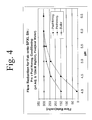
- the flow rate of the homogenates through the columns were compared to each other using buffer as a control.
- the pre- and post-homogenization conditioning samples were prepared at conditioning pH 4.5, 5.0, 5.5, 6.0, and 6.5.
- E. coli cells (strain: 43E7, genotype: W3110 DfhuA phoADE15 D(argF-lac)169 ptr3 degP41 DompT (DnmpC-fepE) ilvG2096) containing a transgene expressing Apo2L ( Pitlie et al., 1996, J. Bio. Chem., 271: 12687-12690 ) were used to express protein.
- a pBR22-based plasmid vector with a phoA promoter driving transcription was used for the expression.
- the plasmid contained 3 tRNA genes for enhanced production and had both tetracycline and ampicillin resistances intact.
- the cells were disrupted by a 4 pass homogenization with a Model HC-8000/3A homogenizer (Microfluids, Inc.) at 8000 psig, 2-8° C.
- the homogenate was conditioned by addition of a solubility enhancer, MgSO 4 , to a concentration of approximately 45 mM or 30 mM. Two (2) volumes of water were added, and the pH of the homogenate was adjusted to pH 6.5 via addition of 60 mM citric acid.
- the conditioned homogenate was run through an EBC column (2.5 cm diameter X 210 cm high) containing SP Streamline (Amersham Bioscience, Inc.) with a resin settled bed height of 65 cm, and an expanded bed height of 195 cm.
- the EBC column was equipped with an EBC inlet screen (Multilayered SS316L, 100 ⁇ m, 1.8 mm thick, 2.5 cm diameter) (Amersham Bioscience, Inc). The flow rate in the column was 200 cm/hour.
- Figure 5 shows photographic images of the resin taken from the top screen after the storage phase demonstrates a difference in the resin-biomass interactions in the two homogenate solutions in the EBC column conditioned with differing amounts of MgSO 4.
- the homogenate conditioned with the higher concentration of MgSO 4 (45mM) showed less resin-biomass interactions than that conditioned with 30mM MgSO 4 , which showed much greater aggregation of the resin.
- E. coli cells (strain: 60H4, genotype: W3110 DfhuA phoADE15 D(argF-lac)169 degP41 deoC Dprc spr DmanA) containing a transgene expressing Anti-Tissue Factor antibody ( Presta et al., 2001, Thromb. Haemost., 85: 379-89 ) were disrupted by a 4 pass homogenization with a Model HC-8000/3A homogenizer (Microfluids, Inc.) at 8000 psig, 2-8° C.
- Model HC-8000/3A homogenizer Model HC-8000/3A homogenizer
- the homogenate was conditioned by addition of two solubility enhancers, PEI at various concentrations and MgSO 4 , to a concentration of 0 mM, 10 mM, 20 mM, 30 mM, 40 mM, or 50 mM.
- the pH of the solution was adjusted to pH 4.0 via addition of citric acid and 2 volumes of water were added to the adjusted solution.
- the homogenate was centrifuged to remove solids, and the supernatant was added to a Porous-G affinity column (Perceptives Biosystems). Protein was eluted from the column with low pH buffer and quantitated.
- Figure 6 shows the concentration of Anti-Tissue Factor antibody protein in the supernatant for each of the test samples. These results generally show that as the amount of the solubility enhancer, MgSO 4 or PEI, was increased, more protein was obtained.
- E. coli cells containing a transgene expressing Apo2L /TRAIL were disrupted by a 4 pass homogenization with a Model HC-8000/3A homogenizer (Microfluids, Inc.) at 8000 psig, 2-8 ° C. After homogenization, the homogenate was conditioned through addition of a solubility enhancer, MgSO 4 , to a concentration of 10 mM, 20 mM, or 40 mM. A control homogenate contained no MgSO 4 .
- the pH of the homogenate was adjusted to pH 6.5 via addition of 60 mM citric acid, and 2 volumes of water were added to the adjusted solution.
- the conditioned homogenate was then mixed with 1 mL of EBC resin, SP Streamline (Amersham Bioscience, Inc.) in a 15 mL conical plastic screw cap tube, in excess of the conditioned homogenate.
- the capacity of the resin for each of the conditioned homogenate solutions was determined, and the data is shown in Figure 7 .
- the presence of the solubility enhancer, MgSO 4 increased the capacity of the resin for Apo2L at 10 mM and 20 mM.
- the concentration of the MgSO 4 continued to increase (40 mM)
- the resin capacity decreased. This decrease may be due to the increased conductivity of the solution with increased concentrations of MgSO4 .
- E. coli cells containing a transgene expressing Anti-Tissue Factor antibody were disrupted by a 4 pass homogenization with a Model HC-8000/3A homogenizer (Microfluids, Inc.) at 8000 psig, 2-8 ° C.
- the homogenate was conditioned through addition of PEI at 0.2%.
- Various salts were also added, including the solubility enhancer, MgSO 4 at 100 mM, NaCI at 250 mM, and Na 2 SO 4 at 100 mM.
- the pH of the solution was adjusted to pH 4.0, 5.0, 6.0, or 7.0 by addition of citric acid and 2 volumes of water were added.
- the homogenate was centrifuged and the supernatant was subjected to SDS-PAGE analysis at 10% Bis-Tris/MOPS (Novex, Inc.) with Coomassie Blue staining.
- Figure 8 is an electrophoretic gel showing the resulting protein products.
- the gel demonstrates that as the pH of the cell homogenate was decreased from 7.0 to 4.0, the amount of contaminating protein (that is, protein other than the heterologous protein, Anti-Tissue Factor antibody) present in the homogenate decreased. A dramatic enrichment of the desired heterologous protein product in the E coli cell homogenate occurred when the pH was dropped from 5.0 to 4.0.
- E. coli cells containing a transgene expressing Anti-Tissue Factor were disrupted by a 4 pass homogenization with a Model HC-8000/3A homogenizer (Microfluids, Inc.) at 8000 psig, 2-8 ° C.
- the homogenate was conditioned by addition of two solubility enhancers, PEI at 0.2% and MgSO 4 , at 100 mM.
- the pH of the solution was adjusted to pH 4.0,5.0,6.0, or 7.0 by addition of citric acid and 2 volumes of water were added.
- Packed bed chromatography purification was carried out as follows. E. coli cells containing a transgene expressing Apo2L/Trail were subjected to a 4 pass homogenization with a Model HC-8000/3A homogenizer (Microfluids, Inc.) at 8000 psig, 2-8 ° C. After homogenization, two volumes of water were added and polyethyleneimine was also added to result in a final concentration of 0.3% by weight. The homogenate solution was then centrifuged in a continuous disk-stack centrifuge (Model PX205, Alfa Laval, Inc.), with a flow rate of 1.0 L/minute. The supernatant was purified on a SP Sepharose FF column (2.5 X 20cm) (Amersham Biosciences).
- SP Sepharose FF column 2.5 X 20cm
- E. coli cells containing a transgene expressing Apo2L/Trail were subjected to a 4 pass homogenization with a Model HC-8000/3A homogenizer (Microfluids, Inc.) at 8000 psig, 2-8 ° C.
- MgSO 4 magnesium sulfate
- two volumes of water were added, and the pH of the solution was adjusted to pH 6.5.
- the homogenate was then subjected to EBC with a SP Streamline (Amersham Bioscience, Inc.) adsorbent in a (2.5 X 65) cm column and a (2.5 X 14 cm) column.
- the EBC protocols utilized above resulted in the same flow rate (200 cm/hour) and the same load volume (2 volumes of water) as the PBC protocol; therefore, there was no loss in overall load process time, which was 4.5 hours.
- the addition of MgSO 4 as a solubility enhancer served to enhance the solubility of the Apo2L/Trail as the pH was decreased from 7.5 to 6.5, thereby increasing the EBC resin capacity.
- the MgSO 4 reduced the homogenate-resin interactions such that the low density resin aggregate formation was minimized during the EBC load phase, thereby increasing protein recovery.
- the packed bed chromatography (PBC) purification was carried out as follows. E. coli cells containing a transgene expressing Apo2L/Trail were subjected to a 4 pass homogenization with a Model HC-8000/3A homogenizer (Microfluids, Inc.) at 8000 psig, 2-8 ° C. After homogenization, two volumes of water were added and polyethyleneimine was added to a final concentration of 0.3% by weight. The solution was then centrifuged in a continuous disk-stack centrifuge (Model PX205, Alfa Laval, Inc.), with a flow rate of 1.0 L/minute. The supernatant was purified on a SP Sepharose FF column (2.5 X 20) cm (Amersham Biosciences).
- SP Sepharose FF column 2.5 X 20 cm
- EBC expanded bed chromatography
Landscapes
- Chemical & Material Sciences (AREA)
- Organic Chemistry (AREA)
- Health & Medical Sciences (AREA)
- Medicinal Chemistry (AREA)
- Biochemistry (AREA)
- Biophysics (AREA)
- General Health & Medical Sciences (AREA)
- Genetics & Genomics (AREA)
- Life Sciences & Earth Sciences (AREA)
- Molecular Biology (AREA)
- Proteomics, Peptides & Aminoacids (AREA)
- Analytical Chemistry (AREA)
- Immunology (AREA)
- Gastroenterology & Hepatology (AREA)
- Peptides Or Proteins (AREA)
- Preparation Of Compounds By Using Micro-Organisms (AREA)
Priority Applications (2)
| Application Number | Priority Date | Filing Date | Title |
|---|---|---|---|
| SI200332468T SI2292637T1 (sl) | 2002-09-06 | 2003-09-05 | Postopek za proteinsko ekstrakcijo |
| CY20161100202T CY1117271T1 (el) | 2002-09-06 | 2016-03-08 | Διαδικασια για εκχυλιση πρωτεϊνων |
Applications Claiming Priority (2)
| Application Number | Priority Date | Filing Date | Title |
|---|---|---|---|
| US40865302P | 2002-09-06 | 2002-09-06 | |
| EP03752068A EP1539798B1 (fr) | 2002-09-06 | 2003-09-05 | Procede d'extraction de proteines |
Related Parent Applications (2)
| Application Number | Title | Priority Date | Filing Date |
|---|---|---|---|
| EP03752068A Division EP1539798B1 (fr) | 2002-09-06 | 2003-09-05 | Procede d'extraction de proteines |
| EP03752068.1 Division | 2003-09-05 |
Publications (3)
| Publication Number | Publication Date |
|---|---|
| EP2292637A2 true EP2292637A2 (fr) | 2011-03-09 |
| EP2292637A3 EP2292637A3 (fr) | 2012-04-11 |
| EP2292637B1 EP2292637B1 (fr) | 2016-01-06 |
Family
ID=31978651
Family Applications (2)
| Application Number | Title | Priority Date | Filing Date |
|---|---|---|---|
| EP10180725.3A Expired - Lifetime EP2292637B1 (fr) | 2002-09-06 | 2003-09-05 | Procédé d'extraction de protéines |
| EP03752068A Expired - Lifetime EP1539798B1 (fr) | 2002-09-06 | 2003-09-05 | Procede d'extraction de proteines |
Family Applications After (1)
| Application Number | Title | Priority Date | Filing Date |
|---|---|---|---|
| EP03752068A Expired - Lifetime EP1539798B1 (fr) | 2002-09-06 | 2003-09-05 | Procede d'extraction de proteines |
Country Status (14)
| Country | Link |
|---|---|
| US (6) | US6967241B2 (fr) |
| EP (2) | EP2292637B1 (fr) |
| JP (2) | JP5519089B2 (fr) |
| AT (1) | ATE489400T1 (fr) |
| AU (2) | AU2003270380B2 (fr) |
| CA (1) | CA2497209C (fr) |
| CY (1) | CY1111111T1 (fr) |
| DE (1) | DE60335119D1 (fr) |
| DK (2) | DK1539798T3 (fr) |
| ES (2) | ES2565781T3 (fr) |
| HU (1) | HUE027196T2 (fr) |
| PT (1) | PT1539798E (fr) |
| SI (2) | SI1539798T1 (fr) |
| WO (1) | WO2004022581A1 (fr) |
Families Citing this family (20)
| Publication number | Priority date | Publication date | Assignee | Title |
|---|---|---|---|---|
| ES2461625T3 (es) * | 2002-02-25 | 2014-05-20 | Sequana Medical Ag | Derivación vesical para el drenaje de exceso de fluido |
| SI1539798T1 (sl) | 2002-09-06 | 2011-03-31 | Genentech Inc | Postopek za proteinsko ekstrakcijo |
| US9308077B2 (en) * | 2005-12-23 | 2016-04-12 | Vysera Biomedical Limited | Medical device suitable for treating reflux from a stomach to an oesophagus |
| US9109015B2 (en) | 2006-11-01 | 2015-08-18 | Biogen Ma Inc | Method of isolating biomacromolecules using low pH and divalent cations |
| US9017966B2 (en) | 2007-05-23 | 2015-04-28 | Nature Technology Corporation | E. coli plasmid DNA production |
| US20100114327A1 (en) * | 2008-06-20 | 2010-05-06 | Vysera Biomedical Limited | Valve |
| US8500821B2 (en) | 2008-06-20 | 2013-08-06 | Vysera Biomedical Limited | Esophageal valve device for placing in the cardia |
| US20110160836A1 (en) * | 2008-06-20 | 2011-06-30 | Vysera Biomedical Limited | Valve device |
| US8876800B2 (en) | 2009-12-18 | 2014-11-04 | Vysera Biomedical Limited | Urological device |
| US8992410B2 (en) | 2010-11-03 | 2015-03-31 | Vysera Biomedical Limited | Urological device |
| US20140194287A1 (en) * | 2011-06-14 | 2014-07-10 | Gen-Ichiro Soma | Crushed bacterial body and compositions thereof |
| MX2014005885A (es) * | 2011-11-21 | 2014-09-04 | Genentech Inc | Purificacion de anticuerpos anti-c-met. |
| EP3888602A1 (fr) | 2011-12-19 | 2021-10-06 | Coloplast A/S | Prothese luminale |
| EP3049427A4 (fr) * | 2013-09-24 | 2017-05-31 | Elastagen Pty Ltd | Procédé d'extraction d'une protéine |
| US10131580B2 (en) * | 2014-10-23 | 2018-11-20 | Basf Se | Method for producing a prefabricated building material |
| EP3294751B1 (fr) * | 2015-05-15 | 2020-09-23 | Glaxo Group Limited | Procédé de production d'un micro-organisme recombinant |
| JPWO2018235958A1 (ja) * | 2017-06-23 | 2020-04-23 | Spiber株式会社 | タンパク質の精製方法、タンパク質溶液の製造方法、及びタンパク質成形体の製造方法 |
| CN110878118B (zh) * | 2018-09-06 | 2023-04-18 | 深圳翰宇药业股份有限公司 | 度拉糖肽的纯化方法与纯化试剂 |
| KR102817806B1 (ko) * | 2020-06-26 | 2025-06-09 | 씨제이제일제당 주식회사 | 발효액으로부터 아미노산 과립의 제조방법 |
| TW202333581A (zh) * | 2021-12-24 | 2023-09-01 | 南韓商Cj第一製糖股份有限公司 | 由發酵液製備含胺基酸製品之方法 |
Family Cites Families (35)
| Publication number | Priority date | Publication date | Assignee | Title |
|---|---|---|---|---|
| US4173766A (en) * | 1977-09-16 | 1979-11-06 | Fairchild Camera And Instrument Corporation | Insulated gate field-effect transistor read-only memory cell |
| DE3432196A1 (de) | 1984-09-01 | 1986-03-06 | Boehringer Ingelheim International GmbH, 6507 Ingelheim | Neues mechanisches aufschlussverfahren von bakterienzellen zur isolierung von rekombinant hergestellten peptiden |
| KR930007429B1 (ko) * | 1984-12-27 | 1993-08-10 | 산도리 가부시기가이샤 | 인터페론의 정제방법 |
| US4683294A (en) * | 1985-04-03 | 1987-07-28 | Smith Kline Rit, S.A. | Process for the extraction and purification of proteins from culture media producing them |
| US5196323A (en) * | 1985-04-27 | 1993-03-23 | Boehringer Ingelheim International Gmbh | Process for preparing and purifying alpha-interferon |
| DE3515336C2 (de) | 1985-04-27 | 1994-01-20 | Boehringer Ingelheim Int | Verfahren zur Herstellung und Reinigung von â-Interferon |
| IL78703A (en) | 1985-05-10 | 1993-02-21 | Benzon Alfred | Method of producing extracellular enzymes, the enzymes produced thereby and compositions containing them; a hybrid plasmid and a dna fragment comprising dna encoding the enzymes; a microorganism harbouring the plasmid; and a method for removing nucleic acids from biological materials |
| US4721573A (en) * | 1986-03-06 | 1988-01-26 | J. T. Baker Chemical Company | Use of sulfonic derivatives of acylated polyethyleneimine bonded phase silica products |
| US5196823A (en) | 1986-04-24 | 1993-03-23 | Multitecno S.P.A. | Deratization apparatus with remote terminals |
| EP0252588A3 (fr) * | 1986-05-12 | 1989-07-12 | Smithkline Beecham Corporation | Procédé d'isolation et de purification de la protéine CS du P. falciparum exprimée dans E. coli recombinant, ainsi que son utilisation comme vaccin |
| US4801686A (en) * | 1986-09-04 | 1989-01-31 | Immunex Corporation | Purification of recombinant interleukin-1 |
| US5085779A (en) * | 1989-06-07 | 1992-02-04 | J. T. Baker, Inc. | Polyethyleneimine matrixes for affinity chromatography |
| US4988798A (en) * | 1990-01-22 | 1991-01-29 | Pitman-Moore, Inc. | Method for recovering recombinant proteins |
| JP3678311B2 (ja) | 1992-10-16 | 2005-08-03 | 京セラミタ株式会社 | ヒドラゾン系化合物およびそれを用いた電子写真感光体 |
| CA2166488A1 (fr) | 1993-07-02 | 1995-01-12 | Marian N. Marra | Proteines glycosylees et non glycosylees, bactericides, augmentant la permeabilite; methodes d'obtention |
| US5641870A (en) * | 1995-04-20 | 1997-06-24 | Genentech, Inc. | Low pH hydrophobic interaction chromatography for antibody purification |
| DE69637391T2 (de) * | 1995-05-02 | 2008-08-14 | Alexion Pharmaceuticals, Inc., Cheshire | Modifizierte myelin proteinmoleküle |
| US5760189A (en) * | 1995-06-02 | 1998-06-02 | Genetics Institute, Inc. | Protein recovery & purification methods |
| US5686292A (en) * | 1995-06-02 | 1997-11-11 | Genentech, Inc. | Hepatocyte growth factor receptor antagonist antibodies and uses thereof |
| US6121428A (en) | 1997-06-13 | 2000-09-19 | Genentech, Inc. | Protein recovery |
| US6768165B1 (en) * | 1997-08-01 | 2004-07-27 | Saifun Semiconductors Ltd. | Two bit non-volatile electrically erasable and programmable semiconductor memory cell utilizing asymmetrical charge trapping |
| US20020010145A1 (en) * | 1999-07-12 | 2002-01-24 | Willson Richard C. | Apparatus, methods and compositions for biotechnical separations |
| US20020009799A1 (en) | 1999-12-10 | 2002-01-24 | Goffe Randal A. | Isolation and purification of nucleic acids |
| AU2002245142B2 (en) | 2000-12-14 | 2007-07-05 | Genentech, Inc. | Prokaryotically produced antibodies and uses thereof |
| KR100395762B1 (ko) * | 2001-07-31 | 2003-08-21 | 삼성전자주식회사 | 비휘발성 메모리 소자 및 그 제조방법 |
| US20040152260A1 (en) * | 2001-09-07 | 2004-08-05 | Peter Rabkin | Non-volatile memory cell with non-uniform surface floating gate and control gate |
| US6440797B1 (en) * | 2001-09-28 | 2002-08-27 | Advanced Micro Devices, Inc. | Nitride barrier layer for protection of ONO structure from top oxide loss in a fabrication of SONOS flash memory |
| KR100426483B1 (ko) * | 2001-12-22 | 2004-04-14 | 주식회사 하이닉스반도체 | 플래쉬 메모리 셀의 제조 방법 |
| US6624028B1 (en) * | 2002-03-04 | 2003-09-23 | Megawin Technology Co., Ltd. | Method of fabricating poly spacer gate structure |
| US7042045B2 (en) * | 2002-06-04 | 2006-05-09 | Samsung Electronics Co., Ltd. | Non-volatile memory cell having a silicon-oxide nitride-oxide-silicon gate structure |
| SI1539798T1 (sl) * | 2002-09-06 | 2011-03-31 | Genentech Inc | Postopek za proteinsko ekstrakcijo |
| KR100446632B1 (ko) * | 2002-10-14 | 2004-09-04 | 삼성전자주식회사 | 비휘발성 sonsnos 메모리 |
| AU2004230670B2 (en) * | 2003-01-09 | 2010-11-25 | Genentech, Inc. | Purification of polypeptides |
| US6885590B1 (en) * | 2003-01-14 | 2005-04-26 | Advanced Micro Devices, Inc. | Memory device having A P+ gate and thin bottom oxide and method of erasing same |
| EP1598075A1 (fr) * | 2004-05-21 | 2005-11-23 | LEK Pharmaceuticals d.d. | Procédé pour l'isolement et/ou la purification de protéines |
-
2003
- 2003-09-05 SI SI200331944T patent/SI1539798T1/sl unknown
- 2003-09-05 US US10/655,874 patent/US6967241B2/en not_active Expired - Lifetime
- 2003-09-05 DE DE60335119T patent/DE60335119D1/de not_active Expired - Lifetime
- 2003-09-05 PT PT03752068T patent/PT1539798E/pt unknown
- 2003-09-05 SI SI200332468T patent/SI2292637T1/sl unknown
- 2003-09-05 AT AT03752068T patent/ATE489400T1/de active
- 2003-09-05 EP EP10180725.3A patent/EP2292637B1/fr not_active Expired - Lifetime
- 2003-09-05 DK DK03752068.1T patent/DK1539798T3/da active
- 2003-09-05 DK DK10180725.3T patent/DK2292637T3/en active
- 2003-09-05 AU AU2003270380A patent/AU2003270380B2/en not_active Expired
- 2003-09-05 CA CA 2497209 patent/CA2497209C/fr not_active Expired - Lifetime
- 2003-09-05 EP EP03752068A patent/EP1539798B1/fr not_active Expired - Lifetime
- 2003-09-05 ES ES10180725.3T patent/ES2565781T3/es not_active Expired - Lifetime
- 2003-09-05 JP JP2004534717A patent/JP5519089B2/ja not_active Expired - Lifetime
- 2003-09-05 WO PCT/US2003/028007 patent/WO2004022581A1/fr not_active Ceased
- 2003-09-05 ES ES03752068T patent/ES2355088T3/es not_active Expired - Lifetime
- 2003-09-05 HU HUE10180725A patent/HUE027196T2/hu unknown
-
2005
- 2005-10-31 US US11/264,300 patent/US7662934B2/en not_active Expired - Lifetime
-
2006
- 2006-09-29 US US11/537,565 patent/US7713707B2/en not_active Expired - Lifetime
-
2010
- 2010-01-19 JP JP2010008895A patent/JP2010111700A/ja active Pending
- 2010-01-26 US US12/694,223 patent/US8232374B2/en not_active Expired - Fee Related
- 2010-05-10 US US12/777,211 patent/US8383773B2/en not_active Expired - Fee Related
- 2010-06-10 AU AU2010202423A patent/AU2010202423A1/en not_active Abandoned
-
2011
- 2011-01-17 CY CY20111100054T patent/CY1111111T1/el unknown
-
2012
- 2012-06-29 US US13/539,126 patent/US8940875B2/en not_active Expired - Lifetime
Non-Patent Citations (5)
| Title |
|---|
| ASHKENAZI ET AL., J CLIN. INVEST., vol. 104, 1999, pages 155 - 162 |
| CHEN ET AL., J MOL. BIO., vol. 293, 1999, pages 865 - 881 |
| CHEN, J MOL. BIOL., vol. 293, 1999, pages 865 - 881 |
| PITLIE ET AL., J BIO. CHEM., vol. 271, 1996, pages 12687 - 12690 |
| PRESTA ET AL., THROMB. HAEMOST., vol. 85, 2001, pages 379 - 89 |
Also Published As
Similar Documents
| Publication | Publication Date | Title |
|---|---|---|
| US8232374B2 (en) | Method for decreasing biomass-biomass interactions or biomass-resin interactions | |
| AU2014211438B2 (en) | Method of producing a protein | |
| TW201309722A (zh) | 野生型或突變型白喉毒素之純化方法 | |
| HK1076287B (en) | Process for protein extraction | |
| HK1151041B (en) | Process for protein extraction | |
| US6406892B1 (en) | Acetate-free purification of plasmid DNA on hydroxyapatite | |
| AU2002308753A1 (en) | Acetate-free purification of plasmid DNA on hydroxyapatite | |
| CA2587139C (fr) | Purification du facteur xiii humain recombine | |
| CN107580630A (zh) | 产生重组蛋白的方法 | |
| Minervini | Precipitation-Filtration Process as a Platform for Continuous Purification of Monoclonal Antibody Therapeutics | |
| JP2001139600A (ja) | Il−6r・il−6融合蛋白質の精製方法 |
Legal Events
| Date | Code | Title | Description |
|---|---|---|---|
| PUAI | Public reference made under article 153(3) epc to a published international application that has entered the european phase |
Free format text: ORIGINAL CODE: 0009012 |
|
| AC | Divisional application: reference to earlier application |
Ref document number: 1539798 Country of ref document: EP Kind code of ref document: P |
|
| AK | Designated contracting states |
Kind code of ref document: A2 Designated state(s): AT BE BG CH CY CZ DE DK EE ES FI FR GB GR HU IE IT LI LU MC NL PT RO SE SI SK TR |
|
| REG | Reference to a national code |
Ref country code: HK Ref legal event code: DE Ref document number: 1151041 Country of ref document: HK |
|
| PUAL | Search report despatched |
Free format text: ORIGINAL CODE: 0009013 |
|
| AK | Designated contracting states |
Kind code of ref document: A3 Designated state(s): AT BE BG CH CY CZ DE DK EE ES FI FR GB GR HU IE IT LI LU MC NL PT RO SE SI SK TR |
|
| RIC1 | Information provided on ipc code assigned before grant |
Ipc: C07K 16/22 20060101ALI20120302BHEP Ipc: C07K 1/36 20060101AFI20120302BHEP |
|
| 17P | Request for examination filed |
Effective date: 20121011 |
|
| 17Q | First examination report despatched |
Effective date: 20121127 |
|
| GRAP | Despatch of communication of intention to grant a patent |
Free format text: ORIGINAL CODE: EPIDOSNIGR1 |
|
| INTG | Intention to grant announced |
Effective date: 20150701 |
|
| GRAS | Grant fee paid |
Free format text: ORIGINAL CODE: EPIDOSNIGR3 |
|
| GRAA | (expected) grant |
Free format text: ORIGINAL CODE: 0009210 |
|
| AC | Divisional application: reference to earlier application |
Ref document number: 1539798 Country of ref document: EP Kind code of ref document: P |
|
| AK | Designated contracting states |
Kind code of ref document: B1 Designated state(s): AT BE BG CH CY CZ DE DK EE ES FI FR GB GR HU IE IT LI LU MC NL PT RO SE SI SK TR |
|
| REG | Reference to a national code |
Ref country code: GB Ref legal event code: FG4D |
|
| REG | Reference to a national code |
Ref country code: CH Ref legal event code: EP |
|
| REG | Reference to a national code |
Ref country code: CH Ref legal event code: NV Representative=s name: F. HOFFMANN-LA ROCHE AG, CH |
|
| REG | Reference to a national code |
Ref country code: IE Ref legal event code: FG4D |
|
| REG | Reference to a national code |
Ref country code: RO Ref legal event code: EPE |
|
| REG | Reference to a national code |
Ref country code: AT Ref legal event code: REF Ref document number: 768791 Country of ref document: AT Kind code of ref document: T Effective date: 20160215 |
|
| REG | Reference to a national code |
Ref country code: DE Ref legal event code: R096 Ref document number: 60348443 Country of ref document: DE |
|
| REG | Reference to a national code |
Ref country code: SE Ref legal event code: TRGR |
|
| REG | Reference to a national code |
Ref country code: NL Ref legal event code: FP |
|
| REG | Reference to a national code |
Ref country code: DK Ref legal event code: T3 Effective date: 20160401 |
|
| REG | Reference to a national code |
Ref country code: ES Ref legal event code: FG2A Ref document number: 2565781 Country of ref document: ES Kind code of ref document: T3 Effective date: 20160406 |
|
| REG | Reference to a national code |
Ref country code: PT Ref legal event code: SC4A Free format text: AVAILABILITY OF NATIONAL TRANSLATION Effective date: 20160303 |
|
| REG | Reference to a national code |
Ref country code: EE Ref legal event code: FG4A Ref document number: E011725 Country of ref document: EE Effective date: 20160404 |
|
| REG | Reference to a national code |
Ref country code: GR Ref legal event code: EP Ref document number: 20160400412 Country of ref document: GR Effective date: 20160505 |
|
| REG | Reference to a national code |
Ref country code: SK Ref legal event code: T3 Ref document number: E 20675 Country of ref document: SK |
|
| REG | Reference to a national code |
Ref country code: FR Ref legal event code: PLFP Year of fee payment: 14 |
|
| REG | Reference to a national code |
Ref country code: DE Ref legal event code: R097 Ref document number: 60348443 Country of ref document: DE |
|
| REG | Reference to a national code |
Ref country code: HU Ref legal event code: AG4A Ref document number: E027196 Country of ref document: HU |
|
| PLBE | No opposition filed within time limit |
Free format text: ORIGINAL CODE: 0009261 |
|
| STAA | Information on the status of an ep patent application or granted ep patent |
Free format text: STATUS: NO OPPOSITION FILED WITHIN TIME LIMIT |
|
| 26N | No opposition filed |
Effective date: 20161007 |
|
| REG | Reference to a national code |
Ref country code: HK Ref legal event code: GR Ref document number: 1151041 Country of ref document: HK |
|
| REG | Reference to a national code |
Ref country code: FR Ref legal event code: PLFP Year of fee payment: 15 |
|
| REG | Reference to a national code |
Ref country code: FR Ref legal event code: PLFP Year of fee payment: 16 |
|
| PGFP | Annual fee paid to national office [announced via postgrant information from national office to epo] |
Ref country code: PT Payment date: 20220627 Year of fee payment: 20 |
|
| PGFP | Annual fee paid to national office [announced via postgrant information from national office to epo] |
Ref country code: NL Payment date: 20220817 Year of fee payment: 20 |
|
| REG | Reference to a national code |
Ref country code: AT Ref legal event code: UEP Ref document number: 768791 Country of ref document: AT Kind code of ref document: T Effective date: 20160106 |
|
| PGFP | Annual fee paid to national office [announced via postgrant information from national office to epo] |
Ref country code: TR Payment date: 20220902 Year of fee payment: 20 Ref country code: SK Payment date: 20220817 Year of fee payment: 20 Ref country code: SE Payment date: 20220908 Year of fee payment: 20 Ref country code: RO Payment date: 20220830 Year of fee payment: 20 Ref country code: LU Payment date: 20220810 Year of fee payment: 20 Ref country code: IE Payment date: 20220826 Year of fee payment: 20 Ref country code: GB Payment date: 20220810 Year of fee payment: 20 Ref country code: FI Payment date: 20220831 Year of fee payment: 20 Ref country code: EE Payment date: 20220810 Year of fee payment: 20 Ref country code: DK Payment date: 20220831 Year of fee payment: 20 Ref country code: DE Payment date: 20220615 Year of fee payment: 20 Ref country code: CZ Payment date: 20220811 Year of fee payment: 20 Ref country code: BG Payment date: 20220630 Year of fee payment: 20 Ref country code: AT Payment date: 20220826 Year of fee payment: 20 |
|
| PGFP | Annual fee paid to national office [announced via postgrant information from national office to epo] |
Ref country code: SI Payment date: 20220819 Year of fee payment: 20 Ref country code: MC Payment date: 20220831 Year of fee payment: 20 Ref country code: HU Payment date: 20220817 Year of fee payment: 20 Ref country code: GR Payment date: 20220826 Year of fee payment: 20 Ref country code: FR Payment date: 20220810 Year of fee payment: 20 Ref country code: BE Payment date: 20220817 Year of fee payment: 20 |
|
| PGFP | Annual fee paid to national office [announced via postgrant information from national office to epo] |
Ref country code: IT Payment date: 20220929 Year of fee payment: 20 Ref country code: ES Payment date: 20221007 Year of fee payment: 20 Ref country code: CY Payment date: 20220810 Year of fee payment: 20 |
|
| PGFP | Annual fee paid to national office [announced via postgrant information from national office to epo] |
Ref country code: CH Payment date: 20221001 Year of fee payment: 20 |
|
| REG | Reference to a national code |
Ref country code: DE Ref legal event code: R071 Ref document number: 60348443 Country of ref document: DE |
|
| REG | Reference to a national code |
Ref country code: NL Ref legal event code: MK Effective date: 20230904 |
|
| REG | Reference to a national code |
Ref country code: DK Ref legal event code: EUP Expiry date: 20230905 |
|
| REG | Reference to a national code |
Ref country code: CH Ref legal event code: PL |
|
| REG | Reference to a national code |
Ref country code: GB Ref legal event code: PE20 Expiry date: 20230904 Ref country code: SK Ref legal event code: MK4A Ref document number: E 20675 Country of ref document: SK Expiry date: 20230905 |
|
| REG | Reference to a national code |
Ref country code: ES Ref legal event code: FD2A Effective date: 20230928 |
|
| REG | Reference to a national code |
Ref country code: BE Ref legal event code: MK Effective date: 20230905 |
|
| REG | Reference to a national code |
Ref country code: AT Ref legal event code: MK07 Ref document number: 768791 Country of ref document: AT Kind code of ref document: T Effective date: 20230905 |
|
| REG | Reference to a national code |
Ref country code: IE Ref legal event code: MK9A |
|
| PG25 | Lapsed in a contracting state [announced via postgrant information from national office to epo] |
Ref country code: PT Free format text: LAPSE BECAUSE OF EXPIRATION OF PROTECTION Effective date: 20230914 Ref country code: GB Free format text: LAPSE BECAUSE OF EXPIRATION OF PROTECTION Effective date: 20230904 Ref country code: ES Free format text: LAPSE BECAUSE OF EXPIRATION OF PROTECTION Effective date: 20230906 Ref country code: CZ Free format text: LAPSE BECAUSE OF EXPIRATION OF PROTECTION Effective date: 20230905 |
|
| REG | Reference to a national code |
Ref country code: SE Ref legal event code: EUG |
|
| PG25 | Lapsed in a contracting state [announced via postgrant information from national office to epo] |
Ref country code: SK Free format text: LAPSE BECAUSE OF EXPIRATION OF PROTECTION Effective date: 20230905 Ref country code: SI Free format text: LAPSE BECAUSE OF EXPIRATION OF PROTECTION Effective date: 20230906 |
|
| PG25 | Lapsed in a contracting state [announced via postgrant information from national office to epo] |
Ref country code: IE Free format text: LAPSE BECAUSE OF EXPIRATION OF PROTECTION Effective date: 20230905 |