EP2294782B1 - Procédé et système de communication pour fournir un service de communication basé sur le contexte - Google Patents
Procédé et système de communication pour fournir un service de communication basé sur le contexte Download PDFInfo
- Publication number
- EP2294782B1 EP2294782B1 EP08774464.5A EP08774464A EP2294782B1 EP 2294782 B1 EP2294782 B1 EP 2294782B1 EP 08774464 A EP08774464 A EP 08774464A EP 2294782 B1 EP2294782 B1 EP 2294782B1
- Authority
- EP
- European Patent Office
- Prior art keywords
- condition
- query
- context
- update
- type
- Prior art date
- Legal status (The legal status is an assumption and is not a legal conclusion. Google has not performed a legal analysis and makes no representation as to the accuracy of the status listed.)
- Not-in-force
Links
Images




Classifications
-
- H—ELECTRICITY
- H04—ELECTRIC COMMUNICATION TECHNIQUE
- H04L—TRANSMISSION OF DIGITAL INFORMATION, e.g. TELEGRAPHIC COMMUNICATION
- H04L67/00—Network arrangements or protocols for supporting network services or applications
- H04L67/50—Network services
- H04L67/56—Provisioning of proxy services
- H04L67/563—Data redirection of data network streams
-
- G—PHYSICS
- G06—COMPUTING OR CALCULATING; COUNTING
- G06F—ELECTRIC DIGITAL DATA PROCESSING
- G06F15/00—Digital computers in general; Data processing equipment in general
- G06F15/16—Combinations of two or more digital computers each having at least an arithmetic unit, a program unit and a register, e.g. for a simultaneous processing of several programs
-
- H—ELECTRICITY
- H04—ELECTRIC COMMUNICATION TECHNIQUE
- H04W—WIRELESS COMMUNICATION NETWORKS
- H04W4/00—Services specially adapted for wireless communication networks; Facilities therefor
-
- H—ELECTRICITY
- H04—ELECTRIC COMMUNICATION TECHNIQUE
- H04M—TELEPHONIC COMMUNICATION
- H04M2250/00—Details of telephonic subscriber devices
- H04M2250/10—Details of telephonic subscriber devices including a GPS signal receiver
-
- H—ELECTRICITY
- H04—ELECTRIC COMMUNICATION TECHNIQUE
- H04M—TELEPHONIC COMMUNICATION
- H04M2250/00—Details of telephonic subscriber devices
- H04M2250/12—Details of telephonic subscriber devices including a sensor for measuring a physical value, e.g. temperature or motion
Definitions
- the present invention relates to the field of communication services.
- the present invention relates to a method for providing a context-based service to a terminal of a communication network.
- the present invention relates to context server, a terminal and a communication system configured for implementing the above method.
- communication networks allow to provide users with a number of data services (for instance, Internet access, e-mail, exchange of messages, video-on-demand) and/or telephone services (for instance, calls and conference calls).
- data services for instance, Internet access, e-mail, exchange of messages, video-on-demand
- telephone services for instance, calls and conference calls
- a user may access such services by means of a terminal, which can be either a fixed terminal (i.e. a terminal which is connected to the communication network distributing the services through a wired connection) or a mobile terminal (i.e. a terminal which is connected to the communication network distributing the services through a wireless connection).
- a terminal can be either a fixed terminal (i.e. a terminal which is connected to the communication network distributing the services through a wired connection) or a mobile terminal (i.e. a terminal which is connected to the communication network distributing the services through a wireless connection).
- Exemplary mobile terminals are the GSM (Global System for Mobile communications) or UMTS (Universal Mobile Telecommunication System) mobiles and the laptop computers provided with a GSM or UMTS interface, or with a Bluetooth or Wi-Fi interface.
- GSM Global System for Mobile communications
- UMTS Universal Mobile Telecommunication System
- a terminal in particular, a mobile terminal is frequently equipped with a number of sensors allowing to detect context information about the terminal.
- context information about a terminal will designate a set of information indicative of the context (i.e. the environment and/or the operating status) in which the terminal is put.
- Exemplary context information are:
- context-based service will designate a data service or a telephone service which is capable of acquiring context information from a terminal and to use such context information for adapting itself to the context of the terminal.
- WO 2006/097778 discloses a method for sending environmental data by means of a mobile terminal device, comprising the steps of detecting said environmental data, evaluating said environmental data, determining if said evaluated environmental data is to be sent, and sending said environmental data in case of an affirmative determination.
- each mobile terminal device is equipped with a wireless data interface for sending and receiving data packets to and from a service provider.
- Said service provider is equipped with a data storing module for storing the received data, originating from said plurality of mobile terminal devices.
- each mobile terminal device has a sensor for detecting and preferably recording environmental data. These environmental data may comprise humidity, luminance, temperature, position and the like.
- Said mobile terminal device records the environmental data and it is adapted to evaluate it. The devices are enabled to decide either the data shall be temporarily stored or sent to said service provider.
- US 2007/006098 describes methods that utilize a geographic location technology (e.g., GPS) to determine user location data, and existing network-based websites (e.g., Internet websites) for searching and accessing data related to the location data such that the user context can be developed and stored.
- a geographic location technology e.g., GPS
- existing network-based websites e.g., Internet websites
- WO 2002/093877 discloses a context sensitive web services method that enables a mobile phone or wireless device to use context inference techniques to sense the user's environment and in response, to provide useful information to the user that is appropriate to the user's perceived environment.
- the method includes the steps of receiving sensor signals characterizing a current environment of the wireless device; processing the sensor signals with a context inference engine; outputting a current context result from the processing by the context inference engine; and providing useful information to the user in response to the current context result.
- WO 2004/089006 discloses a mobile station for managing context-related information including at least one sensor capable of measuring at least a portion of at least one condition of the mobile station.
- the mobile station also includes a context engine capable of storing context-related information based upon the portion of the condition(s), where the context engine is also capable of managing an exchange of the context-related information with at least one context consumer.
- the mobile station further includes a privacy engine, a script engine and a communication manager.
- the privacy engine can provide security and/or privacy to the exchange of the context-related information.
- the script engine can execute at least one context rule relating to at least a portion of the context-related information.
- the communication manager can communicate with at least one context consumer external to the mobile station for the exchange of context-related information
- WO 2006/106303 discloses a system for processing context data comprising means for receiving context data from a plurality of sources; means for producing context information from the received context data according to a predetermined rule-set including a plurality of rules; and means for communicating the context information to at least one application, wherein the system includes means for permitting at least one protocol-source to specify instructions and/or rules related to a communication protocol for communication between the protocol-source and the system, thereby updating the means for receiving and/or the means for communicating.
- US 2006/184616 discloses a method of managing conflicts between context-aware applications by use of semantics of abstract service for group context information management.
- the method includes detecting and resolving a conflict between context-aware applications; upon receiving a service request from an application, analysing a semantic of the requested service; and registering the semantic into a data structure.
- US 2006/074633 discloses a method for improved diagnostic reading and workflow in a healthcare environment using rules-based context management.
- the system includes a plurality of information sources, wherein each of the plurality of information sources includes information.
- the system also includes a rules engine including at least one rule governing at least one of availability and presentation of information.
- CA 2431491 discloses an architecture having a centralized storage location coupled to a context manager for servicing and logging context events from a plurality of sources. This type of system uses a synchronization scheme to perform orderly storage and retrieval of data to and from the centralized storage location.
- the Applicant has noticed that the implementation of a context-based service in a communication network typically requires that the communication network cooperates with a context database, which stores context information detected and transmitted by the terminals connected to the communication network.
- a context database which stores context information detected and transmitted by the terminals connected to the communication network.
- the terminals constantly update the context information stored at the context database by periodically detecting the context information and transmitting them to the context database.
- a corresponding service application When the user of a terminal wishes to access a context-based service, a corresponding service application is activated, which retrieves from the context database the context information required for providing the context-based service.
- the Applicant has noticed that the above described mechanism for providing a context-based service disadvantageously implies a non efficient use of the terminal's resources, in particular of the terminal's battery and computation capacity.
- the various terminals periodically detect and transmit the context information to the context database, even if such context information are not specifically requested by any service application.
- the terminals disadvantageously employ their resources for periodically detecting and transmitting context information which are stored at the context database, but which possibly will not be requested by any service application.
- the Applicant has tackled the problem of providing a method for providing a context-based service to a terminal of a communication network which overcomes the aforesaid drawbacks, i.e. which allows to provide the service application with the context information required for implementing the context-based service, while allowing to use in a more efficient way both the resources of the terminal (in particular, its battery and its computation resources) and the resources of the communication network by minimizing detection and transmission of context information which are not needed for implementing the context-based service.
- the present invention provides a method for providing a context-based service to a terminal of a communication network, the method comprising:
- the trigger condition is of a trigger condition type corresponding to the query condition type.
- step b) comprises, if checking whether a further update rule including a further update condition and relating to the context information is active is negative, inserting in the update rule an update condition of an update condition type corresponding to the query condition type.
- the present invention provides a context server configured to cooperate with a communication network for providing a context-based service to a terminal of the communication network, the context server comprising:
- the present invention provides a communication system configured to provide a context-based service to a terminal of the communication system, the communication system including a communication network to which the terminal is connected, a service application configured to implement the context-based service and a context server configured to cooperate with the service application and with the communication network, the context server being as set forth above.
- Figure 1 schematically shows a communication system CS' according to an example embodiment of the present invention.
- the communication system CS' preferably comprises a communication network CN.
- the communication network CN may comprise a mobile access network such as a GSM or UMTS network and/or a transport packet-switched network such as an Internet network.
- the communication system CS' comprises a context server SCtx' and a service application A.
- the service application A is suitable for implementing (when activated) a context-based service by cooperating with the context server SCtx', as it will be described in further detail herein after.
- the service application A may be included in the context server SCtx'.
- it may be a configuration application which is automatically activated at the context server SCtx' when a given event occurs in the communication system CS' (e.g., a new terminal is connected to the communication network CN).
- the communication system CS' comprises a terminal T, by means of which a user may access the context-based service implemented by the service application A.
- the terminal T cooperates with a sensor module SM, which includes one or more sensors suitable for detecting context information relating to the terminal T.
- a sensor module SM which includes one or more sensors suitable for detecting context information relating to the terminal T.
- the sensor module SM is represented as included in the terminal T.
- the sensor module SM may be external to the terminal T.
- the terminal T comprises a context client CCtx.
- the context client CCtx is preferably configured to command the sensor module SM and to cooperate with the context server SCtx' through the communication network CN.
- the context client CCtx may be for instance a client application installed on the terminal T by the terminal manufacturer.
- the context client CCtx may be downloaded on the terminal T by the service provider, either automatically or at the user's request.
- the context server SCtx' preferably comprises a query pre-processor QPP and a query processor QP.
- the service application A when the user requests to access the context-based service, the service application A is activated.
- the service application A may be activated at the request of the context server SCtx'.
- the service application A When the service application A is activated, it preferably generates a query Q[S, Cq] (step 1), indicating that the service application A, for correctly implementing the context-based service, needs to receive from the terminal T a set of context information S when a query condition Cq is fulfilled.
- the context information S may be either the whole context information detected by the sensor module SM, or a part of it.
- the query Q[S, Cq] preferably also comprises an identifier of the terminal T since, generally speaking, the communication system CS' of Figure 1 comprises various terminals, and therefore the application A has to specify the terminal to which the query relates. For simplicity, in the following description, the identifier of the terminal T will be omitted.
- the query condition Cq may be the expiration of a periodical timer, or a condition on a value of a given parameter (e.g. a change of the value of such parameter, or the equality of the value of such a parameter to a predefined value).
- the query Q[S, Cq] may specify that the service application A needs to receive the terrestrial coordinates of the terminal T every 5 seconds.
- the query Q[S, Cq] may specify that the service application A needs to receive the temperature and humidity of the environment surrounding the terminal T when the terminal T enters a predefined mobile cell.
- the query Q[S, Cq] is written in XML (Extensible Markup Language, as defined by the W3C in http://www.w3.org/TR/xml
- the query Q[S, Cq] is received by the context server SCtx', which preferably processes it (by means of its query pre-processor QPP and query processor QP, as it will be described in detail herein after) thus generating an update rule R[S, Cr] associated to the query Q (step 2') and indicating that the terminal T, for allowing the context server SCtx' to correctly serve the query Q[S, Cq], should detect the context information S and transmit them to the context server SCtx' when an update condition Cr is fulfilled.
- the update condition Cr depends on the query condition Cq. For instance, if the query Q[S, Cq] indicates that the service application A needs to receive the terrestrial coordinates of the terminal T every 5 seconds, the update rule R[S, Cr] associated to the query Q[S, Cq] preferably indicates that the terminal T should detect and transmit the terrestrial coordinates of the terminal T every 5 seconds. More complex cases may arise when a query Q[S, Cq] comprises more than one query condition, or when multiple queries are generated (possibly by different service applications) on the same context information S. The generation of the update rule R[S, Cr] in such cases will be described in detail herein after.
- the context server SCtx' transmits the update rule R[S, Cr] to the context client CCtx of the terminal T (step 3). Then, the context client CCtx preferably instruct the sensor module SM to operate according to the update rule R[S, Cr] (step 4). In this way, the sensor module SM starts to detect the context information S and to transmit them to the context server SCtx' when the update condition Cr is fulfilled. The context server SCtx' then starts receiving updates of the context information S from the terminal T according to the update rule R[S, Cr] (step 5).
- the context server SCtx' Upon reception of each update of the context information S, the context server SCtx' preferably forwards it to the service application A (step 6), which therefore can process it for providing the user of the terminal T with the context-based service. Steps 5 and 6 are preferably repeated until the query Q[S, Cq] (and therefore the update rule R[S, Cr]) is expired.
- the resources of the terminal T are used exclusively for detecting and transmitting the context information S, which have specifically been requested by the service application A in the query Q[S, Cq].
- the terminal T thanks to the query-update rule mechanism implemented by the context server SCtx' and the context client CCtx, the terminal T (in particular, its sensor module SM) is instructed to detect and transmit only the context information specified in the query Q[S, Cq].
- context information S are detected and transmitted by taking into account the update condition Cr, which is determined according to the query condition Cq. Therefore, the terminal T does not continuously update the context information S, but it updates them only when an update is actually requested by the service application A.
- the terminal T advantageously does not transmit information about the presence of other terminals in the environment surrounding the terminal T, unless it detects the presence of the predefined terminal T'. Therefore, advantageously, the terminal T only periodically checks whether other terminals are located in the environment surrounding the terminal T (e.g. by means of its Bluetooth interface) and, when the context client CCtx detects the presence of the predefined terminal T', it actually transmits the context information indicative the presence of other terminals in the environment surrounding the terminal T to the context server SCtx'.
- the above example shows that not only the terminal's resources are exploited in a more efficient way, but also the communication network resources are more efficiently used, since transmission of context information from the context client CCtx to the context server SCtx' is performed only when actually requested. This advantageously reduces the costs of the communication between the terminal T and the communication network CN.
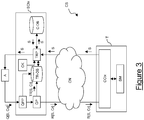
- Figure 3 schematically shows a communication system CS suitable for implementing the method according to an embodiment of the present invention.
- the communication system CS of Figure 3 comprises a communication network CN, a service application A and a terminal T having a sensor module SM and a context client CCtx. Since such components are substantially identical to the ones of Figure 1 , a detailed description of them will not be repeated.
- the communication system CS comprises a context server SCtx, which is suitable for cooperating with the service application A and with the context client CCtx through the communication network CN.
- the context server SCtx comprises a query pre-processor QPP, a query processor QP, a trigger database TR-DB, a trigger processor TRP, a trigger clock CK cooperating with the trigger processor TRP, and a context database C-DB.
- the service application A is activated.
- the service application A When the service application A is activated, it generates a query Q[S, Cq] (step 1), indicating that the service application A, for correctly implementing the context-based service, needs to receive from the terminal T a set of context information S when a query condition Cq is fulfilled.
- the query Q[S, Cq] is received by the context server SCtx, which preferably processes it (by means of its query pre-processor QPP and query processor QP, as it will be described in detail herein after) thus generating an update rule R[S, Cr] associated to the query Q (step 2) and indicating that the terminal T, for allowing the context server SCtx to correctly serve the query Q[S, Cq], should detect the context information S and transmit them to the context server SCtx when an update condition Cr is fulfilled.
- the context server SCtx preferably also generates a trigger TR[S, Ct], indicating that the context server SCtx, for serving the query Q[S, Cq], should read from its context database C-DB the last update of the context information S and forward it to the service application A when a trigger condition Ct is fulfilled.
- the trigger condition Ct depends on the query condition Cq and on other parameters, as it will be discussed in detail herein after.
- the trigger TR[S, Ct] is then stored in the trigger database TR-DB.
- the context server SCtx then transmits the update rule R[S, Cr] to the context client CCtx of the terminal T (step 3). Then, the context client CCtx preferably instructs the sensor module SM to operate according to the update rule R[S, Cr] (step 4). In this way, the sensor module SM starts to detect the context information S and to transmit their update to the context server SCtx when the update condition Cr is fulfilled. The context server SCtx then starts receiving updates of the context information S from the terminal T according to the update rule R[S, Cr] (step 5).
- each time the context server SCtx receives an update of the context information S it preferably stores it in the context database C-DB (step 5a). Then, preferably, the context server SCtx checks in the trigger database TR-DB whether a trigger is active on the context information S (step 5b). As it will be discussed in further detail herein after, step 5a may be performed not in response to the reception of an update of the context information S, but at the expiration of the trigger clock CK, independently of the received updates, as it will be discussed in detail herein after.
- the context server SCtx preferably does not perform any other action, until the next update of the context information S is received (or until the trigger clock expires). Otherwise, the trigger processor TRP checks whether the trigger condition Ct is fulfilled (step 5c). In the affirmative, the context server SCtx preferably reads the context information S from the context database C-DB and forwards them to the service application A (step 6), which therefore can process them for providing the user of the terminal T with the context-based service. In the negative, the context server SCtx preferably does not perform any other action, until the next update of the context information S is received (or until the trigger clock CK expires).
- steps 5, 5a, 5b, 5c and 6 are repeated until the query Q[S, Cq] (and then the trigger TR[S, Ct] and the update rule R[S, Cr]) is expired.
- three different types of trigger QPP preferably processes it for replacing the complex query Qc with one or more corresponding basic queries Qb and, possibly, one ore more triggers (step 22).
- the complex query Qc comprises two query conditions Cq1 and Cq2 linked by a Boolean operator.
- the query pre-processor QPP preferably performs the following operations:
- the query processor QP then receives from the query pre-processor QPP a basic query Qb (the particular case in which the query processor QP receives two basic queries Qbland Qb2 substantially at the same time will be discussed separately herein after).
- each basic query Qb is processed (step 23) for generating:
- the trigger condition Ct is of the same type as the query condition comprised in the basic query Qb.
- the update condition Cr may be either of the same type as the query condition comprised in the basic query Qb or of a different type, as it will be described in further detail herein after by referring to Figures 6a , 6b and 6c .
- Figures 6a , 6b and 6c are flow charts relating to the operation of generating a trigger T[S, Ct] and an update rule R[S, Cr] corresponding to the basic query Qb, in case the basic query Qb comprises an on-clock query condition, an on-value query condition or an on-change query condition, respectively.
- the query processor QP preferably checks whether a further update rule R' relating to the context information S has already been generated for fulfilling a further query Q' which may have been generated either by the service application A itself or another service application cooperating with the context server SCtx (step 231a).
- the query processor QP determines the type of update condition comprised in the already existing update rule R' (step 233a).
- ts preferably depends on the clock of the context client CCtx and on the features of the sensor unit SM.
- the update rule generated during step 234a is advantageously capable to serve both the basic query Qb and the previous query Q' associated to the update rule R'.
- the first trigger TR' is then stored at the trigger database TR-DB, while the first update rule R' is transmitted to the context client CCtx, which then instructs the sensor module SM to detect and transmit the context information S to the context server SCtx every 10 seconds.
- the second update rule R is transmitted to the context client CCtx, thus replacing the first update rule R'.
- the context client CCtx then instructs the sensor module SM to detect and transmit the context information S to the context server SCtx every 5 seconds.
- the trigger processor TRP preferably cooperates with the trigger clock CK for checking whether the on-clock trigger conditions Ct' and Ct are fulfilled. Therefore, the updates on the context information S are read from the context database C-DB and sent to the first service application each time the first trigger condition Ct' is fulfilled, i.e. every 10 seconds. On the other hand, the updates on the context information S are read from the context database C-DB and sent to the second service application each time the second trigger condition Ct is fulfilled, i.e. every 5 seconds.
- the update rule generated during step 235a is advantageously capable to serve both the basic query Qb and the previous query Q' associated to the update rule R'.
- the first trigger TR' is then stored at the trigger database TR-DB, while the first update rule R' is transmitted to the context client CCtx, which then instructs the sensor module SM to detect and transmit the context information S to the context server SCtx when r is equal to r*.
- the second update rule R is transmitted to the context client CCtx, thus replacing the first update rule R'.
- the context client CCtx then instructs the sensor module SM to detect and transmit the context information S to the context server SCtx each time any of the context information S changes value.
- the trigger processor TRP Upon reception of each update of the context information S, the trigger processor TRP stores the updated context information S in the context database C-DB and preferably checks whether the on-value trigger condition Ct' is fulfilled and, in the affirmative, it reads the context information S from the context database C-DB and forwards it to the first service application. Besides, upon reception of each update of the context information S, the trigger processor TRP cooperates with the trigger clock CK for checking whether the on-clock trigger condition Ct is fulfilled and, in the affirmative, it reads the context information S from the context database C-DB and forwards it to the second service application.
- the update rule generated during step 236a is advantageously capable to serve both the basic query Qb and the previous query Q' associated to the update rule R'.
- the first trigger TR' is then stored at the trigger database TR-DB, while the first update rule R' is transmitted to the context client CCtx, which then instructs the sensor module SM to detect and transmit the context information S to the context server SCtx when z changes value.
- the second update rule R is transmitted to the context client CCtx, thus replacing the first update rule R'.
- the context client CCtx then instructs the sensor module SM to detect and transmit the context information S to the context server SCtx each time any of the context information S changes value.
- the trigger processor TRP Upon reception of each update of the context information S, the trigger processor TRP checks whether the on-change trigger condition Ct' is fulfilled and, in the affirmative, it reads the context information S from the context database C-DB and forwards it to the first service application. Besides, upon reception of each update of the context information S, the trigger processor TRP cooperates with the trigger clock CK for checking whether the on-clock trigger condition Ct is fulfilled and, in the affirmative, it reads the context information S from the context database C-DB and forwards it to the second service application.
- the query processor QP preferably checks whether a further update rule R' relating to the context information S has already been generated for fulfilling a further query Q' which may have been generated either by the service application A itself or another service application cooperating with the context server SCtx (step 231b).
- the query processor QP determines the type of update condition comprised in the already existing update rule R' (step 233b).
- the update rule generated during step 234b is advantageously capable to serve both the basic query Qb and the previous query Q' associated to the update rule R'.
- the first trigger TR' is then stored at the trigger database TR-DB, while the first update rule R' is transmitted to the context client CCtx, which then instructs the sensor module SM to detect and transmit the context information S to the context server SCtx when r is equal to r*.
- the second update rule R is transmitted to the context client CCtx, thus replacing the first update rule R'.
- the context client CCtx then instructs the sensor module SM to detect and transmit the context information S to the context server SCtx each time p is equal to p* and each time r is equal to r*.
- the trigger processor TRP Upon reception of each update of the context information S, the trigger processor TRP preferably checks whether the on-value trigger conditions Ct' and Ct are fulfilled. When the first on-value trigger condition Ct' is fulfilled, the context information S are read from the context database C-DB and sent to the first service application. When the second on-value trigger condition Ct is fulfilled, the context information S are read from the context database C-DB and sent to the second service application.
- the update rule generated during step 235b is advantageously capable to serve both the basic query Qb and the previous query Q' associated to the update rule R'.
- This situation is substantially the same the one described above by referring to Figure 6a , in case the already existing update rule R' comprises an on-value update condition. Accordingly, a detailed description will not be repeated.
- the update rule generated during step 236b is advantageously capable to serve both the basic query Qb and the previous query Q' associated to the update rule R'.
- the first trigger TR' is then stored at the trigger database TR-DB, while the first update rule R' is transmitted to the context client CCtx, which then instructs the sensor module SM to detect and transmit the context information S to the context server SCtx when z changes value.
- the second update rule R is transmitted to the context client CCtx, thus replacing the first update rule R'.
- the context client CCtx then instructs the sensor module SM to detect and transmit the context information S to the context server SCtx each time any of the context information S changes value.
- the trigger processor TRP Upon reception of each update of the context information S, the trigger processor TRP preferably checks whether the on-change trigger condition Ct' is fulfilled and, in the affirmative, the context information S are read from the context database C-DB and sent to the first service application. Besides, upon reception of each update of the context information S, the trigger processor TRP also preferably checks whether the on-value trigger condition Ct is fulfilled and, in the affirmative, the context information S are read from the context database C-DB and sent to the second service application.
- the query processor QP preferably checks whether a further update rule R' relating to the context information S has already been generated for fulfilling a further query Q' which may have been generated either by the service application A itself or another service application cooperating with the context server SCtx (step 231c).
- the query processor QP determines the type of update condition comprised in the already existing update rule R' (step 233c).
- the update rule generated during step 234c is advantageously capable to serve both the basic query Qb and the previous query Q' associated to the update rule R'
- the first trigger TR' is then stored at the trigger database TR-DB, while the first update rule R' is transmitted to the context client CCtx, which then instructs the sensor module SM to detect and transmit the context information S to the context server SCtx when z changes value.
- the query processor QP preferably performs step 231c (thus determining the existence of the first update rule R') and step 233c (thus determining that the first update rule R' comprises the on-change update condition Cr').
- the second update rule R is transmitted to the context client CCtx, thus replacing the first update rule R'.
- the context client CCtx then instructs the sensor module SM to detect and transmit the context information S to the context server SCtx each time either q or z changes value.
- the trigger processor TRP preferably checks whether the on-value trigger conditions Ct' and Ct are fulfilled. If the first on-change trigger condition Ct' is fulfilled, the context information S are read from the context database C-DB and sent to the first service application. If the second on-change trigger condition Ct is fulfilled, the context information S are read from the context database C-DB and sent to the second service application.
- the update rule generated during step 235c is advantageously capable to serve both the basic query Qb and the previous query Q' associated to the update rule R, as disclosed above by referring to Figure 6b , in case the already existing update rule R' comprises an on-change condition (step 236b).
- the update rule generated during step 236c is advantageously capable to serve both the basic query Qb and the previous query Q' associated to the update rule R', as disclosed above by referring to Figure 6a , in case the already existing update rule R' comprises an on-change condition (step 236a).
- the resources of the terminal T are used in a still improved way.
- two or more different queries generated by different service applications and relating to the same context information can be "merged" in a single update rule, which is capable to serve both queries.
- the context server SCtx determines a single update condition which is suitable for fulfilling at the same time all the queries, while it associates to each basic query a separate trigger including a trigger condition equal to the query condition. Therefore, while the transmission of the updates from the terminal T to the context server SCtx is regulated by the "common" update rule, the forwarding of the updates from the context server SCtx to the service applications is regulated by the trigger conditions.
- the above mechanism of "merging" different queries in a single update rule advantageously allows to optimise the resources of the terminal T.
- the terminal T operating according to the update rule determined as disclosed above advantageously detects and transmits the minimum amount of updates of the context information S which is sufficient for serving both queries at the same time.
- complex queries may be managed in a very efficient way.
- the above mentioned complex queries Qc including two query conditions Cq1 and Cq2 related by an OR Boolean operator are replaced by the query pre-processor QPP with a first and second basic queries Qb1 and Qb2, which are then sent to the query processor QP.
- the query processor QP processes the two basic queries Qb1 and Qb2 by firstly processing the first basic query Qb1 as shown in the flow charts of Figures 6a , 6b and 6c , and then by separately processing the second basic query Qb2 as shown in the flow charts of Figures 6a , 6b and 6c , and by transmitting the resulting update rule to the context client CCtx only after the processing of the second basic query Qb2 is completed.
- the resulting update rule takes into account both the basic queries Qb1 and Qb2.
- each query Q is associated to an expiration time.
- the query processor QP preferably cooperates with an active query table (not shown in the drawings) which stores, for each query received at the context server SCtx, the query expiration time.
- the query processor QP periodically checks the active query table for possible expired queries, by comparing the trigger clock CK with the expiration times stored in the table.
- the query processor QP preferably recalculates the update rule relating to the context information S concerned by the expired query.
- the query processor recalculates the update rule as if the still active queries relating to the context information S were arrived at the context information SCtx after expiration of the expired query.
- the query processor QP also deletes from the trigger database TR-DB possible triggers associated to the expired query.
- the trigger processor TRP cooperates with an active trigger table (not shown in the drawings).
- the active trigger table preferably comprises a list of the active triggers.
- the active trigger table preferably indicates the query according to which the trigger has been generated, the trigger condition to be fulfilled, the context information requested by the service application and the terminal to which the trigger condition refers and an identifier (preferably, an URL) of the service application to which the context information has to be forwarded when the trigger condition is fulfilled.
- the trigger processor TRP preferably cooperates with the trigger clock CK.
- the context information S stored at the context database C-DB are associated to an expiration time.
- the expiration time of the context information is expired, the stored values of the context information S will be no more considered valid.
- the expiration time of the context information S is preferably determined by the context client CCtx, depending on the update rule according to which the context information S is being detected and transmitted to the context server SCtx. For instance:
Landscapes
- Engineering & Computer Science (AREA)
- Computer Networks & Wireless Communication (AREA)
- Signal Processing (AREA)
- Computer Hardware Design (AREA)
- Theoretical Computer Science (AREA)
- Software Systems (AREA)
- Physics & Mathematics (AREA)
- General Engineering & Computer Science (AREA)
- General Physics & Mathematics (AREA)
- Mobile Radio Communication Systems (AREA)
- Telephonic Communication Services (AREA)
- Communication Control (AREA)
Claims (5)
- Procédé de fourniture d'un service basé sur le contexte à un terminal (T) d'un réseau de communication (CN), ledit procédé comprenant les étapes ci-dessous consistant à :a) au niveau d'un serveur de contexte (SCtx) coopérant avec ledit réseau de communication (CN), recevoir une requête (Q[S, Cq]), générée à partir d'une application de service (A), et comprenant une condition de requête, ladite requête (Q[S, Cq]) indiquant que ladite application de service (A) doit recevoir, en provenance dudit serveur de contexte (SCtx), un ensemble d'informations de contexte (S) lorsque ladite condition de requête (Cq) est satisfaite ;b) au niveau dudit serveur de contexte (SCtx), générer une règle de mise à jour (R[S, Cr]) associée à ladite requête (Q[S, Cq]), et comprenant une condition de mise à jour qui est déterminée selon ladite condition de requête, ladite règle de mise à jour (R[S, Cr]) indiquant que ledit terminal (T), pour permettre audit serveur de contexte (SCtx) de desservir ladite requête (Q[S, Cq]), doit transmettre lesdites informations de contexte (S) audit serveur de contexte (SCtx) lorsque ladite condition de mise à jour (Cr) est satisfaite ;c) transmettre ladite règle de mise à jour (R[S, Cr]) dudit serveur de contexte (SCtx) audit terminal (T) ;d) au niveau d'un module de capteur (SM), détecter lesdites informations de contexte (S), et les transmettre audit terminal (T) ;e) au niveau dudit terminal (T), recevoir lesdites informations de contexte (S) et les transmettre audit serveur de contexte (SCtx) lorsque ladite condition de mise à jour (Cr) est satisfaite ; etf) au niveau dudit serveur de contexte (SCtx), transmettre lesdites informations de contexte (S) à ladite application de service (A), ce qui permet par conséquent à ladite application de service (A) de mettre en oeuvre ledit service basé sur le contexte ;dans lequel ladite étape b) comprend en outre une étape consistant à générer un déclencheur (TR[S, Ct]) associé à ladite requête (Q[S, Cq]) et comprenant une condition de déclenchement qui dépend de ladite condition de requête, ledit déclencheur (TR[S, Ct]) indiquant que ledit serveur de contexte (SCtx), pour desservir ladite requête (Q[S, Cq]), doit acheminer lesdites informations de contexte (S) à ladite application de service (A) lorsque ladite condition de déclenchement (Ct) est satisfaite ;
dans lequel ladite étape a) comprend l'étape consistant à déterminer un type de condition de requête, ledit type de condition de requête correspondant à l'un parmi les types suivants : un type de condition de requête « sur horloge », Cq = C/x, indiquant que ladite application de service (A) doit recevoir, en provenance du terminal (T), lesdites informations de contexte (S) toutes les « x » secondes, un type de condition de requête « sur valeur », Cq = V/(p = p*), indiquant que ladite application de service (A) doit recevoir, en provenance du terminal (T), lesdites informations de contexte (S) lorsqu'une condition sur la valeur d'un paramètre, « p », est satisfaite, et un type de condition de requête « sur changement », Cq = H/, indiquant que ladite application de service (A) doit recevoir, en provenance dudit terminal (T), lesdites informations de contexte (S) lorsqu'un paramètre, « q », change sa valeur ; et
dans lequel ladite étape b) comprend l'étape consistant à vérifier si une règle de mise à jour supplémentaire (R') incluant une condition de mise à jour supplémentaire (Cr') et connexe auxdites informations de contexte (S) est active et, dans l'affirmative :• si ledit type de condition de requête est ledit type de condition de requête « sur horloge », Cq = C/x :- si ladite condition de mise à jour supplémentaire (Cr') est de type « sur horloge », C/y, insérer, dans ladite règle de mise à jour (R[S, Cr]), une condition de mise à jour Cr = C/max(min(x,y), ts), « ts » correspondant à une période minimale de détection et de transmission desdites informations de contexte (S) au niveau dudit terminal (T) ;- si ladite condition de mise à jour supplémentaire (Cr') est de type « sur valeur », V/(r = r*), ou de type « sur changement », H/z, insérer, dans ladite règle de mise à jour (R[S, Cr]), une condition de mise à jour Cr = H/ ; et- remplacer ladite règle de mise à jour supplémentaire (R') par ladite règle de mise à jour (R[S, Cr]) ;• si ledit type de condition de requête correspond audit type de condition de requête « sur valeur », Cq = V/(p = p*) :- si ladite condition de mise à jour supplémentaire (Cr') est de type « sur valeur », V/(r = r*), insérer, dans ladite règle de mise à jour (R[S, Cr]), une condition de mise à jour Cr = V/(p = p* OU r = r*) ;- si ladite condition de mise à jour supplémentaire (Cr') est de type « sur horloge », C/y, ou de type « sur changement », H/z, insérer, dans ladite règle de mise à jour (R[S, Cr]), une condition de mise à jour Cr = H/ ; et- remplacer ladite règle de mise à jour supplémentaire (R') par ladite règle de mise à jour (R[S, Cr]) ;• si ledit type de condition de requête correspond audit type de condition de requête « sur changement », Cq = H/ :- si ladite condition de mise à jour supplémentaire (Cr') est du type « sur changement », H/z, insérer, dans ladite règle de mise à jour (R[S, Cr]), une condition de mise à jour Cr = H/(q OU z) ;- si ladite condition de mise à jour supplémentaire (Cr') est de type « sur valeur », V/(r = r*), ou de type « sur horloge », C/y, insérer, dans ladite règle de mise à jour (R[S, Cr]), une condition de mise à jour Cr = H/ ; et- remplacer ladite règle de mise à jour supplémentaire (R') par ladite règle de mise à jour (R[S, Cr]). - Procédé selon la revendication 1, dans lequel ladite condition de déclenchement (Ct) est d'un type de condition de déclenchement correspondant audit type de condition de requête.
- Procédé selon la revendication 1 ou 2, dans lequel ladite étape b) comprend l'étape consistant à, si ladite vérification consistant à contrôler si une règle de mise à jour supplémentaire (R') incluant une condition de mise à jour supplémentaire (Cr') et connexe auxdites informations de contexte (S) est active, est négative, insérer, dans ladite règle de mise à jour (R[S, Cr]), une condition de mise à jour (Cr) d'un type de condition de mise à jour correspondant audit type de condition de requête.
- Serveur de contexte (SCtx', SCtx) configuré de manière à coopérer avec un réseau de communication (CN) en vue de fournir un service basé sur le contexte à un terminal (T) dudit réseau de communication (CN), ledit serveur de contexte (SCtx', SCtx) comprenant- un préprocesseur de requêtes (QPP) configuré de manière à recevoir une requête (Q[S, Cq]) en provenance d'une application de service (A), ladite requête (Q[S, Cq]) comprenant une condition de requête et indiquant que ladite application de service (A) doit recevoir, en provenance dudit serveur de contexte (SCtx), un ensemble d'informations de contexte (S) connexe audit terminal (T) lorsque ladite condition de requête (Cq) est satisfaite ; et- un processeur de requêtes (QP) configuré de manière à :- générer une règle de mise à jour (R[S, Cr]) associée à ladite requête (Q[S, Cq]), et comprenant une condition de mise à jour qui est déterminée selon ladite condition de requête, ladite règle de mise à jour (R[S, Cr]) indiquant que ledit terminal (T), pour permettre audit serveur de contexte (SCtx) de desservir ladite requête (Q[S, Cq]), doit détecter lesdites informations de contexte (S) et les transmettre audit serveur de contexte (SCtx) lorsque ladite condition de mise à jour (Cr) est satisfaite ; et- transmettre ladite règle de mise à jour (R[S, Cr]) audit terminal (T) ;ledit serveur de contexte (SCtx', SCtx) étant configuré de manière à recevoir lesdites informations de contexte (S) et à les acheminer vers ladite application de service (A), ce qui permet par conséquent à ladite application de service (A) de mettre en oeuvre ledit service basé sur le contexte ;
dans lequel ledit processeur de requêtes (QP) est en outre configuré de manière à générer un déclencheur (TR[S, Ct]) associé à ladite requête (Q[S, Cq]) et comprenant une condition de déclenchement qui dépend de ladite condition de requête, ledit déclencheur (TR[S, Ct]) indiquant que ledit serveur de contexte (SCtx), pour desservir ladite requête (Q[S, Cq]), doit acheminer lesdites informations de contexte (S) à ladite application de service (A) lorsque ladite condition de déclenchement (Ct) est satisfaite ;
ledit serveur de contexte (SCtx', SCtx) comprenant en outre une base de données de déclencheurs (TR-DB) destinée à stocker ledit déclencheur (TR[S, Ct]) ;
ledit serveur de contexte (SCtx', SCtx) comprenant en outre un processeur de déclenchement (TRP) configuré de manière à coopérer avec ladite base de données de déclencheurs (TR-DB) pour vérifier si ladite condition de déclenchement (Ct) est satisfaite et acheminer lesdites informations de contexte (S) vers ladite application de service (A) si ladite condition de déclenchement (Ct) est satisfaite, dans lequel ledit processeur de requêtes (QP) est en outre configuré de manière à déterminer un type de condition de requête, ledit type de condition de requête correspondant à l'un parmi les types suivants : un type de condition de requête « sur horloge », Cq = C/x, indiquant que ladite application de service (A) doit recevoir, en provenance du terminal (T), lesdites informations de contexte (S) toutes les « x » secondes, un type de condition de requête « sur valeur », Cq = V/(p = p*), indiquant que ladite application de service (A) doit recevoir, en provenance du terminal (T), lesdites informations de contexte (S) lorsqu'une condition sur la valeur d'un paramètre, « p », est satisfaite, et un type de condition de requête « sur changement », Cq = H/, indiquant que ladite application de service (A) doit recevoir, en provenance dudit terminal (T), lesdites informations de contexte (S) lorsqu'un paramètre, « q », change sa valeur, et à vérifier si une règle de mise à jour supplémentaire (R') incluant une condition de mise à jour supplémentaire (Cr') et connexe auxdites informations de contexte (S) est active et, dans l'affirmative• si ledit type de condition de requête est ledit type de condition de requête « sur horloge », Cq = C/x :- si ladite condition de mise à jour supplémentaire (Cr') est de type « sur horloge », C/y, insérer, dans ladite règle de mise à jour (R[S, Cr]), une condition de mise à jour Cr = C/max(min(x,y), ts), « ts » correspondant à une période minimale de détection et de transmission desdites informations de contexte (S) au niveau dudit terminal (T) ;- si ladite condition de mise à jour supplémentaire (Cr') est de type « sur valeur », V/(r = r*), ou de type « sur changement », H/z, insérer, dans ladite règle de mise à jour (R[S, Cr]), une condition de mise à jour Cr = H/; et- remplacer ladite règle de mise à jour supplémentaire (R') par ladite règle de mise à jour (R[S, Cr]) ;• si ledit type de condition de requête correspond audit type de condition de requête « sur valeur », Cq = V/(p = p*) :- si ladite condition de mise à jour supplémentaire (Cr') est de type « sur valeur », V/(r = r*), insérer, dans ladite règle de mise à jour (R[S, Cr]), une condition de mise à jour Cr = V/(p = p* OU r = r*) ;- si ladite condition de mise à jour supplémentaire (Cr') est de type « sur horloge », C/y, ou de type « sur changement », H/z, insérer, dans ladite règle de mise à jour (R[S, Cr]), une condition de mise à jour Cr = H/ ; et- remplacer ladite règle de mise à jour supplémentaire (R') par ladite règle de mise à jour (R[S, Cr]) ;• si ledit type de condition de requête correspond audit type de condition de requête « sur changement », Cq = H/ :- si ladite condition de mise à jour supplémentaire (Cr') est du type « sur changement », H/z, insérer, dans ladite règle de mise à jour (R[S, Cr]), une condition de mise à jour Cr = H/(q OU z) ;- si ladite condition de mise à jour supplémentaire (Cr') est de type « sur valeur », V/(r = r*), ou de type « sur horloge », C/y, insérer, dans ladite règle de mise à jour (R[S, Cr]), une condition de mise à jour Cr = H/ ; et- remplacer ladite règle de mise à jour supplémentaire (R') par ladite règle de mise à jour (R[S, Cr]). - Système de communication (CS', CS) configuré de manière à fournir un service basé sur le contexte à un terminal (T) dudit système de communication (CS', CS), ledit système de communication (CS', CS) comprenant un réseau de communication (CN) auquel ledit terminal (T) est connecté, une application de service (A) configurée de manière à mettre en oeuvre ledit service basé sur le contexte, et un serveur de contexte (SCtx) configuré de manière à coopérer avec ladite application de service (A) et avec ledit réseau de communication (CN), ledit serveur de contexte (SCtx', SCtx) étant selon la revendication 4.
Applications Claiming Priority (1)
| Application Number | Priority Date | Filing Date | Title |
|---|---|---|---|
| PCT/EP2008/058303 WO2009155994A1 (fr) | 2008-06-27 | 2008-06-27 | Procédé et système de communication pour fournir un service de communication basé sur le contexte |
Publications (2)
| Publication Number | Publication Date |
|---|---|
| EP2294782A1 EP2294782A1 (fr) | 2011-03-16 |
| EP2294782B1 true EP2294782B1 (fr) | 2018-06-20 |
Family
ID=40467196
Family Applications (1)
| Application Number | Title | Priority Date | Filing Date |
|---|---|---|---|
| EP08774464.5A Not-in-force EP2294782B1 (fr) | 2008-06-27 | 2008-06-27 | Procédé et système de communication pour fournir un service de communication basé sur le contexte |
Country Status (7)
| Country | Link |
|---|---|
| US (1) | US10257302B2 (fr) |
| EP (1) | EP2294782B1 (fr) |
| JP (1) | JP5249414B2 (fr) |
| KR (1) | KR101546083B1 (fr) |
| CN (1) | CN102124712B (fr) |
| CA (1) | CA2729560C (fr) |
| WO (1) | WO2009155994A1 (fr) |
Families Citing this family (6)
| Publication number | Priority date | Publication date | Assignee | Title |
|---|---|---|---|---|
| CN101567005B (zh) * | 2009-05-07 | 2012-05-09 | 浙江大学 | 一种基于WordNet的语义服务注册与查询方法 |
| EP2530988B1 (fr) | 2011-06-04 | 2015-09-16 | Alcatel Lucent | Concept de programmation |
| WO2016023520A1 (fr) * | 2014-08-14 | 2016-02-18 | 北京金山安全软件有限公司 | Procédé et dispositif pour reconnaître une application provoquant l'élévation de température d'un terminal, et terminal |
| KR101850884B1 (ko) * | 2016-07-11 | 2018-04-20 | 주식회사 삼진엘앤디 | 계층적 그래프 기반의 경로 탐색 방법 및 이를 이용한 사물 인터넷 환경에서의 경로 탐색 방법 |
| US11429586B2 (en) * | 2016-12-22 | 2022-08-30 | Sap Se | Expression update validation |
| US11856000B2 (en) | 2021-06-04 | 2023-12-26 | Wisconsin Alumni Research Foundation | Method and apparatus for improved security in trigger action platforms |
Family Cites Families (23)
| Publication number | Priority date | Publication date | Assignee | Title |
|---|---|---|---|---|
| JPH05197892A (ja) | 1992-01-22 | 1993-08-06 | Fujitsu Ltd | 遠隔計測データ転送方法 |
| US20030212996A1 (en) * | 1996-02-08 | 2003-11-13 | Wolzien Thomas R. | System for interconnection of audio program data transmitted by radio to remote vehicle or individual with GPS location |
| US20010012346A1 (en) * | 1999-01-29 | 2001-08-09 | Alex Terry | Interactive billing system utilizing a thin web client interface |
| CA2431491C (fr) | 2000-12-11 | 2012-03-20 | Sentillion, Inc. | Gestion de contexte avec capacite de verification |
| US6714778B2 (en) | 2001-05-15 | 2004-03-30 | Nokia Corporation | Context sensitive web services |
| US6970947B2 (en) * | 2001-07-18 | 2005-11-29 | International Business Machines Corporation | Method and apparatus for providing a flexible and scalable context service |
| DE10148290A1 (de) | 2001-09-29 | 2003-04-17 | Bayer Cropscience Gmbh | Heterocyclische Amide, Verfahren zu ihrer Herstellung, sie enthaltende Mittel und ihre Verwendung |
| JP3674569B2 (ja) * | 2001-10-04 | 2005-07-20 | オムロン株式会社 | センサ管理装置、センサ管理装置の制御プログラム、このプログラムを記録したコンピュータ読み取り可能な記録媒体、センサ管理装置の制御方法 |
| US6832140B2 (en) * | 2002-03-08 | 2004-12-14 | At Road, Inc. | Obtaining vehicle usage information from a remote location |
| CN1781296A (zh) | 2003-04-03 | 2006-05-31 | 诺基亚公司 | 用于管理语境相关信息的系统、移动站、方法和计算机程序产品 |
| WO2006014824A1 (fr) * | 2004-07-26 | 2006-02-09 | Wireless 5Th Dimensional Networking, Inc. | Moteur de recherche base sur des contextes residant sur un reseau |
| US8099296B2 (en) * | 2004-10-01 | 2012-01-17 | General Electric Company | System and method for rules-based context management in a medical environment |
| KR100683172B1 (ko) * | 2005-02-14 | 2007-02-15 | 삼성전기주식회사 | 그룹 상황 정보 관리를 위한 추상적 서비스의 의미를 이용한 응용 프로그램간의 충돌 제어 방법 및 그 시스템 |
| US7889071B2 (en) | 2005-03-15 | 2011-02-15 | Nokia Corporation | Methods, device and system for sending and providing environmental data |
| US7925995B2 (en) | 2005-06-30 | 2011-04-12 | Microsoft Corporation | Integration of location logs, GPS signals, and spatial resources for identifying user activities, goals, and context |
| US10769215B2 (en) * | 2005-07-14 | 2020-09-08 | Conversant Wireless Licensing S.A R.L. | Method, apparatus and computer program product providing an application integrated mobile device search solution using context information |
| US8200688B2 (en) * | 2006-03-07 | 2012-06-12 | Samsung Electronics Co., Ltd. | Method and system for facilitating information searching on electronic devices |
| JP4673250B2 (ja) * | 2006-05-11 | 2011-04-20 | ソフトバンクモバイル株式会社 | センサデータ収集方法及び移動情報装置 |
| US8594702B2 (en) * | 2006-11-06 | 2013-11-26 | Yahoo! Inc. | Context server for associating information based on context |
| US20080183681A1 (en) * | 2007-01-29 | 2008-07-31 | Samsung Electronics Co., Ltd. | Method and system for facilitating information searching on electronic devices |
| US8160560B2 (en) * | 2007-03-02 | 2012-04-17 | Aegis Mobility, Inc. | Management of mobile device communication sessions to reduce user distraction |
| US8010134B2 (en) * | 2007-03-14 | 2011-08-30 | Sprint Communications Company L.P. | Architecture for mobile advertising with location |
| US8463232B2 (en) * | 2007-12-31 | 2013-06-11 | Motorola Mobility Llc | Accurate billing for services used across multiple serving nodes |
-
2008
- 2008-06-27 EP EP08774464.5A patent/EP2294782B1/fr not_active Not-in-force
- 2008-06-27 CA CA2729560A patent/CA2729560C/fr active Active
- 2008-06-27 KR KR1020117002074A patent/KR101546083B1/ko not_active Expired - Fee Related
- 2008-06-27 WO PCT/EP2008/058303 patent/WO2009155994A1/fr not_active Ceased
- 2008-06-27 JP JP2011515128A patent/JP5249414B2/ja not_active Expired - Fee Related
- 2008-06-27 US US13/001,118 patent/US10257302B2/en not_active Expired - Fee Related
- 2008-06-27 CN CN200880130754.1A patent/CN102124712B/zh not_active Expired - Fee Related
Non-Patent Citations (1)
| Title |
|---|
| None * |
Also Published As
| Publication number | Publication date |
|---|---|
| CA2729560C (fr) | 2018-07-31 |
| KR101546083B1 (ko) | 2015-08-20 |
| CN102124712A (zh) | 2011-07-13 |
| JP2011527529A (ja) | 2011-10-27 |
| WO2009155994A1 (fr) | 2009-12-30 |
| JP5249414B2 (ja) | 2013-07-31 |
| CN102124712B (zh) | 2014-02-19 |
| EP2294782A1 (fr) | 2011-03-16 |
| US20110119299A1 (en) | 2011-05-19 |
| US10257302B2 (en) | 2019-04-09 |
| KR20110027809A (ko) | 2011-03-16 |
| CA2729560A1 (fr) | 2009-12-30 |
Similar Documents
| Publication | Publication Date | Title |
|---|---|---|
| JP6811263B2 (ja) | M2m−iotサービスのパブリケーションおよび発見 | |
| US10644940B2 (en) | M2M clustering management | |
| Van Sinderen et al. | Supporting context-aware mobile applications: an infrastructure approach | |
| US7516201B2 (en) | Communication device and software for operating multimedia applications | |
| US7725532B2 (en) | System and method for providing flexible context-aware service | |
| EP2294782B1 (fr) | Procédé et système de communication pour fournir un service de communication basé sur le contexte | |
| EP2374069B1 (fr) | Service de communication basé sur le contexte | |
| US9842140B2 (en) | Dynamic input streams handling in DSMS | |
| KR101695636B1 (ko) | 복합 상황 정보 이벤트 처리 방법 및 그 장치 | |
| CA2605849A1 (fr) | Appareil de surveillance des performances d'un dispositif de donnees sans fil | |
| US20070067423A1 (en) | Context management system for a network including a heterogenous set of terminals | |
| Reetz et al. | Towards global smart spaces: Merge wireless sensor networks into context-aware systems | |
| Özçelebi et al. | Discovery, monitoring and management in smart spaces composed of low capacity nodes | |
| Curran | Understanding the Internet: a glimpse into the building blocks, applications, security and hidden secrets of the Web | |
| CN120568380B (zh) | 通信方法、装置、系统以及存储介质 | |
| Tsetsos et al. | Towards Commercial Wireless Sensor Networks: Business and Technology Architecture. | |
| JP2005057708A (ja) | インスタントメッセージ送受信システム,サーバ装置,端末装置,プログラム,プログラムを記録した媒体及びインスタントメッセージ送受信方法 | |
| Fokum et al. | A taxonomy of sensor network architectures | |
| Camacho | Proximity sensing and context-aware content dissemination | |
| Bade et al. | An Awareness Model for Agents in Heterogeneous Environments | |
| Chen et al. | Mobile Middleware: Processing Context-Related Data in Mobile Environments | |
| Aloisi | Integrating wireless sensor networks and internet of things: A coap-based approach | |
| Aloisi | Enabling communication between Wireless Sensor Networks and The Internet-of-Things: A CoAP communication stack | |
| Cortés | Middleware Support for Service Discovery in Highly Heterogeneous Environments |
Legal Events
| Date | Code | Title | Description |
|---|---|---|---|
| PUAI | Public reference made under article 153(3) epc to a published international application that has entered the european phase |
Free format text: ORIGINAL CODE: 0009012 |
|
| 17P | Request for examination filed |
Effective date: 20110114 |
|
| AK | Designated contracting states |
Kind code of ref document: A1 Designated state(s): AT BE BG CH CY CZ DE DK EE ES FI FR GB GR HR HU IE IS IT LI LT LU LV MC MT NL NO PL PT RO SE SI SK TR |
|
| AX | Request for extension of the european patent |
Extension state: AL BA MK RS |
|
| DAX | Request for extension of the european patent (deleted) | ||
| RAP1 | Party data changed (applicant data changed or rights of an application transferred) |
Owner name: TELECOM ITALIA S.P.A. |
|
| 17Q | First examination report despatched |
Effective date: 20170320 |
|
| GRAP | Despatch of communication of intention to grant a patent |
Free format text: ORIGINAL CODE: EPIDOSNIGR1 |
|
| INTG | Intention to grant announced |
Effective date: 20180219 |
|
| GRAS | Grant fee paid |
Free format text: ORIGINAL CODE: EPIDOSNIGR3 |
|
| GRAA | (expected) grant |
Free format text: ORIGINAL CODE: 0009210 |
|
| AK | Designated contracting states |
Kind code of ref document: B1 Designated state(s): AT BE BG CH CY CZ DE DK EE ES FI FR GB GR HR HU IE IS IT LI LT LU LV MC MT NL NO PL PT RO SE SI SK TR |
|
| REG | Reference to a national code |
Ref country code: GB Ref legal event code: FG4D |
|
| REG | Reference to a national code |
Ref country code: IE Ref legal event code: FG4D |
|
| REG | Reference to a national code |
Ref country code: AT Ref legal event code: REF Ref document number: 1011354 Country of ref document: AT Kind code of ref document: T Effective date: 20180715 |
|
| REG | Reference to a national code |
Ref country code: DE Ref legal event code: R096 Ref document number: 602008055697 Country of ref document: DE |
|
| REG | Reference to a national code |
Ref country code: NL Ref legal event code: MP Effective date: 20180620 |
|
| REG | Reference to a national code |
Ref country code: FR Ref legal event code: PLFP Year of fee payment: 11 |
|
| PG25 | Lapsed in a contracting state [announced via postgrant information from national office to epo] |
Ref country code: FI Free format text: LAPSE BECAUSE OF FAILURE TO SUBMIT A TRANSLATION OF THE DESCRIPTION OR TO PAY THE FEE WITHIN THE PRESCRIBED TIME-LIMIT Effective date: 20180620 Ref country code: LT Free format text: LAPSE BECAUSE OF FAILURE TO SUBMIT A TRANSLATION OF THE DESCRIPTION OR TO PAY THE FEE WITHIN THE PRESCRIBED TIME-LIMIT Effective date: 20180620 Ref country code: BG Free format text: LAPSE BECAUSE OF FAILURE TO SUBMIT A TRANSLATION OF THE DESCRIPTION OR TO PAY THE FEE WITHIN THE PRESCRIBED TIME-LIMIT Effective date: 20180920 Ref country code: SE Free format text: LAPSE BECAUSE OF FAILURE TO SUBMIT A TRANSLATION OF THE DESCRIPTION OR TO PAY THE FEE WITHIN THE PRESCRIBED TIME-LIMIT Effective date: 20180620 Ref country code: NO Free format text: LAPSE BECAUSE OF FAILURE TO SUBMIT A TRANSLATION OF THE DESCRIPTION OR TO PAY THE FEE WITHIN THE PRESCRIBED TIME-LIMIT Effective date: 20180920 |
|
| REG | Reference to a national code |
Ref country code: LT Ref legal event code: MG4D |
|
| PG25 | Lapsed in a contracting state [announced via postgrant information from national office to epo] |
Ref country code: GR Free format text: LAPSE BECAUSE OF FAILURE TO SUBMIT A TRANSLATION OF THE DESCRIPTION OR TO PAY THE FEE WITHIN THE PRESCRIBED TIME-LIMIT Effective date: 20180921 Ref country code: HR Free format text: LAPSE BECAUSE OF FAILURE TO SUBMIT A TRANSLATION OF THE DESCRIPTION OR TO PAY THE FEE WITHIN THE PRESCRIBED TIME-LIMIT Effective date: 20180620 Ref country code: LV Free format text: LAPSE BECAUSE OF FAILURE TO SUBMIT A TRANSLATION OF THE DESCRIPTION OR TO PAY THE FEE WITHIN THE PRESCRIBED TIME-LIMIT Effective date: 20180620 |
|
| REG | Reference to a national code |
Ref country code: AT Ref legal event code: MK05 Ref document number: 1011354 Country of ref document: AT Kind code of ref document: T Effective date: 20180620 |
|
| PG25 | Lapsed in a contracting state [announced via postgrant information from national office to epo] |
Ref country code: NL Free format text: LAPSE BECAUSE OF FAILURE TO SUBMIT A TRANSLATION OF THE DESCRIPTION OR TO PAY THE FEE WITHIN THE PRESCRIBED TIME-LIMIT Effective date: 20180620 |
|
| PG25 | Lapsed in a contracting state [announced via postgrant information from national office to epo] |
Ref country code: IS Free format text: LAPSE BECAUSE OF FAILURE TO SUBMIT A TRANSLATION OF THE DESCRIPTION OR TO PAY THE FEE WITHIN THE PRESCRIBED TIME-LIMIT Effective date: 20181020 Ref country code: AT Free format text: LAPSE BECAUSE OF FAILURE TO SUBMIT A TRANSLATION OF THE DESCRIPTION OR TO PAY THE FEE WITHIN THE PRESCRIBED TIME-LIMIT Effective date: 20180620 Ref country code: EE Free format text: LAPSE BECAUSE OF FAILURE TO SUBMIT A TRANSLATION OF THE DESCRIPTION OR TO PAY THE FEE WITHIN THE PRESCRIBED TIME-LIMIT Effective date: 20180620 Ref country code: RO Free format text: LAPSE BECAUSE OF FAILURE TO SUBMIT A TRANSLATION OF THE DESCRIPTION OR TO PAY THE FEE WITHIN THE PRESCRIBED TIME-LIMIT Effective date: 20180620 Ref country code: SK Free format text: LAPSE BECAUSE OF FAILURE TO SUBMIT A TRANSLATION OF THE DESCRIPTION OR TO PAY THE FEE WITHIN THE PRESCRIBED TIME-LIMIT Effective date: 20180620 Ref country code: CZ Free format text: LAPSE BECAUSE OF FAILURE TO SUBMIT A TRANSLATION OF THE DESCRIPTION OR TO PAY THE FEE WITHIN THE PRESCRIBED TIME-LIMIT Effective date: 20180620 Ref country code: PL Free format text: LAPSE BECAUSE OF FAILURE TO SUBMIT A TRANSLATION OF THE DESCRIPTION OR TO PAY THE FEE WITHIN THE PRESCRIBED TIME-LIMIT Effective date: 20180620 |
|
| REG | Reference to a national code |
Ref country code: CH Ref legal event code: PL |
|
| PG25 | Lapsed in a contracting state [announced via postgrant information from national office to epo] |
Ref country code: ES Free format text: LAPSE BECAUSE OF FAILURE TO SUBMIT A TRANSLATION OF THE DESCRIPTION OR TO PAY THE FEE WITHIN THE PRESCRIBED TIME-LIMIT Effective date: 20180620 |
|
| REG | Reference to a national code |
Ref country code: BE Ref legal event code: MM Effective date: 20180630 |
|
| REG | Reference to a national code |
Ref country code: DE Ref legal event code: R097 Ref document number: 602008055697 Country of ref document: DE |
|
| PG25 | Lapsed in a contracting state [announced via postgrant information from national office to epo] |
Ref country code: LU Free format text: LAPSE BECAUSE OF NON-PAYMENT OF DUE FEES Effective date: 20180627 Ref country code: MC Free format text: LAPSE BECAUSE OF FAILURE TO SUBMIT A TRANSLATION OF THE DESCRIPTION OR TO PAY THE FEE WITHIN THE PRESCRIBED TIME-LIMIT Effective date: 20180620 |
|
| REG | Reference to a national code |
Ref country code: IE Ref legal event code: MM4A |
|
| PLBE | No opposition filed within time limit |
Free format text: ORIGINAL CODE: 0009261 |
|
| STAA | Information on the status of an ep patent application or granted ep patent |
Free format text: STATUS: NO OPPOSITION FILED WITHIN TIME LIMIT |
|
| PG25 | Lapsed in a contracting state [announced via postgrant information from national office to epo] |
Ref country code: LI Free format text: LAPSE BECAUSE OF NON-PAYMENT OF DUE FEES Effective date: 20180630 Ref country code: IE Free format text: LAPSE BECAUSE OF NON-PAYMENT OF DUE FEES Effective date: 20180627 Ref country code: CH Free format text: LAPSE BECAUSE OF NON-PAYMENT OF DUE FEES Effective date: 20180630 |
|
| 26N | No opposition filed |
Effective date: 20190321 |
|
| PG25 | Lapsed in a contracting state [announced via postgrant information from national office to epo] |
Ref country code: DK Free format text: LAPSE BECAUSE OF FAILURE TO SUBMIT A TRANSLATION OF THE DESCRIPTION OR TO PAY THE FEE WITHIN THE PRESCRIBED TIME-LIMIT Effective date: 20180620 Ref country code: BE Free format text: LAPSE BECAUSE OF NON-PAYMENT OF DUE FEES Effective date: 20180630 |
|
| PG25 | Lapsed in a contracting state [announced via postgrant information from national office to epo] |
Ref country code: SI Free format text: LAPSE BECAUSE OF FAILURE TO SUBMIT A TRANSLATION OF THE DESCRIPTION OR TO PAY THE FEE WITHIN THE PRESCRIBED TIME-LIMIT Effective date: 20180620 |
|
| PG25 | Lapsed in a contracting state [announced via postgrant information from national office to epo] |
Ref country code: MT Free format text: LAPSE BECAUSE OF NON-PAYMENT OF DUE FEES Effective date: 20180627 |
|
| PG25 | Lapsed in a contracting state [announced via postgrant information from national office to epo] |
Ref country code: TR Free format text: LAPSE BECAUSE OF FAILURE TO SUBMIT A TRANSLATION OF THE DESCRIPTION OR TO PAY THE FEE WITHIN THE PRESCRIBED TIME-LIMIT Effective date: 20180620 |
|
| PG25 | Lapsed in a contracting state [announced via postgrant information from national office to epo] |
Ref country code: PT Free format text: LAPSE BECAUSE OF FAILURE TO SUBMIT A TRANSLATION OF THE DESCRIPTION OR TO PAY THE FEE WITHIN THE PRESCRIBED TIME-LIMIT Effective date: 20180620 Ref country code: HU Free format text: LAPSE BECAUSE OF FAILURE TO SUBMIT A TRANSLATION OF THE DESCRIPTION OR TO PAY THE FEE WITHIN THE PRESCRIBED TIME-LIMIT; INVALID AB INITIO Effective date: 20080627 |
|
| PG25 | Lapsed in a contracting state [announced via postgrant information from national office to epo] |
Ref country code: CY Free format text: LAPSE BECAUSE OF FAILURE TO SUBMIT A TRANSLATION OF THE DESCRIPTION OR TO PAY THE FEE WITHIN THE PRESCRIBED TIME-LIMIT Effective date: 20180620 |
|
| REG | Reference to a national code |
Ref country code: DE Ref legal event code: R079 Ref document number: 602008055697 Country of ref document: DE Free format text: PREVIOUS MAIN CLASS: H04L0029060000 Ipc: H04L0065000000 |
|
| PGFP | Annual fee paid to national office [announced via postgrant information from national office to epo] |
Ref country code: IT Payment date: 20220621 Year of fee payment: 15 Ref country code: GB Payment date: 20220628 Year of fee payment: 15 |
|
| PGFP | Annual fee paid to national office [announced via postgrant information from national office to epo] |
Ref country code: FR Payment date: 20220627 Year of fee payment: 15 |
|
| PGFP | Annual fee paid to national office [announced via postgrant information from national office to epo] |
Ref country code: DE Payment date: 20220629 Year of fee payment: 15 |
|
| REG | Reference to a national code |
Ref country code: DE Ref legal event code: R119 Ref document number: 602008055697 Country of ref document: DE |
|
| GBPC | Gb: european patent ceased through non-payment of renewal fee |
Effective date: 20230627 |
|
| PG25 | Lapsed in a contracting state [announced via postgrant information from national office to epo] |
Ref country code: DE Free format text: LAPSE BECAUSE OF NON-PAYMENT OF DUE FEES Effective date: 20240103 Ref country code: GB Free format text: LAPSE BECAUSE OF NON-PAYMENT OF DUE FEES Effective date: 20230627 |
|
| PG25 | Lapsed in a contracting state [announced via postgrant information from national office to epo] |
Ref country code: FR Free format text: LAPSE BECAUSE OF NON-PAYMENT OF DUE FEES Effective date: 20230630 |
|
| PG25 | Lapsed in a contracting state [announced via postgrant information from national office to epo] |
Ref country code: IT Free format text: LAPSE BECAUSE OF NON-PAYMENT OF DUE FEES Effective date: 20230627 |