EP2297640B1 - Système de surveillance à distance de cytomètre de flux - Google Patents
Système de surveillance à distance de cytomètre de flux Download PDFInfo
- Publication number
- EP2297640B1 EP2297640B1 EP09739245.0A EP09739245A EP2297640B1 EP 2297640 B1 EP2297640 B1 EP 2297640B1 EP 09739245 A EP09739245 A EP 09739245A EP 2297640 B1 EP2297640 B1 EP 2297640B1
- Authority
- EP
- European Patent Office
- Prior art keywords
- data representation
- computer
- flow cytometer
- byte data
- files
- Prior art date
- Legal status (The legal status is an assumption and is not a legal conclusion. Google has not performed a legal analysis and makes no representation as to the accuracy of the status listed.)
- Active
Links
Images




Classifications
-
- G—PHYSICS
- G01—MEASURING; TESTING
- G01N—INVESTIGATING OR ANALYSING MATERIALS BY DETERMINING THEIR CHEMICAL OR PHYSICAL PROPERTIES
- G01N15/00—Investigating characteristics of particles; Investigating permeability, pore-volume or surface-area of porous materials
- G01N15/10—Investigating individual particles
- G01N15/14—Optical investigation techniques, e.g. flow cytometry
- G01N15/1425—Optical investigation techniques, e.g. flow cytometry using an analyser being characterised by its control arrangement
-
- G—PHYSICS
- G01—MEASURING; TESTING
- G01N—INVESTIGATING OR ANALYSING MATERIALS BY DETERMINING THEIR CHEMICAL OR PHYSICAL PROPERTIES
- G01N15/00—Investigating characteristics of particles; Investigating permeability, pore-volume or surface-area of porous materials
- G01N15/10—Investigating individual particles
- G01N15/14—Optical investigation techniques, e.g. flow cytometry
- G01N15/1429—Signal processing
-
- G—PHYSICS
- G01—MEASURING; TESTING
- G01N—INVESTIGATING OR ANALYSING MATERIALS BY DETERMINING THEIR CHEMICAL OR PHYSICAL PROPERTIES
- G01N15/00—Investigating characteristics of particles; Investigating permeability, pore-volume or surface-area of porous materials
- G01N15/10—Investigating individual particles
- G01N15/14—Optical investigation techniques, e.g. flow cytometry
- G01N15/1429—Signal processing
- G01N15/1433—Signal processing using image recognition
-
- G—PHYSICS
- G01—MEASURING; TESTING
- G01N—INVESTIGATING OR ANALYSING MATERIALS BY DETERMINING THEIR CHEMICAL OR PHYSICAL PROPERTIES
- G01N15/00—Investigating characteristics of particles; Investigating permeability, pore-volume or surface-area of porous materials
- G01N15/10—Investigating individual particles
- G01N15/14—Optical investigation techniques, e.g. flow cytometry
- G01N15/1456—Optical investigation techniques, e.g. flow cytometry without spatial resolution of the texture or inner structure of the particle, e.g. processing of pulse signals
- G01N15/1459—Optical investigation techniques, e.g. flow cytometry without spatial resolution of the texture or inner structure of the particle, e.g. processing of pulse signals the analysis being performed on a sample stream
-
- G—PHYSICS
- G01—MEASURING; TESTING
- G01N—INVESTIGATING OR ANALYSING MATERIALS BY DETERMINING THEIR CHEMICAL OR PHYSICAL PROPERTIES
- G01N15/00—Investigating characteristics of particles; Investigating permeability, pore-volume or surface-area of porous materials
- G01N15/10—Investigating individual particles
- G01N15/14—Optical investigation techniques, e.g. flow cytometry
- G01N15/1468—Optical investigation techniques, e.g. flow cytometry with spatial resolution of the texture or inner structure of the particle
- G01N15/147—Optical investigation techniques, e.g. flow cytometry with spatial resolution of the texture or inner structure of the particle the analysis being performed on a sample stream
-
- G—PHYSICS
- G01—MEASURING; TESTING
- G01N—INVESTIGATING OR ANALYSING MATERIALS BY DETERMINING THEIR CHEMICAL OR PHYSICAL PROPERTIES
- G01N35/00—Automatic analysis not limited to methods or materials provided for in any single one of groups G01N1/00 - G01N33/00; Handling materials therefor
- G01N35/00584—Control arrangements for automatic analysers
- G01N35/00722—Communications; Identification
- G01N35/00871—Communications between instruments or with remote terminals
-
- G—PHYSICS
- G01—MEASURING; TESTING
- G01N—INVESTIGATING OR ANALYSING MATERIALS BY DETERMINING THEIR CHEMICAL OR PHYSICAL PROPERTIES
- G01N15/00—Investigating characteristics of particles; Investigating permeability, pore-volume or surface-area of porous materials
- G01N15/10—Investigating individual particles
- G01N15/14—Optical investigation techniques, e.g. flow cytometry
- G01N15/149—Optical investigation techniques, e.g. flow cytometry specially adapted for sorting particles, e.g. by their size or optical properties
Definitions
- a computer implemented remote monitoring system which generates a viewable reduced byte data representation for each one of a plurality of analyzed instrument signals.
- a flow cytometer remote monitoring system which generates a viewable reduced byte data representation for each one of a plurality analyzed flow cytometer signals.
- Flow cytometry systems can be utilized to analyze at least one of a plurality of particles.
- the plurality of particles is typically a population of biological particles such as sperm cells, stem cells, blood cells, bacteria, or the like.
- the analysis of a population of particles can occur at analysis rates of between about 10,000 particles per second and about 200,000 particles per second depending on the of the population of particles and the manner of analysis.
- the analysis of individual particles in a population can provide information relating to the presence or absence or the amount of one or more particle characteristics.
- the relative presence or absence or the amount of one or more particle characteristics may be used to as the basis on which to differentiate individual particles of an analyzed population into two or more discrete subpopulations of particles.
- the discreet subpopulations of particles can then be separated from the main population of particles and isolated as discrete subpopulations of particles as further described herein.
- US 2003/0078703 A1 discloses an example of a flow cytometer.
- measured signals are converted into list mode data.
- the list mode data are transferred to a database server.
- a client computer can access, view and analyse the data stored in the database.
- the operator of a flow cytometer may rely on the use of a viewable data representation to make decisions about the operation of the flow cytometer device. Since the flow cytometer device can be analyzing many hundreds of millions of particles per hour and may be further sorting many millions of cells per hour, the viewable data representation may be designed to show the flow cytometer operator a continuously updated viewable data representation.
- the continuously updated viewable data representation may include analysis data of a fraction of the population of particles analyzed along with operating parameters for the flow cytometer device updated in discrete analysis intervals. For example, the viewable data representation may be updated every 100 milliseconds, in the form of histograms of the most recent 10 seconds of particle analysis data.
- the flow cytometer operator relies on the viewable data representation to both manage and control procedures and parameters for particle analysis and sorting but to also to control the hardware configuration of the flow cytometer device with regard to three dimensional positioning of components such as the fluidic nozzle, beam shaping optics and optical focus for detection, and the like.
- the flow cytometer operator may also control the rate of droplet formation, the amplitude of the energy used in droplet formation and the voltage applied to droplet streams without use of the viewable data representation; although these types of adjustments can change the scale and precision of measurements being made in analysis of the population of particles and result in changes to the viewable data representation displayed to the flow cytometer operator.
- the viewable data representation provides a source of real time information utilized by the flow cytometer operator to adjust particle analysis and flow cytometer device parameters.
- the viewable data representation generated during operation of the flow cytometer device can be generated in an image format selected by the flow cytometer operator which can be configured by selection of particular data masks and data sets which populate such data masks which are typically provided as histograms.
- the analysis data generated by a flow cytometer device may be collected and stored in a memory element of the flow cytometer device as raw data files, the operation of a flow cytometer device to assess over a duration of time the operating condition, adjust analysis and hardware parameters to optimize the operating condition, or trouble shoot the operating condition for software or hardware problems may require access to a substantial portion or all of the history and detail of the viewable data representation.
- use of a substantial portion of the history and detail the viewable data representation during operation of a flow cytometer device, or other similar analysis device can present certain problems.
- One substantial problem with using a substantial portion of the history and detail of viewable data representation may be competition for computer processing capacity of the flow cytometer device (or other devices which provide similar viewable data representations) resulting in a delay updating display of the viewable data representation which in certain instances can appear as interrupted or non-continuous display of the viewable data representation.
- attempts to access and utilize stored viewable data representations or attempts to control the functionalities of the flow cytometer device remotely can interfere with the normal operation and particle analysis of the flow cytometer device.
- viewable data representation is stored in files that subtend some user defined amount of detail in screens per second and in seconds per file.
- file management and data storage requirements can overload the computer processing unit (“CPU”), read only memory (“RAM”), and the local memory storage capacity of individual flow cytometer devices, especially when such flow cytometer devices are equipped with versions of CPU, RAM, operating systems (“OS”), and other programs that were not designed to operate at speeds required for use of large file sizes associated with viewable data representations in form of images, video, histograms, or similar technology of electronically capturing, recording, processing, storing, transmitting, and reconstructing a sequence of still images.
- CPU computer processing unit
- RAM read only memory
- OS operating systems
- viewable data representations in the form of image files and video files, or the like may be to large to be utilized in the lesser bandwidths of local area networks (“LAN”) or virtual private networks (“VPN”) to effectively transmit to computers outside of the LAN.
- LAN local area networks
- VPN virtual private networks
- Another substantial problem may be that the effort, time, and cost of providing sufficient storage space in memory for all historical viewable data representation at a level of resolution sufficient to be useful upon retrieval is too great when compared to the value of the viewable data representation stored.
- Another substantial problem may be that conventional methods to capture, recording, processing, storing, transmitting, or reconstruct images to provide conventional viewable data representations are not scalable.
- conventional methods of providing a viewable data representation may be practical in regard to one flow cytometer device, it may not be possible or practical in the context of providing a viewable data representation for a plurality of flow cytometer devices such as 50 or 100 flow cytometer devices (or even a greater number of devices) at a single location or in a LAN environment, or in a distributed network of flow cytometer devices, or a plurality of distributed LAN environments connected in a wide area network (“WAN”) environment.
- WAN wide area network
- computer implemented remote monitoring system which generates a viewable reduced byte data representation for each one of a plurality of analyzed instrument signals.
- a flow cytometer remote monitoring system which generates a viewable reduced byte data representation for each one of a plurality analyzed flow cytometer signals.
- inventive instrument or flow cytometer remote monitoring system (1) may be described herein in terms of functional block components, screen shots, and various process steps. It should be appreciated that such functional blocks may be realized by any number of hardware or software components configured to perform the specified functions.
- inventive flow cytometer remote monitoring system (1) may employ various integrated circuit components which function without limitation as memory elements, processing elements, logic elements, look-up tables, or the like, which may carry out a variety of functions under the control of one or more microprocessors or other control devices.
- the software elements of the present invention may be implemented with any programming or scripting language such as C, C++, Java, COBOL, PERL, Labview, or any graphical user interface programming language, extensible markup language (XML), Microsoft's Visual Studio .NET, Visual Basic, or the like, with the various algorithms or Boolean Logic being implemented with any combination of data structures, objects, processes, routines or other programming elements.
- the present invention might employ any number of conventional wired or wireless techniques for data transmission, signaling, data processing, network control, and the like.
- the present invention may be embodied as a method of data processing, a data processing system, a device for data processing, a computer program product, or the like. Accordingly, the present invention may take the form of an entirely software embodiment, an entirely hardware embodiment, or an embodiment combining aspects of both software and hardware. Furthermore, the present invention may take the form of a computer program product on a computer-readable storage medium having computer-readable program code means embodied in the storage medium. Any suitable computer-readable storage medium may be utilized, including hard disks, CD-ROM, optical storage devices, magnetic storage devices, ROM, flash RAM, or the like.
- the present invention may be described herein with reference to screen shots, block diagrams and flowchart illustrations of the flow cytometer remote monitoring system (1) to describe computer programs, applications, or modules which can be utilized separately or in combination in accordance with various aspects or embodiments of the invention. It will be understood that each functional block of the block diagrams and the flowchart illustrations, and combinations of functional blocks in the block diagrams and flowchart illustrations, respectively, can be implemented by computer program instructions. These computer program instructions may be loaded onto a general purpose computer, special purpose computer or other programmable data processing apparatus to produce a machine, such that the instructions which execute on the computer or other programmable data processing apparatus implement the functions specified in the flowchart block or blocks.
- These computer program instructions may also be stored in a computer-readable memory that can direct a computer or other programmable data processing apparatus to function in a particular manner, such that the instructions stored in the computer-readable memory produce an article of manufacture including instruction means which implement the function specified in the flowchart block or blocks.
- the computer program instructions may also be loaded onto a computer or other programmable data processing apparatus to cause a series of operational steps to be performed on the computer or other programmable apparatus to produce a computer-implemented process such that the instructions which execute on the computer or other programmable apparatus provide steps for implementing the functions specified in the flowchart block or blocks.
- inventive flow cytometer remote monitoring system (1) may be described in the context of monitoring a flow cytometer (2), the invention is not so limited, and the data management functionalities and image management functionalities of inventive flow cytometer remote monitoring system (1) can be utilized in the context of monitoring a numerous and wide variety of instruments including but not limited to chromatographs, spectrophotometers, computed topographs, computed tomographs, or the like.
- flow cytometer for the purposes of the embodiments of the invention described herein generally means any device configured to count, examine, or sort microscopic particles suspended in a stream of fluid such counting, examination or sorting can be based upon single or multiple parametric analysis of the physical or chemical characteristics of single cells flowing through an optical or electronic detection apparatus.
- a flow cytometer (2) can as non-limiting examples be configured to provide a single stream of fluid in which particles are entrained for analysis or a plurality of streams of fluid each stream of fluid entraining particles for analysis with particles in each such fluid stream interrogated by one or more laser beams each of which can be emitted by a corresponding one laser device or can be produced by splitting a single laser beam into a plurality of laser beams for interrogation of one fluid stream or a plurality of fluid streams.
- the signal generated by the optical or electronic detection apparatus for each stream can be processed as single channel of data or multiple channels of data at independent rates using one or a plurality of processors in parallel.
- a non-limiting example of a flow cytometer (2) device suitable for use in embodiments of the inventive flow cytometer remote monitoring system (1) can be a MOFLO ® SX or MOFLO ® SX XDP flow cytometer available from Dako Colorado, Inc. or can be flow cytometers available from Icyte, Becton Dickinson, Cytopeia, Partec, or the like; the invention is not so limited.
- Certain flow cytometer (2) devices can be utilized for FACS flow cytometry for sorting of heterogeneous mixtures of particles; however, the invention is not limited to the utilization of any particular type or kind of a flow cytometer (2) device.
- ranges may be expressed herein as from “about” one particular value to “about” another particular value.
- another embodiment includes from the one particular value to the other particular value.
- values are expressed as approximations, by use of the antecedent "about,” it will be understood that the particular value forms another embodiment.
- endpoints of each of the ranges are significant both in relation to the other endpoint, and independently of the other endpoint.
- the term “a” or “an” entity refers to one or more of that entity; for example, “a viewable data representation” refers to one or more of those viewable data representations.
- a viewable data representation refers to one or more of those viewable data representations.
- the terms “a” or “an”, “one or more” and “at least one” can be used interchangeably herein.
- the term “selected from the group consisting of” refers to one or more of elements in the list that follows, including combinations of two or more of the elements.
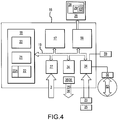
- a first computer user (25) can through use of a command input device (23) such as keystroke of a computer keyboard or a mouse send commands to the processing unit (17) of a first computer (16) to deliver computer operating instructions to a flow cytometer (2)(or other type of computer controlled device or instrument).
- the flow cytometer (2) can generate a signal (3) which varies based upon the amount of at least one particle characteristic (4) of a plurality of particles (5).
- the signal (3) can be analyzed by the first computer (16) which can further function to generate a viewable data representation (28) of the analyzed signal which can be viewed by the first computer user (25) on a first computer monitor (26).
- viewable data representation means an intermittently updated graphical display of data generated by a device viewable by a computer user (25), including, as non-limiting examples, chromatograms, computed tomographies, histograms or the like.
- Figure 8 shows a viewable data representation (28) generated having the form of a histogram (29) showing the separation of a plurality of sperm cells (9) into X chromosome bearing sperm cells (14) and Y chromosome bearing sperm cells (15).
- the first computer user (25) can view the viewable data representation (28) to understand the functional condition of the flow cytometer (2)(or other device or instrument).
- the first computer (16) can further function to generate a plurality of time bound data representation files (35) of the viewable data representation (28) which can be temporarily stored in a memory element (18) of the first computer (16).
- a second computer (37) can provide an image processor (38) which functions to convert the temporary copies of the plurality of time bound data representation files (35) into a first plurality of reduced byte data representation files (39) and a second plurality of reduced byte data representation files (40) retrievably stored in the second computer memory element (41).
- the second computer (37) as part of a LAN (50) can upon request serve all or part of the first plurality of reduced byte data representation files (39) or the second plurality of reduced byte data representation files (40) to a third computer (42) over a WAN (52).
- Figure 2 which provides a particular example of the general hardware means and network means of the second computer (37) including a LAN file server (78) dedicated to provide the functions of converting the temporary copies of the plurality of time bound data representation files (35) into a first plurality of reduced byte data representation files (39) and a second plurality of reduced byte data representation files (40) retrievably stored in the second computer memory element (41) for a flow cytometer or a plurality of flow cytometers in a LAN environment.
- the embodiment can further provide a second local file server (79) which supports other processing functions in the LAN environment.
- the embodiment can further provide a WAN file server (80) which further supports the functions of the a LAN file server (78) of converting the temporary copies of the plurality of time bound data representation files (35) into a first plurality of reduced byte data representation files (39) and a second plurality of reduced byte data representation files (40) retrievably stored in the second computer memory element (41) for a flow cytometer or a plurality of flow cytometers in the LAN environment.
- a WAN file server 80 which further supports the functions of the a LAN file server (78) of converting the temporary copies of the plurality of time bound data representation files (35) into a first plurality of reduced byte data representation files (39) and a second plurality of reduced byte data representation files (40) retrievably stored in the second computer memory element (41) for a flow cytometer or a plurality of flow cytometers in the LAN environment.
- a third computer user (81) operating the third computer (42) can generate a request to receive all or part of the first plurality of reduced byte data representation files (39) or the second plurality of reduced byte data representation files (40) retrievably stored in the second computer memory element (41) of any one of a plurality of LANs (50).
- the files can be transferred from the second computer (37) utilizing a WAN communications device (56) over WAN logical connections (55).
- An image generator (45) provided by the third computer (42) can generate a viewable reduced byte data representation (46) of all or part of the first plurality of reduced byte data representation files (39) or the second plurality of reduced byte data representation files (40) transferred from the second computer (37) which can be displayed on a third computer monitor (49)(for example see Figure 9 which shows the viewable reduced byte data representation (46) generated from a corresponding two of the plurality of reduced byte data representation files (39) or the second plurality of reduced byte data representation files (40) retrievably stored in the second computer memory element (41) of any one or more of a plurality of LANs (50)) in the form of a histogram showing the separation of sperm cells into X chromosome bearing and Y chromosome bearing populations).
- certain embodiments of the inventive flow cytometer remote monitoring system (1) can in part include a flow cytometer (2).
- the flow cytometer (2) can function to produce a signal (3)(whether analog, analog converted to digital, or digital) which varies whether in frequency, amplitude, or both frequency and amplitude) based upon change in at least one particle characteristic (4) among a plurality of particles (5).
- the plurality of particles (5) can be biological particles such as cells, sperm cells, organelles, chromosomes, deoxyribonucleic acids (DNA), ribonucleic acids (RNA), DNA fragments, RNA fragments, proteins, protein fragments, peptides, oligonucleotides, or the like, but can also include non-biological particles such as beads, styrene beads, or the like, or as mixtures of biological particles, mixtures of non-biological particles, or mixtures of biological and non-biological particles.
- biological particles such as cells, sperm cells, organelles, chromosomes, deoxyribonucleic acids (DNA), ribonucleic acids (RNA), DNA fragments, RNA fragments, proteins, protein fragments, peptides, oligonucleotides, or the like, but can also include non-biological particles such as beads, styrene beads, or the like, or as mixtures of biological particles, mixtures of non-biological particles
- At least one particle characteristic for the purposes of this invention means at least one part, component, or differentially modified part or component common to at least a portion of the plurality of particles (5) entrained in the fluid stream (6) which varies in kind or amount between the plurality of particles (5).
- the plurality of particles (5) can be a plurality of sperm cells (9) and the at least one particle characteristic (4) can be the amount of deoxyribonucleic acid ("DNA") (10) contained in each of the plurality of sperm cells (9).
- the amount of DNA (10) can vary based upon whether the particular one of the plurality of sperm cells (9) contains an X chromosome or a Y chromosome.
- the X chromosome contains a greater amount of DNA (10) than the corresponding Y chromosome regardless of the male mammal from which the plurality of sperm cells (9) is obtained.
- Sperm cells (9) can be obtained from any male mammal including for example, a bovid, an ovis, an equid, a pig, a cervid, a canid, a felid, a rodent, a whale, a rabbit, an elephant, a rhinoceros, a primate, or the like, as well as from certain male non-mammal species.
- Certain kinds of flow cytometer (2) devices operate to entrain each of the plurality of particles (5) in a fluid stream (6) which exits a nozzle (7) oscillated to produce droplets (8) in the fluid stream (6).
- each of the plurality of particles (5) in the fluid stream (6) Prior to the break off point for each of the droplets (8) each of the plurality of particles (5) in the fluid stream (6) passes through an interrogation means (11) to generate interrogation event rates of between about 10,000 per second and about 200,000 per second.
- the interrogation means (11) includes one or more laser beams (12) through which each of the plurality of particles (5) fall.
- Each interrogated one of the plurality of particles (5) can in response to interrogation by the laser beam(s) absorb or emit an amount of light (12A).
- DNA can be quantitatively stained with a dye or fluorochrome such as Hoechst 33342.
- the stained DNA can emit an amount of light (12) in response to being interrogated with a laser beam.
- X chromosome bearing sperm cells (14) typically emit a greater amount of light (12A) than Y chromosome bearing sperm cells (15) because each X chromosome bearing sperm cell (14) contains a greater amount of stained DNA than a Y chromosome bearing sperm cell (15).
- the amount of light (12A) emitted from the interrogated one of the plurality of particles (5) can be received by a photomultiplier element (13).
- the photomultiplier element (13) converts the received amount of emitted light (12A) into a signal (3) which correspondingly varies based upon change in the amount of emitted light (12A).
- the signal (3) generated can vary based upon the difference in the amount of light (12) generated by X chromosome bearing sperm cells (14) and Y chromosome bearing sperm cells (15) when passed through the interrogation means (11).
- the flow cytometer (2)(or other instrument) can be coupled to, integral with, or provide a first computer (16) having a processing unit (17), a memory element (18), and a bus (19) which operably couples components of the first computer (16), including, without limitation the memory element (18) to the processing unit (17).
- the first computer (16) may be a conventional computer, a distributed computer, or any other type of computer capable of delivering instructions to a flow cytometer controller (or other instrument controller) which functions to operate the flow cytometer (or other instrument); the invention is not so limited.
- the processing unit (17) can comprise without limitation one central-processing unit (CPU), or a plurality of processing units which operate in parallel to process digital information, or a digital signal processor (DSP) plus a host processor, or the like.
- the bus (19) can be without limitation any of several types of bus configurations such as a memory bus or memory controller, a peripheral bus, and a local bus using any of a variety of bus architectures.
- the memory element (18) can without limitation be a read only memory (ROM), or a random access memory (RAM), or both.
- a basic input/output system (BIOS)(20) containing routines that assist transfer of data between the components of the first computer (16), for example during start-up, can be stored in ROM.
- the first computer (16) can further include a hard disk drive for reading from and writing to a hard disk a magnetic disk drive for reading from or writing to a removable magnetic disk, an optical disk drive for reading from or writing to a removable optical disk such as a CD ROM, or other optical media.
- a hard disk drive for reading from and writing to a hard disk
- a magnetic disk drive for reading from or writing to a removable magnetic disk
- an optical disk drive for reading from or writing to a removable optical disk such as a CD ROM, or other optical media.
- the hard disk drive, magnetic disk drive, and optical disk drive can be connected to the bus (19) by a hard disk drive interface, a magnetic disk drive interface, and an optical disk drive interface, respectively.
- the drives and their associated computer-readable media provide nonvolatile storage of computer-readable instructions, data structures, program modules and other data of the first computer (16). It can be appreciated by those skilled in the art that any type of computer-readable media that can store data that is accessible by the first computer (16), such as magnetic cassettes, flash memory cards, digital video disks, Bernoulli cartridges, random access memories (RAMs), read only memories (ROMs), and the like, may be provided by a first computer (16) used in embodiments of the inventive flow cytometer remote monitoring system (1).
- the first computer (16) can further include an operating system (21) and a flow cytometer controller and particle analysis application (22) which may be stored on or in the hard disk, magnetic disk, optical disk, ROM, in RAM by a particular embodiment of a first computer (16) or alternately the functionalities of the a flow cytometer controller and particle analysis application (22) may be implemented as an application specific integrated chip (ASIC) or file programmable gate array (FPGA), or the like, or combinations or permutations thereof.
- ASIC application specific integrated chip
- FPGA file programmable gate array
- a first computer user (25) can enter commands and information into the first computer (16) through one or more command input device(s) (23) such as a keyboard and pointing device such as a mouse.
- Other command input devices (23) can include a microphone, joystick, game pad, scanner, or the like.
- These and other command input device(s) (23) are often connected to the processing unit (17) through a serial port interface (24) that can be coupled to the bus (19), but may be connected by other interfaces, such as a parallel port, game port, or a universal serial bus (USB).
- a monitor (26) or other type of display device can also be connected to the bus (19) via interfaces such as a video adapter (58), or the like.
- the first computer (16) can further include other peripheral output devices (59), such as speakers and printers.
- a click event occurs when the first computer user (25)(or other computer user) activates or operates at least one function of the flow cytometer controller and particle analysis application (22), or other program or other application function, through the use of a command which for example can include pressing or releasing the left mouse button while a pointer is located over a control icon displayed on the monitor (26).
- a command which for example can include pressing or releasing the left mouse button while a pointer is located over a control icon displayed on the monitor (26).
- a "click event" be limited to the press and release of the left button on a mouse while a pointer is located over a control icon.
- click event for the purposes of this invention broadly encompasses any manner of command by the first computer user (25) through which a function of the operating system (21) or the flow cytometer controller and particle analysis application (22) is activated or performed, whether through clickable selection of one or a plurality of control icon(s), voice command, keyboard stroke(s), mouse button, touch screen, touch pad, or otherwise.
- the first computer (16) and the flow cytometer controller and particle analysis application (22) can in part function to provide a signal analyzer (27) which intermittently or continuously converts the signal (3) produced by the flow cytometer (2) into a viewable data representation (28) of change in the at least one particle characteristic (4) of the plurality of particles (5) analyzed.
- the viewable data representation (28) can be continuously or intermittently displayed on the monitor (26) or updated upon elapse of a short interval of time such as 100 milliseconds.
- the signal analyzer (27) coupled to a flow cytometer (2) which interrogates a plurality of sperm cells (9) in a corresponding plurality of droplets (8) can generate a viewable data representation (28) in the form of a histogram (29) which varies based on a frequency of Y chromosome bearing sperm cells (14) or a frequency of X chromosome bearing sperm cells (15) identified within the plurality of sperm cells (9).
- Certain embodiments of the signal analyzer (27) can further function to establish parameters and timed events by which the plurality of particles (5) can be separated, parsed or divided based upon the presence, absence, or amount of the at least one particle characteristic (4).
- a flow cytometer (2) such as a MOFLO ® SX can used to separate or sort the plurality of particles (5) into, discreet sub-populations based upon at least one particle characteristic (4). Subsequent to exiting the nozzle (7), the fluid stream (6) can break into droplets (8) each of which can contain a corresponding one each of the plurality of particles (5).
- the droplets can be differentiated based on at least one particle characteristic (4) and separated by applying a charge (whether positive or negative) to each one of the droplets (8) analyzed and then deflecting the trajectory of each of the droplets (8) by passing the droplets (8) through a pair of charged plates (31).
- the trajectory of the positively charged droplets can be altered for delivery to a first container (32) and the trajectory of the negatively charged droplets can be altered for delivery to a second container (33).
- Uncharged droplets are not deflected and can be delivered to a third container (34) or to a waste stream.
- a plurality of particle populations (30) can include X chromosome bearing sperm cells (14) isolated in the first container (32) and Y chromosome bearing sperm cells (15) isolated in the second container (33).
- the first computer (16) can further provide an image representation generator (34) which can generate one or a plurality of time bound data representation files (35) of the viewable data representation (28) of change in at least one particle characteristic (4) of the plurality of analyzed particles (5) without generating an amount of lag in displaying the viewable data representation (28) or in the operation of functionalities of the flow cytometer (2).
- an image representation generator (34) which can generate one or a plurality of time bound data representation files (35) of the viewable data representation (28) of change in at least one particle characteristic (4) of the plurality of analyzed particles (5) without generating an amount of lag in displaying the viewable data representation (28) or in the operation of functionalities of the flow cytometer (2).
- lag for the purposes of this invention means a reduction in performance or a delay in the generation of the viewable data representation (28) or a delay in a function of the flow cytometer (or other instrument) due to competition by various portions of the operating system (21) or the flow cytometer controller and particle analysis application (22) or other program or application for support by the a processing unit (17).
- the plurality of time bound data representation files (35) of the viewable data representation (28) will include a plurality of bit map image representations (36) or screen shots of the viewable data representation (28) of change in at least one particle characteristic (4) of the plurality of analyzed particles (5) intermittently generated at a pre-determine rate.
- the pre-determined rate at which each of the plurality of time bound data representation files (35) can be generated will typically be variably adjustable between about 0.1 seconds and about 5 seconds, although other lesser or greater pre-determined rates can be selected so long as the rate does not generate a lag in analyzing the signal (3) generated by the flow cytometer (2) or the function of the flow cytometer (2).
- the time bound data representation files (35) can be stored temporarily in the memory element (18) of the first computer (16).
- each of the plurality of time bound data representation files (35) (generally as a plurality of bit map representations (36)) comprise a file of between about three megabytes and about six megabytes, although the invention is not so limited and each file can include a lesser or greater number of bytes.
- Certain emobodiments of the first computer (16) provided with a flow cytometer (2)(or other analysis device) may not provide the functionalities required to capture or generate the plurality of time bound data representation files (35) above-described.
- a time bound data representation file generator (22A) in the form of a small software application can stored in the memory element (18) and can function to periodically capture the viewable data representation (28) as above-described to provide the time bound data representation files (35) which can be transferred to the second computer (37).
- the inventive flow cytometer remote monitoring system (1) can further include a second computer (37) linked to the first computer (16).
- the second computer (37) can provide the same or similar hardware means and software means as the first computer (16) although only a memory element (41) is shown along with sufficient hardware means and software means which function to provide an image processor (38).
- the image processor (38) can function to generate a first plurality of reduced byte data representation files (39) which correspond to each of the plurality of time bound data representation files (35) served from the first computer (16) upon request by the second computer (37).
- the term "a reduced byte data representation files" (39) comprises an image file of a lesser bytes than the corresponding time bound data representation file.
- each of the plurality of reduced byte data representation files will comprise between about one hundred kilobytes and about two hundred kilobytes (although the invention is not so limited and each file can include a lesser or greater number of bytes).
- the reduced byte data representation file (39) can be in the form of a .jpeg. which includes substantially lesser bytes than for example a Windows Bitmap format which can be one form of the plurality of time bound image representation files (35) transferred from the first computer (16) to the second computer (37).
- the image processor (38) can further function to generate a second plurality of reduced byte data representation files (40) of the plurality of time bound data representation files (35) served from the first computer (16) upon request by the second computer (37) each one having fewer bytes than the corresponding one of said first plurality of reduced byte data representation files (39).
- the second plurality of reduced byte data representation files (40) each one having fewer bytes than the corresponding one of the first plurality of reduced byte data representation files (39) can each provide as one non-limiting example an image file of between about two kilobytes and about four kilobytes (although the invention is not so limited and each file can include a lesser or greater number of bytes).
- the image file can be in the form of a .jpeg.
- the first plurality of reduced byte data representation files (39) and the second plurality of reduced byte data representation files (40) can be generated in parallel from the corresponding plurality of time bound data representation files (35) or the second plurality of reduced byte data representation files (40) can be produced from the corresponding plurality of first plurality of reduced byte data representation files (39).
- Each of the first plurality of reduced byte data representation files (39) and the second plurality of reduced byte data representation files (40) can be retrievably stored in the second computer memory element (41) of the second computer (37).
- the viewable data representation (28) generated by the flow cytometer particle analysis application (22) of the flow cytometer (2)(or other particle analysis application of another type of device) can further include viewable parametric data elements (82) of numeric data type.
- the viewable parametric data elements (82) can include one or more of sample number, operator identification number, date, drop delay status, temperature status, humidity status, laser power status, network status, particle analysis start time, particle analysis stop time, time elapsed, event rate, total events, particle count, percent particles collected, percent particles aborted, percent particles coincident, or the like.
- the viewable parametric data elements (82) can further include current percent live, average percent live, current percent dead, average percent dead, current percent purity, average percent purity, percent compare sorter peer, percent, percent compare bull peer, or the like.
- the viewable parametric data elements (82) included in the viewable data representation (28) can be converted by the image processor (38) as part of the viewable data representation (28) into a part of a corresponding one of the plurality of time bound data representation files (35) as above described and then converted to a corresponding one of the first plurality of reduced byte data representation files (39) and the second plurality of reduced byte data representation files (40), as above described.
- the inventive flow cytometer remote monitoring system (1) can further include a third computer (42).
- the third computer (42) can provide the same or similar hardware means and software means as the first computer (16) or sufficient hardware means and software means to function to provide a reduced byte data representation file selection element (43) which can function to generate a request for a selected portion of the first plurality of reduced byte data representation files (39) or a selected portion of the second plurality of reduced byte data representation files (40) to the second computer (37)(the term selected portion can include one or all of the first or second plurality of reduced byte data representation files (39)(40)).
- the selected portion of the first plurality of reduced byte data representation files (39) or a selected portion of the second plurality of reduced byte data representation files (40) can be stored in a third computer memory element (44).
- the third computer (42) can further provide an image generator (45) which functions to display the selected portion of the first plurality of reduced by data representation files (39) or the second plurality of reduced byte data representation files (40), or both, in serial order to provide a viewable reduced byte data representation (46) of change in the at least one particle characteristic (4) of said plurality of analyzed particles (5).
- the a reduced byte data representation file selection element (43) can further include a time period selection element (47) which allows selection of a time bound portion of the first or the second plurality of reduced byte data representation files (39)(40) generated between a first time point and a second time point of the viewable data representation (28).
- the image generator (45) of the third computer (42) can further include a viewing rate selector (48) which can function to allow variably adjusted selection of a viewing rate at which to view the viewable reduced byte data representation (46) of change in the at least one particle characteristic (4) of said plurality of analyzed particles (5).
- the viewing rate selector (48) allows variably adjustable selection of an accelerated rate at which the viewable reduced byte data representation (46) of change in said at least one particle characteristic of said plurality of particles (5) analyzed can be serially displayed on a third computer monitor (49).
- the viewing rate selector (48) allows variably adjustable selection of a decelerated rate at which the viewable reduced byte data representation (46) of change in said at least one particle characteristic of said plurality of analyzed particles can be serially displayed on the third computer monitor (49).
- certain embodiments of the inventive flow cytometer remote monitoring system (1) can further include a local area network (50) ("LAN") at a first location (51) which includes local area network logical connections (53) between the flow cytometer (2) and the first computer (16)(or a plurality of flow cytometers (2) each coupled to a corresponding plurality of first computers (16)) and the second computer (37).
- LAN local area network
- These logical connections (53) can be achieved by a local area network communication device (54) coupled to or a part of the first computer (16) or the second computer (37) or both.
- certain embodiments of the inventive flow cytometer remote monitoring system (1) can further include a wide area network (52) ("WAN") such as the Internet which includes wide area network logical connections (55) which allows communication between the third computer (42) established at a second location (56) discrete from the local area network (50) at the first location (51) or the plurality of first locations (51A) and the second computer (37) of any local area network (50).
- WAN wide area network
- the third computer (42) established at a second location (56) discrete from the local area network (50) at the first location (51) or the plurality of first locations (51A) and the second computer (37) of any local area network (50).
- This configuration allows the third computer (42) to retrieve from any second computer (42) any one, a portion of, or all of the plurality of time bound data representation files (35), the a plurality of bit map image representations (36), the first plurality of reduced byte data representation files (39), or the second plurality of reduced byte data representation files (40) from the second computer memory element (41) for display and viewing as above described without generating an amount of lag in analyzing the signal (3) from the at least one flow cytometer (2) by the first computer (16).
- the second computer (37) and the third computer (42) can further include a wide area network communications device (56) such as a modem for establishing communications over the WAN (52)(such as the Internet (57)).
- the wide area network communications device (56) can be internal or external to the second computer (37) and the third computer (42) and can be connected to the bus (19) via a serial port interface (24).
- the second computer memory element (41) can comprise a plurality of second computer memory elements (41) coupled to the second computer (37) via the WAN which allows distributed retrievable storage of any one, a portion of, or all of the plurality of time bound data representation files (35), the a plurality of bit map image representations (36), the first plurality of reduced byte data representation files (39), or the second plurality of reduced byte data representation files (40).
- the LAN communication device (54), the WAN communications device (56), the LAN logical connections (53), and the WAN logical connections (55) and shown and described are exemplary and other hardware means or logical connection means, and communication means can be utilized for establishing a communications link between the second computer (16) and the third computer (42).
- a pc-engines WRAP1E circuit boards can run Valemount Networks StarOS router software on a 32meg Compact Flash (CF) memory card to provide a Virtual Distribution System (VDS) tunnel (similar to a Virtual Private Network or VPN) connected to a central router server and each second computer (37) local area network connects as a client to the main central station server to manage all network routing and class based queueing for the entire WAN.
- VDS Virtual Distribution System
- the second computer (37) can further include an image archive management module (60) which functions to delete, modify, or otherwise reduce file size of the plurality of time bound data representation files (35), the first plurality of reduced byte data representation files (39), or the second plurality of reduced byte data representation files (40) whether individually or collectively to minimize the memory space in which image files are retrievably stored in the second computer memory element (41).
- Each one of the plurality of time bound data representation files (35) can be converted into a corresponding one of the first plurality of reduced byte data representation files (39) and a corresponding one of the second plurality of reduced byte data representation files (40).
- Each one of the second plurality of reduced byte data representation files (40) can be stored in the second computer memory (41) in the LAN (51) until requested by the third computer (42) and each one of the first plurality of reduced byte data representation files (39) can also be stored in the second computer memory (41) until requested by the third computer (42) or until modified or deleted by function of a data storage minimization application (61) which governs image resolution priority (62) and further functions to govern image time value priority (63).
- a data storage minimization application (61) which governs image resolution priority (62) and further functions to govern image time value priority (63).
- each of the first plurality of reduced byte data representation files (39) can be correspondingly converted into a first plurality of reduced resolution reduced byte data representation files (64) and each of the second plurality of reduced byte data representation files (40) can be correspondingly converted into a second plurality of reduced resolution reduced byte data representation file (65).
- any one of the first plurality of reduced byte data representation files (39), any one of the second plurality of reduced byte data representation files (40), any one of the first plurality of reduced resolution reduced byte data representation files (64), and any one of the second plurality of reduced resolution reduced byte data representation file (65) can reproduced at different times, and then progressively categorized as image time values (66, 67, and 68; 72, 73, and 74; 69, 70, and 71; and 75, 76, and 77 respectively) assigned lesser image time value priority (63A) with elapsed time.
- images with greater image time value priority (63A)(for example 66, 72, 69, and 75) can be categorically more important than images with lesser image time value priority (63A) (for example 68, 74, 71, and 77).
- any one of the of the first plurality of reduced byte data representation files (39), any one of the second plurality of reduced byte data representation files (40), and any one of the categories having lesser image value priority (63A) can be progressively rewritten as images of lesser image resolution value priority (62A) and then progressively categorized as image resolution values (72, 75, 73, 76, 74 and 77) assigned lesser image resolution value priority (62A) with decreased resolution.
- the number of image value categories (82) could be unlimited but will generally be less than one dozen.
- categories with lesser image time value priority (63A) for example 68, 74, 71, and 77) or lesser image resolution value priority (62A), or both lesser image time value priority (63A) and lesser image resolution value priority (63A)(for example 74 or 77) can be stored on low cost WAN file server (80)(see Figure 2 for example) while files of greater image time value (for example 66, 72, 69, and 75), can be stored in the second computer memory element (41) of a dedicated LAN file server (78) or general purpose LAN file server (79) (see Figure 2 for example). Simultaneous deletion and rewriting of image files can occur by function of the data storage minimization application (61) to produce the image value categories (82).
- the inventive flow cytometer remote monitoring system (1) may be embodied in a variety of ways.
- the particular embodiments or elements of the invention disclosed by the description or shown in the figures or tables accompanying this application are not intended to be limiting, but rather exemplary of the numerous and varied embodiments generically encompassed by the invention or equivalents encompassed with respect to any particular element thereof.
- the specific description of a single embodiment or element of the invention may not explicitly describe all embodiments or elements possible; many alternatives are implicitly disclosed by the description and figures.
- each element of an apparatus or each step of a method may be described by an apparatus term or method term. Such terms can be substituted where desired to make explicit the implicitly broad coverage to which this invention is entitled. As but one example, it should be understood that all steps of a method may be disclosed as an action, a means for taking that action, or as an element which causes that action. Similarly, each element of an apparatus may be disclosed as the physical element or the action which that physical element facilitates.
Landscapes
- Chemical & Material Sciences (AREA)
- Biochemistry (AREA)
- Physics & Mathematics (AREA)
- Health & Medical Sciences (AREA)
- Life Sciences & Earth Sciences (AREA)
- Analytical Chemistry (AREA)
- General Health & Medical Sciences (AREA)
- General Physics & Mathematics (AREA)
- Immunology (AREA)
- Pathology (AREA)
- Dispersion Chemistry (AREA)
- Engineering & Computer Science (AREA)
- Signal Processing (AREA)
- Investigating Or Analysing Biological Materials (AREA)
Claims (35)
- Procédé de surveillance à distance d'un cytomètre en flux, comportant les étapes ci-dessous consistant à :a) produire un signal (3) à partir dudit cytomètre en flux (2) lequel varie sur la base de la présence, l'absence ou la quantité d'au moins une caractéristique de particule (4) dans une pluralité de particules analysées (5) ;b) analyser ledit signal (3) avec un premier ordinateur (16) couplé audit cytomètre en flux (2) en vue de convertir en continu ledit signal (3) en une représentation visualisable de données (28) de changement en la présence, l'absence ou pour une quantité de ladite au moins une caractéristique de particule (4) dans ladite pluralité de particules analysées (5) ;
dans lequel l'expression « représentation visualisable de données » (28) signifie un affichage graphique mis à jour par intermittence généré par un dispositif visualisable par un premier utilisateur d'ordinateur (25) pour comprendre l'état fonctionnel du cytomètre en flux (2) ;c) desservir, avec ledit premier ordinateur (16), en ordre sériel, des copies temporaires d'une pluralité de fichiers de représentation de données à durée déterminée (35) de ladite représentation visualisable de données (28) de changement en la présence, l'absence ou pour une quantité de ladite au moins une caractéristique de particule (4) de ladite pluralité de particules analysées (5), à un second ordinateur (37), sans générer une quantité de retard dans l'analyse dudit signal (3) à partir dudit au moins un cytomètre en flux (2) ;
dans lequel une pluralité de fichiers de représentation de données à durée déterminée (35) de ladite représentation visualisable de données (28) inclut une pluralité de représentations en mode point (36) ou de captures d'écran de la représentation visualisable de données (28) de changement en la présence, l'absence ou pour une quantité de ladite au moins une caractéristique de particule (4) dans ladite pluralité de particules analysées (5) générées par intermittence à un taux prédéterminé par le premier ordinateur ; et
dans lequel une quantité de retard comporte un retard dans la génération de la représentation visualisable de données (28) ou dans une fonction du cytomètre en flux ;d) traiter lesdites copies temporaires desservies d'une pluralité de fichiers de représentation de données à durée déterminée (35) avec ledit second ordinateur (37) en vue de générer de manière correspondante une première pluralité de fichiers de représentation de données à octets réduits (39) stockés de manière récupérable dans un second élément de mémoire d'ordinateur (41) ;e) traiter lesdites copies temporaires desservies d'une pluralité de fichiers de représentation de données à durée déterminée (35) avec ledit second ordinateur (37), en vue de générer une seconde pluralité de fichiers de représentation de données à octets réduits (40) stockés de manière récupérable dans un second élément de mémoire d'ordinateur (41), dont chacun présente moins d'octets que le fichier correspondant de ladite première pluralité de fichiers de représentation de données à octets réduits ;f) desservir, avec ledit second ordinateur (37), une partie requise de ladite seconde pluralité de fichiers de représentation de données à octets réduits (40) à un troisième ordinateur (42) ; etg) afficher chaque fichier de ladite partie de ladite seconde pluralité de fichiers de représentation de données à octets réduits (40), en ordre sériel, avec ledit troisième ordinateur (42), en vue de fournir une représentation visualisable de données à octets réduits (46) de changement en la présence, l'absence ou pour une quantité de ladite au moins une caractéristique de particule (4) de ladite pluralité de particules analysées (5), à un troisième utilisateur d'ordinateur (81). - Procédé de surveillance à distance d'un cytomètre en flux selon la revendication 1, dans lequel ladite étape consistant à desservir, avec ledit premier ordinateur (16), en ordre sériel, des copies temporaires d'une pluralité de fichiers de représentation de données à durée déterminée (35) de ladite représentation visualisable de données (28) de changement en la présence, l'absence ou pour une quantité de ladite au moins une caractéristique de particule (4) de ladite pluralité de particules analysées (5), à un second ordinateur (37), sans générer une quantité de retard dans l'analyse dudit signal (3) à partir dudit au moins un cytomètre en flux (2), comporte l'étape consistant à desservir, avec ledit premier ordinateur (16), en ordre sériel, des copies temporaires d'une pluralité de fichiers de représentation de données à durée déterminée (35) de ladite représentation visualisable de données (28) de changement en la présence, l'absence ou pour une quantité de ladite au moins une caractéristique de particule (4) de ladite pluralité de particules analysées (5), à un second ordinateur (37), en vue de réduire ou d'éviter une quantité de retard dans l'analyse dudit signal (2) à partir dudit au moins un cytomètre en flux (37).
- Procédé de surveillance à distance d'un cytomètre en flux (2) selon la revendication 1, dans lequel ladite étape consistant à produire un signal (3) à partir dudit cytomètre en flux (2) lequel varie sur la base de la présence, l'absence ou la quantité d'au moins une caractéristique de particule (4) dans une pluralité de particules analysées (5), comporte l'étape consistant à produire un signal (3) à partir dudit cytomètre en flux (2) lequel varie sur la base d'une quantité d'acide désoxyribonucléique (10) incluse dans chacune d'une pluralité de particules analysées (5).
- Procédé de surveillance à distance d'un cytomètre en flux selon la revendication 3, dans lequel ladite étape consistant à produire un signal (3) à partir dudit cytomètre en flux (2) lequel varie sur la base d'une quantité d'acide désoxyribonucléique (10) incluse dans chacune d'une pluralité de particules analysées (5), comporte l'étape consistant à produire un signal (3) lequel varie sur la base de la présence ou de l'absence d'un chromosome X ou d'un chromosome Y dans chacun de ladite pluralité de spermatozoïdes (9).
- Procédé de surveillance à distance d'un cytomètre en flux selon la revendication 4, dans lequel ladite représentation visualisable de données (28) comporte au moins un histogramme (29) lequel varie sur la base d'une fréquence de ladite pluralité de spermatozoïdes transportant des chromosomes Y (9) ou de spermatozoïdes transportant des chromosomes X (9).
- Procédé de surveillance à distance d'un cytomètre en flux selon la revendication 1, dans lequel chaque représentation de ladite pluralité de représentations en mode point comporte un fichier d'image dont la taille est comprise entre environ trois mégaoctets et environ six mégaoctets.
- Procédé de surveillance à distance d'un cytomètre en flux selon la revendication 1, dans lequel ladite première pluralité de fichiers de représentation de données à octets réduits (39) comporte une première pluralité de fichiers d'image dont la taille de chacun est comprise entre environ cent kilo-octets et environ deux cents kilo-octets.
- Procédé de surveillance à distance d'un cytomètre en flux selon la revendication 7, dans lequel ladite seconde pluralité de fichiers de représentation de données à octets réduits (40) dont chacun présente moins d'octets que le fichier correspondant de ladite première pluralité de fichiers de représentation de données à octets réduits (39) comporte une seconde pluralité de fichiers d'image dont la taille de chacun est comprise entre environ deux kilo-octets et environ quatre kilo-octets.
- Procédé de surveillance à distance d'un cytomètre en flux selon la revendication 8, dans lequel ladite étape consistant à desservir, avec ledit second ordinateur (37), une partie requise de ladite seconde pluralité de fichiers de représentation de données à octets réduits (40), à un troisième ordinateur (42), comporte l'étape consistant à desservir ladite seconde pluralité de fichiers de représentation de données à octets réduits (40) sur un réseau étendu (52), à un troisième ordinateur (42).
- Procédé de surveillance à distance d'un cytomètre en flux selon la revendication 11, dans lequel ladite étape consistant à afficher chaque fichier de ladite partie de ladite seconde pluralité de fichiers de représentation de données à octets réduits (40), en ordre sériel, avec ledit troisième ordinateur (42), comporte en outre l'étape consistant à sélectionner un taux auquel visualiser ladite représentation visualisable de données à octets réduits (46) de changement en la présence, l'absence ou pour une quantité de ladite au moins une caractéristique de particule (4) de ladite pluralité de particules analysées (5).
- Procédé de surveillance à distance d'un cytomètre en flux selon la revendication 10, comportant en outre l'étape consistant à afficher chaque fichier de ladite partie de ladite seconde pluralité de fichiers de représentation de données à octets réduits (40), en ordre sériel, avec ledit troisième ordinateur (42), en vue de fournir une représentation visualisable accélérée ou ralentie de données à octets réduits (46) de changement en la présence, l'absence ou pour une quantité de ladite au moins une caractéristique de particule (4) de ladite pluralité de particules analysées (5).
- Procédé de surveillance à distance d'un cytomètre en flux selon la revendication 10, comportant en outre l'étape consistant à sélectionner ladite partie de ladite seconde pluralité de fichiers de représentation de données à octets réduits (40) pour un affichage avec ledit troisième ordinateur (42).
- Procédé de surveillance à distance d'un cytomètre en flux selon la revendication 12, dans lequel ladite étape consistant à sélectionner ladite partie de ladite seconde pluralité de fichiers de représentation de données à octets réduits (40) pour un affichage avec ledit troisième ordinateur (42) comporte en outre l'étape consistant à sélectionner une partie à durée limitée de ladite seconde pluralité de fichiers de représentation de données à octets réduits (40) générée entre un premier instant et un second instant de ladite représentation visualisable de données (28).
- Procédé de surveillance à distance d'un cytomètre en flux selon la revendication 1, comportant en outre l'étape consistant à établir, au niveau d'un premier emplacement (51) présentant un premier réseau local (50), ledit second ordinateur (37) connecté à une pluralité desdits premiers ordinateurs (16) qui sont chacun couplés de manière correspondante à l'un d'une pluralité desdits cytomètres en flux (2), ledit second ordinateur (37) fournissant en outre un élément de mémoire (41) qui permet un stockage récupérable de ladite première pluralité de fichiers de représentation de données à octets réduits (39) et de ladite seconde pluralité de fichiers de représentation de données à octets réduits (40) correspondant à ladite pluralité de fichiers de représentation de données à durée déterminée (35) desservis par chacun de ladite pluralité desdits premiers ordinateurs (16).
- Procédé de surveillance à distance d'un cytomètre en flux selon la revendication 14, comportant en outre l'étape consistant à établir, au niveau d'une pluralité d'emplacements (51A), une pluralité correspondante de réseaux locaux dont chacun comporte ledit second ordinateur (42) connectés à ladite pluralité desdits premiers ordinateurs (16) qui sont chacun couplés de manière correspondante à l'un de ladite pluralité desdits cytomètres en flux (2), ledit second ordinateur (37) fournissant en outre un élément de mémoire (41) qui permet un stockage récupérable de ladite première pluralité de fichiers de représentation de données à octets réduits (39) et de ladite seconde pluralité de fichiers de représentation de données à octets réduits (40) correspondant à ladite pluralité de fichiers de représentation de données à durée déterminée (35) desservis par chacun de ladite pluralité desdits premiers ordinateurs (16).
- Procédé de surveillance à distance d'un cytomètre en flux selon la revendication 15, comportant en outre l'étape consistant à fournir un réseau étendu (52) qui inclut ladite pluralité de réseaux locaux au niveau de ladite pluralité d'emplacements (51A), ledit premier réseau local (50) incluant ledit troisième ordinateur.
- Procédé de surveillance à distance d'un cytomètre en flux selon la revendication 16, comportant en outre l'étape consistant à récupérer, de manière sélective, sur ledit réseau étendu (52), une partie de ladite seconde pluralité de fichiers de représentation de données à octets réduits (40) correspondant à ladite pluralité de fichiers de représentation de données à durée déterminée (35) desservis par l'un de ladite pluralité de premiers ordinateurs (16) dudit premier réseau local (50) ou d'un second réseau de ladite pluralité de réseaux locaux.
- Procédé de surveillance à distance d'un cytomètre en flux selon la revendication 17, dans lequel ladite étape consistant à afficher chaque fichier de ladite partie de ladite seconde pluralité de fichiers de représentation de données à octets réduits (40), en ordre sériel, avec ledit troisième ordinateur (42), en vue de fournir une représentation visualisable de données à octets réduits (46) de changement en la présence, l'absence ou pour une quantité de ladite au moins une caractéristique de particule (4) de ladite pluralité de particules analysées (5), comporte l'étape consistant à afficher simultanément chaque dite partie récupérée de manière sélective de ladite seconde pluralité de fichiers de représentation de données à octets réduits (40) correspondant à ladite pluralité de fichiers de représentation de données à durée déterminée (35) desservis par l'un de ladite pluralité de premiers ordinateurs (16) dudit second réseau de ladite pluralité de réseaux locaux.
- Cytomètre en flux surveillé à distance, comportant :a) un cytomètre en flux (2) qui produit un signal (3) lequel varie sur la base de la présence, l'absence ou une quantité d'au moins une caractéristique de particule (4) dans une pluralité de particules analysées (5) ;b) un premier ordinateur (16) couplé audit cytomètre en flux (2), dans lequel ledit premier ordinateur (16) fournit un analyseur de signal (27) qui convertit en continu ledit signal (3) produit par ledit cytomètre en flux (2) en une représentation visualisable de données (28) de changement en la présence, l'absence ou pour une quantité de ladite au moins une caractéristique de particule (4) dans ladite pluralité de particules analysées (5), et dans lequel ledit premier ordinateur (16) fournit en outre un générateur de représentations d'image (34) qui génère une pluralité de fichiers de représentation de données à durée déterminée (35) de ladite représentation visualisable de données (28) de changement en la présence, l'absence ou pour une quantité de ladite au moins une caractéristique de particule (4) de ladite pluralité de particules analysées (5), sans générer une quantité de retard dans l'analyse dudit signal (3) produit par ledit au moins un cytomètre en flux (2) ;
dans lequel l'expression « représentation visualisable de données » (28) signifie un affichage graphique mis à jour par intermittence généré par un dispositif visualisable, par un premier utilisateur d'ordinateur (25), en vue de comprendre l'état fonctionnel du cytomètre en flux (2) ;
dans lequel une pluralité de fichiers de représentation de données à durée déterminée (35) de ladite représentation visualisable de données (28) inclut une pluralité de représentations en mode point (36) ou de captures d'écran de la représentation visualisable de données (28) de changement en la présence, l'absence ou pour une quantité de ladite au moins une caractéristique de particule (4) dans ladite pluralité de particules analysées (5) générées par intermittence à un taux prédéterminé ; et
dans lequel une quantité de retard comporte un retard dans la génération de la représentation visualisable de données (28) ou dans une fonction du cytomètre en flux ;c) un second ordinateur (37) lié audit premier ordinateur (16), qui fournit un processeur d'image (38) qui génère de manière correspondante une première pluralité de fichiers de représentation de données à octets réduits (39) de copies temporaires de ladite pluralité de fichiers de représentation de données à durée déterminée (35) desservies par ledit premier ordinateur (16), la première pluralité de fichiers de représentation de données à octets réduits (39) étant stockée de manière récupérable dans un second élément de mémoire d'ordinateur (41), et dans lequel ledit processeur d'image (38) génère en outre une seconde pluralité de fichiers de représentation de données à octets réduits (40) de copies temporaires de ladite pluralité de fichiers de représentation de données à durée déterminée (35) desservies par ledit premier ordinateur (16) dont chacun présente moins d'octets que le fichier correspondant de ladite première pluralité de fichiers de représentation de données à octets réduits, la seconde pluralité de fichiers de représentation de données à octets réduits (40) étant stockée de manière récupérable dans un second élément de mémoire d'ordinateur (41) ; etd) un troisième ordinateur (42) qui fournit un élément de sélection de représentation de données à octets réduits (43) qui génère une demande concernant une partie sélectionnée de ladite seconde pluralité de fichiers de représentation de données à octets réduits (40) audit second ordinateur (37), et dans lequel ledit troisième ordinateur (42) fournit en outre un générateur d'image (45) qui affiche ladite partie sélectionnée de ladite seconde pluralité de fichiers de représentation de données à octets réduits (40), en ordre sériel, en vue de fournir une représentation visualisable de données à octets réduits (46) de changement en la présence, l'absence ou pour une quantité de ladite au moins une caractéristique de particule (4) de ladite pluralité de particules analysées (5). - Cytomètre en flux surveillé à distance selon la revendication 19, dans lequel ledit signal (3) en provenance dudit cytomètre en flux (2) varie sur la base d'une quantité d'acide désoxyribonucléique (10) contenue dans chaque particule de ladite pluralité de particules analysées (5).
- Cytomètre en flux surveillé à distance selon la revendication 20, dans lequel ledit signal (3) en provenance dudit cytomètre en flux (2) varie sur la base de la présence ou de l'absence d'un chromosome X ou d'un chromosome Y dans chacun d'une pluralité de spermatozoïdes (9).
- Cytomètre en flux surveillé à distance selon la revendication 21, dans lequel ladite représentation visualisable de données (28) comporte au moins un histogramme (29) qui varie sur la base d'une fréquence de ladite pluralité de spermatozoïdes transportant des chromosomes Y (9) ou de spermatozoïdes transportant des chromosomes X (9).
- Cytomètre en flux surveillé à distance selon la revendication 19, dans lequel ladite pluralité de fichiers de représentation de données à durée déterminée (35) de ladite représentation visualisable de données (28) de changement en la présence, l'absence ou pour une quantité de ladite au moins une caractéristique de particule (4) de ladite pluralité de particules analysées (5) comporte une pluralité de représentations de données d'image en mode point de ladite représentation visualisable de données (28) de changement en la présence, l'absence ou pour une quantité de ladite au moins une caractéristique de particule (4) de ladite pluralité de particules analysées (5).
- Cytomètre en flux surveillé à distance selon la revendication 23, dans lequel chaque représentation de ladite pluralité de représentations en mode point comporte un fichier d'image dont la taille est comprise entre environ trois mégaoctets et environ six mégaoctets.
- Cytomètre en flux surveillé à distance selon la revendication 24, dans lequel ladite première pluralité de fichiers de représentation de données à octets réduits (39) comporte une première pluralité de fichiers d'image dont la taille de chacun est comprise entre environ cent kilo-octets et environ deux cents kilo-octets.
- Cytomètre en flux surveillé à distance selon la revendication 25, dans lequel ladite seconde pluralité de fichiers de représentation de données à octets réduits (40) dont chacun présente moins d'octets que le fichier correspondant de ladite première pluralité de fichiers de représentation de données à octets réduits (39) comporte une seconde pluralité de fichiers d'image dont la taille de chacun est comprise entre environ deux kilo-octets et environ quatre kilo-octets.
- Cytomètre en flux surveillé à distance selon la revendication 26, comportant en outre un réseau étendu (52) sur lequel le troisième ordinateur (42) génère une demande concernant une partie sélectionnée de ladite seconde pluralité de fichiers de représentation de données à octets réduits (40) audit second ordinateur (37).
- Cytomètre en flux surveillé à distance selon la revendication 27, dans lequel ledit troisième ordinateur (42) comporte en outre un sélecteur de taux de visualisation (48) couplé audit générateur d'image (45) qui permet la sélection d'un taux auquel visualiser ladite représentation visualisable de données à octets réduits (46) de changement en la présence, l'absence ou pour une quantité de ladite au moins une caractéristique de particule (4) de ladite pluralité de particules analysées (5).
- Cytomètre en flux surveillé à distance selon la revendication 28, dans lequel ledit sélecteur de taux de visualisation (48) autorise en outre la sélection d'une représentation visualisable accélérée ou ralentie de données à octets réduits (46) de changement en la présence, l'absence ou pour une quantité de ladite au moins une caractéristique de particule (4) de ladite pluralité de particules analysées (5).
- Cytomètre en flux surveillé à distance selon la revendication 29, dans lequel ledit élément de sélection de représentation de données à octets réduits (43) inclut en outre un élément de sélection de période de temps (47) qui autorise la sélection d'une partie à durée limitée de ladite seconde pluralité de fichiers de représentation de données à octets réduits (40) générée entre un premier instant et un second instant de ladite représentation visualisable de données (28).
- Cytomètre en flux surveillé à distance selon la revendication 19, dans lequel ledit premier ordinateur (16) se lie audit second ordinateur (37) dans un réseau local (50).
- Cytomètre en flux surveillé à distance selon la revendication 31, dans lequel ledit premier ordinateur (16) comporte une pluralité de premiers ordinateurs (16) qui sont chacun couplés de manière correspondante à l'un d'une pluralité de cytomètres en flux (2).
- Cytomètre en flux surveillé à distance selon la revendication 32, dans lequel ledit générateur d'image (45) fournit en outre un élément d'affichage coïncident d'image qui autorise un affichage coïncident d'une pluralité desdites parties sélectionnées de ladite seconde pluralité de fichiers de représentation de données à octets réduits (40), en ordre sériel, en vue de fournir une représentation visualisable de données à octets réduits (46) de changement en la présence, l'absence ou pour une quantité de ladite au moins une caractéristique de particule (4) de ladite pluralité de particules analysées (5) pour chacun de ladite pluralité de cytomètres en flux (2).
- Cytomètre en flux surveillé à distance selon la revendication 33, dans lequel ledit troisième ordinateur (42) se lie audit réseau local (50) sur un réseau étendu (52).
- Cytomètre en flux surveillé à distance selon la revendication 34, dans lequel ledit réseau étendu (52) comporte le réseau Internet (57).
Priority Applications (1)
| Application Number | Priority Date | Filing Date | Title |
|---|---|---|---|
| PL09739245T PL2297640T3 (pl) | 2008-05-02 | 2009-05-01 | System zdalnego monitorowania cytometru przepływowego |
Applications Claiming Priority (2)
| Application Number | Priority Date | Filing Date | Title |
|---|---|---|---|
| US12/151,156 US8060353B2 (en) | 2008-05-02 | 2008-05-02 | Flow cytometer remote monitoring system |
| PCT/US2009/002715 WO2009134442A1 (fr) | 2008-05-02 | 2009-05-01 | Système de surveillance à distance de cytomètre de flux |
Publications (3)
| Publication Number | Publication Date |
|---|---|
| EP2297640A1 EP2297640A1 (fr) | 2011-03-23 |
| EP2297640A4 EP2297640A4 (fr) | 2014-06-04 |
| EP2297640B1 true EP2297640B1 (fr) | 2017-03-15 |
Family
ID=41255332
Family Applications (1)
| Application Number | Title | Priority Date | Filing Date |
|---|---|---|---|
| EP09739245.0A Active EP2297640B1 (fr) | 2008-05-02 | 2009-05-01 | Système de surveillance à distance de cytomètre de flux |
Country Status (14)
| Country | Link |
|---|---|
| US (1) | US8060353B2 (fr) |
| EP (1) | EP2297640B1 (fr) |
| JP (1) | JP2011520102A (fr) |
| CN (1) | CN102077174B (fr) |
| AR (1) | AR069205A1 (fr) |
| AU (1) | AU2009241769B2 (fr) |
| BR (1) | BRPI0912002B1 (fr) |
| CA (2) | CA2725423C (fr) |
| CL (1) | CL2008002937A1 (fr) |
| DK (1) | DK2297640T3 (fr) |
| ES (1) | ES2626807T3 (fr) |
| HU (1) | HUE034704T2 (fr) |
| PL (1) | PL2297640T3 (fr) |
| WO (1) | WO2009134442A1 (fr) |
Families Citing this family (13)
| Publication number | Priority date | Publication date | Assignee | Title |
|---|---|---|---|---|
| US9551600B2 (en) * | 2010-06-14 | 2017-01-24 | Accuri Cytometers, Inc. | System and method for creating a flow cytometer network |
| EP2633284B1 (fr) | 2010-10-25 | 2021-08-25 | Accuri Cytometers, Inc. | Systèmes et interface utilisateur pour collecter un ensemble de données dans un cytomètre de flux |
| WO2013028947A1 (fr) * | 2011-08-25 | 2013-02-28 | Sony Corporation | Caractérisation d'erreur liée au mouvement dans un flux de micro-entités en mouvement |
| US9433195B2 (en) | 2012-06-06 | 2016-09-06 | Inguran, Llc | Methods for increasing genetic progress in a line or breed of swine using sex-selected sperm cells |
| US9888990B2 (en) | 2012-06-06 | 2018-02-13 | Inguran, Llc | Methods for use of sex sorted semen to improve genetic management in swine |
| US9746352B2 (en) * | 2013-03-29 | 2017-08-29 | Symboticware Incorporated | Method and apparatus for underground equipment monitoring |
| SG11201808302VA (en) * | 2016-10-03 | 2018-10-30 | Becton Dickinson Co | Methods and systems for determining a drop delay of a flow stream in a flow cytometer |
| CN106775480A (zh) * | 2016-12-21 | 2017-05-31 | 中国航空工业集团公司雷华电子技术研究所 | 一种基于LabVIEW的实时监控系统数据记录方法 |
| EP3501651B1 (fr) * | 2017-12-22 | 2024-03-06 | IMEC vzw | Routage microfluidique |
| EP3785017B1 (fr) * | 2018-04-27 | 2025-09-10 | Becton, Dickinson And Company | Systèmes de collecte pour échantillons triés par cytométrie en flux et procédés les mettant en oeuvre |
| JP7688484B2 (ja) * | 2020-09-18 | 2025-06-04 | シスメックス株式会社 | 細胞分析方法及び細胞分析装置 |
| JP7543048B2 (ja) | 2020-09-18 | 2024-09-02 | シスメックス株式会社 | 細胞分析方法及びシステム |
| CN112200873B (zh) * | 2020-10-21 | 2023-12-22 | 郑州诚优成电子科技有限公司 | 一种基于虹膜特征的角膜内皮细胞计数仪定位照相方法 |
Family Cites Families (48)
| Publication number | Priority date | Publication date | Assignee | Title |
|---|---|---|---|---|
| US2007117A (en) * | 1932-05-27 | 1935-07-02 | Standard Oil Dev Co | Sectional fractionating column |
| US5179651A (en) | 1988-11-08 | 1993-01-12 | Massachusetts General Hospital | Apparatus for retrieval and processing of selected archived images for display at workstation terminals |
| DE68924275T2 (de) * | 1989-05-12 | 1996-05-02 | Cytogam Inc | Mit dem geschlecht assoziierte membranproteine und methoden zur erhöhung der wahrscheinlichkeit, dass die nachkommenschaft das gewünschte geschlecht besitzt. |
| JPH03105687A (ja) | 1989-09-20 | 1991-05-02 | Fuji Photo Film Co Ltd | 画像合成方法 |
| EP0529864B1 (fr) | 1991-08-22 | 2001-10-31 | Sun Microsystems, Inc. | Appareil et procédé de serveur vidéo pour réseau |
| US5355450A (en) | 1992-04-10 | 1994-10-11 | Avid Technology, Inc. | Media composer with adjustable source material compression |
| ES2121104T3 (es) * | 1993-03-19 | 1998-11-16 | Becton Dickinson Co | Metodo para la compresion de registros de una lista de sucesos multiparametricos. |
| EP0987855A2 (fr) * | 1993-11-18 | 2000-03-22 | Digimarc Corporation | Procédé et dispositif de codage de signaux audio avec des signaux auxiliaires |
| JPH09509250A (ja) * | 1994-01-21 | 1997-09-16 | クールター コーポレイション | マルチパラメータフローサイトメトリーによる充実性腫瘍の分析 |
| US7486799B2 (en) | 1995-05-08 | 2009-02-03 | Digimarc Corporation | Methods for monitoring audio and images on the internet |
| US5764235A (en) | 1996-03-25 | 1998-06-09 | Insight Development Corporation | Computer implemented method and system for transmitting graphical images from server to client at user selectable resolution |
| US5778368A (en) | 1996-05-03 | 1998-07-07 | Telogy Networks, Inc. | Real-time embedded software respository with attribute searching apparatus and method |
| US6272235B1 (en) * | 1997-03-03 | 2001-08-07 | Bacus Research Laboratories, Inc. | Method and apparatus for creating a virtual microscope slide |
| US6006231A (en) | 1996-09-10 | 1999-12-21 | Warp 10 Technologies Inc. | File format for an image including multiple versions of an image, and related system and method |
| JPH10215494A (ja) * | 1997-01-30 | 1998-08-11 | Shimadzu Corp | 自動分析装置の遠隔監視システム |
| US6473088B1 (en) | 1998-06-16 | 2002-10-29 | Canon Kabushiki Kaisha | System for displaying multiple images and display method therefor |
| US7215832B1 (en) | 1998-11-25 | 2007-05-08 | Fujifilm Corporation | Retrieval system and image processing apparatus |
| US6449639B1 (en) | 1998-12-23 | 2002-09-10 | Doxio, Inc. | Method and system for client-less viewing of scalable documents displayed using internet imaging protocol commands |
| US6574629B1 (en) | 1998-12-23 | 2003-06-03 | Agfa Corporation | Picture archiving and communication system |
| JP4144961B2 (ja) | 1999-01-14 | 2008-09-03 | 富士フイルム株式会社 | 画像データ通信システム,サーバ・システムおよびその制御方法ならびにサーバ・システムを制御するためのプログラムを格納した記録媒体 |
| WO2000049803A1 (fr) | 1999-02-18 | 2000-08-24 | Kabushiki Kaisha Toshiba | Support d'enregistrement pour flux de donnees, procede d'enregistrement et procede de reproduction associes |
| JP3834452B2 (ja) | 1999-04-01 | 2006-10-18 | セイコーエプソン株式会社 | 機器管理システム、管理サーバ及びコンピュータ読取可能な記録媒体 |
| AU5728500A (en) | 1999-06-11 | 2001-01-02 | Microsoft Corporation | Data driven remote device control model with general programming interface-to-network messaging adapter |
| US6675193B1 (en) | 1999-10-29 | 2004-01-06 | Invensys Software Systems | Method and system for remote control of a local system |
| US6938211B1 (en) | 1999-11-24 | 2005-08-30 | University of Pittsburgh of the Common Wealth System of Higher Education | Methods and apparatus for an image transfer object |
| US7209592B2 (en) | 2001-02-01 | 2007-04-24 | Fuji Film Corp. | Image storage and display system |
| US7259729B2 (en) | 2001-02-01 | 2007-08-21 | Fujifilm Corporation | Image display method, apparatus and storage medium |
| JP3857534B2 (ja) | 2001-03-21 | 2006-12-13 | 株式会社リコー | 画像圧縮処理装置 |
| JP2002372543A (ja) * | 2001-06-14 | 2002-12-26 | Canon Inc | 分析装置の管理システム及び管理方法 |
| US20030078703A1 (en) * | 2001-10-19 | 2003-04-24 | Surromed, Inc. | Cytometry analysis system and method using database-driven network of cytometers |
| JP2003164413A (ja) | 2001-12-03 | 2003-06-10 | Olympus Optical Co Ltd | 内視鏡画像ファイリングシステム |
| US7302118B2 (en) | 2002-02-07 | 2007-11-27 | Microsoft Corporation | Transformation of images |
| US7317840B2 (en) | 2002-02-26 | 2008-01-08 | Decegama Angel | Methods for real-time software video/audio compression, transmission, decompression and display |
| US7324695B2 (en) | 2002-03-18 | 2008-01-29 | Seimens Medical Solutions Usa, Inc. | Prioritized image visualization from scalable compressed data |
| AU2003249168A1 (en) | 2002-07-11 | 2004-02-02 | Raytheon Company | System and method for asynchronous storage and playback of a system state |
| BRPI0313476B1 (pt) * | 2002-08-15 | 2015-06-23 | Xy Llc | Citômetro de fluxo de alta resolução |
| US7277586B2 (en) | 2003-01-15 | 2007-10-02 | Fujifilm Corporation | Images combination processing system, images combination processing method, and images combination processing program |
| NZ544103A (en) | 2003-05-15 | 2010-10-29 | Xy Llc | Efficient haploid cell sorting for flow cytometer systems |
| US7319480B2 (en) | 2003-06-26 | 2008-01-15 | Eastman Kodak Company | Method and apparatus for compressing motion image files to provide an improved image navigation display |
| US20060010392A1 (en) * | 2004-06-08 | 2006-01-12 | Noel Vicki E | Desktop sharing method and system |
| JP4697140B2 (ja) * | 2004-07-22 | 2011-06-08 | 和光純薬工業株式会社 | 分析支援方法、分析装置、遠隔コンピュータ、データ解析方法及びプログラム並びに試薬容器 |
| US20080076470A1 (en) | 2004-09-10 | 2008-03-27 | Toru Ueda | Data Processing Apparatus and Content Data Transmitting Apparatus |
| JP2006180212A (ja) * | 2004-12-22 | 2006-07-06 | Mitsubishi Electric Plant Engineering Corp | 計測データ・画像データ記録装置およびこれを用いた遠隔監視システム |
| US7583849B2 (en) | 2005-07-25 | 2009-09-01 | Microsoft Corporation | Lossless image compression with tree coding of magnitude levels |
| US20070112785A1 (en) | 2005-11-08 | 2007-05-17 | Autup, Inc. | System and method for updating a storage medium |
| US7457709B2 (en) * | 2005-12-20 | 2008-11-25 | Beckman Coulter, Inc. | Systems and methods for particle counting |
| US20100223556A1 (en) * | 2006-01-30 | 2010-09-02 | Shimadzu Corporation | Operational status display system for analyzing apparatus |
| JP2007248080A (ja) * | 2006-03-14 | 2007-09-27 | Konica Minolta Business Technologies Inc | 赤外線温度センサ、定着装置及び画像形成装置 |
-
2008
- 2008-05-02 US US12/151,156 patent/US8060353B2/en active Active
- 2008-10-02 CL CL2008002937A patent/CL2008002937A1/es unknown
- 2008-11-05 AR ARP080104850A patent/AR069205A1/es active IP Right Grant
-
2009
- 2009-05-01 WO PCT/US2009/002715 patent/WO2009134442A1/fr not_active Ceased
- 2009-05-01 AU AU2009241769A patent/AU2009241769B2/en active Active
- 2009-05-01 BR BRPI0912002-5A patent/BRPI0912002B1/pt active IP Right Grant
- 2009-05-01 PL PL09739245T patent/PL2297640T3/pl unknown
- 2009-05-01 DK DK09739245.0T patent/DK2297640T3/en active
- 2009-05-01 EP EP09739245.0A patent/EP2297640B1/fr active Active
- 2009-05-01 JP JP2011507470A patent/JP2011520102A/ja active Pending
- 2009-05-01 CA CA2725423A patent/CA2725423C/fr active Active
- 2009-05-01 CA CA2964584A patent/CA2964584C/fr active Active
- 2009-05-01 HU HUE09739245A patent/HUE034704T2/hu unknown
- 2009-05-01 CN CN2009801248105A patent/CN102077174B/zh active Active
- 2009-05-01 ES ES09739245.0T patent/ES2626807T3/es active Active
Non-Patent Citations (1)
| Title |
|---|
| None * |
Also Published As
| Publication number | Publication date |
|---|---|
| JP2011520102A (ja) | 2011-07-14 |
| CN102077174B (zh) | 2013-12-18 |
| EP2297640A1 (fr) | 2011-03-23 |
| AU2009241769A2 (en) | 2010-11-25 |
| CA2725423C (fr) | 2017-05-23 |
| US20090276186A1 (en) | 2009-11-05 |
| CN102077174A (zh) | 2011-05-25 |
| AR069205A1 (es) | 2010-01-06 |
| AU2009241769B2 (en) | 2013-01-24 |
| BRPI0912002B1 (pt) | 2019-09-17 |
| AU2009241769A1 (en) | 2009-11-05 |
| PL2297640T3 (pl) | 2017-08-31 |
| CA2964584A1 (fr) | 2009-11-05 |
| CL2008002937A1 (es) | 2009-03-20 |
| BRPI0912002A2 (pt) | 2016-07-26 |
| US8060353B2 (en) | 2011-11-15 |
| ES2626807T3 (es) | 2017-07-26 |
| CA2964584C (fr) | 2020-07-07 |
| DK2297640T3 (en) | 2017-06-19 |
| HUE034704T2 (hu) | 2018-02-28 |
| CA2725423A1 (fr) | 2009-11-05 |
| WO2009134442A1 (fr) | 2009-11-05 |
| EP2297640A4 (fr) | 2014-06-04 |
Similar Documents
| Publication | Publication Date | Title |
|---|---|---|
| CA2725423C (fr) | Systeme de surveillance a distance de cytometre de flux | |
| US11994459B2 (en) | Adaptive sorting for particle analyzers | |
| JP7712205B2 (ja) | 最適化されたソーティングゲート | |
| US8476066B2 (en) | Bacteria analyzer, bacteria analyzing method and computer program product | |
| US12019006B2 (en) | Subsampling flow cytometric event data | |
| US20240042491A1 (en) | Systems and methods for particle sorting with automated adjustment of operational parameters | |
| US10425466B2 (en) | Flow cytometer remote monitoring system | |
| AU2013200479B2 (en) | Flow cytometer remote monitoring system | |
| US12546697B2 (en) | Asynchronous training for classification in flow cytometry | |
| CN119278364A (zh) | 信息处理系统、信息处理方法、信息处理装置和程序 |
Legal Events
| Date | Code | Title | Description |
|---|---|---|---|
| PUAI | Public reference made under article 153(3) epc to a published international application that has entered the european phase |
Free format text: ORIGINAL CODE: 0009012 |
|
| 17P | Request for examination filed |
Effective date: 20101125 |
|
| AK | Designated contracting states |
Kind code of ref document: A1 Designated state(s): AT BE BG CH CY CZ DE DK EE ES FI FR GB GR HR HU IE IS IT LI LT LU LV MC MK MT NL NO PL PT RO SE SI SK TR |
|
| AX | Request for extension of the european patent |
Extension state: AL BA RS |
|
| DAX | Request for extension of the european patent (deleted) | ||
| A4 | Supplementary search report drawn up and despatched |
Effective date: 20140502 |
|
| RIC1 | Information provided on ipc code assigned before grant |
Ipc: G01N 15/14 20060101ALI20140425BHEP Ipc: G06F 11/00 20060101AFI20140425BHEP |
|
| 17Q | First examination report despatched |
Effective date: 20150213 |
|
| REG | Reference to a national code |
Ref country code: DE Ref legal event code: R079 Ref document number: 602009044757 Country of ref document: DE Free format text: PREVIOUS MAIN CLASS: G06F0011000000 Ipc: G01N0015140000 |
|
| GRAP | Despatch of communication of intention to grant a patent |
Free format text: ORIGINAL CODE: EPIDOSNIGR1 |
|
| RIC1 | Information provided on ipc code assigned before grant |
Ipc: G01N 15/14 20060101AFI20160923BHEP |
|
| INTG | Intention to grant announced |
Effective date: 20161011 |
|
| STAA | Information on the status of an ep patent application or granted ep patent |
Free format text: STATUS: GRANT OF PATENT IS INTENDED |
|
| GRAS | Grant fee paid |
Free format text: ORIGINAL CODE: EPIDOSNIGR3 |
|
| GRAA | (expected) grant |
Free format text: ORIGINAL CODE: 0009210 |
|
| STAA | Information on the status of an ep patent application or granted ep patent |
Free format text: STATUS: THE PATENT HAS BEEN GRANTED |
|
| AK | Designated contracting states |
Kind code of ref document: B1 Designated state(s): AT BE BG CH CY CZ DE DK EE ES FI FR GB GR HR HU IE IS IT LI LT LU LV MC MK MT NL NO PL PT RO SE SI SK TR |
|
| REG | Reference to a national code |
Ref country code: CH Ref legal event code: EP Ref country code: GB Ref legal event code: FG4D |
|
| REG | Reference to a national code |
Ref country code: IE Ref legal event code: FG4D |
|
| REG | Reference to a national code |
Ref country code: AT Ref legal event code: REF Ref document number: 876074 Country of ref document: AT Kind code of ref document: T Effective date: 20170415 |
|
| REG | Reference to a national code |
Ref country code: DE Ref legal event code: R096 Ref document number: 602009044757 Country of ref document: DE |
|
| REG | Reference to a national code |
Ref country code: FR Ref legal event code: PLFP Year of fee payment: 9 |
|
| REG | Reference to a national code |
Ref country code: NL Ref legal event code: FP |
|
| REG | Reference to a national code |
Ref country code: DK Ref legal event code: T3 Effective date: 20170612 |
|
| REG | Reference to a national code |
Ref country code: SE Ref legal event code: TRGR |
|
| REG | Reference to a national code |
Ref country code: LT Ref legal event code: MG4D |
|
| REG | Reference to a national code |
Ref country code: ES Ref legal event code: FG2A Ref document number: 2626807 Country of ref document: ES Kind code of ref document: T3 Effective date: 20170726 |
|
| PG25 | Lapsed in a contracting state [announced via postgrant information from national office to epo] |
Ref country code: GR Free format text: LAPSE BECAUSE OF FAILURE TO SUBMIT A TRANSLATION OF THE DESCRIPTION OR TO PAY THE FEE WITHIN THE PRESCRIBED TIME-LIMIT Effective date: 20170616 Ref country code: HR Free format text: LAPSE BECAUSE OF FAILURE TO SUBMIT A TRANSLATION OF THE DESCRIPTION OR TO PAY THE FEE WITHIN THE PRESCRIBED TIME-LIMIT Effective date: 20170315 Ref country code: FI Free format text: LAPSE BECAUSE OF FAILURE TO SUBMIT A TRANSLATION OF THE DESCRIPTION OR TO PAY THE FEE WITHIN THE PRESCRIBED TIME-LIMIT Effective date: 20170315 Ref country code: LT Free format text: LAPSE BECAUSE OF FAILURE TO SUBMIT A TRANSLATION OF THE DESCRIPTION OR TO PAY THE FEE WITHIN THE PRESCRIBED TIME-LIMIT Effective date: 20170315 |
|
| REG | Reference to a national code |
Ref country code: NO Ref legal event code: T2 Effective date: 20170315 |
|
| PG25 | Lapsed in a contracting state [announced via postgrant information from national office to epo] |
Ref country code: LV Free format text: LAPSE BECAUSE OF FAILURE TO SUBMIT A TRANSLATION OF THE DESCRIPTION OR TO PAY THE FEE WITHIN THE PRESCRIBED TIME-LIMIT Effective date: 20170315 Ref country code: BG Free format text: LAPSE BECAUSE OF FAILURE TO SUBMIT A TRANSLATION OF THE DESCRIPTION OR TO PAY THE FEE WITHIN THE PRESCRIBED TIME-LIMIT Effective date: 20170615 |
|
| PG25 | Lapsed in a contracting state [announced via postgrant information from national office to epo] |
Ref country code: RO Free format text: LAPSE BECAUSE OF FAILURE TO SUBMIT A TRANSLATION OF THE DESCRIPTION OR TO PAY THE FEE WITHIN THE PRESCRIBED TIME-LIMIT Effective date: 20170315 Ref country code: EE Free format text: LAPSE BECAUSE OF FAILURE TO SUBMIT A TRANSLATION OF THE DESCRIPTION OR TO PAY THE FEE WITHIN THE PRESCRIBED TIME-LIMIT Effective date: 20170315 Ref country code: CZ Free format text: LAPSE BECAUSE OF FAILURE TO SUBMIT A TRANSLATION OF THE DESCRIPTION OR TO PAY THE FEE WITHIN THE PRESCRIBED TIME-LIMIT Effective date: 20170315 Ref country code: SK Free format text: LAPSE BECAUSE OF FAILURE TO SUBMIT A TRANSLATION OF THE DESCRIPTION OR TO PAY THE FEE WITHIN THE PRESCRIBED TIME-LIMIT Effective date: 20170315 |
|
| PG25 | Lapsed in a contracting state [announced via postgrant information from national office to epo] |
Ref country code: IS Free format text: LAPSE BECAUSE OF FAILURE TO SUBMIT A TRANSLATION OF THE DESCRIPTION OR TO PAY THE FEE WITHIN THE PRESCRIBED TIME-LIMIT Effective date: 20170715 Ref country code: PT Free format text: LAPSE BECAUSE OF FAILURE TO SUBMIT A TRANSLATION OF THE DESCRIPTION OR TO PAY THE FEE WITHIN THE PRESCRIBED TIME-LIMIT Effective date: 20170717 |
|
| REG | Reference to a national code |
Ref country code: DE Ref legal event code: R097 Ref document number: 602009044757 Country of ref document: DE |
|
| PLBE | No opposition filed within time limit |
Free format text: ORIGINAL CODE: 0009261 |
|
| STAA | Information on the status of an ep patent application or granted ep patent |
Free format text: STATUS: NO OPPOSITION FILED WITHIN TIME LIMIT |
|
| PG25 | Lapsed in a contracting state [announced via postgrant information from national office to epo] |
Ref country code: MC Free format text: LAPSE BECAUSE OF FAILURE TO SUBMIT A TRANSLATION OF THE DESCRIPTION OR TO PAY THE FEE WITHIN THE PRESCRIBED TIME-LIMIT Effective date: 20170315 |
|
| 26N | No opposition filed |
Effective date: 20171218 |
|
| PG25 | Lapsed in a contracting state [announced via postgrant information from national office to epo] |
Ref country code: SI Free format text: LAPSE BECAUSE OF FAILURE TO SUBMIT A TRANSLATION OF THE DESCRIPTION OR TO PAY THE FEE WITHIN THE PRESCRIBED TIME-LIMIT Effective date: 20170315 |
|
| REG | Reference to a national code |
Ref country code: HU Ref legal event code: AG4A Ref document number: E034704 Country of ref document: HU |
|
| REG | Reference to a national code |
Ref country code: FR Ref legal event code: PLFP Year of fee payment: 10 |
|
| PG25 | Lapsed in a contracting state [announced via postgrant information from national office to epo] |
Ref country code: MT Free format text: LAPSE BECAUSE OF NON-PAYMENT OF DUE FEES Effective date: 20170501 |
|
| PGFP | Annual fee paid to national office [announced via postgrant information from national office to epo] |
Ref country code: LU Payment date: 20190527 Year of fee payment: 11 |
|
| PGFP | Annual fee paid to national office [announced via postgrant information from national office to epo] |
Ref country code: FR Payment date: 20190625 Year of fee payment: 18 Ref country code: PL Payment date: 20190418 Year of fee payment: 11 Ref country code: IE Payment date: 20190528 Year of fee payment: 11 |
|
| REG | Reference to a national code |
Ref country code: AT Ref legal event code: UEP Ref document number: 876074 Country of ref document: AT Kind code of ref document: T Effective date: 20170315 |
|
| PG25 | Lapsed in a contracting state [announced via postgrant information from national office to epo] |
Ref country code: CY Free format text: LAPSE BECAUSE OF NON-PAYMENT OF DUE FEES Effective date: 20170315 |
|
| PG25 | Lapsed in a contracting state [announced via postgrant information from national office to epo] |
Ref country code: MK Free format text: LAPSE BECAUSE OF FAILURE TO SUBMIT A TRANSLATION OF THE DESCRIPTION OR TO PAY THE FEE WITHIN THE PRESCRIBED TIME-LIMIT Effective date: 20170315 |
|
| PG25 | Lapsed in a contracting state [announced via postgrant information from national office to epo] |
Ref country code: TR Free format text: LAPSE BECAUSE OF FAILURE TO SUBMIT A TRANSLATION OF THE DESCRIPTION OR TO PAY THE FEE WITHIN THE PRESCRIBED TIME-LIMIT Effective date: 20170315 |
|
| REG | Reference to a national code |
Ref country code: NO Ref legal event code: MMEP |
|
| PG25 | Lapsed in a contracting state [announced via postgrant information from national office to epo] |
Ref country code: NO Free format text: LAPSE BECAUSE OF NON-PAYMENT OF DUE FEES Effective date: 20200531 Ref country code: HU Free format text: LAPSE BECAUSE OF NON-PAYMENT OF DUE FEES Effective date: 20200502 |
|
| PG25 | Lapsed in a contracting state [announced via postgrant information from national office to epo] |
Ref country code: LU Free format text: LAPSE BECAUSE OF NON-PAYMENT OF DUE FEES Effective date: 20200501 |
|
| PG25 | Lapsed in a contracting state [announced via postgrant information from national office to epo] |
Ref country code: IE Free format text: LAPSE BECAUSE OF NON-PAYMENT OF DUE FEES Effective date: 20200501 |
|
| PG25 | Lapsed in a contracting state [announced via postgrant information from national office to epo] |
Ref country code: PL Free format text: LAPSE BECAUSE OF NON-PAYMENT OF DUE FEES Effective date: 20200501 |
|
| P01 | Opt-out of the competence of the unified patent court (upc) registered |
Effective date: 20230811 |
|
| REG | Reference to a national code |
Ref country code: CH Ref legal event code: U11 Free format text: ST27 STATUS EVENT CODE: U-0-0-U10-U11 (AS PROVIDED BY THE NATIONAL OFFICE) Effective date: 20260601 |
|
| PGFP | Annual fee paid to national office [announced via postgrant information from national office to epo] |
Ref country code: NL Payment date: 20260526 Year of fee payment: 18 |
|
| PGFP | Annual fee paid to national office [announced via postgrant information from national office to epo] |
Ref country code: ES Payment date: 20260601 Year of fee payment: 18 |
|
| PGFP | Annual fee paid to national office [announced via postgrant information from national office to epo] |
Ref country code: GB Payment date: 20260527 Year of fee payment: 18 Ref country code: DK Payment date: 20260525 Year of fee payment: 18 |
|
| PGFP | Annual fee paid to national office [announced via postgrant information from national office to epo] |
Ref country code: IT Payment date: 20260520 Year of fee payment: 18 |
|
| PGFP | Annual fee paid to national office [announced via postgrant information from national office to epo] |
Ref country code: DE Payment date: 20260528 Year of fee payment: 18 |
|
| PGFP | Annual fee paid to national office [announced via postgrant information from national office to epo] |
Ref country code: SE Payment date: 20260527 Year of fee payment: 18 Ref country code: AT Payment date: 20260528 Year of fee payment: 18 |
|
| PGFP | Annual fee paid to national office [announced via postgrant information from national office to epo] |
Ref country code: CH Payment date: 20260601 Year of fee payment: 18 Ref country code: BE Payment date: 20260527 Year of fee payment: 18 |
|
| PGFP | Annual fee paid to national office [announced via postgrant information from national office to epo] |
Ref country code: FR Payment date: 20260525 Year of fee payment: 18 |