EP2297918B1 - Universelles mobiles standortbasiertes blogsystem - Google Patents
Universelles mobiles standortbasiertes blogsystem Download PDFInfo
- Publication number
- EP2297918B1 EP2297918B1 EP09774464.3A EP09774464A EP2297918B1 EP 2297918 B1 EP2297918 B1 EP 2297918B1 EP 09774464 A EP09774464 A EP 09774464A EP 2297918 B1 EP2297918 B1 EP 2297918B1
- Authority
- EP
- European Patent Office
- Prior art keywords
- location
- blog
- server
- client
- request
- Prior art date
- Legal status (The legal status is an assumption and is not a legal conclusion. Google has not performed a legal analysis and makes no representation as to the accuracy of the status listed.)
- Active
Links
- 238000000034 method Methods 0.000 claims description 26
- 238000013480 data collection Methods 0.000 claims description 2
- 238000004891 communication Methods 0.000 description 39
- 238000013500 data storage Methods 0.000 description 12
- 230000004044 response Effects 0.000 description 10
- 230000006870 function Effects 0.000 description 8
- 230000003993 interaction Effects 0.000 description 8
- 238000005516 engineering process Methods 0.000 description 7
- 230000008569 process Effects 0.000 description 7
- 238000012544 monitoring process Methods 0.000 description 4
- 230000001413 cellular effect Effects 0.000 description 3
- 238000013507 mapping Methods 0.000 description 3
- 230000008901 benefit Effects 0.000 description 2
- 238000010586 diagram Methods 0.000 description 2
- 238000007726 management method Methods 0.000 description 2
- 238000005259 measurement Methods 0.000 description 2
- 238000004377 microelectronic Methods 0.000 description 2
- 238000012986 modification Methods 0.000 description 2
- 230000004048 modification Effects 0.000 description 2
- 238000012827 research and development Methods 0.000 description 2
- 241000251468 Actinopterygii Species 0.000 description 1
- 238000004458 analytical method Methods 0.000 description 1
- 238000013459 approach Methods 0.000 description 1
- 230000010267 cellular communication Effects 0.000 description 1
- 238000012217 deletion Methods 0.000 description 1
- 230000037430 deletion Effects 0.000 description 1
- 230000001419 dependent effect Effects 0.000 description 1
- 238000011161 development Methods 0.000 description 1
- 230000018109 developmental process Effects 0.000 description 1
- 239000000835 fiber Substances 0.000 description 1
- 238000003384 imaging method Methods 0.000 description 1
- 238000004519 manufacturing process Methods 0.000 description 1
- 238000010295 mobile communication Methods 0.000 description 1
- 230000003287 optical effect Effects 0.000 description 1
- 238000005192 partition Methods 0.000 description 1
- 230000000704 physical effect Effects 0.000 description 1
- 229920001296 polysiloxane Polymers 0.000 description 1
- 230000003068 static effect Effects 0.000 description 1
- 239000000126 substance Substances 0.000 description 1
- 238000012800 visualization Methods 0.000 description 1
Images




Classifications
-
- H—ELECTRICITY
- H04—ELECTRIC COMMUNICATION TECHNIQUE
- H04W—WIRELESS COMMUNICATION NETWORKS
- H04W4/00—Services specially adapted for wireless communication networks; Facilities therefor
- H04W4/02—Services making use of location information
- H04W4/029—Location-based management or tracking services
-
- H—ELECTRICITY
- H04—ELECTRIC COMMUNICATION TECHNIQUE
- H04L—TRANSMISSION OF DIGITAL INFORMATION, e.g. TELEGRAPHIC COMMUNICATION
- H04L67/00—Network arrangements or protocols for supporting network services or applications
- H04L67/50—Network services
- H04L67/52—Network services specially adapted for the location of the user terminal
-
- H—ELECTRICITY
- H04—ELECTRIC COMMUNICATION TECHNIQUE
- H04W—WIRELESS COMMUNICATION NETWORKS
- H04W4/00—Services specially adapted for wireless communication networks; Facilities therefor
- H04W4/02—Services making use of location information
-
- H—ELECTRICITY
- H04—ELECTRIC COMMUNICATION TECHNIQUE
- H04W—WIRELESS COMMUNICATION NETWORKS
- H04W4/00—Services specially adapted for wireless communication networks; Facilities therefor
- H04W4/20—Services signaling; Auxiliary data signalling, i.e. transmitting data via a non-traffic channel
-
- H—ELECTRICITY
- H04—ELECTRIC COMMUNICATION TECHNIQUE
- H04W—WIRELESS COMMUNICATION NETWORKS
- H04W4/00—Services specially adapted for wireless communication networks; Facilities therefor
- H04W4/20—Services signaling; Auxiliary data signalling, i.e. transmitting data via a non-traffic channel
- H04W4/21—Services signaling; Auxiliary data signalling, i.e. transmitting data via a non-traffic channel for social networking applications
Definitions
- the present invention relates generally to a location based service system, and more particularly to a general purpose mobile location-blogging system.
- Modern portable consumer and industrial electronics especially client devices such as navigation systems, cellular phones, digital cameras, video recorders, portable digital assistants, data logging instrumentation and combination devices, are providing increasing levels of functionality to support modern life including location-based information services.
- Numerous technologies have been developed to utilize this new functionality. Some of the research and development strategies focus on new technologies while others focus on improving the existing and mature technologies. Research and development in the existing technologies can take a myriad of different directions.
- typical uses for location sensitive multimedia information can include a hiker want to identify and comment upon a meandering stream in a mountain valley, a fisherman needs to identify and log fishing records of a particular location at sea, a oil exploration team needs to log exploration data about a location, or a visitor to an amusement park can want to information about which have the best views.
- the document " Location-based Mobile Blogging", W. Bamford; P. Coulton; R. Edwards, 2006, 2nd International Conference on Information and Communication Technologies: Damascus, Iran, 24 - 28 April 2006 refers to a mobile phone application which allows bloggers to update online blogs with conventional journal information, such as text and photos, alongside information relating to their geographical position.
- the user's position can be obtained directly, by connecting the application to a Bluetooth GPS receiver, or derived by linking their GSM Cell ID to location.
- the information gathered from the handset can be visualized by linking the data to tracking paths using Google Maps API, or more complex analysis.
- Google Maps API or more complex analysis.
- US2007/203644A1 refers to integrating map technology with social networks so that individuals can select members of the respective communities with which to communicate based at least in part on their location, referred to as geo-based messaging.
- a mapping system generates maps based in part on geo-based input and/or a geo-based query in a social network/communication environment.
- the system includes a tag component that can tag incoming data or input from a user with geo-code data such as coordinates relating to the user's location, for example corresponding to the user's most recent message posting.
- a mapping component To view a subject user's location as well as the locations of other users in the social network community, a mapping component generates a map view based on a selected focal point, e.g.
- the user's location such as to provide a visualization of the focal point location and any existing blogs (or members) within a set distance from the focal point.
- the blogs can be browsed according to their subject matter and/or by their location, for example by selecting a city, state, or country to view the blogs located therein.
- US2008/098090A1 relates to mapping using web-based content, for example to allow a user to view one or more blogs about a particular location by moving a map display to the particular location.
- blogs can be used as a diary regarding a particular location, for example, a particular café.
- Tags are used to add contextual information about the nature of a content, such as, for example, the core tags: What, Where and When.
- search criteria e.g., blogs about Silicone Valley, Calif.
- a search routine will search for content meeting the criteria and the system will filter only those that meet the search criteria.
- US2007282526A1 relates to enabling users to receive or form a geoblog, wherein the geoblog represents a blog relating to a geographic location.
- a user device is operable to retrieve a geoblog utilizing the current geographic location of the device and user input, and to display at least a portion of the retrieved geoblog.
- the display can be operable to present a listing of a plurality of pre-defined comments, such as to allow the user device to form a geoblog utilizing the current geographic location of the device and a selected pre-defined comment.
- the user device can form a geoblog utilizing the current geographic location of the device, and automatically title the formed geoblog utilizing the name of the identified geographic entity read from a database.
- US 2005278371 discloses a geographic location bookmarking method that comprises communicating geo-referential information from a mobile device to a stationary server, and maintaining a database of information in a spatially and temporally organized manner.
- the present invention provides a method of operation of a general purpose mobile location-blogging system according to claim 1. Further embodiments of the invention are defined by the dependent claims.
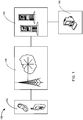
- a client 102 is connected to a communication path 106, such as a wireless telecommunication network, to a server 104.
- the client 102 can be of any of a variety of mobile devices, such as a cellular phone, personal digital assistant, digital imaging device, a notebook computer, or other multifunctional mobile communication or entertainment devices having means to couple to a communication path to communicate with a server and means for client location monitoring, preferably, global positioning system (GPS) function.
- GPS global positioning system
- the client 102 includes, for example, a control device (not shown), such as a microprocessor, software (not shown), a memory (not shown), communication components (not shown), location monitoring components (not shown), and a user interface.
- a control device such as a microprocessor, software (not shown), a memory (not shown), communication components (not shown), location monitoring components (not shown), and a user interface.
- the user interface such as a display, a key pad, touchpad, softkeys, keyboard, a microphone, and a speaker, allows the user to interact with the client 102 and to provide data and command inputs.
- the microprocessor executes the software and provides the intelligence of the client 102 for interaction with the server 104 for relevant information, for the user interface, for interaction with the communication path 106, and interaction to the location monitoring system of the client 102, as well as other functions pertinent to a location based service communication device.
- the memory such as volatile, nonvolatile memory, internal only, externally upgradeable, or a combination thereof, can store the software, setup data, multimedia data, photos, text, sounds recordings, video and other data for the operation of the client 102 as a mobile location based service communication device.
- the memory can also store the relevant information, such as maps, route information, traffic information, advertisement and point of interest (POI), location-blog entries, etc., from the server 104 or can be preloaded.
- POI point of interest
- the memory can also store recorded, imaged, sampled or created relevant information to be transmitted to the server 104.
- the functions of the client 102 can be performed by software, firmware, hardware, or a combination thereof.
- the communication components can include active and passive components, such as microelectronics or an antenna, for interaction to the cellular system of the communication path 106.
- the navigation components can include the active and passive components, such as microelectronics or an antenna, for interaction with the communication path 106.
- the communication path 106 can be of any of a variety of telecommunication networks.
- the communication path 106 can include wireless communication, wired communication, optical, ultrasonic, or the combination thereof.
- Satellite communication, cellular communication, Bluetooth, Infrared Data Association standard (IrDA), wireless fidelity (WiFi), and worldwide interoperability for microwave access (WiMAX) are examples of wireless communication that can be included in the communication path 106.
- Ethernet, digital subscriber line (DSL), fiber to the home (FTTH), and plain old telephone service (POTS) are examples of wired communication that can be included in the communication path 106.
- the communication path 106 can traverse a number of network topologies and distances.
- the communication path 106 can include personal area network (PAN), local area network (LAN), metropolitan area network (MAN), and wide area network (WAN).
- PAN personal area network
- LAN local area network
- MAN metropolitan area network
- WAN wide area network
- the server 104 can include a number of devices, for example, a control device (not shown), such as a computer, software (not shown), a memory, communication components (not shown), location monitoring components (not shown), and a user interface.
- the computer executes the software and provides the intelligence of the server 104 for interaction with the client 102, interaction to the communication system of the communication path 106 and interaction with a server user interface 108.
- the server 104 is shown in a single location, although it is understood that the server can be located at different locations.
- the server 104 can represent servers in a single computer room, and distributed across different rooms or geographical locations.
- the server 104 and the server user interface 108 are shown as separate and discrete components, although it is understood that the server user interface 108 can by included in the server 104.
- the server user interface 108 is shown coupled to the server 104, although it is understood that the server user interface 108 can couple to the server 104 differently.
- the server user interface 108 can interact with the communication path 106 to communicate with the server 104.
- the general purpose mobile location-blogging system 100 is shown with the server 104 as a non-mobile computing device, although it is understood that the server 104 can be different types of computing devices.
- the server 104 can also be a mobile computing device, such as notebook computer, another client device, or a different type of client device.
- the general purpose mobile location-blogging system 100 is shown with the server 104 and the client 102 as end points of the communication path 106, although it is understood that the general purpose mobile location-blogging system 100 can have a different partition between the client 102, the server 104, and the communication path 106.
- the client 102, the server 104, or a combination thereof can also function as part of the communication path 106.
- the server 104 includes a location-blog which is a location-sensitive, multimedia blog data store that allows users to create, populate and manage location-based blogs that are specific to a particular location and can include a variety of information related to that location.
- Location-blogs are essentially location-based scratchpads where information including video, audio, images, text, cartographic information, physical property measurements, depth soundings, fish and wildlife census information, chemical and pollution measurements, weather information, or other measured or instrumentation data can be stored, associated with a particular location, and retrieved on demand.
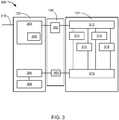
- FIG. 2 therein is shown a block diagram of the general purpose mobile location-blogging system 100 of FIG. 1 .
- the client 102 sends a server request 202 to the server 104 via the communication path 106.
- the client 102 receives a server response 203 having location-blog entry parameters 204 from the server 104 over the communication path 106.
- Each of the location-blog entry parameters 204 can include a location-blog control parameter 220 and a location-blog data parameter 224 for controlling a multimedia display interface 210 of the client 102.
- the multimedia display interface 210 can display associated location and the location-blog data parameter 224 received by the client 102 from the server 104 via the communication path 106.
- the location-blog entry parameters 204 can control the multimedia display interface 210 in association with a variety of location and navigation events.
- the multimedia display interface 210 can display images, video, text, or audio of selected location-blog entries notifying a user of nearby location-blog coordinates based upon location of the client 102, navigation directions to POIs associated with a location-blog, and display of additional messaging.
- the additional messaging can include traffic or navigation data associated with the location blog, the POI, or advertisements, as an example.
- the location-blog entry parameters 204 can include any number of parameters.
- the location-blog entry parameters 204 can include system ID, client ID, device type, location-blog ID, location, datetime stamp, geofence parameters, range, content tags, multimedia data, or any combination thereof.
- the client 102 can store the location-blog entry parameters 204 in a local storage 212.
- the local storage 212 can be implemented in a number of ways.
- the local storage 212 can be a nonvolatile storage such as non-volatile random access memory (NVRAM), Flash memory, disk storage or a volatile storage such as static random access memory (SRAM).
- NVRAM non-volatile random access memory
- SRAM static random access memory
- the client 102 can retrieve a current set of the location-blog entry parameters 204 possibly when the multimedia display interface 210 is refreshed.
- the client 102 can accept a user input 201 via a user interface 216, such as a key entry, to interact with the location-blog using a variety of command and data methods.
- command and data methods include creating a new location-blog, selecting an active location-blog, selecting a location-blog entry, browsing for nearby location-blogs, generating user content, sending content to the server 104, receiving location-blog content from the server 104, navigating within a selected location-blog, or any combination thereof.
- the user input 201 can also be associated with multimedia data from a multimedia data unit 214 that can provide multimedia data inputs including digital images, audio recordings, video recordings, text inputs, other multimedia inputs, or any combination thereof.
- the user input 201 can also be associated with the current location information from a location unit 218, such as a navigation hardware.
- the user input 201 in association with multimedia data from the multimedia data unit 214 and the current location information from the location unit 218 can be processed by a control device 222, such as a processor or a specialized hardware engine, which can generate the server request 202 from the client 102 to the server 104.
- the client 102 preferably receives, manually or automatically, a location-blog request 318 from the user interface 216 selecting a one or more location-blogs from a textual or graphical list of location-blogs and sends the server request 202 to the server 104 in a block 302.
- the server request 202 can include a location-blog command information 303.
- the client 102 preferably receives the location-blog request 318 from the user interface 216 and sends the server request 202 to the server 104 in the block 302.
- the server request 202 can include the location-blog command information 303.
- the location-blog command information 303 can include a create location-blog command, an update location-blog command, a fetch location-blog information command, and a manage location-blog command, or other location-blog data and management command structures.
- the server 104 receives the location-blog command information 303 from the client 102.
- the server 104 can decode the location-blog command information 303 and can perform the appropriate command function in a block 312.
- the create location-blog command can cause the server 104 to initiate the creating a new location-blog.
- the update location-blog command can cause the server 104 to update the location-blog with the multimedia content included.
- the fetch location-blog information command can cause the server 104 to retrieve and return a set of location-blog information about one or more location-blogs that fit specified criteria.
- the manage location-blog command can cause the server 104 to perform a variety of functions related to managing and maintaining a specified location-blog. For example, once a command is completed, status information and location-blog information can be sent from the server 104 to the client 102 in a block 315.
- the server request 202 with the create location-blog command from the block 312 can include location-blog header data that can be used to create a new location-blog in a block 313.
- the location-blog header data can include system ID, user ID, location ID, location tag, blog property information, multimedia content, text, video, images, audio, or any combination thereof.
- Location-blogs include blogs based on information pertaining to a particular location and whose entries are primarily indexed by location and time.
- the create location-blog command can be processed by the server 104 creating a new location-blog as specified by the location-blog header data on the server 104.
- the server 104 can send the server response 203 from the block 315 including a location-blog command status to the client 102 upon completion of the create location-blog command in the block 313.
- the server request 202 with the update location-blog command from the block 312 can include multimedia data for creating a location-blog entry in a block 314.
- the location-blog entry includes a multimedia entry that can be retrieved by the client 102.
- the update location-blog command can be processed by the server 104 and can automatically create a location-blog post for the specified location-blog.
- the server 104 can send the server response 203 including a location-blog command status, from the block 314, to the client 102 upon completion of the update location-blog command in the block 315.
- the server request 202 with a fetch location-blog information command from the block 312 can include a location-blog retrieval request that can cause the server 104 to retrieve and return one or more of the location-blog entry parameters 204 of FIG. 2 in a block 310.
- the server 104 can send the server response 203 including the location-blog entry parameters 204, from the block 310, to the client 102 via the communication path 106 in the block 315.
- the location-blog entry parameters 204 can include any number of parameters, such as text, images, audio, video, location parameters, date, time, duration, control actions, display parameters or any combination thereof.
- the server request 202 with the manage location-blog command from the block 312 can include any number of utility commands to control the server 104 for managing the specified location-blog in a block 316.
- the manage location-blog commands can include a variety of functions including delete location-blog entry, modify location-blog entry, delete location-blog, edit location-blog header information, copy location-blog, move location-blog, modify location-blog status, or any combination thereof.
- the server 104 can send the server response 203 including the location-blog command status, from the block 316, to the client 102 upon completion of the manage location-blog command in the block 315.
- the client 102 receives the server response 203 including the location-blog entry parameters 204 from the server 104 over the communication path 106 in a block 304.
- the client 102 preferably detects the location-blog control parameter 220 in FIG. 2 for use with the location-blog entry parameters 204 from the server response 203 from the block 304 and operates the multimedia display interface 210 of FIG. 2 of the client 102 in a block 306.
- the client 102 also receives the server response 203 including the location-blog status updates from the server 104 over the communication path 106 in the block 304.
- the client 102 detects the location-blog control parameter 220 for use with the location-blog status from the server response 203 and operates the multimedia display interface 210 of FIG. 2 of the client 102 in the block 306.
- the client 102 can operate in a location-blog update mode determined by the location-blog command received in the user input 201.
- the client 102 preferably receives the update location-blog command, through the block 312 of FIG. 3 , from the user input 201 and a location-blog multimedia content input 408 from the multimedia data unit 214 in FIG. 2 and the current location information from the location unit 218 in FIG. 2 .
- the client 102 sends, in a block 402, the server request 202 with a location-blog command input 401 and the location-blog multimedia content input 408 via the communication path 106 of FIG. 1 to the server 104.
- the server 104 received the server request 202 in a block 404 and updates the location-blog in a block 406.
- the location-blog multimedia content input 408 is associated with the current location-blog which is associated with the current location of the client 102.
- the location-blog multimedia content input 408 can include any number of multimedia parameters, such as video recordings, audio recordings, images, text, time, date, or any combination thereof.
- the client 102 can include a digital video camera which makes an audiovisual recording at the current location.
- the location-blog command input 401 can control the client 102 to send the server request 202 with an update location-blog command from the block 312 and the associated audiovisual recording data to the server 104 via the communication path 106.
- the client 102 can also include a digital camera and send the server request 202 including the digital image from the camera to the server 104.
- the client 102 can receive the location-blog command input 401 from the user input 201 and send the server request 202 including a manage location-blog command, from the block 312, to the server 104 to request the deletion of the current location-blog.
- the server 104 preferably receives the server request 202 from the client 102 of FIG. 1 via the communication path 106 of FIG. 1 in the block 312.
- the server request 202 can include the location-blog command information 303 from the block 312 of FIG. 3 , such as the create location-blog command, the update location-blog command, the fetch location-blog information command, or the manage location-blog commands.
- the server 104 can send the location-blog entry parameters 204 based on the location-blog command information 303 from the client 102.
- the server 104 can process the server request 202 with the Create New Location-Blog command, from the block 312, in the block 313.
- the server request 202 can include additional parameters to define and create the new location-blog including parameters such as system ID, client ID, location ID, time, date, video, audio, images, text, multimedia data, command parameter, configuration parameters, security parameters, or any combination thereof.
- the server 104 can create a new location-blog and an associated location-blog storage entry in a data storage system 505 that can later be used to include the data for the location-blog entries.
- the server 104 can process the server request 202 with the update location-blog command, from the block 312, in the block 314.
- the server request 202 can include additional parameters to update the specified location-blog including parameters such as location-blog ID, system ID, client ID, location ID, time, date, video, audio, images, text, multimedia data, command parameter, configuration parameters, security parameters, or any combination thereof.
- the server 104 can create a new location-blog entry and store the associated location-blog entry content in the data storage system 505. The location-blog entry can be later retrieved from the location-blog on the server 104 using the fetch location-blog information command from the block 312.
- the server 104 can process the server request 202 with the fetch location-blog information command, from the block 312, in the block 310.
- the server request 202 can include additional parameters to define and create the new location-blog including parameters such as location-blog ID, location-blog entry ID, system ID, client ID, location ID, time, date, video, audio, images, text, multimedia data , command parameter, configuration parameters, security parameters, or any combination thereof.
- the server 104 can retrieve the location-blog entry parameters 204 of FIG. 2 associated with the specified location-blog entry ID in the specified location blog from the data storage system 505 and return it to the client 102.
- the server 104 can also retrieve the location-blog entry parameters 204 that are associated with one or more location-blogs from the data storage system 505 and return them to the client 102.
- the server 104 can process the server request 202 with the manage location-blog command, from the block 312, in the block 316.
- the manage location-blog commands can include a variety of functions including delete location-blog entry, modify location-blog entry, delete location-blog, edit location-blog header information, copy location-blog, move location-blog, modify location-blog status, or any combination thereof.
- the server 104 can create a new location-blog entry and store the associated location-blog entry content in the data storage system 505.
- the location-blog entry can be later retrieved from the location-blog on the server 104 using the fetch location-blog information command from the block 312.
- the server request 202 that includes the delete location-blog entry command from the block 312 can delete a specified location-blog entry from the specified location blog and from the data storage system 505.
- the server request 202 that includes an Edit Location-Blog Header command from the block 312 can modify a specified location-blog header for the specified location blog and from the data storage system 505.
- the server request 202 that includes a copy location-blog command from the block 312 can copy a specified location-blog in the data storage system 505 to another location-blog in the data storage system 505 using a specified location-blog ID.
- the server request 202 that includes a move location-blog command from the block 312 can move a specified location-blog in the data storage system 505 to another location-blog in the data storage system 505 using a specified location-blog ID.
- the server request 202 that includes a modify location-blog status command can modify a specified location-blog status for the specified location blog in the data storage system 505.
- the server 104 can receive a server user input 504 from the server user interface 108 of FIG. 1 , including location-blog server management system commands 502 that can control the location-blog server system, perform housekeeping tasks, and generate reports showing data such as location-blog status, use, entry ratings, type of rating or any combination thereof.
- the present invention provides a general purpose mobile location-blogging system that allows user of clients to create, manage, delete, and select a specific or user selected location-blog.
- the location-blog can be one out of many location-blogs and can be user-defined allowing the general purpose location-blogs to be used as desired by the user of the client.
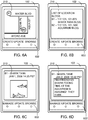
- FIG. 6A, 6B, 6C and 6D therein are shown illustrations of an example of retrieving a list of location-blogs and browsing location-blog entries by the client 102 with the general purpose mobile location-blogging system 100 of FIG. 1 for general purpose location-blogs B1 and B2.
- FIG. 6A displays a street map on the multimedia display interface 210 of the client 102 of the general purpose mobile location-blogging system 100.
- FIG. 6B illustrates a set of general purpose location-blogs in a list format on the multimedia display interface 210 of the client 102.
- either location-blog can be made the current location-blog by selecting the appropriate location-blog using the input means.
- the client 102 can enter a location-blog selection using a user input control 602 which can include a control input, such as a button, dial, slider, voice input, touch pad, touch screen, virtual button, switch, keypad or similar input device.
- FIG. 6C and 6D therein are illustrated the multimedia display interface 210 of a location-blog entry.
- the client 102 can accept a location-blog command user input and a multimedia user input that can include a video recording, audio recording, image, text, multimedia data, or any combination thereof.
- the location-blog command and the multimedia data are sent to the server 104 of FIG. 2 in the server request 202 of FIG. 2 .
- the server 104 can create a new location-blog entry that is associated with the new multimedia data.
- the client 102 in the fetch location-blog information command, can accept the location-blog command user input and send the fetch location-blog information command in the server request 202 to the server 104 via the communication path 106.
- the server 104 can retrieve the location-blog entry parameters 204 of FIG. 2 associated with the fetch location-blog information command and return them to the client 102.
- the client 102 can use the location-blog entry parameters 204 to control the multimedia display interface 210 and present the multimedia content of the specified location-blog entry on the multimedia display interface 210, wherein the multimedia content can include video, audio, images, text, other multimedia content, or any combination thereof.
- FIG. 6D therein is illustrated, for example, a location-blog entry that includes textual multimedia content. It is understood that there are several scenarios where the client 102 can send the fetch location-blog information command in the server request 202 to the server 104 and the client 102 can receive one or more location-blog entries including any of several different multimedia data types to be shown on the multimedia display interface 210.
- FIG. 7A, 7B, 7C, 7D , 7E, and 7F therein are shown illustrations of an example of retrieving a list of location-blogs and browsing location-blog entries by the client 102 with the general purpose mobile location-blogging system 100 of FIG. 1 for location-blogs B3 and B4.
- FIG. 7A therein is illustrated a set of general purpose location-blogs B3 and B4 used for industrial purposes and displays the location-blogs within a certain radius of a particular location on a map on the multimedia display interface 210 of the client 102 of the general purpose mobile location-blogging system 100 of FIG. 1 .
- FIG. 7B illustrates a set of location-blogs within a certain radius of a particular location in a list format on the multimedia display interface 210 of the client 102.
- location-blog can be made the current location-blog by selecting the appropriate location-blog using the input means.
- the client 102 can enter a location-blog selection using the user input control 602 which can include a control input, such as a button, dial, slider, voice input, touch pad, touch screen, virtual button, switch, keypad or similar input device.
- FIG. 7C and 7D therein are illustrated the multimedia display interface 210 of a location-blog entry for industrial purposes.
- the client 102 can accept a location-blog command user input and a multimedia user input that can include a video recording, audio recording, image, text, multimedia data, instrumentation data, or any combination thereof.
- the location-blog command and the multimedia data are sent to the server 104 in the server request 202.
- the server 104 can create a new location-blog entry that is associated with the new multimedia data.
- the client 102 in the fetch location-blog information command, can accept a location-blog command user input and send the fetch location-blog information command in the server request 202 of FIG. 2 to the server 104.
- the server 104 can retrieve the location-blog entry parameters 204 of FIG. 2 associated with fetch location-blog information command, an image, and return it to the client 102.
- the client 102 can use the location-blog entry parameters 204 to control the multimedia display interface 210 and present the image of the specified location-blog entry on the multimedia display interface 210.
- FIG. 7D therein is illustrated, for example, a location-blog entry that includes textual multimedia content entered manually or automatically from a data collection instrument. It is understood that there are several scenarios where the client 102 can send the fetch location-blog information command in the server request 202 to the server 104 and the client 102 can receive one or more location-blog entries including any of several different data types to be shown on the multimedia display interface 210.
- the multimedia display interface 210 depicts a list of location-blogs B5 and B6.
- B5 is shown as location speed trap blog.
- B6 is shown as a traffic camera blog.
- FIG. 7F the B5 location-blog is shown in a map view of the location of the speed trap.
- the B5 and B6 information can be generated by the client 102 and send to the server 104 for potentially sharing the B5 and the B6 location-blogs.
- the method 800 includes receiving a location-blog request having multimedia data at a server in a block 802; managing a location-blog entry parameter with the location-blog request in a block 804; sending the location-blog entry parameter from the server in a block 806 for: selecting the location-blog entry parameter at a client, and displaying the location-blog entry parameter that has been selected with a multimedia display interface of the client.
- Yet another important aspect of the present invention is that it valuably supports and services the historical trend of reducing costs, simplifying systems, and increasing performance. These and other valuable aspects of the present invention consequently further the state of the technology to at least the next level.
- the general purpose mobile location-blogging system of the present invention furnishes important and heretofore unknown and unavailable solutions, capabilities, and functional aspects for improving yield, increasing reliability, and reducing cost of using a mobile client having location based services capability.
- the resulting processes and configurations are straightforward, cost-effective, uncomplicated, highly versatile, accurate, sensitive, and effective, and can be implemented by adapting known components for ready, efficient, and economical manufacturing, application, and utilization.
Landscapes
- Engineering & Computer Science (AREA)
- Computer Networks & Wireless Communication (AREA)
- Signal Processing (AREA)
- Information Transfer Between Computers (AREA)
- Mobile Radio Communication Systems (AREA)
- Telephonic Communication Services (AREA)
Claims (10)
- Verfahren für den Betrieb eines allgemein einsetzbaren mobilen Positions-Blogging Systems, wobei das Verfahren umfasst:- Erhalten einer Serveranfrage (202) an einem Server (104) von einem Client (102);- Verwalten eines Positions-Blog-Eintragsparameters (204), welcher der Serveranfrage (202) an dem Server (104) zugeordnet ist; und- Übersenden des Positions-Blog-Eintragsparameters (204) von dem Server (104) an den Client (102);- Anzeigen von Multimediainhalten eines vorgegebenen Positions-Blog-Eintrags auf einer Multimedia-Anzeigeschnittstelle (210) des Clients (102),- Benachrichtigen eines Nutzers über Positions-Blog-Koordinaten abhängig von einer Position des Clients (102) durch den Client (102),- Auswählen des Positions-Blog-Eintragsparameters (204), um einen aktuellen Positions-Blog durch Verwendung einer Eingabesteuerung (602) an dem Client (102) auszuwählen, wobei die Eingabesteuerung (602) eine Taste, eine Drehscheibe, einen Schieber, eine Spracheingabe, ein Touchpad, ein Touch-Display, einen virtuellen Knopf, einen Schalter, eine Tastatur oder ein ähnliches Eingabegerät umfasst, und- Anzeigen des ausgewählten Positions-Blog-Eintragsparameters (204) mit der Multimedia-Anzeigeschnittstelle (210) des Clients (102);wobei das Verfahren dadurch gekennzeichnet ist, dass:- der Positions-Blog gemessene Daten und/oder Instrumentendaten umfasst, welche einer bestimmten Position zugeordnet sind und welche textbasierten Multimediainhalt umfassen, welcher automatisch von einem Datensammlungsgerät eingetragen wurde.
- Verfahren nach Anspruch 1, wobei das Erhalten der Serveranfrage (202) an dem Server (104) ein Erhalten einer Positions-Blog Anfrage (318) von einer Nutzerschnittstelle (216) an dem Client (102) zum Auswählen eines oder mehrerer Positions-Blogs und zum Erzeugen der Serveranfrage (202) umfasst.
- Verfahren nach Anspruch 1, wobei das Erhalten der Serveranfrage (202) ein Erhalten von Fotos, Video, Audio oder einer Kombination davon und von Text umfasst.
- Verfahren nach Anspruch 1, wobei das Übersenden des Positions-Blog-Eintragsparameters (204) von dem Server (104) ein Übersenden eines Positions-Blog-Steuerparameters (220) umfasst.
- Verfahren nach Anspruch 1, wobei das Übersenden des Positions-Blog Eintragsparameters (204) von dem Server (104) ein Übersenden eines Positions-Blog Datenparameters (224) umfasst.
- Verfahren nach Anspruch 1, wobei das Erhalten der Serveranfrage (202) an dem Server (104) umfasst:- Erhalten der Serveranfrage (202) an einem weiteren Client (102);- Verwalten des Positions-Blog-Eintragsparameters (204), welcher der Serveranfrage (202) zugeordnet ist an dem weiteren Client (102); und- Übersenden des Positions-Blog-Eintragsparameters (204) von dem weiteren Client (102) zum Steuern der Multimedia-Anzeigeschnittstelle (210) des Clients (102) und zum Benachrichtigen des Nutzers über Positions-Blog-Koordinaten abhängig von der Position des Clients (102), um:- den Positions-Blog-Eintragsparameter (204) des Positions-Blogs als den aktuellen Positions-Blog an dem Client (102) durch Verwendung einer Eingabesteuerung (602) auszuwählen, wobei die Eingabesteuerung (602) eine Taste, eine Drehscheibe, einen Schieber, eine Spracheingabe, ein Touchpad, ein Touch-Display, einen virtuellen Knopf, einen Schalter, eine Tastatur oder ein ähnliches Eingabegerät umfasst, und- den Positions-Blog-Eintragsparameter (204), welcher ausgewählt wurde, mit der Multimedia-Anzeigeschnittstelle (210) des Clients (102) anzuzeigen.
- Verfahren nach Anspruch 1, wobei das Erhalten der Serveranfrage (202) ein Erhalten einer Positions-Blog-Anfrage (318) von einer Nutzerschnittstelle (216) an dem Client (102) zum Auswählen von einem oder mehreren Positions-Blogs und zum Erzeugen der Serveranfrage (202) für ein Empfangen an einem weiteren Client (102) umfasst.
- Verfahren nach Anspruch 1, wobei das Erhalten der Serveranfrage (202) ein Erhalten von Fotos, Video, Audio, oder einer Kombination davon und von Text an einem weiteren Client (102) umfasst.
- Verfahren nach Anspruch 1, wobei das Übersenden des Positions-Blog-Eintragsparameters (204) von dem Server (104) ein Übersenden eines Positions-Blog-Steuerparameters (220) von einem weiteren Client (102) umfasst.
- Verfahren nach Anspruch 1, wobei das Übersenden des Positions-Blog-Eintragsparameters (204) von dem Server (104) ein Übersenden eines Positions-Blog-Datenparameters (224) von einem weiteren Client (102) umfasst.
Applications Claiming Priority (2)
| Application Number | Priority Date | Filing Date | Title |
|---|---|---|---|
| US12/167,206 US20100005135A1 (en) | 2008-07-02 | 2008-07-02 | General purpose mobile location-blogging system |
| PCT/US2009/049440 WO2010003014A1 (en) | 2008-07-02 | 2009-07-01 | General purpose mobile location-blogging system |
Publications (2)
| Publication Number | Publication Date |
|---|---|
| EP2297918A1 EP2297918A1 (de) | 2011-03-23 |
| EP2297918B1 true EP2297918B1 (de) | 2019-10-16 |
Family
ID=41171188
Family Applications (1)
| Application Number | Title | Priority Date | Filing Date |
|---|---|---|---|
| EP09774464.3A Active EP2297918B1 (de) | 2008-07-02 | 2009-07-01 | Universelles mobiles standortbasiertes blogsystem |
Country Status (6)
| Country | Link |
|---|---|
| US (1) | US20100005135A1 (de) |
| EP (1) | EP2297918B1 (de) |
| CN (1) | CN102084637A (de) |
| CA (1) | CA2727647A1 (de) |
| MX (1) | MX2011000093A (de) |
| WO (1) | WO2010003014A1 (de) |
Families Citing this family (8)
| Publication number | Priority date | Publication date | Assignee | Title |
|---|---|---|---|---|
| US20120111936A1 (en) | 2009-01-27 | 2012-05-10 | Brown Stephen J | Semantic Note Taking System |
| US8930490B2 (en) | 2009-01-27 | 2015-01-06 | Apple Inc. | Lifestream annotation method and system |
| US9165064B2 (en) * | 2009-01-27 | 2015-10-20 | Apple Inc. | Context-aware prompts and alerts in a note-sharing system |
| US8645383B2 (en) | 2009-01-27 | 2014-02-04 | Stephen J. Brown | Content management system using sources of experience data and modules for quantification and visualization |
| WO2010127505A1 (en) * | 2009-05-08 | 2010-11-11 | Mediatek Singapore Pte. Ltd. | Poi displaying method and electronic apparatus utilizing the method |
| US20120158850A1 (en) * | 2010-12-21 | 2012-06-21 | Harrison Edward R | Method and apparatus for automatically creating an experiential narrative |
| US10514803B2 (en) * | 2016-03-06 | 2019-12-24 | Microsoft Technology Licensing, Llc | Pen in field force sensing calibration |
| JP6953703B2 (ja) * | 2016-10-19 | 2021-10-27 | 株式会社リコー | システム、情報処理方法、情報処理装置、プログラム |
Citations (1)
| Publication number | Priority date | Publication date | Assignee | Title |
|---|---|---|---|---|
| US20070282526A1 (en) * | 2006-05-31 | 2007-12-06 | Garmin Ltd. | Method and apparatus for utilizing geographic location information |
Family Cites Families (22)
| Publication number | Priority date | Publication date | Assignee | Title |
|---|---|---|---|---|
| US6185427B1 (en) * | 1996-09-06 | 2001-02-06 | Snaptrack, Inc. | Distributed satellite position system processing and application network |
| AU1707600A (en) * | 1998-10-21 | 2000-05-08 | American Calcar, Inc. | Positional camera and gps data interchange device |
| US6904160B2 (en) * | 2000-10-18 | 2005-06-07 | Red Hen Systems, Inc. | Method for matching geographic information with recorded images |
| US7069003B2 (en) * | 2003-10-06 | 2006-06-27 | Nokia Corporation | Method and apparatus for automatically updating a mobile web log (blog) to reflect mobile terminal activity |
| US20050278371A1 (en) * | 2004-06-15 | 2005-12-15 | Karsten Funk | Method and system for georeferential blogging, bookmarking a location, and advanced off-board data processing for mobile systems |
| CN101253757B (zh) * | 2005-09-01 | 2013-03-20 | 株式会社爱可信 | 通信系统和通信终端 |
| US7272403B2 (en) * | 2005-12-02 | 2007-09-18 | International Business Machines Corporation | Selective enablement and disablement of a mobile communications device based upon location |
| KR100725792B1 (ko) * | 2006-02-01 | 2007-06-08 | 엔에이치엔(주) | 개인 웹페이지에서의 지리 정보 제공 방법 및 시스템 |
| US8352183B2 (en) * | 2006-02-04 | 2013-01-08 | Microsoft Corporation | Maps for social networking and geo blogs |
| US7574170B2 (en) * | 2006-05-12 | 2009-08-11 | Sony Ericsson Mobile Communications Ab | Method and system for identifying sources of location relevant content to a user of a mobile radio terminal |
| US7966362B2 (en) * | 2006-06-21 | 2011-06-21 | Apple Inc. | Management of podcasts |
| US20070296805A1 (en) * | 2006-06-21 | 2007-12-27 | Sony Ericsson Mobile Communications Ab | Mobile content sharing |
| US20070300260A1 (en) * | 2006-06-22 | 2007-12-27 | Nokia Corporation | Method, system, device and computer program product for generating and distributing media diary podcasts |
| US8869066B2 (en) * | 2006-07-06 | 2014-10-21 | Addthis, Llc | Generic content collection systems |
| US8370381B2 (en) * | 2006-09-22 | 2013-02-05 | Microsoft Corporation | Location based information |
| US20080098090A1 (en) * | 2006-10-20 | 2008-04-24 | J.S.B.K. Inc. | Computer implemented system and methods for mapping using web-based content |
| US7873710B2 (en) * | 2007-02-06 | 2011-01-18 | 5O9, Inc. | Contextual data communication platform |
| US7787869B2 (en) * | 2007-02-26 | 2010-08-31 | Sony Ericsson Mobile Communications Ab | Device, method, and computer program product for providing enhanced blogging features on a mobile phone |
| JP4408442B2 (ja) * | 2007-06-27 | 2010-02-03 | 富士通株式会社 | プライバシー保護装置、プライバシー保護方法、および、プライバシー保護プログラム |
| US8635192B2 (en) * | 2008-02-28 | 2014-01-21 | Blackberry Limited | Method of automatically geotagging data |
| US8275394B2 (en) * | 2008-03-20 | 2012-09-25 | Nokia Corporation | Nokia places floating profile |
| EP2120167A1 (de) * | 2008-05-12 | 2009-11-18 | Research In Motion Limited | System und Verfahren zum automatischen Entwerfen eines Blogeintrags |
-
2008
- 2008-07-02 US US12/167,206 patent/US20100005135A1/en not_active Abandoned
-
2009
- 2009-07-01 WO PCT/US2009/049440 patent/WO2010003014A1/en not_active Ceased
- 2009-07-01 EP EP09774464.3A patent/EP2297918B1/de active Active
- 2009-07-01 CA CA2727647A patent/CA2727647A1/en not_active Abandoned
- 2009-07-01 CN CN2009801260535A patent/CN102084637A/zh active Pending
- 2009-07-01 MX MX2011000093A patent/MX2011000093A/es not_active Application Discontinuation
Patent Citations (1)
| Publication number | Priority date | Publication date | Assignee | Title |
|---|---|---|---|---|
| US20070282526A1 (en) * | 2006-05-31 | 2007-12-06 | Garmin Ltd. | Method and apparatus for utilizing geographic location information |
Also Published As
| Publication number | Publication date |
|---|---|
| CN102084637A (zh) | 2011-06-01 |
| US20100005135A1 (en) | 2010-01-07 |
| EP2297918A1 (de) | 2011-03-23 |
| CA2727647A1 (en) | 2010-01-07 |
| MX2011000093A (es) | 2011-02-25 |
| WO2010003014A1 (en) | 2010-01-07 |
Similar Documents
| Publication | Publication Date | Title |
|---|---|---|
| EP2297918B1 (de) | Universelles mobiles standortbasiertes blogsystem | |
| US9574899B2 (en) | Systems and method for determination and display of personalized distance | |
| US9621655B2 (en) | Application and device to memorialize and share events geographically | |
| EP2468017B1 (de) | Verfahren und vorrichtung zur erstellung, verwaltung und gemeinsamen nutzung von bewegungsrichtungen | |
| US9026917B2 (en) | System and method for context enhanced mapping within a user interface | |
| KR101429298B1 (ko) | 이동 장치를 위한 위치 기반 캐싱 | |
| US7978207B1 (en) | Geographic image overlay | |
| RU2420010C2 (ru) | Способ и система для организации записей о событиях в мобильном радио терминале | |
| US8725727B2 (en) | System and method for determining website popularity by location | |
| EP2393056A1 (de) | Erfassung, Klassifizierung und Anzeige von Interessenpunkten zur Verwendung in einem Dienstleistungsbereitstellungssystem für erhöhte Realität und grafische Benutzeroberfläche zur Anzeige solcher klassifizierten Interessenpunkte | |
| US20050278371A1 (en) | Method and system for georeferential blogging, bookmarking a location, and advanced off-board data processing for mobile systems | |
| US20110083101A1 (en) | Sharing of Location-Based Content Item in Social Networking Service | |
| US10318602B2 (en) | Geo-referenced virtual anchor management system for media content access from physical location | |
| WO2008094307A2 (en) | Attractions network and mobile devices for use in such network | |
| CN101106793A (zh) | 一种电子导游业务的系统和方法 | |
| JP2013542679A (ja) | 地図電話帳生成方法、電子地図及びその移動端末 | |
| US20040230452A1 (en) | Regional attribute determination method, regional attribute determination device, and regional attribute determination program | |
| US8527505B2 (en) | Multiplatform communication and media journal with mapping | |
| CN101179643A (zh) | 传送影像文件位置信息并在地理信息系统中识别的方法 | |
| US20100035631A1 (en) | Systems and Methods to Record and Present a Trip | |
| Sueda et al. | Social geoscape: visualizing an image of the city for mobile UI using user generated geo-tagged objects | |
| KR101038656B1 (ko) | Gps 단말기와 이를 이용한 위치 정보 제공 서비스 방법 및 위치 정보 이용 방법 | |
| US20140194144A1 (en) | Processing place markers |
Legal Events
| Date | Code | Title | Description |
|---|---|---|---|
| PUAI | Public reference made under article 153(3) epc to a published international application that has entered the european phase |
Free format text: ORIGINAL CODE: 0009012 |
|
| 17P | Request for examination filed |
Effective date: 20110128 |
|
| AK | Designated contracting states |
Kind code of ref document: A1 Designated state(s): AT BE BG CH CY CZ DE DK EE ES FI FR GB GR HR HU IE IS IT LI LT LU LV MC MK MT NL NO PL PT RO SE SI SK SM TR |
|
| AX | Request for extension of the european patent |
Extension state: AL BA RS |
|
| DAX | Request for extension of the european patent (deleted) | ||
| 17Q | First examination report despatched |
Effective date: 20160111 |
|
| STAA | Information on the status of an ep patent application or granted ep patent |
Free format text: STATUS: EXAMINATION IS IN PROGRESS |
|
| GRAP | Despatch of communication of intention to grant a patent |
Free format text: ORIGINAL CODE: EPIDOSNIGR1 |
|
| STAA | Information on the status of an ep patent application or granted ep patent |
Free format text: STATUS: GRANT OF PATENT IS INTENDED |
|
| RIC1 | Information provided on ipc code assigned before grant |
Ipc: H04L 29/06 20060101AFI20190514BHEP Ipc: H04W 4/02 20180101ALI20190514BHEP Ipc: H04L 29/08 20060101ALI20190514BHEP Ipc: H04W 4/20 20180101ALI20190514BHEP |
|
| INTG | Intention to grant announced |
Effective date: 20190613 |
|
| GRAS | Grant fee paid |
Free format text: ORIGINAL CODE: EPIDOSNIGR3 |
|
| GRAA | (expected) grant |
Free format text: ORIGINAL CODE: 0009210 |
|
| STAA | Information on the status of an ep patent application or granted ep patent |
Free format text: STATUS: THE PATENT HAS BEEN GRANTED |
|
| AK | Designated contracting states |
Kind code of ref document: B1 Designated state(s): AT BE BG CH CY CZ DE DK EE ES FI FR GB GR HR HU IE IS IT LI LT LU LV MC MK MT NL NO PL PT RO SE SI SK SM TR |
|
| REG | Reference to a national code |
Ref country code: GB Ref legal event code: FG4D |
|
| REG | Reference to a national code |
Ref country code: CH Ref legal event code: EP |
|
| REG | Reference to a national code |
Ref country code: DE Ref legal event code: R096 Ref document number: 602009060163 Country of ref document: DE |
|
| REG | Reference to a national code |
Ref country code: IE Ref legal event code: FG4D |
|
| REG | Reference to a national code |
Ref country code: AT Ref legal event code: REF Ref document number: 1192403 Country of ref document: AT Kind code of ref document: T Effective date: 20191115 |
|
| REG | Reference to a national code |
Ref country code: NL Ref legal event code: MP Effective date: 20191016 |
|
| REG | Reference to a national code |
Ref country code: LT Ref legal event code: MG4D |
|
| REG | Reference to a national code |
Ref country code: AT Ref legal event code: MK05 Ref document number: 1192403 Country of ref document: AT Kind code of ref document: T Effective date: 20191016 |
|
| PG25 | Lapsed in a contracting state [announced via postgrant information from national office to epo] |
Ref country code: ES Free format text: LAPSE BECAUSE OF FAILURE TO SUBMIT A TRANSLATION OF THE DESCRIPTION OR TO PAY THE FEE WITHIN THE PRESCRIBED TIME-LIMIT Effective date: 20191016 Ref country code: LV Free format text: LAPSE BECAUSE OF FAILURE TO SUBMIT A TRANSLATION OF THE DESCRIPTION OR TO PAY THE FEE WITHIN THE PRESCRIBED TIME-LIMIT Effective date: 20191016 Ref country code: SE Free format text: LAPSE BECAUSE OF FAILURE TO SUBMIT A TRANSLATION OF THE DESCRIPTION OR TO PAY THE FEE WITHIN THE PRESCRIBED TIME-LIMIT Effective date: 20191016 Ref country code: PL Free format text: LAPSE BECAUSE OF FAILURE TO SUBMIT A TRANSLATION OF THE DESCRIPTION OR TO PAY THE FEE WITHIN THE PRESCRIBED TIME-LIMIT Effective date: 20191016 Ref country code: NO Free format text: LAPSE BECAUSE OF FAILURE TO SUBMIT A TRANSLATION OF THE DESCRIPTION OR TO PAY THE FEE WITHIN THE PRESCRIBED TIME-LIMIT Effective date: 20200116 Ref country code: GR Free format text: LAPSE BECAUSE OF FAILURE TO SUBMIT A TRANSLATION OF THE DESCRIPTION OR TO PAY THE FEE WITHIN THE PRESCRIBED TIME-LIMIT Effective date: 20200117 Ref country code: FI Free format text: LAPSE BECAUSE OF FAILURE TO SUBMIT A TRANSLATION OF THE DESCRIPTION OR TO PAY THE FEE WITHIN THE PRESCRIBED TIME-LIMIT Effective date: 20191016 Ref country code: LT Free format text: LAPSE BECAUSE OF FAILURE TO SUBMIT A TRANSLATION OF THE DESCRIPTION OR TO PAY THE FEE WITHIN THE PRESCRIBED TIME-LIMIT Effective date: 20191016 Ref country code: NL Free format text: LAPSE BECAUSE OF FAILURE TO SUBMIT A TRANSLATION OF THE DESCRIPTION OR TO PAY THE FEE WITHIN THE PRESCRIBED TIME-LIMIT Effective date: 20191016 Ref country code: BG Free format text: LAPSE BECAUSE OF FAILURE TO SUBMIT A TRANSLATION OF THE DESCRIPTION OR TO PAY THE FEE WITHIN THE PRESCRIBED TIME-LIMIT Effective date: 20200116 Ref country code: PT Free format text: LAPSE BECAUSE OF FAILURE TO SUBMIT A TRANSLATION OF THE DESCRIPTION OR TO PAY THE FEE WITHIN THE PRESCRIBED TIME-LIMIT Effective date: 20200217 Ref country code: AT Free format text: LAPSE BECAUSE OF FAILURE TO SUBMIT A TRANSLATION OF THE DESCRIPTION OR TO PAY THE FEE WITHIN THE PRESCRIBED TIME-LIMIT Effective date: 20191016 |
|
| PG25 | Lapsed in a contracting state [announced via postgrant information from national office to epo] |
Ref country code: IS Free format text: LAPSE BECAUSE OF FAILURE TO SUBMIT A TRANSLATION OF THE DESCRIPTION OR TO PAY THE FEE WITHIN THE PRESCRIBED TIME-LIMIT Effective date: 20200224 Ref country code: HR Free format text: LAPSE BECAUSE OF FAILURE TO SUBMIT A TRANSLATION OF THE DESCRIPTION OR TO PAY THE FEE WITHIN THE PRESCRIBED TIME-LIMIT Effective date: 20191016 |
|
| REG | Reference to a national code |
Ref country code: DE Ref legal event code: R097 Ref document number: 602009060163 Country of ref document: DE |
|
| PG2D | Information on lapse in contracting state deleted |
Ref country code: IS |
|
| PG25 | Lapsed in a contracting state [announced via postgrant information from national office to epo] |
Ref country code: EE Free format text: LAPSE BECAUSE OF FAILURE TO SUBMIT A TRANSLATION OF THE DESCRIPTION OR TO PAY THE FEE WITHIN THE PRESCRIBED TIME-LIMIT Effective date: 20191016 Ref country code: DK Free format text: LAPSE BECAUSE OF FAILURE TO SUBMIT A TRANSLATION OF THE DESCRIPTION OR TO PAY THE FEE WITHIN THE PRESCRIBED TIME-LIMIT Effective date: 20191016 Ref country code: RO Free format text: LAPSE BECAUSE OF FAILURE TO SUBMIT A TRANSLATION OF THE DESCRIPTION OR TO PAY THE FEE WITHIN THE PRESCRIBED TIME-LIMIT Effective date: 20191016 Ref country code: CZ Free format text: LAPSE BECAUSE OF FAILURE TO SUBMIT A TRANSLATION OF THE DESCRIPTION OR TO PAY THE FEE WITHIN THE PRESCRIBED TIME-LIMIT Effective date: 20191016 Ref country code: IS Free format text: LAPSE BECAUSE OF FAILURE TO SUBMIT A TRANSLATION OF THE DESCRIPTION OR TO PAY THE FEE WITHIN THE PRESCRIBED TIME-LIMIT Effective date: 20200216 |
|
| PGFP | Annual fee paid to national office [announced via postgrant information from national office to epo] |
Ref country code: FR Payment date: 20200625 Year of fee payment: 12 |
|
| PLBE | No opposition filed within time limit |
Free format text: ORIGINAL CODE: 0009261 |
|
| STAA | Information on the status of an ep patent application or granted ep patent |
Free format text: STATUS: NO OPPOSITION FILED WITHIN TIME LIMIT |
|
| PG25 | Lapsed in a contracting state [announced via postgrant information from national office to epo] |
Ref country code: SM Free format text: LAPSE BECAUSE OF FAILURE TO SUBMIT A TRANSLATION OF THE DESCRIPTION OR TO PAY THE FEE WITHIN THE PRESCRIBED TIME-LIMIT Effective date: 20191016 Ref country code: SK Free format text: LAPSE BECAUSE OF FAILURE TO SUBMIT A TRANSLATION OF THE DESCRIPTION OR TO PAY THE FEE WITHIN THE PRESCRIBED TIME-LIMIT Effective date: 20191016 Ref country code: IT Free format text: LAPSE BECAUSE OF FAILURE TO SUBMIT A TRANSLATION OF THE DESCRIPTION OR TO PAY THE FEE WITHIN THE PRESCRIBED TIME-LIMIT Effective date: 20191016 |
|
| PGFP | Annual fee paid to national office [announced via postgrant information from national office to epo] |
Ref country code: GB Payment date: 20200624 Year of fee payment: 12 |
|
| 26N | No opposition filed |
Effective date: 20200717 |
|
| PGFP | Annual fee paid to national office [announced via postgrant information from national office to epo] |
Ref country code: DE Payment date: 20200731 Year of fee payment: 12 |
|
| PG25 | Lapsed in a contracting state [announced via postgrant information from national office to epo] |
Ref country code: SI Free format text: LAPSE BECAUSE OF FAILURE TO SUBMIT A TRANSLATION OF THE DESCRIPTION OR TO PAY THE FEE WITHIN THE PRESCRIBED TIME-LIMIT Effective date: 20191016 |
|
| PG25 | Lapsed in a contracting state [announced via postgrant information from national office to epo] |
Ref country code: MC Free format text: LAPSE BECAUSE OF FAILURE TO SUBMIT A TRANSLATION OF THE DESCRIPTION OR TO PAY THE FEE WITHIN THE PRESCRIBED TIME-LIMIT Effective date: 20191016 |
|
| REG | Reference to a national code |
Ref country code: CH Ref legal event code: PL |
|
| REG | Reference to a national code |
Ref country code: BE Ref legal event code: MM Effective date: 20200731 |
|
| PG25 | Lapsed in a contracting state [announced via postgrant information from national office to epo] |
Ref country code: LU Free format text: LAPSE BECAUSE OF NON-PAYMENT OF DUE FEES Effective date: 20200701 Ref country code: CH Free format text: LAPSE BECAUSE OF NON-PAYMENT OF DUE FEES Effective date: 20200731 Ref country code: LI Free format text: LAPSE BECAUSE OF NON-PAYMENT OF DUE FEES Effective date: 20200731 Ref country code: IE Free format text: LAPSE BECAUSE OF NON-PAYMENT OF DUE FEES Effective date: 20200701 |
|
| PG25 | Lapsed in a contracting state [announced via postgrant information from national office to epo] |
Ref country code: BE Free format text: LAPSE BECAUSE OF NON-PAYMENT OF DUE FEES Effective date: 20200731 |
|
| REG | Reference to a national code |
Ref country code: DE Ref legal event code: R079 Ref document number: 602009060163 Country of ref document: DE Free format text: PREVIOUS MAIN CLASS: H04L0029060000 Ipc: H04L0065000000 |
|
| REG | Reference to a national code |
Ref country code: DE Ref legal event code: R119 Ref document number: 602009060163 Country of ref document: DE |
|
| GBPC | Gb: european patent ceased through non-payment of renewal fee |
Effective date: 20210701 |
|
| PG25 | Lapsed in a contracting state [announced via postgrant information from national office to epo] |
Ref country code: GB Free format text: LAPSE BECAUSE OF NON-PAYMENT OF DUE FEES Effective date: 20210701 Ref country code: DE Free format text: LAPSE BECAUSE OF NON-PAYMENT OF DUE FEES Effective date: 20220201 |
|
| PG25 | Lapsed in a contracting state [announced via postgrant information from national office to epo] |
Ref country code: TR Free format text: LAPSE BECAUSE OF FAILURE TO SUBMIT A TRANSLATION OF THE DESCRIPTION OR TO PAY THE FEE WITHIN THE PRESCRIBED TIME-LIMIT Effective date: 20191016 Ref country code: MT Free format text: LAPSE BECAUSE OF FAILURE TO SUBMIT A TRANSLATION OF THE DESCRIPTION OR TO PAY THE FEE WITHIN THE PRESCRIBED TIME-LIMIT Effective date: 20191016 Ref country code: FR Free format text: LAPSE BECAUSE OF NON-PAYMENT OF DUE FEES Effective date: 20210731 Ref country code: CY Free format text: LAPSE BECAUSE OF FAILURE TO SUBMIT A TRANSLATION OF THE DESCRIPTION OR TO PAY THE FEE WITHIN THE PRESCRIBED TIME-LIMIT Effective date: 20191016 |
|
| PG25 | Lapsed in a contracting state [announced via postgrant information from national office to epo] |
Ref country code: MK Free format text: LAPSE BECAUSE OF FAILURE TO SUBMIT A TRANSLATION OF THE DESCRIPTION OR TO PAY THE FEE WITHIN THE PRESCRIBED TIME-LIMIT Effective date: 20191016 |