EP2324812A2 - Zusammensetzung mit erhöter Formulationsstabilität und Verabreichung von topischen Wirkstoffen - Google Patents
Zusammensetzung mit erhöter Formulationsstabilität und Verabreichung von topischen Wirkstoffen Download PDFInfo
- Publication number
- EP2324812A2 EP2324812A2 EP10182378A EP10182378A EP2324812A2 EP 2324812 A2 EP2324812 A2 EP 2324812A2 EP 10182378 A EP10182378 A EP 10182378A EP 10182378 A EP10182378 A EP 10182378A EP 2324812 A2 EP2324812 A2 EP 2324812A2
- Authority
- EP
- European Patent Office
- Prior art keywords
- dispersion
- sol
- encapsulated
- microcapsules
- oil
- Prior art date
- Legal status (The legal status is an assumption and is not a legal conclusion. Google has not performed a legal analysis and makes no representation as to the accuracy of the status listed.)
- Withdrawn
Links
Images
Classifications
-
- A—HUMAN NECESSITIES
- A61—MEDICAL OR VETERINARY SCIENCE; HYGIENE
- A61K—PREPARATIONS FOR MEDICAL, DENTAL OR TOILETRY PURPOSES
- A61K8/00—Cosmetics or similar toiletry preparations
- A61K8/02—Cosmetics or similar toiletry preparations characterised by special physical form
- A61K8/04—Dispersions; Emulsions
- A61K8/042—Gels
-
- A—HUMAN NECESSITIES
- A61—MEDICAL OR VETERINARY SCIENCE; HYGIENE
- A61K—PREPARATIONS FOR MEDICAL, DENTAL OR TOILETRY PURPOSES
- A61K8/00—Cosmetics or similar toiletry preparations
- A61K8/02—Cosmetics or similar toiletry preparations characterised by special physical form
- A61K8/11—Encapsulated compositions
-
- A—HUMAN NECESSITIES
- A61—MEDICAL OR VETERINARY SCIENCE; HYGIENE
- A61K—PREPARATIONS FOR MEDICAL, DENTAL OR TOILETRY PURPOSES
- A61K8/00—Cosmetics or similar toiletry preparations
- A61K8/18—Cosmetics or similar toiletry preparations characterised by the composition
- A61K8/19—Cosmetics or similar toiletry preparations characterised by the composition containing inorganic ingredients
- A61K8/25—Silicon; Compounds thereof
-
- A—HUMAN NECESSITIES
- A61—MEDICAL OR VETERINARY SCIENCE; HYGIENE
- A61K—PREPARATIONS FOR MEDICAL, DENTAL OR TOILETRY PURPOSES
- A61K8/00—Cosmetics or similar toiletry preparations
- A61K8/18—Cosmetics or similar toiletry preparations characterised by the composition
- A61K8/30—Cosmetics or similar toiletry preparations characterised by the composition containing organic compounds
- A61K8/33—Cosmetics or similar toiletry preparations characterised by the composition containing organic compounds containing oxygen
- A61K8/37—Esters of carboxylic acids
-
- A—HUMAN NECESSITIES
- A61—MEDICAL OR VETERINARY SCIENCE; HYGIENE
- A61K—PREPARATIONS FOR MEDICAL, DENTAL OR TOILETRY PURPOSES
- A61K8/00—Cosmetics or similar toiletry preparations
- A61K8/18—Cosmetics or similar toiletry preparations characterised by the composition
- A61K8/30—Cosmetics or similar toiletry preparations characterised by the composition containing organic compounds
- A61K8/33—Cosmetics or similar toiletry preparations characterised by the composition containing organic compounds containing oxygen
- A61K8/38—Percompounds, e.g. peracids
-
- A—HUMAN NECESSITIES
- A61—MEDICAL OR VETERINARY SCIENCE; HYGIENE
- A61K—PREPARATIONS FOR MEDICAL, DENTAL OR TOILETRY PURPOSES
- A61K8/00—Cosmetics or similar toiletry preparations
- A61K8/18—Cosmetics or similar toiletry preparations characterised by the composition
- A61K8/30—Cosmetics or similar toiletry preparations characterised by the composition containing organic compounds
- A61K8/60—Sugars; Derivatives thereof
- A61K8/602—Glycosides, e.g. rutin
-
- A—HUMAN NECESSITIES
- A61—MEDICAL OR VETERINARY SCIENCE; HYGIENE
- A61K—PREPARATIONS FOR MEDICAL, DENTAL OR TOILETRY PURPOSES
- A61K8/00—Cosmetics or similar toiletry preparations
- A61K8/18—Cosmetics or similar toiletry preparations characterised by the composition
- A61K8/30—Cosmetics or similar toiletry preparations characterised by the composition containing organic compounds
- A61K8/67—Vitamins
- A61K8/671—Vitamin A; Derivatives thereof, e.g. ester of vitamin A acid, ester of retinol, retinol, retinal
-
- A—HUMAN NECESSITIES
- A61—MEDICAL OR VETERINARY SCIENCE; HYGIENE
- A61K—PREPARATIONS FOR MEDICAL, DENTAL OR TOILETRY PURPOSES
- A61K9/00—Medicinal preparations characterised by special physical form
- A61K9/48—Preparations in capsules, e.g. of gelatin, of chocolate
- A61K9/50—Microcapsules having a gas, liquid or semi-solid filling; Solid microparticles or pellets surrounded by a distinct coating layer, e.g. coated microspheres, coated drug crystals
- A61K9/51—Nanocapsules; Nanoparticles
- A61K9/5107—Excipients; Inactive ingredients
- A61K9/513—Organic macromolecular compounds; Dendrimers
- A61K9/5138—Organic macromolecular compounds; Dendrimers obtained by reactions only involving carbon-to-carbon unsaturated bonds, e.g. polyvinyl pyrrolidone, poly(meth)acrylates
-
- A—HUMAN NECESSITIES
- A61—MEDICAL OR VETERINARY SCIENCE; HYGIENE
- A61P—SPECIFIC THERAPEUTIC ACTIVITY OF CHEMICAL COMPOUNDS OR MEDICINAL PREPARATIONS
- A61P1/00—Drugs for disorders of the alimentary tract or the digestive system
- A61P1/02—Stomatological preparations, e.g. drugs for caries, aphtae, periodontitis
-
- A—HUMAN NECESSITIES
- A61—MEDICAL OR VETERINARY SCIENCE; HYGIENE
- A61P—SPECIFIC THERAPEUTIC ACTIVITY OF CHEMICAL COMPOUNDS OR MEDICINAL PREPARATIONS
- A61P17/00—Drugs for dermatological disorders
-
- A—HUMAN NECESSITIES
- A61—MEDICAL OR VETERINARY SCIENCE; HYGIENE
- A61P—SPECIFIC THERAPEUTIC ACTIVITY OF CHEMICAL COMPOUNDS OR MEDICINAL PREPARATIONS
- A61P17/00—Drugs for dermatological disorders
- A61P17/02—Drugs for dermatological disorders for treating wounds, ulcers, burns, scars, keloids, or the like
-
- A—HUMAN NECESSITIES
- A61—MEDICAL OR VETERINARY SCIENCE; HYGIENE
- A61P—SPECIFIC THERAPEUTIC ACTIVITY OF CHEMICAL COMPOUNDS OR MEDICINAL PREPARATIONS
- A61P29/00—Non-central analgesic, antipyretic or antiinflammatory agents, e.g. antirheumatic agents; Non-steroidal antiinflammatory drugs [NSAID]
-
- A—HUMAN NECESSITIES
- A61—MEDICAL OR VETERINARY SCIENCE; HYGIENE
- A61P—SPECIFIC THERAPEUTIC ACTIVITY OF CHEMICAL COMPOUNDS OR MEDICINAL PREPARATIONS
- A61P3/00—Drugs for disorders of the metabolism
- A61P3/02—Nutrients, e.g. vitamins, minerals
-
- A—HUMAN NECESSITIES
- A61—MEDICAL OR VETERINARY SCIENCE; HYGIENE
- A61P—SPECIFIC THERAPEUTIC ACTIVITY OF CHEMICAL COMPOUNDS OR MEDICINAL PREPARATIONS
- A61P31/00—Antiinfectives, i.e. antibiotics, antiseptics, chemotherapeutics
- A61P31/04—Antibacterial agents
-
- A—HUMAN NECESSITIES
- A61—MEDICAL OR VETERINARY SCIENCE; HYGIENE
- A61P—SPECIFIC THERAPEUTIC ACTIVITY OF CHEMICAL COMPOUNDS OR MEDICINAL PREPARATIONS
- A61P31/00—Antiinfectives, i.e. antibiotics, antiseptics, chemotherapeutics
- A61P31/10—Antimycotics
-
- A—HUMAN NECESSITIES
- A61—MEDICAL OR VETERINARY SCIENCE; HYGIENE
- A61P—SPECIFIC THERAPEUTIC ACTIVITY OF CHEMICAL COMPOUNDS OR MEDICINAL PREPARATIONS
- A61P31/00—Antiinfectives, i.e. antibiotics, antiseptics, chemotherapeutics
- A61P31/12—Antivirals
-
- A—HUMAN NECESSITIES
- A61—MEDICAL OR VETERINARY SCIENCE; HYGIENE
- A61P—SPECIFIC THERAPEUTIC ACTIVITY OF CHEMICAL COMPOUNDS OR MEDICINAL PREPARATIONS
- A61P43/00—Drugs for specific purposes, not provided for in groups A61P1/00-A61P41/00
-
- A—HUMAN NECESSITIES
- A61—MEDICAL OR VETERINARY SCIENCE; HYGIENE
- A61Q—SPECIFIC USE OF COSMETICS OR SIMILAR TOILETRY PREPARATIONS
- A61Q11/00—Preparations for care of the teeth, of the oral cavity or of dentures; Dentifrices, e.g. toothpastes; Mouth rinses
-
- A—HUMAN NECESSITIES
- A61—MEDICAL OR VETERINARY SCIENCE; HYGIENE
- A61Q—SPECIFIC USE OF COSMETICS OR SIMILAR TOILETRY PREPARATIONS
- A61Q19/00—Preparations for care of the skin
-
- A—HUMAN NECESSITIES
- A61—MEDICAL OR VETERINARY SCIENCE; HYGIENE
- A61Q—SPECIFIC USE OF COSMETICS OR SIMILAR TOILETRY PREPARATIONS
- A61Q5/00—Preparations for care of the hair
- A61Q5/02—Preparations for cleaning the hair
-
- A—HUMAN NECESSITIES
- A61—MEDICAL OR VETERINARY SCIENCE; HYGIENE
- A61Q—SPECIFIC USE OF COSMETICS OR SIMILAR TOILETRY PREPARATIONS
- A61Q5/00—Preparations for care of the hair
- A61Q5/12—Preparations containing hair conditioners
-
- B—PERFORMING OPERATIONS; TRANSPORTING
- B82—NANOTECHNOLOGY
- B82Y—SPECIFIC USES OR APPLICATIONS OF NANOSTRUCTURES; MEASUREMENT OR ANALYSIS OF NANOSTRUCTURES; MANUFACTURE OR TREATMENT OF NANOSTRUCTURES
- B82Y5/00—Nanobiotechnology or nanomedicine, e.g. protein engineering or drug delivery
-
- A—HUMAN NECESSITIES
- A61—MEDICAL OR VETERINARY SCIENCE; HYGIENE
- A61K—PREPARATIONS FOR MEDICAL, DENTAL OR TOILETRY PURPOSES
- A61K2800/00—Properties of cosmetic compositions or active ingredients thereof or formulation aids used therein and process related aspects
- A61K2800/40—Chemical, physico-chemical or functional or structural properties of particular ingredients
- A61K2800/41—Particular ingredients further characterized by their size
- A61K2800/412—Microsized, i.e. having sizes between 0.1 and 100 microns
-
- A—HUMAN NECESSITIES
- A61—MEDICAL OR VETERINARY SCIENCE; HYGIENE
- A61K—PREPARATIONS FOR MEDICAL, DENTAL OR TOILETRY PURPOSES
- A61K2800/00—Properties of cosmetic compositions or active ingredients thereof or formulation aids used therein and process related aspects
- A61K2800/40—Chemical, physico-chemical or functional or structural properties of particular ingredients
- A61K2800/56—Compounds, absorbed onto or entrapped into a solid carrier, e.g. encapsulated perfumes, inclusion compounds, sustained release forms
-
- A—HUMAN NECESSITIES
- A61—MEDICAL OR VETERINARY SCIENCE; HYGIENE
- A61K—PREPARATIONS FOR MEDICAL, DENTAL OR TOILETRY PURPOSES
- A61K9/00—Medicinal preparations characterised by special physical form
- A61K9/48—Preparations in capsules, e.g. of gelatin, of chocolate
- A61K9/50—Microcapsules having a gas, liquid or semi-solid filling; Solid microparticles or pellets surrounded by a distinct coating layer, e.g. coated microspheres, coated drug crystals
- A61K9/5005—Wall or coating material
- A61K9/501—Inorganic compounds
-
- A—HUMAN NECESSITIES
- A61—MEDICAL OR VETERINARY SCIENCE; HYGIENE
- A61K—PREPARATIONS FOR MEDICAL, DENTAL OR TOILETRY PURPOSES
- A61K9/00—Medicinal preparations characterised by special physical form
- A61K9/48—Preparations in capsules, e.g. of gelatin, of chocolate
- A61K9/50—Microcapsules having a gas, liquid or semi-solid filling; Solid microparticles or pellets surrounded by a distinct coating layer, e.g. coated microspheres, coated drug crystals
- A61K9/5005—Wall or coating material
- A61K9/5021—Organic macromolecular compounds
- A61K9/5031—Organic macromolecular compounds obtained otherwise than by reactions only involving carbon-to-carbon unsaturated bonds, e.g. polyethylene glycol, poly(lactide-co-glycolide)
-
- A—HUMAN NECESSITIES
- A61—MEDICAL OR VETERINARY SCIENCE; HYGIENE
- A61K—PREPARATIONS FOR MEDICAL, DENTAL OR TOILETRY PURPOSES
- A61K9/00—Medicinal preparations characterised by special physical form
- A61K9/48—Preparations in capsules, e.g. of gelatin, of chocolate
- A61K9/50—Microcapsules having a gas, liquid or semi-solid filling; Solid microparticles or pellets surrounded by a distinct coating layer, e.g. coated microspheres, coated drug crystals
- A61K9/51—Nanocapsules; Nanoparticles
- A61K9/5107—Excipients; Inactive ingredients
- A61K9/5115—Inorganic compounds
-
- A—HUMAN NECESSITIES
- A61—MEDICAL OR VETERINARY SCIENCE; HYGIENE
- A61Q—SPECIFIC USE OF COSMETICS OR SIMILAR TOILETRY PREPARATIONS
- A61Q17/00—Barrier preparations; Preparations brought into direct contact with the skin for affording protection against external influences, e.g. sunlight, X-rays or other harmful rays, corrosive materials, bacteria or insect stings
- A61Q17/04—Topical preparations for affording protection against sunlight or other radiation; Topical sun tanning preparations
Definitions
- the present invention relates to a delivery system for topically applied therapeutic or cosmetic ingredients, based on encapsulation of the active ingredients in sol-gel microcapsules.
- the microcapsules of the present invention serve to protect ingredients that decompose when in contact with oxygen, water or with other ingredients of the topical formulation, by acting as a protecting barrier, thus enhancing the stability of these sensitive ingredients in the formulation.
- the microcapsules are additionally useful to limit contact of skin-irritant active ingredients.
- the capsules are also capable of releasing the encapsulated ingredients once applied through a pre-designed release mechanism, thus acting as a delivery system.
- the present invention further relates to a process for production of said microcapsules.
- a delivery system for sustained release can contribute to decreasing such irritation by reducing the concentration of active ingredients, that are in contact with the skin or hair, at any given moment. Sustained release can extend the duration of activity of the ingredient.
- a delivery system that is capable of holding and protecting the sensitive active ingredient in the formulation, and of delivering the active ingredient upon application is advantageous.
- An effective delivery system should stabilize the sensitive active ingredient against undesired decomposition, thus extending the shelf life of the composition.
- the encapsulation may also serve to separate and segregate incompatible agents present in the same composition.
- the activity of the ingredients can be prolonged as a result of the sustained release, while skin irritation can be reduced, since there is a significant reduction in the concentration of active ingredient in direct contact with the skin, at any given moment.
- Perfumes are an example of an ingredient that is frequently added to the composition. Perfumes, while having no therapeutic action, often cause skin irritation. Entrapment of perfumes may serve to decrease skin sensitivity to perfumes, while extending their period of effectiveness through the mechanism of sustained release. Colors and dyes can also benefit from entrapment, since they are often incompatible with other formulation ingredients.
- U.S Patent No. 6,103,267 and U.S Patent No. 6,146,664 show that sensitive active ingredients, such as Vitamin A and Vitamin C, can be stabilized as dispersions in a non-solvent, and still be active when applied on the skin.
- sensitive active ingredients such as Vitamin A and Vitamin C
- U.S. Patent No. 6,077,522 for stabilizing biologically active compounds for various uses.
- sol-gel matrices Another media for controlled delivery of drugs, which can be utilized to protect sensitive ingredients, is doping within sol-gel matrices.
- monoliths, particles or other forms (such as thin layers, or fibers) are made, and the active ingredient is immobilized in the pores of the sol-gel matrix.
- the sol-gel matrix is doped with small amounts of the active ingredient.
- Sol-gel doped matrices cannot support high loading (of up to 95% wt.) of the active ingredient. In order to obtain high loading, it is essential to form a core-shell structure, where most of the weight of the capsule is the weight of the encapsulated active ingredient, and where the thin shell protects the core effectively.
- U.S. Patent Application No. 09/372,176 discloses a method for the preparation of silica microcapsules containing organic compounds for various uses. This method was utilized in the development of encapsulated sunscreen active ingredients, disclosed in U.S. Patent Application No. 09/318,828 ; where active ingredients are highly retained within the silica capsules, minimalizing exposure of the skin to the active ingredient.
- Sol-gel microcapsules of silica when formed as in U.S. Patent Application 09/372,176 , are chemically and photochemically stable, inert and safe for use. When incorporated in cosmetic or pharmaceutical compositions they affords a transparent, cosmetically pleasing product.
- the hydrophobic/hydrophilic character of the capsules is tailored to suit the purpose, by selecting appropriate sol-gel precursors and reaction conditions. Selection of the makeup of the microcapsule precursors, determines the character of the microcapsular shell surrounding the active ingredient. Thus, for instance, hydophobicity/hydrophilicity can be controlled, so that water-soluble actives and oil-soluble actives can both be present in the same formulation, by encapsulation of one or the other. It is possible to encapsulate hydrophobic materials, that would have required the presence of large quantities of oils in the formulation, in silica, which has a hydrophilic external surface, allowing easy incorporation into aqueous phases.
- water based products or emulsions with external water phase are considered to afford improved feel on the skin, and are therefore preferred in many cases over oil-based products (ointments) or water in oil emulsions. For that reason it is desirable to have a delivery system that is water dispersible, to allow easy incorporation in the water phase.
- sol-gel microcapsules can be used for the purpose of topical delivery of sensitive active ingredients.
- U.S. Patent Applications 09/318,828 , 09/372,176 (incorporated herein by reference) disclose microcapsule formulations that prevent an encapsulated active ingredient from leaving the microcapsule. This is desirable when the active ingredient is either unstable when in contact with other ingredients in the formulation or with the environment, or when the active ingredient is an irritant to the body tissue to which it is applied.
- sol-gel microcapsules can be designed to achieve triggered release of their content upon application in a sustained or an immediate manner.
- the capsules formed in a sol-gel process in the present invention protect a sensitive ingredient prior to topical administration, increasing its stability and extending its shelf life.
- the sol-gel capsules allows stabilization of the active ingredient within a cosmetic formulation for a prolonged period of time, by creating a micro-domain or a protective layer around the sensitive ingredient.
- the microcapsules break and release their contents, thus, they function as a delivery system. While conventional microcapsules are prepared by coating the core material with organic polymers, in the present invention the core material is coated with inorganic polymers.
- microcapsule wall This imparts unique properties to the microcapsule wall, such as rigidity, and sensitivity to friction, which result in breakage of the capsules and release of their contents, during or after application to the skin.
- inorganic polymers for the microcapsular wall further grants the ability to control the pore size of the microcapsular shell, and eliminates sensitivity of the shell to both organic solvents in the formulation, and to components of the skin.
- active ingredient refers to an ingredient having a therapeutical or cosmetic activity.
- topical application refers to an application on the skin, hair, ears, mucous membranes, rectal application, nasal application, as well as dental application within the oral cavity.
- adjuvant refers to a material used in conjunction with the active ingredient to preserve the stability of the active ingredient within the composition.
- BHT butylated hydroxy toluene
- BHA refers to butylated hydroxy anisole
- vitamin refers to any acceptable vitamin, a derivative thereof and a salt thereof.
- the term "dental agent” refers to a tooth whitener, a cleanser, a flavor for a toothpaste or mouthwash, a vitamin or other substance having a therapeutic effect on the teeth or oral cavity.
- TEOS refers to tetraethoxy silane, which is a precursor of silica.
- a therapeutic or cosmetic composition for topical application capable of stabilizing an active ingredient and delivering said ingredient.
- the composition is comprised of a plurality of microcapsules having a core-shell structure, wherein said microcapsules have a diameter of approximately 0.1 to 100 micron.
- Each core includes at least one active ingredient, and said core is encapsulated within a microcapsular shell.
- the shell is comprised of at least one inorganic polymer obtained by a sol-gel process, and said microcapsular shell protects the active ingredient prior to topical application and releases said active ingredient after topical application.
- the composition comprises:
- the composition further comprising a pharmaceutical or a cosmetic carrier.
- the carrier comprises at least one non-encapsulated active ingredient.
- the carrier is selected from the group consisting of an emulsion, a cream, an aqueous solution, an oil, an ointment, a paste, a gel, a lotion, a milk, a suspension, or a powder.
- the carrier comprises at least one member selected from the group consisting of: a thickener, an emollient, an emulsifier, a humectant, a surfactant, a suspending agent, a film forming agent, a preservative, an antifoaming agent, a fragrance, a lower monoalcoholic polyol, a high boiling point solvent, a propellant, a colorant or a pigment.
- the carrier is additionally comprising an adjuvant within the carrier.
- said adjuvant is selected from the group consisting of an anti-oxidant, a metal sequestering agent, a buffering agent or mixtures thereof.
- the carrier comprises at least one auxiliary agent, which triggers the release of the active agent from the microcapsule upon topical application.
- this auxiliary agent is selected from the group consisting of a surfactant, an electrolyte, a buffering agent, a high boiling point solvent, or mixtures thereof.
- the composition further comprises an auxiliary vehicle, which is added to the composition prior to topical application to trigger the release of the active ingredient.
- the auxiliary vehicle comprises at least one member selected from the group consisting of a surfactant, an electrolyte, a buffering agent, a high boiling point solvent, or mixtures thereof.
- the final form of the composition in the present invention is selected from the group consisting of an emulsion, a cream, an aqueous solution, an oil, an ointment, a paste, a gel, a lotion, a milk, a suspension, a powder, an aerosol, a spray, a foam, a shampoo, a hair conditioner, a lacquer, a makeup, a solid stick, or a toothpaste.
- the active ingredient present within the core of the microcapsules, or within the carrier is selected from the group consisting of: a vitamin, an anti-inflammatory agent, an analgesic, an anti-fungal agent, an anti-biotic, an anti-viral agent, an anti-acne agent, an anti histamine, an enzyme, a co-enzyme, a humectant, a dermatological agent, an insect repellent, a perfume, a color, a dye, a skin whitening agent, an aromatic oil, a flavoring agent, a dental agent, or mixtures thereof.
- the active ingredient is present in an amount of about 0.001% to about 95% by weight of the microcapsule.
- the microcapsular core further includes an adjuvant selected from the group consisting of an anti-oxidant, a metal-sequestering agent, a buffering agent, or mixtures thereof.
- the core of the microcapsule is in a form selected from the group consisting of an emulsion, a solid, an oil solution, an aqueous solution, or a dispersion.
- said inorganic polymer comprising the microcapsular shell is prepared from a sol-gel precursor selected from the group consisting of: a metal alkoxide monomer, a semi-metal alkoxide monomer, a metal ester monomer, a semi-metal ester monomer, a silazane monomer, a monomer of the formula M(R)n(P) m , wherein M is a metallic or a semi metallic element, R is a hydrolyzable substituent, n is an integer from 2 to 6, P is a non polymerizable substituent and m is and integer from 0 to 6; or a partially hydrolyzed and partially condensed polymer thereof, or any mixture thereof.
- a sol-gel precursor selected from the group consisting of: a metal alkoxide monomer, a semi-metal alkoxide monomer, a metal ester monomer, a semi-metal ester monomer, a silazane monomer, a monomer of the formula M
- the encapsulated active ingredient is a vitamin selected from the group consisting of vitamin C, an ester of vitamin C, a salt of vitamin C or mixtures thereof.
- the composition is further comprising a metal sequestering agent within the microcapsular core, in addition to one of the following group: vitamin C, an ester of vitamin C, a salt of vitamin C or mixtures thereof.
- the metal sequestering agent is selected from the group consisting of ethylenediamine tetra acetic acid, hexamethylenediamine tetra acetic acid, ethylenediamine tetra(methylenephosphonic acid), diethylenetriamine penta (methylenephosphonic acid), or hexamethylenediamine tetra (methylene phosphonic acid), derivatives thereof, salts thereof, or mixtures thereof.
- the encapsulated active ingredient is a retinoid.
- the composition further comprises an anti oxidant within the microcapsular core, in addition to the retinoid.
- the antioxidant is selected from the group consisting of BHT, BHA, vitamin E, vitamin E acetate, vitamin E palmitate, vitamin C, an ester of vitamin C, a salt of vitamin C, or mixtures thereof.
- the encapsulated dental agent is selected from the group consisting of sodium perborate, sodium percarbonate, or mixtures thereof.
- the encapsulated anti-acne agent or dental agent is a peroxide selected from the group consisting of benzoyl peroxide or urea peroxide.
- the carrier further comprises a non-encapsulated ingredient, which is beneficial for treatment of the skin in the presence of benzoyl peroxide or urea peroxide.
- the non-encapsulated ingredient is capable of being oxidized in the presence of said peroxide.
- the non-encapsulated ingredient is selected from the group consisting of erythromycin, synthomycin, clindamycin, tetracycline, a retinoid, an alpha hydroxy acid, a salt thereof, a derivative thereof, or mixtures thereof.
- the composition further comprises at least one ingredient selected from the group consisting of: a polymer, a fatty acid, a fatty acid derivative, a surfactant, a polysaccharide, a protein, a polypeptide, an amino acid, and a mixture thereof.
- This ingredient is present within the core or is attached to the shell of the microcapsules.
- the hydrophobic solution or dispersion further comprises a surfactant, a polymer, a polymeric surfactant, a suspending agent or mixtures thereof.
- said sol-gel precursors are selected from the group consisting of: a metal alkoxide monomer, a semi-metal alkoxide monomer, a metal ester monomer, a semi-metal ester monomer, a silazane monomer, a monomer of the formula M(R) n (P) m , wherein M is a metallic or a semi metallic element, R is a hydrolyzable substituent, n is an integer from 2 to 6, P is a non polymerizable substituent and m is and integer from 0 to 6, a partially hydrolyzed and partially condensed polymer thereof, or any mixture thereof.
- the hydrophobic dispersion is prepared by a method comprising the following steps:
- the process further comprises adding at least one oil in step (a) or step (b) or in both steps (a) and (b) to obtain a dispersion of the solid within the oil.
- the process further comprises the step of adding and mixing a sol-gel precursor in step (a) or (b), or adding and mixing the sol-gel precursor in both steps (a) and (b).
- the process further comprises the step of adding and mixing a sol-gel precursor with the obtained dispersion.
- the process further comprises the step of adding and mixing with at least one oil to obtain a dispersion of the solid within the oil.
- the hydrophobic dispersion is prepared by a method comprising the following steps:
- the concentration of the solid is approximately 0.001 % to 95% (wt./wt.) based on the total weight of the solid and oil.
- the concentration of the solid in the final dispersion is between about 1 to about 95% (wt./wt.)
- the particle size of the dispersed solid is between about 0.1 to about 20 micron.
- the concentration of the oil in the final dispersion is between about 5 to about 99% (wt./wt.).
- the liquid is selected from the group consisting of a hydrophobic liquid, a hydrophilic liquid, an aqueous liquid, or mixtures thereof.
- the hydrophobic liquid is selected from the group consisting of an oil, a sol-gel precursor, or mixtures thereof.
- the concentration of the sol-gel precursors in the final dispersion is between about 5 to about 99% (wt./wt.).
- the hydrophilic liquid used as a wetting agent is glycerol
- the aqueous liquid used as a wetting agent is water.
- the wetting agent is selected from the group consisting of: a surfactant, a polymeric surfactant, or mixtures thereof.
- the concentration of surfactant in the final dispersion is preferably between about 0.1 to about 20% (wt./wt.).
- the surfactant is selected from the group consisting of an anionic surfactant, a cationic surfactant, an amphoteric surfactant, a nonionic surfactant, or mixtures thereof.
- the polymeric surfactant used as a wetting agent is selected from the group consisting of: an anionic polymeric surfactant, a cationic polymeric surfactant, an amphoteric polymeric surfactant, a nonionic polymeric surfactant, a hydrocarbon-based polymer, a silicone polymer or mixtures thereof.
- the hydrocarbon-based polymer includes at least one ionic or non-ionic functional group selected from the group consisting of: a phosphate ester, a sulfate, a carboxylate, a sulfosuccinate, a sulfonate, a thiosulfonate, an amino propionate, a betaine, a phosphobetaine, an alkyl quaternary compound, an amido quaternary compound, an imidazoline quaternary compound, a carboxy quaternary compound, an alcohol aloxylate, an alkanolamide, an ester.
- a phosphate ester a sulfate, a carboxylate, a sulfosuccinate, a sulfonate, a thiosulfonate, an amino propionate, a betaine, a phosphobetaine, an alkyl quaternary compound, an amido quaternary compound, an imidazoline
- the silicone polymer used as a wetting agent is selected from the group consisting of a silicone phosphate ester polymer, a silicone sulfate polymer, a silicone carboxylate polymer, a silicone sulfosuccinate polymer, a silicone sulfonate polymer, a silicone thiosulfate polymer, a silicone amphoteric polymer, a silicone betaine polymer, a silicone phosphobetaine polymer, a silicone alkyl quaternary polymer, a silicone quaternary polymer, a silicone imidazoline quaternary polymer, a silicone carboxy quaternary polymer, a dimethcone copolyol polymer, a silicone alkanolamide polymer, a silicone ester polymer, and a mixture thereof.
- the oil is selected from a group consisting of mineral oil, dimethicone, cyclomethicone, alkyl siloxanes, alkylether siloxanes, dimethicone copolyols, C12-15 Alkyl Benzoate, Isostearyl Benzoate, PPG-15 Stearyl Ether Benzoate, Octyldodecyl Benzoate, Stearyl Benzoate, Methyl Gluceth-20 Benzoate, Poloxamer 182 Dibenzoate, Poloxamer 105 Benzoate, Transcutol, Bernel Ester, Diethylhexylmaleate, Diethylhexylsebacate, Diethylhexyladipate, Diisopropyladipate, Diisopropylsebacate, Diisopropylmaleate, Ethylhexyl
- the present invention discloses a composition for use in cosmetic or pharmaceutical formulations, in which one or more active ingredients are encapsulated within microcapsules that are designed to release their contents after topical application. Encapsulation of a sensitive active ingredient in sol-gel capsules can protect it from other ingredients in the formulation and from the environment, and thus extends the shelf life of the end-product. After topical application, however, the microcapsules break and thus, release and deliver the active ingredient to the skin.
- the microcapsules are designed to break upon application to the skin or hair, due to their relatively large size, 3-50 micron diameter, which imparts them with structural weakness. Friction is formed upon application to the skin, which is sufficient to shatter their relatively fragile shell wall. (The thickness of the shell wall is approximately 100 nm, which is not relatively thin; the fragility of the microcapsules is due, rather, to the large diameter of the capsules.)
- the applicants have succeeded in controlling the microcapsule size in a pre-determined manner, a feat which has not been accomplished in prior art, and is of technical importance.
- the timing of the topical release of the active ingredient can now be programmed, and a diversified release profile can be attained.
- microcapsules of varied sizes can be included in one composition, so that the active ingredient is released over a period of time.
- microcapsules containing one active ingredient are released at one time-point after application, then microcapsules of another size release a second active ingredient at a second time point, giving a rich therapeutic or cosmetic effect.
- the release of active ingredient can be designed to be immediate, or sustained; this can be controlled by varying the composition of the microcapsular shell, its diameter, and by varying the composition of the carrier surrounding the microcapsules.
- the microcapsules of the present invention are designed to break after application due to the nature of a carrier which surrounds them.
- this carrier has a water content of 80-99%. After topical application, the water evaporates, leaving the capsules exposed to the environment. The microcapsules dry and break, releasing their contents.
- the carrier contains a solvent with a high boiling point, in addition to the high water content. The solvent is approximately 10% by wt. of the carrier content. In this design, the active ingredient is not released due to breakage of the microcapsules, rather, after application the water evaporates, and the solvent can penetrate the microcapsular shell, to dissolve and extract the active ingredient from within the microcapsules.
- the encapsulated material may be extracted by moisture or electrolytes present on skin, sweat and sebum.
- the end-product can undergo a change in its composition upon application, for example, by addition of another composition which may contain electrolytes, surfactants, or a buffering agent, that trigger the release.
- Additives which are capable of maintaining humidity and moisture can be added during preparation of the capsules to control the drying process.
- Such additives may be entrapped in the sol-gel pores, or may be covalently attached to the sol-gel precursors through a non-hydrolyzable residue.
- Organic polymers and/or surfactants may be added while the sol-gel matrix is being formed, to control the surface nature of the matrix and the rate of diffusion through the pores. Since the microcapsular shell may be composed of primary sol sub-micron particles, the effective pore size of the shell may be controlled by electrolytes, due to electrostatic interactions. This may be a trigger for release of the active ingredients.
- the active ingredient may be encapsulated alone, or with other ingredients within the same capsule. Co-encapsulation of compounds that enhance stability of the sensitive ingredient is beneficial. For example, anti oxidants can be co-encapsulated with oxygen-sensitive or oxidant-sensitive ingredients, to give "localized protection". Similarly, base-sensitive actives may be co-encapsulated with proton donating compounds that can act as a local buffer source. Acid-sensitive active ingredients can be co-encapsulated with proton acceptors, in order to protect them. Water-sensitive actives may show improved stability by encapsulating them as a solute in a hydrophobic, water repelling oil. Co-encapsulating with sunscreen active ingredients, can protect light sensitive compounds.
- Co-encapsulation of a sensitive ingredient and a protective ingredient in one capsule augments the efficacy of the protecting ingredient as both ingredients are encased together in the capsule. Moreover, by constructing such an organized system, the overall concentration of protecting ingredient, which is present in the composition, can be reduced significantly.
- one active ingredient can be encapsulated while a second active ingredient can be present in the carrier that surrounds the microcapsules.
- a second active ingredient can be present in the carrier that surrounds the microcapsules.
- the ingredients acts synergistically together, yet one is chemically reactive with another.
- benzoyl peroxide, retinoids and certain anti-biotics are all beneficial for the treatment of acne, yet cannot be formulated together since the peroxide would oxidize the other active ingredients. Therefore, benzoyl peroxide may be encapsulated within sol-gel microcapsules, and another active ingredient can be present in the pharmaceutical carrier.
- the capsules can be easily incorporated in cosmetic or pharmaceutical compositions. Capsules that have a hydrophilic external surface can be dispersed in water phases, while capsules which have a hydrophobic external surface can be dispersed in oil phases. In both instances, simple mixing is sufficient to achieve effective dispersion.
- the final product may take the form of an oil, a gel, a solid stick, a lotion, a cream, a milk, an aerosol, a spray, a powder, a foam, a shampoo, a hair conditioner, a lacquer or a make-up.
- microcapsules are not heat sensitive, and unless the encapsulated active is heat sensitive they may be heated to temperatures normally used in formulation of cosmetic compositions, as is accepted in the art (for instance, up to a maximum temperature of 80°C, for up to 2 hours).
- the sol-gel process is adaptable to different encapsulating materials, including pure silica, organically modified silica, titania, silizane, zirconia, alumina, and others, as well as combinations of the above.
- the character of the shell can be modified to suit the needs of a specific application.
- the loading of active ingredient in the capsules is in the range of approximately 0.001% to 95% by wt. of the microcapsule, more preferably in the range of approximately 5-80% by wt. of the microcapsule.
- the character of the core depends on the process of microcapsule preparation, the percentage of active ingredient present in the core, and the solubility of the active ingredient in the core. For example, a higher percentage of a solid active ingredient in the core will result in a core which is more viscous.
- Microcapsules of 0.1 to 100 ⁇ diameter are obtained. More preferably particles of 3 to 50 ⁇ , or most preferably 8-50 ⁇ in diameter, are obtained.
- the microcapsules obtained are cosmetically and pharmaceutically acceptable, being smooth and optionally transparent, but are large enough so that they can not penetrate the epidermis.
- sol-gel microcapsules are prepared using the following steps:
- Oil-soluble active ingredients to be encapsulated are first dissolved within at least one oil or within the sol-gel precursor, to form a hydrophobic solution.
- An active ingredient that does not dissolve in a hydrophobic liquid may alternatively be encapsulated as a dispersion, by first dispersing it in a suitable oil, which is miscible with the sol-gel precursor.
- the hydrophobic solution or dispersion may further comprise a surfactant, a polymer, a polymeric surfactant, a suspending agent or mixtures thereof.
- the hydrophobic dispersion may be prepared by first wetting and mixing a solid ingredient to be encapsulated with at list one additive which may be a liquid, a wetting agent, or a combination thereof.
- the solid is micronized by grinding or milling to obtain a dispersion of the solid within the additive.
- a roller mill, a ball mill, a colloid mill a high-pressure mill, or a high-shear mill may be employed for this purpose.
- the milling or grinding is continued, until a dispersion of the active ingredient at the desired particle size, is obtained, within the liquid phase.
- the liquid used for wetting may be a hydrophobic liquid, a hydrophilic liquid, an aqueous liquid or a combination thereof.
- the hydrophobic liquid may be, for example, an oil or a sol-gel precursor.
- the same oil used in the wetting step may also be used later in an additional, optional step, for dispersing the solid.
- the amount of oil used in the wetting stage may be sufficient, and no additional quantity of oil may be required at a later stage, to form the final dispersion.
- the dispersion formed in the wetting step will be a highly concentrated slurry.
- the wetting agent used in the wetting step may be, for example, a surfactant, a polymeric surfactant or mixtures thereof.
- a surfactant for example, a surfactant, a polymeric surfactant or mixtures thereof.
- glycerol, water or organic solvents may also be used in the wetting step.
- an oil used as the dispersing phase may also be added during the first or second step, before or after the micronization.
- a dispersion of the solid within the oil is obtained.
- a sol-gel precursor may be added during the first or second step, before or after the micronization.
- the hydrophobic dispersion may be prepared using the following steps (which represent a reversal of the main steps of the above-mentioned method):
- the process may further comprise the step of adding at least one dispersing phase selected from the group consisting of an oil, a sol-gel precursor or a combination thereof; and mixing to obtain a dispersion.
- the amount of oil used in the wetting stage may be sufficient and no additional quantity of oil may be required at any later stage, to form the final dispersion.
- the dispersion formed in the wetting step is a highly concentrated slurry.
- the concentration of solid active ingredient, to be encapsulated as a dispersion in the core of the end-product microcapsule is approximately 1 to 95% wt./wt, as measured immediately before emulsification under high shear force. Most preferably, this concentration is between 20 to 50% wt./wt.
- the particle size of the dispersed solid is preferably approximately 0.1 to 20 micron, more preferably between 0.2 to 2 micron.
- the concentration of surfactant at this stage is between about 0.1 to about 20% wt., most preferably between 1 to 10% wt.
- the preferred concentration of oil in at this point is between about 5 to about 99% wt., most preferably between 10 to 40% wt.
- the concentration of the sol-gel precursors in the dispersion immediately prior to emulsification is about 5 to about 99% wt., preferably between 20 to 60% wt.
- the concentration of the solid active ingredient out of the total (solid + oil) weight is approximately 0.001-95% wt., more preferably 40-90% wt.
- the sol-gel precursors can be selected from metal or semi-metal alkoxide monomers, metal ester monomers, silazane monomers, semi-metal ester monomers or monomers of the formula M(R) n (P) m , wherein "M” is a metallic or semi metallic element, “R” is a hydrolyzable substituent, "n” is an integer from 2 to 6, “P” is a non polymerizable substituent and "m” is an integer from 0 to 6.
- a partially hydrolyzed and partially condensed polymer thereof may be used, or any mixture thereof.
- the sol-gel microcapsules are silica or organically modified silica microcapsules.
- organically modified silica microcapsules refers to sol-gel microcapsules which are obtained when the sol-gel precursors are of the formula M(R) n (P) m , wherein "M” is Si, “R” is a hydrolyzable substituent, "n” is an integer from 2 to 5, “P” is a non polymerizable substituent and "m” is an integer from 1 to 6.
- the reaction is performed under conditions chosen so as to protect it from decomposition, i.e. inert atmosphere, protection from light, reaction in the presence of oxygen scavengers or metal ion sequestering agents, etc.
- the final form of the product can be a dry powder containing free-flowing microcapsules.
- a dry powder is obtained, despite the fact that the microcapsules themselves enclose up to 95% by wt. of oils.
- the active ingredients which can benefit from encapsulation are those that are sensitive to oxygen or to components present in the pharmaceutical or cosmetic carrier.
- ingredients which are irritating to the skin may be encapsulated, thus limiting the time period to which the skin is exposed to them.
- These can include members of the following types of ingredients: vitamins, anti-inflammatory agents, analgesics, anti-fungal agents, anti-biotics, anti-viral agents, anti-parasitic agents, anti-acne agents, humectants, dermatological agents, enzymes and co-enzymes, insect repellents, perfumes, aromatic oils, colors, dyes, skin whitening agents, flavoring agents, or dental agents.
- Non-limiting examples of members of each of these groups include vitamins, such as vitamin A and its analogs and derivatives: retinol, retinal, retinyl palmitate, retinoic acid, tretinoin, iso-tretinoin (known collectively as retinoids), vitamin E (tocopherol and its derivatives), vitamin C (L-ascorbic acid and its esters and other derivatives), vitamin B 3 (niacinamide and its derivatives), alpha hydroxy acids (for example glycolic acid, lactic acid, tartaric acid, malic acid, citric acid, etc.), beta hydroxy acids (for example salicylic acid and the like).
- vitamins such as vitamin A and its analogs and derivatives: retinol, retinal, retinyl palmitate, retinoic acid, tretinoin, iso-tretinoin (known collectively as retinoids), vitamin E (tocopherol and its derivatives), vitamin C (L-ascorbic acid and its esters and other derivative
- Skin bleaching agents include hydroquinone, monobenzone and others; dental agents include the bleaching agents urea peroxide, benzoyl peroxide, sodium perborate and sodium percarbonate; other dermatological active ingredients useful in cosmetic applications include jojoba oil and aromatic oils (such as methyl salicylate, wintergreen, peppermint oil, bay oil, eucalyptus oil, citrus oils, etc.). Additional ingredients for cosmetic application are enzymes and co-enzymes, such as co-enzyme Q10, papain enzyme, lipases, proteases, superoxide dismutase, fibrinolysin, desoxyribonuclease, trypsin, collagenase, sutilains and others.
- humectants such as glycerol, sodium pyroglutamate, ornithine
- additional dermatological agents ammonium phenolsulfonate, bismuth subgallate, zinc phenolsulfonate and zinc salicylate.
- Anti-inflammatories include for example, methyl salicylate, aspirin, ibuprofen, and naproxen. Additional anti-inflammatories useful in topical applications, are corticosteroids, including for instance, flurandrenolide, clobetasol propionate, halobetasol propionate, fluticasone propionate, betamethasone dipropionate, betamethasone benzoate, betamethasone valerate, desoximethasone, dexamethasone, diflorasone diacetate, mometasone furoate, amcinodine, halcinonide, fluocinonide, fluocinolone acetonide, desonide, triamcinolone acetonide, hydrocortisone, hydrocortisone acetate, fluoromethalone, methylprednisolone, and predinicarbate.
- corticosteroids including for instance, flurandrenolide, clobet
- Anti-infectious and anti acne agents include benzoyl peroxide, sulfur, resorcinol, salicylic acid.
- Antifungal agents include miconazole, clotrimazole, butoconazole, fenticonasole, tioconazole, terconazole, sulconazole, fluconazole, haloprogin, ketonazole, ketoconazole, oxinazole, econazole, itraconazole, terbinafine, nystatin, griseofulvin.
- Antiviral agents include famciclovir, valacyclovir, acyclovir; antibiotics include erythromycin, clyndamycin, synthomycin, tetracycline, metronidazole and the likes.
- Anti-parasitic agents can include scabicedes, for example permethrin, crotamiton, lindane, ivermectin, and insect repellents such as pediculicides for treatment of lice, for example pyrethrins, permethrin, malathion, lindane and the likes.
- Antihistamines include, for instance, chlorpheniramine, brompheniramine, dexchlorpheniramine, tripolidine, clemastine, diphenhydramine, promethazine, piperazines, piperidines, astemizole, loratadine, and terfenadine.
- Local anasthetics include for example, benzocaine, butamben, butamben picrate, cocaine, procaine, tetracaine, lidocaine, pramoxine hydrochloride.
- Chemotherapeutic agents include 5-fluorouracil, masoprocol, mechlorethamine, cyclophosphamide, vincristine, chlorambucil, streptozocin, methotrexate, bleomycin, dactinomycin, daunorubicin, coxorubicin, tamoxifen.
- fragrance Another type of ingredient that is frequently added to the composition and which may cause complications in formulation is fragrance. While having no therapeutic action, fragrances often cause skin irritation. Entrapment of fragrances may serve to decrease skin sensitivity to fragrances, while extending their effectiveness period through sustained release.
- active ingredients are insect repellants, colors, and dyes. Colors and dyes are incompatible with formulation ingredients and can be protected by encapsulation, and released upon application.
- flavoring agents are methyl salicylate, and peppermint oil, which can be formulated, for example within a composition useful for dental application.
- Example 1 Encapsulation of methyl salicylate in silica
- Methyl salicylate is useful as a topical anti inflammatory agent, and as a flavoring agent in dental care products.
- Example 2 Encapsulation of methyl salicylate and oleic acid in silica
- Methyl salicylate degrades through hydrolysis in a basic environment. To protect it from hydrolysis it is co-encapsulated with oleic acid.
- methyl salicylate 8.25g methyl salicylate are mixed with 24.25g oleic acid. 33g TEOS are added to the mixture. This oil phase is emulsified and the emulsion is poured into a basic solution of pH 11.5. The mixture is stirred at 50 to 240 rpm. After 3 days, 6.4 g of MgSO 4 are added to 440 g of the resulting suspension and mixed for 1 hour, and allowed to settle for 2 hours. It is then filtered using a Whatman No.40 filter.
- the product obtained is a paste containing 5.6 % methyl salicylate.
- Combinations of erythromycin and benzoyl peroxide are useful in the treatment of acne but usually must be formulated as a two component system, because of incompatibility of the two active ingredients.
- erythromycin is mixed with 14.9g octylmethoxy cinnamate. 19.5g TEOS are added to the mixture. This oil phase is emulsified and the emulsion is poured into a basic solution of pH 11.5. The mixture is stirred at 50 to 240 rpm. Flocculation is induced by the addition of MgSO 4 at a final concentration of 0.1% by weight. The precipitate is collected by filtration with a Whatman No. 40 paper. The product obtained is a paste, with a particle size distribution of 1-12 micron (an average size of 6.2 micron).
- Benzoyl Peroxide is useful as a topical anti-acne agent.
- 32.5g of micronized benzoyl peroxide containing 25% water (w/w) was dispersed by a Polytron homogenizer in a solution containing 1g silicon emulsifier (Abil EM90, Goldschmit), 5g volatile silicon oil (Dow Coming 200(R) Fluid, 0.65cst) and 11.5g TEOS.
- the dispersion obtained was poured into 200 gr. of an aqueous solution containing 1% CTAC under mild stirring conditions using a conventional propeller agitator.
- the s/o/w emulsion obtained was then poured into an IKA LR-A 1000 Laboratory reactor, equipped with Eurostar Power control-visc P4 stirrer, containing 200g NaOH aqueous solution at pH 10.
- a drop of a silica dispersion as in Example 4 was put between two slides of glass. Spheres of about 10 micron were observed under the microscope (X 100 magnification). The top glass was pressed several times to the bottom glass using a hand-held plastic rod, and the slide was re-examined microscopically. Broken spheres were observed. The spherical structures were distorted.
- Example 7 Release of encapsulated matter through drying of the capsules
- OMC octylmethoxy cinnamate
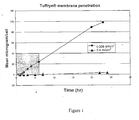
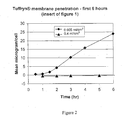
- Two hydrophobic Tuffryn® membranes are pretreated with isopropyl myristate, and each membrane is placed over the opening of a glass cell (a horizontal Franz-type cell). The area of each membrane is 1.3cm 2 . The upper side of the membrane is exposed to the air, and OMC suspension can be applied to it. The underside of the membrane faces the contents of the glass cell, which hold approximately 3.5ml of a 4% (w/v) bovine serum albumin (BSA) in PBS, at pH 7.4, at a temp. of 35°C. The PBS-BSA solution is continuously stirred with Teflon-coated magnets.
- BSA bovine serum albumin
- a suspension of microcapsules containing 8.8% OMC (octylmethoxy cinnamate) is gently applied over each membrane and spread evenly on its surface.
- OMC octylmethoxy cinnamate
- One membrane receives 0.4ml/cm 2 of OMC suspension, while the second membrane receives 0.005ml/cm 2 of OMC suspension.
- a sample of 200 ⁇ l is removed from the solution below the membrane, and analyzed using HPLC to determine the amount of OMC which was released from the microcapsules and passed through the membrane into the glass cell. After each sample is removed, an equal volume of fresh solution is returned to the cell.
- Cumulative receptor concentration-time profiles are then plotted and used to compare the effect of concentration on passage through the membrane.
- Example 8 Stabilization of oxidation-sensitive compound by encapsulation of benzoyl peroxide
- benzoyl peroxide It is desired to formulate together benzoyl peroxide and oxidation-sensitive active ingredients like retinoids and antibiotics for the treatment of acne. Encapsulation of benzoyl peroxide can facilitate obtaining a stable formulation containing both ingredients.
- the ⁇ max of CR was shifted as compared to its spectrum in water: the maxumum in water is 497nm, it is 509nm in the free benzoyl peroxide and blank system due to the presence of Tween 20, and it is 470nm in the encapsulated benzoyl peroxide system due to the presence of CTAC. Thus, each system was followed at its respective ⁇ max .
- benzoyl peroxide can be effectively encapsulted in sol-gel microcapsules so that it can be co-formulated with oxidation-sensitive compounds.
- the sensitive conpounds are not oxidized by the encapsulted benzoyl peroxed while in formulation.
- compositions for topical application can be formed, according to the present invention.
- the active ingredient can be encapsulated alone, or can be co-encapsulated with a stabilizing material, as in Example 2.
- the composition can be designed so that the microcapsules will release their contents after topical application, by using, for example, a high water content within the carrier surrounding the microcapsules (as in Example 7), or any other release mechanism.
Landscapes
- Health & Medical Sciences (AREA)
- Life Sciences & Earth Sciences (AREA)
- General Health & Medical Sciences (AREA)
- Veterinary Medicine (AREA)
- Public Health (AREA)
- Animal Behavior & Ethology (AREA)
- Chemical & Material Sciences (AREA)
- Medicinal Chemistry (AREA)
- Pharmacology & Pharmacy (AREA)
- Engineering & Computer Science (AREA)
- Chemical Kinetics & Catalysis (AREA)
- Organic Chemistry (AREA)
- Nuclear Medicine, Radiotherapy & Molecular Imaging (AREA)
- General Chemical & Material Sciences (AREA)
- Bioinformatics & Cheminformatics (AREA)
- Epidemiology (AREA)
- Birds (AREA)
- Dermatology (AREA)
- Nanotechnology (AREA)
- Communicable Diseases (AREA)
- Oncology (AREA)
- Emergency Medicine (AREA)
- Diabetes (AREA)
- Physics & Mathematics (AREA)
- Nutrition Science (AREA)
- Virology (AREA)
- Hematology (AREA)
- Pain & Pain Management (AREA)
- Oral & Maxillofacial Surgery (AREA)
- Inorganic Chemistry (AREA)
- Dispersion Chemistry (AREA)
- Biotechnology (AREA)
- Biomedical Technology (AREA)
- Obesity (AREA)
- Rheumatology (AREA)
- Biophysics (AREA)
- Optics & Photonics (AREA)
- General Engineering & Computer Science (AREA)
- Medical Informatics (AREA)
- Molecular Biology (AREA)
Priority Applications (1)
| Application Number | Priority Date | Filing Date | Title |
|---|---|---|---|
| DE10182378T DE10182378T1 (de) | 2000-04-21 | 2001-04-20 | Zusammensetzung mit erhöter Formulationsstabilität und Verabreichung von topischen Wirkstoffen |
Applications Claiming Priority (2)
| Application Number | Priority Date | Filing Date | Title |
|---|---|---|---|
| US19874900P | 2000-04-21 | 2000-04-21 | |
| EP01925838A EP1335693A2 (de) | 2000-04-21 | 2001-04-20 | Zusammensetzung mit erhöhter formulationsstabilität und verabreichung von topischen wirkstoffen |
Related Parent Applications (2)
| Application Number | Title | Priority Date | Filing Date |
|---|---|---|---|
| EP01925838.3 Division | 2001-04-20 | ||
| WOPCT/IL01/00370 Previously-Filed-Application | 2001-04-20 |
Publications (2)
| Publication Number | Publication Date |
|---|---|
| EP2324812A2 true EP2324812A2 (de) | 2011-05-25 |
| EP2324812A3 EP2324812A3 (de) | 2012-09-19 |
Family
ID=22734655
Family Applications (2)
| Application Number | Title | Priority Date | Filing Date |
|---|---|---|---|
| EP01925838A Withdrawn EP1335693A2 (de) | 2000-04-21 | 2001-04-20 | Zusammensetzung mit erhöhter formulationsstabilität und verabreichung von topischen wirkstoffen |
| EP10182378A Withdrawn EP2324812A3 (de) | 2000-04-21 | 2001-04-20 | Zusammensetzung mit erhöter Formulationsstabilität und Verabreichung von topischen Wirkstoffen |
Family Applications Before (1)
| Application Number | Title | Priority Date | Filing Date |
|---|---|---|---|
| EP01925838A Withdrawn EP1335693A2 (de) | 2000-04-21 | 2001-04-20 | Zusammensetzung mit erhöhter formulationsstabilität und verabreichung von topischen wirkstoffen |
Country Status (9)
| Country | Link |
|---|---|
| EP (2) | EP1335693A2 (de) |
| JP (1) | JP4979109B2 (de) |
| AU (1) | AU2001252513A1 (de) |
| BR (1) | BR0110600A (de) |
| CA (1) | CA2406008C (de) |
| DE (1) | DE10182378T1 (de) |
| ES (1) | ES2366886T1 (de) |
| IL (1) | IL152339A0 (de) |
| WO (1) | WO2001080823A2 (de) |
Cited By (4)
| Publication number | Priority date | Publication date | Assignee | Title |
|---|---|---|---|---|
| CN102580106A (zh) * | 2012-03-21 | 2012-07-18 | 浙江大学 | 一种pH敏感型聚电解质微囊给药载体的制备方法 |
| WO2020221052A1 (zh) * | 2019-04-28 | 2020-11-05 | 中国科学院上海药物研究所 | 一种α-生育酚的微球及其制备方法 |
| CN112402271A (zh) * | 2020-11-28 | 2021-02-26 | 科玛化妆品(北京)有限公司 | 一种类微胶囊前驱体及其制备方法 |
| EP4268949A4 (de) * | 2020-12-28 | 2024-11-13 | Kao Corporation | Mikrokapsel |
Families Citing this family (73)
| Publication number | Priority date | Publication date | Assignee | Title |
|---|---|---|---|---|
| US7060732B2 (en) * | 2000-12-12 | 2006-06-13 | Imaginative Research Associates, Inc. | Antibiotic/benzoyl peroxide dispenser |
| BR0214184A (pt) * | 2001-11-08 | 2004-10-13 | Sol Gel Technologies Ltd | Composições que contêm óleos que possuem gravidade especìfica mais alta que a gravidade especìfica da água |
| GB0202853D0 (en) * | 2002-02-07 | 2002-03-27 | Dow Corning | Encapsulation process and encapsulated compositions |
| GB2385789A (en) * | 2002-02-25 | 2003-09-03 | Celessence Internat Ltd | Frangible, insect repellent containing microcapsules |
| ATE388689T1 (de) * | 2002-04-30 | 2008-03-15 | Cognis Ip Man Gmbh | Verwendung von wirkstoffmischungen mit azelainsäure und glycyrrhetinsäure als anti- aknemittel |
| US6669929B1 (en) | 2002-12-30 | 2003-12-30 | Colgate Palmolive Company | Dentifrice containing functional film flakes |
| GB0301577D0 (en) * | 2003-01-23 | 2003-02-26 | Edko Pazarlama Tanitim Ltd Sti | Topical pharmaceutical and/or cosmetic dispense systems |
| AU2004207813B8 (en) * | 2003-01-24 | 2010-04-22 | Health Research, Inc. | Use of photodynamic therapy therapeutic agents entrapped in ceramic nanoparticles |
| US8071078B2 (en) | 2003-02-26 | 2011-12-06 | Basf Se | Encapsulated colorants for natural skin appearance |
| US7923030B2 (en) | 2003-03-14 | 2011-04-12 | Sol-Gel Technologies, Inc. | Agent-encapsulating micro- and nanoparticles, methods for preparation of same and products containing same |
| EA008771B1 (ru) * | 2003-07-31 | 2007-08-31 | Сол-Джел Текнолоджиз Лтд. | Микрокапсулы, заполненные активными ингредиентами, и способ их приготовления |
| WO2005092283A1 (en) | 2004-03-26 | 2005-10-06 | Dsm Ip Assets B.V. | Composition comprising an hdac inhibitor in combination with a retinoid |
| GB2416524A (en) * | 2004-07-24 | 2006-02-01 | Dow Corning | Microcapsules with siloxane walls formed in situ |
| KR20070100836A (ko) * | 2005-02-03 | 2007-10-11 | 신벤션 아게 | 졸/겔 기술에 의하여 제조된 약물 전달 물질 |
| EP1899015B1 (de) * | 2005-06-29 | 2012-03-21 | DSM IP Assets B.V. | Zusammensetzung mit dichten kapseln mit einem sonnenschutzmittel |
| US8784851B2 (en) | 2005-07-28 | 2014-07-22 | University Of Hull | Topical formulations containing sporopollenin |
| BRPI0614143A2 (pt) * | 2005-08-02 | 2012-11-20 | Sol Gel Technologies Ltd | processo para revestir um material particulado insolével em Água, sàlido, com um àxido metÁlico, material particulado revestido, composiÇço, mÉtodo para o tratamento de uma condiÇço superficial em um induvÍduo, e, uso de material particulado revestido |
| EP1942731A2 (de) | 2005-09-27 | 2008-07-16 | Sol-Gel Technologies Ltd. | Pflanzenschutzverfahren |
| WO2008072239A2 (en) | 2006-12-12 | 2008-06-19 | Sol-Gel Technologies Ltd. | Formation of nanometric core-shell particles having a metal oxide shell |
| EP2120891B9 (de) * | 2006-12-28 | 2019-04-24 | Dow Silicones Corporation | Polynukleare mikrokapseln |
| KR101319367B1 (ko) | 2007-01-03 | 2013-10-16 | 주식회사 엘지생활건강 | 피부 미백 패치 조성물 |
| EA200970724A1 (ru) * | 2007-02-01 | 2010-02-26 | Сол-Джел Текнолоджиз Лтд. | Композиции для местного применения, содержащие пероксид и ретиноид |
| ES2763829T3 (es) * | 2007-02-01 | 2020-06-01 | Sol Gel Tech Ltd | Método para preparar partículas que comprenden un revestimiento de óxido de metal |
| US20090047222A1 (en) * | 2007-08-15 | 2009-02-19 | Ben Gu | Color Stable Peroxide Containing Dentifrice Formulations With Dye Encapsulated Silica Shell Nanoparticles |
| GB0803538D0 (en) * | 2008-02-27 | 2008-04-02 | Dow Corning | Deposition of lipophilic active material in surfactant containing compositions |
| GB0812513D0 (en) | 2008-07-09 | 2008-08-13 | Univ Hull | Delivery vehicle |
| KR20110084151A (ko) | 2008-07-31 | 2011-07-21 | 솔-겔 테크놀로지스 리미티드 | 활성성분을 포함하는 마이크로캡슐 및 금속 산화물 쉘, 그의 제조방법 및 그의 용도 |
| JP2012514593A (ja) | 2009-01-05 | 2012-06-28 | ゾル−ゲル テクノロジー リミテッド | 被覆した活性剤を含む局所組成物 |
| US9814657B2 (en) | 2009-04-27 | 2017-11-14 | Premier Dental Products Company | Buffered microencapsulated compositions and methods |
| CN103118651B (zh) * | 2009-04-27 | 2016-01-06 | 普雷米尔牙科产品公司 | 用于组织矿化的微胶囊化组合物和方法 |
| WO2011002695A1 (en) | 2009-07-01 | 2011-01-06 | Dow Corning Corporation | Microcapsules containing curable siloxanes |
| KR20130008002A (ko) * | 2009-12-31 | 2013-01-21 | 솔-겔 테크놀로지스 리미티드 | 코어 안정화 마이크로캡슐, 이의 제조방법 및 이의 용도 |
| US11071878B2 (en) | 2009-12-31 | 2021-07-27 | Sol-Gel Technologies Ltd. | Core stabilized microcapsules, method of their preparation and uses thereof |
| US10653899B2 (en) | 2009-12-31 | 2020-05-19 | Sol-Gel Technologies Ltd. | Core stabilized microcapsules, method of their preparation and uses thereof |
| US9993019B2 (en) | 2010-03-26 | 2018-06-12 | Philip Morris Usa Inc. | Method for making particle of a hydrophobic additive and a polysaccharide coating and tobacco products containing particle of a hydrophobic additive and a polysaccharide coating |
| WO2011124706A1 (en) * | 2010-04-09 | 2011-10-13 | Basf Se | In-situ sol-gel encapsulation of fragrances, perfumes or flavours |
| WO2011154421A1 (de) * | 2010-06-09 | 2011-12-15 | Basf Se | Wirkstoff enthaltende mikrokapseln mit einer metalloxid-haltigen schale |
| WO2012041438A1 (en) * | 2010-09-30 | 2012-04-05 | Merck Patent Gmbh | A process for treating sol-gel capsules |
| EP2522332A1 (de) | 2011-05-09 | 2012-11-14 | DSM IP Assets B.V. | Verwendung von Resveratrol und Magnesiumascorbylphosphat |
| EP2522331A1 (de) | 2011-05-09 | 2012-11-14 | DSM IP Assets B.V. | Verwendung von Resveratrol und Niacinamid |
| EP2522329A1 (de) | 2011-05-09 | 2012-11-14 | DSM IP Assets B.V. | Verwendung von Resveratrol und Arbutin |
| EP2522328A1 (de) | 2011-05-09 | 2012-11-14 | DSM IP Assets B.V. | Verwendung von Resveratrol und Ascorbyl-2-Glucosid |
| EP2522335A1 (de) | 2011-05-09 | 2012-11-14 | DSM IP Assets B.V. | Verwendung von Resveratrol und Natriumascorbylphosphat |
| EP2522330A1 (de) | 2011-05-09 | 2012-11-14 | DSM IP Assets B.V. | Verwendung von Rsveratrol und einem Edelweiss-Extrakt |
| ES2786103T3 (es) | 2011-06-29 | 2020-10-08 | Sol Gel Tech Ltd | Formulaciones tópicas estabilizadas que contienen microcápsulas de núcleo-cubierta |
| US9060945B2 (en) | 2012-01-09 | 2015-06-23 | Dsm Ip Assets B.V. | Use of danielone and derivatives thereof in skin care |
| EP2623094A1 (de) | 2012-02-02 | 2013-08-07 | DSM IP Assets B.V. | Verwendung von Edelweiss-Extrakt |
| CA2872446A1 (en) * | 2012-05-22 | 2013-11-28 | Dsm Ip Assets B.V. | Composition and process for making a porous inorganic oxide coating |
| EP2689836A1 (de) | 2012-07-26 | 2014-01-29 | Basf Se | Zusammensetzung aus Mikrokapseln mit Silicahülle und Herstellungsverfahren dafür |
| US10835495B2 (en) | 2012-11-14 | 2020-11-17 | W. R. Grace & Co.-Conn. | Compositions containing a biologically active material and a non-ordered inorganic oxide material and methods of making and using the same |
| US9687465B2 (en) | 2012-11-27 | 2017-06-27 | Sol-Gel Technologies Ltd. | Compositions for the treatment of rosacea |
| EP2925296B1 (de) * | 2012-11-27 | 2021-01-06 | Sol-Gel Technologies Ltd. | Zusammensetzungen zur behandlung von rosacea |
| WO2014162311A1 (en) | 2013-04-01 | 2014-10-09 | Yissum Research Development Company Of The Hebrew University Of Jerusalem Ltd. | Adjustable sol-gel-based capsules comprising fragrances and aromas, and uses thereof |
| WO2014172685A1 (en) | 2013-04-18 | 2014-10-23 | The Regents Of The University Of California | Nanoscale coatings for encapsulation of biological entities |
| EP2848286A1 (de) | 2013-09-12 | 2015-03-18 | DSM IP Assets B.V. | Kosmetische Zusammensetzung mit Chicoreesäure |
| EP2873414A1 (de) | 2013-11-19 | 2015-05-20 | DSM IP Assets B.V. | Verwendung eines Edelweissextrakts in der Haarpflege zur Vorbeugung von Haarergrauung |
| US10046291B2 (en) | 2013-12-06 | 2018-08-14 | Kao Corporation | Method for manufacturing microcapsules |
| EP3206659B1 (de) | 2014-10-17 | 2019-12-25 | DSM IP Assets B.V. | Kosmetische verwendung einer zubereitung enthaltend 10-hydroxystearinsäure |
| PT3283435T (pt) * | 2015-04-17 | 2021-08-16 | Univ Queensland | Composição, materiais particulados e métodos para preparação de materiais particulados |
| WO2016193390A1 (en) | 2015-06-04 | 2016-12-08 | Dsm Ip Assets B.V. | Gentiopicroside free gentiana extract |
| CN107809994A (zh) | 2015-06-30 | 2018-03-16 | 宝洁公司 | 包含多个微胶囊群体的组合物 |
| EP3316974A1 (de) | 2015-06-30 | 2018-05-09 | The Procter and Gamble Company | Verfahren zur herstellung von zusammensetzungen mit mehreren populationen von mikrokapseln |
| CN105012173A (zh) * | 2015-07-09 | 2015-11-04 | 常州艾瑞特电子有限公司 | 一种防治口腔溃疡的牙膏及其制备方法 |
| JP6526322B2 (ja) | 2015-08-20 | 2019-06-05 | ソル − ゲル テクノロジーズ リミテッド | 過酸化ベンゾイルおよびアダパレンを含む局所投与用組成物 |
| JP6659019B2 (ja) * | 2015-12-22 | 2020-03-04 | 花王株式会社 | マイクロカプセル及びその製造方法 |
| EP3299083A1 (de) | 2016-09-23 | 2018-03-28 | Greenseal Research Ltd | Massgeschneiderte matrizen aus sol-gel zur chemischen immobilisierung |
| CA3069287C (en) | 2017-07-12 | 2022-08-30 | Sol-Gel Technologies Ltd. | Methods and compositions for the treatment of acne |
| HUE073201T2 (hu) | 2017-07-12 | 2026-01-28 | Sol Gel Tech Ltd | Kapszulázott tretinoint tartalmazó készítmények |
| US12478064B2 (en) | 2017-11-23 | 2025-11-25 | Yissum Research Development Company Of The Hebrew University Of Jerusalem Ltd. | Microcapsules and processes for their preparation |
| CA3115355A1 (en) * | 2018-10-16 | 2020-04-23 | Silicycle Inc. | Tunable process for silica capsules/spheres preparation and their use |
| GB202006988D0 (en) * | 2020-05-12 | 2020-06-24 | Cambrian Ventures Ltd | Anti-viral preparation and method of manufacturing an antiviral preparation |
| CN117545547A (zh) | 2021-06-30 | 2024-02-09 | 花王株式会社 | 微胶囊水分散液 |
| CN120918981B (zh) * | 2025-07-31 | 2026-03-24 | 广州雕龄新材料有限公司 | 一种角蛋白键合微囊剂及其制备方法和应用 |
Citations (13)
| Publication number | Priority date | Publication date | Assignee | Title |
|---|---|---|---|---|
| US3957971A (en) | 1974-07-29 | 1976-05-18 | Lever Brothers Company | Moisturizing units and moisturizing compositions containing the same |
| US4169069A (en) | 1976-09-18 | 1979-09-25 | Merck Patent Gesellschaft Mit Beschrankter Haftung | Silicon dioxide-containing compositions and process for their preparation and use |
| US4988744A (en) | 1987-02-04 | 1991-01-29 | Tohru Yamamoto | Perfume compositions produced by sol-gel methods |
| US5591453A (en) | 1994-07-27 | 1997-01-07 | The Trustees Of The University Of Pennsylvania | Incorporation of biologically active molecules into bioactive glasses |
| WO1997045367A1 (en) | 1996-05-29 | 1997-12-04 | Orion-Yhtymä Oy | Dissolvable oxides for biological applications |
| US5851538A (en) | 1995-12-29 | 1998-12-22 | Advanced Polymer Systems, Inc. | Retinoid formulations in porous microspheres for reduced irritation and enhanced stability |
| US5874105A (en) | 1996-01-31 | 1999-02-23 | Collaborative Laboratories, Inc. | Lipid vesicles formed with alkylammonium fatty acid salts |
| DE19811900A1 (de) | 1998-03-18 | 1999-09-23 | Feinchemie Gmbh Sebnitz | Biokompatibles Kompositmaterial |
| US6077522A (en) | 1993-11-15 | 2000-06-20 | Zeneca Limited | Microcapsules containing suspensions of biologically active compounds and ultraviolet protectant |
| US6103267A (en) | 1998-07-27 | 2000-08-15 | Sunsmart, Inc. | Stabilized ascorbic acid, composition, and method of use |
| WO2000047236A1 (en) | 1999-02-12 | 2000-08-17 | Biostream, Inc. | Matrices for drug delivery and methods for making and using the same |
| US6146664A (en) | 1998-07-10 | 2000-11-14 | Shaklee Corporation | Stable topical ascorbic acid compositions |
| US6171600B1 (en) | 1993-12-02 | 2001-01-09 | Ifac Gmbh | Stable multiple X/O/Y-emulsion |
Family Cites Families (10)
| Publication number | Priority date | Publication date | Assignee | Title |
|---|---|---|---|---|
| ES2042664T3 (es) * | 1987-10-01 | 1993-12-16 | American Cyanamid Co | Metodo perfeccionado para la preparacion de dialquildiclorsuccinatos. |
| IL93134A (en) * | 1990-01-23 | 1997-11-20 | Yissum Res Dev Co | Doped sol-gel glasses for obtaining chemical interactions |
| US5520917A (en) * | 1992-07-27 | 1996-05-28 | Suzuki Yushi Industries Co., Ltd. | Materials in the form of colored spherical fine particles |
| IL120022A (en) * | 1997-01-16 | 2003-02-12 | Yissum Res Dev Co | Sunscreens for protection from sun radiation |
| US6337089B1 (en) * | 1998-02-06 | 2002-01-08 | Seiwa Kasei Company, Limited | Microcapsule containing core material and method for producing the same |
| FR2774906B1 (fr) * | 1998-02-13 | 2000-05-12 | Rhodia Chimie Sa | Systeme d'encapsulation a coeur organique et a ecorce minerale a base d'hydroxycarbonate d'aluminium et son procede de preparation |
| DE1104287T1 (de) * | 1998-08-13 | 2001-12-20 | Sol-Gel Technologies Ltd., Tel Aviv | Verfahren zur herstellung von mit funktionalisierten molekülen beladene oxid-mikrokapseln und die daraus erhaltenen produkte |
| FR2785292B1 (fr) * | 1998-10-30 | 2002-06-28 | Rhodia Chimie Sa | Capsules a ecorce minerale poreuse dans lesquelles sont immobilisees dans un milieu biologique liquide, une ou plusieurs matieres biologiques, leurs procede de preparation et utilisations |
| US6238650B1 (en) * | 1999-05-26 | 2001-05-29 | Sol-Gel Technologies Ltd. | Sunscreen composition containing sol-gel microcapsules |
| EP1181000B1 (de) * | 1999-05-25 | 2007-02-07 | Sol-Gel Technologies Ltd. | Ein verfahren zur herstellung von einem lichtstabilen sonnenschutzmittel |
-
2001
- 2001-04-20 EP EP01925838A patent/EP1335693A2/de not_active Withdrawn
- 2001-04-20 BR BR0110600-7A patent/BR0110600A/pt not_active IP Right Cessation
- 2001-04-20 CA CA2406008A patent/CA2406008C/en not_active Expired - Lifetime
- 2001-04-20 WO PCT/IL2001/000370 patent/WO2001080823A2/en not_active Ceased
- 2001-04-20 IL IL15233901A patent/IL152339A0/xx unknown
- 2001-04-20 JP JP2001577923A patent/JP4979109B2/ja not_active Expired - Fee Related
- 2001-04-20 DE DE10182378T patent/DE10182378T1/de active Pending
- 2001-04-20 ES ES10182378T patent/ES2366886T1/es active Pending
- 2001-04-20 EP EP10182378A patent/EP2324812A3/de not_active Withdrawn
- 2001-04-20 AU AU2001252513A patent/AU2001252513A1/en not_active Abandoned
Patent Citations (13)
| Publication number | Priority date | Publication date | Assignee | Title |
|---|---|---|---|---|
| US3957971A (en) | 1974-07-29 | 1976-05-18 | Lever Brothers Company | Moisturizing units and moisturizing compositions containing the same |
| US4169069A (en) | 1976-09-18 | 1979-09-25 | Merck Patent Gesellschaft Mit Beschrankter Haftung | Silicon dioxide-containing compositions and process for their preparation and use |
| US4988744A (en) | 1987-02-04 | 1991-01-29 | Tohru Yamamoto | Perfume compositions produced by sol-gel methods |
| US6077522A (en) | 1993-11-15 | 2000-06-20 | Zeneca Limited | Microcapsules containing suspensions of biologically active compounds and ultraviolet protectant |
| US6171600B1 (en) | 1993-12-02 | 2001-01-09 | Ifac Gmbh | Stable multiple X/O/Y-emulsion |
| US5591453A (en) | 1994-07-27 | 1997-01-07 | The Trustees Of The University Of Pennsylvania | Incorporation of biologically active molecules into bioactive glasses |
| US5851538A (en) | 1995-12-29 | 1998-12-22 | Advanced Polymer Systems, Inc. | Retinoid formulations in porous microspheres for reduced irritation and enhanced stability |
| US5874105A (en) | 1996-01-31 | 1999-02-23 | Collaborative Laboratories, Inc. | Lipid vesicles formed with alkylammonium fatty acid salts |
| WO1997045367A1 (en) | 1996-05-29 | 1997-12-04 | Orion-Yhtymä Oy | Dissolvable oxides for biological applications |
| DE19811900A1 (de) | 1998-03-18 | 1999-09-23 | Feinchemie Gmbh Sebnitz | Biokompatibles Kompositmaterial |
| US6146664A (en) | 1998-07-10 | 2000-11-14 | Shaklee Corporation | Stable topical ascorbic acid compositions |
| US6103267A (en) | 1998-07-27 | 2000-08-15 | Sunsmart, Inc. | Stabilized ascorbic acid, composition, and method of use |
| WO2000047236A1 (en) | 1999-02-12 | 2000-08-17 | Biostream, Inc. | Matrices for drug delivery and methods for making and using the same |
Cited By (7)
| Publication number | Priority date | Publication date | Assignee | Title |
|---|---|---|---|---|
| CN102580106A (zh) * | 2012-03-21 | 2012-07-18 | 浙江大学 | 一种pH敏感型聚电解质微囊给药载体的制备方法 |
| CN102580106B (zh) * | 2012-03-21 | 2013-07-10 | 浙江大学 | 一种pH敏感型聚电解质微囊给药载体的制备方法 |
| WO2020221052A1 (zh) * | 2019-04-28 | 2020-11-05 | 中国科学院上海药物研究所 | 一种α-生育酚的微球及其制备方法 |
| CN112402271A (zh) * | 2020-11-28 | 2021-02-26 | 科玛化妆品(北京)有限公司 | 一种类微胶囊前驱体及其制备方法 |
| CN112402271B (zh) * | 2020-11-28 | 2022-05-03 | 科玛化妆品(北京)有限公司 | 一种类微胶囊前驱体及其制备方法 |
| EP4268949A4 (de) * | 2020-12-28 | 2024-11-13 | Kao Corporation | Mikrokapsel |
| US12594534B2 (en) | 2020-12-28 | 2026-04-07 | Kao Corporation | Microcapsule |
Also Published As
| Publication number | Publication date |
|---|---|
| CA2406008C (en) | 2011-03-15 |
| ES2366886T1 (es) | 2011-10-26 |
| EP1335693A2 (de) | 2003-08-20 |
| JP4979109B2 (ja) | 2012-07-18 |
| CA2406008A1 (en) | 2001-11-01 |
| WO2001080823A3 (en) | 2003-05-30 |
| AU2001252513A1 (en) | 2001-11-07 |
| EP2324812A3 (de) | 2012-09-19 |
| BR0110600A (pt) | 2003-04-15 |
| JP2003534249A (ja) | 2003-11-18 |
| IL152339A0 (en) | 2003-05-29 |
| WO2001080823A2 (en) | 2001-11-01 |
| DE10182378T1 (de) | 2012-02-02 |
Similar Documents
| Publication | Publication Date | Title |
|---|---|---|
| CA2406008C (en) | Composition exhibiting enhanced formulation stability and delivery of topical active ingredients | |
| US7758888B2 (en) | Composition exhibiting enhanced formulation stability and delivery of topical active ingredients | |
| US5496565A (en) | Microspherules | |
| AU2006274541B2 (en) | Metal oxide coating of water insoluble ingredients | |
| JP5755694B2 (ja) | 活性成分が充填されたマイクロカプセル及びその製造方法 | |
| US8685425B2 (en) | Microencapsulation product and process | |
| EP0557489B1 (de) | Langwirkende topische zusammensetzung für kosmetische und/oder pharmazeutische anwendung auf der äusseren schicht der haut | |
| US20120064135A1 (en) | Benzoyl Peroxide Composition, Methods for Making Same, and Pharmaceutical or Cosmetic Formulations Comprising Same, and Uses Thereof | |
| EP0307723B1 (de) | Verkapselung von Hilfsstoffen in Antischweissmitteln | |
| JPH05262641A (ja) | 固体脂質粒子の懸濁液を含有する局所製剤 | |
| CN102755868A (zh) | 由溶胶-凝胶前体混合物制备的微胶囊及其制备方法 | |
| JP2001354551A (ja) | 少なくとも一つの水溶性化粧品として又は皮膚科学的に活性な成分を含む水性コアを有するマイクロカプセル及びそれを含む化粧品又は皮膚科学的組成物 | |
| JP2005512993A (ja) | 水の比重より大きい比重を有する油状物を含有する組成物 | |
| EP0611207A1 (de) | Verfahren zur Stabilisierung von Vesikeln aus amphiphilen Lipiden und diese stabilisierte Vesikeln enthaltende Zusammensetzung für die topische Anwendung | |
| KR20010013086A (ko) | 물함유 왁스 기초 제품 | |
| JP4637991B2 (ja) | マイクロカプセル及びその製造方法 | |
| JP4637992B2 (ja) | マイクロカプセル及びその製造方法 | |
| US20030017183A1 (en) | Dermatological suspensions(micro-matrix) | |
| US6117419A (en) | Delivery system for oil soluble actives in cosmetic/personal care products | |
| JP4637993B2 (ja) | マイクロカプセル及びその製造方法 | |
| HK1153652A (en) | Composition exhibiting enhanced formulation stability and delivery of topical active ingredients | |
| Jansen et al. | Encapsulation to deliver topical actives | |
| Baschong et al. | A Novel Ultra-Small Unilamellar Carrier System for Cosmetic Actives |
Legal Events
| Date | Code | Title | Description |
|---|---|---|---|
| PUAI | Public reference made under article 153(3) epc to a published international application that has entered the european phase |
Free format text: ORIGINAL CODE: 0009012 |
|
| 17P | Request for examination filed |
Effective date: 20100929 |
|
| AC | Divisional application: reference to earlier application |
Ref document number: 1335693 Country of ref document: EP Kind code of ref document: P |
|
| AK | Designated contracting states |
Kind code of ref document: A2 Designated state(s): AT BE CH CY DE DK ES FI FR GB GR IE IT LI LU MC NL PT SE TR |
|
| AX | Request for extension of the european patent |
Extension state: AL LT LV MK RO SI |
|
| REG | Reference to a national code |
Ref country code: FR Ref legal event code: EL |
|
| REG | Reference to a national code |
Ref country code: DE Ref legal event code: R210 Effective date: 20120202 |
|
| REG | Reference to a national code |
Ref country code: HK Ref legal event code: DE Ref document number: 1153652 Country of ref document: HK |
|
| PUAL | Search report despatched |
Free format text: ORIGINAL CODE: 0009013 |
|
| AK | Designated contracting states |
Kind code of ref document: A3 Designated state(s): AT BE CH CY DE DK ES FI FR GB GR IE IT LI LU MC NL PT SE TR |
|
| AX | Request for extension of the european patent |
Extension state: AL LT LV MK RO SI |
|
| RIC1 | Information provided on ipc code assigned before grant |
Ipc: A61Q 17/04 20060101ALI20120810BHEP Ipc: A61K 8/11 20060101AFI20120810BHEP |
|
| STAA | Information on the status of an ep patent application or granted ep patent |
Free format text: STATUS: THE APPLICATION IS DEEMED TO BE WITHDRAWN |
|
| 18D | Application deemed to be withdrawn |
Effective date: 20151103 |
|
| REG | Reference to a national code |
Ref country code: HK Ref legal event code: WD Ref document number: 1153652 Country of ref document: HK |