EP2332579A2 - Humanes Interleukin-18 bindende Antikörper und Verfahren zu ihrer Herstellung und Verwendung - Google Patents
Humanes Interleukin-18 bindende Antikörper und Verfahren zu ihrer Herstellung und Verwendung Download PDFInfo
- Publication number
- EP2332579A2 EP2332579A2 EP10185317A EP10185317A EP2332579A2 EP 2332579 A2 EP2332579 A2 EP 2332579A2 EP 10185317 A EP10185317 A EP 10185317A EP 10185317 A EP10185317 A EP 10185317A EP 2332579 A2 EP2332579 A2 EP 2332579A2
- Authority
- EP
- European Patent Office
- Prior art keywords
- antibody
- seq
- human
- amino acid
- antigen
- Prior art date
- Legal status (The legal status is an assumption and is not a legal conclusion. Google has not performed a legal analysis and makes no representation as to the accuracy of the status listed.)
- Withdrawn
Links
Images

Classifications
-
- C—CHEMISTRY; METALLURGY
- C07—ORGANIC CHEMISTRY
- C07K—PEPTIDES
- C07K16/00—Immunoglobulins [IG], e.g. monoclonal or polyclonal antibodies
- C07K16/18—Immunoglobulins [IG], e.g. monoclonal or polyclonal antibodies against material from animals or humans
- C07K16/24—Immunoglobulins [IG], e.g. monoclonal or polyclonal antibodies against material from animals or humans against cytokines, lymphokines or interferons
- C07K16/244—Interleukins [IL]
-
- C—CHEMISTRY; METALLURGY
- C07—ORGANIC CHEMISTRY
- C07K—PEPTIDES
- C07K16/00—Immunoglobulins [IG], e.g. monoclonal or polyclonal antibodies
- C07K16/18—Immunoglobulins [IG], e.g. monoclonal or polyclonal antibodies against material from animals or humans
- C07K16/24—Immunoglobulins [IG], e.g. monoclonal or polyclonal antibodies against material from animals or humans against cytokines, lymphokines or interferons
-
- A—HUMAN NECESSITIES
- A61—MEDICAL OR VETERINARY SCIENCE; HYGIENE
- A61K—PREPARATIONS FOR MEDICAL, DENTAL OR TOILETRY PURPOSES
- A61K31/00—Medicinal preparations containing organic active ingredients
- A61K31/33—Heterocyclic compounds
- A61K31/395—Heterocyclic compounds having nitrogen as a ring hetero atom, e.g. guanethidine or rifamycins
- A61K31/495—Heterocyclic compounds having nitrogen as a ring hetero atom, e.g. guanethidine or rifamycins having six-membered rings with two or more nitrogen atoms as the only ring heteroatoms, e.g. piperazine or tetrazines
- A61K31/505—Pyrimidines; Hydrogenated pyrimidines, e.g. trimethoprim
- A61K31/519—Pyrimidines; Hydrogenated pyrimidines, e.g. trimethoprim ortho- or peri-condensed with heterocyclic rings
-
- A—HUMAN NECESSITIES
- A61—MEDICAL OR VETERINARY SCIENCE; HYGIENE
- A61K—PREPARATIONS FOR MEDICAL, DENTAL OR TOILETRY PURPOSES
- A61K31/00—Medicinal preparations containing organic active ingredients
- A61K31/56—Compounds containing cyclopenta[a]hydrophenanthrene ring systems; Derivatives thereof, e.g. steroids
-
- A—HUMAN NECESSITIES
- A61—MEDICAL OR VETERINARY SCIENCE; HYGIENE
- A61K—PREPARATIONS FOR MEDICAL, DENTAL OR TOILETRY PURPOSES
- A61K38/00—Medicinal preparations containing peptides
- A61K38/04—Peptides having up to 20 amino acids in a fully defined sequence; Derivatives thereof
- A61K38/12—Cyclic peptides, e.g. bacitracins; Polymyxins; Gramicidins S, C; Tyrocidins A, B or C
- A61K38/13—Cyclosporins
-
- A—HUMAN NECESSITIES
- A61—MEDICAL OR VETERINARY SCIENCE; HYGIENE
- A61K—PREPARATIONS FOR MEDICAL, DENTAL OR TOILETRY PURPOSES
- A61K39/00—Medicinal preparations containing antigens or antibodies
- A61K39/395—Antibodies; Immunoglobulins; Immune serum, e.g. antilymphocytic serum
- A61K39/39533—Antibodies; Immunoglobulins; Immune serum, e.g. antilymphocytic serum against materials from animals
- A61K39/3955—Antibodies; Immunoglobulins; Immune serum, e.g. antilymphocytic serum against materials from animals against proteinaceous materials, e.g. enzymes, hormones, lymphokines
-
- A—HUMAN NECESSITIES
- A61—MEDICAL OR VETERINARY SCIENCE; HYGIENE
- A61P—SPECIFIC THERAPEUTIC ACTIVITY OF CHEMICAL COMPOUNDS OR MEDICINAL PREPARATIONS
- A61P1/00—Drugs for disorders of the alimentary tract or the digestive system
-
- A—HUMAN NECESSITIES
- A61—MEDICAL OR VETERINARY SCIENCE; HYGIENE
- A61P—SPECIFIC THERAPEUTIC ACTIVITY OF CHEMICAL COMPOUNDS OR MEDICINAL PREPARATIONS
- A61P1/00—Drugs for disorders of the alimentary tract or the digestive system
- A61P1/04—Drugs for disorders of the alimentary tract or the digestive system for ulcers, gastritis or reflux esophagitis, e.g. antacids, inhibitors of acid secretion, mucosal protectants
-
- A—HUMAN NECESSITIES
- A61—MEDICAL OR VETERINARY SCIENCE; HYGIENE
- A61P—SPECIFIC THERAPEUTIC ACTIVITY OF CHEMICAL COMPOUNDS OR MEDICINAL PREPARATIONS
- A61P1/00—Drugs for disorders of the alimentary tract or the digestive system
- A61P1/16—Drugs for disorders of the alimentary tract or the digestive system for liver or gallbladder disorders, e.g. hepatoprotective agents, cholagogues, litholytics
-
- A—HUMAN NECESSITIES
- A61—MEDICAL OR VETERINARY SCIENCE; HYGIENE
- A61P—SPECIFIC THERAPEUTIC ACTIVITY OF CHEMICAL COMPOUNDS OR MEDICINAL PREPARATIONS
- A61P11/00—Drugs for disorders of the respiratory system
-
- A—HUMAN NECESSITIES
- A61—MEDICAL OR VETERINARY SCIENCE; HYGIENE
- A61P—SPECIFIC THERAPEUTIC ACTIVITY OF CHEMICAL COMPOUNDS OR MEDICINAL PREPARATIONS
- A61P11/00—Drugs for disorders of the respiratory system
- A61P11/06—Antiasthmatics
-
- A—HUMAN NECESSITIES
- A61—MEDICAL OR VETERINARY SCIENCE; HYGIENE
- A61P—SPECIFIC THERAPEUTIC ACTIVITY OF CHEMICAL COMPOUNDS OR MEDICINAL PREPARATIONS
- A61P13/00—Drugs for disorders of the urinary system
-
- A—HUMAN NECESSITIES
- A61—MEDICAL OR VETERINARY SCIENCE; HYGIENE
- A61P—SPECIFIC THERAPEUTIC ACTIVITY OF CHEMICAL COMPOUNDS OR MEDICINAL PREPARATIONS
- A61P13/00—Drugs for disorders of the urinary system
- A61P13/12—Drugs for disorders of the urinary system of the kidneys
-
- A—HUMAN NECESSITIES
- A61—MEDICAL OR VETERINARY SCIENCE; HYGIENE
- A61P—SPECIFIC THERAPEUTIC ACTIVITY OF CHEMICAL COMPOUNDS OR MEDICINAL PREPARATIONS
- A61P15/00—Drugs for genital or sexual disorders; Contraceptives
-
- A—HUMAN NECESSITIES
- A61—MEDICAL OR VETERINARY SCIENCE; HYGIENE
- A61P—SPECIFIC THERAPEUTIC ACTIVITY OF CHEMICAL COMPOUNDS OR MEDICINAL PREPARATIONS
- A61P15/00—Drugs for genital or sexual disorders; Contraceptives
- A61P15/08—Drugs for genital or sexual disorders; Contraceptives for gonadal disorders or for enhancing fertility, e.g. inducers of ovulation or of spermatogenesis
-
- A—HUMAN NECESSITIES
- A61—MEDICAL OR VETERINARY SCIENCE; HYGIENE
- A61P—SPECIFIC THERAPEUTIC ACTIVITY OF CHEMICAL COMPOUNDS OR MEDICINAL PREPARATIONS
- A61P15/00—Drugs for genital or sexual disorders; Contraceptives
- A61P15/10—Drugs for genital or sexual disorders; Contraceptives for impotence
-
- A—HUMAN NECESSITIES
- A61—MEDICAL OR VETERINARY SCIENCE; HYGIENE
- A61P—SPECIFIC THERAPEUTIC ACTIVITY OF CHEMICAL COMPOUNDS OR MEDICINAL PREPARATIONS
- A61P17/00—Drugs for dermatological disorders
-
- A—HUMAN NECESSITIES
- A61—MEDICAL OR VETERINARY SCIENCE; HYGIENE
- A61P—SPECIFIC THERAPEUTIC ACTIVITY OF CHEMICAL COMPOUNDS OR MEDICINAL PREPARATIONS
- A61P17/00—Drugs for dermatological disorders
- A61P17/06—Antipsoriatics
-
- A—HUMAN NECESSITIES
- A61—MEDICAL OR VETERINARY SCIENCE; HYGIENE
- A61P—SPECIFIC THERAPEUTIC ACTIVITY OF CHEMICAL COMPOUNDS OR MEDICINAL PREPARATIONS
- A61P17/00—Drugs for dermatological disorders
- A61P17/14—Drugs for dermatological disorders for baldness or alopecia
-
- A—HUMAN NECESSITIES
- A61—MEDICAL OR VETERINARY SCIENCE; HYGIENE
- A61P—SPECIFIC THERAPEUTIC ACTIVITY OF CHEMICAL COMPOUNDS OR MEDICINAL PREPARATIONS
- A61P19/00—Drugs for skeletal disorders
-
- A—HUMAN NECESSITIES
- A61—MEDICAL OR VETERINARY SCIENCE; HYGIENE
- A61P—SPECIFIC THERAPEUTIC ACTIVITY OF CHEMICAL COMPOUNDS OR MEDICINAL PREPARATIONS
- A61P19/00—Drugs for skeletal disorders
- A61P19/02—Drugs for skeletal disorders for joint disorders, e.g. arthritis, arthrosis
-
- A—HUMAN NECESSITIES
- A61—MEDICAL OR VETERINARY SCIENCE; HYGIENE
- A61P—SPECIFIC THERAPEUTIC ACTIVITY OF CHEMICAL COMPOUNDS OR MEDICINAL PREPARATIONS
- A61P19/00—Drugs for skeletal disorders
- A61P19/04—Drugs for skeletal disorders for non-specific disorders of the connective tissue
-
- A—HUMAN NECESSITIES
- A61—MEDICAL OR VETERINARY SCIENCE; HYGIENE
- A61P—SPECIFIC THERAPEUTIC ACTIVITY OF CHEMICAL COMPOUNDS OR MEDICINAL PREPARATIONS
- A61P19/00—Drugs for skeletal disorders
- A61P19/06—Antigout agents, e.g. antihyperuricemic or uricosuric agents
-
- A—HUMAN NECESSITIES
- A61—MEDICAL OR VETERINARY SCIENCE; HYGIENE
- A61P—SPECIFIC THERAPEUTIC ACTIVITY OF CHEMICAL COMPOUNDS OR MEDICINAL PREPARATIONS
- A61P21/00—Drugs for disorders of the muscular or neuromuscular system
-
- A—HUMAN NECESSITIES
- A61—MEDICAL OR VETERINARY SCIENCE; HYGIENE
- A61P—SPECIFIC THERAPEUTIC ACTIVITY OF CHEMICAL COMPOUNDS OR MEDICINAL PREPARATIONS
- A61P25/00—Drugs for disorders of the nervous system
-
- A—HUMAN NECESSITIES
- A61—MEDICAL OR VETERINARY SCIENCE; HYGIENE
- A61P—SPECIFIC THERAPEUTIC ACTIVITY OF CHEMICAL COMPOUNDS OR MEDICINAL PREPARATIONS
- A61P25/00—Drugs for disorders of the nervous system
- A61P25/08—Antiepileptics; Anticonvulsants
-
- A—HUMAN NECESSITIES
- A61—MEDICAL OR VETERINARY SCIENCE; HYGIENE
- A61P—SPECIFIC THERAPEUTIC ACTIVITY OF CHEMICAL COMPOUNDS OR MEDICINAL PREPARATIONS
- A61P25/00—Drugs for disorders of the nervous system
- A61P25/14—Drugs for disorders of the nervous system for treating abnormal movements, e.g. chorea, dyskinesia
-
- A—HUMAN NECESSITIES
- A61—MEDICAL OR VETERINARY SCIENCE; HYGIENE
- A61P—SPECIFIC THERAPEUTIC ACTIVITY OF CHEMICAL COMPOUNDS OR MEDICINAL PREPARATIONS
- A61P25/00—Drugs for disorders of the nervous system
- A61P25/14—Drugs for disorders of the nervous system for treating abnormal movements, e.g. chorea, dyskinesia
- A61P25/16—Anti-Parkinson drugs
-
- A—HUMAN NECESSITIES
- A61—MEDICAL OR VETERINARY SCIENCE; HYGIENE
- A61P—SPECIFIC THERAPEUTIC ACTIVITY OF CHEMICAL COMPOUNDS OR MEDICINAL PREPARATIONS
- A61P25/00—Drugs for disorders of the nervous system
- A61P25/18—Antipsychotics, i.e. neuroleptics; Drugs for mania or schizophrenia
-
- A—HUMAN NECESSITIES
- A61—MEDICAL OR VETERINARY SCIENCE; HYGIENE
- A61P—SPECIFIC THERAPEUTIC ACTIVITY OF CHEMICAL COMPOUNDS OR MEDICINAL PREPARATIONS
- A61P25/00—Drugs for disorders of the nervous system
- A61P25/24—Antidepressants
-
- A—HUMAN NECESSITIES
- A61—MEDICAL OR VETERINARY SCIENCE; HYGIENE
- A61P—SPECIFIC THERAPEUTIC ACTIVITY OF CHEMICAL COMPOUNDS OR MEDICINAL PREPARATIONS
- A61P25/00—Drugs for disorders of the nervous system
- A61P25/28—Drugs for disorders of the nervous system for treating neurodegenerative disorders of the central nervous system, e.g. nootropic agents, cognition enhancers, drugs for treating Alzheimer's disease or other forms of dementia
-
- A—HUMAN NECESSITIES
- A61—MEDICAL OR VETERINARY SCIENCE; HYGIENE
- A61P—SPECIFIC THERAPEUTIC ACTIVITY OF CHEMICAL COMPOUNDS OR MEDICINAL PREPARATIONS
- A61P27/00—Drugs for disorders of the senses
- A61P27/02—Ophthalmic agents
-
- A—HUMAN NECESSITIES
- A61—MEDICAL OR VETERINARY SCIENCE; HYGIENE
- A61P—SPECIFIC THERAPEUTIC ACTIVITY OF CHEMICAL COMPOUNDS OR MEDICINAL PREPARATIONS
- A61P29/00—Non-central analgesic, antipyretic or antiinflammatory agents, e.g. antirheumatic agents; Non-steroidal antiinflammatory drugs [NSAID]
-
- A—HUMAN NECESSITIES
- A61—MEDICAL OR VETERINARY SCIENCE; HYGIENE
- A61P—SPECIFIC THERAPEUTIC ACTIVITY OF CHEMICAL COMPOUNDS OR MEDICINAL PREPARATIONS
- A61P3/00—Drugs for disorders of the metabolism
-
- A—HUMAN NECESSITIES
- A61—MEDICAL OR VETERINARY SCIENCE; HYGIENE
- A61P—SPECIFIC THERAPEUTIC ACTIVITY OF CHEMICAL COMPOUNDS OR MEDICINAL PREPARATIONS
- A61P3/00—Drugs for disorders of the metabolism
- A61P3/08—Drugs for disorders of the metabolism for glucose homeostasis
-
- A—HUMAN NECESSITIES
- A61—MEDICAL OR VETERINARY SCIENCE; HYGIENE
- A61P—SPECIFIC THERAPEUTIC ACTIVITY OF CHEMICAL COMPOUNDS OR MEDICINAL PREPARATIONS
- A61P3/00—Drugs for disorders of the metabolism
- A61P3/08—Drugs for disorders of the metabolism for glucose homeostasis
- A61P3/10—Drugs for disorders of the metabolism for glucose homeostasis for hyperglycaemia, e.g. antidiabetics
-
- A—HUMAN NECESSITIES
- A61—MEDICAL OR VETERINARY SCIENCE; HYGIENE
- A61P—SPECIFIC THERAPEUTIC ACTIVITY OF CHEMICAL COMPOUNDS OR MEDICINAL PREPARATIONS
- A61P31/00—Antiinfectives, i.e. antibiotics, antiseptics, chemotherapeutics
-
- A—HUMAN NECESSITIES
- A61—MEDICAL OR VETERINARY SCIENCE; HYGIENE
- A61P—SPECIFIC THERAPEUTIC ACTIVITY OF CHEMICAL COMPOUNDS OR MEDICINAL PREPARATIONS
- A61P31/00—Antiinfectives, i.e. antibiotics, antiseptics, chemotherapeutics
- A61P31/04—Antibacterial agents
-
- A—HUMAN NECESSITIES
- A61—MEDICAL OR VETERINARY SCIENCE; HYGIENE
- A61P—SPECIFIC THERAPEUTIC ACTIVITY OF CHEMICAL COMPOUNDS OR MEDICINAL PREPARATIONS
- A61P31/00—Antiinfectives, i.e. antibiotics, antiseptics, chemotherapeutics
- A61P31/10—Antimycotics
-
- A—HUMAN NECESSITIES
- A61—MEDICAL OR VETERINARY SCIENCE; HYGIENE
- A61P—SPECIFIC THERAPEUTIC ACTIVITY OF CHEMICAL COMPOUNDS OR MEDICINAL PREPARATIONS
- A61P31/00—Antiinfectives, i.e. antibiotics, antiseptics, chemotherapeutics
- A61P31/12—Antivirals
-
- A—HUMAN NECESSITIES
- A61—MEDICAL OR VETERINARY SCIENCE; HYGIENE
- A61P—SPECIFIC THERAPEUTIC ACTIVITY OF CHEMICAL COMPOUNDS OR MEDICINAL PREPARATIONS
- A61P31/00—Antiinfectives, i.e. antibiotics, antiseptics, chemotherapeutics
- A61P31/12—Antivirals
- A61P31/14—Antivirals for RNA viruses
-
- A—HUMAN NECESSITIES
- A61—MEDICAL OR VETERINARY SCIENCE; HYGIENE
- A61P—SPECIFIC THERAPEUTIC ACTIVITY OF CHEMICAL COMPOUNDS OR MEDICINAL PREPARATIONS
- A61P31/00—Antiinfectives, i.e. antibiotics, antiseptics, chemotherapeutics
- A61P31/12—Antivirals
- A61P31/14—Antivirals for RNA viruses
- A61P31/18—Antivirals for RNA viruses for HIV
-
- A—HUMAN NECESSITIES
- A61—MEDICAL OR VETERINARY SCIENCE; HYGIENE
- A61P—SPECIFIC THERAPEUTIC ACTIVITY OF CHEMICAL COMPOUNDS OR MEDICINAL PREPARATIONS
- A61P33/00—Antiparasitic agents
-
- A—HUMAN NECESSITIES
- A61—MEDICAL OR VETERINARY SCIENCE; HYGIENE
- A61P—SPECIFIC THERAPEUTIC ACTIVITY OF CHEMICAL COMPOUNDS OR MEDICINAL PREPARATIONS
- A61P35/00—Antineoplastic agents
-
- A—HUMAN NECESSITIES
- A61—MEDICAL OR VETERINARY SCIENCE; HYGIENE
- A61P—SPECIFIC THERAPEUTIC ACTIVITY OF CHEMICAL COMPOUNDS OR MEDICINAL PREPARATIONS
- A61P37/00—Drugs for immunological or allergic disorders
-
- A—HUMAN NECESSITIES
- A61—MEDICAL OR VETERINARY SCIENCE; HYGIENE
- A61P—SPECIFIC THERAPEUTIC ACTIVITY OF CHEMICAL COMPOUNDS OR MEDICINAL PREPARATIONS
- A61P37/00—Drugs for immunological or allergic disorders
- A61P37/02—Immunomodulators
-
- A—HUMAN NECESSITIES
- A61—MEDICAL OR VETERINARY SCIENCE; HYGIENE
- A61P—SPECIFIC THERAPEUTIC ACTIVITY OF CHEMICAL COMPOUNDS OR MEDICINAL PREPARATIONS
- A61P37/00—Drugs for immunological or allergic disorders
- A61P37/02—Immunomodulators
- A61P37/06—Immunosuppressants, e.g. drugs for graft rejection
-
- A—HUMAN NECESSITIES
- A61—MEDICAL OR VETERINARY SCIENCE; HYGIENE
- A61P—SPECIFIC THERAPEUTIC ACTIVITY OF CHEMICAL COMPOUNDS OR MEDICINAL PREPARATIONS
- A61P37/00—Drugs for immunological or allergic disorders
- A61P37/08—Antiallergic agents
-
- A—HUMAN NECESSITIES
- A61—MEDICAL OR VETERINARY SCIENCE; HYGIENE
- A61P—SPECIFIC THERAPEUTIC ACTIVITY OF CHEMICAL COMPOUNDS OR MEDICINAL PREPARATIONS
- A61P39/00—General protective or antinoxious agents
-
- A—HUMAN NECESSITIES
- A61—MEDICAL OR VETERINARY SCIENCE; HYGIENE
- A61P—SPECIFIC THERAPEUTIC ACTIVITY OF CHEMICAL COMPOUNDS OR MEDICINAL PREPARATIONS
- A61P39/00—General protective or antinoxious agents
- A61P39/02—Antidotes
-
- A—HUMAN NECESSITIES
- A61—MEDICAL OR VETERINARY SCIENCE; HYGIENE
- A61P—SPECIFIC THERAPEUTIC ACTIVITY OF CHEMICAL COMPOUNDS OR MEDICINAL PREPARATIONS
- A61P43/00—Drugs for specific purposes, not provided for in groups A61P1/00-A61P41/00
-
- A—HUMAN NECESSITIES
- A61—MEDICAL OR VETERINARY SCIENCE; HYGIENE
- A61P—SPECIFIC THERAPEUTIC ACTIVITY OF CHEMICAL COMPOUNDS OR MEDICINAL PREPARATIONS
- A61P5/00—Drugs for disorders of the endocrine system
-
- A—HUMAN NECESSITIES
- A61—MEDICAL OR VETERINARY SCIENCE; HYGIENE
- A61P—SPECIFIC THERAPEUTIC ACTIVITY OF CHEMICAL COMPOUNDS OR MEDICINAL PREPARATIONS
- A61P5/00—Drugs for disorders of the endocrine system
- A61P5/14—Drugs for disorders of the endocrine system of the thyroid hormones, e.g. T3, T4
-
- A—HUMAN NECESSITIES
- A61—MEDICAL OR VETERINARY SCIENCE; HYGIENE
- A61P—SPECIFIC THERAPEUTIC ACTIVITY OF CHEMICAL COMPOUNDS OR MEDICINAL PREPARATIONS
- A61P5/00—Drugs for disorders of the endocrine system
- A61P5/14—Drugs for disorders of the endocrine system of the thyroid hormones, e.g. T3, T4
- A61P5/16—Drugs for disorders of the endocrine system of the thyroid hormones, e.g. T3, T4 for decreasing, blocking or antagonising the activity of the thyroid hormones
-
- A—HUMAN NECESSITIES
- A61—MEDICAL OR VETERINARY SCIENCE; HYGIENE
- A61P—SPECIFIC THERAPEUTIC ACTIVITY OF CHEMICAL COMPOUNDS OR MEDICINAL PREPARATIONS
- A61P5/00—Drugs for disorders of the endocrine system
- A61P5/18—Drugs for disorders of the endocrine system of the parathyroid hormones
-
- A—HUMAN NECESSITIES
- A61—MEDICAL OR VETERINARY SCIENCE; HYGIENE
- A61P—SPECIFIC THERAPEUTIC ACTIVITY OF CHEMICAL COMPOUNDS OR MEDICINAL PREPARATIONS
- A61P5/00—Drugs for disorders of the endocrine system
- A61P5/38—Drugs for disorders of the endocrine system of the suprarenal hormones
- A61P5/40—Mineralocorticosteroids, e.g. aldosterone; Drugs increasing or potentiating the activity of mineralocorticosteroids
-
- A—HUMAN NECESSITIES
- A61—MEDICAL OR VETERINARY SCIENCE; HYGIENE
- A61P—SPECIFIC THERAPEUTIC ACTIVITY OF CHEMICAL COMPOUNDS OR MEDICINAL PREPARATIONS
- A61P5/00—Drugs for disorders of the endocrine system
- A61P5/48—Drugs for disorders of the endocrine system of the pancreatic hormones
- A61P5/50—Drugs for disorders of the endocrine system of the pancreatic hormones for increasing or potentiating the activity of insulin
-
- A—HUMAN NECESSITIES
- A61—MEDICAL OR VETERINARY SCIENCE; HYGIENE
- A61P—SPECIFIC THERAPEUTIC ACTIVITY OF CHEMICAL COMPOUNDS OR MEDICINAL PREPARATIONS
- A61P7/00—Drugs for disorders of the blood or the extracellular fluid
-
- A—HUMAN NECESSITIES
- A61—MEDICAL OR VETERINARY SCIENCE; HYGIENE
- A61P—SPECIFIC THERAPEUTIC ACTIVITY OF CHEMICAL COMPOUNDS OR MEDICINAL PREPARATIONS
- A61P7/00—Drugs for disorders of the blood or the extracellular fluid
- A61P7/02—Antithrombotic agents; Anticoagulants; Platelet aggregation inhibitors
-
- A—HUMAN NECESSITIES
- A61—MEDICAL OR VETERINARY SCIENCE; HYGIENE
- A61P—SPECIFIC THERAPEUTIC ACTIVITY OF CHEMICAL COMPOUNDS OR MEDICINAL PREPARATIONS
- A61P7/00—Drugs for disorders of the blood or the extracellular fluid
- A61P7/04—Antihaemorrhagics; Procoagulants; Haemostatic agents; Antifibrinolytic agents
-
- A—HUMAN NECESSITIES
- A61—MEDICAL OR VETERINARY SCIENCE; HYGIENE
- A61P—SPECIFIC THERAPEUTIC ACTIVITY OF CHEMICAL COMPOUNDS OR MEDICINAL PREPARATIONS
- A61P7/00—Drugs for disorders of the blood or the extracellular fluid
- A61P7/06—Antianaemics
-
- A—HUMAN NECESSITIES
- A61—MEDICAL OR VETERINARY SCIENCE; HYGIENE
- A61P—SPECIFIC THERAPEUTIC ACTIVITY OF CHEMICAL COMPOUNDS OR MEDICINAL PREPARATIONS
- A61P9/00—Drugs for disorders of the cardiovascular system
-
- A—HUMAN NECESSITIES
- A61—MEDICAL OR VETERINARY SCIENCE; HYGIENE
- A61P—SPECIFIC THERAPEUTIC ACTIVITY OF CHEMICAL COMPOUNDS OR MEDICINAL PREPARATIONS
- A61P9/00—Drugs for disorders of the cardiovascular system
- A61P9/04—Inotropic agents, i.e. stimulants of cardiac contraction; Drugs for heart failure
-
- A—HUMAN NECESSITIES
- A61—MEDICAL OR VETERINARY SCIENCE; HYGIENE
- A61P—SPECIFIC THERAPEUTIC ACTIVITY OF CHEMICAL COMPOUNDS OR MEDICINAL PREPARATIONS
- A61P9/00—Drugs for disorders of the cardiovascular system
- A61P9/10—Drugs for disorders of the cardiovascular system for treating ischaemic or atherosclerotic diseases, e.g. antianginal drugs, coronary vasodilators, drugs for myocardial infarction, retinopathy, cerebrovascula insufficiency, renal arteriosclerosis
-
- A—HUMAN NECESSITIES
- A61—MEDICAL OR VETERINARY SCIENCE; HYGIENE
- A61P—SPECIFIC THERAPEUTIC ACTIVITY OF CHEMICAL COMPOUNDS OR MEDICINAL PREPARATIONS
- A61P9/00—Drugs for disorders of the cardiovascular system
- A61P9/12—Antihypertensives
-
- A—HUMAN NECESSITIES
- A61—MEDICAL OR VETERINARY SCIENCE; HYGIENE
- A61K—PREPARATIONS FOR MEDICAL, DENTAL OR TOILETRY PURPOSES
- A61K39/00—Medicinal preparations containing antigens or antibodies
- A61K2039/505—Medicinal preparations containing antigens or antibodies comprising antibodies
-
- C—CHEMISTRY; METALLURGY
- C07—ORGANIC CHEMISTRY
- C07K—PEPTIDES
- C07K2317/00—Immunoglobulins specific features
- C07K2317/20—Immunoglobulins specific features characterized by taxonomic origin
- C07K2317/21—Immunoglobulins specific features characterized by taxonomic origin from primates, e.g. man
-
- C—CHEMISTRY; METALLURGY
- C07—ORGANIC CHEMISTRY
- C07K—PEPTIDES
- C07K2317/00—Immunoglobulins specific features
- C07K2317/30—Immunoglobulins specific features characterized by aspects of specificity or valency
- C07K2317/34—Identification of a linear epitope shorter than 20 amino acid residues or of a conformational epitope defined by amino acid residues
-
- C—CHEMISTRY; METALLURGY
- C07—ORGANIC CHEMISTRY
- C07K—PEPTIDES
- C07K2317/00—Immunoglobulins specific features
- C07K2317/50—Immunoglobulins specific features characterized by immunoglobulin fragments
- C07K2317/56—Immunoglobulins specific features characterized by immunoglobulin fragments variable (Fv) region, i.e. VH and/or VL
- C07K2317/565—Complementarity determining region [CDR]
-
- C—CHEMISTRY; METALLURGY
- C07—ORGANIC CHEMISTRY
- C07K—PEPTIDES
- C07K2317/00—Immunoglobulins specific features
- C07K2317/60—Immunoglobulins specific features characterized by non-natural combinations of immunoglobulin fragments
- C07K2317/62—Immunoglobulins specific features characterized by non-natural combinations of immunoglobulin fragments comprising only variable region components
- C07K2317/622—Single chain antibody (scFv)
-
- C—CHEMISTRY; METALLURGY
- C07—ORGANIC CHEMISTRY
- C07K—PEPTIDES
- C07K2317/00—Immunoglobulins specific features
- C07K2317/70—Immunoglobulins specific features characterized by effect upon binding to a cell or to an antigen
- C07K2317/76—Antagonist effect on antigen, e.g. neutralization or inhibition of binding
-
- C—CHEMISTRY; METALLURGY
- C07—ORGANIC CHEMISTRY
- C07K—PEPTIDES
- C07K2317/00—Immunoglobulins specific features
- C07K2317/90—Immunoglobulins specific features characterized by (pharmaco)kinetic aspects or by stability of the immunoglobulin
- C07K2317/92—Affinity (KD), association rate (Ka), dissociation rate (Kd) or EC50 value
Definitions
- Interleukin-18 was originally described in 1989 as interferon-gamma inducing factor (IGIF) and is a pro-inflammatory cytokine with various functions in addition to an ability to induce interferon gamma. These biological properties include activation of NF- ⁇ b, Fas ligand expression, the induction of both CC and CXC chemokines, and increased production of competent human immunodeficiency virus.
- IGIF interferon-gamma inducing factor
- IL-18 Due to the ability of IL-18 to induce interferon gamma production in T cells and macrophages, it plays an important role in Th1-type immune responses and participates in both innate and acquired immunity.
- IL-18 is related to the IL-1 family in terms of both structure and function. For reviews of IL-18 structure, function and biological activity, see for example Dinarello, C. et al. (1998) J. Leukoc. Biol. 63:658-654 ; Dinarello, C.A. (1999) Methods 19:121-132 ; and Dinarello, C.A. (1999) J. Allergy Clin. Immunol, 103:11-24 .
- IL-18 It would be desirable to use to modulate IL-18 in a variety of human immune responses.
- antibodies that bind to and neutralize IL-18 are particularly desirable.
- murine IL-18 antibodies are limited for their use in vivo due to problems associated with administration of mouse antibodies to humans, such as short serum half life, an inability to trigger certain human effector functions and elicitation of an unwanted immune response against the mouse antibody in a human (the "human antimouse antibody” (HAMA) reaction).
- HAMA human antimouse antibody
- chimeric antibodies in which the variable regions of the antibody chains are murine-derived and the constant regions of the antibody chains are human-derived, have been prepared ( Junghans, et al. (1990) Cancer Res. 50:1495-1502 ; Brown et al. (1991) Proc. Natl. Acad. Sci. 88:2663-2667 ; Kettleborough et al. (1991) Protein Engineering. 4:773-783 ).
- HAMA human anti-chimeric antibody
- a preferred IL-18 inhibitory agent to murine antibodies or derivatives thereof would be an entirely human anti-IL-18 antibody, since such an agent should not elicit the HAMA reaction, even if used for prolonged periods.
- such antibodies have not been described in the art and, therefore are still needed.
- the present invention provides a compound capable of binding a human IL-18 amino acid sequence, or portion thereof, wherein the amino acid comprises a sequence selected from the group consisting of SEQ ID NO: 70 and SEQ ID NO: 71.
- the compound is selected from the group consisting of a small molecule, peptide, polypeptide, antibody, and antibody fragment.
- the antibody, or antibody fragment is fully human.
- the invention provides a human monoclonal antibody, or antigen-binding portion thereof, capable of binding to human IL-18.
- the antibody, or antigen-binding portion thereof dissociates from human IL-18 with a k off rate constant of 0.1s -1 or less, as determined by surface plasmon resonance, or inhibits human IL-18 activity with an IC 50 of 1 x 10 -6 M or less.
- the antibody, or antigen-binding portion thereof dissociates from human IL-18 with a k off rate constant of 1 x 10 -2 s -1 or less, as determined by surface plasmon resonance, or inhibits human IL-18 activity with an IC 50 of 1 x 10 -7 M or less.
- the antibody, or antigen-binding portion thereof dissociates from human IL-18 with a k off rate constant of 1 x 10 -3 s -1 or less, as determined by surface plasmon resonance, or inhibits human IL-18 activity with an IC 50 of 1 x 10 -8 M or less.
- the antibody, or antigen-binding portion thereof dissociates from human IL-18 with a k off rate constant of 1 x 10 -4 s -1 or less, as determined by surface plasmon resonance, or inhibits human IL-18 activity with an IC 50 of 1 x 10 -9 M or less.
- the antibody, or antigen-binding portion thereof dissociates from human IL-18 with a k off rate constant of 1 x 10 -5 s -1 or less, as determined by surface plasmon resonance, or inhibits human IL-18 activity with an IC 50 of 1 x 10 -10 M or less.
- the antibody, or antigen-binding portion thereof dissociates from human IL-18 with a k off rate constant of 1 x 10 -6 s -1 or less, as determined by surface plasmon resonance, or inhibits human IL-18 activity with an IC 50 of I x 10 -11 M or less.
- the invention provides an isolated antibody, or an antigen-binding portion thereof, that binds an epitope of human IL-18, or portion thereof, comprising an amino acid sequence selected from the group consisting of SEQ ID NO: 3 and SEQ ID NO: 33.
- the antibody, or antigen-binding portion thereof the antibody is a neutralizing antibody.
- the antibody, or antigen-binding portion thereof is a human antibody.
- the antibody, or antigen-binding portion thereof is a recombinant antibody.
- the antibody, or antigen-binding portion thereof is a monoclonal antibody.
- the invention provides an isolated antibody, or antigen-binding portion thereof, that binds to an epitope of human IL-18, wherein the antibody, or antigen-binding portion thereof, dissociates from human IL-18 with a k off rate constant of 0.1s -1 or less, as determined by surface plasmon resonance, or inhibits human IL-18 activity with an IC 50 of 1 x 10 -6 M or less.
- the isolated antibody, or antigen-binding portion thereof dissociates from human IL-18 with a k off rate constant of 1 x 10 -2 s -1 or less, as determined by surface plasmon resonance, or inhibits human IL-18 activity with an IC 50 of 1 x 10 -7 M or less.
- the isolated antibody, or antigen-binding portion thereof dissociates from human IL-18 with a k off rate constant of 1 x 10 -3 s -1 or less, as determined by surface plasmon resonance, or inhibits human IL-18 activity with an IC 50 of 1 x 10 -8 M or less.
- the isolated antibody, or antigen-binding portion thereof dissociates from human IL-18 with a k off rate constant of 1 x 10 -4 s -1 or less, as determined by surface plasmon resonance, or inhibits human IL-18 activity with an IC 50 of 1 x 10 -9 M or less.
- the isolated antibody, or antigen-binding portion thereof dissociates from human IL-18 with a k off rate constant of 1 x 10 -5 s -1 or less, as determined by surface plasmon resonance, or inhibits human IL-18 activity with an IC 50 of 1 x 10 -10 M or less.
- the isolated antibody, or antigen-binding portion thereof dissociates from human IL-18 with a k off rate constant of 1 x 10 -6 s -1 or less, as determined by surface plasmon resonance, or inhibits human IL-18 activity with an IC 50 of 1 x 10 -11 M or less.
- the invention provides an isolated human antibody, or an antigen-binding portion thereof, comprising at least one variable region CDR domain capable of binding an epitope of human IL-18.
- the antibody, or an antigen-binding portion thereof contains at least one amino acid substitution or insertion that improves IL-18 binding as compared to the unmodified antibody or antigen-binding portion thereof.
- the antibody, or an antigen-binding portion thereof contains at least one amino acid substitution or insertion that improves neutralization of IL-18 as compared to the unmodified antibody or antigen-binding portion thereof.
- variable region comprises a CDR domain selected from the group consisting of: a heavy chain CDR1 domain having an amino acid sequence ef SEQ ID NO: 9, or sequence modified from SEQ ID NO: 9 by at least one amino acid substitution; a heavy chain CDR2 domain having an amino acid sequence of SEQ ID NO: 10, or sequence modified from SEQ ID NO: 10 by at least one amino acid substitution; and a heavy chain CDR3 domain having an amino acid sequence of SEQ ID NO: 11, or sequence modified from SEQ ID NO: 11 by at least one amino acid substitution.
- variable region comprises a CDR domain selected from the group consisting of: a heavy chain CDR1 domain modified from SEQ ID NO: 9 by at least one amino acid substitution at position H30, H31, H32, H33, or H35; a heavy chain CDR2 domain modified from SEQ ID NO: 10 by at least one amino acid substitution at position H52, H52a, H53, H54, H56, or H58; and a heavy chain CDR3 domain modified from SEQ ID NO: 11 by at least one amino acid substitution at position H95, H96, H97, or H98.
- variable region comprises a CDR domain selected from the group consisting of a light chain CDR1 domain having an amino acid sequence of SEQ ID NO: 12, or sequence modified from SEQ ID NO: 12 by at least one amino acid substitution; a light chain CDR2 domain having an amino acid sequence of SEQ ID NO: 13, or sequence modified from SEQ ID NO: 13 by at least one amino acid substitution; and a light chain CDR3 domain having an amino acid sequence of SEQ ID NO: 14, or sequence modified from SEQ ID NO: 14 by at least one amino acid.substitution.
- variable region comprises a CDR domain selected from the group consisting of a light chain CDR1 domain modified from SEQ ID NO: 12 by at least one amino acid substitution at position L30, L31, L32, or L34; a light chain CDR2 domain modified from SEQ ID NO: 13 by at least one amino acid substitution at position L50, L52, L53, or L55; and a light chain CDR3 domain modified from SEQ ID NO: 14 by at least one amino acid substitution at position L89, L90, L91, L92, L93, L94, L95, L95a, L95b, L96, or L97.
- the invention provides an isolated antibody, or an antigen-binding portion thereof, with a variable region comprising an amino acid sequence selected from the group consisting of SEQ ID NO: 15, 16, and 17.
- the invention provides an isolated antibody, or an antigen-binding portion thereof, with a light chain variable region (LCVR) comprising the amino acid sequence of SEQ ID NO: 15 and a heavy chain variable region (HCVR) comprising the amino acid sequence of SEQ ID NO: 16.
- the invention provides an isolated antibody, or an antigen-binding portion thereof, with a light chain variable region (LCVR) having the amino acid sequence of SEQ ID NO: 15 and a heavy chain variable region (HCVR) having the amino acid sequence of SEQ ID NO: 17.
- variable region comprises a CDR domain selected from the group consisting of a heavy chain CDR1 domain having an amino acid sequence of SEQ ID NO: 20, or sequence modified from SEQ ID NO: 20 by at least one amino acid substitution; a heavy chain CDR2 domain having an amino acid sequence of SEQ ID NO: 21, or sequence modified from SEQ ID NO: 21 by at least one amino acid substitution; and a heavy chain CDR3 domain having an amino acid sequence of SEQ ID NO: 22, or sequence modified from SEQ ID NO: 22 by at least one amino acid substitution.
- variable region comprises a CDR domain selected from the group consisting of: a heavy chain CDR1 domain modified from SEQ ID NO: 20 by at least one amino acid substitution at position H30, H31, H32, H33, or H35; a heavy chain CDR2 domain modified from SEQ ID NO: 21 by at least one amino acid substitution at position H50, H51, H52, H52a, H53, H54, H56, or H58; and a heavy chain CDR3 domain modified from SEQ ID NO: 22 by at least one amino acid substitution at position H95, H96, H97, H98, H99, H100, H100a, H101, or H102.
- variable region comprises a CDR domain selected from the group consisting of a light chain CDR1 domain having an amino acid sequence of SEQ ID NO: 23, or sequence modified from SEQ ID NO: 23 by at least one amino acid substitution; a light chain CDR2 domain having an amino acid sequence of SEQ ID NO: 24, or sequence modified from SEQ ID NO: 24 by at least one amino acid substitution; and a light chain CDR3 domain having an amino acid sequence of SEQ ID NO: 25, or sequence modified from SEQ ID NO: 25 by at least one amino acid substitution.
- variable region comprises a CDR domain selected from the group consisting of: a light chain CDR1 domain modified from SEQ ID NO: 23 by at least one amino acid substitution at position L30, L31, L32, or L34; a light chain CDR2 domain modified from SEQ ID NO: 24 by at least one amino acid substitution at position L50, L52, L53, or L55; and a light chain CDR3 domain modified from SEQ ID NO: 25 by at least one amino acid substitution at position L89, L90, L91, L92, L93, L94, L95, L95a, L95b, L96, or L97.
- the invention provides an isolated antibody, or antigen-binding portion thereof, with a variable region comprising an amino acid selected from the group consisting of SEQ ID NO: 26, 27, and 29.
- the invention provides an isolated antibody, or antigen-binding portion thereof, with a light chain variable region (LCVR) comprising the amino acid sequence of SEQ ID NO: 29 and a heavy chain variable region (HCVR) comprising the amino acid sequence of SEQ ID NO: 26.
- the invention provides an isolated antibody, or an antigen-binding portion thereof, with a light chain variable region (LCVR) having the amino acid sequence of SEQ ID NO: 29 and a heavy chain variable region (HCVR) having the amino acid sequence of SEQ ID NO: 27.
- the invention provides an isolated nucleic acid that encodes an antibody CDR amino acid sequence of any the preceding antibodies of the invention.
- the isolated nucleic acid is in a recombinant expression vector.
- the invention provides a host cell into which the recombinant expression vector has been introduced.
- the invention provides a method of synthesizing an antibody that binds human IL-18, comprising culturing the host cell in a culture medium until an antibody that binds human IL-18 is synthesized by the cell.
- the antibody is a human antibody.
- the invention also provides a pharmaceutical composition
- a pharmaceutical composition comprising the antibody, or antigen-binding portion thereof, as described herein; and a pharmaceutically acceptable carrier.
- the composition further comprises at least one additional therapeutic agent for treating a disorder in which IL-18 activity is detrimental.
- the additional agent is selected from the group consisting of an antibody, or fragment thereof, capable of binding human IL-12, methotrexate anti-TNF, corticosteroids, cyclosporin, rapamycin, FK506, and non-steroidal anti-inflammatory agents.
- the invention provides a method of making an antibody that binds human interleukin-18 (IL-18) comprising exposing an antibody repertoire to an antigen comprising an epitope of human IL-18 or portion thereof; and selecting from the antibody repertoire an antibody that binds the epitope of human IL-18, or portion thereof.
- the antibody repertoire is an in vivo repertoire in an animal and the method comprises immunizing the animal with the antigen comprising an epitope of human IL-18 or portion thereof.
- the epitope comprises the amino acid sequence selected from the group consisting of SEQ ID NO: 3 and 33.
- the in vivo repertoire is a fully human immunoglobulin repertoire integrated into the genome of the animal.
- the antibody repertoire is a recombinant antibody library and the method comprises screening the library with an antigen comprising the epitope of human IL-18 or portion thereof.
- the library is a human antibody library.
- the invention also provides a method for inhibiting human IL-18 activity comprising contacting human IL-18 with the compounds, the antibodies, or the antigen binding portions thereof, of the invention, such that human IL-18 activity is inhibited.
- the invention provides a method for inhibiting human IL-18 activity in a human subject suffering from a disorder in which IL-18 activity is detrimental, comprising administering to the human subject the compounds, the antibodies, or the antigen binding portions thereof, of the invention, such that human IL-18 activity in the human subject is inhibited.
- the invention additionally provides a method for treating a human subject suffering from a disorder in which IL-18 activity is detrimental by administering the compounds, the antibodies, or the antigen binding portions thereof, of the invention, such that treatment is achieved.
- the disorder is selected from the group comprising rheumatoid arthritis, osteoarthritis, juvenile chronic arthritis, Lyme arthritis, psoriatic arthritis, reactive arthritis, spondyloarthropathy, systemic lupus erythematosus, Crohn's disease, ulcerative colitis, inflammatory bowel disease, insulin dependent diabetes mellitus, thyroiditis, asthma, allergic diseases, psoriasis, dermatitis scleroderma, graft versus host disease, organ transplant rejection, acute or chronic immune disease associated with organ transplantation, sarcoidosis, atherosclerosis, disseminated intravascular coagulation, Kawasaki's disease, Grave's disease, nephrotic syndrome, chronic fatigue syndrome, Wegener's granulomato
- the invention provides a method of treating a patient suffering from a disorder in which IL-18 is detrimental, comprising the step of administering an anti-IL-18 antibody, before, concurrent, or after the administration of a second agent, wherein the second agent is selected from the group consisting of an anti-IL-12 antibody or antigen binding fragment thereof, methotrexate, anti-TNF antibody or antigen binding fragment thereof, corticosteroids, cyclosporin, rapamycin, FK506, and non-steroidal anti-inflammatory agents.
- This invention pertains to compounds, such as antibodies, that bind human IL-18, as well as methods of making and using such compounds or antibodies.
- the invention pertains to a compound capable of binding a human IL-18 amino acid sequence, or portion thereof, where the amino acid comprises an N- or C-terminal portion of human IL-18 such as provided in SEQ ID NO: 70 or SEQ ID NO: 71.
- the compound is a small molecule, peptide, polypeptide, antibody, or antibody fragment, such as a fully human antibody or fragment.
- the invention pertains to a human monoclonal antibody, or antigen-binding portion thereof, capable of binding to human IL-18.
- the antibody or fragment thereof dissociates from human IL-18, as determined by plasmon resonance, with a koff rate constant of 0.1s-1 or less, 1 x 10E-2 s-1 or less, 1 x 10E-3 s-1, or less, 1 x 10E-4 s-1 or less, 1 x 10E-5 s-1 or less, 1 x 10E-6 s-1 or less, or inhibits human IL-18 activity with an IC50 of 1 x 10E-6 or less, 1 x 10E-7 or less, 1 x 10E-8 or less, 1 x 10E-9, 1 x 10E-10 or less, or 1 x 10E-11 or less.
- the invention pertains to an isolated antibody, or an antigen-binding portion thereof, that binds an epitope of human IL-18 comprising amino acids PLFEDMTDSDCRDNA (SEQ ID NO: 1), VIRNLNDQVLFIDQ (SEQ ID NO: 33), or a portion of either.
- the antibody is a neutralizing antibody.
- the antibody is a human antibody.
- the antibody is a recombinant antibody (e.g. , a single-chain antibody (scFv)), or a monoclonal antibody.
- the isolated antibody, or antigen-binding portion thereof binds to an epitope of human IL-18, or a portion of either, where the antibody, or antigen-binding portion thereof, dissociates from human IL-18 with a k off rate constant of 0.1s -1 or less, as determined by surface plasmon resonance, or which inhibits human IL-18 activity with an IC 50 of 1 x 10 -6 M or less.
- the antibody, or an antigen-binding portion thereof may dissociate from human IL-18 with a k off rate constant of 1 x 10 -2 s -1 or less, as determined by surface plasmon resonance, or may inhibit human IL-18 activity with an IC 50 of 1 x 10 -7 M or less.
- the antibody, or an antigen-binding portion thereof may dissociate from human IL-18 with a k off rate constant of 1 x 10 -3 s -1 or less, as determined by surface plasmon resonance, or may inhibit human IL-18 activity with an IC 50 of 1 x 10 -8 M or less.
- the antibody, or an antigen-binding portion thereof may dissociate from human IL-18 with a k off rate constant of 1 x 10 -4 s -1 or less, as determined by surface plasmon resonance, or may inhibit human IL-18 activity with an IC 50 of 1 x 10 -9 M or less.
- the antibody, or an antigen-binding portion thereof may dissociate from human IL-18 with a k off rate constant of 1 x 10 -5 s -1 or less, as determined by surface plasmon resonance, or may inhibit human IL-18 activity with an IC 50 of 1 x 10 -10 M or less.
- the antibody, or an antigen-binding portion thereof may dissociate from human IL-18 with a k off rate constant of 1 x 10 -6 s -1 or less, as determined by surface plasmon resonance, or may inhibit human IL-18 activity with an IC 50 of 1 x 10 -11 M or less.
- Another aspect of the invention pertains to an isolated human antibody, or an antigen-binding portion thereof, containing at least one variable region CDR domain capable of binding an epitope of human IL-18.
- the isolated antibody, or an antigen-binding portion thereof has a variable region containing a heavy and/or light chain CDR1 domain, CDR2 domain, or CDR3 domain as set forth in Table 6 or 9 which can have, e.g., one or more amino acid substitutions or insertions at or adjacent to any of the Kabat positions indicated in Tables 7-8 and 10-11.
- the isolated antibody, or an antigen-binding portion thereof contains a light chain variable region (LCVR) containing the amino acid sequence of SEQ ID NO: 29 and a heavy chain variable region (HCVR) containing the amino acid sequence of SEQ ID NO: 26.
- the isolated antibody, or an antigen-binding portion thereof contains a light chain variable region (LCVR) having the amino acid sequence of SEQ ID NO: 29 and a heavy chain variable region (HCVR) having the amino acid sequence of SEQ ID NO: 27.
- compositions comprising an antibody, or antigen-binding portion thereof, of the invention and a pharmaceutically acceptable carrier.
- the pharmaceutical composition further comprises at least one additional therapeutic agent for treating a disorder in which IL-18 activity is detrimental.
- Another aspect of the invention pertains to methods of making an antibody that binds human interleukin-18 (IL-18).
- the invention provides a method comprising exposing an antibody repertoire to an antigen comprising an epitope of human IL-18 comprising amino acids PLFEDMTDSDCRDNA (SEQ ID NO: 1)), VIRNLNDQVLFIDQ (SEQ ID NO: 33), or a portion of either; and selecting from the antibody repertoire an antibody that binds the epitope of human IL-18 comprising amino acids PLFEDMTDSDCRDNA (SEQ ID NO: 1), VIRNLNDQVLFIDQ (SEQ ID NO: 33), or a portion of either.
- the antibody repertoire is an in vivo repertoire in an animal and the method comprises immunizing the animal with the antigen comprising the epitope of human IL-18 comprising amino acids PLFEDMTDSDCRDNA (SEQ ID NO: 1), VIRNLNDQVLFIDQ (SEQ ID NO: 33), the N- or C-terminal portion of human IL-18 (SEQ ID NOS: 70-71), or a portion of any of these epitopes.
- the antigen comprising the epitope of human IL-18 comprising amino acids PLFEDMTDSDCRDNA (SEQ ID NO: 1), VIRNLNDQVLFIDQ (SEQ ID NO: 33), the N- or C-terminal portion of human IL-18 (SEQ ID NOS: 70-71), or a portion of any of these epitopes.
- the antibody repertoire is a recombinant antibody library and the method comprises screening the library with an antigen containing the epitope of human IL-18 having the amino acids PLFEDMTDSDCRDNA (SEQ ID NO: 1), VIRNLNDQVLFIDQ (SEQ ID NO: 33), peptides represented by SEQ ID NOS: 31-32 and 34-60, or a portion of any of the foregoing.
- the library is a human antibody library.
- the invention provides an isolated nucleic acid encoding an antibody of any of the above aspects, e.g. , a heavy and/or light chain variable region, or portion thereof.
- the isolated nucleic acid encoding the anti-IL-18 antibody, or portion thereof is in a recombinant expression vector, e.g. , for expression in a host cell.
- the invention pertains to a method of using the foregoing host cell into which the recombinant expression vector has been introduced, for synthesizing an antibody that binds human IL-18, by culturing the host cell in a culture medium until an antibody that binds human IL-18 is synthesized by the cell.
- Another aspect of the invention pertains to a method for inhibiting human IL-18 activity comprising contacting human IL-18 with the antibody, or antigen-binding portion thereof, of the invention such that human IL-18 activity is inhibited.
- Yet another aspect of the invention pertains to a method for inhibiting human IL-18 activity in a human subject suffering from a disorder in which IL-18 activity is detrimental, comprising administering to the human subject the antibody, or antigen-binding portion thereof, of the invention such that human IL-18 activity in the human subject is inhibited.
- the anti-IL-18 antibody may be administered, e.g. , before, concurrent, or after, an additional agent such as an anti-IL-12 antibody or antigen binding fragment thereof, methotrexate, anti-TNF antibody or antigen binding fragment thereof, corticosteroids, cyclosporin, rapamycin, FK506, or a non-steroidal anti-inflammatory agent.
- This invention pertains to the selection of peptide epitopes that are capable of generating neutralizing antibodies to IL-18 mediated signal transduction, the preparation of antibodies to these epitopes and the use of such antibodies, including use to treat disorders involving IL-18.
- the strategy of selecting epitopes entails construction of an homology model of the IL-18 protein and its corresponding receptor. A combination of visual inspection and computational evaluation is then used to select representative peptide segments for synthesis and antibody generation. Amino acid sequences shown herein use the standard one-letter abbreviation code.
- the program Modeler ( Sali, A. et al., Evaluation of comparative protein modeling by MODELLER. Proteins: Struct., Funct., Genet. (1995), 23(3), pp. 318-26. CODEN: PSFGEY; ISSN: 0887-3585 ) was used to generate homology models for both IL-18 and the IL-18 receptor.
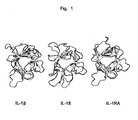
- the X-ray crystal structures of IL-1 ⁇ ( Priestle, J., et al. The three-dimensional structure of human interleukin-1.beta. refined to 2.0 .ANG. resolution. Prog. Clin. Biol. Res. (1990), 349 (Cytokines Lipocortins Inflammation Differ.), pp.
- IL-1RA Schreuder, H. et al., Refined crystal structure of the interleukin-1 receptor antagonist: presence of a disulfide link and a cis-proline. Eur. J. Biochem. (1995), 227(3), pp. 838-47 ) are available and were used as reference coordinates for the model construction of IL-18.
- the IL-1 receptor structure Vigers, G., et al. Crystal structure of the type-I interleukin-1-receptor complexed with interleukin-1. beta, Nature (London) (1997), 386(6621), pp. 190-194 ) was used to model the IL-18 receptor.
- IL-18 is a member of the IL-1 family (see Dinarello, C.A. IL-18: a TH1-inducing, proinflammatory cytokine and new member of the IL-1 family. J. Allergy Clin. Immunol. (1999), 103(1, Pt. 1), pp. 11-24 ) and that the overall protein fold is very similar.
- IL-1 ⁇ IL-18 is initially secreted in a pro form. Both pro-IL-1 ⁇ and pro-IL-18 are activated by IL-1 converting enzyme (ICE) ( Fantuzzi, G. and Dinarello, C.A.
- ICE IL-1 converting enzyme
- Interleukin-18 and interleukin-1 ⁇ two cytokine substrates for ICE (caspase-1). J. clin. Immunol. (1999), 19(1), pp. 1-11 ). It is also known that the IL-1 receptor and the IL-18 receptor are similar ( Dinarello, C.A. et al. Overview of interleukin-18: more than an interferon- ⁇ inducing factor. J. Leukocyte Biol. (1998), 63(6), 658-664 ). IL-1 ⁇ is capable of binding to the IL-18 receptor. As a final argument, IL-1 ⁇ and IL-1RA display an identical fold, even though the overall sequence homology between these two proteins is on a par with the sequence homology with IL-18.
- Table 3 Structural Z-scores from What_Check (Positive is better than average) Il-1 ⁇ IL-1RA IL-1 Rec IL-18 (model) IL-18 Rec (model) Packing Quality -1.6 -2.3 -3.6 -5.5 -5.5 Ramachandran Plot -2.0 -1.3 -2.9 -3.3 -2.3 rotamer Normality -1.6 -0.8 -1.5 -0.6 -0.6 Backbone Conformation -1.7 +0.5 -1.6 -5.6 -2.7
- the structure of the IL-18 receptor was also generated using the program Modeler.
- the reference coordinates were from the IL-1 receptor.
- the overall sequence identity is low, but sufficient to generate an alignment.
- the sequence homology figures are included in Table 2 above.
- the alignment was generated manually using the program InsightII and is presented in Table 4. Table 4.
- the overall quality of the structure of the IL-18 receptor as determined using the Modeler program is reasonable but again scores somewhat low according to What_Chcck (see Table 3 above).
- the confidence that can be placed on the overall fold comes primarily from the fact that IL-1 ⁇ binds to both the TL-1 and IL-18 receptor.
- the low sequence homology certainly contributes to the quality of the final structure, however, as in the case of the associated cytokines above, this current structure is considered to be sufficient.
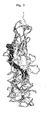
- IL-18 peptide epitope bound by LT28 was modeled when complexed with the IL-18 receptor ( Figure 3 ).
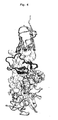
- a model of the IL-18/IL-18 receptor complex was generated based on the IL-1 ⁇ /IL-1 receptor structure ( Figure 4 ). This structure was generated by superimposing the cytokine structures and the receptor structures. No attempt was made to energy minimize the final structure.
- the primary purpose of generating structural models was to be able to select suitable peptides based primarily on a visual score. Solvent exposed sections of the receptor/cytokine complex were considered. A final element considered was based on a selectivity criterion. The selected peptide epitope should be different in sequence from similar potions of other members of the family. Based on this criteria, a peptide from IL-18 was selected. In addition, a comprehensive overlapping panel of peptides (SEQ ID NOS: 31-60) representative of full length human IL-18 (SEQ ID NO: 61) was also made and the sequence of all of these IL-18 related peptides is shown in Table 5, below. Table 5.
- the N-terminal cysteine of the In-18 peptide represented by SEQ ID NO: 2 is not part of the native IL-18 sequence, but was added as a conjugation site. Accordingly, within the native IL-18 amino acid sequence, the region corresponding to the selected epitope comprises amino acid residues having the amino acid sequence PLFEDMTDSDCRDNA (SEQ ID NO: 1).
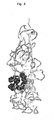
- FIG. 2 A schematic model of the IL-18 peptide (SEQ ID NO: 1) complexed with the IL-18 receptor is shown in Figure 2 , with this peptide epitope indicated in dark gray.
- An alternative method for peptide epitope selection can be accomplished in the absence of any molecular modeling by screening a panel of representative peptides using imznunoselection.
- overlapping peptides representative of the entire protein sequence can be used.
- only certain epitopes are represented in the panel of peptides.
- molecular modeling can be used to identify epitopes likely to be important.
- the identified epitope(s) sequence can then be used to construct a panel of peptides (e.g., overlapping peptides) that are representative of the identified epitope(s).
- Methods for manufacturing desired peptide sequences can be carried out using standard techniques known in the art.
- an immunoscreen for a cognate receptor can be performed.
- an immunoscreen can be performed with a selected cognate receptor such that a peptide having a certain binding affinity can be identified. Any number of immunoscreens can be employed such that, either a desired receptor or desired peptide can be identified as a candidate binding molecule for further study.
- Such "bait" and “prey” techniques for analyzing protein-protein interactions, for identifying candidate biding molecules, and/or for scoring binding affinities are described in the art.
- One preferred technique utilizes phage display as described herein.
- the invention provides antibodies, as well as antibody portions thereof, that bind IL-18.
- the antibodies, or portions thereof are isolated antibodies.
- the antibodies, or portions thereof are neutralizing antibodies.
- antibody is intended to refer to immunoglobulin molecules comprised of four polypeptide chains, two heavy (H) chains and two light (L) chains inter-connected by disulfide bonds.
- Each heavy chain is comprised of a heavy chain variable region (abbreviated herein as HCVR or VH) and a heavy chain constant region.
- the heavy chain constant region is comprised of three domains, CH1, CH2 and CH3.
- Each light chain is comprised of a light chain variable region (abbreviated herein as LCVR or VL) and a light chain constant region.
- the light chain constant region is comprised of one domain, CL.
- VH and VL regions can be further subdivided into regions of hypervariability, termed complementarity determining regions (CDR), interspersed with regions that are more conserved, termed framework regions (FR).
- CDR complementarity determining regions
- FR framework regions
- Each VH and VL is composed of three CDRs and four FRs, arranged from amino-terminus to carboxy-terminus in the following order: FR1, CDR1, FR2, CDR2, FR3, CDR3, FR4.
- antibody portion refers to one or more fragments of an antibody that retain the ability to specifically bind to an antigen (e.g., hIL-18). It has been shown that the antigen-binding function of an antibody can be performed by fragments of a full-length antibody.
- binding fragments encompassed within the term "antigen-binding portion" of an antibody include (i) a Fab fragment, a monovalent fragment consisting of the VL, VH, CL and CH1 domains; (ii) a F(ab') 2 fragment, a bivalent fragment comprising two Fab fragments linked by a disulfide bridge at the hinge region; (iii) a Fd fragment consisting of the VH and CH1 domains; (iv) a Fv fragment consisting of the VL and VH domains of a single arm of an antibody, (v) a dAb fragment ( Ward et al., (1989) Nature 341:544-546 ), which consists of a VH domain; and (vi) an isolated complementarity determining region (CDR).
- a Fab fragment a monovalent fragment consisting of the VL, VH, CL and CH1 domains
- a F(ab') 2 fragment a bivalent fragment comprising two Fab fragments linked by
- the two domains of the Fv fragment, VL and VH are coded for by separate genes, they can be joined, using recombinant methods, by a synthetic tinker that enables them to be made as a single protein chain in which the VL and VH regions pair to form monovalent molecules (known as single chain Fv (scFv); see e.g., Bird et al. (1988) Science 242:423-426 ; and Huston et al. (1988) Proc. Natl. Acad. Sci. USA 85:5879-583 ).
- single chain Fv single chain Fv
- Such single chain antibodies are also intended to be encompassed within the term "antigen-binding portion" of an antibody.
- Other forms of single chain antibodies, such as diabodies are also encompassed.
- Diabodies are bivalent, bispecific antibodies in which VH and VL domains are expressed on a single polypeptide chain, but using a linker that is too short to allow for pairing between the two domains on the same chain, thereby forcing the domains to pair with complementary domains of another chain and creating two antigen 6448; Poljak, R.J., et al. (1994) Structure 2:1121-1123 ),
- an antibody or antigen-binding portion thereof may be part of a larger immunoadhesion molecules, formed by covalent or noncovalent association of the antibody or antibody portion with one or more other proteins or peptides.
- immunoadhesion molecules include use of the streptavidin core region to make a tetrameric scFv molecule ( Kipriyanov, S.M., et al. (1995) Human Antibodies and Hybridomas 6:93-101 ) and use of a cysteine residue, a inarker peptide and a C-terminal polyhistidine tag to make bivalent and biotinylated scFv molecules ( Kipriyanov, S.M., et al.
- Antibody portions such as Fab and F(ab') 2 fragments, can be prepared from whole antibodies using conventional techniques, such as papain or pepsin digestion, respectively, of whole antibodies.
- antibodies, antibody portions and immunoadhesion molecules can be obtained using standard recombinant DNA techniques, as described herein.
- an "isolated antibody”, as used herein, is intended to refer to an antibody that is substantially free of other antibodies having different antigenic specificities (e.g ., an isolated antibody that specifically binds hIL-18 is substantially free of antibodies that specifically bind antigens other than hIL-18).
- An isolated antibody that specifically binds hIL-18 may, however, have cross-reactivity to other antigens, such as IL-18 molecules from other species.
- an isolated antibody may be substantially free of other cellular material and/or chemicals.
- an isolated antibody e.g., an isolated human antibody
- a “compound” as used herein refers to binding molecules such as antibodies, e.g. , polyclonal antibodies, monoclonal antibodies, binding fragments thereof (e.g., Fab fragments), single chain antibodies (e.g., scFv), peptides or peptide mimetics, as well as non-peptide based molecules, such as small molecules having ligand binding activity.
- binding molecules such as antibodies, e.g. , polyclonal antibodies, monoclonal antibodies, binding fragments thereof (e.g., Fab fragments), single chain antibodies (e.g., scFv), peptides or peptide mimetics, as well as non-peptide based molecules, such as small molecules having ligand binding activity.
- a “neutralizing antibody”, as used herein is intended to refer to an antibody whose binding to hIL-18 results in inhibition of the biological activity of hIL-18.
- This inhibition of the biological activity of MIL-18 can be assessed by measuring one or more indicators of hIL-18 biological activity. These indicators of hIL-18 biological activity can be assessed by one or more of several standard in vitro or in vivo assays known in the art.
- surface plasmon resonance refers to an optical phenomenon that allows for the analysis of real-time biospecific interactions by detection of alterations in protein concentrations within a biosensor matrix, for example using the BIAcore system (Pharmacia Biosensor AB, Uppsala, Sweden and Piscataway, NJ).
- BIAcore Pharmaacia Biosensor AB, Uppsala, Sweden and Piscataway, NJ.
- Jönsson. U., et al. (1993) Ann. Biol. Clin, 51:19-26 Jönsson, U., et al. (1991) Biotechniques 11:620-627 ; Johnsson, B., et al. (1995) J. Mol. Recognit. 8:125-131 ; and Johnnson, B., et al. (1991) Anal. Biochem. 198:268-277 .
- K off is intended to refer to the off rate constant for dissociation of an antibody from the antibody/antigen complex.
- K d is intended to refer to the dissociation constant of a particular antibody-antigen interaction.
- the invention pertains to an isolated antibody, or an antigen-binding portion thereof, that binds an epitope of human IL-18 comprising amino acids .
- PLFEDMTDSDCRDNA SEQ ID NO: 1
- VIRNLNDQVLFIDQ SEQ ID NO: 33
- the antibody is a neutralizing antibody.
- the antibody is a human antibody.
- the antibody is a recombinant antibody or a monoclonal antibody.
- the isolated antibody, or antigen-binding portion thereof binds to an epitope of human IL-18 comprising amino.acids PLFEDMTDSDCRDNA (SEQ ID NO: 1), wherein the antibody, or antigen-binding portion thereof, dissociates from human IL-18 with a k off rate constant of 0.1s -1 or less, as determined by surface plasmon resonance, or which inhibits human IL-18 activity with an IC 50 of 1 x 10 -6 M or less.
- the antibody, or an antigen-binding portion thereof may dissociate from human IL-18 with a k o ff rate constant of 1 x 10 -2 s -1 or less, as determined by surface plasmon resonance, or may inhibit human IL-18 activity with an IC 50 of 1 x 10 -7 M or less.
- the antibody, or an antigen-binding portion thereof may dissociate from human IL-18 with a k off rate constant of 1 x 10 -3 s -1 or less, as determined by surface plasmon resonance, or may inhibit human IL-18 activity with an IC 50 of 1 x 10 -8 M or less.
- the antibody, or an antigen-binding portion thereof may dissociate from human IL--18 8 with a k off rate constant of 1 x 10 -4 s -1 or less, as determined by surface plasmon resonance, or may inhibit human IL-18 activity with an IC 50 of 1 x 10 -9 M or less.
- the antibody, or an antigen-binding portion thereof may dissociate from human IL-18 with a k off rate constant of 1 x 10 -5 s -1 or less, as determined by surface plasmon resonance, or may inhibit human IL-18 activity with an IC 50 of 1 x 10 -10 M or less.
- the antibody, or an antigen-binding portion thereof may dissociate from human IL-18 with a k off rate constant of 1 x 10 -6 s -1 or less, as determined by surface plasmon resonance, or may inhibit human TL-18 activity with an IC 50 of 1 x 10 -11 M or less.
- the invention also provides for the further modification of an antibody identified as binding to an TL-18 epitope.
- the modification of the identified anti-IL-18 antibody is to improve binding and/or neutralization activity.
- the invention also provides pharmaceutical compositions comprising an antibody, or antigen-binding portion thereof, of the invention and a pharmaceutically acceptable carrier.
- the pharmaceutical composition further comprises at least one additional therapeutic agent for treating a disorder in which IL-18 8 activity is detrimental.
- the antibodies and antibody-portions of the invention can be incorporated into pharmaceutical compositions suitable for administration to a subject.
- the pharmaceutical composition comprises an antibody or antibody portion of the invention and a pharmaceutically acceptable carrier.
- pharmaceutically acceptable carrier includes any and all solvents, dispersion media, coatings, antibacterial and antifungal agents, isotonic and absorption delaying agents, and the like that are physiologically compatible.
- pharmaceutically acceptable carriers include one or more of water, saline, phosphate buffered saline, dextrose, glycerol, ethanol and the like, as well as combinations thereof.
- isotonic agents for example, sugars, polyalcohols such as mannitol, sorbitol, or sodium chloride in the composition.
- Pharmaceutically acceptable carriers may further comprise minor amounts of auxiliary substances such as wetting or emulsifying agents, preservatives or buffers, which enhance the shelf life or effectiveness of the antibody or antibody portion.
- the antibodies and antibody-portions of the invention can be incorporated into a pharmaceutical composition suitable for parenteral administration.
- the antibody or antibody-portions will be prepared as an injectable solution containing 0.1-250 mg/ml antibody.
- the injectable solution can be composed of either a liquid or lyophilized dosage form in a flint or amber vial, ampule or pre-filled syringe,
- the buffer can be L-histidine (1-50 mM), optimally 5-10 mM, at pH 5.0 to 7.0 (optimally pH 6.0).
- Other suitable buffers include but are not limited to, sodium succinate, sodium citrate, sodium phosphate or potassium phosphate.
- Sodium chloride can be used to modify the toxicity of the solution at a concentration of 0-300 mM (optimally 150 mM for a liquid dosage form).
- Cryoprotectants can be included for a lyophilized dosage form, principally 0-10% sucrose (optimally 0.5-1.0%).
- Other suitable cryoprotectants include : trehalose and lactose.
- Bulking agents can be included for a lyophilized dosage form, principally 1-10% mannitol (optimally 2-4%).
- Stabilizers can be used in both liquid any lyophilized dosage forms, principally 1-50 mM L-Methionine (optimally 5-10 mM).
- Other suitable bulking agents include glycine, arginine, can be included as 0-0.05% polysorbate-80 (optimally 0.005-0.01%).
- Additional surfactants include but are not limited to polysorbate 20 and BRIJ surfactants.
- compositions of this invention may be in a variety of forms. These include, for example, liquid, semi-solid and solid dosage forms, such as liquid solutions (e.g ., injectable and infusible solutions), dispersions or suspensions, tablets, pills, powders, liposomes and suppositories.
- liquid solutions e.g ., injectable and infusible solutions
- dispersions or suspensions tablets, pills, powders, liposomes and suppositories.
- the preferred form depends on the intended mode of administration and therapeutic application. Typical preferred compositions are in the form of injectable or infusible solutions, such as compositions similar to those used for passive immunization of humans with other antibodies.
- the preferred mode of administration is parenteral (e.g ., intravenous, subcutaneous, intraperitoneal, intramuscular).
- the antibody is administered by intravenous infusion or injection.
- the antibody is administered by intramuscular or subcutaneous injection.
- compositions typically must be sterile and stable under the conditions of manufacture and storage.
- the composition can be formulated as a solution, microemulsion, dispersion, liposome, or other ordered structure suitable to high drug concentration.
- Sterile injectable solutions can be prepared by incorporating the active compound (i.e ., antibody or antibody portion) in the required amount in an appropriate solvent with one or a combination of ingredients enumerated above, as required, followed by filtered sterilization.
- dispersions are prepared by incorporating the active compound into a sterile vehicle that contains a basic dispersion medium and the required other ingredients from those enumerated above.
- the preferred methods of preparation are vacuum drying and spray-drying that yields a powder of the active ingredient plus any additional desired ingredient from a previously sterile-filtered solution thereof
- the proper fluidity of a solution can be maintained, for example, by the use of a coating such as lecithin, by the maintenance of the required particle size in the case of dispersion and by the use of surfactants.
- Prolonged absorption of injectable compositions can be brought about by including in the composition an agent that delays absorption, for example, monostearate salts and gelatin.
- the antibodies and antibody-portions of the present invention can be administered by a variety of method known in the art, although for many therapeutic applications, the preferred route/mode of administration is subcutaneous injection, intravenous injection or infusion. As will be appreciated by the skilled artisan, the route and/or mode of administration will vary depending upon the desired results.
- the active compound may be prepared with a carrier that will protect the compound against rapid release, such as a controlled release formulation, including implants, transdermal patches, and microencapsulated delivery systems.
- a carrier such as a controlled release formulation, including implants, transdermal patches, and microencapsulated delivery systems.
- Biodegradable, biocompatible polymers can be used, such as ethylene vinyl acetate, polyanhydrides, polyglycolic acid, collagen, polyorthoesters, and polylactic acid.
- an antibody or antibody portion of the invention may be orally administered, for example, with an inert diluent or an assimilable edible carrier.
- the compound (and other ingredients, if desired) may also be enclosed in a hard or soft shell gelatin capsule, compressed into tablets, or incorporated directly into the subject's diet.
- the compounds may be incorporated with excipients and used in the form of ingestible tablets, buccal tablets, troches, capsules, elixirs, suspensions, syrups, wafers, and the like.
- To administer a compound of the invention by other than parenteral administration it may:be necessary to coat the compound with, or co-administer the compound with, a material to prevent its inactivation.
- an antibody or antibody portion of the invention is coformulated with and/or coadministered with one or more additional therapeutic agents that are useful for treating disorders in which IL-18 activity is detrimental.
- an anti-hIL-18 antibody or antibody portion of the invention may be coformulated and/or coadministered with one or more additional antibodies that bind other targets (e.g ., antibodies that bind other cytokines or that bind cell surface molecules).
- one or more antibodies of the invention may be used in combination with two or more of the foregoing therapeutic agents.
- Such combination therapies may advantageously utilize lower dosages of the administered therapeutic agents, thus avoiding possible toxicities or complications associated with the various monotherapies.
- Interleukin 18 plays a critical role in the pathology associated with a variety of diseases involving immune and inflammatory elements, These diseases include, but are not limited to, rheumatoid arthritis, osteoarthritis, juvenile chronic arthritis, Lyme arthritis, psoriatic arthritis, reactive arthritis, spondyloarthropathy, systemic lupus erythematosus, Crohn's disease, ulcerative colitis, inflammatory bowel disease, insulin dependent diabetes mellitus, thyroiditis, asthma, allergic diseases, psoriasis, dermatitis scleroderma, graft versus host disease, organ transplant rejection, acute or chronic immune disease associated with organ transplantation, sarcoidosis, atherosclerosis, disseminated intravascular coagulation, Kawasaki's disease, Grave's disease, nephrotic syndrome, chronic fatigue syndrome, Wegener's granulomatosis, Henoch-Schoenlein purpurea, microscopic vasculitis of the kidneys
- the antibodies of the invention or antigen-binding portions thereof are used to treat rheumatoid arthritis, Crohn's disease, multiple sclerosis, insulin dependent diabetes, mellitus, and psoriasis.
- An antibody, or antibody portion, of the invention also can be administered with one or more additional therapeutic agents useful in the treatment of autoimmune and inflammatory diseases.
- Antibodies of the invention, or antigen binding portions thereof can be used alone or in combination to treat such diseases. It should be understood that the antibodies of the invention or antigen binding portion thereof can be used alone or in combination with an additional agent, e.g., a therapeutic agent, said additional agent being selected by the skilled artisan for its intended purpose.
- the additional agent can be a therapeutic agent art-recognized as being useful to treat the disease or condition being treated by the antibody of the present invention.
- the additional agent also can be an agent which imparts a beneficial attribute to the therapeutic composition e.g., an agent which effects the viscosity of the composition.
- the combinations which are to be included within this invention are those combinations useful for their intended purpose.
- the agents set forth below are illustrative for purposes and not intended to be limited .
- the combinations which are part of this invention can be the antibodies of the present invention and at least one additional agent selected from the lists below.
- the combination can also include more than one additional agent, e.g ., two or three additional agents if the combination is such that the formed composition can perform its intended function.
- Preferred combinations are non-steroidal anti-inflammatory drug(s) also referred to as NSAIDS which include drugs like ibuprofen.
- Other preferred combinations are corticosteroids including prednisolone; the well known side-effects of steroid use can be reduced or even eliminated by tapering the steroid dose required when treating patients in combination with the anti-IL-18 antibodies of this invention.
- Non-limiting examples of therapeutic agents for rheumatoid arthritis with which an antibody, or antibody portion, of the invention can be combined include the following: cytokine suppressive anti-inflammatory drug(s) (CSAIDs); antibodies to or antagonists of other human cytokines or growth factors, for example, TNF, LT, IL-1, IL-2, IL-6, IL-7, IL-8, IL-12, IL-15, IL-16, EMAP-II, GM-CSF, FGF, and PDGF.
- CSAIDs cytokine suppressive anti-inflammatory drug
- Antibodies of the invention, or antigen binding portions thereof, can be combined with antibodies to cell surface molecules such as CD2, CD3, CD4, CD8, CD25, CD28, CD30, CD40, CD45, CD69, CD80 (B7.1), CD86 (B7.2), CD90, or their ligands including CD154 (gp39 or CD40L).
- cell surface molecules such as CD2, CD3, CD4, CD8, CD25, CD28, CD30, CD40, CD45, CD69, CD80 (B7.1), CD86 (B7.2), CD90, or their ligands including CD154 (gp39 or CD40L).
- Preferred combinations of therapeutic agents may interfere at different points in the autoimmune and subsequent inflammatory cascade; preferred examples include TNF antagonists like chimeric, humanized or human TNF antibodies, D2E7, ( PCT Publication No. WO 97/29131 ), CA2 (Remicade TM ), CDP 571, and soluble p55 or p75 TNF receptors, derivatives, thereof, (p75TNFR1gG (Enbrel TM ) or p55TNFRlgG (Lenercept), and also TNF ⁇ converting enzyme (TACE) inhibitors; similarly IL-1 inhibitors (Interleukin-1-converting enzyme inhibitors, IL-1RA, etc. ) may be effective for the same reason, Other preferred combinations include Interleukin 11.
- TNF antagonists like chimeric, humanized or human TNF antibodies, D2E7, ( PCT Publication No. WO 97/29131 ), CA2 (Remicade TM ), CDP 571, and soluble p55 or p75
- Yet another preferred combination are other keyplayers of the autoimmune response which may act parallel to, dependent on or in concert with IL-18 function; especially preferred are IL-12 antagonists including IL-12 antibodies or soluble IL-12 receptors, or IL-12 binding proteins. It has been shown that IL-12 and IL-18 have overlapping but distinct functions and a combination of antagonists to both may be most effective, Yet another preferred combination are non-depleting anti-CD4 inhibitors. Yet other preferred combinations include antagonists of the co-stimulatory pathway CD80 (B7.1) or CD86 (B7.2) including antibodies, soluble receptors or antagonistic ligands.
- the antibodies of the invention, or antigen binding portions thereof, may also be combined with agents, such as methotrexate, 6-MP, azathioprine sulphasalazine, mesalazine, olsalazine chloroquinine/hydroxychloroquine, pencillamine, aurothiomalate (intramuscular and oral), azathioprine, cochicine, corticosteroids, (oral, inhaled and local injection), beta-2 adrenoreceptor agonists (salbutamol, terbutaline, salmeteral), xanthines (theophylline, aminophylline), cromoglycate, nedocromil, ketotifen, ipratropium and oxitropium, cyclosporin, FK506, rapamycin, mycophenolate mofetil, leflunomide, NSAIDs, for example, ibuprofen, cox-2 inhibitors, cox- 2 selective inhibitors (
- rofecoxib VIOXX TM ; Merck & Co., Inc.
- corticosteroids such as prednisolone, phosphodiesterase inhibitors, adensosine agonists, antithrombotic agents, complement inhibitors, adrenergic agents, agents which interfere with signalling by proinflammatory cytokines such as TNF ⁇ or IL-1 ( e.g .
- IL-1 ⁇ converting enzyme inhibitors IL-1 ⁇ converting enzyme inhibitors
- TACE TNF ⁇ converting enzyme
- T-cell signalling inhibitors such as kinase inhibitors, metalloproteinase inhibitors, sulfasalazine, azathioprine, 6-mercaptopurines, angiotensin converting enzyme inhibitors, soluble cytokine receptors and derivatives thereof ( e.g .
- soluble p55 or p75 TNF receptors and the derivatives p75TNFRIgG Enbrel TM and p55TNFRIgG (Lenercept)
- sIL-1RI sIL-1RII
- sIL-6R antiinflammatory cytokines
- Preferred combinations include methotrexate or leflunomide and in moderate or severe rheumatoid arthritis cases, cyclosporine,
- Non-limiting examples of therapeutic agents for inflammatory bowel disease with which an antibody, or antibody portion, of the invention can be combined include the following: budenoside; epidermal growth factor; corticosteroids; cyclosporin, sulfasalazine; aminosalicylates; 6-mercaptopurine; azathioprine; metronidazole; lipoxygenase inhibitors; mesalamine; olsalazine; balsalazide; antioxidants; thromboxane inhibitors; IL-1 receptor antagonists; anti-IL-1 ⁇ monoclonal antibodies; anti-IL-6 monoclonal antibodies; growth factors; elastase inhibitors; pyridinyl-imidazole compounds; antibodies to or antagonists of other human cytokines or growth factors, for example, TNF, LT, IL-1, IL-2, IL-6, IL-7, IL-8, IL-12, IL-15, IL-16, EMAP-II, GM
- Antibodies of the invention, or antigen binding portions thereof can be combined with antibodies to cell surface molecules such as CD2, CD3, CD4, CD8, CD25, CD28, CD30, CD40, CD45, CD69, CD90 or their ligands.
- the antibodies of the invention, or antigen binding portions thereof may also be combined with agents, such as methotrexate, cyclosporin, FK506, rapamycin, mycophenolate mofetil, leflunomide, NSAIDs, for example, ibuprofen, corticosteroids such as prednisolone, phosphodiesterase inhibitors, adenosine agonists, antithrombotic agents, complement inhibitors, adrenergic agents, agents which interfere with signalling by proinflammatory cytokines such as TNF ⁇ or IL-1 (e.g.
- IL-1 ⁇ converting enzyme inhibitors IL-1 ⁇ converting enzyme inhibitors
- TNF ⁇ converting enzyme inhibitors T-cell signalling inhibitors such as kinase inhibitors, metalloproteinase inhibitors, sulfasalazine, azathioprine, 6-mercaptopurines, angiotensin converting enzyme inhibitors, soluble cytokine receptors and derivatives thereof (e.g. soluble p55 or p75 TNF receptors, sIL-1RI, sIL-1RII, sIL-6R) and antiinflammatory cytokines (e.g . IL-4, IL-10, IL-11, IL-13 and TGF ⁇ ).
- IL-4, IL-10, IL-11, IL-13 and TGF ⁇ antiinflammatory cytokines
- TNF antagonists for example, anti-TNF antibodies, D2E7 ( PCT Publication No. WO 97/29131 ), CA2 (Remicade TM ), CDP 571, TNFR-Ig constructs, (p75TNFRIgG (Enbrel TM) and p55TNFRIgG (Lenercept)) inhibitors and PDE4 inhibitors.
- Antibodies of the invention or antigen binding portions thereof can be combined with corticosteroids, for example, budenoside and dexamethasone.
- Antibodies of the invention or antigen binding portions thereof may also be combined with agents such as sulfasalazine, 5-aminosalicylic acid and olsalazine, and agents which interfere with synthesis or action of proinflammatory cytokines such as IL-1, for example, IL-1 ⁇ converting enzyme inhibitors and IL-1ra.
- agents such as sulfasalazine, 5-aminosalicylic acid and olsalazine
- agents which interfere with synthesis or action of proinflammatory cytokines such as IL-1, for example, IL-1 ⁇ converting enzyme inhibitors and IL-1ra.
- Antibodies of the invention or antigen binding portion thereof may also be used with T cell signaling inhibitors, for example, tyrosine kinase inhibitors 6-mercaptopurines.
- Antibodies of the invention or antigen binding portions thereof can be combined with IL-11.
- Non-limiting examples of therapeutic agents for multiple sclerosis with which an antibody, or antibody portion, of the invention can be combined include the following: corticosteroids; prednisolone; methylprednisolone; azathioprine; cyclophosphamide; cyclosporine; methotrexate; 4-aminopyridine; tizanidine; interferon- ⁇ 1a (Avonex; Biogen); interferon- ⁇ 1b (Betaseron; chiron/Berlex); Copolymer 1 (Cop-1; Copaxone; Teva Pharmaceutical Industries, Inc.); hyperbaric oxygen; intravenous immunoglobulin; clabribine; antibodies to or antagonists of other human cytokines or growth factors, for example, TNF, LT, IL-1, IL-2, IL-6, IL-7, IL-8, IL-12, IL-15, IL-16, EMAP-II, GM-CSF, FGF, and PDGF.
- Antibodies of the invention, or antigen binding portions thereof, can be combined with antibodies to cell surface molecules such as CD2, CD3, CD4, CD8, CD25, CD28, CD30, CD40, CD45, CD69, CD80, CD86, CD90 or their ligands.
- cell surface molecules such as CD2, CD3, CD4, CD8, CD25, CD28, CD30, CD40, CD45, CD69, CD80, CD86, CD90 or their ligands.
- the antibodies of the invention, or antigen binding portions thereof, may also be combined with agents, such as methotrexate, cyclosporine, FK506, rapamycin, mycophenolate mofetil, leflunomide, NSAIDs, for example, ibuprofen, corticosteroids such as prednisolone, phosphodiesterase inhibitors, adensosine agonists, antithrombotic agents, complement inhibitors, adrenergic agents, agents which interfere with signalling by proinflammatory cytokines such as TNF ⁇ or IL-1 ( e.g .
- IL-1 ⁇ converting enzyme inhibitors TACE inhibitors
- T-cell signalling inhibitors such as kinase inhibitors, metalloproteinase inhibitors, sulfasalazine, azathioprine, 6-mercaptopurines, angiotensin converting enzyme inhibitors, soluble cytokine receptors and derivatives thereof ( e.g . soluble p55 or p75 TNF receptors, sIL-1RI, sIL-1RII, sIL-6R) and antiinflammatory cytokines (e.g . IL-4, IL-10, IL-13 and TGF ⁇ ).
- IL-4, IL-10, IL-13 and TGF ⁇ antiinflammatory cytokines
- interferon- ⁇ for example, IFN ⁇ 1a and IFN ⁇ 1b
- copaxone corticosteroids
- IL-1 inhibitors for example, TNF inhibitors, and antibodies to CD40 ligand and CD80.
- compositions of the invention may include a "therapeutically effective amount” or a “prophylactically effective amount” of an antibody or antibody portion of the invention.
- a “therapeutically effective amount” refers to an amount effective, at dosages and for periods of time necessary, to achieve the desired therapeutic results, A therapeutically effective amount of the antibody or antibody portion may vary according to factors such as the disease state, age, sex, and weight of the individual, and the ability of the antibody or antibody portion to elicit a desired response in the individual. A therapeutically effective amount is also one in which any toxic or detrimental effects of the antibody or antibody portion are outweighed by the therapeutically beneficial effects.
- A' “prophylactically effective amount” refer to an amount effective, at dosages and for periods of time necessary, to achieve the desired prophylactic result. Typically, since a prophylactic dose is used in subjects prior to or at an earlier stage of disease, the prophylactically effective amount will be less than the therapeutically effective amount.
- Dosage regimens may be adjusted to provide the optimum desired response (e.g ., a therapeutic or prophylactic response). For example, a single bolus may be administered, several divided doses may be administered over time or the dose may be proportionally reduced or increased as indicated by the exigencies of the therapeutic situation. It is especially advantageous to formulate parenteral compositions in dosage unit form for ease of administration and uniformity of dosage.
- Dosage unit form as used herein refers to physically discrete units suited as unitary dosages for the mammalian subjects to be treated; each unit containing a predetermined quantity of active compound calculated to produce the desired therapeutic effect in association with the required pharmaceutical carrier.
- An exemplary, non-limiting range for a therapeutically or prophylactically effective amount of an antibody or antibody portion of the invention is 0,1-20 mg/kg, more preferably 1-10 mg/kg. It is to be noted, that dosage values may vary with the type and severity of the condition to be alleviated, It is to be further understood that for any particular subject, specific dosage regimens should be adjusted over time according to the individual need and the professional judgment of the person administering or supervising the administration of the compositions, and that dosage ranges set forth herein are exemplary only and are not intended to limit the scope or practice of the claimed composition.
- anti-IL-1 8 antibodies of the invention are made using any one of a variety of techniques known in the art for preparing antibodies and using antigens comprising the IL-18 peptide epitope described in subsection I, i.e., an epitope of human IL-18 comprising amino acids PLFEDMTDSDCRDNA (SEQ ID NO: 1).
- IL-18 human interleukin-18
- the antibody repertoire is an in vivo repertoire in an animal and the method comprises immunizing the animal with the antigen comprising the epitope of human IL-18 comprising amino acids PLFEDMTDSDCRDNA (SEQ ID NO: 1).
- the antibody repertoire is a recombinant antibody library and the method comprising screening the library with the antigen comprising the epitope of human IL-18 comprising amino acids PLFEDMTDSDCRDNA (SEQ ID NO: 1).
- the library is a human antibody library.
- An IL-18 antigen comprising an epitope of human IL-18 comprising amino acids PLFEDMTDSDCRDNA (SEQ ID NO: 1) can be administered to an animal to elicit polyclonal antibodies and specific antibodies that bind the epitope can be isolated by selecting from the polyclonal antibodies those antibodies that bind to the epitope ( e.g ., by passing the polyclonal antisera over a column that comprises a peptide comprising amino acids PLFEDMTDSDCRDNA (SEQ ID NO: 1) of hIL-18).
- the antigen used to elicit the polyclonal antibodies can be intact ( i.e., full-length) hIL-18 or can be a portion of hIL-18 that includes the epitope of interest, e.g., a synthetic peptide comprising amino acids PLFEDMTDSDCRDNA (SEQ ID NO: 1) of hIL-18, Furthermore, monoclonal antibodies to the epitope can be made from the aforementioned animals using standard hybridoma technology and selection for those hybridomas secreting an antibody that specifically binds the epitope of interest, e.g., by screening the hybridomas with a peptide comprising amino acids PLFEDMTDSDCRDNA (SEQ ID NO: 1) of hIL-1 8 and selecting for antibodies that bind specifically to the peptide.
- In vitro methods also can be used to make the antibodies of the invention, wherein an antibody library is screened to identify an antibody having the desired binding specificity.
- Methods for such screening of recombinant antibody libraries are well known in the art and include methods described in, for example, Ladner et al. U.S. Patent No. 5,223,409 ; Kang et al. PCT Publication No. WO 92/18619 ; Dower et al. PCT Publication No. WO 91/17271 ; Winter et al. PCT Publication No. WO 92/20791 ; Markland et al. PCT Publication No. WO 92/15679 ; Breitling et al. PCT Publication No.
- the recombinant antibody library may be from a subject immunized with IL-18, or a portion of IL-18 comprising the epitope of amino acids PLFEDMTDSDCRDNA (SEQ ID NO: 1).
- the recombinant antibody library may be from a na ⁇ ve subject, i.e., one who has not been immunized with IL-18, such as a human antibody library from a human subject who has not been immunized with human IL-18.
- Antibodies of the invention are selected by screening the recombinant antibody library with the epitope of amino acids PLFEDMTDSDCRDNA (SEQ ID NO: 1) of human IL-18 to thereby select those antibodies that recognize this epitope, Methods for conducting such screening and selection are well known in the art, such as described in the references in the preceding paragraph.
- the anti-hIL-18 antibodies, or portions thereof, of the invention can be used to detect hIL-18 (e.g. , in a biological sample, such as serum or plasma), using a conventional immunoassay, such as an enzyme linked immunosorbent assays (ELISA), an radioimmunoassay (RIA) or tissue immunohistochemistry.
- a conventional immunoassay such as an enzyme linked immunosorbent assays (ELISA), an radioimmunoassay (RIA) or tissue immunohistochemistry.
- ELISA enzyme linked immunosorbent assays
- RIA radioimmunoassay
- tissue immunohistochemistry tissue immunohistochemistry.
- the invention provides a method for detecting hIL-18 in a biological sample comprising contacting a biological sample with an antibody, or antibody portion, of the invention and detecting either the antibody (or antibody portion) bound to hIL-18 or unbound antibody (or antibody portion), to thereby detect hIL-18 in the biological sample.
- Suitable detectable substances include various enzymes, prosthetic groups, fluorescent materials, luminescent materials and radioactive materials.
- suitable enzymes include horseradish peroxidase, alkaline phosphatase, ⁇ -galactosidase, or acetylcholinesterase
- suitable prosthetic group complexes include streptavidin/biotin and avidin/biotin
- suitable fluorescent materials include umbelliferone, fluorescein, fluorescein isothiocyanate, rhodamine, dichlorotriazinylamine fluorescein, dansyl chloride or phycoerythrin
- an example of a luminescent material includes luminol
- suitable radioactive material include 125 I, 131 I, 35 S, 32 P, 33 P, or 3 H.
- hIL-18 can be assayed in biological fluids by a competition immunoassay utilizing rhIL- 18 standards labeled with a detectable substance and an unlabeled anti-hIL-18 antibody.
- the biological sample, the labeled rhIL-18 standards and the anti-hIL-18 antibody are combined and the amount of labeled rhIL-18 standard bound to the unlabeled antibody is determined,
- the amount of hIL-18 in the biological sample is inversely proportional to the amount of labeled rhIL-18 standard bound to the anti-hIL-18 antibody.
- the antibodies and antibody portions of the invention preferably are capable of neutralizing hIL-18 activity both in vitro and in vivo . Accordingly, such antibodies and antibody portions of the invention can be used to inhibit hIL-18 activity, e.g ., in a cell culture containing hIL-18, in human subjects or in other mammalian subjects having IL-18 with which an antibody of the invention cross-reacts.
- the invention provides a method for inhibiting IL-18 activity comprising contacting IL-18 with an antibody or antibody portion of the invention such that IL-18 activity is inhibited.
- the IL-18 is human IL-18.
- an antibody or antibody portion of the invention can be added to the culture medium to inhibit hIL-18 activity in the culture.
- the invention provides a method for inhibiting IL-18 activity in a subject suffering from a disorder in which IL-18 activity is detrimental.
- the invention provides methods for inhibiting IL-18 activity in a subject suffering from such a disorder, which method comprises administering to the subject an antibody or antibody portion of the invention such that IL-18 activity in the subject is inhibited.
- the IL-18 is human IL-18 and the subject is a human subject.
- the subject can be a mammal expressing an IL-18 with which an antibody of the invention cross-reacts.
- the subject can be a mammal into which has been introduced hIL-18 ( e.g ., by administration of hIL-18 or by expression of an hIL-18 transgene).
- An antibody of the invention can be administered to a human subject for therapeutic purposes. Moreover, an antibody of the invention can be administered to a non-human mammal expressing an IL-18 with which the antibody cross-reacts for veterinary purposes or as an animal model of human disease. Regarding the latter, such animal models may be useful for evaluating the therapeutic efficacy of antibodies of the invention ( e.g. , testing of dosages and time courses of administration).
- one animal model for modulating IL-18 activity in an animal uses NOD-SCID mice which are transplanted with human peripheral blood mononuclear cells. Then, two to four weeks after engraftment (as measured by human IgG titers in serum) the mice are injected with LPS (lipopolysaccharide). Four to six hours later LPS-induced human interferon-gamma serum titers are determined.
- LPS lipopolysaccharide
- the efficacy (potency) ofanti-IL-18 antibodies is determined by injecting the antibodies (ip) one day prior to LPS challenge followed by monitoring the test animals for a reduction in interferon-gamma serum titers (a function of IL-18 in vivo activity) as compared to controls (see, e.g ., Holmes et al., Hybridoma, 19:363367 (2000 )).
- a disorder in which IL-18 activity is detrimental is intended to include diseases and other disorders in which the presence of TL-18 in a subject suffering from the disorder has been shown to be, or is suspected of being, either responsible for the pathophysiology of the disorder or a factor that contributes to a worsening of the disorder. Accordingly, a disorder in which IL-18 activity is detrimental is a disorder in which inhibition of IL-18 activity is expected to alleviate the symptoms and/or progression of the disorder. Such disorders may be evidenced, for example, by an increase in the concentration of IL-18 in a biological fluid of a subject suffering from the disorder (e.g., an increase in the concentration of IL-18 in serum, plasma, synovial fluid, etc. of the subject), which can be detected, for example, using an anti-IL-18 antibody as described above.
- Non-limiting examples of disorders that can be treated with the antibodies of the invention include those disorders discussed in the section above pertaining to pharmaceutical compositions of the antibodies of the invention.
- the practice of the present invention employs, unless otherwise indicated, conventional techniques of chemistry, molecular biology, recombinant DNA technology, PCR technology, immunology (especially, e.g., antibody technology), and any necessary cell culture or animal husbandry techniques, which are within the skill of the art and are explained fully in the literature. See, e.g ., Sambrook, Fritsch and Maniatis, Molecular Cloning: Cold Spring Harbor Laboratory Press (1989 ); DNA Cloning, Vols. 1 and 2, (D.N. Glover, Ed. 1985 ); Oligonucleotide Synthesis (M.J. Gait, Ed. 1984 ); PCR Handbook Current Protocols in Nucleic Acid Chemistry, Beaucage, Ed.
- Antibodies to hIL-18 were isolated by screening separate scFv phage display libraries prepared using human VL and VH cDNAs from mRNA derived from human B cells (e.g., tonsils and spleen). Construction of the library and methods for selection are described in Vaughan et al. (1996) Nature Biotech. 14: 309-314 .
- the libraries were screened using either full length human IL-18 (SEQ ID NO: 61), a peptide epitope of IL-18 (SEQ ID NOS: 1-3), or a panel of overlapping 15 amino acid peptides representing IL-18 (the epitope sequence of which is presented in Table 5; SEQ ID NOS: 31-60), IL-18 specific antibodies were selected by coating the antigen onto immunotubes using standard procedures ( Marks et al., (1991) J. Mol. Biol. 222: 581-597 ).
- the scFv libraries were screened using either IL-18, a peptide epitope of IL-18, or an IL-18 peptide panel to generate a significant number of IL-18 specific binders.
- Several different clonotypes were selected, determined by restriction enzyme digestion patterns, and confirmed by DNA sequencing.
- IL-18 antibodies which preferentially bind either full length IL-18 or a representative peptide thereof
- the supernatant containing scFv was titrated on biotin-captured IL-18 in an ELISA and binding characteristics were determined.
- Two anti-IL-18 single chain antibodies were obtained, one termed 2E1, independently isolated using a peptide epitope and the peptide panel, and a second anti-IL-18 antibody termed LT28, isolated using full length IL-18. These parent anti-IL-18 antibodies were selected for further study and modification.
- a single chain Fv version of antibody 2E1 having an identified IL-18 binding activity and the heavy chain and light chain sequence shown in Table 6 was further modified for improved neutralization of IL-18 activity.
- the anti-IL-18 antibody 2E1 was independently selected using an IL--18 peptide and sequential, overlapping, peptide panel representative ofIL-18 (see Table 6).
- CDR / Kabat Position substituted residue CDR1 H30 A, R, N, D, C, G, H, I, F, P, S, or V H31 A, C, H, S, T, or Y H32 R, N, C, H, P, S, or T H33 N, D, C, Q, H, L, M, F, S, or V H35 N, D, L, or F CDR2 H52 T H52a R, Q, L, S, T, or W H53 A,R,N,L,P,S,orY H54 A, R, N, D, Q, L, K, M, P, S, or Y H56 A, R, N, C, G, H, I, L, or F H58 A, R, Q, E, H, I, L, K, M, F, S, T, Y, P, S, T, W, Y, or V CDR3 H95 A, R,
- the nucleic acid sequence of the parent 2E1 antibody heavy and light chain is provided in SEQ ID NOS: 62 and 64.
- the mutant oligonucleotides were then used to create a complementary DNA strand and eventually a double-stranded plasmid, thus incorporating the degeneracy or the different mutations in a given codon of the antibody.
- the CDR3 region of the heavy and light chain of 2E1 was altered using the QuikChange Kit (Stratagene) according to the manufactures instruction.
- a representative number of clones were then sequenced from each mutagenesis reaction (i . e ., 7 to 36 clones) and those representing a change from the parent 2E1 single chain antibody sequence were expressed in bacteria and purified for further in vitro and in vivo testing as described infra.
- a second anti-IL-18 antibody was identified and selected for further improvement using affinity maturation.
- the LT28 antibody having the heavy chain and light chain sequence shown in Table 9 (and nucleic sequence provided in SEQ ID NOS: 66 and 68) was further modified.
- amino acid substitutions were introduced at positions H31, H32, H33, and H35 of CDR1, positions H50, H51, H52, H52a, H53, H54, H56, and H58 of CDR2, and H95, H96, H97, H98, H99, H100, B100a, H101, and H102 of CDR3.
- amino acid substitutions were introduced at positions L30, L31, L32, L34 of CDR1, positions L50, L52, L53, L55 of CDR2 and positions L89, L90, L91, L92, L93, L94, L95, L95a, L95b, L96, L97. Table 10.
- streptavidin is covalently linked via free amine groups to the dextran matrix by first activating carboxyl groups on the matrix with 100 mM N-hydroxysuccinimide (NHS) and 400 mM N-ethyl-N'-(3-diethylaminopropyl) carbodiimide hydrochloride (EDC). Next, streptavidin is injected across the activated matrix. Thirty-five microliters of streptavidin (25 ⁇ g/ml), diluted in sodium acetate, pH 4.5, is injected across the activated biosensor and free amines on the protein are bound directly to the activated carboxyl groups. Unreacted matrix EDC-esters are deactivated by an injection of 1 M ethanolamine. Streptavidin-coupled biosensor chips also are commercially available (Pharmacia BR-1000-16, Pharmacia Biosensor, Piscataway, NJ).
- Biotinylated rhIL-18 was prepared by first dissolving 5.0 mg of biotin (D-biotinyl- ⁇ -aminocaproic acid N-hydroxysuccinimide ester; Boehringer Mannheim Cat. No. 1008 960) in 500 ⁇ l dimethylsulfoxide to make a 10 mg/ml solution. Ten microliters of biotin was added per ml of rhIL-18 (at 2.65 mg/ml) for a 2:1 molar ratio of biotin to rhIL-18. The reaction was mixed gently and incubated for two hours at room temperature in the dark. A PD-10 column, Sephadex G-25M (Pharmacia Catalog No.
- Biotinylated rhIL-18 to be immobilized on the matrix via streptavidin was diluted in PBS running buffer (Gibco Cat. No. 14190-144, Gibco BRL, Grand Island, NY) supplemented with 0.05% (BIAcore) surfactant P20 (Pharmacia BR-1000-54, Pharmacia Biosensor, Piscataway, NJ).
- PBS running buffer Gibco Cat. No. 14190-144, Gibco BRL, Grand Island, NY
- BIOAcore surfactant P20
- a binding assay was conducted as follows. Aliquots of biotinylated rhIL-18 (25 nM; 10 ⁇ l aliquots) were injected through the streptavidin-coupled dextran matrix at a flow rate of 5 ⁇ l/min.
- Biosensor matrices were regenerated using 100 mM HCl before injection of the next sample.
- K off off rate
- K on on rate
- K a association rate
- K d dissociation rate
- the assay employs KG1 cells (ATCC # CCL-246, myelogenous leukemia bone marrow cells) which were cultured according to standard techniques (e . g ., using RPMI 1640 Culture Medium Gibco #21870-076; (supplemented with 10% Fetal Bovine Serum (BioWhittaker #14-501F); 2mM L- glutamine (Gibco #25030-081); 50units/ml Penicillin, 50ug/ml Streptomycin (Gibco #15070-063); and .075% Sodium Bicarbonate).
- KG1 cells ATCC # CCL-246, myelogenous leukemia bone marrow cells
- standard techniques e . g ., using RPMI 1640 Culture Medium Gibco #21870-076; (supplemented with 10% Fetal Bovine Serum (BioWhittaker #14-501F); 2mM L- glutamine (Gibco #25030-081); 50units/ml Penicillin, 50ug/m
- mutant antibodies i.e ., the 2E1 derived L34S, H53R, H53Y, and H58Q, were shown to have greater IL-18 neutralization potency than the parent 2E1 antibody (see Table 12).
- the improvements in IC50 values using the KG-1 assay were in the range of 2 to 5 fold, and similar improved binding results were determined using BIAcore analysis.
- mutant L95Y offered 5 to 8 fold better IC50 values than the parent 2E1 antibody.
- mutants offered a 2 to 3 fold improvement and they are 2E1 mutants H96A, H96Q, H96S, H98S, L90C, L90W, L93C, L94P, L94P, L94Q, L94R, L94W, L95R, L95aA, L95aH, L95aP, L95aR, L95aW, L95bE, L95bW, L95bY, L97C, and L97E.
- two mutants derived from the LT28 parent should improved 1L-18 neutralization activity compared to the parent antibody.
Landscapes
- Health & Medical Sciences (AREA)
- Chemical & Material Sciences (AREA)
- Life Sciences & Earth Sciences (AREA)
- Medicinal Chemistry (AREA)
- General Health & Medical Sciences (AREA)
- Organic Chemistry (AREA)
- Veterinary Medicine (AREA)
- Public Health (AREA)
- Animal Behavior & Ethology (AREA)
- Pharmacology & Pharmacy (AREA)
- Chemical Kinetics & Catalysis (AREA)
- Nuclear Medicine, Radiotherapy & Molecular Imaging (AREA)
- General Chemical & Material Sciences (AREA)
- Engineering & Computer Science (AREA)
- Bioinformatics & Cheminformatics (AREA)
- Diabetes (AREA)
- Immunology (AREA)
- Endocrinology (AREA)
- Neurology (AREA)
- Biomedical Technology (AREA)
- Neurosurgery (AREA)
- Hematology (AREA)
- Oncology (AREA)
- Communicable Diseases (AREA)
- Molecular Biology (AREA)
- Physical Education & Sports Medicine (AREA)
- Virology (AREA)
- Cardiology (AREA)
- Epidemiology (AREA)
- Proteomics, Peptides & Aminoacids (AREA)
- Heart & Thoracic Surgery (AREA)
- Reproductive Health (AREA)
- Pain & Pain Management (AREA)
- Pulmonology (AREA)
- Genetics & Genomics (AREA)
- Biophysics (AREA)
- Biochemistry (AREA)
- Dermatology (AREA)
- Psychiatry (AREA)
- Urology & Nephrology (AREA)
Applications Claiming Priority (2)
| Application Number | Priority Date | Filing Date | Title |
|---|---|---|---|
| US18160800P | 2000-02-10 | 2000-02-10 | |
| EP01909010A EP1257585A2 (de) | 2000-02-10 | 2001-02-09 | Antikörper die zur humane interleukin-18 binden und deren verwendung und herstellung |
Related Parent Applications (1)
| Application Number | Title | Priority Date | Filing Date |
|---|---|---|---|
| EP01909010.9 Division | 2001-02-09 |
Publications (2)
| Publication Number | Publication Date |
|---|---|
| EP2332579A2 true EP2332579A2 (de) | 2011-06-15 |
| EP2332579A3 EP2332579A3 (de) | 2011-09-21 |
Family
ID=22665007
Family Applications (4)
| Application Number | Title | Priority Date | Filing Date |
|---|---|---|---|
| EP10185317A Withdrawn EP2332579A3 (de) | 2000-02-10 | 2001-02-09 | Humanes Interleukin-18 bindende Antikörper und Verfahren zu ihrer Herstellung und Verwendung |
| EP10185308A Withdrawn EP2338515A3 (de) | 2000-02-10 | 2001-02-09 | Humanes Interleukin-18 bindende Antikörper und Verfahren zu ihrer Herstellung und Verwendung |
| EP10183844A Withdrawn EP2360184A3 (de) | 2000-02-10 | 2001-02-09 | Antikörper zum Binden von humanem Interleukin-18 und Herstellungs- und Verwendungsverfahren |
| EP01909010A Withdrawn EP1257585A2 (de) | 2000-02-10 | 2001-02-09 | Antikörper die zur humane interleukin-18 binden und deren verwendung und herstellung |
Family Applications After (3)
| Application Number | Title | Priority Date | Filing Date |
|---|---|---|---|
| EP10185308A Withdrawn EP2338515A3 (de) | 2000-02-10 | 2001-02-09 | Humanes Interleukin-18 bindende Antikörper und Verfahren zu ihrer Herstellung und Verwendung |
| EP10183844A Withdrawn EP2360184A3 (de) | 2000-02-10 | 2001-02-09 | Antikörper zum Binden von humanem Interleukin-18 und Herstellungs- und Verwendungsverfahren |
| EP01909010A Withdrawn EP1257585A2 (de) | 2000-02-10 | 2001-02-09 | Antikörper die zur humane interleukin-18 binden und deren verwendung und herstellung |
Country Status (22)
| Country | Link |
|---|---|
| US (3) | US7767207B2 (de) |
| EP (4) | EP2332579A3 (de) |
| JP (2) | JP2004500086A (de) |
| KR (4) | KR101111103B1 (de) |
| CN (3) | CN102504024A (de) |
| AR (2) | AR027404A1 (de) |
| AU (3) | AU2001236807A1 (de) |
| BG (2) | BG107045A (de) |
| BR (1) | BR0108188A (de) |
| CA (2) | CA2399148A1 (de) |
| CL (1) | CL2012001063A1 (de) |
| HU (1) | HUP0300423A3 (de) |
| IL (2) | IL151044A0 (de) |
| MX (1) | MXPA02007756A (de) |
| MY (1) | MY146017A (de) |
| NO (1) | NO20023788L (de) |
| NZ (1) | NZ520392A (de) |
| PL (1) | PL356836A1 (de) |
| SK (1) | SK12942002A3 (de) |
| TW (3) | TW201305214A (de) |
| WO (1) | WO2001058956A2 (de) |
| ZA (1) | ZA200206266B (de) |
Families Citing this family (184)
| Publication number | Priority date | Publication date | Assignee | Title |
|---|---|---|---|---|
| US7153827B1 (en) | 1994-03-08 | 2006-12-26 | Human Genome Sciences, Inc. | Vascular endothelial growth factor 2 and methods of use |
| US7109308B1 (en) | 1994-03-08 | 2006-09-19 | Human Genome Sciences, Inc. | Antibodies to human vascular endothelial growth factor 2 |
| US7186688B1 (en) | 1994-03-08 | 2007-03-06 | Human Genome Sciences, Inc. | Methods of stimulating angiogenesis in a patient by administering vascular endothelial growth factor 2 |
| EP0751992B1 (de) | 1994-03-08 | 2005-11-09 | Human Genome Sciences, Inc. | Vaskularer endothelialer wachstumsfaktor 2 |
| US5932540A (en) | 1994-03-08 | 1999-08-03 | Human Genome Sciences, Inc. | Vascular endothelial growth factor 2 |
| US6608182B1 (en) | 1994-03-08 | 2003-08-19 | Human Genome Sciences, Inc. | Human vascular endothelial growth factor 2 |
| US6040157A (en) | 1994-03-08 | 2000-03-21 | Human Genome Sciences, Inc. | Vascular endothelial growth factor 2 |
| US7223724B1 (en) | 1999-02-08 | 2007-05-29 | Human Genome Sciences, Inc. | Use of vascular endothelial growth factor to treat photoreceptor cells |
| PL356836A1 (en) | 2000-02-10 | 2004-07-12 | Abbott Laboratories | Antibodies that bind human interleukin-18 and methods of making and using |
| NZ535299A (en) * | 2000-02-21 | 2006-06-30 | Applied Research Systems | Use of IL-18 inhibitors |
| US20020025317A1 (en) * | 2000-07-20 | 2002-02-28 | Schering Ag | Bispecific monoclonal antibodies to IL-12 and IL-18 |
| US7273751B2 (en) | 2000-08-04 | 2007-09-25 | Human Genome Science, Inc. | Vascular endothelial growth factor-2 |
| KR100857376B1 (ko) * | 2001-01-29 | 2008-09-05 | 라보라토리스 세로노 에스.에이. | 심장 질환의 치료 및/또는 예방에 사용되는 il-18저해물질 |
| DE60236646D1 (de) * | 2001-04-13 | 2010-07-22 | Human Genome Sciences Inc | Anti-VEGF-2 Antikörper |
| US7402312B2 (en) | 2001-04-13 | 2008-07-22 | Human Genome Sciences, Inc. | Antibodies to vascular endothelial growth factor 2 (VEGF-2) |
| CN100556450C (zh) * | 2001-05-16 | 2009-11-04 | 耶达研究发展有限公司 | Il-18抑制剂在治疗或预防脓毒症中的应用 |
| US20040213786A1 (en) * | 2001-08-24 | 2004-10-28 | Rappaport Family Institute For Research In The Medical Sciences | Compositions and methods for treating T-cell mediated autoimmune diseases |
| RU2318829C2 (ru) | 2001-11-14 | 2008-03-10 | Сентокор, Инк. | Антитела против il-6, композиции, способы и применение |
| EP1494710A4 (de) * | 2002-03-26 | 2007-03-21 | Centocor Inc | Diabetes-relevante von immunoglobulin stammende proteine, zusammensetzungen, verfahren und verwendungszwecke |
| AU2002247905A1 (en) * | 2002-03-28 | 2003-10-13 | Markus Fritzsche | Antibody against an epitope of the b. burgdorferi flagellar basal rod protein (fbrp) |
| US7253260B2 (en) * | 2002-04-17 | 2007-08-07 | Smithkline Beecham Corporation | Human IL-18 crystal structure |
| US7601351B1 (en) | 2002-06-26 | 2009-10-13 | Human Genome Sciences, Inc. | Antibodies against protective antigen |
| AU2003256299A1 (en) | 2002-07-01 | 2004-01-19 | Human Genome Sciences, Inc. | Antibodies that specifically bind to reg iv |
| US20050271660A1 (en) | 2002-09-06 | 2005-12-08 | Alexion Pharmaceuticals, Inc. | Nebulization of monoclonal antibodies for treating pulmonary diseases |
| US9415102B2 (en) | 2002-09-06 | 2016-08-16 | Alexion Pharmaceuticals, Inc. | High concentration formulations of anti-C5 antibodies |
| US7261893B2 (en) | 2002-10-22 | 2007-08-28 | Wyeth | Neutralizing antibodies against GDF-8 and uses therefor |
| US9320792B2 (en) | 2002-11-08 | 2016-04-26 | Ablynx N.V. | Pulmonary administration of immunoglobulin single variable domains and constructs thereof |
| EP1558647B1 (de) * | 2002-11-08 | 2015-06-10 | Ablynx N.V. | Einzeldomaene antikörpern gegen tnf-alpha und ihre verwendungen |
| EP2284192A3 (de) | 2002-11-08 | 2011-07-20 | Ablynx N.V. | Antikörper aus Camelidae zur sublingualen Verabreichung |
| US20060034845A1 (en) | 2002-11-08 | 2006-02-16 | Karen Silence | Single domain antibodies directed against tumor necrosis factor alpha and uses therefor |
| CA2523912A1 (en) * | 2003-04-30 | 2004-11-11 | Japan Science And Technology Agency | Human antihuman interleukin-18 antibody, fragment thereof and method of using the same |
| GB0323965D0 (en) * | 2003-10-13 | 2003-11-19 | Glaxosmithkline Biolog Sa | Immunogenic compositions |
| US7968684B2 (en) * | 2003-11-12 | 2011-06-28 | Abbott Laboratories | IL-18 binding proteins |
| US20050100965A1 (en) * | 2003-11-12 | 2005-05-12 | Tariq Ghayur | IL-18 binding proteins |
| AU2011224023C1 (en) * | 2003-11-12 | 2013-08-29 | Abbvie Inc. | IL-18 binding proteins |
| US20050227289A1 (en) | 2004-04-09 | 2005-10-13 | Reilly Edward B | Antibodies to erythropoietin receptor and uses thereof |
| EP1780542A4 (de) * | 2004-06-30 | 2008-05-14 | Atsuo Sekiyama | Indikatormittel für nichtentzündliche stressantwort sowie verwendung davon |
| US7141382B1 (en) | 2004-10-12 | 2006-11-28 | Parikh Chirag R | Methods for detection of IL-18 as an early marker for diagnosis of acute renal failure and predictor of mortality |
| PA8672101A1 (es) | 2005-04-29 | 2006-12-07 | Centocor Inc | Anticuerpos anti-il-6, composiciones, métodos y usos |
| EP2500353A3 (de) | 2005-08-19 | 2012-10-10 | Abbott Laboratories | Immunglobuline mit zweifacher variabler Domäne und ihre Verwendung |
| JP5364870B2 (ja) | 2005-08-19 | 2013-12-11 | アッヴィ・インコーポレイテッド | 二重可変ドメイン免疫グロブリン及びその使用 |
| US7612181B2 (en) | 2005-08-19 | 2009-11-03 | Abbott Laboratories | Dual variable domain immunoglobulin and uses thereof |
| CN101277974A (zh) | 2005-09-30 | 2008-10-01 | 阿伯特有限及两合公司 | 排斥性引导分子(rgm)蛋白质家族的蛋白质的结合结构域及其功能性片段和它们的用途 |
| HUE039865T2 (hu) * | 2005-12-20 | 2019-02-28 | Sbi Biotech Co Ltd | Anti-ILT7 antitest |
| TWI417301B (zh) * | 2006-02-21 | 2013-12-01 | Wyeth Corp | 對抗人類介白素-22(il-22)之抗體及其用途 |
| AU2007267213B2 (en) * | 2006-05-25 | 2012-03-29 | Glaxo Group Limited | Modified humanised anti-interleukin-18 antibodies |
| MX353340B (es) | 2006-09-13 | 2018-01-09 | Abbvie Inc | Mejoras de cultivos celulares. |
| US8911964B2 (en) | 2006-09-13 | 2014-12-16 | Abbvie Inc. | Fed-batch method of making human anti-TNF-alpha antibody |
| EP2500414A1 (de) | 2006-09-13 | 2012-09-19 | Abbott Laboratories | Verbesserungen an Zellkulturen |
| EP2115035B1 (de) | 2007-01-04 | 2018-04-25 | SK Chemicals Co., Ltd. | Polyarylensulfidharz mit hervorragender helligkeit und herstellungsverfahren dafür |
| WO2008150431A1 (en) * | 2007-05-29 | 2008-12-11 | Yale University | Il- 18 and protein kinase r inhibition for the treatment of copd |
| CL2008002153A1 (es) | 2007-07-24 | 2009-06-05 | Amgen Inc | Anticuerpo aislado o fragmanto de unión de antigeno del mismo que se une al receptor de il-18 (il-18r); molecula de ácido nucleico codificante; celula huesped que la comprende; composición farmaceutica; uso médico para tratar o prevenir una condición asociada con il-18r; método in vitro para inhibir la unión de il-18 al il-18r. |
| ES2539026T3 (es) | 2007-12-27 | 2015-06-25 | Abbott Laboratories | Anticuerpos anti-T. cruzi y métodos de uso |
| US8962803B2 (en) | 2008-02-29 | 2015-02-24 | AbbVie Deutschland GmbH & Co. KG | Antibodies against the RGM A protein and uses thereof |
| JP5646457B2 (ja) | 2008-04-29 | 2014-12-24 | アッヴィ・インコーポレイテッド | 二重可変ドメイン免疫グロブリン及びその使用 |
| PE20100054A1 (es) | 2008-06-03 | 2010-03-03 | Abbott Lab | Inmunoglobulina con dominio variable dual |
| EP3002299A1 (de) | 2008-06-03 | 2016-04-06 | AbbVie Inc. | Dual-variable- domain-immunglobuline und ihre verwendungen |
| US8188235B2 (en) | 2008-06-18 | 2012-05-29 | Pfizer Inc. | Antibodies to IL-6 and their uses |
| MX2010014574A (es) | 2008-07-08 | 2011-04-27 | Abbott Lab | Inmunoglobulinas de dominio variable dual para prostaglandina e2 y usos de las mismas. |
| WO2010048190A2 (en) * | 2008-10-20 | 2010-04-29 | Abbott Laboratories | Antibodies that bind to il-12 and methods of purifying the same |
| EP2346901A1 (de) * | 2008-10-20 | 2011-07-27 | Abbott Laboratories | An il-18 bindende antikörper und verfahren zu deren aufr aufreinigung |
| TW201024318A (en) * | 2008-10-20 | 2010-07-01 | Abbott Lab | Isolation and purification of antibodies using protein A affinity chromatography |
| SG195577A1 (en) * | 2008-10-20 | 2013-12-30 | Abbott Lab | Viral inactivation during purification of antibodies |
| KR101593285B1 (ko) | 2008-10-29 | 2016-02-11 | 아블린쓰 엔.브이. | 단일 도메인 항원 결합 분자의 제형 |
| CA2739352C (en) | 2008-10-29 | 2021-07-13 | Wyeth Llc | Methods for purification of single domain antigen binding molecules |
| US8168165B2 (en) | 2008-12-23 | 2012-05-01 | Abbott Laboratories | Alkylated interleukin-18 compositions |
| US8349325B2 (en) | 2008-12-23 | 2013-01-08 | Abbott Laboratories | Soluble FMS-like tyrosine kinase-1 (sFLT-1) antibody and related composition, kit, methods of using, and materials and method for making |
| AR078254A1 (es) | 2009-09-01 | 2011-10-26 | Abbott Lab | Inmunoglobulinas con dominio variable dual y usos de las mismas |
| MX2012004415A (es) | 2009-10-15 | 2012-05-08 | Abbott Lab | Inmunoglobulinas de dominio variable doble y usos de las mismas. |
| UY32979A (es) | 2009-10-28 | 2011-02-28 | Abbott Lab | Inmunoglobulinas con dominio variable dual y usos de las mismas |
| KR20120118002A (ko) | 2009-12-08 | 2012-10-25 | 애보트 게엠베하 운트 콤파니 카게 | 망막 신경 섬유 층 변성의 치료에 사용하기 위한 rgm a 단백질에 대한 모노클로날 항체 |
| US20120308564A1 (en) * | 2010-02-09 | 2012-12-06 | Andrew Ian Bayliffe | Treatment of a metabolic disorder |
| US20110229921A1 (en) | 2010-03-18 | 2011-09-22 | Abbott Laboratories | METHODS OF ASSAYING URINARY NEUTROPHIL GELATINASE-ASSOCIATED LIPOCALIN (uNGAL) IN THE PROGNOSIS OF CADAVERIC KIDNEY TRANSPLANT FUNCTION IN A PATIENT, INCLUDING A PATIENT DIAGNOSED WITH DELAYED GRAFT FUNCTION (DGF), A METHOD OF ASSAYING uNGAL IN THE ASSESSMENT OF RISK OF DGF IN A PATIENT DIAGNOSED WITH EARLY GRAFT FUNCTION (EGF), AND RELATED KITS |
| US8735546B2 (en) | 2010-08-03 | 2014-05-27 | Abbvie Inc. | Dual variable domain immunoglobulins and uses thereof |
| PH12013500337A1 (en) | 2010-08-26 | 2017-08-23 | Abbvie Inc | Dual variable domain immunoglobulins and uses thereof |
| CN102443063B (zh) * | 2010-09-30 | 2013-10-23 | 成都康弘生物科技有限公司 | 抗TNFα的人源化Fab和人源化抗体及其用途 |
| US20120115244A1 (en) | 2010-11-09 | 2012-05-10 | Abbott Laboratories | Materials and methods for immunoassay of pterins |
| CA2822515C (en) * | 2010-12-20 | 2023-04-25 | Medimmune Limited | Anti-il-18 antibodies and their uses |
| CA2822288A1 (en) * | 2010-12-22 | 2012-06-28 | Medimmune, Llc | Anti-c5/c5a/c5adesr antibodies and fragments |
| KR101839640B1 (ko) | 2011-01-11 | 2018-03-16 | 제이에스알 가부시끼가이샤 | 감방사선성 수지 조성물 및 감방사선성 산 발생제 |
| US9062106B2 (en) | 2011-04-27 | 2015-06-23 | Abbvie Inc. | Methods for controlling the galactosylation profile of recombinantly-expressed proteins |
| EP2791175A2 (de) | 2011-12-14 | 2014-10-22 | Abbvie Deutschland GmbH & Co. KG | Zusammensetzung und verfahren zur diagnose und behandlung von durch eisenmangel bedingten erkrankungen |
| CN104144947B (zh) | 2011-12-14 | 2017-10-27 | 艾伯维德国有限责任两合公司 | 用于诊断和治疗铁相关病症的组合物和方法 |
| US9120870B2 (en) | 2011-12-30 | 2015-09-01 | Abbvie Inc. | Dual specific binding proteins directed against IL-13 and IL-17 |
| US8993248B2 (en) | 2011-12-31 | 2015-03-31 | Abbott Laboratories | Truncated human vitamin D binding protein and mutation and fusion thereof and related materials and methods of use |
| EP3369746A1 (de) | 2012-01-27 | 2018-09-05 | AbbVie Deutschland GmbH & Co KG | Zusammensetzung und verfahren zur diagnose und behandlung von krankheiten im zusammenhang mit neuritenabbau |
| WO2013158273A1 (en) | 2012-04-20 | 2013-10-24 | Abbvie Inc. | Methods to modulate c-terminal lysine variant distribution |
| US9067990B2 (en) | 2013-03-14 | 2015-06-30 | Abbvie, Inc. | Protein purification using displacement chromatography |
| WO2013158279A1 (en) | 2012-04-20 | 2013-10-24 | Abbvie Inc. | Protein purification methods to reduce acidic species |
| US9249182B2 (en) | 2012-05-24 | 2016-02-02 | Abbvie, Inc. | Purification of antibodies using hydrophobic interaction chromatography |
| KR20150043523A (ko) | 2012-09-02 | 2015-04-22 | 애브비 인코포레이티드 | 단백질 불균일성의 제어 방법 |
| US9512214B2 (en) | 2012-09-02 | 2016-12-06 | Abbvie, Inc. | Methods to control protein heterogeneity |
| US9376489B2 (en) | 2012-09-07 | 2016-06-28 | Novartis Ag | IL-18 binding molecules |
| AU2013337775B2 (en) | 2012-11-01 | 2017-03-30 | Abbvie Inc. | Anti-VEGF/DLL4 dual variable domain immunoglobulins and uses thereof |
| ES2742413T3 (es) * | 2012-11-21 | 2020-02-14 | Km Biologics Co Ltd | Nuevo anticuerpo humano contra IL-18 |
| CN105102978B (zh) | 2013-02-02 | 2018-11-02 | 杜克大学 | 分离循环肿瘤细胞的方法 |
| SG11201507230PA (en) | 2013-03-12 | 2015-10-29 | Abbvie Inc | Human antibodies that bind human tnf-alpha and methods of preparing the same |
| WO2014151878A2 (en) | 2013-03-14 | 2014-09-25 | Abbvie Inc. | Methods for modulating protein glycosylation profiles of recombinant protein therapeutics using monosaccharides and oligosacharides |
| US8921526B2 (en) | 2013-03-14 | 2014-12-30 | Abbvie, Inc. | Mutated anti-TNFα antibodies and methods of their use |
| US9017687B1 (en) | 2013-10-18 | 2015-04-28 | Abbvie, Inc. | Low acidic species compositions and methods for producing and using the same using displacement chromatography |
| US9469686B2 (en) | 2013-03-15 | 2016-10-18 | Abbott Laboratories | Anti-GP73 monoclonal antibodies and methods of obtaining the same |
| EP2970459A2 (de) | 2013-03-15 | 2016-01-20 | AbbVie Inc. | Gegen il-1beta und il-17 gerichtete duale spezifische bindungsproteine |
| WO2014197885A2 (en) | 2013-06-07 | 2014-12-11 | Duke University | Inhibitors of complement factor h |
| WO2015031626A1 (en) | 2013-08-28 | 2015-03-05 | Abbvie Inc. | Soluble cmet assay |
| PT3041864T (pt) | 2013-09-05 | 2021-10-26 | Ab2 Bio Sa | Proteína de ligação a il-18 (il-18bp) em doenças inflamatórias |
| JP2016533318A (ja) | 2013-09-17 | 2016-10-27 | ユニバーシティ ヘルス ネットワーク (ユーエイチエヌ): テクノロジー ディベロップメント アンド コマーシャリゼーション | Rgma/ネオジェニンのシス相互作用又は脂質ラフトを標的とする剤及び治療方法における該剤の使用 |
| EP3052640A2 (de) | 2013-10-04 | 2016-08-10 | AbbVie Inc. | Verwendung von metallionen zur modulation von proteinglykosylierungsprofilen rekombinanter proteine |
| US8946395B1 (en) | 2013-10-18 | 2015-02-03 | Abbvie Inc. | Purification of proteins using hydrophobic interaction chromatography |
| US9085618B2 (en) | 2013-10-18 | 2015-07-21 | Abbvie, Inc. | Low acidic species compositions and methods for producing and using the same |
| US9181337B2 (en) | 2013-10-18 | 2015-11-10 | Abbvie, Inc. | Modulated lysine variant species compositions and methods for producing and using the same |
| WO2015073884A2 (en) | 2013-11-15 | 2015-05-21 | Abbvie, Inc. | Glycoengineered binding protein compositions |
| WO2016044736A1 (en) * | 2014-09-18 | 2016-03-24 | Cell Signaling Technology, Inc. | Altered antibodies and methods of making the same |
| WO2016061632A1 (en) * | 2014-10-23 | 2016-04-28 | La Trobe University | Fn14-binding proteins and uses thereof |
| US10093733B2 (en) | 2014-12-11 | 2018-10-09 | Abbvie Inc. | LRP-8 binding dual variable domain immunoglobulin proteins |
| UA128752C2 (uk) | 2015-03-05 | 2024-10-16 | Аб2 Біо Са | Фармацевтична композиція для лікування асоційованого з il-18 захворювання або порушення |
| RU2719033C2 (ru) | 2015-04-23 | 2020-04-16 | Нантомикс, Ллс | Способ получения фармацевтического агента для иммунотерапии рака |
| TW201710286A (zh) | 2015-06-15 | 2017-03-16 | 艾伯維有限公司 | 抗vegf、pdgf及/或其受體之結合蛋白 |
| BR112018004867A2 (pt) | 2015-09-11 | 2018-10-16 | Abbvie Deutschland | métodos para tratamento das formas recorrentes de esclerose múltipla |
| WO2017087768A1 (en) | 2015-11-18 | 2017-05-26 | Duke University | Targeted delivery of interleukin-10 to tumor infiltrating lymphocytes |
| JP6979976B2 (ja) | 2016-03-10 | 2021-12-15 | ヴィエラ バイオ,インコーポレーテッド | Ilt7結合分子及びその使用方法 |
| JP2019517480A (ja) | 2016-06-01 | 2019-06-24 | アッヴィ・インコーポレイテッド | 脊髄損傷及び疼痛を処置するための抗RGMa(Repulsive Guidance Molecule A)アンタゴニスト抗体 |
| WO2017218911A1 (en) | 2016-06-17 | 2017-12-21 | Abbott Laboratories | BIOMARKERS TO PREDICT NEW ONSET HEART FAILURE WITH PRESERVED EJECTION FRACTION (HFpEF) |
| EP3279667A1 (de) | 2016-08-02 | 2018-02-07 | Abbott Laboratories | Herz-troponin i und copeptin als biomarker für kurzfristige sterblichkeit bei akuter exazerbation von chronisch obstruktiver lungenerkrankung (aecopd) |
| EP4521116A3 (de) | 2016-10-03 | 2025-05-28 | Abbott Laboratories | Verbesserte verfahren zur beurteilung des uch-l1-status in patientenproben |
| US10324041B2 (en) | 2016-12-21 | 2019-06-18 | Abbott Japan Co., Ltd. | Optical imaging system using lateral illumination for digital assays |
| US11047854B2 (en) | 2017-02-06 | 2021-06-29 | Abbott Japan Llc | Methods for reducing noise in signal-generating digital assays |
| JP2020506405A (ja) | 2017-02-08 | 2020-02-27 | シルバイオテック・インコーポレイテッド | 乳がんリスクを判定する方法 |
| ES3042097T3 (en) | 2017-03-09 | 2025-11-18 | Mab Discovery Gmbh | Antibodies specifically binding to human il-1r7 |
| CA3261113A1 (en) | 2017-03-23 | 2025-10-27 | Abbott Laboratories | Methods for aiding in the diagnosis and determination of the extent of traumatic brain injury in a human subject using the early biomarker ubiquitin carboxy-terminal hydrolase l1 |
| CN110546513A (zh) | 2017-04-15 | 2019-12-06 | 雅培实验室 | 使用早期生物标记物帮助超急性诊断和确定人类受试者中的创伤性脑损伤的方法 |
| ES3053676T3 (en) | 2017-04-28 | 2026-01-23 | Abbott Lab | Methods for aiding in the hyperacute diagnosis and determination of traumatic brain injury using early biomarkers on at least two samples from the same human subject |
| US10865238B1 (en) | 2017-05-05 | 2020-12-15 | Duke University | Complement factor H antibodies |
| AU2018272054B2 (en) | 2017-05-25 | 2024-10-31 | Abbott Laboratories | Methods for aiding in the determination of whether to perform imaging on a human subject who has sustained or may have sustained an injury to the head using early biomarkers |
| JP7269182B2 (ja) | 2017-05-30 | 2023-05-08 | アボット・ラボラトリーズ | 心臓トロポニンi及び早期バイオマーカーを使用する、ヒト対象における軽度外傷性脳損傷を診断及び査定する一助となるための方法 |
| CA3068041C (en) | 2017-07-03 | 2024-06-25 | Abbott Laboratories | Improved methods for measuring ubiquitin carboxy-terminal hydrolase l1 levels in blood |
| US11426389B2 (en) | 2017-07-28 | 2022-08-30 | Duke University | Compositions and methods for promoting hematopoietic stem cell regeneration |
| US11022617B2 (en) | 2017-12-09 | 2021-06-01 | Abbott Laboratories | Methods for aiding in the diagnosis and evaluation of a subject who has sustained an orthopedic injury and that has or may have sustained an injury to the head, such as mild traumatic brain injury (TBI), using glial fibrillary acidic protein (GFAP) and/or ubiquitin carboxy-terminal hydrolase L1 (UCH-L1) |
| EP3721234A1 (de) | 2017-12-09 | 2020-10-14 | Abbott Laboratories | Verfahren zur unterstützung bei der diagnose und bewertung einer traumatischen hirnverletzung beim menschen mit einer kombination aus gfap und uch-l1 |
| AU2018395255B2 (en) | 2017-12-29 | 2025-02-20 | Abbott Laboratories | Novel biomarkers and methods for diagnosing and evaluating traumatic brain injury |
| JPWO2019194217A1 (ja) * | 2018-04-04 | 2021-04-15 | 株式会社mAbProtein | 検出感度の高いインターロイキン−18タンパク質に対する抗体及びその応用 |
| GB201809699D0 (en) * | 2018-06-13 | 2018-08-01 | Singapore Health Serv Pte Ltd | IL-11 antibodies |
| US12269874B2 (en) | 2018-12-03 | 2025-04-08 | mAbProtein Co., Ltd. | Antibody that recognizes neoepitope of activated interleukin-18 proteins and application thereof |
| WO2020132536A1 (en) | 2018-12-20 | 2020-06-25 | The University Of Chicago | Compositions and methods related to site-specific identification of rna modifications |
| US11079395B2 (en) | 2019-03-01 | 2021-08-03 | Abbott Laboratories | Methods for predicting major adverse cardiovascular events in subjects with coronary artery disease |
| KR102265432B1 (ko) * | 2019-08-20 | 2021-06-15 | 주식회사 케어젠 | 피부 미백 활성을 갖는 펩타이드 및 이의 용도 |
| WO2021211331A1 (en) | 2020-04-13 | 2021-10-21 | Abbott Point Of Care Inc. | METHODS, COMPLEXES AND KITS FOR DETECTING OR DETERMINING AN AMOUNT OF A ß-CORONAVIRUS ANTIBODY IN A SAMPLE |
| KR20230012539A (ko) | 2020-05-13 | 2023-01-26 | 디스크 메디슨, 인크. | 골수섬유증을 치료하기 위한 항-헤모주벨린 (hjv) 항체 |
| EP4193149A1 (de) | 2020-08-04 | 2023-06-14 | Abbott Laboratories | Verbesserte verfahren und kits zum nachweis von sars-cov-2-protein in einer probe |
| EP4193151A1 (de) | 2020-08-04 | 2023-06-14 | Abbott Rapid Diagnostics International Unlimited Company | Assays zum nachweis von sars-cov-2 |
| CN114773466B (zh) * | 2020-11-26 | 2023-08-29 | 江苏荃信生物医药股份有限公司 | 一种抗人白介素23及包含其的试剂盒及其检测方法 |
| WO2023102384A1 (en) | 2021-11-30 | 2023-06-08 | Abbott Laboratories | Use of one or more biomarkers to determine traumatic brain injury (tbi) in a subject having received a head computerized tomography scan that is negative for a tbi |
| CA3198161A1 (en) | 2020-12-01 | 2022-06-09 | Beth MCQUISTON | Use of one or more biomarkers to determine traumatic brain injury (tbi) in a subject having received a head computerized tomography scan that is negative for a tbi |
| WO2022147178A1 (en) | 2020-12-30 | 2022-07-07 | Abbott Laboratories | Improved methods, reagents and kits for detergent-based inactivation of betacoronavirus prior to and/or while assessing a biological sample for sars-cov-2 antigen or antibody |
| EP4271998A1 (de) | 2020-12-30 | 2023-11-08 | Abbott Laboratories | Verfahren zur bestimmung des sars-cov-2-antigens und anti-sars-cov-2-antikörpers in einer probe |
| CA3214962A1 (en) * | 2021-03-26 | 2022-09-29 | The General Hospital Corporation | Humanized mab107 |
| EP4067375A1 (de) * | 2021-03-30 | 2022-10-05 | Universität Ulm | Fibrillenformende peptide |
| US20220381796A1 (en) | 2021-05-18 | 2022-12-01 | Abbott Laboratories | Methods of evaluating brain injury in a pediatric subject |
| EP4356129A1 (de) | 2021-06-14 | 2024-04-24 | Abbott Laboratories | Verfahren zur diagnose oder unterstützung der diagnose von hirnverletzungen durch akustische energie, elektromagnetische energie, überdruckwelle und/oder explosionswind |
| EP4371573A4 (de) | 2021-07-13 | 2025-08-20 | National Univ Corporation Tokai National Higher Education And Research System | Medizinische zusammensetzung zur behandlung von entzündlicher darmerkrankung |
| EP4392783A1 (de) | 2021-08-27 | 2024-07-03 | Abbott Laboratories | Verfahren zum nachweis von immunoglobulin g, subklassen 4 (igg4) in einer biologischen probe |
| CN118715440A (zh) | 2021-08-31 | 2024-09-27 | 雅培实验室 | 诊断脑损伤的方法和系统 |
| EP4396587A1 (de) | 2021-08-31 | 2024-07-10 | Abbott Laboratories | Verfahren und systeme zur diagnose von hirnverletzungen |
| EP4409294A1 (de) | 2021-09-30 | 2024-08-07 | Abbott Laboratories | Verfahren und systeme zur diagnose von hirnverletzungen |
| WO2023114978A1 (en) | 2021-12-17 | 2023-06-22 | Abbott Laboratories | Systems and methods for determining uch-l1, gfap, and other biomarkers in blood samples |
| EP4473311A1 (de) | 2022-02-04 | 2024-12-11 | Abbott Laboratories | Lateralflussverfahren, tests und vorrichtungen zum nachweis oder zur messung der anwesenheit oder der menge von ubiquitincarboxyterminaler hydrolase l1 und/oder glialem fibrillärem saurem protein in einer probe |
| AU2023226005A1 (en) * | 2022-02-23 | 2024-08-29 | Bright Peak Therapeutics Ag | Activatable il-18 polypeptides |
| CA3257731A1 (en) | 2022-06-29 | 2024-01-04 | Abbott Laboratories | OUTSIDE THE LABORATORY, MAGNETIC SYSTEMS AND ANALYSES FOR DETERMINING GLIOFIBRILLARY ACID PROTEIN IN BIOLOGICAL SAMPLES |
| JP2025532597A (ja) | 2022-09-15 | 2025-10-01 | アボット・ラボラトリーズ | 軽度及び超軽度の外傷性脳損傷を区別するためのバイオマーカー及び方法 |
| WO2024102383A1 (en) | 2022-11-10 | 2024-05-16 | Abbott Laboratories | Methods of identifying macrotroponin in biological samples |
| WO2024211475A1 (en) | 2023-04-04 | 2024-10-10 | Abbott Laboratories | Use of biomarkers to determine whether a subject has sustained, may have sustained or is suspected of sustaining a subacute acquired brain injury (abi) |
| KR20260003222A (ko) | 2023-04-28 | 2026-01-06 | 아보트 러보러터리즈 | 말기 간세포 암종의 진단 |
| EP4713682A1 (de) | 2023-04-28 | 2026-03-25 | Abbott Point of Care Inc. | Verbesserte tests, kartuschen und kits zum nachweis von biomarkern, einschliesslich biomarkern für hirnverletzungen |
| WO2024243819A1 (zh) * | 2023-05-30 | 2024-12-05 | 上海洛启生物医药技术有限公司 | 抗白介素18受体的纳米抗体及其应用 |
| CN120518762B (zh) * | 2023-06-05 | 2025-12-26 | 北京东方百泰生物科技股份有限公司 | 一种结合il-11的抗体、其抗原结合片段及应用 |
| CN121586728A (zh) | 2023-06-20 | 2026-02-27 | 阿波罗Ap43有限公司 | 用于治疗特应性皮炎的抗il-18抗体疗法 |
| WO2025081059A1 (en) * | 2023-10-13 | 2025-04-17 | The Regents Of The University Of Michigan | Carriers for drug conjugates |
| WO2025111147A1 (en) | 2023-11-21 | 2025-05-30 | Abbott Laboratories | Two-dimensional matrix droplet array |
| WO2025111148A1 (en) | 2023-11-21 | 2025-05-30 | Abbott Laboratories | Sample analysis device and methods |
| WO2025145020A2 (en) | 2023-12-28 | 2025-07-03 | Abbott Laboratories | Methods, systems, compounds, and kits for determining an analyte of interest in a test sample |
| WO2025193825A1 (en) | 2024-03-13 | 2025-09-18 | Abbott Laboratories | Diagnosis and monitoring of liver disease |
| WO2025191541A1 (en) | 2024-03-15 | 2025-09-18 | Tocris Cookson Limited | Horseradish peroxidase copolymers, conjugates, and uses thereof |
| WO2025198859A1 (en) | 2024-03-21 | 2025-09-25 | Abbott Laboratories | Synthesis of thyroid hormone derivatives and their role as calibrators for thyroid hormone immunoassays |
| WO2025230857A1 (en) | 2024-05-01 | 2025-11-06 | Abbott Laboratories | Improved methods for determining cardiac myosin binding protein c in biological samples |
| WO2025229563A1 (en) * | 2024-05-03 | 2025-11-06 | Glaxosmithkline Intellectual Property Development Limited | Methods of treating inflammatory bowel disease |
Citations (11)
| Publication number | Priority date | Publication date | Assignee | Title |
|---|---|---|---|---|
| WO1991017271A1 (en) | 1990-05-01 | 1991-11-14 | Affymax Technologies N.V. | Recombinant library screening methods |
| WO1992001047A1 (en) | 1990-07-10 | 1992-01-23 | Cambridge Antibody Technology Limited | Methods for producing members of specific binding pairs |
| WO1992009690A2 (en) | 1990-12-03 | 1992-06-11 | Genentech, Inc. | Enrichment method for variant proteins with altered binding properties |
| WO1992015679A1 (en) | 1991-03-01 | 1992-09-17 | Protein Engineering Corporation | Improved epitode displaying phage |
| WO1992018619A1 (en) | 1991-04-10 | 1992-10-29 | The Scripps Research Institute | Heterodimeric receptor libraries using phagemids |
| WO1992020791A1 (en) | 1990-07-10 | 1992-11-26 | Cambridge Antibody Technology Limited | Methods for producing members of specific binding pairs |
| WO1993001288A1 (de) | 1991-07-08 | 1993-01-21 | Deutsches Krebsforschungszentrum Stiftung des öffentlichen Rechts | Phagemid zum screenen von antikörpern |
| US5223409A (en) | 1988-09-02 | 1993-06-29 | Protein Engineering Corp. | Directed evolution of novel binding proteins |
| WO1997029131A1 (en) | 1996-02-09 | 1997-08-14 | Basf Aktiengesellschaft | HUMAN ANTIBODIES THAT BIND HUMAN TNF$g(a) |
| US5877397A (en) | 1990-08-29 | 1999-03-02 | Genpharm International Inc. | Transgenic non-human animals capable of producing heterologous antibodies of various isotypes |
| US6150584A (en) | 1990-01-12 | 2000-11-21 | Abgenix, Inc. | Human antibodies derived from immunized xenomice |
Family Cites Families (102)
| Publication number | Priority date | Publication date | Assignee | Title |
|---|---|---|---|---|
| US5019385A (en) * | 1984-11-09 | 1991-05-28 | Kabushiki Kaisha Hayashibara Seibutsu Kagaku Kenkyujo | Novel lymphopine LK 2 and pharmaceutic compositions containing same |
| GB8823869D0 (en) | 1988-10-12 | 1988-11-16 | Medical Res Council | Production of antibodies |
| US5530101A (en) * | 1988-12-28 | 1996-06-25 | Protein Design Labs, Inc. | Humanized immunoglobulins |
| US5060283A (en) | 1989-04-20 | 1991-10-22 | Fuji Photo Film Co. , Ltd. | Method and system for reading images with a movable light intercepting plate |
| ES2284161T3 (es) | 1990-01-12 | 2007-11-01 | Amgen Fremont Inc. | Generacion de anticuerpos xenogenicos. |
| US6075181A (en) * | 1990-01-12 | 2000-06-13 | Abgenix, Inc. | Human antibodies derived from immunized xenomice |
| CA2090126C (en) | 1990-08-02 | 2002-10-22 | John W. Schrader | Methods for the production of proteins with a desired function |
| US5814318A (en) | 1990-08-29 | 1998-09-29 | Genpharm International Inc. | Transgenic non-human animals for producing heterologous antibodies |
| US5789650A (en) | 1990-08-29 | 1998-08-04 | Genpharm International, Inc. | Transgenic non-human animals for producing heterologous antibodies |
| DE69133557D1 (de) | 1990-08-29 | 2007-03-15 | Pharming Intellectual Pty Bv | Homologe rekombination in säugetier-zellen |
| US5770429A (en) | 1990-08-29 | 1998-06-23 | Genpharm International, Inc. | Transgenic non-human animals capable of producing heterologous antibodies |
| US5625126A (en) | 1990-08-29 | 1997-04-29 | Genpharm International, Inc. | Transgenic non-human animals for producing heterologous antibodies |
| US5545806A (en) | 1990-08-29 | 1996-08-13 | Genpharm International, Inc. | Ransgenic non-human animals for producing heterologous antibodies |
| US5661016A (en) | 1990-08-29 | 1997-08-26 | Genpharm International Inc. | Transgenic non-human animals capable of producing heterologous antibodies of various isotypes |
| US5633425A (en) | 1990-08-29 | 1997-05-27 | Genpharm International, Inc. | Transgenic non-human animals capable of producing heterologous antibodies |
| WO1993004169A1 (en) | 1991-08-20 | 1993-03-04 | Genpharm International, Inc. | Gene targeting in animal cells using isogenic dna constructs |
| ES2301158T3 (es) | 1992-07-24 | 2008-06-16 | Amgen Fremont Inc. | Produccion de anticuerpos xenogenicos. |
| US5625825A (en) | 1993-10-21 | 1997-04-29 | Lsi Logic Corporation | Random number generating apparatus for an interface unit of a carrier sense with multiple access and collision detect (CSMA/CD) ethernet data network |
| DE69519454T2 (de) | 1994-07-14 | 2001-05-03 | Kabushiki Kaisha Hayashibara Seibutsu Kagaku Kenkyujo, Okayama | Protein, das Interferon-Gamma Herstellung induziert und monoklonaler Antikörper dagegen |
| US6309636B1 (en) | 1995-09-14 | 2001-10-30 | Cancer Research Institute Of Contra Costa | Recombinant peptides derived from the Mc3 anti-BA46 antibody, methods of use thereof, and methods of humanizing antibody peptides |
| JPH08101497A (ja) | 1994-09-30 | 1996-04-16 | Shin Etsu Chem Co Ltd | ペリクル |
| US5643763A (en) | 1994-11-04 | 1997-07-01 | Genpharm International, Inc. | Method for making recombinant yeast artificial chromosomes by minimizing diploid doubling during mating |
| US7135458B1 (en) * | 1995-11-15 | 2006-11-14 | Kabushiki Kaisha Hayashibara Seibutsu Kagaku Kenkyujo | Interferon-γ inducing polypeptide, pharmaceutical composition thereof, monoclonal antibody thereto, and methods of use |
| TW581771B (en) | 1994-11-15 | 2004-04-01 | Hayashibara Biochem Lab | Recombinant production of a polypeptide for inducing interferon-gamma production, and monoclonal antibody against the polypeptide |
| US6207641B1 (en) * | 1995-03-10 | 2001-03-27 | Kabushiki Kaisha Hayashibara Seibutsu Kagaku Kenkyujo | Pharmaceutical composition containing IFN-γ inducing polypeptide or factor for treating and/or preventing IFN-γ susceptive diseases |
| JP4004088B2 (ja) * | 1995-09-26 | 2007-11-07 | 株式会社林原生物化学研究所 | 免疫担当細胞においてインターフェロン−γの産生を誘導する蛋白質 |
| JP2724987B2 (ja) * | 1994-11-15 | 1998-03-09 | 株式会社林原生物化学研究所 | インターフェロン−γの産生を誘導するポリペプチド |
| JP2952750B2 (ja) * | 1995-02-23 | 1999-09-27 | 株式会社林原生物化学研究所 | モノクローナル抗体 |
| US6130364A (en) | 1995-03-29 | 2000-10-10 | Abgenix, Inc. | Production of antibodies using Cre-mediated site-specific recombination |
| US6091001A (en) | 1995-03-29 | 2000-07-18 | Abgenix, Inc. | Production of antibodies using Cre-mediated site-specific recombination |
| AU705616B2 (en) | 1995-04-21 | 1999-05-27 | Cell Genesys, Inc. | Generation of large genomic DNA deletions |
| EP0822830B1 (de) | 1995-04-27 | 2008-04-02 | Amgen Fremont Inc. | Aus immunisierten Xenomäusen stammende menschliche Antikörper gegen IL-8 |
| WO1996034096A1 (en) | 1995-04-28 | 1996-10-31 | Abgenix, Inc. | Human antibodies derived from immunized xenomice |
| WO1997002479A2 (en) * | 1995-06-30 | 1997-01-23 | Yale University | Human monoclonal anti-tumor antibodies |
| US6127977A (en) | 1996-11-08 | 2000-10-03 | Cohen; Nathan | Microstrip patch antenna with fractal structure |
| CA2230759C (en) * | 1995-08-29 | 2012-02-21 | Kirin Beer Kabushiki Kaisha | Chimeric animal and method for producing the same |
| CA2238885A1 (en) | 1995-12-29 | 1997-07-10 | Incyte Pharmaceuticals, Inc. | Nucleic acids encoding interferon gamma inducing factor-2 |
| US5714352A (en) | 1996-03-20 | 1998-02-03 | Xenotech Incorporated | Directed switch-mediated DNA recombination |
| US5994619A (en) | 1996-04-01 | 1999-11-30 | University Of Massachusetts, A Public Institution Of Higher Education Of The Commonwealth Of Massachusetts, As Represented By Its Amherst Campus | Production of chimeric bovine or porcine animals using cultured inner cell mass cells |
| US5834597A (en) | 1996-05-20 | 1998-11-10 | Protein Design Labs, Inc. | Mutated nonactivating IgG2 domains and anti CD3 antibodies incorporating the same |
| CA2255906A1 (en) | 1996-05-20 | 1997-11-27 | Schering Corporation | Human interleukin-1j and antagonists thereof |
| US6790442B1 (en) * | 1996-06-27 | 2004-09-14 | Kabushiki Kaisha Hayashibara Seibutsu Kagaku Kenkyujo | Genomic DNA encoding a polypeptide capable of inducing the production of interferon-γ |
| US6060283A (en) * | 1996-06-27 | 2000-05-09 | Kabushiki Kaisha Hayashibara Seibutsu Kagaku Kenkyujo | Genomic DNA encoding human interleukin-18 (IL-18, interferon-γ inducing factor) |
| TW515843B (en) * | 1996-07-25 | 2003-01-01 | Hayashibara Biochem Lab | Process for producing an active polypeptide inducing interferon-γ production |
| US5916771A (en) | 1996-10-11 | 1999-06-29 | Abgenix, Inc. | Production of a multimeric protein by cell fusion method |
| JP4024366B2 (ja) * | 1996-11-29 | 2007-12-19 | 株式会社林原生物化学研究所 | ポリペプチド |
| ATE549918T1 (de) | 1996-12-03 | 2012-04-15 | Amgen Fremont Inc | Menschliche antikörper, die ausdrücklich menschliches tnf alpha binden |
| US7141393B2 (en) | 1996-12-26 | 2006-11-28 | Kabushiki Kaisha Hayashibara Seibutsu Kagaku Kenkyujo | Interleukin-18-receptor proteins |
| US6087116A (en) * | 1997-03-12 | 2000-07-11 | Kabushiki Kaisha Hayashibara Seibutsu Kagaku Kenkyujo | Interleukin-18 (IL-18) receptor polypeptides and their uses |
| WO1998041232A2 (en) | 1997-03-18 | 1998-09-24 | Basf Aktiengesellschaft | Compositions for modulating responsiveness to corticosteroids |
| US6054487A (en) | 1997-03-18 | 2000-04-25 | Basf Aktiengesellschaft | Methods and compositions for modulating responsiveness to corticosteroids |
| US6235883B1 (en) | 1997-05-05 | 2001-05-22 | Abgenix, Inc. | Human monoclonal antibodies to epidermal growth factor receptor |
| IL121860A0 (en) * | 1997-08-14 | 1998-02-22 | Yeda Res & Dev | Interleukin-18 binding proteins their preparation and use |
| US7220717B2 (en) * | 1997-08-14 | 2007-05-22 | Yeda Research And Development Company Ltd. | Interleukin-18 binding proteins, their preparation and use |
| WO1999022760A1 (en) | 1997-11-03 | 1999-05-14 | The Wistar Institute Of Anatomy And Biology | Method and compositions for inhibiting angiogenesis and treating cancer |
| US6541606B2 (en) * | 1997-12-31 | 2003-04-01 | Altus Biologics Inc. | Stabilized protein crystals formulations containing them and methods of making them |
| ATE272114T1 (de) * | 1998-01-23 | 2004-08-15 | Immunex Corp | Rezeptoren für il-18 |
| AU750767B2 (en) | 1998-01-23 | 2002-07-25 | Immunex Corporation | ACPL DNA and polypeptides |
| AU2978899A (en) | 1998-03-03 | 1999-09-20 | Abgenix, Inc. | Cd147 binding molecules as therapeutics |
| US20020029391A1 (en) | 1998-04-15 | 2002-03-07 | Claude Geoffrey Davis | Epitope-driven human antibody production and gene expression profiling |
| AU757698C (en) * | 1998-06-01 | 2004-04-08 | Agensys, Inc. | Novel serpentine transmembrane antigens expressed in human cancers and uses thereof |
| CA2276216A1 (en) * | 1998-06-24 | 1999-12-24 | Kabushiki Kaisha Hayashibara Seibutsu Kagaku Kenkyujo | An artificial peptide capable of neutralizing the biological activity of interleukin-18 |
| EP1105427A2 (de) | 1998-08-17 | 2001-06-13 | Abgenix, Inc. | Herstellung von modifizierten molekülen mit mit erhöhten halbwertszeiten |
| CA2340579A1 (en) | 1998-09-01 | 2000-03-09 | Kabushiki Kaisha Hayashibara Seibutsu Kagaku Kenkyujo | Interleukin 18-binding protein |
| US6270758B1 (en) * | 1998-10-08 | 2001-08-07 | Duke University | Substantially non-toxic biologically active mucosal adjuvants in vertebrate subjects |
| HRP20130077A2 (hr) | 1998-12-23 | 2013-07-31 | Pfizer Inc. | Humana monoklonalna protutjela za ctla-4 |
| AR022952A1 (es) * | 1999-03-19 | 2002-09-04 | Smithkline Beecham Corp | ANTICUERPO MONOCLONAL DE ROEDOR ESPECIFICAMENTE NEUTRALIZANTE PARA LA INTERLEUQUINA-18 HUMANA , UN FRAGMENTO FAB NEUTRALIZANTE o FRAGMENTO F(AB')2, UNA REGION DE COMPLEMENTARIEDAD DE CADENA LIGERA DE INMONOGLOBULINA(CDR), UNA MOLECULA DE ACIDO NUCLEICO, COMPOSICION FARMACEUTICA QUE LO COMPRENDE, EL |
| EP2168984B1 (de) | 1999-03-25 | 2012-08-29 | Abbott GmbH & Co. KG | Humane Antikörper die humanes IL-12 binden und Herstellungsverfahren |
| US6946129B1 (en) | 1999-06-08 | 2005-09-20 | Seattle Genetics, Inc. | Recombinant anti-CD40 antibody and uses thereof |
| IL131047A0 (en) | 1999-07-22 | 2001-01-28 | Yeda Res & Dev | Use of il-18 inhibitors |
| PL356836A1 (en) | 2000-02-10 | 2004-07-12 | Abbott Laboratories | Antibodies that bind human interleukin-18 and methods of making and using |
| NZ535299A (en) * | 2000-02-21 | 2006-06-30 | Applied Research Systems | Use of IL-18 inhibitors |
| DE10019967A1 (de) * | 2000-04-20 | 2001-10-25 | Fenning Biomed Gmbh Dr | Antikörper gegen natives gp96, deren Herstellung und Verwendung |
| AU5943201A (en) | 2000-05-03 | 2001-11-12 | Amgen Inc | Modified peptides as therapeutic agents |
| CZ300792B6 (cs) * | 2000-05-05 | 2009-08-12 | Applied Research Systems Ars Holding N. V. | Farmaceutický prostredek |
| PE20011350A1 (es) * | 2000-05-19 | 2002-01-15 | Vertex Pharma | PROFARMACO DE UN INHIBIDOR DE ENZIMA CONVERTIDORA DE INTERLEUCINA-1ß (ICE) |
| PL366134A1 (en) * | 2000-06-15 | 2005-01-24 | Smithkline Beecham Corporation | Method for preparing a physiologically active il-18 polypeptide |
| AU2002224417A1 (en) * | 2000-10-18 | 2002-04-29 | Immunex Corporation | Methods for treating il-18 mediated disorders |
| KR20100031769A (ko) * | 2000-12-28 | 2010-03-24 | 알투스 파마슈티컬스 인코포레이티드 | 전항체 및 이의 단편의 결정과 이의 제조 및 사용 방법 |
| KR100857376B1 (ko) | 2001-01-29 | 2008-09-05 | 라보라토리스 세로노 에스.에이. | 심장 질환의 치료 및/또는 예방에 사용되는 il-18저해물질 |
| ES2372030T3 (es) * | 2001-07-12 | 2012-01-13 | Taiho Pharmaceutical Co., Ltd. | Animal transgénico il-18. |
| SI1487541T1 (sl) * | 2002-03-22 | 2009-02-28 | Serono Lab | Uporaba inhibitorjev il-18 za zdravljenje in /alipreventivo bolezni perifernega oĺ˝ilja |
| US7253260B2 (en) * | 2002-04-17 | 2007-08-07 | Smithkline Beecham Corporation | Human IL-18 crystal structure |
| US20060177871A1 (en) * | 2002-08-13 | 2006-08-10 | Janson Cheryl A | Murine IL-18 crystal structure |
| US7279155B2 (en) * | 2002-10-08 | 2007-10-09 | Ares Trading S.A. | Method of treatment using a cytokine able to bind IL-18BP to inhibit the activity of a second cytokine |
| EP1685282A2 (de) * | 2003-04-17 | 2006-08-02 | Fluidigm Corporation | Kristallziehvorrichtungen und systeme und verfahren zu deren verwendung |
| CA2523912A1 (en) * | 2003-04-30 | 2004-11-11 | Japan Science And Technology Agency | Human antihuman interleukin-18 antibody, fragment thereof and method of using the same |
| DK1622939T3 (da) * | 2003-05-13 | 2012-04-10 | Merck Serono Sa | Aktive varianter af det IL-18-bindende protein og medicinske anvendelser deraf |
| JP2007528721A (ja) * | 2003-08-14 | 2007-10-18 | ダイアックス コーポレイション | エンドセリアーゼ−2リガンド |
| GB0323965D0 (en) * | 2003-10-13 | 2003-11-19 | Glaxosmithkline Biolog Sa | Immunogenic compositions |
| US7968684B2 (en) * | 2003-11-12 | 2011-06-28 | Abbott Laboratories | IL-18 binding proteins |
| DE602005002829T2 (de) * | 2004-03-01 | 2008-07-10 | Ares Trading S.A. | Verwendung eines serumfreien zellkulturmediums zur produktion von il-18bp in säugerzellen |
| US20080090766A1 (en) * | 2004-03-11 | 2008-04-17 | Tomoaki Hoshino | Preventive or therapeutic agents for diseases including interleukin-18 inhibitor as an active ingredient |
| WO2005097998A2 (en) * | 2004-03-31 | 2005-10-20 | Regeneron Pharmaceuticals, Inc. | Il-18 specific polypeptides and therapeutic uses thereof |
| FI116804B (fi) * | 2004-05-18 | 2006-02-28 | Ekspansio Engineering Ltd Oy | Materiaalikappaleiden eri suuntiin osoittavien pintojen optinen tarkastus |
| AU2005259269B2 (en) * | 2004-06-29 | 2010-12-09 | Ares Trading S.A. | Process for the purification of IL-18 binding protein |
| EP1808446B1 (de) * | 2004-07-16 | 2012-01-18 | Atsuo Sekiyama | Il-18-rezeptor-antagonist und pharmazeutische zusammensetzung mit dem antagonisten |
| PL1793859T3 (pl) * | 2004-08-20 | 2009-08-31 | Smithkline Beecham Corp | Leczenie zapalenia śluzówki jamy ustnej i jelit przez podawanie ludzkiej IL-18 |
| ES2385639T3 (es) * | 2005-06-03 | 2012-07-27 | Ares Trading S.A. | Producción de una proteína de unión a IL-18 recombinante |
| US7612181B2 (en) * | 2005-08-19 | 2009-11-03 | Abbott Laboratories | Dual variable domain immunoglobulin and uses thereof |
| US7615220B2 (en) * | 2006-04-07 | 2009-11-10 | Regeneron Pharmaceuticals, Inc. | High affinity human antibodies to human IL-18 receptor |
| AR065803A1 (es) * | 2007-03-23 | 2009-07-01 | Smithkline Beecham Corp | Uso de un polipeptido de il- 18 humana y un anticuerpo anti- cd para preparar unmedicamento |
-
2001
- 2001-02-09 PL PL01356836A patent/PL356836A1/xx unknown
- 2001-02-09 JP JP2001558102A patent/JP2004500086A/ja active Pending
- 2001-02-09 KR KR1020097013760A patent/KR101111103B1/ko not_active Expired - Fee Related
- 2001-02-09 BR BR0108188-8A patent/BR0108188A/pt not_active IP Right Cessation
- 2001-02-09 TW TW101119195A patent/TW201305214A/zh unknown
- 2001-02-09 SK SK1294-2002A patent/SK12942002A3/sk not_active Application Discontinuation
- 2001-02-09 CA CA002399148A patent/CA2399148A1/en not_active Abandoned
- 2001-02-09 HU HU0300423A patent/HUP0300423A3/hu unknown
- 2001-02-09 WO PCT/US2001/004170 patent/WO2001058956A2/en not_active Ceased
- 2001-02-09 EP EP10185317A patent/EP2332579A3/de not_active Withdrawn
- 2001-02-09 MX MXPA02007756A patent/MXPA02007756A/es active IP Right Grant
- 2001-02-09 KR KR1020127000396A patent/KR20120011898A/ko not_active Withdrawn
- 2001-02-09 CN CN2011103115323A patent/CN102504024A/zh active Pending
- 2001-02-09 EP EP10185308A patent/EP2338515A3/de not_active Withdrawn
- 2001-02-09 CN CN018077358A patent/CN1461310B/zh not_active Expired - Fee Related
- 2001-02-09 AU AU2001236807A patent/AU2001236807A1/en not_active Abandoned
- 2001-02-09 TW TW099121901A patent/TWI373343B/zh not_active IP Right Cessation
- 2001-02-09 TW TW090102913A patent/TWI335336B/zh not_active IP Right Cessation
- 2001-02-09 KR KR1020027010336A patent/KR100951067B1/ko not_active Expired - Fee Related
- 2001-02-09 AR ARP010100609A patent/AR027404A1/es unknown
- 2001-02-09 CA CA2800450A patent/CA2800450A1/en not_active Abandoned
- 2001-02-09 US US09/780,035 patent/US7767207B2/en not_active Expired - Fee Related
- 2001-02-09 EP EP10183844A patent/EP2360184A3/de not_active Withdrawn
- 2001-02-09 NZ NZ520392A patent/NZ520392A/en not_active IP Right Cessation
- 2001-02-09 MY MYPI20010574A patent/MY146017A/en unknown
- 2001-02-09 KR KR1020117006339A patent/KR20110032012A/ko not_active Ceased
- 2001-02-09 IL IL15104401A patent/IL151044A0/xx unknown
- 2001-02-09 EP EP01909010A patent/EP1257585A2/de not_active Withdrawn
- 2001-02-09 CN CN2011100884013A patent/CN102206277A/zh active Pending
-
2002
- 2002-08-06 ZA ZA200206266A patent/ZA200206266B/xx unknown
- 2002-08-09 NO NO20023788A patent/NO20023788L/no not_active Application Discontinuation
- 2002-09-02 BG BG107045A patent/BG107045A/bg unknown
-
2006
- 2006-12-18 AU AU2006252098A patent/AU2006252098B9/en not_active Ceased
-
2010
- 2010-05-24 US US12/786,095 patent/US20110008357A1/en not_active Abandoned
- 2010-07-13 IL IL206980A patent/IL206980A0/en unknown
- 2010-07-14 AR ARP100102548A patent/AR077568A2/es unknown
-
2011
- 2011-04-05 AU AU2011201536A patent/AU2011201536B2/en not_active Ceased
- 2011-07-29 BG BG10111004A patent/BG111004A/bg unknown
-
2012
- 2012-02-16 JP JP2012032142A patent/JP2012139224A/ja active Pending
- 2012-04-25 CL CL2012001063A patent/CL2012001063A1/es unknown
- 2012-09-05 US US13/603,968 patent/US20130101595A1/en not_active Abandoned
Patent Citations (11)
| Publication number | Priority date | Publication date | Assignee | Title |
|---|---|---|---|---|
| US5223409A (en) | 1988-09-02 | 1993-06-29 | Protein Engineering Corp. | Directed evolution of novel binding proteins |
| US6150584A (en) | 1990-01-12 | 2000-11-21 | Abgenix, Inc. | Human antibodies derived from immunized xenomice |
| WO1991017271A1 (en) | 1990-05-01 | 1991-11-14 | Affymax Technologies N.V. | Recombinant library screening methods |
| WO1992001047A1 (en) | 1990-07-10 | 1992-01-23 | Cambridge Antibody Technology Limited | Methods for producing members of specific binding pairs |
| WO1992020791A1 (en) | 1990-07-10 | 1992-11-26 | Cambridge Antibody Technology Limited | Methods for producing members of specific binding pairs |
| US5877397A (en) | 1990-08-29 | 1999-03-02 | Genpharm International Inc. | Transgenic non-human animals capable of producing heterologous antibodies of various isotypes |
| WO1992009690A2 (en) | 1990-12-03 | 1992-06-11 | Genentech, Inc. | Enrichment method for variant proteins with altered binding properties |
| WO1992015679A1 (en) | 1991-03-01 | 1992-09-17 | Protein Engineering Corporation | Improved epitode displaying phage |
| WO1992018619A1 (en) | 1991-04-10 | 1992-10-29 | The Scripps Research Institute | Heterodimeric receptor libraries using phagemids |
| WO1993001288A1 (de) | 1991-07-08 | 1993-01-21 | Deutsches Krebsforschungszentrum Stiftung des öffentlichen Rechts | Phagemid zum screenen von antikörpern |
| WO1997029131A1 (en) | 1996-02-09 | 1997-08-14 | Basf Aktiengesellschaft | HUMAN ANTIBODIES THAT BIND HUMAN TNF$g(a) |
Non-Patent Citations (60)
| Title |
|---|
| "Antibodies: A Laboratory Manual", 1999, C.S.H.L. PRESS |
| "Antibody Engineering: A Practical Approach (Practical Approach Series", 1996, IRL PR, pages: 169 |
| "Clinical Applications of PCR", 1998, HUMANA PRESS |
| "DNA Cloning", vol. 1, 2, 1985 |
| "Large-Scale Mammalian Cell Culture Technology", 1990, MARCEL DEKKER |
| "Oxford Handbook of Nucleic AcidStructure", 1999, OXFORD UNIV PRESS |
| "PCR Essential Techniques: Essential Techniques", 1996, JOHN WILEY & SON LTD |
| "PCR Handbook Current Protocols in Nucleic Acid Chemistry", 1999, JOHN WILEY & SONS |
| "Quantitative PCR Protocols", 1999, HUMANA PRESS |
| "Sustained and Controlled Release Drug Delivery Systems", 1978, MARCEL DEKKER, INC. |
| "The PCR Technique: R T-PCR", 1998, EATON PUB. CO. |
| AUSUBEL ET AL.: "Current Protocols in Molecular Biology", 1992, JOLM WILEY & SONS |
| BARBAS ET AL., PNAS, vol. 88, 1991, pages 7978 - 7982 |
| BIRD ET AL., SCIENCE, vol. 242, 1988, pages 423 - 426 |
| BROWN ET AL., PROC. NATL. ACAD. SCI., vol. 88, 1991, pages 2663 - 2667 |
| CLACKSON ET AL., NATURE, vol. 352, 1991, pages 624 - 628 |
| CYTOKINES LIPOCORTINS INFLAMMATION DIFFER., pages 297 - 307 |
| DINARELLO, C. ET AL., J. LEUKOC. BIOL., vol. 63, 1998, pages 658 - 654 |
| DINARELLO, C.A. ET AL.: "Overview of interleukin-18: more than an interferon-? inducing factor", J. LEUKOCYTE BIOL., vol. 63, no. 6, 1998, pages 658 - 664 |
| DINARELLO, C.A., J. ALLERGY CLIN. IMMUNOL, vol. 103, 1999, pages 11 - 24 |
| DINARELLO, C.A., METHODS, vol. 19, 1999, pages 121 - 132 |
| DINARELLO, C.A.: "IL- 18: a TH1-inducting, proinflammatory cytokine and new member of the IL-1 family", J. ALLERGY CLIN. IMMUNOL., vol. 103, 1999, pages 11 - 24 |
| FANTUZZI, G.; DINARELLO, C.A.: "Interleukin-18 and interleukin-1?: two cytokine substrates for ICE (caspase-1)", J. CLIN. IMMUNOL., vol. 19, no. L, 1999, pages I-11 |
| FUCHS ET AL., BIOLTECHNOLOGY, vol. 9, 1991, pages 1370 - 1372 |
| GARRAD ET AL., BIO/TECHNOLOGY, vol. 9, 1991, pages 1373 - 1377 |
| GRAIN ET AL., PNAS, vol. 89, 1992, pages 3576 - 3580 |
| GRIFFITHS ET AL., EMBO J, vol. 12, 1993, pages 725 - 734 |
| HAWKINS ET AL., J MOL BIOL, vol. 226, 1992, pages 889 - 896 |
| HAY ET AL., HUM ANTIBOD HYBRIDOMAS, vol. 3, 1992, pages 81 - 85 |
| HOGAN ET AL.: "Manipulating the Mouse Embryo", 1994, C.S.H.L. PRESS |
| HOLLIGER, P. ET AL., PROC. NATL. ACAD. SCI. USA, vol. 90, 1993, pages 6444 - 6448 |
| HOLMES ET AL., HYBRIDOMA, vol. 19, 2000, pages 363367 |
| HOOFT, R.W. ET AL.: "Errors in Protein Structures", NATURE, vol. 381, 1996, pages 272 |
| HOOGENBOOM ET AL., NUC ACID RES, vol. 19, 1991, pages 4133 - 4137 |
| HUSE ET AL., SCIENCE, vol. 246, 1989, pages 1275 - 1281 |
| HUSTON ET AL., PROC. NATL. ACAD. SCI. USA, vol. 85, 1988, pages 5879 - 5883 |
| INNIS ET AL.: "PCR Protocols: A Guide to Methods and Applications", 1990, ACADEMIC PRESS |
| JOHNNSON, B. ET AL., ANAL. BIOCHEM., vol. 198, 1991, pages 265 - 277 |
| JOHNSSON, B. ET AL., J. MOL. RECOGNIT., vol. 8, 1995, pages 125 - 131 |
| JÖNSSON, U. ET AL., ANN. BIOL. CLIN, vol. 51, 1993, pages 19 - 26 |
| JÖNSSON, U. ET AL., BIOTECHNIQUES, vol. 11, 1991, pages 620 - 627 |
| JUNGHANS ET AL., CANCER RES., vol. 50, 1990, pages 1495 - 1502 |
| KETTLEBOROUGH, PROTEIN ENGINEERING., vol. 4, 1991, pages 773 - 783 |
| KIPRIYANOV, S.M ET AL., MOL. IMMUNOL., vol. 31, 1994, pages 1047 - 1058 |
| KIPRIYANOV, S.M. ET AL., HUMAN ANTIBODIES AND HYBRIDOMAS, vol. 6, 1995, pages 93 - 101 |
| M.J. GAIT,: "Oligonucleotide Synthesis", 1984 |
| MARKS ET AL., J. MOL. BIOL., vol. 222, 1991, pages 581 - 597 |
| MCCAFFERTY ET AL., NATURE, vol. 348, 1990, pages 552 - 554 |
| NAKAMAYE ET AL., NUCLEIC ACIDS RES., vol. 14, 1986, pages 9679 - 9698 |
| OLSEN ET AL., METHODS IN ENZYMOLOGY, vol. 217, 1993, pages 189 |
| PAUL, S: "Antibody Engineering Protocols (Methods in Molecular Biology)", 1996, HUMANA PR, pages: 510 |
| POLJAK, R.J. ET AL., STRUCTURE, vol. 2, 1994, pages 1121 - 1123 |
| PRIESTLE, J. ET AL.: "The three-dimensional structure of human interleukin-1.beta. refined to 2.0 .ANG. resolution", PROG. CLIN. BIOL. RES., 1990, pages 349 |
| SALI, A. ET AL.: "Evaluation of comparative protein modeling by MODELLER", PROTEINS: STRUCT., FUNCT., GENET., vol. 23, no. 3, 1995, pages 318 - 26 |
| SAMBROOK; FRITSCH; MANIATIS: "Molecular Cloning", 1989, COLD SPRING HARBOR LABORATORY PRESS |
| SCHREUDER, H. ET AL.: "Refined crystal structure of the interleukin-1 receptor antagonist: presence of a disulfide link and a cis-proline", EUR. J. BIOCHEM., vol. 227, no. 3, 1995, pages 838 - 47 |
| TAYLOR, NUCLEIC ACIDS RES., vol. 13, 1985, pages 8764 - 8758 |
| VAUGHAN ET AL., NATURE BIOTECH., vol. 14, 1996, pages 309 - 314 |
| VIGERS, G. ET AL.: "Crystal structure of the type-1 interleukin-1-receptor complexed with interleukin-1. beta", NATURE (LONDON), vol. 386, no. 6621, 1997, pages 190 - 194 |
| WARD ET AL., NATURE, vol. 341, 1989, pages 544 - 546 |
Also Published As
Similar Documents
| Publication | Publication Date | Title |
|---|---|---|
| US7767207B2 (en) | Antibodies that bind IL-18 and methods of inhibiting IL-18 activity | |
| JP4841038B2 (ja) | ヒトil−12に結合するヒト抗体およびその産生法 | |
| KR100919593B1 (ko) | 이중 특이성 항체 및 이의 제조 방법 및 이를 포함하는 조성물 | |
| JP2010513529A (ja) | ヒトil−12を結合するヒト抗体及び製造方法 | |
| HK1158084A (en) | Antibodies that bind human interleukin-18 and methods of making and using | |
| HK1159658A (en) | Antibodies that bind human interleukin-18 and methods of making and using | |
| HK1158663A (en) | Antibodies that bind human interleukin-18 and methods of making and using | |
| AU2013224707A1 (en) | Antibodies that bind human interleukin-18 and methods of making and using |
Legal Events
| Date | Code | Title | Description |
|---|---|---|---|
| PUAI | Public reference made under article 153(3) epc to a published international application that has entered the european phase |
Free format text: ORIGINAL CODE: 0009012 |
|
| AC | Divisional application: reference to earlier application |
Ref document number: 1257585 Country of ref document: EP Kind code of ref document: P |
|
| AK | Designated contracting states |
Kind code of ref document: A2 Designated state(s): AT BE CH CY DE DK ES FI FR GB GR IE IT LI LU MC NL PT SE TR |
|
| AX | Request for extension of the european patent |
Extension state: AL LT LV MK RO SI |
|
| PUAL | Search report despatched |
Free format text: ORIGINAL CODE: 0009013 |
|
| AK | Designated contracting states |
Kind code of ref document: A3 Designated state(s): AT BE CH CY DE DK ES FI FR GB GR IE IT LI LU MC NL PT SE TR |
|
| AX | Request for extension of the european patent |
Extension state: AL LT LV MK RO SI |
|
| REG | Reference to a national code |
Ref country code: HK Ref legal event code: DE Ref document number: 1158084 Country of ref document: HK |
|
| 17P | Request for examination filed |
Effective date: 20120712 |
|
| 17Q | First examination report despatched |
Effective date: 20120927 |
|
| RAP1 | Party data changed (applicant data changed or rights of an application transferred) |
Owner name: ABBVIE INC. |
|
| STAA | Information on the status of an ep patent application or granted ep patent |
Free format text: STATUS: THE APPLICATION IS DEEMED TO BE WITHDRAWN |
|
| 18D | Application deemed to be withdrawn |
Effective date: 20140902 |
|
| REG | Reference to a national code |
Ref country code: HK Ref legal event code: WD Ref document number: 1158084 Country of ref document: HK |