EP2336633A1 - Lichteinstellungsverfahren, lichteinstellungssystem und gebäude damit - Google Patents
Lichteinstellungsverfahren, lichteinstellungssystem und gebäude damit Download PDFInfo
- Publication number
- EP2336633A1 EP2336633A1 EP09820597A EP09820597A EP2336633A1 EP 2336633 A1 EP2336633 A1 EP 2336633A1 EP 09820597 A EP09820597 A EP 09820597A EP 09820597 A EP09820597 A EP 09820597A EP 2336633 A1 EP2336633 A1 EP 2336633A1
- Authority
- EP
- European Patent Office
- Prior art keywords
- transparent sheet
- sheet layers
- layers
- transparent
- light
- Prior art date
- Legal status (The legal status is an assumption and is not a legal conclusion. Google has not performed a legal analysis and makes no representation as to the accuracy of the status listed.)
- Granted
Links
Images


Classifications
-
- F—MECHANICAL ENGINEERING; LIGHTING; HEATING; WEAPONS; BLASTING
- F21—LIGHTING
- F21V—FUNCTIONAL FEATURES OR DETAILS OF LIGHTING DEVICES OR SYSTEMS THEREOF; STRUCTURAL COMBINATIONS OF LIGHTING DEVICES WITH OTHER ARTICLES, NOT OTHERWISE PROVIDED FOR
- F21V14/00—Controlling the distribution of the light emitted by adjustment of elements
- F21V14/06—Controlling the distribution of the light emitted by adjustment of elements by movement of refractors
-
- F—MECHANICAL ENGINEERING; LIGHTING; HEATING; WEAPONS; BLASTING
- F21—LIGHTING
- F21S—NON-PORTABLE LIGHTING DEVICES; SYSTEMS THEREOF; VEHICLE LIGHTING DEVICES SPECIALLY ADAPTED FOR VEHICLE EXTERIORS
- F21S11/00—Non-electric lighting devices or systems using daylight
-
- A—HUMAN NECESSITIES
- A01—AGRICULTURE; FORESTRY; ANIMAL HUSBANDRY; HUNTING; TRAPPING; FISHING
- A01G—HORTICULTURE; CULTIVATION OF VEGETABLES, FLOWERS, RICE, FRUIT, VINES, HOPS OR SEAWEED; FORESTRY; WATERING
- A01G9/00—Cultivation in receptacles, forcing-frames or greenhouses; Edging for beds, lawn or the like
- A01G9/14—Greenhouses
-
- A—HUMAN NECESSITIES
- A01—AGRICULTURE; FORESTRY; ANIMAL HUSBANDRY; HUNTING; TRAPPING; FISHING
- A01G—HORTICULTURE; CULTIVATION OF VEGETABLES, FLOWERS, RICE, FRUIT, VINES, HOPS OR SEAWEED; FORESTRY; WATERING
- A01G9/00—Cultivation in receptacles, forcing-frames or greenhouses; Edging for beds, lawn or the like
- A01G9/14—Greenhouses
- A01G9/1407—Greenhouses of flexible synthetic material
- A01G9/1415—Greenhouses of flexible synthetic material with double or multiple walls
-
- A—HUMAN NECESSITIES
- A01—AGRICULTURE; FORESTRY; ANIMAL HUSBANDRY; HUNTING; TRAPPING; FISHING
- A01G—HORTICULTURE; CULTIVATION OF VEGETABLES, FLOWERS, RICE, FRUIT, VINES, HOPS OR SEAWEED; FORESTRY; WATERING
- A01G9/00—Cultivation in receptacles, forcing-frames or greenhouses; Edging for beds, lawn or the like
- A01G9/20—Forcing-frames; Lights, i.e. glass panels covering the forcing-frames
-
- A—HUMAN NECESSITIES
- A01—AGRICULTURE; FORESTRY; ANIMAL HUSBANDRY; HUNTING; TRAPPING; FISHING
- A01G—HORTICULTURE; CULTIVATION OF VEGETABLES, FLOWERS, RICE, FRUIT, VINES, HOPS OR SEAWEED; FORESTRY; WATERING
- A01G9/00—Cultivation in receptacles, forcing-frames or greenhouses; Edging for beds, lawn or the like
- A01G9/22—Shades or blinds for greenhouses, or the like
- A01G9/225—Inflatable structures
-
- G—PHYSICS
- G02—OPTICS
- G02B—OPTICAL ELEMENTS, SYSTEMS OR APPARATUS
- G02B5/00—Optical elements other than lenses
-
- G—PHYSICS
- G02—OPTICS
- G02B—OPTICAL ELEMENTS, SYSTEMS OR APPARATUS
- G02B26/00—Optical devices or arrangements for the control of light using movable or deformable optical elements
- G02B26/02—Optical devices or arrangements for the control of light using movable or deformable optical elements for controlling the intensity of light
-
- Y—GENERAL TAGGING OF NEW TECHNOLOGICAL DEVELOPMENTS; GENERAL TAGGING OF CROSS-SECTIONAL TECHNOLOGIES SPANNING OVER SEVERAL SECTIONS OF THE IPC; TECHNICAL SUBJECTS COVERED BY FORMER USPC CROSS-REFERENCE ART COLLECTIONS [XRACs] AND DIGESTS
- Y02—TECHNOLOGIES OR APPLICATIONS FOR MITIGATION OR ADAPTATION AGAINST CLIMATE CHANGE
- Y02A—TECHNOLOGIES FOR ADAPTATION TO CLIMATE CHANGE
- Y02A40/00—Adaptation technologies in agriculture, forestry, livestock or agroalimentary production
- Y02A40/10—Adaptation technologies in agriculture, forestry, livestock or agroalimentary production in agriculture
- Y02A40/25—Greenhouse technology, e.g. cooling systems therefor
Definitions
- the present invention relates to a light control process, a light control system and a building.
- Examples of buildings which have a roof or walls formed of a transparent sheet or a transparent film, include houses for cultivating plants, barns, fish farming facilities, and sporting facilities. In such buildings, it is required to control the amount of light entering such buildings for various reasons. For example, some houses for cultivating plants are configured to allow as much light as possible to enter therein in the morning where plants actively photosynthesize while preventing an excessive amount of light from entering therein in the afternoon in order to reduce a temperature rise therein or the stress to plants.
- the vacuum pump reduces the pressure in the space between the two opposed transparent films to bring the two opposed transparent films into close contact with each other in order to increase the amount of light passing through the two opposed transparent films.
- the verification test conducted by the inventors of the present invention revealed that there was almost no change in the amount of light transmission between before and after bringing the two opposed transparent films into close contact with each other.
- vapor is supplied in between the opposed transparent sheet layers of the multiple sheet to generate dew condensation on the opposed surfaces of the opposed transparent sheet layers in order to decrease the amount of light passing through the multiple sheet.
- vapor is supplied in between the opposed transparent sheet layers of the multiple sheet to generate dew condensation on the opposed surfaces of the opposed transparent sheet layers in order to decrease the amount of light passing through the multiple sheet.
- Patent Document 1 USP 4,773,190
- Patent Document 2 JP-A-2007-319138
- the light control process according to the present invention is a light control process for controlling the amount of light passing through a multiple sheet including a plurality of opposed transparent sheet layers and is characterized to include steps of (a) supplying moisture in between the transparent sheet layers of the multiple sheet; and (b) after conducting the step (a), reducing the pressure between the transparent sheet layers of the multiple sheet to bring the transparent sheet layers into close contact with each other with the moisture existing between the transparent sheet layers.
- the step (a) further include supplying vapor and/or a mist in between the transparent sheet layers of the multiple sheet to generate dew condensation on the opposed surfaces of the transparent sheet layers (step (a1)) and that the step (b) further include, after conducting the step (a1), reducing the pressure between the transparent sheet layers of the multiple sheet to bring the transparent sheet layers into close contact with each other with vapor and/or mist-deriving moisture existing between the transparent sheet layers (step (b1)).
- the amount of light passing through the multiple sheet be controlled in a building, which has a roof and/or walls at least partly formed of the multiple sheet.
- each of the transparent sheet layers be composed of a material made of a fluororesin, a polyvinyl chloride resin, polyester, polyethylene, an ethylene/vinyl acetate copolymer (hereinbelow, abbreviated as EVA), polyethylene terephthalate, an acrylic resin, or polycarbonate.
- EVA ethylene/vinyl acetate copolymer
- the fluororesin be made of an ethylene/tetrafluoroethylene copolymer(hereinbelow, abbreviated as ETFE), a hexafluoropropylene/tetrafluoroethylene copolymer(hereinbelow, abbreviated as FEP), a perfluoro(alkyl vinyl ether)/tetrafluoroethylene copolymer, a tetrafluoroethylene/hexafluoropropylene/vinylidene fluoride copolymer (hereinbelow, abbreviated as THV), polyvinylidene fluoride, a vinylidene fluoride/hexafluoropropylene copolymer, or polyvinyl fluoride.
- ETFE ethylene/tetrafluoroethylene copolymer
- FEP hexafluoropropylene/tetrafluoroethylene copolymer
- THV tetrafluoroethylene/hexa
- each of the transparent sheet layers have a total light transmittance of at least 80%.
- the light control system is a light control system for controlling the amount of light passing through a multiple sheet including a plurality of opposed transparent sheet layers and is characterized to include the multiple sheet, a moisture supply system for supplying moisture in between the transparent sheet layers of the multiple sheet, and a pressure-reducing system for reducing the pressure between the transparent sheet layers of the multiple sheet.
- the moisture supply system be a vapor supply system for supplying vapor, or a mist supply system for supplying a mist.
- the material for the transparent sheet layers and the fluororesin employed in the light control system according to the present invention be the same as those employed in the light control process according to the present invention. It is also preferred that the transparent sheet layers in the light control system have a total light transmittance set at the same value as that in the light control process.
- the building according to the present invention is a building including the light control system according to the present invention and is characterized to have a roof and/or walls at least partly formed of the above-mentioned multiple sheet.
- the light control process according to the present invention is configured such that vapor and/or mist is supplied in between opposed transparent sheet layers of such a multiple sheet, it is possible to decrease the amount of light passing through such a multiple sheet, followed by increasing, in a short period of time, the amount of light passing through such a multiple sheet to at least the level that was obtained before decreasing the amount of light.
- the light control system according to the present invention is configured such that a moisture supply system for supplying moisture in between opposed transparent sheet layers of such a multiple sheet is a vapor and/or mist supply system, it is possible to decrease the amount of light passing through such a multiple sheet, followed by increasing, in a short period of time, the amount of light passing through such a multiple sheet to at least the level that was obtained before decreasing the amount of light.
- the building according to the present invention is configured such that a moisture supply system for supplying moisture in between opposed transparent sheet layers of such a multiple sheet is a vapor and/or mist supply system, it is possible to decrease the amount of light entering the building, followed by increasing, in a short period of time, the amount of light entering the building to at least the level that was obtained before decreasing the amount of light.
- the light control process, the light control system and the building with the light control system, to which the present invention is applied are effective to buildings, which have a roof or walls formed of transparent sheet layers or transparent films, such as houses for cultivating plants.
- sheet referred to in Description contains one called a relatively thin “film” as well.
- the wording "opposed" referred to in Description means that as seen from a direction orthogonal to the surfaces of transparent sheet layers, the respective transparent sheet layers are disposed so as to overlap with the opposed surfaces of the transparent sheet layers failing to be partly or entirely brought into close contact with each other. It is sufficient that the transparent sheet layers can form a space therebetween when a gas (such as air) is supplied. It is not necessary for the transparent sheet layers to form a visible space therebetween.
- a gas such as air
- a roof and/or walls at least partly formed contains a case where a window is formed in the roof or a wall.
- Fig. 1 is a cross-sectional view showing the light control system according to a embodiment of the present invention.
- the light control system 1 includes two opposed transparent sheet layers 12 disposed and form a multiple sheet 10; a gas supply port 14, a first discharge port 16 and a second discharge port 18 formed in one of the transparent sheet layers 12; a frame 20 for airtightly holding peripheral edge portions of the two transparent sheet layers 12; a vapor supply system 30 (moisture supply system) for supplying vapor in between the transparent sheet layers 12 of the multiple sheet 10; and a pressure-reducing system 40 for reducing the pressure between the transparent sheet layers 12 of the multiple sheet 10.
- a vapor supply system 30 moisture supply system
- pressure-reducing system 40 for reducing the pressure between the transparent sheet layers 12 of the multiple sheet 10.
- the vapor supply system 30 includes a vapor generator 32, a gas supply path 34 connecting between the vapor generator 32 and the gas supply port 14 of the multiple sheet 10, and a blower 36 disposed in the gas supply path 34.
- the vapor generator includes a combination of a heater (such as an electric heater) and a water bath, and a commercially available humidifier.
- the pressure-reducing system 40 includes a discharge path 42 having one end connected to the first discharge port 16 of the multiple sheet 10, and a vacuum pump 44 disposed in the discharge path 42.
- the transparent sheet layers 12 may be formed of a light-transmitting material.
- an example of such a material is a transparent resin.
- the other sheet layer may be formed of a glass plate or a resin plate.
- the transparent resin may be preferably a thermoplastic resin, such as a fluororesin, a polyvinyl chloride resin, polyester, polyethylene, an ethylene/vinyl acetate copolymer (hereinbelow, abbreviated as EVA), polyethylene terephthalate, an acrylic resin, and polycarbonate.
- the transparent resin is more preferably a fluororesin in terms of transparency, mechanical strength, weatherability, resistance to UV light, heat resistance, melt-bonding property etc.
- fluororesin examples include an ethylene/tetrafluoroethylene copolymer (hereinbelow, abbreviated as ETFE), a hexafluoropropylene/tetrafluoroethylene copolymer (hereinbelow, abbreviated as FEP), a perfluoro(alkyl vinyl ether)/tetrafluoroethylene copolymer, a tetrafluoroethylene/hexafluoropropylene/vinylidene fluoride copolymer (hereinbelow, abbreviated as THV), polyvinylidene fluoride, a vinylidene fluoride/hexafluoropropylene copolymer, and polyvinyl fluoride.
- ETFE ethylene/tetrafluoroethylene copolymer
- FEP hexafluoropropylene/tetrafluoroethylene copolymer
- THV tetrafluoroethylene/hexafluor
- the transparent resin may contain, e.g. a known additive to such a degree that the object of the present invention is not damaged.
- Each of the transparent sheet layers 12 may be a sheet having a single layer or a sheet having laminated layers.
- the sheet having laminated layers may be a sheet having three layers wherein a polyethylene layer, an EVA layer and a polyethylene layer are laminated in this order.
- the transparent sheet layers 12 may be subjected to surface treatment.
- the surface treatment include a hydrophilic treatment, a stain-repellent treatment and a water-repellent treatment.
- Examples of the method for carrying out the hydrophilic treatment include a method for applying a hydrophilizing agent (such as an inorganic colloid, a hydrophilic resin and a metal oxide) to the surface of a transparent sheet layer 12, and a method for sputtering a metal oxide (such as a silicon oxide, a tin oxide and a titanium oxide) on the surface of a transparent sheet layer 12.
- a hydrophilizing agent such as an inorganic colloid, a hydrophilic resin and a metal oxide
- a metal oxide such as a silicon oxide, a tin oxide and a titanium oxide
- Both of the surfaces of the transparent sheet layers 12 that are opposed to each other inside the multiple sheet 10 may be subjected to a surface treatment. Only one of the opposed surfaces may be subjected to a surface treatment. Neither of the opposed surfaces may be subjected to a surface treatment.
- the transparent sheet layers 12 When each of the transparent sheet layers 12 is formed of a transparent resin, the transparent sheet layers have a thickness of preferably at most 800 ⁇ m, more preferably at most 700 ⁇ m in terms of transparency, processability etc.
- the thickness is preferably at least 20 ⁇ m, more preferably at least 40 ⁇ m in terms of mechanical strength etc.
- the transparent sheet layers 12 When each of the transparent sheet layers 12 is formed of glass, the transparent sheet layers have a thickness of preferably from 3 mm to 10 mm.
- Each of the transparent sheet layers has a total light transmittance of preferably at least 80%, more preferably at least 85%, most preferably at least 90%.
- each of the transparent sheet layers has a total light transmittance of at least 70%, it is easy to ensure an amount of light required for plant photosynthesis. There is no upper limit to the total light transmittance of the transparent sheet layers 12.
- the total light transmittance of the transparent sheet layers may be measured in conformity with the regulation of JIS (Japanese Industrial Standard) K7361-1.
- the total light transmittance of the multiple sheet 10 is set at preferably at least 80%, more preferably at least 85%, particularly preferably at least 90% in order to increase the amount of light passing through the multiple sheet.
- the total light transmittance of the multiple sheet may be set at from 50 to 80% in order to decrease the amount of light passing through the multiple sheet.
- the light control system 1 described above includes the vapor supply system 30 for supplying vapor in between the transparent sheet layers 20 of the multiple sheet 10, it is possible to generate dew condensation on the opposed surfaces of the transparent sheet layers 12 in order to reduce the amount of light passing though the multiple sheet 10 in comparison with the amount of light passing through the multiple sheet before supplying vapor in between the transparent sheet layers 12.
- the light control system includes the pressure-reducing system 40 for reducing the pressure between the transparent sheet layers 12 of the multiple sheet 10, it is possible to reduce the pressure between the transparent sheet layers 12 of the multiple sheet 10 and bring the transparent sheet layers 12 into close contact with each other with vapor-deriving moisture existing between the transparent sheet layers 12, whereby the amount of light passing through the multiple sheet 10 can be increased in a short period of time to at least the level that was obtained before supplying the vapor in between the transparent sheet layers 12.
- the light control system according to the present invention includes a multiple sheet formed of a plurality of opposed transparent sheet layers, a moisture supply system for supplying moisture in between the transparent sheet layers of the multiple sheet, and a pressure-reducing system for reducing the pressure between the transparent sheet layers of the multiple sheet.
- the light control system according to the present invention is not limited to the light control system 1 shown in Fig. 1 .
- the multiple sheet 10 may be formed in a bag-like structure obtainable by heat-sealing peripheral edge portions of two transparent sheet layers 12 as shown in the light control system 2 shown in Fig. 2 without disposing a frame at the peripheral edge portions of the two transparent sheet layers 12.
- a bag-like multiple sheet may be a multiple sheet obtainable by folding a single transparent sheet in half and heat-sealing three sides to form two transparent sheet layers, or a multiple sheet obtainable by heat-sealing both end openings of a cylindrical form of transparent sheet to form two transparent sheet layers.
- the gas inlet port and the discharge port may be combined as a single gas supply and discharge port such that the moisture supply system and the pressure-reducing system are switchably connected to the gas supply and discharge port.
- the multiple sheet may be configured such that a plurality of multiple sheets are disposed side by side in communication with adjacent multiple sheets through communication members (such as communication pipes and communication slits), at least one of the multiple sheets has a gas supply port formed therein so as to be connected to a moisture supply system, and at least one of the multiple sheets has an discharge port formed therein so as to be connected to a pressure-reducing system.
- communication members such as communication pipes and communication slits
- the number of the transparent sheet layers is not limited to one.
- the number may be set to at least three.
- the number is preferably from two to five, more preferably from two to three, in terms of light transmittance, costs etc.
- the moisture supply system is not limited to the vapor supply system 30 shown in Fig. 1 .
- the moisture supply system may be a mist supply system including a mist generator, a gas supply path and a blower or a running water supply system including a water tank and a liquid delivery pump.
- the provision of such a mist supply system can generate dew condensation on the opposed surfaces of the transparent sheet layers 12 to reduce the amount of light passing through the multiple sheet 10 as in the case of the provision of the vapor supply system 30 in comparison with the amount of light passing through the multiple sheet before supplying a mist in between the transparent sheet layers 12.
- the light control process according to the present invention includes the following steps (a) to (c):
- the multiple sheet In a normal state, the multiple sheet has a gas layer formed between the transparent sheet layers for heat insulation or another purpose.
- the gas layer is formed between the transparent sheet layers 12 without increasing the pressure between the transparent sheet layers 12.
- the gas layer is formed between the transparent sheet layers 12 by increasing the pressure between the transparent sheet layers 12 by use of the blower 36.
- the moisture can wet at least one of the surfaces of the transparent sheet layers.
- the moisture include water (running water), vapor and a mist.
- vapor and/or a mist When vapor and/or a mist is supplied as the moisture, it is expected to obtain a light-blocking effect or a heat-shielding effect for the following reasons:
- vapor and/or a mist When vapor and/or a mist is supplied as the moisture, dew condensation is generated on at least one of the opposed surfaces of the transparent sheet layers. Since such vapor and/or a mist is supplied as a gas containing the same, the gas between the transparent sheet layers is discharged from the discharge port formed in a transparent sheet layer at the same time as such a gas containing vapor and/or a mist is supplied.
- the dew condensation generated on at least one of the opposed surfaces of the transparent sheet layers exhibits a light-blocking effect because of reflecting and scattering light.
- the dew condensation generated on at least one of the opposed surfaces of the transparent sheet layers also exhibits a heat-shielding effect because of absorbing infrared rays.
- running water is supplied as the moisture, there is little expectation that a light-blocking effect is obtained.
- the pressure between the transparent sheet layers of the multiple sheet is reduced with at least one of the opposed surfaces of the transparent sheet layers being wet with moisture.
- the transparent sheet layers are brought into close contact with each other with moisture existing between the transparent sheet layers.
- the transparent sheet layers are apparently unified as a single sheet with no gas existing between the transparent sheet layers.
- a gas layer is formed between the transparent sheet layers 12 by stopping the pressure-reducing system 40 and increasing the pressure between the transparent sheet layers 12 by use of the blower 36 as required.
- a gas layer is formed between the transparent sheet layers 12 by stopping the pressure-reducing system 40, followed by increasing the pressure between the transparent sheet layers 12 by use of the blower 36.
- the moisture that has existed between the transparent sheet layers is discharged through the gas supply port, the discharge port or a water-permeable sheet (one disclosed in, e.g. JP-A-2005-204650 ).
- the formation of such a gas layer between the transparent sheet layers 12 can return the amount of light passing through the multiple sheet, to the level that was obtained before supplying the moisture in between the transparent sheet layers.
- moisture is supplied in between the transparent sheet layers of the multiple sheet, followed by reducing the pressure between the transparent sheet layers of the multiple sheet to bring the transparent sheet layers into close contact with each other with the moisture existing between the transparent sheet layers.
- the light control process employing the light control system 1 includes the following steps (a1) to (c1):
- the multiple sheet has a gas layer formed between the transparent sheet layers 12 for thermal insulation or another purpose.
- the vapor generator 32 and the blower 36 are activated with a gas layer being formed between the transparent sheet layers 12, and when a gas, which contains vapor (and a mist formed by partial condensation of the vapor) generated from the vapor generator 32, is supplied in between the transparent sheet layers 12 of the multiple sheet 10 from the gas supply port 14 via the gas supply path 34, the gas between the transparent sheet layers 12 is discharged through the second discharge port 18, and then the space between the transparent sheet layers 12 is filled with such a gas containing the vapor to generate dew condensation on at least one of the opposed surfaces of the transparent sheet layers 12.
- the dew condensation generated on at least one of the opposed surface of the transparent sheet layers 12 exhibits a light-blocking effect because of reflecting or scattering light.
- the dew condensation generated on at least one of the opposed surfaces of the transparent sheet layers 12 exhibits a heat-shielding effect because of absorbing infrared rays.
- the vapor generator 32 and the blower 36 are stopped with the dew condensation being generated on at least one of the opposed surfaces of the transparent sheet layers 12, followed by activating the pressure-reducing system 40 to discharge the gas between the transparent sheet layers 12 through the first discharge port 16 so as to reduce the pressure between the transparent sheet layers 12.
- the transparent sheet layers 12 are brought into close contact with each other with moisture existing between the transparent sheet layers 12, whereby the amount of light passing through the multiple sheet 10 is increased in comparison with the amount of light passing through the multiple sheet before supplying the vapor in between the transparent sheet layers 12.
- a gas layer is formed between the transparent sheet layers 12 without increasing the pressure between the transparent sheet layers 12.
- the moisture that existed between the transparent sheet layers 12 is discharged through the gas supply port 14, the first discharge port 16 or the second discharge port 18, or a water-permeable sheet disposed as required.
- the formation of such a gas layer between the transparent sheet layers 12 allows the amount of light passing through the multiple sheet 10, to return to the level that was obtained before supplying the vapor in between the transparent sheet layers 12.
- the pressure between the transparent sheet layers 12 of the multiple sheet 10 is reduced to bring the transparent sheet layers 12 into close contact with each other with vapor-deriving moisture existing between the transparent sheet layers 12, it is possible to increase the amount of light passing through the multiple sheet 10, to the level that was obtained before supplying the vapor in between the transparent sheet layers 12.
- the building according to the present invention is a building, which includes the light control system according to the present invention and has a roof and/or walls at least partly formed of a multiple sheet.
- Examples of the building include a house for cultivating plants (such as an agricultural greenhouse and a greenhouse for gardening), a barn (such as a cowhouse, a pig farm and a chicken farm), a facility for fish farming, and a sport facility (such as a gymnasium, a swimming pool, a tennis court, a soccer stadium and a baseball park).
- a house for cultivating plants such as an agricultural greenhouse and a greenhouse for gardening
- a barn such as a cowhouse, a pig farm and a chicken farm
- a facility for fish farming such as a gymnasium, a swimming pool, a tennis court, a soccer stadium and a baseball park.
- a sport facility such as a gymnasium, a swimming pool, a tennis court, a soccer stadium and a baseball park.
- Fig. 3 is a perspective and cross-sectional view showing an agricultural greenhouse.
- the agricultural greenhouse 50 includes the above-mentioned light control system 1 and has a roof and walls formed of multiple sheets 10 forming the light control system 1.
- the agricultural greenhouse 50 includes a foundation 52, poles 54, beams 56, rafters 58, a ridgepole 60, joists 62 and other members; and frame members (not shown) integrally mounted to the foundation 52, the poles 54, the beams 56, the rafters 58, the ridgepole 60 and the other members, which form the framework of the agricultural greenhouse 50; the multiple sheets 10, each of which is formed of two transparent sheet layers 12 having a peripheral edge airtightly held to a frame member; the vapor supply system 30 for supplying vapor in between the transparent sheet layers 12 of the respective multiple sheets 10 (moisture supply system); and the pressure-reducing system 40 for decreasing the pressure between the transparent sheet layers 12 of the respective multiple sheets 10.
- the vapor supply system 30 includes a vapor generator 32, a supply path 34 connecting between the vapor generator 32 and a gas supply port 14 of a multiple sheet 10, and a blower 36 disposed in the gas supply path 34.
- the pressure-reducing system 40 includes a discharge path 42 having one end connected to a first discharge port 16 of the multiple sheet 10, and a vacuum pump 44 disposed in the discharge path 42.
- Examples of the framework of the agricultural greenhouse 50 include metal pipes and shaped members of metal (such as angle joints and poles having a square section). These are coupled by clamps (such as orthogonal clamps and universal clamps).
- the poles 54, the beams 56, the rafters 58, the ridgepole 60 and so on, which exist between adjacent multiple sheets include communication systems, such as communication pipes and communication slits (not shown), which provides communication between the inner spaces of the adjacent multiple sheets 10.
- communication systems such as communication pipes and communication slits (not shown)
- the light control process in the agricultural greenhouse 50 may be carried out in the same way as the light control process employing the above-mentioned light control system 1.
- the agricultural greenhouse 50 described above it is possible to generate dew condensation on the opposed surfaces of the transparent sheet layers 12 to reduce the amount of light passing through the multiple sheets 10 in comparison with the amount of light passing through the multiple sheets before supplying vapor in between the transparent sheet layers 12 since the vapor supply system(s) 30 is disposed to supply the vapor in between the transparent sheet layers 12 of the multiple sheets 10 forming the roof and the walls. Thus, it is possible to reduce the amount of light entering the agricultural greenhouse 50.
- the pressure-reducing system 40 is disposed to reduce the pressure between the transparent sheet layers 12 of each multiple sheet 10, the pressure between the transparent sheet layer 12 of each multiple sheet 10 is reduced to bring the sheet layers 12 into close contact with each other with vapor-deriving moisture existing between the transparent sheet layers 12, whereby it is possible to increase, in a short period of time, the amount of light passing through that multiple sheet 10 to the level that was obtained by supplying the vapor in between the transparent sheet layers 12. Thus, it is possible to increase, in a short period of time, the amount of light entering the agricultural greenhouse 50.
- the building according to the present invention is a building including the light control system according to the present invention, which has the roof and/or the walls at least partly formed of a multiple sheet with the light control system according to the present invention is applied thereto.
- the building according to the present invention is not limited to the agricultural greenhouse 50 shown in Fig. 3 .
- the building according to the present invention may be one that includes the above-mentioned light control system 2, instead of the light control system 1, as in the agricultural greenhouse 51 shown in Fig. 4 .
- the supply port 14 and the first discharge port 14 may be combined as a single supply and discharge port, which is switchably connected to the vapor supply system 30 and the pressure-reducing system 40.
- the roof of the building may be formed in a semicircular shape in section.
- the agricultural greenhouse may be formed in a semicircular shape in section having its roof and walls unified.
- the total light transmittance of the transparent sheet layers used in the examples were measured in conformity with JIS K7361-1.
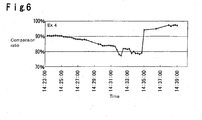
- the comparison ratios were found according to the following formula, based on illuminance X measured on the light source side of the respective multiple films and illuminance Y measured on the opposite side of the respective multiple films remote from the light source.
- Examples 1 to 3 were performed in a room, which had a temperature of 25°C and a relative humidity (hereinbelow, abbreviated as RH) of 33% and was configured so as to prevent outside light from entering thereinto.
- RH relative humidity
- F-CLEAN 100 WT manufactured by Asahi Glass Company, Limited
- the hydrophilic treatment was carried out by a method for applying a hydrophilizing agent (metal oxide type).
- a single gas supply and discharge port (C) was formed at a position of the ETFE film (A) in the vicinity of a substantially center in the width direction and in the vicinity of a lower end in the length direction, and a single discharge port (D) was formed at a position of the ETFE film (A) in the vicinity of the substantially center in the width direction and in the vicinity of an upper end in the length direction.
- the ETFE film (A) and the ETFE film (B) were superposed such that the hydrophilic treated surface of the ETFE film (A) faces inward, and the peripheral edge portions of both films were airtightly held by a frame formed of a receiving member and a retaining member (having a length of 1,150 mm and a width of 1,150 mm), fabricating a multiple film.
- a light source lamp (“Reflective Sun Lamp DR400/T(L)” manufactured by Toshiba Lighting & Technology Corporation) was placed on a side of the multiple film with the ETFE film (A) located therein.
- a light meter (spectroradiometer in the name of "MS-720" manufactured by EKO Instruments Co., Ltd.) was placed on a side of the multiple film with the ETFE film (B) located therein.
- the light source lamp and the light meter were placed such that a straight line connecting between the light-emitting part of the light source lamp and the sensor of the light meter extended orthogonally to the surfaces of the multiple sheet and passed through the center of the multiple sheet.
- the light source lamp was placed to have the light-emitting part apart from the multiple film by a distance of 450 mm while the light meter was placed to have the sensor apart from the multiple film by a distance of 320 mm.
- the gas supply and discharge port (C) was connected to one end of a tube (made of a vinyl chloride resin and having an inner diameter of 25 mm), and the other end of the tube was connected to a vacuum cleaner ("NC-1 03", 100 V, 1,050 W, manufactured by NICLON KOGYO KABUSHIKI KAISHA).
- the vacuum cleaner was activated to reduce the pressure between the ETFE film (A) and the ETFE film (B) to bring the ETFE film (A) and the ETFE film (B) into close contact with each other.
- ELECTRIC BLOWER having a nozzle size of 30 mm, 50/60 Hz, 55/51 W, and manufactured by YODOGAWA ELECTRIC TOOL MFG. CO.
- a water bath which was placed on an induction-heating cooker ("MH-B1", 100 V, 1,350 W, manufactured by Hitachi, Ltd.), was put into a casing made of a transparent resin, and the casing was connected to the blower.
- the blower was activated to supply air containing vapor in between the ETFE film (A) and the ETFE film (B), generating dew condensation on the inner surfaces of the multiple sheet.
- NC-103 100 V, 1,050 W, manufactured by NICLON KOGYO KABUSHIKI KAISHA.
- the vacuum cleaner was activated to reduce the pressure between the ETFE film (A) and the ETFE film (B) to bring the ETFE film (A) and the ETFE film (B) into close contact with each other with moisture existing between the ETFE film (A) and the ETFE film (B).
- Example 4 The illuminance measurement in Example 4 was performed outdoors on a fine day in September, 2008.
- a multiple film was prepared such that the peripheral edge portions of the ETFE film (A) and the ETFE film (B) were airtightly held by a frame formed of a receiving member and a retaining member.
- the multiple film was placed outdoors so as to have a surface facing directly to the south and slanted at an inclination angle of 45 degrees.
- the light meter (spectroradiometer in the name of "MS-720" manufactured by EKO Instruments Co. Ltd.) was placed on a side of the multiple film with the ETFE film (B) located therein. The light meter was placed to have the sensor apart from the multiple film by a distance of 300 mm.
- the gas supply and discharge port (C) was connected the one end of the tube (made of such a vinyl chloride resin and having an inner diameter of 25 mm), and the other end of the tube was connected to the blower ("ELECTRIC BLOWER” having a nozzle size of 30 mm (50/60 Hz, 55/51 W, and manufactured by YODOGAWA ELECTRIC TOOL MFG. CO.).
- the water bath which was placed on the induction-heating cooker ("MH-B1", 100 V, 1,350 W, manufactured by Hitachi, Ltd.), was put into the casing made of such a transparent resin, and the casing was connected to the blower.
- the blower was activated to supply air containing vapor in between the ETFE film (A) and the ETFE film (B). Comparison ratios were found by measuring changes in illuminance with the lapse of time on both sides of the multiple sheet close to the sun and remote from the sun. The measurement results are shown in Fig. 6 . It was revealed that the amount of light passing through the multiple sheet decreased as the amount of dew condensation generated on the inner surfaces of the multiple sheet increased.
- NC-1 03 100 V, 1,050 W, manufactured by NICLON KOGYO KABUSHIKI KAISHA.
- the vacuum cleaner was activated to reduce the pressure between the ETFE film (A) and the ETFE film (B). Comparison ratios were found by measuring changes in illuminance with the lapse of time on both sides of the multiple sheet close to and remote from the sun. The measurement results are shown in Fig. 6 . Just after the commencement of pressure-reducing, the ETFE film (A) and ETFE film (B) were brought into close contact with each other through a thin film of water, increasing, in a short period of time, the amount of light passing through the multiple film. The amount of light passing through the multiple sheet at that time exceeded the level of the amount of light passing through the multiple sheet before the commencement supply of the air containing vapor.
- Example 5 The measurement in Example 5 was performed in the room, which had a temperature of 25°C and an RH of 33% and was configured so as to prevent outside light from entering thereinto.
- the peripheral edge portions of the ETFE film (A) and the ETFE film (B) were airtightly held by a frame formed of a receiving member and a retaining member, fabricating a multiple film.
- a light source lamp (“National High-lamp 300 W type” manufactured by Matsushita Electric Industrial Co., Ltd.) was placed on a side the multiple film with the ETFE film (A) located therein.
- a light meter (“ANA-F11 general A class light meter” manufactured by TOKYO PHOTO ELECTRIC CO., LTD.) was placed on a side the multiple film with the ETFE film (B) located therein.
- the light source lamp and the light meter were placed such that a straight line connecting between the light-emitting part of the light source lamp and the sensor of the light meter extended orthogonally to the surfaces of the multiple sheet and passed through the center of the multiple sheet.
- the light source lamp was placed to have the light-emitting part apart from the multiple film by a distance of 450 mm while the light meter was placed to have the sensor apart from the multiple film by a distance of 320 mm.
- the gas supply and discharge port (C) was connected to one end of the tube (made of such a vinyl chloride resin and having an inner diameter of 25 mm, and the other end of the tube was connected to the blower ("ELECTRIC BLOWER” having a nozzle size 30 mm, 50/60 Hz, 55/51 W) and manufactured by YODOGAWA ELECTRIC TOOL MFG. CO.).
- the water bath which was placed on the induction-heating cooker ("MH-B1", 100 V, 1,350 W, manufactured by Hitachi, Ltd.), was put into the casing made of such a transparent resin, and the casing was connected to the blower. Then, the connection to the vacuum cleaner ("NC-103", 100 V, 1,050 W, manufactured by NICLON KOGYO KABUSHIKI KAISHA) was made.
- the blower was activated to supply air containing vapor in between the ETFE film (A) and the ETFE film (B), generating dew condensation of the inner surfaces of the multiple sheet. Changes in illuminance with the lapse of time were measured on a side of the multiple film remote from the light source.
- the light control system and the light control process, to which the present invention is applied are effective to buildings, which have a roof or walls formed of transparent sheet layers or transparent films, such as houses for cultivating plants where indoor environment, such as temperature, is important.
Landscapes
- Life Sciences & Earth Sciences (AREA)
- Environmental Sciences (AREA)
- Engineering & Computer Science (AREA)
- General Engineering & Computer Science (AREA)
- Sustainable Development (AREA)
- Physics & Mathematics (AREA)
- General Physics & Mathematics (AREA)
- Optics & Photonics (AREA)
- Greenhouses (AREA)
- Cultivation Of Plants (AREA)
- Housing For Livestock And Birds (AREA)
- Optical Elements Other Than Lenses (AREA)
- Non-Portable Lighting Devices Or Systems Thereof (AREA)
- Laminated Bodies (AREA)
- Building Environments (AREA)
Applications Claiming Priority (2)
| Application Number | Priority Date | Filing Date | Title |
|---|---|---|---|
| JP2008264753 | 2008-10-14 | ||
| PCT/JP2009/067776 WO2010044419A1 (ja) | 2008-10-14 | 2009-10-14 | 調光方法、調光システムおよび建造物 |
Publications (3)
| Publication Number | Publication Date |
|---|---|
| EP2336633A1 true EP2336633A1 (de) | 2011-06-22 |
| EP2336633A4 EP2336633A4 (de) | 2012-04-04 |
| EP2336633B1 EP2336633B1 (de) | 2016-12-07 |
Family
ID=42106582
Family Applications (1)
| Application Number | Title | Priority Date | Filing Date |
|---|---|---|---|
| EP09820597.4A Not-in-force EP2336633B1 (de) | 2008-10-14 | 2009-10-14 | Lichteinstellungsverfahren, lichteinstellungssystem und gebäude damit |
Country Status (6)
| Country | Link |
|---|---|
| US (1) | US8881489B2 (de) |
| EP (1) | EP2336633B1 (de) |
| JP (1) | JP5280457B2 (de) |
| KR (1) | KR101551518B1 (de) |
| CN (1) | CN102177397B (de) |
| WO (1) | WO2010044419A1 (de) |
Cited By (2)
| Publication number | Priority date | Publication date | Assignee | Title |
|---|---|---|---|---|
| GR20150100321A (el) * | 2015-07-17 | 2017-02-22 | Αλεξανδρος Χρηστου Παπαδοπουλος | Θερμοκηπιο με προσθαφαιρουμενη θερμομονωση |
| US12443029B1 (en) | 2025-03-28 | 2025-10-14 | United Arab Emirates University | Light and/or heat management system for a building, a building, and a method for light and/or heat management in a building |
Families Citing this family (12)
| Publication number | Priority date | Publication date | Assignee | Title |
|---|---|---|---|---|
| CN103573012B (zh) * | 2012-05-16 | 2016-07-13 | 深圳市文业装饰设计工程股份有限公司 | 增透型高层采光建筑 |
| JP2014202858A (ja) * | 2013-04-03 | 2014-10-27 | パナソニック株式会社 | 調光装置 |
| US9765522B2 (en) * | 2013-08-28 | 2017-09-19 | Paul Joseph Bilbrey | Skylight assembly with specific shading devices to minimize thermal heat and excessive light from high angle sunlight |
| CN103579392B (zh) * | 2013-11-12 | 2016-03-02 | 英利集团有限公司 | 温室大棚的光伏组件及具有其的温室大棚的光伏系统 |
| CN103749208B (zh) * | 2014-01-02 | 2016-03-16 | 吕昊 | 联栋温室充气保温系统 |
| US20150223410A1 (en) * | 2014-02-09 | 2015-08-13 | Lauren Freeman Jensen | Vacuum Chambered Greenhouse Paneling System |
| CN103828643B (zh) * | 2014-02-28 | 2017-02-01 | 英利能源(中国)有限公司 | 一种光伏组件及光伏系统 |
| WO2016176837A1 (zh) * | 2015-05-06 | 2016-11-10 | 冯菊英 | 一种建筑结构、建筑及暖房 |
| JP5997855B1 (ja) * | 2016-02-12 | 2016-09-28 | 勝義 長瀬 | 農業用ハウス |
| JP6772521B2 (ja) * | 2016-04-11 | 2020-10-21 | 大日本印刷株式会社 | 農業用チューブ |
| CN109114513B (zh) * | 2018-07-09 | 2020-03-24 | 广西蓝天科技股份有限公司 | 一种用于绿色建筑的采光单元 |
| WO2025086016A1 (en) * | 2023-10-25 | 2025-05-01 | 0865894 B.C. Ltd. O/A Agritech North | Greenhouse |
Family Cites Families (18)
| Publication number | Priority date | Publication date | Assignee | Title |
|---|---|---|---|---|
| CH428261A (de) * | 1964-08-18 | 1967-01-15 | Eberspaecher J | Herstellungsverfahren für Reaktionsscheiben |
| US4044519A (en) * | 1976-05-07 | 1977-08-30 | Morin Wilfred F | Insulated double glass window assembly |
| US4093352A (en) * | 1977-03-17 | 1978-06-06 | Pisar Robert J | Window adapted to be flooded with liquid |
| EP0013080B1 (de) | 1978-12-21 | 1983-02-16 | Imperial Chemical Industries Plc | Doppelscheiben-Anordnung |
| JPS61146992A (ja) * | 1984-12-18 | 1986-07-04 | シャープ株式会社 | 調光装置 |
| JPS624517U (de) * | 1985-06-25 | 1987-01-12 | ||
| JPS624517A (ja) | 1985-06-28 | 1987-01-10 | Inoue Japax Res Inc | 放電加工装置 |
| JPH0547210Y2 (de) * | 1987-12-07 | 1993-12-13 | ||
| JPH0412832A (ja) | 1990-05-01 | 1992-01-17 | Fujita Kikai:Kk | ホック打着機構を有する製袋機 |
| JP2509439Y2 (ja) * | 1990-05-18 | 1996-09-04 | 九州変圧器株式会社 | 植物育成用遮光断熱用ハウス |
| JPH0721814A (ja) * | 1993-06-30 | 1995-01-24 | Kajima Corp | 自然採光と人工照明のコントロールシステム |
| JPH08196152A (ja) * | 1995-01-25 | 1996-08-06 | Tabai Espec Corp | 構造物の採光調整装置 |
| FR2782810B1 (fr) * | 1998-08-31 | 2003-05-30 | Armines Ass Pour La Rech Et Le | Vitrage a pouvoir absorbant variable |
| KR20060021885A (ko) * | 2003-06-13 | 2006-03-08 | 제이에스알 가부시끼가이샤 | 투명 시트 및 그의 제조 방법 |
| JP4739740B2 (ja) | 2003-12-26 | 2011-08-03 | Agcグリーンテック株式会社 | 樹脂フィルム被覆建造物 |
| JP2007319138A (ja) * | 2006-06-05 | 2007-12-13 | Asahi Glass Green Tekku Kk | 建築資材、建造物および建造物の室内環境調節方法 |
| JP4829048B2 (ja) * | 2006-08-30 | 2011-11-30 | 株式会社ホッコウ | 遮光フィルター |
| JP2008264753A (ja) | 2007-04-23 | 2008-11-06 | First Step:Kk | 固化剤およびヘドロ状廃棄物またはヘドロ状廃液処理方法 |
-
2009
- 2009-10-14 EP EP09820597.4A patent/EP2336633B1/de not_active Not-in-force
- 2009-10-14 WO PCT/JP2009/067776 patent/WO2010044419A1/ja not_active Ceased
- 2009-10-14 KR KR1020117003703A patent/KR101551518B1/ko not_active Expired - Fee Related
- 2009-10-14 JP JP2010533912A patent/JP5280457B2/ja not_active Expired - Fee Related
- 2009-10-14 CN CN2009801413333A patent/CN102177397B/zh not_active Expired - Fee Related
-
2011
- 2011-03-29 US US13/074,068 patent/US8881489B2/en not_active Expired - Fee Related
Cited By (2)
| Publication number | Priority date | Publication date | Assignee | Title |
|---|---|---|---|---|
| GR20150100321A (el) * | 2015-07-17 | 2017-02-22 | Αλεξανδρος Χρηστου Παπαδοπουλος | Θερμοκηπιο με προσθαφαιρουμενη θερμομονωση |
| US12443029B1 (en) | 2025-03-28 | 2025-10-14 | United Arab Emirates University | Light and/or heat management system for a building, a building, and a method for light and/or heat management in a building |
Also Published As
| Publication number | Publication date |
|---|---|
| US8881489B2 (en) | 2014-11-11 |
| KR20110091641A (ko) | 2011-08-12 |
| JP5280457B2 (ja) | 2013-09-04 |
| EP2336633A4 (de) | 2012-04-04 |
| CN102177397A (zh) | 2011-09-07 |
| JPWO2010044419A1 (ja) | 2012-03-15 |
| EP2336633B1 (de) | 2016-12-07 |
| WO2010044419A1 (ja) | 2010-04-22 |
| KR101551518B1 (ko) | 2015-09-08 |
| US20110173903A1 (en) | 2011-07-21 |
| CN102177397B (zh) | 2013-04-17 |
Similar Documents
| Publication | Publication Date | Title |
|---|---|---|
| EP2336633B1 (de) | Lichteinstellungsverfahren, lichteinstellungssystem und gebäude damit | |
| US7788876B2 (en) | Building material, building and method for controlling the indoor environment in a building | |
| EP0650320B1 (de) | Durch sonnenwärme geheizte gebäude-entwürfe für bewölkten winter | |
| EP2416374A1 (de) | Solarzellenmodul mit schichten mit entwurf für integration in gebäude | |
| KR101046848B1 (ko) | 유해가스 배출 및 환기 기능을 갖는 태양광 집광장치 | |
| US7325543B2 (en) | Covering material for solar thermal power generating system and solar thermal power generating system formed by spreading the covering material | |
| CN104081115A (zh) | 日光收集系统和方法 | |
| JP2012216609A (ja) | 太陽電池設置建築構造体及び太陽電池パネル | |
| CN100435619C (zh) | 覆盖树脂薄膜的建筑物 | |
| US20200198287A1 (en) | Agricultural fluorine-resin film and greenhouse | |
| CN107278699A (zh) | 农业用大棚的施工方法 | |
| JP2002076421A (ja) | 太陽電池モジュール及びその太陽電池モジュールを屋根材として使用した建造物 | |
| JPS6039018B2 (ja) | 農業用被覆フイルム | |
| RU2236652C1 (ru) | Устройство для освещения солнечным светом помещений многоэтажного жилого дома | |
| EP4659347A1 (de) | Sonnenkollektorgebäude | |
| JPH09183159A (ja) | 接合シート材 | |
| AU2013201559A1 (en) | Solar earth module | |
| JP2023146697A (ja) | 空調室外機用吸引空気冷却装置及び空調室外機の吸引空気冷却方法 | |
| KR101259359B1 (ko) | 햇빛 유입장치 | |
| Kobayashi et al. | Stationary dielectric daylighting louver based on concept of Köhler integrator | |
| JP3859519B2 (ja) | 高機能手摺および換気装置 | |
| CN212566131U (zh) | 一种采光通风器 | |
| CN1844795A (zh) | 太阳能集热幕墙 | |
| TW202605223A (zh) | 智慧複層式建築外殼系統 | |
| KR970007100Y1 (ko) | 공기층이 형성되는 이중벽 온실용 트러스 |
Legal Events
| Date | Code | Title | Description |
|---|---|---|---|
| PUAI | Public reference made under article 153(3) epc to a published international application that has entered the european phase |
Free format text: ORIGINAL CODE: 0009012 |
|
| 17P | Request for examination filed |
Effective date: 20110407 |
|
| AK | Designated contracting states |
Kind code of ref document: A1 Designated state(s): AT BE BG CH CY CZ DE DK EE ES FI FR GB GR HR HU IE IS IT LI LT LU LV MC MK MT NL NO PL PT RO SE SI SK SM TR |
|
| AX | Request for extension of the european patent |
Extension state: AL BA RS |
|
| DAX | Request for extension of the european patent (deleted) | ||
| REG | Reference to a national code |
Ref country code: DE Ref legal event code: R079 Ref document number: 602009042974 Country of ref document: DE Free format text: PREVIOUS MAIN CLASS: F21S0011000000 Ipc: A01G0009140000 |
|
| A4 | Supplementary search report drawn up and despatched |
Effective date: 20120307 |
|
| RIC1 | Information provided on ipc code assigned before grant |
Ipc: A01G 9/22 20060101ALI20120301BHEP Ipc: A01G 9/14 20060101AFI20120301BHEP Ipc: G02B 5/00 20060101ALI20120301BHEP Ipc: G02B 3/12 20060101ALI20120301BHEP Ipc: F21V 14/06 20060101ALI20120301BHEP Ipc: F21S 11/00 20060101ALI20120301BHEP |
|
| 17Q | First examination report despatched |
Effective date: 20151103 |
|
| GRAP | Despatch of communication of intention to grant a patent |
Free format text: ORIGINAL CODE: EPIDOSNIGR1 |
|
| INTG | Intention to grant announced |
Effective date: 20160629 |
|
| GRAS | Grant fee paid |
Free format text: ORIGINAL CODE: EPIDOSNIGR3 |
|
| GRAA | (expected) grant |
Free format text: ORIGINAL CODE: 0009210 |
|
| AK | Designated contracting states |
Kind code of ref document: B1 Designated state(s): AT BE BG CH CY CZ DE DK EE ES FI FR GB GR HR HU IE IS IT LI LT LU LV MC MK MT NL NO PL PT RO SE SI SK SM TR |
|
| REG | Reference to a national code |
Ref country code: GB Ref legal event code: FG4D |
|
| REG | Reference to a national code |
Ref country code: CH Ref legal event code: EP Ref country code: AT Ref legal event code: REF Ref document number: 850890 Country of ref document: AT Kind code of ref document: T Effective date: 20161215 |
|
| REG | Reference to a national code |
Ref country code: IE Ref legal event code: FG4D |
|
| REG | Reference to a national code |
Ref country code: NL Ref legal event code: FP |
|
| REG | Reference to a national code |
Ref country code: DE Ref legal event code: R096 Ref document number: 602009042974 Country of ref document: DE |
|
| PG25 | Lapsed in a contracting state [announced via postgrant information from national office to epo] |
Ref country code: LV Free format text: LAPSE BECAUSE OF FAILURE TO SUBMIT A TRANSLATION OF THE DESCRIPTION OR TO PAY THE FEE WITHIN THE PRESCRIBED TIME-LIMIT Effective date: 20161207 |
|
| REG | Reference to a national code |
Ref country code: LT Ref legal event code: MG4D |
|
| PG25 | Lapsed in a contracting state [announced via postgrant information from national office to epo] |
Ref country code: SE Free format text: LAPSE BECAUSE OF FAILURE TO SUBMIT A TRANSLATION OF THE DESCRIPTION OR TO PAY THE FEE WITHIN THE PRESCRIBED TIME-LIMIT Effective date: 20161207 Ref country code: LT Free format text: LAPSE BECAUSE OF FAILURE TO SUBMIT A TRANSLATION OF THE DESCRIPTION OR TO PAY THE FEE WITHIN THE PRESCRIBED TIME-LIMIT Effective date: 20161207 Ref country code: GR Free format text: LAPSE BECAUSE OF FAILURE TO SUBMIT A TRANSLATION OF THE DESCRIPTION OR TO PAY THE FEE WITHIN THE PRESCRIBED TIME-LIMIT Effective date: 20170308 Ref country code: NO Free format text: LAPSE BECAUSE OF FAILURE TO SUBMIT A TRANSLATION OF THE DESCRIPTION OR TO PAY THE FEE WITHIN THE PRESCRIBED TIME-LIMIT Effective date: 20170307 |
|
| REG | Reference to a national code |
Ref country code: AT Ref legal event code: MK05 Ref document number: 850890 Country of ref document: AT Kind code of ref document: T Effective date: 20161207 |
|
| PG25 | Lapsed in a contracting state [announced via postgrant information from national office to epo] |
Ref country code: HR Free format text: LAPSE BECAUSE OF FAILURE TO SUBMIT A TRANSLATION OF THE DESCRIPTION OR TO PAY THE FEE WITHIN THE PRESCRIBED TIME-LIMIT Effective date: 20161207 Ref country code: FI Free format text: LAPSE BECAUSE OF FAILURE TO SUBMIT A TRANSLATION OF THE DESCRIPTION OR TO PAY THE FEE WITHIN THE PRESCRIBED TIME-LIMIT Effective date: 20161207 Ref country code: ES Free format text: LAPSE BECAUSE OF FAILURE TO SUBMIT A TRANSLATION OF THE DESCRIPTION OR TO PAY THE FEE WITHIN THE PRESCRIBED TIME-LIMIT Effective date: 20161207 |
|
| PG25 | Lapsed in a contracting state [announced via postgrant information from national office to epo] |
Ref country code: EE Free format text: LAPSE BECAUSE OF FAILURE TO SUBMIT A TRANSLATION OF THE DESCRIPTION OR TO PAY THE FEE WITHIN THE PRESCRIBED TIME-LIMIT Effective date: 20161207 Ref country code: RO Free format text: LAPSE BECAUSE OF FAILURE TO SUBMIT A TRANSLATION OF THE DESCRIPTION OR TO PAY THE FEE WITHIN THE PRESCRIBED TIME-LIMIT Effective date: 20161207 Ref country code: SK Free format text: LAPSE BECAUSE OF FAILURE TO SUBMIT A TRANSLATION OF THE DESCRIPTION OR TO PAY THE FEE WITHIN THE PRESCRIBED TIME-LIMIT Effective date: 20161207 Ref country code: CZ Free format text: LAPSE BECAUSE OF FAILURE TO SUBMIT A TRANSLATION OF THE DESCRIPTION OR TO PAY THE FEE WITHIN THE PRESCRIBED TIME-LIMIT Effective date: 20161207 Ref country code: IS Free format text: LAPSE BECAUSE OF FAILURE TO SUBMIT A TRANSLATION OF THE DESCRIPTION OR TO PAY THE FEE WITHIN THE PRESCRIBED TIME-LIMIT Effective date: 20170407 |
|
| PG25 | Lapsed in a contracting state [announced via postgrant information from national office to epo] |
Ref country code: BG Free format text: LAPSE BECAUSE OF FAILURE TO SUBMIT A TRANSLATION OF THE DESCRIPTION OR TO PAY THE FEE WITHIN THE PRESCRIBED TIME-LIMIT Effective date: 20170307 Ref country code: SM Free format text: LAPSE BECAUSE OF FAILURE TO SUBMIT A TRANSLATION OF THE DESCRIPTION OR TO PAY THE FEE WITHIN THE PRESCRIBED TIME-LIMIT Effective date: 20161207 Ref country code: PT Free format text: LAPSE BECAUSE OF FAILURE TO SUBMIT A TRANSLATION OF THE DESCRIPTION OR TO PAY THE FEE WITHIN THE PRESCRIBED TIME-LIMIT Effective date: 20170407 Ref country code: AT Free format text: LAPSE BECAUSE OF FAILURE TO SUBMIT A TRANSLATION OF THE DESCRIPTION OR TO PAY THE FEE WITHIN THE PRESCRIBED TIME-LIMIT Effective date: 20161207 Ref country code: IT Free format text: LAPSE BECAUSE OF FAILURE TO SUBMIT A TRANSLATION OF THE DESCRIPTION OR TO PAY THE FEE WITHIN THE PRESCRIBED TIME-LIMIT Effective date: 20161207 Ref country code: PL Free format text: LAPSE BECAUSE OF FAILURE TO SUBMIT A TRANSLATION OF THE DESCRIPTION OR TO PAY THE FEE WITHIN THE PRESCRIBED TIME-LIMIT Effective date: 20161207 Ref country code: BE Free format text: LAPSE BECAUSE OF FAILURE TO SUBMIT A TRANSLATION OF THE DESCRIPTION OR TO PAY THE FEE WITHIN THE PRESCRIBED TIME-LIMIT Effective date: 20161207 |
|
| REG | Reference to a national code |
Ref country code: DE Ref legal event code: R097 Ref document number: 602009042974 Country of ref document: DE |
|
| PLBE | No opposition filed within time limit |
Free format text: ORIGINAL CODE: 0009261 |
|
| STAA | Information on the status of an ep patent application or granted ep patent |
Free format text: STATUS: NO OPPOSITION FILED WITHIN TIME LIMIT |
|
| 26N | No opposition filed |
Effective date: 20170908 |
|
| PG25 | Lapsed in a contracting state [announced via postgrant information from national office to epo] |
Ref country code: DK Free format text: LAPSE BECAUSE OF FAILURE TO SUBMIT A TRANSLATION OF THE DESCRIPTION OR TO PAY THE FEE WITHIN THE PRESCRIBED TIME-LIMIT Effective date: 20161207 Ref country code: SI Free format text: LAPSE BECAUSE OF FAILURE TO SUBMIT A TRANSLATION OF THE DESCRIPTION OR TO PAY THE FEE WITHIN THE PRESCRIBED TIME-LIMIT Effective date: 20161207 |
|
| PG25 | Lapsed in a contracting state [announced via postgrant information from national office to epo] |
Ref country code: MC Free format text: LAPSE BECAUSE OF FAILURE TO SUBMIT A TRANSLATION OF THE DESCRIPTION OR TO PAY THE FEE WITHIN THE PRESCRIBED TIME-LIMIT Effective date: 20161207 |
|
| REG | Reference to a national code |
Ref country code: CH Ref legal event code: PL |
|
| REG | Reference to a national code |
Ref country code: IE Ref legal event code: MM4A |
|
| REG | Reference to a national code |
Ref country code: FR Ref legal event code: ST Effective date: 20180629 |
|
| PG25 | Lapsed in a contracting state [announced via postgrant information from national office to epo] |
Ref country code: LI Free format text: LAPSE BECAUSE OF NON-PAYMENT OF DUE FEES Effective date: 20171031 Ref country code: CH Free format text: LAPSE BECAUSE OF NON-PAYMENT OF DUE FEES Effective date: 20171031 Ref country code: LU Free format text: LAPSE BECAUSE OF NON-PAYMENT OF DUE FEES Effective date: 20171014 |
|
| PG25 | Lapsed in a contracting state [announced via postgrant information from national office to epo] |
Ref country code: FR Free format text: LAPSE BECAUSE OF NON-PAYMENT OF DUE FEES Effective date: 20171031 |
|
| PG25 | Lapsed in a contracting state [announced via postgrant information from national office to epo] |
Ref country code: MT Free format text: LAPSE BECAUSE OF NON-PAYMENT OF DUE FEES Effective date: 20171014 |
|
| PG25 | Lapsed in a contracting state [announced via postgrant information from national office to epo] |
Ref country code: IE Free format text: LAPSE BECAUSE OF NON-PAYMENT OF DUE FEES Effective date: 20171014 |
|
| PGFP | Annual fee paid to national office [announced via postgrant information from national office to epo] |
Ref country code: NL Payment date: 20181019 Year of fee payment: 10 |
|
| PGFP | Annual fee paid to national office [announced via postgrant information from national office to epo] |
Ref country code: DE Payment date: 20181019 Year of fee payment: 10 |
|
| PGFP | Annual fee paid to national office [announced via postgrant information from national office to epo] |
Ref country code: GB Payment date: 20181019 Year of fee payment: 10 |
|
| PG25 | Lapsed in a contracting state [announced via postgrant information from national office to epo] |
Ref country code: HU Free format text: LAPSE BECAUSE OF FAILURE TO SUBMIT A TRANSLATION OF THE DESCRIPTION OR TO PAY THE FEE WITHIN THE PRESCRIBED TIME-LIMIT; INVALID AB INITIO Effective date: 20091014 |
|
| PG25 | Lapsed in a contracting state [announced via postgrant information from national office to epo] |
Ref country code: CY Free format text: LAPSE BECAUSE OF NON-PAYMENT OF DUE FEES Effective date: 20161207 |
|
| PG25 | Lapsed in a contracting state [announced via postgrant information from national office to epo] |
Ref country code: MK Free format text: LAPSE BECAUSE OF FAILURE TO SUBMIT A TRANSLATION OF THE DESCRIPTION OR TO PAY THE FEE WITHIN THE PRESCRIBED TIME-LIMIT Effective date: 20161207 |
|
| PG25 | Lapsed in a contracting state [announced via postgrant information from national office to epo] |
Ref country code: TR Free format text: LAPSE BECAUSE OF FAILURE TO SUBMIT A TRANSLATION OF THE DESCRIPTION OR TO PAY THE FEE WITHIN THE PRESCRIBED TIME-LIMIT Effective date: 20161207 |
|
| REG | Reference to a national code |
Ref country code: DE Ref legal event code: R119 Ref document number: 602009042974 Country of ref document: DE |
|
| REG | Reference to a national code |
Ref country code: NL Ref legal event code: MM Effective date: 20191101 |
|
| PG25 | Lapsed in a contracting state [announced via postgrant information from national office to epo] |
Ref country code: DE Free format text: LAPSE BECAUSE OF NON-PAYMENT OF DUE FEES Effective date: 20200501 |
|
| PG25 | Lapsed in a contracting state [announced via postgrant information from national office to epo] |
Ref country code: NL Free format text: LAPSE BECAUSE OF NON-PAYMENT OF DUE FEES Effective date: 20191101 |
|
| GBPC | Gb: european patent ceased through non-payment of renewal fee |
Effective date: 20191014 |
|
| PG25 | Lapsed in a contracting state [announced via postgrant information from national office to epo] |
Ref country code: GB Free format text: LAPSE BECAUSE OF NON-PAYMENT OF DUE FEES Effective date: 20191014 |