EP2337776B1 - Procédé de production simultanée de différents mélanges d isomères du diisocyanate de la série du diphénylméthane - Google Patents
Procédé de production simultanée de différents mélanges d isomères du diisocyanate de la série du diphénylméthane Download PDFInfo
- Publication number
- EP2337776B1 EP2337776B1 EP09783615.9A EP09783615A EP2337776B1 EP 2337776 B1 EP2337776 B1 EP 2337776B1 EP 09783615 A EP09783615 A EP 09783615A EP 2337776 B1 EP2337776 B1 EP 2337776B1
- Authority
- EP
- European Patent Office
- Prior art keywords
- mdi
- isomer
- crystals
- diisocyanate
- crystallization
- Prior art date
- Legal status (The legal status is an assumption and is not a legal conclusion. Google has not performed a legal analysis and makes no representation as to the accuracy of the status listed.)
- Active
Links
Images




Classifications
-
- C—CHEMISTRY; METALLURGY
- C07—ORGANIC CHEMISTRY
- C07C—ACYCLIC OR CARBOCYCLIC COMPOUNDS
- C07C263/00—Preparation of derivatives of isocyanic acid
- C07C263/18—Separation; Purification; Stabilisation; Use of additives
- C07C263/20—Separation; Purification
-
- C—CHEMISTRY; METALLURGY
- C07—ORGANIC CHEMISTRY
- C07C—ACYCLIC OR CARBOCYCLIC COMPOUNDS
- C07C263/00—Preparation of derivatives of isocyanic acid
-
- C—CHEMISTRY; METALLURGY
- C07—ORGANIC CHEMISTRY
- C07C—ACYCLIC OR CARBOCYCLIC COMPOUNDS
- C07C265/00—Derivatives of isocyanic acid
-
- C—CHEMISTRY; METALLURGY
- C07—ORGANIC CHEMISTRY
- C07C—ACYCLIC OR CARBOCYCLIC COMPOUNDS
- C07C265/00—Derivatives of isocyanic acid
- C07C265/14—Derivatives of isocyanic acid containing at least two isocyanate groups bound to the same carbon skeleton
Definitions
- the present invention relates to a process for the simultaneous production of different mixtures of diisocyanate isomers of the diphenylmethane series.
- Aromatic isocyanates are important raw materials for the production of polyurethane materials.
- diisocyanates and polyisocyanates of the diphenylmethane series (MDI) play the greatest role, quantitatively.
- Polyisocyanates of the diphenylmethane series are understood to denote isocyanates and isocyanate mixtures of the following type: where n denotes a natural number greater than or equal to zero.
- polyamines of the diphenylmethane series are understood to denote compounds and compound mixtures of the following type: where n denotes a natural number greater than or equal to zero.
- diisocyanates and polyisocyanates of the diphenylmethane series are produced by phosgenation of the corresponding diamines and polyamines of the diphenylmethane series (MDA).
- MDA diphenylmethane series
- the diamines and polyamines of the diphenylmethane series (MDA) are themselves produced by condensation of aniline and formaldehyde.
- the corresponding diisocyanates, 2,2'-MDI, 2,4'-MDI and 4,4'-MDI which are described in the specialist circles as 2-ring (i.e. bi-nuclear) compounds of MDI (i.e.
- diisocyanates of the diphenylmethane series are obtained by phosgenation of diamines of the diphenylmethane series.
- the 2-ring i.e. (bi-nuclear) MDA methylenediphenyldiamine
- higher-nuclear MDA types which after the phosgenation constitute the polynuclear content in the polymeric MDI (i.e. polyisocyanates of the diphenylmethane series).
- the crude MDI mixture produced in the phosgenation can be separated in the polymer/monomer separation by means of simple evaporation or distillation into 2-nuclear-MDI (i.e. monomeric MDI) and a polymer-MDI fraction (i.e. polymeric MDI or PMDI).
- 2-nuclear-MDI i.e. monomeric MDI
- polymer-MDI fraction i.e. polymeric MDI or PMDI
- the isomer mixture of the 2-nuclear-MDI fraction contains, in addition to the diisocyanates 2,2'-MDI, 2,4'-MDI and 4,4'-MDI, some secondary components such as solvent residues or phenyl isocyanate derivatives.
- the monomeric 2-nuclear-MDI fraction is separated, according to the prior art, by distillation or by crystallisation into a stream which is essentially the pure or substantially pure 4,4'-MDI isomer and into a Mixed Isomer (MI) stream which is a mixture comprising 2,4'-MDI and 4,4'-MDI.
- MI Mixed Isomer
- the pure or substantially pure 4,4'-MDI isomer is available commercially typically with an isomer purity of 98 - 99 % 4,4'-MDI and is known as Pure MDI.
- Various Mixed Isomer streams can be produced with varying amounts of the two MDI isomers and which are available commercially.
- the Pure MDI and Mixed Isomer monomeric products are supplied as polyurethane raw materials to the world market, or they are processed further with polymeric MDI into mixed products and/or with polyethers or polyesters or the like into prepolymers or by further reaction to form variants, etc. as is well known in the art. Many different Mixed Isomer products are useful both in their own right, for the production of variants and prepolymers and as components of various isocyanate product blends. It is possible to make very high purity ["Super Pure MDI”] 4,4'-MDI : even 99.99% 4,4'-MDI is known [ Mostecky, Jiri; Pecka, Karel: Czech. Cz144738 15-Feb-1972 ] but the multiple purification steps generally required, either as distinct and separate steps or as "integral parts" of, for example, a sophisticated fractional distillation process makes this economically unattractive.
- US 4,118,410 A describes a process of separating a mixture which contains isomers of diphenylmethane diisocyanate comprising distilling said mixture under vacuum and separating the polyisocyanates into two fractions with a desired first fraction and a second fraction which can be further purified by crystallization.
- DE 196 51 215 C1 describes a method for separating MDI starting from a mixture of 90% 4,4'MDI and 10% 2,4'MDI using a temperature between 30 and 40 °C.
- the compound to be purified and the impurities are a component of a liquid medium.
- a change of conditions such as removal of a solvent, or a change in temperature
- the impurities remain substantially in the medium, and the solidified or crystallized compound is therefore purified.
- Solidification processes may be subdivided into layer processes, wherein solidification occurs on a solid surface, or suspension processes wherein the solid and/or crystals form as a suspension in the liquid medium.
- the general principals of solidification and/or crystallization are taught in treatises such as: Principles of Solidification by Bruce Chalmers (John Wiley & Sons 1964 ); " Fractional Crystallization", Process Technology Proceedings, 6, Industrial Crystallization 87, by S. J. Jancic (Proceedings of the 10th Symposium on Industrial Crystallization, Bechyne, Czechoslovakia, Sep. 21-25, 1987 ); and Fractional Solidification, by Zief et.al. (Marcel Dekker, Inc. 1967 ).
- Crystallization processes based on layer growth technologies, where crystals are grown on the wall of a heat exchanger, are well known and have been employed at a commercial scale for the production of MDI diisocyanate products.
- Static as well as dynamic crystallization processes can be used. Both technologies operate as batch processes.
- the selectivity of layer crystallization is limited, particularly when operating at economically beneficial rates whilst, in comparison, fractional distillation is capable of achieving high selectivity, leading to high product purity.
- operating fractional distillation processes for the purification of MDI isomers whether in single or multiple distillation columns and with or without divided columns is expensive in terms of the required process equipment.
- melt crystallization it is also known in the art to purify certain chemicals by the technique of "melt crystallization.”
- the compound to be purified typically comprises a major fraction, or preferably a high fraction of the mixture to be purified, but nevertheless contains (preferably minor) impurities.
- Solvents are not typically added to melt crystallization processes.
- the mixture (which may be a solid at ambient temperature) is maintained at a temperature above its melting point to form a liquid medium, then cooled below the melting point of the compound to be purified, to induce solidification or crystallization out of the "melt". If the solid and/or crystals are removed from the melt before all of the desired compound has crystallized (i.e.
- melt crystallization processes can be very good.
- the general techniques and methods employed in melt crystallization have been discussed in treatises by Sloan et al., in “Techniques of Melt Crystallization", Techniques of Chemistry, vol. XIX (John Wiley & Sons, 1988 ); by Wynn in "Melt Crystallization” in Section 5.3 of Handbook of Separation Techniques for Chemical Engineers, 3d ed., (P. A. Scheitzer Ed., McGraw-Hill 1997 ), and by Toyokura et al., in "Crystallization from the Melt", Crystallization Technology Handbook, (Marcel Dekker, Inc. 1995 ).
- a suspension/melt growth crystallization process consists of two units that are run continuously,
- crystal growth takes place in a growth vessel and heat is removed externally in a special heat exchanger that acts as a crystallizer.
- Super-saturation is created in the crystallizer by sub-cooling the mother liquor resulting in the formation of small crystals which are freely suspended in the mother liquor.
- Drum crystallizers and Scraped Surface Heat Exchangers are known to be used. Conventionally due to a large crystal surface area per unit volume, low growth rates can be applied which results in superior selectivity and thus very high crystal purity.
- the slurry of pure crystals in the mother liquor then passes to a solid-liquid separator.
- separation of suspension crystals and residual melt may also be carried out either exclusively, or after partial mechanical separation (in particular before use of a mechanical wash column) of residual melt, by means of a suitable washing liquid in a wash column in which the wash liquid is passed counter currently, to the suspension crystals.
- the washing liquid is optionally the Mother Liquor from which the pure crystals were originally formed.
- the wash column types are divided into those with forced transport of the suspension crystal bed and those with gravity transport of the suspension crystals (a detailed description of the different wash column types is to be found, inter alia, in Chem.-Ing.-Techn. 57(1985) No. 2, 91-102 , in Chemical Engineering Science 50, 1995, No. 17, 2712 to 2729, Elsevier Science Ltd. , in Applied Thermal Engineering 17, (1997) No. 8-10, 879-888, Published by Elsevier Science Ltd. , and the citations stated in the abovementioned references).
- at least one force other than gravitation in the transport direction is used for transporting the suspension crystal bed.
- wash liquid is passed counter currently to the suspension crystals in the wash column.
- wash liquid inter alia water or aqueous acrylic acid is recommended as wash liquid to be used for crude acrylic acid suspensions.
- the disadvantage of these wash liquids is that, on the one hand, the purification effect is not completed satisfactorily and, on the other hand, they result in considerable loss of the desired pure product - such as acrylic acid.
- each cycle of the wash column is, in a sense, a small batch but the timescale is such that as an industrial-scale process it can be considered overall as a continuous process [a pseudo-continuous process] and thus, in this sense, the process will be subsequently described as a continuous process here.
- Melt crystallisation [referred to here as a variation of Suspension crystallisation], being a well known technique for the production of high purity products, can be applied to the preparation of high purity ["Super Pure MDI” with purity >99.9 % 4,4'-MDI] 4,4'-MDI as described by Koole and Goncalves ("Continuous melt crystallisation of MDI isomers", Netherlands Process Technology Symposium [NPS5] Theme: Engineering for Life, 25 and 26 October 2005, Congress Centre NH Koningshof, Veldhoven, NL ) and Zijl and Goncalves ("Continuous melt crystallisation of MDI isomers", Stan Ackermans Institute, University of Eindhoven, NL. 22 November 2006 ).
- the object of the present invention which comprises a process for the simultaneous "single-step" production of two different mixtures of diisocyanate isomers of the diphenylmethane series, where the purity of both of the streams is less than 99% of any single MDI diisocyanate isomer.
- the result obtained according to the present invention was particularly surprising because it had hitherto not been recognized that a process widely used specifically for the preparation of high isomer purity materials could be used in an economically beneficial and efficient way to create simultaneously two MDI isomer streams of defined composition where the purity of both of the streams is less than 99% of any single MDI diisocyanate isomer.
- the present invention can be used in combination with other process operations for modifying MDI diisocyanate streams for example to optimise the efficiency and economy of a multi-product MDI diisocyanate and PMDI polyisocyanate manufacturing facility such as single- or multiple-column fractional distillation plant or conventional crystallisation plant such as static or dynamic crystallisers.
- a multi-product MDI diisocyanate and PMDI polyisocyanate manufacturing facility such as single- or multiple-column fractional distillation plant or conventional crystallisation plant such as static or dynamic crystallisers.
- Control of the process may be achieved by on-line or off-line analysis of one or more of the product and feed streams using techniques well known to those skilled in the art such as methods based on spectroscopic techniques (UV-Vis, IR, NIR, etc.), or chromatographic techniques (gas chromatography or liquid chromatography and variations together with a range of different detection techniques etc.).
- the process may be controlled on the basis of measured temperatures, pressures, flow rates, etc. knowledge of which can be obtained by trial.
- compositions defined by their 4,4'-MDI and 2,4'-MDI contents there can, of course, in practice be small amounts of minor impurities present such as, but not limited to 2,2'-MDI, tri-isocyanate isomers, mono-isocyanates, chlorinated impurities and other halogenated impurities, methyl-group containing impurities and other impurities commonly present in process streams of these kinds.
- minor impurities such as, but not limited to 2,2'-MDI, tri-isocyanate isomers, mono-isocyanates, chlorinated impurities and other halogenated impurities, methyl-group containing impurities and other impurities commonly present in process streams of these kinds.
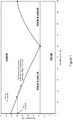
- Fractional crystallisation processes for separating 4,4' and 2,4'-MDI isomers can generally be understood in terms of the relevant phase diagram ( Figure 1 ).
- a mixed isomer composition is cooled until solids of pure 4,4'-MDI start to form. Continued cooling results in formation of additional solid whilst the composition of the liquid phase (Mother Liquor) changes following the liquidus line of the phase diagram, becoming ever richer in the 2,4'-MDI isomer.
- the presence of impurities such as 2,2'-MDI, tri-isocyanate isomers, etc. in the feed will affect the exact composition and freezing point of the last liquid to solidify. This can be determined by trial.
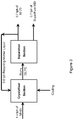
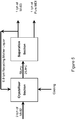
- the suspension crystallization process consists of crystallization and solid/liquid separation [wash column] sections.
- the crystals are formed in the crystallization section that includes a growth vessel where the crystals can grow.
- the crystals are separated from the liquid in the separation section, where the crystals are also melted out to form Product 1 ( Figure 2 ).
- the Mother Liquor can be split into a recycling stream and a second product stream - Product 2.
- the crystallization section consists of a slurry circulation system [to circulate the slurry over the growth vessel, via the external crystallizer], a drum crystallizer [where the slurry is cooled via the cold scraped wall], a growth vessel [which provides the residence time to let the crystals grow to the required size] and an overhead feed tank [which buffers the feed and keeps the entire unit liquid full].
- the crystallisation section could have another design for example consisting of a slurry vessel with stirrer.
- the feed stream enters the crystallisation section where it is generally mixed with a Mother Liquor recycle stream.
- This mixture is cooled such that crystals of pure 4,4'-MDI form and grow.
- the temperature at this point is adjusted in order to obtain a desired slurry temperature exiting the crystallisation section.
- the slurry temperature is conventionally controlled by controlling the recycle flow of mother liquor to the crystaliser. However, in certain circumstances the unit may be operated without the mother liquor recycle in which case the temperature could be controlled by recirculation of some of the melted pure phase.
- the cooling load of the crystallizer determines the amount of crystals in the slurry. This cooling load is conventionally varied by changing the temperature of the cooling fluid. Control of the slurry temperature determines the amount of crystals formed and the composition of the liquid phase.
- the separation section consists of a wash column system comprising a wash column and a melt loop.
- a wash column system comprising a wash column and a melt loop.
- two such systems can be installed and operated separately such that one can be run whilst the other is not in use for example when undergoing maintenance.
- the two systems can also be run simultaneously for higher throughput.
- the wash column is a mechanical solid-liquid separation device which is advantageous for MDI processing because the melting point of solid 4,4'-MDI is close to the temperature of slurry that is fed to it.
- the wash column contains a packed 4,4'-MDI crystal bed with above it a filter plate on a piston and below it a scraper.
- the voids between the upper crystals are filled with liquid with the same composition as the liquid in the crystallization section i.e. the mother liquor, which is relatively lower in 4,4'-MDI.
- the composition of this mother liquor is determined by the slurry temperature.
- the liquid in the voids between the crystals in the bottom part will be liquid that is high in 4,4'-MDI and almost pure liquid 4,4'-MDI.
- the place where these liquid compositions meet is called the wash front.
- the wash front is located somewhere within the crystal bed.
- a wash column cycle starting from this situation, can be described thus as follows:
- the time required to complete a full cycle largely determines the maximum capacity of the wash column.
- the real capacity can be reduced by selecting a longer cycle time than the real cycle time.
- the wash column will then keep the piston in its bottom position, after completion of the cycle, until the selected longer cycle time has been reached, before starting a new cycle.
- the melt loop consists of :
- the composition of the melted "pure" product is less than 99.5% 4,4'-MDI. It had hitherto not been recognized that a process widely used specifically for the preparation of high isomer purity materials could be used in an economically beneficial and efficient way to create two such MDI isomer streams simultaneously.
- An MDI isomer stream containing 82.7 wt% 4,4'-MDI was fed at a rate of 1.4 ton/hr together with about 0.6 ton/hr of recycling Mother Liquor to a suspension crystallizer, comprising a drum crystallizer and a crystal growth vessel, which was controlled to a temperature of 28.7°C creating a slurry with about 35% solids.
- This material was separated using one piston type wash column, into a diisocyanate isomer stream of 0.7 ton/hr with a concentration of 71.2 wt% 4,4'-MDI and a second diisocyanate isomer stream of 0.7 ton/hr containing about 99.7 - 99.8 wt% 4,4'-MDI [Super Pure MDI].
- the delta-T was about 12°C.
- An MDI isomer stream containing 82 wt% 4,4'-MDI was fed at a rate of 2 ton/hr together with about 0.9 ton/hr of recycling Mother Liquor to a suspension crystallizer, comprising a drum crystallizer and a crystal growth vessel, which was controlled to a temperature of 25.8 °C creating a slurry with about 35% solids.
- This material was separated using a set of two piston type wash columns, into a diisocyanate isomer stream of 1 ton/hr with a concentration of 63 wt% 4,4'-MDI and a second diisocyanate isomer stream of 1 ton/hr containing 98.5 wt% 4,4'-MDI [Pure MDI].
- the delta-T was about 15°C.
- An MDI isomer stream containing 70 wt% 4,4'-MDI was fed at a rate of 2.4 ton/hr together with about 1 ton/hr of recycling Mother Liquor to a suspension crystallizer, comprising a drum crystallizer and a crystal growth vessel, which was controlled to a temperature of 19.3 °C creating a slurry with about 35% solids.
- This material was separated using a set of two piston type wash columns, into a diisocyanate isomer stream of 1.2 ton/hr with a concentration of 50 wt% 4,4'-MDI and a second diisocyanate isomer stream of 1.2 ton/hr containing 89 wt% 4,4'-MDI.
- An MDI isomer stream containing 62.5 wt% 4,4'-MDI was fed at a rate of 2.4 ton/hr without any recycling Mother Liquor to a suspension crystallizer comprising a drum crystallizer and a crystal growth vessel, which was controlled to a temperature of 19.3 °C creating a slurry with about 35% solids.
- This material was separated using a set of two piston type wash columns, into a diisocyanate isomer stream of 1.2 ton/hr with a concentration of 50 wt% 4,4'-MDI and a second diisocyanate isomer stream of 1.2 ton/hr containing 85 wt% 4,4'-MDI.
Landscapes
- Chemical & Material Sciences (AREA)
- Organic Chemistry (AREA)
- Organic Low-Molecular-Weight Compounds And Preparation Thereof (AREA)
- Toys (AREA)
Claims (2)
- Procédé pour la production simultanée et continue de deux mélanges différents de principalement 4,4'-diphényl-méthane-diisocyanate et 2,4'-diphénylméthane-diisocyanate, comprenant l'étape de séparation d'un courant d'alimentation d'isomères mixtes de diphénylméthane-diisocyanate [MIx] par un procédé de cristallisation en masse fondue en suspension en une seule étape, procédé qui comprend une étape de cristallisation dans laquelle sont formés des cristaux qui sont ensuite séparés du liquide dans une étape ultérieure de séparation, les cristaux étant ainsi fondus pour former un des mélanges d'isomères, et la liqueur-mère restante étant scindée en un courant de recyclage qui est éventuellement renvoyé dans la section de cristallisation et le second mélange d'isomères, en deux courants d'isomères mixtes de diphénylméthane-diisocyanate [MIy et MIz] où x a une valeur de 80 à 92, y a une valeur de 97 à 99 et z a une valeur de 60 à 80, où x, y et z sont des pourcentages en poids de l'isomère 4,4'-diphénylméthane-diisocyanate présent dans le mélange d'isomères de diphénylméthane-diisocyanate, la température de la suspension quittant la section de cristallisation étant ajustée à une valeur de 25 à 27°C.
- Procédé suivant la revendication 1, dans lequel x a une valeur de 82 à 88, y a une valeur de 97,2 à 98,5 et z a une valeur de 63 à 70.
Priority Applications (4)
| Application Number | Priority Date | Filing Date | Title |
|---|---|---|---|
| EP11189081A EP2423184A1 (fr) | 2008-10-06 | 2009-10-01 | Procédé pour la production simultanée de différents mélanges d'isomères de diisocyanate de la série diphénylméthane |
| EP09783615.9A EP2337776B1 (fr) | 2008-10-06 | 2009-10-01 | Procédé de production simultanée de différents mélanges d isomères du diisocyanate de la série du diphénylméthane |
| EP11189080.2A EP2423183B1 (fr) | 2008-10-06 | 2009-10-01 | Procédé pour la production simultanée de différents mélanges d'isomères de diisocyanate de la série diphénylméthane |
| DE9783615T DE09783615T1 (de) | 2008-10-06 | 2009-10-01 | Verfahren zur simultanen herstellung verschiedener mischungen von diisocyanatisomeren der diphenylmethanreihe |
Applications Claiming Priority (3)
| Application Number | Priority Date | Filing Date | Title |
|---|---|---|---|
| EP08165930 | 2008-10-06 | ||
| EP09783615.9A EP2337776B1 (fr) | 2008-10-06 | 2009-10-01 | Procédé de production simultanée de différents mélanges d isomères du diisocyanate de la série du diphénylméthane |
| PCT/EP2009/062724 WO2010040675A2 (fr) | 2008-10-06 | 2009-10-01 | Procédé de production simultanée de différents mélanges d’isomères du diisocyanate de la série du diphénylméthane |
Related Child Applications (3)
| Application Number | Title | Priority Date | Filing Date |
|---|---|---|---|
| EP11189081A Division-Into EP2423184A1 (fr) | 2008-10-06 | 2009-10-01 | Procédé pour la production simultanée de différents mélanges d'isomères de diisocyanate de la série diphénylméthane |
| EP11189080.2A Division EP2423183B1 (fr) | 2008-10-06 | 2009-10-01 | Procédé pour la production simultanée de différents mélanges d'isomères de diisocyanate de la série diphénylméthane |
| EP11189080.2A Division-Into EP2423183B1 (fr) | 2008-10-06 | 2009-10-01 | Procédé pour la production simultanée de différents mélanges d'isomères de diisocyanate de la série diphénylméthane |
Publications (2)
| Publication Number | Publication Date |
|---|---|
| EP2337776A2 EP2337776A2 (fr) | 2011-06-29 |
| EP2337776B1 true EP2337776B1 (fr) | 2016-03-30 |
Family
ID=40394176
Family Applications (3)
| Application Number | Title | Priority Date | Filing Date |
|---|---|---|---|
| EP09783615.9A Active EP2337776B1 (fr) | 2008-10-06 | 2009-10-01 | Procédé de production simultanée de différents mélanges d isomères du diisocyanate de la série du diphénylméthane |
| EP11189081A Withdrawn EP2423184A1 (fr) | 2008-10-06 | 2009-10-01 | Procédé pour la production simultanée de différents mélanges d'isomères de diisocyanate de la série diphénylméthane |
| EP11189080.2A Active EP2423183B1 (fr) | 2008-10-06 | 2009-10-01 | Procédé pour la production simultanée de différents mélanges d'isomères de diisocyanate de la série diphénylméthane |
Family Applications After (2)
| Application Number | Title | Priority Date | Filing Date |
|---|---|---|---|
| EP11189081A Withdrawn EP2423184A1 (fr) | 2008-10-06 | 2009-10-01 | Procédé pour la production simultanée de différents mélanges d'isomères de diisocyanate de la série diphénylméthane |
| EP11189080.2A Active EP2423183B1 (fr) | 2008-10-06 | 2009-10-01 | Procédé pour la production simultanée de différents mélanges d'isomères de diisocyanate de la série diphénylméthane |
Country Status (14)
| Country | Link |
|---|---|
| US (1) | US8779182B2 (fr) |
| EP (3) | EP2337776B1 (fr) |
| JP (2) | JP5590570B2 (fr) |
| KR (1) | KR101627004B1 (fr) |
| CN (1) | CN102171180B (fr) |
| AU (1) | AU2009301226B2 (fr) |
| BR (2) | BRPI0919795B1 (fr) |
| CA (3) | CA2737397C (fr) |
| DE (1) | DE09783615T1 (fr) |
| ES (2) | ES2573649T3 (fr) |
| HU (2) | HUE028275T2 (fr) |
| MX (2) | MX337964B (fr) |
| RU (1) | RU2496771C2 (fr) |
| WO (1) | WO2010040675A2 (fr) |
Families Citing this family (5)
| Publication number | Priority date | Publication date | Assignee | Title |
|---|---|---|---|---|
| WO2010095927A1 (fr) * | 2009-02-23 | 2010-08-26 | Gea Niro Pt B.V. | Procédé pour cristalliser et séparer différents isomères de diisocyanate |
| KR101214737B1 (ko) | 2011-08-18 | 2012-12-21 | 삼성전기주식회사 | 칩 실장 장치 및 칩 실장 방법 |
| HUE037380T2 (hu) | 2011-11-30 | 2018-09-28 | Dow Global Technologies Llc | Eljárás nagy 2,4-metilén-difenil-diizocianát tartalmú metilén-difenil-diizocianát izomer keverékek elõállítására |
| CN104974062B (zh) * | 2015-06-30 | 2017-07-21 | 成都理工大学 | 一种区域熔融法纯化tdi过程 |
| EP3735405B1 (fr) | 2018-01-05 | 2021-11-24 | Covestro Intellectual Property GmbH & Co. KG | Procédé de préparation de méthylène-diphénylène-diisocyanates et de polyméthylène-polyphénylène-polyisocyanates |
Family Cites Families (14)
| Publication number | Priority date | Publication date | Assignee | Title |
|---|---|---|---|---|
| US4118410A (en) * | 1971-02-04 | 1978-10-03 | Gottfried Reuter Gmbh I.L. | Polyphenyl-polymethylene-polyisocyanate mixtures |
| GB1423993A (en) * | 1972-05-04 | 1976-02-04 | Ici Ltd | Process for the crystallisation of diphenylmethane diisocyanate from a crude undistilled polyisocyanate mixture |
| GB1417087A (en) * | 1973-05-29 | 1975-12-10 | Ici Ltd | Polyisocyanates |
| SU1456410A1 (ru) * | 1986-07-22 | 1989-02-07 | Дзержинский филиал Государственного научно-исследовательского и проектного института азотной промышленности и продуктов органического синтеза | Способ разделени смеси изомеров дифенилметандиизоцианата |
| DE19626839A1 (de) | 1996-07-04 | 1998-01-08 | Basf Ag | Als Dispergierharze geeignete Polymerisate |
| DE19651215C1 (de) * | 1996-12-10 | 1998-07-09 | Bayer Ag | Verfahren zur Trennung von kristallisierbaren Isomerenmischungen organischer Verbindungen |
| DE19740252A1 (de) | 1997-09-12 | 1999-03-18 | Basf Ag | Verfahren zur Herstellung von Acrylsäure und Methacrylsäure |
| DE19829477A1 (de) | 1998-07-01 | 2000-01-05 | Basf Ag | Verfahren zur Reinigung von Acrylsäure oder Methacrylsäure durch Kristallisation und Destillation |
| DE19833049A1 (de) | 1998-07-22 | 2000-01-27 | Basf Ag | Verfahren zur Herstellung von Acrylsäure |
| DE19832962A1 (de) | 1998-07-22 | 2000-01-27 | Basf Ag | Reinigung von Acrylsäure durch Kristallisation mittels Vakuumverdampfung |
| DE19838845A1 (de) | 1998-08-26 | 2000-03-02 | Basf Ag | Verfahren zur Reinigung und zur Herstellung von Acrylsäure |
| DE102004005319A1 (de) * | 2004-02-04 | 2005-08-25 | Bayer Materialscience Ag | Verfahren zur Herstellung von hochreinem 2,4'-Methylendiphenyldiisocyanat |
| DE102005026864A1 (de) * | 2005-06-10 | 2006-12-14 | Bayer Materialscience Ag | Verfahren zur Herstellung von 4,4'-Diphenylmethandiisocyanat |
| CN101003498B (zh) * | 2007-01-09 | 2010-05-19 | 宁波万华聚氨酯有限公司 | 一种储存周期延长的4,4’-二苯基甲烷二异氰酸酯的制备方法 |
-
2009
- 2009-10-01 EP EP09783615.9A patent/EP2337776B1/fr active Active
- 2009-10-01 DE DE9783615T patent/DE09783615T1/de active Pending
- 2009-10-01 WO PCT/EP2009/062724 patent/WO2010040675A2/fr not_active Ceased
- 2009-10-01 ES ES11189080.2T patent/ES2573649T3/es active Active
- 2009-10-01 ES ES09783615.9T patent/ES2366729T3/es active Active
- 2009-10-01 KR KR1020117010229A patent/KR101627004B1/ko not_active Expired - Fee Related
- 2009-10-01 EP EP11189081A patent/EP2423184A1/fr not_active Withdrawn
- 2009-10-01 RU RU2011118377/04A patent/RU2496771C2/ru active
- 2009-10-01 CA CA2737397A patent/CA2737397C/fr active Active
- 2009-10-01 HU HUE09783615A patent/HUE028275T2/en unknown
- 2009-10-01 HU HUE11189080A patent/HUE027948T2/en unknown
- 2009-10-01 BR BRPI0919795-8A patent/BRPI0919795B1/pt not_active IP Right Cessation
- 2009-10-01 US US13/122,162 patent/US8779182B2/en active Active
- 2009-10-01 AU AU2009301226A patent/AU2009301226B2/en active Active
- 2009-10-01 BR BR122017027148-2A patent/BR122017027148B1/pt not_active IP Right Cessation
- 2009-10-01 EP EP11189080.2A patent/EP2423183B1/fr active Active
- 2009-10-01 MX MX2014005942A patent/MX337964B/es unknown
- 2009-10-01 JP JP2011529549A patent/JP5590570B2/ja active Active
- 2009-10-01 MX MX2011003578A patent/MX2011003578A/es active IP Right Grant
- 2009-10-01 CA CA2813552A patent/CA2813552C/fr active Active
- 2009-10-01 CN CN200980139328.9A patent/CN102171180B/zh active Active
- 2009-10-01 CA CA2813541A patent/CA2813541C/fr active Active
-
2014
- 2014-05-09 JP JP2014097490A patent/JP5819478B2/ja active Active
Also Published As
Similar Documents
| Publication | Publication Date | Title |
|---|---|---|
| EP2337776B1 (fr) | Procédé de production simultanée de différents mélanges d isomères du diisocyanate de la série du diphénylméthane | |
| CA2475662C (fr) | Production de melanges de diisocyanates et de polyisocyanates a partir de composes du type diphenylmethane a hautes teneurs en diisocyanate de 1,1'-methylenebis(4-isocyanatobenzene) et de 1,1'-methylenebis(2-isocyanatobenzene) | |
| JP2004331667A (ja) | 異性体ジイソシアナトジフェニルメタン混合物の蒸留方法 | |
| EP3122718B1 (fr) | Procédé destiné à la fabrication d'isocyanates | |
| Verdoes et al. | Improved procedures for separating crystals from the melt | |
| CA2440422C (fr) | Methode et appareil de recuperation, par cristallisation, d'une substance pure presente dans une solution impure | |
| US20100192625A1 (en) | Method for Adiabatic Cooling Type Crystallization of Organic Compound and Apparatus Therefor | |
| US3542871A (en) | Purification of 4,4'-methylene dianiline by crystallization | |
| US20090112040A1 (en) | Method for Adiabatic Cooling Type Crystallization of Organic Compound and Apparatus Therefor | |
| JP2001505485A (ja) | 懸濁結晶化法 | |
| EP2398767B1 (fr) | Procédé pour cristalliser et séparer différents isomères de diisocyanate | |
| MXPA99005358A (en) | Suspension crystallization method | |
| JP2001503419A (ja) | イソシアナート類の異性体分離方法 | |
| JP2001506539A (ja) | 懸濁結晶化法 | |
| US20220135523A1 (en) | Process for purifying 4,4'-dichlorodiphenyl sulfoxide | |
| JP2007077039A (ja) | 粗ポリイソシアネートの晶析方法および粗ポリイソシアネートの晶析装置 | |
| HK1062279A (en) | Method and apparatus for recovering a pure substance from an impure solution by crystallization |
Legal Events
| Date | Code | Title | Description |
|---|---|---|---|
| PUAI | Public reference made under article 153(3) epc to a published international application that has entered the european phase |
Free format text: ORIGINAL CODE: 0009012 |
|
| 17P | Request for examination filed |
Effective date: 20110506 |
|
| AK | Designated contracting states |
Kind code of ref document: A2 Designated state(s): AT BE BG CH CY CZ DE DK EE ES FI FR GB GR HR HU IE IS IT LI LT LU LV MC MK MT NL NO PL PT RO SE SI SK SM TR |
|
| AX | Request for extension of the european patent |
Extension state: AL BA RS |
|
| REG | Reference to a national code |
Ref country code: HU Ref legal event code: AG9A |
|
| DAX | Request for extension of the european patent (deleted) | ||
| 17Q | First examination report despatched |
Effective date: 20120127 |
|
| REG | Reference to a national code |
Ref country code: DE Ref legal event code: R210 Ref document number: 602009037324 Country of ref document: DE Effective date: 20120419 Ref country code: DE Ref legal event code: R210 Effective date: 20120419 |
|
| GRAP | Despatch of communication of intention to grant a patent |
Free format text: ORIGINAL CODE: EPIDOSNIGR1 |
|
| INTG | Intention to grant announced |
Effective date: 20151119 |
|
| GRAS | Grant fee paid |
Free format text: ORIGINAL CODE: EPIDOSNIGR3 |
|
| GRAA | (expected) grant |
Free format text: ORIGINAL CODE: 0009210 |
|
| AK | Designated contracting states |
Kind code of ref document: B1 Designated state(s): AT BE BG CH CY CZ DE DK EE ES FI FR GB GR HR HU IE IS IT LI LT LU LV MC MK MT NL NO PL PT RO SE SI SK SM TR |
|
| REG | Reference to a national code |
Ref country code: DE Ref legal event code: R082 Ref document number: 602009037324 Country of ref document: DE Representative=s name: MEISSNER BOLTE PATENTANWAELTE RECHTSANWAELTE P, DE Ref country code: DE Ref legal event code: R082 Ref document number: 602009037324 Country of ref document: DE Representative=s name: MEISSNER, BOLTE & PARTNER GBR, DE Ref country code: DE Ref legal event code: R082 Ref document number: 602009037324 Country of ref document: DE Ref country code: GB Ref legal event code: FG4D |
|
| REG | Reference to a national code |
Ref country code: CH Ref legal event code: EP |
|
| REG | Reference to a national code |
Ref country code: PT Ref legal event code: SC4A Free format text: AVAILABILITY OF NATIONAL TRANSLATION Effective date: 20160405 |
|
| REG | Reference to a national code |
Ref country code: DE Ref legal event code: R082 Ref document number: 602009037324 Country of ref document: DE Representative=s name: MEISSNER BOLTE PATENTANWAELTE RECHTSANWAELTE P, DE Ref country code: AT Ref legal event code: REF Ref document number: 785225 Country of ref document: AT Kind code of ref document: T Effective date: 20160415 |
|
| REG | Reference to a national code |
Ref country code: IE Ref legal event code: FG4D |
|
| REG | Reference to a national code |
Ref country code: DE Ref legal event code: R096 Ref document number: 602009037324 Country of ref document: DE |
|
| REG | Reference to a national code |
Ref country code: NL Ref legal event code: FP |
|
| REG | Reference to a national code |
Ref country code: ES Ref legal event code: FG2A Ref document number: 2366729 Country of ref document: ES Kind code of ref document: T3 Effective date: 20160609 |
|
| REG | Reference to a national code |
Ref country code: LT Ref legal event code: MG4D |
|
| PG25 | Lapsed in a contracting state [announced via postgrant information from national office to epo] |
Ref country code: NO Free format text: LAPSE BECAUSE OF FAILURE TO SUBMIT A TRANSLATION OF THE DESCRIPTION OR TO PAY THE FEE WITHIN THE PRESCRIBED TIME-LIMIT Effective date: 20160630 Ref country code: GR Free format text: LAPSE BECAUSE OF FAILURE TO SUBMIT A TRANSLATION OF THE DESCRIPTION OR TO PAY THE FEE WITHIN THE PRESCRIBED TIME-LIMIT Effective date: 20160701 Ref country code: FI Free format text: LAPSE BECAUSE OF FAILURE TO SUBMIT A TRANSLATION OF THE DESCRIPTION OR TO PAY THE FEE WITHIN THE PRESCRIBED TIME-LIMIT Effective date: 20160330 Ref country code: HR Free format text: LAPSE BECAUSE OF FAILURE TO SUBMIT A TRANSLATION OF THE DESCRIPTION OR TO PAY THE FEE WITHIN THE PRESCRIBED TIME-LIMIT Effective date: 20160330 |
|
| REG | Reference to a national code |
Ref country code: AT Ref legal event code: MK05 Ref document number: 785225 Country of ref document: AT Kind code of ref document: T Effective date: 20160330 |
|
| PG25 | Lapsed in a contracting state [announced via postgrant information from national office to epo] |
Ref country code: LV Free format text: LAPSE BECAUSE OF FAILURE TO SUBMIT A TRANSLATION OF THE DESCRIPTION OR TO PAY THE FEE WITHIN THE PRESCRIBED TIME-LIMIT Effective date: 20160330 Ref country code: LT Free format text: LAPSE BECAUSE OF FAILURE TO SUBMIT A TRANSLATION OF THE DESCRIPTION OR TO PAY THE FEE WITHIN THE PRESCRIBED TIME-LIMIT Effective date: 20160330 Ref country code: SE Free format text: LAPSE BECAUSE OF FAILURE TO SUBMIT A TRANSLATION OF THE DESCRIPTION OR TO PAY THE FEE WITHIN THE PRESCRIBED TIME-LIMIT Effective date: 20160330 |
|
| PG25 | Lapsed in a contracting state [announced via postgrant information from national office to epo] |
Ref country code: PL Free format text: LAPSE BECAUSE OF FAILURE TO SUBMIT A TRANSLATION OF THE DESCRIPTION OR TO PAY THE FEE WITHIN THE PRESCRIBED TIME-LIMIT Effective date: 20160330 Ref country code: IS Free format text: LAPSE BECAUSE OF FAILURE TO SUBMIT A TRANSLATION OF THE DESCRIPTION OR TO PAY THE FEE WITHIN THE PRESCRIBED TIME-LIMIT Effective date: 20160730 Ref country code: EE Free format text: LAPSE BECAUSE OF FAILURE TO SUBMIT A TRANSLATION OF THE DESCRIPTION OR TO PAY THE FEE WITHIN THE PRESCRIBED TIME-LIMIT Effective date: 20160330 |
|
| PG25 | Lapsed in a contracting state [announced via postgrant information from national office to epo] |
Ref country code: SK Free format text: LAPSE BECAUSE OF FAILURE TO SUBMIT A TRANSLATION OF THE DESCRIPTION OR TO PAY THE FEE WITHIN THE PRESCRIBED TIME-LIMIT Effective date: 20160330 Ref country code: CZ Free format text: LAPSE BECAUSE OF FAILURE TO SUBMIT A TRANSLATION OF THE DESCRIPTION OR TO PAY THE FEE WITHIN THE PRESCRIBED TIME-LIMIT Effective date: 20160330 Ref country code: SM Free format text: LAPSE BECAUSE OF FAILURE TO SUBMIT A TRANSLATION OF THE DESCRIPTION OR TO PAY THE FEE WITHIN THE PRESCRIBED TIME-LIMIT Effective date: 20160330 Ref country code: AT Free format text: LAPSE BECAUSE OF FAILURE TO SUBMIT A TRANSLATION OF THE DESCRIPTION OR TO PAY THE FEE WITHIN THE PRESCRIBED TIME-LIMIT Effective date: 20160330 Ref country code: RO Free format text: LAPSE BECAUSE OF FAILURE TO SUBMIT A TRANSLATION OF THE DESCRIPTION OR TO PAY THE FEE WITHIN THE PRESCRIBED TIME-LIMIT Effective date: 20160330 |
|
| REG | Reference to a national code |
Ref country code: HU Ref legal event code: AG4A Ref document number: E028275 Country of ref document: HU |
|
| PG25 | Lapsed in a contracting state [announced via postgrant information from national office to epo] |
Ref country code: IT Free format text: LAPSE BECAUSE OF FAILURE TO SUBMIT A TRANSLATION OF THE DESCRIPTION OR TO PAY THE FEE WITHIN THE PRESCRIBED TIME-LIMIT Effective date: 20160330 |
|
| REG | Reference to a national code |
Ref country code: DE Ref legal event code: R097 Ref document number: 602009037324 Country of ref document: DE |
|
| PG25 | Lapsed in a contracting state [announced via postgrant information from national office to epo] |
Ref country code: DK Free format text: LAPSE BECAUSE OF FAILURE TO SUBMIT A TRANSLATION OF THE DESCRIPTION OR TO PAY THE FEE WITHIN THE PRESCRIBED TIME-LIMIT Effective date: 20160330 |
|
| PLBE | No opposition filed within time limit |
Free format text: ORIGINAL CODE: 0009261 |
|
| STAA | Information on the status of an ep patent application or granted ep patent |
Free format text: STATUS: NO OPPOSITION FILED WITHIN TIME LIMIT |
|
| 26N | No opposition filed |
Effective date: 20170103 |
|
| PG25 | Lapsed in a contracting state [announced via postgrant information from national office to epo] |
Ref country code: SI Free format text: LAPSE BECAUSE OF FAILURE TO SUBMIT A TRANSLATION OF THE DESCRIPTION OR TO PAY THE FEE WITHIN THE PRESCRIBED TIME-LIMIT Effective date: 20160330 |
|
| REG | Reference to a national code |
Ref country code: CH Ref legal event code: PL |
|
| GBPC | Gb: european patent ceased through non-payment of renewal fee |
Effective date: 20161001 |
|
| REG | Reference to a national code |
Ref country code: IE Ref legal event code: MM4A |
|
| REG | Reference to a national code |
Ref country code: FR Ref legal event code: ST Effective date: 20170630 |
|
| PG25 | Lapsed in a contracting state [announced via postgrant information from national office to epo] |
Ref country code: CH Free format text: LAPSE BECAUSE OF NON-PAYMENT OF DUE FEES Effective date: 20161031 Ref country code: FR Free format text: LAPSE BECAUSE OF NON-PAYMENT OF DUE FEES Effective date: 20161102 Ref country code: GB Free format text: LAPSE BECAUSE OF NON-PAYMENT OF DUE FEES Effective date: 20161001 Ref country code: LI Free format text: LAPSE BECAUSE OF NON-PAYMENT OF DUE FEES Effective date: 20161031 |
|
| PG25 | Lapsed in a contracting state [announced via postgrant information from national office to epo] |
Ref country code: LU Free format text: LAPSE BECAUSE OF NON-PAYMENT OF DUE FEES Effective date: 20161001 |
|
| PG25 | Lapsed in a contracting state [announced via postgrant information from national office to epo] |
Ref country code: IE Free format text: LAPSE BECAUSE OF NON-PAYMENT OF DUE FEES Effective date: 20161001 |
|
| PG25 | Lapsed in a contracting state [announced via postgrant information from national office to epo] |
Ref country code: CY Free format text: LAPSE BECAUSE OF FAILURE TO SUBMIT A TRANSLATION OF THE DESCRIPTION OR TO PAY THE FEE WITHIN THE PRESCRIBED TIME-LIMIT Effective date: 20160330 |
|
| PG25 | Lapsed in a contracting state [announced via postgrant information from national office to epo] |
Ref country code: MK Free format text: LAPSE BECAUSE OF FAILURE TO SUBMIT A TRANSLATION OF THE DESCRIPTION OR TO PAY THE FEE WITHIN THE PRESCRIBED TIME-LIMIT Effective date: 20160330 Ref country code: MC Free format text: LAPSE BECAUSE OF FAILURE TO SUBMIT A TRANSLATION OF THE DESCRIPTION OR TO PAY THE FEE WITHIN THE PRESCRIBED TIME-LIMIT Effective date: 20160330 Ref country code: MT Free format text: LAPSE BECAUSE OF NON-PAYMENT OF DUE FEES Effective date: 20161031 Ref country code: TR Free format text: LAPSE BECAUSE OF FAILURE TO SUBMIT A TRANSLATION OF THE DESCRIPTION OR TO PAY THE FEE WITHIN THE PRESCRIBED TIME-LIMIT Effective date: 20160330 |
|
| PG25 | Lapsed in a contracting state [announced via postgrant information from national office to epo] |
Ref country code: BG Free format text: LAPSE BECAUSE OF FAILURE TO SUBMIT A TRANSLATION OF THE DESCRIPTION OR TO PAY THE FEE WITHIN THE PRESCRIBED TIME-LIMIT Effective date: 20160330 |
|
| P01 | Opt-out of the competence of the unified patent court (upc) registered |
Free format text: CASE NUMBER: APP_7497/2025 Effective date: 20250218 |
|
| PGFP | Annual fee paid to national office [announced via postgrant information from national office to epo] |
Ref country code: PT Payment date: 20250917 Year of fee payment: 17 |
|
| PGFP | Annual fee paid to national office [announced via postgrant information from national office to epo] |
Ref country code: HU Payment date: 20250926 Year of fee payment: 17 |
|
| PGFP | Annual fee paid to national office [announced via postgrant information from national office to epo] |
Ref country code: NL Payment date: 20251024 Year of fee payment: 17 |
|
| PGFP | Annual fee paid to national office [announced via postgrant information from national office to epo] |
Ref country code: DE Payment date: 20251028 Year of fee payment: 17 |
|
| PGFP | Annual fee paid to national office [announced via postgrant information from national office to epo] |
Ref country code: BE Payment date: 20251024 Year of fee payment: 17 |
|
| PGFP | Annual fee paid to national office [announced via postgrant information from national office to epo] |
Ref country code: ES Payment date: 20251118 Year of fee payment: 17 |