EP2348879B1 - Verfahren zur herstellung von proteinmikropartikeln - Google Patents
Verfahren zur herstellung von proteinmikropartikeln Download PDFInfo
- Publication number
- EP2348879B1 EP2348879B1 EP09744188.5A EP09744188A EP2348879B1 EP 2348879 B1 EP2348879 B1 EP 2348879B1 EP 09744188 A EP09744188 A EP 09744188A EP 2348879 B1 EP2348879 B1 EP 2348879B1
- Authority
- EP
- European Patent Office
- Prior art keywords
- protein
- microparticles
- process according
- acid
- solution
- Prior art date
- Legal status (The legal status is an assumption and is not a legal conclusion. Google has not performed a legal analysis and makes no representation as to the accuracy of the status listed.)
- Not-in-force
Links
Images



Classifications
-
- A—HUMAN NECESSITIES
- A23—FOODS OR FOODSTUFFS; TREATMENT THEREOF, NOT COVERED BY OTHER CLASSES
- A23J—PROTEIN COMPOSITIONS FOR FOODSTUFFS; WORKING-UP PROTEINS FOR FOODSTUFFS; PHOSPHATIDE COMPOSITIONS FOR FOODSTUFFS
- A23J3/00—Working-up of proteins for foodstuffs
- A23J3/14—Vegetable proteins
-
- A—HUMAN NECESSITIES
- A23—FOODS OR FOODSTUFFS; TREATMENT THEREOF, NOT COVERED BY OTHER CLASSES
- A23B—PRESERVATION OF FOODS, FOODSTUFFS OR NON-ALCOHOLIC BEVERAGES; CHEMICAL RIPENING OF FRUIT OR VEGETABLES
- A23B7/00—Preservation of fruit or vegetables; Chemical ripening of fruit or vegetables
- A23B7/16—Coating with a protective layer; Compositions or apparatus therefor
-
- A—HUMAN NECESSITIES
- A23—FOODS OR FOODSTUFFS; TREATMENT THEREOF, NOT COVERED BY OTHER CLASSES
- A23J—PROTEIN COMPOSITIONS FOR FOODSTUFFS; WORKING-UP PROTEINS FOR FOODSTUFFS; PHOSPHATIDE COMPOSITIONS FOR FOODSTUFFS
- A23J3/00—Working-up of proteins for foodstuffs
- A23J3/14—Vegetable proteins
- A23J3/18—Vegetable proteins from wheat
-
- A—HUMAN NECESSITIES
- A23—FOODS OR FOODSTUFFS; TREATMENT THEREOF, NOT COVERED BY OTHER CLASSES
- A23L—FOODS, FOODSTUFFS OR NON-ALCOHOLIC BEVERAGES, NOT OTHERWISE PROVIDED FOR; PREPARATION OR TREATMENT THEREOF
- A23L33/00—Modifying nutritive qualities of foods; Dietetic products; Preparation or treatment thereof
- A23L33/10—Modifying nutritive qualities of foods; Dietetic products; Preparation or treatment thereof using additives
- A23L33/115—Fatty acids or derivatives thereof; Fats or oils
- A23L33/12—Fatty acids or derivatives thereof
-
- A—HUMAN NECESSITIES
- A23—FOODS OR FOODSTUFFS; TREATMENT THEREOF, NOT COVERED BY OTHER CLASSES
- A23P—SHAPING OR WORKING OF FOODSTUFFS, NOT FULLY COVERED BY A SINGLE OTHER SUBCLASS
- A23P10/00—Shaping or working of foodstuffs characterised by the products
- A23P10/30—Encapsulation of particles, e.g. foodstuff additives
-
- A—HUMAN NECESSITIES
- A23—FOODS OR FOODSTUFFS; TREATMENT THEREOF, NOT COVERED BY OTHER CLASSES
- A23P—SHAPING OR WORKING OF FOODSTUFFS, NOT FULLY COVERED BY A SINGLE OTHER SUBCLASS
- A23P20/00—Coating of foodstuffs; Coatings therefor; Making laminated, multi-layered, stuffed or hollow foodstuffs
- A23P20/10—Coating with edible coatings, e.g. with oils or fats
- A23P20/12—Apparatus or processes for applying powders or particles to foodstuffs, e.g. for breading; Such apparatus combined with means for pre-moistening or battering
-
- A—HUMAN NECESSITIES
- A61—MEDICAL OR VETERINARY SCIENCE; HYGIENE
- A61K—PREPARATIONS FOR MEDICAL, DENTAL OR TOILETRY PURPOSES
- A61K47/00—Medicinal preparations characterised by the non-active ingredients used, e.g. carriers or inert additives; Targeting or modifying agents chemically bound to the active ingredient
- A61K47/30—Macromolecular organic or inorganic compounds, e.g. inorganic polyphosphates
- A61K47/42—Proteins; Polypeptides; Degradation products thereof; Derivatives thereof, e.g. albumin, gelatin or zein
-
- A—HUMAN NECESSITIES
- A23—FOODS OR FOODSTUFFS; TREATMENT THEREOF, NOT COVERED BY OTHER CLASSES
- A23V—INDEXING SCHEME RELATING TO FOODS, FOODSTUFFS OR NON-ALCOHOLIC BEVERAGES AND LACTIC OR PROPIONIC ACID BACTERIA USED IN FOODSTUFFS OR FOOD PREPARATION
- A23V2002/00—Food compositions, function of food ingredients or processes for food or foodstuffs
Definitions
- the invention provides a process for producing protein microparticles that can be used for micro-encapsulation, matrix or scaffold formation or formed into films or coatings.
- a number of processes are known for making microspheres or microparticles from proteins for a variety of applications, such as food coatings, drug delivery and delayed release of pesticides, fertilizers and agents for environmental cleanup.
- non acidic organic solvents such as ethanol or acetone are often used to dissolve the protein.
- These solvents are often incompatible with and difficult to remove from food, and there has therefore been a reluctance by the food and pharmaceutical industries to use protein film or microparticle systems.
- the use of non acidic organic solvents poses safety issues with the emission of vapours, the fire hazard that they pose, and the possible residuals that they may leave in the food or pharmaceuticals.
- Many processes also require the use of elevated temperatures.
- US patent No. 5,705,207 teaches film forming colloidal dispersions containing gluten or gluten-derived proteins and their methods of manufacture.
- the gluten protein micro-particles prepared from the colloidal dispersion have no holes or vacuoles.
- this document does not discuss the viscosity of the solution.
- the applicant has therefore identified a need for a process for producing protein microparticles in the absence of non acidic organic solvents such as ethanol.
- a process for making protein microparticles including the steps of:
- the protein may be any cereal prolamin protein, such as wheat gluten, barley hordein, maize zein or sorghum kafirin.
- the organic acid may be propionic, lactic or acetic acid, or any other suitable acid.
- An additive such as a plasticizer, colouring agent, flavouring agent, preservative, trace mineral, nutrient, enzyme, hormone, nutraceutical probiotic, prebiotic, drug or any combination thereof, may be added to either of steps (a) or (b).
- step (a) the solution of the protein is preferably saturated or highly concentrated.
- step (a) the dissolution is carried out with agitation so as to ensure that the protein microparticles formed have vacuoles.
- the agitation may be provided by stirring, shaking, homogenisation, bubbling gas through the solution or the like.
- the solution containing the protein preferably is diluted with water to a final concentration of 2 parts by weight of the protein to 2 to 30 parts by weight of the organic acid to 96 to 68 parts by weight of water, thereby forming the protein microparticles.
- the process may be carried out at a temperature of from about 20°C to 40°C, and more particularly, at room temperature.
- the protein may be modified, either physically, chemically or enzymically, prior to or after dissolution, to enhance or alter the functional properties of the microparticles or products such as films formed therefrom.
- the protein may be crosslinked with tannins or enzymes and/or heated.
- the protein microparticles so produced may be used to make films, coatings or matrices as described below.
- the film or coating may be clear or cloudy and transparent or translucent.
- a process for making a matrix from the protein microparticles comprising the steps of:
- the processes which form the second and third aspects of the disclosure are preferably carried out in the absence of any non acidic organic solvents, in particular alcohols such as ethanol.
- the organic acid may be propionic or acetic acid for the making of films or coatings, or propionic, lactic or acetic acid for the making of matrices, or any other suitable acid.
- the final concentration of the suspension may be 2 parts by weight of the protein to 10 to 60 parts by weight of the organic acid to 88 to 38 parts by weight of water.
- the final concentration is preferably 2 parts by weight of the protein to 20 to 60 parts by weight of acetic acid to 78 to 38 parts by weight of water, more preferably 2 parts by weight of the protein to 20 to 30 parts by weight of acetic acid to 78 to 68 parts by weight of water, most preferably 2 parts by weight of the protein to 21.6 parts by weight of acetic acid to 76.4 parts by weight of water.
- the ratio of protein to acid to water is preferably 2 parts protein to 2 parts acetic acid to 96 parts of water.
- the final concentration is preferably 2 parts by weight of the protein to 10 to 30 parts by weight of propionic acid or lactic acid to 88 to 68 parts by weight of water, more preferably 2 parts by weight of the protein to 10 to 15 parts by weight of propionic acid or lactic acid to 88 to 83 parts by weight of water, most preferably 2 parts by weight of protein to 10.8 parts by weight of propionic acid or lactic acid to 87.2 parts by weight of water.
- the suspension prepared in step (i) is preferably allowed to stand for 8 to 24 hours prior to step (ii).
- step (ii) there is preferably added to the suspension a plasticizer in an amount of 0.2 to 0.6 parts by weight of the plasticizer to 1 part by weight of the protein, more preferably about 0.4 parts by weight of the plasticizer to 1 part by weight of the protein.
- plasticizers include glycerol, polyethylene glycol, polypropylene glycol and lactic acid used alone or in combination, dibutyl tartrate, monoglycerides such as oleic acid, palmitic acid or stearic acid, triethylene glycerol and sorbitol, or any other suitable plasticizer or combination thereof.
- a preferred plasticizer is a mixture of 1:1:1 (w/w) glycerol: polyethylene glycol (400): lactic acid.
- additives such as colouring agents, flavouring agents, preservatives, trace minerals, nutrients, enzymes, hormones, nutraceuticals, pharmaceuticals, probiotics, prebiotics, drugs and combinations may be added before step (ii) or (iii).
- the suspension of step (i) may be cast directly onto a casting surface. Thereafter the liquid phase is removed by drying, either with or without the application of heat, to give a complete film.
- the film may be clear or cloudy, transparent or translucent.
- the suspension of step (i) may be used to cover a surface of the substrate. Thereafter the liquid phase is removed by drying, either with or without the application of heat, to give a complete coating on the substrate.
- the coating may be clear or cloudy, transparent or translucent.
- step (i) For the preparation of a matrix incorporating a compound or substance, the suspension of step (i) has added to it the compound or substance. Thereafter the liquid phase is removed by drying, either with or without the application of heat, to give an opaque matrix encapsulating or incorporating the compound or substance.
- the protein microparticles may be formed according to the process of the first aspect of the invention so as to incorporate or encapsulate a compound, such as a nutrient, vitamin, enzyme, hormone, pharmaceutical, plasticizer, preservative, colouring agent, flavouring agent, trace mineral, nutraceutical, probiotic or prebiotic, or combinations thereof.
- a compound such as a nutrient, vitamin, enzyme, hormone, pharmaceutical, plasticizer, preservative, colouring agent, flavouring agent, trace mineral, nutraceutical, probiotic or prebiotic, or combinations thereof.
- the compound may be added to either of the concentrated acid solution or the aqueous solution prior to the formation of the microparticles.
- the solution or dispersion containing the protein microparticles may be dried to form a powder.
- a process of making a coating on a substrate from the dried protein microparticles including the steps of:
- the organic acid may be removed by evaporation, optionally with the aid of heat.
- a process of incorporating a compound Into a matrix formed from the protein microparticles including the steps of:
- the solvent may be removed by evaporation, optionally with the aid of heat.
- a protein microparticle formed from the process according to the first aspect of the invention.
- the microparticle must have vacuoles and thus a large Internal surface area, and may be softer than a microparticle formed using a non acidic organic solvent, such as ethanol.
- an aqueous solution or dispersion of microparticles produced by the process according to the first aspect of the invention.
- a dry powder of protein microparticles produced by the process according to the first aspect of the invention.
- a matrix formed from protein microparticles prepared by the process according to the first aspect of the invention.
- a scaffold formed from protein microparticles prepared by the process according to the first aspect of the invention.
- a film formed from protein microparticles prepared by the process according to the second or fifth aspect of the disclosure.
- the film is preferably complete.
- a coating formed from protein microparticles prepared by the process according to the second or fifth aspect of the disclosure.
- a substrate including coating formed from protein microparticles prepared by the process according to the second or fifth aspect of the disclosure.
- the substrate may be selected from the group consisting of foodstuff, fruits, vegetables, minimally processed and processed fruits and vegetables, seeds, nuts, animal feed products, colouring agents, flavouring agents, trace minerals, nutrients, enzymes, hormones, pharmaceuticals nutraceuticals, probiotics, prebiotics, drugs and other pharmaceutical products, medical devices and the like, and combinations thereof.
- the starting protein may be a commercially available protein such as commercial zein.
- the protein can be provided by extracting protein from whole grain (sorghum, maize, wheat, barley, etc. or mixtures thereof) or a co-product such as flour, bran, spent grain, distiller's dry grain with solubles or other co-products of alcohol production from cereals, with an organic acid such as glacial acetic acid, lactic acid or propionic acid, and removing the residual solid material.
- a co-product such as flour, bran, spent grain, distiller's dry grain with solubles or other co-products of alcohol production from cereals, with an organic acid such as glacial acetic acid, lactic acid or propionic acid, and removing the residual solid material.
- Mixtures of proteins can also be used for extraction such as those found in brewers spent grain, distiller's dry grain with solubles or other co-products of alcohol production from cereals, which may be mixtures of, but not to the exclusion of other cereal combinations, for example, sorghum and maize in various proportions or barley and
- This protein solution can then be used directly in step (b) of the process of the first aspect of the invention.
- the present invention relates, in a first aspect, to a process for producing dispersions of protein microparticles in dilute organic acid solutions.
- the microparticles are formed by dissolving the protein in a concentrated organic acid solution and then diluting the solution with an aqueous phase.
- microparticles The formation of the microparticles is dependant on the relative solubility of the protein in the organic acid solution. As the organic acid concentration is reduced by the addition of an aqueous phase, the protein is no longer soluble and therefore comes out of solution, forming microparticles. A compound may be added to the solution prior to the formation of the microparticles so as to be incorporated into, or encapsulated by, the microparticles.
- the dispersion of microparticles in dilute organic acid is stable and homogeneous under ambient storage conditions without microbial contamination.
- the microparticles can be separated from the dilute organic acid, washed and dried to form a powder, or may be used to form a continuous film or to coat a substrate.
- a concentrated acid is generally regarded as having a concentration of 80% acid or greater
- a dilute acid is generally regarded as having a concentration of less than 80% acid.
- No alcohol such as ethanol
- all the constituents can be food compatible, rendering the microparticles suitable for consumption by humans and animals.
- the present process does not require elevated temperatures, and can be performed at temperatures ranging from 20°C to 40°C, such as at room temperature. Toxic chemicals are also not required.
- 'micro' refers to a particle with a diameter ranging from nanometers to micrometers. Microspheres are usually considered to be spherical particles, whereas microparticles are usually slightly larger and irregular or non-spherical in shape. In the present invention, the microparticles may be either spherical or of irregular shape, but both will be referred to as microparticles. The term 'microparticle' is therefore intended to be inclusive of microspheres.
- the size of the microparticles can range from nano sized (nanometers) to micrometers but more particularly are between 1-10 microns for spherical particles and can be somewhat larger for irregular shaped particles or microparticle aggregates, which may be up to several millimeters.
- the size can, however, be manipulated to produce larger or smaller particles, depending on the method of preparation, e.g. variation of rate of dilution or shear applied during preparation.
- microparticles with a range of sizes allows for multiple applications.
- Other non-food uses could include drug delivery, other medical uses such as tissue engineering, tissue matrixes or scaffolds and coatings for cardiovascular and other biomedical devices, biological semi-conductors and delayed release of pesticides and fertilizers.
- microparticles made by the process of this invention have a rough porous surface and numerous internal holes or vacuoles as shown by Scanning Electron Microscopy (outer surface) and Transmission Electron Microscopy (internal -structure) ( Figure 2 ). This method of preparation thus results in the formation of microparticles with a very large surface area.
- Microparticles produced by this present invention have a rough pitted external surface, appear to be soft but may be hardened by cross-linking and will form continuous films, whereas microparticles produced by the prior art using aqueous ethanol have an almost smooth external surface, appear to be firmer and do not form continuous films.
- the proteins are cereal prolamin proteins, and more particularly (but not exclusively), kafirin, gluten, hordein or zein or mixtures thereof.
- the protein is kafirin.
- Proteins are used to make microparticles since they are natural, have diverse properties, which can be modified, and are degradable both in vitro and in vivo to amino acids and small peptides. They are therefore suitable for human and animal consumption and for pharmaceutical administration.
- Hydrophobic proteins have limited solubility in water but are soluble in organic solvents, aqueous mixtures of organic solvents, binary solvents and solvents with extreme pHs, such as acids or bases.
- Kafirin is the preferred prolamin protein since it is more hydrophobic than other prolamins such as wheat gliadin and maize zein, and is also more crosslinked than zein, resulting in better functional properties.
- the protein may be a protein isolate or may be extracted from a co-product material, such as brewers spent grain, distiller's dry grain with solubles or other co-products of alcohol production from cereals.
- a co-product material such as brewers spent grain, distiller's dry grain with solubles or other co-products of alcohol production from cereals.
- the protein is dissolved in an appropriate organic acid.
- the protein is usually considered soluble if 0.5% (w/v) of the protein dissolves in a solvent to form a clear solution at ambient temperature (20-25°C) ( Shukla, R. and Cheryan, M. (2001) Zein: The Industrial Protein From Corn, Industrial Crops and Products 13:171-192 ).
- organic acids which can be used to dissolve the proteins are acetic acid, lactic-acid, and propionic acid. The use of these acids confers the advantage of food compatibility to the microparticles. In addition, the microparticles formed in this way are microbially stable and no additional preservatives are needed.
- the preferred acid in the process of this invention is acetic acid.
- the microparticles can be separated from the dilute organic acid solution in which they are formed and washed with an aqueous solution.
- the aqueous solution is then removed and the microparticles dried to a powder.
- the method of separation can be, for example, filtration or centrifugation.
- the method of drying can include lyophilization, flash drying, spray drying, fluid bed drying or any other suitable drying method.
- the methods of separation and drying will typically be dependant on the protein used.
- the powder can be stored and handled without refrigeration or other special handling techniques. Re-hydration can be achieved by adding the powder to an dilute organic acid solution with agitation sufficient to re-suspend the particles.
- the amount of dilute organic acid solution used for reconstitution is dependant on the concentration of the final product required and the use for which it is required.
- Microparticles which have been dried retain their structure. They are spherical or irregular in shape with a rough pitted surface, as shown by Scanning Electron Microscopy ( Figure 3 ).
- the dilute organic acid suspension of the microparticles can be cast directly onto a casting surface.
- the liquid phase is then removed by drying, either with or without the application of heat.
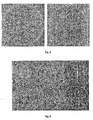
- a complete (as opposed to fragmented, cracked or with holes) film is produced of variable thickness, depending on the concentration of protein used to make the microparticles ( Figure 4a ).
- the film will typically have a thickness of 10-30 microns.
- the film may be used as a packaging material, such as for foodstuffs, food ingredients and pharmaceuticals for veterinary or human use.
- the film may also be used as an interleaving material, such as for separating portions of the same food product, for example pizza, or between different components in the same food product, such as the fruit filling and pastry in a pie to prevent moisture transfer.
- the film may be clear or cloudy.
- the aqueous suspension of the microparticles is used to cover a surface of the substrate and the aqueous phase is then allowed to evaporate, forming a coating on the substrate surface.
- the substrate may be that of an edible foodstuff or food ingredient, which is sensitive to oxidation or moisture loss, such as a fruit, nut, spice or vegetable, either whole or minimally processed or processed or an animal or fish feed product.
- suitable products could also be coated, such as a flower, pharmaceutical compound, enzymes, hormones, tablet compositions, or other pharmaceutical, biological or medical products, nutrients, nutraceuticals, probiotics, prebiotics and the like, or combinations thereof.
- the suspension of protein microparticles is diluted as set out in relation to the second and third processes of the invention, so as to produce films and coatings which are complete. This distinguishes the films and coatings from those made by prior art processes, using ethanol or different proportions of protein : solvent : water, which may not be complete.
- the films prepared according to the invention may also be clear or cloudy, transparent or translucent.
- the dispersion of protein microparticles can be co-formulated with various additives, such as plasticizers, which improve the functional properties of films and coatings made from the microparticle dispersion.
- Films produced from protein microparticles are complete and can be made thinner than other films, such as from 10 ⁇ m to 30 ⁇ m, and preferably about 15 ⁇ m.
- the films may also have some superior functional properties to films produced by ethanolic solutions of proteins, such as water barrier properties and being clear, transparent or translucent (other cast films are often fragmented and opaque).
- the compound can be incorporated into the aqueous solution, organic acid or protein solution, or a combination thereof,-prior to the formation of the microparticles.
- the resulting solutions are mixed with agitation, microparticles are formed containing the compound which is to be encapsulated.
- Another way to effect encapsulation of a compound into the microparticles is by mixing the previously dried microparticles of the invention with a substance in solution or suspension in which the microparticles are not soluble. On evaporation of such solvent the compound remains encapsulated within the microparticles.
- the properties of the microparticles can be modified for a given application, for example by use of either chemical, enzymatic or physical means to change the starting protein prior to or during microparticle formation, or after formation of the microparticles, matrices or after or during forming films or coatings from the microparticles.
- Such modifications can produce microparticles, matrices, scaffolds, films or coatings with improved properties, such as altered thermal stability, shear stability or resistance to proteases. Films or coatings made by such modifications would also have improved functional properties including altered tensile and barrier properties, improved resistance to proteases and delayed biodegradation.
- Specific examples of protein modifications are crosslinking with tannins, using trans glutaminase enzymes and heating.
- a composition according to one embodiment of the invention was made by admixing the following (all percentages are given on a weight basis): a plasticizer (10%), glacial acetic acid (66%) and kafirin (24%), and the kafirin was dissolved in the acid. Distilled water was then added with stirring, and microparticles were formed. The concentration of protein was 2%, plasticizer 40% in relation to the protein content and an acid concentration of 5.4%.
- microparticles were prepared by weighing kafirin (1.8 g - 88.63% protein) into a 125 ml Erlenmeyer flask.
- Plasticizer (0.66 g 1:1:1 lactic acid, polyethylene glycol (400), glycerol-40% in relation to protein) was mixed with glacial acetic acid (4.34 g) before adding to the kafirin with gentle stirring.
- the temperature was slowly raised to 30°C to ensure full solvation.
- the protein solution was then left overnight (16 h) at room temperature to relax the protein. After this period distilled water was added slowly over a period of 5 min with stirring to a total weight of 80 g. On addition of the water the microparticles formed, appearing as a stable, white colloidal suspension.
- the particle size was from 1-10 microns, with the majority of microparticles measuring 3-4 microns. There was no apparent increase in particle size with storage at 8°C over a period of 6 months. During this period, there was no microbial growth without any added antimicrobial agents.
- microparticles appeared as spheres with extensively pitted surfaces ( Figure 2 ).
- Internal structure determined by Transmission Electron Microscopy revealed internal vacuoles of varying size with smooth walls.
- Example 2 Formation of zein microparticles using either acetic acid, lactic acid or propionic acid
- a composition was made by admixing the following (all percentages are given on a weight basis): a plasticizer (9.5%), glacial acetic acid (62%) (or lactic acid or propionic acid) and commercial zein (ZPP Gold, Zein Protein Products, Marina, CA) (29.6%), and the zein was dissolved in the acid. Distilled water was then added with stirring, and microparticles were formed.
- the concentration of protein was 10%, plasticizer 40% in relation to the protein content and an acid concentration of 21.6%. To reduce the protein content further to 2%, 21.6% acetic acid was added.
- Plasticizer (1.32 g 1:1:1 lactic acid, polyethylene glycol (400), glycerol-40% in relation to protein) was mixed with glacial acetic acid (8.64 g) before adding to the zein with gentle stirring.
- the temperature was slowly raised to 30°C to ensure full solvation.
- the protein solution was then left overnight (16 h) at room temperature to relax the protein. After this period distilled water was slowly over a period of 5 min with stirring to a total weight of 40 g, 10% zein, 21.6% acetic acid.
- 21.6% acetic acid was used for dilution.
- Example 3 Formation of a coating made with kafirin microparticles and crosslinked by heating in order to protect the coated material e.g. methionine, a limiting amino acid, from the conditions in the rumen of multi-gastric animals
- coated material e.g. methionine, a limiting amino acid
- Microparticles of the invention were used to make a dried powder.
- This powder prepared as described above in the section, 'powder formation' was mixed with a dry substance, in this case, the amino acid, methionine at a ratio of 1:1.
- the powder mixture was then mixed with glacial acetic acid (1:2) to form a paste with the aim of fusing together the microparticles around the substance, e.g. methionine and forming a continuous coating.
- the paste was then either dried directly on a flat surface or first underwent a simple extrusion procedure without exposure to heat or excessive pressure.
- the coated material was then heat treated in a force draught oven at 60-70°C overnight.
- the microparticle coated methionine preparations were then subjected to dissolution and simulated pepsin digestion assays to determine methionine release characteristics.
- Example 4 Formation of a free-standing film made with kafirin microparticles
- microparticles of the invention were used to make a free-standing film.
- a microparticle suspension prepared as described above in Example 1 (4 g- 2% protein, 5.4% acetic acid per film) was weighed into plastic centrifuge tubes. The suspensions were centrifuged at 4000 g for 5 min. The supernatants were decanted off and replaced with an equal weight of 21.6% acetic acid. The protein suspensions were then left overnight at room temperature. Plasticizer (32 mg per film, mixed 1:1:1 lactic acid, polyethylene glycol (400), glycerol- 40% in relation to protein) was added to the protein suspension. The suspension was then cast into clean, dry flat plastic containers. The containers were placed on a level surface in an oven (not forced draught) at 50°C and dried for 4 hours. Films were gently peeled from the casting containers. Tensile and water barrier properties of the free standing films were then determined.
- Free-standing films made from kafirin microparticles prepared by the method described herein have significantly lower water vapour permeability than films made with the same percentage kafirin using conventional film casting techniques.
- Tensile properties of kafirin microparticle films were similar to those cast using conventional film casting techniques.
- Kafirin microparticle films were much thinner (approximately 15 microns) ( Figure 4a ) than kafirin films (30 microns) of the same protein concentration cast using conventional film casting techniques ( Figure 4b ). It is to be appreciated that the thickness of the free-standing microparticle films can be varied to obtain different properties. Similarly, the exact composition of the films can be varied; to impart different properties to the resultant films.
- Example 5 Fermatien of a free standing film made with kafirin microparticles, Acid- propionic acid
- Microparticles, of the invention were used to make a free-standing film using an alternative organic acid e.g. propionic acid.
- a microparticle suspension prepared as described above in Example 1 (4 g- 2% protein, 5.4% propionic acid per film) was weighed into plastic centrifuge tubes. The suspensions were centrifuged at 4000 g for 5 min. The supernatants were decanted off and replaced with an equal weight of 10.8% propionic acid. The protein suspensions were then left overnight at room temperature. Plasticizer (32 mg per film, mixed 1:1:1 lactic acid, polyethylene glycol (400), glycerol- 40% in relation to protein) was added to the protein suspension. The suspension was then cast into clean, dry flat plastic containers.
- plasticizer 32 mg per film, mixed 1:1:1 lactic acid, polyethylene glycol (400), glycerol- 40% in relation to protein
- the containers were placed on a level surface in an oven (not forced draught) at 50°C and dried for 4 hours. Films were gently peeled from the casting containers ( Figure 5e ). Tensile, water barrier properties and protein digestibility of the free standing films were then determined (Table 1).
- Kafirin microparticle films cast from propionic acid were similar in thickness (approximately 15 microns) ( Figure 5e ) and appearance (clear, colourless and transparent) to kafirin microparticle films cast from acetic acid ( Figure 5c ) and thinner than kafirin films (30 microns) of the same protein concentration cast using conventional film casting techniques ( Figure 4b ).
- Table 1 Functional properties of free-standing kafirin films Functional Properties 2% Kafirin microparticle film (acetic acid) 2% Kafirin microparticle film (propionic acid) 2% Kafirin film cast from glacial acetic acid Thickness ( ⁇ m) 14.0 (3.0)* 14.0 (5.0) 30.0 (3.4) Water Vapour Permeability (gmm/m 2 hkPa) 0.22(0.05) 0.36 (0.11) 0.50 (0.11) Stress at break (N/mm 2 ) 3.72 (4.87) 2.39 (4.13) 5.39 (2.07) Elongation (%) 2.53 (3.37) 1.15 (1.81) 2.99 (1.79) Protein digestion (%) 65.7 (2.5) 69.9 (6.7) 89.0 (1.3) * Figures in parentheses indicate standard deviations
- Example 6 Encapsulation of dietary antioxidants within kafirin microparticles for monogastric animals including humans
- Microparticles of the invention were used to make a dried powder.
- This powder prepared as described above in the section, 'powder formation' was mixed with a compound in solution, in this case, the polyphenolic antioxidants catechin or sorghum condensed tannins dissolved in 70% acetone, a solvent in which the microparticles are not soluble. On evaporation of such solvent the compound remained encapsulated within the microparticles. The level of encapsulation was 20% polyphenol in relation to protein. The examples used do not exclude the use of other substances or different solvents for those substances.
- the microparticle encapsulated antioxidants were then subjected to dissolution and simulated digestion to determine the release profiles of the encapsulated antioxidants. Incubation conditions simulated those of the human digestive system, that is 2 h at 37°C with pepsin at pH 2.0 followed by a further 2 h incubation at the same temperature with trypsin/chymotrypsin at pH 7.6.
- catechin and condensed tannin encapsulated kafirin microparticles showed virtually no protein digestion but released approximately 70% and 50%, respectively, of their total antioxidant activity.
- the kafirin microparticles with the encapsulated compound may undergo further treatment, for example, by heat, in order to modify the release profile of the encapsulated compound.
- Example 7 Extraction of kafirin from sorghum brewers spent grain (co-product) and the direct preparation of kafirin microparticles
- Sorghum brewers spent grain (moisture content 75%) was presoaked for 16 h in a 0.5% aqueous solution of sodium metabisulphite at a solid to solvent ratio of 1:5. The sodium metabisulphite was removed and the brewers spent grain was extracted with glacial acetic acid at a solid to solvent ratio of 1:5 for 48 h at ambient temperature. The extract (protein solution) was then separated from the solid material. The solid material was washed with a further equal amount of glacial acetic acid and the two extracts combined. Microparticles were then made by the slow addition of water to the glacial acetic acid extract (protein solution) with constant agitation.
- the ratio of extract (protein solution) to water added was 1:3 (the ratio of protein to acid to water is approximately 2 parts protein, 25 parts acetic acid and 73 parts of water, depending on the original protein content of the brewers spent grain).
- the resulting microparticles were then separated from the liquid and washed with water to remove any residual acid before drying.
- the dried microparticles made by this method had a kafirin purity of 95% and could then be used in any of the applications described in this document.
- Example 8 Direct preparation of kafirin microparticle films or coatings from an extract of sorghum brewers spent grain
- Microparticles made from sorghum brewers spent grain as described in example 7 were used to make free-standing films and coatings. Instead of washing and drying the microparticles, the suspension of microparticles can be taken directly and dried into a film or coating.
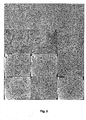
- the acid or protein concentration can be manipulated as described in Example 4 in order to produce films and coatings of different thicknesses and with different functional properties ( Figure 6 ). Films made in this way were slightly thicker than those made from isolated kafirin, being approximately 25 microns when 2% kafirin was used and 15 microns when 1% kafirin was used. Lower protein concentrations resulted in coatings which could not be separated from the casting surface.
- Example 9 Use of a kafirin microparticle coating formulation to extend the shelf life of minimally processed avocados
- Microparticles made from sorghum brewers spent grain as described in Example 7 were used to make a coating formulation which was applied to cut halves of eat-ripe avocados to extend the fruits' shelf life.
- Class 1 export avocados (Persea americana Mill) variety 'Hass' were used in the experiment. The avocados were stored at 4°C 5 days prior to the start of the experiment. The avocados were then ripened at 22°C until eat-ripe. They were peeled and halved by hand before dipping in the coating formulation solution.
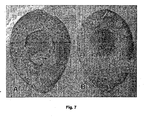
- the coating formulation solution consisted of 2% kafirin protein in 2% (v/v) acetic acid with 1:1:1 plasticiser of propylene glycol, lactic acid and glycerol (40% w/w with respect to protein). Uncoated avocado halves were used as controls. After the coating had dried, the fruit halves were packaged in plastic tubs, which were closed with plastic lids, and stored at 4°C for 5 days. After the period of 5 days, the microparticle-coated avocados showed no evidence of browning, whereas the control avocados showed extensive browning ( Figure 7 ).
Landscapes
- Chemical & Material Sciences (AREA)
- Life Sciences & Earth Sciences (AREA)
- Engineering & Computer Science (AREA)
- Polymers & Plastics (AREA)
- Food Science & Technology (AREA)
- Health & Medical Sciences (AREA)
- Nutrition Science (AREA)
- Oil, Petroleum & Natural Gas (AREA)
- Biochemistry (AREA)
- Mycology (AREA)
- Chemical Kinetics & Catalysis (AREA)
- Zoology (AREA)
- Wood Science & Technology (AREA)
- General Chemical & Material Sciences (AREA)
- Animal Behavior & Ethology (AREA)
- Pharmacology & Pharmacy (AREA)
- Medicinal Chemistry (AREA)
- Inorganic Chemistry (AREA)
- Proteomics, Peptides & Aminoacids (AREA)
- Epidemiology (AREA)
- Public Health (AREA)
- General Health & Medical Sciences (AREA)
- Veterinary Medicine (AREA)
- General Preparation And Processing Of Foods (AREA)
- Medicinal Preparation (AREA)
Claims (24)
- Verfahren zur Herstellung von Proteinmikropartikeln, wobei das Verfahren die Schritte umfasst:(a) Auflösen von Getreide-Prolaminprotein in einer organischen Säure unter Agitation und in Abwesenheit eines Alkohols; und(b) Verdünnen der Lösung, die das Protein enthält, mit einer wässrigen Lösung unter Bildung von Proteinmikropartikeln, die Vakuolen besitzen.
- Verfahren nach Anspruch 1, wobei das Getreide-Prolaminprotein ausgewählt ist aus der Gruppe bestehend aus Gluten, Hordein, Zein und Kafirin.
- Verfahren nach Anspruch 1 oder 2, wobei die organische Säure ausgewählt ist aus der Gruppe bestehend aus Propionsäure, Milchsäure und Essigsäure.
- Verfahren nach einem der Ansprüche 1 bis 3, welches in Abwesenheit von Ethanol ausgeführt wird.
- Verfahren nach einem der Ansprüche 1 bis 4, wobei die Proteinlösung in Schritt (a) gesättigt oder hochkonzentriert ist.
- Verfahren nach einem der Ansprüche 1 bis 5, wobei die Agitation durch Rühren, Schütteln, Homogenisieren oder Durchleiten von Gas durch die Lösung bewirkt wird.
- Verfahren nach einem der Ansprüche 1 bis 6, wobei das Protein vor oder nach Schritt (a) mit Tanninen oder Enzymen vernetzt und/oder wärmebehandelt wird.
- Verfahren nach einem der Ansprüche 1 bis 7, welches weiterhin einen Schritt zur Entfernung der organischen Säure aus der verdünnten Lösung umfasst.
- Verfahren nach einem der Ansprüche 1 bis 8, welches weiterhin einen Trocknungsschritt umfasst.
- Verfahren nach einem der Ansprüche 1 bis 9, welches weiterhin einen Schritt zur Bildung eines Pulvers, eines Films, einer Beschichtung, einer Matrix oder einer Gitterstruktur aus der verdünnten Lösung umfasst.
- Verfahren nach einem der Ansprüche 1 bis 10, wobei die Lösung in Schritt (a) für 8 bis 24 Stunden stehengelassen wird.
- Verfahren nach einem der Ansprüche 1 bis 11, wobei die Lösung, die das Protein enthält, in Schritt (b) mit Wasser auf eine Endkonzentration von etwa 2 Gewichtsteilen an Protein, auf etwa 2 bis etwa 30 Gewichtsteile der organischen Säure, auf etwa 96 bis etwa 68 Gewichtsteile Wasser verdünnt wird.
- Verfahren nach einem der Ansprüche 1 bis 12, wobei der Lösung aus Schritt (a) oder (b) ein Additiv zugefügt wird und in die Proteinmikropartikel eingebracht oder durch sie verkapselt wird, wobei das Additiv ausgewählt ist aus der Gruppe bestehend aus einem Weichmacher, einem Einfärbmittel, einem Aromamittel, einem Konservierungsmittel, einem Spurenmineral, einem Nährstoff, einem Enzym, einem Hormon, einem Nutraceutical, einem Probiotikum, einem Prebiotikum und einem Pharmazeutikum oder irgendeiner Kombination hieraus.
- Verfahren nach Anspruch 13, wobei das Additiv ein Weichmacher ist, ausgewählt aus der Gruppe bestehend aus Glycerol, Polyethylenglykol, Polypropylenglykol, Milchsäure, Dibutyltartrat, Monoglyceriden, Palmitinsäure, Stearinsäure, Triethylenglycerol und Sorbitol oder Kombinationen daraus.
- Verfahren nach Anspruch 14, wobei der Weichmacher in einer Menge von etwa 0,2 bis etwa 0,6 Gewichtsteilen bis etwa 1 Gewichtsteil bezogen auf das Proteingewicht vorhanden ist.
- Ein Proteinmikropartikel, welches Vakuolen umfasst, hergestellt nach einem der Ansprüche 1 bis 15.
- Eine Matrix, die aus Proteinmikropartikeln, hergestellt nach einem der Ansprüche 1 bis 15, gebildet ist.
- Eine Gitterstruktur, die aus Proteinmikropartikeln, hergestellt nach einem der Ansprüche 1 bis 15, gebildet ist.
- Ein Pulver, Proteinmikropartikel nach Anspruch 16 enthaltend.
- Eine wässrige Suspension, Proteinmikropartikel nach Anspruch 16 enthaltend.
- Ein Film, gebildet aus Proteinmikropartikeln nach Anspruch 16.
- Ein Film nach Anspruch 21, der vollständig ist.
- Eine Beschichtung, gebildet aus Proteinmikropartikeln nach Anspruch 16.
- Ein Substrat, umfassend eine Beschichtung nach Anspruch 23.
Applications Claiming Priority (2)
| Application Number | Priority Date | Filing Date | Title |
|---|---|---|---|
| ZA200808528 | 2008-10-07 | ||
| PCT/IB2009/054386 WO2010041203A1 (en) | 2008-10-07 | 2009-10-07 | Process for producing protein microparticles |
Publications (2)
| Publication Number | Publication Date |
|---|---|
| EP2348879A1 EP2348879A1 (de) | 2011-08-03 |
| EP2348879B1 true EP2348879B1 (de) | 2013-12-18 |
Family
ID=41650302
Family Applications (1)
| Application Number | Title | Priority Date | Filing Date |
|---|---|---|---|
| EP09744188.5A Not-in-force EP2348879B1 (de) | 2008-10-07 | 2009-10-07 | Verfahren zur herstellung von proteinmikropartikeln |
Country Status (8)
| Country | Link |
|---|---|
| US (2) | US8389004B2 (de) |
| EP (1) | EP2348879B1 (de) |
| CN (1) | CN102170790B (de) |
| AU (1) | AU2009302084B2 (de) |
| BR (1) | BRPI0914043B1 (de) |
| CA (1) | CA2739561C (de) |
| WO (1) | WO2010041203A1 (de) |
| ZA (1) | ZA201102628B (de) |
Families Citing this family (9)
| Publication number | Priority date | Publication date | Assignee | Title |
|---|---|---|---|---|
| CN102516778A (zh) * | 2011-11-29 | 2012-06-27 | 上海交通大学 | 一种基于谷物蛋白的、用于大规模培养细胞的微载体,制备方法及用途 |
| EP2625966A1 (de) | 2012-02-13 | 2013-08-14 | Bionanoplus, S.L. | Nanopartikel mit einem pflanzlichen hydrophoben Protein und wassermischbare nichtflüchtige organische Lösung sowie Verwendungen davon |
| GB201615795D0 (en) * | 2016-09-16 | 2016-11-02 | Mars Inc | Food protien ingredient and processes for producing the same |
| EP3657955B1 (de) | 2017-07-28 | 2026-03-25 | Coors Brewing Company | Proteinextraktion aus verbrauchten körnern |
| WO2019158494A1 (en) * | 2018-02-14 | 2019-08-22 | Societe Des Produits Nestle S.A. | Edible fiber |
| CN109198011A (zh) * | 2018-11-08 | 2019-01-15 | 广东雅和生物科技有限公司 | 抗氧化保鲜剂、红衣花生米及其保质方法和生产方法 |
| CN111317135A (zh) * | 2020-02-17 | 2020-06-23 | 天津科技大学 | 多酚改性的玉米醇溶蛋白纳米粒子包埋缓释姜黄素的方法 |
| US20230103237A1 (en) * | 2021-09-29 | 2023-03-30 | The United States Of America, As Represented By The Secretary Of Agriculture | Biodegradable particles and biodegradable particles in contact with active ingredients |
| CN114601175B (zh) * | 2021-12-28 | 2023-09-05 | 六安益普罗科技有限公司 | 一种肠溶缓释型高活性谷胱甘肽纳米微球的制备方法 |
Family Cites Families (7)
| Publication number | Priority date | Publication date | Assignee | Title |
|---|---|---|---|---|
| JPS60244260A (ja) * | 1984-05-17 | 1985-12-04 | Minaminihon Rakunou Kyodo Kk | 溶解性のすぐれたグルテンの製法 |
| US5145702A (en) | 1988-09-19 | 1992-09-08 | Opta Food Ingredients, Inc. | Hydrophobic protein microparticles and preparation thereof |
| US5021248A (en) * | 1988-09-19 | 1991-06-04 | Enzytech, Inc. | Hydrophobic protein microparticles and preparation thereof |
| CA2071840C (en) | 1989-11-06 | 1997-02-04 | Edith Mathiowitz | Method for producing protein microspheres |
| US5750183A (en) | 1993-11-16 | 1998-05-12 | Takeda Food Products, Ltd. | Process for producing proteinaceous microparticles |
| GB9420355D0 (en) * | 1994-10-10 | 1994-11-23 | Univ Nottingham | Preparation of protein microspheres, films and coatings |
| US5736178A (en) | 1995-05-02 | 1998-04-07 | Opta Food Ingredients, Inc. | Colloidal dispersions of gluten, method of making and use therefor |
-
2009
- 2009-10-07 CA CA2739561A patent/CA2739561C/en not_active Expired - Fee Related
- 2009-10-07 US US13/122,056 patent/US8389004B2/en not_active Expired - Fee Related
- 2009-10-07 CN CN2009801396906A patent/CN102170790B/zh not_active Expired - Fee Related
- 2009-10-07 EP EP09744188.5A patent/EP2348879B1/de not_active Not-in-force
- 2009-10-07 AU AU2009302084A patent/AU2009302084B2/en not_active Ceased
- 2009-10-07 WO PCT/IB2009/054386 patent/WO2010041203A1/en not_active Ceased
- 2009-10-07 BR BRPI0914043-3A patent/BRPI0914043B1/pt not_active IP Right Cessation
-
2011
- 2011-04-08 ZA ZA2011/02628A patent/ZA201102628B/en unknown
-
2013
- 2013-02-06 US US13/760,370 patent/US8541040B2/en not_active Expired - Fee Related
Also Published As
| Publication number | Publication date |
|---|---|
| BRPI0914043A2 (pt) | 2016-08-02 |
| AU2009302084A1 (en) | 2010-04-15 |
| CA2739561A1 (en) | 2010-04-15 |
| US8389004B2 (en) | 2013-03-05 |
| US8541040B2 (en) | 2013-09-24 |
| AU2009302084B2 (en) | 2014-07-31 |
| ZA201102628B (en) | 2013-03-27 |
| WO2010041203A1 (en) | 2010-04-15 |
| CN102170790B (zh) | 2013-10-16 |
| CA2739561C (en) | 2017-03-28 |
| US20120128779A1 (en) | 2012-05-24 |
| US20130150461A1 (en) | 2013-06-13 |
| BRPI0914043B1 (pt) | 2018-06-12 |
| EP2348879A1 (de) | 2011-08-03 |
| CN102170790A (zh) | 2011-08-31 |
Similar Documents
| Publication | Publication Date | Title |
|---|---|---|
| US8541040B2 (en) | Process for producing protein microparticles | |
| CN102427740B (zh) | 生物活性物质的微囊化及其制造方法 | |
| RU2420082C2 (ru) | Инкапсулирование легко окисляемых компонентов | |
| US20190328670A1 (en) | Microparticles for Oral Delivery | |
| US2897119A (en) | Stable powdered oil soluble vitamins and method of preparing stable powdered oil soluble vitamins | |
| US20090238885A1 (en) | Protein encapsulated particles | |
| KR101763947B1 (ko) | 포스파티딜세린의 마이크로캡슐화 방법 | |
| CN106659230A (zh) | 疏水性生物活性化合物的包封 | |
| JP2007503293A (ja) | マイクロカプセル | |
| CN102458138A (zh) | 用于制备烘烤食品的胶囊化的ω-3脂肪酸 | |
| Das et al. | Microencapsulation of probiotic bacteria and its potential application in food technology | |
| Zhang et al. | Seaweed-derived hydrocolloids as food coating and encapsulation agents | |
| GB1579090A (en) | Methionine-containing microgranulates and method of manufacture | |
| WO2014130801A1 (en) | Enteric delivery of functional ingredients for animals | |
| US20120269888A1 (en) | Barrier composition | |
| WO2008077401A1 (en) | Reactive powdering | |
| Goranova | Microencapsulation as an innovative technique for the preparation of high-added value bakery products–A review | |
| Yingleardrattanakul et al. | Evaluation of the efficiency of various folic acid microencapsulation techniques for rice vermicelli (Khanom Jeen) fortification | |
| Rather et al. | Protein-based delivery systems | |
| JP2003093000A (ja) | 食品用腸溶性皮膜、腸溶性食品及びその製法 | |
| Ta et al. | Microencapsulation of Gac aril oil | |
| Henrique | Microencapsulation and Its Uses in Food Science and Technology: A | |
| Pretorius | Kafirin and zein as coatings for the controlled release of amino acid supplements |
Legal Events
| Date | Code | Title | Description |
|---|---|---|---|
| PUAI | Public reference made under article 153(3) epc to a published international application that has entered the european phase |
Free format text: ORIGINAL CODE: 0009012 |
|
| 17P | Request for examination filed |
Effective date: 20110331 |
|
| AK | Designated contracting states |
Kind code of ref document: A1 Designated state(s): AT BE BG CH CY CZ DE DK EE ES FI FR GB GR HR HU IE IS IT LI LT LU LV MC MK MT NL NO PL PT RO SE SI SK SM TR |
|
| DAX | Request for extension of the european patent (deleted) | ||
| 17Q | First examination report despatched |
Effective date: 20130107 |
|
| GRAP | Despatch of communication of intention to grant a patent |
Free format text: ORIGINAL CODE: EPIDOSNIGR1 |
|
| INTG | Intention to grant announced |
Effective date: 20130530 |
|
| GRAS | Grant fee paid |
Free format text: ORIGINAL CODE: EPIDOSNIGR3 |
|
| GRAP | Despatch of communication of intention to grant a patent |
Free format text: ORIGINAL CODE: EPIDOSNIGR1 |
|
| GRAA | (expected) grant |
Free format text: ORIGINAL CODE: 0009210 |
|
| INTG | Intention to grant announced |
Effective date: 20131022 |
|
| AK | Designated contracting states |
Kind code of ref document: B1 Designated state(s): AT BE BG CH CY CZ DE DK EE ES FI FR GB GR HR HU IE IS IT LI LT LU LV MC MK MT NL NO PL PT RO SE SI SK SM TR |
|
| REG | Reference to a national code |
Ref country code: GB Ref legal event code: FG4D |
|
| REG | Reference to a national code |
Ref country code: CH Ref legal event code: EP |
|
| REG | Reference to a national code |
Ref country code: AT Ref legal event code: REF Ref document number: 645156 Country of ref document: AT Kind code of ref document: T Effective date: 20140115 |
|
| REG | Reference to a national code |
Ref country code: IE Ref legal event code: FG4D |
|
| REG | Reference to a national code |
Ref country code: NL Ref legal event code: T3 |
|
| REG | Reference to a national code |
Ref country code: DE Ref legal event code: R096 Ref document number: 602009020837 Country of ref document: DE Effective date: 20140213 |
|
| REG | Reference to a national code |
Ref country code: CH Ref legal event code: NV Representative=s name: FREI PATENTANWALTSBUERO AG, CH |
|
| PG25 | Lapsed in a contracting state [announced via postgrant information from national office to epo] |
Ref country code: LT Free format text: LAPSE BECAUSE OF FAILURE TO SUBMIT A TRANSLATION OF THE DESCRIPTION OR TO PAY THE FEE WITHIN THE PRESCRIBED TIME-LIMIT Effective date: 20131218 Ref country code: HR Free format text: LAPSE BECAUSE OF FAILURE TO SUBMIT A TRANSLATION OF THE DESCRIPTION OR TO PAY THE FEE WITHIN THE PRESCRIBED TIME-LIMIT Effective date: 20131218 Ref country code: SE Free format text: LAPSE BECAUSE OF FAILURE TO SUBMIT A TRANSLATION OF THE DESCRIPTION OR TO PAY THE FEE WITHIN THE PRESCRIBED TIME-LIMIT Effective date: 20131218 Ref country code: NO Free format text: LAPSE BECAUSE OF FAILURE TO SUBMIT A TRANSLATION OF THE DESCRIPTION OR TO PAY THE FEE WITHIN THE PRESCRIBED TIME-LIMIT Effective date: 20140318 Ref country code: FI Free format text: LAPSE BECAUSE OF FAILURE TO SUBMIT A TRANSLATION OF THE DESCRIPTION OR TO PAY THE FEE WITHIN THE PRESCRIBED TIME-LIMIT Effective date: 20131218 |
|
| REG | Reference to a national code |
Ref country code: AT Ref legal event code: MK05 Ref document number: 645156 Country of ref document: AT Kind code of ref document: T Effective date: 20131218 |
|
| REG | Reference to a national code |
Ref country code: LT Ref legal event code: MG4D |
|
| PG25 | Lapsed in a contracting state [announced via postgrant information from national office to epo] |
Ref country code: LV Free format text: LAPSE BECAUSE OF FAILURE TO SUBMIT A TRANSLATION OF THE DESCRIPTION OR TO PAY THE FEE WITHIN THE PRESCRIBED TIME-LIMIT Effective date: 20131218 |
|
| PG25 | Lapsed in a contracting state [announced via postgrant information from national office to epo] |
Ref country code: BE Free format text: LAPSE BECAUSE OF FAILURE TO SUBMIT A TRANSLATION OF THE DESCRIPTION OR TO PAY THE FEE WITHIN THE PRESCRIBED TIME-LIMIT Effective date: 20131218 Ref country code: IS Free format text: LAPSE BECAUSE OF FAILURE TO SUBMIT A TRANSLATION OF THE DESCRIPTION OR TO PAY THE FEE WITHIN THE PRESCRIBED TIME-LIMIT Effective date: 20140418 Ref country code: EE Free format text: LAPSE BECAUSE OF FAILURE TO SUBMIT A TRANSLATION OF THE DESCRIPTION OR TO PAY THE FEE WITHIN THE PRESCRIBED TIME-LIMIT Effective date: 20131218 |
|
| PG25 | Lapsed in a contracting state [announced via postgrant information from national office to epo] |
Ref country code: SK Free format text: LAPSE BECAUSE OF FAILURE TO SUBMIT A TRANSLATION OF THE DESCRIPTION OR TO PAY THE FEE WITHIN THE PRESCRIBED TIME-LIMIT Effective date: 20131218 Ref country code: CZ Free format text: LAPSE BECAUSE OF FAILURE TO SUBMIT A TRANSLATION OF THE DESCRIPTION OR TO PAY THE FEE WITHIN THE PRESCRIBED TIME-LIMIT Effective date: 20131218 Ref country code: AT Free format text: LAPSE BECAUSE OF FAILURE TO SUBMIT A TRANSLATION OF THE DESCRIPTION OR TO PAY THE FEE WITHIN THE PRESCRIBED TIME-LIMIT Effective date: 20131218 Ref country code: ES Free format text: LAPSE BECAUSE OF FAILURE TO SUBMIT A TRANSLATION OF THE DESCRIPTION OR TO PAY THE FEE WITHIN THE PRESCRIBED TIME-LIMIT Effective date: 20131218 Ref country code: PT Free format text: LAPSE BECAUSE OF FAILURE TO SUBMIT A TRANSLATION OF THE DESCRIPTION OR TO PAY THE FEE WITHIN THE PRESCRIBED TIME-LIMIT Effective date: 20140418 Ref country code: CY Free format text: LAPSE BECAUSE OF FAILURE TO SUBMIT A TRANSLATION OF THE DESCRIPTION OR TO PAY THE FEE WITHIN THE PRESCRIBED TIME-LIMIT Effective date: 20131218 Ref country code: RO Free format text: LAPSE BECAUSE OF FAILURE TO SUBMIT A TRANSLATION OF THE DESCRIPTION OR TO PAY THE FEE WITHIN THE PRESCRIBED TIME-LIMIT Effective date: 20131218 Ref country code: PL Free format text: LAPSE BECAUSE OF FAILURE TO SUBMIT A TRANSLATION OF THE DESCRIPTION OR TO PAY THE FEE WITHIN THE PRESCRIBED TIME-LIMIT Effective date: 20131218 |
|
| REG | Reference to a national code |
Ref country code: DE Ref legal event code: R097 Ref document number: 602009020837 Country of ref document: DE |
|
| PLBE | No opposition filed within time limit |
Free format text: ORIGINAL CODE: 0009261 |
|
| STAA | Information on the status of an ep patent application or granted ep patent |
Free format text: STATUS: NO OPPOSITION FILED WITHIN TIME LIMIT |
|
| PG25 | Lapsed in a contracting state [announced via postgrant information from national office to epo] |
Ref country code: DK Free format text: LAPSE BECAUSE OF FAILURE TO SUBMIT A TRANSLATION OF THE DESCRIPTION OR TO PAY THE FEE WITHIN THE PRESCRIBED TIME-LIMIT Effective date: 20131218 |
|
| 26N | No opposition filed |
Effective date: 20140919 |
|
| REG | Reference to a national code |
Ref country code: DE Ref legal event code: R097 Ref document number: 602009020837 Country of ref document: DE Effective date: 20140919 |
|
| PG25 | Lapsed in a contracting state [announced via postgrant information from national office to epo] |
Ref country code: SI Free format text: LAPSE BECAUSE OF FAILURE TO SUBMIT A TRANSLATION OF THE DESCRIPTION OR TO PAY THE FEE WITHIN THE PRESCRIBED TIME-LIMIT Effective date: 20131218 Ref country code: MC Free format text: LAPSE BECAUSE OF FAILURE TO SUBMIT A TRANSLATION OF THE DESCRIPTION OR TO PAY THE FEE WITHIN THE PRESCRIBED TIME-LIMIT Effective date: 20131218 Ref country code: LU Free format text: LAPSE BECAUSE OF FAILURE TO SUBMIT A TRANSLATION OF THE DESCRIPTION OR TO PAY THE FEE WITHIN THE PRESCRIBED TIME-LIMIT Effective date: 20141007 |
|
| REG | Reference to a national code |
Ref country code: IE Ref legal event code: MM4A |
|
| REG | Reference to a national code |
Ref country code: DE Ref legal event code: R082 Ref document number: 602009020837 Country of ref document: DE Representative=s name: GRAMM, LINS & PARTNER PATENT- UND RECHTSANWAEL, DE |
|
| PG25 | Lapsed in a contracting state [announced via postgrant information from national office to epo] |
Ref country code: IE Free format text: LAPSE BECAUSE OF NON-PAYMENT OF DUE FEES Effective date: 20141007 |
|
| PG25 | Lapsed in a contracting state [announced via postgrant information from national office to epo] |
Ref country code: SM Free format text: LAPSE BECAUSE OF FAILURE TO SUBMIT A TRANSLATION OF THE DESCRIPTION OR TO PAY THE FEE WITHIN THE PRESCRIBED TIME-LIMIT Effective date: 20131218 |
|
| PG25 | Lapsed in a contracting state [announced via postgrant information from national office to epo] |
Ref country code: BG Free format text: LAPSE BECAUSE OF FAILURE TO SUBMIT A TRANSLATION OF THE DESCRIPTION OR TO PAY THE FEE WITHIN THE PRESCRIBED TIME-LIMIT Effective date: 20131218 Ref country code: GR Free format text: LAPSE BECAUSE OF FAILURE TO SUBMIT A TRANSLATION OF THE DESCRIPTION OR TO PAY THE FEE WITHIN THE PRESCRIBED TIME-LIMIT Effective date: 20140319 Ref country code: IT Free format text: LAPSE BECAUSE OF FAILURE TO SUBMIT A TRANSLATION OF THE DESCRIPTION OR TO PAY THE FEE WITHIN THE PRESCRIBED TIME-LIMIT Effective date: 20131218 |
|
| PG25 | Lapsed in a contracting state [announced via postgrant information from national office to epo] |
Ref country code: MT Free format text: LAPSE BECAUSE OF FAILURE TO SUBMIT A TRANSLATION OF THE DESCRIPTION OR TO PAY THE FEE WITHIN THE PRESCRIBED TIME-LIMIT Effective date: 20131218 Ref country code: HU Free format text: LAPSE BECAUSE OF FAILURE TO SUBMIT A TRANSLATION OF THE DESCRIPTION OR TO PAY THE FEE WITHIN THE PRESCRIBED TIME-LIMIT; INVALID AB INITIO Effective date: 20091007 Ref country code: TR Free format text: LAPSE BECAUSE OF FAILURE TO SUBMIT A TRANSLATION OF THE DESCRIPTION OR TO PAY THE FEE WITHIN THE PRESCRIBED TIME-LIMIT Effective date: 20131218 |
|
| REG | Reference to a national code |
Ref country code: FR Ref legal event code: PLFP Year of fee payment: 8 |
|
| REG | Reference to a national code |
Ref country code: FR Ref legal event code: PLFP Year of fee payment: 9 |
|
| PG25 | Lapsed in a contracting state [announced via postgrant information from national office to epo] |
Ref country code: MK Free format text: LAPSE BECAUSE OF FAILURE TO SUBMIT A TRANSLATION OF THE DESCRIPTION OR TO PAY THE FEE WITHIN THE PRESCRIBED TIME-LIMIT Effective date: 20131218 |
|
| REG | Reference to a national code |
Ref country code: FR Ref legal event code: PLFP Year of fee payment: 10 |
|
| REG | Reference to a national code |
Ref country code: CH Ref legal event code: PCAR Free format text: NEW ADDRESS: POSTFACH, 8032 ZUERICH (CH) |
|
| PGFP | Annual fee paid to national office [announced via postgrant information from national office to epo] |
Ref country code: FR Payment date: 20190913 Year of fee payment: 11 |
|
| PGFP | Annual fee paid to national office [announced via postgrant information from national office to epo] |
Ref country code: NL Payment date: 20191014 Year of fee payment: 11 Ref country code: DE Payment date: 20190924 Year of fee payment: 11 |
|
| PGFP | Annual fee paid to national office [announced via postgrant information from national office to epo] |
Ref country code: CH Payment date: 20191015 Year of fee payment: 11 |
|
| PGFP | Annual fee paid to national office [announced via postgrant information from national office to epo] |
Ref country code: GB Payment date: 20191003 Year of fee payment: 11 |
|
| REG | Reference to a national code |
Ref country code: DE Ref legal event code: R119 Ref document number: 602009020837 Country of ref document: DE |
|
| REG | Reference to a national code |
Ref country code: CH Ref legal event code: PL |
|
| REG | Reference to a national code |
Ref country code: NL Ref legal event code: MM Effective date: 20201101 |
|
| GBPC | Gb: european patent ceased through non-payment of renewal fee |
Effective date: 20201007 |
|
| PG25 | Lapsed in a contracting state [announced via postgrant information from national office to epo] |
Ref country code: DE Free format text: LAPSE BECAUSE OF NON-PAYMENT OF DUE FEES Effective date: 20210501 Ref country code: NL Free format text: LAPSE BECAUSE OF NON-PAYMENT OF DUE FEES Effective date: 20201101 Ref country code: FR Free format text: LAPSE BECAUSE OF NON-PAYMENT OF DUE FEES Effective date: 20201031 |
|
| PG25 | Lapsed in a contracting state [announced via postgrant information from national office to epo] |
Ref country code: CH Free format text: LAPSE BECAUSE OF NON-PAYMENT OF DUE FEES Effective date: 20201031 Ref country code: GB Free format text: LAPSE BECAUSE OF NON-PAYMENT OF DUE FEES Effective date: 20201007 Ref country code: LI Free format text: LAPSE BECAUSE OF NON-PAYMENT OF DUE FEES Effective date: 20201031 |