EP2364598A2 - Hochdruckumwandlungsverfahren von Meeresfrüchten - Google Patents
Hochdruckumwandlungsverfahren von Meeresfrüchten Download PDFInfo
- Publication number
- EP2364598A2 EP2364598A2 EP11158166A EP11158166A EP2364598A2 EP 2364598 A2 EP2364598 A2 EP 2364598A2 EP 11158166 A EP11158166 A EP 11158166A EP 11158166 A EP11158166 A EP 11158166A EP 2364598 A2 EP2364598 A2 EP 2364598A2
- Authority
- EP
- European Patent Office
- Prior art keywords
- crustacean
- shellfish
- shell
- pressure
- seconds
- Prior art date
- Legal status (The legal status is an assumption and is not a legal conclusion. Google has not performed a legal analysis and makes no representation as to the accuracy of the status listed.)
- Granted
Links
Images



Classifications
-
- A—HUMAN NECESSITIES
- A22—BUTCHERING; MEAT TREATMENT; PROCESSING POULTRY OR FISH
- A22C—PROCESSING MEAT, POULTRY, OR FISH
- A22C29/00—Processing shellfish or bivalves, e.g. oysters, lobsters; Devices therefor, e.g. claw locks, claw crushers, grading devices; Processing lines
- A22C29/04—Processing bivalves, e.g. oysters
- A22C29/046—Opening or shucking bivalves
-
- A—HUMAN NECESSITIES
- A23—FOODS OR FOODSTUFFS; TREATMENT THEREOF, NOT COVERED BY OTHER CLASSES
- A23L—FOODS, FOODSTUFFS OR NON-ALCOHOLIC BEVERAGES, NOT OTHERWISE PROVIDED FOR; PREPARATION OR TREATMENT THEREOF
- A23L17/00—Food-from-the-sea products; Fish products; Fish meal; Fish-egg substitutes; Preparation or treatment thereof
- A23L17/50—Molluscs
Definitions
- the field of the invention is that of the processing of seafood and fish.
- the invention relates to a method of processing, or in other words of preparation, live seafood such as crustaceans, shellfish, including bivalve genus, squid and raw fish.
- a batch of seashells contained in a sealed bag inside a chamber of a pressing unit with very high hydrostatic pressures is available for a determined period of time, available for example, with the company Nc Hyperbaric (registered trademark) or the company Avure (registered trademark).
- a disadvantage of this opening technique is that the texture, appearance, smell, color and / or palatability of the shell can be altered, for example if the shell is exposed to excessive pressure.
- Another disadvantage of this opening technique is that it is necessary to expose the shell for a sufficient time, and generally of the order of a minute or more, for the shell to open, which limits the quantity of shells that can be treated with the same pressing unit at very high hydrostatic pressures.
- the shells can be packaged in bulk in a bag containing a bath of a liquid solution, for example water from the network.
- a liquid solution for example water from the network.
- a disadvantage of this technical choice lies in the fact that the composition, and in particular the salinity, of the water contained in the shell of the oyster, can be modified by the solution in which the oysters are immersed, or by the fluid used. in the pressing unit to press the bag, if the bag bores.
- the crustacean is maintained at a pressure of 2000 and 7000 bars for a period of 15 to 120 seconds, sufficient to detach the shell of the flesh, then the pressure is released quickly.
- pascalization It has also been envisaged to sterilize contaminated seafood, for example oysters contaminated with Vibrio bacteria, using high hydrostatic pressures.
- This specific technique, called pascalization is based on a particular protocol which requires, to be effective, to expose the contaminated oyster preferentially at pressures of the order of 3500 bar for a period of at least five minutes. It has furthermore been found that the effect of pasalisation is increased if the oyster is at room temperature.
- This sterilization technique has the disadvantage that, at least under certain conditions, the pasalisation of an oyster alters its organoleptic qualities, which is not satisfactory.
- the invention therefore particularly aims to overcome the disadvantages of the state of the art mentioned above.
- the invention aims to provide a technique to facilitate the processing of seafood and fish.
- the invention also aims at such a processing technique that preserves the organoleptic and textural properties, but also the natural appearance of seafood or processed fish.
- An object of the invention is also to provide such a transformation technique that is competitive in terms of volumes processed.
- Another object of the invention is to provide such a transformation technique that is simple to implement and inexpensive.
- Yet another object of the invention is to provide such a processing technique which is reliable and safe for the consumer.
- the invention thus relates to the dehulling of crustaceans, in particular lobsters, shrimps and crabs, consisting in detaching the shell of the crustaceans from the flesh. It also concerns the opening of shells, particularly of the bivalve genus, and for example oysters, clams, clams, cockles, clams, mussels, scallop shells, abalone ..., preferably live and healthy. , that is to say free of health risk for the consumer.
- the invention thus offers new outlets for products derived from fishing and shellfish farming.
- such a conversion method comprises a controlled depressurization step in which the times for reducing the pressure applied to 50% and 20% of said predetermined hydrostatic pressure are at least 20 seconds, respectively at least 40 seconds. seconds.
- the Applicant has indeed found surprisingly and unexpectedly that by controlling the speed of depressurization, and in particular by providing a sufficiently slow and steady speed, the texture, flavor, and appearance of the flesh of the shellfish or shellfish are not altered, or at least insignificantly, by the depressurization step.
- a mean depressurization rate of less than 85 bar per second, preferably less than 50 bar per second preserves the integrity of the cell tissue and biomolecules of the crustacean or shellfish flesh.
- the applied pressure is released substantially instantaneously when it reaches a predefined threshold of between 300 and 700 bar.
- the total duration of said depressurization step is between 65 and 120 seconds.
- said pressure decreases substantially regularly up to 20% of said predetermined hydrostatic pressure.
- It can for example be a linear decrease in power or logarithmic.
- a crustacean or shellfish processing method such as one of those described above comprises an exposure step of said shell to at least one thermal and / or osmotic stress, so obtaining a pre-conditioned crustacean or shellfish, preceding the application to said crustacean or said shell of said predetermined pressure, of between 2300 and 3200 bars, for a period of between 10 and 50 seconds, so as to obtain a shelled crustacean or a shell having a substantially open shell.
- the invention proposes to pre-condition crustaceans or shells, before exposing them to high pressures, so as to accelerate the shelling or, respectively, the opening of the shell.
- substantially open means, in the context of the invention, that the shell is as open only partially, in two half-shells detached from each other.
- a pressure range of between 2300 and 3200 bar advantageously allows the organoleptic qualities of the shellfish to be substantially intact, which is appreciable for the marketing of processed shellfish.
- the treatment cycle of a batch of shellfish which lasts 10 to 50 seconds, is shortened compared to known techniques for opening seashells at high pressures, which makes it possible to transform a larger quantity of shellfish with the same pressing unit. In other words, it reduces the costs of shellfish processing.
- said exposure step comprises a step of heating said crustacean or shellfish to a pre-conditioning temperature of between 5 ° C. and 15 ° C.
- the cooling of the shells below room temperature for example by placing a few minutes in a refrigerator or a freezer, promotes the opening of the shell of these shells, when they are then subjected to high pressures.
- the temperature can also be achieved using ultra-fast cooling equipment, usually for example for freezing.
- said pre-conditioning temperature is equal to 6 ° C.
- said pre-conditioning temperature is equal to 12 ° C.
- said temperature-setting step comprises a step of immersing said crustacean or said shell in a seawater bath having a temperature substantially lower than said pre-conditioning temperature.
- crustaceans or shellfish are brought in a particularly simple manner at a suitable preconditioning temperature, while keeping unchanged the flesh of the crustacean or shellfish and the water contained inside the carapace or shell, in terms of quantity and quality.
- said exposure step comprises a step of immersing said shell in a brine having a salt concentration greater than 38 g / l, and forming said osmotic stress.
- the shell can also be envisaged to expose the shell to a mechanical stress, and for example to ultrasonic waves, electromagnetic radiation and / or physical stress. -chemical.
- said predetermined pressure is substantially equal to 2700 bars and said duration of application is then between 35 and 45 seconds.
- said predetermined pressure is applied to said crustacean or said shell by means of a liquid whose temperature is controlled.
- such a shell-making process comprises a step of introducing said crustacean or said pre-packaged shellfish into a bag containing micro-filtered seawater, preceding said step of applying a predetermined pressure.
- the quality of the water of the shell is not changed when opening a shell, which is significant especially for the transformation of oysters.
- the invention also relates to a system for carrying out the processes for transforming a crustacean or a shellfish described above.
- such a system comprises at least one high-pressure press, preferably horizontal introduction, comprising means for controlling the depressurization speed of the chamber of the press and a charging liquid recycling circuit.
- the invention also relates to the processing of raw fish.
- the invention aims to accelerate industrial processes using high hydrostatic pressures, or in other words pressures greater than 1000 bar, to detach the skin and / or the edges of the fish in order to obtain nets, by providing a step of pre-conditioning the fish by means of a thermal, osmotic, mechanical, electromagnetic or physicochemical stress.
- the principle of the invention is therefore based on the control of the depressurization phase of crustacean, shellfish, or fish subjected to the action of high hydrostatic pressures, in order to preserve its qualitative properties (texture, taste, %) and the appearance of his flesh.
- a preliminary pre-conditioning step to accelerate the industrial opening of the shellfish, or the shelling of crustacean.
- the invention thus makes it possible to provide consumers, restaurant owners and / or industrialists in the agri-food sector with intact crustacean flesh, or in other words unaltered by dehulling under high hydrostatic pressure.
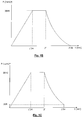
- a predetermined hydrostatic pressure equal to 3045 bar is applied to the lobster for 36 seconds so as to detach the shell from the lobster meat and obtain a shelled lobster.
- a next step 12A the chamber in which the lobster is confined at a controlled rate is progressively depressurized, so as to reach 1520 bars after 20 seconds of depressurization and 610 bars after 41 seconds. depressurization.
- a step 121A in accordance with the graph represented on the Figure 1B , we continue the regular depressurization of the enclosure for another 55 seconds.
- the depressurization is continued for 13 seconds until a pressure of 300 bar is reached and the residual pressure of the chamber (step 122A) is almost instantaneously evacuated.
- FIG. 1D an exemplary embodiment of an oyster processing system 10 according to the present invention.
- This system 10 comprises a preconditioning unit 11 in which oysters 12 received at a delivery platform 13 are conditioned at a temperature of 6 ° C. in a cooling chamber 14 equipped with a refrigerating unit. 15.
- jets of cold air are projected from the ceiling of the chamber 14, to limit the deposition of frost on the surface of oyster shells.
- a first conveyor belt 16 conveys the pre-packed oysters from the chamber 14 to a bagging station 17, where the oysters are placed in bulk, in batches of 36 specimens, in a sealed bag 18.
- the bag 18 is then filled with micro-filtered seawater and sealed.
- the oysters can be placed in baskets.
- a second conveyor belt 19 transports the bags 18 to a high-pressure hydrostatic press 110, adapted for example from the Wave6000 series sold by the company Nc Hyperbaric.
- This press 110 is advantageously horizontal loading, which facilitates the introduction of the bags 18 in the compression chamber 111 of this press, by its front face. At the same time the already treated bags are extracted by the rear face of the enclosure.
- a control console 112 makes it possible to control the closure of the enclosure and the application of the pressure.
- the enclosure 111 After closing, the enclosure 111 is flooded rapidly, with the aid of a filling pump (not shown in FIG. figure 1D ), a charge liquid, consisting of water from the filtered network and stored in a tank 113.
- a filling pump not shown in FIG. figure 1D
- the pressure rises rapidly in the chamber, where it is exerted substantially isostatically, or in other words substantially uniformly on the oysters, and is maintained for 42 seconds at 2700 bar, in this particularly advantageous embodiment of the invention. It has also been planned to adjust the duration of application between 35 and 45 seconds at the desk 112 depending on the size of the oysters, so as to ensure the full opening of their shell.
- the step of pre-conditioning the oysters at 6 ° C. thus advantageously makes it possible to reduce by about 1 to 3 seconds the duration of application of the pressure of 2700 bars relative to oysters left at ambient temperature and introduced directly into the atmosphere. enclosure of the pressing unit.
- the depressurization of the chamber is advantageously controlled by a centralized control unit (not shown in FIG. figure 1D ), integrated in the press 110, so as to reduce the pressure in the chamber in a slow and regular manner, about 45 bar per second on average.
- the charge liquid is discharged through an orifice, before being reinjected into the tank 113 via a recycling circuit.
- the transformed oyster bags 18 are removed from the enclosure on a carpet, and the enclosure is washed with water jet before introducing new bags.
- This device 114 comprises a temperature sensor controlling the stopping and running of a circulation pump of a coolant in an exchanger in contact with the charging liquid.
- a refrigeration unit may also be envisaged to associate a refrigeration unit with the tank 113.
- the oysters thus transformed can be kept in the sealed bag, in view of being delivered to restorers, or reconditioned in half-shell 201 in a basket 202, as can be seen on the figure 2 after having removed the upper shells which have not completely detached.
- FIG 3 summarizes in the form of a block diagram, the steps of the process according to the invention implemented within the oyster processing system presented with reference to the figure 1D .
- a first step 301 the oysters are received. They are then preconditioned in a second step 302 by exposing them to thermal stress and then bagged in a third step 303.
- a step 304 applying a predetermined hydrostatic pressure to oysters, equal to 2700 bars in this embodiment of the invention, for a period of 35 to 45 seconds, sufficient to open the oyster shell.
- a final step 305 the enclosure is depressurized on a regular basis so as to reach a value of 1350 bars after 27 seconds and 540 bars after 55 seconds, and then the pressure of the enclosure is almost released. instantaneous (step 3051).
- the duration of application of a pressure that makes it possible not to damage and / or modify the organoleptic qualities of the crustacean or shellfish extends between 10 and 50 seconds.
- the values of the pressures guaranteeing the preservation of the quality of the shells are between 2300 and 3200 bars. They are particularly weak for shells whose shell naturally contains little water and / or whose foot is less resistant.
- the preconditioning step by means of thermal, osmotic, mechanical, electromagnetic or physicochemical stressing provided by the invention may also have an advantage for the preparation of crustaceans and fish. It makes it possible to shorten the duration of application of the high pressure necessary to shell a crustacean or detach the skin and / or the bones of a fish.
- the shelling time of the shell of a raw lobster can be reduced from about 38 seconds to about 36 seconds at 2700 bar pressure, by preconditioning this lobster at a temperature of 12 ° C. It should also be noted that it is advantageous to first pierce the tail of the lobster at the base of the fan, to allow micro-filtered seawater to penetrate under the shell.
- the shell of the oyster with a heat-shrinkable tape, for example from Soretrac (trade mark), or an adhesive tape, to prevent disgorging of the water contained in the shell, when it opens under the action of pressure.
- a heat-shrinkable tape for example from Soretrac (trade mark), or an adhesive tape
- the processed oyster can be delivered to catering professionals with this band, which can be removed to open the oyster.
Landscapes
- Life Sciences & Earth Sciences (AREA)
- Engineering & Computer Science (AREA)
- Zoology (AREA)
- Food Science & Technology (AREA)
- Marine Sciences & Fisheries (AREA)
- Health & Medical Sciences (AREA)
- Nutrition Science (AREA)
- Chemical & Material Sciences (AREA)
- Polymers & Plastics (AREA)
- Wood Science & Technology (AREA)
- Meat, Egg Or Seafood Products (AREA)
Applications Claiming Priority (1)
| Application Number | Priority Date | Filing Date | Title |
|---|---|---|---|
| FR1000994A FR2957227B1 (fr) | 2010-03-12 | 2010-03-12 | Procede de transformation de fruits de mer a haute pression, et systeme correspondant |
Publications (3)
| Publication Number | Publication Date |
|---|---|
| EP2364598A2 true EP2364598A2 (de) | 2011-09-14 |
| EP2364598A3 EP2364598A3 (de) | 2011-11-23 |
| EP2364598B1 EP2364598B1 (de) | 2016-11-16 |
Family
ID=43063426
Family Applications (1)
| Application Number | Title | Priority Date | Filing Date |
|---|---|---|---|
| EP11158166.6A Active EP2364598B1 (de) | 2010-03-12 | 2011-03-14 | Hochdruckumwandlungsverfahren von Meeresfrüchten |
Country Status (3)
| Country | Link |
|---|---|
| EP (1) | EP2364598B1 (de) |
| ES (1) | ES2606171T3 (de) |
| FR (2) | FR2957227B1 (de) |
Cited By (2)
| Publication number | Priority date | Publication date | Assignee | Title |
|---|---|---|---|---|
| WO2016096399A1 (de) * | 2014-12-17 | 2016-06-23 | Uhde High Pressure Technologies Gmbh | Verfahren zur hochdruckbehandlung eines produkts |
| CN112535198A (zh) * | 2020-11-20 | 2021-03-23 | 浙江海洋大学 | 一种水产清洗装置 |
Citations (3)
| Publication number | Priority date | Publication date | Assignee | Title |
|---|---|---|---|---|
| US6537601B1 (en) | 1998-01-20 | 2003-03-25 | Innovatit Seafood Systems, Llc | Process of elimination of bacteria in shellfish and of shucking shellfish |
| CA2548237A1 (en) | 2003-12-09 | 2005-06-23 | Clearwater Seafoods Limited Partnership | Method for shucking lobster, crab or shrimp |
| US20090269476A1 (en) | 2008-04-23 | 2009-10-29 | Clearwater Seafoods Limited Partnership | Preparation of eviscerated raw whole lobster |
Family Cites Families (5)
| Publication number | Priority date | Publication date | Assignee | Title |
|---|---|---|---|---|
| US2824005A (en) * | 1956-06-19 | 1958-02-18 | Blue Channel Corp | Method of recovering the meats of bivalves |
| JP2989034B2 (ja) * | 1991-05-30 | 1999-12-13 | アヲハタ株式会社 | 加工貝の製造法 |
| US6426103B2 (en) * | 1998-01-20 | 2002-07-30 | Innovatit Seafood Systems Llc | Process of elimination of bacteria in shellfish and of shucking shellfish |
| US20030161917A1 (en) * | 1998-01-20 | 2003-08-28 | Ernest A. Voisin | Process of elimination of bacteria in shellfish of shucking shellfish and an apparatus therefor |
| GB2430857B (en) * | 2005-10-05 | 2010-05-19 | Earagail Res And Dev Ltd | Improvements in and relating to the cooking of whelk |
-
2010
- 2010-03-12 FR FR1000994A patent/FR2957227B1/fr active Active
-
2011
- 2011-03-14 ES ES11158166.6T patent/ES2606171T3/es active Active
- 2011-03-14 EP EP11158166.6A patent/EP2364598B1/de active Active
- 2011-03-14 FR FR1152072A patent/FR2957226B1/fr not_active Expired - Fee Related
Patent Citations (3)
| Publication number | Priority date | Publication date | Assignee | Title |
|---|---|---|---|---|
| US6537601B1 (en) | 1998-01-20 | 2003-03-25 | Innovatit Seafood Systems, Llc | Process of elimination of bacteria in shellfish and of shucking shellfish |
| CA2548237A1 (en) | 2003-12-09 | 2005-06-23 | Clearwater Seafoods Limited Partnership | Method for shucking lobster, crab or shrimp |
| US20090269476A1 (en) | 2008-04-23 | 2009-10-29 | Clearwater Seafoods Limited Partnership | Preparation of eviscerated raw whole lobster |
Cited By (2)
| Publication number | Priority date | Publication date | Assignee | Title |
|---|---|---|---|---|
| WO2016096399A1 (de) * | 2014-12-17 | 2016-06-23 | Uhde High Pressure Technologies Gmbh | Verfahren zur hochdruckbehandlung eines produkts |
| CN112535198A (zh) * | 2020-11-20 | 2021-03-23 | 浙江海洋大学 | 一种水产清洗装置 |
Also Published As
| Publication number | Publication date |
|---|---|
| FR2957227B1 (fr) | 2013-05-24 |
| FR2957226A1 (fr) | 2011-09-16 |
| FR2957227A1 (fr) | 2011-09-16 |
| ES2606171T3 (es) | 2017-03-23 |
| EP2364598A3 (de) | 2011-11-23 |
| EP2364598B1 (de) | 2016-11-16 |
| FR2957226B1 (fr) | 2013-05-24 |
Similar Documents
| Publication | Publication Date | Title |
|---|---|---|
| Dang et al. | Emerging and potential technologies for facilitating shrimp peeling: A review | |
| US20080305230A1 (en) | Method of processing crustaceans | |
| CN104351852B (zh) | 即食醋渍竹荚鱼小切片的生产工艺 | |
| AU716328B2 (en) | Improved process for preparing a shellfish product and product obtained | |
| JP6596729B2 (ja) | 生食用二枚貝の開殻・脱殻方法 | |
| EP2364598B1 (de) | Hochdruckumwandlungsverfahren von Meeresfrüchten | |
| EP0440601B1 (de) | Zubereitung unter gasatmosphare | |
| FR2750011A1 (fr) | Procede de conservation de produits alimentaires | |
| EP0413071A1 (de) | Verfahren für die Zubereitung von Früchten oder Gemüse, ganz oder in Scheiben, mit reduziertem Feuchtigkeitsgehalt | |
| FR2553975A1 (fr) | Preparation de produits alimentaires | |
| EP3075900B1 (de) | Verfahren zum übertragen eines räuchergeschmacks auf eine essbare substanz | |
| KR102461142B1 (ko) | 소형 전복의 패각 분리 가공방법 | |
| JP2000157157A (ja) | 二枚貝の開殻方法 | |
| EP3501288B1 (de) | Verpackungsverfahren von rohem fisch für den transport und seine endgültige verpackung | |
| EP2154977B1 (de) | Verfahren zur verarbeitung von kaisergranaten oder garnelen, unter berücksichtigung ihrer lagerbarkeit | |
| FR3060948B1 (fr) | Procede d'emboitage a cru de poissons dont la flaveur est susceptible de se degrader au cours du temps | |
| JP2903329B2 (ja) | 冷凍片貝の製造方法 | |
| JPH10295262A (ja) | 魚介類冷凍用浸漬液及びその製造方法及び魚介類の冷凍方法及び冷凍魚介類並びに魚介類の解凍・味付調理方法 | |
| EP3747270A1 (de) | Verfahren zur zubereitung von krebsfleisch | |
| Howieson | HIGH PRESSURE PASTEURISATION TRIALS FOR WESTERN AUSTRALIAN SEAFOOD PRODUCT | |
| JP4038141B2 (ja) | 食材の加工方法 | |
| FR2594007A1 (fr) | Procede de preparation et de conservation de poisson frais, et produit ainsi obtenu. | |
| Raab | Canning seafood [2003] | |
| FR3116416A1 (fr) | Procédé de fabrication d'un produit agroalimentaire à base de mollusques" | |
| JPH09135674A (ja) | カレイ科魚類の食材用処理方法 |
Legal Events
| Date | Code | Title | Description |
|---|---|---|---|
| PUAI | Public reference made under article 153(3) epc to a published international application that has entered the european phase |
Free format text: ORIGINAL CODE: 0009012 |
|
| AK | Designated contracting states |
Kind code of ref document: A2 Designated state(s): AL AT BE BG CH CY CZ DE DK EE ES FI FR GB GR HR HU IE IS IT LI LT LU LV MC MK MT NL NO PL PT RO RS SE SI SK SM TR |
|
| AX | Request for extension of the european patent |
Extension state: BA ME |
|
| PUAL | Search report despatched |
Free format text: ORIGINAL CODE: 0009013 |
|
| AK | Designated contracting states |
Kind code of ref document: A3 Designated state(s): AL AT BE BG CH CY CZ DE DK EE ES FI FR GB GR HR HU IE IS IT LI LT LU LV MC MK MT NL NO PL PT RO RS SE SI SK SM TR |
|
| AX | Request for extension of the european patent |
Extension state: BA ME |
|
| RIC1 | Information provided on ipc code assigned before grant |
Ipc: A22C 29/04 20060101AFI20111019BHEP Ipc: A23L 1/333 20060101ALI20111019BHEP |
|
| RIN1 | Information on inventor provided before grant (corrected) |
Inventor name: TAUGE, ALEXIS |
|
| 17P | Request for examination filed |
Effective date: 20120511 |
|
| 17Q | First examination report despatched |
Effective date: 20150212 |
|
| RIC1 | Information provided on ipc code assigned before grant |
Ipc: A23L 17/50 20160101ALI20160429BHEP Ipc: A22C 29/04 20060101AFI20160429BHEP |
|
| GRAP | Despatch of communication of intention to grant a patent |
Free format text: ORIGINAL CODE: EPIDOSNIGR1 |
|
| INTG | Intention to grant announced |
Effective date: 20160615 |
|
| GRAS | Grant fee paid |
Free format text: ORIGINAL CODE: EPIDOSNIGR3 |
|
| GRAA | (expected) grant |
Free format text: ORIGINAL CODE: 0009210 |
|
| AK | Designated contracting states |
Kind code of ref document: B1 Designated state(s): AL AT BE BG CH CY CZ DE DK EE ES FI FR GB GR HR HU IE IS IT LI LT LU LV MC MK MT NL NO PL PT RO RS SE SI SK SM TR |
|
| REG | Reference to a national code |
Ref country code: GB Ref legal event code: FG4D Free format text: NOT ENGLISH |
|
| REG | Reference to a national code |
Ref country code: CH Ref legal event code: EP |
|
| REG | Reference to a national code |
Ref country code: IE Ref legal event code: FG4D Free format text: LANGUAGE OF EP DOCUMENT: FRENCH Ref country code: NL Ref legal event code: FP |
|
| REG | Reference to a national code |
Ref country code: AT Ref legal event code: REF Ref document number: 845007 Country of ref document: AT Kind code of ref document: T Effective date: 20161215 |
|
| REG | Reference to a national code |
Ref country code: DE Ref legal event code: R096 Ref document number: 602011032370 Country of ref document: DE |
|
| PG25 | Lapsed in a contracting state [announced via postgrant information from national office to epo] |
Ref country code: LV Free format text: LAPSE BECAUSE OF FAILURE TO SUBMIT A TRANSLATION OF THE DESCRIPTION OR TO PAY THE FEE WITHIN THE PRESCRIBED TIME-LIMIT Effective date: 20161116 |
|
| REG | Reference to a national code |
Ref country code: FR Ref legal event code: PLFP Year of fee payment: 7 |
|
| REG | Reference to a national code |
Ref country code: LT Ref legal event code: MG4D |
|
| REG | Reference to a national code |
Ref country code: AT Ref legal event code: MK05 Ref document number: 845007 Country of ref document: AT Kind code of ref document: T Effective date: 20161116 |
|
| PG25 | Lapsed in a contracting state [announced via postgrant information from national office to epo] |
Ref country code: GR Free format text: LAPSE BECAUSE OF FAILURE TO SUBMIT A TRANSLATION OF THE DESCRIPTION OR TO PAY THE FEE WITHIN THE PRESCRIBED TIME-LIMIT Effective date: 20170217 Ref country code: SE Free format text: LAPSE BECAUSE OF FAILURE TO SUBMIT A TRANSLATION OF THE DESCRIPTION OR TO PAY THE FEE WITHIN THE PRESCRIBED TIME-LIMIT Effective date: 20161116 Ref country code: NO Free format text: LAPSE BECAUSE OF FAILURE TO SUBMIT A TRANSLATION OF THE DESCRIPTION OR TO PAY THE FEE WITHIN THE PRESCRIBED TIME-LIMIT Effective date: 20170216 Ref country code: LT Free format text: LAPSE BECAUSE OF FAILURE TO SUBMIT A TRANSLATION OF THE DESCRIPTION OR TO PAY THE FEE WITHIN THE PRESCRIBED TIME-LIMIT Effective date: 20161116 |
|
| PG25 | Lapsed in a contracting state [announced via postgrant information from national office to epo] |
Ref country code: PL Free format text: LAPSE BECAUSE OF FAILURE TO SUBMIT A TRANSLATION OF THE DESCRIPTION OR TO PAY THE FEE WITHIN THE PRESCRIBED TIME-LIMIT Effective date: 20161116 Ref country code: HR Free format text: LAPSE BECAUSE OF FAILURE TO SUBMIT A TRANSLATION OF THE DESCRIPTION OR TO PAY THE FEE WITHIN THE PRESCRIBED TIME-LIMIT Effective date: 20161116 Ref country code: RS Free format text: LAPSE BECAUSE OF FAILURE TO SUBMIT A TRANSLATION OF THE DESCRIPTION OR TO PAY THE FEE WITHIN THE PRESCRIBED TIME-LIMIT Effective date: 20161116 Ref country code: FI Free format text: LAPSE BECAUSE OF FAILURE TO SUBMIT A TRANSLATION OF THE DESCRIPTION OR TO PAY THE FEE WITHIN THE PRESCRIBED TIME-LIMIT Effective date: 20161116 Ref country code: AT Free format text: LAPSE BECAUSE OF FAILURE TO SUBMIT A TRANSLATION OF THE DESCRIPTION OR TO PAY THE FEE WITHIN THE PRESCRIBED TIME-LIMIT Effective date: 20161116 Ref country code: PT Free format text: LAPSE BECAUSE OF FAILURE TO SUBMIT A TRANSLATION OF THE DESCRIPTION OR TO PAY THE FEE WITHIN THE PRESCRIBED TIME-LIMIT Effective date: 20170316 |
|
| PG25 | Lapsed in a contracting state [announced via postgrant information from national office to epo] |
Ref country code: CZ Free format text: LAPSE BECAUSE OF FAILURE TO SUBMIT A TRANSLATION OF THE DESCRIPTION OR TO PAY THE FEE WITHIN THE PRESCRIBED TIME-LIMIT Effective date: 20161116 Ref country code: SK Free format text: LAPSE BECAUSE OF FAILURE TO SUBMIT A TRANSLATION OF THE DESCRIPTION OR TO PAY THE FEE WITHIN THE PRESCRIBED TIME-LIMIT Effective date: 20161116 Ref country code: DK Free format text: LAPSE BECAUSE OF FAILURE TO SUBMIT A TRANSLATION OF THE DESCRIPTION OR TO PAY THE FEE WITHIN THE PRESCRIBED TIME-LIMIT Effective date: 20161116 Ref country code: EE Free format text: LAPSE BECAUSE OF FAILURE TO SUBMIT A TRANSLATION OF THE DESCRIPTION OR TO PAY THE FEE WITHIN THE PRESCRIBED TIME-LIMIT Effective date: 20161116 Ref country code: RO Free format text: LAPSE BECAUSE OF FAILURE TO SUBMIT A TRANSLATION OF THE DESCRIPTION OR TO PAY THE FEE WITHIN THE PRESCRIBED TIME-LIMIT Effective date: 20161116 |
|
| REG | Reference to a national code |
Ref country code: DE Ref legal event code: R097 Ref document number: 602011032370 Country of ref document: DE |
|
| PG25 | Lapsed in a contracting state [announced via postgrant information from national office to epo] |
Ref country code: SM Free format text: LAPSE BECAUSE OF FAILURE TO SUBMIT A TRANSLATION OF THE DESCRIPTION OR TO PAY THE FEE WITHIN THE PRESCRIBED TIME-LIMIT Effective date: 20161116 Ref country code: BG Free format text: LAPSE BECAUSE OF FAILURE TO SUBMIT A TRANSLATION OF THE DESCRIPTION OR TO PAY THE FEE WITHIN THE PRESCRIBED TIME-LIMIT Effective date: 20170216 |
|
| PLBE | No opposition filed within time limit |
Free format text: ORIGINAL CODE: 0009261 |
|
| STAA | Information on the status of an ep patent application or granted ep patent |
Free format text: STATUS: NO OPPOSITION FILED WITHIN TIME LIMIT |
|
| 26N | No opposition filed |
Effective date: 20170817 |
|
| REG | Reference to a national code |
Ref country code: CH Ref legal event code: PL |
|
| GBPC | Gb: european patent ceased through non-payment of renewal fee |
Effective date: 20170314 |
|
| PG25 | Lapsed in a contracting state [announced via postgrant information from national office to epo] |
Ref country code: MC Free format text: LAPSE BECAUSE OF FAILURE TO SUBMIT A TRANSLATION OF THE DESCRIPTION OR TO PAY THE FEE WITHIN THE PRESCRIBED TIME-LIMIT Effective date: 20161116 Ref country code: SI Free format text: LAPSE BECAUSE OF FAILURE TO SUBMIT A TRANSLATION OF THE DESCRIPTION OR TO PAY THE FEE WITHIN THE PRESCRIBED TIME-LIMIT Effective date: 20161116 |
|
| PG25 | Lapsed in a contracting state [announced via postgrant information from national office to epo] |
Ref country code: LU Free format text: LAPSE BECAUSE OF NON-PAYMENT OF DUE FEES Effective date: 20170314 |
|
| PG25 | Lapsed in a contracting state [announced via postgrant information from national office to epo] |
Ref country code: CH Free format text: LAPSE BECAUSE OF NON-PAYMENT OF DUE FEES Effective date: 20170331 Ref country code: LI Free format text: LAPSE BECAUSE OF NON-PAYMENT OF DUE FEES Effective date: 20170331 Ref country code: GB Free format text: LAPSE BECAUSE OF NON-PAYMENT OF DUE FEES Effective date: 20170314 |
|
| REG | Reference to a national code |
Ref country code: FR Ref legal event code: PLFP Year of fee payment: 8 |
|
| PG25 | Lapsed in a contracting state [announced via postgrant information from national office to epo] |
Ref country code: MT Free format text: LAPSE BECAUSE OF FAILURE TO SUBMIT A TRANSLATION OF THE DESCRIPTION OR TO PAY THE FEE WITHIN THE PRESCRIBED TIME-LIMIT Effective date: 20161116 |
|
| PG25 | Lapsed in a contracting state [announced via postgrant information from national office to epo] |
Ref country code: HU Free format text: LAPSE BECAUSE OF FAILURE TO SUBMIT A TRANSLATION OF THE DESCRIPTION OR TO PAY THE FEE WITHIN THE PRESCRIBED TIME-LIMIT; INVALID AB INITIO Effective date: 20110314 |
|
| PG25 | Lapsed in a contracting state [announced via postgrant information from national office to epo] |
Ref country code: CY Free format text: LAPSE BECAUSE OF NON-PAYMENT OF DUE FEES Effective date: 20161116 |
|
| PG25 | Lapsed in a contracting state [announced via postgrant information from national office to epo] |
Ref country code: MK Free format text: LAPSE BECAUSE OF FAILURE TO SUBMIT A TRANSLATION OF THE DESCRIPTION OR TO PAY THE FEE WITHIN THE PRESCRIBED TIME-LIMIT Effective date: 20161116 |
|
| PG25 | Lapsed in a contracting state [announced via postgrant information from national office to epo] |
Ref country code: TR Free format text: LAPSE BECAUSE OF FAILURE TO SUBMIT A TRANSLATION OF THE DESCRIPTION OR TO PAY THE FEE WITHIN THE PRESCRIBED TIME-LIMIT Effective date: 20161116 |
|
| PG25 | Lapsed in a contracting state [announced via postgrant information from national office to epo] |
Ref country code: AL Free format text: LAPSE BECAUSE OF FAILURE TO SUBMIT A TRANSLATION OF THE DESCRIPTION OR TO PAY THE FEE WITHIN THE PRESCRIBED TIME-LIMIT Effective date: 20161116 Ref country code: IS Free format text: LAPSE BECAUSE OF FAILURE TO SUBMIT A TRANSLATION OF THE DESCRIPTION OR TO PAY THE FEE WITHIN THE PRESCRIBED TIME-LIMIT Effective date: 20170316 |
|
| P01 | Opt-out of the competence of the unified patent court (upc) registered |
Effective date: 20230706 |
|
| PGFP | Annual fee paid to national office [announced via postgrant information from national office to epo] |
Ref country code: ES Payment date: 20250604 Year of fee payment: 15 |
|
| PGFP | Annual fee paid to national office [announced via postgrant information from national office to epo] |
Ref country code: IT Payment date: 20250317 Year of fee payment: 15 |
|
| PGFP | Annual fee paid to national office [announced via postgrant information from national office to epo] |
Ref country code: DE Payment date: 20260304 Year of fee payment: 16 Ref country code: IE Payment date: 20260310 Year of fee payment: 16 |
|
| PGFP | Annual fee paid to national office [announced via postgrant information from national office to epo] |
Ref country code: BE Payment date: 20260309 Year of fee payment: 16 |
|
| PGFP | Annual fee paid to national office [announced via postgrant information from national office to epo] |
Ref country code: NL Payment date: 20260309 Year of fee payment: 16 |
|
| PGFP | Annual fee paid to national office [announced via postgrant information from national office to epo] |
Ref country code: FR Payment date: 20260316 Year of fee payment: 16 |