EP2366475A1 - Poudre granulée et son procédé de production - Google Patents
Poudre granulée et son procédé de production Download PDFInfo
- Publication number
- EP2366475A1 EP2366475A1 EP20110157438 EP11157438A EP2366475A1 EP 2366475 A1 EP2366475 A1 EP 2366475A1 EP 20110157438 EP20110157438 EP 20110157438 EP 11157438 A EP11157438 A EP 11157438A EP 2366475 A1 EP2366475 A1 EP 2366475A1
- Authority
- EP
- European Patent Office
- Prior art keywords
- granulated powder
- wax
- powder
- organic binder
- granulated
- Prior art date
- Legal status (The legal status is an assumption and is not a legal conclusion. Google has not performed a legal analysis and makes no representation as to the accuracy of the status listed.)
- Granted
Links
Images

Classifications
-
- B—PERFORMING OPERATIONS; TRANSPORTING
- B22—CASTING; POWDER METALLURGY
- B22F—WORKING METALLIC POWDER; MANUFACTURE OF ARTICLES FROM METALLIC POWDER; MAKING METALLIC POWDER; APPARATUS OR DEVICES SPECIALLY ADAPTED FOR METALLIC POWDER
- B22F1/00—Metallic powder; Treatment of metallic powder, e.g. to facilitate working or to improve properties
- B22F1/14—Treatment of metallic powder
- B22F1/148—Agglomerating
-
- Y—GENERAL TAGGING OF NEW TECHNOLOGICAL DEVELOPMENTS; GENERAL TAGGING OF CROSS-SECTIONAL TECHNOLOGIES SPANNING OVER SEVERAL SECTIONS OF THE IPC; TECHNICAL SUBJECTS COVERED BY FORMER USPC CROSS-REFERENCE ART COLLECTIONS [XRACs] AND DIGESTS
- Y10—TECHNICAL SUBJECTS COVERED BY FORMER USPC
- Y10T—TECHNICAL SUBJECTS COVERED BY FORMER US CLASSIFICATION
- Y10T428/00—Stock material or miscellaneous articles
- Y10T428/249921—Web or sheet containing structurally defined element or component
Definitions
- the present invention relates to a granulated powder and a method for producing a granulated powder.
- a powder compacting method As a method for powder metallurgy, a powder compacting method is known. In this method, a mixture of a metal powder and an organic binder is filled in a given molding die, followed by compaction, thereby obtaining a green body in a given shape. The obtained green body is subjected to a degreasing treatment of removing the organic binder and a firing treatment of sintering the metal powder, thereby forming a metal sintered body.
- a technique is an exemplary powder metallurgy technique, and a large amount of a metal sintered body in a complicated shape can be produced according to the shape of the molding die. Therefore, such a technique has been widely spread in many industrial fields.
- a fine powder having an average particle diameter of 10 ⁇ m or less is sometimes used as the metal powder.
- a fine powder has low fluidity, and therefore is poor for completely filling a molding die. Therefore, a mixture of a metal powder and an organic binder is granulated into particles having a larger particle size to improve the fluidity thereof.
- a plurality of particles in the metal powder are bound to one another by the organic binder, thereby forming a granulated powder having a larger particle size.
- the granulated powder has higher fluidity than the metal powder, and therefore is excellent at filling a molding die, and thus, a dense green body and a dense sintered body can be produced.
- JP-A-2005-154847 discloses a method for obtaining a sintered body by powder compacting a granulated powder of a metal powder and firing the resulting green body at a high temperature of 1200°C or higher.
- a firing furnace which can be used at a temperature of 1200°C or higher needs a special heat resistant structure, and therefore is expensive, and also has a high running cost.
- the firing temperature is decreased, the density of the resulting sintered body is decreased, and a problem arises in that the sintered body has a poor mechanical property.
- An advantage of some aspects of the invention is to provide a granulated powder which is favorably sintered even if it is fired at a relatively low temperature and is capable of producing a sintered body having a high density, and also to provide a method for producing such a granulated powder.
- a granulated powder comprising a plurality of metal particles bound to one another by an organic binder, wherein the organic binder contains (i) polyvinyl alcohol or a derivative thereof, (ii) a wax, and (iii) a nonionic surfactant.
- a granulated powder which is favorably sintered even if it is fired at a relatively low temperature and is capable of producing a sintered body having a high density.
- a total amount of (i) the wax and (ii) the nonionic surfactant is preferably from 0.01 to 1 part by weight based on 100 parts by weight of the metal particles.
- the wax is preferably a mineral wax, a petroleum wax, or a modified wax thereof.
- the fluidity of the particles of the granulated powder can be increased, and therefore, a sintered body having a high sintering density can be produced therefrom.
- the mineral wax is preferably montan wax or a derivative thereof.
- the organic binder has optimal plasticity, and together with the excellent fluidity imparted to the particles of the granulated powder, a sintered body having a higher sintering density can be produced.
- the petroleum wax is preferably paraffin wax, microcrystalline wax, or a derivative of one of these.
- the densification of the granulated powder is further enhanced.
- the nonionic surfactant is preferably a sorbitan fatty acid ester.
- the sorbitan fatty acid ester is useful because it has high biological safety and can further increase the affinity between the metal particles and the wax.
- the organic binder preferably further contains a polyol.
- the granulated powder is further densified.
- the polyol is preferably glycerin.
- glycerin has a relatively low molecular weight and also has a high hydroxyl group content, and therefore easily enters between the molecules of polyethylene glycol. Moreover, glycerin contains many sites which contribute to hydrogen bond formation, and therefore contributes to the densification of the granulated powder. Further, glycerin has a moderate viscosity, and therefore can further increase the binding property of the metal particles at the time of granulation and the shape retaining property of the green body.
- an amount of the polyol is preferably 0.01 parts by weight or more but less than 0.3 parts by weight based on 100 parts by weight of the metal particles.
- the granulated powder can be particularly dense, and therefore a sintered body having a high density can be obtained. Further, the occurrence of spring back (i.e. the result of accumulation of stress in the green body during powder compacting and relief of the accumulated stress after completion of compaction accompanied by deformation) can be prevented.
- the organic binder preferably further contains an organic amine.
- the organic amine is spontaneously adsorbed onto the surfaces of the metal particles to reduce the interparticle friction, thereby enhancing the densification of the granulated powder.
- the organic amine adsorbed onto the surfaces of the particles reduces the chance of contact between the particles and the outside air, and therefore, the weather resistance of the particles can be increased.
- the organic amine is preferably at least one of an alkylamine, a cycloalkylamine, and an alkanolamine (including derivatives of these).
- the densification of the granulated powder is further enhanced.
- an amount of the organic amine is preferably from 30 to 200% by weight based on the total amount of the wax and the nonionic surfactant.
- each of the plurality of the metal particles is preferably covered with a coating layer which comprises the organic amine.
- a granulated powder which is favorably sintered even if it is fired at a relatively low temperature and is capable of producing a sintered body having a high density can be easily produced.
- a method for producing a granulated powder as defined above comprising providing a metal powder, while tumbling or flowing the metal powder, simultaneously supplying a solution of an organic binder to the metal powder, wherein the organic binder contains Polyvinyl alcohol, a wax, and a nonionic surfactant, thereby, granulating the metal powder.
- the shape and size of the granulated powder can be made uniform. As a result, a granulated powder having a uniform particle size distribution can be obtained.
- the solution of the organic binder is preferably supplied by spraying.
- the shape and size of the granulated powder can be made uniform. As a result, a granulated powder having a uniform particle size distribution can be obtained.
- FIGS. 1A and 1B are schematic views showing a structure of a tumbling granulator to be used in a method for producing a granulated powder according to the invention.
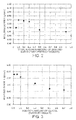
- FIG. 2 is a graph showing the distribution of molded bodies (green bodies) obtained using the granulated powders obtained in the respective Examples and Comparative Example 1 with the horizontal axis representing the total addition amount of a wax and a nonionic surfactant, and the vertical axis representing a molding density.
- FIG. 3 is a graph showing the distribution of molded bodies(green bodies) obtained using the granulated powders obtained in the respective Examples and Comparative Example 1 with the horizontal axis representing the addition amount of a polyol and the vertical axis representing the molding density.
- the granulated powder according to the invention contains a metal powder and an organic binder, and is obtained by binding a plurality of metal particles in the metal powder by the organic binder.
- the organic binder to be used in the invention contains polyvinyl alcohol or a derivative thereof, a wax, and a nonionic surfactant.
- Such a granulated powder is favorably sintered even if it is fired at a relatively low temperature and is capable of producing a sintered body having a high density. Therefore, it has an advantage that one can use a firing furnace which does not have a special heat resistant structure, is inexpensive, and has low running cost.
- Metal particles Metal Powder
- the metal particles used are not particularly limited. Examples thereof include particles of Mg, Al, Ti, V, Cr, Mn, Fe, Co, Ni, Cu, Zn, Y, Zr, Nb, Mo, Pd, Ag, In, Sn, Ta, W, and alloys thereof.
- particles of any of a variety of Fe-based alloys such as stainless steel, dies steel, high-speed tool steel, low-carbon steel, Fe-Ni alloy, and Fe-Ni-Co alloy are preferably used. These may be provided in the form of a metal powder. Since such an Fe-based alloy has an excellent mechanical property, a sintered body obtained using this Fe-based alloy powder has an excellent mechanical property and can be used in a wide range of applications.
- stainless steel examples include SUS 304, SUS 316, SUS 317, SUS 329, SUS 410, SUS 430, SUS 440, and SUS 630.
- the average particle diameter of the metal particles is preferably from 1 to 30 ⁇ m, more preferably from 3 to 20 ⁇ m, further more preferably from 3 to 10 ⁇ m.
- the metal particles having such a particle diameter is capable of producing a sufficiently dense sintered body while avoiding a decrease in the compressibility at the time of compacting.
- the average particle diameter is less than the above lower limit, the metal powder is liable to aggregate and the compressibility at the time of compacting may be significantly decreased.
- the average particle diameter exceeds the above upper limit, the space between the particles of the powder may be too large, and the densification of the finally obtained sintered body may be insufficient.
- the tap density of the metal powder is, in the case of, for example, an Fe-based alloy powder, preferably 3.5 g/cm 3 or more, more preferably 3.8 g/cm 3 or more.
- the metal powder has a high tap density as described above, at the time of obtaining the granulated powder, the interparticle filling property is particularly increased. Therefore, a particularly dense sintered body can be obtained using the granulated powder.
- the specific surface area of the metal powder is not particularly limited, however, it is preferably 0.15 m 2 /g or more, more preferably 0.2 m 2 /g or more, further more preferably 0.3 m 2 /g or more.
- the surface activity surface energy
- sintering can be easily performed even if lower energy is applied. Accordingly, sintering can be achieved in a shorter time when the green body is sintered. As a result, a dense sintered body can be obtained even if the green body is fired at a low temperature.
- Such a metal powder may be produced by any method.
- a metal powder produced by, for example, an atomization method (a water atomization method, a gas atomization method, a high-speed spinning water atomization method, etc.), a reduction method, a carbonyl method, a pulverization method can be used.
- a metal powder produced by an atomization method is preferably used.
- the atomization method it is possible to efficiently produce metal particles having an extremely small average particle diameter as described above. Further, it is possible to obtain metal particles having a uniform particle diameter and a small variation in particle diameter. Accordingly, by using such a metal powder, air holes can be reliably prevented from being generated in the sintered body, and the density can be improved.
- the metal particles produced by an atomization method have a spherical shape relatively close to a true sphere, and therefore have excellent dispersibility and fluidity in the binder. Therefore, when the granulated powder is filled in a molding die to effect compacting, the extent of filling can be increased, and a dense sintered body can be obtained.
- the organic binder contains polyvinyl alcohol (PVA) or a derivative thereof, a wax, and a nonionic surfactant.
- PVA polyvinyl alcohol
- the distance between metal particles is sufficiently reduced, and therefore, at the time of performing degreasing and firing, sintering is completed at a lower temperature in a shorter time. Therefore, a firing furnace which does not have a special heat resistant structure, is relatively inexpensive, and has low running cost can be used, and a sintered body having a high density can be efficiently produced.
- polyvinyl alcohol is soluble in water, and has high affinity for metal particles. It is considered that this is because polyvinyl alcohol has a lot of hydroxyl groups in its molecular chain, which brings about an interaction derived from a hydrogen bond with hydroxyl groups exposed on the surfaces of the metal particles. Due to this interaction, it is considered that the distance between the metal particles is reduced, and a densification of the granulated powder and moreover, a densification of the sintered body are enhanced.
- polyvinyl alcohol is promptly decomposed at a relatively low temperature, and therefore, hardly functions as an inhibitory factor for sintering. Due to this, it is considered that even if a green body obtained by compacting the granulated powder according to the invention is fired at a low temperature, the organic binder hardly remains between the particles of the metal powder, and sintering can be achieved at a lower temperature in a shorter time.
- polyvinyl alcohol has a somewhat low plasticity, and therefore hardly contributes to the rearrangement of the granulated powder or the shape retaining property of the green body.
- a wax has favorable plasticity and therefore can impart plasticity to the organic binder. Accordingly, the rearrangement of the granulated powder, and the shape retaining property and the releasing property of the green body can be increased.
- the wax reduces the friction on the surfaces of the particles of the metal powder and can increase the fluidity of the particles of the granulated powder.
- the wax is mainly composed of a saturated hydrocarbon and is generally not soluble in water and has low affinity for the metal powder.
- the nonionic surfactant is considered to function to increase the affinity between the wax and the metal particles by interposing therebetween.
- the wax can be distributed so as to cover the surfaces of the metal particles, and the fluidity of the particles of the granulated powder, and the shape retaining property and the releasing property of the green body are considered to be increased.
- the nonionic surfactant also has the function of increasing the affinity between polyvinyl alcohol or a derivative thereof and the wax.
- the nonionic surfactant since the nonionic surfactant has a hydroxyl group in its molecular chain, it is considered that the nonionic surfactant enters between the molecules of polyvinyl alcohol and contributes to the reduction of the distance between the molecules of polyvinyl alcohol. Due to this, the respective components of the organic binder can be uniformly mixed regardless of the mixing ratio thereof, and it is considered that the nonionic surfactant increases the dispersibility of the metal particles and the organic binder and also contributes to the reduction of the distance between the metal particles.
- the granulated powder according to the invention becomes dense and has a high apparent density.
- the ratio of the apparent density (g/cm 3 ) of the granulated powder according to the invention to the true density (g/cm 3 ) of the metal particles is preferably expected to be from 20% to 50%.
- Such a granulated powder is favorably sintered even if it is fired at a relatively low temperature and is capable of producing a sintered body having a high density. Therefore, it has an advantage that a firing furnace which does not have a special heat resistant structure, is inexpensive, and has low running cost can be used.
- the shrinkage ratio at the time of sintering is decreased by that much.
- the dimension of the sintered body hardly deviates from a target value, and the dimensional accuracy of the sintered body can be increased. That is, according to the invention, a sintered body having a high dimensional accuracy can be obtained.
- polyvinyl alcohol or a derivative thereof one having a weight-average molecular weight of from about 2000 to 200000 is preferably used, and one having a weight-average molecular weight of from about 5000 to 150000 is more preferably used.
- Polyvinyl alcohol having such a weight-average molecular weight is most suitable as the organic binder in terms of viscosity and ability to thermally decompose. That is, such polyvinyl alcohol can bind the metal particles at the time of granulation and can disintegrate at the time of compacting and the shape retaining property of the green body after compacting to a high level. As a result, by using the granulated powder according to the invention, a sintered body having a high density and excellent dimensional accuracy can be obtained.
- the derivative of polyvinyl alcohol may refer to one obtained by substituting a hydrogen atom attached to a carbon atom with any of various functional groups, and examples of the functional group include an alkyl group, a silyl group, and an acrylate group.
- examples of the wax include natural waxes and synthetic waxes.
- natural waxes examples include vegetable waxes such as candelilla wax, carnauba wax, rice wax, Japan wax, and jojoba wax; animal waxes such as bees wax, lanolin, and whale wax; mineral waxes such as montan wax, ozokerite, and ceresin; and petroleum waxes such as paraffin wax, microcrystalline wax, and petrolactam, and these can be used alone or in combination of two or more.
- vegetable waxes such as candelilla wax, carnauba wax, rice wax, Japan wax, and jojoba wax
- animal waxes such as bees wax, lanolin, and whale wax
- mineral waxes such as montan wax, ozokerite, and ceresin
- petroleum waxes such as paraffin wax, microcrystalline wax, and petrolactam, and these can be used alone or in combination of two or more.
- examples of the synthetic waxes include synthetic hydrocarbons such as polyethylene wax; modified waxes such as montan wax derivatives, paraffin wax derivatives, and microcrystalline wax derivatives; hydrogenated waxes such as hydrogenated castor oil and hydrogenated castor oil derivatives; fatty acids such as 12-hydroxystearic acid; acid amides such as stearic acid amide; and esters such as phthalic anhydride imide, and these can be used alone or in combination of two or more.
- synthetic hydrocarbons such as polyethylene wax
- modified waxes such as montan wax derivatives, paraffin wax derivatives, and microcrystalline wax derivatives
- hydrogenated waxes such as hydrogenated castor oil and hydrogenated castor oil derivatives
- fatty acids such as 12-hydroxystearic acid
- acid amides such as stearic acid amide
- esters such as phthalic anhydride imide
- a mineral wax, a petroleum wax, or a modified wax thereof is preferably used.
- a wax By using such a wax, the fluidity of the particles of the granulated powder can be increased, and therefore, a sintered body having a high sintering density can be produced in the end.
- the organic binder has optimal plasticity, and together with the excellent fluidity imparted to the particles of the granulated powder, a sintered body having a higher sintering density can be produced.
- the organic binder has also optimal plasticity, and together with the excellent fluidity imparted to the particles of the granulated powder, a sintered body having a higher sintering density can be produced.
- nonionic surfactant examples include ester-type nonionic surfactants such as glycerin fatty acid esters, sorbitan fatty acid esters, and sucrose fatty acid esters; ether-type nonionic surfactants such as polyoxyethylene alkyl ethers, polyoxyethylene alkylphenyl ethers, and polyoxyethylene polyoxypropylene glycol; ester ether-type nonionic surfactants obtained by combining the ester-type and ether-type nonionic surfactants such as polyoxyethylene sorbitan fatty acid esters; and fatty acid alkanolamide-type nonionic surfactants, and these can be used alone or in combination of two or more.
- ester-type nonionic surfactants such as glycerin fatty acid esters, sorbitan fatty acid esters, and sucrose fatty acid esters
- ether-type nonionic surfactants such as polyoxyethylene alkyl ethers, polyoxyethylene alkylphenyl ether
- a sorbitan fatty acid ester is particularly preferably used.
- the sorbitan fatty acid ester is useful because sorbitan is one of the saccharides and therefore the sorbitan fatty acid ester has high biological safety and can further increase the affinity between the metal particles and the wax.
- the total amount of the wax and the nonionic surfactant is preferably from 0.01 to 1 part by weight, more preferably from 0.02 to 0.5 parts by weight based on 100 parts by weight of the metal particles.
- the weight ratio of the wax to that of the nonionic surfactant is preferably from 1:9 to 8:2, more preferably from 4:6 to 8:2. According to this configuration, the balance between the wax and the nonionic surfactant is optimized, and the above-mentioned effect becomes more prominent.
- the organic binder to be used in the invention preferably contains a polyol, an organic amine, or the like other than the above-mentioned components.
- the granulated powder can be further densified.
- a first step may comprise uniformly mixing, polyvinyl alcohol or a derivative thereof and a polyol with each other, regardless of the mixing ratio of both components. This is because the hydroxyl groups of both molecules are attracted to each other by a hydrogen bond so that the distance between molecules is reduced. It is considered that in particular, the molecule of the polyol enters between the molecules of polyvinyl alcohol and contributes to the reduction of the distance between the molecules of polyvinyl alcohol. Moreover, the above-mentioned organic binder is promptly decomposed at a relatively low temperature, and therefore, hardly functions as an inhibitory factor for sintering. Due to this, it is considered that the green body obtained by compacting the granulated powder according to the invention is sintered at a lower temperature in a shorter time.
- these organic binder molecules are attracted also to the particles of the metal particles by a hydrogen bond. This is because a hydroxyl group is exposed on the surfaces of the particles of the metal powder, and therefore a hydrogen bond is formed between this hydroxyl group and the hydroxyl group of the organic binder molecule. As a result, it is considered that the distance between the metal particles is reduced, so that the granulated powder is densified, and also the resulting sintered body is densified.
- polyol examples include ethylene glycol, propylene glycol, butylene glycol, hexylene glycol, pentane diol, hexane diol, heptane diol, diethylene glycol, dipropylene glycol, and glycerin, and these polyols can be used alone or in combination of two or more.
- glycerin is particularly preferred as the polyol.
- polyols glycerin has a relatively small molecular weight and also has a high hydroxyl group content. Therefore, glycerin easily enters between the molecules of polyethylene glycol, and also the site which contributes to the above-mentioned hydrogen bond is increased, and therefore the granulated powder is further densified. Further, glycerin has a moderate viscosity, and therefore can further increase the binding property of the metal powder at the time of granulation and the shape retaining property of the green body.
- Such a polyol is added in an amount of preferably from 0.01 to 0.3 parts by weight, more preferably from 0.01 to 0.2 parts by weight based on 100 parts by weight of the metal powder.
- the polyol By adding the polyol in such an amount, the granulated powder can be particularly densified.
- the addition amount of the polyol is less than the above-mentioned lower limit, the density of the granulated powder and also the density of the sintered body may be decreased. If the addition amount of the polyol exceeds the above-mentioned upper limit, the density of the granulated powder may also be decreased, and a phenomenon, a so-called "spring back" in which stress is accumulated in the green body during powder compacting and the residual stress after completion of compacting is relieved accompanied by deformation is increased. Therefore, the dimensional accuracy of the sintered body may be decreased or cracking or the like may occur.
- the amount of the polyol is preferably from 20 to 150% by weight, more preferably from 30 to 120% by weight based on the total amount of the wax and the nonionic surfactant. According to this configuration, the balance between the polyol, and the wax and the nonionic surfactant is optimized.
- the organic binder preferably contains an organic amine or a derivative thereof other than the above-mentioned components.
- an organic amine or a derivative thereof in the organic binder, the fluidity and weather resistance of the metal powder can be increased.
- This organic amine contains an amino group in each molecule, and this amino group is spontaneously adsorbed onto the surfaces of the metal particles, and therefore, the interparticle friction can be reduced.
- the fluidity of a metal powder comprising said metal particles is increased and the distance between the particles is reduced.
- the organic amine contributes to the densification of the granulated powder.
- the organic amine adsorbed onto the surfaces of the particles reduces the chance of contact between the particles and the outside air, and therefore, the particles can be protected from oxygen, moisture, and the like, and the weather resistance of the particles is increased.
- the adsorption of the amino group onto the surfaces of the particles is considered to be due to an interaction between the lone pair of electrons of the amino group which is a polar group and an adsorption site of the surfaces of the metal particles.
- Examples of such an organic amine include alkylamines, cycloalkylamines, alkanolamines, allylamines, arylamines, alkoxyamines, and derivatives of the afore-mentioned. Among these, particularly, at least one of alkylamines, cycloalkylamines, alkanolamines, and derivatives thereof is preferably used. These amines contribute to further densification of the granulated powder.
- alkylamine examples include monoalkylamines such as n-hexylamine, n-heptylamine, n-octylamine (normal-octylamine), and 2-ethylhexylamine; dialkylamines such as diisobutylamine; and trialkylamines such as diisopropylethylamine.
- cycloalkylamine examples include cyclohexylamine and dicyclohexylamine.
- alkanolamine examples include monoethanolamine, diethanolamine, triethanolamine, monopropanolamine, dipropanolamine, tripropanolamine, N,N-dimethylethanolamine, N,N-diethylethanolamine, N-aminoethylethanolamine, N-methylethanolamine, and N-methyldiethanolamine.
- the derivative of such an organic amine is not particularly limited.
- it is a nitrite of an organic amine, a carboxylate of an organic amine, a chromate of an organic amine, or an acetate of an organic amine.
- Such an organic amine is preferably added in an amount of from 0.001 to 5 parts by weight, more preferably from 0.005 to 1 part by weight based on 100 parts by weight of the metal particles.
- the amount of the organic amine is preferably from 30 to 200% by weight, more preferably from 50 to 150% by weight based on the total amount of the wax and the nonionic surfactant. According to this configuration, the balance between the organic amine, and the wax and the nonionic surfactant is optimized.
- the metal particles to be used in the invention are preferably covered with a coating layer composed of the above-mentioned organic amine. According to this configuration, the chance of contact between the metal particles and the outside air can be more reliably reduced, and therefore, the weather resistance of the particles can be particularly increased.
- the average thickness of the coating layer is preferably from 3 nm to 3 ⁇ m, more preferably from 10 nm to 1 ⁇ m.
- the organic binder may contain for example, polyvinylpyrrolidone (PVP), stearic acid, ethylenebisstearamide, an ethylene-vinyl copolymer, sodium alginate, agar, gum Arabic, a resin, or sucrose other than the above-mentioned components.
- PVP polyvinylpyrrolidone
- stearic acid stearic acid
- ethylenebisstearamide ethylene-vinyl copolymer
- sodium alginate sodium alginate
- agar agar
- gum Arabic gum Arabic
- a resin a resin
- sucrose sucrose
- an additive such as a phthalic acid ester (such as DOP, DEP, or DBP), an adipic acid ester, a trimellitic acid ester, or a sebacic acid ester may be added as needed.
- an antioxidant such as sodium metabisulfite, sodium metabisulfite, sodium metabisulfite, sodium metabisulfite, sodium metabisulfite, sodium metabisulfite, sodium metabisulfite, sodium metabisulfite, sodium metabisulfite, sodium metabisulfite, sodium metabisulfite, sodium metabisulfite, sodium metabisulfite, sodium metabisulfite, sodium metabisulfite, sodium metabisulfite, sodium metabisulfite, sodium metabisulfite, sodium metabisulfite, sodium metabisulfite, sodium metabisulfite, sodium metabisulfite, sodium metabisulfite, sodium metabisulfite, sodium metabisulfite, sodium metabisulfite, sodium metabisulfite, sodium metabisulfite, sodium metabisulfite, sodium metabisulfite, sodium metabisulfite, sodium metabisulfite, sodium metabisulfite, sodium metabisulfite, sodium metabisulfite
- the total content of the polyvinyl alcohol or the derivative thereof, the wax, and the nonionic surfactant in the organic binder is preferably 90% by weight or more, more preferably 95% by weight or more based on the total weight of the binder.
- the granulated powder according to the invention contains the above-mentioned metal particles and organic binder.
- the content of the organic binder in the granulated powder is preferably from 0.1 to 20% by weight, more preferably from 0.3 to 10% by weight based on the weight of the granulated powder.
- the ratio of the apparent density of the granulated powder to the true density of the metal particles is expected to be from 20% to 50%.
- the apparent density of the granulated powder refers to the mass:volume ratio of the granulated powder in a state where the powder is naturally filled, and can be determined according to Test Method for Apparent Density of Metal Powders specified in JIS Z 2504.
- the true density of the metal particles refers to a true density of the metal material constituting the metal particles.
- the densification of the granulated powder is achieved, and the granulated powder in which the ratio of the apparent density to the true density of the metal powder falls within the above range can be obtained.
- a granulated powder is capable of forming a green body having a high molding density when it is molded, and also is capable of forming a sintered body having a high sintering density. Further, the shrinkage ratio at the time of sintering can be reduced, and therefore, the dimensional accuracy of the sintered body can be increased.
- the ratio of the apparent density of the granulated powder according to the invention to the true density of the metal particles is more preferably from 25% to 45%, further more preferably from 30% to 40%.
- each particle of the granulated powder according to the invention greatly affects the fluidity and the filling property.
- the shape of each particle of the granulated powder is preferably a shape close to a true sphere.
- the granulated powder according to the invention is preferably covered with a coating layer composed of the above-mentioned organic amine. According to this configuration, the chance of contact between the metal particles and the outside air can be more reliably reduced, and therefore, the weather resistance of the particles can be particularly increased. As a result, a sintered body having a higher density can be obtained.
- the average thickness of the coating layer is preferably from 3 nm to 3 ⁇ m, more preferably from 10 nm to 1 ⁇ m.
- FIGS. 1A and 1B are schematic views showing a structure of a tumbling granulator to be used in the method for producing a granulated powder according to the invention:
- a tumbling granulator 1 is provided with a treatment vessel 10 for performing granulation, a blade 20 and a cross screw 30 installed in the treatment vessel 10, and a spray nozzle 40.
- the treatment vessel 10 has a bottom portion 11 and a side wall portion 12 vertically provided from the bottom portion 11.
- the side wall portion 12 has a conical shape (for example, a circular truncated cone tube shape) in which the inner and outer diameters gradually increase from the top to the bottom. Since the treatment vessel 10 (side wall portion 12) has such a shape, an air current can be formed in the treatment vessel 10 such that a powder comprising metal particles is picked up by the blade 20 at the outer periphery of the treatment vessel 10 falls at the center of the treatment vessel 10. As a result, the powder can be uniformly treated, and therefore, a granulated powder having a sharp particle size distribution can be efficiently produced.
- the treatment vessel 10 has an opening on the top, and a lid 13 is attached thereto so as to close the opening.
- the blade 20 has a base portion 23, and three rotary vanes 21, which are fixed to the base portion 23 at one end thereof and are arranged radially at approximately equal intervals.
- a through-hole 110 is provided, and a rotary drive shaft 22 is inserted into this through-hole 110.
- the upper end of the rotary drive shaft 22 is fixed to the base portion 23 and the lower end thereof is connected to a rotary driving source (not shown). Then, the rotary drive shaft 22 is rotationally driven in the forward or reverse directions by this rotary driving source, thereby rotating the blade 20.
- each of the rotary vanes 21 is fixed inclined with respect to the rotary drive shaft 22 such that it is inclined downwardly toward the front side in the rotating direction of the blade 20. According to this configuration, as the blade 20 rotates, the powder can be effectively picked up and an air current as described above can be formed.
- a through-hole 130 is provided, and a rotary drive shaft 31 is inserted into this through-hole 130.
- One end of the rotary drive shaft 31 is fixed to the cross screw 30, and the other end thereof is connected to a rotary driving source (not shown). Then, the rotary drive shaft 31 is rotationally driven in the forward reverse directions by this rotary driving source, thereby rotating the cross screw 30.
- the spray nozzle 40 is provided such that it pierces the lid 13 attached to the treatment vessel 10, and a supply port is located in the treatment vessel 10. According to this configuration, a solvent can be sprayed into the treatment vessel 10. By spraying a solvent from the spray nozzle 40, a descending air current is formed in the vicinity of the spray nozzle 40.
- the method for producing a granulated powder using the tumbling granulator 1 is one example of the method for producing a granulated powder according to the invention, and it is a matter of course that the method for producing a granulated powder according to the invention is not limited thereto.
- the method for producing a granulated powder according to this embodiment includes allowing metal particles to tumble and/or flow while supplying a solution of an organic binder (a binder solution), thereby granulating the metal particles.
- a metal powder is fed in the inside of the treatment vessel 10 of the tumbling granulator 1 as described above. Then, by stirring the metal powder with the blade 20, the metal powder is allowed to tumble and/or flow.
- the binder solution is sprayed from the spray nozzle 40.
- the binder solution in the mist form wets the metal powder and also binds the metal particles of the metal powder.
- the metal powder is granulated, whereby a granulated powder 80 is obtained.
- This granulated powder 80 gradually moves (tumbles) toward the outer periphery (toward the side wall portion 12) of the treatment vessel 10 as the blade 20 rotates and also is thrown up above by the rotary vanes 21.
- the picked-up granulated powder 80 falls at the center of the treatment vessel 10 and is allowed to tumble again by the blade 20.
- the granulated powder is properly shaped, whereby the granulated power 80 having a shape close to a true sphere is formed. Accordingly, a dense granulated powder in which the distance between the comprised metal particles is short can be obtained.
- the binder solution may be supplied by any method, for example, by placing the binder solution in the treatment vessel 10 in advance, etc., however, it is preferred that the binder solution is sprayed from the top as shown in FIG. 1A .
- the right amount of the binder solution is supplied uniformly to the granulated powder 80 picked-up by the blade 20, and therefore, the shape and size of the granulated powder 80 can be made uniform.
- the granulated powder 80 to come in contact with the binder solution while floating in the air, the entire surface of the particles of the granulated powder 80 is wetted uniformly, and therefore, the uniformity becomes more prominent. As a result, a granulated powder 80 having a uniform particle size distribution can be obtained.
- solvent to be used in the binder solution examples include inorganic solvents such as water, carbon disulfide, and carbon tetrachloride; and organic solvents including ketone-based solvents such as methyl ethyl ketone (MEK), acetone, diethyl ketone, methyl isobutyl ketone (MIBK), methyl isopropyl ketone (MIPK), cyclohexanone, 3-heptanone, and 4-heptanone; alcohol-based solvents such as methanol, ethanol, n-propanol, isopropanol, n-butanol, i-butanol, t-butanol, 3-methyl-1-butanol, 1-pentanol, 2-pentanol, n-hexanol, cyclohexanol, 1-heptanol, 1-octanol, 2-octanol, 2-methoxyethanol, allyl alcohol
- the number of rotations per unit time (hereinafter simply referred to as "rotation speed") of the blade 20 is not particularly limited as long as it can ensure at least tumbling of the granulated powder 80. However, for example, it is preferably from about 50 to 500 rpm, more preferably from about 100 to 300 rpm.
- rotation speed of the blade 20 falls within the above range, the granulated powder 80 can be allowed to efficiently tumble and granulation can be efficiently performed. Further, a moderately consolidated state is obtained, and therefore, a granulated powder having a higher apparent density can be obtained. As a result, the granulated powder 80 which is denser and has a particularly narrow particle size distribution can be obtained.
- the rotation speed of the blade 20 is less than the above lower limit, tumbling or picking-up of the granulated powder 80 is insufficient, which may cause uneven granulation. Further, consolidation may be insufficient and a granulated powder 80 having a low apparent density may be formed, and also the granulated powder 80 which has not a spherical shape but an irregular shape with low fluidity may be formed. On the other hand, if the rotation speed of the blade 20 exceeds the above upper limit, the granulated particles may be crushed more than necessary by the blade 20.
- the number of rotations per unit time of the cross screw 30 at the time of granulation is not particularly limited, however, it is preferably from about 50 to 3500 rpm, more preferably from about 100 to 3000 rpm. According to this configuration, particles having a large particle diameter can be crushed while preventing excessive crushing of the particles so that the particle diameter can be made uniform.
- the supply rate of the binder solution is not particularly limited, however, for example, it is preferred from 20 to 1000 g/min, more preferably from 30 to 800 g/min, further more preferably from 50 to 600 g/min.
- the supply rate of the binder solution falls within the above range, binding (granulation) of the metal powder by the binder solution is uniformly performed and the particle size distribution of the resulting granulated powder can be made sharper.
- the supply rate of the binder solution is less than the above lower limit, uneven granulation may be caused.
- the supply rate of the binder solution exceeds the above upper limit, the granulation may proceed excessively. As a result, the resulting granulated powder may have a wide particle size distribution.
- the concentration of the organic binder in the binder solution is preferably from 0.5 to 20% by weight, more preferably from 1 to 15% by weight, further more preferably from 2 to 10% by weight.
- the treatment time (stirring time) for granulation is not particularly limited, however, it is preferably from 1 to 90 minutes, more preferably from 2 to 85 minutes, further more preferably from 3 to 80 minutes. According to this configuration, ungranulated metal powder can be prevented from remaining, and the particle size distribution of the resulting granulated powder can be made sufficiently sharp. However, if the treatment time for granulation is less than the above lower limit, a relatively large amount of a powder having a small particle diameter (ungranulated metal powder, etc.) may remain. On the other hand, if the treatment time for granulation exceeds the above upper limit, a solvent may be directly applied to a powder having a relatively large particle diameter (a lump of a powder which does not tumble or flow) to cause uneven granulation.
- a solvent which can dissolve the organic binder may be sprayed (supplied) to the granulated powder as needed. According to this configuration, the granulated powder having a more uniform shape and size can be formed.
- the granulated powder can be formed as described above.
- a technique selected from a tumbling granulation method, a fluidized bed granulation method, and a tumbling fluidized bed granulation method, may be usesd.
- the granulation method is not limited to these, and a spray drying method or the like can also be used.
- the use of the granulated powder according to the invention is not particularly limited. However, it can be preferably used in, for example, the production of a green body containing the granulated powder, particularly the production of a sintered body obtained by sintering the green body containing the granulated powder.
- the granulated powder according to the invention as described above is molded using a press compacting machine, whereby a green body having a desired shape and dimension is produced.
- the granulated powder according to the invention itself is dense and has a high filling property. Therefore, a green body having a high density can be produced, and a sintered body having a high density and a low shrinkage ratio can be obtained in the end.
- the shape and dimension of the green body to be produced are determined in expectation of a shrinkage due to the subsequent degreasing and sintering treatments. Further, the molding method is not limited to press compacting, and compression molding, injection molding, or the like may be employed.
- the green body obtained in the above-mentioned molding step is subjected to a degreasing treatment (binder removal treatment), whereby a degreased body is obtained.
- the degreasing treatment is not particularly limited, however, it can be performed by a heat treatment in a non-oxidative atmosphere, for example, under vacuum or a reduced pressure (for example, 1 x 10 -1 to 1 x 10 -6 Torr), or in a gas such as nitrogen, argon, hydrogen, or dissociated ammonia.
- the condition for the heat treatment slightly varies depending on the decomposition initiation temperature of the organic binder or the like, however, the heat treatment is preferably performed at a temperature of about 100°C to 750°C for about 0.5 to 40 hours, more preferably performed at a temperature of about 150°C to 700°C for about 1 to 24 hours.
- the degreasing by such a heat treatment may be performed by being divided into a plurality of steps (stages) for various purposes (for example, for the purpose of reducing the degreasing time, etc.).
- stages for various purposes (for example, for the purpose of reducing the degreasing time, etc.).
- a method in which degreasing is performed at a low temperature in the former half and at a high temperature in the latter half a method in which degreasing at a low temperature and degreasing at a high temperature are alternately repeated, or the like can be used.
- the degreased body obtained in the above-mentioned degreasing treatment is fired in a firing furnace to effect sintering, whereby a desired sintered body is obtained.
- the metal powder constituting the granulated powder is dispersed to cause grain growth, and a sintered body which is dense as a whole, in other words, has a high density and a low porosity can be obtained.
- the firing temperature at the time of firing may vary depending on e.g. the composition of the granulated powder.
- the firing temperature is preferably 900°C or higher but lower than 1200°C, more preferably from 1000°C to 1170°C.
- the firing temperature falls within the above range, a sintered body can be efficiently produced using a firing furnace which does not have a special heat resistant structure, is relatively inexpensive, and has low running cost.
- the firing temperature is lower than the above lower limit, sintering of the metal powder may not sufficiently proceed, and the porosity of a finally obtained sintered body may be increased, and therefore, a sufficient mechanical strength may not be obtained.
- the firing temperature exceeds the above upper limit, a firing furnace which has a special heat resistant structure is needed, and therefore, ease of firing is reduced.
- the firing time (i.e. the time for which the maximum firing temperature is hold during firing) is preferably from about 0.5 to 8 hours, more preferably from about 0.75 to 5 hours.
- the firing atmosphere is not particularly limited. However, a reduced pressure (vacuum) atmosphere or a non-oxidative atmosphere is preferred. According to this configuration, deterioration of properties due to metal oxidation can be prevented.
- a preferred firing atmosphere is a reduced pressure (vacuum) atmosphere at 1 Torr or less (more preferably at 1 x 10 -2 to 1 x 10 -6 Torr), an inert gas atmosphere of nitrogen, argon, or the like at 1 to 760 Torr, or a hydrogen gas atmosphere at 1 to 760 Tor.
- the firing atmosphere may be changed in the course of firing.
- the initial firing atmosphere is set to a reduced pressure (vacuum) atmosphere at 1 x 10 -2 to 1 x 10 -6 Torr, which can be changed to an inert gas atmosphere as described above in the course of firing.
- first firing and second firing in which the firing conditions are different such that the firing temperature in the second firing is set to higher than that in the first firing, may be performed.
- the thus obtained sintered body may be used for any purpose, e.g. as various machine parts.
- the relative density of the thus obtained sintered body varies depending on e.g. the use thereof. However, for example, it is expected to be more than 93%, preferably 94% or more. Such a sintered body has a particularly excellent mechanical property. Further, by using the granulated powder according to the invention, even if it is fired at a low temperature, such a sintered body having an excellent mechanical property can be efficiently produced.
- an additional step can be added as needed.
- the device to be used in the method for producing a granulated powder according to the invention is not limited to one described in the above embodiment.
- a tumbling granulator which performs granulation by means of a fluidizing action
- a tumbling fluidized bed granulator which performs granulation by means of a tumbling and fluidizing action
- a spray drying apparatus which performs spray drying, or the like may be used.
- a 2% Ni-Fe alloy powder (true density: 7.827 g/cm 3 , manufactured by Epson Atmix Corporation) having an average particle diameter of 6 ⁇ m produced by a water atomization method was prepared.
- the composition of the 2% Ni-Fe is as follows: C: 0.4 to 0.6% by mass, Si: 0.35% by mass or less, Mn: 0.8% by mass or less, P: 0.03% by mass or less, S: 0.045% by mass or less, Ni: 1.5 to 2.5% by mass, Cr: 0.2% by mass or less, and Fe: remainder.
- polyvinyl alcohol, montan wax, and a sorbitan fatty acid ester were prepared.
- a solvent ion exchanged water was prepared.
- the amounts of the respective components of the organic binder, i.e., polyvinyl alcohol, montan wax, and a sorbitan fatty acid ester were set to 0.8 parts by weight, 0.04 parts by weight, and 0.01 parts by weight based on 100 parts by weight of the metal powder, respectively.
- the amount of solvent was set to 50 g per gram of the organic binder.
- the resulting mixture was cooled to room temperature, whereby a binder solution was prepared.
- the starting material powder was placed in a treatment vessel of a tumbling granulator (VG-25, manufactured by Powrex Corporation). Then, the starting material powder was allowed to tumble under the following condition set out below while spraying the binder solution from a spray nozzle of the tumbling granulator. By doing this, a granulated powder having an average particle diameter of 75 ⁇ m was obtained.
- a tumbling granulator VG-25, manufactured by Powrex Corporation
- Granulated powders were obtained in the same manner as in Example 1 except that the compositions and the amounts of the wax and the nonionic surfactant were changed as shown in Table 1, respectively.
- Granulated powders were obtained in the same manner as in Example 1 except that the amounts of the wax and the nonionic surfactant were changed as shown in Table 1, and an organic amine shown in Table 1 was added to the organic binder, respectively.
- a granulated powder was obtained in the same manner as in Example 1 except that the amounts of the wax and the nonionic surfactant were changed as shown in Table 1, and a 2% Ni-Fe alloy powder having an average particle diameter of 6 ⁇ m and covered with a coating layer made of an organic amine was used as the starting material powder.
- a granulated powder was obtained in the same manner as in Example 1 except that the amounts of the wax and the nonionic surfactant were changed as shown in Table 1, and the composition of the metal powder was changed to SUS-316L (true density: 7.98 g/cm 3 ).
- Granulated powders were obtained in the same manner as in Examples 1 to 14, respectively, except that glycerin was added in an amount shown in Table 2 was added to each of the organic binders in Examples 1 to 14.
- Granulated powders were obtained in the same manner as in Example 10 except that the amounts of the nonionic surfactant and the organic amine were changed as shown in Table 3, respectively.
- Granulated powders were obtained in the same manner as in Example 1 except that the organic binder was prepared using only polyvinyl alcohol (the addition of the wax and the nonionic surfactant was omitted) and the amount thereof was changed as shown in Table 1, respectively.
- a granulated powder was obtained in the same manner as in Comparative Example 1 except that polyvinylpyrrolidone was used in place of polyvinyl alcohol.
- a granulated powder was obtained in the same manner as in Comparative Example 1 except that montan wax (as the wax) was further added to the organic binder.
- a granulated powder was obtained in the same manner as in Comparative Example 1 except that a sorbitan fatty acid ester (as the nonionic surfactant) was further added to the organic binder.
- a granulated powder was obtained in the same manner as in Example 14 except that the organic binder was prepared using only polyvinyl alcohol (the addition of the wax and the nonionic surfactant was omitted) and the amount thereof was set as shown in Table 1.
- the density of the obtained sintered body was measured by a method according to the Archimedes method specified in JIS Z 2501. Further, the relative density of the sintered body was calculated from the measured sintering density and the true density of the metal powder.
- the width dimension of the obtained sintered body was measured using a micrometer. Then, evaluation was performed for the measurements according to the following evaluation criteria based on the "Permissible Deviations in Widths Without Tolerance” specified in JIS B 0411 (Permissible Deviations in Dimensions Without Tolerance Indication for Metallic Sintered Products).
- the width of the sintered body refers to a dimension in the direction orthogonal to the direction of compression at the time of press compacting.
- each of the molded bodies (green bodies) and the sintered bodies obtained using the granulated powders obtained in the respective Examples has a high density.
- the molding density and the sintering density can be specifically increased by using montan wax as the wax, using a sorbitan fatty acid ester as the nonionic surfactant, optimizing the total content of the wax and the nonionic surfactant, adding an organic amine, and so on.
- FIG. 2 is a graph showing the distribution of the molded bodies (green bodies) obtained using the granulated powders obtained in the respective Examples and Comparative Example 1 with the horizontal axis representing the total addition amount of the wax and the nonionic surfactant, and the vertical axis representing a molding density.
- the respective Examples are indicated by black squares
- Comparative Example 1 is indicated by a white square.
- the molding density can be particularly increased when the total addition amount of the wax and the nonionic surfactant falls within a range from 0.01 to 1 part by weight based on 100 parts by weight of the metal powder.
- the sintered bodies obtained using the granulated powders obtained in the respective Examples have excellent dimensional accuracy.
- a sintered body was obtained by changing the firing temperature from 1150°C to 1250°C.
- the sintering density of the resulting sintered body was 7.41 g/cm 3 , which was equivalent to that of the sintered body obtained using the granulated powder obtained in Example 1. From this result, it was revealed that according to the invention, a granulated powder can be favorably sintered even at a relatively low temperature using a firing furnace which is widely used and inexpensive.
- each of the molded bodies (green bodies) and the sintered bodies obtained using the granulated powders obtained in the respective Examples has a high density.
- densification is further enhanced by adding glycerin to the organic binder in a given amount as compared with the case where glycerin is not added.
- FIG. 3 is a graph showing the distribution of the molded bodies (green bodies) obtained using the granulated powders obtained in the respective Examples and Comparative Example 1 with the horizontal axis representing the addition amount of the polyol and the vertical axis representing the molding density.
- the respective Examples are indicated by black squares
- Comparative Example 1 is indicated by a white square.
- the molding density can be particularly increased when the addition amount of the polyol falls within a range from 0.01 to 0.3 parts by weight based on 100 parts by weight of the metal powder.
- the sintered bodies obtained using the granulated powders obtained in the respective Examples have excellent dimensional accuracy.
- molded bodies (green bodies) and sintered bodies were produced in the same manner using the granulated powders obtained in the same manner as in Examples 15 to 17, respectively, except that glycerin was changed to propylene glycol, and evaluated in the same manner.
- the density was equivalent or decreased by about 2% to 5% as compared with the case of using the corresponding granulated powders of Examples 15 to 17, favorable evaluation results were obtained.
Landscapes
- Powder Metallurgy (AREA)
- Glanulating (AREA)
Applications Claiming Priority (1)
| Application Number | Priority Date | Filing Date | Title |
|---|---|---|---|
| JP2010055147A JP5544945B2 (ja) | 2010-03-11 | 2010-03-11 | 造粒粉末および造粒粉末の製造方法 |
Publications (2)
| Publication Number | Publication Date |
|---|---|
| EP2366475A1 true EP2366475A1 (fr) | 2011-09-21 |
| EP2366475B1 EP2366475B1 (fr) | 2014-10-15 |
Family
ID=44171101
Family Applications (1)
| Application Number | Title | Priority Date | Filing Date |
|---|---|---|---|
| EP20110157438 Active EP2366475B1 (fr) | 2010-03-11 | 2011-03-09 | Poudre granulée et son procédé de production |
Country Status (5)
| Country | Link |
|---|---|
| US (1) | US20110223408A1 (fr) |
| EP (1) | EP2366475B1 (fr) |
| JP (1) | JP5544945B2 (fr) |
| CN (1) | CN102189253B (fr) |
| ES (1) | ES2527433T3 (fr) |
Cited By (2)
| Publication number | Priority date | Publication date | Assignee | Title |
|---|---|---|---|---|
| EP3233335B1 (fr) * | 2014-12-16 | 2020-01-29 | GKN Sinter Metals Engineering GmbH | Adjuvant de compactage pour la métallurgie des poudres |
| CN112584948A (zh) * | 2018-09-26 | 2021-03-30 | 杰富意钢铁株式会社 | 粉末冶金用混合粉及粉末冶金用润滑剂 |
Families Citing this family (15)
| Publication number | Priority date | Publication date | Assignee | Title |
|---|---|---|---|---|
| US9199870B2 (en) | 2012-05-22 | 2015-12-01 | Corning Incorporated | Electrostatic method and apparatus to form low-particulate defect thin glass sheets |
| US9475945B2 (en) * | 2013-10-03 | 2016-10-25 | Kennametal Inc. | Aqueous slurry for making a powder of hard material |
| JP6379850B2 (ja) * | 2013-10-11 | 2018-08-29 | セイコーエプソン株式会社 | レーザー焼結用粉末および構造物の製造方法 |
| TW201611198A (zh) * | 2014-04-11 | 2016-03-16 | 阿爾發金屬公司 | 低壓燒結粉末 |
| CN106457668A (zh) * | 2014-06-20 | 2017-02-22 | 福吉米株式会社 | 粉末层叠造形中使用的粉末材料和使用其的粉末层叠造形法 |
| ES2555829B1 (es) * | 2014-07-04 | 2016-06-17 | Bruno MEZCUA ESCUDERO | Procedimiento para la obtención de un producto sólido que comprende cenizas de cremación y una cera en un recipiente, producto obtenido mediante el procedimiento y estuche que contiene dicho producto |
| US9919958B2 (en) | 2014-07-17 | 2018-03-20 | Corning Incorporated | Glass sheet and system and method for making glass sheet |
| CN104218222B (zh) * | 2014-08-29 | 2016-06-22 | 江苏华东锂电技术研究院有限公司 | 粉体烧结系统 |
| US9422187B1 (en) | 2015-08-21 | 2016-08-23 | Corning Incorporated | Laser sintering system and method for forming high purity, low roughness silica glass |
| CN105108166B (zh) * | 2015-09-29 | 2017-06-06 | 四川有色金源粉冶材料有限公司 | 一种注射成型用铁基合金粉末的制备方法 |
| JP6844225B2 (ja) * | 2016-11-30 | 2021-03-17 | セイコーエプソン株式会社 | 焼結用粉末および焼結体の製造方法 |
| JP6561100B2 (ja) * | 2017-10-04 | 2019-08-14 | Jx金属株式会社 | 表面処理銅微粒子の製造方法 |
| CN107699283B (zh) * | 2017-11-03 | 2020-11-06 | 河源富马硬质合金股份有限公司 | 一种高蜡比硬质合金石蜡原料的制备方法 |
| CN111069589B (zh) * | 2019-12-23 | 2022-05-24 | 东睦新材料集团股份有限公司 | 铝合金用造粒粉的制备方法、铝合金及铝合金制备方法 |
| CN117046385B (zh) * | 2023-09-19 | 2024-03-22 | 镇江巨茂分子筛有限公司 | 一种维生素b12改性制氧分子筛生产工艺及其设备 |
Citations (4)
| Publication number | Priority date | Publication date | Assignee | Title |
|---|---|---|---|---|
| EP0659508A2 (fr) * | 1993-12-27 | 1995-06-28 | Sumitomo Special Metals Company Limited | Procédé et installation pour la granulation d'une poudre |
| US5722602A (en) * | 1995-12-15 | 1998-03-03 | Caterpillar Inc. | Process for making flowable powders for coating applications |
| EP1118404A1 (fr) * | 1998-09-24 | 2001-07-25 | Sumitomo Electric Industries, Ltd. | Alliage en poudre, alliage en pastilles frittees et procede de production |
| EP1536027A1 (fr) * | 2003-11-26 | 2005-06-01 | Seiko Epson Corporation | Poudre brute ou granulee pour frittage et corpes frittes |
Family Cites Families (15)
| Publication number | Priority date | Publication date | Assignee | Title |
|---|---|---|---|---|
| US4277288A (en) * | 1978-10-06 | 1981-07-07 | Ciba-Geigy Corporation | Fluidized granulation of pigments using organic granulating assistant |
| SE427434B (sv) * | 1980-03-06 | 1983-04-11 | Hoeganaes Ab | Jernbaserad pulverblandning med tillsats mot avblandning och/eller damning |
| DE3048086A1 (de) * | 1980-12-19 | 1982-07-15 | Bayer Ag, 5090 Leverkusen | Agglomerierte ferromagnetische eisenteilchen |
| JPH0686608B2 (ja) * | 1987-12-14 | 1994-11-02 | 川崎製鉄株式会社 | 金属粉末射出成形による鉄焼結体の製造方法 |
| JPH04337003A (ja) * | 1991-05-14 | 1992-11-25 | Sumitomo Metal Mining Co Ltd | 射出成形用造粒物 |
| EP0587049B1 (fr) * | 1992-09-08 | 1997-03-12 | Hoechst Aktiengesellschaft | Procédé de préparation de poudre coulant à partir de poudre céramique sensible à l'eau |
| US5575830A (en) * | 1994-12-21 | 1996-11-19 | Sumitomo Special Metals Co., Ltd. | Fabrication methods and equipment for granulated powders |
| JP3722548B2 (ja) * | 1995-08-03 | 2005-11-30 | 株式会社トクヤマ | カーボンブラックを含む造粒体の製造方法 |
| JP2003526693A (ja) * | 1997-10-21 | 2003-09-09 | ヘガネス・コーポレーシヨン | 結合剤/潤滑剤を含有する改良された冶金用組成物及びその製造方法 |
| EP1025937A4 (fr) * | 1998-07-15 | 2004-11-03 | Toho Titanium Co Ltd | Poudre de metal |
| JP2002033209A (ja) * | 2000-07-18 | 2002-01-31 | Showa Highpolymer Co Ltd | 希土類系ボンド磁石用組成物、希土類系ボンド磁石およびその製造方法 |
| US6464751B2 (en) * | 2000-10-06 | 2002-10-15 | Kawasaki Steel Corporation | Iron-based powders for powder metallurgy |
| JP2006206944A (ja) * | 2005-01-26 | 2006-08-10 | Seiko Epson Corp | 造粒粉末の製造方法および造粒粉末 |
| JP4847820B2 (ja) * | 2006-08-10 | 2011-12-28 | 株式会社 資生堂 | 粉末化粧料の製造方法 |
| JP5320843B2 (ja) * | 2008-06-18 | 2013-10-23 | セイコーエプソン株式会社 | 金属粉末射出成形用コンパウンドおよび焼結体の製造方法 |
-
2010
- 2010-03-11 JP JP2010055147A patent/JP5544945B2/ja active Active
-
2011
- 2011-03-09 ES ES11157438.0T patent/ES2527433T3/es active Active
- 2011-03-09 EP EP20110157438 patent/EP2366475B1/fr active Active
- 2011-03-10 US US13/045,002 patent/US20110223408A1/en not_active Abandoned
- 2011-03-11 CN CN201110059635.5A patent/CN102189253B/zh active Active
Patent Citations (5)
| Publication number | Priority date | Publication date | Assignee | Title |
|---|---|---|---|---|
| EP0659508A2 (fr) * | 1993-12-27 | 1995-06-28 | Sumitomo Special Metals Company Limited | Procédé et installation pour la granulation d'une poudre |
| US5722602A (en) * | 1995-12-15 | 1998-03-03 | Caterpillar Inc. | Process for making flowable powders for coating applications |
| EP1118404A1 (fr) * | 1998-09-24 | 2001-07-25 | Sumitomo Electric Industries, Ltd. | Alliage en poudre, alliage en pastilles frittees et procede de production |
| EP1536027A1 (fr) * | 2003-11-26 | 2005-06-01 | Seiko Epson Corporation | Poudre brute ou granulee pour frittage et corpes frittes |
| JP2005154847A (ja) | 2003-11-26 | 2005-06-16 | Seiko Epson Corp | 焼結用原料粉末又は焼結用造粒粉末およびそれらの焼結体 |
Cited By (4)
| Publication number | Priority date | Publication date | Assignee | Title |
|---|---|---|---|---|
| EP3233335B1 (fr) * | 2014-12-16 | 2020-01-29 | GKN Sinter Metals Engineering GmbH | Adjuvant de compactage pour la métallurgie des poudres |
| CN112584948A (zh) * | 2018-09-26 | 2021-03-30 | 杰富意钢铁株式会社 | 粉末冶金用混合粉及粉末冶金用润滑剂 |
| EP3858514A4 (fr) * | 2018-09-26 | 2021-11-10 | JFE Steel Corporation | Poudre mélangée pour métallurgie des poudres et lubrifiant pour métallurgie des poudres |
| US11351603B2 (en) | 2018-09-26 | 2022-06-07 | Jfe Steel Corporation | Mixed powder for powder metallurgy and lubricant for powder metallurgy |
Also Published As
| Publication number | Publication date |
|---|---|
| US20110223408A1 (en) | 2011-09-15 |
| ES2527433T3 (es) | 2015-01-23 |
| CN102189253B (zh) | 2015-09-16 |
| JP5544945B2 (ja) | 2014-07-09 |
| EP2366475B1 (fr) | 2014-10-15 |
| JP2011190475A (ja) | 2011-09-29 |
| CN102189253A (zh) | 2011-09-21 |
Similar Documents
| Publication | Publication Date | Title |
|---|---|---|
| EP2366475B1 (fr) | Poudre granulée et son procédé de production | |
| EP2364798B1 (fr) | Poudre granulaire et son procédé de production | |
| EP2364799A1 (fr) | Poudre granulaire et son procédé de production | |
| CA2238281C (fr) | Granules de poudre metallique, leur procede de preparation et leur utilisation | |
| CN1621551A (zh) | 烧结用原料粉末或者烧结用造粒粉末及其烧结体 | |
| KR101632381B1 (ko) | 철계금속과립분말을 이용한 철계금속부품 제조방법 | |
| KR0135209B1 (ko) | 조립분의 제조 방법 및 제조 장치 | |
| WO1999062660A1 (fr) | Compositions aqueuses de moulage pour poudres en acier inoxydable, composes intermetalliques et/ou composites a matrice metallique | |
| JP2010001516A (ja) | 粉末冶金用金属粉末および焼結体の製造方法 | |
| JPH093510A (ja) | 金属粉末射出成形用銅粉末及びそれを用いた射出 成形品の製造方法 | |
| MXPA06014484A (es) | Lubricantes para composiciones en polvo basadas en hierro magnetico suave aislado. | |
| JP4702308B2 (ja) | 焼結体の製造方法 | |
| JP3631330B2 (ja) | 希土類焼結永久磁石の製造方法 | |
| JPWO2019230259A1 (ja) | 粉末冶金用粉末混合物およびその製造方法 | |
| JP4735403B2 (ja) | 造粒粉末の製造方法 | |
| JP3170156B2 (ja) | 等方性造粒粉の製造方法 | |
| JPH0917674A (ja) | 希土類系焼結磁石の製造方法 | |
| KR20150127214A (ko) | 야금학적 조성물의 무용매 결합 방법 | |
| JP2006206944A (ja) | 造粒粉末の製造方法および造粒粉末 | |
| JP2004156063A (ja) | 粉末冶金用鉄基粉末混合物およびその製造方法 | |
| JP3540389B2 (ja) | R−Fe−B系焼結永久磁石の製造方法 | |
| JP2571231B2 (ja) | 金属焼結体の製造方法 | |
| JPH0917670A (ja) | 希土類系焼結磁石の製造方法 | |
| JPH0917673A (ja) | 希土類系焼結磁石の製造方法 | |
| JPH0974036A (ja) | 希土類系焼結永久磁石の製造方法 |
Legal Events
| Date | Code | Title | Description |
|---|---|---|---|
| PUAI | Public reference made under article 153(3) epc to a published international application that has entered the european phase |
Free format text: ORIGINAL CODE: 0009012 |
|
| AK | Designated contracting states |
Kind code of ref document: A1 Designated state(s): AL AT BE BG CH CY CZ DE DK EE ES FI FR GB GR HR HU IE IS IT LI LT LU LV MC MK MT NL NO PL PT RO RS SE SI SK SM TR |
|
| AX | Request for extension of the european patent |
Extension state: BA ME |
|
| 17P | Request for examination filed |
Effective date: 20120207 |
|
| 17Q | First examination report despatched |
Effective date: 20130429 |
|
| GRAP | Despatch of communication of intention to grant a patent |
Free format text: ORIGINAL CODE: EPIDOSNIGR1 |
|
| INTG | Intention to grant announced |
Effective date: 20140526 |
|
| GRAS | Grant fee paid |
Free format text: ORIGINAL CODE: EPIDOSNIGR3 |
|
| GRAA | (expected) grant |
Free format text: ORIGINAL CODE: 0009210 |
|
| AK | Designated contracting states |
Kind code of ref document: B1 Designated state(s): AL AT BE BG CH CY CZ DE DK EE ES FI FR GB GR HR HU IE IS IT LI LT LU LV MC MK MT NL NO PL PT RO RS SE SI SK SM TR |
|
| REG | Reference to a national code |
Ref country code: CH Ref legal event code: EP Ref country code: GB Ref legal event code: FG4D |
|
| REG | Reference to a national code |
Ref country code: IE Ref legal event code: FG4D |
|
| REG | Reference to a national code |
Ref country code: AT Ref legal event code: REF Ref document number: 691399 Country of ref document: AT Kind code of ref document: T Effective date: 20141115 |
|
| REG | Reference to a national code |
Ref country code: DE Ref legal event code: R096 Ref document number: 602011010556 Country of ref document: DE Effective date: 20141127 |
|
| REG | Reference to a national code |
Ref country code: SE Ref legal event code: TRGR |
|
| REG | Reference to a national code |
Ref country code: ES Ref legal event code: FG2A Ref document number: 2527433 Country of ref document: ES Kind code of ref document: T3 Effective date: 20150123 |
|
| REG | Reference to a national code |
Ref country code: NL Ref legal event code: VDEP Effective date: 20141015 |
|
| REG | Reference to a national code |
Ref country code: AT Ref legal event code: MK05 Ref document number: 691399 Country of ref document: AT Kind code of ref document: T Effective date: 20141015 |
|
| REG | Reference to a national code |
Ref country code: LT Ref legal event code: MG4D |
|
| PG25 | Lapsed in a contracting state [announced via postgrant information from national office to epo] |
Ref country code: NL Free format text: LAPSE BECAUSE OF FAILURE TO SUBMIT A TRANSLATION OF THE DESCRIPTION OR TO PAY THE FEE WITHIN THE PRESCRIBED TIME-LIMIT Effective date: 20141015 |
|
| PG25 | Lapsed in a contracting state [announced via postgrant information from national office to epo] |
Ref country code: NO Free format text: LAPSE BECAUSE OF FAILURE TO SUBMIT A TRANSLATION OF THE DESCRIPTION OR TO PAY THE FEE WITHIN THE PRESCRIBED TIME-LIMIT Effective date: 20150115 Ref country code: FI Free format text: LAPSE BECAUSE OF FAILURE TO SUBMIT A TRANSLATION OF THE DESCRIPTION OR TO PAY THE FEE WITHIN THE PRESCRIBED TIME-LIMIT Effective date: 20141015 Ref country code: IS Free format text: LAPSE BECAUSE OF FAILURE TO SUBMIT A TRANSLATION OF THE DESCRIPTION OR TO PAY THE FEE WITHIN THE PRESCRIBED TIME-LIMIT Effective date: 20150215 Ref country code: LT Free format text: LAPSE BECAUSE OF FAILURE TO SUBMIT A TRANSLATION OF THE DESCRIPTION OR TO PAY THE FEE WITHIN THE PRESCRIBED TIME-LIMIT Effective date: 20141015 Ref country code: PT Free format text: LAPSE BECAUSE OF FAILURE TO SUBMIT A TRANSLATION OF THE DESCRIPTION OR TO PAY THE FEE WITHIN THE PRESCRIBED TIME-LIMIT Effective date: 20150216 |
|
| PG25 | Lapsed in a contracting state [announced via postgrant information from national office to epo] |
Ref country code: RS Free format text: LAPSE BECAUSE OF FAILURE TO SUBMIT A TRANSLATION OF THE DESCRIPTION OR TO PAY THE FEE WITHIN THE PRESCRIBED TIME-LIMIT Effective date: 20141015 Ref country code: HR Free format text: LAPSE BECAUSE OF FAILURE TO SUBMIT A TRANSLATION OF THE DESCRIPTION OR TO PAY THE FEE WITHIN THE PRESCRIBED TIME-LIMIT Effective date: 20141015 Ref country code: PL Free format text: LAPSE BECAUSE OF FAILURE TO SUBMIT A TRANSLATION OF THE DESCRIPTION OR TO PAY THE FEE WITHIN THE PRESCRIBED TIME-LIMIT Effective date: 20141015 Ref country code: LV Free format text: LAPSE BECAUSE OF FAILURE TO SUBMIT A TRANSLATION OF THE DESCRIPTION OR TO PAY THE FEE WITHIN THE PRESCRIBED TIME-LIMIT Effective date: 20141015 Ref country code: AT Free format text: LAPSE BECAUSE OF FAILURE TO SUBMIT A TRANSLATION OF THE DESCRIPTION OR TO PAY THE FEE WITHIN THE PRESCRIBED TIME-LIMIT Effective date: 20141015 Ref country code: CY Free format text: LAPSE BECAUSE OF FAILURE TO SUBMIT A TRANSLATION OF THE DESCRIPTION OR TO PAY THE FEE WITHIN THE PRESCRIBED TIME-LIMIT Effective date: 20141015 Ref country code: GR Free format text: LAPSE BECAUSE OF FAILURE TO SUBMIT A TRANSLATION OF THE DESCRIPTION OR TO PAY THE FEE WITHIN THE PRESCRIBED TIME-LIMIT Effective date: 20150116 |
|
| REG | Reference to a national code |
Ref country code: DE Ref legal event code: R097 Ref document number: 602011010556 Country of ref document: DE |
|
| PG25 | Lapsed in a contracting state [announced via postgrant information from national office to epo] |
Ref country code: DK Free format text: LAPSE BECAUSE OF FAILURE TO SUBMIT A TRANSLATION OF THE DESCRIPTION OR TO PAY THE FEE WITHIN THE PRESCRIBED TIME-LIMIT Effective date: 20141015 Ref country code: SK Free format text: LAPSE BECAUSE OF FAILURE TO SUBMIT A TRANSLATION OF THE DESCRIPTION OR TO PAY THE FEE WITHIN THE PRESCRIBED TIME-LIMIT Effective date: 20141015 Ref country code: CZ Free format text: LAPSE BECAUSE OF FAILURE TO SUBMIT A TRANSLATION OF THE DESCRIPTION OR TO PAY THE FEE WITHIN THE PRESCRIBED TIME-LIMIT Effective date: 20141015 Ref country code: RO Free format text: LAPSE BECAUSE OF FAILURE TO SUBMIT A TRANSLATION OF THE DESCRIPTION OR TO PAY THE FEE WITHIN THE PRESCRIBED TIME-LIMIT Effective date: 20141015 Ref country code: EE Free format text: LAPSE BECAUSE OF FAILURE TO SUBMIT A TRANSLATION OF THE DESCRIPTION OR TO PAY THE FEE WITHIN THE PRESCRIBED TIME-LIMIT Effective date: 20141015 |
|
| PLBE | No opposition filed within time limit |
Free format text: ORIGINAL CODE: 0009261 |
|
| STAA | Information on the status of an ep patent application or granted ep patent |
Free format text: STATUS: NO OPPOSITION FILED WITHIN TIME LIMIT |
|
| PG25 | Lapsed in a contracting state [announced via postgrant information from national office to epo] |
Ref country code: IT Free format text: LAPSE BECAUSE OF FAILURE TO SUBMIT A TRANSLATION OF THE DESCRIPTION OR TO PAY THE FEE WITHIN THE PRESCRIBED TIME-LIMIT Effective date: 20141015 |
|
| 26N | No opposition filed |
Effective date: 20150716 |
|
| PG25 | Lapsed in a contracting state [announced via postgrant information from national office to epo] |
Ref country code: MC Free format text: LAPSE BECAUSE OF FAILURE TO SUBMIT A TRANSLATION OF THE DESCRIPTION OR TO PAY THE FEE WITHIN THE PRESCRIBED TIME-LIMIT Effective date: 20141015 Ref country code: LU Free format text: LAPSE BECAUSE OF FAILURE TO SUBMIT A TRANSLATION OF THE DESCRIPTION OR TO PAY THE FEE WITHIN THE PRESCRIBED TIME-LIMIT Effective date: 20150309 |
|
| REG | Reference to a national code |
Ref country code: CH Ref legal event code: PL |
|
| REG | Reference to a national code |
Ref country code: FR Ref legal event code: ST Effective date: 20151130 |
|
| REG | Reference to a national code |
Ref country code: IE Ref legal event code: MM4A |
|
| PG25 | Lapsed in a contracting state [announced via postgrant information from national office to epo] |
Ref country code: LI Free format text: LAPSE BECAUSE OF NON-PAYMENT OF DUE FEES Effective date: 20150331 Ref country code: IE Free format text: LAPSE BECAUSE OF NON-PAYMENT OF DUE FEES Effective date: 20150309 Ref country code: CH Free format text: LAPSE BECAUSE OF NON-PAYMENT OF DUE FEES Effective date: 20150331 |
|
| PG25 | Lapsed in a contracting state [announced via postgrant information from national office to epo] |
Ref country code: FR Free format text: LAPSE BECAUSE OF NON-PAYMENT OF DUE FEES Effective date: 20150331 Ref country code: SI Free format text: LAPSE BECAUSE OF FAILURE TO SUBMIT A TRANSLATION OF THE DESCRIPTION OR TO PAY THE FEE WITHIN THE PRESCRIBED TIME-LIMIT Effective date: 20141015 |
|
| PG25 | Lapsed in a contracting state [announced via postgrant information from national office to epo] |
Ref country code: MT Free format text: LAPSE BECAUSE OF FAILURE TO SUBMIT A TRANSLATION OF THE DESCRIPTION OR TO PAY THE FEE WITHIN THE PRESCRIBED TIME-LIMIT Effective date: 20141015 |
|
| PG25 | Lapsed in a contracting state [announced via postgrant information from national office to epo] |
Ref country code: HU Free format text: LAPSE BECAUSE OF FAILURE TO SUBMIT A TRANSLATION OF THE DESCRIPTION OR TO PAY THE FEE WITHIN THE PRESCRIBED TIME-LIMIT; INVALID AB INITIO Effective date: 20110309 Ref country code: SM Free format text: LAPSE BECAUSE OF FAILURE TO SUBMIT A TRANSLATION OF THE DESCRIPTION OR TO PAY THE FEE WITHIN THE PRESCRIBED TIME-LIMIT Effective date: 20141015 Ref country code: BG Free format text: LAPSE BECAUSE OF FAILURE TO SUBMIT A TRANSLATION OF THE DESCRIPTION OR TO PAY THE FEE WITHIN THE PRESCRIBED TIME-LIMIT Effective date: 20141015 |
|
| PG25 | Lapsed in a contracting state [announced via postgrant information from national office to epo] |
Ref country code: TR Free format text: LAPSE BECAUSE OF FAILURE TO SUBMIT A TRANSLATION OF THE DESCRIPTION OR TO PAY THE FEE WITHIN THE PRESCRIBED TIME-LIMIT Effective date: 20141015 |
|
| PG25 | Lapsed in a contracting state [announced via postgrant information from national office to epo] |
Ref country code: BE Free format text: LAPSE BECAUSE OF FAILURE TO SUBMIT A TRANSLATION OF THE DESCRIPTION OR TO PAY THE FEE WITHIN THE PRESCRIBED TIME-LIMIT Effective date: 20141015 |
|
| PG25 | Lapsed in a contracting state [announced via postgrant information from national office to epo] |
Ref country code: MK Free format text: LAPSE BECAUSE OF FAILURE TO SUBMIT A TRANSLATION OF THE DESCRIPTION OR TO PAY THE FEE WITHIN THE PRESCRIBED TIME-LIMIT Effective date: 20141015 |
|
| PG25 | Lapsed in a contracting state [announced via postgrant information from national office to epo] |
Ref country code: AL Free format text: LAPSE BECAUSE OF FAILURE TO SUBMIT A TRANSLATION OF THE DESCRIPTION OR TO PAY THE FEE WITHIN THE PRESCRIBED TIME-LIMIT Effective date: 20141015 |
|
| PGFP | Annual fee paid to national office [announced via postgrant information from national office to epo] |
Ref country code: ES Payment date: 20250403 Year of fee payment: 15 |
|
| PGFP | Annual fee paid to national office [announced via postgrant information from national office to epo] |
Ref country code: SE Payment date: 20260211 Year of fee payment: 16 |
|
| PGFP | Annual fee paid to national office [announced via postgrant information from national office to epo] |
Ref country code: GB Payment date: 20260202 Year of fee payment: 16 |
|
| PGFP | Annual fee paid to national office [announced via postgrant information from national office to epo] |
Ref country code: DE Payment date: 20260128 Year of fee payment: 16 |