EP2367805B1 - Colorants d'acides nucléiques à base d'actinomycine modifiés et méthodes d'utilisation associées - Google Patents
Colorants d'acides nucléiques à base d'actinomycine modifiés et méthodes d'utilisation associées Download PDFInfo
- Publication number
- EP2367805B1 EP2367805B1 EP09829560.3A EP09829560A EP2367805B1 EP 2367805 B1 EP2367805 B1 EP 2367805B1 EP 09829560 A EP09829560 A EP 09829560A EP 2367805 B1 EP2367805 B1 EP 2367805B1
- Authority
- EP
- European Patent Office
- Prior art keywords
- sample
- cells
- compound
- nucleic acid
- mixture
- Prior art date
- Legal status (The legal status is an assumption and is not a legal conclusion. Google has not performed a legal analysis and makes no representation as to the accuracy of the status listed.)
- Not-in-force
Links
- 108020004707 nucleic acids Proteins 0.000 title claims description 67
- 102000039446 nucleic acids Human genes 0.000 title claims description 67
- 150000007523 nucleic acids Chemical class 0.000 title claims description 67
- 238000000034 method Methods 0.000 title claims description 37
- 229930183665 actinomycin Natural products 0.000 title description 13
- 108010092160 Dactinomycin Proteins 0.000 title description 12
- 150000001875 compounds Chemical class 0.000 claims description 143
- 239000000523 sample Substances 0.000 claims description 96
- 239000000203 mixture Substances 0.000 claims description 30
- 238000010186 staining Methods 0.000 claims description 25
- 230000004044 response Effects 0.000 claims description 24
- 230000003287 optical effect Effects 0.000 claims description 22
- 239000000975 dye Substances 0.000 claims description 17
- 239000003153 chemical reaction reagent Substances 0.000 claims description 16
- 125000002496 methyl group Chemical group [H]C([H])([H])* 0.000 claims description 15
- 125000000217 alkyl group Chemical group 0.000 claims description 13
- 229910052757 nitrogen Inorganic materials 0.000 claims description 10
- 150000003839 salts Chemical class 0.000 claims description 10
- 239000012472 biological sample Substances 0.000 claims description 9
- 125000004432 carbon atom Chemical group C* 0.000 claims description 9
- 125000004433 nitrogen atom Chemical group N* 0.000 claims description 7
- 239000000834 fixative Substances 0.000 claims description 6
- 239000007850 fluorescent dye Substances 0.000 claims description 6
- 229910052739 hydrogen Inorganic materials 0.000 claims description 6
- 239000003960 organic solvent Substances 0.000 claims description 5
- -1 OTs Inorganic materials 0.000 claims description 4
- 102000006382 Ribonucleases Human genes 0.000 claims description 4
- 108010083644 Ribonucleases Proteins 0.000 claims description 4
- 230000035899 viability Effects 0.000 claims description 4
- FEWJPZIEWOKRBE-JCYAYHJZSA-N Dextrotartaric acid Chemical compound OC(=O)[C@H](O)[C@@H](O)C(O)=O FEWJPZIEWOKRBE-JCYAYHJZSA-N 0.000 claims description 3
- DTQVDTLACAAQTR-UHFFFAOYSA-M Trifluoroacetate Chemical compound [O-]C(=O)C(F)(F)F DTQVDTLACAAQTR-UHFFFAOYSA-M 0.000 claims description 3
- 239000004005 microsphere Substances 0.000 claims description 3
- 238000002360 preparation method Methods 0.000 claims description 3
- 229940095064 tartrate Drugs 0.000 claims description 3
- 239000006172 buffering agent Substances 0.000 claims description 2
- 229910001914 chlorine tetroxide Inorganic materials 0.000 claims description 2
- 238000005859 coupling reaction Methods 0.000 claims description 2
- VLTRZXGMWDSKGL-UHFFFAOYSA-M perchlorate Chemical compound [O-]Cl(=O)(=O)=O VLTRZXGMWDSKGL-UHFFFAOYSA-M 0.000 claims description 2
- 239000008191 permeabilizing agent Substances 0.000 claims description 2
- 238000000338 in vitro Methods 0.000 claims 4
- 239000001257 hydrogen Substances 0.000 claims 1
- 125000004435 hydrogen atom Chemical group [H]* 0.000 claims 1
- 210000004027 cell Anatomy 0.000 description 160
- 108020004414 DNA Proteins 0.000 description 29
- 238000004458 analytical method Methods 0.000 description 19
- 238000000684 flow cytometry Methods 0.000 description 14
- OKKJLVBELUTLKV-UHFFFAOYSA-N Methanol Chemical compound OC OKKJLVBELUTLKV-UHFFFAOYSA-N 0.000 description 12
- 230000022131 cell cycle Effects 0.000 description 12
- 210000000170 cell membrane Anatomy 0.000 description 12
- 239000000243 solution Substances 0.000 description 12
- 108010067973 Valinomycin Proteins 0.000 description 11
- 238000003556 assay Methods 0.000 description 11
- FCFNRCROJUBPLU-UHFFFAOYSA-N compound M126 Natural products CC(C)C1NC(=O)C(C)OC(=O)C(C(C)C)NC(=O)C(C(C)C)OC(=O)C(C(C)C)NC(=O)C(C)OC(=O)C(C(C)C)NC(=O)C(C(C)C)OC(=O)C(C(C)C)NC(=O)C(C)OC(=O)C(C(C)C)NC(=O)C(C(C)C)OC1=O FCFNRCROJUBPLU-UHFFFAOYSA-N 0.000 description 11
- 238000001514 detection method Methods 0.000 description 11
- 238000003384 imaging method Methods 0.000 description 11
- FCFNRCROJUBPLU-DNDCDFAISA-N valinomycin Chemical compound CC(C)[C@@H]1NC(=O)[C@H](C)OC(=O)[C@@H](C(C)C)NC(=O)[C@@H](C(C)C)OC(=O)[C@H](C(C)C)NC(=O)[C@H](C)OC(=O)[C@@H](C(C)C)NC(=O)[C@@H](C(C)C)OC(=O)[C@H](C(C)C)NC(=O)[C@H](C)OC(=O)[C@@H](C(C)C)NC(=O)[C@@H](C(C)C)OC1=O FCFNRCROJUBPLU-DNDCDFAISA-N 0.000 description 11
- YXHLJMWYDTXDHS-IRFLANFNSA-N 7-aminoactinomycin D Chemical compound C[C@H]1OC(=O)[C@H](C(C)C)N(C)C(=O)CN(C)C(=O)[C@@H]2CCCN2C(=O)[C@@H](C(C)C)NC(=O)[C@H]1NC(=O)C1=C(N)C(=O)C(C)=C2OC(C(C)=C(N)C=C3C(=O)N[C@@H]4C(=O)N[C@@H](C(N5CCC[C@H]5C(=O)N(C)CC(=O)N(C)[C@@H](C(C)C)C(=O)O[C@@H]4C)=O)C(C)C)=C3N=C21 YXHLJMWYDTXDHS-IRFLANFNSA-N 0.000 description 10
- 108700012813 7-aminoactinomycin D Proteins 0.000 description 10
- 230000015572 biosynthetic process Effects 0.000 description 10
- 230000005284 excitation Effects 0.000 description 10
- 238000003786 synthesis reaction Methods 0.000 description 10
- LOKCTEFSRHRXRJ-UHFFFAOYSA-I dipotassium trisodium dihydrogen phosphate hydrogen phosphate dichloride Chemical compound P(=O)(O)(O)[O-].[K+].P(=O)(O)([O-])[O-].[Na+].[Na+].[Cl-].[K+].[Cl-].[Na+] LOKCTEFSRHRXRJ-UHFFFAOYSA-I 0.000 description 9
- 239000002953 phosphate buffered saline Substances 0.000 description 9
- 239000007787 solid Substances 0.000 description 9
- 210000004940 nucleus Anatomy 0.000 description 8
- 125000001424 substituent group Chemical group 0.000 description 8
- 229940125782 compound 2 Drugs 0.000 description 7
- 230000001010 compromised effect Effects 0.000 description 7
- 239000012528 membrane Substances 0.000 description 7
- KLWPJMFMVPTNCC-UHFFFAOYSA-N Camptothecin Natural products CCC1(O)C(=O)OCC2=C1C=C3C4Nc5ccccc5C=C4CN3C2=O KLWPJMFMVPTNCC-UHFFFAOYSA-N 0.000 description 6
- IAZDPXIOMUYVGZ-UHFFFAOYSA-N Dimethylsulphoxide Chemical compound CS(C)=O IAZDPXIOMUYVGZ-UHFFFAOYSA-N 0.000 description 6
- 239000013060 biological fluid Substances 0.000 description 6
- VSJKWCGYPAHWDS-FQEVSTJZSA-N camptothecin Chemical compound C1=CC=C2C=C(CN3C4=CC5=C(C3=O)COC(=O)[C@]5(O)CC)C4=NC2=C1 VSJKWCGYPAHWDS-FQEVSTJZSA-N 0.000 description 6
- 229940127093 camptothecin Drugs 0.000 description 6
- VSJKWCGYPAHWDS-UHFFFAOYSA-N dl-camptothecin Natural products C1=CC=C2C=C(CN3C4=CC5=C(C3=O)COC(=O)C5(O)CC)C4=NC2=C1 VSJKWCGYPAHWDS-UHFFFAOYSA-N 0.000 description 6
- 239000011159 matrix material Substances 0.000 description 6
- 239000000126 substance Substances 0.000 description 6
- XLYOFNOQVPJJNP-UHFFFAOYSA-N water Substances O XLYOFNOQVPJJNP-UHFFFAOYSA-N 0.000 description 6
- 102000053602 DNA Human genes 0.000 description 5
- XEKOWRVHYACXOJ-UHFFFAOYSA-N Ethyl acetate Chemical compound CCOC(C)=O XEKOWRVHYACXOJ-UHFFFAOYSA-N 0.000 description 5
- ZMXDDKWLCZADIW-UHFFFAOYSA-N N,N-dimethylformamide Substances CN(C)C=O ZMXDDKWLCZADIW-UHFFFAOYSA-N 0.000 description 5
- 238000010521 absorption reaction Methods 0.000 description 5
- 125000003118 aryl group Chemical group 0.000 description 5
- 230000001413 cellular effect Effects 0.000 description 5
- 238000005286 illumination Methods 0.000 description 5
- 238000001228 spectrum Methods 0.000 description 5
- 210000001519 tissue Anatomy 0.000 description 5
- PRDFBSVERLRRMY-UHFFFAOYSA-N 2'-(4-ethoxyphenyl)-5-(4-methylpiperazin-1-yl)-2,5'-bibenzimidazole Chemical compound C1=CC(OCC)=CC=C1C1=NC2=CC=C(C=3NC4=CC(=CC=C4N=3)N3CCN(C)CC3)C=C2N1 PRDFBSVERLRRMY-UHFFFAOYSA-N 0.000 description 4
- IJGRMHOSHXDMSA-UHFFFAOYSA-N Atomic nitrogen Chemical compound N#N IJGRMHOSHXDMSA-UHFFFAOYSA-N 0.000 description 4
- YMWUJEATGCHHMB-UHFFFAOYSA-N Dichloromethane Chemical compound ClCCl YMWUJEATGCHHMB-UHFFFAOYSA-N 0.000 description 4
- OKJPEAGHQZHRQV-UHFFFAOYSA-N Triiodomethane Natural products IC(I)I OKJPEAGHQZHRQV-UHFFFAOYSA-N 0.000 description 4
- 239000000872 buffer Substances 0.000 description 4
- 238000006243 chemical reaction Methods 0.000 description 4
- 238000005984 hydrogenation reaction Methods 0.000 description 4
- INQOMBQAUSQDDS-UHFFFAOYSA-N iodomethane Chemical compound IC INQOMBQAUSQDDS-UHFFFAOYSA-N 0.000 description 4
- 238000002372 labelling Methods 0.000 description 4
- QSHDDOUJBYECFT-UHFFFAOYSA-N mercury Chemical compound [Hg] QSHDDOUJBYECFT-UHFFFAOYSA-N 0.000 description 4
- 229910052753 mercury Inorganic materials 0.000 description 4
- 239000000047 product Substances 0.000 description 4
- 239000002904 solvent Substances 0.000 description 4
- GHYOCDFICYLMRF-UTIIJYGPSA-N (2S,3R)-N-[(2S)-3-(cyclopenten-1-yl)-1-[(2R)-2-methyloxiran-2-yl]-1-oxopropan-2-yl]-3-hydroxy-3-(4-methoxyphenyl)-2-[[(2S)-2-[(2-morpholin-4-ylacetyl)amino]propanoyl]amino]propanamide Chemical compound C1(=CCCC1)C[C@@H](C(=O)[C@@]1(OC1)C)NC([C@H]([C@@H](C1=CC=C(C=C1)OC)O)NC([C@H](C)NC(CN1CCOCC1)=O)=O)=O GHYOCDFICYLMRF-UTIIJYGPSA-N 0.000 description 3
- 108091032973 (ribonucleotides)n+m Proteins 0.000 description 3
- 108091003079 Bovine Serum Albumin Proteins 0.000 description 3
- LYCAIKOWRPUZTN-UHFFFAOYSA-N Ethylene glycol Chemical compound OCCO LYCAIKOWRPUZTN-UHFFFAOYSA-N 0.000 description 3
- 239000007832 Na2SO4 Substances 0.000 description 3
- 206010028980 Neoplasm Diseases 0.000 description 3
- 230000018199 S phase Effects 0.000 description 3
- PMZURENOXWZQFD-UHFFFAOYSA-L Sodium Sulfate Chemical compound [Na+].[Na+].[O-]S([O-])(=O)=O PMZURENOXWZQFD-UHFFFAOYSA-L 0.000 description 3
- HEMHJVSKTPXQMS-UHFFFAOYSA-M Sodium hydroxide Chemical compound [OH-].[Na+] HEMHJVSKTPXQMS-UHFFFAOYSA-M 0.000 description 3
- 208000000389 T-cell leukemia Diseases 0.000 description 3
- 239000012491 analyte Substances 0.000 description 3
- 230000006907 apoptotic process Effects 0.000 description 3
- 229940098773 bovine serum albumin Drugs 0.000 description 3
- 230000030833 cell death Effects 0.000 description 3
- 230000008859 change Effects 0.000 description 3
- 229940125797 compound 12 Drugs 0.000 description 3
- 125000001495 ethyl group Chemical group [H]C([H])([H])C([H])([H])* 0.000 description 3
- 239000000284 extract Substances 0.000 description 3
- 238000011534 incubation Methods 0.000 description 3
- 239000003550 marker Substances 0.000 description 3
- 239000000463 material Substances 0.000 description 3
- 102000004169 proteins and genes Human genes 0.000 description 3
- 238000000926 separation method Methods 0.000 description 3
- 229910052938 sodium sulfate Inorganic materials 0.000 description 3
- GLGNXYJARSMNGJ-VKTIVEEGSA-N (1s,2s,3r,4r)-3-[[5-chloro-2-[(1-ethyl-6-methoxy-2-oxo-4,5-dihydro-3h-1-benzazepin-7-yl)amino]pyrimidin-4-yl]amino]bicyclo[2.2.1]hept-5-ene-2-carboxamide Chemical compound CCN1C(=O)CCCC2=C(OC)C(NC=3N=C(C(=CN=3)Cl)N[C@H]3[C@H]([C@@]4([H])C[C@@]3(C=C4)[H])C(N)=O)=CC=C21 GLGNXYJARSMNGJ-VKTIVEEGSA-N 0.000 description 2
- SZUVGFMDDVSKSI-WIFOCOSTSA-N (1s,2s,3s,5r)-1-(carboxymethyl)-3,5-bis[(4-phenoxyphenyl)methyl-propylcarbamoyl]cyclopentane-1,2-dicarboxylic acid Chemical compound O=C([C@@H]1[C@@H]([C@](CC(O)=O)([C@H](C(=O)N(CCC)CC=2C=CC(OC=3C=CC=CC=3)=CC=2)C1)C(O)=O)C(O)=O)N(CCC)CC(C=C1)=CC=C1OC1=CC=CC=C1 SZUVGFMDDVSKSI-WIFOCOSTSA-N 0.000 description 2
- QFLWZFQWSBQYPS-AWRAUJHKSA-N (3S)-3-[[(2S)-2-[[(2S)-2-[5-[(3aS,6aR)-2-oxo-1,3,3a,4,6,6a-hexahydrothieno[3,4-d]imidazol-4-yl]pentanoylamino]-3-methylbutanoyl]amino]-3-(4-hydroxyphenyl)propanoyl]amino]-4-[1-bis(4-chlorophenoxy)phosphorylbutylamino]-4-oxobutanoic acid Chemical compound CCCC(NC(=O)[C@H](CC(O)=O)NC(=O)[C@H](Cc1ccc(O)cc1)NC(=O)[C@@H](NC(=O)CCCCC1SC[C@@H]2NC(=O)N[C@H]12)C(C)C)P(=O)(Oc1ccc(Cl)cc1)Oc1ccc(Cl)cc1 QFLWZFQWSBQYPS-AWRAUJHKSA-N 0.000 description 2
- 102000040650 (ribonucleotides)n+m Human genes 0.000 description 2
- UNILWMWFPHPYOR-KXEYIPSPSA-M 1-[6-[2-[3-[3-[3-[2-[2-[3-[[2-[2-[[(2r)-1-[[2-[[(2r)-1-[3-[2-[2-[3-[[2-(2-amino-2-oxoethoxy)acetyl]amino]propoxy]ethoxy]ethoxy]propylamino]-3-hydroxy-1-oxopropan-2-yl]amino]-2-oxoethyl]amino]-3-[(2r)-2,3-di(hexadecanoyloxy)propyl]sulfanyl-1-oxopropan-2-yl Chemical compound O=C1C(SCCC(=O)NCCCOCCOCCOCCCNC(=O)COCC(=O)N[C@@H](CSC[C@@H](COC(=O)CCCCCCCCCCCCCCC)OC(=O)CCCCCCCCCCCCCCC)C(=O)NCC(=O)N[C@H](CO)C(=O)NCCCOCCOCCOCCCNC(=O)COCC(N)=O)CC(=O)N1CCNC(=O)CCCCCN\1C2=CC=C(S([O-])(=O)=O)C=C2CC/1=C/C=C/C=C/C1=[N+](CC)C2=CC=C(S([O-])(=O)=O)C=C2C1 UNILWMWFPHPYOR-KXEYIPSPSA-M 0.000 description 2
- XKRFYHLGVUSROY-UHFFFAOYSA-N Argon Chemical compound [Ar] XKRFYHLGVUSROY-UHFFFAOYSA-N 0.000 description 2
- CIWBSHSKHKDKBQ-JLAZNSOCSA-N Ascorbic acid Chemical compound OC[C@H](O)[C@H]1OC(=O)C(O)=C1O CIWBSHSKHKDKBQ-JLAZNSOCSA-N 0.000 description 2
- 241000894006 Bacteria Species 0.000 description 2
- HEDRZPFGACZZDS-UHFFFAOYSA-N Chloroform Chemical compound ClC(Cl)Cl HEDRZPFGACZZDS-UHFFFAOYSA-N 0.000 description 2
- LFQSCWFLJHTTHZ-UHFFFAOYSA-N Ethanol Chemical compound CCO LFQSCWFLJHTTHZ-UHFFFAOYSA-N 0.000 description 2
- 241000206602 Eukaryota Species 0.000 description 2
- 230000010190 G1 phase Effects 0.000 description 2
- VEXZGXHMUGYJMC-UHFFFAOYSA-N Hydrochloric acid Chemical compound Cl VEXZGXHMUGYJMC-UHFFFAOYSA-N 0.000 description 2
- 108091034117 Oligonucleotide Proteins 0.000 description 2
- VYPSYNLAJGMNEJ-UHFFFAOYSA-N Silicium dioxide Chemical compound O=[Si]=O VYPSYNLAJGMNEJ-UHFFFAOYSA-N 0.000 description 2
- CDBYLPFSWZWCQE-UHFFFAOYSA-L Sodium Carbonate Chemical compound [Na+].[Na+].[O-]C([O-])=O CDBYLPFSWZWCQE-UHFFFAOYSA-L 0.000 description 2
- QAOWNCQODCNURD-UHFFFAOYSA-N Sulfuric acid Chemical compound OS(O)(=O)=O QAOWNCQODCNURD-UHFFFAOYSA-N 0.000 description 2
- QVGXLLKOCUKJST-UHFFFAOYSA-N atomic oxygen Chemical compound [O] QVGXLLKOCUKJST-UHFFFAOYSA-N 0.000 description 2
- 239000003139 biocide Substances 0.000 description 2
- 239000012620 biological material Substances 0.000 description 2
- 229910052799 carbon Inorganic materials 0.000 description 2
- 239000003054 catalyst Substances 0.000 description 2
- 210000003855 cell nucleus Anatomy 0.000 description 2
- 150000001793 charged compounds Chemical class 0.000 description 2
- 210000004978 chinese hamster ovary cell Anatomy 0.000 description 2
- 238000004440 column chromatography Methods 0.000 description 2
- 229940125904 compound 1 Drugs 0.000 description 2
- 229940125773 compound 10 Drugs 0.000 description 2
- 229940126543 compound 14 Drugs 0.000 description 2
- 229940125758 compound 15 Drugs 0.000 description 2
- 235000019439 ethyl acetate Nutrition 0.000 description 2
- 239000000706 filtrate Substances 0.000 description 2
- 238000001914 filtration Methods 0.000 description 2
- 239000011521 glass Substances 0.000 description 2
- 239000001963 growth medium Substances 0.000 description 2
- 125000001072 heteroaryl group Chemical group 0.000 description 2
- 125000005842 heteroatom Chemical group 0.000 description 2
- 125000000623 heterocyclic group Chemical group 0.000 description 2
- 238000013537 high throughput screening Methods 0.000 description 2
- 125000001183 hydrocarbyl group Chemical group 0.000 description 2
- ZLVXBBHTMQJRSX-VMGNSXQWSA-N jdtic Chemical compound C1([C@]2(C)CCN(C[C@@H]2C)C[C@H](C(C)C)NC(=O)[C@@H]2NCC3=CC(O)=CC=C3C2)=CC=CC(O)=C1 ZLVXBBHTMQJRSX-VMGNSXQWSA-N 0.000 description 2
- 238000005259 measurement Methods 0.000 description 2
- 239000003921 oil Substances 0.000 description 2
- CTSLXHKWHWQRSH-UHFFFAOYSA-N oxalyl chloride Chemical compound ClC(=O)C(Cl)=O CTSLXHKWHWQRSH-UHFFFAOYSA-N 0.000 description 2
- 229910052760 oxygen Inorganic materials 0.000 description 2
- 239000001301 oxygen Substances 0.000 description 2
- 229920000642 polymer Polymers 0.000 description 2
- BWHMMNNQKKPAPP-UHFFFAOYSA-L potassium carbonate Chemical compound [K+].[K+].[O-]C([O-])=O BWHMMNNQKKPAPP-UHFFFAOYSA-L 0.000 description 2
- 239000002244 precipitate Substances 0.000 description 2
- 230000008569 process Effects 0.000 description 2
- 108090000623 proteins and genes Proteins 0.000 description 2
- 239000011541 reaction mixture Substances 0.000 description 2
- 230000003595 spectral effect Effects 0.000 description 2
- 230000009897 systematic effect Effects 0.000 description 2
- GPRLSGONYQIRFK-MNYXATJNSA-N triton Chemical compound [3H+] GPRLSGONYQIRFK-MNYXATJNSA-N 0.000 description 2
- FBDOJYYTMIHHDH-OZBJMMHXSA-N (19S)-19-ethyl-19-hydroxy-17-oxa-3,13-diazapentacyclo[11.8.0.02,11.04,9.015,20]henicosa-2,4,6,8,10,14,20-heptaen-18-one Chemical compound CC[C@@]1(O)C(=O)OCC2=CN3Cc4cc5ccccc5nc4C3C=C12 FBDOJYYTMIHHDH-OZBJMMHXSA-N 0.000 description 1
- UVNPEUJXKZFWSJ-LMTQTHQJSA-N (R)-N-[(4S)-8-[6-amino-5-[(3,3-difluoro-2-oxo-1H-pyrrolo[2,3-b]pyridin-4-yl)sulfanyl]pyrazin-2-yl]-2-oxa-8-azaspiro[4.5]decan-4-yl]-2-methylpropane-2-sulfinamide Chemical compound CC(C)(C)[S@@](=O)N[C@@H]1COCC11CCN(CC1)c1cnc(Sc2ccnc3NC(=O)C(F)(F)c23)c(N)n1 UVNPEUJXKZFWSJ-LMTQTHQJSA-N 0.000 description 1
- PVOAHINGSUIXLS-UHFFFAOYSA-N 1-Methylpiperazine Chemical compound CN1CCNCC1 PVOAHINGSUIXLS-UHFFFAOYSA-N 0.000 description 1
- YLMYFKGGWHWQRA-UHFFFAOYSA-N 1-n,1-n',1-n'-trimethylpropane-1,1-diamine Chemical compound CCC(NC)N(C)C YLMYFKGGWHWQRA-UHFFFAOYSA-N 0.000 description 1
- HEKGHQKEERXLOI-UHFFFAOYSA-N 3-hydroxy-4-methyl-2-nitrobenzoic acid Chemical compound CC1=CC=C(C(O)=O)C([N+]([O-])=O)=C1O HEKGHQKEERXLOI-UHFFFAOYSA-N 0.000 description 1
- WDBQJSCPCGTAFG-QHCPKHFHSA-N 4,4-difluoro-N-[(1S)-3-[4-(3-methyl-5-propan-2-yl-1,2,4-triazol-4-yl)piperidin-1-yl]-1-pyridin-3-ylpropyl]cyclohexane-1-carboxamide Chemical compound FC1(CCC(CC1)C(=O)N[C@@H](CCN1CCC(CC1)N1C(=NN=C1C)C(C)C)C=1C=NC=CC=1)F WDBQJSCPCGTAFG-QHCPKHFHSA-N 0.000 description 1
- BWGRDBSNKQABCB-UHFFFAOYSA-N 4,4-difluoro-N-[3-[3-(3-methyl-5-propan-2-yl-1,2,4-triazol-4-yl)-8-azabicyclo[3.2.1]octan-8-yl]-1-thiophen-2-ylpropyl]cyclohexane-1-carboxamide Chemical compound CC(C)C1=NN=C(C)N1C1CC2CCC(C1)N2CCC(NC(=O)C1CCC(F)(F)CC1)C1=CC=CS1 BWGRDBSNKQABCB-UHFFFAOYSA-N 0.000 description 1
- QTBSBXVTEAMEQO-UHFFFAOYSA-M Acetate Chemical compound CC([O-])=O QTBSBXVTEAMEQO-UHFFFAOYSA-M 0.000 description 1
- QGZKDVFQNNGYKY-UHFFFAOYSA-O Ammonium Chemical compound [NH4+] QGZKDVFQNNGYKY-UHFFFAOYSA-O 0.000 description 1
- OYPRJOBELJOOCE-UHFFFAOYSA-N Calcium Chemical compound [Ca] OYPRJOBELJOOCE-UHFFFAOYSA-N 0.000 description 1
- OKTJSMMVPCPJKN-UHFFFAOYSA-N Carbon Chemical compound [C] OKTJSMMVPCPJKN-UHFFFAOYSA-N 0.000 description 1
- 108010069514 Cyclic Peptides Proteins 0.000 description 1
- 102000001189 Cyclic Peptides Human genes 0.000 description 1
- LCGLNKUTAGEVQW-UHFFFAOYSA-N Dimethyl ether Chemical compound COC LCGLNKUTAGEVQW-UHFFFAOYSA-N 0.000 description 1
- CPELXLSAUQHCOX-UHFFFAOYSA-N Hydrogen bromide Chemical compound Br CPELXLSAUQHCOX-UHFFFAOYSA-N 0.000 description 1
- DGAQECJNVWCQMB-PUAWFVPOSA-M Ilexoside XXIX Chemical compound C[C@@H]1CC[C@@]2(CC[C@@]3(C(=CC[C@H]4[C@]3(CC[C@@H]5[C@@]4(CC[C@@H](C5(C)C)OS(=O)(=O)[O-])C)C)[C@@H]2[C@]1(C)O)C)C(=O)O[C@H]6[C@@H]([C@H]([C@@H]([C@H](O6)CO)O)O)O.[Na+] DGAQECJNVWCQMB-PUAWFVPOSA-M 0.000 description 1
- FYYHWMGAXLPEAU-UHFFFAOYSA-N Magnesium Chemical compound [Mg] FYYHWMGAXLPEAU-UHFFFAOYSA-N 0.000 description 1
- AFVFQIVMOAPDHO-UHFFFAOYSA-N Methanesulfonic acid Chemical compound CS(O)(=O)=O AFVFQIVMOAPDHO-UHFFFAOYSA-N 0.000 description 1
- LRHPLDYGYMQRHN-UHFFFAOYSA-N N-Butanol Chemical compound CCCCO LRHPLDYGYMQRHN-UHFFFAOYSA-N 0.000 description 1
- NUGPIZCTELGDOS-QHCPKHFHSA-N N-[(1S)-3-[4-(3-methyl-5-propan-2-yl-1,2,4-triazol-4-yl)piperidin-1-yl]-1-pyridin-3-ylpropyl]cyclopentanecarboxamide Chemical compound C(C)(C)C1=NN=C(N1C1CCN(CC1)CC[C@@H](C=1C=NC=CC=1)NC(=O)C1CCCC1)C NUGPIZCTELGDOS-QHCPKHFHSA-N 0.000 description 1
- LFZAGIJXANFPFN-UHFFFAOYSA-N N-[3-[4-(3-methyl-5-propan-2-yl-1,2,4-triazol-4-yl)piperidin-1-yl]-1-thiophen-2-ylpropyl]acetamide Chemical compound C(C)(C)C1=NN=C(N1C1CCN(CC1)CCC(C=1SC=CC=1)NC(C)=O)C LFZAGIJXANFPFN-UHFFFAOYSA-N 0.000 description 1
- GRYLNZFGIOXLOG-UHFFFAOYSA-N Nitric acid Chemical compound O[N+]([O-])=O GRYLNZFGIOXLOG-UHFFFAOYSA-N 0.000 description 1
- 108091005461 Nucleic proteins Proteins 0.000 description 1
- MUBZPKHOEPUJKR-UHFFFAOYSA-N Oxalic acid Chemical compound OC(=O)C(O)=O MUBZPKHOEPUJKR-UHFFFAOYSA-N 0.000 description 1
- KDLHZDBZIXYQEI-UHFFFAOYSA-N Palladium Chemical compound [Pd] KDLHZDBZIXYQEI-UHFFFAOYSA-N 0.000 description 1
- 229930040373 Paraformaldehyde Natural products 0.000 description 1
- ZLMJMSJWJFRBEC-UHFFFAOYSA-N Potassium Chemical compound [K] ZLMJMSJWJFRBEC-UHFFFAOYSA-N 0.000 description 1
- 206010036790 Productive cough Diseases 0.000 description 1
- XUIMIQQOPSSXEZ-UHFFFAOYSA-N Silicon Chemical compound [Si] XUIMIQQOPSSXEZ-UHFFFAOYSA-N 0.000 description 1
- 208000028530 T-cell lymphoblastic leukemia/lymphoma Diseases 0.000 description 1
- 210000001744 T-lymphocyte Anatomy 0.000 description 1
- 241000700605 Viruses Species 0.000 description 1
- 239000003570 air Substances 0.000 description 1
- 125000001931 aliphatic group Chemical group 0.000 description 1
- 125000002947 alkylene group Chemical group 0.000 description 1
- 150000001413 amino acids Chemical class 0.000 description 1
- 125000005428 anthryl group Chemical group [H]C1=C([H])C([H])=C2C([H])=C3C(*)=C([H])C([H])=C([H])C3=C([H])C2=C1[H] 0.000 description 1
- 230000001640 apoptogenic effect Effects 0.000 description 1
- 238000013459 approach Methods 0.000 description 1
- 239000007864 aqueous solution Substances 0.000 description 1
- 229910052786 argon Inorganic materials 0.000 description 1
- 229940072107 ascorbate Drugs 0.000 description 1
- 235000010323 ascorbic acid Nutrition 0.000 description 1
- 239000011668 ascorbic acid Substances 0.000 description 1
- 125000005605 benzo group Chemical group 0.000 description 1
- AGEZXYOZHKGVCM-UHFFFAOYSA-N benzyl bromide Chemical compound BrCC1=CC=CC=C1 AGEZXYOZHKGVCM-UHFFFAOYSA-N 0.000 description 1
- 210000004369 blood Anatomy 0.000 description 1
- 239000008280 blood Substances 0.000 description 1
- 230000005587 bubbling Effects 0.000 description 1
- 239000007853 buffer solution Substances 0.000 description 1
- 239000011575 calcium Substances 0.000 description 1
- 229910052791 calcium Inorganic materials 0.000 description 1
- 125000002837 carbocyclic group Chemical group 0.000 description 1
- 150000001768 cations Chemical class 0.000 description 1
- 238000000423 cell based assay Methods 0.000 description 1
- 230000010261 cell growth Effects 0.000 description 1
- 238000003570 cell viability assay Methods 0.000 description 1
- 210000003850 cellular structure Anatomy 0.000 description 1
- 210000001175 cerebrospinal fluid Anatomy 0.000 description 1
- 238000000701 chemical imaging Methods 0.000 description 1
- 239000003795 chemical substances by application Substances 0.000 description 1
- 230000002759 chromosomal effect Effects 0.000 description 1
- 210000000349 chromosome Anatomy 0.000 description 1
- 229940126214 compound 3 Drugs 0.000 description 1
- 229940125898 compound 5 Drugs 0.000 description 1
- 238000010226 confocal imaging Methods 0.000 description 1
- 238000001218 confocal laser scanning microscopy Methods 0.000 description 1
- ARUVKPQLZAKDPS-UHFFFAOYSA-L copper(II) sulfate Chemical compound [Cu+2].[O-][S+2]([O-])([O-])[O-] ARUVKPQLZAKDPS-UHFFFAOYSA-L 0.000 description 1
- 229910000366 copper(II) sulfate Inorganic materials 0.000 description 1
- 239000012043 crude product Substances 0.000 description 1
- 238000012258 culturing Methods 0.000 description 1
- 125000004122 cyclic group Chemical group 0.000 description 1
- 125000000753 cycloalkyl group Chemical group 0.000 description 1
- VXVVUHQULXCUPF-UHFFFAOYSA-N cycloheptanamine Chemical compound NC1CCCCCC1 VXVVUHQULXCUPF-UHFFFAOYSA-N 0.000 description 1
- 238000004163 cytometry Methods 0.000 description 1
- 230000003247 decreasing effect Effects 0.000 description 1
- 230000001419 dependent effect Effects 0.000 description 1
- 230000004069 differentiation Effects 0.000 description 1
- 239000003085 diluting agent Substances 0.000 description 1
- IUNMPGNGSSIWFP-UHFFFAOYSA-N dimethylaminopropylamine Chemical compound CN(C)CCCN IUNMPGNGSSIWFP-UHFFFAOYSA-N 0.000 description 1
- 210000001840 diploid cell Anatomy 0.000 description 1
- 238000009826 distribution Methods 0.000 description 1
- 229940079593 drug Drugs 0.000 description 1
- 239000003814 drug Substances 0.000 description 1
- 238000007877 drug screening Methods 0.000 description 1
- 210000002257 embryonic structure Anatomy 0.000 description 1
- 238000000295 emission spectrum Methods 0.000 description 1
- 238000005516 engineering process Methods 0.000 description 1
- 230000007613 environmental effect Effects 0.000 description 1
- 210000003527 eukaryotic cell Anatomy 0.000 description 1
- 238000011156 evaluation Methods 0.000 description 1
- 238000000695 excitation spectrum Methods 0.000 description 1
- 210000003722 extracellular fluid Anatomy 0.000 description 1
- 239000012530 fluid Substances 0.000 description 1
- 238000000799 fluorescence microscopy Methods 0.000 description 1
- 238000002875 fluorescence polarization Methods 0.000 description 1
- 239000012634 fragment Substances 0.000 description 1
- 239000012458 free base Substances 0.000 description 1
- 229910052736 halogen Inorganic materials 0.000 description 1
- 150000002367 halogens Chemical class 0.000 description 1
- CPBQJMYROZQQJC-UHFFFAOYSA-N helium neon Chemical compound [He].[Ne] CPBQJMYROZQQJC-UHFFFAOYSA-N 0.000 description 1
- 239000008241 heterogeneous mixture Substances 0.000 description 1
- 238000004128 high performance liquid chromatography Methods 0.000 description 1
- 238000010191 image analysis Methods 0.000 description 1
- 230000001939 inductive effect Effects 0.000 description 1
- 239000004615 ingredient Substances 0.000 description 1
- 230000003834 intracellular effect Effects 0.000 description 1
- 150000002500 ions Chemical class 0.000 description 1
- 125000000959 isobutyl group Chemical group [H]C([H])([H])C([H])(C([H])([H])[H])C([H])([H])* 0.000 description 1
- 125000001449 isopropyl group Chemical group [H]C([H])([H])C([H])(*)C([H])([H])[H] 0.000 description 1
- 239000010410 layer Substances 0.000 description 1
- 208000032839 leukemia Diseases 0.000 description 1
- 150000002632 lipids Chemical class 0.000 description 1
- 239000007788 liquid Substances 0.000 description 1
- 210000004880 lymph fluid Anatomy 0.000 description 1
- 239000011777 magnesium Substances 0.000 description 1
- 229910052749 magnesium Inorganic materials 0.000 description 1
- VZCYOOQTPOCHFL-UPHRSURJSA-N maleic acid Chemical compound OC(=O)\C=C/C(O)=O VZCYOOQTPOCHFL-UPHRSURJSA-N 0.000 description 1
- 238000004519 manufacturing process Methods 0.000 description 1
- 239000002609 medium Substances 0.000 description 1
- 238000002493 microarray Methods 0.000 description 1
- 244000005700 microbiome Species 0.000 description 1
- 150000007522 mineralic acids Chemical class 0.000 description 1
- 210000003097 mucus Anatomy 0.000 description 1
- 238000007837 multiplex assay Methods 0.000 description 1
- 125000004108 n-butyl group Chemical group [H]C([H])([H])C([H])([H])C([H])([H])C([H])([H])* 0.000 description 1
- 125000000740 n-pentyl group Chemical group [H]C([H])([H])C([H])([H])C([H])([H])C([H])([H])C([H])([H])* 0.000 description 1
- 125000004123 n-propyl group Chemical group [H]C([H])([H])C([H])([H])C([H])([H])* 0.000 description 1
- 125000001624 naphthyl group Chemical group 0.000 description 1
- 125000001971 neopentyl group Chemical group [H]C([*])([H])C(C([H])([H])[H])(C([H])([H])[H])C([H])([H])[H] 0.000 description 1
- 125000006574 non-aromatic ring group Chemical group 0.000 description 1
- 231100000252 nontoxic Toxicity 0.000 description 1
- 230000003000 nontoxic effect Effects 0.000 description 1
- 239000002777 nucleoside Substances 0.000 description 1
- 125000003835 nucleoside group Chemical group 0.000 description 1
- 239000002773 nucleotide Substances 0.000 description 1
- 125000003729 nucleotide group Chemical group 0.000 description 1
- 210000003463 organelle Anatomy 0.000 description 1
- 150000007524 organic acids Chemical class 0.000 description 1
- 239000012044 organic layer Substances 0.000 description 1
- 229920002866 paraformaldehyde Polymers 0.000 description 1
- 239000002245 particle Substances 0.000 description 1
- 230000000149 penetrating effect Effects 0.000 description 1
- 230000035515 penetration Effects 0.000 description 1
- 230000008823 permeabilization Effects 0.000 description 1
- 239000004033 plastic Substances 0.000 description 1
- 229920001282 polysaccharide Polymers 0.000 description 1
- 239000011591 potassium Substances 0.000 description 1
- 229910052700 potassium Inorganic materials 0.000 description 1
- 229910000027 potassium carbonate Inorganic materials 0.000 description 1
- 210000001236 prokaryotic cell Anatomy 0.000 description 1
- 238000011002 quantification Methods 0.000 description 1
- 238000005956 quaternization reaction Methods 0.000 description 1
- 230000005855 radiation Effects 0.000 description 1
- 239000000700 radioactive tracer Substances 0.000 description 1
- 210000003296 saliva Anatomy 0.000 description 1
- 229920006395 saturated elastomer Polymers 0.000 description 1
- 125000002914 sec-butyl group Chemical group [H]C([H])([H])C([H])([H])C([H])(*)C([H])([H])[H] 0.000 description 1
- 230000028327 secretion Effects 0.000 description 1
- 238000011896 sensitive detection Methods 0.000 description 1
- 229910052710 silicon Inorganic materials 0.000 description 1
- 239000010703 silicon Substances 0.000 description 1
- 239000011734 sodium Substances 0.000 description 1
- 229910052708 sodium Inorganic materials 0.000 description 1
- 229910000029 sodium carbonate Inorganic materials 0.000 description 1
- 239000002689 soil Substances 0.000 description 1
- 239000011343 solid material Substances 0.000 description 1
- 239000012265 solid product Substances 0.000 description 1
- 210000003802 sputum Anatomy 0.000 description 1
- 208000024794 sputum Diseases 0.000 description 1
- 238000003756 stirring Methods 0.000 description 1
- 125000000999 tert-butyl group Chemical group [H]C([H])([H])C(*)(C([H])([H])[H])C([H])([H])[H] 0.000 description 1
- 125000005207 tetraalkylammonium group Chemical group 0.000 description 1
- MPLHNVLQVRSVEE-UHFFFAOYSA-N texas red Chemical compound [O-]S(=O)(=O)C1=CC(S(Cl)(=O)=O)=CC=C1C(C1=CC=2CCCN3CCCC(C=23)=C1O1)=C2C1=C(CCC1)C3=[N+]1CCCC3=C2 MPLHNVLQVRSVEE-UHFFFAOYSA-N 0.000 description 1
- VZCYOOQTPOCHFL-UHFFFAOYSA-N trans-butenedioic acid Natural products OC(=O)C=CC(O)=O VZCYOOQTPOCHFL-UHFFFAOYSA-N 0.000 description 1
- 238000012546 transfer Methods 0.000 description 1
- 230000009466 transformation Effects 0.000 description 1
- BYGOPQKDHGXNCD-UHFFFAOYSA-N tripotassium;iron(3+);hexacyanide Chemical compound [K+].[K+].[K+].[Fe+3].N#[C-].N#[C-].N#[C-].N#[C-].N#[C-].N#[C-] BYGOPQKDHGXNCD-UHFFFAOYSA-N 0.000 description 1
- 210000002700 urine Anatomy 0.000 description 1
- 238000011179 visual inspection Methods 0.000 description 1
- 239000002699 waste material Substances 0.000 description 1
- 229910052724 xenon Inorganic materials 0.000 description 1
- FHNFHKCVQCLJFQ-UHFFFAOYSA-N xenon atom Chemical compound [Xe] FHNFHKCVQCLJFQ-UHFFFAOYSA-N 0.000 description 1
Images
Classifications
-
- C—CHEMISTRY; METALLURGY
- C07—ORGANIC CHEMISTRY
- C07D—HETEROCYCLIC COMPOUNDS
- C07D265/00—Heterocyclic compounds containing six-membered rings having one nitrogen atom and one oxygen atom as the only ring hetero atoms
- C07D265/28—1,4-Oxazines; Hydrogenated 1,4-oxazines
- C07D265/34—1,4-Oxazines; Hydrogenated 1,4-oxazines condensed with carbocyclic rings
- C07D265/38—[b, e]-condensed with two six-membered rings
-
- Y—GENERAL TAGGING OF NEW TECHNOLOGICAL DEVELOPMENTS; GENERAL TAGGING OF CROSS-SECTIONAL TECHNOLOGIES SPANNING OVER SEVERAL SECTIONS OF THE IPC; TECHNICAL SUBJECTS COVERED BY FORMER USPC CROSS-REFERENCE ART COLLECTIONS [XRACs] AND DIGESTS
- Y10—TECHNICAL SUBJECTS COVERED BY FORMER USPC
- Y10T—TECHNICAL SUBJECTS COVERED BY FORMER US CLASSIFICATION
- Y10T436/00—Chemistry: analytical and immunological testing
- Y10T436/14—Heterocyclic carbon compound [i.e., O, S, N, Se, Te, as only ring hetero atom]
- Y10T436/142222—Hetero-O [e.g., ascorbic acid, etc.]
- Y10T436/143333—Saccharide [e.g., DNA, etc.]
Definitions
- the present application relates to actinomycin analogues and their use as nucleic acid stains (e.g., nucleic acid stains for dead cell identification or for DNA content cell cycle analysis).
- Fluorescent compounds can be used to directly stain or label a sample so that the sample can be identified and quantitated.
- Fluorescent dyes are widely used in biological applications in which a highly sensitive detection reagent is desirable.
- fluorescent dyes may be added as part of an assay for a biological target analyte. Dyes that are able to preferentially bind to a specific biological component in a sample can be used to determine the presence or quantity of that specific ingredient.
- Fluorescent dyes with longer wavelength absorption and emission are particularly useful in conjunction with materials of biological origin such as cells and tissues, where background or inherent fluorescence or absorption often interferes with detection of the added fluorescent dye. Furthermore, biological specimens often have decreasing levels of both absorption and fluorescence emission as the illumination energy approaches the infrared.
- Certain fluorescent compounds have a strong affinity for DNA and can serve as a fluorescent marker for DNA. Fluorescent markers for DNA find use in various applications, including fluorescence microscopy and flow cytometry.
- a commonly used fluorescent compound that is known to have an affinity for double-stranded DNA is 7-aminoactinomycin D (7-AAD) A.V. Zelenin et al., Cytrometry, 1984, vol.5, No.4, pp. 348-354 .
- 7-AAD can be efficiently excited using standard helium-neon and argon lasers, laser diodes or arc lamps or other such focused light sources (absorption maximum at 546 nm) and exhibits a large Stokes shift (emission maximum at 647 nm), which makes it compatible with many types of fluorophores and useful in multicolor applications.
- 7-AAD is widely used as a nuclear stain for dead cells, since it does not readily pass through intact cell membranes. In cell viability assays, cells with compromised membranes will stain with 7-AAD, while live cells with intact cell membranes will not.
- a limitation of using 7-AAD as a nuclear stain is that the staining process (i.e., the time required for 7-AAD to associate with the DNA) requires a relatively long incubation time. For example, for dead cell identification, the staining process typically takes about 30 minutes to fully equilibrate. Long incubation times hamper the use of 7-AAD in high throughput applications and other applications requiring rapid staining or analysis. Additionally, the DNA content cell cycle histogram generated using fixed cells stained with 7-AAD exhibits a high degree of variability, as measured by the % Coefficient of Variation (% CV) of the G0G1 peak of the histogram.
- % CV % Coefficient of Variation
- the present application relates to actinomycin-based near IR emitting compounds; kits containing the described compounds; and their use in fluorescence-based detection of biological materials or other materials containing or suspected of containing nucleic acids.
- the actinomycin-based compounds of the invention selectively and rapidly associate with nucleic acid molecules (e.g., nucleic acid molecules contained in cells).
- the subject compounds can readily enter cells having compromised cell membranes (e.g., dead cells). Rapid staining and permeation into cells shortens incubation times, thereby permitting the subject compounds to be used in applications requiring rapid staining and analysis of cells (e.g., high throughput screening).
- the modified actinomycin compounds of the invention also demonstrate low variability in DNA content cell cycle analysis using fixed cells, as measured with the % CV of the G0G1 peak of the histogram.
- the compounds of the invention exhibit very long wavelength emission bands upon excitation with light of an appropriate wavelength, which make them applicable for use in sample systems that possess transparency primarily in the near-infrared region, or where the use of near-infrared wavelengths is particularly advantageous.
- the compound dyes also are relatively stable to photobleaching, remaining intensely fluorescent even after repeated exposure to the intense illumination of an epifluorescence microscope.
- Exemplary compounds of the invention can be represented by the following chemical structures: or a salt thereof.
- a complex of an actinomycin-based compound and a nucleic acid molecule e.g., double-stranded DNA (dsDNA) is provided.
- a nucleic acid molecule e.g., double-stranded DNA (dsDNA)
- the compounds of the invention can be used in numerous fluorescence-based cellular assays, including staining of nucleic acids within the cell, differentiating live and dead cells in a sample (e.g., via flow cytometry or imaging), measuring total DNA content, in cell cycle analysis assays, labeling particles labeled with nucleic acids, and labeling free nuclei. Also provided are methods for multiplexing the aforementioned assays with other fluorescent based or non-fluorescent based measurements.
- kits for detecting nucleic acid in a sample include an actinomycin-based compound of the invention.
- die refers to a compound that emits light to produce an observable detectable signal.
- the present invention relates to actinomycin-based fluorescent compounds.
- the subject compounds can be excited by light having a wavelength of about 450-600 nm and emit radiation in the near IR region of the electromagnetic spectrum (e.g., about 600 -800 nm) and are represented by the chemical structure of Formula 1:
- Substituent R is H or NH 2 .
- R 5 is H or a halogen (e.g., F, Cl, or Br).
- Substituents R 1 and R 2 of Formula 1 are independently alkyl groups, which may be the same or different.
- the alkyl group(s) have between 1 to 10 carbon atoms. In certain embodiments, the alkyl group has less than 5 carbon atoms. In yet other embodiments, the alkyl group is ethyl or methyl. In certain embodiment, the alkyl group is methyl.
- Compounds of Formula 1 may exist as an uncharged compound (e.g., free base) or as a charged compound (e.g., a positively charged compound).
- Representative compounds provided herein include those having the following chemical structures:
- compounds having a chemical structure shown in Formula 1 exist in a salt form.
- the compound may be a salt of a compound containing a quaternary nitrogen atom.
- the compound of Formula 1 may be a cation, and the salt may include a counterion, such as OAc - , I - , Br - , Cl - , OTs - , SO 4 2- , ClO 4 - , tartrate, trifluoroacetate, or the like.
- Salts of the compounds described herein may be prepared using methods (e.g., counterion exchange using column chromatography techniques) that are well known to those skilled in the art (e.g., counterion exchange using column chromatography techniques).
- Compounds may be prepared with quaternary nitrogen atom(s). Quaternization of nitrogen atoms may further enhance penetration of the compound through cell membranes of dead cells.
- Compounds include a substituent R 3 and/or R 4 (described above) that includes a quaternized nitrogen atom.
- R 3 and/or R 4 comprises a 3-7 membered ring formed of H, N, 0, and/or C. In any of the embodiments described herein, R 3 and R 4 can be the same.
- Representative compounds with quaternary nitrogen atoms include those having the following chemical structures:
- the compounds of the invention are soluble in biologically compatible solvents, such as water, buffers, DMSO, or DMF, which allows for easy sample preparation for fluorescence-based assays.
- the compounds provided herein may be used in various fluorescence-based technologies and assays.
- the compounds of the invention may be used to directly stain or label a sample so that the sample can be identified or quantitated.
- such compounds may be added as part of an assay for a biological target analyte or as a detectable tracer element in a biological or non-biological fluid.
- the sample is obtained directly from a liquid source or as a wash from a solid material (organic or inorganic) or a growth medium in which cells have been introduced for culturing, or a buffer solution in which cells have been placed for evaluation.
- the cells are optionally single cells, including microorganisms, or multiple cells associated with other cells in two or three dimensional layers, including multicellular organisms, embryos, tissues, biofilms, and the like.
- the cells may also be adhered to a surface, such as to plastic or glass plates, coverslips, or other surfaces.
- the sample is a solid.
- the sample is obtained from a biological fluid, including separated or unfiltered biological fluids such as urine, cerebrospinal fluid, blood, lymph fluids, tissue homogenate, interstitial fluid, cell extracts, mucus, saliva, sputum, stool, physiological secretions or other similar fluids, or from a biological solid tissue sample which has been dissociated.
- the sample is obtained from an environmental source such as soil, water, or air; or from an industrial source such as taken from a waste stream, a water source, a supply line, or a production lot.
- the sample is present on or in solid or semi-solid matrix.
- the matrix may be a membrane or microsphere.
- the matrix may be an electrophoretic gel, such as is used for separating and characterizing nucleic acids or proteins, or a blot prepared by transfer from an electrophoretic gel to a membrane.
- the matrix may be a silicon chip or glass slide, and the analyte of interest has been immobilized on the chip or slide in an array (e.g. the sample comprises proteins or nucleic acid polymers in a microarray).
- the sample may be present in a solvent (e.g., organic solvent).
- the matrix is a microwell plate or microfluidic chip, and the sample is analyzed by automated methods, typically by various methods of high-throughput screening, such as drug screening.
- the present compounds generally may be combined with a sample of interest under conditions selected to yield a detectable optical response.
- the compound typically associates in a non-covalent manner to form a complex with an element of the sample, or is simply present within the bounds of the sample or portion of the sample.
- the sample is then illuminated at a wavelength selected to elicit the optical response.
- staining the sample is used to determine a specified characteristic of the sample by further comparing the optical response with a standard or expected response.
- a detectable optical response means a change in, or occurrence of, an optical signal that is detectable either by observation or instrumentally.
- the detectable response is a change in fluorescence, such as a change in the intensity, excitation or emission wavelength distribution of fluorescence, fluorescence lifetime, fluorescence polarization, or a combination thereof.
- the degree and/or location of staining, compared with a standard or expected response, indicates whether and to what degree the sample possesses a given characteristic.
- the compounds of the invention are typically used in an aqueous, mostly aqueous or aqueous-miscible solution prepared according to methods generally known in the art.
- concentration of dye compound is dependent upon the experimental conditions and the desired results, but typically ranges from about one nanomolar to one millimolar or more.
- concentration is determined by systematic variation until satisfactory results with minimal background fluorescence are accomplished.
- the compounds are advantageously used to stain samples with biological components.
- the sample may comprise heterogeneous mixtures of components (including intact cells, cell extracts, bacteria, viruses, organelles, and mixtures thereof), or a single component or homogeneous group of components (e.g. natural or synthetic amino acid, nucleic acid or carbohydrate polymers, or lipid membrane complexes).
- the described compounds are generally non-toxic to living cells and other biological components, within the concentrations of use.
- the compound is combined with the sample in any way that facilitates contact between the compound and the sample components of interest.
- the dye compound or a solution containing the compound is simply added to the sample.
- Certain compounds of the invention tend not to be permeant to membranes of living biological cells. However, the ability of the present compounds to rapidly and effectively enter cells with compromised cell membranes (e.g., dead cells or fixed cells) enables their use in cellular analysis assays.
- the actinomycin analogues of the invention have been modified to minimize the size of substituents on the molecule, thus making them more permeable to cell membranes than other actinomycin-based compounds, such as 7-AAD, which include larger substituents (e.g., cyclic peptides).
- Modified actinomycins of the invention are capable of rapidly and efficiently penetrating cell membranes. Dead cells incubated in a solution of a compound, as described herein (at concentrations typically used in cellular analysis assays), typically will be stained within about 5 to about 15 minutes. Staining of dead cells also may be achieved in shorter times (e.g., less than 5 minutes), depending on the type and condition of the cells.
- the sample is not washed after staining.
- the sample is optionally combined with one or more other solutions in the course of staining, including wash solutions, permeabilization and/or fixation solutions, and solutions containing additional detection reagents.
- An additional detection reagent typically produces a detectable response due to the presence of a specific cell component, intracellular substance, or cellular condition, according to methods generally known in the art. Where the additional detection reagent has, or yields a product with, spectral properties that differ from those of the subject dye compounds, multicolor applications are possible. This is particularly useful where the additional detection reagent is a dye or dye-conjugate having spectral properties that are detectably distinct from those of the staining dye.
- the sample is illuminated with a wavelength of light selected to give a detectable optical response, and observed with a means for detecting the optical response.
- Equipment for illuminating the dye compounds of the invention includes, but is not limited to, hand-held ultraviolet lamps, mercury arc lamps, xenon lamps, lasers and laser diodes. These illumination sources are optionally integrated into laser scanners, fluorescence microplate readers, standard or minifluorometers, or chromatographic detectors.
- Preferred embodiments of the invention are dyes that are be excitable at or near the wavelengths 450-600 nm, as these regions closely match the output of standard equipment.
- the optical response is optionally detected by visual inspection or by use of a device, such as, for example, CCD cameras, video cameras, photographic film, laser-scanning devices, fluorometers, photodiodes, quantum counters, epifluorescence microscopes, scanning microscopes, flow cytometers, fluorescence microplate readers, or by means for amplifying the signal such as photomultiplier tubes.
- a device such as, for example, CCD cameras, video cameras, photographic film, laser-scanning devices, fluorometers, photodiodes, quantum counters, epifluorescence microscopes, scanning microscopes, flow cytometers, fluorescence microplate readers, or by means for amplifying the signal such as photomultiplier tubes.
- examination of the sample optionally includes sorting portions of the sample according to their fluorescence response.
- a method of determining whether a nucleic acid molecule is present in a sample involves contacting a sample with a compound of the invention. The presence of absence of a detectable optical response under the desired conditions will be indicative of the presence or absence of nucleic acid molecules in the sample.
- a method of staining a sample containing nucleic acid molecules in which a sample is contacted with a compound, as described herein.
- An exemplary method involves combining a solution that contains a compound of the invention with a sample in a concentration sufficient to yield a detectable optical response under the desired conditions.
- the actinomycin-based compound can form a complex with nucleic acid (e.g., DNA) present in the sample, which generates a detectable optical response under the desired conditions.
- the sample is a biological sample.
- the biological sample can include live cells, fixed cells, or fixed and permeabilized cells, or free cell nuclei.
- the cells may be treated with a cell fixative reagent, a cell permeabilizing reagent, or a combination of a cell fixative reagent and cell permeabilizing reagent.
- the compounds of the invention may be used for treating samples containing mixtures of living cells (cells with intact membranes) and dead cells (cells with compromised cell membranes) for the purposes of identifying dead cells or distinguishing the dead cells from the live cells, and for treating samples containing fixed cells for the purpose of measuring DNA content.
- the sample may include nucleic acid molecules, proteins, nucleotides, nucleosides, or any other biological material.
- the described compounds have an affinity for nucleic acid molecules and can form a complex with such molecules, which can be detected optically.
- the complex can form between a nucleic acid molecule and any compound of the invention.
- the compound is non-covalently associated with the nucleic acid molecule.
- the nucleic acid molecule may be from any source and may be a nucleic acid polymer, such as, DNA or RNA.
- the described compounds can form a complex with double-stranded DNA.
- the described compounds can form a complex with double-stranded RNA.
- the nucleic acid molecule may be an oligonucleotide (e.g., DNA oligonucleotide).
- Compounds of the invention typically have a higher affinity for double-stranded DNA molecule over double-stranded RNA molecules.
- the nucleic acid molecule may be present in any type of biological sample.
- the nucleic acid molecule may be present in a sample that includes live cells, fixed cells, eukaryotic cells, prokaryotic cells, biological fluids, isolated cell nuclei, or tissue.
- the sample may contain dead cells or the isolated nuclei of cells.
- the nucleic acid molecule may be present in the nucleus of a eukaryote or a prokaryote.
- the nucleic acid molecule may be contained within the cell (e.g., the nucleus of a cell) or may be a chromosome or a chromosomal fragment.
- the compounds of the invention are particularly useful for staining cells with compromised cell membranes.
- Such cells include dead cells and fixed cells, where the dead or fixed cells contain nucleic acid molecules (e.g., DNA).
- the cells may be untreated or treated with a cell fixative reagent or cell permeabilizing reagent or a combination of a cell fixative reagent and a cell permeabilizing reagent.
- biological sample contains dead or fixed cells (e.g., eukaryotes), and the nucleic acid molecules are contained within the dead or fixed cells.
- the nucleic acid molecules may be present in an aqueous solution (e.g., a buffer or biological fluid) that may or may not include cellular material.
- aqueous solution e.g., a buffer or biological fluid
- the complex may be present in a polymeric gel or in an electrophoretic matrix or in a solvent, such as an organic solvent (e.g., DMSO, DMF, alcohol, or the like) or water.
- an organic solvent e.g., DMSO, DMF, alcohol, or the like
- the compounds of the invention Prior to association with a nucleic acid molecule, the compounds of the invention exhibit little or no fluorescence. Once the compound complexes with a nucleic acid molecule, the dye becomes fluorescent and may be optically detected.
- the ratio of compound: nucleic acid molecule that elicits an optical response may be determined empirically, but typically nanomolar to micromolar or more of compound is used to produce a detectable optical signal. The optimal concentration is determined by systematic variation until satisfactory results with minimal background fluorescence are accomplished.
- the compound may be used at a concentration of 1 nM to about 500 nM. In other embodiments, the compound may be used at a concentration of about 500 nM to about 1 ⁇ M.
- the compound may be used at a concentration of about 1 ⁇ M to about 10 ⁇ M. In yet other embodiments, the compound may be used at a concentration of about 10 ⁇ M to about 100 ⁇ M. In yet other embodiments, the compound may be used at a concentration of about 100 ⁇ M to about 1 mM.
- the fluorescence properties of the described compounds make the compounds particularly useful in multiplex applications with fluorophores that emit in the UV or visible portion of the spectrum.
- the disclosed compounds may be used in multiplex assays in combination with multiple fluorophores and using several types of lasers and other excitation sources (e.g., mercury arc lamps, diodes, and other focused light sources).
- a biological sample may be contacted with any compound according to the invention.
- a representative method for detecting the presence of nucleic acid molecules in a sample involves preparing a mixture of a compound according to the invention and a sample.
- the sample may be a biological sample containing a plurality of nucleic acid molecules.
- the mixture is incubated for a sufficient amount of time for the compound to associate with the nucleic acid molecule in the sample; to form a complex.
- the sample is excited with a light source (e.g., a laser).
- the compound can emit a fluorescence signal upon excitation.
- the light source provides photons of a wavelength that fall within the absorption wavelength range of the compound (e.g., 400-700 nm).
- the light source used provides photons having a wavelength of less than 700 nm (e.g., about 450-600 nm).
- Compounds of the invention typically emit light in the IR region of the electromagnetic spectrum and more typically in the near IR region of the spectrum.
- nucleic acid present in the sample it may be desirable to also quantify the amount of nucleic acid present in the sample.
- Methods are provided for detecting the presence of nucleic acids in a sample including quantification of the nucleic acid detected.
- Exemplary methods for quantifying nucleic acid content in cells involve combining a compound according to the invention with a sample that includes cells, which contain nucleic acid molecules, to form a mixture. The mixture is incubated for a sufficient amount of time for the compound to penetrate into the cells. The incubated mixture is illuminated with an appropriate wavelength to generate a detectable optical response. Illumination may be achieved by the use of an excitation laser, laser diode, or mercury arc lamp or other such focused light source.
- the optical response can be detected to determine presence of nucleic acid molecules in the sample. Detection may be achieved using instrumentation and methods well known to those skilled in the art, such as, for example, flow cytometry, confocal laser scanning microscopy, and imaging (e.g., high content image analysis). Methods of quantifying nucleic acid content in cells using fluorophores are well known to those skilled in the art and include, for example, flow cytometry or imaging the biological sample. Exemplary detection equipment includes imaging-based flow cytometers, slide-based imaging cytometers, and high content imaging systems.
- the compounds of the invention are also able to penetrate the cell membrane of live cells.
- the unique fluorescence properties and ability of the compounds of the invention to enter viable cells make these compounds appropriate for use in cell cycle analysis studies.
- Other applications include the use of flow cytometry to differentiate cells in various stages of the cycle or to differentiate between living and dying or dead cells.
- detection of nucleic acid molecules in a sample may be accomplished using imaging.
- the compound is combined with a sample (e.g., a biological fluid or a sample of cells) that contains nucleic acid molecules (e.g., DNA) to form a mixture.
- the solution is incubated for a sufficient amount of time for the compound to associate with the nucleic acid in the sample (e.g., about 5 minutes to about 15 minutes or to one hour or more). In certain embodiments, the solution is incubated for 5 minutes or less.
- the incubated sample is then illuminated with an appropriate wavelength of light to generate a detectable optical response resulting from the presence of a complex of the compound with a nucleic acid molecule in the sample.
- Illumination may be achieved by the use of an excitation laser, laser diode, or mercury arc lamp or other such focused light source.
- the optical response can be detected to determine presence of nucleic acid molecules in the sample. Detection may be achieved by imaging to determine the presence and location of nucleic acid molecules in a sample.
- methods for evaluating the viability of cells in a sample involve combining a compound according to the invention with a sample to form a mixture.
- the sample contains a plurality of cells that contain nucleic acid molecules.
- the mixture is incubated for a sufficient amount of time for the compound to associate with the nucleic acid molecule in the sample.
- the incubated sample is illuminated with an appropriate wavelength to generate a detectable optical response. Detection of the illuminated sample provides information about the viability of the cells in the sample.
- kits that facilitate the practice of various assays (e.g., detecting nucleic acid molecules in a sample).
- An exemplary kit includes a compound according to the invention.
- the compound may be in a dry form or may be dissolved in a diluent (e.g., a buffer or organic solvent). Additional components may be included in the kit, such as sample preparation reagents, buffering agents, organic solvents, dyes, solvents, fixatives, permeabilizing agents, RNase, reaction components to carry out coupling reactions (e.g., dye-azide conjugates, CuSO4, and ascorbate), microspheres, fixed cells or fixed nuclei. Kits of the invention also may include instructions for carrying out an assay, describing use of kits in the methods described herein.
- Differentiation between live and dead cells is determined by measuring the ratio between the fluorescence emitted by live and dead cells using flow cytometry.
- the ratio of fluorescence emitted by treated living and dead cells, as measured by flow cytometry, is generally ⁇ 40 (Dead:Live). A lower ratio may still result in clear separation of live and dead cells.
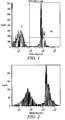
- a mixture 50:50 of live and heat-killed Jurkat T lymphocytic leukemia cells are suspended in phosphate buffered saline (PBS) at 1x10 6 /ml Compound 7 is added to the cells at final concentration of 1 ⁇ M, and incubated for 5 minutes at room temperature.
- Cells are run through a Becton Dickinson (BD) LSRII Flow Cytometer using 670/14 bandpass (BP) with 488 nm excitation. Analysis was done using BD FASCDiva software. Live cells are identified with the marker P1. Dead cells are identified with the marker P2.
- the ratio of median fluorescence intensity (MFI) of dead:live cells is 105 ( Figure 1 ), indicating distinct separation of live and dead cells.
- CHO-M1 Chinese hamster ovary cells were harvested by trypsinization, washed with PBS. A mixture 50:50 of live and heat-killed CHO-M1 cells are suspended in PBS at 1x10 6 /ml. Stain (Compound 7) is added to the cells at final concentration of 1 ⁇ M, and incubated for 5 minutes at room temperature. Cells are run through the Becton Dickinson (BD) LSRII Flow Cytometer using 695/40 bandpass (BP) with 488 nm excitation. Analysis was done using BD FASCDiva software. The histogram for the stained cells shows distinct separation of live and dead cells. The ratio of median fluorescence intensity (MFI) of Dead:Live cells of 45 ( Figure 2 ).
- MFI median fluorescence intensity
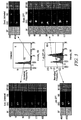
- Jurkat T cells were incubated in the presence or absence of 1 ⁇ camptothecin (CPT) for 4 hours to induce apoptosis, then stained with 2.5 ⁇ M Compound 7 for 15 minutes at room temperature and analyzed on an AMNIS ImageStream multispectral imaging flow cytometer. Gating on 10,000 collected events with intermediate brightfield (BF) area and high BF aspect ratio (width:height) was performed to distinguish single cells from debris and multi-cellular clumps. Cells with nuclear dye uptake were gated (R3) on the Intensity 180 plot. Representative live and dead cell images are shown in Figure 3 .
- CPT camptothecin
- Cells treated with the apoptotic inducing agent camptothecin ( Figure 3B ) (bottom middle histogram), with 68.4% stain positive as identified in the R3 gate.
- the positively stained cells show typical brightfield morphology of dead cells and stained nuclei typical of apoptosis and cell death that is condensed and fragmented, while the cells negative for staining (live cells) show typical brightfield morphology of live cells.
- the brightfield image data shows that camptothecin induced significant cell death measurable by staining with Compound_7 nucleic acid stain, and the images of cells labeled positive for stain show condensed and fragmented nuclei characteristic of apoptosis and cell death.
- Cells negative for stain show morphology typical of healthy cells.
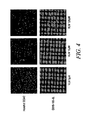
- HeLa cells were either untreated or treated with two concentrations (15 ⁇ M and 120 ⁇ M) of valinomycin (VLM) as a killing agent for 24 hours before labeling with Compound 7 and with the nuclear counterstain Hoechst 33342 dye (Invitrogen Corporation, Carlsbad, CA).
- VLM valinomycin
- normal cell growth medium containing 2X final concentration of Hoechst 33342 and Compound 7 was added to the existing medium to result in 1X final concentration.
- Cells were incubated for 30 minutes at 37° C and then the drug/dye mixture was replaced with PBS for imaging using a high content automated imaging system (ArrayScan VTI from Thermo/Fisher) using a Texas Red filter set.
- Flow cytometry is used to measure DNA content in labeled fixed; fixed and permeabilized cells; and free nuclei.
- the DNA content measurements provide values for %CV and linearity.
- the %CV of normal diploid cells in a flow cytometry histogram is typically ⁇ 8%.
- the %CV of a tumor may be higher due to the presence of multiple tumor subpopulations.
- tumor CVs of ⁇ 8% are recommended for useful S-Phase determinations ( Cytometry. 1993, Vol. 14 (5), page 474 ).
- Linearity is the observed ratio between the DNA Diploid G2M and G0G1 positions. Typically, this value is about two. Under normal circumstances, however, linearity can deviate from this ideal value. (see, MODFIT LT user guide, June 2000).
- HL60 cells were fixed with cold 70% alcohol and stored at -20°C overnight, washed and then suspended in 0.1% TRITON X with 1% bovine serum albumin (BSA) in PBS at 1x10 6 /ml. Cells were stained with 1 ⁇ M Compound 7 with the addition of RNase, and incubated for 30 minutes at room temperature. Cells are run through the Becton Dickinson (BD) LSRII Flow Cytometer using 695/40 bandpass (BP) with 488 nm excitation. Analysis was done using BD FASCDiva software. Cell modeling was performed with Verity House MODFIT LT analysis software. This compound demonstrates staining for DNA content cell cycle.
- BSA bovine serum albumin
- Typical DNA content cell cycle histogram shows G0G1 phase, S phase, and G2M phase. Further analysis using MODFIT Software shows that the compound stains live cells for DNA cell cycle where the %CV of G1-phase ⁇ 8%, and the observed ratio indicates linearity of staining. Analysis of the cell cycle histogram gives %CV of G1-phase 5.43% and G2/G1 ratio is 2.02, results within the limits of the cell cycle model.
- Jurkat cells were fixed with 4% paraformaldehyde in PBS for 15 minutes washed and then suspended in 0.1% TRITON X with 1% BSA in PBS at 1x10 6 /ml. Cells were stained with 1 ⁇ M Compound 7 with the addition of RNase, and incubated for 30 minutes at room temperature. Cells are run through a Becton Dickinson (BD) LSRII Flow Cytometer using 695/40 bandpass (BP) with 488 nm excitation. Analysis was done using BD FASCDiva software and cell modeling was also performed with Verity House MODFIT LT analysis software. This compound demonstrates staining for DNA content cell cycle. Typical DNA content cell cycle histogram is demonstrated showing G0G1 phrase, S phase, and G2M phase, as obtained on the live cell gate.
- BD Becton Dickinson
- BP bandpass
- Nikitin S.M. et al. (Russian Journal of Bioorganic Chemistry, vol. 6, no. 5, 1980 ) report amide derivatives of actinocin with substituents in position 7. Aspects of the embodiments can be modified, if necessary to employ concepts of the various patents, applications and publications to provide yct further embodiments.
Landscapes
- Chemical & Material Sciences (AREA)
- Organic Chemistry (AREA)
- Investigating Or Analysing Biological Materials (AREA)
- Measuring Or Testing Involving Enzymes Or Micro-Organisms (AREA)
- Agricultural Chemicals And Associated Chemicals (AREA)
- Medicines That Contain Protein Lipid Enzymes And Other Medicines (AREA)
- Pharmaceuticals Containing Other Organic And Inorganic Compounds (AREA)
Claims (12)
- Composé possédant la structure :

- Composé selon la revendication 1, comprenant en outre un contrion choisi dans le groupe constitué d'OAc-, de I-, de Br, de Cl, d'OTs, de SO4 2-, de ClO4 -, du tartrate et du trifluoroacétate.
- Composé selon la revendication 1 ou 2, dans lequel le groupe alkyle est le méthyle.
- Composé selon l'une quelconque des revendications 1 à 3, dans lequel R5 est un hydrogène.
- Composé selon la revendication 1, possédant la structure :


- Complexe comprenant une molécule d'acides nucléiques et un composé selon l'une quelconque des revendications 1 à 5.
- Procédé de détection de la présence d'une molécule d'acides nucléiques dans un échantillon in vitro, comprenant :(a) la combinaison d'un composé selon l'une quelconque des revendications 1 à 5 avec l'échantillon pour former un mélange ;(b) l'incubation du mélange pendant une durée suffisante pour que le composé s'associe à une molécule d'acides nucléiques dans l'échantillon ;(c) l'éclairage de l'échantillon incubé avec une longueur d'onde approprié pour générer une réponse optique détectable ; et(d) la détection de la présence de la molécule d'acides nucléiques dans l'échantillon.
- Procédé selon la revendication 7, comprenant en outre la quantification de l'acide nucléique présent dans l'échantillon.
- Procédé de coloration d'un échantillon biologique in vitro contenant un acide nucléique, comprenant le contact de l'échantillon biologique avec un composé selon l'une quelconque des revendications 1 à 5.
- Procédé de quantification de la teneur en acides nucléiques dans des cellules, comprenant :(a) la combinaison d'un composé selon l'une quelconque des revendications 1 à 5 avec un échantillon in vitro pour former un mélange, l'échantillon comprenant des cellules ;(b) l'incubation du mélange pendant une durée suffisante pour que le composé pénètre dans les cellules ;(c) l'éclairage de l'échantillon incubé avec une longueur d'onde approprié pour générer une réponse optique détectable ; et(d) la quantification de la quantité de molécules d'acides nucléiques dans l'échantillon.
- Procédé d'évaluation de la viabilité de cellules dans un échantillon in vitro, comprenant :(a) la combinaison d'un composé selon l'une quelconque des revendications 1 à 5 avec l'échantillon pour former un mélange, l'échantillon comprenant des cellules ;(b) l'incubation du mélange pendant une durée suffisante pour que le composé s'associe à la molécule d'acides nucléiques dans les cellules ;(c) l'éclairage de l'échantillon incubé avec une longueur d'onde approprié pour générer une réponse optique détectable ; et(d) la détection de l'échantillon soumis à l'éclairage, de façon que la viabilité des cellules se trouvant dans l'échantillon soit évaluée ou de façon que la teneur en ADN de l'échantillon soit évaluée.
- Kit de détection d'un acide nucléique dans un échantillon, dans lequel le kit comprend :un composé selon l'une quelconque des revendications 1 à 5 et, éventuellement, un ou plusieurs composants choisis dans le groupe constitué d'un réactif de préparation d'échantillon, d'un agent tampon, d'un solvant organique, d'un colorant, d'un fixateur, d'un agent de perméabilisation, d'une ARNase, d'une ou de plusieurs lignées cellulaires spécifiques, d'un anticorps ou d'anticorps et d'un ou plusieurs autres colorants fluorescents ; ou un ou plusieurs composants choisis dans le groupe constitué de réactifs permettant de mettre en oeuvre des réactions de couplage, des microsphères, des cellules fixées et des noyaux fixés.
Applications Claiming Priority (2)
| Application Number | Priority Date | Filing Date | Title |
|---|---|---|---|
| US10873608P | 2008-10-27 | 2008-10-27 | |
| PCT/US2009/062012 WO2010062536A2 (fr) | 2008-10-27 | 2009-10-26 | Colorants d'acides nucleiques a base d'actinomycine modifies et methodes d'utilisation associees |
Publications (3)
| Publication Number | Publication Date |
|---|---|
| EP2367805A2 EP2367805A2 (fr) | 2011-09-28 |
| EP2367805A4 EP2367805A4 (fr) | 2012-08-01 |
| EP2367805B1 true EP2367805B1 (fr) | 2014-05-07 |
Family
ID=42226312
Family Applications (1)
| Application Number | Title | Priority Date | Filing Date |
|---|---|---|---|
| EP09829560.3A Not-in-force EP2367805B1 (fr) | 2008-10-27 | 2009-10-26 | Colorants d'acides nucléiques à base d'actinomycine modifiés et méthodes d'utilisation associées |
Country Status (3)
| Country | Link |
|---|---|
| US (1) | US8653261B2 (fr) |
| EP (1) | EP2367805B1 (fr) |
| WO (1) | WO2010062536A2 (fr) |
Families Citing this family (1)
| Publication number | Priority date | Publication date | Assignee | Title |
|---|---|---|---|---|
| US8653261B2 (en) | 2008-10-27 | 2014-02-18 | Life Technologies Corporation | Modified actinomycin-based nucleic acid stains and methods of their use |
Family Cites Families (1)
| Publication number | Priority date | Publication date | Assignee | Title |
|---|---|---|---|---|
| US8653261B2 (en) | 2008-10-27 | 2014-02-18 | Life Technologies Corporation | Modified actinomycin-based nucleic acid stains and methods of their use |
-
2009
- 2009-10-26 US US13/126,150 patent/US8653261B2/en not_active Expired - Fee Related
- 2009-10-26 WO PCT/US2009/062012 patent/WO2010062536A2/fr not_active Ceased
- 2009-10-26 EP EP09829560.3A patent/EP2367805B1/fr not_active Not-in-force
Also Published As
| Publication number | Publication date |
|---|---|
| WO2010062536A3 (fr) | 2010-08-19 |
| WO2010062536A2 (fr) | 2010-06-03 |
| EP2367805A4 (fr) | 2012-08-01 |
| US8653261B2 (en) | 2014-02-18 |
| EP2367805A2 (fr) | 2011-09-28 |
| US20110236887A1 (en) | 2011-09-29 |
Similar Documents
| Publication | Publication Date | Title |
|---|---|---|
| EP0675924B1 (fr) | Colorants a base de cyanine assymetrique a substitution cyclique | |
| EP1208160B1 (fr) | Colorants d'acides nucleiques emettant du rouge a base de [8,9]benzophenoxazine et methodes d'utilisation de ces colorants | |
| JP6586070B2 (ja) | 核酸を含有する細胞または別の生体材料を分析する方法 | |
| FI95032B (fi) | Uusi fluoresoiva väriaine | |
| US8968997B2 (en) | Benzoxazole-based fluorescent metal ion indicators | |
| EP3833715A2 (fr) | Colorants de rhodamine substitués par du silicium et conjugués de colorants | |
| Aristova et al. | Monomethine cyanine probes for visualization of cellular RNA by fluorescence microscopy | |
| US9709557B2 (en) | Anthraquinone based near IR emitting compounds and uses thereof | |
| EP1885718B1 (fr) | Composes chimiques fluorescents possedant une selectivite elevee pour l'adn double brin, et procedes d'utilisation | |
| EP2367805B1 (fr) | Colorants d'acides nucléiques à base d'actinomycine modifiés et méthodes d'utilisation associées | |
| CN110487761B (zh) | 检测汞离子的荧光探针及其制备方法与使用方法 | |
| US4820637A (en) | Detection of fungi and/or algae with stilbene having at least 4 sulpho groups | |
| US20240410907A1 (en) | Fluorescent ion indicators and their applications | |
| US20200263231A1 (en) | Fluorogenic dyes for high sensitivity DNA detection | |
| US20240366799A1 (en) | Caging-group-free photoactivatable fluorescent dyes and their use | |
| WO2010054183A2 (fr) | Colorants, compositions et procédés d’utilisation associés | |
| US20060286626A1 (en) | Selective chromophores | |
| Burguete et al. | Synthesis and evaluation of pseudopeptidic fluorescence pH probes for acidic cellular organelles: In vivo monitoring of bacterial phagocytosis by multiparametric flow cytometry | |
| EP3475257B1 (fr) | Dérivés d'acétalanthraquinone utiles pour la coloration cellulaire |
Legal Events
| Date | Code | Title | Description |
|---|---|---|---|
| PUAI | Public reference made under article 153(3) epc to a published international application that has entered the european phase |
Free format text: ORIGINAL CODE: 0009012 |
|
| 17P | Request for examination filed |
Effective date: 20110526 |
|
| AK | Designated contracting states |
Kind code of ref document: A2 Designated state(s): AT BE BG CH CY CZ DE DK EE ES FI FR GB GR HR HU IE IS IT LI LT LU LV MC MK MT NL NO PL PT RO SE SI SK SM TR |
|
| DAX | Request for extension of the european patent (deleted) | ||
| A4 | Supplementary search report drawn up and despatched |
Effective date: 20120702 |
|
| RIC1 | Information provided on ipc code assigned before grant |
Ipc: A61K 49/00 20060101ALI20120626BHEP Ipc: C07D 265/38 20060101AFI20120626BHEP Ipc: A61K 31/538 20060101ALI20120626BHEP |
|
| 17Q | First examination report despatched |
Effective date: 20130318 |
|
| GRAP | Despatch of communication of intention to grant a patent |
Free format text: ORIGINAL CODE: EPIDOSNIGR1 |
|
| INTG | Intention to grant announced |
Effective date: 20131218 |
|
| GRAS | Grant fee paid |
Free format text: ORIGINAL CODE: EPIDOSNIGR3 |
|
| GRAA | (expected) grant |
Free format text: ORIGINAL CODE: 0009210 |
|
| AK | Designated contracting states |
Kind code of ref document: B1 Designated state(s): AT BE BG CH CY CZ DE DK EE ES FI FR GB GR HR HU IE IS IT LI LT LU LV MC MK MT NL NO PL PT RO SE SI SK SM TR |
|
| REG | Reference to a national code |
Ref country code: GB Ref legal event code: FG4D |
|
| REG | Reference to a national code |
Ref country code: AT Ref legal event code: REF Ref document number: 666569 Country of ref document: AT Kind code of ref document: T Effective date: 20140515 |
|
| REG | Reference to a national code |
Ref country code: IE Ref legal event code: FG4D |
|
| REG | Reference to a national code |
Ref country code: DE Ref legal event code: R096 Ref document number: 602009024019 Country of ref document: DE Effective date: 20140618 |
|
| REG | Reference to a national code |
Ref country code: AT Ref legal event code: MK05 Ref document number: 666569 Country of ref document: AT Kind code of ref document: T Effective date: 20140507 |
|
| REG | Reference to a national code |
Ref country code: NL Ref legal event code: VDEP Effective date: 20140507 |
|
| REG | Reference to a national code |
Ref country code: LT Ref legal event code: MG4D |
|
| PG25 | Lapsed in a contracting state [announced via postgrant information from national office to epo] |
Ref country code: CY Free format text: LAPSE BECAUSE OF FAILURE TO SUBMIT A TRANSLATION OF THE DESCRIPTION OR TO PAY THE FEE WITHIN THE PRESCRIBED TIME-LIMIT Effective date: 20140507 Ref country code: LT Free format text: LAPSE BECAUSE OF FAILURE TO SUBMIT A TRANSLATION OF THE DESCRIPTION OR TO PAY THE FEE WITHIN THE PRESCRIBED TIME-LIMIT Effective date: 20140507 Ref country code: FI Free format text: LAPSE BECAUSE OF FAILURE TO SUBMIT A TRANSLATION OF THE DESCRIPTION OR TO PAY THE FEE WITHIN THE PRESCRIBED TIME-LIMIT Effective date: 20140507 Ref country code: NO Free format text: LAPSE BECAUSE OF FAILURE TO SUBMIT A TRANSLATION OF THE DESCRIPTION OR TO PAY THE FEE WITHIN THE PRESCRIBED TIME-LIMIT Effective date: 20140807 Ref country code: GR Free format text: LAPSE BECAUSE OF FAILURE TO SUBMIT A TRANSLATION OF THE DESCRIPTION OR TO PAY THE FEE WITHIN THE PRESCRIBED TIME-LIMIT Effective date: 20140808 Ref country code: IS Free format text: LAPSE BECAUSE OF FAILURE TO SUBMIT A TRANSLATION OF THE DESCRIPTION OR TO PAY THE FEE WITHIN THE PRESCRIBED TIME-LIMIT Effective date: 20140907 |
|
| PG25 | Lapsed in a contracting state [announced via postgrant information from national office to epo] |
Ref country code: LV Free format text: LAPSE BECAUSE OF FAILURE TO SUBMIT A TRANSLATION OF THE DESCRIPTION OR TO PAY THE FEE WITHIN THE PRESCRIBED TIME-LIMIT Effective date: 20140507 Ref country code: HR Free format text: LAPSE BECAUSE OF FAILURE TO SUBMIT A TRANSLATION OF THE DESCRIPTION OR TO PAY THE FEE WITHIN THE PRESCRIBED TIME-LIMIT Effective date: 20140507 Ref country code: ES Free format text: LAPSE BECAUSE OF FAILURE TO SUBMIT A TRANSLATION OF THE DESCRIPTION OR TO PAY THE FEE WITHIN THE PRESCRIBED TIME-LIMIT Effective date: 20140507 Ref country code: SE Free format text: LAPSE BECAUSE OF FAILURE TO SUBMIT A TRANSLATION OF THE DESCRIPTION OR TO PAY THE FEE WITHIN THE PRESCRIBED TIME-LIMIT Effective date: 20140507 Ref country code: PL Free format text: LAPSE BECAUSE OF FAILURE TO SUBMIT A TRANSLATION OF THE DESCRIPTION OR TO PAY THE FEE WITHIN THE PRESCRIBED TIME-LIMIT Effective date: 20140507 Ref country code: AT Free format text: LAPSE BECAUSE OF FAILURE TO SUBMIT A TRANSLATION OF THE DESCRIPTION OR TO PAY THE FEE WITHIN THE PRESCRIBED TIME-LIMIT Effective date: 20140507 |
|
| PG25 | Lapsed in a contracting state [announced via postgrant information from national office to epo] |
Ref country code: PT Free format text: LAPSE BECAUSE OF FAILURE TO SUBMIT A TRANSLATION OF THE DESCRIPTION OR TO PAY THE FEE WITHIN THE PRESCRIBED TIME-LIMIT Effective date: 20140908 |
|
| PG25 | Lapsed in a contracting state [announced via postgrant information from national office to epo] |
Ref country code: BE Free format text: LAPSE BECAUSE OF FAILURE TO SUBMIT A TRANSLATION OF THE DESCRIPTION OR TO PAY THE FEE WITHIN THE PRESCRIBED TIME-LIMIT Effective date: 20140507 Ref country code: DK Free format text: LAPSE BECAUSE OF FAILURE TO SUBMIT A TRANSLATION OF THE DESCRIPTION OR TO PAY THE FEE WITHIN THE PRESCRIBED TIME-LIMIT Effective date: 20140507 Ref country code: RO Free format text: LAPSE BECAUSE OF FAILURE TO SUBMIT A TRANSLATION OF THE DESCRIPTION OR TO PAY THE FEE WITHIN THE PRESCRIBED TIME-LIMIT Effective date: 20140507 Ref country code: SK Free format text: LAPSE BECAUSE OF FAILURE TO SUBMIT A TRANSLATION OF THE DESCRIPTION OR TO PAY THE FEE WITHIN THE PRESCRIBED TIME-LIMIT Effective date: 20140507 Ref country code: EE Free format text: LAPSE BECAUSE OF FAILURE TO SUBMIT A TRANSLATION OF THE DESCRIPTION OR TO PAY THE FEE WITHIN THE PRESCRIBED TIME-LIMIT Effective date: 20140507 Ref country code: CZ Free format text: LAPSE BECAUSE OF FAILURE TO SUBMIT A TRANSLATION OF THE DESCRIPTION OR TO PAY THE FEE WITHIN THE PRESCRIBED TIME-LIMIT Effective date: 20140507 |
|
| REG | Reference to a national code |
Ref country code: DE Ref legal event code: R097 Ref document number: 602009024019 Country of ref document: DE |
|
| PG25 | Lapsed in a contracting state [announced via postgrant information from national office to epo] |
Ref country code: NL Free format text: LAPSE BECAUSE OF FAILURE TO SUBMIT A TRANSLATION OF THE DESCRIPTION OR TO PAY THE FEE WITHIN THE PRESCRIBED TIME-LIMIT Effective date: 20140507 |
|
| PLBE | No opposition filed within time limit |
Free format text: ORIGINAL CODE: 0009261 |
|
| STAA | Information on the status of an ep patent application or granted ep patent |
Free format text: STATUS: NO OPPOSITION FILED WITHIN TIME LIMIT |
|
| 26N | No opposition filed |
Effective date: 20150210 |
|
| PG25 | Lapsed in a contracting state [announced via postgrant information from national office to epo] |
Ref country code: IT Free format text: LAPSE BECAUSE OF FAILURE TO SUBMIT A TRANSLATION OF THE DESCRIPTION OR TO PAY THE FEE WITHIN THE PRESCRIBED TIME-LIMIT Effective date: 20140507 |
|
| REG | Reference to a national code |
Ref country code: DE Ref legal event code: R097 Ref document number: 602009024019 Country of ref document: DE Effective date: 20150210 |
|
| PG25 | Lapsed in a contracting state [announced via postgrant information from national office to epo] |
Ref country code: MC Free format text: LAPSE BECAUSE OF FAILURE TO SUBMIT A TRANSLATION OF THE DESCRIPTION OR TO PAY THE FEE WITHIN THE PRESCRIBED TIME-LIMIT Effective date: 20140507 Ref country code: LU Free format text: LAPSE BECAUSE OF FAILURE TO SUBMIT A TRANSLATION OF THE DESCRIPTION OR TO PAY THE FEE WITHIN THE PRESCRIBED TIME-LIMIT Effective date: 20141026 |
|
| REG | Reference to a national code |
Ref country code: CH Ref legal event code: PL |
|
| REG | Reference to a national code |
Ref country code: IE Ref legal event code: MM4A |
|
| PG25 | Lapsed in a contracting state [announced via postgrant information from national office to epo] |
Ref country code: CH Free format text: LAPSE BECAUSE OF NON-PAYMENT OF DUE FEES Effective date: 20141031 Ref country code: LI Free format text: LAPSE BECAUSE OF NON-PAYMENT OF DUE FEES Effective date: 20141031 Ref country code: SI Free format text: LAPSE BECAUSE OF FAILURE TO SUBMIT A TRANSLATION OF THE DESCRIPTION OR TO PAY THE FEE WITHIN THE PRESCRIBED TIME-LIMIT Effective date: 20140507 |
|
| REG | Reference to a national code |
Ref country code: FR Ref legal event code: PLFP Year of fee payment: 7 |
|
| PG25 | Lapsed in a contracting state [announced via postgrant information from national office to epo] |
Ref country code: IE Free format text: LAPSE BECAUSE OF NON-PAYMENT OF DUE FEES Effective date: 20141026 |
|
| PG25 | Lapsed in a contracting state [announced via postgrant information from national office to epo] |
Ref country code: SM Free format text: LAPSE BECAUSE OF FAILURE TO SUBMIT A TRANSLATION OF THE DESCRIPTION OR TO PAY THE FEE WITHIN THE PRESCRIBED TIME-LIMIT Effective date: 20140507 |
|
| PG25 | Lapsed in a contracting state [announced via postgrant information from national office to epo] |
Ref country code: BG Free format text: LAPSE BECAUSE OF FAILURE TO SUBMIT A TRANSLATION OF THE DESCRIPTION OR TO PAY THE FEE WITHIN THE PRESCRIBED TIME-LIMIT Effective date: 20140507 |
|
| PG25 | Lapsed in a contracting state [announced via postgrant information from national office to epo] |
Ref country code: TR Free format text: LAPSE BECAUSE OF FAILURE TO SUBMIT A TRANSLATION OF THE DESCRIPTION OR TO PAY THE FEE WITHIN THE PRESCRIBED TIME-LIMIT Effective date: 20140507 Ref country code: HU Free format text: LAPSE BECAUSE OF FAILURE TO SUBMIT A TRANSLATION OF THE DESCRIPTION OR TO PAY THE FEE WITHIN THE PRESCRIBED TIME-LIMIT; INVALID AB INITIO Effective date: 20091026 Ref country code: MT Free format text: LAPSE BECAUSE OF FAILURE TO SUBMIT A TRANSLATION OF THE DESCRIPTION OR TO PAY THE FEE WITHIN THE PRESCRIBED TIME-LIMIT Effective date: 20140507 |
|
| REG | Reference to a national code |
Ref country code: FR Ref legal event code: PLFP Year of fee payment: 8 |
|
| PGFP | Annual fee paid to national office [announced via postgrant information from national office to epo] |
Ref country code: GB Payment date: 20161026 Year of fee payment: 8 Ref country code: DE Payment date: 20161018 Year of fee payment: 8 |
|
| REG | Reference to a national code |
Ref country code: FR Ref legal event code: PLFP Year of fee payment: 9 |
|
| PGFP | Annual fee paid to national office [announced via postgrant information from national office to epo] |
Ref country code: FR Payment date: 20170918 Year of fee payment: 9 |
|
| REG | Reference to a national code |
Ref country code: DE Ref legal event code: R119 Ref document number: 602009024019 Country of ref document: DE |
|
| GBPC | Gb: european patent ceased through non-payment of renewal fee |
Effective date: 20171026 |
|
| PG25 | Lapsed in a contracting state [announced via postgrant information from national office to epo] |
Ref country code: MK Free format text: LAPSE BECAUSE OF FAILURE TO SUBMIT A TRANSLATION OF THE DESCRIPTION OR TO PAY THE FEE WITHIN THE PRESCRIBED TIME-LIMIT Effective date: 20140507 |
|
| PG25 | Lapsed in a contracting state [announced via postgrant information from national office to epo] |
Ref country code: DE Free format text: LAPSE BECAUSE OF NON-PAYMENT OF DUE FEES Effective date: 20180501 Ref country code: GB Free format text: LAPSE BECAUSE OF NON-PAYMENT OF DUE FEES Effective date: 20171026 |
|
| PG25 | Lapsed in a contracting state [announced via postgrant information from national office to epo] |
Ref country code: FR Free format text: LAPSE BECAUSE OF NON-PAYMENT OF DUE FEES Effective date: 20181031 |