EP2368073B1 - Procédé de commande d'un climatiseur - Google Patents
Procédé de commande d'un climatiseur Download PDFInfo
- Publication number
- EP2368073B1 EP2368073B1 EP09835195.0A EP09835195A EP2368073B1 EP 2368073 B1 EP2368073 B1 EP 2368073B1 EP 09835195 A EP09835195 A EP 09835195A EP 2368073 B1 EP2368073 B1 EP 2368073B1
- Authority
- EP
- European Patent Office
- Prior art keywords
- learning
- air
- temperature
- wind
- conditioning
- Prior art date
- Legal status (The legal status is an assumption and is not a legal conclusion. Google has not performed a legal analysis and makes no representation as to the accuracy of the status listed.)
- Not-in-force
Links
- 238000000034 method Methods 0.000 title claims description 24
- 238000004378 air conditioning Methods 0.000 claims description 98
- 238000002360 preparation method Methods 0.000 claims description 30
- 238000001816 cooling Methods 0.000 description 4
- 238000012986 modification Methods 0.000 description 3
- 230000004048 modification Effects 0.000 description 3
- 238000010586 diagram Methods 0.000 description 2
- 239000003507 refrigerant Substances 0.000 description 2
- 238000007664 blowing Methods 0.000 description 1
- 238000007599 discharging Methods 0.000 description 1
- 230000000694 effects Effects 0.000 description 1
- 230000006870 function Effects 0.000 description 1
- 230000004044 response Effects 0.000 description 1
Images


Classifications
-
- F—MECHANICAL ENGINEERING; LIGHTING; HEATING; WEAPONS; BLASTING
- F24—HEATING; RANGES; VENTILATING
- F24F—AIR-CONDITIONING; AIR-HUMIDIFICATION; VENTILATION; USE OF AIR CURRENTS FOR SCREENING
- F24F11/00—Control or safety arrangements
- F24F11/62—Control or safety arrangements characterised by the type of control or by internal processing, e.g. using fuzzy logic, adaptive control or estimation of values
-
- F—MECHANICAL ENGINEERING; LIGHTING; HEATING; WEAPONS; BLASTING
- F24—HEATING; RANGES; VENTILATING
- F24F—AIR-CONDITIONING; AIR-HUMIDIFICATION; VENTILATION; USE OF AIR CURRENTS FOR SCREENING
- F24F11/00—Control or safety arrangements
- F24F11/30—Control or safety arrangements for purposes related to the operation of the system, e.g. for safety or monitoring
-
- F—MECHANICAL ENGINEERING; LIGHTING; HEATING; WEAPONS; BLASTING
- F24—HEATING; RANGES; VENTILATING
- F24F—AIR-CONDITIONING; AIR-HUMIDIFICATION; VENTILATION; USE OF AIR CURRENTS FOR SCREENING
- F24F11/00—Control or safety arrangements
- F24F11/50—Control or safety arrangements characterised by user interfaces or communication
- F24F11/61—Control or safety arrangements characterised by user interfaces or communication using timers
-
- F—MECHANICAL ENGINEERING; LIGHTING; HEATING; WEAPONS; BLASTING
- F24—HEATING; RANGES; VENTILATING
- F24F—AIR-CONDITIONING; AIR-HUMIDIFICATION; VENTILATION; USE OF AIR CURRENTS FOR SCREENING
- F24F11/00—Control or safety arrangements
- F24F11/62—Control or safety arrangements characterised by the type of control or by internal processing, e.g. using fuzzy logic, adaptive control or estimation of values
- F24F11/63—Electronic processing
- F24F11/65—Electronic processing for selecting an operating mode
-
- F—MECHANICAL ENGINEERING; LIGHTING; HEATING; WEAPONS; BLASTING
- F24—HEATING; RANGES; VENTILATING
- F24F—AIR-CONDITIONING; AIR-HUMIDIFICATION; VENTILATION; USE OF AIR CURRENTS FOR SCREENING
- F24F11/00—Control or safety arrangements
- F24F11/70—Control systems characterised by their outputs; Constructional details thereof
- F24F11/72—Control systems characterised by their outputs; Constructional details thereof for controlling the supply of treated air, e.g. its pressure
- F24F11/79—Control systems characterised by their outputs; Constructional details thereof for controlling the supply of treated air, e.g. its pressure for controlling the direction of the supplied air
-
- F—MECHANICAL ENGINEERING; LIGHTING; HEATING; WEAPONS; BLASTING
- F24—HEATING; RANGES; VENTILATING
- F24F—AIR-CONDITIONING; AIR-HUMIDIFICATION; VENTILATION; USE OF AIR CURRENTS FOR SCREENING
- F24F2110/00—Control inputs relating to air properties
- F24F2110/10—Temperature
-
- F—MECHANICAL ENGINEERING; LIGHTING; HEATING; WEAPONS; BLASTING
- F24—HEATING; RANGES; VENTILATING
- F24F—AIR-CONDITIONING; AIR-HUMIDIFICATION; VENTILATION; USE OF AIR CURRENTS FOR SCREENING
- F24F2120/00—Control inputs relating to users or occupants
- F24F2120/10—Occupancy
-
- F—MECHANICAL ENGINEERING; LIGHTING; HEATING; WEAPONS; BLASTING
- F24—HEATING; RANGES; VENTILATING
- F24F—AIR-CONDITIONING; AIR-HUMIDIFICATION; VENTILATION; USE OF AIR CURRENTS FOR SCREENING
- F24F2120/00—Control inputs relating to users or occupants
- F24F2120/10—Occupancy
- F24F2120/12—Position of occupants
-
- F—MECHANICAL ENGINEERING; LIGHTING; HEATING; WEAPONS; BLASTING
- F24—HEATING; RANGES; VENTILATING
- F24F—AIR-CONDITIONING; AIR-HUMIDIFICATION; VENTILATION; USE OF AIR CURRENTS FOR SCREENING
- F24F2120/00—Control inputs relating to users or occupants
- F24F2120/10—Occupancy
- F24F2120/14—Activity of occupants
-
- F—MECHANICAL ENGINEERING; LIGHTING; HEATING; WEAPONS; BLASTING
- F24—HEATING; RANGES; VENTILATING
- F24F—AIR-CONDITIONING; AIR-HUMIDIFICATION; VENTILATION; USE OF AIR CURRENTS FOR SCREENING
- F24F2221/00—Details or features not otherwise provided for
- F24F2221/38—Personalised air distribution
Definitions
- the present disclosure relates to an air conditioner and, more particularly, to a method for controlling an air conditioner.
- An air conditioner is an appliance that cools or heats an indoor space.
- the air conditioner includes a compressor, an expanding device, an indoor heat exchanger, and an outdoor heat exchanger that constitute a heat-exchange cycle.
- the indoor space is cooled or heated by the heat exchange between a refrigerant and indoor or outdoor air passing through the indoor and outdoor heat exchangers.
- FIG. 1 is a view illustrating a typical air conditioner.
- an indoor heat exchanger for air-conditioning an indoor space is provided in an indoor unit 1.
- the indoor unit 1 is provided with an air inlet 2 for introducing indoor air and an air outlet 3 for discharging the air introduced through the air inlet 2 and heat-exchanging with the indoor heat exchanger.
- An input unit 4 for receiving manipulation signals for the air-conditioning of the indoor space is provided in the indoor unit 1.
- components for air-conditioning the indoor space such as a compressor and an outdoor heat exchanger, are provided in the outdoor unit 7.
- GB 2 260 830 A discloses that an air source discharges air to a plurality of users.
- the air source blows gentle intensity airflow to a user who is close to the air source and strong intensity airflow to a user who is far from the air source.
- An object of the present invention is to provide a method for controlling an air conditioner, which can enhance learning efficiency of a learner.
- the power of concentration of the learner is enhanced and thus the learning efficiency can be improved.
- FIG. 2 is a diagram of an air conditioner that is controlled by an air conditioner controlling method of an embodiment
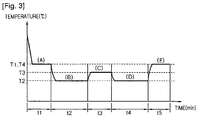
- FIG. 3 is a graph illustrating a temperature variation of an indoor space according to an embodiment.
- an air conditioner includes an air-conditioning unit 10, an input unit 20, a location detecting sensor 30, and a control unit 40.
- the air-conditioning unit 10 functions to control indoor air.
- the input unit 20 receives manipulation signals of the air-conditioning unit 10 and the location detecting sensor 20 detects a location of a user (i.e., a learner) located in the indoor space.
- the control unit 40 controls the air-conditioning unit 10 according to the signal input to the input unit 20 and the learner s location detected by the location detecting sensor 30.
- the air-conditioning unit 10 includes a variety of components for controlling the indoor air. That is, the air-conditioning unit 10 includes components constituting a heat exchange cycle, such as a compressor, an indoor heat exchanger, and an outdoor heat exchanger. As shown in FIG. 1 , the indoor and outdoor units may be separately provided or integrated with each other, the air-conditioning unit 10 for cooling the indoor air further includes a blower fan (not shown) for directing the indoor air heat-exchanging with the refrigerant circulating the evaporator to the indoor space and a wind direction controller (not shown) such as a louver for adjusting a blowing direction of the air directed to the indoor space by the blower fan.
- a blower fan not shown
- a wind direction controller such as a louver for adjusting a blowing direction of the air directed to the indoor space by the blower fan.
- the input unit 20 receives manipulation signals such as, for example, a signal for setting a cooling temperature and a signal for controlling an amount of air.
- the input unit 20 receives at least a signal for selecting a learning mode.
- the learning mode is a mode different from general operational modes of the air-conditioning unit 10. The terminology learning mode is simply given for the descriptive convenience, not limiting the present invention.
- the location detecting sensor 30 may be installed at, for example, a side of the air-conditioning unit 10. Accordingly, when the air-conditioning unit 10 includes the indoor and outdoor units, the location detecting sensor 30 may be installed in the indoor unit. Needless to say, the location detecting sensor 30 may be installed at other places rather than the air-conditioning unit 10.
- the control unit 40 controls the air-conditioning unit 10 such that the indoor space is cooled in response to a cooling temperature and air volume input to the input unit 20. Particularly, the control unit 40 controls the air-conditioning unit 10 such that the indoor space is air-conditioned to enhance power of concentration of the learner located in the indoor space when a study mode is selected.
- the control unit 40 controls the air-conditioning unit 10 to perform a learning preparation step E, a learning step B, a break step C, a learning step D, and a learning finish step E.
- the control unit 40 controls the air-conditioning unit 10 such that the leaning steps B and D and the break step C can be alternately repeated by the predetermined number of time in accordance with the learner s selection.
- the control unit 40 controls the air-conditioning unit 10 such that the indoor space is air-conditioned at a preset learning preparation air-conditioning temperature T1 for a preset learning preparation air-conditioning time t1.
- the control unit 40 controls the air-conditioning unit 10 such that the indoor space is air-conditioned at a preset learning air-conditioning temperature T2 for respective preset learning air-conditioning time t2 and t4.
- the control unit 40 controls the air-conditioning unit 10 such that the indoor space is air-conditioned at a preset break air-conditioning temperature T3 for a preset break air-conditioning time t3.
- the control unit 40 controls the air-conditioning unit 10 such that the indoor space is air-conditioned at a preset learning finish air-conditioning temperature T5 for a preset learning finish air-conditioning time t5.
- the learning air-conditioning temperatures T2 and T4 and the break air-conditioning temperature T3 are set to be less than the learning preparation air-conditioning temperature T1.
- the learning finish air-conditioning temperature T5 is set to be equal to or greater than the learning preparation air-conditioning temperature T1.
- the break air-conditioning temperature T3 is set to be less than the learning air-conditioning temperatures T2 and T4.
- the learning preparation air-conditioning temperature T1 is set to be equal to or greater than 24°C and less than 28°C.
- the learning preparation air-conditioning temperature T1 may be set to e 26°C.
- the learning air-conditioning temperatures T2 and T4 are set to be less than the learning preparation air-conditioning temperature T1 by 2°C, i.e., to be equal to or greater than 23°C and less than 26°C.
- the learning air-conditioning temperatures T2 and T4 may be set to be 26°C.
- the break air-conditioning temperature T3 is set to be less than the learning preparation air-conditioning temperature T1 by 1°C, i.e., to be equal to or greater than 23°C and less than 27°C.
- the break air-conditioning temperature T3 may be set to be 25°C.
- the learning finish air-conditioning temperature T5 may be set to be equal to the learning preparation air-conditioning temperature T1.
- the respective learning preparation air-conditioning time t1, break air-conditioning time t3, and learning finish air-conditioning time t5 are set to be equal to or greater than 10 minutes and less than 30 minutes.
- the respective learning preparation air-conditioning time t1, break air-conditioning time t3, and learning finish air-conditioning time t5 may be set to be less than 20 minutes.
- the learning air-conditioning times t2 and t4 are set to be equal to or greater than 20 minutes and less than 40 minutes..
- the learning air-conditioning times t2 and t4 may be set to be 30 minutes.
- the learning preparation air-conditioning time t1 is a time from a point where the learner seats at his/her desk to a point where the learner starts concentrating.
- the learning air-conditioning times t2 and t4 and the break air-conditioning time t3 are a time for the learner keeps concentrating or a time or a mean break time of the learner.
- the control unit 40 controls the air-conditioning unit 10, in more detail, a wind direction adjusting member in the learning preparation step A, learning steps B and D, break step C, and learning finish step E such that the air for cooling the indoor space, i.e., cool air is generated in the form of a direct wind that is directly directed toward the learner who is detected by the location detecting sensor 30 or an indirect wind that is indirectly directed toward the learner.
- the control unit 40 controls the wind direction adjusting member such that the direct wind is generated in the learning preparation step A and learning steps B and D.
- the control unit 40 controls the wind direction adjusting member such that the indirect wind is generated in the break step C and learning finish step E.
- the learner By directly directing the air toward the learner in the learning preparation step A, the learner can quickly feel that the indoor space is cooled. By indirectly directing the air toward the learner in the learning steps B and D, the learner can feel comfort and thus the power of the concentration of the learner can be enhanced. In the break step C and learning finish step E, the indirect wind can allow the learner to take a break or finish the learning in a state where the power of the concentration is relatively reduced.
- FIG. 4 is a flowchart illustrating an air-conditioning process by an air conditioner controlling method of an embodiment.
- the control unit 40 controls such that the air-conditioning unit 10 operates for an initial step A (S13). Therefore, the indoor space is air-conditioned by the direct wind of the learning preparation air-conditioning temperature T1, i.e., a temperature equal to or greater than 24°C or less than 28°C, preferably 26°C, by the air-conditioning unit 10.
- the control unit 40 determines if the learning preparation air-conditioning time t1 has elapsed after the initial step A starts (S15). When it is determined that the learning preparation air-conditioning time t1 has elapsed, the control unit 40 controls such that the air-conditioning unit 10 operates for the learning step B (S17). Accordingly, the indoor space is air-conditioned by the direct wind of the learning air-conditioning temperature T2, i.e., a temperature equal to or greater than 22°C and less than 26°C, preferably 24°C, by the air-conditioning unit 10.
- the control unit 40 determines if the learning air-conditioning time t2 has elapsed after the learning step B starts (S 19). When it is determined that the learning air-conditioning time t2 has elapsed, the control unit 40 controls such that the air-conditioning unit 10 operates for the break step C (S21). Accordingly, the indoor space is air-conditioned by the indirect wind of the break air-conditioning temperature T3, i.e., a temperature equal to or greater than 23°C and less than 27°C, preferably 25°C, by the air-conditioning unit 10.
- control unit 40 determines if the break air-conditioning time t3 has elapsed after the break step C starts (S 15). When it is determined that the break air-conditioning time t3 has elapsed, the control unit 40 controls such that the air-conditioning unit 10 operates for the learning step D (S25).
- control unit 40 determines if the learning air-conditioning time t4 has elapsed after the learning step D of Step 25 starts (S27). When it is determined that the learning air-conditioning time t4 of Step 27 has elapsed, the control unit 40 determines if the repetition number of the learning step-break step-learning step exceeds the preset number (S29).
- the control unit 40 controls such that the air-conditioning unit 10 operates for the learning finish step E (S31). Further, the control unit 40 determines if the learning finish air-conditioning time t5 has elapsed after the learning finish step E starts. When it is determined that the learning finish air-conditioning time t5 has elapsed, the learning mode is finished. However, when it is determined that the repetition number of the learning step-break step-learning step does not exceed the preset number in Step 29, the control unit 40 controls the air-conditioning unit to repeat Steps 21 to 27.
- the direct and indirection winds are alternately repeated and thus the force of the concentration of the learner is enhanced. Therefore, it can be expected that the learner can more efficiently learn.
Landscapes
- Engineering & Computer Science (AREA)
- Chemical & Material Sciences (AREA)
- Combustion & Propulsion (AREA)
- Mechanical Engineering (AREA)
- General Engineering & Computer Science (AREA)
- Signal Processing (AREA)
- Physics & Mathematics (AREA)
- Fuzzy Systems (AREA)
- Mathematical Physics (AREA)
- Human Computer Interaction (AREA)
- Air Conditioning Control Device (AREA)
Claims (11)
- Procédé de commande d'un climatiseur comprenant une unité de climatisation (10) comprenant une pluralité de composants constituant un cycle d'échange de chaleur, un capteur de détection d'emplacement (30) détectant un emplacement d'un apprenant dans un espace intérieur, et une unité de commande (40) commandant l'unité de climatisation, caractérisé en ce que le procédé comprend :le fait de permettre au capteur de détection d'emplacement de détecter un emplacement de l'apprenant dans une étape de détection d'emplacement ;le fait de permettre à l'unité de commande de commander l'unité de climatisation de sorte que le vend froid utilisé pour la climatisation soit généré sous la forme d'un vent direct qui est dirigé directement vers l'apprenant dans une étape de préparation d'apprentissage (A) ;le fait de permettre à l'unité de commande de commander l'unité de climatisation de sorte que le vent froid utilisé pour la climatisation soit généré sous la forme d'un vent direct qui est dirigé directement vers l'apprenant dans une première étape d'apprentissage (B) ;le fait de permettre à l'unité de commande de commander l'unité de climatisation de sorte que le vent froid utilisé pour la climatisation soit généré sous la forme d'un vent indirect qui est dirigé indirectement vers l'apprenant dans une étape de rupture (C) après la première étape d'apprentissage (B) ; etle fait de permettre à l'unité de commande de commander l'unité de climatisation de sorte que le vent froid utilisé pour la climatisation soit généré sous la forme d'un vent direct qui est dirigé directement vers l'apprenant dans une seconde étape d'apprentissage (D) après l'étape de rupture (C), etdans lequel la première étape d'apprentissage (B), l'étape de rupture (C) et la seconde étape d'apprentissage (D) sont répétées un nombre prédéfini de fois.
- Procédé selon la revendication 1, caractérisé en ce qu'une température du vent direct dans l'étape d'apprentissage est inférieure à une température du vent indirect dans l'étape de rupture.
- Procédé selon l'une quelconque des revendications 1 et 2, caractérisé en ce que l'unité de commande commande l'unité de climatisation de sorte que l'étape de rupture commence lorsqu'un temps de climatisation d'apprentissage prédéfini s'est écoulé après le début de l'étape d'apprentissage.
- Procédé selon l'une quelconque des revendications 1 à 3, caractérisé en ce queune température du vent direct dans l'étape d'apprentissage est égale ou supérieure à 22 °C et inférieure à 26 °C ; etune température du vent indirect dans l'étape de rupture est égale ou supérieure à 23 °C et inférieure à 27 °C.
- Procédé selon l'une quelconque des revendications 1 à 4, caractérisé en ce qu'une température du vent direct dans l'étape de préparation d'apprentissage est égale ou supérieure à 24 °C et inférieure à 28°C ;une température du vent direct dans l'étape d'apprentissage est égale ou supérieure à 22 °C et inférieure à 26 °C ; etune température du vent indirect dans l'étape de rupture est égale ou supérieure à 23 °C et inférieure à 27 °C.
- Procédé selon l'une quelconque des revendications 1 à 5, caractérisé en ce qu'une température du vent direct dans l'étape d'apprentissage est définie pour être inférieure à une température du vent direct dans l'étape de préparation d'apprentissage de 2 °C ; et
une température du vent indirect dans l'étape de rupture est définie pour être inférieure à celle du vent direct de l'étape de préparation d'apprentissage de 1 °C. - Procédé selon l'une quelconque des revendications 1 à 6, caractérisé en ce qu'une température du vent direct dans l'étape de préparation d'apprentissage est de 26°C ;une température du vent direct dans l'étape d'apprentissage est de 24 °C ; etune température du vent indirect dans l'étape de rupture est de 25 °C.
- Procédé selon l'une quelconque des revendications 1 à 7, caractérisé en ce que le procédé comprend en outre le fait de permettre à l'unité de commande de commander l'unité de climatisation de sorte que le vent froid utilisé pour la climatisation soit généré sous la forme d'un vent indirect dans une étape d'achèvement d'apprentissage (E).
- Procédé selon la revendication 8, caractérisé en ce qu'une température du vent direct dans l'étape de préparation d'apprentissage est égale ou supérieure à 24 °C et inférieure à 28 °C ;
une température du vent direct dans l'étape d'apprentissage est égale ou supérieure à 22 °C et inférieure à 26 °C ; et
une température du vent indirect dans l'étape de rupture est égale ou supérieure à 23 °C et inférieure à 27 °C. - Procédé selon la revendication 8, caractérisé en ce qu'une température du vent direct dans l'étape d'apprentissage est définie pour être inférieure à une température du vent direct dans l'étape de préparation d'apprentissage de 2 °C ;une température du vent indirect dans l'étape de rupture est définie pour être inférieure à celle du vent direct de l'étape de préparation d'apprentissage de 1 °C ; etune température du vent indirect dans l'étape d'achèvement d'apprentissage est définie pour être la même qu'une température du vent direct dans l'étape de préparation d'apprentissage.
- Procédé selon la revendication 8, caractérisé en ce qu'une température du vent direct dans l'étape de préparation d'apprentissage est de 26 °C ;une température du vent direct dans l'étape d'apprentissage est de 24 °C ; etune température du vent indirect dans l'étape de rupture est de 25 °C.
Applications Claiming Priority (2)
| Application Number | Priority Date | Filing Date | Title |
|---|---|---|---|
| KR1020080132438A KR101558572B1 (ko) | 2008-12-23 | 2008-12-23 | 공기조화기 제어방법 |
| PCT/KR2009/007279 WO2010074429A2 (fr) | 2008-12-23 | 2009-12-07 | Procédé de commande d'un climatiseur |
Publications (3)
| Publication Number | Publication Date |
|---|---|
| EP2368073A2 EP2368073A2 (fr) | 2011-09-28 |
| EP2368073A4 EP2368073A4 (fr) | 2012-10-17 |
| EP2368073B1 true EP2368073B1 (fr) | 2016-04-27 |
Family
ID=42288239
Family Applications (1)
| Application Number | Title | Priority Date | Filing Date |
|---|---|---|---|
| EP09835195.0A Not-in-force EP2368073B1 (fr) | 2008-12-23 | 2009-12-07 | Procédé de commande d'un climatiseur |
Country Status (6)
| Country | Link |
|---|---|
| US (1) | US20110296857A1 (fr) |
| EP (1) | EP2368073B1 (fr) |
| KR (1) | KR101558572B1 (fr) |
| CN (1) | CN102245974B (fr) |
| ES (1) | ES2571218T3 (fr) |
| WO (1) | WO2010074429A2 (fr) |
Families Citing this family (6)
| Publication number | Priority date | Publication date | Assignee | Title |
|---|---|---|---|---|
| CN103900211B (zh) * | 2014-03-25 | 2016-10-05 | 四川长虹电器股份有限公司 | 一种空调工作模式切换方法及一种空调 |
| JP6893337B2 (ja) * | 2018-02-01 | 2021-06-23 | パナソニックIpマネジメント株式会社 | 空気調和システム |
| KR102026020B1 (ko) * | 2018-04-10 | 2019-11-26 | 엘지전자 주식회사 | 인공지능을 이용한 파라미터 학습에 기반한 공기조화기, 클라우드 서버, 공기조화기의 구동 및 제어 방법 |
| JP7127347B2 (ja) * | 2018-04-26 | 2022-08-30 | 三菱電機株式会社 | 環境制御システム及び環境制御装置 |
| JP6967730B2 (ja) * | 2018-09-27 | 2021-11-17 | パナソニックIpマネジメント株式会社 | 空気調和システムおよび空気調和方法 |
| US20240280304A1 (en) * | 2023-02-16 | 2024-08-22 | Effecterra, Inc. | Systems and methods for a refrigeration system with indirect evaporative heat exchanger |
Family Cites Families (23)
| Publication number | Priority date | Publication date | Assignee | Title |
|---|---|---|---|---|
| US4147095A (en) * | 1977-04-20 | 1979-04-03 | Jacobs John D | Directional concentrated air discharge outlet |
| US4232819A (en) * | 1978-07-10 | 1980-11-11 | Sentry Controls, Inc. | Control system for environmental apparatus |
| GB2260830B (en) | 1991-10-24 | 1994-10-19 | Norm Pacific Automat Corp | Ventilation device adjusted and controlled automatically with movement of human body |
| US5180333A (en) * | 1991-10-28 | 1993-01-19 | Norm Pacific Automation Corp. | Ventilation device adjusted and controlled automatically with movement of human body |
| JP3316982B2 (ja) * | 1993-01-13 | 2002-08-19 | 株式会社デンソー | 空気調和装置 |
| KR970028213A (ko) * | 1995-11-24 | 1997-06-24 | 구자홍 | 사용자의 위치에 따른 학습효율 향상을 위한 에어콘의 각성공조 제어방법 |
| KR970028212A (ko) * | 1995-11-24 | 1997-06-24 | 구자홍 | 학습효율 향상을 위한 에어콘의 각성공조 제어방법 |
| KR100213767B1 (ko) * | 1995-12-01 | 1999-08-02 | 구자홍 | 공기조화기의 능률향상 공조방법 |
| KR100389536B1 (ko) * | 1995-12-12 | 2003-09-02 | 주식회사 엘지이아이 | 공기조화기의능률향상공조방법 |
| KR0182727B1 (ko) * | 1996-10-08 | 1999-05-01 | 삼성전자주식회사 | 공기조화기의 풍향제어방법 |
| US6824069B2 (en) * | 2002-01-30 | 2004-11-30 | Howard B. Rosen | Programmable thermostat system employing a touch screen unit for intuitive interactive interface with a user |
| US6786421B2 (en) * | 2002-01-30 | 2004-09-07 | Howard Rosen | Programmable thermostat including a feature for providing a running total for the cost of energy consumed during a given period for heating and/or cooling a conditioned space |
| KR100628205B1 (ko) * | 2003-05-28 | 2006-09-26 | 엘지전자 주식회사 | 환기겸용 공조시스템 및 그 제어방법 |
| KR100519309B1 (ko) * | 2003-06-03 | 2005-10-10 | 엘지전자 주식회사 | 신선공기 공급장치를 구비한 공조시스템 |
| KR100519310B1 (ko) * | 2003-06-11 | 2005-10-07 | 엘지전자 주식회사 | 급배기 직결형 환기겸용 공조시스템 |
| KR100531300B1 (ko) * | 2003-09-08 | 2005-11-29 | 엘지전자 주식회사 | 환기시스템의 급/배기 풍량 제어방법 |
| KR20080042397A (ko) * | 2006-11-09 | 2008-05-15 | 삼성전자주식회사 | 공조시스템의 운전장치 및 그 제어방법 |
| EP2087293A4 (fr) * | 2006-11-28 | 2011-04-06 | Lg Electronics Inc | Climatiseur et procédé de contrôle du flux d'air le comportant |
| KR100837356B1 (ko) * | 2006-11-29 | 2008-06-12 | 엘지전자 주식회사 | 공기조화기 및 이의 기류제어방법 |
| US7565225B2 (en) * | 2007-07-09 | 2009-07-21 | Venstar, Inc. | Environment, lighting and security control system |
| KR101584801B1 (ko) * | 2008-12-23 | 2016-01-12 | 엘지전자 주식회사 | 공기조화기 및 그 제어방법 |
| KR101611157B1 (ko) * | 2009-11-24 | 2016-04-11 | 삼성전자 주식회사 | 공기조화기 및 그 통신방법 |
| US8556188B2 (en) * | 2010-05-26 | 2013-10-15 | Ecofactor, Inc. | System and method for using a mobile electronic device to optimize an energy management system |
-
2008
- 2008-12-23 KR KR1020080132438A patent/KR101558572B1/ko not_active Expired - Fee Related
-
2009
- 2009-12-07 WO PCT/KR2009/007279 patent/WO2010074429A2/fr not_active Ceased
- 2009-12-07 ES ES09835195T patent/ES2571218T3/es active Active
- 2009-12-07 EP EP09835195.0A patent/EP2368073B1/fr not_active Not-in-force
- 2009-12-07 US US13/141,370 patent/US20110296857A1/en not_active Abandoned
- 2009-12-07 CN CN200980150267.6A patent/CN102245974B/zh not_active Expired - Fee Related
Also Published As
| Publication number | Publication date |
|---|---|
| CN102245974B (zh) | 2015-04-01 |
| WO2010074429A2 (fr) | 2010-07-01 |
| WO2010074429A3 (fr) | 2010-09-10 |
| EP2368073A2 (fr) | 2011-09-28 |
| US20110296857A1 (en) | 2011-12-08 |
| KR20100073699A (ko) | 2010-07-01 |
| EP2368073A4 (fr) | 2012-10-17 |
| KR101558572B1 (ko) | 2015-10-07 |
| ES2571218T3 (es) | 2016-05-24 |
| CN102245974A (zh) | 2011-11-16 |
Similar Documents
| Publication | Publication Date | Title |
|---|---|---|
| EP2368074B1 (fr) | Climatiseur et son procédé de régulation | |
| EP2320150B1 (fr) | Climatiseur et son procédé de contrôle | |
| EP2368073B1 (fr) | Procédé de commande d'un climatiseur | |
| KR101505856B1 (ko) | 공기조화기 및 그 제어방법 | |
| EP3282198A1 (fr) | Climatiseur | |
| JP6578672B2 (ja) | 室内環境制御システム | |
| JP6019773B2 (ja) | 空気調和機の制御装置 | |
| EP1726461A1 (fr) | Climatiseur destin aux vehicules | |
| CN114076383A (zh) | 空调器的控制方法、空调器及计算机存储介质 | |
| EP1318037A3 (fr) | Dispositif de climatisation d'un véhicule à circuit à gaz chauds avec mode de chauffage | |
| KR20120125080A (ko) | 산업용 이동식 냉난방기 | |
| KR20100077945A (ko) | 에어컨 운전 제어 방법 | |
| EP3282199B1 (fr) | Climatiseur | |
| JPH10103739A (ja) | 空気調和機 | |
| JP2011075168A (ja) | 空気調和機 | |
| KR100821302B1 (ko) | 차량용 공조시스템에서의 자연풍량 토출방법 | |
| JP4614748B2 (ja) | 空気調和装置 | |
| KR100502300B1 (ko) | 냉난방 겸용 에어컨의 풍량 조절방법 | |
| KR100628711B1 (ko) | 공조기기 및 그 제어방법 | |
| JPH09170803A (ja) | 空気調和機の制御装置 | |
| JP2004125230A (ja) | 空調システムの暖房運転方法 | |
| KR100459365B1 (ko) | 냉난방 겸용 에어컨의 풍향 조절 제어 방법 | |
| JP4155765B2 (ja) | 空気調和装置及びその除霜運転解除方法 | |
| KR20130104605A (ko) | 공기 조화장치 | |
| JP2001201208A (ja) | 空気調和装置 |
Legal Events
| Date | Code | Title | Description |
|---|---|---|---|
| PUAI | Public reference made under article 153(3) epc to a published international application that has entered the european phase |
Free format text: ORIGINAL CODE: 0009012 |
|
| 17P | Request for examination filed |
Effective date: 20110615 |
|
| AK | Designated contracting states |
Kind code of ref document: A2 Designated state(s): AT BE BG CH CY CZ DE DK EE ES FI FR GB GR HR HU IE IS IT LI LT LU LV MC MK MT NL NO PL PT RO SE SI SK SM TR |
|
| DAX | Request for extension of the european patent (deleted) | ||
| A4 | Supplementary search report drawn up and despatched |
Effective date: 20120919 |
|
| RIC1 | Information provided on ipc code assigned before grant |
Ipc: F24F 11/02 20060101AFI20120912BHEP Ipc: F24F 11/00 20060101ALI20120912BHEP |
|
| GRAP | Despatch of communication of intention to grant a patent |
Free format text: ORIGINAL CODE: EPIDOSNIGR1 |
|
| INTG | Intention to grant announced |
Effective date: 20150710 |
|
| GRAS | Grant fee paid |
Free format text: ORIGINAL CODE: EPIDOSNIGR3 |
|
| GRAA | (expected) grant |
Free format text: ORIGINAL CODE: 0009210 |
|
| RIN1 | Information on inventor provided before grant (corrected) |
Inventor name: KIM, HO-JUNG Inventor name: JANG, JAE-DONG Inventor name: KIM, KYUNG-HWAN |
|
| AK | Designated contracting states |
Kind code of ref document: B1 Designated state(s): AT BE BG CH CY CZ DE DK EE ES FI FR GB GR HR HU IE IS IT LI LT LU LV MC MK MT NL NO PL PT RO SE SI SK SM TR |
|
| REG | Reference to a national code |
Ref country code: GB Ref legal event code: FG4D |
|
| REG | Reference to a national code |
Ref country code: CH Ref legal event code: EP |
|
| REG | Reference to a national code |
Ref country code: AT Ref legal event code: REF Ref document number: 795261 Country of ref document: AT Kind code of ref document: T Effective date: 20160515 |
|
| REG | Reference to a national code |
Ref country code: IE Ref legal event code: FG4D |
|
| REG | Reference to a national code |
Ref country code: ES Ref legal event code: FG2A Ref document number: 2571218 Country of ref document: ES Kind code of ref document: T3 Effective date: 20160524 |
|
| REG | Reference to a national code |
Ref country code: DE Ref legal event code: R096 Ref document number: 602009038282 Country of ref document: DE |
|
| REG | Reference to a national code |
Ref country code: LT Ref legal event code: MG4D |
|
| REG | Reference to a national code |
Ref country code: NL Ref legal event code: MP Effective date: 20160427 |
|
| REG | Reference to a national code |
Ref country code: AT Ref legal event code: MK05 Ref document number: 795261 Country of ref document: AT Kind code of ref document: T Effective date: 20160427 |
|
| PG25 | Lapsed in a contracting state [announced via postgrant information from national office to epo] |
Ref country code: NL Free format text: LAPSE BECAUSE OF FAILURE TO SUBMIT A TRANSLATION OF THE DESCRIPTION OR TO PAY THE FEE WITHIN THE PRESCRIBED TIME-LIMIT Effective date: 20160427 |
|
| PG25 | Lapsed in a contracting state [announced via postgrant information from national office to epo] |
Ref country code: LT Free format text: LAPSE BECAUSE OF FAILURE TO SUBMIT A TRANSLATION OF THE DESCRIPTION OR TO PAY THE FEE WITHIN THE PRESCRIBED TIME-LIMIT Effective date: 20160427 Ref country code: PL Free format text: LAPSE BECAUSE OF FAILURE TO SUBMIT A TRANSLATION OF THE DESCRIPTION OR TO PAY THE FEE WITHIN THE PRESCRIBED TIME-LIMIT Effective date: 20160427 Ref country code: FI Free format text: LAPSE BECAUSE OF FAILURE TO SUBMIT A TRANSLATION OF THE DESCRIPTION OR TO PAY THE FEE WITHIN THE PRESCRIBED TIME-LIMIT Effective date: 20160427 Ref country code: NO Free format text: LAPSE BECAUSE OF FAILURE TO SUBMIT A TRANSLATION OF THE DESCRIPTION OR TO PAY THE FEE WITHIN THE PRESCRIBED TIME-LIMIT Effective date: 20160727 |
|
| REG | Reference to a national code |
Ref country code: FR Ref legal event code: PLFP Year of fee payment: 8 |
|
| PG25 | Lapsed in a contracting state [announced via postgrant information from national office to epo] |
Ref country code: HR Free format text: LAPSE BECAUSE OF FAILURE TO SUBMIT A TRANSLATION OF THE DESCRIPTION OR TO PAY THE FEE WITHIN THE PRESCRIBED TIME-LIMIT Effective date: 20160427 Ref country code: AT Free format text: LAPSE BECAUSE OF FAILURE TO SUBMIT A TRANSLATION OF THE DESCRIPTION OR TO PAY THE FEE WITHIN THE PRESCRIBED TIME-LIMIT Effective date: 20160427 Ref country code: SE Free format text: LAPSE BECAUSE OF FAILURE TO SUBMIT A TRANSLATION OF THE DESCRIPTION OR TO PAY THE FEE WITHIN THE PRESCRIBED TIME-LIMIT Effective date: 20160427 Ref country code: PT Free format text: LAPSE BECAUSE OF FAILURE TO SUBMIT A TRANSLATION OF THE DESCRIPTION OR TO PAY THE FEE WITHIN THE PRESCRIBED TIME-LIMIT Effective date: 20160829 Ref country code: GR Free format text: LAPSE BECAUSE OF FAILURE TO SUBMIT A TRANSLATION OF THE DESCRIPTION OR TO PAY THE FEE WITHIN THE PRESCRIBED TIME-LIMIT Effective date: 20160728 Ref country code: LV Free format text: LAPSE BECAUSE OF FAILURE TO SUBMIT A TRANSLATION OF THE DESCRIPTION OR TO PAY THE FEE WITHIN THE PRESCRIBED TIME-LIMIT Effective date: 20160427 |
|
| PG25 | Lapsed in a contracting state [announced via postgrant information from national office to epo] |
Ref country code: BE Free format text: LAPSE BECAUSE OF FAILURE TO SUBMIT A TRANSLATION OF THE DESCRIPTION OR TO PAY THE FEE WITHIN THE PRESCRIBED TIME-LIMIT Effective date: 20160427 |
|
| REG | Reference to a national code |
Ref country code: DE Ref legal event code: R097 Ref document number: 602009038282 Country of ref document: DE |
|
| PG25 | Lapsed in a contracting state [announced via postgrant information from national office to epo] |
Ref country code: EE Free format text: LAPSE BECAUSE OF FAILURE TO SUBMIT A TRANSLATION OF THE DESCRIPTION OR TO PAY THE FEE WITHIN THE PRESCRIBED TIME-LIMIT Effective date: 20160427 Ref country code: SK Free format text: LAPSE BECAUSE OF FAILURE TO SUBMIT A TRANSLATION OF THE DESCRIPTION OR TO PAY THE FEE WITHIN THE PRESCRIBED TIME-LIMIT Effective date: 20160427 Ref country code: CZ Free format text: LAPSE BECAUSE OF FAILURE TO SUBMIT A TRANSLATION OF THE DESCRIPTION OR TO PAY THE FEE WITHIN THE PRESCRIBED TIME-LIMIT Effective date: 20160427 Ref country code: DK Free format text: LAPSE BECAUSE OF FAILURE TO SUBMIT A TRANSLATION OF THE DESCRIPTION OR TO PAY THE FEE WITHIN THE PRESCRIBED TIME-LIMIT Effective date: 20160427 Ref country code: RO Free format text: LAPSE BECAUSE OF FAILURE TO SUBMIT A TRANSLATION OF THE DESCRIPTION OR TO PAY THE FEE WITHIN THE PRESCRIBED TIME-LIMIT Effective date: 20160427 |
|
| PG25 | Lapsed in a contracting state [announced via postgrant information from national office to epo] |
Ref country code: SM Free format text: LAPSE BECAUSE OF FAILURE TO SUBMIT A TRANSLATION OF THE DESCRIPTION OR TO PAY THE FEE WITHIN THE PRESCRIBED TIME-LIMIT Effective date: 20160427 |
|
| PLBE | No opposition filed within time limit |
Free format text: ORIGINAL CODE: 0009261 |
|
| STAA | Information on the status of an ep patent application or granted ep patent |
Free format text: STATUS: NO OPPOSITION FILED WITHIN TIME LIMIT |
|
| 26N | No opposition filed |
Effective date: 20170130 |
|
| PG25 | Lapsed in a contracting state [announced via postgrant information from national office to epo] |
Ref country code: SI Free format text: LAPSE BECAUSE OF FAILURE TO SUBMIT A TRANSLATION OF THE DESCRIPTION OR TO PAY THE FEE WITHIN THE PRESCRIBED TIME-LIMIT Effective date: 20160427 |
|
| REG | Reference to a national code |
Ref country code: DE Ref legal event code: R119 Ref document number: 602009038282 Country of ref document: DE |
|
| REG | Reference to a national code |
Ref country code: CH Ref legal event code: PL |
|
| GBPC | Gb: european patent ceased through non-payment of renewal fee |
Effective date: 20161207 |
|
| PG25 | Lapsed in a contracting state [announced via postgrant information from national office to epo] |
Ref country code: MC Free format text: LAPSE BECAUSE OF FAILURE TO SUBMIT A TRANSLATION OF THE DESCRIPTION OR TO PAY THE FEE WITHIN THE PRESCRIBED TIME-LIMIT Effective date: 20160427 |
|
| REG | Reference to a national code |
Ref country code: IE Ref legal event code: MM4A |
|
| PG25 | Lapsed in a contracting state [announced via postgrant information from national office to epo] |
Ref country code: LI Free format text: LAPSE BECAUSE OF NON-PAYMENT OF DUE FEES Effective date: 20161231 Ref country code: LU Free format text: LAPSE BECAUSE OF NON-PAYMENT OF DUE FEES Effective date: 20161207 Ref country code: CH Free format text: LAPSE BECAUSE OF NON-PAYMENT OF DUE FEES Effective date: 20161231 |
|
| REG | Reference to a national code |
Ref country code: FR Ref legal event code: PLFP Year of fee payment: 9 |
|
| PG25 | Lapsed in a contracting state [announced via postgrant information from national office to epo] |
Ref country code: DE Free format text: LAPSE BECAUSE OF NON-PAYMENT OF DUE FEES Effective date: 20170701 Ref country code: IE Free format text: LAPSE BECAUSE OF NON-PAYMENT OF DUE FEES Effective date: 20161207 Ref country code: GB Free format text: LAPSE BECAUSE OF NON-PAYMENT OF DUE FEES Effective date: 20161207 |
|
| PG25 | Lapsed in a contracting state [announced via postgrant information from national office to epo] |
Ref country code: CY Free format text: LAPSE BECAUSE OF FAILURE TO SUBMIT A TRANSLATION OF THE DESCRIPTION OR TO PAY THE FEE WITHIN THE PRESCRIBED TIME-LIMIT Effective date: 20160427 Ref country code: HU Free format text: LAPSE BECAUSE OF FAILURE TO SUBMIT A TRANSLATION OF THE DESCRIPTION OR TO PAY THE FEE WITHIN THE PRESCRIBED TIME-LIMIT; INVALID AB INITIO Effective date: 20091207 |
|
| PG25 | Lapsed in a contracting state [announced via postgrant information from national office to epo] |
Ref country code: MK Free format text: LAPSE BECAUSE OF FAILURE TO SUBMIT A TRANSLATION OF THE DESCRIPTION OR TO PAY THE FEE WITHIN THE PRESCRIBED TIME-LIMIT Effective date: 20160427 Ref country code: TR Free format text: LAPSE BECAUSE OF FAILURE TO SUBMIT A TRANSLATION OF THE DESCRIPTION OR TO PAY THE FEE WITHIN THE PRESCRIBED TIME-LIMIT Effective date: 20160427 Ref country code: IS Free format text: LAPSE BECAUSE OF FAILURE TO SUBMIT A TRANSLATION OF THE DESCRIPTION OR TO PAY THE FEE WITHIN THE PRESCRIBED TIME-LIMIT Effective date: 20160427 |
|
| PG25 | Lapsed in a contracting state [announced via postgrant information from national office to epo] |
Ref country code: BG Free format text: LAPSE BECAUSE OF FAILURE TO SUBMIT A TRANSLATION OF THE DESCRIPTION OR TO PAY THE FEE WITHIN THE PRESCRIBED TIME-LIMIT Effective date: 20160427 |
|
| PG25 | Lapsed in a contracting state [announced via postgrant information from national office to epo] |
Ref country code: MT Free format text: LAPSE BECAUSE OF NON-PAYMENT OF DUE FEES Effective date: 20161207 |
|
| REG | Reference to a national code |
Ref country code: FR Ref legal event code: PLFP Year of fee payment: 10 |
|
| PGFP | Annual fee paid to national office [announced via postgrant information from national office to epo] |
Ref country code: FR Payment date: 20181108 Year of fee payment: 10 Ref country code: IT Payment date: 20181210 Year of fee payment: 10 |
|
| PGFP | Annual fee paid to national office [announced via postgrant information from national office to epo] |
Ref country code: ES Payment date: 20190116 Year of fee payment: 10 |
|
| PG25 | Lapsed in a contracting state [announced via postgrant information from national office to epo] |
Ref country code: IT Free format text: LAPSE BECAUSE OF NON-PAYMENT OF DUE FEES Effective date: 20191207 Ref country code: FR Free format text: LAPSE BECAUSE OF NON-PAYMENT OF DUE FEES Effective date: 20191231 |
|
| REG | Reference to a national code |
Ref country code: ES Ref legal event code: FD2A Effective date: 20210601 |
|
| PG25 | Lapsed in a contracting state [announced via postgrant information from national office to epo] |
Ref country code: ES Free format text: LAPSE BECAUSE OF NON-PAYMENT OF DUE FEES Effective date: 20191208 |