EP2371432A2 - Computergesteuertes Videospielsystem für mehrere Benutzer und Verfahren zur Kontrolle von mindestens einer Spielmechanik - Google Patents
Computergesteuertes Videospielsystem für mehrere Benutzer und Verfahren zur Kontrolle von mindestens einer Spielmechanik Download PDFInfo
- Publication number
- EP2371432A2 EP2371432A2 EP20110156861 EP11156861A EP2371432A2 EP 2371432 A2 EP2371432 A2 EP 2371432A2 EP 20110156861 EP20110156861 EP 20110156861 EP 11156861 A EP11156861 A EP 11156861A EP 2371432 A2 EP2371432 A2 EP 2371432A2
- Authority
- EP
- European Patent Office
- Prior art keywords
- game
- video gaming
- gaming system
- users
- input data
- Prior art date
- Legal status (The legal status is an assumption and is not a legal conclusion. Google has not performed a legal analysis and makes no representation as to the accuracy of the status listed.)
- Ceased
Links
Images






Classifications
-
- A—HUMAN NECESSITIES
- A63—SPORTS; GAMES; AMUSEMENTS
- A63F—CARD, BOARD, OR ROULETTE GAMES; INDOOR GAMES USING SMALL MOVING PLAYING BODIES; VIDEO GAMES; GAMES NOT OTHERWISE PROVIDED FOR
- A63F13/00—Video games, i.e. games using an electronically generated display having two or more dimensions
- A63F13/25—Output arrangements for video game devices
- A63F13/27—Output arrangements for video game devices characterised by a large display in a public venue, e.g. in a movie theatre, stadium or game arena
-
- A—HUMAN NECESSITIES
- A63—SPORTS; GAMES; AMUSEMENTS
- A63F—CARD, BOARD, OR ROULETTE GAMES; INDOOR GAMES USING SMALL MOVING PLAYING BODIES; VIDEO GAMES; GAMES NOT OTHERWISE PROVIDED FOR
- A63F13/00—Video games, i.e. games using an electronically generated display having two or more dimensions
- A63F13/40—Processing input control signals of video game devices, e.g. signals generated by the player or derived from the environment
- A63F13/42—Processing input control signals of video game devices, e.g. signals generated by the player or derived from the environment by mapping the input signals into game commands, e.g. mapping the displacement of a stylus on a touch screen to the steering angle of a virtual vehicle
-
- A—HUMAN NECESSITIES
- A63—SPORTS; GAMES; AMUSEMENTS
- A63F—CARD, BOARD, OR ROULETTE GAMES; INDOOR GAMES USING SMALL MOVING PLAYING BODIES; VIDEO GAMES; GAMES NOT OTHERWISE PROVIDED FOR
- A63F13/00—Video games, i.e. games using an electronically generated display having two or more dimensions
- A63F13/45—Controlling the progress of the video game
- A63F13/46—Computing the game score
-
- A—HUMAN NECESSITIES
- A63—SPORTS; GAMES; AMUSEMENTS
- A63F—CARD, BOARD, OR ROULETTE GAMES; INDOOR GAMES USING SMALL MOVING PLAYING BODIES; VIDEO GAMES; GAMES NOT OTHERWISE PROVIDED FOR
- A63F13/00—Video games, i.e. games using an electronically generated display having two or more dimensions
- A63F13/80—Special adaptations for executing a specific game genre or game mode
- A63F13/843—Special adaptations for executing a specific game genre or game mode involving concurrently two or more players on the same game device, e.g. requiring the use of a plurality of controllers or of a specific view of game data for each player
-
- A—HUMAN NECESSITIES
- A63—SPORTS; GAMES; AMUSEMENTS
- A63F—CARD, BOARD, OR ROULETTE GAMES; INDOOR GAMES USING SMALL MOVING PLAYING BODIES; VIDEO GAMES; GAMES NOT OTHERWISE PROVIDED FOR
- A63F13/00—Video games, i.e. games using an electronically generated display having two or more dimensions
- A63F13/80—Special adaptations for executing a specific game genre or game mode
- A63F13/847—Cooperative playing, e.g. requiring coordinated actions from several players to achieve a common goal
-
- A—HUMAN NECESSITIES
- A63—SPORTS; GAMES; AMUSEMENTS
- A63F—CARD, BOARD, OR ROULETTE GAMES; INDOOR GAMES USING SMALL MOVING PLAYING BODIES; VIDEO GAMES; GAMES NOT OTHERWISE PROVIDED FOR
- A63F2300/00—Features of games using an electronically generated display having two or more dimensions, e.g. on a television screen, showing representations related to the game
- A63F2300/50—Features of games using an electronically generated display having two or more dimensions, e.g. on a television screen, showing representations related to the game characterized by details of game servers
- A63F2300/53—Features of games using an electronically generated display having two or more dimensions, e.g. on a television screen, showing representations related to the game characterized by details of game servers details of basic data processing
- A63F2300/535—Features of games using an electronically generated display having two or more dimensions, e.g. on a television screen, showing representations related to the game characterized by details of game servers details of basic data processing for monitoring, e.g. of user parameters, terminal parameters, application parameters, network parameters
-
- A—HUMAN NECESSITIES
- A63—SPORTS; GAMES; AMUSEMENTS
- A63F—CARD, BOARD, OR ROULETTE GAMES; INDOOR GAMES USING SMALL MOVING PLAYING BODIES; VIDEO GAMES; GAMES NOT OTHERWISE PROVIDED FOR
- A63F2300/00—Features of games using an electronically generated display having two or more dimensions, e.g. on a television screen, showing representations related to the game
- A63F2300/50—Features of games using an electronically generated display having two or more dimensions, e.g. on a television screen, showing representations related to the game characterized by details of game servers
- A63F2300/55—Details of game data or player data management
- A63F2300/5546—Details of game data or player data management using player registration data, e.g. identification, account, preferences, game history
-
- A—HUMAN NECESSITIES
- A63—SPORTS; GAMES; AMUSEMENTS
- A63F—CARD, BOARD, OR ROULETTE GAMES; INDOOR GAMES USING SMALL MOVING PLAYING BODIES; VIDEO GAMES; GAMES NOT OTHERWISE PROVIDED FOR
- A63F2300/00—Features of games using an electronically generated display having two or more dimensions, e.g. on a television screen, showing representations related to the game
- A63F2300/60—Methods for processing data by generating or executing the game program
- A63F2300/6027—Methods for processing data by generating or executing the game program using adaptive systems learning from user actions, e.g. for skill level adjustment
-
- A—HUMAN NECESSITIES
- A63—SPORTS; GAMES; AMUSEMENTS
- A63F—CARD, BOARD, OR ROULETTE GAMES; INDOOR GAMES USING SMALL MOVING PLAYING BODIES; VIDEO GAMES; GAMES NOT OTHERWISE PROVIDED FOR
- A63F2300/00—Features of games using an electronically generated display having two or more dimensions, e.g. on a television screen, showing representations related to the game
- A63F2300/60—Methods for processing data by generating or executing the game program
- A63F2300/6045—Methods for processing data by generating or executing the game program for mapping control signals received from the input arrangement into game commands
-
- A—HUMAN NECESSITIES
- A63—SPORTS; GAMES; AMUSEMENTS
- A63F—CARD, BOARD, OR ROULETTE GAMES; INDOOR GAMES USING SMALL MOVING PLAYING BODIES; VIDEO GAMES; GAMES NOT OTHERWISE PROVIDED FOR
- A63F2300/00—Features of games using an electronically generated display having two or more dimensions, e.g. on a television screen, showing representations related to the game
- A63F2300/60—Methods for processing data by generating or executing the game program
- A63F2300/61—Score computation
-
- A—HUMAN NECESSITIES
- A63—SPORTS; GAMES; AMUSEMENTS
- A63F—CARD, BOARD, OR ROULETTE GAMES; INDOOR GAMES USING SMALL MOVING PLAYING BODIES; VIDEO GAMES; GAMES NOT OTHERWISE PROVIDED FOR
- A63F2300/00—Features of games using an electronically generated display having two or more dimensions, e.g. on a television screen, showing representations related to the game
- A63F2300/60—Methods for processing data by generating or executing the game program
- A63F2300/66—Methods for processing data by generating or executing the game program for rendering three dimensional images
- A63F2300/6661—Methods for processing data by generating or executing the game program for rendering three dimensional images for changing the position of the virtual camera
- A63F2300/6676—Methods for processing data by generating or executing the game program for rendering three dimensional images for changing the position of the virtual camera by dedicated player input
-
- A—HUMAN NECESSITIES
- A63—SPORTS; GAMES; AMUSEMENTS
- A63F—CARD, BOARD, OR ROULETTE GAMES; INDOOR GAMES USING SMALL MOVING PLAYING BODIES; VIDEO GAMES; GAMES NOT OTHERWISE PROVIDED FOR
- A63F2300/00—Features of games using an electronically generated display having two or more dimensions, e.g. on a television screen, showing representations related to the game
- A63F2300/80—Features of games using an electronically generated display having two or more dimensions, e.g. on a television screen, showing representations related to the game specially adapted for executing a specific type of game
- A63F2300/8023—Features of games using an electronically generated display having two or more dimensions, e.g. on a television screen, showing representations related to the game specially adapted for executing a specific type of game the game being played by multiple players at a common site, e.g. in an arena, theatre, shopping mall using a large public display
-
- A—HUMAN NECESSITIES
- A63—SPORTS; GAMES; AMUSEMENTS
- A63F—CARD, BOARD, OR ROULETTE GAMES; INDOOR GAMES USING SMALL MOVING PLAYING BODIES; VIDEO GAMES; GAMES NOT OTHERWISE PROVIDED FOR
- A63F2300/00—Features of games using an electronically generated display having two or more dimensions, e.g. on a television screen, showing representations related to the game
- A63F2300/80—Features of games using an electronically generated display having two or more dimensions, e.g. on a television screen, showing representations related to the game specially adapted for executing a specific type of game
- A63F2300/8088—Features of games using an electronically generated display having two or more dimensions, e.g. on a television screen, showing representations related to the game specially adapted for executing a specific type of game involving concurrently several players in a non-networked game, e.g. on the same game console
Definitions
- the present invention relates to a multi-user computer-controlled video gaming system and to a method of controlling at least one game mechanic for running games and similar applications on this system.
- the present invention relates to a system and a method for providing game mechanics which are conjointly controllable by a plurality of users who belong to an audience at a theater, a cinema or at any other location of presentation.
- Multi-user computer-controlled video gaming systems are well-known to be provided by Personal Computers or game consoles. These systems mainly include a computing device, i.e. the PC or console, a display device such as a monitor or TV screen, and two or more user input devices such as gamepads, joysticks etc.. These systems are limited to a lower number of users and thus cannot be used to provide games and entertainment to a larger group or audience having e.g. 50, 100 or even more users (players).
- each input device has basically the normal design of game controllers, i.e. they have buttons, sticks, sliders and the like which are to be pressed or moved by the respective user.
- each input device generates input data depending on the individual input of the respective user, the input data being sent to the computer for controlling the game, in particular for controlling the behavior of the user's avatar (personal game character) during the running game.
- each user can participate to the game by interactively controlling his/her avatar or an associated object, like a car, a motorbike etc..
- Game mechanics are known as such to be a construct of rules intended to produce an enjoyable game or gameplay. All games use mechanics; however, theories and styles differ as to their ultimate importance to the game. In general, the process and study of game design is the effort to come up with game mechanics that allow for people playing a game to have a fun and engaging experience. For example in US 7,216,870 a resource point game mechanic is disclosed. Since the prior art games are not designed to be played by a large larger group or audience having e.g. 50, 100 or even more users (players), the known game mechanics cannot manage the inputs from so many players. Thus there is a need for new game mechanics which are controllable by a large group of players. In particular cinema games have unique constraints compared to regular computer and video games.
- a multi-user computer-controlled video gaming system for performing a game among a plurality of users, the system comprising:
- a method of preparing input data for running a game in a multi-user computer-controlled video gaming system comprising at least one display device, a plurality of user input devices, a processing unit and at least one computing device executing a game software application, the method comprising the steps of:
- a video game (or any other software application) is provided with game mechanics which can be conjointly controlled by a large group or crowd of users (players).
- game mechanics for interactive gaming experiences for social crowd games such as interactive cinema gaming, are described.
- 3D cinema gaming thus enables a crowd to collectively control a game that responds to the user input(s) and render the resulting scene in real time on the cinema screen.
- the user(s) can input data into the application via a controller or other alternatives, such as indirectly via a camera or microphones recording the audience or directly via a wired or wireless input device or another application (e.g. running on a mobile phone).
- the input method can vary and is as such not limited in any way to a specific system.
- the user's or player's input(s) is/are used in the game to control specific objects, visible or not visible, be this characters (avatars), vehicles or other objects such as balls or the like.
- the input can also be used to control certain game elements that are not directly linked to a certain object, like elements influencing the game world in an indirect way (e.g. pumping water to fill a basin, voting for certain choice etc.).
- the players are able, depending on the game, to control more than one object or element. In this case any amount of players is able to control any amount of objects in the game.
- the described mechanics are the same and can be applied to any combination of players and objects/elements that are controllable.
- the present invention is applicable to any user-controllable software application providing outputs to users such as video and/or audio outputs or even electro-mechanical outputs such as vibration of user devices etc..
- the present invention allows to run software applications in the field of group gaming taking into account even hundreds of users' inputs.
- the proposed game mechanics are designed to be controllable by many users, since there is an intelligent evaluation of the many individual inputs to generate few (one or some) control input data which can instantly be processed by the application.
- the invention can preferably be applied to enhanced cinema or theater gaming systems.
- the invention is not restricted to video games, but can be applied to any computer-based application for providing entertainment or information to a plurality of users. Based on the needs of the application the incoming user input data is sorted, filtered and compressed to transfer a processed control input data to the actual application.
- the at least one computing device is realized by a workstation or a game server and the processing unit is realized as an external or internal part of said workstation or server.
- the present invention relates to a multi-user computer-controlled video gaming system for running a software entertainment application having enhanced game mechanics which allow two or more users, even hundreds of users, to conjointly control said game mechanics.
- each user or player gets a reliable feeling of being a full member of the game in terms of having individual impact on the game as well as of being part of the group in terms of contributing to a collective impact on the game.
- the present invention a collection of new enhanced gaming mechanics is provided that leads to a successful design of games for cinemas and for similar scenarios.
- the invention enables a crowd to collectively control a game that responds to input and render the resulting scene in real time on the cinema screen.
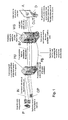
- Fig. 1 there is shown a multi-user computer-controlled video gaming system which can be installed in a cinema or theater.
- the game which is performed here by the system is called "Photo Safari Undersea” and is meant to be a game for a plurality of users who conjointly steer a submarine through an exciting undersea world to explore interesting objects and/or places (e.g. fishes, corals, shelfs, wrecks etc.).
- the submarine is equipped with a photo-camera which can be moved and activated by the group of users in order to take pictures of interesting objects or places.
- the system comprises at least one display device being represented by a large screen D on which video game motion pictures are projected and to be shown to the audience of two or more users.
- the system also see Fig.
- a workstation WS executing a game software application and providing output OUT (video/audio signal) to the display device D.
- output OUT video/audio signal
- the display device D Accordingly video game motion pictures of the undersea world with at least one conjointly controlled object, such as the submarine A, are displayed.
- GP gamepads
- the game mechanics are applied to said user input data IN for generating control input data IN* which allow a conjointly control of a certain object, such as the submarine A and/or the camera B.
- the processing unit PU can be an integral part of the workstation WS, but in the embodiment shown in Fig. 1 the processing unit PU is realized by a separate unit being installed apart from but being connected with said workstation WS, e.g. by a local area network.
- the processing unit PU receives the individual user input data IN which are just raw data and continuously processes these data to generate control data IN* for a conjointly control of said objects A and/or B.
- the application i.e. the game software running on workstation WS
- the invention generates discreet control input data IN* by processing the incoming user input data IN in such a way that the application can easily handle these data IN* and interpret/understand the commands thereof. Since the control data IN* are derived from many individual user input data, these data IN* reflect the shared and joint will of the users being involved.
- the method of controlling the game running on said system by using at least one game mechanic will be described further below:
- the players can enter the session at any time during the gameplay. Preferably inactive players shall not be taken into account for decision making.
- a new player enters the cinema he or she can log into the game via his/her gamepad GP which can be a wireless controller or any other human input/interface device. The game starts on time with all logged in controllers and players.
- some members of the audience or even logged-in players might not always want to actively contribute to the running game. For example some user might not want to play and therefore does not log into the game. Other users might want to play later after having watched how the others are playing. Some users might want to play but are late and miss to log in when the game starts. Others might want to stop playing after a while and then want to be inactive and only watch the others playing. Or some users might want to play from the beginning, then stop playing for a while and then want to start playing again.
- the APA game mechanics is a perfect solution since the amount of allowed players perceived by the system can continuously be adapted to the actual amount of active players.
- each controller (see gamepad GP in Fig. 2 ) is assigned a unique ID and is recognized by the game server (workstation WS) with its unique ID. Each controller that is actually used sends data IN to the server. These controllers are registered for the first time they are used and are then activated. Every activated controller is considered in the course of the game by processing its input data IN for calculations. Preferably every activated controller has a timeout time that is defined by the application running on the server WS. If a controller stops sending input data IN for more than the timeout period this controller will be is deactivated and thus not be taken into account for calculations performed by the application. If the controller starts sending data again, i.e. the user is pressing a button again, the controller will be recognized to be activate again.
- the system is always aware of the correct number of players playing the game.
- the system adapts the number of allowed players by registering identification codes from said user input devices GP and evaluating the amount and/or the frequency of the input data IN provided by said input devices GP to continuously decide whether to register users as allowed players or not.
- This dynamic registering and activation scheme provides a solid representation of all active users, thus enabling the system to more efficiently react on all active users playing the game and/or controlling the application.
- the APA game mechanics is very effective for cinema or theater gaming because it enables a crowd to collectively control the game which responds to the users' inputs and renders the resulting scene in real time on the cinema screen.
- the system may take into account the skill level of players that play the game. Thus the system becomes rewarding for players of every skill level and still provides a challenge.
- the system shall make players feel to have the control of the avatar or the avatars, when the players are controlling the object(s) as a crowd.
- DTBD Dynamic Threshold Based Decision Making
- the multi-user computer-controlled video gaming system adapts the decision making for triggering a function by evaluating the amount of input data IN having the same content for finding a majority MJ of conform inputs among all inputs from the users to trigger said function dependent on said at least majority.
- the system finds a majority of conform inputs among all inputs from the users if the number of conform inputs exceeds a predefined threshold value THV.
- Fig. 3 there are four possible actions to be executed by the game, namely a movement of the controlled object (submarine) to the right, to the left, up or down.
- the figure shows four bars which represent these four possible choices for the users.
- Each user can choose one direction. If only a few users vote for a particular direction (see here the bars “Right” or “Down") the corresponding bar will only be filled up slowly and not reach the threshold value THV. If more users join in a vote the corresponding bar will grow faster (see here the "Up” bar) and may reach the threshold value. If a bar reaches the threshold (see bar "Left”) the corresponding action will be executed by the game.
- the illustration of Fig. 3 can be shown on the display screen D to the audience. Thus the users can continuously see how the votes are distributed among the given options (four directions of movement).
- each user can then reflect his/her input for a while (as long as the action is not executed) and can change his/her vote. This means that it is allowed that players can overrule their vote and can choose for a different option (direction) and thus the bars will change in size dynamically.
- the threshold marks for the amount of users needed to trigger the action. The action can be triggered instantly when one of the thresholds is reached first. Alternatively the actions can be triggered automatically at certain time intervals wherein that action having the most votes will preferably be triggered (depending on the application).
- the DTBD game mechanic enables the system to execute a very dynamic decision making process on the basis of the social behavior of the group. It is possible that votes of the group might exclude each others so that not more than one choice will be allowed to trigger the next action. It is also possible that votes include each other so that two or more choices can be left to trigger the next actions. Preferably a majority of the players will have to reach a given threshold for triggering an action.
- the DTBD game mechanic always leads to control inputs IN* which are clearly readably by the game application.
- ADL Adaptive Difficulty Level
- the ADL also adapts the threshold number of players depending on behavior and results from the previous decision making processes.
- the ADL function will raise the threshold the better the group performs. This ensures the constant need to synchronize the group better and better which in conclusion triggers social interaction. If the group has reached a difficulty level where the group is unable to succeed, the difficulty level will drop again.
- the multi-user computer-controlled video gaming system adapts the difficulty level by continuously evaluating numbers of conform inputs exceeding a predefined threshold TH and by increasing said threshold if said numbers exceed the threshold by more than a given offset value X in terms of quantity and/or frequency of their occurrence.
- Players start with a threshold of 500%. In this case the majority (at least 51%) of the players have to choose a certain action to trigger a reaction. If the players perform well in the game (for example, avoid obstacles or collect certain items) this threshold will rise in predefined steps. As shown in Fig. 4a the threshold TH will rise by value X. If the threshold reaches a high value (for example a value of 75%), this will create the necessity for players who did not participate actively before or did not choose the direction the majority of players wanted to choose to synchronize with the group to succeed. A success will then lead to an even higher threshold. Players who were inactive for long enough that their controller was deactivated are not taken into consideration to calculate the percentage needed for the threshold.
- the threshold TH may fall by value X. Once the threshold reaches a value where the group is able to synchronize again and be successful it will start to rise again, creating a constant need for synchronization and a challenge for the players.
- Score tend to be in the same range even if played by groups of various skill levels. Score is generated by successful playing (i.e. not crashing into objects, collecting certain items).
- the Adaptive Score System is connected to the Adaptive Difficulty System to create a wide range of possible scores.
- the rising/falling threshold (see ADL) is directly connected to a rising/falling score multiplier to guarantee a high score variation among groups. This means that a high threshold would lead to a high difficulty which would then lead to a high score multiplier and finally to a high score if the group plays well. This is illustrated by Fig. 5a ).
- the system adapts the score system by raising a score level if said threshold (TH) is increased.
- the "rail system” function creates a number of predefined paths for the players.
- the amount of rails on the x and y axis can be set by the designer. This is shown by the example of Fig. 6a ) showing a rail system of 4x4 rails.
- the system controls the movements of objects on predefined paths or rails R by defining a grid GR of allowed position values where objects are allowed to be displayed and by continuously deciding dependent on the users inputs where to display the object in the next frame.
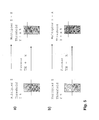
- the single player (or a group of players) start(s) the game on a predefined rail (see Fig. 6b ). If the player moves from one rail to the next, this movement is guided by a threshold-based decision so that the player cannot influence the movement of the avatar while being in the transition from one rail to the next. In the present example the player chooses to move to the right (see Fig. 6c ). Once the players arrive on the next rail the decision making process starts again, guaranteeing a stable movement (see Fig. 6d ).
- the photo game allows a group of players to control a photo camera in an easy way and take pictures of beautiful scenery and exciting moments. While the gameplay is fun (i.e. succeed in a collaborative effort), the players are also rewarded with an object of their own creation as the picture is visible, it's a tangible proof of success.
- the general mechanic of the gameplay is using the skills nearly every user has, namely the skill to take pictures which is generally known by almost everyone, and is also enjoyed by many as a rewarding way to remember joyful experiences.
- the system triggers a function, in particular a photocamera function, by evaluating the amount of input data IN having the same content for finding a majority of conform inputs among all inputs from the users to trigger said function dependent on said majority .
- this game mechanic comprises a plurality of functions and/or mechanisms:
- Buttons are an example of preferred input devices/elements since they just need to be pressed by the users. In the described embodiment here, there is a quite simple button layout which is divided into “movement” and “action”.
- Targeting is one function which provides the following effects:
- the speed changes can be arranged in steps, for example in 3 areas (see Fig. 7 ), each of it is assigned to an adjusted movement speed.
- the movement speed can also be based on the distance towards the target instead of defining certain areas around the target. This depends on the actual implementation of the functionality in a specific application.
- Fig. 7 there are 3 speed zones, the outer one defining full speed (100%), the inner ones defining reduced speed (70% or 50%).
- the speed change of the movement happens automatically.
- the system targets the movement of an object, in particular of a camera, by defining within the displayed frame different areas surrounding the position of a target to which the object shall move, wherein each area matches an area of a speed value being allowed for moving said object.
- the area A3 which is closest-by or covers the target T matches the lowest speed value and the areas A1, A2 which are more far away from said target match higher speed values.
- Head Bobbing (describes the subtle movement of a first person view perspective simulating natural head motion) is a further function of game mechanics:
- the system displays a wave effect, in particular head bobbing, if the users are inactive for a predefined period of time.
- the bobbing doesn't distract the audience or increases the difficulty. Thus it is just a minor visual effect, but makes the game more attractive and readable.
- the Picture Display is also provided with new functions: Another reward for the audience is to have a look at the beautiful picture they have just taken. In this case the picture is displayed in a zoomed version on the screen right after it has been taken by the players.
- the bar can be placed anywhere on screen, preferably at the borders to move them out of the area of the main attention.
- An example of such a new picture display is shown in Fig. 8 .
- the function also includes sketches to advertise beautiful views: To help the players learn what should be photographed the game presents the players with a sketch of the scenery in question. This sketch is an easy to recognize image of a scene that will be shown a short time later. The players' combined expectations are set to motivate a synchronized action.
- the system redisplays pictures or sketches thereof in a subarea of the display, in particular redisplays pictures or sketches which were taken by use of a game object having a camera function.
- the system can also redisplay objects or sketches thereof in a subarea of the display, in particular redisplay objects which have been displayed in former frames.
- the Camera Trigger is a function which can also be applied to the conjointly input and control by many users.
- the overall goal is to make it readable when players need to press and how close they are to take a picture.
- an icon is shown onscreen telling the players how many are ready to take a picture.
- the icon starts as an empty circle and filling up like a pie chart the more players press the photo shoot button. To actually take a picture it is required for a specific percentage of the players to press the button more or less simultaneously (i.e. inside a short time frame).
- Limited Resources is one function to make the challenge more exciting. Therefore only limited resources are made available for taking pictures. This can be a time limit or a picture limit or even both at once.
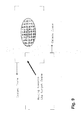
- Best Shot Challenge is another function to realize a Challenge. This challenge is about moving the camera to a specific frame on the display and making a picture afterwards while remaining on that frame (see Fig. 9 ).
- the players can choose any directions they want to move the camera to the required position. Taking a picture simply requires people to press one button.
- the Direction where target frame is located is being displayed on the Head-up-Display (HUD).
- HUD Head-up-Display
- An example of a gameplay using said mechanism is an undersea photo safari:
- the goal is to make an image of the manta ray while he is floating around.
- the players need to move the camera frame onto the target frame which is located on the manta ray and take a picture (see Fig. 9 ).
- the invention achieves that also a Keep Position Challenge can be solved (see Fig. 10 ): This challenge is about trying to stick to the target frame and take a nice picture while the players are distracted with random movement changes that needs to be compensated.
- the Camera is positioned on the target frame in the beginning. Then the Camera moves around randomly and the players need to press the correct direction to compensate the random movement. The closer the camera frame matches the target frame the higher the rating of the picture is the moment the players take a picture.
- This function may have a sketch based design:
- the camera frame includes one or more sketches that indicate how the final picture should look like.
- the sketch can either indicate a fix or movable target and it is up to the audience to decide when the right moment of taking the picture is.
- the Functionality can comprise the following features:
- a gameplay can be performed, wherein the goal is to make a picture of a coral and a fish next to it. While the coral is a fix target that doesn't move the fish will swim around and the players have to wait until it matches the sketch (see Fig. 10 ).
- the function can be Reflex based: In this challenge the players get told ahead what kind of objects should be part of the picture. These objects then appear randomly on the screen and it is up to the player to decide when the best moment to make the picture is. It is the players choice to react fast to get the shot. This challenge is reaction based only.
- the Functionality can comprise the following features:
- Another function can generate a Freestyle Photo Challenge: In this challenge the audience itself can decide when to take a photo, i.e. decide together if a view is beautiful enough or worth to take a photo of. To ease the decision there are clear areas that are plain and not spectacular followed by areas with much more appeal. These defined areas allow the crowd to come to an agreement upon the decision to shoot a photo.
- the Players can choose any directions they want to move the camera to the required position. Taking a picture requires people to press one button.
- the Functionality can comprise the following features:
- the system can also comprise a feedback data link between the computing device (workstation) WS and the processing unit PU.
- This link is used to modify and/or adapt the processing of the input data IN to the current needs of the running application.
- This preparation and processing of the user input data IN can be flexible and may react on the actual needs of the system.
- the user input devices GP may comprise input sensor means, in particular buttons and sliders, to generate the user input data IN for each user P as raw data representing his or her individual input.
- the at least one computing device WS can also be realized by game server and the processing unit PU can be realized as an external or internal part of said server.
- Fig. 1 What can also be seen from the Fig. 1 is that the system can easily handle user input data from one or more groups of users separately.
- a first group of users can collectively control their objects, i.e. their submarine and camera, whereas a second group can collectively control different objects being assigned to this second group.
- This solution is very attractive for running game competitions between two or more groups. Many other scenarios can be realized by the present invention.
- the Fig. 2 also schematically illustrates the steps of said method which provides a dynamic feedback loop for jointly controlling at one certain object, such as a vehicle with a camera, within a running video game:
Landscapes
- Engineering & Computer Science (AREA)
- Multimedia (AREA)
- Theoretical Computer Science (AREA)
- Human Computer Interaction (AREA)
- Processing Or Creating Images (AREA)
- Slot Machines And Peripheral Devices (AREA)
Applications Claiming Priority (1)
| Application Number | Priority Date | Filing Date | Title |
|---|---|---|---|
| US31183410P | 2010-03-09 | 2010-03-09 |
Publications (2)
| Publication Number | Publication Date |
|---|---|
| EP2371432A2 true EP2371432A2 (de) | 2011-10-05 |
| EP2371432A3 EP2371432A3 (de) | 2011-11-23 |
Family
ID=44064933
Family Applications (1)
| Application Number | Title | Priority Date | Filing Date |
|---|---|---|---|
| EP20110156861 Ceased EP2371432A3 (de) | 2010-03-09 | 2011-03-03 | Computergesteuertes Videospielsystem für mehrere Benutzer und Verfahren zur Kontrolle von mindestens einer Spielmechanik |
Country Status (2)
| Country | Link |
|---|---|
| US (1) | US9005024B2 (de) |
| EP (1) | EP2371432A3 (de) |
Families Citing this family (12)
| Publication number | Priority date | Publication date | Assignee | Title |
|---|---|---|---|---|
| US7938727B1 (en) * | 2007-07-19 | 2011-05-10 | Tim Konkle | System and method for providing interactive content for multiple networked users in a shared venue |
| US9067150B2 (en) | 2008-01-19 | 2015-06-30 | Lamplight Games | System and method for providing interactive content for multiple networked users in a shared venue using short messaging service communication |
| US8287341B1 (en) | 2010-10-14 | 2012-10-16 | Zynga Inc. | Asynchronous interactive game play |
| US9576434B2 (en) * | 2011-07-25 | 2017-02-21 | Sony Interactive Entertainment Inc. | Implementing computer activity-based challenges |
| EP2582145A3 (de) | 2011-10-13 | 2014-07-30 | Gface GmbH | Interaktive Fernbeteiligung bei Live-Unterhaltung |
| US9744440B1 (en) | 2012-01-12 | 2017-08-29 | Zynga Inc. | Generating game configurations |
| WO2014054762A1 (ja) * | 2012-10-03 | 2014-04-10 | グリー株式会社 | オンラインゲームの同期方法及びサーバ装置 |
| GB201418393D0 (en) * | 2014-10-16 | 2014-12-03 | King Com Ltd | Computer implemented game |
| US9616341B2 (en) | 2015-06-24 | 2017-04-11 | International Business Machines Corporation | Multiple user single avatar video game input system |
| US10616033B2 (en) * | 2017-11-06 | 2020-04-07 | Honda Motor Co., Ltd. | Different perspectives from a common virtual environment |
| US10898802B2 (en) * | 2018-05-31 | 2021-01-26 | Sony Interactive Entertainment LLC | Bifurcation of shared controls and passing controls in a video game |
| CN116583329A (zh) * | 2020-11-05 | 2023-08-11 | 谷歌有限责任公司 | 远程实时游戏输入聚合 |
Citations (3)
| Publication number | Priority date | Publication date | Assignee | Title |
|---|---|---|---|---|
| US6257982B1 (en) | 1999-06-01 | 2001-07-10 | Mark Rider | Motion picture theater interactive gaming system |
| US7216870B1 (en) | 2004-07-08 | 2007-05-15 | Shields Design Studio, Llc | Resource point game mechanic |
| US20090264172A1 (en) * | 2008-04-16 | 2009-10-22 | Nintendo Co., Ltd. | Game system |
Family Cites Families (12)
| Publication number | Priority date | Publication date | Assignee | Title |
|---|---|---|---|---|
| CA2047412A1 (en) * | 1990-08-24 | 1992-02-25 | Albert F. Harvard | Theme park attraction for multiple participants using real time simulation |
| US7937285B2 (en) * | 2001-04-12 | 2011-05-03 | Massachusetts Institute Of Technology | Remote collaborative control and direction |
| US7198568B2 (en) * | 2002-05-01 | 2007-04-03 | Nintendo Co., Ltd. | Game machine and game program for changing the movement of one character based on the movement of another character |
| US7840991B2 (en) * | 2003-08-11 | 2010-11-23 | Thomas Dusenberry | In-theatre interactive entertainment system |
| EP1687781A4 (de) * | 2003-10-29 | 2010-04-28 | Gamelogic Inc | Spiel für fertigkeiten und glück und system und verfahren zum spielen von spielen für fertigkeiten und glück |
| US7396281B2 (en) * | 2005-06-24 | 2008-07-08 | Disney Enterprises, Inc. | Participant interaction with entertainment in real and virtual environments |
| US9569876B2 (en) * | 2006-12-21 | 2017-02-14 | Brian Mark Shuster | Animation control method for multiple participants |
| US8849351B2 (en) * | 2006-12-29 | 2014-09-30 | Alcatel Lucent | Vacating low usage packet data sessions in a wireless communication system |
| JP4150410B2 (ja) * | 2007-02-23 | 2008-09-17 | 株式会社コナミデジタルエンタテインメント | ゲームシステム、ゲーム制御方法、ならびに、プログラム |
| US8049756B2 (en) * | 2007-10-30 | 2011-11-01 | Brian Mark Shuster | Time-dependent client inactivity indicia in a multi-user animation environment |
| US20100255894A1 (en) * | 2009-04-01 | 2010-10-07 | Chira Kidakarn | Method for combining multiple actions in single video game |
| US8933884B2 (en) * | 2010-01-15 | 2015-01-13 | Microsoft Corporation | Tracking groups of users in motion capture system |
-
2011
- 2011-03-03 EP EP20110156861 patent/EP2371432A3/de not_active Ceased
- 2011-03-09 US US13/043,557 patent/US9005024B2/en active Active
Patent Citations (3)
| Publication number | Priority date | Publication date | Assignee | Title |
|---|---|---|---|---|
| US6257982B1 (en) | 1999-06-01 | 2001-07-10 | Mark Rider | Motion picture theater interactive gaming system |
| US7216870B1 (en) | 2004-07-08 | 2007-05-15 | Shields Design Studio, Llc | Resource point game mechanic |
| US20090264172A1 (en) * | 2008-04-16 | 2009-10-22 | Nintendo Co., Ltd. | Game system |
Also Published As
| Publication number | Publication date |
|---|---|
| US20110223996A1 (en) | 2011-09-15 |
| EP2371432A3 (de) | 2011-11-23 |
| US9005024B2 (en) | 2015-04-14 |
Similar Documents
| Publication | Publication Date | Title |
|---|---|---|
| US9005024B2 (en) | Multi-user computer-controlled video gaming system and a method of controlling at least one game mechanic | |
| JP6976424B2 (ja) | 実世界会場で開催されたライブイベントで見せられるインタラクティブなゲーム世界の観客ビュー | |
| US10857455B2 (en) | Spectator management at view locations in virtual reality environments | |
| Chesher | Neither gaze nor glance, but glaze: relating to console game screens | |
| WO2017175599A1 (ja) | 情報処理装置および情報処理方法、並びにプログラム | |
| US8777739B2 (en) | Gender and age based gameplay through face perception | |
| EP2229672A1 (de) | Schema zum einfügen einer nachahmung in eine szene und bereitstellung einer beurteilung dafür | |
| US9539504B2 (en) | Storage medium storing game program, game device, game system, and game process method | |
| JP2019141162A (ja) | コンピュータシステム | |
| WO2024101001A1 (en) | Information processing system, information processing method, and program for communication points regarding events | |
| JP2020119364A (ja) | 対話型ロボット及びその制御装置 | |
| US20180133598A1 (en) | Multi-player Computer Game Apparatus with a Game Information Display | |
| JP7513516B2 (ja) | プログラム、ゲームシステム | |
| JP7792936B2 (ja) | プログラム、システム、及び方法 | |
| US20260084059A1 (en) | Personalized displays for drivers and spectators | |
| WO2025088491A1 (en) | Live event immersion platform | |
| KR20240083224A (ko) | 컨텐츠의 상호작용을 위한 기능요소의 개발 방법 | |
| JP2024087282A (ja) | プログラム、情報処理方法、ゲーム制御装置及びゲーム制御方法 | |
| JP2002052247A (ja) | ゲーム機用マットおよびそれを用いたゲーム機 |
Legal Events
| Date | Code | Title | Description |
|---|---|---|---|
| PUAI | Public reference made under article 153(3) epc to a published international application that has entered the european phase |
Free format text: ORIGINAL CODE: 0009012 |
|
| AK | Designated contracting states |
Kind code of ref document: A2 Designated state(s): AL AT BE BG CH CY CZ DE DK EE ES FI FR GB GR HR HU IE IS IT LI LT LU LV MC MK MT NL NO PL PT RO RS SE SI SK SM TR |
|
| AX | Request for extension of the european patent |
Extension state: BA ME |
|
| PUAL | Search report despatched |
Free format text: ORIGINAL CODE: 0009013 |
|
| AK | Designated contracting states |
Kind code of ref document: A3 Designated state(s): AL AT BE BG CH CY CZ DE DK EE ES FI FR GB GR HR HU IE IS IT LI LT LU LV MC MK MT NL NO PL PT RO RS SE SI SK SM TR |
|
| AX | Request for extension of the european patent |
Extension state: BA ME |
|
| RIC1 | Information provided on ipc code assigned before grant |
Ipc: A63F 13/12 20060101ALI20111020BHEP Ipc: A63F 13/10 20060101AFI20111020BHEP |
|
| 17P | Request for examination filed |
Effective date: 20120523 |
|
| 17Q | First examination report despatched |
Effective date: 20120727 |
|
| RAP1 | Party data changed (applicant data changed or rights of an application transferred) |
Owner name: GFACE GMBH |
|
| STAA | Information on the status of an ep patent application or granted ep patent |
Free format text: STATUS: THE APPLICATION HAS BEEN REFUSED |
|
| 18R | Application refused |
Effective date: 20131203 |