EP2372925A1 - Procédé de précodage d'unités de station de base multiples, terminal mobile et station de base reposant sur un livre de code - Google Patents
Procédé de précodage d'unités de station de base multiples, terminal mobile et station de base reposant sur un livre de code Download PDFInfo
- Publication number
- EP2372925A1 EP2372925A1 EP08879256A EP08879256A EP2372925A1 EP 2372925 A1 EP2372925 A1 EP 2372925A1 EP 08879256 A EP08879256 A EP 08879256A EP 08879256 A EP08879256 A EP 08879256A EP 2372925 A1 EP2372925 A1 EP 2372925A1
- Authority
- EP
- European Patent Office
- Prior art keywords
- unite
- mobile terminal
- coding matrix
- coding
- matrix
- Prior art date
- Legal status (The legal status is an assumption and is not a legal conclusion. Google has not performed a legal analysis and makes no representation as to the accuracy of the status listed.)
- Withdrawn
Links
Images


Classifications
-
- H—ELECTRICITY
- H04—ELECTRIC COMMUNICATION TECHNIQUE
- H04B—TRANSMISSION
- H04B7/00—Radio transmission systems, i.e. using radiation field
- H04B7/02—Diversity systems; Multi-antenna system, i.e. transmission or reception using multiple antennas
- H04B7/022—Site diversity; Macro-diversity
- H04B7/024—Co-operative use of antennas of several sites, e.g. in co-ordinated multipoint or co-operative multiple-input multiple-output [MIMO] systems
-
- H—ELECTRICITY
- H04—ELECTRIC COMMUNICATION TECHNIQUE
- H04B—TRANSMISSION
- H04B7/00—Radio transmission systems, i.e. using radiation field
- H04B7/02—Diversity systems; Multi-antenna system, i.e. transmission or reception using multiple antennas
- H04B7/04—Diversity systems; Multi-antenna system, i.e. transmission or reception using multiple antennas using two or more spaced independent antennas
- H04B7/0413—MIMO systems
- H04B7/0417—Feedback systems
-
- H—ELECTRICITY
- H04—ELECTRIC COMMUNICATION TECHNIQUE
- H04L—TRANSMISSION OF DIGITAL INFORMATION, e.g. TELEGRAPHIC COMMUNICATION
- H04L25/00—Baseband systems
- H04L25/02—Details ; arrangements for supplying electrical power along data transmission lines
- H04L25/0202—Channel estimation
- H04L25/0204—Channel estimation of multiple channels
-
- H—ELECTRICITY
- H04—ELECTRIC COMMUNICATION TECHNIQUE
- H04B—TRANSMISSION
- H04B7/00—Radio transmission systems, i.e. using radiation field
- H04B7/02—Diversity systems; Multi-antenna system, i.e. transmission or reception using multiple antennas
- H04B7/04—Diversity systems; Multi-antenna system, i.e. transmission or reception using multiple antennas using two or more spaced independent antennas
- H04B7/06—Diversity systems; Multi-antenna system, i.e. transmission or reception using multiple antennas using two or more spaced independent antennas at the transmitting station
- H04B7/0613—Diversity systems; Multi-antenna system, i.e. transmission or reception using multiple antennas using two or more spaced independent antennas at the transmitting station using simultaneous transmission
- H04B7/0615—Diversity systems; Multi-antenna system, i.e. transmission or reception using multiple antennas using two or more spaced independent antennas at the transmitting station using simultaneous transmission of weighted versions of same signal
- H04B7/0619—Diversity systems; Multi-antenna system, i.e. transmission or reception using multiple antennas using two or more spaced independent antennas at the transmitting station using simultaneous transmission of weighted versions of same signal using feedback from receiving side
- H04B7/0621—Feedback content
- H04B7/0634—Antenna weights or vector/matrix coefficients
-
- H—ELECTRICITY
- H04—ELECTRIC COMMUNICATION TECHNIQUE
- H04B—TRANSMISSION
- H04B7/00—Radio transmission systems, i.e. using radiation field
- H04B7/02—Diversity systems; Multi-antenna system, i.e. transmission or reception using multiple antennas
- H04B7/04—Diversity systems; Multi-antenna system, i.e. transmission or reception using multiple antennas using two or more spaced independent antennas
- H04B7/06—Diversity systems; Multi-antenna system, i.e. transmission or reception using multiple antennas using two or more spaced independent antennas at the transmitting station
- H04B7/0613—Diversity systems; Multi-antenna system, i.e. transmission or reception using multiple antennas using two or more spaced independent antennas at the transmitting station using simultaneous transmission
- H04B7/0615—Diversity systems; Multi-antenna system, i.e. transmission or reception using multiple antennas using two or more spaced independent antennas at the transmitting station using simultaneous transmission of weighted versions of same signal
- H04B7/0619—Diversity systems; Multi-antenna system, i.e. transmission or reception using multiple antennas using two or more spaced independent antennas at the transmitting station using simultaneous transmission of weighted versions of same signal using feedback from receiving side
- H04B7/0636—Feedback format
- H04B7/0639—Using selective indices, e.g. of a codebook, e.g. pre-distortion matrix index [PMI] or for beam selection
Definitions
- the present invention relates to the communication technology, and more particularly, relates to a codebook-based multi-base station unite pre-coding method, a mobile terminal, and a base station.
- pre-coding technology In a wireless communication system, the application of pre-coding technology has become increasingly prevalent. It first pre-codes a to-be-transmitted signal based on channel information before transmitting such that the signal is more suitable to the channel, thereby improving the link quality or throughput of the user.
- single-base station pre-coding technology may be divided into two categories: with downlink as an example, one method is that a service base station of a mobile terminal obtains the channel information of downlink MIMO channel through a pilot signal or an uplink sounding transmitted by the mobile terminal in TDD system, and then the service base station calculates a pre-coding matrix and pre-codes the data before transmitting; the other commonly-used method is a pre-coding codebook-based method, where the mobile terminal obtains the channel information of the downlink MIMO channel through downlink pilot signal, preamble, or midamble as transmitted from the base station, and then selects an optimal pre-coding matrix index number from the pre-coding matrix codebook and feeds it back to the service base station, and the service base station pre-codes the data before transmitting.
- a user at the boarder of a cell is still subjected to strong interference from a neighboring cell, thus the pre-coding technology unite application in combination with a multi-base station cooperating technology is proposed to mitigate the inter
- a plurality of base stations transmit signals to a same mobile terminal, for example, macro diversity, soft handoff, and multi-cell cooperating technology, such as network MIMO and cooperating MIMO.
- the pre-coding may also be applied among a plurality of base stations to further improve user performance.
- all base stations that transmit data together to a mobile terminal are called “cooperating base stations” or “base stations,” where only one thereof is a master base station,” and the other cooperating base stations are called “slave base stations.”
- the master base station is the service base station associated with the mobile terminal.
- the served mobile terminal is always located at the cell boarder.
- Two or more base stations transmit the same data to the mobile terminal at the same or different time-frequency resources. In this way, the mobile terminal realizes diversity combination reception and obtains diversity gain. If the cooperating base stations transmit data at the same time-frequency resource, the interference will be further decreased.
- MIMO-enabled macro diversity handoff (MDHO) of WiMAX (IEEE 802.16e) system all antennas of the cooperating base stations that participate in the macro diversity form an antenna array (antenna pool), and the cooperating base stations may transmit data in an MIMO manner to the mobile terminal based on a predetermined antenna selection mode.
- any individual base station may further employ a pre-coding technology to transmit a signal to the mobile terminal in a closed-loop MIMO manner.
- the IEEE 802.16m standard that is being formulated proposes a pre-coding codebook-based closed-loop macro diversity scheme: the mobile terminal selects the pre-coding matrix index number of each cooperating base station that transmits data to the mobile terminal and feeds this information back to the serving base station, and then the serving base station informs the corresponding cooperating base station of the pre-coding matrix index number as recommended to each cooperating base station.
- each cooperating base station may use its own pre-coding matrix to independently pre-code the transmitted data.
- an optimal pre-coding matrix is selected for each cooperating base station based on the MIMO channel from each cooperating base station to the mobile terminal, where each channel is only subjected to a closed-loop processing, while it is like an open-loop state between respective channels.
- unite MIMO channel the space feature of the MIMO channel composed by multiple cooperating base stations and the mobile terminal
- the network MIMO regards all antennas of all cooperating base stations as a transmit antenna array, and generates a pre-coding matrix based on all the channel state information CSI (for example, the channel response matrix) between all cooperating base stations and the mobile terminal, thereby realizing unite pre-coding among multiple base stations to eliminate the co-channel interference among multiple users.
- CSI for example, the channel response matrix
- the network MIMO lowers the interference caused by the time-frequency resource multiplexing to the utmost and thus the performance is the optimal.
- the cost of the solution to achieve the optimal performance is the extremely high complexity of the large-scale pre-coding matrix calculation.
- the present invention provides a novel codebook-based multi-base station unite pre-coding scheme.
- multiple cooperating base stations commonly transmit signals to a mobile terminal.
- the mobile terminal estimates a channel matrix of a unite MIMO channel from the multiple cooperating base stations, and selects the optimal pre-coding matrix index and feeds it back to the multiple cooperating base stations from a pre-coding matrix codebook based on the unite MIMO channel matrix.
- Each cooperating base station selects an optimal pre-coding matrix based on the received pre-coding matrix index and using a corresponding portion of the pre-coding matrix to perform unite pre-coding on the data.
- the respective partial pre-coding matrixes as employed by all cooperating base stations together form a pre-coding matrix that is optimal to the mobile terminal, and the pre-coding matrix as used by each cooperating base station is a part of the optimal pre-coding matrix.
- the cooperating base stations may also use the selected optimal pre-coding matrix to code the data.
- the data is pre-coded with the same pre-coding matrix as employed by all cooperating base stations.
- the present invention further proposes an internal pre-coding scheme.
- the inner pre-coding matrix for each base station is first determined, and then the mobile terminal estimates a unite equivalent channel matrix of the inner pre-coded multiple cooperating base stations and selects the optimal number from the pre-coding matrix codebook and feeds it back to multiple cooperating base stations based on the unite equivalent MIMO channel matrix.
- Each cooperating base station first performs unite pre-coding on the data, then uses the inner pre-coding matrix to perform inner pre-coding to the unite pre-coded data, and then transmits the data.
- the inner pre-coding is individual performed within each base station, which may further enhance the performance of the mobile terminal that is commonly served by the cooperating base stations.
- the dimension of the pre-coding codebook may be decreased, the storage space for the pre-coding matrix codebook may be reduced, and the implementation complexity may be further lowered.
- a codebook-based multi-base station unite pre-coding method comprising: a mobile terminal estimates channels from different cooperating base stations and obtaining a unite channel matrix H c ; the mobile terminal, based on the estimated unite channel matrix, selects an optimal unite pre-coding matrix W c from the pre-coding matrix codebook; the mobile terminal feeds the index of the unite pre-coding matrix back to the cooperating base stations; the corresponding cooperating base station, based on the received unite pre-coding matrix index, selects a unite pre-coding matrix from the pre-coding matrix codebook, and performs unite pre-coding on the data using the unite pre-coding matrix before transmitting the data to the mobile terminal.
- the mobile terminal estimates channels from different cooperating base stations and obtains the unite channel matrix H c means that the mobile terminal directly estimates the channels from different cooperating base stations, the result of the channel estimation being the unite channel matrix H c .
- the unite channel matrix H c is an inner pre-coded equivalent unite channel matrix.
- the mobile terminal receives signals from different cooperating base stations to obtain inner pre-coding matrixes W i I means that the mobile terminal selects inner pre-coding matrixes W i I from the pre-coding matrix codebook based on the estimated physical channel matrixes H i .
- the mobile terminal feeds the index of the unite pre-coding matrix to the base stations means that the mobile terminal directly feeds the index of the unite pre-coding matrix back to all cooperating base stations.
- the mobile terminal feeds the index of the unite pre-coding matrix back to the base stations means that the mobile terminal feeds the index of the unite pre-coding matrix back to the master base station, and the master base station transmits the index of the unite pre-coding matrix to the slave base stations.
- the index of the unite pre-coding matrix refers to the unite pre-coding matrix index and the inner pre-coding matrix index.
- each cooperating base station performs unite pre-coding on the data by using the unite pre-coding matrix means performing unite pre-coding on the data by using the corresponding matrix block in the unite pre-coding matrix.
- the unite pre-coded data is subjected to inner pre-coding using the inner pre-coding matrix before being transmitted to the mobile terminal.
- a mobile terminal comprising: storing means, for storing at least one pre-coding matrix codebook; channel estimating means, for estimating channels from different cooperating base stations to obtain a unite channel matrix H c ; pre-coding matrix selecting means, for selecting a unite pre-coding matrix from the pre-coding matrix codebook based on the estimated unite channel matrix; feeding back means, for feeding an index of the unite pre-coding matrix back to the cooperating base stations.
- the channel estimating means is for directly estimating the channels from different cooperating base stations, the result of channel estimation being the unite channel matrix H c .
- the unite channel matrix H c obtained by the channel estimating means is an inner pre-coded equivalent unite channel matrix.
- an inner pre-coding matrix selecting means is further comprised, which is for selecting inner pre-coding matrixes W i I from the pre-coding matrix codebook, respectively, based on the physical channel matrixes H i obtained from the channel estimating means: the matrix multiplying operation means is for multiplying the physical channel matrixes H i with the inner pre-coding matrixes W i I as outputted from the corresponding pre-coding matrix selecting means, respectively, to obtain the inner-coded equivalent channel matrixes H i ⁇ W i I .
- the feeding back means is for directly feeding the index of the unite pre-coding matrix to all cooperating base stations.
- the feeding back means is for feeding the index of the unite pre-coding matrix to the master base station.
- the feeding back means is further for feeding back indexes of the inner pre-coding matrixes W i I .
- a base station comprising: storing means, for storing at least one pre-coding matrix codebook; receiving means, for receiving a signal, the signal comprises information regarding at least one pre-coding matrix index; unite pre-coding matrix selecting means, for selecting an optimal unite pre-coding matrix from the pre-coding matrix codebook based on the unite pre-coding matrix index; unite pre-coding means, for performing unite pre-coding on the data by using the pre-coding matrix; sending means, for sending a pilot signal and unite pre-coded data.
- the pre-coding matrix selecting means further comprises a matrix block selecting means, for selecting a matrix block corresponding to the present base station from the selected optimal pre-coding matrix as the optimal unite pre-coding matrix.
- the receiving means is further for receiving information regarding at least one inner pre-coding matrix index and selecting a corresponding inner pre-coding matrix index as the inner pre-coding matrix index of the present base station; further, the base station further comprises an inner pre-coding matrix selecting means, for selecting an optimal inner pre-coding matrix from the pre-coding matrix codebook based on the inner pre-coding matrix index of the present base station.
- an inner pre-coding matrix generating means is further comprised, which is for generating an inner pre-coding matrix based on the received signal.
- an inner pre-coding means is further comprised, which is for performing inner pre-coding to the pilot signal and/or the unite pre-coded data by using the inner pre-coding matrix; the sending means is for sending the inner pre-coded pilot signal and/or data.
- a codebook-based multi-base station unite pre-coding matrix selection method comprising: the mobile terminal estimates channels from different cooperating base stations to obtain a unite channel matrix H c ; the mobile terminal selects an optimal unite pre-coding matrix W c from the pre-coding matrix codebook based on the estimated unite channel matrix; and the mobile terminal feeds an index of the unite pre-coding matrix back to the cooperating base stations.
- the mobile terminal estimates channels from different cooperating base stations to obtain the unite channel matrix H c means that the mobile terminal directly estimates the channels from different cooperating base stations, and the result of channel estimation being the unite channel matrix H c .
- the unite channel matrix H c is the inner pre-coded equivalent unite channel matrix.
- the mobile terminal estimates channels from different base stations to obtain the unite channel matrix H c means that the mobile terminal estimates channels from different cooperating base stations, respectively, to obtain physical channel matrixes H i ; the mobile terminal receives signals from different cooperating base stations to obtain inner pre-coding matrixes W i I ; the mobile terminal multiples the inner pre-coding matrixes W i I witch the estimated physical channel matrixes H i , respectively, to obtain equivalent channel matrixes H i ⁇ W i I .
- H c H 1 ⁇ W 1 I , ⁇ , H K ⁇ W K I , wherein K >1 indicates the number of cooperating base stations serving the mobile terminal, 1 ⁇ i ⁇ K .
- the mobile terminal receives signals from different cooperating base stations to obtain inner pre-coding matrixes W i I means that the mobile terminal selects inner pre-coding matrixes W i I from the pre-coding matrix codebook based on the estimated physical channel matrixes H i .
- the mobile terminal feeds the index of the unite pre-coding matrix to the base stations means that the mobile terminal directly feeds the index of the unite pre-coding matrix back to all cooperating base stations.
- the mobile terminal feeds the index of the unite pre-coding matrix to the base stations means that the mobile terminal feeds the index of the unite pre-coding matrix back to the master base station.
- the index of the unite pre-coding matrix refers to the unite pre-coding matrix index and the inner pre-coding matrix index.
- a codebook-based base station pre-coding method comprising: the base station transmits a pilot signal; the base station receives a signal, the signal comprising information regarding at least one unite pre-coding matrix index; the base station selects an optimal unite pre-coding matrix from a pre-coding matrix codebook based on the unite pre-coding matrix index; the base station performs unite pre-coding on the data using the unite pre-coding matrix; the base station sends the unite coded data.
- the base station selects a corresponding matrix block from the selected optimal unite pre-coding matrix as the optimal unite pre-coding matrix.
- the base station further receives information regarding at least one inner pre-coding matrix index, selects a corresponding inner pre-coding matrix index as the inner pre-coding matrix index of the present base station, and selects the optimal inner pre-coding matrix from the pre-coding matrix codebook based on the inner pre-coding matrix index of the present base station.
- the base station generates an inner pre-coding matrix based on the received signal.
- the base station performs inner pre-coding on the pilot signal and/or unite pre-coded data by using the inner pre-coding matrix: and sends the inner pre-coded pilot signal and/or data.
- the user performance is improved, the complexity of implementation is low, and the demand on the network connecting base stations is very low,
- the embodiments of the present invention take two cooperating base stations as an example, where each base station has N transmit antennas, and the mobile terminal has M receive antennas.
- the physical channels from the master base station and slave base station to the mobile terminal are H 1 and H 2 , respectively.
- the pre-coding matrix codebook may be pre-stored in the device according to standard criteria or transmitted to the mobile terminal from the base station through signaling.
- the case of more cooperating base stations serving one mobile terminal may be derived by those skilled in the art through simple expansion based on the following embodiments of present invention; the example of two cooperating base stations as employed in the embodiments of the present invention is used only for simplifying the explanation and should not be understood as limiting the present invention.
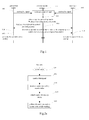
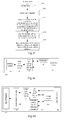
- Fig. 1 illustrates a system flow diagram according to one embodiment of the present invention.
- base stations comprising a master base station and a slave base station, send pilot signals to a mobile terminal;
- the mobile terminal receives the pilot signals from the master base station and the slave base station and performs channel estimation on the received pilot signals to obtain a unite channel matrix H c ;
- the mobile terminal selects an optimal unite pre-coding matrix W c from a pre-coding matrix codebook based on the estimated unite channel matrix;
- the mobile terminal sends an index of the unite pre-coding matrix W c to the master base station;
- the master base station sends the unite pre-coding matrix index to the slave base station;
- the base station based on the received unite pre-coding matrix index, selects a corresponding pre-coding matrix from the pre-coding matrix codebook and pre-codes the data before sending.
- the mobile terminal if the mobile terminal is connected to all of the main and slave base stations, then at step S113, the mobile terminal directly sends an index of the unite pre-coding matrix W c to the master base station and slave base station, without the need of performing step S102 by the master base station.
- Fig. 1 illustrates a brief depiction of a system flow according to one of the embodiments of the present invention.
- a base station may issue a pilot signal, or a pilot signal and an inner pre-coding matrix index, or inner pre-coded pilot signal:
- the mobile terminal may obtain a unite channel matrix in a matrix sum form or an equivalent unite channel matrix, or a unite channel matrix in a matrix combination manner or an equivalent unite channel matrix;
- the mobile terminal may only send the unite channel matrix index, or the unite channel matrix index and inner pre-coding matrix index; may directly send it to all cooperating base stations, or only to the master base station, while the master base station forwards it to the slave base station at step S102;
- the base station may selects a unite pre-coding matrix W c or a corresponding block of the
- the mobile terminal directly sends a pre-coding matrix index (unite pre-coding matrix index, or unite pre-coding matrix index and inner pre-coding matrix index) to all cooperating base stations, and the master base station needs not performing the forwarding step.
- a pre-coding matrix index unite pre-coding matrix index, or unite pre-coding matrix index and inner pre-coding matrix index
- those skilled in the art may select the manner of sending from the mobile terminal to the master base station and then forwarding from the master base station to the slave base station according to the above depiction during specific implementation.
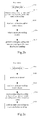
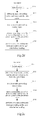
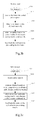
- Figs. 2 and 3 illustrate the specific implementation processes of the base station and mobile terminal under different system settings.
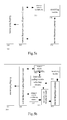
- the base station flows according to the embodiments of the present invention will be described in detail with reference to Figs. 2a , 2b , 2c , 2d , 2e , and 2f ; and correspondingly, with reference to Figs. 3a , 3b , 3c , 3d , 3e , and 3f , the mobile terminal flows according to the embodiments of the present invention is described specifically.
- the base station flow charts 2a, 2b, 2c, 2d, 2e, 2f exactly correspond to the mobile terminal flow charts 3a, 3b, 3c, 3d, 3e, 3f, respectively.
- the base station and the corresponding mobile terminal processing processes are depicted together.
- Fig. 2a base station
- Fig. 3a mobile terminal
- Fig. 2b the base station
- Fig. 3b the mobile terminal
- sending the pilot signals at the same time-frequency resource with the inner pre-coding process.
- the base station is initiated; at step S212, the base station obtains the inner pre-coding matrix at the base station, and the inner pre-coding matrix of each cooperating base station is determined based on the channels H 1 and H 2 to the mobile terminal, respectively.
- the cooperating base station further performs inner pre-coding to the pilot signal by using the inner pre-coding matrix, and then transmits the pilot signal, where the pilot signals of the master and slave base station occupy the same time-frequency resource;
- a unite pre-coding matrix index is received;
- Fig. 2c base station
- Fig. 3c mobile terminal
- sending pilot signals on different time frequency resources without the inner pre-coding process.
- the base station is initiated; at step S222, the base station sends a pilot signal, where the pilot signals from the master and slave base stations occupy different time-frequency resources; at step S223, a unite pre-coding matrix index is received from the mobile terminal; at step S224, based on the received unite pre-coding matrix index, the base station selects a corresponding unite pre-coding matrix W c from the codebook, and further selects the corresponding portion of the matrix as the unite pre-coding matrix of the present base station.
- the selected unite pre-coding matrix is W c of the 2 N ⁇ R dimension
- the unite pre-coding matrix W c 1 of the master base station is the upper half portion of W c (the first N lines)
- the unite pre-coding matrix W c 2 of the slave base station is the lower half portion of W c (the last N lines).
- Fig. 2d base station
- Fig. 3d mobile terminal
- sending pilot signals at different time frequency resources with the inner pre-coding process.
- the base station is initiated; at step S232, the base station obtains an inner pre-coding matrix, where the process of obtaining an inner pre-coding matrix is illustrated for example at step S212, and the pilot signal, after being inner pre-coded using the inner pre-coding matrix, is sent, wherein the pilot signals of the master and slave base stations occupy different time-frequency resources;
- a unite pre-coding matrix index is received from the mobile terminal;
- a corresponding unite pre-coding matrix is selected from the codebook based on the received unite pre-coding matrix index, and the corresponding portion of the matrix is further selected as the unite pre-coding matrix of the present base station, the selected unite pre-coding matrix being W c of the R 1 I + R 2 I ⁇ R dimension,
- Fig. 2e base station
- Fig. 3e mobile terminal
- sending pilot signals on different time-frequency resources with the inner pre-coding process.
- the base station is initiated; at step S242, the base station obtains the inner pre-coding matrix, where the process of obtaining the inner pre-coding matrix is illustrated at step S212, and next, the base station sends the pilot signal and the inner pre-coding matrix index to the mobile terminal, wherein the pilot signals of the master and slave base stations occupy different time-frequency resources;
- a unite pre-coding matrix index is received from the mobile terminal;
- step S244 based on the received unite pre-coding matrix index, a corresponding unite pre-coding matrix is selected from the codebook, and further, the corresponding portion of the matrix is further selected as the unite pre-coding matrix of the present base station, the selected unite pre-coding matrix being W c of the R 1 I + R 2 I ⁇
- Fig. 2f base station
- 3f mobile terminal
- sending pilot signals on different time-frequency resources, with the inner pre-coding process is specified below: sending pilot signals on different time-frequency resources, with the inner pre-coding process.
- the base station is initiated; at step S252, the base station sends a pilot signal, where the pilot signals from the master and slave base stations occupy different time-frequency resources; at step S253, the unite pre-coding matrix index and the inner pre-coding matrix index are received from the mobile terminal; at step S254, based on the received inner pre-coding matrix index, a corresponding inner pre-coding matrix is selected from the codebook, where for the master base station, the matrix is W 1 I of N ⁇ R 1 I dimension, and for the slave base station, the matrix is W 2 I of the N ⁇ R 2 I dimension, and based on the received unite pre-coding matrix index, the corresponding unite pre-coding matrix is selected from the codebook, and the corresponding portion of the matrix is further selected as the unite pre-coding matrix
- Fig. 4a and Fig. 4b illustrate a schematic block diagram of the structure of a base station according to an embodiment of the present invention, respectively.
- Fig. 5a and Fig. 5b illustrate a schematic block diagram of the structure of a mobile terminal according to an embodiment of the present invention, respectively.
- the base station of Fig. 4a corresponds to the mobile terminal of Fig. 5a ; and Fig. 4a and Fig. 5a correspond to Fig. 2a and Fig. 3a , respectively; the base station of Fig. 4b corresponds to the mobile terminal of Fig. 5b ; and Fig. 4b and Fig. 5b correspond to Fig. 2e and Fig. 3e , respectively.
- the base station 400 is for performing unite pre-coding on the data and sending the data.
- the base station 400 may comprise receiving means 401, storage means 402, unite pre-coding matrix selecting means 403, unite pre-coding means 404, and sending means 405.
- the receiving means 401 may be configured to receive a unite pre-coding matrix index; storage means 402 is configured to store at least one pre-coding codebook; the unite pre-coding matrix selecting means 403 is configured to select a unite pre-coding matrix from the codebook in the storage means 402 based on the unite pre-coding matrix index as outputted by the receiving means 401, and output the unite pre-coding matrix to the unite pre-coding means 404; the unite pre-coding means 404 performs unite pre-coding on the data before outputting it to the sending means 405, and then the sending means 405 sends the data out; additionally, the sending means 405 is further configured to send a pilot signal before sending the data.
- the mobile terminal 500 is configured to select a unite pre-coding matrix based on the unite channel estimation and feed back the unite pre-coding matrix index.
- the mobile terminal 500 may comprise receiving means 501, channel estimating means 502, storage means 503, unite pre-coding matrix selecting means 504, and feeding back means 505.
- the receiving means 501 is configured to receive pilot signals; the channel estimating means 502 is configured to perform channel estimation on the pilot signals inputted by the receiving means 501, and after obtaining the unite channel, output it to the unite pre-coding matrix selecting means 504; the storage means 503 is configured to store at least one pre-coding codebook; the unite pre-coding matrix selecting means 504 selects an optimal unite pre-coding matrix from the codebook in the storage means 503 based on the unite channel, and outputs the index of the matrix to the feeding back means 505 that performs feedback,
- the base station 400 and mobile terminal 500 may make various changes.
- Fig. 4b (base station 410) and Fig. 5b (mobile terminal 510) are only one change thereof, respectively, which will be described in detail.
- Those skilled in the art may simply and intuitively obtain other changes of the base station and the mobile terminal based on the basic concept and the above embodiments, which will not be detailed one by one herein.
- the base station 410 is further configured to perform inner pre-coding matrix selection and inner code the pilot signals/ data.
- the base station 410 may comprise receiving means 401, storage means 402, unite pre-coding matrix selecting means 403, unite pre-coding means 404, and sending means 405, and further, it may further comprise inner pre-coding matrix selecting means 411 and inner pre-coding means 412.
- the receiving means 401 is configured to receive the unite pre-coding matrix index and is further configured to receive the uplink sounding signal and estimate the downlink MIMO physical channel from the base station to the mobile terminal;
- the inner pre-coding selecting means 411 is configured to select an optimal inner pre-coding matrix based on the downlink physical channel estimation;
- storage means 402 is configured to store at least one pre-coding codebook;
- the unite pre-coding matrix selecting means 403 is configured to select a unite pre-coding matrix from the codebook in the storage means 402 based on the unite pre-coding matrix index from the receiving means 401, and further, the unite pre-coding matrix selecting means further selects a matrix block corresponding to the present base station from the selected unite pre-coding matrix as the unite pre-coding matrix of the present base station, and then outputs the unite pre-coding matrix of the present base station to the unite pre-coding means 404; the unite pre-coding means 404 performs unite pre-coding on the data, outputs the data to the inner
- the mobile terminal 510 is configured to obtain a unite equivalent channel based on the channel estimation and inner pre-coding matrix and select a unite pre-coding matrix, and then feed back the unite pre-coding matrix index.
- the mobile terminal 510 may comprise receiving means 501, channel estimating means 502, storage means 503, unite pre-coding matrix selecting means 504, and feeding back means 505. Further, it further comprises inner pre-coding matrix selecting means 511, matrix multiplying operation means 512, and channel matrix combining means 513.
- the receiving means 501 is configured to receive the pilot signals and inner pre-coding matrix indexes;
- the channel estimating means 502 is configured to perform channel estimation on the pilot signals inputted from the receiving means, respectively, to obtain the estimated physical channels H 1 and H 2 and output them to the matrix multiplying operation means 512;
- the storage means 503 is configured to store at least one codebook;
- the inner pre-coding matrix selecting means 511 is configured to select corresponding inner pre-coding matrixes W 1 I and W 2 I from the codebook in the storage means 503, respectively, based on the inner pre-coding matrix indexes outputted from the receiving means 501, and output the inner pre-coding matrixes to the matrix multiplying operation means 512;
- the matrix multiplying operation means 512 is configured to perform matrix multiplying operation to the inputted inner pre-coding matrixes and estimated physical channels, respectively, to obtain the equivalent channel estimates H 1 ⁇ W 1 I and H 2 ⁇ W 2 I , and then output the equivalent channel estimates to the channel matrix combining means 513;
- the codebook for selecting a unite pre-coding matrix and the codebook for selecting an inner pre-coding matrix may be identical or different.
- the system may adapt the amount of data flow based on the settings when sending the data flow; in this case, the ranks of the pre-coding matrixes, which comprise the unite pre-coding matrix and the inner pre-coding matrix, must also be adapted, then when sending the pre-coding matrix indexes, the mobile terminal and cooperating base stations must also send the ranks of respectively pre-coding matrixes; when selecting a pre-coding matrix in the codebook, the selection must also be made in conjunction with the rank of the pre-coding matrix.
- This rank adaptation part has many embodiments in the prior art and thus will not be detailed in the embodiments of the present invention. However, those skilled in the art may simply and intuitively implement the present invention with rank adaptation based on the above depiction; with or without the rank adaptation, it is a variation within the technical scope of the present invention and should not be understood as the limitation to the present invention.
- the codebook-based multi-base station unite pre-coding scheme considers the channel condition between all base stations and the mobile terminal; it mitigates the interference caused by time-frequency resource multiplexing and enhances the user performance; moreover, the inner pre-coding is used to further enhance the performance of the mobile terminal commonly served by the cooperating base stations. Besides, through the inner pre-coding process, the dimension of the pre-coding codebook may be decreased, the storage space for the pre-coding matrix codebook may be reduced, and the implementation complexity may be further lowered.
- the present invention may be implemented by hardware, software, firmware, and their combination.
- the skilled in the art should know that the present invention may also be embodied in a computer program product set on a signal carrying medium usable for any suitable data processing system.
- Such signal bearing medium may be a transmission medium or a recordable medium for computer-readable information, including a magnetic medium, an optical medium, or other suitable medium.
- Examples of recordable mediums include: a magnetic disk or floppy disk in a hard disk driver, an optical disk for a CD driver, a magnetic tape, and other medium that can be contemplated by the skilled in the art.
- any communication apparatus with an appropriate programming apparatus can implement steps of the method of the present invention as embodied in the program product.
Landscapes
- Engineering & Computer Science (AREA)
- Computer Networks & Wireless Communication (AREA)
- Signal Processing (AREA)
- Physics & Mathematics (AREA)
- Mathematical Physics (AREA)
- Power Engineering (AREA)
- Mobile Radio Communication Systems (AREA)
- Radio Transmission System (AREA)
Applications Claiming Priority (1)
| Application Number | Priority Date | Filing Date | Title |
|---|---|---|---|
| PCT/CN2008/002150 WO2010075640A1 (fr) | 2008-12-31 | 2008-12-31 | Procédé de précodage d'unités de station de base multiples, terminal mobile et station de base reposant sur un livre de code |
Publications (2)
| Publication Number | Publication Date |
|---|---|
| EP2372925A1 true EP2372925A1 (fr) | 2011-10-05 |
| EP2372925A4 EP2372925A4 (fr) | 2014-03-05 |
Family
ID=42309748
Family Applications (1)
| Application Number | Title | Priority Date | Filing Date |
|---|---|---|---|
| EP08879256.9A Withdrawn EP2372925A4 (fr) | 2008-12-31 | 2008-12-31 | Procédé de précodage d'unités de station de base multiples, terminal mobile et station de base reposant sur un livre de code |
Country Status (7)
| Country | Link |
|---|---|
| US (1) | US20110255625A1 (fr) |
| EP (1) | EP2372925A4 (fr) |
| JP (1) | JP5529888B2 (fr) |
| KR (1) | KR20110100313A (fr) |
| CN (1) | CN102204113B (fr) |
| BR (1) | BRPI0823398A2 (fr) |
| WO (1) | WO2010075640A1 (fr) |
Families Citing this family (17)
| Publication number | Priority date | Publication date | Assignee | Title |
|---|---|---|---|---|
| US20110299617A1 (en) * | 2008-09-25 | 2011-12-08 | Mohammad Ali Maddah-Ali | X-mimo systems with multi-transmitters and multi-receivers |
| KR101559799B1 (ko) * | 2009-03-04 | 2015-10-26 | 엘지전자 주식회사 | 무선 통신 시스템에서 CoMP 동작 수행 및 피드백 정보 전송 방법 |
| CN101854186B (zh) * | 2009-03-30 | 2015-04-01 | 三星电子株式会社 | 用于数据传输的预编/解码方法和系统 |
| KR101800294B1 (ko) * | 2009-04-02 | 2017-12-20 | 삼성전자주식회사 | 다중 셀 통신 시스템에서 셀 가장자리 사용자의 에러를 최소화하기 위한 장치 및 방법 |
| BRPI1013960B1 (pt) * | 2009-07-20 | 2021-05-18 | Huawei Technologies Co., Ltd | Método e sistema para pré-processar a comunicação cooperativa e estação base |
| KR101715866B1 (ko) * | 2010-08-26 | 2017-03-13 | 삼성전자주식회사 | 멀티셀 통신 시스템에서 협력 랭크에 기초하여 적응적으로 스케줄링을 수행하는 방법 및 장치 |
| CN102130754B (zh) * | 2011-03-11 | 2017-06-13 | 中兴通讯股份有限公司 | 一种实现协同预编码的方法和系统 |
| US8792924B2 (en) * | 2011-05-06 | 2014-07-29 | Futurewei Technologies, Inc. | System and method for multi-cell access |
| US9325401B2 (en) * | 2011-05-13 | 2016-04-26 | Fujitsu Limited | Beamforming from multiple transmission sites |
| CN102394676B (zh) * | 2011-06-30 | 2017-11-28 | 中兴通讯股份有限公司 | 预校正信息的反馈方法及终端 |
| US9197299B2 (en) | 2012-02-23 | 2015-11-24 | Qualcomm Incorporated | Systems and methods for applying multi-source multiple-input multiple-output communications |
| CN103974265B (zh) * | 2013-01-28 | 2017-11-03 | 华为技术有限公司 | 一种上行干扰抑制的方法及设备 |
| CN103236995B (zh) * | 2013-04-24 | 2017-04-12 | 华为技术有限公司 | 信道估计方法和用户设备 |
| US9344167B2 (en) * | 2013-06-06 | 2016-05-17 | Broadcom Corporation | Codebook subsampling for multi-antenna transmit precoder codebook |
| JP6509025B2 (ja) * | 2015-05-11 | 2019-05-08 | 株式会社日立製作所 | 画像処理装置、及びその方法 |
| WO2020000273A1 (fr) * | 2018-06-27 | 2020-01-02 | 华为技术有限公司 | Procédé et appareil de transmission de données |
| US12483301B2 (en) * | 2021-02-24 | 2025-11-25 | Google Llc | Dynamic codebooks for active coordination sets |
Family Cites Families (8)
| Publication number | Priority date | Publication date | Assignee | Title |
|---|---|---|---|---|
| KR100950644B1 (ko) * | 2005-03-04 | 2010-04-01 | 삼성전자주식회사 | 다중사용자 다중입출력 시스템의 피드백 방법 |
| US7526036B2 (en) * | 2006-04-20 | 2009-04-28 | Mitsubishi Electric Research Laboratories, Inc. | System and method for transmitting signals in cooperative base station multi-user mimo networks |
| EP1912347A1 (fr) * | 2006-10-11 | 2008-04-16 | Nokia Siemens Networks Gmbh & Co. Kg | Procédé, station mobile et station de base pour transmission de données dans un système de communication mobile |
| CN101136718A (zh) * | 2006-11-07 | 2008-03-05 | 中兴通讯股份有限公司 | 无线通信系统中多输入多输出的空间复用的预编码方法 |
| US8687715B2 (en) * | 2007-02-12 | 2014-04-01 | Broadcom Corporation | Method and system for rate reduction pre-coding matrices |
| US8830926B2 (en) * | 2008-10-27 | 2014-09-09 | Nokia Siemens Networks Oy | Method for network co-ordination in a mobile communications system and apparatus thereof |
| CN101729131B (zh) * | 2008-11-03 | 2014-06-04 | 夏普株式会社 | 无线通信系统及预编码方法 |
| US8351544B2 (en) * | 2008-12-15 | 2013-01-08 | Motorola Mobility Llc | Method and apparatus for codebook-based feedback in a closed loop wireless communication system |
-
2008
- 2008-12-31 EP EP08879256.9A patent/EP2372925A4/fr not_active Withdrawn
- 2008-12-31 US US13/142,121 patent/US20110255625A1/en not_active Abandoned
- 2008-12-31 BR BRPI0823398A patent/BRPI0823398A2/pt not_active IP Right Cessation
- 2008-12-31 KR KR1020117017918A patent/KR20110100313A/ko not_active Ceased
- 2008-12-31 CN CN2008801316771A patent/CN102204113B/zh active Active
- 2008-12-31 WO PCT/CN2008/002150 patent/WO2010075640A1/fr not_active Ceased
- 2008-12-31 JP JP2011543956A patent/JP5529888B2/ja not_active Expired - Fee Related
Non-Patent Citations (3)
| Title |
|---|
| MOTOROLA: "Coordinated Multi-Point Transmission - Exploring Possible System Operations and UE Support", 3GPP DRAFT; R1-084407 COORDINATED MULTI-POINT TRANSMISSION (MOTOROLA), 3RD GENERATION PARTNERSHIP PROJECT (3GPP), MOBILE COMPETENCE CENTRE ; 650, ROUTE DES LUCIOLES ; F-06921 SOPHIA-ANTIPOLIS CEDEX ; FRANCE, no. Prague, Czech Republic; 20081105, 5 November 2008 (2008-11-05), XP050317669, [retrieved on 2008-11-05] * |
| NORTEL: "Discussion and Link Level Simulation Results on LTE-A Downlink Multi-site MIMO Cooperation", 3GPP DRAFT; R1-084465(NORTEL-LL_MULTISITE_MIMO_COOPERA TION), 3RD GENERATION PARTNERSHIP PROJECT (3GPP), MOBILE COMPETENCE CENTRE ; 650, ROUTE DES LUCIOLES ; F-06921 SOPHIA-ANTIPOLIS CEDEX ; FRANCE, no. Prague, Czech Republic; 20081104, 4 November 2008 (2008-11-04), XP050317719, [retrieved on 2008-11-04] * |
| See also references of WO2010075640A1 * |
Also Published As
| Publication number | Publication date |
|---|---|
| KR20110100313A (ko) | 2011-09-09 |
| BRPI0823398A2 (pt) | 2019-09-24 |
| US20110255625A1 (en) | 2011-10-20 |
| EP2372925A4 (fr) | 2014-03-05 |
| WO2010075640A1 (fr) | 2010-07-08 |
| CN102204113B (zh) | 2013-08-14 |
| JP5529888B2 (ja) | 2014-06-25 |
| JP2012514395A (ja) | 2012-06-21 |
| CN102204113A (zh) | 2011-09-28 |
Similar Documents
| Publication | Publication Date | Title |
|---|---|---|
| EP2372925A1 (fr) | Procédé de précodage d'unités de station de base multiples, terminal mobile et station de base reposant sur un livre de code | |
| EP2291932B1 (fr) | Procédés de transmission sans fil par liaison descendante à atténuation d'interférence entre cellules | |
| US10498416B2 (en) | System and method for downlink channel sounding in wireless communications systems | |
| EP3461207B1 (fr) | Évitement d'interférence intercellulaire pour une transmission de liaison descendante | |
| EP2850496B1 (fr) | Système et procédé de fonctionnement de communication multipoint adaptative en liaison descendante | |
| CN107276642B (zh) | 针对csi-rs资源的集合的csi报告 | |
| US9520931B2 (en) | System and method for unified feedback in a communication system | |
| KR102401001B1 (ko) | 부분 프리코딩 csi-rs 및 csi 피드백을 위한 다운링크 시그널링 방법 및 장치 | |
| US8699589B2 (en) | System and method for multi-cell joint codebook feedback in wireless communications systems | |
| US11923933B2 (en) | Operating communication devices | |
| CN102237969B (zh) | 一种信道状态信息的传输方法及装置 | |
| EP2612458B1 (fr) | Procédé de codage conjoint basé sur un arbre binaire, et codeur | |
| US20130286881A1 (en) | Channel state information feedback method and user equipment | |
| KR20160029503A (ko) | 빔 포밍 시스템에서 채널 정보 피드백을 위한 방법 및 장치 | |
| EP2555443A2 (fr) | Procédé et appareil de transmission de données dans un système de communication mimo | |
| TWI517620B (zh) | 在多輸入多輸出(mimo)網路中通信的方法及裝置 | |
| KR20120112368A (ko) | 채널 품질 정보의 전송 방법 및 이를 위한 장치 | |
| CN103580779B (zh) | 信道质量指示信息上报及确定方法和设备 | |
| KR20170049615A (ko) | 협동 빔형성을 위한 안테나 구성 | |
| KR20150103547A (ko) | Mimo 시스템에서 가상 안테나 매핑 정보를 피드백하는 가상 안테나 매핑 방법 및 장치 | |
| CN102801498A (zh) | 一种终端设备选择子带反馈的上报及确定方法和设备 | |
| EP4550684A1 (fr) | Procédé de transmission, noeud de communication et support de stockage | |
| EP2485423A1 (fr) | Procédé de précodage dans un système de relais coopératif, dispositif de communication et dispositif relais |
Legal Events
| Date | Code | Title | Description |
|---|---|---|---|
| PUAI | Public reference made under article 153(3) epc to a published international application that has entered the european phase |
Free format text: ORIGINAL CODE: 0009012 |
|
| 17P | Request for examination filed |
Effective date: 20110616 |
|
| AK | Designated contracting states |
Kind code of ref document: A1 Designated state(s): AT BE BG CH CY CZ DE DK EE ES FI FR GB GR HR HU IE IS IT LI LT LU LV MC MT NL NO PL PT RO SE SI SK TR |
|
| RAP1 | Party data changed (applicant data changed or rights of an application transferred) |
Owner name: ALCATEL LUCENT Owner name: ALCATEL-LUCENT SHANGHAI BELL CO., LTD. |
|
| DAX | Request for extension of the european patent (deleted) | ||
| A4 | Supplementary search report drawn up and despatched |
Effective date: 20140203 |
|
| RIC1 | Information provided on ipc code assigned before grant |
Ipc: H04B 7/02 20060101ALI20140128BHEP Ipc: H04B 7/04 20060101AFI20140128BHEP |
|
| RAP1 | Party data changed (applicant data changed or rights of an application transferred) |
Owner name: ALCATEL LUCENT Owner name: ALCATEL-LUCENT SHANGHAI BELL CO., LTD. |
|
| STAA | Information on the status of an ep patent application or granted ep patent |
Free format text: STATUS: THE APPLICATION IS DEEMED TO BE WITHDRAWN |
|
| 18D | Application deemed to be withdrawn |
Effective date: 20160701 |