EP2374485A1 - Neuer Hautgewebe-Ersatz und dessen therapeutische Verwendung - Google Patents
Neuer Hautgewebe-Ersatz und dessen therapeutische Verwendung Download PDFInfo
- Publication number
- EP2374485A1 EP2374485A1 EP11425098A EP11425098A EP2374485A1 EP 2374485 A1 EP2374485 A1 EP 2374485A1 EP 11425098 A EP11425098 A EP 11425098A EP 11425098 A EP11425098 A EP 11425098A EP 2374485 A1 EP2374485 A1 EP 2374485A1
- Authority
- EP
- European Patent Office
- Prior art keywords
- dermal substitute
- adsc
- matrix
- adipose tissue
- cells
- Prior art date
- Legal status (The legal status is an assumption and is not a legal conclusion. Google has not performed a legal analysis and makes no representation as to the accuracy of the status listed.)
- Withdrawn
Links
- 230000002500 effect on skin Effects 0.000 title claims abstract description 76
- 230000001225 therapeutic effect Effects 0.000 title 1
- 239000011159 matrix material Substances 0.000 claims abstract description 67
- 210000000577 adipose tissue Anatomy 0.000 claims abstract description 40
- 210000002901 mesenchymal stem cell Anatomy 0.000 claims abstract description 17
- 210000002889 endothelial cell Anatomy 0.000 claims abstract description 12
- 239000002243 precursor Substances 0.000 claims abstract description 11
- 230000036560 skin regeneration Effects 0.000 claims abstract description 6
- 210000004027 cell Anatomy 0.000 claims description 85
- 206010052428 Wound Diseases 0.000 claims description 30
- 208000027418 Wounds and injury Diseases 0.000 claims description 30
- 238000000034 method Methods 0.000 claims description 29
- CIWBSHSKHKDKBQ-JLAZNSOCSA-N Ascorbic acid Chemical compound OC[C@H](O)[C@H]1OC(=O)C(O)=C1O CIWBSHSKHKDKBQ-JLAZNSOCSA-N 0.000 claims description 22
- 239000001963 growth medium Substances 0.000 claims description 20
- 238000010899 nucleation Methods 0.000 claims description 20
- 108010035532 Collagen Proteins 0.000 claims description 19
- 102000008186 Collagen Human genes 0.000 claims description 19
- 229920001436 collagen Polymers 0.000 claims description 19
- 210000001519 tissue Anatomy 0.000 claims description 19
- 230000002792 vascular Effects 0.000 claims description 15
- 206010033675 panniculitis Diseases 0.000 claims description 14
- 238000002360 preparation method Methods 0.000 claims description 14
- 229960005070 ascorbic acid Drugs 0.000 claims description 11
- 235000010323 ascorbic acid Nutrition 0.000 claims description 11
- 239000011668 ascorbic acid Substances 0.000 claims description 11
- 210000004003 subcutaneous fat Anatomy 0.000 claims description 8
- 230000004069 differentiation Effects 0.000 claims description 7
- 229920001287 Chondroitin sulfate Polymers 0.000 claims description 6
- 229920002683 Glycosaminoglycan Polymers 0.000 claims description 6
- 208000025865 Ulcer Diseases 0.000 claims description 6
- 210000004304 subcutaneous tissue Anatomy 0.000 claims description 6
- 231100000397 ulcer Toxicity 0.000 claims description 6
- 230000004936 stimulating effect Effects 0.000 claims description 5
- 108010014258 Elastin Proteins 0.000 claims description 4
- 102000016942 Elastin Human genes 0.000 claims description 4
- 102000010834 Extracellular Matrix Proteins Human genes 0.000 claims description 4
- 108010037362 Extracellular Matrix Proteins Proteins 0.000 claims description 4
- 208000004210 Pressure Ulcer Diseases 0.000 claims description 4
- 210000000988 bone and bone Anatomy 0.000 claims description 4
- 229920002549 elastin Polymers 0.000 claims description 4
- 210000002744 extracellular matrix Anatomy 0.000 claims description 4
- 231100000241 scar Toxicity 0.000 claims description 4
- 208000032544 Cicatrix Diseases 0.000 claims description 3
- 208000002260 Keloid Diseases 0.000 claims description 3
- 230000001684 chronic effect Effects 0.000 claims description 3
- 230000001969 hypertrophic effect Effects 0.000 claims description 3
- 210000001117 keloid Anatomy 0.000 claims description 3
- 230000037387 scars Effects 0.000 claims description 3
- 229920001661 Chitosan Polymers 0.000 claims description 2
- 206010011985 Decubitus ulcer Diseases 0.000 claims description 2
- 206010056340 Diabetic ulcer Diseases 0.000 claims description 2
- 241000283073 Equus caballus Species 0.000 claims description 2
- 230000001154 acute effect Effects 0.000 claims description 2
- 208000014674 injury Diseases 0.000 claims description 2
- 230000004862 vasculogenesis Effects 0.000 claims description 2
- 230000002980 postoperative effect Effects 0.000 claims 1
- 230000008736 traumatic injury Effects 0.000 claims 1
- 210000003556 vascular endothelial cell Anatomy 0.000 description 23
- 108091003079 Bovine Serum Albumin Proteins 0.000 description 22
- 210000003491 skin Anatomy 0.000 description 20
- 210000004207 dermis Anatomy 0.000 description 19
- 239000012091 fetal bovine serum Substances 0.000 description 19
- 239000006144 Dulbecco’s modified Eagle's medium Substances 0.000 description 16
- 239000002609 medium Substances 0.000 description 16
- 239000000243 solution Substances 0.000 description 14
- 210000002950 fibroblast Anatomy 0.000 description 12
- UCSJYZPVAKXKNQ-HZYVHMACSA-N streptomycin Chemical compound CN[C@H]1[C@H](O)[C@@H](O)[C@H](CO)O[C@H]1O[C@@H]1[C@](C=O)(O)[C@H](C)O[C@H]1O[C@@H]1[C@@H](NC(N)=N)[C@H](O)[C@@H](NC(N)=N)[C@H](O)[C@H]1O UCSJYZPVAKXKNQ-HZYVHMACSA-N 0.000 description 12
- 102000003974 Fibroblast growth factor 2 Human genes 0.000 description 11
- 108090000379 Fibroblast growth factor 2 Proteins 0.000 description 11
- 238000004458 analytical method Methods 0.000 description 9
- 230000012010 growth Effects 0.000 description 9
- 238000000605 extraction Methods 0.000 description 8
- 230000003902 lesion Effects 0.000 description 8
- 230000008569 process Effects 0.000 description 8
- 239000000835 fiber Substances 0.000 description 7
- ZDXPYRJPNDTMRX-UHFFFAOYSA-N glutamine Natural products OC(=O)C(N)CCC(N)=O ZDXPYRJPNDTMRX-UHFFFAOYSA-N 0.000 description 7
- 102000018233 Fibroblast Growth Factor Human genes 0.000 description 6
- 108050007372 Fibroblast Growth Factor Proteins 0.000 description 6
- 229930182555 Penicillin Natural products 0.000 description 6
- JGSARLDLIJGVTE-MBNYWOFBSA-N Penicillin G Chemical compound N([C@H]1[C@H]2SC([C@@H](N2C1=O)C(O)=O)(C)C)C(=O)CC1=CC=CC=C1 JGSARLDLIJGVTE-MBNYWOFBSA-N 0.000 description 6
- APKFDSVGJQXUKY-INPOYWNPSA-N amphotericin B Chemical compound O[C@H]1[C@@H](N)[C@H](O)[C@@H](C)O[C@H]1O[C@H]1/C=C/C=C/C=C/C=C/C=C/C=C/C=C/[C@H](C)[C@@H](O)[C@@H](C)[C@H](C)OC(=O)C[C@H](O)C[C@H](O)CC[C@@H](O)[C@H](O)C[C@H](O)C[C@](O)(C[C@H](O)[C@H]2C(O)=O)O[C@H]2C1 APKFDSVGJQXUKY-INPOYWNPSA-N 0.000 description 6
- 229960003942 amphotericin b Drugs 0.000 description 6
- 238000003556 assay Methods 0.000 description 6
- 230000003115 biocidal effect Effects 0.000 description 6
- LOKCTEFSRHRXRJ-UHFFFAOYSA-I dipotassium trisodium dihydrogen phosphate hydrogen phosphate dichloride Chemical compound P(=O)(O)(O)[O-].[K+].P(=O)(O)([O-])[O-].[Na+].[Na+].[Cl-].[K+].[Cl-].[Na+] LOKCTEFSRHRXRJ-UHFFFAOYSA-I 0.000 description 6
- 238000000338 in vitro Methods 0.000 description 6
- 238000004519 manufacturing process Methods 0.000 description 6
- 229940049954 penicillin Drugs 0.000 description 6
- 239000002953 phosphate buffered saline Substances 0.000 description 6
- 229960005322 streptomycin Drugs 0.000 description 6
- 238000012360 testing method Methods 0.000 description 6
- APKFDSVGJQXUKY-KKGHZKTASA-N Amphotericin-B Natural products O[C@H]1[C@@H](N)[C@H](O)[C@@H](C)O[C@H]1O[C@H]1C=CC=CC=CC=CC=CC=CC=C[C@H](C)[C@@H](O)[C@@H](C)[C@H](C)OC(=O)C[C@H](O)C[C@H](O)CC[C@@H](O)[C@H](O)C[C@H](O)C[C@](O)(C[C@H](O)[C@H]2C(O)=O)O[C@H]2C1 APKFDSVGJQXUKY-KKGHZKTASA-N 0.000 description 5
- 239000000047 product Substances 0.000 description 5
- 210000000130 stem cell Anatomy 0.000 description 5
- 239000000126 substance Substances 0.000 description 5
- WSFSSNUMVMOOMR-UHFFFAOYSA-N Formaldehyde Chemical compound O=C WSFSSNUMVMOOMR-UHFFFAOYSA-N 0.000 description 4
- 210000002808 connective tissue Anatomy 0.000 description 4
- 239000012634 fragment Substances 0.000 description 4
- 210000002510 keratinocyte Anatomy 0.000 description 4
- 239000008188 pellet Substances 0.000 description 4
- 239000006228 supernatant Substances 0.000 description 4
- KIUKXJAPPMFGSW-DNGZLQJQSA-N (2S,3S,4S,5R,6R)-6-[(2S,3R,4R,5S,6R)-3-Acetamido-2-[(2S,3S,4R,5R,6R)-6-[(2R,3R,4R,5S,6R)-3-acetamido-2,5-dihydroxy-6-(hydroxymethyl)oxan-4-yl]oxy-2-carboxy-4,5-dihydroxyoxan-3-yl]oxy-5-hydroxy-6-(hydroxymethyl)oxan-4-yl]oxy-3,4,5-trihydroxyoxane-2-carboxylic acid Chemical compound CC(=O)N[C@H]1[C@H](O)O[C@H](CO)[C@@H](O)[C@@H]1O[C@H]1[C@H](O)[C@@H](O)[C@H](O[C@H]2[C@@H]([C@@H](O[C@H]3[C@@H]([C@@H](O)[C@H](O)[C@H](O3)C(O)=O)O)[C@H](O)[C@@H](CO)O2)NC(C)=O)[C@@H](C(O)=O)O1 KIUKXJAPPMFGSW-DNGZLQJQSA-N 0.000 description 3
- 102000029816 Collagenase Human genes 0.000 description 3
- 108060005980 Collagenase Proteins 0.000 description 3
- IAZDPXIOMUYVGZ-UHFFFAOYSA-N Dimethylsulphoxide Chemical compound CS(C)=O IAZDPXIOMUYVGZ-UHFFFAOYSA-N 0.000 description 3
- OKKJLVBELUTLKV-UHFFFAOYSA-N Methanol Chemical compound OC OKKJLVBELUTLKV-UHFFFAOYSA-N 0.000 description 3
- 230000003367 anti-collagen effect Effects 0.000 description 3
- 230000015572 biosynthetic process Effects 0.000 description 3
- 210000004271 bone marrow stromal cell Anatomy 0.000 description 3
- 229940098773 bovine serum albumin Drugs 0.000 description 3
- 230000004663 cell proliferation Effects 0.000 description 3
- 230000001413 cellular effect Effects 0.000 description 3
- 238000005119 centrifugation Methods 0.000 description 3
- 229960002424 collagenase Drugs 0.000 description 3
- 230000000694 effects Effects 0.000 description 3
- 230000003511 endothelial effect Effects 0.000 description 3
- 210000002615 epidermis Anatomy 0.000 description 3
- 229940126864 fibroblast growth factor Drugs 0.000 description 3
- 229920002674 hyaluronan Polymers 0.000 description 3
- 229960003160 hyaluronic acid Drugs 0.000 description 3
- 238000003364 immunohistochemistry Methods 0.000 description 3
- 230000001965 increasing effect Effects 0.000 description 3
- 239000000463 material Substances 0.000 description 3
- 210000002894 multi-fate stem cell Anatomy 0.000 description 3
- 210000004940 nucleus Anatomy 0.000 description 3
- 230000002188 osteogenic effect Effects 0.000 description 3
- 229920003023 plastic Polymers 0.000 description 3
- 230000010076 replication Effects 0.000 description 3
- 210000002536 stromal cell Anatomy 0.000 description 3
- 239000000725 suspension Substances 0.000 description 3
- IAKHMKGGTNLKSZ-INIZCTEOSA-N (S)-colchicine Chemical compound C1([C@@H](NC(C)=O)CC2)=CC(=O)C(OC)=CC=C1C1=C2C=C(OC)C(OC)=C1OC IAKHMKGGTNLKSZ-INIZCTEOSA-N 0.000 description 2
- JKMHFZQWWAIEOD-UHFFFAOYSA-N 2-[4-(2-hydroxyethyl)piperazin-1-yl]ethanesulfonic acid Chemical compound OCC[NH+]1CCN(CCS([O-])(=O)=O)CC1 JKMHFZQWWAIEOD-UHFFFAOYSA-N 0.000 description 2
- FWBHETKCLVMNFS-UHFFFAOYSA-N 4',6-Diamino-2-phenylindol Chemical compound C1=CC(C(=N)N)=CC=C1C1=CC2=CC=C(C(N)=N)C=C2N1 FWBHETKCLVMNFS-UHFFFAOYSA-N 0.000 description 2
- IJGRMHOSHXDMSA-UHFFFAOYSA-N Atomic nitrogen Chemical compound N#N IJGRMHOSHXDMSA-UHFFFAOYSA-N 0.000 description 2
- 241000283690 Bos taurus Species 0.000 description 2
- 102000016359 Fibronectins Human genes 0.000 description 2
- 108010067306 Fibronectins Proteins 0.000 description 2
- 102100031573 Hematopoietic progenitor cell antigen CD34 Human genes 0.000 description 2
- 101000777663 Homo sapiens Hematopoietic progenitor cell antigen CD34 Proteins 0.000 description 2
- 108010047620 Phytohemagglutinins Proteins 0.000 description 2
- 102100024616 Platelet endothelial cell adhesion molecule Human genes 0.000 description 2
- 102000004142 Trypsin Human genes 0.000 description 2
- 108090000631 Trypsin Proteins 0.000 description 2
- 230000002293 adipogenic effect Effects 0.000 description 2
- 238000013019 agitation Methods 0.000 description 2
- 239000012620 biological material Substances 0.000 description 2
- 210000001185 bone marrow Anatomy 0.000 description 2
- 210000005178 buccal mucosa Anatomy 0.000 description 2
- 239000000872 buffer Substances 0.000 description 2
- 239000002775 capsule Substances 0.000 description 2
- YRQNKMKHABXEJZ-UVQQGXFZSA-N chembl176323 Chemical compound C1C[C@]2(C)[C@@]3(C)CC(N=C4C[C@]5(C)CCC6[C@]7(C)CC[C@@H]([C@]7(CC[C@]6(C)[C@@]5(C)CC4=N4)C)CCCCCCCC)=C4C[C@]3(C)CCC2[C@]2(C)CC[C@H](CCCCCCCC)[C@]21C YRQNKMKHABXEJZ-UVQQGXFZSA-N 0.000 description 2
- 230000002648 chondrogenic effect Effects 0.000 description 2
- 210000000349 chromosome Anatomy 0.000 description 2
- 238000003501 co-culture Methods 0.000 description 2
- 230000009089 cytolysis Effects 0.000 description 2
- 230000029087 digestion Effects 0.000 description 2
- 238000009826 distribution Methods 0.000 description 2
- 210000002919 epithelial cell Anatomy 0.000 description 2
- 210000003743 erythrocyte Anatomy 0.000 description 2
- 238000001943 fluorescence-activated cell sorting Methods 0.000 description 2
- 238000003306 harvesting Methods 0.000 description 2
- 230000035876 healing Effects 0.000 description 2
- JYGXADMDTFJGBT-VWUMJDOOSA-N hydrocortisone Chemical compound O=C1CC[C@]2(C)[C@H]3[C@@H](O)C[C@](C)([C@@](CC4)(O)C(=O)CO)[C@@H]4[C@@H]3CCC2=C1 JYGXADMDTFJGBT-VWUMJDOOSA-N 0.000 description 2
- 238000002955 isolation Methods 0.000 description 2
- 238000007443 liposuction Methods 0.000 description 2
- 230000031864 metaphase Effects 0.000 description 2
- 230000000394 mitotic effect Effects 0.000 description 2
- 239000000203 mixture Substances 0.000 description 2
- 230000001537 neural effect Effects 0.000 description 2
- 210000000056 organ Anatomy 0.000 description 2
- 230000001885 phytohemagglutinin Effects 0.000 description 2
- 230000035755 proliferation Effects 0.000 description 2
- 108090000623 proteins and genes Proteins 0.000 description 2
- 238000013207 serial dilution Methods 0.000 description 2
- 238000003756 stirring Methods 0.000 description 2
- 238000001356 surgical procedure Methods 0.000 description 2
- 230000017423 tissue regeneration Effects 0.000 description 2
- 239000012588 trypsin Substances 0.000 description 2
- 238000005406 washing Methods 0.000 description 2
- 230000029663 wound healing Effects 0.000 description 2
- 102100022464 5'-nucleotidase Human genes 0.000 description 1
- 102000002260 Alkaline Phosphatase Human genes 0.000 description 1
- 108020004774 Alkaline Phosphatase Proteins 0.000 description 1
- NLXLAEXVIDQMFP-UHFFFAOYSA-N Ammonia chloride Chemical compound [NH4+].[Cl-] NLXLAEXVIDQMFP-UHFFFAOYSA-N 0.000 description 1
- 229930183010 Amphotericin Natural products 0.000 description 1
- QGGFZZLFKABGNL-UHFFFAOYSA-N Amphotericin A Natural products OC1C(N)C(O)C(C)OC1OC1C=CC=CC=CC=CCCC=CC=CC(C)C(O)C(C)C(C)OC(=O)CC(O)CC(O)CCC(O)C(O)CC(O)CC(O)(CC(O)C2C(O)=O)OC2C1 QGGFZZLFKABGNL-UHFFFAOYSA-N 0.000 description 1
- 102100023126 Cell surface glycoprotein MUC18 Human genes 0.000 description 1
- 208000035473 Communicable disease Diseases 0.000 description 1
- 206010067477 Cytogenetic abnormality Diseases 0.000 description 1
- 108090000695 Cytokines Proteins 0.000 description 1
- 102000004127 Cytokines Human genes 0.000 description 1
- KCXVZYZYPLLWCC-UHFFFAOYSA-N EDTA Chemical compound OC(=O)CN(CC(O)=O)CCN(CC(O)=O)CC(O)=O KCXVZYZYPLLWCC-UHFFFAOYSA-N 0.000 description 1
- 102100037241 Endoglin Human genes 0.000 description 1
- LFQSCWFLJHTTHZ-UHFFFAOYSA-N Ethanol Chemical compound CCO LFQSCWFLJHTTHZ-UHFFFAOYSA-N 0.000 description 1
- HTTJABKRGRZYRN-UHFFFAOYSA-N Heparin Chemical compound OC1C(NC(=O)C)C(O)OC(COS(O)(=O)=O)C1OC1C(OS(O)(=O)=O)C(O)C(OC2C(C(OS(O)(=O)=O)C(OC3C(C(O)C(O)C(O3)C(O)=O)OS(O)(=O)=O)C(CO)O2)NS(O)(=O)=O)C(C(O)=O)O1 HTTJABKRGRZYRN-UHFFFAOYSA-N 0.000 description 1
- 101000678236 Homo sapiens 5'-nucleotidase Proteins 0.000 description 1
- 101000623903 Homo sapiens Cell surface glycoprotein MUC18 Proteins 0.000 description 1
- 101000881679 Homo sapiens Endoglin Proteins 0.000 description 1
- 101000800116 Homo sapiens Thy-1 membrane glycoprotein Proteins 0.000 description 1
- 206010061218 Inflammation Diseases 0.000 description 1
- 108090000723 Insulin-Like Growth Factor I Proteins 0.000 description 1
- 102000004218 Insulin-Like Growth Factor I Human genes 0.000 description 1
- 208000032984 Intraoperative Complications Diseases 0.000 description 1
- 241000408521 Lucida Species 0.000 description 1
- 208000001145 Metabolic Syndrome Diseases 0.000 description 1
- 208000028990 Skin injury Diseases 0.000 description 1
- 102100033523 Thy-1 membrane glycoprotein Human genes 0.000 description 1
- 229920004890 Triton X-100 Polymers 0.000 description 1
- GLNADSQYFUSGOU-GPTZEZBUSA-J Trypan blue Chemical compound [Na+].[Na+].[Na+].[Na+].C1=C(S([O-])(=O)=O)C=C2C=C(S([O-])(=O)=O)C(/N=N/C3=CC=C(C=C3C)C=3C=C(C(=CC=3)\N=N\C=3C(=CC4=CC(=CC(N)=C4C=3O)S([O-])(=O)=O)S([O-])(=O)=O)C)=C(O)C2=C1N GLNADSQYFUSGOU-GPTZEZBUSA-J 0.000 description 1
- 102000005789 Vascular Endothelial Growth Factors Human genes 0.000 description 1
- 108010019530 Vascular Endothelial Growth Factors Proteins 0.000 description 1
- 201000000690 abdominal obesity-metabolic syndrome Diseases 0.000 description 1
- 230000009471 action Effects 0.000 description 1
- 210000001789 adipocyte Anatomy 0.000 description 1
- 230000032683 aging Effects 0.000 description 1
- RGCKGOZRHPZPFP-UHFFFAOYSA-N alizarin Chemical compound C1=CC=C2C(=O)C3=C(O)C(O)=CC=C3C(=O)C2=C1 RGCKGOZRHPZPFP-UHFFFAOYSA-N 0.000 description 1
- 229940009444 amphotericin Drugs 0.000 description 1
- 239000000427 antigen Substances 0.000 description 1
- 102000036639 antigens Human genes 0.000 description 1
- 108091007433 antigens Proteins 0.000 description 1
- 230000001580 bacterial effect Effects 0.000 description 1
- 235000020980 bad eating habits Nutrition 0.000 description 1
- 230000005540 biological transmission Effects 0.000 description 1
- 238000000339 bright-field microscopy Methods 0.000 description 1
- 239000007853 buffer solution Substances 0.000 description 1
- 238000004364 calculation method Methods 0.000 description 1
- 210000000845 cartilage Anatomy 0.000 description 1
- 230000015556 catabolic process Effects 0.000 description 1
- 238000004113 cell culture Methods 0.000 description 1
- 230000024245 cell differentiation Effects 0.000 description 1
- 230000010261 cell growth Effects 0.000 description 1
- 238000001516 cell proliferation assay Methods 0.000 description 1
- 239000006285 cell suspension Substances 0.000 description 1
- 238000012512 characterization method Methods 0.000 description 1
- 230000003021 clonogenic effect Effects 0.000 description 1
- 229960001338 colchicine Drugs 0.000 description 1
- 238000012136 culture method Methods 0.000 description 1
- 238000012258 culturing Methods 0.000 description 1
- 230000006735 deficit Effects 0.000 description 1
- 238000006731 degradation reaction Methods 0.000 description 1
- 229960003957 dexamethasone Drugs 0.000 description 1
- UREBDLICKHMUKA-CXSFZGCWSA-N dexamethasone Chemical compound C1CC2=CC(=O)C=C[C@]2(C)[C@]2(F)[C@@H]1[C@@H]1C[C@@H](C)[C@@](C(=O)CO)(O)[C@@]1(C)C[C@@H]2O UREBDLICKHMUKA-CXSFZGCWSA-N 0.000 description 1
- 206010012601 diabetes mellitus Diseases 0.000 description 1
- 108010007093 dispase Proteins 0.000 description 1
- 238000001976 enzyme digestion Methods 0.000 description 1
- 210000000981 epithelium Anatomy 0.000 description 1
- 238000011156 evaluation Methods 0.000 description 1
- 230000007717 exclusion Effects 0.000 description 1
- 238000002474 experimental method Methods 0.000 description 1
- 102000034240 fibrous proteins Human genes 0.000 description 1
- 108091005899 fibrous proteins Proteins 0.000 description 1
- 238000000684 flow cytometry Methods 0.000 description 1
- 230000008014 freezing Effects 0.000 description 1
- 238000007710 freezing Methods 0.000 description 1
- 150000004676 glycans Chemical class 0.000 description 1
- 239000003102 growth factor Substances 0.000 description 1
- 230000003394 haemopoietic effect Effects 0.000 description 1
- 230000036074 healthy skin Effects 0.000 description 1
- 229920000669 heparin Polymers 0.000 description 1
- 229960002897 heparin Drugs 0.000 description 1
- 229960000890 hydrocortisone Drugs 0.000 description 1
- 238000007654 immersion Methods 0.000 description 1
- 230000008105 immune reaction Effects 0.000 description 1
- 238000002991 immunohistochemical analysis Methods 0.000 description 1
- 230000002055 immunohistochemical effect Effects 0.000 description 1
- 238000005470 impregnation Methods 0.000 description 1
- 238000001727 in vivo Methods 0.000 description 1
- 230000001939 inductive effect Effects 0.000 description 1
- 230000004054 inflammatory process Effects 0.000 description 1
- 238000003780 insertion Methods 0.000 description 1
- 230000037431 insertion Effects 0.000 description 1
- 230000010354 integration Effects 0.000 description 1
- 238000011835 investigation Methods 0.000 description 1
- 239000007788 liquid Substances 0.000 description 1
- 238000009630 liquid culture Methods 0.000 description 1
- 239000012139 lysis buffer Substances 0.000 description 1
- 108010090374 matriderm Proteins 0.000 description 1
- 208000030159 metabolic disease Diseases 0.000 description 1
- 238000001531 micro-dissection Methods 0.000 description 1
- 230000005012 migration Effects 0.000 description 1
- 238000013508 migration Methods 0.000 description 1
- 230000011278 mitosis Effects 0.000 description 1
- 230000026211 mitotic metaphase Effects 0.000 description 1
- 230000000877 morphologic effect Effects 0.000 description 1
- 210000004877 mucosa Anatomy 0.000 description 1
- 210000004126 nerve fiber Anatomy 0.000 description 1
- 210000002569 neuron Anatomy 0.000 description 1
- 229910052757 nitrogen Inorganic materials 0.000 description 1
- 210000000963 osteoblast Anatomy 0.000 description 1
- 230000009818 osteogenic differentiation Effects 0.000 description 1
- 239000012188 paraffin wax Substances 0.000 description 1
- 230000007170 pathology Effects 0.000 description 1
- 230000000149 penetrating effect Effects 0.000 description 1
- 230000035515 penetration Effects 0.000 description 1
- 239000008191 permeabilizing agent Substances 0.000 description 1
- 239000008363 phosphate buffer Substances 0.000 description 1
- 229920001282 polysaccharide Polymers 0.000 description 1
- 239000005017 polysaccharide Substances 0.000 description 1
- 239000011736 potassium bicarbonate Substances 0.000 description 1
- 229910000028 potassium bicarbonate Inorganic materials 0.000 description 1
- TYJJADVDDVDEDZ-UHFFFAOYSA-M potassium hydrogencarbonate Chemical compound [K+].OC([O-])=O TYJJADVDDVDEDZ-UHFFFAOYSA-M 0.000 description 1
- 230000000750 progressive effect Effects 0.000 description 1
- 102000004169 proteins and genes Human genes 0.000 description 1
- 238000007388 punch biopsy Methods 0.000 description 1
- 239000002994 raw material Substances 0.000 description 1
- 238000011084 recovery Methods 0.000 description 1
- 230000001172 regenerating effect Effects 0.000 description 1
- 238000000926 separation method Methods 0.000 description 1
- 210000002966 serum Anatomy 0.000 description 1
- 206010040882 skin lesion Diseases 0.000 description 1
- 231100000444 skin lesion Toxicity 0.000 description 1
- 230000000391 smoking effect Effects 0.000 description 1
- 210000004872 soft tissue Anatomy 0.000 description 1
- 238000010186 staining Methods 0.000 description 1
- 239000008174 sterile solution Substances 0.000 description 1
- 238000007920 subcutaneous administration Methods 0.000 description 1
- 230000004083 survival effect Effects 0.000 description 1
- 210000002435 tendon Anatomy 0.000 description 1
- 238000010257 thawing Methods 0.000 description 1
- 230000000451 tissue damage Effects 0.000 description 1
- 231100000827 tissue damage Toxicity 0.000 description 1
- 230000008467 tissue growth Effects 0.000 description 1
- 229950003937 tolonium Drugs 0.000 description 1
- HNONEKILPDHFOL-UHFFFAOYSA-M tolonium chloride Chemical compound [Cl-].C1=C(C)C(N)=CC2=[S+]C3=CC(N(C)C)=CC=C3N=C21 HNONEKILPDHFOL-UHFFFAOYSA-M 0.000 description 1
- 230000009466 transformation Effects 0.000 description 1
- 238000002054 transplantation Methods 0.000 description 1
- 230000008733 trauma Effects 0.000 description 1
- 230000000472 traumatic effect Effects 0.000 description 1
- 230000001228 trophic effect Effects 0.000 description 1
- 210000005167 vascular cell Anatomy 0.000 description 1
- 230000006444 vascular growth Effects 0.000 description 1
- 230000010388 wound contraction Effects 0.000 description 1
Images


Classifications
-
- C—CHEMISTRY; METALLURGY
- C12—BIOCHEMISTRY; BEER; SPIRITS; WINE; VINEGAR; MICROBIOLOGY; ENZYMOLOGY; MUTATION OR GENETIC ENGINEERING
- C12N—MICROORGANISMS OR ENZYMES; COMPOSITIONS THEREOF; PROPAGATING, PRESERVING, OR MAINTAINING MICROORGANISMS; MUTATION OR GENETIC ENGINEERING; CULTURE MEDIA
- C12N5/00—Undifferentiated human, animal or plant cells, e.g. cell lines; Tissues; Cultivation or maintenance thereof; Culture media therefor
- C12N5/06—Animal cells or tissues; Human cells or tissues
- C12N5/0697—Artificial constructs associating cells of different lineages, e.g. tissue equivalents
- C12N5/0698—Skin equivalents
-
- A—HUMAN NECESSITIES
- A61—MEDICAL OR VETERINARY SCIENCE; HYGIENE
- A61L—METHODS OR APPARATUS FOR STERILISING MATERIALS OR OBJECTS IN GENERAL; DISINFECTION, STERILISATION OR DEODORISATION OF AIR; CHEMICAL ASPECTS OF BANDAGES, DRESSINGS, ABSORBENT PADS OR SURGICAL ARTICLES; MATERIALS FOR BANDAGES, DRESSINGS, ABSORBENT PADS OR SURGICAL ARTICLES
- A61L27/00—Materials for grafts or prostheses or for coating grafts or prostheses
- A61L27/14—Macromolecular materials
- A61L27/22—Polypeptides or derivatives thereof, e.g. degradation products
- A61L27/24—Collagen
-
- A—HUMAN NECESSITIES
- A61—MEDICAL OR VETERINARY SCIENCE; HYGIENE
- A61L—METHODS OR APPARATUS FOR STERILISING MATERIALS OR OBJECTS IN GENERAL; DISINFECTION, STERILISATION OR DEODORISATION OF AIR; CHEMICAL ASPECTS OF BANDAGES, DRESSINGS, ABSORBENT PADS OR SURGICAL ARTICLES; MATERIALS FOR BANDAGES, DRESSINGS, ABSORBENT PADS OR SURGICAL ARTICLES
- A61L27/00—Materials for grafts or prostheses or for coating grafts or prostheses
- A61L27/36—Materials for grafts or prostheses or for coating grafts or prostheses containing ingredients of undetermined constitution or reaction products thereof, e.g. transplant tissue, natural bone, extracellular matrix
- A61L27/38—Materials for grafts or prostheses or for coating grafts or prostheses containing ingredients of undetermined constitution or reaction products thereof, e.g. transplant tissue, natural bone, extracellular matrix containing added animal cells
- A61L27/3804—Materials for grafts or prostheses or for coating grafts or prostheses containing ingredients of undetermined constitution or reaction products thereof, e.g. transplant tissue, natural bone, extracellular matrix containing added animal cells characterised by specific cells or progenitors thereof, e.g. fibroblasts, connective tissue cells, kidney cells
- A61L27/3808—Endothelial cells
-
- A—HUMAN NECESSITIES
- A61—MEDICAL OR VETERINARY SCIENCE; HYGIENE
- A61L—METHODS OR APPARATUS FOR STERILISING MATERIALS OR OBJECTS IN GENERAL; DISINFECTION, STERILISATION OR DEODORISATION OF AIR; CHEMICAL ASPECTS OF BANDAGES, DRESSINGS, ABSORBENT PADS OR SURGICAL ARTICLES; MATERIALS FOR BANDAGES, DRESSINGS, ABSORBENT PADS OR SURGICAL ARTICLES
- A61L27/00—Materials for grafts or prostheses or for coating grafts or prostheses
- A61L27/36—Materials for grafts or prostheses or for coating grafts or prostheses containing ingredients of undetermined constitution or reaction products thereof, e.g. transplant tissue, natural bone, extracellular matrix
- A61L27/38—Materials for grafts or prostheses or for coating grafts or prostheses containing ingredients of undetermined constitution or reaction products thereof, e.g. transplant tissue, natural bone, extracellular matrix containing added animal cells
- A61L27/3804—Materials for grafts or prostheses or for coating grafts or prostheses containing ingredients of undetermined constitution or reaction products thereof, e.g. transplant tissue, natural bone, extracellular matrix containing added animal cells characterised by specific cells or progenitors thereof, e.g. fibroblasts, connective tissue cells, kidney cells
- A61L27/3834—Cells able to produce different cell types, e.g. hematopoietic stem cells, mesenchymal stem cells, marrow stromal cells, embryonic stem cells
-
- A—HUMAN NECESSITIES
- A61—MEDICAL OR VETERINARY SCIENCE; HYGIENE
- A61L—METHODS OR APPARATUS FOR STERILISING MATERIALS OR OBJECTS IN GENERAL; DISINFECTION, STERILISATION OR DEODORISATION OF AIR; CHEMICAL ASPECTS OF BANDAGES, DRESSINGS, ABSORBENT PADS OR SURGICAL ARTICLES; MATERIALS FOR BANDAGES, DRESSINGS, ABSORBENT PADS OR SURGICAL ARTICLES
- A61L27/00—Materials for grafts or prostheses or for coating grafts or prostheses
- A61L27/50—Materials characterised by their function or physical properties, e.g. injectable or lubricating compositions, shape-memory materials, surface modified materials
- A61L27/60—Materials for use in artificial skin
-
- C—CHEMISTRY; METALLURGY
- C08—ORGANIC MACROMOLECULAR COMPOUNDS; THEIR PREPARATION OR CHEMICAL WORKING-UP; COMPOSITIONS BASED THEREON
- C08L—COMPOSITIONS OF MACROMOLECULAR COMPOUNDS
- C08L5/00—Compositions of polysaccharides or of their derivatives not provided for in groups C08L1/00 or C08L3/00
- C08L5/08—Chitin; Chondroitin sulfate; Hyaluronic acid; Derivatives thereof
-
- C—CHEMISTRY; METALLURGY
- C08—ORGANIC MACROMOLECULAR COMPOUNDS; THEIR PREPARATION OR CHEMICAL WORKING-UP; COMPOSITIONS BASED THEREON
- C08L—COMPOSITIONS OF MACROMOLECULAR COMPOUNDS
- C08L89/00—Compositions of proteins; Compositions of derivatives thereof
- C08L89/04—Products derived from waste materials, e.g. horn, hoof or hair
- C08L89/06—Products derived from waste materials, e.g. horn, hoof or hair derived from leather or skin, e.g. gelatin
-
- C—CHEMISTRY; METALLURGY
- C12—BIOCHEMISTRY; BEER; SPIRITS; WINE; VINEGAR; MICROBIOLOGY; ENZYMOLOGY; MUTATION OR GENETIC ENGINEERING
- C12N—MICROORGANISMS OR ENZYMES; COMPOSITIONS THEREOF; PROPAGATING, PRESERVING, OR MAINTAINING MICROORGANISMS; MUTATION OR GENETIC ENGINEERING; CULTURE MEDIA
- C12N2500/00—Specific components of cell culture medium
- C12N2500/30—Organic components
- C12N2500/38—Vitamins
-
- C—CHEMISTRY; METALLURGY
- C12—BIOCHEMISTRY; BEER; SPIRITS; WINE; VINEGAR; MICROBIOLOGY; ENZYMOLOGY; MUTATION OR GENETIC ENGINEERING
- C12N—MICROORGANISMS OR ENZYMES; COMPOSITIONS THEREOF; PROPAGATING, PRESERVING, OR MAINTAINING MICROORGANISMS; MUTATION OR GENETIC ENGINEERING; CULTURE MEDIA
- C12N2501/00—Active agents used in cell culture processes, e.g. differentation
- C12N2501/10—Growth factors
- C12N2501/115—Basic fibroblast growth factor (bFGF, FGF-2)
-
- C—CHEMISTRY; METALLURGY
- C12—BIOCHEMISTRY; BEER; SPIRITS; WINE; VINEGAR; MICROBIOLOGY; ENZYMOLOGY; MUTATION OR GENETIC ENGINEERING
- C12N—MICROORGANISMS OR ENZYMES; COMPOSITIONS THEREOF; PROPAGATING, PRESERVING, OR MAINTAINING MICROORGANISMS; MUTATION OR GENETIC ENGINEERING; CULTURE MEDIA
- C12N2501/00—Active agents used in cell culture processes, e.g. differentation
- C12N2501/90—Polysaccharides
- C12N2501/91—Heparin
-
- C—CHEMISTRY; METALLURGY
- C12—BIOCHEMISTRY; BEER; SPIRITS; WINE; VINEGAR; MICROBIOLOGY; ENZYMOLOGY; MUTATION OR GENETIC ENGINEERING
- C12N—MICROORGANISMS OR ENZYMES; COMPOSITIONS THEREOF; PROPAGATING, PRESERVING, OR MAINTAINING MICROORGANISMS; MUTATION OR GENETIC ENGINEERING; CULTURE MEDIA
- C12N2502/00—Coculture with; Conditioned medium produced by
- C12N2502/09—Coculture with; Conditioned medium produced by epidermal cells, skin cells, oral mucosa cells
- C12N2502/094—Coculture with; Conditioned medium produced by epidermal cells, skin cells, oral mucosa cells keratinocytes
-
- C—CHEMISTRY; METALLURGY
- C12—BIOCHEMISTRY; BEER; SPIRITS; WINE; VINEGAR; MICROBIOLOGY; ENZYMOLOGY; MUTATION OR GENETIC ENGINEERING
- C12N—MICROORGANISMS OR ENZYMES; COMPOSITIONS THEREOF; PROPAGATING, PRESERVING, OR MAINTAINING MICROORGANISMS; MUTATION OR GENETIC ENGINEERING; CULTURE MEDIA
- C12N2502/00—Coculture with; Conditioned medium produced by
- C12N2502/13—Coculture with; Conditioned medium produced by connective tissue cells; generic mesenchyme cells, e.g. so-called "embryonic fibroblasts"
- C12N2502/1323—Adult fibroblasts
-
- C—CHEMISTRY; METALLURGY
- C12—BIOCHEMISTRY; BEER; SPIRITS; WINE; VINEGAR; MICROBIOLOGY; ENZYMOLOGY; MUTATION OR GENETIC ENGINEERING
- C12N—MICROORGANISMS OR ENZYMES; COMPOSITIONS THEREOF; PROPAGATING, PRESERVING, OR MAINTAINING MICROORGANISMS; MUTATION OR GENETIC ENGINEERING; CULTURE MEDIA
- C12N2502/00—Coculture with; Conditioned medium produced by
- C12N2502/13—Coculture with; Conditioned medium produced by connective tissue cells; generic mesenchyme cells, e.g. so-called "embryonic fibroblasts"
- C12N2502/1352—Mesenchymal stem cells
- C12N2502/1382—Adipose-derived stem cells [ADSC], adipose stromal stem cells
-
- C—CHEMISTRY; METALLURGY
- C12—BIOCHEMISTRY; BEER; SPIRITS; WINE; VINEGAR; MICROBIOLOGY; ENZYMOLOGY; MUTATION OR GENETIC ENGINEERING
- C12N—MICROORGANISMS OR ENZYMES; COMPOSITIONS THEREOF; PROPAGATING, PRESERVING, OR MAINTAINING MICROORGANISMS; MUTATION OR GENETIC ENGINEERING; CULTURE MEDIA
- C12N2502/00—Coculture with; Conditioned medium produced by
- C12N2502/28—Vascular endothelial cells
-
- C—CHEMISTRY; METALLURGY
- C12—BIOCHEMISTRY; BEER; SPIRITS; WINE; VINEGAR; MICROBIOLOGY; ENZYMOLOGY; MUTATION OR GENETIC ENGINEERING
- C12N—MICROORGANISMS OR ENZYMES; COMPOSITIONS THEREOF; PROPAGATING, PRESERVING, OR MAINTAINING MICROORGANISMS; MUTATION OR GENETIC ENGINEERING; CULTURE MEDIA
- C12N2506/00—Differentiation of animal cells from one lineage to another; Differentiation of pluripotent cells
- C12N2506/13—Differentiation of animal cells from one lineage to another; Differentiation of pluripotent cells from connective tissue cells, from mesenchymal cells
- C12N2506/1346—Differentiation of animal cells from one lineage to another; Differentiation of pluripotent cells from connective tissue cells, from mesenchymal cells from mesenchymal stem cells
- C12N2506/1384—Differentiation of animal cells from one lineage to another; Differentiation of pluripotent cells from connective tissue cells, from mesenchymal cells from mesenchymal stem cells from adipose-derived stem cells [ADSC], from adipose stromal stem cells
-
- C—CHEMISTRY; METALLURGY
- C12—BIOCHEMISTRY; BEER; SPIRITS; WINE; VINEGAR; MICROBIOLOGY; ENZYMOLOGY; MUTATION OR GENETIC ENGINEERING
- C12N—MICROORGANISMS OR ENZYMES; COMPOSITIONS THEREOF; PROPAGATING, PRESERVING, OR MAINTAINING MICROORGANISMS; MUTATION OR GENETIC ENGINEERING; CULTURE MEDIA
- C12N2533/00—Supports or coatings for cell culture, characterised by material
- C12N2533/50—Proteins
- C12N2533/54—Collagen; Gelatin
-
- C—CHEMISTRY; METALLURGY
- C12—BIOCHEMISTRY; BEER; SPIRITS; WINE; VINEGAR; MICROBIOLOGY; ENZYMOLOGY; MUTATION OR GENETIC ENGINEERING
- C12N—MICROORGANISMS OR ENZYMES; COMPOSITIONS THEREOF; PROPAGATING, PRESERVING, OR MAINTAINING MICROORGANISMS; MUTATION OR GENETIC ENGINEERING; CULTURE MEDIA
- C12N2533/00—Supports or coatings for cell culture, characterised by material
- C12N2533/70—Polysaccharides
Definitions
- the present invention relates to a new dermal substitute and to its use in order to facilitate the repairing of wounds and skin regeneration.
- the repairing of wounds is a coordinated and complex process that involves fundamental biochemical and molecular events involved in cell growth and differentiation. Often, in the case of serious skin injuries, skin bums, traumas, post-surgical injuries and in serious affections of the skin and of soft tissues, the repairing process is unable to reconstitute the integrity of the tissue and leads to results such as so-called "difficult" wounds, chronic ulcers, or hypertrophic scars and keloids, the latter being often associated with serious functional and aesthetic deficits.
- the dermis i.e., the portion of skin below the epidermis, plays a central role in tissue regeneration and therefore in optimal repairing of the lesion.
- the dermis is the most voluminous part of the cutaneous organ and provides vascular support for survival of the epidermis.
- the cells of the dermis, and in particular fibroblasts, produce the connective matrix that is formed mainly by collagen fibers, which are important tissue and vascular growth factors and are the main players in the process of wound contraction.
- the aim of the present invention is to provide a dermal substitute that overcomes the drawbacks of the background art and actively promotes tissue regeneration.
- a dermal substitute that comprises a biocompatible matrix in which adipose tissue-derived mesenchymal stem cells (ADSC) and, optionally, precursors of adipose tissue-derived endothelial cells (VECs) are inserted.
- ADSC adipose tissue-derived mesenchymal stem cells
- VECs adipose tissue-derived endothelial cells
- the aim of the invention has also been achieved by the use of a biocompatible matrix in which adipose tissue-derived mesenchymal stem cells (ADSC) and, optionally, precursors of adipose tissue-derived endothelial cells (VECs) are inserted, for the preparation of a dermal substitute.
- ADSC adipose tissue-derived mesenchymal stem cells
- VECs adipose tissue-derived endothelial cells
- the aim of the invention has also been achieved by a dermal substitute comprising adipose tissue-derived SVF (Stromal Vascular Fraction), inserted in a biocompatible matrix, and by a method for its preparation.
- a dermal substitute comprising adipose tissue-derived SVF (Stromal Vascular Fraction), inserted in a biocompatible matrix, and by a method for its preparation.
- SVF Stomal Vascular Fraction
- adipose tissue-derived mesenchymal stem cells (also known as “mesenchymal stem/stromal cells” or hereinafter even just “ADSC”, from “Adipose Derived Stem/Stromal Cells”) designates a population of cells derived from a cell fraction known as "Stromal Vascular Fraction” (also known as SVF) isolated from adipose tissue, advantageously subcutaneous adipose tissue.
- biocompatible matrix designates a three-dimensional complex (hereinafter also termed scaffold) formed by biocompatible and, advantageously, reabsorbable biological material.
- Suitable matrices are for example matrices that comprise collagen and optionally glycosaminoglycans, for example collagen and chondroitin-6-sulfate and/or hyaluronic acid, or also matrices that comprise collagen and elastin. Such matrices are commercially available.
- suitable matrix according to the invention based on collagen and chondroitin-6-sulfate
- suitable matrix is the product currently marketed under the trademark "Integral”
- matrix based on collagen and elastin
- Other matrices that can be generally used are those that also comprise hyaluronic acid.
- ADSC are multipotent cells that are capable of differentiating into different cell lines following suitable differentiating stimuli. Indeed it is known that ADSC are capable of differentiating into cells of the adipogenic, osteogenic, chondrogenic or also connective type, depending on the stimuli to which they undergo.
- ADSC when grown in a suitable culture medium, can have a morphology and an activity that are very similar to the cells that mainly constitute the dermis, that is fibroblasts.
- ADSC i.e., adipose tissue-derived mesenchymal stem cells
- ADSC can be used to replace a fundamental part of the structure of the skin, that is the dermis.
- ADSC in a biocompatible and reabsorbable matrix
- a dermal substitute in which the cells produce extracellular substances (in the same way as fibroblasts of the dermis do) rich in collagen fibers and glycosaminoglycans produced ex novo, capable of facilitating skin regeneration, even where the severity and depth of the wound would not be treatable only by application of known dermal substitutes.
- VECs endothelial cells of adipose origin
- ADSC in the chosen biocompatible and reabsorbable matrix, in which VECs can also be inserted, and differentiate them with suitable growth stimuli.
- the invention relates to a dermal substitute that comprises ADSC inserted in a biocompatible matrix, as defined above.
- the invention relates to a dermal substitute that comprises ADSC and, optionally, VECs inserted in a biocompatible matrix, as defined above.
- the ADSC form an extracellular matrix.
- the ADSC and, optionally, the VECs are in culture in the presence of ascorbic acid as well.
- ADSC fibroblast growth factor
- fibroblast growth factor designates one of the mammalian fibroblast growth factors, preferably one of the human fibroblast growth factors, for example the "basic" fibroblast growth factor or bFGF.
- the dermal substitute according to the invention has a higher effectiveness if the ADSC inserted in it produce an "extracellular substance", the expression "extracellular substance” designating a mixture of components, generally in the form of gel, for example mainly constituted by polysaccharides (glycosaminoglycans) rich in fibrous proteins (particularly collagen fibers).
- extracellular substance designating a mixture of components, generally in the form of gel, for example mainly constituted by polysaccharides (glycosaminoglycans) rich in fibrous proteins (particularly collagen fibers).
- ascorbic acid preferably at a concentration of approximately 250 ⁇ M. It is possible, by way of example, to add ascorbic acid to the culture medium of the ADSC used for seeding in the matrix.
- ADSC and VECs are derived from subcutaneous adipose tissue.
- said matrix is three-dimensional.
- said matrix comprises collagen.
- said matrix also comprises elastin and/or glycosaminoglycans and more preferably has a porosity between 70 and 100 ⁇ m.
- the matrix of the dermal substitute according to the invention comprises collagen and chondroitin-6-sulfate.
- the matrix of the dermal substitute according to the invention does not comprise chitosan or partially demineralized spongy equine bone tissue. It has been found that by using the matrix that comprises collagen and chondroitin-6-sulfate, the cells penetrate into the scaffold and multiply, while the ones seeded on the other scaffolds remain on the surface without penetrating into the matrix.
- the invention relates to the dermal substitute according to the invention, as defined above, for its use in the treatment of wounds and to facilitate skin regrowth.
- wounds designates herein any lesion of the skin, also, and above all, lesions extended to the dermis and/or also to the hypodermis.
- the dermal substitute according to the invention is for human and/or veterinary use.
- the dermal substitute according to the invention can be used in the treatment of even very deep wounds, such as acute or chronic wounds, including diabetic ulcers, vascular ulcers, skin bums, decubitus ulcers, traumatic lesions, post-surgery wounds, pressure sores or complications associated with wounds such as hypertrophic scars, keloids et cetera.
- the dermal substitute according to the invention in combination with one or more further dermal substitutes is used for the treatment of wounds and for skin regeneration.
- the ADSC usable for the use according to the invention can derive, preferably, from subcutaneous adipose tissue, for example by micro-aspiration of a small quantity of subcutaneous adipose tissue. It is understood, therefore, that the technical solution proposed by the invention is of great clinical interest, because it uses a raw material that is easily accessible, can be harvested in day-hospital conditions, i.e., even in operating conditions that are not necessarily surgical, as occurs instead in the case of marrow harvesting or of explantation of skin flaps for autologous (or heterologous) transplantation.
- the use of the dermal substitute according to the invention thus provides considerable progress in the field of wound healing, reducing times and providing a better aesthetic and functional result than the products of the background art.
- the dermal substitute according to the invention provides less scar tissue and a greater tissue "volume" where necessary (i.e., when the depth of the wound has caused an abundant loss of dermis and hypodermis), a lower "retraction" of the wound so as to result in a more acceptable aesthetic effect, an important fact mainly, but not only, in the case of bums or other deep wounds.
- a small quantity of adipose tissue preferably subcutaneous, is harvested.
- the cells that belong to the SVF (Stromal Vascular Fraction) are extracted from this tissue by enzyme digestion of the connective stroma.
- the resulting ADSC are grown in the presence of a fibroblast growth factor (for example bFGF), expanded in vitro and seeded in a suitable scaffold, as defined above. Subsequently application in the seat of the lesion is performed. Further technical details are provided in the experimental section of the present description.
- a fibroblast growth factor for example bFGF
- SFV as defined above, as obtained from extraction from adipose tissue, which is seeded in order to seed directly a suitable scaffold, as defined above; the system can be maintained for a brief period of time, for example for a few hours, in the presence of a suitable culture medium, and then application in the seat of the lesion is performed.
- the invention relates to a dermal substitute that comprises adipose tissue-derived SVF (Stromal Vascular Fraction), inserted in a biocompatible matrix, and optionally also adipose tissue-derived VECs.
- adipose tissue-derived SVF Stromal Vascular Fraction
- the invention comprises the use of adipose tissue-derived SVF (Stromal Vascular Fraction), inserted in a biocompatible matrix, in which adipose tissue-derived VECs are also optionally inserted, in order to prepare a dermal substitute.
- adipose tissue-derived SVF Stromal Vascular Fraction
- the dermal substitute according to the invention comprises
- the quantity of ADSC seeded in the biocompatible matrix can vary from 3 x 10 4 to 5 x 10 4 cells per mm 3 . In general, and merely by way of example, it is possible to use 4 x 10 4 cells per cm 3 of matrix. However, different quantities can be used if desired or necessary.
- the cells are inserted in the matrix by impregnation of the matrix itself with a liquid culture medium that contains said cells, preferably a complete culture medium (as described in the experimental section that follows).
- the invention relates to a method for the preparation of a dermal substitute that comprises:
- the invention relates to a method for preparing a dermal substitute that comprises:
- the invention relates to a method for preparing a dermal substitute that comprises:
- the invention relates to a method for preparing a dermal substitute that comprises:
- the dermal substitute prepared according to the method disclosed herein constitutes a further object of the invention, and so does its use in the treatment of wounds.
- the dermal substitute according to the invention has the form of a "sheet” or lamina, can be handled easily and can be applied easily on injured parts, to which it can be fixed by means, for example, of surgical staples placed by a stapler.
- the presence of the matrix makes the product even easier to handle and easier to apply compared to cell cultures alone (for example, simple epithelial cultures).
- epidermal substitute over the dermal substitute according to the invention.
- the dermal substitute according to the invention has been applied on the injured part (wound, ulcer, bum, et cetera)
- This further epidermal substitute may be applied on the dermal substitute according to the invention, immediately or after some time.
- the matrix also with the ADSC, also other cells such as fibroblasts, endothelial cells, epithelial stem cells (such as keratinocyte stem cells, urothelial stem cells, epithelial stem cells of the buccal mucosa) or even neuronal precursors.
- other cells such as fibroblasts, endothelial cells, epithelial stem cells (such as keratinocyte stem cells, urothelial stem cells, epithelial stem cells of the buccal mucosa) or even neuronal precursors.
- multi-tissue units composed of multiple tissues of different origin
- dermoepidermal substitutes of skin
- buccal mucosa of urothelial mucosa
- the neuronal precursors and endothelial cells can facilitate the formation of vessels and nerve fibers in these tissues.
- epithelial cells are seeded (such as keratinocytes) in the matrix simultaneously with the seeding with ADSC
- the dermoepidermal substitute obtained from the seeding of keratinocytes and autologous ADSC in the three-dimensional matrix is applied to the seat of the lesion.
- the ADSC alone or with VECs, can also be used in association with other cell types such as epithelial cells (for example keratinocytes), endothelial cells and nerve cells in order to produce structures similar to organs (such as skin and mucosae).
- epithelial cells for example keratinocytes
- endothelial cells for example keratinocytes
- nerve cells in order to produce structures similar to organs (such as skin and mucosae).
- the invention relates to a method for the treatment of wounds and for skin regrowth that comprises the application on the injured part (wound, ulcer, skin bum et cetera) of the dermal substitute according to the invention and subsequently (immediately after or some time after) of one or more different dermal substitutes adapted to regenerate the epithelium.
- the invention relates to the dermal substitute according to the invention in combination with one or more further epidermal substitutes for use in the treatment of wounds and for skin regrowth.
- the invention relates to a method for the treatment of wounds and for skin regrowth that comprises the application on the injured part (wound, ulcer, skin bum et cetera) of the dermal substitute according to the invention.
- ADSC genetically modified genetically the ADSC before seeding them in the matrix, for example by insertion of genes for the production of trophic factors, thus improving the healing of the wounds or tissue damage.
- ADSC cells grow in vitro attached to the culture surface and their morphology in culture keeps a constant appearance in the different extractions performed, despite the cells originate from patients of different age and sex.
- the Colony Forming Unit fibroblast (or CFU-F) has allowed theevaluation of the capacity of the ADSC to form clones and therefore to self-renew in culture. Analysis of the karyotype of the ADSC, in different steps of growth in culture, has proved the absence of chromosomal anomalies in the cells.
- ADSC are multipotent cells capable of differentiating into various types of cells, for example into cells of the adipogenic, osteogenic, chondrogenic or also connective type, according to the stimuli to which they are subjected.
- the invention relates to the use of adipose tissue-derived mesenchymal stem cells (ADSC), inserted in a biocompatible matrix, for the preparation of tissue substitutes, for example of tissues chosen among adipose tissue, bone tissue, cartilage tissue and connective tissue.
- ADSC adipose tissue-derived mesenchymal stem cells
- the invention also relates to a method for preparing a tissue substitute that comprises:
- stromal vascular fraction SVF
- ADSC adipose tissue-derived mesenchymal stem cells
- the cellular component known as SVF has been isolated from subcutaneous adipose tissue obtained by liposuction (performed with a 1.5-2-mm needle cannula connected to a syringe) or from surgical samples after abdominoplasty interventions in healthy patients of both sexes and aged between 25 and 50 years.
- the surgical sample of adipose tissue that arrives from the operating room is immersed in a sterile solution of DMEM (Dulbecco's Modified Eagle's Medium) with the addition of 1% PSA (penicillin-streptomycin-amphotericin B). A quick washing with physiological solution is performed.
- the subcutaneous adipose tissue with the septa of connective tissue and the vessels comprised therein are dissected by means of sterile scissors and forceps.
- the samples are immersed in a solution that contains 0.75 mg/ml collagenase I in HBSS (Hank's balance solution), 20 mM Hepes and 1.5% BSA (Bovine Serum Albumin) (pH 7.1).
- the quantity of this solution is equal to the fat volume that is intended to process.
- a fine micro-dissection of the adipose lobes is then performed by means of sterile scissors and forceps.
- the samples immersed in the collagenase solution are then transferred into disposable and sterile containers made of plastic material with stir bars under agitation at 37°C, 5%CO 2 .
- adipose tissue obtained by liposuction one proceeds directly by immersion thereof in the solution that contains 0.75 mg/ml collagenase I in HBSS, 20 mM Hepes and 1.5% BSA (pH 7.1) in disposable and sterile containers made of plastic material with stir bars under agitation at 37°C, 5% CO 2 .
- the quantity of this solution is equal to the fat volume that is intended to process.
- the suspension is then centrifuged for 5 minutes at 1500 rpm (524 RCF or Relative Centrifugal Force).
- the supernatant and fat fraction from mature adipocytes is eliminated by suction.
- the cellular pellet is resuspended in the complete culture medium (see composition below) and simultaneously the cell count (after erythrocyte lysis) is performed by vitality exclusion assay with Trypan Blue.
- 400 ⁇ l of cellular suspension are drawn and centrifuged for 5 minutes at 3000 rpm (2095 RCF). The supernatant is aspirated and discarded and the pellet is resuspended in 400 ⁇ l of erythrocyte lysis buffer (0.82% NH 4 Cl and 0.1% KHCO 3 ) at room temperature for 5 minutes.
- the cells are counted under the microscope by means of a Burker camera and seeded (passage PO) in flasks at a density of 100,000 cells per cm 2 in the complete culture medium optimized for the growth of the ADSC.
- the cells are amplified by seeding at each passage after PO (P1, P2, P3 et cetera) in a culture dish 20,000 cell/cm 2 .
- trypsinization for 5 minutes at 37°C, using a solution containing 0.05% trypsin -0.02% EDTA.
- trypsin is blocked by means of a medium containing 10% fetal bovine serum and the cells are centrifuged at 1200 rpm (335 RCF) for 8 minutes.
- the supernatant is then aspirated and the pellet is resuspended in the complete culture medium.
- the ADSC can be preserved by freezing. In this case, after trypsinization and centrifugation they are counted and resuspended in a solution constituted by:
- the cells in the cryotubes are progressively frozen.
- thawing For thawing, one proceeds rapidly by resuspending the cells of a cryotube in 10 ml of culture medium containing 10% fetal bovine serum. Centrifuging is performed at 1200 rpm for 8 minutes. The supernatant is aspirated and the pellet is resuspended in the complete culture medium.
- the cells of the SVF population grow in vitro attached to the culture surface.
- the morphology which is evaluated by bright field microscopy, appears fibroblast-like and comparable with bone marrow-derived mesenchymal stem cells.
- the morphology of the ADSC in culture maintains a constant appearance in the different extractions performed despite the origin of the cells from patients that differ for age or sex.
- the doubling time of the ADSC was found to be approximately 1.9 days.
- Figure 1 shows the result of the cell proliferation test performed for various passages in culture.
- This assay was carried out to evaluate the capacity of the ADSC to form clones and therefore to self-renew in culture.
- ADSC in passages PO, P1, P2 and P3 were considered, where P0 represents the passage at time 0, i.e., after extraction from adipose tissue, P1 represents cells in culture for one passage after extraction, P2 represents cells in culture for two passages after extraction and P3 represents cells in culture for three passages after extraction.
- the column that contains at least three negative wells out of eight (37%) is the one that allows to identify the cell concentration that is necessary to obtain a single CFU.
- Figure 2 shows the result of CFU-f performed with the method of serial dilutions. The results point out that while at P0 only 1:625 seeded cells showed the capacity to form clones, at P1 and P2 as many as 1:39 seeded cells showed the capacity to form clones. This result shows that the culture method selected cells with clonogenic capacities.
- Another method for evaluating CFU-f consists in seeding ADSC at low density on dishes.
- the dishes are seeded with ADSC at different passages (P0, P1, P2...) and with low and progressively increasing densities: 5, 25, 95, 238, 500 and 1000 cells/cm 2 .
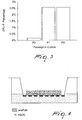
- the test was performed for ADSC obtained from patients of both sexes, aged between 25 and 50 years and at different passages ( Figure 3 ).
- CFU-f allowed to demonstrate the capacity of the ADSC to form clones and therefore to self-renew in culture.
- the ADSC are subjected to immunophenotype analysis by means of a cytofluorimeter in order to verify the presence of ADSC markers recognized by the international literature.
- the ADSC are treated with different antibodies for 30 minutes at + 4°C.
- the results are then read, and they will indicate the presence or not of the antigens on the ADSC, by means of a cell sorter.
- the test was performed, in this case also, for ADSC obtained from patients of both sexes, aged between 25 and 50 years and at different passages.
- ADSC have a immunophenotype profile that is very similar to the one observed in bone marrow-derived mesenchymal stem cells (hBM-MSC), because they are positive to mesenchymal markers such as CD73, CD90, CD105, CD146, and negative for hematopoietic markers (CD45).
- hBM-MSC bone marrow-derived mesenchymal stem cells
- fibroblasts cells of mesenchymal origin that are responsible for the formation of the matrix of connective tissue and represent the main cell type present in the dermis, were used as cell population with which to compare the ADSC.
- the fibroblasts were obtained from healthy skin harvested by punch biopsy. The piece, placed in a sterile Petri dish, is treated according to the method originally described by Rheinwald and Green.
- the adipose tissue is eliminated from the skin by using sterile forceps and scissors.
- the piece is then cut into smaller fragments and disinfected by means of two passes in 70% alcohol and two passes in PBS (Phosphate Buffered Saline) buffer.
- the fragments were then immersed in DMEM medium, with the addition of PSA (1%), and subsequently placed in refrigerator at 4°C for at least 2 hours (in order to reduce any possible bacterial charge).
- the tissue was transferred in Dispase (collagenase IV) for the whole night at 4°C, in order to separate the epidermis from the dermis at the level of the lamina lucida.
- the dermis was further fragmented into small pieces, which were subsequently transferred in an F25 flask (25 cm 2) with 1 ml of DMEM culture medium with the addition of 10% fetal bovine serum, 4 mM glutamine, 50 ID/ml PSA, so that the fragments of dermis could remain well attached to the plastic.
- the flask is kept initially for three days in incubator without changing the medium, which was subsequently changed every 48 hours.
- the fragments of dermis are not taken from the flask until the fibroblasts begin to expand from the dermis, one week after seeding.
- ADSC cultures in the scaffold proved themselves morphologically and functionally (capacity to produce extracellular substance, as defined herein) similar to human fibroblasts.
- karyotype analysis was performed at different passages. After trypsinization and centrifugation, the ADSC in suspension are stimulated to mitosis by phytohemagglutinin (PHA) and halted in the mitotic metaphase with colchicine. The cells are subjected to osmotic lysis in a suitable buffer solution and the metaphase plates are isolated. The chromosomes are then stained with the banding method. The metaphase plates are finally photographed.
- Karyotype analysis at different passages of the ADSC proved the absence of chromosome anomalies of these cells after various passages in culture (passage 1 and passage 3).
- the matrix (or scaffold) used is a system constituted by a porous three-dimensional matrix of biological material (for example collagen fibers) that can be reabsorbed completely over time.
- the matrix must ensure the replication and growth of the ADSC seeded in it, must be constituted by a material that is sufficiently rigid and resistant so as to be easily transported and applied in the graft site and must not cause inflammatory reactions by the host.
- a suitable scaffold is, for example, the one currently marketed with the name INTEGRA®.
- This scaffold is constituted by a porous matrix composed of reticulated collagen fibers, obtained from bovine tendon, and by a glycosaminoglycan (such as chondroitin-6-sulfate), produced with controlled porosity and defined degradation rate.
- the matrix used must be sterile and possibly kept in a phosphate buffer at +2°C.
- the method for the production of cellularized dermal substitute entails the seeding of the ADSC inside the scaffold and keeping the cellularized scaffold at the air-culture medium interface (for example on multiwell dishes with 6 wells of the Transwell type).
- the scaffold is rested on a grid-like support and the cells are kept in direct contact with the atmosphere (see Figure 4 ).
- the morphologic and architectural characteristics of the dermis that will develop can be overlapped on those of in vivo dermis.
- the ADSC will arrange themselves in the porous structure of the scaffold mimicking a three-dimensionality function that is essential for adequate tissue reparation.
- the dermal substitute is kept in the complete culture medium, substituted every other day, for a period of 3 weeks at 37°C, 5%CO 2 .
- the matrix is cut and arranged inside a Petri capsule with physiological solution for 15 minutes. Then it is moved into a new Petri capsule that contains a solution of Hank's Balance Solution and 1% of PSA for 1 hour at 37°C, 5% CO 2 .
- the method for seeding the ADSC inside the matrix entails that after trypsinization and centrifugation, the ADSC at passage P1 or P2 are counted and seeded in number of 400,000/cm 2 , resuspended in complete culture medium. This cell suspension is then distributed on the surface of the scaffold, dried on sterile gauze and arranged on the surface of the grid for emerged growth (for example Transwell surface).
- the cellularized dermal substitute can be studied by histology and immunohistochemistry.
- the samples are fixed in formalin buffered at 4%, included in paraffin and cut with a microtome.
- preparations for immunohistochemistry the samples are frozen and subsequently cut with a cryostat to a thickness of 4 ⁇ m.
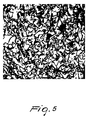
- the sections are stained with hematoxylin-eosin in order to highlight the morphology of the tissue ( Figure 5 ).
- hematoxylin-eosin in order to highlight the morphology of the tissue ( Figure 5 ).
- the sections are also used for immunohistochemical analysis of the main proteins that constitute the extracellular matrix of the connective tissue by means of anti-collagen I antibodies, collagen III and fibronectin of human origin.
- the immunohistochemical investigation highlights the presence of collagen fibers and fibronectin of human origin newly deposited among the collagen fibers of bovine origin that constitute the scaffold.
- the cellularized scaffold was kept in culture with the following medium containing Dulbecco's Modified Eagle Medium/Ham's F12 (with 3:1 ratio) 20% fetal bovine serum (FBS) 1% penicillin/streptomycin/amphotericin antibiotic 2% glutamine 10 ng/ml basic fibroblast growth factor (bFGF) 250 ⁇ M ascorbic acid.
- Dulbecco's Modified Eagle Medium/Ham's F12 with 3:1 ratio
- 20% fetal bovine serum (FBS) 1% penicillin/streptomycin/amphotericin antibiotic 2% glutamine 10 ng/ml basic fibroblast growth factor (bFGF) 250 ⁇ M ascorbic acid.
- FBS fetal bovine serum
- bFGF basic fibroblast growth factor
- the cells are kept in culture for 30 days at 37°C, 5%CO 2 .
- the quantity of extracellular matrix produced can be studied by histology (hematoxylin-eosin; Masson's trichrome and Alcian Blue) and immunohistochemistry (with human anti-collagen I, human anti-collagen III and human anti-fibronectin antibodies).
- histology hematoxylin-eosin; Masson's trichrome and Alcian Blue
- immunohistochemistry with human anti-collagen I, human anti-collagen III and human anti-fibronectin antibodies.
- the cellularized scaffold was treated with a specific differentiating culture medium capable of inducing the differentiation of stem/stromal/ mesenchymal cells in osteoblasts.
- the cells were seeded in the scaffold as described previously at a concentration of 40,000 cells/cm 2 . Then an osteogenic differentiation treatment was performed by means of differentiating medium (composed of DMEM/F12, 10% FBS, 1% PSA, 10 ⁇ M p-glycerophosphate, 10 nM Dexamethasone, 0.25 mM Ascorbic Acid) for 21 days.
- differentiating medium composed of DMEM/F12, 10% FBS, 1% PSA, 10 ⁇ M p-glycerophosphate, 10 nM Dexamethasone, 0.25 mM Ascorbic Acid
- VECs vascular endothelial cells
- EBM-2 Cambrex
- the SVFs are seeded at a density of 20,000 cells/cm 2 and cultured with this medium for 10 days; the medium is changed every 3 days.
- the SVFs are generally cultured with a medium that contains Dulbecco's Modified Eagle Medium/Ham's F12 (DMEM/F12 with 3:1 ratio), 20% fetal bovine serum (FBS), 1% penicillin/streptomycin/amphotericin B antibiotic, 2% glutamine, 10 ng/ml bFGF.
- DMEM/F12 Dulbecco's Modified Eagle Medium/Ham's F12
- FBS fetal bovine serum
- penicillin/streptomycin/amphotericin B antibiotic 2% glutamine
- 10 ng/ml bFGF 10 ng/ml bFGF.
- the SVFs were cultured with the EGM2 medium (medium commercially available for the growth of vascular endothelial cells). It has been observed that cells cultured with this medium reach confluence faster and appear to be more compact with larger nuclei than the cells cultured in DMEM. A cell proliferation assay enables to confirm this data item observed only morphologically.
- the cells were seeded in coverslip inside multiwell dishes with 6 wells and were differentiated with EGM2. 10 days later the cells are washed with PBS and fixed with methanol for 5 minutes. The cells are washed again with PBS and treated with a permeabilizing agent, Triton X100, 0.05% for 8 minutes. After a further washing in PBS the cells are incubated with 5% of serum for 1 hour and then incubated with the following antibodies for 1 hour:
- the cells are then incubated with the fluorescent secondary antibody while the nuclei are stained with DAPI.
- the cells are observed with a fluorescence microscope.
- endothelial markers CD31, CD34 are positive, and negative for CD45, proving that SVF cells cultured after 10 days with EGM2 differentiate and assume the characteristics of vascular endothelial cells (VECs).
- the nuclei are stained with DAPI.
- the VECs are seeded (400,000 cells/cm 2 ) first inside the scaffold, a biocompatible matrix, at the air-culture medium interface and are kept in culture with EGM2 medium for a further 3 days.
- the ADSC (400,000 cells/cm 2 ), cultured previously with a medium containing Dulbecco's Modified Eagle Medium/ Ham's F12 (DMEM/F12 with 3:1 ratio), 20% fetal bovine serum (FBS), 1% penicillin/streptomycin/amphotericin B antibiotic, 2% glutamine, 10 ng/ml bFGF, are added inside the same scaffold in which the VECs had been seeded.
- DMEM/F12 with 3:1 ratio 20% fetal bovine serum
- FBS fetal bovine serum
- penicillin/streptomycin/amphotericin B antibiotic 2% glutamine, 10 ng/ml bFGF
- ADSC and VECs are kept in culture together inside the scaffold for three weeks in a medium containing Dulbecco's Modified Eagle Medium/Ham's F12 (DMEM/F12 with 3:1 ratio), 20% fetal bovine serum (FBS), 1% penicillin/streptomycin/amphotericin B antibiotic, 2% glutamine, 10 ng/ml bFGF with the addition of 250 ⁇ M ascorbic acid.
- DMEM/F12 with 3:1 ratio Dulbecco's Modified Eagle Medium/Ham's F12
- FBS fetal bovine serum
- penicillin/streptomycin/amphotericin B antibiotic 2% glutamine
- 10 ng/ml bFGF with the addition of 250 ⁇ M ascorbic acid.
Landscapes
- Health & Medical Sciences (AREA)
- Life Sciences & Earth Sciences (AREA)
- Chemical & Material Sciences (AREA)
- Engineering & Computer Science (AREA)
- Biomedical Technology (AREA)
- Medicinal Chemistry (AREA)
- General Health & Medical Sciences (AREA)
- Dermatology (AREA)
- Cell Biology (AREA)
- Organic Chemistry (AREA)
- Zoology (AREA)
- Chemical Kinetics & Catalysis (AREA)
- Veterinary Medicine (AREA)
- Public Health (AREA)
- Oral & Maxillofacial Surgery (AREA)
- Transplantation (AREA)
- Epidemiology (AREA)
- Animal Behavior & Ethology (AREA)
- Urology & Nephrology (AREA)
- Wood Science & Technology (AREA)
- Genetics & Genomics (AREA)
- Botany (AREA)
- Bioinformatics & Cheminformatics (AREA)
- Polymers & Plastics (AREA)
- Biotechnology (AREA)
- General Engineering & Computer Science (AREA)
- Biochemistry (AREA)
- Developmental Biology & Embryology (AREA)
- Microbiology (AREA)
- Biophysics (AREA)
- Hematology (AREA)
- Pharmaceuticals Containing Other Organic And Inorganic Compounds (AREA)
- Organic Low-Molecular-Weight Compounds And Preparation Thereof (AREA)
- Micro-Organisms Or Cultivation Processes Thereof (AREA)
- Materials For Medical Uses (AREA)
- Medicines Containing Material From Animals Or Micro-Organisms (AREA)
Applications Claiming Priority (1)
| Application Number | Priority Date | Filing Date | Title |
|---|---|---|---|
| IT000601A ITMI20100601A1 (it) | 2010-04-09 | 2010-04-09 | "nuovo sostituto dermico e sua applicazione terapeutica" |
Publications (1)
| Publication Number | Publication Date |
|---|---|
| EP2374485A1 true EP2374485A1 (de) | 2011-10-12 |
Family
ID=42647405
Family Applications (1)
| Application Number | Title | Priority Date | Filing Date |
|---|---|---|---|
| EP11425098A Withdrawn EP2374485A1 (de) | 2010-04-09 | 2011-04-11 | Neuer Hautgewebe-Ersatz und dessen therapeutische Verwendung |
Country Status (2)
| Country | Link |
|---|---|
| EP (1) | EP2374485A1 (de) |
| IT (1) | ITMI20100601A1 (de) |
Cited By (12)
| Publication number | Priority date | Publication date | Assignee | Title |
|---|---|---|---|---|
| ITGE20120084A1 (it) * | 2012-08-24 | 2014-02-25 | Carlo Tremolada | Derivato tissutale di origine non embrionale arricchito di elementi staminali e multipotenti e metodo di preparazione di un medicamento con tale derivato |
| WO2015058318A1 (es) * | 2013-10-22 | 2015-04-30 | Universidad De Chile | Composición para acelerar o mejorar la cicatrización en heridas, y un método para acelerar o mejorar la cicatrización en heridas que comprende aplicar dicha composición |
| WO2015174871A1 (en) * | 2014-05-16 | 2015-11-19 | Stemmatters, Biotecnologia E Medicina Regenerativa Sa | Isolation of adipose derived cells |
| EP3090764A1 (de) | 2015-05-08 | 2016-11-09 | Université Catholique De Louvain | Zusammensetzungen mit mesenchymalen stammzellen und verwendungen davon |
| EP3092989A4 (de) * | 2014-01-10 | 2017-08-02 | Anterogen Co., Ltd. | Biologisch abbaubare oder nicht biologisch abbaubare zusammensetzung aus mesenchymalen stammzellen und hydrogel zur unterstützung der hautregeneration oder wundheilung |
| CN105497048B (zh) * | 2015-12-17 | 2018-05-04 | 西北农林科技大学 | 一种蛋白聚糖抗生素复合物的制备及其应用 |
| CN108187142A (zh) * | 2018-01-31 | 2018-06-22 | 广州沙艾生物科技有限公司 | 一种干细胞在生物组织修复中的应用 |
| CN112553154A (zh) * | 2020-12-24 | 2021-03-26 | 南京农业大学 | 一种用于维持脂肪间充质干细胞功能的改良增殖培养基 |
| EP3747478A4 (de) * | 2018-01-31 | 2021-10-27 | Rokit Healthcare Inc. | Biotintenzusammensetzung für hautregenerationsfolie, verfahren zur herstellung einer personalisierten hautregenerationsfolie damit und nach dem herstellungsverfahren hergestellte personalisierte hautregenerationsfolie |
| CN115518193A (zh) * | 2022-09-23 | 2022-12-27 | 青岛大学 | 一种鱼皮胶原蛋白/svf光交联复合水凝胶及其制备方法与应用 |
| WO2023074814A1 (ja) * | 2021-10-29 | 2023-05-04 | 凸版印刷株式会社 | 組織体の製造方法及びヒト由来の脂肪由来幹細胞の血管内皮細胞への分化促進方法 |
| US12186449B2 (en) | 2018-05-03 | 2025-01-07 | Collplant Ltd. | Dermal fillers and applications thereof |
Families Citing this family (1)
| Publication number | Priority date | Publication date | Assignee | Title |
|---|---|---|---|---|
| ITMI20100601A1 (it) | 2010-04-09 | 2011-10-10 | Luisa Benassi | "nuovo sostituto dermico e sua applicazione terapeutica" |
Citations (2)
| Publication number | Priority date | Publication date | Assignee | Title |
|---|---|---|---|---|
| WO1997041208A1 (en) * | 1996-04-26 | 1997-11-06 | Case Western Reserve University | Skin regeneration using mesenchymal stem cells |
| ITMI20100601A1 (it) | 2010-04-09 | 2011-10-10 | Luisa Benassi | "nuovo sostituto dermico e sua applicazione terapeutica" |
-
2010
- 2010-04-09 IT IT000601A patent/ITMI20100601A1/it unknown
-
2011
- 2011-04-11 EP EP11425098A patent/EP2374485A1/de not_active Withdrawn
Patent Citations (2)
| Publication number | Priority date | Publication date | Assignee | Title |
|---|---|---|---|---|
| WO1997041208A1 (en) * | 1996-04-26 | 1997-11-06 | Case Western Reserve University | Skin regeneration using mesenchymal stem cells |
| ITMI20100601A1 (it) | 2010-04-09 | 2011-10-10 | Luisa Benassi | "nuovo sostituto dermico e sua applicazione terapeutica" |
Non-Patent Citations (8)
| Title |
|---|
| BASAK E. UYGUN ET AL: "Effects of Immobilized Glycosaminoglycans on the Proliferation and Differentiation of Mesenchymal Stem Cells", TISSUE ENGINEERING PART A, vol. 15, no. 11, 1 November 2009 (2009-11-01), pages 3499 - 3512, XP055041004, ISSN: 1937-3341, DOI: 10.1089/ten.tea.2008.0405 * |
| CHEN MING ET AL: "Stem cells for skin tissue engineering and wound healing.", CRITICAL REVIEWS IN BIOMEDICAL ENGINEERING 2009 LNKD- PUBMED:20528733, vol. 37, no. 4-5, 2009, pages 399 - 421, ISSN: 0278-940X * |
| HUH C H ET AL: "Effects of mesenchymal stem cells in the reconstruction of skin equivalents", JOURNAL OF DERMATOLOGICAL SCIENCE, ELSEVIER SCIENCE PUBLISHERS, SHANNON, IE, vol. 46, no. 3, 1 June 2007 (2007-06-01), pages 217 - 220, XP027006547, ISSN: 0923-1811, [retrieved on 20070420] * |
| KIM W ET AL: "Mesenchymal Stem Cells Augment Wound VEGF Content, Blood Flow, and Increase Tensile Strength", JOURNAL OF SURGICAL RESEARCH, ACADEMIC PRESS INC., SAN DIEGO, CA, US, vol. 158, no. 2, 1 February 2010 (2010-02-01), pages 206 - 207, XP026868066, ISSN: 0022-4804, [retrieved on 20100121] * |
| MA K ET AL: "Differentiation of bone marrow-derived mesenchymal stem cells into multi-layered epidermis-like cells in 3D organotypic coculture", BIOMATERIALS, ELSEVIER SCIENCE PUBLISHERS BV., BARKING, GB LNKD- DOI:10.1016/J.BIOMATERIALS.2009.02.025, vol. 30, no. 19, 1 July 2009 (2009-07-01), pages 3251 - 3258, XP026097991, ISSN: 0142-9612, [retrieved on 20090313] * |
| MADONNA ROSALINDA ET AL: "In vitro neovasculogenic potential of resident adipose tissue precursors", AMERICAN JOURNAL OF PHYSIOLOGY. CELL PHYSIOLOGY, AMERICAN PHYSIOLOGICAL SOCIETY, US, vol. 295, no. 5, 1 November 2008 (2008-11-01), pages C1271 - C1280, XP002592954, ISSN: 0363-6143, [retrieved on 20090911] * |
| SZILAGYI E, DOUGLAS GW, MENESES P, RUTZ D, UJDA K, ACOSTA A, KIM W, KRAMER D, SEARS M DIPIETRO L, ENNIS W, BARTHOLOMEW A: "ACTIVATED MESENCHYMAL STEM CELLS FOR THE PREVENTION AND REPAIR OF INFLAMMATORY STATES", ADVANCES IN TISSUE REGENERATION SYMPOSIUM, 24 March 2010 (2010-03-24), Retrieved from the Internet <URL:http://tigger.uic.edu/depts/ovcr/research/stemcell/events/abstracts3-24-10/Szilagyi_E%20.pdf> [retrieved on 20121015] * |
| TROTTIER VALERIE ET AL: "IFATS Collection: Using Human Adipose-Derived Stem/Stromal Cells for the Production of New Skin Substitutes", STEM CELLS (MIAMISBURG), vol. 26, no. 10, 2008, pages 2713 - 2723, XP002604955, ISSN: 1066-5099 * |
Cited By (16)
| Publication number | Priority date | Publication date | Assignee | Title |
|---|---|---|---|---|
| ITGE20120084A1 (it) * | 2012-08-24 | 2014-02-25 | Carlo Tremolada | Derivato tissutale di origine non embrionale arricchito di elementi staminali e multipotenti e metodo di preparazione di un medicamento con tale derivato |
| WO2015058318A1 (es) * | 2013-10-22 | 2015-04-30 | Universidad De Chile | Composición para acelerar o mejorar la cicatrización en heridas, y un método para acelerar o mejorar la cicatrización en heridas que comprende aplicar dicha composición |
| EP3092989A4 (de) * | 2014-01-10 | 2017-08-02 | Anterogen Co., Ltd. | Biologisch abbaubare oder nicht biologisch abbaubare zusammensetzung aus mesenchymalen stammzellen und hydrogel zur unterstützung der hautregeneration oder wundheilung |
| WO2015174871A1 (en) * | 2014-05-16 | 2015-11-19 | Stemmatters, Biotecnologia E Medicina Regenerativa Sa | Isolation of adipose derived cells |
| JP2018515211A (ja) * | 2015-05-08 | 2018-06-14 | ウニベルシテ カソリーク デ ルーベン | 間葉系幹細胞を含む組成物およびその使用 |
| WO2016180789A1 (en) | 2015-05-08 | 2016-11-17 | Université Catholique de Louvain | Compositions comprising mesenchymal stem cells and uses thereof |
| CN107810014A (zh) * | 2015-05-08 | 2018-03-16 | 卢万天主教大学 | 包含间充质干细胞的组合物及其用途 |
| EP3090764A1 (de) | 2015-05-08 | 2016-11-09 | Université Catholique De Louvain | Zusammensetzungen mit mesenchymalen stammzellen und verwendungen davon |
| RU2758468C2 (ru) * | 2015-05-08 | 2021-10-28 | Университе Католик Де Лувен | Композиция, содержащая биосовместимый матрикс, способ получения композиции |
| CN105497048B (zh) * | 2015-12-17 | 2018-05-04 | 西北农林科技大学 | 一种蛋白聚糖抗生素复合物的制备及其应用 |
| CN108187142A (zh) * | 2018-01-31 | 2018-06-22 | 广州沙艾生物科技有限公司 | 一种干细胞在生物组织修复中的应用 |
| EP3747478A4 (de) * | 2018-01-31 | 2021-10-27 | Rokit Healthcare Inc. | Biotintenzusammensetzung für hautregenerationsfolie, verfahren zur herstellung einer personalisierten hautregenerationsfolie damit und nach dem herstellungsverfahren hergestellte personalisierte hautregenerationsfolie |
| US12186449B2 (en) | 2018-05-03 | 2025-01-07 | Collplant Ltd. | Dermal fillers and applications thereof |
| CN112553154A (zh) * | 2020-12-24 | 2021-03-26 | 南京农业大学 | 一种用于维持脂肪间充质干细胞功能的改良增殖培养基 |
| WO2023074814A1 (ja) * | 2021-10-29 | 2023-05-04 | 凸版印刷株式会社 | 組織体の製造方法及びヒト由来の脂肪由来幹細胞の血管内皮細胞への分化促進方法 |
| CN115518193A (zh) * | 2022-09-23 | 2022-12-27 | 青岛大学 | 一种鱼皮胶原蛋白/svf光交联复合水凝胶及其制备方法与应用 |
Also Published As
| Publication number | Publication date |
|---|---|
| ITMI20100601A1 (it) | 2011-10-10 |
Similar Documents
| Publication | Publication Date | Title |
|---|---|---|
| EP2374485A1 (de) | Neuer Hautgewebe-Ersatz und dessen therapeutische Verwendung | |
| Mazlyzam et al. | Reconstruction of living bilayer human skin equivalent utilizing human fibrin as a scaffold | |
| KR101495281B1 (ko) | 피부 재생 또는 상처 치유를 위한 중간엽 줄기세포-하이드로겔-생분해성 또는 중간엽 줄기세포-하이드로겔-비분해성 지지체 조성물 | |
| JP3808900B2 (ja) | 結合組織細胞に部分的又は完全に分化した骨髄幹細胞の有効培養物及びヒアルロン酸誘導体より成る三次元の生体親和性で且つ生分解性のマトリックスから構成される生物学的物質 | |
| JP6449220B2 (ja) | 毛包新生 | |
| EP1639099B1 (de) | Verfahren zur isolierung von zellen aus der nabelschnur | |
| EP2471902B1 (de) | Herstellung künstlicher gewebe durch gewebe-engineering mit agarose-fibrin-biomaterialien | |
| US7419661B2 (en) | Dermal sheath tissue in wound healing | |
| CN108685948B (zh) | 一种医用细胞修复剂的制备方法 | |
| JP2017525438A (ja) | 組織移植片 | |
| CN111826340A (zh) | 一种抗皮肤衰老的鹿茸干细胞外泌体的制备方法及其应用 | |
| WO2007117565A9 (en) | Standardization of processes for culturing primary cells | |
| US9592257B2 (en) | Complete human skin organ generated from culture-expanded cells | |
| JP6958939B2 (ja) | 凍結保存用組成物、凍結保存物の製造方法、細胞製剤、細胞製剤の製造方法、凍結保存用キット | |
| PT103843B (pt) | Método de isolamento de células precursoras a partir do cordão umbilical humano | |
| Sanluis-Verdes et al. | Production of an acellular matrix from amniotic membrane for the synthesis of a human skin equivalent | |
| Jiang et al. | Using human epithelial amnion cells in human de-epidermized dermis for skin regeneration | |
| US20170182221A1 (en) | Methods Of Producing Tissue-Mimetic Constructs And Uses Thereof | |
| CN110507597A (zh) | 一种组合物及其制备方法、应用 | |
| CN107254431B (zh) | 一种新型组织工程皮肤制备方法 | |
| Hassanzadeh et al. | Using paracrine effects of Ad-MSCs on keratinocyte cultivation and fabrication of epidermal sheets for improving clinical applications | |
| EP0980270B1 (de) | Dermales hüllgewebe in der wundheilung | |
| US12234478B2 (en) | Method of autologous primary hair follicles preparation in 3D culture | |
| JP6839003B2 (ja) | 再構成頭皮モデルおよび活性分子のスクリーニング方法 | |
| CN102552323B (zh) | 加速皮肤修复与再生的药物及其制备方法和应用 |
Legal Events
| Date | Code | Title | Description |
|---|---|---|---|
| PUAI | Public reference made under article 153(3) epc to a published international application that has entered the european phase |
Free format text: ORIGINAL CODE: 0009012 |
|
| AK | Designated contracting states |
Kind code of ref document: A1 Designated state(s): AL AT BE BG CH CY CZ DE DK EE ES FI FR GB GR HR HU IE IS IT LI LT LU LV MC MK MT NL NO PL PT RO RS SE SI SK SM TR |
|
| AX | Request for extension of the european patent |
Extension state: BA ME |
|
| 17P | Request for examination filed |
Effective date: 20120411 |
|
| 17Q | First examination report despatched |
Effective date: 20121023 |
|
| STAA | Information on the status of an ep patent application or granted ep patent |
Free format text: STATUS: THE APPLICATION IS DEEMED TO BE WITHDRAWN |
|
| 18D | Application deemed to be withdrawn |
Effective date: 20130503 |