EP2375193A2 - Klimaanlage und Steuerungsverfahren dafür - Google Patents
Klimaanlage und Steuerungsverfahren dafür Download PDFInfo
- Publication number
- EP2375193A2 EP2375193A2 EP10188151A EP10188151A EP2375193A2 EP 2375193 A2 EP2375193 A2 EP 2375193A2 EP 10188151 A EP10188151 A EP 10188151A EP 10188151 A EP10188151 A EP 10188151A EP 2375193 A2 EP2375193 A2 EP 2375193A2
- Authority
- EP
- European Patent Office
- Prior art keywords
- oil
- compressor
- compressors
- level
- preset level
- Prior art date
- Legal status (The legal status is an assumption and is not a legal conclusion. Google has not performed a legal analysis and makes no representation as to the accuracy of the status listed.)
- Granted
Links
Images


Classifications
-
- F—MECHANICAL ENGINEERING; LIGHTING; HEATING; WEAPONS; BLASTING
- F25—REFRIGERATION OR COOLING; COMBINED HEATING AND REFRIGERATION SYSTEMS; HEAT PUMP SYSTEMS; MANUFACTURE OR STORAGE OF ICE; LIQUEFACTION SOLIDIFICATION OF GASES
- F25B—REFRIGERATION MACHINES, PLANTS OR SYSTEMS; COMBINED HEATING AND REFRIGERATION SYSTEMS; HEAT PUMP SYSTEMS
- F25B43/00—Arrangements for separating or purifying gases or liquids; Arrangements for vaporising the residuum of liquid refrigerant, e.g. by heat
- F25B43/02—Arrangements for separating or purifying gases or liquids; Arrangements for vaporising the residuum of liquid refrigerant, e.g. by heat for separating lubricants from the refrigerant
-
- F—MECHANICAL ENGINEERING; LIGHTING; HEATING; WEAPONS; BLASTING
- F25—REFRIGERATION OR COOLING; COMBINED HEATING AND REFRIGERATION SYSTEMS; HEAT PUMP SYSTEMS; MANUFACTURE OR STORAGE OF ICE; LIQUEFACTION SOLIDIFICATION OF GASES
- F25B—REFRIGERATION MACHINES, PLANTS OR SYSTEMS; COMBINED HEATING AND REFRIGERATION SYSTEMS; HEAT PUMP SYSTEMS
- F25B31/00—Compressor arrangements
- F25B31/002—Lubrication
- F25B31/004—Lubrication oil recirculating arrangements
-
- F—MECHANICAL ENGINEERING; LIGHTING; HEATING; WEAPONS; BLASTING
- F25—REFRIGERATION OR COOLING; COMBINED HEATING AND REFRIGERATION SYSTEMS; HEAT PUMP SYSTEMS; MANUFACTURE OR STORAGE OF ICE; LIQUEFACTION SOLIDIFICATION OF GASES
- F25B—REFRIGERATION MACHINES, PLANTS OR SYSTEMS; COMBINED HEATING AND REFRIGERATION SYSTEMS; HEAT PUMP SYSTEMS
- F25B2400/00—Component parts or details not otherwise provided for in this subclass
- F25B2400/06—Several compression cycles arranged in parallel
-
- F—MECHANICAL ENGINEERING; LIGHTING; HEATING; WEAPONS; BLASTING
- F25—REFRIGERATION OR COOLING; COMBINED HEATING AND REFRIGERATION SYSTEMS; HEAT PUMP SYSTEMS; MANUFACTURE OR STORAGE OF ICE; LIQUEFACTION SOLIDIFICATION OF GASES
- F25B—REFRIGERATION MACHINES, PLANTS OR SYSTEMS; COMBINED HEATING AND REFRIGERATION SYSTEMS; HEAT PUMP SYSTEMS
- F25B2400/00—Component parts or details not otherwise provided for in this subclass
- F25B2400/07—Details of compressors or related parts
- F25B2400/075—Details of compressors or related parts with parallel compressors
-
- F—MECHANICAL ENGINEERING; LIGHTING; HEATING; WEAPONS; BLASTING
- F25—REFRIGERATION OR COOLING; COMBINED HEATING AND REFRIGERATION SYSTEMS; HEAT PUMP SYSTEMS; MANUFACTURE OR STORAGE OF ICE; LIQUEFACTION SOLIDIFICATION OF GASES
- F25B—REFRIGERATION MACHINES, PLANTS OR SYSTEMS; COMBINED HEATING AND REFRIGERATION SYSTEMS; HEAT PUMP SYSTEMS
- F25B2500/00—Problems to be solved
- F25B2500/16—Lubrication
-
- F—MECHANICAL ENGINEERING; LIGHTING; HEATING; WEAPONS; BLASTING
- F25—REFRIGERATION OR COOLING; COMBINED HEATING AND REFRIGERATION SYSTEMS; HEAT PUMP SYSTEMS; MANUFACTURE OR STORAGE OF ICE; LIQUEFACTION SOLIDIFICATION OF GASES
- F25B—REFRIGERATION MACHINES, PLANTS OR SYSTEMS; COMBINED HEATING AND REFRIGERATION SYSTEMS; HEAT PUMP SYSTEMS
- F25B2700/00—Sensing or detecting of parameters; Sensors therefor
- F25B2700/03—Oil level
Definitions
- the present invention relates to an operating method for an air conditioner.
- a compressor is provided with a drive motor for generating a driving force in the internal space of a container, together with a compression unit for compressing refrigerant while operating in combination with the drive motor.
- the compressor may be divided into a reciprocating type, a scroll type, a rotary type, vibration type, and the like, depending on how to compress refrigerant.
- the reciprocating type, scroll type, and rotary type are based on the method of using a rotary motion of the drive motor, but the vibration type is based on the method of using a reciprocating motion of the drive motor.
- the drive motor of a compressor using a rotary motion in the foregoing compressor is provided with a crankshaft, thereby transferring a rotary motion of the drive motor to the compression unit.
- the drive motor of the rotary-type compressor (hereinafter, referred to as "rotary compressor”) may include a stator fixed to the container, a rotor inserted in the stator with a predetermined gap to rotate in interaction with the stator, a crankshaft combined with the rotor to transfer a rotary motion of the rotor to the compression unit.
- the compression unit may include a compression unit combined with the crankshaft to inhale, compress, and discharge refrigerant while rotating inside a cylinder, and a plurality of bearing members forming a compression space together with the cylinder while supporting the compression unit.
- the compressor having the foregoing structure, compression is made while rotating the compression unit by a rotary motion generated by the driving unit, and the compressor is provided with an oil supply means for supplying oil to the compression unit and driving unit thereof to facilitate the rotation of the compression unit and easily dissipate heat generated during the process of operating the driving unit.
- an oil supply means is typically provided at a lower end portion of the crankshaft, and oil stored in a lower portion of the container is pumped through an oil flow path formed inside the crankshaft by the rotation of the crankshaft and supplied to each component inside the compressor.
- the air conditioner cannot work as a cooling or heating system while performing the oil return operation, the short-intervaled oil return operation is ineffective in the aspect of energy consumption and may increase inconvenience
- the object of the invention is to provide an operating method for an air conditioner with multiple compressors which may minimize the time to perform the oil collection operation.
- an operating method may be provided for an air conditioner, which may include a plurality of compressors, each of which may include a casing that may store oil in an inner lower portion thereof and an oil level detecting device that detects the oil level within the casing; at least one first heat exchanger that intakes a working fluid from the plurality of compressors; at least one expansion unit; at least one second heat exchanger, through which the working fluid may pass after the first heat exchanger; a first suction pipe, to which the working fluid flows from the first or second heat exchanger; and a plurality of second suction pipes, which may be branched out from the first suction pipe and connected to each of the compressors.
- the method may include detecting an oil level of each of the compressors; distributing the oil in the compressor containing oil over a desired level preset for each compressor toward the compressor containing oil lower than a desired level preset for each compressor via the first and the second suction pipes without passing through the first and the second heat exchanger; and performing an oil collecting operation in a case in which there may be a compressor containing oil lower than a desired level preset for each compressor after performing the distributing.
- the oil may be supplied to the compressors with a relatively lower oil level from a compressor with a relatively higher oil level without performing an oil collecting operation. Therefore, it may be possible to supply oil to the compressor without stopping normal operation of the air conditioner, which may minimize a number of the oil collecting operations.
- the distributing may be performed for a predetermined period or until all of the compressors have the desired oil level. However, there may be a limit as to an amount of time necessary to distribute the oil when there is not enough oil in the compressors to fill each compressor to a respective desired level preset for each compressor with the oil from another compressor.
- the oil collecting operation may be performed prior to the distributing when a number of the compressors containing oil lower than a desired level preset for each compressor is more than a predetermined number. For example, when there is not enough oil in the compressors to fill each compressor to a desired level preset for each compressor with the oil supply between the compressors, the oil distributing process may be cancelled, and then the oil collecting operation may proceed.
- a first oil return pipe may be included that connects an inside of the casing of each compressor to the first suction pipe, and the oil in the compressor containing oil over a desired level preset for each compressor may be supplied to the first suction pipe via the first oil return pipe during the distributing.
- the oil supplied to the first suction pipe may be distributed to each of the compressors via the second suction pipe, and by performing such steps repeatedly, the oil level in each of the compressors may remain over a desired level preset for each compressor.
- the first oil return pipe of the compressor containing oil lower than a desired level preset for each compressor may remain closed during the distributing. Accordingly, the oil level may be recovered quickly to the desired level since the oil in the compressor containing oil lower than a desired level preset for each compressor may not be collected from the compressor.
- At least one oil separator with a second oil return pipe that connects the oil separator and the first suction pipe may be included, and the oil collected in the oil separator may be supplied to the first suction pipe via the second oil return pipe.
- the oil separator may separate and store the oil from the mixed working fluid discharged from the compressors, and the oil in the oil separator may be supplied to the compressors to increase the oil level.
- first oil return pipe may be further included, and it may be possible to increase the oil supply to the compressor by connecting both of oil separator and first oil return pipe to the first suction pipe.
- additional oil storing devices for example, an oil reservoir, may be included, and the oil collected from the compressors may be distributed via the oil storing devices.
- an operating method for an air conditioner including a plurality of compressors, each of which may include a casing that stores oil in on inner lower portion thereof, and an oil level detecting device that detects the oil level within the casing; at least one oil storage that stores the oil from the compressors; at least one first heat exchanger that intakes a working fluid from the plurality of compressors; at least one expansion unit; at least one second heat exchanger, through which the working fluid may pass after the first heat exchanger; a first suction pipe, to which the working fluid flows from the first or second heat exchanger; and a plurality of second suction pipes branched from the first suction pipe and connected to each of the compressors.
- the method may include detecting the oil level of each of the compressors and the oil storage; supplying the oil in the oil storage or the compressors containing oil over a desired level preset for each compressor to the compressor containing oil lower than a desired level preset for each compressor; and performing an oil collecting operation when there is a compressor containing oil lower than a desired level preset for each compressor after performing the step of supplying.
- the method may further include performing the oil collecting operation when a number of the compressors containing oil lower than a desired level preset for each compressor is over a predetermined number and the oil level of the oil storage is lower than a desired level for the oil storage.
- the oil in the oil storage may be supplied to the compressor only when the oil level of the oil storage is over the desired level for the oil storage.
- the oil storage may also include at least one oil separator connected to the compressors. Additionally, the supplying may be performed for a predetermined period or until all of the compressors have the desired oil level.
- an operating method for an air conditioner which may include comprise at least one compressor with an oil level detecting device; an oil transferring device that transfers oil among the at least one compressor; a plurality of heat exchangers and an expansion unit that cooperate with the at least one compressor.
- the method may include detecting the oil level of each of the compressors; transferring the oil from the compressors with relatively higher oil level to the compressors with a relatively lower oil level; and performing an oil collecting operation when a number of the compressors with the oil level lower than a desired level preset for each compressor is greater than a predetermined number.
- the method may further include performing the oil collecting operation when a compressor containing oil lower than a desired level preset for each compressor still remains even after transferring the oil for a predetermined time.
- an operating method for an air conditioner, which may include at least one compressor with an oil level detecting unit; at least one oil storage that may stores the oil from the at least one compressor; an oil supplying device that supplies the oil of the oil storage to the at least one compressor; a plurality of heat exchangers and expansion units that cooperate with the at least one compressor.
- the method may include detecting the oil level of each compressor and the oil storage; supplying the oil from a compressor containing oil over a desired level preset for each compressor or the oil storage toward a compressor containing oil lower than a desired level preset for each compressor; and performing an oil collecting operation when a number of the compressors containing oil lower than a desired level preset for each compressor is greater than a predetermined number and the oil level of the oil storage is lower than a desired level for the oil storage.
- the method may further include supplying the oil from the oil storage toward the compressor containing oil lower than a desired level preset for each compressor when the number of the compressors containing oil lower than a desired level preset for each compressor is greater than the predetermined number and the oil level of the oil storage is over the desired level for the oil storage.
- a number of oil collecting operations may be minimized by circulating the oil in the compressors among the other compressors.
- an operating method for an air conditioner including a plurality of compressors, each of which includes a casing that stores oil in an inner lower portion thereof and an oil level detecting device that detects an oil level in the casing; at least one first heat exchanger that intakes a working fluid from the plurality of compressors; at least one expansion device; at least one second heat exchanger, through which the working fluid passes after passing through the at least one first heat exchanger; a first suction pipe, through which the working fluid flows from the at least one first heat exchanger or the at least one second heat exchanger; and a plurality of second suction pipes branched from the first suction pipe and then connected to each of the compressors, wherein the method may include detecting an oil level of each of the plurality of compressors; distributing oil in a first compressor of the plurality of compressors containing oil over a first preset level for the first compressor toward a second compressor of the plurality of compressors containing oil lower than a second preset level for the second compressor
- the preset level of each of the plurality of compressors may be all the same or all different. Alternatively, the preset level of at least two of the plurality of compressors may be the same or different.
- each of the plurality of compressors may include a first oil return pipe that connects the casing of the respective compressor to the first suction pipe, and oil in the respective compressor containing oil over the preset level for the respective compressor may be supplied to the first suction pipe via the first oil return pipe during the distributing. Furthermore, the first oil return pipe connected to a compressor containing oil lower than a preset level for each compressor may remain closed during the distributing.
- the air conditioner may further include at least one oil separator having a second oil return pipe that connects the oil separator and the first suction pipe, and the oil collected in the oil separator may be supplied to the first suction pipe via the second oil return pipe during the step of distributing.
- the at least one oil separator may receive a mixture of oil and working fluid from at least one of the plurality of compressors through an oil discharge pipe.
- the at least one oil separator may also store the oil from the plurality of compressors and, if the number of the plurality of compressors containing oil lower than the preset level for the respective compressor is greater than the predetermined number, the method may further include detecting an oil level of the at least one oil separator; if the oil level of the at least one oil separator is less than a preset level for the at least one oil separator, performing the oil collecting operation; and if the oil level of the at least one oil separator is greater than or equal to the preset level, opening a valve that allows the oil to flow into the compressor containing oil lower than the preset level for the respective compressor.
- the air conditioner may further include a plurality of oil separators, and wherein each of the plurality of compressors may discharge a mixture of oil and working fluid to a respective one of the plurality of oil separators, wherein the distributing may include distributing the oil stored in the at least one oil separator toward the second compressor of the plurality of compressors containing oil lower than the second preset level for the second compressor.
- the air conditioner may further include a first oil return pipe that connects the casing of each compressor to the first suction pipe, and the oil in the respective compressor containing oil over a desired level preset for each compressor and the oil in the oil separator may be supplied to the first suction pipe via the first and the second oil return pipe during the distributing.
- the air conditioner may include at least one oil reservoir that stores the oil from the plurality of compressors and if the number of the plurality of compressors containing oil lower than the preset level for the respective compressor is greater than the predetermined number, the method may further include detecting an oil level of the at least one oil reservoir; if the oil level of the at least one reservoir is less than a preset level for the at least one oil reservoir, performing the oil collecting operation; and if the oil level of the at least one reservoir is greater than or equal to the preset level of the at least one oil reservoir, opening a reservoir valve of the at least one reservoir as part of the distributing.
- Each of the plurality of compressors may include a first oil return pipe that connects the casing of the respective compressor to the at least one oil reservoir, wherein oil in the respective compressor containing oil over the preset level for the respective compressor may be supplied to the at least one oil reservoir via the first oil return pipe.
- the first oil return pipe connected to the compressor containing oil lower than a preset level for each compressor may remain closed during the distributing.
- the at least one oil reservoir may function as an oil separator, wherein the oil separator may receive a mixture of oil and working fluid from at least one of the plurality of compressors through an oil discharge pipe.
- An operating method for an air conditioner may include a plurality of compressors, each having an oil level detecting device, an oil transferring device that transfers oil among the plurality of compressors; and a plurality of heat exchangers and expansion devices that cooperate with the plurality of compressors.
- the method may further include detecting an oil level of each of the plurality of compressors; transferring oil from at least one compressor of the plurality of compressors with a relatively higher oil level to at least one compressor of the plurality of compressors with a relatively lower oil level when a number of the plurality of compressors containing oil lower than the preset level for the respective compressor is less than or equal to a predetermined number; and performing an oil collecting operation if a number of compressors containing oil lower than a preset level for the respective compressor is greater than a predetermined number.
- the method may further include performing the oil collecting operation when a compressor containing oil lower than the preset level is detected after transferring the oil for a predetermined period of time, wherein the transferring may include transferring the oil without passing through the plurality of heat exchangers and expansion devices that cooperate with the plurality of compressors, and closing an oil return pipe connected to the compressor containing oil lower than the preset level for the respective compressor during the transferring.
- An operating method for an air conditioner may include the air conditioner that includes a plurality of compressors, each having an oil level detecting device, an oil transferring device that transfers oil among the plurality of compressors, and a plurality of heat exchangers and expansion devices that cooperate with the plurality of compressors, the method including detecting an oil level of each of the plurality of compressors; transferring oil from at least one compressor of the plurality of compressors with a relatively higher oil level to at least one compressor of the plurality of compressors with a relatively lower oil level when a number of the plurality of compressors containing oil lower than the preset level for the respective compressor is less than or equal to a predetermined number; storing oil from at least one of the plurality of compressors during a normal operation of the air conditioner in at least one oil reservoir or at least one oil separator; detecting an oil level of the at least one oil reservoir or the at least one oil separator when the number of compressors containing oil lower than the preset level for the respective compressor is greater than the predetermined number; performing an oil collecting operation
- the at least one oil reservoir or the at least one oil separator may include at least one oil separator, and wherein the at least one oil separator receives a mixture of oil and working fluid from at least one of the plurality of compressors through an oil discharge pipe.
- the method may further include separating the mixture of oil and working fluid at the at least one oil separator, and storing the separated oil and transferring the separated working fluid to the plurality of heat exchangers and expansion devices that cooperate with the plurality of compressors.
- each of the plurality of compressors may include a valve that controls a flow of the stored oil from the at least one oil separator to each respective compressor, and wherein the method further comprises opening the valve of the compressor containing oil lower than the preset level during the transferring of the stored oil.
- the at least one oil reservoir or the at least one oil separator may include at least one oil reservoir, wherein the at least one oil reservoir may function as an oil separator.
- Each of the plurality of compressors may include a valve that controls a flow of oil in the oil return pipe from each respective compressor to the at least one oil reservoir, and wherein the method may further include closing the valve of the compressor containing oil lower than the preset level during the transferring.
- Each of the plurality of compressors may communicate with a respective one of a plurality of oil separators.
- the at least one oil reservoir may receives oil from at least one of the plurality of compressors through a respective oil return pipe that connects the casing of each compressor to the at least one oil reservoir.
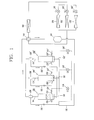
- FIG. 1 is a schematic diagram of an air conditioner having a plurality of compressors according to an embodiment.
- the air conditioner may include a plurality of compressors 100, 100', 100", all of which may have the same structure.
- Each compressor may include a first suction pipe 110, through which refrigerant may flow, and a second suction pipe 112, 112', 112" branched off from the first suction pipe 110 to each respective compressor 100, 100', 100".
- compressed refrigerant may be discharged from each compressor 100, 100', 100" through respective discharge pipes 114, 114', 114".
- Oil may be stored inside the compressor, which may serve to lower friction within the compressor during operation. Further, an oil level detecting sensor 102, 102', 102" that detects the level of the oil may be provided at a lateral surface of each respective compressor.
- a first oil return pipe 120, 120', 120" may also be provided at each compressor, that connects each respective compressor 100, 100', 100" to the first suction pipe 110 to redistribute the oil received from the first oil return pipe 120, 120', 120".
- the first oil return pipes 120, 120', 120” may be provided with capillary tubes 124,124', 124", respectively, that reduce the pressure of oil.
- the first oil return pipes 120, 120', 120” may be provided with solenoid valves 126, 126', 126", respectively, to open or close the first oil return pipes 120, 120', 120".
- the discharge pipes 114, 114', 114", which each discharges a mixture of oil and refrigerant from the respective compressor, may be provided with oil separators 130, 130', 130", respectively.
- the oil separators 130, 130', 130", which separate the discharged oil from the refrigerant, may transfer the separated oil through second oil separators 132, 132', 132", respectively, to the first suction pipe 110.
- the separated refrigerant, and any remaining oil may be discharged from the oil separators 130, 130', 130" to a 4-way valve 140.
- the discharged oil may be separated from the refrigerant by the oil separators 130, 130', 130" and resupplied to the compressors 100, 100', 100" through the first suction pipe 110 and the second suction pipes 112, 112', 112".
- the 4-way valve 140 may include, for example, three discharge ports, which may be connected to an accumulator 180, an outdoor-side heat exchanger 150, and one or more indoor-side heat exchanger(s) 170, 170', 170", respectively.
- the air conditioner may provide either cooling or heating based on a switching state of the 4-way valve 140.
- the 4-way valve as shown in FIG. 1 is configured to provide cooling to the indoor-side.
- the refrigerant discharged from the 4-way valve 140 may be passed through the outdoor-side heat exchanger 150 and expansion apparatuses 160, 160', 160".
- the refrigerant may then be passed into the indoor-side heat exchangers 170, 170', 170", which use the refrigerant to lower an indoor temperature.
- the refrigerant may then pass through the 4-way valve 140 into the accumulator 180.
- the accumulator 180 may pass the gaseous refrigerant to the first suction pipe 110.
- FIG. 2 is a cross-sectional view of internal structure of a compressor and an oil separator of Fig. 1 .
- Compressors 100', 100" and oil separators 130', 130" of Fig. 1 may have the same structure as compressor 100 and oil separator 130 of Fig. 1 . Therefore, repetitive description of the compressors 100', 100" and oil separators 130',130" has been omitted hereinafter.
- a main frame 20 and a sub frame 30 may be provided inside a container or case 10, and a drive motor 40, which is a driving device, may be provided between the main frame 20 and sub frame 30.
- a compression device that compresses refrigerant may be combined with the drive motor 40.
- the compression device may include a fixed scroll 50 and an orbiting scroll 60, which may be provided at an upper side of the main frame 20.
- a suction port SP may be formed on the container 10 and may be connected to the second suction pipe 112. The compressed refrigerant may be supplied from the compressor 100 to the oil separator 130 via the discharge pipe 114.
- the oil separator 130 may include a discharge pipe 131 at an upper side thereof and discharge port 133 at a lower side thereof.
- the discharge port 133 may be connected to the second oil return pipe 132.
- the discharge pipe 131 may extend to a middle portion of the oil separator 130, and thus, may lengthen a flow path of the compressed refrigerant in the oil separator 130. Accordingly, as compressed refrigerant is discharged from the discharge pipe 131 to the 4-way valve 140, any oil that remains in the compressed refrigerant may be separated therefrom and collected in a lower portion of the oil separator 130. The separated oil, once collected, may be discharged from the oil separator 130 via the discharge port 133 to the second oil return pipe 132.
- the drive motor 40 may include a stator 41, which may be wound with a coil, a rotor 42 rotatably inserted in the stator 41, and a rotating shaft 43 attached to a center of the rotor 42 that transfers rotary force to a compression mechanism.
- a driving pin portion 44 may be formed to protrude at an upper end of the rotating shaft 43.
- the driving pin portion 44 may be formed adjacent to a rotational axis of the rotating shaft 43. That is, the driving pin portion 44 may be positioned away from a rotational center of the rotating shaft 43.
- the compressor 100 may further include the fixed scroll 50, which may be fixed to an upper surface of the main frame 20, the orbiting scroll 60, which may be placed on an upper surface of the main frame 20 and engaged with the fixed scroll 50, and an Oldham ring 70 disposed between the orbiting scroll 60 and the main frame 20 to prevent the rotation of the orbiting scroll 60.
- a fixed wrap 51 may be spirally wound and formed on the fixed scroll 50.
- an orbiting wrap 61 may be spirally wound and formed on the orbiting scroll 60.
- the fixed wrap 51 together with the orbiting wrap 61 may form a compression chamber (P).
- a boss portion 62 may protrude at a bottom surface of the orbiting scroll 60, for example, a lateral surface opposite the orbiting wrap 61.
- the boss portion 62 may engage the rotating shaft 43 to receive a rotary force therefrom.
- a sliding bush 63 may be combined with the driving pin portion 44 of the rotating shaft 43 to slide in a radial direction. The sliding bush 63 may then be combined with the boss portion 162 of the orbiting scroll 60 to slide in a rotating direction.
- An external diameter of the sliding bush 63 may be formed to be the same as an internal diameter of the boss portion 62 of the orbiting scroll 60, to thereby reduce friction between the rotating shaft 43 and the orbiting scroll 60.
- a main frame bush 22 may be provided on an inside surface of the main frame 120 to reduce friction between the rotating shaft 43 and main frame 20. Oil may be supplied by an oil feeder 180 provided at a lower end portion of the rotating shaft 43 to lubricate each of the bushes 22, 63.
- the oil may be stored in an oil storage space formed by an inner surface of a base 12 of the container 10.
- the oil may be pumped from the oil storage space and supplied to the compression device through an oil flow path 43a formed inside the rotating shaft 43.
- the oil feeder 80 which may be provided at a lower end portion of the oil flow path 43a, may rotate with the rotating shaft 43 to pump the oil from the oil storage space into the oil flow path 43a.
- the pumped oil may then be supplied to the compression device positioned at an upper portion of the oil flow path 43a.
- the oil In order for the oil to be supplied by the oil feeder 80, the oil should be maintained at appropriate levels inside the container 10.
- the level of oil may vary during operation of the compressor 100.
- the variation of oil level may be an absolute variation due to, for example, loss or leakage of oil, or a temporary variation in which the oil level may temporarily increase or decrease during operation based on changes in an operational speed of the compressor 100. In either case, the oil level should be maintained in an appropriate condition, for example, within an acceptable range, during the operation of the compressor to ensure normal operation.
- an oil level detecting sensor 102 may be provided to detect the oil level inside the container 10 in real time.
- the oil level detecting sensor 102 may include a pair of electrodes 102a, which may protrude inside the container 10.
- a supporting plate 102b may be provided to support the pair of electrodes 102a and allow them to pass through the container 10 into the compressor 100.
- the supporting plate 102b may be attached to a side wall of the container 10 by, for example, welding or another appropriate method of attaching. Further, the supporting plate 102b may be attached to the container 10 so as to be flush with an outer surface of the container 10.
- a flange 102c may be formed that protrudes from an outer circumference of the supporting plate 102b.
- a flange anchoring portion 16, which may have a diameter greater than a diameter of the mounting hole 14, may be formed at an outer circumference of the mounting hole 14.
- the flange 102c When the supporting plate 102b is inserted into the mounting hole 14, the flange 102c may be seated on the flange anchoring portion 16 and may be attached to the container 10. Accordingly, the supporting plate 102b may be mounted to the container 10 at a desired position.
- FIG. 3 is a flow chart of a method of operating the air conditioner of FIG. 1 .
- the oil level H of each compressor may first be detected, in step S01. Based on the detection result, it may then be determined whether the oil level H of each compressor is over a preset level for the respective compressor, in step S02. If the oil level H of all of the compressors is over the respective preset level, normal operation of the plurality of compressors may be initiated, in step S07. If the oil level H of some or all of the plurality of compressors is not over the preset level, then a number of compressors may be determined in which the oil level H is less than or equal to the respective preset level, in step S03.
- the number of compressors having a relatively low oil level H is greater than a predetermined number of compressors, for example, the number of compressors is greater than one, then an oil collection operation may be initiated, in step S08.
- a predetermined number of compressors may be set to any number according to the number of compressors included in the air conditioner.
- the oil collecting operation may transfer oil remaining inside the air conditioner, for example, in the foregoing indoor/outdoor-side heat exchanger or pipes, to the compressor(s) having a low oil level, During the oil collecting operation, the expansion apparatus 160, 160', 160" of each indoor unit and each indoor-side heat exchanger may be fully opened, an operation of the indoor unit may suspended, and a flow rate in the pipes may be increased. The flow rate may be increased by operating a greater number of compressors than during a normal operation or by increasing an operational speed of one or more of the compressors.
- step S04 the oil levels H in the compressors may be adjusted without performing an oil collecting operation.
- a solenoid valve of the compressor in which the oil level H is greater than the preset level may be opened, and a solenoid valve of the compressor in which the oil level H is less than the preset level may be closed, in step S04.
- the solenoid valve 126 may be opened and the solenoid valve 126" may be closed.
- a normal operation of the compressors may be carried out for a predetermined period of time, for example, approximately five minutes, in step S05.
- oil may be collected from the compressor 100 having a sufficient oil level, which may then be uniformly distributed and supplied to each compressor through the first and the second suction pipes.
- the solenoid valve 112" of the compressor 100" having a relatively low oil level is closed, oil is not collected from compressor 100".
- the oil level in the compressor 100" may therefore gradually increase above the preset level. Accordingly, an oil level of a compressor having insufficient oil may be increased above the preset level when a total amount of oil stored in the air conditioner is sufficient.
- the normal operation may be carried out for the predetermined period of time, for example, approximately 5 minutes, in step S05. Thereafter, the oil levels H of the compressors may be checked again, and if the oil level H of all of the compressors is over each respective preset level, in step S06 the compressors may return to normal operation, in step S06. Otherwise, if the oil level H of all of the compressors is not above the respective preset levels, the oil collecting operation may be performed, in step S08.
- FIG. 4 is a schematic diagram of an air conditioner according to another embodiment.
- the air conditioner may temporarily store oil collected from each compressor 100, 100', 100" in an oil reservoir 128 through a first oil return pipe 120, 120', 120".
- the oil reservoir 128 may include an oil level detecting sensor 128a that detects an oil level inside the oil reservoir 128 and a valve 128b that controls a flow of oil discharged from the oil reservoir 128.
- the oil reservoir 128 may store oil exceeding a preset level received from each of the compressors 100, 100', 100", and may then supply the stored excess oil to a compressor having a low oil level through the first suction pipe 110 and the second suction pipes 112, 112', 112".
- FIG. 5 is a flow chart of a method of operating the air conditioner of FIG. 4 .
- a number of compressors in which the oil level H is lower than or equal to a respective preset level is determined. If the number of compressors is less than or equal to a predetermined number, for example, the predetermined number is one, in step S11, then it may be determined whether all of the compressors have sufficient amounts of oil, in step S12. If the oil level H of all of the compressors is above the respective preset level, then the compressors are operated in normal operation, in step S16.
- step S12 If it is determined in step S12 that the oil level H of all of the compressors is not over the respective preset level, then a solenoid valve 126 of each compressor in which the oil level H is greater than a respective preset level may be opened, and a valve 126" of the compressor in which H is less than or equal to the desired level may be closed, in step S13.
- a normal operation of the compressors may be carried out in this state for a predetermined amount of time, for example, about five minutes, in step S14. Then, oil collected from each of the compressors having a sufficient amount of oil may be uniformly distributed and supplied to all compressors through the first and the second suction pipes. However, oil is not collected from a compressor for which the solenoid valve is closed. Further, oil may be collected again even if it is supplied to a compressor for which the solenoid valve is open, thereby maintaining the oil level over a preset level. Accordingly, the oil levels in each of the compressors may be maintained over a preset level when the total amount oil stored by the compressors is sufficient.
- a normal operation of the compressors may be carried out for the predetermined period of time, for example, approximately 5 minutes, in step S14. Then, the oil level of each of the compressors may be checked again, and in step S16, if the oil level H of all compressors is over each respective preset level, in step S15, a normal operation may be carried out. Otherwise, an oil collecting operation may be performed, in step S20.
- step S11 if the number of the compressors having a relatively low oil level (H is below respective preset level) is greater than the predetermined number, for example, the predetermined number is one then an oil level of the oil reservoir (H R ) may be detected, in step S17.
- the oil collecting operation may be performed, in step S20, if the oil level H R of the oil reservoir is lower than or equal to a preset level of the reservoir, in step S18.
- the reservoir valve 128b may opened, in step S19, and the solenoid valves 126, 126', 126" of the compressors may be configured as previously described to increase the oil levels in the compressors having oil levels below preset levels, in step S13.
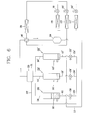
- FIG. 6 is a schematic diagram of an air conditioner according to another embodiment.
- a plurality of compressors 200, 200', 200" may share one oil separator 230.
- An oil level detecting sensor 231 that detects an oil level H s inside the oil separator 230 may be provided in the oil separator 230.
- a second oil return pipe 232 that supplies the oil stored in the oil separator 230 to the compressors 200, 200', 200" may be provided.
- the second oil return pipe 232 may be connected to oil replenishing pipes 234, 234', 234", which may be connected to the second suction pipes 112, 112', 112" of the compressors, respectively.
- the oil replenishing pipes 234, 234', 234" may be provided with valves 236, 236', 236" that control the flow of oil to each respective compressor 200, 200', 200".
- valves 236, 236', 236" may be switched according to a detection result of corresponding oil level detecting sensors 102, 102', 102". For example, if additional oil is not required in compressors 200, 200' because the respective oil levels are greater than a respective preset level, corresponding valves 236, 236' may be closed. However, if additional oil is required in compressor 200" because a corresponding oil level is less than a preset level, valve 236" may be opened to supply oil stored in the oil separator 230 to compressor 200".
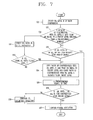
- FIG. 7 is a flow chart of a method of operating the air conditioner of FIG. 6 .
- a number of compressors in which the oil level H is lower than or equal to a respective preset level is determined, in step S22. If the number of compressors is less than or equal to a predetermined number, for example, the predetermined number is one, then it is determined whether all of the compressors have a sufficient amount of oil, in step S23. If the oil level H of all of the compressors is above the respective preset levels, then the compressors are operated in normal operation, in step S27.
- the solenoid valve 236" of the compressor in which H is less than or equal to the preset level may be opened, and the solenoid valve 236, 236' of each of the compressors in which H is greater than the respective preset level may be closed, in step S24.
- step S25 normal operation may be carried out in this state for a predetermined amount of time, for example, about five minutes, in step S25.
- the oil stored in the oil separator 230 may then be provided to the compressor 200" having the insufficient oil level during the predetermined amount of time.
- the oil level of all of the compressors may be checked again, and if the oil level H of the all compressors is over each respective preset level, in step S26, the compressors may return to normal operation, in step S27. Otherwise, an oil collecting operation may be performed, in step S30.
- step S22 if the number of the compressors in which the oil level H is less than or equal to the respective preset level is greater than the predetermined number, for example, the number of compressors is 2 or 3, then the oil level H s of the oil separator 230 may be detected, in step S28. After detecting the oil level H s , the oil collecting operation may be performed, in step S30, if the oil level H s is lower than or equal to a preset level for the oil separator 230, in step S29. Otherwise, if the oil level H s is over the preset level, the valves of each compressor may be configured to add oil to compressors having an oil level H less than or equal to the respective preset level, in step S24.
Landscapes
- Engineering & Computer Science (AREA)
- Physics & Mathematics (AREA)
- Mechanical Engineering (AREA)
- Thermal Sciences (AREA)
- General Engineering & Computer Science (AREA)
- Chemical & Material Sciences (AREA)
- Analytical Chemistry (AREA)
- Power Engineering (AREA)
- Control Of Positive-Displacement Pumps (AREA)
- Air Conditioning Control Device (AREA)
- Applications Or Details Of Rotary Compressors (AREA)
- Compressor (AREA)
Applications Claiming Priority (1)
| Application Number | Priority Date | Filing Date | Title |
|---|---|---|---|
| KR20100030120A KR101495186B1 (ko) | 2010-04-01 | 2010-04-01 | 복수 개의 압축기를 구비한 공기조화기 및 그의 운전방법 |
Publications (3)
| Publication Number | Publication Date |
|---|---|
| EP2375193A2 true EP2375193A2 (de) | 2011-10-12 |
| EP2375193A3 EP2375193A3 (de) | 2011-11-30 |
| EP2375193B1 EP2375193B1 (de) | 2013-03-06 |
Family
ID=44310311
Family Applications (1)
| Application Number | Title | Priority Date | Filing Date |
|---|---|---|---|
| EP10188151A Active EP2375193B1 (de) | 2010-04-01 | 2010-10-20 | Betriebsverfahren für Klimaanlage mit mehreren Kompressoren |
Country Status (4)
| Country | Link |
|---|---|
| US (1) | US20110239667A1 (de) |
| EP (1) | EP2375193B1 (de) |
| KR (1) | KR101495186B1 (de) |
| CN (1) | CN102213474B (de) |
Cited By (1)
| Publication number | Priority date | Publication date | Assignee | Title |
|---|---|---|---|---|
| CN107923403A (zh) * | 2015-08-11 | 2018-04-17 | 艾默生环境优化技术有限公司 | 具有油平衡系统的多压缩机配置 |
Families Citing this family (26)
| Publication number | Priority date | Publication date | Assignee | Title |
|---|---|---|---|---|
| KR101977984B1 (ko) * | 2012-07-11 | 2019-05-14 | 엘지전자 주식회사 | 공기 조화기 및 그의 제어방법 |
| KR101356312B1 (ko) * | 2012-08-01 | 2014-01-29 | 엘지전자 주식회사 | 공기 조화기 및 그의 제어방법 |
| CN103671119A (zh) * | 2012-09-24 | 2014-03-26 | 珠海格力电器股份有限公司 | 油位控制系统、油位控制方法及螺杆压缩机机组 |
| CN103062872B (zh) * | 2013-01-11 | 2015-06-17 | 四川长虹电器股份有限公司 | 家用空调机的集成控制系统及其启动方法 |
| CN103062841B (zh) * | 2013-01-18 | 2015-08-19 | 四川长虹电器股份有限公司 | 一种空调系统、控制系统及空调控制方法 |
| JP5940489B2 (ja) * | 2013-05-21 | 2016-06-29 | ジョンソンコントロールズ ヒタチ エア コンディショニング テクノロジー(ホンコン)リミテッド | 空気調和装置 |
| JP6143633B2 (ja) | 2013-10-15 | 2017-06-07 | 住友重機械工業株式会社 | 圧縮機および圧縮機の油量管理システム |
| KR102073011B1 (ko) | 2013-12-18 | 2020-03-02 | 삼성전자주식회사 | 오일 검출 장치, 그를 가지는 압축기 및 압축기의 제어 방법 |
| KR102198326B1 (ko) * | 2013-12-26 | 2021-01-05 | 엘지전자 주식회사 | 공기 조화기 |
| EP3023713A1 (de) * | 2014-11-19 | 2016-05-25 | Danfoss A/S | Verfahren zur Steuerung eines Dampfkompressionsverfahrens mit einem Auswerfer |
| JP6476810B2 (ja) * | 2014-12-10 | 2019-03-06 | ダイキン工業株式会社 | 圧縮機の予熱装置 |
| KR101639513B1 (ko) * | 2015-01-12 | 2016-07-13 | 엘지전자 주식회사 | 공기 조화기 및 이를 제어하는 방법 |
| WO2017029011A1 (en) | 2015-08-14 | 2017-02-23 | Danfoss A/S | A vapour compression system with at least two evaporator groups |
| CN105091441B (zh) * | 2015-08-25 | 2017-12-26 | 珠海格力电器股份有限公司 | 空调系统及其机油循环量调节系统和方法 |
| CN105180533B (zh) * | 2015-09-11 | 2018-02-16 | 珠海格力电器股份有限公司 | 螺杆机组回油控制方法、系统及螺杆机组 |
| CN108139132B (zh) | 2015-10-20 | 2020-08-25 | 丹佛斯有限公司 | 用于控制有可变接收器压力设定点的蒸气压缩系统的方法 |
| MX374485B (es) | 2015-10-20 | 2025-03-06 | Danfoss As | Metodo para controlar un sistema de compresion de vapor en modo de eyector durante un tiempo prolongado. |
| US10969165B2 (en) | 2017-01-12 | 2021-04-06 | Emerson Climate Technologies, Inc. | Micro booster supermarket refrigeration architecture |
| GB2566538A (en) * | 2017-09-18 | 2019-03-20 | J & E Hall Ltd | Oil separator |
| WO2019129113A1 (zh) * | 2017-12-28 | 2019-07-04 | 艾默生环境优化技术(苏州)有限公司 | 用于压缩机系统的进气管道及压缩机系统 |
| DK180146B1 (en) | 2018-10-15 | 2020-06-25 | Danfoss As Intellectual Property | Heat exchanger plate with strenghened diagonal area |
| US11460224B2 (en) * | 2018-10-31 | 2022-10-04 | Emerson Climate Technologies, Inc. | Oil control for climate-control system |
| JP2022173639A (ja) * | 2021-05-10 | 2022-11-22 | パナソニックIpマネジメント株式会社 | 空気調和装置 |
| US12173941B2 (en) * | 2021-06-04 | 2024-12-24 | Purdue Research Foundation | Smart accumulator with oil circulation ratio sensing |
| CN114110844B (zh) * | 2021-11-22 | 2025-07-15 | 青岛海尔空调电子有限公司 | 压缩机系统、压缩机系统的控制方法及空调器 |
| KR20230114569A (ko) * | 2022-01-25 | 2023-08-01 | 엘지전자 주식회사 | 압축 시스템 및 이를 포함하는 의류 처리 장치 |
Family Cites Families (23)
| Publication number | Priority date | Publication date | Assignee | Title |
|---|---|---|---|---|
| US4478050A (en) * | 1982-11-19 | 1984-10-23 | Hussmann Corporation | Oil separation for refrigeration system |
| US4589263A (en) * | 1984-04-12 | 1986-05-20 | Hussmann Corporation | Multiple compressor oil system |
| GB2215866B (en) * | 1988-02-09 | 1992-06-24 | Toshiba Kk | Multi-type air conditioner system with oil level control for parallel operated compressor therein |
| JP2865707B2 (ja) * | 1989-06-14 | 1999-03-08 | 株式会社日立製作所 | 冷凍装置 |
| JP3163121B2 (ja) * | 1991-06-28 | 2001-05-08 | 東芝キヤリア株式会社 | 空気調和機 |
| US5327997A (en) * | 1993-01-22 | 1994-07-12 | Temprite, Inc. | Lubrication management system |
| US5321956A (en) * | 1993-05-26 | 1994-06-21 | Kemp Industrial Refrigeration, Inc. | Oil management and removal system for a refrigeration installation |
| AUPM630094A0 (en) * | 1994-06-17 | 1994-07-14 | Refrigerant Monitoring Systems Pty Ltd | Oil level control device |
| EP0838640A3 (de) * | 1996-10-28 | 1998-06-17 | Matsushita Refrigeration Company | Ölstandausgleichsanlage für mehrere Verdichter |
| ATE470114T1 (de) * | 2002-04-08 | 2010-06-15 | Daikin Ind Ltd | Kühlvorrichtung |
| JP3478292B2 (ja) * | 2002-05-28 | 2003-12-15 | ダイキン工業株式会社 | 冷凍装置の圧縮機構 |
| JP4300804B2 (ja) * | 2002-06-11 | 2009-07-22 | ダイキン工業株式会社 | 圧縮機構の均油回路、冷凍装置の熱源ユニット及びそれを備えた冷凍装置 |
| JP4173784B2 (ja) * | 2003-08-29 | 2008-10-29 | 三星電子株式会社 | 複数圧縮機の均油システム |
| CN1690603A (zh) * | 2004-04-30 | 2005-11-02 | 乐金电子(天津)电器有限公司 | 空调器用气液分离器 |
| JP3939314B2 (ja) * | 2004-06-10 | 2007-07-04 | 三星電子株式会社 | 空気調和装置及びその均油運転方法 |
| EP1780416A4 (de) * | 2004-08-03 | 2011-03-09 | Maekawa Seisakusho Kk | Schmiermittelzufuhrsystem und betriebsverfahren für mehrsystemschmierschraubenverdichter |
| US7231783B2 (en) * | 2004-08-27 | 2007-06-19 | Zero Zone, Inc. | Oil control system for a refrigeration system |
| KR100758901B1 (ko) * | 2004-11-17 | 2007-09-14 | 엘지전자 주식회사 | 멀티형 공기조화기 |
| KR20080032870A (ko) * | 2006-10-11 | 2008-04-16 | 엘지전자 주식회사 | 멀티형 공기조화기의 압축기 오일 회수장치 및오일회수방법 |
| KR101266657B1 (ko) * | 2006-10-17 | 2013-05-28 | 엘지전자 주식회사 | 공기조화기 |
| KR100878819B1 (ko) * | 2007-03-02 | 2009-01-14 | 엘지전자 주식회사 | 공기조화기 및 그 제어방법 |
| KR20090041846A (ko) * | 2007-10-25 | 2009-04-29 | 엘지전자 주식회사 | 공기 조화기 |
| KR101480546B1 (ko) * | 2007-10-25 | 2015-01-08 | 엘지전자 주식회사 | 공기 조화기 |
-
2010
- 2010-04-01 KR KR20100030120A patent/KR101495186B1/ko not_active Expired - Fee Related
- 2010-10-20 EP EP10188151A patent/EP2375193B1/de active Active
- 2010-11-12 CN CN201010547580.8A patent/CN102213474B/zh not_active Expired - Fee Related
- 2010-12-02 US US12/958,915 patent/US20110239667A1/en not_active Abandoned
Non-Patent Citations (1)
| Title |
|---|
| None |
Cited By (4)
| Publication number | Priority date | Publication date | Assignee | Title |
|---|---|---|---|---|
| CN107923403A (zh) * | 2015-08-11 | 2018-04-17 | 艾默生环境优化技术有限公司 | 具有油平衡系统的多压缩机配置 |
| EP3334940A4 (de) * | 2015-08-11 | 2019-04-03 | Emerson Climate Technologies, Inc. | Multikompressorkonfiguration mit ölausgleichssystem |
| CN107923403B (zh) * | 2015-08-11 | 2019-08-13 | 艾默生环境优化技术有限公司 | 具有油平衡系统的多压缩机配置 |
| US10641268B2 (en) | 2015-08-11 | 2020-05-05 | Emerson Climate Technologies, Inc. | Multiple compressor configuration with oil-balancing system |
Also Published As
| Publication number | Publication date |
|---|---|
| CN102213474B (zh) | 2014-03-12 |
| CN102213474A (zh) | 2011-10-12 |
| EP2375193A3 (de) | 2011-11-30 |
| KR101495186B1 (ko) | 2015-02-24 |
| EP2375193B1 (de) | 2013-03-06 |
| US20110239667A1 (en) | 2011-10-06 |
| KR20110110662A (ko) | 2011-10-07 |
Similar Documents
| Publication | Publication Date | Title |
|---|---|---|
| EP2375193B1 (de) | Betriebsverfahren für Klimaanlage mit mehreren Kompressoren | |
| AU2007241898B2 (en) | Refrigeration system | |
| US7931453B2 (en) | Capacity variable device for rotary compressor and driving method of air conditioner having the same | |
| US20160186754A1 (en) | Scroll compressor and air conditioner having the same | |
| JP2000179481A (ja) | スクロール圧縮機 | |
| EP1526340B1 (de) | Verfahren und Vorrichtung zum Verhindern der Akkumulation von flüssigem Kühlmittel in einer Klimaanlage | |
| WO2007123087A1 (ja) | 冷凍装置 | |
| CN101520042A (zh) | 密闭型压缩机和制冷循环装置 | |
| CN111365874A (zh) | 冷媒循环系统 | |
| JP2005201145A (ja) | スクロール型圧縮機 | |
| WO2017221398A1 (ja) | ロータリ圧縮機および冷凍サイクル装置 | |
| EP1703231A1 (de) | Ölstandausgleichsanlage für mehrere Verdichter und zugehöriges Regelverfahren | |
| CN203362462U (zh) | 压缩机系统 | |
| JP2011202817A (ja) | 冷凍サイクル装置 | |
| JPWO2010122812A1 (ja) | 冷凍サイクル装置 | |
| CN205744457U (zh) | 用于压缩机的供油装置及压缩机 | |
| JP3361000B2 (ja) | 冷凍サイクル装置 | |
| DE112018002522B4 (de) | Schneckenverdichter | |
| JPH0559278B2 (de) | ||
| CN104074726A (zh) | 压缩机系统及其控制方法 | |
| JPH06280768A (ja) | 圧縮機及び該圧縮機を備えた冷凍装置 | |
| JP2009057892A (ja) | 圧縮機及び冷凍装置 | |
| JP3229125B2 (ja) | 冷凍空調装置 | |
| JP4720594B2 (ja) | 冷凍装置 | |
| WO2026047405A1 (en) | An oil management system for a refrigeration or a heat pump or a combination of both |
Legal Events
| Date | Code | Title | Description |
|---|---|---|---|
| PUAI | Public reference made under article 153(3) epc to a published international application that has entered the european phase |
Free format text: ORIGINAL CODE: 0009012 |
|
| 17P | Request for examination filed |
Effective date: 20101020 |
|
| AK | Designated contracting states |
Kind code of ref document: A2 Designated state(s): AL AT BE BG CH CY CZ DE DK EE ES FI FR GB GR HR HU IE IS IT LI LT LU LV MC MK MT NL NO PL PT RO RS SE SI SK SM TR |
|
| AX | Request for extension of the european patent |
Extension state: BA ME |
|
| PUAL | Search report despatched |
Free format text: ORIGINAL CODE: 0009013 |
|
| AK | Designated contracting states |
Kind code of ref document: A3 Designated state(s): AL AT BE BG CH CY CZ DE DK EE ES FI FR GB GR HR HU IE IS IT LI LT LU LV MC MK MT NL NO PL PT RO RS SE SI SK SM TR |
|
| AX | Request for extension of the european patent |
Extension state: BA ME |
|
| RIC1 | Information provided on ipc code assigned before grant |
Ipc: F25B 31/00 20060101AFI20111024BHEP |
|
| RAP1 | Party data changed (applicant data changed or rights of an application transferred) |
Owner name: LG ELECTRONICS INC. |
|
| GRAP | Despatch of communication of intention to grant a patent |
Free format text: ORIGINAL CODE: EPIDOSNIGR1 |
|
| GRAS | Grant fee paid |
Free format text: ORIGINAL CODE: EPIDOSNIGR3 |
|
| GRAP | Despatch of communication of intention to grant a patent |
Free format text: ORIGINAL CODE: EPIDOSNIGR1 |
|
| GRAA | (expected) grant |
Free format text: ORIGINAL CODE: 0009210 |
|
| AK | Designated contracting states |
Kind code of ref document: B1 Designated state(s): AL AT BE BG CH CY CZ DE DK EE ES FI FR GB GR HR HU IE IS IT LI LT LU LV MC MK MT NL NO PL PT RO RS SE SI SK SM TR |
|
| REG | Reference to a national code |
Ref country code: GB Ref legal event code: FG4D |
|
| REG | Reference to a national code |
Ref country code: CH Ref legal event code: EP Ref country code: AT Ref legal event code: REF Ref document number: 599863 Country of ref document: AT Kind code of ref document: T Effective date: 20130315 |
|
| REG | Reference to a national code |
Ref country code: IE Ref legal event code: FG4D |
|
| REG | Reference to a national code |
Ref country code: DE Ref legal event code: R096 Ref document number: 602010005225 Country of ref document: DE Effective date: 20130502 |
|
| REG | Reference to a national code |
Ref country code: AT Ref legal event code: MK05 Ref document number: 599863 Country of ref document: AT Kind code of ref document: T Effective date: 20130306 |
|
| PG25 | Lapsed in a contracting state [announced via postgrant information from national office to epo] |
Ref country code: BG Free format text: LAPSE BECAUSE OF FAILURE TO SUBMIT A TRANSLATION OF THE DESCRIPTION OR TO PAY THE FEE WITHIN THE PRESCRIBED TIME-LIMIT Effective date: 20130606 Ref country code: SE Free format text: LAPSE BECAUSE OF FAILURE TO SUBMIT A TRANSLATION OF THE DESCRIPTION OR TO PAY THE FEE WITHIN THE PRESCRIBED TIME-LIMIT Effective date: 20130306 Ref country code: ES Free format text: LAPSE BECAUSE OF FAILURE TO SUBMIT A TRANSLATION OF THE DESCRIPTION OR TO PAY THE FEE WITHIN THE PRESCRIBED TIME-LIMIT Effective date: 20130617 Ref country code: LT Free format text: LAPSE BECAUSE OF FAILURE TO SUBMIT A TRANSLATION OF THE DESCRIPTION OR TO PAY THE FEE WITHIN THE PRESCRIBED TIME-LIMIT Effective date: 20130306 Ref country code: NO Free format text: LAPSE BECAUSE OF FAILURE TO SUBMIT A TRANSLATION OF THE DESCRIPTION OR TO PAY THE FEE WITHIN THE PRESCRIBED TIME-LIMIT Effective date: 20130606 Ref country code: AT Free format text: LAPSE BECAUSE OF FAILURE TO SUBMIT A TRANSLATION OF THE DESCRIPTION OR TO PAY THE FEE WITHIN THE PRESCRIBED TIME-LIMIT Effective date: 20130306 |
|
| REG | Reference to a national code |
Ref country code: NL Ref legal event code: VDEP Effective date: 20130306 |
|
| REG | Reference to a national code |
Ref country code: LT Ref legal event code: MG4D |
|
| PG25 | Lapsed in a contracting state [announced via postgrant information from national office to epo] |
Ref country code: GR Free format text: LAPSE BECAUSE OF FAILURE TO SUBMIT A TRANSLATION OF THE DESCRIPTION OR TO PAY THE FEE WITHIN THE PRESCRIBED TIME-LIMIT Effective date: 20130607 Ref country code: LV Free format text: LAPSE BECAUSE OF FAILURE TO SUBMIT A TRANSLATION OF THE DESCRIPTION OR TO PAY THE FEE WITHIN THE PRESCRIBED TIME-LIMIT Effective date: 20130306 Ref country code: SI Free format text: LAPSE BECAUSE OF FAILURE TO SUBMIT A TRANSLATION OF THE DESCRIPTION OR TO PAY THE FEE WITHIN THE PRESCRIBED TIME-LIMIT Effective date: 20130306 Ref country code: FI Free format text: LAPSE BECAUSE OF FAILURE TO SUBMIT A TRANSLATION OF THE DESCRIPTION OR TO PAY THE FEE WITHIN THE PRESCRIBED TIME-LIMIT Effective date: 20130306 |
|
| PG25 | Lapsed in a contracting state [announced via postgrant information from national office to epo] |
Ref country code: HR Free format text: LAPSE BECAUSE OF FAILURE TO SUBMIT A TRANSLATION OF THE DESCRIPTION OR TO PAY THE FEE WITHIN THE PRESCRIBED TIME-LIMIT Effective date: 20130306 Ref country code: BE Free format text: LAPSE BECAUSE OF FAILURE TO SUBMIT A TRANSLATION OF THE DESCRIPTION OR TO PAY THE FEE WITHIN THE PRESCRIBED TIME-LIMIT Effective date: 20130306 Ref country code: RS Free format text: LAPSE BECAUSE OF FAILURE TO SUBMIT A TRANSLATION OF THE DESCRIPTION OR TO PAY THE FEE WITHIN THE PRESCRIBED TIME-LIMIT Effective date: 20130306 |
|
| PG25 | Lapsed in a contracting state [announced via postgrant information from national office to epo] |
Ref country code: NL Free format text: LAPSE BECAUSE OF FAILURE TO SUBMIT A TRANSLATION OF THE DESCRIPTION OR TO PAY THE FEE WITHIN THE PRESCRIBED TIME-LIMIT Effective date: 20130306 Ref country code: SK Free format text: LAPSE BECAUSE OF FAILURE TO SUBMIT A TRANSLATION OF THE DESCRIPTION OR TO PAY THE FEE WITHIN THE PRESCRIBED TIME-LIMIT Effective date: 20130306 Ref country code: RO Free format text: LAPSE BECAUSE OF FAILURE TO SUBMIT A TRANSLATION OF THE DESCRIPTION OR TO PAY THE FEE WITHIN THE PRESCRIBED TIME-LIMIT Effective date: 20130306 Ref country code: PT Free format text: LAPSE BECAUSE OF FAILURE TO SUBMIT A TRANSLATION OF THE DESCRIPTION OR TO PAY THE FEE WITHIN THE PRESCRIBED TIME-LIMIT Effective date: 20130708 Ref country code: IS Free format text: LAPSE BECAUSE OF FAILURE TO SUBMIT A TRANSLATION OF THE DESCRIPTION OR TO PAY THE FEE WITHIN THE PRESCRIBED TIME-LIMIT Effective date: 20130706 Ref country code: CZ Free format text: LAPSE BECAUSE OF FAILURE TO SUBMIT A TRANSLATION OF THE DESCRIPTION OR TO PAY THE FEE WITHIN THE PRESCRIBED TIME-LIMIT Effective date: 20130306 Ref country code: EE Free format text: LAPSE BECAUSE OF FAILURE TO SUBMIT A TRANSLATION OF THE DESCRIPTION OR TO PAY THE FEE WITHIN THE PRESCRIBED TIME-LIMIT Effective date: 20130306 |
|
| PG25 | Lapsed in a contracting state [announced via postgrant information from national office to epo] |
Ref country code: PL Free format text: LAPSE BECAUSE OF FAILURE TO SUBMIT A TRANSLATION OF THE DESCRIPTION OR TO PAY THE FEE WITHIN THE PRESCRIBED TIME-LIMIT Effective date: 20130306 |
|
| PLBE | No opposition filed within time limit |
Free format text: ORIGINAL CODE: 0009261 |
|
| STAA | Information on the status of an ep patent application or granted ep patent |
Free format text: STATUS: NO OPPOSITION FILED WITHIN TIME LIMIT |
|
| PG25 | Lapsed in a contracting state [announced via postgrant information from national office to epo] |
Ref country code: DK Free format text: LAPSE BECAUSE OF FAILURE TO SUBMIT A TRANSLATION OF THE DESCRIPTION OR TO PAY THE FEE WITHIN THE PRESCRIBED TIME-LIMIT Effective date: 20130306 |
|
| 26N | No opposition filed |
Effective date: 20131209 |
|
| REG | Reference to a national code |
Ref country code: DE Ref legal event code: R097 Ref document number: 602010005225 Country of ref document: DE Effective date: 20131209 |
|
| PG25 | Lapsed in a contracting state [announced via postgrant information from national office to epo] |
Ref country code: MC Free format text: LAPSE BECAUSE OF FAILURE TO SUBMIT A TRANSLATION OF THE DESCRIPTION OR TO PAY THE FEE WITHIN THE PRESCRIBED TIME-LIMIT Effective date: 20130306 |
|
| REG | Reference to a national code |
Ref country code: IE Ref legal event code: MM4A |
|
| PG25 | Lapsed in a contracting state [announced via postgrant information from national office to epo] |
Ref country code: IE Free format text: LAPSE BECAUSE OF NON-PAYMENT OF DUE FEES Effective date: 20131020 |
|
| PG25 | Lapsed in a contracting state [announced via postgrant information from national office to epo] |
Ref country code: SM Free format text: LAPSE BECAUSE OF FAILURE TO SUBMIT A TRANSLATION OF THE DESCRIPTION OR TO PAY THE FEE WITHIN THE PRESCRIBED TIME-LIMIT Effective date: 20130306 |
|
| REG | Reference to a national code |
Ref country code: CH Ref legal event code: PL |
|
| GBPC | Gb: european patent ceased through non-payment of renewal fee |
Effective date: 20141020 |
|
| PG25 | Lapsed in a contracting state [announced via postgrant information from national office to epo] |
Ref country code: CY Free format text: LAPSE BECAUSE OF FAILURE TO SUBMIT A TRANSLATION OF THE DESCRIPTION OR TO PAY THE FEE WITHIN THE PRESCRIBED TIME-LIMIT Effective date: 20130306 Ref country code: TR Free format text: LAPSE BECAUSE OF FAILURE TO SUBMIT A TRANSLATION OF THE DESCRIPTION OR TO PAY THE FEE WITHIN THE PRESCRIBED TIME-LIMIT Effective date: 20130306 |
|
| PG25 | Lapsed in a contracting state [announced via postgrant information from national office to epo] |
Ref country code: GB Free format text: LAPSE BECAUSE OF NON-PAYMENT OF DUE FEES Effective date: 20141020 Ref country code: HU Free format text: LAPSE BECAUSE OF FAILURE TO SUBMIT A TRANSLATION OF THE DESCRIPTION OR TO PAY THE FEE WITHIN THE PRESCRIBED TIME-LIMIT; INVALID AB INITIO Effective date: 20101020 Ref country code: LI Free format text: LAPSE BECAUSE OF NON-PAYMENT OF DUE FEES Effective date: 20141031 Ref country code: CH Free format text: LAPSE BECAUSE OF NON-PAYMENT OF DUE FEES Effective date: 20141031 Ref country code: LU Free format text: LAPSE BECAUSE OF NON-PAYMENT OF DUE FEES Effective date: 20131020 Ref country code: MK Free format text: LAPSE BECAUSE OF FAILURE TO SUBMIT A TRANSLATION OF THE DESCRIPTION OR TO PAY THE FEE WITHIN THE PRESCRIBED TIME-LIMIT Effective date: 20130306 |
|
| PG25 | Lapsed in a contracting state [announced via postgrant information from national office to epo] |
Ref country code: MT Free format text: LAPSE BECAUSE OF FAILURE TO SUBMIT A TRANSLATION OF THE DESCRIPTION OR TO PAY THE FEE WITHIN THE PRESCRIBED TIME-LIMIT Effective date: 20130306 |
|
| REG | Reference to a national code |
Ref country code: FR Ref legal event code: PLFP Year of fee payment: 6 |
|
| REG | Reference to a national code |
Ref country code: FR Ref legal event code: PLFP Year of fee payment: 7 |
|
| REG | Reference to a national code |
Ref country code: FR Ref legal event code: PLFP Year of fee payment: 8 |
|
| REG | Reference to a national code |
Ref country code: FR Ref legal event code: PLFP Year of fee payment: 9 |
|
| PG25 | Lapsed in a contracting state [announced via postgrant information from national office to epo] |
Ref country code: AL Free format text: LAPSE BECAUSE OF FAILURE TO SUBMIT A TRANSLATION OF THE DESCRIPTION OR TO PAY THE FEE WITHIN THE PRESCRIBED TIME-LIMIT Effective date: 20130306 |
|
| PGFP | Annual fee paid to national office [announced via postgrant information from national office to epo] |
Ref country code: FR Payment date: 20190906 Year of fee payment: 10 |
|
| PGFP | Annual fee paid to national office [announced via postgrant information from national office to epo] |
Ref country code: DE Payment date: 20190905 Year of fee payment: 10 |
|
| REG | Reference to a national code |
Ref country code: DE Ref legal event code: R119 Ref document number: 602010005225 Country of ref document: DE |
|
| PG25 | Lapsed in a contracting state [announced via postgrant information from national office to epo] |
Ref country code: DE Free format text: LAPSE BECAUSE OF NON-PAYMENT OF DUE FEES Effective date: 20210501 Ref country code: FR Free format text: LAPSE BECAUSE OF NON-PAYMENT OF DUE FEES Effective date: 20201031 |
|
| PGFP | Annual fee paid to national office [announced via postgrant information from national office to epo] |
Ref country code: IT Payment date: 20240906 Year of fee payment: 15 |