EP2375476A2 - Matériau actif de cathode pour batterie rechargeable - Google Patents
Matériau actif de cathode pour batterie rechargeable Download PDFInfo
- Publication number
- EP2375476A2 EP2375476A2 EP09836421A EP09836421A EP2375476A2 EP 2375476 A2 EP2375476 A2 EP 2375476A2 EP 09836421 A EP09836421 A EP 09836421A EP 09836421 A EP09836421 A EP 09836421A EP 2375476 A2 EP2375476 A2 EP 2375476A2
- Authority
- EP
- European Patent Office
- Prior art keywords
- metal
- phase
- active material
- anode active
- mah
- Prior art date
- Legal status (The legal status is an assumption and is not a legal conclusion. Google has not performed a legal analysis and makes no representation as to the accuracy of the status listed.)
- Granted
Links
Images


Classifications
-
- H—ELECTRICITY
- H01—ELECTRIC ELEMENTS
- H01M—PROCESSES OR MEANS, e.g. BATTERIES, FOR THE DIRECT CONVERSION OF CHEMICAL ENERGY INTO ELECTRICAL ENERGY
- H01M4/00—Electrodes
- H01M4/02—Electrodes composed of, or comprising, active material
- H01M4/13—Electrodes for accumulators with non-aqueous electrolyte, e.g. for lithium-accumulators; Processes of manufacture thereof
- H01M4/134—Electrodes based on metals, Si or alloys
-
- H—ELECTRICITY
- H01—ELECTRIC ELEMENTS
- H01M—PROCESSES OR MEANS, e.g. BATTERIES, FOR THE DIRECT CONVERSION OF CHEMICAL ENERGY INTO ELECTRICAL ENERGY
- H01M10/00—Secondary cells; Manufacture thereof
- H01M10/05—Accumulators with non-aqueous electrolyte
- H01M10/052—Li-accumulators
-
- H—ELECTRICITY
- H01—ELECTRIC ELEMENTS
- H01M—PROCESSES OR MEANS, e.g. BATTERIES, FOR THE DIRECT CONVERSION OF CHEMICAL ENERGY INTO ELECTRICAL ENERGY
- H01M10/00—Secondary cells; Manufacture thereof
- H01M10/05—Accumulators with non-aqueous electrolyte
- H01M10/052—Li-accumulators
- H01M10/0525—Rocking-chair batteries, i.e. batteries with lithium insertion or intercalation in both electrodes; Lithium-ion batteries
-
- H—ELECTRICITY
- H01—ELECTRIC ELEMENTS
- H01M—PROCESSES OR MEANS, e.g. BATTERIES, FOR THE DIRECT CONVERSION OF CHEMICAL ENERGY INTO ELECTRICAL ENERGY
- H01M4/00—Electrodes
- H01M4/02—Electrodes composed of, or comprising, active material
-
- H—ELECTRICITY
- H01—ELECTRIC ELEMENTS
- H01M—PROCESSES OR MEANS, e.g. BATTERIES, FOR THE DIRECT CONVERSION OF CHEMICAL ENERGY INTO ELECTRICAL ENERGY
- H01M4/00—Electrodes
- H01M4/02—Electrodes composed of, or comprising, active material
- H01M4/36—Selection of substances as active materials, active masses, active liquids
- H01M4/38—Selection of substances as active materials, active masses, active liquids of elements or alloys
-
- H—ELECTRICITY
- H01—ELECTRIC ELEMENTS
- H01M—PROCESSES OR MEANS, e.g. BATTERIES, FOR THE DIRECT CONVERSION OF CHEMICAL ENERGY INTO ELECTRICAL ENERGY
- H01M4/00—Electrodes
- H01M4/02—Electrodes composed of, or comprising, active material
- H01M4/36—Selection of substances as active materials, active masses, active liquids
- H01M4/38—Selection of substances as active materials, active masses, active liquids of elements or alloys
- H01M4/386—Silicon or alloys based on silicon
-
- Y—GENERAL TAGGING OF NEW TECHNOLOGICAL DEVELOPMENTS; GENERAL TAGGING OF CROSS-SECTIONAL TECHNOLOGIES SPANNING OVER SEVERAL SECTIONS OF THE IPC; TECHNICAL SUBJECTS COVERED BY FORMER USPC CROSS-REFERENCE ART COLLECTIONS [XRACs] AND DIGESTS
- Y02—TECHNOLOGIES OR APPLICATIONS FOR MITIGATION OR ADAPTATION AGAINST CLIMATE CHANGE
- Y02E—REDUCTION OF GREENHOUSE GAS [GHG] EMISSIONS, RELATED TO ENERGY GENERATION, TRANSMISSION OR DISTRIBUTION
- Y02E60/00—Enabling technologies; Technologies with a potential or indirect contribution to GHG emissions mitigation
- Y02E60/10—Energy storage using batteries
Definitions
- the present disclosure relates to an anode active material for a secondary battery exhibiting superior cycle characteristics, less volume expansion and high capacity.
- the lithium secondary battery is a representative example.
- carbonaceous materials are used as anode active material.
- the theoretical capacity of the carbonaceous material is 372 mAh/g. Since the capacity of the presently commercially available batteries is around 360 mAh/g, it has almost reached the theoretical capacity limit. Accordingly, for preparation of high-capacity batteries, development of a new material capable of replacing the carbonaceous anode active material is necessary.
- Representative materials as the new high-capacity anode active material include metallic materials such as silicon (Si), tin (Sn), etc. that allow intercalation/deintercalation of lithium (Li) via alloying reactions with lithium.
- metallic materials such as silicon (Si), tin (Sn), etc. that allow intercalation/deintercalation of lithium (Li) via alloying reactions with lithium.
- Si silicon
- tin (Sn), etc. alone is used as the anode active material
- volume change during charging-discharging is very large, as much as 300-400%, resulting in separation from the electrode and significant deterioration of cycle characteristics. Therefore, it is hard to be actually applied in batteries.
- alloys of silicon (Si) or tin (Sn) with other metals have been studied by many researchers. These alloy-type materials are known to form a single-element phase of silicon (Si), tin (Sn), etc. that can bind with lithium, a metal silicide (M x Si y ) phase that does not bind with lithium, a metal-tin (Sn) alloy (M x Sn y ) phase, or the like.
- the single phase of silicon (Si), tin (Sn), etc. is capable of binding with and release from lithium during charging-discharging and, thus, provides battery capacity through electrochemical reactions.
- the metal silicide (M x Si y ) phase and the metal-tin (Sn) alloy (M x Sn y ) phase do not bind with lithium but are known to suppress volume expansion of the anode active material by suppressing the volume change of the single phase of silicon (Si), tin (Sn), etc.
- the phases of the anode active material have been divided into a phase mainly essentially of Si and a phase mainly consisting of Si-metal alloy, and the ratio of the phases (Japanese Patent Laid-Open No. 2006-164960 ), or the particle size of the phases (Japanese Patent No. 4344121 , Korean Patent No. 911799 ) have been controlled.
- the inventors of the present disclosure have found out that a Si-metal alloy used to suppress volume expansion of an anode active material exists as a crystalline phase as well as an amorphous phase and that the Si single phase existing separately from the Si-metal alloy contributes to electric capacity even though it is an amorphous phase.
- anode active material including: a crystalline phase comprising Si and a Si-metal alloy; and an amorphous phase comprising Si and a Si-metal alloy, wherein the metal of the Si-metal alloy of the crystalline phase is the same as or different from the metal of the Si-metal alloy of the amorphous phase.
- the present further provides an electrode including the anode active material, and a lithium secondary battery including the electrode.
- the present disclosure further provides an electrode including the anode active material as well as a carbonaceous anode active material, and a lithium secondary battery including the electrode.
- anode active material including: a crystalline phase comprising Si and a Si-metal alloy, and an amorphous phase comprising Si and a Si-metal alloy.
- the metal of the Si-metal alloy of the crystalline phase may be the same as or different from the metal of the Si-metal alloy of the amorphous phase.
- the metal may comprise one or more metal species.
- it may comprise two or more metal species. That is to say, the alloy may be in the form of Si-A, Si-A-B, Si-A-B-C, and so forth (wherein A, B and C denote different metals).
- the metal may be Ca, Sc, Ti, V, Cr, Mn, Fe, Co, Ni, Cu, Zn, Sr, Y, Zr, Nb, Ba, Lu, Hf, Ta or lanthanides.
- Ca, Co, Ni, Mn, Ti, Zr, Co, Ni, Fe or rare earth elements (Sc, Y and lanthanides) may be used among them.
- the metal may be selected from Co, Ni, Mn and Ti.
- A may be a metal selected from Ti and Zr
- B may be a metal selected from Co, Ni and Fe.
- one or more metal selected from rare earth elements may be mixed with a metal selected from Co, Ni and Fe.
- the rare earth element may be a mixed rare earth element, preferably misch metal.
- the anode active material comprises a combination of the crystalline phase and the amorphous phase.
- Both the crystalline phase and the amorphous phase comprise a material allowing repetitive intercalation and deintercalation of Li electrochemically and a material incapable of binding with Li electrochemically.
- the crystalline phase comprises Si and a Si-metal alloy.
- the crystalline phase may further comprise other metals.
- the amorphous phase also comprises Si and a Si-metal alloy.
- the amorphous may further comprise other metals.
- Si and the Si-metal alloy are present both in the crystalline phase and the amorphous phase, and the ratio of the two phases is controlled to minimize volume expansion and maximize cycle characteristics.
- the ratio of the crystalline phase and the amorphous phase may be controlled by varying the kind and amount of the metal, the method of preparing the alloy, or the like.
- the amount of the amorphous phase may be controlled by ball milling, which is a mechanical alloying method.
- the amount of the amorphous phase may be increased by selecting a composition allowing easy formation of the amorphous phase, increasing cooling speed during quenching, or increasing ball milling time, ball-to-alloy ratio, linear speed of the milling machine, or the like.
- the amount of the amorphous phase may be 30 wt% or more based on the crystalline phase and the amorphous phase combined. The higher the content of the amorphous phase, the better.
- the source material for preparing the anode active material is not particularly limited in form as long as the desired composition can be achieved.
- the source material may be in the form of element, alloy, solid solution, intermetallic compound, or the like.
- the method for preparing the anode active material according to the present disclosure is not particularly limited as long as a uniform mixture of the crystalline phase and the amorphous phase can be obtained.
- melt spinning whereby a composition comprising Si is melted and then quenched, strip casting, atomization, or the like may be employed.
- direct cast-rolling, spray foaming, gas spraying, wet spraying, or the like may also be employed.
- prepared alloy is pulverized to prepare a metal powder comprising Si.
- the resulting metal powder is mechanically ground to prepare the anode active material.
- the particle size may be from 1 ⁇ m to 50 ⁇ m.
- the resultant alloy phase may be treated by mechanical alloying to obtain the anode active material with a desired ratio of the crystalline phase and the amorphous phase.
- the present disclosure also provides an electrode comprising the anode active material, and a lithium secondary battery comprising the electrode.
- the present disclosure further provides an electrode comprising the anode active material as well as a carbonaceous anode active material, and a lithium secondary battery comprising the electrode.
- the anode active material may be used to prepare an electrode.
- the electrode may be prepared by mixing the metal powder with a conducting agent and a binder.
- the binder may be polyvinylidene fluoride (PVDF) or any other binder as long as the electrode can be formed.
- PVDF polyvinylidene fluoride
- polyethylene, polypropylene, polytetrafluoroethylene, styrene-butadiene rubber, or the like may be used.
- the conducting agent may be acetylene black.
- other conducting agents such as artificial graphite, carbon fiber, carbon nanotube (CNT), amorphous carbon, etc. may be used as long as the conductivity of the electrode can be ensured.
- a method of mixing the active material with a predetermined amount of a known standard material performing XRD-Rietveld refinement to calculate the volume ratio of respective phases, and calculating the contents of the phases from that of the standard material. This method is called spiking.
- the electric capacity is calculated as 1315 mAh/g.
- the experimentally measured electric capacity of the alloy is 1100 mAh/g, much smaller than the theoretical value. This shows that the amount of Si participating in the reaction cannot be exactly determined through simple XRD-Rietveld refinement.
- the experimentally measured electric capacity of the alloy is 1100 mAh/g, much smaller than the theoretical value. This shows that the amount of Si participating in the reaction cannot be exactly determined through simple XRD-Rietveld refinement.
- the amount of Si in the alloy is 16.3 wt% and that of the amorphous phase is 37.3 wt%.
- the amount of Si is calculated as 20.4 wt% and that of the amorphous phase is calculated as 46.6% wt%.
- the electric capacity is calculated as 735 mAh/g. This is smaller than the experimentally measured value 1100 mAh/g by 365 mAh/g. It suggests that the Si included in the amorphous phase also contributes to the electric capacity.
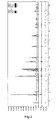
- Si and the Si-metal alloy are included not only in the crystalline phase but also in the amorphous phase. Further, it can be seen that when the crystalline phase and the amorphous phase exist together, both the crystalline phase and the amorphous phase include Si and the Si-metal alloy. Accordingly, it can be seen that both the crystalline phase and the amorphous phase contribute to electric capacity.
- a metal ribbon was prepared by melt spinning.
- the melt spinning was performed using a carbon crucible under a non-oxidizing inert atmosphere by injecting argon gas.
- the prepared mental ribbon was crushed manually in a mortar to produce a metal powder, which was sieved so that the particle size was not greater than 38 ⁇ m.
- the phases of the metal powder were analyzed by XRD.
- the Bruker AXSS D4 Endeavor XRD analyzer, wavelength of 1.94 ⁇ (Fe K ⁇ ), and the LynxEye position sensitive detector were used.
- the metal powder prepared above was uniformly mixed with 20% of MgO in a mortar and XRD measurement was made in the same manner as described above. Then, Rietveld refinement was carried out to accurately determine the fraction of the crystalline phase and MgO in the material. From the result, the fraction of the amorphous phase was calculated.
- An electrode was prepared using the anode active material prepared above.
- the electrode was prepared by mixing the metal powder with a conducting agent and a binder. PVDF was used as the binder. After dissolving PVDF in NMP, the metal powder and the conducting agent were added together to prepare a homogeneous slurry. For the conducting agent, acetylene black was used. The weight ratio of the metal powder, the conducting agent and the binder in the electrode slurry was 80:10:10. The prepared slurry was applied well on a copper foil and then dried at 130 °C under a vacuum atmosphere for 4 hours.
- a coin half cell was prepared using the electrode and metallic Li.
- an electrolyte comprising 1 M LiPF 6 dissolved in a mixture of ethylene carbonate and diethyl carbonate (3:7) was used.
- a separator was placed between the metallic Li and the electrode.
- Electric capacity and cycle characteristics of the anode active material were evaluated using the prepared coin cell.
- the coin cell After charging for 50 cycles, the coin cell was disassembled and the change in thickness was measured.
- the ratio of the crystalline phase and the amorphous phase of the metal powder prepared in Example 1 was varied by ball milling (using SPEX MILL 8000). The ball milling was performed for 30 hours (Example 2), 60 hours (Example 3), 90 hours (Example 4) or 120 hours (Example 5) after adding stainless steel metal balls and the metal powder at a weight ratio of 15:1 in a stainless steel container. During the ball milling, argon was injected into the stainless steel container to provide an inert atmosphere.
- Example 2 After the ball milling, XRD analysis was performed in the same manner as in Example 1 to analyze the crystal structure. Also, a coin half cell was prepared in the same manner as in Example 1 and then the battery performance was evaluated.
- Metal mass was prepared in the same manner as in Examples 1-5 except that the metal material was melted by melt spinning and then annealed slowly in the air. The prepared metal mass was crushed manually in a mortar to produce a metal powder, which was sieved so that the particle size was not greater than 38 ⁇ m. The metal mass had a relatively higher ratio of the crystalline phase than Examples 1-5. Phase analysis and battery performance evaluation were carried out in the same manner as in Example 1.
- Example 1 The contents of the crystalline and amorphous phases were determined by spiking. The spiking analysis of Example 1 was given earlier.
- the ratio of the amorphous phase was 40% or greater.
- the electric capacity was superior (816-843 mAh/g) to carbonaceous material (360 mAh/g) by 2 times or more. Also, maintenance of capacity (60-75%) was higher and volume expansion (182-257%) was less after 50 cycles.
- the electric capacity was decreased (from 843 mAh/g to 816 mAh/g), but maintenance of capacity was improved (from 60% to 75%) and volume expansion was decreased (from 257% to 182%) after 50 cycles.
- Comparative Example 1 In contrast, in Comparative Example 1, the crystalline phase was the majority (amorphous 15%, crystalline 85%). Although the electric capacity was superior (875 mAh/g), maintenance of capacity (5%) was very low and volume expansion was very large (370%) after 50 cycles.
- FIG. 3 shows the cycle characteristics of Examples 1-5 and Comparative Example 1.
- Examples 1-5 with larger ratio of the amorphous phase show better cycle characteristics than Comparative Example 1 with larger ratio of the crystalline phase.
- the cycle characteristics were better in the order of Example 1 ⁇ Example 2 ⁇ Example 3 ⁇ Example 4 ⁇ Example 5. That is to say, the cycle characteristics were improved as the ratio of the amorphous phase increased.
- a metal powder was prepared in the same manner as in Example 1 except for mixing Si and Co at a weight ratio of 63:37 (Example 6).
- Si-Co alloy was prepared into a metal powder by ball milling in the same manner as in Examples 2-5 (Examples 7-10). Then, phase analysis and battery performance evaluation were performed the same manner as in Example 1.
- a metal powder was prepared in the same manner as in Comparative Example 1 except for mixing Si and Co at a weight ratio of 63:37. Then, phase analysis and battery performance evaluation were performed the same manner as in Example 1.
- a metal powder was prepared in the same manner as in Example 1 except for mixing Si and Ni at a weight ratio of 65:35 (Example 11).
- Si-Co alloy was prepared into a metal powder by ball milling in the same manner as in Examples 2-5 (Examples 12-15). Then, phase analysis and battery performance evaluation were performed the same manner as in Example 1.
- a metal powder was prepared in the same manner as in Comparative Example 1 except for mixing Si and Ni at a weight ratio of 65:35. Then, phase analysis and battery performance evaluation were performed the same manner as in Example 1.
- a metal powder was prepared in the same manner as in Example 1 except for mixing Si and Mn at a weight ratio of 61:39 (Example 16).
- Si-Mn alloy was prepared into a metal powder by ball milling in the same manner as in Examples 2-5 (Examples 17-20). Then, phase analysis and battery performance evaluation were performed the same manner as in Example 1.
- a metal powder was prepared in the same manner as in Comparative Example 1 except for mixing Si and Mn at a weight ratio of 61:39. Then, phase analysis and battery performance evaluation were performed the same manner as in Example 1.
- a metal powder was prepared in the same manner as in Example 1 except for mixing Si, misch metal and Ni at a weight ratio of 57:15:28 (Example 21).
- Thus prepared alloy was prepared into a metal powder by ball milling in the same manner as in Examples 2-5 (Examples 22-25). Then, phase analysis and battery performance evaluation were performed the same manner as in Example 1.
- a metal powder was prepared in the same manner as in Comparative Example 1 except for mixing Si, misch metal and Ni at a weight ratio of 57:15:28. Then, phase analysis and battery performance evaluation were performed the same manner as in Example 1.
- the ratio of the amorphous phase was 30% or greater.
- the electric capacity was superior (913-1375 mAh/g) to carbonaceous material (360 mAh/g) by 2.5 times or more.
- maintenance of capacity 44-75%) was higher and volume expansion (198-317%) was less after 50 cycles.
- the cycle characteristics were improved and the volume expansion was reduced.
- Anode active materials were prepared in the same manner as in Example 1 except that the metal powders prepared in Examples 1-25 were mixed carbon at a weight ratio of 50:50. Then, phase analysis and battery performance evaluation were performed the same manner as in Example 1.
- Anode active materials were prepared in the same manner as in Example 1 except that the metal powders prepared in Comparative Examples 1-5 were mixed with carbon at a weight ratio of 50:50. Then, phase analysis and battery performance evaluation were performed the same manner as in Example 1.
- Examples 26-50 showed superior electric capacity was (585-865 mAh/g) as compared to carbonaceous material (360 mAh/g). Also, maintenance of capacity (49-83%) was higher and volume expansion (134-168%) was less after 50 cycles. In particular, as the ball milling proceeded, i.e. as the ratio of the amorphous phase increased, the cycle characteristics were improved and the volume expansion was reduced.
- an electrode exhibiting superior cycle characteristics, relatively less volume expansion and good electric capacity can be prepared by controlling the ratio of the crystalline phase and the amorphous phase in an anode active material.
Landscapes
- Chemical & Material Sciences (AREA)
- Chemical Kinetics & Catalysis (AREA)
- Electrochemistry (AREA)
- General Chemical & Material Sciences (AREA)
- Engineering & Computer Science (AREA)
- Materials Engineering (AREA)
- Manufacturing & Machinery (AREA)
- Battery Electrode And Active Subsutance (AREA)
- Silicon Compounds (AREA)
- Secondary Cells (AREA)
Applications Claiming Priority (2)
| Application Number | Priority Date | Filing Date | Title |
|---|---|---|---|
| KR20080136721 | 2008-12-30 | ||
| PCT/KR2009/007985 WO2010077100A2 (fr) | 2008-12-30 | 2009-12-30 | Matériau actif de cathode pour batterie rechargeable |
Publications (3)
| Publication Number | Publication Date |
|---|---|
| EP2375476A2 true EP2375476A2 (fr) | 2011-10-12 |
| EP2375476A4 EP2375476A4 (fr) | 2013-10-16 |
| EP2375476B1 EP2375476B1 (fr) | 2017-04-12 |
Family
ID=42310413
Family Applications (1)
| Application Number | Title | Priority Date | Filing Date |
|---|---|---|---|
| EP09836421.9A Active EP2375476B1 (fr) | 2008-12-30 | 2009-12-30 | Matériau actif de anode pour batterie rechargeable |
Country Status (6)
| Country | Link |
|---|---|
| US (2) | US8426065B2 (fr) |
| EP (1) | EP2375476B1 (fr) |
| JP (1) | JP5761758B2 (fr) |
| KR (1) | KR101050352B1 (fr) |
| CN (1) | CN102272983B (fr) |
| WO (1) | WO2010077100A2 (fr) |
Cited By (2)
| Publication number | Priority date | Publication date | Assignee | Title |
|---|---|---|---|---|
| EP2600446A4 (fr) * | 2010-07-30 | 2014-12-17 | Il Jin Electric Co Ltd | Matériau actif de cathode |
| US9373839B2 (en) | 2011-12-13 | 2016-06-21 | Samsung Sdi Co., Ltd. | Negative electrode active material and secondary battery including the same |
Families Citing this family (17)
| Publication number | Priority date | Publication date | Assignee | Title |
|---|---|---|---|---|
| EP2612840A4 (fr) | 2010-08-31 | 2016-07-20 | Toda Kogyo Corp | Poudre particulaire de titanate de lithium et son procédé de production, poudre particulaire de titanate de lithium contenant mg et son procédé de production, poudre particulaire de matériau actif d'électrode négative pour batterie rechargeable à électrolyte non aqueux, et batterie rechargeable à électrolyte non aqueux |
| KR101423652B1 (ko) * | 2011-10-18 | 2014-07-29 | 엠케이전자 주식회사 | 이차 전지용 음극 활물질 및 그 제조 방법 |
| KR101385602B1 (ko) * | 2011-12-14 | 2014-04-21 | 엠케이전자 주식회사 | 이차 전지용 음극 활물질 및 그 제조 방법 |
| KR101403498B1 (ko) * | 2012-01-31 | 2014-06-11 | 엠케이전자 주식회사 | 이차 전지용 음극 활물질 및 이를 포함하는 이차 전지 |
| US20130202967A1 (en) * | 2012-02-07 | 2013-08-08 | Jae-Hyuk Kim | Negative active material for rechargeable lithium battery and rechargeable lithium battery including same |
| JP2013187016A (ja) * | 2012-03-07 | 2013-09-19 | Hitachi Chemical Co Ltd | 複合材料、複合材料の製造方法、リチウムイオン二次電池用負極、及びリチウムイオン二次電池 |
| KR101914070B1 (ko) * | 2012-09-28 | 2018-11-01 | 인제대학교 산학협력단 | 리튬 2차 전지 음극 활물질용 Si 합금-형상 기억 합금 복합체의 제조 방법 및 이에 의하여 제조된 리튬 2차 전지 음극 활물질용 Si합금-형상 기억 합금 복합체 |
| KR101490559B1 (ko) * | 2012-12-12 | 2015-02-06 | 일진전기 주식회사 | 음극활물질용 복합금속 제조방법 |
| US20140203207A1 (en) * | 2013-01-22 | 2014-07-24 | Mk Electron Co., Ltd. | Anode active material for secondary battery and method of manufacturing the same |
| KR20150006703A (ko) * | 2013-07-09 | 2015-01-19 | 삼성정밀화학 주식회사 | 리튬이차전지용 음극 활물질, 이를 포함하는 음극용 조성물 및 리튬이차전지 |
| US10153484B2 (en) | 2013-10-31 | 2018-12-11 | Lg Chem, Ltd. | Anode active material and method of preparing the same |
| JP6318859B2 (ja) * | 2014-05-29 | 2018-05-09 | 株式会社豊田自動織機 | 銅含有シリコン材料及びその製造方法と負極活物質及び二次電池 |
| EP2974812B1 (fr) * | 2014-07-15 | 2019-09-04 | Heraeus Holding GmbH | Procédé de fabrication d'un composant en alliage métallique comportant une phase amorphe |
| JP2016225143A (ja) | 2015-05-29 | 2016-12-28 | エルジー・ケム・リミテッド | 二次電池用負極材料及びそれを用いた非水電解質二次電池 |
| KR102220905B1 (ko) * | 2016-09-23 | 2021-02-26 | 삼성에스디아이 주식회사 | 리튬이차전지용 음극 활물질 및 이를 포함한 음극을 함유한 리튬이차전지 |
| PL3696893T3 (pl) * | 2017-11-24 | 2025-03-31 | Lg Energy Solution, Ltd. | Materiał aktywny anody dla litowej baterii akumulatorowej oraz sposób jego wytwarzania |
| KR102577096B1 (ko) | 2021-03-26 | 2023-09-12 | 광주과학기술원 | 리튬 이온 배터리용 실리콘 음극 및 제조 방법 |
Family Cites Families (11)
| Publication number | Priority date | Publication date | Assignee | Title |
|---|---|---|---|---|
| JPH04344121A (ja) | 1991-05-20 | 1992-11-30 | Toshiba Corp | サイリスタバルブの制御角異常検出回路 |
| JP3620703B2 (ja) * | 1998-09-18 | 2005-02-16 | キヤノン株式会社 | 二次電池用負極電極材、電極構造体、二次電池、及びこれらの製造方法 |
| EP1313158A3 (fr) * | 2001-11-20 | 2004-09-08 | Canon Kabushiki Kaisha | Materiau d'électrode pour pile rechargeable au lithium, électrode comprenant ce matériau, pile rechargeable au lithium comprenant une telle électrode et procédé de fabrication |
| JP3771846B2 (ja) * | 2002-01-15 | 2006-04-26 | 日立マクセル株式会社 | 非水二次電池及びその充電方法 |
| JP4069710B2 (ja) * | 2002-09-03 | 2008-04-02 | 住友金属工業株式会社 | リチウムイオン二次電池用負極材料およびその製造方法ならびにリチウムイオン二次電池 |
| JP4344121B2 (ja) * | 2002-09-06 | 2009-10-14 | パナソニック株式会社 | 非水電解質二次電池用負極材料と非水電解質二次電池 |
| JP4368139B2 (ja) * | 2003-05-08 | 2009-11-18 | パナソニック株式会社 | 非水電解質二次電池用負極材料 |
| JP3954001B2 (ja) * | 2003-10-01 | 2007-08-08 | 三星エスディアイ株式会社 | リチウム二次電池用負極活物質及びリチウム二次電池及びリチウム二次電池用負極活物質の製造方法 |
| JP5030414B2 (ja) | 2004-11-15 | 2012-09-19 | パナソニック株式会社 | 非水電解質二次電池 |
| CN100533821C (zh) | 2005-06-03 | 2009-08-26 | 松下电器产业株式会社 | 非水电解质二次电池及其负极的制备方法 |
| US7906238B2 (en) * | 2005-12-23 | 2011-03-15 | 3M Innovative Properties Company | Silicon-containing alloys useful as electrodes for lithium-ion batteries |
-
2009
- 2009-12-30 EP EP09836421.9A patent/EP2375476B1/fr active Active
- 2009-12-30 JP JP2011544375A patent/JP5761758B2/ja active Active
- 2009-12-30 WO PCT/KR2009/007985 patent/WO2010077100A2/fr not_active Ceased
- 2009-12-30 CN CN200980153607.0A patent/CN102272983B/zh active Active
- 2009-12-30 KR KR1020090134535A patent/KR101050352B1/ko active Active
- 2009-12-30 US US13/142,463 patent/US8426065B2/en active Active
-
2013
- 2013-03-18 US US13/845,916 patent/US8758939B2/en active Active
Cited By (2)
| Publication number | Priority date | Publication date | Assignee | Title |
|---|---|---|---|---|
| EP2600446A4 (fr) * | 2010-07-30 | 2014-12-17 | Il Jin Electric Co Ltd | Matériau actif de cathode |
| US9373839B2 (en) | 2011-12-13 | 2016-06-21 | Samsung Sdi Co., Ltd. | Negative electrode active material and secondary battery including the same |
Also Published As
| Publication number | Publication date |
|---|---|
| WO2010077100A2 (fr) | 2010-07-08 |
| KR101050352B1 (ko) | 2011-07-19 |
| US20130234073A1 (en) | 2013-09-12 |
| WO2010077100A3 (fr) | 2010-10-21 |
| US8426065B2 (en) | 2013-04-23 |
| CN102272983B (zh) | 2014-02-19 |
| JP5761758B2 (ja) | 2015-08-12 |
| EP2375476A4 (fr) | 2013-10-16 |
| CN102272983A (zh) | 2011-12-07 |
| JP2012514305A (ja) | 2012-06-21 |
| KR20100080479A (ko) | 2010-07-08 |
| EP2375476B1 (fr) | 2017-04-12 |
| US8758939B2 (en) | 2014-06-24 |
| US20120037858A1 (en) | 2012-02-16 |
Similar Documents
| Publication | Publication Date | Title |
|---|---|---|
| US8426065B2 (en) | Anode active material for secondary battery | |
| KR101323974B1 (ko) | 리튬-이온 배터리용 전극으로 유용한 규소-함유 합금 | |
| KR100435180B1 (ko) | 비수전해질 전지용 음극 재료, 음극, 비수전해질 전지 및비수전해질 전지용 음극 재료의 제조 방법 | |
| CN102447101B (zh) | 锂二次电池负极活性材料和锂二次电池负极 | |
| KR101729868B1 (ko) | 음극 활물질 재료 | |
| EP3113259B1 (fr) | Matériau de substance active d'électrode négative, électrode négative, et élément de batterie | |
| JP3277845B2 (ja) | リチウムイオン2次電池用負極材料の製造方法 | |
| EP3113257B1 (fr) | Matériau de substance active d'électrode négative, électrode négative et cellule | |
| JP3262019B2 (ja) | リチウムイオン2次電池用負極材料の製造方法 | |
| JP2001332255A (ja) | リチウム二次電池用負極 | |
| JP2001338646A (ja) | リチウム二次電池用負極 | |
| JP2004006206A (ja) | 非水電解質電池用負極材料、負極、非水電解質電池及び非水電解質電池用負極材料の製造方法 | |
| WO2008106280A1 (fr) | Electrolytes, compositions d'électrodes, et cellules électrochimiques composées à partir de celles-ci | |
| JP2003346793A (ja) | リチウムイオン二次電池用負極材料、その製造法、リチウムイオン二次電池用負極及びリチウムイオン二次電池 | |
| Wang et al. | Nanosized Si–Ni alloys anode prepared by hydrogen plasma–metal reaction for secondary lithium batteries | |
| JP4133116B2 (ja) | リチウムイオン二次電池用負極活物質、その製造法、リチウムイオン二次電池用負極及びリチウムイオン二次電池 | |
| EP3113260B1 (fr) | Matériau de substance active d'électrode négative, électrode négative et cellule | |
| EP2607509A1 (fr) | Alliage absorbant l'hydrogène, pôle négatif et batterie secondaire nickel-hydrogène | |
| JP4032893B2 (ja) | 非水電解質二次電池用負極材料 | |
| JP4844503B2 (ja) | リチウムイオン二次電池用負極材料 | |
| JP2011077055A (ja) | 非水電解質二次電池用負極材料 | |
| EP4354545A1 (fr) | Matériau actif d'électrode négative de batterie au lithium-ion | |
| JP2006155904A (ja) | 非水電解質電池用負極材料、負極、およびそれを用いた非水電解質電池 | |
| WO2013043121A1 (fr) | Matériau d'anode pour une batterie au lithium-ion |
Legal Events
| Date | Code | Title | Description |
|---|---|---|---|
| PUAI | Public reference made under article 153(3) epc to a published international application that has entered the european phase |
Free format text: ORIGINAL CODE: 0009012 |
|
| 17P | Request for examination filed |
Effective date: 20110706 |
|
| AK | Designated contracting states |
Kind code of ref document: A2 Designated state(s): AT BE BG CH CY CZ DE DK EE ES FI FR GB GR HR HU IE IS IT LI LT LU LV MC MK MT NL NO PL PT RO SE SI SK SM TR |
|
| DAX | Request for extension of the european patent (deleted) | ||
| A4 | Supplementary search report drawn up and despatched |
Effective date: 20130913 |
|
| RIC1 | Information provided on ipc code assigned before grant |
Ipc: H01M 4/38 20060101AFI20130909BHEP Ipc: H01M 4/134 20100101ALI20130909BHEP Ipc: H01M 10/052 20100101ALI20130909BHEP Ipc: H01M 10/36 20100101ALI20130909BHEP Ipc: H01M 4/02 20060101ALI20130909BHEP |
|
| GRAP | Despatch of communication of intention to grant a patent |
Free format text: ORIGINAL CODE: EPIDOSNIGR1 |
|
| RIC1 | Information provided on ipc code assigned before grant |
Ipc: H01M 4/38 20060101AFI20161223BHEP Ipc: H01M 10/052 20100101ALI20161223BHEP Ipc: H01M 4/134 20100101ALI20161223BHEP |
|
| INTG | Intention to grant announced |
Effective date: 20170125 |
|
| RIN1 | Information on inventor provided before grant (corrected) |
Inventor name: CHOI, YOUNG SUN Inventor name: KIM, JE YOUNG Inventor name: KIM, KI TAE Inventor name: JUNG, DONG SUB Inventor name: HONG, SEUNG TAE |
|
| GRAS | Grant fee paid |
Free format text: ORIGINAL CODE: EPIDOSNIGR3 |
|
| GRAA | (expected) grant |
Free format text: ORIGINAL CODE: 0009210 |
|
| AK | Designated contracting states |
Kind code of ref document: B1 Designated state(s): AT BE BG CH CY CZ DE DK EE ES FI FR GB GR HR HU IE IS IT LI LT LU LV MC MK MT NL NO PL PT RO SE SI SK SM TR |
|
| REG | Reference to a national code |
Ref country code: GB Ref legal event code: FG4D |
|
| REG | Reference to a national code |
Ref country code: CH Ref legal event code: EP |
|
| REG | Reference to a national code |
Ref country code: IE Ref legal event code: FG4D |
|
| REG | Reference to a national code |
Ref country code: AT Ref legal event code: REF Ref document number: 884704 Country of ref document: AT Kind code of ref document: T Effective date: 20170515 |
|
| REG | Reference to a national code |
Ref country code: DE Ref legal event code: R096 Ref document number: 602009045466 Country of ref document: DE |
|
| REG | Reference to a national code |
Ref country code: NL Ref legal event code: MP Effective date: 20170412 |
|
| REG | Reference to a national code |
Ref country code: LT Ref legal event code: MG4D |
|
| REG | Reference to a national code |
Ref country code: AT Ref legal event code: MK05 Ref document number: 884704 Country of ref document: AT Kind code of ref document: T Effective date: 20170412 |
|
| PG25 | Lapsed in a contracting state [announced via postgrant information from national office to epo] |
Ref country code: NL Free format text: LAPSE BECAUSE OF FAILURE TO SUBMIT A TRANSLATION OF THE DESCRIPTION OR TO PAY THE FEE WITHIN THE PRESCRIBED TIME-LIMIT Effective date: 20170412 |
|
| PG25 | Lapsed in a contracting state [announced via postgrant information from national office to epo] |
Ref country code: HR Free format text: LAPSE BECAUSE OF FAILURE TO SUBMIT A TRANSLATION OF THE DESCRIPTION OR TO PAY THE FEE WITHIN THE PRESCRIBED TIME-LIMIT Effective date: 20170412 Ref country code: LT Free format text: LAPSE BECAUSE OF FAILURE TO SUBMIT A TRANSLATION OF THE DESCRIPTION OR TO PAY THE FEE WITHIN THE PRESCRIBED TIME-LIMIT Effective date: 20170412 Ref country code: FI Free format text: LAPSE BECAUSE OF FAILURE TO SUBMIT A TRANSLATION OF THE DESCRIPTION OR TO PAY THE FEE WITHIN THE PRESCRIBED TIME-LIMIT Effective date: 20170412 Ref country code: NO Free format text: LAPSE BECAUSE OF FAILURE TO SUBMIT A TRANSLATION OF THE DESCRIPTION OR TO PAY THE FEE WITHIN THE PRESCRIBED TIME-LIMIT Effective date: 20170712 Ref country code: GR Free format text: LAPSE BECAUSE OF FAILURE TO SUBMIT A TRANSLATION OF THE DESCRIPTION OR TO PAY THE FEE WITHIN THE PRESCRIBED TIME-LIMIT Effective date: 20170713 Ref country code: ES Free format text: LAPSE BECAUSE OF FAILURE TO SUBMIT A TRANSLATION OF THE DESCRIPTION OR TO PAY THE FEE WITHIN THE PRESCRIBED TIME-LIMIT Effective date: 20170412 Ref country code: AT Free format text: LAPSE BECAUSE OF FAILURE TO SUBMIT A TRANSLATION OF THE DESCRIPTION OR TO PAY THE FEE WITHIN THE PRESCRIBED TIME-LIMIT Effective date: 20170412 |
|
| REG | Reference to a national code |
Ref country code: FR Ref legal event code: PLFP Year of fee payment: 9 |
|
| PG25 | Lapsed in a contracting state [announced via postgrant information from national office to epo] |
Ref country code: IS Free format text: LAPSE BECAUSE OF FAILURE TO SUBMIT A TRANSLATION OF THE DESCRIPTION OR TO PAY THE FEE WITHIN THE PRESCRIBED TIME-LIMIT Effective date: 20170812 Ref country code: SE Free format text: LAPSE BECAUSE OF FAILURE TO SUBMIT A TRANSLATION OF THE DESCRIPTION OR TO PAY THE FEE WITHIN THE PRESCRIBED TIME-LIMIT Effective date: 20170412 Ref country code: LV Free format text: LAPSE BECAUSE OF FAILURE TO SUBMIT A TRANSLATION OF THE DESCRIPTION OR TO PAY THE FEE WITHIN THE PRESCRIBED TIME-LIMIT Effective date: 20170412 Ref country code: PL Free format text: LAPSE BECAUSE OF FAILURE TO SUBMIT A TRANSLATION OF THE DESCRIPTION OR TO PAY THE FEE WITHIN THE PRESCRIBED TIME-LIMIT Effective date: 20170412 Ref country code: BG Free format text: LAPSE BECAUSE OF FAILURE TO SUBMIT A TRANSLATION OF THE DESCRIPTION OR TO PAY THE FEE WITHIN THE PRESCRIBED TIME-LIMIT Effective date: 20170712 |
|
| REG | Reference to a national code |
Ref country code: DE Ref legal event code: R097 Ref document number: 602009045466 Country of ref document: DE |
|
| PG25 | Lapsed in a contracting state [announced via postgrant information from national office to epo] |
Ref country code: DK Free format text: LAPSE BECAUSE OF FAILURE TO SUBMIT A TRANSLATION OF THE DESCRIPTION OR TO PAY THE FEE WITHIN THE PRESCRIBED TIME-LIMIT Effective date: 20170412 Ref country code: EE Free format text: LAPSE BECAUSE OF FAILURE TO SUBMIT A TRANSLATION OF THE DESCRIPTION OR TO PAY THE FEE WITHIN THE PRESCRIBED TIME-LIMIT Effective date: 20170412 Ref country code: RO Free format text: LAPSE BECAUSE OF FAILURE TO SUBMIT A TRANSLATION OF THE DESCRIPTION OR TO PAY THE FEE WITHIN THE PRESCRIBED TIME-LIMIT Effective date: 20170412 Ref country code: CZ Free format text: LAPSE BECAUSE OF FAILURE TO SUBMIT A TRANSLATION OF THE DESCRIPTION OR TO PAY THE FEE WITHIN THE PRESCRIBED TIME-LIMIT Effective date: 20170412 Ref country code: SK Free format text: LAPSE BECAUSE OF FAILURE TO SUBMIT A TRANSLATION OF THE DESCRIPTION OR TO PAY THE FEE WITHIN THE PRESCRIBED TIME-LIMIT Effective date: 20170412 |
|
| PLBE | No opposition filed within time limit |
Free format text: ORIGINAL CODE: 0009261 |
|
| STAA | Information on the status of an ep patent application or granted ep patent |
Free format text: STATUS: NO OPPOSITION FILED WITHIN TIME LIMIT |
|
| PG25 | Lapsed in a contracting state [announced via postgrant information from national office to epo] |
Ref country code: SM Free format text: LAPSE BECAUSE OF FAILURE TO SUBMIT A TRANSLATION OF THE DESCRIPTION OR TO PAY THE FEE WITHIN THE PRESCRIBED TIME-LIMIT Effective date: 20170412 Ref country code: IT Free format text: LAPSE BECAUSE OF FAILURE TO SUBMIT A TRANSLATION OF THE DESCRIPTION OR TO PAY THE FEE WITHIN THE PRESCRIBED TIME-LIMIT Effective date: 20170412 |
|
| 26N | No opposition filed |
Effective date: 20180115 |
|
| PG25 | Lapsed in a contracting state [announced via postgrant information from national office to epo] |
Ref country code: SI Free format text: LAPSE BECAUSE OF FAILURE TO SUBMIT A TRANSLATION OF THE DESCRIPTION OR TO PAY THE FEE WITHIN THE PRESCRIBED TIME-LIMIT Effective date: 20170412 |
|
| REG | Reference to a national code |
Ref country code: CH Ref legal event code: PL |
|
| PG25 | Lapsed in a contracting state [announced via postgrant information from national office to epo] |
Ref country code: MT Free format text: LAPSE BECAUSE OF NON-PAYMENT OF DUE FEES Effective date: 20171230 Ref country code: LU Free format text: LAPSE BECAUSE OF NON-PAYMENT OF DUE FEES Effective date: 20171230 |
|
| REG | Reference to a national code |
Ref country code: IE Ref legal event code: MM4A |
|
| REG | Reference to a national code |
Ref country code: BE Ref legal event code: MM Effective date: 20171231 |
|
| PG25 | Lapsed in a contracting state [announced via postgrant information from national office to epo] |
Ref country code: IE Free format text: LAPSE BECAUSE OF NON-PAYMENT OF DUE FEES Effective date: 20171230 |
|
| PG25 | Lapsed in a contracting state [announced via postgrant information from national office to epo] |
Ref country code: CH Free format text: LAPSE BECAUSE OF NON-PAYMENT OF DUE FEES Effective date: 20171231 Ref country code: BE Free format text: LAPSE BECAUSE OF NON-PAYMENT OF DUE FEES Effective date: 20171231 Ref country code: LI Free format text: LAPSE BECAUSE OF NON-PAYMENT OF DUE FEES Effective date: 20171231 |
|
| PG25 | Lapsed in a contracting state [announced via postgrant information from national office to epo] |
Ref country code: HU Free format text: LAPSE BECAUSE OF FAILURE TO SUBMIT A TRANSLATION OF THE DESCRIPTION OR TO PAY THE FEE WITHIN THE PRESCRIBED TIME-LIMIT; INVALID AB INITIO Effective date: 20091230 Ref country code: MC Free format text: LAPSE BECAUSE OF FAILURE TO SUBMIT A TRANSLATION OF THE DESCRIPTION OR TO PAY THE FEE WITHIN THE PRESCRIBED TIME-LIMIT Effective date: 20170412 |
|
| PG25 | Lapsed in a contracting state [announced via postgrant information from national office to epo] |
Ref country code: CY Free format text: LAPSE BECAUSE OF NON-PAYMENT OF DUE FEES Effective date: 20170412 |
|
| PG25 | Lapsed in a contracting state [announced via postgrant information from national office to epo] |
Ref country code: MK Free format text: LAPSE BECAUSE OF FAILURE TO SUBMIT A TRANSLATION OF THE DESCRIPTION OR TO PAY THE FEE WITHIN THE PRESCRIBED TIME-LIMIT Effective date: 20170412 |
|
| PG25 | Lapsed in a contracting state [announced via postgrant information from national office to epo] |
Ref country code: TR Free format text: LAPSE BECAUSE OF FAILURE TO SUBMIT A TRANSLATION OF THE DESCRIPTION OR TO PAY THE FEE WITHIN THE PRESCRIBED TIME-LIMIT Effective date: 20170412 |
|
| PG25 | Lapsed in a contracting state [announced via postgrant information from national office to epo] |
Ref country code: PT Free format text: LAPSE BECAUSE OF FAILURE TO SUBMIT A TRANSLATION OF THE DESCRIPTION OR TO PAY THE FEE WITHIN THE PRESCRIBED TIME-LIMIT Effective date: 20170412 |
|
| REG | Reference to a national code |
Ref country code: DE Ref legal event code: R081 Ref document number: 602009045466 Country of ref document: DE Owner name: LG ENERGY SOLUTION LTD., KR Free format text: FORMER OWNER: LG CHEM, LTD., SEOUL, KR Ref country code: DE Ref legal event code: R081 Ref document number: 602009045466 Country of ref document: DE Owner name: LG ENERGY SOLUTION, LTD., KR Free format text: FORMER OWNER: LG CHEM, LTD., SEOUL, KR |
|
| P01 | Opt-out of the competence of the unified patent court (upc) registered |
Effective date: 20230408 |
|
| REG | Reference to a national code |
Ref country code: GB Ref legal event code: 732E Free format text: REGISTERED BETWEEN 20230824 AND 20230831 |
|
| REG | Reference to a national code |
Ref country code: DE Ref legal event code: R081 Ref document number: 602009045466 Country of ref document: DE Owner name: LG ENERGY SOLUTION, LTD., KR Free format text: FORMER OWNER: LG ENERGY SOLUTION LTD., SEOUL, KR |
|
| PGFP | Annual fee paid to national office [announced via postgrant information from national office to epo] |
Ref country code: DE Payment date: 20251120 Year of fee payment: 17 |
|
| PGFP | Annual fee paid to national office [announced via postgrant information from national office to epo] |
Ref country code: GB Payment date: 20251120 Year of fee payment: 17 |
|
| PGFP | Annual fee paid to national office [announced via postgrant information from national office to epo] |
Ref country code: FR Payment date: 20251125 Year of fee payment: 17 |