EP2388268A1 - Der p 2 recombinant exprimé chez Pichia pastoris en tant qu'allergène de type naturel à des fins immunothérapiques et diagnostiques - Google Patents
Der p 2 recombinant exprimé chez Pichia pastoris en tant qu'allergène de type naturel à des fins immunothérapiques et diagnostiques Download PDFInfo
- Publication number
- EP2388268A1 EP2388268A1 EP10305529A EP10305529A EP2388268A1 EP 2388268 A1 EP2388268 A1 EP 2388268A1 EP 10305529 A EP10305529 A EP 10305529A EP 10305529 A EP10305529 A EP 10305529A EP 2388268 A1 EP2388268 A1 EP 2388268A1
- Authority
- EP
- European Patent Office
- Prior art keywords
- allergens
- der
- protein
- rder
- recombinant
- Prior art date
- Legal status (The legal status is an assumption and is not a legal conclusion. Google has not performed a legal analysis and makes no representation as to the accuracy of the status listed.)
- Withdrawn
Links
Images

Classifications
-
- C—CHEMISTRY; METALLURGY
- C07—ORGANIC CHEMISTRY
- C07K—PEPTIDES
- C07K14/00—Peptides having more than 20 amino acids; Gastrins; Somatostatins; Melanotropins; Derivatives thereof
- C07K14/435—Peptides having more than 20 amino acids; Gastrins; Somatostatins; Melanotropins; Derivatives thereof from animals; from humans
- C07K14/43504—Peptides having more than 20 amino acids; Gastrins; Somatostatins; Melanotropins; Derivatives thereof from animals; from humans from invertebrates
- C07K14/43513—Peptides having more than 20 amino acids; Gastrins; Somatostatins; Melanotropins; Derivatives thereof from animals; from humans from invertebrates from arachnidae
- C07K14/43531—Peptides having more than 20 amino acids; Gastrins; Somatostatins; Melanotropins; Derivatives thereof from animals; from humans from invertebrates from arachnidae from mites
-
- A—HUMAN NECESSITIES
- A61—MEDICAL OR VETERINARY SCIENCE; HYGIENE
- A61P—SPECIFIC THERAPEUTIC ACTIVITY OF CHEMICAL COMPOUNDS OR MEDICINAL PREPARATIONS
- A61P37/00—Drugs for immunological or allergic disorders
- A61P37/08—Antiallergic agents
-
- C—CHEMISTRY; METALLURGY
- C07—ORGANIC CHEMISTRY
- C07H—SUGARS; DERIVATIVES THEREOF; NUCLEOSIDES; NUCLEOTIDES; NUCLEIC ACIDS
- C07H21/00—Compounds containing two or more mononucleotide units having separate phosphate or polyphosphate groups linked by saccharide radicals of nucleoside groups, e.g. nucleic acids
- C07H21/02—Compounds containing two or more mononucleotide units having separate phosphate or polyphosphate groups linked by saccharide radicals of nucleoside groups, e.g. nucleic acids with ribosyl as saccharide radical
-
- C—CHEMISTRY; METALLURGY
- C07—ORGANIC CHEMISTRY
- C07H—SUGARS; DERIVATIVES THEREOF; NUCLEOSIDES; NUCLEOTIDES; NUCLEIC ACIDS
- C07H21/00—Compounds containing two or more mononucleotide units having separate phosphate or polyphosphate groups linked by saccharide radicals of nucleoside groups, e.g. nucleic acids
- C07H21/04—Compounds containing two or more mononucleotide units having separate phosphate or polyphosphate groups linked by saccharide radicals of nucleoside groups, e.g. nucleic acids with deoxyribosyl as saccharide radical
-
- C—CHEMISTRY; METALLURGY
- C12—BIOCHEMISTRY; BEER; SPIRITS; WINE; VINEGAR; MICROBIOLOGY; ENZYMOLOGY; MUTATION OR GENETIC ENGINEERING
- C12N—MICROORGANISMS OR ENZYMES; COMPOSITIONS THEREOF; PROPAGATING, PRESERVING, OR MAINTAINING MICROORGANISMS; MUTATION OR GENETIC ENGINEERING; CULTURE MEDIA
- C12N1/00—Microorganisms; Compositions thereof; Processes of propagating, maintaining or preserving microorganisms or compositions thereof; Processes of preparing or isolating a composition containing a microorganism; Culture media therefor
- C12N1/14—Fungi; Culture media therefor
- C12N1/16—Yeasts; Culture media therefor
-
- C—CHEMISTRY; METALLURGY
- C12—BIOCHEMISTRY; BEER; SPIRITS; WINE; VINEGAR; MICROBIOLOGY; ENZYMOLOGY; MUTATION OR GENETIC ENGINEERING
- C12N—MICROORGANISMS OR ENZYMES; COMPOSITIONS THEREOF; PROPAGATING, PRESERVING, OR MAINTAINING MICROORGANISMS; MUTATION OR GENETIC ENGINEERING; CULTURE MEDIA
- C12N1/00—Microorganisms; Compositions thereof; Processes of propagating, maintaining or preserving microorganisms or compositions thereof; Processes of preparing or isolating a composition containing a microorganism; Culture media therefor
- C12N1/20—Bacteria; Culture media therefor
-
- C—CHEMISTRY; METALLURGY
- C12—BIOCHEMISTRY; BEER; SPIRITS; WINE; VINEGAR; MICROBIOLOGY; ENZYMOLOGY; MUTATION OR GENETIC ENGINEERING
- C12N—MICROORGANISMS OR ENZYMES; COMPOSITIONS THEREOF; PROPAGATING, PRESERVING, OR MAINTAINING MICROORGANISMS; MUTATION OR GENETIC ENGINEERING; CULTURE MEDIA
- C12N15/00—Mutation or genetic engineering; DNA or RNA concerning genetic engineering, vectors, e.g. plasmids, or their isolation, preparation or purification; Use of hosts therefor
- C12N15/09—Recombinant DNA-technology
-
- C—CHEMISTRY; METALLURGY
- C12—BIOCHEMISTRY; BEER; SPIRITS; WINE; VINEGAR; MICROBIOLOGY; ENZYMOLOGY; MUTATION OR GENETIC ENGINEERING
- C12P—FERMENTATION OR ENZYME-USING PROCESSES TO SYNTHESISE A DESIRED CHEMICAL COMPOUND OR COMPOSITION OR TO SEPARATE OPTICAL ISOMERS FROM A RACEMIC MIXTURE
- C12P21/00—Preparation of peptides or proteins
Definitions
- the present invention concerns a method for producing a recombinant Dermatophagoides pteronyssinus 2 (rDer p 2) protein, comprising the steps of cultivating a Pichia pastoris yeast strain previously transformed with a rDer p 2 coding sequence, and isolating the rDer p 2 protein from said Pichia pastoris yeast strain.
- the invention also relates to compositions and kits comprising the rDer p 2 protein for therapeutic or diagnostic use.
- House dust mites are a common source of allergens worldwide. Dermatophago ⁇ des pteronyssinus is one of the prevalent mite species in Europe and North America. Der p 2 is one of the major allergens of D. pteronyssinus. This protein is highly clinically relevant since a majority of mite allergic patients exhibit high seric IgE titres against this molecule (Pittner et al., 2004; Thomas et al., 2002; Weghofer et al., 2008).
- specific allergy vaccination which, in most cases, reduces or alleviates the allergic symptoms caused by the allergen in question.
- Conventional specific allergy vaccination is a causal treatment for allergic disease. It interferes with basic immunological mechanisms resulting in persistent improvement of the patients' immune status. Thus, the protective effect of specific allergy vaccination extends beyond the treatment period in contrast to symptomatic drug treatment.
- Some patients receiving the treatment are cured, and, in addition, most patients experience a relief in disease severity and symptoms experienced, or at least an arrest in disease aggravation.
- recombinant allergens are an alternative to the complex biological extracts used in specific allergy vaccination. Their biological properties such as immunogenicity and safety depend on the chosen expression system.
- Der p 2 is a 14.1 kDa protein comprising 3 disulfide bonds.
- the protein forms insoluble inclusion bodies and thus must be refolded after solubilisation with denaturing agents (Takai et al., 2005).
- the recombinant protein thus obtained seems to contain the 3 correct disulfide bonds, it also displays a series of unexpected disulfide bonds (Table 1 of Example 2 below).
- recombinant Der p 2 expressed in E . coli shows less direct IgE binding in a serum than natural Der p 2 (Takai et al., 2005).
- Yeasts can thus be considered as alternative expression hosts.
- Dermatophagoides pteronyssinus 2 (Der p 2) is one of the major allergens of Dermatophagoides pteronyssinus, a widespread mite species in Europe and North America.
- This protein is highly clinically relevant since a majority of mite allergic patients exhibit high seric IgE titres against this molecule. Therefore, finding a method for producing a recombinant Der p 2 protein similar to its natural counterpart could be of great use for diagnostic as well as therapeutic purposes.
- Example 2 the inventors have produced in the yeast Pichia pastoris (P. pastoris) a recombinant Der p 2 protein with a natural-like conformation.
- said rDer p 2 protein is directly obtained with the three disulfide bonds naturally present in natural Der p 2, without implementing a step of precipitation in order to obtain refolding of the recombinant protein.
- the tertiary structure of mature Der p 2 (14 kDa) is known ( Mueller et al., Biochemistry, 1998, 37, 12707-12714 ) and includes three disulfide bonds located between amino acids C8 and C119, between amino acids C21 and C27, between amino acids C73 and C78. These bonds are considered as essential for the immunoreactivity of the allergen.
- previous attempts to recombinantly express the Der p 2 protein have lead to the production of a protein displaying a series of unexpected disulfide bonds.
- the inventors have succeeded in producing a Der p 2 protein with a natural-like conformation, as shown in Example 2. More specifically, rDer p 2 protein is directly obtained with the three disulfide bonds present in natural Der p 2, without implementing a step of precipitation in order to obtain refolding of the recombinant protein.
- the invention provides a method for producing a recombinant Dermatophagoides pteronyssinus 2 (rDer p 2) protein comprising the three disulfide bonds naturally present in natural Der p 2 (i.e three disulfide bonds respectively between amino acids C8 and C119, between amino acids C21 and C27, and between amino acids C73 and C78, by reference to the amino acid positions as shown in SEQ ID NO:1), which method comprises the steps consisting of:
- At least 90%, preferably 95%, more preferably 98%, still preferably 99%, still preferably 100%, of the rDer p 2 proteins obtained by the method of the invention have the three cysteine bonds found in natural Der p 2.
- Naturally Der p 2 denotes the group II allegen which is naturally expressed by the dust mite Dermatophagoides pteronyssinus, and which is obtainable by extraction and purification from Dermatophagoides pteronyssinus bodies.
- Natural Der p 2 is a mixture of isoforms that differ notably at positions 40, 47, 127, and 114. All natural Der p 2 isoforms have the same length. As a consequence, three disulfide bridges are invariably found between cysteines C21-C27, C73-C78 and C8-C119, in all Der p 2 isoforms.
- the Der p 2 2.0101 isoform SEQ ID NO:1
- SEQ ID NO:1 which carries an aspartic acid at position 114, is used as a reference sequence of natural Der p 2.
- the method of the invention enables for obtaining a rDer p 2 protein with a natural conformation.
- the tertiary structure of Der p 2 has been described by Mueller et al., Biochemistry, 1998, 37, 12707-12714 .
- rDer p 2 protein may contain two three-stranded antiparallel beta-sheets, sheet 1 comprising essentially residues 51-58, 104-11, and 118-122 and sheet 2 comprising essentially residues 15-17, 35-44 and 84-92 (by reference to SEQ ID NO:1).
- rDer p 2 protein may also contain an alpha-helix comprising essentially residues 72-75 (by reference to SEQ ID NO:1).
- a "recombinant protein” means a protein that has been produced by a genetically engineered DNA, following transformation of a host cell with this nucleic acid.
- the nucleic acid coding for the desired protein can be inserted into an appropriate vector of expression.
- vector relates to vehicles allowing the entry of the nucleic acid sequence coding for Der p 2 into the host cell so as to transform it and allow the expression (i.e. the transcription and translation) of the introduced sequence.
- a vector of expression is typically a plasmid, a cosmid, an episome, an artificial chromosome, a phage or a viral vector.
- transformation relates to the introduction of a foreign gene (extrinsic or extracellular), of a sequence of DNA or ARN into a host cell so that this cell will express the introduced sequence to produce the protein coded by the introduced sequence.
- the rDer p 2 coding sequence used in the frame of the method of the invention is the sequence encoding the 2.0101 isoform. Accordingly, the Pichia pastoris yeast strain may have been transformed with a nucleotide sequence encoding a polypeptide consisting of, or comprising, SEQ ID NO:1.
- Der p 2 contains two methionine residues at positions 76 and 111. These methionines are exposed on the surface of the Der p 2 protein and may therefore be oxidized. In other natural variants of Der p 2, these methionines are substituted for other residues.
- the methionine at position 76 of the Der p 2 may be substituted by a valine
- the methionine at position 111 may be substituted by a leucine or an isoleucine in natural variants ( Piboonpocanun et al., Clinical and Experimental Allergy, 2006, 36, 510-516 ).
- methionine residues at positions 76 and 111 may be mutated.
- the rDer p 2 coding sequence is a nucleotide sequence encoding a Der p 2 protein, in particular the 2.0101 isoform, comprising a mutation at amino acid M76 and/or M111.
- M76 is substituted for Val and/or M111 is substituted for Leu or Ile.
- the rDer p 2 coding sequence is a nucleotide sequence encoding a polypeptide comprising or consisting of SEQ ID NO:2, SEQ ID NO:3 or SEQ ID NO:4.
- the host cell used to produce the desired Der p 2 protein is a P. pastoris yeast cell.
- P. pastoris is widely used for protein expression using recombinant DNA techniques.
- a number of properties makes P. pastoris suitable for this task: P. pastoris has a high growth rate and is able to grow on a simple, inexpensive medium.
- P. pastoris can grow in either shake flasks or a fermenter, which makes it suitable for both small and large scale production.
- the desired protein may be produced as a fusion product to the secretion signal of the ⁇ -mating factor from Saccharomyces cerevisiae. In such a case, the protein will thus be secreted, which facilitates subsequent protein purification.
- any P. pastoris strain may be used.
- the P. pastoris genome contains two alcohol oxidase genes, AOX1 and AOX2. These genes allow Pichia to use methanol as an energy source.
- the AOX promoters are strongly induced by methanol.
- the gene for the desired protein may be introduced under the control of the AOX1 promoter, so that the protein production can be induced by the addition of methanol.
- the gene for the desired protein may be introduced under the control of a constitutive promoter such as the GAP promoter.
- the Pichia pastoris yeast strain is a methanol-using strain. More preferably, the Pichia pastoris yeast strain is selected from the group consisting of the X33 strain, the GS115 strain, the SMD1168 strain and their auxotroph derivatives.
- a strain is an "auxotroph derivative" of a parent strain if it differs from this parent strain by the presence a mutation that renders it unable to synthesize an essential compound. Such an auxotroph strain is unable to synthesize this essential component and will only be able to grow if this component is present in its environment. In genetics, auxotrophy may be conveniently used for the selection of a specific strain.
- the Pichia pastoris yeast strain is cultivated under conditions and during a period of time allowing expression of the recombinant Der p 2 protein.
- the method according to the invention also comprises a step consisting in isolating the rDer p 2 protein from the Pichia pastoris yeast cell.
- Isolation from the culture supernatant or from cellular extracts can be performed by means of well-known procedures for purification, such as gel purification by electrophoresis, dialysis, chromatography of affinity on a column, immunoaffinity techniques with specific antibodies, and the like.
- isolating the rDer p 2 protein in step b) essentially comprises, or consist of, affinity chromatography, followed by dialysis and concentration.
- proteins When recombinantly expressed in E. coli, proteins may form insoluble inclusion bodies and thus must then be refolded after solubilisation with denaturing agents. However, refolding the allergens out of inclusion bodies to obtain a natural conformation can be difficult especially with proteins comprising multiple disulfide bonds. Besides, recombinantly produced proteins may also display a primarily random structure and needed refolding by precipitation.
- the method of the invention allowed the inventors to produce a recombinant Der p 2 protein that spontaneously folded into a secondary structure similar to that of the native protein, with no need for a precipitation step. Therefore, in a preferred embodiment, the method according to the invention does not comprise any precipitation of rDer p 2 protein.
- the method of the invention is remarkable as it allows producing, in the yeast P. pastoris, a structurally conform and biologically active Der p 2 protein.
- the invention thus also refers to the recombinant Der p 2 protein obtainable, or obtained, by the method of the invention.
- the rDer p 2 protein of the invention is the 2.0101 isoform carrying aspartic acid at position 114.
- the rDer p2 protein of the invention is a Der p 2 protein in which one or both of M76 and M111 have been substituted.
- the rDer p 2 protein may comprise substitution of M76 for a valine and/or substitution of M111 for leucine or isoleucine.
- the rDer p 2 protein comprises or consists of SEQ ID NO: 1, SEQ ID NO: 2, SEQ ID NO: 3 and SEQ ID NO: 4.
- the recombinant Der p 2 allergen produced according to the method of the invention is pure and it shows a natural conformation, and conserved antigenicity and immunogenicity as compared with the natural allergen. Thus, it can be used as an alternative to the complex biological extracts used in specific allergy vaccination with a better yield. Therefore, in a preferred embodiment, the recombinant Der p 2 protein of the invention is formulated into a pharmaceutical composition.
- the recombinant Der p 2 allergen according to the invention may be used for desensitising a patient allergic to house dust mites.
- the invention further pertains to a composition
- a composition comprising a recombinant Der p 2 protein according to the invention, and one or more physiologically acceptable carrier.
- the composition of the invention is intended for a therapeutic use. It may for instance be used for preventing and/or treating a mite allergic reaction, and/or for desensitising a patient allergic to house dust mites.
- the allergens produced by the genus Dermatophagoides mites fall mainly into two immunologically important groups: group I (Der p 1, Der f 1) and II (Der p 2, Der f 2).
- Der p 1 and Der p 2 are the major European house dust mite allergens from Dermatophagoides pteronyssinus.
- Der f 1 and Der f 2 are the major allergens from Dermatophagoides farinae. Allergens belonging to a same group share structural homologies.
- at least twenty one different allergen groups have been identified for the European dust mite.
- group I and II mite antigens are the most clinically relevant to asthma, atopic dermatitis, and allergic rhinitis since more than 80% house dust mite allergic patients exhibit high seric IgE titers directed to these two allergens.
- the composition of the invention is intended for treating and/or desensitizing a patient allergic to Der p mites and/or to Der f mites, and more preferably to Der p 1 mites and/or to Der p 2 mites and/or to Der f 1 mites and/or to Der f 2 mites.
- composition denotes a composition which is liable to induce an immune response, or to prevent or to treat a pathological reaction of the immune system, when administered in an individual.
- the terms “to treat”, “treating” or “treatment”, means reversing, alleviating, or inhibiting the course of a pathological reaction of the immune system or one or more symptoms thereof.
- the terms “to prevent” or “preventing”, means the onset of a pathological reaction of the immune system or one or more symptoms thereof.
- the term “desensitising” means reducing or eliminating the course of a pathological reaction of the immune system or one or more symptoms thereof in response to a substance or stimulus.
- the term "individual” preferably denotes a human, but may more generally a mammal, such as a rodent, a feline, a canine, and a primate.
- the suitable pharmaceutical compositions may be in particular isotonic, sterile, saline solutions (monosodium or disodium phosphate, sodium, potassium, calcium or magnesium chloride and the like or mixtures of such salts), or dry, especially freeze-dried compositions which upon addition, depending on the case, of sterilized water or physiological saline, permit the constitution of injectable solutions.
- saline solutions monosodium or disodium phosphate, sodium, potassium, calcium or magnesium chloride and the like or mixtures of such salts
- dry, especially freeze-dried compositions which upon addition, depending on the case, of sterilized water or physiological saline, permit the constitution of injectable solutions.
- “Pharmaceutically” or “pharmaceutically acceptable” refers to molecular entities and compositions that do not produce adverse, allergic or other untoward reactions when administered to an animal, or a human, as appropriate.
- pharmaceutically acceptable carrier includes any and all solvents, dispersion media, coatings, antibacterial and antifungal agents, isotonic and absorption delaying agents and the like.
- solvents dispersion media, coatings, antibacterial and antifungal agents, isotonic and absorption delaying agents and the like.
- the use of such media and agents for pharmaceutical active substances is well known in the art. Its use in the pharmaceutical compositions according to the invention is contemplated.
- compositions according to the invention can include any conventional vaccination adjuvant, including heat-labile enterotoxin (LT), cholera-toxin (CT), cholera toxin B subunit (CTB), polymerised liposomes, mutant toxins.
- LT heat-labile enterotoxin
- CT cholera-toxin
- CTB cholera toxin B subunit
- polymerised liposomes mutant toxins.
- the adjuvants may preferably be a Bifidobacterium, a lactic acid bacterium (either in the form of a cell suspension, freeze-dried cells, a lysate, purified sub-components, or purified molecules), or a combination of a corticosteroid with vitamin D3 or any metabolite or analog of the latter.
- the adjuvant may be a synthetic particulate vector that comprises a non-liquid hydrophilic core which comprises a cross-linked polysaccharide.
- the recombinant protein according to the invention may be formulated in a mucoadhesive formulation based on a synthetic particulate vector that comprises (i) a particle comprising a non-liquid hydrophilic core which comprises a cross-linked polysaccharide; and (ii) a recombinant Der p 2 protein according to the invention.
- a formulation was found to be particularly efficient in inducing immune tolerance.
- the particles which can be used are described in the international patent application PCT/IB2007/002379 .
- the cross-linked polysaccharide may be derived from any saccharide monomers, preferably glucose.
- the polysaccharides preferably have a molecular weight between 2,000 to 100,000 daltons, and most preferably 3,000 to 10,000 daltons.
- Preferred polysaccharides are starch (glucose alpha 1-4 polymers) and dextran (glucose alpha 1-6 polymers derived from bacteria), or hydrolysates thereof such as dextrins or maltodextrins.
- Ionic groups i.e. anionic (e.g. sulfate or carboxylate) or cationic groups (e.g. quaternary ammonium ions, and primary, secondary, or tertiary amines) are optionally grafted to the core of cross-linked polysaccharide (preferably 0 to 3 milliequivalents, more preferably 0 to 2 milliequivalents, of ionic charge per gram).
- the cross-linked polysaccharide core is at least partially coated with a layer of amphiphilic compounds and/or a layer of lipidic compounds.
- the diameter of the particle may be comprised between 10 nm and 5 ⁇ m and preferably between 20 and 200 nm.
- aqueous solution for parenteral administration in an aqueous solution, for example, the solution should be suitably buffered if necessary and the liquid diluent first rendered isotonic with sufficient saline or glucose.
- aqueous solutions are especially suitable for intramuscular and subcutaneous administration.
- sterile aqueous media which can be employed will be known to those of skill in the art in light of the present disclosure.
- the pharmaceutical composition is to be administered by the mucosal route, more preferably by the oromucosal route, and most preferably by the sublingual route.
- the pharmaceutical composition is preferably formulated in a way adapted for such administration routes.
- Mucosal administration denotes any administration method, wherein the formulation in part or in full comes into contact with a mucosa.
- Mucosa refers to the epithelial tissue that lines the internal cavities of the body.
- the mucosal surface may be selected from the group consisting of a nasal, buccal, oral, vaginal, ocular, auditory, pulmonary tract, urethral, digestive tract, and rectal surface.
- Oromucosal administration comprises any administration method, wherein the formulation in part or in full comes into contact with the mucosa of the oral cavity and/or the pharynx of the patient. It includes in particular sublingual, perlingual (i.e. through the tongue mucosa) and oral administrations.
- Dosages to be administered depend on individual needs, on the desired effect and the chosen route of administration. It is understood that the dosage administered will be dependent upon the age, sex, health, and weight of the recipient, concurrent treatment, if any, frequency of treatment, and the nature of the effect desired. The total dose required for each treatment may be administered by multiple doses or in a single dose. The person responsible for administration will, in any event, determine the appropriate dose for the individual subject.
- the invention further pertains to a composition intended for a diagnostic use.
- the recombinant Der p 2 protein according to the invention may be used to detect antibodies directed against the Der p 2 allergen in vivo or in vitro, e.g. in a biological sample from an individual.
- the individual may be a human or a non-human animal, in particular a non-human mammal, such as a rodent, a feline, a canine, and a primate.
- a non-human mammal such as a rodent, a feline, a canine, and a primate.
- the biological sample may be in particular a biological fluid, such as blood or serum.
- Detection of antibodies in the biological sample from an individual may indicate that said individual is sensitised, or allergic, to house dust mites.
- said individual is sensitised, or allergic, to one or more allergens selected from the Group I and/or Group II allergens from the genus Dermatophagoides.
- the antibody may be an IgM, IgE, IgG or IgA antibody.
- the skilled person may use any appropriate qualitative or quantitative method known in the art, to detect the antibodies.
- the assay may be carried out by immobilising the fusion protein on a solid phase, or conversely with the fusion protein is the fluid phase. Typical methods which may be used include ELISA, Western blotting.
- quantitation of the antibody response may be repeated in time, for instance in order to monitor efficacy of a desensitization treatment administered to the individual.
- the recombinant Der p 2 protein according to the invention may further be used for cellular tests such as a T-cell proliferation test, mediator release test etc.
- the recombinant protein may be exposed to various types of cells in order to elicit measurable responses. Such responses may comprise the release of histamine or other mediators (e.g., leukotriens, serotonine, ECP) in the case of allergic effector cells (e.g., basophils mast cells, eosinophils).
- the proliferation or death (e.g., apoptosis) of cells may be measured e.g., by the uptake of 3 H Thymidine or any other suitable assay.
- Such cells may be T cells.
- recombinant proteins may be used to induce the release of cytokines or other immunologically relevant substances (e.g., from T cells) that can be measured.
- Such cellular tests can be performed for instance on PBMC collected from an individual.
- recombinant proteins can contain epitopes of unrelated allergens they may be used for diagnostic screening tests (in vitro, in vivo as outlined above) in order to detect sensitization or unresponsiveness of an individual against one of the components of the recombinant protein. This may allow providing the physician with a diagnostic test which is suited to screen for sensitized patients in a fast way.
- the recombinant protein according to the invention may also be used for diagnostic purposes, for instance for in vivo provocation testing.
- diagnostic purposes for instance for in vivo provocation testing.
- tests may comprise skin testing (e.g., skin prick or intradermal testing), nasal provocation testing, all forms of food challenge testing or bronchial provocation testing.
- the invention also relates to a kit for diagnosing an allergy, in particular to house dust mites, comprising a recombinant Der p 2 protein as defined herein and instructions for use.
- the kit may further comprise one or more dust mites allergens.
- the kit may further comprise allergens selected from the Group I allergens (Der p 1 and Der f 1) or from the Group II allergens (Der f 2) from the genus Dermatophagoides.
- the kit may also comprise any other environmental allergen, as described below.
- Allergens are well-known to the skilled in the art. Common environmental allergens which induce allergic diseases are found in pollen (e.g. tree, herb, weed and grass pollen allergens), food, house dust, mite (especially mite feces), animal danders, hair and/or saliva (from e.g. dog, cat, horse, rat, mouse etc.), molds, fungal spores and venoms (for example insect or batracian venom).
- pollen e.g. tree, herb, weed and grass pollen allergens
- food house dust, mite (especially mite feces), animal danders, hair and/or saliva (from e.g. dog, cat, horse, rat, mouse etc.), molds, fungal spores and venoms (for example insect or batracian venom).
- the other allergen present in the kit according to the invention preferably is an allergen from pollen, an allergen from food, an allergen from house dust, an allergen from mites, an allergen from molds, an allergen from venom, or an allergen from animal dander, animal hair, animal fur or animal saliva.
- Important pollen allergens from trees, grasses and herbs are such originating from the taxonomic orders of Fagales, Oleales, Pinales and platanaceae including i.a.
- birch (Betula), alder (Alnus), hazel (Corylus), hornbeam (Carpinus) and olive (Olea), cedar (Cryptomeria and Juniperus), Plane tree (Platanus), the order of Poales including i.a. grasses of the genera Lolium, Phleum, Poa, Cynodon, Dactylis, Holcus, Phalaris, Secale, and Sorghum, the orders of Asterales and Urticales including i.a. herbs of the genera Ambrosia, Artemisia, and Parietaria.
- inhalation allergens are those from house dust mites of the genus Dermatophagoides and Euroglyphus, storage mite e.g Lepidoglyphys, Glycyphagus and Tyrophagus, those from cockroaches, midges and fleas e.g. Blatella, Periplaneta, Chironomus and Ctenocepphalides, and those from mammals such as cat, dog and horse, venom allergens including such originating from stinging or biting insects such as those from the taxonomic order of Hymenoptera including bees (superfamily Apidae), wasps (superfamily Vespidea), and ants (superfamily Formicoidae).
- Important inhalation allergens from fungi are i.a. such originating from the genera Alternaria and Cladosporium.
- the other allergen present in the kit is selected from the group consisting of allergens from Acarus siro (storage mite) such as e.g. Aca s 13, allergens from Blomia tropicalis such as e.g. Blo t1, Blo t 2, Blo t 3, Blo t 4, Blo t5, Blo t6, Blo t 10, Blo t 11, Blo t 12, Blo t 13, Blo t 19, Blo t 21, allergens from Dermatophagoides farinae (American house dust mite) such as e.g.
- Acarus siro storage mite
- allergens from Blomia tropicalis such as e.g. Blo t1, Blo t 2, Blo t 3, Blo t 4, Blo t5, Blo t6, Blo t 10, Blo t 11, Blo t 12, Blo t 13, Blo t 19, Blo t 21, allergens from Dermatophagoides farinae (American house dust mite) such as e.g.
- Der f 1 Der f 2, Der f 3, Der f 6, Derf7, Der f 10, Der f 11, Derf13, Derf14, Derf15, Der f 16, Der f 17, Der f 18, Der f 22, allergens from Dermatophagoides microceras (House dust mite) such as e.g. Der m 1, allergens from Dermatophagoides pteronyssinus (European house dust mite) such as e.g.
- Dermatophagoides microceras House dust mite
- Der m allergens from Dermatophagoides pteronyssinus
- European house dust mite such as e.g.
- allergens from Harmonia axyridis such as e.g. Har a 1, Har a 2, allergens from Archaeopotamobius sibiriensis (Crustacean species) such as e.g. Arc s 8, Artemia franciscana (Brine shrimp) such as e.g. Art fr 5, Charybdis feriatus (Crab) such as e.g Cha f 1, Crangon crangon (North Sea shrimp) such as e.g.
- Chi k 10 allergens from Chironomus thummi thummi (Midge) such as e.g. Chi t 3, Chi t 4, Chi t 5, Chi t 7, Chi t 8, Chi t 9, Chi t 1.01, Chi t 1.02, Chi t 6.01, Chi t 6.02, Chi t 2.0101, Chi t 2.0102, allergens from Forcipomyia taiwana (Biting midge) such as e.g. For t 1, For t 2, allergens from Triatoma protracta such as e.g. Tria p 1, allergens from Apis cerana (Eastern hive bee) such as e.g.
- Api c allergens from Apis dorsata (Giant honeybee) such as e.g. Api d 1, allergens from Apis mellifera (Honey bee) such as e.g. Api m 1, Api m 2, Api m 3, Api m 4, Api m 5, Api m 6, Api m 7, Api m 8, Api m 9, allergens from Bombus pennsylvanicus (Bumble bee) such as e.g. Bom p 1, Bom p 4, allergens from Bombus terrestris (Bumble bee) such as e.g.
- Bom t 1, Bom t 4, allergens from Dolichovespula arenaria such as e.g. Dol a 5, allergens from Dolichovespula maculata (White face hornet) such as e.g. Dol m 1, Dol m 2, Dol m 5, allergens from Myrmecia pilosula (Australian jumper ant) such as e.g. Myr p 1, Myr p 2, Myr p 3, allergens from Polistes annularis (Wasp) such as e.g.
- Pol a 1, Pol a 2, Pol a 5, allergens from Polistes dominulus such as e.g. Pol d 1, Pol d 4, Pol d 5, allergens from Polistes exclamans (Wasp) such as e.g. Pol e 1, Pol e 4, Pol e 5, allergens from Polistes fuscatus (Wasp) such as e.g. Pol f 5, allergens from Polistes gallicus (Wasp) such as e.g. Pol g 1, Pol g 5, allergens from Polistes metricus (Wasp) such as e.g.
- allergens from Polybia paulista such as e.g. Poly p 1
- allergens from Polybia scutellaris such as e.g. Poly s
- allergens from Solenopsis geminata Tropical fire ant
- Solenopsis geminata Tropical fire ant
- Solenopsis geminata Tropical fire ant
- Solenopsis geminata Tripical fire ant
- Sol r 2 Sol r 3, allergens from Solenopsis saevissima (Brazilian fire ant) such as e.g. Sol s 2, Sol s 3, allergens from Vespa crabro (European hornet) such as e.g. Vesp c 1, Vesp c 5, allergens from Vespa mandarinia (Giant asian hornet) such as e.g. Vesp m 1, Vesp m 5, allergens from Vespula flavopilosa (Yellow jacket) such as e.g. Ves f 5, allergens from Vespula germanica (Yellow jacket) such as e.g.
- Ves g 5 allergens from Vespula maculifrons (Yellow jacket) such as e.g. Ves m 1, Ves m 2, Ves m 5, allergens from Vespula pensylvanica (Yellow jacket) such as e.g. Ves p 5, allergens from Vespula squamosa (Yellow jacket) such as e.g. Ves s 1, Ves s 5, allergens from Vespula vidua (Wasp) such as e.g. Ves vi 5, allergens from Vespula vulgaris (Yellow jacket) such as e.g.
- Lep s 1 allergens from Rana esculenta (edible frog) such as e.g. Ran e 1, Ran e 2, allergens from Canis familiaris (dog) such as e.g. Can f 1, Can f 2, Can f 3, Can f 4, Can f 5, allergens from Felis domesticus (cat) such as e.g. Fel d 1, Fel d 2, Fel d 3, Fel d 4, Fel d 5w, Fel d 6w, allergens from Bos domesticus (domestic cattle) such as e.g.
- Xip g allergens from Equus caballus (domestic horse) such as e.g. Equ c 1, Equ c 2, Equ c 3, Equ c 4, Equ c 5, Lepidorhombus whiffiagonis (Megrim, Whiff, Gallo) such as e.g. Lep w 1, allergens from Homo sapiens (human autoallergens) such as e.g. Hom s 1, Hom s 2, Hom s 3, Hom s 4, Hom s 5, allergens from Cavia porcellus (guinea pig) such as e.g. Cav p 1, Cav p 2, allergens from Mus musculus (mouse) such as e.g.
- Mus m 1 allergens from Rattus norvegius (rat) such as e.g. Rat n 1, allergens from Salmo salar (Atlantic salmon) such as e.g. Sal s 1, allergens from Dendronephthya nipponica (Soft Coral) such as e.g. Den n 1, allergens from Todarodes pacificus (Squid) such as e.g. Tod p 1, allergens from Helix aspersa Brown (garden snail) such as e.g. Hel as 1, allergens from Haliotis midae (Abalone) such as e.g.
- Hal m 1 allergens from Anisakis simplex (Nematode) such as e.g. Ani s 1, Ani s 2, Ani s 3, Ani s 4, Ani s 5, Ani s 6, Ani s 7, Ani s 8, Ani s 9, allergens from Ascaris suum (Pig roundworm) such as e.g. Asc s 1, allergens from Alternaria alternata Alternaria (rot fungus) such as e.g. Alt a 1, Alt a 3, Alt a 4, Alt a 5, Alt a 6, Alt a 7, Alt a 8, Alt a 10, Alt a 12, Alt a 13, allergens from Cladosporium cladosporioides such as e.g.
- Cla c 9 allergens from Cladosporium herbarum such as e.g. Cla h 2, Cla h 5, Cla h 6, Cla h 7, Cla h 8, Cla h 9, Cla h 10, Cla h 12, allergens from Curvularia lunata such as e.g. Cur I 1, Cur I 2, Cur I 3, allergens from Aspergillus flavus such as e.g. Asp fl 13, allergens from Aspergillus fumigatus such as e.g.
- allergens from Penicillium brevicompactum such as e.g. Pen b 13, Pen b 26, allergens from Penicillium chrysogenum such as e.g. Pen ch 13, Pen ch 18, Pen ch 20, Pen ch 31, Pen ch 33, allergens from Penicillium citrinum such as e.g. Pen c 3, Pen c 13, Pen c 19, Pen c 22, Pen c 24, Pen c 30, Pen c 32, allergens from Penicillium oxalicum such as e.g. Pen o 18, allergens from Fusarium culmorum such as e.g.
- Cop c 1 Cop c 2, Cop c 3, Cop c 5, Cop c 7, allergens from Psilocybe cubensis (Magic mushroom) such as e.g. Psi c 1, Psi c 2, allergens from Rhodotorula mucilaginosa (Yeast) such as e.g. Rho m 1, Rho m 2, allergens from Malassezia furfur Pityriasis versicolor (infect. Agent) such as e.g. Mala f 2, Mala f 3, Mala f 4, allergens from Malassezia sympodialis such as e.g.
- Psilocybe cubensis such as e.g. Psi c 1, Psi c 2, allergens from Rhodotorula mucilaginosa (Yeast) such as e.g. Rho m 1, Rho m 2, allergens from Malassezia furfur Pityria
- allergens from Juniperus ashei such as e.g. Jun a 1, Jun a 2, Jun a 3, allergens from Juniperus oxycedrus (Prickly juniper) such as e.g. Jun o 4, allergens from Juniperus sabinoides (Mountain cedar) such as e.g. Jun s 1, allergens from Juniperus virginiana (Eastern red cedar) such as e.g. Jun v 1, Jun v 3, allergens from Phoenix dactylifera such as e.g. Pho d 2, allergens from Asparagus officinalis (Asparagus) such as e.g.
- allergens from Lolium perenne such as e.g. Lol p 1, Lol p 2, Lol p 3, Lol p 4, Lol p 5, Lol p 11, allergens from Oryza sativa (Rice) such as e.g. Ory s 1, Ory s 12, allergens from Paspalum notatum (Bahia grass) such as e.g. Pas n 1, allergens from Phalaris aquatica (Canary grass) such as e.g.
- Lolium perenne such as e.g. Lol p 1, Lol p 2, Lol p 3, Lol p 4, Lol p 5, Lol p 11, allergens from Oryza sativa (Rice) such as e.g. Ory s 1, Ory s 12, allergens from Paspalum notatum (Bahia grass) such as e.g. Pas n 1, allergens from Phalaris aquatica (Canary grass) such as e.
- Phleum pratense such as e.g. Phl p 1, Phl p 2, Phl p 4, Phl p 5, Phl p 6, Phl p 7, Phl p 11, Phl p 12, Phl p 13, allergens from Poa pratensis (Kentucky blue grass) such as e.g
- Sor h 1 allergens from Triticum aestivum (Wheat) such as e.g. Tri a 12, Tri a 14, Tri a 18, Tri a 19, Tri a 25, Tri a 26, allergens from Zea mays (Maize) such as e.g. Zea m 1, Zea m 12, Zea m 14, Zea m 25, allergens from Musa acuminata (Banana) such as e.g. Mus a 1, allergens from Musa x paradisiaca (Banana) such as e.g. Mus xp 1, allergens from Apium graveolens (Celery) such as e.g.
- Triticum aestivum such as e.g. Tri a 12, Tri a 14, Tri a 18, Tri a 19, Tri a 25, Tri a 26, allergens from Zea mays (Maize) such as e.g. Zea m 1, Zea m 12, Zea m 14, Zea m 25, allergen
- Amb t 5 allergens from Artemisia vulgaris (Mugwort) such as e.g. Art v 1, Art v 2, Art v 3, Art v 4, Art v 5, Art v 6, allergens from Helianthus annuus (Sunflower) such as e.g. Hel a 1, Hel a 2, Hel a 3, allergens from Lactuca sativa (Cultivated lettuce) such as e.g. Lac s 1, allergens from Brassica juncea (Oriental mustard) such as e.g. Bra j 1, allergens from Brassica napus (Rapeseed) such as e.g.
- Cigweed Chenopodium album
- Sal k 1, Sal k 2, allergens from Cucumis melo such as e.g. Cuc m 1, Cuc m 2, Cuc m 3, allergens from Actinidia chinensis (Gold Kiwi fruit) such as e.g. Act c 5, Act c 8, Act c 10, allergens from Actinidia deliciosa (Kiwi fruit) such as e.g. Act d 1, Act d 2, Act d 3, Act d 4, Act d 5, Act d 6, Act d 7, Act d 8, Act d 9, Act d 10, Act d 11, allergens from Bertholletia excelsa (Brazil nut) such as e.g.
- Ber e 1, Ber e 2, allergens from Arachis hypogaea such as e.g. Ara h 1, Ara h 2, Ara h 3, Ara h 4, Ara h 5, Ara h 6, Ara h 7, Ara h 8, Ara h 9, Ara h 10, Ara h 11, allergens from Glycine max (Soybean) such as e.g. Gly m 1, Gly m 2, Gly m 3, Gly m 4, Gly m 5, Gly m 6, allergens from Lens culinaris (Lentil) such as e.g.
- Len c 1, Len c 2, allergens from Lupinus angustifolius such as e.g. Lup an 1, Pisum sativum (Pea) such as e.g. Pis s 1, Pis s 2, allergens from Vigna radiata (Mung bean) such as e.g. Vig r 1, allergens from Alnus glutinosa (Alder) such as e.g. Aln g 1, Aln g 4, allergens from Betula verrucosa (Birch) such as e.g.
- Lupinus angustifolius such as e.g. Lup an 1, Pisum sativum (Pea) such as e.g. Pis s 1, Pis s 2, allergens from Vigna radiata (Mung bean) such as e.g. Vig r 1, allergens from Alnus glutinosa (Alder) such as e.g. Aln g 1, Aln g 4, allergens from Betula
- allergens from Plantago lanceolata such as e.g. Pla I 1, allergens from Sesamum indicum (Sesame) such as e.g. Ses i 1, Ses i 2, Ses i 3, Ses i 4, Ses i 5, Ses i 6, Ses i 7, allergens from Syringa vulgaris (Lilac) such as e.g. Syr v 1, Syr v 3, allergens from Persea Americana such as e.g.
- Pers a 1 allergens from Hevea brasiliensis (Para rubber tree, latex) such as e.g. Hev b 1, Hev b 2, Hev b 3, Hev b 4, Hev b 5, Hev b 6, Hev b 7, Hev b 8, Hev b 9, Hev b 10, Hev b 11, Hev b 12, Hev b 13, allergens from Mercurialis annua (Annual mercury) such as e.g. Mer a 1, allergens from Ricinus communis (Castor bean) such as e.g. Ric c 1, allergens from Platanus acerifolia (London plane tree) such as e.g.
- allergens from Parietaria judaica such as e.g. Par j 1, Par j 2, Par j 3, Par j 4, allergens from Parietaria officinalis (Pellitory) such as e.g. Par o 1, allergens from Prunus armeniaca (Apricot) such as e.g. Pru ar 1, Pru ar 3, allergens from Prunus avium (Sweet cherry) such as e.g. Pru av 1, Pru av 2, Pru av 3, Pru av 4, allergens from Prunus domestica (European plum) such as e.g.
- Pru d 3 allergens from Prunus dulcis (Almond) such as e.g. Pru du 4, Pru du 5, allergens from Prunus persica (Peach) such as e.g. Pru p 1, Pru p 3, Pru p 4, allergens from Pyrus communis (Pear) such as e.g. Pyr c 1, Pyr c 3, Pyr c 4, Pyr c 5, allergens from Rubus idaeus (Red raspberry) such as e.g. Rub i 1, Rub i 3, allergens from Ziziphus mauritiana (Chinese-date) such as e.g.
- Capsicum annuum such as e.g. Cap a 1w, Cap a 2
- allergens from Lycopersicon esculentum (Tomato) such as e.g. Lyc e 1, Lyc e 2, Lyc e 3
- allergens from Solanum tuberosum (Potato) such as e.g. Sola t 1, Sola t 2, Sola t 3, Sola
- the kit according to the invention may comprise one or more allergens, e.g. up to 2, 3, 4, 5, 6, 7, 8, 9, 10, 15, 20, 25, 50, 75 or 100 different allergens.
- the kit may for example comprise at least two different types of allergens either originating from the same allergic source or originating from different allergenic sources e.g. grass group 1 and grass group 5 allergens, or mite group 1 and group 2 allergens, from different mite and grass species respectively.
- the allergen according to the invention may be in the form of an extract, a purified allergen, a modified allergen, a recombinant allergen or a mutant of a recombinant allergen.
- allergen includes both naturally-occurring allergens (extracted, purified or obtained by recombinant technologies) and allergens modified by a chemical or biological treatment, or by genetic engineering.
- An allergenic extract may naturally contain one or more isoforms of the same allergen, whereas a recombinant allergen typically only represents one isoform of an allergen.
- the allergen is in the form of an extract.
- the allergen is a recombinant allergen.
- the allergen is a naturally occurring low IgE-binding mutant or a recombinant low IgE-binding mutant. Allergens may be present in equimolar amounts or the ratio of the allergens present may vary preferably up to 1:20.
- the allergen that is present in the kit according to the invention has been modified compared to the naturally-occurring allergen.
- Such allergens are modified with the desire to reduce their allergenicity without sacrificing immunogenicity and hence achieve improved immunotherapy results with fewer injections.
- Modified allergens for use in immunotherapy are well-known to the skilled in the art.
- the allergen may be e.g. polymerized.
- the allergen may also be a formaldehyde-treated allergen, often referred to as "allergoid”.
- Polyethylene glycol modified ragweed extracts have also been proposed for use in immunotherapy.
- Modified allergens further include recombinant allergens with mutated sequences.
- Basophils from 8 HDM allergic donors were exposed to varying amounts of natural Der p 2 (nDer p 2) or recombinant Der p 2 (rDer p 2).
- the expression of the CD203c activation marker was determined by cytofluorometry among CRTH2 cells. Data are represented as mean percentage values of CD203c high basophils obtained from the 8 independent experiments.
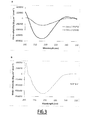
- Recombinant Der p 2 (rDer p 2) expressed either constitutively (E9590; 0.36 ⁇ M) or after induction with methanol (E9250 ; 0.28 ⁇ M) in 150mM NaCl 10 mM sodium acetate pH5 buffer were subjected to circular dichroism.
- DNA sequences coding Der p 2.0101 were cloned in pPICZ ⁇ and pGAPZ ⁇ (Invitrogen) in phase with the ⁇ factor sequence signal at the Xhol and Notl sites. Constructs were checked by DNA sequencing. The protein was expressed in methanotrophic P. pastoris GS115 or X33 yeast strains, according to the manufacturer's instructions (Invitrogen). pPlCZ ⁇ -Der p 2and pGAPZ ⁇ -Der p 2 plasmids were first respectively digested with Sacl or Avrll and used to transform yeast cells by electroporation. Positive clones were selected on YPD zeocine (100 ⁇ g/ml) plates and construct integration was confirmed by PCR.
- Selected clones were inoculated in buffered glycerol complex medium (BMGY pH6) and grown overnight at 30°C up to a 2 - 6 OD600nm. Cells were then diluted in buffered methanol complex medium (BMMY pH6) to an initial OD600nm of 1 and further grown for 1 to 6 days at 30°C. Culture supernatants were harvested after centrifugation and stored at -20°C until use. Alternatively, for constitutive expression, cells were grown in YPD for 5 to 6 days at 30°C. Culture supernatants were collected by centrifugation and stored at -20°C until use.
- Der p 2 was purified by weak anionic exchange chromatography onto a SP XL column (GE Healthcare). Briefly, supernatants were thawed and dialysed against 10 mM NaCl 10 mM sodium acetate pH5 binding buffer and applied onto a 20 ml CV SP XL. Der p 2 was eluted with a gradient of 500 mM NaCl 10 mM sodium acetate pH5 buffer. Collected fractions were pooled and concentrated onto an Amicon Cell, using a 5kDa cutoff membrane (Millipore).
- Proteins were separated by SDS-PAGE using Nupage 4-12% Bis-Tris acrylamide gels with MES buffer under non-reducing conditions and then transferred onto nitrocellulose membranes, as per the manufacturer's instructions (Invitrogen). Apparent molecular masses were estimated using the SeeBlue Plus2 ladder (Invitrogen). Membranes were treated with Qentix western blot signal enhancer (Pierce) prior to blocking non specific sites with TBS buffer containing 1% non fat milk (BioRad). Specific antibodies were added overnight in TBS buffer supplemented with 0.2% non fat milk and 0.1% Tween 20.
- Detection was performed with the anti-Dpx (0.2 ⁇ g/ml ; Indoor Biotechnologies Limited) and Kori 221 B (0.2 ⁇ g/ml ; Staller situations) mouse monoclonal antibodies directed to natural Der p 2 or a serum pool from HDM allergic patients (1:30). Secondary antibodies included as appropriate, either a HRP conjugated sheep antimouse IgG (1:1000 ; Sigma-Aldrich), a mouse anti goat/sheep IgG (1:5000 ; Sigma-Aldrich) or a rabbit anti-human IgE (1:1000 ; Dako) followed by an HRP conjugated goat anti-rabbit IgG (1:10000 ; Calbiochem). Detection was performed using the SuperSignal West Pico chemiluminescent substrate (Pierce) and a Chemismart 2000 CCD camera (Vilbert Lourmat).
- Basophil activation was measured by flow cytometry (FC500 ; Beckman Coulter) using the Allergenicity kit (Beckman Coulter)(Burtin et al., 2009). Briefly, heparinised whole blood samples were obtained from eight HDM allergic patients and incubated in absence or presence of various concentrations of natural or recombinant Der p 2 at 37°C for 15 minutes. Once excluding T lymphocytes (CD3 + cells), activated basophils were detected by dual staining with anti-CRTH2 and anti-CD203c antibodies. Whole blood cells incubated with either PBS or anti-IgE antibodies were used as negative and positive controls, respectively.
- Der p 2 was applied onto a HypersilGold C18 (2.1 x 200 mm, 1.9 ⁇ m) column (ThermoScientific) and separated using a 0-100% gradient of acetonitrile containing 0.1 % formic acid (both from JT Baker) gradient over 15 minutes. Eluents were then injected in a Maxis Mass spectrometer (Bruker Daltonics).
Landscapes
- Chemical & Material Sciences (AREA)
- Life Sciences & Earth Sciences (AREA)
- Health & Medical Sciences (AREA)
- Organic Chemistry (AREA)
- Engineering & Computer Science (AREA)
- Genetics & Genomics (AREA)
- Biotechnology (AREA)
- Zoology (AREA)
- Biochemistry (AREA)
- Wood Science & Technology (AREA)
- Bioinformatics & Cheminformatics (AREA)
- General Health & Medical Sciences (AREA)
- Molecular Biology (AREA)
- General Engineering & Computer Science (AREA)
- Biomedical Technology (AREA)
- Microbiology (AREA)
- Medicinal Chemistry (AREA)
- Tropical Medicine & Parasitology (AREA)
- Biophysics (AREA)
- Virology (AREA)
- Insects & Arthropods (AREA)
- Plant Pathology (AREA)
- Physics & Mathematics (AREA)
- General Chemical & Material Sciences (AREA)
- Chemical Kinetics & Catalysis (AREA)
- Mycology (AREA)
- Toxicology (AREA)
- Gastroenterology & Hepatology (AREA)
- Proteomics, Peptides & Aminoacids (AREA)
- Botany (AREA)
- Nuclear Medicine, Radiotherapy & Molecular Imaging (AREA)
- Immunology (AREA)
- Pulmonology (AREA)
- Pharmacology & Pharmacy (AREA)
- Animal Behavior & Ethology (AREA)
- Public Health (AREA)
- Veterinary Medicine (AREA)
- Peptides Or Proteins (AREA)
- Preparation Of Compounds By Using Micro-Organisms (AREA)
- Medicines Containing Antibodies Or Antigens For Use As Internal Diagnostic Agents (AREA)
Priority Applications (7)
| Application Number | Priority Date | Filing Date | Title |
|---|---|---|---|
| EP10305529A EP2388268A1 (fr) | 2010-05-18 | 2010-05-18 | Der p 2 recombinant exprimé chez Pichia pastoris en tant qu'allergène de type naturel à des fins immunothérapiques et diagnostiques |
| DK11305589.1T DK2388269T3 (en) | 2010-05-18 | 2011-05-17 | Recombinant Der p 2 expressed in Pichia pastoris as a "natural-like" allergen for immunotherapy and diagnostic purposes |
| EP11305589.1A EP2388269B1 (fr) | 2010-05-18 | 2011-05-17 | Der p 2 recombinant exprimé chez Pichia pastoris en tant qu'allergène de type naturel à des fins immunothérapeutiques et diagnostiques |
| US13/109,491 US9868770B2 (en) | 2010-05-18 | 2011-05-17 | Recombinant Der P 2 expressed in Pichia Pastoris as a “natural-like” allergen for immunotherapy and diagnostic purposes |
| JP2011111804A JP6042600B2 (ja) | 2010-05-18 | 2011-05-18 | 免疫療法と診断を目的としてピキア・パストリスにおいて“天然様”アレルゲンとして発現する組み換えDerp2 |
| AU2011202318A AU2011202318A1 (en) | 2010-05-18 | 2011-05-18 | Recombinant Der p 2 expressed in pichia pastoris as a "natural-like" allergen for immunotherapy and diagnostic purposes |
| AU2016247077A AU2016247077B2 (en) | 2010-05-18 | 2016-10-18 | Recombinant der p 2 expressed in pichia pastoris as a "natural-like" allergen for immunotherapy and diagnostic purposes |
Applications Claiming Priority (1)
| Application Number | Priority Date | Filing Date | Title |
|---|---|---|---|
| EP10305529A EP2388268A1 (fr) | 2010-05-18 | 2010-05-18 | Der p 2 recombinant exprimé chez Pichia pastoris en tant qu'allergène de type naturel à des fins immunothérapiques et diagnostiques |
Publications (1)
| Publication Number | Publication Date |
|---|---|
| EP2388268A1 true EP2388268A1 (fr) | 2011-11-23 |
Family
ID=42310694
Family Applications (2)
| Application Number | Title | Priority Date | Filing Date |
|---|---|---|---|
| EP10305529A Withdrawn EP2388268A1 (fr) | 2010-05-18 | 2010-05-18 | Der p 2 recombinant exprimé chez Pichia pastoris en tant qu'allergène de type naturel à des fins immunothérapiques et diagnostiques |
| EP11305589.1A Active EP2388269B1 (fr) | 2010-05-18 | 2011-05-17 | Der p 2 recombinant exprimé chez Pichia pastoris en tant qu'allergène de type naturel à des fins immunothérapeutiques et diagnostiques |
Family Applications After (1)
| Application Number | Title | Priority Date | Filing Date |
|---|---|---|---|
| EP11305589.1A Active EP2388269B1 (fr) | 2010-05-18 | 2011-05-17 | Der p 2 recombinant exprimé chez Pichia pastoris en tant qu'allergène de type naturel à des fins immunothérapeutiques et diagnostiques |
Country Status (5)
| Country | Link |
|---|---|
| US (1) | US9868770B2 (fr) |
| EP (2) | EP2388268A1 (fr) |
| JP (1) | JP6042600B2 (fr) |
| AU (2) | AU2011202318A1 (fr) |
| DK (1) | DK2388269T3 (fr) |
Cited By (2)
| Publication number | Priority date | Publication date | Assignee | Title |
|---|---|---|---|---|
| WO2013186394A1 (fr) * | 2012-06-15 | 2013-12-19 | INSERM (Institut National de la Santé et de la Recherche Médicale) | Polypeptides destinés à une utilisation dans le traitement prophylactique de l'asthme allergique |
| CN109852653A (zh) * | 2017-11-30 | 2019-06-07 | 江苏众红生物工程创药研究院有限公司 | 重组尘螨II型变应原Der p2和Der f2蛋白的制备与应用 |
Families Citing this family (9)
| Publication number | Priority date | Publication date | Assignee | Title |
|---|---|---|---|---|
| BR112014019504A2 (pt) | 2012-02-07 | 2017-06-27 | La Jolla Inst Allergy & Immunology | alérgenos da erva-dos-prados e métodos e usos para modulação de resposta imune |
| TWI467177B (zh) * | 2012-04-23 | 2015-01-01 | Taichung Veterans General Hospital | Investigation kit and detection method of |
| KR101686880B1 (ko) * | 2015-04-01 | 2016-12-19 | 연세대학교 산학협력단 | 왕침개미의 Pac c 3 알레르겐을 재조합적으로 제조하는 방법 |
| CN108265056B (zh) * | 2016-12-31 | 2019-08-30 | 江苏众红生物工程创药研究院有限公司 | 一种重组户尘螨1类变应原蛋白及其制备方法和应用 |
| CN108265057B (zh) * | 2016-12-31 | 2019-10-18 | 江苏众红生物工程创药研究院有限公司 | 一种重组户尘螨2类变应原蛋白及其制备方法和应用 |
| CN107338261B (zh) * | 2017-07-17 | 2023-04-07 | 海南大学 | 热带无爪螨重组变应原Blot5-21、其制备方法及过敏小鼠模型的建立 |
| EP3831401A4 (fr) * | 2018-06-22 | 2022-04-20 | Zonhon Biopharma Institute, Inc. | Mélange médicamenteux à base de protéines allergènes recombinées d'acariens et son utilisation |
| CN109265530A (zh) * | 2018-10-10 | 2019-01-25 | 无锡市人民医院 | 一种屋尘螨过敏原Der p 29基因重组蛋白及其应用 |
| TWI782362B (zh) * | 2020-12-04 | 2022-11-01 | 臺中榮民總醫院 | 小黑蚊過敏無針貼片式疫苗 |
Citations (2)
| Publication number | Priority date | Publication date | Assignee | Title |
|---|---|---|---|---|
| WO2002040676A2 (fr) * | 2000-11-16 | 2002-05-23 | Alk-Abelló A/S | Nouveaux allergenes mutants |
| WO2007031080A1 (fr) * | 2005-09-15 | 2007-03-22 | Alk-Abelló A/S | Procede permettant de quantifier des allergenes |
Family Cites Families (9)
| Publication number | Priority date | Publication date | Assignee | Title |
|---|---|---|---|---|
| JP3805466B2 (ja) * | 1997-02-07 | 2006-08-02 | アサヒビール株式会社 | 組換えダニアレルゲンDer f 1およびその製造方法 |
| GB0014288D0 (en) * | 2000-06-10 | 2000-08-02 | Smithkline Beecham Biolog | Vaccine |
| US20030175312A1 (en) | 2000-11-16 | 2003-09-18 | Alk-Abello A/S | Novel mutant allergens |
| CN1596309A (zh) * | 2001-05-30 | 2005-03-16 | 阿尔克-阿贝洛有限公司 | 编码鹿角车前草花粉主要过敏原-pla l1的重组dna及其应用 |
| EP1897538A1 (fr) | 2006-08-23 | 2008-03-12 | Stallergenes Sa | Formulations pour l'induction antigène-spécifique de tolérance |
| EP1908776A1 (fr) * | 2006-10-06 | 2008-04-09 | Stallergenes Sa | Proteines de fusion provenant de mite |
| JP2010507381A (ja) * | 2006-10-24 | 2010-03-11 | ノボザイムス アクティーゼルスカブ | ポリペプチド製造用の改良されたα因子シグナル・ペプチド |
| CN101821286B (zh) | 2007-10-08 | 2013-05-08 | 爱尔开-阿贝优公司 | 生产成熟的重组螨i类变应原的方法 |
| WO2010076583A1 (fr) * | 2008-12-30 | 2010-07-08 | Kaw Yan Chua | Variant d’allergène d’acarien et ses utilisations |
-
2010
- 2010-05-18 EP EP10305529A patent/EP2388268A1/fr not_active Withdrawn
-
2011
- 2011-05-17 DK DK11305589.1T patent/DK2388269T3/en active
- 2011-05-17 US US13/109,491 patent/US9868770B2/en active Active
- 2011-05-17 EP EP11305589.1A patent/EP2388269B1/fr active Active
- 2011-05-18 JP JP2011111804A patent/JP6042600B2/ja active Active
- 2011-05-18 AU AU2011202318A patent/AU2011202318A1/en not_active Abandoned
-
2016
- 2016-10-18 AU AU2016247077A patent/AU2016247077B2/en active Active
Patent Citations (2)
| Publication number | Priority date | Publication date | Assignee | Title |
|---|---|---|---|---|
| WO2002040676A2 (fr) * | 2000-11-16 | 2002-05-23 | Alk-Abelló A/S | Nouveaux allergenes mutants |
| WO2007031080A1 (fr) * | 2005-09-15 | 2007-03-22 | Alk-Abelló A/S | Procede permettant de quantifier des allergenes |
Non-Patent Citations (19)
| Title |
|---|
| BURTIN, D.; CHABRE, H.; OLAGNIER, B.; DIDIERLAURENT, A.; COURET, M.N.; COMEAU, D.; WAMBRE, E.; LAPARRA, H.; VAN OVERTVELT, L.; MON: "Production of native and modified recombinant Der p 1 molecules in tobacco plants", CLINICAL & EXPERIMENTAL ALLERGY, vol. 39, 2009, pages 760 - 770 |
| BUSSIERES S ET AL: "Recombinant Fusion Proteins Assembling Der p 1 and Der p 2 Allergens from Dermatophagoides pteronyssinus", INTERNATIONAL ARCHIVE OF ALLERGY AND IMMUNOLOGY, vol. 153, 21 April 2010 (2010-04-21), pages 141 - 151, XP009136012 * |
| BUSSIÈRES, L.; BORDAS-LE FLOCH, V.; BULDER, I.; CHABRE, H.; NONY, E.; LAUTRETTE, A.; BERROUET, C.; NGUEFEU, Y.; HORIOT, S.; BARON: "Recombinant Fusion Proteins Assembling Der p 1 and Der p 2 Allergens from Dermatophagoides pteronyssinus", INTERNATIONAL ARCHIVES OF ALLERGY AND IMMUNOLOGY, vol. 153, 2010, pages 141 - 151 |
| DEREWENDA, U.; LI, J.; DEREWENDA, Z.; DAUTER, Z.; MUELLER, G.A.; RULE, G.S.; BENJAMIN, D.C.: "The crystal structure of a major dust mite allergen Der p 2, and its biological implications", J MOL BIOL, vol. 318, 2002, pages 189 - 197 |
| HAKKAART, G.A.; HARMSEN, M.M.; CHUA, K.Y.; THOMAS, W.R.; AALBERSE, R.C.; VAN REE, R.: "Expression of the house dust mite allergen Der p 2 in the baker's yeast Saccharomyces cerevisiae", CLIN EXP ALLERGY, vol. 28, 1998, pages 45 - 52 |
| JOHANNESSEN B R ET AL: "Structure of the house dust mite allergen Der f 2: Implications for function and molecular basis of IgE cross-reactivity", FEBS LETTERS, ELSEVIER, AMSTERDAM, NL LNKD- DOI:10.1016/J.FEBSLET.2004.11.115, vol. 579, no. 5, 14 February 2005 (2005-02-14), pages 1208 - 1212, XP004745631, ISSN: 0014-5793 * |
| MOINGEON, P.; BATARD, T.; FADEL, R.; FRATI, F.; SIEBER, J.; VAN OVERTVELT, L: "Immune mechanisms of allergen-specific sublingual immunotherapy", ALLERGY, vol. 61, 2006, pages 151 - 165 |
| MUELLER ET AL., BIOCHEMISTRY, vol. 37, 1998, pages 12707 - 12714 |
| MUELLER, G.A.; SMITH, A.M.; WILLIAMS, D.C., JR.; HAKKAART, G.A.; AALBERSE, R.C.; CHAPMAN, M.D.; RULE, G.S.; BENJAMIN, D.C.: "Expression and secondary structure determination by NMR methods of the major house dust mite allergen Der p 2", J BIOL CHEM, vol. 272, 1997, pages 26893 - 26898 |
| PAULI ET AL., J. ALLERGY CLIN IMMUNOL, vol. 122, no. 5, 2008, pages 951 - 960 |
| PIBOONPOCANUN ET AL., CLINICAL AND EXPERIMENTAL ALLERGY, vol. 36, 2006, pages 510 - 516 |
| PITTNER, G.; VRTALA, S.; THOMAS, W.R.; WEGHOFER, M.; KUNDI, M.; HORAK, F.; KRAFT, D.; VALENTA, R.: "Component-resolved diagnosis of house-dust mite allergy with purified natural and recombinant mite allergens", CLIN EXP ALLERGY, vol. 34, 2004, pages 597 - 603 |
| SMITH, A.M.; CHAPMAN, M.D.: "Reduction in IgE binding to allergen variants generated by site-directed mutagenesis: contribution of disulfide bonds to the antigenic structure of the major house dust mite allergen Der p 2", MOL IMMUNOL, vol. 33, 1996, pages 399 - 405 |
| TAKAI, T.; TAKAOKA, M.; YASUEDA, H.; OKUMURA, K.; OGAWA, H.: "Dilution method to refold bacterially expressed recombinant Der f 2 and Der p 2 to exhibit the secondary structure and histamine-releasing activity of natural allergens", INT ARCH ALLERGY IMMUNOL, vol. 137, 2005, pages 1 - 8 |
| TANYARATSRISAKUL S ET AL: "Structural and IgE binding analyses of recombinant Der p 2 expressed from the hosts Escherichia coli and Pichia pastoris.", INTERNATIONAL ARCHIVES OF ALLERGY AND IMMUNOLOGY 2010 LNKD- PUBMED:19786799, vol. 151, no. 3, 29 September 2009 (2009-09-29), pages 190 - 198, XP009136011, ISSN: 1423-0097 * |
| TANYARATSRISAKUL, S.; MALAINUAL, N.; JIRAPONGSANANURUK, O.; SMITH, W.A.; THOMAS, W.R.; PIBOONPOCANUN, S.: "Structural and IgE Binding Analyses of Recombinant Der p 2 Expressed from the Hosts Escherichia coli and Pichia pastoris", INT ARCH ALLERGY IMMUNOL, vol. 151, 2009, pages 190 - 198 |
| THOMAS WR: "House dust mite allergens in asthma and allergy", TRENDS IN MOLECULAR MEDICINE, vol. 16, 31 May 2010 (2010-05-31), pages 321 - 328, XP002591752 * |
| THOMAS, W.R.; SMITH, W.-A.; HALES, B.J.; MILLS, K.L.; O'BRIEN, R.M.: "Characterization and immunobiology of house dust mite allergens", INT ARCH ALLERGY IMMUNOL, vol. 129, 2002, pages 1 - 18 |
| WEGHOFER, M.; THOMAS, W.R.; KRONQVIST, M.; MARI, A.; PUROHIT, A.; PAULI, G.; HORAK, F.; GR6NLUND, H.; VAN HAGE, M.; VALENTA, R. ET: "Variability of IgE reactivity profiles among European mite allergic patients", EUR J CLIN INVEST, vol. 38, 2008, pages 959 - 965 |
Cited By (3)
| Publication number | Priority date | Publication date | Assignee | Title |
|---|---|---|---|---|
| WO2013186394A1 (fr) * | 2012-06-15 | 2013-12-19 | INSERM (Institut National de la Santé et de la Recherche Médicale) | Polypeptides destinés à une utilisation dans le traitement prophylactique de l'asthme allergique |
| CN109852653A (zh) * | 2017-11-30 | 2019-06-07 | 江苏众红生物工程创药研究院有限公司 | 重组尘螨II型变应原Der p2和Der f2蛋白的制备与应用 |
| CN109852653B (zh) * | 2017-11-30 | 2023-04-28 | 江苏众红生物工程创药研究院有限公司 | 重组尘螨II型变应原Der p2和Der f2蛋白的制备与应用 |
Also Published As
| Publication number | Publication date |
|---|---|
| JP6042600B2 (ja) | 2016-12-14 |
| US9868770B2 (en) | 2018-01-16 |
| EP2388269A1 (fr) | 2011-11-23 |
| DK2388269T3 (en) | 2018-02-12 |
| AU2016247077A1 (en) | 2016-11-03 |
| AU2016247077B2 (en) | 2018-06-28 |
| EP2388269B1 (fr) | 2017-12-27 |
| JP2011239781A (ja) | 2011-12-01 |
| AU2011202318A1 (en) | 2011-12-08 |
| US20110293665A1 (en) | 2011-12-01 |
Similar Documents
| Publication | Publication Date | Title |
|---|---|---|
| AU2016247077B2 (en) | Recombinant der p 2 expressed in pichia pastoris as a "natural-like" allergen for immunotherapy and diagnostic purposes | |
| KR100919914B1 (ko) | 신규한 돌연변이체 알레르겐 | |
| AU2013216993B2 (en) | Timothy Grass allergens and methods and uses for immune response modulation | |
| EP2153841B1 (fr) | Vaccin comprenant des peptides de Amb a 1 pour le traitement de l'allergie des ambroisies | |
| KR20100068252A (ko) | 백신용 펩티드 | |
| JP2016145235A (ja) | アレルゲンエキスを製造するための方法 | |
| AT503690A1 (de) | Hypoallergene moleküle | |
| KR20120120965A (ko) | 자작나무 알레르기에 대한 펩티드백신 | |
| CN103784952A (zh) | 用于疫苗的草肽 | |
| EP2475386B1 (fr) | Polypeptides hybrides hypoallergéniques pour le traitement de l'allergie | |
| EP2838556B1 (fr) | Polypeptides profilines végétales pour utilisation dans l'immunothérapie d'allergique non spécifique | |
| EP1792627A1 (fr) | Modulation du système immunitaire par l'administration de molécules allergènes de transduction intralymphatique (ITAG) | |
| WO2007065633A1 (fr) | Modulation de la réponse immunitaire par l’administration de molécules d’un allergène de transduction intralymphatique | |
| Class et al. | Patent application title: PLANT PROFILIN POLYPEPTIDES FOR USE IN NON-SPECIFIC ALLERGY IMMUNOTHERAPY Inventors: Kaare Lund (Virum, DK) Jens Brimnes (Herlev, DK) Helene Henmar (Kokkedal, DK) Hans-Henrik Ipsen (Hillerod, DK) Lise Lund Maerkedahl (Fredensborg, DK) Gitte Nordskov Hansen (Fredensborg, DK) Rafael Ignacio Monsalve Clemente (Madrid, ES) | |
| Kale et al. | Future of Allergen-specific Immunotherapy | |
| Cantillo et al. | From Molecular Cloning to Vaccine Development for Allergic Diseases | |
| HK1205949B (en) | Plant profilin polypeptides for use in non-specific allergy immunotherapy | |
| Asturias | Recombinant hypoallergens for immunotherapy of Parietaria judaica pollen allergy |
Legal Events
| Date | Code | Title | Description |
|---|---|---|---|
| AK | Designated contracting states |
Kind code of ref document: A1 Designated state(s): AL AT BE BG CH CY CZ DE DK EE ES FI FR GB GR HR HU IE IS IT LI LT LU LV MC MK MT NL NO PL PT RO SE SI SK SM TR |
|
| AX | Request for extension of the european patent |
Extension state: BA ME RS |
|
| PUAI | Public reference made under article 153(3) epc to a published international application that has entered the european phase |
Free format text: ORIGINAL CODE: 0009012 |
|
| RIN1 | Information on inventor provided before grant (corrected) |
Inventor name: BOULEY, JULIEN Inventor name: MOINGEON, PHILIPPE Inventor name: NONY, EMMANIEL Inventor name: TOURDOT, SOPHIE Inventor name: AIROUCHE, SABI Inventor name: BUSSIERES, LAETITIA Inventor name: BORDAS,VERONIQUE |
|
| STAA | Information on the status of an ep patent application or granted ep patent |
Free format text: STATUS: THE APPLICATION IS DEEMED TO BE WITHDRAWN |
|
| 18D | Application deemed to be withdrawn |
Effective date: 20120524 |