EP2406228B1 - Substituierte 3-amino-2-mercaptochinoline als kcnq2/3 modulatoren - Google Patents
Substituierte 3-amino-2-mercaptochinoline als kcnq2/3 modulatoren Download PDFInfo
- Publication number
- EP2406228B1 EP2406228B1 EP10708503.7A EP10708503A EP2406228B1 EP 2406228 B1 EP2406228 B1 EP 2406228B1 EP 10708503 A EP10708503 A EP 10708503A EP 2406228 B1 EP2406228 B1 EP 2406228B1
- Authority
- EP
- European Patent Office
- Prior art keywords
- alkyl
- aryl
- heteroaryl
- unsubstituted
- substituted
- Prior art date
- Legal status (The legal status is an assumption and is not a legal conclusion. Google has not performed a legal analysis and makes no representation as to the accuracy of the status listed.)
- Not-in-force
Links
- WPFIJUWKLJCQOO-UHFFFAOYSA-N 3-amino-1h-quinoline-2-thione Chemical class C1=CC=C2NC(=S)C(N)=CC2=C1 WPFIJUWKLJCQOO-UHFFFAOYSA-N 0.000 title claims description 22
- 108010006746 KCNQ2 Potassium Channel Proteins 0.000 title description 19
- 102000005453 KCNQ2 Potassium Channel Human genes 0.000 title 1
- 125000000217 alkyl group Chemical group 0.000 claims description 202
- 125000003118 aryl group Chemical group 0.000 claims description 101
- 125000001072 heteroaryl group Chemical group 0.000 claims description 90
- 229920006395 saturated elastomer Polymers 0.000 claims description 85
- 125000000623 heterocyclic group Chemical group 0.000 claims description 73
- 125000001424 substituent group Chemical group 0.000 claims description 68
- -1 SCF3 Chemical group 0.000 claims description 60
- 125000004404 heteroalkyl group Chemical group 0.000 claims description 47
- 208000002193 Pain Diseases 0.000 claims description 40
- 125000006376 (C3-C10) cycloalkyl group Chemical group 0.000 claims description 38
- 150000001875 compounds Chemical class 0.000 claims description 38
- 229910052739 hydrogen Inorganic materials 0.000 claims description 31
- 239000003814 drug Substances 0.000 claims description 23
- 229910052731 fluorine Inorganic materials 0.000 claims description 22
- 125000000876 trifluoromethoxy group Chemical group FC(F)(F)O* 0.000 claims description 21
- 125000004209 (C1-C8) alkyl group Chemical group 0.000 claims description 20
- 125000000753 cycloalkyl group Chemical group 0.000 claims description 20
- 229910052801 chlorine Inorganic materials 0.000 claims description 19
- 229910052799 carbon Inorganic materials 0.000 claims description 17
- 125000000008 (C1-C10) alkyl group Chemical group 0.000 claims description 15
- 229910052794 bromium Inorganic materials 0.000 claims description 14
- 229910052740 iodine Inorganic materials 0.000 claims description 13
- 150000003839 salts Chemical class 0.000 claims description 13
- 238000006467 substitution reaction Methods 0.000 claims description 13
- 239000000126 substance Substances 0.000 claims description 12
- 125000006552 (C3-C8) cycloalkyl group Chemical group 0.000 claims description 11
- 206010015037 epilepsy Diseases 0.000 claims description 11
- 125000004432 carbon atom Chemical group C* 0.000 claims description 10
- 238000002360 preparation method Methods 0.000 claims description 10
- 206010046543 Urinary incontinence Diseases 0.000 claims description 9
- 125000001997 phenyl group Chemical group [H]C1=C([H])C([H])=C(*)C([H])=C1[H] 0.000 claims description 9
- 239000002253 acid Substances 0.000 claims description 7
- 208000019901 Anxiety disease Diseases 0.000 claims description 6
- 208000020925 Bipolar disease Diseases 0.000 claims description 6
- 208000012661 Dyskinesia Diseases 0.000 claims description 6
- 208000014094 Dystonic disease Diseases 0.000 claims description 6
- 206010026749 Mania Diseases 0.000 claims description 6
- 208000019695 Migraine disease Diseases 0.000 claims description 6
- 230000036506 anxiety Effects 0.000 claims description 6
- 125000003917 carbamoyl group Chemical group [H]N([H])C(*)=O 0.000 claims description 6
- 125000003178 carboxy group Chemical group [H]OC(*)=O 0.000 claims description 6
- 208000010877 cognitive disease Diseases 0.000 claims description 6
- 208000010118 dystonia Diseases 0.000 claims description 6
- 125000004435 hydrogen atom Chemical group [H]* 0.000 claims description 6
- 125000002496 methyl group Chemical group [H]C([H])([H])* 0.000 claims description 6
- 206010027599 migraine Diseases 0.000 claims description 6
- 125000004076 pyridyl group Chemical group 0.000 claims description 6
- 125000001544 thienyl group Chemical group 0.000 claims description 6
- 125000002541 furyl group Chemical group 0.000 claims description 5
- 239000000203 mixture Substances 0.000 claims description 5
- 125000004178 (C1-C4) alkyl group Chemical group 0.000 claims description 4
- 125000005913 (C3-C6) cycloalkyl group Chemical group 0.000 claims description 4
- IYZUJGWVUSWOFH-UHFFFAOYSA-N 2-(3-bicyclo[2.2.1]heptanyl)-n-(2-ethylsulfanylquinolin-3-yl)acetamide Chemical compound C1=CC=C2C=C(NC(=O)CC3C4CCC(C4)C3)C(SCC)=NC2=C1 IYZUJGWVUSWOFH-UHFFFAOYSA-N 0.000 claims description 4
- RTIMSYQWCMQUHT-UHFFFAOYSA-N 2-(3-bicyclo[2.2.1]heptanyl)-n-[2-ethylsulfanyl-7-(trifluoromethyl)quinolin-3-yl]acetamide Chemical compound FC(F)(F)C1=CC=C2C=C(NC(=O)CC3C4CCC(C4)C3)C(SCC)=NC2=C1 RTIMSYQWCMQUHT-UHFFFAOYSA-N 0.000 claims description 4
- NBQOMSWDPMGLDV-UHFFFAOYSA-N 3-cyclopentyl-n-(2-ethylsulfanylquinolin-3-yl)propanamide Chemical compound CCSC1=NC2=CC=CC=C2C=C1NC(=O)CCC1CCCC1 NBQOMSWDPMGLDV-UHFFFAOYSA-N 0.000 claims description 4
- BFGAVNGUPNQHLB-UHFFFAOYSA-N 3-cyclopentyl-n-[2-ethylsulfanyl-4-methyl-7-(trifluoromethyl)quinolin-3-yl]propanamide Chemical compound CCSC1=NC2=CC(C(F)(F)F)=CC=C2C(C)=C1NC(=O)CCC1CCCC1 BFGAVNGUPNQHLB-UHFFFAOYSA-N 0.000 claims description 4
- LIJKURWCGLPYFP-UHFFFAOYSA-N 3-cyclopentyl-n-[2-ethylsulfanyl-7-(trifluoromethyl)quinolin-3-yl]propanamide Chemical compound CCSC1=NC2=CC(C(F)(F)F)=CC=C2C=C1NC(=O)CCC1CCCC1 LIJKURWCGLPYFP-UHFFFAOYSA-N 0.000 claims description 4
- 150000007513 acids Chemical class 0.000 claims description 4
- 125000001495 ethyl group Chemical group [H]C([H])([H])C([H])([H])* 0.000 claims description 4
- 125000001449 isopropyl group Chemical group [H]C([H])([H])C([H])(*)C([H])([H])[H] 0.000 claims description 4
- KGKPFBQUXFOPTK-UHFFFAOYSA-N n-(2-ethylsulfanylquinolin-3-yl)-3,3-dimethylbutanamide Chemical compound C1=CC=C2C=C(NC(=O)CC(C)(C)C)C(SCC)=NC2=C1 KGKPFBQUXFOPTK-UHFFFAOYSA-N 0.000 claims description 4
- IWQRREJPCILBIR-UHFFFAOYSA-N n-[2-ethylsulfanyl-4-methyl-7-(trifluoromethyl)quinolin-3-yl]-2-thiophen-2-ylacetamide Chemical compound CCSC1=NC2=CC(C(F)(F)F)=CC=C2C(C)=C1NC(=O)CC1=CC=CS1 IWQRREJPCILBIR-UHFFFAOYSA-N 0.000 claims description 4
- LGRCIDLJCYQTGX-UHFFFAOYSA-N n-[2-ethylsulfanyl-7-(trifluoromethyl)quinolin-3-yl]-3,3-dimethylbutanamide Chemical compound FC(F)(F)C1=CC=C2C=C(NC(=O)CC(C)(C)C)C(SCC)=NC2=C1 LGRCIDLJCYQTGX-UHFFFAOYSA-N 0.000 claims description 4
- 125000004108 n-butyl group Chemical group [H]C([H])([H])C([H])([H])C([H])([H])C([H])([H])* 0.000 claims description 4
- 125000004123 n-propyl group Chemical group [H]C([H])([H])C([H])([H])C([H])([H])* 0.000 claims description 4
- 125000002914 sec-butyl group Chemical group [H]C([H])([H])C([H])([H])C([H])(*)C([H])([H])[H] 0.000 claims description 4
- 125000000999 tert-butyl group Chemical group [H]C([H])([H])C(*)(C([H])([H])[H])C([H])([H])[H] 0.000 claims description 4
- 239000004480 active ingredient Substances 0.000 claims description 3
- 125000000051 benzyloxy group Chemical group [H]C1=C([H])C([H])=C(C([H])=C1[H])C([H])([H])O* 0.000 claims description 3
- 239000000654 additive Substances 0.000 claims description 2
- CQNVJBQWKBUSQV-UHFFFAOYSA-N n-(2-ethylsulfanylquinolin-3-yl)-2-thiophen-2-ylacetamide Chemical compound CCSC1=NC2=CC=CC=C2C=C1NC(=O)CC1=CC=CS1 CQNVJBQWKBUSQV-UHFFFAOYSA-N 0.000 claims description 2
- UBKWLYPSSIBFGT-UHFFFAOYSA-N n-(2-pentylsulfanylquinolin-3-yl)-2-thiophen-2-ylacetamide Chemical compound CCCCCSC1=NC2=CC=CC=C2C=C1NC(=O)CC1=CC=CS1 UBKWLYPSSIBFGT-UHFFFAOYSA-N 0.000 claims description 2
- ZBJPFGHZMQBDFG-UHFFFAOYSA-N n-[2-(2-phenylsulfanylethylsulfanyl)quinolin-3-yl]-2-thiophen-2-ylacetamide Chemical compound C=1C2=CC=CC=C2N=C(SCCSC=2C=CC=CC=2)C=1NC(=O)CC1=CC=CS1 ZBJPFGHZMQBDFG-UHFFFAOYSA-N 0.000 claims description 2
- IXKMHPRESURQPN-UHFFFAOYSA-N n-[2-[2-(benzenesulfonyl)ethylsulfanyl]quinolin-3-yl]-2-cyclohexylacetamide Chemical compound C=1C2=CC=CC=C2N=C(SCCS(=O)(=O)C=2C=CC=CC=2)C=1NC(=O)CC1CCCCC1 IXKMHPRESURQPN-UHFFFAOYSA-N 0.000 claims description 2
- MCHNTMPVVJRSOL-UHFFFAOYSA-N n-[2-[2-(benzenesulfonyl)ethylsulfanyl]quinolin-3-yl]-2-thiophen-2-ylacetamide Chemical compound C=1C2=CC=CC=C2N=C(SCCS(=O)(=O)C=2C=CC=CC=2)C=1NC(=O)CC1=CC=CS1 MCHNTMPVVJRSOL-UHFFFAOYSA-N 0.000 claims description 2
- 125000004169 (C1-C6) alkyl group Chemical group 0.000 claims 67
- KXZSVYHFYHTNBI-UHFFFAOYSA-N 1h-quinoline-2-thione Chemical class C1=CC=CC2=NC(S)=CC=C21 KXZSVYHFYHTNBI-UHFFFAOYSA-N 0.000 claims 10
- 125000000956 methoxy group Chemical group [H]C([H])([H])O* 0.000 claims 2
- 239000000460 chlorine Substances 0.000 description 49
- 239000000243 solution Substances 0.000 description 30
- VLKZOEOYAKHREP-UHFFFAOYSA-N n-Hexane Chemical compound CCCCCC VLKZOEOYAKHREP-UHFFFAOYSA-N 0.000 description 27
- 238000003786 synthesis reaction Methods 0.000 description 25
- 230000015572 biosynthetic process Effects 0.000 description 24
- 125000005842 heteroatom Chemical group 0.000 description 21
- 102100034354 Potassium voltage-gated channel subfamily KQT member 2 Human genes 0.000 description 19
- 238000000034 method Methods 0.000 description 18
- 108091006146 Channels Proteins 0.000 description 16
- WSFSSNUMVMOOMR-UHFFFAOYSA-N Formaldehyde Chemical compound O=C WSFSSNUMVMOOMR-UHFFFAOYSA-N 0.000 description 14
- 238000006243 chemical reaction Methods 0.000 description 14
- 239000000543 intermediate Substances 0.000 description 14
- VEXZGXHMUGYJMC-UHFFFAOYSA-N Hydrochloric acid Chemical compound Cl VEXZGXHMUGYJMC-UHFFFAOYSA-N 0.000 description 13
- 208000000094 Chronic Pain Diseases 0.000 description 12
- YMWUJEATGCHHMB-UHFFFAOYSA-N Dichloromethane Chemical compound ClCCl YMWUJEATGCHHMB-UHFFFAOYSA-N 0.000 description 12
- 239000012267 brine Substances 0.000 description 12
- 208000037265 diseases, disorders, signs and symptoms Diseases 0.000 description 12
- HPALAKNZSZLMCH-UHFFFAOYSA-M sodium;chloride;hydrate Chemical compound O.[Na+].[Cl-] HPALAKNZSZLMCH-UHFFFAOYSA-M 0.000 description 12
- 239000012074 organic phase Substances 0.000 description 10
- 239000000546 pharmaceutical excipient Substances 0.000 description 10
- 239000011734 sodium Substances 0.000 description 10
- XLYOFNOQVPJJNP-UHFFFAOYSA-N water Substances O XLYOFNOQVPJJNP-UHFFFAOYSA-N 0.000 description 10
- 206010065390 Inflammatory pain Diseases 0.000 description 9
- 239000002585 base Substances 0.000 description 9
- 210000004027 cell Anatomy 0.000 description 9
- 208000004296 neuralgia Diseases 0.000 description 9
- 208000021722 neuropathic pain Diseases 0.000 description 9
- 150000003573 thiols Chemical class 0.000 description 9
- 239000012071 phase Substances 0.000 description 8
- 208000000112 Myalgia Diseases 0.000 description 7
- 150000001721 carbon Chemical group 0.000 description 7
- 125000004122 cyclic group Chemical group 0.000 description 7
- 201000010099 disease Diseases 0.000 description 7
- 230000000694 effects Effects 0.000 description 7
- 229910052757 nitrogen Inorganic materials 0.000 description 7
- UHOVQNZJYSORNB-UHFFFAOYSA-N Benzene Chemical compound C1=CC=CC=C1 UHOVQNZJYSORNB-UHFFFAOYSA-N 0.000 description 6
- JGFZNNIVVJXRND-UHFFFAOYSA-N N,N-Diisopropylethylamine (DIPEA) Chemical compound CCN(C(C)C)C(C)C JGFZNNIVVJXRND-UHFFFAOYSA-N 0.000 description 6
- 230000001270 agonistic effect Effects 0.000 description 6
- 125000006297 carbonyl amino group Chemical group [H]N([*:2])C([*:1])=O 0.000 description 6
- KRKNYBCHXYNGOX-UHFFFAOYSA-N citric acid Chemical compound OC(=O)CC(O)(C(O)=O)CC(O)=O KRKNYBCHXYNGOX-UHFFFAOYSA-N 0.000 description 6
- DNJIEGIFACGWOD-UHFFFAOYSA-N ethanethiol Chemical compound CCS DNJIEGIFACGWOD-UHFFFAOYSA-N 0.000 description 6
- 238000003756 stirring Methods 0.000 description 6
- 208000005298 acute pain Diseases 0.000 description 5
- 150000001408 amides Chemical class 0.000 description 5
- 239000000872 buffer Substances 0.000 description 5
- 208000035475 disorder Diseases 0.000 description 5
- 239000000975 dye Substances 0.000 description 5
- 238000000746 purification Methods 0.000 description 5
- WYURNTSHIVDZCO-UHFFFAOYSA-N tetrahydrofuran Substances C1CCOC1 WYURNTSHIVDZCO-UHFFFAOYSA-N 0.000 description 5
- 125000002023 trifluoromethyl group Chemical group FC(F)(F)* 0.000 description 5
- GWCBLLYIYWIWFG-UHFFFAOYSA-N 2-chloro-7-(trifluoromethyl)quinolin-3-amine Chemical compound C1=C(C(F)(F)F)C=C2N=C(Cl)C(N)=CC2=C1 GWCBLLYIYWIWFG-UHFFFAOYSA-N 0.000 description 4
- 206010001497 Agitation Diseases 0.000 description 4
- ZMXDDKWLCZADIW-UHFFFAOYSA-N N,N-dimethylformamide Substances CN(C)C=O ZMXDDKWLCZADIW-UHFFFAOYSA-N 0.000 description 4
- MZRVEZGGRBJDDB-UHFFFAOYSA-N N-Butyllithium Chemical compound [Li]CCCC MZRVEZGGRBJDDB-UHFFFAOYSA-N 0.000 description 4
- FAPWRFPIFSIZLT-UHFFFAOYSA-M Sodium chloride Chemical compound [Na+].[Cl-] FAPWRFPIFSIZLT-UHFFFAOYSA-M 0.000 description 4
- 150000005840 aryl radicals Chemical class 0.000 description 4
- 125000001511 cyclopentyl group Chemical group [H]C1([H])C([H])([H])C([H])([H])C([H])(*)C1([H])[H] 0.000 description 4
- 238000011534 incubation Methods 0.000 description 4
- 239000007924 injection Substances 0.000 description 4
- 238000002347 injection Methods 0.000 description 4
- 238000004519 manufacturing process Methods 0.000 description 4
- 230000001404 mediated effect Effects 0.000 description 4
- 210000002569 neuron Anatomy 0.000 description 4
- 230000002093 peripheral effect Effects 0.000 description 4
- 230000000144 pharmacologic effect Effects 0.000 description 4
- 150000003254 radicals Chemical class 0.000 description 4
- 108020003175 receptors Proteins 0.000 description 4
- 229910052717 sulfur Inorganic materials 0.000 description 4
- 238000012360 testing method Methods 0.000 description 4
- 150000003568 thioethers Chemical class 0.000 description 4
- HLYCBHPMESTJBD-UHFFFAOYSA-N 2-(2-chloro-4-methylquinolin-3-yl)isoindole-1,3-dione Chemical compound ClC1=NC2=CC=CC=C2C(C)=C1N1C(=O)C2=CC=CC=C2C1=O HLYCBHPMESTJBD-UHFFFAOYSA-N 0.000 description 3
- VNMZNDKYTTZKGZ-UHFFFAOYSA-N 2-(2-ethylsulfanyl-4-methylquinolin-3-yl)isoindole-1,3-dione Chemical compound O=C1C2=CC=CC=C2C(=O)N1C1=C(C)C2=CC=CC=C2N=C1SCC VNMZNDKYTTZKGZ-UHFFFAOYSA-N 0.000 description 3
- BAEOVAZDSZHOSW-UHFFFAOYSA-N 2-(benzenesulfonyl)ethanethiol Chemical compound SCCS(=O)(=O)C1=CC=CC=C1 BAEOVAZDSZHOSW-UHFFFAOYSA-N 0.000 description 3
- LHTQJXFMTICHDD-UHFFFAOYSA-N 2-chloro-7-(trifluoromethyl)quinoline-3-carboxylic acid Chemical compound C1=C(C(F)(F)F)C=C2N=C(Cl)C(C(=O)O)=CC2=C1 LHTQJXFMTICHDD-UHFFFAOYSA-N 0.000 description 3
- IBKSCECVFNTOFL-UHFFFAOYSA-N 2-ethylsulfanyl-4-methyl-7-(trifluoromethyl)quinolin-3-amine Chemical compound FC(F)(F)C1=CC=C2C(C)=C(N)C(SCC)=NC2=C1 IBKSCECVFNTOFL-UHFFFAOYSA-N 0.000 description 3
- 150000005635 2-haloquinolines Chemical class 0.000 description 3
- QTBSBXVTEAMEQO-UHFFFAOYSA-N Acetic acid Chemical compound CC(O)=O QTBSBXVTEAMEQO-UHFFFAOYSA-N 0.000 description 3
- 108091003079 Bovine Serum Albumin Proteins 0.000 description 3
- OKTJSMMVPCPJKN-UHFFFAOYSA-N Carbon Chemical group [C] OKTJSMMVPCPJKN-UHFFFAOYSA-N 0.000 description 3
- XEKOWRVHYACXOJ-UHFFFAOYSA-N Ethyl acetate Chemical compound CCOC(C)=O XEKOWRVHYACXOJ-UHFFFAOYSA-N 0.000 description 3
- 108010011185 KCNQ1 Potassium Channel Proteins 0.000 description 3
- 241001465754 Metazoa Species 0.000 description 3
- OKKJLVBELUTLKV-UHFFFAOYSA-N Methanol Chemical compound OC OKKJLVBELUTLKV-UHFFFAOYSA-N 0.000 description 3
- MUBZPKHOEPUJKR-UHFFFAOYSA-N Oxalic acid Chemical compound OC(=O)C(O)=O MUBZPKHOEPUJKR-UHFFFAOYSA-N 0.000 description 3
- KWYUFKZDYYNOTN-UHFFFAOYSA-M Potassium hydroxide Chemical compound [OH-].[K+] KWYUFKZDYYNOTN-UHFFFAOYSA-M 0.000 description 3
- 102100037444 Potassium voltage-gated channel subfamily KQT member 1 Human genes 0.000 description 3
- HEMHJVSKTPXQMS-UHFFFAOYSA-M Sodium hydroxide Chemical compound [OH-].[Na+] HEMHJVSKTPXQMS-UHFFFAOYSA-M 0.000 description 3
- YXFVVABEGXRONW-UHFFFAOYSA-N Toluene Chemical compound CC1=CC=CC=C1 YXFVVABEGXRONW-UHFFFAOYSA-N 0.000 description 3
- 125000000304 alkynyl group Chemical group 0.000 description 3
- 150000001412 amines Chemical class 0.000 description 3
- 230000006399 behavior Effects 0.000 description 3
- 238000004364 calculation method Methods 0.000 description 3
- 239000003153 chemical reaction reagent Substances 0.000 description 3
- 238000001816 cooling Methods 0.000 description 3
- 229940079593 drug Drugs 0.000 description 3
- PCOBBVZJEWWZFR-UHFFFAOYSA-N ezogabine Chemical compound C1=C(N)C(NC(=O)OCC)=CC=C1NCC1=CC=C(F)C=C1 PCOBBVZJEWWZFR-UHFFFAOYSA-N 0.000 description 3
- 239000012894 fetal calf serum Substances 0.000 description 3
- 210000002683 foot Anatomy 0.000 description 3
- 125000000524 functional group Chemical group 0.000 description 3
- 230000003040 nociceptive effect Effects 0.000 description 3
- 125000003386 piperidinyl group Chemical group 0.000 description 3
- 229960003312 retigabine Drugs 0.000 description 3
- 239000007858 starting material Substances 0.000 description 3
- 125000006272 (C3-C7) cycloalkyl group Chemical group 0.000 description 2
- CBRNFJRWTAFTFQ-UHFFFAOYSA-N 2-[2-(benzenesulfonyl)ethylsulfanyl]-3-nitroquinoline Chemical compound [O-][N+](=O)C1=CC2=CC=CC=C2N=C1SCCS(=O)(=O)C1=CC=CC=C1 CBRNFJRWTAFTFQ-UHFFFAOYSA-N 0.000 description 2
- WKROBMIHVPERLN-UHFFFAOYSA-N 2-[2-(benzenesulfonyl)ethylsulfanyl]quinolin-3-amine Chemical compound NC1=CC2=CC=CC=C2N=C1SCCS(=O)(=O)C1=CC=CC=C1 WKROBMIHVPERLN-UHFFFAOYSA-N 0.000 description 2
- KZPTVUAUNLYWSD-UHFFFAOYSA-N 2-cyclohexyl-n-(2-ethylsulfanylquinolin-3-yl)acetamide Chemical compound CCSC1=NC2=CC=CC=C2C=C1NC(=O)CC1CCCCC1 KZPTVUAUNLYWSD-UHFFFAOYSA-N 0.000 description 2
- XVXCLDUCHQOYCJ-UHFFFAOYSA-N 2-ethylsulfanylquinolin-3-amine Chemical compound C1=CC=C2C=C(N)C(SCC)=NC2=C1 XVXCLDUCHQOYCJ-UHFFFAOYSA-N 0.000 description 2
- DLFVBJFMPXGRIB-UHFFFAOYSA-N Acetamide Chemical compound CC(N)=O DLFVBJFMPXGRIB-UHFFFAOYSA-N 0.000 description 2
- 125000006374 C2-C10 alkenyl group Chemical group 0.000 description 2
- ZAMOUSCENKQFHK-UHFFFAOYSA-N Chlorine atom Chemical compound [Cl] ZAMOUSCENKQFHK-UHFFFAOYSA-N 0.000 description 2
- 206010013710 Drug interaction Diseases 0.000 description 2
- 108090000790 Enzymes Proteins 0.000 description 2
- 102000004190 Enzymes Human genes 0.000 description 2
- LFQSCWFLJHTTHZ-UHFFFAOYSA-N Ethanol Chemical compound CCO LFQSCWFLJHTTHZ-UHFFFAOYSA-N 0.000 description 2
- VZCYOOQTPOCHFL-OWOJBTEDSA-N Fumaric acid Chemical compound OC(=O)\C=C\C(O)=O VZCYOOQTPOCHFL-OWOJBTEDSA-N 0.000 description 2
- WQZGKKKJIJFFOK-GASJEMHNSA-N Glucose Natural products OC[C@H]1OC(O)[C@H](O)[C@@H](O)[C@@H]1O WQZGKKKJIJFFOK-GASJEMHNSA-N 0.000 description 2
- 101000994648 Homo sapiens Potassium voltage-gated channel subfamily KQT member 4 Proteins 0.000 description 2
- XEEYBQQBJWHFJM-UHFFFAOYSA-N Iron Chemical group [Fe] XEEYBQQBJWHFJM-UHFFFAOYSA-N 0.000 description 2
- 108010038888 KCNQ3 Potassium Channel Proteins 0.000 description 2
- WMFOQBRAJBCJND-UHFFFAOYSA-M Lithium hydroxide Chemical compound [Li+].[OH-] WMFOQBRAJBCJND-UHFFFAOYSA-M 0.000 description 2
- 241000124008 Mammalia Species 0.000 description 2
- AFVFQIVMOAPDHO-UHFFFAOYSA-N Methanesulfonic acid Chemical compound CS(O)(=O)=O AFVFQIVMOAPDHO-UHFFFAOYSA-N 0.000 description 2
- QIAFMBKCNZACKA-UHFFFAOYSA-N N-benzoylglycine Chemical compound OC(=O)CNC(=O)C1=CC=CC=C1 QIAFMBKCNZACKA-UHFFFAOYSA-N 0.000 description 2
- PVNIIMVLHYAWGP-UHFFFAOYSA-N Niacin Chemical compound OC(=O)C1=CC=CN=C1 PVNIIMVLHYAWGP-UHFFFAOYSA-N 0.000 description 2
- NBIIXXVUZAFLBC-UHFFFAOYSA-N Phosphoric acid Chemical compound OP(O)(O)=O NBIIXXVUZAFLBC-UHFFFAOYSA-N 0.000 description 2
- 102000004257 Potassium Channel Human genes 0.000 description 2
- 102100034360 Potassium voltage-gated channel subfamily KQT member 3 Human genes 0.000 description 2
- 102100034363 Potassium voltage-gated channel subfamily KQT member 4 Human genes 0.000 description 2
- VYPSYNLAJGMNEJ-UHFFFAOYSA-N Silicium dioxide Chemical compound O=[Si]=O VYPSYNLAJGMNEJ-UHFFFAOYSA-N 0.000 description 2
- QAOWNCQODCNURD-UHFFFAOYSA-N Sulfuric acid Chemical compound OS(O)(=O)=O QAOWNCQODCNURD-UHFFFAOYSA-N 0.000 description 2
- 108010076089 accutase Proteins 0.000 description 2
- 125000005073 adamantyl group Chemical group C12(CC3CC(CC(C1)C3)C2)* 0.000 description 2
- 239000000556 agonist Substances 0.000 description 2
- 229910052784 alkaline earth metal Inorganic materials 0.000 description 2
- 125000004429 atom Chemical group 0.000 description 2
- 230000002051 biphasic effect Effects 0.000 description 2
- 239000002775 capsule Substances 0.000 description 2
- 230000000747 cardiac effect Effects 0.000 description 2
- 150000001768 cations Chemical class 0.000 description 2
- 230000008859 change Effects 0.000 description 2
- 238000004440 column chromatography Methods 0.000 description 2
- 125000000113 cyclohexyl group Chemical group [H]C1([H])C([H])([H])C([H])([H])C([H])(*)C([H])([H])C1([H])[H] 0.000 description 2
- LJOODBDWMQKMFB-UHFFFAOYSA-N cyclohexylacetic acid Chemical compound OC(=O)CC1CCCCC1 LJOODBDWMQKMFB-UHFFFAOYSA-N 0.000 description 2
- 125000001559 cyclopropyl group Chemical group [H]C1([H])C([H])([H])C1([H])* 0.000 description 2
- 230000029142 excretion Effects 0.000 description 2
- 238000002474 experimental method Methods 0.000 description 2
- 230000002349 favourable effect Effects 0.000 description 2
- 125000002485 formyl group Chemical group [H]C(*)=O 0.000 description 2
- 235000011389 fruit/vegetable juice Nutrition 0.000 description 2
- 239000008103 glucose Substances 0.000 description 2
- 239000008187 granular material Substances 0.000 description 2
- 125000005980 hexynyl group Chemical group 0.000 description 2
- 210000000548 hind-foot Anatomy 0.000 description 2
- 125000001041 indolyl group Chemical group 0.000 description 2
- 230000003993 interaction Effects 0.000 description 2
- 238000001990 intravenous administration Methods 0.000 description 2
- 125000001972 isopentyl group Chemical group [H]C([H])([H])C([H])(C([H])([H])[H])C([H])([H])C([H])([H])* 0.000 description 2
- JVTAAEKCZFNVCJ-UHFFFAOYSA-N lactic acid Chemical compound CC(O)C(O)=O JVTAAEKCZFNVCJ-UHFFFAOYSA-N 0.000 description 2
- 239000011777 magnesium Substances 0.000 description 2
- 238000004949 mass spectrometry Methods 0.000 description 2
- 238000005259 measurement Methods 0.000 description 2
- 239000002609 medium Substances 0.000 description 2
- 238000002779 membrane potential assay Methods 0.000 description 2
- BDAGIHXWWSANSR-UHFFFAOYSA-N methanoic acid Natural products OC=O BDAGIHXWWSANSR-UHFFFAOYSA-N 0.000 description 2
- 125000002757 morpholinyl group Chemical group 0.000 description 2
- WSWWEQDPSRHEGT-UHFFFAOYSA-N n-[2-chloro-7-(trifluoromethyl)quinolin-3-yl]-2-thiophen-2-ylacetamide Chemical compound ClC1=NC2=CC(C(F)(F)F)=CC=C2C=C1NC(=O)CC1=CC=CS1 WSWWEQDPSRHEGT-UHFFFAOYSA-N 0.000 description 2
- YPCNTHJVXOMMBS-UHFFFAOYSA-N n-[2-ethylsulfanyl-7-(trifluoromethyl)quinolin-3-yl]-2-thiophen-2-ylacetamide Chemical compound CCSC1=NC2=CC(C(F)(F)F)=CC=C2C=C1NC(=O)CC1=CC=CS1 YPCNTHJVXOMMBS-UHFFFAOYSA-N 0.000 description 2
- 125000001280 n-hexyl group Chemical group C(CCCCC)* 0.000 description 2
- 125000000740 n-pentyl group Chemical group [H]C([H])([H])C([H])([H])C([H])([H])C([H])([H])C([H])([H])* 0.000 description 2
- 125000001971 neopentyl group Chemical group [H]C([*])([H])C(C([H])([H])[H])(C([H])([H])[H])C([H])([H])[H] 0.000 description 2
- 125000005071 nonynyl group Chemical group C(#CCCCCCCC)* 0.000 description 2
- CTSLXHKWHWQRSH-UHFFFAOYSA-N oxalyl chloride Chemical compound ClC(=O)C(Cl)=O CTSLXHKWHWQRSH-UHFFFAOYSA-N 0.000 description 2
- 229910052760 oxygen Inorganic materials 0.000 description 2
- 208000033808 peripheral neuropathy Diseases 0.000 description 2
- 125000001791 phenazinyl group Chemical group C1(=CC=CC2=NC3=CC=CC=C3N=C12)* 0.000 description 2
- 108020001213 potassium channel Proteins 0.000 description 2
- 125000002294 quinazolinyl group Chemical class N1=C(N=CC2=CC=CC=C12)* 0.000 description 2
- 239000011780 sodium chloride Substances 0.000 description 2
- 210000003594 spinal ganglia Anatomy 0.000 description 2
- 239000007921 spray Substances 0.000 description 2
- 239000000725 suspension Substances 0.000 description 2
- 239000003826 tablet Substances 0.000 description 2
- 125000003039 tetrahydroisoquinolinyl group Chemical group C1(NCCC2=CC=CC=C12)* 0.000 description 2
- 230000000699 topical effect Effects 0.000 description 2
- VZCYOOQTPOCHFL-UHFFFAOYSA-N trans-butenedioic acid Natural products OC(=O)C=CC(O)=O VZCYOOQTPOCHFL-UHFFFAOYSA-N 0.000 description 2
- 125000000391 vinyl group Chemical group [H]C([*])=C([H])[H] 0.000 description 2
- OZFAFGSSMRRTDW-UHFFFAOYSA-N (2,4-dichlorophenyl) benzenesulfonate Chemical compound ClC1=CC(Cl)=CC=C1OS(=O)(=O)C1=CC=CC=C1 OZFAFGSSMRRTDW-UHFFFAOYSA-N 0.000 description 1
- QBYIENPQHBMVBV-HFEGYEGKSA-N (2R)-2-hydroxy-2-phenylacetic acid Chemical compound O[C@@H](C(O)=O)c1ccccc1.O[C@@H](C(O)=O)c1ccccc1 QBYIENPQHBMVBV-HFEGYEGKSA-N 0.000 description 1
- NWZSZGALRFJKBT-KNIFDHDWSA-N (2s)-2,6-diaminohexanoic acid;(2s)-2-hydroxybutanedioic acid Chemical compound OC(=O)[C@@H](O)CC(O)=O.NCCCC[C@H](N)C(O)=O NWZSZGALRFJKBT-KNIFDHDWSA-N 0.000 description 1
- AGBQKNBQESQNJD-SSDOTTSWSA-N (R)-lipoic acid Chemical compound OC(=O)CCCC[C@@H]1CCSS1 AGBQKNBQESQNJD-SSDOTTSWSA-N 0.000 description 1
- FHGWEHGZBUBQKL-UHFFFAOYSA-N 1,2-benzothiazepine Chemical compound S1N=CC=CC2=CC=CC=C12 FHGWEHGZBUBQKL-UHFFFAOYSA-N 0.000 description 1
- NAOLWIGVYRIGTP-UHFFFAOYSA-N 1,3,5-trihydroxyanthracene-9,10-dione Chemical compound C1=CC(O)=C2C(=O)C3=CC(O)=CC(O)=C3C(=O)C2=C1 NAOLWIGVYRIGTP-UHFFFAOYSA-N 0.000 description 1
- YNGDWRXWKFWCJY-UHFFFAOYSA-N 1,4-Dihydropyridine Chemical compound C1C=CNC=C1 YNGDWRXWKFWCJY-UHFFFAOYSA-N 0.000 description 1
- RYHBNJHYFVUHQT-UHFFFAOYSA-N 1,4-Dioxane Chemical compound C1COCCO1 RYHBNJHYFVUHQT-UHFFFAOYSA-N 0.000 description 1
- UNILWMWFPHPYOR-KXEYIPSPSA-M 1-[6-[2-[3-[3-[3-[2-[2-[3-[[2-[2-[[(2r)-1-[[2-[[(2r)-1-[3-[2-[2-[3-[[2-(2-amino-2-oxoethoxy)acetyl]amino]propoxy]ethoxy]ethoxy]propylamino]-3-hydroxy-1-oxopropan-2-yl]amino]-2-oxoethyl]amino]-3-[(2r)-2,3-di(hexadecanoyloxy)propyl]sulfanyl-1-oxopropan-2-yl Chemical compound O=C1C(SCCC(=O)NCCCOCCOCCOCCCNC(=O)COCC(=O)N[C@@H](CSC[C@@H](COC(=O)CCCCCCCCCCCCCCC)OC(=O)CCCCCCCCCCCCCCC)C(=O)NCC(=O)N[C@H](CO)C(=O)NCCCOCCOCCOCCCNC(=O)COCC(N)=O)CC(=O)N1CCNC(=O)CCCCCN\1C2=CC=C(S([O-])(=O)=O)C=C2CC/1=C/C=C/C=C/C1=[N+](CC)C2=CC=C(S([O-])(=O)=O)C=C2C1 UNILWMWFPHPYOR-KXEYIPSPSA-M 0.000 description 1
- 125000001637 1-naphthyl group Chemical group [H]C1=C([H])C([H])=C2C(*)=C([H])C([H])=C([H])C2=C1[H] 0.000 description 1
- 238000005160 1H NMR spectroscopy Methods 0.000 description 1
- WEXJJSPMIBHSKF-UHFFFAOYSA-N 2,3,4,5-tetrahydro-1h-pyrrolo[2,3-b]pyrazine Chemical class N1CCNC2=C1C=CN2 WEXJJSPMIBHSKF-UHFFFAOYSA-N 0.000 description 1
- FFFIRKXTFQCCKJ-UHFFFAOYSA-N 2,4,6-trimethylbenzoic acid Chemical compound CC1=CC(C)=C(C(O)=O)C(C)=C1 FFFIRKXTFQCCKJ-UHFFFAOYSA-N 0.000 description 1
- RZFOPPLQOZFBBE-UHFFFAOYSA-N 2-(2-phenylsulfanylethylsulfanyl)quinolin-3-amine Chemical compound NC1=CC2=CC=CC=C2N=C1SCCSC1=CC=CC=C1 RZFOPPLQOZFBBE-UHFFFAOYSA-N 0.000 description 1
- NGNBDVOYPDDBFK-UHFFFAOYSA-N 2-[2,4-di(pentan-2-yl)phenoxy]acetyl chloride Chemical compound CCCC(C)C1=CC=C(OCC(Cl)=O)C(C(C)CCC)=C1 NGNBDVOYPDDBFK-UHFFFAOYSA-N 0.000 description 1
- JKMHFZQWWAIEOD-UHFFFAOYSA-N 2-[4-(2-hydroxyethyl)piperazin-1-yl]ethanesulfonic acid Chemical compound OCC[NH+]1CCN(CCS([O-])(=O)=O)CC1 JKMHFZQWWAIEOD-UHFFFAOYSA-N 0.000 description 1
- PQZXGIIGQHCVAU-UHFFFAOYSA-N 2-chloro-3-nitroquinoline Chemical compound C1=CC=C2N=C(Cl)C([N+](=O)[O-])=CC2=C1 PQZXGIIGQHCVAU-UHFFFAOYSA-N 0.000 description 1
- YAQSVMJOGLVYGQ-UHFFFAOYSA-N 2-chloro-7-(trifluoromethyl)quinoline Chemical compound C1=CC(Cl)=NC2=CC(C(F)(F)F)=CC=C21 YAQSVMJOGLVYGQ-UHFFFAOYSA-N 0.000 description 1
- NUJGORANFDSMOL-UHFFFAOYSA-N 2-chloroethylsulfonylbenzene Chemical compound ClCCS(=O)(=O)C1=CC=CC=C1 NUJGORANFDSMOL-UHFFFAOYSA-N 0.000 description 1
- VIKBNMWOLLIQPG-UHFFFAOYSA-N 2-methyldecanedioic acid Chemical compound OC(=O)C(C)CCCCCCCC(O)=O VIKBNMWOLLIQPG-UHFFFAOYSA-N 0.000 description 1
- 125000001622 2-naphthyl group Chemical group [H]C1=C([H])C([H])=C2C([H])=C(*)C([H])=C([H])C2=C1[H] 0.000 description 1
- WBXOGXGYGOYUCS-UHFFFAOYSA-N 2-pentylsulfanylquinolin-3-amine Chemical compound C1=CC=C2C=C(N)C(SCCCCC)=NC2=C1 WBXOGXGYGOYUCS-UHFFFAOYSA-N 0.000 description 1
- 125000000094 2-phenylethyl group Chemical group [H]C1=C([H])C([H])=C(C([H])=C1[H])C([H])([H])C([H])([H])* 0.000 description 1
- 125000004105 2-pyridyl group Chemical group N1=C([*])C([H])=C([H])C([H])=C1[H] 0.000 description 1
- AJYXPNIENRLELY-UHFFFAOYSA-N 2-thiophen-2-ylacetyl chloride Chemical compound ClC(=O)CC1=CC=CS1 AJYXPNIENRLELY-UHFFFAOYSA-N 0.000 description 1
- AJHPGXZOIAYYDW-UHFFFAOYSA-N 3-(2-cyanophenyl)-2-[(2-methylpropan-2-yl)oxycarbonylamino]propanoic acid Chemical compound CC(C)(C)OC(=O)NC(C(O)=O)CC1=CC=CC=C1C#N AJHPGXZOIAYYDW-UHFFFAOYSA-N 0.000 description 1
- BMYNFMYTOJXKLE-UHFFFAOYSA-N 3-azaniumyl-2-hydroxypropanoate Chemical compound NCC(O)C(O)=O BMYNFMYTOJXKLE-UHFFFAOYSA-N 0.000 description 1
- JUADTOTVJUYCRQ-UHFFFAOYSA-N 3-cyclohexylpropanoyl chloride Chemical compound ClC(=O)CCC1CCCCC1 JUADTOTVJUYCRQ-UHFFFAOYSA-N 0.000 description 1
- TXFQYGHZFSBUHM-UHFFFAOYSA-N 3-nitro-2-pentylsulfanylquinoline Chemical compound C1=CC=C2C=C([N+]([O-])=O)C(SCCCCC)=NC2=C1 TXFQYGHZFSBUHM-UHFFFAOYSA-N 0.000 description 1
- 125000003349 3-pyridyl group Chemical group N1=C([H])C([*])=C([H])C([H])=C1[H] 0.000 description 1
- OSWFIVFLDKOXQC-UHFFFAOYSA-N 4-(3-methoxyphenyl)aniline Chemical compound COC1=CC=CC(C=2C=CC(N)=CC=2)=C1 OSWFIVFLDKOXQC-UHFFFAOYSA-N 0.000 description 1
- ALYNCZNDIQEVRV-PZFLKRBQSA-N 4-amino-3,5-ditritiobenzoic acid Chemical compound [3H]c1cc(cc([3H])c1N)C(O)=O ALYNCZNDIQEVRV-PZFLKRBQSA-N 0.000 description 1
- 125000000339 4-pyridyl group Chemical group N1=C([H])C([H])=C([*])C([H])=C1[H] 0.000 description 1
- ODHCTXKNWHHXJC-VKHMYHEASA-N 5-oxo-L-proline Chemical compound OC(=O)[C@@H]1CCC(=O)N1 ODHCTXKNWHHXJC-VKHMYHEASA-N 0.000 description 1
- 125000004648 C2-C8 alkenyl group Chemical group 0.000 description 1
- 125000004649 C2-C8 alkynyl group Chemical group 0.000 description 1
- 108090000312 Calcium Channels Proteins 0.000 description 1
- 102000003922 Calcium Channels Human genes 0.000 description 1
- 108010078791 Carrier Proteins Proteins 0.000 description 1
- 238000011765 DBA/2 mouse Methods 0.000 description 1
- FEWJPZIEWOKRBE-JCYAYHJZSA-N Dextrotartaric acid Chemical compound OC(=O)[C@H](O)[C@@H](O)C(O)=O FEWJPZIEWOKRBE-JCYAYHJZSA-N 0.000 description 1
- 239000012591 Dulbecco’s Phosphate Buffered Saline Substances 0.000 description 1
- CJQWLNNCQIHKHP-UHFFFAOYSA-N Ethyl 3-mercaptopropanoic acid Chemical compound CCOC(=O)CCS CJQWLNNCQIHKHP-UHFFFAOYSA-N 0.000 description 1
- PXGOKWXKJXAPGV-UHFFFAOYSA-N Fluorine Chemical compound FF PXGOKWXKJXAPGV-UHFFFAOYSA-N 0.000 description 1
- 230000005526 G1 to G0 transition Effects 0.000 description 1
- WHUUTDBJXJRKMK-UHFFFAOYSA-N Glutamic acid Natural products OC(=O)C(N)CCC(O)=O WHUUTDBJXJRKMK-UHFFFAOYSA-N 0.000 description 1
- 239000007821 HATU Substances 0.000 description 1
- 239000007995 HEPES buffer Substances 0.000 description 1
- 206010020751 Hypersensitivity Diseases 0.000 description 1
- DGAQECJNVWCQMB-PUAWFVPOSA-M Ilexoside XXIX Chemical compound C[C@@H]1CC[C@@]2(CC[C@@]3(C(=CC[C@H]4[C@]3(CC[C@@H]5[C@@]4(CC[C@@H](C5(C)C)OS(=O)(=O)[O-])C)C)[C@@H]2[C@]1(C)O)C)C(=O)O[C@H]6[C@@H]([C@H]([C@@H]([C@H](O6)CO)O)O)O.[Na+] DGAQECJNVWCQMB-PUAWFVPOSA-M 0.000 description 1
- 102000004310 Ion Channels Human genes 0.000 description 1
- 108090000862 Ion Channels Proteins 0.000 description 1
- 239000005909 Kieselgur Substances 0.000 description 1
- CKLJMWTZIZZHCS-REOHCLBHSA-N L-aspartic acid Chemical compound OC(=O)[C@@H](N)CC(O)=O CKLJMWTZIZZHCS-REOHCLBHSA-N 0.000 description 1
- WHUUTDBJXJRKMK-VKHMYHEASA-N L-glutamic acid Chemical compound OC(=O)[C@@H](N)CCC(O)=O WHUUTDBJXJRKMK-VKHMYHEASA-N 0.000 description 1
- FYYHWMGAXLPEAU-UHFFFAOYSA-N Magnesium Chemical compound [Mg] FYYHWMGAXLPEAU-UHFFFAOYSA-N 0.000 description 1
- OKJIRPAQVSHGFK-UHFFFAOYSA-N N-acetylglycine Chemical compound CC(=O)NCC(O)=O OKJIRPAQVSHGFK-UHFFFAOYSA-N 0.000 description 1
- 239000004793 Polystyrene Substances 0.000 description 1
- ZLMJMSJWJFRBEC-UHFFFAOYSA-N Potassium Chemical compound [K] ZLMJMSJWJFRBEC-UHFFFAOYSA-N 0.000 description 1
- OFOBLEOULBTSOW-UHFFFAOYSA-N Propanedioic acid Natural products OC(=O)CC(O)=O OFOBLEOULBTSOW-UHFFFAOYSA-N 0.000 description 1
- IWYDHOAUDWTVEP-UHFFFAOYSA-N R-2-phenyl-2-hydroxyacetic acid Natural products OC(=O)C(O)C1=CC=CC=C1 IWYDHOAUDWTVEP-UHFFFAOYSA-N 0.000 description 1
- KDYFGRWQOYBRFD-UHFFFAOYSA-N Succinic acid Natural products OC(=O)CCC(O)=O KDYFGRWQOYBRFD-UHFFFAOYSA-N 0.000 description 1
- FEWJPZIEWOKRBE-UHFFFAOYSA-N Tartaric acid Natural products [H+].[H+].[O-]C(=O)C(O)C(O)C([O-])=O FEWJPZIEWOKRBE-UHFFFAOYSA-N 0.000 description 1
- DKGAVHZHDRPRBM-UHFFFAOYSA-N Tert-Butanol Chemical compound CC(C)(C)O DKGAVHZHDRPRBM-UHFFFAOYSA-N 0.000 description 1
- AVRWEULSKHQETA-UHFFFAOYSA-N Thiophene-2 Chemical compound S1C=2CCCCCC=2C(C(=O)OC)=C1NC(=O)C1=C(F)C(F)=C(F)C(F)=C1F AVRWEULSKHQETA-UHFFFAOYSA-N 0.000 description 1
- FZNCGRZWXLXZSZ-CIQUZCHMSA-N Voglibose Chemical compound OCC(CO)N[C@H]1C[C@](O)(CO)[C@@H](O)[C@H](O)[C@H]1O FZNCGRZWXLXZSZ-CIQUZCHMSA-N 0.000 description 1
- 235000011054 acetic acid Nutrition 0.000 description 1
- ODHCTXKNWHHXJC-UHFFFAOYSA-N acide pyroglutamique Natural products OC(=O)C1CCC(=O)N1 ODHCTXKNWHHXJC-UHFFFAOYSA-N 0.000 description 1
- 239000003929 acidic solution Substances 0.000 description 1
- YBCVMFKXIKNREZ-UHFFFAOYSA-N acoh acetic acid Chemical compound CC(O)=O.CC(O)=O YBCVMFKXIKNREZ-UHFFFAOYSA-N 0.000 description 1
- 230000009471 action Effects 0.000 description 1
- 230000004913 activation Effects 0.000 description 1
- 239000013543 active substance Substances 0.000 description 1
- 230000001154 acute effect Effects 0.000 description 1
- 125000002015 acyclic group Chemical group 0.000 description 1
- 230000001464 adherent effect Effects 0.000 description 1
- 239000002671 adjuvant Substances 0.000 description 1
- 239000000443 aerosol Substances 0.000 description 1
- 150000001299 aldehydes Chemical class 0.000 description 1
- 125000001931 aliphatic group Chemical group 0.000 description 1
- 239000003513 alkali Substances 0.000 description 1
- 150000001342 alkaline earth metals Chemical class 0.000 description 1
- 125000003342 alkenyl group Chemical group 0.000 description 1
- 150000001350 alkyl halides Chemical class 0.000 description 1
- 239000002168 alkylating agent Substances 0.000 description 1
- 229940100198 alkylating agent Drugs 0.000 description 1
- 230000029936 alkylation Effects 0.000 description 1
- 238000005804 alkylation reaction Methods 0.000 description 1
- 208000026935 allergic disease Diseases 0.000 description 1
- AGBQKNBQESQNJD-UHFFFAOYSA-N alpha-Lipoic acid Natural products OC(=O)CCCCC1CCSS1 AGBQKNBQESQNJD-UHFFFAOYSA-N 0.000 description 1
- HSFWRNGVRCDJHI-UHFFFAOYSA-N alpha-acetylene Natural products C#C HSFWRNGVRCDJHI-UHFFFAOYSA-N 0.000 description 1
- 229910000147 aluminium phosphate Inorganic materials 0.000 description 1
- 150000003863 ammonium salts Chemical class 0.000 description 1
- 210000004727 amygdala Anatomy 0.000 description 1
- 230000000202 analgesic effect Effects 0.000 description 1
- 229940035676 analgesics Drugs 0.000 description 1
- 150000001450 anions Chemical class 0.000 description 1
- 230000003042 antagnostic effect Effects 0.000 description 1
- 239000005557 antagonist Substances 0.000 description 1
- 239000000730 antalgic agent Substances 0.000 description 1
- RWZYAGGXGHYGMB-UHFFFAOYSA-N anthranilic acid Chemical compound NC1=CC=CC=C1C(O)=O RWZYAGGXGHYGMB-UHFFFAOYSA-N 0.000 description 1
- 239000003242 anti bacterial agent Substances 0.000 description 1
- 229940088710 antibiotic agent Drugs 0.000 description 1
- 239000012736 aqueous medium Substances 0.000 description 1
- 239000008346 aqueous phase Substances 0.000 description 1
- 150000004945 aromatic hydrocarbons Chemical class 0.000 description 1
- 235000003704 aspartic acid Nutrition 0.000 description 1
- 125000003725 azepanyl group Chemical group 0.000 description 1
- 125000002393 azetidinyl group Chemical group 0.000 description 1
- 125000004069 aziridinyl group Chemical group 0.000 description 1
- 230000003542 behavioural effect Effects 0.000 description 1
- 230000009286 beneficial effect Effects 0.000 description 1
- 230000008901 benefit Effects 0.000 description 1
- 125000000499 benzofuranyl group Chemical group O1C(=CC2=C1C=CC=C2)* 0.000 description 1
- 125000005872 benzooxazolyl group Chemical group 0.000 description 1
- 125000005874 benzothiadiazolyl group Chemical group 0.000 description 1
- 125000001164 benzothiazolyl group Chemical group S1C(=NC2=C1C=CC=C2)* 0.000 description 1
- 125000004196 benzothienyl group Chemical group S1C(=CC2=C1C=CC=C2)* 0.000 description 1
- 125000003354 benzotriazolyl group Chemical group N1N=NC2=C1C=CC=C2* 0.000 description 1
- 125000001797 benzyl group Chemical group [H]C1=C([H])C([H])=C(C([H])=C1[H])C([H])([H])* 0.000 description 1
- OQFSQFPPLPISGP-UHFFFAOYSA-N beta-carboxyaspartic acid Natural products OC(=O)C(N)C(C(O)=O)C(O)=O OQFSQFPPLPISGP-UHFFFAOYSA-N 0.000 description 1
- 239000011230 binding agent Substances 0.000 description 1
- 230000005540 biological transmission Effects 0.000 description 1
- 239000007853 buffer solution Substances 0.000 description 1
- KDYFGRWQOYBRFD-NUQCWPJISA-N butanedioic acid Chemical compound O[14C](=O)CC[14C](O)=O KDYFGRWQOYBRFD-NUQCWPJISA-N 0.000 description 1
- 125000004369 butenyl group Chemical group C(=CCC)* 0.000 description 1
- 125000000480 butynyl group Chemical group [*]C#CC([H])([H])C([H])([H])[H] 0.000 description 1
- 239000011575 calcium Substances 0.000 description 1
- 159000000007 calcium salts Chemical class 0.000 description 1
- 125000000609 carbazolyl group Chemical group C1(=CC=CC=2C3=CC=CC=C3NC12)* 0.000 description 1
- 239000012876 carrier material Substances 0.000 description 1
- 230000015556 catabolic process Effects 0.000 description 1
- 230000003197 catalytic effect Effects 0.000 description 1
- 238000009903 catalytic hydrogenation reaction Methods 0.000 description 1
- 238000004113 cell culture Methods 0.000 description 1
- 210000000170 cell membrane Anatomy 0.000 description 1
- 238000012512 characterization method Methods 0.000 description 1
- 239000003638 chemical reducing agent Substances 0.000 description 1
- 239000003795 chemical substances by application Substances 0.000 description 1
- 230000001684 chronic effect Effects 0.000 description 1
- 235000015165 citric acid Nutrition 0.000 description 1
- 229940125773 compound 10 Drugs 0.000 description 1
- 229940126214 compound 3 Drugs 0.000 description 1
- 238000003271 compound fluorescence assay Methods 0.000 description 1
- 238000007796 conventional method Methods 0.000 description 1
- 230000008878 coupling Effects 0.000 description 1
- 238000010168 coupling process Methods 0.000 description 1
- 238000005859 coupling reaction Methods 0.000 description 1
- 238000002425 crystallisation Methods 0.000 description 1
- 230000008025 crystallization Effects 0.000 description 1
- 125000001995 cyclobutyl group Chemical group [H]C1([H])C([H])([H])C([H])(*)C1([H])[H] 0.000 description 1
- 125000001162 cycloheptenyl group Chemical group C1(=CCCCCC1)* 0.000 description 1
- 125000000582 cycloheptyl group Chemical group [H]C1([H])C([H])([H])C([H])([H])C([H])([H])C([H])(*)C([H])([H])C1([H])[H] 0.000 description 1
- 125000000596 cyclohexenyl group Chemical group C1(=CCCCC1)* 0.000 description 1
- 125000006547 cyclononyl group Chemical group [H]C1([H])C([H])([H])C([H])([H])C([H])([H])C([H])([H])C([H])(*)C([H])([H])C([H])([H])C1([H])[H] 0.000 description 1
- 125000000522 cyclooctenyl group Chemical group C1(=CCCCCCC1)* 0.000 description 1
- 125000000640 cyclooctyl group Chemical group [H]C1([H])C([H])([H])C([H])([H])C([H])([H])C([H])(*)C([H])([H])C([H])([H])C1([H])[H] 0.000 description 1
- 125000002433 cyclopentenyl group Chemical group C1(=CCCC1)* 0.000 description 1
- DEZRYPDIMOWBDS-UHFFFAOYSA-N dcm dichloromethane Chemical compound ClCCl.ClCCl DEZRYPDIMOWBDS-UHFFFAOYSA-N 0.000 description 1
- 125000003493 decenyl group Chemical group [H]C([*])=C([H])C([H])([H])C([H])([H])C([H])([H])C([H])([H])C([H])([H])C([H])([H])C([H])([H])C([H])([H])[H] 0.000 description 1
- 125000005070 decynyl group Chemical group [H]C([H])([H])C([H])([H])C([H])([H])C([H])([H])C([H])([H])C([H])([H])C([H])([H])C([H])([H])C#C* 0.000 description 1
- 238000006731 degradation reaction Methods 0.000 description 1
- 125000005959 diazepanyl group Chemical group 0.000 description 1
- 125000004988 dibenzothienyl group Chemical group C1(=CC=CC=2SC3=C(C21)C=CC=C3)* 0.000 description 1
- 125000004852 dihydrofuranyl group Chemical group O1C(CC=C1)* 0.000 description 1
- 125000004639 dihydroindenyl group Chemical group C1(CCC2=CC=CC=C12)* 0.000 description 1
- 125000004611 dihydroisoindolyl group Chemical group C1(NCC2=CC=CC=C12)* 0.000 description 1
- 125000005045 dihydroisoquinolinyl group Chemical group C1(NC=CC2=CC=CC=C12)* 0.000 description 1
- 125000004655 dihydropyridinyl group Chemical group N1(CC=CC=C1)* 0.000 description 1
- 125000005054 dihydropyrrolyl group Chemical group [H]C1=C([H])C([H])([H])C([H])([H])N1* 0.000 description 1
- 125000005044 dihydroquinolinyl group Chemical group N1(CC=CC2=CC=CC=C12)* 0.000 description 1
- IJKVHSBPTUYDLN-UHFFFAOYSA-N dihydroxy(oxo)silane Chemical compound O[Si](O)=O IJKVHSBPTUYDLN-UHFFFAOYSA-N 0.000 description 1
- 238000007865 diluting Methods 0.000 description 1
- 239000003085 diluting agent Substances 0.000 description 1
- UXGNZZKBCMGWAZ-UHFFFAOYSA-N dimethylformamide dmf Chemical compound CN(C)C=O.CN(C)C=O UXGNZZKBCMGWAZ-UHFFFAOYSA-N 0.000 description 1
- 125000000532 dioxanyl group Chemical group 0.000 description 1
- 125000005879 dioxolanyl group Chemical group 0.000 description 1
- MKRTXPORKIRPDG-UHFFFAOYSA-N diphenylphosphoryl azide Chemical compound C=1C=CC=CC=1P(=O)(N=[N+]=[N-])C1=CC=CC=C1 MKRTXPORKIRPDG-UHFFFAOYSA-N 0.000 description 1
- 125000005411 dithiolanyl group Chemical group S1SC(CC1)* 0.000 description 1
- 239000008298 dragée Substances 0.000 description 1
- 239000006196 drop Substances 0.000 description 1
- 238000005516 engineering process Methods 0.000 description 1
- LHWWETDBWVTKJO-UHFFFAOYSA-N et3n triethylamine Chemical compound CCN(CC)CC.CCN(CC)CC LHWWETDBWVTKJO-UHFFFAOYSA-N 0.000 description 1
- 125000006437 ethyl cyclopropyl group Chemical group 0.000 description 1
- 125000002534 ethynyl group Chemical group [H]C#C* 0.000 description 1
- 230000005284 excitation Effects 0.000 description 1
- 239000000945 filler Substances 0.000 description 1
- 239000000706 filtrate Substances 0.000 description 1
- 239000007850 fluorescent dye Substances 0.000 description 1
- 239000011737 fluorine Substances 0.000 description 1
- 235000019253 formic acid Nutrition 0.000 description 1
- 239000001530 fumaric acid Substances 0.000 description 1
- 238000003958 fumigation Methods 0.000 description 1
- 239000004220 glutamic acid Substances 0.000 description 1
- 235000013922 glutamic acid Nutrition 0.000 description 1
- 239000001963 growth medium Substances 0.000 description 1
- 229910052736 halogen Inorganic materials 0.000 description 1
- 150000002367 halogens Chemical class 0.000 description 1
- 125000000592 heterocycloalkyl group Chemical group 0.000 description 1
- FYAQQULBLMNGAH-UHFFFAOYSA-N hexane-1-sulfonic acid Chemical compound CCCCCCS(O)(=O)=O FYAQQULBLMNGAH-UHFFFAOYSA-N 0.000 description 1
- 210000001320 hippocampus Anatomy 0.000 description 1
- IKDUDTNKRLTJSI-UHFFFAOYSA-N hydrazine monohydrate Substances O.NN IKDUDTNKRLTJSI-UHFFFAOYSA-N 0.000 description 1
- 229930195733 hydrocarbon Natural products 0.000 description 1
- 150000002430 hydrocarbons Chemical class 0.000 description 1
- 230000002102 hyperpolarization Effects 0.000 description 1
- 230000009610 hypersensitivity Effects 0.000 description 1
- 125000002632 imidazolidinyl group Chemical group 0.000 description 1
- 125000002883 imidazolyl group Chemical group 0.000 description 1
- 239000007943 implant Substances 0.000 description 1
- 230000006872 improvement Effects 0.000 description 1
- 125000003453 indazolyl group Chemical group N1N=C(C2=C1C=CC=C2)* 0.000 description 1
- 125000003406 indolizinyl group Chemical group C=1(C=CN2C=CC=CC12)* 0.000 description 1
- 239000013461 intermediate chemical Substances 0.000 description 1
- 238000007918 intramuscular administration Methods 0.000 description 1
- 238000007912 intraperitoneal administration Methods 0.000 description 1
- 125000000959 isobutyl group Chemical group [H]C([H])([H])C([H])(C([H])([H])[H])C([H])([H])* 0.000 description 1
- 125000002183 isoquinolinyl group Chemical group C1(=NC=CC2=CC=CC=C12)* 0.000 description 1
- 125000001786 isothiazolyl group Chemical group 0.000 description 1
- 125000003965 isoxazolidinyl group Chemical group 0.000 description 1
- ZLVXBBHTMQJRSX-VMGNSXQWSA-N jdtic Chemical compound C1([C@]2(C)CCN(C[C@@H]2C)C[C@H](C(C)C)NC(=O)[C@@H]2NCC3=CC(O)=CC=C3C2)=CC=CC(O)=C1 ZLVXBBHTMQJRSX-VMGNSXQWSA-N 0.000 description 1
- 150000002576 ketones Chemical class 0.000 description 1
- 239000004310 lactic acid Substances 0.000 description 1
- 235000014655 lactic acid Nutrition 0.000 description 1
- 235000019136 lipoic acid Nutrition 0.000 description 1
- 239000007788 liquid Substances 0.000 description 1
- 239000008297 liquid dosage form Substances 0.000 description 1
- 230000007774 longterm Effects 0.000 description 1
- 229910052749 magnesium Inorganic materials 0.000 description 1
- VZCYOOQTPOCHFL-UPHRSURJSA-N maleic acid Chemical compound OC(=O)\C=C/C(O)=O VZCYOOQTPOCHFL-UPHRSURJSA-N 0.000 description 1
- 239000011976 maleic acid Substances 0.000 description 1
- 229960002510 mandelic acid Drugs 0.000 description 1
- BCVXHSPFUWZLGQ-UHFFFAOYSA-N mecn acetonitrile Chemical compound CC#N.CC#N BCVXHSPFUWZLGQ-UHFFFAOYSA-N 0.000 description 1
- COTNUBDHGSIOTA-UHFFFAOYSA-N meoh methanol Chemical compound OC.OC COTNUBDHGSIOTA-UHFFFAOYSA-N 0.000 description 1
- 230000002503 metabolic effect Effects 0.000 description 1
- 229910052751 metal Inorganic materials 0.000 description 1
- 239000002184 metal Substances 0.000 description 1
- 150000002739 metals Chemical class 0.000 description 1
- 229940098779 methanesulfonic acid Drugs 0.000 description 1
- 125000006431 methyl cyclopropyl group Chemical group 0.000 description 1
- 150000007522 mineralic acids Chemical class 0.000 description 1
- 201000005518 mononeuropathy Diseases 0.000 description 1
- 210000004400 mucous membrane Anatomy 0.000 description 1
- XDWYYYXXHJMNJK-UHFFFAOYSA-N n-(2-acetylphenyl)-2-(1,3-dioxoisoindol-2-yl)acetamide Chemical compound CC(=O)C1=CC=CC=C1NC(=O)CN1C(=O)C2=CC=CC=C2C1=O XDWYYYXXHJMNJK-UHFFFAOYSA-N 0.000 description 1
- WOOWBQQQJXZGIE-UHFFFAOYSA-N n-ethyl-n-propan-2-ylpropan-2-amine Chemical compound CCN(C(C)C)C(C)C.CCN(C(C)C)C(C)C WOOWBQQQJXZGIE-UHFFFAOYSA-N 0.000 description 1
- 125000003136 n-heptyl group Chemical group [H]C([H])([H])C([H])([H])C([H])([H])C([H])([H])C([H])([H])C([H])([H])C([H])([H])* 0.000 description 1
- 125000001624 naphthyl group Chemical group 0.000 description 1
- 125000004593 naphthyridinyl group Chemical group N1=C(C=CC2=CC=CN=C12)* 0.000 description 1
- 210000000653 nervous system Anatomy 0.000 description 1
- 230000008587 neuronal excitability Effects 0.000 description 1
- 230000002981 neuropathic effect Effects 0.000 description 1
- 201000001119 neuropathy Diseases 0.000 description 1
- 230000007823 neuropathy Effects 0.000 description 1
- 239000011664 nicotinic acid Substances 0.000 description 1
- 229960003512 nicotinic acid Drugs 0.000 description 1
- 235000001968 nicotinic acid Nutrition 0.000 description 1
- 125000000449 nitro group Chemical group [O-][N+](*)=O 0.000 description 1
- 125000004433 nitrogen atom Chemical group N* 0.000 description 1
- 210000000929 nociceptor Anatomy 0.000 description 1
- 108091008700 nociceptors Proteins 0.000 description 1
- 235000015097 nutrients Nutrition 0.000 description 1
- 125000004365 octenyl group Chemical group C(=CCCCCCC)* 0.000 description 1
- 125000005069 octynyl group Chemical group [H]C([H])([H])C([H])([H])C([H])([H])C([H])([H])C([H])([H])C([H])([H])C#C* 0.000 description 1
- 238000005457 optimization Methods 0.000 description 1
- 150000007524 organic acids Chemical class 0.000 description 1
- 235000005985 organic acids Nutrition 0.000 description 1
- 125000001715 oxadiazolyl group Chemical group 0.000 description 1
- 235000006408 oxalic acid Nutrition 0.000 description 1
- 125000002971 oxazolyl group Chemical group 0.000 description 1
- 125000003566 oxetanyl group Chemical group 0.000 description 1
- 125000000466 oxiranyl group Chemical group 0.000 description 1
- 230000001991 pathophysiological effect Effects 0.000 description 1
- 239000008188 pellet Substances 0.000 description 1
- 230000035515 penetration Effects 0.000 description 1
- 125000002255 pentenyl group Chemical group C(=CCCC)* 0.000 description 1
- 125000005981 pentynyl group Chemical group 0.000 description 1
- 230000035699 permeability Effects 0.000 description 1
- 230000003285 pharmacodynamic effect Effects 0.000 description 1
- 125000001484 phenothiazinyl group Chemical group C1(=CC=CC=2SC3=CC=CC=C3NC12)* 0.000 description 1
- 125000000286 phenylethyl group Chemical group [H]C1=C([H])C([H])=C(C([H])=C1[H])C([H])([H])C([H])([H])* 0.000 description 1
- RLOWWWKZYUNIDI-UHFFFAOYSA-N phosphinic chloride Chemical compound ClP=O RLOWWWKZYUNIDI-UHFFFAOYSA-N 0.000 description 1
- 125000000612 phthaloyl group Chemical group C(C=1C(C(=O)*)=CC=CC1)(=O)* 0.000 description 1
- 125000004193 piperazinyl group Chemical group 0.000 description 1
- 239000011505 plaster Substances 0.000 description 1
- 125000003367 polycyclic group Chemical group 0.000 description 1
- 229920002223 polystyrene Polymers 0.000 description 1
- 239000011591 potassium Substances 0.000 description 1
- 229910052700 potassium Inorganic materials 0.000 description 1
- 229910001414 potassium ion Inorganic materials 0.000 description 1
- 239000002244 precipitate Substances 0.000 description 1
- 150000003141 primary amines Chemical class 0.000 description 1
- 230000008569 process Effects 0.000 description 1
- 125000004368 propenyl group Chemical group C(=CC)* 0.000 description 1
- 125000002568 propynyl group Chemical group [*]C#CC([H])([H])[H] 0.000 description 1
- 235000018102 proteins Nutrition 0.000 description 1
- 102000004169 proteins and genes Human genes 0.000 description 1
- 108090000623 proteins and genes Proteins 0.000 description 1
- 125000000561 purinyl group Chemical group N1=C(N=C2N=CNC2=C1)* 0.000 description 1
- 125000004309 pyranyl group Chemical group O1C(C=CC=C1)* 0.000 description 1
- KOUKXHPPRFNWPP-UHFFFAOYSA-N pyrazine-2,5-dicarboxylic acid;hydrate Chemical compound O.OC(=O)C1=CN=C(C(O)=O)C=N1 KOUKXHPPRFNWPP-UHFFFAOYSA-N 0.000 description 1
- 125000003373 pyrazinyl group Chemical group 0.000 description 1
- 125000003072 pyrazolidinyl group Chemical group 0.000 description 1
- 125000003226 pyrazolyl group Chemical group 0.000 description 1
- 125000002098 pyridazinyl group Chemical group 0.000 description 1
- 125000000714 pyrimidinyl group Chemical group 0.000 description 1
- 125000000719 pyrrolidinyl group Chemical group 0.000 description 1
- 125000000168 pyrrolyl group Chemical group 0.000 description 1
- 238000011002 quantification Methods 0.000 description 1
- 125000002943 quinolinyl group Chemical group N1=C(C=CC2=CC=CC=C12)* 0.000 description 1
- 125000001567 quinoxalinyl group Chemical group N1=C(C=NC2=CC=CC=C12)* 0.000 description 1
- 239000011541 reaction mixture Substances 0.000 description 1
- 230000009467 reduction Effects 0.000 description 1
- 238000006722 reduction reaction Methods 0.000 description 1
- 238000006268 reductive amination reaction Methods 0.000 description 1
- 230000002829 reductive effect Effects 0.000 description 1
- 238000000611 regression analysis Methods 0.000 description 1
- 238000011160 research Methods 0.000 description 1
- 230000004044 response Effects 0.000 description 1
- 230000000284 resting effect Effects 0.000 description 1
- 230000036390 resting membrane potential Effects 0.000 description 1
- 229930195734 saturated hydrocarbon Natural products 0.000 description 1
- 239000008299 semisolid dosage form Substances 0.000 description 1
- 230000020341 sensory perception of pain Effects 0.000 description 1
- 239000000741 silica gel Substances 0.000 description 1
- 229910002027 silica gel Inorganic materials 0.000 description 1
- 229910052708 sodium Inorganic materials 0.000 description 1
- 239000007787 solid Substances 0.000 description 1
- 239000012453 solvate Substances 0.000 description 1
- 239000002904 solvent Substances 0.000 description 1
- 238000009331 sowing Methods 0.000 description 1
- 210000000278 spinal cord Anatomy 0.000 description 1
- 210000001032 spinal nerve Anatomy 0.000 description 1
- 230000000638 stimulation Effects 0.000 description 1
- 238000010189 synthetic method Methods 0.000 description 1
- 235000020357 syrup Nutrition 0.000 description 1
- 239000006188 syrup Substances 0.000 description 1
- 239000011975 tartaric acid Substances 0.000 description 1
- 235000002906 tartaric acid Nutrition 0.000 description 1
- WHRNULOCNSKMGB-UHFFFAOYSA-N tetrahydrofuran thf Chemical compound C1CCOC1.C1CCOC1 WHRNULOCNSKMGB-UHFFFAOYSA-N 0.000 description 1
- 125000003718 tetrahydrofuranyl group Chemical group 0.000 description 1
- 125000001712 tetrahydronaphthyl group Chemical group C1(CCCC2=CC=CC=C12)* 0.000 description 1
- 125000001412 tetrahydropyranyl group Chemical group 0.000 description 1
- 125000004853 tetrahydropyridinyl group Chemical group N1(CCCC=C1)* 0.000 description 1
- 125000003554 tetrahydropyrrolyl group Chemical group 0.000 description 1
- 125000000147 tetrahydroquinolinyl group Chemical group N1(CCCC2=CC=CC=C12)* 0.000 description 1
- 125000003507 tetrahydrothiofenyl group Chemical group 0.000 description 1
- 125000003831 tetrazolyl group Chemical group 0.000 description 1
- 238000002560 therapeutic procedure Methods 0.000 description 1
- 125000001113 thiadiazolyl group Chemical group 0.000 description 1
- 125000001984 thiazolidinyl group Chemical group 0.000 description 1
- 125000000335 thiazolyl group Chemical group 0.000 description 1
- 229960002663 thioctic acid Drugs 0.000 description 1
- 125000004568 thiomorpholinyl group Chemical group 0.000 description 1
- 125000004306 triazinyl group Chemical group 0.000 description 1
- 125000001425 triazolyl group Chemical group 0.000 description 1
- 229930195735 unsaturated hydrocarbon Natural products 0.000 description 1
- 229920002554 vinyl polymer Polymers 0.000 description 1
- 238000010792 warming Methods 0.000 description 1
Classifications
-
- C—CHEMISTRY; METALLURGY
- C07—ORGANIC CHEMISTRY
- C07D—HETEROCYCLIC COMPOUNDS
- C07D215/00—Heterocyclic compounds containing quinoline or hydrogenated quinoline ring systems
- C07D215/02—Heterocyclic compounds containing quinoline or hydrogenated quinoline ring systems having no bond between the ring nitrogen atom and a non-ring member or having only hydrogen atoms or carbon atoms directly attached to the ring nitrogen atom
- C07D215/16—Heterocyclic compounds containing quinoline or hydrogenated quinoline ring systems having no bond between the ring nitrogen atom and a non-ring member or having only hydrogen atoms or carbon atoms directly attached to the ring nitrogen atom with hetero atoms or with carbon atoms having three bonds to hetero atoms with at the most one bond to halogen, e.g. ester or nitrile radicals, directly attached to ring carbon atoms
- C07D215/38—Nitrogen atoms
-
- A—HUMAN NECESSITIES
- A61—MEDICAL OR VETERINARY SCIENCE; HYGIENE
- A61K—PREPARATIONS FOR MEDICAL, DENTAL OR TOILETRY PURPOSES
- A61K31/00—Medicinal preparations containing organic active ingredients
- A61K31/33—Heterocyclic compounds
- A61K31/395—Heterocyclic compounds having nitrogen as a ring hetero atom, e.g. guanethidine or rifamycins
- A61K31/435—Heterocyclic compounds having nitrogen as a ring hetero atom, e.g. guanethidine or rifamycins having six-membered rings with one nitrogen as the only ring hetero atom
- A61K31/47—Quinolines; Isoquinolines
-
- A—HUMAN NECESSITIES
- A61—MEDICAL OR VETERINARY SCIENCE; HYGIENE
- A61P—SPECIFIC THERAPEUTIC ACTIVITY OF CHEMICAL COMPOUNDS OR MEDICINAL PREPARATIONS
- A61P13/00—Drugs for disorders of the urinary system
-
- A—HUMAN NECESSITIES
- A61—MEDICAL OR VETERINARY SCIENCE; HYGIENE
- A61P—SPECIFIC THERAPEUTIC ACTIVITY OF CHEMICAL COMPOUNDS OR MEDICINAL PREPARATIONS
- A61P13/00—Drugs for disorders of the urinary system
- A61P13/12—Drugs for disorders of the urinary system of the kidneys
-
- A—HUMAN NECESSITIES
- A61—MEDICAL OR VETERINARY SCIENCE; HYGIENE
- A61P—SPECIFIC THERAPEUTIC ACTIVITY OF CHEMICAL COMPOUNDS OR MEDICINAL PREPARATIONS
- A61P21/00—Drugs for disorders of the muscular or neuromuscular system
-
- A—HUMAN NECESSITIES
- A61—MEDICAL OR VETERINARY SCIENCE; HYGIENE
- A61P—SPECIFIC THERAPEUTIC ACTIVITY OF CHEMICAL COMPOUNDS OR MEDICINAL PREPARATIONS
- A61P25/00—Drugs for disorders of the nervous system
-
- A—HUMAN NECESSITIES
- A61—MEDICAL OR VETERINARY SCIENCE; HYGIENE
- A61P—SPECIFIC THERAPEUTIC ACTIVITY OF CHEMICAL COMPOUNDS OR MEDICINAL PREPARATIONS
- A61P25/00—Drugs for disorders of the nervous system
- A61P25/02—Drugs for disorders of the nervous system for peripheral neuropathies
-
- A—HUMAN NECESSITIES
- A61—MEDICAL OR VETERINARY SCIENCE; HYGIENE
- A61P—SPECIFIC THERAPEUTIC ACTIVITY OF CHEMICAL COMPOUNDS OR MEDICINAL PREPARATIONS
- A61P25/00—Drugs for disorders of the nervous system
- A61P25/04—Centrally acting analgesics, e.g. opioids
-
- A—HUMAN NECESSITIES
- A61—MEDICAL OR VETERINARY SCIENCE; HYGIENE
- A61P—SPECIFIC THERAPEUTIC ACTIVITY OF CHEMICAL COMPOUNDS OR MEDICINAL PREPARATIONS
- A61P25/00—Drugs for disorders of the nervous system
- A61P25/06—Antimigraine agents
-
- A—HUMAN NECESSITIES
- A61—MEDICAL OR VETERINARY SCIENCE; HYGIENE
- A61P—SPECIFIC THERAPEUTIC ACTIVITY OF CHEMICAL COMPOUNDS OR MEDICINAL PREPARATIONS
- A61P25/00—Drugs for disorders of the nervous system
- A61P25/08—Antiepileptics; Anticonvulsants
-
- A—HUMAN NECESSITIES
- A61—MEDICAL OR VETERINARY SCIENCE; HYGIENE
- A61P—SPECIFIC THERAPEUTIC ACTIVITY OF CHEMICAL COMPOUNDS OR MEDICINAL PREPARATIONS
- A61P25/00—Drugs for disorders of the nervous system
- A61P25/14—Drugs for disorders of the nervous system for treating abnormal movements, e.g. chorea, dyskinesia
-
- A—HUMAN NECESSITIES
- A61—MEDICAL OR VETERINARY SCIENCE; HYGIENE
- A61P—SPECIFIC THERAPEUTIC ACTIVITY OF CHEMICAL COMPOUNDS OR MEDICINAL PREPARATIONS
- A61P25/00—Drugs for disorders of the nervous system
- A61P25/18—Antipsychotics, i.e. neuroleptics; Drugs for mania or schizophrenia
-
- A—HUMAN NECESSITIES
- A61—MEDICAL OR VETERINARY SCIENCE; HYGIENE
- A61P—SPECIFIC THERAPEUTIC ACTIVITY OF CHEMICAL COMPOUNDS OR MEDICINAL PREPARATIONS
- A61P25/00—Drugs for disorders of the nervous system
- A61P25/22—Anxiolytics
-
- A—HUMAN NECESSITIES
- A61—MEDICAL OR VETERINARY SCIENCE; HYGIENE
- A61P—SPECIFIC THERAPEUTIC ACTIVITY OF CHEMICAL COMPOUNDS OR MEDICINAL PREPARATIONS
- A61P25/00—Drugs for disorders of the nervous system
- A61P25/28—Drugs for disorders of the nervous system for treating neurodegenerative disorders of the central nervous system, e.g. nootropic agents, cognition enhancers, drugs for treating Alzheimer's disease or other forms of dementia
-
- A—HUMAN NECESSITIES
- A61—MEDICAL OR VETERINARY SCIENCE; HYGIENE
- A61P—SPECIFIC THERAPEUTIC ACTIVITY OF CHEMICAL COMPOUNDS OR MEDICINAL PREPARATIONS
- A61P25/00—Drugs for disorders of the nervous system
- A61P25/30—Drugs for disorders of the nervous system for treating abuse or dependence
-
- A—HUMAN NECESSITIES
- A61—MEDICAL OR VETERINARY SCIENCE; HYGIENE
- A61P—SPECIFIC THERAPEUTIC ACTIVITY OF CHEMICAL COMPOUNDS OR MEDICINAL PREPARATIONS
- A61P29/00—Non-central analgesic, antipyretic or antiinflammatory agents, e.g. antirheumatic agents; Non-steroidal antiinflammatory drugs [NSAID]
-
- C—CHEMISTRY; METALLURGY
- C07—ORGANIC CHEMISTRY
- C07D—HETEROCYCLIC COMPOUNDS
- C07D215/00—Heterocyclic compounds containing quinoline or hydrogenated quinoline ring systems
- C07D215/02—Heterocyclic compounds containing quinoline or hydrogenated quinoline ring systems having no bond between the ring nitrogen atom and a non-ring member or having only hydrogen atoms or carbon atoms directly attached to the ring nitrogen atom
- C07D215/16—Heterocyclic compounds containing quinoline or hydrogenated quinoline ring systems having no bond between the ring nitrogen atom and a non-ring member or having only hydrogen atoms or carbon atoms directly attached to the ring nitrogen atom with hetero atoms or with carbon atoms having three bonds to hetero atoms with at the most one bond to halogen, e.g. ester or nitrile radicals, directly attached to ring carbon atoms
- C07D215/36—Sulfur atoms
-
- C—CHEMISTRY; METALLURGY
- C07—ORGANIC CHEMISTRY
- C07D—HETEROCYCLIC COMPOUNDS
- C07D409/00—Heterocyclic compounds containing two or more hetero rings, at least one ring having sulfur atoms as the only ring hetero atoms
- C07D409/02—Heterocyclic compounds containing two or more hetero rings, at least one ring having sulfur atoms as the only ring hetero atoms containing two hetero rings
- C07D409/12—Heterocyclic compounds containing two or more hetero rings, at least one ring having sulfur atoms as the only ring hetero atoms containing two hetero rings linked by a chain containing hetero atoms as chain links
Definitions
- the invention relates to substituted 3-amino-2-mercaptoquinolines, processes for their preparation, medicaments containing these compounds and the use of these compounds for the preparation of medicaments.
- K + channels of the molecular subtype KCNQ2 / 3 (Kv7.2 / 7.3) are expressed in neurons of different regions of the central (hippocampus, amygdala) and peripheral (dorsal root ganglia) nervous system and regulate their excitability. Activation of KCNQ2 / 3 K + channels leads to hyperpolarization of the cell membrane and concomitant decrease in the electrical excitability of these neurons.
- KCNQ2 / 3-expressing neurons of the dorsal root ganglia are involved in the transmission of nociceptive excitations from the periphery to the spinal cord ( Passmore et al., J Neurosci. 2003; 23 (18): 7227-36 ).
- the KCNQ2 / 3 K + channel thus provides a suitable starting point for the treatment of pain; in particular pain selected from the group consisting of chronic pain, neuropathic pain, inflammatory pain and muscular pain ( Nielsen et al., Eur J Pharmacol. 2004; 487 (1-3): 93-103 ), in particular of neuropathic and inflammatory pain.
- the KCNQ2 / 3 K + channel is a suitable target for the treatment of a variety of other diseases such as migraine ( US2002 / 0128277 ), cognitive disorders ( Gribkoff, Expert Opin Ther Targets 2003; 7 (6): 737-748 ), States of anxiety ( Korsgaard et al., J Pharmacol Exp Ther.
- WO 2007/057 447 describes quinazoline derivatives which have an affinity for the KCNQ2, KCNQ3, KCNQ4, and / or KCNQ5-K + channel.
- the compounds show a high selectivity towards other receptors of the KCNQ family (specificity), for example against KCNQ1, KCNQ3 / 5 or KCNQ4.
- High selectivity can have a favorable effect on the side effect profile.
- compounds which (also) bind to KCNQ1 bring with them a high risk of cardiac side effects, and therefore high selectivity to KCNQ1 may be desirable.
- high selectivity may also be advantageous over other receptors.
- Low affinity for the hERG ion channel or the L-type calcium ion channel phenylalkylamine, benzothiazepine, dihydropyridine binding sites
- improved selectivity for binding to other endogenous proteins i.e., e.g., receptors or enzymes
- An object of the invention was therefore to provide new compounds which have advantages over the compounds of the prior art.
- the compounds should be particularly useful as pharmacologically active agents in medicaments, preferably in medicaments for the treatment of disorders or diseases mediated at least in part by KCNQ2 / 3K + channels.
- substituted 3-amino-2-mercaptoquinolines of the general formula (1) given below are suitable for the treatment of pain. It has further been found, surprisingly, that substituted 3-amino-2-mercaptoquinolines of the general formula (1) given below also have an excellent affinity for the KCNQ2 / 3K + channel and are therefore suitable for the treatment of disorders or diseases which are at least partially KCNQ2 / 3 K + channels.
- the substituted 3-amino-2-mercaptoquinolines act as modulators, ie agonists or antagonists, of the KCNQ2 / 3K + channel.
- alkyl or "C 1-10 -alkyl”, “C 1-8 -alkyl”, “C 1-4 -alkyl” and “C 2-10- alkyl” for the purposes of this invention include acyclic saturated or unsaturated aliphatic hydrocarbon radicals which may be branched or unbranched and unsubstituted or monosubstituted or polysubstituted, having 1 to 10 or 1 to 8 or 1 to 4 or 2 to 10 C atoms, ie C 1-10 -alkanyrenes, C 2-10 alkenyls and alkynyls C 2-10 or C 1-8 -Alkanyle, C2-8 alkenyls and C2-8 alkynyls or C 1-4 -Alkanyle, C 2-4 alkenyls and C 2-4 alkynyls or C 2-10 alkanyls, C 2-10 alkenyls and C 2-10 alkyls alkenyls have at least one CC double
- heteroalkyl or "C 2-10 -Heteroalkyl”, “C 2-8 -Heteroalkyl” and “C 2-4 -Heteroalkyl” for the purposes of this invention include acyclic aliphatic saturated or unsaturated hydrocarbon radicals having 2 to 10 C- Atoms, ie C 2-10 heteroalkanyles, C 2-10 heteroalkenyls and C 2-10 heteroalkynyls or with 2 to 8 C atoms, ie C 2-8 heteroalkanyles, C 2-8 heteroalkenyls and C 2 -8- heteroalkynyls or with 2 to 4 C-atoms, ie C 2-4 heteroalkanyles, C 2-4 -heteroalkenyls and C 2-4 -heteroalkynyls, each branched or unbranched and unsubstituted or mono- or polysubstituted can and in which at least one, optionally also two or three carbon atoms by
- the heteroatom groups NH and N (C 1-8 alkyl) of the heteroalkyl may be monosubstituted or polysubstituted.
- C 2-10 heteroalkenyls, C 2-8 heteroalkenyls and C 2-4 heteroalkenyls have at least one CC or one CN double bond and
- C 2-10 heteroalkynyls, C 2-8 heteroalkynyls and C 2-4 Heteroalkynyls have at least one C-C triple bond.
- cycloalkyl or "C 3-10 cycloalkyl” for the purposes of this invention means cyclic aliphatic hydrocarbons having 3, 4, 5, 6, 7, 8, 9 or 10 carbon atoms wherein the hydrocarbons are saturated or unsaturated (but not aromatic), unsubstituted or monosubstituted or polysubstituted.
- the bonding of the cycloalkyl to the respective general structure above can take place via any and possible ring member of the cycloalkyl radical.
- the cycloalkyl radicals can also be condensed with further saturated, (partially) unsaturated, (hetero) cyclic, aromatic or heteroaromatic ring systems, ie with cycloalkyl, heterocyclyl, aryl or heteroaryl, which in turn may be unsubstituted or monosubstituted or polysubstituted.
- the cycloalkyl radicals may furthermore be mono- or polysubstituted, as in the case of adamantyl, bicyclo [2.2.1] heptyl or bicyclo [2.2.2] octyl.
- cycloalkyl is selected from the group consisting of cyclopropyl, cyclobutyl, cyclopentyl, cyclohexyl, cycloheptyl, cyclooctyl, cyclononyl, cyclodecyl, adamantyl,
- heterocyclyl or “heterocycloalkyl” embraces aliphatic saturated or unsaturated (but not aromatic) cycloalkyls having three to ten, ie 3, 4, 5, 6, 7, 8, 9 or 10 ring members in which at least one, if appropriate also two or three carbon atoms are replaced by a heteroatom or a heteroatom group each independently selected from the group consisting of O, S, N, NH and N (C 1-8 alkyl), preferably N (CH 3 ), wherein the ring members unsubstituted or mono- or polysubstituted.
- the bonding of the heterocyclyl to the general structure above can take place via any and possible ring member of the heterocyclyl radical.
- heterocyclyl radicals may also be condensed with further saturated, (partially) unsaturated (hetero) cyclic or aromatic or heteroaromatic ring systems, ie with cycloalkyl, heterocyclyl, aryl or heteroaryl, which in turn may be unsubstituted or monosubstituted or polysubstituted.
- heterocyclyl radicals from the group comprising azetidinyl, aziridinyl, azepanyl, azocanyl, diazepanyl, dithiolanyl, dihydroquinolinyl, dihydropyrrolyl, dioxanyl, dioxolanyl, dihydroindenyl, dihydropyridinyl, dihydrofuranyl, dihydroisoquinolinyl, dihydroindolinyl, dihydroisoindolyl, imidazolidinyl, isoxazolidinyl, morpholinyl, oxiranyl, oxetanyl, Pyrrolidinyl, piperazinyl, piperidinyl, pyrazolidinyl, pyranyl, tetrahydropyrrolyl, tetrahydropyranyl, tetrahydroquinolinyl, tetrahydroiso
- aryl in the context of this invention means aromatic hydrocarbons having up to 14 ring members, i.a. Phenyle and naphthyls.
- Each aryl radical may be unsubstituted or monosubstituted or polysubstituted, where the aryl substituents may be the same or different and in any desired and possible position of the aryl.
- the attachment of the aryl to the general structure above can take place via any and possible ring member of the aryl radical.
- the aryl radicals may also be condensed with further saturated, (partially) unsaturated, (hetero) cyclic, aromatic or heteroaromatic ring systems, i.
- fused aryl radicals are benzodioxolanyl and benzodioxanyl.
- Aryl is preferably selected from the group comprising phenyl, 1-naphthyl and 2-naphthyl, which may each be unsubstituted or monosubstituted or polysubstituted.
- a particularly preferred aryl is phenyl, unsubstituted or monosubstituted or polysubstituted.
- heteroaryl represents a 5- or 6-membered cyclic aromatic radical containing at least 1, optionally also 2, 3, 4 or 5 heteroatoms, wherein the heteroatoms are each independently selected from the group S, N and O and the heteroaryl radical may be unsubstituted or mono- or polysubstituted; in the case of heteroaryl substitution, the substituents may be the same or different and may be in any and possible position of the heteroaryl.
- the binding to the general structure above can take place via any and possible ring member of the heteroaryl radical.
- the heteroaryl may also be part of a bi- or polycyclic system having up to 14 ring members, wherein the ring system may be formed with further saturated, (partially) unsaturated, (hetero) cyclic or aromatic or heteroaromatic rings, ie with cycloalkyl, heterocyclyl, aryl or heteroaryl, which in turn may be unsubstituted or monosubstituted or polysubstituted.
- heteroaryl moiety is selected from the group consisting of benzofuranyl, benzoimidazolyl, benzothienyl, benzothiadiazolyl, benzothiazolyl, benzotriazolyl, benzooxazolyl, benzooxadiazolyl, quinazolinyl, quinoxalinyl, carbazolyl, quinolinyl, dibenzofuranyl, dibenzothienyl, furyl (furanyl), imidazolyl , Imidazothiazolyl, indazolyl, indolizinyl, indolyl, isoquinolinyl, isoxazoyl, isothiazolyl, indolyl, Naphthyridinyl, oxazolyl, oxadiazolyl, phenazinyl, phenothiazinyl, phthaloyl, pyrazolyl, pyridyl (2-pyridyl,
- aryl, heteroaryl, heterocyclyl or cycloalkyl bridged via C 1-4 -alkyl or C 1-8 -alkyl in the context of the invention mean that C 1-4 -alkyl or C 1-8 -alkyl and aryl or Heteroaryl or heterocyclyl or cycloalkyl have the meanings defined above and the aryl or heteroaryl or heterocyclyl or cycloalkyl radical via a C 1-4 alkyl or a C 1-8 alkyl group to the respective parent general structure is bound.
- the alkyl chain can in all cases be saturated or unsaturated, branched or unbranched, unsubstituted or monosubstituted or polysubstituted.
- C 1-4 alkyl or C 1-8 alkyl are selected from the group comprising -CH 2 -, -CH 2 -CH 2 -, -CH (CH 3 ) -, -CH 2 -CH 2 -CH 2 -, -CH (CH 3 ) -CH 2 -, -CH (CH 2 CH 3 ) -, -CH 2 - (CH 2 ) 2 -CH 2 -, -CH (CH 3 ) -CH 2 -CH 2 -, -CH 2 -CH (CH 3 ) -CH 2 -, -CH (CH 3 ) -CH (CH 3 ) -, -CH (CH 2 CH 3 ) -CH 2 -, -C (CH 3 ) 2 - CH 2 -, -CH (CH 2 CH 2 CH 3 ) -, -C (CH 3 ) 2 - CH 2 -, -CH (CH 2 CH 2 CH 3 ) -, -C (CH 3
- aryl, heteroaryl, heterocyclyl or cycloalkyl bridged via C 2-8 -heteroalkyl and "aryl, heteroaryl, heterocyclyl or cycloalkyl bridged via C 2-4 -heteroalkyl” in the context of the invention mean that C 2-8 -heteroalkyl or C 2-4 -Heteroalkyl and aryl or heteroaryl or heterocyclyl or cycloalkyl the above have defined meanings and the aryl or heteroaryl or heterocyclyl or cycloalkyl radical via a C 2-8 heteroalkyl group or a C 2-4 heteroalkyl group is bonded to the respective parent general structure.
- the heteroalkyl chain may in all cases be saturated or unsaturated, branched or unbranched, unsubstituted or monosubstituted or polysubstituted. If a terminal carbon atom of the C 2-8 -heteroalkyl group or the C 2-4 -heteroalkyl group is replaced by a heteroatom or a heteroatom group, the bond of a heteroaryl or a heterocyclyl to the heteroatom or the heteroatom group of the C 2- 8 heteroalkyl or C 2-4 heteroalkyl always via a carbon atom of the heteroaryl or heterocyclyl.
- the terminal carbon atom is meant the carbon atom within the C 2-8 heteroalkyl or C 2-4 heteroalkyl which is furthest within the respective chain from the general parent structure.
- the terminal carbon of a C 2-8 heteroalkyl is replaced by an N (CH 3 ) group, it is farthest from the general parent structure within the C 2-8 heteroalkyl and attached to the aryl or heteroaryl - or heterocyclyl or cycloalkyl radical bonded.
- C 2-8 heteroalkyl or C 2-4 heteroalkyl is selected from the group comprising -CH 2 -NH-, -CH 2 -N (CH 3 ) -, -CH 2 -O-, -CH 2 -CH 2 -NH-, -CH 2 -CH 2 -N (CH 3 ) -, -CH 2 -CH 2 -O-, -CH 2 -CH 2 -CH 2 -NH-, -CH 2 -CH 2 -C H2 -N (CH 3) -, -CH 2 -CH 2 -CH 2 -O-, -CH 2 -O-CH 2 -, -CH 2 -CH 2 -O-CH 2 -, -CH 2 -CH 2 -O-CH 2 -, -CH 2 -CH 2 -O-CH 2 -, -CH 2 -CH 2 -O-CH 2 -, -CH 2 -CH 2 -O-CH 2 -
- the 3rd generation substituents can not be substituted again, ie there are no 4th generation substituents.
- the substituents of the second generation can not be substituted again, ie there are already no substituents of the 3rd generation.
- the functional groups for R 0 to R 8 may each be optionally substituted, but the respective substituents in turn may not be substituted again.
- the compounds of the invention are defined by substituents which represent or carry an aryl or heteroaryl radical, each unsubstituted or monosubstituted or polysubstituted or which together with the carbon or heteroatom (s) connecting them as ring member or as Ring members form a ring, for example an aryl or heteroaryl, in each case unsubstituted or monosubstituted or polysubstituted.
- Both these aryl or heteroaryl radicals and the aromatic ring systems thus formed may optionally be condensed with C 3-10 -cycloalkyl or heterocyclyl, in each case saturated or unsaturated, ie with a C 3-10 -cycloalkyl, such as cyclopentyl or a heterocyclyl such as morpholinyl, wherein the thus condensed C 3-10 -cycloalkyl or heterocyclyl radicals may in each case be unsubstituted or monosubstituted or polysubstituted.
- the compounds of the invention are defined by substituents which represent or carry a C 3-10 cycloalkyl or heterocyclyl radical, each unsubstituted or mono- or polysubstituted or which together with the carbon or heteroatom (s) linking them ) form a ring as a ring member or as ring members, for example a C 3-10 -cycloalkyl or heterocyclyl, in each case unsubstituted or monosubstituted or polysubstituted.
- Both these C 3-10 -cycloalkyl or heterocyclyl radicals and the aliphatic ring systems formed may optionally be fused with aryl or heteroaryl, ie with an aryl such as phenyl or a heteroaryl such as pyridyl, where the thus condensed aryl or heteroaryl radicals in turn each unsubstituted or may be monosubstituted or polysubstituted.
- the ring systems thus formed are condensed with an aryl, more preferably with phenyl.
- substituents R 9 and R 10 form, for example, a piperidinyl with the nitrogen atom connecting them, then this piperidinyl ring may be fused to phenyl with tetrahydroisoquinolinyl.
- the symbol used in formulas denotes a linkage of a corresponding remainder to the respective overall general structure.
- the term salt formed with a physiologically acceptable acid means salts of the respective active ingredient with inorganic or organic acids which are physiologically compatible, in particular when used in humans and / or mammals.
- Particularly preferred is the hydrochloride.
- physiologically acceptable acids are: hydrochloric acid, hydrobromic acid, sulfuric acid, methanesulfonic acid, formic acid, acetic acid, oxalic acid, succinic acid, tartaric acid, mandelic acid, fumaric acid, maleic acid, lactic acid, citric acid, glutamic acid, saccharic acid, monomethylsebacic acid, 5-oxoproline, hexane-1 sulfonic acid, nicotinic acid, 2-, 3- or 4-aminobenzoic acid, 2,4,6-trimethylbenzoic acid, ⁇ -lipoic acid, acetylglycine, hippuric acid, phosphoric acid and / or aspartic acid.
- Physiologically acceptable salts with cations or bases are salts of the respective compound - as an anion with at least one, preferably inorganic, cation, which are physiologically compatible - especially when used in humans and / or mammals.
- Particularly preferred are the salts of alkali and alkaline earth metals but also ammonium salts, but especially (mono-) or (di) sodium, (mono-) or (di) potassium, magnesium or calcium salts.
- n 0.
- n 1, 2 or 3.
- R 1 , R 2 , R 3 and R 4 are each independently H; F; Cl; CN; OCF 3 ; SCF 3 ; CF 3 ; CH 3 or OCH 3 ; and R 5 is H, F, Cl, OCF 3 , SCF 3 , C 1-6 -alkyl, OC 1-6 -alkyl, SC 1-6 -alkyl, especially H, C 1-4 -alkyl, OC 1- 4- alkyl, most preferably H, CH 3 , OCH. 3
- R 6a and R 6b are each independently H; F; Cl; Br; I; Methyl; ethyl; n-propyl; iso-propyl; n-butyl; sec-butyl; tert-butyl; OH; O-methyl or O-ethyl, more preferably H, CH 3 or OCH 3 .
- R 7 is C 2-6 alkyl or C 2-6 heteroalkyl, saturated or unsaturated; branched or unbranched, unsubstituted; C 3-8 -cycloalkyl or - heterocyclyl saturated or unsaturated, unsubstituted; Phenyl, furyl, thienyl or pyridyl, each unsubstituted or mono- or polysubstituted with one or more substituents each independently selected from the group consisting of F, Cl, Br, I, CN; CF 3 , OCF 3 , SCF 3 , CH 3 and OCH 3 .
- n is 1,2 or 3 and R 7 is aryl or heteroaryl each unsubstituted or monosubstituted or polysubstituted.
- n is 1 and R 7 is aryl or heteroaryl in each case unsubstituted or monosubstituted or polysubstituted.
- m is 0, n is 1 and R 7 is each phenyl, thienyl or pyridyl unsubstituted or mono- or polysubstituted with one or more substituents each independently selected from the group consisting of F, Cl, Br, I, CN, CF 3, OCF 3, SCF 3, CH 3 and OCH 3.
- n is 1 or 2 and R 7 is C 1-10 alkyl or C 2-10 heteroalkyl, saturated or unsaturated; branched or unbranched, unsubstituted or monosubstituted or polysubstituted; C 3-10 -cycloalkyl or heterocyclyl saturated or unsaturated, unsubstituted or monosubstituted or polysubstituted.
- n is 1 or 2 and R 7 is C 1-6 alkyl or C 2-6 heteroalkyl, saturated or unsaturated; branched or unbranched, unsubstituted or mono- or polysubstituted with one or more substituents independently selected from the group consisting of F, Cl, OCH 3 and CF 3 ; C 3-8 cycloalkyl or heterocyclyl saturated or unsaturated, unsubstituted or mono- or polysubstituted with one or more substituents independently selected from the group consisting of F, Cl, OCH 3 and CF 3 ;
- R 8 is particularly preferably selected from the group consisting of C 1-8 -alkyl or C 2-8 -heteroalkyl, in each case saturated or unsaturated, branched or unbranched, unsubstituted or monosubstituted or polysubstituted with one or more substituents selected independently of one another
- R 8 is selected from the group consisting of methyl, ethyl, n-propyl, isopropyl, n-butyl, 2-butyl, tert-butyl, n-pentyl, isopentyl, neo-pentyl, n-hexyl, cyclopropyl, cyclopentyl , Cyclopentyl, cyclohexyl, methylcyclopropyl, methylcyclobutyl, methylcyclopentyl, methylcyclohexyl, ethylcyclopropyl, ethylcyclobutyl, Ethylcyclopentyl, ethylcyclohexyl, each unsubstituted or mono- or polysubstituted with one or more substituents selected from the group consisting of F, Cl, Br, I, OCF 3 , SCF 3 , CF 3 , and OC 1-8 al
- substituted 3-amino-2-mercaptoquinolines according to the invention and in each case the corresponding acids, bases, salts and solvates are suitable as pharmaceutical active ingredients in medicaments.
- Another object of the invention is therefore a medicament containing at least one inventive substituted 3-amino-2-mercaptoquinoline of the general formula (1), wherein the radicals R 1 -R 8 have the meaning given above and optionally one or more pharmaceutically acceptable excipients ,
- the medicaments according to the invention optionally contain suitable additives and / or adjuvants, such as carrier materials, fillers, solvents, diluents, dyes and / or binders and can be used as liquid dosage forms in the form of injection solutions, drops or juices, as semisolid Dosage forms in the form of granules, tablets, pellets, patches, capsules, patches / spray patches or aerosols. The choice of excipients etc.
- the amounts to be used depend on whether the drug is oral, peroral, parenteral, intravenous, intraperitoneal, intradermal, intramuscular, intranasal, buccal, rectal or topical, for example on the skin, mucous membranes or in the eyes, to be applied.
- preparations in the form of tablets, dragees, capsules, granules, drops, juices and syrups are suitable, for parenteral, topical and inhalative administration solutions, suspensions, readily reconstitutable dry preparations and sprays.
- Compounds according to the invention in a depot, in dissolved form or in a plaster, optionally with the addition of agents which promote skin penetration, are suitable percutaneous administration preparations.
- Orally or percutaneously applicable preparation forms can release the compounds according to the invention with a delay.
- the compounds of the invention may also be administered in parenteral long-term depot forms such as e.g. Implants or implanted pumps.
- parenteral long-term depot forms such as e.g. Implants or implanted pumps.
- other active compounds known to the person skilled in the art may be added to the medicaments according to the invention.
- medicaments according to the invention are suitable for influencing KCNQ2 / 3 channels and exert an agonistic or antagonistic, in particular an agonistic action.
- the medicaments according to the invention are preferably suitable for the treatment of disorders or diseases which are at least partially mediated by KCNQ2 / 3 channels.
- the medicaments according to the invention are preferably suitable for the treatment of one or more diseases selected from the group consisting of pain, preferably pain selected from the group consisting of acute pain, chronic pain, neuropathic pain, muscular pain and inflammatory pain; Epilepsy, urinary incontinence, anxiety, dependence, mania, bipolar disorder, migraine, cognitive disorders, dystonia-associated dyskinesias and / or urinary incontinence.
- pain preferably pain selected from the group consisting of acute pain, chronic pain, neuropathic pain, muscular pain and inflammatory pain
- Epilepsy urinary incontinence
- anxiety, dependence, mania, bipolar disorder migraine, cognitive disorders, dystonia-associated dyskinesias and / or urinary incontinence.
- the medicaments according to the invention are particularly preferably suitable for the treatment of pain, very particularly preferably of chronic pain, neuropathic pain, inflammatory pain and muscular pain.
- the medicaments according to the invention are particularly preferably suitable for the treatment of epilepsy.
- Another object of the invention is the use of at least one substituted 3-amino-2-mercaptoquinoline invention and optionally one or more pharmaceutically acceptable excipients for the manufacture of a medicament for the treatment of disorders or diseases that are mediated at least partially by KCNQ2 / 3 channels ,
- At least one substituted 3-amino-2-mercaptoquinoline according to the invention and optionally one or more pharmaceutically acceptable excipients for the preparation of a medicament for Treatment of pain, most preferably chronic pain, neuropathic pain, inflammatory pain and muscular pain.
- At least one substituted 3-amino-2-mercaptoquinoline according to the invention and optionally one or more pharmaceutically acceptable excipients for the manufacture of a medicament for the treatment of epilepsy.
- Another object of the invention is at least one inventive substituted 3-amino-2-mercaptoquinoline and optionally one or more pharmaceutically acceptable excipients for the treatment of disorders or diseases that are mediated at least partially by KCNQ2 / 3 channels.
- Another object of the invention is at least one inventive substituted 3-amino-2-mercaptoquinoline and optionally one or more pharmaceutically acceptable excipients for the treatment of pain, preferably pain selected from the group consisting of acute pain, chronic pain, neuropathic pain, muscular Pain and inflammatory pain; Epilepsy, urinary incontinence, anxiety, dependence, mania, bipolar disorder, migraine, cognitive disorders, dystonia-associated dyskinesias and / or urinary incontinence.
- At least one substituted 3-amino-2-mercaptoquinoline according to the invention is at least one substituted 3-amino-2-mercaptoquinoline according to the invention and optionally one or more pharmaceutically acceptable excipients for the treatment of pain, most preferably of chronic pain, neuropathic pain, inflammatory pain and muscular pain.
- At least one substituted 3-amino-2-mercaptoquinoline according to the invention is also particularly preferred.
- the effectiveness against pain can be shown for example in the Bennett or Chung model ( Bennett, GJ and Xie, YK, A peripheral mononeuropathy in These are known as Pain in Pain, 1988, 33 (1), 87-107 ; Kim, SH and Chung, JM, An experimental model for peripheral neuropathy produced by segmental spinal nerve ligation in the rat, Pain 1992, 50 (3), 355-363 ).
- efficacy against epilepsy can be demonstrated in the DBA / 2 mouse model ( De Sarro et al., Naunyn-Schmiedeberg's Arch. Pharmacoi. 2001, 363, 330-336 ) be detected.
- the substituted 3-amino-2-mercaptoquinolines according to the invention preferably have an EC 50 value of at most 10 ⁇ M or at most 5 ⁇ M, more preferably at most 3 ⁇ M or at most 2 ⁇ M, even more preferably at most 1.5 ⁇ M or at most 1 ⁇ M, most preferably at most 0.8 ⁇ M or at most 0.4 ⁇ M and in particular at most 0.3 ⁇ M or at most 0.2 ⁇ M.
- Methods for determining the EC 50 value are known to the person skilled in the art.
- the determination of the EC 50 value preferably takes place by fluorimetry, particularly preferably as described under "Pharmacological Experiments".
- Another object of the invention are methods for preparing the substituted 3-amino-2-mercaptoquinolines according to the invention.
- the 2-halo-quinoline SI in which X is preferably F or chlorine, can first be converted into the corresponding thioether by methods known to those skilled in the art, for example by substitution with a thiol, for example ethyl 3-mercaptopropanoate Connection to the thiol S-II , if necessary, can be cleaved in the presence of an acid or a base.
- the nitro groups of the compounds SI , S-II and SV can be reduced to the corresponding amines S-III, S by means of reduction methods familiar to those skilled in the art, for example in the presence of metals in acidic solution or by catalytic hydrogenation -VI and S-IX .
- the amines S-III, S-VI, S-VIII and S-IX can be converted to the corresponding amides S-VII, S-IX, S-XI and S-XII .
- the thiols S-II and SX can be converted into the corresponding thioethers SV and S-XII by methods known to those skilled in the art.
- the thiols S-II and SX can for example be alkylated in each case by use of the alkyl halide R 8 -Hal, if appropriate in the presence of a base.
- the thioethers SV, S-VIII and S-XII can be prepared starting from the 2-halo-quinolines SI, S-IV and S-VII, in which X is in each case halogen, preferably fluorine or chlorine , are formed by methods familiar to those skilled in the art, for example by each by alkylation with the corresponding thiol R 8 -SH in an ipso substitution, optionally in the presence of a base.
- halogen preferably fluorine or chlorine
- the primary amines S-III, S-IX can be converted into the compounds S-IV and S-VIII by methods known to those skilled in the art, such as, for example, reductive amination with the corresponding aldehydes or ketones with the addition of a suitable reducing agent be transferred.
- the amide S-XII can be N-alkylated to compound S-XI by methods known to those skilled in the art using suitable alkylating agents, if appropriate in the presence of a base.
- the aqueous phase was acidified with 10% hydrochloric acid and extracted with EA.
- the organic phase was washed with water and brine, dried over Na 2 SO 4 , filtered and concentrated in vacuo.
- the residue obtained was 2.12 g (7.7 mmol, 71%) of 2-chloro-7- (trifluoromethyl) quinoline-3-carboxylic acid, which were reacted further without additional purification.
- Human CHO-K1 cells expressing KCNQ2 / 3 channels are incubated in cell culture flasks (eg 80 cm 2 TC flasks, Nunc) with DMEM-high glucose (Sigma Aldrich, D7777) including 10% FCS (PAN Biotech, eg 3302-P270521). or alternatively MEM alpha medium (1x, liquid, Invitrogen, # 22571), 10% fetal calf serum (FCS) (Invitrogen, # 10270-106, heat-inactivated) and the necessary selection antibiotics at 37 ° C, 5% CO 2 and 95%. Humidity cultured adherent.
- FCS fetal calf serum
- the cells are washed with a 1 ⁇ DPBS buffer without Ca 2+ / Mg 2+ (eg Invitrogen, # 14190-094) and detached from the bottom of the culture vessel by means of Accutase (PAA Laboratories, # L11-007) (Incubation with Accutase for 15 min at 37 ° C).
- a 1 ⁇ DPBS buffer without Ca 2+ / Mg 2+ eg Invitrogen, # 14190-094
- Accutase PAA Laboratories, # L11-007
- the number of cells then determined is determined using a CASY TM cell counter (model TCC, sharpness system), and then, depending on the density optimization for the individual cell line 20,000-30,000 cells / well / 100 .mu.l of the described culture medium on the 96 well plates of Type Corning TM CellBIND TM (Flat Clear Bottom Black Polystyrene Microplates, # 3340). This is followed by a one-hour incubation at room temperature without fumigation or humidity control, followed by a 24 hour incubation at 37 ° C, 5% CO 2 and 95% humidity.
- the voltage-sensitive fluorescent dye from the Membrane Potential Assay Kit (Red TM Bulk format part R8123 for FLIPR, MDS Analytical Technologies TM ) is prepared by diluting the contents of a jar Membrane Potential Assay Kit Red Component A into 200 ml Extracellular Buffer (ES buffer, 120 mM NaCl, 1mM KCl, 10mM HEPES, 2mM CaCm 2 , 2mM MgCl 2 , 10mM glucose, pH 7.4). After removal of the nutrient medium, the cells are washed with 200 ⁇ l of ES buffer, then overlaid with 100 ⁇ l of the above-prepared dye solution and incubated for 45 min at room temperature under light.
- ES buffer 120 mM NaCl, 1mM KCl, 10mM HEPES, 2mM CaCm 2 , 2mM MgCl 2 , 10mM glucose, pH 7.4
- Fluorescence measurements are performed with a BMG Labtech FLUOstar TM , BMG Labtech NOVOstar TM or BMG Labtech POLARstar TM instrument (525 nm Exation, 560 nm Emission, Bottom Read Mode).
- 50 .mu.l of the substances to be tested in the desired concentrations or 50 .mu.l of ES buffer are placed in separate wells of the measuring plate for control and incubated for 30 min at room temperature with the shielding of light. Subsequently, the fluorescence intensity of the dye is measured for 5 minutes and the fluorescence value F 1 of each well is determined at a fixed and constant point in time.
- the fluorescence intensity F 2 is compared with the fluorescence intensity F 1 and the agonistic activity of the target compound on the potassium channel is determined therefrom.
- a substance has an agonistic activity on the potassium channel when ⁇ ⁇ F F greater than ⁇ ⁇ F F K is: ⁇ ⁇ F F > ⁇ ⁇ F F K
- the formalin test ( Dubuisson, D. and Dennis, SG, 1977, Pain, 4, 161-174 ) is a model for both acute and chronic pain.
- a one-time injection of formalin into the dorsal side of a hind paw induces a biphasic nociceptive response in free-moving animals, which is monitored by observing three distinct behaviors.
- the 1st phase reflects a direct stimulation of the peripheral nociceptors with high spinal nociceptive input (acute pain phase); Phase 2 reflects spinal and peripheral hypersensitivity (chronic pain phase). In the studies presented here, the chronic pain component (phase 2) was evaluated.
- Formalin with a volume of 20 ⁇ l and a concentration of 1%, is administered subcutaneously into the dorsal side of the right hind paw of each animal.
- the specific behavioral changes such as lifting, shaking or licking the paw (score 3, Dubuisson & Dennis, 1977) are observed and registered during the observation period from 21 to 24 minutes after formalin injection.
- the substance effect in the formalin test was determined as a change from the control in percent.
- the ED 50 mean effective dose
- the application time of the compound before the formalin injection was 5 min with intravenous administration and 30 min with oral administration.
Landscapes
- Health & Medical Sciences (AREA)
- Chemical & Material Sciences (AREA)
- Organic Chemistry (AREA)
- Life Sciences & Earth Sciences (AREA)
- General Health & Medical Sciences (AREA)
- Veterinary Medicine (AREA)
- Public Health (AREA)
- Bioinformatics & Cheminformatics (AREA)
- Animal Behavior & Ethology (AREA)
- Pharmacology & Pharmacy (AREA)
- Medicinal Chemistry (AREA)
- Engineering & Computer Science (AREA)
- Nuclear Medicine, Radiotherapy & Molecular Imaging (AREA)
- General Chemical & Material Sciences (AREA)
- Chemical Kinetics & Catalysis (AREA)
- Neurology (AREA)
- Biomedical Technology (AREA)
- Neurosurgery (AREA)
- Pain & Pain Management (AREA)
- Psychiatry (AREA)
- Urology & Nephrology (AREA)
- Hospice & Palliative Care (AREA)
- Rheumatology (AREA)
- Addiction (AREA)
- Psychology (AREA)
- Orthopedic Medicine & Surgery (AREA)
- Physical Education & Sports Medicine (AREA)
- Epidemiology (AREA)
- Pharmaceuticals Containing Other Organic And Inorganic Compounds (AREA)
- Quinoline Compounds (AREA)
- Plural Heterocyclic Compounds (AREA)
Description
- Die Erfindung betrifft substituierte 3-Amino-2-mercaptochinoline, Verfahren zu ihrer Herstellung, Arzneimittel enthaltend diese Verbindungen sowie die Verwendung dieser Verbindungen zur Herstellung von Arzneimitteln.
- Die Behandlung von Schmerz, insbesondere von neuropathischem Schmerz, hat in der Medizin große Bedeutung. Es besteht ein weltweiter Bedarf an wirksamen Schmerztherapien. Der dringende Handlungsbedarf für eine patientengerechte und zielorientierte Behandlung chronischer und nicht chronischer Schmerzzustände, wobei hierunter die erfolgreiche und zufriedenstellende Schmerzbehandlung für den Patienten zu verstehen ist, dokumentiert sich auch in der großen Anzahl von wissenschaftlichen Arbeiten, die auf dem Gebiet der angewandten Analgetik bzw. der Grundlagenforschung zur Nociception in letzter Zeit erschienen sind.
- Ein pathophysiologisches Merkmal von chronischen Schmerzen besteht in der Übererregbarkeit von Neuronen. Die neuronale Erregbarkeit wird entscheidend von der Aktivität von K+ Kanälen beeinflusst, da diese das Ruhemembranpotential der Zelle und somit die Erregbarkeitsschwelle maßgeblich bestimmen. Heteromere K+ Kanäle vom molekularen Subtyp KCNQ2/3 (Kv7.2/7.3) sind in Neuronen verschiedener Regionen des zentralen (Hippocampus, Amygdala) und peripheren (Hinterwurzelganglien) Nervensystems exprimiert und regulieren deren Erregbarkeit. Die Aktivierung von KCNQ2/3 K+ Kanälen führt zu einer Hyperpolarisation der Zellmembran und damit einhergehend zu einer Abnahme der elektrischen Erregbarkeit dieser Neurone. KCNQ2/3 exprimierende Neurone der Hinterwurzelganglien sind an der Übertragung nociceptiver Erregungen von der Peripherie ins Rückenmark beteiligt (Passmore et al., J Neurosci. 2003; 23(18):7227-36).
- Dementsprechend konnte für den KCNQ2/3 Agonisten Retigabine eine analgetische Wirksamkeit in präklinischen Neuropathie- und Entzündungsschmerzmodellen nachgewiesen werden (Blackburn-Munro and Jensen, Eur J Pharmacol. 2003; 460(2-3):109-16; Dost et al., Naunyn Schmiedebergs Arch Pharmacol 2004; 369(4): 382-390).
- Der KCNQ2/3 K+ Kanal stellt somit einen geeigneten Ansatzpunkt zur Behandlung von Schmerz; insbesondere von Schmerz ausgewählt aus der Gruppe bestehend aus chronischem Schmerz, neuropathischem Schmerz, inflammatorischem Schmerz und muskulärem Schmerz (Nielsen et al., Eur J Pharmacol. 2004; 487(1-3): 93-103), insbesondere von neuropathischem und inflammatorischem Schmerz dar.
- Darüber hinaus ist der KCNQ2/3 K+ Kanal ein geeignetes Target für die Therapie einer Vielzahl weiterer Erkrankungen wie beispielsweise Migräne (
US2002/0128277 ), kognitive Erkrankungen (Gribkoff, Expert Opin Ther Targets 2003; 7(6): 737-748), Angstzuständen (Korsgaard et al., J Pharmacol Exp Ther. 2005, 14(1): 282-92), Epilepsie (Wickenden et al., Expert Opin Ther Pat 2004, 14(4): 457-469; Gribkoff, Expert Opin Ther Targets 2008, 12(5): 565-81; Miceli et al., Curr Opin Pharmacol 2008, 8(1): 65-74), Harninkontinenz (Streng et al., J Urol 2004; 172: 2054-2058), Abhängigkeit (Hansen et al., Eur J Pharmacol 2007, 570(1-3): 77-88), Manie/bipolare Störungen (Dencker et al., Epilepsy Behav 2008, 12(1): 49-53), Dystonie-assoziierte Dyskinesien (Richter et al., Br J Pharmacol 2006, 149(6): 747-53). - Aus dem Stand der Technik sind substituierte Tetrahydropyrrolopyrazine bekannt, die eine Affinität zum KCNQ2/3 K+ Kanal aufweisen (
WO 2008/046582 ). -
WO 2007/057 447 beschreibt Chinazolin derivate, die eine Affinität zum KCNQ2-, KCNQ3-, KCNQ4-, und/oder KCNQ5-K+ Kanal aufweisen. - Es besteht ein Bedarf an weiteren Verbindungen mit vergleichbaren oder besseren Eigenschaften, nicht nur im Hinblick auf die Affinität an KCNQ2/3 als solche (potency, efficacy).
- So kann es vorteilhaft sein, die metabolische Stabilität, die Löslichkeit in wässrigen Medien oder die Permeabilität der Verbindungen zu verbessern. Diese Faktoren können sich günstig auf die orale Bioverfügbarkeit auswirken oder können das - PK/PD (Pharmakokinetik/Pharmakodynamik)-Profil verändern, was z.B. zu einer günstigeren Wirkdauer führen kann.
- Auch eine schwache oder nicht vorhandene Wechselwirkung mit Transportermolekülen, die an der Aufnahme und der Ausscheidung von Arzneistoffen beteiligt sind, ist als Hinweis auf eine verbesserte Bioverfügbarkeit und allenfalls geringe Arzneimittelwechselwirkungen zu werten. Ferner sollten auch die Wechselwirkungen mit den am Abbau und der Ausscheidung von Arzneistoffen beteiligten Enzymen möglichst gering sein, da solche Testergebnisse ebenfalls darauf hindeuten, dass allenfalls geringe oder überhaupt keine Arzneimittelwechselwirkungen zu erwarten sind.
- Ferner kann es von Vorteil sein, wenn die Verbindungen eine hohe Selektivität gegenüber anderen Rezeptoren der KCNQ-Familie zeigen (Spezifität), beispielsweise gegenüber KCNQ1, KCNQ3/5 oder KCNQ4. Eine hohe Selektivität kann sich günstig auf das Nebenwirkungsprofil auswirken. So ist beispielsweise bekannt, dass Verbindungen, welche (auch) an KCNQ1 binden, ein hohes Risiko kardialer Nebenwirkungen mit sich bringen, weshalb eine hohe Selektivität gegenüber KCNQ1 wünschenswert sein kann. Eine hohe Selektivität kann jedoch auch gegenüber anderen Rezeptoren von Vorteil sein. Eine geringe Affinität zum hERG-lonenkanal oder zum L-Typ Calcium-Ionenkanal (Phenylalkylamin-, Benzothiazepin-, Dihydropyridin-Bindungsstellen) kann vorteilhaft sein, da diese Rezeptoren in Zusammenhang mit dem Auftreten kardialer Nebenwirkungen gebracht werden. Insgesamt kann eine verbesserte Selektivität bezüglich der Bindung an andere endogene Proteine (d.h. z.B. Rezeptoren oder Enzyme) zu einer Verbesserung des Nebenwirkungsprofils, und dadurch zu einer verbesserten Verträglichkeit führen.
- Eine Aufgabe der Erfindung bestand daher darin, neue Verbindungen zur Verfügung zu stellen, welche Vorteile gegenüber den Verbindungen des Standes der Technik aufweisen. Die Verbindungen sollten sich insbesondere als pharmakologische Wirkstoffe in Arzneimitteln eignen, vorzugsweise in Arzneimitteln zur Behandlung von Störungen oder Krankheiten, welche zumindest teilweise durch KCNQ2/3 K+ Kanäle vermittelt werden.
- Diese Aufgabe wird durch den Gegenstand der Patentansprüche gelöst.
- Es wurde überraschend gefunden, dass sich substituierte 3-Amino-2-mercaptochinoline der nachstehend angegebenen allgemeinen Formel (1) zur Behandlung von Schmerzen eignen. Es wurde ferner überraschend gefunden, dass substituierte 3-Amino-2-mercaptochinoline der nachstehend angegebenen allgemeinen Formel (1) auch eine ausgezeichnete Affinität zum KCNQ2/3 K+ Kanal aufweisen und sich daher zur Behandlung von Störungen oder Krankheiten eignen, die zumindest teilweise durch KCNQ2/3 K+ Kanäle vermittelt werden. Dabei wirken die substituierten 3-Amino-2-mercaptochinoline als Modulatoren, d.h. Agonisten oder Antagonisten, des KCNQ2/3 K+ Kanals.
- Ein Gegenstand der Erfindung sind substituierte 3-Amino-2-mercaptochinoline der allgemeinen Formel (1)

- m für 0 oder 1 und
- n für eine ganze Zahl von 0 bis 4 steht,
- R1, R2, R3, R4, R6a, R6b jeweils unabhängig voneinander für H; F; Cl; Br; I; NO2; CF3; CN; OH; OCF3; SH; SCF3; NH2; C1-10-Alkyl, O-C1-10-Alkyl, O-C(=O)-C1-10-Alkyl, S-C1-10-Alkyl, NH(C1-10-Alkyl), N(C1-10-Alkyl)2, NH-C(=O)-C1-10-Alkyl, N(C(=O)-C1-10-Alkyl)2 oder C(=O)-C1-10-Alkyl, jeweils gesättigt oder ungesättigt, verzweigt oder unverzweigt, unsubstituiert oder einfach oder mehrfach substituiert; C3-8-Cycloalkyl oder -Heterocyclyl, jeweils gesättigt oder ungesättigt, unsubstituiert oder einfach oder mehrfach substituiert; stehen,
- R5 für H; F; Cl; Br; I; NO2; CF3; CN; OCF3; SH; SCF3; NH2; C1-10-Alkyl, O-C1-10-Alkyl, O-C(=O)-C1-10-Alkyl, S-C1-10-Alkyl, NH(C1-10-Alkyl), N(C1-10-Alkyl)2, NH-C(=O)-C1-10-Alkyl, N(C(=O)-C1-10-Alkyl)2 oder C(=O)-C1-10-Alkyl, jeweils gesättigt oder ungesättigt, verzweigt oder unverzweigt, unsubstituiert oder einfach oder mehrfach substituiert; C3-8-Cycloalkyl oder -Heterocyclyl, jeweils gesättigt oder ungesättigt, unsubstituiert oder einfach oder mehrfach substituiert; steht,
- Y für O oder NR9 steht, wobei R9 für H oder C1-4-Alkyl gesättigt oder ungesättigt, verzweigt oder unverzweigt, unsubstituiert oder einfach oder mehrfach substituiert steht,
- R7 für C1-10-Alkyl oder C2-10-Heteroalkyl, gesättigt oder ungesättigt, verzweigt oder unverzweigt, unsubstituiert oder einfach oder mehrfach substituiert; C3-10-Cycloalkyl oder- Heterocyclyl, jeweils gesättigt oder ungesättigt, unsubstituiert oder einfach oder mehrfach substituiert; Aryl oder Heteroaryl, jeweils unsubstituiert oder einfach oder mehrfach substituiert steht;
mit der Maßgabe, dass, wenn R7 Heterocyclyl bedeutet, die Bindung des Heterocyclyls an die übergeordnete allgemeine Struktur über ein Kohlenstoffatom des Heterocyclyls erfolgen kann, bevorzugt erfolgt die Bindung des Heterocyclyls an die übergeordnete allgemeine Struktur über ein Kohlenstoffatom des Heterocyclyls; und
mit der Maßgabe, dass, wenn R7 Aryl oder Heteroaryl bedeutet, die Summe von n und m größer oder gleich 1 beträgt; - R8 ausgewählt ist aus der Gruppe bestehend aus C1-10-Alkyl oder C2-10-Heteroalkyl, jeweils gesättigt oder ungesättigt, verzweigt oder unverzweigt, unsubstituiert oder einfach oder mehrfach substituiert; C3-10-Cycloalkyl oder -Heterocyclyl, jeweils gesättigt oder ungesättigt, unsubstituiert oder einfach oder mehrfach substituiert; Aryl oder Heteroaryl, jeweils unsubstituiert oder einfach oder mehrfach substituiert; über C1-8-Alkyl oder C2-8-Heteroalkyl verbrücktes C3-10-Cycloalkyl oder -Heterocyclyl, jeweils gesättigt oder ungesättigt, unsubstituiert oder einfach oder mehrfach substituiert; oder über C1-8-Alkyl oder C2-8-Heteroalkyl verbrücktes Aryl oder Heteroaryl, jeweils unsubstituiert oder einfach oder mehrfach substituiert, wobei die Alkyl- oder Heteroalkylkette jeweils verzweigt oder unverzweigt, gesättigt oder ungesättigt, unsubstituiert sein kann;
- worin "Alkyl substituiert", "Heteroalkyl substituiert", "Heterocyclyl substituiert" und "Cycloalkyl substituiert" für die Substitution eines oder mehrerer Wasserstoffatome jeweils unabhängig voneinander durch F; Cl; Br; I; CN; CF3; =O; =NH; =C(NH2)2; NO2; R0; C(=O)H; C(=O)R0 CO2H; C(=O)OR0; CONH2; C(=O)NHR0; C(=O)N(R0)2; OH; OR0; -O-(C1-8-Alkyl)-O-; O-C(=O)-R0; O-C(=O)-O-R0; O-(C=O)-NH-R0; O-C(=O)-N(R0)2; O-S(=O)2-R0; O-S(=O)2OH; O-S(=O)2OR0; O-S(=O)2NH2; O-S(=O)2NHR0; O-S(=O)2N(R0)2; NH2; NH-R0; N(R0)2; NH-C(=O)-R0; NH-C(=O)-O-R0; NH-C(=O)-NH2; NH-C(=O)-NH-R0; NH-C(=O)-N(R0)2; NR0-C(=O)-R0; NR0-C(=O)-O-R0; NR0-C(=O)-NH2; NR0-C(=O)-NH-R0; NR0-C(=O)-N(R0)2; NH-S(=O)2OH; NH-S(=O)2R0; NH-S(=O)2OR0; NH-S(=O)2NH2; NH-S(=O)2NHR0; NH-S(=O)2N(R0)2; NR0-S(=O)2OH; NR0-S(=O)2R0; NR0-S(=O)2OR0; NR0-S(=O)2NH2; NR0-S(=O)2NHR0; NR0-S(=O)2N(R0)2; SH; SR0; S(=O)R0; S(=O)2R0; S(=O)2H; S(=O)2OH; S(=O)2OR0; S(=O)2NH2; S(=O)2NHR0; S(=O)2N(R0)2; steht;
- worin "Aryl substituiert" und "Heteroaryl substituiert" für die Substitution eines oder mehrerer Wasserstoffatome jeweils unabhängig voneinander durch F; Cl; Br; I; NO2; CF3; CN; R0; C(=O)H; C(=O)R0; CO2H; C(=O)OR0; CONH2; C(=O)NHR0; C(=O)N(R0)2 OH; OR0; -O-(C1-8-Alkyl)-O-; O-C(=O)-R0; O-C(=O)-O-R0; O-(C=O)-NH-R0; O-C(=O)-N(R0)2; O-S(=O)2-R0; O-S(=O)2OH; O-S(=O)2OR0; O-S(=O)2NH2; 0-S(=O)2NHR0; O-S(=O)2N(R0)2; NH2; NH-R0; N(R0)2; NH-C(=O)-R0; NH-C(=O)-O-R0; NH-C(=O)-NH2; NH-C(=O)-NH-R0; NH-C(=O)-N(R0)2; NR0-C(=O)-R0; NR0-C(=O)-O-R0; NR0-C(=O)-NH2; NR0-C(=O)-NH-R0; NR0-C(=O)-N(R0)2; NH-S(=O)2OH; NH-S(=O)2R0; NH-S(=O)2OR0; NH-S(=O)2NH2; NH-S(=O)2NHR0; NH-S(=O)2N(R0)2; NR0-S(=O)2OH; NR0-S(=O)2R0; NR0-S(=O)2OR0; NR0-S(=O)2NH2; NR0-S(=O)2NHR0; NR0-S(=O)2N(R0)2 SH; SR0 S(=O)R0; S(=O)2R0; S(=O)2OH; S(=O)2OR0; S(=O)2NH2; S(=O)2NHR0; S(=O)2N(R0)2; steht; und
- R0 für C1-10-Alkyl oder C2-10-Heteroalkyl, jeweils gesättigt oder ungesättigt, verzweigt oder unverzweigt, unsubstituiert oder einfach oder mehrfach substituiert; C3-10-Cycloalkyl oder Heterocyclyl, jeweils gesättigt oder ungesättigt, unsubstituiert oder einfach oder mehrfach substituiert; Aryl oder Heteroaryl, jeweils unsubstituiert oder einfach oder mehrfach substituiert; über C1-8-Alkyl oder C2-8-Heteroalkyl verbrücktes C3-10-Cycloalkyl oder Heterocyclyl, jeweils gesättigt oder ungesättigt, unsubstituiert oder einfach oder mehrfach substituiert, wobei die Alkyl- oder Heteroalkylkette jeweils verzweigt oder unverzweigt, gesättigt oder ungesättigt, unsubstituiert, einfach oder mehrfach substituiert sein kann; oder über C1-8-Alkyl oder C2-8-Heteroalkyl verbrücktes Aryl oder Heteroaryl, jeweils unsubstituiert oder einfach oder mehrfach substituiert, wobei die Alkyl- oder Heteroalkylkette jeweils verzweigt oder unverzweigt, gesättigt oder ungesättigt, unsubstituiert, einfach oder mehrfach substituiert sein kann; steht;
- in Form der freien Verbindungen oder Salze physiologisch verträglicher Säuren oder Basen.
- Die Ausdrücke "Alkyl" bzw. "C1-10-Alkyl", "C1-8-Alkyl", "C1-4-Alkyl" und "C2-10-Alkyl" umfassen im Sinne dieser Erfindung acyclische gesättigte oder ungesättigte aliphatische Kohlenwasserstoffreste, die verzweigt oder unverzweigt sowie unsubstituiert oder ein- oder mehrfach substituiert sein können, mit 1 bis 10 bzw. 1 bis 8 bzw. 1 bis 4 bzw. 2 bis 10 C-Atomen, d.h. C1-10-Alkanyle, C2-10-Alkenyle und C2-10-Alkinyle bzw. C1-8-Alkanyle, C2-8-Alkenyle und C2-8-Alkinyle bzw. C1-4-Alkanyle, C2-4-Alkenyle und C2-4-Alkinyle bzw. C2-10-Alkanyle, C2-10-Alkenyle und C2-10-Alkinyle Dabei weisen Alkenyle mindestens eine C-C-Doppelbindung und Alkinyle mindestens eine C-C-Dreifachbindung auf. Bevorzugt ist Alkyl aus der Gruppe ausgewählt, die Methyl, Ethyl, n-Propyl, 2-Propyl, n-Butyl, iso-Butyl, sec.-Butyl, tert.-Butyl, n-Pentyl, iso-Pentyl, neo-Pentyl, n-Hexyl, n-Heptyl, n-Octyl, n-Nonyl, n-Decyl, Ethenyl (Vinyl), Ethinyl, Propenyl (-CH2CH=CH2, -CH=CH-CH3, -C(=CH2)-CH3), Propinyl (-CH-C=CH, -C=C-CH3), Butenyl, Butinyl, Pentenyl, Pentinyl, Hexenyl und Hexinyl, Heptenyl, Heptinyl, Octenyl, Octinyl, Nonenyl, Noninyl, Decenyl und Decinyl umfasst.
- Die Ausdrücke "Heteroalkyl" bzw. "C2-10-Heteroalkyl", "C2-8-Heteroalkyl" und "C2-4-Heteroalkyl" umfassen im Sinne dieser Erfindung acyclische aliphatische gesättigte oder ungesättigte Kohlenwasserstoffreste mit 2 bis 10 C-Atomen, d.h. C2-10-Heteroalkanyle, C2-10-Heteroalkenyle und C2-10-Heteroalkinyle bzw. mit 2 bis 8 C-Atomen, d.h. C2-8-Heteroalkanyle, C2-8-Heteroalkenyle und C2-8-Heteroalkinyle bzw. mit 2 bis 4 C-Atomen, d.h. C2-4-Heteroalkanyle, C2-4-Heteroalkenyle und C2-4-Heteroalkinyle, die jeweils verzweigt oder unverzweigt sowie unsubstituiert oder ein- oder mehrfach substituiert sein können und in denen mindestens ein, gegebenenfalls auch zwei oder drei Kohlenstoffatome durch ein Heteroatom oder eine Heteroatomgruppe jeweils unabhängig voneinander ausgewählt aus der Gruppe bestehend aus O, S, S(=O), S(=O)2, N, NH, und N(C»-Alkyl), vorzugsweise N(CH3) ersetzt sind, wobei das anfangsständige Kohlenstoffatom eines C2-10-Heteroalkyls oder eines C2-8-Heteroalkyls oder eines C2-4-Heteroalkyls, über welches das C2-10-Heteroalkyl oder das C2-8-Heteroalkyl oder das C2-4-Heteroalkyl an die jeweilige übergeordnete allgemeine Struktur gebunden wird, nicht durch ein Heteroatom oder eine Heteroatomgruppe ersetzt werden kann und einander benachbarte Kohlenstoffatome nicht gleichzeitig durch ein Heteroatom oder eine Heteroatomgruppe ersetzt werden können. Gegebenenfalls können auch die Heteroatomgruppen NH und N(C1-8-Alkyl) des Heteroalkyls einfach oder mehrfach substituiert sein. C2-10-Heteroalkenyle, C2-8-Heteroalkenyle und C2-4-Heteroalkenyle weisen mindestens eine C-C- oder eine C-N-Doppelbindung und C2-10-Heteroalkinyle, C2-8-Heteroalkinyle und C2-4-Heteroalkinyle mindestens eine C-C-Dreifachbindung auf. Bevorzugt ist Heteroalkyl aus der Gruppe ausgewählt, die -CH2-O-CH3, -CH2-CH2-O-CH3, -CH2-CH2-O-CH2-CH3, -CH2-CH2-O-CH2-CH2-O-CH3, -CH=CH-O-CH3, -CH=CH-O-CH2-CH3, =CH-O-CH3, =CH-O-CH2-CH3, =CH-CH2-O-CH2-CH3, =CH-CH2-O-CH3, -CH2-NH-CH3, -CH2-CH2-NH-CH3, -CH2-CH2-NH-CH2-CH3, -CH2-CH2-NH-CH2-CH2-NH-CH3, -CH=CH-NH-CH3, -CH=CH-NH-CH2-CH3, -CH=CH-N(CH3)-CH2-CH3, =CH-NH-CH3, =CH-NH-CH2-CH3, =CH-CH2-NH-CH2-CH3, =CH-CH2-NH-CH3, -CH2-N(CH3)-CH3, -CH2-CH2-N(CH3)-CH3, -CH2-CH2-N(CH3)-CH2-CH3, -CH2-CH2-N(CH3)-CH2-CH2-N(CH3)-CH3, CH2-CH2-NH-CH2-CH2-O-CH3, CH2-CH2-O-CH2-CH2-NH-CH3, CH2-CH2-N(CH3)-CH2-CH2-O-CH3, CH2-CH2-O-CH2-CH2-N(CH3)-CH3, CH2-NH-CH2-O-CH3, CH2 -O-CH2-NH-CH3, CH2-N(CH3)-CH2-O-CH3, CH2-O-CH2-N(CH3)-CH3, -CH=CH-N(CH3)-CH3, =CH-N(CH3)-CH3, =CH-N(CH3)-CH2-CH3, =CH-CH2-N(CH3)-CH2-CH3, =CH-CH2-N(CH3)-CH3, -CH2-CH2=N(CH3) und -CH2=N(CH3) umfasst.
- Der Ausdruck "Cycloalkyl" oder "C3-10-Cycloalkyl" bedeutet für die Zwecke dieser Erfindung cyclische aliphatische Kohlenwasserstoffe mit 3, 4, 5, 6, 7, 8, 9 oder 10 Kohlenstoffatomen, wobei die Kohlenwasserstoffe gesättigt oder ungesättigt (aber nicht aromatisch), unsubstituiert oder ein- oder mehrfach substituiert sein können. Die Bindung des Cycloalkyls an die jeweilige übergeordnete allgemeine Struktur kann über jedes beliebige und mögliche Ringglied des Cycloalkyl-Restes erfolgen. Die Cycloalkyl-Reste können auch mit weiteren gesättigten, (partiell) ungesättigten, (hetero)cyclischen, aromatischen oder heteroaromatischen Ringsystemen , d.h. mit Cycloalkyl, Heterocyclyl, Aryl oder Heteroaryl kondensiert sein, die wiederum unsubstituiert oder einfach oder mehrfach substituiert sein können. Die Cycloalkyl-Reste können weiterhin einfach oder mehrfach verbrückt sein wie bspw. im Fall von Adamantyl, Bicyclo[2.2.1]heptyl oder Bicyclo[2.2.2]octyl. Bevorzugt ist Cycloalkyl aus der Gruppe ausgewählt, die Cyclopropyl, Cyclobutyl, Cyclopentyl, Cyclohexyl, Cycloheptyl, Cyclooctyl, Cyclononyl, Cyclodecyl, Adamantyl,

- Cyclopentenyl, Cyclohexenyl, Cycloheptenyl und Cyclooctenyl umfasst.
- Der Begriff "Heterocyclyl" oder "Heterocycloalkyl" umfasst aliphatische gesättigte oder ungesättigte (aber nicht aromatische) Cycloalkyle mit drei bis zehn, d.h. 3, 4, 5, 6, 7, 8, 9 oder 10 Ringgliedern, in denen mindestens ein, ggf. auch zwei oder drei Kohlenstoffatome durch ein Heteroatom oder eine Heteroatomgruppe jeweils unabhängig voneinander ausgewählt aus der Gruppe bestehend aus O, S, N, NH und N(C1-8-Alkyl), vorzugsweise N(CH3) ersetzt sind, wobei die Ringglieder unsubstituiert oder ein- oder mehrfach substituiert sein können. Die Bindung des Heterocyclyls an die übergeordnete allgemeine Struktur kann über jedes beliebige und mögliche Ringglied des Heterocyclyl-Restes erfolgen. Die Heterocyclyl-Reste können auch mit weiteren gesättigten, (partiell) ungesättigten (hetero)cyclischen oder aromatischen oder heteroaromatischen Ringsystemen, d.h. mit Cycloalkyl, Heterocyclyl, Aryl oder Heteroaryl kondensiert sein, die wiederum unsubstituiert oder einfach oder mehrfach substituiert sein können. Bevorzugt sind Heterocyclyl-Reste aus der Gruppe umfassend Azetidinyl, Aziridinyl, Azepanyl, Azocanyl, Diazepanyl, Dithiolanyl, Dihydrochinolinyl, Dihydropyrrolyl, Dioxanyl, Dioxolanyl, Dihydroindenyl Dihydropyridinyl, Dihydrofuranyl, Dihydroisochinolinyl, Dihydroindolinyl, Dihydroisoindolyl, Imidazolidinyl, Isoxazolidinyl, Morpholinyl, Oxiranyl, Oxetanyl, Pyrrolidinyl, Piperazinyl, Piperidinyl, Pyrazolidinyl, Pyranyl, Tetrahydropyrrolyl, Tetrahydropyranyl, Tetrahydrochinolinyl, Tetrahydroisochinolinyl, Tetrahydroindolinyl, Tetrahydrofuranyl, Tetrahydropyridinyl, Tetrahydrothiophenyl, Tetrahydropyridoindolyl, Tetrahydronaphthyl, Tetrahydrocarbolinyl, Tetrahydroisoxazolopyridinyl, Thiazolidinyl und Thiomorpholinyl.
- Der Begriff "Aryl" bedeutet im Sinne dieser Erfindung aromatische Kohlenwasserstoffe mit bis zu 14 Ringgliedern, u.a. Phenyle und Naphthyle. Jeder Aryl-Rest kann unsubstituiert oder einfach oder mehrfach substituiert vorliegen, wobei die ArylSubstituenten gleich oder verschieden und in jeder beliebigen und möglichen Position des Aryls sein können. Die Bindung des Aryls an die übergeordnete allgemeine Struktur kann über jedes beliebige und mögliche Ringglied des ArylRestes erfolgen. Die Aryl-Reste können auch mit weiteren gesättigten, (partiell) ungesättigten, (hetero)cyclischen, aromatischen oder heteroaromatischen Ringsystemen kondensiert sein, d.h. mit Cycloalkyl, Heterocyclyl, Aryl oder Heteroaryl, die wiederum unsubstituiert oder einfach oder mehrfach substituiert sein können. Bevorzugte kondensierte Aryl-Reste sind Benzodioxolanyl und Benzodioxanyl. Bevorzugt ist Aryl aus der Gruppe ausgewählt, die Phenyl, 1-Naphthyl und 2-Naphthyl enthält, welche jeweils unsubstituiert oder ein- oder mehrfach substituiert sein können. Ein besonders bevorzugtes Aryl ist Phenyl, unsubstituiert oder einfach oder mehrfach substituiert.
- Der Begriff "Heteroaryl" steht für einen 5- oder 6-gliedrigen cyclischen aromatischen Rest, der mindestens 1, ggf. auch 2, 3, 4 oder 5 Heteroatome, enthält, wobei die Heteroatome jeweils unabhängig voneinander ausgewählt sind aus der Gruppe S, N und O und der Heteroaryl-Rest unsubstituiert oder ein- oder mehrfach substituiert sein kann; im Falle der Substitution am Heteroaryl können die Substituenten gleich oder verschieden sein und in jeder beliebigen und möglichen Position des Heteroaryls sein. Die Bindung an die übergeordnete allgemeine Struktur kann über jedes beliebige und mögliche Ringglied des Heteroaryl-Restes erfolgen. Das Heteroaryl kann auch Teil eines bi- oder polycyclischen Systems mit bis zu 14 Ringgliedern sein, wobei das Ringsystem mit weiteren gesättigten, (partiell) ungesättigten, (hetero)cyclischen oder aromatischen oder heteroaromatischen Ringen gebildet werden kann, d.h. mit Cycloalkyl, Heterocyclyl, Aryl oder Heteroaryl, die wiederum unsubstituiert oder einfach oder mehrfach substituiert sein können. Es ist bevorzugt, dass der Heteroaryl-Rest ausgewählt ist aus der Gruppe, die Benzofuranyl, Benzoimidazolyl, Benzothienyl, Benzothiadiazolyl, Benzothiazolyl, Benzotriazolyl, Benzooxazolyl, Benzooxadiazolyl, Chinazolinyl, Chinoxalinyl, Carbazolyl, Chinolinyl, Dibenzofuranyl, Dibenzothienyl, Furyl (Furanyl), Imidazolyl, Imidazothiazolyl, Indazolyl, Indolizinyl, Indolyl, lsochinolinyl, Isoxazoyl, Isothiazolyl, Indolyl, Naphthyridinyl, Oxazolyl, Oxadiazolyl, Phenazinyl, Phenothiazinyl, Phtalazinyl, Pyrazolyl, Pyridyl (2-Pyridyl, 3-Pyridyl, 4-Pyridyl), Pyrrolyl, Pyridazinyl, Pyrimidinyl, Pyrazinyl, Purinyl, Phenazinyl, Thienyl (Thiophenyl), Triazolyl, Tetrazolyl, Thiazolyl, Thiadiazolyl oder Triazinyl umfasst. Besonders bevorzugt sind Furyl, Pyridyl und Thienyl.
- Die Ausdrücke "über C1-4-Alkyl oder C1-8-Alkyl verbrücktes Aryl, Heteroaryl, Heterocyclyl oder Cycloalkyl" bedeuten im Sinne der Erfindung, dass C1-4-Alkyl oder C1-8-Alkyl und Aryl bzw. Heteroaryl bzw. Heterocyclyl bzw. Cycloalkyl die oben definierten Bedeutungen haben und der Aryl- bzw. Heteroaryl- bzw. Heterocyclyl- bzw. Cycloalkyl-Rest über eine C1-4-Alkyl- oder eine C1-8-Alkyl-Gruppe an die jeweilige übergeordnete allgemeine Struktur gebunden ist. Die Alkylkette kann in allen Fällen gesättigt oder ungesättigt, verzweigt oder unverzweigt, unsubstituiert oder einfach oder mehrfach substituiert sein. Vorzugsweise sind C1-4-Alkyl oder C1-8-Alkyl ausgewählt aus der Gruppe umfassend -CH2-, -CH2-CH2-, -CH(CH3)-, -CH2-CH2-CH2-, -CH(CH3)-CH2-, -CH(CH2CH3)-, -CH2-(CH2)2-CH2-, -CH(CH3)-CH2-CH2-, -CH2-CH(CH3)-CH2-, -CH(CH3)-CH(CH3)-, -CH(CH2CH3)-CH2-, -C(CH3)2-CH2-, -CH(CH2CH2CH3)-, -C(CH3)(CH2CH3)-, -CH2-(CH2)3-CH2-, -CH(CH3)-CH2-CH2-CH2-, -CH2-CH(CH3)-CH2-CH2-, -CH(CH3)-CH2-CH(CH3)-, -CH(CH3)-CH(CH3)-CH2-, -C(CH3)2-CH2-CH2-, -CH2-C(CH3)2-CH2-, -CH(CH2CH3)-CH2-CH2-, -CH2-CH(CH2CH3)-CH2-, -C(CH3)2-CH(CH3)-, -CH(CH2CH3)-CH(CH3)-, -C(CH3)(CH2CH3)-CH2-, -CH(CH2CH2CH3)-CH2-, -C(CH2CH2CH3)-CH2-, -CH(CH2CH2CH2CH3)-, -C(CH3)(CH2CH2CH3)-, -C(CH2CH3)2-, -CH2-(CH2)4-CH2-, -CH=CH-, -CH=CH-CH2-, -C(CH3)=CH2-, -CH=CH-CH2-CH2-, -CH2-CH=CH-CH2-, -CH=CH-CH=CH-, -C(CH3)=CH-CH2-, -CH=C(CH3)-CH2-, -C(CH3)=C(CH3)-, -C(CH2CH3)=CH-, -CH=CH-CH2-CH2-CH2-, -CH2-CH=CH2-CH2-CH2-, -CH=CH=CH-CH2-CH2-, -CH=CH2-CH-CH=CH2-, -C≡C-, -C≡C-CH2-, -C≡C-CH2-CH2-, -C≡C-CH(CH3)-, -CH2-C≡C-CH2-, -C≡C-C≡C-, -C≡C-C(CH3)2-, -C≡C-CH2-CH2-CH2-, -CH2-C≡C-CH2-CH2-, -C≡C-C≡C-CH2- und -C≡C-CH2-C≡C-.
- Die Ausdrücke "über C2-8-Heteroalkyl verbrücktes Aryl, Heteroaryl, Heterocyclyl oder Cycloalkyl" und "über C2-4-Heteroalkyl verbrücktes Aryl, Heteroaryl, Heterocyclyl oder Cycloalkyl" bedeuten im Sinne der Erfindung, dass C2-8-Heteroalkyl oder C2-4-Heteroalkyl und Aryl bzw. Heteroaryl bzw. Heterocyclyl bzw. Cycloalkyl die oben definierten Bedeutungen haben und der Aryl- bzw. Heteroaryl- bzw. Heterocyclyl- bzw. Cycloalkyl-Rest über eine C2-8-Heteroalkyl-Gruppe oder eine C2-4-Heteroalkyl-Gruppe an die jeweilige übergeordnete allgemeine Struktur gebunden ist. Die Heteroalkylkette kann in allen Fällen gesättigt oder ungesättigt, verzweigt oder unverzweigt, unsubstituiert oder einfach oder mehrfach substituiert sein. Ist ein endständiges Kohlenstoffatom der C2-8-Heteroalkyl-Gruppe oder der C2-4-Heteroalkyl-Gruppe durch ein Heteroatom oder eine Heteroatomgruppe ersetzt, so erfolgt die Bindung eines Heteroaryls oder eines Heterocyclyls an das Heteroatom oder die Heteroatomgruppe des C2-8-Heteroalkyls oder des C2-4-Heteroalkyls stets über ein Kohlenstoffatom des Heteroaryls oder Heterocyclyls. Unter dem endständigen Kohlenstoffatom wird das Kohlenstoffatom innerhalb des C2-8-Heteroalkyls oder des C2-4-Heteroalkyls verstanden, welches innerhalb der jeweiligen Kette am weitesten von der allgemeinen übergeordneten Struktur entfernt ist. Ist das endständige Kohlenstoffatom eines C2-8-Heteroalkyls bspw. durch eine N(CH3)-Gruppe ersetzt, ist diese innerhalb des C2-8-Heteroalkyls am weitesten von der allgemeinen übergeordneten Struktur entfernt und an den Aryl- bzw. Heteroaryl- bzw. Heterocyclyl- bzw. Cycloalkyl-Rest gebunden. Vorzugsweise ist C2-8-Heteroalkyl oder C2-4-Heteroalkyl ausgewählt aus der Gruppe umfassend -CH2-NH-, -CH2-N(CH3)-, -CH2-O-, -CH2-CH2-NH-, -CH2-CH2-N(CH3)-, -CH2-CH2-O-, -CH2-CH2-CH2-NH-, -CH2-CH2-CH2-N(CH3)-, -CH2-CH2-CH2-O-, -CH2-O-CH2-, -CH2-CH2-O-CH2-, -CH2-CH2-O-CH2-CH2-, -CH2-CH2-O-CH2-CH2-O-CH2-, -CH=CH-O-CH2-, -CH=CH-O-CH2-CH2-, =CH-O-CH2-, =CH-O-CH2-CH2-, =CH-CH2-O-CH2-CH2-, =CH-CH2-O-CH2-, -CH2-NH-CH2-, -CH2-CH2-NH-CH2-, -CH2-CH2-NH-CH2-CH2-, -CH2-CH2-NH-CH2-CH2-NH-CH2, -CH=CH-NH-CH2-, -CH=CH-NH-CH2-CH2-, -CH=CH-N(CH3)-CH2-CH2-, =CH-NH-CH2-, =CH-NH-CH2-CH2-, =CH-CH2-NH-CH2-CH2-, =CH-CH2-NH-CH2-, -CH2-N(CH3)-CH2-, -CH2-CH2-N(CH3)-CH2-, -CH2-CH2-N(CH3)-CH2-CH2-, -CH2-CH2-N(CH3)-CH2-CH2-N(CH3)-CH2-, -CH2-CH2-NH-CH2-CH2-O-CH2-, -CH2-CH2-O-CH2-CH2-NH-CH2-, -CH2-CH2-N(CH3)-CH2-CH2-O-CH2-, -CH2-CH2-O-CH2-CH2-N(CH3)-CH2-, -CH2-NH-CH2-O-CH2-, -CH2 -O-CH2-NH-CH2-, -CH2-N(CH3)-CH2-O-CH2-, -CH2-O-CH2-N(CH3)-CH2-, -CH=CH-N(CH3)-CH2-, =CH-N(CH3)-CH2-, =CH-N(CH3)-CH2-CH2-, =CH-CH2-N(CH3)-CH2-CH2-, =CH-CH2-N(CH3)-CH2-, -CH2-S-, -CH2-CH2-S-, -CH2-CH2-CH2-S-, -CH2-CH2-CH2-CH2-S-, -CH2-S(=O)2-, -CH2-CH2-S(=O)2-, - CH2-CH2-CH2-S(=O)2- und -CH2-CH2-CH2-CH2-S(=O)2-.
- Im Zusammenhang mit "Alkyl", "Heteroalkyl", "Heterocyclyl" und "Cycloalkyl" versteht man unter dem Begriff "ein- oder mehrfach substituiert" im Sinne dieser Erfindung die ein- oder mehrfache, z.B. zwei-, drei- oder vierfache Substitution eines oder mehrerer Wasserstoffatome jeweils unabhängig voneinander durch Substituenten ausgewählt aus der Gruppe aus F; Ci; Br; I; CN; CF3; =O; =NH; =C(NH2)2; NO2; R0; C(=O)H; C(=O)R0; CO2H; C(=O)OR0; CONH2; C(=O)NHR0; C(=O)N(R0)2 OH; OR0; -O-(C1-8-Alkyl)-O-; O-C(=O)-R0; O-C(=O)-O-R0; O-(C=O)-NH-R0; O-C(=O)-N(R0)2; O-S(=O)2-R0; O-S(=O)2OH; O-S(=O)2OR0; O-S(=O)2NH2; O-S(=O)2NHR0; O-S(=O)2N(R0)Z; NH2; NH-R0; N(R0)2; NH-C(=O)-R0; NH-C(=O)-O-R0; NH-C(=O)-NH2; NH-C(=O)-NH-R0; NH-C(=O)-N(R0)2; NR0-C(=O)-R0; NR0-C(=O)-O-R0; NR0-C(=O)-NH2; NR0-C(=O)-NH-R0; NR0-C(=O)-N(R0)2; NH-S(=O)2OH; NH-S(=O)2R0; NH-S(=O)2OR0; NH-S(=O)2NH2; NH-S(=O)2NHR0; NH-S(=O)2N(R0)2-, NR0-S(=O)2OH; NR0-S(=O)2R0; NR0-S(=O)2OR0; NR0-S(=O)2NH2; NR0-S(=O)2NHR0; NR0-S(=O)2N(R0)2, SH; SR0; S(=O)R0; S(=O)2R0; S(=O)2OH; S(=O)2OR0; S(=O)2NH2; S(=O)2NHR0; S(=O)2N(R0)2, wobei unter mehrfach substituierten Resten solche Reste zu verstehen sind, die entweder an verschiedenen oder an gleichen Atomen mehrfach, z.B. zwei-, drei- oder vierfach substituiert sind, beispielsweise dreifach am gleichen C-Atom wie im Falle von CF3 oder CH2CF3 oder an verschiedenen Stellen wie im Falle von CH(OH)-CH=CH-CHCl2. Ein Substituent kann gegebenenfalls seinerseits wiederum einfach oder mehrfach substituiert sein. Die Mehrfachsubstitution kann mit dem gleichen oder mit verschiedenen Substituenten erfolgen.
- Bevorzugte "Alkyl", "Heteroalkyl-", "Heterocyclyl-" und "Cycloalkyl-" Substituenten sind ausgewählt aus der Gruppe aus F; Cl; Br; I; NO2; CF3; CN; =O; =NH; R0; C(=O)(R0 oder H); C(=O)O(R0 oder H); C(=O)N(R0 oder H)2; OH; OR0; O-C(=O)-R0; O-(C1-8-Alkyl)-OH; -O-(C1-8-Alkyl)-O-; O-(C1-8-Alkyl)-O-C1-8-Alkyl; OCF3; N(R0 oder H)2; N(R0 oder H)-C(=O)-R0; N(R0 oder H)-C(=O)-N(R0 oder H)2; SH; SCF3; SR0; S(=O)2R0; S(=O)2O(R0 oder H) und S(=O)2-N(R0 oder H)2.
- Besonders bevorzugte "Alkyl", "Heteroalkyl-", "Heterocyclyl-" und "Cycloalkyl-" Substituenten sind ausgewählt aus der Gruppe bestehend aus F; Cl; Br; I; NO2; CF3; CN; =O; C1-8-Alkyl; Aryl; Heteroaryl; C3-10-Cycloalkyl; Heterocyclyl; über C1-8-Alkyl verbrücktes Aryl, Heteroaryl, C3-10-Cycloalkyl oder Heterocyclyl; CHO; C(=O)C1-8-Alkyl; C(=O)Aryl; C(=O)Heteroaryl; CO2H; C(=O)O-C1-8-Alkyl; C(=O)O-Aryl; C(=O)O-Heteroaryl; CONH2; C(=O)NH-C1-8-Alkyl; C(=O)N(C1-8-Alkyl)2;C(=O)NH-Aryl; C(=O)N(Aryl)2; C(=O)NH-Heteroaryl; C(=O)N(Heteroaryl)2; C(=O)N(C1-8-Alkyl)(Aryl); C(=O)N(C1-8-Alkyl)(Heteroaryl); C(=O)N(Heteroaryl)(Aryl); OH; O-C1-8-Alkyl; OCF3; -O-(C1-8-Alkyl)-O-; O-(C1-8-Alkyl)-OH; O-(C1-8-Alkyl)-O-C1-8-Alkyl; 0-Benzyl; O-Aryl; O-Heteroaryl; O-C(=O)C1-8-Alkyl; O-C(=O)Aryl; O-C(=O)Heteroaryl; NH2; NH-C1-8-Alkyl; N(C1-8-Alkyl)2; NH-C(=O)C1-8-Alkyl; NH-C(=O)-Aryl; NH-C(=O)-Heteroaryl; SH; S-C1-8-Alkyl; SCF3; S-Benzyl; S-Aryl; S-Heteroaryl; S(=O)2C1-8-Alkyl; S(=O)2Aryl; S(=O)2Heteroaryl; S(=O)2OH; S(=O)2O-C1-8-Alkyl; S(=O)2O-Aryl; S(=O)2O-Heteroaryl; S(=O)2-NH-C1-8-Alkyl; S(=O)2-NH-Aryl; und S(=O)2-NH-C1-8-Heteroaryl.
- Im Zusammenhang mit "Aryl" und "Heteroaryl" versteht man im Sinne dieser Erfindung unter "ein- oder mehrfach substituiert" die ein- oder mehrfache, z.B. zwei-, drei- oder vierfache Substitution eines oder mehrerer Wasserstoffatome des Ringsystems jeweils unabhängig voneinander durch Substituenten ausgewählt aus der Gruppe aus F; Cl; Br; I; NO2; CF3; CN; R0; C(=O)H; C(=O)R0; CO2H; C(=O)OR0; CONH2; C(=O)NHR0; C(=O)N(R0)2; OH; OR0; -O-(C1-8-Alkyl)-O-; O-C(=O)-R0; 0-C(=O)-O-R0; O-(C=O)-NH-R0; O-C(=O)-N(R0)2; O-S(=O)2-R0; O-S(=O)2OH; 0-S(=O)2OR0; O-S(=O)2NH2; O-S(=O)2NHR0; O-S(=O)2N(R0)2; NH2; NH-R0; N(R0)2; NH-C(=O)-R0; NH-C(=O)-O-R0; NH-C(=O)-NH2; NH-C(=O)-NH-R0; NH-C(=O)-N(R0)2; NR0-C(=O)-R0; NR0-C(=O)-O-R0); NR0-C(=O)-NH2; NR0-C(=O)-NH-R0; NR0-C(=O)-N(R0)2; NH-S(=O)2OH; NH-S(=O)2R0; NH-S(=O)2OR0; NH-S(=O)2NH2; NH-S(=O)2NHR0; NH-S(=O)2N(R0)2; NR0-S(=O)2OH; NR0-S(=O)2R0; NR0-S(=O)2OR0; NR0-S(=O)2NH2; NR0-S(=O)2NHR0; NR0-S(=O)2N(R0)2; SH; SR0; S(=O)R0; S(=O)2R0; S(=O)2OH; S(=O)2OR0; S(=O)2NH2; S(=O)2NHR0; S(=O)2N(R0)2, an einem oder ggf. verschiedenen Atomen, wobei ein Substituent ggf. seinerseits wiederum einfach oder mehrfach substituiert sein kann. Die Mehrfachsubstitution erfolgt mit dem gleichen oder mit unterschiedlichen Substituenten.
- Bevorzugte "Aryl-" und "Heteroaryl-" Substituenten sind F; Cl; Br; I; NO2; CF3; CN; R0; C(=O)(R0 oder H); C(=O)O(R0 oder H); C(=O)N(R0 oder H)2; OH; OR0; O-C(=O)-R0; -O-(C1-8-Alkyl)-O-; O-(C1-8-Alkyl)-O-C1-8-Alkyl; OCF3; N(R0 oder H)2; N(R0 oder H)-C(=O)-R0; N(R0 oder H)-C(=O)-N(R0 oder H)2; SH; SCF3; SR0; S(=O)2R0; S(=O)2O(R0 oder H); S(=O)2-N(R0 oder H)2.
- Besonders bevorzugte "Aryl-" und "Heteroaryl-" Substituenten sind ausgewählt aus der Gruppe bestehend aus F; Cl; Br; I; NO2; CF3; CN; C1-8-Alkyl; Aryl; Heteroaryl; C3-10-Cycloalkyl; Heterocyclyl; C1-8-Alkyl verbrücktes Aryl, Heteroaryl, C3-10-Cycloalkyl oder Heterocyclyl; CHO; C(=O)C1-8-Alkyl; C(=O)Aryl; C(=O)Heteroaryl; CO2H; C(=O)O-C1-8-Alkyl; C(=O)O-Aryl; C(=O)O-Heteroaryl; CONH2; C(=O)NH-C1-8-Alkyl; C(=O)N(C1-8-Alkyl)2; C(=O)NH-Aryl; C(=O)N(Aryl)2; C(=O)NH-Heteroaryl; C(=O)N(Heteroaryl)2; C(=O)N(C1-8-Alkyl)(Aryl); C(=O)N(C1-8-Alkyl)(Heteroaryl); C(=O)N(Heteroaryl)(Aryl); OH; O-C1-8-Alkyl; OCF3; -O-(C1-8-Alkyl)-O-; O-(C1-8-Alkyl)-OH; O-(C1-8-Alkyl)-O-C1-8-Alkyl; O-Benzyl; O-Aryl; O-Heteroaryl; O-C(=O)C1-8-Alkyl; O-C(=O)Aryl; O-C(=O)Heteroaryl; NH2; NH-C1-8-Alkyl; N(C1-8-Alkyl)2; NH-C(=O)C1-8-Alkyl; NH-C(=O)-Aryl; NH-C(=O)-Heteroaryl; SH; S-C1-8-Alkyl; SCF3; S-Benzyl; S-Aryl; S-Heteroaryl; S(=O)2C1-8-Alkyl; S(=O)2Aryl; S(=O)2Heteroaryl; S(=O)2OH; S(=O)2O-C1-8-Alkyl; S(=O)2O-Aryl; S(=O)2O-Heteroaryl; S(=O)2-NH-C1-8-Alkyl; S(=O)2-NH-Aryl; S(=O)2-NH-C1-8-Heteroaryl.
- Die erfindungsgemäßen Verbindungen sind durch Substituenten definiert, beispielsweise durch R1, R2 und R3 (Substituenten der 1. Generation), welche ihrerseits ggf. substituiert sind (Substituenten der 2. Generation). Je nach Definition können diese Substituenten der Substituenten ihrerseits erneut substituiert sein (Substituenten der 3. Generation). Ist beispielsweise R3 = R0 wobei R0 = Aryl (Substituent der 1. Generation), so kann Aryl seinerseits substituiert sein, z.B. mit NHR0, wobei R0 = C1-10-Alkyl (Substituent der 2. Generation). Es ergibt sich daraus die funktionelle Gruppe Aryl-NHC1-10-Alkyl. C1-10-Alkyl kann dann seinerseits erneut substituiert sein, z.B. mit Cl (Substituent der 3. Generation). Es ergibt sich daraus dann insgesamt die funktionelle Gruppe Aryl-NHC1-10-Alkyl-Cl.
- In einer bevorzugten Ausführungsform können die Substituenten der 3. Generation jedoch nicht erneut substituiert sein, d.h. es gibt dann keine Substituenten der 4. Generation.
- In einer anderen bevorzugten Ausführungsform können die Substituenten der 2. Generation nicht erneut substituiert sein, d.h. es gibt dann bereits keine Substituenten der 3. Generation. Mit anderen Worten können in dieser Ausführungsform bspw. im Fall der allgemeinen Formel (1) die funktionellen Gruppen für R0 bis R8 jeweils ggf. substituiert sein, die jeweiligen Substituenten können dann ihrerseits jedoch nicht erneut substituiert sein.
- In einigen Fällen sind die erfindungsgemäßen Verbindungen durch Substituenten definiert, die einen Aryl- oder Heteroaryl-Rest darstellen oder tragen, jeweils unsubstituiert oder einfach oder mehrfach substituiert oder die zusammen mit dem oder den sie verbindenden Kohlenstoff- oder Heteroatom(en) als Ringglied oder als Ringgliedern einen Ring bilden, beispielsweise ein Aryl oder Heteroaryl, jeweils unsubstituiert oder einfach oder mehrfach substituiert. Sowohl diese Aryl- oder Heteroaryl-Reste als auch die so gebildeten aromatischen Ringsysteme können ggf. mit C3-10-Cycloalkyl oder Heterocyclyl, jeweils gesättigt oder ungesättigt, kondensiert sein, d.h. mit einem C3-10-Cycloalkyl wie Cyclopentyl oder einem Heterocyclyl wie Morpholinyl, wobei die so kondensierten C3-10-Cycloalkyl- oder Heterocyclyl-Reste ihrerseits jeweils unsubstituiert oder einfach oder mehrfach substituiert sein können.
- In einigen Fällen sind die erfindungsgemäßen Verbindungen durch Substituenten definiert, die einen C3-10-Cycloalkyl- oder Heterocyclyl-Rest darstellen oder tragen, jeweils unsubstituiert oder einfach oder mehrfach substituiert oder die zusammen mit dem oder den sie verbindenden Kohlenstoff- oder Heteroatom(en) als Ringglied oder als Ringgliedern einen Ring bilden, beispielsweise ein C3-10-Cycloalkyl oder Heterocyclyl, jeweils unsubstituiert oder einfach oder mehrfach substituiert. Sowohl diese C3-10-Cycloalkyl oder Heterocyclyl-Reste als auch die gebildeten aliphatischen Ringsysteme können ggf. mit Aryl oder Heteroaryl kondensiert sein, d.h. mit einem Aryl wie Phenyl oder einem Heteroaryl wie Pyridyl, wobei die so kondensierten Aryl- oder Heteroaryl-Reste ihrerseits jeweils unsubstituiert oder einfach oder mehrfach substituiert sein können. Vorzugsweise sind die so gebildeten Ringsysteme mit einem Aryl kondensiert, besonders bevorzugt mit Phenyl. Bilden die Substituenten R9 und R10 beispielsweise mit dem sie verbindenden Stickstoffatom ein Piperidinyl, so kann dieser Piperidinyl-Ring mit Phenyl zu Tetrahydroisochinolinyl kondensiert sein. Im Rahmen der vorliegenden Erfindung bezeichnet das in Formeln verwendete Symbol

- Unter dem Begriff des mit einer physiologisch verträglichen Säure gebildeten Salzes versteht man im Sinne dieser Erfindung Salze des jeweiligen Wirkstoffes mit anorganischen bzw. organischen Säuren, die physiologisch - insbesondere bei Anwendung im Menschen und/oder Säugetier - verträglich sind. Besonders bevorzugt ist das Hydrochlorid. Beispiele für physiologisch verträgliche Säuren sind: Salzsäure, Bromwasserstoffsäure, Schwefelsäure, Methansulfonsäure, Ameisensäure, Essigsäure, Oxalsäure, Bernsteinsäure, Weinsäure, Mandelsäure, Fumarsäure, Maleinsäure, Milchsäure, Zitronensäure, Glutaminsäure, Saccharinsäure, Monomethylsebacinsäure, 5-Oxo-prolin, Hexan-1-sulfonsäure, Nicotinsäure, 2-, 3-oder 4-Aminobenzoesäure, 2,4,6-Trimethyl-benzoesäure, α-Liponsäure, Acetylglycin, Hippursäure, Phosphorsäure und/oder Asparaginsäure. Besonders bevorzugt sind die Zitronensäure und die Salzsäure.
- Physiologisch verträgliche Salze mit Kationen oder Basen sind Salze der jeweiligen Verbindung - als Anion mit mindestens einem, vorzugsweise anorganischen, Kation, die physiologisch - insbesondere bei Anwendung im Menschen und/oder Säugetier - verträglich sind. Besonders bevorzugt sind die Salze der Alkali- und Erdalkalimetalle aber auch Ammoniumsalze, insbesondere aber (Mono-) oder (Di-) Natrium-, (Mono-) oder (Di-) Kalium-, Magnesium- oder Calcium-Salze.
- In einer bevorzugten Ausführungsform der Erfindung steht m für 0.
- In einer ebenfalls bevorzugten Ausführungsform der Erfindung steht n für 1, 2 oder 3.
- In einer weiteren bevorzugten Ausführungsform sind die Substituenten R1, R2, R3 und R4 jeweils unabhängig voneinander ausgewählt aus der Gruppe bestehend aus H; F; Cl; Br, I; NO2; CF3; CN; OH; OCF3; SH; SCF3; NH2; C1-8-Alkyl, O-C1-8-Alkyl, O-C(=O)-C1-8-Alkyl, S-C1-8-Alkyl, NH(C1-8-Alkyl), N(C1-8-Alkyl)2, NH-C(=O)-C1-8-Alkyl, N(C(=O)-C1-8-Alkyl)2 oder C(=O)-C1-8-Alkyl, jeweils gesättigt oder ungesättigt, verzweigt oder unverzweigt, unsubstituiert oder einfach oder mehrfach substituiert; C3-7-Cycloalkyl oder Heterocyclyl, jeweils gesättigt oder ungesättigt, unsubstituiert oder einfach oder mehrfach substituiert,
und R5 ist ausgewählt aus der Gruppe bestehend aus H; F; Cl; Br; I; NO2; CF3; CN; OCF3; SH; SCF3; NH2; C1-8-Alkyl, O-C1-8-Alkyl, O-C(=O)-C1-8-Alkyl, S-C1-8-Alkyl, NH(C1-8-Alkyl), N(C1-8-Alkyl)2, NH-C(=O)-C1-8-Alkyl, N(C(=O)-C1-8-Alkyl)2 oder C(=O)-C1-8-Alkyl, jeweils gesättigt oder ungesättigt, verzweigt oder unverzweigt, unsubstituiert oder einfach oder mehrfach substituiert; C3-7-Cycloalkyl oder Heterocyclyl, jeweils gesättigt oder ungesättigt, unsubstituiert oder einfach oder mehrfach substituiert. - Vorzugsweise bedeuten R1, R2, R3, R4 jeweils unabhängig voneinander ausgewählt aus der Gruppe bestehend aus H; F; Cl; Br; I; NO2; CF3; CN; OH; OCF3: SH; SCF3; NH2; C1-6-Alkyl, O-C1-6-Alkyl, O-C(=O)-C1-6-Alkyl, S-C1-6-Alkyl, NH(C1-6-Alkyl), N(C1-6-Alkyl)2, NH-C(=O)-C1-6-Alkyl. N(C(=O)-C1-6-Alkyl)2 oder C(=O)-C1-6-Alkyl, jeweils gesättigt oder ungesättigt, verzweigt oder unverzweigt, unsubstituiert oder einfach oder mehrfach substituiert mit einem oder mehreren Substituenten unabhängig voneinander ausgewählt aus der Gruppe bestehend aus H; F; Cl; Br; I; NO2; CF3; CN; OH; OCF3; SH; SCF3; NH2; C1-6-Alkyl, O-C1-6-Alkyl, O-C(=O)-C1-6-Alkyl, S-C1-6-Alkyl, NH(C1-6-Alkyl), N(C1-6-Alkyl)2, NH-C(=O)-C1-6-Alkyl, N(C(=O)-C1-6-Alkyl)2 oder C(=O)-C1-6-Alkyl; C3-6-Cycloalkyl oder -Heterocyclyl jeweils gesättigt oder ungesättigt, unsubstituiert oder einfach oder mehrfach substituiert mit einem oder mehreren Substituenten unabhängig voneinander ausgewählt aus der Gruppe bestehend aus H; F; Cl; Br; I; NO2; CF3; CN; OH; OCF3; SH; SCF3; NH2; C1-6-Alkyl, O-C1-6-Alkyl, O-C(=O)-C1-6-Alkyl, S-C1-6-Alkyl, NH(C1-6-Alkyl), N(C1-6-Alkyl)2, NH-C(=O)-C1-6-Alkyl, N(C(=O)-C1-6-Alkyl)2 oder C(=O)-C1-6-Alkyl, und R5 steht für H; F; Cl; Br; I; NO2; CF3; CN; OCF3; SH; SCF3; NH2; C1-6-Alkyl, O-C1-6-Alkyl, O-C(=O)-C1-6-Alkyl, S-C1-6-Alkyl, NH(C1-6-Alkyl), N(C1-6-Alkyl)2, NH-C(=O)-C1-6-Alkyl, N(C(=O)-C1-6-Alkyl)2 oder C(=O)-C1-6-Alkyl, jeweils gesättigt oder ungesättigt, verzweigt oder unverzweigt, unsubstituiert oder einfach oder mehrfach substituiert mit einem oder mehreren Substituenten unabhängig voneinander ausgewählt aus der Gruppe bestehend aus H; F; Cl; Br; I; NO2; CF3; CN; OH; OCF3; SH; SCF3; NH2: C1-6-Alkyl, O-C1-6-Alkyl, O-C(=O)-C1-6-Alkyl, S-C1-6-Alkyl, NH(C1-6-Alkyl), N(C1-6-Alkyl)2, NH-C(=O)-C1-6-Alkyl, N(C(=O)-C1-6-Alkyl)2 oder C(=O)-C1-6-Alkyl; C3-6-Cycloalkyl oder -Heterocyclyl jeweils gesättigt oder ungesättigt, unsubstituiert oder einfach oder mehrfach substituiert mit einem oder mehreren Substituenten unabhängig voneinander ausgewählt aus der Gruppe bestehend aus H; F; Cl; Br; I; NO2; CF3; CN; OH; OCF3; SH; SCF3; NH2; C1-6-Alkyl, O-C1-6-Alkyl, O-C(=O)-C1-8-Alkyl, S-C1-6-Alkyl, NH(C1-6-Alkyl), N(C1-6-Alkyl)2, NH-C(=O)-C1-6-Alkyl, N(C(=O)-C1-6-Alkyl)2 oder C(=O)-C1-6-Alkyl.
- Besonders bevorzugt stehen R1, R2, R3 und R4 jeweils unabhängig voneinander für H; F; Cl; CN; OCF3; SCF3; CF3; CH3 oder OCH3;
und R5 bedeutet H, F, Cl, OCF3, SCF3, C1-6-Alkyl, O-C1-6-Alkyl, S-C1-6-Alkyl, insbesondere H, C1-4-Alkyl, O-C1-4-Alkyl, ganz besonders bevorzugt H, CH3, OCH3. - Vorzugsweise bedeuten R6a und R6b jeweils unabhängig voneinander für H; F; Cl; Br; I; Methyl; Ethyl; n-Propyl; iso-Propyl; n-Butyl; sec.-Butyl; tert.-Butyl; OH; O-Methyl oder O-Ethyl, besonders bevorzugt H, CH3 oder OCH3.
- Vorzugsweise bedeutet R7 für C1-8-Alkyl oder C2-8-Heteroalkyl, gesättigt oder ungesättigt; verzweigt oder unverzweigt, unsubstituiert oder einfach oder mehrfach substituiert mit einem oder mehreren Substituenten unabhängig voneinander ausgewählt aus der Gruppe bestehend aus H; F; Cl; Br; I; NO2; CF3; CN; OH; OCF3; SH; SCF3; NH2; C1-6-Alkyl, O-C1-6-Alkyl, O-C(=O)-C1-6-Alkyl, S-C1-6-Alkyl, NH(C1-6-Alkyl), N(C1-6-Alkyl)2, NH-C(=O)-C1-6-Alkyl, N(C(=O)-C1-6-Alkyl)2 oder C(=O)-C1-6-Alkyl; C3-8-Cycloalkyl oder -Heterocyclyl gesättigt oder ungesättigt, unsubstituiert oder einfach oder mehrfach substituiert mit einem oder mehreren Substituenten unabhängig voneinander ausgewählt aus der Gruppe bestehend aus H; F; Cl; Br; I; NO2; CF3; CN; OH; OCF3; SH; SCF3; NH2; C1-6-Alkyl, O-C1-6-Alkyl, O-C(=O)-C1-6-Alkyl, S-C1-6-Alkyl, NH(C1-6-Alkyl), N(C1-6-Alkyl)2, NH-C(=O)-C1-6-Alkyl, N(C(=O)-C1-6-Alkyl)2 oder C(=O)-C1-6-Alkyl; Aryl oder Heteroaryl, jeweils unsubstituiert oder einfach oder mehrfach substituiert mit einem oder mehreren Substituenten unabhängig voneinander ausgewählt aus der Gruppe bestehend aus H; F; Cl; Br; I; NO2; CF3; CN; NO2; OH; OCF3; SH; SCF3; NH2; C1-6-Alkyl, O-C1-6-Alkyl, O-C(=O)-C1-6-Alkyl, S-C1-6-Alkyl, NH(C1-6-Alkyl), N(C1-6-Alkyl)2, NH-C(=O)-C1-6-Alkyl, N(C(=O)-C16-Alkyl)2 oder C(=O)-C1-6-Alkyl.
- Besonders bevorzugt steht R7 für C2-6-Alkyl oder C2-6-Heteroalkyl, gesättigt oder ungesättigt; verzweigt oder unverzweigt, unsubstituiert; C3-8-Cycloalkyl oder - Heterocyclyl gesättigt oder ungesättigt, unsubstituiert; Phenyl, Furyl, Thienyl oder Pyridyl, jeweils unsubstituiert oder einfach oder mehrfach substituiert mit einem oder mehreren Substituenten jeweils unabhängig voneinander ausgewählt aus der Gruppe bestehend aus F, Cl, Br, I, CN; CF3, OCF3, SCF3, CH3 und OCH3.
- In einer bevorzugten Ausführungsform der Erfindung steht m für 0, n für 1,2 oder 3 und R7 für Aryl oder Heteroaryl jeweils unsubstituiert oder einfach oder mehrfach substituiert.
- In einer besonders bevorzugten Ausführungsform der Erfindung steht m für 0, n für 1 und R7 für Aryl oder Heteroaryl jeweils unsubstituiert oder einfach oder mehrfach substituiert.
- In einer ganz besonders bevorzugten Ausführungsform der Erfindung steht m für 0, n für 1 und R7 für Phenyl, Thienyl oder Pyridyl jeweils unsubstituiert oder einfach oder mehrfach substituiert mit einem oder mehreren Substituenten jeweils unabhängig voneinander ausgewählt aus der Gruppe bestehend aus F, Cl, Br, I, CN, CF3, OCF3, SCF3, CH3 und OCH3.
- In einer anderen bevorzugten Ausführungsform der Erfindung steht m für 0, n 1 oder 2 und R7 für C1-10-Alkyl oder C2-10-Heteroalkyl, gesättigt oder ungesättigt; verzweigt oder unverzweigt, unsubstituiert oder einfach oder mehrfach substituiert; C3-10-Cycloalkyl oder -Heterocyclyl gesättigt oder ungesättigt, unsubstituiert oder einfach oder mehrfach substituiert.
- In einer anderen bevorzugten Ausführungsform der Erfindung steht m für 0, n 1 oder 2 und R7 für C1-8-Alkyl oder C2-8-Heteroalkyl, gesättigt oder ungesättigt; verzweigt oder unverzweigt, unsubstituiert oder einfach oder mehrfach substituiert mit einem oder mehreren Substituenten unabhängig voneinander ausgewählt aus der Gruppe bestehend aus H; F; Cl; Br; I; NO2; CF3; CN; OH; OCF3; SH; SCF3; NH2; C1-6-Alkyl, O-C1-6-Alkyl, O-C(=O)-C1-6-Alkyl, S-C1-6-Alkyl, NH(C1-6-Alkyl), N(C1-6-Alkyl)2, NH-C(=O)-C1-6-Alkyl, N(C(=O)-C1-6-Alkyl)2 oder C(=O)-C1-6-Alkyl; C3-8-Cycloalkyl oder - Heterocyclyl gesättigt oder ungesättigt, unsubstituiert oder einfach oder mehrfach substituiert mit einem oder mehreren Substituenten unabhängig voneinander ausgewählt aus der Gruppe bestehend aus H; F; Cl; Br; I; NO2; CF3; CN; OH; OCF3; SH; SCF3; NH2; C1-6-Alkyl, O-C1-6-Alkyl, O-C(=O)-C1-6-Alkyl, S-C1-6-Alkyl, NH(C1-6-Alkyl), N(C1-6-Alkyl)2, NH-C(=O)-C1-6-Alkyl, N(C(=O)-C1-6-Alkyl)2 oder C(=O)-C1-6-Alkyl.
- In einer anderen bevorzugten Ausführungsform der Erfindung steht m für 0, n 1 oder 2 und R7 für C1-6-Alkyl oder C2-6-Heteroalkyl, gesättigt oder ungesättigt; verzweigt oder unverzweigt, unsubstituiert oder einfach oder mehrfach substituiert mit einem oder mehreren Substituenten unabhängig voneinander ausgewählt aus der Gruppe bestehend aus F, Cl, OCH3 und CF3; C3-8-Cycloalkyl oder -Heterocyclyl gesättigt oder ungesättigt, unsubstituiert oder einfach oder mehrfach substituiert mit einem oder mehreren Substituenten unabhängig voneinander ausgewählt aus der Gruppe bestehend aus F, Cl, OCH3 und CF3;
- Vorzugsweise ist R8 ausgewählt ist aus der Gruppe bestehend aus C1-10-Alkyl oder C2-10-Heteroalkyl, jeweils gesättigt oder ungesättigt, verzweigt oder unverzweigt, unsubstituiert oder einfach oder mehrfach substituiert mit einem oder mehreren Substituenten unabhängig voneinander ausgewählt aus der Gruppe bestehend aus H; F; Cl; Br; I; NO2; CF3; CN; OH; OCF3; SH; SCF3; NH2; C1-6-Alkyl, O-C1-6-Alkyl, O-C(=O)-C1-6-Alkyl, S-C1-6-Alkyl, NH(C1-6-Alkyl), N(C1-6-Alkyl)2, NH-C(=O)-C1-6-Alkyl, N(C(=O)-C1-6-Alkyl)2 oder C(=O)-C1-6-Alkyl; C3-10-Cycloalkyl oder -Heterocyclyl, jeweils gesättigt oder ungesättigt, unsubstituiert oder einfach oder mehrfach substituiert mit einem oder mehreren Substituenten unabhängig voneinander ausgewählt aus der Gruppe bestehend aus H; F; Cl; Br; I; NO2; CF3; CN; OH; OCF3; SH; SCF3; NH2; C1-6-Alkyl, O-C1-6-Alkyl, O-C(=O)-C1-6-Alkyl, S-C1-6-Alkyl, NH(C1-6-Alkyl), N(C1-6-Alkyl)2, NH-C(=O)-C1-6-Alkyl, N(C(=O)-C1-6-Alkyl)2 oder C(=O)-C1-6-Alkyl; Aryl oder Heteroaryl, jeweils unsubstituiert oder einfach oder mehrfach substituiert mit einem oder mehreren Substituenten unabhängig voneinander ausgewählt aus der Gruppe bestehend aus H; F; Cl; Br; I; NO2; CF3; CN; OH; OCF3; SH; SCF3; NH2; C1-6-Alkyl. O-C1-6-Alkyl, O-C(=O)-C1-6-Alkyl, S-C1-6-Alkyl, NH(C1-6-Alkyl), N(C1-6-Alkyl)2, NH-C(=O)-C1-6-Alkyl, N(C(=O)-C1-6-Alkyl)2 oder C(=O)-C1-6-Alkyl; über C1-8-Alkyl oder C28-Heteroalkyl verbrücktes C3-10-Cycloalkyl oder -Heterocyclyl, jeweils gesättigt oder ungesättigt, unsubstituiert oder einfach oder mehrfach substituiert mit einem oder mehreren Substituenten unabhängig voneinander ausgewählt aus der Gruppe bestehend aus H; F; Cl; Br; I; NO2; CF3; CN; OH; OCF3; SH; SCF3; NH2; C1-6-Alkyl, O-C1-6-Alkyl, O-C(=O)-C1-6-Alkyl, S-C1-6-Alkyl, NH(C1-6-Alkyl), N(C1-6-Alkyl)2, NH-C(=O)-C1-6-Alkyl, N(C(=O)-C1-6-Alkyl)2 oder C(=O)-C1-6-Alkyl, wobei die Alkyl- oder Heteroalkylkette jeweils verzweigt oder unverzweigt, gesättigt oder ungesättigt, unsubstituiert sein kann; oder über C1-8-Alkyl oder C2-8-Heteroalkyl verbrücktes Aryl oder Heteroaryl, jeweils unsubstituiert oder einfach oder mehrfach substituiert mit einem oder mehreren Substituenten unabhängig voneinander ausgewählt aus der Gruppe bestehend aus H; F; Cl; Br; I; CF3; CN; OH; OCF3; SH; SCF3; NH2; C1-6-Alkyl, O-C1-6-Alkyl, O-C(=O)-C1-6-Alkyl, S-C1-6-Alkyl, NH(C1-6-Alkyl), N(C1-6-Alkyl)2, NH-C(=O)-C1-6-Alkyl, N(C(=O)-C1-6-Alkyl)2 oder C(=O)-C1-6-Alkyl, wobei die Alkyl- oder Heteroalkylkette jeweils verzweigt oder unverzweigt, gesättigt oder ungesättigt, unsubstituiert sein kann;
- Besonders bevorzugt ist R8 ausgewählt aus der Gruppe bestehend aus C1-8-Alkyl oder C2-8-Heteroalkyl, jeweils gesättigt oder ungesättigt, verzweigt oder unverzweigt, unsubstituiert oder einfach oder mehrfach substituiert mit einem oder mehreren Substituenten unabhängig voneinander ausgewählt aus der Gruppe bestehend aus F, Cl, Br, I, OH, =O, OCF3, SCF3, CF3, C1-4-Alkyl und OC1-4-Alkyl; C3-10-Cycloalkyl oder -Heterocyclyl, jeweils gesättigt oder ungesättigt, unsubstituiert oder einfach oder mehrfach substituiert mit einem oder mehreren Substituenten unabhängig voneinander ausgewählt aus der Gruppe bestehend aus F, Cl, Br, I, OH, =O, OCF3, SCF3, CF3, C1-4-Alkyl und OC1-4-Alkyl; Aryl oder Heteroaryl, jeweils unsubstituiert oder einfach oder mehrfach substituiert mit einem oder mehreren Substituenten unabhängig voneinander ausgewählt aus der Gruppe bestehend aus H; F; Cl; Br; I; NO2; CF3; CN; OH; OCF3; SH; SCF3; NH2; C1-6-Alkyl, O-C1-6-Alkyl, O-C(=O)-C1-6-Alkyl, S-C1-6-Alkyl, NH(C1-6-Alkyl), N(C1-6-Alkyl)2, NH-C(=O)-C1-6-Alkyl, N(C(=O)-C1-6-Alkyl)2 oder C(=O)-C1-6-Alkyl; Aryl oder Heteroaryl, jeweils unsubstituiert oder einfach oder mehrfach substituiert mit einem oder mehreren Substituenten unabhängig voneinander ausgewählt aus der Gruppe bestehend aus H; F; Cl; Br; I; CF3; CN; OH; OCF3; SH; SCF3; NH2; C1-6-Alkyl, O-C1-6-Alkyl, O-C(=O)-C1-6-Alkyl, S-C1-6-Alkyl, NH(C1-6-Alkyl), N(C1-6-Alkyl)2, NH-C(=O)-C1-6-Alkyl, N(C(=O)-C1-6-Alkyl)2 oder C(=O)-C1-6-Alkyl; über C1-8-Alkyl oder C2-8-Heteroalkyl verbrücktes C3-10-Cycloalkyl, gesättigt oder ungesättigt, unsubstituiert oder einfach oder mehrfach substituiert mit einem oder mehreren Substituenten unabhängig voneinander ausgewählt aus der Gruppe bestehend aus F, Cl, Br, I, OH, =O, OCF3, SCF3, CF3, C1-8-Alkyl und OC1-8-Alkyl, wobei die Alkyl- oder Heteroalkylkette jeweils verzweigt oder unverzweigt, gesättigt oder ungesättigt, unsubstituiert sein kann; oder über C1-8-Alkyl oder C2-8-Heteroalkyl verbrücktes Aryl oder Heteroaryl, jeweils unsubstituiert oder einfach oder mehrfach substituiert mit einem oder mehreren Substituenten unabhängig voneinander ausgewählt aus der Gruppe bestehend aus F, Cl, Br, I, OH, NH2, OCF3, SCF3, CF3, C1-8-Alkyl und OC1-8-Alkyl, wobei die Alkyl- oder Heteroalkylkette jeweils verzweigt oder unverzweigt, gesättigt oder ungesättigt, unsubstituiert sein kann.
- Ganz besonders bevorzugt ist R8 ausgewählt aus der Gruppe bestehend aus Methyl, Ethyl, n-Propyl, Isopropyl, n-Butyl, 2-Butyl, tert.-Butyl, n-Pentyl, Isopentyl, Neopentyl, n-Hexyl, Cyclopropyl, Cycobutyl, Cyclopentyl, Cyclohexyl, Methyl-cyclopropyl, Methyl-cyclobutyl, Methyl-cyclopentyl, Methyl-cylohexyl, Ethyl-cyclopropyl, Ethyl-cyclobutyl, Ethyl-cyclopentyl, Ethyl-cyclohexyl jeweils unsubstituiert oder ein oder mehrfach substituiert mit einem oder mehreren Substituenten ausgewählt aus der Gruppe bestehend aus F, Cl, Br, I, OCF3, SCF3, CF3, und OC1-8-Alkyl; oder Phenyl, Benzyl oder Phenethyl jeweils unsubstituiert oder ein oder mehrfach substituiert mit einem oder mehreren Substituenten ausgewählt aus der Gruppe bestehend aus F, Cl, Br, I, OCF3, SCF3, CF3, C1-8-Alkyl, OC1-8-Alkyl und CN;
- Insbesondere bevorzugt sind Verbindungen aus der Gruppe
- 1
- 2-Cyclohexyl-N-(2-(2-(phenylsulfonyl)ethylthio)chinolin-3-yl)acetamid;
- 2
- N-(2-(2-(Phenylsulfonyl)ethylthio)chinolin-3-yl)-2-(thiophen-2-yl)acetamid;
- 4
- N-(2-(Pentylthio)chinolin-3-yl)-2-(thiophen-2-yl)acetamid;
- 6
- N-(2-(2-(Phenylthio)ethylthio)chinolin-3-yl)-2-(thiophen-2-yl)acetamid;
- 7
- N-(2-(Ethylthio)chinolin-3-yl)-2-(thiophen-2-yl)acetamid;
- 9
- N-(2-(Ethylthio)chinolin-3-yl)-3,3-dimethylbutanamid;
- 11
- N-[2-Ethylsulfanyl-7-(trifluormethyl)-chinolin-3-yl]-3,3-dimethyl-butyramid
- 12
- 3-Cyclopentyl-N-[2-ethylsulfanyl-7-(trifluormethyl)-chinolin-3-yl]-propionamid
- 14
- 2-(5-Bicyclo[2.2.1]heptanyl)-N-(2-ethylsulfanyl-chinolin-3-yl)-acetamid
- 15
- 3-Cyclopentyl-N-(2-ethylsulfanyl-chinolin-3-yl)-propionamid
- 16
- 2-(5-Bicyclo[2.2.1]heptanyl)-N-[2-ethylsulfanyl-7-(trifluormethyl)-chinolin-3-yl]-acetamid
- 17
- 3-Cyclopentyl-N-[2-ethylsulfanyl-4-methyl-7-(trifluormethyl)-chinolin-3-yl]-propionamid
- 18
- N-[2-Ethylsulfanyl-4-methyl-7-(trifluormethyl)-chinolin-3-yl]-2-thiophen-2-yl-acetamid
- Die erfindungsgemäßen substituierten 3-Amino-2-mercaptochinoline sowie jeweils die entsprechenden Säuren, Basen, Salze und Solvate eignen sich als pharmazeutische Wirkstoffe in Arzneimitteln.
- Ein weiterer Gegenstand der Erfindung ist daher ein Arzneimittel enthaltend wenigstens ein erfindungsgemäßes substituiertes 3-Amino-2-mercaptochinolin der allgemeinen Formel (1), worin die Reste R1-R8 die oben angegebene Bedeutung haben sowie ggf. einen oder mehrere pharmazeutisch verträgliche Hilfsstoffe.
- Die erfindungsgemäßen Arzneimittel enthalten neben mindestens einer erfindungsgemäßen Verbindung ggf. geeignete Zusatz- und/oder Hilfsstoffe, so auch Trägermaterialien, Füllstoffe, Lösungsmittel, Verdünnungsmittel, Farbstoffe und/oder Bindemittel und können als flüssige Arzneiformen in Form von Injektionslösungen, Tropfen oder Säfte, als halbfeste Arzneiformen in Form von Granulaten, Tabletten, Pellets, Patches, Kapseln, Pflaster/ Sprühpflaster oder Aerosolen verabreicht werden. Die Auswahl der Hilfsstoffe etc. sowie die einzusetzenden Mengen derselben hängen davon ab, ob das Arzneimittel oral, peroral, parenteral, intravenös, intraperitoneal, intradermal, intramuskulär, intranasal, buccal, rektal oder örtlich, zum Beispiel auf die Haut, die Schleimhäute oder in die Augen, appliziert werden soll. Für die orale Applikation eignen sich Zubereitungen in Form von Tabletten, Dragees, Kapseln, Granulaten, Tropfen, Säften und Sirupen, für die parenterale, topische und inhalative Applikation Lösungen, Suspensionen, leicht rekonstituierbare Trockenzubereitungen sowie Sprays. Erfindungsgemäße Verbindungen in einem Depot, in gelöster Form oder in einem Pflaster, ggf. unter Zusatz von die Hautpenetration fördernden Mitteln, sind geeignete perkutane Applikationszubereitungen. Oral oder perkutan anwendbare Zubereitungsformen können die erfindungsgemäßen Verbindungen verzögert freisetzen. Die erfindungsgemäßen Verbindungen können auch in parenteralen Langzeitdepotformen wie z.B. Implantaten oder implantierten Pumpen angewendet werden. Prinzipiell können den erfindungsgemäßen Arzneimitteln andere dem Fachmann bekannte weitere Wirkstoffe zugesetzt werden.
- Diese erfindungsgemäßen Arzneimittel eignen sich zur Beeinflussung von KCNQ2/3-Kanälen und üben eine agonistische oder antagonistische, insbesondere eine agonistische Wirkung aus.
- Bevorzugt eignen sich die erfindungsgemäßen Arzneimittel zur Behandlung von Störungen oder Krankheiten, die zumindest teilweise durch KCNQ2/3-Kanäle vermittelt werden.
- Bevorzugt eignen sich die erfindungsgemäßen Arzneimittel zur Behandlung von einer oder mehreren Erkrankungen ausgewählt aus der Gruppe bestehend aus Schmerz, vorzugsweise von Schmerz ausgewählt aus der Gruppe bestehend aus akutem Schmerz, chronischem Schmerz, neuropathischem Schmerz, muskuiärem Schmerz und inflammatorischen Schmerz; Epilepsie, Harninkontinenz, Angstzuständen, Abhängigkeit, Manie, bipolaren Störungen, Migräne, kognitiven Erkrankungen, Dystonie-assoziierten Dyskinesien und/oder Harninkontinenz.
- Besonders bevorzugt eignen sich die erfindungsgemäßen Arzneimittel zur Behandlung von Schmerz, ganz besonders bevorzugt von chronischem Schmerz, neuropathischem Schmerz, inflammatorischem Schmerz und muskulärem Schmerz.
- Weiterhin eignen sich die erfindungsgemäßen Arzneimittel besonders bevorzugt zur Behandlung von Epilepsie.
- Ein weiterer Gegenstand der Erfindung ist die Verwendung wenigstens eines erfindungsgemäßen substituierten 3-Amino-2-mercaptochinolins sowie ggf. eines oder mehrerer pharmazeutisch verträglicher Hilfsstoffe zur Herstellung eines Arzneimittels zur Behandlung von Störungen oder Krankheiten, die zumindest teilweise durch KCNQ2/3-Kanäle vermittelt werden.
- Bevorzugt ist die Verwendung wenigstens eines erfindungsgemäßen substituierten 3-Amino-2-mercaptochinolins sowie ggf. eines oder mehrerer pharmazeutisch verträglicher Hilfsstoffe zur Herstellung eines Arzneimittels zur Behandlung von Schmerz, vorzugsweise von Schmerz ausgewählt aus der Gruppe bestehend aus akutem Schmerz, chronischem Schmerz, neuropathischem Schmerz, muskulärem Schmerz und inflammatorischen Schmerz; Epilepsie, Harninkontinenz, Angstzuständen, Abhängigkeit, Manie, bipolaren Störungen, Migräne, kognitiven Erkrankungen, Dystonie-assoziierten Dyskinesien und/oder Harninkontinenz.
- Besonders bevorzugt ist die Verwendung wenigstens eines erfindungsgemäßen substituierten 3-Amino-2-mercaptochinolins sowie ggf. eines oder mehrerer pharmazeutisch verträglicher Hilfsstoffe zur Herstellung eines Arzneimittels zur Behandlung von Schmerz, ganz besonders bevorzugt von chronischem Schmerz, neuropathischem Schmerz, inflammatorischem Schmerz und muskulärem Schmerz.
- Weiterhin besonders bevorzugt ist die Verwendung wenigstens eines erfindungsgemäßen substituierten 3-Amino-2-mercaptochinoiins sowie ggf. eines oder mehrerer pharmazeutisch verträglicher Hilfsstoffe zur Herstellung eines Arzneimittels zur Behandlung von Epilepsie.
- Ein weiterer Gegenstand der Erfindung ist wenigstens ein erfindungsgemäßes substituiertes 3-Amino-2-mercaptochinolin sowie ggf. ein oder mehrere pharmazeutisch verträgliche Hilfsstoffe zur Behandlung von Störungen oder Krankheiten, die zumindest teilweise durch KCNQ2/3-Kanäle vermittelt werden.
- Ein weiterer Gegenstand der Erfindung ist wenigstens ein erfindungsgemäßes substituiertes 3-Amino-2-mercaptochinolin sowie ggf. ein oder mehrere pharmazeutisch verträgliche Hilfsstoffe zur Behandlung von Schmerz, vorzugsweise von Schmerz ausgewählt aus der Gruppe bestehend aus akutem Schmerz, chronischem Schmerz, neuropathischem Schmerz, muskulärem Schmerz und inflammatorischen Schmerz; Epilepsie, Harninkontinenz, Angstzuständen, Abhängigkeit, Manie, bipolaren Störungen, Migräne, kognitiven Erkrankungen, Dystonie-assoziierten Dyskinesien und/oder Harninkontinenz.
- Besonders bevorzugt ist wenigstens ein erfindungsgemäßes substituiertes 3-Amino-2-mercaptochinolins sowie ggf. ein oder mehrere pharmazeutisch verträgliche Hilfsstoffe zur Behandlung von Schmerz, ganz besonders bevorzugt von chronischem Schmerz, neuropathischem Schmerz, inflammatorischem Schmerz und muskulärem Schmerz.
- Besonders bevorzugt ist auch wenigstens ein erfindungsgemäßes substituiertes 3-Amino-2-mercaptochinolin sowie ggf. ein oder mehrere pharmazeutisch verträgliche Hilfsstoffe zur Behandlung von Epilepsie.
- Die Wirksamkeit gegen Schmerz kann beispielsweise im Bennett- bzw. Chung-Modell gezeigt werden (Bennett, G.J. and Xie, Y.K., A peripheral mononeuropathy in rat that produces disorders of pain sensation like those seen in man, Pain 1988, 33(1), 87-107; Kim, S.H. and Chung, J.M., An experimental model for peripheral neuropathy produced by segmental spinal nerve ligation in the rat, Pain 1992, 50(3), 355-363). Die Wirksamkeit gegen Epilepsie kann beispielsweise im DBA/2 Maus Modell (De Sarro et al., Naunyn-Schmiedeberg's Arch. Pharmacoi. 2001, 363, 330-336) nachgewiesen werden.
- Bevorzugt weisen die erfindungsgemäßen substituierten 3-Amino-2-mercaptochinoline einen EC50-Wert von höchstens 10 µM oder höchstens 5 µM auf, bevorzugter höchstens 3 µM oder höchstens 2 µM, noch bevorzugter höchstens 1,5 µM oder höchstens 1 µM, am bevorzugtesten höchstens 0,8 µM oder höchstens 0,4 µM und insbesondere höchstens 0,3 µM oder höchstens 0,2 µM. Methoden zur Bestimmung des EC50-Wertes sind dem Fachmann bekannt. Bevorzugt erfolgt die Bestimmung des EC50-Wertes fluorimetrisch, besonders bevorzugt wie unter "Pharmakologische Experimente" beschrieben.
- Ein weiterer Gegenstand der Erfindung sind Verfahren zur Herstellung der erfindungsgemäßen substituierten 3-Amino-2-mercaptochinoline.
- Die in den nachstehend beschriebenen Umsetzungen zum Einsatz kommenden Chemikalien und Reaktionskomponenten sind käuflich erhältlich oder können jeweils nach üblichen, dem Fachmann bekannten Methoden hergestellt werden.
-

- Im Schritt w01 kann das 2-Halogen-chinolin S-I, worin X bevorzugt für F oder Chlor steht, mittels dem Fachmann bekannten Methoden wie bspw. durch Substitution mit einem Thiol, beispielsweise 3-Mercaptopropansäureethylester, zunächst in den entsprechenden Thioether überführt werden, welcher im Anschluss zum Thiol S-II, ggf. in Gegenwart einer Säure oder einer Base gespalten werden kann.
- In den Schritten w02, w05 und w09 können die Nitro-Gruppen der Verbindungen S-I, S-II und S-V mittels dem Fachmann geläufigen Reduktionsmethoden wie bspw. in Gegenwart von Metallen in saurer Lösung oder durch katalytische Hydrierung in die entsprechenden Amine S-III, S-VI und S-IX überführt werden.
- In den Schritten w07, w10, w13 und w14 können die Amine S-III, S-VI, S-VIII und S-IX in die entsprechenden Amide S-VII, S-IX, S-XI und S-XII überführt werden. Dies kann bspw. jeweils durch Reaktion mit einem Säurechlorid R7-C(=O)-Cl mittels dem Fachmann geläufigen Methoden, ggf. in Gegenwart einer Base oder durch Reaktion mit einer Säure R'-C(=O)-OH in Gegenwart eines geeigneten Kopplungsreagenz, beispielsweise HATU oder CDI, ggf. unter Zusatz einer Base, erreicht werden.
- In den Schritten w04 und w15 können die Thiole S-II und S-X in die entsprechenden Thioether S-V und S-XII mittels dem Fachmann geläufigen Methoden überführt werden. Hierbei können die Thiole S-II und S-X bspw. jeweils durch Einsatz des Alkylhalogenids R8-Hal alkyliert werden, ggf. in Gegenwart einer Base.
- In den Schritten w03, w08 und w12 können die Thioether S-V, S-VIII und S-XII ausgehend von den 2-Halogen-chinolinen S-I, S-IV und S-VII, worin X jeweils für Halogen, bevorzugt für Fluor oder Chlor steht, mittels dem Fachmann geläufigen Methoden gebildet werden, z.B. durch jeweils durch Alkylierung mit dem entsprechenden Thiol R8-SH in einer ipso-Substitution, ggf. in Gegenwart einer Base.
- In den Schritten w06 und w11 können die primären Amine S-III, S-IX mittels dem Fachmann bekannten Methoden, wie bspw. reduktive Aminierung mit den entsprechenden Aldehyden oder Ketonen unter Zusatz eines geeigneten Reduktionsmittels, in die Verbindungen S-IV und S-VIII überführt werden.
- Im Schritt w16 kann das Amid S-XII zur Verbindung S-XI mittels dem Fachmann bekannten Methoden unter Verwendung geeigneter Alkylierungsmittel, ggf. in Gegenwart einer Base, N-alkyliert werden.
- Die dem Fachmann geläufigen Methoden zur Durchführung der Reaktionsschritte w01 bis w16 sind den Standardwerken der Organischen Chemie zu entnehmen wie bspw. J. March, Advanced Organic Chemistry, Wiley & Sons, 6th edition, 2007; F. A. Carey, R. J. Sundberg, Advanced Organic Chemistry, Parts A and B, Springer, 5th edition, 2007); Autorenkollektiv, Compendium of Organic Synthetic Methods, Wiley & Sons. Darüber hinaus können weitere Methoden sowie Literaturverweise von den gängigen Datenbanken wie der Reaxys® Datenbank der Firma Elsevier, Amsterdam, NL oder der SciFinder® Datenbank der American Chemical Society, Washington, US, ausgegeben werden.
-
- AcOH
- Essigsäure
- aq.
- wässrig
- Brine
- ges. aq. NaCl-Lsg.
- BuLi
- n-Butyllithium
- d
- Tage
- DCM
- Dichlormethan
- DIPEA
- N,N-Diisopropylethylamin
- DMF
- N,N-Dimethylformamid
- EE
- Ethylacetat
- ges.
- gesättigt
- h
- Stunde(n)
- konz.
- konzentriert
- Lsg.
- Lösung
- m/z
- Verhältnis Masse zur Ladung
- M
- molar
- MeCN
- Acetonitril
- MeOH
- Methanol
- min
- Minuten
- MS
- Massenspektrometrie
- N/A
- nicht verfügbar
- NEt3
- Triethylamin
- RG
- Retigabine
- RT
- Raumtemperatur 23 ± 7 °C
- SC
- Säulenchromatographie auf Kieselgel
- THF
- Tetrahydrofuran
- vv
- Volumenverhältnis
- Alle nicht explizit beschriebenen Ausgangsstoffe waren entweder kommerziell verfügbar (Anbieter können beispielsweise in der Symyx® Available Chemicals Database der Firma MDL, San Ramon, US recherchiert werden) oder deren Synthese ist in der Fachliteratur bereits exakt beschrieben (Experimentelle Vorschriften können beispielweise in der Reaxys® Datenbank der Firma Elsevier, Amsterdam, NL recherchiert werden) oder können nach den dem Fachmann bekannten Methoden hergestellt werden.
- Als stationäre Phase für die Säulenchromatographie (SC) wurde Kieselgel 60 (0.040 - 0.063 mm) eingesetzt.
- Die analytische Charakterisierung aller Zwischenprodukte und Beispielverbindungen erfolgte mittels 1H-NMR-Spektroskopie. Zusätzlich wurden für alle Beispielverbindungen und ausgewählte Zwischenprodukte massenspektrometrische Untersuchungen (MS, Angabe m/z für [M+H]+) durchgeführt.
- Eine Lösung von 10.0 g (48.9 mmol) (2-Chlorethylsulfonyl)benzol in Benzol (180 ml) wurde mit (3.6 ml, 25.8 mmol) NEt3 und 3.5 ml (49.0 mmol) Thioessigsäure versetzt und anschließend 3 h auf 80 °C erhitzt. Danach wurde mit EE verdünnt und mit Wasser und Brine gewaschen. Die organische Phase wurde über MgSO4 getrocknet, filtriert und im Vakuum eingeengt. Als Rückstand wurden 11,6 g (47,5 mmol, 97%) S-2-(Phenylsulfonyl)-ethyl ethanthiolat erhalten, das ohne zusätzliche Aufreinigung weiter umgesetzt wurde.
- Eine Lösung von 11,6 g (47,5 mmol) S-2-(Phenylsulfonyl)-ethyl ethanthiolat in 10% methanolischer Salzsäure wurde 24 h auf 80 °C erhitzt. Anschließend wurde im Vakuum eingeengt. Der Rückstand wurde mit EE aufgenommen und es wurde mit Wasser und Brine gewaschen. Die organische Phase wurde über MgSO4 getrocknet, filtriert und im Vakuum eingeengt. Als Rückstand wurden 9,0 g (44,5 mmol, 94%) 2-(Phenylsulfonyl)ethanthiol erhalten, das ohne Aufreinigung weiter umgesetzt wurde.
- Eine Lösung von 1,21 g (5,8 mmol) 2-Chlor-3-nitrochinolin in THF (30 ml) wurde nacheinander mit 1,76 g (8.7 mmoi) Zwischenprodukt VA01 und 0,98 g (8.7 mmol) Kalium-tert.-Butylat versetzt und 16 h bei RT gerührt. Danach wurde die Reaktionslösung mit EE verdünnt und mit Wasser und Brine gewaschen. Die organische Phase wurde über Na2SO4 getrocknet, filtriert und im Vakuum eingeengt. Durch Kristallisation (DCM / Hexan) wurden 539 mg (1,4 mmol, 25%) 3-Nitro-2-(2-(phenylsulfonyl)ethylthio)chinolin erhalten.
- Eine Lösung von 700 mg (1,87 mmol) Zwischenprodukt VB01 in MeOH (10 ml) wurden mit 290 mg (5,2 mmol) Eisenpulver versetzt und auf 0 °C abgekühlt. Anschließend wurden 3,7 ml konz. Salzsäure zugetropft, wobei die Temperatur bei 0-5 °C gehalten wurde. Danach wurde 3 h auf 70 °C erhitzt und nach Abkühlen der Reaktionslösung auf RT wurde durch Kieselgur filtriert. Das Filtrat wurde im Vakuum aufkonzentriert und mit einer aq. NaHCO3-Lsg basisch gestellt. Danach wurde mit EE extrahiert und die organische Phase wurde über Na2SO4 getrocknet, filtriert und im Vakuum eingeengt. Durch SC (EE / Hexan 4:1) wurden 341 mg (0,99 mmol, 53%) 2-(2-(Phenylsulfonyl)ethylthio)chinolin-3-amin erhalten.
- Zu einer Lösung von 1,9 ml (11 mmol) DIPEA in THF (77 ml) wurden bei -78 °C 11 ml BuLi (1 M in Hexan) getropft. Nach 30 min Rühren bei -78 °C wurde eine Lösung von 2,31 g (10 mmol) 2-Chlor-7-(trifluormethyl)chinolin in THF (30 ml) zugegeben und es wurde weitere 30 min bei -78 °C gerührt. Danach wurde die Reaktionslösung auf fein verteiltes, festes CO2 gegossen. Nach Erwärmen auf RT wurde das THF größtenteils im Vakuum entfernt. Dann wurde mit einer 1 M aq. NaOH-Lsg versetzt und die Phasen wurden getrennt. Die wässrige Phase wurde mit 10%-Salzsäure angesäuert und mit EE extrahiert. Die organische Phase wurde mit Wasser und Brine gewaschen, über Na2SO4 getrocknet, filtriert und im Vakuum eingeengt. Als Rückstand wurden 2,12 g (7,7 mmol, 71%) 2-Chlor-7-(trifluormethyl)chinolin-3-carbonsäure erhalten, die ohne zusätzliche Aufreinigung weiter umgesetzt wurden.
- Eine Lösung von 1,4 g (5 mmol) 2-Chlor-7-(trifluormethyl)chinolin-3-carbonsäure in Benzol (500 ml) wurde bei RT mit 20,6 g (75 mmol) Diphenylphophorylazid versetzt und anschließend 5 h auf 90 °C erhitzt. Dann wurde im Vakuum eingeengt und der Rückstand wurde mit THF (80 ml) aufgenommen. Diese Lösung wurde mit 4N aq. LiOH-Lsg (30 ml) versetzt und 1 h bei RT gerührt. Anschließend wurde mit Wasser verdünnt und mit EE extrahiert. Die organische Phase wurde mit Wasser und Brine gewaschen, über Na2SO4 getrocknet, filtriert und im Vakuum eingeengt. Durch SC (Hexan / EE 9:1) des Rückstand wurden 310 mg (1,3 mmol, 26%) 2-Chlor-7-(trifluormethyl)chinolin-3-amin erhalten.
- Eine Lösung von 2,7 g (6,9 mmol) N-(2-acetylphenyl)-2-(1,3-dioxoisoindolin-2-yl)-acetamid in DMF (27 ml) wurde mit 1,4 g (10,4 mmol) K2CO3 versetzt und 16 h auf 60 °C erhitzt. Nach Abkühlen auf RT wurde mit 2N Salzsäure auf pH 2-3 eingestellt. Der enstandene Niederschlag wurde abgesaugt und im Vakuum bei 70°C getrocknet. Der Rückstand wurde mit 9 ml (97 mmol) POCl3 versetzt. Diese Lösung wurde 2 h auf 100 °C erhitzt und anschließend noch 16 h bei RT gerührt. Danach wurde mit Toluol versetzt und im Vakuum eingeengt. Diese Vorgand wurde wiederholt wobei als Rückstand 2,13 g (5,5 mmol, 79%) 2-(2-Chloro-4-methylchinolin-3-yl)isoindolin-1,3-dion erhalten wurden, die ohne zusätzliche Aufreinigung weiter umgesetzt wurden.
- Eine Lösung von 2,1 g (5,1 mmol) 2-(2-Chloro-4-methylchinolin-3-yl)isoindolin-1,3-dion in DMF (36 ml) wurde nacheinander mit 2,1 g (15,4 mmol) K2CO3 und 760 µl (10,3 mmol) Ethanthiol versetzt. Anschließend wurde 16 h auf 60 °C erhitzt. Danach wurden erneut 2,1 g (15,4 mmol) K2CO3 und 760 µl (10,3 mmol) Ethanthiol zugegeben und es wurde nochmals 16 h auf 50 °C erhitzt. Nach Abkühlen auf RT wurde mit Wasser verdünnt und mit zweimal mit EE extrahiert. Die vereinten organischen Phasen wurden mit Brine gewaschen, über MgSO4 getrocknet, filtriert und im Vakuum eingeengt. Als Rückstand wurden 1,7 g (4,0 mmol, 78%) 2-(2-(Ethylthio)-4-methylchinolin-3-yl)isoindolin-1,3-dion erhalten, die ohne zusätzliche Aufreinigung weiter umgesetzt wurden.
- Eine Lösung von 1,67 g (4,0 mmol) 2-(2-(Ethylthio)-4-methylchinolin-3-yl)isoindolin-1,3-dion und 0,5 g (8,0 mmol) Hydrazinhydrat in EtOH (60 ml) wurde 4 h auf 70 °C erhitzt und anschließend 16 h bei RT gerührt. Danach wurde die Reaktionslösung mit EE (2 x 50 ml) extrahiert und die vereinten organischen Phasen wurden mit Brine gewaschen, über MgSO4 getrocknet, filtriert und im Vakuum eingeengt. Nach SC (Hexan / EE 3:1) mit dem Rückstand wurden 656 mg (2,3 mmol, 57%) 2-(Ethylthio)-4-methyl-7-(trifluormethyl)chinolin-3-amin erhalten.
- Die Synthese weiterer Zwischenprodukte erfolgte nach den bereits beschriebenen Verfahren. In Tabelle 1 ist angegeben, welche Verbindung nach welchem Verfahren hergestellt wurde. Dem Fachmann ist dabei ersichtlich, welche Edukte und Reagenzien jeweils eingesetzt wurden.
Tabelle 1: Zwischenprodukt Chemische Bezeichnung Herstellung analog Zwischenprodukt Ausbeute [%] VB02 3-Nitro-2-(pentylthio)chinolin VB01 75 VC02 2-(Pentylthio)chinolin-3-amin VC01 78 VC03 2-(2-(Phenylthio)ethylthio)chinolin-3-amin VC01 63 VC04 2-(Ethylthio)chinolin-3-amin VC01 55 - Eine Lösung von 250 mg (0,73 mmol) Zwischenprodukts VC01 in DCM (4 ml) wurde mit 255 µl (2,6 mmol) DIPEA versetzt und auf 0 °C abgekühlt. Anschließend wurden 128 mg (0,73 mmol) 3-Cyclohexyl-propansäurechlorid zugegeben. Danach wurde die Reaktionslösung 16 h bei RT gerührt und anschließend wurde mit DCM verdünnt und mit einer ges. aq. Na2CO3-Lsg und Brine gewaschen. Die organische Phase wurde über Na2SO4 getrocknet, filtriert und im Vakuum eingeengt. Durch SC (EE / Hexan 4:1) wurden 162 mg (0,34 mmol, 46%) 3-Cyclohexyl-N-(2-(2-(phenylsulfonyl)-ethylthio)chinolin-3-yl)propanamid erhalten. MS: m/z 483,2 [M+H]+.
- Eine Lösung von 493 mg (2 mmol) 2-Chlor-7-(trifluormethyl)chinolin-3-amin (VC05) in DCM (14 ml) wurde bei 0 °C nacheinander mit 373 µl (4 mmol) DIPEA und 385 mg (2,4 mmol) 2-(thiophen-2-yl)acetylchlorid versetzt. Nach 16 h Rühren bei RT wurde mit DCM verdünnt. Dann wurde mit Wasser und Brine gewaschen, über Na2SO4 getrocknet, filtriert und im Vakuum eingeengt. Nach SC (Hexan / EE 19:1) des Rückstands wurden 321 mg (0,87 mmol, 44%) N-(2-Chlor-7-(trifluormethyl)chinolin-3-yl)-2-(thiophen-2-yl)acetamid erhalten.
- Eine Lösung von 300 mg (0,81 mmol) %) N-(2-Chlor-7-(trifluormethyl)chinolin-3-yl)-2-(thiophen-2-yl)acetamid in DMF (6 ml) wurde mit 331 mg (2,4 mmol) K2CO3 und 40 mg (1,6 mmoi) Ethanthiol versetzt und 16 h auf 60 °C erhitzt. Danch wurde mit Wasser verdünnt und mit EE extrahiert. Die organische Phase wurde mit Wasser und Brine gewaschen, über Na2SO4 getrocknet, filtriert und im Vakuum eingeengt. Durch SC (Hexan / EE 9:1) des Rückstands wurden 242 mg (0,6 mmol, 74%) N-[2-Ethylsulfanyl-7-(trifluormethyl)-chinolin-3-yl]-2-thiophen-2-yl-acetamid erhalten. MS: m/z 397,1 [M+H]+.
- Eine Suspension von 427 mg (3 mmol) 2-Cyclohexylessigsäure in DCM (45 ml) wurde bei 0 °C mit 760 mg (6 mmol) Oxalylchlorid und einer katalytischen Menge DMF (100 µl) versetzt. Nach 4 h Rühren bei RT wurde im Vakuum eingeengt. Der Rückstand wurde mit Dioxan (30 ml) aufgenommen und mit 670 mg (8 mmol) NaHCO3 versetzt. Nach 5 min Rühren bei RT wurden 408 mg (2 mmol) 2-(Ethylthio)chinolin-3-amin (VC04) zugegeben. Nach 16 h Rühren bei RT wurde die Reaktionslösung mit EE verdünnt und mit einer ges. aq. NaHCO3-Lsg und Brine gewaschen, über Na2SO4 getrocknet, filtriert und im Vakuum eingeengt. Durch SC (Hexan / EE 19:1) des Rückstands wurden 397 mg (1,0 mmol, 51%) 2-Cyclohexyl-N-(2-ethylsulfanyl-chinolin-3-yl)-acetamid erhalten. MS: m/z 329,2 [M+H]+.
- Die Synthese weiterer Beispielverbindungen erfolgte nach den bereits beschriebenen Verfahren. In Tabelle 2 ist angegeben, welche Verbindung nach welchem Verfahren hergestellt wurden. Dem Fachmann ist dabei ersichtlich, welche Edukte und Reagenzien jeweils eingesetzt wurden.
Tabelle 2: Beispiel Chemische Bezeichnung Herstellung analog Beispiel Ausbeute [%] MS m/z [M+H]+ 1 2-Cyclohexyl-N-(2-(2-(phenylsulfonyl)ethylthio)chinolin-3-yl)acetamid 3 51 469,2 2 N-(2-(2-(Phenylsulfonyl)ethylthio)chinolin-3-yl)-2-(thiophen-2-yl)acetamid 3 73 469,1 4 N-(2-(Pentylthio)chinolin-3-yl)-2-(thiophen-2-yl)acetamid 3 20 371,1 6 N-(2-(2-(Phenylthio)ethylthio)chinolin-3-yl)-2-(thiophen-2-yl)acetamid 3 71 437,1 7 N-(2-(Ethylthio)chinolin-3-yl)-2-(thiophen-2-yl)acetamid 3 60 329,1 9 N-(2-(Ethylthio)chinolin-3-yl)-3,3-dimethylbutanamid 3 60 303,1 11 N-[2-Ethylsulfanyl-7-(trifluormethyl)-chinolin-3-yl]-3,3-dimethyl-butyramid 10 31 (über 2 Stufen) 371,1 12 3-Cyclopentyl-N-[2-ethylsulfanyl-7-(trifluormethyl)-chinolin-3-yl]-propionamid 10 38 (über 2 Stufen) 397,1 14 2-(5-Bicyclo[2.2.1]heptanyl)-N-(2-ethylsulfanyl-chinolin-3-yl)-acetamid 13 28 341,2 15 3-Cyclopentyl-N-(2-ethylsulfanyl-chinolin-3-yl)-propionamid 13 56 329,2 16 2-(5-Bicyclo[2.2.1]heptanyl)-N-[2-ethylsulfanyl-7-(trifluormethyl)-chinolin-3-yl]-acetamid 10 6 (über 2 Stufen) 409,1 17 3-Cyclopentyl-N-[2-ethylsulfanyl-4-methyl-7-(trifluormethyl)-chinolin-3-yl]-propionamid 3 18 411,2 18 N-[2-Ethylsulfanyl-4-methyl-7-(trifluormethyl)-chinolin-3-yl]-2-thiophen-2-yl-acetamid 3 24 411,1 - Humane, KCNQ2/3-Kanäle exprimierende CHO-K1-Zellen werden in Zellkulturflaschen (z.B. 80 cm2 TC flasks, Nunc) mit DMEM-high glucose (Sigma Aldrich, D7777) inklusive 10% FCS (PAN Biotech, z.B. 3302-P270521) oder alternativ MEM Alpha Medium (1x, flüssig, Invitrogen, #22571), 10 % Fetal Calf Serum (FCS) (Invitrogen, #10270-106, hitzeinaktiviert) und den notwendigen Selektionsantibiotika bei 37°C, 5 % CO2 und 95 % Luftfeuchtigkeit adhärent kultiviert.
- Vor Aussaat für die Messungen werden die Zellen mit einem 1 x DPBS-Puffer ohne Ca2+/Mg2+ (z.B. Invitrogen, #14190-094) gewaschen und mittels Accutase (PAA Laboratories, #L11-007) vom Boden des Kulturgefäßes abgelöst (Inkubation mit Accutase für 15 min bei 37°C). Die Bestimmung der dann vorliegenden Zellzahl wird mit einem CASY™ cell counter (Modell TCC, Schärfe System) durchgeführt, um anschließend je nach Dichteoptimierung für die individuelle Zelllinie 20.000 - 30.000 Zellen/well/100 µl des beschriebenen Nährmediums auf die 96 well-Messplatten des Typs Corning™ CellBIND™ (Flat Clear Bottom Black Polystyrene Microplates, #3340) auszubringen. Danach erfolgt eine einstündige Inkubation bei Raumtemperatur ohne Begasung oder Regelung der Luftfeuchtigkeit, gefolgt von einer 24stündigen Inkubation bei 37°C, 5 % CO2 und 95 % Luftfeuchtigkeit.
- Der spannungssensitive Fluoreszenzfarbstoff aus dem Membrane Potential Assay Kit (Red™ Bulk format part R8123 for FLIPR, MDS Analytical Technologies™) wird vorbereitet, indem der Inhalt eines Gefäßes Membrane Potential Assay Kit Red Component A in 200 ml Extrazellulären Puffers (ES-Puffer, 120 mM NaCl, 1 mM KCI, 10 mM HEPES, 2 mM CaCm2, 2 mM MgCl2, 10 mM Glucose; pH 7,4) gelöst wird. Nach Abnahme des Nährmediums werden die Zellen mit 200 µl ES-Puffer gewaschen, anschließend mit 100 µl der oben angesetzten Farbstofflösung überschichtet und 45 min bei Raumtemperatur unter Lichtverschluss inkubiert.
- Die Fluoreszenzmessungen werden mit einem BMG Labtech FLUOstar™-, BMG Labtech NOVOstar™- oder BMG Labtech POLARstar™-Instrument durchgeführt (525 nm Exication, 560 nm Emission, Bottom Read mode). Nach der Farbstoff-Inkubation werden 50 µl der zu testenden Substanzen in den gewünschten Konzentrationen oder 50 µl ES-Puffer zwecks Kontrolle in separate Cavitäten der Messplatte gegeben und 30 min bei Raumtemperatur unter Abschirmung von Licht inkubiert. Anschließend misst man für 5 min die Fluoreszenzintensität des Farbstoffs und ermittelt so zu einem festgelegten und gleichbleibenden Zeitpunkt den Fluoreszenzwert F1 eines jeden wells. Daraufhin erfolgt Zugabe von 15 µl einer 100 mM KCI-Lösung (Endkonzentration 92 mM) in jedes well. Die Veränderung der Fluoreszenz wird anschließend so lange gemessen, bis alle relevanten Messwerte erhalten sind (vornehmlich 5-30 min). Zu einem festgelegten Zeitpunkt nach KCI-Applikation wird ein Fluoreszenzwert F2 ermittelt, in diesem Falle zum Zeitpunkt des Fluoreszenzpeaks.
- Zur Berechnung wird die Fluoreszenzintensität F2 mit der Fluoreszenzintensität F1 verglichen und daraus die agonistische Aktivität der Zielverbindung auf den Kaliumkanal ermittelt. F2 und F1 werden hierfür wie folgt verrechnet:

- Um zu ermitteln, ob eine Substanz eine agonistische Aktivität besitzt, kann z.B.


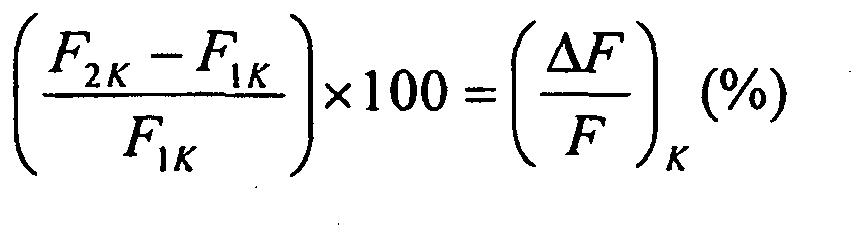
- Eine Substanz besitzt eine agonistische Aktivität auf den Kaliumkanal, wenn
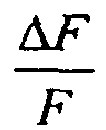


- Unabhängig vom Vergleich von


Kalkulationen von EC50-Werten werden mit Hilfe der Software 'Prism v4.0' (GraphPad Software™) durchgeführt. - Der Formalin Test (Dubuisson, D. and Dennis, S.G., 1977, Pain, 4, 161 - 174) stellt ein Modell für den akuten sowie den chronischen Schmerz dar. Durch eine einmalige Formalin-Injektion in die dorsale Seite einer Hinterpfote wird bei freibeweglichen Versuchstieren eine biphasische nozizeptive Reaktion induziert, die durch Beobachtung von drei deutlich voneinander unterscheidbaren Verhaltensmustern erfasst wird. Die Reaktion ist zweiphasisch: Phase 1 = Sofortreaktion (Dauer bis 10 min; Pfotenschütteln, Lecken), Phase 2 = Spätreaktion (nach einer Ruhephase; ebenfalls Pfotenschütteln, Lecken; Dauer bis 60 min). Die 1. Phase reflektiert eine direkte Stimulation der peripheren Nozisensoren mit hohem spinalen nozizeptiven Input (akute Schmerzphase); die 2. Phase reflektiert eine spinale und periphere Hypersensibilisierung (chronische Schmerzphase). In den hier vorgestellten Untersuchungen wurde die chronische Schmerzkomponente (Phase 2) ausgewertet.
- Formalin wird mit dem Volumen von 20 µl und einer Konzentration von 1 % subkutan in die dorsale Seite der rechten Hinterpfote jedes Tieres appliziert. Die spezifischen Verhaltensänderungen, wie Anheben, Schütteln oder Lecken der Pfote (score 3, Dubuisson & Dennis, 1977), werden im Beobachtungszeitraum von 21 bis 24 min nach Formalininjektion beobachtet und registriert. Das Verhalten der Tiere nach Substanzgabe (n = 10 pro Substanzdosierung) wurde mit einer Kontrollgruppe, welcher Vehikel appliziert wurde (n=10) verglichen.
- Basierend auf der Quantifizierung des Schmerzverhaltens wurde die Substanzwirkung im Formalin-Test als Änderung gegenüber der Kontrolle in Prozent ermittelt. Die Berechnungen der ED50 (ED50 = mittlere effektive Dosis) erfolgten mittels Regressionsanalyse nach der Methode von Litchfield and Wilcoxon (Litchfield, J.T., Wilcoxon, J.J., 1949, J. Pharmacol. Exp. Ther. 96, 99 - 113). Der Applikationszeitpunkt der Verbindung vor der Formalin-Injektion war bei intravenöser Applikation 5 min und bei oraler Applikation 30 min.
- In Tabelle 3 sind die Ergebnisse aus den zuvor beschriebenen pharmakologischen Modellen zusammengefasst.
Tabelle 3 Bsp-Nr. Fluorimetrie EC50 [nM] Fluorimetrie % Efficacy (Retigabine = 100%) Formalin Test Maus IV Effekt @ Dosis [mg/kg] 1 253 80 2 67 80 3 174 97 4 107 60 6 25 7 156 93 24% @ 1 9 414 142 10 1153 57 11 35 12 5024 62 13 150 101 14 204 179 15 82 143 17% @ 1 16 647 66 17 66 107 90% @ 0,68 18 94 140 43% @ 1
Claims (14)
- Substituierte 3-Amino-2-mercaptochinoline der allgemeinen Formel (1)
 m für 0 oder 1 undn für eine ganze Zahl von 0 bis 4 steht,R1 R2, R3, R4 R6a, R6b jeweils unabhängig voneinander für H; F; Cl; Br; I; NO2; CF3; CN; OH; OCF3; SH; SCF3; NH2; C1-10-Alkyl, O-C1-10-Alkyl, O-C(=O)-C1-10-Alkyl, S-C110-Alkyl, NH(C1-10-Alkyl), N(C1-10-Alkyl)2, NH-C(=O)-C1-10-Alkyl, N(C(=O)-C1-10-Alkyl)2 oder C(=O)-C1-10-Alkyl, jeweils gesättigt oder ungesättigt, verzweigt oder unverzweigt, unsubstituiert oder einfach oder mehrfach substituiert; C3-8-Cycloalkyl oder -Heterocyclyl, jeweils gesättigt oder ungesättigt, unsubstituiert oder einfach oder mehrfach substituiert; stehen,R5 für H; F; Cl; Br; I; NO2; CF3; CN; OCF3; SH; SCF3; NH2; C1-10-Alkyl, O-C1-10-Alkyl, O-C(=O)-C1-10-Alkyl, S-C1-10-Alkyl, NH(C1-10-Alkyl), N(C1-10-Alkyl)2, NH-C(=O)-C1-10-Alkyl, N(C(=O)-C1-10-Alkyl)2 oder C(=O)-C1-10-Alkyl, jeweils gesättigt oder ungesättigt, verzweigt oder unverzweigt, unsubstituiert oder einfach oder mehrfach substituiert; C3-8-Cycloalkyl oder -Heterocyclyl, jeweils gesättigt oder ungesättigt, unsubstituiert oder einfach oder mehrfach substituiert; steht,Y für O oder NR9 steht,wobei R9 für H oder C1-4-Alkyl gesättigt oder ungesättigt, verzweigt oder unverzweigt, unsubstituiert oder einfach oder mehrfach substituiert steht,R7 für C1-10-Alkyl oder C2-10-Heteroalkyl, gesättigt oder ungesättigt, verzweigt oder unverzweigt, unsubstituiert oder einfach oder mehrfach substituiert; C3-10-Cycloalkyl oder- Heterocyclyl, jeweils gesättigt oder ungesättigt, unsubstituiert oder einfach oder mehrfach substituiert; Aryl oder Heteroaryl, jeweils unsubstituiert oder einfach oder mehrfach substituiert steht;mit der Maßgabe, dass, wenn R7 Heterocyclyl bedeutet, die Bindung des Heterocyclyls an die übergeordnete allgemeine Struktur über ein Kohlenstoffatom des Heterocyclyls erfolgen kann undmit der Maßgabe, dass, wenn R7 Aryl oder Heteroaryl bedeutet, die Summe von n und m größer oder gleich 1 beträgt;R8 ausgewählt ist aus der Gruppe bestehend aus C1-10-Alkyl oder C2-10-Heteroalkyl, jeweils gesättigt oder ungesättigt, verzweigt oder unverzweigt, unsubstituiert oder einfach oder mehrfach substituiert; C3-10-Cycloalkyl oder -Heterocyclyl, jeweils gesättigt oder ungesättigt, unsubstituiert oder einfach oder mehrfach substituiert; Aryl oder Heteroaryl, jeweils unsubstituiert oder einfach oder mehrfach substituiert; über C1-8-Alkyl oder C2-8-Heteroalkyl verbrücktes C3-10-Cycloalkyl oder -Heterocyclyl, jeweils gesättigt oder ungesättigt, unsubstituiert oder einfach oder mehrfach substituiert; oder über C1-8-Alkyl oder C2-8-Heteroalkyl verbrücktes Aryl oder Heteroaryl, jeweils unsubstituiert oder einfach oder mehrfach substituiert, wobei die Alkyl- oder Heteroalkylkette jeweils verzweigt oder unverzweigt, gesättigt oder ungesättigt, unsubstituiert sein kann;worin "Alkyl substituiert", "Heteroalkyl substituiert", "Heterocyclyl substituiert" und "Cycloalkyl substituiert" für die Substitution eines oder mehrerer Wasserstoffatome jeweils unabhängig voneinander durch F; Cl; Br; I; CN; CF3; =O; =NH; =C(NH2)2; NO2; R0; C(=O)H; C(=O)R0; CO2H; C(=O)OR0; CONH2; C(=O)NHR0; C(=O)N(R0)2; OH; OR0; -O-(C1-8-Alkyl)-O-; O-C(=O)-R0; O-C(=O)-O-R0; O-(C=O)-NH-R0; O-C(=O)-N(R0)2; O-S(=O)2-R0; O-S(=O)2OH; O-S(=O)2OR0; O-S(=O)2NH2; O-S(=O)2NHR0; O-S(=O)2N(R0)2; NH2; NH-R0; N(R0)2; NH-C(=O)-R0; NH-C(=O)-O-R0; NH-C(=O)-NH2; NH-C(=O)-NH-R0; NH-C(=O)-N(R0)2; NR0-C(=O)-R0; NR0-C(=O)-O-R0; NR0-C(=O)-NH2; NR0-C(=O)-NH-R0; NR0-C(=O)-N(R0)2; NH-S(=O)2OH; NH-S(=O)2R0; NH-S(=O)2OR0; NH-S(=O)2NH2; NH-S(=O)2NHR0; NH-S(=O)2N(R0)2; NR0-S(=O)2OH; NR0-S(=O)2R0; NR0-S(=O)2OR0; NR0-S(=O)2NH2; NR0-S(=O)2NHR0; NR0-S(=O)2N(R0)2; SH; SR0; S(=O)R0; S(=O)2R0; S(=O)2H; S(=O)2OH; S(=O)2OR0; S(=O)2NH2; S(=O)2NHR0; S(=O)2N(R0)2; steht;worin "Aryl substituiert" und "Heteroaryl substituiert" für die Substitution eines oder mehrerer Wasserstoffatome jeweils unabhängig voneinander durch F; Cl; Br; I; NO2; CF3; CN; R0; C(=O)H; C(=O)R0; CO2H; C(=O)OR0; CONH2; C(=O)NHR0; C(=O)N(R0)2; OH; OR0; -O-(C1-8-Alkyl)-O-; O-C(=O)-R0; O-C(=O)-O-R0; O-(C=O)-NH-R0; O-C(=O)-N(R0)2; O-S(=O)2-R0; O-S(=O)2OH; O-S(=O)2OR0; O-S(=O)2NH2; 0-S(=O)2NHR0; O-S(=O)2N(R0)2; NH2; NH-R0; N(R0)2; NH-C(=O)-R0; NH-C(=O)-O-R0; NH-C(=O)-NH2; NH-C(=O)-NH-R0; NH-C(=O)-N(R0)2; NR0-C(=O)-R0; NR0-C(=O)-O-R0; NR0-C(=O)-NH2; NR0-C(=O)-NH-R0; NR0-C(=O)-N(R0)2; NH-S(=O)2OH; NH-S(=O)2R0; NH-S(=O)2OR0; NH-S(=O)2NH2; NH-S(=O)2NHR0; NH-S(=O)2N(R0)2; NR0-S(=O)2OH; NR0-S(=O)2R0; NR0-S(=O)2OR0; NR0-S(=O)2NH2; NR0-S(=O)2NHR0; NR0-S(=O)2N(R0)2; SH; SR0; S(=O)R0; S(=O)2R0; S(=O)2OH; S(=O)2OR0; S(=O)2NH2; S(=O)2NHR0; S(=O)2N(R0)2; steht; undR0 für C1-10-Alkyl oder C2-10-Heteroalkyl, jeweils gesättigt oder ungesättigt, verzweigt oder unverzweigt, unsubstituiert oder einfach oder mehrfach substituiert; C3-10-Cycloalkyl oder Heterocyclyl, jeweils gesättigt oder ungesättigt, unsubstituiert oder einfach oder mehrfach substituiert; Aryl oder Heteroaryl, jeweils unsubstituiert oder einfach oder mehrfach substituiert; über C1-8-Alkyl oder C2-8-Heteroalkyl verbrücktes C3-10-Cycloalkyl oder Heterocyclyl, jeweils gesättigt oder ungesättigt, unsubstituiert oder einfach oder mehrfach substituiert, wobei die Alkyl- oder Heteroalkylkette jeweils verzweigt oder unverzweigt, gesättigt oder ungesättigt, unsubstituiert, einfach oder mehrfach substituiert sein kann; oder über C1-8-Alkyl oder C2-8-Heteroalkyl verbrücktes Aryl oder Heteroaryl, jeweils unsubstituiert oder einfach oder mehrfach substituiert, wobei die Alkyl- oder Heteroalkylkette jeweils verzweigt oder unverzweigt, gesättigt oder ungesättigt, unsubstituiert, einfach oder mehrfach substituiert sein kann; steht;in Form der freien Verbindungen oder Salze physiologisch verträglicher Säuren oder Basen.
 - Mercaptochinoline nach Anspruch 1, dadurch gekennzeichnet, dass
wenn R7 Heterocyclyl bedeutet die Bindung des Heterocyclyls an die übergeordnete allgemeine Struktur über ein Kohlenstoffatom des Heterocyclyls erfolgt. - Mercaptochinoline nach Anspruch 1 oder 2, dadurch gekennzeichnet, dass im Fall von
"Alkyl", "Heteroalkyl-", "Heterocyclyl-" oder "Cycloalkyl-" Substituenten diese ausgewählt sind aus der Gruppe bestehend aus F; Cl; Br; I; NO2; CF3; CN; =O; C1-8-Alkyl; Aryl; Heteroaryl; C3-10-Cycloalkyl; Heterocyclyl; über C1-8-Alkyl verbrücktes Aryl, Heteroaryl, C3-10-Cycloalkyl oder Heterocyclyl; CHO; C(=O)C1-8-Alkyl; C(=O)Aryl; C(=O)Heteroaryl; CO2H; C(=O)O-C1-8-Alkyl; C(=O)O-Aryl; C(=O)O-Heteroaryl; CONH2; C(=O)NH-C1-8-Alkyl; C(=O)N(C1-8-Alkyl)2; C(=O)NH-Aryl; C(=O)N(Aryl)2; C(=O)NH-Heteroaryl; C(=O)N(Heteroaryl)2; C(=O)N(C1-8-Alkyl)(Aryl); C(=O)N(C1-8-Alkyl)(Heteroaryl); C(=O)N(Heteroaryl)(Aryl); OH; O-C1-8-Alkyl; OCF3; -O-(C1-8-Alkyl)-0-; O-(C1-8-Alkyl)-OH; O-(C1-8-Alkyl)-O-C1-8-Alkyl; O-Benzyl; O-Aryl; O-Heteroaryl; O-C(=O)C1-8-Alkyl; O-C(=O)Aryl; O-C(=O)Heteroaryl; NH2 ; NH-C1-8-Alkyl; N(C1-8-Alkyl)2; NH-C(=O)C1-8-Alkyl; NH-C(=O)-Aryl; NH-C(=O)-Heteroaryl; SH; S-C1-8-Alkyl; SCF3; S-Benzyl; S-Aryl; S-Heteroaryl; S(=O)2C1-8-Alkyl; S(=O)2Aryl; S(=O)2Heteroaryl; S(=O)2OH; S(=O)2O-C1-8-Alkyl; S(=O)2O-Aryl; S(=O)2OHeteroaryl; S(=O)2-NH-C1-8-Alkyl; S(=O)2-NH-Aryl; und S(=O)2-NH-C1-8-Heteroaryl und
"Aryl" oder "Heteroaryl-" Substituenten diese ausgewählt sind aus der Gruppe bestehend aus F; Cl; Br; I; NO2; CF3; CN; C1-8-Alkyl; Aryl; Heteroaryl; C3-10-Cycloalkyl; Heterocyclyl; C1-8-Alkyl verbrücktes Aryl, Heteroaryl, C3-10-Cycloalkyl oder Heterocyclyl; CHO; C(=O)C1-8-Alkyl; C(=O)Aryl; C(=O)Heteroaryl; CO2H; C(=O)O-C1-8-Alkyl; C(=O)O-Aryl; C(=O)O-Heteroaryl; CONH2; C(=O)NH-C1-8-Alkyl-, C(=O)N(C1-8-Alkyl)2; C(=O)NH-Aryl; C(=O)N(Aryl)2; C(=O)NH-Heteroaryl; C(=O)N(Heteroaryl)2; C(=O)N(C1-8-Alkyl)(Aryl); C(=O)N(C1-8-Alkyl)(Heteroaryl); C(=O)N(Heteroaryl)(Aryl); OH; O-C1-8-Alkyl; OCF3; -O-(C1-8-Alkyl)-O-; O-(C1-8-Alkyl)-OH; O-(C1-8-Alkyl)-O-C1-8-Alkyl; O-Benzyl; O-Aryl; O-Heteroaryl; O-C(=O)C1-8-Alkyl; O-C(=O)Aryl; O-C(=O)Heteroaryl; NH2 ; NH-C1-8-Alkyl; N(C1-8-Alkyl)2; NH-C(=O)C1-8-Alkyl; NH-C(=O)-Aryl; NH-C(=O)-Heteroaryl; SH; S-C1-8-Alkyl-, SCF3; S-Benzyl; S-Aryl; S-Heteroaryl; S(=O)2C1-8-Alkyl; S(=O)2Aryl; S(=O)2Heteroaryl; S(=O)2OH; S(=O)2O-C1-8-Alkyl; S(=O)2O-Aryl; S(=O)2O-Heteroaryl; S(=O)2-NH-C1-8-Alkyl-, S(=O)2-NH-Aryl; S(=O)2-NH-C1-8-Heteroaryl. - Mercaptochinoline nach einem der vorstehenden Ansprüche dadurch gekennzeichnet, dass im Fall von
R1, R2, R3 und R4 jeweils unabhängig voneinander ausgewählt sind aus der Gruppe bestehend aus H; F; Cl; Br; I; NO2; CF3; CN; OH; OCF3; SH; SCF3; NH2; C1-6-Alkyl, O-C1-6-Alkyl, O-C(=O)-C1-6-Alkyl, S-C1-6-Alkyl, NH(C1-6-Alkyl), N(C1-6-Alkyl)2, NH-C(=O)-C1-6-Alkyl, N(C(=O)-C1-6-Alkyl)2 und C(=O)-C1-6-Alkyl, jeweils gesättigt oder ungesättigt, verzweigt oder unverzweigt, unsubstituiert oder einfach oder mehrfach substituiert mit einem oder mehreren Substituenten unabhängig voneinander ausgewählt aus der Gruppe bestehend aus H; F; Cl; Br; I; NO2; CF3; CN; OH; OCF3; SH; SCF3; NH2; C1-6-Alkyl, O-C1-6-Alkyl, O-C(=O)-C1-6-Alkyl, S-C1-6-Alkyl, NH(C1-6-Alkyl), N(C1-6-Alkyl)2, NH-C(=O)-C1-6-Alkyl, N(C(=O)-C1-6-Alkyl)2 und C(=O)-C1-6-Alkyl; C3-6-Cycloalkyl oder -Heterocyclyl jeweils gesättigt oder ungesättigt, unsubstituiert oder einfach oder mehrfach substituiert mit einem oder mehreren Substituenten unabhängig voneinander ausgewählt aus der Gruppe bestehend aus H; F; Cl; Br; I; NO2; CF3; CN; OH; OCF3; SH; SCF3; NH2; C1-6-Alkyl, O-C1-6-Alkyl, O-C(=O)-C1-6-Alkyl, S-C1-6-Alkyl, NH(C1-6-Alkyl), N(C1-6-Alkyl)2, NH-C(=O)-C1-6-Alkyl, N(C(=O)-C1-6-Alkyl)2 und C(=O)-C1-6-Alkyl,
und
R5 ausgewählt ist aus der Gruppe bestehend aus H; F; Cl; Br; I; NO2; CF3; CN; OCF3; SH; SCF3; NH2; C1-6-Alkyl, O-C1-6-Alkyl, O-C(=O)-C1-6-Alkyl, S-C1-6-Alkyl, NH(C1-6-Alkyl), N(C1-6-Alkyl)2, NH-C(=O)-C1-6-Alkyl, N(C(=O)-C1-6-Alkyl)2 und C(=O)-C1-6-Alkyl, jeweils gesättigt oder ungesättigt, verzweigt oder unverzweigt, unsubstituiert oder einfach oder mehrfach substituiert mit einem oder mehreren Substituenten unabhängig voneinander ausgewählt aus der Gruppe bestehend aus H; F; Cl; Br; I; NO2; CF3; CN; OH; OCF3; SH; SCF3; NH2; C1-6-Alkyl, O-C1-6-Alkyl, O-C(=O)-C1-6-Alkyl, S-C1-6-Alkyl, NH(C1-6-Alkyl), N(C1-6-Alkyl)2, NH-C(=O)-C1-6-Alkyl, N(C(=O)-C1-6-Alkyl)2 und C(=O)-C1-6-Alkyl; C3-6-Cycloalkyl oder -Heterocyclyl jeweils gesättigt oder ungesättigt, unsubstituiert oder einfach oder mehrfach substituiert mit einem oder mehreren Substituenten unabhängig voneinander ausgewählt aus der Gruppe bestehend aus H; F; Cl; Br; I; NO2; CF3; CN; OH; OCF3; SH; SCF3; NH2; C16-Alkyl, O-C1-6-Alkyl, O-C(O)-C1-6-Alkyl, S-C1-6-Alkyl, NH(C1-6-Alkyl), N(C1-6-Alkyl)2, NH-C(=O)-C1-6-Alkyl, N(C(=O)-C1-6-Alkyl)2 und C(=O)-C1-6-Alkyl. - Mercaptochinoline nach einem der vorstehenden Ansprüche, dadurch gekennzeichnet, dass
R1, R2, R3 und R4 jeweils unabhängig voneinander für H; F; Cl; CN; OCF3; SCF3; CF3; CH3 oder OCH3 stehen und
R5 H, F, Cl, OCF3, SCF3, C1-6-Alkyl, O-C1-6-Alkyl oder S-C1-6-Alkyl bedeutet. - Mercaptochinoline nach einem der vorstehenden Ansprüche, dadurch gekennzeichnet, dass
R6a und R6b jeweils unabhängig voneinander für H; F; Cl; Br; I; Methyl; Ethyl; n-Propyl; iso-Propyl; n-Butyl; sec.-Butyl; tert.-Butyl; OH; O-Methyl oder O-Ethyl stehen. - Mercaptochinoline nach einem der vorstehenden Ansprüche, dadurch gekennzeichnet, dass
R7 für C2-6-Alkyl oder C2-6-Heteroalkyl, gesättigt oder ungesättigt; verzweigt oder unverzweigt, unsubstituiert; C3-8-Cycloalkyl oder -Heterocyclyl gesättigt oder ungesättigt, unsubstituiert; Phenyl, Furyl, Thienyl oder Pyridyl, jeweils unsubstituiert oder einfach oder mehrfach substituiert mit einem oder mehreren Substituenten jeweils unabhängig voneinander ausgewählt aus der Gruppe bestehend aus F, Cl, Br, I, CN; CF3, OCF3, SCF3, CH3 und OCH3, steht. - Mercaptochinoline nach einem der vorstehenden Ansprüche, dadurch gekennzeichnet, dass
m für 0, n für 1 und R7 für Aryl oder Heteroaryl, jeweils unsubstituiert oder einfach oder mehrfach substituiert steht. - Mercaptochinoline nach einem der vorstehenden Ansprüche, dadurch gekennzeichnet, dass
m für 0, n für 1 oder 2 und R7 für C1-10-Alkyl oder C2-10-Heteroalkyl, gesättigt oder ungesättigt; verzweigt oder unverzweigt, unsubstituiert oder einfach oder mehrfach substituiert; C3-10-Cycloalkyl oder -Heterocyclyl gesättigt oder ungesättigt, unsubstituiert oder einfach oder mehrfach substituiert steht. - Mercaptochinoline nach einem der vorstehenden Ansprüche, dadurch gekennzeichnet, dass
R8 ausgewählt ist aus der Gruppe bestehend aus C1-8-Alkyl oder C2-8-Heteroalkyl, jeweils gesättigt oder ungesättigt, verzweigt oder unverzweigt, unsubstituiert oder einfach oder mehrfach substituiert mit einem oder mehreren Substituenten unabhängig voneinander ausgewählt aus der Gruppe bestehend aus F, Cl, Br, I, OH, =O, OCF3, SCF3, CF3, C1-4-Alkyl und OC1-4-Alkyl; C3-10-Cycloalkyl oder -Heterocyclyl, jeweils gesättigt oder ungesättigt, unsubstituiert oder einfach oder mehrfach substituiert mit einem oder mehreren Substituenten unabhängig voneinander ausgewählt aus der Gruppe bestehend aus F, Cl, Br, I, OH, =O, OCF3, SCF3, CF3, C1-4-Alkyl und OC1-4-Alkyl; Aryl oder Heteroaryl, jeweils unsubstituiert oder einfach oder mehrfach substituiert mit einem oder mehreren Substituenten unabhängig voneinander ausgewählt aus der Gruppe bestehend aus H; F; Cl; Br; I; NO2; CF3- CN; OH; OCF3; SH; SCF3; NH2; C1-6-Alkyl, O-C1-6-Alkyl, O-C(=O)-C1-6-Alkyl, S-C1-6-Alkyl, NH(C1-6-Alkyl), N(C1-6-Alkyl)2, NH-C(=O)-C1-6-Alkyl, N(C(=O)-C1-6-Alkyl)2 oder C(=O)-C1-6-Alkyl; Aryl oder Heteroaryl, jeweils unsubstituiert oder einfach oder mehrfach substituiert mit einem oder mehreren Substituenten unabhängig voneinander ausgewählt aus der Gruppe bestehend aus H; F; Cl; Br; I; CF3- CN; OH; OCF3; SH; SCF3; NH2; C1-6-Alkyl, O-C1-6-Alkyl, O-C(=O)-C1-6-Alkyl, S-C1-6-Alkyl, NH(C1-6-Alkyl), N(C1-6-Alkyl)2, NH-C(=O)-C1-6-Alkyl, N(C(=O)-C1-6-Alkyl)2 oder C(=O)-C1-6-Alkyl; über C1-8-Alkyl oder C2-8-Heteroalkyl verbrücktes C3-10-Cycloalkyl, gesättigt oder ungesättigt, unsubstituiert oder einfach oder mehrfach substituiert mit einem oder mehreren Substituenten unabhängig voneinander ausgewählt aus der Gruppe bestehend aus F, Cl, Br, I, OH, =O, OCF3, SCF3, CF3, C1--8-Alkyl und OC1-8-Alkyl, wobei die Alkyl- oder Heteroalkylkette jeweils verzweigt oder unverzweigt, gesättigt oder ungesättigt, unsubstituiert sein kann; oder über C1-8-Alkyl oder C2-8-Heteroalkyl verbrücktes Aryl oder Heteroaryl, jeweils unsubstituiert oder einfach oder mehrfach substituiert mit einem oder mehreren Substituenten unabhängig voneinander ausgewählt aus der Gruppe bestehend aus F, Cl, Br, I, OH, NH2, OCF3, SCF3, CF3, C1-8-Alkyl und OC1-8-Alkyl, wobei die Alkyl- oder Heteroalkylkette jeweils verzweigt oder unverzweigt, gesättigt oder ungesättigt, unsubstituiert sein kann. - Mercaptochinoline nach Anspruch 1 ausgewählt aus der Gruppe1 2-Cyclohexyl-N-(2-(2-(phenylsulfonyl)ethylthio)chinolin-3-yl)acetamid;2 N-(2-(2-(Phenylsulfonyl)ethylthio)chinolin-3-yl)-2-(thiophen-2-yl)acetamid;4 N-(2-(Pentylthio)chinolin-3-yl)-2-(thiophen-2-yl)acetamid;6 N-(2-(2-(Phenylthio)ethylthio)chinolin-3-yl)-2-(thiophen-2-yl)acetamid;7 N-(2-(Ethylthio)chinolin-3-yl)-2-(thiophen-2-yl)acetamid;9 N-(2-(Ethylthio)chinolin-3-yl)-3,3-dimethylbutanamid;11 N-[2-Ethylsulfanyl-7-(trifluormethyl)-chinolin-3-yl]-3,3-dimethyl-butyramid12 3-Cyclopentyl-N-[2-ethylsulfanyl-7-(trifluormethyl)-chinolin-3-yl]-propionamid14 2-(5-Bicyclo[2.2.1]heptanyl)-N-(2-ethylsulfanyl-chinolin-3-yl)-acetamid15 3-Cyclopentyl-N-(2-ethylsulfanyl-chinolin-3-yl)-propionamid16 2-(5-Bicyclo[2.2.1]heptanyl)-N-[2-ethylsulfanyl-7-(trifluormethyl)-chinolin-3-yl]-acetamid17 3-Cyclopentyl-N-[2-ethylsulfanyl-4-methyl-7-(trifluormethyl)-chinolin-3-yl]-propionamid18 N-[2-Ethylsulfanyl-4-methyl-7-(trifluormethyl)-chinolin-3-yl]-2-thiophen-2-yl-acetamidoder deren physiologisch verträgliche Salze.
- Arzneimittel enthaltend wenigstens ein 3-Amino-2-mercaptochinolin nach einem der Ansprüche 1 bis 11
in Form eines einzelnen Stereoisomers oder deren Mischung, der freien Verbindungen und/oder ihrer physiologisch verträglichen Salze, sowie ggf. geeignete Zusatz- und/ oder Hilfsstoffe und/oder gegebenenfalls weiterer Wirkstoffe. - Verwendung wenigstens eines 3-Amino-2-mercaptochinolins nach einem der Ansprüche 1 bis 11.
in Form eines einzelnen Stereoisomers oder deren Mischung, der freien Verbindung und/oder ihrer physiologisch verträglichen Salze, zur Herstellung eines Arzneimittels zur Behandlung von Schmerz, Epilepsie, Angstzuständen, Abhängigkeit, Manie, bipolaren Störungen, Migräne, kognitiven Erkrankungen, Dystonie-assoziierten Dyskinesien und/oder Harninkontinenz. - Ein substituiertes 3-Amino-2-mercaptochinolin nach einem der Ansprüche 1 bis 11 in Form eines einzelnen Stereoisomers oder deren Mischung, der freien Verbindung und/oder ihrer physiologisch verträglichen Salze zur Verwendung in der Behandlung von Schmerz, Epilepsie, Angstzuständen, Abhängigkeit, Manie, bipolaren Störungen, Migräne, kognitiven Erkrankungen, Dystonie-assoziierten Dyskinesien und/oder Harninkontinenz.
Priority Applications (2)
| Application Number | Priority Date | Filing Date | Title |
|---|---|---|---|
| EP10708503.7A EP2406228B1 (de) | 2009-03-10 | 2010-03-09 | Substituierte 3-amino-2-mercaptochinoline als kcnq2/3 modulatoren |
| PL10708503T PL2406228T3 (pl) | 2009-03-10 | 2010-03-09 | Podstawione 3-amino-2-merkaptochinoliny jako modulaotory KCNQ2/3 |
Applications Claiming Priority (3)
| Application Number | Priority Date | Filing Date | Title |
|---|---|---|---|
| EP09003431 | 2009-03-10 | ||
| EP10708503.7A EP2406228B1 (de) | 2009-03-10 | 2010-03-09 | Substituierte 3-amino-2-mercaptochinoline als kcnq2/3 modulatoren |
| PCT/EP2010/001449 WO2010102779A1 (de) | 2009-03-10 | 2010-03-09 | Substituierte 3-amino-2-mercaptochinoline als kcnq2/3 modulatoren |
Publications (2)
| Publication Number | Publication Date |
|---|---|
| EP2406228A1 EP2406228A1 (de) | 2012-01-18 |
| EP2406228B1 true EP2406228B1 (de) | 2013-09-18 |
Family
ID=40591941
Family Applications (1)
| Application Number | Title | Priority Date | Filing Date |
|---|---|---|---|
| EP10708503.7A Not-in-force EP2406228B1 (de) | 2009-03-10 | 2010-03-09 | Substituierte 3-amino-2-mercaptochinoline als kcnq2/3 modulatoren |
Country Status (22)
| Country | Link |
|---|---|
| US (1) | US8207342B2 (de) |
| EP (1) | EP2406228B1 (de) |
| JP (1) | JP5727945B2 (de) |
| KR (1) | KR20110130461A (de) |
| CN (1) | CN102341374A (de) |
| AR (1) | AR075730A1 (de) |
| AU (1) | AU2010223556B2 (de) |
| BR (1) | BRPI1009519A2 (de) |
| CA (1) | CA2754943A1 (de) |
| CL (1) | CL2011002160A1 (de) |
| CO (1) | CO6410291A2 (de) |
| EC (1) | ECSP11011346A (de) |
| ES (1) | ES2436365T3 (de) |
| IL (1) | IL214944A0 (de) |
| MX (1) | MX2011009338A (de) |
| NZ (1) | NZ595569A (de) |
| PE (1) | PE20120535A1 (de) |
| PL (1) | PL2406228T3 (de) |
| RU (1) | RU2011140701A (de) |
| TW (1) | TWI504395B (de) |
| WO (1) | WO2010102779A1 (de) |
| ZA (1) | ZA201107370B (de) |
Families Citing this family (9)
| Publication number | Priority date | Publication date | Assignee | Title |
|---|---|---|---|---|
| BRPI1009428A2 (pt) * | 2009-03-10 | 2016-03-01 | Gruenenthal Gmbh | 3-aminoisoxazolopiridina substituída como moduladores de kcnq2/3 |
| TWI461197B (zh) * | 2009-03-12 | 2014-11-21 | 2-mercaptoquinoline-3-carboxamide as a KCNQ2 / 3 modifier | |
| TWI475020B (zh) | 2009-03-12 | 2015-03-01 | The substituted nicotine amide as a KCNQ2 / 3 modifier | |
| TW201038565A (en) | 2009-03-12 | 2010-11-01 | Gruenenthal Gmbh | Substituted 2-mercapto-3-aminopyridines as KCNQ2/3 modulators |
| DK2609083T3 (da) | 2010-08-27 | 2015-03-30 | Gruenenthal Gmbh | Substituerede 2-oxy-quinolin-3-carboxamider som KCNQ2/3 modulatorer |
| SI2609086T1 (sl) | 2010-08-27 | 2015-04-30 | Gruenenthal Gmbh | Substituirani 2-okso in 2-tiokso-dihidrokinolin-3-karboksamidi kot KCNQ2/3 modulatorji |
| TW201211007A (en) | 2010-08-27 | 2012-03-16 | Gruenenthal Gmbh | Substituted 2-amino-quinoline-3-carboxamides as KCNQ2/3 modulators |
| MX2013002295A (es) | 2010-09-01 | 2013-05-09 | Gruenenthal Gmbh | 1-oxo-dihidroisoquinolin-3-carboxamidas sustituidas como moduladores de kcnq2/3. |
| DE102018212006B3 (de) * | 2018-07-18 | 2019-10-31 | Universität Greifswald | Thioether als Modulatoren von Kv7.2/Kv7.3-Kanälen |
Family Cites Families (37)
| Publication number | Priority date | Publication date | Assignee | Title |
|---|---|---|---|---|
| DE2706977A1 (de) | 1977-02-18 | 1978-08-24 | Hoechst Ag | Benzoesaeuren und deren derivate sowie verfahren zu ihrer herstellung |
| FR2532939A1 (fr) | 1982-09-13 | 1984-03-16 | Roussel Uclaf | Nouveaux derives de l'acide 4-hydroxy 3-quinoleine carboxylique substitues en 2, leur preparation, leur application comme medicament, les compositions les renfermant et les nouveaux intermediaires obtenus |
| DE4032147A1 (de) | 1990-10-10 | 1992-04-16 | Bayer Ag | Verwendung von substituierten 2-mercaptonicotinsaeurederivaten zur bekaempfung von endoparasiten, neue substituierte 2-mercaptonicotinsaeurederivate und verfahren zu ihrer herstellung |
| US5583147A (en) * | 1994-03-23 | 1996-12-10 | The Dupont Merck Pharmaceutical Company | Amides for the treatment of atherosclerosis |
| EP0716077A1 (de) | 1994-12-08 | 1996-06-12 | Ciba-Geigy Ag | Aromatisch substituierte Omega-Aminoalkansäureamide und Alkansäurediamide und ihre Verwendung als Renininhibitoren |
| WO1996026925A1 (en) | 1995-03-01 | 1996-09-06 | Banyu Pharmaceutical Co., Ltd. | Arylthioacetamide derivatives |
| CA2301549A1 (en) * | 1997-08-28 | 1999-03-04 | Piyasena Hewawasam | 4-aryl-3-aminoquinoline-2-one derivatives as potassium channel modulators |
| DE19738616A1 (de) | 1997-09-04 | 1999-03-11 | Clariant Gmbh | 4-Hydroxychinolin-3-carbonsäure-Derivate als Lichtschutzmittel |
| JP2002534512A (ja) | 1999-01-15 | 2002-10-15 | ノボ ノルディスク アクティーゼルスカブ | 非ペプチドglp−1アゴニスト |
| NZ527771A (en) | 1999-08-04 | 2005-04-29 | Icagen Inc | Methods for treating or preventing anxiety |
| NZ516610A (en) | 1999-08-04 | 2004-05-28 | Icagen Inc | Benzanilides as potassium channel openers |
| US20020183335A1 (en) | 2001-02-20 | 2002-12-05 | Piyasena Hewawasam | 2, 4-disubstituted pyrimidine-5-carboxamide derivatives as KCNQ potassium channel modulators |
| CA2438868A1 (en) | 2001-02-20 | 2002-09-19 | Valentin K. Gribkoff | Modulators of kcnq potassium channels and use thereof in treating migraine and mechanistically related diseases |
| US6593349B2 (en) | 2001-03-19 | 2003-07-15 | Icagen, Inc. | Bisarylamines as potassium channel openers |
| AU2002256085A1 (en) | 2001-04-06 | 2002-10-21 | Smithkline Beecham Corporation | Quinoline inhibitors of hyak1 and hyak3 kinases |
| MXPA05002914A (es) | 2002-09-17 | 2005-05-27 | Pharmacia Corp | Moduladores de los receptores x hepaticos aromaticos. |
| EP1585522B1 (de) * | 2002-12-23 | 2010-11-17 | Icagen, Inc. | Quinazolinone als kaliumkanalmodulatoren |
| EP1449841A1 (de) | 2003-02-19 | 2004-08-25 | Bayer CropScience SA | Neue fungizide Verbindungen |
| EP1680411A2 (de) | 2003-10-08 | 2006-07-19 | Vertex Pharmaceuticals Incorporated | Modulatoren von atp-bindenden kassettentransportern mit cycloalkyl- oder pyranylgruppen |
| AP2006003769A0 (en) | 2004-05-04 | 2006-10-31 | Pfizer | Ortho substituted aryl or heteroaryl amide compounds |
| EP1814856A1 (de) | 2004-11-12 | 2007-08-08 | Galapagos N.V. | Heteroaromatische stickstoffverbindungen, die sich an das aktive zentrum von proteinkinaseenzym binden |
| EP1861394A1 (de) | 2005-03-03 | 2007-12-05 | H.Lundbeck A/S | Substituierte pyridinderivate |
| DE102005038947A1 (de) | 2005-05-18 | 2006-11-30 | Grünenthal GmbH | Substituierte Benzo[d]isoxazol-3-yl-amin-Verbindungen und deren Verwendung in Arzneimitteln |
| WO2007015767A1 (en) | 2005-07-20 | 2007-02-08 | Eli Lilly And Company | Pyridine derivatives as dipeptedyl peptidase inhibitors |
| EP1922311A2 (de) | 2005-09-09 | 2008-05-21 | Brystol-Myers Squibb Company | Azyklische ikur-hemmer |
| JP2009515934A (ja) * | 2005-11-18 | 2009-04-16 | ノイロサーチ アクティーゼルスカブ | 新規なキナゾリン誘導体及びこれらの医学的使用 |
| DE602007004638D1 (de) | 2006-07-20 | 2010-03-18 | Amgen Inc | Benzoädüisoxazol-derivate als c-kit-tyrosinkinase-hemmer zur behandlung von erkrankungen im zusammenhang mit der überproduktion von histamin |
| WO2008011110A2 (en) | 2006-07-20 | 2008-01-24 | Amgen Inc. | Di-amino-substituted heterocyclic compounds and methods of use |
| WO2008012532A2 (en) | 2006-07-27 | 2008-01-31 | Astrazeneca Ab | : pyridine-3-carboxamide compounds and their use for inhibiting 11-beta-hydroxysteroid dehydrogenase |
| DE102006049452A1 (de) | 2006-10-17 | 2008-05-08 | Grünenthal GmbH | Substituierte Tetrahydropyrolopiperazin-Verbindungen und deren Verwendung in Arzneimitteln |
| US8563566B2 (en) | 2007-08-01 | 2013-10-22 | Valeant Pharmaceuticals International | Naphthyridine derivatives as potassium channel modulators |
| AU2008285795A1 (en) | 2007-08-03 | 2009-02-12 | F. Hoffmann-La Roche Ag | Pyridinecarboxamide and benzamide derivatives as TAAR1 ligands |
| CA2702469A1 (en) | 2007-10-19 | 2009-04-23 | Boehringer Ingelheim International Gmbh | Ccr10 antagonists |
| BRPI1009428A2 (pt) | 2009-03-10 | 2016-03-01 | Gruenenthal Gmbh | 3-aminoisoxazolopiridina substituída como moduladores de kcnq2/3 |
| TWI475020B (zh) | 2009-03-12 | 2015-03-01 | The substituted nicotine amide as a KCNQ2 / 3 modifier | |
| TWI461197B (zh) | 2009-03-12 | 2014-11-21 | 2-mercaptoquinoline-3-carboxamide as a KCNQ2 / 3 modifier | |
| TW201038565A (en) | 2009-03-12 | 2010-11-01 | Gruenenthal Gmbh | Substituted 2-mercapto-3-aminopyridines as KCNQ2/3 modulators |
-
2010
- 2010-03-03 TW TW099106075A patent/TWI504395B/zh not_active IP Right Cessation
- 2010-03-09 ES ES10708503T patent/ES2436365T3/es active Active
- 2010-03-09 BR BRPI1009519A patent/BRPI1009519A2/pt not_active IP Right Cessation
- 2010-03-09 NZ NZ595569A patent/NZ595569A/xx not_active IP Right Cessation
- 2010-03-09 PL PL10708503T patent/PL2406228T3/pl unknown
- 2010-03-09 KR KR1020117023698A patent/KR20110130461A/ko not_active Withdrawn
- 2010-03-09 CN CN2010800109786A patent/CN102341374A/zh active Pending
- 2010-03-09 PE PE2011001564A patent/PE20120535A1/es not_active Application Discontinuation
- 2010-03-09 JP JP2011553339A patent/JP5727945B2/ja not_active Expired - Fee Related
- 2010-03-09 AU AU2010223556A patent/AU2010223556B2/en not_active Ceased
- 2010-03-09 WO PCT/EP2010/001449 patent/WO2010102779A1/de not_active Ceased
- 2010-03-09 EP EP10708503.7A patent/EP2406228B1/de not_active Not-in-force
- 2010-03-09 CA CA2754943A patent/CA2754943A1/en not_active Abandoned
- 2010-03-09 MX MX2011009338A patent/MX2011009338A/es active IP Right Grant
- 2010-03-09 RU RU2011140701/04A patent/RU2011140701A/ru not_active Application Discontinuation
- 2010-03-10 AR ARP100100719A patent/AR075730A1/es not_active Application Discontinuation
- 2010-03-10 US US12/720,770 patent/US8207342B2/en not_active Expired - Fee Related
-
2011
- 2011-08-12 CO CO11102966A patent/CO6410291A2/es not_active Application Discontinuation
- 2011-09-02 CL CL2011002160A patent/CL2011002160A1/es unknown
- 2011-09-04 IL IL214944A patent/IL214944A0/en unknown
- 2011-09-23 EC EC2011011346A patent/ECSP11011346A/es unknown
- 2011-10-07 ZA ZA2011/07370A patent/ZA201107370B/en unknown
Also Published As
| Publication number | Publication date |
|---|---|
| ES2436365T3 (es) | 2013-12-30 |
| KR20110130461A (ko) | 2011-12-05 |
| PL2406228T3 (pl) | 2014-02-28 |
| CL2011002160A1 (es) | 2012-08-17 |
| BRPI1009519A2 (pt) | 2016-03-15 |
| JP2012521966A (ja) | 2012-09-20 |
| JP5727945B2 (ja) | 2015-06-03 |
| AR075730A1 (es) | 2011-04-20 |
| CA2754943A1 (en) | 2010-09-16 |
| IL214944A0 (en) | 2011-11-30 |
| MX2011009338A (es) | 2011-09-27 |
| AU2010223556B2 (en) | 2015-01-29 |
| CN102341374A (zh) | 2012-02-01 |
| RU2011140701A (ru) | 2013-04-20 |
| TW201036610A (en) | 2010-10-16 |
| ECSP11011346A (es) | 2011-10-31 |
| NZ595569A (en) | 2012-11-30 |
| AU2010223556A1 (en) | 2011-11-03 |
| US8207342B2 (en) | 2012-06-26 |
| PE20120535A1 (es) | 2012-05-09 |
| EP2406228A1 (de) | 2012-01-18 |
| US20100234421A1 (en) | 2010-09-16 |
| ZA201107370B (en) | 2012-07-25 |
| CO6410291A2 (es) | 2012-03-30 |
| WO2010102779A1 (de) | 2010-09-16 |
| TWI504395B (zh) | 2015-10-21 |
Similar Documents
| Publication | Publication Date | Title |
|---|---|---|
| EP2406228B1 (de) | Substituierte 3-amino-2-mercaptochinoline als kcnq2/3 modulatoren | |
| EP2406226B1 (de) | Substituierte nicotinamide als kcnq2/3 modulatoren | |
| EP2406229A1 (de) | Substituierte 2-mercaptochinolin-3-carboxamide als kcnq2/3 modulatoren | |
| EP2406224B1 (de) | Substituierte 2-mercapto-3-aminopyridine als kcnq2/3 modulatoren | |
| DE69834842T2 (de) | Hemmung von raf-kinase unter verwendung von aryl- und heteroarylsubstituierten heterocyclischen harnstoffen | |
| EP1765788B1 (de) | 3-aminoindazole derivate und ihre verwendung zur behandlung sgk-bedingten krankheiten | |
| DE69722613T2 (de) | 2,3,6-trisubstituierte 4(3h)-chinazolinone | |
| WO2010102778A2 (de) | Substituierte 3-aminoisoxazolopyridine als kcnq2/3 modulatoren | |
| EP2350093B1 (de) | Substituierte 4,5,6,7-tetrahydrothienopyridine als kcnq2/3 modulatoren zur behandlung von schmerz, epilepsie und harninkontinenz | |
| DE602005003128T3 (de) | Chinazolinon-derivate als vanilloid-antagonisten | |
| EP1991529B1 (de) | Substituierte arylsulfonamide als antivirale mittel | |
| WO2010075973A1 (de) | Substituierte 4-(1,2,3,4-tetrahydroisochinolin-2-yl)-4-oxo-buttersäureamide als kcnq2/3 modulatoren | |
| EP0509398B1 (de) | Chinoxaline, Verfahren zu ihrer Herstellung und ihre Verwendung | |
| DE60016039T2 (de) | Verfahren und verbindungen für die hemmung von mrp1 | |
| EP0352581A2 (de) | Aethylendiaminmonoamid-Derivate | |
| WO1996039382A1 (en) | Urea derivatives as 5-ht antagonists | |
| CN116535354A (zh) | 作为钾通道调节剂的芳环并杂环类化合物及其制备和应用 | |
| DE60222286T2 (de) | Verfahren zur erhöhung des testosteronspiegels | |
| DE4342024A1 (de) | Kombinationspräparate, enthaltend ein Chinoxalin und ein Nukleosid | |
| EP2332529A1 (de) | Substituierte aromatische Diamine als Liganden der vesikulären Glutamat-Transporter 1 und 2 (vGLUT1 und vGLUT2) | |
| EP1583967B1 (de) | Verfahren zur inhibierung der replikation von herpesviren | |
| EP1412361B1 (de) | Substituierte 5,6,6a,11b-tetrahydro-7-oxa-5-aza-benzo[c]fluoren-6-carbonsäurederivate als nmda-antagonisten | |
| WO2003013530A2 (de) | Salze substituierter 1,2,3,4,-tetrahydrochinolin-2-carbonsaurederivate als nmda-antagonisten | |
| DE102008059133A1 (de) | Difluorphenyl-diacylhydrazid-derivate | |
| DE10257786A1 (de) | Oxazolidinone |
Legal Events
| Date | Code | Title | Description |
|---|---|---|---|
| PUAI | Public reference made under article 153(3) epc to a published international application that has entered the european phase |
Free format text: ORIGINAL CODE: 0009012 |
|
| 17P | Request for examination filed |
Effective date: 20110808 |
|
| AK | Designated contracting states |
Kind code of ref document: A1 Designated state(s): AT BE BG CH CY CZ DE DK EE ES FI FR GB GR HR HU IE IS IT LI LT LU LV MC MK MT NL NO PL PT RO SE SI SK SM TR |
|
| DAX | Request for extension of the european patent (deleted) | ||
| REG | Reference to a national code |
Ref country code: HK Ref legal event code: DE Ref document number: 1166062 Country of ref document: HK |
|
| GRAP | Despatch of communication of intention to grant a patent |
Free format text: ORIGINAL CODE: EPIDOSNIGR1 |
|
| INTG | Intention to grant announced |
Effective date: 20130408 |
|
| RIN1 | Information on inventor provided before grant (corrected) |
Inventor name: SCHROEDER, WOLFGANG Inventor name: BAHRENBERG, GREGOR Inventor name: KUEHNERT, SVEN |
|
| GRAS | Grant fee paid |
Free format text: ORIGINAL CODE: EPIDOSNIGR3 |
|
| GRAA | (expected) grant |
Free format text: ORIGINAL CODE: 0009210 |
|
| AK | Designated contracting states |
Kind code of ref document: B1 Designated state(s): AT BE BG CH CY CZ DE DK EE ES FI FR GB GR HR HU IE IS IT LI LT LU LV MC MK MT NL NO PL PT RO SE SI SK SM TR |
|
| REG | Reference to a national code |
Ref country code: GB Ref legal event code: FG4D Free format text: NOT ENGLISH |
|
| REG | Reference to a national code |
Ref country code: CH Ref legal event code: NV Representative=s name: BRAUNPAT BRAUN EDER AG, CH Ref country code: CH Ref legal event code: EP |
|
| REG | Reference to a national code |
Ref country code: IE Ref legal event code: FG4D Free format text: LANGUAGE OF EP DOCUMENT: GERMAN |
|
| REG | Reference to a national code |
Ref country code: AT Ref legal event code: REF Ref document number: 632698 Country of ref document: AT Kind code of ref document: T Effective date: 20131015 |
|
| REG | Reference to a national code |
Ref country code: DE Ref legal event code: R096 Ref document number: 502010004780 Country of ref document: DE Effective date: 20131114 |
|
| REG | Reference to a national code |
Ref country code: NL Ref legal event code: T3 |
|
| REG | Reference to a national code |
Ref country code: ES Ref legal event code: FG2A Ref document number: 2436365 Country of ref document: ES Kind code of ref document: T3 Effective date: 20131230 |
|
| PG25 | Lapsed in a contracting state [announced via postgrant information from national office to epo] |
Ref country code: LT Free format text: LAPSE BECAUSE OF FAILURE TO SUBMIT A TRANSLATION OF THE DESCRIPTION OR TO PAY THE FEE WITHIN THE PRESCRIBED TIME-LIMIT Effective date: 20130918 Ref country code: HR Free format text: LAPSE BECAUSE OF FAILURE TO SUBMIT A TRANSLATION OF THE DESCRIPTION OR TO PAY THE FEE WITHIN THE PRESCRIBED TIME-LIMIT Effective date: 20130918 Ref country code: SE Free format text: LAPSE BECAUSE OF FAILURE TO SUBMIT A TRANSLATION OF THE DESCRIPTION OR TO PAY THE FEE WITHIN THE PRESCRIBED TIME-LIMIT Effective date: 20130918 Ref country code: NO Free format text: LAPSE BECAUSE OF FAILURE TO SUBMIT A TRANSLATION OF THE DESCRIPTION OR TO PAY THE FEE WITHIN THE PRESCRIBED TIME-LIMIT Effective date: 20131218 Ref country code: CY Free format text: LAPSE BECAUSE OF FAILURE TO SUBMIT A TRANSLATION OF THE DESCRIPTION OR TO PAY THE FEE WITHIN THE PRESCRIBED TIME-LIMIT Effective date: 20130807 |
|
| REG | Reference to a national code |
Ref country code: LT Ref legal event code: MG4D |
|
| PG25 | Lapsed in a contracting state [announced via postgrant information from national office to epo] |
Ref country code: SI Free format text: LAPSE BECAUSE OF FAILURE TO SUBMIT A TRANSLATION OF THE DESCRIPTION OR TO PAY THE FEE WITHIN THE PRESCRIBED TIME-LIMIT Effective date: 20130918 Ref country code: FI Free format text: LAPSE BECAUSE OF FAILURE TO SUBMIT A TRANSLATION OF THE DESCRIPTION OR TO PAY THE FEE WITHIN THE PRESCRIBED TIME-LIMIT Effective date: 20130918 Ref country code: GR Free format text: LAPSE BECAUSE OF FAILURE TO SUBMIT A TRANSLATION OF THE DESCRIPTION OR TO PAY THE FEE WITHIN THE PRESCRIBED TIME-LIMIT Effective date: 20131219 Ref country code: LV Free format text: LAPSE BECAUSE OF FAILURE TO SUBMIT A TRANSLATION OF THE DESCRIPTION OR TO PAY THE FEE WITHIN THE PRESCRIBED TIME-LIMIT Effective date: 20130918 |
|
| REG | Reference to a national code |
Ref country code: PL Ref legal event code: T3 |
|
| REG | Reference to a national code |
Ref country code: HU Ref legal event code: AG4A Ref document number: E018485 Country of ref document: HU |
|
| PG25 | Lapsed in a contracting state [announced via postgrant information from national office to epo] |
Ref country code: CY Free format text: LAPSE BECAUSE OF FAILURE TO SUBMIT A TRANSLATION OF THE DESCRIPTION OR TO PAY THE FEE WITHIN THE PRESCRIBED TIME-LIMIT Effective date: 20130918 |
|
| PG25 | Lapsed in a contracting state [announced via postgrant information from national office to epo] |
Ref country code: IS Free format text: LAPSE BECAUSE OF FAILURE TO SUBMIT A TRANSLATION OF THE DESCRIPTION OR TO PAY THE FEE WITHIN THE PRESCRIBED TIME-LIMIT Effective date: 20140118 Ref country code: CZ Free format text: LAPSE BECAUSE OF FAILURE TO SUBMIT A TRANSLATION OF THE DESCRIPTION OR TO PAY THE FEE WITHIN THE PRESCRIBED TIME-LIMIT Effective date: 20130918 Ref country code: SK Free format text: LAPSE BECAUSE OF FAILURE TO SUBMIT A TRANSLATION OF THE DESCRIPTION OR TO PAY THE FEE WITHIN THE PRESCRIBED TIME-LIMIT Effective date: 20130918 Ref country code: EE Free format text: LAPSE BECAUSE OF FAILURE TO SUBMIT A TRANSLATION OF THE DESCRIPTION OR TO PAY THE FEE WITHIN THE PRESCRIBED TIME-LIMIT Effective date: 20130918 |
|
| PGFP | Annual fee paid to national office [announced via postgrant information from national office to epo] |
Ref country code: MC Payment date: 20140129 Year of fee payment: 5 |
|
| REG | Reference to a national code |
Ref country code: DE Ref legal event code: R097 Ref document number: 502010004780 Country of ref document: DE |
|
| PG25 | Lapsed in a contracting state [announced via postgrant information from national office to epo] |
Ref country code: PT Free format text: LAPSE BECAUSE OF FAILURE TO SUBMIT A TRANSLATION OF THE DESCRIPTION OR TO PAY THE FEE WITHIN THE PRESCRIBED TIME-LIMIT Effective date: 20140120 |
|
| PLBE | No opposition filed within time limit |
Free format text: ORIGINAL CODE: 0009261 |
|
| STAA | Information on the status of an ep patent application or granted ep patent |
Free format text: STATUS: NO OPPOSITION FILED WITHIN TIME LIMIT |
|
| 26N | No opposition filed |
Effective date: 20140619 |
|
| PG25 | Lapsed in a contracting state [announced via postgrant information from national office to epo] |
Ref country code: DK Free format text: LAPSE BECAUSE OF FAILURE TO SUBMIT A TRANSLATION OF THE DESCRIPTION OR TO PAY THE FEE WITHIN THE PRESCRIBED TIME-LIMIT Effective date: 20130918 |
|
| REG | Reference to a national code |
Ref country code: DE Ref legal event code: R097 Ref document number: 502010004780 Country of ref document: DE Effective date: 20140619 |
|
| PG25 | Lapsed in a contracting state [announced via postgrant information from national office to epo] |
Ref country code: LU Free format text: LAPSE BECAUSE OF FAILURE TO SUBMIT A TRANSLATION OF THE DESCRIPTION OR TO PAY THE FEE WITHIN THE PRESCRIBED TIME-LIMIT Effective date: 20140309 |
|
| REG | Reference to a national code |
Ref country code: IE Ref legal event code: MM4A |
|
| PG25 | Lapsed in a contracting state [announced via postgrant information from national office to epo] |
Ref country code: IE Free format text: LAPSE BECAUSE OF NON-PAYMENT OF DUE FEES Effective date: 20140309 |
|
| PG25 | Lapsed in a contracting state [announced via postgrant information from national office to epo] |
Ref country code: MC Free format text: LAPSE BECAUSE OF NON-PAYMENT OF DUE FEES Effective date: 20150331 |
|
| REG | Reference to a national code |
Ref country code: FR Ref legal event code: PLFP Year of fee payment: 7 |
|
| PG25 | Lapsed in a contracting state [announced via postgrant information from national office to epo] |
Ref country code: MT Free format text: LAPSE BECAUSE OF FAILURE TO SUBMIT A TRANSLATION OF THE DESCRIPTION OR TO PAY THE FEE WITHIN THE PRESCRIBED TIME-LIMIT Effective date: 20130918 |
|
| PG25 | Lapsed in a contracting state [announced via postgrant information from national office to epo] |
Ref country code: SM Free format text: LAPSE BECAUSE OF FAILURE TO SUBMIT A TRANSLATION OF THE DESCRIPTION OR TO PAY THE FEE WITHIN THE PRESCRIBED TIME-LIMIT Effective date: 20130918 |
|
| PGFP | Annual fee paid to national office [announced via postgrant information from national office to epo] |
Ref country code: CH Payment date: 20160311 Year of fee payment: 7 Ref country code: NL Payment date: 20160310 Year of fee payment: 7 |
|
| PG25 | Lapsed in a contracting state [announced via postgrant information from national office to epo] |
Ref country code: RO Free format text: LAPSE BECAUSE OF FAILURE TO SUBMIT A TRANSLATION OF THE DESCRIPTION OR TO PAY THE FEE WITHIN THE PRESCRIBED TIME-LIMIT Effective date: 20130918 |
|
| PGFP | Annual fee paid to national office [announced via postgrant information from national office to epo] |
Ref country code: AT Payment date: 20160225 Year of fee payment: 7 Ref country code: GB Payment date: 20160309 Year of fee payment: 7 |
|
| PG25 | Lapsed in a contracting state [announced via postgrant information from national office to epo] |
Ref country code: BG Free format text: LAPSE BECAUSE OF FAILURE TO SUBMIT A TRANSLATION OF THE DESCRIPTION OR TO PAY THE FEE WITHIN THE PRESCRIBED TIME-LIMIT Effective date: 20130918 |
|
| PG25 | Lapsed in a contracting state [announced via postgrant information from national office to epo] |
Ref country code: TR Free format text: LAPSE BECAUSE OF FAILURE TO SUBMIT A TRANSLATION OF THE DESCRIPTION OR TO PAY THE FEE WITHIN THE PRESCRIBED TIME-LIMIT Effective date: 20130918 |
|
| PGFP | Annual fee paid to national office [announced via postgrant information from national office to epo] |
Ref country code: DE Payment date: 20160331 Year of fee payment: 7 |
|
| PGFP | Annual fee paid to national office [announced via postgrant information from national office to epo] |
Ref country code: IT Payment date: 20160324 Year of fee payment: 7 |
|
| REG | Reference to a national code |
Ref country code: FR Ref legal event code: PLFP Year of fee payment: 8 |
|
| PGFP | Annual fee paid to national office [announced via postgrant information from national office to epo] |
Ref country code: FR Payment date: 20170213 Year of fee payment: 8 |
|
| PGFP | Annual fee paid to national office [announced via postgrant information from national office to epo] |
Ref country code: BE Payment date: 20170124 Year of fee payment: 8 Ref country code: HU Payment date: 20170208 Year of fee payment: 8 Ref country code: PL Payment date: 20170113 Year of fee payment: 8 |
|
| PGFP | Annual fee paid to national office [announced via postgrant information from national office to epo] |
Ref country code: ES Payment date: 20170214 Year of fee payment: 8 |
|
| REG | Reference to a national code |
Ref country code: DE Ref legal event code: R119 Ref document number: 502010004780 Country of ref document: DE |
|
| REG | Reference to a national code |
Ref country code: CH Ref legal event code: PL |
|
| REG | Reference to a national code |
Ref country code: NL Ref legal event code: MM Effective date: 20170401 |
|
| REG | Reference to a national code |
Ref country code: AT Ref legal event code: MM01 Ref document number: 632698 Country of ref document: AT Kind code of ref document: T Effective date: 20170309 |
|
| GBPC | Gb: european patent ceased through non-payment of renewal fee |
Effective date: 20170309 |
|
| PG25 | Lapsed in a contracting state [announced via postgrant information from national office to epo] |
Ref country code: AT Free format text: LAPSE BECAUSE OF NON-PAYMENT OF DUE FEES Effective date: 20170309 Ref country code: DE Free format text: LAPSE BECAUSE OF NON-PAYMENT OF DUE FEES Effective date: 20171003 Ref country code: NL Free format text: LAPSE BECAUSE OF NON-PAYMENT OF DUE FEES Effective date: 20170401 |
|
| PG25 | Lapsed in a contracting state [announced via postgrant information from national office to epo] |
Ref country code: GB Free format text: LAPSE BECAUSE OF NON-PAYMENT OF DUE FEES Effective date: 20170309 Ref country code: CH Free format text: LAPSE BECAUSE OF NON-PAYMENT OF DUE FEES Effective date: 20170331 Ref country code: LI Free format text: LAPSE BECAUSE OF NON-PAYMENT OF DUE FEES Effective date: 20170331 Ref country code: IT Free format text: LAPSE BECAUSE OF NON-PAYMENT OF DUE FEES Effective date: 20170309 |
|
| PG25 | Lapsed in a contracting state [announced via postgrant information from national office to epo] |
Ref country code: MK Free format text: LAPSE BECAUSE OF FAILURE TO SUBMIT A TRANSLATION OF THE DESCRIPTION OR TO PAY THE FEE WITHIN THE PRESCRIBED TIME-LIMIT Effective date: 20130918 |
|
| REG | Reference to a national code |
Ref country code: HK Ref legal event code: WD Ref document number: 1166062 Country of ref document: HK |
|
| REG | Reference to a national code |
Ref country code: BE Ref legal event code: MM Effective date: 20180331 |
|
| PG25 | Lapsed in a contracting state [announced via postgrant information from national office to epo] |
Ref country code: HU Free format text: LAPSE BECAUSE OF NON-PAYMENT OF DUE FEES Effective date: 20180310 |
|
| PG25 | Lapsed in a contracting state [announced via postgrant information from national office to epo] |
Ref country code: BE Free format text: LAPSE BECAUSE OF NON-PAYMENT OF DUE FEES Effective date: 20180331 |
|
| PG25 | Lapsed in a contracting state [announced via postgrant information from national office to epo] |
Ref country code: FR Free format text: LAPSE BECAUSE OF NON-PAYMENT OF DUE FEES Effective date: 20180331 |
|
| REG | Reference to a national code |
Ref country code: ES Ref legal event code: FD2A Effective date: 20190903 |
|
| PG25 | Lapsed in a contracting state [announced via postgrant information from national office to epo] |
Ref country code: ES Free format text: LAPSE BECAUSE OF NON-PAYMENT OF DUE FEES Effective date: 20180310 |
|
| PG25 | Lapsed in a contracting state [announced via postgrant information from national office to epo] |
Ref country code: PL Free format text: LAPSE BECAUSE OF NON-PAYMENT OF DUE FEES Effective date: 20180309 |