EP2410338A1 - Procédé de contrôle de la production d'acide à l'aide de bactéries cariogènes - Google Patents
Procédé de contrôle de la production d'acide à l'aide de bactéries cariogènes Download PDFInfo
- Publication number
- EP2410338A1 EP2410338A1 EP10169983A EP10169983A EP2410338A1 EP 2410338 A1 EP2410338 A1 EP 2410338A1 EP 10169983 A EP10169983 A EP 10169983A EP 10169983 A EP10169983 A EP 10169983A EP 2410338 A1 EP2410338 A1 EP 2410338A1
- Authority
- EP
- European Patent Office
- Prior art keywords
- cariogenic bacteria
- source
- acid
- test
- bacteria
- Prior art date
- Legal status (The legal status is an assumption and is not a legal conclusion. Google has not performed a legal analysis and makes no representation as to the accuracy of the status listed.)
- Withdrawn
Links
- 241000894006 Bacteria Species 0.000 title claims abstract description 110
- 230000001013 cariogenic effect Effects 0.000 title claims abstract description 84
- 239000002253 acid Substances 0.000 title claims abstract description 63
- 238000000034 method Methods 0.000 title claims abstract description 57
- 238000004519 manufacturing process Methods 0.000 title description 7
- 238000001514 detection method Methods 0.000 title description 4
- 210000003296 saliva Anatomy 0.000 claims abstract description 85
- 238000012360 testing method Methods 0.000 claims abstract description 65
- 230000015572 biosynthetic process Effects 0.000 claims abstract description 35
- 244000005700 microbiome Species 0.000 claims abstract description 32
- 239000007793 ph indicator Substances 0.000 claims abstract description 24
- 239000003242 anti bacterial agent Substances 0.000 claims abstract description 8
- 229940088710 antibiotic agent Drugs 0.000 claims abstract description 7
- 239000000463 material Substances 0.000 claims description 31
- 241000186660 Lactobacillus Species 0.000 claims description 26
- 230000001580 bacterial effect Effects 0.000 claims description 18
- 230000020477 pH reduction Effects 0.000 claims description 17
- 239000011148 porous material Substances 0.000 claims description 16
- 239000000725 suspension Substances 0.000 claims description 14
- CZMRCDWAGMRECN-UGDNZRGBSA-N Sucrose Chemical compound O[C@H]1[C@H](O)[C@@H](CO)O[C@@]1(CO)O[C@@H]1[C@H](O)[C@@H](O)[C@H](O)[C@@H](CO)O1 CZMRCDWAGMRECN-UGDNZRGBSA-N 0.000 claims description 8
- 229930006000 Sucrose Natural products 0.000 claims description 8
- 239000005720 sucrose Substances 0.000 claims description 8
- BELBBZDIHDAJOR-UHFFFAOYSA-N Phenolsulfonephthalein Chemical compound C1=CC(O)=CC=C1C1(C=2C=CC(O)=CC=2)C2=CC=CC=C2S(=O)(=O)O1 BELBBZDIHDAJOR-UHFFFAOYSA-N 0.000 claims description 6
- 229960003531 phenolsulfonphthalein Drugs 0.000 claims description 6
- XJRPTMORGOIMMI-UHFFFAOYSA-N ethyl 2-amino-4-(trifluoromethyl)-1,3-thiazole-5-carboxylate Chemical group CCOC(=O)C=1SC(N)=NC=1C(F)(F)F XJRPTMORGOIMMI-UHFFFAOYSA-N 0.000 claims description 5
- WQZGKKKJIJFFOK-QTVWNMPRSA-N D-mannopyranose Chemical compound OC[C@H]1OC(O)[C@@H](O)[C@@H](O)[C@@H]1O WQZGKKKJIJFFOK-QTVWNMPRSA-N 0.000 claims description 4
- GUBGYTABKSRVRQ-QKKXKWKRSA-N Lactose Natural products OC[C@H]1O[C@@H](O[C@H]2[C@H](O)[C@@H](O)C(O)O[C@@H]2CO)[C@H](O)[C@@H](O)[C@H]1O GUBGYTABKSRVRQ-QKKXKWKRSA-N 0.000 claims description 4
- OWEGMIWEEQEYGQ-UHFFFAOYSA-N 100676-05-9 Natural products OC1C(O)C(O)C(CO)OC1OCC1C(O)C(O)C(O)C(OC2C(OC(O)C(O)C2O)CO)O1 OWEGMIWEEQEYGQ-UHFFFAOYSA-N 0.000 claims description 3
- DBTMGCOVALSLOR-UHFFFAOYSA-N 32-alpha-galactosyl-3-alpha-galactosyl-galactose Natural products OC1C(O)C(O)C(CO)OC1OC1C(O)C(OC2C(C(CO)OC(O)C2O)O)OC(CO)C1O DBTMGCOVALSLOR-UHFFFAOYSA-N 0.000 claims description 3
- OLQIKGSZDTXODA-UHFFFAOYSA-N 4-[3-(4-hydroxy-2-methylphenyl)-1,1-dioxo-2,1$l^{6}-benzoxathiol-3-yl]-3-methylphenol Chemical compound CC1=CC(O)=CC=C1C1(C=2C(=CC(O)=CC=2)C)C2=CC=CC=C2S(=O)(=O)O1 OLQIKGSZDTXODA-UHFFFAOYSA-N 0.000 claims description 3
- RXVWSYJTUUKTEA-UHFFFAOYSA-N D-maltotriose Natural products OC1C(O)C(OC(C(O)CO)C(O)C(O)C=O)OC(CO)C1OC1C(O)C(O)C(O)C(CO)O1 RXVWSYJTUUKTEA-UHFFFAOYSA-N 0.000 claims description 3
- GUBGYTABKSRVRQ-PICCSMPSSA-N Maltose Natural products O[C@@H]1[C@@H](O)[C@H](O)[C@@H](CO)O[C@@H]1O[C@@H]1[C@@H](CO)OC(O)[C@H](O)[C@H]1O GUBGYTABKSRVRQ-PICCSMPSSA-N 0.000 claims description 3
- OVRNDRQMDRJTHS-UHFFFAOYSA-N N-acelyl-D-glucosamine Natural products CC(=O)NC1C(O)OC(CO)C(O)C1O OVRNDRQMDRJTHS-UHFFFAOYSA-N 0.000 claims description 3
- OVRNDRQMDRJTHS-FMDGEEDCSA-N N-acetyl-beta-D-glucosamine Chemical compound CC(=O)N[C@H]1[C@H](O)O[C@H](CO)[C@@H](O)[C@@H]1O OVRNDRQMDRJTHS-FMDGEEDCSA-N 0.000 claims description 3
- MBLBDJOUHNCFQT-LXGUWJNJSA-N N-acetylglucosamine Natural products CC(=O)N[C@@H](C=O)[C@@H](O)[C@H](O)[C@H](O)CO MBLBDJOUHNCFQT-LXGUWJNJSA-N 0.000 claims description 3
- 239000008101 lactose Substances 0.000 claims description 3
- FYGDTMLNYKFZSV-UHFFFAOYSA-N mannotriose Natural products OC1C(O)C(O)C(CO)OC1OC1C(CO)OC(OC2C(OC(O)C(O)C2O)CO)C(O)C1O FYGDTMLNYKFZSV-UHFFFAOYSA-N 0.000 claims description 3
- 229950006780 n-acetylglucosamine Drugs 0.000 claims description 3
- 239000002966 varnish Substances 0.000 claims description 3
- FYGDTMLNYKFZSV-BYLHFPJWSA-N β-1,4-galactotrioside Chemical compound O[C@@H]1[C@@H](O)[C@H](O)[C@@H](CO)O[C@H]1O[C@@H]1[C@H](CO)O[C@@H](O[C@@H]2[C@@H](O[C@@H](O)[C@H](O)[C@H]2O)CO)[C@H](O)[C@H]1O FYGDTMLNYKFZSV-BYLHFPJWSA-N 0.000 claims description 3
- ZPLCXHWYPWVJDL-UHFFFAOYSA-N 4-[(4-hydroxyphenyl)methyl]-1,3-oxazolidin-2-one Chemical compound C1=CC(O)=CC=C1CC1NC(=O)OC1 ZPLCXHWYPWVJDL-UHFFFAOYSA-N 0.000 claims description 2
- GUBGYTABKSRVRQ-XLOQQCSPSA-N Alpha-Lactose Chemical compound O[C@@H]1[C@@H](O)[C@@H](O)[C@@H](CO)O[C@H]1O[C@@H]1[C@@H](CO)O[C@H](O)[C@H](O)[C@H]1O GUBGYTABKSRVRQ-XLOQQCSPSA-N 0.000 claims description 2
- FRPHFZCDPYBUAU-UHFFFAOYSA-N Bromocresolgreen Chemical compound CC1=C(Br)C(O)=C(Br)C=C1C1(C=2C(=C(Br)C(O)=C(Br)C=2)C)C2=CC=CC=C2S(=O)(=O)O1 FRPHFZCDPYBUAU-UHFFFAOYSA-N 0.000 claims description 2
- GUBGYTABKSRVRQ-QUYVBRFLSA-N beta-maltose Chemical compound OC[C@H]1O[C@H](O[C@H]2[C@H](O)[C@@H](O)[C@H](O)O[C@@H]2CO)[C@H](O)[C@@H](O)[C@@H]1O GUBGYTABKSRVRQ-QUYVBRFLSA-N 0.000 claims description 2
- WWAABJGNHFGXSJ-UHFFFAOYSA-N chlorophenol red Chemical compound C1=C(Cl)C(O)=CC=C1C1(C=2C=C(Cl)C(O)=CC=2)C2=CC=CC=C2S(=O)(=O)O1 WWAABJGNHFGXSJ-UHFFFAOYSA-N 0.000 claims description 2
- 238000011534 incubation Methods 0.000 abstract description 14
- OKTJSMMVPCPJKN-UHFFFAOYSA-N Carbon Chemical compound [C] OKTJSMMVPCPJKN-UHFFFAOYSA-N 0.000 abstract description 11
- 229910052799 carbon Inorganic materials 0.000 abstract description 11
- 239000004475 Arginine Substances 0.000 abstract 1
- ODKSFYDXXFIFQN-UHFFFAOYSA-N arginine Natural products OC(=O)C(N)CCCNC(N)=N ODKSFYDXXFIFQN-UHFFFAOYSA-N 0.000 abstract 1
- 239000000523 sample Substances 0.000 description 69
- ISWSIDIOOBJBQZ-UHFFFAOYSA-N Phenol Chemical compound OC1=CC=CC=C1 ISWSIDIOOBJBQZ-UHFFFAOYSA-N 0.000 description 26
- 239000003153 chemical reaction reagent Substances 0.000 description 20
- 208000002925 dental caries Diseases 0.000 description 19
- 239000012085 test solution Substances 0.000 description 18
- 239000000872 buffer Substances 0.000 description 14
- 229910019142 PO4 Inorganic materials 0.000 description 13
- 238000007792 addition Methods 0.000 description 13
- 238000001914 filtration Methods 0.000 description 13
- NBIIXXVUZAFLBC-UHFFFAOYSA-K phosphate Chemical compound [O-]P([O-])([O-])=O NBIIXXVUZAFLBC-UHFFFAOYSA-K 0.000 description 13
- 239000010452 phosphate Substances 0.000 description 13
- WQZGKKKJIJFFOK-GASJEMHNSA-N Glucose Natural products OC[C@H]1OC(O)[C@H](O)[C@@H](O)[C@@H]1O WQZGKKKJIJFFOK-GASJEMHNSA-N 0.000 description 12
- 239000008103 glucose Substances 0.000 description 12
- 230000008859 change Effects 0.000 description 11
- 239000000243 solution Substances 0.000 description 11
- XLYOFNOQVPJJNP-UHFFFAOYSA-N water Substances O XLYOFNOQVPJJNP-UHFFFAOYSA-N 0.000 description 11
- 229920001817 Agar Polymers 0.000 description 10
- 239000008272 agar Substances 0.000 description 10
- 239000007788 liquid Substances 0.000 description 10
- 239000012528 membrane Substances 0.000 description 9
- 230000008569 process Effects 0.000 description 9
- 238000005259 measurement Methods 0.000 description 8
- 210000000214 mouth Anatomy 0.000 description 7
- 230000000875 corresponding effect Effects 0.000 description 6
- 239000008363 phosphate buffer Substances 0.000 description 6
- JKMHFZQWWAIEOD-UHFFFAOYSA-N 2-[4-(2-hydroxyethyl)piperazin-1-yl]ethanesulfonic acid Chemical compound OCC[NH+]1CCN(CCS([O-])(=O)=O)CC1 JKMHFZQWWAIEOD-UHFFFAOYSA-N 0.000 description 5
- 239000007995 HEPES buffer Substances 0.000 description 5
- 241000193987 Streptococcus sobrinus Species 0.000 description 5
- 239000007983 Tris buffer Substances 0.000 description 5
- 238000011161 development Methods 0.000 description 5
- 239000000203 mixture Substances 0.000 description 5
- 239000008188 pellet Substances 0.000 description 5
- 230000035945 sensitivity Effects 0.000 description 5
- 238000006243 chemical reaction Methods 0.000 description 4
- 229920001577 copolymer Polymers 0.000 description 4
- JVTAAEKCZFNVCJ-UHFFFAOYSA-N lactic acid Chemical compound CC(O)C(O)=O JVTAAEKCZFNVCJ-UHFFFAOYSA-N 0.000 description 4
- 230000002503 metabolic effect Effects 0.000 description 4
- 229920003023 plastic Polymers 0.000 description 4
- 239000004033 plastic Substances 0.000 description 4
- 229920000642 polymer Polymers 0.000 description 4
- 239000011541 reaction mixture Substances 0.000 description 4
- 239000007787 solid Substances 0.000 description 4
- UCSJYZPVAKXKNQ-HZYVHMACSA-N streptomycin Chemical compound CN[C@H]1[C@H](O)[C@@H](O)[C@H](CO)O[C@H]1O[C@@H]1[C@](C=O)(O)[C@H](C)O[C@H]1O[C@@H]1[C@@H](NC(N)=N)[C@H](O)[C@@H](NC(N)=N)[C@H](O)[C@H]1O UCSJYZPVAKXKNQ-HZYVHMACSA-N 0.000 description 4
- LENZDBCJOHFCAS-UHFFFAOYSA-N tris Chemical compound OCC(N)(CO)CO LENZDBCJOHFCAS-UHFFFAOYSA-N 0.000 description 4
- WHNWPMSKXPGLAX-UHFFFAOYSA-N N-Vinyl-2-pyrrolidone Chemical compound C=CN1CCCC1=O WHNWPMSKXPGLAX-UHFFFAOYSA-N 0.000 description 3
- 229930193140 Neomycin Natural products 0.000 description 3
- 241000194019 Streptococcus mutans Species 0.000 description 3
- 108010059993 Vancomycin Proteins 0.000 description 3
- 239000002250 absorbent Substances 0.000 description 3
- 230000002745 absorbent Effects 0.000 description 3
- 230000008901 benefit Effects 0.000 description 3
- 230000001055 chewing effect Effects 0.000 description 3
- 239000012468 concentrated sample Substances 0.000 description 3
- 239000008367 deionised water Substances 0.000 description 3
- 229910021641 deionized water Inorganic materials 0.000 description 3
- 230000000694 effects Effects 0.000 description 3
- 238000011156 evaluation Methods 0.000 description 3
- 238000000855 fermentation Methods 0.000 description 3
- 230000004151 fermentation Effects 0.000 description 3
- 239000011521 glass Substances 0.000 description 3
- 150000004676 glycans Chemical class 0.000 description 3
- 229940039696 lactobacillus Drugs 0.000 description 3
- 229960000282 metronidazole Drugs 0.000 description 3
- VAOCPAMSLUNLGC-UHFFFAOYSA-N metronidazole Chemical compound CC1=NC=C([N+]([O-])=O)N1CCO VAOCPAMSLUNLGC-UHFFFAOYSA-N 0.000 description 3
- 229960004927 neomycin Drugs 0.000 description 3
- 235000015097 nutrients Nutrition 0.000 description 3
- 239000012188 paraffin wax Substances 0.000 description 3
- 239000012466 permeate Substances 0.000 description 3
- -1 polypropylene Polymers 0.000 description 3
- 229920001282 polysaccharide Polymers 0.000 description 3
- 239000005017 polysaccharide Substances 0.000 description 3
- 229920002451 polyvinyl alcohol Polymers 0.000 description 3
- 229920000036 polyvinylpyrrolidone Polymers 0.000 description 3
- 239000001267 polyvinylpyrrolidone Substances 0.000 description 3
- 235000013855 polyvinylpyrrolidone Nutrition 0.000 description 3
- 239000000843 powder Substances 0.000 description 3
- 241000894007 species Species 0.000 description 3
- 229960003165 vancomycin Drugs 0.000 description 3
- MYPYJXKWCTUITO-UHFFFAOYSA-N vancomycin Natural products O1C(C(=C2)Cl)=CC=C2C(O)C(C(NC(C2=CC(O)=CC(O)=C2C=2C(O)=CC=C3C=2)C(O)=O)=O)NC(=O)C3NC(=O)C2NC(=O)C(CC(N)=O)NC(=O)C(NC(=O)C(CC(C)C)NC)C(O)C(C=C3Cl)=CC=C3OC3=CC2=CC1=C3OC1OC(CO)C(O)C(O)C1OC1CC(C)(N)C(O)C(C)O1 MYPYJXKWCTUITO-UHFFFAOYSA-N 0.000 description 3
- MYPYJXKWCTUITO-LYRMYLQWSA-O vancomycin(1+) Chemical compound O([C@@H]1[C@@H](O)[C@H](O)[C@@H](CO)O[C@H]1OC1=C2C=C3C=C1OC1=CC=C(C=C1Cl)[C@@H](O)[C@H](C(N[C@@H](CC(N)=O)C(=O)N[C@H]3C(=O)N[C@H]1C(=O)N[C@H](C(N[C@@H](C3=CC(O)=CC(O)=C3C=3C(O)=CC=C1C=3)C([O-])=O)=O)[C@H](O)C1=CC=C(C(=C1)Cl)O2)=O)NC(=O)[C@@H](CC(C)C)[NH2+]C)[C@H]1C[C@](C)([NH3+])[C@H](O)[C@H](C)O1 MYPYJXKWCTUITO-LYRMYLQWSA-O 0.000 description 3
- 108010001478 Bacitracin Proteins 0.000 description 2
- 229920002153 Hydroxypropyl cellulose Polymers 0.000 description 2
- 244000199866 Lactobacillus casei Species 0.000 description 2
- 241000218588 Lactobacillus rhamnosus Species 0.000 description 2
- 239000002033 PVDF binder Substances 0.000 description 2
- 239000004696 Poly ether ether ketone Substances 0.000 description 2
- 239000004743 Polypropylene Substances 0.000 description 2
- 206010039424 Salivary hypersecretion Diseases 0.000 description 2
- 241000194043 Streptococcus criceti Species 0.000 description 2
- 241000194052 Streptococcus ratti Species 0.000 description 2
- 244000172533 Viola sororia Species 0.000 description 2
- 238000010521 absorption reaction Methods 0.000 description 2
- 229960003071 bacitracin Drugs 0.000 description 2
- 229930184125 bacitracin Natural products 0.000 description 2
- CLKOFPXJLQSYAH-ABRJDSQDSA-N bacitracin A Chemical compound C1SC([C@@H](N)[C@@H](C)CC)=N[C@@H]1C(=O)N[C@@H](CC(C)C)C(=O)N[C@H](CCC(O)=O)C(=O)N[C@@H]([C@@H](C)CC)C(=O)N[C@@H]1C(=O)N[C@H](CCCN)C(=O)N[C@@H]([C@@H](C)CC)C(=O)N[C@H](CC=2C=CC=CC=2)C(=O)N[C@@H](CC=2N=CNC=2)C(=O)N[C@H](CC(O)=O)C(=O)N[C@@H](CC(N)=O)C(=O)NCCCC1 CLKOFPXJLQSYAH-ABRJDSQDSA-N 0.000 description 2
- 244000052616 bacterial pathogen Species 0.000 description 2
- 230000003115 biocidal effect Effects 0.000 description 2
- 238000005119 centrifugation Methods 0.000 description 2
- 239000000919 ceramic Substances 0.000 description 2
- 239000003795 chemical substances by application Substances 0.000 description 2
- 229960005091 chloramphenicol Drugs 0.000 description 2
- WIIZWVCIJKGZOK-RKDXNWHRSA-N chloramphenicol Chemical compound ClC(Cl)C(=O)N[C@H](CO)[C@H](O)C1=CC=C([N+]([O-])=O)C=C1 WIIZWVCIJKGZOK-RKDXNWHRSA-N 0.000 description 2
- 229960002227 clindamycin Drugs 0.000 description 2
- KDLRVYVGXIQJDK-AWPVFWJPSA-N clindamycin Chemical compound CN1C[C@H](CCC)C[C@H]1C(=O)N[C@H]([C@H](C)Cl)[C@@H]1[C@H](O)[C@H](O)[C@@H](O)[C@@H](SC)O1 KDLRVYVGXIQJDK-AWPVFWJPSA-N 0.000 description 2
- 229960004022 clotrimazole Drugs 0.000 description 2
- VNFPBHJOKIVQEB-UHFFFAOYSA-N clotrimazole Chemical compound ClC1=CC=CC=C1C(N1C=NC=C1)(C=1C=CC=CC=1)C1=CC=CC=C1 VNFPBHJOKIVQEB-UHFFFAOYSA-N 0.000 description 2
- 238000000576 coating method Methods 0.000 description 2
- 210000003298 dental enamel Anatomy 0.000 description 2
- 238000010790 dilution Methods 0.000 description 2
- 239000012895 dilution Substances 0.000 description 2
- 235000013305 food Nutrition 0.000 description 2
- 239000001863 hydroxypropyl cellulose Substances 0.000 description 2
- 235000010977 hydroxypropyl cellulose Nutrition 0.000 description 2
- OOYGSFOGFJDDHP-KMCOLRRFSA-N kanamycin A sulfate Chemical compound OS(O)(=O)=O.O[C@@H]1[C@@H](O)[C@H](O)[C@@H](CN)O[C@@H]1O[C@H]1[C@H](O)[C@@H](O[C@@H]2[C@@H]([C@@H](N)[C@H](O)[C@@H](CO)O2)O)[C@H](N)C[C@@H]1N OOYGSFOGFJDDHP-KMCOLRRFSA-N 0.000 description 2
- 229960002064 kanamycin sulfate Drugs 0.000 description 2
- 239000004922 lacquer Substances 0.000 description 2
- 235000014655 lactic acid Nutrition 0.000 description 2
- 239000004310 lactic acid Substances 0.000 description 2
- 239000011159 matrix material Substances 0.000 description 2
- 238000001139 pH measurement Methods 0.000 description 2
- 238000007747 plating Methods 0.000 description 2
- 229920000191 poly(N-vinyl pyrrolidone) Polymers 0.000 description 2
- 229920002530 polyetherether ketone Polymers 0.000 description 2
- 229920001155 polypropylene Polymers 0.000 description 2
- 229920001343 polytetrafluoroethylene Polymers 0.000 description 2
- 239000004810 polytetrafluoroethylene Substances 0.000 description 2
- 235000019422 polyvinyl alcohol Nutrition 0.000 description 2
- 229920002981 polyvinylidene fluoride Polymers 0.000 description 2
- 238000011002 quantification Methods 0.000 description 2
- 208000026451 salivation Diseases 0.000 description 2
- 229960005322 streptomycin Drugs 0.000 description 2
- 235000000346 sugar Nutrition 0.000 description 2
- 239000006228 supernatant Substances 0.000 description 2
- 238000010998 test method Methods 0.000 description 2
- RDEIXVOBVLKYNT-VQBXQJRRSA-N (2r,3r,4r,5r)-2-[(1s,2s,3r,4s,6r)-4,6-diamino-3-[(2r,3r,6s)-3-amino-6-(1-aminoethyl)oxan-2-yl]oxy-2-hydroxycyclohexyl]oxy-5-methyl-4-(methylamino)oxane-3,5-diol;(2r,3r,4r,5r)-2-[(1s,2s,3r,4s,6r)-4,6-diamino-3-[(2r,3r,6s)-3-amino-6-(aminomethyl)oxan-2-yl]o Chemical compound OS(O)(=O)=O.O1C[C@@](O)(C)[C@H](NC)[C@@H](O)[C@H]1O[C@@H]1[C@@H](O)[C@H](O[C@@H]2[C@@H](CC[C@@H](CN)O2)N)[C@@H](N)C[C@H]1N.O1C[C@@](O)(C)[C@H](NC)[C@@H](O)[C@H]1O[C@@H]1[C@@H](O)[C@H](O[C@@H]2[C@@H](CC[C@H](O2)C(C)N)N)[C@@H](N)C[C@H]1N.O1[C@H](C(C)NC)CC[C@@H](N)[C@H]1O[C@H]1[C@H](O)[C@@H](O[C@@H]2[C@@H]([C@@H](NC)[C@@](C)(O)CO2)O)[C@H](N)C[C@@H]1N RDEIXVOBVLKYNT-VQBXQJRRSA-N 0.000 description 1
- QKNYBSVHEMOAJP-UHFFFAOYSA-N 2-amino-2-(hydroxymethyl)propane-1,3-diol;hydron;chloride Chemical compound Cl.OCC(N)(CO)CO QKNYBSVHEMOAJP-UHFFFAOYSA-N 0.000 description 1
- GJCOSYZMQJWQCA-UHFFFAOYSA-N 9H-xanthene Chemical compound C1=CC=C2CC3=CC=CC=C3OC2=C1 GJCOSYZMQJWQCA-UHFFFAOYSA-N 0.000 description 1
- 229920001661 Chitosan Polymers 0.000 description 1
- 206010061818 Disease progression Diseases 0.000 description 1
- IMROMDMJAWUWLK-UHFFFAOYSA-N Ethenol Chemical compound OC=C IMROMDMJAWUWLK-UHFFFAOYSA-N 0.000 description 1
- 229920000896 Ethulose Polymers 0.000 description 1
- 239000001859 Ethyl hydroxyethyl cellulose Substances 0.000 description 1
- 229920003134 Eudragit® polymer Polymers 0.000 description 1
- 229930182566 Gentamicin Natural products 0.000 description 1
- CEAZRRDELHUEMR-URQXQFDESA-N Gentamicin Chemical compound O1[C@H](C(C)NC)CC[C@@H](N)[C@H]1O[C@H]1[C@H](O)[C@@H](O[C@@H]2[C@@H]([C@@H](NC)[C@@](C)(O)CO2)O)[C@H](N)C[C@@H]1N CEAZRRDELHUEMR-URQXQFDESA-N 0.000 description 1
- 102000003886 Glycoproteins Human genes 0.000 description 1
- 108090000288 Glycoproteins Proteins 0.000 description 1
- 241000282412 Homo Species 0.000 description 1
- 229920000663 Hydroxyethyl cellulose Polymers 0.000 description 1
- 239000004354 Hydroxyethyl cellulose Substances 0.000 description 1
- 229920001479 Hydroxyethyl methyl cellulose Polymers 0.000 description 1
- 240000001046 Lactobacillus acidophilus Species 0.000 description 1
- 240000001929 Lactobacillus brevis Species 0.000 description 1
- 241000186606 Lactobacillus gasseri Species 0.000 description 1
- 240000006024 Lactobacillus plantarum Species 0.000 description 1
- 239000007993 MOPS buffer Substances 0.000 description 1
- VVQNEPGJFQJSBK-UHFFFAOYSA-N Methyl methacrylate Chemical compound COC(=O)C(C)=C VVQNEPGJFQJSBK-UHFFFAOYSA-N 0.000 description 1
- 239000000020 Nitrocellulose Substances 0.000 description 1
- 239000004677 Nylon Substances 0.000 description 1
- 229920003072 Plasdone™ povidone Polymers 0.000 description 1
- 229920005372 Plexiglas® Polymers 0.000 description 1
- 229920012266 Poly(ether sulfone) PES Polymers 0.000 description 1
- 239000004793 Polystyrene Substances 0.000 description 1
- 239000004372 Polyvinyl alcohol Substances 0.000 description 1
- OFOBLEOULBTSOW-UHFFFAOYSA-N Propanedioic acid Natural products OC(=O)CC(O)=O OFOBLEOULBTSOW-UHFFFAOYSA-N 0.000 description 1
- 241000295644 Staphylococcaceae Species 0.000 description 1
- 241000194017 Streptococcus Species 0.000 description 1
- 241001134658 Streptococcus mitis Species 0.000 description 1
- QAOWNCQODCNURD-UHFFFAOYSA-L Sulfate Chemical compound [O-]S([O-])(=O)=O QAOWNCQODCNURD-UHFFFAOYSA-L 0.000 description 1
- 235000005811 Viola adunca Nutrition 0.000 description 1
- 240000009038 Viola odorata Species 0.000 description 1
- 235000013487 Viola odorata Nutrition 0.000 description 1
- 235000002254 Viola papilionacea Nutrition 0.000 description 1
- 229920004482 WACKER® Polymers 0.000 description 1
- VRKQBSISJQUWFI-VLWCUQPCSA-N [(3r,4r,5s,6r)-3,4-dihydroxy-6-(hydroxymethyl)-5-[(2s,3r,4s,5r,6r)-3,4,5-trihydroxy-6-(hydroxymethyl)oxan-2-yl]oxyoxan-2-yl] dihydrogen phosphate Chemical compound O[C@@H]1[C@@H](O)[C@@H](O)[C@@H](CO)O[C@H]1O[C@@H]1[C@@H](CO)OC(OP(O)(O)=O)[C@H](O)[C@H]1O VRKQBSISJQUWFI-VLWCUQPCSA-N 0.000 description 1
- 238000005299 abrasion Methods 0.000 description 1
- 230000002378 acidificating effect Effects 0.000 description 1
- 239000000654 additive Substances 0.000 description 1
- 230000000996 additive effect Effects 0.000 description 1
- 150000001447 alkali salts Chemical class 0.000 description 1
- 125000005907 alkyl ester group Chemical group 0.000 description 1
- HXXFSFRBOHSIMQ-VFUOTHLCSA-N alpha-D-glucose 1-phosphate Chemical compound OC[C@H]1O[C@H](OP(O)(O)=O)[C@H](O)[C@@H](O)[C@@H]1O HXXFSFRBOHSIMQ-VFUOTHLCSA-N 0.000 description 1
- 150000003868 ammonium compounds Chemical class 0.000 description 1
- 239000007864 aqueous solution Substances 0.000 description 1
- ABIUHPWEYMSGSR-UHFFFAOYSA-N bromocresol purple Chemical compound BrC1=C(O)C(C)=CC(C2(C3=CC=CC=C3S(=O)(=O)O2)C=2C=C(Br)C(O)=C(C)C=2)=C1 ABIUHPWEYMSGSR-UHFFFAOYSA-N 0.000 description 1
- NUHCTOLBWMJMLX-UHFFFAOYSA-N bromothymol blue Chemical compound BrC1=C(O)C(C(C)C)=CC(C2(C3=CC=CC=C3S(=O)(=O)O2)C=2C(=C(Br)C(O)=C(C(C)C)C=2)C)=C1C NUHCTOLBWMJMLX-UHFFFAOYSA-N 0.000 description 1
- 230000003139 buffering effect Effects 0.000 description 1
- 239000006227 byproduct Substances 0.000 description 1
- 150000001720 carbohydrates Chemical class 0.000 description 1
- 235000014633 carbohydrates Nutrition 0.000 description 1
- 239000000679 carrageenan Substances 0.000 description 1
- 229920001525 carrageenan Polymers 0.000 description 1
- 235000010418 carrageenan Nutrition 0.000 description 1
- 229940113118 carrageenan Drugs 0.000 description 1
- 239000000969 carrier Substances 0.000 description 1
- 229920002678 cellulose Polymers 0.000 description 1
- 239000001913 cellulose Substances 0.000 description 1
- 229920003086 cellulose ether Polymers 0.000 description 1
- 239000011248 coating agent Substances 0.000 description 1
- 230000001332 colony forming effect Effects 0.000 description 1
- 150000001875 compounds Chemical class 0.000 description 1
- 238000007796 conventional method Methods 0.000 description 1
- 230000002596 correlated effect Effects 0.000 description 1
- 239000012228 culture supernatant Substances 0.000 description 1
- 238000005115 demineralization Methods 0.000 description 1
- 230000002328 demineralizing effect Effects 0.000 description 1
- 210000003074 dental pulp Anatomy 0.000 description 1
- 210000004268 dentin Anatomy 0.000 description 1
- 230000014670 detection of bacterium Effects 0.000 description 1
- 230000005750 disease progression Effects 0.000 description 1
- 238000001035 drying Methods 0.000 description 1
- 235000019326 ethyl hydroxyethyl cellulose Nutrition 0.000 description 1
- 238000002474 experimental method Methods 0.000 description 1
- 239000000835 fiber Substances 0.000 description 1
- 239000012737 fresh medium Substances 0.000 description 1
- UPBDXRPQPOWRKR-UHFFFAOYSA-N furan-2,5-dione;methoxyethene Chemical compound COC=C.O=C1OC(=O)C=C1 UPBDXRPQPOWRKR-UHFFFAOYSA-N 0.000 description 1
- 239000003365 glass fiber Substances 0.000 description 1
- 229950010772 glucose-1-phosphate Drugs 0.000 description 1
- 239000008187 granular material Substances 0.000 description 1
- 230000005484 gravity Effects 0.000 description 1
- 239000001963 growth medium Substances 0.000 description 1
- 230000036541 health Effects 0.000 description 1
- 235000019447 hydroxyethyl cellulose Nutrition 0.000 description 1
- 239000001866 hydroxypropyl methyl cellulose Substances 0.000 description 1
- 229920003088 hydroxypropyl methyl cellulose Polymers 0.000 description 1
- 235000010979 hydroxypropyl methyl cellulose Nutrition 0.000 description 1
- UFVKGYZPFZQRLF-UHFFFAOYSA-N hydroxypropyl methyl cellulose Chemical compound OC1C(O)C(OC)OC(CO)C1OC1C(O)C(O)C(OC2C(C(O)C(OC3C(C(O)C(O)C(CO)O3)O)C(CO)O2)O)C(CO)O1 UFVKGYZPFZQRLF-UHFFFAOYSA-N 0.000 description 1
- 230000036039 immunity Effects 0.000 description 1
- 230000006872 improvement Effects 0.000 description 1
- 238000000338 in vitro Methods 0.000 description 1
- 208000015181 infectious disease Diseases 0.000 description 1
- 239000004615 ingredient Substances 0.000 description 1
- 238000011835 investigation Methods 0.000 description 1
- 229960000318 kanamycin Drugs 0.000 description 1
- 229930027917 kanamycin Natural products 0.000 description 1
- SBUJHOSQTJFQJX-NOAMYHISSA-N kanamycin Chemical compound O[C@@H]1[C@@H](O)[C@H](O)[C@@H](CN)O[C@@H]1O[C@H]1[C@H](O)[C@@H](O[C@@H]2[C@@H]([C@@H](N)[C@H](O)[C@@H](CO)O2)O)[C@H](N)C[C@@H]1N SBUJHOSQTJFQJX-NOAMYHISSA-N 0.000 description 1
- 229930182823 kanamycin A Natural products 0.000 description 1
- 230000003902 lesion Effects 0.000 description 1
- 239000011976 maleic acid Substances 0.000 description 1
- FPYJFEHAWHCUMM-UHFFFAOYSA-N maleic anhydride Chemical compound O=C1OC(=O)C=C1 FPYJFEHAWHCUMM-UHFFFAOYSA-N 0.000 description 1
- 125000003071 maltose group Chemical group 0.000 description 1
- 230000001404 mediated effect Effects 0.000 description 1
- 239000002609 medium Substances 0.000 description 1
- 230000004060 metabolic process Effects 0.000 description 1
- 230000002906 microbiologic effect Effects 0.000 description 1
- 244000005706 microflora Species 0.000 description 1
- 238000002156 mixing Methods 0.000 description 1
- 229920001220 nitrocellulos Polymers 0.000 description 1
- 229920001778 nylon Polymers 0.000 description 1
- 230000003287 optical effect Effects 0.000 description 1
- 150000007524 organic acids Chemical class 0.000 description 1
- 235000005985 organic acids Nutrition 0.000 description 1
- 229920002432 poly(vinyl methyl ether) polymer Polymers 0.000 description 1
- 239000004926 polymethyl methacrylate Substances 0.000 description 1
- 229920002223 polystyrene Polymers 0.000 description 1
- 238000011045 prefiltration Methods 0.000 description 1
- 238000002360 preparation method Methods 0.000 description 1
- 230000001681 protective effect Effects 0.000 description 1
- 239000010453 quartz Substances 0.000 description 1
- 239000013074 reference sample Substances 0.000 description 1
- 238000011160 research Methods 0.000 description 1
- 238000012502 risk assessment Methods 0.000 description 1
- 238000006748 scratching Methods 0.000 description 1
- 230000002393 scratching effect Effects 0.000 description 1
- 238000000926 separation method Methods 0.000 description 1
- VYPSYNLAJGMNEJ-UHFFFAOYSA-N silicon dioxide Inorganic materials O=[Si]=O VYPSYNLAJGMNEJ-UHFFFAOYSA-N 0.000 description 1
- 238000011146 sterile filtration Methods 0.000 description 1
- 239000008223 sterile water Substances 0.000 description 1
- 239000000126 substance Substances 0.000 description 1
- 150000008163 sugars Chemical class 0.000 description 1
- 238000013268 sustained release Methods 0.000 description 1
- 239000012730 sustained-release form Substances 0.000 description 1
- VZCYOOQTPOCHFL-UHFFFAOYSA-N trans-butenedioic acid Natural products OC(=O)C=CC(O)=O VZCYOOQTPOCHFL-UHFFFAOYSA-N 0.000 description 1
- 238000012546 transfer Methods 0.000 description 1
- 230000007704 transition Effects 0.000 description 1
- 125000000391 vinyl group Chemical group [H]C([*])=C([H])[H] 0.000 description 1
- 229920002554 vinyl polymer Polymers 0.000 description 1
- 229920001285 xanthan gum Polymers 0.000 description 1
- UHVMMEOXYDMDKI-JKYCWFKZSA-L zinc;1-(5-cyanopyridin-2-yl)-3-[(1s,2s)-2-(6-fluoro-2-hydroxy-3-propanoylphenyl)cyclopropyl]urea;diacetate Chemical compound [Zn+2].CC([O-])=O.CC([O-])=O.CCC(=O)C1=CC=C(F)C([C@H]2[C@H](C2)NC(=O)NC=2N=CC(=CC=2)C#N)=C1O UHVMMEOXYDMDKI-JKYCWFKZSA-L 0.000 description 1
Images

Classifications
-
- C—CHEMISTRY; METALLURGY
- C12—BIOCHEMISTRY; BEER; SPIRITS; WINE; VINEGAR; MICROBIOLOGY; ENZYMOLOGY; MUTATION OR GENETIC ENGINEERING
- C12Q—MEASURING OR TESTING PROCESSES INVOLVING ENZYMES, NUCLEIC ACIDS OR MICROORGANISMS; COMPOSITIONS OR TEST PAPERS THEREFOR; PROCESSES OF PREPARING SUCH COMPOSITIONS; CONDITION-RESPONSIVE CONTROL IN MICROBIOLOGICAL OR ENZYMOLOGICAL PROCESSES
- C12Q1/00—Measuring or testing processes involving enzymes, nucleic acids or microorganisms; Compositions therefor; Processes of preparing such compositions
- C12Q1/02—Measuring or testing processes involving enzymes, nucleic acids or microorganisms; Compositions therefor; Processes of preparing such compositions involving viable microorganisms
- C12Q1/04—Determining presence or kind of microorganism; Use of selective media for testing antibiotics or bacteriocides; Compositions containing a chemical indicator therefor
- C12Q1/06—Quantitative determination
-
- C—CHEMISTRY; METALLURGY
- C12—BIOCHEMISTRY; BEER; SPIRITS; WINE; VINEGAR; MICROBIOLOGY; ENZYMOLOGY; MUTATION OR GENETIC ENGINEERING
- C12Q—MEASURING OR TESTING PROCESSES INVOLVING ENZYMES, NUCLEIC ACIDS OR MICROORGANISMS; COMPOSITIONS OR TEST PAPERS THEREFOR; PROCESSES OF PREPARING SUCH COMPOSITIONS; CONDITION-RESPONSIVE CONTROL IN MICROBIOLOGICAL OR ENZYMOLOGICAL PROCESSES
- C12Q1/00—Measuring or testing processes involving enzymes, nucleic acids or microorganisms; Compositions therefor; Processes of preparing such compositions
- C12Q1/02—Measuring or testing processes involving enzymes, nucleic acids or microorganisms; Compositions therefor; Processes of preparing such compositions involving viable microorganisms
- C12Q1/04—Determining presence or kind of microorganism; Use of selective media for testing antibiotics or bacteriocides; Compositions containing a chemical indicator therefor
Definitions
- the present invention relates to a method for the semiquantitative determination of cariogenic bacteria in a salivary and / or plaque sample, in which the microorganisms contained in a plaque or saliva sample are brought into contact with a C source, which ferments from the cariogenic bacteria to acid becomes. The microorganisms are subsequently incubated under conditions which allow selective acidification by the cariogenic bacteria. Acid formation is then detected by measuring the pH at least once within a period of 12 hours after addition of the C source, whereby semiquantitative determination of the cariogenic bacteria in the sample is made by comparing the pH to at least one reference value.
- the invention further provides kits for carrying out such methods.
- the oral cavity of humans is normally populated by more than 800 different germs that are in natural balance.
- This microflora which consists essentially of bacteria, but also includes organisms that can damage the health of the teeth. This particularly applies to bacteria that are able to metabolize carbohydrates from food to organic acids.
- the acid especially lactic acid, attacks the tooth enamel, which initially leads to demineralization of the tooth surface. As a result of continuous colonization of the demineralized areas, lesions develop over time that can spread to the dentin and the dental pulp due to the enamel.
- mutans streptococci The majority of caries-causing lactic acid is due to the metabolic activity of "mutans streptococci"; this group includes the species S. mutans, S. sobrinus, S. rattus and S. cricetus. Of further importance in this context is the group of lactobacilli. While these bacteria are in a stable state of equilibrium with various other bacterial species that colonize the oral cavity, multipolar mutant streptococci may increase in specific conditions, significantly increasing the risk of caries development. Acid formation caused by mutans streptococci results in an acidic environment which in turn promotes the growth of lactobacilli. Increased growth of lactobacilli is associated with a further decrease in pH due to acid production by lactobacilli, which promotes disease progression.
- test methods have been developed which provide for checking plaque or saliva samples for concentration of the germs by plating on selective nutrient media.
- the test system available as CRT ⁇ bacteria from Ivoclar Vivadent is based on the selective enrichment of mutans streptococci or lactobacilli from saliva samples on agar culture media.
- Saliva samples are streaked on Bacitracin-containing Mitis-Salivarius agar (selective for streptococci) and, in parallel, on Rogosa agar (selective for lactobacilli). By counting the colonies formed on the agar plates after two to three days of incubation, a statement about the respective caries risk of the patient can be made.
- Similar systems are also available as Dentocult from Orion Diagnostics and as Caricult from OralBiotech.
- the object of the present invention is therefore to provide a method with which it is possible in a short time reliably and reproducibly to make a statement regarding the number of cariogenic bacteria in a plaque or saliva sample.
- the process should be feasible without expensive equipment and the result should be available within a few hours if possible.
- the above method is directed to the semiquantitative determination of bacteria that contribute to the development of caries based on their acid formation (cariogenic bacteria). Quantification or semi-quantification of these bacteria in saliva or plaque therefore provides information about the risk of caries development.
- the method is based on a substantially selective acidification by bacteria, related to the development and / or progression of a tooth decay. Other bacteria that are also part of the oral flora, but have little or no effect on the development or progression of caries should, however, be largely excluded from acidification.
- Particularly preferred cariogenic bacteria to be detected semiquantitatively by the present method on the basis of their acid formation are mutans streptococci and / or lactobacilli. For each of these groups of organisms, conditions are disclosed herein which allow for substantially selective acid formation.
- the method of the present invention uses a plaque or saliva sample from an individual in which the number of respective bacteria in the oral cavity is to be determined semiquantitatively.
- the individual will be human, although the use of the method in the veterinary field is not excluded.
- the method can be performed on human individuals of any age. However, in a particular aspect of the invention, it is preferred that the human subject is a child, preferably a child, before completion of the third, fourth, fifth, sixth or seventh year of life. At this age, the establishment of oral hygiene can be tailored to the particular risk of the child in order to effectively prevent tooth decay.
- a saliva sample can be obtained using conventional methods.
- the volume of the saliva sample is 0.5, 1, 2, 3, 4, 5, 6, 7, 8, 9, 10 or 15 ml.
- the saliva sample is a sample having a volume of 0.5-5 ml, which is used undiluted in the process according to the invention.
- a concentrated sample ie the solids present in the saliva, such as bacterial cells, were separated from the liquid component of the saliva by filtration, centrifugation or similar methods and transferred into a smaller volume of liquid (eg buffer).
- the donor drops the saliva out of the oral cavity, collecting it in a suitable sample vessel.
- saliva may also be aspirated out of the mouth with the aid of an aspirator.
- salivation can be mechanically stimulated, preferably by chewing movements.
- the donor may be administered a paraffin pellet which promotes salivation upon chewing.
- the saliva can be collected after about 0.5 to 5 minutes, e.g. after 2, 3, 4 or 5 minutes.
- the saliva recovered from the donor can also be used diluted in the method of the present invention if necessary.
- a dilution of the saliva sample may be necessary, for example, if due to a high viscosity of the saliva, a concentration by means of filtration is not possible or requires too long a period of time. If a dilution is indicated under the given conditions, water (eg sterile water) or a buffer customary in the field of microbiology may be used, which does not substantially impair the subsequent fermentation of the cariogenic bacteria.
- Suitable buffers include Tris buffer, HEPES buffer or phosphate buffer.
- the method according to the invention can also be carried out with plaque samples from the donor to be examined.
- coatings can be obtained from the tooth surface with a sterile brush or with a spatula by abrasion and transferred to a suitable sample vessel.
- the plaque sample may then be taken up in water or in a suitable buffer, e.g. in Tris buffer, HEPES buffer or phosphate buffer.
- the resulting bacterial suspension can then be used directly in the process according to the invention.
- a concentration of the microorganisms present in the plaque or saliva sample before adding the carbon source to the microorganisms.
- concentration can be achieved, for example, by centrifuging the plaque or saliva sample obtained from the donor and then resuspending the solids in the sample in a smaller volume of water or buffer (e.g., Tris buffer, HEPES buffer, or phosphate buffer). In this way, several ml of saliva can be taken up in a volume of 500 ⁇ l or less buffer or water.
- the solids obtained after centrifugation may also be resuspended directly in a portion of the supernatant.
- a concentration of the plaque or saliva sample obtained according to the invention can also be carried out by filtration.
- This filter can be used, which are known from microbiological practice, for example, membranes for the sterile filtration of solutions can be used. These filters have a pore size small enough to prevent the passage of bacteria from the saliva sample into the permeate. It should be noted that streptococci in saliva generally grow in the form of biofilms and thus are present in a matrix of extracellular polysaccharides. For this reason, streptococci can be efficiently filtered from the saliva even with filters having a pore size of about 15 ⁇ m or more.
- Suitable filters for lactobacilli preferably have a pore size of less than 2 ⁇ m, less than 1 ⁇ m, less than 0.5 ⁇ m, less than 0.3 ⁇ m, for example less than 0.25 ⁇ m.
- the filter for use in the concentration of the saliva sample has a pore size in the range of 0.2-0.22 microns. Filters with such small pore sizes require the application of a pressure in the filtration. If the filtration is carried out with a filter material which is arranged on a Saugvlies (see below) or mediated only by gravity, then correspondingly larger pore volume must be selected. Suitable pore sizes are in the range of 1-10 microns, preferably 2-8 microns.
- filters are used which are usually made of polymeric materials such as polypropylene (PP), polyvinylidene fluoride (PVDF), polytetrafluoroethylene (PTFE), polyethersulfone (PES), polyvinylpyrrolidone (PVP) or polyetheretherketone (PEEK).
- PP polypropylene
- PVDF polyvinylidene fluoride
- PTFE polytetrafluoroethylene
- PES polyethersulfone
- PVP polyvinylpyrrolidone
- PEEK polyetheretherketone
- the filtration is carried out with the aid of a multilayer filter, preferably a double-layered filter.
- the various filter membranes which each form a layer of the multilayer filter, have identical or deviating pore sizes.
- the different layers differ in terms of their pore size, the position of the filter, which first comes into contact with the saliva sample, having a larger pore size than the filter layers arranged underneath.
- a prefiltration can be achieved.
- a first membrane may be provided with a pore size of 0.4-20 microns, under which a further membrane is arranged with a pore size of 0.2 microns.
- the surface of the membranes can be chemically modified as needed, e.g. to modify the hydrophilic properties of the membrane.
- the filtration can be done for example by means of a syringe.
- an attachment may be used which comprises a suitable filter, wherein the diluted or undiluted saliva sample is passed through the filter material while applying a low pressure.
- a suction fleece which is in contact with the filter is arranged under the filter.
- Superabsorber materials are also particularly suitable in nonwoven form, such as LUQUAFLEECE from BASF.
- samples templates can be used, which are made of plastic or Plexiglas and facilitate the targeted dripping of the plaque or saliva sample.
- the filter material for the subsequent steps can be separated from the absorbent web.
- the microorganisms remaining on the filter material may be flushed from the filter material prior to incubation with the C source with a volume of a suitable liquid (e.g., water, Tris buffer, HEPES buffer, phosphate buffer).
- a suitable liquid e.g., water, Tris buffer, HEPES buffer, phosphate buffer.
- the volume used for detachment from the membrane is less than the initial volume of the saliva sample.
- the volume of the bacterial suspension used below for incubation with the C source essentially depends on the particular format of the subsequent acid test (see below). As far as e.g. For example, when incubating with the C source and / or detecting acid formation in tubes or cuvettes (e.g., glass or plastic), the volume of the bacterial suspension may be several ml.
- the volume of the bacterial suspension is usually in the range from 0.5 to 2000 ul lie, for example at about 5, 10, 20, 50, 60, 70, 80, 90, 100, 150, 200, 250, 300, 350, 400, 450 or 500 ⁇ l.
- the microorganisms, especially the cariogenic bacteria are not removed from the filter material, but remain on the filter material used for the concentration and are directly on this with the C source and / or the corresponding test reagents, eg with a pH indicator, etc., brought into contact.
- the acid formation can be detected after addition of the C source and the test reagents eg directly on the change of a pH color indicator on the filter material.
- the C source and test reagents are applied to the filter in small volumes depending on the filter used, preferably in a volume of about 5, 10, 20, 50, 60, 70, 80, 90, 100, 150, 200, 250, 300, 350, 400, 450 or 500 ⁇ l. It is particularly preferred that the volume per filter area in the range of about 0.1-15 .mu.l per mm 2 filter material, preferably 0.5-10 .mu.l per mm 2 filter material. The concentration of the test reagents will be adjusted to the respective volume to be applied.
- the concentration for example by means of filtration, can be carried out at a temperature of 20-40 ° C, which is usually carried out at room temperature (ie at about 20 ° C), in particular when the inventive method is designed as a rapid test, the a determination of the respective organisms within a few hours (eg in the context of a dental examination). Since the cariogenic bacteria contained in the concentrated plaque or saliva sample are to be examined for their acid formation in the subsequent step, it should be noted that the period between concentration and addition of the carbon source is not too long. This ensures that the bacteria contained in the concentrated sample remain viable and metabolically active. It is preferred that the concentrated cariogenic bacteria be used within minutes in the subsequent acidification study. Preferably, the acidification is assayed within 1, 5, 10, 15, 20, 25, 30, 60 minutes after concentration of the saliva sample.
- the concentration of the plaque or saliva sample is not an obligatory step of the method according to the invention.
- the use of a concentrated bacterial suspension has a significant influence on the total duration of the procedure until the evaluation.
- Concentrated samples allow a semiquantitative evaluation of the method already after a few hours, preferably within less than three hours, less than two hours, less than one hour, e.g. within 50 minutes, within 40 minutes, or within 30 minutes or less.
- the method is designed as a rapid test, which allows a semiquantitative determination of the concentration of cariogenic bacteria in a saliva sample within one hour. This allows such a determination in the context of a single visit to the dentist.
- the microorganisms contained in the diluted or undiluted plaque or saliva sample or in the bacterial suspension prepared by concentration are contacted with a carbon source (C source) which is fermented to acid by the cariogenic bacteria to be quantified can be.
- C source carbon source
- the method of the present invention is based on the conditions under which substantially only the cariogenic bacteria to be detected are capable of producing acid. Therefore, it is particularly preferred to select a C source that can be utilized exclusively by the cariogenic bacteria to be quantified, or that can be fermented by these bacteria faster to acid than other microorganisms of the oral flora.
- the method according to the invention may prove sufficient if the cariogenic bacteria to be quantified already show detectable acid formation within about one hour, while acid formation in other bacteria present in the saliva sample does not begin until 3 hours or later, ie at a time when the process is already completed.
- the rate of decrease of the pH i. the decrease in pH per unit time is correlated with the concentration of the respective cariogenic bacteria in the saliva sample. Therefore, under these conditions, measuring the pH at various times after addition of the C source may provide information about the number of risk-relevant cariogenic bacteria in the original plaque or saliva sample (see Examples).
- Cariogenic bacteria which are particularly suitable for risk assessment by the method according to the invention include the group of so-called "mutans streptococci", which in turn comprises the species S. mutans, S. sobrinus, S. rattus and S. cricetus .
- These streptococci are among the first microorganisms to repopulate a cleaned tooth surface. They are also able to form food remnants and salivary components into a polymeric slime, with which they can adhere to the tooth surface.
- the biofilm formed by the streptococci is also called plaque. It is a structured coating of living and dead microorganisms in a matrix of polysaccharides and glycoproteins. Plaque accumulates particularly easily in the recesses of the chewing surfaces, between the teeth and the gum line. This biofilm also allows other bacteria to settle on the surface of the tooth.
- the number of mutans streptococci in a saliva sample is particularly suitable for concluding the caries risk.
- the selected C source may be utilized by several or all of the above-mentioned mutans streptococci species, while other bacteria present in the saliva sample may not or only with significant delay be able to utilize the C source .
- Particularly preferred examples of such C sources are sucrose, maltose and maltotriose (or mixtures thereof), which are rapidly metabolized by all mutans streptococci. Although these sugars are also converted by other microorganisms in the saliva, but much slower (see FIG. 1 ).
- the C source is utilized only by a single member of the mutans streptococcus group, eg, S. sobrinus, in the particular time window in which the method of the invention is performed .
- Table 1 can be found in FIG. 1 when using sucrose as C source at a concentration of 20% in the reaction mixture, an acid formation can be detected within 15 minutes only in S. sobrinus . If the process of the invention is carried out using this C source, one could be detected solely by this species if the process is terminated after about 15-20 minutes, ie, before fermentation of the sucrose by other cariogenic or non-cariogenic bacteria he follows.
- the cariogenic bacteria to be quantified are the group of lactobacilli comprising the species L. acidophilus, L. casei, L. rhamnosus, L. brevis, L. plantarum and L. gasseri .
- Bacteria of the genus Lactobacillus are capable of mixed acid fermentation and, moreover, are responsible for a large part of the acid formed in the mouth by microorganisms. Lactobacilli are in particular able to settle in the biofilm formed by streptococci.
- An active caries site can always identify strains of the genus Lactobacillus.
- Carbon sources that can be used to detect selective acid formation by lactobacilli include, for example, lactose, N-acetylglucosamine and mannose (or mixtures thereof).
- the C source can be added to the reaction mixture (consisting of the saliva sample microorganisms, C source and other optional ingredients) in an amount of 0.05 to 60% by weight, e.g. in an amount of 0.1%, 0.5%, 1%, 2%, 3%, 4%, 5%, 6%, 7%, 8%, 9%, 10%, 15%, 20%, 30%, 40%, 50%, or more. It has thus been found that e.g. By increasing the sucrose concentration in the test solutions, the specificity for certain mutans streptococci can be improved.
- the C source may be present as a solution, for example dissolved in water or in a physiologically acceptable buffer. This solution can be mixed with a defined volume of a diluted, undiluted or concentrated liquid plaque or saliva sample.
- the C source may also be used in the form of a powder or granule which is dissolved in the diluted, undiluted or concentrated liquid saliva sample.
- tubes, microtiter plates, or cuvettes containing a defined amount of the C source in powder form may be provided so that upon addition of a liquid saliva sample, contact between the cariogenic bacteria and the C source is established.
- Suitable C sources such as eg mannose, are available from various suppliers in powder form.
- the incubation with the C source and the subsequent determination of the pH are carried out in a liquid reaction mixture (solution or suspension).
- a liquid reaction mixture solution or suspension
- tubes or cuvettes of glass or plastic e.g. those with a volume of 5-10 ml
- Eppendorf tubes with a volume of 1-2 ml
- microtiter plates are used.
- the C source and / or the test reagents may be immobilized in dry form on a filter material, eg on the surface of a test strip.
- the test strips used may be the filter materials mentioned above in connection with the concentration, ie filters whose pore size prevent a transfer of cariogenic bacteria, which are applied to the filter material, into the permeate.
- the diluted, undiluted or concentrated liquid saliva sample is spotted onto the filter material, whereby the immobilized C source dissolved and thus accessible to the cariogenic bacteria.
- the utilization of the C source and the resulting acid formation can be detected directly on the filter material, eg by using a pH color indicator.
- the C source is maltose, maltotriose and / or sucrose, which is immobilized on a test strip.
- a test strip can be used to determine acid formation by mutans streptococci.
- the C source is lactose, N-acetylglucosamine and / or mannose immobilized on a test strip.
- Such a Test strips can be used to determine the acidity of lactobacilli.
- the material on which the C source and / or the test reagents are immobilized in dry form is the same material previously used for the filtration of the saliva sample for the purpose of concentrating the saliva sample .
- the filter material is first used for the enrichment of cariogenic bacteria from the saliva by filtration of a saliva sample.
- care must be taken that the immobilized carbon source and / or the test reagents do not or only to a small extent detach from the filter material in the filtration, since otherwise they would pass through the filter into the permeate and consequently for the subsequent detection of the acid reaction on the filter would no longer be available.
- the proportions should be chosen so that on the one hand sufficient C source and / or test reagents for acid formation by the cariogenic bacteria are present, on the other hand, the filter is not clogged.
- the release of the C-source and / or the test reagents on the filter should be done after 1-2 minutes, so that enough time before the C-source metabolism remains to allow enrichment of the bacteria by filtration of the patient's saliva sample.
- the release of the C source and / or test reagents takes place only about 3-10 minutes, preferably about 5-8 minutes after application of the saliva sample.
- 1-10 mg of the powdered test reagents are applied to a filter by means of suitable templates and fixed on the filter with 10-50 ⁇ l, preferably with 20 ⁇ l, of a varnish such as 1% by weight of hydroxypropylcellulose.
- the filters can be dried in a drying oven and stored dry until use at room temperature.
- lacquers suitable for fixation include polysaccharides such as xanthan, chitosan, carrageenan; Polyvinyl alcohols such as Poval from Kuraray; Polyvinyl alcohol PEG copolymers such as Kollicoat IR from BASF; Polyvinylpyrrolidone such as Plasdone from ISP; Vinylpyrrolidone-vinyl acetate copolymers, such as Luviskol VA from BASF; Alkyl esters of poly (methyl vinyl ether) maleic anhydride and maleic acid copolymers, such as Gantrez from ISP; Polyvinlycaprolactams, such as Luviskol Plus from BASF; Acrylate copolymers such as Eudragit from Evonik or Luvimer 100P from BASF; Poly (vinyl acetate-co-crotonic acid) such as Luviset from BASF or Vinnapas from Wacker; Vinylcaprolactam-vinylpyrrolidonedimethylaminoalkylme
- Suitable polymers for the fixation of the reagents on test strips include cellulose ethers such as hydroxypropylcellulose, hydroxyethylcellulose, ethylhydroxyethylcellulose, hydroxypropylmethylcellulose and methylhydroxyethylcellulose.
- any combinations of the above compounds can be used.
- buffers When working with buffers, they may be chosen to provide a pH between 6.5 and 9, preferably between 6.5 and 8.5, with a pH between 7.0 and 8.5 being especially is preferred, for example 7.5.
- the pH is adjusted by using appropriate buffers so that at the beginning of the incubation the pH of the solution is above the pKa of the indicator, so that upon onset of acid formation an immediate color change of the indicator is ensured.
- the pH of a solution in which the indicator phenol red is contained in the range of about 8.5, since below this pH color changes up to a pH of about 5.0 are detectable (see Table 2 ).
- the temperature of incubation of the microorganisms with the C source may generally be between 20 ° C and 60 ° C, preferably between 25 ° C and 50 ° C, more preferably between 30 ° C and 45 ° C. Acid formation is most rapid in a temperature range between 35 ° C and 45 ° C.
- the C source and / or the test reagents have a phosphate concentration between 1 mM and 10 mM, with 5 mM being particularly preferred when a high test sensitivity is desired.
- the test sensitivity can also be reduced to higher concentrations of cariogenic To be able to differentiate bacteria in the saliva.
- the concentration of the phosphate buffer can be increased to> 10 mM,> 20 mM,> 30 mM,> 40 mM or even> 50 mM.
- Other buffers can be used for buffering, eg HEPES, MOPS, TRIS, etc.
- Another possibility for adjusting the sensitivity is to add slightly basic salts or polymers in the appropriate amount.
- a further improvement of the selective acid formation can be achieved by addition of antibiotics which are able to inhibit and / or prevent the growth and / or the metabolic activity of bacteria, which are not to be quantified in the context of the method according to the invention; however, the growth and / or acidification of the cariogenic bacteria is not significantly affected.
- antibiotics which are able to inhibit and / or prevent the growth and / or the metabolic activity of bacteria, which are not to be quantified in the context of the method according to the invention; however, the growth and / or acidification of the cariogenic bacteria is not significantly affected.
- vancomycin, kanamycin or neomycin to the C source and / or the test reagents, a particularly high specificity for lactobacilli can be achieved, since they can hardly be inhibited by said antibiotics with regard to their growth or their metabolic activity, while e.g. Streptococci and staphylococci are clearly inhibited.
- bacitracin and metronidazole conditions can be created that are particularly suitable for selective mutans streptococcal acid formation.
- Suitable antibiotics may be added to the C source and / or the test reagents in an amount of from 0.01% to 2% by weight, preferably in an amount of from 0.1 to 1% by weight, e.g. 0.2% by weight.
- Table 3 shows the effects of adding antibiotics on the evolution over time of the acidification of various cariogenic and non-cariogenic bacteria incubated with 1% glucose in the presence of the bromocresol purple indicator were.
- the exact composition of the test solutions is described in Table 4.
- the incubation time which is selected for the incubation of the microorganisms with the C source selected according to the invention, depends on the cariogenic bacteria to be quantified and on the type and concentration of the C source.
- the incubation time will generally be chosen so that the strongest possible acidification is achieved by the cariogenic bacteria to be quantified, while acidification by non-cariogenic bacteria should be largely excluded.
- acid formation by the cariogenic bacteria is monitored by measuring the pH at least once within a period of 12 hours after addition of the C source.
- the period during which the measurements are taken extends for a maximum of 12 hours after addition of the C source, but it is preferred that the period is less than 10, 8, 6, 5, 4, 3, 2 or even less than one Hour is.
- Special advantages of the method result when the period during which the measurement of the pH takes place and thus forms the time frame of the process is 0.25 to 3 hours. This allows the determination of cariogenic bacteria and the associated risk of caries during a dental examination. It is further preferred that more than one pH measurement takes place during said period.
- Preferably, in the period 2, 3, 4, 5, 6, 7, 8, 9, 10 or more measurements are made. For example, measurements can be made at regular intervals of 5, 10 or 15 minutes over a period of 1, 2, 3 or 4 hours.
- the determination of the pH can be carried out in the abovementioned period by means of a pH electrode.
- a pH electrode requires that the incubation of the microorganisms from the plaque or saliva sample with the C source take place in an aqueous solution. Since the rate of decrease, ie the decrease in pH, related to a unit of time, correlates with the concentration of cariogenic bacteria in the sample under the conditions described above, a quantitative or semi-quantitative determination of the cariogenic bacteria in the parent sample can be made by comparing the measured pH value. Value with a reference value previously obtained on the basis of a sample with a known number of the respective cariogenic bacteria at the same time of the reaction and under the same conditions.
- more than one measurement is taken, wherein there is at least one corresponding reference value for each time point at which a measurement takes place.
- pH measurements can be made for a total of 4 hours after 1, 2, 3 and 4 hours (see Examples).
- a high number of reference values the each reflect the pH at a defined time after addition of the C source for a particular concentration of the cariogenic bacteria, allows a relatively accurate quantitative or semi-quantitative determination of cariogenic bacteria in a sample of unknown concentration.
- the reference levels for the determination of mutans streptococci may correspond to concentrations of 10 3 cfu, 10 4 cfu, 10 5 cfu and 10 6 cfu.
- the pH is determined by means of a pH indicator, which changes color upon acid formation.
- the pH indicator is preferably added to the cariogenic bacteria along with the C source, e.g. by co-immobilizing pH indicator and C source on a test strip or by simultaneously adding pH indicator and C source (preferably in the form of a single solution) to a diluted, undiluted or concentrated plaque or saliva sample.
- pH indicators have been found to be useful for carrying out the method of the invention. These include e.g. the indicators bromocresol purple, bromocresol green, m-cresol purple, bromothymol blue, phenol red and chlorophenol red. Table 2 shows the color change of these indicators as a function of pH.
- the incubation period which must be applied until a change in color can be detected, depends on the C sources and test reagents used and their absolute and relative proportions.
- the time to change the color of the pH indicator is less than 60 minutes, less than 45 minutes, less than 30 minutes, less than 20 minutes or less than 15 minutes after mixing of bacteria, C source and indicator ,
- the speed of the color reaction can be controlled, inter alia, by the concentration of the buffer in the reaction mixture. It For example, for solutions containing the indicator phenol red, it has been shown that increasing the concentration of the phosphate buffer from 5 mM to 50 mM slowed the color reaction by about a factor of 3. By means of the buffer concentration, therefore, the sensitivity of this caries risk test can be adjusted.
- Table 2 pH indicators and their color as a function of pH.
- the color change caused by the indicator is compared to a color standard previously obtained under the same conditions with samples containing a known number of the respective cariogenic bacteria.
- This comparison with the color standard allows the semiquantitative determination of cariogenic bacteria in the original sample.
- the color standard is multistage, ie for each of the defined points in time at which the measurement of the pH is made, it comprises several color depths which are assigned to a specific concentration of the cariogenic bacteria in the original saliva sample to let.
- the color standard is preferably one in which the differences in the concentration can be detected with the naked eye, ie without technical devices.
- the individual levels of the standard may be, for example, tens log of the concentration of the bacteria, the concentration being measured in colony-forming units (cfu).
- the color standard used to estimate the concentration of mutans streptococci may include four levels corresponding to concentrations of 10 3 cfu, 10 4 cfu, 10 5 cfu and 10 6 cfu.
- the color change obtained in the test method according to the invention can be compared with the four predefined color intensities. As a rule, this will provide information about the concentration of cariogenic bacteria in the examined plaque or saliva sample; For example, it can be stated that the color intensity obtained during the test indicates a concentration of mutans streptococci in the range of between 10 4 and 10 5 cfu. This indicates a high caries risk.
- the invention also relates to a test strip for carrying out a method as described above wherein at least one C source and a pH indicator have been immobilized on the surface of the test tire so as to release it from the test tire upon contact of the test tire with a bacterial suspension will dissolve in themselves in the liquid bacterial suspension.
- the C source is selected as described above to be selectively fermented to acid by cariogenic bacteria such as mutans streptococci or lactobacilli.
- the pH indicator is capable of changing color upon acidification, with the change preferably being perceptible to the naked eye. It is sufficient that the test strip comprises one of the two mentioned components in immobilized form. The respective other component can be added to the test strip, for example by dripping.
- both the C source and the indicator are immobilized on the surface of the test strip.
- the C source and / or the pH indicator can be immobilized on the test strip by means of a varnish (see above).
- the test strip preferably further comprises (or consists of) a filter material having a pore size in the range of 1-10 ⁇ m. Preferred pore sizes are in the range of 2-8 ⁇ m, e.g. 2, 3, 4, 5, 6, 7 or 8 ⁇ m.
- the C source and / or the pH indicator is immobilized. This has the advantage that the filter material can be used directly for the enrichment of cariogenic bacteria.
- the color standard is a multi-level standard as described above, which serves as a reference.
- the kit may further include instructions for carrying out the method.
- the kit may also include one or more of the test tires as described above.
- FIG. 1 shows the kinetics of the acid formation of pure cultures.
- the letters AG indicate the time at which, for the first time, an acid production was detected by means of a pH indicator.
- the numbers 0-5 indicate the pH reduction level after 1, 2 and 4 hours. The following coding therefore applies: ⁇ time of color change> ⁇ color level after 1h> ⁇ color level after 2h> ⁇ color level after 4h>.
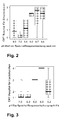
- FIG. 2 Figure 4 shows the correlation between the results of CRT bacteria and the method of the invention using Test Solution No. 136 at 4 hours for mutans streptococci. It can be seen that the risk threshold of> 10 5 CFU / ml corresponds to a pH reduction to less than about 6.5.
- FIG. 3 Figure 4 shows the correlation between the results of CRT bacteria and the method of the invention using test solution # 98 at 4 hours for lactobacilli. It can be seen that the risk threshold of> 10 5 CFU / ml corresponds to a pH reduction to less than about 6.0.
- the culture supernatant was removed and the pellet resuspended in the same volume of water (10 ml, deionized, sterile).
- the sample was recentrifuged (8000 rpm, 5 minutes) and the supernatant was removed. The pellet was then resuspended in 1 ml of deionized water, which corresponds to 1/10 of the original volume.
- test solutions 40 .mu.l of bacterial suspension in 96-well polystyrene microtiter plates or in 1.5 ml microcentrifuge tubes were added to 100 .mu.l of a test solution, which in addition to a suitable pH indicator (eg phenol red and Bromkresolpurpur) a fermentable C source, 5 mM Phosphate or 5 mM Tris-HCl and optionally an antibiotic.
- a suitable pH indicator eg phenol red and Bromkresolpurpur
- a fermentable C source 5 mM Phosphate or 5 mM Tris-HCl
- antibiotics-HCl optionally an antibiotic.
- the test solutions used were adjusted to a defined starting pH.
- the components were dissolved in 75% of the desired final volume of deionized water.
- the appropriate pH was adjusted and it was made up to the calculated volume with deionized water.
- the prepared solutions were stored in the refrigerator and used no longer than 2 weeks.
- Table 4 Compositions of the test solutions. No. indicator substratum Conc (%) additions buffer pH 87 phenol glucose 1 Phosphate, 5 mM 8.5 98 bromocresolpurple lactose 1 Phosphate, 5 mM 7.3 117 phenol glucose 1 Vancomycin, 0.5% Phosphate, 5 mM 8.5 119 phenol glucose 1 Clindamycin, 0.2% Phosphate, 5 mM 8.5 122 phenol glucose 1 Chloramphenicol, 0.2% Phosphate, 5 mM 8.5 124 phenol glucose 1 Clotrimazole, 0.2% Phosphate, 5 mM 8.5 126 phenol glucose 1 Metronidazole, 0.2% Phosphate, 5 mM 8.5 127 phenol glucose 1 Streptomycin, 0.2% Phosphate, 5 mM 8.5 129 phenol glucose 1 Neomycin, 0.2% Phos
Landscapes
- Chemical & Material Sciences (AREA)
- Life Sciences & Earth Sciences (AREA)
- Organic Chemistry (AREA)
- Health & Medical Sciences (AREA)
- Engineering & Computer Science (AREA)
- Zoology (AREA)
- Wood Science & Technology (AREA)
- Proteomics, Peptides & Aminoacids (AREA)
- Molecular Biology (AREA)
- Toxicology (AREA)
- Immunology (AREA)
- Microbiology (AREA)
- Biophysics (AREA)
- Analytical Chemistry (AREA)
- Physics & Mathematics (AREA)
- Biotechnology (AREA)
- Biochemistry (AREA)
- Bioinformatics & Cheminformatics (AREA)
- General Engineering & Computer Science (AREA)
- General Health & Medical Sciences (AREA)
- Genetics & Genomics (AREA)
- Investigating Or Analysing Biological Materials (AREA)
- Measuring Or Testing Involving Enzymes Or Micro-Organisms (AREA)
- Investigating Or Analysing Materials By The Use Of Chemical Reactions (AREA)
Priority Applications (5)
| Application Number | Priority Date | Filing Date | Title |
|---|---|---|---|
| EP10169983A EP2410338A1 (fr) | 2010-07-19 | 2010-07-19 | Procédé de contrôle de la production d'acide à l'aide de bactéries cariogènes |
| US13/181,054 US8765400B2 (en) | 2010-07-19 | 2011-07-12 | Method for the detection of acid production by cariogenic bacteria |
| EP11173695.5A EP2410339B1 (fr) | 2010-07-19 | 2011-07-12 | Procédé de contrôle de la production d'acide à l'aide de bactéries cariogènes |
| JP2011156746A JP5832801B2 (ja) | 2010-07-19 | 2011-07-15 | う食原性細菌による酸の産生を検出するための方法 |
| US14/278,247 US9260739B2 (en) | 2010-07-19 | 2014-05-15 | Method for the detection of acid production by cariogenic bacteria |
Applications Claiming Priority (1)
| Application Number | Priority Date | Filing Date | Title |
|---|---|---|---|
| EP10169983A EP2410338A1 (fr) | 2010-07-19 | 2010-07-19 | Procédé de contrôle de la production d'acide à l'aide de bactéries cariogènes |
Publications (1)
| Publication Number | Publication Date |
|---|---|
| EP2410338A1 true EP2410338A1 (fr) | 2012-01-25 |
Family
ID=43013250
Family Applications (2)
| Application Number | Title | Priority Date | Filing Date |
|---|---|---|---|
| EP10169983A Withdrawn EP2410338A1 (fr) | 2010-07-19 | 2010-07-19 | Procédé de contrôle de la production d'acide à l'aide de bactéries cariogènes |
| EP11173695.5A Not-in-force EP2410339B1 (fr) | 2010-07-19 | 2011-07-12 | Procédé de contrôle de la production d'acide à l'aide de bactéries cariogènes |
Family Applications After (1)
| Application Number | Title | Priority Date | Filing Date |
|---|---|---|---|
| EP11173695.5A Not-in-force EP2410339B1 (fr) | 2010-07-19 | 2011-07-12 | Procédé de contrôle de la production d'acide à l'aide de bactéries cariogènes |
Country Status (3)
| Country | Link |
|---|---|
| US (2) | US8765400B2 (fr) |
| EP (2) | EP2410338A1 (fr) |
| JP (1) | JP5832801B2 (fr) |
Families Citing this family (9)
| Publication number | Priority date | Publication date | Assignee | Title |
|---|---|---|---|---|
| JP6712126B2 (ja) * | 2015-10-09 | 2020-06-17 | 株式会社明治 | 食品中の微生物の検出法 |
| CN105316388A (zh) * | 2015-11-27 | 2016-02-10 | 伢伢(上海)投资管理有限公司 | 一种龋蚀活跃性检测液及其制备方法 |
| CN106566866A (zh) * | 2016-09-19 | 2017-04-19 | 湖北华扬科技发展有限公司 | 复合微生态制剂中乳酸菌检测用培养基及检测方法 |
| WO2019005296A1 (fr) | 2017-06-27 | 2019-01-03 | Avails Medical, Inc. | Appareil, systèmes et procédés permettant de déterminer la sensibilité de micro-organismes à des anti-infectieux |
| WO2019070739A1 (fr) | 2017-10-03 | 2019-04-11 | Avails Medical, Inc. | Appareils, systèmes et procédés de détermination de la concentration de micro-organismes et de la sensibilité des micro-organismes aux anti-infectieux, fondés sur des réactions d'oxydoréduction |
| JP7254077B2 (ja) * | 2017-12-05 | 2023-04-07 | アベイルズ メディカル,インコーポレイテッド | 下流試験用の規定濃度の感染因子を含む出力サンプルの調製 |
| EP3822628B1 (fr) | 2018-07-09 | 2026-01-28 | National Institute for Materials Science | Dispositif de diagnostic, procédé d'analyse, et programme |
| WO2020117650A1 (fr) | 2018-12-03 | 2020-06-11 | Avails Medical, Inc. | Appareils, systèmes, et procédés de quantification d'agents infectieux |
| CN111363777A (zh) * | 2020-04-24 | 2020-07-03 | 山东爱维德生物科技有限公司 | 一种龋齿致病菌增菌初筛培养基及其制备方法和使用方法 |
Citations (3)
| Publication number | Priority date | Publication date | Assignee | Title |
|---|---|---|---|---|
| EP1253425A2 (fr) * | 2001-04-27 | 2002-10-30 | GC Corporation | Méthode d'examen de la capacité tampon de la salive et instrument d'examen de la capacité tampon de la salive |
| US20030113266A1 (en) * | 2001-12-14 | 2003-06-19 | Gc Corporation | Material for evaluating dental caries activity |
| EP1972938A1 (fr) * | 2007-03-19 | 2008-09-24 | Ivoclar Vivadent | Procédure pour détecter un micro-organisme dans un échantillon liquide |
Family Cites Families (5)
| Publication number | Priority date | Publication date | Assignee | Title |
|---|---|---|---|---|
| US4359455A (en) * | 1979-10-30 | 1982-11-16 | Sunstar Hamigaki Kabushiki Kaisha | Diagnostic test composition for dental caries activity |
| JPS58225029A (ja) * | 1982-06-21 | 1983-12-27 | Showa Yakuhin Kako Kk | う蝕簡易判別用具 |
| JP2004205210A (ja) * | 2001-12-14 | 2004-07-22 | Gc Corp | 齲蝕活性評価キット及び齲蝕活性評価用具 |
| JP4227880B2 (ja) * | 2003-11-12 | 2009-02-18 | 有限会社 ミクロデント | う蝕リスク検出方法 |
| JP5337353B2 (ja) * | 2007-05-07 | 2013-11-06 | 有限会社 ミクロデント | 歯種装置 |
-
2010
- 2010-07-19 EP EP10169983A patent/EP2410338A1/fr not_active Withdrawn
-
2011
- 2011-07-12 US US13/181,054 patent/US8765400B2/en not_active Expired - Fee Related
- 2011-07-12 EP EP11173695.5A patent/EP2410339B1/fr not_active Not-in-force
- 2011-07-15 JP JP2011156746A patent/JP5832801B2/ja not_active Expired - Fee Related
-
2014
- 2014-05-15 US US14/278,247 patent/US9260739B2/en active Active
Patent Citations (3)
| Publication number | Priority date | Publication date | Assignee | Title |
|---|---|---|---|---|
| EP1253425A2 (fr) * | 2001-04-27 | 2002-10-30 | GC Corporation | Méthode d'examen de la capacité tampon de la salive et instrument d'examen de la capacité tampon de la salive |
| US20030113266A1 (en) * | 2001-12-14 | 2003-06-19 | Gc Corporation | Material for evaluating dental caries activity |
| EP1972938A1 (fr) * | 2007-03-19 | 2008-09-24 | Ivoclar Vivadent | Procédure pour détecter un micro-organisme dans un échantillon liquide |
Non-Patent Citations (2)
| Title |
|---|
| DAVID G.: "CRT bacteria Kariesrisikotest", 27 November 2002 (2002-11-27), Schaan, Liechtenstein, XP002607748, Retrieved from the Internet <URL:http://www.google.de/url?q=http://www.ivoclarvivadent.com/zoolu-website/media/document/479/CRT%2Bbacteria&sa=U&ei=mhPuTK23H8GzhAfHuL3JDA&ved=0CA4QFjAA&usg=AFQjCNGxpUZmO_Khd2UE_OxbWoCxU8TyCQ> [retrieved on 20101101] * |
| MINAH; LÖSCHE, INFECTION AND IMMUNITY, vol. 17, 1977, pages 43 - 54 |
Also Published As
| Publication number | Publication date |
|---|---|
| EP2410339B1 (fr) | 2013-09-25 |
| JP2012024085A (ja) | 2012-02-09 |
| JP5832801B2 (ja) | 2015-12-16 |
| US20140335559A1 (en) | 2014-11-13 |
| US20120015398A1 (en) | 2012-01-19 |
| US9260739B2 (en) | 2016-02-16 |
| US8765400B2 (en) | 2014-07-01 |
| EP2410339A1 (fr) | 2012-01-25 |
Similar Documents
| Publication | Publication Date | Title |
|---|---|---|
| EP2410339B1 (fr) | Procédé de contrôle de la production d'acide à l'aide de bactéries cariogènes | |
| DE3048705C2 (fr) | ||
| EP0006192B1 (fr) | Dispositif et procédé pour travaux microbiologiques | |
| DE69028310T2 (de) | Verfahren und vorrichtung zur speziesfestsetzung und identifikation von mai (mycobacterium-avium-intracellulare) | |
| DE60221126T2 (de) | Verbessertes verfahren zum nachweis und zur identifizierung eines eine infektion verursachenden mikroorganismus | |
| DE2320946B2 (de) | Vorrichtung für mikrobiologisches Arbeiten | |
| DD268481A5 (de) | Pruefmittel und verfahren zur bestimmung von antibiotika in milch und dabei zu benutzender, neuer stamm von streptococcus thermophilus | |
| DE19814715A1 (de) | Gelatinemembranfilter, Verfahren zu ihrer Herstellung und ihre Verwendung | |
| DE10108900A1 (de) | Ermittlung des patientenbezogenen Kariesrisikos | |
| DE60121589T2 (de) | Mikroorganismen, die auf die oberflächenglykolysierung von intestinalen zellen einwirken | |
| EP0165905B1 (fr) | Méthode d'essai diagnostique pour la détection de mélanges de bactéries oraux pathogéniques | |
| DE2728456C2 (de) | Verfahren zur Feststellung pathogener Mikroorganismen in den menschlichen Atemwegen | |
| DE2941471C2 (fr) | ||
| DE19758598B4 (de) | Verfahren zur Prüfung von Materialien hinsichtlich ihrer potentiellen antimikrobiellen Wirksamkeit und der Proliferation von Zellen auf ihrer Oberfläche | |
| KR101091016B1 (ko) | 치아 우식증 활성 측정용 조성물 | |
| EP1067385B1 (fr) | Méthode pour la quantification de la charge en biofilm sur les corps échantillons | |
| DE2011935A1 (de) | Enzym und Verfahren zu dessen Herstellung sowie dessen Verwendung in Mitteln zur Verhütung von Zahnkaries | |
| DE69311140T2 (de) | Verfahren zur bestimmung der affinität von fibrinogen und seiner derivate gegenüber filamentären formen von hefen, und verwendung auf dem gebiet der bestimmung von pathogenen hefen insbesondere in blutkultur | |
| DE10109012B4 (de) | Detektionsverfahren für kariogene Keime | |
| Nooruldeen et al. | Utilization of Lactobacillus cells as a probiotic in chewing gum against multi-drug-resistant pathogens associated with gingival inflammation | |
| EP1589113B1 (fr) | Procédé pour déterminer la sensibilité de pathogènes bactériennes et de souches de vaccine dans la volaille | |
| DE60016035T2 (de) | Mikrobenwachstum-variationen | |
| EP2766472B1 (fr) | Nouveaux lactobacilles et compositions les contenant | |
| Dumanauw et al. | The effectiveness of bilimbi extract as dental antibacterial mouthwash | |
| Shawkat | Demonstration of altered colony morphology of mutans streptococci and their role in cariogenicity |
Legal Events
| Date | Code | Title | Description |
|---|---|---|---|
| AK | Designated contracting states |
Kind code of ref document: A1 Designated state(s): AL AT BE BG CH CY CZ DE DK EE ES FI FR GB GR HR HU IE IS IT LI LT LU LV MC MK MT NL NO PL PT RO SE SI SK SM TR |
|
| AX | Request for extension of the european patent |
Extension state: BA ME RS |
|
| PUAI | Public reference made under article 153(3) epc to a published international application that has entered the european phase |
Free format text: ORIGINAL CODE: 0009012 |
|
| STAA | Information on the status of an ep patent application or granted ep patent |
Free format text: STATUS: THE APPLICATION IS DEEMED TO BE WITHDRAWN |
|
| 18D | Application deemed to be withdrawn |
Effective date: 20120726 |