EP2419488B1 - Procédé et composition pour une récupération améliorée d'hydrocarbures à partir d'une formation à haute température, à très haute salinité - Google Patents
Procédé et composition pour une récupération améliorée d'hydrocarbures à partir d'une formation à haute température, à très haute salinité Download PDFInfo
- Publication number
- EP2419488B1 EP2419488B1 EP10715626.7A EP10715626A EP2419488B1 EP 2419488 B1 EP2419488 B1 EP 2419488B1 EP 10715626 A EP10715626 A EP 10715626A EP 2419488 B1 EP2419488 B1 EP 2419488B1
- Authority
- EP
- European Patent Office
- Prior art keywords
- hydrocarbon
- formation
- hydrocarbons
- hydrocarbon containing
- containing formation
- Prior art date
- Legal status (The legal status is an assumption and is not a legal conclusion. Google has not performed a legal analysis and makes no representation as to the accuracy of the status listed.)
- Not-in-force
Links
- 229930195733 hydrocarbon Natural products 0.000 title claims description 353
- 150000002430 hydrocarbons Chemical class 0.000 title claims description 352
- 230000015572 biosynthetic process Effects 0.000 title claims description 192
- 239000000203 mixture Substances 0.000 title claims description 138
- 238000011084 recovery Methods 0.000 title claims description 78
- 238000000034 method Methods 0.000 title claims description 36
- 239000004215 Carbon black (E152) Substances 0.000 claims description 246
- 239000012530 fluid Substances 0.000 claims description 85
- XLYOFNOQVPJJNP-UHFFFAOYSA-N water Substances O XLYOFNOQVPJJNP-UHFFFAOYSA-N 0.000 claims description 72
- JRZJOMJEPLMPRA-UHFFFAOYSA-N olefin Natural products CCCCCCCC=C JRZJOMJEPLMPRA-UHFFFAOYSA-N 0.000 claims description 67
- -1 olefin sulfonate Chemical class 0.000 claims description 59
- 239000012267 brine Substances 0.000 claims description 26
- HPALAKNZSZLMCH-UHFFFAOYSA-M sodium;chloride;hydrate Chemical compound O.[Na+].[Cl-] HPALAKNZSZLMCH-UHFFFAOYSA-M 0.000 claims description 26
- 125000004432 carbon atom Chemical group C* 0.000 claims description 11
- OKTJSMMVPCPJKN-UHFFFAOYSA-N Carbon Chemical compound [C] OKTJSMMVPCPJKN-UHFFFAOYSA-N 0.000 claims description 10
- 229910052799 carbon Inorganic materials 0.000 claims description 10
- 238000005755 formation reaction Methods 0.000 description 181
- 238000004519 manufacturing process Methods 0.000 description 27
- 239000003921 oil Substances 0.000 description 25
- 239000004094 surface-active agent Substances 0.000 description 25
- 230000003993 interaction Effects 0.000 description 20
- 229920000642 polymer Polymers 0.000 description 20
- FAPWRFPIFSIZLT-UHFFFAOYSA-M Sodium chloride Chemical compound [Na+].[Cl-] FAPWRFPIFSIZLT-UHFFFAOYSA-M 0.000 description 19
- GGQQNYXPYWCUHG-RMTFUQJTSA-N (3e,6e)-deca-3,6-diene Chemical compound CCC\C=C\C\C=C\CC GGQQNYXPYWCUHG-RMTFUQJTSA-N 0.000 description 18
- 150000001336 alkenes Chemical class 0.000 description 17
- VNWKTOKETHGBQD-UHFFFAOYSA-N methane Chemical compound C VNWKTOKETHGBQD-UHFFFAOYSA-N 0.000 description 12
- 238000002347 injection Methods 0.000 description 11
- 239000007924 injection Substances 0.000 description 11
- 239000012071 phase Substances 0.000 description 11
- QGZKDVFQNNGYKY-UHFFFAOYSA-N Ammonia Chemical compound N QGZKDVFQNNGYKY-UHFFFAOYSA-N 0.000 description 10
- 239000011780 sodium chloride Substances 0.000 description 10
- 239000007789 gas Substances 0.000 description 9
- 230000035699 permeability Effects 0.000 description 9
- 230000008569 process Effects 0.000 description 9
- 230000009467 reduction Effects 0.000 description 8
- AKEJUJNQAAGONA-UHFFFAOYSA-N sulfur trioxide Chemical compound O=S(=O)=O AKEJUJNQAAGONA-UHFFFAOYSA-N 0.000 description 8
- 230000007062 hydrolysis Effects 0.000 description 7
- 238000006460 hydrolysis reaction Methods 0.000 description 7
- 229910052500 inorganic mineral Inorganic materials 0.000 description 7
- 235000010755 mineral Nutrition 0.000 description 7
- 239000011707 mineral Substances 0.000 description 7
- 238000012360 testing method Methods 0.000 description 7
- OYPRJOBELJOOCE-UHFFFAOYSA-N Calcium Chemical compound [Ca] OYPRJOBELJOOCE-UHFFFAOYSA-N 0.000 description 6
- LFQSCWFLJHTTHZ-UHFFFAOYSA-N Ethanol Chemical compound CCO LFQSCWFLJHTTHZ-UHFFFAOYSA-N 0.000 description 6
- 238000002156 mixing Methods 0.000 description 6
- 238000006386 neutralization reaction Methods 0.000 description 6
- 239000000047 product Substances 0.000 description 6
- CDBYLPFSWZWCQE-UHFFFAOYSA-L sodium carbonate Substances [Na+].[Na+].[O-]C([O-])=O CDBYLPFSWZWCQE-UHFFFAOYSA-L 0.000 description 6
- FYYHWMGAXLPEAU-UHFFFAOYSA-N Magnesium Chemical compound [Mg] FYYHWMGAXLPEAU-UHFFFAOYSA-N 0.000 description 5
- 229910021529 ammonia Inorganic materials 0.000 description 5
- 239000002585 base Substances 0.000 description 5
- 239000011575 calcium Substances 0.000 description 5
- 229910052791 calcium Inorganic materials 0.000 description 5
- 238000006243 chemical reaction Methods 0.000 description 5
- 239000000839 emulsion Substances 0.000 description 5
- 239000011552 falling film Substances 0.000 description 5
- 239000011777 magnesium Substances 0.000 description 5
- 229910052749 magnesium Inorganic materials 0.000 description 5
- 239000000463 material Substances 0.000 description 5
- 239000000178 monomer Substances 0.000 description 5
- 238000002360 preparation method Methods 0.000 description 5
- 230000002829 reductive effect Effects 0.000 description 5
- 239000011435 rock Substances 0.000 description 5
- IJGRMHOSHXDMSA-UHFFFAOYSA-N Atomic nitrogen Chemical compound N#N IJGRMHOSHXDMSA-UHFFFAOYSA-N 0.000 description 4
- UGFAIRIUMAVXCW-UHFFFAOYSA-N Carbon monoxide Chemical compound [O+]#[C-] UGFAIRIUMAVXCW-UHFFFAOYSA-N 0.000 description 4
- BVKZGUZCCUSVTD-UHFFFAOYSA-L Carbonate Chemical compound [O-]C([O-])=O BVKZGUZCCUSVTD-UHFFFAOYSA-L 0.000 description 4
- TWRXJAOTZQYOKJ-UHFFFAOYSA-L Magnesium chloride Chemical compound [Mg+2].[Cl-].[Cl-] TWRXJAOTZQYOKJ-UHFFFAOYSA-L 0.000 description 4
- 229910002091 carbon monoxide Inorganic materials 0.000 description 4
- 239000007795 chemical reaction product Substances 0.000 description 4
- 239000003795 chemical substances by application Substances 0.000 description 4
- 238000001816 cooling Methods 0.000 description 4
- 238000002474 experimental method Methods 0.000 description 4
- 238000005259 measurement Methods 0.000 description 4
- 239000000243 solution Substances 0.000 description 4
- 238000009987 spinning Methods 0.000 description 4
- 239000004711 α-olefin Substances 0.000 description 4
- ZWEHNKRNPOVVGH-UHFFFAOYSA-N 2-Butanone Chemical compound CCC(C)=O ZWEHNKRNPOVVGH-UHFFFAOYSA-N 0.000 description 3
- MSXVEPNJUHWQHW-UHFFFAOYSA-N 2-methylbutan-2-ol Chemical compound CCC(C)(C)O MSXVEPNJUHWQHW-UHFFFAOYSA-N 0.000 description 3
- KFZMGEQAYNKOFK-UHFFFAOYSA-N Isopropanol Chemical compound CC(C)O KFZMGEQAYNKOFK-UHFFFAOYSA-N 0.000 description 3
- OKKJLVBELUTLKV-UHFFFAOYSA-N Methanol Chemical compound OC OKKJLVBELUTLKV-UHFFFAOYSA-N 0.000 description 3
- VYPSYNLAJGMNEJ-UHFFFAOYSA-N Silicium dioxide Chemical compound O=[Si]=O VYPSYNLAJGMNEJ-UHFFFAOYSA-N 0.000 description 3
- HEMHJVSKTPXQMS-UHFFFAOYSA-M Sodium hydroxide Chemical compound [OH-].[Na+] HEMHJVSKTPXQMS-UHFFFAOYSA-M 0.000 description 3
- DKGAVHZHDRPRBM-UHFFFAOYSA-N Tert-Butanol Chemical compound CC(C)(C)O DKGAVHZHDRPRBM-UHFFFAOYSA-N 0.000 description 3
- 239000002253 acid Substances 0.000 description 3
- 125000000217 alkyl group Chemical group 0.000 description 3
- 229920001577 copolymer Polymers 0.000 description 3
- 230000007423 decrease Effects 0.000 description 3
- 230000000694 effects Effects 0.000 description 3
- 150000002500 ions Chemical class 0.000 description 3
- 229940094933 n-dodecane Drugs 0.000 description 3
- 239000003208 petroleum Substances 0.000 description 3
- 239000011148 porous material Substances 0.000 description 3
- WCUXLLCKKVVCTQ-UHFFFAOYSA-M potassium chloride Inorganic materials [Cl-].[K+] WCUXLLCKKVVCTQ-UHFFFAOYSA-M 0.000 description 3
- 238000011002 quantification Methods 0.000 description 3
- 229910000029 sodium carbonate Inorganic materials 0.000 description 3
- 239000007787 solid Substances 0.000 description 3
- SMZOUWXMTYCWNB-UHFFFAOYSA-N 2-(2-methoxy-5-methylphenyl)ethanamine Chemical compound COC1=CC=C(C)C=C1CCN SMZOUWXMTYCWNB-UHFFFAOYSA-N 0.000 description 2
- NIXOWILDQLNWCW-UHFFFAOYSA-N 2-Propenoic acid Natural products OC(=O)C=C NIXOWILDQLNWCW-UHFFFAOYSA-N 0.000 description 2
- CSCPPACGZOOCGX-UHFFFAOYSA-N Acetone Chemical compound CC(C)=O CSCPPACGZOOCGX-UHFFFAOYSA-N 0.000 description 2
- HRPVXLWXLXDGHG-UHFFFAOYSA-N Acrylamide Chemical compound NC(=O)C=C HRPVXLWXLXDGHG-UHFFFAOYSA-N 0.000 description 2
- CURLTUGMZLYLDI-UHFFFAOYSA-N Carbon dioxide Chemical compound O=C=O CURLTUGMZLYLDI-UHFFFAOYSA-N 0.000 description 2
- LRHPLDYGYMQRHN-UHFFFAOYSA-N N-Butanol Chemical compound CCCCO LRHPLDYGYMQRHN-UHFFFAOYSA-N 0.000 description 2
- ZLMJMSJWJFRBEC-UHFFFAOYSA-N Potassium Chemical compound [K] ZLMJMSJWJFRBEC-UHFFFAOYSA-N 0.000 description 2
- QAOWNCQODCNURD-UHFFFAOYSA-N Sulfuric acid Chemical compound OS(O)(=O)=O QAOWNCQODCNURD-UHFFFAOYSA-N 0.000 description 2
- 230000032683 aging Effects 0.000 description 2
- 150000001298 alcohols Chemical class 0.000 description 2
- 239000003513 alkali Substances 0.000 description 2
- 239000010426 asphalt Substances 0.000 description 2
- 230000008901 benefit Effects 0.000 description 2
- 229920001222 biopolymer Polymers 0.000 description 2
- BTANRVKWQNVYAZ-UHFFFAOYSA-N butan-2-ol Chemical compound CCC(C)O BTANRVKWQNVYAZ-UHFFFAOYSA-N 0.000 description 2
- 150000004649 carbonic acid derivatives Chemical class 0.000 description 2
- 239000004064 cosurfactant Substances 0.000 description 2
- 239000010779 crude oil Substances 0.000 description 2
- 239000006185 dispersion Substances 0.000 description 2
- SNRUBQQJIBEYMU-UHFFFAOYSA-N dodecane Chemical compound CCCCCCCCCCCC SNRUBQQJIBEYMU-UHFFFAOYSA-N 0.000 description 2
- 239000010408 film Substances 0.000 description 2
- 239000006260 foam Substances 0.000 description 2
- 230000003301 hydrolyzing effect Effects 0.000 description 2
- 238000011065 in-situ storage Methods 0.000 description 2
- 229910017053 inorganic salt Inorganic materials 0.000 description 2
- 238000006317 isomerization reaction Methods 0.000 description 2
- PBOSTUDLECTMNL-UHFFFAOYSA-N lauryl acrylate Chemical compound CCCCCCCCCCCCOC(=O)C=C PBOSTUDLECTMNL-UHFFFAOYSA-N 0.000 description 2
- 239000007788 liquid Substances 0.000 description 2
- 229910001629 magnesium chloride Inorganic materials 0.000 description 2
- 230000001483 mobilizing effect Effects 0.000 description 2
- 229910052757 nitrogen Inorganic materials 0.000 description 2
- TVMXDCGIABBOFY-UHFFFAOYSA-N octane Chemical compound CCCCCCCC TVMXDCGIABBOFY-UHFFFAOYSA-N 0.000 description 2
- 239000003960 organic solvent Substances 0.000 description 2
- 230000036961 partial effect Effects 0.000 description 2
- 230000000149 penetrating effect Effects 0.000 description 2
- 229920002401 polyacrylamide Polymers 0.000 description 2
- 239000001103 potassium chloride Substances 0.000 description 2
- 150000003839 salts Chemical class 0.000 description 2
- 239000002904 solvent Substances 0.000 description 2
- BDHFUVZGWQCTTF-UHFFFAOYSA-M sulfonate Chemical compound [O-]S(=O)=O BDHFUVZGWQCTTF-UHFFFAOYSA-M 0.000 description 2
- 150000008053 sultones Chemical class 0.000 description 2
- 230000000153 supplemental effect Effects 0.000 description 2
- 230000035899 viability Effects 0.000 description 2
- DNIAPMSPPWPWGF-GSVOUGTGSA-N (R)-(-)-Propylene glycol Chemical compound C[C@@H](O)CO DNIAPMSPPWPWGF-GSVOUGTGSA-N 0.000 description 1
- QGZKDVFQNNGYKY-UHFFFAOYSA-O Ammonium Chemical compound [NH4+] QGZKDVFQNNGYKY-UHFFFAOYSA-O 0.000 description 1
- BVKZGUZCCUSVTD-UHFFFAOYSA-M Bicarbonate Chemical class OC([O-])=O BVKZGUZCCUSVTD-UHFFFAOYSA-M 0.000 description 1
- UXVMQQNJUSDDNG-UHFFFAOYSA-L Calcium chloride Chemical compound [Cl-].[Cl-].[Ca+2] UXVMQQNJUSDDNG-UHFFFAOYSA-L 0.000 description 1
- 229920002134 Carboxymethyl cellulose Polymers 0.000 description 1
- 229920002907 Guar gum Polymers 0.000 description 1
- DGAQECJNVWCQMB-PUAWFVPOSA-M Ilexoside XXIX Chemical compound C[C@@H]1CC[C@@]2(CC[C@@]3(C(=CC[C@H]4[C@]3(CC[C@@H]5[C@@]4(CC[C@@H](C5(C)C)OS(=O)(=O)[O-])C)C)[C@@H]2[C@]1(C)O)C)C(=O)O[C@H]6[C@@H]([C@H]([C@@H]([C@H](O6)CO)O)O)O.[Na+] DGAQECJNVWCQMB-PUAWFVPOSA-M 0.000 description 1
- 235000019738 Limestone Nutrition 0.000 description 1
- 239000004372 Polyvinyl alcohol Substances 0.000 description 1
- QAOWNCQODCNURD-UHFFFAOYSA-L Sulfate Chemical compound [O-]S([O-])(=O)=O QAOWNCQODCNURD-UHFFFAOYSA-L 0.000 description 1
- NINIDFKCEFEMDL-UHFFFAOYSA-N Sulfur Chemical compound [S] NINIDFKCEFEMDL-UHFFFAOYSA-N 0.000 description 1
- 239000000654 additive Substances 0.000 description 1
- 125000002723 alicyclic group Chemical group 0.000 description 1
- 125000001931 aliphatic group Chemical group 0.000 description 1
- 229910052783 alkali metal Inorganic materials 0.000 description 1
- 150000001340 alkali metals Chemical class 0.000 description 1
- 238000005904 alkaline hydrolysis reaction Methods 0.000 description 1
- 229940045714 alkyl sulfonate alkylating agent Drugs 0.000 description 1
- 150000008052 alkyl sulfonates Chemical class 0.000 description 1
- 239000008346 aqueous phase Substances 0.000 description 1
- 125000003118 aryl group Chemical group 0.000 description 1
- 125000005228 aryl sulfonate group Chemical group 0.000 description 1
- 239000012298 atmosphere Substances 0.000 description 1
- QVGXLLKOCUKJST-UHFFFAOYSA-N atomic oxygen Chemical compound [O] QVGXLLKOCUKJST-UHFFFAOYSA-N 0.000 description 1
- 229910052788 barium Inorganic materials 0.000 description 1
- DSAJWYNOEDNPEQ-UHFFFAOYSA-N barium atom Chemical compound [Ba] DSAJWYNOEDNPEQ-UHFFFAOYSA-N 0.000 description 1
- 239000001110 calcium chloride Substances 0.000 description 1
- 229910001628 calcium chloride Inorganic materials 0.000 description 1
- 150000001721 carbon Chemical group 0.000 description 1
- 239000001569 carbon dioxide Substances 0.000 description 1
- 229910002092 carbon dioxide Inorganic materials 0.000 description 1
- 239000001768 carboxy methyl cellulose Substances 0.000 description 1
- 235000010948 carboxy methyl cellulose Nutrition 0.000 description 1
- 239000008112 carboxymethyl-cellulose Substances 0.000 description 1
- 239000012159 carrier gas Substances 0.000 description 1
- 239000003054 catalyst Substances 0.000 description 1
- 230000003197 catalytic effect Effects 0.000 description 1
- 239000004927 clay Substances 0.000 description 1
- 239000006184 cosolvent Substances 0.000 description 1
- 230000003247 decreasing effect Effects 0.000 description 1
- 239000003599 detergent Substances 0.000 description 1
- 238000006073 displacement reaction Methods 0.000 description 1
- 238000009826 distribution Methods 0.000 description 1
- ZZUFCTLCJUWOSV-UHFFFAOYSA-N furosemide Chemical compound C1=C(Cl)C(S(=O)(=O)N)=CC(C(O)=O)=C1NCC1=CC=CO1 ZZUFCTLCJUWOSV-UHFFFAOYSA-N 0.000 description 1
- 239000011521 glass Substances 0.000 description 1
- 239000000665 guar gum Substances 0.000 description 1
- 235000010417 guar gum Nutrition 0.000 description 1
- 229960002154 guar gum Drugs 0.000 description 1
- 229910052736 halogen Inorganic materials 0.000 description 1
- 150000002367 halogens Chemical class 0.000 description 1
- 238000010438 heat treatment Methods 0.000 description 1
- 125000004435 hydrogen atom Chemical group [H]* 0.000 description 1
- 150000004679 hydroxides Chemical class 0.000 description 1
- 239000011261 inert gas Substances 0.000 description 1
- 239000006028 limestone Substances 0.000 description 1
- 239000004973 liquid crystal related substance Substances 0.000 description 1
- 230000014759 maintenance of location Effects 0.000 description 1
- 229910052751 metal Inorganic materials 0.000 description 1
- 239000004530 micro-emulsion Substances 0.000 description 1
- 238000012986 modification Methods 0.000 description 1
- 230000004048 modification Effects 0.000 description 1
- 239000003345 natural gas Substances 0.000 description 1
- 230000003472 neutralizing effect Effects 0.000 description 1
- 229910052760 oxygen Inorganic materials 0.000 description 1
- 239000001301 oxygen Substances 0.000 description 1
- 229920001467 poly(styrenesulfonates) Polymers 0.000 description 1
- 229920000058 polyacrylate Polymers 0.000 description 1
- 239000011970 polystyrene sulfonate Substances 0.000 description 1
- 229920002451 polyvinyl alcohol Polymers 0.000 description 1
- 229920000036 polyvinylpyrrolidone Polymers 0.000 description 1
- 239000001267 polyvinylpyrrolidone Substances 0.000 description 1
- 235000013855 polyvinylpyrrolidone Nutrition 0.000 description 1
- 239000011591 potassium Substances 0.000 description 1
- 229910052700 potassium Inorganic materials 0.000 description 1
- 235000011164 potassium chloride Nutrition 0.000 description 1
- BDERNNFJNOPAEC-UHFFFAOYSA-N propan-1-ol Chemical compound CCCO BDERNNFJNOPAEC-UHFFFAOYSA-N 0.000 description 1
- 239000011541 reaction mixture Substances 0.000 description 1
- 230000000717 retained effect Effects 0.000 description 1
- 239000004576 sand Substances 0.000 description 1
- 239000013535 sea water Substances 0.000 description 1
- 239000000377 silicon dioxide Substances 0.000 description 1
- 239000000344 soap Substances 0.000 description 1
- 238000001179 sorption measurement Methods 0.000 description 1
- 230000003068 static effect Effects 0.000 description 1
- 238000003756 stirring Methods 0.000 description 1
- 239000000126 substance Substances 0.000 description 1
- 238000006277 sulfonation reaction Methods 0.000 description 1
- 125000001273 sulfonato group Chemical class [O-]S(*)(=O)=O 0.000 description 1
- 229910052717 sulfur Inorganic materials 0.000 description 1
- 239000011593 sulfur Substances 0.000 description 1
- 238000004448 titration Methods 0.000 description 1
- 238000012546 transfer Methods 0.000 description 1
- 239000012808 vapor phase Substances 0.000 description 1
- 238000009736 wetting Methods 0.000 description 1
- 239000000230 xanthan gum Substances 0.000 description 1
- 235000010493 xanthan gum Nutrition 0.000 description 1
- 229920001285 xanthan gum Polymers 0.000 description 1
- 229940082509 xanthan gum Drugs 0.000 description 1
- 239000010457 zeolite Substances 0.000 description 1
Images

Classifications
-
- C—CHEMISTRY; METALLURGY
- C09—DYES; PAINTS; POLISHES; NATURAL RESINS; ADHESIVES; COMPOSITIONS NOT OTHERWISE PROVIDED FOR; APPLICATIONS OF MATERIALS NOT OTHERWISE PROVIDED FOR
- C09K—MATERIALS FOR MISCELLANEOUS APPLICATIONS, NOT PROVIDED FOR ELSEWHERE
- C09K8/00—Compositions for drilling of boreholes or wells; Compositions for treating boreholes or wells, e.g. for completion or for remedial operations
- C09K8/58—Compositions for enhanced recovery methods for obtaining hydrocarbons, i.e. for improving the mobility of the oil, e.g. displacing fluids
- C09K8/584—Compositions for enhanced recovery methods for obtaining hydrocarbons, i.e. for improving the mobility of the oil, e.g. displacing fluids characterised by the use of specific surfactants
Definitions
- the present invention generally relates to methods for recovery of hydrocarbons from hydrocarbon formations. More particularly, embodiments described herein relate to methods of enhanced hydrocarbons recovery and to compositions useful therein which are specifically designed for use in hydrocarbon formations wherein the reservoir conditions, i.e., salinity, hardness and temperature, are severe.
- Hydrocarbons may be recovered from hydrocarbon containing formations by penetrating the formation with one or more wells. Hydrocarbons may flow to the surface through the wells. Conditions (e.g., permeability, hydrocarbon concentration, porosity, temperature, pressure) of the hydrocarbon containing formation may affect the economic viability of hydrocarbon production from the hydrocarbon containing formation.
- a hydrocarbon containing formation may have natural energy (e.g., gas, water) to aid in mobilizing hydrocarbons to the surface of the hydrocarbon containing formation. Natural energy may be in the form of water. Water may exert pressure to mobilize hydrocarbons to one or, more production wells. Gas may be present in the hydrocarbon containing formation (reservoir) at sufficient pressures to mobilize hydrocarbons to one or more production wells.
- Supplemental recovery processes may be used to continue recovery of hydrocarbons from the hydrocarbon containing formation.
- supplemental processes include waterflooding, polymer flooding, alkali flooding, thermal processes, solution flooding or combinations thereof.
- compositions and methods for enhanced hydrocarbons recovery utilizing an alpha olefin sulfate-containing surfactant component are known.
- U.S. Patents 4,488,976 and 4,537,253 describe enhanced oil or recovery compositions containing such a component.
- Compositions and methods for enhanced hydrocarbons recovery utilizing internal olefin sulfonates are also known.
- Such a surfactant composition is described in U.S. Patent 4,597,879 .
- the compositions described in the foregoing patents have the disadvantages that brine solubility and divalent ion tolerance are insufficient at certain reservoir conditions. Furthermore, it would be advantageous if the IFT which can be achieved in very severe salinity, hardness and temperature conditions could be improved.
- U.S. Patent 4,979,564 describes the use of internal olefin sulfonates in a method for enhanced oil recovery using low tension viscous water flood.
- An example of a commercially available material described as being useful was ENORDET IOS 1720, a product of Shell Oil Company identified as a sulfonated C 17-20 internal olefin sodium salt. This material has a low degree of branching.
- U.S. Patent 5,068,043 describes a petroleum acid soap-containing surfactant system for waterflooding wherein a cosurfactant comprising a C 17-20 or a C 20-24 internal olefin sulfonate was used.
- hydrocarbons may be produced from a hydrocarbon containing formation having very high salinity and a high temperature and relatively high hardness, such as is the case in the North Sea and Middle East, by a method that includes treating at least a portion of the hydrocarbon containing formation with a hydrocarbon recovery composition which is comprised of a particular high molecular weight internal olefin sulfonate.
- the brine from the hydrocarbon containing formation which is reinjected into the formation may be very high in salinity and hardness.
- seawater may be used as the injection water.
- salinity refers to an amount of dissolved sodium, potassium, calcium and magnesium chloride solids in water.
- Water hardness refers to a concentration of divalent ions (e.g., calcium, magnesium) in the water.
- divalent ions e.g., calcium, magnesium
- very high salinity means that the brine has 13 wt% or more of sodium chloride and high hardness means that the concentration of calcium plus magnesium in the brine is greater than 0.01 wt%.
- high temperature means a temperature of above about 70°C.
- the present invention provides a method of treating these very high salinity, high temperature hydrocarbon containing formations which comprises (a) providing a hydrocarbon recovery composition to at least a portion of a hydrocarbon containing formation having a brine salinity of above about 13 wt% and a temperature of above about 70°C, wherein the composition comprises a C 15-18 internal olefin sulfonate; and (b) allowing the composition to interact with hydrocarbons in the hydrocarbon containing formation.
- the hydrocarbon recovery composition may comprise from about 1 to about 75 wt% of the C 15-18 internal olefin sulfonate, preferably from about 10 to about 40 wt% and more preferably from about 20 to about 30 wt%.
- a hydrocarbon containing composition may be produced from a hydrocarbon containing formation.
- the hydrocarbon containing composition may include any combination of hydrocarbons, the internal olefin sulfonate described above, a solubilizing agent, methane, water, asphaltenes, carbon monoxide and ammonia.
- the hydrocarbon recovery composition is provided to the hydrocarbon containing formation by admixing it with water and/or brine from the formation.
- the hydrocarbon recovery composition comprises from about 0.01 to about 0.75 wt% of the total water and/or brine/hydrocarbon recovery composition mixture (the injectable fluid). More important is the amount of actual active matter that is present in the injectable fluid (active matter is the surfactant, here the C 15-18 internal olefin sulfonate).
- the amount of the internal olefin sulfonate in the injectable fluid may be from about 0.01 to about 1.0 wt%, preferably from about 0.2 to about 0.5 wt%.
- the injectable fluid is then injected into the hydrocarbon containing formation.
- a hydrocarbon containing composition may be produced from a hydrocarbon containing formation.
- the hydrocarbon containing the composition may include any combination of hydrocarbons, internal olefin sulfonate, methane, water, asphaltenes, carbon monoxide and ammonia.
- Average carbon number is determined by multiplying the number of carbon atoms of each internal olefin sulfonate in the mixture of internal olefin sulfonates by the mole percent of that internal olefin sulfonate and then adding the products.
- C 15-18 internal olefin sulfonate as used herein means a mixture of internal olefin sulfonates wherein the mixture has an average carbon number of from about 16 to about 17 and at least 50% by weight, preferably at least 75% by weight, most preferably at least 90% by weight, of the internal olefin sulfonates in the mixture contain from 15 to 18 carbon atoms.
- C 20-24 internal olefin sulfonate as used herein means a mixture of internal olefin sulfonates wherein the mixture has an average carbon number of from about 20.5 to about 23 and at least 50% by weight, preferably at least 65% by weight, most preferably at least 75% by weight, of the internal olefin sulfonates in the mixture contain from 20 to 24 carbon atoms.
- Hydrocarbons may be produced from hydrocarbon formations through wells penetrating a hydrocarbon containing formation.
- Hydrocarbons are generally defined as molecules formed primarily of carbon and hydrogen atoms such as oil and natural gas. Hydrocarbons may also include other elements, such as, but not limited to, halogens, metallic elements, nitrogen, oxygen and/or sulfur. Hydrocarbons derived from a hydrocarbon formation may include, but are not limited to, kerogen, bitumen, pyrobitumen, asphaltenes, oils or combinations thereof. Hydrocarbons may be located within or adjacent to mineral matrices within the earth. Matrices may include, but are not limited to, sedimentary rock, sands, silicilytes, carbonates, diatomites and other porous media.
- a “formation” includes one or more hydrocarbon containing layers, one or more non-hydrocarbon layers, an overburden and/or an underburden.
- An “overburden” and/or an “underburden” includes one or more different types of impermeable materials.
- overburden/underburden may include rock, shale, mudstone, or wet/tight carbonate (i.e., an impermeable carbonate without hydrocarbons).
- an underburden may contain shale or mudstone.
- the overburden/underburden may be somewhat permeable.
- an underburden may be composed of a permeable mineral such as sandstone or limestone.
- at least a portion of a hydrocarbon containing formation may exist at less than or more than 1000 feet below the earth's surface.
- Properties of a hydrocarbon containing formation may affect how hydrocarbons flow through an underburden/overburden to one or more production wells. Properties include, but are not limited to, porosity, permeability, pore size distribution, surface area, salinity or temperature of formation. Overburden/underburden properties in combination with hydrocarbon properties, such as, capillary pressure (static) characteristics and relative permeability (flow) characteristics may effect mobilization of hydrocarbons through the hydrocarbon containing formation.
- Permeability of a hydrocarbon containing formation may vary depending on the formation composition.
- a relatively permeable formation may include heavy hydrocarbons entrained in, for example, sand or carbonate.
- “Relatively permeable,” as used herein, refers to formations or portions thereof, that have an average permeability of 10 millidarcy or more.
- “Relatively low permeability” as used herein, refers to formations or portions thereof that have an average permeability of less than about 10 millidarcy.
- One darcy is equal to about 0.99 square micrometers.
- An impermeable portion of a formation generally has a permeability of less than about 0.1 millidarcy.
- a portion or all of a hydrocarbon portion of a relatively permeable formation may include predominantly heavy hydrocarbons and/or tar with no supporting mineral grain framework and only floating (or no) mineral matter (e.g., asphalt lakes).
- Fluids e.g., gas, water, hydrocarbons or combinations thereof
- a mixture of fluids in the hydrocarbon containing formation may form layers between an underburden and an overburden according to fluid density. Gas may form a top layer, hydrocarbons may form a middle layer and water may form a bottom layer in the hydrocarbon containing formation.
- the fluids may be present in the hydrocarbon containing formation in various amounts. Interactions between the fluids in the formation may create interfaces or boundaries between the fluids. Interfaces or boundaries between the fluids and the formation may be created through interactions between the fluids and the formation. Typically, gases do not form boundaries with other fluids in a hydrocarbon containing formation.
- a first boundary may form between a water layer and underburden.
- a second boundary may form between a water layer and a hydrocarbon layer.
- a third boundary may form between hydrocarbons of different densities in a hydrocarbon containing formation. Multiple fluids with multiple boundaries may be present in a hydrocarbon containing formation, in some embodiments. It should be understood that many combinations of boundaries between fluids and between fluids and the overburden/underburden may be present in a hydrocarbon containing formation.
- Production of fluids may perturb the interaction between fluids and between fluids and the overburden/underburden.
- the different fluid layers may mix and form mixed fluid layers.
- the mixed fluids may have different interactions at the fluid boundaries.
- Quantification of the interactions e.g., energy level
- Quantification of the interactions at the interface of the fluids and/or fluids and overburden/underburden may be useful to predict mobilization of hydrocarbons through the hydrocarbon containing formation.
- Interaction energy requirements at an interface may be referred to as interfacial tension.
- Interfacial tension refers to a surface free energy that exists between two or more fluids that exhibit a boundary.
- a high interfacial tension value (e.g., greater than about 10 ⁇ 10 -5 N/cm (dynes/cm) may indicate the inability of one fluid to mix with a second fluid to form a fluid emulsion.
- an "emulsion” refers to a dispersion of one immiscible fluid into a second fluid by addition of a composition that reduces the interfacial tension between the fluids to achieve stability.
- the inability of the fluids to mix may be due to high surface interaction energy between the two fluids.
- Low interfacial tension values e.g., less than about 1 ⁇ 10 -5 N/cm (dyne/cm)
- diote/cm may indicate less surface interaction between the two immiscible fluids.
- Less surface interaction energy between two immiscible fluids may result in the mixing of the two fluids to form an emulsion.
- Fluids with low interfacial tension values may be mobilized to a well bore due to reduced capillary forces and subsequently produced from a hydrocarbon containing formation.
- Fluids in a hydrocarbon containing formation may wet (e.g., adhere to an overburden/underburden or spread onto an overburden/underburden in a hydrocarbon containing formation).
- wettability refers to the preference of a fluid to spread on or adhere to a solid surface in a formation in the presence of other fluids. Methods to determine wettability of a hydrocarbon formation are described by Craig, Jr. in "The Reservoir Engineering Aspects of Waterflooding", 1971 Monograph Volume 3, Society of Petroleum Engineers .
- hydrocarbons may adhere to sandstone in the presence of gas or water.
- An overburden/underburden that is substantially coated by hydrocarbons may be referred to as "oil wet.”
- An overburden/underburden may be oil wet due to the presence of polar and/or heavy hydrocarbons (e.g., asphaltenes) in the hydrocarbon containing formation.
- Formation composition e.g., silica, carbonate or clay
- a porous and/or permeable formation may allow hydrocarbons to more easily wet the overburden/underburden.
- a substantially oil wet overburden/underburden may inhibit hydrocarbon production from the hydrocarbon containing formation.
- an oil wet portion of a hydrocarbon containing formation may be located at less than or more than 1000 feet below the earth's surface.
- a hydrocarbon formation may include water.
- Water may interact with the surface of the underburden.
- water wet refers to the formation of a coat of water on the surface of the overburden/underburden.
- a water wet overburden/underburden may enhance hydrocarbon production from the formation by preventing hydrocarbons from wetting the overburden/underburden.
- a water wet portion of a hydrocarbon containing formation may include minor amounts of polar and/or heavy hydrocarbons.
- Water in a hydrocarbon containing formation may contain minerals (e.g., minerals containing barium, calcium, or magnesium) and mineral salts (e.g., sodium chloride, potassium chloride, magnesium chloride).
- Water salinity and/or water hardness of water in a formation may affect recovery of hydrocarbons in a hydrocarbon containing formation.
- salinity refers to an amount of dissolved solids in water.
- Water hardness refers to a concentration of divalent ions (e.g., calcium, magnesium) in the water. Water salinity and hardness may be determined by generally known methods (e.g., conductivity, titration). As water salinity increases in a hydrocarbon containing formation, interfacial tensions between hydrocarbons and water may be increased and the fluids may become more difficult to produce.
- a hydrocarbon containing formation may be selected for treatment based on factors such as, but not limited to, thickness of hydrocarbon containing layers within the formation, assessed liquid production content, location of the formation, salinity content of the formation, temperature of the formation, and depth of hydrocarbon containing layers. Initially, natural formation pressure and temperature may be sufficient to cause hydrocarbons to flow into well bores and out to the surface. Temperatures in a hydrocarbon containing formation may range from about 0 °C to about 300 °C. The present invention is directed to a method for treating high temperature hydrocarbon-containing formations, i.e., temperatures above about 70°C.
- composition of the present invention can be used at lower temperatures but it is particularly advantageous when used at high temperature because the internal olefin sulfonate is stable at such temperatures.
- pressures and/or temperatures within the formation may decline.
- Various forms of artificial lift (e.g., pumps, gas injection) and/or heating may be employed to continue to produce hydrocarbons from the hydrocarbon containing formation. Production of desired hydrocarbons from the hydrocarbon containing formation may become uneconomical as hydrocarbons are depleted from the formation.
- capillary forces refers to attractive forces between fluids and at least a portion of the hydrocarbon containing formation. In an embodiment, capillary forces may be overcome by increasing the pressures within a hydrocarbon containing formation. In other embodiments, capillary forces may be overcome by reducing the interfacial tension between fluids in a hydrocarbon containing formation.
- the ability to reduce the capillary forces in a hydrocarbon containing formation may depend on a number of factors, including, but not limited to, the temperature of the hydrocarbon containing formation, the salinity of water in the hydrocarbon containing formation, and the composition of the hydrocarbons in the hydrocarbon containing formation.
- Methods may include adding sources of water (e.g., brine, steam), gases, polymers, monomers or any combinations thereof to the hydrocarbon formation to increase mobilization of hydrocarbons.
- sources of water e.g., brine, steam
- gases e.g., gases, polymers, monomers or any combinations thereof
- a hydrocarbon containing formation may be treated with a flood of water.
- a waterflood may include injecting water into a portion of a hydrocarbon containing formation through injections wells. Flooding of at least a portion of the formation may water wet a portion of the hydrocarbon containing formation.
- the water wet portion of the hydrocarbon containing formation may be pressurized by known methods and a water/hydrocarbon mixture may be collected using one or more production wells.
- the water layer may not mix with the hydrocarbon layer efficiently. Poor mixing efficiency may be due to a high interfacial tension between the water and hydrocarbons.
- Production from a hydrocarbon containing formation may be enhanced by treating the hydrocarbon containing formation with a polymer and/or monomer that may mobilize hydrocarbons to one or more production wells.
- the polymer and/or monomer may reduce the mobility of the water phase in pores of the hydrocarbon containing formation. The reduction of water mobility may allow the hydrocarbons to be more easily mobilized through the hydrocarbon containing formation.
- Polymers include, but are not limited to, polyacrylamides, partially hydrolyzed polyacrylamide, polyacrylates, ethylenic copolymers, biopolymers, carboxymethylcellulose, polyvinyl alcohol, polystyrene sulfonates, polyvinylpyrrolidone, AMPS (2-acrylamide-2-methyl propane sulfonate) or combinations thereof.
- ethylenic copolymers include copolymers of acrylic acid and acrylamide, acrylic acid and lauryl acrylate, lauryl acrylate and acrylamide.
- biopolymers include xanthan gum and guar gum.
- polymers may be crosslinked in situ in a hydrocarbon containing formation.
- polymers may be generated in situ in a hydrocarbon containing formation.
- Polymers and polymer preparations for use in oil recovery are described in U.S. Patent No. 6,427,268 to Zhang et al. , entitled “Method For Making Hydrophobically Associative Polymers, Methods of Use and Compositions;” U.S. Patent No. 6,439,308 to Wang , entitled “Foam Drive Method;” U.S. Patent No. 5,654,261 to Smith , entitled, "Permeability Modifying Composition For Use In Oil Recovery;” U.S. Patent No. 5,284,206 to Surles et al. , entitled “Formation Treating;” U.S. Patent 5,199,490 to Surles et al. , entitled “Formation Treating” and U.S. Patent No. 5,103,909 to Morgenthaler et al. , entitled “Profile Control In Enhanced Oil Recovery”.
- US 4 544 033 A discloses a method for recovering oil by injecting a composition comprising 0.1 % to 20% by weight of an internal olefin sulfonate having 10 to 26 carbon atoms, the particular use of C15-C17 and C16-C18 internal olefin sulfonates in the recovery composition is disclosed; at a temperature of 71 °C, and allowing enough interaction.
- a hydrocarbon recovery composition may be provided to the hydrocarbon containing formation.
- the composition comprises a particular internal olefin sulfonate.
- Internal olefin sulfonates are chemically suitable for EOR because they have a low tendency to form ordered structures/liquid crystals (which can be a major issue because ordered structures tend to lead to plugging of the rock structure in hydrocarbon formations) because they are a complex mixture of surfactants of with different chain lengths.
- Internal olefin sulfonates show a low tendency to adsorb on reservoir rock surfaces arising from negative-negative charge repulsion between the surface and the surfactant.
- the use of alkali further reduces the tendency for surfactants to adsorb and reduced losses means a lower concentration of the surfactant can be used making the process more economic.
- this invention is particularly useful in hydrocarbon containing formations which have the characteristics of very high salinity and high temperature, such as many of those in the North Sea or Middle East.
- the brine from such hydrocarbon containing formations can have greater than about 13 wt% of sodium chloride and a hardness of calcium plus magnesium in the brine greater than 0.01 wt%.
- the temperature is above about 70°C.
- the hydrocarbon recovery composition of this invention is designed to produce the best internal olefin sulfonate recovery composition for these hydrocarbon containing formations and for the brine found in these formations.
- the preferred composition comprises a C 15-18 internal olefin sulfonate.
- oil fields do not have more than about 25 wt% salinity at 100°C.
- An internal olefin is an olefin whose double bond is located anywhere along the carbon chain except at a terminal carbon atom.
- a linear internal olefin does not have any alkyl, aryl, or alicyclic branching on any of the double bond carbon atoms or on any carbon atoms adjacent to the double bond carbon atoms.
- Typical commercial products produced by isomerization of alpha olefins are predominantly linear and contain a low average number of branches per molecule.
- the hydrocarbon recovery composition may comprise from about 1 to about 75 wt% of the C 15-18 internal olefin sulfonate, preferably from about 10 to about 40 wt% and more preferably from about 20 to about 30 wt%.
- a hydrocarbon containing composition may be produced from a hydrocarbon containing formation.
- the hydrocarbon containing composition may include any combination of hydrocarbons, the internal olefin sulfonate described above, a solubilizing agent, methane, water, asphaltenes, carbon monoxide and ammonia.
- the remainder of the composition may include, but is not limited to, water, low molecular weight alcohols, organic solvents, alkyl sulfonates, aryl sulfonates, brine or combinations thereof.
- Low molecular weight alcohols include, but are not limited to, methanol, ethanol, propanol, isopropyl alcohol, tert -butyl alcohol, sec-butyl alcohol, butyl alcohol, tert- amyl alcohol or combinations thereof.
- Organic solvents include, but are not limited to, methyl ethyl ketone, acetone, lower alkyl cellosolves, lower alkyl carbitols or combinations thereof.
- the internal olefins that are used to make the internal olefin sulfonates of the present invention may be made by skeletal isomerization. Suitable processes for making the internal olefins include those described in U.S. Patents 5,510,306 , 5,633,422 , 5,648,584 , 5,648,585 , 5,849,960 , and European Patent EP 0,830,315 B1 .
- a hydrocarbon stream comprising at least one linear olefin is contacted with a suitable catalyst, such as the catalytic zeolites described in the aforementioned patents, in a vapor phase at a suitable reaction temperature, pressure, and space velocity.
- suitable reaction conditions include a temperature of about 200 to about 650°C, an olefin partial pressure of above about 0.5 atmosphere, and a total pressure of about 0.5 to about 10.0 atmospheres or higher.
- the internal olefins of the present invention are made at a temperature in the range of from about 200 to about 500°C at an olefin partial pressure of from about 0.5 to 2 atmospheres.
- U.S. Patents 4, 183, 867 and 4, 248, 793 disclose processes which can be used to make the branched internal olefin sulfonates of the invention. They are carried out in a falling film reactor for the preparation of light color internal olefin sulfonates.
- the amounts of unreacted internal olefins are between 10 and 20 percent and at least 20 percent, respectively, in the processes and special measures must be taken to remove the unreacted internal olefins.
- the internal olefin suflonates containing between 10 and 20 percent and at least 20 percent, respectively, of unreacted internal olefins must be purified before being used. Consequently, the preparation of internal olefin sulfonates having the desired light color and with the desired low free oil content offer substantial difficulty.
- a process which can be used to make internal olefin sulfonates for use in the present invention comprises reacting in a film reactor an internal olefin as described above with a sulfonating agent in a mole ratio of sulfonating agent to internal olefin of 1:1 to 1.25:1 while cooling the reactor with a cooling means having a temperaturee not exceeding 35 °C, directly neutralizing the obtained reaction product of the sulfonating step and, without extracting the unreacted internal olefin, hydrolyzing the neutralized reaction product.
- the internal olefins are reacted with a sulfonating agent, which may be sulfur trioxide, sulfuric acid, or oleum, with the formation of beta-sultone and some alkane sulfonic acids.
- a sulfonating agent which may be sulfur trioxide, sulfuric acid, or oleum, with the formation of beta-sultone and some alkane sulfonic acids.
- the film reactor is preferably a falling film reactor.
- the reaction products are neutralized and hydrolyzed.
- the beta-sultones are converted into gamma-sultones which may be converted into delta-sultones.
- gamma-hydroxy sulfonates and delta-hydroxy sulfonates are obtained.
- a disadvantage of these two sultones is that they are more difficult to hydrolyze than beta-sultones.
- the beta sultones, after hydrolysis, give beta-hydroxy sulfonates. These materials do not have to be removed because they form useful surfactant structures.
- the cooling means which is preferably water, has a temperature not exceeding 35 °C, especially a temperature in the range of from 0 to 25 °C. Depending upon the circumstances, lower temperatures may be used as well.
- the reaction mixture is then fed to a neutralization hydrolysis unit.
- the neutralization/hydrolysis is carried out with a water soluble base, such as sodium hydroxide or sodium carbonate.
- the corresponding bases derived from potassium or ammonium are also suitable.
- the neutralization of the reaction product from the falling film reactor is generally carried out with excessive base, calculated on the acid component.
- neutralization is carried out at a temperature in the range of from 0 to 80 °C.
- Hydrolysis may be carried out at a temperature in the range of from 100 to 250 °C, preferably 130 to 200 °C.
- the hydrolysis time generally may be from 5 minutes to 4 hours.
- Alkaline hydrolysis may be carried out with hydroxides, carbonates, bicarbonates of (earth) alkali metals, and amine compounds.
- This process may be carried out batchwise, semi-continuously, or continuously.
- the reaction is generally performed in a falling film reactor which is cooled by flowing a cooling means at the outside walls of the reactor. At the inner walls of the reactor, the internal olefin flows in a downward direction.
- Sulfur trioxide is diluted with a stream of nitrogen, air, or any other inert gas into the reactor.
- the concentration of sulfur trioxide generally is between 2 and 5 percent by volume based on the volume of the carrier gas.
- a polar cosolvent such as a lower alcohol
- the hydrocarbon recovery composition may interact with hydrocarbons in at least a portion of the hydrocarbon containing formation. Interaction with the hydrocarbons may reduce an interfacial tension of the hydrocarbons with one or more fluids in the hydrocarbon containing formation. In other embodiments, a hydrocarbon recovery composition may reduce the interfacial tension between the hydrocarbons and an overburden/underburden of a hydrocarbon containing formation. Reduction of the interfacial tension may allow at least a portion of the hydrocarbons to mobilize through the hydrocarbon containing formation.
- an interfacial tension value for a mixture of hydrocarbons and water may be determined using a spinning drop tensionmeter.
- An amount of the hydrocarbon recovery composition may be added to the hydrocarbon/water mixture and an interfacial tension value for the resulting fluid may be determined.
- a low interfacial tension value (e.g., less than about 1 ⁇ 10 -5 N/cm (dyne/cm)) may indicate that the composition reduced at least a portion of the surface energy between the hydrocarbons and water.
- Reduction of surface energy may indicate that at least a portion of the hydrocarbon/water mixture may mobilize through at least a portion of a hydrocarbon containing formation.
- a hydrocarbon recovery composition may be added to a hydrocarbon/water mixture and the interfacial tension value may be determined.
- the interfacial tension is less than about 0.1 ⁇ 10 -5 N/cm (dyne/cm).
- An ultralow interfacial tension value (e.g., less than about 0.01 ⁇ 10 -5 N/cm (dyne/cm)) may indicate that the hydrocarbon recovery composition lowered at least a portion of the surface tension between the hydrocarbons and water such that at least a portion of the hydrocarbons may mobilize through at least a portion of the hydrocarbon containing formation.
- At least a portion of the hydrocarbons may mobilize more easily through at least a portion of the hydrocarbon containing formation at an ultra low interfacial tension than hydrocarbons that have been treated with a composition that results in an interfacial tension value greater than 0,01 ⁇ 10 -5 N/cm (dynes/cm) for the fluids in the formation.
- Addition of a hydrocarbon recovery composition to fluids in a hydrocarbon containing formation that results in an ultra-low interfacial tension value may increase the efficiency at which hydrocarbons may be produced.
- a hydrocarbon recovery composition concentration in the hydrocarbon containing formation may be minimized to minimize cost of use during production.
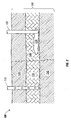
- a hydrocarbon recovery composition including an internal olefin sulfonate may be provided (e.g., injected) into hydrocarbon containing formation 100 through injection well 110 as depicted in FIG. 1 .
- Hydrocarbon formation 100 may include overburden 120, hydrocarbon layer 130, and underburden 140.
- Injection well 110 may include openings 112 that allow fluids to flow through hydrocarbon containing formation 100 at various depth levels.
- hydrocarbon layer 130 may be less than 1000 feet below earth's surface.
- underburden 140 of hydrocarbon containing formation 100 may be oil wet. Low salinity water may be present in hydrocarbon containing formation 100, in other embodiments.
- a hydrocarbon recovery composition may be provided to the formation in an amount based on hydrocarbons present in a hydrocarbon containing formation.
- the amount of hydrocarbon recovery composition may be too small to be accurately delivered to the hydrocarbon containing formation using known delivery techniques (e.g., pumps).
- the hydrocarbon recovery composition may be combined with water and/or brine to produce an injectable fluid.
- the hydrocarbon recovery composition is provided to the North Sea hydrocarbon containing formation by admixing it with brine from the formation from which hydrocarbons are to be extracted. The mixture is then injected into the hydrocarbon containing formation.
- the hydrocarbon recovery composition is provided to a hydrocarbon containing formation 100 by admixing it with brine from the formation.
- the hydrocarbon recovery composition comprises from about 0.01 to about 2.00 wt% of the total water and/or brine/hydrocarbon recovery composition mixture (the injectable fluid). More important is the amount of actual active matter that is present in the injectable fluid (active matter is the surfactant, here the C 15-18 internal olefin sulfonate).
- the amount of the internal olefin sulfonate in the injectable fluid may be from about 0.01 to about 1.0 wt%, preferably from about 0.2 to about 0.5 wt%.
- the injectable fluid is then injected into the hydrocarbon containing formation.
- the hydrocarbon recovery composition may interact with at least a portion of the hydrocarbons in hydrocarbon layer 130.
- the interaction of the hydrocarbon recovery composition with hydrocarbon layer 130 may reduce at least a portion of the interfacial tension between different hydrocarbons.
- the hydrocarbon recovery composition may also reduce at least a portion of the interfacial tension between one or more fluids (e.g., water, hydrocarbons) in the formation and the underburden 140, one or more fluids in the formation and the overburden 120 or combinations thereof.
- one or more fluids e.g., water, hydrocarbons
- a hydrocarbon recovery composition may interact with at least a portion of hydrocarbons and at least a portion of one or more other fluids in the formation to reduce at least a portion of the interfacial tension between the hydrocarbons and one or more fluids. Reduction of the interfacial tension may allow at least a portion of the hydrocarbons to form an emulsion with at least a portion of one or more fluids in the formation. An interfacial tension value between the hydrocarbons and one or more fluids may be altered by the hydrocarbon recovery composition to a value of less than about 0.1 ⁇ 10 -5 N/cm (dyne/cm).
- an interfacial tension value between the hydrocarbons and other fluids in a formation may be reduced by the hydrocarbon recovery composition to be less than about 0.05 ⁇ 10 -5 N/cm (dyne/cm).
- An interfacial tension value between hydrocarbons and other fluids in a formation may be lowered by the hydrocarbon recovery composition to less than 0.001 ⁇ 10 -5 N/cm (dyne/cm), in other embodiments.
- At least a portion of the hydrocarbon recovery composition/hydrocarbon/fluids mixture may be mobilized to production well 150.
- Products obtained from the production well 150 may include, but are not limited to, components of the hydrocarbon recovery composition (e.g., a long chain aliphatic alcohol and/or a long chain aliphatic acid salt), methane, carbon monoxide, water, hydrocarbons, ammonia, asphaltenes, or combinations thereof.
- Hydrocarbon production from hydrocarbon containing formation 100 may be increased by greater than about 50% after the hydrocarbon recovery composition has been added to a hydrocarbon containing formation.
- hydrocarbon containing formation 100 may be pretreated with a hydrocarbon removal fluid.
- a hydrocarbon removal fluid may be composed of-water, steam, brine, gas, liquid polymers, foam polymers, monomers or mixtures thereof.
- a hydrocarbon removal fluid may be used to treat a formation before a hydrocarbon recovery composition is provided to the formation.
- Hydrocarbon containing formation 100 may be less than 1000 feet below the earth's surface, in some embodiments.
- a hydrocarbon removal fluid may be heated before injection into a hydrocarbon containing formation 100, in certain embodiments.
- a hydrocarbon removal fluid may reduce a viscosity of at least a portion of the hydrocarbons within the formation.
- Reduction of the viscosity of at least a portion of the hydrocarbons in the formation may enhance mobilization of at least a portion of the hydrocarbons to production well 150.
- repeated injection of the same or different hydrocarbon removal fluids may become less effection in mobilizing hydrocarbons through the hydrocarbon containing formation.
- Low efficiency of mobilization may be due to hydrocarbon removal fluids creating more permeable zones in hydrocarbon containing formation 100.
- Hydrocarbon removal fluids may pass through the permeable zones in the hydrocarbon containing formation 100 and not interact with and mobilize the remaining hydrocarbons. Consequently, displacement of heavier hydrocarbons adsorbed to underburden 140 may be reduced over time. Eventually, the formation may be considered low producing or economically undesirable to produce hydrocarbons.
- injection of a hydrocarbon recovery composition after treating the hydrocarbon containing formation with a hydrocarbon removal fluid may enhance mobilization of heavier hydrocarbons absorbed to underburden 140.
- the hydrocarbon recovery composition may interact with the hydrocarbons to reduce an interfacial tension between the hydrocarbons and underburden 140. Reduction of the interfacial tension may be such that hydrocarbons are mobilized to and produced from production well 150.
- Produced hydrocarbons from production well 150 may include, in some embodiments, at least a portion of the components of the hydrocarbon recovery composition, the hydrocarbon removal fluid injected into the well for pretreatment, methane, carbon dioxide, ammonia, or combinations thereof.
- Adding the hydrocarbon recovery composition to at least a portion of a low producing hydrocarbon containing formation may extend the production life of the hydrocarbon containing formation.
- Hydrocarbon production from hydrocarbon containing formation 100 may be increased by greater than about 50% after the hydrocarbon recovery composition has been added to hydrocarbon containing formation. Increased hydrocarbon production may increase the economic viability of the hydrocarbon containing formation.
- Interaction of the hydrocarbon recovery composition with at least a portion of hydrocarbons in the formation may reduce at least a portion of an interfacial tension between the hydrocarbons and underburden 140. Reduction of at least a portion of the interfacial tension may mobilize at least a portion of hydrocarbons through hydrocarbon containing formation 100. Mobilization of at least a portion of hydrocarbons, however, may not be at an economically viable rate.
- polymers and/or monomers may be injected into hydrocarbon formation 100 through injection well 110, after treatment of the formation with a hydrocarbon recovery composition, to increase mobilization of at least a portion of the hydrocarbons through the formation.
- Suitable polymers include, but are not limited to, CIBA ® ALCOFLOOD ® , manufactured by Ciba Specialty Additives (Tarrytown, New York), Tramfloc ® manufactured by Tramfloc Inc. (Temple, Arizona), and HE ® polymers manufactured by Chevron Phillips Chemical Co. (The Woodlands, Texas). Interaction between the hydrocarbons, the hydrocarbon recovery composition and the polymer may increase mobilization of at least a portion of the hydrocarbons remaining in the formation to production well 150.
- the internal olefin sulfonate of the composition is thermally stable and may be used over a wide range of temperature.
- the hydrocarbon recovery composition may be added to a portion of a hydrocarbon containing formation 100 that has an average temperature of above about 70°C because of the high thermal stability of the internal olefin sulfonate.
- a hydrocarbon recovery composition may be combined with at least a portion of a hydrocarbon removal fluid (e.g. water, polymer solutions) to produce an injectable fluid.
- the hydrocarbon recovery composition may be injected into hydrocarbon containing formation 100 through injection well 110 as depicted in FIG. 2 .
- Interaction of the hydrocarbon recovery composition with hydrocarbons in the formation may reduce at least a portion of an interfacial tension between the hydrocarbons and underburden 140. Reduction of at least a portion of the interfacial tension may mobilize at least a portion of hydrocarbons to a selected section 160 in hydrocarbon containing formation 100 to form hydrocarbon pool 170. At least a portion of the hydrocarbons may be produced from hydrocarbon pool 170 in the selected section of hydrocarbon containing formation 100.
- mobilization of at least a portion of hydrocarbons to selected section 160 may not be at an economically viable rate.
- Polymers may be injected into hydrocarbon formation 100 to increase mobilization of at least a portion of the hydrocarbons through the formation. Interaction between at least a portion of the hydrocarbons, the hydrocarbon recovery composition and the polymers may increase mobilization of at least a portion of the hydrocarbons to production well 150.
- a hydrocarbon recovery composition may include an inorganic salt (e.g. sodium carbonate (Na 2 CO 3 ), sodium chloride (NaCl), or calcium chloride (CaCl 2 )).
- an inorganic salt e.g. sodium carbonate (Na 2 CO 3 ), sodium chloride (NaCl), or calcium chloride (CaCl 2 )
- the addition of the inorganic salt may help the hydrocarbon recovery composition disperse throughout a hydrocarbon/water mixture.
- the enhanced dispersion of the hydrocarbon recovery composition may decrease the interactions between the hydrocarbon and water interface. The decreased interaction may lower the interfacial tension of the mixture and provide a fluid that is more mobile.
- Hydrocarbon recovery compositions including a C 15-18 /C 20-24 internal olefin sulfonate blend and C 15-18 internal olefin sulfonate alone were prepared and interfacial tension measurements were compared for a the different compositions. These internal olefins were sulfonated and tested as described below.
- the C 20-24 internal olefins (made from alpha olefins) were a mixture of only even carbon number olefins and had an average carbon number of 20.7. 4-5% of the total olefins were C18 internal olefins (18 carbon atoms), 59-61% were C20, 29-31% were C22 and 3-8% were C24. 92% of the internal olefins had from 20 to 24 carbon atoms.
- the C 15-18 internal olefins were a mixture of odd and even carbon number olefins and had an average carbon number of 16.3.
- the C14 olefin was 1% of the total, C15 was 25%, C16 was 27%, C17 was 27%, C18 was 20% and C19 was ⁇ 1%. 96% of the internal olefins had from 15 to 18 carbon atoms.
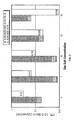
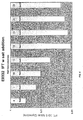
- compositions and interfacial tension measurements are tabulated in Figures 3 and 4 at various wt% salinities.
- the compositions were made by mixing the hydrocarbon recovery composition with brine at the desired salinity level to obtain a 0.2 wt% active solution.
- Interfacial tension values for the hydrocarbon/ hydrocarbon recovery composition/water mixtures were determined using University of Texas Spinning Drop Interfacial Tensiometer (UTSDIT) model 500.
- UTSDIT University of Texas Spinning Drop Interfacial Tensiometer
- a three microliter ( ⁇ L) drop of n-dodecane hydrocarbon was placed into a glass capillary tube that contained a hydrocarbon recovery composition/brine solution to provide a brine-to-hydrocarbon volume ratio of 400.
- the tube was placed into a spinning drop apparatus and then capped.
- the motor was turned on rapidly to rotate the tube to create a cylindrical drop within the tube (e.g. 6 to 12 ms/rev).
- the drop length may be greater than or equal to 4 times the width of a drop.
- the capillary tube and drop were heated to various temperatures (at and above 25, 50, 75 and 98°C).
- the drop was video taped for later replay for measurement of the drop dimensions and calculation of the interfacial tension between the drop and the composition/brine using an Optima® System.
- the time range of the measurements was from about 0.1 to about 1.0 hours to achieve drop equilibrium.
- the interfacial tension was reported in ⁇ 10 -5 N/cm (dynes/cm) as an average over an 80 minute test period.
- the C 20-24 IOS/C 15-18 IOS blend achieved low IFT (less than 0.1 ⁇ 10 -5 N/cm (dyne/cm)) up to about 13 wt% salinity at 90°C but the IFT was considerably above 0.1 ⁇ 10 -5 N/cm (dyne/cm) at 16 wt% whereas the C 15-18 internal olefin sulfonate of this invention achieved an considerably lower IFT at 16 wt%.
- Figure 4 shows that the C 15-18 internal olefin sulfonate of this invention gives an IFT of less than 0.1 ⁇ 10 -5 N/cm (dyne/cm) over a wide range of very high salinity - 13 to 25 wt%.
- the crude used for the examples depicted in Figure 4 was a North Sea crude from Norske Hydro.
- Example 2 Additional experiments were performed to measure the effects of contacting different hydrocarbons with a C 25-28 internal olefin sulfonate. These tests were performed differently than those in Example 1 and used phase behavior tests to determine the optimal salinity and solubilisation parameter for a surfactant/brine/oil combination. In these tests, optimal phase behavior was determined when the surfactant system upon mixing with the hydrocarbon resulted in three phases: an oil phase, an aqueous phase, and a middle phase. The middle phase is a micro-emulsion and contains most of the surfactant, and part of the oil and water.
- phase beahavior tests were carried out in certified pressure tubes in an oven at the desired temperature of 90 °C.
- the surfactants were dissolved or dispersed in a range of sodium chloride mixtures.
- the sodium chloride and surfactant mixture was mixed one to one (volume base) with the hydrocarbon and stored at 90 °C.
- the blends were allowed to come to equilibrium and the phase volumes were recorded.
- the interfacial tension was calculated using the simplified Chun-Huh relationship.
- SP water V water /V surfactant
- SP oil V oil /V surfactant .
- Optimal salinity corresponds to the salinity at which this Winsor III type of emulsion is formed, and this salinity corresponds to an interfacial tension minimum.
- the tests were conducted at 90 °C. The results are shown in Table 1.
Landscapes
- Chemical & Material Sciences (AREA)
- Oil, Petroleum & Natural Gas (AREA)
- Life Sciences & Earth Sciences (AREA)
- General Life Sciences & Earth Sciences (AREA)
- Engineering & Computer Science (AREA)
- Materials Engineering (AREA)
- Organic Chemistry (AREA)
- Production Of Liquid Hydrocarbon Mixture For Refining Petroleum (AREA)
- Organic Low-Molecular-Weight Compounds And Preparation Thereof (AREA)
Claims (5)
- Procédé de traitement d'une formation contenant des hydrocarbures à salinité élevée et à température élevée, comprenant :(a) la fourniture d'une composition de récupération d'hydrocarbures à au moins une partie d'une formation contenant des hydrocarbures, dans laquelle la formation présente une salinité de saumure supérieure à 13 % en poids et une température supérieure en 70 °C et dans lequel la composition comprend un sulfonate d'oléfine interne en C15 à C18, dans lequel ledit sulfonate d'oléfine interne en C15 à C18 signifie un mélange de sulfonates d'oléfine interne, dans lequel le mélange présente un nombre moyen de carbone allant de 16 à 17 et au moins 50 % en poids des sulfonates d'oléfine interne dans le mélange contiennent de 15 à 18 atomes de carbone ; et(b) le fait de laisser la composition interagir avec les hydrocarbures se trouvant dans la formation contenant des hydrocarbures.
- Procédé selon la revendication 1, dans lequel la formation présente une salinité de saumure supérieure à 14 % en poids.
- Procédé selon la revendication 1, dans lequel la formation présente une salinité de saumure supérieure à 15 % en poids.
- Procédé selon la revendication 1, dans lequel la formation présente une salinité de saumure de 16 % à 25 % en poids.
- Procédé selon la revendication 1, dans lequel la composition de récupération d'hydrocarbures est fournie à la formation contenant des hydrocarbures en la mélangeant tout d'abord avec de l'eau et/ou de la saumure provenant de la formation de laquelle des hydrocarbures doivent être extraits pour former un fluide injectable, dans lequel le sulfonate d'oléfine interne comprend de 0,01 % à 1,0 % en poids, de manière davantage préférée de 0,2 % à 0,5 % en poids du fluide injectable, puis en injectant le fluide injectable dans la formation.
Applications Claiming Priority (2)
| Application Number | Priority Date | Filing Date | Title |
|---|---|---|---|
| US16979509P | 2009-04-16 | 2009-04-16 | |
| PCT/US2010/030960 WO2010120833A1 (fr) | 2009-04-16 | 2010-04-14 | Procédé et composition pour une récupération améliorée d'hydrocarbures à partir d'une formation à haute température, à très haute salinité |
Publications (2)
| Publication Number | Publication Date |
|---|---|
| EP2419488A1 EP2419488A1 (fr) | 2012-02-22 |
| EP2419488B1 true EP2419488B1 (fr) | 2015-11-25 |
Family
ID=42272477
Family Applications (1)
| Application Number | Title | Priority Date | Filing Date |
|---|---|---|---|
| EP10715626.7A Not-in-force EP2419488B1 (fr) | 2009-04-16 | 2010-04-14 | Procédé et composition pour une récupération améliorée d'hydrocarbures à partir d'une formation à haute température, à très haute salinité |
Country Status (9)
| Country | Link |
|---|---|
| US (1) | US8940668B2 (fr) |
| EP (1) | EP2419488B1 (fr) |
| CN (1) | CN102449103B (fr) |
| BR (1) | BRPI1015185A2 (fr) |
| CA (1) | CA2758853C (fr) |
| EA (1) | EA023150B1 (fr) |
| MX (1) | MX2011010770A (fr) |
| MY (1) | MY158320A (fr) |
| WO (1) | WO2010120833A1 (fr) |
Families Citing this family (4)
| Publication number | Priority date | Publication date | Assignee | Title |
|---|---|---|---|---|
| US9448221B2 (en) * | 2011-05-18 | 2016-09-20 | Saudi Arabian Oil Company | Method, solvent formulation and apparatus for the measurement of the salt content in petroleum fluids |
| CN111545143A (zh) | 2015-04-09 | 2020-08-18 | 沙特阿拉伯石油公司 | 用于提高烃采收的胶囊型纳米组合物及其制备方法 |
| US10125307B2 (en) | 2016-01-13 | 2018-11-13 | Saudi Arabian Oil Company | Stabilization of petroleum surfactants for enhancing oil recovery |
| US11274241B2 (en) * | 2020-06-05 | 2022-03-15 | Saudi Arabian Oil Company | Anti-bit balling additive |
Family Cites Families (24)
| Publication number | Priority date | Publication date | Assignee | Title |
|---|---|---|---|---|
| JPS6059903B2 (ja) | 1977-08-25 | 1985-12-27 | ライオン株式会社 | 内部オレフインスルホン酸塩の製造法 |
| US4248793A (en) | 1979-09-26 | 1981-02-03 | The Lion Fat & Oil Co., Ltd. | Process for the production of internal olefin sulfonate |
| GB2111559B (en) | 1981-10-09 | 1985-07-31 | Lion Corp | Micellar slug for oil recovery |
| JPS58131295A (ja) * | 1982-01-28 | 1983-08-05 | ライオン株式会社 | 石油回収用ミセル溶液 |
| US4597879A (en) * | 1982-01-28 | 1986-07-01 | Lion Corporation | Micellar slug for oil recovery |
| JPS5915185A (ja) * | 1982-07-19 | 1984-01-26 | ライオン株式会社 | 石油回収用ミセル溶液 |
| GB2135713B (en) * | 1983-02-23 | 1986-10-22 | Lion Corp | Micellar slug for oil recovery |
| JPS59185286A (ja) * | 1983-04-04 | 1984-10-20 | ライオン株式会社 | 石油の回収方法 |
| JPS61136577A (ja) * | 1984-12-06 | 1986-06-24 | Lion Corp | 石油回収用流体 |
| US5068043A (en) | 1985-11-12 | 1991-11-26 | Shell Oil Company | Preformed surfactant-optimized aqueous alkaline flood |
| US4932473A (en) * | 1988-12-29 | 1990-06-12 | Shell Oil Company | Enhancing the salt tolerance of aqueous sulfonate surfactant solutions |
| US4979564A (en) * | 1989-01-31 | 1990-12-25 | The Standard Oil Company | Method of enhanced oil recovery using low tension viscous waterflood |
| US5103909A (en) | 1991-02-19 | 1992-04-14 | Shell Oil Company | Profile control in enhanced oil recovery |
| US5199490A (en) | 1991-11-18 | 1993-04-06 | Texaco Inc. | Formation treating |
| US5510306A (en) | 1993-12-29 | 1996-04-23 | Shell Oil Company | Process for isomerizing linear olefins to isoolefins |
| US5648585A (en) | 1993-12-29 | 1997-07-15 | Murray; Brendan Dermot | Process for isomerizing linear olefins to isoolefins |
| US5559263A (en) | 1994-11-16 | 1996-09-24 | Tiorco, Inc. | Aluminum citrate preparations and methods |
| DE69604176T2 (de) | 1995-06-07 | 2000-05-04 | Pq Corp., Valley Forge | Verfahren zur herstellung von ferrierit |
| US5849960A (en) | 1996-11-26 | 1998-12-15 | Shell Oil Company | Highly branched primary alcohol compositions, and biodegradable detergents made therefrom |
| CN1093589C (zh) | 1998-04-06 | 2002-10-30 | 大庆石油管理局 | 泡沫复合驱油方法 |
| US6427268B1 (en) | 2000-01-28 | 2002-08-06 | Dayle M. Davis | Unitary pillow sham |
| US7055602B2 (en) * | 2003-03-11 | 2006-06-06 | Shell Oil Company | Method and composition for enhanced hydrocarbons recovery |
| US7081437B2 (en) * | 2003-08-25 | 2006-07-25 | M-I L.L.C. | Environmentally compatible hydrocarbon blend drilling fluid |
| CA2672632A1 (fr) * | 2006-12-21 | 2008-07-03 | Shell Internationale Research Maatschappij B.V. | Procede et composition pour ameliorer la recuperation d'hydrocarbures |
-
2010
- 2010-04-14 MX MX2011010770A patent/MX2011010770A/es active IP Right Grant
- 2010-04-14 MY MYPI2011004881A patent/MY158320A/en unknown
- 2010-04-14 CA CA2758853A patent/CA2758853C/fr not_active Expired - Fee Related
- 2010-04-14 EP EP10715626.7A patent/EP2419488B1/fr not_active Not-in-force
- 2010-04-14 EA EA201171253A patent/EA023150B1/ru not_active IP Right Cessation
- 2010-04-14 US US13/264,172 patent/US8940668B2/en not_active Expired - Fee Related
- 2010-04-14 BR BRPI1015185A patent/BRPI1015185A2/pt active Search and Examination
- 2010-04-14 CN CN201080024047.1A patent/CN102449103B/zh not_active Expired - Fee Related
- 2010-04-14 WO PCT/US2010/030960 patent/WO2010120833A1/fr not_active Ceased
Also Published As
| Publication number | Publication date |
|---|---|
| US20120181025A1 (en) | 2012-07-19 |
| CN102449103B (zh) | 2013-11-06 |
| CA2758853A1 (fr) | 2010-10-21 |
| EA201171253A1 (ru) | 2012-05-30 |
| CN102449103A (zh) | 2012-05-09 |
| BRPI1015185A2 (pt) | 2017-10-03 |
| CA2758853C (fr) | 2017-09-19 |
| EA023150B1 (ru) | 2016-04-29 |
| US8940668B2 (en) | 2015-01-27 |
| EP2419488A1 (fr) | 2012-02-22 |
| MX2011010770A (es) | 2011-10-21 |
| MY158320A (en) | 2016-09-30 |
| WO2010120833A1 (fr) | 2010-10-21 |
Similar Documents
| Publication | Publication Date | Title |
|---|---|---|
| EP2250234B1 (fr) | Procédé et composition pour une récupération améliorée d'hydrocarbures | |
| EP2242815B1 (fr) | Procédé pour la récupération de pétrole | |
| CA2788840C (fr) | Procede et composition pour recuperation amelioree d'hydrocarbures | |
| EP2451890B1 (fr) | Procédé pour une récupération accrue de petrole à partir d'une formation contenant du pétrole brut avec des groupes de solubilité et des familles chimiques spécifiques | |
| EP2109649A1 (fr) | Procédé et composition pour améliorer la récupération d'hydrocarbures | |
| EP2419488B1 (fr) | Procédé et composition pour une récupération améliorée d'hydrocarbures à partir d'une formation à haute température, à très haute salinité | |
| US20170037297A1 (en) | Hydrocarbon recovery composition, method of preparation and use thereof | |
| EP2658946B1 (fr) | Procédé et composition pour une meilleure extraction des hydrocarbures dans une formation contenant du pétrole brut |
Legal Events
| Date | Code | Title | Description |
|---|---|---|---|
| PUAI | Public reference made under article 153(3) epc to a published international application that has entered the european phase |
Free format text: ORIGINAL CODE: 0009012 |
|
| 17P | Request for examination filed |
Effective date: 20111007 |
|
| AK | Designated contracting states |
Kind code of ref document: A1 Designated state(s): AT BE BG CH CY CZ DE DK EE ES FI FR GB GR HR HU IE IS IT LI LT LU LV MC MK MT NL NO PL PT RO SE SI SK SM TR |
|
| DAX | Request for extension of the european patent (deleted) | ||
| 17Q | First examination report despatched |
Effective date: 20131004 |
|
| GRAP | Despatch of communication of intention to grant a patent |
Free format text: ORIGINAL CODE: EPIDOSNIGR1 |
|
| GRAS | Grant fee paid |
Free format text: ORIGINAL CODE: EPIDOSNIGR3 |
|
| INTG | Intention to grant announced |
Effective date: 20150917 |
|
| GRAA | (expected) grant |
Free format text: ORIGINAL CODE: 0009210 |
|
| AK | Designated contracting states |
Kind code of ref document: B1 Designated state(s): AT BE BG CH CY CZ DE DK EE ES FI FR GB GR HR HU IE IS IT LI LT LU LV MC MK MT NL NO PL PT RO SE SI SK SM TR |
|
| REG | Reference to a national code |
Ref country code: GB Ref legal event code: FG4D |
|
| REG | Reference to a national code |
Ref country code: CH Ref legal event code: EP |
|
| REG | Reference to a national code |
Ref country code: AT Ref legal event code: REF Ref document number: 762591 Country of ref document: AT Kind code of ref document: T Effective date: 20151215 |
|
| REG | Reference to a national code |
Ref country code: IE Ref legal event code: FG4D |
|
| REG | Reference to a national code |
Ref country code: DE Ref legal event code: R096 Ref document number: 602010029168 Country of ref document: DE |
|
| REG | Reference to a national code |
Ref country code: NO Ref legal event code: T2 Effective date: 20151125 |
|
| REG | Reference to a national code |
Ref country code: LT Ref legal event code: MG4D |
|
| REG | Reference to a national code |
Ref country code: NL Ref legal event code: MP Effective date: 20160225 |
|
| REG | Reference to a national code |
Ref country code: AT Ref legal event code: MK05 Ref document number: 762591 Country of ref document: AT Kind code of ref document: T Effective date: 20151125 |
|
| PG25 | Lapsed in a contracting state [announced via postgrant information from national office to epo] |
Ref country code: ES Free format text: LAPSE BECAUSE OF FAILURE TO SUBMIT A TRANSLATION OF THE DESCRIPTION OR TO PAY THE FEE WITHIN THE PRESCRIBED TIME-LIMIT Effective date: 20151125 Ref country code: IS Free format text: LAPSE BECAUSE OF FAILURE TO SUBMIT A TRANSLATION OF THE DESCRIPTION OR TO PAY THE FEE WITHIN THE PRESCRIBED TIME-LIMIT Effective date: 20160325 Ref country code: HR Free format text: LAPSE BECAUSE OF FAILURE TO SUBMIT A TRANSLATION OF THE DESCRIPTION OR TO PAY THE FEE WITHIN THE PRESCRIBED TIME-LIMIT Effective date: 20151125 Ref country code: NL Free format text: LAPSE BECAUSE OF FAILURE TO SUBMIT A TRANSLATION OF THE DESCRIPTION OR TO PAY THE FEE WITHIN THE PRESCRIBED TIME-LIMIT Effective date: 20151125 Ref country code: LT Free format text: LAPSE BECAUSE OF FAILURE TO SUBMIT A TRANSLATION OF THE DESCRIPTION OR TO PAY THE FEE WITHIN THE PRESCRIBED TIME-LIMIT Effective date: 20151125 |
|
| PG25 | Lapsed in a contracting state [announced via postgrant information from national office to epo] |
Ref country code: PT Free format text: LAPSE BECAUSE OF FAILURE TO SUBMIT A TRANSLATION OF THE DESCRIPTION OR TO PAY THE FEE WITHIN THE PRESCRIBED TIME-LIMIT Effective date: 20160325 Ref country code: GR Free format text: LAPSE BECAUSE OF FAILURE TO SUBMIT A TRANSLATION OF THE DESCRIPTION OR TO PAY THE FEE WITHIN THE PRESCRIBED TIME-LIMIT Effective date: 20160226 Ref country code: FI Free format text: LAPSE BECAUSE OF FAILURE TO SUBMIT A TRANSLATION OF THE DESCRIPTION OR TO PAY THE FEE WITHIN THE PRESCRIBED TIME-LIMIT Effective date: 20151125 Ref country code: PL Free format text: LAPSE BECAUSE OF FAILURE TO SUBMIT A TRANSLATION OF THE DESCRIPTION OR TO PAY THE FEE WITHIN THE PRESCRIBED TIME-LIMIT Effective date: 20151125 Ref country code: AT Free format text: LAPSE BECAUSE OF FAILURE TO SUBMIT A TRANSLATION OF THE DESCRIPTION OR TO PAY THE FEE WITHIN THE PRESCRIBED TIME-LIMIT Effective date: 20151125 Ref country code: LV Free format text: LAPSE BECAUSE OF FAILURE TO SUBMIT A TRANSLATION OF THE DESCRIPTION OR TO PAY THE FEE WITHIN THE PRESCRIBED TIME-LIMIT Effective date: 20151125 Ref country code: SE Free format text: LAPSE BECAUSE OF FAILURE TO SUBMIT A TRANSLATION OF THE DESCRIPTION OR TO PAY THE FEE WITHIN THE PRESCRIBED TIME-LIMIT Effective date: 20151125 |
|
| PG25 | Lapsed in a contracting state [announced via postgrant information from national office to epo] |
Ref country code: CZ Free format text: LAPSE BECAUSE OF FAILURE TO SUBMIT A TRANSLATION OF THE DESCRIPTION OR TO PAY THE FEE WITHIN THE PRESCRIBED TIME-LIMIT Effective date: 20151125 Ref country code: IT Free format text: LAPSE BECAUSE OF FAILURE TO SUBMIT A TRANSLATION OF THE DESCRIPTION OR TO PAY THE FEE WITHIN THE PRESCRIBED TIME-LIMIT Effective date: 20151125 |
|
| REG | Reference to a national code |
Ref country code: DE Ref legal event code: R097 Ref document number: 602010029168 Country of ref document: DE |
|
| PG25 | Lapsed in a contracting state [announced via postgrant information from national office to epo] |
Ref country code: EE Free format text: LAPSE BECAUSE OF FAILURE TO SUBMIT A TRANSLATION OF THE DESCRIPTION OR TO PAY THE FEE WITHIN THE PRESCRIBED TIME-LIMIT Effective date: 20151125 Ref country code: DK Free format text: LAPSE BECAUSE OF FAILURE TO SUBMIT A TRANSLATION OF THE DESCRIPTION OR TO PAY THE FEE WITHIN THE PRESCRIBED TIME-LIMIT Effective date: 20151125 Ref country code: SM Free format text: LAPSE BECAUSE OF FAILURE TO SUBMIT A TRANSLATION OF THE DESCRIPTION OR TO PAY THE FEE WITHIN THE PRESCRIBED TIME-LIMIT Effective date: 20151125 Ref country code: SK Free format text: LAPSE BECAUSE OF FAILURE TO SUBMIT A TRANSLATION OF THE DESCRIPTION OR TO PAY THE FEE WITHIN THE PRESCRIBED TIME-LIMIT Effective date: 20151125 Ref country code: BE Free format text: LAPSE BECAUSE OF NON-PAYMENT OF DUE FEES Effective date: 20160430 Ref country code: RO Free format text: LAPSE BECAUSE OF FAILURE TO SUBMIT A TRANSLATION OF THE DESCRIPTION OR TO PAY THE FEE WITHIN THE PRESCRIBED TIME-LIMIT Effective date: 20151125 |
|
| PLBE | No opposition filed within time limit |
Free format text: ORIGINAL CODE: 0009261 |
|
| STAA | Information on the status of an ep patent application or granted ep patent |
Free format text: STATUS: NO OPPOSITION FILED WITHIN TIME LIMIT |
|
| REG | Reference to a national code |
Ref country code: DE Ref legal event code: R119 Ref document number: 602010029168 Country of ref document: DE |
|
| 26N | No opposition filed |
Effective date: 20160826 |
|
| PG25 | Lapsed in a contracting state [announced via postgrant information from national office to epo] |
Ref country code: SI Free format text: LAPSE BECAUSE OF FAILURE TO SUBMIT A TRANSLATION OF THE DESCRIPTION OR TO PAY THE FEE WITHIN THE PRESCRIBED TIME-LIMIT Effective date: 20151125 |
|
| REG | Reference to a national code |
Ref country code: CH Ref legal event code: PL |
|
| PG25 | Lapsed in a contracting state [announced via postgrant information from national office to epo] |
Ref country code: LU Free format text: LAPSE BECAUSE OF FAILURE TO SUBMIT A TRANSLATION OF THE DESCRIPTION OR TO PAY THE FEE WITHIN THE PRESCRIBED TIME-LIMIT Effective date: 20160414 Ref country code: BE Free format text: LAPSE BECAUSE OF FAILURE TO SUBMIT A TRANSLATION OF THE DESCRIPTION OR TO PAY THE FEE WITHIN THE PRESCRIBED TIME-LIMIT Effective date: 20151125 |
|
| REG | Reference to a national code |
Ref country code: IE Ref legal event code: MM4A |
|
| REG | Reference to a national code |
Ref country code: FR Ref legal event code: ST Effective date: 20161230 |
|
| PG25 | Lapsed in a contracting state [announced via postgrant information from national office to epo] |
Ref country code: CH Free format text: LAPSE BECAUSE OF NON-PAYMENT OF DUE FEES Effective date: 20160430 Ref country code: LI Free format text: LAPSE BECAUSE OF NON-PAYMENT OF DUE FEES Effective date: 20160430 Ref country code: FR Free format text: LAPSE BECAUSE OF NON-PAYMENT OF DUE FEES Effective date: 20160502 Ref country code: DE Free format text: LAPSE BECAUSE OF NON-PAYMENT OF DUE FEES Effective date: 20161101 |
|
| PG25 | Lapsed in a contracting state [announced via postgrant information from national office to epo] |
Ref country code: IE Free format text: LAPSE BECAUSE OF NON-PAYMENT OF DUE FEES Effective date: 20160414 |
|
| PG25 | Lapsed in a contracting state [announced via postgrant information from national office to epo] |
Ref country code: CY Free format text: LAPSE BECAUSE OF FAILURE TO SUBMIT A TRANSLATION OF THE DESCRIPTION OR TO PAY THE FEE WITHIN THE PRESCRIBED TIME-LIMIT Effective date: 20151125 Ref country code: HU Free format text: LAPSE BECAUSE OF FAILURE TO SUBMIT A TRANSLATION OF THE DESCRIPTION OR TO PAY THE FEE WITHIN THE PRESCRIBED TIME-LIMIT; INVALID AB INITIO Effective date: 20100414 |
|
| PG25 | Lapsed in a contracting state [announced via postgrant information from national office to epo] |
Ref country code: MK Free format text: LAPSE BECAUSE OF FAILURE TO SUBMIT A TRANSLATION OF THE DESCRIPTION OR TO PAY THE FEE WITHIN THE PRESCRIBED TIME-LIMIT Effective date: 20151125 Ref country code: MC Free format text: LAPSE BECAUSE OF FAILURE TO SUBMIT A TRANSLATION OF THE DESCRIPTION OR TO PAY THE FEE WITHIN THE PRESCRIBED TIME-LIMIT Effective date: 20151125 Ref country code: TR Free format text: LAPSE BECAUSE OF FAILURE TO SUBMIT A TRANSLATION OF THE DESCRIPTION OR TO PAY THE FEE WITHIN THE PRESCRIBED TIME-LIMIT Effective date: 20151125 Ref country code: MT Free format text: LAPSE BECAUSE OF NON-PAYMENT OF DUE FEES Effective date: 20160430 |
|
| PG25 | Lapsed in a contracting state [announced via postgrant information from national office to epo] |
Ref country code: BG Free format text: LAPSE BECAUSE OF FAILURE TO SUBMIT A TRANSLATION OF THE DESCRIPTION OR TO PAY THE FEE WITHIN THE PRESCRIBED TIME-LIMIT Effective date: 20151125 |
|
| PGFP | Annual fee paid to national office [announced via postgrant information from national office to epo] |
Ref country code: NO Payment date: 20190409 Year of fee payment: 10 |
|
| PGFP | Annual fee paid to national office [announced via postgrant information from national office to epo] |
Ref country code: GB Payment date: 20190410 Year of fee payment: 10 |
|
| REG | Reference to a national code |
Ref country code: NO Ref legal event code: MMEP |
|
| PG25 | Lapsed in a contracting state [announced via postgrant information from national office to epo] |
Ref country code: NO Free format text: LAPSE BECAUSE OF NON-PAYMENT OF DUE FEES Effective date: 20200430 |
|
| GBPC | Gb: european patent ceased through non-payment of renewal fee |
Effective date: 20200414 |
|
| PG25 | Lapsed in a contracting state [announced via postgrant information from national office to epo] |
Ref country code: GB Free format text: LAPSE BECAUSE OF NON-PAYMENT OF DUE FEES Effective date: 20200414 |