EP2421889B1 - Régulateurs intervenant dans la formation des champignons - Google Patents
Régulateurs intervenant dans la formation des champignons Download PDFInfo
- Publication number
- EP2421889B1 EP2421889B1 EP10717314.8A EP10717314A EP2421889B1 EP 2421889 B1 EP2421889 B1 EP 2421889B1 EP 10717314 A EP10717314 A EP 10717314A EP 2421889 B1 EP2421889 B1 EP 2421889B1
- Authority
- EP
- European Patent Office
- Prior art keywords
- mushroom
- polypeptide
- fungus
- amino acid
- seq
- Prior art date
- Legal status (The legal status is an assumption and is not a legal conclusion. Google has not performed a legal analysis and makes no representation as to the accuracy of the status listed.)
- Not-in-force
Links
- 235000001674 Agaricus brunnescens Nutrition 0.000 title claims description 259
- 230000015572 biosynthetic process Effects 0.000 title claims description 22
- 108090000765 processed proteins & peptides Proteins 0.000 claims description 190
- 229920001184 polypeptide Polymers 0.000 claims description 189
- 102000004196 processed proteins & peptides Human genes 0.000 claims description 189
- 241000233866 Fungi Species 0.000 claims description 152
- 230000014509 gene expression Effects 0.000 claims description 90
- 150000001413 amino acids Chemical class 0.000 claims description 63
- 125000003729 nucleotide group Chemical group 0.000 claims description 61
- 239000002773 nucleotide Substances 0.000 claims description 60
- 238000004519 manufacturing process Methods 0.000 claims description 55
- 230000000694 effects Effects 0.000 claims description 50
- 238000000034 method Methods 0.000 claims description 38
- 150000007523 nucleic acids Chemical class 0.000 claims description 38
- 230000001965 increasing effect Effects 0.000 claims description 34
- 102000039446 nucleic acids Human genes 0.000 claims description 34
- 108020004707 nucleic acids Proteins 0.000 claims description 34
- 230000003247 decreasing effect Effects 0.000 claims description 28
- 239000000126 substance Substances 0.000 claims description 17
- 241000221198 Basidiomycota Species 0.000 claims description 9
- 241000222485 Agaricales Species 0.000 claims description 4
- 241000235349 Ascomycota Species 0.000 claims description 3
- 125000003275 alpha amino acid group Chemical group 0.000 claims 6
- 108090000623 proteins and genes Proteins 0.000 description 91
- 102000004169 proteins and genes Human genes 0.000 description 44
- 241000222481 Schizophyllum commune Species 0.000 description 41
- 108091023040 Transcription factor Proteins 0.000 description 41
- 235000018102 proteins Nutrition 0.000 description 41
- 102000040945 Transcription factor Human genes 0.000 description 35
- 235000001014 amino acid Nutrition 0.000 description 31
- 229940024606 amino acid Drugs 0.000 description 29
- 210000004027 cell Anatomy 0.000 description 20
- 244000251987 Coprinus macrorhizus Species 0.000 description 17
- 230000002538 fungal effect Effects 0.000 description 14
- 230000002779 inactivation Effects 0.000 description 13
- 230000013011 mating Effects 0.000 description 13
- 230000000875 corresponding effect Effects 0.000 description 11
- 230000018109 developmental process Effects 0.000 description 10
- 230000001105 regulatory effect Effects 0.000 description 10
- 244000251953 Agaricus brunnescens Species 0.000 description 9
- 241000775360 Lomatium bicolor Species 0.000 description 9
- 238000011161 development Methods 0.000 description 9
- 239000013604 expression vector Substances 0.000 description 8
- 230000035772 mutation Effects 0.000 description 7
- 230000002103 transcriptional effect Effects 0.000 description 7
- 239000013598 vector Substances 0.000 description 7
- ROHFNLRQFUQHCH-YFKPBYRVSA-N L-leucine Chemical compound CC(C)C[C@H](N)C(O)=O ROHFNLRQFUQHCH-YFKPBYRVSA-N 0.000 description 6
- 101150064359 SLC6A1 gene Proteins 0.000 description 6
- 241000222480 Schizophyllum Species 0.000 description 6
- 238000003556 assay Methods 0.000 description 6
- 239000000758 substrate Substances 0.000 description 6
- MTCFGRXMJLQNBG-REOHCLBHSA-N (2S)-2-Amino-3-hydroxypropansäure Chemical compound OC[C@H](N)C(O)=O MTCFGRXMJLQNBG-REOHCLBHSA-N 0.000 description 5
- 108091032973 (ribonucleotides)n+m Proteins 0.000 description 5
- ZDXPYRJPNDTMRX-VKHMYHEASA-N L-glutamine Chemical compound OC(=O)[C@@H](N)CCC(N)=O ZDXPYRJPNDTMRX-VKHMYHEASA-N 0.000 description 5
- AGPKZVBTJJNPAG-WHFBIAKZSA-N L-isoleucine Chemical compound CC[C@H](C)[C@H](N)C(O)=O AGPKZVBTJJNPAG-WHFBIAKZSA-N 0.000 description 5
- 108091028043 Nucleic acid sequence Proteins 0.000 description 5
- 108091005461 Nucleic proteins Proteins 0.000 description 5
- 230000008859 change Effects 0.000 description 5
- 238000012217 deletion Methods 0.000 description 5
- 230000037430 deletion Effects 0.000 description 5
- 235000013305 food Nutrition 0.000 description 5
- 230000033937 fruiting body development Effects 0.000 description 5
- 230000006870 function Effects 0.000 description 5
- 239000003550 marker Substances 0.000 description 5
- 108020004999 messenger RNA Proteins 0.000 description 5
- 210000004940 nucleus Anatomy 0.000 description 5
- 241000894007 species Species 0.000 description 5
- 238000013518 transcription Methods 0.000 description 5
- 230000035897 transcription Effects 0.000 description 5
- 235000001673 Coprinus macrorhizus Nutrition 0.000 description 4
- 108020004414 DNA Proteins 0.000 description 4
- DCXYFEDJOCDNAF-REOHCLBHSA-N L-asparagine Chemical compound OC(=O)[C@@H](N)CC(N)=O DCXYFEDJOCDNAF-REOHCLBHSA-N 0.000 description 4
- OUYCCCASQSFEME-QMMMGPOBSA-N L-tyrosine Chemical compound OC(=O)[C@@H](N)CC1=CC=C(O)C=C1 OUYCCCASQSFEME-QMMMGPOBSA-N 0.000 description 4
- 108700009124 Transcription Initiation Site Proteins 0.000 description 4
- KZSNJWFQEVHDMF-UHFFFAOYSA-N Valine Natural products CC(C)C(N)C(O)=O KZSNJWFQEVHDMF-UHFFFAOYSA-N 0.000 description 4
- NRAUADCLPJTGSF-ZPGVOIKOSA-N [(2r,3s,4r,5r,6r)-6-[[(3as,7r,7as)-7-hydroxy-4-oxo-1,3a,5,6,7,7a-hexahydroimidazo[4,5-c]pyridin-2-yl]amino]-5-[[(3s)-3,6-diaminohexanoyl]amino]-4-hydroxy-2-(hydroxymethyl)oxan-3-yl] carbamate Chemical compound NCCC[C@H](N)CC(=O)N[C@@H]1[C@@H](O)[C@H](OC(N)=O)[C@@H](CO)O[C@H]1\N=C/1N[C@H](C(=O)NC[C@H]2O)[C@@H]2N\1 NRAUADCLPJTGSF-ZPGVOIKOSA-N 0.000 description 4
- 238000004458 analytical method Methods 0.000 description 4
- 230000027455 binding Effects 0.000 description 4
- 238000009395 breeding Methods 0.000 description 4
- 230000001488 breeding effect Effects 0.000 description 4
- 230000001747 exhibiting effect Effects 0.000 description 4
- 230000012010 growth Effects 0.000 description 4
- 238000006467 substitution reaction Methods 0.000 description 4
- 230000009466 transformation Effects 0.000 description 4
- 108091026890 Coding region Proteins 0.000 description 3
- DHMQDGOQFOQNFH-UHFFFAOYSA-N Glycine Chemical compound NCC(O)=O DHMQDGOQFOQNFH-UHFFFAOYSA-N 0.000 description 3
- 102000009331 Homeodomain Proteins Human genes 0.000 description 3
- 108010048671 Homeodomain Proteins Proteins 0.000 description 3
- KDXKERNSBIXSRK-YFKPBYRVSA-N L-lysine Chemical compound NCCCC[C@H](N)C(O)=O KDXKERNSBIXSRK-YFKPBYRVSA-N 0.000 description 3
- COLNVLDHVKWLRT-QMMMGPOBSA-N L-phenylalanine Chemical compound OC(=O)[C@@H](N)CC1=CC=CC=C1 COLNVLDHVKWLRT-QMMMGPOBSA-N 0.000 description 3
- AYFVYJQAPQTCCC-GBXIJSLDSA-N L-threonine Chemical compound C[C@@H](O)[C@H](N)C(O)=O AYFVYJQAPQTCCC-GBXIJSLDSA-N 0.000 description 3
- 241001149420 Laccaria bicolor Species 0.000 description 3
- KDXKERNSBIXSRK-UHFFFAOYSA-N Lysine Natural products NCCCCC(N)C(O)=O KDXKERNSBIXSRK-UHFFFAOYSA-N 0.000 description 3
- 108091030071 RNAI Proteins 0.000 description 3
- 108700005075 Regulator Genes Proteins 0.000 description 3
- 230000003115 biocidal effect Effects 0.000 description 3
- 230000033228 biological regulation Effects 0.000 description 3
- 230000007423 decrease Effects 0.000 description 3
- 230000007613 environmental effect Effects 0.000 description 3
- 230000009368 gene silencing by RNA Effects 0.000 description 3
- 210000002816 gill Anatomy 0.000 description 3
- 230000000415 inactivating effect Effects 0.000 description 3
- 230000000977 initiatory effect Effects 0.000 description 3
- 230000024001 sorocarp development Effects 0.000 description 3
- QRBLKGHRWFGINE-UGWAGOLRSA-N 2-[2-[2-[[2-[[4-[[2-[[6-amino-2-[3-amino-1-[(2,3-diamino-3-oxopropyl)amino]-3-oxopropyl]-5-methylpyrimidine-4-carbonyl]amino]-3-[(2r,3s,4s,5s,6s)-3-[(2s,3r,4r,5s)-4-carbamoyl-3,4,5-trihydroxy-6-(hydroxymethyl)oxan-2-yl]oxy-4,5-dihydroxy-6-(hydroxymethyl)- Chemical compound N=1C(C=2SC=C(N=2)C(N)=O)CSC=1CCNC(=O)C(C(C)=O)NC(=O)C(C)C(O)C(C)NC(=O)C(C(O[C@H]1[C@@]([C@@H](O)[C@H](O)[C@H](CO)O1)(C)O[C@H]1[C@@H]([C@](O)([C@@H](O)C(CO)O1)C(N)=O)O)C=1NC=NC=1)NC(=O)C1=NC(C(CC(N)=O)NCC(N)C(N)=O)=NC(N)=C1C QRBLKGHRWFGINE-UGWAGOLRSA-N 0.000 description 2
- 108700028369 Alleles Proteins 0.000 description 2
- 239000004475 Arginine Substances 0.000 description 2
- 241000228245 Aspergillus niger Species 0.000 description 2
- 201000007336 Cryptococcosis Diseases 0.000 description 2
- 241000221204 Cryptococcus neoformans Species 0.000 description 2
- 230000004568 DNA-binding Effects 0.000 description 2
- XUJNEKJLAYXESH-REOHCLBHSA-N L-Cysteine Chemical compound SC[C@H](N)C(O)=O XUJNEKJLAYXESH-REOHCLBHSA-N 0.000 description 2
- 238000000636 Northern blotting Methods 0.000 description 2
- LTQCLFMNABRKSH-UHFFFAOYSA-N Phleomycin Natural products N=1C(C=2SC=C(N=2)C(N)=O)CSC=1CCNC(=O)C(C(O)C)NC(=O)C(C)C(O)C(C)NC(=O)C(C(OC1C(C(O)C(O)C(CO)O1)OC1C(C(OC(N)=O)C(O)C(CO)O1)O)C=1NC=NC=1)NC(=O)C1=NC(C(CC(N)=O)NCC(N)C(N)=O)=NC(N)=C1C LTQCLFMNABRKSH-UHFFFAOYSA-N 0.000 description 2
- 108010035235 Phleomycins Proteins 0.000 description 2
- 240000001462 Pleurotus ostreatus Species 0.000 description 2
- 235000001603 Pleurotus ostreatus Nutrition 0.000 description 2
- 238000012300 Sequence Analysis Methods 0.000 description 2
- HCHKCACWOHOZIP-UHFFFAOYSA-N Zinc Chemical compound [Zn] HCHKCACWOHOZIP-UHFFFAOYSA-N 0.000 description 2
- 230000001580 bacterial effect Effects 0.000 description 2
- 238000012512 characterization method Methods 0.000 description 2
- 238000010367 cloning Methods 0.000 description 2
- 238000004590 computer program Methods 0.000 description 2
- 238000007796 conventional method Methods 0.000 description 2
- 230000004069 differentiation Effects 0.000 description 2
- 238000012224 gene deletion Methods 0.000 description 2
- 230000010354 integration Effects 0.000 description 2
- 229960000310 isoleucine Drugs 0.000 description 2
- 239000011159 matrix material Substances 0.000 description 2
- 230000002018 overexpression Effects 0.000 description 2
- 239000003016 pheromone Substances 0.000 description 2
- 230000008569 process Effects 0.000 description 2
- 108020001580 protein domains Proteins 0.000 description 2
- 108020003175 receptors Proteins 0.000 description 2
- 230000008929 regeneration Effects 0.000 description 2
- 238000011069 regeneration method Methods 0.000 description 2
- 238000012552 review Methods 0.000 description 2
- 230000001568 sexual effect Effects 0.000 description 2
- 210000001519 tissue Anatomy 0.000 description 2
- 239000004474 valine Substances 0.000 description 2
- 238000001262 western blot Methods 0.000 description 2
- 239000011701 zinc Substances 0.000 description 2
- 229910052725 zinc Inorganic materials 0.000 description 2
- BEJKOYIMCGMNRB-GRHHLOCNSA-N (2s)-2-amino-3-(4-hydroxyphenyl)propanoic acid;(2s)-2-amino-3-phenylpropanoic acid Chemical compound OC(=O)[C@@H](N)CC1=CC=CC=C1.OC(=O)[C@@H](N)CC1=CC=C(O)C=C1 BEJKOYIMCGMNRB-GRHHLOCNSA-N 0.000 description 1
- IAHOUQOWMXVMEH-UHFFFAOYSA-N 2,4,6-trinitroaniline Chemical compound NC1=C([N+]([O-])=O)C=C([N+]([O-])=O)C=C1[N+]([O-])=O IAHOUQOWMXVMEH-UHFFFAOYSA-N 0.000 description 1
- 108020005345 3' Untranslated Regions Proteins 0.000 description 1
- 108020003589 5' Untranslated Regions Proteins 0.000 description 1
- 241000009794 Agaricomycetes Species 0.000 description 1
- 241000222518 Agaricus Species 0.000 description 1
- 241000404030 Anacyclus clavatus Species 0.000 description 1
- DCXYFEDJOCDNAF-UHFFFAOYSA-N Asparagine Natural products OC(=O)C(N)CC(N)=O DCXYFEDJOCDNAF-UHFFFAOYSA-N 0.000 description 1
- 101001017206 Coxiella burnetii (strain RSA 493 / Nine Mile phase I) Histone-like protein Hq1 Proteins 0.000 description 1
- 102000004163 DNA-directed RNA polymerases Human genes 0.000 description 1
- 108090000626 DNA-directed RNA polymerases Proteins 0.000 description 1
- 101000953091 Enterobacteria phage P4 Uncharacterized protein ORF88 Proteins 0.000 description 1
- 239000004471 Glycine Substances 0.000 description 1
- 108091092195 Intron Proteins 0.000 description 1
- QNAYBMKLOCPYGJ-REOHCLBHSA-N L-alanine Chemical compound C[C@H](N)C(O)=O QNAYBMKLOCPYGJ-REOHCLBHSA-N 0.000 description 1
- ODKSFYDXXFIFQN-BYPYZUCNSA-P L-argininium(2+) Chemical compound NC(=[NH2+])NCCC[C@H]([NH3+])C(O)=O ODKSFYDXXFIFQN-BYPYZUCNSA-P 0.000 description 1
- HNDVDQJCIGZPNO-YFKPBYRVSA-N L-histidine Chemical compound OC(=O)[C@@H](N)CC1=CN=CN1 HNDVDQJCIGZPNO-YFKPBYRVSA-N 0.000 description 1
- FFEARJCKVFRZRR-BYPYZUCNSA-N L-methionine Chemical compound CSCC[C@H](N)C(O)=O FFEARJCKVFRZRR-BYPYZUCNSA-N 0.000 description 1
- 125000000393 L-methionino group Chemical group [H]OC(=O)[C@@]([H])(N([H])[*])C([H])([H])C(SC([H])([H])[H])([H])[H] 0.000 description 1
- QIVBCDIJIAJPQS-VIFPVBQESA-N L-tryptophane Chemical compound C1=CC=C2C(C[C@H](N)C(O)=O)=CNC2=C1 QIVBCDIJIAJPQS-VIFPVBQESA-N 0.000 description 1
- KZSNJWFQEVHDMF-BYPYZUCNSA-N L-valine Chemical compound CC(C)[C@H](N)C(O)=O KZSNJWFQEVHDMF-BYPYZUCNSA-N 0.000 description 1
- 241000446313 Lamella Species 0.000 description 1
- 240000000599 Lentinula edodes Species 0.000 description 1
- 235000001715 Lentinula edodes Nutrition 0.000 description 1
- ROHFNLRQFUQHCH-UHFFFAOYSA-N Leucine Natural products CC(C)CC(N)C(O)=O ROHFNLRQFUQHCH-UHFFFAOYSA-N 0.000 description 1
- 239000004472 Lysine Substances 0.000 description 1
- 241001344131 Magnaporthe grisea Species 0.000 description 1
- 241000133231 Marshallia caespitosa Species 0.000 description 1
- 240000002769 Morchella esculenta Species 0.000 description 1
- 235000002779 Morchella esculenta Nutrition 0.000 description 1
- 101001034830 Mus musculus Interferon-induced transmembrane protein 5 Proteins 0.000 description 1
- 241000221961 Neurospora crassa Species 0.000 description 1
- 108010038807 Oligopeptides Proteins 0.000 description 1
- 102000015636 Oligopeptides Human genes 0.000 description 1
- 241001313695 Phallus impudicus Species 0.000 description 1
- 241000222393 Phanerochaete chrysosporium Species 0.000 description 1
- 241000227425 Pieris rapae crucivora Species 0.000 description 1
- 235000007685 Pleurotus columbinus Nutrition 0.000 description 1
- 108020004511 Recombinant DNA Proteins 0.000 description 1
- 108010034634 Repressor Proteins Proteins 0.000 description 1
- 240000004808 Saccharomyces cerevisiae Species 0.000 description 1
- 241000222479 Schizophyllaceae Species 0.000 description 1
- 241000576755 Sclerotia Species 0.000 description 1
- MTCFGRXMJLQNBG-UHFFFAOYSA-N Serine Natural products OCC(N)C(O)=O MTCFGRXMJLQNBG-UHFFFAOYSA-N 0.000 description 1
- 101710172711 Structural protein Proteins 0.000 description 1
- NINIDFKCEFEMDL-UHFFFAOYSA-N Sulfur Chemical compound [S] NINIDFKCEFEMDL-UHFFFAOYSA-N 0.000 description 1
- 239000005864 Sulphur Substances 0.000 description 1
- AYFVYJQAPQTCCC-UHFFFAOYSA-N Threonine Natural products CC(O)C(N)C(O)=O AYFVYJQAPQTCCC-UHFFFAOYSA-N 0.000 description 1
- 239000004473 Threonine Substances 0.000 description 1
- 241000383675 Trama Species 0.000 description 1
- 241000222645 Trametes cinnabarina Species 0.000 description 1
- 230000010632 Transcription Factor Activity Effects 0.000 description 1
- QIVBCDIJIAJPQS-UHFFFAOYSA-N Tryptophan Natural products C1=CC=C2C(CC(N)C(O)=O)=CNC2=C1 QIVBCDIJIAJPQS-UHFFFAOYSA-N 0.000 description 1
- 244000301083 Ustilago maydis Species 0.000 description 1
- 235000015919 Ustilago maydis Nutrition 0.000 description 1
- 239000002253 acid Substances 0.000 description 1
- 239000012190 activator Substances 0.000 description 1
- 108091006088 activator proteins Proteins 0.000 description 1
- 235000004279 alanine Nutrition 0.000 description 1
- 125000001931 aliphatic group Chemical group 0.000 description 1
- 150000001408 amides Chemical class 0.000 description 1
- 238000013459 approach Methods 0.000 description 1
- ODKSFYDXXFIFQN-UHFFFAOYSA-N arginine Natural products OC(=O)C(N)CCCNC(N)=N ODKSFYDXXFIFQN-UHFFFAOYSA-N 0.000 description 1
- 125000003118 aryl group Chemical group 0.000 description 1
- 229960001230 asparagine Drugs 0.000 description 1
- 235000009582 asparagine Nutrition 0.000 description 1
- 150000001720 carbohydrates Chemical class 0.000 description 1
- 230000024245 cell differentiation Effects 0.000 description 1
- 230000033077 cellular process Effects 0.000 description 1
- 210000000349 chromosome Anatomy 0.000 description 1
- 150000001875 compounds Chemical class 0.000 description 1
- 230000021615 conjugation Effects 0.000 description 1
- 238000012258 culturing Methods 0.000 description 1
- 235000018417 cysteine Nutrition 0.000 description 1
- XUJNEKJLAYXESH-UHFFFAOYSA-N cysteine Natural products SCC(N)C(O)=O XUJNEKJLAYXESH-UHFFFAOYSA-N 0.000 description 1
- 230000001419 dependent effect Effects 0.000 description 1
- 238000001514 detection method Methods 0.000 description 1
- 230000029087 digestion Effects 0.000 description 1
- 230000002222 downregulating effect Effects 0.000 description 1
- 230000003828 downregulation Effects 0.000 description 1
- 239000003814 drug Substances 0.000 description 1
- 235000013399 edible fruits Nutrition 0.000 description 1
- 238000010195 expression analysis Methods 0.000 description 1
- 230000004927 fusion Effects 0.000 description 1
- 238000012239 gene modification Methods 0.000 description 1
- 102000034356 gene-regulatory proteins Human genes 0.000 description 1
- 108091006104 gene-regulatory proteins Proteins 0.000 description 1
- 230000002068 genetic effect Effects 0.000 description 1
- 230000005017 genetic modification Effects 0.000 description 1
- 235000013617 genetically modified food Nutrition 0.000 description 1
- 230000035784 germination Effects 0.000 description 1
- ZDXPYRJPNDTMRX-UHFFFAOYSA-N glutamine Natural products OC(=O)C(N)CCC(N)=O ZDXPYRJPNDTMRX-UHFFFAOYSA-N 0.000 description 1
- 102000006602 glyceraldehyde-3-phosphate dehydrogenase Human genes 0.000 description 1
- 108020004445 glyceraldehyde-3-phosphate dehydrogenase Proteins 0.000 description 1
- 239000004461 grass silage Substances 0.000 description 1
- 239000011121 hardwood Substances 0.000 description 1
- HNDVDQJCIGZPNO-UHFFFAOYSA-N histidine Natural products OC(=O)C(N)CC1=CN=CN1 HNDVDQJCIGZPNO-UHFFFAOYSA-N 0.000 description 1
- 238000002744 homologous recombination Methods 0.000 description 1
- 230000006801 homologous recombination Effects 0.000 description 1
- 230000006872 improvement Effects 0.000 description 1
- -1 inactivation Proteins 0.000 description 1
- 230000001939 inductive effect Effects 0.000 description 1
- 239000002054 inoculum Substances 0.000 description 1
- 230000006799 invasive growth in response to glucose limitation Effects 0.000 description 1
- AGPKZVBTJJNPAG-UHFFFAOYSA-N isoleucine Natural products CCC(C)C(N)C(O)=O AGPKZVBTJJNPAG-UHFFFAOYSA-N 0.000 description 1
- 230000007246 mechanism Effects 0.000 description 1
- 239000012528 membrane Substances 0.000 description 1
- 239000002207 metabolite Substances 0.000 description 1
- 229930182817 methionine Natural products 0.000 description 1
- 230000004048 modification Effects 0.000 description 1
- 238000012986 modification Methods 0.000 description 1
- 238000012544 monitoring process Methods 0.000 description 1
- 238000002703 mutagenesis Methods 0.000 description 1
- 231100000350 mutagenesis Toxicity 0.000 description 1
- 235000021232 nutrient availability Nutrition 0.000 description 1
- 235000016709 nutrition Nutrition 0.000 description 1
- COLNVLDHVKWLRT-UHFFFAOYSA-N phenylalanine Natural products OC(=O)C(N)CC1=CC=CC=C1 COLNVLDHVKWLRT-UHFFFAOYSA-N 0.000 description 1
- 239000013612 plasmid Substances 0.000 description 1
- 238000007747 plating Methods 0.000 description 1
- 239000004417 polycarbonate Substances 0.000 description 1
- 229920000515 polycarbonate Polymers 0.000 description 1
- 102000040430 polynucleotide Human genes 0.000 description 1
- 108091033319 polynucleotide Proteins 0.000 description 1
- 239000002157 polynucleotide Substances 0.000 description 1
- 239000011148 porous material Substances 0.000 description 1
- 230000004481 post-translational protein modification Effects 0.000 description 1
- 230000001124 posttranscriptional effect Effects 0.000 description 1
- 210000001938 protoplast Anatomy 0.000 description 1
- 238000003259 recombinant expression Methods 0.000 description 1
- 230000006798 recombination Effects 0.000 description 1
- 238000005215 recombination Methods 0.000 description 1
- 238000011084 recovery Methods 0.000 description 1
- 230000026712 regulation of sorocarp development Effects 0.000 description 1
- 230000010076 replication Effects 0.000 description 1
- 230000001850 reproductive effect Effects 0.000 description 1
- 238000012216 screening Methods 0.000 description 1
- 230000028327 secretion Effects 0.000 description 1
- 238000012163 sequencing technique Methods 0.000 description 1
- 238000002741 site-directed mutagenesis Methods 0.000 description 1
- 239000011122 softwood Substances 0.000 description 1
- 239000002689 soil Substances 0.000 description 1
- 239000007787 solid Substances 0.000 description 1
- 230000028070 sporulation Effects 0.000 description 1
- 230000001360 synchronised effect Effects 0.000 description 1
- 238000003786 synthesis reaction Methods 0.000 description 1
- 108091008023 transcriptional regulators Proteins 0.000 description 1
- 238000013519 translation Methods 0.000 description 1
- 230000014616 translation Effects 0.000 description 1
- OUYCCCASQSFEME-UHFFFAOYSA-N tyrosine Natural products OC(=O)C(N)CC1=CC=C(O)C=C1 OUYCCCASQSFEME-UHFFFAOYSA-N 0.000 description 1
- 230000003827 upregulation Effects 0.000 description 1
- 238000011144 upstream manufacturing Methods 0.000 description 1
- 210000003934 vacuole Anatomy 0.000 description 1
- 239000002023 wood Substances 0.000 description 1
Images















Classifications
-
- C—CHEMISTRY; METALLURGY
- C07—ORGANIC CHEMISTRY
- C07K—PEPTIDES
- C07K14/00—Peptides having more than 20 amino acids; Gastrins; Somatostatins; Melanotropins; Derivatives thereof
- C07K14/37—Peptides having more than 20 amino acids; Gastrins; Somatostatins; Melanotropins; Derivatives thereof from fungi
- C07K14/375—Peptides having more than 20 amino acids; Gastrins; Somatostatins; Melanotropins; Derivatives thereof from fungi from Basidiomycetes
Definitions
- the invention relates to a mushroom and to a method of producing said mushroom wherein the mushroom has an increased expression level of a polypeptide and/or a decreased expression level of a polypeptide, wherein the polypeptide is encoded by a nucleotide sequence that encodes a protein that has at least 40% identity with SEQ ID NO: 56 and/or that has at least 50% identity with SEQ ID NO: 202.
- the pileus trama and gills with a hymenium can be distinguished.
- different cell types are formed, among which the basidia.
- the basidia karyogamy and meioses take place, ultimately resulting in basidiospores.
- That development of fruiting bodies is complex is also exemplified by the fact that formation of the different tissues overlaps in time.
- cells in the developing mushroom differ in diameter, length, the number of septa, nuclei and vacuoles as well as the molecular composition (e.g. the content of reserve carbohydrate).
- A. bisporus contain two nuclei with a different mating type. Germination of these spores thus results in a self-fertile heterokaryotic mycelium, containing a variable number of both nuclear types.
- the fertile stage of a majority of mushroom forming fungi results from a mating of two compatible strains with different mating type loci.
- partners exchange nuclei. These nuclei do not fuse but are maintained in the hyphal compartment.
- Such mycelia are therefore called heterokaryotic (in the case that each compartment contains one nucleus of each type it is called a dikaryon). They can form fruiting bodies under the appropriate environmental and nutritional conditions.
- the mating type loci are the master regulators of fruiting body development.
- the mating type loci of Schizophyllum commune and Coprinus cinereus and their role in development have been studied well (for a review see Kües, 2000). Both S. ses and C. cinereus contain two mating type loci.
- the A locus encodes homeodomain proteins. These proteins function by forming heterodimers with homeodomain proteins encoded in a compatible A locus. Some of these homeodomain proteins also seem to form functional homodimers.
- the B locus encodes pheromones and receptors. These receptors can bind pheromones encoded by other alleles of the B locus.
- Both the A and the B locus regulate distinct cellular processes involved in establishing the dikaryotic mycelium. However, they co-ordinately regulate fruiting body initiation. Clearly, the presence of compatible A and B mating type loci is not sufficient for fruiting. For instance, in C . cinereus aggregates formed by a dikaryon can develop into a fruiting initial or into sclerotia. Environmental conditions such as light and nutrient availability will determine which developmental program will be switched on.
- the pcc1 gene functions in A regulated development and encodes a putative DNA binding protein (Murata et al., 1998).
- a mutation in the gene resulted in a complete program of sexual differentiation independent of the mating type genes.
- the function of pcc1 is, however, not known.
- the ich1 and the eln2 genes are involved in differentiation of the primordium (Muraguchi et al., 1998; 2000). Mutations in these genes affect pileus and stipe formation, respectively. Clearly, these data do not present a picture how fruiting body formation is regulated at the molecular level.
- genes involved in regulation/initiation of mushroom production have not been described. These genes control mushroom formation and are therefore targets to improve mushroom production, to improve quality of mushrooms, to increase predictability of mushroom production and to enable production of mushrooms on substrates on which they can not yet be produced efficiently.
- S. commune can be found throughout the world. It is a wood rotting basidiomycete that forms fruiting bodies on felled hard woods but it can also be found on softwood and grass silage. The basidia that are formed in the gills are dispersed and can give rise to a monokaryotic mycelium. Fusion of monokaryons with different alleles in the MATA and MATB mating type loci results in a fertile dikaryon that can form fruiting bodies under the appropriate environmental conditions. S. ses can form sporulating fruiting bodies on simple synthetic media within a few days. This and the fact that monokaryons are available was the reason that S.
- Genes involved in timing of mushroom formation and in morphology and yield are targets to improve (i.e., for mushrooms that are currently produced commercially, including but not limited to the common white button mushroom [the "champignon”], the oyster mushroom and shiitake) or to enable (i.e. for mushrooms that are currently not produced in a commercial setting) commercial mushroom formation.
- inactivation of eight of these genes affected mushroom production. The production was either promoted or decreased, if present at all. Homologues of these putative regulatory genes can be found in other mushroom forming fungi.
- Mushrooms may be defined as a fleshy, spore-bearing fruiting body of a fungus, typically produced above ground on soil or on its food source.
- the standard for the name "mushroom” is the cultivated white button mushroom, Agaricus bisporus, hence the word mushroom is most often applied to those fungi (Basidiomycota, Agaricomycetes) that have a stem (stipe), a cap (pileus), and gills (lamellae, sing. lamella) on the underside of the cap, just as do store-bought white mushrooms. Mushrooms may also have pores in stead of lamellae.
- muscle can also be used for a wide variety of fungal fruiting bodies that produce sexual spores and that either or not have stems, and the term is used even more generally, to describe both the fleshy fruiting bodies of some Ascomycota and the woody or leathery fruiting bodies of some Basidiomycota. Forms deviating from the standard morphology usually have more specific names, such as “puffball”, “stinkhorn”, and “morel”, and gilled mushrooms themselves are often called “agarics” in reference to their similarity to Agaricus or their place Agaricales.
- the term “mushroom” can also designate the entire fungus when in culture or the thallus (called a mycelium) of species forming the fruiting bodies called mushrooms, or the species itself.
- polypeptides suspected to be involved in the regulation of the production of a mushroom are identified in Table 1 and are available in a public database (http://jgi.doe.gov/Scommune).
- This application specifically concerns a polypeptide that has at least 40% amino acid identity with SEQ ID NO:56 (Table 1) and/or that has at least 50% amino acid identity with SEQ ID NO:202 (Table 4).
- Table 5 links the name of each polypeptide to a given SEQ ID NO corresponding to an amino acid sequence.
- TF genes are preferably identified based on:
- Identified putative TFs are preferably subsequently blasted (Blast N and blastP) against the genome to identify putative TF genes that were missed in the automatic annotation.
- a TF of the invention is expressed during at least part of the life cycle of a mushroom.
- the expression of a TF of the invention may change during development of a mushroom.
- Polypeptide as used herein refers to any peptide, oligopeptide, polypeptide, gene product, expression product, or protein. A polypeptide is comprised of consecutive amino acids. The term “polypeptide” encompasses naturally occurring or synthetic molecules.
- Each amino acid sequence described herein by virtue of its identity or similarity percentage (at least 40% identity or similarity for SEQ ID NO's 1-200; at least 50% identity or similarity for SEQ ID NO's 201-208) with a amino acid sequence respectively has in a further preferred embodiment an identity of at least 42%, 45%, 50%, 55%, 60%, 65%, 70%, 75%, 80%, 82%, 85%, 90%, 95%, 96%, 97%, 98%, 99% or 100% identity or similarity with the given polypeptide.
- sequence identity or similarity is determined by comparing the whole length of the sequences as identified herein.
- Each nucleotide sequence encoding a polypeptide as described herein may encode a fungal polypeptide, i.e. a polypeptide with an amino acid sequence that is identical to that of a polypeptide that naturally occurs in a fungal or a mushroom organism.
- the functionality of such polypeptide depends on the relatedness (identity or similarity percentage) of the amino acid sequence compared to that of the corresponding identified SEQ ID NO.
- a TF is preferably said to be functional when said TF has a detectable transcriptional activity during at least part of the life cycle of a mushroom.
- a mushroom is a Schizophyllum. More preferably strain 4-8 (FGSC#9210) of Schizophyllum commune (Fungal Genetic Stock Center, Missouri, USA).
- the presence of an activity, preferably a transcriptional activity is preferably assessed by inactivating a nucleotide sequence encoding said TF in said fungus or mushroom and analysing whether a mushroom will be produced compared to the mushroom production of a control mushroom wherein said nucleotide sequence has not been inactivated. If a mushroom is not produced or if less or more mushroom is produced, said TF is said to exhibit an activity, preferably a transcriptional activity, and therefore to be functional. Less or more mushroom are later defined herein.
- a polypeptide of the invention may be a natural polypeptide or it may be a polypeptide that does not occur naturally.
- a polypeptide that does not occur naturally may be a polypeptide encoded by a nucleic acid sequence that is mutated for example by using site directed mutagenesis or a mutation prone PCR.
- nucleic acid construct comprising a nucleotide sequence encoding a polypeptide that comprises an amino acid sequence that is encoded by a nucleotide sequence selected from:
- a nucleic acid construct is defined as a nucleid acid molecule, which is isolated from a naturally occurring gene or which has been modified to contain segments of nucleic acid which are combined or juxtaposed in a manner which would not otherwise exist in nature.
- a nucleic acid molecule is represented by a nucleotide sequence.
- a nucleotide sequence present in a nucleic acid construct is operably linked to one or more control sequences, which direct the production of said polypeptide in a fungus.
- Operably linked is defined herein as a configuration in which a control sequence is appropriately placed at a position relative to the nucleotide sequence coding for the polypeptide of the invention such that the control sequence directs the production of the polypeptide of the invention in a fungal cell and/or in a mushroom.
- Expression will be understood to include any step involved in the production of the polypeptide including, but not limited to transcription, post-transcriptional modification, translation, post-translational modification and secretion.
- Control sequence is defined herein to include all components, which are necessary or advantageous for the expression of a polypeptide. At a minimum, the control sequences include a promoter and transcriptional and translational stop signals.
- promoter refers to a nucleic acid fragment that functions to control the transcription of one or more genes or nucleic acids, located upstream with respect to the direction of transcription of the transcription initiation site of the gene, and is related to the binding site identified by the presence of a binding site for DNA-dependent RNA polymerase, transcription initiation sites and any other DNA sequences, including, but not limited to transcription factor binding sites, repressor and activator protein binding sites, and any other sequences of nucleotides known to one skilled in the art to act directly or indirectly to regulate the amount of transcription from the promoter.
- a promoter preferably ends at nucleotide -1 of the transcription start site (TSS).
- a promoter is preferably capable of driving expression of the nucleotide sequence in a fungus and/or in a mushroom.
- Preferred promoters include: promoters that are constitutively expressed such as that of glyceraldehyde-3-phosphate-dehydrogenase (gpd) of Schizophyllum commune (Harmsen et al., 1992) (SEQ ID NO: 209).
- an expression vector comprising a nucleic acid construct of the invention.
- an expression vector comprises a nucleotide sequence of the invention, which is operably linked to one or more control sequences, which direct the production of the encoded polypeptide in a fungal cell and/or in a mushroom.
- An expression vector may be seen as a recombinant expression vector.
- An expression vector may be any vector which can be conveniently subjected to recombinant DNA procedures and can bring about the expression of a nucleotide sequence encoding a polypeptide of the invention in a fungus and/or in a mushroom. Depending on the identity of the fungus/mushroom wherein this expression vector will be introduced and on the origin of the nucleotide sequence of the invention, the skilled person will know how to choose the most suited expression vector and control sequences.
- a nucleic acid construct may be maintained episomally and thus comprises a sequence for autonomous replication, such as an ARS sequence.
- Suitable episomal nucleic acid constructs may e.g. be based on the yeast 2 ⁇ or pKD1 (Fleer et al., 1991) plasmids.
- a nucleic acid construct is integrated in one or more copies into the genome of a fungal cell and/or a mushroom. Integration into a fungal cell and/or a mushroom genome may occur at random by illegitimate recombination or via homologous recombination at a targeted integration site.
- a nucleic acid construct integrates into the genome of a fungus and/or a mushroom.
- This type of nucleic acid construct may comprise a bacterial cloning vehicle, a nucleotide sequence encoding a TF and a selection marker.
- a selection marker may confer antibiotic resistance or be an auxotrophic marker.
- Nucleic acid constructs comprising a bacterial cloning vehicle and a selection marker are for example disclosed in Schuren et al (1994) and Munoz-Rivas et al (1986).
- this type of nucleic acid construct may be synthesised using techniques such as for example PCR.
- a nucleotide sequence encoding said polypeptide is introduced into an expression construct. If the expression level of a polypeptide of the invention is to be decreased, a nucleotide sequence encoding said polypeptide may be introduced into an inactivation construct.
- An inactivation construct is known to the skilled person. Such construct may comprise a nucleotide sequence encoding a mutated polypeptide or containing the flanking sequences of a nucleotide sequence encoding said polypeptide. Such a construct should integrate at the endogenous locus of said polypeptide to replace the endogenous gene and inactivate it. Alternatively, the inactivation construct may contain a sequence inducing RNAi. RNAi techniques are known to the skilled person (De Jong et al, 2006).
- Inactivation of the polypeptide may be due to the inactivation of the corresponding gene or nucleotide sequence.
- RNAi like inactivation mRNA levels are reduced.
- the inactivation construct may also result in mRNA levels similar to that observed in the wild-type.
- the encoded mutated polypeptide has a decreased activity, wherein said decreased activity is assessed by comparison with the activity of the polypeptide the mutated polypeptide originates or derives from.
- An activity of a polypeptide may be assessed using an assay known to the skilled person.
- Such assay may include the introduction of said mutated polypeptide into a fungus and compare an activity of said expressed mutated polypeptide with corresponding activity of the polypeptide the mutated polypeptide originates from.
- An activity of a mutated polypeptide may be compared with the activity of a control polypeptide. If a fungus is a Schizophyllum, a control activity of a control polypeptide may be an activity as present in the strain Schizophyllum commune strain 4-8 (FGSC #9210).
- FGSC #9210 strain Schizophyllum
- a mutated polypeptide has no detectable activity.
- An activity has the same meaning as a transcriptional activity or being functional as earlier defined herein.
- Suitable procedures for transformation of fungus are well known to the skilled person.
- the mushroom forming fungus can be transformed using protoplasts using for instance procedures according to van Peer et al (2009).
- a fungus and/or a mushroom with an increased expression level of a polypeptide wherein the polypeptide is encoded by an amino acid sequence that has at least 40% amino acid identity with SEQ ID NO:56, and/or at least 50% amino acid identity with SEQ ID NO: 202.
- a fungus and/or a mushroom comprises a nucleic acid construct or expression vector of the invention as defined in the previous paragraph.
- the choice of the fungus and/or mushroom will to a large extent depend upon the source of the nucleic acid sequence of the invention. Depending on the identity of the fungus, the skilled person would know how to transform it with the construct or vector of the invention.
- a fungus and/or a mushroom with an increased expression level of a polypeptide and a decreased expression level of another polypeptide.
- a fungus and/or a mushroom with an increased expression level of at least one polypeptide of the invention and/or a decreased expression level of at least another polypeptide of the invention.
- a polypeptide of the invention that is expressed in a fungus and/or a mushroom may be a heterologous polypeptide or an endogenous polypeptide, as is further defined below.
- a polypeptide of the invention that is expressed in a fungus and/or a mushroom is a heterologous polypeptide, for example when a polypeptide of the invention is used to improve the production of an edible mushroom.
- a fungus and/or a mushroom has an "increased expression level of a polypeptide"
- the "increased" expression level in this situation is construed to mean that there is a detectable expression of the heterologous polypeptide whereas a control fungus and/or mushroom does not have detectable expression of the heterologous polypeptide.
- a polypeptide of which the expression level is decreased, as is described above, is an endogenous polypeptide.
- a fungus may be any fungus.
- a fungus is a fungus wherein a nucleotide encoding a polypeptide as identified earlier herein is involved during the production of said fungus.
- a fungus is preferably a fungus which produces a mushroom. More preferably, a mushroom that is attractive to be produced or which is suspected to be attractive to produce a substance of interest. It may be due to commercial reasons.
- a fungus is a Basidiomycete or an Ascomycete, preferably a Basidiomycete, preferably an Agaricales, more preferably a Schizophyllaceae and even more preferably a Schizophyllum. More preferred is a Schizophyllum ses. Even more preferably Schizophyllum commune strain 4-8 (FGSC#9210).
- Agaricales are for example Agaricus bisporus, Pleurotus ostreatus and Lentius edodus.
- a fungus and/or a mushroom has an expression level of a polypeptide that has been increased, i.e. produces more than normal amounts or has an increased production level of said polypeptide of the invention and/or exhibits a higher activity for said polypeptide than the parental fungus/mushroom this fungus/mushroom derives from when both cultured and/or assayed under the same conditions.
- Producing more than normal amount or having an increased production level of said polypeptide is herein defined as producing more of the polypeptide of the invention than what the parental fungus/mushroom the transformed fungus/mushroom is derived from will produce when both types of cells (parental and transformed cells) are cultured under the same conditions. The increase may occur during part of the life cycle of a fungus/mushroom and/or during a particular stage of the life cycle of said fungus/mushroom.
- a fungus/mushroom of the invention produces at least 3%, 6%, 10% or 15% more of the polypeptide of the invention than the parental fungus/mushroom the transformed fungus/mushroom is derived from will produce when both types of cells (parental and transformed cells) are cultured under the same conditions.
- fungus which produces at least 20%, 30%, 40%, 50%, 60%, 70%, 80%, 90%, 100%, 150%, 500%, 1000%, 10.000% or more of said polypeptide than the parental fungus/mushroom are preferred.
- the production level of the polypeptide of the fungus/mushroom of the invention is compared to the production level of the same polypeptide in a control strain.
- the production level of the polypeptide of the fungus/mushroom of the invention is compared to the production level of the Schizophyllum commune strain 4-8 (FGSC #9210), which is taken as control.
- the assessment of the production level of the polypeptide may be performed at the mRNA level by carrying out a Northern Blot or an array analysis and/or at the polypeptide level by carrying out a Western blot. All these methods are well known to the skilled person.
- Exhibiting a higher or increased polypeptide activity is herein defined as exhibiting a higher polypeptide activity than the one of the parental fungus/mushroom the transformed fungus/mushroom derives from using an assay specific for an activity of said polypeptide.
- the fungus/mushroom of the invention exhibits at least a 3%, 6%, 10% or 15% higher activity than the parental fungus/mushroom the transformed fungus/mushroom derives from will exhibit as assayed using a specific assay for an activity of said polypeptide.
- fungus/mushroom which exhibits at least 20%, 30%, 40%, 50%, 60%, 70%, 80%, 90%, 100%, 150%, 500%, 1000%, 10.000% or more of said activity than the parental fungus/mushroom is preferred.
- the level of an activity of said polypeptide of the fungus/mushroom of the invention is compared to the corresponding activity of the Schizophyllum commune strain 4-8 (FGSC #9210) strain, which is taken as control.
- said activity is a transcriptional activity which may be assessed as defined earlier herein.
- the over-expression or increase of expression or up-regulation may have been achieved by conventional methods known in the art, such as by introducing more copies of a nucleotide encoding a polypeptide into a fungus/mushroom, be it on a carrier or in the chromosome, than naturally present.
- a nucleotide encoding said polypeptide can be over-expressed by fusing it to a highly expressed or strong promoter suitable for high level protein expression in the selected fungus/mushroom, or combination of the two approaches.
- the skilled person will know which strong promoter is the most appropriate depending on the identity of the fungus/mushroom.
- a strong promoter preferably means a promoter which is able to induce a higher expression of the nucleotide sequence operably linked to it than the expression of said nucleotide sequence when it is operably linked to its endogenous promoter.
- Over-expression may also be achieved by other methods such as for example by increasing mRNA stability or by introducing introns.
- a fungus/mushroom has an expression level of a polypeptide that has been decreased, i.e. produces less than normal amounts or has a decreased production level of said polypeptide of the invention and/or exhibits a lower activity for said polypeptide than the parental fungus/mushroom this fungus/mushroom is derived from when both cultured and/or assayed under the same conditions.
- Producing less than normal amount or having a decreased production level of said polypeptide is herein defined as producing less of the polypeptide of the invention than what the parental fungus/mushroom the transformed fungus/mushroom is derived from will produce when both types of cells (parental and transformed cells) are cultured under the same conditions.
- a fungus/mushroom of the invention produces at least a 3%, 6%, 10% or 15% less of the polypeptide of the invention than the parental fungus/mushroom the transformed fungus/mushroom is derived from will produce when both types of cells (parental and transformed cells) are cultured under the same conditions.
- fungus/mushroom which produces at least 20%, 30%, 40%, 50%, 60%, 70%, 80%, 90%, 100% or 150% less of said polypeptide than the parental fungus are preferred. It is also encompassed by the present invention that no expression of said polypeptide is detectable. Preferably said expression is not detectable during at least part of the life cycle of said fungus/mushroom. According to another preferred embodiment, the production level of the polypeptide of the fungus/mushroom of the invention is compared to the production level of the production level of the same polypeptide in a control strain.
- the production level of the polypeptide of the fungus/mushroom of the invention is compared to the production level of the Schizophyllum commune strain 4-8 (FGSC #9210), which is taken as control.
- the assessment of the production level of the polypeptide may be performed at the mRNA level by carrying out a Northern Blot or an array analysis and/or at the polypeptide level by carrying out a Western blot. All these methods are well known to the skilled person.
- Exhibiting a lower or decreased polypeptide activity is herein defined as exhibiting a lower polypeptide activity than the one of the parental fungus/mushroom the transformed fungus/mushroom is derived from using an assay specific for an activity of said polypeptide.
- the fungus/mushroom of the invention exhibits at least.3%, 6%, 10% or 15% lower activity than the parental fungus/mushroom the transformed fungus/mushroom derives from will exhibit as assayed using a specific assay for an activity of said polypeptide.
- fungus/mushroom which exhibits at least 20%, 30%, 40%, 50%, 60%, 70%, 80%, 90%, 100% or 150% less of said activity than the parental fungus/mushroom is preferred.
- the level of an activity of said polypeptide of the fungus/mushroom of the invention is compared to the corresponding activity of the Schizophyllum commune strain 4-8 (FGSC #9210) strain, which is taken as control.
- an activity of a polypeptide of the invention preferably refers to a transcriptional activity of said polypeptide as earlier defined herein.
- a fungus/mushroom does not produce any detectable amounts of the polypeptide of the invention and/or does not exhibit any detectable activity of said polypeptide.
- a fungus/mushroom does not produce or produces substantially no polypeptide of the invention.
- the lowering of the expression level of the polypeptide of the invention and/or the lowering of its activity level may have been achieved by conventional methods known in the art, such as by inactivating or down-regulating or decreasing the expression level of an endogenous nucleotide encoding said polypeptide of said fungus/mushroom.
- nucleic acid or polypeptide molecule refers to a nucleic acid or polypeptide as natively expressed in a fungus/mushroom, preferably in a wild type state.
- heterologous is used as opposite of “endogenous”.
- heterologous when used with respect to a nucleic acid or polypeptide molecule refers to a nucleic acid or polypeptide from a foreign fungus/mushroom which does not occur naturally as part of a given fungus/mushroom (genome or DNA or RNA from said fungus) or which is found in a fungus/mushroom or location or locations in the genome or DNA or RNA sequence that differ from that in which it is found in nature.
- Heterologous nucleic acids or proteins are not endogenous to the fungus/mushroom into which they are introduced, but have been obtained from another fungus/mushroom or synthetically or recombinantly produced.
- such nucleic acids encode proteins or polypeptides that are not normally produced by the fungus in which the DNA is transcribed or expressed, similarly exogenous RNA codes for proteins not normally expressed in the fungus/mushroom in which the exogenous RNA is present.
- a heterologous protein or polypeptide can be composed of homologous elements arranged in an order and/or orientation not normally found in a fungus/mushroom in which it is transferred, i.e.
- heterologous nucleic acids and proteins may also be referred to as foreign nucleic acids or proteins. Any nucleic acid or protein that one skilled in the art would recognize as heterologous or foreign to a fungus/mushroom in which it is expressed is herein encompassed by the term heterologous nucleic acid or protein.
- heterologous also applies to non-natural combinations of nucleic acid or amino acid sequences, i.e. combinations where at least two of the combined sequences are foreign with respect to each other.
- This inactivation or down regulation may have been achieved by deletion of one or more nucleotides in the encoding gene. Alternatively, it may have been caused by an RNAi-like mechanism.
- the invention relates to a fungus/mushroom which has a mutation in its gene or nucleotide encoding said polypeptide.
- a replacement or inactivation vector is prepared and is subsequently introduced into a fungus/mushroom by transformation.
- the skilled person knows how to construct such a vector.
- such vector may comprise flanking regions of a nucleotide coding for a polypeptide with a selection marker gene present in between said flanking regions.
- the expression of said nucleotide encoding said polypeptide can be lowered by fusing it to a weak promoter suitable for low level protein expression in the selected fungal organism/ selected mushroom.
- a weak promoter is herein defined as a promoter which is able to induce a lower expression of the nucleotide sequence operably linked to it than the expression of said nucleotide sequence when it is operably linked to its endogenous promoter.
- fungus/mushroom of the invention may cross natural isolates of fungus/mushroom with different degrees of expression of the target genes (i.e. nucleotide encoding polypeptide as identified herein) or one may modify the expression of these genes by mutation, by genetic modification, or by other methods such as the application of a chemical or a physical stimulus.
- a way of modifying the expression of these polypeptides is to submit a fungus to classical mutagenesis and screening for a fungus/mushroom having a desired expression level of said polypeptides as identified herein.
- a fungus/mushroom comprising an amino acid sequence that has at least 40% amino acid identity or similarity with a sequence selected from the group consisting of SEQ ID NO: 29; 177; 20; 56; 4; and/or that has at least 50% amino acid identity or similarity with a sequence selected from the group consisting of SEQ ID NO: 204; 207; 208; 202; 201, and wherein the polypeptide whose expression level is decreased comprises an amino acid sequence that has at least 40% amino acid identity or similarity with a sequence selected from the group consisting of SEQ ID NO: 55; 21; 54; and/or that has at least 50% amino acid identity or similarity with a sequence selected from the group consisting of SEQ ID NO: 206; 205; 203.
- the 200 identified genes are present in Table 1.
- a mushroom is a Schizophyllum. More preferably strain 4-8 (FGSC#9210) of Schizophyllum ses. Subsequently, one analyzes whether a mushroom will be produced compared to the mushroom production of a control mushroom wherein said nucleotide sequence has not been inactivated. Ways of inactivating a gene have been described herein.
- the expression level of said gene/nucleotide sequence or corresponding expression level of activity of the encoded polypeptide is preferably to be increased in a fungus/mushroom encompassed by the present invention.
- said gene/nucleotide sequence or corresponding expression level of activity of the encoded polypeptide is preferably to be decreased in a fungus/mushroom encompassed by the present invention.
- the expression level of activity of the encoded polypeptide is preferably to be increased in a fungus/mushroom encompassed by the present invention.
- the inventors found that inactivation of SEQ ID NO: 21, 54, 55 led to more mushroom production.
- the meaning of less mushroom is preferably at least a 3%, 6%, 10% or 15% less of the mushroom than the parental mushroom the transformed mushroom is derived from will produce when both types of cells (parental and transformed cells) are cultured under the same conditions. Also at least 20%, 30%, 40%, 50%, 60%, 70%, 80%, 90%, 100% or 150% less of said mushroom than the parental mushrooms are preferred. It is also encompassed by the present invention that no mushroom is detectable.
- the meaning of more mushroom is preferably at least a 1%, 3%, 6%, 10% or 15% more mushroom than the parental mushroom the transformed mushroom derives from will produce when both types of cells (parental and transformed cells) are cultured under the same conditions. Also at least 20%, 30%, 40%, 50%, 60%, 70%, 80%, 90%, 100%, 150%, 500%, 1000%, 10.000% or more of said mushroom than the parental mushrooms are preferred.
- Detection of mushroom is preferably done visually, such as for example by determining the number of mushrooms in a petridish, a container with substrate or on a mushroom bed.
- a fungus/mushroom wherein the polypeptide whose expression level is increased comprises an amino acid sequence that has at least 50%, 55%, 60%, 65%, 70%, 75%, 80%, 82%, 85%, 90%, 95%, 96%, 97%, 98%, 99% or 100% amino acid identity or similarity with a sequence selected from the group consisting of SEQ ID NO: 204, 207, 208, 202 and 201 and wherein the polypeptide whose expression level is decreased comprises an amino acid sequence that has at least 50%, 55%, 60%, 65%, 70%, 75%, 80%, 82%, 85%, 90%, 95%, 96%, 97%, 98%, 99% or 100% amino acid identity or similarity with a sequence selected from the group consisting of SEQ ID NO: 206, 205 and 203.
- SEQ ID NO: 204, 207, 208, 202 and 201 encode parts of fst4, hom2, wc2, c2h2, briI respectively.
- Corresponding proteins are identified by the following ID in Table 1: 66861; 257987, 13988, 114363, 255701 (SEQ ID NO: 29; 177; 20; 56; 4, respectively).
- SEQ ID NO: 206, 205 and 203 encode for parts of hom1, gat1, and fst3 respectively.
- Corresponding proteins are identified by the following ID in table 1: 257652, 255004, 257422 (SEQ ID NO: 55; 21; 54, respectively).
- Such fungus/mushroom is attractive to be used in many different applications.
- our invention may enable to improve growth of mushrooms in a commercial setting, or to allow commercial production of species that can not yet be produced, thereby creating opportunities to produce edible fungi in a cheaper way or to produce (or improve production of) pharmaceuticals or proteins that are of interest for agriculture, food, feed or non-food or non-feed applications. These proteins may either or not originate from the mushroom forming fungus.
- a method for the production of a fungus/mushroom as identified in the previous section.
- the skilled person knows how to carry out such a method for instance described in Stamets and Chilton (1983) and van Griensven (1988).
- Such production includes colonization of a substrate (with or without a casing layer) followed by a phase where fruiting bodies are produced.
- the production may be carried out at a commercial scale with an optimal production level and/or quality level (more homogeneity in size and outgrowth).
- the invention also relates to a method for producing a substance of interest using a fungus/mushroom of the invention.
- a fungus/mushroom may have been modified in order to be able to produce said substance.
- a substance of interest may be any substance that could be produced by a fungus/mushroom.
- Such substance includes a protein, a polypeptide, a metabolite.
- a protein or polypeptide in this context may a pharmaceutical protein or polypeptide and/or a protein or polypeptide for interest for food, feed, or non-food, non-feed applications.
- Such substance may be endogenous for a fungus/mushroom or not.
- the method comprises the steps of: culturing of a fungus/mushroom of the invention that is able to produce a substance of interest under circumstances that are conducive for the generation of the substance of interest; and optional recovery of the substance of interest.
- a fungus/mushroom comprises a nucleic acid construct comprising a nucleotide encoding a protein/polypeptide to be produced.
- a substance of interest may be such protein/polypeptide.
- said protein/polypeptide may be involved in the production or synthesis of such substance of interest.
- Each feature of said nucleic acid construct has been earlier defined herein. It is also encompassed by the present invention to use a fungus/mushroom which has been further modified by increasing/decreasing the expression level of a protein/polypeptide known to be involved in the method of production of said substance.
- Monitoring the expression levels of such genes or nucleotide encoding said polypeptide may allow the identification of stimuli that are involved in a method for producing a mushroom.
- a stimulus may be any kind of stimulus. It may be a physical stimulus as an increase/decrease in temperature, an increase/decrease in light intensity, a change in light wave length, creating some degree of damage by e.g. light or mechanical means. It may be a substance or the presence of a dead or living organism.
- the expression levels, activities or steady state levels of more than one nucleotide sequence or more than one polypeptides are compared.
- Preferred polypeptides and encoding nucleotide sequence have already been identified herein.
- the invention also pertains to a substance, treatment or a dead or living organism that is identified in said method.
- sequence identity is herein defined as a relationship between two or more amino acid (polypeptide or protein) sequences or two or more nucleic acid (nucleotide, polynucleotide) sequences, as determined by comparing the sequences.
- identity also means the degree of sequence relatedness between amino acid or nucleic acid sequences, as the case may be, as determined by the match between strings of such sequences.
- similarity between two amino acid sequences is determined by comparing the amino acid sequence and its conserved amino acid substitutes of one polypeptide to the sequence of a second polypeptide.
- Preferred methods to determine identity are designed to give the largest match between the sequences tested. Methods to determine identity and similarity are codified in publicly available computer programs. Preferred computer program methods to determine identity and similarity between two sequences include e.g. the GCG program package (Devereux et al., 1984). BestFit, BLASTP, BLASTN, and FASTA (Altschul, et al., 1990). The BLAST X program is publicly available from NCBI and other sources (BLAST Manual, Altschul, S., et al., NCBI NLM NIH Bethesda, MD 20894). The well-known Smith Waterman algorithm may also be used to determine identity.
- Preferred parameters for polypeptide sequence comparison include the following: Algorithm: Needleman and Wunsch (1970); Comparison matrix: BLOSSUM62 from Hentikoff and Hentikoff (1992); Gap Penalty: 12; and Gap Length Penalty: 4.
- a program useful with these parameters is publicly available as the "Ogap" program from Genetics Computer Group, located in Madison, WI.
- the aforementioned parameters are the default parameters for amino acid comparisons (along with no penalty for end gaps).
- amino acids having aliphatic side chains is glycine, alanine, valine, leucine, and isoleucine; a group of amino acids having aliphatic-hydroxyl side chains is serine and threonine; a group of amino acids having amide-containing side chains is asparagine and glutamine; a group of amino acids having aromatic side chains is phenylalanine, tyrosine, and tryptophan; a group of amino acids having basic side chains is lysine, arginine, and histidine; and a group of amino acids having sulphur-containing side chains is cysteine and methionine.
- Preferred conservative amino acids substitution groups are: valine-leucine-isoleucine, phenylalanine-tyrosine, lysine-arginine, alanine-valine, and asparagine-glutamine.
- Substitutional variants of the amino acid sequence disclosed herein are those in which at least one residue in the disclosed sequences has been removed and a different residue inserted in its place.
- the amino acid change is conservative.
- Preferred conservative substitutions for each of the naturally occurring amino acids are as follows: Ala to ser; Arg to lys; Asn to gln or his; Asp to glu; Cys to ser or ala; Gln to asn; Glu to asp; Gly to pro; His to asn or gln; Ile to leu or val; Leu to ile or val; Lys to arg; gln or glu; Met to leu or ile; Phe to met, leu or tyr; Ser to thr; Thr to ser; Trp to tyr; Tyr to trp or phe; and, Val to ile or leu.
- the verb "to comprise” and its conjugations is used in its non-limiting sense to mean that items following the word are included, but items not specifically mentioned are not excluded.
- the verb "to consist” may be replaced by "to consist essentially of” meaning that a product or a composition as defined herein may comprise additional component(s) than the ones specifically identified, said additional component(s) not altering the unique characteristic of the invention.
- reference to an element by the indefinite article “a” or “an” does not exclude the possibility that more than one of the element is present, unless the context clearly requires that there be one and only one of the elements.
- the indefinite article “a” or “an” thus usually means “at least one”.
- CBS 340.81 monokaryotic strain 4-40
- CBS 341.81 monokaryotic strain 4-40
- a 7-day-old colony grown on solid MM at 30 C in the dark was homogenized in 200 ml MM using a Waring blender for 1 min at low speed. 2 ml of the homogenized mycelium was spread out over a polycarbonate membrane that was placed on top of solidified MM. Vegetative monokaryotic mycelium was grown for 4 days in the light.
- TPM values of tags originating from the same transcript were summed to assess their expression levels. If the gene of a putative TF did not contain a known 5' or 3' UTR, then 200 bp of genomic DNA was added to the respective end of the coding sequence of the gene. MPSS expression analysis agreed with expression studies that have been performed in the past (for a review see Wösten, H.A.B. & Wessels, 2006).
- a TF is considered to be potentially involved in regulation of fruiting body formation when it is either up or down regulated in one of the developmental stages compared to the sterile monokaryon.
- the proteinIDs and the MPSS values of these interesting TFs are indicated in Table 1.
- Example 2 Proof of principle: a knockout of fst3 (proteinID 257422) affects mushroom development
- a knock-out was made of the putative transcription factor gene fst3 (proteinID 257422).
- vector pDelcas was used as described in Ohm et al. (2010). Primers that were used to create the knock out construct are indicated in Table 2.
- This knock out construct called pRO097 consists of the flanking regions of the coding sequence of fst3 in between which the nourseothricin resistance cassette is situated. The phleomycin resistance cassette is present elsewhere in the construct (for details see Ohm et al., 2010). Transformation of S . ses strain H4-8 was done as described (van Peer et al., 2009).
- Regeneration medium contained no antibiotic, whereas selection plates contained 20 ⁇ g ml -1 nourseothricin. Deletion of the target gene was confirmed by PCR (for procedure see Ohm et al., 2010). Compatible monokaryons with a gene deletion were selected from spores originating from a cross of the mutant strains with wild-type strain 4-8.3 (L.G. Lugones, unpublished). Monokaryons with an inactivated fst3 gene showed no phenotype when compared to the wild type. On the other hand, ⁇ fst3 ⁇ fst3 dikaryons showed clear differences in mushroom development compared to the wild-type.
- Example 3 Proof of principle: a knockout of fst4 (proteinID 66861) affects mushroom development
- a knock-out was made of the putative transcription factor gene fst4 (proteinID 66861).
- vector pDelcas was used as described in Ohm et al. (2010). Primers that were used to create the knock out construct are indicated in Table 2.
- the knock out construct called pRO191 consists of the flanking regions of the coding sequence of fst4 in between which the nourseothricin resistance cassette is situated. The phleomycin resistance cassette is present elsewhere in the construct (for details see Ohm et al., 2010). Transformation of S . ses strain H4-8 was done as described (van Peer et al., 2009).
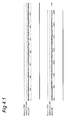
- Regeneration medium contained no antibiotic, whereas selection plates contained 20 ⁇ g ml -1 nourseothricin. Deletion of the target gene was confirmed by PCR (for procedure see Ohm et al., 2010). Compatible monokaryons with a gene deletion were selected from spores originating from a cross of the mutant strains with wild-type strain 4-8.3. The ⁇ fst4 monokaryon showed no phenotypic differences when compared to the wild-type. In contrast, the ⁇ fst4 ⁇ fst4 dikaryon did not fruit but produced more aerial hyphae when compared to the wild-type ( Figure 1 ). Apparently, Fst4 is involved in the switch between the vegetative phase and the reproductive phase.
- Table 2 primers used to inactivate putative transcription factors Gene (ProteinID) Deletion construct (pROxxxx) with primers used to amplify flanking sequences c2h2 (114363) pRO103 dC2H2UpFw GGCCTAATAGGCCCGGATGCTTTCTCGGAGAGG dC2H2UpRev GGCCTCGCAGGCCGAGCAGATGCTTCGCTCCGG dC2H2DwFw GGCCTGCGAGGCCCCAGTCGACCTCAATTAGCC dC2H2DwRev GGCCTATTAGGCCGCCCCTCACCCGTGTACCCG gat1 (255004) pRO190 dGATA1UpFw GGCCTAATAGGCCTGGTCAAGGCATCCCGCAG dGATA1UpRev GGCCTCGCAGGCCCTTCTTCTCAAGCCCAAATG dGATA1DwFw GGCCTGCGAGGCCTACTCTCATGCGAGACCCAC dGATA1D
Landscapes
- Chemical & Material Sciences (AREA)
- Organic Chemistry (AREA)
- Health & Medical Sciences (AREA)
- Life Sciences & Earth Sciences (AREA)
- Molecular Biology (AREA)
- Biochemistry (AREA)
- Biophysics (AREA)
- Mycology (AREA)
- General Health & Medical Sciences (AREA)
- Medicinal Chemistry (AREA)
- Genetics & Genomics (AREA)
- Proteomics, Peptides & Aminoacids (AREA)
- Gastroenterology & Hepatology (AREA)
- Micro-Organisms Or Cultivation Processes Thereof (AREA)
- Preparation Of Compounds By Using Micro-Organisms (AREA)
- Peptides Or Proteins (AREA)
- Measuring Or Testing Involving Enzymes Or Micro-Organisms (AREA)
Claims (13)
- Organisme fongique ou champignon présentant un taux d'expression accru d'un polypeptide impliqué dans la formation d'un champignon, dans lequel le polypeptide présente une identité d'acides aminés d'au moins 40 % avec SEQ ID NO: 56 et/ou présente une identité d'acides aminés d'au moins 50 % avec SEQ ID NO: 202, et dans lequel le taux d'expression accru du polypeptide est une production accrue du polypeptide et/ou une activité plus élevée dudit polypeptide par rapport à l'organisme fongique/au champignon parental à partir duquel est dérivé cet organisme fongique/ce champignon lorsque les deux sont cultivés et/ou analysés dans les mêmes conditions.
- Organisme fongique ou champignon selon la revendication 1, comprenant en outre un taux d'expression accru ou réduit d'un polypeptide, dans lequel le polypeptide dont le taux d'expression est accru ou réduit présente une identité d'acides aminés d'au moins 40 % avec une séquence sélectionnée parmi SEQ ID NO: 1-55, 57-200 et/ou présente une identité d'acides aminés d'au moins 50 % avec une séquence sélectionnée parmi SEQ ID NO: 201, 203-208.
- Organisme fongique ou champignon selon la revendication 1, dans lequel le polypeptide dont le taux d'expression est accru est un polypeptide hétérologue.
- Organisme fongique ou champignon selon la revendication 1, dans lequel le polypeptide dont le taux d'expression est accru est un polypeptide endogène.
- Organisme fongique ou champignon selon la revendication 2, dans lequel le taux d'expression réduit est obtenu par une production réduite du polypeptide et/ou une activité moindre dudit polypeptide par rapport à l'organisme fongique/au champignon parental à partir duquel est dérivé cet organisme fongique/ce champignon lorsque les deux sont cultivés et/ou analysés dans les mêmes conditions.
- Organisme fongique ou champignon selon l'une quelconque des revendications 2 et 5, dans lequel le polypeptide dont le taux d'expression est accru comprend une séquence d'acides aminés qui présente une identité d'acides aminés d'au moins 40 % avec SEQ ID NO: 56 et dans lequel le polypeptide dont le taux d'expression est réduit comprend une séquence d'acides aminés qui présente une identité d'acides aminés d'au moins 40 % avec une séquence sélectionnée parmi SEQ ID NO: 55 ; 21 ; 54.
- Organisme fongique ou champignon selon la revendication 6, dans lequel le polypeptide dont le taux d'expression est accru comprend une séquence d'acides aminés qui présente une identité d'acides aminés d'au moins 50 % avec SEQ ID NO: 202 et dans lequel le polypeptide dont le taux d'expression est réduit comprend une séquence d'acides aminés qui présente une identité d'acides aminés d'au moins 50 % avec une séquence sélectionnée dans le groupe constitué par SEQ ID NO: 206, 205 et 203.
- Organisme fongique ou champignon selon l'une quelconque des revendications précédentes, dans lequel l'organisme fongique/le champignon est un Ascomycète ou un Basidiomycète, de préférence un Basidiomycète, de préférence un Agaricales.
- Procédé de production des champignons tels que définis dans l'une quelconque des revendications 1 à 8.
- Procédé de production d'une substance d'intérêt en utilisant un champignon tel que défini dans l'une quelconque des revendications 1 à 8.
- Construction d'acide nucléique comprenant une séquence nucléotidique codant un polypeptide qui comprend une séquence d'acides aminés :(a) qui présente une identité d'acides aminés d'au moins 40 % avec SEQ ID NO: 56 ; et/ou,(b) qui présente une identité d'acides aminés d'au moins 50 % avec SEQ ID NO: 202 ;dans lequel la séquence nucléotidique est liée de manière fonctionnelle avec un promoteur qui est capable de diriger l'expression de la séquence nucléotidique dans un organisme fongique ou un champignon.
- Procédé d'identification d'un stimulus capable d'influencer la production d'un champignon, le procédé comprenant les étapes qui consistent à :(a) mettre à disposition un organisme fongique ou un champignon ;(b) appliquer ledit stimulus audit organisme fongique/champignon ;(c) déterminer le taux d'expression d'une séquence nucléotidique ou l'activité ou le taux à l'état d'équilibre d'un polypeptide codé correspondant dans l'organisme fongique/le champignon de l'étape b), où ledit polypeptide comprend une séquence d'acides aminés qui présente une identité d'acides aminés d'au moins 40 % avec SEQ ID NO: 56 et/ou qui présente une identité d'acides aminés d'au moins 50 % avec SEQ ID NO: 202,(d) comparer l'expression, l'activité ou le taux à l'état d'équilibre déterminé(e) en (c) avec l'expression, l'activité ou le taux à l'état d'équilibre de la séquence nucléotidique ou du polypeptide dans un organisme fongique/champignon qui n'a pas été exposé audit stimulus ; et,(e) identifier un stimulus qui produit une différence du taux d'expression, de l'activité ou du taux à l'état d'équilibre de ladite séquence nucléotidique ou dudit polypeptide, entre l'organisme fongique/le champignon qui a été exposé audit stimulus et l'organisme fongique/le champignon qui n'a pas été exposé audit stimulus.
- Procédé selon la revendication 12, moyennant quoi les taux d'expression, les activités ou les taux à l'état d'équilibre de plusieurs séquences nucléotidiques ou de plusieurs polypeptides sont comparé(e)s.
Priority Applications (2)
| Application Number | Priority Date | Filing Date | Title |
|---|---|---|---|
| PL10717314T PL2421889T3 (pl) | 2009-04-20 | 2010-04-20 | Regulatory uczestniczące w tworzeniu owocnika |
| EP13190443.5A EP2703412A3 (fr) | 2009-04-20 | 2010-04-20 | Régulateurs impliqués dans la formation de champignons |
Applications Claiming Priority (2)
| Application Number | Priority Date | Filing Date | Title |
|---|---|---|---|
| US21295309P | 2009-04-20 | 2009-04-20 | |
| PCT/NL2010/050206 WO2010123350A1 (fr) | 2009-04-20 | 2010-04-20 | Régulateurs intervenant dans la formation des champignons |
Related Child Applications (2)
| Application Number | Title | Priority Date | Filing Date |
|---|---|---|---|
| EP13190443.5A Division EP2703412A3 (fr) | 2009-04-20 | 2010-04-20 | Régulateurs impliqués dans la formation de champignons |
| EP13190443.5 Division-Into | 2013-10-28 |
Publications (2)
| Publication Number | Publication Date |
|---|---|
| EP2421889A1 EP2421889A1 (fr) | 2012-02-29 |
| EP2421889B1 true EP2421889B1 (fr) | 2013-12-11 |
Family
ID=42262289
Family Applications (2)
| Application Number | Title | Priority Date | Filing Date |
|---|---|---|---|
| EP13190443.5A Withdrawn EP2703412A3 (fr) | 2009-04-20 | 2010-04-20 | Régulateurs impliqués dans la formation de champignons |
| EP10717314.8A Not-in-force EP2421889B1 (fr) | 2009-04-20 | 2010-04-20 | Régulateurs intervenant dans la formation des champignons |
Family Applications Before (1)
| Application Number | Title | Priority Date | Filing Date |
|---|---|---|---|
| EP13190443.5A Withdrawn EP2703412A3 (fr) | 2009-04-20 | 2010-04-20 | Régulateurs impliqués dans la formation de champignons |
Country Status (8)
| Country | Link |
|---|---|
| US (1) | US20120096596A1 (fr) |
| EP (2) | EP2703412A3 (fr) |
| CN (1) | CN102459318A (fr) |
| AU (1) | AU2010239832A1 (fr) |
| CA (1) | CA2759311A1 (fr) |
| ES (1) | ES2451018T3 (fr) |
| PL (1) | PL2421889T3 (fr) |
| WO (1) | WO2010123350A1 (fr) |
Families Citing this family (6)
| Publication number | Priority date | Publication date | Assignee | Title |
|---|---|---|---|---|
| WO2013123390A1 (fr) | 2012-02-16 | 2013-08-22 | Qd Vision, Inc. | Procédé de préparation de nanocristaux semi-conducteurs |
| CN110437325B (zh) * | 2019-07-05 | 2021-07-06 | 中国科学院微生物研究所 | 转录因子lfc1对金针菇子实体发育的调控以及应用 |
| CN110423702B (zh) * | 2019-08-05 | 2022-11-01 | 云南大学 | 高产孢量紫色紫孢菌基因工程菌ΔPlflbC及其构建方法与应用 |
| WO2022172264A1 (fr) * | 2021-02-11 | 2022-08-18 | Ramot At Tel Aviv University Ltd. | Compositions et méthodes de traitement d'une maladie |
| CN119799735B (zh) * | 2024-12-06 | 2026-04-24 | 安徽大学 | 一种真菌漆酶过表达基因、质粒、菌株以及漆酶的表达方法 |
| CN119592604B (zh) * | 2024-12-11 | 2025-07-25 | 天津科技大学 | 一种高产、促生长、抗褐变及抗病性强的双孢菇菌种、基因、载体、方法及应用 |
Family Cites Families (4)
| Publication number | Priority date | Publication date | Assignee | Title |
|---|---|---|---|---|
| AU5914196A (en) * | 1995-06-12 | 1997-01-09 | Proefstation Voor De Champignoncultuur | Hydrophobins from edible fungi, genes, nucleotide sequences and dna-fragments encoding for said hydrophobins, and expression thereof |
| US6436689B1 (en) * | 2000-11-22 | 2002-08-20 | Pe Corporation (Ny) | Isolated nucleic acid molecules encoding human protease proteins, and uses thereof |
| GB0225390D0 (en) * | 2002-10-31 | 2002-12-11 | Horticulture Res Internat | Selective expression in filamentous fungi |
| WO2006046331A1 (fr) * | 2004-10-29 | 2006-05-04 | National University Corporation Hokkaido University | INHIBITEUR DE LA TRANSCRIPTION DU GENE HUMAIN K-ras |
-
2010
- 2010-04-20 US US13/265,449 patent/US20120096596A1/en not_active Abandoned
- 2010-04-20 EP EP13190443.5A patent/EP2703412A3/fr not_active Withdrawn
- 2010-04-20 ES ES10717314.8T patent/ES2451018T3/es active Active
- 2010-04-20 AU AU2010239832A patent/AU2010239832A1/en not_active Abandoned
- 2010-04-20 CN CN2010800244025A patent/CN102459318A/zh active Pending
- 2010-04-20 WO PCT/NL2010/050206 patent/WO2010123350A1/fr not_active Ceased
- 2010-04-20 CA CA2759311A patent/CA2759311A1/fr not_active Abandoned
- 2010-04-20 EP EP10717314.8A patent/EP2421889B1/fr not_active Not-in-force
- 2010-04-20 PL PL10717314T patent/PL2421889T3/pl unknown
Also Published As
| Publication number | Publication date |
|---|---|
| AU2010239832A1 (en) | 2011-11-10 |
| CA2759311A1 (fr) | 2010-10-28 |
| US20120096596A1 (en) | 2012-04-19 |
| ES2451018T3 (es) | 2014-03-26 |
| EP2703412A2 (fr) | 2014-03-05 |
| WO2010123350A1 (fr) | 2010-10-28 |
| CN102459318A (zh) | 2012-05-16 |
| EP2703412A8 (fr) | 2014-06-18 |
| EP2421889A1 (fr) | 2012-02-29 |
| EP2703412A3 (fr) | 2014-06-11 |
| PL2421889T3 (pl) | 2014-07-31 |
Similar Documents
| Publication | Publication Date | Title |
|---|---|---|
| Schumacher | Tools for Botrytis cinerea: new expression vectors make the gray mold fungus more accessible to cell biology approaches | |
| EP2421889B1 (fr) | Régulateurs intervenant dans la formation des champignons | |
| Wu et al. | The pH-responsive transcription factor PacC regulates mycelial growth, fruiting body development, and ganoderic acid biosynthesis in Ganoderma lucidum | |
| Upadhyay et al. | Laccases involved in 1, 8-dihydroxynaphthalene melanin biosynthesis in Aspergillus fumigatus are regulated by developmental factors and copper homeostasis | |
| Zhang et al. | Cloning and functional analysis of a laccase gene during fruiting body formation in Hypsizygus marmoreus | |
| Qi et al. | Identification of two Pleurotus ostreatus blue light receptor genes (PoWC-1 and PoWC-2) and in vivo confirmation of complex PoWC-12 formation through yeast two hybrid system | |
| WO2017125602A1 (fr) | Croissance végétative accrue de champignons | |
| Sundaram et al. | Isolation and characterization of a symbiosis-regulated ras from the ectomycorrhizal fungus Laccaria bicolor | |
| Ha et al. | Diversity of A mating type in Lentinula edodes and mating type preference in the cultivated strains | |
| Kilaru et al. | Zymoseptoria tritici white-collar complex integrates light, temperature and plant cues to initiate dimorphism and pathogenesis | |
| US20130189733A1 (en) | Production of secreted proteins by filamentous fungi | |
| González-Rodríguez et al. | The F-actin capping protein is required for hyphal growth and full virulence but is dispensable for septum formation in Botrytis cinerea | |
| Zhao et al. | A SET domain-containing protein involved in cell wall integrity signaling and peroxisome biogenesis is essential for appressorium formation and pathogenicity of Colletotrichum gloeosporioides | |
| Sekiya et al. | Characterization of a gene coding for a putative adenosine deaminase-related growth factor by RNA interference in the basidiomycete Flammulina velutipes | |
| CN106916837A (zh) | 高渗透压甘油蛋白激酶基因RkHog1及其重组表达载体 | |
| Giasson et al. | Mutations in the myp1 gene of Ustilago maydis attenuate mycelial growth and virulence. | |
| CN107058352A (zh) | 具有耐盐功能的基因、其编码蛋白及其应用 | |
| Lu et al. | The CsPbs2-interacting protein oxalate decarboxylase CsOxdC3 modulates morphosporogenesis, virulence, and fungicide resistance in Colletotrichum siamense | |
| Luan et al. | Opposing developmental functions of Agrocybe aegerita galectin (AAL) during mycelia differentiation | |
| WO2011159153A2 (fr) | Promoteur inductible et son utilisation | |
| Yoshida et al. | STT10, a novel class-D VPS yeast gene required for osmotic integrity related to the PKC1/STT1 protein kinase pathway | |
| KR20090049555A (ko) | 식물 왜화 유도 기능을 가진 폴리펩티드, 이를 암호화하는 폴리뉴클레오티드 및 이들의 용도 | |
| Sen et al. | Analysis of the sexual development-promoting region of Schizophyllum commune TRP1 gene | |
| US9085783B2 (en) | L-lactate production in cyanobacteria | |
| Pelkmans | Environmental signaling and regulation of mushroom formation |
Legal Events
| Date | Code | Title | Description |
|---|---|---|---|
| PUAI | Public reference made under article 153(3) epc to a published international application that has entered the european phase |
Free format text: ORIGINAL CODE: 0009012 |
|
| 17P | Request for examination filed |
Effective date: 20111021 |
|
| AK | Designated contracting states |
Kind code of ref document: A1 Designated state(s): AT BE BG CH CY CZ DE DK EE ES FI FR GB GR HR HU IE IS IT LI LT LU LV MC MK MT NL NO PL PT RO SE SI SK SM TR |
|
| DAX | Request for extension of the european patent (deleted) | ||
| 17Q | First examination report despatched |
Effective date: 20120906 |
|
| GRAP | Despatch of communication of intention to grant a patent |
Free format text: ORIGINAL CODE: EPIDOSNIGR1 |
|
| INTG | Intention to grant announced |
Effective date: 20130628 |
|
| GRAS | Grant fee paid |
Free format text: ORIGINAL CODE: EPIDOSNIGR3 |
|
| GRAA | (expected) grant |
Free format text: ORIGINAL CODE: 0009210 |
|
| AK | Designated contracting states |
Kind code of ref document: B1 Designated state(s): AT BE BG CH CY CZ DE DK EE ES FI FR GB GR HR HU IE IS IT LI LT LU LV MC MK MT NL NO PL PT RO SE SI SK SM TR |
|
| REG | Reference to a national code |
Ref country code: GB Ref legal event code: FG4D |
|
| REG | Reference to a national code |
Ref country code: CH Ref legal event code: EP |
|
| REG | Reference to a national code |
Ref country code: AT Ref legal event code: REF Ref document number: 644560 Country of ref document: AT Kind code of ref document: T Effective date: 20140115 |
|
| REG | Reference to a national code |
Ref country code: IE Ref legal event code: FG4D |
|
| REG | Reference to a national code |
Ref country code: DE Ref legal event code: R096 Ref document number: 602010012342 Country of ref document: DE Effective date: 20140206 |
|
| REG | Reference to a national code |
Ref country code: NL Ref legal event code: T3 |
|
| REG | Reference to a national code |
Ref country code: ES Ref legal event code: FG2A Ref document number: 2451018 Country of ref document: ES Kind code of ref document: T3 Effective date: 20140326 |
|
| REG | Reference to a national code |
Ref country code: AT Ref legal event code: MK05 Ref document number: 644560 Country of ref document: AT Kind code of ref document: T Effective date: 20131211 |
|
| PG25 | Lapsed in a contracting state [announced via postgrant information from national office to epo] |
Ref country code: LT Free format text: LAPSE BECAUSE OF FAILURE TO SUBMIT A TRANSLATION OF THE DESCRIPTION OR TO PAY THE FEE WITHIN THE PRESCRIBED TIME-LIMIT Effective date: 20131211 Ref country code: SE Free format text: LAPSE BECAUSE OF FAILURE TO SUBMIT A TRANSLATION OF THE DESCRIPTION OR TO PAY THE FEE WITHIN THE PRESCRIBED TIME-LIMIT Effective date: 20131211 Ref country code: HR Free format text: LAPSE BECAUSE OF FAILURE TO SUBMIT A TRANSLATION OF THE DESCRIPTION OR TO PAY THE FEE WITHIN THE PRESCRIBED TIME-LIMIT Effective date: 20131211 Ref country code: NO Free format text: LAPSE BECAUSE OF FAILURE TO SUBMIT A TRANSLATION OF THE DESCRIPTION OR TO PAY THE FEE WITHIN THE PRESCRIBED TIME-LIMIT Effective date: 20140311 Ref country code: FI Free format text: LAPSE BECAUSE OF FAILURE TO SUBMIT A TRANSLATION OF THE DESCRIPTION OR TO PAY THE FEE WITHIN THE PRESCRIBED TIME-LIMIT Effective date: 20131211 |
|
| REG | Reference to a national code |
Ref country code: LT Ref legal event code: MG4D |
|
| PG25 | Lapsed in a contracting state [announced via postgrant information from national office to epo] |
Ref country code: AT Free format text: LAPSE BECAUSE OF FAILURE TO SUBMIT A TRANSLATION OF THE DESCRIPTION OR TO PAY THE FEE WITHIN THE PRESCRIBED TIME-LIMIT Effective date: 20131211 Ref country code: LV Free format text: LAPSE BECAUSE OF FAILURE TO SUBMIT A TRANSLATION OF THE DESCRIPTION OR TO PAY THE FEE WITHIN THE PRESCRIBED TIME-LIMIT Effective date: 20131211 Ref country code: CY Free format text: LAPSE BECAUSE OF FAILURE TO SUBMIT A TRANSLATION OF THE DESCRIPTION OR TO PAY THE FEE WITHIN THE PRESCRIBED TIME-LIMIT Effective date: 20131211 |
|
| PG25 | Lapsed in a contracting state [announced via postgrant information from national office to epo] |
Ref country code: IS Free format text: LAPSE BECAUSE OF FAILURE TO SUBMIT A TRANSLATION OF THE DESCRIPTION OR TO PAY THE FEE WITHIN THE PRESCRIBED TIME-LIMIT Effective date: 20140411 Ref country code: EE Free format text: LAPSE BECAUSE OF FAILURE TO SUBMIT A TRANSLATION OF THE DESCRIPTION OR TO PAY THE FEE WITHIN THE PRESCRIBED TIME-LIMIT Effective date: 20131211 |
|
| REG | Reference to a national code |
Ref country code: PL Ref legal event code: T3 |
|
| PG25 | Lapsed in a contracting state [announced via postgrant information from national office to epo] |
Ref country code: SK Free format text: LAPSE BECAUSE OF FAILURE TO SUBMIT A TRANSLATION OF THE DESCRIPTION OR TO PAY THE FEE WITHIN THE PRESCRIBED TIME-LIMIT Effective date: 20131211 Ref country code: RO Free format text: LAPSE BECAUSE OF FAILURE TO SUBMIT A TRANSLATION OF THE DESCRIPTION OR TO PAY THE FEE WITHIN THE PRESCRIBED TIME-LIMIT Effective date: 20131211 Ref country code: PT Free format text: LAPSE BECAUSE OF FAILURE TO SUBMIT A TRANSLATION OF THE DESCRIPTION OR TO PAY THE FEE WITHIN THE PRESCRIBED TIME-LIMIT Effective date: 20140411 Ref country code: CZ Free format text: LAPSE BECAUSE OF FAILURE TO SUBMIT A TRANSLATION OF THE DESCRIPTION OR TO PAY THE FEE WITHIN THE PRESCRIBED TIME-LIMIT Effective date: 20131211 |
|
| REG | Reference to a national code |
Ref country code: DE Ref legal event code: R097 Ref document number: 602010012342 Country of ref document: DE |
|
| PLBE | No opposition filed within time limit |
Free format text: ORIGINAL CODE: 0009261 |
|
| STAA | Information on the status of an ep patent application or granted ep patent |
Free format text: STATUS: NO OPPOSITION FILED WITHIN TIME LIMIT |
|
| PG25 | Lapsed in a contracting state [announced via postgrant information from national office to epo] |
Ref country code: DK Free format text: LAPSE BECAUSE OF FAILURE TO SUBMIT A TRANSLATION OF THE DESCRIPTION OR TO PAY THE FEE WITHIN THE PRESCRIBED TIME-LIMIT Effective date: 20131211 |
|
| 26N | No opposition filed |
Effective date: 20140912 |
|
| PG25 | Lapsed in a contracting state [announced via postgrant information from national office to epo] |
Ref country code: LU Free format text: LAPSE BECAUSE OF FAILURE TO SUBMIT A TRANSLATION OF THE DESCRIPTION OR TO PAY THE FEE WITHIN THE PRESCRIBED TIME-LIMIT Effective date: 20140420 Ref country code: MC Free format text: LAPSE BECAUSE OF FAILURE TO SUBMIT A TRANSLATION OF THE DESCRIPTION OR TO PAY THE FEE WITHIN THE PRESCRIBED TIME-LIMIT Effective date: 20131211 |
|
| REG | Reference to a national code |
Ref country code: CH Ref legal event code: PL |
|
| REG | Reference to a national code |
Ref country code: DE Ref legal event code: R097 Ref document number: 602010012342 Country of ref document: DE Effective date: 20140912 |
|
| PG25 | Lapsed in a contracting state [announced via postgrant information from national office to epo] |
Ref country code: CH Free format text: LAPSE BECAUSE OF NON-PAYMENT OF DUE FEES Effective date: 20140430 Ref country code: LI Free format text: LAPSE BECAUSE OF NON-PAYMENT OF DUE FEES Effective date: 20140430 |
|
| PG25 | Lapsed in a contracting state [announced via postgrant information from national office to epo] |
Ref country code: SI Free format text: LAPSE BECAUSE OF FAILURE TO SUBMIT A TRANSLATION OF THE DESCRIPTION OR TO PAY THE FEE WITHIN THE PRESCRIBED TIME-LIMIT Effective date: 20131211 |
|
| REG | Reference to a national code |
Ref country code: FR Ref legal event code: PLFP Year of fee payment: 6 |
|
| PGFP | Annual fee paid to national office [announced via postgrant information from national office to epo] |
Ref country code: NL Payment date: 20150420 Year of fee payment: 6 |
|
| PGFP | Annual fee paid to national office [announced via postgrant information from national office to epo] |
Ref country code: GB Payment date: 20150430 Year of fee payment: 6 Ref country code: ES Payment date: 20150522 Year of fee payment: 6 |
|
| PGFP | Annual fee paid to national office [announced via postgrant information from national office to epo] |
Ref country code: FR Payment date: 20150430 Year of fee payment: 6 Ref country code: IE Payment date: 20150430 Year of fee payment: 6 Ref country code: BE Payment date: 20150430 Year of fee payment: 6 Ref country code: IT Payment date: 20150430 Year of fee payment: 6 Ref country code: PL Payment date: 20150420 Year of fee payment: 6 |
|
| PGFP | Annual fee paid to national office [announced via postgrant information from national office to epo] |
Ref country code: DE Payment date: 20150630 Year of fee payment: 6 |
|
| PG25 | Lapsed in a contracting state [announced via postgrant information from national office to epo] |
Ref country code: MT Free format text: LAPSE BECAUSE OF FAILURE TO SUBMIT A TRANSLATION OF THE DESCRIPTION OR TO PAY THE FEE WITHIN THE PRESCRIBED TIME-LIMIT Effective date: 20131211 |
|
| PG25 | Lapsed in a contracting state [announced via postgrant information from national office to epo] |
Ref country code: SM Free format text: LAPSE BECAUSE OF FAILURE TO SUBMIT A TRANSLATION OF THE DESCRIPTION OR TO PAY THE FEE WITHIN THE PRESCRIBED TIME-LIMIT Effective date: 20131211 |
|
| PG25 | Lapsed in a contracting state [announced via postgrant information from national office to epo] |
Ref country code: BG Free format text: LAPSE BECAUSE OF FAILURE TO SUBMIT A TRANSLATION OF THE DESCRIPTION OR TO PAY THE FEE WITHIN THE PRESCRIBED TIME-LIMIT Effective date: 20131211 Ref country code: GR Free format text: LAPSE BECAUSE OF FAILURE TO SUBMIT A TRANSLATION OF THE DESCRIPTION OR TO PAY THE FEE WITHIN THE PRESCRIBED TIME-LIMIT Effective date: 20140312 |
|
| PG25 | Lapsed in a contracting state [announced via postgrant information from national office to epo] |
Ref country code: HU Free format text: LAPSE BECAUSE OF FAILURE TO SUBMIT A TRANSLATION OF THE DESCRIPTION OR TO PAY THE FEE WITHIN THE PRESCRIBED TIME-LIMIT; INVALID AB INITIO Effective date: 20100420 Ref country code: TR Free format text: LAPSE BECAUSE OF FAILURE TO SUBMIT A TRANSLATION OF THE DESCRIPTION OR TO PAY THE FEE WITHIN THE PRESCRIBED TIME-LIMIT Effective date: 20131211 |
|
| PG25 | Lapsed in a contracting state [announced via postgrant information from national office to epo] |
Ref country code: BE Free format text: LAPSE BECAUSE OF NON-PAYMENT OF DUE FEES Effective date: 20160430 |
|
| REG | Reference to a national code |
Ref country code: DE Ref legal event code: R119 Ref document number: 602010012342 Country of ref document: DE |
|
| REG | Reference to a national code |
Ref country code: NL Ref legal event code: MM Effective date: 20160501 |
|
| GBPC | Gb: european patent ceased through non-payment of renewal fee |
Effective date: 20160420 |
|
| REG | Reference to a national code |
Ref country code: IE Ref legal event code: MM4A |
|
| REG | Reference to a national code |
Ref country code: FR Ref legal event code: ST Effective date: 20161230 |
|
| PG25 | Lapsed in a contracting state [announced via postgrant information from national office to epo] |
Ref country code: FR Free format text: LAPSE BECAUSE OF NON-PAYMENT OF DUE FEES Effective date: 20160502 Ref country code: NL Free format text: LAPSE BECAUSE OF NON-PAYMENT OF DUE FEES Effective date: 20160501 Ref country code: GB Free format text: LAPSE BECAUSE OF NON-PAYMENT OF DUE FEES Effective date: 20160420 Ref country code: DE Free format text: LAPSE BECAUSE OF NON-PAYMENT OF DUE FEES Effective date: 20161101 |
|
| PG25 | Lapsed in a contracting state [announced via postgrant information from national office to epo] |
Ref country code: IT Free format text: LAPSE BECAUSE OF NON-PAYMENT OF DUE FEES Effective date: 20160420 |
|
| PG25 | Lapsed in a contracting state [announced via postgrant information from national office to epo] |
Ref country code: IE Free format text: LAPSE BECAUSE OF NON-PAYMENT OF DUE FEES Effective date: 20160420 |
|
| PG25 | Lapsed in a contracting state [announced via postgrant information from national office to epo] |
Ref country code: PL Free format text: LAPSE BECAUSE OF NON-PAYMENT OF DUE FEES Effective date: 20160420 |
|
| PG25 | Lapsed in a contracting state [announced via postgrant information from national office to epo] |
Ref country code: ES Free format text: LAPSE BECAUSE OF NON-PAYMENT OF DUE FEES Effective date: 20160421 |
|
| REG | Reference to a national code |
Ref country code: ES Ref legal event code: FD2A Effective date: 20180625 |
|
| PG25 | Lapsed in a contracting state [announced via postgrant information from national office to epo] |
Ref country code: MK Free format text: LAPSE BECAUSE OF FAILURE TO SUBMIT A TRANSLATION OF THE DESCRIPTION OR TO PAY THE FEE WITHIN THE PRESCRIBED TIME-LIMIT Effective date: 20131211 |