EP2436436A1 - Verfahren zur gasentfernung oder -entgiftung - Google Patents
Verfahren zur gasentfernung oder -entgiftung Download PDFInfo
- Publication number
- EP2436436A1 EP2436436A1 EP10780297A EP10780297A EP2436436A1 EP 2436436 A1 EP2436436 A1 EP 2436436A1 EP 10780297 A EP10780297 A EP 10780297A EP 10780297 A EP10780297 A EP 10780297A EP 2436436 A1 EP2436436 A1 EP 2436436A1
- Authority
- EP
- European Patent Office
- Prior art keywords
- substrate
- charged
- negatively
- aforementioned
- gas molecules
- Prior art date
- Legal status (The legal status is an assumption and is not a legal conclusion. Google has not performed a legal analysis and makes no representation as to the accuracy of the status listed.)
- Withdrawn
Links
Images



Classifications
-
- B—PERFORMING OPERATIONS; TRANSPORTING
- B01—PHYSICAL OR CHEMICAL PROCESSES OR APPARATUS IN GENERAL
- B01D—SEPARATION
- B01D53/00—Separation of gases or vapours; Recovering vapours of volatile solvents from gases; Chemical or biological purification of waste gases, e.g. engine exhaust gases, smoke, fumes, flue gases, aerosols
- B01D53/32—Separation of gases or vapours; Recovering vapours of volatile solvents from gases; Chemical or biological purification of waste gases, e.g. engine exhaust gases, smoke, fumes, flue gases, aerosols by electrical effects other than those provided for in group B01D61/00
-
- B—PERFORMING OPERATIONS; TRANSPORTING
- B01—PHYSICAL OR CHEMICAL PROCESSES OR APPARATUS IN GENERAL
- B01D—SEPARATION
- B01D53/00—Separation of gases or vapours; Recovering vapours of volatile solvents from gases; Chemical or biological purification of waste gases, e.g. engine exhaust gases, smoke, fumes, flue gases, aerosols
- B01D53/32—Separation of gases or vapours; Recovering vapours of volatile solvents from gases; Chemical or biological purification of waste gases, e.g. engine exhaust gases, smoke, fumes, flue gases, aerosols by electrical effects other than those provided for in group B01D61/00
- B01D53/323—Separation of gases or vapours; Recovering vapours of volatile solvents from gases; Chemical or biological purification of waste gases, e.g. engine exhaust gases, smoke, fumes, flue gases, aerosols by electrical effects other than those provided for in group B01D61/00 by electrostatic effects or by high-voltage electric fields
-
- B—PERFORMING OPERATIONS; TRANSPORTING
- B01—PHYSICAL OR CHEMICAL PROCESSES OR APPARATUS IN GENERAL
- B01D—SEPARATION
- B01D53/00—Separation of gases or vapours; Recovering vapours of volatile solvents from gases; Chemical or biological purification of waste gases, e.g. engine exhaust gases, smoke, fumes, flue gases, aerosols
- B01D53/02—Separation of gases or vapours; Recovering vapours of volatile solvents from gases; Chemical or biological purification of waste gases, e.g. engine exhaust gases, smoke, fumes, flue gases, aerosols by adsorption, e.g. preparative gas chromatography
-
- B—PERFORMING OPERATIONS; TRANSPORTING
- B01—PHYSICAL OR CHEMICAL PROCESSES OR APPARATUS IN GENERAL
- B01D—SEPARATION
- B01D53/00—Separation of gases or vapours; Recovering vapours of volatile solvents from gases; Chemical or biological purification of waste gases, e.g. engine exhaust gases, smoke, fumes, flue gases, aerosols
- B01D53/34—Chemical or biological purification of waste gases
- B01D53/46—Removing components of defined structure
- B01D53/62—Carbon oxides
-
- B—PERFORMING OPERATIONS; TRANSPORTING
- B01—PHYSICAL OR CHEMICAL PROCESSES OR APPARATUS IN GENERAL
- B01J—CHEMICAL OR PHYSICAL PROCESSES, e.g. CATALYSIS OR COLLOID CHEMISTRY; THEIR RELEVANT APPARATUS
- B01J35/00—Catalysts, in general, characterised by their form or physical properties
- B01J35/30—Catalysts, in general, characterised by their form or physical properties characterised by their physical properties
- B01J35/39—Photocatalytic properties
-
- B—PERFORMING OPERATIONS; TRANSPORTING
- B01—PHYSICAL OR CHEMICAL PROCESSES OR APPARATUS IN GENERAL
- B01D—SEPARATION
- B01D2255/00—Catalysts
- B01D2255/80—Type of catalytic reaction
- B01D2255/802—Photocatalytic
-
- B—PERFORMING OPERATIONS; TRANSPORTING
- B01—PHYSICAL OR CHEMICAL PROCESSES OR APPARATUS IN GENERAL
- B01D—SEPARATION
- B01D2257/00—Components to be removed
- B01D2257/10—Single element gases other than halogens
- B01D2257/104—Oxygen
-
- B—PERFORMING OPERATIONS; TRANSPORTING
- B01—PHYSICAL OR CHEMICAL PROCESSES OR APPARATUS IN GENERAL
- B01D—SEPARATION
- B01D2257/00—Components to be removed
- B01D2257/10—Single element gases other than halogens
- B01D2257/106—Ozone
-
- B—PERFORMING OPERATIONS; TRANSPORTING
- B01—PHYSICAL OR CHEMICAL PROCESSES OR APPARATUS IN GENERAL
- B01D—SEPARATION
- B01D2257/00—Components to be removed
- B01D2257/20—Halogens or halogen compounds
-
- B—PERFORMING OPERATIONS; TRANSPORTING
- B01—PHYSICAL OR CHEMICAL PROCESSES OR APPARATUS IN GENERAL
- B01D—SEPARATION
- B01D2257/00—Components to be removed
- B01D2257/30—Sulfur compounds
- B01D2257/302—Sulfur oxides
-
- B—PERFORMING OPERATIONS; TRANSPORTING
- B01—PHYSICAL OR CHEMICAL PROCESSES OR APPARATUS IN GENERAL
- B01D—SEPARATION
- B01D2257/00—Components to be removed
- B01D2257/40—Nitrogen compounds
- B01D2257/404—Nitrogen oxides other than dinitrogen oxide
-
- B—PERFORMING OPERATIONS; TRANSPORTING
- B01—PHYSICAL OR CHEMICAL PROCESSES OR APPARATUS IN GENERAL
- B01D—SEPARATION
- B01D2257/00—Components to be removed
- B01D2257/50—Carbon oxides
- B01D2257/504—Carbon dioxide
-
- Y—GENERAL TAGGING OF NEW TECHNOLOGICAL DEVELOPMENTS; GENERAL TAGGING OF CROSS-SECTIONAL TECHNOLOGIES SPANNING OVER SEVERAL SECTIONS OF THE IPC; TECHNICAL SUBJECTS COVERED BY FORMER USPC CROSS-REFERENCE ART COLLECTIONS [XRACs] AND DIGESTS
- Y02—TECHNOLOGIES OR APPLICATIONS FOR MITIGATION OR ADAPTATION AGAINST CLIMATE CHANGE
- Y02C—CAPTURE, STORAGE, SEQUESTRATION OR DISPOSAL OF GREENHOUSE GASES [GHG]
- Y02C20/00—Capture or disposal of greenhouse gases
- Y02C20/40—Capture or disposal of greenhouse gases of CO2
Definitions
- the present invention relates to a method for removing carbon dioxide from the atmosphere by adsorbing carbon dioxide present in the atmosphere, or a method for detoxifying atmospheric molecules which may be negatively charged, such as carbon dioxide and the like, and returning the detoxified molecules into the atmosphere.
- Japanese Patent No. 4180991 proposes a method for adsorbing carbon dioxide with porous substances supporting rubidium carbonate and/or cesium carbonate.
- Japanese Patent No. 4181062 proposes a method for adsorbing carbon dioxide with a magnesium oxide-containing adsorber.
- a purification system for exhaust fumes which can remove and detoxify harmful gases which may be negatively charged needs use of a large amount of expensive metals such as palladium, platinum and the like. This may also cause a problem in terms of economical inefficiencies.
- the present invention was made in view of the aforementioned prior art, and has an objective thereof of providing a simple means to effectively and economically remove or detoxify carbon dioxide and other gases which may be negatively charged in the atmosphere.
- the aforementioned negatively-charged gas molecules are preferably carbon dioxide.
- the aforementioned negatively-charged gas molecules are preferably oxygen, ozone, halogen gases, fluorine compounds, chlorine compounds, nitrogen oxides, sulfur oxides, or ions thereof.
- the aforementioned positively-charged substance is preferably one or more substances selected from the group consisting of:
- the aforementioned negatively-charged substance is preferably one or more substances selected from the group consisting of:
- the present invention can be carried out by a substrate for removing or detoxifying negatively-charged gas molecules, which carries a positively-charged substance, or a positively-charged substance and a negatively-charged substance, on the surface of the substrate or in the surface layer of the substrate.
- At least one part of the surface of the aforementioned substrate preferably has microasperities or microholes.
- the aforementioned microasperities can be formed by applying a reflectivity reducer comprising carbon and/or a thermally-decomposable organic compound, as well as titanium oxide and/or an organic silicon compound and/or an inorganic silicon compound, on the surface of the substrate, followed by heating.
- the aforementioned microholes can be formed by applying a reflectivity reducer comprising titanium oxide and/or an organic silicon compound and/or an inorganic silicon compound without carbon and/or a thermally-decomposable organic compound, on the surface of the substrate, followed by drying at room temperature.
- the aforementioned substrate preferably constitutes at least one part of an optical element, an optical cell, a transportation means such as an automobile, a train, an airplane, or the like, an indoor or outdoor structure such as road or the like, an interior or exterior architecture or a work piece.
- carbon dioxide and other gases which may be negatively charged in the atmosphere can be effectively and economically removed or detoxified.
- a reflectivity reducer comprising carbon and/or a thermally-decomposable organic compound, as well as titanium oxide and/or an organic silicon compound and/or an inorganic silicon compound, on the surface of the substrate, followed by heating, or in the case of obtaining the aforementioned microholes by applying a reflectivity reducer comprising titanium oxide and/or an organic silicon compound and/or an inorganic silicon compound without carbon and/or a thermally-decomposable organic compound, on the surface of the substrate, followed by drying at room temperature, as long as the substrate has a light-transmissive moiety, a light-transmissive property of the aforementioned substrate can be further improved.
- the substrate of the present invention can be suitably used in an optical element, an optical cell, a transportation means such as an automobile, a train, an airplane, or the like, an indoor or outdoor structure such as road or the like, an interior or exterior architecture or a work piece.
- Carbon dioxide as well as oxygen, ozone, halogen gases, fluorinated compounds, chlorine compounds, nitrogen oxides, sulfur oxides, ions thereof, and the like may carry negative charges or may be negatively charged.
- oxygen can be present as a super oxide anion radical (O 2 ), and the aforementioned radical carries negative charges.
- the aforementioned gas molecules carrying negative charges or gas molecules which can be negatively charged are referred to as "negatively-charged gas molecules".
- the present invention is characterized in that the aforementioned negatively-charged gas molecules are removed or detoxified via a step of adsorbing negatively-charged gas molecules by a substrate carrying a positively-charged substance or a positively-charged substance and a negatively-charged substance on the surface of the substrate or in a surface layer of the substrate.
- inorganic substrates mention may be made of, for example, substrates formed from substances of transparent or opaque glass such as soda lime glass, quartz glass, heat resistant glass or the like, or metal oxides such as indium tin oxide (ITO) or the like, and silicon or a metal and the like.
- organic substrates mention may be made of, for example, substrates formed from plastics.
- thermoplastic resins such as polyethylene, polypropylene, polycarbonate, acrylic resins, polyester such as PET or the like, polyamide, ABS resins, polyvinyl chloride or the like, and thermosetting resins such as polyurethane, melamine resins, urea resins, silicone resins, fluorine resins, epoxy resins or the like.
- thermosetting resins such as polyurethane, melamine resins, urea resins, silicone resins, fluorine resins, epoxy resins or the like.
- inorganic substrates are preferable, and in particular, at least one part or whole parts of the substrate are preferably formed from a resin, a metal or glass.
- thermosetting resins are preferable.
- the shape of the substrate is not particularly restricted, and any shapes such as cubics, cuboids, spheres, spindles, sheets, films, fibers, or the like can be employed.
- the surface of the substrate may be subjected to a hydrophilic treatment or a hydrophobic treatment such as a corona discharge treatment, a UV exposure treatment, or the like.
- the surface of the substrate may have a flat surface and/or a curved surface, and may be subjected to embossing. A flat and smooth surface is preferable.
- the surface of the substrate may be coated with paint.
- paint containing a colorant and a synthetic resin such as an alkyd resin, an acrylic resin, an amino resin, a polyurethane resin, an epoxy resin, a silicone resin, a fluorine resin, an acrylic silicone resin, an unsaturated polyester resin, an ultraviolet-curable resin, a phenol resin, a vinyl chloride resin, or a synthetic resin emulsion can be preferably employed.
- the thickness of the aforementioned coating film preferably ranges from 0.01 ⁇ m to 100 ⁇ m, more preferably ranges from 0.1 ⁇ m to 50 ⁇ m, and in particular, preferably ranges from 0.5 ⁇ m to 10 ⁇ m.
- a method for coating for example, a spray coating method, a dip coating method, a flow coating method, a spin coating method, a roll coating method, a brush coating method, a sponge coating method, or the like can be employed.
- heating is preferably carried out within a range acceptable for the substrate and the coating film.
- the aforementioned positively charged substance is not particularly restricted, as long as it is a substance carrying positive charges, and is preferably one or more types of substances selected from the group consisting of (1) a positive ion; (2) a conductor or dielectric having positive charges; and (3) a composite formed from a conductor and a dielectric or a semiconductor, having positive charges.
- the aforementioned positive ion is not particularly restricted.
- an ion of an alkali metal such as sodium or potassium
- an ion of an alkali earth metal such as calcium
- an ion of a metal element such as aluminum, cesium, indium, cerium, selenium, chromium, nickel, antimony, iron, copper, manganese, tungsten, zirconium, zinc, or the like
- a copper ion is preferable.
- a metal salt can also be employed.
- various metal salts such as aluminum chloride, chromium chloride, nickel chloride, antimony (III) chloride, antimony (V) chloride, iron (II) chloride, iron (III) chloride, cesium chloride, indium (III) chloride, cerium (III) chloride, selenium tetrachloride, copper (II) chloride, manganese chloride, tungsten tetrachloride, tungsten oxydichloride, potassium tungstate, zirconium oxychloride, zinc chloride, barium carbonate, and the like.
- a metal hydroxide such as aluminum hydroxide, iron hydroxide, chromium hydroxide, or indium hydroxide; a hydroxide such as tungstosilicic acid; or oxides such as fat oxides, can also be employed.
- the conductor or dielectric having positive charges mention may be made of conductors or dielectrics in which positive charges are generated, other than the aforementioned positive ions.
- the conductor employed in the present invention is preferably a metal in view of durability.
- metals such as aluminum, tin, cesium, indium, cerium, selenium, chromium, nickel, antimony, iron, copper, manganese, tungsten, zirconium, zinc or the like and a metal oxide thereof.
- a composite or alloy of the aforementioned metals can also be employed.
- the shape of the conductor is not particularly restricted.
- the conductor may be in any shape such as particles, flakes, fibers, or the like.
- a metal salt of a certain metal can also be employed.
- various metal salts such as aluminum chloride, chromium chloride, nickel chloride, antimony (III) chloride, antimony (V) chloride, iron (II) chloride, iron (III) chloride, silver nitrate, cesium chloride, indium (III) chloride, cerium (III) chloride, selenium tetrachloride, copper (II) chloride, manganese chloride, tungsten tetrachloride, tungsten oxydichloride, potassium tungstate, gold chloride, zirconium oxychloride, zinc chloride, and the like.
- indium hydroxide, a hydroxide or oxide of tungstosilicic acid or the like can also be employed.
- dielectrics having positive charges mention may be made of, for example, dielectrics such as wool, nylon, and the like which are positively charged by friction.
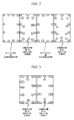
- FIG. 1 is a conceptual diagram in which a combination of (a conductor)-(a dielectric or a semiconductor)-(a conductor) is arranged on the surface of the substrate or in a surface layer of the substrate, not shown in the drawing.
- the conductor can have a positively charged state on the surface due to the presence of free electrons at a high concentration in which electrons can freely move inside thereof.
- a conductive substance containing positive ions can also be employed as the conductor.
- the dielectric or semiconductor adjacent to the conductors is subjected to charge polarization by the effects of the charge conditions on the surface of the conductor.
- negative charges are produced, while at the side of the dielectric or semiconductor which is not adjacent to the conductor, positive charges are produced. Due to the aforementioned effects, the surface of the combination of (a conductor)-(a dielectric or a semiconductor)-(a conductor) is positively charged, and positive charges are provided on the surface of the substrate.
- the size of the aforementioned composite (which means the length of the longest axis passing through the composite) can range from 0.2 nm to 100 ⁇ m, and preferably ranges from 0.2 nm to 10 ⁇ m, more preferably ranges from 0.2 nm to 1 ⁇ m, and particularly preferably ranges from 0.1 nm to 100 nm.
- the conductor for forming the composite employed in the present invention is preferably a metal in view of durability.
- examples thereof include metals such as aluminum, tin, cesium, indium, cerium, selenium, chromium, nickel, antimony, iron, silver, copper, manganese, platinum, tungsten, zirconium, zinc, or the like.
- an oxide, a composite or alloy of the aforementioned metals can also be employed.
- the shape of the conductor is not particularly restricted. The conductor may be in any shape such as particles, flakes, fibers, or the like.
- a metal salt of a certain metal can also be employed.
- various metal salts such as aluminum chloride, tin (II) chloride, tin (IV) chloride, chromium chloride, nickel chloride, antimony (III) chloride, antimony (V) chloride, iron (II) chloride, iron (III) chloride, silver nitrate, cesium chloride, indium (III) chloride, cerium (III) chloride, selenium tetrachloride, copper (II) chloride, manganese chloride, platinum (II) chloride, tungsten tetrachloride, tungsten oxydichloride, potassium tungstate, gold chloride, zirconium oxychloride, zinc chloride, iron lithium phosphate, and the like.
- a hydroxide of the aforementioned conductive metal such as aluminum hydroxide, iron hydroxide, chromium hydroxide, or the like, as well as an oxide of the aforementioned conductive metal such as zinc oxide or the like can also be employed.
- a conductive polymer such as polyaniline, polypyrrol, polythiophene, polythiophene vinylon, polyisothianaphthene, polyacetylene, polyalkyl pyrrol, polyalkyl thiophene, poly-p-phenylene, polyphenylene vinylon, polymethoxyphenylene, polyphenylene sulfide, polyphenylene oxide, polyanthrathene, polynaphthalene, polypyrene, polyazulene, or the like can also be employed.
- a conductive polymer such as polyaniline, polypyrrol, polythiophene, polythiophene vinylon, polyisothianaphthene, polyacetylene, polyalkyl pyrrol, polyalkyl thiophene, poly-p-phenylene, polyphenylene vinylon, polymethoxyphenylene, polyphenylene sulfide, polyphenylene oxide, polyanthrathene, polynaphthalen
- the semiconductor for example, C, Si, Ge, Sn, GaAs, Inp, GeN, ZnSe, PbSnTe, or the like, can be employed, and a semiconductor metal oxide, a photosemiconductor metal, or a photosemiconductor metal oxide can also be employed.
- TiO 2 titanium oxide
- TiO 2 titanium oxide
- ZnO, SrTiOP 3 CdS, CdO
- CaP InP
- In 2 O 3 CaAs, BaTiO 3 , K 2 NbO 3 , Fe 2 O 3 , Ta 2 O 3 , WO 3 , NiO, Cu 2 O, SiC, SiO 2 , MOS 3 , InSb, RuO 2 , CeO 2 , or the like
- a compound in which the photocatalytic effects are inactivated by Na or the like is preferable.
- barium titanate which is a strong dielectric, so-called SBT, BLT, or a composite metal such as PZT, PLZT-(Pb, La) (Zr, Ti)O 3 , SBT, SBTN-SrBi 2 (Ta, Nb) 2 O 9 , BST- (Ba, Sr)TiO 3 , LSCO- (La, Sr)CoO 3 , BLT, BIT- (Bi, La) 4 Ti 3 O 12 , BSO-Bi 2 SiO 5 , or the like can be employed.
- PZT barium titanate
- SBT barium titanate
- BLT barium titanate
- a composite metal such as PZT, PLZT-(Pb, La) (Zr, Ti)O 3 , SBT, SBTN-SrBi 2 (Ta, Nb) 2 O 9 , BST- (Ba, Sr)TiO 3 , LSCO- (La, Sr)CoO 3 ,
- various weak dielectric materials such as a silane compound, a silicone compound, or a so-called organo-modified silica compound, which is an organic silicon compound, or an organic polymer insulating film allylene ether-based polymer, benzocyclobutene, fluorine-based polymer parylene N or F, a fluorinated amorphous carbon, or the like can also be employed.
- the negatively-charged substance is not particularly restricted, as long as it is a substance carrying negative charges, and is preferably one or more type substances selected from the group consisting of (4) a negative ion; (5) a conductor or dielectric having negative charges; (6) a composite formed from a conductor and a dielectric or a semiconductor, having negative charges; and (7) a substance having a photocatalytic function.
- conductors or dielectrics in which negative charges are generated, other than the aforementioned negative ions.
- colloids of metals such as gold, silver, platinum, tin, and the like; elements such as graphite, sulfur, selenium, tellurium and the like; sulfides such as arsenic sulfide, antimony sulfide, mercury sulfide and the like; clay, glass powder, quartz powder, asbestos, starch, cotton, silk, wool and the like; or dyes such as prussian blue, indigo, aniline blue, eosin, naphthol yellow and the like.
- colloids of metals such as gold, silver, platinum, tin and the like are preferable.
- Silver colloids and tin colloids are particularly preferable.
- negative electrodes of batteries formed from various conductors as described above, and dielectrics such as Teflon (trademark), vinyl chlorides, polyethylenes and polyesters and the like, which are negatively charged, may be mentioned.
- the semiconductor the aforementioned one can be used.
- the photocatalytically functional substances contain specific metal compounds, and have a function of oxidizing and decomposing the organic and/or inorganic compounds on the surface of the aforementioned layer due to photoexcitation. It is generally believed that the photocatalytic principle relies on a specific metal compound producing radical species such as OH - or O 2 from oxygen or moisture in the air by means of photoexcitation, and the aforementioned radical species oxidize-reduce-decompose the organic and/or inorganic compounds.
- examples thereof include various metal salts such as aluminum chloride, tin (II) chloride, tin (IV) chloride, chromium chloride, nickel chloride, antimony (III) chloride, antimony (V) chloride, iron (II) chloride, iron (III) chloride, silver nitrate, cesium chloride, indium (III) chloride, cerium (III) chloride, selenium tetrachloride, copper (II) chloride, manganese chloride, calcium chloride, platinum (II) chloride, tungsten tetrachloride, tungsten oxydichloride, potassium tungstate, gold chloride, zirconium oxychloride, zinc chloride, or the like.
- indium hydroxide silicotungstic acid, silica sol, calcium hydroxide, or the like.
- the aforementioned photocatalytically functional substance adsorbs, when excited, OH - (hydroxide radical) or O 2 - (oxygenation radical) from adsorbed water and oxygen on the surface of a substance, and therefore, the surface thereof has a property of negative charges. If a positively-charged substance coexists therein, the photocatalytic function will be reduced or lost, depending on the concentration of the positive charges. However, in the present invention, the substance having a photocatalytic function does not need to exert oxidation decomposition effects on contaminants, and for this reason, it can be used as a negatively-charged substance.
- FIG. 2 is a conceptual diagram showing an example of a mechanism of imparting positive charges and negative charges on the surface of the substrate or in the surface layer of the substrate, in which a combination of (a dielectric or a semiconductor)-(a conductor having negative charges)-(a dielectric or a semiconductor)-(a conductor having positive charges) is provided on the surface of the substrate.
- a combination of (a dielectric or a semiconductor)-(a conductor having negative charges)-(a dielectric or a semiconductor)-(a conductor having positive charges) is provided on the surface of the substrate.
- the conductor having negative charges and the conductor having positive charges shown in FIG. 2 those described above can be used.
- the dielectric or semiconductor adjacent to the conductor having negative charges is subjected to charge polarization by the effects of the charge conditions on the surface of the conductor.
- the surface of the combination of (a dielectric or a semiconductor)-(a conductor)-(a dielectric or a semiconductor)-(a conductor) shown in FIG. 2 is positively or negatively charged.
- the size of the aforementioned composite (which means the length of the longest axis passing through the composite) of the conductor and the dielectric or semiconductor can range from 1 nm to 100 ⁇ m, and preferably ranges from 1 nm to 10 ⁇ m, more preferably ranges from 1 nm to 1 ⁇ m, and particularly preferably ranges from 1 nm to 100 nm.
- a ratio of the composition materials in the case of a composite comprising a conductor and a dielectric or a semiconductor, forming the positively-charged surface or positively-charged and negatively-charged surface ranges from 1:1 to 1:20 as a microparticle or volume ratio, with the proviso that on the light-transmissive substrate, the aforementioned ratio preferably ranges from 1:100 to 1:10,000, more preferably ranges from 1:100 to 1:6,000, and furthermore preferably ranges from 1:100 to 1:3,000.
- FIG. 3 is conceptual diagram showing another mode of imparting positive charges and negative charges to the surface of the substrate or in the surface layer of the substrate.
- a conductor having negative charges is adjacent to a conductor having positive charges, and the amount of the positive charges and negative charges is reduced due to contact disappearance or the like.
- the conductor having negative charges and the conductor having positive charges those described above can be used.
- the negatively-charged gas molecules are removed or detoxified via the step of adsorbing the negatively-charged gas molecules by the substrate carrying the aforementioned positively-charged substance or the positively-charged substance and the negatively-charged substance, on the surface of the substrate or in the surface layer of the substrate.
- the fluid means a substance which is continuously deformed in accordance with the strength of shearing force.
- Gas or liquid corresponds to the fluid.
- the fluid is water or air. If necessary, other liquids or gases or a mixture of water and other liquids or a mixture of air and other gases may be blown onto the surface of the substrate.
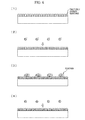
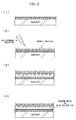
- the aforementioned positively-charged substance and the aforementioned negatively-charged substance are arranged on the surface of the substrate, and thereby, positive charges and negative charges are provided on the surface of the substrate ( FIG. 5 (1)).
- Carbon dioxide which is negatively-charged gas molecules is negatively charged. For this reason, carbon dioxide is electrostatically attracted by the positive charges present on the surface of the substrate, and adsorbed on the surface of the substrate ( FIG. 5 (2) and FIG. 5 (3)). On the other hand, at the part which is negatively charged on the surface of the substrate, carbon dioxide is not adsorbed. Therefore, in view of an amount of adsorbed carbon dioxide on the surface of the substrate, it is believed that it is preferable that only positive charges be present on the surface of the substrate. However, in fact, there is a phenomenon such that the amount of adsorbed carbon dioxide is increased in the case of the presence of both positive charges and negative charges on the surface of the substrate, as compared with the case of the presence of only positive charges thereon.
- carbon dioxide desorbed from the surface of the substrate is absorbed by the soil, river, sea and the like, for example, in the state in which carbon dioxide is dissolved in water.
- the method of the present invention is naturally carried out on the substrate without needs of physical treatments such as heating and the like or other chemical treatments, and for this reason, the method can simply and economically remove carbon dioxide.
- the surface of the substrate is preferably inclined with respect to the horizontal surface.
- the angle of inclination in this case is preferably increased.
- the surface of the substrate is preferably arranged so as to have an inclination of horizon/verticality which is 1/100 or more, preferably 1/50 or more, and more preferably 1/20 or more.
- FIG. 6 a mechanism of adsorbing harmful negatively-charged gas molecules such as oxygen, ozone, halogen gases, fluorine compounds, chlorine compounds, nitrogen oxides, sulfur oxides, or ions thereof to the substrate which is positively charged and detoxified is shown in FIG. 6 .
- harmful negatively-charged gas molecules such as oxygen, ozone, halogen gases, fluorine compounds, chlorine compounds, nitrogen oxides, sulfur oxides, or ions thereof
- the aforementioned negatively-charged gas molecules carry negative charges, and for this reason, they are electrostatically attracted by positive charges on the surface of the substrate, and then adsorbed on the surface of the substrate ( FIG. 6 (2)).
- superoxide anion radicals O 2 -
- the adsorbed negatively-charged gas molecules release electrons on the surface of the substrate by the effects of the positive charges on the surface of the substrate, and become neutral or stable gas molecules ( FIG. 6 (3)).
- the aforementioned neutral or stable gas molecules are desorbed from the surface of the substrate ( FIG. 6 (4)). No electrostatic effects are present between the aforementioned neutral or stable gas molecules and positive charges of the surface of the substrate. For this reason, the aforementioned neutral or stable gas molecules can be naturally desorbed from the aforementioned substrate. In order to enhance the desorbing effects, fluid may be blown onto the surface of the substrate. By means of natural effects such as wind and weather, the aforementioned neutral or stable gas molecules can also be easily desorbed from the surface of the substrate.
- the substrate having the positively-charged substance, or the positively-charged substance and negatively-charged substance on the surface of the substrate or in the surface layer of the substrate can be used as a substrate for removing or detoxifying negatively-charged gas molecules.
- inorganic substances such as airborne carbons and/or organic substances such as oils are gradually deposited on the surface of the substrate, and thereby, they adhere to the surface of the substrate.
- the aforementioned organic product or inorganic product can be naturally desorbed from the surface of the substrate by means of electrostatic repulsion.
- the aforementioned contaminants can be removed from the substrate or adhesion of the aforementioned contaminants to the substrate can be prevented or reduced.
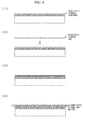
- the mechanism of removing contaminants from the surface of the substrate which is positively charged is shown in FIG. 7 .
- Contaminants are deposited on the surface of the substrate, and photooxidized by means of electromagnetic radiation such as sunlight and the like. Thereby, positive charges are also provided to the contaminants ( FIG. 7 (2)).
- Electrostatic repulsion of positive charges between the surface of the substrate and the contaminants is produced, and repulsion power is produced on the contaminants. Thereby, the fixing power of the contaminants to the surface of the substrate is reduced ( FIG. 7 (3)).
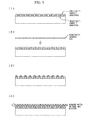
- FIG. 8 A mechanism of removal of contaminants from the surface of the substrate which is positively and negatively charged is shown in FIG. 8 .
- Contaminants are deposited on the surface of the substrate, and then continuously photooxidized by means of the effects of electromagnetic radiation such as sunlight or the like. Thereby, positive charges are also provided to the contaminants ( FIG. 8 (2)).
- the contaminants are easily removed from the surface of the substrate ( FIG. 8 (4)). Thereby, the substrate can self-clean.
- the method for arranging the positively-charged substance, or the positively-charged substance and the negatively-charged substance, on the surface of the substrate or in the surface layer of the substrate is not particularly restricted.
- a method in which the positively-charged substance, or the positively-charged substance and the negatively-charged substance, can be arranged in the form of a layer is preferable, and in particular, it is preferable that a layer of a metal-doped titanium oxide be formed on the surface of the substrate.
- the aforementioned metal at least one metal element selected from the group consisting of gold, silver, platinum, copper, zirconium, tin, manganese, nickel, cobalt, iron, and zinc is preferable. At least two metal elements thereof are preferable, and in particular, silver or tin, as well as copper or iron is preferable.
- the titanium oxide various titanium oxides and titanium peroxide, such as TiO 2 , TiO 3 , TiO, TiO 3 /nH 2 O and the like, can be used. In particular, titanium peroxide having a peroxy group is preferable.
- the titanium oxide may be in any form of amorphous-type, anatase-type, brookite-type, and rutile-type, and these forms may be combined. Amorphous-type titanium oxide is preferable.
- a compound of tetravalent titanium such as titanium tetrachloride or the like and a base such as ammonia or the like are reacted together to form titanium hydroxide.
- the aforementioned titanium hydroxide is peroxidized with an oxidizing agent to form ultra-fine particles of amorphous-type titanium peroxide.
- the aforementioned reaction is preferably carried out in an aqueous medium.
- the amorphous-type titanium peroxide can be converted into anatase-type titanium peroxide.
- at least one of gold, silver, platinum, tin, copper, zirconium, manganese, nickel, cobalt, iron, zinc, and compounds thereof is mixed therein.
- FIG. 9 One example of the aforementioned first manufacturing method is shown in FIG. 9 .
- an aqueous solution of titanium tetrachloride and aqueous ammonia are mixed together in the presence of at least one of gold, silver, platinum, copper, zirconium, tin, manganese, nickel, cobalt, iron, zinc, and compounds thereof and thereby a mixture of a hydroxide of the aforementioned metal and a hydroxide of titanium is produced.
- concentration or temperature of the reaction mixture there are no particular limitations on the concentration or temperature of the reaction mixture, but the reaction is preferably carried out in a dilute solution at room temperature.
- the aforementioned reaction is a neutralization reaction, and therefore, it is preferable that the pH of the reaction mixture finally be adjusted to approximately pH 7.
- the hydroxides of the metal and titanium obtained above are washed with pure water, followed by cooling to approximately 5°C. Subsequently, the hydroxides are peroxidized with an aqueous solution of hydrogen peroxide. Thereby, an aqueous dispersion containing fine particles of amorphous-type titanium oxide having a peroxy group which contains a metal, i.e. an aqueous dispersion containing a metal-doped titanium oxide, can be produced.
- a compound of tetravalent titanium such as titanium tetrachloride or the like is peroxidized with an oxidizing agent, and the peroxidized product is reacted with a base such as ammonia or the like to form ultra-fine particles of amorphous-type titanium peroxide.
- the aforementioned reaction is preferably carried out in an aqueous medium.
- the amorphous-type titanium peroxide can also be converted into anatase-type titanium peroxide.
- at least one of gold, silver, platinum, copper, zirconium, tin, manganese, nickel, cobalt, iron, zinc, and compounds thereof is mixed therein.
- a compound of tetravalent titanium such as titanium tetrachloride or the like is reacted together with an oxidizing agent and a base to carry out formation of titanium hydroxide and peroxidation thereof at the same time, and thereby, ultra-fine particles of amorphous-type titanium peroxide are formed.
- the aforementioned reaction is preferably carried out in an aqueous medium.
- the amorphous-type titanium peroxide can also be converted into anatase-type titanium peroxide.
- at least one of gold, silver, platinum, copper, zirconium, tin, manganese, nickel, cobalt, iron, zinc, and compounds thereof is mixed therein.
- a mixture of the amorphous-type titanium peroxide and the anatase-type titanium peroxide obtained by heating the aforementioned amorphous-type titanium peroxide can be employed as a metal-doped titanium peroxide.
- a solvent such as water, an alcohol or the like, and an acid or base catalyst are mixed and stirred with a titanium alkoxide to hydrolyze the titanium alkoxide.
- a sol solution of ultra-fine particles of titanium peroxide is produced.
- at least one of gold, silver, platinum, copper, zirconium, tin, manganese, nickel, cobalt, iron, zinc, and compounds thereof is mixed therein.
- the titanium peroxide obtained above is an amorphous-type one having a peroxy group.
- titanium alkoxide a compound represented by the following general formula: Ti(OR') 4 , wherein R' is an alkyl group, or a compound in which one or two of the alkoxide groups (OR') in the aforementioned general formula have been substituted with carboxyl groups or beta-dicarbonyl groups, or a mixture thereof is preferable.
- titanium hydroxide also known as ortho-titanic acid (H 4 TiO 4 )
- examples thereof include titanium salts of water-soluble inorganic acids such as titanium tetrachloride, titanium sulfate, titanium nitrate, and titanium phosphate.
- Other examples include titanium salts of water-soluble organic acids such as titanium oxalate, or the like.
- titanium tetrachloride is preferable since superior water solubility is exhibited, and there are no remaining components other than titanium in the dispersion of a metal-doped titanium peroxide.
- the concentration of the aforementioned solution is not particularly restricted as long as a gel of titanium hydroxide can be formed, but a relatively dilute solution is preferable.
- the concentration of the compound of tetravalent titanium preferably ranges from 5% by weight to 0.01% by weight, and more preferably ranges from 0.9% by weight to 0.3% by weight.
- a base to be reacted with the aforementioned compound of tetravalent titanium various bases can be employed as long as titanium hydroxide can be formed by reacting with the compound of tetravalent titanium.
- bases include ammonia, sodium hydroxide, sodium carbonate, potassium hydroxide or the like. Ammonia is preferable.
- the concentration of the aforementioned solution is not particularly restricted as long as a gel of titanium hydroxide can be formed, but a relatively dilute solution is preferable.
- the concentration of the basic solution preferably ranges from 10% by weight to 0.01% by weight, and more preferably ranges from 1.0% by weight to 0.1% by weight.
- the concentration of ammonia preferably ranges from 10% by weight to 0.01% by weight, and more preferably ranges from 1.0% by weight to 0.1% by weight.
- the concentration of titanium peroxide in the aqueous dispersion obtained in accordance with the first to third manufacturing methods preferably ranges from 0.05 to 15% by weight, and more preferably ranges from 0.1 to 5% by weight.
- the molar ratio of titanium and the aforementioned metal component is preferably 1:1 in the present invention. In view of stability of the aqueous dispersion, the ratio preferably ranges from 1:0.01 to 1:0.5, and more preferably ranges from 1:0.03 to 1:0.1.
- a step of immersing the substrate in a solution, suspension or emulsion obtained by the aforementioned preparation method to carry out dip coating, or alternatively, applying the aforementioned solution, suspension or emulsion to the substrate by means of a spray, a roll, a brush, a sponge or the like, followed by drying to evaporate the solvent or medium is carried out at least once.
- a layer of the metal-doped titanium oxide can be formed on the surface of the substrate.
- various surfactants or dispersants are preferably blended together therewith.
- the amount of the surfactants or dispersants may range from 0.001% by weight to 1.0% by weight, and preferably from 0.1% by weight to 1.0% by weight, with respect to the total amount of the positively-charged substance and/or the negatively-charged substance.
- various organic silicon compounds can be employed.
- various silane compounds, and various silicone oils, silicone gums, and silicone resins can be employed.
- the alkyl silicate structure refers to a structure in which alkyl groups are bonded to silicon atoms in the siloxane backbone.
- the polyether structure mention may be made of molecular structures such as polyethylene oxide, polypropylene oxide, polytetramethylene oxide, a block copolymer of polyethylene oxide and polypropylene oxide, a copolymer of polyethylene and polytetramethylene glycol, or a copolymer of polytetramethylene glycol and polypropylene oxide, although there is no limitation thereto.
- a block copolymer of polyethylene oxide and polypropylene oxide is particularly suitable in view of the ability to control the wettability by the degree of blocking or the molecular weight.
- a polyethylene oxide-polypropylene oxide block copolymer-modified polydimethylsiloxane obtained by reacting a block copolymer of both-end-metallyl polyethylene oxide-polypropylene oxide with dihydropolydimethylsiloxane is suitable.
- TSF 4445 or TSF 4446 both manufactured by GE Toshiba Silicones Co., Ltd.
- SH 200, or SH 3746M manufactured by Dow Corning Toray Silicone Co., Ltd.
- KP series manufactured by Shin-Etsu Chemical Co., Ltd.
- DC 3PA or ST 869A manufactured by Dow Corning Toray Silicone Co., Ltd.
- additives for paints and can be employed as appropriate, as long as the aforementioned properties can be imparted.
- various additives such as an IR absorber or reflector, a UV absorber or reflector, and an electromagnetic wave shielding agent may be blended.
- the amount of the additive is determined in consideration of the compatibility with the positively-charged substance or the negatively-charged substance.
- An intermediate layer may be provided between the substrate and the layer of the positively-charged substance, or the passively-charged substance and the negatively-charged substance.
- a coating layer may be provided on the surface of layer of the positively-charged substance, or the layer of the positively-charged substance and the negatively-charged substance.
- the aforementioned intermediate layer and the aforementioned coating layer can be formed from various types of organic or inorganic substances which can impart hydrophilic properties or hydrophobic properties or water-repellent properties or oil-repellent properties to the substrate.
- hydrophilic organic substances examples include polyethers such as polyethylene glycol, polypropylene glycol, a block copolymer formed from polyethylene glycol and polypropylene glycol, and the like; polyvinyl alcohols; polyacrylic acids (including salts such as alkali metal salts, ammonium salts and the like), polymethacrylic acids (including salts such as alkali metal salts, ammonium salts and the like), or a copolymer formed from polyacrylic acid and polymethacrylic acid (including salts such as alkali metal salts, ammonium salts and the like); polyacrylamides; polyvinyl pyrrolidones; hydrophilic celluloses such as carboxymethylcellulose (CMC), methylcellulose (MC), and the like; natural hydrophilic polymer compounds such as polysaccharide and the like; and the like.
- hydrophilic inorganic materials mention may be made of, for example, SiO 2 , and other silicon compounds.
- polyolefins such as polyethylene, polypropylene, polystyrene, and the like; acrylic resins such as polyacrylate, acrylonitrile/styrene copolymer (AS), acrylonitrile/butadiene/styrene copolymer (ABS), and the like; polyacrylonitriles; polyhalogenated vinyls such as polyvinyl chloride, polyvinylidene chloride, and the like; fluorine resins such as polytetrafluoroethylene, fluoroethylene/propylene copolymer, polychlorotrifluoroethylene (PCTFE), polyvinylidene fluoride (PVDF), fluorinated vinylidene/trifluoroethylene copolymer, and the like; polyesters such as polyethylene terephthalate, polycarbonate, and the like; phenolic resins; urea resins; melamine resins; polyimide resin
- fluorine resins are preferable, and in particular, fluorinated vinylidene/trifluoroethylene copolymers having strong dielectric properties and water-repellent properties, ⁇ -type crystals of polyvinylidene fluoride, and those containing the same are preferable.
- fluorine resins commercially available products can be used.
- examples of the commercially available products mention may be made of, for example, HIREC 1550 manufactured by NTT-AT Co., Ltd., and the like.
- a fluorine resin emulsion comprising a surfactant and at least one fluorine resin selected from the group consisting of copolymers formed from two or more types of olefins containing fluorine atoms, copolymers between olefins containing fluorine atoms and hydrocarbon monomers, and mixtures of copolymers formed from two or more types of olefins containing fluorine atoms and thermoplastic acrylic resins, as well as a curing agent (see Japanese Unexamined Patent Application, First Publication No. H05-124880 ; Japanese Unexamined Patent Application, First Publication No. H05-117578 ; and Japanese Unexamined Patent Application, First Publication No.
- H05-179191 and/or a composition comprising the aforementioned silicone resin-based water repellent (see Japanese Unexamined Patent Application, First Publication No. 2000-121543 ; and Japanese Unexamined Patent Application, First Publication No. 2003-26461 ) can also be employed.
- a commercially available product can be used, such as the ZEFFLE series available from Daikin Industries, Ltd., and the LUMIFLON series available from Asahi Glass Co., Ltd.
- a melamin-based curing agent As the aforementioned curing agent, a melamin-based curing agent, an amine-based curing agent, a polyvalent isocyanate-based curing agent, and a block polyvalent isocyanate-based curing agent are preferably employed.
- water-repellent inorganic materials mention may be made of, for example, silane-based, siliconate-based, silicone-based, or silane composite-based, or fluorine-based water-repellent agents or water absorption inhibitors, and the like.
- a fluorine-based water-repellent agent is preferable, and examples thereof include a fluorine-containing compound such as a compound containing a perfluoroalkyl group or the like, or a composition containing a fluorine-containing compound.
- the fluorine-containing compound which can be employed as the aforementioned fluorine-based water-repellent agent is preferably one containing a perfluoroalkyl group in a molecule and having a molecular weight ranging from 1,000 to 20,000.
- perfluorosulfonate perfluorosulfonic acid ammonium salt
- perfluorocarboxylate perfluoroalkyl betaine
- perfluoroalkyl ethylene oxide adduct perfluoroalkyl amine oxide
- perfluoroalkyl phosphate perfluoroalkyl trimethylammonium salt, and the like.
- perfluoroalkyl phosphate and perfluoroalkyl trimethylammonium salt are preferable since they exhibit superior properties of adhering to the surface of the substance.
- These materials are commercially available as SURFLON S-112 and SURFLON S-121 (both product names, manufactured by Seimi Chemical Co., Ltd.) and the like.
- an intermediate layer containing a silane compound is preferably preliminarily formed on the substrate.
- the intermediate layer includes a large amount of Si-O bonds, and for this reason, it is possible to improve the strength of the layer of the positively-charged substance, or the layer of the positively-charged substance and the negatively-charged substrate, or the adhesiveness with the substrate.
- the aforementioned intermediate layer also exhibits a function of preventing moisture from seeping into the substrate.
- Examples of the aforementioned silane compounds include a hydrolyzable silane, a hydrolysate thereof, and a mixture of these.
- hydrolyzable silane various alkoxysilanes can be employed. Examples thereof include a tetraalkoxysilane, an alkyltrialkoxysilane, a dialkyldialkoxysilane, or a trialkylalkoxysilane.
- one type of hydrolyzable silane may be employed alone or two or more types of hydrolyzable silanes may be employed in combination.
- various organopolysiloxanes may be added to the aforementioned silane compounds.
- DRYSEAL S manufactured by Dow Corning Toray Silicone Co., Ltd.
- a silicone resin which is curable at room temperature such as a methylsilicone resin, a methylphenylsilicone resin, or the like may be employed.
- a silicone resin which is curable at room temperature mention may be made of AY42-170, SR2510, SR2406, SR2410, SR2405, and SR2411 (all manufactured by Dow Corning Toray Silicone Co., Ltd.).
- the intermediate layer may be a paint film.
- a so-called paint containing a colorant and a synthetic resin such as an alkyd resin, an acrylic resin, an amino resin, a polyurethane resin, an epoxy resin, a silicone resin, a fluorine resin, an acrylic silicone resin, an unsaturated polyester resin, an ultraviolet-curable resin, a phenol resin, a vinyl chloride resin, or a synthetic resin emulsion can be preferably employed.
- a product by utilizing the positive charges provided on the surface of the substrate, a product can be produced in which the functions of removing and stabilizing negatively-charged gases are exhibited and the functions of the substrate itself are exhibited, and at the same time, "functions of preventing contamination and preventing fogging" are exhibited.
- This technology can be applied to any substrate.
- by providing positive charges on the surface of an organic substance having superior water-repellent properties or hydrophilic properties the functions thereof can be maintained for a long time, and for this reason, application to a painted surface or a substrate formed from plastics is preferable. Thereby, "clean painted surfaces or plastics" can be provided.
- At least one part of the surface of the substrate of the present invention preferably has microasperities or microholes in order to have a poly-surface body for increasing an adsorption amount of the negatively-charged gases.
- light means electromagnetic waves such as ultraviolet light, visible light, infrared light, and the like.
- Visible light means electromagnetic waves having a wavelength ranging from 380 nm to 780 nm.
- the aforementioned microasperities can be formed by applying a reflectivity reducer comprising carbon and/or a thermally-decomposable organic compound, as well as titanium oxide and/or an organic silicon compound and/or an inorganic silicon compound, on the surface of the substrate, followed by heating.
- the aforementioned microholes can be formed by applying a reflectivity reducer comprising titanium oxide and/or an organic silicon compound and/or an inorganic silicon compound without carbon and/or a thermally-decomposable organic compound, on the surface of the substrate, followed by drying at room temperature.
- Carbon used in the present invention means a carbon elementary substance, and can be, for example, in the form of carbon black, graphite, fullerene, carbon nanotube, or India ink.
- a dispersion in a liquid medium such as India ink is preferable.
- India ink is a colloid dispersion of carbon particles dispersed by means of a hide glue, and can be used as is.
- the carbon concentration in India ink can be appropriately specified.
- “Carbon” used in the present invention may contain impurities such as metal catalysts used at the time of the manufacture thereof, but the aforementioned impurities are preferably reduced.
- the thermally-decomposable organic compound is not particularly restricted as long as the compound is an organic compound which can be degraded by heating.
- the thermally-decomposable organic compound which is degraded by heating to generate a gas is preferable.
- the heating temperature is preferably 400°C or higher, more preferably 450°C or higher, and further preferably 500°C or higher.
- thermally-decomposable organic compounds mention may be made of, for example, a sugar or sugar alcohol, a water-soluble organic polymer, and a mixture thereof. A sugar or sugar alcohol is preferable, and a sugar is more preferable.
- sucrose means a hydrocarbon having many hydroxyl groups and carbonyl groups, and examples thereof include monosaccharides, disaccharides, oligosaccharides, polysaccharides and the like.
- monosaccharides mention may be made of glucose, fructose, galactose, mannose, ribose, erythrose, and the like.
- disaccharides mention may be made of maltose, lactose, sucrose and the like.
- oligosaccharides mention may be made of fructo-oligosaccharides, galacto-oligosaccharides and the like.
- polysaccharides examples include starch, cellulose, pectin and the like. They may be used alone or in combination. In view of usability, sugars with increased water-solubility are preferable. Therefore, in the present invention, one selected from the group consisting of monosaccharides and disaccharides or a mixture of two or more types thereof is preferably used.
- “Sugar alcohol” is a product in which the carbonyl group of a sugar is reduced.
- sugar alcohols mention may be made of, for example, erythritol, threitol, arabinitol, xylitol, ribitol, mannitol, sorbitol, maltitol, inositol, and the like. They may be used alone or as a mixture of two or more types thereof.
- any thermally-decomposable organic polymers can be used as long as they are soluble in water.
- polyether such as polyethylene glycol, polypropylene glycol, polyethylene glycol-polypropylene glycol block copolymer or the like; polyvinyl alcohol; polyacrylic acid (including salts such as alkali metal salts, ammonium salts and the like), polymethacrylic acid (including salts such as alkali metal salts, ammonium salts and the like), polyacrylic acid-polymethacrylic acid (including salts such as alkali metal salts, ammonium salts and the like) copolymer; polyacrylamide; polyvinylpyrrolidone and the like.
- the aforementioned water-soluble organic polymer can also function as a solubilizing agent of a sugar or sugar alcohol. For this reason, the water-soluble organic polymer can be blended together with the sugar or sugar alcohol. Thereby, the sugar or sugar alcohol can be dissolved well in the reflectivity reducer.
- the concentration of the aforementioned carbon and/or thermally-decomposable organic compound in the aforementioned composition can be suitably varied in accordance with the degree of surface treatment of the substrate.
- the concentration typically ranges from 0.01% by weight to 15% by weight, preferably ranges from 0.05% by weight to 10% by weight, and more preferably ranges from 1.0% by weight to 5.0% by weight.
- silica silicon dioxide
- silicon nitride silicon carbide
- silane and the like examples of inorganic silicon compounds used in the present invention
- silica is preferable.
- fumed silica, colloidal silica, precipitated silica or the like can be used, and colloidal silica is preferable.
- colloidal silica for example, PL-1 or PL-3 (manufactured by FUSO CHEMICAL CO., LTD.), as a polysilicate, WM-12 (manufactured by TAMA CHEMICALS CO., LTD.), Silica Sol 51 (manufactured by COLCOAT CO., LTD.) or the like can be used.
- the concentration of the inorganic silicon compound in the aforementioned composition can be suitably varied in accordance with the degree of surface treatment of the substrate.
- the concentration typically ranges from 0.01% by weight to 98% by weight, preferably ranges from 0.1% by weight to 90% by weight, and more preferably ranges from 10% by weight to 80% by weight.
- a metal-doped titanium oxide is preferable.
- the metal contained in the metal-doped titanium oxide at least one metal element selected from the group consisting of gold, silver, platinum, copper, zirconium, manganese, nickel, cobalt, tin, iron, zinc, germanium, hafnium, yttrium, lanthanum, cerium, palladium, vanadium, niobium, calcium, and tantalum is preferable.
- the metal-doped titanium oxide a mixture of a commercially available sol of various crystalline types of the titanium oxide and a sol of various types of the metal can be used.
- a metal-doped titanium peroxide is preferable.
- a method for manufacturing the aforementioned metal-doped titanium peroxide a manufacturing method based on a hydrochloric acid method or sulfuric acid method which is a general method for manufacturing titanium dioxide powders may be used, or a manufacturing method using any of various liquid dispersion titania solutions may be used.
- the aforementioned metal can form a composite with titanium peroxide in any step of the manufacturing method.
- the reflectivity reducer used in the present invention preferably contains anatase-type titanium peroxide together with the amorphous-type titanium peroxide obtained as described above.
- anatase-type titanium peroxide one in which amorphous-type titanium peroxide is transferred to anatase-type titanium peroxide by heating (typically, after application to the surface of a light-transmissive substrate) may be used, but one in which amorphous-type titanium peroxide is not transferred to anatase-type titanium peroxide by heating is preferable.
- the anatase-type titanium peroxide contained in the reflectivity reducer may be one formed in situ by transferring a part of amorphous-type titanium peroxide by heating, but one in which at least one part (preferably the whole part) thereof is independently added from the outside is preferable.
- the concentration of titanium oxide in the aforementioned reflectivity reducer can be changed in accordance with the degree of surface treatment of the substrate.
- the concentration typically ranges from 0.01% by weight to 90% by weight, preferably ranges from 0.1% by weight to 50% by weight, and more preferably ranges from 1% by weight to 20% by weight.
- the reflectivity reducer of the present invention can further contain an organic silicon compound.
- organic silicon compound mention may be made of, for example, various types of organic silane compounds and silicones such as silicone oils, silicone gums, silicone resins and the like. They may be used alone or as a mixture thereof.
- silicones one having an alkyl silicate structure or a polyether structure, or one having both an alkyl silicate structure and a polyether structure, in the molecule thereof, is preferable.
- the alkylsilicate structure refers to a structure in which alkyl groups are bonded to silicon atoms in the siloxane backbone.
- the polyether structure refers to a structure having an ether bond.
- a silicone having both an alkylsilicate structure and a polyether structure in the molecule thereof is particularly preferable.
- a polyether-modified silicone such as polyether-modified polydimethylsiloxane or the like is suitable.
- the polyether-modified silicone can be manufactured using a generally known method, for example, using a method described in Synthesis Example 1, 2, 3 or 4 in Japanese Unexamined Patent Application, First Publication No. H04-242499 or the Reference Example in Japanese Unexamined Patent Application, First Publication No. H09-165318 .
- a polyethylene oxide-polypropylene oxide block copolymer-modified polydimethylsiloxane obtained by reacting a block copolymer of both-end-metallyl polyethylene oxide-polypropylene oxide with dihydropolydimethylsiloxane is suitable.
- TSF4445 or TSF4446 both manufactured by GE Toshiba Silicones Co., Ltd.
- KP series manufactured by Shin-Etsu Chemical Co., Ltd.
- SH200, SH3746M, DC3PA or ST869A all manufactured by Dow Corning Toray Silicone Co., Ltd.
- the concentration of the organic silicon compound in the aforementioned composition can be suitably varied in accordance with the degree of surface treatment of the substrate.
- the concentration typically ranges from 0.01% by weight to 5.0% by weight, preferably ranges from 0.05% by weight to 2.0% by weight, and more preferably ranges from 0.1% by weight to 1.0% by weight.
- the reflectivity reducer for improving optical properties used in the present invention preferably contains an aqueous medium which is water, alcohol or a mixture thereof, or a non-aqueous medium such as an organic solvent or the like.
- the reflectivity reducer of the present invention preferably contains the aqueous medium.
- the concentration of the medium typically ranges from 50% by weight to 99.9% by weight, preferably ranges from 60% by weight to 99% by weight, and more preferably ranges from 70% by weight to 97% by weight.
- the reflectivity reducer comprising carbon and/or the thermally-decomposable organic compound used in the present invention is applied to the surface of the substrate and then heated. Thereby, the reflectivity of the surface of the substrate is reduced, and light transmittance is improved.
- the application means or application methods of the reflectivity reducers are not particularly limited, and any means and method can be used. For example, any application method such as a dip coating method, a spray coating method, a roll coating method, a spin coating method, a sponge coating method or the like can be used.
- the aforementioned heating is not particularly limited as long as the heating is carried out at not less than a temperature which makes carbon eject as carbon dioxide gas or causes decomposition of the thermally-decomposable organic compound in the reflectivity reducer.
- the thermally-decomposable organic compound is a sugar or sugar alcohol, or is a water-soluble organic polymer
- not less than the temperature at which a decomposed gas such as moisture vapor, carbon dioxide gas or the like is generated is preferable, and not less than 400°C is more preferable, not less than 450°C is furthermore preferable, and not less than 500°C is furthermore preferable.
- the upper limit of the heating temperature is not particularly limited.
- titanium peroxide changes to titanium oxide (titanium dioxide) by heating.
- amorphous-type titanium oxide is transferred to anatase-type titanium oxide (in general, amorphous-type titanium oxide is transferred to anatase-type titanium oxide by heating for two or more hours at 100°C). Therefore, in the case in which amorphous-type titanium peroxide is contained in the reflectivity reducer of the present invention, anatase-type titanium oxide obtained by the process of amorphous-type titanium peroxide ⁇ amorphous-type titanium oxide ⁇ anatase-type titanium oxide is present on the surface of the substrate. In addition, in the case in which anatase-type titanium peroxide is already contained in the aforementioned reflectivity reducer, it changes to anatase-type titanium oxide, as is, by heating.
- a porous layer having plural microasperities on the surface thereof is formed by ejection of carbon as carbon dioxide gas in the reflectivity reducer or ejection of decomposed products (such as moisture vapor, carbon dioxide gas and the like) derived from the thermally-decomposable organic compound.
- decomposed products such as moisture vapor, carbon dioxide gas and the like
- the average layer thickness preferably ranges from 0.05 to 0.3 ⁇ m (50 to 300 nm), more preferably ranges from 80 to 250 nm, furthermore preferably ranges from 100 to 250 nm, and in particular, preferably ranges from 120 to 200 nm.
- the surface of the aforementioned porous layer preferably has a surface roughness with a maximum height (R max ) of not more than 50 nm, and the maximum height is more preferably not more than 30 nm.
- the porous layer is formed from the substrate face, and the depth of the holes may be the same as the thickness of the layer or may be the same as the thickness of the surface layer. Due to the presence of plural microasperities, the reflectivity on the surface of the substrate is reduced. As a result, the light transmissivity of the aforementioned substrate is improved.
- the particle size of titanium oxide contained in the porous layer preferably ranges from 1 nm to 100 nm, more preferably ranges from 1 nm to 50 nm, and furthermore preferably ranges from 1 nm to 20 nm.
- the reflectivity reducer comprising titanium oxide and/or an organic silicon compound and/or an inorganic silicon compound without carbon and/or a thermally-decomposable organic compound
- heating at a high temperature (400°C or higher) after applying the reflectivity reducer to the surface of the substrate is not required. Therefore, after applying the reflectivity reducer to the surface of the substrate, drying at a temperature higher than room temperature (less than 300°C), and thereby, microholes can be formed on the surface of the substrate by deposited products of particles of each of titanium oxide and/or the organic silicon compound and/or the inorganic silicon compound.
- the size and/or shape of the holes can be controlled by appropriately adjusting the particle size of each particle of titanium oxide and/or the organic silicon compound and/or the inorganic silicon compound. Thereby, a substrate having an increased surface area and having a high light transmissive property can be obtained.
- various positively-charged substances, negatively-charged substances, or mixtures thereof can be blended. Thereby, contamination of the surface of the substrate can be prevented or reduced, and for this reason, protection of the substrate, as well as, adsorption and/or desorption of negatively-charged gases, stability of the negatively-charged gases, and a low reflective property can be maintained for a long period of time.
- an intermediate layer may be formed between the aforementioned porous layer and the surface of the substrate.
- the aforementioned intermediate layer can be formed from various types of organic or inorganic substances which can impart hydrophilic properties or hydrophobic properties or water repellent properties or oil-repellent properties to the substrate.
- the present invention can be utilized in any field in which removal or detoxification of negatively-charged gas molecules is required.
- the present invention is suitably employed in many artificial materials utilized outside, such as building materials; outdoor air conditioners; kitchen instruments; hygiene instruments; lighting apparatuses; automobiles; bicycles; two-wheeled motor vehicles; airplanes; trains; boats and ships; or the like, or face panels of various machines, electronics, televisions, or the like, manufactured from glass, metals, ceramics, concrete, timber, stone materials, polymer resin covers, polymer resin sheets, fibers (clothes, curtains, and the like), sealants, or the like, or a combination thereof.
- the present invention is preferably employed in building materials used outdoors.
- Architectural structures such as houses, buildings, roads, tunnels, or the like, manufactured by employing the aforementioned building materials, can exhibit superior effects over time.
- the substrate obtained in the present invention is, in particular, useful as a component for an apparatus in which improvements in light transmittance and reduction of reflectivity are required.
- the substrate can be used in a face glass of a photocell such as a solar cell, a face glass of various types of displays such as a liquid crystal display, a plasma display, an organic EL display, or a tube television; an optical element such as a lens; a construction member such as window glass; as well as various types of an optical receiver, an illuminator, a projector, a polarization glass, an optical glass and the like.
- Evaluation Liquid 1 (Positively-charged film-forming liquid: Dispersion liquid of a compound of a conductor and a dielectric)
- a refined soft sugar (commercially available product), in an amount of 2% by weight, and an organic silicon surfactant: Z-B (manufactured by SUSTAINABLE TITANIA TECHNOLOGY INC.), in an amount of 20% by weight, were added to the aforementioned Evaluation Liquid 1 (385 g). Thereby, Evaluation Liquid 2 was prepared.
- a refined soft sugar (commercially available product), in an amount of 2% by weight, and an organic silicon surfactant: Z-B (manufactured by SUSTAINABLE TITANIA TECHNOLOGY INC.), in an amount of 20% by weight, were added to the aforementioned Evaluation Liquid 3. Thereby, Evaluation Liquid 4 was prepared.
- Evaluation Liquid 5 highly-transmissive and/or anti-contamination amphoterically-charged porous film-forming liquid
- the precipitate was washed with pure water until the conductivity of the supernatant fluid became 0.8 mS/m or less. Washing was ended when the conductivity became 0.713 mS/m. Thereby, 834 g of hydroxides with a concentration of 0.51% by weight was obtained. Subsequently, the aforementioned liquid was cooled to between 1 and 5°C, and was stirred for 16 hours after adding 56 g of 35% aqueous solution of hydrogen peroxide (manufactured by Taiki Yakuhin Kogyo Co., Ltd.) thereto. Thereby, 878 g of a clear yellowish brown solution of tin (negatively-charged substance)-doped amorphous-type titanium peroxide was obtained.
- the order of the lighting period in the Evaluation Substrate was Evaluation Substrate 5 > Evaluation Substrate 4 > Evaluation Substrate 2 > Evaluation Substrate 3 > Evaluation Substrate 1 > no film formed substrate.
- the condition of extinguishing fire may be absence of oxygen and at the same time, fullness of carbon dioxide. Therefore, the substrate in which the period of extinguishing fire is increased may have the surface of the formed film exhibiting an increased adsorption ability of carbon dioxide.
- Evaluation Liquids 1 to 5 were applied to a commercially available white porcelain tile (100 mm X 100 mm) by spray coating so that a dried film had a thickness ranging from 100 nm to 120 nm, followed by heating for 15 minutes at 550°C by means of an electric kiln. The same tile which had not been subjected to film forming was used as a control.
- a commercially available red ink (manufactured by PILOT CORPORATION) was diluted by a factor of 20 with pure water and then applied to each substrate of which the temperature returned to room temperature, by means of a spray gun with an application amount of 20 g/m 2 (wet condition), followed by drying at room temperature. Thereby, Evaluation Substrates 1 to 5 and Control Substrate (no film formed) were produced.
- Evaluation Substrates 1 to 5 and Control Substrate were arranged in parallel in a dark room, under a 15 W black light (manufactured by PANASONIC ELECTRIC WORKS CO., LTD.), and were exposed to ultraviolet radiation with an intensity of 1,400 ⁇ w/cm 2 . The exposure was continued for 6 hours. Evaluation of fading of the red color was carried out by means of calorimeter CR-200 (manufactured by MINOLTA INC.). The results are shown in Table 2.
- Table 2 shows an ability (molecule stabilization) of reducing the production of active radical species such as hydroxyl radicals ( ⁇ OH), singlet oxygen ( 1 O 2 ), O 2 - , and the like, causing redox effects, by subjecting water or air to an exposure with ultraviolet radiation.
- active radical species such as hydroxyl radicals ( ⁇ OH), singlet oxygen ( 1 O 2 ), O 2 - , and the like, causing redox effects
- the candle in the container was combusted until the candle flame waned during the day outside. After the candle flame waned, the glass bottle was allowed to stand for about 30 minutes to adsorb CO 2 by the inner part of each of the substrates.
- the test was repeated four times for evaluation. After every evaluation, the inner part of the container was washed with tap water and ion-exchanged water. In addition, the amount of irradiation light at each of the evaluations was also measured. The evaluation results are shown in Table 3.
- Table 3 Amount of irradiated light 1,200 ⁇ W/cm 2 1,850 ⁇ W/cm 2 1,050 ⁇ W/cm 2 610 ⁇ W/cm 2 Evaluation Substrate 2 Very slightly cloudy Transparent Transparent Transparent Evaluation Substrate 3 Slightly cloudy Faintly cloudy Faintly cloudy Faintly cloudy Evaluation Substrate 4 Slightly cloudy Slightly cloudy Slightly cloudy Evaluation Substrate 6 Very slightly cloudy Transparent Transparent Transparent Control Substrate Cloudy Cloudy Cloudy Cloudy Cloudy Cloudy
- the descending order of a degree of the production of CaCO 3 is as follows: Transparent ⁇ very slightly cloudy ⁇ faintly cloudy ⁇ slightly cloudy ⁇ cloudy.
- the aforementioned order is proportional to the amount of CO 2 adsorbed by the evaluation substrate. From the results shown in Table 3, it can be seen that the superior ability of fixing CO 2 is exhibited in the order of Evaluation Substrate 6 > Evaluation Substrate 2 > Evaluation Substrate 3 > Evaluation Substrate 5 > Control Substrate (film unformed).
Landscapes
- Chemical & Material Sciences (AREA)
- Engineering & Computer Science (AREA)
- Chemical Kinetics & Catalysis (AREA)
- Analytical Chemistry (AREA)
- Oil, Petroleum & Natural Gas (AREA)
- General Chemical & Material Sciences (AREA)
- Organic Chemistry (AREA)
- Environmental & Geological Engineering (AREA)
- Biomedical Technology (AREA)
- Health & Medical Sciences (AREA)
- Materials Engineering (AREA)
- Catalysts (AREA)
- Solid-Sorbent Or Filter-Aiding Compositions (AREA)
- Separation Of Gases By Adsorption (AREA)
- Disinfection, Sterilisation Or Deodorisation Of Air (AREA)
Applications Claiming Priority (2)
| Application Number | Priority Date | Filing Date | Title |
|---|---|---|---|
| JP2009130440 | 2009-05-29 | ||
| PCT/JP2010/003591 WO2010137337A1 (ja) | 2009-05-29 | 2010-05-28 | 気体の除去又は無害化方法 |
Publications (2)
| Publication Number | Publication Date |
|---|---|
| EP2436436A1 true EP2436436A1 (de) | 2012-04-04 |
| EP2436436A4 EP2436436A4 (de) | 2012-10-10 |
Family
ID=43222463
Family Applications (1)
| Application Number | Title | Priority Date | Filing Date |
|---|---|---|---|
| EP10780297A Withdrawn EP2436436A4 (de) | 2009-05-29 | 2010-05-28 | Verfahren zur gasentfernung oder -entgiftung |
Country Status (6)
| Country | Link |
|---|---|
| US (1) | US20120055334A1 (de) |
| EP (1) | EP2436436A4 (de) |
| JP (1) | JPWO2010137337A1 (de) |
| KR (1) | KR20120041172A (de) |
| CN (1) | CN102448584A (de) |
| WO (1) | WO2010137337A1 (de) |
Cited By (1)
| Publication number | Priority date | Publication date | Assignee | Title |
|---|---|---|---|---|
| CN109316953A (zh) * | 2018-10-12 | 2019-02-12 | 浙江巨化新材料研究院有限公司 | 一种有效解决异味及voc的微纳米过滤层及其制备工艺 |
Families Citing this family (16)
| Publication number | Priority date | Publication date | Assignee | Title |
|---|---|---|---|---|
| WO2012093632A1 (ja) * | 2011-01-07 | 2012-07-12 | サスティナブル・テクノロジー株式会社 | 基体表面の保護方法 |
| WO2013057534A1 (en) | 2011-10-19 | 2013-04-25 | Indian Institute Of Technology Madras | Polyaniline-graphite nanoplatelet materials |
| JP5655827B2 (ja) * | 2011-11-14 | 2015-01-21 | 信越化学工業株式会社 | 可視光応答型酸化チタン微粒子分散液、その製造方法及び該分散液を用いて形成される光触媒薄膜を表面に有する部材 |
| GB201311594D0 (en) * | 2013-06-28 | 2013-08-14 | Johnson Matthey Plc | Water-resistant composition |
| US9643123B2 (en) * | 2013-10-28 | 2017-05-09 | Carnegie Mellon University | High performance hydrophobic solvent, carbon dioxide capture |
| CN103726399B (zh) * | 2013-12-19 | 2015-09-30 | 陕西科技大学 | 一种混合纤维增强纸基摩擦材料及其制备方法 |
| KR20160123188A (ko) * | 2015-04-15 | 2016-10-25 | 정지희 | 가시광 응답형 광촉매 코팅 조성물 및 이의 제조방법 |
| JP6800608B2 (ja) * | 2016-05-17 | 2020-12-16 | 日清紡ホールディングス株式会社 | 電池電極、電池電極触媒層用組成物及び電池 |
| CN106582256B (zh) * | 2016-12-21 | 2019-12-03 | 贵州大学 | 一种LiFePO4改性锰矿粉处理燃煤烟气的方法 |
| US20200197903A1 (en) * | 2017-08-28 | 2020-06-25 | The University Of Newcastle | An adsorbent |
| KR102407249B1 (ko) * | 2019-11-19 | 2022-06-10 | 고경찬 | 공기정화기능을 갖는 시트지 |
| EP3862067B1 (de) * | 2020-02-10 | 2025-05-14 | Clariant Catalysts (Japan) K.K. | Verfahren zur entfernung von co2 und o2 |
| CN114053992B (zh) * | 2020-07-29 | 2023-07-18 | 南京大学 | 一种深度去除废水中氟离子的复合材料、制备方法及应用 |
| CN112076621B (zh) * | 2020-10-12 | 2021-04-13 | 宝钛华神钛业有限公司 | 一种锆铪冶金的固相冷凝回收装置 |
| CN114192115B (zh) * | 2021-10-29 | 2023-04-11 | 广东邦普循环科技有限公司 | 二氧化碳捕捉剂的制备方法及其应用 |
| CN115159653B (zh) * | 2022-06-30 | 2024-06-04 | 华中科技大学 | 含铬废水的还原固定化处理材料、制备方法、应用和装置 |
Family Cites Families (18)
| Publication number | Priority date | Publication date | Assignee | Title |
|---|---|---|---|---|
| JPH04242499A (ja) | 1991-01-16 | 1992-08-31 | Omron Corp | 防犯センサ |
| JPH05117578A (ja) | 1991-10-28 | 1993-05-14 | Asahi Glass Co Ltd | 水性塗料用組成物 |
| JP3214881B2 (ja) | 1991-11-01 | 2001-10-02 | 旭硝子コートアンドレジン株式会社 | セメント系基材の仕上げ方法 |
| JPH05179191A (ja) | 1991-12-27 | 1993-07-20 | Asahi Glass Co Ltd | 水性塗料組成物 |
| KR100342150B1 (ko) * | 1995-03-20 | 2002-10-25 | 도토기키 가부시키가이샤 | 기재의표면을광촉매적으로초친수성이되게하는방법,초친수성의광촉매성표면을갖는기재및그의제조방법 |
| JP2999959B2 (ja) | 1995-10-12 | 2000-01-17 | 日本ユニカー株式会社 | 精製されたポリエーテル変性ポリシロキサン組成物を含有する毛髪化粧料 |
| JP3351747B2 (ja) | 1998-10-09 | 2002-12-03 | 株式会社豊田中央研究所 | 耐久性試験方法および試験装置 |
| US6280503B1 (en) | 1999-08-06 | 2001-08-28 | Air Products And Chemicals, Inc. | Carbon dioxide adsorbents containing magnesium oxide suitable for use at high temperatures |
| JP2003026461A (ja) | 2001-07-10 | 2003-01-29 | Sumitomo Seika Chem Co Ltd | 水系吸水防止材 |
| JP2003210996A (ja) * | 2002-01-21 | 2003-07-29 | Sustainable Titania Technology Inc | 光触媒性高硬度被膜形成用水液及び該被膜を備える構造体、並びにそれらの製造方法 |
| US7419718B2 (en) * | 2002-02-27 | 2008-09-02 | Sustainable Titania Technology Incorporated | Solution for forming ultra hydrophilic photocatalyst film, construct provided with the film and process for producing the same |
| TW200422260A (en) * | 2002-11-07 | 2004-11-01 | Sustainable Titania Technology | Titania-metal complex and method for preparation thereof, and film forming method using dispersion comprising the complex |
| JP4180991B2 (ja) | 2003-07-25 | 2008-11-12 | 株式会社四国総合研究所 | 二酸化炭素の吸着方法 |
| WO2005090067A1 (ja) * | 2004-03-24 | 2005-09-29 | Sustainable Titania Technology Inc. | 積層体およびその製造方法 |
| TWI285566B (en) * | 2004-05-06 | 2007-08-21 | Sustainable Titania Technology | Method for protecting substrate |
| EP2045025A4 (de) * | 2006-07-25 | 2013-01-02 | Sustainable Titania Technology Inc | Verfahren zum schutz eines basiskörpers |
| JP4066096B1 (ja) * | 2006-07-27 | 2008-03-26 | 大日本インキ化学工業株式会社 | 光触媒含有水性硬化性塗料組成物及びその製造方法 |
| CA2703617A1 (en) * | 2007-11-05 | 2009-05-14 | Global Research Technologies, Llc | Removal of carbon dioxide from air |
-
2010
- 2010-05-28 WO PCT/JP2010/003591 patent/WO2010137337A1/ja not_active Ceased
- 2010-05-28 JP JP2011515908A patent/JPWO2010137337A1/ja active Pending
- 2010-05-28 KR KR1020117029310A patent/KR20120041172A/ko not_active Withdrawn
- 2010-05-28 CN CN2010800238753A patent/CN102448584A/zh active Pending
- 2010-05-28 EP EP10780297A patent/EP2436436A4/de not_active Withdrawn
-
2011
- 2011-11-15 US US13/296,582 patent/US20120055334A1/en not_active Abandoned
Cited By (1)
| Publication number | Priority date | Publication date | Assignee | Title |
|---|---|---|---|---|
| CN109316953A (zh) * | 2018-10-12 | 2019-02-12 | 浙江巨化新材料研究院有限公司 | 一种有效解决异味及voc的微纳米过滤层及其制备工艺 |
Also Published As
| Publication number | Publication date |
|---|---|
| CN102448584A (zh) | 2012-05-09 |
| US20120055334A1 (en) | 2012-03-08 |
| EP2436436A4 (de) | 2012-10-10 |
| KR20120041172A (ko) | 2012-04-30 |
| WO2010137337A1 (ja) | 2010-12-02 |
| JPWO2010137337A1 (ja) | 2012-11-12 |
Similar Documents
| Publication | Publication Date | Title |
|---|---|---|
| EP2436436A1 (de) | Verfahren zur gasentfernung oder -entgiftung | |
| EP2045025A1 (de) | Verfahren zum schutz eines basiskörpers | |
| JP5280708B2 (ja) | 太陽電池モジュール | |
| US8906298B2 (en) | Method for protecting substrate | |
| JPWO2009008419A1 (ja) | 基体の反射率低減剤及びそれを用いた低反射性基体の製造方法 | |
| JP4439515B2 (ja) | 基体の保護方法 | |
| US20090061104A1 (en) | Method for Protecting Substrate | |
| US20120070675A1 (en) | Agent for increasing amount of visible light transmitted through light-transmissive substrate and process for producing highly light-transmissive substrate with the same | |
| JP4995738B2 (ja) | 基体の保護方法 | |
| JP6124276B2 (ja) | 基体表面の親水性維持方法 | |
| JP6875667B2 (ja) | 基体表面保護膜含有物質及びその物質を用いた基体表面保護膜とその造膜液及びその製造方法 | |
| JP5936132B2 (ja) | 基体表面の保護方法 | |
| TWI540334B (zh) | 透光性基體之穿透可見光量增加劑及使用其之高透光性基體之製造方法 | |
| JP2012240851A (ja) | 基体表面におけるアルカリ金属の溶出防止又は低減方法 | |
| JP6436462B2 (ja) | 基体の表面保護膜及び基体の表面保護膜の造膜方法 | |
| JP5358729B2 (ja) | 低反射性基体の製造方法及び基体の反射率低減方法 | |
| JP2017081807A (ja) | 光触媒塗装体 |
Legal Events
| Date | Code | Title | Description |
|---|---|---|---|
| PUAI | Public reference made under article 153(3) epc to a published international application that has entered the european phase |
Free format text: ORIGINAL CODE: 0009012 |
|
| 17P | Request for examination filed |
Effective date: 20111118 |
|
| AK | Designated contracting states |
Kind code of ref document: A1 Designated state(s): AL AT BE BG CH CY CZ DE DK EE ES FI FR GB GR HR HU IE IS IT LI LT LU LV MC MK MT NL NO PL PT RO SE SI SK SM TR |
|
| DAX | Request for extension of the european patent (deleted) | ||
| A4 | Supplementary search report drawn up and despatched |
Effective date: 20120910 |
|
| RIC1 | Information provided on ipc code assigned before grant |
Ipc: B01J 35/02 20060101ALI20120904BHEP Ipc: B01D 53/32 20060101AFI20120904BHEP |
|
| STAA | Information on the status of an ep patent application or granted ep patent |
Free format text: STATUS: THE APPLICATION IS DEEMED TO BE WITHDRAWN |
|
| 18D | Application deemed to be withdrawn |
Effective date: 20130409 |