EP2436754A1 - Antimikrobielle Reinigungszusammensetzung - Google Patents
Antimikrobielle Reinigungszusammensetzung Download PDFInfo
- Publication number
- EP2436754A1 EP2436754A1 EP11183580A EP11183580A EP2436754A1 EP 2436754 A1 EP2436754 A1 EP 2436754A1 EP 11183580 A EP11183580 A EP 11183580A EP 11183580 A EP11183580 A EP 11183580A EP 2436754 A1 EP2436754 A1 EP 2436754A1
- Authority
- EP
- European Patent Office
- Prior art keywords
- formula
- composition according
- biocide
- cleaning
- sugar
- Prior art date
- Legal status (The legal status is an assumption and is not a legal conclusion. Google has not performed a legal analysis and makes no representation as to the accuracy of the status listed.)
- Withdrawn
Links
- 230000000845 anti-microbial effect Effects 0.000 title claims abstract description 23
- 238000004140 cleaning Methods 0.000 title claims description 63
- 150000001875 compounds Chemical class 0.000 title claims description 24
- 239000000203 mixture Substances 0.000 claims abstract description 66
- 239000003139 biocide Substances 0.000 claims abstract description 42
- 230000003115 biocidal effect Effects 0.000 claims abstract description 40
- 239000004094 surface-active agent Substances 0.000 claims abstract description 35
- 125000000217 alkyl group Chemical group 0.000 claims abstract description 14
- 239000008346 aqueous phase Substances 0.000 claims abstract description 7
- 229910052760 oxygen Inorganic materials 0.000 claims abstract description 3
- 229910052717 sulfur Inorganic materials 0.000 claims abstract description 3
- XLYOFNOQVPJJNP-UHFFFAOYSA-N water Substances O XLYOFNOQVPJJNP-UHFFFAOYSA-N 0.000 claims description 10
- 125000003342 alkenyl group Chemical group 0.000 claims description 9
- 230000000249 desinfective effect Effects 0.000 claims description 7
- 239000004599 antimicrobial Substances 0.000 claims description 6
- 239000012141 concentrate Substances 0.000 claims description 6
- 208000007976 Ketosis Diseases 0.000 claims description 4
- 150000001323 aldoses Chemical class 0.000 claims description 4
- 239000003795 chemical substances by application Substances 0.000 claims description 4
- 238000000746 purification Methods 0.000 claims description 4
- 239000003963 antioxidant agent Substances 0.000 claims description 3
- 239000000975 dye Substances 0.000 claims description 3
- 239000003381 stabilizer Substances 0.000 claims description 3
- OKTJSMMVPCPJKN-UHFFFAOYSA-N Carbon Chemical group [C] OKTJSMMVPCPJKN-UHFFFAOYSA-N 0.000 claims description 2
- 239000000654 additive Substances 0.000 claims description 2
- 230000000996 additive effect Effects 0.000 claims description 2
- 239000008139 complexing agent Substances 0.000 claims description 2
- 239000003205 fragrance Substances 0.000 claims description 2
- 230000004140 ketosis Effects 0.000 claims description 2
- 239000003755 preservative agent Substances 0.000 claims description 2
- 239000002904 solvent Substances 0.000 claims description 2
- 230000003165 hydrotropic effect Effects 0.000 claims 1
- 238000004519 manufacturing process Methods 0.000 claims 1
- -1 phenol compound Chemical class 0.000 abstract description 9
- HEMHJVSKTPXQMS-UHFFFAOYSA-M Sodium hydroxide Chemical compound [OH-].[Na+] HEMHJVSKTPXQMS-UHFFFAOYSA-M 0.000 description 18
- KRKNYBCHXYNGOX-UHFFFAOYSA-N citric acid Chemical compound OC(=O)CC(O)(C(O)=O)CC(O)=O KRKNYBCHXYNGOX-UHFFFAOYSA-N 0.000 description 18
- BYNQFCJOHGOKSS-UHFFFAOYSA-N diclosan Chemical compound OC1=CC(Cl)=CC=C1OC1=CC=C(Cl)C=C1 BYNQFCJOHGOKSS-UHFFFAOYSA-N 0.000 description 17
- 238000012360 testing method Methods 0.000 description 16
- 230000001976 improved effect Effects 0.000 description 14
- UIIMBOGNXHQVGW-UHFFFAOYSA-M Sodium bicarbonate Chemical compound [Na+].OC([O-])=O UIIMBOGNXHQVGW-UHFFFAOYSA-M 0.000 description 12
- 239000003599 detergent Substances 0.000 description 11
- 239000000463 material Substances 0.000 description 10
- 238000009472 formulation Methods 0.000 description 9
- 230000000694 effects Effects 0.000 description 8
- 239000004033 plastic Substances 0.000 description 7
- 239000000243 solution Substances 0.000 description 7
- 239000012071 phase Substances 0.000 description 6
- 229920003023 plastic Polymers 0.000 description 6
- 229910000030 sodium bicarbonate Inorganic materials 0.000 description 6
- 235000017557 sodium bicarbonate Nutrition 0.000 description 6
- 239000000126 substance Substances 0.000 description 6
- 239000000645 desinfectant Substances 0.000 description 5
- 230000001804 emulsifying effect Effects 0.000 description 5
- 239000000839 emulsion Substances 0.000 description 5
- 238000005259 measurement Methods 0.000 description 5
- 239000002736 nonionic surfactant Substances 0.000 description 5
- SRBFZHDQGSBBOR-IOVATXLUSA-N D-xylopyranose Chemical compound O[C@@H]1COC(O)[C@H](O)[C@H]1O SRBFZHDQGSBBOR-IOVATXLUSA-N 0.000 description 4
- RTZKZFJDLAIYFH-UHFFFAOYSA-N Diethyl ether Chemical compound CCOCC RTZKZFJDLAIYFH-UHFFFAOYSA-N 0.000 description 4
- 239000013543 active substance Substances 0.000 description 4
- 230000000844 anti-bacterial effect Effects 0.000 description 4
- PYMYPHUHKUWMLA-UHFFFAOYSA-N arabinose Natural products OCC(O)C(O)C(O)C=O PYMYPHUHKUWMLA-UHFFFAOYSA-N 0.000 description 4
- SRBFZHDQGSBBOR-UHFFFAOYSA-N beta-D-Pyranose-Lyxose Natural products OC1COC(O)C(O)C1O SRBFZHDQGSBBOR-UHFFFAOYSA-N 0.000 description 4
- 238000004851 dishwashing Methods 0.000 description 4
- 150000002191 fatty alcohols Chemical class 0.000 description 4
- 230000006872 improvement Effects 0.000 description 4
- 230000014759 maintenance of location Effects 0.000 description 4
- 238000000034 method Methods 0.000 description 4
- XEKOWRVHYACXOJ-UHFFFAOYSA-N Ethyl acetate Chemical compound CCOC(C)=O XEKOWRVHYACXOJ-UHFFFAOYSA-N 0.000 description 3
- 150000001298 alcohols Chemical class 0.000 description 3
- 125000004432 carbon atom Chemical group C* 0.000 description 3
- 239000000919 ceramic Substances 0.000 description 3
- 239000012459 cleaning agent Substances 0.000 description 3
- 239000011521 glass Substances 0.000 description 3
- NUHSROFQTUXZQQ-UHFFFAOYSA-N isopentenyl diphosphate Chemical compound CC(=C)CCO[P@](O)(=O)OP(O)(O)=O NUHSROFQTUXZQQ-UHFFFAOYSA-N 0.000 description 3
- 239000007788 liquid Substances 0.000 description 3
- 229910052751 metal Inorganic materials 0.000 description 3
- 239000002184 metal Substances 0.000 description 3
- ISWSIDIOOBJBQZ-UHFFFAOYSA-N phenol group Chemical group C1(=CC=CC=C1)O ISWSIDIOOBJBQZ-UHFFFAOYSA-N 0.000 description 3
- 238000002360 preparation method Methods 0.000 description 3
- 239000004753 textile Substances 0.000 description 3
- CIWBSHSKHKDKBQ-JLAZNSOCSA-N Ascorbic acid Chemical compound OC[C@H](O)[C@H]1OC(=O)C(O)=C1O CIWBSHSKHKDKBQ-JLAZNSOCSA-N 0.000 description 2
- 241000192125 Firmicutes Species 0.000 description 2
- WQZGKKKJIJFFOK-GASJEMHNSA-N Glucose Natural products OC[C@H]1OC(O)[C@H](O)[C@@H](O)[C@@H]1O WQZGKKKJIJFFOK-GASJEMHNSA-N 0.000 description 2
- KFZMGEQAYNKOFK-UHFFFAOYSA-N Isopropanol Chemical compound CC(C)O KFZMGEQAYNKOFK-UHFFFAOYSA-N 0.000 description 2
- DNIAPMSPPWPWGF-UHFFFAOYSA-N Propylene glycol Chemical compound CC(O)CO DNIAPMSPPWPWGF-UHFFFAOYSA-N 0.000 description 2
- 229910000831 Steel Inorganic materials 0.000 description 2
- 239000002253 acid Substances 0.000 description 2
- 150000007513 acids Chemical class 0.000 description 2
- 239000003945 anionic surfactant Substances 0.000 description 2
- 235000006708 antioxidants Nutrition 0.000 description 2
- PYMYPHUHKUWMLA-WDCZJNDASA-N arabinose Chemical compound OC[C@@H](O)[C@@H](O)[C@H](O)C=O PYMYPHUHKUWMLA-WDCZJNDASA-N 0.000 description 2
- TZCXTZWJZNENPQ-UHFFFAOYSA-L barium sulfate Chemical compound [Ba+2].[O-]S([O-])(=O)=O TZCXTZWJZNENPQ-UHFFFAOYSA-L 0.000 description 2
- WQZGKKKJIJFFOK-VFUOTHLCSA-N beta-D-glucose Chemical compound OC[C@H]1O[C@@H](O)[C@H](O)[C@@H](O)[C@@H]1O WQZGKKKJIJFFOK-VFUOTHLCSA-N 0.000 description 2
- 239000004568 cement Substances 0.000 description 2
- 238000000576 coating method Methods 0.000 description 2
- 239000002131 composite material Substances 0.000 description 2
- 239000012153 distilled water Substances 0.000 description 2
- 238000009826 distribution Methods 0.000 description 2
- 238000001035 drying Methods 0.000 description 2
- 238000011156 evaluation Methods 0.000 description 2
- 239000008103 glucose Substances 0.000 description 2
- 229930182470 glycoside Natural products 0.000 description 2
- 150000002584 ketoses Chemical class 0.000 description 2
- 230000005923 long-lasting effect Effects 0.000 description 2
- 150000002739 metals Chemical class 0.000 description 2
- 230000003641 microbiacidal effect Effects 0.000 description 2
- 238000006384 oligomerization reaction Methods 0.000 description 2
- 239000004006 olive oil Substances 0.000 description 2
- 235000008390 olive oil Nutrition 0.000 description 2
- 150000003138 primary alcohols Chemical class 0.000 description 2
- 230000008569 process Effects 0.000 description 2
- 239000010959 steel Substances 0.000 description 2
- 239000004575 stone Substances 0.000 description 2
- FKKAGFLIPSSCHT-UHFFFAOYSA-N 1-dodecoxydodecane;sulfuric acid Chemical compound OS(O)(=O)=O.CCCCCCCCCCCCOCCCCCCCCCCCC FKKAGFLIPSSCHT-UHFFFAOYSA-N 0.000 description 1
- 125000003229 2-methylhexyl group Chemical group [H]C([H])([H])C([H])([H])C([H])([H])C([H])([H])C([H])(C([H])([H])[H])C([H])([H])* 0.000 description 1
- 241000894006 Bacteria Species 0.000 description 1
- XNCOSPRUTUOJCJ-UHFFFAOYSA-N Biguanide Chemical compound NC(N)=NC(N)=N XNCOSPRUTUOJCJ-UHFFFAOYSA-N 0.000 description 1
- 229940123208 Biguanide Drugs 0.000 description 1
- 229920000742 Cotton Polymers 0.000 description 1
- WQZGKKKJIJFFOK-CBPJZXOFSA-N D-Gulose Chemical compound OC[C@H]1OC(O)[C@H](O)[C@H](O)[C@H]1O WQZGKKKJIJFFOK-CBPJZXOFSA-N 0.000 description 1
- WQZGKKKJIJFFOK-WHZQZERISA-N D-aldose Chemical compound OC[C@H]1OC(O)[C@@H](O)[C@@H](O)[C@H]1O WQZGKKKJIJFFOK-WHZQZERISA-N 0.000 description 1
- WQZGKKKJIJFFOK-IVMDWMLBSA-N D-allopyranose Chemical compound OC[C@H]1OC(O)[C@H](O)[C@H](O)[C@@H]1O WQZGKKKJIJFFOK-IVMDWMLBSA-N 0.000 description 1
- LKDRXBCSQODPBY-JDJSBBGDSA-N D-allulose Chemical compound OCC1(O)OC[C@@H](O)[C@@H](O)[C@H]1O LKDRXBCSQODPBY-JDJSBBGDSA-N 0.000 description 1
- WQZGKKKJIJFFOK-QTVWNMPRSA-N D-mannopyranose Chemical compound OC[C@H]1OC(O)[C@@H](O)[C@@H](O)[C@@H]1O WQZGKKKJIJFFOK-QTVWNMPRSA-N 0.000 description 1
- HMFHBZSHGGEWLO-SOOFDHNKSA-N D-ribofuranose Chemical compound OC[C@H]1OC(O)[C@H](O)[C@@H]1O HMFHBZSHGGEWLO-SOOFDHNKSA-N 0.000 description 1
- ZAQJHHRNXZUBTE-NQXXGFSBSA-N D-ribulose Chemical compound OC[C@@H](O)[C@@H](O)C(=O)CO ZAQJHHRNXZUBTE-NQXXGFSBSA-N 0.000 description 1
- ZAQJHHRNXZUBTE-UHFFFAOYSA-N D-threo-2-Pentulose Natural products OCC(O)C(O)C(=O)CO ZAQJHHRNXZUBTE-UHFFFAOYSA-N 0.000 description 1
- ZAQJHHRNXZUBTE-WUJLRWPWSA-N D-xylulose Chemical compound OC[C@@H](O)[C@H](O)C(=O)CO ZAQJHHRNXZUBTE-WUJLRWPWSA-N 0.000 description 1
- SNRUBQQJIBEYMU-UHFFFAOYSA-N Dodecane Chemical group CCCCCCCCCCCC SNRUBQQJIBEYMU-UHFFFAOYSA-N 0.000 description 1
- 206010013786 Dry skin Diseases 0.000 description 1
- LFQSCWFLJHTTHZ-UHFFFAOYSA-N Ethanol Chemical compound CCO LFQSCWFLJHTTHZ-UHFFFAOYSA-N 0.000 description 1
- 229930091371 Fructose Natural products 0.000 description 1
- RFSUNEUAIZKAJO-ARQDHWQXSA-N Fructose Chemical compound OC[C@H]1O[C@](O)(CO)[C@@H](O)[C@@H]1O RFSUNEUAIZKAJO-ARQDHWQXSA-N 0.000 description 1
- 239000005715 Fructose Substances 0.000 description 1
- 241000385654 Gymnothorax tile Species 0.000 description 1
- 238000002768 Kirby-Bauer method Methods 0.000 description 1
- 241000588747 Klebsiella pneumoniae Species 0.000 description 1
- LKDRXBCSQODPBY-AMVSKUEXSA-N L-(-)-Sorbose Chemical compound OCC1(O)OC[C@H](O)[C@@H](O)[C@@H]1O LKDRXBCSQODPBY-AMVSKUEXSA-N 0.000 description 1
- WQZGKKKJIJFFOK-VSOAQEOCSA-N L-altropyranose Chemical compound OC[C@@H]1OC(O)[C@H](O)[C@@H](O)[C@H]1O WQZGKKKJIJFFOK-VSOAQEOCSA-N 0.000 description 1
- 239000004435 Oxo alcohol Substances 0.000 description 1
- NBIIXXVUZAFLBC-UHFFFAOYSA-N Phosphoric acid Chemical compound OP(O)(O)=O NBIIXXVUZAFLBC-UHFFFAOYSA-N 0.000 description 1
- 239000004952 Polyamide Substances 0.000 description 1
- PYMYPHUHKUWMLA-LMVFSUKVSA-N Ribose Natural products OC[C@@H](O)[C@@H](O)[C@@H](O)C=O PYMYPHUHKUWMLA-LMVFSUKVSA-N 0.000 description 1
- 241001138501 Salmonella enterica Species 0.000 description 1
- DBMJMQXJHONAFJ-UHFFFAOYSA-M Sodium laurylsulphate Chemical compound [Na+].CCCCCCCCCCCCOS([O-])(=O)=O DBMJMQXJHONAFJ-UHFFFAOYSA-M 0.000 description 1
- 241000191967 Staphylococcus aureus Species 0.000 description 1
- 229920002472 Starch Polymers 0.000 description 1
- 230000002378 acidificating effect Effects 0.000 description 1
- 239000004480 active ingredient Substances 0.000 description 1
- HMFHBZSHGGEWLO-UHFFFAOYSA-N alpha-D-Furanose-Ribose Natural products OCC1OC(O)C(O)C1O HMFHBZSHGGEWLO-UHFFFAOYSA-N 0.000 description 1
- WQZGKKKJIJFFOK-PHYPRBDBSA-N alpha-D-galactose Chemical compound OC[C@H]1O[C@H](O)[C@H](O)[C@@H](O)[C@H]1O WQZGKKKJIJFFOK-PHYPRBDBSA-N 0.000 description 1
- SRBFZHDQGSBBOR-STGXQOJASA-N alpha-D-lyxopyranose Chemical compound O[C@@H]1CO[C@H](O)[C@@H](O)[C@H]1O SRBFZHDQGSBBOR-STGXQOJASA-N 0.000 description 1
- 229910052782 aluminium Inorganic materials 0.000 description 1
- XAGFODPZIPBFFR-UHFFFAOYSA-N aluminium Chemical compound [Al] XAGFODPZIPBFFR-UHFFFAOYSA-N 0.000 description 1
- 239000002280 amphoteric surfactant Substances 0.000 description 1
- 125000000129 anionic group Chemical group 0.000 description 1
- 229960005070 ascorbic acid Drugs 0.000 description 1
- 235000010323 ascorbic acid Nutrition 0.000 description 1
- 239000011668 ascorbic acid Substances 0.000 description 1
- 230000003385 bacteriostatic effect Effects 0.000 description 1
- 239000002585 base Substances 0.000 description 1
- 239000007844 bleaching agent Substances 0.000 description 1
- 150000001720 carbohydrates Chemical class 0.000 description 1
- 235000014633 carbohydrates Nutrition 0.000 description 1
- 150000001732 carboxylic acid derivatives Chemical class 0.000 description 1
- 150000001735 carboxylic acids Chemical class 0.000 description 1
- 239000003093 cationic surfactant Substances 0.000 description 1
- 230000008859 change Effects 0.000 description 1
- 239000012230 colorless oil Substances 0.000 description 1
- 230000000052 comparative effect Effects 0.000 description 1
- 238000005336 cracking Methods 0.000 description 1
- 125000002704 decyl group Chemical group [H]C([H])([H])C([H])([H])C([H])([H])C([H])([H])C([H])([H])C([H])([H])C([H])([H])C([H])([H])C([H])([H])C([H])([H])* 0.000 description 1
- 239000008367 deionised water Substances 0.000 description 1
- 229910021641 deionized water Inorganic materials 0.000 description 1
- 235000014113 dietary fatty acids Nutrition 0.000 description 1
- 238000010790 dilution Methods 0.000 description 1
- 239000012895 dilution Substances 0.000 description 1
- 239000002270 dispersing agent Substances 0.000 description 1
- 125000003438 dodecyl group Chemical group [H]C([H])([H])C([H])([H])C([H])([H])C([H])([H])C([H])([H])C([H])([H])C([H])([H])C([H])([H])C([H])([H])C([H])([H])C([H])([H])C([H])([H])* 0.000 description 1
- 238000002474 experimental method Methods 0.000 description 1
- 229930195729 fatty acid Natural products 0.000 description 1
- 239000000194 fatty acid Substances 0.000 description 1
- 150000004665 fatty acids Chemical class 0.000 description 1
- 239000000835 fiber Substances 0.000 description 1
- 238000009408 flooring Methods 0.000 description 1
- 239000006260 foam Substances 0.000 description 1
- 229930182830 galactose Natural products 0.000 description 1
- 239000000499 gel Substances 0.000 description 1
- 239000003365 glass fiber Substances 0.000 description 1
- 150000002338 glycosides Chemical class 0.000 description 1
- 150000002402 hexoses Chemical class 0.000 description 1
- 230000002209 hydrophobic effect Effects 0.000 description 1
- 239000003752 hydrotrope Substances 0.000 description 1
- 150000002454 idoses Chemical class 0.000 description 1
- 238000007654 immersion Methods 0.000 description 1
- 239000004615 ingredient Substances 0.000 description 1
- 230000000622 irritating effect Effects 0.000 description 1
- 125000004491 isohexyl group Chemical group C(CCC(C)C)* 0.000 description 1
- 125000001972 isopentyl group Chemical group [H]C([H])([H])C([H])(C([H])([H])[H])C([H])([H])C([H])([H])* 0.000 description 1
- BJHIKXHVCXFQLS-PQLUHFTBSA-N keto-D-tagatose Chemical compound OC[C@@H](O)[C@H](O)[C@H](O)C(=O)CO BJHIKXHVCXFQLS-PQLUHFTBSA-N 0.000 description 1
- 238000012423 maintenance Methods 0.000 description 1
- 239000000693 micelle Substances 0.000 description 1
- 244000005700 microbiome Species 0.000 description 1
- 238000002156 mixing Methods 0.000 description 1
- 125000001421 myristyl group Chemical group [H]C([*])([H])C([H])([H])C([H])([H])C([H])([H])C([H])([H])C([H])([H])C([H])([H])C([H])([H])C([H])([H])C([H])([H])C([H])([H])C([H])([H])C([H])([H])C([H])([H])[H] 0.000 description 1
- 125000001400 nonyl group Chemical group [H]C([*])([H])C([H])([H])C([H])([H])C([H])([H])C([H])([H])C([H])([H])C([H])([H])C([H])([H])C([H])([H])[H] 0.000 description 1
- 125000002347 octyl group Chemical group [H]C([*])([H])C([H])([H])C([H])([H])C([H])([H])C([H])([H])C([H])([H])C([H])([H])C([H])([H])[H] 0.000 description 1
- 239000003921 oil Substances 0.000 description 1
- 235000019198 oils Nutrition 0.000 description 1
- 239000007800 oxidant agent Substances 0.000 description 1
- 125000000913 palmityl group Chemical group [H]C([*])([H])C([H])([H])C([H])([H])C([H])([H])C([H])([H])C([H])([H])C([H])([H])C([H])([H])C([H])([H])C([H])([H])C([H])([H])C([H])([H])C([H])([H])C([H])([H])C([H])([H])C([H])([H])[H] 0.000 description 1
- 244000052769 pathogen Species 0.000 description 1
- 230000001717 pathogenic effect Effects 0.000 description 1
- 150000002972 pentoses Chemical class 0.000 description 1
- 150000004965 peroxy acids Chemical class 0.000 description 1
- 150000002989 phenols Chemical class 0.000 description 1
- 229920002647 polyamide Polymers 0.000 description 1
- 229920000728 polyester Polymers 0.000 description 1
- 229920000642 polymer Polymers 0.000 description 1
- 229920000098 polyolefin Polymers 0.000 description 1
- 229920002635 polyurethane Polymers 0.000 description 1
- 239000004814 polyurethane Substances 0.000 description 1
- 229920000915 polyvinyl chloride Polymers 0.000 description 1
- 239000004800 polyvinyl chloride Substances 0.000 description 1
- 235000020004 porter Nutrition 0.000 description 1
- 239000000843 powder Substances 0.000 description 1
- 230000009257 reactivity Effects 0.000 description 1
- 230000009467 reduction Effects 0.000 description 1
- 230000000717 retained effect Effects 0.000 description 1
- 238000012552 review Methods 0.000 description 1
- 239000000344 soap Substances 0.000 description 1
- 235000019333 sodium laurylsulphate Nutrition 0.000 description 1
- 239000002689 soil Substances 0.000 description 1
- 239000007921 spray Substances 0.000 description 1
- 235000019698 starch Nutrition 0.000 description 1
- 239000008107 starch Substances 0.000 description 1
- 125000004079 stearyl group Chemical group [H]C([*])([H])C([H])([H])C([H])([H])C([H])([H])C([H])([H])C([H])([H])C([H])([H])C([H])([H])C([H])([H])C([H])([H])C([H])([H])C([H])([H])C([H])([H])C([H])([H])C([H])([H])C([H])([H])C([H])([H])C([H])([H])[H] 0.000 description 1
- 238000004659 sterilization and disinfection Methods 0.000 description 1
- 230000002195 synergetic effect Effects 0.000 description 1
- 239000000271 synthetic detergent Substances 0.000 description 1
- 239000012209 synthetic fiber Substances 0.000 description 1
- 229920002994 synthetic fiber Polymers 0.000 description 1
- 239000012085 test solution Substances 0.000 description 1
- 231100000331 toxic Toxicity 0.000 description 1
- 230000002588 toxic effect Effects 0.000 description 1
- 125000002948 undecyl group Chemical group [H]C([*])([H])C([H])([H])C([H])([H])C([H])([H])C([H])([H])C([H])([H])C([H])([H])C([H])([H])C([H])([H])C([H])([H])C([H])([H])[H] 0.000 description 1
- 239000002023 wood Substances 0.000 description 1
- 210000002268 wool Anatomy 0.000 description 1
Images
Classifications
-
- A—HUMAN NECESSITIES
- A01—AGRICULTURE; FORESTRY; ANIMAL HUSBANDRY; HUNTING; TRAPPING; FISHING
- A01N—PRESERVATION OF BODIES OF HUMANS OR ANIMALS OR PLANTS OR PARTS THEREOF; BIOCIDES, e.g. AS DISINFECTANTS, AS PESTICIDES OR AS HERBICIDES; PEST REPELLANTS OR ATTRACTANTS; PLANT GROWTH REGULATORS
- A01N31/00—Biocides, pest repellants or attractants, or plant growth regulators containing organic oxygen or sulfur compounds
- A01N31/08—Oxygen or sulfur directly attached to an aromatic ring system
- A01N31/16—Oxygen or sulfur directly attached to an aromatic ring system with two or more oxygen or sulfur atoms directly attached to the same aromatic ring system
-
- C—CHEMISTRY; METALLURGY
- C11—ANIMAL OR VEGETABLE OILS, FATS, FATTY SUBSTANCES OR WAXES; FATTY ACIDS THEREFROM; DETERGENTS; CANDLES
- C11D—DETERGENT COMPOSITIONS; USE OF SINGLE SUBSTANCES AS DETERGENTS; SOAP OR SOAP-MAKING; RESIN SOAPS; RECOVERY OF GLYCEROL
- C11D1/00—Detergent compositions based essentially on surface-active compounds; Use of these compounds as a detergent
- C11D1/66—Non-ionic compounds
- C11D1/662—Carbohydrates or derivatives
-
- A—HUMAN NECESSITIES
- A01—AGRICULTURE; FORESTRY; ANIMAL HUSBANDRY; HUNTING; TRAPPING; FISHING
- A01N—PRESERVATION OF BODIES OF HUMANS OR ANIMALS OR PLANTS OR PARTS THEREOF; BIOCIDES, e.g. AS DISINFECTANTS, AS PESTICIDES OR AS HERBICIDES; PEST REPELLANTS OR ATTRACTANTS; PLANT GROWTH REGULATORS
- A01N25/00—Biocides, pest repellants or attractants, or plant growth regulators, characterised by their forms, or by their non-active ingredients or by their methods of application, e.g. seed treatment or sequential application; Substances for reducing the noxious effect of the active ingredients to organisms other than pests
- A01N25/30—Biocides, pest repellants or attractants, or plant growth regulators, characterised by their forms, or by their non-active ingredients or by their methods of application, e.g. seed treatment or sequential application; Substances for reducing the noxious effect of the active ingredients to organisms other than pests characterised by the surfactants
-
- C—CHEMISTRY; METALLURGY
- C11—ANIMAL OR VEGETABLE OILS, FATS, FATTY SUBSTANCES OR WAXES; FATTY ACIDS THEREFROM; DETERGENTS; CANDLES
- C11D—DETERGENT COMPOSITIONS; USE OF SINGLE SUBSTANCES AS DETERGENTS; SOAP OR SOAP-MAKING; RESIN SOAPS; RECOVERY OF GLYCEROL
- C11D3/00—Other compounding ingredients of detergent compositions covered in group C11D1/00
- C11D3/16—Organic compounds
- C11D3/20—Organic compounds containing oxygen
- C11D3/2003—Alcohols; Phenols
- C11D3/2006—Monohydric alcohols
- C11D3/2034—Monohydric alcohols aromatic
-
- C—CHEMISTRY; METALLURGY
- C11—ANIMAL OR VEGETABLE OILS, FATS, FATTY SUBSTANCES OR WAXES; FATTY ACIDS THEREFROM; DETERGENTS; CANDLES
- C11D—DETERGENT COMPOSITIONS; USE OF SINGLE SUBSTANCES AS DETERGENTS; SOAP OR SOAP-MAKING; RESIN SOAPS; RECOVERY OF GLYCEROL
- C11D3/00—Other compounding ingredients of detergent compositions covered in group C11D1/00
- C11D3/16—Organic compounds
- C11D3/20—Organic compounds containing oxygen
- C11D3/2003—Alcohols; Phenols
- C11D3/2041—Dihydric alcohols
- C11D3/2058—Dihydric alcohols aromatic
-
- C—CHEMISTRY; METALLURGY
- C11—ANIMAL OR VEGETABLE OILS, FATS, FATTY SUBSTANCES OR WAXES; FATTY ACIDS THEREFROM; DETERGENTS; CANDLES
- C11D—DETERGENT COMPOSITIONS; USE OF SINGLE SUBSTANCES AS DETERGENTS; SOAP OR SOAP-MAKING; RESIN SOAPS; RECOVERY OF GLYCEROL
- C11D3/00—Other compounding ingredients of detergent compositions covered in group C11D1/00
- C11D3/16—Organic compounds
- C11D3/24—Organic compounds containing halogen
-
- C—CHEMISTRY; METALLURGY
- C11—ANIMAL OR VEGETABLE OILS, FATS, FATTY SUBSTANCES OR WAXES; FATTY ACIDS THEREFROM; DETERGENTS; CANDLES
- C11D—DETERGENT COMPOSITIONS; USE OF SINGLE SUBSTANCES AS DETERGENTS; SOAP OR SOAP-MAKING; RESIN SOAPS; RECOVERY OF GLYCEROL
- C11D3/00—Other compounding ingredients of detergent compositions covered in group C11D1/00
- C11D3/48—Medical, disinfecting agents, disinfecting, antibacterial, germicidal or antimicrobial compositions
Definitions
- the present invention relates to an antimicrobial cleaning composition containing at least one sugar surfactant and a compound of the formula (I) as a biocide, and to the use of the sugar surfactants for improving the activity of the biocide.
- Hard surface cleansing and disinfecting compositions generally comprise one or more surfactants and optionally one or more biocides.
- surfactants mostly anionic, nonionic, amphoteric and / or cationic surfactants are used.
- Nonionic surfactants are commonly used because of their effectiveness against greasy soils.
- Nonionic surfactants show little or no biocidal activity, it being noted that in general the biocidal effect of surfactants is low.
- biocide it is common to add a separate biocide to the compositions.
- Typical biocides are strong acids, alkalis, phenolic substances and oxidants, such as peracids and hypohalites. These biocides are generally highly reactive species. As a result, they show toxic, corrosive and irritating properties. Furthermore, their activity as a biocide is short lived because of their high reactivity. Thus, these reactive components are required in relatively high proportions in the detergents.
- DE60210317T2 becomes an antimicrobial composition for treatment a surface containing as biocide a polymeric biguanide.
- aqueous compositions have a good filming / streaking and gloss retention / enhancement profile with simultaneous biocidal activity. An improved cleaning is not disclosed.
- hydroxydiphenyl ether as microbicidal active ingredient in household cleaning agents is for example from EP 1 167 503 A1 known. It should be noted, however, that these detergents have a high content of synthetic detergents or soaps which greatly reduce the bactericidal effect of the hydroxydiphenyl ether in the formulation. As a result, the bactericidal activity of such household detergent is unsatisfactory.
- the object of the present invention was to provide new, improved antimicrobial cleaning compositions, which show in particular an improved, primary and / or secondary cleaning performance.
- the antimicrobial effect should remain constant or be improved.
- the present invention thus provides an antimicrobial cleaning composition containing at least one sugar surfactant and a compound of formula (I) as a biocide
- Sugar surfactants for the purposes of the present invention are nonionic surfactants with a carbohydrate as the hydrophilic fraction and fatty alcohols or fatty acids as the hydrophobic component.
- the sugar surfactants to be used according to the invention are alkyl and / or alkenylpolyglycosides of the formula II in which R is an alkyl and / or alkenyl radical having 4 to 22 carbon atoms, G is a sugar radical having 5 or 6 carbon atoms and P stands for the numbers from 1 to 10.
- the alkyl and / or alkenyl polyglycosides are derived from aldoses or ketoses having 5 or 6 carbon atoms.
- Component G in formula (II) is selected in one embodiment from the group of hexoses, preferably the group comprising allose, altrose, glucose, mannose, gulose, idose, galactose, talose, psicose, fructose, sorbose, tagatose, particularly preferably glucose.
- the component G in formula (II) is selected in a further embodiment from the group pentoses, preferably the group containing ribulose, xylulose, ribose, arabinose, xylose, lyxose, particularly preferably xylose and / or arabinose.
- the preferred alkyl and / or alkenyl oligoglycosides are in one variant of the invention alkyl and / or alkenyl oligoglucosides.
- alkyl and / or alkenyl polyglycosides according to the invention can be obtained by the relevant processes of preparative organic chemistry. Representative of the extensive literature is here on the review of Biermann et al. in Starch / Strength 45, 281 (1993 ), such as J.Kahre et al. in S ⁇ FW Journal Heft 8, 598 (1995 ).
- alkyl and / or alkenyl polyglycosides based on unbranched fatty alcohols in one variant alkyl and / or alkenyl polyglycosides with branched radicals R are used.
- the radical R in formula (II) is selected in one embodiment from the group of alcohols containing fatty alcohols, primary alcohols, especially so-called oxo alcohols, for example nonyl, undecyl or tridecyl alcohols, and primary alcohols, the linear octyl, decyl, Dodecyl, tetradecyl, hexadecyl or octadecyl groups and mixtures thereof.
- alcohols having a carbon chain are selected from C4-C18, preferably C12-C16, in particular C12-C14.
- the branched radicals are iso-amyl, iso-hexyl and / or iso-heptyl, preferably 2-ethyl-hexyl and / or 2-propyl-heptyl.
- all combinations of different aldoses or ketoses with all possible alkyl and / or alkenyl radicals can be used.
- the cleaning composition according to the invention contains as biocide a compound of the formula (Ia) or the formula (Ib) , preferably (la).
- mixtures of different compounds of the general formula (I) it is also possible to use mixtures of different compounds of the general formula (I).
- all combinations of the different compounds of the general formula (II) with the different compounds of the general formula (I) can be used in the compositions according to the invention, but also combinations of mixtures of the different compounds of the general formula (II) with the mixtures of the different compounds the general formula (I).
- Formulation types of detergents are selected from the group comprising: detergent and disinfectant concentrate, liquid cleaners or disinfectants, powdered cleaners or disinfectants, liquid cleaners or disinfectants, sprays for cleaning or disinfecting, emulsions and gels.
- the surfaces to be treated are selected from the group comprising: glass, plastics, metals, steel, wood, stone materials, ceramics, cement, coatings, composites, textiles (natural fibers such as cotton, wool, silk and synthetic fibers such as polyesters, polyolefins (PE , PP etc.), polyamides, polyurethanes, PVC etc.), foams and upholstery materials and carpets.
- Hard surfaces in the sense of the invention are e.g. Tiles, tiles, ceramics, glass, glass fibers, metals, steel, aluminum, plastic, wood, stone materials, coatings, composites, cement and the like, but no textiles.
- disinfecting is understood to mean the killing or growth reduction of microorganisms.
- the composition has a pH of between 5 and 12, preferably 7 to 10, in particular 7 to 9.
- composition of the invention is present in a variant as a concentrate.
- the concentrates are generally aqueous preparations with an increased active substance content, which is adjusted by dilution (usually with water) to the respective concentration corresponding to the application.
- the concentrates preferably additionally contain anti-oxidants such as e.g. BHT, ascorbic acid etc. as stabilizers.
- the cleaning composition according to the invention comprises the compound of the formula (I) used in a final concentration of 0.0001 to 10%, preferably 0.0001 to 1%, in particular 0.003 to 0.5% by weight and the compound of the formula (II ) in a final concentration of 0.1 to 20%, preferably 1 to 10%, more preferably 2 to 5%, in particular 2.5 weight percent.
- the compound of the formula (I) is used for the purification and disinfection in a final concentration of 0.0001 to 10%, preferably 0.0001 to 1%, in particular 0.003 to 0.5% by weight.
- the compound of the formula (II) is used for the purification in a final concentration of 0.1 to 20%, preferably 1 to 10%, particularly preferably 2 to 5%, in particular 2.5% by weight.
- concentrates are present, they are diluted, so that when applied to the surface to be cleaned, the compounds of the formula (I) and (II) are present in the abovementioned concentrations.
- the cleaning composition according to the invention contains in a variant at least one further additive selected from the group consisting of: stabilizers, antioxidants, other surfactants, acids, bases, hydrotropes, bleach systems, bodying agents, preservatives, dispersants, fragrances, dyes, complexing agents, solvents and water.
- Another object of the present invention is a process for the preparation of the antimicrobial cleaning composition according to the invention.
- the preparation is carried out in steps known to those skilled in the art by mixing the ingredients, wherein the biocide of the formula (I) is first pre-dissolved in the sugar surfactant and then brought into an aqueous phase.
- the invention also relates to the use of a biocide of the formula (I) for increasing the cleaning performance of nonionic sugar surfactants.
- the primary cleaning performance is improved compared to a control without the biocide according to the invention.
- primary cleaning performance is the removal of dirt from a surface, preferably a hard surface.
- IPP Gardner test for all-purpose cleaners according to the "IPP standard" US Pat. SOFW, No. 10/1986, page 371 .
- the present invention thus relates to a method for improving the primary cleaning performance of a cleaning agent containing nonionic sugar surfactants by using a biocide of the formula (I) in comparison to a control without this biocide, measured using the IPP Gardner test for all-purpose cleaners according to "IPP standard". (S ⁇ FW, No. 10/1986, page 371) or a variant thereof.
- the primary cleaning performance is increased according to the invention by 2%, 3%, preferably 4%, 5%, 6%, more preferably 7%, 8%, 9%, in particular 10% or more.
- the present invention is in one embodiment, a method for increasing the antimicrobial effect of a cleaning composition containing nonionic sugar surfactants by adding a biocide of the formula (I).
- biocide of the formula (I) in addition to the improvement of the primary cleaning performance, leads to the maintenance or improvement of the secondary cleaning performance.
- the secondary cleaning performance in one embodiment of the invention is the gloss retention of the cleaned surface.
- the gloss behavior is determined with the following test: Prior to application of the test substance, a black ceramic tile is rinsed in a dishwasher with the 55 ° C. program "Universal Plus” and standard dishwasher powder and after drying with isopropanol and then with ethyl acetate cleaned. The surface is cleaned under warm water with a sponge and then cleaned again with distilled water and sponge. The effluent of the distilled water is visually checked.
- the light reflection is determined at a 20 ° angle at 5 points of the thus prepared tile by means of a BYK-Gardner glossmeter. 25 drops of test substance are applied with a pipette in 5 rows of 5 drops each and spread with a paper towel. The distribution is done by wiping without pressure in 10 rows from top to bottom and 10 from bottom to top.
- the gloss retention results from the ratio of the measured value of the treated surface to the value of the cleaned tile before application of the test substance.
- the gloss retention of the cleaning composition according to the invention is constant in comparison with the value of a cleaning composition without the biocide according to the invention, preferably by 2%, 3%, 4%, 5%, 6%, more preferably 7%, 8%, 9%, especially 10% or more increased.
- the secondary cleaning performance is material compatibility in one embodiment of the invention.
- the material compatibility of the cleaning composition according to the invention is constant in comparison to the value of a cleaning composition without the biocide according to the invention.
- the cleaning performance is proportional to the emulsifying power of the formulation.
- the cleaning composition according to the invention exhibits an improved primary cleaning performance due to the addition of the biocide with the same emulsifying power.
- the secondary cleaning performance in one embodiment of the invention is the emulsifying power.
- the series of measurements is optionally at a water hardness of 0 ° ie or 16 ° ie added.
- the freshly prepared solution is then covered with 50 g of oil.
- the solutions are stirred at a temperature of 20-25 ° C with 1200rpm ⁇ 3rpm exactly 2 minutes.
- the stirrer should be positioned at the height of the phase boundary.
- the emulsion is then transferred to a 250mL graduated cylinder and the volume of water separated is read after one and four hours. During the measurement, the measuring cylinder should rest.
- the measured values determined by single determination are comparable within a series of measurements and should be accompanied by a standard such as Sodium lauryl sulfate to be checked. If the measurement of the standard is outside the tolerance range, repeat the measurement series.
- a standard such as Sodium lauryl sulfate
- test liquid can be mixed with a little water or oil-soluble dye.
- the emulsifying power of the cleaning composition according to the invention is constant in comparison to the value of a cleaning composition without the biocide according to the invention.
- Another object of the invention is the use of sugar surfactants to increase the antimicrobial effect of the biocide of the formula (I).
- the invention furthermore relates to the use of the cleaning composition according to the invention for cleaning and / or disinfecting hard surfaces.
- the antimicrobial cleaning composition of the present invention exhibits a good, long lasting disinfecting effect. Furthermore, the cleaning composition according to the invention shows an improved primary cleaning performance as well as a consistent or improved secondary cleaning performance.
- Synergetic effects in the sense of the present invention are effects that arise only through the combination of the nonionic sugar surfactants according to the invention with the biocides according to the invention and thus the effect of one of these components is increased compared to a control without this component.
- Tinosan HP 100 means a 30% solution of the biocidal compound of formula 1 a in 1,2-propylene glycol.
- the cleaning performance was determined by means of the IPP Gardner test for all-purpose cleaners according to "IPP standard” (S ⁇ FW, No. 10/1986, page 371).
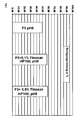
- Fig. 1 is the increase in cleaning performance of an all-purpose cleaner based on sugar surfactants (Glucopon) to recognize.
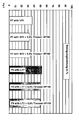
- Fig. 2 it can be seen that only by adding the film-forming nonionic surfactant (Glucopon), the primary cleaning performance is improved; the addition of a fatty alcohol ethoxylate (Dehydol LT 7) or the anionic surfactant (Texapon N70 lauryl ether sulfate) even worsens the cleaning performance.
- Glucopon film-forming nonionic surfactant
- Dehydol LT 7 fatty alcohol ethoxylate
- anionic surfactant Texapon N70 lauryl ether sulfate
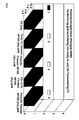
- nonpolar biocide does not degrade the material compatibility of the cleaning formulations on plastics.
- the antimicrobial, bactericidal activity of the cleaning composition of the invention was determined on sponges and flooring by means of a slightly modified US standard AATCC 100-2004.
- Bacteriostatic activity was determined according to CG Standard 147e (Agar Diffusion Test).
- pathogens were pathogenic Gram-positive bacteria (Staphylococcus aureus ATCC 6538) and Gram-negative bacteria (Klebsiella pneumoniae ATCC 4352 and Salmonella choleraesuis ATCC 9184).
Landscapes
- Chemical & Material Sciences (AREA)
- Life Sciences & Earth Sciences (AREA)
- Engineering & Computer Science (AREA)
- Wood Science & Technology (AREA)
- Chemical Kinetics & Catalysis (AREA)
- Oil, Petroleum & Natural Gas (AREA)
- Organic Chemistry (AREA)
- Health & Medical Sciences (AREA)
- Emergency Medicine (AREA)
- General Health & Medical Sciences (AREA)
- Agronomy & Crop Science (AREA)
- Pest Control & Pesticides (AREA)
- Plant Pathology (AREA)
- Dentistry (AREA)
- Zoology (AREA)
- Environmental Sciences (AREA)
- Molecular Biology (AREA)
- Toxicology (AREA)
- Detergent Compositions (AREA)
- Agricultural Chemicals And Associated Chemicals (AREA)
Abstract
Die vorliegende Erfindung betrifft eine antimikrobielle Reinigungszusammensetzung enthaltend mindestens ein Zuckertensid und eine Verbindung der Formel (I) als Biozid, sowie die Verwendung der Zuckertenside zur Verbesserung der Aktivität des Biozid.
Description
- Die vorliegende Erfindung betrifft eine antimikrobielle Reinigungszusammensetzung enthaltend mindestens ein Zuckertensid und eine Verbindung der Formel (I) als Biozid, sowie die Verwendung der Zuckertenside zur Verbesserung der Aktivität des Biozid.
- Harte Oberflächen reinigende und desinfizierende Zusammensetzungen umfassen im Allgemeinen ein oder mehrere Tenside und gegebenenfalls ein oder mehrere Biozid(e). In solchen Reinigungszusammensetzungen werden meistens anionische, nichtionische, amphotere und/oder kationische Tenside verwendet. Nichtionische Tenside werden üblicherweise aufgrund ihrer Wirksamkeit gegen Fettverschmutzungen verwendet. Nichtionische Tenside zeigen niedrige oder keine biozide Wirkung, wobei zu bemerken ist, dass im Allgemeinen die biozide Wirkung von Tensiden niedrig ist.
- Deshalb ist es üblich ein gesondertes Biozid zu den Zusammensetzungen zu gegeben. Typische Biozid sind starke Säuren, Alkali, phenolische Stoffe und Oxidanzien, wie Persäuren und Hypohalogenite. Diese Biozid sind im Allgemeinen stark reaktive Spezies. Dadurch zeigen sie toxische, korrosive und reizende Eigenschaften. Ferner ist ihre Aktivität als Biozid aufgrund ihrer starken Reaktivität von kurzer Lebensdauer. Somit sind diese reaktiven Komponenten in relativ hohen Anteilen in den Reinigungsmitteln erforderlich.
- In der
DE69722408T2 wird von einer Synergie bezüglich antimikrobieller Wirksamkeit zwischen aromatischen Alkoholen oder Phenolen, die von Phenol an sich verschieden sind und nichtionischen ethoxylierten Alkanol-Tensiden, außerhalb des physiologischen pH-Bereichs berichtet. Eine Erhöhung der Reinigungsleistung wird jedoch nicht offenbart. - Aus dem Stand der Technik sind weitere Tenside bekannt, die die Wirkungen bestimmter Biozidn erhöhen. In der
DE 3619375 wurde gefunden, dass die Verwendung von Alkylglycosiden als in alkohol- oder carbonsäurehaltigen antiseptischen Mitteln zu einer deutlichen Verstärkung der bakteriziden Wirkung der Alkohole bzw. Carbonsäuren führt. Dies zeigt sich in einer Verbesserung der mikrobiziden Wirkung gegenüber grampositiven Bakterien. Diese Zusammensetzungen werden bei einem stark sauren pH-Wert, im Allgemeinen unter pH 3, angewendet. Allerdings wird hier nicht auf eine verbesserte Reinigung, sondern verbesserte Wirkung des Biozid eingegangen. - In der
DE60210317T2 wird eine antimikrobielle Zusammensetzung zur Behandlung einer Oberfläche beschrieben, die als Biozid ein polymeres Biguanid enthält. Diese wässrige Zusammensetzungen ein gutes Film-/Streifenbildungs- und Glanzretentions-/- verstärkungsprofil bei gleichzeitiger biozider Wirkung. Eine verbesserte Reinigung wird nicht offenbart. - Der Fachmann weiss, dass die unpolaren Biozide die Reinigungsleistung verringern.
- Es sind auch weitere Tensid/Biozid-Kombinationen bekannt, die eine verminderte Wirkung, verglichen mit dem Biozid an sich, zeigen. In der Theorie wird das mit Mizellen des Tensids erklärt, in die das Biozid adsorbiert wird und deshalb weniger zur Wirkung zeigt ("Surface Active Agents",Porter 1990, Elsevier).
- Die Verwendung von Hydroxydiphenylether als mikrobizide Wirkstoffbestandteile in Haushaltsreinigungsmitteln ist z.B. aus der
EP 1 167 503 A1 bekannt. Hier wird jedoch darauf hingewiesen, dass diese Reinigungsmittel einen hohen Gehalt an synthetischen Detergenzien oder Seifen aufweisen, welche die bakterizide Wirkung des Hydroxydiphenylethers in der Formulierung stark vermindern. Dadurch wird die bakterizide Aktivität solcher Haushaltsreinigungsmittel unbefriedigend. - Aufgabe der vorliegenden Erfindung war es, neue, verbesserte antimikrobielle Reinigungszusammensetzungen zur Verfügung zu stellen, die insbesondere eine verbesserte, primäre und/oder sekundäre Reinigungsleistung zeigen. Außerdem sollte dabei die antimikrobielle Wirkung konstant bleiben bzw. verbessert werden.
- Dies Aufgabe wird durch die erfindungsgemäße antimikrobielle Reinigungszusammensetzung gelöst.
- Gegenstand der vorliegenden Erfindung ist somit eine antimikrobielle Reinigungszusammensetzung enthaltend mindestens ein Zuckertensid und eine Verbindung der Formel (I) als Biozid

- Wobei die Indizes folgende Bedeutung haben
X = O, S oder - CH2-,
Y = Cl oder Br,
Z = SO2H, NO2 oder C1 - C4-Alkyl,
k, l = 0 oder 1,
m = 0, 1, 2 oder 3,
n = 0, 1, 2 oder 3,
o=0 oder 1. - Zuckertenside im Sinne der vorliegenden Erfindung sind nichtionische Tenside mit einem Kohlenhydrat als hydrophilem Anteil und Fettalkoholen oder Fettsäuren als hydrophobe Komponente. In einer Ausführung der vorliegenden Erfindung wird ein Zuckertensid der allgemeinen Formel (II)
R-O-Gp
mit R = Alkyl oder Alkenyl,
G = Aldose oder Ketose und
P = 1, 2, 3, 4, 5, 6, 7, 8, 9 oder 10 eingesetzt. - In einer weiteren Variante handelt es sich bei den erfindungsgemäß zu verwendenden Zuckertensiden um Alkyl- und/oder Alkenylpolyglycoside der Formel II in der R für ein Alkyl- und/oder Alkenylrest mit 4 bis 22 Kohlenstoffatomen, G für einen Zuckerrest mit 5 oder 6 Kohlenstoffatomen und P für die Zahlen von 1 bis 10 steht. In einer weiteren Ausführung leiten sich die Alkyl- und/oder Alkenylpolyglycoside von Aldosen oder Ketosen mit 5 oder 6 Kohlenstoffatomen ab.
- Die Komponente G in Formel (II) wird in einer Ausführung ausgewählt aus der Gruppe Hexosen, bevorzugt der Gruppe enthaltend Allose, Altrose, Glucose, Mannose, Gulose, Idose, Galactose, Talose, Psicose, Fructose, Sorbose, Tagatose, besonders bevorzugt Glucose.
- Die Komponente G in Formel (II) wird in einer weitern Ausführung ausgewählt aus der Gruppe Pentosen, bevorzugt der Gruppe enthaltend Ribulose, Xylulose, Ribose, Arabinose, Xylose, Lyxose, besonders bevorzugt Xylose und/oder Arabinose.
- Die bevorzugten Alkyl-und/oder Alkenyloligoglykoside sind in einer Variante der Erfindung Alkyl- und/oder Alkenyloligoglucoside.
- Die Indexzahl p in der allgemeinen Formel (I) gibt den Oligomerisierungsgrad (DP), d. h. die Verteilung von Mono- und Oligoglykosiden an und steht für eine Zahl zwischen 1 und 10. Während p in einer gegebenen Verbindung stets ganzzahlig sein muss und hier vor allem die Werte p = 1 bis 6 annehmen kann, ist der Wert p für ein bestimmtes Alkyl(oligo)glykosid eine analytisch ermittelte rechnerische Größe, die meistens eine gebrochene Zahl darstellt. In einer Ausführung der Erfindung werden Alkyl- und/oder Alkenyloligoglykoside mit einem mittleren Oligomerisierungsgrad p von 1,1 bis 3,0 eingesetzt.
- Die erfindungsgemäßen Alkyl- und/oder Alkenylpolyglycoside können nach den einschlägigen Verfahren der präparativen organischen Chemie erhalten werden. Stellvertretend für das umfangreiche Schrifttum sei hier auf die Übersichtsarbeit von Biermann et al. in Starch/Stärke 45, 281 (1993), sowie J.Kahre et al. in SÖFW-Journal Heft 8, 598 (1995) verwiesen.
- Neben Alkyl- und/oder Alkenylpolyglycoside auf Basis von unverzweigten Fettalkoholen werden in einer Variante Alkyl- und/oder Alkenylpolyglycoside mit verzeigte Reste R eingesetzt.
- Der Rest R in Formel (II) wird in einer Ausführung ausgewählt aus der Gruppe der Alkoholen enthaltend Fettalkohole, primäre Alkohole, insbesondere sogenannte Oxoalkohole, zum Beispiel Nonyl-, Undecyl- oder Tridecylalkohole, und primäre Alkohole, die lineare Octyl-, Decyl-, Dodecyl-, Tetradecyl-, Hexadecyl- oder Octadecylgruppen enthalten sowie Gemische davon.
- In einer Variante werden Alkohole mit einer Kohlenstoffkette, die auch verzweigt sein kann, mit C4-C18, bevorzugt C12-C16, insbesondere C12-C14 ausgewählt.
- In einer Ausführung der Erfindung handelt es sich bei den verzweigten Resten um isoAmyl, iso-Hexyl und/oder iso-heptyl, bevorzugt 2-Ethyl-Hexyl und/oder 2-Propyl-Heptyl. Erfindungsgemäß können auch Gemische unterschiedlicher Verbindungen der allgemeinen Formel (II) eingesetzt werden. So können alle Kombinationen der unterschiedlichen Aldosen oder Ketosen mit allen möglichen Alkyl- und/oder Alkenylresten eingesetzt werden.
- In einer weiteren Ausführung enthält die erfindungsgemäße Reinigungszusammensetzung als Biozid eine Verbindung der Formel (la)


- Erfindungsgemäß können auch Gemische unterschiedlicher Verbindungen der allgemeinen Formel (I) eingesetzt werden. So können alle Kombinationen der unterschiedlichen Verbindungen der allgemeinen Formel (II) mit den unterschiedlicher Verbindungen der allgemeinen Formel (I) in den erfindungsgemäßen Zusammensetzungen eingesetzt werden, aber auch Kombinationen von Gemischen der unterschiedlichen Verbindungen der allgemeinen Formel (II) mit den Gemischen der unterschiedlicher Verbindungen der allgemeinen Formel (I).
- Im Sinne der Erfindung sind Reinigungszusammensetzungen beziehungsweise Reinigungsmittel:
- Mittel zur Reinigung und/oder Desinfektion von harten Oberflächen, wie Allzweckreiniger, Bodenreiniger, Geschirrpülmittel für manuelle oder automatische Geschirreinigung, Handspülmittel, Glasreiniger, Küchenreiniger, Bad- und Sanitärreiniger, WC-Reiniger, Desinfektionsreiniger.
- Reinigungs- und Pflegemittel für Textilien und Wäsche, wie Waschmittel, Weichspüler, Fleckenentfernungsmittel.
- Formulierungstypen der Reinigungsmittel werden ausgewählt aus der Gruppe enthaltend: Reinigungs- und Desinfektionsmittelkonzentrat, Flüssige Reiniger oder Desinfektionsmittel, Pulverförmige Reiniger oder Desinfektionsmittel, Flüssige Reiniger oder Desinfektionsmittel, Sprays zur Reinigung oder Desinfektion, Emulsionen und Gele.
- Die zu behandelnden Oberflächen werden ausgewählt aus der Gruppe enthaltend: Glas, Kunststoffe, Metalle, Stahl, Holz, Steinmaterialien, Keramik, Zement, Beschichtungen, Verbundmaterialien, Textilien (Naturfasern wie z.B. Baumwolle, Wolle, Seide und synthetische Fasern wie Polyester, Polyolefine (PE, PP etc.), Polyamide, Polyurethane, PVC etc.), Schaumstoffe und Polstermaterialien und Teppiche.
- In einer Variante der vorliegenden Erfindung handelt es sich um eine Reinigungszusammensetzung für harte Oberflächen. Harte Oberflächen im Sinne der Erfindung sind z.B. Kacheln, Fliesen, Keramik, Glas, Glasfasern, Metalle, Stahl, Aluminium, Kunststoff, Holz, Steinmaterialien, Beschichtungen, Verbundmaterialien, Zement und dergleichen, aber keine Textilien.
- Beim Reinigen von harten Oberflächen ist es häufig notwendig, eine Oberfläche zu desinfizieren. Unter desinfizieren wird in dieser Anmeldung die Abtötung oder die Wachstumsreduktion von Mikroorganismen verstanden.
- In einer weiteren Ausführung der Erfindung besitzt die Zusammensetzung pH-Wert zwischen 5 und 12, bevorzugt 7 bis 10, insbesondere 7 bis 9.
- Die erfindungsgemäße Zusammensetzung liegt in einer Variante als Konzentrat vor. Bei den Konzentraten handelt es sich in der Regel um wäßrige Zubereitungen mit einem erhöhten Aktivsubstanzgehalt, der durch Verdünnen (meistens mit Wasser) auf die jeweilige, der Anwendung entsprechende Konzentration eingestellt wird. Die Konzentrate enthalten bevorzugt zusätzlich Antioxidationsmittel wie z.B. BHT, Ascorbinsäure etc. als Stabilisatoren.
- In einer weiteren Ausführung enthält die erfindungsgemäße Reinigungszusammensetzung die Verbindung der Formel (I) in einer Endkonzentration von 0,0001 bis 10% eingesetzt, bevorzugt 0,0001 bis 1 %, insbesondere 0,003 bis 0,5% Gewichtsprozent und die Verbindung der Formel (II) in einer Endkonzentration von 0,1 bis 20% eingesetzt, bevorzugt 1 bis 10%, besonders bevorzugt 2 bis 5% insbesondere 2,5 Gewichtsprozent.
- In einer Ausführung der Erfindung wird für die Reinigung und Desinfektion die Verbindung der Formel (I) in einer Endkonzentration von 0,0001 bis 10% eingesetzt, bevorzugt 0,0001 bis 1 %, insbesondere 0,003 bis 0,5% Gewichtsprozent.
- In einer Ausführung der Erfindung wird für die Reinigung die Verbindung der Formel (II) in einer Endkonzentration von 0,1 bis 20% eingesetzt, bevorzugt 1 bis 10%, besonders bevorzugt 2 bis 5% insbesondere 2,5 Gewichtsprozent.
- Falls Konzentrate vorlegen werden diese verdünnt, so dass beim Auftrag auf die zu reinigende Oberfläche die Verbindungen der Formel (I) und (II) in den oben genannten Konzentrationen vorliegen.
- Die erfindungsgemäße Reinigungszusammensetzung enthält in einer Variante mindestens einem weiteren Zusatzstoff ausgewählt aus der Gruppe enthaltend: Stabilisatoren, Antioxidantien, weitere Tenside, Säuren, Basen, Hydrotrope, Bleichsysteme, Konsistenzgeber, Konservierungsmittel, Dispergiermittel, Duftstoffe, Farbstoffe, Komplexbildner, Lösungsmittel und Wasser.
- Weiterer Gegenstand der vorliegenden Erfindung ist ein Verfahren zur Herstellung der erfindungsgemäßen antimikrobiellen Reinigungszusammensetzung. Die Herstellung erfolgt in dem Fachmann bekannten Arbeitsschritten durch Mischen der Zutaten, wobei das Biozid der Formel (I) zunächst in dem Zuckertensid vorgelöst wird und anschließend in eine wässrige Phase gebracht wird.
- Ferner ist Gegenstand der Erfindung auch die Verwendung eines Biozid der Formel (I) zur Steigerung der Reinigungsleistung von nichtionischen Zuckertensiden. Dabei wird insbesondere die primäre Reinigungsleistung verbessert im Vergleich zu einer Kontrolle ohne das erfindungsgemäße Biozid.
- Im Sinne der vorliegenden Erfindung ist unter primärer Reinigungsleistung die Entfernung von Schmutz von einer Oberfläche, bevorzugt von einer harten Oberfläche zu verstehen. Um die primäre Reinigungsleistung zu messen wird in einer Variante der Erfindung der IPP-Gardner-Test für Allzweckreiniger gemäß "IPP-Norm"(SÖFW, No. 10/1986, Seite 371) eingesetzt.
- Die vorliegende Erfindung betrifft somit ein Verfahren zur Verbesserung der primären Reinigungsleistung eines Reinigungsmittels enthaltend nichtionische Zuckertenside durch Einsatz eines Biozid der Formel (I) im Vergleich zu einer Kontrolle ohne dieses Biozid gemessen mit dem IPP-Gardner-Test für Allzweckreiniger gemäß "IPP-Norm"(SÖFW, No. 10/1986, Seite 371) oder einer Variante davon.
- Die primäre Reinigungsleistung wird erfindungsgemäß um 2%, 3%, bevorzugt 4%, 5%, 6%, besonders bevorzugt 7%, 8%, 9%, insbesondere 10% oder mehr erhöht.
- Gegenstand der vorliegenden Erfindung ist in einer Ausführung ein Verfahren zur Erhöhung der antimikrobiellen Wirkung einer Reinigungszusammensetzung enthaltend nichtionische Zuckertenside durch Zugabe eines Biozid der Formel (I).
- Der Einsatz des Biozid der Formel (I) in einer Reinigungszusammensetzung enthaltend nichtionische Zuckertenside führt neben der Verbesserung der primären Reinigungsleistung zu dem Erhalt oder Verbesserung der sekundären Reinigungsleistung.
- Die sekundäre Reinigungsleistung ist in einer Ausführung der Erfindung der Glanzerhalt der gereinigten Oberfläche.
- In einer Variante der Erfindung wird das Glanzverhalten mit folgendem Test bestimmt: Vor dem Auftrag der Testsubstanz wird eine schwarze Keramikfliese in einer Geschirrspülmaschine mit dem 55°C-Program "Universal Plus" und standard Spülmaschinenpulver gespült und nach dem Trocknen mit Isopropanol und anschließend mit Ethylacetat gereinigt. Die Oberfläche wird unter warmem Wasser mit einem Schwamm gesäubert und anschließend mit destilliertem Wasser und Schwamm nochmals gesäubert. Das Abfließen des destillierten Wassers wird visuell überprüft.
- Die Lichtreflektion wird in einem 20° Winkel an 5 Punkten der so präparierten Fliese mittels eines BYK-Gardner-Glanzmessers bestimmt. Es werden 25 Tropfen Testsubstanz mit einer Pipette in 5 Reihen mit je 5 Tropfen aufgetragen und mit einem Papierhandtuch verteilt. Die Verteilung erfolgt durch Wischen ohne Druck in 10 Reihen von oben nach unten und 10 von unten nach oben.
- Die Testsubstanz z. B. wird in folgender Lösung aufgetragen:
- 0,1% AS (active Substanz) Testmaterial, 1,0% AS Lutensol ON 80 (BASF), add 100% VE-Wasser
- Nach dem Trocknen wird die Lichtreflektion erneut, falls möglich, an denselben Punkten der Fliese bestimmt.
- Die Glanz-Retention ergibt sich aus dem Verhältnis des Messwerts der behandelten Oberfläche zu dem Wert der gereinigten Fliese vor Auftrag der Testsubstanz.
- In einer Variante der Erfindung ist die Glanz-Retention der erfindungsgemäßen Reinigungszusammensetzung konstant im Vergleich zu dem Wert einer Reinigungszusammensetzung ohne das erfindungsgemäße Biozid, bevorzugt um 2%, 3%, 4%, 5%, 6%, besonders bevorzugt 7%, 8%, 9%, insbesondere 10% oder mehr erhöht.
- Die sekundäre Reinigungsleistung ist in einer Ausführung der Erfindung die Materialverträglichkeit.
- In einer Variante der Erfindung wird die Materialverträglichkeit mit folgendem Test bestimmt:
- Die Bestimmung dient anhand der Rißbildung an Kunststoffstäbchen nach Eintauchen in Reinigerlösungen zur Beurteilung der Verträglichkeit von Reinigern auf Kunststoffen.
- Der zu prüfende Kunststoff wird mit einem Metallstift versehen, dadurch unter Spannung gesetzt und in die Testlösung getaucht.
- Nach bestimmten Zeitabständen wird die Veränderung des Kunststoffstäbchens beurteilt.
- Je nach Aufgabenstellung wird bevorzugt 5% AS (Aktivsubstanz) der zu prüfenden Substanzen eingesetzt.
- Die Auswertung erfolgt visuell anhand folgender Wertungkriterien: 1= unverändert, 2= Risse, 3= durchgehender Riss und 4= Bruch.
- In einer Variante der Erfindung ist die Materialverträglichkeit der erfindungsgemäßen Reinigungszusammensetzung konstant im Vergleich zu dem Wert einer Reinigungszusammensetzung ohne das erfindungsgemäße Biozid.
- In herkömmlichen Reinigungsmitteln ist die Reinigungsleistung proportional zum Emulgiervermögen der Formulierung. Die erfindungsgemäße Reinigungszusammensetzung zeigt jedoch bei gleichem Emulgiervermögen eine verbesserte primäre Reinigungsleistung durch die Zugabe des Biozid.
- Die sekundäre Reinigungsleistung ist in einer Ausführung der Erfindung das Emulgiervermögen.
- In einer Variante der Erfindung wird das Emulgiervermögen mit folgendem Test bestimmt:
- Tensidlösungen einer definierten Konzentration werden im Becherglas mit Olivenöl überschichtet und unter definierten Bedingungen gerührt. Die so erzeugten Emulsionen werden anschließend in Messzylinder überführt. Als Maß für die Emulsionsstabilität wird das Volumen an sich abscheidender wässriger Phase nach einer Stunde und nach vier Stunden bestimmt.
- Die Messreihe wird Wahlweise bei einer Wasserhärte von 0°dh oder 16°dh aufgenommen. Zunächst werden 50g wässrige homogene Tensidlösung mit einem Massenanteil von w=2% Aktivsubstanz in einem 400mL Becherglas angesetzt bzw. bei Formulierungen nach der jeweiligen Anforderung. Die frisch angesetzte Lösung wird dann mit 50g Öl überschichtet. Anschließend werden die Lösungen bei einer Temperatur von 20-25°C mit 1200rpm ±3rpm genau 2 Minuten gerührt. Dabei ist das Rührorgan auf Höhe der Phasengrenze zu positionieren. Danach wird die Emulsion in einen 250mL Messzylinder überführt und das Volumen an abgeschiedenem Wasser nach einer und vier Stunden abgelesen. Während der Messung soll der Messzylinder ruhen.
- Die durch Einfachbestimmung ermittelten Messwerte sind innerhalb einer Messreihe vergleichbar und sollten durch das mitführen eines Standards wie z.B. Natriumlaurylsulfat überprüft werden. Sollte die Messung des Standards außerhalb des Toleranzbereiches liegen ist die Messreihe zu wiederholen.
- Um die Phasengrenze bei Versuchen mit farblosen Ölen schärfer ablesen zu können, kann man die Testflüssigkeit mit etwas wasser- bzw. öllöslichen Farbstoff versetzen.
- In einer Variante der Erfindung ist das Emulgiervermögen der erfindungsgemäßen Reinigungszusammensetzung konstant im Vergleich zu dem Wert einer Reinigungszusammensetzung ohne das erfindungsgemäße Biozid.
- Weiterer Gegenstand der Erfindung ist die Verwendung von Zuckertensiden zur Steigerung der antimikrobiellen Wirkung der Biozid der Formel (I).
- Ferner ist Gegenstand der Erfindung die Verwendung erfindungsgemäßen Reinigungszusammensetzung zur Reinigung und/oder Desinfektion von harten Oberflächen.
- Die erfindungsgemäße, antimikrobielle Reinigungszusammensetzung zeigt eine gute, lang anhaltende Desinfektionswirkung. Ferner zeigt die erfindungsgemäße Reinigungszusammensetzung eine verbesserte primäre Reinigungsleistung sowie eine gleich bleibende bzw. verbesserte sekundäre Reinigungsleistung.
- Durch den erfindungsgemäßen Einsatz eines Zuckertensids und einer Verbindung der Formel (I) als Biozid kommt es zu Synergieeffekten, deutlich werdend in einer verbesserten Reinigungsleistung und verbesserten antimikrobielles Wirkung.
- Im Sinne der Erfindung wird eine Verbesserung, Steigerung oder Erhöhung einer Eigenschaft im Vergleich mit einer Kontrolle bestimmt in welcher die Komponente, deren Wirkung getestet wird, nicht vorhanden ist. Zur Durchführung dieser Versuche greift der Fachmann auf sein allgemeines Fachwissen zurück.
- Synergetische Effekte im Sinne der vorliegenden Erfindung sind Effekte die nur durch die Kombination der erfindungsgemäßen nichtionischen Zuckertensiden mit den erfindungsgemäßen Biozidn entstehen und dadurch die Wirkung einer dieser Komponenten erhöht wird im Vergleich zu einer Kontrolle ohne diese Komponente.
- In den nachfolgenden Beispielen bedeutet Tinosan HP 100 eine 30%-ige Lösung von der biozide Verbindung der Formel 1 a in 1,2-propylenglykol.
- Die Reinigungsleistung wurde mittels des IPP-Gardner-Tests für Allzweckreiniger gemäß "IPP-Norm"(SÖFW, No. 10/1986, Seite 371) bestimmt.
- F3 (APC as ready to use):
- 2,5% Glucopon 425 N/HH (50%)
- 0,8% Citric Acid (100%)
- 0,5% NaOH (50%)
- 0,8% Sodium bicarbonate (100%)
- 0-0,5 % Tinosan HP 100
- Aus
Fig. 1 ist die Erhöhung der Reinigungsleistung eines Allzweckreinigers auf Basis von Zuckertensiden (Glucopon) zu erkennen. - F7 (APC as ready to use):
- 2,5% Texapon N70
- 0,8% Citric Acid (100%)
- 0,5% NaOH (50%)
- 0,8% Sodium bicarbonate (100%)
- 0-0,5 % Tinosan HP 100
- F9 (APC as ready to use):
- 2,5% Dehydol LT 7
- 0,8% Citric Acid (100%)
- 0,5% NaOH (50%)
- 0,8% Sodium bicarbonate (100%)
- 0-0,5 % Tinosan HP 100
- Aus
Fig. 2 erkennt man, dass nur durch Zugabe des filmbildenden nichtionischen Tensids (Glucopon), die primäre Reinigungsleistung verbessert wird; bei Zugabe von einem Fettalkoholethoxylat (Dehydol LT 7), oder vom anionischen Tensid (Texapon N70 Laurylethersulfat) verschlechtert sich sogar die Reinigungsleistung. - Das Glanzverhalten wurde mit dem oben beschriebenen Test bestimmt:
Formulierung Glanz nach Behandlung [%] F3 pH 8 76,6 % F3 pH 9 78,2 % F3 + 0,1% Tinosan H P 100 pH 8 74,1 % F3 + 0,1% Tinosan H P 100 pH 9 84,8 % F3 + 0,5% Tinosan HP 100 pH 8 79,4 % F3 + 0,5% Tinosan HP 100 pH 9 78,4 % - Ergebnis: das Glanzverhalten der Formulierung bleibt durch Zugabe des erfindungsgemäßen Biozid (Tinosan HP 100) unverändert gut und wird bei höheren Konzentrationen oder pH 9 sogar erhöht.
- Die Materialverträglichkeit wurde mit dem oben beschriebenen Test bestimmt:
- Ergebnisse sind der
Fig. 3 zu entnehmen. - Die Zugabe des unpolaren Biozid verschlechtert nicht die Materialverträglichkeit der Reinigungsformulierungen auf Kunststoffen.
- Die Emulgierbarkeit wurde mit dem oben beschriebenen Test bestimmt:
- Als Maß für die Emulsionsstabilität wird das Volumen an sich abscheidender wässriger Phase nach einer Stunde und nach vier Stunden bestimmt.
- Ergebnis: Durch Zugabe von Biozid wird die Emulgierbarkeit von Ölivenöl nicht gesteigert.
- Die antimikrobielle, bakterizide Aktivität der erfindungsgemäßen Reinigungszusammensetzung wurde auf Schwämmen und Bodenbelag mittels eines leicht modifizierten US Standards AATCC 100-2004 bestimmt.
- Die bakteriostatische Aktivität wurde gemäß CG Standard 147e (Agar Diffusion Test) bestimmt.
- Es kamen erfindungsgemässe Reinigungszusammensetzungen (Allzweckreiniger und Handgeschirrspülmittel) mit 0-0.5% Tinosan HP 100 zum Einsatz.
- Als Keime wurden pathogene Gram-positives Bakterien (Staphylococcus aureus ATCC 6538) and Gram-negative Bakterien (Klebsiella pneumoniae ATCC 4352 and Salmonella choleraesuis ATCC 9184) verwendet.
- Die antimikrobiellen Eigenschaften des Biozides der Formel 1a (Tinosan HP100) blieben erhalten. Sowohl die Keimabtötung, als auch die langanhaltende antimikrobielle Wirkung blieb unverändert bestehen.
| Höhe wässrige Phase [ml] | Höhe wässrige Phase [ml] | |
| 1h | 4h | |
| F3 | 36 | 40 |
| F3 + 0,1% Tinosan H P 100 | 34 | 39 |
| F3 + 0,5% Tinosan HP 100 | 34 | 40 |
Claims (15)
- Antimikrobielle Reinigungszusammensetzung enthaltend mindestens ein
Zuckertensid und eine Verbindung der Formel (I) als Biozid
X = O, S oder - CH2-,
Y = Cl oder Br,
Z = SO2H, NO2 oder C1 - C4-Alkyl,
k, l = 0 oder 1,
m = 0, 1, 2 oder 3,
n = 0, 1, 2 oder 3,
o = 0 oder 1. - Zusammensetzung nach Anspruch 1 dadurch gekennzeichnet, dass ein Zuckertensid der allgemeinen Formel (II)
R-O-Gp
mit R = Alkyl oder Alkenyl,
G = Aldose oder Ketose und
P = 1, 2, 3, 4, 5, 6, 7, 8, 9 oder 10 eingesetzt wird. - Zusammensetzung nach einem der vorhergehenden Ansprüche dadurch gekennzeichnet, dass R eine Kohlenstoffkette von C4-C22 ist, wobei diese linear oder verzweigt sein kann.
- Zusammensetzung nach einem der vorhergehenden Ansprüche dadurch
gekennzeichnet, dass als Biozid eine Verbindung der Formel (la)

- Zusammensetzung nach einem der vorhergehenden Ansprüche dadurch gekennzeichnet, dass als Zuckertensid Gemische unterschiedlicher Verbindungen der allgemeinen Formel (II) und als Biozid Gemische unterschiedlicher Verbindungen der allgemeinen Formel (I) eingesetzt werden.
- Zusammensetzung nach einem der vorhergehenden Ansprüche dadurch gekennzeichnet, dass es sich um eine Reinigungszusammensetzung für harte Oberflächen handelt.
- Zusammensetzung nach einem der vorhergehenden Ansprüche dadurch gekennzeichnet, dass sie einen pH-Wert zwischen 5 und 12 besitzt.
- Zusammensetzung nach einem der vorhergehenden Ansprüche dadurch gekennzeichnet, dass sie als Konzentrat vorliegt.
- Zusammensetzung nach einem der vorhergehenden Ansprüche dadurch gekennzeichnet, dass für die Reinigung Verbindung der Formel (I) in einer Endkonzentration von 0,0001 bis 10% eingesetzt wird.
- Zusammensetzung nach einem der vorhergehenden Ansprüche dadurch gekennzeichnet, dass für die Reinigung Verbindung der Formel (II) in einer Endkonzentration von 0,1 bis 20% eingesetzt wird.
- Zusammensetzung nach einem der vorhergehenden Ansprüche enthaltend mindestens einem weiteren Zusatzstoff ausgewählt aus der Gruppe enthaltend:Stabilisatoren, Antioxidantien, weitere Tenside, hydrotrope Mittel, Konsistenzgeber, Konservierungsmittel, Duftstoffe, Farbstoffe, Komplexbildner,Lösungsmittel und Wasser.
- Verfahren zur Herstellung einer antimikrobiellen Reinigungszusammensetzung nach einem der vorhergehenden Ansprüche dadurch gekennzeichnet, dass das Biozid der Formel (I) zunächst in dem Zuckertensid vorgelöst wird und anschließend in eine wässrige Phase gebracht wird.
- Verwendung eines Biozid der Formel (I) zur Steigerung der Reinigungsleistung von nicht-ionischen Zuckertensiden.
- Verwendung von Zuckertensiden zur Steigerung der antimikrobiellen Wirkung der Biozid der Formel (I).
- Verwendung einer Zusammensetzung der Ansprüche 1 bis 10 zur Reinigung und/oder Desinfektion von harten Oberflächen.
Priority Applications (10)
| Application Number | Priority Date | Filing Date | Title |
|---|---|---|---|
| EP11183580A EP2436754A1 (de) | 2011-09-30 | 2011-09-30 | Antimikrobielle Reinigungszusammensetzung |
| MX2014003719A MX2014003719A (es) | 2011-09-30 | 2012-09-20 | Composicion de limpieza antimicrobiana. |
| CN201280046778.5A CN103827281B (zh) | 2011-09-30 | 2012-09-20 | 抗微生物清洁组合物 |
| BR112014007641A BR112014007641A2 (pt) | 2011-09-30 | 2012-09-20 | uso de um biocida |
| AU2012314636A AU2012314636B2 (en) | 2011-09-30 | 2012-09-20 | Antimicrobial cleaning composition |
| KR1020147011133A KR20140079794A (ko) | 2011-09-30 | 2012-09-20 | 항미생물 세정 조성물 |
| US14/345,987 US20140296349A1 (en) | 2011-09-30 | 2012-09-20 | Antimicrobial cleaning composition |
| EP12762280.1A EP2764077A1 (de) | 2011-09-30 | 2012-09-20 | Antimikrobielle reinigungszusammensetzung |
| JP2014532325A JP6092227B2 (ja) | 2011-09-30 | 2012-09-20 | 抗菌洗浄組成物 |
| PCT/EP2012/068528 WO2013045340A1 (en) | 2011-09-30 | 2012-09-20 | Antimicrobial cleaning composition |
Applications Claiming Priority (1)
| Application Number | Priority Date | Filing Date | Title |
|---|---|---|---|
| EP11183580A EP2436754A1 (de) | 2011-09-30 | 2011-09-30 | Antimikrobielle Reinigungszusammensetzung |
Publications (1)
| Publication Number | Publication Date |
|---|---|
| EP2436754A1 true EP2436754A1 (de) | 2012-04-04 |
Family
ID=45524236
Family Applications (2)
| Application Number | Title | Priority Date | Filing Date |
|---|---|---|---|
| EP11183580A Withdrawn EP2436754A1 (de) | 2011-09-30 | 2011-09-30 | Antimikrobielle Reinigungszusammensetzung |
| EP12762280.1A Withdrawn EP2764077A1 (de) | 2011-09-30 | 2012-09-20 | Antimikrobielle reinigungszusammensetzung |
Family Applications After (1)
| Application Number | Title | Priority Date | Filing Date |
|---|---|---|---|
| EP12762280.1A Withdrawn EP2764077A1 (de) | 2011-09-30 | 2012-09-20 | Antimikrobielle reinigungszusammensetzung |
Country Status (9)
| Country | Link |
|---|---|
| US (1) | US20140296349A1 (de) |
| EP (2) | EP2436754A1 (de) |
| JP (1) | JP6092227B2 (de) |
| KR (1) | KR20140079794A (de) |
| CN (1) | CN103827281B (de) |
| AU (1) | AU2012314636B2 (de) |
| BR (1) | BR112014007641A2 (de) |
| MX (1) | MX2014003719A (de) |
| WO (1) | WO2013045340A1 (de) |
Cited By (3)
| Publication number | Priority date | Publication date | Assignee | Title |
|---|---|---|---|---|
| EP2727991A1 (de) * | 2012-10-30 | 2014-05-07 | The Procter & Gamble Company | Flüssige Handgeschirrspül-, Reinigungs- und Desinfektionsmittel |
| WO2014177530A1 (en) * | 2013-05-03 | 2014-11-06 | Basf Se | Synergistic antimicrobial formulation |
| CN111315858A (zh) * | 2017-11-14 | 2020-06-19 | 宝洁公司 | 颗粒状抗微生物衣物洗涤剂组合物 |
Families Citing this family (9)
| Publication number | Priority date | Publication date | Assignee | Title |
|---|---|---|---|---|
| ES2861300T3 (es) | 2012-02-20 | 2021-10-06 | Basf Se | Potenciación de la actividad antimicrobiana de biocidas con polímeros |
| EP3132016A1 (de) * | 2014-06-30 | 2017-02-22 | The Procter & Gamble Company | Waschmittelzusammensetzung |
| KR20180039065A (ko) | 2015-08-11 | 2018-04-17 | 바스프 에스이 | 항미생물 중합체 |
| ES2910708T3 (es) * | 2015-12-22 | 2022-05-13 | Procter & Gamble | Composiciones que comprenden una amida |
| IT201700000450A1 (it) * | 2017-01-03 | 2018-07-03 | Pietro Chieco | "composizione per la pulizia di superfici di materiali lapidei" |
| EP3510867A1 (de) | 2018-01-12 | 2019-07-17 | Basf Se | Antimikrobielles polymer |
| JP2023551673A (ja) | 2020-12-23 | 2023-12-12 | ザ プロクター アンド ギャンブル カンパニー | 衣料品から微生物を除去する方法 |
| WO2022133790A1 (en) * | 2020-12-23 | 2022-06-30 | The Procter & Gamble Company | Anti-microbial liquid detergent composition |
| US20230135886A1 (en) * | 2021-11-03 | 2023-05-04 | The Procter & Gamble Company | Process of post-wash removing microorganism from garments |
Citations (10)
| Publication number | Priority date | Publication date | Assignee | Title |
|---|---|---|---|---|
| DE3619375A1 (de) | 1986-06-09 | 1987-12-10 | Henkel Kgaa | Verwendung von alkylglycosiden als potenzierungsmittel in alkohol- oder carbonsaeurehaltigen antiseptischen mitteln sowie alkohol- oder carbonsaeurehaltige desinfektions- und reinigungsmittel mit verstaerkter bakterizider wirkung |
| WO1995009605A1 (en) * | 1993-10-06 | 1995-04-13 | Henkel Corporation | Improving phenolic disinfectant cleaning compositions with alkylpolyglucoside surfactants |
| US5480586A (en) * | 1991-04-15 | 1996-01-02 | Colgate-Palmolive Co. | Light duty liquid detergent compostion comprising a sulfosuccinamate-containing surfactant blend |
| US5851974A (en) * | 1997-10-28 | 1998-12-22 | Colgate Palmolive Company | Light duty liquid cleaning composition |
| US5994286A (en) * | 1997-07-22 | 1999-11-30 | Henkel Corporation | Antibacterial composition containing triclosan and tocopherol |
| WO2000013656A1 (en) * | 1998-09-04 | 2000-03-16 | Kay Chemical Company | Antimicrobial composition for handwash and a method of cleaning skin using the same |
| GB2362320A (en) * | 2000-05-16 | 2001-11-21 | Yplon S A | Liquid bactericidal cleaning composition based on alkyl polyglycoside surfactant, surface active quaternary ammonium salt, halogen-free arylphenol & Dichlosan |
| EP1167503A1 (de) | 2000-06-21 | 2002-01-02 | Ciba SC Holding AG | Tenside Formulierungen |
| DE69722408T2 (de) | 1996-07-03 | 2004-01-15 | Unilever Nv | Antimikrobielle reinigungszusammensetzungen mit aromatischen alkoholen oder phenolen |
| DE60210317T2 (de) | 2001-10-09 | 2006-12-21 | The Procter & Gamble Company, Cincinnati | Wässrige zusammensetzungen für oberflächebehandlung |
Family Cites Families (13)
| Publication number | Priority date | Publication date | Assignee | Title |
|---|---|---|---|---|
| JPH0623087B2 (ja) * | 1989-10-09 | 1994-03-30 | 花王株式会社 | 洗浄剤組成物 |
| JP2969379B2 (ja) * | 1990-12-12 | 1999-11-02 | 花王株式会社 | 洗浄剤組成物 |
| EP0914085B1 (de) * | 1996-06-04 | 2002-09-11 | Ciba SC Holding AG | Konzentrierte flüssige mikrobizid-enthaltende zusammensetzungen |
| AUPO690997A0 (en) * | 1997-05-20 | 1997-06-12 | Novapharm Research (Australia) Pty Ltd | Alkylpolyglucosides containing disinfectant compositions active against pseudomonas microorganism |
| DE19753982A1 (de) * | 1997-12-05 | 1999-06-10 | Henkel Kgaa | Geschirrspülmittel mit antibakterieller Wirkung |
| IL141947A0 (en) * | 1998-10-06 | 2002-03-10 | Ciba Sc Holding Ag | Process for the preparation of 4,4'-dihalogen-o-hydroxydiphenyl compounds |
| EP1191843A2 (de) * | 1999-06-23 | 2002-04-03 | The Dial Corporation | Antibakterielle zusammensetzungen |
| JP4410903B2 (ja) * | 2000-03-15 | 2010-02-10 | 株式会社Adeka | ゲル状手指殺菌洗浄剤組成物 |
| DE10015126B4 (de) * | 2000-03-28 | 2006-04-27 | Henkel Kgaa | Reinigung von Obst und Gemüse |
| EP1341886B1 (de) * | 2000-12-14 | 2006-03-08 | Ciba SC Holding AG | Oberflächenaktive zusammensetzungen |
| JP4271524B2 (ja) * | 2003-07-11 | 2009-06-03 | 花王株式会社 | 水性液体組成物 |
| JP5285230B2 (ja) * | 2007-04-11 | 2013-09-11 | 花王株式会社 | 殺菌洗浄剤組成物 |
| AU2008247605B2 (en) * | 2007-05-04 | 2014-05-15 | The Procter & Gamble Company | Antimicrobial compositions, products, and methods of use |
-
2011
- 2011-09-30 EP EP11183580A patent/EP2436754A1/de not_active Withdrawn
-
2012
- 2012-09-20 KR KR1020147011133A patent/KR20140079794A/ko not_active Withdrawn
- 2012-09-20 CN CN201280046778.5A patent/CN103827281B/zh active Active
- 2012-09-20 EP EP12762280.1A patent/EP2764077A1/de not_active Withdrawn
- 2012-09-20 MX MX2014003719A patent/MX2014003719A/es unknown
- 2012-09-20 US US14/345,987 patent/US20140296349A1/en not_active Abandoned
- 2012-09-20 JP JP2014532325A patent/JP6092227B2/ja active Active
- 2012-09-20 WO PCT/EP2012/068528 patent/WO2013045340A1/en not_active Ceased
- 2012-09-20 BR BR112014007641A patent/BR112014007641A2/pt not_active IP Right Cessation
- 2012-09-20 AU AU2012314636A patent/AU2012314636B2/en not_active Ceased
Patent Citations (10)
| Publication number | Priority date | Publication date | Assignee | Title |
|---|---|---|---|---|
| DE3619375A1 (de) | 1986-06-09 | 1987-12-10 | Henkel Kgaa | Verwendung von alkylglycosiden als potenzierungsmittel in alkohol- oder carbonsaeurehaltigen antiseptischen mitteln sowie alkohol- oder carbonsaeurehaltige desinfektions- und reinigungsmittel mit verstaerkter bakterizider wirkung |
| US5480586A (en) * | 1991-04-15 | 1996-01-02 | Colgate-Palmolive Co. | Light duty liquid detergent compostion comprising a sulfosuccinamate-containing surfactant blend |
| WO1995009605A1 (en) * | 1993-10-06 | 1995-04-13 | Henkel Corporation | Improving phenolic disinfectant cleaning compositions with alkylpolyglucoside surfactants |
| DE69722408T2 (de) | 1996-07-03 | 2004-01-15 | Unilever Nv | Antimikrobielle reinigungszusammensetzungen mit aromatischen alkoholen oder phenolen |
| US5994286A (en) * | 1997-07-22 | 1999-11-30 | Henkel Corporation | Antibacterial composition containing triclosan and tocopherol |
| US5851974A (en) * | 1997-10-28 | 1998-12-22 | Colgate Palmolive Company | Light duty liquid cleaning composition |
| WO2000013656A1 (en) * | 1998-09-04 | 2000-03-16 | Kay Chemical Company | Antimicrobial composition for handwash and a method of cleaning skin using the same |
| GB2362320A (en) * | 2000-05-16 | 2001-11-21 | Yplon S A | Liquid bactericidal cleaning composition based on alkyl polyglycoside surfactant, surface active quaternary ammonium salt, halogen-free arylphenol & Dichlosan |
| EP1167503A1 (de) | 2000-06-21 | 2002-01-02 | Ciba SC Holding AG | Tenside Formulierungen |
| DE60210317T2 (de) | 2001-10-09 | 2006-12-21 | The Procter & Gamble Company, Cincinnati | Wässrige zusammensetzungen für oberflächebehandlung |
Non-Patent Citations (4)
| Title |
|---|
| "IPP-Norm", SÖFW, 1986, pages 371 |
| "Surface Active Agents", 1990, ELSEVIER |
| BIERMANN ET AL., STARCH/STÄRKE, vol. 45, 1993, pages 281 |
| J.KAHRE ET AL., SÖFW-JOURNAL, 1995, pages 598 |
Cited By (8)
| Publication number | Priority date | Publication date | Assignee | Title |
|---|---|---|---|---|
| EP2727991A1 (de) * | 2012-10-30 | 2014-05-07 | The Procter & Gamble Company | Flüssige Handgeschirrspül-, Reinigungs- und Desinfektionsmittel |
| WO2014070643A1 (en) * | 2012-10-30 | 2014-05-08 | The Procter & Gamble Company | Cleaning and disinfecting liquid hand dishwashing detergent compositions |
| US8846591B2 (en) | 2012-10-30 | 2014-09-30 | The Procter & Gamble Company | Cleaning and disinfecting liquid hand dishwashing detergent compositions |
| US8993500B2 (en) | 2012-10-30 | 2015-03-31 | The Procter & Gamble Company | Cleaning and disinfecting liquid hand dishwashing detergent comprising a benzyl alcohol/ethanol mixture |
| WO2014177530A1 (en) * | 2013-05-03 | 2014-11-06 | Basf Se | Synergistic antimicrobial formulation |
| US10064409B2 (en) | 2013-05-03 | 2018-09-04 | Basf Se | Synergistic antimicrobial formulation |
| CN111315858A (zh) * | 2017-11-14 | 2020-06-19 | 宝洁公司 | 颗粒状抗微生物衣物洗涤剂组合物 |
| CN111315858B (zh) * | 2017-11-14 | 2021-12-24 | 宝洁公司 | 颗粒状抗微生物衣物洗涤剂组合物 |
Also Published As
| Publication number | Publication date |
|---|---|
| AU2012314636A1 (en) | 2014-05-15 |
| JP6092227B2 (ja) | 2017-03-08 |
| WO2013045340A1 (en) | 2013-04-04 |
| AU2012314636B2 (en) | 2015-12-03 |
| CN103827281B (zh) | 2017-04-26 |
| CN103827281A (zh) | 2014-05-28 |
| BR112014007641A2 (pt) | 2017-04-11 |
| MX2014003719A (es) | 2014-07-14 |
| US20140296349A1 (en) | 2014-10-02 |
| JP2014528019A (ja) | 2014-10-23 |
| KR20140079794A (ko) | 2014-06-27 |
| EP2764077A1 (de) | 2014-08-13 |
Similar Documents
| Publication | Publication Date | Title |
|---|---|---|
| AU2012314636B2 (en) | Antimicrobial cleaning composition | |
| DE60108549T2 (de) | Reinigungsmittel für harte Oberflächen | |
| EP2902010B1 (de) | Wäßrige tensid-Zusammensetzungen | |
| EP1064349A2 (de) | Wässriges mehrphasiges reinigungsmittel | |
| WO1996010069A1 (de) | Desinfizierende reinigungsmittel für harte oberflächen | |
| WO1993020179A1 (de) | Reinigungsmittel für harte oberflächen | |
| DE69722408T3 (de) | Antimikrobielle reinigungszusammensetzungen mit aromatischen alkoholen oder phenolen | |
| EP3744819A1 (de) | Mittel mit alkoxylierten fettsäuren | |
| WO2001021752A1 (de) | Wässriges mehrphasiges reinigungsmittel | |
| DE60118148T2 (de) | Tenside Formulierungen | |
| EP1214395A1 (de) | Antimikrobielles wässriges mehrphasiges reinigungsmittel | |
| WO1999029815A1 (de) | Geschirrspülmittel mit antibakterieller wirkung | |
| DE60123830T2 (de) | Antimikrobielle abwischtücher | |
| EP2650352A1 (de) | Reinigungszusammensetzung für harte Oberflächen | |
| WO2000071665A1 (de) | Saures wässriges mehrphasiges reinigungsmittel | |
| WO2000039270A1 (de) | Wässriges mehrphasiges reinigungsmittel | |
| WO2000065010A1 (de) | Reinigungsmittel für harte oberflächen | |
| DE102004044617B3 (de) | Saure Desinfektions- und Reinigungsmittel mit verbesserter Reinigungsleistung | |
| DE102005019658A1 (de) | Verbesserte bakterielle Suspensionsleistung | |
| DE69607391T2 (de) | Verbesserung in bezug auf antimikrobielle reinigungsmittelzusammensetzungen | |
| EP0385369B1 (de) | Verfahren zur antimikrobiellen Konservierung von Tensiden | |
| EP0867115B1 (de) | Mikrobizides Mittel und dessen Anwendung | |
| DE102005013132A1 (de) | Hautfreundliche Detergensgemische | |
| DE102006051560A1 (de) | Tensidhaltiges Mittel zur Reinigung und Desinfektion mit verbesserter Entkrustungswirkung sowie dessen Anwendungen | |
| EP1658880B1 (de) | Verwendung von alkoxylierten Hydroxycarbonsäureestern zur Lösungsvermittlung von Parfümölen in Wasser |
Legal Events
| Date | Code | Title | Description |
|---|---|---|---|
| PUAI | Public reference made under article 153(3) epc to a published international application that has entered the european phase |
Free format text: ORIGINAL CODE: 0009012 |
|
| AK | Designated contracting states |
Kind code of ref document: A1 Designated state(s): AL AT BE BG CH CY CZ DE DK EE ES FI FR GB GR HR HU IE IS IT LI LT LU LV MC MK MT NL NO PL PT RO RS SE SI SK SM TR |
|
| AX | Request for extension of the european patent |
Extension state: BA ME |
|
| STAA | Information on the status of an ep patent application or granted ep patent |
Free format text: STATUS: THE APPLICATION HAS BEEN WITHDRAWN |
|
| 18W | Application withdrawn |
Effective date: 20121121 |