EP2437405A1 - Kommunikationsvorrichtung, kommunikationsverfahren und basisstation - Google Patents
Kommunikationsvorrichtung, kommunikationsverfahren und basisstation Download PDFInfo
- Publication number
- EP2437405A1 EP2437405A1 EP10780006A EP10780006A EP2437405A1 EP 2437405 A1 EP2437405 A1 EP 2437405A1 EP 10780006 A EP10780006 A EP 10780006A EP 10780006 A EP10780006 A EP 10780006A EP 2437405 A1 EP2437405 A1 EP 2437405A1
- Authority
- EP
- European Patent Office
- Prior art keywords
- terminal
- base station
- communication apparatus
- precoding matrix
- mimo mode
- Prior art date
- Legal status (The legal status is an assumption and is not a legal conclusion. Google has not performed a legal analysis and makes no representation as to the accuracy of the status listed.)
- Withdrawn
Links
Images




Classifications
-
- H—ELECTRICITY
- H04—ELECTRIC COMMUNICATION TECHNIQUE
- H04B—TRANSMISSION
- H04B7/00—Radio transmission systems, i.e. using radiation field
- H04B7/02—Diversity systems; Multi-antenna system, i.e. transmission or reception using multiple antennas
- H04B7/04—Diversity systems; Multi-antenna system, i.e. transmission or reception using multiple antennas using two or more spaced independent antennas
- H04B7/06—Diversity systems; Multi-antenna system, i.e. transmission or reception using multiple antennas using two or more spaced independent antennas at the transmitting station
- H04B7/0686—Hybrid systems, i.e. switching and simultaneous transmission
- H04B7/0689—Hybrid systems, i.e. switching and simultaneous transmission using different transmission schemes, at least one of them being a diversity transmission scheme
-
- H—ELECTRICITY
- H04—ELECTRIC COMMUNICATION TECHNIQUE
- H04B—TRANSMISSION
- H04B7/00—Radio transmission systems, i.e. using radiation field
- H04B7/02—Diversity systems; Multi-antenna system, i.e. transmission or reception using multiple antennas
- H04B7/04—Diversity systems; Multi-antenna system, i.e. transmission or reception using multiple antennas using two or more spaced independent antennas
- H04B7/0413—MIMO systems
- H04B7/0426—Power distribution
- H04B7/0434—Power distribution using multiple eigenmodes
-
- H—ELECTRICITY
- H04—ELECTRIC COMMUNICATION TECHNIQUE
- H04B—TRANSMISSION
- H04B7/00—Radio transmission systems, i.e. using radiation field
- H04B7/02—Diversity systems; Multi-antenna system, i.e. transmission or reception using multiple antennas
- H04B7/04—Diversity systems; Multi-antenna system, i.e. transmission or reception using multiple antennas using two or more spaced independent antennas
- H04B7/06—Diversity systems; Multi-antenna system, i.e. transmission or reception using multiple antennas using two or more spaced independent antennas at the transmitting station
- H04B7/0613—Diversity systems; Multi-antenna system, i.e. transmission or reception using multiple antennas using two or more spaced independent antennas at the transmitting station using simultaneous transmission
- H04B7/0615—Diversity systems; Multi-antenna system, i.e. transmission or reception using multiple antennas using two or more spaced independent antennas at the transmitting station using simultaneous transmission of weighted versions of same signal
- H04B7/0617—Diversity systems; Multi-antenna system, i.e. transmission or reception using multiple antennas using two or more spaced independent antennas at the transmitting station using simultaneous transmission of weighted versions of same signal for beam forming
-
- H—ELECTRICITY
- H04—ELECTRIC COMMUNICATION TECHNIQUE
- H04L—TRANSMISSION OF DIGITAL INFORMATION, e.g. TELEGRAPHIC COMMUNICATION
- H04L1/00—Arrangements for detecting or preventing errors in the information received
- H04L1/0001—Systems modifying transmission characteristics according to link quality, e.g. power backoff
- H04L1/0023—Systems modifying transmission characteristics according to link quality, e.g. power backoff characterised by the signalling
- H04L1/0025—Transmission of mode-switching indication
-
- H—ELECTRICITY
- H04—ELECTRIC COMMUNICATION TECHNIQUE
- H04L—TRANSMISSION OF DIGITAL INFORMATION, e.g. TELEGRAPHIC COMMUNICATION
- H04L25/00—Baseband systems
- H04L25/02—Details ; arrangements for supplying electrical power along data transmission lines
- H04L25/03—Shaping networks in transmitter or receiver, e.g. adaptive shaping networks
- H04L25/03006—Arrangements for removing intersymbol interference
- H04L25/03343—Arrangements at the transmitter end
-
- H—ELECTRICITY
- H04—ELECTRIC COMMUNICATION TECHNIQUE
- H04L—TRANSMISSION OF DIGITAL INFORMATION, e.g. TELEGRAPHIC COMMUNICATION
- H04L25/00—Baseband systems
- H04L25/02—Details ; arrangements for supplying electrical power along data transmission lines
- H04L25/03—Shaping networks in transmitter or receiver, e.g. adaptive shaping networks
- H04L25/03006—Arrangements for removing intersymbol interference
- H04L2025/0335—Arrangements for removing intersymbol interference characterised by the type of transmission
- H04L2025/03426—Arrangements for removing intersymbol interference characterised by the type of transmission transmission using multiple-input and multiple-output channels
-
- H—ELECTRICITY
- H04—ELECTRIC COMMUNICATION TECHNIQUE
- H04L—TRANSMISSION OF DIGITAL INFORMATION, e.g. TELEGRAPHIC COMMUNICATION
- H04L25/00—Baseband systems
- H04L25/02—Details ; arrangements for supplying electrical power along data transmission lines
- H04L25/03—Shaping networks in transmitter or receiver, e.g. adaptive shaping networks
- H04L25/03006—Arrangements for removing intersymbol interference
- H04L2025/03777—Arrangements for removing intersymbol interference characterised by the signalling
- H04L2025/03802—Signalling on the reverse channel
- H04L2025/03808—Transmission of equaliser coefficients
-
- H—ELECTRICITY
- H04—ELECTRIC COMMUNICATION TECHNIQUE
- H04L—TRANSMISSION OF DIGITAL INFORMATION, e.g. TELEGRAPHIC COMMUNICATION
- H04L5/00—Arrangements affording multiple use of the transmission path
- H04L5/003—Arrangements for allocating sub-channels of the transmission path
- H04L5/0037—Inter-user or inter-terminal allocation
-
- H—ELECTRICITY
- H04—ELECTRIC COMMUNICATION TECHNIQUE
- H04L—TRANSMISSION OF DIGITAL INFORMATION, e.g. TELEGRAPHIC COMMUNICATION
- H04L5/00—Arrangements affording multiple use of the transmission path
- H04L5/003—Arrangements for allocating sub-channels of the transmission path
- H04L5/0044—Allocation of payload; Allocation of data channels, e.g. PDSCH or PUSCH
-
- H—ELECTRICITY
- H04—ELECTRIC COMMUNICATION TECHNIQUE
- H04L—TRANSMISSION OF DIGITAL INFORMATION, e.g. TELEGRAPHIC COMMUNICATION
- H04L5/00—Arrangements affording multiple use of the transmission path
- H04L5/003—Arrangements for allocating sub-channels of the transmission path
- H04L5/0058—Allocation criteria
- H04L5/0064—Rate requirement of the data, e.g. scalable bandwidth, data priority
Definitions
- the present invention relates to a communication system, and particularly, to a communication system using a MIMO technique.
- a base station communicates with a plurality of terminals.
- MIMO Multi-Input Multi-Output
- the MIMO technique may be divided into a Single User MIMO (SU-MIMO) mode, a Multiple User MIMO (MU-MIMO) mode and a Multiple Cell MIMO mode.
- SU-MIMO Single User MIMO
- MU-MIMO Multiple User MIMO
- MIMO mode Multiple Cell MIMO mode
- X Ws wherein W is a precoding matrix, s is a signal before the transmission, and x is a signal transmitted to an antenna after being weighted.
- the base station is difficult to acquire H, and then an appropriate W is difficult to be estimated. For this reason, the terminal needs to feed back some simplified channel information.
- the codebook includes N precoding matrixes W, and the serial number of each W in the codebook is called as the Precoding Matrix Index (PMI).
- the terminal itself estimates an appropriate W by measuring the MIMO channel H, and feeds back the serial number of the W in the codebook C to the base station. After acquiring the serial number, the base station can refer to the codebook C to obtain the really required weighted matrix W.
- the terminal needs to feed back necessary channel information (e.g., PMI), and how to reduce the feedback overhead is a focus in the current study.
- PMI channel information
- the inventor finds that in various MIMO modes, the terminal and the base station make different processing, thus a uniform PMI feedback cannot be carried out.
- the present invention is proposed with respect to the above problem in the prior art, so as to overcome one or more defects existing in the prior art, and provide at least one beneficial choice.
- the present invention provides the following aspects.
- Aspect 1 a communication apparatus having a plurality of antennas and capable of using a Multi-Input Multi-Output (MIMO) technique, comprising: a MIMO mode determining unit configured to determine a MIMO mode to be adopted; a precoding matrix information determining unit configured to determine precoding matrixes according to the determined MIMO mode; a transmitting unit configured to transmit information related to the precoding matrix, wherein, wherein when the MIMO mode that shall be used is a single cell multiple user MIMO (MU-MIMO) mode, the precoding matrix information determining unit determines a precoding matrix that should be used during communication between the communication apparatus and a serving base station of a cell where the communication apparatus is located, and a precoding matrix that should be used during communication between the serving base station and other communication apparatus in the cell that can be grouped with the communication apparatus.
- MIMO Multi-Input Multi-Output
- Aspect 2 the communication apparatus according to aspect 1, wherein when the MIMO mode that should be used is a multiple base station cooperation MIMO mode, the precoding matrix information determining unit determines a precoding matrix that shall be used during communication between the serving base station and the communication apparatus, and a precoding matrix that should be used during communication between an adjacent base station to the serving base station and other communication apparatus in an adjacent cell that can be grouped with the communication apparatus.
- Aspect 3 the communication apparatus according to aspect 1, wherein when the MIMO mode that shall be used is single cell Mulitple user MIMO mode, the precoding matrix information determining unit determines a precoding matrix that should be used during communication between the serving base station and the communication apparatus, in a principle of optimizing the receiving signal quality obtained by the communication apparatus from the serving base station, and determines a precoding matrix that shall be used during communication between the serving base station and other communication apparatus in the cell that can be grouped with the communication apparatus, in a principle of minimizing the receiving signal quality obtained by the communication apparatus from the serving base station.
- Aspect 4 the communication apparatus according to aspect 2, wherein in case the MIMO mode that should be adopted is the multiple base station cooperative MIMO mode, the precoding matrix information determining unit determines the precoding matrix to be used by the service base station to communicate with the communication apparatus in a principle of achieving the best quality of a signal obtained by the communication apparatus from the service base station, and determines the precoding matrix to be used by the neighbor base station of the service base station to communicate with other communication apparatus in the neighbor cell which is grouped with the communication apparatus in a principle of achieving the worst quality of the signal obtained by the communication apparatus from the neighbor base station.
- Aspect 5 the communication apparatus according to aspect 1 or 2, wherein when the MIMO mode that should be adopted is a single user MIMO mode, the precoding matrix information determining unit determines two or more precoding matrixes to be used by the service base station to communicate with the communication apparatus in a principle of maximizing the capacity or minimizing the error rate.
- Aspect 6 the communication apparatus according to aspect 1, wherein the information related to the precoding matrix is the precoding matrix itself or a precoding matrix index.
- Aspect 7 the communication apparatus according to aspect 1, wherein the transmitting unit transmits the information related to the precoding matrix of various MIMO modes with a unified format.
- a base station comprising: a MIMO mode determining unit configured to determine a MIMO mode to be adopted; a notifying unit configured to notify the determined MIMO mode to a terminal served thereby; a receiving unit configured to receive information related to the precoding matrix from the terminal; and a terminal grouping unit configured to group terminals according to the information, sent by the terminal, related to the precoding matrix in case the determined MIMO mode is a single-cell multi-user MIMO mode.
- the terminal grouping unit comprises a terminal priority determining unit, a same-priority terminal grouping unit, a judging unit, a sub-priority terminal grouping unit and a sub-prime grouping unit, wherein the terminal priority determining unit determines the priority of a terminal; the same-priority terminal grouping unit determines a terminal grouped with the cared terminal from terminals of the same priority; the judging unit judges whether a grouped terminal is found; when the judging unit judges that the terminal grouped with the cared terminal is not found by the same-priority terminal grouping unit, the sub-priority terminal grouping unit searches a terminal grouped with the cared terminal from terminals of the sub-priority; and when the judging unit judges that the terminal grouped with the cared terminal is not found by the sub-priority terminal grouping unit, the sub-prime grouping unit performs a sub-prime grouping.
- Aspect 10 a communication method used in a communication apparatus served by a base station, comprising: determining a MIMO mode that should be adopted; determining precoding matrixes according to the determined MIMO mode; transmitting information related to the precoding matrix, wherein when the MIMO mode that should be used is a single cell MU-MIMO mode, determining a precoding matrix that should be used during communication between the communication apparatus and a serving base station of a cell where the communication apparatus is located, and a precoding matrix that should be used during communication between the serving base station and other communication apparatus in the cell that can be grouped with the communication apparatus.
- Aspect 11 a base station, comprising: a receiving unit configured to receive information related to a precoding matrix from another base station; and a terminal grouping unit configured to group terminals according to the information related to the precoding matrix.
- Aspect 12 a communication apparatus having a plurality of antennas and capable of using a MIMO technique, comprising: a MIMO mode determining unit configured to determine a MIMO mode to be adopted; a precoding matrix information determining unit configured to determine precoding matrixes according to the determined MIMO mode; a transmitting unit configured to transmit information related to the precoding matrixes, wherein, the precoding matrix information determining unit determines a plurality of precoding matrixes related to the MIMO mode determined by the precoding matrix information determining unit, and the transmitting unit transmits the information related to the plurality of precoding matrixes in a same message format regardless of the MIMO mode determined by the precoding matrix information determining unit.
- Aspect 13 the communication apparatus according to aspect 12, wherein in case the MIMO mode that should be adopted is a single-cell multi-user MIMO mode, the precoding matrix information determining unit determines a precoding matrix to be used by a service base station in a cell where the communication apparatus locates to communicate with the communication apparatus, and determines a precoding matrix to be used by the service base station to communicate with other communication apparatus in the cell which is grouped with the communication apparatus.
- Aspect 14 the communication apparatus according to aspect 12, wherein in case the MIMO mode that should be adopted is a multiple base station cooperative MIMO mode, the precoding matrix information determining unit determines a precoding matrix to be used by the service base station to communicate with the communication apparatus, and determines a precoding matrix to be used by a neighbor base station of the service base station to communicate with other communication apparatus in a neighbor cell which is grouped with the communication apparatus.
- Aspect 15 the communication apparatus according to aspect 12, wherein in case the MIMO mode that should be adopted is a single user MIMO mode, the precoding matrix information determining unit determines two or more precoding matrixes to be used by the service base station to communicate with the communication apparatus in a principle of maximizing the capacity or minimizing the error rate.
- Aspect 16 a communication apparatus having a plurality of antennas and capable of using a MIMO technique, comprising: a MIMO mode determining unit configured to determine a MIMO mode to be adopted; a precoding matrix information determining unit configured to determine precoding matrixes according to the determined MIMO mode; a transmitting unit configured to transmit information related to the precoding matrix, wherein in case the MIMO mode that should be adopted is a multiple base station cooperative MIMO mode, the precoding matrix information determining unit determines a precoding matrix to be used by the service base station to communicate with the communication apparatus, and determines a precoding matrix to be used by a neighbor base station of the service base station to communicate with other communication apparatus in a neighbor cell which is grouped with the communication apparatus.
- a unified feedback signaling may be designed to simplify the processing at the terminal.
- the terminal feeds back two or more PMI information regardless of the MIMO mode, so that the base station can more conveniently control the interferences among users when scheduling the users.
- the term "include/comprise/have” herein refers to existence of feature, component, step and assembly, not excluding existence or addition of one or more other features, components, steps, assemblies or a combination thereof.
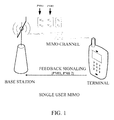
- Fig. 1 schematically illustrates a processing by a communication system according to an embodiment of the present invention in an SU-MIMO mode.
- the base station transmits multi-channel signals to a certain user by using the same physical resource.
- the base station needs to weights the multi-channel signals respectively, during a transmission thereof.
- the weighting matrix is a certain code matrix in a codebook known to the base station and the terminal.
- the terminal feeds back two or more PMI each corresponding to a data stream. Under this condition, the precoding matrix is simplified into precoding vector.
- the base station weights the transmitted data stream according to the PMI fed back.
- Fig. 2 schematically illustrates a processing by a communication system according to an embodiment of the present invention in an MU-MIMO mode.
- the base station transmits signals to a plurality of users by using the same physical resource.
- the base station needs to adopt a PMI matching (grouping) method.
- each terminal feeds back two or more PMI (two PMI in the drawing), in which one PMI is expected to be used by a terminal performing the feedback itself, and other PMI to be used by the user matched with the terminal.
- the drawing only illustrates two terminals, there may be more.
- H k is a channel matrix from the base station to a user k and w is a codeword in the codebook with its index in the codebook being briefed as PMI, wherein PMI1 maximizes the SNR and PMI2 minimizes the SNR.
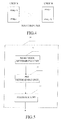
- Fig. 4 schematically illustrates a principle of terminal matching according to an embodiment of the present invention.
- a user N feed back two PMI corresponding to the best SNR and the worst SNR, respectively.
- the PMI corresponding to the best SNR is called as the best PMI
- the PMI corresponding to the worst SNR is called as the worst PMI.
- the two users are matched with each other, the best PMI of user N is corresponding to the worst PMI of the user M, while the worst PMI of the user N is corresponding to the best PMI of user M.
- PMI3 used by terminal 2 is required to be PMI2 expected by terminal 1 to be used by terminal 2, while it is not specified whether PMI1 used by terminal 1 is PMI4 expected by terminal 2 to be used by terminal 1, as illustrated in Fig. 2 .
- PMI other than PMI1 shall be the PMI expected by the terminal to be used by the matched terminal, and there may be a plurality of terminals in the group.
- Fig. 3 schematically illustrates a processing by a communication system according to an embodiment of the present invention in a Multiple Cell MIMO mode.
- a plurality of base stations transmit signals to a plurality of users in different cells by using the same physical resource.
- the base stations need to adopt a PMI matching (grouping) method.
- each terminal feeds back two or more PMI, wherein one PMI (e.g., PMI1) is a precoding matrix, expected by the terminal, to be used by a base station (also called as cell base station or service base station) in a cell (service cell) where the terminal locates for weighting a signal transmitted to the terminal, and other PMI (e.g., PMI2) is a precoding matrix, expected by the terminal, to be used by a base station (also called as neighbor base station) in a neighbor cell for weighting the transmitted signal in the physical resource the same as that of the service cell.
- PMI1 is a precoding matrix, expected by the terminal, to be used by a base station (also called as cell base station or service base station) in a cell (service cell) where the terminal locates for weighting a signal transmitted to the terminal
- PMI2 is a precoding matrix, expected by the terminal, to be used by a base station (also called as neighbor base station) in a neighbor cell for weighting the transmitted signal in the physical resource
- H1 k is a MIMO channel matrix from the service base station to the user k
- H2 k is a MIMO channel from a neighbor base station to the user k
- w1 and w2 are the best PMI from the service base station to the user and the worst PMI from the neighbor base station to the user, respectively.
- the matching principle is slightly different from that of the single-cell multi-user MIMO matching. For example, after the terminal feeds back two PMI to the cell base station, the cell base station transmits the PMI (e.g., PMI2), which is expected by the user to be used by a neighbor cell user, to the neighbor base station.
- the neighbor base station finds from its cell a user expecting to use PMI2, so as to match this user with the user in the original cell.
- the PMI other than PMI1 constitute a precoding matrix set for weighting expected by the terminal to be used by a base station of other neighbor cell during a signal transmission in the physical resource the same as that of the cell where the terminal locates.
- the feedback of PMI shall be carried out in various MIMO modes.
- the terminal feeds back two or more PMI in any MIMO mode, thus a uniform feedback format may be designed, and the terminal needs not to adjust the format of the feedback information according to different MIMO modes.
- the base station may adopt the PMI feedback format as shown in the following table.
- Table 1 Type of feedback information Implication Number of bytes ... ... ...
- PMI report1 Determined according to MIMO mode
- PMI report2 Determined according to MIMO mode ... ... ...
- PMI report1 and PMI report2 are PMI information required by various MIMO modes. When such feedback format is used, PMI report1 and PMI report2 have different implications for different MIMO modes. For example, for the SU-MIMO mode, PMI report1 and PMI report2 are precoding matrixes transmitted to two streams of the user, respectively. For the MU-MIMO mode, PMI report1 and PMI report2 are the PMI used by the user itself and the PMI expected to be used by a matched user. For the Multiple Cell MIMO mode, PMI report1 and PMI report2 are the PMI used by the user itself and the PMI expected to be used by a matched user in a neighbor cell.
- the terminal may transmit various PMI feedbacks to the base station in the same feedback format, so as to realize a purpose of simplifying the feedback signaling overhead.
- the terminal may feed back more than two PMI so as to unify the PMI feedbacks of various MIMO mode.
- more than two PMI may be used to transmit precoding weights more than two data streams to the user.
- For the MU-MIMO mode more than two PMI may be used to group terminals, and the PMI fed back by each terminal, except the first PMI, is the PMI expected by the terminal to be used by the matched terminal.
- For the Multiple Cell MIMO mode more than two PMI may be used to group terminals of cells, and the PMI fed back by each terminal, except the first PMI, is the PMI expected by the terminal to be used by the matched terminal in other cell.
- Fig. 5 schematically illustrates an example of a structure of a terminal according to an embodiment of the present invention.
- the terminal 50 includes a MIMO mode determining unit 51, a PMI determining unit 52 and a feedback unit 53.
- the MIMO mode determining unit 51 is configured to determine a MIMO mode adopted by a mobile terminal.
- the MIMO mode determining unit 51 may receive an instruction indicating a MIMO mode from the base station, and determine the MIMO mode to be adopted according to the instruction. Further, the MIMO mode determining unit 51 may determine the MIMO mode to be adopted according to the quality of a channel with the cell base station of the cell where the MIMO mode determining unit 51 locates, or the quality of a channel with the neighbor base station, notify the cell base station of the determined MIMO mode, and wait for a confirmation from the base station. In an alternative embodiment, a confirmation from the base station is not required.
- the PMI determining unit 52 determines the PMI to be fed back according to the determined MIMO mode. In details, for the single user MIMO mode, the PMI determining unit 52 determines the PMI used by two data streams (or more data streams when there are more than two PMI) of the single user. For the MU-MIMO mode and the Multiple Cell MIMO mode, the PMI determining unit 52 determines the PMI expected to be used by the terminal itself, and the PMI expected to be used by the grouped user.
- the feedback unit 53 is configured to feed back the PMI determined by the PMI determining unit 52 to the cell base station. As mentioned above, the feedback unit 53 may feed back PMI information in various MIMO modes with a unified format.
- the MIMO mode determining unit 51 and the PMI determining unit 52 may be implemented by a processor, a FPGA (Field Programmable Gate Array), an ASIC (Application Specific integrated circuit) or a DSP (Digital Signal Processor).
- a processor a processor, a FPGA (Field Programmable Gate Array), an ASIC (Application Specific integrated circuit) or a DSP (Digital Signal Processor).
- FPGA Field Programmable Gate Array
- ASIC Application Specific integrated circuit
- DSP Digital Signal Processor
- a base station 60 includes a MIMO mode determining unit 61, a notifying unit 62, a receiving unit 63 and a terminal grouping unit 64.
- the MIMO mode determining unit 61 determines a MIMO mode to be adopted.
- the MIMO mode to be adopted may be determined according to information of a channel between the base station and a terminal served thereby, or position information of the terminal, etc. For example, when the terminal is located at the central area of a service zone of the base station, the SU-MIMO mode will be adopted; when the terminal is located at the central area of the base station, the MU-MIMO mode will be adopted; and when the terminal is located at the edge area of the base station, the Multiple Cell MIMO mode will be adopted.
- the terminal may also determine the MIMO mode to be adopted, and send a request that requires using the determined MIMO mode to the base station.
- the notifying unit 62 notifies the determined MIMO mode to the terminal. In addition, when the Multiple Cell MIMO mode is adopted, the notifying unit 62 further notifies PMI information received from the terminal to the neighbor base station.
- the receiving unit 63 receives the PMI information from the terminal.
- the received PMI information is transmitted by the terminal with a unified format, and the implication thereof varies with the MIMO mode.
- the PMI information includes the PMI expected by the terminal to be used by the base station in a communication between the base station and the terminal, and the PMI expected by the terminal to be used by the base station in a communication between the base station and other communication apparatus grouped with the terminal.
- the terminal grouping unit 64 determines a terminal to be grouped according to the PMI information transmitted from respective terminals.
- the terminal grouping unit 64 searches a second terminal with PMI4 the same as PMI1 and PMI3 the same as PMI2, according to PMI1 and PMI2 transmitted from the first terminal as well as PMI3 and PMI4 transmitted from the second terminal, so as to determine a second terminal matched (grouped) with the first terminal.
- a plurality of terminals may be grouped.
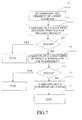
- Fig. 7 illustrates a processing by a terminal grouping unit, e.g., matching two terminals, according to another embodiment of the present invention.
- the priority of a first terminal is firstly determined (step 701).
- the priority of the terminal is predetermined according to the service protocol or the nature of data to be transmitted. For example when data of a high real-time requirement (e.g., video data or voice data) is transmitted to or from the terminal, it is determined that the terminal has a high priority, or when data not of a high real-time requirement (e.g., EMAIL data) is transmitted, it is determined that the terminal has a low priority.
- a high real-time requirement e.g., video data or voice data
- data not of a high real-time requirement e.g., EMAIL data
- step 702 a matching is carried out between terminals of the same priority, i.e., searching a second terminal with PMI4 the same as PMI1 and PMI3 the same as PMI2, according to PMI1 and PMI2 transmitted from the first terminal as well as PMI3 and PMI4 transmitted from the second terminal of the same priority, so as to determine a second terminal matched (grouped) with the first terminal.
- step 703 If the matched second terminal is found (step 703, Yes), the processing is ended. On the other hand, when the matched second terminal is not found (step 703, No), a matching will be carried out between terminals of the sub-priority in step 704, i.e., searching a second terminal with PMI4 the same as PMI1 and PMI3 the same as PMI2, according to PMI1 and PMI2 transmitted from the first terminal as well as PMI3 and PMI4 transmitted from the second terminal of the sub-priority, so as to determine a second terminal matched (grouped) with the first terminal.
- a matching will be carried out between terminals of the sub-priority in step 704, i.e., searching a second terminal with PMI4 the same as PMI1 and PMI3 the same as PMI2, according to PMI1 and PMI2 transmitted from the first terminal as well as PMI3 and PMI4 transmitted from the second terminal of the sub-priority, so as to determine a second terminal matched (grouped) with
- step 705 If the matched second terminal is found (step 705, Yes), the processing is ended. On the other hand, when the matched second terminal is not found (step 705, No), a sub-prime matching will be carried out between terminals of the sub-priority in step 706, i.e., searching a second terminal with PMI3 the same as PMI2, according to PMI1 and PMI2 transmitted from the first terminal as well as PMI3 and PMI4 transmitted from the second terminal of the sub-priority, so as to determine a second terminal matched (grouped) with the first terminal (sub-prime grouping). This processing is ended in step 707.
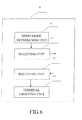
- Fig. 8 illustrates a schematic structural diagram of a terminal grouping unit 64 of a base station according to the above embodiment.
- the terminal grouping unit 64 includes a terminal priority determining unit 81, a same-priority terminal grouping unit 82, a judging unit 83, a sub-priority terminal grouping unit 84, and a sub-prime grouping unit 85.
- the terminal priority determining unit 81 determines the priority of a terminal.
- the same-priority terminal grouping unit 82 determines a terminal grouped with the cared terminal from terminals of the same priority.
- the judging unit 83 judges whether a grouped terminal is found. When the judging unit 83 judges that no grouped terminal is found by the same-priority terminal grouping unit 82, the sub-priority terminal grouping unit 84 searches a terminal grouped with the cared terminal from terminals of the sub-priority. When the judging unit 83 judges that no grouped terminal is found by the sub-priority terminal grouping unit 84, the sub-prime grouping unit 85 performs a sub-prime grouping.
- Fig. 9 illustrates a schematic structural diagram of a neighbor base station according to an embodiment of the present invention.
- the neighbor base station according to the embodiment of the present invention includes a receiving unit 91 and a terminal grouping unit 92.
- the receiving unit 91 receives the PMI information from the aforementioned cell base station.
- the terminal grouping unit 92 performs a terminal grouping, and the processing is the same as that made by the terminal grouping unit 64, herein is not repeated.
- the MIMO mode determining unit 61 and the terminal grouping unit 64, 92 may be implemented by a processor, a FPGA (Field Programmable Gate Array), an ASIC (Application Specific integrated circuit) or a DSP (Digital Signal Processor).
- a processor a processor, a FPGA (Field Programmable Gate Array), an ASIC (Application Specific integrated circuit) or a DSP (Digital Signal Processor).
- the base station can better control the interferences among users when dispatching a plurality of users, so as to improve the system throughput.
- the communication system adaptable to the present invention may be any multi- access system or broadcast/multicast/unicast system, and may be based on any multi- access technique, e.g., OFDMA, CDMA, TDMA, etc.
- the above apparatus and method of the present invention may be implemented by hardware, or a combination of hardware and software.
- the present invention relates to such a computer readable program that enables a logic part to implement the previously described apparatuses or components, or implement the previously described methods or steps, when the program is executed by the logic part.
- the present invention also relates to storage medium for storing the above program, e.g., hard disk, magnetic disk, optical disk, DVD and flash memory.
Landscapes
- Engineering & Computer Science (AREA)
- Computer Networks & Wireless Communication (AREA)
- Signal Processing (AREA)
- Power Engineering (AREA)
- Quality & Reliability (AREA)
- Mobile Radio Communication Systems (AREA)
- Radio Transmission System (AREA)
Applications Claiming Priority (2)
| Application Number | Priority Date | Filing Date | Title |
|---|---|---|---|
| CN2009101416511A CN101902305B (zh) | 2009-05-25 | 2009-05-25 | 通信装置、通信方法和基站 |
| PCT/CN2010/070923 WO2010135924A1 (zh) | 2009-05-25 | 2010-03-09 | 通信装置、通信方法和基站 |
Publications (2)
| Publication Number | Publication Date |
|---|---|
| EP2437405A1 true EP2437405A1 (de) | 2012-04-04 |
| EP2437405A4 EP2437405A4 (de) | 2012-10-24 |
Family
ID=43222139
Family Applications (1)
| Application Number | Title | Priority Date | Filing Date |
|---|---|---|---|
| EP10780006A Withdrawn EP2437405A4 (de) | 2009-05-25 | 2010-03-09 | Kommunikationsvorrichtung, kommunikationsverfahren und basisstation |
Country Status (5)
| Country | Link |
|---|---|
| US (1) | US20120045018A1 (de) |
| EP (1) | EP2437405A4 (de) |
| JP (1) | JP2012525739A (de) |
| CN (2) | CN101902305B (de) |
| WO (1) | WO2010135924A1 (de) |
Cited By (3)
| Publication number | Priority date | Publication date | Assignee | Title |
|---|---|---|---|---|
| CN104798318A (zh) * | 2012-11-15 | 2015-07-22 | 美国博通公司 | 使用大量基站天线的蜂窝通信系统的预编码和调度 |
| CN109245810A (zh) * | 2017-07-10 | 2019-01-18 | 中国移动通信有限公司研究院 | 一种通信处理方法、基站及移动通信终端 |
| US11546027B2 (en) | 2012-12-06 | 2023-01-03 | Guangdong Oppo Mobile Telecommunications Corp., Ltd. | Base station apparatus, terminal apparatus, wireless communication system and integrated circuit |
Families Citing this family (15)
| Publication number | Priority date | Publication date | Assignee | Title |
|---|---|---|---|---|
| WO2011091589A1 (zh) * | 2010-01-27 | 2011-08-04 | 中兴通讯股份有限公司 | 协作多输入多输出波束赋形的数据发送方法及系统 |
| KR20130007635A (ko) * | 2010-04-29 | 2013-01-18 | 후지쯔 가부시끼가이샤 | 프리코딩 매트릭스 정보를 피드백하기 위한 방법 및 그의 이동국 |
| JP5497577B2 (ja) * | 2010-08-16 | 2014-05-21 | 株式会社Nttドコモ | 通信制御方法、基地局装置及び移動局装置 |
| JP5720284B2 (ja) * | 2011-02-10 | 2015-05-20 | ソニー株式会社 | 端末装置、フィードバック制御方法、基地局、ペアリング制御方法、プログラム及び無線通信システム |
| JP5720283B2 (ja) * | 2011-02-10 | 2015-05-20 | ソニー株式会社 | 端末装置、フィードバック制御方法、基地局、ペアリング制御方法、プログラム及び無線通信システム |
| US8737513B2 (en) * | 2011-11-11 | 2014-05-27 | Qualcomm Incorporated | Apparatus and method for jointly selecting precoding matrices in a MIMO multi-flow system |
| WO2013129502A1 (ja) * | 2012-02-29 | 2013-09-06 | 京セラ株式会社 | 通信制御方法、ユーザ端末、及び基地局 |
| CN103580789B (zh) * | 2012-07-30 | 2018-08-10 | 中兴通讯股份有限公司 | 多点协作传输预编码处理方法、装置及系统 |
| EP2919513A4 (de) * | 2012-11-06 | 2016-05-11 | Kyocera Corp | Mobiles kommunikationsverfahren, benutzerendgerät und prozessor |
| US20140211642A1 (en) * | 2013-01-30 | 2014-07-31 | Qualcomm Incorporated | Method And System For Boosting Transmission Settings Based On Signal To Interference And Noise Ratio |
| CN104521268B (zh) * | 2013-05-27 | 2019-02-19 | 华为技术有限公司 | 一种信号质量测量信息的上报方法和设备 |
| WO2015045078A1 (ja) * | 2013-09-26 | 2015-04-02 | 日本放送協会 | 送信装置、受信装置、及び信号送信方法 |
| TWI565264B (zh) * | 2014-08-28 | 2017-01-01 | 鴻海精密工業股份有限公司 | 數據機、用戶終端及其封包傳送方法 |
| CN105612707B (zh) * | 2014-09-19 | 2019-03-01 | 华为技术有限公司 | 一种多用户的复用方法和基站 |
| CN105991483B (zh) * | 2015-01-28 | 2020-08-07 | 索尼公司 | 无线通信设备和无线通信方法 |
Family Cites Families (26)
| Publication number | Priority date | Publication date | Assignee | Title |
|---|---|---|---|---|
| US8116267B2 (en) * | 2006-02-09 | 2012-02-14 | Samsung Electronics Co., Ltd. | Method and system for scheduling users based on user-determined ranks in a MIMO system |
| KR100819285B1 (ko) * | 2006-03-16 | 2008-04-02 | 삼성전자주식회사 | 다중 사용자를 지원하는 다중 안테나 시스템에서의 피드 백 정보 송/수신방법 및 그 시스템 |
| US10044532B2 (en) * | 2006-03-20 | 2018-08-07 | Texas Instruments Incorporated | Pre-coder selection based on resource block grouping |
| CN101064545B (zh) * | 2006-04-30 | 2010-08-18 | 中兴通讯股份有限公司 | 一种基于等价信息量的传输模式切换方法 |
| AU2006349035B2 (en) * | 2006-10-05 | 2011-02-17 | Telefonaktiebolaget L M Ericsson (Publ) | MIMO mode selection at handover |
| CN101222267B (zh) * | 2007-01-08 | 2011-11-30 | 中兴通讯股份有限公司 | 一种mimo传输中的用户配对方法及确定配对因子的方法 |
| US8798012B2 (en) * | 2007-03-26 | 2014-08-05 | Telefonaktiebolaget L M Ericsson (Publ) | Preparation phase for switching between SU-MIMO and MU-MIMO |
| KR20090130206A (ko) * | 2007-04-20 | 2009-12-18 | 인터디지탈 테크날러지 코포레이션 | Mimo 통신에 대한 효과적인 프리코딩 정보 검증을 위한 방법 및 장치 |
| JP4729537B2 (ja) * | 2007-06-19 | 2011-07-20 | 株式会社エヌ・ティ・ティ・ドコモ | 基地局装置および送信方法 |
| KR20090013140A (ko) * | 2007-07-31 | 2009-02-04 | 삼성전자주식회사 | 무선 통신 시스템에서 다수의 다중 입력 다중 출력 모드를지원하는 장치 및 방법 |
| WO2009026769A1 (en) * | 2007-08-31 | 2009-03-05 | Fujitsu Limited | Wireless communication system and wireless communication method |
| CN101383645A (zh) * | 2007-09-07 | 2009-03-11 | 中兴通讯股份有限公司 | 一种上行多用户设备虚拟多输入多输出的配对方法 |
| US8254486B2 (en) * | 2007-09-28 | 2012-08-28 | Intel Corporation | Unified closed loop SU/MU-MIMO signaling and codebook design |
| US8320486B2 (en) * | 2007-09-28 | 2012-11-27 | Apple Inc. | Retransmission method for HARQ in MIMO systems |
| CN101183890B (zh) * | 2007-12-12 | 2012-06-13 | 中兴通讯股份有限公司 | 一种基于码本的多用户预编码系统的cqi反馈方法 |
| KR100991792B1 (ko) * | 2007-12-31 | 2010-11-04 | 엘지전자 주식회사 | 협력적 다중 입출력 방식 신호 송수신 방법 |
| US9130612B2 (en) * | 2008-01-07 | 2015-09-08 | Qualcomm Incorporated | Unified uplink control signal formats |
| CN101286824B (zh) * | 2008-01-24 | 2011-04-13 | 北京邮电大学 | 在多用户终端mimo系统中预编码方法和系统 |
| KR101537591B1 (ko) * | 2008-04-07 | 2015-07-20 | 엘지전자 주식회사 | Mimo 시스템에서 모드 적응 방법 |
| CN101272364B (zh) * | 2008-05-05 | 2012-09-05 | 中兴通讯股份有限公司 | 基于mu-mimo的预编码指示方法及装置、控制方法 |
| WO2010002691A2 (en) * | 2008-06-30 | 2010-01-07 | Interdigital Patent Holdings, Inc. | Method and apparatus for performing multiple-input multiple-output wireless communications |
| CN101621357B (zh) * | 2008-07-01 | 2013-12-25 | 上海贝尔股份有限公司 | Mimo通信系统及其方法 |
| US9001802B2 (en) * | 2008-08-11 | 2015-04-07 | Lg Electronics Inc. | Method and apparatus for transmitting uplink signals using multi-antenna |
| KR100964438B1 (ko) * | 2008-12-19 | 2010-06-16 | 성균관대학교산학협력단 | 효과적인 다중 셀 간섭 제어 서비스 방법 및 그 장치 |
| WO2010101431A2 (en) * | 2009-03-04 | 2010-09-10 | Lg Electronics Inc. | Method for performing comp operation and transmitting feedback information in a wireless communication system |
| KR101283904B1 (ko) * | 2009-04-16 | 2013-07-16 | 알까뗄 루슨트 | 다중 기지국들 mimo 시스템에서 오브젝트 단말을 선택하기 위한 방법 및 장치 |
-
2009
- 2009-05-25 CN CN2009101416511A patent/CN101902305B/zh not_active Expired - Fee Related
-
2010
- 2010-03-09 JP JP2012507579A patent/JP2012525739A/ja active Pending
- 2010-03-09 EP EP10780006A patent/EP2437405A4/de not_active Withdrawn
- 2010-03-09 CN CN2010800194115A patent/CN102415004A/zh active Pending
- 2010-03-09 WO PCT/CN2010/070923 patent/WO2010135924A1/zh not_active Ceased
-
2011
- 2011-10-31 US US13/285,795 patent/US20120045018A1/en not_active Abandoned
Cited By (5)
| Publication number | Priority date | Publication date | Assignee | Title |
|---|---|---|---|---|
| CN104798318A (zh) * | 2012-11-15 | 2015-07-22 | 美国博通公司 | 使用大量基站天线的蜂窝通信系统的预编码和调度 |
| CN104798318B (zh) * | 2012-11-15 | 2017-10-31 | 安华高科技通用Ip(新加坡)公司 | 使用大量基站天线的蜂窝通信系统的预编码和调度 |
| US11546027B2 (en) | 2012-12-06 | 2023-01-03 | Guangdong Oppo Mobile Telecommunications Corp., Ltd. | Base station apparatus, terminal apparatus, wireless communication system and integrated circuit |
| CN109245810A (zh) * | 2017-07-10 | 2019-01-18 | 中国移动通信有限公司研究院 | 一种通信处理方法、基站及移动通信终端 |
| CN109245810B (zh) * | 2017-07-10 | 2020-11-20 | 中国移动通信有限公司研究院 | 一种通信处理方法、基站及移动通信终端 |
Also Published As
| Publication number | Publication date |
|---|---|
| WO2010135924A1 (zh) | 2010-12-02 |
| CN102415004A (zh) | 2012-04-11 |
| EP2437405A4 (de) | 2012-10-24 |
| CN101902305B (zh) | 2013-10-30 |
| US20120045018A1 (en) | 2012-02-23 |
| JP2012525739A (ja) | 2012-10-22 |
| CN101902305A (zh) | 2010-12-01 |
Similar Documents
| Publication | Publication Date | Title |
|---|---|---|
| US20120045018A1 (en) | Communication apparatus, communication method and base station | |
| US8238307B2 (en) | Method and device for canceling the interference among signals received by multiple mobile stations | |
| EP2406892B1 (de) | Verfahren und vorrichtung zur übertragung von steuerinformationen zur interferenzabschwächung in einem mehrantennensystem | |
| EP2850496B1 (de) | System und Verfahren zum adaptiven CoMP-Betrieb in der Abwärtsstrecke des Übertragungskanals | |
| KR101505689B1 (ko) | 다중 셀 협력에 기반하는 데이터 전송 방법 | |
| EP2494811B1 (de) | Systeme und verfahren für vereinheitlichtes feedback in einem kommunikationssystem | |
| EP2168401B1 (de) | Bereitstellung eines raummultiplex-vielfachzugriffs in einem drahtlosen netzwerk | |
| EP2891260B1 (de) | Verfahren und drahtloses endgerät zur abschwächung einer downlink-interferenz | |
| KR101060857B1 (ko) | Mimo 통신 시스템에서의 데이터 전송 방법 및 장치 | |
| KR101664127B1 (ko) | 이웃 셀을 위한 협력 랭크 정보를 교환하는 다중 입출력 통신 방법 및 시스템 | |
| EP3343823A1 (de) | Verfahren und vorrichtung zum senden und empfangen von kanalstatusinformationen in einem mobilkommunikationssystem | |
| US20120287799A1 (en) | Channel feedback for coordinated multi-point transmissions | |
| US20120021738A1 (en) | Method for Setting Control Multi Point in Wireless Communication System and Apparatus Thereof | |
| US20120282966A1 (en) | Channel quality information transmission method in wireless communication system adopting coordinated multi-point scheme and an apparatus therefor | |
| WO2017167238A1 (zh) | 一种信道状态测量方法及装置 | |
| TWI517620B (zh) | 在多輸入多輸出(mimo)網路中通信的方法及裝置 | |
| EP2690902B1 (de) | Kommunikationsverarbeitungsverfahren und basisstation | |
| EP2723000B1 (de) | Verfahren zur Handhabung von Strahlformungsrückkopplung in einem drahtlosen Kommunikationssystem und zugehörige Kommunikationsvorrichtung | |
| CN101902304B (zh) | 一种信道信息反馈方法、预编码方法、接收站及发送站 | |
| EP2553969B1 (de) | Vorrichtung und verfahren zum senden und empfangen von kanalstatusinformationen in einem drahtlosen kommunikationssystem | |
| CN102932938B (zh) | 上行多输入多输出与上行协作多点结合的传输方法及装置 | |
| EP2566272A1 (de) | Verfahren zur rückkopplung von vorcodierungsmatrixinformationen und mobilstation dafür | |
| CN102742175A (zh) | 一种mimo模式配置方法及通信设备 | |
| CN103067064B (zh) | 预编码矢量的确定方法及装置 | |
| KR101387251B1 (ko) | 송수신기 모드 선택 방법 및 장치 |
Legal Events
| Date | Code | Title | Description |
|---|---|---|---|
| PUAI | Public reference made under article 153(3) epc to a published international application that has entered the european phase |
Free format text: ORIGINAL CODE: 0009012 |
|
| 17P | Request for examination filed |
Effective date: 20111221 |
|
| AK | Designated contracting states |
Kind code of ref document: A1 Designated state(s): AT BE BG CH CY CZ DE DK EE ES FI FR GB GR HR HU IE IS IT LI LT LU LV MC MK MT NL NO PL PT RO SE SI SK SM TR |
|
| DAX | Request for extension of the european patent (deleted) | ||
| A4 | Supplementary search report drawn up and despatched |
Effective date: 20120920 |
|
| RIC1 | Information provided on ipc code assigned before grant |
Ipc: H04B 7/06 20060101ALI20120914BHEP Ipc: H04L 5/00 20060101ALN20120914BHEP Ipc: H04B 7/04 20060101AFI20120914BHEP Ipc: H04L 1/00 20060101ALI20120914BHEP Ipc: H04L 25/03 20060101ALI20120914BHEP |
|
| 17Q | First examination report despatched |
Effective date: 20121010 |
|
| GRAP | Despatch of communication of intention to grant a patent |
Free format text: ORIGINAL CODE: EPIDOSNIGR1 |
|
| RIC1 | Information provided on ipc code assigned before grant |
Ipc: H04B 7/06 20060101ALI20160211BHEP Ipc: H04L 5/00 20060101ALN20160211BHEP Ipc: H04L 1/00 20060101ALI20160211BHEP Ipc: H04B 7/04 20060101AFI20160211BHEP Ipc: H04L 25/03 20060101ALI20160211BHEP |
|
| INTG | Intention to grant announced |
Effective date: 20160224 |
|
| STAA | Information on the status of an ep patent application or granted ep patent |
Free format text: STATUS: THE APPLICATION IS DEEMED TO BE WITHDRAWN |
|
| 18D | Application deemed to be withdrawn |
Effective date: 20160706 |