EP2440612B1 - Vulkanisierbare zusammensetzung mit akustischen dämpfungseigenschaften - Google Patents
Vulkanisierbare zusammensetzung mit akustischen dämpfungseigenschaften Download PDFInfo
- Publication number
- EP2440612B1 EP2440612B1 EP10720443.0A EP10720443A EP2440612B1 EP 2440612 B1 EP2440612 B1 EP 2440612B1 EP 10720443 A EP10720443 A EP 10720443A EP 2440612 B1 EP2440612 B1 EP 2440612B1
- Authority
- EP
- European Patent Office
- Prior art keywords
- composition
- composition according
- mol
- copolymer
- polybutadiene
- Prior art date
- Legal status (The legal status is an assumption and is not a legal conclusion. Google has not performed a legal analysis and makes no representation as to the accuracy of the status listed.)
- Not-in-force
Links
- 239000000203 mixture Substances 0.000 title claims description 91
- PPBRXRYQALVLMV-UHFFFAOYSA-N Styrene Chemical compound C=CC1=CC=CC=C1 PPBRXRYQALVLMV-UHFFFAOYSA-N 0.000 claims description 40
- AZQWKYJCGOJGHM-UHFFFAOYSA-N 1,4-benzoquinone Chemical compound O=C1C=CC(=O)C=C1 AZQWKYJCGOJGHM-UHFFFAOYSA-N 0.000 claims description 37
- NINIDFKCEFEMDL-UHFFFAOYSA-N Sulfur Chemical compound [S] NINIDFKCEFEMDL-UHFFFAOYSA-N 0.000 claims description 35
- 229910052717 sulfur Inorganic materials 0.000 claims description 30
- 239000011593 sulfur Substances 0.000 claims description 30
- 229920001577 copolymer Polymers 0.000 claims description 29
- 239000007787 solid Substances 0.000 claims description 26
- 238000004073 vulcanization Methods 0.000 claims description 25
- 229920002554 vinyl polymer Polymers 0.000 claims description 20
- 125000000391 vinyl group Chemical group [H]C([*])=C([H])[H] 0.000 claims description 19
- 229920001971 elastomer Polymers 0.000 claims description 18
- 150000001993 dienes Chemical class 0.000 claims description 17
- 239000007788 liquid Substances 0.000 claims description 16
- 230000009477 glass transition Effects 0.000 claims description 15
- 238000000034 method Methods 0.000 claims description 12
- 239000005060 rubber Substances 0.000 claims description 12
- 239000000945 filler Substances 0.000 claims description 11
- 239000004604 Blowing Agent Substances 0.000 claims description 9
- 239000000463 material Substances 0.000 claims description 9
- XYLFFOSVQCBSDT-UHFFFAOYSA-N 1,2-dinitrosobenzene Chemical compound O=NC1=CC=CC=C1N=O XYLFFOSVQCBSDT-UHFFFAOYSA-N 0.000 claims description 7
- 238000010276 construction Methods 0.000 claims description 7
- 235000011837 pasties Nutrition 0.000 claims description 7
- 150000004053 quinones Chemical class 0.000 claims description 5
- 229920001169 thermoplastic Polymers 0.000 claims description 5
- 239000013032 Hydrocarbon resin Substances 0.000 claims description 4
- 229920006270 hydrocarbon resin Polymers 0.000 claims description 4
- 239000000758 substrate Substances 0.000 claims description 4
- 150000001336 alkenes Chemical class 0.000 claims description 3
- 239000004014 plasticizer Substances 0.000 claims description 3
- JRZJOMJEPLMPRA-UHFFFAOYSA-N olefin Natural products CCCCCCCC=C JRZJOMJEPLMPRA-UHFFFAOYSA-N 0.000 claims description 2
- 229920002857 polybutadiene Polymers 0.000 description 58
- 239000005062 Polybutadiene Substances 0.000 description 57
- 239000000047 product Substances 0.000 description 36
- VYPSYNLAJGMNEJ-UHFFFAOYSA-N Silicium dioxide Chemical compound O=[Si]=O VYPSYNLAJGMNEJ-UHFFFAOYSA-N 0.000 description 34
- 238000013016 damping Methods 0.000 description 30
- 125000003178 carboxy group Chemical group [H]OC(*)=O 0.000 description 23
- AFZSMODLJJCVPP-UHFFFAOYSA-N dibenzothiazol-2-yl disulfide Chemical compound C1=CC=C2SC(SSC=3SC4=CC=CC=C4N=3)=NC2=C1 AFZSMODLJJCVPP-UHFFFAOYSA-N 0.000 description 21
- 229920001400 block copolymer Polymers 0.000 description 20
- BRPQOXSCLDDYGP-UHFFFAOYSA-N calcium oxide Chemical compound [O-2].[Ca+2] BRPQOXSCLDDYGP-UHFFFAOYSA-N 0.000 description 20
- 239000000292 calcium oxide Substances 0.000 description 20
- ODINCKMPIJJUCX-UHFFFAOYSA-N calcium oxide Inorganic materials [Ca]=O ODINCKMPIJJUCX-UHFFFAOYSA-N 0.000 description 20
- 239000000835 fiber Substances 0.000 description 20
- 239000003981 vehicle Substances 0.000 description 20
- AUMBZPPBWALQRO-UHFFFAOYSA-L zinc;n,n-dibenzylcarbamodithioate Chemical compound [Zn+2].C=1C=CC=CC=1CN(C(=S)[S-])CC1=CC=CC=C1.C=1C=CC=CC=1CN(C(=S)[S-])CC1=CC=CC=C1 AUMBZPPBWALQRO-UHFFFAOYSA-L 0.000 description 20
- IKEHOXWJQXIQAG-UHFFFAOYSA-N 2-tert-butyl-4-methylphenol Chemical compound CC1=CC=C(O)C(C(C)(C)C)=C1 IKEHOXWJQXIQAG-UHFFFAOYSA-N 0.000 description 19
- 239000004071 soot Substances 0.000 description 19
- 239000004156 Azodicarbonamide Substances 0.000 description 18
- XOZUGNYVDXMRKW-AATRIKPKSA-N azodicarbonamide Chemical compound NC(=O)\N=N\C(N)=O XOZUGNYVDXMRKW-AATRIKPKSA-N 0.000 description 18
- 235000019399 azodicarbonamide Nutrition 0.000 description 18
- 239000000377 silicon dioxide Substances 0.000 description 17
- UMGLWJIVIBWZCW-UHFFFAOYSA-L zinc;benzenesulfinate Chemical compound [Zn+2].[O-]S(=O)C1=CC=CC=C1.[O-]S(=O)C1=CC=CC=C1 UMGLWJIVIBWZCW-UHFFFAOYSA-L 0.000 description 17
- 235000019484 Rapeseed oil Nutrition 0.000 description 15
- 150000004706 metal oxides Chemical class 0.000 description 14
- 239000004005 microsphere Substances 0.000 description 11
- OKTJSMMVPCPJKN-UHFFFAOYSA-N Carbon Chemical compound [C] OKTJSMMVPCPJKN-UHFFFAOYSA-N 0.000 description 10
- 229910002804 graphite Inorganic materials 0.000 description 10
- 239000010439 graphite Substances 0.000 description 10
- QYFRTHZXAGSYGT-UHFFFAOYSA-L hexaaluminum dipotassium dioxosilane oxygen(2-) difluoride hydrate Chemical compound O.[O--].[O--].[O--].[O--].[O--].[O--].[O--].[O--].[O--].[F-].[F-].[Al+3].[Al+3].[Al+3].[Al+3].[Al+3].[Al+3].[K+].[K+].O=[Si]=O.O=[Si]=O.O=[Si]=O.O=[Si]=O.O=[Si]=O.O=[Si]=O QYFRTHZXAGSYGT-UHFFFAOYSA-L 0.000 description 9
- -1 vinyl aromatic compound Chemical class 0.000 description 9
- VTYYLEPIZMXCLO-UHFFFAOYSA-L calcium carbonate Substances [Ca+2].[O-]C([O-])=O VTYYLEPIZMXCLO-UHFFFAOYSA-L 0.000 description 8
- 238000005187 foaming Methods 0.000 description 8
- YXIWHUQXZSMYRE-UHFFFAOYSA-N 1,3-benzothiazole-2-thiol Chemical compound C1=CC=C2SC(S)=NC2=C1 YXIWHUQXZSMYRE-UHFFFAOYSA-N 0.000 description 6
- XLOMVQKBTHCTTD-UHFFFAOYSA-N Zinc monoxide Chemical compound [Zn]=O XLOMVQKBTHCTTD-UHFFFAOYSA-N 0.000 description 6
- 125000003118 aryl group Chemical group 0.000 description 6
- 230000000052 comparative effect Effects 0.000 description 6
- 238000001723 curing Methods 0.000 description 6
- 239000000806 elastomer Substances 0.000 description 6
- 150000002978 peroxides Chemical class 0.000 description 6
- 229920006271 aliphatic hydrocarbon resin Polymers 0.000 description 5
- 239000003921 oil Substances 0.000 description 5
- 235000019198 oils Nutrition 0.000 description 5
- 229920000642 polymer Polymers 0.000 description 5
- 229920005989 resin Polymers 0.000 description 5
- 239000011347 resin Substances 0.000 description 5
- 230000004913 activation Effects 0.000 description 4
- 239000000853 adhesive Substances 0.000 description 4
- 230000001070 adhesive effect Effects 0.000 description 4
- 235000010216 calcium carbonate Nutrition 0.000 description 4
- 239000011248 coating agent Substances 0.000 description 4
- 238000000576 coating method Methods 0.000 description 4
- 239000003380 propellant Substances 0.000 description 4
- 150000003752 zinc compounds Chemical class 0.000 description 4
- 239000004971 Cross linker Substances 0.000 description 3
- 102100035474 DNA polymerase kappa Human genes 0.000 description 3
- 101710108091 DNA polymerase kappa Proteins 0.000 description 3
- 239000003963 antioxidant agent Substances 0.000 description 3
- 239000002666 chemical blowing agent Substances 0.000 description 3
- 239000003795 chemical substances by application Substances 0.000 description 3
- 150000001875 compounds Chemical class 0.000 description 3
- 235000014113 dietary fatty acids Nutrition 0.000 description 3
- HBGGXOJOCNVPFY-UHFFFAOYSA-N diisononyl phthalate Chemical compound CC(C)CCCCCCOC(=O)C1=CC=CC=C1C(=O)OCCCCCCC(C)C HBGGXOJOCNVPFY-UHFFFAOYSA-N 0.000 description 3
- 150000002019 disulfides Chemical class 0.000 description 3
- 239000000194 fatty acid Substances 0.000 description 3
- 229930195729 fatty acid Natural products 0.000 description 3
- 238000004519 manufacturing process Methods 0.000 description 3
- 238000005259 measurement Methods 0.000 description 3
- 229910044991 metal oxide Inorganic materials 0.000 description 3
- DZCCLNYLUGNUKQ-UHFFFAOYSA-N n-(4-nitrosophenyl)hydroxylamine Chemical compound ONC1=CC=C(N=O)C=C1 DZCCLNYLUGNUKQ-UHFFFAOYSA-N 0.000 description 3
- NLRKCXQQSUWLCH-UHFFFAOYSA-N nitrosobenzene Chemical compound O=NC1=CC=CC=C1 NLRKCXQQSUWLCH-UHFFFAOYSA-N 0.000 description 3
- 150000004291 polyenes Chemical class 0.000 description 3
- 229920001195 polyisoprene Polymers 0.000 description 3
- 230000003014 reinforcing effect Effects 0.000 description 3
- 239000000454 talc Substances 0.000 description 3
- 229910052623 talc Inorganic materials 0.000 description 3
- 238000001029 thermal curing Methods 0.000 description 3
- 239000011787 zinc oxide Substances 0.000 description 3
- MKZXROSCOHNKDX-UHFFFAOYSA-N 1,4-dinitrosobenzene Chemical compound O=NC1=CC=C(N=O)C=C1 MKZXROSCOHNKDX-UHFFFAOYSA-N 0.000 description 2
- OZAIFHULBGXAKX-UHFFFAOYSA-N 2-(2-cyanopropan-2-yldiazenyl)-2-methylpropanenitrile Chemical compound N#CC(C)(C)N=NC(C)(C)C#N OZAIFHULBGXAKX-UHFFFAOYSA-N 0.000 description 2
- NIXOWILDQLNWCW-UHFFFAOYSA-M Acrylate Chemical compound [O-]C(=O)C=C NIXOWILDQLNWCW-UHFFFAOYSA-M 0.000 description 2
- OMPJBNCRMGITSC-UHFFFAOYSA-N Benzoylperoxide Chemical compound C=1C=CC=CC=1C(=O)OOC(=O)C1=CC=CC=C1 OMPJBNCRMGITSC-UHFFFAOYSA-N 0.000 description 2
- KAKZBPTYRLMSJV-UHFFFAOYSA-N Butadiene Chemical compound C=CC=C KAKZBPTYRLMSJV-UHFFFAOYSA-N 0.000 description 2
- 239000004593 Epoxy Substances 0.000 description 2
- ZRALSGWEFCBTJO-UHFFFAOYSA-N Guanidine Chemical compound NC(N)=N ZRALSGWEFCBTJO-UHFFFAOYSA-N 0.000 description 2
- RRHGJUQNOFWUDK-UHFFFAOYSA-N Isoprene Chemical compound CC(=C)C=C RRHGJUQNOFWUDK-UHFFFAOYSA-N 0.000 description 2
- 239000004952 Polyamide Substances 0.000 description 2
- 239000004698 Polyethylene Substances 0.000 description 2
- 235000021355 Stearic acid Nutrition 0.000 description 2
- 239000012190 activator Substances 0.000 description 2
- 239000002318 adhesion promoter Substances 0.000 description 2
- 239000013466 adhesive and sealant Substances 0.000 description 2
- 125000001931 aliphatic group Chemical group 0.000 description 2
- 125000003277 amino group Chemical group 0.000 description 2
- 238000004458 analytical method Methods 0.000 description 2
- 229920006231 aramid fiber Polymers 0.000 description 2
- 230000008901 benefit Effects 0.000 description 2
- 230000001588 bifunctional effect Effects 0.000 description 2
- 229910000019 calcium carbonate Inorganic materials 0.000 description 2
- 239000012990 dithiocarbamate Substances 0.000 description 2
- 150000004659 dithiocarbamates Chemical class 0.000 description 2
- BXOUVIIITJXIKB-UHFFFAOYSA-N ethene;styrene Chemical group C=C.C=CC1=CC=CC=C1 BXOUVIIITJXIKB-UHFFFAOYSA-N 0.000 description 2
- 238000001125 extrusion Methods 0.000 description 2
- 150000004665 fatty acids Chemical class 0.000 description 2
- 230000002349 favourable effect Effects 0.000 description 2
- 239000003365 glass fiber Substances 0.000 description 2
- 238000010438 heat treatment Methods 0.000 description 2
- VKYKSIONXSXAKP-UHFFFAOYSA-N hexamethylenetetramine Chemical compound C1N(C2)CN3CN1CN2C3 VKYKSIONXSXAKP-UHFFFAOYSA-N 0.000 description 2
- 125000002887 hydroxy group Chemical group [H]O* 0.000 description 2
- 230000002427 irreversible effect Effects 0.000 description 2
- 229920003049 isoprene rubber Polymers 0.000 description 2
- 239000010445 mica Substances 0.000 description 2
- 229910052618 mica group Inorganic materials 0.000 description 2
- QIQXTHQIDYTFRH-UHFFFAOYSA-N octadecanoic acid Chemical compound CCCCCCCCCCCCCCCCCC(O)=O QIQXTHQIDYTFRH-UHFFFAOYSA-N 0.000 description 2
- OQCDKBAXFALNLD-UHFFFAOYSA-N octadecanoic acid Natural products CCCCCCCC(C)CCCCCCCCC(O)=O OQCDKBAXFALNLD-UHFFFAOYSA-N 0.000 description 2
- 230000010355 oscillation Effects 0.000 description 2
- 230000035515 penetration Effects 0.000 description 2
- 229920002647 polyamide Polymers 0.000 description 2
- 229920000728 polyester Polymers 0.000 description 2
- 238000006116 polymerization reaction Methods 0.000 description 2
- 229920002742 polystyrene-block-poly(ethylene/propylene) -block-polystyrene Polymers 0.000 description 2
- 229920002743 polystyrene-poly(ethylene-ethylene/propylene) block-polystyrene Polymers 0.000 description 2
- 238000000518 rheometry Methods 0.000 description 2
- 239000000565 sealant Substances 0.000 description 2
- 238000007789 sealing Methods 0.000 description 2
- 239000008117 stearic acid Substances 0.000 description 2
- 238000003860 storage Methods 0.000 description 2
- 229920000468 styrene butadiene styrene block copolymer Polymers 0.000 description 2
- 229920002725 thermoplastic elastomer Polymers 0.000 description 2
- 150000003751 zinc Chemical class 0.000 description 2
- PGNWIWKMXVDXHP-UHFFFAOYSA-L zinc;1,3-benzothiazole-2-thiolate Chemical compound [Zn+2].C1=CC=C2SC([S-])=NC2=C1.C1=CC=C2SC([S-])=NC2=C1 PGNWIWKMXVDXHP-UHFFFAOYSA-L 0.000 description 2
- QEQBMZQFDDDTPN-UHFFFAOYSA-N (2-methylpropan-2-yl)oxy benzenecarboperoxoate Chemical compound CC(C)(C)OOOC(=O)C1=CC=CC=C1 QEQBMZQFDDDTPN-UHFFFAOYSA-N 0.000 description 1
- NALFRYPTRXKZPN-UHFFFAOYSA-N 1,1-bis(tert-butylperoxy)-3,3,5-trimethylcyclohexane Chemical compound CC1CC(C)(C)CC(OOC(C)(C)C)(OOC(C)(C)C)C1 NALFRYPTRXKZPN-UHFFFAOYSA-N 0.000 description 1
- KOMNUTZXSVSERR-UHFFFAOYSA-N 1,3,5-tris(prop-2-enyl)-1,3,5-triazinane-2,4,6-trione Chemical compound C=CCN1C(=O)N(CC=C)C(=O)N(CC=C)C1=O KOMNUTZXSVSERR-UHFFFAOYSA-N 0.000 description 1
- OWRCNXZUPFZXOS-UHFFFAOYSA-N 1,3-diphenylguanidine Chemical compound C=1C=CC=CC=1NC(=N)NC1=CC=CC=C1 OWRCNXZUPFZXOS-UHFFFAOYSA-N 0.000 description 1
- DMWVYCCGCQPJEA-UHFFFAOYSA-N 2,5-bis(tert-butylperoxy)-2,5-dimethylhexane Chemical compound CC(C)(C)OOC(C)(C)CCC(C)(C)OOC(C)(C)C DMWVYCCGCQPJEA-UHFFFAOYSA-N 0.000 description 1
- YKTNISGZEGZHIS-UHFFFAOYSA-N 2-$l^{1}-oxidanyloxy-2-methylpropane Chemical group CC(C)(C)O[O] YKTNISGZEGZHIS-UHFFFAOYSA-N 0.000 description 1
- XMNIXWIUMCBBBL-UHFFFAOYSA-N 2-(2-phenylpropan-2-ylperoxy)propan-2-ylbenzene Chemical compound C=1C=CC=CC=1C(C)(C)OOC(C)(C)C1=CC=CC=C1 XMNIXWIUMCBBBL-UHFFFAOYSA-N 0.000 description 1
- KRDXTHSSNCTAGY-UHFFFAOYSA-N 2-cyclohexylpyrrolidine Chemical compound C1CCNC1C1CCCCC1 KRDXTHSSNCTAGY-UHFFFAOYSA-N 0.000 description 1
- ROGIWVXWXZRRMZ-UHFFFAOYSA-N 2-methylbuta-1,3-diene;styrene Chemical compound CC(=C)C=C.C=CC1=CC=CC=C1 ROGIWVXWXZRRMZ-UHFFFAOYSA-N 0.000 description 1
- NBOCQTNZUPTTEI-UHFFFAOYSA-N 4-[4-(hydrazinesulfonyl)phenoxy]benzenesulfonohydrazide Chemical compound C1=CC(S(=O)(=O)NN)=CC=C1OC1=CC=C(S(=O)(=O)NN)C=C1 NBOCQTNZUPTTEI-UHFFFAOYSA-N 0.000 description 1
- ZEUAKOUTLQUQDN-UHFFFAOYSA-N 6-(dibenzylcarbamothioyldisulfanyl)hexylsulfanyl n,n-dibenzylcarbamodithioate Chemical compound C=1C=CC=CC=1CN(CC=1C=CC=CC=1)C(=S)SSCCCCCCSSC(=S)N(CC=1C=CC=CC=1)CC1=CC=CC=C1 ZEUAKOUTLQUQDN-UHFFFAOYSA-N 0.000 description 1
- NLHHRLWOUZZQLW-UHFFFAOYSA-N Acrylonitrile Chemical compound C=CC#N NLHHRLWOUZZQLW-UHFFFAOYSA-N 0.000 description 1
- 241001136792 Alle Species 0.000 description 1
- QGZKDVFQNNGYKY-UHFFFAOYSA-O Ammonium Chemical class [NH4+] QGZKDVFQNNGYKY-UHFFFAOYSA-O 0.000 description 1
- 229920000049 Carbon (fiber) Polymers 0.000 description 1
- 239000004215 Carbon black (E152) Substances 0.000 description 1
- QXNVGIXVLWOKEQ-UHFFFAOYSA-N Disodium Chemical class [Na][Na] QXNVGIXVLWOKEQ-UHFFFAOYSA-N 0.000 description 1
- 229920001875 Ebonite Polymers 0.000 description 1
- VGGSQFUCUMXWEO-UHFFFAOYSA-N Ethene Chemical compound C=C VGGSQFUCUMXWEO-UHFFFAOYSA-N 0.000 description 1
- 239000005977 Ethylene Substances 0.000 description 1
- 239000004606 Fillers/Extenders Substances 0.000 description 1
- CHJJGSNFBQVOTG-UHFFFAOYSA-N N-methyl-guanidine Natural products CNC(N)=N CHJJGSNFBQVOTG-UHFFFAOYSA-N 0.000 description 1
- 229920000459 Nitrile rubber Polymers 0.000 description 1
- 229920001328 Polyvinylidene chloride Polymers 0.000 description 1
- 235000019486 Sunflower oil Nutrition 0.000 description 1
- 235000019498 Walnut oil Nutrition 0.000 description 1
- FMRLDPWIRHBCCC-UHFFFAOYSA-L Zinc carbonate Chemical class [Zn+2].[O-]C([O-])=O FMRLDPWIRHBCCC-UHFFFAOYSA-L 0.000 description 1
- VRFNYSYURHAPFL-UHFFFAOYSA-N [(4-methylphenyl)sulfonylamino]urea Chemical compound CC1=CC=C(S(=O)(=O)NNC(N)=O)C=C1 VRFNYSYURHAPFL-UHFFFAOYSA-N 0.000 description 1
- 230000009471 action Effects 0.000 description 1
- 239000000654 additive Substances 0.000 description 1
- 238000004026 adhesive bonding Methods 0.000 description 1
- XYLMUPLGERFSHI-UHFFFAOYSA-N alpha-Methylstyrene Chemical compound CC(=C)C1=CC=CC=C1 XYLMUPLGERFSHI-UHFFFAOYSA-N 0.000 description 1
- 150000001412 amines Chemical class 0.000 description 1
- 230000003712 anti-aging effect Effects 0.000 description 1
- 230000003078 antioxidant effect Effects 0.000 description 1
- 239000004760 aramid Substances 0.000 description 1
- 239000010426 asphalt Substances 0.000 description 1
- TZCXTZWJZNENPQ-UHFFFAOYSA-L barium sulfate Chemical compound [Ba+2].[O-]S([O-])(=O)=O TZCXTZWJZNENPQ-UHFFFAOYSA-L 0.000 description 1
- 229910052601 baryte Inorganic materials 0.000 description 1
- 239000010428 baryte Substances 0.000 description 1
- UHOVQNZJYSORNB-UHFFFAOYSA-N benzene Substances C1=CC=CC=C1 UHOVQNZJYSORNB-UHFFFAOYSA-N 0.000 description 1
- 235000019400 benzoyl peroxide Nutrition 0.000 description 1
- 230000005540 biological transmission Effects 0.000 description 1
- NTXGQCSETZTARF-UHFFFAOYSA-N buta-1,3-diene;prop-2-enenitrile Chemical compound C=CC=C.C=CC#N NTXGQCSETZTARF-UHFFFAOYSA-N 0.000 description 1
- FACXGONDLDSNOE-UHFFFAOYSA-N buta-1,3-diene;styrene Chemical compound C=CC=C.C=CC1=CC=CC=C1.C=CC1=CC=CC=C1 FACXGONDLDSNOE-UHFFFAOYSA-N 0.000 description 1
- BXIQXYOPGBXIEM-UHFFFAOYSA-N butyl 4,4-bis(tert-butylperoxy)pentanoate Chemical compound CCCCOC(=O)CCC(C)(OOC(C)(C)C)OOC(C)(C)C BXIQXYOPGBXIEM-UHFFFAOYSA-N 0.000 description 1
- 229920005549 butyl rubber Polymers 0.000 description 1
- HHSPVTKDOHQBKF-UHFFFAOYSA-J calcium;magnesium;dicarbonate Chemical class [Mg+2].[Ca+2].[O-]C([O-])=O.[O-]C([O-])=O HHSPVTKDOHQBKF-UHFFFAOYSA-J 0.000 description 1
- 239000006229 carbon black Substances 0.000 description 1
- 239000004917 carbon fiber Substances 0.000 description 1
- 239000003054 catalyst Substances 0.000 description 1
- 238000006243 chemical reaction Methods 0.000 description 1
- 239000008199 coating composition Substances 0.000 description 1
- 239000013066 combination product Substances 0.000 description 1
- 229940127555 combination product Drugs 0.000 description 1
- 238000007906 compression Methods 0.000 description 1
- 230000006835 compression Effects 0.000 description 1
- 238000004132 cross linking Methods 0.000 description 1
- 239000003431 cross linking reagent Substances 0.000 description 1
- 238000000354 decomposition reaction Methods 0.000 description 1
- 230000007423 decrease Effects 0.000 description 1
- 238000011161 development Methods 0.000 description 1
- LSXWFXONGKSEMY-UHFFFAOYSA-N di-tert-butyl peroxide Chemical compound CC(C)(C)OOC(C)(C)C LSXWFXONGKSEMY-UHFFFAOYSA-N 0.000 description 1
- 238000000113 differential scanning calorimetry Methods 0.000 description 1
- 238000004455 differential thermal analysis Methods 0.000 description 1
- SWSQBOPZIKWTGO-UHFFFAOYSA-N dimethylaminoamidine Natural products CN(C)C(N)=N SWSQBOPZIKWTGO-UHFFFAOYSA-N 0.000 description 1
- 239000006185 dispersion Substances 0.000 description 1
- 238000009826 distribution Methods 0.000 description 1
- 229910000267 dualite Inorganic materials 0.000 description 1
- 230000000694 effects Effects 0.000 description 1
- 239000006260 foam Substances 0.000 description 1
- 238000009472 formulation Methods 0.000 description 1
- 125000002485 formyl group Chemical class [H]C(*)=O 0.000 description 1
- 239000000446 fuel Substances 0.000 description 1
- 239000007789 gas Substances 0.000 description 1
- 239000011521 glass Substances 0.000 description 1
- 230000005484 gravity Effects 0.000 description 1
- 238000007542 hardness measurement Methods 0.000 description 1
- 235000010299 hexamethylene tetramine Nutrition 0.000 description 1
- 239000004312 hexamethylene tetramine Substances 0.000 description 1
- 229920001519 homopolymer Polymers 0.000 description 1
- 229930195733 hydrocarbon Natural products 0.000 description 1
- 150000002430 hydrocarbons Chemical class 0.000 description 1
- 238000007373 indentation Methods 0.000 description 1
- 229910052738 indium Inorganic materials 0.000 description 1
- 238000001746 injection moulding Methods 0.000 description 1
- 125000001449 isopropyl group Chemical group [H]C([H])([H])C([H])(*)C([H])([H])[H] 0.000 description 1
- 239000000944 linseed oil Substances 0.000 description 1
- 235000021388 linseed oil Nutrition 0.000 description 1
- 239000011159 matrix material Substances 0.000 description 1
- 229910052751 metal Chemical class 0.000 description 1
- 239000002184 metal Chemical class 0.000 description 1
- 239000000178 monomer Substances 0.000 description 1
- 239000004006 olive oil Substances 0.000 description 1
- 235000008390 olive oil Nutrition 0.000 description 1
- 150000001451 organic peroxides Chemical class 0.000 description 1
- 239000003973 paint Substances 0.000 description 1
- 239000000546 pharmaceutical excipient Substances 0.000 description 1
- 150000003021 phthalic acid derivatives Chemical class 0.000 description 1
- 229910052615 phyllosilicate Inorganic materials 0.000 description 1
- 239000000049 pigment Substances 0.000 description 1
- 229920000573 polyethylene Polymers 0.000 description 1
- 229920003225 polyurethane elastomer Polymers 0.000 description 1
- 239000005033 polyvinylidene chloride Substances 0.000 description 1
- 239000000843 powder Substances 0.000 description 1
- 239000002994 raw material Substances 0.000 description 1
- 230000002787 reinforcement Effects 0.000 description 1
- 239000012783 reinforcing fiber Substances 0.000 description 1
- 230000002441 reversible effect Effects 0.000 description 1
- 238000013040 rubber vulcanization Methods 0.000 description 1
- 150000003839 salts Chemical class 0.000 description 1
- 230000035945 sensitivity Effects 0.000 description 1
- 150000004760 silicates Chemical class 0.000 description 1
- RMAQACBXLXPBSY-UHFFFAOYSA-N silicic acid Chemical compound O[Si](O)(O)O RMAQACBXLXPBSY-UHFFFAOYSA-N 0.000 description 1
- 235000012239 silicon dioxide Nutrition 0.000 description 1
- 239000003549 soybean oil Substances 0.000 description 1
- 235000012424 soybean oil Nutrition 0.000 description 1
- 229920003048 styrene butadiene rubber Polymers 0.000 description 1
- 239000000126 substance Substances 0.000 description 1
- 125000001424 substituent group Chemical group 0.000 description 1
- QAZLUNIWYYOJPC-UHFFFAOYSA-M sulfenamide Chemical compound [Cl-].COC1=C(C)C=[N+]2C3=NC4=CC=C(OC)C=C4N3SCC2=C1C QAZLUNIWYYOJPC-UHFFFAOYSA-M 0.000 description 1
- 239000002600 sunflower oil Substances 0.000 description 1
- GJBRNHKUVLOCEB-UHFFFAOYSA-N tert-butyl benzenecarboperoxoate Chemical compound CC(C)(C)OOC(=O)C1=CC=CC=C1 GJBRNHKUVLOCEB-UHFFFAOYSA-N 0.000 description 1
- 229920001187 thermosetting polymer Polymers 0.000 description 1
- 150000003557 thiazoles Chemical class 0.000 description 1
- KUAZQDVKQLNFPE-UHFFFAOYSA-N thiram Chemical class CN(C)C(=S)SSC(=S)N(C)C KUAZQDVKQLNFPE-UHFFFAOYSA-N 0.000 description 1
- 229960002447 thiram Drugs 0.000 description 1
- 150000003626 triacylglycerols Chemical class 0.000 description 1
- 125000002348 vinylic group Chemical group 0.000 description 1
- 239000008170 walnut oil Substances 0.000 description 1
- 238000005406 washing Methods 0.000 description 1
- 239000012991 xanthate Substances 0.000 description 1
- 235000004416 zinc carbonate Nutrition 0.000 description 1
- MBBWTVUFIXOUBE-UHFFFAOYSA-L zinc;dicarbamodithioate Chemical class [Zn+2].NC([S-])=S.NC([S-])=S MBBWTVUFIXOUBE-UHFFFAOYSA-L 0.000 description 1
Images



Classifications
-
- C—CHEMISTRY; METALLURGY
- C08—ORGANIC MACROMOLECULAR COMPOUNDS; THEIR PREPARATION OR CHEMICAL WORKING-UP; COMPOSITIONS BASED THEREON
- C08K—Use of inorganic or non-macromolecular organic substances as compounding ingredients
- C08K5/00—Use of organic ingredients
- C08K5/0008—Organic ingredients according to more than one of the "one dot" groups of C08K5/01 - C08K5/59
- C08K5/0025—Crosslinking or vulcanising agents; including accelerators
-
- C—CHEMISTRY; METALLURGY
- C08—ORGANIC MACROMOLECULAR COMPOUNDS; THEIR PREPARATION OR CHEMICAL WORKING-UP; COMPOSITIONS BASED THEREON
- C08L—COMPOSITIONS OF MACROMOLECULAR COMPOUNDS
- C08L21/00—Compositions of unspecified rubbers
-
- C—CHEMISTRY; METALLURGY
- C08—ORGANIC MACROMOLECULAR COMPOUNDS; THEIR PREPARATION OR CHEMICAL WORKING-UP; COMPOSITIONS BASED THEREON
- C08L—COMPOSITIONS OF MACROMOLECULAR COMPOUNDS
- C08L53/00—Compositions of block copolymers containing at least one sequence of a polymer obtained by reactions only involving carbon-to-carbon unsaturated bonds; Compositions of derivatives of such polymers
- C08L53/02—Compositions of block copolymers containing at least one sequence of a polymer obtained by reactions only involving carbon-to-carbon unsaturated bonds; Compositions of derivatives of such polymers of vinyl-aromatic monomers and conjugated dienes
-
- C—CHEMISTRY; METALLURGY
- C08—ORGANIC MACROMOLECULAR COMPOUNDS; THEIR PREPARATION OR CHEMICAL WORKING-UP; COMPOSITIONS BASED THEREON
- C08K—Use of inorganic or non-macromolecular organic substances as compounding ingredients
- C08K5/00—Use of organic ingredients
- C08K5/04—Oxygen-containing compounds
- C08K5/14—Peroxides
-
- C—CHEMISTRY; METALLURGY
- C08—ORGANIC MACROMOLECULAR COMPOUNDS; THEIR PREPARATION OR CHEMICAL WORKING-UP; COMPOSITIONS BASED THEREON
- C08K—Use of inorganic or non-macromolecular organic substances as compounding ingredients
- C08K5/00—Use of organic ingredients
- C08K5/16—Nitrogen-containing compounds
- C08K5/32—Compounds containing nitrogen bound to oxygen
-
- C—CHEMISTRY; METALLURGY
- C08—ORGANIC MACROMOLECULAR COMPOUNDS; THEIR PREPARATION OR CHEMICAL WORKING-UP; COMPOSITIONS BASED THEREON
- C08K—Use of inorganic or non-macromolecular organic substances as compounding ingredients
- C08K5/00—Use of organic ingredients
- C08K5/16—Nitrogen-containing compounds
- C08K5/32—Compounds containing nitrogen bound to oxygen
- C08K5/33—Oximes
-
- C—CHEMISTRY; METALLURGY
- C08—ORGANIC MACROMOLECULAR COMPOUNDS; THEIR PREPARATION OR CHEMICAL WORKING-UP; COMPOSITIONS BASED THEREON
- C08L—COMPOSITIONS OF MACROMOLECULAR COMPOUNDS
- C08L13/00—Compositions of rubbers containing carboxyl groups
-
- C—CHEMISTRY; METALLURGY
- C08—ORGANIC MACROMOLECULAR COMPOUNDS; THEIR PREPARATION OR CHEMICAL WORKING-UP; COMPOSITIONS BASED THEREON
- C08L—COMPOSITIONS OF MACROMOLECULAR COMPOUNDS
- C08L9/00—Compositions of homopolymers or copolymers of conjugated diene hydrocarbons
-
- C—CHEMISTRY; METALLURGY
- C08—ORGANIC MACROMOLECULAR COMPOUNDS; THEIR PREPARATION OR CHEMICAL WORKING-UP; COMPOSITIONS BASED THEREON
- C08L—COMPOSITIONS OF MACROMOLECULAR COMPOUNDS
- C08L9/00—Compositions of homopolymers or copolymers of conjugated diene hydrocarbons
- C08L9/06—Copolymers with styrene
Definitions
- the present invention relates to a hot-curable composition which has on the one hand acoustic damping properties after curing and on the other hand can fulfill at least one further (mechanical) function, for example as a relining mass or as an adhesive or sealant. But it can also be used only as an acoustically damping coating. It has the advantage of being able to be conveyed at room temperature or in the heated state with conventional pumps, which makes the manufacture of prefabricated parts (for example by injection molding) or special extrusion techniques unnecessary. The focus of application lies in the vehicle construction and in the equipment industry (in particular devices with engines, which lead to a noise development)
- relinings between the outer skin and corresponding hoops or safety and reinforcing elements are applied in particular for attachments and planking, but also in the roof area to prevent the vibration of the outer skin and the juxtaposition of the individual components of the vehicle and corresponding distances of the component groups to guarantee.
- the strength of the relining reinforces the vehicle structure.
- these relines also have sealing functions.
- the relining can be used as pumpable products, but also as directly extrudable or extruded or injection-molded parts in the manufacturing process of a vehicle and are usually based on rubber base. But also acrylate, epoxy, EVA or PVC as a raw material base are known.
- EP 1035164 A1 discloses a rubber composition containing, based on its rubber component, at least 100 parts by weight of at least one solid diene-based elastomer selected from homopolymers and copolymers of conjugated dienes and copolymers of a conjugated diene having a vinyl aromatic compound selected from styrene and alpha-methylstyrene, said elastomers having a Tg of less than + 10 ° C and wherein at least 50% by weight of said elastomers have a Tg above -40 ° C.
- the composition contains 5 to 50 parts by weight of a high vinyl-polybutadiene-content liquid polymer having a vinyl (1,2-) content in the range of 40 to 95% and a Tg in the range of -5 ° C to -40 ° C having.
- the composition is cured with sulfur. It is suitable as a fiber for car tires.
- US 2007/299193 A1 discloses a low viscosity sprayable rubber cushioning composition
- a low viscosity sprayable rubber cushioning composition comprising: a) 5-50% by weight liquid polyenes having a weight average molecular weight below 20,000, b) a curing system selected from: i) sulfur and one or more organic accelerators and Metal oxides, ii) peroxidic vulcanization systems, iii) quinones, quinone dioximes and nitrosobenzene, c) 0.5-15% by weight short fibers having an average fiber length of 50 ⁇ m to 500 ⁇ m.
- the vehicle mass is in part greatly increased by the materials in order to achieve the desired effects, so that fuel consumption increases as a result of this weight.
- acoustically effective products are usually applied flat to the outer skin or the vehicle underbody, while relinings are applied to appropriate bow or reinforcing parts or simply between two sheets. This means that there are different sites of action for both product groups.
- white goods such as washing machines, dryers, dishwashers, etc. are acoustically insulated according to the prior art by means of damping mats.
- the invention provides to combine the functions of the acoustic damping and the functions of relining or gluing or sealing in a product.
- a product in an extrudable or injection-moldable variant, the possibility of producing such a product as a pumpable product does not yet appear to exist.
- the application is designed by the vehicle manufacturers due to the high degree of automation predominantly pumpable products that are applied via robots, it is desirable to produce a pumpable version of a combination product of relining and acoustically effective damping mass.
- Conventional relining adhesives such as are currently used in vehicle construction, show no or only very slight damping properties.
- compositions based on natural and / or synthetic olefinic double bonds containing elastomers and vulcanizing agents comprising at least one liquid polyene having a molecular weight between 400 and 80,000 and at least one liquid polybutadiene narrow molecular weight distribution and a microstructure of 10 to 20% vinylic 1,2-double bonds, 50 to 60% trans 1,4-double bonds and 25 to 35% cis 1,4-double bonds in the molecule.
- these compositions contain a vulcanization system of sulfur and accelerators and / or optionally quinone oximes.
- These compositions are suitable for use as a one-component adhesive, sealant or coating composition in the automotive industry with high tensile shear strengths and high impact peel strength, especially at low temperatures. Acoustic damping behavior is not mentioned here.
- WO2009 / 036784 discloses an expandable and thermosetting material having acoustic damping properties, the main components of which are two different styrene-isoprene-styrene copolymers having glass transition temperatures of -13 ° C and + 8 ° C and a vulcanization system.
- the block copolymers used are at Room temperature, so that compositions according to this document are also solid at room temperature.
- the compositions can be molded at elevated temperature by extrusion. At temperatures below 60 ° C pumpable masses are not mentioned in this document and obviously not obtained according to its teaching.
- the composition according to the invention has intrinsic vibration damping properties after thermal curing.
- intrinsic vibration damping properties is meant the ability to convert mechanical vibration energy to heat. The amplitude of an excited oscillation thus decreases rapidly in a short time. This property of the cured composition can be recognized by measuring its vibration damping behavior with a DMA method, as described below.
- the term "liquid” is to be understood as meaning that the product can be poured out of a container under the influence of gravity.
- "Pasty” refers to a product that can be spread to a uniform layer.
- DSC differential scanning calorimetry
- DMA dynamic-mechanical analysis
- the amount of copolymer a), based on the total composition at least 10 wt .-% and in particular at least 15 wt .-%.
- the upper limit is preferably 60% by weight, and more preferably 45% by weight, due to the preferable presence of the other components described below.
- the range between 15 and 45 wt .-% is therefore particularly preferred.
- the co-polymer a) is a block copolymer of styrene and a diene.
- the diene is preferably selected from butadiene, isoprene or mixtures thereof.
- a pronounced dissipative vibration damping is then achieved, if the block copolymer a) has a styrene content, based on the total block copolymer, of at least 10, preferably of at least 15% by weight and of at most 60% by weight, preferably of at most 50% by weight having.
- the diene component may be unsubstituted. However, it can also have substituents, in particular selected from carboxyl, hydroxyl and amino groups. This can improve the adhesion of the composition to a metallic substrate.
- the copolymer a) should be liquid or pasty at room temperature (22 ° C.), but on the other hand should have a glass transition temperature which is not far below room temperature.
- the molecular weight of the copolymer is also important for this purpose. The desired combination of properties arises in particular when the copolymer a) has a weight-average molecular weight of at least 1000, preferably at least 2000 and in particular at least 5000, and at most 50,000, preferably at most 35,000, in particular at most 25,000. The range of 5000 to 18000 is particularly preferred.
- the average molecular weight of polymers in the context of this document is generally understood to mean the weight-average molar mass.
- the copolymer a) In the polymerization of dienes via the olefinic double bonds, a new olefinic double bond is formed within each monomer, which may be located in different ways within the polymer chain.
- the powdered sulfur is preferably used in amounts of 0.5 to 6.5 wt.%, Based on the total composition. Particular preference is given to using amounts of between 1 and 4% by weight.
- Suitable organic accelerators are dithiocarbamates (in the form their ammonium or metal salts), xanthates, thiuram compounds (monosulfides and disulfides), thiazole compounds, aldehyde / amine accelerators (eg hexamethylenetetramine) and guanidine accelerators.
- MBTS dibenzothiazyl disulfide
- MCT 2-mercaptobenzothiazole
- ZMBT zinc salt
- ZBEC zinc dibenzyldithiocarbamate
- CBS N-cyclohexylbenzodithiazyl sulfenamide
- CBS diphenylguanidine
- the accelerators including the further zinc compounds mentioned above and in the following paragraph, are preferably used in amounts between 0.25 and 20% by weight, particularly preferably between 0.8 and 12% by weight.
- the vulcanization mixture may also contain bifunctional crosslinkers.
- crosslinkers based on bifunctional dithiocarbamates such as 1,6-bis (N, N-dibenzylthiocarbamoyldithio) hexane.
- Such crosslinkers may be included in the compositions in amounts between 0 and 2, preferably between 0 and 1 wt.%.
- the zinc compounds acting as accelerators it is possible to choose between the zinc salts of fatty acids, zinc dithiocarbamates, basic zinc carbonates and, in particular, finely divided zinc oxide.
- the content of zinc compounds is in the range between 0.5 and 10 wt.%, Preferably between 2 and 8 wt.%.
- These zinc compounds may and may be used in combination with the accelerators referred to in the preceding paragraph.
- other typical rubber vulcanization aids such as fatty acids (e.g., stearic acid) may be present in the formulation.
- disulfidic vulcanization systems ie vulcanization systems based on disulfides. Suitable examples are thiuram disulfides.
- a combined vulcanization system of elemental sulfur, the above-mentioned organic accelerators and quinone dioximes can also be used.
- p-benzoquinone dioxime may be mentioned.
- other quinone dioximes may also be used in combination with the aforementioned sulfur systems.
- the vulcanization system can only consist of quinone dioximes.
- the amount used is preferably 1.5-6.0 wt.%, Especially for quinone dioxides, regardless of whether they are used together with sulfur or not.
- the fillers can be selected from a variety of materials. Particular mention may be made here of chalks, natural or ground calcium carbonates, calcium magnesium carbonates, silicic acid, silicates, talc, barite and carbon black. It may be expedient that at least some of the fillers are surface-pretreated. In particular, in the various calcium carbonates or chalks has a coating with stearic acid for reducing the registered moisture and to reduce the moisture sensitivity of the cured composition proved to be expedient.
- fillers having a high aspect ratio flake-form fillers having a small thickness compared to the extent in the flake plane:
- the thickness perpendicular to the flake plane is at most 1/10 of the smallest dimension in the plane
- phyllosilicates particularly preferably mica, talc and graphite, have proved favorable for good acoustic damping properties.
- compositions according to the invention may additionally contain, in addition to these fillers for binding moisture, between 0 and 8% by weight, preferably between 1 and 6% by weight, of calcium oxide.
- the composition according to the invention is adjusted so that it irreversibly expands ("foams", “inflates”) during or before the thermal curing.
- foams "inflates”
- an irreversible increase in volume occurs, which makes it possible to completely fill cavities or interstices with the hardened mass.
- the composition contains so-called blowing agents (component d).
- blowing agents are in principle all known blowing agents such.
- the "chemical blowing agents” which release gases by decomposition, or “physical blowing agents", i. expanding hollow spheres.
- the former blowing agents are azobisisobutyronitrile, azodicarbonamide, di-nitrosopentamethylenetetramine, 4,4'-oxybis (benzenesulfonic acid hydrazide), diphenylsulfone-3,3'-disulfohydrazide, benzene-1,3-disulfohydrazide, p-toluenesulfonyl semicarbazide.
- the amount of blowing agent is preferably chosen so that the volume of the mass irreversibly increases when heated to activation temperature (or expansion temperature) by at least 10%, preferably at least 50% and in particular at least 100%.
- activation temperature or expansion temperature
- the mass irreversibly increases its volume in comparison to the initial volume at room temperature (22 ° C.) upon heating to the activation temperature in such a way that it cools down to room temperature by at least 10%, preferably at least 50% and in particular at least 100% greater than before.
- the stated degree of expansion thus refers to the volume of the mass at room temperature before and after the temporary heating to the activation temperature.
- the upper limit of the degree of expansion ie the irreversible increase in volume
- the upper limit of the degree of expansion can be adjusted by the choice of the amount of propellant, that it is at 600%, in particular at 300%.
- a degree of foaming in the range of 100 to 300% is therefore preferred.
- the degree of foaming can be determined by volume comparison (without spatial confinement during foaming, ie the foaming takes place in three dimensions) or by comparison of the densities before and after foaming. At least one of these methods should give a value in the range mentioned above.
- the amount of propellant required depends on the exact nature of the propellant and can be adjusted empirically or based on manufacturer's recommendations.
- the composition of the invention based on the total composition, Up to 6 wt .-%, preferably up to 4 wt .-%, and preferably at least 0.2 wt .-% propellant
- component e) are in particular solid rubbers based on polybutadiene, preferably with a very high proportion of cis-1,4-double bonds (typically over 85%), styrene-butadiene rubber (styrene-butadiene-styrene copolymers, SBS), butadiene Acrylonitrile rubber, styrene-isoprene rubbers (styrene-isoprene-styrene copolymers, SIS), styrene-ethylene / propylene-styrene copolymers, SEPS, styrene-ethylene / ethylene / propylene-styrene copolymers, SEEPS, synthetic or natural isoprene rubber, Polycyclooctenamer, butyl rubber or polyurethane rubber suitable.
- SBS styrene-butadiene rubber
- SBS styrene-isoprene rubber
- the hydrocarbon resin helps to bring the glass transition temperature of the cured mass within the desired range of about -5 ° C to about + 40 ° C. Then the acoustic attenuation at the usual ambient temperatures is particularly pronounced.
- the resins may be completely aliphatic or they may have aliphatic and aromatic structures or may be aromatic modified aliphatic resins.
- commercial products such as Escorez TM 1102, Escorez TM 2173, Escorez TM 2184, Escorez TM 2101, Escorez TM 2105 and Nevtac TM 10 can be used.
- Resins with a softening point> 10 ° C, preferably with a softening point> 40 ° C and especially with a softening point> 70 ° C, which are compatible with the polymer matrix contribute to shifting the glass transition temperature to the desired range of about -5 to about + 40 ° C and increase the maximum of tan delta.
- plasticizers phthalic acid esters
- hydrocarbon oils such as white oil at 22 ° C liquid native oil
- fatty acid glycerol esters such as the so-called triglycerides, eg rapeseed oil, soybean oil, walnut oil, linseed oil, sunflower oil, olive oil, etc .
- the simultaneous presence of components g) and h) in the composition improve the acoustic damping properties, ie increase the maximum of the loss tangent delta in the desired range of about -5 to about + 40 ° C and broaden the peak of the tangent delta.
- compositions of the invention may further comprise structurally reinforcing fiber fillers, preferably based on aramid fibers, carbon fibers, glass fibers, polyamide fibers, polyethylene fibers or polyester fibers, these fibers preferably being short fibers in the form of pulp fibers or staple fibers.
- the fibers should particularly preferably have an average fiber length between 100 microns and 250 microns and a diameter of 5 to 20 microns. The longest fibers should not exceed 1000 ⁇ m to 2000 ⁇ m.
- Particularly preferred are glass fibers, polyamide fibers of the type of aramid fiber or polyester fibers.
- the content of the composition of fibers, if any, is preferably 0.5 to 10% by weight.
- the composition additionally contains at least one of the components c) to h) in addition to the essential components mentioned in claim 1, so that the composition of at least one of the combinations: a) + b) + c), a) + b) + d), a) + b) + e), a) + b) + f), a) + b) + g), a) + b) + h).
- the composition according to the invention particularly preferably contains all of the abovementioned components a) to h) in the stated amounts at the same time, although only one of the said systems b1), b2) or b3) must be present as the vulcanization system.
- the advantage of the composition of the invention is that it can be adjusted at a correspondingly selected ratio of liquid and solid components at 22 ° C so that they automatically (eg with robots) or manually with standard application systems for adhesives and sealants in the automotive industry at a temperature of a maximum of 60 ° C can be applied.
- the olefinic double bonds containing copolymers a) at 22 ° C are liquid or pasty.
- the composition according to the invention is therefore preferably characterized in that it has a viscosity at a temperature in the range from 15 to 60 ° C. in such a way that it can be mixed with a pump (for example a pump) Centrifugal, gear, or piston pump, as they are common in the said standard application devices) is pumpable.
- the invention also includes a method for applying the composition according to the invention, characterized in that the composition at a temperature in the range of 15 to 60 ° C with a pump (pump examples as above) promotes the application site and in the liquid or pasty state to a Apply oiled, untreated or cleaned substrate.
- a pump pump examples as above
- the composition according to the invention can be thermally cured after application, for which purpose the furnaces customarily used in the relevant industrial segment of the vehicle or equipment construction can be used for stoving the coating.
- the activation temperature for the thermal curing and optionally the foaming is preferably in the range from 120 to 220 ° C. This temperature should preferably be maintained for a period of time in the range of 10 to 150 minutes.
- the glass transition temperature of the cured composition measured by a DMA method is preferably in the range from -5.degree. C. to + 40.degree. Then the acoustic attenuation at the usual ambient temperatures is particularly pronounced.
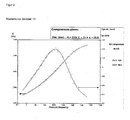
- the maximum loss factor tan ⁇ measured by a DMA method in the frequency range 0 to 500 Hz at a temperature in the range of -5 ° C to +40 ° C is at least 0.50, preferably at least 0 , 9, in particular at least 1.1, which expresses the good acoustic damping behavior.
- the storage modulus E 'of the hardened mass is in the range 0.1 and 10000 MPa with a loss factor tan delta of at least 0.50, preferably at least 0.9 and in particular at least 1.1 and the storage modulus G' in the range 0.1 and - 10000 MPa at a frequency of 0 to 500 Hz.
- composition according to the invention after hardening is characterized by good coating properties (no indentations on components) and by a sufficient hardness: Shore A ⁇ 30 scale parts.
- the hardness measurement according to Shore for elastomers is defined in the standard DIN 53505.
- Shore A measurement the penetration depth of a needle with a blunt tip into the material to be tested serves as a measure of the corresponding Shore hardness, which is on a scale from 0 Shore to 100 Shore (0 mm penetration depth) is measured.
- the hold time is 3 seconds.
- compositions are used in particular as relining and as an adhesive and sealant for attachments such as doors, front and tailgate, roof, front and floor area, but also directly in the passenger compartment for vehicles (cars, trucks, buses) or for manufacturing of rail vehicles. They can also be used in the field of equipment construction, if acoustic oscillations are to be damped, which can originate for example from motors, gearboxes or pumps (in general: from vibration transmitters by rotating machines). Therefore, the present invention also includes the use of a composition according to the invention as an acoustically damping material in vehicle or equipment construction.
- the following tables contain comparative examples and examples of compositions according to the invention, data on the curing and the foaming behavior, as well as on the acoustic damping properties, expressed in the loss factor tan ⁇ .
- the measuring method is a DMA method based on DIN EN ISO 6721, as described above.
- Expansion rates were determined open, ie without geometric restriction of the sample, by comparing the volumes of the sample before and after foaming and curing (at the temperature indicated in the tables in each case).
- compositions according to the invention are compositions according to the invention:
Landscapes
- Chemical & Material Sciences (AREA)
- Health & Medical Sciences (AREA)
- Chemical Kinetics & Catalysis (AREA)
- Medicinal Chemistry (AREA)
- Polymers & Plastics (AREA)
- Organic Chemistry (AREA)
- Compositions Of Macromolecular Compounds (AREA)
- Soundproofing, Sound Blocking, And Sound Damping (AREA)
- Vibration Prevention Devices (AREA)
Description
- Die vorliegende Erfindung betrifft eine heiß härtbare Zusammensetzung, die nach der Härtung einerseits akustische Dämpfungseigenschaften aufweist und die andererseits mindestens eine weitere (mechanische) Funktion erfüllen kann, beispielsweise als Unterfütterungsmasse oder als Kleb- oder Dichtstoff. Sie kann aber auch lediglich als akustisch dämpfende Beschichtung eingesetzt werden. Sie hat den Vorteil, bei Raumtemperatur oder im erwärmten Zustand mit üblichen Pumpen förderbar zu sein, was die Fabrikation vorgefertigter Teile (z.B. im Spritzguss) oder spezielle Extrusionstechniken unnötig macht. Der Anwendungsschwerpunkt liegt im Fahrzeugbau und in der Geräteindustrie (insbesondere Geräte mit Motoren, die zu einer Geräuschentwicklung führen)
- Im heutigen Fahrzeugbau (PKW / LKW / Bus / Zug) werden Anbauteile, Beplankungen, aber auch beispielsweise der Dachbereich und der Fahrzeugboden mit akustisch dämpfenden Massen ausgerüstet, um die verschiedenen Schwingungen der Struktur und damit die Geräuschübertragungen im Anwendungsbereich von -40 bis +90 °C zu mindern bzw. zu verhindern. Diese Dämpfungsmassen sind vielfach auf Basis von Bitumen in Form von Matten im Markt, die speziell auf jede Fahrzeuggeometrie zugeschnitten werden müssen. Spritzbare und extrudierbare Dämpfungsmassen auf Basis von Kautschuk, Epoxy und wässrigen (Acrylat-) Dispersionen sind ebenfalls bekannt. Alle diese Dämpfungsmassen werden flächig hauptsächlich im Rohbau oder im Lackbereich auf das Fahrzeug aufgebracht. Zusätzlich werden insbesondere bei Anbauteilen und Beplankungen, aber auch im Dachbereich, so genannte Unterfütterungen zwischen der Außenhaut und entsprechenden Spriegeln oder Sicherheits- und Verstärkungselementen appliziert, um das Vibrieren der Außenhaut und das Aneinanderschlagen der einzelnen Bauteile des Fahrzeugs zu verhindern sowie um entsprechende Abstände der Bauteilgruppen zu garantieren. Zusätzlich wird über die Festigkeit der Unterfütterung die Fahrzeugstruktur verstärkt. Teilweise haben diese Unterfütterungen auch Abdichtfunktionen. Die Unterfütterungen können als pumpbare Produkte, aber auch als direkt extrudierbare oder extrudierte oder spritzgegossene Formteile im Herstellungsprozess eines Fahrzeugs eingesetzt werden und sind meist auf Kautschukbasis aufgebaut. Aber auch Acrylat, Epoxy, EVA oder PVC als Rohstoffbasis sind bekannt.
-
EP 1035164 A1 offenbart eine Kautschuk-Zusammensetzung enthaltend, bezogen auf ihre Kautschuk-Komponente, 100 Gewichtsteile mindestens eines festen Dien-basierten Elastomers ausgewählt aus Homopolymeren und Copolymeren konjugierter Diene und Copolymere mindestens eines konjugierten Diens mit einer vinylaromatischen Verbindung ausgewählt aus Styrol und alpha-Methylstyrol, wobei die genannten Elastomere eine Tg von kleiner als +10°C aufweisen und wobei mindestens 50 Gewichtsprozent der genannten Elastomere eine Tg oberhalb von -40°C aufweisen. Weiterhin enthält die Zusammensetzung 5 bis 50 Gewichtsteile eines flüssigen Polymers mit hohem Vinyl-Polybutadienanteil, das einen Vinyl(1,2-)-Gehalt im Bereich von 40 is 95 % und eine Tg im Bereich von -5°C bis -40°C aufweist. Die Zusammensetzung wird mit Schwefel gehärtet. Sie eignet sich als Faser für Autoreifen. -
US 2007/299193 A1 offenbart eine spritzbare Kautschuk-Dämpfungszusammensetzung mit geringer Viskosität, die folgende Komponenten enthält: a) 5-50 Gewichts-% flüssige Polyene mit einem massenmittleren Molgewicht unterhalb von 20.000, b) ein Vulkanisationssystem ausgewählt aus: i) Schwefel und einem oder mehreren organischen Beschleunigern und Metalloxide, ii) peroxidischen Vulkanisationssystemen, iii) Chinonen, Chinondioximen und Nitrosobenzol, c) 0,5 - 15 Gewichtsprozent Kurzfasern mit einer durchschnittlichen Faserlänge von 50 µm bis 500 µm. -
WO 2009/036784 betrifft ein stark dämpfendes expandierbares Material mit folgender Zusammensetzung: a) 3 bis 40 Gewichtsprozent eines ersten thermoplastischen Elastomers mit einer ersten Glasübergangstemperatur, b) 3 bis 40 Gewichtsprozent eines zweiten thermoplastischen Elastomers mit einer zweiten Glasübergangstemperatur, wobei sich die erste und die zweite Glasübergangstemperatur um mindestens 10 °C unterscheiden, c) 5 bis 50 Gewichtsprozent mindestens eines thermoplastischen Polymers ausgewählt aus Polymeren und Copolymeren mit mindestens einer polymerisierbaren C = C Doppelbindung, d) 0 bis 30 Gewichtsprozent mindestens eines klebrigen Harzes, e) mindestens ein latentes chemisches Treibmittel in einer solchen Menge, dass das expandierbare Material um mindestens 50 Volumenprozent expandiert, wenn es für mindestens 20 Minuten auf eine Temperatur von 150 °C erhitzt wird, wobei die Summe der Komponenten a) bis e) weniger als 100 Gewichtsprozent beträgt und wobei der Rest auf 100 Gewichtsprozent aus weiteren Komponenten oder Hilfsstoffen besteht.
Für die Dämpfung und die Unterfütterung sind also nach dem Stand der Technik jeweils mindestens zwei verschiedene Materialien im Fahrzeugbau im Einsatz, die in unterschiedlicher Ausprägung je nach Bedarf in den verschiedenen Fahrzeugbereichen und je nach Hersteller eingesetzt werden. Dies bedingt für den Kunden folgende Nachteile: - eine aufwendige Logistik für mindestens zwei verschiedene Produkte,
- Verwaltungskosten und Aufwand zur Verwaltung von verschiedenen Artikeln und Produkten,
- verschiedene spezifische Applikationsanlagen für die verschiedenen Produkte und damit hohe Investitionskosten,
- Platzbedarf für verschiedene Applikationseinheiten,
- aufwändige Fahrzeugdesigns, um verschiedene Produkte auf die Karosse aufbringen zu können.
- Weiterhin wird durch das Aufbringen von mindestens zwei verschiedenen Produkten die Fahrzeugmasse durch die Materialien zum Teil stark erhöht, um die gewünschten Effekte zu erzielen, so dass der Kraftstoffverbrauch durch dieses Gewicht steigt. So werden akustisch wirksame Produkte meist flächig auf die Außenhaut oder den Fahrzeugunterboden aufgebracht, während Unterfütterungen auf entsprechende Spriegel oder Verstärkungsteile oder einfach zwischen zwei Bleche appliziert werden. Dies heißt, für beide Produktgruppen gibt es unterschiedliche Wirkorte.
- Alle diese oben beschriebenen Produkte und Funktionen werden hauptsächlich mittels pumpbaren Produkten beim Fahrzeughersteller ("Original Equipment Manufacturer" = OEM) direkt appliziert.
- Auch Weiße Ware wie Waschmaschinen, Wäschetrockner, Geschirrspülmaschinen, etc. werden nach dem Stand der Technik mittels Dämpfungsmatten akustisch gedämmt.
- Zur Lösung dieser Probleme wird erfindungsgemäß vorgesehen, die Funktionen der akustischen Dämpfung und die Funktionen der Unterfütterung bzw. Verklebung oder Abdichtung in einem Produkt zu vereinigen. Es gibt zwar bereits die Möglichkeit, ein solches Produkt in extrudierfähiger bzw. spritzgussfähiger Variante herzustellen, aber die Möglichkeit, ein solches Produkt als pumpfähiges Produkt herzustellen, scheint es bisher nicht zu geben. Da die Applikation bei den Fahrzeugherstellern aufgrund des hohen Automatisierungsgrades vorwiegend auf pumpbare Produkte ausgelegt ist, die über Roboter aufgetragen werden, ist es wünschenswert, auch eine pumpbare Variante eines Kombinationsprodukts aus Unterfütterung und akustisch wirksamer Dämpfungsmasse herzustellen. Herkömmliche Unterfütterungsklebstoffe, wie sie derzeit im Fahrzeugbau eingesetzt werden, zeigen keine bzw. nur sehr geringfügige Dämpfungseigenschaften.
- Die Deutsche Patentanmeldung
DE 10 2005 00305 beschreibt eine spritzbare, niedrigviskose Kautschukdämpfungsmasse auf der Basis von natürlichen und/oder synthetischen olefinische Doppelbindungen enthaltenden Elastomeren und Vulkanisationsmitteln, die - a) 5-50 Gew. % flüssige(s) Polyen(e) mit einem Molekulargewicht unter 20000,
- b) ein Vulkanisationssystem ausgewählt aus der Gruppe, bestehend aus Schwefel und einem oder mehreren organischen Beschleuniger(n) und Metalloxid(en),
peroxidischen Vulkanisationssystemen oder
Chinonen, Chinondioximen oder Dinitrosobenzol, ggf. in Kombination mit organischen Beschleunigern und/oder Metalloxid(en) - c) Kurzfasern mit einer mittleren Faserlänge von 50 µm bis 500 µm, vorzugsweise 100 µm bis 250 µm, wobei die Masse 0,5 bis 15 Gew. % Kurzfasern enthält,
- d) ggf. weitere Zusätze ausgewählt aus der Gruppe gebildet durch
Thermoplastische Polymere in Form von fein zerteilten Pulvern,
Füllstoffe,
Leichtfüllstoffe,
Klebrigmacher und/oder Haftvermittler,
Extenderöle,
Alterungsschutzmittel,
Rheologiehilfsmittel - In der deutschen Patentanmeldung
DE 10 2006 016577 werden heiß härtende, reaktive Zusammensetzungen auf Basis von natürlichen und/oder synthetischen olefinische Doppelbindungen enthaltenen Elastomeren und Vulkanisationsmitteln beschrieben, die mindestens ein flüssiges Polyen mit einem Molekulargewicht zwischen 400 und 80.000 sowie mindestens ein flüssiges Polybutadien mit enger Molekulargewichtsverteilung und einer Mikrostruktur von 10 bis 20 % vinylischen 1,2-Doppelbindungen, 50 bis 60 % trans 1,4-Doppelbindungen und 25 bis 35 % cis 1,4- Doppelbindungen im Molekül enthalten. Weiterhin enthalten diese Zusammensetzungen ein Vulkanisationssystem aus Schwefel und Beschleunigern und/oder gegebenenfalls Chinonoximen. Diese Zusammensetzungen eignen sich zur Verwendung als einkomponentiger Klebstoff, Dichtstoff oder Beschichtungsmasse im Automobilbau mit hohen Zugscherfestigkeiten und hoher Schlagschälfestigkeit, insbesondere auch bei tiefen Temperaturen. Akustisches Dämpfungsverhalten wird hier nicht erwähnt. - Das weiter oben bereits genannte Dokument
WO2009/036784 offenbart ein expandierbares und heißhärtbares Material mit akustischen Dämpfungseigenschaften, dessen Hauptkomponenten zwei unterschiedliche Styrol-Isopren-Styrol Copolymere mit Glastemperaturen von -13°C und +8°C sowie ein Vulkanisationssystem sind. Die eingesetzten Block-Copolymere sind bei Raumtemperatur fest, so dass Zusammensetzungen gemäß diesem Dokument bei Raumtemperatur ebenfalls fest sind. Die Zusammensetzungen können bei erhöhter Temperatur durch Extrusion geformt werden. Bei Temperaturen von unterhalb 60°C pumpbare Massen werden in diesem Dokument nicht erwähnt und gemäß dessen Lehre offensichtlich auch nicht erhalten. - Ein Gegenstand der vorliegenden Erfindung ist eine thermisch härtbare Zusammensetzung, enthaltend, bezogen auf die gesamte Zusammensetzung
- a) 5 bis 90 Gew.-% eines olefinische Doppelbindungen enthaltenden Copolymers auf Basis eines Diens und eines aromatisch substitiuierten Olefins, wobei das Copolymer bei 22 °C flüssig oder pastös ist, eine Glastemperatur, gemessen nach einer DSC-Methode, zwischen - 30 °C und + 15 °C aufweist, und der Vinyl-Anteil im Dienanteil mindestens 20 mol% beträgt,
- b) ein Vulkanisationssystem ausgewählt aus der Gruppe bestehend aus:
- b1) Schwefel und einem oder mehreren Beschleuniger(n),
- b2) peroxidischen oder disulfidischen Vulkanisationssystemen
- b3) Chinonen, Chinondioximen oder Dinitrosobenzol
- Die erfindungsgemäße Zusammensetzung weist nach der thermischen Härtung intrinsische Schwingungsdämpfungseigenschaften auf. Unter "intrinsischen Schwingungsdämpfungseigenschaften" versteht man die Fähigkeit zur Umwandlung von mechanischer Schwingungsenergie in Wärme. Die Amplitude einer angeregten Schwingung nimmt also in kurzer Zeit rasch ab. Diese Eigenschaft der gehärteten Zusammensetzung kann dadurch erkannt werden, dass man ihr Schwingungsdämpfungsverhalten mit einer DMA-Methode misst, wie sie weiter unten beschrieben wird.
- Für dasCopolymer a) ist das Merkmal "flüssig" so zu verstehen, dass das Produkt unter dem Einfluss der Schwerkraft aus einem Behälter ausgegossen werden kann. Als "pastös" wird ein Produkt bezeichnet, das zu einer gleichmäßigen Schicht ausgestrichen werden kann. Die Glastemperatur für die Copolymere a) wird durch "Differential Scanning Calorimetry" ("DSC" = Differenz-Thermoanalyse) bestimmt, da diese bei Raumtemperatur nicht fest sind. Dagegen beziehen sich die weiter unten angegebenen Glastemperaturen der ausgehärteten kompletten Zusammensetzung, die bei Raumtemperatur fest ist, auf ihre Bestimmung mittels "Dynamisch-mechanischer Analyse" ("DMA").
- Die Glastemperatur der ausgehärteten Masse liegt vorzugsweise im Bereich von etwa -5 °C bis etwa +40 °C, da dann das Schwingungsdämpfungsverhalten im Bereich üblicher Umgebungstemperaturen optimal ist. Die Glastemperatur der ausgehärteten Masse wird mit einer "Dynamisch-Mechanischen Analyse" (DMA) wie folgt bestimmt:
- Die Messung erfolgt in Anlehnung an DIN EN ISO 6721:
- Messgerät: Metravib 01 dB DMA+100
- Auswertesoftware: Dynatest
- Probendimension: ca. 20 x 10 x 20 mm (B x H x T)
- Probenhalterung: parallele Platte/Platte
- Masterkurve: Dehnungs-/Kompressionsmodus
gemessene Frequenzen : 1 ; 2 ; 4 ; 8 ; 16 ; 31.5 ; 63 ; 125 Hz,
Formfaktor: < 0,9
vorgegebene Amplitude: 10 µm
dynamische Verformung: 0,0005
- Ermittlung der Glastemperatur:
- 1) Über das Zeit-Temperatur-Superpositionsprinzip wird eine Masterkurve erstellt (nach DIN EN ISO 6721)
- 2) Die Tg (Glastemperatur) ist diejenige Referenztemperatur, bei der der tan delta bei einer gewünschten Frequenz maximal ist. Die gewählte Frequenz beträgt für alle Bestimmungen der Tg jeweils 101 Hz
- Bei der Beschreibung der erfindungsgemäßen Zusammensetzung bedeuten Mengenangaben in %, wenn nicht explizit anders angegeben, Gew.-% bezogen auf die gesamte Zusammensetzung.
- Vorzugsweise beträgt die Menge an Copolymer a), bezogen auf die gesamte Zusammensetzung, mindestens 10 Gew.-% und insbesondere mindestens 15 Gew.-%. Die Obergrenze liegt aufgrund der bevorzugten Anwesenheit der nachstehend beschriebenen weiteren Komponenten vorzugsweise bei 60 Gew.- % und insbesondere bei 45 Gew.-%. Der Bereich zwischen 15 und 45 Gew.-% ist also besonders bevorzugt.
- Wegen der besonders ausgeprägten akustischen Dämpfungseigenschaften im Sinne einer dissipativen Schwingungsdämpfung, also der Umwandlung von mechanischer Schwingungsenergie in Wärme, ist es bevorzugt, dass das Co-Polymer a) ein Block-Copolymer aus Styrol und einem Dien darstellt. Das Dien wird vorzugsweise ausgewählt aus Butadien, Isopren oder Mischungen hiervon. Dabei wird eine ausgeprägte dissipative Schwingungsdämpfung dann erzielt, wenn das Block-Copolymer a) einen Styrol-Anteil, bezogen auf das gesamte Block-Copolymer, von mindestens 10, vorzugsweise von mindestens 15 Gew.-%, und von höchstens 60 Gew.-%, vorzugsweise von höchstens 50 Gew.-% aufweist.
- Die Dien-Komponente kann unsubstituiert sein. Sie kann aber auch Substituenten aufweisen, insbesondere ausgewählt aus Carboxyl-, Hxdroxyl- und Aminogruppen. Hierdurch lässt sich die Haftung der Zusammensetzung auf einem metallischen Substrat verbessern.
- Das Copolymer a) soll einerseits bei Raumtemperatur (22 °C) flüssig oder pastös sein, andererseits aber eine Glastemperatur aufweisen, die nicht weit unterhalb von Raumtemperatur liegt. Neben dem strukturellen Aufbau des Copolymers ist hierfür auch die Molmasse des Copolymers von Bedeutung. Die erwünschte Kombination von Eigenschaften stellt sich insbesondere dann ein, wenn das Copolymer a) eine gewichtsmittlere Molmasse von mindestens 1000, vorzugsweise von mindestens 2000 und insbesondere von mindestens 5000, und von höchstens 50000, vorzugsweise von höchstens 35000, insbesondere von höchstens 25000 aufweist. Der Bereich von 5000 bis 18000 ist dabei besonders bevorzugt. Als mittlere Molmasse von Polymeren wird im Rahmen dieser Schrift generell die gewichtsmittlere Molmasse verstanden.
- Bei der Polymerisation von Dienen über die olefinische Doppelbindungen bildet sich innerhalb jedes Monomers eine neue olefinische Doppelbindung aus, die innerhalb der Polymerkette auf verschiedene Weise angeordnet sein kann. Im Rahmen der vorliegenden Erfindung ist es aufgrund der günstigen Kombination von chemischen Eigenschaften (Vulkanisierbarkeit) und akustischem Dämpfungsverhalten erforderlich dass das Copolymer a) einen durch die Polymerisation der Diene gebildeten ungesättigten Dien-Block enthält und dass die C = C - Doppelbindungen im Dien-Block so angeordnet sind, dass der Vinyl-Anteil im Dienblock mindestens 20 mol%, vorzugsweise mindestens 40 mol%, und höchstens 98 mol%, vorzugsweise höchstens 80 mol% (bezogen auf die Gesamtheit der olefinischen Doppelbindungen) beträgt
- Das Vulkanisationssystem kann aus den für die Vulkanisation von Kautschuk bekannten Vulkanisationssystemen ausgewählt werden. So kann es gemäß der Alternative
- b1) Schwefel und einen oder mehrere Beschleuniger enthalten.
- Der pulverförmige Schwefel wird dabei bevorzugt in Mengen von 0,5 bis 6,5 Gew.%, bezogen auf die Gesamtzusammensetzung eingesetzt. Besonders bevorzugt werden Mengen zwischen 1 und 4 Gew.% eingesetzt. Als organische Beschleuniger eignen sich Dithiocarbamate (in Form ihrer Ammonium- bzw. Metallsalze), Xanthogenate, Thiuram-Verbindungen (Monosulfide und Disulfide), Thiazolverbindungen, Aldehyd/Aminbeschleuniger (z.B. Hexamethylentetramin) sowie Guanidinbeschleuniger. Ganz besonders bevorzugt werden Dibenzothiazyldisulfid (MBTS), 2-Mercaptobenzthiazol (MBT), dessen Zinksalz (ZMBT), Zinkdibenzyldithiocarbamat (ZBEC), N-Cyclohexylbenzodithiazylsulfenamid (CBS) oder Diphenylguanidin. Die Beschleuniger, inklusive der vorstehend und im folgenden Absatz genannten weiteren Zinkverbindungen, werden vorzugsweise in Mengen zwischen 0,25 und 20 Gew.%, besonders bevorzugt zwischen 0,8 und 12 Gew.%, verwendet. Für die Erzielung besonders hoher Temperatur- und Reversionsfestigkeit des Klebstoffes kann das Vulkanisationsgemisch auch bifunktionelle Vernetzer enthalten. Konkrete Beispiele sind Vernetzer auf Basis von bifunktionellen Dithiocarbamaten wie z.B. das 1,6-bis(N,N-dibenzylthiocarbamoyldithio)-hexan. Derartige Vernetzer können in Mengen zwischen 0 und 2, vorzugsweise zwischen 0 und 1 Gew.% in den Zusammensetzungen enthalten sein.
- Bei den als Beschleuniger wirkenden Zinkverbindungen kann zwischen den Zinksalzen von Fettsäuren, Zinkdithiöcarbamaten, basischen Zinkcarbonaten sowie insbesondere feinteiligem Zinkoxid gewählt werden. Der Gehalt an Zinkverbindungen liegt im Bereich zwischen 0,5 und 10 Gew.%, vorzugsweise zwischen 2 und 8 Gew.%. Diese Zinkverbindungen können in Kombination mit den im vorstehenden Absatz genannten Beschleunigern eingesetzt werden und werden dies vorzugsweise auch. Zusätzlich können weitere typische Kautschuk-Vulkanisationshilfsmittel wie Fettsäuren (z.B. Stearinsäure) in der Formulierung vorhanden sein.
- Das Vulkanisationssystem kann aber auch frei von elementarem Schwefel sein. Beispielsweise können als Vulkanisationssystem
- b2) Peroxide, vorzugsweise organische Peroxide eingesetzt werden, wie sie für diesen Zweck bekannt sind. Beispile sind: Dibenzoylperoxid, tert.-Butylperoxybenzoat, und insbesondere 1,1-Di-(tert.-butylperoxy)-3,3,5-trimethylcyclohexan, Butyl-4,4-di-(tert.-butylperoxy)valerat, Dicumyl peroxide, Di-(2-tert.-butyl-peroxyisopropyl)-benzen, tert.-Butylcumylperoxid, 2,5-Dimethyl-2,5-di-(tert.-butylperoxy)-hexan, Di-tert.-butylperoxid, 2,5-Dimethyl-2,5-di(tert.-butylperoxy)hexyn-3 und Vernetzungshilfsmittel wie Triallylisocyanurat
- Anstelle von Peroxiden können auch "disulfidische" Vuklanisationssysteme, also Vulkanisationssysteme auf Basis von Disulfiden eingesetzt werden. Geeignet sind beispielsweise Thiuramdisulfide.
- Die Einsatzmengen betragen vorzugsweise:
- 0,3 - 4,5 Gew.% im Falle von Peroxiden,
- 0,2 - 5 Gew.% im Falle von Disulfiden
- Als weitere Alternative können als Vulkanisationssystem
- b3) Chinone, Chinondioxime, insbesondere p-Benzochinondioxim, Nitrosobenzol oder Dinitrosobenzol, insbesondere p-Dinitrosobenzol.
verwendet werden. Auch diese sind aus der Vulkanisation von Kautschuk bekannt. - Erfindungsgemäß kann auch ein kombiniertes Vulkanisationssystem aus elementarem Schwefel, den oben genannten organischen Beschleunigern und Chinondioximen eingesetzt werden. Beispielhaft erwähnt sei p-Benzochinondioxim. Es können jedoch auch andere Chinondioxime in Kombination mit den vorgenannten Schwefelsystemen verwendet werden. Das Vulkanisationssystem kann auch nur aus Chinondioximen bestehen. Die Einsatzmenge beträgt vorzugsweise 1,5 - 6,0 Gew.%, insbesondere für Chinondioxime, unabhängig davon, ob diese zusammen mit Schwefel eingesetzt werden oder nicht.
- In einer bevorzugten Ausführungsform enthält die Zusammensetzung zusätzlich, bezogen auf die gesamte Zusammensetzung
- c) 10 bis 45 Gew.-%, vorzugsweise 15 bis 40 Gew.-% und insbesondere 25 bis 36 Gew.-% Füllstoff.
- Die Füllstoffe können aus einer Vielzahl von Materialien ausgewählt werden. Insbesondere sind hier zu nennen: Kreiden, natürliche oder gemahlene Calciumcarbonate, Calcium-Magnesiumcarbonate, Kieselsäure (englisch: "silica"), Silikate, Talkum, Schwerspat sowie Ruß. Es kann zweckmäßig sein, dass zumindest ein Teil der Füllstoffe oberflächenvorbehandelt ist. Insbesondere hat sich bei den verschiedenen Calciumcarbonaten bzw. Kreiden eine Beschichtung mit Stearinsäure zur Verminderung der eingetragenen Feuchtigkeit und zur Verminderung der Feuchtigkeitsempfindlichkeit der ausgehärteten Zusammensetzung als zweckmäßig erwiesen. Als Füllstoffe haben sich insbesondere Füllstoffe mit einem großen Aspektverhältnis (= blättchenförmige Füllstoffe mit im Vergleich zur Ausdehnung in der Blättchenebene geringer Dicke: Die Dicke senkrecht zur Blättchenebene ist maximal 1/10 der kleinsten Ausdehnung in der Blättchenebene) wie insbesondere Schichtsilicate, besonders bevorzugt Glimmer, Talkum und Graphit als günstig für gute akustische Dämpfungseigenschaften erwiesen.
- Die erfindungsgemäßen Zusammensetzungen können noch zusätzlich zu diesen Füllstoffen zum Binden von Feuchtigkeit zwischen 0 und 8 Gew.%, vorzugsweise zwischen 1 und 6 Gew.% an Calciumoxid enthalten.
- Vorzugsweise wird die erfindungsgemäße Zusammensetzung so eingestellt, dass sie bei oder vor dem thermischen Härten irreversibel expandiert ("aufschäumt", "aufbläht"). Hierdurch tritt eine irreversible Volumenvergrößerung ein, die es ermöglicht, Hohl- oder Zwischenräume besser vollständig mit der ausgehärteten Masse auszufüllen. Zu diesem Zweck ist es bevorzugt, dass die Zusammensetzung so genannte Treibmittel (Komponente d) enthält.
- Als Treibmittel eignen sich im Prinzip alle bekannten Treibmittel wie z. B. die "chemischen Treibmittel" die durch Zersetzung Gase freisetzen, oder "physikalische Treibmittel", d.h. expandierende Hohlkugeln. Beispiele für die erstgenannten Treibmittel sind Azobisisobutyronitril, Azodicarbonamid, Di-Nitrosopentamethylentetramin, 4,4'-Oxybis(benzolsulfonsäurehydrazid), Diphenylsulfon-3,3'-disulfohydrazid, Benzol-1,3-disulfohydrazid, p-Toluolsulfonylsemicarbazid. Besonders bevorzugt werden die expandierbaren Kunststoffmikrohohlkugeln auf der Basis von Polyvinylidenchloridcopolymeren oder Acrylnitril/(Meth)acrylat-Copolymeren. Diese sind z.B. unter dem Namen "Dualite®" bzw. "Expancel®" von den Firmen Pierce & Stevens bzw. Casco Nobel im Handel erhältlich.
- Die Menge an Treibmittel wählt man vorzugsweise so, dass sich das Volumen der Masse beim Erwärmen auf Aktivierungstemperatur (oder Expansionstemperatur) um mindestens 10 %, vorzugsweise mindestens 50 % und insbesondere mindestens 100 % irreversibel vergrößert. Hierunter ist zu verstehen, dass die Masse zusätzlich zur normalen und reversiblen thermischen Ausdehnung gemäß ihrem thermischen Ausdehnungskoeffizienten ihr Volumen im Vergleich zum Ausgangsvolumen bei Raumtemperatur (22 °C) beim Erwärmen auf die Aktivierungstemperatur irreversibel derart vergrößert, dass es nach dem Wiederabkühlen auf Raumtemperatur um mindestens 10 %, vorzugsweise um mindestens 50 % und insbesondere mindestens 100 % größer ist als zuvor. Der angegebene Expansionsgrad bezieht sich also auf das Volumen der Masse bei Raumtemperatur vor und nach dem vorübergehenden Erhitzen auf die Aktivierungstemperatur. Die Obergrenze des Expansionsgrads, also der irreversiblen Volumenvergrößerung, kann man durch die Wahl der Menge des Treibmittels so einstellen, dass sie bei 600 %, insbesondere bei 300 % liegt. Ein Schäumgrad im Bereich von 100 bis 300 % ist also bevorzugt. Der Schäumgrad kann durch Volumenvergleich (ohne räumliche Eingrenzung beim Schäumen, d.h. das Schäumen erfolgt dreidimensional) oder durch Vergleich der Dichten vor- und nach dem Schäumen bestimmt werden. Zumindest eine dieser Methoden soll einen Wert im vorstehend genannten Bereich ergeben.
- Die hierfür erforderliche Menge an Treibmittel kommt auf die genaue Art des Treibmittels an und kann empirisch oder aufgrund von Herstellerempfehlungen eingestellt werden. Als Anhaltspunkt kann gelten, dass für den hier vorgesehenen Anwendungszweck die erfindungsgemäße Zusammensetzung, bezogen auf die gesamte Zusammensetzung,
bis zu 6 Gew.-%, vorzugsweise bis zu 4 Gew.-%, und vorzugsweise mindestens 0,2 Gew.-% Treibmittel enthält - In einer weiteren bevorzugten Ausführungsform enthält die Zusammensetzung zusätzlich, bezogen auf die gesamte Zusammensetzung,
- e) bis zu 12 Gew.-%, vorzugsweise bis zu 9 Gew.-% und insbesondere bis zu 5 Gew.-%, und vorzugsweise mindestens 1 Gew.-% Festkautschuk und/oder thermoplastische Polymere
und /oder f) bis zu 25 Gew.-%, vorzugsweise bis zu 12 Gew.-%, und vorzugsweise mindestens 1 Gew.-%, insbesondere mindestens 2,5 Gew.-% Polydien (vorzugsweise Polybutadien) mit einer Molmasse im Bereich von 1000 bis 10000, das Carboxyl-, Hydroxyl- oder Amingruppen aufweist. Vorzugsweise sind beide dieser Komponenten e) und f) gleichzeitig vorhanden. Beide Komponenten verbessern die Zähigkeit der ausgehärteten Zusammensetzung, wobei die Komponenten f) aufgrund der Carboxylgruppen zusätzlich die Haftung auf metallischen Substraten verbessert. - Als Komponente e) sind insbesondere Festkautschuke auf Basis von Polybutadien, vorzugsweise mit einem sehr hohen Anteil an cis-1,4-Doppelbindungen (typischerweise über 85%), Styrol-Butadien-Kautschuk (Styrol-Butadien-Styrol Copolymere, SBS), Butadien-Acrylnitril-Kautschuk, Styrol-Isopren-Kautschuke (Styrol-Isopren-Styrol Copolymere, SIS), Styrol-Ethylen/Propylen-Styrol Copolymere, SEPS, Styrol-Ethylen/Ethylen/Propylen-Styrol Copolymere, SEEPS, synthetischer oder natürlicher Isoprenkautschuk, Polycyclooctenamer, Butylkautschuk oder Polyurethankautschuk geeignet.
- Die akustischen Dämpfungseigenschaften der erfindungsgemäßen Zusammensetzung werden verbessert, wenn diese zusätzlich, bezogen auf die gesamte Zusammensetzung,
- g) bis zu 40 Gew.-%, vorzugsweise bis zu 30 Gew.-% und insbesondere bis zu 25 Gew.-%, und vorzugsweise mindestens 2 Gew.-%, insbesondere mindestens 5 Gew.-% Kohlenwasserstoffharz enthält.
- Das Kohlenwasserstoffharz trägt dazu bei, die Glastemperatur der ausgehärteten Masse in den gewünschten Bereich von etwa -5 °C bis etwa +40 °C zu bringen. Dann ist die akustische Dämpfung bei den üblichen Umgebungstemperaturen besonders ausgeprägt. Die Harze können völlig aliphatisch sein oder sie können aliphatische und aromatische Strukturen aufweisen bzw. können es aromatisch modifizierte aliphatische Harze sein. Hiefür können Handelsprodukte wie beispielsweise Escorez™ 1102, Escorez™ 2173, Escorez™ 2184, Escorez™2101, Escorez™ 2105 und Nevtac™ 10 eingesetzt werden.
- Harze mit einem Erweichungspunkt > 10 °C, vorzugsweise mit einem Erweichungspunkt > 40 °C und insbesondere mit einem Erweichungspunkt > 70 °C, die mit der Polymermatrix verträglich sind, tragen zur Verschiebung der Glastemperatur in den gewünschten Bereich von etwa -5 bis etwa + 40 °C bei und erhöhen das Maximum des tan delta.
- Zur besseren Verarbeitbarkeit der nicht ausgehärteten Zusammensetzung und zur Verbesserung der mechanischen Eigenschaften der ausgehärteten Zusammensetzung ist es bevorzugt, dass die nicht ausgehärtete Zusammensetzung zusätzlich
- h) bis zu 40 Gew.-%, vorzugsweise bis zu 30 Gew.-% und insbesondere bis zu 25 Gew.-%, und vorzugsweise mindestens 2 Gew.-%, insbesondere mindestens 5 Gew.-% Weichmacher enthält.
- Hierfür kommen beispielsweise die als Weichmacher bekannten Phthalsäureester, Kohlenwasserstoff-Öle wie beispielsweise Weißöl, bei 22 °C flüssiges natives Öl (Fettsäure-Glycerin-Ester wie beispielsweise die so genannten Triglyceride, z.B. Rapsöl, Sojaöl, Walnussöl, Leinöl, Sonnenblumenöl, Olivenöl, etc.) in Betracht.
- Insbesondere das gleichzeitige Vorhandensein der Komponenten g) und h) in der Zusammensetzung verbessern die akustischen Dämpfungseigenschaften, d.h. erhöhen das Maximum des Verlustfaktors Tangens delta im gewünschten Bereich von etwa -5 bis etwa + 40 °C und verbreitern den Peak des Tangens delta.
- Die erfindungsgemäßen Zusammensetzungen können weiterhin strukturverstärkende Faserfüllstoffe enthalten, vorzugsweise auf der Basis von Aramidfasern, Kohlenstoff-Fasern, Glasfasern, Polyamidfasern, Polyethylenfasern oder Polyesterfasern, wobei diese Fasern vorzugsweise Kurzfasern in Form von Pulpfasern oder Stapelfasern sind. Die Fasern sollen dabei besonders bevorzugt eine mittlere Faserlänge zwischen 100 µm und 250 µm haben und einen Durchmesser von 5 bis 20 µm. Die längsten Fasern sollen dabei 1000 µm bis 2000 µm nicht überschreiten. Besonders bevorzugt sind hierbei Glasfasern, Polyamidfasern vom Typ der Aramidfaser oder auch Polyesterfasern. Der Gehalt der Zusammensetzung an Fasern, soweit vorhanden, beträgt vorzugsweise 0,5 bis 10 Gew.%.
- Es ist bevorzugt, dass die Zusammensetzung neben den in Anspruch 1 genannten essentiellen Komponenten mindestens eine der Komponenten c) bis h) zusätzlich enthält, so dass die Zusammensetzung mindestens einer der Kombinationen: a) + b) + c), a) + b) + d), a) + b) + e), a) + b) + f), a) + b) + g), a) + b) + h) entspricht. Besonders bevorzugt enthält die erfindungsgemäße Zusammensetzung sämtliche der vorstehend genannten Komponenten a) bis h) in den angegebenen Mengen gleichzeitig, wobei als Vulkanisationssystem allerdings nur eines der genannten Systeme b1), b2) oder b3) anwesend sein muss.
- Die folgende Tabelle gibt einen Überblick über mögliche erfindungsgemäße Zusammensetzungen:
Komponente allgemeine Zusammensetzung bevorzugte Zusammensetzung besonders bevorzugte Zusammensetzung Festkautschuk 0 - 12 % 0 - 9 % 1,5 - 5,0 % Akustisch dämpfendes Block-Copolymer 5 - 65 % 10 - 50 % 15 - 45 % Polybutadien mit aktiven Carboxylgruppen (MW = 1000 - 10.000 0 - 25 % 1 - 12 % 2,5 - 9 % g/mol) Weichmacher 0 - 40 % 2 - 30 % 5 - 25 % Kohlenwasserstoffharz 0 - 40 % 2 - 30 % 5 - 25 % Schwefel 0,5 - 6,5 % 0,8 - 4,0 % 1,0 - 3,0 % Vulkanisationsbeschleuniger (MBTS, MBT, ZMBT, ZBEC, CBS, etc.) 0,25 - 7,5 % 0,5 - 5% 0,8 - 4 % chemisches Treibmittel (inkl . Aktivator) 0 - 6 % 0,2 - 4 % 0,5 - 3 % physikalisches Treibmittel 0 - 6 % 0 - 4 % 0 - 1,5 % Zinkoxid 0 - 10 % 0 - 8 % 0,5 - 7 % Dinatriumsalz des Hexamethylen-1,6-bis(thisosulfat) 0 - 2,5 % 0,1 - 1,8 % 0,4 - 1,3 % Antioxidans (z.B. 2,2-Methylen-bis-(4-methyl-6-tert.-butylphenol)) 0 - 1,5 % 0,1 - 1,0 % 0,2 - 0,7 % Calciumoxid 0 - 8 % 1 - 6 % 2,5 - 5,5 % Russ 0 - 5 % 0,1 - 3 % 0,3 - 2 % Füllstoff (Calciumcarbonat, Graphit, Talkum, Glimmer, etc.) 10 - 45 % 15 - 40 % 25 - 36 % Calciumcarbonat, gecoatet 0 - 30 % 0 - 18 % 0 - 12 % Daneben können Fasern, weitere bzw. andere typische Beschleuniger, andere Vernetzungsmittel wie Peroxide oder Benzochinondioxim, andere Antioxidantien, Co-Aktivatoren und weitere Katalysatoren, Treibmittel, Öle, Harze, Alterungsschutzmittel, Rheologiehilfsmittel, Haftungsvermittler, Pigmente und thermoplastische Polymere (SEPS, SEEPS, PE, PP, PVC, TPU) enthalten sein. - Der Vorteil der erfindungsgemäßen Zusammensetzung liegt darin, dass sie bei einem entsprechend gewähltem Verhältnis von bei 22 °C flüssigen und festen Komponenten so eingestellt werden kann, dass sie automatisch (z.B. mit Robotern) oder manuell mit Standardapplikationsanlagen für Kleb- und Dichtstoffe in der Automobilindustrie bei einer Temperatur von maximal 60 °C appliziert werden kann. Hierfür ist ausschlaggebend, dass die olefinische Doppelbindungen enthaltenden Copolymere a) bei 22 °C flüssig bzw. pastös sind. Die erfindungsgemäße Zusammensetzung ist also vorzugsweise dadurch gekennzeichnet, dass sie bei einer Temperatur im Bereich von 15 bis 60 °C eine solche Viskosität aufweist, dass sie mit einer Pumpe (z. B. einer Kreisel-, Zahnrad-, oder Schöpfkolbenpumpe, wie sie in den genannten Standardapplikationsgeräten üblich sind) pumpbar ist.
- Ein weiterer Aspekt der vorliegenden Erfindung liegt in der Applikation der erfindungsgemäßen Zusammensetzung. Daher umfasst die Erfindung auch ein Verfahren zur Applikation der erfindungsgemäßen Zusammensetzung, dadurch gekennzeichnet, dass man die Zusammensetzung bei einer Temperatur im Bereich von 15 bis 60 °C mit einer Pumpe (Pumpenbeispiele wie vorstehend) zum Applikationsort fördert und im flüssigen oder pastösen Zustand auf ein beöltes, unbehandeltes oder gereinigtes Substrat aufträgt.
- Die erfindungsgemäße Zusammensetzung kann nach der Applikation thermisch gehärtet werden, wozu die in dem betroffenen Industriesegment des Fahrzeug- oder Gerätebaus üblicherweise vorhandenen Öfen zum Einbrennen der Lackierung verwendet werden können. Die Aktivierungstemperatur für die thermische Härtung und gegebenenfalls das Aufschäumen liegt vorzugsweise im Bereich von 120 bis 220 °C. Diese Temperatur soll vorzugsweise für eine Zeitdauer im Bereich von 10 bis 150 Minuten aufrecht gehalten werden.
- Nach Aushärten der Masse liegt die mit einer DMA-Methode (siehe weiter oben) gemessene Glastemperatur der ausgehärteten Masse vorzugsweise im Bereich von - 5 °C bis + 40 °C. Dann ist die akustische Dämpfung bei den üblichen Umgebungstemperaturen besonders ausgeprägt. Der mit einer DMA-Methode gemessene maximale Verlustfaktor tan δ (Einzelheiten zur Messung: Siehe experimenteller Teil) im Frequenzbereich 0 bis 500 Hz bei einer Temperatur im Bereich von -5 °C bis +40 °C beträgt mindestens 0,50, vorzugsweise mindestens 0,9, insbesondere mindestens 1,1, was das gute akustische Dämpfungsverhalten zum Ausdruck bringt. "Bei einer Temperatur im Bereich von -5 °C bis +40 °C" bedeutet, dass der genannte Mindestwert für tan δ bei irgendeiner Temperatur im genannten Bereich erreicht wird.
Der Speichermodul E' der ausgehärteten Masse liegt im Bereich 0,1 und - 10000 MPa bei einem Verlustfaktor tan delta von mindestens 0,50, vorzugsweise mindestens 0,9 und insbesondere mindestens 1,1 und der Speichermodul G' im Bereich 0,1 und - 10000 MPa bei einer Frequenz von 0 bis 500 Hz. - Weiterhin zeichnet sich die erfindungsgemäße Zusammensetzung nach Härtung durch gute Beschichtungseigenschaften (keine Einzüge an Bauteilen) sowie durch eine ausreichende Härte aus: Shore A < 30 Skalenteile.
- Die Härtemessung nach Shore für Elastomere ist festgelegt in der Norm DIN 53505. Bei der Shore A Messung dient die Eindringtiefe einer Nadel mit abgestumpfter Spitze in das zu prüfende Material als ein Maß für die entsprechende Shore-Härte, die auf einer Skala von 0 Shore bis 100 Shore (0 Millimeter Eindringtiefe) gemessen wird. Die Haltezeit beträgt 3 Sekunden.
- Anwendung finden die Zusammensetzungen insbesondere als Unterfütterung sowie als Kleb- und Dichtstoff für Anbauteile wie Türen, Front- und Heckklappe, Dach-, Front- und Bodenbereich, aber auch direkt in der Fahrgastzelle für Fahrzeuge (Automobile, LKW, Bus) oder für die Fertigung von Schienenfahrzeugen. Sie können auch im Gerätebau verwendet werden, wenn akustische Schwingungen gedämpft werden sollen, die beispielsweise von Motoren, Getrieben oder Pumpen (allgemein: von Schwingungsgebern durch sich drehende Maschinen) ausgehen können. Daher umfasst die vorliegende Erfindung auch die Verwendung einer erfindungsgemäßen Zusammensetzung als akustisch dämpfendes Material im Fahrzeug- oder Gerätebau.
- Die nachstehenden Tabellen enthalten Vergleichsbeispiele und Beispiele erfindungsgemäßer Zusammensetzungen, Daten über die Härtung und das Aufschäumverhalten, sowie über die akustischen Dämpfungseigenschaften, ausgedrückt im Verlustfaktor tan δ. Die Messmethode ist eine DMA Methode in Anlehnung an DIN EN ISO 6721, wie sie weiter oben beschrieben wurde.
- Expansionsraten wurden offen, also ohne geometrische Beschränkung der Probe, durch Vergleich der Volumina der Probe vor und nach dem Schäumen und Härten (bei der jeweils in den Tabellen angegebenen Temperatur) bestimmt.
-
Rapsöl 8,7% Polystyrol-Polyisopren Blockcopolymer, Tg -63 °C, Styrolgehalt 17 %, Mw: 31.000 g/mol 30,7% Polybutadien cis-1,4- (fest) 5,2% Polybutadien mit aktiven Carboxylgruppen (MW = 2100 g/mol) 2,8% Graphit 32,7% 2,2-Methylen-bis-(4-methyl-6-tert.-butylphenol) 0,4% Russ 1,8% Kieselsäure 1,0% Calciumoxid 3,0% expandierfähige Mikrohohlkugeln 2,1% Azodicarbonamid 1,9% Oxi-bis-sulfo-hydrazid 1,9% Benzolsulfinsaeure-zinksalz 0,10% Benzochinondioxim 2,1% ZBEC 2,9% Schwefel 2,0% MBTS 0,7% Tg Produkt < -15 °C tan delta @ 20 °C 0,15 max. tan delta 0,41 Shore A 19 Expansion (30 min @180 °C) 250 % -
Rapsöl 8,7% Polyisopren, Tg -63 °C, Mw: 29.000 g/mol 30,7% Polybutadien cis-1,4- (fest) 5,2% Polybutadien mit aktiven Carboxylgruppen (MW = 2100 g/mol) 2,8% Graphit 32,7% 2,2-Methylen-bis-(4-methyl-6-tert.-butylphenol) 0,4% Russ 1,8% Kieselsäure 1,0% Calciumoxid 3,0% expandierfähige Mikrohohlkugeln 2,1% Azodicarbonamid 1,9% Oxi-bis-sulfo-hydrazid 1,9% Benzolsulfinsaeure-zinksalz 0,10% Benzochinondioxim 2,1% ZBEC 2,9% Schwefel 2,0% MBTS 0,7% Tg Produkt < -15 °C tan delta @ 20 °C 0,15 max. tan delta 0,27 Shore A 19 Expansion (30 min @180 °C) 195% -
Rapsöl 8,7% Polyisopren, Tg -25 °C, Mw: 25.000 g/mol 30,7% Polybutadien cis-1,4- (fest) 5,2% Polybutadien mit aktiven Carboxylgruppen (MW = 2100 q/mol) 2,8% Graphit 32,7% 2,2-Methylen-bis-(4-methyl-6-tert.-butylphenol) 0,4% Russ 1,8% Kieselsäure 1,0% Calciumoxid 3,0% expandierfähige Mikrohohlkugeln 2,1% Azodicarbonamid 1,9% Oxi-bis-sulfo-hydrazid 1,9% Benzolsulfinsaeure-zinksalz 0,10% Benzochinondioxim 2,1% ZBEC 2,9% Schwefel 2,0% MBTS 0,7% Tg Produkt -15 °C tan delta @ 20 °C 0,21 max. tan delta 0,55 Shore A 45 Expansion (30 min @180 °C) 163% -
flüssiges Polybutadien (MW = 1000 g(mol) 2,0% Polybutadien cis-1,4- (fest) 7,8% Polybutadien mit aktiven Carboxylgruppen (MW = 2100 g/mol) 4,0% Polybutadien mit aktiven Carboxylgruppen (MW = 1300 q/mol) 1,5% flüssiges Polybutadien (MW = 2200 g/mol) 23,5% Kreide 31,8% gecoatete Kreide 17,3% 2,2-Methylen-bis-(4-methyl-6-tert.-butylphenol) 0,5% Russ 0,5% Zinkoxid 3,0% Calciumoxid 2,5% expandierfähige Mikrohohlkugeln 0,5% Azodicarbonamid 1,5% Benzolsulfinsaeure-zinksalz 0,1% Schwefel 2,5% MBTS 1,0% Tg Produkt -10 °C tan delta @ 20 °C 0,11 max. tan delta 0,16 Shore A 50 Expansion (30 min @180 °C) 140% -
Rapsöl 8,7% Polystyrol-Polybutadien-Block-Copolymer, Tg -14 °C, Styrolgehalt 22 %, Vinylanteil 65 mol%, Mw 8400 g/mol 30,8% Polybutadien cis-1,4- (fest) 5,2% Polybutadien mit aktiven Carboxylgruppen (MW = 2100 g/mol) 2,8% Graphit 32,8% 2,2-Methylen-bis-(4-methyl-6-tert.-butylphenol) 0,4% Russ 1,7% Kieselsäure 1,0% Calciumoxid 3,0% expandierfähige Mikrohohlkugeln 2,0% Azodicarbonamid 1,9% Oxi-bis-sulfo-hydrazid 1,9% Benzolsulfinsaeure-zinksalz 0,10% Benzochinondioxim 2,1% ZBEC 3,9% Schwefel 2,0% MBTS 0,7% Tq Produkt 0 °C tan delta @ 20 °C 0,57 max. tan delta 0,68 Shore A 15 Expansion (30 min @180 °C) 553% -
Rapsöl 8,7% Polystyrol-Polybutadien-Block-Copolymer, Tg -14 °C, Styrolgehalt 22 %, Vinylanteil 65 mol%, Mw 8400 g/mol 30,8% Polybutadien cis-1,4- (fest) 5,2% Polybutadien mit aktiven Carboxylgruppen (MW = 2100 g/mol) 2,8% Graphit 32,8% 2,2-Methylen-bis-(4-methyl-6-tert.-butylphenol) 0,4% Russ 1,7% Kieselsäure 1,0% Calciumoxid 3,0% expandierfähige Mikrohohlkugeln 0,9% Azodicarbonamid 1,0% Oxi-bis-sulfo-hydrazid 2,9% Benzolsulfinsaeure-zinksalz 0,10% Benzochinondioxim 2,1% ZBEC 3,9% Schwefel 2,0% MBTS 0,7% Tg Produkt 0 °C tan delta @ 20 °C 0,60 max. tan delta 0,75 Shore A 20 Expansion (30 min @180 °C) 284 % -
Rapsöl 8,9% Polystyrol-Polybutadien-Block-Copolymer, Tg -14 °C, Styrolgehalt 22 %, Vinylanteil 65 mol%, Mw 8400 g/mol 41,8% Polybutadien cis-1,4- (fest) 5,4% Polybutadien mit aktiven Carboxylgruppen (MW = 2100 g/mol) 2,9% Graphit 23,9% 2,2-Methylen-bis-(4-methyl-6-tert.-butylphenol) 0,4% Russ 1,8% Kieselsäure 1,0% Calciumoxid 3,1% expandierfähige Mikrohohlkugeln 0,9% Azodicarbonamid 1,0% Oxi-bis-sulfo-hydrazid 0,8% Benzolsulfinsaeure-zinksalz 0,1% Benzochinondioxim 2,2% ZBEC 3,0% Schwefel 2,1% MBTS 0,7% Tg Produkt 4,5 °C tan delta @ 20 °C 0,93 max. tan delta 0,96 Shore A 23 Expansion (30 min @180 °C) 195% -
Rapsöl 8,9% Polystyrol-Polybutadien-Block-Copolymer, Tg -14 °C, Styrolgehalt 22 %, Vinylanteil 65 mol%, Mw 85400 g/mol 31,8% Polybutadien cis-1,4- (fest) 5,4% Polybutadien mit aktiven Carboxylgruppen (MW = 2100 g/mol) 2,9% Muskovit Glimmer 33,9% 2,2-Methylen-bis-(4-methyl-6-tert.-butylphenol) 0,4% Russ 1,8% Kieselsäure 1,0% Calciumoxid 3,1% expandierfähige Mikrohohlkugeln 0,9% Azodicarbonamid 1,0% Oxi-bis-sulfo-hydrazid 0,9% Benzolsulfinsaeure-zinksalz 0,1% Benzochinondioxim 2,2% ZBEC 3,0% Schwefel 2,1% MBTS 0,7% Tg Produkt 4,5 °C tan delta @ 20 °C 0,99 max. tan delta 1,04 Shore A 23 Expansion (30 min @180 °C) 185% -
Rapsöl 8,9% Polystyrol-Polybutadien-Block-Copolymer, Tg -7 °C, Styrolgehalt 40 %, vinyl-Gehalt 55 mol%, Mw 10300 g/mol 41,8% Polybutadien cis-1,4- (fest) 5,4% Polybutadien mit aktiven Carboxylgruppen (MW = 2100 g/mol) 2,9% Graphit 23,9% 2,2-Methylen-bis-(4-methyl-6-tert.-butylphenol) 0,4% Russ 1,8% Kieselsäure 1,0% Calciumoxid 3,1% expandierfähige Mikrohohlkugeln 0,9% Azodicarbonamid 1,0% Oxi-bis-sulfo-hydrazid 0,9% Benzolsulfinsaeure-zinksalz 0,1% Benzochinondioxim 2,2% ZBEC 3,0% Schwefel 2,1% MBTS 0,7% Tg Produkt 10 °C tan delta @ 20 °C 0,94 max. tan delta 0,95 Shore A 16 Expansion (30 min @180 °C) 196% Rapsöl 8,9% Polystyrol-Polybutadien-Block-Copolymer, Tg -7 °C, Styrolgehalt 40 %, vinyl-Gehalt 55 mol%, Mw 10300 g/mol 41,8% Polybutadien cis-1,4- (fest) 5,4% Polybutadien mit aktiven Carboxylgruppen (MW = 2100 g/mol) 2,9% Muskovit Glimmer 23,9% 2,2-Methylen-bis-(4-methyl-6-tert.-butylphenol) 0,4% Russ 1,8% Kieselsäure 1,0% Calciumoxid 3,1% expandierfähige Mikrohohlkugeln 0,9% Azodicarbonamid 1,0% Oxi-bis-sulfo-hydrazid 0,9% Benzolsulfinsaeure-zinksalz 0,1% Benzochinondioxim 2,2% ZBEC 3,0% Schwefel 2,1% MBTS 0,7% Tg Produkt 12 °C tan delta @ 20 °C 1,25 max. tan delta 1,26 Shore A 14 Expansion (30 min @180 °C) 148 % -
DINP 8,9% Polystyrol-Polybutadien-Block-Copolymer, Tg -7 °C, Styrolgehalt 40 %, vinyl-Gehalt 55 mol%, Mw 10300 q/mol 41,8% Polybutadien cis-1,4- (fest) 5,4% Polybutadien mit aktiven Carboxylgruppen (MW = 2100 g/mol) 2,9% Muskovit Glimmer 24,7% 2,2-Methylen-bis-(4-methyl-6-tert.-butylphenol) 0,4% Russ 1,8% Kieselsäure 1,0% Calciumoxid 3,1% Azodicarbonamid 1,0% Oxi-bis-sulfo-hydrazid 0,9% Benzolsulfinsaeure-zinksalz 0,1% Benzochinondioxim 2,2% ZBEC 3,0% Schwefel 2,1% MBTS 0,7% Tg Produkt 14 °C tan delta @ 20 °C 1,26 max. tan delta 1,29 Shore A 15 Expansion (30 min @180 °C) 159 % -
Rapsöl 8,9% Polystyrol-Polybutadien-Block-Copolymer, Tg -14 °C, Styrolgehalt 22 %, Vinylanteil 65 mol%, Mw 8400 g/mol 41,8% Polybutadien cis-1,4- (fest) 5,4% Polybutadien mit aktiven Carboxylgruppen (MW = 2100 g/mol) 2,9% Graphit 25,8% 2,2-Methylen-bis-(4-methyl-6-tert.-butylphenol) 0,4% Russ 1,8% Kieselsäure 1,0% Calciumoxid 3,1% expandierfähige Mikrohohlkugeln 0,9% Benzochinondioxim 2,2% ZBEC 3,0% Schwefel 2,1% MBTS 0,7% Tg Produkt 2 °C tan delta @ 20 °C 0,91 max. tan delta 0,93 Shore A 23 Expansion (30 min @180 °C) 46% -
DINP 8,9% Polystyrol-Polybutadien-Block-Copolymer, Tg -7 °C, Styrolgehalt 40 %, vinyl-Gehalt 55 mol%, Mw 10300 g/mol 41,8% Polybutadien cis-1,4- (fest) 5,4% Polybutadien mit aktiven Carboxylgruppen (MW = 2100 g/mol) 2,9% Muskovitglimmer 24,7% 2,2-Methylen-bis-(4-methyl-6-tert.-butylphenol) 0,4% Russ 1,8% Kieselsäure 1,0% Calciumoxid 3,1% Azodicarbonamid 1,0 % Oxi-bis-sulfo-hydrazid 0,9% Benzolsulfinsaeure-zinksalz 0,1 % Benzochinondioxim 2,2% ZBEC 3,0% Schwefel 2,1% MBTS 0,7% Tg Produkt 8,5 °C tan delta @ 20 °C 1,26 max. tan delta 1,29 Shore A 17 Expansion (30 min @180 °C) 159 % -
DINP 8,9% Polystyrol-Polybutadien-Block-Copolymer, Tg -7 °C, Styrolgehalt 40 %, vinyl-Gehalt 55 mol%, Mw 10300 g/mol 41,8% Polybutadien cis-1,4- (fest) 5,4% Polybutadien mit aktiven Carboxylgruppen (MW = 2100 g/mol) 2,9% Aromatisch modifiziertes, aliphatisches Kohlenwasserstoffharz, Tg = 48 °C, Erweichungspunkt 95-101 °C 8,9% Muskovitglimmer 15,8% 2,2-Methylen-bis-(4-methyl-6-tert.-butylphenol) 0,4% Russ 1,8% Kieselsäure 1,0% Calciumoxid 3,1% Azodicarbonamid 1,0% Oxi-bis-sulfo-hydrazid 0,9 % Benzolsulfinsaeure-zinksalz 0,1 % Benzochinondioxim 2,2% ZBEC 3,0% Schwefel 2,1% MBTS 0,7% Tg Produkt 20,3 °C tan delta @ 20 °C 1,32 max. tan delta 1,49 Shore A 12 Expansion (30 min @180 °C) 140 % -
Rapsöl 8,9% Polystyrol-Polybutadien-Block-Copolymer, Tg -7 °C, Styrolgehalt 40 %, vinyl-Gehalt 55 mol%, Mw 10300 g/mol 41,8% Polybutadien cis-1,4- (fest) 5,4% Polybutadien mit aktiven Carboxylgruppen (MW = 2100 g/mol) 2,9% Aromatisch modifiziertes, aliphatisches Kohlenwasserstoffharz, Tg = 48 °C, Erweichungspunkt 95-101 °C 8,9 % Muskovitglimmer 15,8 % 2,2-Methylen-bis-(4-methyl-6-tert.-butylphenol) 0,4% Russ 1,8% Kieselsäure 1,0% Calciumoxid 3,1% Azodicarbonamid 1,0% Oxi-bis-sulfo-hydrazid 0,9% Benzolsulfinsaeure-zinksalz 0,1 % Benzochinondioxim 2,2% ZBEC 3,0% Schwefel 2,1% MBTS 0,7% Tg Produkt 12 °C tan delta @ 20 °C 1,37 max. tan delta 1,42 Shore A 15 Expansion (30 min @180 °C) 128 % -
Rapsöl 8,9% Polystyrol-Polybutadien-Block-Copolymer, Tg -7 °C, Styrolgehalt 40 %, vinyl-Gehalt 55 mol%, Mw 10300 g/mol 21,8% Polybutadien cis-1,4- (fest) 5,4% Polybutadien mit aktiven Carboxylgruppen (MW = 2100 g/mol) 2,9% Aromatisch modifiziertes, aliphatisches Kohlenwasserstoffharz, Tg = 48 °C, Erweichungspunkt 95-101 °C 8,9 % Muskovitglimmer 35,8 % 2,2-Methylen-bis-(4-methyl-6-tert.-butylphenol) 0,4% Russ 1,8% Kieselsäure 1,0% Calciumoxid 3,1% Azodicarbonamid 1,0% Oxi-bis-sulfo-hydrazid 0,9 % Benzolsulfinsaeure-zinksalz 0,1 % Benzochinondioxim 2,2% ZBEC 3,0% Schwefel 2,1% MBTS 0,7% Tg Produkt 19 °C tan delta @ 20 °C 1,38 max. tan delta 1,43 Shore A 11 Expansion (30 min @180 °C) 168 % -
Rapsöl 14% Polystyrol-Polybutadien-Block-Copolymer, Tg -7 °C, Styrolgehalt 40 %, vinyl-Gehalt 55 mol%, Mw 10300 g/mol 21,8% Polybutadien cis-1,4- (fest) 5,4% Polybutadien mit aktiven Carboxylgruppen (MW = 2100 g/mol) 2,9% Aromatisch modifiziertes, aliphatisches Kohlenwasserstoffharz, Tg = 48 °C, Erweichungspunkt 95-101 °C 14,0 % Muskovitglimmer 25,6% 2,2-Methylen-bis-(4-methyl-6-tert.-butylphenol) 0,4% Russ 1,8% Kieselsäure 1,0% Calciumoxid 3,1% Azodicarbonamid 1,0% Oxi-bis-sulfo-hydrazid 0,9% Benzolsulfinsaeure-zinksalz 0,1 % Benzochinondioxim 2,2% ZBEC 3,0% Schwefel 2,1% MBTS 0,7% Tg Produkt 9 °C tan delta @ 20 °C 1,40 max. tan delta 1,42 Shore A 17 Expansion (30 min @180 °C) 135 % -
Rapsöl 14 % Polystyrol-Polybutadien-Block-Copolymer, Tg -7 °C, Styrolgehalt 40 %, Vinyl-Gehalt 55 %, Mw 10300 g/mol 21,8% Polybutadien cis-1,4- (fest) 5,4% Polybutadien mit aktiven Carboxylgruppen (MW = 2100 g/mol) 2,9% Aromatisch modifiziertes, aliphatisches Kohlenwasserstoffharz, Erweichungspunkt 89 °C 14,0 % Muskovitglimmer 25,6 % 2,2-Methylen-bis-(4-methyl-6-tert.-butylphenol) 0,4% Russ 1,8% Kieselsäure 1,0% Calciumoxid 3,1% Azodicarbonamid 1,0% Oxi-bis-sulfo-hydrazid 0,9 % Benzolsulfinsaeure-zinksalz 0,1 % Benzochinondioxim 2,2% ZBEC 3,0% Schwefel 2,1% MBTS 0,7% Tq Produkt 12,1 °C tan delta @ 20 °C 1,56 max. tan delta 1,63 Shore A 17 Expansion (30 min @180 °C) 142% -
-
Figur 1 :- Masterkurve für Beispiel 10:
-
Figur 2 - Masterkurve Beispiel 13:
-
Figur 3 - Verlustfaktor tan delta in Anlehnung an DIN EN ISO 6721:
-
Figur 4 - Beispiel einer Anwendung der erfindungsgemäßen Zusammensetzung.
- Oben: Schemazeichnung einer Autotür mit Verstärkungsschiene (Seitenaufprallträger) zum Seitenaufprall-Schutz.
- Unten: isolierte Verstärkungsschiene mit der in zwei Streifen aufgebrachten schwingungsdämpfenden Zusammensetzung
Claims (15)
- Thermisch härtbare Zusammensetzung, enthaltend, bezogen auf die gesamte Zusammensetzunga) 5 bis 90 Gew.-% eines olefinische Doppelbindungen enthaltenden Copolymers auf Basis eines Diens und eines aromatisch substitiuierten Olefins, wobei das Copolymer bei 22 °C flüssig oder pastös ist, eine Glastemperatur, gemessen nach einer DSC-Methode, zwischen - 30 °C und + 15 °C aufweist, und der Vinyl-Anteil im Dienanteil mindestens 20 mol% beträgt,b) ein Vulkanisationssystem ausgewählt aus der Gruppe bestehend aus:b1) Schwefel und einem oder mehreren Beschleuniger(n),b2) peroxidischen oder disulfidischen Vulkanisationssystemenb3) Chinonen, Chinondioximen oder Dinitrosobenzol
- Zusammensetzung nach Anspruch 1, dadurch gekennzeichnet, dass das Copolymer a) ein Copolymer aus Styrol und einem Dien darstellt.
- Zusammensetzung nach Anspruch 2, dadurch gekennzeichnet, dass das Copolymer a) einen Styrol-Anteil, bezogen auf das gesamte Copolymer, von mindestens 10 Gew.-%, vorzugsweise von mindestens 15 Gew.-%, und von höchstens 60 Gew.-%, vorzugsweise von höchstens 50 Gew.-% aufweist.
- Zusammensetzung nach einem oder mehreren der Ansprüche 1 bis 3, dadurch gekennzeichnet, dass das Copolymer a) eine zahlenmittlere Molmasse von mindestens 1000, vorzugsweise von mindestens 2000 und insbesondere von mindestens 5000, und von höchstens 50000, vorzugsweise von höchstens 35000, insbesondere von höchstens 25000 aufweist.
- Zusammensetzung nach einem oder mehreren der Ansprüche 1 bis 4, dadurch gekennzeichnet, dass der Vinyl-Anteil im Dienanteil mindestens 40 mol% und höchstens 98 mol%, vorzugsweise höchstens 80 mol% beträgt.
- Zusammensetzung nach einem oder mehreren der Ansprüche 1 bis 5, dadurch gekennzeichnet, dass sie als Vulkanisationssystem b), bezogen auf die gesamte Zusammensetzung,0,5 bis 6,5 Gew.-% Schwefel,0,25 bis 20 Gew.-% Vulkanisationsbeschleuniger
enthält. - Zusammensetzung nach einem oder mehreren der Ansprüche 1 bis 6, dadurch gekennzeichnet, dass sie zusätzlich, bezogen auf die gesamte Zusammensetzung, c) 10 bis 45 Gew.-% Füllstoff.
enthält. - Zusammensetzung nach einem oder mehreren der Ansprüche 1 bis 7, dadurch gekennzeichnet, dass sie zusätzlich, bezogen auf die gesamte Zusammensetzung, d) bis zu 6 Gew.-%, vorzugsweise bis zu 4 Gew.-%, und vorzugsweise mindestens 0,2 Gew.-% Treibmittel enthält.
- Zusammensetzung nach einem oder mehreren der Ansprüche 1 bis 8, dadurch gekennzeichnet, dass sie zusätzlich, bezogen auf die gesamte Zusammensetzung,e) bis zu 12 Gew.-%, vorzugsweise bis zu 9 Gew.-% und insbesondere bis zu 5 Gew.-%, und vorzugsweise mindestens 1 Gew.-% Festkautschuk und/oder thermoplastische Polymere
und /oderf) bis zu 25 Gew.-%, vorzugsweise bis zu 12 Gew.-%, und vorzugsweise mindestens 1 Gew.-%, insbesondere mindestens 2,5 Gew.-% Polydien mit einer zahlenmittleren Molmasse im Bereich von 1000 bis 10000 enthält, das Carboxylgruppen aufweist. - Zusammensetzung nach einem oder mehreren der Ansprüche 1 bis 9, dadurch gekennzeichnet, dass sie zusätzlich, bezogen auf die gesamte Zusammensetzung, g) bis zu 40 Gew.-%, vorzugsweise bis zu 30 Gew.-% und insbesondere bis zu 25 Gew.-%, und vorzugsweise mindestens 2 Gew.-%, insbesondere mindestens 5 Gew.-% Kohlenwasserstofharz enthält.
- Zusammensetzung nach einem oder mehreren der Ansprüche 1 bis 10, dadurch gekennzeichnet, dass sie zusätzlich, bezogen auf die gesamte Zusammensetzung, h) bis zu 40 Gew.-%, vorzugsweise bis zu 30 Gew.-% und insbesondere bis zu 25 Gew.-%, und vorzugsweise mindestens 2 Gew.-%, insbesondere mindestens 5 Gew.-% Weichmacher enthält.
- Zusammensetzung nach einem oder mehreren der Ansprüche 1 bis 11, dadurch gekennzeichnet, dass sie bei einer Temperatur im Bereich von 15 bis 60 °C eine solche Viskosität aufweist, dass sie mit einer Pumpe pumpbar ist.
- Zusammensetzung nach einem oder mehreren der Ansprüche 1 bis 12, dadurch gekennzeichnet, dass nach Aushärten der Zusammensetzung der mit einer DMA-Methode gemessene Verlustfator tan δ bei einer Temperatur im Bereich von -5 °C bis +40 °C mindestens 0,50 beträgt.
- Verwendung einer Zusammensetzung nach einem oder mehreren der Ansprüche 1 bis 13 als akustisch dämpfendes Material im Fahrzeug- oder Gerätebau.
- Verfahren zur Applikation einer Zusammensetzung nach einem oder mehreren der Ansprüche 1 bis 13, dadurch gekennzeichnet, dass man die Zusammensetzung bei einer Temperatur im Bereich von 15 bis 60 °C mit einer Pumpe zum Applikationsort fördert und im flüssigen oder pastösen Zustand auf ein Substrat aufträgt.
Applications Claiming Priority (2)
| Application Number | Priority Date | Filing Date | Title |
|---|---|---|---|
| DE102009026824A DE102009026824A1 (de) | 2009-06-08 | 2009-06-08 | Vulkanisierbare Zusammensetzung mit akustischen Dämpfungseigenschaften |
| PCT/EP2010/057591 WO2010142563A1 (de) | 2009-06-08 | 2010-06-01 | Vulkanisierbare zusammensetzung mit akustischen dämpsungseigenschaften |
Publications (2)
| Publication Number | Publication Date |
|---|---|
| EP2440612A1 EP2440612A1 (de) | 2012-04-18 |
| EP2440612B1 true EP2440612B1 (de) | 2015-04-15 |
Family
ID=42556530
Family Applications (1)
| Application Number | Title | Priority Date | Filing Date |
|---|---|---|---|
| EP10720443.0A Not-in-force EP2440612B1 (de) | 2009-06-08 | 2010-06-01 | Vulkanisierbare zusammensetzung mit akustischen dämpfungseigenschaften |
Country Status (10)
| Country | Link |
|---|---|
| US (1) | US8436105B2 (de) |
| EP (1) | EP2440612B1 (de) |
| JP (1) | JP5659227B2 (de) |
| CN (1) | CN102459446B (de) |
| BR (1) | BRPI1010591A2 (de) |
| CA (1) | CA2764689C (de) |
| DE (1) | DE102009026824A1 (de) |
| ES (1) | ES2542071T3 (de) |
| MX (1) | MX2011013114A (de) |
| WO (1) | WO2010142563A1 (de) |
Families Citing this family (21)
| Publication number | Priority date | Publication date | Assignee | Title |
|---|---|---|---|---|
| DE102010031487A1 (de) * | 2010-07-16 | 2012-01-19 | BSH Bosch und Siemens Hausgeräte GmbH | Verfahren zur Herstellung einer Geschirrspülmaschine mit mindestens einer, insbesondere vorkonfektionierten, Bitumenmatte zur Entdröhnung und/oder Schallbedämmung eines Bauteils |
| JP5965101B2 (ja) * | 2010-12-27 | 2016-08-03 | サンスター技研株式会社 | ペースト状加熱発泡充填材 |
| EP2662402B1 (de) * | 2012-05-11 | 2019-10-09 | Continental Reifen Deutschland GmbH | Kautschukmischung |
| DE102012209923A1 (de) * | 2012-06-13 | 2013-12-19 | Henkel Ag & Co. Kgaa | Heißhärtende Reaktivsysteme |
| US8679607B2 (en) * | 2012-07-12 | 2014-03-25 | 3M Innovative Properties Company | Foamable article |
| CN105073866A (zh) * | 2012-09-14 | 2015-11-18 | 汉高股份有限及两合公司 | 包含硫浸渍的固体颗粒的改进的粘结组合物 |
| DE102013226505A1 (de) | 2013-12-18 | 2015-06-18 | Henkel Ag & Co. Kgaa | Hitzehärtbare Kautschuk-Zusammensetzungen mit plastisol-artigem Fließverhalten |
| WO2015124492A1 (en) | 2014-02-19 | 2015-08-27 | Basf Se | Filtration element |
| JP6655285B2 (ja) | 2014-12-12 | 2020-02-26 | ヘンケルジャパン株式会社 | 低温にて衝撃耐久性を有する制振性付与組成物 |
| EP3256526B1 (de) * | 2015-02-11 | 2020-05-27 | PolyOne Corporation | Dämpfender thermoplastischer elastomerartikel mit niedrigem druckverformungsrest |
| US10329417B2 (en) | 2015-02-11 | 2019-06-25 | Polyone Corporation | Sound damping thermoplastic elastomer articles |
| US10457805B2 (en) | 2015-02-11 | 2019-10-29 | Polyone Corporation | Damping thermoplastic elastomers |
| EP3256525B1 (de) | 2015-02-11 | 2022-03-09 | Avient Corporation | Dämpfende thermoplastische elastomere |
| JP6726989B2 (ja) * | 2016-03-22 | 2020-07-22 | ヘンケルジャパン株式会社 | 熱硬化性組成物 |
| US10814593B2 (en) | 2016-07-25 | 2020-10-27 | Avient Corporation | Super-vibration damping thermoplastic elastomer blends and articles made therewith |
| CN107584832A (zh) * | 2017-09-12 | 2018-01-16 | 滁州远方车船装备工程有限公司 | 一种高隔声的蜂窝铝板及其制备方法 |
| US11214676B2 (en) * | 2019-04-05 | 2022-01-04 | Fina Technology, Inc. | Polyenes for curable liquid rubber-based compositions |
| US11078349B2 (en) * | 2019-04-24 | 2021-08-03 | Fina Technology, Inc. | Curable low sulfur liquid rubber compositions |
| CN110818991A (zh) * | 2019-10-31 | 2020-02-21 | 歌尔股份有限公司 | 一种发声装置的振膜以及发声装置 |
| US20230391085A1 (en) * | 2020-10-21 | 2023-12-07 | Sicpa Holding Sa | Solvent resistant elastomeric glue for ink jet printhead |
| KR102859537B1 (ko) * | 2020-11-05 | 2025-09-15 | 헨켈 아게 운트 코. 카게아아 | 흔들림 방지 접착제 조성물 |
Family Cites Families (17)
| Publication number | Priority date | Publication date | Assignee | Title |
|---|---|---|---|---|
| JPH07107152B2 (ja) * | 1986-09-05 | 1995-11-15 | 積水化学工業株式会社 | 粘着剤組成物 |
| JPH0730195B2 (ja) * | 1987-08-03 | 1995-04-05 | 日本合成ゴム株式会社 | 架橋発泡用組成物 |
| JPH0813907B2 (ja) * | 1987-11-27 | 1996-02-14 | 日本合成ゴム株式会社 | 防振・防音・遮音材用ゴム組成物 |
| JP2001040220A (ja) * | 1991-01-10 | 2001-02-13 | Tosoh Corp | 熱可塑性樹脂組成物 |
| US6361643B2 (en) * | 1994-11-23 | 2002-03-26 | Henkel Teroson Gmbh | Method for reducing mechanical vibration in metal constructions |
| DE4441656A1 (de) * | 1994-11-23 | 1996-05-30 | Teroson Gmbh | Elastomerprodukte mit akustischen Dämpfungseigenschaften |
| DE19502381A1 (de) | 1995-01-26 | 1996-08-01 | Teroson Gmbh | Strukturelle Rohbauklebstoffe auf Kautschukbasis |
| DE19518673A1 (de) | 1995-05-20 | 1996-11-21 | Henkel Teroson Gmbh | Heißhärtende geschäumte Kautschukmassen mit hoher Strukturfestigkeit |
| JP3886059B2 (ja) * | 1996-04-09 | 2007-02-28 | 日本ゼオン株式会社 | ブロック共重合体、その製造方法及びゴム組成物 |
| US6242523B1 (en) * | 1999-03-08 | 2001-06-05 | The Goodyear Tire & Rubber Company | Rubber composition with liquid high Tg polymer and tire with tread thereof |
| JP3715507B2 (ja) * | 2000-04-17 | 2005-11-09 | Jsr株式会社 | 熱可塑性エラストマーの乳化分散液およびその製法 |
| JP2005114141A (ja) * | 2003-10-10 | 2005-04-28 | Toyo Tire & Rubber Co Ltd | 防振ゴム |
| DE102005003057A1 (de) * | 2005-01-22 | 2006-07-27 | Henkel Kgaa | Spritzbare, niedrigviskose Kautschuk-Dämpfungsmassen |
| JP5098155B2 (ja) * | 2005-11-07 | 2012-12-12 | 住友ベークライト株式会社 | 制振材用フェノール樹脂成形材料、およびこれを成形してなる制振材 |
| DE102006014190A1 (de) | 2006-03-24 | 2007-09-27 | Henkel Kgaa | Hochfeste schlagschälfeste Klebstoffe |
| DE102006016577A1 (de) | 2006-04-06 | 2007-10-11 | Henkel Kgaa | Kleb-/Dichtstoffe auf Basis von Flüssigkautschuken |
| CN101802062B (zh) | 2007-09-19 | 2012-07-04 | 汉高两合股份公司 | 高度衰减的可膨胀的材料和装置 |
-
2009
- 2009-06-08 DE DE102009026824A patent/DE102009026824A1/de not_active Withdrawn
-
2010
- 2010-06-01 CA CA2764689A patent/CA2764689C/en not_active Expired - Fee Related
- 2010-06-01 BR BRPI1010591A patent/BRPI1010591A2/pt not_active Application Discontinuation
- 2010-06-01 CN CN201080024815.3A patent/CN102459446B/zh not_active Expired - Fee Related
- 2010-06-01 WO PCT/EP2010/057591 patent/WO2010142563A1/de not_active Ceased
- 2010-06-01 ES ES10720443.0T patent/ES2542071T3/es active Active
- 2010-06-01 EP EP10720443.0A patent/EP2440612B1/de not_active Not-in-force
- 2010-06-01 MX MX2011013114A patent/MX2011013114A/es active IP Right Grant
- 2010-06-01 JP JP2012514418A patent/JP5659227B2/ja not_active Expired - Fee Related
-
2011
- 2011-11-29 US US13/306,333 patent/US8436105B2/en not_active Expired - Fee Related
Also Published As
| Publication number | Publication date |
|---|---|
| WO2010142563A1 (de) | 2010-12-16 |
| CN102459446B (zh) | 2014-12-10 |
| BRPI1010591A2 (pt) | 2016-03-15 |
| US20120136129A1 (en) | 2012-05-31 |
| CN102459446A (zh) | 2012-05-16 |
| EP2440612A1 (de) | 2012-04-18 |
| JP5659227B2 (ja) | 2015-01-28 |
| ES2542071T3 (es) | 2015-07-30 |
| JP2012529545A (ja) | 2012-11-22 |
| DE102009026824A1 (de) | 2010-12-09 |
| MX2011013114A (es) | 2012-02-08 |
| CA2764689A1 (en) | 2010-12-16 |
| CA2764689C (en) | 2017-10-24 |
| US8436105B2 (en) | 2013-05-07 |
Similar Documents
| Publication | Publication Date | Title |
|---|---|---|
| EP2440612B1 (de) | Vulkanisierbare zusammensetzung mit akustischen dämpfungseigenschaften | |
| EP3231839B1 (de) | Dämpfungsvermittelnde zusammensetzung mit hoher schlagfestigkeit bei niedriger temperatur | |
| EP2001952B1 (de) | Kleb-/dichtstoffe auf basis von flüssigkautschuken | |
| US20190016866A1 (en) | Thermally curable composition | |
| WO2009000735A9 (de) | Einkomponentige, heisshärtende reaktive zusammensetzung | |
| EP2467422B1 (de) | Kautschuk-zusammensetzung mit hoher elastizität | |
| DE102018205419A1 (de) | Fahrzeugluftreifen mit Geräuschabsorber und Klebemittelzusammensetzung zur Befestigung wenigstens eines Geräuschabsorbers auf einer Fläche eines Fahrzeugluftreifens | |
| DE10349292A1 (de) | Fahrzeugluftreifen | |
| DE102004059775B4 (de) | Kautschukmischung sowie deren Verwendung für Fahrzeugluftreifen | |
| EP2922910B1 (de) | Verfahren zur herstellung eines elastomeren produkts mit niedriger hysterese | |
| KR20250156093A (ko) | 고무계 접착제 및 실란트를 위한 저온 경화 조성물 | |
| DE29520113U1 (de) | Kleb- und Dichtstoff mit Dämpfeigenschaften |
Legal Events
| Date | Code | Title | Description |
|---|---|---|---|
| PUAI | Public reference made under article 153(3) epc to a published international application that has entered the european phase |
Free format text: ORIGINAL CODE: 0009012 |
|
| 17P | Request for examination filed |
Effective date: 20111212 |
|
| AK | Designated contracting states |
Kind code of ref document: A1 Designated state(s): AL AT BE BG CH CY CZ DE DK EE ES FI FR GB GR HR HU IE IS IT LI LT LU LV MC MK MT NL NO PL PT RO SE SI SK SM TR |
|
| DAX | Request for extension of the european patent (deleted) | ||
| 17Q | First examination report despatched |
Effective date: 20130916 |
|
| GRAP | Despatch of communication of intention to grant a patent |
Free format text: ORIGINAL CODE: EPIDOSNIGR1 |
|
| INTG | Intention to grant announced |
Effective date: 20141017 |
|
| GRAP | Despatch of communication of intention to grant a patent |
Free format text: ORIGINAL CODE: EPIDOSNIGR1 |
|
| INTG | Intention to grant announced |
Effective date: 20141201 |
|
| GRAS | Grant fee paid |
Free format text: ORIGINAL CODE: EPIDOSNIGR3 |
|
| GRAA | (expected) grant |
Free format text: ORIGINAL CODE: 0009210 |
|
| AK | Designated contracting states |
Kind code of ref document: B1 Designated state(s): AL AT BE BG CH CY CZ DE DK EE ES FI FR GB GR HR HU IE IS IT LI LT LU LV MC MK MT NL NO PL PT RO SE SI SK SM TR |
|
| REG | Reference to a national code |
Ref country code: GB Ref legal event code: FG4D Free format text: NOT ENGLISH Ref country code: CH Ref legal event code: EP |
|
| REG | Reference to a national code |
Ref country code: IE Ref legal event code: FG4D Free format text: LANGUAGE OF EP DOCUMENT: GERMAN |
|
| REG | Reference to a national code |
Ref country code: AT Ref legal event code: REF Ref document number: 721951 Country of ref document: AT Kind code of ref document: T Effective date: 20150515 |
|
| REG | Reference to a national code |
Ref country code: DE Ref legal event code: R096 Ref document number: 502010009347 Country of ref document: DE Effective date: 20150528 |
|
| REG | Reference to a national code |
Ref country code: ES Ref legal event code: FG2A Ref document number: 2542071 Country of ref document: ES Kind code of ref document: T3 Effective date: 20150730 |
|
| REG | Reference to a national code |
Ref country code: SE Ref legal event code: TRGR |
|
| REG | Reference to a national code |
Ref country code: NL Ref legal event code: VDEP Effective date: 20150415 |
|
| REG | Reference to a national code |
Ref country code: LT Ref legal event code: MG4D |
|
| PG25 | Lapsed in a contracting state [announced via postgrant information from national office to epo] |
Ref country code: NL Free format text: LAPSE BECAUSE OF FAILURE TO SUBMIT A TRANSLATION OF THE DESCRIPTION OR TO PAY THE FEE WITHIN THE PRESCRIBED TIME-LIMIT Effective date: 20150415 |
|
| PG25 | Lapsed in a contracting state [announced via postgrant information from national office to epo] |
Ref country code: FI Free format text: LAPSE BECAUSE OF FAILURE TO SUBMIT A TRANSLATION OF THE DESCRIPTION OR TO PAY THE FEE WITHIN THE PRESCRIBED TIME-LIMIT Effective date: 20150415 Ref country code: PT Free format text: LAPSE BECAUSE OF FAILURE TO SUBMIT A TRANSLATION OF THE DESCRIPTION OR TO PAY THE FEE WITHIN THE PRESCRIBED TIME-LIMIT Effective date: 20150817 Ref country code: LT Free format text: LAPSE BECAUSE OF FAILURE TO SUBMIT A TRANSLATION OF THE DESCRIPTION OR TO PAY THE FEE WITHIN THE PRESCRIBED TIME-LIMIT Effective date: 20150415 Ref country code: HR Free format text: LAPSE BECAUSE OF FAILURE TO SUBMIT A TRANSLATION OF THE DESCRIPTION OR TO PAY THE FEE WITHIN THE PRESCRIBED TIME-LIMIT Effective date: 20150415 Ref country code: NO Free format text: LAPSE BECAUSE OF FAILURE TO SUBMIT A TRANSLATION OF THE DESCRIPTION OR TO PAY THE FEE WITHIN THE PRESCRIBED TIME-LIMIT Effective date: 20150715 |
|
| REG | Reference to a national code |
Ref country code: SK Ref legal event code: T3 Ref document number: E 19048 Country of ref document: SK |
|
| PG25 | Lapsed in a contracting state [announced via postgrant information from national office to epo] |
Ref country code: IS Free format text: LAPSE BECAUSE OF FAILURE TO SUBMIT A TRANSLATION OF THE DESCRIPTION OR TO PAY THE FEE WITHIN THE PRESCRIBED TIME-LIMIT Effective date: 20150815 Ref country code: LV Free format text: LAPSE BECAUSE OF FAILURE TO SUBMIT A TRANSLATION OF THE DESCRIPTION OR TO PAY THE FEE WITHIN THE PRESCRIBED TIME-LIMIT Effective date: 20150415 Ref country code: GR Free format text: LAPSE BECAUSE OF FAILURE TO SUBMIT A TRANSLATION OF THE DESCRIPTION OR TO PAY THE FEE WITHIN THE PRESCRIBED TIME-LIMIT Effective date: 20150716 |
|
| REG | Reference to a national code |
Ref country code: DE Ref legal event code: R097 Ref document number: 502010009347 Country of ref document: DE |
|
| PG25 | Lapsed in a contracting state [announced via postgrant information from national office to epo] |
Ref country code: EE Free format text: LAPSE BECAUSE OF FAILURE TO SUBMIT A TRANSLATION OF THE DESCRIPTION OR TO PAY THE FEE WITHIN THE PRESCRIBED TIME-LIMIT Effective date: 20150415 Ref country code: MC Free format text: LAPSE BECAUSE OF FAILURE TO SUBMIT A TRANSLATION OF THE DESCRIPTION OR TO PAY THE FEE WITHIN THE PRESCRIBED TIME-LIMIT Effective date: 20150415 Ref country code: DK Free format text: LAPSE BECAUSE OF FAILURE TO SUBMIT A TRANSLATION OF THE DESCRIPTION OR TO PAY THE FEE WITHIN THE PRESCRIBED TIME-LIMIT Effective date: 20150415 |
|
| REG | Reference to a national code |
Ref country code: CH Ref legal event code: PL |
|
| PLBE | No opposition filed within time limit |
Free format text: ORIGINAL CODE: 0009261 |
|
| STAA | Information on the status of an ep patent application or granted ep patent |
Free format text: STATUS: NO OPPOSITION FILED WITHIN TIME LIMIT |
|
| PG25 | Lapsed in a contracting state [announced via postgrant information from national office to epo] |
Ref country code: PL Free format text: LAPSE BECAUSE OF FAILURE TO SUBMIT A TRANSLATION OF THE DESCRIPTION OR TO PAY THE FEE WITHIN THE PRESCRIBED TIME-LIMIT Effective date: 20150415 Ref country code: CZ Free format text: LAPSE BECAUSE OF FAILURE TO SUBMIT A TRANSLATION OF THE DESCRIPTION OR TO PAY THE FEE WITHIN THE PRESCRIBED TIME-LIMIT Effective date: 20150415 Ref country code: LU Free format text: LAPSE BECAUSE OF FAILURE TO SUBMIT A TRANSLATION OF THE DESCRIPTION OR TO PAY THE FEE WITHIN THE PRESCRIBED TIME-LIMIT Effective date: 20150601 Ref country code: RO Free format text: LAPSE BECAUSE OF NON-PAYMENT OF DUE FEES Effective date: 20150415 |
|
| 26N | No opposition filed |
Effective date: 20160118 |
|
| REG | Reference to a national code |
Ref country code: IE Ref legal event code: MM4A |
|
| PG25 | Lapsed in a contracting state [announced via postgrant information from national office to epo] |
Ref country code: IE Free format text: LAPSE BECAUSE OF NON-PAYMENT OF DUE FEES Effective date: 20150601 Ref country code: CH Free format text: LAPSE BECAUSE OF NON-PAYMENT OF DUE FEES Effective date: 20150630 Ref country code: LI Free format text: LAPSE BECAUSE OF NON-PAYMENT OF DUE FEES Effective date: 20150630 |
|
| PG25 | Lapsed in a contracting state [announced via postgrant information from national office to epo] |
Ref country code: SI Free format text: LAPSE BECAUSE OF FAILURE TO SUBMIT A TRANSLATION OF THE DESCRIPTION OR TO PAY THE FEE WITHIN THE PRESCRIBED TIME-LIMIT Effective date: 20150415 |
|
| REG | Reference to a national code |
Ref country code: FR Ref legal event code: PLFP Year of fee payment: 7 |
|
| PG25 | Lapsed in a contracting state [announced via postgrant information from national office to epo] |
Ref country code: MT Free format text: LAPSE BECAUSE OF FAILURE TO SUBMIT A TRANSLATION OF THE DESCRIPTION OR TO PAY THE FEE WITHIN THE PRESCRIBED TIME-LIMIT Effective date: 20150415 |
|
| PG25 | Lapsed in a contracting state [announced via postgrant information from national office to epo] |
Ref country code: HU Free format text: LAPSE BECAUSE OF FAILURE TO SUBMIT A TRANSLATION OF THE DESCRIPTION OR TO PAY THE FEE WITHIN THE PRESCRIBED TIME-LIMIT; INVALID AB INITIO Effective date: 20100601 Ref country code: BG Free format text: LAPSE BECAUSE OF FAILURE TO SUBMIT A TRANSLATION OF THE DESCRIPTION OR TO PAY THE FEE WITHIN THE PRESCRIBED TIME-LIMIT Effective date: 20150415 Ref country code: SM Free format text: LAPSE BECAUSE OF FAILURE TO SUBMIT A TRANSLATION OF THE DESCRIPTION OR TO PAY THE FEE WITHIN THE PRESCRIBED TIME-LIMIT Effective date: 20150415 |
|
| REG | Reference to a national code |
Ref country code: FR Ref legal event code: PLFP Year of fee payment: 8 |
|
| PG25 | Lapsed in a contracting state [announced via postgrant information from national office to epo] |
Ref country code: CY Free format text: LAPSE BECAUSE OF FAILURE TO SUBMIT A TRANSLATION OF THE DESCRIPTION OR TO PAY THE FEE WITHIN THE PRESCRIBED TIME-LIMIT Effective date: 20150415 |
|
| PG25 | Lapsed in a contracting state [announced via postgrant information from national office to epo] |
Ref country code: BE Free format text: LAPSE BECAUSE OF NON-PAYMENT OF DUE FEES Effective date: 20150630 |
|
| PG25 | Lapsed in a contracting state [announced via postgrant information from national office to epo] |
Ref country code: TR Free format text: LAPSE BECAUSE OF FAILURE TO SUBMIT A TRANSLATION OF THE DESCRIPTION OR TO PAY THE FEE WITHIN THE PRESCRIBED TIME-LIMIT Effective date: 20150415 |
|
| REG | Reference to a national code |
Ref country code: FR Ref legal event code: PLFP Year of fee payment: 9 |
|
| PG25 | Lapsed in a contracting state [announced via postgrant information from national office to epo] |
Ref country code: MK Free format text: LAPSE BECAUSE OF FAILURE TO SUBMIT A TRANSLATION OF THE DESCRIPTION OR TO PAY THE FEE WITHIN THE PRESCRIBED TIME-LIMIT Effective date: 20150415 |
|
| PGFP | Annual fee paid to national office [announced via postgrant information from national office to epo] |
Ref country code: AT Payment date: 20180621 Year of fee payment: 9 |
|
| PGFP | Annual fee paid to national office [announced via postgrant information from national office to epo] |
Ref country code: SE Payment date: 20180620 Year of fee payment: 9 |
|
| PG25 | Lapsed in a contracting state [announced via postgrant information from national office to epo] |
Ref country code: AL Free format text: LAPSE BECAUSE OF FAILURE TO SUBMIT A TRANSLATION OF THE DESCRIPTION OR TO PAY THE FEE WITHIN THE PRESCRIBED TIME-LIMIT Effective date: 20150415 |
|
| PGFP | Annual fee paid to national office [announced via postgrant information from national office to epo] |
Ref country code: SK Payment date: 20190528 Year of fee payment: 10 |
|
| REG | Reference to a national code |
Ref country code: SE Ref legal event code: EUG |
|
| PG25 | Lapsed in a contracting state [announced via postgrant information from national office to epo] |
Ref country code: SE Free format text: LAPSE BECAUSE OF NON-PAYMENT OF DUE FEES Effective date: 20190602 |
|
| REG | Reference to a national code |
Ref country code: AT Ref legal event code: MM01 Ref document number: 721951 Country of ref document: AT Kind code of ref document: T Effective date: 20190601 |
|
| PG25 | Lapsed in a contracting state [announced via postgrant information from national office to epo] |
Ref country code: AT Free format text: LAPSE BECAUSE OF NON-PAYMENT OF DUE FEES Effective date: 20190601 |
|
| PGFP | Annual fee paid to national office [announced via postgrant information from national office to epo] |
Ref country code: ES Payment date: 20200824 Year of fee payment: 11 |
|
| REG | Reference to a national code |
Ref country code: SK Ref legal event code: MM4A Ref document number: E 19048 Country of ref document: SK Effective date: 20200601 |
|
| PG25 | Lapsed in a contracting state [announced via postgrant information from national office to epo] |
Ref country code: SK Free format text: LAPSE BECAUSE OF NON-PAYMENT OF DUE FEES Effective date: 20200601 |
|
| PGFP | Annual fee paid to national office [announced via postgrant information from national office to epo] |
Ref country code: FR Payment date: 20210622 Year of fee payment: 12 Ref country code: DE Payment date: 20210618 Year of fee payment: 12 Ref country code: IT Payment date: 20210625 Year of fee payment: 12 |
|
| PGFP | Annual fee paid to national office [announced via postgrant information from national office to epo] |
Ref country code: GB Payment date: 20210625 Year of fee payment: 12 |
|
| REG | Reference to a national code |
Ref country code: ES Ref legal event code: FD2A Effective date: 20220805 |
|
| PG25 | Lapsed in a contracting state [announced via postgrant information from national office to epo] |
Ref country code: ES Free format text: LAPSE BECAUSE OF NON-PAYMENT OF DUE FEES Effective date: 20210602 |
|
| REG | Reference to a national code |
Ref country code: DE Ref legal event code: R119 Ref document number: 502010009347 Country of ref document: DE |
|
| GBPC | Gb: european patent ceased through non-payment of renewal fee |
Effective date: 20220601 |
|
| PG25 | Lapsed in a contracting state [announced via postgrant information from national office to epo] |
Ref country code: FR Free format text: LAPSE BECAUSE OF NON-PAYMENT OF DUE FEES Effective date: 20220630 |
|
| PG25 | Lapsed in a contracting state [announced via postgrant information from national office to epo] |
Ref country code: GB Free format text: LAPSE BECAUSE OF NON-PAYMENT OF DUE FEES Effective date: 20220601 Ref country code: DE Free format text: LAPSE BECAUSE OF NON-PAYMENT OF DUE FEES Effective date: 20230103 |
|
| PG25 | Lapsed in a contracting state [announced via postgrant information from national office to epo] |
Ref country code: IT Free format text: LAPSE BECAUSE OF NON-PAYMENT OF DUE FEES Effective date: 20220601 |