EP2442014B1 - Dispositif d'illumination - Google Patents
Dispositif d'illumination Download PDFInfo
- Publication number
- EP2442014B1 EP2442014B1 EP11184910.5A EP11184910A EP2442014B1 EP 2442014 B1 EP2442014 B1 EP 2442014B1 EP 11184910 A EP11184910 A EP 11184910A EP 2442014 B1 EP2442014 B1 EP 2442014B1
- Authority
- EP
- European Patent Office
- Prior art keywords
- season
- human
- judgment
- judgment part
- basis
- Prior art date
- Legal status (The legal status is an assumption and is not a legal conclusion. Google has not performed a legal analysis and makes no representation as to the accuracy of the status listed.)
- Not-in-force
Links
- 238000005286 illumination Methods 0.000 title claims description 42
- 238000001514 detection method Methods 0.000 claims description 88
- 238000010248 power generation Methods 0.000 claims description 45
- 230000014759 maintenance of location Effects 0.000 claims description 25
- 238000010586 diagram Methods 0.000 description 6
- 230000000694 effects Effects 0.000 description 2
- 241000112598 Pseudoblennius percoides Species 0.000 description 1
- 230000005540 biological transmission Effects 0.000 description 1
- 238000006243 chemical reaction Methods 0.000 description 1
- 238000007796 conventional method Methods 0.000 description 1
- 238000003384 imaging method Methods 0.000 description 1
- 238000004904 shortening Methods 0.000 description 1
Images


Classifications
-
- F—MECHANICAL ENGINEERING; LIGHTING; HEATING; WEAPONS; BLASTING
- F21—LIGHTING
- F21S—NON-PORTABLE LIGHTING DEVICES; SYSTEMS THEREOF; VEHICLE LIGHTING DEVICES SPECIALLY ADAPTED FOR VEHICLE EXTERIORS
- F21S9/00—Lighting devices with a built-in power supply; Systems employing lighting devices with a built-in power supply
- F21S9/02—Lighting devices with a built-in power supply; Systems employing lighting devices with a built-in power supply the power supply being a battery or accumulator
- F21S9/03—Lighting devices with a built-in power supply; Systems employing lighting devices with a built-in power supply the power supply being a battery or accumulator rechargeable by exposure to light
- F21S9/032—Lighting devices with a built-in power supply; Systems employing lighting devices with a built-in power supply the power supply being a battery or accumulator rechargeable by exposure to light the solar unit being separate from the lighting unit
-
- F—MECHANICAL ENGINEERING; LIGHTING; HEATING; WEAPONS; BLASTING
- F21—LIGHTING
- F21S—NON-PORTABLE LIGHTING DEVICES; SYSTEMS THEREOF; VEHICLE LIGHTING DEVICES SPECIALLY ADAPTED FOR VEHICLE EXTERIORS
- F21S8/00—Lighting devices intended for fixed installation
- F21S8/08—Lighting devices intended for fixed installation with a standard
- F21S8/085—Lighting devices intended for fixed installation with a standard of high-built type, e.g. street light
-
- F—MECHANICAL ENGINEERING; LIGHTING; HEATING; WEAPONS; BLASTING
- F21—LIGHTING
- F21S—NON-PORTABLE LIGHTING DEVICES; SYSTEMS THEREOF; VEHICLE LIGHTING DEVICES SPECIALLY ADAPTED FOR VEHICLE EXTERIORS
- F21S9/00—Lighting devices with a built-in power supply; Systems employing lighting devices with a built-in power supply
- F21S9/02—Lighting devices with a built-in power supply; Systems employing lighting devices with a built-in power supply the power supply being a battery or accumulator
- F21S9/03—Lighting devices with a built-in power supply; Systems employing lighting devices with a built-in power supply the power supply being a battery or accumulator rechargeable by exposure to light
-
- F—MECHANICAL ENGINEERING; LIGHTING; HEATING; WEAPONS; BLASTING
- F21—LIGHTING
- F21V—FUNCTIONAL FEATURES OR DETAILS OF LIGHTING DEVICES OR SYSTEMS THEREOF; STRUCTURAL COMBINATIONS OF LIGHTING DEVICES WITH OTHER ARTICLES, NOT OTHERWISE PROVIDED FOR
- F21V23/00—Arrangement of electric circuit elements in or on lighting devices
- F21V23/04—Arrangement of electric circuit elements in or on lighting devices the elements being switches
- F21V23/0442—Arrangement of electric circuit elements in or on lighting devices the elements being switches activated by means of a sensor, e.g. motion or photodetectors
- F21V23/0464—Arrangement of electric circuit elements in or on lighting devices the elements being switches activated by means of a sensor, e.g. motion or photodetectors the sensor sensing the level of ambient illumination, e.g. dawn or dusk sensors
-
- F—MECHANICAL ENGINEERING; LIGHTING; HEATING; WEAPONS; BLASTING
- F21—LIGHTING
- F21V—FUNCTIONAL FEATURES OR DETAILS OF LIGHTING DEVICES OR SYSTEMS THEREOF; STRUCTURAL COMBINATIONS OF LIGHTING DEVICES WITH OTHER ARTICLES, NOT OTHERWISE PROVIDED FOR
- F21V23/00—Arrangement of electric circuit elements in or on lighting devices
- F21V23/04—Arrangement of electric circuit elements in or on lighting devices the elements being switches
- F21V23/0442—Arrangement of electric circuit elements in or on lighting devices the elements being switches activated by means of a sensor, e.g. motion or photodetectors
- F21V23/0471—Arrangement of electric circuit elements in or on lighting devices the elements being switches activated by means of a sensor, e.g. motion or photodetectors the sensor detecting the proximity, the presence or the movement of an object or a person
-
- H—ELECTRICITY
- H05—ELECTRIC TECHNIQUES NOT OTHERWISE PROVIDED FOR
- H05B—ELECTRIC HEATING; ELECTRIC LIGHT SOURCES NOT OTHERWISE PROVIDED FOR; CIRCUIT ARRANGEMENTS FOR ELECTRIC LIGHT SOURCES, IN GENERAL
- H05B47/00—Circuit arrangements for operating light sources in general, i.e. where the type of light source is not relevant
- H05B47/10—Controlling the light source
- H05B47/105—Controlling the light source in response to determined parameters
- H05B47/11—Controlling the light source in response to determined parameters by determining the brightness or colour temperature of ambient light
-
- H—ELECTRICITY
- H05—ELECTRIC TECHNIQUES NOT OTHERWISE PROVIDED FOR
- H05B—ELECTRIC HEATING; ELECTRIC LIGHT SOURCES NOT OTHERWISE PROVIDED FOR; CIRCUIT ARRANGEMENTS FOR ELECTRIC LIGHT SOURCES, IN GENERAL
- H05B47/00—Circuit arrangements for operating light sources in general, i.e. where the type of light source is not relevant
- H05B47/10—Controlling the light source
- H05B47/105—Controlling the light source in response to determined parameters
- H05B47/115—Controlling the light source in response to determined parameters by determining the presence or movement of objects or living beings
-
- H—ELECTRICITY
- H05—ELECTRIC TECHNIQUES NOT OTHERWISE PROVIDED FOR
- H05B—ELECTRIC HEATING; ELECTRIC LIGHT SOURCES NOT OTHERWISE PROVIDED FOR; CIRCUIT ARRANGEMENTS FOR ELECTRIC LIGHT SOURCES, IN GENERAL
- H05B47/00—Circuit arrangements for operating light sources in general, i.e. where the type of light source is not relevant
- H05B47/10—Controlling the light source
-
- Y—GENERAL TAGGING OF NEW TECHNOLOGICAL DEVELOPMENTS; GENERAL TAGGING OF CROSS-SECTIONAL TECHNOLOGIES SPANNING OVER SEVERAL SECTIONS OF THE IPC; TECHNICAL SUBJECTS COVERED BY FORMER USPC CROSS-REFERENCE ART COLLECTIONS [XRACs] AND DIGESTS
- Y02—TECHNOLOGIES OR APPLICATIONS FOR MITIGATION OR ADAPTATION AGAINST CLIMATE CHANGE
- Y02B—CLIMATE CHANGE MITIGATION TECHNOLOGIES RELATED TO BUILDINGS, e.g. HOUSING, HOUSE APPLIANCES OR RELATED END-USER APPLICATIONS
- Y02B20/00—Energy efficient lighting technologies, e.g. halogen lamps or gas discharge lamps
- Y02B20/40—Control techniques providing energy savings, e.g. smart controller or presence detection
-
- Y—GENERAL TAGGING OF NEW TECHNOLOGICAL DEVELOPMENTS; GENERAL TAGGING OF CROSS-SECTIONAL TECHNOLOGIES SPANNING OVER SEVERAL SECTIONS OF THE IPC; TECHNICAL SUBJECTS COVERED BY FORMER USPC CROSS-REFERENCE ART COLLECTIONS [XRACs] AND DIGESTS
- Y02—TECHNOLOGIES OR APPLICATIONS FOR MITIGATION OR ADAPTATION AGAINST CLIMATE CHANGE
- Y02B—CLIMATE CHANGE MITIGATION TECHNOLOGIES RELATED TO BUILDINGS, e.g. HOUSING, HOUSE APPLIANCES OR RELATED END-USER APPLICATIONS
- Y02B20/00—Energy efficient lighting technologies, e.g. halogen lamps or gas discharge lamps
- Y02B20/72—Energy efficient lighting technologies, e.g. halogen lamps or gas discharge lamps in street lighting
Definitions
- the present invention relates to an illumination device.
- an illumination device such as a street light using the solar power generation (for example, refer to Patent Literature 1).
- This type of illumination device includes a solar cell and a battery, and charges the battery with the electric power generated by the solar cell. Then, a light source is lighted using the electric power in the charged battery as a power source.
- the illumination device includes a human-sensing device for detecting existence and non-existence of human, and in the case where the existence of human has been detected, the light source is lighted at a predetermined dimming rate during a predetermined lighting retention time.
- a power generation amount due to the solar cell that is, the electric power in the charged battery varies depending on the season. In the summer, the power generation amount becomes large due to the long daytime; however, in the winter, the power generation amount becomes smaller than that of the summer due to the short daytime. In addition, since the nighttime is long in the winter, the light source is required to be lighted for a long time. For this reason, in the winter, the electric power to light the light source has been at risk of shortage.
- WO 2010/057138 A2 shows an illumination device comprising: a solar generation part for generating electric power by receiving sunlight; a battery for storing the electric power generated by the solar generation part; a light source for being lighted with use of the battery as a power source; a human-sensing device for detecting a human; a human judgment part for judging existence and non-existence of the human on the basis of the detection result of the human-sensing device; and a lighting control part for lighting the light source at a predetermined dimming rate during a predetermined lighting retention time in the case where the human judgment part judges the existence of the human.
- the present invention is achieved in consideration of the above-mentioned reasons, and the purpose is to provide an illumination device able to control a power consumption amount of the light source in accordance with the season.
- An illumination device of the present invention includes: a solar generation part for generating electric power by receiving sunlight; a battery for storing the electric power generated by the solar generation part; a light source for being lighted with use of the battery as a power source; a human-sensing device for detecting a human; a human judgment part for judging existence and non-existence of the human on the basis of the detection result of the human-sensing device; a season judgment part for judging a present season; and a lighting control part for lighting the light source at a predetermined dimming rate during a predetermined lighting retention time in the case where the human judgment part judges the existence of the human, wherein the lighting control part reduces a power consumption amount of the light source in the season of a short daytime to be smaller than a power consumption amount of the light source in the season of a long daytime judged by the season judgment part on the basis of the season judged by the season judgment part.
- the lighting control part shortens the lighting retention time in the season of a short daytime to be shorter than the lighting retention time in the season of a long daytime judged by the season judgment part on the basis of the season judged by the season judgment part.
- the lighting control part reduces the dimming rate in the season of a short daytime to be shorter than the dimming rate in the season of a long daytime judged by the season judgment part on the basis of the season judged by the season judgment part.
- the human-sensing device includes a pyroelectric infrared ray detection element, and the human judgment part judges that the human exists in the case where the human-sensing device detects the human during a predetermined judgment time, and shortens the judgment time in the season of the long daytime to be shorter than the judgment time in the season of the short daytime judged by the season judgment part on the basis of the season judged by the season judgment part.
- a power generation amount detection part for detecting a power generation amount due to the solar generation part is included and that the season judgment part judges the season on the basis of a detection result of the power generation amount detection part.
- a clock part having a time counting function is included and that the season judgment part judges the season on the basis of a time counting result of the clock part.
- an intensity sensor for detecting an illumination intensity of the outdoors is included and that the season judgment part counts an accumulated time when an illumination intensity detected by the intensity sensor in a predetermined period is a predetermined threshold or more, and judges the season on the basis of the accumulated time.
- FIG. 1 A block configuration diagram of an illumination device according to the present embodiment is shown in Fig. 1 .
- the illumination device according to the embodiment includes: a solar generation part 1, a battery part 2, a power generation amount detection part 3, a human-sensing device 4, a control part 5, and a light source 6.
- the solar generation part 1 includes a solar cell, and generates electric power by receiving the sunlight. Then, the solar generation part 1 supplies the generated power to the battery part 2, and thereby the battery part 2 is charged.
- the power generation amount detection part 3 detects a power generation amount of the solar generation part 1, and outputs a detection result to the control part 5. As shown in Fig. 2 , the power generation amount detection part 3 includes: a current transformer 31 and a microcomputer 32.
- the current transformer 31 detects a current flowing to an electric path connecting between the solar generation part 1 and the battery 2, and outputs the detection result to the microcomputer 32.
- the microcomputer 32 has a function as an A/D converting part, and converts the detection result outputted in an analog value from the current transformer 31 into a digital signal.
- the power generation amount detection part 3 detects the power generation amount of the solar generation part 1 by detecting an output current of the solar generation part 1, generates a power generation amount detection signal S1 of a digital signal, and transmits the power generation amount detection signal S1 to the control part 5.
- a current detection resistor 33 may be used instead of the current transformer 31.
- the current detection resistor 33 is connected in series to the electric path connecting between the solar generation part 1 and the battery 2. Then, the microcomputer 32 detects a voltage between both ends of the current detection resistor 33, generates the power generation amount detection signal S1 through the A/D conversion of the detected voltage, and transmits the generated signal to the control part 5.
- the human-sensing device 4 includes a pyroelectric infrared ray detection element (an infrared pyroelectric? element).
- the human-sensing device 4 detects the infrared ray (heat) emitted from a human in a predetermined detection area, that is, a temperature difference between the human and a background of the human, and thus detects the human due to the detection of the temperature difference. Then, the human-sensing device 4 generates a human body detection signal S2 indicating detection or non-detection of the human in a detection area, and transmits the human body detection signal S2 to the control part 5.
- the control part 5 includes the microcomputer and the like, and includes: a human judgment part 51, a lighting control part 52, and a season judgment part 53.
- the human judgment part 51 judges whether or not a human exists in the detection area on the basis of the human body detection signal S2 transmitted from the human-sensing device 4.
- the lighting control part 52 generates a dimming signal S3 on the basis of: the judgment result of day and night due to the power generation amount detection signal S1 transmitted from the power generation amount detection part 3; and the judgment result of existence or non-existence of a human due to the human judgment part 51.
- the dimming signal S3 includes, for example, a PWM signal, and the lighting control part transmits the dimming signal S3 to the light source 6, thereby controlling the light source 6 to be lighted.
- the season judgment part 53 judges the present season on the basis of the power generation amount detection signal S1 transmitted from the power generation amount detection part 3.
- the light source 6 employs the battery 2 as a power source, and is lighted when electric power is supplied from the charged battery 2.
- the light source 6 includes a lighting circuit, and is lighted on, lighted off, and lighted to be dimmed on the basis of the dimming signal S3 transmitted from the lighting control part 52.
- the light source 6 includes: a discharge lamp, an LED, an incandescent light bulb, or the like, and the types of components are not especially limited.
- Fig. 4 a graph of power generation amount of the solar generation part 1 is shown.
- the season judgment part 53 judges the present season on the basis of a power generation amount indicated by the power generation amount detection signal S1.
- a threshold value A1 to the power generation amount is preliminarily set in the season judgment part 53.
- the season judgment part 53 includes a timer for counting time, judges that time when the power generation amount is equal to the threshold value A1 or more is day and that time when the power generation amount is less than the threshold value A1 is night, and calculates the daytime and the nighttime by counting each accumulated time.
- the season judgment part 53 judges the present season on the basis of a ratio between the daytime and nighttime in 24 hours.
- the season judgment part 53 can judge the present season on the basis of the ratio between the daytime and nighttime in 24 hours. For example, the season judgment part 53 judges: a case where a length of the daytime is less than 11 hours as the winter; a case where the length of the daytime is 11 hours or more and is less than 13 hours as the spring and autumn; and a case where the length of the daytime is 13 hours or more as the summer.
- the human judgment part 51 judges whether or not a human exists in the detection area on the basis of the human detection signal S2 transmitted from the human-sensing device 4.
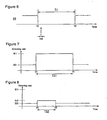
- Fig. 5 a waveform chart of the human body detection signal S2 is shown.
- the human-sensing device 4 detects an infrared ray emitted from the human in at time t1, and changes an output level of the human body detection signal S2 from a high level to a low level. In addition, the human-sensing device 4 does not detect the human at time t2, and changes the output of the detection signal S2 from a low level to a high level. That is, the human-sensing device 4 sets the output level of the human body detection signal S2 to the low level in the case where the human is detected, and sets the output level of the human body detection signal S2 to the high level in the case where the human is not detected. Meanwhile, a period where the human is detected (the period from time t1 to time t2) is T1 in the present embodiment.
- a period from the first detection of the [Low] output level of the human body detection signal S2 until the fourth detection of the [Low] output level of the human body detection signal S2 is a judgment time T21. That is, in the case where the period T1 where the human-sensing device 4 detects the human is longer than the judgment time T21 at least, the human judgment part 51 judges that the human exists in the detection area. In this manner, the human judgment part 51 can detect the existence and non-existence of the human more certainly, and can prevent a false detection.
- the human-sensing device 4 since the human-sensing device 4 according to the present embodiment includes the pyroelectric infrared ray detection element, the detection accuracy will deteriorate in the summer when a temperature difference between the human and a background of the human.
- the human judgment part 51 judges that the human exists in the detection area. Specifically, in the case where the season is judged as the summer, the judgment time used by the human judgment part 51 is the judgment time T22 shorter than the judgment time T21. Meanwhile, the judgment time T22 is a period required by the human judgment part 51 to detect the output level of the human body detection signal S2.
- the human judgment part 51 detects the output level of the human body detection signal S2 in every interval of 10ms; however, the interval is not limited to 10ms.
- the human judgment part 51 judges that the human exists by detecting the [Low] output level of the human detection signal S2 sequentially four times in winter, autumn, and spring and once in summer; however, the number of detections is not limited to the above-mentioned number.
- the lighting control part 52 controls the light source 6 to be lighted on the basis of: the judgment result of night and day due to the power generation amount detection signal S1, the judgment result of the existence and non-existence of the human due to the human judgment part 51, and the judgment result of the season due to the season judgment part 53.
- the lighting control part 52 monitors the power generation amount indicated by the power generation amount detection signal S1; the lighting control part 52 lights off the light source 6 by judging that it is the daytime when the power generation amount is equal to the threshold A1 or more, and lights the light source 6 by judging that it is the nighttime when the power generation amount is less than the threshold A1. On this occasion, the lighting control part 52 judges the dimming rate of the light source 6 on the basis of the judgment result of the human judgment part 51. In the case where the human judgment part 51 judges the [non-existence] of the human, the lighting control part 52 lights the light source 6 at a second dimming rate D2.
- the lighting control part 52 lights the light source 6 at a first dimming rate D1 higher than the second dimming rate D2 during a preliminarily set lighting retention time T3. Meanwhile, after the lighting retention time T3 has passed, the lighting control part 52 judges the dimming rate of the light source again on the basis of the judgment result of the human judgment part 51. As described above, the lighting control part 52 according to the present embodiment lights the light source 6 in the nighttime, and raises the dimming rate of the light source 6 in the case where the human exists in the detection area.
- the lighting control part 52 varies the first and second dimming rates and the lighting retention time on the basis of the judgment result of the season due to the season judgment part 53.
- the summer has the long daytime
- the electric power to charge the battery 2 is large, and accordingly the electric power to charge the battery 2 is smaller than that of the summer since the winter has the short daytime.
- the winter since the winter has the long nighttime, it is required to light the light source 6 for a long time. For this reason, especially in the winter, there is a possibility that the electric power to light the light source 6 runs short. Accordingly, in the winter, fall, and spring, it is required to reduce the power consumption amount of the light source 6 in comparison with that of the summer.
- the lighting control part 52 sets the first and second dimming rates D1 and D2 to be lower than those of the summer, and shortens the lighting retention time T3.
- the first and second dimming rates D1 and D2 of the light source 6 are lower than those of the summer, additionally the lighting retention time T3 when the light source 6 is lighted at the first dimming rate D1 of the larger power consumption is shortened, and thus the power consumption amount of the light source 6 can be reduced. For this reason, the shortage of the electric power to light the light source 6 in the winter can be prevented.
- the lighting control part 52 sets the lighting retention time T3 to be 2 minutes between T31 (3 minutes) and T32 (1 minute). Additionally, in the case where the season judgment part 53 judges that it is the autumn and spring, the lighting control part 52 sets the first dimming rate D1 to be an intermediate value between D11(100%) and D12(20%), and sets the second dimming rate D2 to be an intermediate value between D21(25%) and D22(5%). Thereby, in the season of the short daytime that is a time from sunrise to sunset, the power consumption amount of the light source 6 can be reduced.
- the lighting control part 52 sets the lighting retention time T3 to be longer than that of the winter, and accordingly a state where the light source is dimmed despite the existence of the human can be reduced.
- the dimming rate of the light source 6 is 25% even in the case where the human judgment part 51 judges the [non-existence] of the human, the illumination intensity in an irradiation area of the light source 6 is secured, and accordingly safety can be improved.
- the concrete values of: the first and second dimming rates D1 and D2; and the lighting retention time T3 are not limited to the above-mentioned values.
- the second dimming rate D2 in the summer is set to 100% (a fully-lighting state), and the lighting control part may be configured so as to fully light the light source 6 in spite of the judgment result of the human judgment part 51.
- the second dimming rate D2 in the winter is set to 0% (a lighting-off state), and the lighting control part may be configured so as to light off the light source 6 in the case where the human judgment part 51 judges the [non-existence] of the human.
- the lighting control part 52 varies both the first and second dimming rates D1 and D2 and the lighting retention time T3 on the basis of the judgment result of the season due to the season judgment part 53; however, the lighting control part 52 may vary only one of them.
- the season judgment part 53 has judged the season on the basis of the power generation amount of the solar generation part 1 indicated by the power generation amount detection signal S1 transmitted by the power generation amount detection part 3, and the lighting control part 52 has judged the daytime and the nighttime.
- a clock 54 having a time counting function may be provided to the control part 5 instead of the power generation amount detection part 3.
- the season judgment part 53 judges the season on the basis of a present date shown by the clock 54.
- the lighting control part 52 judges the daytime and nighttime on the basis of the present date and time shown by the clock 54.
- an intensity sensor 7 may be provided instead of the power generation amount detection part 3.
- the intensity sensor 7 includes a photodiode and the like, and detects the illumination intensity around the illumination device (the outdoors).
- An illumination intensity threshold is preliminarily set to the season judgment part 53, a time of the illumination intensity threshold or more is judged as the daytime and a time of less than the illumination intensity threshold is judged as the nighttime on the basis of the detection result of the intensity sensor 7, the season is judged on the basis of the ratio between the respective accumulated times in a predetermined period.
- An illumination intensity threshold is set to the lighting control part 52, and when the intensity becomes less than the illumination intensity threshold, the lighting control part 52 judges that it is the nighttime on the basis of the detection result of the intensity sensor 7 and lights the light source 6.
- the human-sensing sensor 4 includes the pyroelectric infrared ray detection element; however, the human-sensing device 4 may include an ultrasonic sensor using a millimeter wave or an image sensor using a camera.
- the ultrasonic sensor transmits an ultrasonic signal such as the millimeter wave and receives the reflected wave. And, the human judgment part 5 judges the existence and non-existence of the human in the detection area on the basis of a time difference from the transmission of the ultrasonic signal until the reception of the reflected wave.
- the human-sensing device 4 includes the image sensor
- the image sensor images the detection area. Then, the human judgment part 51 judges the existence and non-existence of the human on the detection area through an image processing of the imaging result.
- the detection accuracy of the human is influenced by the season; however, the detection accuracy of the ultrasonic sensor and of the image sensor is not influenced by the season. Accordingly, when the human-sensing device 4 includes the ultrasonic sensor or the image sensor, there is no need to change the judgment time required for the human judgment part 51 to judge the existence and non-existence of the human on the basis of the season, and accordingly the control of the human judgment part 51 can be simplified.
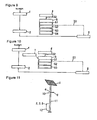
- the illumination device according to the present embodiment is, for example, used for the street light 10 shown in Fig. 11 .
- the solar generation part 1 is provided to an upper portion of a pole 11, the battery part 2, the power generation amount detection part 3, and the control part 5 are provided in a chassis 12 provided to lower portion of the pole 11.
- the human-sensing device 4 and the light source 6 are provided to the pole 11.
Landscapes
- Engineering & Computer Science (AREA)
- General Engineering & Computer Science (AREA)
- Life Sciences & Earth Sciences (AREA)
- Sustainable Development (AREA)
- Circuit Arrangement For Electric Light Sources In General (AREA)
- Arrangement Of Elements, Cooling, Sealing, Or The Like Of Lighting Devices (AREA)
- Non-Portable Lighting Devices Or Systems Thereof (AREA)
- Photovoltaic Devices (AREA)
Claims (7)
- Dispositif d'éclairage comportant :un moyen de production d'électricité d'origine solaire (1) pour produire de l'électricité en recevant de la lumière du soleil ;une batterie (2) pour stocker l'électricité générée par le moyen de production d'électricité d'origine solaire (1) ;une source de lumière (6) destinée à être allumée à l'aide de la batterie (2) qui sert de source d'électricité ;un dispositif de détection (4) de présence humaine pour détecter une présence humaine ;un moyen d'estimation (51) de présence humaine pour estimer l'existence et la non-existence d'une présence humaine d'après le résultat de la détection par le dispositif de détection (4) de présence humaine ; etun moyen de commande d'allumage (52) pour allumer la source de lumière (6) à une valeur de gradation prédéterminée (D1) pendant un temps prédéterminé (T3) de maintien d'allumage dans le cas où le moyen d'estimation (51) de présence humaine estime qu'existe une présence humaine, caractérisé en ce qu'il comporte en outre :un moyen d'estimation (53) de saison présent pour estimer la saison en cours et en ce que le moyen de commande d'allumage (52) réduit une valeur de gradation de la source de lumière (6) pendant la saison à courte durée du jour pour qu'elle soit inférieure à une valeur de gradation de la source de lumière (6) pendant la saison à longue durée du jour estimée par le moyen d'estimation (53) de la saison en fonction de la saison estimée par le moyen d'estimation (53) de saison.
- Dispositif d'éclairage selon la revendication 1, dans lequel
le moyen de commande d'allumage (52) réduit le temps de maintien d'allumage (T32) pendant la saison à courte durée du jour pour qu'il soit plus court que le temps de maintien d'allumage (T31) pendant la saison à longue durée du jour estimée par le moyen d'estimation (53) de saison en fonction de la saison estimée par le moyen d'estimation (53) de saison. - Dispositif d'éclairage selon la revendication 1 ou 2, dans lequel
le moyen de commande d'allumage (52) réduit la valeur de gradation (D12, D22) pendant la saison à courte durée du jour pour qu'elle soit inférieure à la valeur de gradation (D11, D21) pendant la saison à longue durée du jour estimée par le moyen d'estimation de saison (53) en fonction de la saison estimée par le moyen d'estimation de saison (53). - Dispositif d'éclairage selon l'une quelconque des revendications 1 à 3, dans lequel le dispositif de détection (4) de présence humaine comprend un élément de détection infrarouge pyroélectrique, et
le moyen d'estimation (51) de présence humaine estime qu'il existe une présence humaine dans le cas où le dispositif de détection (4) de présence humaine détecte la présence humaine durant un temps d'estimation prédéterminé (T2), le moyen d'estimation (51) de présence humaine détectant périodiquement le niveau de sortie d'un signal de détection (S2) de présence humaine et réduisant le temps d'estimation (T22) pendant la saison à longue durée du jour pour qu'il soit plus court que le temps d'estimation (T21) pendant la saison à courte durée du jour estimée par le moyen d'estimation (53) de saison en fonction de la saison estimée par le moyen d'estimation (53) de saison. - Dispositif d'éclairage selon l'une quelconque des revendications 1 à 4, comportant :un moyen de détection (3) de quantité d'électricité produite pour détecter une quantité d'électricité produite par le moyen de production d'électricité d'origine solaire,le moyen d'estimation (53) de saison estimant la saison d'après un résultat de détection fourni par le moyen de détection (3) de quantité d'électricité produite.
- Dispositif d'éclairage selon l'une quelconque des revendications 1 à 4, comportant :un moyen formant horloge à fonction de comptage de temps,le moyen d'estimation (53) de saison estimant la saison d'après un résultat de comptage de temps fourni par le moyen formant horloge.
- Dispositif d'éclairage selon l'une quelconque des revendications 1 à 4, comportant :un détecteur d'intensité (7) pour détecter une intensité d'éclairage de l'environnement extérieur,le moyen d'estimation (53) de saison comptant un temps cumulé lorsqu'une intensité d'éclairage détectée par le détecteur d'intensité (7) au cours d'un laps de temps prédéterminé est égale ou supérieure à un seuil prédéterminé (A1) et estimant la saison d'après le temps cumulé.
Applications Claiming Priority (1)
| Application Number | Priority Date | Filing Date | Title |
|---|---|---|---|
| JP2010230875A JP2012084441A (ja) | 2010-10-13 | 2010-10-13 | 照明装置 |
Publications (2)
| Publication Number | Publication Date |
|---|---|
| EP2442014A1 EP2442014A1 (fr) | 2012-04-18 |
| EP2442014B1 true EP2442014B1 (fr) | 2015-07-08 |
Family
ID=44862539
Family Applications (1)
| Application Number | Title | Priority Date | Filing Date |
|---|---|---|---|
| EP11184910.5A Not-in-force EP2442014B1 (fr) | 2010-10-13 | 2011-10-12 | Dispositif d'illumination |
Country Status (4)
| Country | Link |
|---|---|
| US (1) | US20120091901A1 (fr) |
| EP (1) | EP2442014B1 (fr) |
| JP (1) | JP2012084441A (fr) |
| CN (1) | CN102573204A (fr) |
Families Citing this family (8)
| Publication number | Priority date | Publication date | Assignee | Title |
|---|---|---|---|---|
| JP2013008460A (ja) * | 2011-06-22 | 2013-01-10 | Panasonic Corp | 照明装置 |
| JP5861108B2 (ja) * | 2011-10-24 | 2016-02-16 | パナソニックIpマネジメント株式会社 | 照明制御装置、照明装置および照明システム |
| CN102495281B (zh) * | 2011-12-14 | 2013-09-04 | 广东易事特电源股份有限公司 | 一种电力系统相量频率测量方法 |
| CN102833911B (zh) * | 2012-07-12 | 2016-01-20 | 黄金碧 | 电源供应路灯照明系统 |
| FR3000623B1 (fr) * | 2012-12-28 | 2018-04-27 | Sunna Design | Procede de pilotage dynamique d'un equipement electrique |
| JP6156010B2 (ja) * | 2013-09-20 | 2017-07-05 | 東芝ライテック株式会社 | 照明制御システム |
| GB201503332D0 (en) * | 2015-02-27 | 2015-04-15 | Bransfield Garth Simon And Sales Michael J And Azuri Technologies Ltd And Preston Nigel And Barclay | Solar home system |
| CN111246618A (zh) * | 2020-03-12 | 2020-06-05 | 江西五和电气有限公司 | 一种可根据季节变换色温的光伏led照明产品 |
Family Cites Families (21)
| Publication number | Priority date | Publication date | Assignee | Title |
|---|---|---|---|---|
| JPS5820493U (ja) * | 1981-07-31 | 1983-02-08 | 松下電工株式会社 | 屋外照明灯 |
| CA1228392A (fr) * | 1983-05-20 | 1987-10-20 | Francis M. Watson | Sonde et systeme photometrique |
| JPH05159885A (ja) * | 1991-04-30 | 1993-06-25 | Mitsubishi Plastics Ind Ltd | 太陽電池利用の照明装置 |
| JPH0721813A (ja) * | 1993-06-30 | 1995-01-24 | Masuo:Kk | ガス燈自動点滅装置 |
| US5952081A (en) * | 1997-10-01 | 1999-09-14 | Lorenz; Werner | Pane with seasonally adapted solar radiation transmission |
| US7417378B2 (en) * | 2002-11-06 | 2008-08-26 | Jihn-Kuk Kim | Apparatus for controlling lighting lamp with security function and lighting control method using the same |
| JP2004241217A (ja) * | 2003-02-05 | 2004-08-26 | Yamatake Corp | 屋外照明装置 |
| US7417397B2 (en) * | 2004-05-06 | 2008-08-26 | Mechoshade Systems, Inc. | Automated shade control method and system |
| JP4576956B2 (ja) * | 2004-09-24 | 2010-11-10 | パナソニック電工株式会社 | 防犯照明設備 |
| JP2008084588A (ja) * | 2006-09-26 | 2008-04-10 | Matsushita Electric Works Ltd | 照明制御システム |
| WO2010057138A2 (fr) * | 2008-11-14 | 2010-05-20 | Inovus Solar, Inc. | Éclairage d'extérieur économe en énergie à alimentation solaire |
| US20120143383A1 (en) * | 2007-02-02 | 2012-06-07 | Inovus Solar, Inc. | Energy-efficient utility system utilizing solar-power |
| JP5154114B2 (ja) * | 2007-03-22 | 2013-02-27 | 群馬県 | 発光装置、照射装置、発光システム、発光パターン変更方法、及び、発光システムの発光方法 |
| US8255090B2 (en) * | 2008-02-01 | 2012-08-28 | Energyhub | System and method for home energy monitor and control |
| US20090196041A1 (en) * | 2008-02-05 | 2009-08-06 | Joseph Peter D | Energy efficient light |
| JP2009266605A (ja) * | 2008-04-24 | 2009-11-12 | Panasonic Electric Works Co Ltd | 自動調光システム |
| CN201213324Y (zh) * | 2008-05-29 | 2009-03-25 | 保定市宝新世纪路灯厂 | 太阳能灯多功能控制器 |
| CN201297559Y (zh) * | 2008-07-11 | 2009-08-26 | 上海信德太阳能科技发展有限公司 | 一种太阳能控制器 |
| JP5269509B2 (ja) * | 2008-07-28 | 2013-08-21 | パナソニック株式会社 | 照明装置 |
| US8232909B2 (en) * | 2008-09-30 | 2012-07-31 | Cooper Technologies Company | Doppler radar motion detector for an outdoor light fixture |
| CN201479430U (zh) * | 2009-08-24 | 2010-05-19 | 珈伟太阳能科技(上海)有限公司 | 一种自动感知季节变化的智能型太阳能感应灯电路 |
-
2010
- 2010-10-13 JP JP2010230875A patent/JP2012084441A/ja active Pending
-
2011
- 2011-10-11 CN CN2011103067531A patent/CN102573204A/zh active Pending
- 2011-10-12 EP EP11184910.5A patent/EP2442014B1/fr not_active Not-in-force
- 2011-10-12 US US13/271,405 patent/US20120091901A1/en not_active Abandoned
Also Published As
| Publication number | Publication date |
|---|---|
| JP2012084441A (ja) | 2012-04-26 |
| CN102573204A (zh) | 2012-07-11 |
| EP2442014A1 (fr) | 2012-04-18 |
| US20120091901A1 (en) | 2012-04-19 |
Similar Documents
| Publication | Publication Date | Title |
|---|---|---|
| EP2442014A1 (fr) | Dispositif d'illumination | |
| US8638036B2 (en) | Wake-up of light sensor in a lighting system | |
| US9185777B2 (en) | Ambient light control in solid state lamps and luminaires | |
| US20120262067A1 (en) | Battery operated devices | |
| EP3666043B1 (fr) | Système d'éclairage à del et procédé associé | |
| JP6163000B2 (ja) | 照明制御システム | |
| US20160094088A1 (en) | Lighting unit having energy harvesting power management system | |
| JP2013045655A (ja) | 太陽光発電機能付照明装置 | |
| KR20140147226A (ko) | 실시간 기상 상태에 따라 색온도/조도를 구현하는 led 가로등 장치 및 그 제어 방법 | |
| CN117295212A (zh) | 一种基于光伏供能的楼宇景观灯节能控制系统与方法 | |
| JP5233042B2 (ja) | Led駆動回路 | |
| US8354793B2 (en) | Modulated light detection system | |
| CN107658958B (zh) | 一种光电系统及光电控制方法 | |
| JP7122676B2 (ja) | 点灯制御装置、照明装置、検知ユニット及び照明器具 | |
| JP2012084485A (ja) | 照明装置 | |
| JP2012113879A (ja) | 照明装置 | |
| JP2012113912A (ja) | 照明装置 | |
| KR100943749B1 (ko) | 태양광 발전 가로등 | |
| CN204964961U (zh) | 一种具有紧急照明功能的摄像机 | |
| JP5495371B2 (ja) | 照明器具 | |
| KR20110050006A (ko) | 태양광 가로등 | |
| JP5849209B2 (ja) | 太陽光発電機能付照明装置 | |
| KR101544915B1 (ko) | 조도측정모듈을 이용한 조명기기 자동제어장치 | |
| JP2012169226A (ja) | 照明装置 |
Legal Events
| Date | Code | Title | Description |
|---|---|---|---|
| PUAI | Public reference made under article 153(3) epc to a published international application that has entered the european phase |
Free format text: ORIGINAL CODE: 0009012 |
|
| AK | Designated contracting states |
Kind code of ref document: A1 Designated state(s): AL AT BE BG CH CY CZ DE DK EE ES FI FR GB GR HR HU IE IS IT LI LT LU LV MC MK MT NL NO PL PT RO RS SE SI SK SM TR |
|
| AX | Request for extension of the european patent |
Extension state: BA ME |
|
| 17P | Request for examination filed |
Effective date: 20120917 |
|
| 17Q | First examination report despatched |
Effective date: 20140218 |
|
| REG | Reference to a national code |
Ref country code: DE Ref legal event code: R079 Ref document number: 602011017636 Country of ref document: DE Free format text: PREVIOUS MAIN CLASS: F21S0009030000 Ipc: F21S0008080000 |
|
| RAP1 | Party data changed (applicant data changed or rights of an application transferred) |
Owner name: PANASONIC INTELLECTUAL PROPERTY MANAGEMENT CO., LT |
|
| RIC1 | Information provided on ipc code assigned before grant |
Ipc: F21S 8/08 20060101AFI20150220BHEP Ipc: H05B 37/00 20060101ALI20150220BHEP Ipc: F21S 9/03 20060101ALI20150220BHEP Ipc: H05B 37/02 20060101ALI20150220BHEP Ipc: F21V 23/04 20060101ALI20150220BHEP |
|
| GRAP | Despatch of communication of intention to grant a patent |
Free format text: ORIGINAL CODE: EPIDOSNIGR1 |
|
| INTG | Intention to grant announced |
Effective date: 20150422 |
|
| GRAS | Grant fee paid |
Free format text: ORIGINAL CODE: EPIDOSNIGR3 |
|
| GRAA | (expected) grant |
Free format text: ORIGINAL CODE: 0009210 |
|
| AK | Designated contracting states |
Kind code of ref document: B1 Designated state(s): AL AT BE BG CH CY CZ DE DK EE ES FI FR GB GR HR HU IE IS IT LI LT LU LV MC MK MT NL NO PL PT RO RS SE SI SK SM TR |
|
| REG | Reference to a national code |
Ref country code: GB Ref legal event code: FG4D |
|
| REG | Reference to a national code |
Ref country code: AT Ref legal event code: REF Ref document number: 735694 Country of ref document: AT Kind code of ref document: T Effective date: 20150715 Ref country code: CH Ref legal event code: EP |
|
| REG | Reference to a national code |
Ref country code: IE Ref legal event code: FG4D |
|
| REG | Reference to a national code |
Ref country code: DE Ref legal event code: R096 Ref document number: 602011017636 Country of ref document: DE |
|
| REG | Reference to a national code |
Ref country code: AT Ref legal event code: MK05 Ref document number: 735694 Country of ref document: AT Kind code of ref document: T Effective date: 20150708 |
|
| REG | Reference to a national code |
Ref country code: NL Ref legal event code: MP Effective date: 20150708 |
|
| REG | Reference to a national code |
Ref country code: LT Ref legal event code: MG4D |
|
| PG25 | Lapsed in a contracting state [announced via postgrant information from national office to epo] |
Ref country code: LV Free format text: LAPSE BECAUSE OF FAILURE TO SUBMIT A TRANSLATION OF THE DESCRIPTION OR TO PAY THE FEE WITHIN THE PRESCRIBED TIME-LIMIT Effective date: 20150708 Ref country code: GR Free format text: LAPSE BECAUSE OF FAILURE TO SUBMIT A TRANSLATION OF THE DESCRIPTION OR TO PAY THE FEE WITHIN THE PRESCRIBED TIME-LIMIT Effective date: 20151009 Ref country code: NO Free format text: LAPSE BECAUSE OF FAILURE TO SUBMIT A TRANSLATION OF THE DESCRIPTION OR TO PAY THE FEE WITHIN THE PRESCRIBED TIME-LIMIT Effective date: 20151008 Ref country code: LT Free format text: LAPSE BECAUSE OF FAILURE TO SUBMIT A TRANSLATION OF THE DESCRIPTION OR TO PAY THE FEE WITHIN THE PRESCRIBED TIME-LIMIT Effective date: 20150708 Ref country code: FI Free format text: LAPSE BECAUSE OF FAILURE TO SUBMIT A TRANSLATION OF THE DESCRIPTION OR TO PAY THE FEE WITHIN THE PRESCRIBED TIME-LIMIT Effective date: 20150708 |
|
| PG25 | Lapsed in a contracting state [announced via postgrant information from national office to epo] |
Ref country code: PT Free format text: LAPSE BECAUSE OF FAILURE TO SUBMIT A TRANSLATION OF THE DESCRIPTION OR TO PAY THE FEE WITHIN THE PRESCRIBED TIME-LIMIT Effective date: 20151109 Ref country code: PL Free format text: LAPSE BECAUSE OF FAILURE TO SUBMIT A TRANSLATION OF THE DESCRIPTION OR TO PAY THE FEE WITHIN THE PRESCRIBED TIME-LIMIT Effective date: 20150708 Ref country code: HR Free format text: LAPSE BECAUSE OF FAILURE TO SUBMIT A TRANSLATION OF THE DESCRIPTION OR TO PAY THE FEE WITHIN THE PRESCRIBED TIME-LIMIT Effective date: 20150708 Ref country code: ES Free format text: LAPSE BECAUSE OF FAILURE TO SUBMIT A TRANSLATION OF THE DESCRIPTION OR TO PAY THE FEE WITHIN THE PRESCRIBED TIME-LIMIT Effective date: 20150708 Ref country code: AT Free format text: LAPSE BECAUSE OF FAILURE TO SUBMIT A TRANSLATION OF THE DESCRIPTION OR TO PAY THE FEE WITHIN THE PRESCRIBED TIME-LIMIT Effective date: 20150708 Ref country code: RS Free format text: LAPSE BECAUSE OF FAILURE TO SUBMIT A TRANSLATION OF THE DESCRIPTION OR TO PAY THE FEE WITHIN THE PRESCRIBED TIME-LIMIT Effective date: 20150708 Ref country code: IS Free format text: LAPSE BECAUSE OF FAILURE TO SUBMIT A TRANSLATION OF THE DESCRIPTION OR TO PAY THE FEE WITHIN THE PRESCRIBED TIME-LIMIT Effective date: 20151108 Ref country code: SE Free format text: LAPSE BECAUSE OF FAILURE TO SUBMIT A TRANSLATION OF THE DESCRIPTION OR TO PAY THE FEE WITHIN THE PRESCRIBED TIME-LIMIT Effective date: 20150708 |
|
| REG | Reference to a national code |
Ref country code: DE Ref legal event code: R097 Ref document number: 602011017636 Country of ref document: DE |
|
| PG25 | Lapsed in a contracting state [announced via postgrant information from national office to epo] |
Ref country code: EE Free format text: LAPSE BECAUSE OF FAILURE TO SUBMIT A TRANSLATION OF THE DESCRIPTION OR TO PAY THE FEE WITHIN THE PRESCRIBED TIME-LIMIT Effective date: 20150708 Ref country code: CZ Free format text: LAPSE BECAUSE OF FAILURE TO SUBMIT A TRANSLATION OF THE DESCRIPTION OR TO PAY THE FEE WITHIN THE PRESCRIBED TIME-LIMIT Effective date: 20150708 Ref country code: DK Free format text: LAPSE BECAUSE OF FAILURE TO SUBMIT A TRANSLATION OF THE DESCRIPTION OR TO PAY THE FEE WITHIN THE PRESCRIBED TIME-LIMIT Effective date: 20150708 Ref country code: SK Free format text: LAPSE BECAUSE OF FAILURE TO SUBMIT A TRANSLATION OF THE DESCRIPTION OR TO PAY THE FEE WITHIN THE PRESCRIBED TIME-LIMIT Effective date: 20150708 Ref country code: IT Free format text: LAPSE BECAUSE OF FAILURE TO SUBMIT A TRANSLATION OF THE DESCRIPTION OR TO PAY THE FEE WITHIN THE PRESCRIBED TIME-LIMIT Effective date: 20150708 |
|
| PLBE | No opposition filed within time limit |
Free format text: ORIGINAL CODE: 0009261 |
|
| STAA | Information on the status of an ep patent application or granted ep patent |
Free format text: STATUS: NO OPPOSITION FILED WITHIN TIME LIMIT |
|
| PG25 | Lapsed in a contracting state [announced via postgrant information from national office to epo] |
Ref country code: LU Free format text: LAPSE BECAUSE OF FAILURE TO SUBMIT A TRANSLATION OF THE DESCRIPTION OR TO PAY THE FEE WITHIN THE PRESCRIBED TIME-LIMIT Effective date: 20151012 Ref country code: RO Free format text: LAPSE BECAUSE OF FAILURE TO SUBMIT A TRANSLATION OF THE DESCRIPTION OR TO PAY THE FEE WITHIN THE PRESCRIBED TIME-LIMIT Effective date: 20150708 |
|
| REG | Reference to a national code |
Ref country code: CH Ref legal event code: PL |
|
| 26N | No opposition filed |
Effective date: 20160411 |
|
| GBPC | Gb: european patent ceased through non-payment of renewal fee |
Effective date: 20151012 |
|
| PG25 | Lapsed in a contracting state [announced via postgrant information from national office to epo] |
Ref country code: MC Free format text: LAPSE BECAUSE OF FAILURE TO SUBMIT A TRANSLATION OF THE DESCRIPTION OR TO PAY THE FEE WITHIN THE PRESCRIBED TIME-LIMIT Effective date: 20150708 |
|
| REG | Reference to a national code |
Ref country code: IE Ref legal event code: MM4A |
|
| PG25 | Lapsed in a contracting state [announced via postgrant information from national office to epo] |
Ref country code: LI Free format text: LAPSE BECAUSE OF NON-PAYMENT OF DUE FEES Effective date: 20151031 Ref country code: GB Free format text: LAPSE BECAUSE OF NON-PAYMENT OF DUE FEES Effective date: 20151012 Ref country code: CH Free format text: LAPSE BECAUSE OF NON-PAYMENT OF DUE FEES Effective date: 20151031 |
|
| REG | Reference to a national code |
Ref country code: FR Ref legal event code: ST Effective date: 20160630 |
|
| PG25 | Lapsed in a contracting state [announced via postgrant information from national office to epo] |
Ref country code: FR Free format text: LAPSE BECAUSE OF NON-PAYMENT OF DUE FEES Effective date: 20151102 Ref country code: SI Free format text: LAPSE BECAUSE OF FAILURE TO SUBMIT A TRANSLATION OF THE DESCRIPTION OR TO PAY THE FEE WITHIN THE PRESCRIBED TIME-LIMIT Effective date: 20150708 |
|
| PG25 | Lapsed in a contracting state [announced via postgrant information from national office to epo] |
Ref country code: IE Free format text: LAPSE BECAUSE OF NON-PAYMENT OF DUE FEES Effective date: 20151012 |
|
| PG25 | Lapsed in a contracting state [announced via postgrant information from national office to epo] |
Ref country code: BE Free format text: LAPSE BECAUSE OF FAILURE TO SUBMIT A TRANSLATION OF THE DESCRIPTION OR TO PAY THE FEE WITHIN THE PRESCRIBED TIME-LIMIT Effective date: 20150708 |
|
| PG25 | Lapsed in a contracting state [announced via postgrant information from national office to epo] |
Ref country code: BG Free format text: LAPSE BECAUSE OF FAILURE TO SUBMIT A TRANSLATION OF THE DESCRIPTION OR TO PAY THE FEE WITHIN THE PRESCRIBED TIME-LIMIT Effective date: 20150708 Ref country code: SM Free format text: LAPSE BECAUSE OF FAILURE TO SUBMIT A TRANSLATION OF THE DESCRIPTION OR TO PAY THE FEE WITHIN THE PRESCRIBED TIME-LIMIT Effective date: 20150708 Ref country code: HU Free format text: LAPSE BECAUSE OF FAILURE TO SUBMIT A TRANSLATION OF THE DESCRIPTION OR TO PAY THE FEE WITHIN THE PRESCRIBED TIME-LIMIT; INVALID AB INITIO Effective date: 20111012 |
|
| PG25 | Lapsed in a contracting state [announced via postgrant information from national office to epo] |
Ref country code: NL Free format text: LAPSE BECAUSE OF FAILURE TO SUBMIT A TRANSLATION OF THE DESCRIPTION OR TO PAY THE FEE WITHIN THE PRESCRIBED TIME-LIMIT Effective date: 20150708 Ref country code: CY Free format text: LAPSE BECAUSE OF FAILURE TO SUBMIT A TRANSLATION OF THE DESCRIPTION OR TO PAY THE FEE WITHIN THE PRESCRIBED TIME-LIMIT Effective date: 20150708 |
|
| PG25 | Lapsed in a contracting state [announced via postgrant information from national office to epo] |
Ref country code: MT Free format text: LAPSE BECAUSE OF FAILURE TO SUBMIT A TRANSLATION OF THE DESCRIPTION OR TO PAY THE FEE WITHIN THE PRESCRIBED TIME-LIMIT Effective date: 20150708 Ref country code: TR Free format text: LAPSE BECAUSE OF FAILURE TO SUBMIT A TRANSLATION OF THE DESCRIPTION OR TO PAY THE FEE WITHIN THE PRESCRIBED TIME-LIMIT Effective date: 20150708 |
|
| PG25 | Lapsed in a contracting state [announced via postgrant information from national office to epo] |
Ref country code: MK Free format text: LAPSE BECAUSE OF FAILURE TO SUBMIT A TRANSLATION OF THE DESCRIPTION OR TO PAY THE FEE WITHIN THE PRESCRIBED TIME-LIMIT Effective date: 20150708 |
|
| PG25 | Lapsed in a contracting state [announced via postgrant information from national office to epo] |
Ref country code: AL Free format text: LAPSE BECAUSE OF FAILURE TO SUBMIT A TRANSLATION OF THE DESCRIPTION OR TO PAY THE FEE WITHIN THE PRESCRIBED TIME-LIMIT Effective date: 20150708 |
|
| PGFP | Annual fee paid to national office [announced via postgrant information from national office to epo] |
Ref country code: DE Payment date: 20191128 Year of fee payment: 9 |
|
| REG | Reference to a national code |
Ref country code: DE Ref legal event code: R119 Ref document number: 602011017636 Country of ref document: DE |
|
| PG25 | Lapsed in a contracting state [announced via postgrant information from national office to epo] |
Ref country code: DE Free format text: LAPSE BECAUSE OF NON-PAYMENT OF DUE FEES Effective date: 20210501 |