EP2442590A2 - Verfahren zur Rückmeldungsreduktion in Hörgeräten - Google Patents
Verfahren zur Rückmeldungsreduktion in Hörgeräten Download PDFInfo
- Publication number
- EP2442590A2 EP2442590A2 EP12150551A EP12150551A EP2442590A2 EP 2442590 A2 EP2442590 A2 EP 2442590A2 EP 12150551 A EP12150551 A EP 12150551A EP 12150551 A EP12150551 A EP 12150551A EP 2442590 A2 EP2442590 A2 EP 2442590A2
- Authority
- EP
- European Patent Office
- Prior art keywords
- frequency bands
- phase
- hearing aid
- upper frequency
- signal
- Prior art date
- Legal status (The legal status is an assumption and is not a legal conclusion. Google has not performed a legal analysis and makes no representation as to the accuracy of the status listed.)
- Granted
Links
Images

Classifications
-
- H—ELECTRICITY
- H04—ELECTRIC COMMUNICATION TECHNIQUE
- H04R—LOUDSPEAKERS, MICROPHONES, GRAMOPHONE PICK-UPS OR LIKE ACOUSTIC ELECTROMECHANICAL TRANSDUCERS; ELECTRIC HEARING AIDS; PUBLIC ADDRESS SYSTEMS
- H04R25/00—Electric hearing aids
- H04R25/45—Prevention of acoustic reaction, i.e. acoustic oscillatory feedback
- H04R25/453—Prevention of acoustic reaction, i.e. acoustic oscillatory feedback electronically
-
- H—ELECTRICITY
- H04—ELECTRIC COMMUNICATION TECHNIQUE
- H04R—LOUDSPEAKERS, MICROPHONES, GRAMOPHONE PICK-UPS OR LIKE ACOUSTIC ELECTROMECHANICAL TRANSDUCERS; ELECTRIC HEARING AIDS; PUBLIC ADDRESS SYSTEMS
- H04R2430/00—Signal processing covered by H04R, not provided for in its groups
- H04R2430/03—Synergistic effects of band splitting and sub-band processing
-
- H—ELECTRICITY
- H04—ELECTRIC COMMUNICATION TECHNIQUE
- H04R—LOUDSPEAKERS, MICROPHONES, GRAMOPHONE PICK-UPS OR LIKE ACOUSTIC ELECTROMECHANICAL TRANSDUCERS; ELECTRIC HEARING AIDS; PUBLIC ADDRESS SYSTEMS
- H04R25/00—Electric hearing aids
- H04R25/55—Electric hearing aids using an external connection, either wireless or wired
- H04R25/558—Remote control, e.g. of amplification, frequency
Definitions
- This invention generally relates to a method of reducing feedback in hearing aids.
- Feedback may occur in hearing aids when a loop exists between an audio input transducer, e.g. a microphone, and an audio output transducer, e.g. a loudspeaker or receiver.
- An audio signal received by the microphone is amplified and transmitted to the loudspeaker, but the sound from the loudspeaker can then be received by the microphone again, amplified further and then transmitted out through the loudspeaker again.
- This can result in a howl which may be very unpleasant for the hearing aid user and for other people in the surroundings.
- feedback can decrease the hearing aid user's sound perception.
- There are different ways to reduce feedback in hearing aids e.g. by means of changing the phase of the frequency bands of an audio signal.
- US6876751 presents a method for band-limited feedback cancellation.
- the cancellation is limited to a frequency band encompassing all unstable frequencies.
- W004105430 relates to oscillation suppression.
- a randomly changing phase is applied to the signal in one or more of several frequency bands based on whether oscillation is detected or suspected in the signal or not.
- US2005/0226447 relates to oscillation reduction by phase shifting.
- US2005/0047620 describes a hearing aid circuit comprising a phase shifter for feedback reduction.
- a hearing aid adapted to be worn by a user, the method comprising the step of:
- each of the upper frequency bands is multiplied by a random phase, because above some frequency threshold randomization of the phase may not influence the user's perception of the audio signal.
- the human ear is less sensitive to phase changes in the upper frequency bands, so there is only little perceptual difference between an unmodified audio signal and the same audio signal where the upper frequency bands have been multiplied by a random phase.
- the human auditory system has a better frequency resolution in the low frequency region and it is thus easier to separate low frequencies from each other than high frequencies.
- the auditory system is thus far more selective to the frequency content in the low-frequency range compared to the highfrequency range, and it is therefore an advantage that the low-frequency bands are not modified by means of phase randomization.
- Low frequency bands may be selected to be lower than e.g. 2 kHz or lower than f s /2 kHz, where f s is a sampling frequency, depending on the type of audio signal and the means for dividing the audio signal into frequency bands, e.g. a filter-bank.
- the threshold frequency may be determined on basis of the hearing impairment or hearing loss which the user suffers from in order to select a suitable portion of the audio signal to be defined as the upper frequency bands.
- the hearing impairment may be due to loss of the ability to detect certain frequencies of sound and/or loss of the ability to detect low-level sounds.
- the hearing sensitivity or hearing threshold that a user has may be measured by means of e.g. an audiometer, behavioural audiograms, electrophysiological tests and/or the like. So the threshold frequency over which a plurality of upper frequency bands lies may be determined by measuring the hearing abilities of the user. Alternatively and/or additionally, the threshold frequency may be determined by means of a psychoacoustic model, the age of the user etc.
- the hearing aid user may influence the user's perception of an audio signal whether the random phase multiplied to a specific frequency band is identical or different for the two hearing aids. It may be an advantage that the random phase multiplied to a specific frequency band is the same for the two hearing aids. Alternatively, the random phase may be different for the two hearing aids.
- the method further comprises dividing the audio signal into a plurality of upper frequency bands by means of a filter-bank.
- the filter-bank may perform a Fourier transformation of the received audio signal function in order to transform the audio signal to the frequency domain from the time domain.
- the filter-bank may comprise a fast Fourier transform based filter-bank which may have a high number of frequency channels, and the audible effects of the randomization for the hearing aid user are hereby very small.
- the phase is randomized in very narrow bands, the probability that feedback will occur in these phase randomized frequency bands is minimized.
- the random phase is different for each of the plurality of upper frequency bands.
- the phase is kept constant for each of the plurality of upper frequency bands.
- At least one of the random phases is chosen from the group consisting of angles in the interval [0, 2 ⁇ [.
- At least one of the random phases is generated from a band-pass filtered white noise signal.
- An advantage of this embodiment is that a random phase generated from a band-pass filtered white noise signal will minimise the spectral smearing, which is due to the configuration of the filter-bank, i.e. how the analysis-filter-bank and the synthesis-filter-bank are configured.
- the phase is adjusted according to an external input.
- An external input may for example be an input parameter such as the absolute hearing threshold for the user, and it is thus an advantage that the user's absolute hearing threshold is included in the phase adjustment.
- an external input may be such as a wireless signal input from another hearing aid or a remote control to the hearing aid, whereby this can be included in the phase adjustment.
- An advantage of this embodiment is that by adjusting, e.g. mixing, the contribution of a randomized phase by means of a frequency dependent factor, the feedback reduction can be improved.
- the step of adjusting further comprises multiplying the frequency band by at least one of the one or more factors, before the frequency band is multiplied by a random phase.
- a factor can be multiplied to a phase randomized upper frequency band, thereby improving the feedback reduction.
- the step of adjusting further comprises adding at least one of the one or more factors to the phase randomized upper frequency band.
- An advantage of this embodiment is that a factor can be added to a phase randomized upper frequency band, thereby improving the feedback reduction.
- the steps of adjusting the contribution of a randomized phase by means of adding a factor and by means of multiplying a factor can be combined and applied to the same phase randomized upper frequency band.
- An advantage of this embodiment is that these input parameters provide information of how and where to change phase factor in order to get an acceptable sound perception for a hearing aid user.
- the method further comprises a step of performing a measurement of whether a tone is generated by feedback in the hearing aid or is a sound signal from the surroundings, where the measurement for example is performed by breaking the loop by phase randomization.
- the present invention relates to different aspects including the method described above and in the following, and corresponding systems, devices, and/or product means, each yielding one or more of the benefits and advantages described in connection with the first mentioned aspect, and each having one or more embodiments corresponding to the embodiments described in connection with the first mentioned aspect and/or disclosed in the appended claims.
- a hearing aid adapted to be worn by a user, comprising:
- the features of the method described above and in the following may be implemented in software and carried out on a data processing system or other processing means caused by the execution of computer-executable instructions.
- the instructions may be program code means loaded in a memory, such as a RAM, from a storage medium or from another computer via a computer network.
- the described features may be implemented by hardwired circuitry instead of software or in combination with software.
- a computer program comprising program code means for causing a data processing system to perform the method is disclosed, when said computer program is executed on the data processing system.
- a data processing system comprising program code means for causing the data processing system to perform the method is disclosed.
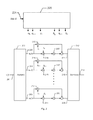
- Figure 1 shows a schematic view of a method of randomizing the phase of upper-frequency bands of an audio signal.
- An audio signal x(t) is received in an input transducer of a hearing aid.
- the audio signal 101 is transformed into the frequency-domain by means of an analysis filter-bank 102.
- the audio signal is divided into smaller sequences, i.e. into a number of frequency subbands or channels 103, 104, 105, 106 of the filter-bank.
- the frequency resolution may be uniform or non-uniform.
- a threshold frequency is determined and the frequency bands above this threshold are defined as the K-p+1 upper frequency bands.
- K is the number of frequency bands
- p is the threshold band.
- the threshold frequency may be determined by means of a psychoacoustic model, hearing impairment or hearing loss of the user, the age of the user etc.
- the K-p+1 upper frequency bands, 105, 106 are each multiplied by a random phase 107, 108. The magnitude of the frequency bands/channels is maintained.
- the random phase may be generated from a band-pass filtered white noise signal, where the white noise signal is a random signal with a flat power spectral density, i.e. the signal's power spectral density has equal power in any band, at any centre frequency, having a given bandwidth.
- the spectral smearing may be minimized, due to the configuration of the analysis-filter-bank and the synthesis-filter-bank.
- the low-frequency bands 103, 104 i.e. x 1 (t) to x p-1 (t) in fig. 1 , are unmodified. All the frequency bands, i.e. the phase randomized upper frequency bands 109, 110, and unmodified low-frequency bands 103, 104, are synthesized to an output signal 112 and transformed back into the time-domain by a synthesis filter-bank 111.
- the upper frequency bands of the audio signals may be defined by means of a threshold frequency f threshold and a sampling frequency f s .
- the specific value of f threshold indicates a lower threshold frequency, where a certain amount of people cannot hear the difference between the randomized signal and the original signal.
- the threshold frequency f threshold may e.g. vary between 2 kHz and f s /2, and may e.g. be such as 5 kHz.
- f threshold may have another value.
- f threshold may be defined relative to the frequency range of the audio signal.
- the threshold frequency may depend on the type of received audio signal.
- the type of signal may be such as female speech, male speech, music etc.
- f threshold may depend on the filter-bank setup, e.g. f threshold may vary between different filter-bank setups.
- the analysis filter-bank may consist of analysis filters and decimators with decimation factor D.
- the sampling frequency f s may be any suitable number, e.g. between 6 kHz and 48 kHz.
- the analysis filter-bank transforms the input signal to a set of M subband signals, which are sampled at a lower rate.
- the corresponding M-channel synthesis filter-bank consists of synthesis filters and interpolators with interpolation rate equal to D.
- the task of the synthesis filter-bank is to transform M subband signals to a full band signal, which is sampled at the original higher rate.
- the filter-bank may be implemented by a fast Fourier transform (FFT).
- FFT fast Fourier transform
- the filter-bank may have any number of channels and may have any decimation factor.
- the frequency resolution may alternatively be non-uniform.
- a signal may be divided into any number of frequency bands.
- two frequency bands are shown as upper frequency bands being multiplied by a random phase in fig. 1 , there may be any number of upper frequency bands in a signal.
- the random phase being multiplied to the upper frequency bands may be different for each upper frequency band.
- the random phase may be chosen to be the same across some or all of the upper frequency bands.
- the hearing aid in the left and the right ear may thus be adapted to communicate with each other.
- the same random phase may be changed by the same amount in the left and the right ear for each upper frequency band, since by applying the same phase in both ears, the difference between the perceived signals may be small compared to the unaltered signal, and this may provide an unaltered sound localization for the user.
- two different random phases may be applied in the ears for each upper frequency band. When different phases are applied in the left and the right ear, there may be a greater difference in the perceived signals.
- Fig. 2 shows a schematic view of a method of randomizing the phase of frequency bands of an audio signal and applying contribution control.
- the phase randomized frequency bands lie above a threshold frequency.
- An audio signal x(t) is received in an input transducer of a hearing aid.
- the audio signal 201 is transformed into the frequency-domain by means of an analysis filter-bank 202.
- the audio signal is divided into smaller sequences, i.e. into a number of frequency subbands or channels of the filter-bank 203, 204, 205.
- the frequency resolution may be uniform or non-uniform.
- the frequency bands may each be multiplied by a random phase 206, 207, 208.
- the contribution of the randomized phase is adjusted by calculations of input parameters such as psychoacoustic effects, the loop gain and/or the absolute hearing threshold etc.
- phase randomized frequency bands, 209, 210, 211 are synthesized to an output signal 213 and transformed back into the time-domain by a synthesis filter-bank 212.
- the threshold frequency divides the frequency bands into upper and lower frequency bands.
- the upper and lower frequency bands are thus defined relative to this threshold.
- the threshold frequency may be a low value, whereby a majority of the frequency bands may be defined as upper frequency bands.
- the threshold frequency may be a high value, whereby a minority of the frequency bands may be defined as upper frequency bands.
- the threshold frequency may comprise a smooth transition in the form of an intermediate stage where a weighting of the original phase and the randomized phase is performed.
- the smooth transition may be provided by means of the values of factors ⁇ and ⁇ , where ⁇ and ⁇ are determined from input parameters, see below.
- the smooth transition may be obtained by means of choosing ⁇ and ⁇ having values between 0 and 1, whereby the resulting phase is a weighting of the original phase and the randomized phase.
- the threshold frequency may be determined by measuring the hearing abilities of the user.
- a hearing impairment may be due to loss of the ability to detect certain frequencies of sound and/or loss of the ability to detect low-level sounds.
- the threshold frequency may be determined by means of a psychoacoustic model, the age of the user etc.
- the contribution control comprises mixing signals, e.g. the random phases may be mixed.
- Frequency bands and the phase randomized frequency bands may be mixed with factors determined from input parameters, e.g. by adding and/or multiplying with factors determined from input parameters.
- a frequency band may be turned off or turned on by means of the factors determined from input parameters for the respective frequency band.
- the adjustment of the contribution of the randomized phase may be performed by multiplying a frequency band by a factor ⁇ which is determined from the input parameters, before the frequency band is multiplied by a random phase.
- the multiplication of the factor ⁇ is indicated by 214, 215, 216 in fig. 2 .
- the adjustment may be performed by adding a factor ⁇ determined from the input parameters to a frequency band multiplied by the random phase.
- the addition of the factor ⁇ is indicated by 217, 218, 219 in fig. 2
- the factors ⁇ and ⁇ may be frequency specific, and they may be calculated by means of a contribution control unit 220, which receives and/or contains information 221 about the input parameters.
- the feedback reduction may be further improved.
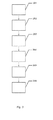
- Fig. 3 shows a flowchart of a method of reducing feedback in a hearing aid by randomizing the phase of the upper frequency bands of an audio signal.
- step 301 an audio input signal is received in an input transducer in a hearing aid and transformed into the frequency domain by means of an analysis filter-bank.
- step 302 the audio signal is divided into a plurality of frequency bands by means of the filter-bank.
- step 303 a threshold frequency is determined, and above this threshold frequency lies a plurality of upper frequency bands.
- step 304 each of the plurality of upper frequency bands is multiplied by a random phase, thereby obtaining a plurality of phase randomized upper frequency bands;
- step 305 the plurality of phase randomized upper frequency bands and the lower frequency bands are synthesized to an output signal by means of a synthesis filter-bank;
- step 306 the output signal is transformed into the time-domain by means of the synthesis filter-bank; and the output signal is transmitted to an output transducer of the hearing aid.
Landscapes
- General Health & Medical Sciences (AREA)
- Neurosurgery (AREA)
- Otolaryngology (AREA)
- Physics & Mathematics (AREA)
- Engineering & Computer Science (AREA)
- Acoustics & Sound (AREA)
- Signal Processing (AREA)
- Health & Medical Sciences (AREA)
- Circuit For Audible Band Transducer (AREA)
- Stereophonic System (AREA)
- Amplifiers (AREA)
- Steroid Compounds (AREA)
- Medicines Containing Plant Substances (AREA)
- Pharmaceuticals Containing Other Organic And Inorganic Compounds (AREA)
- Storage Device Security (AREA)
- Measurement Of The Respiration, Hearing Ability, Form, And Blood Characteristics Of Living Organisms (AREA)
Priority Applications (2)
| Application Number | Priority Date | Filing Date | Title |
|---|---|---|---|
| DK12150551.5T DK2442590T3 (da) | 2008-11-24 | 2008-11-24 | Fremgangsmåde til at reducere tilbagekobling i høreapparater |
| EP12150551.5A EP2442590B1 (de) | 2008-11-24 | 2008-11-24 | Verfahren zur Rückmeldungsreduktion in Hörgeräten |
Applications Claiming Priority (2)
| Application Number | Priority Date | Filing Date | Title |
|---|---|---|---|
| EP08105855A EP2190217B1 (de) | 2008-11-24 | 2008-11-24 | Verfahren zur Rückkopplungsreduktion in Hörgeräten sowie entsprechende Vorrichtung und entsprechendes Computerprogrammprodukt |
| EP12150551.5A EP2442590B1 (de) | 2008-11-24 | 2008-11-24 | Verfahren zur Rückmeldungsreduktion in Hörgeräten |
Related Parent Applications (4)
| Application Number | Title | Priority Date | Filing Date |
|---|---|---|---|
| EP08105855.4 Division | 2008-11-24 | ||
| EP08105855 Previously-Filed-Application | 2008-11-24 | ||
| EP08105855A Division EP2190217B1 (de) | 2008-11-24 | 2008-11-24 | Verfahren zur Rückkopplungsreduktion in Hörgeräten sowie entsprechende Vorrichtung und entsprechendes Computerprogrammprodukt |
| EP08105855A Previously-Filed-Application EP2190217B1 (de) | 2008-11-24 | 2008-11-24 | Verfahren zur Rückkopplungsreduktion in Hörgeräten sowie entsprechende Vorrichtung und entsprechendes Computerprogrammprodukt |
Publications (3)
| Publication Number | Publication Date |
|---|---|
| EP2442590A2 true EP2442590A2 (de) | 2012-04-18 |
| EP2442590A3 EP2442590A3 (de) | 2012-10-24 |
| EP2442590B1 EP2442590B1 (de) | 2014-07-02 |
Family
ID=40481955
Family Applications (2)
| Application Number | Title | Priority Date | Filing Date |
|---|---|---|---|
| EP12150551.5A Not-in-force EP2442590B1 (de) | 2008-11-24 | 2008-11-24 | Verfahren zur Rückmeldungsreduktion in Hörgeräten |
| EP08105855A Not-in-force EP2190217B1 (de) | 2008-11-24 | 2008-11-24 | Verfahren zur Rückkopplungsreduktion in Hörgeräten sowie entsprechende Vorrichtung und entsprechendes Computerprogrammprodukt |
Family Applications After (1)
| Application Number | Title | Priority Date | Filing Date |
|---|---|---|---|
| EP08105855A Not-in-force EP2190217B1 (de) | 2008-11-24 | 2008-11-24 | Verfahren zur Rückkopplungsreduktion in Hörgeräten sowie entsprechende Vorrichtung und entsprechendes Computerprogrammprodukt |
Country Status (5)
| Country | Link |
|---|---|
| US (1) | US8638962B2 (de) |
| EP (2) | EP2442590B1 (de) |
| CN (1) | CN101917658A (de) |
| AT (1) | ATE546963T1 (de) |
| DK (2) | DK2190217T3 (de) |
Families Citing this family (15)
| Publication number | Priority date | Publication date | Assignee | Title |
|---|---|---|---|---|
| DE102008024490B4 (de) * | 2008-05-21 | 2011-09-22 | Siemens Medical Instruments Pte. Ltd. | Filterbanksystem für Hörgeräte |
| DE102009036610B4 (de) * | 2009-07-09 | 2017-11-16 | Sivantos Pte. Ltd. | Filterbankanordnung für eine Hörvorrichtung |
| DE102010026884B4 (de) * | 2010-07-12 | 2013-11-07 | Siemens Medical Instruments Pte. Ltd. | Verfahren zum Betreiben einer Hörvorrichtung mit zweistufiger Transformation |
| DK2503794T3 (en) * | 2011-03-24 | 2017-01-30 | Oticon As | Audio processing device, system, application and method |
| US8968209B2 (en) * | 2011-09-30 | 2015-03-03 | Unitedheath Group Incorporated | Methods and systems for hearing tests |
| WO2014094242A1 (en) * | 2012-12-18 | 2014-06-26 | Motorola Solutions, Inc. | Method and apparatus for mitigating feedback in a digital radio receiver |
| CN105122359B (zh) * | 2013-04-10 | 2019-04-23 | 杜比实验室特许公司 | 语音去混响的方法、设备和系统 |
| EP2988529B1 (de) * | 2014-08-20 | 2019-12-04 | Sivantos Pte. Ltd. | Adaptive teilungsfrequenz in hörhilfegeräten |
| EP3139636B1 (de) | 2015-09-07 | 2019-10-16 | Oticon A/s | Hörgerät mit einem auf signalenergieverschiebung basierenden rückkopplungsunterdrückungssystem |
| CN110024418B (zh) * | 2016-12-08 | 2020-12-29 | 三菱电机株式会社 | 声音增强装置、声音增强方法和计算机可读取的记录介质 |
| DE102017218483A1 (de) * | 2017-10-16 | 2019-04-18 | Fraunhofer-Gesellschaft zur Förderung der angewandten Forschung e.V. | Verfahren zur einstellung von parametern zur individuellen anpassung eines audiosignals |
| CN110728970B (zh) * | 2019-09-29 | 2022-02-25 | 东莞市中光通信科技有限公司 | 一种数字辅助隔音处理的方法及装置 |
| CN113782040B (zh) * | 2020-05-22 | 2024-07-30 | 华为技术有限公司 | 基于心理声学的音频编码方法及装置 |
| CN112954569B (zh) * | 2021-02-20 | 2022-10-25 | 深圳市智听科技有限公司 | 多核助听芯片、助听方法及助听器 |
| CN113676824A (zh) * | 2021-09-19 | 2021-11-19 | 武汉左点科技有限公司 | 一种助听器适应性训练方法及装置 |
Citations (3)
| Publication number | Priority date | Publication date | Assignee | Title |
|---|---|---|---|---|
| US20050047620A1 (en) | 2003-09-03 | 2005-03-03 | Resistance Technology, Inc. | Hearing aid circuit reducing feedback |
| US20050226447A1 (en) | 2004-04-09 | 2005-10-13 | Miller Scott A Iii | Phase based feedback oscillation prevention in hearing aids |
| US20060291681A1 (en) | 2004-03-03 | 2006-12-28 | Widex A/S | Hearing aid comprising adaptive feedback suppression system |
Family Cites Families (17)
| Publication number | Priority date | Publication date | Assignee | Title |
|---|---|---|---|---|
| US4449237A (en) * | 1982-04-14 | 1984-05-15 | Cincinnati Electronics Corporation | Audio feedback suppressor |
| US4852175A (en) * | 1988-02-03 | 1989-07-25 | Siemens Hearing Instr Inc | Hearing aid signal-processing system |
| DK159357C (da) * | 1988-03-18 | 1991-03-04 | Oticon As | Hoereapparat, navnlig til anbringelse i oeret |
| CA2212131A1 (en) * | 1996-08-07 | 1998-02-07 | Beltone Electronics Corporation | Digital hearing aid system |
| JP3165044B2 (ja) * | 1996-10-21 | 2001-05-14 | 日本電気株式会社 | ディジタル補聴器 |
| US5845251A (en) * | 1996-12-20 | 1998-12-01 | U S West, Inc. | Method, system and product for modifying the bandwidth of subband encoded audio data |
| US6876751B1 (en) | 1998-09-30 | 2005-04-05 | House Ear Institute | Band-limited adaptive feedback canceller for hearing aids |
| DE10048354A1 (de) * | 2000-09-29 | 2002-05-08 | Siemens Audiologische Technik | Verfahren zum Betrieb eines Hörgerätesystems sowie Hörgerätesystem |
| DE10110258C1 (de) * | 2001-03-02 | 2002-08-29 | Siemens Audiologische Technik | Verfahren zum Betrieb eines Hörhilfegerätes oder Hörgerätesystems sowie Hörhilfegerät oder Hörgerätesystem |
| DE10308483A1 (de) * | 2003-02-26 | 2004-09-09 | Siemens Audiologische Technik Gmbh | Verfahren zur automatischen Verstärkungseinstellung in einem Hörhilfegerät sowie Hörhilfegerät |
| EP1629691A1 (de) | 2003-05-26 | 2006-03-01 | Dynamic Hearing Pty Ltd | Oszillations-unterdrückung |
| US20040252855A1 (en) * | 2003-06-16 | 2004-12-16 | Remir Vasserman | Hearing aid |
| US20070106530A1 (en) * | 2004-05-26 | 2007-05-10 | Blamey Peter J | Oscillation suppression |
| DE502006005495D1 (de) * | 2005-09-30 | 2010-01-14 | Siemens Audiologische Technik | Verfahren zum Betrieb eines Hörhilfegerätesystems zur binauralen Versorgung eines Benutzers |
| US8712063B2 (en) * | 2005-12-19 | 2014-04-29 | Phonak Ag | Synchronization of sound generated in binaural hearing system |
| ATE534243T1 (de) * | 2006-04-01 | 2011-12-15 | Widex As | Hörgerät und verfahren zur signalverarbeitungssteuerung in einem hörgerät |
| DE102007037659B4 (de) * | 2007-08-09 | 2013-06-13 | Siemens Audiologische Technik Gmbh | Verfahren zum Betrieb eines Hörgerätesystems und Hörgerätesystem |
-
2008
- 2008-11-24 DK DK08105855.4T patent/DK2190217T3/da active
- 2008-11-24 AT AT08105855T patent/ATE546963T1/de active
- 2008-11-24 DK DK12150551.5T patent/DK2442590T3/da active
- 2008-11-24 EP EP12150551.5A patent/EP2442590B1/de not_active Not-in-force
- 2008-11-24 EP EP08105855A patent/EP2190217B1/de not_active Not-in-force
-
2009
- 2009-11-23 US US12/624,088 patent/US8638962B2/en not_active Expired - Fee Related
- 2009-11-24 CN CN2009102584622A patent/CN101917658A/zh active Pending
Patent Citations (3)
| Publication number | Priority date | Publication date | Assignee | Title |
|---|---|---|---|---|
| US20050047620A1 (en) | 2003-09-03 | 2005-03-03 | Resistance Technology, Inc. | Hearing aid circuit reducing feedback |
| US20060291681A1 (en) | 2004-03-03 | 2006-12-28 | Widex A/S | Hearing aid comprising adaptive feedback suppression system |
| US20050226447A1 (en) | 2004-04-09 | 2005-10-13 | Miller Scott A Iii | Phase based feedback oscillation prevention in hearing aids |
Also Published As
| Publication number | Publication date |
|---|---|
| DK2442590T3 (da) | 2014-10-13 |
| CN101917658A (zh) | 2010-12-15 |
| EP2442590B1 (de) | 2014-07-02 |
| EP2442590A3 (de) | 2012-10-24 |
| US20100128911A1 (en) | 2010-05-27 |
| DK2190217T3 (da) | 2012-05-21 |
| US8638962B2 (en) | 2014-01-28 |
| ATE546963T1 (de) | 2012-03-15 |
| EP2190217A1 (de) | 2010-05-26 |
| EP2190217B1 (de) | 2012-02-22 |
Similar Documents
| Publication | Publication Date | Title |
|---|---|---|
| EP2442590B1 (de) | Verfahren zur Rückmeldungsreduktion in Hörgeräten | |
| Luts et al. | Multicenter evaluation of signal enhancement algorithms for hearing aids | |
| EP2890159B1 (de) | Vorrichtung zur Verarbeitung von Audiosignalen | |
| TWI519178B (zh) | 用以利用預先計算參考曲線來分解輸入信號之裝置和方法 | |
| EP1742509A1 (de) | Vorrichtung und Verfahren zum Eliminieren von Feedback-Rauschen in einem Hörgerät | |
| CN105325012B (zh) | 传播延迟校正设备以及传播延迟校正方法 | |
| EP1718110B1 (de) | Mittel zur Audio-Rückkopplungserkennung und -unterdrückung | |
| JP6022601B2 (ja) | オーディオ信号出力方法及び装置並びにオーディオ信号のボリューム調整方法 | |
| Hots et al. | Loudness of sounds with a subcritical bandwidth: A challenge to current loudness models? | |
| Strelcyk et al. | Restoration of loudness summation and differential loudness growth in hearing-impaired listeners | |
| US8107660B2 (en) | Hearing aid | |
| Hoover et al. | Distribution of spectral modulation transfer functions in a young, normal-hearing population | |
| EP3895612B1 (de) | Verfahren und systeme zur beurteilung des gehörs unter verwendung einer frequenzübergreifenden simultanen maskierung | |
| Glasberg et al. | The loudness of sounds whose spectra differ at the two ears | |
| JP3858784B2 (ja) | オーディオ信号の時間軸圧伸装置、方法及びプログラム | |
| KR101102405B1 (ko) | 스펙트럼 변조를 이용한 유사청각 전달 장치 및 방법 | |
| US20180301159A1 (en) | Adaptive parametrically formulated noise systems, devices, and methods | |
| Verhey et al. | Comodulation detection difference and binaural unmasking | |
| Alexander et al. | The peak height insertion gain (PHIG) method for quantifying acoustic feedback in hearing aids | |
| Goldman et al. | Within-channel cues to comodulation masking release for single and symmetrically placed pairs of flanking bands | |
| Culling et al. | Trading of intensity and interaural coherence in dichotic pitch stimuli | |
| KR20170106670A (ko) | 디지털 오디오 신호에 대한 난청 보상 방법 및 장치 | |
| WO2016138947A1 (en) | A method for hearing performance assessment and hearing system | |
| KR101435827B1 (ko) | 오디오 신호 처리 방법 및 장치 | |
| Hall et al. | Spectral integration and wideband analysis in gap detection and overshoot paradigms |
Legal Events
| Date | Code | Title | Description |
|---|---|---|---|
| PUAI | Public reference made under article 153(3) epc to a published international application that has entered the european phase |
Free format text: ORIGINAL CODE: 0009012 |
|
| AC | Divisional application: reference to earlier application |
Ref document number: 2190217 Country of ref document: EP Kind code of ref document: P |
|
| AK | Designated contracting states |
Kind code of ref document: A2 Designated state(s): AT BE BG CH CY CZ DE DK EE ES FI FR GB GR HR HU IE IS IT LI LT LU LV MC MT NL NO PL PT RO SE SI SK TR |
|
| PUAL | Search report despatched |
Free format text: ORIGINAL CODE: 0009013 |
|
| AK | Designated contracting states |
Kind code of ref document: A3 Designated state(s): AT BE BG CH CY CZ DE DK EE ES FI FR GB GR HR HU IE IS IT LI LT LU LV MC MT NL NO PL PT RO SE SI SK TR |
|
| RIC1 | Information provided on ipc code assigned before grant |
Ipc: H04R 25/00 20060101AFI20120919BHEP |
|
| 17P | Request for examination filed |
Effective date: 20130424 |
|
| 17Q | First examination report despatched |
Effective date: 20130606 |
|
| GRAP | Despatch of communication of intention to grant a patent |
Free format text: ORIGINAL CODE: EPIDOSNIGR1 |
|
| INTG | Intention to grant announced |
Effective date: 20140123 |
|
| GRAS | Grant fee paid |
Free format text: ORIGINAL CODE: EPIDOSNIGR3 |
|
| GRAA | (expected) grant |
Free format text: ORIGINAL CODE: 0009210 |
|
| AC | Divisional application: reference to earlier application |
Ref document number: 2190217 Country of ref document: EP Kind code of ref document: P |
|
| AK | Designated contracting states |
Kind code of ref document: B1 Designated state(s): AT BE BG CH CY CZ DE DK EE ES FI FR GB GR HR HU IE IS IT LI LT LU LV MC MT NL NO PL PT RO SE SI SK TR |
|
| REG | Reference to a national code |
Ref country code: GB Ref legal event code: FG4D |
|
| REG | Reference to a national code |
Ref country code: CH Ref legal event code: EP |
|
| REG | Reference to a national code |
Ref country code: IE Ref legal event code: FG4D |
|
| REG | Reference to a national code |
Ref country code: DE Ref legal event code: R096 Ref document number: 602008033160 Country of ref document: DE Effective date: 20140814 |
|
| REG | Reference to a national code |
Ref country code: DK Ref legal event code: T3 Effective date: 20141006 |
|
| REG | Reference to a national code |
Ref country code: NL Ref legal event code: VDEP Effective date: 20140702 |
|
| REG | Reference to a national code |
Ref country code: LT Ref legal event code: MG4D |
|
| REG | Reference to a national code |
Ref country code: AT Ref legal event code: REF Ref document number: 703726 Country of ref document: AT Kind code of ref document: T Effective date: 20150115 |
|
| PG25 | Lapsed in a contracting state [announced via postgrant information from national office to epo] |
Ref country code: CZ Free format text: LAPSE BECAUSE OF FAILURE TO SUBMIT A TRANSLATION OF THE DESCRIPTION OR TO PAY THE FEE WITHIN THE PRESCRIBED TIME-LIMIT Effective date: 20140702 Ref country code: BG Free format text: LAPSE BECAUSE OF FAILURE TO SUBMIT A TRANSLATION OF THE DESCRIPTION OR TO PAY THE FEE WITHIN THE PRESCRIBED TIME-LIMIT Effective date: 20141002 Ref country code: ES Free format text: LAPSE BECAUSE OF FAILURE TO SUBMIT A TRANSLATION OF THE DESCRIPTION OR TO PAY THE FEE WITHIN THE PRESCRIBED TIME-LIMIT Effective date: 20140702 Ref country code: SE Free format text: LAPSE BECAUSE OF FAILURE TO SUBMIT A TRANSLATION OF THE DESCRIPTION OR TO PAY THE FEE WITHIN THE PRESCRIBED TIME-LIMIT Effective date: 20140702 Ref country code: FI Free format text: LAPSE BECAUSE OF FAILURE TO SUBMIT A TRANSLATION OF THE DESCRIPTION OR TO PAY THE FEE WITHIN THE PRESCRIBED TIME-LIMIT Effective date: 20140702 Ref country code: PT Free format text: LAPSE BECAUSE OF FAILURE TO SUBMIT A TRANSLATION OF THE DESCRIPTION OR TO PAY THE FEE WITHIN THE PRESCRIBED TIME-LIMIT Effective date: 20141103 Ref country code: NO Free format text: LAPSE BECAUSE OF FAILURE TO SUBMIT A TRANSLATION OF THE DESCRIPTION OR TO PAY THE FEE WITHIN THE PRESCRIBED TIME-LIMIT Effective date: 20141002 Ref country code: GR Free format text: LAPSE BECAUSE OF FAILURE TO SUBMIT A TRANSLATION OF THE DESCRIPTION OR TO PAY THE FEE WITHIN THE PRESCRIBED TIME-LIMIT Effective date: 20141003 Ref country code: LT Free format text: LAPSE BECAUSE OF FAILURE TO SUBMIT A TRANSLATION OF THE DESCRIPTION OR TO PAY THE FEE WITHIN THE PRESCRIBED TIME-LIMIT Effective date: 20140702 |
|
| PG25 | Lapsed in a contracting state [announced via postgrant information from national office to epo] |
Ref country code: LV Free format text: LAPSE BECAUSE OF FAILURE TO SUBMIT A TRANSLATION OF THE DESCRIPTION OR TO PAY THE FEE WITHIN THE PRESCRIBED TIME-LIMIT Effective date: 20140702 Ref country code: PL Free format text: LAPSE BECAUSE OF FAILURE TO SUBMIT A TRANSLATION OF THE DESCRIPTION OR TO PAY THE FEE WITHIN THE PRESCRIBED TIME-LIMIT Effective date: 20140702 Ref country code: HR Free format text: LAPSE BECAUSE OF FAILURE TO SUBMIT A TRANSLATION OF THE DESCRIPTION OR TO PAY THE FEE WITHIN THE PRESCRIBED TIME-LIMIT Effective date: 20140702 Ref country code: CY Free format text: LAPSE BECAUSE OF FAILURE TO SUBMIT A TRANSLATION OF THE DESCRIPTION OR TO PAY THE FEE WITHIN THE PRESCRIBED TIME-LIMIT Effective date: 20140702 Ref country code: IS Free format text: LAPSE BECAUSE OF FAILURE TO SUBMIT A TRANSLATION OF THE DESCRIPTION OR TO PAY THE FEE WITHIN THE PRESCRIBED TIME-LIMIT Effective date: 20141102 Ref country code: NL Free format text: LAPSE BECAUSE OF FAILURE TO SUBMIT A TRANSLATION OF THE DESCRIPTION OR TO PAY THE FEE WITHIN THE PRESCRIBED TIME-LIMIT Effective date: 20140702 |
|
| REG | Reference to a national code |
Ref country code: AT Ref legal event code: MK05 Ref document number: 703726 Country of ref document: AT Kind code of ref document: T Effective date: 20140702 |
|
| REG | Reference to a national code |
Ref country code: DE Ref legal event code: R097 Ref document number: 602008033160 Country of ref document: DE |
|
| PG25 | Lapsed in a contracting state [announced via postgrant information from national office to epo] |
Ref country code: RO Free format text: LAPSE BECAUSE OF FAILURE TO SUBMIT A TRANSLATION OF THE DESCRIPTION OR TO PAY THE FEE WITHIN THE PRESCRIBED TIME-LIMIT Effective date: 20140702 Ref country code: IT Free format text: LAPSE BECAUSE OF FAILURE TO SUBMIT A TRANSLATION OF THE DESCRIPTION OR TO PAY THE FEE WITHIN THE PRESCRIBED TIME-LIMIT Effective date: 20140702 Ref country code: EE Free format text: LAPSE BECAUSE OF FAILURE TO SUBMIT A TRANSLATION OF THE DESCRIPTION OR TO PAY THE FEE WITHIN THE PRESCRIBED TIME-LIMIT Effective date: 20140702 Ref country code: SK Free format text: LAPSE BECAUSE OF FAILURE TO SUBMIT A TRANSLATION OF THE DESCRIPTION OR TO PAY THE FEE WITHIN THE PRESCRIBED TIME-LIMIT Effective date: 20140702 |
|
| PLBE | No opposition filed within time limit |
Free format text: ORIGINAL CODE: 0009261 |
|
| STAA | Information on the status of an ep patent application or granted ep patent |
Free format text: STATUS: NO OPPOSITION FILED WITHIN TIME LIMIT |
|
| PG25 | Lapsed in a contracting state [announced via postgrant information from national office to epo] |
Ref country code: AT Free format text: LAPSE BECAUSE OF FAILURE TO SUBMIT A TRANSLATION OF THE DESCRIPTION OR TO PAY THE FEE WITHIN THE PRESCRIBED TIME-LIMIT Effective date: 20140702 |
|
| 26N | No opposition filed |
Effective date: 20150407 |
|
| PG25 | Lapsed in a contracting state [announced via postgrant information from national office to epo] |
Ref country code: LU Free format text: LAPSE BECAUSE OF FAILURE TO SUBMIT A TRANSLATION OF THE DESCRIPTION OR TO PAY THE FEE WITHIN THE PRESCRIBED TIME-LIMIT Effective date: 20141124 Ref country code: BE Free format text: LAPSE BECAUSE OF NON-PAYMENT OF DUE FEES Effective date: 20141130 Ref country code: MC Free format text: LAPSE BECAUSE OF FAILURE TO SUBMIT A TRANSLATION OF THE DESCRIPTION OR TO PAY THE FEE WITHIN THE PRESCRIBED TIME-LIMIT Effective date: 20140702 |
|
| REG | Reference to a national code |
Ref country code: IE Ref legal event code: MM4A |
|
| PG25 | Lapsed in a contracting state [announced via postgrant information from national office to epo] |
Ref country code: IE Free format text: LAPSE BECAUSE OF NON-PAYMENT OF DUE FEES Effective date: 20141124 |
|
| PG25 | Lapsed in a contracting state [announced via postgrant information from national office to epo] |
Ref country code: SI Free format text: LAPSE BECAUSE OF FAILURE TO SUBMIT A TRANSLATION OF THE DESCRIPTION OR TO PAY THE FEE WITHIN THE PRESCRIBED TIME-LIMIT Effective date: 20140702 |
|
| REG | Reference to a national code |
Ref country code: FR Ref legal event code: PLFP Year of fee payment: 8 |
|
| PGFP | Annual fee paid to national office [announced via postgrant information from national office to epo] |
Ref country code: DE Payment date: 20151117 Year of fee payment: 8 Ref country code: GB Payment date: 20151117 Year of fee payment: 8 Ref country code: CH Payment date: 20151112 Year of fee payment: 8 Ref country code: DK Payment date: 20151117 Year of fee payment: 8 |
|
| PGFP | Annual fee paid to national office [announced via postgrant information from national office to epo] |
Ref country code: FR Payment date: 20151130 Year of fee payment: 8 |
|
| PG25 | Lapsed in a contracting state [announced via postgrant information from national office to epo] |
Ref country code: TR Free format text: LAPSE BECAUSE OF FAILURE TO SUBMIT A TRANSLATION OF THE DESCRIPTION OR TO PAY THE FEE WITHIN THE PRESCRIBED TIME-LIMIT Effective date: 20140702 Ref country code: MT Free format text: LAPSE BECAUSE OF FAILURE TO SUBMIT A TRANSLATION OF THE DESCRIPTION OR TO PAY THE FEE WITHIN THE PRESCRIBED TIME-LIMIT Effective date: 20140702 Ref country code: BE Free format text: LAPSE BECAUSE OF FAILURE TO SUBMIT A TRANSLATION OF THE DESCRIPTION OR TO PAY THE FEE WITHIN THE PRESCRIBED TIME-LIMIT Effective date: 20140702 Ref country code: HU Free format text: LAPSE BECAUSE OF FAILURE TO SUBMIT A TRANSLATION OF THE DESCRIPTION OR TO PAY THE FEE WITHIN THE PRESCRIBED TIME-LIMIT; INVALID AB INITIO Effective date: 20081124 |
|
| REG | Reference to a national code |
Ref country code: DE Ref legal event code: R119 Ref document number: 602008033160 Country of ref document: DE |
|
| REG | Reference to a national code |
Ref country code: DK Ref legal event code: EBP Effective date: 20161130 |
|
| REG | Reference to a national code |
Ref country code: CH Ref legal event code: PL |
|
| GBPC | Gb: european patent ceased through non-payment of renewal fee |
Effective date: 20161124 |
|
| PG25 | Lapsed in a contracting state [announced via postgrant information from national office to epo] |
Ref country code: CH Free format text: LAPSE BECAUSE OF NON-PAYMENT OF DUE FEES Effective date: 20161130 Ref country code: LI Free format text: LAPSE BECAUSE OF NON-PAYMENT OF DUE FEES Effective date: 20161130 |
|
| REG | Reference to a national code |
Ref country code: FR Ref legal event code: ST Effective date: 20170731 |
|
| PG25 | Lapsed in a contracting state [announced via postgrant information from national office to epo] |
Ref country code: FR Free format text: LAPSE BECAUSE OF NON-PAYMENT OF DUE FEES Effective date: 20161130 |
|
| PG25 | Lapsed in a contracting state [announced via postgrant information from national office to epo] |
Ref country code: DE Free format text: LAPSE BECAUSE OF NON-PAYMENT OF DUE FEES Effective date: 20170601 Ref country code: DK Free format text: LAPSE BECAUSE OF NON-PAYMENT OF DUE FEES Effective date: 20161130 Ref country code: GB Free format text: LAPSE BECAUSE OF NON-PAYMENT OF DUE FEES Effective date: 20161124 |